EP3912642B1 - Modified antibody, antibody-conjugate and process for the preparation thereof - Google Patents
Modified antibody, antibody-conjugate and process for the preparation thereof Download PDFInfo
- Publication number
- EP3912642B1 EP3912642B1 EP21171679.0A EP21171679A EP3912642B1 EP 3912642 B1 EP3912642 B1 EP 3912642B1 EP 21171679 A EP21171679 A EP 21171679A EP 3912642 B1 EP3912642 B1 EP 3912642B1
- Authority
- EP
- European Patent Office
- Prior art keywords
- antibody
- conjugate
- hetero
- group
- groups
- Prior art date
- Legal status (The legal status is an assumption and is not a legal conclusion. Google has not performed a legal analysis and makes no representation as to the accuracy of the status listed.)
- Active
Links
Images








Classifications
-
- A—HUMAN NECESSITIES
- A61—MEDICAL OR VETERINARY SCIENCE; HYGIENE
- A61K—PREPARATIONS FOR MEDICAL, DENTAL OR TOILETRY PURPOSES
- A61K47/00—Medicinal preparations characterised by the non-active ingredients used, e.g. carriers or inert additives; Targeting or modifying agents chemically bound to the active ingredient
- A61K47/50—Medicinal preparations characterised by the non-active ingredients used, e.g. carriers or inert additives; Targeting or modifying agents chemically bound to the active ingredient the non-active ingredient being chemically bound to the active ingredient, e.g. polymer-drug conjugates
- A61K47/51—Medicinal preparations characterised by the non-active ingredients used, e.g. carriers or inert additives; Targeting or modifying agents chemically bound to the active ingredient the non-active ingredient being chemically bound to the active ingredient, e.g. polymer-drug conjugates the non-active ingredient being a modifying agent
- A61K47/68—Medicinal preparations characterised by the non-active ingredients used, e.g. carriers or inert additives; Targeting or modifying agents chemically bound to the active ingredient the non-active ingredient being chemically bound to the active ingredient, e.g. polymer-drug conjugates the non-active ingredient being a modifying agent the modifying agent being an antibody, an immunoglobulin or a fragment thereof, e.g. an Fc-fragment
- A61K47/6889—Conjugates wherein the antibody being the modifying agent and wherein the linker, binder or spacer confers particular properties to the conjugates, e.g. peptidic enzyme-labile linkers or acid-labile linkers, providing for an acid-labile immuno conjugate wherein the drug may be released from its antibody conjugated part in an acidic, e.g. tumoural or environment
-
- A—HUMAN NECESSITIES
- A61—MEDICAL OR VETERINARY SCIENCE; HYGIENE
- A61K—PREPARATIONS FOR MEDICAL, DENTAL OR TOILETRY PURPOSES
- A61K47/00—Medicinal preparations characterised by the non-active ingredients used, e.g. carriers or inert additives; Targeting or modifying agents chemically bound to the active ingredient
- A61K47/50—Medicinal preparations characterised by the non-active ingredients used, e.g. carriers or inert additives; Targeting or modifying agents chemically bound to the active ingredient the non-active ingredient being chemically bound to the active ingredient, e.g. polymer-drug conjugates
- A61K47/51—Medicinal preparations characterised by the non-active ingredients used, e.g. carriers or inert additives; Targeting or modifying agents chemically bound to the active ingredient the non-active ingredient being chemically bound to the active ingredient, e.g. polymer-drug conjugates the non-active ingredient being a modifying agent
- A61K47/56—Medicinal preparations characterised by the non-active ingredients used, e.g. carriers or inert additives; Targeting or modifying agents chemically bound to the active ingredient the non-active ingredient being chemically bound to the active ingredient, e.g. polymer-drug conjugates the non-active ingredient being a modifying agent the modifying agent being an organic macromolecular compound, e.g. an oligomeric, polymeric or dendrimeric molecule
- A61K47/61—Medicinal preparations characterised by the non-active ingredients used, e.g. carriers or inert additives; Targeting or modifying agents chemically bound to the active ingredient the non-active ingredient being chemically bound to the active ingredient, e.g. polymer-drug conjugates the non-active ingredient being a modifying agent the modifying agent being an organic macromolecular compound, e.g. an oligomeric, polymeric or dendrimeric molecule the organic macromolecular compound being a polysaccharide or a derivative thereof
-
- A—HUMAN NECESSITIES
- A61—MEDICAL OR VETERINARY SCIENCE; HYGIENE
- A61K—PREPARATIONS FOR MEDICAL, DENTAL OR TOILETRY PURPOSES
- A61K47/00—Medicinal preparations characterised by the non-active ingredients used, e.g. carriers or inert additives; Targeting or modifying agents chemically bound to the active ingredient
- A61K47/50—Medicinal preparations characterised by the non-active ingredients used, e.g. carriers or inert additives; Targeting or modifying agents chemically bound to the active ingredient the non-active ingredient being chemically bound to the active ingredient, e.g. polymer-drug conjugates
- A61K47/51—Medicinal preparations characterised by the non-active ingredients used, e.g. carriers or inert additives; Targeting or modifying agents chemically bound to the active ingredient the non-active ingredient being chemically bound to the active ingredient, e.g. polymer-drug conjugates the non-active ingredient being a modifying agent
- A61K47/62—Medicinal preparations characterised by the non-active ingredients used, e.g. carriers or inert additives; Targeting or modifying agents chemically bound to the active ingredient the non-active ingredient being chemically bound to the active ingredient, e.g. polymer-drug conjugates the non-active ingredient being a modifying agent the modifying agent being a protein, peptide or polyamino acid
- A61K47/65—Peptidic linkers, binders or spacers, e.g. peptidic enzyme-labile linkers
-
- A—HUMAN NECESSITIES
- A61—MEDICAL OR VETERINARY SCIENCE; HYGIENE
- A61K—PREPARATIONS FOR MEDICAL, DENTAL OR TOILETRY PURPOSES
- A61K47/00—Medicinal preparations characterised by the non-active ingredients used, e.g. carriers or inert additives; Targeting or modifying agents chemically bound to the active ingredient
- A61K47/50—Medicinal preparations characterised by the non-active ingredients used, e.g. carriers or inert additives; Targeting or modifying agents chemically bound to the active ingredient the non-active ingredient being chemically bound to the active ingredient, e.g. polymer-drug conjugates
- A61K47/51—Medicinal preparations characterised by the non-active ingredients used, e.g. carriers or inert additives; Targeting or modifying agents chemically bound to the active ingredient the non-active ingredient being chemically bound to the active ingredient, e.g. polymer-drug conjugates the non-active ingredient being a modifying agent
- A61K47/68—Medicinal preparations characterised by the non-active ingredients used, e.g. carriers or inert additives; Targeting or modifying agents chemically bound to the active ingredient the non-active ingredient being chemically bound to the active ingredient, e.g. polymer-drug conjugates the non-active ingredient being a modifying agent the modifying agent being an antibody, an immunoglobulin or a fragment thereof, e.g. an Fc-fragment
-
- A—HUMAN NECESSITIES
- A61—MEDICAL OR VETERINARY SCIENCE; HYGIENE
- A61K—PREPARATIONS FOR MEDICAL, DENTAL OR TOILETRY PURPOSES
- A61K47/00—Medicinal preparations characterised by the non-active ingredients used, e.g. carriers or inert additives; Targeting or modifying agents chemically bound to the active ingredient
- A61K47/50—Medicinal preparations characterised by the non-active ingredients used, e.g. carriers or inert additives; Targeting or modifying agents chemically bound to the active ingredient the non-active ingredient being chemically bound to the active ingredient, e.g. polymer-drug conjugates
- A61K47/51—Medicinal preparations characterised by the non-active ingredients used, e.g. carriers or inert additives; Targeting or modifying agents chemically bound to the active ingredient the non-active ingredient being chemically bound to the active ingredient, e.g. polymer-drug conjugates the non-active ingredient being a modifying agent
- A61K47/68—Medicinal preparations characterised by the non-active ingredients used, e.g. carriers or inert additives; Targeting or modifying agents chemically bound to the active ingredient the non-active ingredient being chemically bound to the active ingredient, e.g. polymer-drug conjugates the non-active ingredient being a modifying agent the modifying agent being an antibody, an immunoglobulin or a fragment thereof, e.g. an Fc-fragment
- A61K47/6801—Drug-antibody or immunoglobulin conjugates defined by the pharmacologically or therapeutically active agent
- A61K47/6803—Drugs conjugated to an antibody or immunoglobulin, e.g. cisplatin-antibody conjugates
- A61K47/68031—Drugs conjugated to an antibody or immunoglobulin, e.g. cisplatin-antibody conjugates the drug being an auristatin
-
- A—HUMAN NECESSITIES
- A61—MEDICAL OR VETERINARY SCIENCE; HYGIENE
- A61K—PREPARATIONS FOR MEDICAL, DENTAL OR TOILETRY PURPOSES
- A61K47/00—Medicinal preparations characterised by the non-active ingredients used, e.g. carriers or inert additives; Targeting or modifying agents chemically bound to the active ingredient
- A61K47/50—Medicinal preparations characterised by the non-active ingredients used, e.g. carriers or inert additives; Targeting or modifying agents chemically bound to the active ingredient the non-active ingredient being chemically bound to the active ingredient, e.g. polymer-drug conjugates
- A61K47/51—Medicinal preparations characterised by the non-active ingredients used, e.g. carriers or inert additives; Targeting or modifying agents chemically bound to the active ingredient the non-active ingredient being chemically bound to the active ingredient, e.g. polymer-drug conjugates the non-active ingredient being a modifying agent
- A61K47/68—Medicinal preparations characterised by the non-active ingredients used, e.g. carriers or inert additives; Targeting or modifying agents chemically bound to the active ingredient the non-active ingredient being chemically bound to the active ingredient, e.g. polymer-drug conjugates the non-active ingredient being a modifying agent the modifying agent being an antibody, an immunoglobulin or a fragment thereof, e.g. an Fc-fragment
- A61K47/6801—Drug-antibody or immunoglobulin conjugates defined by the pharmacologically or therapeutically active agent
- A61K47/6803—Drugs conjugated to an antibody or immunoglobulin, e.g. cisplatin-antibody conjugates
- A61K47/68033—Drugs conjugated to an antibody or immunoglobulin, e.g. cisplatin-antibody conjugates the drug being a maytansine
-
- A—HUMAN NECESSITIES
- A61—MEDICAL OR VETERINARY SCIENCE; HYGIENE
- A61K—PREPARATIONS FOR MEDICAL, DENTAL OR TOILETRY PURPOSES
- A61K47/00—Medicinal preparations characterised by the non-active ingredients used, e.g. carriers or inert additives; Targeting or modifying agents chemically bound to the active ingredient
- A61K47/50—Medicinal preparations characterised by the non-active ingredients used, e.g. carriers or inert additives; Targeting or modifying agents chemically bound to the active ingredient the non-active ingredient being chemically bound to the active ingredient, e.g. polymer-drug conjugates
- A61K47/51—Medicinal preparations characterised by the non-active ingredients used, e.g. carriers or inert additives; Targeting or modifying agents chemically bound to the active ingredient the non-active ingredient being chemically bound to the active ingredient, e.g. polymer-drug conjugates the non-active ingredient being a modifying agent
- A61K47/68—Medicinal preparations characterised by the non-active ingredients used, e.g. carriers or inert additives; Targeting or modifying agents chemically bound to the active ingredient the non-active ingredient being chemically bound to the active ingredient, e.g. polymer-drug conjugates the non-active ingredient being a modifying agent the modifying agent being an antibody, an immunoglobulin or a fragment thereof, e.g. an Fc-fragment
- A61K47/6801—Drug-antibody or immunoglobulin conjugates defined by the pharmacologically or therapeutically active agent
- A61K47/6803—Drugs conjugated to an antibody or immunoglobulin, e.g. cisplatin-antibody conjugates
- A61K47/6807—Drugs conjugated to an antibody or immunoglobulin, e.g. cisplatin-antibody conjugates the drug or compound being a sugar, nucleoside, nucleotide, nucleic acid, e.g. RNA antisense
- A61K47/6809—Antibiotics, e.g. antitumor antibiotics anthracyclins, adriamycin, doxorubicin or daunomycin
-
- A—HUMAN NECESSITIES
- A61—MEDICAL OR VETERINARY SCIENCE; HYGIENE
- A61K—PREPARATIONS FOR MEDICAL, DENTAL OR TOILETRY PURPOSES
- A61K47/00—Medicinal preparations characterised by the non-active ingredients used, e.g. carriers or inert additives; Targeting or modifying agents chemically bound to the active ingredient
- A61K47/50—Medicinal preparations characterised by the non-active ingredients used, e.g. carriers or inert additives; Targeting or modifying agents chemically bound to the active ingredient the non-active ingredient being chemically bound to the active ingredient, e.g. polymer-drug conjugates
- A61K47/51—Medicinal preparations characterised by the non-active ingredients used, e.g. carriers or inert additives; Targeting or modifying agents chemically bound to the active ingredient the non-active ingredient being chemically bound to the active ingredient, e.g. polymer-drug conjugates the non-active ingredient being a modifying agent
- A61K47/68—Medicinal preparations characterised by the non-active ingredients used, e.g. carriers or inert additives; Targeting or modifying agents chemically bound to the active ingredient the non-active ingredient being chemically bound to the active ingredient, e.g. polymer-drug conjugates the non-active ingredient being a modifying agent the modifying agent being an antibody, an immunoglobulin or a fragment thereof, e.g. an Fc-fragment
- A61K47/6801—Drug-antibody or immunoglobulin conjugates defined by the pharmacologically or therapeutically active agent
- A61K47/6803—Drugs conjugated to an antibody or immunoglobulin, e.g. cisplatin-antibody conjugates
- A61K47/6811—Drugs conjugated to an antibody or immunoglobulin, e.g. cisplatin-antibody conjugates the drug being a protein or peptide, e.g. transferrin or bleomycin
- A61K47/6817—Toxins
-
- A—HUMAN NECESSITIES
- A61—MEDICAL OR VETERINARY SCIENCE; HYGIENE
- A61K—PREPARATIONS FOR MEDICAL, DENTAL OR TOILETRY PURPOSES
- A61K47/00—Medicinal preparations characterised by the non-active ingredients used, e.g. carriers or inert additives; Targeting or modifying agents chemically bound to the active ingredient
- A61K47/50—Medicinal preparations characterised by the non-active ingredients used, e.g. carriers or inert additives; Targeting or modifying agents chemically bound to the active ingredient the non-active ingredient being chemically bound to the active ingredient, e.g. polymer-drug conjugates
- A61K47/51—Medicinal preparations characterised by the non-active ingredients used, e.g. carriers or inert additives; Targeting or modifying agents chemically bound to the active ingredient the non-active ingredient being chemically bound to the active ingredient, e.g. polymer-drug conjugates the non-active ingredient being a modifying agent
- A61K47/68—Medicinal preparations characterised by the non-active ingredients used, e.g. carriers or inert additives; Targeting or modifying agents chemically bound to the active ingredient the non-active ingredient being chemically bound to the active ingredient, e.g. polymer-drug conjugates the non-active ingredient being a modifying agent the modifying agent being an antibody, an immunoglobulin or a fragment thereof, e.g. an Fc-fragment
- A61K47/6835—Medicinal preparations characterised by the non-active ingredients used, e.g. carriers or inert additives; Targeting or modifying agents chemically bound to the active ingredient the non-active ingredient being chemically bound to the active ingredient, e.g. polymer-drug conjugates the non-active ingredient being a modifying agent the modifying agent being an antibody, an immunoglobulin or a fragment thereof, e.g. an Fc-fragment the modifying agent being an antibody or an immunoglobulin bearing at least one antigen-binding site
- A61K47/6845—Medicinal preparations characterised by the non-active ingredients used, e.g. carriers or inert additives; Targeting or modifying agents chemically bound to the active ingredient the non-active ingredient being chemically bound to the active ingredient, e.g. polymer-drug conjugates the non-active ingredient being a modifying agent the modifying agent being an antibody, an immunoglobulin or a fragment thereof, e.g. an Fc-fragment the modifying agent being an antibody or an immunoglobulin bearing at least one antigen-binding site the antibody targeting a cytokine, e.g. growth factors, VEGF, TNF, a lymphokine or an interferon
-
- A—HUMAN NECESSITIES
- A61—MEDICAL OR VETERINARY SCIENCE; HYGIENE
- A61K—PREPARATIONS FOR MEDICAL, DENTAL OR TOILETRY PURPOSES
- A61K47/00—Medicinal preparations characterised by the non-active ingredients used, e.g. carriers or inert additives; Targeting or modifying agents chemically bound to the active ingredient
- A61K47/50—Medicinal preparations characterised by the non-active ingredients used, e.g. carriers or inert additives; Targeting or modifying agents chemically bound to the active ingredient the non-active ingredient being chemically bound to the active ingredient, e.g. polymer-drug conjugates
- A61K47/51—Medicinal preparations characterised by the non-active ingredients used, e.g. carriers or inert additives; Targeting or modifying agents chemically bound to the active ingredient the non-active ingredient being chemically bound to the active ingredient, e.g. polymer-drug conjugates the non-active ingredient being a modifying agent
- A61K47/68—Medicinal preparations characterised by the non-active ingredients used, e.g. carriers or inert additives; Targeting or modifying agents chemically bound to the active ingredient the non-active ingredient being chemically bound to the active ingredient, e.g. polymer-drug conjugates the non-active ingredient being a modifying agent the modifying agent being an antibody, an immunoglobulin or a fragment thereof, e.g. an Fc-fragment
- A61K47/6835—Medicinal preparations characterised by the non-active ingredients used, e.g. carriers or inert additives; Targeting or modifying agents chemically bound to the active ingredient the non-active ingredient being chemically bound to the active ingredient, e.g. polymer-drug conjugates the non-active ingredient being a modifying agent the modifying agent being an antibody, an immunoglobulin or a fragment thereof, e.g. an Fc-fragment the modifying agent being an antibody or an immunoglobulin bearing at least one antigen-binding site
- A61K47/6849—Medicinal preparations characterised by the non-active ingredients used, e.g. carriers or inert additives; Targeting or modifying agents chemically bound to the active ingredient the non-active ingredient being chemically bound to the active ingredient, e.g. polymer-drug conjugates the non-active ingredient being a modifying agent the modifying agent being an antibody, an immunoglobulin or a fragment thereof, e.g. an Fc-fragment the modifying agent being an antibody or an immunoglobulin bearing at least one antigen-binding site the antibody targeting a receptor, a cell surface antigen or a cell surface determinant
-
- A—HUMAN NECESSITIES
- A61—MEDICAL OR VETERINARY SCIENCE; HYGIENE
- A61K—PREPARATIONS FOR MEDICAL, DENTAL OR TOILETRY PURPOSES
- A61K47/00—Medicinal preparations characterised by the non-active ingredients used, e.g. carriers or inert additives; Targeting or modifying agents chemically bound to the active ingredient
- A61K47/50—Medicinal preparations characterised by the non-active ingredients used, e.g. carriers or inert additives; Targeting or modifying agents chemically bound to the active ingredient the non-active ingredient being chemically bound to the active ingredient, e.g. polymer-drug conjugates
- A61K47/51—Medicinal preparations characterised by the non-active ingredients used, e.g. carriers or inert additives; Targeting or modifying agents chemically bound to the active ingredient the non-active ingredient being chemically bound to the active ingredient, e.g. polymer-drug conjugates the non-active ingredient being a modifying agent
- A61K47/68—Medicinal preparations characterised by the non-active ingredients used, e.g. carriers or inert additives; Targeting or modifying agents chemically bound to the active ingredient the non-active ingredient being chemically bound to the active ingredient, e.g. polymer-drug conjugates the non-active ingredient being a modifying agent the modifying agent being an antibody, an immunoglobulin or a fragment thereof, e.g. an Fc-fragment
- A61K47/6835—Medicinal preparations characterised by the non-active ingredients used, e.g. carriers or inert additives; Targeting or modifying agents chemically bound to the active ingredient the non-active ingredient being chemically bound to the active ingredient, e.g. polymer-drug conjugates the non-active ingredient being a modifying agent the modifying agent being an antibody, an immunoglobulin or a fragment thereof, e.g. an Fc-fragment the modifying agent being an antibody or an immunoglobulin bearing at least one antigen-binding site
- A61K47/6851—Medicinal preparations characterised by the non-active ingredients used, e.g. carriers or inert additives; Targeting or modifying agents chemically bound to the active ingredient the non-active ingredient being chemically bound to the active ingredient, e.g. polymer-drug conjugates the non-active ingredient being a modifying agent the modifying agent being an antibody, an immunoglobulin or a fragment thereof, e.g. an Fc-fragment the modifying agent being an antibody or an immunoglobulin bearing at least one antigen-binding site the antibody targeting a determinant of a tumour cell
- A61K47/6855—Medicinal preparations characterised by the non-active ingredients used, e.g. carriers or inert additives; Targeting or modifying agents chemically bound to the active ingredient the non-active ingredient being chemically bound to the active ingredient, e.g. polymer-drug conjugates the non-active ingredient being a modifying agent the modifying agent being an antibody, an immunoglobulin or a fragment thereof, e.g. an Fc-fragment the modifying agent being an antibody or an immunoglobulin bearing at least one antigen-binding site the antibody targeting a determinant of a tumour cell the tumour determinant being from breast cancer cell
-
- A—HUMAN NECESSITIES
- A61—MEDICAL OR VETERINARY SCIENCE; HYGIENE
- A61K—PREPARATIONS FOR MEDICAL, DENTAL OR TOILETRY PURPOSES
- A61K47/00—Medicinal preparations characterised by the non-active ingredients used, e.g. carriers or inert additives; Targeting or modifying agents chemically bound to the active ingredient
- A61K47/50—Medicinal preparations characterised by the non-active ingredients used, e.g. carriers or inert additives; Targeting or modifying agents chemically bound to the active ingredient the non-active ingredient being chemically bound to the active ingredient, e.g. polymer-drug conjugates
- A61K47/51—Medicinal preparations characterised by the non-active ingredients used, e.g. carriers or inert additives; Targeting or modifying agents chemically bound to the active ingredient the non-active ingredient being chemically bound to the active ingredient, e.g. polymer-drug conjugates the non-active ingredient being a modifying agent
- A61K47/68—Medicinal preparations characterised by the non-active ingredients used, e.g. carriers or inert additives; Targeting or modifying agents chemically bound to the active ingredient the non-active ingredient being chemically bound to the active ingredient, e.g. polymer-drug conjugates the non-active ingredient being a modifying agent the modifying agent being an antibody, an immunoglobulin or a fragment thereof, e.g. an Fc-fragment
- A61K47/6835—Medicinal preparations characterised by the non-active ingredients used, e.g. carriers or inert additives; Targeting or modifying agents chemically bound to the active ingredient the non-active ingredient being chemically bound to the active ingredient, e.g. polymer-drug conjugates the non-active ingredient being a modifying agent the modifying agent being an antibody, an immunoglobulin or a fragment thereof, e.g. an Fc-fragment the modifying agent being an antibody or an immunoglobulin bearing at least one antigen-binding site
- A61K47/6851—Medicinal preparations characterised by the non-active ingredients used, e.g. carriers or inert additives; Targeting or modifying agents chemically bound to the active ingredient the non-active ingredient being chemically bound to the active ingredient, e.g. polymer-drug conjugates the non-active ingredient being a modifying agent the modifying agent being an antibody, an immunoglobulin or a fragment thereof, e.g. an Fc-fragment the modifying agent being an antibody or an immunoglobulin bearing at least one antigen-binding site the antibody targeting a determinant of a tumour cell
- A61K47/6869—Medicinal preparations characterised by the non-active ingredients used, e.g. carriers or inert additives; Targeting or modifying agents chemically bound to the active ingredient the non-active ingredient being chemically bound to the active ingredient, e.g. polymer-drug conjugates the non-active ingredient being a modifying agent the modifying agent being an antibody, an immunoglobulin or a fragment thereof, e.g. an Fc-fragment the modifying agent being an antibody or an immunoglobulin bearing at least one antigen-binding site the antibody targeting a determinant of a tumour cell the tumour determinant being from a cell of the reproductive system: ovaria, uterus, testes, prostate
-
- A—HUMAN NECESSITIES
- A61—MEDICAL OR VETERINARY SCIENCE; HYGIENE
- A61P—SPECIFIC THERAPEUTIC ACTIVITY OF CHEMICAL COMPOUNDS OR MEDICINAL PREPARATIONS
- A61P15/00—Drugs for genital or sexual disorders; Contraceptives
-
- A—HUMAN NECESSITIES
- A61—MEDICAL OR VETERINARY SCIENCE; HYGIENE
- A61P—SPECIFIC THERAPEUTIC ACTIVITY OF CHEMICAL COMPOUNDS OR MEDICINAL PREPARATIONS
- A61P35/00—Antineoplastic agents
-
- C—CHEMISTRY; METALLURGY
- C07—ORGANIC CHEMISTRY
- C07K—PEPTIDES
- C07K16/00—Immunoglobulins [IGs], e.g. monoclonal or polyclonal antibodies
- C07K16/18—Immunoglobulins [IGs], e.g. monoclonal or polyclonal antibodies against material from animals or humans
- C07K16/22—Immunoglobulins [IGs], e.g. monoclonal or polyclonal antibodies against material from animals or humans against growth factors ; against growth regulators
-
- C—CHEMISTRY; METALLURGY
- C07—ORGANIC CHEMISTRY
- C07K—PEPTIDES
- C07K16/00—Immunoglobulins [IGs], e.g. monoclonal or polyclonal antibodies
- C07K16/18—Immunoglobulins [IGs], e.g. monoclonal or polyclonal antibodies against material from animals or humans
- C07K16/28—Immunoglobulins [IGs], e.g. monoclonal or polyclonal antibodies against material from animals or humans against receptors, cell surface antigens or cell surface determinants
- C07K16/2863—Immunoglobulins [IGs], e.g. monoclonal or polyclonal antibodies against material from animals or humans against receptors, cell surface antigens or cell surface determinants against receptors for growth factors, growth regulators
-
- C—CHEMISTRY; METALLURGY
- C07—ORGANIC CHEMISTRY
- C07K—PEPTIDES
- C07K16/00—Immunoglobulins [IGs], e.g. monoclonal or polyclonal antibodies
- C07K16/18—Immunoglobulins [IGs], e.g. monoclonal or polyclonal antibodies against material from animals or humans
- C07K16/28—Immunoglobulins [IGs], e.g. monoclonal or polyclonal antibodies against material from animals or humans against receptors, cell surface antigens or cell surface determinants
- C07K16/2887—Immunoglobulins [IGs], e.g. monoclonal or polyclonal antibodies against material from animals or humans against receptors, cell surface antigens or cell surface determinants against CD20
-
- C—CHEMISTRY; METALLURGY
- C07—ORGANIC CHEMISTRY
- C07K—PEPTIDES
- C07K16/00—Immunoglobulins [IGs], e.g. monoclonal or polyclonal antibodies
- C07K16/18—Immunoglobulins [IGs], e.g. monoclonal or polyclonal antibodies against material from animals or humans
- C07K16/28—Immunoglobulins [IGs], e.g. monoclonal or polyclonal antibodies against material from animals or humans against receptors, cell surface antigens or cell surface determinants
- C07K16/30—Immunoglobulins [IGs], e.g. monoclonal or polyclonal antibodies against material from animals or humans against receptors, cell surface antigens or cell surface determinants from tumour cells
- C07K16/3015—Breast
-
- C—CHEMISTRY; METALLURGY
- C07—ORGANIC CHEMISTRY
- C07K—PEPTIDES
- C07K16/00—Immunoglobulins [IGs], e.g. monoclonal or polyclonal antibodies
- C07K16/18—Immunoglobulins [IGs], e.g. monoclonal or polyclonal antibodies against material from animals or humans
- C07K16/32—Immunoglobulins [IGs], e.g. monoclonal or polyclonal antibodies against material from animals or humans against translation products of oncogenes
-
- C—CHEMISTRY; METALLURGY
- C12—BIOCHEMISTRY; BEER; SPIRITS; WINE; VINEGAR; MICROBIOLOGY; ENZYMOLOGY; MUTATION OR GENETIC ENGINEERING
- C12P—FERMENTATION OR ENZYME-USING PROCESSES TO SYNTHESISE A DESIRED CHEMICAL COMPOUND OR COMPOSITION OR TO SEPARATE OPTICAL ISOMERS FROM A RACEMIC MIXTURE
- C12P21/00—Preparation of peptides or proteins
- C12P21/02—Preparation of peptides or proteins having a known sequence of two or more amino acids, e.g. glutathione
-
- A—HUMAN NECESSITIES
- A61—MEDICAL OR VETERINARY SCIENCE; HYGIENE
- A61K—PREPARATIONS FOR MEDICAL, DENTAL OR TOILETRY PURPOSES
- A61K39/00—Medicinal preparations containing antigens or antibodies
- A61K2039/505—Medicinal preparations containing antigens or antibodies comprising antibodies
-
- C—CHEMISTRY; METALLURGY
- C07—ORGANIC CHEMISTRY
- C07K—PEPTIDES
- C07K2317/00—Immunoglobulins specific features
- C07K2317/40—Immunoglobulins specific features characterized by post-translational modification
- C07K2317/41—Glycosylation, sialylation, or fucosylation
-
- C—CHEMISTRY; METALLURGY
- C07—ORGANIC CHEMISTRY
- C07K—PEPTIDES
- C07K2317/00—Immunoglobulins specific features
- C07K2317/90—Immunoglobulins specific features characterized by (pharmaco)kinetic aspects or by stability of the immunoglobulin
- C07K2317/94—Stability, e.g. half-life, pH, temperature or enzyme-resistance
Definitions
- the present invention relates to modified antibodies, in particular to antibodies modified with one or more azide groups conjugated to a molecule of interest, to form an antibody-conjugate.
- Said molecule of interest is an active substance.
- the invention therefore also relates to antibody-drug conjugates (ADCs).
- Antibody-conjugates i.e. antibodies conjugated to a molecule of interest via a linker
- the molecule of interest is a drug, for example a cytotoxic chemical.
- Antibody-drug-conjugates are known in the art, and consist of a recombinant antibody covalently bound to a cytotoxic chemical via a synthetic linker ( S.C. Alley et al, Curr. Opin. Chem. Biol. 2010, 14, 529-537 ).
- ADC antibody-drug-conjugate
- ADCs examples include gemtuzumab ozogamicin (Mylotarg; anti-CD33 mAb conjugated to calicheamycin, Pfizer/Wyeth); brentuximab vedotin (SGN-35, Adcetris, a CD30-targeting ADC consisting of brentuximab, covalently linked to MMAE (monomethylauristatin), Seattle Genetics); trastuzumab-DM1 conjugate (T-DM1).
- T-DM1 conjugate T-DM1 conjugate
- One advance in the field includes the emergence of extremely potent toxins, in particulartaxanes, calicheamycins, maytansins, pyrrolobenzodiazepines, duocarmycins and auristatins.
- ADCs known from the prior art are commonly prepared by conjugation of the linker-toxin to the side chain of antibody amino acid lysine or cysteine, by acylation or alkylation, respectively.
- linker-toxin to the side chain of antibody amino acid lysine or cysteine, by acylation or alkylation, respectively.
- conjugation takes place preferentially at lysine side chains with highest steric accessibility, the lowest pKa, or a combination thereof.
- site-control of conjugation is low.
- the liberated thiols are then alkylated with an electrophilic reagent, typically based on a maleimide attached to a linker-toxin, which generally proceeds fast and with high selectivity.
- an electrophilic reagent typically based on a maleimide attached to a linker-toxin
- enhanced site-control is attained with respect to the location of the added cysteine(s) and no reductive step is required, thereby ideally avoiding multiple disulfide bond cleavages and multiple alkylation.
- alkylation of free cysteines is effected with maleimide chemistry, but full homogeneity is not attained.
- ADCs obtained via alkylation with maleimides is that in general the resulting conjugates are unstable due to the reverse of alkylation, i.e. a retro-Michael reaction, thereby leading to release of linker-toxin from the antibody.
- Conjugation based on cysteine-maleimide alkylation is clearly not an ideal technology for developments of ADCs that preferably should not show premature release of toxin.
- azides N 3 groups, also referred to as azido groups
- azides can undergo selective cycloaddition with terminal alkynes (copper-catalyzed) or with cyclic alkynes (by virtue of ring strain).
- the triazoles resulting from reaction with alkynes are not susceptible to hydrolysis or other degradation pathways.
- ketones can undergo selective conjugation with hydroxylamines or hydrazines, resulting in respectively oximes or hydrazones. Oximes and hydrazones are also relatively inert at neutral conditions but may undergo hydrolysis at lower pH.
- a potentially versatile strategy that may be generally applicable to all monoclonal antibodies involves the specific enzymatic conjugation to the Fc-attached glycan, which is naturally present in all antibodies expressed in mammalian (or yeast) cell cultures.
- Several strategies based on this concept are known in the art, such as via oxidation of the terminal galactose or via transfer of (unnatural) sialic acid to the same galactose moiety.
- ADC purpose such a strategy is suboptimal because glycans are always formed as a complex mixture of isoforms, which may contain different levels of galactosylation (G0, G1, G2) and therefore would afford ADCs with poor control of drug-antibody ratio (DAR, see below).
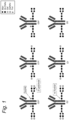
- Figure 1 shows an antibody comprising a glycan on each heavy chain. These glycans are present in different isoforms with respect to galactosylation (G0, G1 and G2) and fucosylation (G0F, G1F and G2F).
- a chemoenzymatic method for the preparation of a homogeneous glycoprotein or glycopeptide is disclosed, involving a two-stage strategy entailing first trimming of the near-complete glycan tree (under the action of endo A or endo H) leaving only the core N-acetylglucosamine (GIcNAc) moiety (the so-called GIcNAc-protein), followed by a reglycosylation event wherein, in the presence of a catalyst comprising endoglycosidase (ENGase), an oligosaccharide moiety is transferred to the the GIcNAc-protein to yield a homogeneous glycoprotein or glycopeptide.
- a catalyst comprising endoglycosidase ENGase
- a strategy for azide-functionalized glycoproteins is disclosed, wherein a GIcNAc-protein is reacted in the presence of ENGase with a tetrasaccharide oxazoline containing two 6-azidomannose moieties, thereby introducing two azides simultaneously in the glycan.
- the azide-functionalized glycoprotein may then be catalytically reacted in a "click chemistry" cycloaddition reaction, in the presence of a catalyst (e.g. a Cu(I) catalyst) with a terminal alkyne bearing a functional moiety X of interest. No actual examples of said click chemistry are disclosed.
- WO 2004/063344 discloses mutant galactosyltransferases GaIT(Y289L), GaIT(Y289I) and GaIT(Y289N).
- a process is disclosed wherein complex glycans such as those on monoclonal antibodies (Rituxan, Remicade, Herceptin) are first converted into G0 glycans on antibodies by treatment with galactosidase, in order to remove all chain-terminal galactose.
- These G0 antibodies are subsequently subjected to GalNAc-UDP in the presence of GalT(Y289L), leading to antibodies with significantly more homogeneous glycan structures.
- Qasba et al. disclose in Bioconjugate Chem.
- ⁇ -Galactosidase treated monoclonal antibodies having a G0 glycoform are fully galactosylated to the G2 glycoform after transfer of a galactose moiety comprising a C2-substituted azidoacetamido moiety (GaINAz) to the terminal GlcNAc residues of the glycan, leading to tetraazido-substituted antibodies, i.e. two GalNAz moieties per heavy chain.
- GaINAz C2-substituted azidoacetamido moiety
- a disadvantage of the method disclosed in WO 2004/063344 and Bioconjugate Chem. 2009, 20, 1228 is that conjugation of the tetraazido-substituted antibodies to a molecule of interest would lead to an antibody-conjugate with typically two molecules of interest per glycan (provided that said conjugation would proceed with complete conversion).
- the molecule of interest is a lipophilic toxin
- the presence of too many molecules of interest per antibody is undesired since this may lead to aggregate formation ( BioProcess International 2006, 4, 42-43 ).
- WO 2007/095506 and WO 2008/029281 disclose a method of forming a glycoprotein conjugate wherein the glycoprotein is contacted with UDP-GalNAz in the presence of GaIT(Y289L) mutant, leading to the incorporation of GalNAz at a terminal non-reducing GIcNAc of an antibody carbohydrate. Subsequent copper-catalyzed click chemistry with a terminal alkyne or Staudinger ligation can then be used to conjugate a reporter molecule, solid support or carrier molecule to the attached azide moiety.
- WO 2007/095506 and WO 2008/029281 further disclose that if no terminal GlcNAc sugars are present on the antibody, Endo H, Endo A or Endo M enzyme may be used to generate a truncated chain which terminates with one N-acetylglucosamine residue.
- Antibody-conjugates known in the art generally suffer from several disadvantages.
- a measure for the loading of the antibody with a toxin is given by the drug-antibody ratio (DAR), which gives the average number of active substance molecules per antibody.
- DAR drug-antibody ratio
- the DAR does not give any indication regarding the homogeneity of such ADC.
- gemtuzumab ozogamicin is a heterogeneous mixture of 50% conjugates (0 to 8 calicheamycin moieties per IgG molecules with an average of 2 or 3, randomly linked to solvent exposed lysyl residues of the antibody) and 50% unconjugated antibody ( Bross et al., Clin. Cancer Res. 2001, 7, 1490 ; Labrijn et al., Nat. Biotechnol. 2009 27, 767 ).
- brentuximab vedotin, T-DM1, and other ADCs in the clinic it is still uncontrollable exactly how many drugs are attaching to any given antibody (drug-antibody ratio, DAR) and the ADC is obtained as a statistical distribution of conjugates.
- DAR drug-antibody ratio
- the present invention relates to an antibody-conjugate for use as a medicament, wherein the antibody conjugate is obtainable by a process comprising reacting a modified antibody with a linker-conjugate, wherein said linker-conjugate comprises a (hetero)cycloalkynyl group and one or more substances which are pharmaceutically active, wherein said modified antibody is an antibody comprising a GlcNAc-S(A) x substituent, wherein GlcNAc is an N-acetylglucosamine, wherein S(A) x is a sugar derivative comprising x functional groups A wherein A is an azido group and x is 1, 2, 3 or 4, wherein said GlcNAc-S(A) x substituent is bonded to the antibody via C1 of the N-acetylglucosamine of said GlcNAc-S(A) x substituent, and wherein said N-acetylglucosamine is optionally fucosylated, wherein the one or more
- the modified antibody, the antibody-conjugate and the processes for the preparation thereof have several advantages over the processes, modified antibodies and antibody-conjugates known in the art.
- DAR Drug to Antibody Ratio
- the modified antibody and antibody-conjugate are homogeneous, both in site-specificity and stoichiometry.
- an antibody or an antibody-conjugate is considered homogeneous when conjugation is effected only at a predetermined site and with predetermined drug-antibody ratio.
- An antibody-conjugate is heterogeneous when conjugation of the antibody takes place at different sites in the antibody, leading to a mixure of products with unpredictable drug-antibody ratio. In the latter case, the drug-antibody ratio will be an average of the whole group of antibody-drug conjugates.
- the antibody-conjugate has a DAR that is within 10% of its theoretical value.
- Another advantage of the processes and antibodies involves the reduction of waste in manufacturing, thereby enhancing companies' cost-of-goods.
- indefinite article “a” or “an” does not exclude the possibility that more than one of the element is present, unless the context clearly requires that there is one and only one of the elements.
- the indefinite article “a” or “an” thus usually means “at least one”.
- the compounds disclosed in this description and in the claims may comprise one or more asymmetric centres, and different diastereomers and/or enantiomers may exist of the compounds.
- the description of any compound in this description and in the claims is meant to include all diastereomers, and mixtures thereof, unless stated otherwise.
- the description of any compound in this description and in the claims is meant to include both the individual enantiomers, as well as any mixture, racemic or otherwise, of the enantiomers, unless stated otherwise.
- the structure of a compound is depicted as a specific enantiomer, it is to be understood that the invention of the present application is not limited to that specific enantiomer.
- the compounds may occur in different tautomeric forms.
- the compounds according to the invention are meant to include all tautomeric forms, unless stated otherwise.
- the structure of a compound is depicted as a specific tautomer, it is to be understood that the invention of the present application is not limited to that specific tautomer.
- the compounds disclosed in this description and in the claims may exist as cis and trans isomers. Unless stated otherwise, the description of any compound in the description and in the claims is meant to include both the individual cis and the individual trans isomer of a compound, as well as mixtures thereof. As an example, when the structure of a compound is depicted as a cis isomer, it is to be understood that the corresponding trans isomer or mixtures of the cis and trans isomer are not excluded from the invention of the present application. When the structure of a compound is depicted as a specific cis or trans isomer, it is to be understood that the invention of the present application is not limited to that specific cis or trans isomer.
- the compounds disclosed in this description and in the claims may further exist as regioisomers. Unless stated otherwise, the description of any compound in the description and in the claims is meant to include both regioisomers of a compound, as well as mixtures thereof. When the structure of a compound is depicted as a specific regioisomer, it is to be understood that the invention of the present application is not limited to that specific regioisomer.
- Unsubstituted alkyl groups have the general formula C n H 2n+1 and may be linear or branched. Unsubstituted alkyl groups may also contain a cyclic moiety, and thus have the concomitant general formula C n H 2n-1 . Optionally, the alkyl groups are substituted by one or more substituents further specified in this document. Examples of alkyl groups include methyl, ethyl, propyl, 2-propyl, t-butyl, 1-hexyl, 1-dodecyl, etc.
- An aryl group comprises six to twelve carbon atoms and may include monocyclic and bicyclic structures.
- the aryl group may be substituted by one or more substituents further specified in this document.
- Examples of aryl groups are phenyl and naphthyl.
- a heteroaryl group comprises five to twelve carbon atoms wherein one to four carbon atoms are replaced by heteroatoms selected from the group consisting of oxygen, nitrogen, phosphorus and sulphur.
- a heteroaryl group may have a monocyclic or a bicyclic structure.
- the heteroaryl group may be substituted by one or more substituents further specified in this document.
- suitable heteroaryl groups include pyridinyl, quinolinyl, pyrimidinyl, pyrazinyl, pyrazolyl, pyrrolyl, furanyl, benzofuranyl, indolyl, purinyl, benzoxazolyl, thienyl, phospholyl and oxazolyl.
- Arylalkyl groups and alkylaryl groups comprise at least seven carbon atoms and may include monocyclic and bicyclic structures.
- the arylalkyl groups and alkylaryl may be substituted by one or more substituents further specified in this document.
- An arylalkyl group is for example benzyl.
- An alkylaryl group is for example 4-t-butylphenyl.
- An alkynyl group comprises one or more carbon-carbon triple bonds.
- An unsubstituted alkynyl group comprising one triple bond has the general formula C n H 2n-3 .
- a terminal alkynyl is an alkynyl group wherein the triple bond is located at a terminal position of the alkynyl group.
- the alkynyl group is substituted by one or more substituents further specified in this document, and/or interrupted by heteroatoms selected from the group of oxygen, nitrogen and sulphur.
- Examples of alkynyl groups include ethynyl, propynyl, butynyl, octynyl, etc.
- a cycloalkynyl group is a cyclic alkynyl group.
- An unsubstituted cycloalkynyl group comprising one triple bond has the general formula C n H 2n-5 .
- a cycloalkynyl group is substituted by one or more substituents further specified in this document.
- An example of a cycloalkynyl group is cyclooctynyl.
- a heterocycloalkynyl group is a cycloalkynyl group interrupted by heteroatoms selected from the group of oxygen, nitrogen and sulphur.
- a heterocycloalkynyl group is substituted by one or more substituents further specified in this document.
- An example of a heterocycloalkynyl group is azacyclooctynyl.
- a (hetero)aryl group comprises an aryl group and a heteroaryl group.
- An alkyl(hetero)aryl group comprises an alkylaryl group and an alkylheteroaryl group.
- a (hetero)arylalkyl group comprises a arylalkyl group and a heteroarylalkyl groups.
- a (hetero)alkynyl group comprises an alkynyl group and a heteroalkynyl group.
- a (hetero)cycloalkynyl group comprises an cycloalkynyl group and a heterocycloalkynyl group.
- a (hetero)cycloalkyne compound is herein defined as a compound comprising a (hetero)cycloalkynyl group.
- fused (hetero)cycloalkyne compounds i.e. (hetero)cycloalkyne compounds wherein a second ring structure is fused, i.e. annelated, to the (hetero)cycloalkynyl group.
- a fused (hetero)cyclooctyne compound a cycloalkyl (e.g. a cyclopropyl) or an arene (e.g. benzene) may be annelated to the (hetero)cyclooctynyl group.
- the triple bond of the (hetero)cyclooctynyl group in a fused (hetero)cyclooctyne compound may be located on either one of the three possible locations, i.e. on the 2, 3 or 4 position of the cyclooctyne moiety (numbering according to "IUPAC Nomenclature of Organic Chemistry", Rule A31.2).
- the description of any fused (hetero)cyclooctyne compound in this description and in the claims is meant to include all three individual regioisomers of the cyclooctyne moiety.
- alkyl group When an alkyl group, a (hetero)aryl group, alkyl(hetero)aryl group, a (hetero)arylalkyl group, a (hetero)cycloalkynyl group is optionally substituted, said groups are independently optionally substituted with one or more substituents independently selected from the group consisting of C 1 - C 12 alkyl groups, C 2 - C 12 alkenyl groups, C 2 - C 12 alkynyl groups, C 3 - C 12 cycloalkyl groups, C 1 - C 12 alkoxy groups, C 2 - C 12 alkenyloxy groups, C 2 - C 12 alkynyloxy groups, C 3 - C 12 cycloalkyloxy groups, halogens, amino groups, oxo groups and silyl groups, wherein the alkyl groups, alkenyl groups, alkynyl groups, cycloalkyl groups, alkoxy groups, alkenyloxy groups
- an antibody is a protein generated by the immune system that is capable of recognizing and binding to a specific antigen.
- the term antibody herein is used in its broadest sense and specifically includes monoclonal antibodies, polyclonal antibodies, dimers, multimers, multispecific antibodies (e.g. bispecific antibodies), antibody fragments, and double and single chain antibodies.
- antibody is herein also meant to include human antibodies, humanized antibodies, chimeric antibodies and antibodies specifically binding cancer antigen.
- antibody is meant to include whole antibodies, but also fragments of an antibody, for example an antibody Fab fragment, F(ab') 2 , Fv fragment or Fc fragment from a cleaved antibody, a scFv-Fc fragment, a minibody, a diabody or a scFv.
- antibody includes genetically engineered derivatives of an antibody.
- Antibodies, fragments of antibodies and genetically engineered antibodies may be obtained by methods that are known in the art.
- Suitable marketed antibodies include, amongst others, abciximab, rituximab, basiliximab, palivizumab, infliximab, trastuzumab, alemtuzumab, adalimumab, tositumomab-I131, cetuximab, ibrituximab tiuxetan, omalizumab, bevacizumab, natalizumab, ranibizumab, panitumumab, eculizumab, certolizumab pegol, golimumab, canakinumab, catumaxomab, ustekinumab, tocilizumab, ofatumumab, denosumab, belimumab, ipilimumab and brentuximab.
- sugar is herein used to indicate a monosaccharide, for example glucose (Glc), galactose (Gal), mannose (Man) and fucose (Fuc).
- sugar derivative is herein used to indicate a derivative of a monosaccharide sugar, i.e. a monosaccharide sugar comprising substituents and/or functional groups. Examples of a sugar derivative include amino sugars and sugar acids, e.g.
- glucosamine (GlcN), galactosamine (GaIN) N-acetylglucosamine (GIcNAc), N-acetylgalactosamine (GaINAc), N-acetylneuraminic acid (NeuNAc) and N-acetylmuramic acid (MurNAc), glucuronic acid (GlcA) and iduronic acid (IdoA).
- a sugar derivative also include compounds herein denoted S(A) x , wherein S is a sugar or a sugar derivative, and wherein S comprises x functional groups A.
- a core-N-acetylglucosamine substituent is herein defined as a GIcNAc that is bonded via C1 to an antibody, preferably via an N-glycosidic bond to the amide nitrogen atom in the side chain of an asparagine amino acid of the antibody.
- the core-GIcNAc substituent may be present at a native glycosylation site of an antibody, but it may also be introduced on a different site on the antibody.
- a core-N-acetylglucosamine substituent is a monosaccharide substituent, or if said core-GIcNAc substituent is fucosylated, a disaccharide core-(Fuc ⁇ 1-6)GIcNAc substituent, further referred to as GlcNAc(Fuc).
- a "core-GlcNAc substituent" is not to be confused with a "core-GIcNAc”.
- a core-GIcNAc is herein defined as the inner GIcNAc that is part of a poly- or an oligosaccharide comprising more than two saccharides, i.e. the GIcNAc via which the poly- or oligosaccharide is bonded to an antibody.
- An antibody comprising a core-N-acetylglucosamine substituent as defined herein is thus an antibody, comprising a monosaccharide core-GIcNAc substituent as defined above, or if said core-GIcNAc substituent is fucosylated, a disaccharide core-GlcNAc(Fuc) substituent.
- a core-GIcNAc substituent or the GIcNAc in a GlcNAc-S(A) x substituent is fucosylated, fucose is most commonly linked ⁇ -1,6 to C6 of the core-GIcNAc substituent.
- a fucosylated core-GIcNAc substituent is denoted core-GIcNAc(Fuc)
- a fucosylated GlcNAc-S(A) x substituent is denoted GlcNAc(Fuc)-S(A) x .
- treatment refers to obtaining a desired pharmacologic and/or physiologic effect.
- the effect may be prophylactic in terms of completely or partially preventing a disease or symptom thereof and/or may be therapeutic in terms of a partial or complete cure for a disease and/or adverse affect attributable to the disease.
- Treatment covers any treatment of a disease in a mammal, particularly in a human, and incudes preventing the disease from occurring in a subject which may be predisposed to the disease but has not yet been diagnosed as having it; inhibiting the disease, i.e., arresting its development; relieving the disease, i.e., causing regression of the disease.
- the antibody-conjugate for use according to the present invention can be made by a process which involves a step (i) for the preparation of a modified antibody, comprising contacting an antibody comprising a core N-acetylglucosamine substituent (a core-GIcNAc substituent) with a compound of the formula S(A) x -P in the presence of a suitable catalyst, wherein said core-GlcNAc substituent is optionally fucosylated, wherein said catalyst comprises a mutant catalytic domain from a galactosyltransferase, wherein S(A) x is a sugar derivative comprising x functional groups A wherein A is an azido group and x is 1, 2, 3 or 4, wherein P is selected from the group consisting of uridine diphosphate (UDP), guanosine diphosphate (GDP) and cytidine diphosphate (CDP), and wherein a modified antibody is defined as an antibody comprising a GlcNAc-S(A)
- the antibody comprising a core-N-acetylglucosamine substituent is a monoclonal antibody (mAb).
- said antibody is selected from the group consisting of IgA, IgD, IgE, IgG and IgM antibodies. More preferably, said antibody is an IgG antibody, and most preferably said antibody is an IgG1 antibody.
- the antibody preferably comprises one or more, more preferably one, core-GlcNAc substituent on each heavy chain, said core-GIcNAc substituent being optionally fucosylated.
- Said whole antibody thus preferably comprises two or more, preferably two, optionally fucosylated, core-GIcNAc substituents.
- said antibody is a single chain antibody or an antibody fragment, e.g. a Fab fragment, the antibody preferably comprises one or more core-GIcNAc substituent, which is optionally fucosylated.
- said core-GIcNAc substituent may be situated anywhere on the antibody, provided that said substituent does not hinder the antigen-binding site of the antibody.
- said core-GIcNAc substituent is situated in the Fc fragment of the antibody, more preferably in the C H 2 domain.
- said core-GIcNAc substituent is situated on the Fab fragment of the antibody.
- the antibody comprising a core-GIcNAc substituent, wherein said core-GIcNAc substituent is optionally fucosylated is of the Formula (1), wherein AB represents an antibody, GIcNAc is N-acetylglucosamine, Fuc is fucose, b is 0 or 1 and y is 1 to 20.
- y is 1 to 10, more preferably y is 1, 2, 3, 4, 5, 6, 7 or 8, even more preferably y is 1, 2, 3 or 4 and most preferably y is 1 or 2.
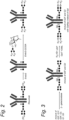
- step (i) of the process wherein the starting material of the process is an antibody comprising one optionally fucosylated core-GIcNAc substituent (1a, y is 1) and an embodiment wherein said starting material is an antibody comprising two optionally fucosylated core-GIcNAc substituents (1b, y is 2) are shown in Scheme 1, wherein AB represents an antibody and wherein b is 0 or 1.
- S(A) x and P are as defined above.
- Modification of antibody (1a) leads to a modified antibody comprising one GlcNAc-S(A) x substituent (2) and modification of antibody (1b) leads to a modified antibody comprising two GlcNAc-S(A) x substituents (3).
- a suitable catalyst for a specific process is a catalyst wherefore the specific sugar derivative nucleotide S(A) x -P in that specific process is a substrate.
- the catalyst is selected from the group of galactosyltransferases, more preferably from the group of ⁇ (1,4)-galactosyltransferases or ⁇ (1,3)-N-galactosyltransferases, even more preferably from the group of ⁇ (1,4)-galactosyltransferases or ⁇ (1,3)-N-galactosyltransferases comprising a mutant catalytic domain.
- a suitable catalyst is for example a catalyst that comprises a mutant catalytic domain from a ⁇ (1,4)-galactosyltransferase I.
- a catalytic domain herein refers to an amino acid segment that folds into a domain that is able to catalyze the linkage of the specific sugar derivative nucleotide S(A) x -P to the core-GIcNAc substituent in a specific process for preparing the antibody-conjugate for use according to the invention.
- a catalytic domain may have an amino acid sequence as found in a wild-type enzyme, or have an amino acid sequence that is different from a wild-type sequence.
- a catalytic domain having an amino acid sequence that is different from a wild-type sequence is herein referred to as a mutant catalytic domain.
- the mutation may e.g. comprise a single amino acid change (a point mutation), but also a multiple amino acid change (e.g of 1 to 10, preferably of 1 to 6, more preferably of 1, 2, 3 or 4, even more preferably of 1 or 2 amino acids), or a deletion or insertion of one or more (e.g of 1 to 10, preferably of 1 to 6, more preferably of 1, 2, 3 or 4, even more preferably of 1 or 2) amino acids.
- Said mutant catalytic domain may be present in a full-length enzyme, e.g.
- a ⁇ (1,4)-galactosyltransferase I enzyme but also in e.g. a polypeptide fragment or a recombinant polypeptide comprising said mutant catalytic domain, optionally linked to additional amino acids.
- GaIT ⁇ (1,4)-galactosyltransferase I is herein further referred to as GaIT.
- Such mutant GaIT catalytic domains are for example disclosed in WO 2004/063344 (National Institutes of Health).
- WO 2004/063344 discloses Tyr-289 mutants of GaIT, which are referred to as Y289L, Y289N and Y289I.
- the method of preparation of said mutant catalytic domains Y289L, Y289N and Y289I is disclosed in detail in WO 2004/063344 , p. 34, I. 6 - p. 36, I. 2.
- Mutant GaIT domains that catalyze the formation of a glucose- ⁇ (1,4)-N-acetylglucosamine bond are disclosed in WO 2004/063344 on p. 10, I, 25 - p. 12, I. 4.
- Mutant GaIT domains that catalyze the formation of an N-acetylgalactosamine- ⁇ (1,4)-N-acetylglucosamine bond are disclosed in WO 2004/063344 on p. 12, I, 6 - p. 13, I. 2.
- Mutant GaIT domains that catalyze the formation of a N-acetylglucosamine- ⁇ (1,4)-N-acetylglucosamine bond and a mannose- ⁇ (1,4)-N-acetylglucosamine bond are disclosed in WO 2004/063344 on p. 12, I, 19 - p. 14, I. 6.
- the disclosed mutant GaIT domains may be included within full-length GaIT enzymes, or in recombinant molecules containing the catalytic domains, as is disclosed in WO 2004/063344 on p. 14, I, 31 - p. 16, I. 28.
- GaIT domain is for example Y284L, disclosed by Bojarová et al., Glycobiology 2009, 19 , 509.
- the mutation in position 284 concerns a tyrosine residue.
- GaIT domain is for example R228K, disclosed by Qasba et al., Glycobiology 2002, 12 , 691, wherein Arg228 is replaced by lysine.
- said catalyst is a catalyst comprising a mutant catalytic domain from a ⁇ (1,4)-galactosyltransferase, preferably a bovine ⁇ (1,4)-galactosyltransferase.
- said catalyst is a catalyst comprising a GaIT mutant catalytic domain selected from the group consisting of Y289L, Y289N, Y289I, Y284L and R228K, preferably Y289L.
- the catalyst is a catalyst comprising a mutant catalytic domain from a ⁇ (1,4)-galactosyltransferase, preferably selected from the group consisting of GalT Y289L, GaIT Y289N and GaIT Y289I, more preferably GaIT Y289L or GaIT Y289N, and most preferably GaIT Y289L.
- a ⁇ (1,4)-galactosyltransferase preferably selected from the group consisting of GalT Y289L, GaIT Y289N and GaIT Y289I, more preferably GaIT Y289L or GaIT Y289N, and most preferably GaIT Y289L.
- the catalyst is a catalyst comprising a mutant catalytic domain from a bovine ⁇ (1,4)-galactosyltransferase, selected from the group consisting of GaIT Y289F, GaIT Y289M, GaIT Y289V, GaIT Y289G, GaIT Y289I and GaIT Y289A, preferably selected from the group consisting of GaIT Y289F and GaIT Y289M.
- a bovine ⁇ (1,4)-galactosyltransferase selected from the group consisting of GaIT Y289F, GaIT Y289M, GaIT Y289V, GaIT Y289G, GaIT Y289I and GaIT Y289A, preferably selected from the group consisting of GaIT Y289F and GaIT Y289M.
- GaIT Y289F, GaIT Y289M, GaIT Y289V, GaIT Y289G, GaIT Y289I and GaIT Y289A may be provided via site-directed mutagenesis processes, in a similar manner as disclosed in WO 2004/063344 , in Qasba et al., Prot. Expr. Pur. 2003, 30, 219 and in Qasba et al., J. Biol. Chem. 2002, 277, 20833 for Y289L, Y289N and Y289I.
- GaIT Y289F the tyrosine amino acid (Y) at position 289 is replaced by a phenyl alanine (F) amino acid
- GaIT Y289M said tyrosine is replaced by a methionine (M) amino acid
- M methionine
- GaIT Y289V by a valine (V) amino acid
- GaIT Y289G by a glycine (G) amino acid
- GaIT Y289I by an isoleucine (I) amino acid
- Y289A by an analine (A) amino acid.
- a catalyst based on ⁇ (1,3)-N-galactosyltransferase (further referred to as a3Gal-T), preferably ⁇ (1,3)-N-acetylgalactosaminyltransferase (further referred to as a3GaINAc-T), as disclosed in WO 2009/025646 .
- Mutation of a3Gal-T can broaden donor specificity of the enzyme, and make it an a3GaINAc-T.
- Mutation of a3GaINAc-T can broaden donor specificity of the enzyme.
- Polypeptide fragments and catalytic domains of ⁇ (1,3)-N-acetylgalactosaminyltransferases are disclosed in WO 2009/025646 on p. 26, I. 18 - p. 47, I. 15 and p. 77, I. 21 - p. 82, I. 4.
- the catalyst is a wild-type galactosyltransferase, more preferably a wild-type ⁇ (1,4)-galactosyltransferase or a wild-type ⁇ (1,3)-N-galactosyltransferase, and even more preferably a wild-type ⁇ (1,4)-galactosyltransferase I.
- ⁇ (1,4)-Galactosyltransferase is herein further referred to as GaIT.
- the ⁇ (1,4)-galactosyltransferase is selected from the group consisting of a bovine ⁇ (1,4)-Gal-T1, a human ⁇ (1,4)-Gal-T1, a human ⁇ (1,4)-Gal-T2, a human ⁇ (1,4)-Gal-T3 and a human ⁇ (1,4)-Gal-T4.
- the ⁇ (1,4)-galactosyltransferase is a ⁇ (1,4)-Gal-T1.
- the catalyst is a wild-type ⁇ (1,3)-N-galactosyltransferase
- a human ⁇ (1,3)-Gal-T5 is preferred.
- This embodiment wherein the catalyst is a wild-type galactosyltransferase is particularly preferred when a functional group A in sugar derivative S(A) x is present on C2 or C6, preferably C6, of said sugar derivative.
- Su(A) x comprises one functional group A, i.e. preferably x is 1.
- P, Su(A) x and Su(A) x -P are described in more detail below.
- the modified antibody may be prepared by a process comprising contacting an antibody comprising a core N-acetylglucosamine (GlcNAc) substituent with a compound of the formula S(A) x -P in the presence of a suitable catalyst, wherein said catalyst is a wild-type galactosyltransferase, wherein S(A) x is a sugar derivative comprising x functional groups A wherein A is an azido group and wherein x is 1, wherein P is selected from the group consisting of uridine diphosphate (UDP), guanosine diphosphate (GDP) and cytidine diphosphate (CDP), and wherein a modified antibody is defined as an antibody comprising a GlcNAc-S(A) x substituent bonded to the antibody via C1 of the N-acetylglucosamine of said GlcNAc-S(A) x substituent.
- a suitable catalyst wherein said catalyst is a wild-type galact
- the process for the preparation of a modified antibody is preferably performed in a suitable buffer solution, such as for example phosphate, buffered saline (e.g. phosphate-buffered saline, tris-buffered saline), citrate, HEPES, tris and glycine.
- a suitable buffer solution such as for example phosphate, buffered saline (e.g. phosphate-buffered saline, tris-buffered saline), citrate, HEPES, tris and glycine.
- Suitable buffers are known in the art.
- the buffer solution is phosphate-buffered saline (PBS) or tris buffer.
- the process is preferably performed at a temperature in the range of about 4 to about 50°C, more preferably in the range of about 10 to about 45°C, even more preferably in the range of about 20 to about 40°C, and most preferably in the range of about 30 to about 37°C.
- the process is preferably performed a pH in the range of about 5 to about 9, preferably in the range of about 5.5 to about 8.5, more preferably in the range of about 6 to about 8. Most preferably, the process is performed at a pH in the range of about 7 to about 8.
- an antibody mixture may be used as the starting antibody, said mixture comprising antibodies comprising one or more core-GIcNAc substituents and/or one or more core-GlcNAc(Fuc) sustituents.
- the starting antibody mixture comprises a whole antibody with one optionally fucosylated core-GIcNAc substituent on each heavy chain
- the whole antibody may comprise two core-GIcNAc substituents, or two core-GIcNAc(Fuc) sustituents, or one core-GIcNAc substituent and one core-GlcNAc(Fuc) sustituent.
- the GIcNAc in the monosaccharide core-GIcNAc substituent is on the terminal position, whereas the GIcNAc in the disaccharide core-GlcNAc(Fuc) substituent is on an internal position, bonded to the antibody via C1 and to Fuc via C6. Since, as was described above, said galactosyltransferases mutant enzyme catalysts are also able to recognize internal sugars and sugar derivatives as an acceptor, sugar derivative S(A) x is linked to the core-GIcNAc substituent in the process, irrespective of whether said GIcNAc is fucosylated or not.
- fucose prior to step (i) of the process is therefore not necessary, since an antibody mixture comprising both core-GIcNAc and core-GlcNAc(Fuc) substituents may be used in the process.
- fucose may be removed from any core-GIcNAc(Fuc) substituents prior to step (i) of the process, for example by defucosylation in the presence of ⁇ -fucosidase as is known in the art.
- S(A) x is defined as a sugar derivative comprising x functional groups A, wherein A is an azido group and wherein x is 1, 2, 3 or 4.
- An azido group is an azide functional group -N 3 .
- the sugar derivative S(A) x may comprise one or more functional groups A.
- x is 1 or 2, more preferably x is 1.
- Sugar derivative S(A) x is derived from a sugar or a sugar derivative S, e.g. an amino sugar or an otherwise derivatized sugar.
- sugars and sugar derivatives include galactose (Gal), mannose (Man), glucose (Glc), glucuronic acid (Gcu) and fucose (Fuc).
- An amino sugar is a sugar wherein a hydroxyl (OH) group is replaced by an amine group and examples include N-acetylglucosamine (GlcNAc) and N-acetylgalactosamine (GaINAc).
- Examples of an otherwise derivatized sugar include glucuronic acid (Gcu) and N-acetylneuraminic acid (sialic acid).
- Sugar derivative S(A) x is preferably derived from galactose (Gal), mannose (Man), N-acetylglucosamine (GIcNAc), glucose (Glc), N-acetylgalactosamine (GaINAc), glucuronic acid (Gcu), fucose (Fuc) and N-acetylneuraminic acid (sialic acid), preferably from the group consisting of GIcNAc, Glc, Gal and GaINAc. More preferably S(A) x is derived from Gal or GaINAc, and most preferably S(A) x is derived from GaINAc.
- the one or more functional groups A in S(A) x may be linked to the sugar or sugar derivative S in several ways.
- the one or more functional groups A may be bonded to C2, C3, C4 and/or C6 of the sugar or sugar derivative, instead of a hydroxyl (OH) group. It should be noted that, since fucose lacks an OH-group on C6, if A is bonded to C6 of Fuc, then A takes the place of an H-atom.
- A is an azido group, and it is preferred that A is bonded to C2, C4 or C6.
- the one or more azide substituent in S(A) x may be bonded to C2, C3, C4 or C6 of the sugar or sugar derivative S, instead of a hydroxyl (OH) group or, in case of 6-azidofucose (6-AzFuc), instead of a hydrogen atom.
- the N-acetyl substituent of an amino sugar derivative may be substituted by an azidoacetyl substituent.
- S(A) x is selected from the group consisting of 2-azidoacetamidogalactose (GaINAz), 6-azido-6-deoxygalactose (6-AzGal), 6-azido-6-deoxy-2-acetamidogalactose (6-AzGaINAc), 4-azido-4-deoxy-2-acetamidogalactose (4-AzGaINAc), 6-azido-6-deoxy-2-azidoacetamido-galactose (6-AzGaINAz), 2-azidoacetamidoglucose (GIcNAz), 6-azido-6-deoxyglucose (6-AzGlc), 6-azido-6-deoxy-2-acetamidoglucose (6-AzGlcNAc), 4-azido-4-deoxy-2-acetamidoglucose (4-AzGlcNAc) and 6-azido-4-
- nucleoside mono- or diphosphate P in S(A) x -P is selected from the group consisting of uridine diphosphate (UDP), guanosine diphosphate (GDP), thymidine diphosphate (TDP), cytidine diphosphate (CDP) and cytidine monophosphate (CMP), preferably UDP.
- UDP uridine diphosphate
- GDP guanosine diphosphate
- TDP thymidine diphosphate
- CDP cytidine diphosphate
- CMP cytidine monophosphate
- S(A) x -P is selected from the group consisting of GalNAz-UDP ( 5 ), 6-AzGal-UDP ( 6 ), 6-AzGaINAc-UDP ( 7 ), 4-AzGalNAz-UDP, 6-AzGalNAz-UDP, 6-AzGlc-UDP, and 6-AzGlcNAz-UDP.
- S(A) x -P is GalNAz-UDP ( 5 ) or 4-AzGaINAc-UDP (7).
- the syntheses of GaINAz-UDP ( 5 ) and 6-AzGaINAc-UDP (7) are disclosed in Piller et al., Bioorg. Med. Chem. Lett. 2005, 15, 5459-5462 and Wang et al., Chem. Eur. J. 2010, 16, 13343-13345 .
- S(A) x -P may be any sugar derivative nucleotide that is a substrate for a suitable galactosyltransferase catalyst.
- mAb monoclonal antibody
- Said conversion is executed via reaction with GalNAz-UDP ( 5 ) in the presence of a mutant GaIT Y289L enzyme as a catalyst.
- Step (i) of the process generally relates to the preparation of a modified antibody, the process comprising:
- the antibody comprising an optionally fucosylated core-GIcNAc substituent may be provided in various ways.
- Said antibodies e.g. whole antibodies, antibody fragments, genetically engineered antibodies, etc. may be provided by methods that are known to the person skilled in the art.
- Fab or Fc fragments may be prepared by proteolytic digestion of substantially intact immunoglobulin molecules with papain, or by recombinant expression of the desired portions of an immunoglobulin heavy and light chain.
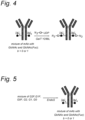
- the process further comprises the deglycosylation of an antibody glycan having a core N-acetylglucosamine, in the presence of an endoglycosidase, in order to obtain an antibody comprising a core N-acetylglucosamine substituent, wherein said core N-acetylglucosamine and said core N-acetylglucosamine substituent are optionally fucosylated.
- a suitable endoglycosidase may be selected.
- the endoglycosidase is preferably selected from the group consisting of Endo S, Endo A, Endo F, Endo M, Endo D and Endo H enzymes and/or a combination thereof, the selection of which depends on the nature of the glycan.
- the endoglycosidase is Endo S, Endo S49, Endo F or a combination thereof.
- the endoglycosidase is Endo S, Endo F or a combination thereof.
- the endoglycosidase is Endo S.
- the endoglycosidase is Endo S49.
- An antibody glycan having a core N-acetylglucosamine is herein defined as an antibody comprising a glycan that is bonded to the antibody via C1 of an, optionally fucosylated, GlcNAc (the core-GIcNAc). Apart from said core-GIcNAc and the optional Fuc, said glycan comprises at least one more sugar or sugar derivative.
- a preferred embodiment of said deglycosylation step of the process is shown in Figure 5 , where a mixture of antibody glycoforms G2F, G1F, G0F, G2, G1 and G0, and possibly more glycoforms such as triantennary glycans, is converted into antibodies comprising an, optionally fucosylated (b is 0 or 1), core N-acetylglucosamine substituent.
- Glycoforms G2F, G1F, G0F, G2, G1 and G0 are shown in Figure 1 .
- Step (i) of the process therefore also relates to the preparation of a modified antibody, the process comprising:
- Step (i) of the process also relates to the preparation of a modified antibody, the process comprising:
- said endoglycosidase is selected from the group consisting of Endo S, Endo F, or a combination thereof. In a further preferred embodiment, the endoglycosidase is Endo S, Endo F or a combination thereof. In an even more preferred embodiment, said endoglycosidase is Endo S. In another preferred embodiment, said endoglycosidase is Endo S49. In another preferred embodiment, said endoglycosidase is selected from the group consisting of Endo S, Endo S49, Endo F and/or a combination thereof. More preferably, said endoglycosidase is Endo S or Endo S49. Most preferably, said endoglycosidase is Endo S or Endo F.
- Endo S, Endo A, Endo F, Endo M, Endo D and Endo H are known to the person skilled in the art.
- Endo S49 is described in WO 2013/037824 (Genovis AB).
- Endo S49 is isolated from Streptococcus poyogenes NZ131 and is a homologue of Endo S.
- Endo S49 has a specific endoglycosidase activity on native IgG and cleaves a larger variety of Fc glycans than Endo S.
- said core N-acetylglucosamine is present at a native N-glycosylation site of the antibody.
- the antibody is IgG and said core N-acetylglucosamine is present at a native N-glycosylation site of the IgG.
- the antibody is IgG, said core N-acetylglucosamine is present at a native N-glycosylation site of the IgG, and the native site is the N297 N-glycosylation site of IgG.
- the N297 N-glycosylation site is present in the Fc region of the heavy chain of an IgG antibody.
- the endoglycosidase is selected from the group consisting of Endo S, Endo S49 and Endo F, and a combination thereof. More preferably, the endoglycosidase is Endo S, Endo S49 or Endo F, even more preferably Endo S or Endo F, and most preferably Endo S.
- Endo H, Endo M, Endo F1 are less suitable for the deglycosylation of a glycan that is present at the native site of an IgG antibody. In particular, they are less suitable for the deglycosylation of a glycan that is present at N297.
- the process for the preparation of an modified antibody affords an antibody comprising a GlcNAc-S(A) x substituent, wherein GlcNAc is an N-acetylglucosamine, wherein S(A) x is a sugar derivative comprising x functional groups A wherein A is an azido group and x is 1, 2, 3 or 4, wherein said GlcNAc-S(A) x substituent is bonded to the antibody via C1 of the core N-acetylglucosamine of said GlcNAc-S(A) x substituent, and wherein said N-acetylglucosamine is optionally fucosylated.
- Such an antibody is herein referred to as a modified antibody.
- the modified antibody is of the Formula ( 4 ), wherein AB represents an antibody, GlcNAc is N-acetylglucosamine, Fuc is fucose, b is 0 or 1 and y is 1 to 20, and wherein S(A) x is a sugar derivative comprising x functional groups A wherein A is an azido group and x is 1, 2, 3 or 4.
- y is 1 to 10, more preferably y is 1, 2, 3, 4, 5, 6, 7 or 8, even more preferably y is 1, 2, 3 or 4 and most preferably y is 1 or 2.
- the sugar derivative S(A) x in the GlcNAc-S(A) x substituent of the modified antibody may for example be bonded to C4 of the GIcNAc via a ⁇ (1,4)-glycosidic bond or to C3 of said GIcNAc via an ⁇ (1,3)-glycosidic bond.
- the N-acetylglucosamine of said GlcNAc-S(A) x substituent is bonded via C1 to the antibody, preferably via an N-glycosidic bond to the amide nitrogen atom in the side chain of an asparagine amino acid of the antibody (GIcNAc ⁇ 1-Asn).
- the GIcNAc in said GIcNAc-S(A) x substituent is optionally fucosylated. Whether the sugar derivative S(A) x in the GIcNAc-S(A) x substituent of the modified antibody is bonded to C4 of the GIcNAc via a ⁇ (1,4)-glycosidic bond or to C3 of said GIcNAc via an ⁇ (1,3)-glycosidic bond depends on the catalyst that was used in the process for the preparation of the modified antibody.
- A is an azido functional group, and the modified antibody is referred to as an azide-modified antibody.
- the modified antibody is an azide-modified antibody.
- said S(A) x is derived from a sugar or sugar derivative selected from the group consisting of galactose (Gal), mannose (Man), N-acetylglucosamine (GlcNAc), glucose (Glc), N-acetylgalactosamine (GaINAc), glucuronic acid (Gcu), fucose (Fuc) and N-acetylneuraminic acid (sialic acid), preferably Gal, GIcNAc, glucose and GaINAc.
- a sugar or sugar derivative selected from the group consisting of galactose (Gal), mannose (Man), N-acetylglucosamine (GlcNAc), glucose (Glc), N-acetylgalactosamine (GaINAc), glucuronic acid (Gcu), fucose (Fuc) and N-acetylneuraminic acid (sialic acid), preferably Gal, GIcNAc, glucose and GaINAc.
- S(A) x is selected from the group consisting of GaINAz, 6-AzGal, 6-AzGaINAc, 4-AzGaINAz, 6-AzGaINAz, 6-AzGlc, and 6-AzGlcNAz. Most preferably, S(A) x is GalNAz or 4-AzGaINAc.
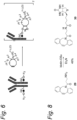
- An azide-modified antibody may have the structure shown below, wherein S(A) x , with A is azido, is depicted as S[(Q) p -N 3 ] x : wherein:
- the azide-modified antibody may comprise 1 to 20 optionally fucosylated substituents GIcNAc-S(A) x (y is 1 to 20).
- y is 1 to 10, more preferably y is 1, 2, 3, 4, 5, 6, 7 or 8, even more preferably y is 1, 2, 3 or 4 and most preferably y is 1 or 2.
- the value of p and the nature of Q depend on the azide-substituted sugar derivative S(A) x that is present in the azide-modified antibody. If an azido group in S(A) x is present on the C2, C3, or C4 position of the sugar or the sugar derivative, i.e. instead of the sugar-OH-group, then p is 0. If an azido group in S(A) x is a 2-azidoacetamido group, i.e. S(A) x is e.g. GalNAz or GIcNAz, then p is 1 and Q is -N(H)C(O)CH 2 -.
- the modified antibody is a monoclonal antibody, more preferably selected from the group consisting of IgA, IgD, IgE, IgG and IgM antibodies. Even more preferably said antibody is an IgG antibody, and most preferably said antibody is an IgG1 antibody.
- the modified antibody is a whole antibody, the antibody preferably comprises two or more, more preferably two, GlcNAc-S(A) x substituents, said GlcNAc-S(A) x substituents being optionally fucosylated.
- the modified antibody is an antibody fragment, e.g. a Fab or Fc fragment, the antibody may have only GlcNAc-S(A) x substituent, which is optionally fucosylated.
- the GlcNAc-S(A) x substituent may be situated anywhere on the antibody, provided that said substituent does not hinder the binding of an antigen the the antigen-binding site of the antibody.
- said GlcNAc-S(A) x substituent is situated in the Fc domain of the antibody, more preferably in the C H 2 domain.
- said GlcNAc-S(A) x substituent is situated on the Fab domain of the antibody.
- said GlcNAc-S(A) x substituent is situated on an antibody Fab or Fc fragment.
- the process for the preparation of the modified-antibody may provide modified antibodies comprising more than one GlcNAc-S(A) x substituent.
- the number of substituents on the antibodies depends not only on the nature of the antibody to be modified (e.g. whole antibody, single chain, fragment, etc.) but also on the number of core-GIcNAc substituents that is present on the antibody to be modified.
- the modified antibody may be used in the preparation of an antibody-conjugate (AC).
- An antibody-conjugate (AC) is herein defined as an antibody that is conjugated to a molecule of interest (D) via a linker (L).
- the antibody-conjugate for use according to the invention may be conjugated to one or to more than one molecule of interest (D) via said linker (L).
- the molecule of interest is an active substance.
- An active substance is a pharmacological substance, i.e. a substance that is pharmaceutically active.
- the active substance is a cytotoxin.
- cytotoxins include camptothecins, staurosporin, doxorubicin, daunorubicin, colchicine, methotrexate, taxanes, calicheamycins, duocarmycins, maytansines and maytansinoids (i.e. maytansine derivatives), auristatins, tubulysin M, cryptophycin or pyrrolobenzodiazepines (PBDs).
- auristatins examples include dolastatin 10, auristatin F, monomethyl auristatin F (MMAF), auristatin E, monomethyl auristatin E (MMAE), auristatin PE, auristatin TP and auristatin AQ.
- auristatins include dolastatin 10, auristatin F, monomethyl auristatin F (MMAF), auristatin E, monomethyl auristatin E (MMAE), auristatin PE, auristatin TP and auristatin AQ.
- maytansines and maytansinoids examples include mertansine and ansamitocin.
- the molecule of interest is conjugated to the antibody via a linker (L).
- Linkers or linking units are well known in the art, and are described in more detail below.
- the antibody-conjugate for use according to the invention may be prepared by a process for the preparation of an antibody-conjugate, comprising reacting the modified antibody with a linker-conjugate, wherein said linker-conjugate comprises a functional group B and one or more molecules of interest, wherein said functional group B is a functional group that is capable of reacting with a functional group A of a GlcNAc-S(A) x substituent on said modified antibody.
- Said linker-conjugate preferably is of the formula B-L(D) r , wherein B, L and D are as defined above, and r is 1 - 20, preferably r is 1 - 10, more preferably r is 1 - 8, even more preferably r is 1, 2, 3, 4, 5 or 6, even more preferably r is 1, 2, 3 or 4 and most preferably r is 1 or 2.
- A is an azido group, and linking of the azide-modified antibody and the linker-conjugate preferably takes place via a cycloaddition reaction.
- Functional group B is a (hetero)cycloalkynyl group.
- an azide on the azide-modified antibody reacts with a (heter)cycloalkynyl group of the linker-conjugate via a cycloaddition reaction.
- This cycloaddition reaction of a molecule comprising an azide with a molecule comprising a (hetero)cycloalkynyl group is one of the reactions that is known in the art as "click chemistry”.
- the linker-conjugate comprises a (hetero)cycloalkynyl group, preferably a strained (hetero)cycloalkynyl group.
- the process for the preparation of an antibody-conjugate comprises reacting a modified antibody with a linker-conjugate, wherein said linker-conjugate comprises a (hetero)cycloalkynyl group and one or more molecules of interest, wherein said modified antibody is an antibody comprising a GlcNAc-S(A) x substituent, wherein GlcNAc is an N-acetylglucosamine, wherein S(A) x is a sugar derivative comprising x functional groups A wherein A is an azido group and x is 1, 2, 3 or 4, wherein said GlcNAc-S(A) x substituent is bonded to the antibody via C1 of the N-acetylglucosamine of said GlcNAc-S(A) x substituent, and wherein said GIcNAc is optionally fucosylated.
- said (hetero)cycloalkynyl group is a strained (hetero)cycloal
- said process for the preparation of an antibody-conjugate comprises the steps of:
- An advantage of this embodiment of the process for the preparation of an antibody-conjugate is that the presence of a copper catalyst is not necessary. Said process thus proceeds in the absence of a copper catalyst.
- the presence of a copper catalyst in said process has several disadvantages, however. Generally, the most convenient procedure for conjugation of azide to terminal alkynes requires the presence of Cu(I). Copper(I) is typically generated in situ from Cu(II), which requires the addition of a proper reducing agent, e.g. DTT, sodium ascorbate or hydrazine and the addition of a suitable ligand to maintain the copper in the Cu(I) oxidation state. However, extensive optimization and fine-tuning of conditions may be required to find the optimal parameters for efficient conversion.
- LC trastuzumab light chain
- HC trastuzumab heavy chain
- LC trastuzumab light chain
- the molecule of interest is an active substance.
- the molecule of interest is a (hetero)cycloalkynyl group, and it is preferred that said moiety is a (hetero)cyclooctyne moiety.
- Preferred structures of (hetero)cyclooctyne groups are described in more detail below.
- the process for the preparation of a modified antibody is preferably performed at a temperature in the range of about 20 to about 50 °C, more preferably in the range of about 25 to about 45 °C, even more preferably in the range of about 30 to about 40 °C, and most preferably in the range of about 32 to about 37 °C.
- the process is preferably performed a pH in the range of about 5 to about 9, preferably in the range of about 5.5 to about 8.5, more preferably in the range of about 6 to about 8. Most preferably, the process is performed at a pH in the range of about 7 to about 8.
- the process is preferably performed in water. More preferably, said water is purified water, even more preferably ultrapure water or Type I water as defined according to ISO 3696. Suitable water is for example milliQ ® water. Said water is preferably buffered, for example with phosphate-buffered saline or tris. Suitable buffers are known to a person skilled in the art. In a preferred embodiment, the process is performed in milliQ water which is buffered with phosphate-buffered saline or tris.
- said linker-conjugate has the Formula (11): wherein:
- said linker-conjugate has the Formula ( 11b ): wherein:
- a + a' is 4, 5, 6 or 7, more preferably a + a' is 4, 5 or 6 and most preferably a + a' is 5.
- X is C(R 1 ) 2 , O, S or NR 1 .
- a is 5, i.e. said (hetero)cycloalkynyl group is preferably a (hetero)cyclooctyne group.
- X is C(R 2 ) 2 or NR 2 . When X is C(R 2 ) 2 it is preferred that R 2 is hydrogen When X is NR 2 , it is preferred that R 2 is L(D) r . In yet another preferred embodiment, r is 1 to 10, more preferably, r is 1, 2, 3, 4, 5, 6 7 or 8, more preferably r is 1, 2, 3, 4, 5 or 6, most preferably r is 1, 2, 3 or 4.
- the L(D) r substituent may be present on a C-atom in said (hetero)cycloalkynyl group, or, in case of a heterocycloalkynyl group, on the heteroatom of said heterocycloalkynyl group.
- the (hetero)cycloalkynyl group comprises substituents, e.g. an annelated cycloalkyl
- the L(D) r substituent may also be present on said substituents.
- the methods to connect a linker L to a (hetero)cycloalkynyl group on the one end and to a molecule of interest on the other end, in order to obtain a linker-conjugate, depend on the exact the nature of the linker, the (hetero)cycloalkynyl group and the molecule of interest. Suitable methods are known in the art.
- the linker-conjugate comprises a (hetero)cyclooctyne group, more preferably a strained (hetero)cyclooctyne group.
- Suitable (hetero)cycloalkynyl moieties are known in the art.
- DIFO, DIFO2 and DIFO 3 are disclosed in US 2009/0068738 .
- DIBO is disclosed in WO 2009/067663 .
- DIBO may optionally be sulfated (S-DIBO) as disclosed in J. Am. Chem. Soc. 2012, 134, 5381 .
- BARAC is disclosed in J. Am. Chem. Soc. 2010, 132, 3688 - 3690 and US 2011/0207147 .
- linker-conjugates comprising a (hetero)cyclooctyne group are shown below.
- DIBAC also known as ADIBO or DBCO
- BCN is disclosed in WO 2011/136645 .
- said linker-conjugate has the Formula ( 12 ), ( 13 ), ( 14 ), ( 15 ) or ( 16 ). In another preferred embodiment, said linker-conjugate has the Formula (17): wherein:
- R 1 is hydrogen.
- R 3 is hydrogen.
- n is 1 or 2.
- R 4 is hydrogen, Y-L(D) r or-(CH 2 ) n -Y-L(D) r .
- R 2 is hydrogen or L(D) r .
- the linker-conjugate has the Formula 18 : wherein Y, L, D, n and r are as defined above.
- said linker-conjugate has the Formula ( 19 ): wherein L, D and r are as defined above.
- said linker-conjugate has the Formula ( 15 ): wherein L, D and r are as defined above.
- the value of p and the nature of Q depend on the azide-substituted sugar or sugar derivative S(A) x that is present in the azide-modified antibody that is linked to a linker-conjugate. If an azide in S(A) x is present on the C2, C3, or C4 position of the sugar or the sugar derivative (instead of a sugar OH-group), then p is 0. If the S(A) x is an azidoacetamido-sugar derivative, S(A) x is e.g. GalNAz or GIcNAz, then p is 1 and Q is -N(H)C(O)CH 2 -. If the azide in S(A) x is present on the C6 position of the sugar or the sugar derivative, then p is 1 and Q is -CH 2 -.
- Linkers also referred to as linking units, are well known in the art. In a linker-conjugate as described herein, L is linked to a molecule of interest as well as to a functional group B, as was described above.
- a suitable linker-conjugate for the preparation of an azide-modified antibody is a linker-conjugate comprising a (hetero)cycloalkynyl group and a molecule of interest.
- Numerous methods for linking said (hetero)cycloalkynyl group and said molecule of interest to L are known in the art.
- the choice of a suitable method for linking a (hetero)cycloalkynyl group to one end of a linker and a molecule of interest to another end depends on the exact nature of the (hetero)cycloalkynyl group, the linker and the molecule of interest.
- a linker may have the general structure F 1 -L(F 2 ) r , wherein F 1 represents a functional group that is able to react with a functional group F on the functional group B as described above, which is a (hetero)cycloalkynyl group.
- F 2 represents a functional group that is able to react with a functional group F on the molecule of interest.
- r is 1 to 20, preferably 1 to 10, more preferably 1 to 8, even more preferably 1, 2, 3, 4, 5 or 6, even more preferably 1, 2, 3 or 4 and most preferably, r is 1 or 2.
- L may for example be selected from the group consisting of linear or branched C 1 -C 200 alkylene groups, C 2 -C 200 alkenylene groups, C 2 -C 200 alkynylene groups, C 3 -C 200 cycloalkylene groups, C 5 -C 200 cycloalkenylene groups, C 8 -C 200 cycloalkynylene groups, C 7 -C 200 alkylarylene groups, C 7 -C 200 arylalkylene groups, C 8 -C 200 arylalkenylene groups, C 9 -C 200 arylalkynylene groups.
- alkylene groups, alkenylene groups, alkynylene groups, cycloalkylene groups, cycloalkenylene groups, cycloalkynylene groups, alkylarylene groups, arylalkylene groups, arylalkenylene groups and arylalkynylene groups may be substituted, and optionally said groups may be interrupted by one or more heteroatoms, preferably 1 to 100 heteroatoms, said heteroatoms preferably being selected from the group consisting of O, S and NR 5 , wherein R 5 is independently selected from the group consisting of hydrogen, halogen, C 1 - C 24 alkyl groups, C 6 - C 24 (hetero)aryl groups, C 7 - C 24 alkyl(hetero)aryl groups and C 7 - C 24 (hetero)arylalkyl groups. Most preferably, the heteroatom is O.
- linking units include (poly)ethylene glycol diamines (e.g. 1,8-diamino-3,6-dioxaoctane or equivalents comprising longer ethylene glycol chains), polyethylene glycol or polyethylene oxide chains, polypropylene glycol or polypropylene oxide chains and 1,x-diaminoalkanes wherein x is the number of carbon atoms in the alkane.
- polyethylene glycol diamines e.g. 1,8-diamino-3,6-dioxaoctane or equivalents comprising longer ethylene glycol chains
- polyethylene glycol or polyethylene oxide chains polypropylene glycol or polypropylene oxide chains
- 1,x-diaminoalkanes wherein x is the number of carbon atoms in the alkane.
- cleavable linkers comprises cleavable linkers.
- Cleavable linkers are well known in the art. For example Shabat et al., Soft Matter 2012, 6, 1073 , discloses cleavable linkers comprising self-immolative moieties that are released upon a biological trigger, e.g. an enzymatic cleavage or an oxidation event.
- a biological trigger e.g. an enzymatic cleavage or an oxidation event.
- suitable cleavable linkers are peptide-linkers that are cleaved upon specific recognition by a protease, e.g. cathepsin, plasmin or metalloproteases, or glycoside-based linkers that are cleaved upon specific recognition by a glycosidase, e.g. glucoronidase, or nitroaromatics that are reduced in oxygen-poor, hypoxic areas.
- the antibody-conjugate for use according to the invention is obtainable by the process for the preparation of an antibody-conjugate. Said process for the preparation of an antibody-conjugate and the preferred embodiments of said process are described in detail above.
- the antibody-conjugate for use according to the invention may be obtainable by a process comprising the steps of:
- the antibody-conjugate for use according to the invention may be according to the Formula ( 20 ): wherein AB is an antibody, S is a sugar or a sugar derivative, GIcNAc is N-acetylglucosamine, wherein y is 1 - 20, and wherein L, D, X, R 1 , Q, a, b, p, r, x, y and q are as defined above, as well as their preferred embodiments.
- the antibody-conjugate for use according to the invention may be according to the Formula ( 20 b): wherein AB is an antibody, S is a sugar or a sugar derivative, GIcNAc is N-acetylglucosamine, wherein y is 1 - 20, and wherein L, D, X, R 1 , Q, a, a', b, p, r, x, y and q are as defined above, as well as their preferred embodiments.
- GlcNAc is optionally fucosylated (b is 0 or 1).
- the antibody may comprise up to 20 conjugated substituents (y is 1 - 20).
- y is 1 - 10, more preferably y is 1, 2, 3, 4, 5, 6, 7 or 8, even more preferably y is 1, 2, 3 or 4 and most preferably y is 1 or 2.
- the value of p and the nature of Q depend on the azide-substituted sugar or sugar derivative S(A) x that is present in the azide-modified antibody that is linked to a linker-conjugate. If the azide in S(A) x is present on the C2, C3, or C4 position of the sugar derivative, then p is 0. If the S(A) is an azidoacetamido-sugar derivative, S(A) x is e.g. GalNAz or GlcNAz, then p is 1 and Q is -N(H)C(O)CH 2 -. If the azide in S(A) x is present on the C6 position of the sugar or the sugar derivative, then p is 1 and Q is -CH 2 -.
- the antibody-conjugate may comprise more than one molecule of interest.
- An antibody-conjugate comprises more than one molecule of interest for example when it is linked to more than one linker-conjugate, when one linker-conjugate comprises more than one molecule of interest, or both.
- the molecule of interest is an active substance, and the antibody-conjugate may also be refered to as an antibody drug conjugate (ADC).
- ADC antibody drug conjugate
- the antibody-conjugate is of the Formula ( 21 ): wherein AB, L, D, Y, S, Q, x, y, b, p, R 2 , GIcNAc, R 1 R 3 , R 4 , n and r are as defined above and wherein said N-acetylglucosamine is optionally fucosylated (b is 0 or 1).
- R 1 , R 3 and R 4 are hydrogen and n is 1 or 2, and in an even more preferred embodiment x is 1.
- the antibody-conjugate is of the Formula (22): wherein AB, L, D, X, S, b, p, x, y, Q and GlcNAc are as defined above, and wherein said N-acetylglucosamine is optionally fucosylated (b is 0 or 1).
- Antibody-conjugate 22 is an example of a compound that may exist in several regioisomers. Another regioismer is shown below. wherein AB, L, D, X, S, b, p, x, y, Q and GlcNAc are as defined above, and wherein said N-acetylglucosamine is optionally fucosylated.
- the antibody-conjugate is of the Formula (15b): wherein AB, L, D, X, S, b, p, x, y, Q and GlcNAc are as defined above, and wherein said N-acetylglucosamine is optionally fucosylated.
- FIG 6 another preferred embodiment of the antibody-conjugate for use according to the invention is shown.
- An antibody comprising two heavy chains and two light chains comprises an optionally fucosylated core-GIcNAc on each heavy chain.
- a linker-conjugate according to the Formula ( 17 ) is connected to the antibody via a cycloaddition reaction of the cyclooctynyl group of said linker-conjugate with an azide on the azide-modified antibody having a -GIcNAc-GalNAz substituent.
- the invention relates to the antibody-conjugate for use as a medicament. Preferred embodiments of said antibody-conjugate are described in more detail above.
- the antibody-conjugate may also be refered to as an antibody drug conjugate (ADC).
- ADC antibody drug conjugate
- the present invention thus relates to an antibody-drug conjugate for use as a medicament, wherein a molecule of interest (D) is conjugated to the antibody via a linker (L); wherein said molecule of interest (D) is an active substance; and wherein an active substance is a cytotoxin.
- the invention also relates to an antibody-conjugate for use as a medicament, obtainable by the process for the preparation of an antibody-conjugate, wherein a molecule of interest (D) is conjugated to the antibody via a linker (L); wherein said molecule of interest (D) is an active substance; and wherein an active substance is a cytotoxin.
- a linker L
- said molecule of interest (D) is an active substance
- an active substance is a cytotoxin.
- the invention relates to an antibody-conjugate for use as a medicament, obtainable by a process comprising the steps of:
- Step (i) and step (ii) of the process whereby the antibody-drug conjugate is obtainable, as well as preferred embodiments thereof, are described in detail above.
- the antibody-drug conjugate is preferably obtainable by the process, wherein x is 1 or 2, and more preferably, x is 1.
- each sugar moiety S is preferably linked to 1 or 2, more preferably 1, linker conjugates L(D) r .
- the antibody-drug conjugate is preferably obtainable by the process, wherein y is 1, 2, 3, 4, 5, 6, 7 or 8, more preferably y is 1, 2, 3 or 4 and even more preferably, y is 1 or 2. It is further preferred that r is 1, 2, 3 or 4, more preferably r is 1 or 2 and most preferably r is 1.
- the antibody is a whole antibody, wherein y is 2.
- the antibody-drug conjugate may thus be linked to 2, 4 or 8 molecules of interest, more preferably the antibody is linked to 2 or 4 molecules of interest and most preferably the antibody is linked to 2 molecules of interest.
- the antibody is selected from the group consisting of IgA, IgD, IgE, IgG and IgM antibodies, more preferably the antibody is an IgG antibody, preferably an IgG1 antibody.
- the antibody is an antibody fragment. In this embodiment, it is preferred that y is 1.
- x is 1 and y is 1. In another further preferred embodiment, x is 2 and y is 2. It is further preferred that r is 1. In another further preferred embodiment, x is 1, y is 1 and r is 1. In another further preferred embodiment, x is 1, y is 2 and r is 1. In another further preferred embodiment, x is 2, y is 2 and r is 1.
- the antibody-drug conjugate is obtainable by the process, wherein in step (ii) said modified antibody is an azide-modified antibody, and wherein said linker-conjugate has the Formula ( 11 ) or ( 11b ): wherein:
- a + a' is 4, 5, 6 or 7, more preferably a + a' is 4, 5 or 6 and most preferably a + a' is 5.
- the antibody-drug conjugate for use according to the invention is obtainable by the process, wherein in step (ii) said modified antibody is an azide-modified antibody and wherein said linker-conjugate has the Formula ( 12 ), ( 13 ), ( 14 ), ( 15 ) or ( 16 ).
- the antibody-drug conjugate for use according to the invention is obtainable by the process, wherein in step (ii) said modified antibody is an azide-modified antibody and wherein said linker-conjugate has the Formula ( 17 ): wherein:
- R 1 is hydrogen.
- R 3 is hydrogen.
- n is 1 or 2.
- R 4 is hydrogen, Y-L(D) r or-(CH 2 ) n -Y-L(D) r .
- R 2 is hydrogen or L(D) r .
- the linker-conjugate has the Formula 18: wherein Y, L, D, n and r are as defined above.
- the antibody-drug conjugate for use according to the invention is obtainable by the process, wherein in step (ii) said modified antibody is an azide-modified antibody and wherein said linker-conjugate has the Formula ( 19 ): wherein L, D and r are as defined above.
- the antibody-drug conjugate for use according to the invention is obtainable by the process, wherein in step (ii) said modified antibody is an azide-modified antibody and wherein said linker-conjugate has the Formula ( 15 ): wherein L, D and r are as defined above.
- the invention further relates to an antibody-drug conjugate, wherein the molecule of interest is a cytotoxin, for use as a medicament.
- the invention also relates to the use of an antibody-drug conjugate, wherein the molecule of interest is a cytotoxin, for use in the treatment of cancer.
- the invention further relates to an antibody-drug conjugate, wherein the molecule of interest is a cytotoxin, for use in the treatment of breast cancer, more preferably for use in the treatment of HER2-positive breast cancer.
- the antibody in said antibody-drug conjugate is trastuzumab.
- the cytotoxin is maytansinoid, auristatin E, auristatin F, duocarmycin or pyrrolobenzodiazepine.
- an active substance is a pharmacological substance, i.e. a substance that is pharmaceutically active.
- the active substance is a cytotoxin.
- cytotoxins include camptothecins, staurosporin, doxorubicin, daunorubicin, colchicine, methotrexate, taxanes, calicheamycins, duocarmycins, maytansines and maytansinoids (i.e. maytansine derivatives), auristatins, tubulysin M, cryptophycin or pyrrolobenzodiazepines (PBDs).
- auristatins examples include dolastatin 10, auristatin F, monomethyl auristatin F (MMAF), auristatin E, monomethyl auristatin E (MMAE), auristatin PE, auristatin TP and auristatin AQ.
- auristatins include dolastatin 10, auristatin F, monomethyl auristatin F (MMAF), auristatin E, monomethyl auristatin E (MMAE), auristatin PE, auristatin TP and auristatin AQ.
- examples of maytansines and maytansinoids include mertansine and ansamitocin.
- the antibody in said antibody-conjugate is an antibody specifically binding cancer antigen.
- Examples of an antibody specifically binding cancer antigen include trastuzumab, pertuzumab, cetuximab, rituximab, bevacizumab, girentuximab, gemtuzumab, inotuzumab, alemtuzumab, tositumumab, ipilimumab, ofatumumab, panitumumab, elotuzumab, zanolimumab, obinutuzumab, necitumumab, farletuzumab, vedolizumab, tabalumab, itolizumab, ocrelizumab, epratuzumab, mepolizumab, reslizumab, sarilumab and ramicurumab.
- the invention relates to an antibody-drug conjugate, wherein the antibody is an antibody specifically binding cancer antigen and wherein the molecule of interest is a cytotoxin, for use as a medicament.
- the invention also relates to an antibody-drug conjugate, wherein the antibody is an antibody specifically binding cancer antigen and wherein the molecule of interest is a cytotoxin, for use in the treatment of cancer.
- the invention relates to an antibody-conjugate, wherein the antibody is an antibody specifically binding cancer antigen and wherein the molecule of interest is a cytotoxin, for use in the treatment of breast cancer, and more preferably for use in the treatment of HER2 positive breast cancer.
- the invention relates to an antibody-conjugate, wherein the antibody-conjugate is trastuzumab-(MMAF) 2 , trastuzumab-(vc-PABA-MMAF) 2 , trastuzumab(maytansinoid) 2 or trastuzumab-(vc-PABA-maytansinoid) 2 , for use in the treatment of cancer.
- the antibody-conjugate is trastuzumab-(MMAF) 2 , trastuzumab-(vc-PABA-MMAF) 2 , trastuzumab(maytansinoid) 2 or trastuzumab-(vc-PABA-maytansinoid) 2 , for use in the treatment of cancer.
- the invention relates to an antibody-conjugate, wherein the antibody-conjugate is trastuzumab-(MMAF) 2 , trastuzumab-(vc-PABA-MMAF) 2 , trastuzumab(maytansinoid) 2 or trastuzumab-(vc-PABA-maytansinoid) 2 , for use in the treatment of breast cancer, more preferably for use in the treatment of HER2 positive breast cancer.
- the antibody-conjugate is trastuzumab-(MMAF) 2 , trastuzumab-(vc-PABA-MMAF) 2 , trastuzumab(maytansinoid) 2 or trastuzumab-(vc-PABA-maytansinoid) 2 , for use in the treatment of breast cancer, more preferably for use in the treatment of HER2 positive breast cancer.
- the Antibody-Drug conjugate according for use to the invention may be prepared according to the process comprising the steps of:
- said catalyst is a catalyst comprising a mutant catalytic domain from a ⁇ (1,4)-galactosyltransferase, preferably selected from the group consisting of GaIT Y289L, GaIT Y289N and GaIT Y289I.
- said catalyst is a catalyst comprising a mutant catalytic domain from a ⁇ (1,4)-galactosyltransferase, selected from the group consisting of GaIT Y289F, GaIT Y289M, GaIT Y289V, GaIT Y289G, GaIT Y289I and GaIT Y289A, preferably selected from the group consisting of GaIT Y289F and GaIT Y289M.
- a ⁇ (1,4)-galactosyltransferase selected from the group consisting of GaIT Y289F, GaIT Y289M, GaIT Y289V, GaIT Y289G, GaIT Y289I and GaIT Y289A, preferably selected from the group consisting of GaIT Y289F and GaIT Y289M.
- x is 1, 2, 3 or 4, preferably x is 1 or 2, more preferably x is 1.
- y is 1, 2, 3, 4, 5, 6, 7 or 8, preferably y is 1, 2, 3 or 4 and more preferably y is 1 or 2.
- the antibody is a whole antibody and y is 2, and in another preferred embodiment, the antibody is an antibody fragment and y is 1.
- said modified antibody is an azide-modified antibody
- said linker-conjugate has the Formula ( 11 ) or ( 11 b): wherein:
- a + a' is 4, 5, 6 or 7, more preferably a + a' is 4, 5 or 6 and most preferably a + a' is 5.
- said modified antibody is an azide-modified antibody
- said linker-conjugate has the Formula ( 12 ), ( 13 ), ( 14 ), ( 15 ) or ( 16 ).
- said modified antibody is an azide-modified antibody
- said linker-conjugate has the Formula ( 17 ): wherein:
- R 1 is hydrogen.
- R 3 is hydrogen.
- n is 1 or 2.
- R 4 is hydrogen, Y-L(D) r or-(CH 2 ) n -Y-L(D) r .
- R 2 is hydrogen or L(D) r .
- the linker-conjugate has the Formula 18 : wherein Y, L, D, n and r are as defined above.
- said modified antibody is an azide-modified antibody
- said linker-conjugate has the Formula ( 19 ): wherein L, D and r are as defined above.
- said modified antibody is an azide-modified antibody
- said linker-conjugate has the Formula ( 15 ): wherein L, D and r are as defined above.
- the modified antibody, the antibody-conjugate, the antibody-drug conjugate and the processes for the preparation thereof have several advantages over the modified antibodies, antibody-conjugates and processes for their preparation known in the art.
- DAR Drug to Antibody Ratio
- the invention therefore also relates to an antibody-drug conjugate for use, wherein the antibody-drug conjugate is homogenous. It is further preferred that the antibody-drug conjugate is homogeneous in site-specificity and stoichiometry. It is also preferred that the antibody-drug conjugate is obtained with a drug to antibody ratio (DAR) near to the theoretical value, and with a low standard deviation.
- DAR drug to antibody ratio
- the modified antibody and antibody-conjugate are homogeneous, both in site-specificity and stoichiometry.
- an antibody or an antibody-conjugate is considered homogeneous when conjugation is effected only at a predetermined site and with predetermined drug-antibody ratio.
- An antibody-conjugate is heterogeneous when conjugation of the antibody takes place at different sites in the antibody, leading to a mixure of products with unpredictable drug-antibody ratio. In the latter case, the drug-antibody ratio will be an average of the whole group of antibody-drug conjugates.
- the antibody-conjugate according for use to the invention has a DAR that is within 10% of its theoretical value.
- Said modified antibodies and antibody-conjugates are obtained with a DAR very near to the theoretical value, and with a very low standard deviation. This also means that the antibody-conjugates for use according to the invention result in a more consistent product for preclinical testing.
- Another advantage of the invention involves the reduction of waste in manufacturing, thereby enhancing companies' cost-of-goods.
- reaction kinetics are very favourable, resulting in a near complete conversion in a relatively short period of time, particularly when compared to processes known in the art, and no or hardly any side products are formed.
- the antibody-conjugates for use according to the invention have several advantages over antibody-conjugates known in the prior art.
- One of the advantages of the modified antibodies, the antibody-conjugates and the process for their preparation is that these antibodies and antibody-conjugates are homogeneous, both in site-specificity and stoichiometry.
- modified antibodies and antibody-conjugates for use according to the invention are obtained with a DAR very near to the theoretical value, and with a very low standard deviation. This also means that the antibody-conjugates for use according to the invention result in a more consistent product for preclinical testing.
- the properties of an antibody conjugate for use according to the invention are modulated by designing, expressing, and processing into antibody-drug conjugates the monoclonal antibodies with different glycosylation profiles.
- the properties that may be modulated are e.g. anti-tumor activity, the maximum tolerated dose, pharmacokinetics such as plasma clearance, therapeutic index, both in terms of efficacy and toxicity, attenuation of the drug, stability of the attachment of the drug and release of the drug after reaching the target.
- pharmacokinetics such as plasma clearance, therapeutic index, both in terms of efficacy and toxicity, attenuation of the drug, stability of the attachment of the drug and release of the drug after reaching the target.
- the antibody-conjugate for use according to the invention has a cytotoxic effect on HER2-expressing cells.
- the in vitro experiments demonstrate that the antibody-drug conjugates for use according to the invention are able to selectively kill the HER2-expressing cell line with respect to the HER2-negative cell line, as summarized in Figures 24 - 26 .
- the in vivo experiment demonstrates that a single dose of several of the antibody-conjugates for use according to the invention are able to eliminate a HER2-expressing tumor from a mouse xenograft, as becomes clear from Figure 29 and 30 .
- the antibody-conjugates for use according to the invention have an identical pharmacokinetic profile as the native antibody trastuzumab, as summarized in Figure 27 .
- the invention therefore relates to an antibody-conjugate, for use as a medicament.
- the invention also relates an antibody-conjugate, for use in the treatment of cancer.
- the invention further relates to an antibody-conjugate, for use in the treatment of breast cancer, more preferably for use in the treatment of HER2-positive breast cancer.
- the molecule of interest in said antibody-conjugate is a cytotoxin.
- cytotoxins include camptothecins, staurosporin, doxorubicin, daunorubicin, colchicine, methotrexate, taxanes, calicheamycins, duocarmycins, maytansines and maytansinoids (i.e. maytansine derivatives), auristatins, tubulysin M, cryptophycin or pyrrolobenzodiazepines (PBDs).
- auristatins examples include dolastatin 10, auristatin F, monomethyl auristatin F (MMAF), auristatin E, monomethyl auristatin E (MMAE), auristatin PE, auristatin TP and auristatin AQ.
- auristatins include dolastatin 10, auristatin F, monomethyl auristatin F (MMAF), auristatin E, monomethyl auristatin E (MMAE), auristatin PE, auristatin TP and auristatin AQ.
- maytansines and maytansinoids examples include mertansine and ansamitocin.
- the antibody in said antibody-conjugate is an antibody specifically binding cancer antigen.
- an antibody specifically binding cancer antigen include trastuzumab, pertuzumab, cetuximab, rituximab, bevacizumab, girentuximab, gemtuzumab, inotuzumab, alemtuzumab, tositumumab, ipilimumab, ofatumumab, panitumumab, elotuzumab, zanolimumab, obinutuzumab, necitumumab, farletuzumab, vedolizumab, tabalumab, itolizumab, ocrelizumab, epratuzumab, mepolizumab, reslizumab, sarilumab and ramicurumab.
- the invention relates to an antibody-conjugate, wherein the antibody is an antibody specifically binding cancer antigen and wherein the molecule of interest is a cytotoxin, for use as a medicament.
- the invention relates to an antibody-conjugate, wherein the antibody is an antibody specifically binding cancer antigen and wherein the molecule of interest is a cytotoxin, for use in the treatment of cancer.
- the invention relates to an antibody-conjugate, wherein the antibody is an antibody specifically binding cancer antigen and wherein the molecule of interest is a cytotoxin, for use in the treatment of breast cancer, and more preferably for use in the treatment of HER2 positive breast cancer.
- the invention relates to an antibody-conjugate, wherein the antibody-conjugate is trastuzumab-(vc-PABA-MMAF) 2 or trastuzumab-(vc-PABA-maytansinoid) 2 , for use in the treatment of cancer.
- the invention relates to an antibody-conjugate, wherein the antibody-conjugate is trastuzumab-(vc-PABA-MMAF) 2 or trastuzumab-(vc-PABA-maytansinoid) 2 , for use in the treatment of breast cancer, more preferably for use in the treatment of HER2 positive breast cancer.
- citrulline derivative 32 (346 mg, 0.69 mmol, 90%).
- LRMS (ESI+) calcd for C 28 H 30 N 4 O 5 ( M +H + ) 503.2, found 503.1.
- Citrulline derivative 32 (100 mg, 0.20 mmol) was dissolved in DMF (1.6 mL) and piperidine (333 ⁇ L) was added. After 2h the reaction was concentrated under reduced pressure and the crude product was dissolved in DMF (2 mL). Alloc-Val-OSu (60 mg, 0.20 mmol) and Et 3 N (58 ⁇ L, 0.40 mmol) were added, the mixture was stirred overnight and subsequent concentrated in vacuo. Purification via flash column chromatography (DCM:MeOH 99:1-90:10) afforded dipeptide 33 (65 mg, 0.14 mmol, 70%). LRMS (ESI+) calcd for C 22 H 33 N 5 O 6 ( M +H + ) 464.2, found 464.0.
- Dipeptide-doxorubicine 34 (8 mg, 0.008 mmol) was dissolved in DMF (0.5 mL) and triphenylsilane (7 ⁇ L, 0.054 mmol) and Pd(PPh 3 ) 4 (0.6 mg, 0.0005 mmol) were added. After stirring overnight the reaction was concentrated under reduced pressure and suspended in DCM (2 mL). After filtration the crude product was obtained as a red solid which was dissolved in DMF (0.5 mL). BCN derivative 26 (3 mg, 0.006 mmol) and Et 3 N (2 ⁇ L, 0.014 mmol) were added and the reaction was stirred overnight.
- Val-Cit-PABA- ⁇ -alaninoyl-maytansinoid (commercially available from Concortis) (27 mg, 0.022 mmol) in MeCN (2 mL) was added triethylamine (9.2 ⁇ L, 6.7 mg, 0.066 mmol) and a solution of BCN-PEG 2 OSu carbonate (9.2 mg, 0.022 mmol) in MeCN (1 mL). After 23 h, the mixture was poured out in a mixture of EtOAc (20 mL) and water (20 mL). After separation, the organic phase was dried (Na 2 SO 4 ) and concentrated.
- Val-Cit-PABA- ⁇ -alaninoyl-maytansinoid (13.9 mg, 0.011 mmol) (commercially available from Concortis, San Diego, USA) in anhydrous DMF (1 mL) was added triethylamine (4.5 ⁇ L, 3.3 mg, 0.033 mmol) and N -succinimidyl 6-maleimidocaproate (3.9 mg, 0.013 mmol). After stirring for an appropriate time, the mixture was partitioned over EtOAc (20 mL) and aqueous saturated NaHCO 3 (10 mL). After separation, the aqueous layer was extracted with EtOAc (20 mL).
- DIBAC-amine 29, commercially available from ClickChemistryTools (430 mg, 1.50 mmol) was dissolved in DCM (15 mL) and treated with glutaric acid anhydride (213 mg, 1.87 mmol) and Et 3 N (647 ⁇ L, 4.67 mmol)_at rt. The reaction was stirred for 2h, followed by the addition of DSC (478 mg, 1.87 mmol). After another 2 h of stirring at rt, DCM (30 mL) was added and the reaction was washed with H 2 O (3 ⁇ 20 mL). The organic phase was dried over Na 2 SO 4 and the solvent removed under reduced pressure. Flash chromatography (0:100-2:98 EtOAc:MeOH) afforded the DIBAC-OSu ester (368 mg, 0.75 mmol, 48%).
- MFCO-OSu ester (commercially available from Berry and Associates, Dexter, Michigan, USA) (3.4 mg, 0.009 mmol) was reacted with doxorubicin.HCl (27, 5 mg, 0.009 mmol) according to the general procedure to yield doxorubicin-MCFO 42 (5 mg, 0.006 mmol, 69%).
- Cyclooct-4-yn-1-ol ( Chem. Ber. 1986, 119, 297-312 .) was converted into its p -nitrophenyl carbonate derivative (5 mg, 0.017 mmol), which was reacted with doxorubicin.HCl (27, 5 mg, 0.009 mmol) according to the general procedure to afford doxorubicin-cyclooctyne 43 (6 mg, 0.008 mmol, 94%).
- DIBO OSu carbonate (commercially available from LifeTechnologies, 5 mg, 0.013 mmol) was reacted with doxorubicin (27, 5 mg, 0.009 mmol) to afford DIBO-doxorubicin 44 (7 mg, 0.008 mmol, 90%).
- Compound 48 was prepared from D-galactosamine according to the procedure described for D-glucosamine in Linhardt et al., J. Org. Chem. 2012, 77, 1449-1456 .
- tributylammonium uridine-5'-monophosphate was dissolved in dry DMF (25 mL) in an argon atmosphere. Carbonyldiimidazole (1.38 g, 8.51 mmol) was added and the reaction mixture was stirred at r.t. for 30 min. Next, dry MeOH (180 ⁇ L) was added and stirred for 15 min to remove the excess CDI. The leftover MeOH was removed under high vacuum for 15 min. Subsequently, compound 48 (2.0 g, 4.86 mmol) was dissolved in dry DMF (25 mL) and added dropwise to the reaction mixture. The reaction was allowed to stir at rt for 2 d before concentration in vacuo.
- Azidoacetic acid succinimidyl ester was prepared according to the procedure in Hamilton et al, Chem. Eur. J., 2012, 18, 2361-2365 .
- UDP-D-galactosamine (51) (82 mg, 0.145 mmol) was dissolved in 0.1 M NaHCO 3 (2 mL) and azidoacetic acid succinimidyl ester (86 mg, 0.435 mmol) and DMF (2 mL) were added. The reaction was stirred overnight at r.t. and subsequently concentrated in vacuo. Flash chromatography (7:2:1-5:2:1 EtOAc:MeOH:H 2 O) afforded UDP-GalNAz (52) (34 mg, 0.052 mmol, 36%).
- Pent-4-ynoic acid succinimidyl ester was prepared according to the procedure in Rademann et al., Angew. Chem. Int. Ed., 2012, 51, 9441-9447 .
- UDP-D-galactosamine (51) (53 mg, 0.094 mmol) was dissolved in 0.1 M NaHCO 3 (2 mL) and pent-4-ynoic acid succinimidyl ester (37 mg, 0.188 mmol) and DMF (2 mL) were added. The reaction was stirred overnight at r.t. and concentrated in vacuo. Flash chromatography (7:2:1-5:2:1 EtOAc:MeOH:H 2 O) afforded UDP-GalNAc-yne (53) (42 mg, 0.065 mmol, 69%).
- Levulinic acid succinimidyl ester was prepared according to the procedure for pent-4-ynoic acid succinimidyl ester in Rademann et al., Angew. Chem. Int. Ed., 2012, 51, 9441-9447 .
- UDP-D-galactosamine (51) (53 mg, 0.094 mmol) was dissolved in 0.1 M NaHCO 3 (2 mL) and levulinic acid succinimidyl ester (40 mg, 0.188 mmol) and DMF (2 mL) were added. The reaction was stirred overnight at r.t. and the solvent was removed under reduced pressure. Flash chromatography (7:2:1-5:2:1 EtOAc:MeOH:H 2 O) afforded UDP-GaINLev (54) (10 mg, 0.015 mmol, 16%).
- IgG glycans Trimming of IgG glycans was performed using endo S from Streptococcus pyogenes (commercially available from Genovis, Lund, Sweden). The IgG (10 mg/mL) was incubated with endo S (40 U/mL) in 25 mM Tris pH 8.0 for approximately 16 hours at 37 °C. The deglycosylated IgG was concentrated and washed with 10 mM MnCl 2 and 25 mM Tris-HCl pH 8.0 using an Amicon Ultra-0.5, Ultracel-10 Membrane (Millipore).
- a solution of 50 ⁇ g (modified) IgG, 1 M Tris-HCl pH 8.0, 1 mM EDTA and 30 mM DTT with a total volume of approximately 70 ⁇ L was incubated for 20 minutes at 37 °C to reduce the disulfide bridges allowing to analyze both light and heavy chain. If present, azide-functionalities are reduced to amines under these conditions. Reduced samples were washed trice with milliQ using an Amicon Ultra-0.5, Ultracel-10 Membrane (Millipore) and concentrated to 10 ⁇ M (modified) IgG. The reduced IgG was analyzed by electrospray ionization time-of-flight (ESI-TOF) on a JEOL AccuTOF. Deconvoluted spectra were obtained using Magtran software.
- EI-TOF electrospray ionization time-of-flight
- Trastuzumab was subjected to the trimming protocol above. After deconvolution of peaks, the mass spectrum showed one peak of the light chain and two peaks of the heavy chain. The two peaks of heavy chain belonged to one major product (49496 Da, 90% of total heavy chain), resulting from core GINAc(Fuc) substituted trastuzumab, and a minor product (49351 Da, ⁇ 10% of total heavy chain), resulting from core GlcNac substituted trastuzumab.
- Cetuximab differs from trastuzumab in the fact that it contains a second N-glycosylation site at N88.
- the glycan at N88 is located in the Fab region and has a different constitution from the glycan at N297.
- Treatment of cetuximab similar to trastuzumab led to the formation of a range of heavy chain products with masses of 51600 Da-52300 Da (major peaks at 51663 Da and 51808 Da), indicating that only one glycan was trimmed by Endo S, presumably at N297.
- Example 12-1 Trimming of rituximab
- trastuzumab was incubated with endoglycosidase H (EndoH) from Streptomyces picatus (commercially available from New England BioLabs). Increasing concentrations of endo H ( ⁇ 115 U/ ⁇ L) were added to trastuzumab (10 mg/mL) in 50 mM sodium citrate pH 5.5 and incubated for 16 h at 37 °C. The mass spectra only showed peaks corresponding to the native glycosylated heavy chain (50589 and 50752 Da corresponding to the G0F and G1F isoforms, respectively), indicating that trastuzumab cannot be trimmed using endo H.
- EndoH endoglycosidase H
- trastuzumab (10 mg/mL) was incubated with increasing concentrations of endo- ⁇ -N- acetylglucosaminidase (endo M, ⁇ 231 mU/mL) from Mucor hiemalis (commercially available from TCI Europe N.V.) in 50 mM sodium citrate pH 6.0 and incubated for 16 h at 37 °C.
- the mass spectrum showed major peaks corresponding to the native glycosylated heavy chain (50589 and 50752 Da corresponding to the G0F and G1F isoforms, respectively).
- a minor product was observed (49347 Da, ⁇ 5% of total heavy chain), resulting from the core GlcNac substituted heavy chain.
- Enzymatic introduction of galactose derivative (e.g. azido-containing sugar) onto IgG was effected with a mutant of bovine ⁇ (1,4)-galactosyltransferase [ ⁇ (1,4)-Gal-T1(Y289L)].
- the deglycosylated IgG (prepared as described above, 10 mg/mL) was incubated with a modified UDP-galactose derivative (e.g. an azido-modified sugar-UDP derivative) (0.4 mM) and ⁇ (1,4)-Gal-T1(Y289L) (1 mg/mL) in 10 mM MnCl 2 and 25 mM Tris-HCl pH 8.0 for 16 hours at 30 °C.
- the functionalized IgG (e.g. azido-functionalized IgG) was incubated with protein A agarose (40 ⁇ L per mg IgG) for 2 hours at 4 °C.
- the protein A agarose was washed three times with PBS and the IgG was eluted with 100 mM glycine-HCl pH 2.7.
- the eluted IgG was neutralized with 1 M Tris-HCl pH 8.0 and concentrated and washed with PBS using an Amicon Ultra-0.5, Ultracel-10 Membrane (Millipore) to a concentration of 15-20 mg/mL.
- Trastuzumab was subjected to the glycosyltransfer protocol with UDP- N- azidoacetylgalactosamine 52 (UDP-GaINAz). After protein A affinity purification, mass spectral analysis indicated the formation of a one major product of (49713 Da, 90% of total heavy chain), resulting from GalNAz transfer to core GlcNAc(Fuc) substituted trastuzumab, and a minor product (49566 Da, ⁇ 10% of total heavy chain), resulting from GalNAz transfer to core GlcNAc substituted trastuzumab.
- Bevacizumab (7.5 mg, 10mg/mL) was trimmed with Endo S according to the general protocol.
- the trimmed bevacizumab (10 mg/mL) was incubated with UDP-GalNAz 52 (65 ⁇ L, 10 mM) and ⁇ (1,4)-GaIT1(Y289L) (75 ⁇ L, 2 mg/mL) in 10 mM MnCl 2 and 25 mM Tris-HCl pH 8.0 for 16 hours at 30 °C. Purification with ProtA gave the modified bevacizumab (3.2 mg). AccuTOF analysis showed the formation of one major heavy chain product (50282 Da, ⁇ 95%).
- Cetuximab (7.5 mg, 10mg/mL) was trimmed with endo S according to the general protocol.
- the trimmed cetuximab (10 mg/mL) was incubated with UDP-GalNAz 52 (65 ⁇ L, 10 mM) and ⁇ (1,4)-GalT1(Y289L) (75 ⁇ L, 2 mg/mL) in 10 mM MnCl 2 and 25 mM Tris-HCl pH 8.0 for 16 hours at 30 °C. Purification with ProtA gave the modified cetuximab (3.2 mg).
- AccuTOF analysis showed the formation of two major heavy chain products (51884 Da and 52029 Da), according to trimming of the N297 glycan, but not the Fab glycan.
- Rituximab (7.5 mg, 10mg/mL) was trimmed with Endo S according to the general protocol.
- the trimmed rituximab (10 mg/mL) was incubated with UDP-GalNAz 52 (65 ⁇ L, 10 mM) and ⁇ (1,4)-GalT1 (Y289L) (75 ⁇ L, 2 mg/mL) in 10 mM MnCl 2 and 25 mM Tris-HCl pH 8.0 for 16 hours at 30 °C. Purification with ProtA gave the modified rituximab (3.2 mg). AccuTOF analysis showed complete conversion to the desired product (mass 49625, expected mass 49627).
- Girentuximab was trimmed using endo S according to the general protocol described above, leading to the formation of one major heavy chain product (49427 Da).
- the trimmed girentuximab was subsequently incubated with UDP-GalNAz and ⁇ (1,4)-Gal-T1(Y289L) as described above, which led to the formation of one major heavy chain product (49643 Da).
- Trimmed trastuzumab (100 ⁇ L, 10 mg/mL, 6.6 nmol), obtained by endo S treatment of trastuzumab according to the general protocol, was incubated with UDP-GalNAc-yne (53) (5 ⁇ L, 10 mM) and ⁇ (1,4)-Gal-T1(Y289L) (5 ⁇ L, 2 mg/mL) in 10 mM MnCl 2 and 25 mM Tris-HCl pH 8.0 for 16 hours at 30 °C. The crude mixture was purified with ProtA to afford trast-(GaINAc-yne) 2 (0.43 mg). AccuTOF analysis showed 90% conversion to the desired product (mass 49735, expected mass 49736), 10% byproduct (mass 50379) was observed.
- Trimmed trastuzumab (100 ⁇ L, 10 mg/mL, 6.6 nmol), obtained by endo S treatment of trastuzumab according to the general protocol, was incubated with UDP-GaINLev (54) (10 ⁇ L, 10 mM) and ⁇ (1,4)-Gal-T1(Y289L) (7.5 ⁇ L, 2 mg/mL) in 10 mM MnCl 2 and 25 mM Tris-HCl pH 8.0 for 16 hours at 30 °C. The crude mixture was purified with ProtA to give trast-(GalNLev) 2 (0.53 mg). AccuTOF analysis showed 95% conversion to the desired product (mass 49753, expected mass 49754), 5% byproduct (mass 50417) was observed.
- Example 15-5 Mass spectrometric analysis of plasma IgG
- Example 15-7 GaINAz-transfer to plasma IgG
- the trimmed plasma IgG (46 ⁇ L, 10.8 mg/mL, 3.3 nmol) was incubated with UDP-GalNAz 52 (3.3 ⁇ L, 10 mM) and ⁇ 1,4-Gal-T1(Y289L) (2.5 ⁇ L, 2 mg/mL) in 10 mM MnCl 2 and 25 mM Tris-HCl pH 8.0 for 16 hours at 30 °C. Analysis was performed according the analysis protocol plasma IgG and AccuTOF measurements showed complete conversion.
- a covalently linked BCN- or DIBAC-functionalized molecule (in DMSO) was diluted in PBS.
- the purified IgG containing azides (100 ⁇ L of 10 mg/mL) was added and the reaction mixture was rotated end-over-end for 12 to 72 hours at 4 °C.
- the resulting IgG conjugate was concentrated and washed with PBS using an Amicon Ultra-0.5, Ultracel-10 Membrane (Millipore) to a final concentration of 10 mg/mL.
- the azido-containing IgG (100 ⁇ M) or 15 mg/mL) was added to 0.01 volume of a 40 mM stock solution of a covalently linked cyclooctyne-functionalized molecule (4 equivalents) in DMSO or DMF, mixed immediately and rotated end-over-end for 12 to 24 hours at room temperature. If required, this procedure was repeated to obtain complete conversion.
- the resulting IgG conjugate was concentrated and washed with PBS using an Amicon Ultra-0.5, Ultracel-10 Membrane (Millipore) to a final concentration of 10 mg/mL.
- this step was replaced by purification via size-exclusion chromatography on a Superdex200 column.
- BCN-biotin conjugate 25 (2 ⁇ L 100 mM in DMSO) was diluted in PBS (98 ⁇ L) and 5 ⁇ L of this solution was subjected to trastuzumab(GaINAz) 2 (5 ⁇ L 10 mg/ml in PBS). Washing and concentration, followed by mass spectral analysis indicated the presence of one major product (50294 Da, 90% of total heavy chain) and a minor product (50148 Da, ⁇ 10% of total heavy chain).
- DIBAC-biotin conjugate 30 (2 ⁇ L 100 mM in DMSO) was diluted in PBS (98 ⁇ L) and 5 ⁇ L of this solution was subjected to trastuzumab(GaINAz) 2 (5 ⁇ L 10 mg/ml in PBS). Washing and concentration, followed by mass spectral analysis indicated the presence of one major product (50247 Da, 90% of total heavy chain) and a minor product (50101 Da, ⁇ 10% of total heavy chain).
- Example 17-1 Conjugation of DIBAC-vc-PABA-MMAF 41 to trastuzumab(GaINAz) 2
- BCN-doxorubicin 28a (4 ⁇ L of 50 mM solution in DMSO) was diluted in PBS (896 ⁇ L) and subjected to trastuzumab(GaINAz) 2 as described in the general procedure. Washing and concentration, followed by mass spectral analysis indicated the presence of one major product (50708 Da, 90% of total heavy chain) and a minor product (50294 Da, ⁇ 10% of total heavy chain).
- BCN-doxorubicin 35 (4 ⁇ L 50 mM in DMSO) was diluted in PBS (896 ⁇ L) and subjected to trastuzumab(GaINAz) 2 as described in the general procedure. Washing and concentration, followed by mass spectral analysis indicated the presence of the conjugate of trastuzumab(GalNAz) 2 and BCN-doxorubicin 35 (51114 Da).
- Example 20 Conjugation of BCN-PEG 8 -doxorubicin 28b to trastuzumab(GaINAz) 2
- BCN-doxorubicin 33 (4 ⁇ L of 50 mM solution in DMSO) was diluted in PBS (896 ⁇ L) and subjected to trastuzumab(GaINAz) 2 as described in the general procedure. Washing and concentration, followed by mass spectral analysis indicated the presence of the conjugate of trastuzumab(GaINAz) 2 and BCN-vc-PABA-doxorubicin 33 (51114 Da).
- trastuzumab(GaINAz) 2 25 ⁇ M
- trastuzumab(GaINAz) 2 25 ⁇ M
- trastuzumab(vc-PABA-MMAE) 2 heavy chain products between 51137 and 51600 Da with major peak of 51283 Da corresponding to heavy chain with core GaINAzGlcNac(Fuc) conjugated to BCN-vc-MMAE, ⁇ 95% of total heavy chain, and a minor peak at 50520 Da due to fragmentation of the PABA linker during mass spectrometry, ⁇ 5% of total heavy chain).
- trastuzumab(GaINAz) 2 100 ⁇ M
- trastuzumab(GaINAz) 2 100 ⁇ M
- trastuzumab(vc-PABA-MMAF) 2 dashed chain products between 51032 and 51500 Da with major peak of 51181 Da corresponding to heavy chain with core GaINazGIcNac(Fuc) conjugated to BCN-vc-PABA-MMAF, ⁇ 95% of total heavy chain, and a minor peak at 50407 Da due to fragmentation of the PABA linker during mass spectrometry, ⁇ 5% of total heavy chain).
- Trastuzumab(MMAF) 2 Incubation of BCN-MMAF 38 with trastuzumab(GalNAz) 2 (100 ⁇ M) in PBS for approximately 16 hrs led to a complete conversion into Trastuzumab(MMAF) 2 (heavy chain products between 50636 and 51100 Da with major peak of 50783 Da corresponding to heavy chain with core GaINazGIcNac(Fuc) conjugated to BCN-MMAF).
- Trastuzumab(MMAF) 2 Incubation of BCN-MMAF (57, Figure 10b ) with trastuzumab(GalNAz) 2 (100 ⁇ M) in PBS for approximately 16 hrs led to a complete conversion into Trastuzumab(MMAF) 2 (heavy chain products between 50636 and 51100 Da with major peak of 50783 Da corresponding to heavy chain with core GaINAzGlcNAc(Fuc) conjugated to BCN-MMAF 57).
- Example 28 Conjugation of cyclooctyne-doxorubicin . 44 to trast(GaINAz) 2
- trast-(GalNAz) 2 (10 ⁇ L, 9.6 mg/ml, 0.64 nmol) (derived from 52) in PBS was added a solution of biotin-alkyne (45, 1 ⁇ L, 10 mM, 10 nmol) and a stock premix (1 ⁇ L, 10 mM CuSO 4 , 10 mM sodium ascorbate, 10 mM tris((1-((O-ethyl)carboxymethyl)-(1,2,3-triazole-4-yl))methylamine in 20% MeCN in miliQ).
- the reaction was rotated end-over-end overnight, after which time AccuTOF analysis showed complete formation of the desired product (observed mass 50195), as indicated in Figure 17 .
- trast-(GalNAc-yne) 2 derived from 53 (10 ⁇ L, 9.6 mg/ml, 0.64 nmol) in PBS was added a solution of biotin-N 3 46 (1 ⁇ L, 10 mM, 10 nmol) and a stock premix (1 ⁇ L, 10 mM CuSO 4 , 10 mM sodium ascorbate, 10 mM tris((1-((O-ethyl)carboxymethyl)-(1,2,3-triazole-4-yl))methylamine in 20% MeCN in miliQ).
- the reaction was rotated end-over-end overnight and subsequent AccuTOF analysis showed 50% conversion (mass 50353, expected mass 50351), as indicated in Figure 18 .
- Trastuzumab(N297C) (4 mg, 10 mg/mL) was incubated with DTT (10 eq) in PBS pH 7.4 for 2 hours at 22 °C. The excess of DTT was removed by spin-filter purification and the reduced IgG (10 mg/mL) was incubated with dehydroascorbic acid (20 eq) for 3 hours at 22 °C. maleimide-vc-PABA-maytansinoid 40 (3 eq) was added and the reaction mixture was incubated at room temperature for 1 hour, after which the excess of maleimide-vc-PABA-maytansinoid 40 was removed by spinfilter purification.
- Human plasma (prepared using heparin) was centrifuged at 200 g for 10 minutes at 4°C and the supernatant was incubated with protein A agarose (Kem-En-Tec) for 1 hour at 4°C to deplete for IgG.
- the depleted plasma was filter sterilized using a 0.22 ⁇ m filter (Whatman).
- the trastuzumab-doxorubicin conjugate derived from 28a was added to the sterile human plasma to a final concentration of 100 ⁇ g/ml and incubated at 37 °C in a CO 2 incubator to keep plasma pH levels close to the physiological pH of 7.2. Samples were taken at 0, 24, 48 and 144 hours and stored at -80°C.
- the trastuzumab conjugate was purified with protein A agarose followed by MS analysis. Human plasma samples were incubated with protein A agarose for 1 hour at 4°C, washed three times with phosphate-buffered saline (PBS) and the trastuzumab conjugate was eluted with 100 mM glycine-HCl pH 2.7 followed by neutralization with 1 M Tris-HCl pH 8.0. MS analysis showed that the peak corresponding to the trastuzumab-doxorubicin conjugate (50708 Da) did not decrease in time. In addition, no peaks corresponding to degradation products could be detected, proving that the conjugate is stable for at least 144 hours in human plasma.
- PBS phosphate-buffered saline
- SK-Br-3 (Her2+), SK-OV-3 (Her2+) and MDA-MB-231 (Her2-) cells were plated in 96-well plates (5000 cells/well) in RPMI 1640 GlutaMAX (Invitrogen) supplemented with 10% fetal calf serum (FCS) (Invitrogen, 200 ⁇ L/well) and incubated overnight at 37°C and 5% CO 2 .
- FCS fetal calf serum
- Athree-fold dilution series (ranging from ⁇ 0.002 to 100 nM) of the sterile-filtered compounds was prepared in RPMI 1640 GlutaMAX supplemented with 10% FCS.
- the concentration series were added in quadruple and incubated for three days at 37°C and 5% CO 2 .
- the culture medium was replaced by 0.01 mg/mL resazurin (Sigma Aldrich) in RPMI 1640 GlutaMAX supplemented with 10% FCS.
- fluorescence was detected with a fluorescence plate reader (Tecan Infinite 200) at 540 nm excitation and 590 nm emission.
- the relative fluorescent units (RFU) were normalized to cell viability percentage by setting wells without cells at 0% viability and wells with lowest dose of compound at 100% viability. For each conditions the average cell viability percentage ⁇ sem is shown.
- trastuzumab-(vc-PABA-MMAE) 2 (derived from 37a), trastuzumab-(vc-PABA-MMAF) 2 (derived from 37b), trastuzumab-(vc-PABA-maytansinoid) 2 (derived from 39 ), trastuzumab-(maytansinoid) 2 and trastuzumab(N297C)-(vc-PABA-maytansinoid) 2 (derived from 40) were compared to T-DM1 as a positive control and trastuzumab and rituximab-(vc-PABA-maytansinoid) 2 as negative controls.
- trastuzumab-based ADCs affect the viability of the Her2-positive cell lines SK-Br-3 and SK-OV-3, but not of the Her2-negative cell line MDA-MB-231, which shows that these ADCs specifically target Her2 positive cells.
- Her2 negative cell line MDA-MB-231 only T-DM1 shows a slight decrease in cell viability at the highest concentration (100 nM).
- trastuzumab(MMAF) 2 derived from conjugation of trast(GalNAz) 2 and 37b
- trastuzumab(maytansinoid) 2 derived from conjugation of trast(GalNAz) 2 and 39
- deglycosylated trastuzumab obtained from treatment of trastuzumab and endo S
- native trastuzumab were conjugated with isothiocyanate-DTPA (Macrocyclics, Houston, TX) and labeled with 111 In (Covidien, Petten).
- all constructs were labeled at specific activity between 2.7 and 3.4 MBq/ ⁇ g.
- trastuzumab(MMAF) 2 derived from 37b
- trastuzumab(maytansinoid) 2 derived from 39
- deglycosylated trastuzumab is comparable with that of the native trastuzumab.
- mice Female SHO mice (Crl:SHO-Prkdcscid Hrhr, 6- to 9-week-old at the beginning of the experimental phase, obtained from Charles River Laboratories, L'Arbresles, France) were anaesthetized with ketamine/xylazine, the skin was aseptized with a chlorhexidine solution, incised at the level of the interscapular region, a 20 mm 3 tumor fragment (HBCx-13B breast cancer patient-derived xenograft model) was placed in the subcutaneous tissue and the skin was closed with clips. When the tumor volume was in the range of 60 to 200mm 3 , groups of four mice were injected i.v.
- trastuzumab-(vc-PABA-maytansinoid) 2 derived from 39, at 3 mg/kg and 9 mg/kg
- trastuzumab-(vc-PABA-MMAF) 2 derived from 37b, at 3 mg/kg and 9 mg/kg
- T-DM1 9 mg/kg
- trastuzumab, trastuzumab(GaINAz) 2 , and biotin conjugates prepared from trastuzumab(GaINAz) 2 by copper-catalyzed click chemistry (conjugation with 46 according to the protocol described in example 29) or by strain-promoted click chemistry (conjugation with 25 as described in example 16) were subjected to detailed mass spectral analysis analysis of intact protein species (nanoLC-MS) using nanoLC coupled to ultra high resolution QTOF MS (maXis 4G).
- Protein reduction was performed for 30 minutes in 10 mM DTT at 56 °C. Samples were diluted 1:1 in 2% formic acid prior to analysis.
- Protein separations were performed using a UHPLC nanoflow liquid chromatography (Bruker Daltonics nano advance) coupled online to an ultra high resolution quadrupole time-of-flight mass spectrometer (Bruker Daltonics maXis 4G ETD) via an axial desolvation vacuum assisted electrospray source (Bruker Daltonics captive sprayer). Proteins were loaded on the trap column (Dionex PepSwift, 0.2 ⁇ 5 mm) in 3 minutes at a flowrate of 5000 nL/min using 0.1% formic acid.
- Proteins were separated on a 0.2 ⁇ 150 mm monolitihic particle column (Michrom 8 ⁇ m 4000 ⁇ PLRP-S) at 50°C using a linear gradient of 20 to 50% acetonitrile and 0.1% formic acid at a flowrate of 1000 nl/min. Desolvation and ionization of peptides eluting from the column was performed using 6 L/min nitrogen gas at 180 °C and 1600 V capillary voltage. The mass spectrometer was calibrated externally using Agilent tuning mix (G1969-85000) and used lockmass calibration at 1221.9906 m / z (Agilent G1982-85001).
- the mass spectrometer was programmed to acquired spectra in the range of 500-4200 m / z at 1 Hz with the following settings: 400 Vpp Funnel RF, 10 eV isCID, 400 Vpp Multipole RF, 8 eV Quadrupole ion energy, 510 m/z Low mass, 10 eV Collision cell energy, 3500 Vpp Collision RF, 110 ⁇ s Transfer time, 450 Vpp Ion cooler RF and 18 ⁇ s Pre pulse storage.
- Peptide separations were performed using a UHPLC nanoflow liquid chromatograph (Bruker Daltonics nano advance) coupled online to a high capacity ion trap (Bruker Daltonics amaZon speed ETD) via an axial desolvation vacuum assisted electrospray source (Bruker Daltonics captive sprayer). Peptides were loaded onto the trap column (Dionex PepSwift, 0.2 ⁇ 5 mm) in 3 minutes at a flowrate of 5000 nL/min using 0.1% formic acid.
- Peptides were separated on a 0.1 ⁇ 250 mm monolithic column (Dionex PepSwift) at 60°C using a linear gradient of 5 to 25% acetonitrile and 0.1% formic acid at a flowrate of 800 nL/min. Desolvation and ionization of peptides eluting from the column was performed using 3 L/min nitrogen gas at 150 °C and 1300V capillary voltage. The mass spectrometer was programmed to acquire a single survey spectrum (MS) with subsequent data dependent fragmentation analysis (MS/MS) of the top 6 most abundant ions.
- MS mass dependent fragmentation analysis
- Survey spectra were acquired at enhanced resolution mode and used the following instrument settings: 50 ms maximum accumulation time, 500.000 ICC target, tune at 1000 m/z, 5 spectra averages.
- Fragmentation spectra were acquired in extreme scan mode with autoselect fragmentation mode enabled which switches between collision induced dissociation (CID) and electron transfer dissociation (ETD) fragmentation methods based on the mass-to-charge ratio and chargestate of the precursor ion.
- CID collision induced dissociation
- ETD electron transfer dissociation
- GMF Mascot compatible input files
- GMF files were loaded into ProteinScape software (Bruker Daltonics, V3.1) and searched against a sequence database using the Mascot database search software.
- the fasta sequence database contained the trastuzumab light- and heavy-chain protein sequences with added contaminant protein sequences (e.g. LysC, Trypsin and keratins). Searches were performed using the following settings: 0.35 Da precursor mass tolerance, 0.35 Da fragment ion mass tolerance, tryptic specificity with a maximum of 2 missed cleavages, carbamidomethylation (C) as fixed modification.
- trastuzumab heavy chain protein For the trastuzumab heavy chain protein, a single peptide with histidine oxidation (sequence K.FNWYVDGVEVH*NAK.T, with oxidized H11) was exclusively identified in trastuzumab-conjugate obtained by copper-catalyzed conjugation of 46, but none was detected in the other samples. Extracted ion current (EIC) chromatograms for the peptide with and without oxidized histidine (EIC: 847.46 ⁇ 0.5 m / z and EIC: 839.97 ⁇ 0.5 m / z, respectively) were generated in DataAnalysis software.
- EIC Extracted ion current
- EIC chromatograms for the following two peptides were used for normalization purposes: -.EVQLVESGGGLVQPGGSLR.L (EIC: 941.6 ⁇ 0.5 m / z) and K.GPSVFPLAPSSK.S (EIC: 593.95 ⁇ 0.5 m / z).
- Integrated peak areas from three replicate measurements were averaged and expressed relative to native trastuzumab, indicating that the above fragment with oxidized histidine amounts to 69% of total of that particular fragment (31% unmodified fragment).
- trastuzumab light chain protein For the trastuzumab light chain protein, a single peptide with methionine oxidation (sequence - .DIQM*TQSPSSLSASVGDR.V, with oxidized M4) was exclusively identified in trastuzumab-conjugate obtained by copper-catalyzed conjugation of 46, but none was detected in the other samples.
- Example 40 Cloning and expression of GalTmutants Y289N, Y289F, Y289M, Y289V, Y289A and Y289G and Y2891.
- the GaIT mutant genes were amplified from a construct containing the sequence encoding the catalytic domain of GaIT consisting of 130-402 aa residues, by the overlap extension PCR method.
- the wild type enzyme is represented by SEQ ID NO: 17.
- Y289N mutant represented by SEQ ID NO: 18
- the first DNA fragment was amplified with a pair of primers: Oligo38_GalT_External_Fw (CAG CGA CAT ATG TCG CTG ACC GCA TGC CCT GAG GAG TCC represented by SEQ ID NO: 1) and Oligo19_GaIT_Y289N_Rw (GAC ACC TCC AAA GTT CTG CAC GTA AGG TAG GCT AAA represented by SEQ ID NO: 2).
- the Ndel restriction site is underlined, while the mutation site is highlighted in bold.
- the second fragment was amplified with a pair of primers: Oligo29_GalT_External_Rw (CTG ATG GAT GGA TCC CTA GCT CGG CGT CCC GAT GTC CAC represented by SEQ ID NO: 3) and Oligo18_GalT_Y289N_Fw (CCT TAC GTG CAG AAC TTT GGA GGT GTC TCT GCT CTA represented by SEQ ID NO: 4).
- the BamHI restriction site is underlined, while the mutation site is highlighted in bold.
- the two fragments generated in the first round of PCR were fused in the second round using Oligo38_GalT_External_Fw and Oligo29_GalT_External_Rw primers. After digestion with Ndel and BamHI. This fragment was ligated into the pET16b vector cleaved with the same restriction enzymes.
- the newly constructed expression vector contained the gene encoding Y289N mutant and the sequence encoding for the His-tag from pET16b vector, which was confirmed by DNA sequencing results.
- Y289F represented by SEQ ID NO: 19
- Y289M represented by SEQ ID NO: 20
- Y289I represented by SEQ ID NO: 21
- Y289V represented by SEQ ID NO: 22
- Y289A represented by SEQ ID NO: 23
- Y289G represented by SEQ ID NO: 24
- the first DNA fragment was amplified with a pair of primers defined herein as SEQ ID NO: 1 and SEQ ID NO: 5 and the second fragment was amplified with a pair of primers defined herein as SEQ ID NO: 3 and SEQ ID NO: 6 (be referred to Table 1 for the related sequences).
- the first DNA fragment was amplified with a pair of primers defined herein as SEQ ID NO: 1 and SEQ ID NO: 7 and the second fragment was amplified with a pair of primers defined herein as SEQ ID NO: 3 and SEQ ID NO: 8 (be referred to Table 1 for the related sequences).
- GaIT mutants were expressed, isolated and refolded from inclusion bodies according to the reported procedure by Qasba et al. (Prot. Expr. Pur. 2003, 30, 219-229 ). After refolding, the precipitate was removed and the soluble and folded protein was isolated using a Ni-NTA column (HisTrap excel 1 mL column, GE Healthcare). After elution with 25 mM Tris-HCl pH 8.0, 300 mM NaCl and 200 mM imidazole, the protein was dialyzed against 25 mM Tris-HCl pH 8.0 and concentrated to 2 mg/mL using a spinfilter (Amicon Ultra-15 Centrifugal Filter Unit with Ultracel-10 membrane, Merck Millipore).
- Example 41 Transfer of UDP-GaINAz with GaIT mutants Y289N, Y289F and Y289M.
- Enzymatic introduction of galactose derivative onto trastuzumab was effected with one of the ⁇ (1,4)-Gal-T1 mutants Y289N, Y289F or Y289M.
- the deglycosylated trastuzumab prepared as described above, 10 mg/mL was incubated with UDP- N -azidoacetylgalactosamine 52 (UDP-GaINAz) (1 mM) and the respective ⁇ (1,4)-Gal-T1 mutant (0.1 mg/mL) in 10 mM MnCl 2 and 25 mM Tris-HCl pH 8.0 for 16 hours at 30 °C.
Landscapes
- Health & Medical Sciences (AREA)
- Life Sciences & Earth Sciences (AREA)
- Chemical & Material Sciences (AREA)
- Engineering & Computer Science (AREA)
- Bioinformatics & Cheminformatics (AREA)
- General Health & Medical Sciences (AREA)
- Medicinal Chemistry (AREA)
- Immunology (AREA)
- Animal Behavior & Ethology (AREA)
- Public Health (AREA)
- Veterinary Medicine (AREA)
- Pharmacology & Pharmacy (AREA)
- Epidemiology (AREA)
- Organic Chemistry (AREA)
- Cell Biology (AREA)
- Molecular Biology (AREA)
- Proteomics, Peptides & Aminoacids (AREA)
- Biochemistry (AREA)
- Genetics & Genomics (AREA)
- Biophysics (AREA)
- Oncology (AREA)
- Chemical Kinetics & Catalysis (AREA)
- General Chemical & Material Sciences (AREA)
- Reproductive Health (AREA)
- Zoology (AREA)
- Wood Science & Technology (AREA)
- Nuclear Medicine, Radiotherapy & Molecular Imaging (AREA)
- General Engineering & Computer Science (AREA)
- Microbiology (AREA)
- Biotechnology (AREA)
- Toxicology (AREA)
- Endocrinology (AREA)
- Peptides Or Proteins (AREA)
- Medicines Containing Antibodies Or Antigens For Use As Internal Diagnostic Agents (AREA)
- Medicinal Preparation (AREA)
- Pharmaceuticals Containing Other Organic And Inorganic Compounds (AREA)
- Medicines That Contain Protein Lipid Enzymes And Other Medicines (AREA)
Priority Applications (4)
| Application Number | Priority Date | Filing Date | Title |
|---|---|---|---|
| SM20230208T SMT202300208T1 (it) | 2012-10-23 | 2013-10-23 | Anticorpo modificato, coniugato di anticorpo e processo per la preparazione degli stessi |
| HRP20230690TT HRP20230690T1 (hr) | 2012-10-23 | 2013-10-23 | Modificirano antitijelo, konjugat antitijela i postupak za njihovo pripremanje |
| SI201332049T SI3912642T1 (sl) | 2012-10-23 | 2013-10-23 | Modificirano protitelo, konjugat protitelesa in postopek za pripravo le-teh |
| RS20230519A RS64329B1 (sr) | 2012-10-23 | 2013-10-23 | Modifikovano antitelo, konjugat antitela i postupak za njihovo pripremanje |
Applications Claiming Priority (6)
| Application Number | Priority Date | Filing Date | Title |
|---|---|---|---|
| US201261717187P | 2012-10-23 | 2012-10-23 | |
| EP12189604 | 2012-10-23 | ||
| EP13188607 | 2013-10-14 | ||
| EP17201445.8A EP3335733A1 (en) | 2012-10-23 | 2013-10-23 | Modified antibody, antibody-conjugate and process for the preparation thereof |
| PCT/NL2013/050744 WO2014065661A1 (en) | 2012-10-23 | 2013-10-23 | Modified antibody, antibody-conjugate and process for the preparation thereof |
| EP13786322.1A EP2911699B2 (en) | 2012-10-23 | 2013-10-23 | Modified antibody, antibody-conjugate and process for the preparation thereof |
Related Parent Applications (3)
| Application Number | Title | Priority Date | Filing Date |
|---|---|---|---|
| EP13786322.1A Division-Into EP2911699B2 (en) | 2012-10-23 | 2013-10-23 | Modified antibody, antibody-conjugate and process for the preparation thereof |
| EP13786322.1A Division EP2911699B2 (en) | 2012-10-23 | 2013-10-23 | Modified antibody, antibody-conjugate and process for the preparation thereof |
| EP17201445.8A Division EP3335733A1 (en) | 2012-10-23 | 2013-10-23 | Modified antibody, antibody-conjugate and process for the preparation thereof |
Publications (3)
| Publication Number | Publication Date |
|---|---|
| EP3912642A1 EP3912642A1 (en) | 2021-11-24 |
| EP3912642A8 EP3912642A8 (en) | 2022-01-05 |
| EP3912642B1 true EP3912642B1 (en) | 2023-04-12 |
Family
ID=50544942
Family Applications (3)
| Application Number | Title | Priority Date | Filing Date |
|---|---|---|---|
| EP21171679.0A Active EP3912642B1 (en) | 2012-10-23 | 2013-10-23 | Modified antibody, antibody-conjugate and process for the preparation thereof |
| EP13786322.1A Active EP2911699B2 (en) | 2012-10-23 | 2013-10-23 | Modified antibody, antibody-conjugate and process for the preparation thereof |
| EP17201445.8A Pending EP3335733A1 (en) | 2012-10-23 | 2013-10-23 | Modified antibody, antibody-conjugate and process for the preparation thereof |
Family Applications After (2)
| Application Number | Title | Priority Date | Filing Date |
|---|---|---|---|
| EP13786322.1A Active EP2911699B2 (en) | 2012-10-23 | 2013-10-23 | Modified antibody, antibody-conjugate and process for the preparation thereof |
| EP17201445.8A Pending EP3335733A1 (en) | 2012-10-23 | 2013-10-23 | Modified antibody, antibody-conjugate and process for the preparation thereof |
Country Status (17)
| Country | Link |
|---|---|
| US (4) | US10745488B2 (enExample) |
| EP (3) | EP3912642B1 (enExample) |
| JP (3) | JP6855661B2 (enExample) |
| CN (2) | CN105142672B (enExample) |
| CY (1) | CY1120041T1 (enExample) |
| DK (2) | DK2911699T4 (enExample) |
| ES (2) | ES2659270T3 (enExample) |
| FI (2) | FI2911699T4 (enExample) |
| HR (2) | HRP20230690T1 (enExample) |
| HU (2) | HUE038285T2 (enExample) |
| LT (2) | LT2911699T (enExample) |
| PL (2) | PL2911699T3 (enExample) |
| PT (1) | PT2911699T (enExample) |
| RS (2) | RS64329B1 (enExample) |
| SI (2) | SI3912642T1 (enExample) |
| SM (2) | SMT202300208T1 (enExample) |
| WO (1) | WO2014065661A1 (enExample) |
Families Citing this family (178)
| Publication number | Priority date | Publication date | Assignee | Title |
|---|---|---|---|---|
| CN105142672B (zh) * | 2012-10-23 | 2019-04-05 | 西纳福克斯股份有限公司 | 经修饰的抗体、抗体-缀合物及其制备方法 |
| BR112015022585B1 (pt) * | 2013-03-15 | 2023-04-04 | Regeneron Pharmaceuticals, Inc | Composto, composição farmacêutica, conjugado droga-anticorpo, e, uso dos mesmos |
| PL2991683T3 (pl) * | 2013-05-02 | 2020-03-31 | Glykos Finland Oy | Koniugaty glikoproteiny lub glikanu z toksycznym ładunkiem |
| JP6608823B2 (ja) | 2013-08-26 | 2019-11-20 | レゲネロン ファーマシューティカルス,インコーポレーテッド | マクロライドジアステレオマーを含む医薬組成物、その合成方法、及び治療上の使用 |
| JP2016538878A (ja) * | 2013-10-14 | 2016-12-15 | シンアフィックス ビー.ブイ. | 糖鎖工学的に操作された抗体、抗体コンジュゲート、及びそれらの調製方法 |
| EP3058083B1 (en) * | 2013-10-14 | 2018-04-11 | SynAffix B.V. | Modified glycoprotein, protein-conjugate and process for the preparation thereof |
| JP2016538877A (ja) * | 2013-10-14 | 2016-12-15 | シンアフィックス ビー.ブイ. | 修飾糖タンパク質、タンパク質コンジュゲート及びそれらの調製方法 |
| US20160303242A1 (en) | 2013-12-09 | 2016-10-20 | Durect Corporation | Pharmaceutically Active Agent Complexes, Polymer Complexes, and Compositions and Methods Involving the Same |
| EP3097080A1 (en) * | 2014-01-24 | 2016-11-30 | SynAffix B.V. | Process for the cycloaddition of a halogenated 1,3-dipole compound with a (hetero)cycloalkyne |
| JP2017505770A (ja) | 2014-01-24 | 2017-02-23 | シンアフィックス ビー.ブイ. | (ヘテロ)アリール1,3−双極子化合物と(ヘテロ)シクロアルキンとの環化付加のためのプロセス |
| US10905678B2 (en) | 2014-04-08 | 2021-02-02 | University Of Georgia Research Foundation, Inc. | Site-specific antibody-drug glycoconjugates and methods |
| AU2015282627B2 (en) | 2014-06-30 | 2020-04-02 | Glykos Finland Oy | Saccharide derivative of a toxic payload and antibody conjugates thereof |
| EP2974744A1 (en) | 2014-07-16 | 2016-01-20 | Stichting Katholieke Universiteit | Strain-promoted oxidation controlled cycloaddition with high reaction rate |
| EP4148138A1 (en) | 2014-08-04 | 2023-03-15 | SynAffix B.V. | Process for the modification of a glycoprotein using a beta-(1,4)-n-acetylgalactosaminyltransferase or a mutant thereof |
| CN112494657B (zh) * | 2014-10-03 | 2025-02-11 | 西纳福克斯股份有限公司 | 磺酰胺接头、其缀合物及制备方法 |
| CN107406463A (zh) * | 2014-12-04 | 2017-11-28 | 细胞基因公司 | 生物分子共轭物 |
| EP3240797A4 (en) * | 2014-12-31 | 2018-08-01 | Development Center for Biotechnology | Site-specific conjugation through glycoproteins linkage and method thereof |
| US11559581B2 (en) * | 2015-01-09 | 2023-01-24 | Oxford University Innovation Limited | Antibody conjugates and methods of making the antibody conjugates |
| KR20240142591A (ko) | 2015-03-27 | 2024-09-30 | 리제너론 파아마슈티컬스, 인크. | 메이탄시노이드 유도체, 이의 컨주게이트, 및 사용 방법 |
| ES2659816T3 (es) | 2015-04-23 | 2018-03-19 | Synaffix B.V. | Proceso para la modificación de una glucoproteína utilizando una glucosiltransferasa que es o que deriva de una (1,4)-n-acetilgalactosaminiltransferasa |
| WO2016172615A1 (en) * | 2015-04-24 | 2016-10-27 | University Of Delaware | Synthetic n-acetyl-muramic acid derivatives and uses thereof |
| JP6993958B2 (ja) | 2015-07-06 | 2022-02-04 | リジェネロン・ファーマシューティカルズ・インコーポレイテッド | 多重特異性抗原結合分子およびその使用 |
| EP3341735B1 (en) * | 2015-08-26 | 2024-01-10 | Vib Vzw | Means and methods for monitoring inflammation |
| JP6892694B2 (ja) * | 2015-10-07 | 2021-06-23 | ザ ボード オブ トラスティーズ オブ ザ ユニヴァーシティ オブ イリノイThe Board Of Trustees Of The University Of Illinois | 癌選択性標識化及び標的指向化のためのトリガー活性型代謝糖前駆体 |
| EP3165237B1 (en) | 2015-11-03 | 2018-12-19 | Industrial Technology Research Institute | Antibody-drug conjugate (adc) and method for forming the same |
| JP2018536682A (ja) | 2015-12-11 | 2018-12-13 | リジェネロン・ファーマシューティカルズ・インコーポレイテッドRegeneron Pharmaceuticals, Inc. | Egfr及び/またはerbb3遮断に耐性のある腫瘍の成長を低減または防止するための方法 |
| AU2017211120C1 (en) | 2016-01-25 | 2021-10-07 | Regeneron Pharmaceuticals, Inc. | Maytansinoid derivatives, conjugates thereof, and methods of use |
| CN108495653A (zh) * | 2016-01-27 | 2018-09-04 | 免疫医疗有限责任公司 | 用于制备具有定义的糖基化模式抗体的方法 |
| ES2972511T3 (es) | 2016-02-08 | 2024-06-13 | Synaffix Bv | Enzimas para el corte de glicoproteínas |
| JP2017197512A (ja) * | 2016-02-08 | 2017-11-02 | シンアフィックス ビー.ブイ. | Cd30腫瘍を標的化するための改善された治療指数を有する新規な抗体−コンジュゲート及び抗体−コンジュゲートの治療指数を改善するための方法 |
| EP3413922B1 (en) | 2016-02-08 | 2025-12-10 | SynAffix B.V. | Improved sulfamide linkers for use in bioconjugates |
| WO2017137457A1 (en) | 2016-02-08 | 2017-08-17 | Synaffix B.V. | Antibody-conjugates with improved therapeutic index for targeting cd30 tumours and method for improving therapeutic index of antibody-conjugates |
| JP2019507741A (ja) | 2016-02-08 | 2019-03-22 | シンアフィックス ビー.ブイ. | 治療において使用するためのスルファミドリンカーを含むバイオコンジュゲート |
| JP2017200902A (ja) * | 2016-02-08 | 2017-11-09 | シンアフィックス ビー.ブイ. | Her2腫瘍を標的化するための改善された治療指数を有する新規な抗体−コンジュゲート及び抗体−コンジュゲートの治療指数を改善するための方法 |
| WO2017137458A1 (en) | 2016-02-08 | 2017-08-17 | Synaffix B.V. | Antibody-conjugates with improved therapeutic index for targeting cd30 tumours and method for improving therapeutic index of antibody-conjugates |
| US11590239B2 (en) * | 2016-02-08 | 2023-02-28 | Synaffix B.V. | Antibody-conjugates with improved therapeutic index for targeting CD30 tumours and method for improving therapeutic index of antibody-conjugates |
| SMT202100416T1 (it) | 2016-03-02 | 2021-09-14 | Eisai R&D Man Co Ltd | Coniugati anticorpo-farmaco a base di eribulina e metodi di uso |
| EP3448891A1 (en) | 2016-04-28 | 2019-03-06 | Regeneron Pharmaceuticals, Inc. | Methods of making multispecific antigen-binding molecules |
| WO2017191817A1 (ja) * | 2016-05-02 | 2017-11-09 | 味の素株式会社 | アジド基含有Fcタンパク質 |
| EP3472210A1 (en) * | 2016-06-17 | 2019-04-24 | Life Technologies Corporation | Site-specific crosslinking of antibodies |
| EP4631529A2 (en) * | 2016-06-28 | 2025-10-15 | Ventana Medical Systems, Inc. | Application of click chemistry for signal amplification in ihc and ish assays |
| WO2018003983A1 (ja) * | 2016-07-01 | 2018-01-04 | 第一三共株式会社 | hANP-Fc含有分子コンジュゲート |
| WO2018002902A1 (en) | 2016-07-01 | 2018-01-04 | Glaxosmithkline Intellectual Property (No.2) Limited | Antibody-drug conjugates and therapeutic methods using the same |
| MY199468A (en) * | 2016-09-23 | 2023-10-31 | Regeneron Pharma | Anti-steap2 antibodies, antibody-drug conjugates, and bispecific antigen-binding molecules that bind steap2 and cd3, and uses thereof |
| US10738338B2 (en) | 2016-10-18 | 2020-08-11 | The Research Foundation for the State University | Method and composition for biocatalytic protein-oligonucleotide conjugation and protein-oligonucleotide conjugate |
| KR20250114431A (ko) | 2016-11-08 | 2025-07-29 | 리제너론 파마슈티칼스 인코포레이티드 | 스테로이드 및 이의 단백질-접합체 |
| CN109996543A (zh) * | 2016-11-14 | 2019-07-09 | 醣基生医股份有限公司 | 抗体药物复合体 |
| TWI782930B (zh) | 2016-11-16 | 2022-11-11 | 美商再生元醫藥公司 | 抗met抗體,結合met之雙特異性抗原結合分子及其使用方法 |
| CN110121365A (zh) | 2016-12-29 | 2019-08-13 | 财团法人生物技术开发中心 | 制备糖蛋白-药物偶联物的方法 |
| EP3577138A1 (en) | 2017-02-06 | 2019-12-11 | Innate Pharma | Immunomodulatory antibody drug conjugates binding to a human mica polypeptide |
| US11299509B2 (en) | 2017-02-10 | 2022-04-12 | The Board Of Trustees Of The University Of Illinois | Trigger-activatable sugar conjugates for cancer-selective labeling and targeting |
| JP7678244B2 (ja) | 2017-05-11 | 2025-05-16 | ブイアイビー ブイゼットダブリュ | 可変免疫グロブリンドメインのグリコシル化 |
| CN110944718A (zh) | 2017-05-18 | 2020-03-31 | 里珍纳龙药品有限公司 | 环糊精蛋白质药物偶联物 |
| CA3063872A1 (en) | 2017-05-18 | 2018-11-22 | Regeneron Pharmaceuticals, Inc. | Bis-octahydrophenanthrene carboxamides and protein conjugates thereof |
| MA50546A (fr) | 2017-06-07 | 2020-09-16 | Regeneron Pharma | Compositions et méthodes pour l'internalisation d'enzymes |
| EP3665161B1 (en) | 2017-08-09 | 2023-09-27 | Helmholtz-Zentrum für Infektionsforschung GmbH | New targeted cytotoxic ratjadone derivatives and conjugates thereof |
| EP3441766B1 (en) * | 2017-08-11 | 2020-03-11 | Life Science Inkubator Sachsen GmbH & Co. KG | Novel antibody conjugates suitable for use in discrete fluorescence quenching displacement immunoassays |
| CN117003875A (zh) * | 2017-09-29 | 2023-11-07 | 第一三共株式会社 | 抗体或其功能性片段、多核苷酸、表达载体、宿主细胞、糖链重构抗体、药物组合物、应用 |
| CA3080857A1 (en) | 2017-11-07 | 2019-05-16 | Regeneron Pharmaceuticals, Inc. | Hydrophilic linkers for antibody drug conjugates |
| JP7165193B2 (ja) | 2017-11-27 | 2022-11-02 | パーデュー、ファーマ、リミテッド、パートナーシップ | ヒト組織因子を標的とするヒト化抗体 |
| CN111683686A (zh) * | 2017-12-06 | 2020-09-18 | 西纳福克斯股份有限公司 | 烯二炔缀合物 |
| CA3085356A1 (en) | 2017-12-29 | 2019-07-04 | Glycomimetics, Inc. | Heterobifunctional inhibitors of e-selectin and galectin-3 |
| JP7366028B2 (ja) | 2018-01-08 | 2023-10-20 | レゲネロン ファーマシューティカルス,インコーポレーテッド | ステロイド及びその抗体コンジュゲート |
| KR102871690B1 (ko) | 2018-04-30 | 2025-10-16 | 리제너론 파마슈티칼스 인코포레이티드 | Her2 및/또는 aplp2에 결합하는 항체 및 이중특이적 항원-결합 분자 및 접합체 그리고 이들의 용도 |
| KR20210008008A (ko) | 2018-05-09 | 2021-01-20 | 리제너론 파마슈티칼스 인코포레이티드 | 항-msr1 항체 및 이의 사용 방법 |
| AU2019269685B2 (en) | 2018-05-17 | 2025-12-04 | Regeneron Pharmaceuticals, Inc. | Anti-CD63 antibodies, conjugates, and uses thereof |
| JP2019206491A (ja) * | 2018-05-29 | 2019-12-05 | 国立研究開発法人理化学研究所 | 乳がんまたは胃がんの治療のための抗体−薬物複合体 |
| ES2995219T3 (en) * | 2018-06-15 | 2025-02-07 | Shanghai Miracogen Inc | Methods and materials for treating cancer |
| US11911484B2 (en) * | 2018-08-02 | 2024-02-27 | Dyne Therapeutics, Inc. | Muscle targeting complexes and uses thereof for treating myotonic dystrophy |
| EP3829649A4 (en) * | 2018-08-02 | 2022-05-04 | Dyne Therapeutics, Inc. | ANTI-MUSCLE COMPLEXES AND THEIR USES |
| US12018087B2 (en) | 2018-08-02 | 2024-06-25 | Dyne Therapeutics, Inc. | Muscle-targeting complexes comprising an anti-transferrin receptor antibody linked to an oligonucleotide and methods of delivering oligonucleotide to a subject |
| SG11202100934PA (en) | 2018-08-02 | 2021-02-25 | Dyne Therapeutics Inc | Muscle targeting complexes and uses thereof for treating dystrophinopathies |
| CN112955154A (zh) * | 2018-08-02 | 2021-06-11 | 达因疗法公司 | 肌肉靶向复合物及其用于治疗强直性肌营养不良的用途 |
| US12370264B1 (en) | 2018-08-02 | 2025-07-29 | Dyne Therapeutics, Inc. | Complexes comprising an anti-transferrin receptor antibody linked to an oligonucleotide and method of delivering oligonucleotide to a subject |
| SG11202100928QA (en) | 2018-08-02 | 2021-02-25 | Dyne Therapeutics Inc | Muscle targeting complexes and uses thereof for treating facioscapulohumeral muscular dystrophy |
| US11168141B2 (en) | 2018-08-02 | 2021-11-09 | Dyne Therapeutics, Inc. | Muscle targeting complexes and uses thereof for treating dystrophinopathies |
| US12097263B2 (en) | 2018-08-02 | 2024-09-24 | Dyne Therapeutics, Inc. | Muscle targeting complexes and uses thereof for treating myotonic dystrophy |
| WO2020094670A1 (en) * | 2018-11-05 | 2020-05-14 | Synaffix B.V. | Antibody-conjugates for targeting of tumours expressing trop-2 |
| US12209180B2 (en) | 2018-11-20 | 2025-01-28 | Regeneron Pharmaceuticals, Inc. | Bis-octahydrophenanthrene carboxamide derivatives and protein conjugates thereof for use as LXR agonists |
| MA54545A (fr) | 2018-12-21 | 2021-10-27 | Regeneron Pharma | Analogues de rifamycine et conjugués anticorps-médicament de ceux-ci |
| WO2020132658A2 (en) | 2018-12-21 | 2020-06-25 | Regeneron Pharmaceuticals, Inc. | Tubulysins and protein-tubulysin conjugates |
| US11845771B2 (en) | 2018-12-27 | 2023-12-19 | Glycomimetics, Inc. | Heterobifunctional inhibitors of E-selectin and galectin-3 |
| BR112021012482A2 (pt) | 2018-12-27 | 2021-09-08 | Glycomimetics, Inc. | C-glicosídeos inibidores de galectina-3 |
| EP3908323A2 (en) | 2019-01-08 | 2021-11-17 | Regeneron Pharmaceuticals, Inc. | Traceless linkers and protein-conjugates thereof |
| GB201901608D0 (en) | 2019-02-06 | 2019-03-27 | Vib Vzw | Vaccine adjuvant conjugates |
| JP2022523360A (ja) | 2019-02-21 | 2022-04-22 | リジェネロン・ファーマシューティカルズ・インコーポレイテッド | Metに結合する抗met抗体および二特異性抗原結合分子を使用した眼癌の治療方法 |
| KR20210141630A (ko) * | 2019-03-25 | 2021-11-23 | 다이이찌 산쿄 가부시키가이샤 | 항 her2 항체-피롤로벤조디아제핀 유도체 콘주게이트 |
| TWI856078B (zh) * | 2019-03-25 | 2024-09-21 | 日商第一三共股份有限公司 | 抗體–吡咯并苯二氮呯衍生物結合物、其製造方法及其用途 |
| CA3139180A1 (en) * | 2019-03-27 | 2020-10-01 | Daiichi Sankyo Company, Limited | Combination of antibody-pyrrolobenzodiazepine derivative conjugate and parp inhibitor |
| WO2020245229A1 (en) | 2019-06-03 | 2020-12-10 | Synaffix B.V. | Acetal-based cleavable linkers |
| KR20220063185A (ko) | 2019-09-16 | 2022-05-17 | 리제너론 파마슈티칼스 인코포레이티드 | 면역-pet 영상화를 위한 방사성 표지된 met 결합 단백질 |
| US11814428B2 (en) | 2019-09-19 | 2023-11-14 | Regeneron Pharmaceuticals, Inc. | Anti-PTCRA antibody-drug conjugates and uses thereof |
| US11833219B2 (en) * | 2019-09-29 | 2023-12-05 | Mabplex International Co., Ltd. | Method for producing antibody-drug conjugate intermediate by addition of acid and use thereof |
| GB201917388D0 (en) * | 2019-11-28 | 2020-01-15 | Cambridge Entpr Ltd | Novel linker compounds |
| GB201918279D0 (en) | 2019-12-12 | 2020-01-29 | Vib Vzw | Glycosylated single chain immunoglobulin domains |
| TW202140075A (zh) * | 2020-01-09 | 2021-11-01 | 美商梅爾莎納醫療公司 | 具有含肽之連接子的位置特異性抗體-藥物共軛體 |
| WO2021144314A1 (en) | 2020-01-13 | 2021-07-22 | Synaffix B.V. | Via cycloaddition bilaterally functionalized antibodies |
| JP2023509991A (ja) | 2020-01-13 | 2023-03-10 | シンアフィックス ビー.ブイ. | 抗体及び免疫細胞エンゲージャーのコンジュゲート |
| CN115666656A (zh) | 2020-01-13 | 2023-01-31 | 西纳福克斯股份有限公司 | 通过环加成双侧功能化抗体 |
| MX2022008901A (es) | 2020-01-24 | 2022-08-16 | Regeneron Pharma | Conjugados de proteinas-compuestos antivirales. |
| AU2021228225A1 (en) | 2020-02-28 | 2022-09-01 | Regeneron Pharmaceuticals, Inc. | Bispecific antigen binding molecules that bind HER2, and methods of use thereof |
| IL297027B2 (en) | 2020-04-16 | 2025-08-01 | Regeneron Pharma | Antibody-drug conjugates prepared using diels-alder conjugation methods |
| JP2023528223A (ja) | 2020-05-13 | 2023-07-04 | ディスク・メディシン・インコーポレイテッド | 骨髄線維症を処置するための抗ヘモジュベリン(hjv)抗体 |
| US20230183347A1 (en) | 2020-05-25 | 2023-06-15 | Foundation For Biomedical Research And Innovation At Kobe | PD-1 Agonist-Containing Pharmaceutical Composition for Treating or PReventing TH2-Mediated Disease |
| CN111560078A (zh) * | 2020-06-19 | 2020-08-21 | 联宁(苏州)生物制药有限公司 | 具有马来酰亚胺接头的双臂中间体及其合成方法 |
| CN115867563B (zh) | 2020-06-24 | 2025-06-27 | 里珍纳龙药品有限公司 | 微管溶素及蛋白质-微管溶素偶联物 |
| EP4172141A1 (en) | 2020-06-26 | 2023-05-03 | Synaffix B.V. | Methods for the preparation of linker payload constructs |
| IL299153A (en) | 2020-07-13 | 2023-02-01 | Regeneron Pharma | Camptothecin analogs conjugated to a glutamine residue in protein, and their uses |
| NL2026400B1 (en) | 2020-09-02 | 2022-05-04 | Synaffix Bv | Methods for the preparation of bioconjugates |
| EP4210767A1 (en) | 2020-09-14 | 2023-07-19 | Regeneron Pharmaceuticals, Inc. | Antibody-drug conjugates comprising glp1 peptidomimetics and uses thereof |
| WO2022058395A1 (en) | 2020-09-15 | 2022-03-24 | Synaffix B.V. | Antibody-exatecan conjugates |
| CA3195303A1 (en) | 2020-10-16 | 2022-04-21 | Gerardus Josephus BOONS | Glycoconjugates |
| WO2022079211A1 (en) | 2020-10-16 | 2022-04-21 | Adc Therapeutics Sa | Glycoconjugates |
| JP7767411B2 (ja) | 2020-10-22 | 2025-11-11 | リジェネロン・ファーマシューティカルズ・インコーポレイテッド | 抗fgfr2抗体及びその使用方法 |
| NL2026947B1 (en) | 2020-11-20 | 2022-07-01 | Synaffix Bv | Tyrosine-based antibody conjugates |
| WO2022136705A1 (en) | 2020-12-24 | 2022-06-30 | Synaffix B.V. | Glycan-conjugated antibodies binding to fc-gamma receptor |
| EP4271816A4 (en) | 2020-12-31 | 2025-04-02 | Dyne Therapeutics, Inc. | MUSCLE TARGETING COMPLEXES AND RELATED USES FOR THE TREATMENT OF MYOTONIC DYSTROPHY |
| CN117157107A (zh) | 2021-02-08 | 2023-12-01 | 西纳福克斯股份有限公司 | 多功能抗体 |
| CA3215049A1 (en) | 2021-04-10 | 2022-10-13 | Baiteng ZHAO | Folr1 binding agents, conjugates thereof and methods of using the same |
| JP7742892B2 (ja) | 2021-04-23 | 2025-09-22 | ジェンマブ エー/エス | 抗cd70抗体、そのコンジュゲートおよびこれを使用する方法 |
| MX2024000489A (es) | 2021-07-09 | 2024-04-09 | Dyne Therapeutics Inc | Complejos dirigidos al musculo y formulaciones para el tratamiento de las distrofinopatías. |
| US11771776B2 (en) | 2021-07-09 | 2023-10-03 | Dyne Therapeutics, Inc. | Muscle targeting complexes and uses thereof for treating dystrophinopathies |
| US11969475B2 (en) | 2021-07-09 | 2024-04-30 | Dyne Therapeutics, Inc. | Muscle targeting complexes and uses thereof for treating facioscapulohumeral muscular dystrophy |
| US11638761B2 (en) | 2021-07-09 | 2023-05-02 | Dyne Therapeutics, Inc. | Muscle targeting complexes and uses thereof for treating Facioscapulohumeral muscular dystrophy |
| US11672872B2 (en) | 2021-07-09 | 2023-06-13 | Dyne Therapeutics, Inc. | Anti-transferrin receptor antibody and uses thereof |
| US11633498B2 (en) | 2021-07-09 | 2023-04-25 | Dyne Therapeutics, Inc. | Muscle targeting complexes and uses thereof for treating myotonic dystrophy |
| AU2022320713A1 (en) | 2021-07-28 | 2023-11-09 | Regeneron Pharmaceuticals, Inc. | Protein-antiviral compound conjugates |
| WO2023065137A1 (en) * | 2021-10-20 | 2023-04-27 | Glyco-Therapy Biotechnology Co., Ltd. | Site-specific glycoprotein conjugates and methods for making the same |
| KR102782629B1 (ko) * | 2021-11-12 | 2025-03-19 | 닥터아이앤비(주) | 생산 시간을 단축하고 안정성이 개선된 의약품 제조방법 |
| KR20240101681A (ko) | 2021-11-17 | 2024-07-02 | 디스크 메디슨, 인크. | 신장 질환에 의한 빈혈을 치료하는 방법 |
| WO2023129518A1 (en) | 2021-12-29 | 2023-07-06 | Regeneron Pharmaceuticals, Inc. | Tubulysins and protein-tubulysin conjugates |
| CN118829449A (zh) | 2022-01-12 | 2024-10-22 | 瑞泽恩制药公司 | 与蛋白中的谷氨酰胺残基缀合的喜树碱类似物及其用途 |
| AU2023208050A1 (en) | 2022-01-14 | 2024-07-04 | Regeneron Pharmaceuticals, Inc. | Verrucarin a derivatives and antibody drug conjugates thereof |
| US20250222124A1 (en) * | 2022-01-27 | 2025-07-10 | Glyco-Therapy Biotechnology Co., Ltd. | Protein conjugates with multiple payloads and methods for making the same |
| US20250163488A1 (en) | 2022-02-22 | 2025-05-22 | Adc Therapeutics Sa | Conjugation method involving a transglutaminase at the fc region comprising a trimmed n-glycan |
| EP4489855A1 (en) | 2022-03-11 | 2025-01-15 | Regeneron Pharmaceuticals, Inc. | Anti-glp1r antibody-drug conjugates comprising glp1 peptidomimetics and uses thereof |
| US20250205353A1 (en) | 2022-03-23 | 2025-06-26 | Synaffix B.V. | Antibody-conjugates for targeting of tumours expressing nectin-4 |
| MX2024011518A (es) | 2022-03-23 | 2024-09-24 | Synaffix Bv | Conjugados de anticuerpos para el tratamiento de tumores que expresan ptk7. |
| JP2025510700A (ja) | 2022-03-23 | 2025-04-15 | シンアフィックス ビー.ブイ. | Trop-2を発現する腫瘍を標的化するための抗体コンジュゲート |
| AU2023237620A1 (en) | 2022-03-23 | 2024-08-29 | Synaffix B.V. | Antibody-conjugates for targeting of tumours expressing carcinoembyronic antigen |
| CA3255934A1 (en) | 2022-04-15 | 2023-10-19 | Dyne Therapeutics, Inc. | MUSCLE TARGETTING COMPLEXES AND FORMULATIONS FOR THE TREATMENT OF MYOTONIC DYSTROPHY |
| EP4285934A1 (en) | 2022-05-30 | 2023-12-06 | CER Groupe | Modified trimannose-oligosacharides, bisected n-glycans comprising said trimannose core and method for obtaining them |
| US20240218011A1 (en) | 2022-07-21 | 2024-07-04 | Firefly Bio, Inc. | Glucocorticoid receptor agonists and conjugates thereof |
| CN119997985A (zh) | 2022-08-15 | 2025-05-13 | 西纳福克斯股份有限公司 | 蒽环类药物及其缀合物 |
| EP4344707A1 (en) | 2022-09-29 | 2024-04-03 | Emergence Therapeutics AG | New anti-nectin-4 antibody drug conjugates |
| WO2024118785A2 (en) | 2022-11-30 | 2024-06-06 | Regeneron Pharmaceuticals, Inc. | Tlr7 agonists and antibody-drug-conjugates thereof |
| WO2024121123A1 (en) | 2022-12-06 | 2024-06-13 | Synaffix B.V. | Synthesis of endo-bicyclononene |
| KR20250133813A (ko) | 2022-12-21 | 2025-09-08 | 리제너론 파마슈티칼스 인코포레이티드 | Adc 접합을 위한 토포이소머라아제 i 억제제의 전구약물 및 이의 사용 방법 |
| AU2023409727A1 (en) * | 2022-12-22 | 2025-08-07 | Janssen Pharmaceutica Nv | Methods of preparing antibody-polynucleotide conjugates |
| EP4389152A1 (en) | 2022-12-23 | 2024-06-26 | Synaffix B.V. | Conjugates of pbd prodrugs |
| WO2024150074A2 (en) | 2023-01-13 | 2024-07-18 | Takeda Pharmaceutical Company Limited | Coronavirus antibodies and therapeutic uses thereof |
| CN120390654A (zh) | 2023-01-19 | 2025-07-29 | 上海盛迪医药有限公司 | 酪氨酸酶介导的蛋白定点偶联及其应用 |
| EP4410313A1 (en) | 2023-01-31 | 2024-08-07 | Synaffix B.V. | Homogeneous antibody-conjugates with high payload loading |
| EP4661914A1 (en) | 2023-02-09 | 2025-12-17 | Regeneron Pharmaceuticals, Inc. | Antibody-drug conjugates via inverse electron demand diels-alder reactions |
| WO2024182714A1 (en) | 2023-03-02 | 2024-09-06 | Alloy Therapeutics, Inc. | Anti-cd22 antibodies and uses thereof |
| CN121002057A (zh) * | 2023-03-30 | 2025-11-21 | 启德医药科技(苏州)有限公司 | 二糖接头、含有该二糖接头的接头-有效载荷以及聚糖链重构的抗体-药物偶联物及其制备方法和用途 |
| WO2024199432A1 (en) * | 2023-03-30 | 2024-10-03 | Genequantum Healthcare (Suzhou) Co., Ltd. | Site-speicfic orthogonal bioconjugate modality and application thereof |
| EP4450489A1 (en) | 2023-04-18 | 2024-10-23 | Synaffix B.V. | Stable 4-isoxazoline conjugates |
| WO2024218164A1 (en) | 2023-04-17 | 2024-10-24 | Synaffix B.V. | Stable 4-isoxazoline conjugates |
| EP4450093A1 (en) | 2023-04-17 | 2024-10-23 | Synaffix B.V. | Cleavable immune cell engagers |
| CN121039163A (zh) | 2023-05-02 | 2025-11-28 | 瑞泽恩制药公司 | 抗人m-钙粘蛋白(cdh15)抗体、缀合物及其用于将遗传有效负载递送至肌肉细胞的用途 |
| WO2024231447A1 (en) | 2023-05-08 | 2024-11-14 | Sanofi | Glycosylation of immunoglobulin single variable domains |
| WO2024251826A1 (en) | 2023-06-05 | 2024-12-12 | Vib Vzw | Glyco-engineered antibody-drug-conjugates comprising an oxime linker |
| WO2025014533A1 (en) | 2023-07-10 | 2025-01-16 | Regeneron Pharmaceuticals, Inc. | Anti-human cacng1 antibody-drug conjugates and uses thereof |
| WO2025011557A1 (en) * | 2023-07-10 | 2025-01-16 | Surio Therapeutics Co. Ltd | Functionalized auristatins, pharmaceutical compositions, and therapeutic applications |
| WO2025024334A1 (en) | 2023-07-21 | 2025-01-30 | Marrow Therapeutics, Inc. | Hematopoietic cell targeting conjugates and related methods |
| WO2025027529A1 (en) | 2023-07-31 | 2025-02-06 | Advesya | Anti-il-1rap antibody drug conjugates and methods of use thereof |
| TW202535954A (zh) | 2023-09-26 | 2025-09-16 | 丹麥商珍美寶股份有限公司 | Ptk7結合劑、其共軛物及使用彼等之方法 |
| EP4541376A1 (en) | 2023-10-17 | 2025-04-23 | ADC Therapeutics SA | Antibody-drug conjugates |
| US20250171516A1 (en) | 2023-11-03 | 2025-05-29 | Regeneron Pharmaceuticals, Inc. | Peptide acids as a glp1r agonist and antibody-drug conjugates thereof |
| WO2025117727A1 (en) | 2023-11-29 | 2025-06-05 | Regeneron Pharmaceuticals, Inc. | Analogs of quinoxaline/quinoline cytotoxins, linker- payloads, protein-drug conjugates, and uses thereof |
| TW202530255A (zh) | 2023-12-15 | 2025-08-01 | 法商亞維西亞有限公司 | 抗il-1rap結合結構域及其抗體-藥物偶聯物 |
| EP4574174A1 (en) | 2023-12-19 | 2025-06-25 | Jack Elands | Novel antibody-drug conjugates comprising an anti-(tcr)-cd3-complex binding antibody |
| WO2025149667A1 (en) | 2024-01-12 | 2025-07-17 | Pheon Therapeutics Ltd | Antibody drug conjugates and uses thereof |
| WO2025163120A1 (en) | 2024-02-01 | 2025-08-07 | Adcytherix Sas | ANTIBODY-DRUG CONJUGATES COMPRISING AN ANTI-INTEGRIN ΑVβ6 BINDING ANTIBODY |
| WO2025172468A1 (en) | 2024-02-13 | 2025-08-21 | Synaffix B.V. | Method for producing azido-sugars and compounds obtained thereby |
| WO2025181219A1 (en) | 2024-02-29 | 2025-09-04 | Genmab A/S | Egfr and c-met bispecific binding agents, conjugates thereof and methods of using the same |
| WO2025238253A1 (en) | 2024-05-16 | 2025-11-20 | Synaffix B.V. | Antibody-oligonucleotide conjugates |
Family Cites Families (30)
| Publication number | Priority date | Publication date | Assignee | Title |
|---|---|---|---|---|
| FI20011671A7 (fi) | 2001-08-20 | 2003-02-21 | Carbion Oy | Tuumorispesifiset oligosakkaridisekvenssit ja niiden käyttö |
| US8008252B2 (en) | 2001-10-10 | 2011-08-30 | Novo Nordisk A/S | Factor VII: remodeling and glycoconjugation of Factor VII |
| CA2510550A1 (en) | 2003-01-10 | 2004-07-29 | Pradman Qasba | Catalytic domains of .beta./1,4)-galactosyltransferase i having altered donor and acceptor specificities, domains that promote in vitro protein folding, and methods for their use |
| US9005625B2 (en) | 2003-07-25 | 2015-04-14 | Novo Nordisk A/S | Antibody toxin conjugates |
| JP2007521047A (ja) | 2003-10-29 | 2007-08-02 | ビーエスエヌ メディカル,インク. | 医療用包帯製品 |
| US7332355B2 (en) * | 2003-11-18 | 2008-02-19 | California Institute Of Technology | Method and compositions for the detection of protein glycosylation |
| US20070258986A1 (en) * | 2003-11-19 | 2007-11-08 | Govt of the US as represented by the secretary, | Targeted Delivery System for Bioactive Agents |
| US7697764B2 (en) * | 2003-11-21 | 2010-04-13 | National University Corporation Kochi University | Similar pattern searching apparatus, method of similar pattern searching, program for similar pattern searching, and fractionation apparatus |
| WO2005056783A1 (en) * | 2003-12-05 | 2005-06-23 | Government Of The United States Of America As Represented By The Secretary Of The Department Of Health And Human Services | Catalytic domains of beta(1,4)-galactosyltransferase i having altered metal ion specificity |
| JP5064037B2 (ja) | 2004-02-23 | 2012-10-31 | ジェネンテック, インコーポレイテッド | 複素環式自壊的リンカーおよび結合体 |
| US8431558B2 (en) | 2004-11-01 | 2013-04-30 | The Regents Of The University Of California | Compositions and methods for modification of biomolecules |
| EP1991273B2 (en) | 2006-02-10 | 2022-01-05 | Life Technologies Corporation | Labeling and detection of post translationally modified proteins |
| JP2009531289A (ja) * | 2006-02-10 | 2009-09-03 | ライフ テクノロジーズ コーポレーション | オリゴ糖によるタンパク質の修飾及び標識方法 |
| CA2647632C (en) * | 2006-03-27 | 2017-06-27 | University Of Maryland Biotechnology Institute | Glycoprotein synthesis and remodeling by enzymatic transglycosylation |
| US8398956B2 (en) | 2007-01-11 | 2013-03-19 | Immunomedics, Inc. | In vivo copper-free click chemistry for delivery of therapeutic and/or diagnostic agents |
| WO2008143944A2 (en) * | 2007-05-14 | 2008-11-27 | Government Of The Usa, As Represented By The Secretary, Department Of Health And Human Services | Methods of glycosylation and bioconjugation |
| WO2009025646A1 (en) * | 2007-08-22 | 2009-02-26 | Government Of The U.S.A, As Represented By The Secretary, Department Of Health & Human Services | Alpha 1-3 n-galactosyltransferase with altered donor specificities |
| WO2009025645A1 (en) * | 2007-08-22 | 2009-02-26 | Government Of The United States Of America, As Represented By The Secretary, Department Of Health And Human Services | Beta 1,4-galactosyltransferases with altered donor and acceptor specificities, compositions and methods of use |
| CN101925366B (zh) | 2007-11-21 | 2015-02-04 | 乔治亚大学研究基金公司 | 炔烃以及炔烃与1,3-偶极-官能化合物反应的方法 |
| WO2009102820A2 (en) | 2008-02-11 | 2009-08-20 | Government Of The U.S A., As Represented By The Secretary, Department Of Health And Human Services | Modified sugar substrates and methods of use |
| US7914904B2 (en) * | 2008-03-25 | 2011-03-29 | General Electric Company | Component in a combustion system, and process for preventing slag, ash, and char buildup |
| AU2011215900A1 (en) * | 2010-02-10 | 2012-07-26 | Immunogen, Inc. | CD20 antibodies and uses thereof |
| US8519122B2 (en) | 2010-02-12 | 2013-08-27 | The Regents Of The University Of California | Compositions and methods for modification of biomolecules |
| DK2563753T6 (en) | 2010-04-27 | 2016-04-04 | Synaffix Bv | Fused cyclooctynforbindelser and their use in metal-free click-reactions |
| EP2383374A1 (en) * | 2010-04-29 | 2011-11-02 | BASF Corporation | Nano-particles containing carbon and a ferromagnetic metal or alloy |
| US20150072396A1 (en) | 2011-03-04 | 2015-03-12 | Life Technologies Corporation | Compounds and Methods for Conjugation of Biomolecules |
| WO2012134925A1 (en) | 2011-03-25 | 2012-10-04 | Life Technologies Corporation | Heterobifunctional esters for use in labeling target molecules |
| SG193324A1 (en) * | 2011-04-01 | 2013-10-30 | Wyeth Llc | Antibody-drug conjugates |
| GB201115841D0 (en) | 2011-09-13 | 2011-10-26 | Genovis Ab | Protein and method |
| CN105142672B (zh) * | 2012-10-23 | 2019-04-05 | 西纳福克斯股份有限公司 | 经修饰的抗体、抗体-缀合物及其制备方法 |
-
2013
- 2013-10-23 CN CN201380067671.3A patent/CN105142672B/zh active Active
- 2013-10-23 US US14/437,808 patent/US10745488B2/en active Active
- 2013-10-23 EP EP21171679.0A patent/EP3912642B1/en active Active
- 2013-10-23 JP JP2015539541A patent/JP6855661B2/ja active Active
- 2013-10-23 SM SM20230208T patent/SMT202300208T1/it unknown
- 2013-10-23 SI SI201332049T patent/SI3912642T1/sl unknown
- 2013-10-23 EP EP13786322.1A patent/EP2911699B2/en active Active
- 2013-10-23 FI FIEP13786322.1T patent/FI2911699T4/fi active
- 2013-10-23 ES ES13786322.1T patent/ES2659270T3/es active Active
- 2013-10-23 FI FIEP21171679.0T patent/FI3912642T3/fi active
- 2013-10-23 PL PL13786322T patent/PL2911699T3/pl unknown
- 2013-10-23 SM SM20180096T patent/SMT201800096T1/it unknown
- 2013-10-23 RS RS20230519A patent/RS64329B1/sr unknown
- 2013-10-23 PL PL21171679.0T patent/PL3912642T3/pl unknown
- 2013-10-23 PT PT137863221T patent/PT2911699T/pt unknown
- 2013-10-23 CN CN201910210871.9A patent/CN110201186A/zh active Pending
- 2013-10-23 SI SI201330948T patent/SI2911699T1/en unknown
- 2013-10-23 HR HRP20230690TT patent/HRP20230690T1/hr unknown
- 2013-10-23 RS RS20180180A patent/RS56953B1/sr unknown
- 2013-10-23 HU HUE13786322A patent/HUE038285T2/hu unknown
- 2013-10-23 HU HUE21171679A patent/HUE062385T2/hu unknown
- 2013-10-23 WO PCT/NL2013/050744 patent/WO2014065661A1/en not_active Ceased
- 2013-10-23 DK DK13786322.1T patent/DK2911699T4/da active
- 2013-10-23 LT LTEP13786322.1T patent/LT2911699T/lt unknown
- 2013-10-23 DK DK21171679.0T patent/DK3912642T3/da active
- 2013-10-23 EP EP17201445.8A patent/EP3335733A1/en active Pending
- 2013-10-23 LT LTEP21171679.0T patent/LT3912642T/lt unknown
- 2013-10-23 ES ES21171679T patent/ES2949376T3/es active Active
- 2013-10-23 HR HRP20180268TT patent/HRP20180268T1/hr unknown
-
2015
- 2015-07-23 US US14/807,503 patent/US9504758B2/en active Active
-
2018
- 2018-02-14 CY CY20181100187T patent/CY1120041T1/el unknown
-
2020
- 2020-02-07 JP JP2020019787A patent/JP7167071B2/ja active Active
- 2020-07-06 US US16/921,528 patent/US12194107B2/en active Active
-
2022
- 2022-10-26 JP JP2022171334A patent/JP7741788B2/ja active Active
-
2024
- 2024-12-09 US US18/974,659 patent/US20250177554A1/en active Pending
Also Published As
Similar Documents
| Publication | Publication Date | Title |
|---|---|---|
| US20250177554A1 (en) | Modified antibody, antibody-conjugate and process for the preparation thereof | |
| US10072096B2 (en) | Modified glycoprotein, protein-conjugate and process for the preparation thereof | |
| EP3057618B1 (en) | Glycoengineered antibody, antibody-conjugate and methods for their preparation | |
| EP2935611B1 (en) | Glycoengineered antibody, antibody-conjugate and methods for their preparation | |
| WO2022037665A1 (en) | Site-specific antibody conjugates and the methods for preparation of the same | |
| EP3058083B1 (en) | Modified glycoprotein, protein-conjugate and process for the preparation thereof | |
| CN118541380A (zh) | 具有多种载荷的蛋白偶联物及其制备方法 |
Legal Events
| Date | Code | Title | Description |
|---|---|---|---|
| REG | Reference to a national code |
Ref country code: HR Ref legal event code: TUEP Ref document number: P20230690T Country of ref document: HR |
|
| PUAI | Public reference made under article 153(3) epc to a published international application that has entered the european phase |
Free format text: ORIGINAL CODE: 0009012 |
|
| STAA | Information on the status of an ep patent application or granted ep patent |
Free format text: STATUS: REQUEST FOR EXAMINATION WAS MADE |
|
| 17P | Request for examination filed |
Effective date: 20210430 |
|
| AC | Divisional application: reference to earlier application |
Ref document number: 2911699 Country of ref document: EP Kind code of ref document: P Ref document number: 3335733 Country of ref document: EP Kind code of ref document: P |
|
| AK | Designated contracting states |
Kind code of ref document: A1 Designated state(s): AL AT BE BG CH CY CZ DE DK EE ES FI FR GB GR HR HU IE IS IT LI LT LU LV MC MK MT NL NO PL PT RO RS SE SI SK SM TR |
|
| B565 | Issuance of search results under rule 164(2) epc |
Effective date: 20211027 |
|
| STAA | Information on the status of an ep patent application or granted ep patent |
Free format text: STATUS: EXAMINATION IS IN PROGRESS |
|
| 17Q | First examination report despatched |
Effective date: 20220316 |
|
| GRAP | Despatch of communication of intention to grant a patent |
Free format text: ORIGINAL CODE: EPIDOSNIGR1 |
|
| STAA | Information on the status of an ep patent application or granted ep patent |
Free format text: STATUS: GRANT OF PATENT IS INTENDED |
|
| INTG | Intention to grant announced |
Effective date: 20221117 |
|
| GRAS | Grant fee paid |
Free format text: ORIGINAL CODE: EPIDOSNIGR3 |
|
| GRAA | (expected) grant |
Free format text: ORIGINAL CODE: 0009210 |
|
| STAA | Information on the status of an ep patent application or granted ep patent |
Free format text: STATUS: THE PATENT HAS BEEN GRANTED |
|
| AC | Divisional application: reference to earlier application |
Ref document number: 2911699 Country of ref document: EP Kind code of ref document: P Ref document number: 3335733 Country of ref document: EP Kind code of ref document: P |
|
| AK | Designated contracting states |
Kind code of ref document: B1 Designated state(s): AL AT BE BG CH CY CZ DE DK EE ES FI FR GB GR HR HU IE IS IT LI LT LU LV MC MK MT NL NO PL PT RO RS SE SI SK SM TR |
|
| REG | Reference to a national code |
Ref country code: GB Ref legal event code: FG4D |
|
| REG | Reference to a national code |
Ref country code: CH Ref legal event code: EP |
|
| REG | Reference to a national code |
Ref country code: DE Ref legal event code: R096 Ref document number: 602013083621 Country of ref document: DE |
|
| REG | Reference to a national code |
Ref country code: IE Ref legal event code: FG4D |
|
| REG | Reference to a national code |
Ref country code: AT Ref legal event code: REF Ref document number: 1559423 Country of ref document: AT Kind code of ref document: T Effective date: 20230515 |
|
| P01 | Opt-out of the competence of the unified patent court (upc) registered |
Effective date: 20230425 |
|
| REG | Reference to a national code |
Ref country code: DK Ref legal event code: T3 Effective date: 20230622 |
|
| REG | Reference to a national code |
Ref country code: PT Ref legal event code: SC4A Ref document number: 3912642 Country of ref document: PT Date of ref document: 20230630 Kind code of ref document: T Free format text: AVAILABILITY OF NATIONAL TRANSLATION Effective date: 20230623 |
|
| REG | Reference to a national code |
Ref country code: FI Ref legal event code: FGE |
|
| REG | Reference to a national code |
Ref country code: SE Ref legal event code: TRGR |
|
| REG | Reference to a national code |
Ref country code: NL Ref legal event code: FP |
|
| REG | Reference to a national code |
Ref country code: NO Ref legal event code: T2 Effective date: 20230412 |
|
| REG | Reference to a national code |
Ref country code: SK Ref legal event code: T3 Ref document number: E 41822 Country of ref document: SK |
|
| REG | Reference to a national code |
Ref country code: GR Ref legal event code: EP Ref document number: 20230400998 Country of ref document: GR Effective date: 20230808 |
|
| REG | Reference to a national code |
Ref country code: ES Ref legal event code: FG2A Ref document number: 2949376 Country of ref document: ES Kind code of ref document: T3 Effective date: 20230928 |
|
| REG | Reference to a national code |
Ref country code: HR Ref legal event code: T1PR Ref document number: P20230690 Country of ref document: HR |
|
| REG | Reference to a national code |
Ref country code: EE Ref legal event code: FG4A Ref document number: E023464 Country of ref document: EE Effective date: 20230707 |
|
| REG | Reference to a national code |
Ref country code: HR Ref legal event code: ODRP Ref document number: P20230690 Country of ref document: HR Payment date: 20231005 Year of fee payment: 11 |
|
| REG | Reference to a national code |
Ref country code: HU Ref legal event code: AG4A Ref document number: E062385 Country of ref document: HU |
|
| REG | Reference to a national code |
Ref country code: DE Ref legal event code: R097 Ref document number: 602013083621 Country of ref document: DE |
|
| PLBE | No opposition filed within time limit |
Free format text: ORIGINAL CODE: 0009261 |
|
| STAA | Information on the status of an ep patent application or granted ep patent |
Free format text: STATUS: NO OPPOSITION FILED WITHIN TIME LIMIT |
|
| PG25 | Lapsed in a contracting state [announced via postgrant information from national office to epo] |
Ref country code: AL Free format text: LAPSE BECAUSE OF FAILURE TO SUBMIT A TRANSLATION OF THE DESCRIPTION OR TO PAY THE FEE WITHIN THE PRESCRIBED TIME-LIMIT Effective date: 20230412 |
|
| 26N | No opposition filed |
Effective date: 20240115 |
|
| PG25 | Lapsed in a contracting state [announced via postgrant information from national office to epo] |
Ref country code: CY Free format text: LAPSE BECAUSE OF NON-PAYMENT OF DUE FEES Effective date: 20231023 |
|
| REG | Reference to a national code |
Ref country code: HR Ref legal event code: ODRP Ref document number: P20230690 Country of ref document: HR Payment date: 20241004 Year of fee payment: 12 |
|
| REG | Reference to a national code |
Ref country code: AT Ref legal event code: UEP Ref document number: 1559423 Country of ref document: AT Kind code of ref document: T Effective date: 20230412 |
|
| PGFP | Annual fee paid to national office [announced via postgrant information from national office to epo] |
Ref country code: LT Payment date: 20241007 Year of fee payment: 12 |
|
| PGFP | Annual fee paid to national office [announced via postgrant information from national office to epo] |
Ref country code: DE Payment date: 20241029 Year of fee payment: 12 |
|
| PGFP | Annual fee paid to national office [announced via postgrant information from national office to epo] |
Ref country code: NO Payment date: 20241021 Year of fee payment: 12 Ref country code: MC Payment date: 20241021 Year of fee payment: 12 |
|
| PGFP | Annual fee paid to national office [announced via postgrant information from national office to epo] |
Ref country code: DK Payment date: 20241025 Year of fee payment: 12 |
|
| PGFP | Annual fee paid to national office [announced via postgrant information from national office to epo] |
Ref country code: PL Payment date: 20241021 Year of fee payment: 12 Ref country code: BE Payment date: 20241023 Year of fee payment: 12 Ref country code: FI Payment date: 20241024 Year of fee payment: 12 Ref country code: GR Payment date: 20241021 Year of fee payment: 12 |
|
| PGFP | Annual fee paid to national office [announced via postgrant information from national office to epo] |
Ref country code: GB Payment date: 20241022 Year of fee payment: 12 |
|
| PGFP | Annual fee paid to national office [announced via postgrant information from national office to epo] |
Ref country code: BG Payment date: 20241029 Year of fee payment: 12 |
|
| PGFP | Annual fee paid to national office [announced via postgrant information from national office to epo] |
Ref country code: LV Payment date: 20241024 Year of fee payment: 12 Ref country code: EE Payment date: 20241024 Year of fee payment: 12 |
|
| PGFP | Annual fee paid to national office [announced via postgrant information from national office to epo] |
Ref country code: IS Payment date: 20241025 Year of fee payment: 12 Ref country code: FR Payment date: 20241025 Year of fee payment: 12 Ref country code: AT Payment date: 20241018 Year of fee payment: 12 |
|
| PGFP | Annual fee paid to national office [announced via postgrant information from national office to epo] |
Ref country code: CZ Payment date: 20241014 Year of fee payment: 12 Ref country code: HR Payment date: 20241004 Year of fee payment: 12 Ref country code: IE Payment date: 20241018 Year of fee payment: 12 |
|
| PGFP | Annual fee paid to national office [announced via postgrant information from national office to epo] |
Ref country code: RO Payment date: 20241016 Year of fee payment: 12 Ref country code: SK Payment date: 20241008 Year of fee payment: 12 |
|
| PGFP | Annual fee paid to national office [announced via postgrant information from national office to epo] |
Ref country code: IT Payment date: 20241022 Year of fee payment: 12 Ref country code: ES Payment date: 20241118 Year of fee payment: 12 Ref country code: RS Payment date: 20241004 Year of fee payment: 12 Ref country code: SM Payment date: 20241022 Year of fee payment: 12 |
|
| PGFP | Annual fee paid to national office [announced via postgrant information from national office to epo] |
Ref country code: SE Payment date: 20241025 Year of fee payment: 12 |
|
| PGFP | Annual fee paid to national office [announced via postgrant information from national office to epo] |
Ref country code: MT Payment date: 20241028 Year of fee payment: 12 Ref country code: CH Payment date: 20241101 Year of fee payment: 12 |
|
| PGFP | Annual fee paid to national office [announced via postgrant information from national office to epo] |
Ref country code: TR Payment date: 20241004 Year of fee payment: 12 |
|
| PGFP | Annual fee paid to national office [announced via postgrant information from national office to epo] |
Ref country code: AL Payment date: 20241030 Year of fee payment: 12 |
|
| PGFP | Annual fee paid to national office [announced via postgrant information from national office to epo] |
Ref country code: CY Payment date: 20241016 Year of fee payment: 12 |
|
| PG2D | Information on lapse in contracting state deleted |
Ref country code: CY |
|
| PGFP | Annual fee paid to national office [announced via postgrant information from national office to epo] |
Ref country code: SI Payment date: 20251008 Year of fee payment: 13 |
|
| REG | Reference to a national code |
Ref country code: CH Ref legal event code: U11 Free format text: ST27 STATUS EVENT CODE: U-0-0-U10-U11 (AS PROVIDED BY THE NATIONAL OFFICE) Effective date: 20251101 |
|
| PGFP | Annual fee paid to national office [announced via postgrant information from national office to epo] |
Ref country code: MK Payment date: 20241009 Year of fee payment: 12 |
|
| PGFP | Annual fee paid to national office [announced via postgrant information from national office to epo] |
Ref country code: HU Payment date: 20251021 Year of fee payment: 13 |
|
| PGFP | Annual fee paid to national office [announced via postgrant information from national office to epo] |
Ref country code: LU Payment date: 20251024 Year of fee payment: 13 Ref country code: NL Payment date: 20251010 Year of fee payment: 13 |
|
| REG | Reference to a national code |
Ref country code: HR Ref legal event code: ODRP Ref document number: P20230690 Country of ref document: HR Payment date: 20251013 Year of fee payment: 13 |
|
| PGFP | Annual fee paid to national office [announced via postgrant information from national office to epo] |
Ref country code: PT Payment date: 20251007 Year of fee payment: 13 |