EP3882045B1 - Kautschukzusammensetzung, vulkanisierter kautschuk und reifen - Google Patents
Kautschukzusammensetzung, vulkanisierter kautschuk und reifen Download PDFInfo
- Publication number
- EP3882045B1 EP3882045B1 EP19883943.3A EP19883943A EP3882045B1 EP 3882045 B1 EP3882045 B1 EP 3882045B1 EP 19883943 A EP19883943 A EP 19883943A EP 3882045 B1 EP3882045 B1 EP 3882045B1
- Authority
- EP
- European Patent Office
- Prior art keywords
- rubber
- mass
- group
- rubber composition
- tire
- Prior art date
- Legal status (The legal status is an assumption and is not a legal conclusion. Google has not performed a legal analysis and makes no representation as to the accuracy of the status listed.)
- Active
Links
Images
Classifications
-
- B—PERFORMING OPERATIONS; TRANSPORTING
- B60—VEHICLES IN GENERAL
- B60C—VEHICLE TYRES; TYRE INFLATION; TYRE CHANGING; CONNECTING VALVES TO INFLATABLE ELASTIC BODIES IN GENERAL; DEVICES OR ARRANGEMENTS RELATED TO TYRES
- B60C1/00—Tyres characterised by the chemical composition or the physical arrangement or mixture of the composition
- B60C1/0016—Compositions of the tread
-
- C—CHEMISTRY; METALLURGY
- C08—ORGANIC MACROMOLECULAR COMPOUNDS; THEIR PREPARATION OR CHEMICAL WORKING-UP; COMPOSITIONS BASED THEREON
- C08C—TREATMENT OR CHEMICAL MODIFICATION OF RUBBERS
- C08C19/00—Chemical modification of rubber
- C08C19/22—Incorporating nitrogen atoms into the molecule
-
- C—CHEMISTRY; METALLURGY
- C08—ORGANIC MACROMOLECULAR COMPOUNDS; THEIR PREPARATION OR CHEMICAL WORKING-UP; COMPOSITIONS BASED THEREON
- C08C—TREATMENT OR CHEMICAL MODIFICATION OF RUBBERS
- C08C19/00—Chemical modification of rubber
- C08C19/25—Incorporating silicon atoms into the molecule
-
- C—CHEMISTRY; METALLURGY
- C08—ORGANIC MACROMOLECULAR COMPOUNDS; THEIR PREPARATION OR CHEMICAL WORKING-UP; COMPOSITIONS BASED THEREON
- C08C—TREATMENT OR CHEMICAL MODIFICATION OF RUBBERS
- C08C19/00—Chemical modification of rubber
- C08C19/30—Addition of a reagent which reacts with a hetero atom or a group containing hetero atoms of the macromolecule
- C08C19/42—Addition of a reagent which reacts with a hetero atom or a group containing hetero atoms of the macromolecule reacting with metals or metal-containing groups
- C08C19/44—Addition of a reagent which reacts with a hetero atom or a group containing hetero atoms of the macromolecule reacting with metals or metal-containing groups of polymers containing metal atoms exclusively at one or both ends of the skeleton
-
- C—CHEMISTRY; METALLURGY
- C08—ORGANIC MACROMOLECULAR COMPOUNDS; THEIR PREPARATION OR CHEMICAL WORKING-UP; COMPOSITIONS BASED THEREON
- C08F—MACROMOLECULAR COMPOUNDS OBTAINED BY REACTIONS ONLY INVOLVING CARBON-TO-CARBON UNSATURATED BONDS
- C08F136/00—Homopolymers of compounds having one or more unsaturated aliphatic radicals, at least one having two or more carbon-to-carbon double bonds
- C08F136/02—Homopolymers of compounds having one or more unsaturated aliphatic radicals, at least one having two or more carbon-to-carbon double bonds the radical having only two carbon-to-carbon double bonds
- C08F136/04—Homopolymers of compounds having one or more unsaturated aliphatic radicals, at least one having two or more carbon-to-carbon double bonds the radical having only two carbon-to-carbon double bonds conjugated
- C08F136/06—Butadiene
-
- B—PERFORMING OPERATIONS; TRANSPORTING
- B60—VEHICLES IN GENERAL
- B60C—VEHICLE TYRES; TYRE INFLATION; TYRE CHANGING; CONNECTING VALVES TO INFLATABLE ELASTIC BODIES IN GENERAL; DEVICES OR ARRANGEMENTS RELATED TO TYRES
- B60C11/00—Tyre tread bands; Tread patterns; Anti-skid inserts
- B60C11/0008—Tyre tread bands; Tread patterns; Anti-skid inserts characterised by the tread rubber
- B60C2011/0016—Physical properties or dimensions
- B60C2011/0025—Modulus or tan delta
-
- B—PERFORMING OPERATIONS; TRANSPORTING
- B60—VEHICLES IN GENERAL
- B60C—VEHICLE TYRES; TYRE INFLATION; TYRE CHANGING; CONNECTING VALVES TO INFLATABLE ELASTIC BODIES IN GENERAL; DEVICES OR ARRANGEMENTS RELATED TO TYRES
- B60C11/00—Tyre tread bands; Tread patterns; Anti-skid inserts
- B60C11/14—Anti-skid inserts, e.g. vulcanised into the tread band
- B60C2011/145—Discontinuous fibres
-
- B—PERFORMING OPERATIONS; TRANSPORTING
- B60—VEHICLES IN GENERAL
- B60C—VEHICLE TYRES; TYRE INFLATION; TYRE CHANGING; CONNECTING VALVES TO INFLATABLE ELASTIC BODIES IN GENERAL; DEVICES OR ARRANGEMENTS RELATED TO TYRES
- B60C11/00—Tyre tread bands; Tread patterns; Anti-skid inserts
- B60C11/14—Anti-skid inserts, e.g. vulcanised into the tread band
- B60C2011/147—Foamed rubber or sponge rubber on the tread band
-
- Y—GENERAL TAGGING OF NEW TECHNOLOGICAL DEVELOPMENTS; GENERAL TAGGING OF CROSS-SECTIONAL TECHNOLOGIES SPANNING OVER SEVERAL SECTIONS OF THE IPC; TECHNICAL SUBJECTS COVERED BY FORMER USPC CROSS-REFERENCE ART COLLECTIONS [XRACs] AND DIGESTS
- Y02—TECHNOLOGIES OR APPLICATIONS FOR MITIGATION OR ADAPTATION AGAINST CLIMATE CHANGE
- Y02T—CLIMATE CHANGE MITIGATION TECHNOLOGIES RELATED TO TRANSPORTATION
- Y02T10/00—Road transport of goods or passengers
- Y02T10/80—Technologies aiming to reduce greenhouse gasses emissions common to all road transportation technologies
- Y02T10/86—Optimisation of rolling resistance, e.g. weight reduction
Definitions
- the present invention relates to a rubber composition, vulcanized rubber, and a tire.
- PLT 1 discloses a rubber composition, with a purpose of providing a rubber composition that is capable of greatly improving the on-ice performance of tires, wherein the rubber composition contains at least three diene-based polymers that form a plurality of mutually incompatible polymer phases, and silica, the amount of each of the at least three diene-based polymers to be compounded is 10% by mass or more relative to the total amount of the diene-based polymers, the amount to be compounded of a diene-based polymer (A), having the lowest glass transition temperature (Tg) among the diene-based polymers is 85% by mass or more relative to the amount to be compounded of the diene-based polymer, which is to be blended in the highest amount among the diene-based polymers other than the diene-based polymer (A), among the diene-bases polymers of which amount to be compounded is 10% by mass or more relative to the total amount of the diene-based polymers, a diene
- It is an object of the present invention is to provide a tire excellent in performance on ice, steering stability, fuel consumption efficiency, and fracture resistance, and a vulcanized rubber and a rubber composition from which the tire can be obtained.
- the present invention can provide a tire excellent in performance on ice, steering stability, fuel consumption efficiency, and fracture resistance, and a vulcanized rubber and a rubber composition from which the tire can be obtained.
- the wording "A to B, or from A to B" indicating the numerical range represents a numerical range including the end points A and B, that is "A or more and B or less" (when A ⁇ B) or "A or less and B or more” (when B ⁇ A).
- Parts by mass and mass % are synonymous with parts by weight and % by weight, respectively.
- a rubber composition of the present invention comprises a rubber component comprising a natural rubber, a polybutadiene rubber, and a styrene-butadiene copolymer rubber, and more than 60 parts by mass of a filler relative to 100 parts by mass of the rubber component.
- the rubber composition is constituted as described above, a tire to be obtained from the rubber composition of the present invention is excellent in performance on ice, steering stability, fuel consumption efficiency, and fracture resistance.
- the styrene-butadiene copolymer rubber (SBR) and the polybutadiene rubber (BR) are likely to be compatible with each other due to their structures derived from butadiene, and the SBR and BR tend to separate from the natural rubber (NR). Accordingly, it is conceivable that the rubber component of the present invention is likely to undergo phase separation into a phase containing the NR (the phase is referred to as the NR phase) and a phase containing the SBR and BR (the phase is referred to as the SB phase).
- the SB phase contains the BR, which is less elastic than SBR, and the SBR, which is more elastic than the BR, and the amount of the SBR is not larger than that of the BR (s ⁇ b). It is conceivable that this structure reduces the elastic modulus of a tire at low temperatures (-20°C) and makes the tire more deformable to thereby enable the hysteresis loss at low temperatures to increase and also facilitate the effectiveness of the brake.
- the content of the NR in the rubber component is 40% or more and is not less than that of the BR (b ⁇ n), it is conceivable that the elastic modulus of the tire at low temperatures is reduced and the tire becomes more deformable to thereby enable the hysteresis loss at low temperatures to increase and facilitate the effectiveness of the brake.
- the tire when the filler is contained in an amount of more than 60 parts by mass relative to 100 parts by mass of the rubber component, the tire is excellent in fracture resistance.
- the vulcanized rubber prepared by vulcanizing the rubber composition of the present invention has, as vulcanized rubber properties, an elastic modulus at -20°C of 3.5 to 7.8 MPa and tan ⁇ at -20°C of 0.250 to 0.350, a tire to be obtained from the rubber composition of the present invention is excellent in steering stability and fuel consumption efficiency.
- the rubber composition of the present invention contains a rubber component containing a natural rubber (NR), a polybutadiene rubber (BR), and a styrene-butadiene copolymer rubber (SBR).
- NR natural rubber
- BR polybutadiene rubber
- SBR styrene-butadiene copolymer rubber
- the SBR and BR are likely to be compatible with each other due to their structures derived from butadiene, and the SBR and BR are likely to separate from the NR.
- the rubber component is likely to undergo phase separation into a phase containing the NR (NR phase) and a phase containing the SBR and BR (SB phase).
- the SBR has a rigid structure derived from styrene, and thus, the SB phase containing the SBR is harder than the NR phase.
- the rubber component has a soft-hard phase structure composed of the NR phase and the SB phase.
- the rubber component contained in the rubber composition of the present invention has such a phase structure, and thus, it is conceivable that a tire obtained from the rubber composition of the present invention will have a lower elastic modulus and a higher hysteresis loss at low temperatures.
- the rubber component may be unmodified or modified, from the viewpoint of allowing the SB phase to contain a larger amount of the filler (more specifically, silica), either one or both of the polybutadiene rubber and the styrene-butadiene copolymer rubber, which are the rubber component constituting the SB phase, is/are preferably modified by a modifying functional group having an affinity for the filler.
- the filler more specifically, silica
- a modifying functional group is not specifically defined provided that the functional group has an affinity for the filler (more specifically, silica), and preferably contains at least one atom selected from the group consisting of a nitrogen atom, a silica atom, an oxygen atom, and a tin atom.
- modifying functional groups containing a nitrogen atom examples thereof include modifying functional groups containing a nitrogen atom, modifying functional groups containing a silicon atom, modifying functional groups containing an oxygen atom, and modifying functional groups containing a tin atom.
- modifying functional groups containing a nitrogen atom examples thereof include modifying functional groups containing a nitrogen atom, modifying functional groups containing a silicon atom, modifying functional groups containing an oxygen atom, and modifying functional groups containing a tin atom.
- modifying functional groups containing a nitrogen atom examples thereof include modifying functional groups containing a nitrogen atom, modifying functional groups containing a silicon atom, modifying functional groups containing an oxygen atom, and modifying functional groups containing a tin atom.
- One alone or two or more of these may be used here either singly or as combined.
- modifying functional groups containing a nitrogen atom modifying functional group containing a silicon atom, and modifying functional group containing an oxygen atom are preferred in respect of strongly interacting with fillers such as silica and carbon black.
- a method for introducing a modifying functional group into the rubber component is not specifically defined and may be appropriately selected depending on the purpose. Examples thereof include a method including use of a functional group-containing polymerization initiator, a method including copolymerizing a functional group-containing monomer with another compound, and a method including allowing a modifying agent to react on polymer terminals of the rubber component. One alone or two or more of these methods may be carried out here either singly or as combined.
- the modifying functional group containing a nitrogen atom is not specifically defined and may be appropriately selected depending on the purpose.
- Examples thereof include substituted amino groups represented by the following general formula (I) and cyclic amino groups represented by the following general formula (II): wherein R 1 is an alkyl group, a cycloalkyl group, or an aralkyl group having from 1 to 12 carbon atoms.
- the alkyl group is preferably a methyl group, an ethyl group, a butyl group, an octyl group, or an isobutyl group
- the cycloalkyl group is preferably a cyclohexyl group
- the aralkyl group is preferably a 3-phenyl-1-propyl group.
- Each R 1 may be the same or different.
- the R 2 group is an alkylene group, a substituted alkylene group, an oxy-alkylene group, or a N-alkylamino-alkylene group having from 3 to 16 methylene groups.
- the substituted alkylene group includes monosubstituted to octasubstituted alkylene groups, and examples of substituents include a linear or branched chain alkyl group, a cycloalkyl group, a bicycloalkyl group, an aryl group, or an aralkyl group, having from 1 to 12 carbon atoms.
- the alkylene group is preferably a trimethylene group, a tetramethylene group, a hexamethylene group, and a dodecamethylene group
- the substituted alkylene group is preferably a hexadecamethylene group
- the oxyalkylene group is preferably an oxydiethylene group
- the N-alkylamino-alkylene group is preferably a N-alkylazadiethylene group.
- Examples of the cyclic amino group represented by the general formula (II) are not specifically defined and may be appropriately selected depending on the purpose. Examples thereof include groups in which a hydrogen atom bonded to the nitrogen atom is removed from 2-(2-ethylhexyl)pyrrolidine, 3-(2-propyl)pyrrolidine, 3,5-bis(2-ethylhexyl)piperidine, 4-phenylpiperidine, 7-decyl-1-azacyclotridecane, 3,3-dimethyl-1-azacyclotetradecane, 4-dodecyl-1-azacyclooctane, 4-(2-phenylbutyl)-1-azacyclooctane, 3-ethyl-5-cyclohexyl-1-azacycloheptane, 4-hexyl-1-azacycloheptane, 9-isoamyl-1-azacycloheptadecane, 2-methyl-1-azacycloheptadec-9-en, 3-isobut
- the modifying functional group containing a silicon atom is not specifically defined and may be appropriately selected depending on the purpose. Examples thereof include modifying functional groups having a silicon-carbon bond that are formed by using a coupling agent represented by the following general formula (III).
- Such modifying functional groups are preferred in that allowing the rubber component constituting the SB phase to chemically bond with silicon via a silicon-carbon bond can increase the affinity between the SB phase and the filler to thereby allow the SB phase to contain a larger amount of the filler.
- Silicon generally has low ability of reinforcing the rubber composition and the like due to its low affinity for a rubber component when merely mixed into a rubber composition.
- the affinity between the rubber component constituting the SB phase and the filler can be enhanced to thereby further increase the hysteresis loss of the tire.
- R 3 's are each independently selected from the group consisting of an alkyl group having from 1 to 20 carbon atoms, a cycloalkyl group having from 3 to 20 carbon atoms, an aryl group having from 6 to 20 carbon atoms, and an aralkyl group having from 7 to 20 carbon atoms
- R 4 's are each independently chlorine or bromine
- a is from 0 to 3
- b is from 1 to 4
- a + b 4.
- the alkyl group is preferably a methyl group, an ethyl group, a n-butyl group, a n-octyl group, and a 2-ethylhexyl
- the cycloalkyl group is preferably a cyclohexyl group
- the aryl group is preferably a phenyl group
- the aralkyl group is preferably a neophyl group.
- Each R 3 may be the same or different.
- Each R 4 may be the same or different.
- modifying agents having at least one of compounds represented by the following general formula (III-1) and compounds represented by the following general formula (III-2).
- R 1 and R 2 each independently represent a monovalent aliphatic hydrocarbon group having from 1 to 20 carbon atoms or a monovalent aromatic hydrocarbon group having from 6 to 18 carbon atoms, a is an integer of from 0 to 2, when plural OR 2 's are present, the plural OR 2 's may be the same or different, and an active proton is not included in the molecule.
- specific examples of the compounds represented by the general formula (III-1) include tetramethoxysilane, tetraethoxysilane, tetra-n-propoxysilane, tetraisopropoxysilane, tetra-n-butoxysilane, tetraisobutoxysilane, tetra-sec-butoxysilane, tetra-tert-butoxysilane, methyltrimethoxysilane, methyltriethoxysilane, methyltripropoxysilane, methyltriisopropoxysilane, ethyltrimethoxysilane, ethyltriethoxysilane, ethyltripropoxysilane, ethyltriisopropoxysilane, propyltrimethoxysilane, propyltriethoxysilane, propyltripropoxysilane, propyltriisopropoxysilane, propyltri
- a 1 is a monovalent group having at least one functional group selected from the group consisting of epoxy, glycidyloxy, isocyanate, imine, carboxylate, carboxylic acid anhydride, cyclic tertiary amine, acyclic tertiary amine, pyridine, silazane, and disulfide
- R 3 is a single bond or a divalent hydrocarbon group
- R 4 and R 5 are each independently a monovalent aliphatic hydrocarbon group having from 1 to 20 carbon atoms or a monovalent aromatic hydrocarbon group having from 6 to 18 carbon atoms
- b is an integer of from 0 to 2
- the plural OR 5 's may be the same or different, and an active proton is not included in the molecule.
- Specific examples of the compounds represented by the general formula (III-2) include epoxy group-containing alkoxysilane compounds, such as 2-glycidyloxyethyltrimethoxysilane, 2-glycidyloxyethyltriethoxysilane, (2-glycidyloxyethyl)methyldimethoxysilane, 3-glycidyloxypropyltrimethoxysilane, 3-glycidyloxypropyltriethoxysilane, (3-glycidyloxypropyl)methyldimethoxysilane, 2-(3,4-epoxycyclohexyl)ethyltrimethoxysilane, 2-(3,4-epoxycyclohexyl)ethyltriethoxysilane, and 2-(3,4-epoxycyclohexyl)ethyl(methyl)dimethoxysilane. Of these, 3-glycidyloxypropyltrimethoxysilane and 2-(
- Examples of a coupling agent containing silicon are not specifically defined and may be appropriately selected depending on the purpose. Examples thereof include hydrocarbyloxysilane compounds, SiCl 4 (silicon tetrachloride), (Ra)SiCl 3 , (Ra) 2 SiCl 2 , and (Ra) 3 SiCl.
- Ra's each independently represent an alkyl group having from 1 to 20 carbon atoms, a cycloalkyl group having from 3 to 20 carbon atoms, an aryl group having from 6 to 20 carbon atoms, or an aralkyl group having from 7 to 20 carbon atoms.
- hydrocarbyloxysilane compounds are preferred from the viewpoint of having a high affinity for silica.
- R 22 represents a monovalent aliphatic or alicyclic hydrocarbon group, having from 1 to 20 carbon atoms or a monovalent aromatic hydrocarbon group having from 6 to 18 carbon atoms, optionally having a nitrogen atom and/or a silicon atom.
- R 22 's may be the same or different, or may bond to each other to form a ring.
- R 24 represents a divalent aliphatic or alicyclic hydrocarbon group, having from 1 to 20 carbon atoms, or a divalent aromatic hydrocarbon group having from 6 to 18 carbon atoms.
- hydrocarbyloxysilane compound represented by the general formula (IV) is a hydrocarbyloxysilane compound represented by the following general formula (V):
- a 2 represents NRa (where Ra represents a monovalent hydrocarbon group, a hydrolysable group or a nitrogen-containing organic group; and the hydrolysable group is preferably a trimethylsilyl group or a tert-butyldimethylsilyl group, more preferably a trimethylsilyl group), or a sulfur;
- R 25 represents a monovalent aliphatic or alicyclic hydrocarbon group, having from 1 to 20 carbon atoms, or a monovalent aromatic hydrocarbon group having from 6 to 18 carbon atoms;
- R 27 represents a monovalent aliphatic or alicyclic hydrocarbon group, having from 1 to 20 carbon atoms, a monovalent aromatic hydrocarbon group having from 6 to 18 carbon atoms, or a halogen atom (fluorine, chlorine, bromine, io
- R 26 's may be the same or different, or may bond to each other to form a ring.
- R 28 represents a divalent aliphatic or alicyclic hydrocarbon group, having from 1 to 20 carbon atoms, or a divalent aromatic hydrocarbon group having from 6 to 18 carbon atoms.
- hydrocarbyloxysilane compound represented by the general formula (IV) is more preferably a hydrocarbyloxysilane compound represented by the following general formula (VI) or (VII):
- R 34 's may be the same or different.
- R 35 represents a monovalent aliphatic or alicyclic hydrocarbon group, having from 1 to 20 carbon atoms, or a monovalent aromatic hydrocarbon group having from 6 to 18 carbon atoms.
- q2 is 2 or more, then R 35 's may be the same or different.
- R 36 represents a divalent aliphatic or alicyclic hydrocarbon group, having from 1 to 20 carbon atoms, or a divalent aromatic hydrocarbon group having from 6 to 18 carbon atoms
- R 37 represents a dimethylaminomethyl group, a dimethylaminoethyl group, a diethylaminomethyl group, a diethylaminoethyl group, a methylsilyl(methyl)aminomethyl group, a methylsilyl(methyl)aminoethyl group, a methylsilyl(ethyl)aminomethyl group, a methylsilyl(ethyl)aminoethyl group, a dimethylsilylaminomethyl group, a dimethylsilylaminoethyl group, a monovalent aliphatic or alicyclic
- R 37 's may be the same or different.
- R 38 represents a hydrocarbyloxy group having from 1 to 20 carbon atoms, a monovalent aliphatic or alicyclic hydrocarbon group, having from 1 to 20 carbon atoms, or a monovalent aromatic hydrocarbon group having from 6 to 18 carbon atoms.
- R 38 's may be the same or different.
- the hydrocarbyloxysilane compound represented by the general formula (IV) is preferably a compound having two or more nitrogen atoms represented by the following general formula (VIII) or (IX).
- TMS represents a trimethylsilyl group
- R 40 represents a trimethylsilyl group, a monovalent aliphatic or alicyclic hydrocarbon group, having from 1 to 20 carbon atoms, or a monovalent aromatic hydrocarbon group having from 6 to 18 carbon atoms
- R 41 represents a hydrocarbyloxy group having from 1 to 20 carbon atoms, a monovalent aliphatic or alicyclic hydrocarbon group, having from 1 to 20 carbon atoms, or a monovalent aromatic hydrocarbon group having from 6 to 18 carbon atoms
- R 42 represents a divalent aliphatic or alicyclic hydrocarbon group, having from 1 to 20 carbon atoms, or a divalent aromatic hydrocarbon group having from 6 to 18 carbon atoms.
- TMS represents a trimethylsilyl group
- R 43 and R 44 each independently represent a divalent aliphatic or alicyclic hydrocarbon group, having from 1 to 20 carbon atoms, or a divalent aromatic hydrocarbon group having from 6 to 18 carbon atoms
- R 45 represents a monovalent aliphatic or alicyclic hydrocarbon group, having from 1 to 20 carbon atoms, or a monovalent aromatic hydrocarbon group having from 6 to 18 carbon atoms, and plural R 45 's may be the same or different.
- hydrocarbyloxysilane compound represented by the general formula (IV) is a hydrocarbyloxysilane compound represented by the following general formula (X):
- r1 + r2 3 (wherein r1 is an integer of from 0 to 2, and r2 is an integer of from 1 to 3); TMS represents a trimethylsilyl group; R 46 represents a divalent aliphatic or alicyclic hydrocarbon group, having from 1 to 20 carbon atoms, or a divalent aromatic hydrocarbon group having from 6 to 18 carbon atoms; R 47 and R 48 each independently represent a monovalent aliphatic or alicyclic hydrocarbon group, having from 1 to 20 carbon atoms, or a monovalent aromatic hydrocarbon group having from 6 to 18 carbon atoms, and plural R 47 's and R 48 's may be the same or different.
- R 50 and R 51 each are a hydrolysable group; and as the hydrolysable group, more preferred is a trimethylsilyl group or a tert-butyldimethylsilyl group, and even more preferred is a trimethylsilyl group.
- hydrocarbyloxysilane compound represented by the above-mentioned general formulae (IV) to (XI) is preferably used in producing the modified rubber component through anionic polymerization.
- the hydrocarbyloxysilane compound represented by the above-mentioned general formulae (IV) to (XI) is an alkoxysilane compound.
- a modifying agent preferred when a diene-based polymer is modified by anionic polymerization is not specifically defined and may be appropriately selected depending on the purpose.
- examples thereof include 3,4-bis(trimethylsilyloxy)-1-vinylbenzene, 3,4-bis(trimethylsilyloxy)benzaldehyde, 3,4-bis(tert-butyldimethylsilyloxy)benzaldehyde, 2-cyanopyridine, 1,3-dimethyl-2-imidazolidinone, and 1-methyl-2-pyrrolidone.
- 3,4-bis(trimethylsilyloxy)-1-vinylbenzene 3,4-bis(trimethylsilyloxy)benzaldehyde, 3,4-bis(tert-butyldimethylsilyloxy)benzaldehyde, 2-cyanopyridine, 1,3-dimethyl-2-imidazolidinone, and 1-methyl-2-pyrrolidone.
- One alone or two or more of these may be used here either
- the hydrocarbyloxysilane compound is preferably the amide moiety of a lithium amide compound to be used as a polymerization initiator in anionic polymerization.
- the lithium amide compound is not specifically defined and may be appropriately selected depending on the purpose. Examples thereof include lithium hexamethyleneimide, lithium pyrrolidide, lithium piperidide, lithium heptamethyleneimide, lithium dodecamethyleneimide, lithium dimethylamide, lithium diethylamide, lithium dibutylamide, lithium dipropylamide, lithium diheptylamide, lithium dihexylamide, lithium dioctylamide, lithium di-2-ethylhexylamide, lithium didecylamide, lithium-N-methylpiperadide, lithium ethylpropylamide, lithium ethylbutylamide, lithium ethylbenzylamide, and lithium methylphenethylamide.
- the amide moiety of lithium hexamethyleneimide to be the modifying agent is hexamethyleneimine; and the amide moiety of lithium pyrrolidide to be the modifying agent is pyrrolidine; and the amide moiety of lithium piperidide to be the modifying agent is piperidine.
- the amide moiety of lithium hexamethyleneimide to be the modifying agent is hexamethyleneimine; and the amide moiety of lithium pyrrolidide to be the modifying agent is pyrrolidine; and the amide moiety of lithium piperidide to be the modifying agent is piperidine.
- One alone or two or more of these may be used here either singly or as combined.
- the modifying functional group containing an oxygen atom is not specifically defined and may be appropriately selected depending on the purpose.
- alkoxy groups such as a methoxy group, an ethoxy group, a n-propoxy group, an isopropoxy group, a n-butoxy group, a sec-butoxy group, and a t-butoxy group; alkoxyalkyl groups such as a methoxymethyl group, a methoxyethyl group, an ethoxymethyl group, and an ethoxyethyl group; alkoxyaryl groups such as a methoxyphenyl group and an ethoxyphenyl group; alkylene oxide groups such as an epoxy group and a tetrahydrofuranyl group; trialkylsilyloxy groups such as a trimethylsilyloxy group, a triethylsilyloxy group, and a t-butyldimethylsilyloxy group.
- alkoxy groups such as a methoxy
- one of or both the polybutadiene rubber and the styrene-butadiene copolymer rubber is/are preferably silane-modified.
- the polybutadiene rubber and the styrene-butadiene copolymer rubber each are preferably a rubber component modified by the hydrocarbyloxysilane compounds represented by the general formulas (IV) to (XI) described above.
- the rubber component may contain a rubber other than the natural rubber, polybutadiene rubber, and styrene-butadiene copolymer rubber (the rubber is referred to as other rubber).
- Examples of the other synthetic rubber include a synthetic isoprene rubber, an ethylene-propylene-diene tercopolymer rubber, a chloroprene rubber, a butyl rubber, a halogenated butyl rubber, and an acrylonitrile-butadiene rubber.
- a synthetic isoprene rubber an ethylene-propylene-diene tercopolymer rubber
- a chloroprene rubber a butyl rubber
- a halogenated butyl rubber a halogenated butyl rubber
- an acrylonitrile-butadiene rubber One alone or two or more of these synthetic diene-based rubbers may be used either singly or as combined.
- the mass n of the natural rubber and the mass b of the polybutadiene rubber may be the same, but the mass b of the polybutadiene rubber and the mass s of the styrene-butadiene copolymer rubber will not take the same value simultaneously.
- the mass n of the natural rubber be from 40 to 80% by mass
- the mass b of the polybutadiene rubber be from 5 to 40% by mass
- the mass s of the styrene-butadiene copolymer rubber be from 3 to 30% by mass.
- the total of n, b, and s will not exceed 100% by mass [(n + b + s) ⁇ 100].
- the mass n of the natural rubber is from 40 to 70% by mass
- the mass b of the polybutadiene rubber is from 10 to 40% by mass
- the mass s of the styrene-butadiene copolymer rubber is from 5 to 25% by mass.
- the mass n of the natural rubber is from 40 to 65% by mass
- the mass b of the polybutadiene rubber is from 20 to 40% by mass
- the mass s of the styrene-butadiene copolymer rubber is from 10 to 25% by mass.
- the ratio of the mass b of the polybutadiene rubber to the mass s of the styrene-butadiene copolymer rubber (b/s) is from 1.0 to 2.0.
- the amount s of the styrene-butadiene copolymer rubber is equal to or less than the amount b of the polybutadiene rubber, the elastic modulus of the SB phase is prevented from excessively increasing, and the elastic modulus of the tire under a low temperature environment is likely to be reduced.
- the amount s of the styrene-butadiene copolymer rubber in the rubber component is preferably from 10 to 30% by mass, more preferably from 10 to 25% by mass, and further preferably from 10 to 22% by mass.
- the ratio of the vinyl bond content vi (%) of the rubber component of the rubber component to the content a of the rubber component (parts by mass) [vi/a] is 8 or more.
- vi/a When vi/a is 8 or more, it allows the hysteresis loss at low temperatures to increase and facilitate the effectiveness of the brake.
- the ratio of the mass b of the polybutadiene rubber to the mass s of the styrene-butadiene copolymer rubber (b/s) be from 1.0 to 2.0 and the ratio of the vinyl bond content vi (%) of the rubber component to the content a of the rubber component [vi/a] be 8 or more.
- the vinyl bond content vi (%) of the rubber component can be determined by an infrared method (Morello method).
- the rigidity of the styrene-butadiene copolymer rubber is lowered to thereby enable further decrease in the elastic modulus of the tire under a low temperature environment and easily improve the on-ice brake performance.
- the bound styrene content st (%) of the rubber component can be determined by an infrared method (Morello method).
- the polybutadiene rubber is preferably a high cis-polybutadiene rubber having a cis-1,4-bond content in a 1,3-butadiene unit of 90% or more.
- the high cis-polybutadiene rubber means a polybutadiene rubber having a cis-1,4-bond content in a 1,3-butadiene unit of 90% or more, as measured by FT-IR.
- the cis-1,4-bond content in a 1,3-butadiene unit of the high cis-polybutadiene rubber is preferably from 92% or more and 99% or less.
- the high poly cis butadiene rubber is commercially available, and examples thereof include “BR01”, “T700”, manufactured by JSR Corporation and “UBEPOL BR150L” manufactured by Ube Industries, Ltd.
- the rubber composition of the present invention contains more than 60 parts by mass of a filler relative to 100 parts by mass of the rubber component.
- the filler is not particularly limited.
- a reinforcing filler which reinforces a rubber composition is used.
- the reinforcing filler include white filler such as silica, aluminum hydroxide and calcium carbonate; and carbon black.
- Silica may be used alone, or both silica and carbon black may be used as a filler, but the filler preferably contains at least silica.
- silica 50% by mass or more of the total content of silica is preferably contained in a phase (SB phase) containing polybutadiene rubber and styrene-butadiene copolymer rubber.
- SB phase a phase containing polybutadiene rubber and styrene-butadiene copolymer rubber.
- the NR phase can be made soft, thereby the elastic modulus of a tire at low temperature can be reduced.
- the amount of silica contained in the SB phase is preferably more than 50% by mass, more preferably 60% by mass or more, and further preferably 70% by mass or more.
- the ratio of distribution of the filler in the rubber composition is similar to the ratio of distribution of the filler in vulcanized rubber, and may be measured using vulcanized rubber prepared by vulcanizing the rubber composition as a sample for measurement.
- a possible means therefor is to converting the SEM image obtained into a trinary image of two rubber components and filler portions with a histogram and subject the obtained trinary image to image analysis.
- the perimeter of the filler contained in each of the two rubber components is determined, and the ratio of the filler existing in one phase of the rubber components is calculated based on the total amount of the filler in the area measured.
- two points at which the three of the respective rubber components and the filler come into contact are connected to divide the perimeter of the filler. Particles of 20 pixels or less are regarded as noise and not counted.
- the method of measuring the abundance of the filler, the method of image analysis and the like are not limited to the above description.
- Carbon black which is not particularly limited, may be appropriately selected according to the purpose. Carbon black of, e.g., FEF, SRF, HAF, ISAF, and SAF grades, is preferred, and of HAF, ISAF, and SAF grades, is more preferred.
- Silica has a CTAB (cetyltrimethylammonium bromide) specific surface area of preferably 160 m 2 /g or more, more preferably more than 160 m 2 /g, further preferably 170 m 2 g or more, and particularly preferably 175 m 2 /g or more.
- Silica has a CTAB specific surface area of preferably 600 m 2 /g or less, more preferably 300 m 2 /g or less, and particularly preferably 270 m 2 /g or less.
- the CTAB specific surface area of silica is 160 m 2 /g or more, the wear resistance of a tire is excellent.
- a CTAB specific surface area of silica of 600 m 2 /g or less reduces rolling resistance.
- silica examples include wet method silica (hydrated silica), dry method silica (anhydrous silica), calcium silicate, and aluminum silicate. Of them, wet method silica is preferred. Such silica may be used alone, or two or more of them may be used in combination.
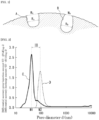
- silica may be used, in which the CTAB specific surface area (m 2 /g) (simply referred to as "CTAB" in formula (Y)) and the ink bottle-shaped pore index (IB) satisfy the relationship of the following formula (Y): IB ⁇ ⁇ 0.36 ⁇ CTAB + 86.8
- the CTAB specific surface area (m 2 /g) refers to a value measured in accordance with ASTM D3765-92.
- a cetyltrimethylammonium bromide (hereinafter abbreviated as CE-TRAB) standard solution is separately prepared instead of the standard product, IRB#3 (83.0 m 2 /g), and a silica OT (sodium di-2-ethylhexyl sulfosuccinate) solution is standardized using the above solution; and assuming the cross-sectional area of a CE-TRAB molecule adsorbed to the surface of silica to be 0.35 n m 2 , the specific surface area (m 2 /g) calculated from the amount of adsorption of CE-TRAB is defined as the CTAB value. This is because since carbon black and silica has a different surface, the amount of a cetyltrimethylammonium bromide (hereinafter abbreviated as CE-TRAB) standard solution is separately prepared instead of the
- M2 represents a diameter (nm) of an opening with which the mercury extrusion volume is the maximum when pressure is decreased from 32,000 PSI to 1 PSI, in the measurement.
- the measurement based on mercury porosimetry using mercury porosimeter is useful because it is easier than the measurement with an electron microscope which has been often used to evaluate the form of pores and offers excellent quantitative determination.
- FIG. 1 is a schematic view illustrating the shape of such pores in the radial cross-sectional direction of a particle of silica. Pores recessed in the radial cross-sectional direction of a particle have various shapes.
- Examples thereof include pore A in which diameter Ma of an opening on the outer surface of a particle is substantially the same as pore dimeter (inner diameter) Ra in the particle, i.e., a pore which is cylindrical in the radial cross-sectional direction of a particle, and pore B in which diameter Mb of an opening on the outer surface of a particle is smaller than pore dimeter (inner diameter) Rb in the particle, i.e., a pore which is ink bottle-shaped in the radial cross-sectional direction of a particle.
- pore B which is ink bottle-shaped in the radial cross-sectional direction of a particle
- molecular chains of rubber hardly enter the particle from the outer surface, and thus the molecular chain of rubber fails to adsorb silica sufficiently when silica is compounded into rubber components. Therefore, it is preferred that the number of ink bottle-shaped pores B be reduced and the number of pores A which are substantially cylindrical in the radial cross-sectional direction of a particle be increased. This may facilitate efficient entry of molecular chains of the rubber. Providing sufficient reinforcing effects can contribute to improvement in steering stability of a tire without increasing tan ⁇ .
- mercury intrusion-extrusion curves C - D in the measurement based on mercury porosimetry using a mercury porosimeter, hysteresis is generated in mercury intrusion-extrusion curves C - D. More specifically, in a relatively low pressure, mercury gradually intrudes into substantially cylindrical pores A, while at a certain pressure, mercury suddenly intrudes into pores including ink bottle-shaped pores B into which mercury hardly intrudes, in addition to the substantially cylindrical pores, and thus the intrusion volume is sharply increased, resulting in forming mercury intrusion curve C with differential mercury intrusion volume (-dV/d(log d)) on the vertical axis and diameter d (nm) of an opening of a pore of silica on the horizontal axis.
- silica used in the present invention preferably satisfies the above formula (Y) [IB ⁇ -0.36 ⁇ CTAB +86.8].
- Y formula (Y)
- the number of ink bottle-shaped pores B having a narrow opening is efficiently reduced to increase the abundance of substantially cylindrical pores A, enabling sufficient entry of molecular chain of rubber and adsorption of silica, providing sufficient reinforcing effects and improving steering stability without increasing rolling resistance of a tire.
- Silica satisfying formula (Y) has a CTAB specific surface area of preferably 200 m 2 /g or more, more preferably more than 200 m 2 /g, further preferably from 210 to 300 m 2 /g, still more preferably from 220 to 280 m 2 /g, and particularly preferably from 230 to 270 m 2 /g.
- a CTAB specific surface area of 200 m 2 /g or more improves storage modulus of the rubber composition, and further increases steering stability of a tire to which the rubber composition is applied.
- a CTAB specific surface area of 300 m 2 /g or less enables silica to be dispersed well in rubber components, improving processability of the rubber composition.
- Aliphatic hydrocarbon resins include petroleum resins produced by polymerization of C5 petroleum fraction.
- Examples of petroleum resins produced by using high purity 1,3-pentadiene as a main raw material include ZEON CORPORATION's trade name "Quintone 100" series (A100, B170, K100, M100, R100, N295, U190, S100, D100, U185, P195N, etc.).
- C5/C9 resins include C5/C9 synthetic petroleum resins, which are, for example, a solid polymer obtained by polymerizing from C5 to C11 fraction derived from petroleum using Friedel-Crafts catalyst such as AlCl 3 and BF 3 . Specific examples thereof include copolymers containing styrene, vinyl toluene, ⁇ -methylstyrene, indene, etc. as a main component. C5/C9 resins in which the amount of a component of C9 or more is small are preferred in consideration of the compatibility with diene polymers.
- C9 resins include C9 synthetic petroleum resins, which are a solid polymer obtained by polymerizing C9 fraction using Friedel-Crafts catalyst such as AlCl 3 and BF 3 . Examples thereof include copolymers containing indene, methylindene, ⁇ -methylstyrene, vinyl toluene, etc. as a main component.
- Phenols resins such as phenol-formaldehyde resin, resorcin-formaldehyde resin, and cresol-formaldehyde resin are preferred, and phenol-formaldehyde resin is particularly preferred.
- Terpene resins refer to resins produced by using naturally derived turpentine oil or orange oil as a main raw material. Examples thereof include Yasuhara Chemical's trade name “YS resin” series (PX-1250, TR-105, etc.), and Hercules' trade name “Piccolyte” series (A115, S115, etc.).
- acrylic resin examples include polymers of an alkyl acrylate such as methyl acrylate, ethyl acrylate, propyl acrylate, isopropyl acrylate, butyl acrylate, isobutyl acrylate, and hexyl acrylate, an alkyl methacrylate such as methyl methacrylate, ethyl methacrylate, butyl methacrylate, and hexyl methacrylate, and particularly include polymethyl methacrylate, polyethyl methacrylate, or polybutyl methacrylate.
- an alkyl acrylate such as methyl acrylate, ethyl acrylate, propyl acrylate, isopropyl acrylate, butyl acrylate, isobutyl acrylate, and hexyl acrylate
- an alkyl methacrylate such as methyl methacrylate, ethyl methacrylate, butyl methacrylate, and
- the rubber composition of the present invention may or may not include a softening agent.
- One or two or more liquid polymers may be used.
- the rubber composition of the present invention preferably contains a void introducing agent.
- vulcanized rubber When the rubber composition contains a void introducing agent, vulcanized rubber has voids on the surface or inside thereof or both on the surface and inside thereof. Thus, a tire obtained by using the vulcanized rubber has flexibility and becomes likely to be in close contact with an icy road surface. Additionally, water on the road surface is absorbed by the voids on the tire surface, and water is more likely to be removed from the ice snow road surface. Accordingly, on-ice brake performance can be improved.
- void introducing agent examples include foaming agents, metal sulfates, thermally expandable microcapsules, and porous cellulose particles. One alone or two or more of these may be used here either singly or in admixture. From the viewpoint of performance on ice, a foaming agent is preferably used.
- the content of the void introducing agent in the rubber composition is preferably from 0.1 to 20 parts by mass and more preferably from 1 to 10 parts by mass relative to 100 parts by mass of the rubber component.
- foaming agent in the rubber composition generates foam in vulcanized rubber in the vulcanization of the rubber composition, and the vulcanized rubber can be formed into foamed rubber.
- the flexibility of foamed rubber allows the surface of a tire using the vulcanized rubber to be in close contact with the icy road surface.
- foam creates foam-derived holes (foam pores) on the surface of vulcanized rubber and the surface of a tire, which serve as a water channel for draining water.
- foaming agent examples include azodicarbonamide (ADCA), dinitrosopentamethylenetetramine (DPT), dinitrosopentastyrenetetramine, benzenesulfonylhydrazide derivatives, p,p'-oxybisbenzenesulfonylhydrazide (OBSH), ammonium bicarbonate, sodium bicarbonate and ammonium carbonate which generate carbon dioxide, nitrososulfonylazo compounds which generate nitrogen, N,N'-dimethyl-N,N'-dinitrosophtalamide, toluenesulfonylhydrazide, p-toluenesulfonylsemicarbazide, and p,p'-oxybisbenzenesulfonylsemicarbazide.
- ADCA azodicarbonamide
- DPT dinitrosopentamethylenetetramine
- DPT dinitrosopentastyrenetetramine
- the content of the foaming agent in the rubber composition is preferably from 1 to 10 parts by mass, and more preferably from 2 to 8 parts by mass relative to 100 parts by mass of the rubber component.
- urea, zinc stearate, zinc benzenesulfinate, zinc oxide, etc. may also be used as foaming auxiliary. These may be used alone, or two or more of them may be used in combination. Using foaming auxiliary in combination facilitates foaming reaction to increase the degree of completion of the reaction, suppressing unnecessary degradation over time.
- Vulcanized rubber obtained by vulcanizing the rubber composition containing a foaming agent has a foaming ratio of usually from 1 to 50%, and preferably from 5 to 40%.
- a foaming agent is compounded and the foaming ratio is 50% or less, voids on the surface of rubber are not excessively enlarged to provide a sufficient ground contact area. Furthermore, the amount of foam is properly maintained while ensuring the generation of foam which effectively serve as a drain. Therefore, durability is less likely to be lost.
- the foaming ratio of vulcanized rubber means average foaming ratio Vs, which is specifically calculated by the following formula (1).
- Vs ⁇ 0 / ⁇ 1 ⁇ 1 ⁇ 100 %
- ⁇ 1 represents the density (g/cm 3 ) of vulcanized rubber (foamed rubber) and ⁇ 0 represents the density (g/cm 3 ) of the solid phase of the vulcanized rubber (foamed rubber).
- the mass of vulcanized rubber in ethanol and the mass of the vulcanized rubber in air are measured to calculate the density of the vulcanized rubber and the density of the solid phase of the vulcanized rubber.
- the foaming ratio may be appropriately changed according to the type, amount, etc. of foaming agent, foaming auxiliary, and the like.
- the metal sulfate projects from the surface of a tire obtained by vulcanizing the rubber composition to serve a claw function without a disadvantage of being abrasive. Subsequently, the metal sulfate gradually leaves from the rubber matrix to thereby generate voids, which function as a storage volume and a passage for discharging a water film on the ice surface. Under these conditions, the contact between the tire surface (e.g., tread surface) and the ice is no longer lubricated, and thus the coefficient of friction is improved.
- metal sulfate is magnesium sulfate.
- the metal sulfate is preferably micrometer-sized particles.
- the average particle size and the median particle size are preferably from 1 ⁇ m to 1 mm, and the median particle size is more preferably from 2 ⁇ m to 800 ⁇ m.
- the average particle size and the median particle size are 1 ⁇ m or more, the intended technical effect (i.e., formation of appropriate microroughness) is likely achieved.
- the average particle size and the median particle size are 1 mm or less, particularly in the case where the rubber composition is used as the tread, degradation in aesthetics is suppressed (extremely obvious appearance of particles on the tread surface can be suppressed.), and gripping performance on melt ice is unlikely to be impaired.
- the median particle size of the metal sulfate is preferably from 2 ⁇ m to 500 ⁇ m and more preferably from 5 to 200 ⁇ m. This particularly preferable particle size range seems to correspond to an optimal compromise between a desired surface roughness, on one hand, and a good contact of the rubber composition with ice, on the other hand.
- the content of the metal sulfate in the rubber composition is preferably from 5 to 40 parts by mass and more preferably from 10 to 35 parts by mass relative to 100 parts by mass of the rubber component.
- Particle size analysis by mechanical sieving may be simply and preferably used; the operation includes sieving a defined amount of sample (e.g., 200 g) on a vibrating table for 30 min with different sieve diameters (e.g., according to a progressive ratio equal to 1.26, with meshes of 1000, 800, 630, 500, 400, ... 100, 80, and 63 ⁇ m); the oversize collected in each sieve is weighed on a precision balance; the % of oversize for each mesh diameter with respect to the total weight of the substance is deduced from the weighed weight; in the end, the median particle size (or median diameter) or average particle size (or average diameter) is calculated in a known manner from the histogram of the particle size distribution.
- a defined amount of sample e.g. 200 g
- different sieve diameters e.g., according to a progressive ratio equal to 1.26, with meshes of 1000, 800, 630, 500, 400, ... 100, 80, and 63 ⁇ m
- the thermally expandable microcapsules each have a structure in which a thermally expandable substance is encapsulated in a shell material formed from a thermoplastic resin.
- the shell material of the thermally expandable microcapsules can be formed from a nitrile-based polymer.
- the thermally expandable substance encapsulated in the shell material of the microcapsules has a property of vaporizing or expanding by heat, and an example thereof is at least one type selected from the group consisting of hydrocarbons such as isoalkanes and normal alkanes.
- hydrocarbons such as isoalkanes and normal alkanes.
- isoalkanes include isobutane, isopentane, 2-methylpentane, 2-methylhexane, and 2,2,4-trimethylpentane
- normal alkanes include n-butane, n-propane, n-hexane, n-heptane, and n-octane.
- One alone or a plurality of these hydrocarbons may be used singly or in combination.
- the content of the thermally expandable microcapsules in the rubber composition is preferably from 0.1 to 10 parts by mass and more preferably from 0.5 to 5 parts by mass relative to 100 parts by mass of the rubber component.
- the rubber composition contains porous cellulose particles
- the porous cellulose particles are exposed on the surface of a tire obtained by vulcanizing the rubber composition
- water on an ice snow road is absorbed by the porous cellulose particles to thereby enable the water between the tire and the road surface to be removed.
- the presence of cellulose as a polysaccharide generates an interaction between the tire and the water on the ice snow road.
- the interaction between the tire and the water by a modified polyoxyalkylene glycol can be further improved.
- the porous cellulose particles are cellulose particles having a porous structure of which porosity is from 75 to 95%, and when the porous cellulose particles are added to the rubber composition, performance on ice can be markedly improved.
- porosity of the porous cellulose particles is 75% or more, the effect of improving performance on ice is excellent.
- porosity is 95% or less, strength of the particles can be increased.
- the porosity is more preferably from 80 to 90%.
- the true specific gravity of the cellulose is 1.5
- Spherical particles having a ratio of long diameter/short diameter of from 1 to 2 are preferably used as the porous cellulose particles.
- the ratio of long diameter/short diameter is more preferably from 1.0 to 1.5.
- the average particle diameter of the porous cellulose particles and the ratio of long diameter/short diameter thereof are obtained as follows. That is, the porous cellulose particles are observed with a microscope to obtain an image. Using the image, the long diameter and short diameter (in the case where the long diameter and short diameter are the same, a length in a certain axis direction and a length in an axis direction perpendicular to the certain axis direction) are measured in 100 particles, and its average value is calculated. Thus, the average particle diameter is obtained. Furthermore, the ratio of long diameter/short diameter is obtained from the average value of values obtained by dividing the long diameter by the short diameter.
- the content of the porous cellulose particles in the rubber composition is preferably from 0.3 to 20 parts by mass relative to 100 parts by mass of the rubber component.
- the content of the porous cellulose particles is more preferably from 1 to 15 parts by weight and further preferably from 3 to 15 parts by mass.
- the rubber composition may contain hydrophilic short fiber.
- the rubber composition includes hydrophilic short fiber
- long foam appears in a tire (more specifically, tread) after vulcanizing the rubber composition; and as the tire wears, the long foam is exposed to the surface of the tire to form a void, playing a role of a drain which effectively drains water.
- the void may be in the form of a hole, a dent or a groove.
- the hydrophilicity of the short fiber allows water to be easily absorbed in the void on the surface of a tire resulting from the short fiber.
- hydrophilic short fiber refers to short fiber which has a contact angle with water of from 5 to 80 degrees.
- the contact angle of the hydrophilic short fiber with water may be determined by measuring the angle that a line formed by the surface of a specimen makes with a tangent to the surface of a water droplet, when the specimen is prepared by forming hydrophilic short fiber into a smooth plate, and water is dropped on the surface of the specimen using an automatic contact angle meter, DM-301 made by Kyowa Interface Science, in the condition of 25°C and a relative humidity of 55%, and immediately after that the specimen is observed from the side.
- DM-301 automatic contact angle meter
- a resin having a hydrophilic group in a molecule may be used as the hydrophilic short fiber. More specifically, a resin having at least one selected from an oxygen atom, a nitrogen atom and a sulfur atom is preferred. Examples thereof include a resin having at least one substituent selected from the group consisting of -OH, -COOH, -OCOR (R is alkyl group), -NH 2 , -NCO and -SH. Of these substituents, -OH, -COOH, -OCOR, -NH 2 and -NCO are preferred.
- the hydrophilic resin has a small contact angle with water and has affinity to water, while the resin is insoluble in water.
- the insolubility of the hydrophilic resin in water prevents the hydrophilic resin from being dissolved in water when water is attached to the surface of vulcanized rubber and the surface of a tire, allowing the water absorbing power of voids resulting from the short fiber to be maintained.
- hydrophilic resin having a small contact angle with water and insoluble in water examples include ethylene-vinyl alcohol copolymer, vinyl alcohol homopolymer, poly(meth)acrylic acid resin, or resin made of an ester thereof, polyamide resin, polyethylene glycol resin, carboxyvinyl copolymer, styrene-maleic acid copolymer, polyvinylpyrrolidone resin, vinyl pyrrolidone-vinyl acetate copolymer, and mercaptoethanol.
- At least one resin selected from the group consisting of ethylene-vinyl alcohol copolymer, vinyl alcohol homopolymer, poly(meth)acrylic acid resin, polyamide resin, aliphatic polyamide resin, aromatic polyamide resin, polyester resin, polyolefin resin, polyvinyl alcohol resin and acrylic resin is preferred, and ethylene-vinyl alcohol copolymer is more preferred.
- the shape of the short fiber is not particularly limited and may be appropriately selected according to the purpose.
- the short fiber has a length of preferably from 0.1 to 10 mm, more preferably from 0.5 to 5 mm in the longitudinal direction in average of 100 pieces of the short fiber.
- long foam which can serve as a micro-drain can be efficiently formed in the vulcanized rubber prepared by vulcanizing the rubber composition including the short fiber.
- the short fiber has a mean diameter (D) of preferably from 10 to 200 ⁇ m, more preferably from 20 to 100 ⁇ m in average of 100 pieces of the short fiber.
- the content of the short fiber in the rubber composition is preferably from 0.1 to 10 parts by mass and more preferably from 0.5 to 5 parts by mass relative to 100 parts by mass of the rubber component.
- the rubber composition of the present invention preferably includes a vulcanizing agent.
- the vulcanizing agent is not particularly limited, and sulfur is usually used. Examples thereof include powdered sulfur, precipitated sulfur, colloidal sulfur, surface treated sulfur, and insoluble sulfur.
- the content of the vulcanizing agent in the rubber composition of the present invention is preferably from 0.1 to 10 parts by mass relative to 100 parts by mass of the rubber component.
- a content of vulcanizing agent of 0.1 part by mass or more allows vulcanization to proceed thoroughly, and a content of 10 parts by mass or less suppresses aging of vulcanized rubber.
- the content of the vulcanizing agent in the rubber composition is more preferably from 0.5 to 8 parts by mass, and further preferably from 1 to 6 parts by mass relative to 100 parts by mass of the rubber component.
- the rubber composition of the present invention may contain other components, in addition to the rubber component, filler, silane coupling agent, resin, softening agent, void introducing agent, and vulcanizing agent described above.
- compounding agents usually used in the rubber industry such as stearic acid, antioxidant, zinc oxide, foaming auxiliary, and vulcanization accelerator may be appropriately selected and included in an amount that does not impair the object of the present invention.
- the rubber composition of the present invention may be prepared by compounding and kneading the above components using a kneader such as a Banbury mixer, a roll, or an internal mixer.
- a kneader such as a Banbury mixer, a roll, or an internal mixer.
- the compounding amount of the rubber component, filler, and others is the same as the content in the rubber component described above.
- the respective components may be kneaded in a step, or two or more divided steps.
- methods of kneading components in two steps include a method in which a rubber component, filler, resin, silane coupling agent, hydrophilic short fiber, and other components to be compounded except for a vulcanizing agent and a foaming agent are kneaded in the first step, and the vulcanizing agent and the foaming agent are kneaded in the second step.
- the maximum temperature of the first step of kneading is preferably from 130 to 170°C, and the maximum temperature of the final step is preferably from 90 to 120°C.
- the rubber composition of the present invention has, as vulcanized rubber properties, an elastic modulus at -20°C (G') of from 3.5 to 7.8 MPa and tan ⁇ at - 20°C of from 0.25 to 0.35.
- the vulcanized rubber prepared by vulcanizing the rubber composition of the present invention has the properties described above, a tire to be obtained using the vulcanized rubber is excellent in performance on ice, steering stability, fuel consumption efficiency, and fracture resistance.
- the elastic modulus at -20°C (G') is preferably from 4.0 to 6.6 MPa, more preferably from 4.1 to 6.1 MPa, and further preferably from 4.3 to 6.0 MPa.
- tan ⁇ at -20°C is preferably from 0.25 to 0.35, more preferably from 0.27 to 0.35, and further preferably from 0.29 to 0.35.
- the elastic modulus at -20°C (G') and tan ⁇ at -20°C of the vulcanized rubber can be adjusted by an increase or decrease in the mass of the rubber component, in particular, an increase or decrease in the mass of the natural rubber, polybutadiene rubber, and styrene-butadiene copolymer rubber in the rubber component; the microstructure of the polybutadiene rubber and styrene-butadiene copolymer rubber; an increase and decrease in the mass of the filler; an increase and decrease in the mass of the liquid polymer and acrylic resin, and the like.
- the vulcanized rubber and the tire of the present invention are prepared using the rubber composition of the present invention.
- the vulcanized rubber of the present invention is prepared by vulcanizing the rubber composition of the present invention.
- the tire may be prepared by molding the rubber composition of the present invention and then vulcanizing according to the type, members and the like of the tire to which the rubber composition is applied. Alternatively, it may be prepared by, for example, the step of preliminary vulcanization to obtain a semi-vulcanized rubber from the rubber composition, and molding the same and then subjecting it to main vulcanization.
- the rubber composition is preferably applied to a tread member, in particular, a tread member of a studless tire, of various members of a tire.
- the tire may be charged with usual air or air with controlled oxygen partial pressure, or inert gas such as nitrogen, argon and helium.
- the vulcanized rubber and the tire of the present invention preferably have voids.
- the rubber composition contains a void introducing agent
- voids can be provided on the surface or inside of the vulcanized rubber.
- the void introducing agent is a foaming agent
- the foaming agent is foamed in the process of vulcanization of the rubber composition to thereby enable voids to be provided in the vulcanized rubber.
- the void introducing agent is hydrophilic short fiber
- the hydrophilic short fiber falls off from the vulcanized rubber or the hydrophilic short fiber melts to thereby enable voids to be provided on the surface or inside of the vulcanized rubber.
- the vulcanized rubber and the tire have a foaming ratio of usually from 1 to 50%, and preferably from 5 to 40%.
- foaming ratio is in the above range, foam pores on the surface of the tire are not excessively enlarged to provide a sufficient ground contact area; and since the amount of foam is properly maintained while ensuring the generation of foam pores which effectively serve as a drain, durability is less likely to be lost.
- the foaming ratio of the tire is calculated by the formula (1) described above.
- the components to be compounded in the rubber composition were kneaded according to the compounding formulation shown in Tables 1 to 3 by using a Banbury mixer to prepare a sample rubber composition.
- Sulfur which is a vulcanizing agent, and a vulcanization accelerator were compounded at the final stage of kneading.
- 2.28 ml (0.025 mmol as neodymium) of the solution of catalyst prepared in (1) above was put into the bottle, and polymerization was carried out in a warm water bath at 50°C for 1.0 hour to give an intermediate polymer.
- the resulting polymer had a microstructure with a cis-1,4 bond content of 95.5%, a trans-1,4 bond content of 3.9%, and a vinyl bond content of 0.6%.
- a hexane solution of 3-glycidoxypropyltrimethoxysilane at a concentration of 1.0 mol/L was added to the polymer solution prepared in above (2) so that the amount of 3-glycidoxypropyltrimethoxysilane was 23.5 molar equivalents relative to neodymium to perform modification at 50°C for 60 minutes.
- sorbitan trioleate available from Kanto Kagaku
- 2 mL of an isopropanol 5 mass % solution of an antioxidant 2,2'-methylene-bis(4-ethyl-6-t-butyl phenol) (NS-5) was added to the polymerization system to stop the reaction, and the reaction mixture was reprecipitated in isopropanol containing a small amount of NS-5, and then dried in a drum drier to give modified polybutadiene (modified BR1).
- the modified BR1 did not contain macrogel and had a Mooney viscosity at 100°C (ML1+4, 100°C) of 59.
- the microstructure after the modification was the same as that of the above intermediate polymer.
- polystyrene resin Some of the polymer solution was drawn into a methanol solution containing 1.3 g of 2,6-di-tert-butyl-p-cresol to stop the polymerization, and then the solvent was removed by steam stripping, and the resultant was dried using a roll at 110°C to give polybutadiene before modification.
- the resulting polybutadiene before modification was measured for the microstructure (vinyl bond content), and as a result, the vinyl bond content was 30% by mass.
- the polymer solution obtained in (1) was kept at a temperature of 50°C without deactivation of the polymerization catalyst, and 1,129 mg (3.364 mmol) of N,N-bis(trimethylsilyl) aminopropylmethyldiethoxysilane having a protected primary amino group was added thereto to perform the reaction of modification for 15 minutes. Subsequently, 8.11 g of tetrakis(2-ethyl-1,3-hexanediolato) titanium, which is a condensation accelerator, was added thereto and the mixture was further stirred for 15 minutes.
- the microstructure (vinyl bond content) of the intermediate polymer, the non-modified polybutadiene and the modified polybutadiene was measured by an infrared method (the Morello method).
- a cyclohexane solution of 1,3-butadiene and a cyclohexane solution of styrene were put into a dried, nitrogen-purged, pressure-tight glass container having a volume of 800 mL, in such a manner that the amount of 1,3-butadiene therein could be 67.5 g and that of styrene could be 7.5 g.
- 0.6 mmol of 2,2-ditetrahydrofurylpropane and 0.8 mmol of n-butyllithium were further added thereto, and then polymerization was performed at 50°C for 1.5 hours.
- the bound styrene content of the polymer used as the rubber composition was determined from the integral ratio in the 1 H-NMR spectrum.
- the ratio of vinyl bond content vi (%) in the rubber component to content a (parts by mass) of the rubber component (vi/a) was calculated by the formula described above: [(a b ⁇ vi b ) + (a sb ⁇ vi sb )]/a. The ratio is shown in the row of "vi/a" in Tables 2 and 3.
- the same aqueous solution of sodium silicate as described above and sulfuric acid (18 mol/L) were simultaneously added dropwise to the reaction solution at flow rates of 520 mL/minute and 23 mL/minute, respectively, with the temperature of the reaction solution kept at 75°C.
- the neutralization reaction was carried out, while maintaining the Na 2 O concentration in the reaction solution within the range of from 0.005 mol/L to 0.035 mol/L by adjusting the flow rates.
- the reaction solution started becoming clouded amid the reaction. In 46 minutes, the viscosity increased, and the solution turned into a gelled solution. Addition was further continued, and the reaction was stopped at 100 minutes.
- the silica concentration in the resulting solution was 60 g/L.
- the CTAB specific surface area of silica 1 was 180 m 2 /g.
- the CTAB specific surface area of silica 1 was conducted in compliance with the method described in ASTM D3765-92.
- a standard carbon black product IRB#3 (83.0 m 2 /g) was not used, and a cetyltrimethylammonium bromide (hereinafter, abbreviated as CE-TRAB) standard solution was prepared separately.
- CE-TRAB cetyltrimethylammonium bromide
- a hydrated silicic acid OT sodium di-2-ethylhexylsulfosuccinate
- the rubber composition prepared was used for tread to produce a test tire (tire size 195/65R15) by a usual method.
- the rubber composition prepared are used for tread to produce a test tire (tire size 195/65R15) by a usual method.
Landscapes
- Chemical & Material Sciences (AREA)
- Health & Medical Sciences (AREA)
- Chemical Kinetics & Catalysis (AREA)
- Medicinal Chemistry (AREA)
- Polymers & Plastics (AREA)
- Organic Chemistry (AREA)
- General Chemical & Material Sciences (AREA)
- Engineering & Computer Science (AREA)
- Mechanical Engineering (AREA)
- Compositions Of Macromolecular Compounds (AREA)
- Tires In General (AREA)
Claims (10)
- Kautschukzusammensetzung umfassend:eine Kautschukkomponente umfassend einen Naturkautschuk, einen Polybutadien-Kautschuk und einen Styrol-Butadien-Copolymer-Kautschuk.mehr als 60 Masseteile eines Füllstoffs im Verhältnis zu 100 Masseteilen der Kautschukkomponente undmindestens eines ausgewählt aus der Gruppe bestehend aus einem flüssigen Polymer und einem Acrylharz, wobeidie Masse n des Naturkautschuks in der Kautschukkomponente 40 Masse-% oder mehr beträgt,die Masse n, eine Masse b des Polybutadien-Kautschuks und eine Masse s des Styrol-Butadien-Copolymer-Kautschuks die Beziehung s ≤ b ≤ n erfüllen, vorausgesetzt, dass, wenn n = b, s < b,das Verhältnis der Masse b zu der Masse s (b/s) 1,0 bis 2,0 beträgt,das Verhältnis des Vinylbindungsgehalts vi (%) der Kautschukkomponente, wie durch ein Infrarotverfahren gemessen, zu dem Gehalt a der Kautschukkomponente [vi/a] 8 oder mehr beträgt, wie dem Verfahren, wie in der vorliegenden Beschreibung offenbart, entsprechend gemessen, undals Eigenschaften von vulkanisiertem Kautschuk, der Elastizitätsmodul bei -20 °C 3,5 bis 7,8 MPa beträgt, und tanδ bei -20 °C 0,250 bis 0,350 beträgt, wie den Verfahren, wie in der vorliegenden Beschreibung beschrieben, entsprechend gemessen.
- Kautschukzusammensetzung nach Anspruch 1, wobei der Füllstoff Siliciumdioxid umfasst.
- Kautschukzusammensetzung nach Anspruch 2, wobei das Siliciumdioxid einen für Cetyltrimethylammoniumbromid spezifischen Oberflächenbereich von 160 m2/g oder mehr, wie ASTM D3765-92 entsprechend gemessen, aufweist.
- Kautschukzusammensetzung nach Anspruch 2 oder 3, wobei der Polybutadien-Kautschuk und der Styrol-Butadien-Copolymer-Kautschuk jeder silanmodifiziert ist.
- Kautschukzusammensetzung nach einem der Ansprüche 1 bis 4, wobei der Polybutadien-Kautschuk ein Hoch-cis-Polybutadien-Kautschuk ist, der einen cis-1,4-Bindungsgehalt in einer 1,3-Butadieneinheit von 90 % oder mehr aufweist.
- Kautschukzusammensetzung nach einem der Ansprüche 1 bis 5, ferner ein hohlraumeinführendes Mittel umfassend.
- Kautschukzusammensetzung nach Anspruch 6, wobei das hohlraumeinführende Mittel mindestens eines ist ausgewählt aus der Gruppe bestehend aus einem Schäummittel, einem Metallsulfat, thermisch expandierbaren Mikrokapseln und porösen Cellulosepartikeln.
- Vulkanisierter Kautschuk, der durch Vulkanisieren der Kautschukzusammensetzung nach einem der Ansprüche 1 bis 7 erhalten wird.
- Vulkanisierter Kautschuk nach Anspruch 8, der Hohlräume aufweist.
- Reifen, der unter Anwendung des vulkanisierten Kautschuks nach Anspruch 8 oder 9 erhalten wird.
Applications Claiming Priority (2)
| Application Number | Priority Date | Filing Date | Title |
|---|---|---|---|
| JP2018215881 | 2018-11-16 | ||
| PCT/JP2019/042981 WO2020100627A1 (ja) | 2018-11-16 | 2019-11-01 | ゴム組成物、加硫ゴム及びタイヤ |
Publications (3)
| Publication Number | Publication Date |
|---|---|
| EP3882045A1 EP3882045A1 (de) | 2021-09-22 |
| EP3882045A4 EP3882045A4 (de) | 2022-07-27 |
| EP3882045B1 true EP3882045B1 (de) | 2025-03-26 |
Family
ID=70730515
Family Applications (1)
| Application Number | Title | Priority Date | Filing Date |
|---|---|---|---|
| EP19883943.3A Active EP3882045B1 (de) | 2018-11-16 | 2019-11-01 | Kautschukzusammensetzung, vulkanisierter kautschuk und reifen |
Country Status (5)
| Country | Link |
|---|---|
| EP (1) | EP3882045B1 (de) |
| JP (1) | JP7398387B2 (de) |
| CN (1) | CN113039075B (de) |
| FI (1) | FI3882045T3 (de) |
| WO (1) | WO2020100627A1 (de) |
Families Citing this family (7)
| Publication number | Priority date | Publication date | Assignee | Title |
|---|---|---|---|---|
| JP2021143235A (ja) * | 2020-03-10 | 2021-09-24 | 住友ゴム工業株式会社 | タイヤトレッド用ゴム組成物、タイヤトレッドおよび乗用車用タイヤ |
| JP7255581B2 (ja) * | 2020-11-11 | 2023-04-11 | 住友ゴム工業株式会社 | エラストマー組成物及びタイヤ |
| WO2022254749A1 (ja) * | 2021-05-31 | 2022-12-08 | 株式会社ブリヂストン | 加硫ゴム組成物及びタイヤ |
| EP4349902A4 (de) * | 2021-05-31 | 2024-10-09 | Bridgestone Corporation | Kautschukzusammensetzung und reifen |
| US20240279440A1 (en) * | 2021-05-31 | 2024-08-22 | Bridgestone Corporation | Rubber composition and tire |
| JP7692335B2 (ja) * | 2021-11-16 | 2025-06-13 | 株式会社ブリヂストン | ゴム組成物、トレッド及びタイヤ |
| JP2023074307A (ja) * | 2021-11-17 | 2023-05-29 | 住友ゴム工業株式会社 | タイヤ用ゴム組成物及びタイヤ |
Family Cites Families (18)
| Publication number | Priority date | Publication date | Assignee | Title |
|---|---|---|---|---|
| JP2001323095A (ja) | 2000-05-12 | 2001-11-20 | Rengo Co Ltd | 多孔性セルロース粒子、機能性粒子及びこれらを用いた化粧品 |
| JP2004115284A (ja) | 2002-09-24 | 2004-04-15 | Rengo Co Ltd | セラミックス多孔化材及びこれを用いたセラミックスの多孔化方法 |
| JP2008120937A (ja) * | 2006-11-14 | 2008-05-29 | Bridgestone Corp | タイヤトレッド用ゴム組成物 |
| JP5756248B2 (ja) * | 2008-04-28 | 2015-07-29 | 株式会社ブリヂストン | タイヤ |
| JP5293105B2 (ja) * | 2008-11-18 | 2013-09-18 | 株式会社ブリヂストン | ホース内管用ゴム組成物及び油圧ホース |
| JP2010168469A (ja) * | 2009-01-22 | 2010-08-05 | Bridgestone Corp | タイヤ |
| JP2010254858A (ja) * | 2009-04-27 | 2010-11-11 | Bridgestone Corp | ゴム組成物及びそれを用いた冬用タイヤ |
| JP2011088988A (ja) * | 2009-10-21 | 2011-05-06 | Bridgestone Corp | タイヤ |
| JP5701134B2 (ja) | 2011-04-13 | 2015-04-15 | 株式会社ブリヂストン | ゴム組成物、加硫ゴム、及びそれらを用いたタイヤ |
| JP6010060B2 (ja) * | 2014-02-21 | 2016-10-19 | 住友ゴム工業株式会社 | タイヤ用ゴム組成物、及び空気入りタイヤ |
| US10369843B2 (en) * | 2014-11-07 | 2019-08-06 | Sumitomo Rubber Industries, Ltd. | Production method of rubber composition for tire and tire |
| JP6809778B2 (ja) * | 2015-06-03 | 2021-01-06 | 株式会社ブリヂストン | ゴム組成物の製造方法及びタイヤ |
| CN108350231A (zh) * | 2015-11-05 | 2018-07-31 | 株式会社普利司通 | 橡胶组合物和轮胎 |
| US10611899B2 (en) * | 2016-01-19 | 2020-04-07 | Bridgestone Corporation | Rubber composition and tire |
| CN108473723B (zh) * | 2016-01-19 | 2020-06-26 | 株式会社普利司通 | 橡胶组合物和轮胎 |
| JP6862893B2 (ja) * | 2017-02-16 | 2021-04-21 | 横浜ゴム株式会社 | スタッドレスタイヤ用ゴム組成物 |
| CN111465645B (zh) * | 2017-12-15 | 2022-11-15 | 株式会社普利司通 | 橡胶组合物和充气轮胎 |
| JP7053089B2 (ja) * | 2017-12-15 | 2022-04-12 | 株式会社ブリヂストン | ゴム組成物、加硫ゴム及びタイヤ |
-
2019
- 2019-11-01 EP EP19883943.3A patent/EP3882045B1/de active Active
- 2019-11-01 JP JP2020556035A patent/JP7398387B2/ja active Active
- 2019-11-01 WO PCT/JP2019/042981 patent/WO2020100627A1/ja not_active Ceased
- 2019-11-01 FI FIEP19883943.3T patent/FI3882045T3/fi active
- 2019-11-01 CN CN201980074841.8A patent/CN113039075B/zh active Active
Also Published As
| Publication number | Publication date |
|---|---|
| JPWO2020100627A1 (ja) | 2021-09-30 |
| EP3882045A1 (de) | 2021-09-22 |
| CN113039075A (zh) | 2021-06-25 |
| JP7398387B2 (ja) | 2023-12-14 |
| WO2020100627A1 (ja) | 2020-05-22 |
| CN113039075B (zh) | 2024-02-06 |
| EP3882045A4 (de) | 2022-07-27 |
| FI3882045T3 (fi) | 2025-06-17 |
Similar Documents
| Publication | Publication Date | Title |
|---|---|---|
| EP3882045B1 (de) | Kautschukzusammensetzung, vulkanisierter kautschuk und reifen | |
| JP7305674B2 (ja) | ゴム組成物、加硫ゴム及びタイヤ | |
| EP3725837A1 (de) | Kautschukzusammensetzung, vulkanisierter kautschuk und reifen | |
| JPWO2017126633A1 (ja) | ゴム組成物及びタイヤ | |
| US11530318B2 (en) | Rubber composition and pneumatic tire | |
| EP4000955B1 (de) | Reifen | |
| JP2020019862A (ja) | ゴム組成物、加硫ゴム及び空気入りタイヤ | |
| US20190185642A1 (en) | Rubber composition, vulcanized rubber, and tire | |
| US20200291206A1 (en) | Rubber composition, vulcanized rubber, and tire | |
| WO2023243129A1 (ja) | タイヤ用ゴム組成物及びタイヤ | |
| EP4360905A1 (de) | Vulkanisierte kautschukzusammensetzung und reifen | |
| JP6911285B2 (ja) | 空気入りタイヤ | |
| JP2023183856A (ja) | タイヤ用加硫ゴム組成物及びタイヤ | |
| RU2781874C2 (ru) | Резиновая композиция, вулканизированная резина и шина | |
| JP7483587B2 (ja) | タイヤ用ゴム組成物、トレッドゴム及び冬用タイヤ | |
| JP7774050B2 (ja) | ゴム組成物及びタイヤ | |
| WO2026029025A1 (ja) | タイヤ用加硫ゴム及びタイヤ | |
| WO2026029015A1 (ja) | タイヤ用加硫ゴム及びタイヤ | |
| JP7039895B2 (ja) | スタッドレスタイヤ |
Legal Events
| Date | Code | Title | Description |
|---|---|---|---|
| STAA | Information on the status of an ep patent application or granted ep patent |
Free format text: STATUS: THE INTERNATIONAL PUBLICATION HAS BEEN MADE |
|
| PUAI | Public reference made under article 153(3) epc to a published international application that has entered the european phase |
Free format text: ORIGINAL CODE: 0009012 |
|
| STAA | Information on the status of an ep patent application or granted ep patent |
Free format text: STATUS: REQUEST FOR EXAMINATION WAS MADE |
|
| 17P | Request for examination filed |
Effective date: 20210513 |
|
| AK | Designated contracting states |
Kind code of ref document: A1 Designated state(s): AL AT BE BG CH CY CZ DE DK EE ES FI FR GB GR HR HU IE IS IT LI LT LU LV MC MK MT NL NO PL PT RO RS SE SI SK SM TR |
|
| DAV | Request for validation of the european patent (deleted) | ||
| DAX | Request for extension of the european patent (deleted) | ||
| A4 | Supplementary search report drawn up and despatched |
Effective date: 20220623 |
|
| RIC1 | Information provided on ipc code assigned before grant |
Ipc: C08L 15/00 20060101ALN20220617BHEP Ipc: C08K 3/36 20060101ALN20220617BHEP Ipc: C08L 9/00 20060101ALI20220617BHEP Ipc: C08K 3/013 20180101ALI20220617BHEP Ipc: C08L 9/06 20060101ALI20220617BHEP Ipc: C08L 7/00 20060101ALI20220617BHEP Ipc: B60C 1/00 20060101AFI20220617BHEP |
|
| GRAP | Despatch of communication of intention to grant a patent |
Free format text: ORIGINAL CODE: EPIDOSNIGR1 |
|
| STAA | Information on the status of an ep patent application or granted ep patent |
Free format text: STATUS: GRANT OF PATENT IS INTENDED |
|
| RIC1 | Information provided on ipc code assigned before grant |
Ipc: C08L 15/00 20060101ALN20240930BHEP Ipc: C08K 3/36 20060101ALN20240930BHEP Ipc: C08L 9/00 20060101ALI20240930BHEP Ipc: C08K 3/013 20180101ALI20240930BHEP Ipc: C08L 9/06 20060101ALI20240930BHEP Ipc: C08L 7/00 20060101ALI20240930BHEP Ipc: B60C 1/00 20060101AFI20240930BHEP |
|
| INTG | Intention to grant announced |
Effective date: 20241016 |
|
| P01 | Opt-out of the competence of the unified patent court (upc) registered |
Free format text: CASE NUMBER: APP_59629/2024 Effective date: 20241104 |
|
| GRAS | Grant fee paid |
Free format text: ORIGINAL CODE: EPIDOSNIGR3 |
|
| GRAA | (expected) grant |
Free format text: ORIGINAL CODE: 0009210 |
|
| STAA | Information on the status of an ep patent application or granted ep patent |
Free format text: STATUS: THE PATENT HAS BEEN GRANTED |
|
| AK | Designated contracting states |
Kind code of ref document: B1 Designated state(s): AL AT BE BG CH CY CZ DE DK EE ES FI FR GB GR HR HU IE IS IT LI LT LU LV MC MK MT NL NO PL PT RO RS SE SI SK SM TR |
|
| REG | Reference to a national code |
Ref country code: GB Ref legal event code: FG4D |
|
| REG | Reference to a national code |
Ref country code: CH Ref legal event code: EP |
|
| REG | Reference to a national code |
Ref country code: DE Ref legal event code: R096 Ref document number: 602019067920 Country of ref document: DE |
|
| REG | Reference to a national code |
Ref country code: IE Ref legal event code: FG4D |
|
| REG | Reference to a national code |
Ref country code: SE Ref legal event code: TRGR |
|
| REG | Reference to a national code |
Ref country code: FI Ref legal event code: FGE |
|
| PG25 | Lapsed in a contracting state [announced via postgrant information from national office to epo] |
Ref country code: RS Free format text: LAPSE BECAUSE OF FAILURE TO SUBMIT A TRANSLATION OF THE DESCRIPTION OR TO PAY THE FEE WITHIN THE PRESCRIBED TIME-LIMIT Effective date: 20250626 |
|
| REG | Reference to a national code |
Ref country code: LT Ref legal event code: MG9D |
|
| PG25 | Lapsed in a contracting state [announced via postgrant information from national office to epo] |
Ref country code: NO Free format text: LAPSE BECAUSE OF FAILURE TO SUBMIT A TRANSLATION OF THE DESCRIPTION OR TO PAY THE FEE WITHIN THE PRESCRIBED TIME-LIMIT Effective date: 20250626 |
|
| PG25 | Lapsed in a contracting state [announced via postgrant information from national office to epo] |
Ref country code: HR Free format text: LAPSE BECAUSE OF FAILURE TO SUBMIT A TRANSLATION OF THE DESCRIPTION OR TO PAY THE FEE WITHIN THE PRESCRIBED TIME-LIMIT Effective date: 20250326 |
|
| PG25 | Lapsed in a contracting state [announced via postgrant information from national office to epo] |
Ref country code: LV Free format text: LAPSE BECAUSE OF FAILURE TO SUBMIT A TRANSLATION OF THE DESCRIPTION OR TO PAY THE FEE WITHIN THE PRESCRIBED TIME-LIMIT Effective date: 20250326 |
|
| PG25 | Lapsed in a contracting state [announced via postgrant information from national office to epo] |
Ref country code: GR Free format text: LAPSE BECAUSE OF FAILURE TO SUBMIT A TRANSLATION OF THE DESCRIPTION OR TO PAY THE FEE WITHIN THE PRESCRIBED TIME-LIMIT Effective date: 20250627 Ref country code: BG Free format text: LAPSE BECAUSE OF FAILURE TO SUBMIT A TRANSLATION OF THE DESCRIPTION OR TO PAY THE FEE WITHIN THE PRESCRIBED TIME-LIMIT Effective date: 20250326 |
|
| REG | Reference to a national code |
Ref country code: NL Ref legal event code: MP Effective date: 20250326 |
|
| PG25 | Lapsed in a contracting state [announced via postgrant information from national office to epo] |
Ref country code: NL Free format text: LAPSE BECAUSE OF FAILURE TO SUBMIT A TRANSLATION OF THE DESCRIPTION OR TO PAY THE FEE WITHIN THE PRESCRIBED TIME-LIMIT Effective date: 20250326 |
|
| REG | Reference to a national code |
Ref country code: AT Ref legal event code: MK05 Ref document number: 1778709 Country of ref document: AT Kind code of ref document: T Effective date: 20250326 |
|
| PG25 | Lapsed in a contracting state [announced via postgrant information from national office to epo] |
Ref country code: SM Free format text: LAPSE BECAUSE OF FAILURE TO SUBMIT A TRANSLATION OF THE DESCRIPTION OR TO PAY THE FEE WITHIN THE PRESCRIBED TIME-LIMIT Effective date: 20250326 |
|
| PG25 | Lapsed in a contracting state [announced via postgrant information from national office to epo] |
Ref country code: PT Free format text: LAPSE BECAUSE OF FAILURE TO SUBMIT A TRANSLATION OF THE DESCRIPTION OR TO PAY THE FEE WITHIN THE PRESCRIBED TIME-LIMIT Effective date: 20250728 Ref country code: ES Free format text: LAPSE BECAUSE OF FAILURE TO SUBMIT A TRANSLATION OF THE DESCRIPTION OR TO PAY THE FEE WITHIN THE PRESCRIBED TIME-LIMIT Effective date: 20250326 |
|
| PG25 | Lapsed in a contracting state [announced via postgrant information from national office to epo] |
Ref country code: PL Free format text: LAPSE BECAUSE OF FAILURE TO SUBMIT A TRANSLATION OF THE DESCRIPTION OR TO PAY THE FEE WITHIN THE PRESCRIBED TIME-LIMIT Effective date: 20250326 Ref country code: IT Free format text: LAPSE BECAUSE OF FAILURE TO SUBMIT A TRANSLATION OF THE DESCRIPTION OR TO PAY THE FEE WITHIN THE PRESCRIBED TIME-LIMIT Effective date: 20250326 |
|
| PG25 | Lapsed in a contracting state [announced via postgrant information from national office to epo] |
Ref country code: AT Free format text: LAPSE BECAUSE OF FAILURE TO SUBMIT A TRANSLATION OF THE DESCRIPTION OR TO PAY THE FEE WITHIN THE PRESCRIBED TIME-LIMIT Effective date: 20250326 |
|
| PG25 | Lapsed in a contracting state [announced via postgrant information from national office to epo] |
Ref country code: EE Free format text: LAPSE BECAUSE OF FAILURE TO SUBMIT A TRANSLATION OF THE DESCRIPTION OR TO PAY THE FEE WITHIN THE PRESCRIBED TIME-LIMIT Effective date: 20250326 |
|
| PG25 | Lapsed in a contracting state [announced via postgrant information from national office to epo] |
Ref country code: RO Free format text: LAPSE BECAUSE OF FAILURE TO SUBMIT A TRANSLATION OF THE DESCRIPTION OR TO PAY THE FEE WITHIN THE PRESCRIBED TIME-LIMIT Effective date: 20250326 |
|
| PG25 | Lapsed in a contracting state [announced via postgrant information from national office to epo] |
Ref country code: SK Free format text: LAPSE BECAUSE OF FAILURE TO SUBMIT A TRANSLATION OF THE DESCRIPTION OR TO PAY THE FEE WITHIN THE PRESCRIBED TIME-LIMIT Effective date: 20250326 |
|
| PG25 | Lapsed in a contracting state [announced via postgrant information from national office to epo] |
Ref country code: IS Free format text: LAPSE BECAUSE OF FAILURE TO SUBMIT A TRANSLATION OF THE DESCRIPTION OR TO PAY THE FEE WITHIN THE PRESCRIBED TIME-LIMIT Effective date: 20250726 |
|
| PGFP | Annual fee paid to national office [announced via postgrant information from national office to epo] |
Ref country code: DE Payment date: 20251119 Year of fee payment: 7 |
|
| PG25 | Lapsed in a contracting state [announced via postgrant information from national office to epo] |
Ref country code: DK Free format text: LAPSE BECAUSE OF FAILURE TO SUBMIT A TRANSLATION OF THE DESCRIPTION OR TO PAY THE FEE WITHIN THE PRESCRIBED TIME-LIMIT Effective date: 20250326 |
|
| PGFP | Annual fee paid to national office [announced via postgrant information from national office to epo] |
Ref country code: FI Payment date: 20251125 Year of fee payment: 7 |
|
| PGFP | Annual fee paid to national office [announced via postgrant information from national office to epo] |
Ref country code: FR Payment date: 20251126 Year of fee payment: 7 |
|
| PGFP | Annual fee paid to national office [announced via postgrant information from national office to epo] |
Ref country code: SE Payment date: 20251119 Year of fee payment: 7 |
|
| PG25 | Lapsed in a contracting state [announced via postgrant information from national office to epo] |
Ref country code: CZ Free format text: LAPSE BECAUSE OF FAILURE TO SUBMIT A TRANSLATION OF THE DESCRIPTION OR TO PAY THE FEE WITHIN THE PRESCRIBED TIME-LIMIT Effective date: 20250326 |
|
| PLBE | No opposition filed within time limit |
Free format text: ORIGINAL CODE: 0009261 |
|
| STAA | Information on the status of an ep patent application or granted ep patent |
Free format text: STATUS: NO OPPOSITION FILED WITHIN TIME LIMIT |
|
| REG | Reference to a national code |
Ref country code: CH Ref legal event code: L10 Free format text: ST27 STATUS EVENT CODE: U-0-0-L10-L00 (AS PROVIDED BY THE NATIONAL OFFICE) Effective date: 20260211 |