EP3805222B1 - 7-benzyl-4-(2-methylbenzyl)-2,4,6,7,8,9-hexahydroimidazo[1,2-a]pyrido[3,4-e]pyrimidin-5(1h)-one derivatives, salts thereof and their use in therapy - Google Patents
7-benzyl-4-(2-methylbenzyl)-2,4,6,7,8,9-hexahydroimidazo[1,2-a]pyrido[3,4-e]pyrimidin-5(1h)-one derivatives, salts thereof and their use in therapy Download PDFInfo
- Publication number
- EP3805222B1 EP3805222B1 EP20198062.0A EP20198062A EP3805222B1 EP 3805222 B1 EP3805222 B1 EP 3805222B1 EP 20198062 A EP20198062 A EP 20198062A EP 3805222 B1 EP3805222 B1 EP 3805222B1
- Authority
- EP
- European Patent Office
- Prior art keywords
- compound
- cancer
- group
- therapeutic agent
- treatment
- Prior art date
- Legal status (The legal status is an assumption and is not a legal conclusion. Google has not performed a legal analysis and makes no representation as to the accuracy of the status listed.)
- Active
Links
Images




Classifications
-
- A—HUMAN NECESSITIES
- A61—MEDICAL OR VETERINARY SCIENCE; HYGIENE
- A61K—PREPARATIONS FOR MEDICAL, DENTAL OR TOILETRY PURPOSES
- A61K31/00—Medicinal preparations containing organic active ingredients
- A61K31/33—Heterocyclic compounds
- A61K31/395—Heterocyclic compounds having nitrogen as a ring hetero atom, e.g. guanethidine or rifamycins
- A61K31/495—Heterocyclic compounds having nitrogen as a ring hetero atom, e.g. guanethidine or rifamycins having six-membered rings with two or more nitrogen atoms as the only ring heteroatoms, e.g. piperazine or tetrazines
- A61K31/505—Pyrimidines; Hydrogenated pyrimidines, e.g. trimethoprim
- A61K31/519—Pyrimidines; Hydrogenated pyrimidines, e.g. trimethoprim ortho- or peri-condensed with heterocyclic rings
-
- A—HUMAN NECESSITIES
- A61—MEDICAL OR VETERINARY SCIENCE; HYGIENE
- A61K—PREPARATIONS FOR MEDICAL, DENTAL OR TOILETRY PURPOSES
- A61K31/00—Medicinal preparations containing organic active ingredients
- A61K31/33—Heterocyclic compounds
- A61K31/335—Heterocyclic compounds having oxygen as the only ring hetero atom, e.g. fungichromin
- A61K31/337—Heterocyclic compounds having oxygen as the only ring hetero atom, e.g. fungichromin having four-membered rings, e.g. taxol
-
- A—HUMAN NECESSITIES
- A61—MEDICAL OR VETERINARY SCIENCE; HYGIENE
- A61K—PREPARATIONS FOR MEDICAL, DENTAL OR TOILETRY PURPOSES
- A61K45/00—Medicinal preparations containing active ingredients not provided for in groups A61K31/00 - A61K41/00
- A61K45/06—Mixtures of active ingredients without chemical characterisation, e.g. antiphlogistics and cardiaca
-
- A—HUMAN NECESSITIES
- A61—MEDICAL OR VETERINARY SCIENCE; HYGIENE
- A61P—SPECIFIC THERAPEUTIC ACTIVITY OF CHEMICAL COMPOUNDS OR MEDICINAL PREPARATIONS
- A61P13/00—Drugs for disorders of the urinary system
- A61P13/08—Drugs for disorders of the urinary system of the prostate
-
- A—HUMAN NECESSITIES
- A61—MEDICAL OR VETERINARY SCIENCE; HYGIENE
- A61P—SPECIFIC THERAPEUTIC ACTIVITY OF CHEMICAL COMPOUNDS OR MEDICINAL PREPARATIONS
- A61P15/00—Drugs for genital or sexual disorders; Contraceptives
-
- A—HUMAN NECESSITIES
- A61—MEDICAL OR VETERINARY SCIENCE; HYGIENE
- A61P—SPECIFIC THERAPEUTIC ACTIVITY OF CHEMICAL COMPOUNDS OR MEDICINAL PREPARATIONS
- A61P21/00—Drugs for disorders of the muscular or neuromuscular system
-
- A—HUMAN NECESSITIES
- A61—MEDICAL OR VETERINARY SCIENCE; HYGIENE
- A61P—SPECIFIC THERAPEUTIC ACTIVITY OF CHEMICAL COMPOUNDS OR MEDICINAL PREPARATIONS
- A61P25/00—Drugs for disorders of the nervous system
-
- A—HUMAN NECESSITIES
- A61—MEDICAL OR VETERINARY SCIENCE; HYGIENE
- A61P—SPECIFIC THERAPEUTIC ACTIVITY OF CHEMICAL COMPOUNDS OR MEDICINAL PREPARATIONS
- A61P25/00—Drugs for disorders of the nervous system
- A61P25/18—Antipsychotics, i.e. neuroleptics; Drugs for mania or schizophrenia
-
- A—HUMAN NECESSITIES
- A61—MEDICAL OR VETERINARY SCIENCE; HYGIENE
- A61P—SPECIFIC THERAPEUTIC ACTIVITY OF CHEMICAL COMPOUNDS OR MEDICINAL PREPARATIONS
- A61P25/00—Drugs for disorders of the nervous system
- A61P25/22—Anxiolytics
-
- A—HUMAN NECESSITIES
- A61—MEDICAL OR VETERINARY SCIENCE; HYGIENE
- A61P—SPECIFIC THERAPEUTIC ACTIVITY OF CHEMICAL COMPOUNDS OR MEDICINAL PREPARATIONS
- A61P31/00—Antiinfectives, i.e. antibiotics, antiseptics, chemotherapeutics
- A61P31/12—Antivirals
-
- A—HUMAN NECESSITIES
- A61—MEDICAL OR VETERINARY SCIENCE; HYGIENE
- A61P—SPECIFIC THERAPEUTIC ACTIVITY OF CHEMICAL COMPOUNDS OR MEDICINAL PREPARATIONS
- A61P31/00—Antiinfectives, i.e. antibiotics, antiseptics, chemotherapeutics
- A61P31/12—Antivirals
- A61P31/14—Antivirals for RNA viruses
-
- A—HUMAN NECESSITIES
- A61—MEDICAL OR VETERINARY SCIENCE; HYGIENE
- A61P—SPECIFIC THERAPEUTIC ACTIVITY OF CHEMICAL COMPOUNDS OR MEDICINAL PREPARATIONS
- A61P31/00—Antiinfectives, i.e. antibiotics, antiseptics, chemotherapeutics
- A61P31/12—Antivirals
- A61P31/14—Antivirals for RNA viruses
- A61P31/16—Antivirals for RNA viruses for influenza or rhinoviruses
-
- A—HUMAN NECESSITIES
- A61—MEDICAL OR VETERINARY SCIENCE; HYGIENE
- A61P—SPECIFIC THERAPEUTIC ACTIVITY OF CHEMICAL COMPOUNDS OR MEDICINAL PREPARATIONS
- A61P31/00—Antiinfectives, i.e. antibiotics, antiseptics, chemotherapeutics
- A61P31/12—Antivirals
- A61P31/14—Antivirals for RNA viruses
- A61P31/18—Antivirals for RNA viruses for HIV
-
- A—HUMAN NECESSITIES
- A61—MEDICAL OR VETERINARY SCIENCE; HYGIENE
- A61P—SPECIFIC THERAPEUTIC ACTIVITY OF CHEMICAL COMPOUNDS OR MEDICINAL PREPARATIONS
- A61P31/00—Antiinfectives, i.e. antibiotics, antiseptics, chemotherapeutics
- A61P31/12—Antivirals
- A61P31/20—Antivirals for DNA viruses
-
- A—HUMAN NECESSITIES
- A61—MEDICAL OR VETERINARY SCIENCE; HYGIENE
- A61P—SPECIFIC THERAPEUTIC ACTIVITY OF CHEMICAL COMPOUNDS OR MEDICINAL PREPARATIONS
- A61P31/00—Antiinfectives, i.e. antibiotics, antiseptics, chemotherapeutics
- A61P31/12—Antivirals
- A61P31/20—Antivirals for DNA viruses
- A61P31/22—Antivirals for DNA viruses for herpes viruses
-
- A—HUMAN NECESSITIES
- A61—MEDICAL OR VETERINARY SCIENCE; HYGIENE
- A61P—SPECIFIC THERAPEUTIC ACTIVITY OF CHEMICAL COMPOUNDS OR MEDICINAL PREPARATIONS
- A61P35/00—Antineoplastic agents
-
- A—HUMAN NECESSITIES
- A61—MEDICAL OR VETERINARY SCIENCE; HYGIENE
- A61P—SPECIFIC THERAPEUTIC ACTIVITY OF CHEMICAL COMPOUNDS OR MEDICINAL PREPARATIONS
- A61P35/00—Antineoplastic agents
- A61P35/02—Antineoplastic agents specific for leukemia
-
- A—HUMAN NECESSITIES
- A61—MEDICAL OR VETERINARY SCIENCE; HYGIENE
- A61P—SPECIFIC THERAPEUTIC ACTIVITY OF CHEMICAL COMPOUNDS OR MEDICINAL PREPARATIONS
- A61P35/00—Antineoplastic agents
- A61P35/04—Antineoplastic agents specific for metastasis
-
- A—HUMAN NECESSITIES
- A61—MEDICAL OR VETERINARY SCIENCE; HYGIENE
- A61P—SPECIFIC THERAPEUTIC ACTIVITY OF CHEMICAL COMPOUNDS OR MEDICINAL PREPARATIONS
- A61P43/00—Drugs for specific purposes, not provided for in groups A61P1/00-A61P41/00
-
- A—HUMAN NECESSITIES
- A61—MEDICAL OR VETERINARY SCIENCE; HYGIENE
- A61P—SPECIFIC THERAPEUTIC ACTIVITY OF CHEMICAL COMPOUNDS OR MEDICINAL PREPARATIONS
- A61P9/00—Drugs for disorders of the cardiovascular system
- A61P9/02—Non-specific cardiovascular stimulants, e.g. drugs for syncope, antihypotensives
-
- C—CHEMISTRY; METALLURGY
- C07—ORGANIC CHEMISTRY
- C07D—HETEROCYCLIC COMPOUNDS
- C07D471/00—Heterocyclic compounds containing nitrogen atoms as the only ring hetero atoms in the condensed system, at least one ring being a six-membered ring with one nitrogen atom, not provided for by groups C07D451/00 - C07D463/00
- C07D471/12—Heterocyclic compounds containing nitrogen atoms as the only ring hetero atoms in the condensed system, at least one ring being a six-membered ring with one nitrogen atom, not provided for by groups C07D451/00 - C07D463/00 in which the condensed system contains three hetero rings
-
- C—CHEMISTRY; METALLURGY
- C07—ORGANIC CHEMISTRY
- C07D—HETEROCYCLIC COMPOUNDS
- C07D487/00—Heterocyclic compounds containing nitrogen atoms as the only ring hetero atoms in the condensed system, not provided for by groups C07D451/00 - C07D477/00
- C07D487/12—Heterocyclic compounds containing nitrogen atoms as the only ring hetero atoms in the condensed system, not provided for by groups C07D451/00 - C07D477/00 in which the condensed system contains three hetero rings
- C07D487/14—Ortho-condensed systems
-
- G—PHYSICS
- G01—MEASURING; TESTING
- G01N—INVESTIGATING OR ANALYSING MATERIALS BY DETERMINING THEIR CHEMICAL OR PHYSICAL PROPERTIES
- G01N33/00—Investigating or analysing materials by specific methods not covered by groups G01N1/00 - G01N31/00
- G01N33/48—Biological material, e.g. blood, urine; Haemocytometers
- G01N33/50—Chemical analysis of biological material, e.g. blood, urine; Testing involving biospecific ligand binding methods; Immunological testing
- G01N33/68—Chemical analysis of biological material, e.g. blood, urine; Testing involving biospecific ligand binding methods; Immunological testing involving proteins, peptides or amino acids
-
- G—PHYSICS
- G01—MEASURING; TESTING
- G01N—INVESTIGATING OR ANALYSING MATERIALS BY DETERMINING THEIR CHEMICAL OR PHYSICAL PROPERTIES
- G01N33/00—Investigating or analysing materials by specific methods not covered by groups G01N1/00 - G01N31/00
- G01N33/48—Biological material, e.g. blood, urine; Haemocytometers
- G01N33/50—Chemical analysis of biological material, e.g. blood, urine; Testing involving biospecific ligand binding methods; Immunological testing
- G01N33/68—Chemical analysis of biological material, e.g. blood, urine; Testing involving biospecific ligand binding methods; Immunological testing involving proteins, peptides or amino acids
- G01N33/6872—Intracellular protein regulatory factors and their receptors, e.g. including ion channels
-
- G—PHYSICS
- G01—MEASURING; TESTING
- G01N—INVESTIGATING OR ANALYSING MATERIALS BY DETERMINING THEIR CHEMICAL OR PHYSICAL PROPERTIES
- G01N33/00—Investigating or analysing materials by specific methods not covered by groups G01N1/00 - G01N31/00
- G01N33/48—Biological material, e.g. blood, urine; Haemocytometers
- G01N33/50—Chemical analysis of biological material, e.g. blood, urine; Testing involving biospecific ligand binding methods; Immunological testing
- G01N33/68—Chemical analysis of biological material, e.g. blood, urine; Testing involving biospecific ligand binding methods; Immunological testing involving proteins, peptides or amino acids
- G01N33/6893—Chemical analysis of biological material, e.g. blood, urine; Testing involving biospecific ligand binding methods; Immunological testing involving proteins, peptides or amino acids related to diseases not provided for elsewhere
-
- G—PHYSICS
- G01—MEASURING; TESTING
- G01N—INVESTIGATING OR ANALYSING MATERIALS BY DETERMINING THEIR CHEMICAL OR PHYSICAL PROPERTIES
- G01N33/00—Investigating or analysing materials by specific methods not covered by groups G01N1/00 - G01N31/00
- G01N33/48—Biological material, e.g. blood, urine; Haemocytometers
- G01N33/50—Chemical analysis of biological material, e.g. blood, urine; Testing involving biospecific ligand binding methods; Immunological testing
- G01N33/94—Chemical analysis of biological material, e.g. blood, urine; Testing involving biospecific ligand binding methods; Immunological testing involving narcotics or drugs or pharmaceuticals, neurotransmitters or associated receptors
- G01N33/9406—Neurotransmitters
- G01N33/9413—Dopamine
-
- A—HUMAN NECESSITIES
- A61—MEDICAL OR VETERINARY SCIENCE; HYGIENE
- A61K—PREPARATIONS FOR MEDICAL, DENTAL OR TOILETRY PURPOSES
- A61K2300/00—Mixtures or combinations of active ingredients, wherein at least one active ingredient is fully defined in groups A61K31/00 - A61K41/00
-
- C—CHEMISTRY; METALLURGY
- C07—ORGANIC CHEMISTRY
- C07D—HETEROCYCLIC COMPOUNDS
- C07D471/00—Heterocyclic compounds containing nitrogen atoms as the only ring hetero atoms in the condensed system, at least one ring being a six-membered ring with one nitrogen atom, not provided for by groups C07D451/00 - C07D463/00
- C07D471/12—Heterocyclic compounds containing nitrogen atoms as the only ring hetero atoms in the condensed system, at least one ring being a six-membered ring with one nitrogen atom, not provided for by groups C07D451/00 - C07D463/00 in which the condensed system contains three hetero rings
- C07D471/14—Ortho-condensed systems
-
- G—PHYSICS
- G01—MEASURING; TESTING
- G01N—INVESTIGATING OR ANALYSING MATERIALS BY DETERMINING THEIR CHEMICAL OR PHYSICAL PROPERTIES
- G01N2333/00—Assays involving biological materials from specific organisms or of a specific nature
- G01N2333/435—Assays involving biological materials from specific organisms or of a specific nature from animals; from humans
- G01N2333/575—Hormones
- G01N2333/5756—Prolactin
-
- G—PHYSICS
- G01—MEASURING; TESTING
- G01N—INVESTIGATING OR ANALYSING MATERIALS BY DETERMINING THEIR CHEMICAL OR PHYSICAL PROPERTIES
- G01N2333/00—Assays involving biological materials from specific organisms or of a specific nature
- G01N2333/435—Assays involving biological materials from specific organisms or of a specific nature from animals; from humans
- G01N2333/705—Assays involving receptors, cell surface antigens or cell surface determinants
- G01N2333/72—Assays involving receptors, cell surface antigens or cell surface determinants for hormones
- G01N2333/726—G protein coupled receptor, e.g. TSHR-thyrotropin-receptor, LH/hCG receptor, FSH
-
- G—PHYSICS
- G01—MEASURING; TESTING
- G01N—INVESTIGATING OR ANALYSING MATERIALS BY DETERMINING THEIR CHEMICAL OR PHYSICAL PROPERTIES
- G01N2500/00—Screening for compounds of potential therapeutic value
- G01N2500/04—Screening involving studying the effect of compounds C directly on molecule A (e.g. C are potential ligands for a receptor A, or potential substrates for an enzyme A)
-
- G—PHYSICS
- G01—MEASURING; TESTING
- G01N—INVESTIGATING OR ANALYSING MATERIALS BY DETERMINING THEIR CHEMICAL OR PHYSICAL PROPERTIES
- G01N2800/00—Detection or diagnosis of diseases
- G01N2800/52—Predicting or monitoring the response to treatment, e.g. for selection of therapy based on assay results in personalised medicine; Prognosis
-
- Y—GENERAL TAGGING OF NEW TECHNOLOGICAL DEVELOPMENTS; GENERAL TAGGING OF CROSS-SECTIONAL TECHNOLOGIES SPANNING OVER SEVERAL SECTIONS OF THE IPC; TECHNICAL SUBJECTS COVERED BY FORMER USPC CROSS-REFERENCE ART COLLECTIONS [XRACs] AND DIGESTS
- Y02—TECHNOLOGIES OR APPLICATIONS FOR MITIGATION OR ADAPTATION AGAINST CLIMATE CHANGE
- Y02A—TECHNOLOGIES FOR ADAPTATION TO CLIMATE CHANGE
- Y02A50/00—TECHNOLOGIES FOR ADAPTATION TO CLIMATE CHANGE in human health protection, e.g. against extreme weather
- Y02A50/30—Against vector-borne diseases, e.g. mosquito-borne, fly-borne, tick-borne or waterborne diseases whose impact is exacerbated by climate change
Definitions
- the present invention provides the compound defined in the claims, or a composition or pharamaceutical composition comprsing the compound, for use in treating cancer.
- heterocycloalkyl refers to a non-aromatic heterocycle where one or more of the ring-forming atoms can be a heteroatom such as an O, N, or S atom.
- Heterocycloalkyl groups can include mono- or polycyclic (e.g., having 2, 3 or 4 fused rings) ring systems as well as spirocycles.
- heterocycloalkyl can be moieties that have one or more aromatic rings fused (i.e., having a bond in common with) to the nonaromatic heterocyclic ring, for example quinolyl, isoquinolyl, and benzo derivatives of heterocycles.
- a heterocycloalkyl group having one or more fused aromatic rings are attached though either the aromatic or non-aromatic portion.
- Also included in the definition of heterocycloalkyl can be moieties where one or more ring-forming atoms can be substituted by 1 or 2 oxo or sulfido groups.
- heteroaryl groups include without limitation, pyridyl, N-oxopyridyl, pyrimidinyl, pyrazinyl, pyridazinyl, triazinyl, furyl, quinolyl, isoquinolyl, thienyl, imidazolyl, thiazolyl, indolyl, pyrryl, oxazolyl, benzofuryl, benzothienyl, benzthiazolyl, isoxazolyl, pyrazolyl, triazolyl, tetrazolyl, indazolyl, 1,2,4-thiadiazolyl, isothiazolyl, benzothienyl, purinyl, carbazolyl, benzimidazolyl, indolinyl, and the like.
- the heteroaryl group has from 1 to about 20 carbon atoms, and in further embodiments from about 3 to about 20 carbon atoms. In some embodiments, the heteroaryl group contains 3 to about 14, 3 to about 7, or 5 to 6 ring-forming atoms. In some embodiments, the heteroaryl group has 1 to about 4, 1 to about 3, or 1 to 2 heteroatoms.
- hydroxy or "hydroxyl” includes groups with an -OH or -O - .
- the present invention also includes pharmaceutically acceptable salts of the compound defined in the claims.
- pharmaceutically acceptable salts refers to derivatives of the compound defined in the claims wherein the compound is modified by converting an existing acid or base moiety to its salt form.
- examples of pharmaceutically acceptable salts include, but are not limited to, mineral or organic acid salts of basic residues such as amines; alkali or organic salts of acidic residues such as carboxylic acids; and the like.
- the pharmaceutically acceptable salts of the present invention include the conventional non-toxic salts of the compound defined in the claims, for example, from non-toxic inorganic or organic acids.
- the pharmaceutically acceptable salts of the present invention are synthesized from the compound defined in the claims by conventional chemical methods.
- suitable inorganic acids include hydrochloric acid, sulphuric acid, phosphoric acid, or hydrobromic acid
- suitable organic acids can include carboxylic acid, sulpho acid, or sulphonic acid, such as acetic acid, tartaric acid, lactic acid, propionic acid, glycolic acid, malonic acid, maleic acid, fumaric acid, tannic acid, succinic acid, alginic acid, benzoic acid, 2-phenoxybenzoic acid, 2-acetoxybenzoic acid, cinnamic acid, mandelic acid, citric acid, maleic acid, salicylic acid, trifluoroacetic acid, 3-aminosalicylic acid, ascorbic acid, embonic acid, nicotinic acid, isonicotinic acid, oxalic acid, gluconic acid, amino acids, methanesulphonic acid, ethanesulphonic acid, 2-hydroxyethanesulphonic acid, ethane-1,2-disulph
- ONC201 compound ( 1 )
- ONC201 has broad anti-cancer activity, low toxicity including few, if any, adverse effects, low genotoxicity, and high bioavailability including oral bioavailability.
- compound ( 1 ) analogs thereof, and pharmaceutically acceptable salts thereof, as well as processes of making the same.
- Compound ( 1 ) can be prepared by the synthetic process illustrated in Scheme 1 below.
- the synthesis of a dihydrochloride salt of compound ( 1 ) may start with commercially available intermediary N-Benzyl-3-carbomethoxy-4-piperidone hydrochloride, compound ( 3 ).
- the synthetic process may include neutralizing intermediary compound ( 3 ) with a base (Step 1 ) to produce compound ( 4 ), a free base.
- the synthetic process may include neutralizing intermediary compound ( 3 ) with an inorganic base to produce compound ( 4 ).
- the synthetic process may include neutralizing intermediary compound ( 3 ) with an organic base to produce compound ( 4 ).
- Intermediary compound ( 3 ) may be neutralized in the presence of an alcohol.
- intermediary compound ( 3 ) is neutralized in the presence of n-butanol.
- Intermediary compound ( 3 ) may be neutralized in the presence of at least one organic solvent.
- intermediary compound ( 3 ) is neutralized in the presence of n-butanol and/or ethyl acetate.
- Intermediary compound ( 3 ) may be neutralized in the presence of a base and at least one organic solvent.
- intermediary compound ( 3 ) is neutralized in the presence of NaHCO 3 and n-butanol.
- Intermediary compound ( 3 ) may be neutralized in the presence of n-butanol and triethyl amine (Et 3 N).
- the synthetic process may include reacting compound ( 4 ) with compound ( 5 ) (Step 2 ) to produce intermediary compound of ( 1 ).
- the reaction in Step 2 may include heating compound ( 4 ) with compound ( 5 ).
- the reaction in Step 2 may include refluxing heating compound ( 4 ) and compound ( 5 ) in the presence of a solvent.
- the reaction in Step 2 may include use of Dean-stark trap to remove water and/or methanol (MeOH) formed in the reaction.
- the synthetic process includes forming a dihydrochloride salt of compound ( 1 ) (Step 3 ).
- the reaction in Step 3 may include treating compound ( 1 ) with HCl in dioxane.
- the reaction in Step 3 may include treating compound ( 3 ) with 4N HCl in dioxane.
- the synthetic process may include recrystallization of the di-salt of compound ( 1 ).
- TRAIL protein can be assayed in a test sample obtained from a subject to detect TRAIL expression induced by the compounds and their salts described herein.
- Immunoassays can be used to assay TRAIL in a sample, including, but not limited to, enzyme-linked immunosorbent assay (ELISA), enzyme-linked immunofiltration assay (ELIFA), flow cytometry, immunoblot, immunoprecipitation, immunohistochemistry, immunocytochemistry, luminescent immunoassay (LIA), fluorescent immunoassay (FIA), and radioimmunoassay.
- Assay methods may be used to obtain qualitative and/or quantitative results. Specific details of suitable assay methods for both qualitative and quantitative assays of a sample are described in standard references, illustratively including E.
- cancers treated using the compound defined in the claims, or a composition or pharamaceutical composition comprsing the compound include, but are not limited to, breast cancer, CNS cancers, colon cancer, ovarian cancer, prostate cancer, leukemia, lung cancer, and lymphoma.
- Described herein are compounds and related salts of compound ( 10 ) and processes of making the same. Persons skilled in the art will understand that the general principles and concepts described herein in conjunction with compound ( 1 ) and salts thereof, including principles and concepts related to medical treatments and pharmaceutical compositions, apply with equal force to compounds of formula ( 10 ) and salts thereof.
- R 1 and R 2 independently represent hydrogen, alkyl, cycloalkyl, cycloalkylalkyl, heterocycloalkyl, heterocycloalkylalkyl, aryl, heteroaryl, arylalkyl, heteroarylalkyl, alkoxyalkyl, alkoxycarbonyl, aralkoxy, aralkylthio, and acyl radicals, wherein when R 1 represents CH 2 Ph, R 2 does not represent CH 2 -((2-CH 3 )-Ph.
- R 1 and R 2 may be independently selected from the group consisting of H, C 1-4 alkyl, C 1-4 alkylphenyl, C 1-4 alkylphenylketone, C 1-4 benzyl-piperazine, C 1-4 alkylthienyl, C 1-4 alkylpyridinyl, C 1-4 alkylisoxazolidinyl, C 1-4 alkylmorpholinyl, C 1-4 alkylthiazolyl, and C 1-4 alkylpyrazinyl wherein C 1-4 alkyl, C 1-4 alkylphenyl, C 1-4 alkylphenylketone, C 1-4 benzylpiperazine, C 1-4 alkylthienyl, C 1-4 alkylpyridinyl, C 1-4 alkylisoxazolidinyl, C 1-4 alkylmorpholinyl, C 1-4 alkylthiazolyl, and C 1-4 alkylpyrazinyl are optionally substituted with C 1-4 al
- R 1 and/or R 2 may be a benzyl optionally substituted with one or more of the following substituents on the benzyl ring: X, -CH 3 , -NO 2 , -OCH 3 , -CN, -CXH 2 , -CX 2 H, C 2 -C 4 alkyl, -CX 3 , -CH 2 (CX 3 ), -CH(CX 3 ) 2 , -C(CX 3 ) 3 , -C p X 2p+1 , -OCX 3 , -OC p H 2p+1 , -OC p X 2p+1 , OR m , SR m , NR m R n , NR m C(O)R n , SOR m , SO 2 R m , C(O)R m , and C(O)OR m ; R m and R n are independently selected from hydrogen or a C 1
- a compound ( 10 ) having the structure of compound ( 40 ) wherein R 1 is as defined above, and wherein R a1 , R a2 , R a3 , R a4 , and R a5 are each independently selected from the group consisting of hydrogen, X, -CH 3 , -NO 2 , -OCH 3 , -CN, -CXH 2 , -CX 2 H, C 2 -C 4 alkyl, -CX 3 , -CH 2 (CX 3 ), - CH(CX 3 ) 2 , -C(CX 3 ) 3 , -C p X 2p+1 , -OCX 3 , -OC p H 2p+1 , -OC p X 2p+1 , OR m , SR m , NR m R n , NR m C(O)R n , SOR m , SO 2 R m ,
- R 1 may be a hydrogen.
- R 1 may be a substituted or an unsubstituted arylalkyl, such as a benzyl or phenylethyl group.
- the arylalkyl may be substituted with C 1-4 alkyl, C 1-4 alkoxyl, hydroxyl, perhalogenated C 1-4 alkyl, or halo.
- the benzyl may be substituted with one or more halogens.
- the benzyl may be substituted with one or more substituents selected from the group consisting of halo, -CH 3 , -CF 3 , and -OCH 3 .
- a compound ( 40 ) having the structure of compound ( 45 ): wherein R a1 , R a2 , R a3 , R a4 , and R a5 are as defined above.
- the benzyl may be substituted with one or more halogens.
- the benzyl may be substituted with one or more substituents selected from the group consisting of halo, - CH 3 , -CF 3 , and -OCH 3 .
- R a1 or R a5 may be a halogen, e.g ., fluorine.
- Both R a2 or R a3 may be halogen, e.g ., fluorine, substituents.
- a compound ( 10 ) having the structure of compound ( 50 ) wherein R 1 is as defined above, and wherein R b is selected from the group consisting of X, -CH 3 , -NO 2 , -OCH 3 , -CN, -CXH 2 , -CX 2 H, C 2 -C 4 alkyl, -CX 3 , -CH 2 (CX 3 ), -CH(CX 3 ) 2 , -C(CX 3 ) 3 , -C p X 2p+1 , -OCX 3 , -OC p H 2p+1 , -OC p X 2p+1 , OR m , SR m , NR m R n , NR m C(O)R n , SOR m , SO 2 R m , C(O)R m , and C(O)OR m ; R m and R n are independently selected from
- R 1 may be a hydrogen.
- R 1 may be a substituted or an unsubstituted arylalkyl, such as a benzyl or phenylethyl group.
- R 1 may be a substituted or an unsubstituted heterocycloalkylalkyl.
- the benzyl may be substituted with one or more halogens.
- the benzyl may be substituted with one or more substituents selected from the group consisting of halo (e.g., fluorine) -CH 3 , -CF 3 , and - OCH 3 .
- the benzyl may be substituted at the para position with a substituent selected from the group consisting of halo, -CH 3 , -CF 3 , and -OCH 3 .
- R 1 may be fluorophenyloxobutyl or hydroxyphenylethyl Scheme 3 illustrates the synthesis of compounds of formula ( 10 ):
- the crude products may be purified by column chromatography eluting with methylene chloride:methanol or by HPLC using acetonitrile:TFA:H 2 O to produce the final products as either free bases or as TFA salts.
- Treatment of the free bases with HCl in dioxane or lyophilization of the TFA salts generates the products ( 10 ) as HCl or TFA salts.
- the free base may be treated with another inorganic or organic acid to form other salts, generally selected from those known to be pharmaceutically acceptable salts.
- the salts of compound ( 10 ) are usually solids and examples have been crystallized from ethanol or other solvents to give high quality crystals.
- the tricyclic structure has been definitively confirmed in the case of compound ( 1 ) by an X-ray crystal structure and NMR.
- compound ( 1 ) with an aminoalkyl linker i.e., compound ( 33 ) was used to identify proteins that interact with compound ( 1 ). It has been found that compound ( 1 ) interacts with proteins involved with N6-methyl-adenosine (m 6 A) mRNA methylation. Proteins that are involved with m 6 A mRNA epigenetic modification include those in Table 1.
- compositions comprising the compound defined in the claims, which has the following structure: or a pharmaceutically acceptable salt thereof.
- the pharmaceutical composition comprises a pharmaceutically acceptable salt of the compound.
- the salt is a pharmaceutically acceptable mono-salt of the compound.
- the salt is a pharmaceutically acceptable di-salt of the compound.
- the salt is a pharmaceutically acceptable mono- or multi-salt (e.g ., a di-salt or tri-salt) thereof selected from the group consisting of hydrochloride, hydrobromide, hydrogensulphate, sulfates, phosphates, fumarates, succinates, oxalates and lactates, bisulfates, hydroxyl, tartrate, nitrate, citrate, bitartrate, carbonate, malate, maleate, fumarate sulfonate, methylsulfonate, formate, acetate, and carboxylate.
- a pharmaceutically acceptable mono- or multi-salt e.g ., a di-salt or tri-salt
- Compound (1) has the same chemical structure that would be revealed by structural analysis (e.g ., NMR, X-ray diffraction) of compound NSC 350625, available from the National Cancer Institute's Developmental Therapeutics Program Repository.
- the pharmaceutical composition includes a di-salt (e.g ., a di-hydrochloride salt) of the compound defined in the claims.
- Salts e.g ., di-salts or tri-salts
- the compound defined in the claims can be prepared from the compound defined in the claims, which can be synthesized as described herein, or using standard chemical synthetic methodology known to one of ordinary skill in the art.
- the pharmaceutical composition includes at least one pharmaceutically acceptable carrier.
- suitable pharmaceutically acceptable carriers include, but are not limited to, those found in Handbook of Pharmaceutical Excipients, 7th edition, edited by Raymond C. Rowe et al., American Pharmaceutical Association, Washington, USA and Pharmaceutical Press, Lond on; and earlier editions.
- Exemplary pharmaceutically acceptable carriers, methods for making pharmaceutical compositions and various dosage forms, as well as modes of administration are well-known in the art, for example as detailed in Pharmaceutical Dosage Forms: Tablets, edited by Larry L. Augsburger & Stephen W. Hoag., London: Informa Healthcare, 2008 ; and in L. V. Allen, Jr.
- the pharmacuetical composition is formulated for ocular administration.
- pharmaceutical compositions are formulated for topical administration.
- the pharmaceutical compositions are formulated as drops, ointments, or liquids.
- pharmaceutical compositions include conventional pharmaceutical carriers such as aqueous, powdery or oily bases, thickeners or the like.
- the pharmaceutical composition is a formulation for intravenous administration.
- the intravenous formulation comprises the compound defined in the claims, or a pharmaceutically acceptable salt thereof, dissolved in a solvent.
- the solvent comprises water.
- the intravenous formulation includes the compound or its salt in a concentration of about 0.05, about 0.25, about 0.5, about 2.5, about 5, about 25, or about 50 mg/mL.
- the intravenous formulation includes the compound or its salt in a concentration of from about 0.05, 0.5, or 5 mg/mL to about 1, 10, or 100 mg/mL.
- the intravenous formulation has pH of about 3. In one embodiment, the intravenous formulation is adjusted to pH 3 with a phosphate buffer.. In one embodiment, the intravenous formulation includes dextrose or sodium chloride. In one embodiment, the intravenous formulation including the compound or its salt in a concentration of about 5 mg/mL and pH 3 and forms a stable solution. In one embodiment, the intravenous formulation includes the compound or its salt in a concentration of about 5 mg/mL and pH ⁇ 5 and forms a stable solution. In one embodiment, the intravenous formulation includes the compound or its salt and one or more antioxidants. In one embodiment, the intravenous formulation includes a mixture of mono- and di-hydrochloride salt of the compound.
- the intravenous formulation includes the compound or its salt as a 1 % solution in a concentration of about 10 mg/mL.
- the intravenous formulation is a solution having a pH of about 3.3. In one embodiment, the pH is less than 4.0.
- the intravenous formulation comprises the compound defined in the claims or a di-hydrochloride salt thereof dissolved in water at 25 mg/mL. In one embodiment, the intravenous formulation is adjusted to pH 3 with phosphate buffer. In one embodiment, the intravenous formulation includes dextrose or sodium chloride. In one embodiment, the intravenous formulation includes a higher or a lower concentration of the di-hydrochloride salt of the compound defined in the claims. In one embodiment, the intravenous formulation includes the compound defined in the claims or a di-hydrochloride salt thereof in a concentration of about 5 mg/mL.
- the intravenous formulation includes the compound defined in the claims or a di-hydrochloride salt thereof in a concentration of about 5 mg/mL and pH 3 forms a stable solution. In one embodiment, the intravenous formulation includes the compound defined in the claims or a di-hydrochloride salt thereof in a concentration of about 5 mg/mL and pH ⁇ 5 and forms a stable solution. In one embodiment, the intravenous formulation includes the compound defined in the claims or a di-hydrochloride salt thereof and one or more antioxidants. In one embodiment, the intravenous formulation includes a mixture of mono- and di-hydrochloride salt of the compound defined in the claims.
- the intravenous formulation includes the compound defined in the claims or a di-hydrochloride salt thereof as a 1 % solution in a concentration of about 10 mg/mL.
- the intravenous formulation is a solution having a pH of about 3.3. In one embodiment, the pH is less than 4.0.
- the intravenous formulation includes from about 0.5 % to about 10 % (or from about 5 mg/mL to about 100 mg/mL) of the compound defined in the claims or a di-salt thereof. In one embodiment, the intravenous formulation includes from about 5 % (or about 50 mg/mL) of the compound defined in the claims or a di-salt thereof. In one embodiment, the intravenous infusion rate may be slowed to decrease side effects of the compound defined in the claims or a di-salt thereof.
- the pharmaceutical composition comprises about 0.1-99% of a salt of the compound defined in the claims; and a pharmaceutically acceptable carrier, e.g., an oil or a sterile water or other aqueous carriers.
- a pharmaceutically acceptable carrier e.g., an oil or a sterile water or other aqueous carriers.
- the pharmaceutical composition comprises a mono or di-salt of the compound defined in the claims in a range of from about 5% to about 50% for oral dosage forms.
- the pharmaceutical composition includes an antioxidant.
- Suitable antioxidants include: ascorbic acid derivatives such as ascorbic acid, erythorbic acid, sodium ascorbate, thiol derivatives such as thioglycerol, cysteine, acetylcysteine, cystine, dithioerythreitol, dithiothreitol, glutathione, tocopherols, butylated hydroxyanisole (BHA), butylated hydroxytoluene (BHT), sulfurous acid salts such as sodium sulfate, sodium bisulfite, acetone sodium bisulfite, sodium metabisulfite, sodium sulfite, sodium formaldehyde sulfoxylate, and sodium thiosulfate, nordihydroguaiaretic acid.
- ascorbic acid derivatives such as ascorbic acid, erythorbic acid, sodium ascorbate
- thiol derivatives such as thioglycerol, cyst
- antioxidants used for aqueous formulations typically include: sodium sulphite, sodium metabisulphite, sodium formaldehyde sulphoxylate and ascorbic acid and combinations thereof, whereas antioxidants used in oil-based solutions, organic solvents, include butylated hydroxytoluene (BHT), butylated hydroxyanisole (BHA) and propyl gallate and combinations thereof.
- BHT butylated hydroxytoluene
- BHA butylated hydroxyanisole
- an antioxidant can be one or more of a flavanoid, an isoflavone, monothioglycerol, L-cysteine, thioglycolic acid, ⁇ -tocopherol, ascorbic acid 6-palmitate, dihydrolipoic acid, butylated hydroxytoluene (BHT), butylated hydroxyanisole (BHA), vitamin E, propyl gallate, ⁇ -carotene, ascorbic acid.
- Antioxidants can typically be used in about 0.1% to 1.0% by weight, more typically about 0.2%.
- the other therapeutic agent comprises a hormone analog, an antihormone or both selected from the group consisting of tamoxifen, toremifene, raloxifene, fulvestrant, megestrol acetate, flutamide, nilutamide, bicalutamide, aminoglutethimide, cyproterone acetate, finasteride, buserelin acetate, fludrocortisone, fluoxymesterone, medroxy-progesterone, octreotide, and combinations thereof.
- a hormone analog selected from the group consisting of tamoxifen, toremifene, raloxifene, fulvestrant, megestrol acetate, flutamide, nilutamide, bicalutamide, aminoglutethimide, cyproterone acetate, finasteride, buserelin acetate, fludrocortisone, fluoxymesterone, medroxy
- the other therapeutic agent comprises one or more LHRH agonists and/or antagonists selected from the group consisting of goserelin acetate, luprolide acetate, triptorelin pamoate and combinations thereof and wherein the LHRH antagonists are selected from the group consisting of Degarelix, Cetrorelix, Abarelix, Ozarelix, Degarelix combinations thereof.
- the other therapeutic agent comprises one or more growth factor inhibitors selected from the group consisting of inhibitors of: platelet derived growth factor (PDGF), fibroblast growth factor (FGF), vascular endothelial growth factor (VEGF), epidermal growth factor (EGF), insuline-like growth factors (IGF), human epidermal growth factor (HER) and hepatocyte growth factor (HGF).
- the other therapeutic agent comprises one or more inhibitors of the human epidermal growth factor selected from the group consisting of HER2, HER3, and HER4.
- the other therapeutic agent comprises one or more tyrosine kinase inhibitors selected from the group consisting of cetuximab, gefitinib, imatinib, lapatinib and trastuzumab, and combinations thereof.
- the other therapeutic agent comprises one or more aromatase inhibitors selected from the group consisting of anastrozole, letrozole, liarozole, vorozole, exemestane, atamestane, and combinations thereof.
- the other therapeutic agent comprises one or more antimetabolites which are antifolates selected from the group consisting of methotrexate, raltitrexed, and pyrimidine analogs.
- the other therapeutic agent comprises one or more antimetabolites which are pyrimidine analogs selected from the group consisting of 5-fluorouracil, capecitabin and gemcitabin.
- the other therapeutic agent comprises one or more antimetabolites which are purine and/or adenosine analogs selected from the group consisting of mercaptopurine, thioguanine, cladribine and pentostatin, cytarabine, fludarabine, and combinations thereof.
- the other therapeutic agent comprises one or more antitumour antibiotics selected from the group consisting of anthracyclins, doxorubicin, daunorubicin, epirubicin and idarubicin, mitomycin-C, bleomycin, dactinomycin, plicamycin, streptozocin and combinations thereof.
- the other therapeutic agent comprises one or more platinum derivatives selected from the group consisting of cisplatin, oxaliplatin, carboplatin and combinations thereof.
- the other therapeutic agent comprises one or more alkylation agents selected from the group consisting of estramustin, meclorethamine, melphalan, chlorambucil, busulphan, dacarbazin, cyclophosphamide, ifosfamide, temozolomide, nitrosoureas, and combinations thereof.
- the other therapeutic agent comprises nitrosoureas selected from the group consisting of carmustin, lomustin, thiotepa, and combinations thereof.
- the other therapeutic agent comprises antimitotic agents selected from the group consisting of Vinca alkaloids and taxanes.
- the other therapeutic agent comprises one or more taxanes selected from the group consisting of paclitaxel, docetaxel, and combinations thereof.
- the other therapeutic agent comprises one or more Vinca alkaloids selected from the group consisting of vinblastine, vindesin, vinorelbin, vincristine, and combinations thereof.
- the other therapeutic agent comprises one or more topoisomerase inhibitors which are epipodophyllotoxins.
- the other therapeutic agent comprises one or more epipodophyllotoxins selected from the group consisting of etoposide and etopophos, teniposide, amsacrin, topotecan, irinotecan, mitoxantron, and combinations thereof.
- the other therapeutic agent comprises one or more serine/threonine kinase inhibitors selected from the group consisting of PDK 1 inhibitors, B-Raf inhibitors, mTOR inhibitors, mTORC1 inhibitors, PI3K inhibitors, dual mTOR/PI3K inhibitors, STK 33 inhibitors, AKT inhibitors, PLK 1 inhibitors, inhibitors of CDKs, Aurora kinase inhibitors, and combinations thereof.
- the other therapeutic agent comprises one or more tyrosine kinase inhibitors which are PTK2/FAK inhibitors.
- the other therapeutic agent comprises one or more protein protein interaction inhibitors selected from the group consisting of IAP, Mcl-1, MDM2/MDMX and combinations thereof.
- the other therapeutic agent comprises one or more rapamycin analogs selected from the group consisting of everolimus, temsirolimus, ridaforolimus, sirolimus, and combinations thereof.
- the other therapeutic agent comprises one or more therapeutic agents selected from the group consisting of amifostin, anagrelid, clodronat, filgrastin, interferon, interferon alpha, leucovorin,rituximab, procarbazine, levamisole, mesna, mitotane, pamidronate and porfimer, and combinations thereof.
- the other therapeutic agent comprises one or more therapeutic agents selected from the group consisting of 2-chlorodesoxyadenosine, 2-fluorodesoxy-cytidine, 2-methoxyoestradiol, 2C4,3-alethine, 131-1-TM-601, 3CPA, 7-ethyl-10-hydroxycamptothecin, 16-aza-epothilone B, A 105972, A 204197, abiraterone, aldesleukin, alitretinoin, allovectin-7, altretamine, alvocidib, amonafide, anthrapyrazole, AG-2037, AP-5280, apaziquone, apomine, aranose, arglabin, arzoxifene, atamestane, atrasentan, auristatin PE, AVLB, AZ10992, ABX-EGF, AMG-479 (ganitumab), ARRY 162, ARRY 438162
- the other therapeutic agent comprises a steroid.
- Steroids include, but are not limited to, dexamethasone, prednisolone, methyl prednisolone, prednisone, hydrocortisone, triamcinolone, betamethasone, and cortivazol.
- the other therapeutic agent comprises an anti-emetic.
- Anti-emetics include, but are not limited to, 5-HT3 receptor agonists (e.g ., dolasetron, granisetron, ondansetron, tropisetron, palonosetron, and mirtazapine), dopamine agonists (e.g ., domperidone, olanzapine, droperidol, haloperidol, chlorpromazine, prochlorperazine, alizapride, prochlorperazine, and metoclopramide), NK1 receptor antagonists ( e.g ., aprepitant and casopitant), antihistamines (such as cyclizine, diphenhydramine, dimenhydrinate, doxylamine, meclizine, promethazine, hydroxyzine), cannabinoids (e.g ., cannabis, dronabinol, nabilone, and sativex), benzodiazepines (e.g ., midazolam and
- the other therapeutic agent comprises an anti-cancer agent, which includes a mitotic inhibitor.
- the mitotic inhibitor includes a taxane.
- the mitotic inhibitor includes a taxane selected from the group consisting of paclitaxel and docetaxel.
- the pharmaceutical composition includes the compound defined in the claims, or a pharmaceutically acceptable salt thereof; and at least one anti-cancer agent, which includes, without limitation, one or more of acivicin, aclarubicin, acodazole, acronine, adozelesin, aldesleukin, alitretinoin, allopurinol, altretamine, ambomycin, ametantrone, amifostine, aminoglutethimide, amsacrine, anastrozole, anthramycin, arsenic trioxide, asparaginase, asperlin, azacitidine, azetepa, azotomycin, batimastat, benzodepa, bevacizumab, bicalutamide, bisantrene, bisnafide dimesylate, bizelesin, bleomycin, brequinar, bropirimine, busulfan, cactinomycin, caluster
- Suitable anti-cancer agents include, but are not limited to, those described Goodman and Gilman's The Pharmacological Basis of Therapeutics, 12th Ed., edited by Laurence Brunton, Bruce Chabner, Bjorn Knollman, McGraw Hill Professional, 2010 .
- the pharmaceutical composition includes a salt (e.g., a mono-or di- salt) of the compound defined in the claims and at least one other therapeutic agent, wherein the other therapeutic agent comprises an anti-angiogenic agent.
- the anti-angiogenic agent is bevacizumab.
- the anti-angiogenic agent is selected from the group consisting of aflibercept, axitinib, angiostatin, endostatin, l6kDa prolactin fragment, laminin peptides, fibronectin peptides, tissue metalloproteinase inhibitors (TIMP 1, 2, 3, 4), plasminogen activator inhibitors (PAI-1, -2), tumor necrosis factor ⁇ , (high dose, invitro), TGF- ⁇ 1, interferons (IFN- ⁇ , - ⁇ , ⁇ ), ELR-CXC chemokines, IL-12; SDF-1; MIG; platelet factor 4 (PF-4); IP-10, thrombospondin (TSP), SPARC, 2-methoxyoestradiol, proliferin-related protein, suramin, sorafenib, regorafenib, thalidomide, cortisone, linomide, fumagillin (AGM-1470; TIMP-1,
- a pharmaceutical combination can include first and second therapeutic agents in any desired proportions provided that the synergistic or cooperative effect still occurs.
- the synergistic pharmaceutical combination preferably contains the first and second therapeutic agents in a ratio of from about 1:9 to about 9:1.
- the synergistic pharmaceutical combination pontains the first and second therapeutic agents in a ratio of from about 1:8 to about 8:1, from about 1:7 to about 7:1, from about 1:6 to about 6:1, from about 1:5 to about 5:1, from about 1:4 to about 4:1, from about 1:3 to about 3: 1, or from about 1:2 to about 2:1.
- the synergistic pharmaceutical combination contains the first and second therapeutic agents in a ratio of approximately 1: 1.
- the second therapeutic agent is selected from the group consisting of Allopurinol, Arsenic Trioxide, Azacitidine, Bortezomib, Bevacizumab, Capecitabine, Carboplatin, Celecoxib, Chlorambucil, Clofarabine, Cytarabine, dacarbazine, Daunorubicin HCl, Docetaxel, Doxorubicin HCl, Floxuridine, Gemcitabine HCl, Hydroxyurea, Ifosfamide, Imatinib Mesylate, Ixabepilone, Lenalidomide, Megestrol acetate, Methotrexate, Mitotane, Mitoxantrone HCl, Oxaliplatin, Paclitaxel, Pralatrexate, Romidepsin, Sorafenib, Streptozocin, Tamoxifen Citrate, Topotecan HCl, Tretinoin, Vandetanib, Vis
- the second therapeutic agent comprises a small molecule multi-kinase inhibitor, e.g ., sorafenib or regorafenib.
- the second therapeutic agent comprises a Hedgehog Pathway Inhibitor, e.g ., vismodegib.
- the second therapeutic agent includes drugs selected from Table 2 below.
- Table 2 Classes Of Drugs Classes of drugs Examples Purine analogs allopurinol, oxypurinol, clofarabine, and tisopurine Pyrimidine analogs 5-fluorouracil, Floxuridine (FUDR), capecitabine, cytarabine, 6-azauracil (6-AU), and gemcitabine (Gemzar) Proteasome inhibitors bortezomib, carfilzomib, cediranib, disulfiram, epigallocatechin-3-gallate, salinosporamide A, ONCX 0912, CEP-18770, MLN9708, epoxomicin, and MG132.
- Platinum-based antineoplastic drugs cisplatin, carboplatin, oxaliplatin, satraplatin, picoplatin, nedaplatin, and triplatin.
- COX-2 inhibitors celecoxib, valdecoxib (Bextra), parecoxib (Dynastat), lumiracoxib, etoricoxib, and rofecoxib.
- Nitrogen mustards cyclophosphamide, chlorambucil, uramustine, ifosfamide, melphalan, bendamustine, and mustine.
- Taxanes Paclitaxel (Taxol), Docetaxel (Taxotere), and albumin-bound paclitaxel (Abraxane). Nucleotide synthesis inhibitor methotrexate, pralatrexate, hydroxyurea, and 5-fluorodeoxyuridine, 3,4-dihydroxybenzylamine.
- Bcr-abl inhibitors imatinib, nilotinib, dasatinib, bosutinib and ponatinib. Other arsenic trioxide, thalidomide, revlimid, and mitotane.
- Topoisomerase inhibitor amsacrine, etoposide, etoposide phosphate, teniposide, doxorubicin, Topotecan (Hycamtin), Irinotecan (CPT-11, Camptosar), Exatecan, Lurtotecan, ST 1481, CKD 602, ICRF-193, and genistein.
- HDAC inhibitors Vorinostat (SAHA), Romidepsin (Istodax), Panobinostat (LBH589), Valproic acid (as Mg valproate), Belinostat (PXD101), Mocetinostat (MGCD0103), Abexinostat (PCI-24781), Entinostat (MS-275), SB939, Resminostat (4SC-201), Givinostat, Quisinostat (JNJ-26481585), CUDC-101, AR-42, CHR-2845, CHR-3996, 4SC-202, CG200745, ACY-1215, ME-344, sulforaphane, Kevetrin, and ATRA.
- Multi-kinase inhibitors sorafenib, regorafenib, and vandetanib Hormone therapies tamoxifen, toremifene, Arimidex (anastrozole), Aromasin (exemestane), Femara (letrozole), and Fulvestrant (Faslodex). Hedgehog signaling Inhibitors vismodegib, BMS-833923, IPI-926, LDE-225, PF-04449913, LEQ 506, and TAK-441.
- the second therapeutic agent includes drugs that target tumor necrosis factor-related apoptosis-inducing ligand (TRAIL) receptors.
- the second therapeutic agent includes a recombinant TRAIL or an agonistic antibody that activates one or more TRAIL receptors.
- the second therapeutic agent includes one or more antibodies or recombinant TRAIL that activate signaling by DR4, DR5 or both.
- the second therapeutic agent includes one or more of AMG-655, LBY-135, mapatumumab, lexatumumab, Apomab, and rhApo2L/TRAIL.
- the second therapeutic agent includes an active agent selected from the group consisting of Camptothecin, 5-FU, capecitabine, cisplatin, doxorubicin, irinotecan, paclitaxel, cisplatin, bortezomib, BH3I-2, rituximab, radiation, triterpenoids, sorafenib, gemcitabine, HDAC inhibitors, carboplatin, T-101 (a gossypol derivate), ABT-263, ABT-737, and GX-15-070 (obatoclax), vorinostat, cetuximab, panitumumab, bevacizumab, ganitumab, interferon gamma, sorafenib, XIAP antagonists, Bcl-2 antagonists, and Smac mimetics.
- an active agent selected from the group consisting of Camptothecin, 5-FU, capecitabine, cisplatin, doxor
- a pharmaceutical composition comprises the compound defined in the claims, or a pharmaceutically acceptable salt thereof in a dose ranging from about 40, 50, 60, or 100 mg to about 2000 mg; from about 4, 5, 6, or 10 mg to about 200 mg; or from about 0.4, 0.5, 0.6, or 1 mg to about 20 mg where the weight can be based on the compound in its free base form.
- a pharmaceutical composition comprises the compound defined in the claims, or a pharmaceutically acceptable salt thereof in a dose level ranging from about 50 mg to about 200, 300, 400, 500, 600, 700, 800, 900, 1000, 1100, 1200, 1300, 1400, 1500, 1600, 1700, 1800, 1900, or 2000 mg; from about 5 mg to about 20, 30, 40, 50, 60, 70, 80, 90, 100, 110, 120, 130, 140, 150, 160, 170, 180, 190, and 200 mg; or from about 0.5 mg to about 2, 3, 4, 5, 6, 7, 8, 9, 10, 11, 12, 13, 14, 15, 16, 17, 18, 19, and 20 mg.
- a pharmaceutical composition comprises the compound defined in the claims, or a pharmaceutically acceptable salt thereof in a dose level ranging from about 40 mg to about 200, 300, 400, 500, 600, 700, 800, 900, 1000, 1100, 1200, 1300, 1400, 1500, 1600, 1700, 1800, 1900, or 2000 mg; from about 4 mg to about 20, 30, 40, 50, 60, 70, 80, 90, 100, 110, 120, 130, 140, 150, 160, 170, 180, 190, or 200 mg; or from about 0.4 mg to about 2, 3, 4, 5, 6, 7, 8, 9, 10, 11, 12, 13, 14, 15, 16, 17, 18, 19, and 20 mg.
- a pharmaceutical composition comprises the compound defined in the claims, or a pharmaceutically acceptable salt thereof in a dose level ranging from about 60 mg to about 200, 300, 400, 500, 600, 700, 800, 900, 1000, 1100, 1200, 1300, 1400, 1500, 1600, 1700, 1800, 1900, or 2000 mg; from about 6 mg to about 20, 30, 40, 50, 60, 70, 80, 90, 100, 110, 120, 130, 140, 150, 160, 170, 180, 190, or 200 mg; or from about 0.6 mg to about 2, 3, 4, 5, 6, 7, 8, 9, 10, 11, 12, 13, 14, 15, 16, 17, 18, 19, or 20 mg.
- a pharmaceutical composition comprises the compound defined in the claims, or a pharmaceutically acceptable salt thereof in a dose level ranging from about 100 mg to about 200, 300, 400, 500, 600, 700, 800, 900, 1000, 1100, 1200, 1300, 1400, 1500, 1600, 1700, 1800, 1900 mg, or 2000 mg; from about 10 mg to about 20, 30, 40, 50, 60, 70, 80, 90, 100, 110, 120, 130, 140, 150, 160, 170, 180, 190, or 200 mg; or from about 1 mg to about 2, 3, 4, 5, 6, 7, 8, 9, 10, 11, 12, 13, 14, 15, 16, 17, 18, 19, or 20 mg.
- a pharmaceutical composition comprises the compound defined in the claims, or a pharmaceutically acceptable salt thereof in a dose level ranging from about 200 mg to about 300, 400, 500, 600, 700, 800, 900, 1000, 1100, 1200, 1300, 1400, 1500, 1600, 1700, 1800, 1900, or 2000 mg; from about 20 mg to about 30, 40, 50, 60, 70, 80, 90, 100, 110, 120, 130, 140, 150, 160, 170, 180, 190, or 200 mg; or from about 2 mg to about 3, 4, 5, 6, 7, 8, 9, 10, 11, 12, 13, 14, 15, 16, 17, 18, 19, or 20 mg, based on the compound in its free base form.
- a pharmaceutical composition comprises the compound defined in the claims, or a pharmaceutically acceptable salt thereof in a dose level ranging from about 400 mg to about 500, 600, 700, 800, 900, 1000, 1100, 1200, 1300, 1400, 1500, 1600, 1700, 1800, 1900, or 2000 mg; from about 40 mg to about 50, 60, 70, 80, 90, 100, 110, 120, 130, 140, 150, 160, 170, 180, 190, or 200 mg; or from about 4 mg to about 5, 6, 7, 8, 9, 10, 11, 12, 13, 14, 15, 16, 17, 18, 19, or 20 mg based on the compound in its free base form.
- a pharmaceutical composition comprises the compound defined in the claims, or a pharmaceutically acceptable salt thereof thereof in a dose level ranging from about 50 mg to about 60, 70, 80, 90, or 100 mg; from about 60 mg to about 70, 80, 90, or 100 mg; from about 70 mg to about 80, 90 or 100 mg, from about 80 mg to about 90 or 100 mg; from about 90 mg to about 100 mg; from about 5 mg to about 6, 7, 8, 9, or 10 mg; from about 6 mg to about 7, 8, 9, or 10 mg; from about 7 mg to about 8, 9 or 10 mg, from about 8 mg to about 9 or 10 mg; from about 9 mg to about 10 mg; from about 0.5 mg to about 0.6, 0.7, 0.
- a pharmaceutical composition comprises the compound defined in the claims, or a pharmaceutically acceptable salt thereof in a dose ranging from about 1 mg/kg to about 40 mg/kg; 0.1 mg/kg to about 4 mg/kg; or 0.01 mg/kg to about 0.40 mg/kg.
- a pharmaceutical composition comprises the compound defined in the claims, or a pharmaceutically acceptable salt thereof in a dose level ranging from about 1, 2, 3, 4, 5, 6, 7, 8, or 9 mg/kg to about 10, 20, 30, or 40 mg/kg; from about 10, 11, 12, 13, 14, 15, 16, 17, 18, or 19 mg/kg to about 20, 30, or 40 mg/kg; from about 20, 21, 22, 23, 24, 25, 26, 27, 28, or 29 mg/kg to about 30 or 40 mg/kg; from about 30, 31, 32, 33, 34, 35, 36, 37, 38, or 39 mg/kg to about 40 mg/kg; from about 0.1, 0.2, 0.3, 0.4, 0.5, 0.6, 0.7, 0.8, or 0.9 mg/kg to about 1, 2, 3, or 4 mg/kg; from about 1.0, 1.1, 1.2, 1.3, 1.4, 1.5, 1.6, 1.7, 1.8, or 1.9 mg/kg to about 2, 3, or 4 mg/kg; from about 2.0, 2.1, 2.2, 2.3, 2.4, 2.5, 2.6, 2.7, 2.8, or 2.9
- a pharmaceutical composition comprises the compound defined in the claims, or a pharmaceutically acceptable salt thereof in a dose level ranging from about 37.5 mg/m 2 to about 1500 mg/m 2 ; from about 3.75 mg/m 2 to about 150 mg/m 2 ; or from about 0.4 mg/m 2 to about 15 mg/m 2
- a pharmaceutical composition comprises comprises the compound defined in the claims, or a pharmaceutically acceptable salt thereof in a dose level ranging from about 40, 45, 50, 55, 60, 65, 70, 75, 80, 85, 90, 95, 100, 105, 110, 115, 120, 125, 130, 135, 140, 145, 150, 155, 160, 165, 170, 175, 180, 185, 190, 195, 200, 205, 210, 215, 220, 225, 230, 235, 240, 245, 250, 255, 260, 265, 270, 275, 280, 285, 290, 295, 300, 305, 310, 315,
- Suitable pharmaceutical compositions for use with the methods described herein can be formulated into a dosage form that can be administered to a patient.
- the pharmaceutical composition is in the form of an oral dosage unit or parenteral dosage unit.
- the pharmaceutical composition is in the form of an oral dosage unit.
- an oral dosage unit is fractionated into several, smaller doses, which are administered to a subject over a predetermined period of time in order to reduce toxicity of the therapeutic agent being administered.
- an oral dosage unit is administered by a tablet or capsule comprising a controlled release formulation that can include a plurality of particles, granules, pellets, minitablets or tablets.
- the pharmaceutical composition is in the form of a parenteral dosage unit.
- the pharmaceutical composition is in the form of a parenteral dosage unit selected from the group consisting of intravenous (IV), subcutaneous (SC), and intramuscular (M), rectal (PR) and transdermal dosage units.
- the pharmaceutical composition is in a dosage form selected from the group consisting of sterile solutions, suspensions, suppositories, tablets and capsules.
- the composition is an oral dosage form selected from the group consisting of a tablet, caplet, capsule, lozenge, syrup, liquid, suspension and elixir.
- the composition is in an oral dosage form selected from the group consisting of tablets, hard shell capsules, soft gelatin capsules, beads, granules, aggregates, powders, gels, solids and semi-solids.
- compositions for use as described herein include dermatological compositions adapted for cutaneous topical administration.
- dermatological compositions include a cosmetically or pharmaceutically acceptable medium.
- the dermatological compositions for topical administration can include ointments, lotions, creams, gels, drops, suppositories, sprays, liquids and powders.
- conventional pharmaceutical carriers, aqueous, powder or oily bases, thickeners, skin enhancers and the like can be necessary or desirable and therefore can be used.
- Suitable enhancers include, but are not limited to, ethers such as diethylene glycol monoethyl ether (available commercially as TRANSCUTOL ® ) and diethylene glycol monomethyl ether; surfactants such as sodium laurate, sodium lauryl sulfate, cetyltrimethylammonium bromide, benzalkonium chloride, Poloxamer (231, 182, 184), Tween (20, 40, 60, 80), and lecithin ( U.S. Patent No.
- ethers such as diethylene glycol monoethyl ether (available commercially as TRANSCUTOL ® ) and diethylene glycol monomethyl ether
- surfactants such as sodium laurate, sodium lauryl sulfate, cetyltrimethylammonium bromide, benzalkonium chloride, Poloxamer (231, 182, 184), Tween (20, 40, 60, 80), and lecithin ( U.S. Patent No.
- alcohols such as ethanol, propanol, octanol, benzyl alcohol, and the like; polyethylene glycol and esters thereof such as polyethylene glycol monolaurate; amides and other nitrogenous compounds such as urea, dimethylacetamide (DMA), dimethylformamide (DMF), 2-pyrrolidone, l-methyl-2-pyrrolidone, ethanolamine, diethanolamine and triethanolamine; terpenes; alkanones; and organic acids, particularly citric acid and succinic acid.
- AZONE ® and sulfoxides such as DMSO and C 0MSO may also be used, but are less preferred.
- the pharmaceutical composition is in a dosage form selected from the group consisting of sustained release forms, controlled release forms, delayed release forms and response release forms.
- the compound defined in the claims and compositions or pharmaceutical compositions comprising said compound have utility in treating many disease conditions, including cancer (e.g., colorectal, brain, and glioblastoma).
- cancer e.g., colorectal, brain, and glioblastoma
- the compound defined in the claims and compositions or pharmaceutical compositions comprising said compound are for use in treating diseases such as ocular melanoma, desmoplastic round cell tumor, chondrosarcoma, leptomengial disease, diffuse large B-cell lymphoma, Acute Lymphoblastic Leukemia, Acute Myeloid Leukemia, Adrenocortical Carcinoma, AIDS-Related Cancers, AIDS-Related Lymphoma, Anal or Rectal Cancer, Appendix Cancer, Astrocytomas, and Atypical Teratoid/Rhabdoid Tumor.
- the compound defined in the claims and compositions or pharmaceutical compositions comprising said compound are for use in treating diseases such as Basal Cell Carcinoma, Basal Cell Nevus Syndrome, Gorlin-Nevus Syndrome, Bile Duct Cancer, Bladder Cancer, Bone Cancer, Osteosarcoma and Malignant Fibrous Histiocytoma, Brain Tumor, Breast Cance, Bronchial Tumors, Burkitt Lymphoma, and Spinal Cord Tumors.
- diseases such as Basal Cell Carcinoma, Basal Cell Nevus Syndrome, Gorlin-Nevus Syndrome, Bile Duct Cancer, Bladder Cancer, Bone Cancer, Osteosarcoma and Malignant Fibrous Histiocytoma, Brain Tumor, Breast Cance, Bronchial Tumors, Burkitt Lymphoma, and Spinal Cord Tumors.
- the compound defined in the claims and compositions or pharmaceutical compositions comprising said compound are for use in treating diseases such as Carcinoid Tumor, Carcinoma of Unknown Primary, Central Nervous System Atypical Teratoid/Rhabdoid Tumor, Leptomeningeal Disease, Central Nervous System Embryonal Tumors, Central Nervous System Lymphoma, Cervical Cancer, Chordoma, Chronic Lymphocytic Leukemia, Chronic Myelogenous Leukemia, Chronic Myeloproliferative Disorders, Colon Cancer, Colorectal Cancer, Craniopharyngioma, and Cutaneous T-Cell Lymphoma (including, but not limited to, Sezary syndrome and mycosis fungoides (MF)).
- diseases such as Carcinoid Tumor, Carcinoma of Unknown Primary, Central Nervous System Atypical Teratoid/Rhabdoid Tumor, Leptomeningeal Disease, Central Nervous System Embryonal Tumors, Central Nervous System Lymphom
- the compound defined in the claims and compositions or pharmaceutical compositions comprising said compound are for use in treating cdiseases such as Embryonal Tumors of Central Nervous System, Endometrial Cancer, Ependymoblastoma, Ependymoma, Esophageal Cancer, Ewing Sarcoma Family of Tumors, Extracranial Germ Cell Tumor, Extragonadal Germ Cell Tumor, Extrahepatic Bile Duct Cancer, and Eye Cancer.
- cdiseases such as Embryonal Tumors of Central Nervous System, Endometrial Cancer, Ependymoblastoma, Ependymoma, Esophageal Cancer, Ewing Sarcoma Family of Tumors, Extracranial Germ Cell Tumor, Extragonadal Germ Cell Tumor, Extrahepatic Bile Duct Cancer, and Eye Cancer.
- the compound defined in the claims and compositions or pharmaceutical compositions comprising said compound are for use in treating diseases such as Gallbladder Cancer, Gastric (Stomach) Cancer, Gastrointestinal Carcinoid Tumor, Gastrointestinal Stromal Tumor (GIST), Germ Cell Tumor, Gestational Trophoblastic Tumor, and Glioma.
- diseases such as Gallbladder Cancer, Gastric (Stomach) Cancer, Gastrointestinal Carcinoid Tumor, Gastrointestinal Stromal Tumor (GIST), Germ Cell Tumor, Gestational Trophoblastic Tumor, and Glioma.
- the compound defined in the claims and compositions or pharmaceutical compositions comprising said compound are for use in treating a cancer selected from the group consisting of Hairy Cell Leukemia, Head and Neck Cancer, Hepatocellular (Liver) Cancer, Histiocytosis, Hodgkin Lymphoma, and Hypopharyngeal Cancer.
- the compound defined in the claims and compositions or pharmaceutical compositions comprising said compound are for use in treating cdiseases such as Kaposi Sarcoma, and Kidney (Renal Cell) Cancer.
- the compound defined in the claims and compositions or pharmaceutical compositions comprising said compound are for use in treating diseases such as Langerhans Cell Histiocytosis, Laryngeal Cancer, Lip and Oral Cavity Cancer, Liver Cancer, Lung Cancer, Non-Hodgkin Lymphoma, and Primary Central Nervous System Lymphoma.
- the compound defined in the claims and compositions or pharmaceutical compositions comprising said compound are for use in treating diseases such as Waldenström's macroglobulinemia (lymphoplasmacytic lymphoma), Malignant Fibrous Histiocytoma of Bone and Osteosarcoma, Medulloblastoma, Medulloepithelioma, Melanoma, Merkel Cell Carcinoma, Mesothelioma, Metastatic Squamous Neck Cancer with Occult Primary, Multiple Endocrine Neoplasia Syndrome, Mouth Cancer, Multiple Myeloma/Plasma Cell Neoplasm, Mycosis Fungoides, Myelodysplastic Syndromes, Myelodysplastic/Myeloproliferative Neoplasms, Multiple Myeloma, and Myeloproliferative Disorders.
- diseases such as Waldenström's macroglobulinemia (lymphoplasmacytic lymphoma), Malignant Fibrous Histiocytoma of Bone and Ost
- the compound defined in the claims and compositions or pharmaceutical compositions comprising said compound are for use in treating cancer. In one embodiment, the compound defined in the claims and compositions or pharmaceutical compositions comprising said compound are for use in treating diseases such as Nasal Cavity and Paranasal Sinus Cancer, Nasopharyngeal Cancer, and Neuroblastoma.
- the compound defined in the claims and compositions or pharmaceutical compositions comprising said compound are for use in treating diseases such as Oral Cancer,Lip and Oral Cavity Cancer, Oropharyngeal Cancer, Osteosarcoma and Malignant Fibrous Histiocytoma of Bone, Ovarian Cancer, Ovarian Germ Cell Tumor, Ovarian Epithelial Cancer, and Ovarian Low Malignant Potential Tumor.
- diseases such as Oral Cancer,Lip and Oral Cavity Cancer, Oropharyngeal Cancer, Osteosarcoma and Malignant Fibrous Histiocytoma of Bone, Ovarian Cancer, Ovarian Germ Cell Tumor, Ovarian Epithelial Cancer, and Ovarian Low Malignant Potential Tumor.
- the compound defined in the claims and compositions or pharmaceutical compositions comprising said compound are for use in treating diseases such as Pancreatic Cancer, Papillomatosis, Paranasal Sinus and Nasal Cavity Cancer, Parathyroid Cancer, Penile Cancer, Pharyngeal Cancer, Pineal Parenchymal Tumors of Intermediate Differentiation, Pineoblastoma and Supratentorial Primitive Neuroectodermal Tumors, Pituitary Tumor, Pleuropulmonary Blastoma, Pregnancy and Breast Cancer, Primary Central Nervous System Lymphoma, and Prostate Cancer.
- diseases such as Pancreatic Cancer, Papillomatosis, Paranasal Sinus and Nasal Cavity Cancer, Parathyroid Cancer, Penile Cancer, Pharyngeal Cancer, Pineal Parenchymal Tumors of Intermediate Differentiation, Pineoblastoma and Supratentorial Primitive Neuroectodermal Tumors, Pituitary Tumor, Pleuropulmonary Blastoma, Pregnancy and Breast Cancer
- compound defined in the claims and compositions or pharmaceutical compositions comprising said compound are for use in treating a cancer selected from the group consisting of Rectal Cancer, Renal Cell (Kidney) Cancer, Renal Pelvis and Ureter, Respiratory Tract Carcinoma Involving the NUT Gene on Chromosome 15, Retinoblastoma, and Rhabdomyosarcoma.
- the compound defined in the claims and compositions or pharmaceutical compositions comprising said compound are for use in treating high grade prostate cancer.
- the compound defined in the claims and compositions or pharmaceutical compositions comprising said compound are for use in treating medium grade prostate cancer.
- the compound defined in the claims and compositions or pharmaceutical compositions comprising said compound are for use in treating low grade prostate cancer. In one embodiment, the compound defined in the claims and compositions or pharmaceutical compositions comprising said compound are for use in treating castration-resistant prostate cancer.
- ONC201 compound ( 1 )
- ONC 201 has broad anti-cancer activity, low toxicity including few, if any, adverse effects, low genotoxicity, and high bioavailability including oral bioavailability.
- These features allows ONC 201 and various analogs to be particularly well suited for pediatric patients.
- These features also make ONC 201 and various analogs particularly well suited for chronic therapy, for high risk patients, and to ensure long-lasting responses or stable disease or to prevent disease recurrence.
- the compound defined in the claims and compositions or pharmaceutical compositions comprising said compound are for use in treating a pediatric cancer (e.g ., pediatric solid tumors, pediatric sarcomas, pediatric Ewing's sarcomas, pediatric gliomas, pediatric central nervous system cancers, pediatric neuroblastoma pediatric leukemia and pediatric lymphoma).
- a pediatric cancer e.g ., pediatric solid tumors, pediatric sarcomas, pediatric Ewing's sarcomas, pediatric gliomas, pediatric central nervous system cancers, pediatric neuroblastoma pediatric leukemia and pediatric lymphoma.
- the compound defined in the claims and compositions or pharmaceutical compositions comprising said compound are for use in treating a proliferative skin disorder such as psoriasis.
- the compound defined in the claims and compositions or pharmaceutical compositions comprising said compound are for use in treating a cancer selected from the group consisting of Salivary Gland Cancer, Sarcoma, Sézary Syndrome, Skin Cancer, Ocular Cancer, Skin Carcinoma, Small Intestine Cancer, Soft Tissue Sarcoma, Squamous Cell Carcinom, Squamous Neck Cancer with Occult Primary, and Supratentorial Primitive Neuroectodermal Tumors.
- the compound defined in the claims and compositions or pharmaceutical compositions comprising said compound are for use in treating a cancer selected from the group consisting of T-Cell Lymphoma, Testicular Cancer, Throat Cancer, Thymoma and Thymic Carcinoma, Thyroid Cancer, Transitional Cell Cancer of the Renal Pelvis and Ureter, and Gestational Trophoblastic Tumor.
- the compound defined in the claims and compositions or pharmaceutical compositions comprising said compound are for use in treating a cancer selected from the group consisting of Carcinoma of Unknown Primary Site, Cancer of Unknown Primary Site, Unusual Cancers of Childhood, Transitional Cell Cancer of the Renal Pelvis and Ureter, Urethral Cancer, and Uterine Sarcoma.
- the compound defined in the claims and compositions or pharmaceutical compositions comprising said compound are for use in treating cancer selected from the group consisting of Vaginal Cancer and Vulvar Cancer. In one embodiment, the compound defined in the claims and compositions or pharmaceutical compositions comprising said compound are for use in treating a cancer selected from the group consisting of Wilms Tumor and Women's Cancers.
- the compound defined in the claims and compositions or pharmaceutical compositions comprising said compound are for use as a first-line therapy (sometimes called primary therapy). In some embodiments, the compound defined in the claims and compositions or pharmaceutical compositions comprising said compound are for use as a second-line therapy. In some embodiments, the compound defined in the claims and compositions or pharmaceutical compositions comprising said compound are for use as a third-line therapy. In some embodiments, the compound defined in the claims and compositions or pharmaceutical compositions comprising said compound are for use as a salvage therapy.
- the term "salvage therapy" as used herein means a therapeutic agent that can be taken with any regimen after a subject's initial treatment regimen has failed or after the subject's condition has not responded to an initial treatment.
- the compound defined in the claims and compositions or pharmaceutical compositions comprising said compound are for use as a rescue therapy.
- the compositions are used as a rescue agent to counteract the action of an initial treatment.
- the compositions are used as rescue agent which is administered to a subject who has developed resistance to a standard or an initial treatment.
- the compound defined in the claims and compositions or pharmaceutical compositions comprising said compound are for use as a neoadjuvant therapy.
- the neoadjuvant therapy comprises administration of one or more of the therapeutic agents described herein to a subject before a main or first line treatment.
- the neoadjuvant therapy reduces the size or extent of the cancer being treated before a main or first line treatment is administered to the subject undergoing treament.
- the compound defined in the claims and compositions or pharmaceutical compositions comprising said compound are for use as an adjuvant therapy.
- the adjuvant therapy comprises administration of one or more therapeutic agents described herein to a subject, wherein the one or more therapeutic agent that modify the effect of other therapeutic agents that are already administered to the subject or are concurrently administered to the subject or subsequently administered to the subject.
- the compound defined in the claims and compositions or pharmaceutical compositions comprising said compound exhibit reduced chance of drug-drug interactions.
- the compound defined in the claims is eliminated from the patient's body before it can interact with another pharmaceutically active agent.
- the compound defined in the claims and compositions or pharmaceutical compositions comprising said compound exhibit toxicity levels that facilitates combinations with other pharamaceutical agents.
- a subject treated according to methods and using compositions described herein can be mammalian or non-mammalian.
- a mammalian subject mammal includes, but is not limited to, a human; a non-human primate; a rodent such as a mouse, rat, or guinea pig; a domesticated pet such as a cat or dog; a horse, cow, pig, sheep, goat, or rabbit.
- a non-mammalian subject includes, but is not limited to, a bird such as a duck, goose, chicken, or turkey.
- the subject is a human.
- subjects can be either gender and any age.
- the composition and methods can also be used to prevent cancer.
- the composition and methods can also be used to stimulate the immune system.
- the compound defined in the claims, or a composition or pharamaceutical composition comprsing the compound are not limited to a particular age of the subject.
- a subject treated using the compound defined in the claims, or a composition or pharamaceutical composition comprsing the compound can be over the age of 50 years, over the age of 55 years, over the age of 60 years, or over the age of 65 years.
- a subject treated using the compound defined in the claims, or a composition or pharamaceutical composition comprsing the compound can be under the age of 50 years, under the age of 55 years, under the age of 60 years, or under the age of 65 years.
- a subject treated using the compound defined in the claims, or a composition or pharamaceutical composition comprsing the compound can be a pediatric patient.
- the pediatric patient ct is younger than 18 years old, younger than 17 years old, younger than 16 years old, younger than 15 years old, younger than 14 years old, wherein is younger than 13 years old, younger than 12 years old, younger than 11 years old, younger than 10 years old, younger than 9 years old, younger than 8 years old, younger than 7 years old, younger than 6 years old, younger than 5 years old, younger than 4 years old, younger than 3 years old, younger than 2 years old, younger than 1 year old.
- the pediatric patient is younger than 12 months old, younger than 11 months old, younger than 10 months old, younger than 9 months old, younger than 8 months old, younger than 7 months old, younger than 6 months old, is younger than 5 months old, younger than 4 months old, younger than 3 months old, younger than 2 months old, younger than 1 month old. In one embodiment, the pediatric patient younger than 4 weeks old, younger than 3 weeks old, younger than 2 weeks old, younger than 1 weeks old. In one embodiment, the pediatric patient is younger than 7 days old, younger than 6 days old, younger than 5 days old, younger than 4 days old, younger than 3 days old, younger than 2 days old, or younger than 1 day old. In one embodiment, the pediatric patient is a neonate. In one embodiment, the pediatric patient is prematurely born. In one embodiment, the pediatric patient is a neonate.
- the patient is less than 45 kg in weight, less than 40 kg in weight, less than 35 kg in weight, less than 30 kg in weight, less than 25 kg in weight, less than 20 kg in weight, less than 15 kg in weight, less than 14 kg in weight, less than 10 kg in weight, less than 5 kg in weight, less than 4 kg in weight, less than 3 kg in weight, less than 2 kg in weight, or less than 1 kg in weight.
- the subject has received at least one prior therapeutic agent. In one embodiment the subject has received at least two, at least three, or at least four prior therapeutic agents.
- the prior therapeutic agent is ibrutinib, bortezomib, carfilzomib, temozolomide, bevacizumab, cyclophosphamide, hydroxydaunorubicin, vincristine, prednisone, cytarabine, cisplatin, rituximab, 5-fluorouracil, oxaliplatin, leucovorin, or lenalidomide.
- the subject has been treated with radiation. In one embodiment, the subject has been treated with surgery. In one embodiment, the subject has been treated with adoptive T-cell therapy.
- the cancer no longer responds to treatment with ibrutinib, bortezomib, carfilzomib, temozolomide, bevacizumab, cyclophosphamide, hydroxydaunorubicin, vincristine, prednisone, cytarabine, cisplatin, rituximab, 5-fluorouracil, oxaliplatin, leucovorin, lenalidomide, radiation, surgery, or a combination thereof.
- the compound defined in the claims and compositions or pharmaceutical compositions comprising said compound have a dose response relation in cancer cells that is different from the dose response relation of the same compound and compositions in normal cells.
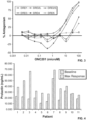
- Figure 1 illustrates the dose response relation of compound ( 1 ) on proliferation and cell death in normal and tumor cells.
- Figure 1 shows cell viability following treatment with compound ( 1 ) at indicated concentrations for 72 hours.
- the tumors tested included a human colon cancer cell line (HCT116), breast tumor cell line (MDA-MB-231), and a human primary glioblastoma cell line (U87).
- normal cells tested included human foreskin fibroblasts (HFF), human fetal lung fibroblast (MRC-5) cells, and a human lung fibroblast cell line (WI-38).
- Doxorubicin was used as a positive control at 1 ⁇ g/mL in normal fibroblasts.
- cell viability of normal cells tested is at least about 75% at about 1-5 mg/mL concentration of compound ( 1 ), whereas viability of tumor cells is significantly lower ( e.g ., at or below 50%) at the same concentration of compound ( 1 ).
- concentration of compound ( 1 ) increases beyond about 5 mg/mL viability of tumor cells falls to below 25%, whereas viability of normal cells remains at about 75%.
- Figure 2 illustrates cell viability assays in human fetal lung fibroblast (MRC-5) cells following 72 hour treatment with compound ( 1 ) (5 ⁇ M) or DMSO and the indicated recovery period in complete drug-free media after treatment. The time points are given as time following removal of compound ( 1 ) after 72 hour treatment. As shown in Figure 2 , cell recovery was seen with compound ( 1 ), but not with DMSO.
- the compound defined in the claims and compositions or pharmaceutical compositions comprising said compound have utility in treating cancer in a subject. In one embodiment, the compound defined in the claims and compositions or pharmaceutical compositions comprising said compound have utility in treating cancer in a human subject.
- the treatment comprises a pharmaceutically effective amount of the compound defined in the claims, or a pharmaceutically acceptable salt thereof and a pharmaceutically acceptable carrier for use in treating cancer in a subject in need of such treatment.
- the treatment comprises administering to a subject in need of such treatment: (i) a first therapeutic agent including the compound defined in the claims, or a pharmaceutically acceptable salt thereof in combination with (ii) a second therapeutic agent, wherein the first and the second therapeutic agents are administered either simultaneously or sequentially.
- the second therapeutic agent can be any suitable therapeutic agent, including any pharmaceutically active agent disclosed herein.
- a pharmaceutically acceptable salt of compound ( 1 ) includes the di-hydrochloride salt below:
- the treatment comprises administering a synergistic pharmaceutical combination, either simultaneously or sequentially, to a subject in need of such treatment, wherein the synergistic pharmaceutical combination comprising (i) a first therapeutic agent comprising the compound defined in the claims, or a pharmaceutically acceptable salt thereof; and (ii) a second therapeutic agent.
- the treatment comprises administering to a subject in need of such treatment, either simultaneously or sequentially, therapeutically synergistic effective amounts of the first therapeutic agent in combination with the second therapeutic agent.
- the treatment comprises administering to a subject in need of such treatment, an effective amount of the first therapeutic agent in combination with an effective amount of the second therapeutic agent, wherein the combination provides a synergistic effect in the in vivo treatment of a cancer sensitive to the combination, and wherein the first and the second therapeutic agents are administered either simultaneously or sequentially.
- the treatment comprises administering to a subject in need of such treatment, an effective amount of the first therapeutic agent in combination with an effective amount of a second therapeutic agent, wherein the combination provides a synergistic effect in the in vivo treatment of a minimal residual disease sensitive to the combination, and wherein the first and second therapeutic agents are administered either simultaneously or sequentially.
- the second therapeutic agent can be given before or prior to the first therapeutic agent.
- the treatment targets a cancer selected from the group consisting of solid tumors, liquid tumors, lymphomas, leukemias, or myelomas.
- the treatment targets a solid tumor, wherein the solid tumor is selected from the group consisting of: Cervical Cancer, Endometrial Cancer, Extracranial Germ Cell Tumor; Extragonadal Germ Cell Tumor; Germ Cell Tumor; Gestational Trophoblastic Tumor; Ovarian Cancer, Ovarian Germ Cell Tumor, Ovarian Epithelial Cancer, and Ovarian Low Malignant Potential Tumor; Penile Cancer, Prostate Cancer; Pregnancy and Breast Cancer; high grade prostate cancer; medium grade prostate cancer; low grade prostate cancer; castration-resistant prostate cancer; Breast Cancer; Bile Duct Cancer; Extrahepatic Bile Duct Cancer; Gallbladder Cancer; Hepatocellular (Liver) Cancer; Kidney (Renal Cell) Cancer; Liver Cancer, Renal Cell (Kidney) Cancer, Renal Pelvis and Ureter; Basal Cell Carcinoma; Basal Cell Nevus Syndrome, Gorlin-Nevus Syndrome, Melanoma, Merkel Cell Carcinoma, Papill
- the treatment targets a lymphoma selected from the group consisting of: diffuse large B-cell lymphoma, AIDS-Related Lymphoma, Cutaneous T-Cell Lymphoma, Sezary syndrome, mycosis fungoides (MF); Histiocytosis; Burkitt Lymphoma, and Central Nervous System Lymphoma; Non-Hodgkin Lymphoma, and Primary Central Nervous System Lymphoma, Hodgkin Lymphoma, Waldenström's macroglobulinemia; Mycosis Fungoides; Primary Central Nervous System Lymphoma; lymphoplasmacytic lymphoma, and Primary Central Nervous System Lymphoma.
- a lymphoma selected from the group consisting of: diffuse large B-cell lymphoma, AIDS-Related Lymphoma, Cutaneous T-Cell Lymphoma, Sezary syndrome, mycosis fungoides (MF); Histiocytosis; Burkitt Lymphoma,
- the treatment targets a Non-Hodgkin's lymphoma (NHL) selected from the group consisting of: mantle cell lymphoma, diffuse large B-cell lymphoma, follicular lymphoma, marginal zone lymphoma, small lymphocytic lymphoma, lyphoplasmacytic NHL, Waldenstrom's macroglobulinaemia, and skin lymphomas.
- NHL Non-Hodgkin's lymphoma
- the treatment targets a leukemia selected from the group consisting of: Acute Lymphoblastic Leukemia (ALL), Chronic Lymphocytic Leukemia (CLL), Chronic Myeloproliferative Disorders; Hairy Cell Leukemia; Acute Myeloid Leukemia (AML); Chronic Myelogenous Leukemia (CML); and Langerhans Cell Histiocytosis.
- ALL Acute Lymphoblastic Leukemia
- CLL Chronic Lymphocytic Leukemia
- Chronic Myeloproliferative Disorders Chronic Hairy Cell Leukemia
- AML Acute Myeloid Leukemia
- CML Chronic Myelogenous Leukemia
- Langerhans Cell Histiocytosis Langerhans Cell Histiocytosis
- the treatment targets an acute leukemia selected from the group consisting of: acute lymphotyte leukemia, acute myeloid leukemia, chronic lymphoblasitc leukemia, chronic myeloid leukemia, myelodysplastic syndrome, and myeloproliferative disease.
- acute leukemia selected from the group consisting of: acute lymphotyte leukemia, acute myeloid leukemia, chronic lymphoblasitc leukemia, chronic myeloid leukemia, myelodysplastic syndrome, and myeloproliferative disease.
- the treatment targets a myeloma selected from the group consisting of: IgA myeloma; IgG myeloma; IgM myeloma; IgD myeloma; IgE myeloma; light chain myeloma; non secretory myeloma; Multiple Myeloma/Plasma Cell Neoplasm, Multiple Myeloma, Myelodysplastic Syndromes, Myelodysplastic/Myeloproliferative Neoplasms, and Myeloproliferative Disorders.
- a myeloma selected from the group consisting of: IgA myeloma; IgG myeloma; IgM myeloma; IgD myeloma; IgE myeloma; light chain myeloma; non secretory myeloma; Multiple Myeloma/Plasma Cell
- the treatment targets a cancer selected from the group consisting of: Acute Lymphoblastic Leukemia, Acute Myeloid Leukemia, Adrenocortical Carcinoma, AIDS-Related Cancers, AIDS-Related Lymphoma, Anal or Rectal Cancer, Appendix Cancer, Astrocytomas, and Atypical Teratoid/Rhabdoid Tumor.
- a cancer selected from the group consisting of: Acute Lymphoblastic Leukemia, Acute Myeloid Leukemia, Adrenocortical Carcinoma, AIDS-Related Cancers, AIDS-Related Lymphoma, Anal or Rectal Cancer, Appendix Cancer, Astrocytomas, and Atypical Teratoid/Rhabdoid Tumor.
- the treatment targets a cancer selected from the group consisting of: Basal Cell Carcinoma, Basal Cell Nevus Syndrome, Gorlin-Nevus Syndrome, Bile Duct Cancer, Bladder Cancer, Bone Cancer, Osteosarcoma and Malignant Fibrous Histiocytoma, Brain Tumor, Breast Cance, Bronchial Tumors, Burkitt Lymphoma, and Spinal Cord Tumors.
- a cancer selected from the group consisting of: Basal Cell Carcinoma, Basal Cell Nevus Syndrome, Gorlin-Nevus Syndrome, Bile Duct Cancer, Bladder Cancer, Bone Cancer, Osteosarcoma and Malignant Fibrous Histiocytoma, Brain Tumor, Breast Cance, Bronchial Tumors, Burkitt Lymphoma, and Spinal Cord Tumors.
- the treatment targets a cancer selected from the group consisting of: Carcinoid Tumor, Carcinoma of Unknown Primary, Central Nervous System Atypical Teratoid/Rhabdoid Tumor, Central Nervous System Embryonal Tumors, Central Nervous System Lymphoma, Cervical Cancer, Chordoma, Chronic Lymphocytic Leukemia, Chronic Myelogenous Leukemia, Chronic Myeloproliferative Disorders, Colon Cancer, Colorectal Cancer, Craniopharyngioma, and Cutaneous T-Cell Lymphoma (including, but not limited to, Sezary syndrome and mycosis fungoides).
- a cancer selected from the group consisting of: Carcinoid Tumor, Carcinoma of Unknown Primary, Central Nervous System Atypical Teratoid/Rhabdoid Tumor, Central Nervous System Embryonal Tumors, Central Nervous System Lymphoma, Cervical Cancer, Chordoma, Chronic Lymphocytic Leukemia, Chronic Mye
- the treatment targets a cancer selected from the group consisting of: Embryonal Tumors of Central Nervous System, Endometrial Cancer, Ependymoblastoma, Ependymoma, Esophageal Cancer, Ewing Sarcoma Family of Tumors, Desmoplastic Round Cell Tumor, Chondrosarcoma, Extracranial Germ Cell Tumor, Extragonadal Germ Cell Tumor, Extrahepatic Bile Duct Cancer, and Eye Cancer, including Intraocular Melanoma and Retinoblastoma.
- Embryonal Tumors of Central Nervous System Endometrial Cancer
- Ependymoblastoma Ependymoma
- Esophageal Cancer Ewing Sarcoma Family of Tumors
- Desmoplastic Round Cell Tumor Chondrosarcoma
- Extracranial Germ Cell Tumor Extragonadal Germ Cell Tumor
- Extrahepatic Bile Duct Cancer Extrahepatic Bile Duct Cancer
- Eye Cancer including Intr
- the treatment targets a cancer selected from the group consisting of: Gallbladder Cancer, Gastric (Stomach) Cancer, Gastrointestinal Carcinoid Tumor, Gastrointestinal Stromal Tumor (GIST), Germ Cell Tumor, Gestational Trophoblastic Tumor, and Glioma.
- a cancer selected from the group consisting of: Gallbladder Cancer, Gastric (Stomach) Cancer, Gastrointestinal Carcinoid Tumor, Gastrointestinal Stromal Tumor (GIST), Germ Cell Tumor, Gestational Trophoblastic Tumor, and Glioma.
- the treatment targets a cancer selected from the group consisting of: Hairy Cell Leukemia, Head and Neck Cancer, Hepatocellular (Liver) Cancer, Histiocytosis, Hodgkin Lymphoma, and Hypopharyngeal Cancer.
- a cancer selected from the group consisting of: Hairy Cell Leukemia, Head and Neck Cancer, Hepatocellular (Liver) Cancer, Histiocytosis, Hodgkin Lymphoma, and Hypopharyngeal Cancer.
- the treatment targets a cancer selected from the group consisting of Kaposi Sarcoma and Kidney (Renal Cell) Cancer.
- the treatment targets a cancer selected from the group consisting of: Langerhans Cell Histiocytosis, Laryngeal Cancer, Lip and Oral Cavity Cancer, Liver Cancer, Lung Cancer, including Non-Small Cell Lung Cancer, and Small Cell Lung Cance, Non-Hodgkin Lymphoma, and Primary Central Nervous System Lymphoma.
- a cancer selected from the group consisting of: Langerhans Cell Histiocytosis, Laryngeal Cancer, Lip and Oral Cavity Cancer, Liver Cancer, Lung Cancer, including Non-Small Cell Lung Cancer, and Small Cell Lung Cance, Non-Hodgkin Lymphoma, and Primary Central Nervous System Lymphoma.
- the treatment targets a cancer selected from the group consisting of: Waldenström's macroglobulinemia (lymphoplasmacytic lymphoma), Malignant Fibrous Histiocytoma of Bone and Osteosarcoma, Medulloblastoma, Medulloepithelioma, Melanoma, Merkel Cell Carcinoma, Mesothelioma, Metastatic Squamous Neck Cancer with Occult Primary, Multiple Endocrine Neoplasia Syndrome, Mouth Cancer, Multiple Myeloma/Plasma Cell Neoplasm, Mycosis Fungoides, Myelodysplastic Syndromes, Myelodysplastic/Myeloproliferative Neoplasms, Multiple Myeloma, and Myeloproliferative Disorders.
- Waldenström's macroglobulinemia lymphoplasmacytic lymphoma
- Malignant Fibrous Histiocytoma of Bone and Osteosarcoma Medulloblastoma, Med
- the treatment is useful for treating a cancer selected from the group consisting of: Nasal Cavity and Paranasal Sinus Cancer, Nasopharyngeal Cancer, and Neuroblastoma.
- the treatment is useful for treating a cancer selected from the group consisting of: Oral Cancer, Lip and Oral Cavity Cancer, Oropharyngeal Cancer, Osteosarcoma and Malignant Fibrous Histiocytoma of Bone, Ovarian Cancer, Ovarian Germ Cell Tumor, Ovarian Epithelial Cancer, and Ovarian Low Malignant Potential Tumor.
- a cancer selected from the group consisting of: Oral Cancer, Lip and Oral Cavity Cancer, Oropharyngeal Cancer, Osteosarcoma and Malignant Fibrous Histiocytoma of Bone, Ovarian Cancer, Ovarian Germ Cell Tumor, Ovarian Epithelial Cancer, and Ovarian Low Malignant Potential Tumor.
- the treatment is useful for treating a cancer selected from the group consisting of: Pancreatic Cancer, Papillomatosis, Paranasal Sinus and Nasal Cavity Cancer, Parathyroid Cancer, Penile Cancer, Pharyngeal Cancer, Pineal Parenchymal Tumors of Intermediate Differentiation, Pineoblastoma and Supratentorial Primitive Neuroectodermal Tumors, Pituitary Tumor, Pleuropulmonary Blastoma, Pregnancy and Breast Cancer, Primary Central Nervous System Lymphoma, and Prostate Cancer.
- a cancer selected from the group consisting of: Pancreatic Cancer, Papillomatosis, Paranasal Sinus and Nasal Cavity Cancer, Parathyroid Cancer, Penile Cancer, Pharyngeal Cancer, Pineal Parenchymal Tumors of Intermediate Differentiation, Pineoblastoma and Supratentorial Primitive Neuroectodermal Tumors, Pituitary Tumor, Pleuropulmonary Blastoma, Pregnancy and Breast Cancer
- the treatment is useful for treating a cancer selected from the group consisting of Rectal Cancer, Renal Cell (Kidney) Cancer, Renal Pelvis and Ureter, Respiratory Tract Carcinoma Involving the NUT Gene on Chromosome 15, Retinoblastoma, and Rhabdomyosarcoma.
- the treatment is useful for treating a cancer selected from the group consisting of: Salivary Gland Cancer, Sarcoma, Sézary Syndrome, Skin Cancer, Skin Carcinoma, Small Intestine Cancer, Soft Tissue Sarcoma, Squamous Cell Carcinom, Squamous Neck Cancer with Occult Primary, and Supratentorial Primitive Neuroectodermal Tumors.
- a cancer selected from the group consisting of: Salivary Gland Cancer, Sarcoma, Sézary Syndrome, Skin Cancer, Skin Carcinoma, Small Intestine Cancer, Soft Tissue Sarcoma, Squamous Cell Carcinom, Squamous Neck Cancer with Occult Primary, and Supratentorial Primitive Neuroectodermal Tumors.
- the treatment is useful for treating a cancer selected from the group consisting of: T-Cell Lymphoma, Testicular Cancer, Throat Cancer, Thymoma and Thymic Carcinoma, Thyroid Cancer, Transitional Cell Cancer of the Renal Pelvis and Ureter, and Gestational Trophoblastic Tumor.
- a cancer selected from the group consisting of: T-Cell Lymphoma, Testicular Cancer, Throat Cancer, Thymoma and Thymic Carcinoma, Thyroid Cancer, Transitional Cell Cancer of the Renal Pelvis and Ureter, and Gestational Trophoblastic Tumor.
- the treatment is useful for treating a cancer selected from the group consisting of: Carcinoma of Unknown Primary Site, Cancer of Unknown Primary Site, Unusual Cancers of Childhood, Transitional Cell Cancer Of the Renal Pelvis and Ureter, Urethral Cancer, and Uterine Sarcoma.
- the treatment is useful for treating a cancer selected from the group consisting of: Vaginal Cancer and Vulvar Cancer.
- the treatment is useful for treating a cancer selected from the group consisting of: Wilms Tumor and Women's Cancers.
- treatment of cancer comprises prevention of tumor growth in a cancer subject. In some embodiments, treatment of cancer comprises prevention of formation of cancer metastases in a cancer subject. In some embodiments, treatment of cancer comprises targeted treatment of minimal residual disease in a cancer subject known to have the minimal residual disease in a cancer or a subject at risk for having minimal residual disease.
- Disseminated tumor cells may be in their dormant state and often cannot be attacked by chemotherapy (radiotherapy). A thus treated patient seemingly is in a healed state, and refered to as "minimal residual disease.” Nevertheless, the dormant tumor cells have a potential to form metastases if they become metastasising cells due to a growth stimulus after a longer dormant state.
- minimal residual disease denotes a small number of cancer cells that remain in a subject during treatment or after treatment when the subject is in remission (exhibiting no symptoms or signs of the disease).
- the methods described herein are preferably applied to a form of the diseases listed herein, including adult and childhood forms of these diseases.
- the treatment is useful for treating an autoimmune disease.
- Autoimmune diseases include, but are not limited to alopecia areata, antiphospholipid, autoimmune hepatits, celiac disease, diabetes type 1, Graves' disease, Guillain-Barre syndrome, Hashimoto's disease, hemolytic anemia, idiopathic thrombocytopenic purpura, inflammatory bowel disease, inflammatory myopathies, multiple sclerosis, primary biliary cirrhosis, psoriasis, rheumatoid arthritis, scleroderma, Sjögren's syndrome, systemic lupus erythematosus, and vitiligo.
- the treatment is useful for treating autoimmune and inflammatory disorders of the peripheral nerve system such as amyotrophic lateral sclerosis (Lou Gehrig's disease), based on various causes such as metabolic disorders that include diabetes, B12 and folate vitamin deficiencies, chemotherapy medications and medicines used to treat HIV, poisons that cause peripheral nerve damage, cancers that develop peripheral neuropathies as well as paraneoplastic syndromes, alcohol abuse, chronic kidney disease, injuries that cause compression on nerves and other lesions, infections such as Lyme disease, Guillain Barre syndrome, connective tissue disease, rheumatoid arthritis, Sjogren's syndrome, systemic lupus erythematosus, certain inflammatory conditions such as sarcoidosis, coeliac disease, hereditary diseases such as charcot marie tooth syndrome, Friedreich's ataxia, and/or idiopathic where no specific cause is found but inflammatory and/or autoimmune mechanisms are the cause of onset.
- diseases such as sarcoidosis, coeliac disease, heredit
- the treatment is useful for treating autoimmune and inflammatory disorders with ocular manifestations.
- ocular manifestations include, but are not limited to, ocular cicatricial pemphigoid, Mooren's corneal ulcer, various forms of uveitis, rheumatoid arthritis, systemic lupus erythematosus, polyarteritis nodosa, relapsing polychondritis, Wegener's granulomatosis, scleroderma, Behcet's disease, Reiter's disease, inflammatory bowel disease (ulcerative colitis and Crohn's disease) and ankylosing spondylitis, retinitis pigmentosa, macular degeneration, keratoconjunctivitis sicca, scleritis, episcleritis, keratitis, peripheral corneal ulceration, and less common entities such as choroiditis, retinal vasculitis, episcleral nodules,
- the treatment is useful for treating acute allograft rejection in transplant patients. In one embodiment, the treatment is useful for treating ischemic stroke. In one embodiment, the treatment is useful for treating inflammatory diseases including, but not limited to, arthritis, psoriasis, asthma, and colitis.
- a therapeutic agent includes a pharmaceutically acceptable mono-salt of the compound defined in the claims. In one embodiment, a therapeutic agent includes a pharmaceutically acceptable di-salt of the compound defined in the claims. As described herein, some of the salts can be tri-salts. In one embodiment, a therapeutic agent includes the compound defined in the claims in the form of a pharmaceutically acceptable mono- or di-salt selected from the group consisting of hydrochloride, hydrobromide, hydrogensulphate, sulfates, phosphates, fumarates, succinates, oxalates and lactates, bisulfates, hydroxyl, tartrate, nitrate, citrate, bitartrate, carbonate, malate, maleate, fumarate sulfonate, methylsulfonate, formate, acetate, and carboxylate.
- a pharmaceutically acceptable mono- or di-salt selected from the group consisting of hydrochloride, hydrobromide, hydrogensulphate, sulfates,
- a therapeutic agent includes the compound defined in the claims in the form of a pharmaceutically acceptable mono- or di-salt selected from p-toluene-sulfonate, benzenesulfonate, methane sulfonate, oxalate, succinate, tartrate, citrate, fumarate and maleate.
- a therapeutic agent includes the compound defined in the claims in the form of a pharmaceutically acceptable mono- or di-salt having a counter ion selected from the group consisting of ammonium, sodium, potassium, calcium, magnesium, zinc, lithium, and/or with counter-ions such as methylamino, dimethylamino, diethylamino, triethylamino counter-ions, and combinations thereof.
- a therapeutic agent includes compound described herein in the form of a halide di-salt, such as a dihydrochloride salt or a di-hydrobromide salt.
- the second therapeutic agent includes an anti-cancer agent.
- the second therapeutic agent is selected, without limitation, from acivicin, aclarubicin, acodazole, acronine, adozelesin, aldesleukin, alitretinoin, allopurinol, altretamine, ambomycin, ametantrone, amifostine, aminoglutethimide, amsacrine, anastrozole, anthramycin, arsenic trioxide, asparaginase, asperlin, azacitidine, azetepa, azotomycin, batimastat, benzodepa, bevacizumab, bicalutamide, bisantrene, bisnafide dimesylate, bizelesin, bleomycin, brequinar, bropirimine, busulfan, cactinomycin, calusterone, capecita
- the second therapeutic agent is selected, without limitation, from hormone analogs and antihormones, aromatase inhibitors, LHRH agonists and antagonists, inhibitors of growth factors, growth factor antibodies, growth factor receptor antibodies, tyrosine kinase inhibitors; antimetabolites; antitumour antibiotics; platinum derivatives; alkylation agents; antimitotic agents; tubuline inhibitors; PARP inhibitors, topoisomerase inhibitors, serine/threonine kinase inhibitors, tyrosine kinase inhibitors, protein protein interaction inhibitors, MEK inhibitors, ERK inhibitors, IGF-1R inhibitors, ErbB receptor inhibitors, rapamycin analogs, amifostin, anagrelid, clodronat, filgrastin, interferon, interferon alpha, leucovorin,rituximab, procarbazine, levamisole, mesna, mitotane, pamidronate
- the second therapeutic agent is selected from the group consisting of tamoxifen, toremifene, raloxifene, fulvestrant, megestrol acetate, flutamide, nilutamide, bicalutamide, aminoglutethimide, cyproterone acetate, finasteride, buserelin acetate, fludrocortisone, fluoxymesterone, medroxy-progesterone, octreotide, and combinations thereof.
- the second therapeutic agent is selected, without limitation, from the group consisting of LHRH agonists and LHRH antagonists.
- a LHRH agonist is selected from the group consisting of goserelin acetate, luprolide acetate, triptorelin pamoate and combinations thereof.
- the second therapeutic agent includes a LHRH antagonist is selected from the group consisting of Degarelix, Cetrorelix, Abarelix, Ozarelix, Degarelix combinations thereof.
- the second therapeutic agent includes an inhibitor of a growth factor.
- the inhibitor of a growth factor is selected, without limitation, from the group consisting of inhibitors of: platelet derived growth factor (PDGF), fibroblast growth factor (FGF), vascular endothelial growth factor (VEGF), epidermal growth factor (EGF), insuline-like growth factors (IGF), human epidermal growth factor (HER), hepatocyte growth factor (HGF), and combinations thereof.
- PDGF platelet derived growth factor
- FGF fibroblast growth factor
- VEGF vascular endothelial growth factor
- EGF epidermal growth factor
- IGF insuline-like growth factors
- HER human epidermal growth factor
- HGF hepatocyte growth factor
- the human epidermal growth factor (HER) is selected from the group consisting of HER2, HER3, and HER4.
- the second therapeutic agent includes a tyrosine kinase inhibitor.
- the tyrosine kinase inhibitor is selected, without limitation, from the group consisting of cetuximab, gefitinib, imatinib, lapatinib and trastuzumab, and combinations thereof.
- the second therapeutic agent includes an aromatase inhibitor.
- the aromatase inhibitor is selected from the group consisting of anastrozole, letrozole, liarozole, vorozole, exemestane, atamestane, and combinations thereof.
- the second therapeutic agent includes an antimetabolite.
- the antimetabolite comprises an antifolate.
- the antifolate is selected from the group consisting of methotrexate, raltitrexed, pyrimidine analogs, and combinations thereof.
- the antimetabolite is a pyrimidine analog.
- the pyrimidine analog is selected from the group consisting of 5-fluorouracil, capecitabin, gemcitabin, and combination thereof.
- the antimetabolite is a purine analog or an adenosine analog.
- the purine analog or adenosine analog is selected from the group consisting of mercaptopurine, thioguanine, cladribine and pentostatin, cytarabine, fludarabine, and combinations thereof.
- the second therapeutic agent includes an antitumour antibiotic.
- the antitumor antibiotic is selected from the group consisting of anthracyclins, doxorubicin, daunorubicin, epirubicin and idarubicin, mitomycin-C, bleomycin, dactinomycin, plicamycin, streptozocin and combinations thereof.
- the second therapeutic agent includes a platinum derivative.
- the platinum derivative is selected from the group consisting of cisplatin, oxaliplatin, carboplatin and combinations thereof.
- the second therapeutic agent includes an alkylation agent.
- the alkylation agent is selected from the group consisting of estramustin, meclorethamine, melphalan, chlorambucil, busulphan, dacarbazin, cyclophosphamide, ifosfamide, temozolomide, nitrosoureas, and combinations thereof.
- the second therapeutic agent includes a nitrosourea.
- the nitrosourea is selected from the group consisting of carmustin, lomustin, thiotepa, and combinations thereof.
- the second therapeutic agent includes an antimitotic agent.
- the antimitotic agent is selected from the group consisting of Vinca alkaloids and taxanes.
- the taxane is selected from the group consisting of paclitaxel, docetaxel, and combinations thereof.
- the Vinca alkaloids are selected from the group consisting of vinblastine, vindesin, vinorelbin, vincristine, and combinations thereof.
- the second therapeutic agent includes a topoisomerase inhibitor.
- the topoisomerase inhibitor is an epipodophyllotoxin.
- the topoisomerase inhibitor which is an epipodophyllotoxin selected from the group consisting of etoposide, etopophos, teniposide, amsacrin, topotecan, irinotecan, mitoxantron, and combinations thereof.
- the second therapeutic agent includes a serine/threonine kinase inhibitor.
- the serine/threonine kinase inhibitor is selected from the group consisting of PDK 1 inhibitors, B-Raf inhibitors, mTOR inhibitors, mTORC1 inhibitors, PI3K inhibitors, dual mTOR/PI3K inhibitors, STK 33 inhibitors, AKT inhibitors, PLK 1 inhibitors, inhibitors of CDKs, Aurora kinase inhibitors, and combinations thereof.
- the second therapeutic agent includes a tyrosine kinase inhibitor.
- the second therapeutic agent includes a PTK2/FAK inhibitor.
- the second therapeutic agent includes a protein protein interaction inhibitor.
- the protein protein interaction inhibitor is selected from the group consisting of IAP, Mcl-1, MDM2/MDMX and combinations thereof.
- the second therapeutic agent includes a rapamycin analog.
- the rapamycin analog is selected from the group consisting of everolimus, temsirolimus, ridaforolimus, sirolimus, and combinations thereof.
- the second therapeutic agent is selected from the group consisting of amifostin, anagrelid, clodronat, filgrastin, interferon, interferon alpha, leucovorin, rituximab, procarbazine, levamisole, mesna, mitotane, pamidronate and porfimer, and combinations thereof.
- the second therapeutic agent is selected from the group consisting of 2-chlorodesoxyadenosine, 2-fluorodesoxy-cytidine, 2-methoxyoestradiol, 2C4,3-alethine, 131-1-TM-601, 3CPA, 7-ethyl-10-hydroxycamptothecin, 16-aza-epothilone B, A 105972, A 204197, abiraterone, aldesleukin, alitretinoin, allovectin-7, altretamine, alvocidib, amonafide, anthrapyrazole, AG-2037, AP-5280, apaziquone, apomine, aranose, arglabin, arzoxifene, atamestane, atrasentan, auristatin PE, AVLB, AZ10992, ABX-EGF, AMG-479 (ganitumab), ARRY 162, ARRY 438162,
- the other therapeutic agent comprises a steroid.
- Steroids include, but are not limited to, dexamethasone, prednisolone, methyl prednisolone, prednisone, hydrocortisone, triamcinolone, betamethasone, and cortivazol.
- the other therapeutic agent comprises an anti-emetic.
- Anti-emetics include, but are not limited to, 5-HT3 receptor agonists (such as dolasetron, granisetron, ondansetron, tropisetron, palonosetron, and mirtazapine), dopamine agonists (such as domperidone, olanzapine, droperidol, haloperidol, chlorpromazine, prochlorperazine, alizapride, prochlorperazine, and metoclopramide), NK1 receptor antagonists (such as aprepitant and casopitant), antihistamines (such as cyclizine, diphenhydramine, dimenhydrinate, doxylamine, meclizine, promethazine, hydroxyzine), cannabinoids (such as cannabis, dronabinol, nabilone, and sativex), benzodiazepines (such as midazolam and lorazepam), anticholinergics (such as hyoscine), trime
- compositions may be administered to a subject via any suitable route of administration.
- the pharmaceutical composition is administered to a subject orally, parenterally, transdermally or transmucosally.
- the pharmaceutical composition is administered to a subject parenterally.
- the pharmaceutical composition is administered to a subject via a parenteral route of administration selected from the group consisting of intravenous (IV), subcutaneous (SC), and intramuscular (IM).
- the pharmaceutical composition is administered to a subject via a route of administration selected from rectal and transdermal.
- the pharmaceutical composition is administered to a subject in a dosage form selected from the group consisting of sterile solutions, suspensions, suppositories, tablets and capsules.
- the pharmaceutical composition is administered to a subject in an oral dosage form selected from the group consisting of a tablet, caplet, capsule, lozenge, syrup, liquid, suspension and elixir. In one embodiment, the pharmaceutical composition is administered to a subject in an oral dosage form selected from the group consisting of tablets, hard shell capsules, soft gelatin capsules, beads, granules, aggregates, powders, gels, solids and semi-solids.
- the pharmaceutical composition is administered to a subject as a dosage form selected from the group consisting of sustained release forms, controlled release forms, delayed release forms and response release forms.
- the pharmaceutical composition is administered to a subject once daily. In some embodiments, the pharmaceutical composition is administered to a subject accoridng to an infrequent dosing regimen (e.g., administered once per week or less frequently). In some embodiments, the pharmaceutical composition is administered to a subject accoridng to a frequent dosing regimen (e.g., administered more than once per week). In some embodiments, the pharmaceutical composition is administered to a subject once weekly. In some embodiments, the pharmaceutical composition is administered to a subject once every four weeks. In some embodiments, the pharmaceutical composition is administered to a subject twice a week. In some embodiments, the pharmaceutical composition is administered to a subject once every two weeks. In some embodiments, the pharmaceutical composition is administered to a subject once every three weeks. In some embodiments, the pharmaceutical composition is administered to a subject in a repeated cycle of once weekly, once every two weeks, once every three weeks, once every four weeks or combinations thereof.
- the treatment comprises administering to a subject in need of such treatment: (i) a first therapeutic agent including the compound defined in the claims, or a pharmaceutically acceptable salt thereof in combination with (ii) a second therapeutic agent, wherein the first therapeutic agent and the second therapeutic agent are administered either simultaneously or sequentially; and further comprises assaying the expression of an endoplasmic reticulum (ER) stress response gene in a biological sample.
- ER endoplasmic reticulum
- the endoplasmic reticulum stress response gene is selected from the group that includes, but is not limited to, C/EBP-Homologous Protein (CHOP), Activating Transcription Factor 3 (ATF3) and both CHOP and ATF3.
- the endoplasmic reticulum stress response gene is selected from the group that includes, but is not limited to, ATF3, Activating Transcription Factor 4 (ATF4) CHOP, IRE1, Binding immunoglobulin protein (BiP), Eukaryotic translation initiation factor 2A (eIF2a), X-box binding protein 1 (XBP1).
- ATF3 Activating Transcription Factor 4
- IRE1 Binding immunoglobulin protein
- eIF2a Eukaryotic translation initiation factor 2A
- XBP1 X-box binding protein 1
- the biological sample may be tumor, peripheral blood mononuclear cells, or skin biopsy.
- the biological sample may be obtained before, during, or after drug administration.
- the treatment further comprises adjusting a dose of the first therapeutic agent to achieve induction of about 50%, 75%, 100%, 125%, 150%, 175%, 200%, 225%, 250%, 275%, 300%, 325%, 350%, 375%, 400%, 425%, 450%, 475%, 500%, 525%, 550%, 575%, 600%, or greater than 600% of one or more ER stress gene.
- the treatment further comprises adjusting a dose of the first therapeutic agent to achieve induction of about 50% to about 100%, about 100% to about 150%, about 150% to about 200%, about 200% to about 250%, about 250% to about 300%, about 300% to about 350%, about 350% to about 400%, about 400% to about 450%, about 450% to about 500%, about 500% to about 550%, about 550% to about 600%, or greater than 600% of ER stress genes.
- the treatment further comprises adjusting a dose of the first therapeutic agent to achieve induction of about 50% to about 100%, about 100% to about 200%, about 200% to about 300%, about 300% to about 400%, about 400% to about 500%, about 500% to about 600%, or greater than 600% of ER stress genes.
- the treatment comprises administering to a subject in need of such treatment: (i) a first therapeutic agent including a compound comprising compound (1) or compound (10), an analog thereof, or a pharmaceutically acceptable salt thereof in combination with (ii) a second therapeutic agent, wherein the first therapeutic agent and the second therapeutic agent are administered either simultaneously or sequentially; and further comprises assaying the expression of proteasomal activity in a biological sample.
- the proteasomal activity may be chymotrysin-like, trypsin-like, and/or caspase-like activity.
- the biological sample may be tumor, peripheral blood mononuclear cells, or skin cells. The biological sample may be obtained before, during, or after drug administration.
- the treatment further comprises adjusting the dose to achieve inhibition of about 20%, about 25%, about 30%, about 35%, about 40%, about 45%, about 50%, about 55%, about 60%, about 65%, about 70%, about 75%, about 80%, about 85%, about 90%, about 95%, or about 100% of the proteasomal activity.
- the treatment further comprises adjusting the dose to achieve inhibition of at least 20%, at least 25%, at least 30%, at least 35%, at least 40%, at least 45%, at least 50%, at least 55%, at least 60%, at least 65%, at least 70%, at least 75%, at least 80%, at least 85%, at least 90%, or at least 95% of the proteasomal activity.
- the treatment further comprises adjusting the dose to achieve inhibition of about 20% to about 30%, about 30% to about 40%, about 40% to about 50%, about 50% to about 60%, about 60% to about 70%, about 70% to about 80%, about 80% to about 90%, or greater than 90% of the proteasomal activity.
- a first therapeutic agent including the compound defined in the claims, or a pharmaceutically acceptable salt thereof (e.g., a di-salt or tri-salt) and a second therapeutic agent for use in a method of treatment of a subject in need of such treatment, the method comprising:
- the predetermined waiting time substantially equals the time required for systemic clearance of the compound of the first therapeutic agent or a metabolite thereof from the subject's body. In one embodiment of the treatment, the predetermined waiting time substantially equals the time required for renal clearance of the compound of the first therapeutic agent or a metabolite thereof from the subject's body. In one embodiment of the treatment, the predetermined waiting time substantially equals the time required for hepatic clearance of the compound of the first therapeutic agent or a metabolite thereof from the subject's body. In one embodiment of the treatment, the predetermined waiting time substantially equals the time required for total clearance of the compound of the first therapeutic agent or a metabolite thereof from the subject's body.
- the predetermined waiting time is about 4 hours. In other embodimens the waiting time is 1 day. In some embodiments, the waiting time is until C max of the compound of the first therapeutic agent has passed. In other embodiments, the waiting time is after most of the adverse events are resolved or are resolving. In one embodiment of the treatment, the predetermined waiting time is about 2 days, about 3 days, about 4 days, about 5 days, about 6 days, or about 7 days. In one embodiment of the treatment, the predetermined waiting time is a range of about 1-7 days, about 1-6 days, about 1-5 days, about 1-4 days, about 1-3 days, or about 1 to 2 days. In one embodiment, the waiting time is up to 3 weeks. The preceeding are considered "therapeutic time periods.”
- timing for the administration of the first therapeutic agent can be after the C max of the second therapeutic agent (i.e., the first administered drug) has passed.
- administration of the first therapeutic agent can be after most or substantially all of the first administered drug has been eliminated from the body or the toxicity effects for the first administered drug are resolved or are resolving.
- the treatment further comprises monitoring levels of the compound of the first therapeutic agent or a metabolite thereof in the subject using pharmacokinetic profiling.
- monitoring levels of the compound of the first therapeutic agent or a metabolite thereof in the subject using pharmacokinetic profiling comprises constructing a pharmacokinetic profile of the compound of the first therapeutic agent or a metabolite thereof for the subject using concentrations of the compound of the first therapeutic agent or a metabolite thereof in at least two samples obtained from the subject at time points suitable to construct a pharmacokinetic profile.
- samples are collected from the subject at point-of-care or point of use by sampling or self-sampling on point-of-care devices or point of use devices or on matrices suitable for storage of the samples prior to quantitation in a laboratory.
- each of the point-of-care devices or point of use devices is capable of quantitating the compound of the first therapeutic agent or a metabolite thereof.
- one or more samples are collected from the subject at point-of-care or point of use by biopsy device for analysis at the point-of-care or point of use devices or for storage prior to analysis by a laboratory.
- a biopsy is taken after a time interval of 3-8 hours following administration the first therapeutic agent to the subject.
- a biopsy is taken after a time interval of 3-24 hours following administration of the first therapeutic agent to the subject.
- a biopsy is taken after a time interval of 8-24 hours following administration of the first therapeutic agent thereof to the subject.
- a biopsy is taken after a time interval of 2 days following administration of the first therapeutic agent to the subject. In some embodiments, a biopsy is taken after a time interval of 3 days following administration of the first therapeutic agent to the subject. In some embodiments, a biopsy is taken after a time interval of 4 days following administration of the first therapeutic agent to the subject. In some embodiments, a biopsy is taken after a time interval of 1-7 days following administration of the first therapeutic agent.
- the pharmacokinetic profile includes pharmacokinetic parameters suitable for guiding dosing of the first therapeutic agent for the subject being treated.
- maximum concentration of the first therapeutic agent in blood (whole blood, plasma, or serum) (“C max ") of the subject following its administration to the subject ranges from about 1000 ng/dL to 1500 ng/dL for a therapeutic time period. In some embodiments, C max is less than 1500 ng/dL and greater than 85 ng/dL for a therapeutic time period.
- C max maximum concentration of the first therapeutic agent in blood (whole blood, plasma, or serum) of the subject following its administration to the subject ranges from about 1000 ng/mL to 1500 ng/mL for a therapeutic time period. In some embodiments, C max is less than 1500 ng/mL and greater than 85 ng/mL for a therapeutic time period.
- maximum concentration of the first therapeutic agent in blood (whole blood, plasma, or serum) is a C max of from about 1000, 1010, 1020, 1030, 1040, 1050, 1060, 1070, 1080, 1090, 1100, 1110, 1120, 1130, 1140, 1150, 1160, 1170, 1180, 1190, 1200, 1210, 1220, 1230, 1240, 1250, 1260, 1270, 1280, 1290, 1300, 1310, 1320, 1330, 1340, 1350, 1360, 1370, 1380, 1390, 1400, 1410, 1420, 1430, 1440, 1450, 1460, 1470, 1480, or 1490 ng/dL to about 1500 ng/dL; from about 100, 101, 102, 103, 104, 105, 106, 107, 108, 109, 110, 111, 112, 113, 114, 115,
- maximum concentration of the first therapeutic agent in blood (whole blood, plasma, or serum) is a C max of from about 1000, 1010, 1020, 1030, 1040, 1050, 1060, 1070, 1080, 1090, 1100, 1110, 1120, 1130, 1140, 1150, 1160, 1170, 1180, 1190, 1200, 1210, 1220, 1230, 1240, 1250, 1260, 1270, 1280, 1290, 1300, 1310, 1320, 1330, 1340, 1350, 1360, 1370, 1380, 1390, 1400, 1410, 1420, 1430, 1440, 1450, 1460, 1470, 1480, or 1490 ng/mL to about 1500 ng/mL; from about 100, 101, 102, 103, 104, 105, 106, 107, 108, 109, 110, 111, 112, 113, 114, 115, 116,
- maximum concentration of the first therapeutic agent in blood (whole blood, plasma, or serum) (“C max ") of the subject following its administration is selected from about 1000, 1010, 1020, 1030, 1040, 1050, 1060, 1070, 1080, 1090, 1100, 1110, 1120, 1130, 1140, 1150, 1160, 1170, 1180, 1190, 1200, 1210, 1220, 1230, 1240, 1250, 1260, 1270, 1280, 1290, 1300, 1310, 1320, 1330, 1340, 1350, 1360, 1370, 1380, 1390, 1400, 1410, 1420, 1430, 1440, 1450, 1460, 1470, 1480, or 1490 ng/dL.
- maximum concentration of the first therapeutic agent in blood (whole blood, plasma, or serum) (“C max ") of the subject following its administration is selected from about100, 101, 102, 103, 104, 105, 106, 107, 108, 109, 110, 111, 112, 113, 114, 115, 116, 117, 118, 119, 120, 121, 122, 123, 124, 125, 126, 127, 128, 129, 130, 131, 132, 133, 134, 135, 136, 137, 138, 139, 140, 141, 142, 143, 144, 145, 146, 147, 148, or 149 ng/dL.
- maximum concentration of the first therapeutic agent in blood (whole blood, plasma, or serum) (“C max ") of the subject following its administration is selected from about10, 10.5, 11, 11.5, 120, 12.5, 13, 13.5, 14, or 14.5 ng/dL.
- maximum concentration of the first therapeutic agent in blood (whole blood, plasma, or serum) (“C max ") of the subject following its administration is selected from about 1000, 1010, 1020, 1030, 1040, 1050, 1060, 1070, 1080, 1090, 1100, 1110, 1120, 1130, 1140, 1150, 1160, 1170, 1180, 1190, 1200, 1210, 1220, 1230, 1240, 1250, 1260, 1270, 1280, 1290, 1300, 1310, 1320, 1330, 1340, 1350, 1360, 1370, 1380, 1390, 1400, 1410, 1420, 1430, 1440, 1450, 1460, 1470, 1480, or 1490 ng/mL.
- maximum concentration of the first therapeutic agent in blood (whole blood, plasma, or serum) (“C max ") of the subject following its administration is selected from about 100, 101, 102, 103, 104, 105, 106, 107, 108, 109, 110, 111, 112, 113, 114, 115, 116, 117, 118, 119, 120, 121, 122, 123, 124, 125, 126, 127, 128, 129, 130, 131, 132, 133, 134, 135, 136, 137, 138, 139, 140, 141, 142, 143, 144, 145, 146, 147, 148, or 149 ng/mL.
- maximum concentration of the first therapeutic agent in blood (whole blood, plasma, or serum) ("C max ") of the subject following its administration is selected from about 10, 10.5, 11, 11.5, 120, 12.5, 13, 13.5, 14, or 14.5 ng/mL.
- maximum concentration of the first therapeutic agent in blood (whole blood, plasma, or serum) (“C max ") of the subject following its administration is selected from about 85, 95, 105, 115, 125, 135, 145, 155, 165, 175, 185, 195, 205, 215, 225, 235, 245, 255, 265, 275, 285, 295, 305, 315, 325, 335, 345, 355, 365, 375, 385, 395, 405, 415, 425, 435, 445, 455, 465, 475, 485, 495, 505, 515, 525, 535, 545, 555, 565, 575, 585, 595, 605, 615, 625, 635, 645, 655, 665, 675, 685, 695, 705, 715, 725, 735, 745, 755, 765, 775, 785, 795, 805, 815, 825, 835, 845, 855
- maximum concentration of the first therapeutic agent in blood (whole blood, plasma, or serum) (“C max ") of the subject following its administration is selected from about 8, 9, 10, 11, 12, 13, 14, 15, 16, 17, 18, 19, 20, 21, 22, 23, 24, 25, 26, 27, 28, 29, 30, 31, 32, 33, 34, 35, 36, 37, 38, 39, 40, 41, 42, 43, 44, 45, 46, 47, 48, 49, 50, 51, 52, 53, 54, 55, 56, 57, 58, 59, 60, 61, 62, 63, 64, 65, 66, 67, 68, 69, 70, 71, 72, 73, 74, 75, 76, 77, 78, 79, 80, 81, 82, 83, 84, 85, 86, 87, 88, 89, 90, 91, 92, 93, 94, 95, 96, 97, 98, 99, 100, 101, 102, 103, 104, 105, 106, 107, 108
- maximum concentration of the first therapeutic agent in blood (whole blood, plasma, or serum) ("C max ") of the subject following its administration is selected from about 1, 1.5, 2, 2.5, 3, 3.5, 4, 4.5, 5, 5.5, 6, 6.5, 7, 7.5, 8, 8.5, 9, 9.5, 10, 10.5, 11, 11.5, 12, 12.5, 13, 13.5, 14, or 14.5 ng/dL.
- maximum concentration of the first therapeutic agent in blood (whole blood, plasma, or serum) (“C max ") of the subject following its administration is selected from about 85, 95, 105, 115, 125, 135, 145, 155, 165, 175, 185, 195, 205, 215, 225, 235, 245, 255, 265, 275, 285, 295, 305, 315, 325, 335, 345, 355, 365, 375, 385, 395, 405, 415, 425, 435, 445, 455, 465, 475, 485, 495, 505, 515, 525, 535, 545, 555, 565, 575, 585, 595, 605, 615, 625, 635, 645, 655, 665, 675, 685, 695, 705, 715, 725, 735, 745, 755, 765, 775, 785, 795, 805, 815, 825, 835, 845, 855
- maximum concentration of the first therapeutic agent in blood (whole blood, plasma, or serum) (“C max ") of the subject following its administration is selected from about 8, 9, 10, 11, 12, 13, 14, 15, 16, 17, 18, 19, 20, 21, 22, 23, 24, 25, 26, 27, 28, 29, 30, 31, 32, 33, 34, 35, 36, 37, 38, 39, 40, 41, 42, 43, 44, 45, 46, 47, 48, 49, 50, 51, 52, 53, 54, 55, 56, 57, 58, 59, 60, 61, 62, 63, 64, 65, 66, 67, 68, 69, 70, 71, 72, 73, 74, 75, 76, 77, 78, 79, 80, 81, 82, 83, 84, 85, 86, 87, 88, 89, 90, 91, 92, 93, 94, 95, 96, 97, 98, 99, 100, 101, 102, 103, 104, 105, 106, 107, 108
- maximum concentration of the first therapeutic agent in blood (whole blood, plasma, or serum) ("C max ") of the subject following its administration is selected from about 1, 1.5, 2, 2.5, 3, 3.5, 4, 4.5, 5, 5.5, 6, 6.5, 7, 7.5, 8, 8.5, 9, 9.5, 10, 10.5, 11, 11.5, 12, 12.5, 13, 13.5, 14, or 14.5 ng/mL.
- the maximum concentration of the first therapeutic agent in blood (whole blood, plasma, or serum) ("C max ") of the subject following its administration to the subject ranges from about 85 ng/dL to 1500 ng/dL; from about 8.5 ng/dL to 150 ng/dL; or from about 0.85 ng/dL to 15 ng/dL.
- maximum concentration of the first therapeutic agent in blood (whole blood, plasma, or serum) (“C max ") of the subject following its administration is selected from about 85, 95, 105, 115, 125, 135, 145, 155, 165, 175, 185, 195, 205, 215, 225, 235, 245, 255, 265, 275, 285, 295, 305, 315, 325, 335, 345, 355, 365, 375, 385, 395, 405, 415, 425, 435, 445, 455, 465, 475, 485, 495, 505, 515, 525, 535, 545, 555, 565, 575, 585, 595, 605, 615, 625, 635, 645, 655, 665, 675, 685, 695, 705, 715, 725, 735, 745, 755, 765, 775, 785, 795, 805, 815, 825, 835, 845, 855
- the maximum concentration of the first therapeutic agent in blood (whole blood, plasma, or serum) ("C max ") of the subject following its administration ranges from about 85 ng/mL to 1500 ng/mL; from about 8.5 ng/mL to 150 ng/mL; or from about 0.85 ng/mL to 15 ng/mL.
- maximum concentration of the first therapeutic agent in blood (whole blood, plasma, or serum) (“C max ") of the subject following its administration is selected from about 85, 95, 105, 115, 125, 135, 145, 155, 165, 175, 185, 195, 205, 215, 225, 235, 245, 255, 265, 275, 285, 295, 305, 315, 325, 335, 345, 355, 365, 375, 385, 395, 405, 415, 425, 435, 445, 455, 465, 475, 485, 495, 505, 515, 525, 535, 545, 555, 565, 575, 585, 595, 605, 615, 625, 635, 645, 655, 665, 675, 685, 695, 705, 715, 725, 735, 745, 755, 765, 775, 785, 795, 805, 815, 825, 835, 845, 855
- the total drug exposure over time measured as the area under the curve ("AUC") of a plot of the concentration of the drug in blood (whole blood, plasma, or serum) of the subject following administration of the drug against time after administration of the drug ranges from about 150 ng hr/mL to about 8000 ng hr/mL; from about 15 ng hr/mL to about 800 ng hr/mL; or from about 1.5 ng hr/mL to about 80 ng hr/mL.
- AUC is less than 8000 ng hr/mL and is greater than or equal to 150 ng hr/mL.
- AUC is less than 800 ng hr/mL and is greater than or equal to 15 ng hr/mL. In some embodiments, AUC is less than 80 ng hr/mL and is greater than or equal to 1.5 ng hr/mL.
- the total drug exposure over time is an AUC of from about 100 ng hr/mL to about 8000 ng hr/mL; from about 10 ng hr/mL to about 800 ng hr/mL; or from about 1 ng hr/mL to about 80 ng hr/mL.
- the total drug exposure over time is an AUC of from about from about 150, 200, 400, 600, 800, 1000, 1200, 1400, 1600, 1800, 2000, 2200, 2400, 2600, 2800, 3000, 3200, 3400, 3600, 3800, 4000, 4200, 4400, 4600, 4800, 5000, 5200, 5400, 5600, 5800, 6000, 6200, 6400, 6600, 6800, 7000, 7200, 7400, 7600, or 7800 ng hr/mL to about 8000 ng hr/mL.
- the total drug exposure over time is an AUC of from about 15, 20, 40, 60, 80, 100, 120, 140, 160, 180, 200, 220, 240, 260, 280, 300, 320, 340, 360, 380, 400, 420, 440, 460, 480, 500, 520, 540, 560, 580, 600, 620, 640, 660, 680, 700, 720, 740, 760, or 780 ng hr/mL to about 800 ng hr/mL.
- the total drug exposure over time is an AUC of from about from about 1.5, 2, 4, 6, 8, 10, 12, 14, 16, 18, 20, 22, 24, 26, 28, 30, 32, 34, 36, 38, 40, 42, 44, 46, 48, 50, 52, 54, 56, 58, 60, 62, 64, 66, 68, 70, 72, 74, 76, or 78 ng hr/mL to about 80 ng hr/mL.
- the total drug exposure over time is an AUC of from about 100 ng hr/mL to about 8000 ng hr/mL, from about 10 ng hr/mL to about 800 ng hr/mL; or from about 1 ng hr/mL to about 80 ng hr/mL.
- the total drug exposure over time is an AUC of from about from about 150 ng hr/mL to about 7800, 7600, 7400, 7200, 7000, 6800, 6600, 6400, 6200, 6000, 5800, 5600, 5400, 5200, 5000, 4800, 4600, 4400, 4200, 4000, 3800, 3600, 3400, 3200, 3000, 2800, 2600, 2400, 2200, 2000, 1800, 1600, 1400, 1200, 1000, 800, 600, 400, or 200 ng hr/mL.
- the total drug exposure over time is an AUC of from about from about 15 ng hr/mL to about 780, 760, 740, 720, 700, 680, 660, 640, 620, 600, 580, 560, 540, 520, 500, 480, 460, 440, 420, 400, 380, 360, 340, 320, 300, 280, 260, 240, 220, 200, 180, 160, 140, 120, 100, 80, 60, 40, or 20 ng hr/mL.
- the total drug exposure over time is an AUC of from about from about 1.5 ng hr/mL to about 78, 76, 74, 72, 70, 68, 66, 64, 62, 60, 58, 56, 54, 52, 50, 48, 46, 44, 42, 40, 38, 36, 34, 32, 30, 28, 26, 24, 22, 20, 18, 16, 14, 12, 10, 8, 6, 4, or 2 ng hr/mL.
- the total drug exposure over time is an AUC of from about 100 ng hr/mL to about 200 ng hr/mL; from about 10 ng hr/mL to about 20 ng hr/mL; or from about 1 ng hr/mL to about 2 ng hr/mL.
- the total drug exposure over time is an AUC selected from about 100, 150, 200, 400, 600, 800, 1000, 1200, 1400, 1600, 1800, 2000, 2200, 2400, 2600, 2800, 3000, 3200, 3400, 3600, 3800, 4000, 4200, 4400, 46000, 4800, 5000, 5200, 5400, 5600, 5800, 6000, 6200, 6400, 6600, 6800, 7000, 7200, 7400, 7600, 7800, and 8000 ng hr/mL.
- the total drug exposure over time is an AUC selected from about 10, 15, 20, 40, 60, 80, 100, 120, 140, 160, 180, 200, 220, 240, 260, 280, 300, 320, 340, 360, 380, 400, 420, 440, 4600, 480, 500, 520, 540, 560, 580, 600, 620, 640, 660, 680, 700, 720, 740, 760, 780, and 800 ng hr/mL.
- the total drug exposure over time is an AUC selected from about 1, 15, 2, 4, 6, 8, 10, 12, 14, 16, 18, 20, 22, 24, 26, 28, 30, 32, 34, 36, 38, 40, 42, 44, 460, 48, 50, 52, 54, 56, 58, 60, 62, 64, 66, 68, 70, 72, 74, 76, 78, and 80 ng hr/mL.
- composition or pharamaceutical composition comprsing the compound for use in treating a disease state, which comprises a combination of a first therapeutic agent and a second therapeutic agent, comprising:
- the multimodal therapeutic approach comprises administering to a subject a pharmaceutical composition comprising the compound defined in the claims, or a pharmaceutically acceptable salt thereof in conjunction with radiation therapy or after radiation is determined to not have been efficacious.
- the multimodal therapeutic approach comprises administering to a subject a pharmaceutical composition comprising the compound defined in the claims, or a pharmaceutically acceptable salt thereof in conjunction with radiation therapy, wherein the pharmaceutical composition comprising the compound defined in the claims, or a pharmaceutically acceptable salt thereof and the radiation therapy are administered concurrently or sequentially in any order.
- the multimodal therapeutic approach comprises administering to a subject a pharmaceutical composition comprising the compound defined in the claims, or a pharmaceutically acceptable salt thereof in conjunction with radiation therapy in a sequential arrangement. In one embodiment, the multimodal therapeutic approach comprises administering to a subject in need of such treatment a pharmaceutical composition comprising the compound defined in the claims, or a pharmaceutically acceptable salt thereof thereof concurrently with radiation therapy. In one embodiment, the multimodal therapeutic approach is used for the treatment of cancer. In one embodiment, the multimodal therapeutic approach includes administering to a cancer subject in need of such treatment a pharmaceutical composition comprising the compound defined in the claims, or a pharmaceutically acceptable salt thereof and irradiating cancer cells with a radiation beam.
- the multimodal therapeutic approach uses the technique of conformal radiotherapy (CRT) to deliver a dose volume histogram (DVH) prescribed to a cancer subject.
- the multimodal therapeutic approach uses the technique of intensity modulated radiation therapy (IMRT) to deliver radiation to cancer cells.
- the multimodal therapeutic approach uses techniques that compensate for motion of tumors in the subject during treatment (e.g., where doses of radiation must be administered to a thoracic tumor which moves as the patient breathes). For example, the multimodal therapeutic approach uses Four Dimensional Computed Tomography (4D CT) scanning techniques to adjust the delivered radiation field to compensate for tumor motion over the breathing cycle.
- 4D CT Four Dimensional Computed Tomography
- any suitable type of radiation including gamma radiation which is given fractionated, IMRT (intensity modulated radiation therapy), gamma knife, proton therapy and brachytherapy can be used with the multimodal therapeutic approach.
- Radiation therapy and administering the compound defined in the claims, or a pharmaceutically acceptable salt thereof can be for use in treating brain tumors such as glioblastoma or disease that has metastasized to the brain from lung cancer.
- the multimodal therapeutic approach can be for use in treating lung cancer, pancreatic cancer, rectal cancer, breast cancer, sarcoma, prostate cancer, gynecological malignancies, and lymphoma.
- the gamma knife is used frequently to treat brain metastases.
- the multimodal therapeutic approach includes use of proton therapy to treat cancer, including brain tumors, prostate cancer and any tumor proximate vital organs where it is very important to minimize toxicity to nearby normal tissue.
- the multimodal therapeutic approach includes administering to a cancer subject in need of such treatment a pharmaceutical composition comprising the compound defined in the claims, or a pharmaceutically acceptable salt thereof, for use in treating a cancer subject in need of such treatment in combination with adoptive cell therapy (e.g., CAR-T (JCAR 14, 15, 16, 17, KTE-C19, or CTL019); other T Cell (AFM13); or NK (CDNO-109 orNK-92)) either simultaneously or in combination.
- adoptive cell therapy e.g., CAR-T (JCAR 14, 15, 16, 17, KTE-C19, or CTL019
- AMF13 T Cell
- NK CDNO-109 orNK-92
- the multimodal therapeutic approach eliminates minimal residual disease without adding to toxicity resulting from treatment by the compound defined in the claims, or a pharmaceutically acceptable salt thereof. In one embodiment, the multimodal therapeutic approach improves prognosis and/or reduces adverse side-effects associated with a disease state or condition in a subject undergoing treatment.
- Y represents NR 4 or O
- R 1 , R 2 , R 3 , and R 4 independently represent hydrogen, alkyl, cycloalkyl, cycloalkylalkyl, carboxyl, haloalkyl, alkenyl, cycloalkenyl, alkynyl, aryl, aralkyl, hydroxyalkyl, alkoxy, aryloxy, alkoxyalkyl, alkoxycarbonyl, aralkoxy, aralkylthio, alkanoyl, mercapto, alkylthio, arylthio, alkylsulfinyl, arylsulfinyl, alkylsulfonyl, arylsulfonyl, heteroaryl, acyl, and heterocycle radicals.
- R 1 , R 2 , R 3 , and R 4 may be optionally substituted. Some or all hydrogens in R 1 , R 2 , R 3 , and R 4 may be substituted by deuterium.
- the analogs may have the structure of compound (25), wherein R 1 , R 2 , R 3 , and R 4 are independently selected from the group consisting of H, C 1-4 alkyl, C 1-4 alkylphenyl, C 1-4 alkylphenylketone, C 1-4 benzyl-piperazine, and C 1 - 4 alkylthienyl wherein C 1-4 alkyl, C 1-4 alkylphenyl, C 1-4 alkylphenylketone, and C 1-4 benzyl-piperazine are optionally substituted with C 1-4 alkyl, hydroxyl, or halo.
- the analogs may have the structure of compound (25), wherein R 1 , R 2 , R 3 , and R 4 are independently selected from the group consisting of H, CH 3 , CH 2 Ph, CH 2 -((2-Cl)-Ph), CH 2 -(2-thienyl), CH 2 CH 2 Ph, CH 2 CH 2 (4-N-benzyl-piperazine), CH 2 -(2,4-di F-Ph), CH 2 -((2-CH 3 )-Ph), CH 2 CHOHPh, and (CH 2 ) 3 CO-4F-Ph.
- R 1 and R 2 independently represent hydrogen, alkyl, cycloalkyl, cycloalkylalkyl, carboxyl, haloalkyl, alkenyl, cycloalkenyl, alkynyl, aryl, aralkyl, hydroxyalkyl, alkoxy, aryloxy, alkoxyalkyl, alkoxycarbonyl, aralkoxy, aralkylthio, alkanoyl, mercapto, alkylthio, arylthio, alkylsulfinyl, arylsulfinyl, alkylsulfonyl, arylsulfonyl, heteroaryl, acyl, and heterocycle radicals.
- R 1 and R 2 may be independently selected from the group consisting of H, C 1-4 alkyl, C 1-4 alkylphenyl, C 1-4 alkylphenylketone, C 1-4 benzylpiperazine, and C 1-4 alkylthienyl, wherein C 1-4 alkyl, C 1-4 alkylphenyl, C 1-4 alkylphenylketone, and C 1-4 benzyl-piperazine are optionally substituted with C 1-4 alkyl, C 1-4 alkoxyl, hydroxyl, perhalogenated C 1-4 alkyl, or halo.
- R 1 may be selected from the group consisting of H, CH 3 , CH 2 Ph, CH 2 -((2-Cl)-Ph), CH 2 -(2-thienyl), CH 2 CH 2 Ph, CH 2 CH 2 (4-N-benzyl-piperazine), CH 2 -(2,4-di F-Ph), CH 2 -((2-CH 3 )-Ph), CH 2 CHOHPh, and (CH 2 ) 3 CO-4F-Ph.
- R 2 may be selected from the group consisting of H, CH 3 , CH 2 Ph, CH 2 -((2-Cl)-Ph), CH 2 -(2-thienyl), CH 2 CH 2 Ph, CH 2 CH 2 (4-N-benzyl-piperazine), CH 2 -(2,4-di F-Ph), CH 2 -((2-CH 3 )-Ph), CH 2 CHOHPh, and (CH 2 ) 3 CO-4F-Ph.
- R 1 may be a benzyl optionally substituted with one or more of the following substituents alone or in combination in the ortho, meta, and/or para positions of the benzyl ring: -CH 3 , -NO 2 , -OCH 3 , -CXH 2 , -CX 2 H, -CX 3 , -CH 2 (CX 3 ), -CH(CX 3 ) 2 , -C(CX 3 ) 3 , -C p X 2p+1 , -OCX 3 , or -OC p X 2p+1 , where p is an integer from 2 to 20 and where X represents a halogen including a fluorine, chlorine, bromine, or iodine atom, preferably, fluorine, chlorine, or bromine, more preferably, fluorine or chlorine.
- R 2 may be a benzyl substituted with one or more of the following substituents alone or in combination in the ortho, meta, and/or para positions of the benzyl ring: -CH 3 , -NO 2 , -OCH 3 , -CXH 2 , -CX 2 H, -CX 3 , -CH 2 (CX 3 ), - CH(CX 3 ) 2 , -C(CX 3 ) 3 , -C p X 2p+1 , -OCX 3 , or -OC p X 2p+1 , where p is an integer from 2 to 20 and where X represents a halogen.
- R 1 may be a hydrogen.
- R 1 may be a substituted or an unsubstituted arylalkyl, such as a benzyl or phenylethyl group.
- the arylalkyl may be substituted with C 1-4 alkyl, C 1-4 alkoxyl, hydroxyl, perhalogenated C 1-4 alkyl, or halo.
- R 2 may be a substituted or an unsubstituted arylalkyl, such as a benzyl or phenylethyl group.
- the arylalkyl may be substituted with C 1-4 alkyl, C 1-4 alkoxyl, hydroxyl, perhalogenated C 1-4 alkyl, or halo.
- the arylalkyl may be substituted with one or more substituents selected from the group consisting of halo, -CH 3 , -CF 3 , and -OCH 3 .
- R 2 may be a substituted or an unsubstituted heterocycloalkylalkyl, such as a morpholinoalkyl or piperazinylalkyl group.
- R 2 may be a substituted or an unsubstituted heteroarylalkyl, such as an isoxazolidinylmethyl or pyridylmethyl group.
- the heterocycloalkylalkyl or heteroarylalkyl may be substituted with C 1-4 alkyl, C 1-4 alkoxyl, hydroxyl, perhalogenated C 1-4 alkyl, or halo.
- the heterocycloalkylalkyl or heteroarylalkyl may be substituted with one or more substituents selected from the group consisting of halo, -CH 3 , -CF 3 , and -OCH 3 .
- R 1 represents hydrogen, alkyl, cycloalkyl, cycloalkylalkyl, carboxyl, haloalkyl, alkenyl, cycloalkenyl, alkynyl, aryl, aralkyl, hydroxyalkyl, alkoxy, aryloxy, alkoxyalkyl, alkoxycarbonyl, aralkoxy, aralkylthio, alkanoyl, mercapto, alkylthio, arylthio, alkylsulfinyl, arylsulfinyl, alkylsulfonyl, arylsulfonyl, heteroaryl, acyl, and heterocycle radicals.
- R 1 may be selected from the group consisting of H, C 1-4 alkyl, C 1-4 alkylphenyl, C 1-4 alkylphenylketone, C 1-4 benzyl-piperazine, and C 1-4 alkylthienyl, wherein C 1-4 alkyl, C 1-4 alkylphenyl, C 1-4 alkylphenylketone, and C 1-4 benzylpiperazine are optionally substituted with C 1-4 alkyl, C 1-4 alkoxyl, hydroxyl, perhalogenated C 1-4 alkyl, or halo.
- R 1 may be selected from the group consisting of H, CH 3 , CH 2 Ph, CH 2 -((2-Cl)-Ph), CH 2 -(2-thienyl), CH 2 CH 2 Ph, CH 2 CH 2 (4-N-benzyl-piperazine), CH 2 -(2,4-di F-Ph), CH 2 -((2-CH 3 )-Ph), CH 2 CHOHPh, and (CH 2 ) 3 CO-4F-Ph.
- R 1 may be a benzyl optionally substituted with one or more of the following substituents alone or in combination in the ortho, meta, and/or para positions of the benzyl ring: -CH 3 , -NO 2 , -OCH 3 , -CXH 2 , -CX 2 H, -CX 3 , -CH 2 (CX 3 ), -CH(CX 3 ) 2 , -C(CX 3 ) 3 , -C p X 2p+1 , -OCX 3 , or -OC p X 2p+1 , where p is an integer from 2 to 20 and where X represents a halogen including a fluorine, chlorine, bromine, or iodine atom, preferably, fluorine, chlorine, or bromine, more preferably, fluorine or chlorine.
- R 1 may be a hydrogen.
- R 1 may be a substituted or an unsubstituted arylalkyl, such as a benzyl or phenylethyl group.
- the arylalkyl may be substituted with C 1-4 alkyl, C 1-4 alkoxyl, hydroxyl, perhalogenated C 1-4 alkyl, or halo.
- R 1 and R 2 independently represent hydrogen, alkyl, cycloalkyl, cycloalkylalkyl, carboxyl, haloalkyl, alkenyl, cycloalkenyl, alkynyl, aryl, aralkyl, hydroxyalkyl, alkoxy, aryloxy, alkoxyalkyl, alkoxycarbonyl, aralkoxy, aralkylthio, alkanoyl, mercapto, alkylthio, arylthio, alkylsulfinyl, arylsulfinyl, alkylsulfonyl, arylsulfonyl, heteroaryl, acyl, and heterocycle radicals.
- R 1 and R 2 may be independently selected from the group consisting of H, C 1-4 alkyl, C 1-4 alkylphenyl, C 1-4 alkylphenylketone, C 1-4 benzylpiperazine, and C 1-4 alkylthienyl, wherein C 1-4 alkyl, C 1-4 alkylphenyl, C 1-4 alkylphenylketone, and C 1-4 benzyl-piperazine are optionally substituted with C 1-4 alkyl, C 1-4 alkoxyl, hydroxyl, perhalogenated C 1-4 alkyl, or halo.
- R 1 may be selected from the group consisting of H, CH 3 , CH 2 Ph, CH 2 -((2-Cl)-Ph), CH 2 -(2-thienyl), CH 2 CH 2 Ph, CH 2 -(2,4-di F-Ph), CH 2 -((2-CH 3 )-Ph), CH 2 CHOHPh, CH 2 CH 2 (4-N-benzyl-piperazine), and (CH 2 ) 3 CO-4F-Ph.
- R 2 may be selected from the group consisting of H, CH 3 , CH 2 Ph, CH 2 -((2-Cl)-Ph), CH 2 -(2-thienyl), CH 2 CH 2 Ph, CH 2 CH 2 (4-N-benzyl-piperazine), CH 2 -(2,4-di F-Ph), CH 2 -((2-CH 3 )-Ph), CH 2 CHOHPh, and (CH 2 ) 3 CO-4F-Ph.
- R 1 represents CH 2 Ph
- R 2 may not represent CH 2 -((2-CH 3 )-Ph.
- R 1 may be a benzyl optionally substituted with one or more of the following substituents alone or in combination in the ortho, meta, and/or para positions of the benzyl ring: -CH 3 , -NO 2 , -OCH 3 , -CXH 2 , -CX 2 H, -CX 3 , -CH 2 (CX 3 ), -CH(CX 3 ) 2 , -C(CX 3 ) 3 , -C p X 2p+1 , -OCX 3 , or -OC p X 2p+1 , where p is an integer from 2 to 20 and where X represents a halogen including a fluorine, chlorine, bromine, or iodine atom, preferably, fluorine, chlorine, or bromine, more preferably, fluorine or chlorine.
- R 2 may be a benzyl substituted with one or more of the following substituents alone or in combination in the ortho, meta, and/or para positions of the benzyl ring: -CH 3 , -NO 2 , -OCH 3 , -CXH 2 , -CX 2 H, -CX 3 , -CH 2 (CX 3 ), - CH(CX 3 ) 2 , -C(CX 3 ) 3 , -C p X 2p+1 , -OCX 3 , or -OC p X 2p+1 , where p is an integer from 2 to 20 and where X represents a halogen.
- R 1 may be a hydrogen.
- R 1 may be a substituted or an unsubstituted arylalkyl, such as a benzyl or phenylethyl group.
- the arylalkyl is substituted with C 1-4 alkyl, C 1-4 alkoxyl, hydroxyl, perhalogenated C 1-4 alkyl, or halo.
- R 2 may be a substituted or an unsubstituted arylalkyl, such as a benzyl or phenylethyl group.
- the arylalkyl may be substituted with C 1-4 alkyl, C 1-4 alkoxyl, hydroxyl, perhalogenated C 1-4 alkyl, or halo.
- the arylalkyl may be substituted with one or more substituents selected from the group consisting of halo, -CH 3 , -CF 3 , and -OCH 3 .
- R 2 may be a substituted or an unsubstituted heterocycloalkylalkyl, such as a morpholinoalkyl or piperazinylalkyl group.
- R 2 may be a substituted or an unsubstituted heteroarylalkyl, such as an isoxazolidinylmethyl or pyridylmethyl group.
- the heterocycloalkylalkyl or heteroarylalkyl may be substituted with C 1-4 alkyl, C 1-4 alkoxyl, hydroxyl, perhalogenated C 1-4 alkyl, or halo.
- the heterocycloalkylalkyl or heteroarylalkyl may be substituted with one or more substituents selected from the group consisting of halo, -CH 3 , -CF 3 , and -OCH 3 .
- R 1 and R 2 independently represent hydrogen, alkyl, cycloalkyl, cycloalkylalkyl, carboxyl, haloalkyl, alkenyl, cycloalkenyl, alkynyl, aryl, aralkyl, hydroxyalkyl, alkoxy, aryloxy, alkoxyalkyl, alkoxycarbonyl, aralkoxy, aralkylthio, alkanoyl, mercapto, alkylthio, arylthio, alkylsulfinyl, arylsulfinyl, alkylsulfonyl, arylsulfonyl, heteroaryl, acyl, and heterocycle radicals.
- R 1 and R 2 may be independently selected from the group consisting of H, C 1-4 alkyl, C 1-4 alkylphenyl, C 1-4 alkylphenylketone, C 1-4 benzylpiperazine, and C 1-4 alkylthienyl, wherein C 1-4 alkyl, C 1-4 alkylphenyl, C 1-4 alkylphenylketone, and C 1-4 benzyl-piperazine are optionally substituted with C 1-4 alkyl, C 1-4 alkoxyl, hydroxyl, perhalogenated C 1-4 alkyl, or halo.
- R 1 may be selected from the group consisting of H, CH 3 , CH 2 Ph, CH 2 -((2-Cl)-Ph), CH 2 -(2-thienyl), CH 2 CH 2 Ph, CH 2 CH 2 (4-N-benzyl-piperazine), CH 2 -(2,4-di F-Ph), CH 2 -((2-CH 3 )-Ph), CH 2 CHOHPh, and (CH 2 ) 3 CO-4F-Ph.
- R 2 may be selected from the group consisting of H, CH 3 , CH 2 Ph, CH 2 -((2-Cl)-Ph), CH 2 -(2-thienyl), CH 2 CH 2 Ph, CH 2 CH 2 (4-N-benzyl-piperazine), CH 2 -(2,4-di F-Ph), CH 2 -((2-CH 3 )-Ph), CH 2 CHOHPh, and (CH 2 ) 3 CO-4F-Ph.
- R 1 represents CH 2 Ph
- R 2 may not represent CH 2 -((2-CH 3 )-Ph.
- R 1 may be a benzyl optionally substituted with one or more of the following substituents alone or in combination in the ortho, meta, and/or para positions of the benzyl ring: -CH 3 , -NO 2 , -OCH 3 , -CXH 2 , -CX 2 H, -CX 3 , -CH 2 (CX 3 ), -CH(CX 3 ) 2 , -C(CX 3 ) 3 , -C p X 2p+1 , -OCX 3 , or -OC p X 2p+1 , where p is an integer from 2 to 20 and where X represents a halogen including refers to a fluorine, chlorine, bromine, or iodine atom, preferably, fluorine, chlorine, or bromine, more preferably, fluorine or chlorine.
- R 2 may be a benzyl substituted with one or more of the following substituents alone or in combination in the ortho, meta, and/or para positions of the benzyl ring: -CH 3 , -NO 2 , -OCH 3 , -CXH 2 , -CX 2 H, -CX 3 , - CH 2 (CX 3 ), -CH(CX 3 ) 2 , -C(CX 3 ) 3 , -C p X 2p+1 , -OCX 3 , or -OC p X 2p+1 , where p is an integer from 2 to 20 and where X represents a halogen.
- R 1 may be a hydrogen.
- R 1 may be a substituted or an unsubstituted arylalkyl, such as a benzyl or phenylethyl group.
- the arylalkyl is substituted with C 1-4 alkyl, C 1-4 alkoxyl, hydroxyl, perhalogenated C 1-4 alkyl, or halo.
- R 2 may be a substituted or an unsubstituted arylalkyl, such as a benzyl or phenylethyl group.
- the arylalkyl may be substituted with C 1-4 alkyl, C 1-4 alkoxyl, hydroxyl, perhalogenated C 1-4 alkyl, or halo.
- the arylalkyl may be substituted with one or more substituents selected from the group consisting of halo, -CH 3 , -CF 3 , and -OCH 3 .
- R 2 may be a substituted or an unsubstituted heterocycloalkylalkyl, such as a morpholinoalkyl or piperazinylalkyl group.
- R 2 may be a substituted or an unsubstituted heteroarylalkyl, such as an isoxazolidinylmethyl or pyridylmethyl group.
- the heterocycloalkylalkyl or heteroarylalkyl may be substituted with C 1-4 alkyl, C 1-4 alkoxyl, hydroxyl, perhalogenated C 1-4 alkyl, or halo.
- the heterocycloalkylalkyl or heteroarylalkyl may be substituted with one or more substituents selected from the group consisting of halo, -CH 3 , -CF 3 , and -OCH 3 .
- R 1 and R 2 independently represent hydrogen, alkyl, cycloalkyl, cycloalkylalkyl, carboxyl, haloalkyl, alkenyl, cycloalkenyl, alkynyl, aryl, aralkyl, hydroxyalkyl, alkoxy, aryloxy, alkoxyalkyl, alkoxycarbonyl, aralkoxy, aralkylthio, alkanoyl, mercapto, alkylthio, arylthio, alkylsulfinyl, arylsulfinyl, alkylsulfonyl, arylsulfonyl, heteroaryl, acyl, and heterocycle radicals.
- R 1 and R 2 may be independently selected from the group consisting of H, C 1-4 alkyl, C 1-4 alkylphenyl, C 1-4 alkylphenylketone, C 1-4 benzylpiperazine, and C 1-4 alkylthienyl, wherein C 1-4 alkyl, C 1-4 alkylphenyl, C 1-4 alkylphenylketone, and C 1-4 benzyl-piperazine are optionally substituted with C 1-4 alkyl, C 1-4 alkoxyl, hydroxyl, perhalogenated C 1-4 alkyl, or halo.
- R 1 may be selected from the group consisting of H, CH 3 , CH 2 Ph, CH 2 -((2-Cl)-Ph), CH 2 -(2-thienyl), CH 2 CH 2 Ph, CH 2 CH 2 (4-N-benzyl-piperazine), CH 2 -(2,4-di F-Ph), CH 2 -((2-CH 3 )-Ph), CH 2 CHOHPh, and (CH 2 ) 3 CO-4F-Ph.
- R 2 may be selected from the group consisting of H, CH 3 , CH 2 Ph, CH 2 -((2-Cl)-Ph), CH 2 -(2-thienyl), CH 2 CH 2 Ph, CH 2 CH 2 (4-N-benzyl-piperazine), CH 2 -(2,4-di F-Ph), CH 2 -((2-CH 3 )-Ph), CH 2 CHOHPh, and (CH 2 ) 3 CO-4F-Ph.
- R 1 represents CH 2 Ph
- R 2 may not represent CH 2 -((2-CH 3 )-Ph.
- R 1 may be a benzyl optionally substituted with one or more of the following substituents alone or in combination in the ortho, meta, and/or para positions of the benzyl ring: -CH 3 , -NO 2 , -OCH 3 , -CXH 2 , -CX 2 H, -CX 3 , -CH 2 (CX 3 ), -CH(CX 3 ) 2 , -C(CX 3 ) 3 , -C p X 2p+1 , -OCX 3 , or -OC p X 2p+1 , where p is an integer from 2 to 20 and where X represents a halogen including refers to a fluorine, chlorine, bromine, or iodine atom, preferably, fluorine, chlorine, or bromine, more preferably, fluorine or chlorine.
- R 2 may be a benzyl substituted with one or more of the following substituents alone or in combination in the ortho, meta, and/or para positions of the benzyl ring: -CH 3 , -NO 2 , -OCH 3 , -CXH 2 , -CX 2 H, -CX 3 , - CH 2 (CX 3 ), -CH(CX 3 ) 2 , -C(CX 3 ) 3 , -C p X 2p+1 , -OCX 3 , or -OC p X 2p+1 , where p is an integer from 2 to 20 and where X represents a halogen.
- R 1 may be a hydrogen.
- R 1 may be a substituted or an unsubstituted arylalkyl, such as a benzyl or phenylethyl group.
- the arylalkyl is substituted with C 1-4 alkyl, C 1-4 alkoxyl, hydroxyl, perhalogenated C 1-4 alkyl, or halo.
- R 2 is a substituted or an unsubstituted arylalkyl, such as a benzyl or phenylethyl group.
- the arylalkyl is substituted with C 1-4 alkyl, C 1-4 alkoxyl, hydroxyl, perhalogenated C 1-4 alkyl, or halo.
- the arylalkyl is substituted with one or more substituents selected from the group consisting of halo, -CH 3 , - CF 3 , and -OCH 3 .
- R 2 is a substituted or an unsubstituted heterocycloalkylalkyl, such as a morpholinoalkyl or piperazinylalkyl group.
- R 2 is a substituted or an unsubstituted heteroarylalkyl, such as an isoxazolidinylmethyl or pyridylmethyl group.
- the heterocycloalkylalkyl or heteroarylalkyl is substituted with C 1-4 alkyl, C 1-4 alkoxyl, hydroxyl, perhalogenated C 1-4 alkyl, or halo.
- the heterocycloalkylalkyl or heteroarylalkyl is substituted with one or more substituents selected from the group consisting of halo, -CH 3 , -CF 3 , and -OCH 3 .
- R 1 and R 2 independently represent hydrogen, alkyl, cycloalkyl, cycloalkylalkyl, carboxyl, haloalkyl, alkenyl, cycloalkenyl, alkynyl, aryl, aralkyl, hydroxyalkyl, alkoxy, aryloxy, alkoxyalkyl, alkoxycarbonyl, aralkoxy, aralkylthio, alkanoyl, mercapto, alkylthio, arylthio, alkylsulfinyl, arylsulfinyl, alkylsulfonyl, arylsulfonyl, heteroaryl, acyl, and heterocycle radicals.
- R 1 and R 2 may be independently selected from the group consisting of H, C 1-4 alkyl, C 1-4 alkylphenyl, C 1-4 alkylphenylketone, C 1-4 benzylpiperazine, and C 1-4 alkylthienyl, wherein C 1-4 alkyl, C 1-4 alkylphenyl, C 1-4 alkylphenylketone, and C 1-4 benzyl-piperazine are optionally substituted with C 1-4 alkyl, C 1-4 alkoxyl, hydroxyl, perhalogenated C 1-4 alkyl, or halo.
- R 1 may be selected from the group consisting of H, CH 3 , CH 2 Ph, CH 2 -((2-Cl)-Ph), CH 2 -(2-thienyl), CH 2 CH 2 Ph, CH 2 CH 2 (4-N-benzyl-piperazine), CH 2 -(2,4-di F-Ph), CH 2 -((2-CH 3 )-Ph), CH 2 CHOHPh, and (CH 2 ) 3 CO-4F-Ph.
- R 2 may be selected from the group consisting of H, CH 3 , CH 2 Ph, CH 2 -((2-Cl)-Ph), CH 2 -(2-thienyl), CH 2 CH 2 Ph, CH 2 CH 2 (4-N-benzyl-piperazine), CH 2 -(2,4-di F-Ph), CH 2 -((2-CH 3 )-Ph), CH 2 CHOHPh, and (CH 2 ) 3 CO-4F-Ph.
- R 1 represents CH 2 Ph
- R 2 may not represent CH 2 -((2-CH 3 )-Ph.
- R 1 may be a benzyl optionally substituted with one or more of the following substituents alone or in combination in the ortho, meta, and/or para positions of the benzyl ring: -CH 3 , -NO 2 , -OCH 3 , -CXH 2 , -CX 2 H, -CX 3 , -CH 2 (CX 3 ), -CH(CX 3 ) 2 , -C(CX 3 ) 3 , -C p X 2p+1 , -OCX 3 , or -OC p X 2p+1 , where p is an integer from 2 to 20 and where X represents a halogen including refers to a fluorine, chlorine, bromine, or iodine atom, preferably, fluorine, chlorine, or bromine, more preferably, fluorine or chlorine.
- R 2 may be a benzyl substituted with one or more of the following substituents alone or in combination in the ortho, meta, and/or para positions of the benzyl ring: -CH 3 , -NO 2 , -OCH 3 , -CXH 2 , -CX 2 H, -CX 3 , - CH 2 (CX 3 ), -CH(CX 3 ) 2 , -C(CX 3 ) 3 , -C p X 2p+1 , -OCX 3 , or -OC p X 2p+1 , where p is an integer from 2 to 20 and where X represents a halogen.
- R 1 may be a hydrogen.
- R 1 may be a substituted or an unsubstituted arylalkyl, such as a benzyl or phenylethyl group.
- the arylalkyl may be substituted with C 1-4 alkyl, C 1-4 alkoxyl, hydroxyl, perhalogenated C 1-4 alkyl, or halo.
- R 2 may be a substituted or an unsubstituted arylalkyl, such as a benzyl or phenylethyl group.
- the arylalkyl may be substituted with C 1-4 alkyl, C 1-4 alkoxyl, hydroxyl, perhalogenated C 1-4 alkyl, or halo.
- the arylalkyl may be substituted with one or more substituents selected from the group consisting of halo, -CH 3 , -CF 3 , and -OCH 3 .
- R 2 may be a substituted or an unsubstituted heterocycloalkylalkyl, such as a morpholinoalkyl or piperazinylalkyl group.
- R 2 may be a substituted or an unsubstituted heteroarylalkyl, such as an isoxazolidinylmethyl or pyridylmethyl group.
- the heterocycloalkylalkyl or heteroarylalkyl may be substituted with C 1-4 alkyl, C 1-4 alkoxyl, hydroxyl, perhalogenated C 1-4 alkyl, or halo.
- the heterocycloalkylalkyl or heteroarylalkyl may be substituted with one or more substituents selected from the group consisting of halo, -CH 3 , -CF 3 , and -OCH 3 .
- the resulting cold mixture was diluted with water (10mL) and adjusted to pH 8 with 5% sodium hydroxide solution.
- the toluene layer was separated and the aqueous layer was extracted with toluene (20 mL).
- the combined organic layer was dried over anhydrous sodium sulfate, and concentrated under reduced pressure The compound was dried in vacuum to give methyl-1-tert-butoxycarbonyl- 4-oxo-3-piperidine carboxylate (5.0 g, 80%).
- the compound obtained was carried to next reaction without any further purification.
- Compound ONC911 was prepared from ONC910 by treatment with TFA.
- Compound (72) was prepared by reacting the precursor NH compound prepared in analogy to Example 5 and treating it with styrene oxide.
- the reaction mixture from Example 8 was washed with 500 mL of water and diluted with methyl tert-butyl ether (MTBE) (800 mL).
- MTBE methyl tert-butyl ether
- the organic phase was washed with water (500 mL ⁇ 2) and transferred to a 3 L three-neck round bottom flask equipped with mechanical stirring, N 2 inlet, a thermocouple, a condenser and a Dean-Stark trap.
- a single dose of compound (52) by oral or intraperitoneal administration to human colon cancer xenograft-bearing mice resulted in a significant reduction of tumor volume compared to vehicle-treated control cohorts.
- Compound (52) has a wide therapeutic window, as it is well tolerated at doses at least up to 225 mg/kg in mice.
- Compound (1) is administerd to tumor-bearing mice, according to one of the following dosing regimens using a 7 day recurring cycle. 1) Day 1: 200 mg/kg orally; 2) Day 1 / Day 4: 100 mg/kg orally per dose; 3) Day 1 / Day 2: 100 mg/kg orally per dose; or 4) Day 1: 2 doses split 6 hours apart at 100mg/kg orally per dose.
- the efficacy of the dosing regimens are assessed and compared.
- compound (33) (ONC911) was immobilized at different immobilization densities to sepharose beads.
- the corresponding proteomes can be distinguished by the introduced mass difference.
- Binding experiments were performed in duplicate with a partial switch of labels to exclude labeling artifacts. Bound proteins were completely eluted from the affinity matrices, separated by SDS-PAGE and subjected to tryptic digestion. Recovered peptides were analyzed by LC-MS/MS on an LTQ Orbitrap Velos mass spectrometer (Thermo Fisher). Raw data generated by LC-MS/MS were processed by MaxQuant to obtain quantitative protein abundance data.
- Quantified proteins were analyzed for enrichment of proteins compared to the control matrix and competition of bound protein by incubation with compound (1). Such a binding and displacement pattern would be expected of a specific target protein.
- HCT116 cells were cultivated and metabolically labeled by SILAC. Efficient SILAC encoding with incorporation rates of the isotopic variants of arginine and lysine exceeding 95% was achieved. Sufficient cells were prepared for subsequent experiments. Cell extracts were generated by detergent mediated cell lysis. In addition, remaining cell nuclei were extracted by lysis in the presence of 400 mM NaCl in order to include nuclear proteins. The cytosolic and nuclear extracts were combined.
- the linker compound (33) (ONC911) was immobilized via its amino group to sepharose beads. Bead with four different immobilization densities of 6 mM, 3 mM, 1 mM and 0.3 mM were prepared. These matrices were used to enrich proteins from HCT116 extracts and to investigate displacement of bound proteins by 50 ⁇ M of compound (1).
- immobilized compound (33) (ONC911) appears to be functional and is able to specifically enrich proteins from a cell lysate. Additionally, distinct competition with 50 ⁇ M of compound (1) was observed.
- Uniprot ID Best Uniprot identifier
- Protein name Protein name according to Uniprot.
- Target classification Evaluation of the respective protein at the indicated coupling density of compound ONC216. "OK” indicates that the respective protein was consistently enriched and competed over 2 independent replicate experiments. “OK (with outlier)” indicates enrichment by the affinity matrix and displacement by Compound (1), but displacement was observed in only one of the two replicates.
- ONC201 was evaluated in a whole cell, functional assay of a ⁇ -Arrestin G protein-coupled receptor (GPCR) activity that directly measure dopamine receptor activity by detecting the interaction of ⁇ -Arrestin with the activated GPCR that can serve as a reporter.
- GPCR G protein-coupled receptor
- DRD1, DRD2S, DRD2L, DRD3, DRD4, and DRD5 dopamine receptor
- cell lines overexpressing the reporter constructs were expanded from freezer stocks. Cells were seeded in a total volume of 20 ⁇ L into white walled, 384-well microplates and incubated at 37°C prior to testing. with antagonist followed by agonist challenge at the EC 80 concentration. Intermediate dilution of sample stocks was performed to generate 5 ⁇ sample in assay buffer.
- % Antagonism 100% ⁇ (1 - (mean RLU of test sample - mean RLU of vehicle control) / (mean RLU of EC 80 control - mean RLU of vehicle control).
- Example 14 Assessing Compound (1) interactions with Efflux and transporter proteins
- ONC201 to interfere with transporter protein activity is evaluated to determine the dosing regimens for ONC201 in combination with substrates on transporter proteins.
- the timing or dose level of ONC201 in combination with another therapeutic agent may be modified based on these assay results.
- Transporter proteins include OATP1B1, OATP1B3, OAT1, OAT3, OCT1, OCT2, MATE1 and MATE2-f solute carriers (SLC).
- ONC201 The ability of ONC201 to interfere with the efflux proteins was evaluated to determine if ONC201 could inhibit the ability of these proteins to efflux small molecule substrates. Inhibiting these efflux proteins could increase the efficacy of efflux protein substrates by combining with ONC201 to increase its intracellular concentrations or to alter its biodistribution.
- Efflux proteins include MDR1 and BCRP.
- ONC201 The interaction of ONC201 with the human MDR1 and BCRP transporter was investigated in vitro using MDR1 and BCRP over-expressing Madin-Darby canine kidney (MDCKII-MDR1 and MDCKII-BCRP) and the parental cells (MDCKII).
- MDCKII-MDR1 and MDCKII-BCRP Madin-Darby canine kidney
- MDCKII the parental cells
- Digoxin and prazosin were used as the probe substrates for MDR1 and BCRP, respectively.
- ONC201 is an inhibitor of MDR1 and BCRP at 200 micromolar.
- the combination of ONC201 with substrates of MDR1 or BCRP may increase the efficacy of the substrate by increasing intracellular concentrations of the substrate or altering its biodistribution.
- ONC201 to induce human cytochrome P450 (CYP) enzymes with attention to the three major inducible drug-metabolizing enzymes, i.e. CYP 1A2, 2B6, and 3A4, using cryopreserved plateable human hepatocytes was evaluated.
- CYP cytochrome P450
- ONC201 did not induce P450 to an effect that was ⁇ 20% of positive controls in this assay. Therefore can be used in combination of other drugs with out changing the activity of CYP enzymes.
- Negative control - flumazenil 25 ⁇ M was used as the negative control treatment
- PC Positive control - omeprazole (50 ⁇ M), phenobarbital (750 ⁇ M) and rifampin (25 ⁇ M) were used as the positive control treatment for CYP 1A2, 2B6 and 3A4, respectively. Data is calculated from triplicate measurements.
- CYP cytochrome P450s
- CYP1A2-mediated phenacetin O deethylation CYP2B6-mediated bupropion hydroxylation
- CYP2C8-mediated amodiaquine N deethylation CYP2C9-mediated diclofenac 4' hydroxylation
- CYP2C19 mediated S mephenytoin 4' hydroxylation
- CYP2D6-mediated bufuralol 1' hydroxylation CYP3A4 mediated midazolam 1' hydroxylation, and testosterone 6 ⁇ hydroxylation.
- ONC201 inhibited CYP isozymes (CYP 1A2, 2B6, 2C8, 2C9, 2C19, 2D6 and 3A4) with IC 50 values ranging from 34.9 to 428.6 ⁇ M (4 to 48-fold above Cmax of 9uM; 40-480-fold above average plasma concentration at 24-hours of 0.9uM) and the inhibition was not significantly time-dependent (See Table 6). These results indicate that ONC201 can be administered with most other drugs without safety concerns related to drug-drug interactions.
- ONC201 induces apoptosis in tumor, but not normal, cells at doses that trigger high levels of cell death in human cancer cells.
- the safety profile of ONC201 in GLP safety studies in rats and dogs was consistent with the preferential cytotoxicity of ONC201 in tumor over normal cells in vitro.
- the in vitro and in vivo profiles of ONC201 indicate a wide therapeutic window that is highly desirable for cancer therapeutics.
- a schedule of every 21 days was selected for the clinical studies based on preclinical results that indicate sustained PD in tumors and after initial preliminary experiments suggesting that more frequent dosing did not appear to substantially increase the in vivo efficacy.
- ONC201 Based on the compelling efficacy and safety profile of ONC201, as well as the novel engagement of signaling pathways that are important for many cancers, the clinical introduction of ONC201 in patients with advanced cancers was undertaken.
- the design was an open-label, dose-escalation phase I trial of monoagent ONC201 in patients with advanced, refractory tumors who had exhausted or refused standard treatment options for their respective indications.
- Capsules (125 mg) of ONC201 were provided by Oncoceutics Inc (Philadelphia, PA).
- ONC201 was administered orally once every 21-day cycle using an accelerated dose escalation design.
- the oral starting dose was 125 mg (10% of no-observed-adverse-event-level in rats and dogs).
- the study was conducted with a single patient accelerated dose escalation design that was designed to stop if any patient experienced a Grade ⁇ 2 adverse event that was at least possibly related to ONC201.
- Dose escalation could proceed after the previously dosed cohort completed one treatment cycle and met the criteria to proceed with the next dose level. Enrollment at each subsequent dose level required that all patients enrolled at the prior dose level completed Cycle 1 dosing and were evaluated 21 days later to assess safety. Dose levels proceeded from 125 mg to 250 mg, 375 mg, 500 mg and finally to 625 mg.
- Safety assessments including complete blood count, serum chemistry, and toxicity were evaluated at baseline, followed by weekly during the first 2 cycles, and then every 3 weeks afterward. Electrocardiograph monitoring was carried out just before ONC201 administration, followed by 15 minutes, 1 hour and 2 hours, after drug administration. Adverse events were graded using the CTCAE version 4.0. Tumor responses were assessed using RECIST every 2 cycles.
- Plasma samples for PK were collected at baseline, 30 minutes, 2 hours, 4 hours, 6 hours, 24 hours, 48 hours, and 168 hours following the first dose of ONC201 and before doses prior to treatment in cycles 2-6.
- PK was analyzed by LC-MS/MS using a validated GLP method to detect ONC201 in human plasma. PK analysis was performed using PHOENIX ® WINNONLIN ® Version 6.3 (PHARSIGHT ® , St. Louis, Missouri).
- Blood samples for PD were collected at 6 hours, days 2, 3, 8, and 15 after ONC201 treatment for cycle 1, and pre-dose on the day of drug administration for cycle 2 and 3.
- Serum levels of cleaved cytokeratin 18 (cCK18) were assessed using the M30 assay and serum levels of total cytokeratin 18 (CK18) were assessed using the M65 assay (Perviva A.B., Sweden). Assessments of other tumor-specific markers were also evaluated per standard of care.
- Dose cohorts are listed in Table 9. 625 mg was the highest dose reached and was determined to be the RP2D. The only adverse event during the dose escalation phase that was possibly attributed to ONC201 was a low grade fever in one patient. One patient enrolled in the top dose cohort was replaced due to rapid disease progression in cycle 1.
- CL/F was observed to be variable but consistent across all the dose groups. There were no apparent relationships between drug CL/F and patient sex and age. Noticeable, shallow trends were observed with patient weight and BSA. An overall increase in CL/F was observed as weight and BSA increased. Although a slight upward trend was observed, there was no strong correlation between CL/F and CL CR .
- Vz distributive volume estimate
- patient weight BSA
- a pronounced increase in Vz was observed with increasing patient weight.
- a greater than 2-fold increase in Vz is predicted from this trend with an increase in weight from 50 to 100 kg.
- a similar trend was observed between Vz and BSA.
- the effect of patient weight was further explored on dose-normalized exposure parameters. Trends of decreasing exposure with increasing weight were observed in plots of C max /Dose and AUC/Dose versus patient weight. Weight normalized CL/F was plotted versus Dose, showing a similar trend to un-normalized CL/F, but with significantly less variability across patients in the 625 mg dose group.
- Table 11 lists patient outcomes for the 10 evaluable patients enrolled in the dose escalation phase. Out of 10 evaluable patients completed at least 2 cycles, 4 patients completed at least 4 cycles, and 1 patient received 8 cycles and remains on therapy. On average, patients received 3.1 doses of ONC201. Among the 10 patients enrolled in the expansion phase, 6 patients remain on therapy. Table 11. Clinical responses and pharmacodynamic in the dose escalation phase. Pat # Tumor Type ONC201 Best Overall response* Time on Study (weeks) M30 Induction (>50%) Tumor Type In Vitro Sensitivity Strength No.
- Patient #3 a 72 year old patient with advanced clear cell endometrial cancer had a mixed response with multiple nodes decreasing by >30% along with the development of new nodes.
- Patient #4 a 62-year-old male with renal cancer and bone metastasis with debilitating pain in the clavicle experienced relief from his clavicular pain.
- Patient #6 a 69-year-old patient with prostate adenocarcinoma experienced prolonged stable disease and was on study for 27 weeks.
- Patient #8 a 71-year old colon cancer patient had stable disease for 12 weeks with 4 doses of ONC201.
- the serum M30 assay is able to detect a caspase-cleaved form of cytokeratin-18 that occurs during apoptosis, which is useful in a heterogeneous study of solid tumors because most solid tumors express cytokeratin-18.
- the M30 sandwich ELISA has been used extensively in clinical trials as biomarkers of cell death induced by a variety of different cancer chemotherapeutic agents in a spectrum of different solid tumors.
- ONC201 is very well tolerated at the RP2D of 625 mg and exhibits signs of biological activity in patients with advanced solid tumors.
Landscapes
- Health & Medical Sciences (AREA)
- Life Sciences & Earth Sciences (AREA)
- Chemical & Material Sciences (AREA)
- Organic Chemistry (AREA)
- General Health & Medical Sciences (AREA)
- Medicinal Chemistry (AREA)
- Pharmacology & Pharmacy (AREA)
- Animal Behavior & Ethology (AREA)
- Veterinary Medicine (AREA)
- Public Health (AREA)
- Nuclear Medicine, Radiotherapy & Molecular Imaging (AREA)
- General Chemical & Material Sciences (AREA)
- Chemical Kinetics & Catalysis (AREA)
- Engineering & Computer Science (AREA)
- Virology (AREA)
- Bioinformatics & Cheminformatics (AREA)
- Molecular Biology (AREA)
- Oncology (AREA)
- Biomedical Technology (AREA)
- Communicable Diseases (AREA)
- Hematology (AREA)
- Epidemiology (AREA)
- Urology & Nephrology (AREA)
- Neurology (AREA)
- Immunology (AREA)
- Biotechnology (AREA)
- Neurosurgery (AREA)
- Cell Biology (AREA)
- General Physics & Mathematics (AREA)
- Biochemistry (AREA)
- Analytical Chemistry (AREA)
- Physics & Mathematics (AREA)
- Food Science & Technology (AREA)
- Microbiology (AREA)
- Pathology (AREA)
- Cardiology (AREA)
- Heart & Thoracic Surgery (AREA)
- Proteomics, Peptides & Aminoacids (AREA)
- Reproductive Health (AREA)
- Physical Education & Sports Medicine (AREA)
Priority Applications (7)
| Application Number | Priority Date | Filing Date | Title |
|---|---|---|---|
| SI201631886T SI3805222T1 (sl) | 2015-01-30 | 2016-01-29 | Derivati 7-benzil-4-(2-metilbenzil)-2,4,6,7,8,9-heksahidroimidazo[1,2-a] pirido[3,4-e]pirimidin-5(1H)-ona, njihove soli in njihova uporaba v terapiji |
| SM20250087T SMT202500087T1 (it) | 2015-01-30 | 2016-01-29 | Derivati di 7-benzil-4-(2-metilbenzil)-2,4,6,7,8,9-esaidroimidazo[1,2-a]pirido[3,4-e]pirimidin-5(1h)-one, loro sali e loro uso in terapia |
| HRP20250250TT HRP20250250T1 (hr) | 2015-01-30 | 2016-01-29 | Derivati 7‑benzil‑4‑(2‑metilbenzil)‑2,4,6,7,8,9‑heksahidroimidazo[1,2‑a]pirido[3,4‑e] pirimidin‑5(1h)‑ona, njihove soli i njihova upotreba u terapiji |
| EP24210662.3A EP4512483A3 (en) | 2015-01-30 | 2016-01-29 | 7-benzyl-4-(2-methylbenzyl)-2,4,6,7,8,9-hexahydroimidazo [1,2-a]pyrido[3,4-e]pyrimidin-5(1h)-one, analogs thereof, and salts thereof and methods for their use in therapy |
| RS20250206A RS66551B1 (sr) | 2015-01-30 | 2016-01-29 | Derivati 7‑benzil‑4‑(2‑metilbenzil)‑2,4,6,7,8,9‑heksahidroimidazo[1,2‑a]pirido[3,4‑e] pirimidin‑5(1h)‑ona, njihove soli i njihova upotreba u terapiji |
| MA55402A MA55402B1 (fr) | 2015-01-30 | 2016-01-29 | Dérivés de 7-benzyl-4-(2-méthylbenzyl)-2,4,6,7,8,9-hexahydroimidazo[1,2-a]pyrido[3,4-e]pyrimidin-5(1h)-one, leurs sels et leur utilisation en thérapie |
| EP25152627.3A EP4516359A3 (en) | 2015-01-30 | 2016-01-29 | 7-benzyl-4-(2-methylbenzyl)-2,4,6,7,8,9-hexahydroimidazo [1,2-a]pyrido[3,4-e]pyrimidin-5(1h)-one, analogs thereof, and salts thereof and methods for their use in therapy |
Applications Claiming Priority (5)
| Application Number | Priority Date | Filing Date | Title |
|---|---|---|---|
| US201562109737P | 2015-01-30 | 2015-01-30 | |
| US201562148844P | 2015-04-17 | 2015-04-17 | |
| US201562233757P | 2015-09-28 | 2015-09-28 | |
| EP16744237.5A EP3250208B1 (en) | 2015-01-30 | 2016-01-29 | 7-benzyl-4-(4-(trifluoromethyl)benzyl)-1,2,6,7,8,9-hexahydroimidazo[1,2-a]pyrido[3,4-e]pyrimidin-5(4h)-one and salts thereof and their use in therapy |
| PCT/US2016/015817 WO2016123571A1 (en) | 2015-01-30 | 2016-01-29 | 7-benzyl-4-(2-methylbenzyl)-2,4,6,7,8,9-hexahydroimidazo [1,2-a]pyrido[3,4-e]pyrimidin-5(1h)-one, analogs and salts thereof and their use in therapy |
Related Parent Applications (1)
| Application Number | Title | Priority Date | Filing Date |
|---|---|---|---|
| EP16744237.5A Division EP3250208B1 (en) | 2015-01-30 | 2016-01-29 | 7-benzyl-4-(4-(trifluoromethyl)benzyl)-1,2,6,7,8,9-hexahydroimidazo[1,2-a]pyrido[3,4-e]pyrimidin-5(4h)-one and salts thereof and their use in therapy |
Related Child Applications (2)
| Application Number | Title | Priority Date | Filing Date |
|---|---|---|---|
| EP24210662.3A Division EP4512483A3 (en) | 2015-01-30 | 2016-01-29 | 7-benzyl-4-(2-methylbenzyl)-2,4,6,7,8,9-hexahydroimidazo [1,2-a]pyrido[3,4-e]pyrimidin-5(1h)-one, analogs thereof, and salts thereof and methods for their use in therapy |
| EP25152627.3A Division EP4516359A3 (en) | 2015-01-30 | 2016-01-29 | 7-benzyl-4-(2-methylbenzyl)-2,4,6,7,8,9-hexahydroimidazo [1,2-a]pyrido[3,4-e]pyrimidin-5(1h)-one, analogs thereof, and salts thereof and methods for their use in therapy |
Publications (3)
| Publication Number | Publication Date |
|---|---|
| EP3805222A2 EP3805222A2 (en) | 2021-04-14 |
| EP3805222A3 EP3805222A3 (en) | 2021-06-30 |
| EP3805222B1 true EP3805222B1 (en) | 2024-12-04 |
Family
ID=56544438
Family Applications (4)
| Application Number | Title | Priority Date | Filing Date |
|---|---|---|---|
| EP20198062.0A Active EP3805222B1 (en) | 2015-01-30 | 2016-01-29 | 7-benzyl-4-(2-methylbenzyl)-2,4,6,7,8,9-hexahydroimidazo[1,2-a]pyrido[3,4-e]pyrimidin-5(1h)-one derivatives, salts thereof and their use in therapy |
| EP16744237.5A Active EP3250208B1 (en) | 2015-01-30 | 2016-01-29 | 7-benzyl-4-(4-(trifluoromethyl)benzyl)-1,2,6,7,8,9-hexahydroimidazo[1,2-a]pyrido[3,4-e]pyrimidin-5(4h)-one and salts thereof and their use in therapy |
| EP25152627.3A Pending EP4516359A3 (en) | 2015-01-30 | 2016-01-29 | 7-benzyl-4-(2-methylbenzyl)-2,4,6,7,8,9-hexahydroimidazo [1,2-a]pyrido[3,4-e]pyrimidin-5(1h)-one, analogs thereof, and salts thereof and methods for their use in therapy |
| EP24210662.3A Pending EP4512483A3 (en) | 2015-01-30 | 2016-01-29 | 7-benzyl-4-(2-methylbenzyl)-2,4,6,7,8,9-hexahydroimidazo [1,2-a]pyrido[3,4-e]pyrimidin-5(1h)-one, analogs thereof, and salts thereof and methods for their use in therapy |
Family Applications After (3)
| Application Number | Title | Priority Date | Filing Date |
|---|---|---|---|
| EP16744237.5A Active EP3250208B1 (en) | 2015-01-30 | 2016-01-29 | 7-benzyl-4-(4-(trifluoromethyl)benzyl)-1,2,6,7,8,9-hexahydroimidazo[1,2-a]pyrido[3,4-e]pyrimidin-5(4h)-one and salts thereof and their use in therapy |
| EP25152627.3A Pending EP4516359A3 (en) | 2015-01-30 | 2016-01-29 | 7-benzyl-4-(2-methylbenzyl)-2,4,6,7,8,9-hexahydroimidazo [1,2-a]pyrido[3,4-e]pyrimidin-5(1h)-one, analogs thereof, and salts thereof and methods for their use in therapy |
| EP24210662.3A Pending EP4512483A3 (en) | 2015-01-30 | 2016-01-29 | 7-benzyl-4-(2-methylbenzyl)-2,4,6,7,8,9-hexahydroimidazo [1,2-a]pyrido[3,4-e]pyrimidin-5(1h)-one, analogs thereof, and salts thereof and methods for their use in therapy |
Country Status (27)
| Country | Link |
|---|---|
| US (6) | US9845324B2 (enExample) |
| EP (4) | EP3805222B1 (enExample) |
| JP (3) | JP6802172B2 (enExample) |
| KR (3) | KR20250134216A (enExample) |
| CN (2) | CN107427516B8 (enExample) |
| AU (4) | AU2016211243B2 (enExample) |
| BR (1) | BR112017016487B1 (enExample) |
| CA (3) | CA2975476C (enExample) |
| CY (1) | CY1123616T1 (enExample) |
| DK (2) | DK3805222T3 (enExample) |
| EA (1) | EA037552B1 (enExample) |
| ES (2) | ES3009132T3 (enExample) |
| FI (1) | FI3805222T3 (enExample) |
| HR (2) | HRP20201949T1 (enExample) |
| HU (2) | HUE070309T2 (enExample) |
| IL (5) | IL288525B (enExample) |
| LT (2) | LT3250208T (enExample) |
| MA (2) | MA55402B1 (enExample) |
| MD (2) | MD3250208T2 (enExample) |
| MX (3) | MX379425B (enExample) |
| PL (2) | PL3805222T3 (enExample) |
| PT (2) | PT3250208T (enExample) |
| RS (2) | RS66551B1 (enExample) |
| SG (2) | SG10201803508WA (enExample) |
| SI (2) | SI3250208T1 (enExample) |
| SM (2) | SMT202000696T1 (enExample) |
| WO (1) | WO2016123571A1 (enExample) |
Families Citing this family (21)
| Publication number | Priority date | Publication date | Assignee | Title |
|---|---|---|---|---|
| CN107427516B8 (zh) * | 2015-01-30 | 2021-04-09 | 昂克希尔迪克斯有限公司 | 7-苄基-4-(2-甲基苄基)-2,4,6,7,8,9-六氢咪唑并[1,2-a]吡啶并[3,4-e]嘧啶-5(1h)-酮、其类似物、及其盐、以及它们用于治疗的方法 |
| CN104860948B (zh) | 2015-05-15 | 2017-09-26 | 南京盖特医药技术有限公司 | 咪唑并嘧啶酮类化合物及其制备方法和应用 |
| HRP20250207T1 (hr) * | 2016-01-29 | 2025-04-11 | Oncoceutics, Inc. | Modulacija g protein-spregnutog receptora (gpcr) pomoću imipridona |
| IL297201A (en) | 2016-03-01 | 2022-12-01 | Corcept Therapeutics Inc | Use of glucocorticoid receptor modulators to increase the activity of checkpoint inhibitors |
| TWI794171B (zh) | 2016-05-11 | 2023-03-01 | 美商滬亞生物國際有限公司 | Hdac抑制劑與pd-l1抑制劑之組合治療 |
| TWI808055B (zh) | 2016-05-11 | 2023-07-11 | 美商滬亞生物國際有限公司 | Hdac 抑制劑與 pd-1 抑制劑之組合治療 |
| EP3496724B8 (en) * | 2016-08-12 | 2021-11-17 | Madera Therapeutics, LLC | Protein kinase regulators |
| US10172862B2 (en) * | 2017-01-30 | 2019-01-08 | Oncoceutics, Inc. | Imipridones for gliomas |
| WO2018169994A1 (en) * | 2017-03-13 | 2018-09-20 | City Of Hope | m6A mRNA MODIFICATION IN CANCER TREATMENT |
| EP3589745A1 (en) * | 2018-04-11 | 2020-01-08 | Chemestmed Ltd. | A method of modulating the rna methylation |
| WO2020196738A1 (ja) | 2019-03-26 | 2020-10-01 | 富士フイルム株式会社 | B型肝炎ウイルスタンパク質の産生を阻害する医薬組成物、b型肝炎を処置するための医薬組成物およびスクリーニング方法 |
| WO2021154750A1 (en) * | 2020-01-29 | 2021-08-05 | Corcept Therapeutics Incorporated | TREATMENT OF ADRENOCORTICAL CARCINOMA WITH SELECTIVE GLUCOCORTICOID RECEPTOR MODULATORS (SGRMs) AND ANTIBODY CHECKPOINT INHIBITORS |
| CA3190787A1 (en) * | 2020-08-06 | 2022-02-10 | Eotvos Lorand Tudomanyegyetem | Synthesis of novel imipridone derivatives and their evaluation for their anticancer activity |
| JP7644136B2 (ja) | 2020-09-30 | 2025-03-11 | 富士フイルム株式会社 | B型肝炎ウイルスタンパク質の産生を阻害する二本鎖rna、及び医薬組成物 |
| KR20230118855A (ko) * | 2020-11-13 | 2023-08-14 | 더 리전츠 오브 더 유니버시티 오브 캘리포니아 | IRE1α 억제제 및 이의 용도 |
| CN113100233B (zh) * | 2021-04-19 | 2022-02-08 | 中国农业科学院植物保护研究所 | 芳甲羟肟酸及其衍生物作为几丁质脱乙酰基酶抑制剂及植物抗真菌剂的应用 |
| CN115448921B (zh) * | 2021-06-08 | 2023-08-01 | 四川大学 | 一类咪唑烷并嘧啶酮化合物及在治疗HsClpP介导的疾病中的用途 |
| WO2024218275A1 (en) * | 2023-04-20 | 2024-10-24 | Institut Gustave Roussy | Liquid and solid compositions of imipridone derivatives |
| CN119306718A (zh) * | 2023-07-11 | 2025-01-14 | 中科中山药物创新研究院 | 一种咪唑并吡啶并嘧啶酮类化合物及其制备方法和应用 |
| CN117599041B (zh) * | 2024-01-22 | 2024-05-03 | 中国人民解放军军事科学院军事医学研究院 | 去氢雌马酚及其衍生物作为新型辐射防护剂和细胞保护剂的医药用途 |
| CN119198986B (zh) * | 2024-11-28 | 2025-03-11 | 淄博高新技术产业开发区生物医药研究院 | 化药中n-亚硝基双氯芬酸基因毒杂质含量的分析方法 |
Family Cites Families (31)
| Publication number | Priority date | Publication date | Assignee | Title |
|---|---|---|---|---|
| DE2150062A1 (de) * | 1971-10-07 | 1973-04-12 | Boehringer Sohn Ingelheim | Imidazo- eckige klammer auf 1,2-a eckige klammer zu -pyrido- eckige klammer auf 4,3-d eckige klammer zu -pyrimidine, deren saeureadditionssalze und verfahren zu deren herstellung |
| US4642345A (en) | 1980-08-14 | 1987-02-10 | Mead Johnson & Company | 6,7-dihydro-3H-imidazo[1,2-a]-purine-9(4H)-ones |
| US4867973A (en) | 1984-08-31 | 1989-09-19 | Cytogen Corporation | Antibody-therapeutic agent conjugates |
| US4783450A (en) | 1987-04-13 | 1988-11-08 | Warner-Lambert Company | Use of commercial lecithin as skin penetration enhancer |
| US7635690B2 (en) | 1999-01-22 | 2009-12-22 | Emory University | HIV-1 mutations selected for by β-2′,3′-didehydro-2′,3′-dideoxy-5-fluorocytidine |
| US7741285B2 (en) * | 2001-11-13 | 2010-06-22 | Genentech, Inc. | APO-2 ligand/trail formulations |
| EP1487436A4 (en) | 2002-03-08 | 2009-06-03 | Signal Pharm Inc | POLYTHERAPY FOR TREATING, PREVENTING OR MANAGING PROLIFERATIVE DISORDERS AND CANCERS |
| AU2003253186A1 (en) * | 2002-08-13 | 2004-02-25 | Warner-Lambert Company Llc | Fused tetrahydropyridine derivatives as matrix metalloproteinase inhibitors |
| WO2004082570A2 (en) | 2003-03-17 | 2004-09-30 | Bayer Healthcare Ag | Diagnostics and therapeutics for diseases associated with dopamine receptor d2 (drd2) |
| US20050043233A1 (en) | 2003-04-29 | 2005-02-24 | Boehringer Ingelheim International Gmbh | Combinations for the treatment of diseases involving cell proliferation, migration or apoptosis of myeloma cells or angiogenesis |
| CA2531571A1 (en) | 2003-07-08 | 2005-01-27 | The Regents Of The University Of California | Genetic marker of response to atypical antipsychotics and antidepressants and methods for use thereof |
| CN103285395A (zh) | 2005-02-18 | 2013-09-11 | 阿布拉科斯生物科学有限公司 | 治疗剂的组合和给予方式以及联合治疗 |
| US20080221135A1 (en) | 2005-05-13 | 2008-09-11 | Bristol-Myers Squibb Company | Combination therapy |
| US8088895B2 (en) | 2006-10-18 | 2012-01-03 | Chemocentryx, Inc. | Antibodies that bind CXCR7 epitopes |
| AU2009293545A1 (en) | 2008-09-22 | 2010-03-25 | Amgen Inc. | Method of treatment |
| US20120128732A1 (en) | 2008-12-11 | 2012-05-24 | Vuong Trieu | Combinations and modes of administration of therapeutic agents and combination therapy |
| US9724337B2 (en) | 2009-04-21 | 2017-08-08 | University Of Kentucky Research Foundation | AG-205 for the treatment of breast cancer |
| EP2571877B1 (en) | 2010-05-17 | 2018-08-15 | Boehringer Ingelheim International GmbH | 1h-imidazo[4,5-c]quinolines |
| US8735386B2 (en) | 2010-07-23 | 2014-05-27 | Boehringer Ingelheim International Gmbh | Aminopyrazoloquinazolines |
| EP2694678A2 (en) * | 2011-04-04 | 2014-02-12 | Netherland Cancer Institute | Methods and compositions for predicting resistance to anticancer treatment |
| US20130102595A1 (en) * | 2011-04-15 | 2013-04-25 | Curis, Inc. | Treatment of cancers having k-ras mutations |
| WO2012149546A2 (en) | 2011-04-29 | 2012-11-01 | The Penn State Research Foundation | Small molecule trail gene induction by normal and tumor cells as an anticancer therapy |
| US8377946B1 (en) | 2011-12-30 | 2013-02-19 | Pharmacyclics, Inc. | Pyrazolo[3,4-d]pyrimidine and pyrrolo[2,3-d]pyrimidine compounds as kinase inhibitors |
| HRP20191181T1 (hr) * | 2013-03-13 | 2019-10-04 | Oncoceutics, Inc. | 7-benzil-10-(2-metilbenzil)-2,6,7,8,9,10-heksahidroimidazo[1,2-a]pirido[4,3-d]pirimidin-5(3h)-on za liječenje karcinoma |
| WO2015073072A1 (en) * | 2013-11-15 | 2015-05-21 | Oncoceutics, Inc. | 7-benzyl-4-(2-methylbenzyl)-2,4,6,7,8,9-hexahydroimidazo[1,2-a]pyrido[3,4-e]pyrimidin-5(1h)-one |
| US9376437B2 (en) * | 2013-03-13 | 2016-06-28 | Oncoceutics, Inc | 7-benzyl-4-(2-methylbenzyl)-2,4,6,7,8,9-hexahydroimidazo[1,2-a]pyrido[3,4-e]pyrimidin-5(1H)-one, salts thereof and methods of using the same in combination therapy |
| PL3068401T3 (pl) * | 2013-11-15 | 2019-08-30 | Oncoceutics, Inc. | 7-Benzylo-4-(2-metylobenzylo)-2,4,6,7,8,9-heksahydroimidazo[1,2-a]pirydo[3,4-e]pirymidyn- 5(1H)-on, jego sole i sposoby zastosowania |
| KR102611067B1 (ko) * | 2014-03-31 | 2023-12-06 | 더 스크립스 리서치 인스티튜트 | Trail 유도를 위한 약리단 |
| KR20150114239A (ko) * | 2014-04-01 | 2015-10-12 | 제일모직주식회사 | 내열성 및 착색성이 향상된 열가소성 수지 조성물 |
| CN107427516B8 (zh) | 2015-01-30 | 2021-04-09 | 昂克希尔迪克斯有限公司 | 7-苄基-4-(2-甲基苄基)-2,4,6,7,8,9-六氢咪唑并[1,2-a]吡啶并[3,4-e]嘧啶-5(1h)-酮、其类似物、及其盐、以及它们用于治疗的方法 |
| CN104860948B (zh) | 2015-05-15 | 2017-09-26 | 南京盖特医药技术有限公司 | 咪唑并嘧啶酮类化合物及其制备方法和应用 |
-
2016
- 2016-01-29 CN CN201680008476.7A patent/CN107427516B8/zh active Active
- 2016-01-29 PT PT167442375T patent/PT3250208T/pt unknown
- 2016-01-29 MD MDE20170317T patent/MD3250208T2/ro unknown
- 2016-01-29 RS RS20250206A patent/RS66551B1/sr unknown
- 2016-01-29 CN CN202110266214.3A patent/CN113149985B/zh active Active
- 2016-01-29 PL PL20198062.0T patent/PL3805222T3/pl unknown
- 2016-01-29 BR BR112017016487-6A patent/BR112017016487B1/pt active IP Right Grant
- 2016-01-29 MX MX2017009841A patent/MX379425B/es unknown
- 2016-01-29 AU AU2016211243A patent/AU2016211243B2/en active Active
- 2016-01-29 SG SG10201803508WA patent/SG10201803508WA/en unknown
- 2016-01-29 IL IL288525A patent/IL288525B/en unknown
- 2016-01-29 IL IL295286A patent/IL295286B2/en unknown
- 2016-01-29 FI FIEP20198062.0T patent/FI3805222T3/fi active
- 2016-01-29 CA CA2975476A patent/CA2975476C/en active Active
- 2016-01-29 KR KR1020257029332A patent/KR20250134216A/ko active Pending
- 2016-01-29 EP EP20198062.0A patent/EP3805222B1/en active Active
- 2016-01-29 KR KR1020177022405A patent/KR102618971B1/ko active Active
- 2016-01-29 MA MA55402A patent/MA55402B1/fr unknown
- 2016-01-29 HU HUE20198062A patent/HUE070309T2/hu unknown
- 2016-01-29 SI SI201631003T patent/SI3250208T1/sl unknown
- 2016-01-29 PT PT201980620T patent/PT3805222T/pt unknown
- 2016-01-29 SI SI201631886T patent/SI3805222T1/sl unknown
- 2016-01-29 IL IL312936A patent/IL312936A/en unknown
- 2016-01-29 DK DK20198062.0T patent/DK3805222T3/da active
- 2016-01-29 MX MX2021001096A patent/MX2021001096A/es unknown
- 2016-01-29 SM SM20200696T patent/SMT202000696T1/it unknown
- 2016-01-29 EP EP16744237.5A patent/EP3250208B1/en active Active
- 2016-01-29 KR KR1020237044537A patent/KR102856422B1/ko active Active
- 2016-01-29 LT LTEP16744237.5T patent/LT3250208T/lt unknown
- 2016-01-29 LT LTEP20198062.0T patent/LT3805222T/lt unknown
- 2016-01-29 SM SM20250087T patent/SMT202500087T1/it unknown
- 2016-01-29 EP EP25152627.3A patent/EP4516359A3/en active Pending
- 2016-01-29 HU HUE16744237A patent/HUE052821T2/hu unknown
- 2016-01-29 ES ES20198062T patent/ES3009132T3/es active Active
- 2016-01-29 HR HRP20201949TT patent/HRP20201949T1/hr unknown
- 2016-01-29 SG SG11201706062TA patent/SG11201706062TA/en unknown
- 2016-01-29 JP JP2017540230A patent/JP6802172B2/ja active Active
- 2016-01-29 HR HRP20250250TT patent/HRP20250250T1/hr unknown
- 2016-01-29 CA CA3209515A patent/CA3209515A1/en active Pending
- 2016-01-29 CA CA3209519A patent/CA3209519A1/en active Pending
- 2016-01-29 WO PCT/US2016/015817 patent/WO2016123571A1/en not_active Ceased
- 2016-01-29 DK DK16744237.5T patent/DK3250208T3/da active
- 2016-01-29 EA EA201791727A patent/EA037552B1/ru unknown
- 2016-01-29 MD MDE20220113T patent/MD3805222T2/ro unknown
- 2016-01-29 ES ES16744237T patent/ES2839401T3/es active Active
- 2016-01-29 RS RS20201566A patent/RS61243B1/sr unknown
- 2016-01-29 PL PL16744237T patent/PL3250208T3/pl unknown
- 2016-01-29 MA MA41434A patent/MA41434B1/fr unknown
- 2016-01-29 EP EP24210662.3A patent/EP4512483A3/en active Pending
- 2016-02-22 US US15/049,613 patent/US9845324B2/en active Active
-
2017
- 2017-07-27 IL IL253689A patent/IL253689B/en active IP Right Grant
- 2017-07-28 MX MX2023000782A patent/MX2023000782A/es unknown
- 2017-11-20 US US15/817,896 patent/US10266533B2/en active Active
-
2019
- 2019-02-27 US US16/287,195 patent/US20190194201A1/en not_active Abandoned
-
2020
- 2020-04-22 IL IL274135A patent/IL274135B/en unknown
- 2020-11-26 JP JP2020195955A patent/JP7579684B2/ja active Active
- 2020-12-07 AU AU2020286168A patent/AU2020286168B8/en active Active
- 2020-12-07 CY CY20201101158T patent/CY1123616T1/el unknown
-
2021
- 2021-06-24 US US17/357,008 patent/US11976068B2/en active Active
-
2022
- 2022-09-06 AU AU2022228096A patent/AU2022228096A1/en not_active Abandoned
-
2024
- 2024-03-12 US US18/603,075 patent/US20240270746A1/en active Pending
- 2024-05-22 AU AU2024203421A patent/AU2024203421A1/en active Pending
- 2024-07-29 JP JP2024122241A patent/JP2024160257A/ja active Pending
- 2024-12-12 US US18/979,567 patent/US20250109133A1/en active Pending
Also Published As
Similar Documents
| Publication | Publication Date | Title |
|---|---|---|
| US11976068B2 (en) | 7-benzyl-4-(2-methylbenzyl)-2,4,6,7,8,9-hexahydroimidazo [1,2-a]pyrido[3,4-e]pyrimidin-5(1H)-one, analogs thereof, and salts thereof and methods for their use in therapy | |
| EP2968294B1 (en) | 7-benzyl-10-(2-methylbenzyl)-2,6,7,8,9,10-hexahydroimidazo[1,2-a]pyrido[4,3-d]pyrimidin-5(3h)-on for use in the treatment of cancer | |
| US20200038406A1 (en) | 7-benzyl-4-(methylbenzyl)-2,4,6,7,8,9-hexahydroimidazo[1,2-a]pyrido[3,4-e]pyrimidin-5 (1h)-one, salts thereof and methods of using the same in combination therapy | |
| EP3068401B1 (en) | 7-benzyl-4-(2-methylbenzyl)-2,4,6,7,8,9-hexahydroimidazo[1,2-a]pyrido[3,4-e]pyrimidin-5(1h)-one, salts thereof and methods of use | |
| US20160264574A1 (en) | 7-benzyl-4-(methylbenzyl)-2,4,6,7,8,9-hexahydroimidazo[1,2-a]pyrido[3,4-e]pyrimidin-5 (1h)-one, salts thereof and methods of using the same in combination therapy | |
| HK40050602B (en) | 7-benzyl-4-(2-methylbenzyl)-2,4,6,7,8,9-hexahydroimidazo [1,2-a]pyrido[3,4-e]pyrimidin-5(1h)-one derivatives, salts thereof and their use in therapy | |
| HK40124019A (en) | 7-benzyl-4-(2-methylbenzyl)-2,4,6,7,8,9-hexahydroimidazo [1,2-a]pyrido[3,4-e]pyrimidin-5(1h)-one, analogs thereof, and salts thereof and methods for their use in therapy | |
| HK40050602A (en) | 7-benzyl-4-(2-methylbenzyl)-2,4,6,7,8,9-hexahydroimidazo [1,2-a]pyrido[3,4-e]pyrimidin-5(1h)-one derivatives, salts thereof and their use in therapy | |
| EA045926B1 (ru) | 7-БЕНЗИЛ-4-(3,4-ДИФТОРБЕНЗИЛ)-2,4,6,7,8,9-ГЕКСАГИДРОИМИДАЗО[1,2-а]ПИРИДО[3,4-е]ПИРИМИДИН-5(1Н)-ОН, ЕГО СОЛИ И СПОСОБЫ ИХ ПРИМЕНЕНИЯ В ТЕРАПИИ |
Legal Events
| Date | Code | Title | Description |
|---|---|---|---|
| REG | Reference to a national code |
Ref country code: HR Ref legal event code: TUEP Ref document number: P20250250T Country of ref document: HR |
|
| PUAI | Public reference made under article 153(3) epc to a published international application that has entered the european phase |
Free format text: ORIGINAL CODE: 0009012 |
|
| STAA | Information on the status of an ep patent application or granted ep patent |
Free format text: STATUS: THE APPLICATION HAS BEEN PUBLISHED |
|
| AC | Divisional application: reference to earlier application |
Ref document number: 3250208 Country of ref document: EP Kind code of ref document: P |
|
| AK | Designated contracting states |
Kind code of ref document: A2 Designated state(s): AL AT BE BG CH CY CZ DE DK EE ES FI FR GB GR HR HU IE IS IT LI LT LU LV MC MK MT NL NO PL PT RO RS SE SI SK SM TR |
|
| AX | Request for extension of the european patent |
Extension state: BA ME |
|
| PUAL | Search report despatched |
Free format text: ORIGINAL CODE: 0009013 |
|
| AK | Designated contracting states |
Kind code of ref document: A3 Designated state(s): AL AT BE BG CH CY CZ DE DK EE ES FI FR GB GR HR HU IE IS IT LI LT LU LV MC MK MT NL NO PL PT RO RS SE SI SK SM TR |
|
| RIC1 | Information provided on ipc code assigned before grant |
Ipc: C07D 471/14 20060101AFI20210525BHEP Ipc: A61K 31/519 20060101ALI20210525BHEP Ipc: A61P 35/00 20060101ALI20210525BHEP Ipc: A61K 31/337 20060101ALI20210525BHEP Ipc: A61K 45/06 20060101ALI20210525BHEP Ipc: A61P 9/02 20060101ALI20210525BHEP Ipc: A61P 13/08 20060101ALI20210525BHEP Ipc: A61P 15/00 20060101ALI20210525BHEP Ipc: A61P 21/00 20060101ALI20210525BHEP Ipc: A61P 25/00 20060101ALI20210525BHEP Ipc: A61P 25/18 20060101ALI20210525BHEP Ipc: A61P 25/22 20060101ALI20210525BHEP Ipc: A61P 31/14 20060101ALI20210525BHEP Ipc: A61P 31/16 20060101ALI20210525BHEP Ipc: A61P 31/18 20060101ALI20210525BHEP Ipc: A61P 31/20 20060101ALI20210525BHEP Ipc: A61P 31/22 20060101ALI20210525BHEP Ipc: A61P 35/02 20060101ALI20210525BHEP Ipc: A61P 35/04 20060101ALI20210525BHEP Ipc: A61P 43/00 20060101ALI20210525BHEP |
|
| REG | Reference to a national code |
Ref country code: HK Ref legal event code: DE Ref document number: 40050602 Country of ref document: HK |
|
| STAA | Information on the status of an ep patent application or granted ep patent |
Free format text: STATUS: REQUEST FOR EXAMINATION WAS MADE |
|
| 17P | Request for examination filed |
Effective date: 20211223 |
|
| RAV | Requested validation state of the european patent: fee paid |
Extension state: MD Effective date: 20211223 Extension state: MA Effective date: 20211223 |
|
| RAX | Requested extension states of the european patent have changed |
Extension state: ME Payment date: 20211223 Extension state: BA Payment date: 20211223 |
|
| RBV | Designated contracting states (corrected) |
Designated state(s): AL AT BE BG CH CY CZ DE DK EE ES FI FR GB GR HR HU IE IS IT LI LT LU LV MC MK MT NL NO PL PT RO RS SE SI SK SM TR |
|
| STAA | Information on the status of an ep patent application or granted ep patent |
Free format text: STATUS: EXAMINATION IS IN PROGRESS |
|
| 17Q | First examination report despatched |
Effective date: 20221202 |
|
| P01 | Opt-out of the competence of the unified patent court (upc) registered |
Effective date: 20230606 |
|
| GRAP | Despatch of communication of intention to grant a patent |
Free format text: ORIGINAL CODE: EPIDOSNIGR1 |
|
| STAA | Information on the status of an ep patent application or granted ep patent |
Free format text: STATUS: GRANT OF PATENT IS INTENDED |
|
| INTG | Intention to grant announced |
Effective date: 20240702 |
|
| GRAS | Grant fee paid |
Free format text: ORIGINAL CODE: EPIDOSNIGR3 |
|
| GRAA | (expected) grant |
Free format text: ORIGINAL CODE: 0009210 |
|
| STAA | Information on the status of an ep patent application or granted ep patent |
Free format text: STATUS: THE PATENT HAS BEEN GRANTED |
|
| AC | Divisional application: reference to earlier application |
Ref document number: 3250208 Country of ref document: EP Kind code of ref document: P |
|
| AK | Designated contracting states |
Kind code of ref document: B1 Designated state(s): AL AT BE BG CH CY CZ DE DK EE ES FI FR GB GR HR HU IE IS IT LI LT LU LV MC MK MT NL NO PL PT RO RS SE SI SK SM TR |
|
| REG | Reference to a national code |
Ref country code: CH Ref legal event code: EP |
|
| REG | Reference to a national code |
Ref country code: DE Ref legal event code: R096 Ref document number: 602016090551 Country of ref document: DE |
|
| REG | Reference to a national code |
Ref country code: IE Ref legal event code: FG4D |
|
| REG | Reference to a national code |
Ref country code: DK Ref legal event code: T3 Effective date: 20250103 |
|
| REG | Reference to a national code |
Ref country code: SE Ref legal event code: TRGR |
|
| REG | Reference to a national code |
Ref country code: FI Ref legal event code: FGE |
|
| REG | Reference to a national code |
Ref country code: NL Ref legal event code: FP |
|
| PGFP | Annual fee paid to national office [announced via postgrant information from national office to epo] |
Ref country code: NL Payment date: 20250127 Year of fee payment: 10 Ref country code: LU Payment date: 20250127 Year of fee payment: 10 |
|
| REG | Reference to a national code |
Ref country code: MA Ref legal event code: VAGR Ref document number: 55402 Country of ref document: MA Kind code of ref document: B1 |
|
| REG | Reference to a national code |
Ref country code: PT Ref legal event code: SC4A Ref document number: 3805222 Country of ref document: PT Date of ref document: 20250310 Kind code of ref document: T Free format text: AVAILABILITY OF NATIONAL TRANSLATION Effective date: 20250228 |
|
| REG | Reference to a national code |
Ref country code: HR Ref legal event code: ODRP Ref document number: P20250250T Country of ref document: HR Payment date: 20250304 Year of fee payment: 10 |
|
| REG | Reference to a national code |
Ref country code: ES Ref legal event code: FG2A Ref document number: 3009132 Country of ref document: ES Kind code of ref document: T3 Effective date: 20250326 |
|
| REG | Reference to a national code |
Ref country code: HR Ref legal event code: T1PR Ref document number: P20250250 Country of ref document: HR |
|
| PGFP | Annual fee paid to national office [announced via postgrant information from national office to epo] |
Ref country code: MC Payment date: 20250103 Year of fee payment: 10 |
|
| PGFP | Annual fee paid to national office [announced via postgrant information from national office to epo] |
Ref country code: PT Payment date: 20250311 Year of fee payment: 10 Ref country code: DE Payment date: 20250129 Year of fee payment: 10 Ref country code: IS Payment date: 20250108 Year of fee payment: 10 Ref country code: HR Payment date: 20250304 Year of fee payment: 10 |
|
| PGFP | Annual fee paid to national office [announced via postgrant information from national office to epo] |
Ref country code: DK Payment date: 20250127 Year of fee payment: 10 Ref country code: FI Payment date: 20250127 Year of fee payment: 10 Ref country code: RO Payment date: 20250108 Year of fee payment: 10 Ref country code: SM Payment date: 20250304 Year of fee payment: 10 Ref country code: LT Payment date: 20241231 Year of fee payment: 10 |
|
| PGFP | Annual fee paid to national office [announced via postgrant information from national office to epo] |
Ref country code: BG Payment date: 20250115 Year of fee payment: 10 |
|
| PGFP | Annual fee paid to national office [announced via postgrant information from national office to epo] |
Ref country code: ES Payment date: 20250203 Year of fee payment: 10 Ref country code: HU Payment date: 20250107 Year of fee payment: 10 |
|
| PGFP | Annual fee paid to national office [announced via postgrant information from national office to epo] |
Ref country code: IE Payment date: 20250128 Year of fee payment: 10 Ref country code: SE Payment date: 20250127 Year of fee payment: 10 |
|
| PGFP | Annual fee paid to national office [announced via postgrant information from national office to epo] |
Ref country code: NO Payment date: 20250129 Year of fee payment: 10 |
|
| REG | Reference to a national code |
Ref country code: SK Ref legal event code: T3 Ref document number: E 46022 Country of ref document: SK |
|
| PGFP | Annual fee paid to national office [announced via postgrant information from national office to epo] |
Ref country code: BE Payment date: 20250127 Year of fee payment: 10 Ref country code: AT Payment date: 20250102 Year of fee payment: 10 Ref country code: CH Payment date: 20250201 Year of fee payment: 10 Ref country code: LV Payment date: 20250218 Year of fee payment: 10 Ref country code: SI Payment date: 20241230 Year of fee payment: 10 Ref country code: GR Payment date: 20250228 Year of fee payment: 10 |
|
| PGFP | Annual fee paid to national office [announced via postgrant information from national office to epo] |
Ref country code: PL Payment date: 20250120 Year of fee payment: 10 Ref country code: FR Payment date: 20250127 Year of fee payment: 10 Ref country code: CZ Payment date: 20250107 Year of fee payment: 10 |
|
| PGFP | Annual fee paid to national office [announced via postgrant information from national office to epo] |
Ref country code: SK Payment date: 20250102 Year of fee payment: 10 Ref country code: IT Payment date: 20250319 Year of fee payment: 10 Ref country code: GB Payment date: 20250127 Year of fee payment: 10 |
|
| PGFP | Annual fee paid to national office [announced via postgrant information from national office to epo] |
Ref country code: RS Payment date: 20250303 Year of fee payment: 10 |
|
| REG | Reference to a national code |
Ref country code: GR Ref legal event code: EP Ref document number: 20250400436 Country of ref document: GR Effective date: 20250409 |
|
| PGFP | Annual fee paid to national office [announced via postgrant information from national office to epo] |
Ref country code: TR Payment date: 20250206 Year of fee payment: 10 |
|
| REG | Reference to a national code |
Ref country code: MD Ref legal event code: VAGR Ref document number: 3805222 Country of ref document: MD Date of ref document: 20250430 Kind code of ref document: T2 |
|
| PGFP | Annual fee paid to national office [announced via postgrant information from national office to epo] |
Ref country code: AL Payment date: 20250120 Year of fee payment: 10 |
|
| REG | Reference to a national code |
Ref country code: HU Ref legal event code: AG4A Ref document number: E070309 Country of ref document: HU |
|
| REG | Reference to a national code |
Ref country code: EE Ref legal event code: FG4A Ref document number: E025006 Country of ref document: EE Effective date: 20250303 |
|
| VSFP | Annual fee paid to validation state [announced via postgrant information from national office to epo] |
Ref country code: MD Payment date: 20250110 Year of fee payment: 10 |
|
| PGFP | Annual fee paid to national office [announced via postgrant information from national office to epo] |
Ref country code: EE Payment date: 20250428 Year of fee payment: 10 |
|
| REG | Reference to a national code |
Ref country code: DE Ref legal event code: R097 Ref document number: 602016090551 Country of ref document: DE |
|
| PLBE | No opposition filed within time limit |
Free format text: ORIGINAL CODE: 0009261 |
|
| STAA | Information on the status of an ep patent application or granted ep patent |
Free format text: STATUS: NO OPPOSITION FILED WITHIN TIME LIMIT |
|
| PGFP | Annual fee paid to national office [announced via postgrant information from national office to epo] |
Ref country code: CY Payment date: 20250107 Year of fee payment: 10 |
|
| PGFP | Annual fee paid to national office [announced via postgrant information from national office to epo] |
Ref country code: MK Payment date: 20250203 Year of fee payment: 10 |
|
| 26N | No opposition filed |
Effective date: 20250905 |
|
| VSFP | Annual fee paid to validation state [announced via postgrant information from national office to epo] |
Ref country code: MA Payment date: 20250218 Year of fee payment: 10 |