EP3699153B1 - Emaillezusammensetzung, verfahren zur herstellung einer emaillezusammensetzung und kochgerät - Google Patents
Emaillezusammensetzung, verfahren zur herstellung einer emaillezusammensetzung und kochgerät Download PDFInfo
- Publication number
- EP3699153B1 EP3699153B1 EP20158736.7A EP20158736A EP3699153B1 EP 3699153 B1 EP3699153 B1 EP 3699153B1 EP 20158736 A EP20158736 A EP 20158736A EP 3699153 B1 EP3699153 B1 EP 3699153B1
- Authority
- EP
- European Patent Office
- Prior art keywords
- enamel composition
- frit
- materials
- cooking appliance
- enamel
- Prior art date
- Legal status (The legal status is an assumption and is not a legal conclusion. Google has not performed a legal analysis and makes no representation as to the accuracy of the status listed.)
- Active
Links
Images


Classifications
-
- C—CHEMISTRY; METALLURGY
- C03—GLASS; MINERAL OR SLAG WOOL
- C03C—CHEMICAL COMPOSITION OF GLASSES, GLAZES OR VITREOUS ENAMELS; SURFACE TREATMENT OF GLASS; SURFACE TREATMENT OF FIBRES OR FILAMENTS MADE FROM GLASS, MINERALS OR SLAGS; JOINING GLASS TO GLASS OR OTHER MATERIALS
- C03C8/00—Enamels; Glazes; Fusion seal compositions being frit compositions having non-frit additions
-
- C—CHEMISTRY; METALLURGY
- C03—GLASS; MINERAL OR SLAG WOOL
- C03C—CHEMICAL COMPOSITION OF GLASSES, GLAZES OR VITREOUS ENAMELS; SURFACE TREATMENT OF GLASS; SURFACE TREATMENT OF FIBRES OR FILAMENTS MADE FROM GLASS, MINERALS OR SLAGS; JOINING GLASS TO GLASS OR OTHER MATERIALS
- C03C3/00—Glass compositions
- C03C3/04—Glass compositions containing silica
- C03C3/062—Glass compositions containing silica with less than 40% silica by weight
-
- C—CHEMISTRY; METALLURGY
- C03—GLASS; MINERAL OR SLAG WOOL
- C03C—CHEMICAL COMPOSITION OF GLASSES, GLAZES OR VITREOUS ENAMELS; SURFACE TREATMENT OF GLASS; SURFACE TREATMENT OF FIBRES OR FILAMENTS MADE FROM GLASS, MINERALS OR SLAGS; JOINING GLASS TO GLASS OR OTHER MATERIALS
- C03C8/00—Enamels; Glazes; Fusion seal compositions being frit compositions having non-frit additions
- C03C8/02—Frit compositions, i.e. in a powdered or comminuted form
- C03C8/04—Frit compositions, i.e. in a powdered or comminuted form containing zinc
-
- A—HUMAN NECESSITIES
- A47—FURNITURE; DOMESTIC ARTICLES OR APPLIANCES; COFFEE MILLS; SPICE MILLS; SUCTION CLEANERS IN GENERAL
- A47J—KITCHEN EQUIPMENT; COFFEE MILLS; SPICE MILLS; APPARATUS FOR MAKING BEVERAGES
- A47J36/00—Parts, details or accessories of cooking-vessels
- A47J36/02—Selection of specific materials, e.g. heavy bottoms with copper inlay or with insulating inlay
- A47J36/025—Vessels with non-stick features, e.g. coatings
-
- A—HUMAN NECESSITIES
- A47—FURNITURE; DOMESTIC ARTICLES OR APPLIANCES; COFFEE MILLS; SPICE MILLS; SUCTION CLEANERS IN GENERAL
- A47J—KITCHEN EQUIPMENT; COFFEE MILLS; SPICE MILLS; APPARATUS FOR MAKING BEVERAGES
- A47J36/00—Parts, details or accessories of cooking-vessels
- A47J36/02—Selection of specific materials, e.g. heavy bottoms with copper inlay or with insulating inlay
- A47J36/04—Selection of specific materials, e.g. heavy bottoms with copper inlay or with insulating inlay the materials being non-metallic
-
- C—CHEMISTRY; METALLURGY
- C03—GLASS; MINERAL OR SLAG WOOL
- C03C—CHEMICAL COMPOSITION OF GLASSES, GLAZES OR VITREOUS ENAMELS; SURFACE TREATMENT OF GLASS; SURFACE TREATMENT OF FIBRES OR FILAMENTS MADE FROM GLASS, MINERALS OR SLAGS; JOINING GLASS TO GLASS OR OTHER MATERIALS
- C03C1/00—Ingredients generally applicable to manufacture of glasses, glazes, or vitreous enamels
-
- C—CHEMISTRY; METALLURGY
- C03—GLASS; MINERAL OR SLAG WOOL
- C03C—CHEMICAL COMPOSITION OF GLASSES, GLAZES OR VITREOUS ENAMELS; SURFACE TREATMENT OF GLASS; SURFACE TREATMENT OF FIBRES OR FILAMENTS MADE FROM GLASS, MINERALS OR SLAGS; JOINING GLASS TO GLASS OR OTHER MATERIALS
- C03C3/00—Glass compositions
- C03C3/04—Glass compositions containing silica
- C03C3/062—Glass compositions containing silica with less than 40% silica by weight
- C03C3/064—Glass compositions containing silica with less than 40% silica by weight containing boron
-
- C—CHEMISTRY; METALLURGY
- C03—GLASS; MINERAL OR SLAG WOOL
- C03C—CHEMICAL COMPOSITION OF GLASSES, GLAZES OR VITREOUS ENAMELS; SURFACE TREATMENT OF GLASS; SURFACE TREATMENT OF FIBRES OR FILAMENTS MADE FROM GLASS, MINERALS OR SLAGS; JOINING GLASS TO GLASS OR OTHER MATERIALS
- C03C3/00—Glass compositions
- C03C3/04—Glass compositions containing silica
- C03C3/062—Glass compositions containing silica with less than 40% silica by weight
- C03C3/064—Glass compositions containing silica with less than 40% silica by weight containing boron
- C03C3/066—Glass compositions containing silica with less than 40% silica by weight containing boron containing zinc
-
- C—CHEMISTRY; METALLURGY
- C03—GLASS; MINERAL OR SLAG WOOL
- C03C—CHEMICAL COMPOSITION OF GLASSES, GLAZES OR VITREOUS ENAMELS; SURFACE TREATMENT OF GLASS; SURFACE TREATMENT OF FIBRES OR FILAMENTS MADE FROM GLASS, MINERALS OR SLAGS; JOINING GLASS TO GLASS OR OTHER MATERIALS
- C03C3/00—Glass compositions
- C03C3/04—Glass compositions containing silica
- C03C3/062—Glass compositions containing silica with less than 40% silica by weight
- C03C3/064—Glass compositions containing silica with less than 40% silica by weight containing boron
- C03C3/068—Glass compositions containing silica with less than 40% silica by weight containing boron containing rare earths
-
- C—CHEMISTRY; METALLURGY
- C03—GLASS; MINERAL OR SLAG WOOL
- C03C—CHEMICAL COMPOSITION OF GLASSES, GLAZES OR VITREOUS ENAMELS; SURFACE TREATMENT OF GLASS; SURFACE TREATMENT OF FIBRES OR FILAMENTS MADE FROM GLASS, MINERALS OR SLAGS; JOINING GLASS TO GLASS OR OTHER MATERIALS
- C03C4/00—Compositions for glass with special properties
- C03C4/20—Compositions for glass with special properties for chemical resistant glass
-
- C—CHEMISTRY; METALLURGY
- C03—GLASS; MINERAL OR SLAG WOOL
- C03C—CHEMICAL COMPOSITION OF GLASSES, GLAZES OR VITREOUS ENAMELS; SURFACE TREATMENT OF GLASS; SURFACE TREATMENT OF FIBRES OR FILAMENTS MADE FROM GLASS, MINERALS OR SLAGS; JOINING GLASS TO GLASS OR OTHER MATERIALS
- C03C8/00—Enamels; Glazes; Fusion seal compositions being frit compositions having non-frit additions
- C03C8/02—Frit compositions, i.e. in a powdered or comminuted form
-
- C—CHEMISTRY; METALLURGY
- C03—GLASS; MINERAL OR SLAG WOOL
- C03C—CHEMICAL COMPOSITION OF GLASSES, GLAZES OR VITREOUS ENAMELS; SURFACE TREATMENT OF GLASS; SURFACE TREATMENT OF FIBRES OR FILAMENTS MADE FROM GLASS, MINERALS OR SLAGS; JOINING GLASS TO GLASS OR OTHER MATERIALS
- C03C8/00—Enamels; Glazes; Fusion seal compositions being frit compositions having non-frit additions
- C03C8/02—Frit compositions, i.e. in a powdered or comminuted form
- C03C8/08—Frit compositions, i.e. in a powdered or comminuted form containing phosphorus
-
- C—CHEMISTRY; METALLURGY
- C23—COATING METALLIC MATERIAL; COATING MATERIAL WITH METALLIC MATERIAL; CHEMICAL SURFACE TREATMENT; DIFFUSION TREATMENT OF METALLIC MATERIAL; COATING BY VACUUM EVAPORATION, BY SPUTTERING, BY ION IMPLANTATION OR BY CHEMICAL VAPOUR DEPOSITION, IN GENERAL; INHIBITING CORROSION OF METALLIC MATERIAL OR INCRUSTATION IN GENERAL
- C23D—ENAMELLING OF, OR APPLYING A VITREOUS LAYER TO, METALS
- C23D1/00—Melting or fritting the enamels; Apparatus or furnaces therefor
-
- C—CHEMISTRY; METALLURGY
- C23—COATING METALLIC MATERIAL; COATING MATERIAL WITH METALLIC MATERIAL; CHEMICAL SURFACE TREATMENT; DIFFUSION TREATMENT OF METALLIC MATERIAL; COATING BY VACUUM EVAPORATION, BY SPUTTERING, BY ION IMPLANTATION OR BY CHEMICAL VAPOUR DEPOSITION, IN GENERAL; INHIBITING CORROSION OF METALLIC MATERIAL OR INCRUSTATION IN GENERAL
- C23D—ENAMELLING OF, OR APPLYING A VITREOUS LAYER TO, METALS
- C23D5/00—Coating with enamels or vitreous layers
-
- C—CHEMISTRY; METALLURGY
- C23—COATING METALLIC MATERIAL; COATING MATERIAL WITH METALLIC MATERIAL; CHEMICAL SURFACE TREATMENT; DIFFUSION TREATMENT OF METALLIC MATERIAL; COATING BY VACUUM EVAPORATION, BY SPUTTERING, BY ION IMPLANTATION OR BY CHEMICAL VAPOUR DEPOSITION, IN GENERAL; INHIBITING CORROSION OF METALLIC MATERIAL OR INCRUSTATION IN GENERAL
- C23D—ENAMELLING OF, OR APPLYING A VITREOUS LAYER TO, METALS
- C23D5/00—Coating with enamels or vitreous layers
- C23D5/02—Coating with enamels or vitreous layers by wet methods
-
- C—CHEMISTRY; METALLURGY
- C23—COATING METALLIC MATERIAL; COATING MATERIAL WITH METALLIC MATERIAL; CHEMICAL SURFACE TREATMENT; DIFFUSION TREATMENT OF METALLIC MATERIAL; COATING BY VACUUM EVAPORATION, BY SPUTTERING, BY ION IMPLANTATION OR BY CHEMICAL VAPOUR DEPOSITION, IN GENERAL; INHIBITING CORROSION OF METALLIC MATERIAL OR INCRUSTATION IN GENERAL
- C23D—ENAMELLING OF, OR APPLYING A VITREOUS LAYER TO, METALS
- C23D5/00—Coating with enamels or vitreous layers
- C23D5/04—Coating with enamels or vitreous layers by dry methods
-
- F—MECHANICAL ENGINEERING; LIGHTING; HEATING; WEAPONS; BLASTING
- F24—HEATING; RANGES; VENTILATING
- F24C—DOMESTIC STOVES OR RANGES ; DETAILS OF DOMESTIC STOVES OR RANGES, OF GENERAL APPLICATION
- F24C15/00—Details
- F24C15/005—Coatings for ovens
-
- F—MECHANICAL ENGINEERING; LIGHTING; HEATING; WEAPONS; BLASTING
- F24—HEATING; RANGES; VENTILATING
- F24C—DOMESTIC STOVES OR RANGES ; DETAILS OF DOMESTIC STOVES OR RANGES, OF GENERAL APPLICATION
- F24C15/00—Details
- F24C15/02—Doors specially adapted for stoves or ranges
-
- H—ELECTRICITY
- H05—ELECTRIC TECHNIQUES NOT OTHERWISE PROVIDED FOR
- H05B—ELECTRIC HEATING; ELECTRIC LIGHT SOURCES NOT OTHERWISE PROVIDED FOR; CIRCUIT ARRANGEMENTS FOR ELECTRIC LIGHT SOURCES, IN GENERAL
- H05B6/00—Heating by electric, magnetic or electromagnetic fields
- H05B6/64—Heating using microwaves
- H05B6/6402—Aspects relating to the microwave cavity
-
- C—CHEMISTRY; METALLURGY
- C03—GLASS; MINERAL OR SLAG WOOL
- C03C—CHEMICAL COMPOSITION OF GLASSES, GLAZES OR VITREOUS ENAMELS; SURFACE TREATMENT OF GLASS; SURFACE TREATMENT OF FIBRES OR FILAMENTS MADE FROM GLASS, MINERALS OR SLAGS; JOINING GLASS TO GLASS OR OTHER MATERIALS
- C03C17/00—Surface treatment of glass, not in the form of fibres or filaments, by coating
- C03C17/02—Surface treatment of glass, not in the form of fibres or filaments, by coating with glass
- C03C17/04—Surface treatment of glass, not in the form of fibres or filaments, by coating with glass by fritting glass powder
-
- C—CHEMISTRY; METALLURGY
- C03—GLASS; MINERAL OR SLAG WOOL
- C03C—CHEMICAL COMPOSITION OF GLASSES, GLAZES OR VITREOUS ENAMELS; SURFACE TREATMENT OF GLASS; SURFACE TREATMENT OF FIBRES OR FILAMENTS MADE FROM GLASS, MINERALS OR SLAGS; JOINING GLASS TO GLASS OR OTHER MATERIALS
- C03C2207/00—Compositions specially applicable for the manufacture of vitreous enamels
- C03C2207/02—Compositions specially applicable for the manufacture of vitreous enamels containing ingredients for securing a good bond between the vitrified enamel and the metal
-
- C—CHEMISTRY; METALLURGY
- C03—GLASS; MINERAL OR SLAG WOOL
- C03C—CHEMICAL COMPOSITION OF GLASSES, GLAZES OR VITREOUS ENAMELS; SURFACE TREATMENT OF GLASS; SURFACE TREATMENT OF FIBRES OR FILAMENTS MADE FROM GLASS, MINERALS OR SLAGS; JOINING GLASS TO GLASS OR OTHER MATERIALS
- C03C2207/00—Compositions specially applicable for the manufacture of vitreous enamels
- C03C2207/04—Compositions specially applicable for the manufacture of vitreous enamels for steel
-
- C—CHEMISTRY; METALLURGY
- C03—GLASS; MINERAL OR SLAG WOOL
- C03C—CHEMICAL COMPOSITION OF GLASSES, GLAZES OR VITREOUS ENAMELS; SURFACE TREATMENT OF GLASS; SURFACE TREATMENT OF FIBRES OR FILAMENTS MADE FROM GLASS, MINERALS OR SLAGS; JOINING GLASS TO GLASS OR OTHER MATERIALS
- C03C2218/00—Methods for coating glass
- C03C2218/10—Deposition methods
- C03C2218/17—Deposition methods from a solid phase
Definitions
- An enamel composition, a method for preparing an enamel composition, and a cooking appliance are disclosed herein.
- Enamel is a material made by applying a vitreous glaze onto a surface of a metal plate.
- Common enamel is used in cooking appliances, such as microwaves and ovens.
- Cooking appliances such as electric ovens and gas ovens, for example, are appliances that cook food or other items (hereinafter, collectively "food") using a heating source.
- food As contaminants generated during cooking adhere to an inner wall of a cavity of the cooking appliance, the inner wall of the cavity needs to be cleaned.
- enamel applied onto the inner wall surface of the cavity of the cooking appliance facilitates removal of contaminants adhered to the cooking appliance.
- a pyrolysis method in which contaminants are burned at high temperature to produce ashes, is known as a technique that easily cleans the inner wall of the cavity, and as a enamel composition to which the pyrolysis method can be applied, an enamel composition containing components, such as phosphorus pentoxide (P 2 O 5 ), silicon dioxide (SiO 2 ), and boron oxide (B 2 O 3 ), for example, is known.
- P 2 O 5 phosphorus pentoxide
- SiO 2 silicon dioxide
- B 2 O 3 boron oxide
- the conventional enamel compositions consume a large amount of energy because the conventional enamel compositions enable cleaning only when heated (pyrolyzed) under a condition of a high temperature of 450 to 500 °C for about 4 hours. Further, in the case of the conventional enamel compositions, oil contaminants, such as cattle, pig, and poultry oils, cannot be removed easily. Furthermore, enamel compositions should not be denatured and damaged at a high temperature of 450 to 500 °C, but the conventional enamel compositions have a problem of degradation of durability at high temperature.
- the document EP 3 357 877 A1 describes enamel compositions for cooking appliances.
- the enamel composition is as defined in independent claim 1.
- P 2 O 5 is a component that functions to form an alkali phosphate glass structure.
- P 2 O 5 is a glass former that facilitates the addition of a large amount of transition metal oxides to the enamel composition and helps water to penetrate between the enamel surface and a contaminant such that the contaminant is able to be easily removed.
- P 2 O 5 may be included at 15 to 50 wt%. When P 2 O 5 is included at greater than 50 wt%, vitrification of the enamel composition may be difficult, and thermal properties of the enamel composition may be degraded. When P 2 O 5 is included at less than 15 wt%, an amount of added transition metal oxides may be decreased, degrading cleanability.
- SiO 2 is a component that forms a glass structure. SiO 2 strengthens a skeleton of the glass structure to enhance chemical resistance of the enamel composition. SiO 2 may be included at 10 to 20 wt%. When SiO 2 is included at greater than 20 wt%, it may interfere with the addition of transition metal oxides, degrading cleanability. When SiO 2 is included at less than 10 wt%, the glass composition may break down.
- B 2 O 3 serves as a glass former and is a component that acts to allow each component of the enamel composition to be uniformly melted.
- B 2 O 3 serves to adjust a coefficient of thermal expansion and a fusion flow of the enamel composition to enhance coatability.
- B 2 O 3 may be included at 1 to 15 wt%. When B 2 O 3 is included at greater than 15 wt%, it may interfere with the addition of transition metal oxides to degrade cleanability. When B 2 O 3 is included at less than 1 wt%, the glass composition may break down, or the glass composition may be crystallized.
- Li 2 O, Na 2 O, and K 2 O serve to enhance cleanability of the enamel composition.
- One or more of Li 2 O, Na 2 O, or K 2 O may be included at 5 to 20 wt% in the enamel composition.
- a coefficient of thermal expansion of the glass may be greatly increased, degrading coatability.
- cleanability may be degraded.
- NaF, CaF 2 , and AlF 3 are components that control a surface tension of an enamel coating layer to enhance surface characteristics of the enamel coating layer.
- One or more of NaF, CaF 2 , or AlF 3 may be included at 1 to 5 wt% in the enamel composition.
- thermal properties may be degraded.
- the one or more of the NaF, the CaF 2 , pr AlF 3 are included at less than 1 wt%, surface characteristics of the enamel coating layer may be degraded.
- MgO, BaO, and CaO are components that enhance adhesion between a enamel coating layer and a base steel plate.
- One or more of MgO, BaO, or CaO may be included at 1 to 35 wt% in the enamel composition.
- the one or more of the MgO, the BaO, or the CaO are included at greater than 35 wt%, cleanability may be degraded.
- adhesion between an enamel coating layer and a base steel plate may be decreased, degrading glass stability.
- TiO 2 , CeO 2 , MoO 3 , Bi 2 O 3 , and CuO function as catalysts on a surface of an enamel coating layer. Therefore, TiO 2 , CeO 2 , MoO 3 , Bi 2 O 3 , and CuO easily cut attachment between the surface of an enamel coating layer and a contaminant.
- One or more of TiO 2 , CeO 2 , MoO 3 , Bi 2 O 3 , or CuO may be included at 10 to 25 wt%. When the one or more of the above-listed components are included at greater than 25 wt%, vitrification may be difficult, and thermal properties may be degraded. On the other hand, when one or more of the above-listed components are included at less than 10 wt%, a catalytic reaction on the surface of an enamel coating layer may be reduced, degrading cleanability of enamel.
- the enamel composition according to embodiments may further include aluminum oxide (Al 2 O 3 ) at 1 to 20 wt%; zirconium dioxide (ZrO 2 ) at 1 to 5 wt%; and one or more of tin oxide (SnO) or zinc oxide (ZnO) at 1 to 10 wt%.
- Al 2 O 3 , ZrO 2 , SnO, and ZnO compensate for low durability of an alkali phosphate glass structure and enhance hardness of the enamel surface.
- a melting temperature and fusion flow may be increased, degrading adhesion of an enamel coating layer.
- the enamel composition according to embodiments may include the MoO 3 at 1 to 10 wt% and the CuO at 1 to 5 wt% to maximize cleanability and prevent durability of an enamel coating layer from being degraded.
- MoO 3 is included at greater than 10 wt% and CuO is included at greater than 5 wt%, an addition amount of other components is decreased, and thus, vitrification of enamel may be difficult, and durability may be degraded.
- MoO 3 is included at less than 1 wt% and CuO is included at less than 1 wt%, cleanability of enamel may be degraded.
- the enamel composition includes both MoO 3 and Bi 2 O 3 , any one of the MoO 3 or the Bi 2 O 3 may be included at 2 wt% or less.
- Mo and Bi may collide with each other in the phosphate-based enamel composition, and accordingly, metallic crystals may be precipitated on an enamel coating layer. Therefore, both Mo and Bi are included in the enamel composition and any one of the two components may be included at 2 wt% or less.
- the conventional enamel compositions consume a large amount of energy because the conventional enamel compositions enable cleaning only when heated (pyrolyzed) under a condition of a high temperature of 450 to 500 °C for about 4 hours.
- the enamel composition according to embodiments enables removal of sugar contaminants containing sugar even when heated (pyrolyzed) under a condition of a high temperature of 450 to 500 °C for less than an hour due to having the above-described novel composition ratio. Accordingly, use of the enamel composition according to embodiments provides an effect of energy saving and a reduction in cleaning time.
- the enamel composition according to embodiments exhibits a superior oil contaminant cleaning ability. Accordingly, hygiene of a cooking appliance using the enamel composition according to embodiments may be is easily managed.
- a method 100 of preparing an enamel composition may include providing the materials for the above-described enamel composition (110); melting the materials for the enamel composition (120); and quenching the melted materials for the enamel composition (130) to form an enamel composition.
- the materials may be sufficiently blended and then melted.
- the materials may be melted at 1,200 to 1,400 °C.
- the materials may be melted for 1 to 2 hours.
- the melted materials may be quenched by a quenching roller using a chiller, for example. As a result, the enamel composition may be formed.
- the enamel composition according to embodiments may be applied on one surface of a target object to be coated with the enamel composition.
- the target object may be a metal plate, a glass plate, or a portion or entirety of a cooking appliance.
- the enamel composition may be applied onto an inner surface of the cavity of the cooking appliance or an inner surface of the door of the cooking appliance.
- a cooking appliance 1 may include a cavity 11 that forms a cooking chamber, a door 14 that selectively opens and closes the cooking chamber, one or more heating sources 13, 15, and 16 that provide heat to the cooking chamber, and a coating layer that is formed of the enamel composition according to embodiments applied onto an inner surface of the cavity 11 or an inner surface of the door 14.
- the cavity 11 may be formed in a hexahedral shape, a front surface of which is open.
- the heating sources 13, 15, and 16 may include a convection assembly 13 that discharges heated air into the cavity 11, an upper heater 15 disposed at a top of the cavity 11, and a lower heater 16 disposed at the bottom of a cavity 11.
- the upper heater 15 and the lower heater 16 may be provided inside or outside of the cavity 11.
- the heating sources 13, 15, and 16 do not necessarily include the convection assembly 13, the upper heater 15, and the lower heater 16. That is, the heating sources 13, 15, and 16 may include one or more of the convection assembly 13, the upper heater 15, or the lower heater 16.
- the enamel composition according to embodiments may be applied onto an inner surface of the cavity 11 of the cooking appliance 1 or an inner surface of the door 14 thereof by a dry process or a wet process.
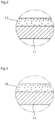
- the cavity 11 and the door 14 may be formed of a metal plate, and coating layers 17 and 18 formed of the enamel composition according to embodiments may be directly formed as a single layer on the metal plate.
- the enamel composition materials may be dispersed in an organic binder, and the enamel composition materials and organic binder, which have been blended, may be subjected to milling in a ball mill to prepare frit.
- the enamel composition materials may be dispersed in water (H 2 O) and a pigment, and the enamel composition materials, water (H 2 O), and pigment, which have been blended, may be subjected to milling in a ball mill to prepare frit.
- the frit prepared by the dry process or the wet process may be applied onto an inner surface of the cavity 11 of the cooking appliance 1 or an inner surface of the door 14 thereof by a spraying method.
- the applied frit may be fired at 600 to 900 °C for 100 to 450 seconds and applied on an inner surface of the cavity 11 of the cooking appliance 1 or an inner surface of the door 14 thereof.
- Enamel compositions were prepared in the compositions shown in Table 1 below.
- Example 2 is according to independent claim 1, whereas examples 1 and 3-4 are not according to independent claim 1.
- Raw materials of components were sufficiently blended in a V-mixer for 3 hours.
- ammonium dihydrogen phosphate (NH 4 H 2 PO 4 ) was used as a raw material of phosphorus pentoxide (P 2 O 5 ), and sodium carbonate (Na 2 CO 3 ), potassium carbonate (K 2 CO 3 ), and lithium carbonate (Li 2 CO 3 ) were used, respectively, as raw materials of Na 2 O, K 2 O, and Li 2 O.
- the blended material was sufficiently melted at 1,300 °C for one and a half hours and then quenched in a quenching roller to obtain cullet.
- Each of the frits prepared using the enamel compositions according to Examples 1 to 5 and Comparative Examples 1 and 2 was sprayed on a low carbon steel sheet having an area of 200 (mm) ⁇ 200 (mm) and a thickness of 1 (mm) or less using a corona discharge gun.
- a voltage of the discharge gun was controlled under a condition within the range of 40 kV to 100 kV, and an amount of the frit sprayed on the low carbon steel sheet was 300 g/m 2 .
- the low carbon steel on which the frit had been sprayed was fired at 830 °C to 870 °C for 300 to 450 seconds to form a coating layer on one surface of the low carbon steel.
- the coating layer was formed to have a thickness of about 80 ⁇ m to 250 ⁇ m.
- the specimens which had undergone the cleaning test according to the above item 2 were evaluated for durability, such as heat resistance and chemical resistance.
- the durability of each specimen was evaluated by determining a staining phenomenon.
- the staining phenomenon was determined by observing the surface of each specimen and quantifying a ratio of the area of the residue or stain to the entire surface area. Evaluation standards for the staining phenomenon are the same as shown in Table 3.
- Table 3 Stained area ratio Level 0% LV.5 ⁇ 20 % LV.4 ⁇ 50 % LV.3 ⁇ 80 % LV.2 80 % - LV.1 Table 4 Examples Comparative Examples 1 2 3 4 1 2 Cleanability against LV.5 LV.5 LV.5 LV.5 LV.2 LV.2 chicken oil Cleanability against monster mash LV.5 LV.5 LV.5 LV.5 LV.2 LV.1 Stain level LV.5 LV.5 LV.5 LV.5 LV.2 LV.1
- the enamel composition according to according to embodiments may dramatically reduce a heating time in comparison to a conventional enamel composition. Accordingly, the enamel composition according to embodiments may save energy consumed in cleaning due to the shortened heating time.
- the enamel composition according to embodiments may allow especially oil contaminants to be completely removed. Accordingly, the enamel composition according to embodiments may enhance hygiene of a cooking appliance
- the enamel composition according to embodiments may exhibit enhanced adhesion to a base steel plate and also ensure excellent cleanability due to a special component ratio.
- the enamel composition according to embodiments may include a phosphate-based component in an optimal composition ratio, it can exhibit high heat resistance and high chemical durability as well as excellent cleanability.
- the enamel composition according to embodiments may be directly applied as a single layer onto a base steel plate in the absence of an intermediate buffer layer, the layer may be simply formed.
- Embodiments disclosed herein provide a novel enamel composition which allows a heating time required for cleaning to be shortened.
- Embodiments disclosed herein provide a novel enamel composition which allows oil contaminants to be completely removed.
- embodiments disclosed herein provide a novel enamel composition which is excellent in not only cleanability but also durability, such as heat resistance and chemical resistance.
- first, second, third, etc. may be used herein to describe various elements, components, regions, layers and/or sections, these elements, components, regions, layers and/or sections should not be limited by these terms. These terms are only used to distinguish one element, component, region, layer or section from another region, layer or section. Thus, a first element, component, region, layer or section could be termed a second element, component, region, layer or section without departing from the teachings of the present invention.
- spatially relative terms such as “lower”, “upper” and the like, may be used herein for ease of description to describe the relationship of one element or feature to another element(s) or feature(s) as illustrated in the figures. It will be understood that the spatially relative terms are intended to encompass different orientations of the device in use or operation, in addition to the orientation depicted in the figures. For example, if the device in the figures is turned over, elements described as “lower” relative to other elements or features would then be oriented “upper” relative to the other elements or features. Thus, the exemplary term “lower” can encompass both an orientation of above and below. The device may be otherwise oriented (rotated 90 degrees or at other orientations) and the spatially relative descriptors used herein interpreted accordingly.
- Embodiments are described herein with reference to cross-section illustrations that are schematic illustrations of idealized embodiments (and intermediate structures). As such, variations from the shapes of the illustrations as a result, for example, of manufacturing techniques and/or tolerances, are to be expected. Thus, embodiments should not be construed as limited to the particular shapes of regions illustrated herein but are to include deviations in shapes that result, for example, from manufacturing.
- any reference in this specification to "one embodiment,” “an embodiment,” “example embodiment,” etc. means that a particular feature, structure, or characteristic described in connection with the embodiment is included in at least one embodiment.
- the appearances of such phrases in various places in the specification are not necessarily all referring to the same embodiment.
Landscapes
- Chemical & Material Sciences (AREA)
- Engineering & Computer Science (AREA)
- Materials Engineering (AREA)
- Organic Chemistry (AREA)
- General Chemical & Material Sciences (AREA)
- Life Sciences & Earth Sciences (AREA)
- Chemical Kinetics & Catalysis (AREA)
- Geochemistry & Mineralogy (AREA)
- Mechanical Engineering (AREA)
- Metallurgy (AREA)
- Combustion & Propulsion (AREA)
- General Engineering & Computer Science (AREA)
- Food Science & Technology (AREA)
- Physics & Mathematics (AREA)
- Electromagnetism (AREA)
- Glass Compositions (AREA)
Claims (14)
- Eine Emaillezusammensetzung, umfassend:15 bis 50 Gew.-% Phosphorpentoxid (P2O5);10 bis 20 Gew.-% Siliziumdioxid (SiO2);1 bis 15 Gew.-% Boroxid (B2O3);5 bis 20 Gew.-% eines oder mehrerer von Lithiumoxid (Li2O), Natriumoxid (Na2O) oder Kaliumoxid (K2O);1 bis 5 Gew.-% eines oder mehrerer von Natriumfluorid (NaF), Calciumfluorid (CaF2) oder Aluminiumfluorid (AlF3);1 bis 35 Gew.-% eines oder mehrerer von Magnesiumoxid (MgO), Bariumoxid (BaO) oder Calciumoxid (CaO); und10 bis 25 Gew.-% eines oder mehrerer von Titandioxid (TiO2), Cerdioxid (CeO2), Molybdäntrioxid (MoOs), Wismuthoxid (Bi2O3) oder Kupferoxid (CuO),wobei die Emaillezusammensetzung sowohl MoO3 als auch Bi2O3 beinhaltet und ein beliebiges von MoO3 oder Bi2O3 mit 2 Gew.-% oder weniger enthalten ist.
- Die Emaillezusammensetzung gemäß Anspruch 1, ferner umfassend:1 bis 20 Gew.-% Aluminiumoxid (Al2O3);1 bis 5 Gew.-% Zirkoniumdioxid (ZrO2); und1 bis 10 Gew.-% eines oder mehrerer von Zinnoxid (SnO) oder Zinkoxid (ZnO).
- Die Emaillezusammnesetzung gemäß Anspruch 1 oder 2, wobei 1 bis 10 Gew.-% MoO3 enthalten sind und 1 bis 5 Gew.-% CuO enthalten sind.
- Ein Kochgerät (1), umfassend:einen Hohlraum (11), der eine Kochkammer bildet;eine Tür (14), die wahlweise die Kochkammer öffnet und schließt;mindestens eine Wärmequelle (13, 15, 16), die der Kochkammer Wärme zuführt; undeine Beschichtungsschicht (17, 18), gebildet aus der Emaillezusammensetzung gemäß einem der Ansprüche 1 bis 3, welche auf eine innere Oberfläche des Hohlraums (11) oder eine innere Oberfläche der Tür (14) aufgebracht ist.
- Ein Verfahren zur Herstellung einer Emaillezusammensetzung gemäß einem der Ansprüche 1 bis 3, umfassend:Bereitstellen von Materialien für die Emaillezusammensetzung;Schmelzen der Materialien; undAbschrecken der geschmolzenen Materialien in einer Abschreckwalze, um die Emaillezusammensetzung zu bilden.
- Das Verfahren gemäß Anspruch 5, wobei das Schmelzen der Materialien für die Emaillezusammensetzung das Schmelzen der Materialien bei 1200 bis 1400 °C für eine bis zwei Stunden beinhaltet.
- Das Verfahren gemäß Anspruch 6, wobei das Schmelzen der Materialien für die Emaillezusammensetzung das Schmelzen der Materialien bei 1300 °C für 1,5 Stunden beinhaltet.
- Das Verfahren gemäß einem der Ansprüche 5 bis 7, wobei das Abschrecken des geschmolzenen Materials das Abschrecken der geschmolzenen Materialien unter Verwendung einer Abschreckwalze beinhaltet.
- Das Verfahren gemäß einem der Ansprüche 5 bis 8, ferner umfassend:
Aufbringen der Emaillezusammensetzung auf mindestens eine von einer inneren Oberfläche eines Hohlraums eines Kochgeräts oder einer inneren Oberfläche einer Tür des Kochgeräts. - Das Verfahren gemäß Anspruch 9, wobei das Aufbringen der Emaillezusammensetzung das Aufbringen der Emaillezusammensetzung mittels eines Trockenverfahrens beinhaltet, welches Dispergieren der abgeschreckten Materialien für die Emaillezusammensetzung in einem organischen Bindemittel, Vermahlen der abgeschreckten Materialien für die Emaillezusammensetzung und des Bindemittels, um eine Fritte herzustellen, und Aufbringen der Fritte auf mindestens eine von der inneren Oberfläche des Hohlraums des Kochgeräts oder der inneren Oberfläche der Tür des Kochgeräts, beinhaltet.
- Das Verfahren gemäß Anspruch 9, wobei das Aufbringen der Emaillezusammensetzung das Aufbringen der Emaillezusammensetzung mittels eines Nassverfahrens beinhaltet, welches Dispergieren der abgeschreckten Materialien für die Emaillezusammensetzung in Wasser und einem Pigment, Vermahlen der Materialien für die Emaillezusammensetzung, des Wassers und des Pigments, um eine Fritte herzustellen, und Aufbringen der Fritte auf mindestens eine von der inneren Oberfläche des Hohlraums des Kochgeräts oder der inneren Oberfläche der Tür des Kochgeräts, beinhaltet.
- Das Verfahren gemäß Anspruch 9 oder 10, wobei das Aufbringen der Emaillezusammensetzung beinhaltet:Aufsprühen einer Fritte, welche die abgeschreckten Materialien für die Emaillezusammensetzung beinhaltet, auf mindestens eine von der inneren Oberfläche des Hohlraums des Kochgeräts oder der inneren Oberfläche der Tür des Kochgeräts; undBrennen der aufgesprühten Fritte.
- Das Verfahren gemäß Anspruch 12, wobei das Aufsprühen der Fritte das Aufsprühen von 300 g/m2 der Fritte auf ein Stahlblechsubstrat beinhaltet.
- Das Verfahren gemäß Anspruch 12 oder 13, wobei das Aufsprühen der Fritte das direkte Aufbringen einer einzelnen Schicht der Fritte auf ein Stahlblechsubstrat ohne Verwendung einer dazwischenliegenden Pufferschicht beinhaltet, und wobei die Fritte aufgetragen wird, um eine Beschichtungsschicht mit einer Dicke von 80 bis 250 µm zu bilden und die Fritte bei 830 bis 870 °C für 300 bis 450 Sekunden gebrannt wird.
Applications Claiming Priority (1)
| Application Number | Priority Date | Filing Date | Title |
|---|---|---|---|
| KR1020190021141A KR102172459B1 (ko) | 2019-02-22 | 2019-02-22 | 법랑 조성물, 그 제조방법 및 조리기기 |
Publications (2)
| Publication Number | Publication Date |
|---|---|
| EP3699153A1 EP3699153A1 (de) | 2020-08-26 |
| EP3699153B1 true EP3699153B1 (de) | 2024-10-23 |
Family
ID=69723859
Family Applications (1)
| Application Number | Title | Priority Date | Filing Date |
|---|---|---|---|
| EP20158736.7A Active EP3699153B1 (de) | 2019-02-22 | 2020-02-21 | Emaillezusammensetzung, verfahren zur herstellung einer emaillezusammensetzung und kochgerät |
Country Status (4)
| Country | Link |
|---|---|
| US (3) | US11780766B2 (de) |
| EP (1) | EP3699153B1 (de) |
| KR (1) | KR102172459B1 (de) |
| CN (1) | CN111606569B (de) |
Families Citing this family (14)
| Publication number | Priority date | Publication date | Assignee | Title |
|---|---|---|---|---|
| KR102234552B1 (ko) | 2018-10-31 | 2021-04-01 | 엘지전자 주식회사 | 법랑 조성물 및 이의 제조방법 |
| KR102234551B1 (ko) | 2018-11-09 | 2021-04-01 | 엘지전자 주식회사 | 법랑 조성물, 그 제조방법 및 조리기기 |
| KR102172460B1 (ko) | 2019-02-22 | 2020-10-30 | 엘지전자 주식회사 | 법랑 조성물, 그 제조방법 및 조리기기 |
| KR102310341B1 (ko) * | 2019-02-22 | 2021-10-07 | 엘지전자 주식회사 | 법랑 조성물, 그 제조방법 및 조리기기 |
| KR102172459B1 (ko) | 2019-02-22 | 2020-10-30 | 엘지전자 주식회사 | 법랑 조성물, 그 제조방법 및 조리기기 |
| KR102172417B1 (ko) | 2019-02-22 | 2020-10-30 | 엘지전자 주식회사 | 법랑 조성물 및 이의 제조방법 |
| KR102172418B1 (ko) * | 2019-02-22 | 2020-10-30 | 엘지전자 주식회사 | 법랑 조성물, 그 제조방법 및 조리기기 |
| KR20200102758A (ko) * | 2019-02-22 | 2020-09-01 | 엘지전자 주식회사 | 법랑 조성물, 그 제조방법 및 조리기기 |
| KR102172416B1 (ko) | 2019-02-22 | 2020-10-30 | 엘지전자 주식회사 | 법랑 조성물, 그 제조방법 및 조리기기 |
| KR20220004356A (ko) * | 2020-07-03 | 2022-01-11 | 엘지전자 주식회사 | 조리기기 제어방법 |
| KR102623353B1 (ko) * | 2021-01-26 | 2024-01-09 | 엘지전자 주식회사 | 법랑 조성물 및 그 제조 방법과, 이를 이용한 조리기기 |
| CN114907012A (zh) * | 2021-02-09 | 2022-08-16 | 宝山钢铁股份有限公司 | 利用铁尾矿在高强钢表面制备耐蚀搪瓷涂层的物料及方法 |
| EP4364620A4 (de) * | 2022-03-15 | 2024-11-20 | Guangdong Midea Kitchen Appliances Manufacturing Co., Ltd. | Gargerät |
| CN115323376B (zh) * | 2022-08-10 | 2023-08-01 | 上海海事大学 | 一种使用铜胎氧化层的珐琅加工方法 |
Family Cites Families (96)
| Publication number | Priority date | Publication date | Assignee | Title |
|---|---|---|---|---|
| US3547098A (en) | 1968-03-22 | 1970-12-15 | Ferro Corp | Porcelain enamels for self-cleaning cooking oven |
| US3580733A (en) | 1969-04-17 | 1971-05-25 | Scm Corp | Food cooking apparatus having continuous cleaning properties and process for producing same |
| AR207684A1 (es) | 1975-04-07 | 1976-10-22 | Ferro Corp | Composicion de frita volatilizable |
| JPS52127913A (en) | 1976-04-20 | 1977-10-27 | Matsushita Electric Industrial Co Ltd | Product coated with an layer of selffcleaning type |
| JPS5477618A (en) | 1977-12-01 | 1979-06-21 | Ngk Frit Kk | Patterning of enemel products |
| JPS54106529A (en) | 1978-02-09 | 1979-08-21 | Ngk Frit Kk | Enamelled stainless products and preparation thereof |
| CA1154638A (en) | 1978-03-15 | 1983-10-04 | Kunio Kimura | Method of forming porcelain enamels |
| JPS54153819A (en) * | 1978-05-23 | 1979-12-04 | Matsushita Electric Industrial Co Ltd | Heat cooking saucer |
| SE7908515L (sv) | 1978-10-16 | 1980-04-17 | Matsushita Electric Industrial Co Ltd | Belagda ytor |
| JPS5575740A (en) | 1978-12-05 | 1980-06-07 | Matsushita Electric Ind Co Ltd | Cooking apparatus |
| JPS58140342A (ja) | 1982-02-08 | 1983-08-20 | Matsushita Electric Ind Co Ltd | 透明ほうろうフリツト |
| JPH0672031B2 (ja) | 1987-03-17 | 1994-09-14 | 日本碍子株式会社 | ほうろう製品 |
| JPH07115884B2 (ja) | 1987-03-17 | 1995-12-13 | 日本碍子株式会社 | ほうろうフリツト |
| ZW13689A1 (en) | 1988-11-19 | 1989-12-12 | Johnson Matthey Plc | Glass composition for use in glazes or enamels |
| US4877758A (en) | 1988-12-22 | 1989-10-31 | Chi-Vit Corporation | Lead-free frit |
| BG60393B1 (bg) | 1993-08-06 | 1995-02-28 | Гергана Пирлова | емайл |
| GB9319971D0 (en) | 1993-09-28 | 1993-11-17 | Cookson Group Plc | Cobalt glass compositions for coatings |
| CZ279603B6 (cs) | 1993-11-03 | 1995-05-17 | Vysoká Škola Chemicko-Technologická | Křišťálové bezolovnaté sklo s indexem lomu vyšším než 1,52 |
| CN1108626A (zh) | 1994-09-24 | 1995-09-20 | 汪霖 | 铸铁搪瓷一次性烧成瓷釉 |
| EP0729921A2 (de) | 1995-03-02 | 1996-09-04 | Bayer Ag | Selbsttrübende Emailfritten für die Emaillierung von Aluminium oder Aluminiumlegierungen |
| JP3611160B2 (ja) | 1997-02-10 | 2005-01-19 | 株式会社村田製作所 | 厚膜抵抗体ペースト |
| US6140767A (en) | 1997-04-25 | 2000-10-31 | Sarnoff Corporation | Plasma display having specific substrate and barrier ribs |
| DE19726778A1 (de) | 1997-06-24 | 1999-01-14 | Cerdec Ag | Verfahren zur Herstellung keramischer und glasiger Beschichtungen, elektrostatisch applizierbares Beschichtungspulver hierfür und seine Verwendung |
| DE69803437T2 (de) | 1998-01-12 | 2002-08-01 | Ferro France S.A.R.L., Saint Dizier | Katalytische Porzellan-Email Überzugsmittelzusammensetzung |
| JP3069790B1 (ja) | 1999-09-08 | 2000-07-24 | 日本フエロー株式会社 | 陶磁器釉薬用フリットの製造方法 |
| US6652972B1 (en) | 1999-11-01 | 2003-11-25 | Schott Glass Technologies Inc. | Low temperature joining of phosphate glass |
| EP1160283A1 (de) * | 2000-05-29 | 2001-12-05 | Ferro France S.A.R.L. | Hybridlack-Zusammensetzungen |
| EP1167310A1 (de) | 2000-06-28 | 2002-01-02 | Ferro France S.A.R.L. | Emailzusammensetzung |
| JP4556004B2 (ja) | 2000-06-29 | 2010-10-06 | 奥野製薬工業株式会社 | セラミックカラー組成物及び板ガラスの曲げ加工方法 |
| DE60033813T2 (de) | 2000-09-22 | 2007-11-29 | Ferro France S.A.R.L. | Weissemail für aluminisierten oder galvanisierten Stahl |
| HU222266B1 (hu) | 2001-02-20 | 2003-05-28 | Zománc Rt | Alapzománc-bevonat előállítására alkalmas frittelegy |
| EP1256556A1 (de) | 2001-05-09 | 2002-11-13 | Ferro France S.A.R.L. | Porzellan-Emailzusammensetzung |
| JP2002367510A (ja) * | 2001-06-12 | 2002-12-20 | Asahi Glass Co Ltd | ガラスフリット焼成方法 |
| US6511931B1 (en) | 2001-07-16 | 2003-01-28 | Ferro Corporation | Easy-to-clean matte acid resistant ground coat |
| JP3986321B2 (ja) | 2002-02-19 | 2007-10-03 | 株式会社ノリタケカンパニーリミテド | 無鉛ガラスフラックス及び該フラックスを含む絵付け材料 |
| US20040069764A1 (en) | 2002-07-23 | 2004-04-15 | Matsushita Electric Industrial Co., Ltd | Heat cooking apparatus and self-cleaning functional material and manufacturing method thereof |
| JP4014468B2 (ja) | 2002-08-07 | 2007-11-28 | 株式会社ノリタケカンパニーリミテド | 無鉛ガラスフラックス及び該フラックスを含む絵付け材料 |
| KR100496458B1 (ko) | 2002-09-02 | 2005-06-23 | 재단법인서울대학교산학협력재단 | 생체 흡수형 생체 활성 결정화 유리 및 그 제조 방법 |
| JP2004269322A (ja) | 2003-03-10 | 2004-09-30 | Asahi Glass Co Ltd | セラミックカラー組成物、セラミックカラーペースト、セラミックカラー層付きガラス板の製造方法 |
| JP2004358846A (ja) | 2003-06-05 | 2004-12-24 | Nisshin Steel Co Ltd | 琺瑯/光触媒複層被覆金属板 |
| JP2005008974A (ja) | 2003-06-20 | 2005-01-13 | Jfe Steel Kk | 琺瑯材およびその製造方法 |
| EP1559692B1 (de) | 2004-01-30 | 2007-10-17 | Glaverbel | Wiederverwertbare emaillierte Verglasungen |
| DE102004026433A1 (de) | 2004-05-29 | 2005-12-22 | Schott Ag | Nanoglaspulver und deren Verwendung |
| US7763557B2 (en) | 2005-05-12 | 2010-07-27 | Ferro Corporation | Porcelain enamel having a metallic appearance |
| KR20070005126A (ko) | 2005-07-05 | 2007-01-10 | 엘지전자 주식회사 | 플라즈마 디스플레이 패널 |
| RU2345964C2 (ru) | 2007-04-03 | 2009-02-10 | Государственное образовательное учреждение высшего профессионального образования "Южно-Российский государственный технический университет (Новочеркасский политехнический институт)" | Фритта для цветной однослойной эмали |
| CN101067207A (zh) | 2007-06-08 | 2007-11-07 | 东华大学 | 光催化自洁搪瓷的制备方法 |
| CN101182119B (zh) | 2007-11-09 | 2011-04-27 | 东华大学 | 一种低温无铅搪瓷釉组合物及其制备方法 |
| EP2105125A1 (de) * | 2008-03-26 | 2009-09-30 | Bayer MaterialScience AG | Hautpflege-Zusammensetzung |
| KR101457164B1 (ko) | 2008-06-16 | 2014-11-04 | 삼성전자 주식회사 | 코팅 조성물, 및 상기 코팅 조성물이 코팅된 조리기기 또는조리용기 |
| US8007930B2 (en) | 2008-07-10 | 2011-08-30 | Ferro Corporation | Zinc containing glasses and enamels |
| FR2937235B1 (fr) | 2008-10-16 | 2010-11-12 | Seb Sa | Articule culinaire comportant un revetement antiadhesif presentant des proprietes ameliorees d'adherence au support |
| CN101734858A (zh) | 2008-11-07 | 2010-06-16 | 肖特股份有限公司 | 用于对玻璃或玻璃陶瓷涂以瓷釉、搪瓷和加以装饰的不含铅和镉的玻璃组合物 |
| CN101519275B (zh) | 2009-03-26 | 2011-07-27 | 李梦琪 | 熔剂、油墨及其制备方法 |
| CN101519276A (zh) | 2009-03-27 | 2009-09-02 | 上海应用技术学院 | 一种光催化自洁纳米二氧化钛搪瓷基板及其制备方法 |
| EP2417073A1 (de) | 2009-04-09 | 2012-02-15 | E. I. du Pont de Nemours and Company | Glaszusammensetzungen zur verwendung für leiter für fotovoltaikzellen |
| KR101411074B1 (ko) | 2009-04-20 | 2014-06-27 | 엘지전자 주식회사 | 조리기기 및 그의 제어방법 |
| KR101695493B1 (ko) | 2009-07-15 | 2017-01-11 | 엘지전자 주식회사 | 조리기기 및 제어방법 |
| KR101411034B1 (ko) | 2009-08-28 | 2014-06-30 | 엘지전자 주식회사 | 법랑용 조성물 및 그 법랑 조성물이 적용된 조리기기 |
| US8778455B2 (en) | 2010-04-27 | 2014-07-15 | Ferro Corporation | Enamel and ground coat compositions |
| US9072400B2 (en) | 2010-04-27 | 2015-07-07 | Ferro Corporation | Dark colored easy-to-clean enamel |
| CN102086091A (zh) | 2010-07-08 | 2011-06-08 | 石家庄正中科技有限公司 | 一种面釉浆、白色搪瓷及其制备方法 |
| JP5408104B2 (ja) | 2010-10-26 | 2014-02-05 | 新日鐵住金株式会社 | 酸化防止剤及び金属材の製造方法 |
| CN102219383B (zh) | 2011-04-12 | 2013-12-18 | 浙江开尔新材料股份有限公司 | 一种搪瓷釉料 |
| CN102517582B (zh) | 2011-12-29 | 2013-09-11 | 何玉良 | 一种搪瓷板的制备方法 |
| US9296643B2 (en) | 2012-05-10 | 2016-03-29 | Lg Electronics Inc. | Enamel composition, preparation method thereof, and cooking appliance including the same |
| KR101842222B1 (ko) | 2013-03-21 | 2018-03-27 | 엘지전자 주식회사 | 법랑 조성물, 그 제조방법 및 조리기기 |
| KR101437219B1 (ko) | 2012-05-10 | 2014-09-03 | 엘지전자 주식회사 | 법랑 조성물, 그 제조방법 및 조리기기 |
| KR101476500B1 (ko) | 2012-05-10 | 2014-12-24 | 엘지전자 주식회사 | 법랑 조성물, 그 제조방법 및 조리기기 |
| KR101476501B1 (ko) | 2012-05-10 | 2014-12-24 | 엘지전자 주식회사 | 법랑 조성물, 그 제조방법 및 조리기기 |
| KR101391166B1 (ko) | 2012-07-25 | 2014-05-07 | (주)밴엔지니어링 | 법랑 코팅층을 구비한 주방용품의 제조방법 |
| JP6125318B2 (ja) | 2013-05-14 | 2017-05-10 | 大阪ガスケミカル株式会社 | 溶射組成物および溶射被膜 |
| JP6322825B2 (ja) | 2014-07-29 | 2018-05-16 | タカラスタンダード株式会社 | ホーロー製品の製造方法及びホーロー製品 |
| CN104891805B (zh) | 2015-05-25 | 2017-04-05 | 广东美的厨房电器制造有限公司 | 搪瓷材料及其制备方法和应用 |
| CN104891810A (zh) | 2015-06-04 | 2015-09-09 | 禹金库 | 一种玻璃釉料着色组合物、釉料着色玻璃板和应用 |
| US20180201538A1 (en) | 2015-07-24 | 2018-07-19 | Onderzoekscentrum Voor Aanwending Van Staal N.V. | Method for providing a co- and ni-free vitreous enamelled metal coated steel substrate and a primer composition therefor |
| MX2018001563A (es) * | 2015-09-28 | 2018-05-22 | Ferro Corp | Esmalte hibrido pirolitico. |
| CN105621889B (zh) | 2015-12-29 | 2018-11-23 | 广东美的厨房电器制造有限公司 | 同时具有吸波和远红外性能的搪瓷材料及其制备方法和应用 |
| CN108059341A (zh) | 2016-11-09 | 2018-05-22 | 刘书刚 | 氧化镧有色玻璃及其制备方法 |
| KR102216663B1 (ko) * | 2017-02-02 | 2021-02-17 | 엘지전자 주식회사 | 유리 조성물, 이의 제조방법 및 조리기기 |
| KR102677557B1 (ko) | 2017-02-02 | 2024-06-24 | 엘지전자 주식회사 | 유리 조성물 및 조리기기 |
| KR102679797B1 (ko) | 2017-02-02 | 2024-07-02 | 엘지전자 주식회사 | 유리 조성물 및 조리기기 |
| KR102216709B1 (ko) | 2017-02-02 | 2021-02-17 | 엘지전자 주식회사 | 유리 조성물, 이의 제조방법 및 조리기기 |
| JP6879035B2 (ja) | 2017-04-28 | 2021-06-02 | 住友金属鉱山株式会社 | 導電性組成物、導体の製造方法及び電子部品の配線の形成方法 |
| CN106957149A (zh) | 2017-05-04 | 2017-07-18 | 钦州学院 | 搪瓷釉料 |
| KR102024162B1 (ko) | 2017-06-28 | 2019-09-23 | 엘지전자 주식회사 | 유리 조성물 및 조리기기 |
| CN107513747A (zh) | 2017-07-26 | 2017-12-26 | 贵州省兴仁县荣凯五金搪瓷制品有限公司 | 一种搪瓷涂层的制备方法 |
| KR102519215B1 (ko) | 2017-09-26 | 2023-04-06 | 엘지전자 주식회사 | 유리 조성물 및 조리기기 |
| KR102577445B1 (ko) | 2018-04-17 | 2023-09-11 | 엘지전자 주식회사 | 법랑 조성물, 그 제조방법 및 조리기기 |
| CN108863074A (zh) | 2018-07-19 | 2018-11-23 | 沙冰娟 | 一种耐热搪瓷材料及其制备方法 |
| CN108675636A (zh) | 2018-08-02 | 2018-10-19 | 张家港市沐和新材料技术开发有限公司 | 一种耐酸碱型搪瓷釉料的配方 |
| KR102234551B1 (ko) | 2018-11-09 | 2021-04-01 | 엘지전자 주식회사 | 법랑 조성물, 그 제조방법 및 조리기기 |
| KR102172416B1 (ko) | 2019-02-22 | 2020-10-30 | 엘지전자 주식회사 | 법랑 조성물, 그 제조방법 및 조리기기 |
| KR102172459B1 (ko) | 2019-02-22 | 2020-10-30 | 엘지전자 주식회사 | 법랑 조성물, 그 제조방법 및 조리기기 |
| KR20200102758A (ko) * | 2019-02-22 | 2020-09-01 | 엘지전자 주식회사 | 법랑 조성물, 그 제조방법 및 조리기기 |
| KR102172418B1 (ko) | 2019-02-22 | 2020-10-30 | 엘지전자 주식회사 | 법랑 조성물, 그 제조방법 및 조리기기 |
-
2019
- 2019-02-22 KR KR1020190021141A patent/KR102172459B1/ko active Active
-
2020
- 2020-02-20 US US16/796,102 patent/US11780766B2/en active Active
- 2020-02-21 EP EP20158736.7A patent/EP3699153B1/de active Active
- 2020-02-21 CN CN202010107792.8A patent/CN111606569B/zh active Active
-
2023
- 2023-09-13 US US18/367,628 patent/US20240002280A1/en active Pending
- 2023-09-13 US US18/367,583 patent/US20240002279A1/en active Pending
Also Published As
| Publication number | Publication date |
|---|---|
| US20200270171A1 (en) | 2020-08-27 |
| US20240002280A1 (en) | 2024-01-04 |
| US20240002279A1 (en) | 2024-01-04 |
| CN111606569A (zh) | 2020-09-01 |
| CN111606569B (zh) | 2022-06-14 |
| EP3699153A1 (de) | 2020-08-26 |
| KR20200102757A (ko) | 2020-09-01 |
| KR102172459B1 (ko) | 2020-10-30 |
| US11780766B2 (en) | 2023-10-10 |
Similar Documents
| Publication | Publication Date | Title |
|---|---|---|
| EP3699153B1 (de) | Emaillezusammensetzung, verfahren zur herstellung einer emaillezusammensetzung und kochgerät | |
| EP3699156B1 (de) | Emaillezusammensetzung, verfahren zur herstellung einer emaillezusammensetzung und kochgerät | |
| EP3699157B1 (de) | Emaillezusammensetzung, verfahren zur herstellung einer emaillezusammensetzung und kochgerät | |
| EP3357876B1 (de) | Emailzusammensetzung, herstellungsverfahren einer emailzusammensetzung und kochgerät | |
| EP3650414B1 (de) | Emaillezusammensetzung, herstellungsverfahren dafür und kochgerät | |
| EP3782962A1 (de) | Emaillezusammensetzung, herstellungsverfahren dafür und kochutensilien | |
| EP2662340B1 (de) | Emailzusammensetzung und Kochgerät damit | |
| EP3578525B1 (de) | Glaszusammensetzung und kochgerät | |
| US11401201B2 (en) | Enamel composition, method for preparing enamel composition, and cooking appliance | |
| EP3699154B1 (de) | Emaillezusammensetzung, verfahren zur herstellung einer emaillezusammensetzung und kochgerät | |
| EP3786122B1 (de) | Emaillezusammensetzung, herstellungsverfahren dafür und kochutensilien | |
| US20230406756A1 (en) | Enamel composition, method for preparing enamel composition, and cooking appliance | |
| EP3763685B1 (de) | Emaillezusammensetzung, verfahren zur herstellung einer emaillezusammensetzung und kochgerät | |
| EP3647285B1 (de) | Emaillezusammensetzung und verfahren zur herstellung davon | |
| EP3699155A1 (de) | Emaillezusammensetzung, verfahren zur herstellung einer emaillezusammensetzung und kochgerät | |
| KR20250115165A (ko) | 법랑 조성물, 그 제조방법 및 조리기기 | |
| KR20210093116A (ko) | 법랑 조성물, 그 제조방법 및 조리기기 | |
| KR20210093115A (ko) | 법랑 조성물, 그 제조방법 및 조리기기 | |
| KR20210093117A (ko) | 법랑 조성물, 그 제조방법 및 조리기기 |
Legal Events
| Date | Code | Title | Description |
|---|---|---|---|
| PUAI | Public reference made under article 153(3) epc to a published international application that has entered the european phase |
Free format text: ORIGINAL CODE: 0009012 |
|
| STAA | Information on the status of an ep patent application or granted ep patent |
Free format text: STATUS: REQUEST FOR EXAMINATION WAS MADE |
|
| 17P | Request for examination filed |
Effective date: 20200321 |
|
| AK | Designated contracting states |
Kind code of ref document: A1 Designated state(s): AL AT BE BG CH CY CZ DE DK EE ES FI FR GB GR HR HU IE IS IT LI LT LU LV MC MK MT NL NO PL PT RO RS SE SI SK SM TR |
|
| AX | Request for extension of the european patent |
Extension state: BA ME |
|
| RBV | Designated contracting states (corrected) |
Designated state(s): AL AT BE BG CH CY CZ DE DK EE ES FI FR GB GR HR HU IE IS IT LI LT LU LV MC MK MT NL NO PL PT RO RS SE SI SK SM TR |
|
| GRAP | Despatch of communication of intention to grant a patent |
Free format text: ORIGINAL CODE: EPIDOSNIGR1 |
|
| STAA | Information on the status of an ep patent application or granted ep patent |
Free format text: STATUS: GRANT OF PATENT IS INTENDED |
|
| INTG | Intention to grant announced |
Effective date: 20240516 |
|
| GRAS | Grant fee paid |
Free format text: ORIGINAL CODE: EPIDOSNIGR3 |
|
| GRAA | (expected) grant |
Free format text: ORIGINAL CODE: 0009210 |
|
| STAA | Information on the status of an ep patent application or granted ep patent |
Free format text: STATUS: THE PATENT HAS BEEN GRANTED |
|
| AK | Designated contracting states |
Kind code of ref document: B1 Designated state(s): AL AT BE BG CH CY CZ DE DK EE ES FI FR GB GR HR HU IE IS IT LI LT LU LV MC MK MT NL NO PL PT RO RS SE SI SK SM TR |
|
| REG | Reference to a national code |
Ref country code: GB Ref legal event code: FG4D |
|
| REG | Reference to a national code |
Ref country code: CH Ref legal event code: EP |
|
| REG | Reference to a national code |
Ref country code: DE Ref legal event code: R096 Ref document number: 602020039772 Country of ref document: DE |
|
| REG | Reference to a national code |
Ref country code: IE Ref legal event code: FG4D |
|
| REG | Reference to a national code |
Ref country code: LT Ref legal event code: MG9D |
|
| REG | Reference to a national code |
Ref country code: NL Ref legal event code: MP Effective date: 20241023 |
|
| REG | Reference to a national code |
Ref country code: AT Ref legal event code: MK05 Ref document number: 1734735 Country of ref document: AT Kind code of ref document: T Effective date: 20241023 |
|
| PG25 | Lapsed in a contracting state [announced via postgrant information from national office to epo] |
Ref country code: NL Free format text: LAPSE BECAUSE OF FAILURE TO SUBMIT A TRANSLATION OF THE DESCRIPTION OR TO PAY THE FEE WITHIN THE PRESCRIBED TIME-LIMIT Effective date: 20241023 |
|
| PG25 | Lapsed in a contracting state [announced via postgrant information from national office to epo] |
Ref country code: NL Free format text: LAPSE BECAUSE OF FAILURE TO SUBMIT A TRANSLATION OF THE DESCRIPTION OR TO PAY THE FEE WITHIN THE PRESCRIBED TIME-LIMIT Effective date: 20241023 |
|
| PG25 | Lapsed in a contracting state [announced via postgrant information from national office to epo] |
Ref country code: HR Free format text: LAPSE BECAUSE OF FAILURE TO SUBMIT A TRANSLATION OF THE DESCRIPTION OR TO PAY THE FEE WITHIN THE PRESCRIBED TIME-LIMIT Effective date: 20241023 Ref country code: PT Free format text: LAPSE BECAUSE OF FAILURE TO SUBMIT A TRANSLATION OF THE DESCRIPTION OR TO PAY THE FEE WITHIN THE PRESCRIBED TIME-LIMIT Effective date: 20250224 Ref country code: IS Free format text: LAPSE BECAUSE OF FAILURE TO SUBMIT A TRANSLATION OF THE DESCRIPTION OR TO PAY THE FEE WITHIN THE PRESCRIBED TIME-LIMIT Effective date: 20250223 |
|
| PGFP | Annual fee paid to national office [announced via postgrant information from national office to epo] |
Ref country code: DE Payment date: 20250106 Year of fee payment: 6 |
|
| PG25 | Lapsed in a contracting state [announced via postgrant information from national office to epo] |
Ref country code: FI Free format text: LAPSE BECAUSE OF FAILURE TO SUBMIT A TRANSLATION OF THE DESCRIPTION OR TO PAY THE FEE WITHIN THE PRESCRIBED TIME-LIMIT Effective date: 20241023 |
|
| PG25 | Lapsed in a contracting state [announced via postgrant information from national office to epo] |
Ref country code: BG Free format text: LAPSE BECAUSE OF FAILURE TO SUBMIT A TRANSLATION OF THE DESCRIPTION OR TO PAY THE FEE WITHIN THE PRESCRIBED TIME-LIMIT Effective date: 20241023 |
|
| PG25 | Lapsed in a contracting state [announced via postgrant information from national office to epo] |
Ref country code: ES Free format text: LAPSE BECAUSE OF FAILURE TO SUBMIT A TRANSLATION OF THE DESCRIPTION OR TO PAY THE FEE WITHIN THE PRESCRIBED TIME-LIMIT Effective date: 20241023 |
|
| PG25 | Lapsed in a contracting state [announced via postgrant information from national office to epo] |
Ref country code: NO Free format text: LAPSE BECAUSE OF FAILURE TO SUBMIT A TRANSLATION OF THE DESCRIPTION OR TO PAY THE FEE WITHIN THE PRESCRIBED TIME-LIMIT Effective date: 20250123 |
|
| PG25 | Lapsed in a contracting state [announced via postgrant information from national office to epo] |
Ref country code: LV Free format text: LAPSE BECAUSE OF FAILURE TO SUBMIT A TRANSLATION OF THE DESCRIPTION OR TO PAY THE FEE WITHIN THE PRESCRIBED TIME-LIMIT Effective date: 20241023 Ref country code: AT Free format text: LAPSE BECAUSE OF FAILURE TO SUBMIT A TRANSLATION OF THE DESCRIPTION OR TO PAY THE FEE WITHIN THE PRESCRIBED TIME-LIMIT Effective date: 20241023 Ref country code: GR Free format text: LAPSE BECAUSE OF FAILURE TO SUBMIT A TRANSLATION OF THE DESCRIPTION OR TO PAY THE FEE WITHIN THE PRESCRIBED TIME-LIMIT Effective date: 20250124 |
|
| PG25 | Lapsed in a contracting state [announced via postgrant information from national office to epo] |
Ref country code: PL Free format text: LAPSE BECAUSE OF FAILURE TO SUBMIT A TRANSLATION OF THE DESCRIPTION OR TO PAY THE FEE WITHIN THE PRESCRIBED TIME-LIMIT Effective date: 20241023 |
|
| PGFP | Annual fee paid to national office [announced via postgrant information from national office to epo] |
Ref country code: FR Payment date: 20250107 Year of fee payment: 6 |
|
| PGFP | Annual fee paid to national office [announced via postgrant information from national office to epo] |
Ref country code: IT Payment date: 20250121 Year of fee payment: 6 |
|
| PG25 | Lapsed in a contracting state [announced via postgrant information from national office to epo] |
Ref country code: RS Free format text: LAPSE BECAUSE OF FAILURE TO SUBMIT A TRANSLATION OF THE DESCRIPTION OR TO PAY THE FEE WITHIN THE PRESCRIBED TIME-LIMIT Effective date: 20250123 |
|
| PG25 | Lapsed in a contracting state [announced via postgrant information from national office to epo] |
Ref country code: SM Free format text: LAPSE BECAUSE OF FAILURE TO SUBMIT A TRANSLATION OF THE DESCRIPTION OR TO PAY THE FEE WITHIN THE PRESCRIBED TIME-LIMIT Effective date: 20241023 |
|
| PG25 | Lapsed in a contracting state [announced via postgrant information from national office to epo] |
Ref country code: DK Free format text: LAPSE BECAUSE OF FAILURE TO SUBMIT A TRANSLATION OF THE DESCRIPTION OR TO PAY THE FEE WITHIN THE PRESCRIBED TIME-LIMIT Effective date: 20241023 |
|
| PG25 | Lapsed in a contracting state [announced via postgrant information from national office to epo] |
Ref country code: EE Free format text: LAPSE BECAUSE OF FAILURE TO SUBMIT A TRANSLATION OF THE DESCRIPTION OR TO PAY THE FEE WITHIN THE PRESCRIBED TIME-LIMIT Effective date: 20241023 |
|
| PG25 | Lapsed in a contracting state [announced via postgrant information from national office to epo] |
Ref country code: RO Free format text: LAPSE BECAUSE OF FAILURE TO SUBMIT A TRANSLATION OF THE DESCRIPTION OR TO PAY THE FEE WITHIN THE PRESCRIBED TIME-LIMIT Effective date: 20241023 |
|
| REG | Reference to a national code |
Ref country code: DE Ref legal event code: R097 Ref document number: 602020039772 Country of ref document: DE |
|
| PG25 | Lapsed in a contracting state [announced via postgrant information from national office to epo] |
Ref country code: SK Free format text: LAPSE BECAUSE OF FAILURE TO SUBMIT A TRANSLATION OF THE DESCRIPTION OR TO PAY THE FEE WITHIN THE PRESCRIBED TIME-LIMIT Effective date: 20241023 |
|
| PG25 | Lapsed in a contracting state [announced via postgrant information from national office to epo] |
Ref country code: CZ Free format text: LAPSE BECAUSE OF FAILURE TO SUBMIT A TRANSLATION OF THE DESCRIPTION OR TO PAY THE FEE WITHIN THE PRESCRIBED TIME-LIMIT Effective date: 20241023 |
|
| PLBE | No opposition filed within time limit |
Free format text: ORIGINAL CODE: 0009261 |
|
| STAA | Information on the status of an ep patent application or granted ep patent |
Free format text: STATUS: NO OPPOSITION FILED WITHIN TIME LIMIT |
|
| PG25 | Lapsed in a contracting state [announced via postgrant information from national office to epo] |
Ref country code: SE Free format text: LAPSE BECAUSE OF FAILURE TO SUBMIT A TRANSLATION OF THE DESCRIPTION OR TO PAY THE FEE WITHIN THE PRESCRIBED TIME-LIMIT Effective date: 20241023 |
|
| PG25 | Lapsed in a contracting state [announced via postgrant information from national office to epo] |
Ref country code: MC Free format text: LAPSE BECAUSE OF FAILURE TO SUBMIT A TRANSLATION OF THE DESCRIPTION OR TO PAY THE FEE WITHIN THE PRESCRIBED TIME-LIMIT Effective date: 20241023 |
|
| REG | Reference to a national code |
Ref country code: CH Ref legal event code: PL |
|
| 26N | No opposition filed |
Effective date: 20250724 |
|
| PG25 | Lapsed in a contracting state [announced via postgrant information from national office to epo] |
Ref country code: LU Free format text: LAPSE BECAUSE OF NON-PAYMENT OF DUE FEES Effective date: 20250221 |
|
| PG25 | Lapsed in a contracting state [announced via postgrant information from national office to epo] |
Ref country code: CH Free format text: LAPSE BECAUSE OF NON-PAYMENT OF DUE FEES Effective date: 20250228 |
|
| GBPC | Gb: european patent ceased through non-payment of renewal fee |
Effective date: 20250221 |
|
| REG | Reference to a national code |
Ref country code: BE Ref legal event code: MM Effective date: 20250228 |
|
| PG25 | Lapsed in a contracting state [announced via postgrant information from national office to epo] |
Ref country code: GB Free format text: LAPSE BECAUSE OF NON-PAYMENT OF DUE FEES Effective date: 20250221 |
|
| PG25 | Lapsed in a contracting state [announced via postgrant information from national office to epo] |
Ref country code: BE Free format text: LAPSE BECAUSE OF NON-PAYMENT OF DUE FEES Effective date: 20250228 |
|
| PG25 | Lapsed in a contracting state [announced via postgrant information from national office to epo] |
Ref country code: IE Free format text: LAPSE BECAUSE OF NON-PAYMENT OF DUE FEES Effective date: 20250221 |