EP3592389B1 - Verfahren und zusammensetzungen in zusammenhang mit einer kombinierten behandlung mit entzündungshemmenden mitteln und synthetischen nanoträgern mit einem immunsuppressivum - Google Patents
Verfahren und zusammensetzungen in zusammenhang mit einer kombinierten behandlung mit entzündungshemmenden mitteln und synthetischen nanoträgern mit einem immunsuppressivum Download PDFInfo
- Publication number
- EP3592389B1 EP3592389B1 EP18714906.7A EP18714906A EP3592389B1 EP 3592389 B1 EP3592389 B1 EP 3592389B1 EP 18714906 A EP18714906 A EP 18714906A EP 3592389 B1 EP3592389 B1 EP 3592389B1
- Authority
- EP
- European Patent Office
- Prior art keywords
- composition
- sel
- cohort
- gout
- synthetic nanocarriers
- Prior art date
- Legal status (The legal status is an assumption and is not a legal conclusion. Google has not performed a legal analysis and makes no representation as to the accuracy of the status listed.)
- Active
Links
Images


Classifications
-
- A—HUMAN NECESSITIES
- A61—MEDICAL OR VETERINARY SCIENCE; HYGIENE
- A61K—PREPARATIONS FOR MEDICAL, DENTAL OR TOILETRY PURPOSES
- A61K31/00—Medicinal preparations containing organic active ingredients
- A61K31/16—Amides, e.g. hydroxamic acids
- A61K31/165—Amides, e.g. hydroxamic acids having aromatic rings, e.g. colchicine, atenolol, progabide
-
- A—HUMAN NECESSITIES
- A61—MEDICAL OR VETERINARY SCIENCE; HYGIENE
- A61K—PREPARATIONS FOR MEDICAL, DENTAL OR TOILETRY PURPOSES
- A61K31/00—Medicinal preparations containing organic active ingredients
- A61K31/185—Acids; Anhydrides, halides or salts thereof, e.g. sulfur acids, imidic, hydrazonic or hydroximic acids
- A61K31/19—Carboxylic acids, e.g. valproic acid
- A61K31/192—Carboxylic acids, e.g. valproic acid having aromatic groups, e.g. sulindac, 2-aryl-propionic acids, ethacrynic acid
-
- A—HUMAN NECESSITIES
- A61—MEDICAL OR VETERINARY SCIENCE; HYGIENE
- A61K—PREPARATIONS FOR MEDICAL, DENTAL OR TOILETRY PURPOSES
- A61K31/00—Medicinal preparations containing organic active ingredients
- A61K31/33—Heterocyclic compounds
- A61K31/395—Heterocyclic compounds having nitrogen as a ring hetero atom, e.g. guanethidine or rifamycins
- A61K31/435—Heterocyclic compounds having nitrogen as a ring hetero atom, e.g. guanethidine or rifamycins having six-membered rings with one nitrogen as the only ring hetero atom
- A61K31/4353—Heterocyclic compounds having nitrogen as a ring hetero atom, e.g. guanethidine or rifamycins having six-membered rings with one nitrogen as the only ring hetero atom ortho- or peri-condensed with heterocyclic ring systems
- A61K31/436—Heterocyclic compounds having nitrogen as a ring hetero atom, e.g. guanethidine or rifamycins having six-membered rings with one nitrogen as the only ring hetero atom ortho- or peri-condensed with heterocyclic ring systems the heterocyclic ring system containing a six-membered ring having oxygen as a ring hetero atom, e.g. rapamycin
-
- A—HUMAN NECESSITIES
- A61—MEDICAL OR VETERINARY SCIENCE; HYGIENE
- A61K—PREPARATIONS FOR MEDICAL, DENTAL OR TOILETRY PURPOSES
- A61K31/00—Medicinal preparations containing organic active ingredients
- A61K31/33—Heterocyclic compounds
- A61K31/395—Heterocyclic compounds having nitrogen as a ring hetero atom, e.g. guanethidine or rifamycins
- A61K31/435—Heterocyclic compounds having nitrogen as a ring hetero atom, e.g. guanethidine or rifamycins having six-membered rings with one nitrogen as the only ring hetero atom
- A61K31/44—Non condensed pyridines; Hydrogenated derivatives thereof
- A61K31/445—Non condensed piperidines, e.g. piperocaine
-
- A—HUMAN NECESSITIES
- A61—MEDICAL OR VETERINARY SCIENCE; HYGIENE
- A61K—PREPARATIONS FOR MEDICAL, DENTAL OR TOILETRY PURPOSES
- A61K31/00—Medicinal preparations containing organic active ingredients
- A61K31/56—Compounds containing cyclopenta[a]hydrophenanthrene ring systems; Derivatives thereof, e.g. steroids
- A61K31/57—Compounds containing cyclopenta[a]hydrophenanthrene ring systems; Derivatives thereof, e.g. steroids substituted in position 17 beta by a chain of two carbon atoms, e.g. pregnane or progesterone
- A61K31/573—Compounds containing cyclopenta[a]hydrophenanthrene ring systems; Derivatives thereof, e.g. steroids substituted in position 17 beta by a chain of two carbon atoms, e.g. pregnane or progesterone substituted in position 21, e.g. cortisone, dexamethasone, prednisone or aldosterone
-
- A—HUMAN NECESSITIES
- A61—MEDICAL OR VETERINARY SCIENCE; HYGIENE
- A61K—PREPARATIONS FOR MEDICAL, DENTAL OR TOILETRY PURPOSES
- A61K38/00—Medicinal preparations containing peptides
- A61K38/16—Peptides having more than 20 amino acids; Gastrins; Somatostatins; Melanotropins; Derivatives thereof
- A61K38/43—Enzymes; Proenzymes; Derivatives thereof
-
- A—HUMAN NECESSITIES
- A61—MEDICAL OR VETERINARY SCIENCE; HYGIENE
- A61K—PREPARATIONS FOR MEDICAL, DENTAL OR TOILETRY PURPOSES
- A61K38/00—Medicinal preparations containing peptides
- A61K38/16—Peptides having more than 20 amino acids; Gastrins; Somatostatins; Melanotropins; Derivatives thereof
- A61K38/43—Enzymes; Proenzymes; Derivatives thereof
- A61K38/44—Oxidoreductases (1)
-
- A—HUMAN NECESSITIES
- A61—MEDICAL OR VETERINARY SCIENCE; HYGIENE
- A61K—PREPARATIONS FOR MEDICAL, DENTAL OR TOILETRY PURPOSES
- A61K45/00—Medicinal preparations containing active ingredients not provided for in groups A61K31/00 - A61K41/00
-
- A—HUMAN NECESSITIES
- A61—MEDICAL OR VETERINARY SCIENCE; HYGIENE
- A61K—PREPARATIONS FOR MEDICAL, DENTAL OR TOILETRY PURPOSES
- A61K45/00—Medicinal preparations containing active ingredients not provided for in groups A61K31/00 - A61K41/00
- A61K45/06—Mixtures of active ingredients without chemical characterisation, e.g. antiphlogistics and cardiaca
-
- A—HUMAN NECESSITIES
- A61—MEDICAL OR VETERINARY SCIENCE; HYGIENE
- A61K—PREPARATIONS FOR MEDICAL, DENTAL OR TOILETRY PURPOSES
- A61K9/00—Medicinal preparations characterised by special physical form
- A61K9/48—Preparations in capsules, e.g. of gelatin, of chocolate
- A61K9/50—Microcapsules having a gas, liquid or semi-solid filling; Solid microparticles or pellets surrounded by a distinct coating layer, e.g. coated microspheres, coated drug crystals
- A61K9/51—Nanocapsules; Nanoparticles
-
- A—HUMAN NECESSITIES
- A61—MEDICAL OR VETERINARY SCIENCE; HYGIENE
- A61K—PREPARATIONS FOR MEDICAL, DENTAL OR TOILETRY PURPOSES
- A61K9/00—Medicinal preparations characterised by special physical form
- A61K9/48—Preparations in capsules, e.g. of gelatin, of chocolate
- A61K9/50—Microcapsules having a gas, liquid or semi-solid filling; Solid microparticles or pellets surrounded by a distinct coating layer, e.g. coated microspheres, coated drug crystals
- A61K9/51—Nanocapsules; Nanoparticles
- A61K9/5107—Excipients; Inactive ingredients
- A61K9/513—Organic macromolecular compounds; Dendrimers
- A61K9/5146—Organic macromolecular compounds; Dendrimers obtained otherwise than by reactions only involving carbon-to-carbon unsaturated bonds, e.g. polyethylene glycol, polyamines, polyanhydrides
- A61K9/5153—Polyesters, e.g. poly(lactide-co-glycolide)
-
- A—HUMAN NECESSITIES
- A61—MEDICAL OR VETERINARY SCIENCE; HYGIENE
- A61P—SPECIFIC THERAPEUTIC ACTIVITY OF CHEMICAL COMPOUNDS OR MEDICINAL PREPARATIONS
- A61P19/00—Drugs for skeletal disorders
- A61P19/06—Antigout agents, e.g. antihyperuricemic or uricosuric agents
-
- A—HUMAN NECESSITIES
- A61—MEDICAL OR VETERINARY SCIENCE; HYGIENE
- A61P—SPECIFIC THERAPEUTIC ACTIVITY OF CHEMICAL COMPOUNDS OR MEDICINAL PREPARATIONS
- A61P29/00—Non-central analgesic, antipyretic or antiinflammatory agents, e.g. antirheumatic agents; Non-steroidal antiinflammatory drugs [NSAID]
-
- A—HUMAN NECESSITIES
- A61—MEDICAL OR VETERINARY SCIENCE; HYGIENE
- A61P—SPECIFIC THERAPEUTIC ACTIVITY OF CHEMICAL COMPOUNDS OR MEDICINAL PREPARATIONS
- A61P37/00—Drugs for immunological or allergic disorders
- A61P37/02—Immunomodulators
- A61P37/06—Immunosuppressants, e.g. drugs for graft rejection
-
- C—CHEMISTRY; METALLURGY
- C12—BIOCHEMISTRY; BEER; SPIRITS; WINE; VINEGAR; MICROBIOLOGY; ENZYMOLOGY; MUTATION OR GENETIC ENGINEERING
- C12Y—ENZYMES
- C12Y107/00—Oxidoreductases acting on other nitrogenous compounds as donors (1.7)
- C12Y107/03—Oxidoreductases acting on other nitrogenous compounds as donors (1.7) with oxygen as acceptor (1.7.3)
- C12Y107/03003—Factor-independent urate hydroxylase (1.7.3.3), i.e. uricase
-
- A—HUMAN NECESSITIES
- A61—MEDICAL OR VETERINARY SCIENCE; HYGIENE
- A61K—PREPARATIONS FOR MEDICAL, DENTAL OR TOILETRY PURPOSES
- A61K2300/00—Mixtures or combinations of active ingredients, wherein at least one active ingredient is fully defined in groups A61K31/00 - A61K41/00
Definitions
- compositions such as kits, related to compositions comprising synthetic nanocarriers comprising an immunosuppressant and compositions comprising an uricase and a composition comprising an anti-inflammatory therapeutic. Also provided herein are methods and compositions for the treatment of subjects in need of administration or treatment with the uricase.
- a method comprising concomitantly administering to a subject in need thereof 1) a composition comprising synthetic nanocarriers comprising an immunosuppressant and 2) a composition comprising an uricase; and further comprising administering 3) a composition comprising an anti-inflammatory therapeutic, wherein the composition comprising an anti-inflammatory therapeutic is administered concomitantly with the composition comprising synthetic nanocarriers comprising an immunosuppressant and the composition comprising an uricase is provided.
- composition comprising an anti-inflammatory therapeutic is administered prior to the composition comprising synthetic nanocarriers comprising an immunosuppressant and the composition comprising an uricase. In one embodiment of any one of the methods or compositions provided herein the anti-inflammatory therapeutic is administered at least once prior. In one embodiment of any one of the methods or compositions provided herein the anti-inflammatory therapeutic is administered a week prior.
- the anti-inflammatory therapeutic is a NSAID. In one embodiment of any one of the methods or compositions provided herein the anti-inflammatory therapeutic is colchicine or ibuprofen.
- the method further comprises administering to the subject one or more compositions comprising an infusion reaction therapeutic. In one embodiment of any one of the methods provided herein the method comprises the administration of at least two infusion reaction therapeutics.
- the infusion reaction therapeutic(s) comprise an antihistamine and/or a corticosteroid.
- the antihistamine is fexofenadine.
- the corticosteroid is methylprednisolone, prednisone or dexamethasone.
- composition(s) comprising an infusion reaction therapeutic is/are administered concomitantly with the composition comprising synthetic nanocarriers comprising an immunosuppressant and the composition comprising an uricase. In one embodiment of any one of the methods provided herein the composition(s) comprising an infusion reaction therapeutic is/are administered at least once prior to the composition comprising synthetic nanocarriers comprising an immunosuppressant and the composition comprising an uricase. In one embodiment of any one of the methods provided herein the composition(s) comprising an infusion reaction therapeutic is/are administered at least twice prior to the composition comprising synthetic nanocarriers comprising an immunosuppressant and the composition comprising an uricase. In one embodiment of any one of the methods provided herein the composition(s) comprising an infusion reaction therapeutic is/are administered within 24 hours of the composition comprising synthetic nanocarriers comprising an immunosuppressant and the composition comprising an uricase.
- the uricase is pegylated uricase.
- the pegylated uricase is pegsiticase.
- the immunosuppressant is an mTOR inhibitor.
- the mTOR inhibitor is a rapalog.
- the rapalog is rapamycin.
- the subject is human. In one embodiment of any one of the methods provided herein the subject is a subject with an elevated serum uric acid level and/or undesired uric acid deposits. In one embodiment of any one of the methods provided herein the subject has hyperuricemia. In one embodiment of any one of the methods provided herein the subject has gout or a condition associated with gout.
- the subject has acute gout; chronic gout with or without tophi; idiopathic gout; refractory gout, such as chronic refractory gout; secondary gout; unspecified gout; gout associated with a cardiovascular condition, renal condition, pulmonary condition, neurological condition, ocular condition, dermatological condition or hepatic condition; or has had a gout attack or gout flare.
- the immunosuppressant may be encapsulated in the synthetic nanocarriers.
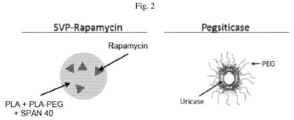
- the synthetic nanocarriers are polymeric synthetic nanocarriers.
- the polymeric synthetic nanocarriers comprise a hydrophobic polyester.
- the hydrophobic polyester comprises PLA, PLG, PLGA or polycaprolactone.
- the polymeric synthetic nanocarriers further comprise PEG.
- the PEG is conjugated to the PLA, PLG, PLGA or polycaprolactone.
- the polymeric synthetic nanocarriers comprise PLA, PLG, PLGA or polycaprolactone and PEG conjugated to PLA, PLG, PLGA or polycaprolactone. In one embodiment of any one of the methods or compositions provided herein the polymeric synthetic nanocarriers comprise PLA and PLA-PEG.
- the mean of a particle size distribution obtained using dynamic light scattering of the synthetic nanocarriers is a diameter greater than 120nm. In one embodiment of any one of the methods or compositions provided herein the diameter is greater than 150nm. In one embodiment of any one of the methods or compositions provided herein the diameter is greater than 200nm. In one embodiment of any one of the methods or compositions provided herein the diameter is greater than 250nm. In one embodiment of any one of the methods or compositions provided herein the diameter is less than 500nm. In one embodiment of any one of the methods or compositions provided herein the diameter is less than 450nm. In one embodiment of any one of the methods or compositions provided herein the diameter is less than 400nm.
- the diameter is less than 350nm. In one embodiment of any one of the methods or compositions provided herein the diameter is less than 300nm. In one embodiment of any one of the methods or compositions provided herein the diameter is less than 250nm. In one embodiment of any one of the methods or compositions provided herein the diameter is less than 200nm.
- the load of the immunosuppressant of the synthetic nanocarriers is 7-12% or 8-12% by weight. In one embodiment of any one of the methods or compositions provided herein the load of the immunosuppressant of the synthetic nanocarriers is 7-10% or 8-10% by weight. In one embodiment of any one of the methods or compositions provided herein the load of the immunosuppressant of the synthetic nanocarriers is 7%, 8%, 9%, 10%, 11%, or 12% by weight.
- the administration of any one of or the set of compositions is repeated. In one embodiment of any one of the methods provided herein the repeated administrations of the composition(s) are repeated on a monthly basis. In one embodiment of any one of the methods provided herein the composition comprising the anti-inflammatory therapeutic of each repeated administration is given as in any one of the methods provided herein relative to the time of the corresponding repeated administration of the composition comprising synthetic nanocarriers comprising an immunosuppressant and the composition comprising an uricase.
- composition(s) comprising the infusion reaction therapeutic(s) of each repeated administration is given as in any one of the methods provided herein relative to the time of the corresponding repeated administration of the composition comprising synthetic nanocarriers comprising an immunosuppressant and the composition comprising an uricase.
- the administration of the composition comprising synthetic nanocarriers comprising an immunosuppressant and the composition comprising an uricase is according to the doses and/or frequencies and/or timing, respectively, of any one of the methods provided herein.
- the administration of the composition comprising synthetic nanocarriers comprising an immunosuppressant, the composition comprising an uricase, and the composition comprising an anti-inflammatory therapeutic is according to the doses and/or frequencies and/or timing, respectively, of any one of the methods provided herein.
- the administration of the composition comprising synthetic nanocarriers comprising an immunosuppressant, the composition comprising an uricase, the composition comprising an anti-inflammatory therapeutic, and the one or more compositions comprising an infusion reaction therapeutic is according to the doses and/or frequencies and/or timing, respectively, of any one of the methods provided herein. Any one of the respective doses and/or frequencies and/or timing can be used for any one of the methods provided herein for the respective composition.
- the administration of the composition comprising synthetic nanocarriers comprising an immunosuppressant and the composition comprising an uricase is according to any one of the regimens, respectively, provided herein. In one embodiment of any one of the methods provided herein the administration of the composition comprising synthetic nanocarriers comprising an immunosuppressant, the composition comprising an uricase and the composition comprising an anti-inflammatory therapeutic is according to any one of the regimens, respectively, provided herein.
- the administration of the composition comprising synthetic nanocarriers comprising an immunosuppressant is given according the any one of the modes of administration provided herein.
- the administration of the composition comprising an uricase is given according the any one of the modes of administration provided herein.
- the administration of the composition comprising an anti-inflammatory therapeutic is given according the any one of the modes of administration provided herein.
- the administration of the composition(s) comprising an infusion reaction therapeutic is/are given according the any one of the modes of administration provided herein.
- composition comprising 1) a composition comprising synthetic nanocarriers comprising an immunosuppressant and 2) a composition comprising an uricase; and further comprising administering 3) a composition comprising an anti-inflammatory therapeutic is provided.
- Anti-drug antibodies can be a complication with treatment with soluble therapeutic proteins, such as the possibility of reduced efficacy.
- gout flares can increase when efficacy is increased.
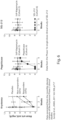
- the administration of an anti-inflammatory therapeutic with a composition comprising synthetic nanocarriers comprising an immunosuppressant and a composition comprising an uricase can result in better efficacy of treatment as well as gout flare reduction.
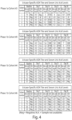
- This unexpected outcome is significantly better than with other therapies as shown in Table 4.
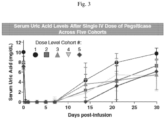
- a combination assessment of glare frequency as well as the area under the curve of mean sUA (serum uric acid) levels over time was performed. The finding of both improved efficacy and reduced gout flares was surprising with the SEL-212 study drug and anti-inflammatory treatment.
- administering means giving a material to a subject in a manner such that there is a pharmacological result in the subject. This may be direct or indirect administration, such as by inducing or directing another subject, including another clinician or the subject itself, to perform the administration.
- Amount effective in the context of a composition or dose for administration to a subject refers to an amount of the composition or dose that produces one or more desired responses in the subject.
- the amount effective is a pharmacodynamically effective amount. Therefore, in some embodiments, an amount effective is any amount of a composition or dose provided herein that produces one or more of the desired therapeutic effects and/or immune responses as provided herein. This amount can be for in vitro or in vivo purposes. For in vivo purposes, the amount can be one that a clinician would believe may have a clinical benefit for a subject in need thereof. Any one of the compositions or doses, including label doses, as provided herein can be in an amount effective.
- Amounts effective can involve reducing the level of an undesired response, although in some embodiments, it involves preventing an undesired response altogether. Amounts effective can also involve delaying the occurrence of an undesired response. An amount that is effective can also be an amount that produces a desired therapeutic endpoint or a desired therapeutic result. In other embodiments, the amounts effective can involve enhancing the level of a desired response, such as a therapeutic endpoint or result. Amounts effective, preferably, result in a therapeutic result or endpoint and/or reduced or eliminated ADAs against the treatment and/or reduced gout flare frequency in combination with improved efficacy in any one of the subjects provided herein. The achievement of any of the foregoing can be monitored by routine methods.
- Amounts effective will depend, of course, on the particular subject being treated; the severity of a condition, disease or disorder; the individual patient parameters including age, physical condition, size and weight; the duration of the treatment; the nature of concurrent therapy (if any); the specific route of administration and like factors within the knowledge and expertise of the health practitioner. These factors are well known to those of ordinary skill in the art and can be addressed with no more than routine experimentation. It is generally preferred that a maximum dose be used, that is, the highest safe dose according to sound medical judgment. It will be understood by those of ordinary skill in the art, however, that a patient may insist upon a lower dose or tolerable dose for medical reasons, psychological reasons or for virtually any other reason.
- Antihistamine refer to agents that block the effects of histamine.
- attaching means to chemically associate one entity (for example a moiety) with another.
- the attaching is covalent, meaning that the attachment occurs in the context of the presence of a covalent bond between the two entities.
- the non-covalent attaching is mediated by non-covalent interactions including but not limited to charge interactions, affinity interactions, metal coordination, physical adsorption, host-guest interactions, hydrophobic interactions, TT stacking interactions, hydrogen bonding interactions, van der Waals interactions, magnetic interactions, electrostatic interactions, dipole-dipole interactions, and/or combinations thereof.
- encapsulation is a form of attaching.
- Average refers to the arithmetic mean unless otherwise noted.
- Concomitantly means administering two or more materials/agents to a subject in a manner that is correlated in time, preferably sufficiently correlated in time so as to provide a modulation in a physiologic or immunologic response, and even more preferably the two or more materials/agents are administered in combination.
- concomitant administration may encompass administration of two or more materials/agents within a specified period of time, preferably within 1 month, more preferably within 1 week, still more preferably within 1 day, and even more preferably within 1 hour.
- the two or more materials/agents are sequentially administered.
- the materials/agents may be repeatedly administered concomitantly; that is concomitant administration on more than one occasion.
- Dose refers to a specific quantity of a pharmacologically active material for administration to a subject for a given time.
- the doses recited for compositions comprising pegylated uricase refer to the weight of the uricase (i.e., the protein without the weight of the PEG or any other components of the composition comprising the pegylated uricase).
- the doses recited for compositions comprising synthetic nanocarriers comprising an immunosuppressant refer to the weight of the immunosuppressant (i.e., without the weight of the synthetic nanocarrier material or any of the other components of the synthetic nanocarrier composition).
- any one of the doses provided herein is the dose as it appears on a label/label dose.
- Encapsulate means to enclose at least a portion of a substance within a synthetic nanocarrier. In some embodiments, a substance is enclosed completely within a synthetic nanocarrier. In other embodiments, most or all of a substance that is encapsulated is not exposed to the local environment external to the synthetic nanocarrier. In other embodiments, no more than 50%, 40%, 30%, 20%, 10% or 5% (weight/weight) is exposed to the local environment. Encapsulation is distinct from absorption, which places most or all of a substance on a surface of a synthetic nanocarrier, and leaves the substance exposed to the local environment external to the synthetic nanocarrier. In embodiments of any one of the methods or compositions provided herein, the immunosuppressants are encapsulated within the synthetic nanocarriers.
- “Elevated serum uric acid level” refers to any level of uric acid in a subject's serum that may lead to an undesirable result or would be deemed by a clinician to be elevated.
- the subject of any one of the methods provided herein can have a serum uric acid level of ⁇ 5 mg/dL, ⁇ 6 mg/dL, or ⁇ 7 mg/dL.
- Such a subject may be a hyperuremic subject.
- Whether or not a subject has elevated blood uric acid levels can be determined by a clinician, and in some embodiments, the subject is one in which a clinician has identified or would identify as having elevated serum uric acid levels.
- Gout generally refers to a disorder or condition associated with the buildup of uric acid, such as deposition of uric crystals in tissues and joints, and/or a clinically relevant elevated serum uric acid level. Accumulation of uric acid may be due to overproduction of uric acid or reduced excretion of uric acid. Gout may range from asymptomatic to severe and painful inflammatory conditions.
- a "condition associated with gout” refers to any condition in a subject where the subject experiences local and/or systemic effects of gout, including inflammation and immune responses, and in which the condition is caused or exacerbated by, or the condition can result in or exacerbate, gout.
- a gout flare is an "attack" or exacerbation of gout symptoms, which can happen at any time. Gout flares can include gout flares that occur after the administration of a uric acid lowering therapy.
- Hydrophobic polyester refers to any polymer that comprises one or more polyester polymers or units thereof and that has hydrophobic characteristics.
- Polyester polymers include, but are not limited to, PLA, PLGA, PLG and polycaprolactone.
- Hydrophobic refers to a material that does not substantially participate in hydrogen bonding to water. Such materials are generally non-polar, primarily non-polar, or neutral in charge.
- Synthetic nanocarriers may be completely comprised of hydrophobic polyesters or units thereof. In some embodiments, however, the synthetic nanocarriers comprise hydrophobic polyesters or units thereof in combination with other polymers or units thereof. These other polymers or units thereof may by hydrophobic but are not necessarily so.
- synthetic nanocarriers when synthetic nanocarriers include one or more other polymers or units thereof in addition to a hydrophobic polyester, the matrix of other polymers or units thereof with the hydrophobic polyester is hydrophobic overall.
- synthetic nanocarriers that can be used in the invention and that comprise hydrophobic polyesters can be found in U.S. Publication Nos. US 2016/0128986 and US 2016/0128987 , and such synthetic nanocarriers and the disclosure of such synthetic nanocarriers.
- Immunosuppressant means a compound that can cause a tolerogenic immune response specific to an antigen, also referred to herein as an “immunosuppressive effect”.
- An immunosuppressive effect generally refers to the production or expression of cytokines or other factors by an antigen-presenting cell (APC) that reduces, inhibits or prevents an undesired immune response or that promotes a desired immune response, such as a regulatory immune response, against a specific antigen.
- APC antigen-presenting cell
- the immunosuppressive effect is said to be specific to the presented antigen.
- immunosuppressants include "mTOR inhibitors", a class of drugs that inhibit mTOR, a serine/threonine-specific protein kinase that belongs to the family of phosphatidylinositol-3 kinase (PI3K) related kinases (PIKKs).
- mTOR inhibitors include, but are not limited to, rapalogs, such as rapamycin, as well as ATP-competitive mTOR kinase inhibitors, such as mTORC1/mTORC2 dual inhibitors.
- the immunosuppressants provided herein are attached to synthetic nanocarriers.
- the immunosuppressant is an element that is in addition to the material that makes up the structure of the synthetic nanocarrier.
- the immunosuppressant is a compound that is in addition and attached to the one or more polymers.
- the immunosuppressant is an element present in addition to the material of the synthetic nanocarrier that results in an immunosuppressive effect.
- Infusion reaction therapeutics are therapeutics that can be beneficial in reducing or preventing infusion reactions.
- examples of such therapeutics include anti-inflammatories, such as corticosteroids.
- Load when comprised in a composition comprising a synthetic nanocarrier, such as coupled thereto, is the amount of the immunosuppressant in the composition based on the total dry recipe weight of materials in an entire synthetic nanocarrier (weight/weight). Generally, such a load is calculated as an average across a population of synthetic nanocarriers. In one embodiment, the load on average across the synthetic nanocarriers is between 0.1% and 15%. In another embodiment, the load is between 0.1% and 10%. In a further embodiment, the load is between 1% and 15%. In yet a further embodiment, the load is between 5% and 15%. In still a further embodiment, the load is between 7% and 12%. In still a further embodiment, the load is between 8% and 12%.
- the load is between 7% and 10%. In still another embodiment, the load is between 8% and 10%. In yet a further embodiment, the load is 5%, 6%, 7%, 8%, 9%, 10%, 11%, 12%, 13%, 14%, or 15% on average across the population of synthetic nanocarriers.
- the load of the immunosuppressant such as rapamycin, may be any one of the loads provided herein.
- “Maximum dimension of a synthetic nanocarrier” means the largest dimension of a nanocarrier measured along any axis of the synthetic nanocarrier.
- “Minimum dimension of a synthetic nanocarrier” means the smallest dimension of a synthetic nanocarrier measured along any axis of the synthetic nanocarrier. For example, for a spheroidal synthetic nanocarrier, the maximum and minimum dimension of a synthetic nanocarrier would be substantially identical, and would be the size of its diameter. Similarly, for a cuboidal synthetic nanocarrier, the minimum dimension of a synthetic nanocarrier would be the smallest of its height, width or length, while the maximum dimension of a synthetic nanocarrier would be the largest of its height, width or length.
- a minimum dimension of at least 75%, preferably at least 80%, more preferably at least 90%, of the synthetic nanocarriers in a sample, based on the total number of synthetic nanocarriers in the sample is equal to or greater than 100 nm.
- a maximum dimension of at least 75%, preferably at least 80%, more preferably at least 90%, of the synthetic nanocarriers in a sample, based on the total number of synthetic nanocarriers in the sample is equal to or less than 5 ⁇ m.
- a minimum dimension of at least 75%, preferably at least 80%, more preferably at least 90%, of the synthetic nanocarriers in a sample, based on the total number of synthetic nanocarriers in the sample is greater than 110 nm, more preferably greater than 120 nm, more preferably greater than 130 nm, and more preferably still greater than 150 nm.
- Aspects ratios of the maximum and minimum dimensions of synthetic nanocarriers may vary depending on the embodiment.
- aspect ratios of the maximum to minimum dimensions of the synthetic nanocarriers may vary from 1:1 to 1,000,000:1, preferably from 1:1 to 100,000:1, more preferably from 1:1 to 10,000:1, more preferably from 1:1 to 1000:1, still more preferably from 1:1 to 100:1, and yet more preferably from 1:1 to 10:1.
- a maximum dimension of at least 75%, preferably at least 80%, more preferably at least 90%, of the synthetic nanocarriers in a sample, based on the total number of synthetic nanocarriers in the sample is equal to or less than 3 ⁇ m, more preferably equal to or less than 2 ⁇ m, more preferably equal to or less than 1 ⁇ m, more preferably equal to or less than 800 nm, more preferably equal to or less than 600 nm, and more preferably still equal to or less than 500 nm.
- a minimum dimension of at least 75%, preferably at least 80%, more preferably at least 90%, of the synthetic nanocarriers in a sample, based on the total number of synthetic nanocarriers in the sample is equal to or greater than 100 nm, more preferably equal to or greater than 120 nm, more preferably equal to or greater than 130 nm, more preferably equal to or greater than 140 nm, and more preferably still equal to or greater than 150 nm.
- Measurement of synthetic nanocarrier dimensions may be obtained, in some embodiments, by suspending the synthetic nanocarriers in a liquid (usually aqueous) media and using dynamic light scattering (DLS) (e.g ., using a Brookhaven ZetaPALS instrument).
- a suspension of synthetic nanocarriers can be diluted from an aqueous buffer into purified water to achieve a final synthetic nanocarrier suspension concentration of approximately 0.01 to 0.5 mg/mL.
- the diluted suspension may be prepared directly inside, or transferred to, a suitable cuvette for DLS analysis.
- the cuvette may then be placed in the DLS, allowed to equilibrate to the controlled temperature, and then scanned for sufficient time to acquire a stable and reproducible distribution based on appropriate inputs for viscosity of the medium and refractive indicies of the sample.
- the effective diameter, or mean of the distribution is then reported. Determining the effective sizes of high aspect ratio, or non-spheroidal, synthetic nanocarriers may require augmentative techniques, such as electron microscopy, to obtain more accurate measurements.
- "Dimension" or "size” or “diameter” of synthetic nanocarriers means the mean of a particle size distribution, for example, obtained using dynamic light scattering.
- PEG poly(ethylene glycol), poly (ethylene oxide) or poly (oxyethylene) molecules
- the one or more PEG molecules are poly(ethylene glycol) molecules.
- pegylated or “pegylation” refer to the conjugated form or the act of conjugating to the uricase, respectively. Such a modified uricase is referred to as pegylated uricase.
- Pegylated uricases include, but are not limited to pegsiticase (i.e., pegadricase) and pegloticase (KRYSTEXXA ® ).
- “Pharmaceutically acceptable excipient” or “pharmaceutically acceptable carrier” means a pharmacologically inactive material used together with a pharmacologically active material to formulate the compositions.
- Pharmaceutically acceptable excipients comprise a variety of materials known in the art, including but not limited to saccharides (such as glucose, lactose, and the like), preservatives such as antimicrobial agents, reconstitution aids, colorants, saline (such as phosphate buffered saline), and buffers. Any one of the compositions provided herein may include a pharmaceutically acceptable excipient or carrier.
- rapalog refers to rapamycin and molecules that are structurally related to (an analog) of rapamycin (sirolimus), and are preferably hydrophobic.
- examples of rapalogs include, without limitation, temsirolimus (CCI-779), deforolimus, everolimus (RAD001), ridaforolimus (AP-23573), zotarolimus (ABT-578). Additional examples of rapalogs may be found, for example, in WO Publication WO 1998/002441 and U.S. Patent No. 8,455,510 .
- the immunosuppressant may be a rapalog.
- Subject means animals, including warm blooded mammals such as humans and primates; avians; domestic household or farm animals such as cats, dogs, sheep, goats, cattle, horses and pigs; laboratory animals such as mice, rats and guinea pigs; fish; reptiles; zoo and wild animals; and the like.
- the subject is human.
- the subject is any one of the subjects provided herein, such as one that in is need thereof, such as in need of treatment with an uricase.
- Synthetic nanocarrier(s) means a discrete object that is not found in nature, and that possesses at least one dimension that is less than or equal to 5 microns in size. Synthetic nanocarriers may be a variety of different shapes, including but not limited to spheroidal, cuboidal, pyramidal, oblong, cylindrical, toroidal, and the like. Synthetic nanocarriers comprise one or more surfaces.
- a synthetic nanocarrier can be, but is not limited to, one or a plurality of lipid-based nanoparticles (also referred to herein as lipid nanoparticles, i.e., nanoparticles where the majority of the material that makes up their structure are lipids), polymeric nanoparticles, metallic nanoparticles, surfactant-based emulsions, dendrimers, buckyballs, nanowires, virus-like particles (i.e., particles that are primarily made up of viral structural proteins but that are not infectious or have low infectivity), peptide or protein-based particles (also referred to herein as protein particles, i.e., particles where the majority of the material that makes up their structure are peptides or proteins) (such as albumin nanoparticles) and/or nanoparticles that are developed using a combination of nanomaterials such as lipid-polymer nanoparticles.
- lipid-based nanoparticles also referred to herein as lipid nanoparticles, i
- Synthetic nanocarriers may be a variety of different shapes, including but not limited to spheroidal, cuboidal, pyramidal, oblong, cylindrical, toroidal, and the like.
- Examples of synthetic nanocarriers include (1) the biodegradable nanoparticles disclosed in US Patent 5,543,158 to Gref et al. , (2) the polymeric nanoparticles of Published US Patent Application 20060002852 to Saltzman et al. , (3) the lithographically constructed nanoparticles of Published US Patent Application 20090028910 to DeSimone et al. , (4) the disclosure of WO 2009/051837 to von Andrian et al.
- Synthetic nanocarriers may have a minimum dimension of equal to or less than about 100 nm, preferably equal to or less than 100 nm, do not comprise a surface with hydroxyl groups that activate complement or alternatively comprise a surface that consists essentially of moieties that are not hydroxyl groups that activate complement.
- synthetic nanocarriers that have a minimum dimension of equal to or less than about 100 nm, preferably equal to or less than 100 nm do not comprise a surface that substantially activates complement or alternatively comprise a surface that consists essentially of moieties that do not substantially activate complement.
- synthetic nanocarriers according to the invention that have a minimum dimension of equal to or less than about 100 nm, preferably equal to or less than 100 nm, do not comprise a surface that activates complement or alternatively comprise a surface that consists essentially of moieties that do not activate complement.
- synthetic nanocarriers exclude virus-like particles.
- synthetic nanocarriers may possess an aspect ratio greater than 1:1, 1:1.2, 1:1.5, 1:2, 1:3, 1:5, 1:7, or greater than 1:10.
- Treating refers to the administration of one or more therapeutics with the expectation that the subject may have a resulting benefit due to the administration.
- the treating may also result in the prevention of a condition as provided herein and, therefore, treating includes prophylactic treatment.
- the subject is one in which a clinician expects that there is a likelihood for the development of a condition or other undesired response as provided herein.
- a subject that is expected to have a gout flare is one in which a clinician believes there is a likelihood that a gout flare will occur. Treating may be direct or indirect, such as by inducing or directing another subject, including another clinician or the subject itself, to treat the subject.
- Weight% or “% by weight” refers to the ratio of one weight to another weight times 100.
- the weight% can be the ratio of the weight of one component to another times 100 or the ratio of the weight of one component to a total weight of more than one component times 100.
- the weight% is measured as an average across a population of synthetic nanocarriers or an average across the synthetic nanocarriers in a composition or suspension.
- compositions and methods provided herein are substantially more efficacious at reducing serum uric acid levels as well as reducing the frequency of gout flares than currently available treatments.
- compositions comprising uricase.
- Uricase is generally thought to catalyze the conversion of uric acid to allantoin, which is soluble and may be excreted.
- Uricase generally is an enzyme endogenous to all mammals, except for humans and certain primates.
- the gene encoding the uricase enyzme may be obtained from any source known in the art, including mammalian and microbial sources as well as by recombinant and synthetic technologies. As will be evident to one of ordinary skill in the art, a gene may be obtained from a source and recombinantly (or transgenically) expressed and produced in another organism using standard methods. See Erlich, H A, (Ed.) (1989) PCR Technology.
- the gene encoding the uricase, or a portion thereof is obtained from a mammal, for example a pig, bovine, sheep, goat, baboon, monkey mouse, rabbit, or domestic animal.
- the gene encoding the uricase, or a portion thereof is obtained from a microorganism, such as a bacteria or fungi (including yeast).
- the gene encoding the uricase is obtained from a bacterial source, such as bacterium belonging to Streptomyces spp., Bacillus spp., or E. coli.
- the gene encoding the uricase is obtained from a fungal (including yeast) source, such as Candida (e.g., Candida utilis), Anthrobacter (e.g., Anthrobacter globiformis), Saccharomyces, Schizosaccaromyces, Emericella, Aspergillus (e.g., Aspergillus flavus), and Neurospora spp.
- the uricase is derived from Candida utilis.
- the uricase is that of pegsiticase (3SBio as described in U.S. Patent No. 6,913,915 , and such uricase and description thereof is incorporated herein by reference).
- the uricase is derived from Aspergillus flavus.
- the uricase is rasburicase (ELITEK ® ; FASTURTEC ® , from Sanofi Genzyme).
- the uricase is chimeric uricase, in which portions of the gene encoding the uricase are obtained from different sources. For example, a portion of the gene encoding the chimeric uricase may be obtained from one organism and one or more other portions of the gene encoding the chimeric uricase may be obtained from another organism. In some embodiments, a portion of the gene encoding the chimeric uricase is obtained from a pig and another portion of the gene encoding the chimeric uricase is obtained from a baboon. In some embodiments, the chimeric uricase is that of pegloticase/KRYSTEXXA ® .
- variant uricases which may include one or more mutations (substitutions, insertions, deletions). Mutations may be made in the nucleotide sequence encoding the uricase protein, which may or may not result in an amino acid mutation. In general, mutations may be made, for example, to enhance production of the protein, turnover/half-life of the protein or mRNA encoding the protein, modulate (enhance or reduce) the enzymatic activity of the uricase.
- the gene encoding the uricase is obtained from a plant or invertebrate source, such as Drosophila or C. elegans.
- Uricase may be covalently bonded to PEG via a biocompatible linking group, using methods known in the art, as described, for example, by Park et al, Anticancer Res., 1:373-376 (1981 ); and Zaplipsky and Lee, Polyethylene Glycol Chemistry: Biotechnical and Biomedical Applications, J. M. Harris, ed., Plenum Press, New York, Chapter 21 (1992 ).
- the linking group used to covalently attach PEG to uricase may be any biocompatible linking group, meaning the linking group non-toxic and may be utilized in vitro or in vivo without causing adverse effects.
- the PEG may be directly conjugated to the uricase, such as directly to a lysine residue of uricase.
- Uricase may be pegylated at many different amino acid resides of the uricase protein.
- the number of PEG molecules and/or residue to which the PEG is conjugated may affect the activity of the uricase.
- the pegylated uricase comprises at least one PEG molecule.
- the pegylated uricase comprises at least 2, 3, 4, 5, 6, 7,8, 9, 10, 11, 12, 13, 14, 15, 16, 17, 18, 19, 20, 21, 22, 23, 24, 25, 26, 27, 28, 29, 30, 31, 32, 33,34, 35, 36, 37, 38, 39, 40, 45, 50, or more PEG molecules on average per uricase protein.
- the pegylated uricase comprises about 20-25 PEG molecules per uricase protein.
- PEG has a molecular weight between 5 kDa to 100 kDa. Both the molecular weight (size) of the PEG used as well as the number of PEG molecules used to pegylate the uricase may be varied. In some embodiment the average molecular weight of the PEG is between 5 kDa to 100 kDa, 5 kDa to 75 kDa, 5 kDa to 50 kDa, 5 kDa to 30 kDa, 5 kDa to 20 kDa, 5 kDa to 10 kDa, 10 kDa to 75 kDa, 10 kDa to 50 kDa, 10 kDa to 30 kDa, 5 kDa to 30 kDa, 15 kDa to 50 kDa, 15 kDa to 30 kDa, 15 kDa to 25 kDa, 20 kDa to 75 kDa, 30 kDa to 80 kD
- the molecular weight of the PEG is about 5 kDa, 6 kDa, 7 kDa, 8 kDa, 9 kDa, 10 kDa, 11 kDa, 12 kDa, 13 kDa, 14 kDa, 15 kDa, 16 kDa, 17 kDa, 18 kDa, 19 kDa, 20 kDa, 21 kDa, 22 kDa, 23 kDa, 24 kDa, 25 kDa, 30 kDa, 35 kDa, 40 kDa, 45 kDa, 50 kDa, 55 kDa, 60 kDa, 65 kDa, 70 kDa, 75 kDa, 80 kDa, 85 kDa, 90 kDa, 95 kDa, or 100 kDa.
- the PEG is referred to based on the molecular weight of the PEG.
- PEG-20 refers to PEG molecules with a molecular weight of 20 kDa
- PEG-5 refers to PEG molecules with a molecular weight of 5 kDa
- the uricase is pegylated with PEG molecules having a molecule weight of 20 kDa (PEG-20).
- Pegylated uricases include, without limitation, pegsiticase (i.e., pegadricase) (available from 3Sbio, and as described in U.S. Patent No. 6,913,915 , and such pegylated uricase and description thereof is incorporated herein by reference) and pegloticase/KRYSTEXXA ® (Horizon Pharmaceuticals).
- pegsiticase i.e., pegadricase
- pegloticase/KRYSTEXXA ® Horizon Pharmaceuticals
- the pegylated uricase is pegsiticase (i.e., pegadricase), a recombinant uricase conjugated to multiple 20 kDa molecular weight poly (ethylene glycol) molecules.
- the uricase component of pegsiticase can be cloned from the yeast Candida utilis and expressed in E. coli for production.
- uric acid catalysis activity of uricase can be assessed using methods known in the art or as otherwise provided herein.
- synthetic nanocarriers can be used.
- synthetic nanocarriers are spheres or spheroids.
- synthetic nanocarriers are flat or plate-shaped.
- synthetic nanocarriers are cubes or cubic.
- synthetic nanocarriers are ovals or ellipses.
- synthetic nanocarriers are cylinders, cones, or pyramids.
- Synthetic nanocarriers can be solid or hollow and can comprise one or more layers. In some embodiments, each layer has a unique composition and unique properties relative to the other layer(s).
- synthetic nanocarriers may have a core/shell structure, wherein the core is one layer (e.g. a polymeric core) and the shell is a second layer (e.g. a lipid bilayer or monolayer). Synthetic nanocarriers may comprise a plurality of different layers.
- the synthetic nanocarriers comprise a polymer as provided herein.
- Polymers may be natural or unnatural (synthetic) polymers.
- Polymers may be homopolymers or copolymers comprising two or more monomers. In terms of sequence, copolymers may be random, block, or comprise a combination of random and block sequences.
- polymers in accordance with the present invention are organic polymers.
- the synthetic nanocarriers as provided herein preferably, comprise hydrophobic polyesters.
- Such polyesters can include copolymers comprising lactic acid and glycolic acid units, being poly(lactic acid-co-glycolic acid) and poly(lactide-co-glycolide), collectively referred to herein as "PLGA”; and homopolymers comprising glycolic acid units, referred to herein as "PGA,” and lactic acid units, such as poly-L-lactic acid, poly-D-lactic acid, poly-D,L-lactic acid, poly-L-lactide, poly-D-lactide, and poly-D,L-lactide, collectively referred to herein as "PLA.”
- the polyester may be PLGA.
- PLGA is a biocompatible and biodegradable co-polymer of lactic acid and glycolic acid, and various forms of PLGA are characterized by the ratio of lactic acid:glycolic acid.
- Lactic acid can be L-lactic acid, D-lactic acid, or D,L-lactic acid.
- the degradation rate of PLGA can be adjusted by altering the lactic acid:glycolic acid ratio.
- PLGA to be used in accordance with the present invention is characterized by a lactic acid:glycolic acid ratio of approximately 85:15, approximately 75:25, approximately 60:40, approximately 50:50, approximately 40:60, approximately 25:75, or approximately 15:85.
- the synthetic nanocarriers may comprise one or more non-polyester polymers or units thereof that are also hydrophobic and/or polymers or units thereof that are not hydrophobic. In some embodiments, it is preferred that overall the synthetic nanocarrier comprises a hydrophobic polyester and, in some embodiments, is itself hydrophobic.
- the synthetic nanocarriers may comprise one or more polymers that are a non-methoxy-terminated, pluronic polymer, or a unit thereof.
- Non-methoxy-terminated polymer means a polymer that has at least one terminus that ends with a moiety other than methoxy. In some embodiments, the polymer has at least two termini that ends with a moiety other than methoxy. In other embodiments, the polymer has no termini that ends with methoxy.
- Non-methoxy-terminated, pluronic polymer means a polymer other than a linear pluronic polymer with methoxy at both termini.
- the synthetic nanocarriers may comprise, in some embodiments, polyhydroxyalkanoates, polyamides, polyethers, polyolefins, polyacrylates, polycarbonates, polystyrene, silicones, fluoropolymers, or a unit thereof.
- polymers that may be comprised in the synthetic nanocarriers provided herein include polycarbonate, polyamide, or polyether, or unit thereof.
- the polymers of the synthetic nanocarriers may comprise poly(ethylene glycol) (PEG), polypropylene glycol, or unit thereof.
- the synthetic nanocarriers comprise polymer that is biodegradable. Therefore, in such embodiments, the polymers of the synthetic nanocarriers may include a polyether, such as poly(ethylene glycol) or polypropylene glycol or unit thereof. Additionally, the polymer may comprise a block-co-polymer of a polyether and a biodegradable polymer such that the polymer is biodegradable. In other embodiments, the polymer does not solely comprise a polyether or unit thereof, such as poly(ethylene glycol) or polypropylene glycol or unit thereof.
- polymers in accordance with the present invention include polymers which have been approved for use in humans by the U.S. Food and Drug Administration (FDA) under 21 C.F.R. ⁇ 177.2600.
- FDA U.S. Food and Drug Administration
- the polymers of a synthetic nanocarrier associate to form a polymeric matrix.
- a wide variety of polymers and methods for forming polymeric matrices therefrom are known conventionally.
- a synthetic nanocarrier comprising a hydrophobic polyester has a hydrophobic environment within the synthetic nanocarrier.
- polymers may be modified with one or more moieties and/or functional groups.
- moieties or functional groups can be used in accordance with the present invention.
- polymers may be modified with polyethylene glycol (PEG), with a carbohydrate, and/or with acyclic polyacetals derived from polysaccharides ( Papisov, 2001, ACS Symposium Series, 786:301 ).
- PEG polyethylene glycol
- Certain embodiments may be made using the general teachings of US Patent No. 5543158 to Gref et al. , or WO publication WO2009/051837 by Von Andrian et al.
- polymers may be modified with a lipid or fatty acid group.
- a fatty acid group may be one or more of butyric, caproic, caprylic, capric, lauric, myristic, palmitic, stearic, arachidic, behenic, or lignoceric acid.
- a fatty acid group may be one or more of palmitoleic, oleic, vaccenic, linoleic, alpha-linoleic, gamma-linoleic, arachidonic, gadoleic, arachidonic, eicosapentaenoic, docosahexaenoic, or erucic acid.
- polymers can be linear or branched polymers. In some embodiments, polymers can be dendrimers. In some embodiments, polymers can be substantially cross-linked to one another. In some embodiments, polymers can be substantially free of cross-links. In some embodiments, polymers can be used in accordance with the present invention without undergoing a cross-linking step. It is further to be understood that the synthetic nanocarriers may comprise block copolymers, graft copolymers, blends, mixtures, and/or adducts of any of the foregoing and other polymers. Those skilled in the art will recognize that the polymers listed herein represent an exemplary, not comprehensive, list of polymers that can be of use in accordance with the present invention provided they meet the desired criteria.
- Synthetic nanocarriers may be prepared using a wide variety of methods known in the art.
- synthetic nanocarriers can be formed by methods such as nanoprecipitation, flow focusing using fluidic channels, spray drying, single and double emulsion solvent evaporation, solvent extraction, phase separation, milling (including cryomilling), supercritical fluid (such as supercritical carbon dioxide) processing, microemulsion procedures, microfabrication, nanofabrication, sacrificial layers, simple and complex coacervation, and other methods well known to those of ordinary skill in the art.
- aqueous and organic solvent syntheses for monodisperse semiconductor, conductive, magnetic, organic, and other nanomaterials have been described ( Pellegrino et al., 2005, Small, 1:48 ; Murray et al., 2000, Ann. Rev. Mat. Sci., 30:545 ; and Trindade et al., 2001, Chem. Mat., 13:3843 ). Additional methods have been described in the literature (see, e.g., Doubrow, Ed., "Microcapsules and Nanoparticles in Medicine and Pharmacy," CRC Press, Boca Raton, 1992 ; Mathiowitz et al., 1987, J. Control.
- Immunosuppressants may be encapsulated into synthetic nanocarriers as desirable using a variety of methods including but not limited to C. Astete et al., “Synthesis and characterization of PLGA nanoparticles” J. Biomater. Sci. Polymer Edn, Vol. 17, No. 3, pp. 247-289 (2006 ); K. Avgoustakis "Pegylated Poly(Lactide) and Poly(Lactide-Co-Glycolide) Nanoparticles: Preparation, Properties and Possible Applications in Drug Delivery” Current Drug Delivery 1:321-333 (2004 ); C. Reis et al., "Nanoencapsulation I.
- synthetic nanocarriers are prepared by a nanoprecipitation process or spray drying. Conditions used in preparing synthetic nanocarriers may be altered to yield particles of a desired size or property (e.g., hydrophobicity, hydrophilicity, external morphology, "stickiness," shape, etc.). The method of preparing the synthetic nanocarriers and the conditions (e.g., solvent, temperature, concentration, air flow rate, etc.) used may depend on the materials to be included in the synthetic nanocarriers and/or the composition of the carrier matrix.
- synthetic nanocarriers prepared by any of the above methods have a size range outside of the desired range, such synthetic nanocarriers can be sized, for example, using a sieve.
- the synthetic nanocarriers comprise PLA and PLA-PEG.
- PLA is part of the broader poly(lactic co glycolic acid), or PLGA, family of biodegradable polymers that have more than 30 years of commercial use and are formulation components in a number of approved products.
- Polyethylene glycol, or PEG has been widely studied in clinical trials and is also a formulation component in many approved biologic products.
- the synthetic nanocarriers comprising rapamycin can be those produced or obtainable by one of the following methods:
- Immunosuppressants are mTOR inhibitors.
- mTOR inhibitors include rapamycin and rapalogs (e.g., CCL-779, RAD001, AP23573, C20-methallylrapamycin (C20-Marap), C16-(S)-butylsulfonamidorapamycin (C16-BSrap), C16-(S)-3-methylindolerapamycin (C16-iRap) ( Bayle et al.
- the immunosuppressant is rapamycin.
- the rapamycin is preferably encapsulated in the synthetic nanocarriers. Rapamycin is the active ingredient of Rapamune, an immunosuppressant which has extensive prior use in humans and is currently FDA approved for prophylaxis of organ rejection in kidney transplant patients aged 13 or older.
- the amount of the immunosuppressant coupled to the synthetic nanocarrier based on the total dry recipe weight of materials in an entire synthetic nanocarrier (weight/weight), is as described elsewhere herein.
- the load of the immunosuppressant such as rapamycin or rapalog, is between 7% and 12% or 8% and 12% by weight.
- Anti-inflammatory therapeutics i.e., any therapeutic that can act to reduce inflammation.
- Anti-inflammatory therapeutics include, but are not limited to, corticosteroids or derivatives of cortisol (hydrocortisone).
- Corticosteroids include, but are not limited to, glucocorticoids and mineralocorticoids.
- Corticosteroids particularly glycocorticoids, have anti-inflammatory and immunosuppressive effects that may be effective in managing symptoms, including pain and inflammation associated with gout, gout flare, and/or conditions associated with gout. Administration of corticosteroids may also aid in reducing hypersensitivity reactions associated with one or more additional therapies, for example uricase replacement therapy. Still other non-limiting examples of corticosteroids, include prednisone, prednisolone, Medrol, and methylprednisolone.
- Infusion reaction therapeutics i.e., any therapeutic that can be beneficial in reducing or preventing infusion reactions
- Such therapeutics can include an anti-inflammatory, such as any one of the anti-inflammatories provided herein (e.g., a corticosteroid, such as methylprednisolone, prednisone or dexamethasone).
- Such therapeutics can also include an antihistamine.
- Antihistamines are agents that can inhibit the physiological effects of histamine, and include Brompheniramine, Carbinoxamine, Chlorpheniramine, Clemastine, Diphenhydramine, Hydroxyzine, Triprolidine, Cetirizine, Desloratadine, Fexofenadine, Levocetirizine, Loratadine, etc.
- the amount (by weight) of a dose of a composition comprising pegylated uricase as well as the concentrations per vial provided herein refers to the amount or concentration of the uricase protein, respectively, not including the PEG molecules conjugated thereto or any added excipients in the composition.
- the actual amount of the pegylated uricase, in such instances, will be higher than the dose described due to the higher weight of the pegylated protein form.
- a dose of 0.4 mg/kg of a composition comprising pegylated uricase refers to a dose of 0.4 mg/kg uricase protein.
- the pegylated uricase may be reconstituted in sterile water to a concentration of 6 mg/mL.
- the appropriate volume of the composition comprising pegylated uricase is diluted in a pharmaceutically acceptable excipient (e.g., sterile saline solution) for, for example, intravenous infusion to a subject over a desired period of time (e.g., 60 minutes).
- a pharmaceutically acceptable excipient e.g., sterile saline solution
- the amount (by weight) of a dose of a composition comprising synthetic nanocarriers comprising an immunosuppressant as well as the concentrations per vial as provided herein refers to the amount or concentration of the immunosuppressant, respectively, and not including the synthetic nanocarrier material or any added excipients or other components in the composition.
- the actual amount of the synthetic nanocarrier composition comprising the immunosuppressant will be higher than the dose described due to the added weight of the synthetic nanocarrier material and any added excipients or other components in the composition.
- a dose of 0.08 mg/kg of a composition comprising synthetic nanocarriers comprising an immunosuppressant refers to a dose of 0.08 mg/kg immunosuppressant.
- the composition comprising synthetic nanocarriers comprising an immunosuppressant is at a concentration of 2 mg/mL (again this is the concentration of the immunosuppressant).
- the load of the immunosuppressant (e.g., rapamycin) of the synthetic nanocarriers comprising an immunosuppresant may be determined by extracting the immunosuppressant from the synthetic nanocarriers using liquid extraction compatible with both the immunosuppressant and the synthetic nanocarriers (e.g., polymers comprising the synthetic nanocarriers) and analyzing the extract by reverse phase liquid chromatography with UV detection specific for the analyte.
- the immunosuppressant load (content of the synthetic nanocarriers) may be accurately and precisely calculated from a calibration standard curve of a qualified reference standard prepared in conditions compatible with the chromatography and the nanoparticle extraction procedure and analyzed concomitantly.
- the load of immunosuppressant in the synthetic nanocarriers can be about 10% and if a dose of 0.08 mg/kg of the immunosuppressant is desired, the dose given as the amount of the synthetic nanocarriers comprising the immunosuppressant is 8 mg/kg.
- the amount of uricase protein present in a pegylated uricase may be determined using methods known in the art, for example colorimetry, UV absorbance or amino acid analysis.
- the colorimetric approach relies on a standardized kit commercially available leveraging typical dye based reactions such as those described for Bradford or bicinchoninic acid (BCA) assays.
- BCA bicinchoninic acid
- the uricase protein quantity can be accurately and precisely calculated from a calibration standard curve of a qualified protein reference standard, preferably purchased from compendial sources, and analyzed concomitantly using the same spectrophotometer. Single or multiple point calibration of a known protein of similar or different chemical properties may be run within the same assay to ensure consistency of the read out at the chosen UV absorbance.
- the amino acid mixture obtained from acid hydrolysis of the drug product may also be analyzed and generally provides a precise and accurate quantification.
- the amino acid mixture is analyzed by HPLC with either UV or fluorescence detection and using pre-chromatography or post-chromatography derivatization of the primary and secondary amines.
- Commercially available mixtures of common amino acids are analyzed within the same assay to build the individual amino acid calibration curves against which each amino acid is quantified.
- the determination of the uricase protein quantity is supplemented by measuring the enzyme activity, which may be performed by measuring the decrease of an excess of uric acid monitored by UV absorbance at 595 nm.
- the uricase activity can be determined using a commercially available kit, which may involve, for example, labeling the enzymatic reaction product and measuring the response of the uricase against a calibration curve established by analyzing a known quantity of the enzyme.
- the amount provided herein can be an average amount based on a population of the respective molecules in a composition.
- Exemplary doses of uricase for any one of the compositions or methods comprising pegsiticase can be 0.10 mg/kg, 0.11 mg/kg, 0.12 mg/kg, 0.13 mg/kg, 0.14 mg/kg, 0.15 mg/kg, 0.16 mg/kg, 0.17 mg/kg, 0.18 mg/kg, 0.19 mg/kg, 0.20 mg/kg, 0.21 mg/kg, 0.22 mg/kg, 0.23 mg/kg, 0.24 mg/kg, 0.25 mg/kg, 0.26 mg/kg, 0.27 mg/kg, 0.28 mg/kg, 0.29 mg/kg, 0.30 mg/kg, 0.31 mg/kg, 0.32 mg/kg, 0.34 mg/kg, 0.35 mg/kg, 0.36 mg/kg, 0.37 mg/kg, 0.38 mg/kg, 0.39 mg/kg, 0.40 mg/kg, 0.41 mg/kg, 0.42 mg/kg, 0.43 mg/kg, 0.44 mg/kg, 0.45 mg/kg, 0.46 mg/kg, 0.47 mg/kg, 0.48 mg/kg
- Exemplary doses of immunosuppressant, such as rapamycin, for any one of the compositions or methods comprising synthetic nanocarriers comprising the immunosuppressant provided herein can be 0.050 mg/kg, 0.055 mg/kg, 0.060 mg/kg, 0.065 mg/kg, 0.070 mg/kg, 0.075 mg/kg, 0.080 mg/kg, 0.085 mg/kg, 0.090 mg/kg, 0.095 mg/kg, 0.100 mg/kg, 0.105 mg/kg, 0.110 mg/kg, 0.115 mg/kg, 0.120 mg/kg, 0.125 mg/kg, 0.130 mg/kg, 0.135 mg/kg, 0.140 mg/kg, 0.145 mg/kg, 0.150 mg/kg, 0.155 mg/kg, 0.160 mg/kg, 0.165 mg/kg, 0.170 mg/kg, 0.175 mg/kg, 0.180 mg/kg, 0.185 mg/kg, 0.190 mg/kg, 0.195 mg/kg, 0.200 mg/kg, 0.205 mg/kg, 0.210
- compositions comprising synthetic nanocarriers comprising immunosuppressant, such as rapamycin can be 0.55 mg/kg, 0.56 mg/kg, 0.57 mg/kg, 0.58 mg/kg, 0.59 mg/kg, 0.60 mg/kg, 0.61 mg/kg, 0.62 mg/kg, 0.63 mg/kg,0.64 mg/kg, 0.65 mg/kg, 0.66 mg/kg, 0.67 mg/kg, 0.68 mg/kg, 0.69 mg/kg, 0.70 mg/kg, 0.71 mg/kg, 0.72 mg/kg, 0.73 mg/kg, 0.74 mg/kg, 0.75 mg/kg, 0.76 mg/kg, 0.77 mg/kg, 0.78 mg/kg, 0.79 mg/kg, 0.80 mg/kg, 0.81 mg/kg, 0.82 mg/kg, 0.83 mg/kg, 0.84 mg/kg, 0.85 mg/kg, 0.86 mg/kg, 0.87 mg/kg, 0.88 mg/kg, 0.89 mg/kg, 0.90 mg/kg, 0.91 mg/kg,
- any one of the doses provided herein for the composition comprising pegsiticase can be used in any one of the methods or compositions or kits provided herein.
- Any one of the doses provided herein for the composition comprising synthetic nanocarriers comprising an immunosuppressant, such as rapamycin can be used in any one of the methods or compositions or kits provided herein.
- Any one of the doses provided herein for the composition comprising an anti-inflammatory therapeutic can be used in any one of the methods or compositions or kits provided herein.
- Any one of the doses provided herein for the composition(s) comprising an infusion reaction therapeutic can be used in any one of the methods or compositions or kits provided herein.
- the dose is a label dose.
- the dose(s) are label dose(s).
- an additional volume may be used to prime the infusion line for administering any of the compositions provided herein to the subject.
- any one of the subjects provided herein may be treated according to any one of the dosing schedules provided herein.
- any one of the subject provided herein may be treated with a composition comprising uricase, such as pegylated uricase, and/or composition comprising synthetic nanocarriers comprising an immunosuppressant, such as rapamycin, and/or a composition comprising an anti-inflammatory therapeutic and/or a composition(s) comprising an infusion reaction therapeutic according to any one of these dosage schedules.
- the mode of administration for the composition(s) of any one of the treatment methods provided may be by intravenous administration, such as an intravenous infusion that, for example, may take place over about 1 hour. Additionally, any one of the methods of treatment provided herein may also include administration of an additional therapeutic, such as a uric acid lowering therapeutic, such as a uricase, or an anti-gout flare prophylactic treatment. The administration of the additional therapeutic may be according to any one of the applicable treatment regimens and/or modes of administration as provided herein.
- the treatment with a combination of synthetic nanocarrier composition comprising immunosuppressant, such as rapamycin, with a composition comprising uricase, such as pegylated uricase can comprise three doses of the synthetic nanocarrier composition concomitantly with the uricase-comprising composition followed by two doses of uricase without the concomitant administration of a composition comprising an immunosuppressant, such as a synthetic nanocarrier composition comprising an immunosuppressant, with or without the concomitant administration of an additional therapeutic.
- each dose may be administered every two to four weeks.
- a method whereby any one of the subjects provided herein is concomitantly administered three doses of a synthetic nanocarrier composition with a uricase-comprising composition monthly for three months.
- this method further comprises administering 2, 3, 4, 5, 6, 7, 8, 9 or 10 or more monthly doses of a uricase-comprising composition alone or without the concomitant administration of immunosuppressant, such as a synthetic nanocarrier composition comprising an immunosuppressant, or an additional therapeutic.
- the level of uric acid is measured in the subject at one or more time points before, during and/or after the treatment period.
- Subjects provided herein can be in need of treatment according to any one of the methods or compositions or kits provided herein. Such subjects include those with elevated serum uric acid levels or uric acid deposits. Such subjects include those with hyperuricemia. It is within the skill of a clinician to be able to determine subjects in need of a treatment as provided herein.
- any one of the subjects for treatment as provided in any one of the methods provided has gout or a condition associated with gout or another condition as provided herein. In some embodiments, any one of the subjects for treatment as provided in any one of the methods provided the subject has had or is expected to have gout flare.
- the subject has or is at risk of having erosive bone disease associated with gout, cirrhosis or steathohepatitis associated with gout, or visceral gout.
- the subject has or is at risk of having an elevated uric acid level, e.g., an elevated plasma or serum uric acid level.
- an elevated uric acid level e.g., an elevated plasma or serum uric acid level.
- the uric acid may crystallize in the tissues, including the joints, and may cause gout and gout-associated conditions.
- serum uric acid levels ⁇ 5 mg/dL, ⁇ 6 mg/dL, or ⁇ 7 mg/dL are indicative that a subject may be a candidate for treatment with any one of the methods or compositions or kits described herein.
- such a subject has a serum level of uric acid ⁇ 6 mg/dL, for example, between 6.1 mg/dL - 15 mg/dL, between 6.1 mg/dL - 10 mg/dL, 7 mg/dL - 15 mg/dL, 7 mg/dL - 10 mg/dL, 8 mg/dL - 15 mg/dL, 8 mg/dL - 10 mg/dL, 9 mg/dL -15 mg/dL, 9 mg/dL - 10 mg/dL, 10 mg/dL-15 mg/dL, or 11 mg/dL- 14 mg/dL.
- the subject has serum level of uric acid of about 6.1 mg/dL, 6.2 mg/dL, 6.3 mg/dL, 6.4 mg/dL, 6.5 mg/dL, 6.7 mg/dL, 6.8 mg/dL, 6.9 mg/dL, 7.0 mg/dL, 7.1 mg/dL, 7.2 mg/dL, 7.3 mg/dL, 7.4 mg/dL, 7.5 mg/dL,7.6 mg/dL 7.7 mg/dL, 7.8 mg/dL, 7.9 mg/dL, 8.0 mg/dL, 8.1 mg/dL, 8.2 mg/dL, 8.3 mg/dL, 8.4 mg/dL, 8.5 mg/dL, 8.6 mg/dL, 8.7 mg/dL, 8.8 mg/dL, 8.9 mg/dL, 9.0 mg/dL, 9.1 mg/dL, 9.2 mg/dL, 9.3 mg/dL, 9.4 mg/dL, 9.5 mg/dL,
- the subject has a plasma or serum uric acid level of 5.0 mg/dL, 5.1 mg/dL, 5.2 mg/dL, 5.3 mg/dL, 5.4 mg/dL, 5.5 mg/dL, 5.6 mg/dL, 5.7 mg/dL, 5.8 mg/dL, 5.9 mg/dL, 6.0 mg/dL, 6.1 mg/dL, 6.2 mg/dL, 6.3 mg/dL, 6.4 mg/dL, 6.5 mg/dL, 6.6 mg/dL, 6.7 mg/dL, 6.8 mg/dL, 6.9 mg/dL, or 7.0 mg/dL.
- the subject has a plasma or serum uric acid level of greater than or equal to 5.0 mg/dL, 5.1 mg/dL, 5.2 mg/dL, 5.3 mg/dL, 5.4 mg/dL, 5.5 mg/dL, 5.6 mg/dL, 5.7 mg/dL, 5.8 mg/dL, 5.9 mg/dL, 6.0 mg/dL, 6.1 mg/dL, 6.2 mg/dL, 6.3 mg/dL, 6.4 mg/dL, 6.5 mg/dL, 6.6 mg/dL, 6.7 mg/dL, 6.8 mg/dL, 6.9 mg/dL, or 7.0 mg/dL.
- the subject has, or is at risk of having, hyperuricemia. In some embodiments, the subject has, or is at risk of having, gout, acute gout, acute intermittent gout, gouty arthritis, acute gouty arthritis, acute gouty arthropathy, acute polyarticular gout, recurrent gouty arthritis, chronic gout (with our without tophi), tophaceous gout, chronic tophaceous gout, chronic advanced gout (with our without tophi), chronic polyarticular gout (with our without tophi), chronic gouty arthropathy (with our without tophi), idiopathic gout, idiopathic chronic gout (with or without tophi), primary gout, chronic primary gout (with or without tophi), refractory gout, such as chronic refractory gout, axial gouty arthropathy, a gout attack, a gout flare, podagra (i.e
- the subject has, or is at risk of having, a condition associated with the renal system, for example, calculus of urinary tract due to gout, uric acid urolithiasis, uric acid nephrolithiasis, uric acid kidney stones, gouty nephropathy, acute gouty nephropathy, chronic gouty nephropathy, urate nephropathy, uric acid nephropathy, and gouty interstitial nephropathy.
- a condition associated with the renal system for example, calculus of urinary tract due to gout, uric acid urolithiasis, uric acid nephrolithiasis, uric acid kidney stones, gouty nephropathy, acute gouty nephropathy, chronic gouty nephropathy, urate nephropathy, uric acid nephropathy, and gouty interstitial nephro
- the subject has, or is at risk of having, a condition associated with the nervous system, for example, peripheral autonomic neuropathy due to gout, gouty neuropathy, gouty peripheral neuropathy, gouty entrapment neuropathy, or gouty neuritis.
- a condition associated with the nervous system for example, peripheral autonomic neuropathy due to gout, gouty neuropathy, gouty peripheral neuropathy, gouty entrapment neuropathy, or gouty neuritis.
- the subject has, or is at risk of having, a condition associated with the cardiovascular system, for example, metabolic syndrome, hypertension, obesity, diabetes, myocardial infarction, stroke, dyslipidemia, hypertriglyceridemia, insulin resistance/hyperglycemia, coronary artery disease/coronary heart disease, coronary artery disease or blockage associated with gout or hyperuricemia, heart failure, peripheral arterial disease, stroke/cerebrovascular disease, peripheral vascular disease, and cardiomyopathy due to gout.
- a condition associated with the cardiovascular system for example, metabolic syndrome, hypertension, obesity, diabetes, myocardial infarction, stroke, dyslipidemia, hypertriglyceridemia, insulin resistance/hyperglycemia, coronary artery disease/coronary heart disease, coronary artery disease or blockage associated with gout or hyperuricemia, heart failure, peripheral arterial disease, stroke/cerebrovascular disease, peripheral vascular disease, and cardiomyopathy due to gout.
- the subject has, or is at risk of having, a condition associated with the ocular system including, for example, gouty ulceris, inflammatory disease in the eye caused by gout, dry eye syndrome, red eye, uveitis, intraocular hypertension, glaucoma, and cataracts.
- a condition associated with the ocular system including, for example, gouty ulceris, inflammatory disease in the eye caused by gout, dry eye syndrome, red eye, uveitis, intraocular hypertension, glaucoma, and cataracts.
- the subject has, or is at risk of having, a condition associated with the skin including, for example, gout of the external ear, gouty dermatitis, gouty eczema, gouty panniculitis, and miliarial gout.
- compositions provided herein may comprise inorganic or organic buffers (e.g., sodium or potassium salts of phosphate, carbonate, acetate, or citrate) and pH adjustment agents (e.g., hydrochloric acid, sodium or potassium hydroxide, salts of citrate or acetate, amino acids and their salts) antioxidants (e.g., ascorbic acid, alpha-tocopherol), surfactants (e.g., polysorbate 20, polysorbate 80, polyoxyethylene9-10 nonyl phenol, sodium desoxycholate), solution and/or cryo/lyo stabilizers (e.g., sucrose, lactose, mannitol, trehalose), osmotic adjustment agents (e.g., salts or sugars), antibacterial agents (e.g., benzoic acid, phenol, gentamicin), antifoaming agents (e.g., polydimethylsilozone), preservatives (e.g., thimerosal, 2-
- compositions according to the invention may comprise pharmaceutically acceptable excipients.
- the compositions may be made using conventional pharmaceutical manufacturing and compounding techniques to arrive at useful dosage forms. Techniques suitable for use in practicing the present invention may be found in Handbook of Industrial Mixing: Science and Practice, Edited by Edward L. Paul, Victor A. Atiemo-Obeng, and Suzanne M. Kresta, 2004 John Wiley & Sons, Inc. ; and Pharmaceutics: The Science of Dosage Form Design, 2nd Ed. Edited by M. E. Auten, 2001, Churchill Livingstone . In an embodiment, compositions are suspended in a sterile saline solution for injection together with a preservative.
- compositions of the invention can be made in any suitable manner, and the invention is in no way limited to compositions that can be produced using the methods described herein. Selection of an appropriate method of manufacture may require attention to the properties of the particular elements being associated.
- compositions are manufactured under sterile conditions or are initially or terminally sterilized. This can ensure that resulting compositions are sterile and non-infectious, thus improving safety when compared to non-sterile compositions. This provides a valuable safety measure, especially when subjects receiving the compositions have immune defects, are suffering from infection, and/or are susceptible to infection.
- the compositions may be lyophilized and stored in suspension or as lyophilized powder depending on the formulation strategy for extended periods without losing activity.
- Administration according to the present invention may be by a variety of routes, including but not limited to an intravenous route.
- the compositions referred to herein may be manufactured and prepared for administration using conventional methods.
- compositions of the invention can be administered in effective amounts, such as the effective amounts described elsewhere herein.
- Doses of compositions as provided herein may contain varying amounts of elements according to the invention.
- the amount of elements present in the compositions for dosing can be varied according to their nature, the therapeutic benefit to be accomplished, and other such parameters.
- the compositions for dosing may be administered according to any one of the frequencies provided herein.
- kits comprises any one or more of the compositions provided herein.
- the kit comprises any one or more of the compositions comprising one or more compositions comprising an anti-inflammatory therapeutic and/or an infusion reaction therapeutic and one or more synthetic nanocarrier compositions provided herein.
- Any one or more of the kits can further comprise one or more compositions comprising an uricase.
- Each of the types of compositions can be in one container or in more than one container in the kit.
- the container is a vial or an ampoule.
- the composition(s) are in lyophilized form each in a separate container or in the same container, such that they may be reconstituted at a subsequent time. In some embodiments of any one of the kits provided, the composition(s) are in the form of a frozen suspension each in a separate container or in the same container, such that they may be reconstituted at a subsequent time. In some embodiments of any one of the kits, the frozen suspension further comprises PBS. In some embodiments of any one of the kits, the kit further comprises PBS and/or 0.9% sodium chloride, USP.
- the kit further comprises instructions for reconstitution, mixing, administration, etc.
- the instructions include a description of any one of the methods described herein. Instructions can be in any suitable form, e.g., as a printed insert or a label.
- the kit further comprises one or more syringes or other device(s) that can deliver the composition(s) in vivo to a subject.
- Example 1 SEL-212 clinical trial results, human
- the Phase 1a clinical trial for SEL-212 was an ascending dose trial of pegsiticase alone in 22 subjects with elevated serum uric acid levels greater than 6 mg/dl who were separated into five cohorts. Each cohort received a single intravenous infusion of pegsiticase at the following dose levels of 0.1 mg/kg for Cohort #1, 0.2 mg/kg for Cohort #2, 0.4 mg/kg for Cohort #3, 0.8 mg/kg for Cohort #4 and 1.2 mg/kg for Cohort #5. Dosing began with the lowest dose and only after an entire cohort was safely dosed was the next cohort started. The subjects were monitored during a 30 day period post infusion with visits occurring on day 7, 14, 21 and the end of trial visit on day 30.
- Fig. 3 depicts average serum uric acid levels of the Phase 1a clinical trial's five cohorts tested at different measurement intervals (Day 7, 14, 21 and 30) during the course of the 30 day period following the single intravenous infusion of pegsiticase at the outset of the trial.
- the serum uric acid levels were measured at baseline and days seven, 14, 21 and 30 and uricase specific ADA levels at baseline and days seven, 14 and 30 following a single intravenous injection of pegsiticase.
- Uricase specific ADA levels at day 21 in the Phase 1a clinical trial were not measured. Based on the results from the Phase 1a clinical trial, it was observed that pegsiticase at a tolerated dose is capable of achieving and maintaining a reduction of serum uric acid below the target of 6 mg/dl for a 30 day period in the absence of inhibitory uricase specific ADAs.
- the Phase 1b clinical trial enrolled 63 patients with serum uric acid levels greater than 6 mg/dl were separated into 11 cohorts.
- a single intravenous infusion of SVP Rapamycin alone at the following ascending dose levels was administered to four cohorts in ascending order.
- Each cohort consisted of seven patients and they were designated as follows: Cohort #1 (0.03 mg/kg), Cohort #3 (0.1 mg/kg), Cohort #5 (0.3 mg/kg) and Cohort #7 (0.5 mg/kg) collectively the SVP Rapamycin Cohorts.
- Cohort #1 (0.03 mg/kg
- Cohort #3 0.1 mg/kg
- Cohort #5 0.3 mg/kg
- Cohort #7 0.5 mg/kg
- the combination was co-administered sequentially as a single intravenous infusion, with the SVP Rapamycin infusion preceding the pegsiticase infusion.
- the cohort designation is as follows for the six cohorts (5 patients per cohort), which were Cohort #2 (SVP Rapamycin 0.03 mg/kg + 0.4 mg/kg pegsiticase), Cohort #4 (SVP Rapamycin 0.1mg/kg + 0.4 mg/kg pegsiticase), Cohort #6 (SVP Rapamycin 0.3 mg/kg + 0.4 mg/kg pegsiticase), Cohort #10 (0.4 mg/kg pegsiticase + 0.03 mg/kg SVP Rapamycin separated by 48 hours), Cohort #12 (SVP Rapamycin 0.15 mg/kg + 0.4 mg/kg pegsiticase) and Cohort #14 (SVP Rapamycin 0.1 mg/kg + 0.4 mg/kg pegsiticase) collectively the SEL-212 Cohorts.
- Pegsiticase Cohort #9 a fixed amount of pegsiticase alone at a dose level of 0.4 mg/kg was administered to five patients, which is referred to as the Pegsiticase Cohort. Methods of such treatment are also provided. The subjects were monitored during a 30 day period post infusion with visits occurring on day 7, 14, 21 and the end of trial visit on day 30. Blood and serum of each patient was evaluated for serum uric acid, ADAs (specifically anti-PEG, anti-uricase and anti-pegsiticase) and safety parameters. The primary objective of the Phase 1b clinical trial was to evaluate the safety and tolerability of SVP Rapamycin alone and in combination with a fixed dose of pegsiticase. A secondary clinical objective was to evaluate the ability of SVP Rapamycin co-administered with pegsiticase to reduce serum uric acid levels and mitigate the formation of uricase specific ADAs when compared to administration of pegsiticase alone.
- ADAs specifically anti-PEG
- Fig. 4 indicates the serum uric acid levels of Cohort #3 from the Phase 1a clinical trial, in which subjects received a fixed amount of pegsiticase alone (at the same 0.4 mg/kg pegsiticase. Also in the first graph is the data from Cohort #9 (pegsiticase 0.4 mg/kg) of the Phase 1b clinical trial. This graph represents the reproducibility of the data across two separate studies. In both cohorts there is initial control of the serum uric acid (levels maintained below 6mg/dL) but past day 14, individuals loose the enzyme activity. Also in Fig. 4 , the data from the SVP rapamycin alone cohort is displayed.
- Cohort #6 (SEL-212 Cohort) it was observed that four (out of the projected five) subjects maintained levels of serum uric acid of less than 0.1 mg/dl through day 21 and two (out of the projected five) subjects maintained levels of serum uric acid of less than 0.1 mg/dl through day 30.
- Cohort #9 (Pegsiticase Cohort) four of the five subjects returned to baseline serum uric acid levels by day 30.
- Fig. 4 shows the serum uric acid levels and uricase specific ADA levels for each subject in Cohort #3 of the Phase 1a clinical trial and Cohort #9 (Pegsiticase Cohort) of the Phase 1b clinical trial for comparison to the serum uric acid levels and uricase specific ADA levels for each subject in Cohort # 4 (SEL-212 Cohort) in the Phase 1b clinical trial.
- Cohort #3 from the Phase 1a clinical trial is depicted along with Cohort #9 from the Phase 1b clinical trial for purposes of comparison against Cohort #4 from the Phase 1b clinical trial because the subjects in these cohorts received the same fixed dose of pegsiticase.
- Cohort #4 from the Phase 1b clinical trial is depicted in Fig.
- Fig. 5 shows the serum uric acid levels and uricase-specific ADA levels for each subject in Cohort #3 of the Phase 1a clinical trial and Cohort #9 (Pegsiticase Cohort) of the Phase 1b clinical trial for comparison to the serum uric acid levels and uricase-specific ADA levels for each subject in Cohort # 4 (SEL-212 Cohort) and Cohort #6 (SEL-212 Cohort) in the Phase 1b clinical trial.
- Cohort #3 from the Phase 1a clinical trial is also depicted along with Cohort #9 from the Phase 1b clinical trial for purposes of comparison against Cohort #4 and Cohort #6 from the Phase 1b clinical trial because the subjects in these cohorts received the same fixed dose of pegsiticase.
- Cohort #4 from the Phase 1b clinical trial is depicted because the subjects in Cohort #4 from the Phase 1b clinical trial received a higher dose of SVP-Rapamycin than did the subjects in Cohort #2 in the Phase 1b clinical trial. Also included is Cohort #6 from the Phase 1b clinical trial because these subjects received the highest dose of SVP-Rapamycin tested to date-higher than both Cohorts #2 and #4.
- Fig. 6 presents a non-head-to-head comparison of the efficacy of SEL-212 in Cohort #6 of the Phase 1b clinical trial with Cohort #5 of the Phase 1b clinical trial and data from two replicate, randomized, double-blind, placebo-controlled clinical trials of KRYSTEXXA ® as reported in the Journal of the American Medical Association in 2011 .
- KRYSTEXXA ® clinical trials included 85 patients who received biweekly doses of KRYSTEXXA ® , 84 patients who received monthly doses of KRYSTEXXA ® and 43 patients who received a placebo.
- KRYSTEXXA ® has been approved for the treatment of refractory gout on a biweekly dose regimen whereas the monthly dose regimen of KRYSTEXXA ® has not been approved for marketing.
- the graph on the left below depicts the data for the four-week period after the first dose of Krystexxa ® from the cohorts of subjects in the KRYSTEXXA ® clinical trials who received monthly doses.
- the placebo control subjects indicated in open circles in Fig. 6 , had uric acid levels above 6 mg/dl for the entire four weeks.
- the KRYSTEXXA ® -treated subjects that went on to become responders as defined by maintenance of uric acid levels below 6 mg/dl for 80% of the time at months three and six, are indicated in black circles.
- the mean uric acid levels were above 6 mg/dl in the non-responders, representing 65% of subjects, and were above 4 mg/dl in the responders. 89% of all KRYSTEXXA ® -treated subjects developed ADAs.
- the graph on the right in Fig. 6 depicts data from Cohort #5 of the Phase 1b clinical trial, which received a single dose of SVP-Rapamycin alone, and Cohort #6 of the Phase 1b clinical trial, which received a single dose of SEL-212. All five subjects in Cohort #6 of the Phase 1b clinical trial, treated with SEL-212, maintained levels of serum uric acid of less than 0.1 mg/dl through day 30.
- SEL-212 is a combination of SEL-037 and SEL-110.
- SEL-037 comprises pegsiticase (Recombinant Pegylated Candida Urate Oxidase).
- SEL-110 is a nanocarrier comprising PLA (poly(D,L-lactide)) and PLA-PEG (poly(D,L- lactide)-block-poly (ethylene-glycol)) encapsulating rapamycin.
- SEL-037 can be provided with phosphate buffer and mannitol as excipients. Prior to administration, 6 mg, measured as uricase protein, lyophilized SEL-037 can be reconstituted with 1.1 ml of sterile water for injection, USP (United States Pharmacopeia) which forms a 6 mg/mL concentrated solution. A sufficient volume of reconstituted SEL-037 at 0.2 mg/kg or 0.4 mg/kg, measured as uricase protein, is diluted in 100 mL of 0.9% sodium chloride for injection, USP and dosed as a single intravenous infusion with an infusion pump over 60 minutes.
- USP United States Pharmacopeia
- SEL-110 is provided as a 2 mg/mL, based on rapamycin content, suspension in PBS.
- the appropriate amount of SEL-110 on a mg/kg basis is drawn into a syringe or syringes and administered as an IV infusion with a syringe infusion pump. If a subject is part of Cohorts 3, 4, 5, 6, 7 and 8 then SEL-110 is administered prior to SEL-037.
- SEL-110 is delivered by syringe infusion pump at a single steady rate sufficient to deliver the dose volume over a period of 55 minutes concurrently with a 60 minute infusion of 125 mL of normal saline and then the SEL-037 infusion (0.2 mg/kg for Cohorts 3, 5 and 7; 0.4 mg/kg for Cohorts 4, 6 and 8) are started at the 60 minute mark.
- Cohort 1 receives SEL 037 (pegsiticase alone, 0.2 mg/kg)
- Cohort 2 receives SEL-037 (pegsiticase alone, 0.4 mg/kg)
- Cohort 3 receives SEL-212 (with 0.05 mg/kg of SEL-110 + 0.2 mg/kg pegsiticase)
- Cohort 4 receives SEL-212 (with 0.05 mg/kg of SEL-110 + 0.4 mg/kg pegsiticase)
- Cohort 5 receives SEL-212 (with 0.08 mg/kg of SEL-110 + 0.2 mg/kg pegsiticase)
- Cohort 6 receives SEL-212 (with 0.08 mg/kg of SEL-110 + 0.4 mg/kg pegsiticase)
- Cohort 7 receives SEL-212 (with 0.1 mg/kg of SEL-110 + 0.2 mg/kg pegsiticase)
- Cohort 8 receives SEL-212 (with 0.1 mg/kg of SEL-110
- All enrolled subjects were randomized initially to 4 cohorts such that upon reaching 12 subjects total for all 4 cohorts, each cohort contains 3 subjects. After the completion of at least one treatment cycle the subject experience is evaluated before enrollment is opened to all cohorts. The future enrollment is randomized between all open cohorts.
- the regimen began 1 week prior to the first dosing of study drug and continued for as long as the subject was enrolled in the clinical study. Subjects were given colchicine 1.2 mg as a single loading dose. Then they continued with colchicine 0.6 mg QD for the remainder of their participation in the trial. If there was a contraindication to colchicine, the subject received ibuprofen 600 mg TID or equivalent dose of a NSAID. If there is a contraindication to colchicine and to NSAIDs the subject received no premedication for gout flare. The gout flare prevention medication continued as long as the subject was enrolled in the clinical study. Subjects who began receiving a NSAID as gout flare prevention medication due to a contraindication to colchicine continued to receive the NSAID as long as the subject is enrolled in the study.
- Subjects were screened within 45 days of dosing. Once they met inclusion/exclusion criteria and all assessments were considered acceptable they were instructed on when to start their premedication (date and medication, Day -7) for the prevention of gout flares.
- the day of initial dosing of study drug was designated Day 0.
- Eligible subjects who have been assigned to Cohorts 3, 4, 5, 6, 7 and 8 received a single IV in fusion of SEL-110 (dose based on a mg/kg basis).
- SEL-110 was delivered by syringe infusion pump at a single steady rate sufficient to deliver the dose volume over a period of 55 minutes. Concurrently to the administration of SEL-110, the subject received a 125 mL of normal saline over 60 minutes.
- SEL-110 dose based on a mg/kg basis.
- SEL-110 was delivered by syringe infusion pump at a single steady rate sufficient to deliver the dose volume over a period of 55 minutes.
- the subject received a 125 mL of normal saline over 60 minutes.
- SEL-110 dose based on a mg/kg basis
- SEL-110 will be delivered by syringe infusion pump at a single steady rate sufficient to deliver the dose volume over a period of 55 minutes.
- the subject Concurrently to the administration of SEL-110, the subject will receive a 125 mL of normal saline over 60 minutes.
- Subjects On the morning of Treatment Period 4, Day 0 subjects will report to the clinic for the dosing of study drug. Subjects will receive a single IV infusion of SEL-037 (0.2 mg/kg for Cohorts 3, 5 and 7; 0.4 mg/kg for Cohorts 4, 6 and 8) diluted into 100 mL of normal saline over 60 minutes by infusion pump. Subjects will remain in the clinic for 9 hours after the start of the infusion of SEL-037 for safety evaluations and PK blood draws. Subjects will return for PK and PD blood draws on Treatment Period 4, Days 1, 7, 14 and 21 and safety and antibody blood draws on Treatment Period 4, Days 7, 14 and 21.
- Subjects On the morning of Treatment Period 5, Day 0 subjects will report to the clinic for the dosing of study drug. Subjects will receive a single IV infusion of SEL-037 (0.2 mg/kg for Cohorts 3, 5 and 7; 0.4 mg/kg for Cohorts 4, 6 and 8) diluted into 100 ml of normal saline over 60 minutes by infusion pump. Subjects will remain in the clinic for 9 hours after the start of the infusion of SEL-037 for safety evaluations and PK blood draws. Subjects will return for PK and PD blood draws on Treatment Period 5, Days 1, 7, 14 and 21 and safety and antibody blood draws on Treatment Period 5, Days 7, 14 and 21.
- Flares in subjects with history of gout Subject Flare in 1 st month Dose of SEL-037 1 Yes 0.2 mg/kg 2 No 0.2 mg/kg 3 No 0.4 mg/kg 4 No 0.2 mg/kg 5 No 0.4 mg/kg 6 No 0.2 mg/kg 7 No 0.4 mg/kg 8 Yes 0.4 mg/kg 9 No 0.2 mg/kg 10 No 0.4 mg/kg 11 No 0.2 mg/kg 12 No 0.4 mg/kg 13 No 0.4 mg/kg 14 No 0.4 mg/kg 15 No 0.2 mg/kg 16 No 0.2 mg/kg 17 No 0.4 mg/kg 18 Yes 0.2 mg/kg 19 No 0.2 mg/kg 20 No 0.4 mg/kg 21 No 0.4 mg/kg 22 Yes 0.4 mg/kg 23 No 0.4 mg/kg 24 No 0.2 mg/kg 25 No 0.2 mg/kg 26 Yes 0.4 mg/kg 27 No 0.2 mg/kg 28 No 0.2 mg/kg 29 Yes 0.2 mg/kg 30 No 0.2 mg/kg 31 No 0.4 mg/kg 32 Yes 0.2 mg/kg 33
- Example 2 A phase 2 study was undertaken (Example 2). This study involved the administration of multiple IV infusions of PLA/PLA-PEG synthetic nanocarriers comprising rapamycin together with pegsiticase in order to assess its safety and tolerability. 96 subjects were randomized and dosed, with 27 subjects (28%) reported as receiving gout flare prophylaxis with colchicine/NSAIDs (Table 3). Table 3.
- Flare rates in the above subjects were compared to the flare rates in the pegloticase trials. Those subjects who received gout flare prophylaxis (with colchicine or NSAIDS) only were chosen to match the pegloticase subject conditions. Flare frequency (number of flares per patient month) was selected as a measure by which to compare flare rates. This measure was chosen based on the fact that the trial data covers 5 treatment cycles; while the pegloticase trials varied in length from 35 days ( Sundy et al., Pharmacokinetics and pharmacodynamics of intravenous PEGylated recombinant mammalian urate oxidase in patients with refractory gout. Arthritis and Rheumatism. Vol. 56, No.
- SEL-212 For the SEL-212 study, all subjects who met all inclusion and exclusion criteria were given pre-medication to prevent gout flare.
- the pre-medication regimen began one week prior to the first dosing of study drug and continued for the duration of the clinical study. Subjects were given colchicine (1.2 mg) as a single loading dose. They then continued to receive colchicine (one 0.6 mg dose daily) for the remainder of their participation in the trial. If there was a contraindication to colchicine, the subject received ibuprofen (600 mg TID) or an equivalent NSAID unless the subject had a contraindication to NSAIDs generally. If the subject has a contraindication to colchicine and to NSAIDs, then no pre-medication was given.
- the gout flare prevention medication continued for the duration of the clinical study.
- Subjects who began receiving a NSAID as gout flare prevention medication due to a contraindication to colchicine or under a previous version of this protocol continued to receive the NSAID for the duration of the study.
- Subjects also received pre-medication with antihistamines and steroids, consisting of 180 mg fexofenadine (oral) twice times (evening before (-12 h ⁇ 2h, self-administered) and - 2 h ⁇ 1 hours before receiving the study drug) and 40 mg methylprednisolone (or equivalent drug, for example prednisone 50 mg IV or dexamethasone 8 mg IV) intravenously -1 h ⁇ 0.5 hours before receiving the study drug (i.e., prior to SEL-037 for Cohorts 1 and 2 and Part B of all cohorts or prior to SEL-110 for Cohorts 3-8, 10, 11, and 12) to reduce infusion reactions.
- antihistamines and steroids consisting of 180 mg fexofenadine (oral) twice times (evening before (-12 h ⁇ 2h, self-administered) and - 2 h ⁇ 1 hours before receiving the study drug) and 40 mg methylprednisolone (
- Cohorts 3 and 4 were grouped together for this analysis, as they were given the same dose of synthetic nanocarriers comprising rapamycin (0.05 mg/kg), and likewise cohorts 5 and 6 have been grouped together (with a synthetic nanocarrier comprising rapamycin dose of 0.08 mg/kg).
- cohorts 1-12 ninety-six subjects have been dosed with a total of 238 treatment cycles. Not all subjects received all treatments, as certain subjects were discontinued following protocol changes. Twenty-nine subjects had 49 gout flares reported during the 238 treatment cycles. This can be equated to 21 flares per treatment cycle; in other words, a flare frequency of 0.21 flares per patient month.
- the study also included prophylaxis against infusion related reactions (IRs) before each infusion.
- the subjects were administered oral fexofenadine (60mg) the evening before and again immediately before, the infusion, as well as acetaminophen 1000 mg) and IV hydrocortisone (200 mg) immediately before the infusion.
- Data points were obtained from Table 2, which presents the biweekly/monthly flare per patient month.
- Data points were also identified using a graph digitizer for Figure 2 of the aforementioned reference.
- the data was extrapolated to 20 weeks.
- the AUC of mean sUA levels over time (up to 20 weeks) and the flares per patient month were calculated using the combined weighted average for responders and non-responders for sUA AUC.
- the AUC of the biweekly group was 12.3 of responders; 102.0 was the AUC of the biweekly group of non-responders cut to 20 weeks. Similar calculations were performed to obtain the monthly data.
- the flare frequency is clearly reduced for the subjects who received the rapamycin-containing nanocarrier concomitantly administered with pegsiticase as compared to all of the other medications. This unexpected outcome is significantly better than with other therapies as shown in Table 4. This also has the benefit for patient adherence to uric acid lowering therapies, such as uricase, as adherence is greatly reduced when rebound flares occur following initiation of therapy ( Treatment of chronic gouty arthritis: it is not just about urate-lowering therapy. Schlesinger N - Semin. Arthritis Rheum. - October 1, 2012; 42 (2); 155-65 ).
Landscapes
- Health & Medical Sciences (AREA)
- Life Sciences & Earth Sciences (AREA)
- Chemical & Material Sciences (AREA)
- General Health & Medical Sciences (AREA)
- Veterinary Medicine (AREA)
- Medicinal Chemistry (AREA)
- Pharmacology & Pharmacy (AREA)
- Animal Behavior & Ethology (AREA)
- Public Health (AREA)
- Epidemiology (AREA)
- Engineering & Computer Science (AREA)
- Bioinformatics & Cheminformatics (AREA)
- Immunology (AREA)
- Organic Chemistry (AREA)
- Nuclear Medicine, Radiotherapy & Molecular Imaging (AREA)
- General Chemical & Material Sciences (AREA)
- Chemical Kinetics & Catalysis (AREA)
- Proteomics, Peptides & Aminoacids (AREA)
- Gastroenterology & Hepatology (AREA)
- Pain & Pain Management (AREA)
- Rheumatology (AREA)
- Physics & Mathematics (AREA)
- Optics & Photonics (AREA)
- Nanotechnology (AREA)
- Biomedical Technology (AREA)
- Physical Education & Sports Medicine (AREA)
- Transplantation (AREA)
- Wood Science & Technology (AREA)
- Genetics & Genomics (AREA)
- General Engineering & Computer Science (AREA)
- Zoology (AREA)
- Biochemistry (AREA)
- Pharmaceuticals Containing Other Organic And Inorganic Compounds (AREA)
- Medicines That Contain Protein Lipid Enzymes And Other Medicines (AREA)
- Medicinal Preparation (AREA)
- Acyclic And Carbocyclic Compounds In Medicinal Compositions (AREA)
- Steroid Compounds (AREA)
- Hydrogenated Pyridines (AREA)
- Nitrogen And Oxygen Or Sulfur-Condensed Heterocyclic Ring Systems (AREA)
Claims (10)
- Zusammensetzung, umfassend synthetische Nanoträger, umfassend Poly(D,L-Lactid) (PLA) und Poly(D,L-Lactid)-Poly(ethylenglycol) (PLA-PEG) und umfassend Rapamycin oder ein Rapalog zur Verwendung in einem therapeutischen Verfahren eines Verringerns einer Entzündung, umfassend:
gleichzeitiges Verabreichen von 1) der Zusammensetzung und 2) einer Zusammensetzung, umfassend Pegsiticase, an ein Subjekt, das diese benötigt; und ferner umfassend das Verabreichen 3) einer Zusammensetzung, umfassend ein entzündungshemmendes Therapeutikum, wobei die Zusammensetzung, umfassend ein entzündungshemmendes Therapeutikum, mindestens eine Woche vor der Zusammensetzung, umfassend synthetische Nanoträger, umfassend Rapamycin oder ein Rapalog, und der Zusammensetzung, umfassend Pegsiticase, mindestens einmal verabreicht wird. - Zusammensetzung zur Verwendung nach Anspruch 1, wobei das Verfahren ferner das Verabreichen an das Subjekt einer oder mehrerer Zusammensetzungen umfasst, umfassend ein Infusionsreaktionstherapeutikum, optional wobei die eine oder die mehreren Zusammensetzungen, umfassend ein Infusionsreaktionstherapeutikum, ein Antihistamin und/oder ein Corticosteroid umfassen, zum Beispiel wobei das Antihistamin Fexofenadin ist und/oder das Corticosteroid Methylprednisolon, Prednison oder Dexamethason ist.
- Zusammensetzung zur Verwendung nach Anspruch 2, wobei die eine oder die mehreren Zusammensetzungen, umfassend ein Infusionsreaktionstherapeutikum, vor der Zusammensetzung, umfassend synthetische Nanoträger, und der Zusammensetzung, umfassend Pegsiticase, mindestens einmal verabreicht wird/werden, optional wobei: (a) die Zusammensetzung(en), umfassend ein Infusionsreaktionstherapeutikum, vor der Zusammensetzung, umfassend synthetische Nanoträger, und der Zusammensetzung, umfassend Pegsiticase, mindestens zweimal verabreicht wird; und/oder (b) die Zusammensetzung(en), umfassend ein Infusionsreaktionstherapeutikum, innerhalb von 24 Stunden der Zusammensetzung, umfassend synthetische Nanoträger, und der Zusammensetzung, umfassend Pegsiticase, verabreicht wird.
- Zusammensetzung zur Verwendung nach einem der vorstehenden Ansprüche, wobei das Subjekt: (a) menschlich ist; und/oder (b) ein Subjekt mit einem erhöhten Serumharnsäurespiegel und/oder unerwünschten Harnsäureablagerungen ist; und/oder (c) Hyperurikämie aufweist; und/oder (d) Gicht oder eine Erkrankung aufweist, die mit Gicht assoziiert ist; und/oder (e) akute Gicht aufweist; chronische Gicht mit oder ohne Gichtknoten; idiopathische Gicht; refraktäre Gicht, wie chronische refraktäre Gicht; sekundäre Gicht; nicht näher bezeichnete Gicht; Gicht, die mit einer kardiovaskulären Erkrankung, Nierenerkrankung, pulmonalen Erkrankung, neurologischen Erkrankung, Augenerkrankung, dermatologischen Erkrankung oder Lebererkrankung assoziiert ist; oder einen Gichtanfall oder einen Gichtschub aufgewiesen hat.
- Zusammensetzung zur Verwendung nach einem der vorstehenden Ansprüche, wobei die Verabreichung der Zusammensetzungen von 1), 2) und 3) wiederholt werden, optional wobei: (a) die Verabreichung der Zusammensetzungen von 1), 2) und 3) auf monatlicher Basis wiederholt wird; und/oder (b) die Zusammensetzung, umfassend das entzündungshemmende Therapeutikum, jeder wiederholten Verabreichung mindestens eine Woche vor der Zeit der entsprechenden wiederholten Verabreichung der Zusammensetzung, umfassend synthetische Nanoträger, und der Zusammensetzung, umfassend Pegsiticase, gegeben wird; und/oder (c) die Zusammensetzung, umfassend das Infusionsreaktionstherapeutikum, jeder wiederholten Verabreichung wie in Anspruch 3 definiert relativ zu der Zeit der entsprechenden wiederholten Verabreichung der Zusammensetzung, umfassend synthetische Nanoträger, und der Zusammensetzung, umfassend Pegsiticase, gegeben wird.
- Zusammensetzung zur Verwendung nach einem der vorstehenden Ansprüche, wobei das entzündungshemmende Therapeutikum ein NSAID; Colchicin oder Ibuprofen ist.
- Zusammensetzung zur Verwendung nach einem der vorstehenden Ansprüche, wobei die Zusammensetzung ferner eine oder mehrere Zusammensetzungen umfasst, umfassend ein Infusionsreaktionstherapeutikum, optional wobei die eine oder die mehreren Zusammensetzungen, umfassend ein Infusionsreaktionstherapeutikum, ein Antihistamin und/oder ein Corticosteroid umfassen, zum Beispiel wobei das Antihistamin Fexofenadin ist und/oder das Corticosteroid Methylprednisolon, Prednison oder Dexamethason ist.
- Zusammensetzung zur Verwendung nach einem der vorstehenden Ansprüche, wobei das immunsuppressive Mittel ist: (a) Rapamycin; und/oder (b) in den synthetischen Nanoträgern eingekapselt.
- Zusammensetzung zur Verwendung nach einem der vorstehenden Ansprüche, wobei der Mittelwert einer Partikelgrößenverteilung, die unter Verwendung von dynamischer Lichtstreuung der synthetischen Nanoträger erhalten wird, ein Durchmesser ist: (a) größer als 120, 150, 200 oder 250 nm; und/oder (b) kleiner als 500, 450, 400, 350, 300, 250 oder 200 nm.
- Zusammensetzung zur Verwendung nach einem der vorstehenden Ansprüche, wobei die Beladung des Rapamycin oder des Rapalogs der synthetischen Nanoträger 7-12 % oder 8-12 Gew.-% beträgt, optional ist: (a) 7-10 % oder 8-10 Gew.-%; oder (b) 7 %, 8 %, 9 %, 10 %, 11 % oder 12 Gew.-%.
Priority Applications (1)
| Application Number | Priority Date | Filing Date | Title |
|---|---|---|---|
| EP25159772.0A EP4599848A3 (de) | 2017-03-11 | 2018-03-11 | Verfahren und zusammensetzungen in zusammenhang mit einer kombinierten behandlung mit entzündungshemmenden mitteln und synthetischen nanoträgern mit einem immunsuppressivum |
Applications Claiming Priority (2)
| Application Number | Priority Date | Filing Date | Title |
|---|---|---|---|
| US201762470250P | 2017-03-11 | 2017-03-11 | |
| PCT/US2018/021897 WO2018169811A1 (en) | 2017-03-11 | 2018-03-11 | Methods and compositions related to combined treatment with anti-inflammatories and synthetic nanocarriers comprising an immunosuppressant |
Related Child Applications (2)
| Application Number | Title | Priority Date | Filing Date |
|---|---|---|---|
| EP25159772.0A Division EP4599848A3 (de) | 2017-03-11 | 2018-03-11 | Verfahren und zusammensetzungen in zusammenhang mit einer kombinierten behandlung mit entzündungshemmenden mitteln und synthetischen nanoträgern mit einem immunsuppressivum |
| EP25159772.0A Division-Into EP4599848A3 (de) | 2017-03-11 | 2018-03-11 | Verfahren und zusammensetzungen in zusammenhang mit einer kombinierten behandlung mit entzündungshemmenden mitteln und synthetischen nanoträgern mit einem immunsuppressivum |
Publications (3)
| Publication Number | Publication Date |
|---|---|
| EP3592389A1 EP3592389A1 (de) | 2020-01-15 |
| EP3592389C0 EP3592389C0 (de) | 2025-05-07 |
| EP3592389B1 true EP3592389B1 (de) | 2025-05-07 |
Family
ID=61837835
Family Applications (2)
| Application Number | Title | Priority Date | Filing Date |
|---|---|---|---|
| EP25159772.0A Pending EP4599848A3 (de) | 2017-03-11 | 2018-03-11 | Verfahren und zusammensetzungen in zusammenhang mit einer kombinierten behandlung mit entzündungshemmenden mitteln und synthetischen nanoträgern mit einem immunsuppressivum |
| EP18714906.7A Active EP3592389B1 (de) | 2017-03-11 | 2018-03-11 | Verfahren und zusammensetzungen in zusammenhang mit einer kombinierten behandlung mit entzündungshemmenden mitteln und synthetischen nanoträgern mit einem immunsuppressivum |
Family Applications Before (1)
| Application Number | Title | Priority Date | Filing Date |
|---|---|---|---|
| EP25159772.0A Pending EP4599848A3 (de) | 2017-03-11 | 2018-03-11 | Verfahren und zusammensetzungen in zusammenhang mit einer kombinierten behandlung mit entzündungshemmenden mitteln und synthetischen nanoträgern mit einem immunsuppressivum |
Country Status (12)
| Country | Link |
|---|---|
| US (4) | US11426451B2 (de) |
| EP (2) | EP4599848A3 (de) |
| JP (2) | JP7523909B2 (de) |
| KR (2) | KR102753928B1 (de) |
| CN (1) | CN110612122A (de) |
| AU (2) | AU2018236123B2 (de) |
| CA (1) | CA3055936A1 (de) |
| ES (1) | ES3036482T3 (de) |
| HU (1) | HUE072005T2 (de) |
| IL (1) | IL269200A (de) |
| MX (1) | MX2019010757A (de) |
| WO (1) | WO2018169811A1 (de) |
Families Citing this family (19)
| Publication number | Priority date | Publication date | Assignee | Title |
|---|---|---|---|---|
| ES2538357T3 (es) | 2005-04-11 | 2015-06-19 | Crealta Pharmaceuticals Llc | Formas variantes de urato oxidasa y uso de las mismas |
| US9377454B2 (en) | 2009-06-25 | 2016-06-28 | Crealta Pharmaceuticals Llc | Methods and kits for predicting infusion reaction risk and antibody-mediated loss of response by monitoring serum uric acid during pegylated uricase therapy |
| AU2012249553A1 (en) | 2011-04-29 | 2013-10-24 | Selecta Biociences, Inc. | Tolerogenic synthetic nanocarriers for allergy therapy |
| MX2015015231A (es) | 2013-05-03 | 2016-07-06 | Selecta Biosciences Inc | Métodos y composiciones para mejorar las células t reguladoras de cd4+. |
| IL292575A (en) | 2014-09-07 | 2022-06-01 | Selecta Biosciences Inc | Methods and preparations for weakening immune responses by modulating gene expression in an antiviral transfer system |
| JP2019535819A (ja) | 2016-11-11 | 2019-12-12 | ホライゾン ファーマ リューマトロジー リミテッド ライアビリティ カンパニーHorizon Pharma Rheumatology Llc | プレドニゾンおよびウリカーゼ分子の併用療法ならびにその使用 |
| AU2018236123B2 (en) | 2017-03-11 | 2024-04-18 | Selecta Biosciences, Inc. | Methods and compositions related to combined treatment with anti-inflammatories and synthetic nanocarriers comprising an immunosuppressant |
| AU2018297309A1 (en) | 2017-07-07 | 2020-01-30 | Allena Pharmaceuticals, Inc. | Recombinant uricase enzyme |
| US12121566B2 (en) | 2019-01-30 | 2024-10-22 | Horizon Therapeutics Usa, Inc. | Methods for treating gout |
| WO2020160325A1 (en) | 2019-01-30 | 2020-08-06 | Horizon Pharma Rheumatology Llc | Reducing immunogenicity to pegloticase |
| CA3138071A1 (en) * | 2019-06-04 | 2020-12-10 | Selecta Biosciences, Inc. | Formulations and doses of pegylated uricase |
| KR102260478B1 (ko) * | 2019-08-19 | 2021-06-02 | 연세대학교 산학협력단 | 일나트륨 요소화물 결정 용해용 조성물 |
| WO2021042055A1 (en) * | 2019-08-30 | 2021-03-04 | Horizon Pharma Rheumatology Llc | Pegloticase for treatment of gout in renal transplant recipients |
| MX2022004759A (es) * | 2019-10-21 | 2022-08-19 | Selecta Biosciences Inc | Métodos y composiciones para tratar enfermedades y trastornos hepáticos. |
| CN118384281A (zh) * | 2019-11-08 | 2024-07-26 | 西莱克塔生物科技公司 | 聚乙二醇化尿酸酶的制剂和剂量 |
| BR112023002458A2 (pt) * | 2020-08-10 | 2023-05-02 | Horizon Therapeutics Usa Inc | Métodos de tratamento da gota |
| WO2022098901A1 (en) * | 2020-11-04 | 2022-05-12 | Selecta Biosciences, Inc. | Compositions for reducing immune responses against immunoglobulin proteases |
| WO2024088213A1 (en) * | 2022-10-24 | 2024-05-02 | Westlake Therapeutics (Shanghai) Co., Limited | Combination to induce specific immune tolerance |
| US12269875B2 (en) | 2023-08-03 | 2025-04-08 | Jeff R. Peterson | Gout flare prevention methods using IL-1BETA blockers |
Family Cites Families (288)
| Publication number | Priority date | Publication date | Assignee | Title |
|---|---|---|---|---|
| US4946929A (en) | 1983-03-22 | 1990-08-07 | Massachusetts Institute Of Technology | Bioerodible articles useful as implants and prostheses having predictable degradation rates |
| US4638045A (en) | 1985-02-19 | 1987-01-20 | Massachusetts Institute Of Technology | Non-peptide polyamino acid bioerodible polymers |
| US4806621A (en) | 1986-01-21 | 1989-02-21 | Massachusetts Institute Of Technology | Biocompatible, bioerodible, hydrophobic, implantable polyimino carbonate article |
| US5736372A (en) | 1986-11-20 | 1998-04-07 | Massachusetts Institute Of Technology | Biodegradable synthetic polymeric fibrous matrix containing chondrocyte for in vivo production of a cartilaginous structure |
| US5759830A (en) | 1986-11-20 | 1998-06-02 | Massachusetts Institute Of Technology | Three-dimensional fibrous scaffold containing attached cells for producing vascularized tissue in vivo |
| CA1340581C (en) | 1986-11-20 | 1999-06-08 | Joseph P. Vacanti | Chimeric neomorphogenesis of organs by controlled cellular implantation using artificial matrices |
| EP0303681B1 (de) | 1987-02-24 | 1992-10-14 | Xoma Corporation | Immunosuppression bei der auf immunotoxin basierten behandlung von menschen |
| US5912017A (en) | 1987-05-01 | 1999-06-15 | Massachusetts Institute Of Technology | Multiwall polymeric microspheres |
| US5019379A (en) | 1987-07-31 | 1991-05-28 | Massachusetts Institute Of Technology | Unsaturated polyanhydrides |
| JP2670680B2 (ja) | 1988-02-24 | 1997-10-29 | 株式会社ビーエムジー | 生理活性物質含有ポリ乳酸系微小球およびその製造法 |
| US5010167A (en) | 1989-03-31 | 1991-04-23 | Massachusetts Institute Of Technology | Poly(amide-and imide-co-anhydride) for biological application |
| US5268455A (en) | 1989-05-25 | 1993-12-07 | Genentech, Inc. | Process for making biologically active polypeptides based on transforming growth factor-βsequences |
| US5399665A (en) | 1992-11-05 | 1995-03-21 | Massachusetts Institute Of Technology | Biodegradable polymers for cell transplantation |
| US5843452A (en) | 1992-11-09 | 1998-12-01 | Pharmagenesis, Inc. | Immunotherapy composition and method |
| US5679347A (en) | 1992-12-10 | 1997-10-21 | Brigham And Women's Hospital | Methods of isolating CD1-presented antigens, vaccines comprising CD1-presented antigens, and cell lines for use in said methods |
| DE69418699T2 (de) | 1993-01-11 | 1999-09-30 | Dana-Farber Cancer Institute, Boston | Induktion der antworten zytotoxischer t-lymphozyten |
| US5512600A (en) | 1993-01-15 | 1996-04-30 | Massachusetts Institute Of Technology | Preparation of bonded fiber structures for cell implantation |
| US5514378A (en) | 1993-02-01 | 1996-05-07 | Massachusetts Institute Of Technology | Biocompatible polymer membranes and methods of preparation of three dimensional membrane structures |
| US5565215A (en) | 1993-07-23 | 1996-10-15 | Massachusettes Institute Of Technology | Biodegradable injectable particles for imaging |
| US5543158A (en) | 1993-07-23 | 1996-08-06 | Massachusetts Institute Of Technology | Biodegradable injectable nanoparticles |
| WO1995003035A1 (en) | 1993-07-23 | 1995-02-02 | Massachusetts Institute Of Technology | Polymerized liposomes with enhanced stability for oral delivery |
| TW249754B (de) | 1993-10-26 | 1995-06-21 | Alpha I Biomedicals Inc | |
| CA2190494C (en) | 1994-05-18 | 2002-05-07 | Michael E. Houston | Heterodimer polypeptide immunogen carrier composition and method |
| US6007845A (en) | 1994-07-22 | 1999-12-28 | Massachusetts Institute Of Technology | Nanoparticles and microparticles of non-linear hydrophilic-hydrophobic multiblock copolymers |
| US5814617A (en) | 1994-10-07 | 1998-09-29 | The United States Of America As Represented By The Secretary Of The Navy | Protective 17 KDA malaria hepatic and erythrocytic stage immunogen and gene |
| JPH10507758A (ja) | 1994-10-19 | 1998-07-28 | ジェネティック セラピー,インコーポレイテッド | アデノウイルスおよび免疫抑制剤同時反復投与を伴う遺伝子治療 |
| US5716404A (en) | 1994-12-16 | 1998-02-10 | Massachusetts Institute Of Technology | Breast tissue engineering |
| CA2207961A1 (en) | 1995-01-05 | 1996-07-11 | Robert J. Levy | Surface-modified nanoparticles and method of making and using same |
| US6251957B1 (en) | 1995-02-24 | 2001-06-26 | Trustees Of The University Of Pennsylvania | Method of reducing an immune response to a recombinant virus |
| US6123727A (en) | 1995-05-01 | 2000-09-26 | Massachusetts Institute Of Technology | Tissue engineered tendons and ligaments |
| JP3462313B2 (ja) | 1995-08-24 | 2003-11-05 | キッコーマン株式会社 | 変異型ウリカーゼ、変異型ウリカーゼ遺伝子、新規な組み換え体dna及び変異型ウリカーゼの製造法 |
| US6095148A (en) | 1995-11-03 | 2000-08-01 | Children's Medical Center Corporation | Neuronal stimulation using electrically conducting polymers |
| US5902599A (en) | 1996-02-20 | 1999-05-11 | Massachusetts Institute Of Technology | Biodegradable polymer networks for use in orthopedic and dental applications |
| EP0937082A2 (de) | 1996-07-12 | 1999-08-25 | Ariad Pharmaceuticals, Inc. | Nicht immunhemmende antifungale rapaloge |
| AU4176497A (en) | 1996-09-03 | 1998-03-26 | Health Research Inc. | Treatment of antigen presenting cells to modulate antigen presenting cell fun ction |
| US6060082A (en) | 1997-04-18 | 2000-05-09 | Massachusetts Institute Of Technology | Polymerized liposomes targeted to M cells and useful for oral or mucosal drug delivery |
| US5837752A (en) | 1997-07-17 | 1998-11-17 | Massachusetts Institute Of Technology | Semi-interpenetrating polymer networks |
| ES2323098T3 (es) | 1997-09-16 | 2009-07-06 | Oregon Health And Science University | Moleculas de mhc recombinantes utiles para la manipulacion de celulas t especificas de antigeno. |
| CA2307655C (en) | 1997-10-30 | 2005-05-24 | C.B.F. Leti S.A. | Tolerogenic fragments of natural allergens |
| US6018817A (en) | 1997-12-03 | 2000-01-25 | International Business Machines Corporation | Error correcting code retrofit method and apparatus for multiple memory configurations |
| US6197229B1 (en) | 1997-12-12 | 2001-03-06 | Massachusetts Institute Of Technology | Method for high supercoiled DNA content microspheres |
| NZ505325A (en) | 1997-12-23 | 2003-07-25 | Crucell Holland B | Adeno-associated virus and adenovirus chimeric recombinant viruses useful for the integration of foreign genetic information into the chromosomal dna of target cells |
| CA2317724A1 (en) | 1998-01-09 | 1999-07-15 | Circassia Limited | Methods and compositions for desensitisation |
| FR2775435B1 (fr) | 1998-02-27 | 2000-05-26 | Bioalliance Pharma | Nanoparticules comprenant au moins un polymere et au moins un compose apte a complexer un ou plusieurs principes actifs |
| US6686446B2 (en) | 1998-03-19 | 2004-02-03 | The Regents Of The University Of California | Methods and compositions for controlled polypeptide synthesis |
| US6632922B1 (en) | 1998-03-19 | 2003-10-14 | The Regents Of The University Of California | Methods and compositions for controlled polypeptide synthesis |
| US6506577B1 (en) | 1998-03-19 | 2003-01-14 | The Regents Of The University Of California | Synthesis and crosslinking of catechol containing copolypeptides |
| SE9801288D0 (sv) | 1998-04-14 | 1998-04-14 | Astra Ab | Vaccine delivery system and metod of production |
| US6436392B1 (en) | 1998-05-20 | 2002-08-20 | University Of Iowa Research Foundation | Adeno-associated virus vectors |
| RU2278680C2 (ru) | 1998-08-06 | 2006-06-27 | Маунтэн Вью Фармасьютикэлз, Инк. | Способ изолирования тетрамерной формы уриказы и уриказа, полученная данным способом |
| DE69918146T2 (de) | 1998-10-05 | 2005-07-07 | Pharmexa A/S | Verfahren zur therapeutischen impfung |
| US6306640B1 (en) | 1998-10-05 | 2001-10-23 | Genzyme Corporation | Melanoma antigenic peptides |
| WO2000024770A2 (en) | 1998-10-23 | 2000-05-04 | Amgen Inc. | Dimeric thrombopoietin peptide mimetics binding to mp1 receptor and having thrombopoietic activity |
| US6759237B1 (en) | 1998-11-05 | 2004-07-06 | The Trustees Of The University Of Pennsylvania | Adeno-associated virus serotype 1 nucleic acid sequences, vectors and host cells containing same |
| US6395511B1 (en) | 1998-11-27 | 2002-05-28 | Darwin Discovery, Ltd. | Nucleic acids encoding a novel family of TGF-β binding proteins from humans |
| US20040009535A1 (en) | 1998-11-27 | 2004-01-15 | Celltech R&D, Inc. | Compositions and methods for increasing bone mineralization |
| US6153217A (en) | 1999-01-22 | 2000-11-28 | Biodelivery Sciences, Inc. | Nanocochleate formulations, process of preparation and method of delivery of pharmaceutical agents |
| US6800296B1 (en) | 1999-05-19 | 2004-10-05 | Massachusetts Institute Of Technology | Modification of surfaces using biological recognition events |
| WO2000074688A1 (en) | 1999-06-08 | 2000-12-14 | The Children's Hospital Of Philadelphia | Methods for preventing formation of inhibitory antibodies in the setting of gene therapy |
| DE19951970A1 (de) | 1999-10-28 | 2001-05-03 | Bionetworks Gmbh | Arzneimittel für die Toleranzinduktion |
| JP4751556B2 (ja) | 2000-02-28 | 2011-08-17 | ジーンシーグス, インコーポレイテッド | ナノカプセルカプセル化システムおよび方法 |
| WO2001068133A1 (en) | 2000-03-14 | 2001-09-20 | Genetics Institute, Inc. | Use of rapamycin and agents that inhibit b7 activity in immunomodulation |
| CA2407897A1 (en) | 2000-05-05 | 2001-11-15 | Cytos Biotechnology Ag | Molecular antigen arrays and vaccines |
| AU2001265187A1 (en) | 2000-05-30 | 2001-12-11 | Baylor College Of Medicine | Chimeric viral vectors for gene therapy |
| WO2001092551A2 (en) | 2000-06-01 | 2001-12-06 | University Of North Carolina At Chapel Hill | Duplexed parvovirus vectors |
| US20040204379A1 (en) | 2000-06-19 | 2004-10-14 | Cheng Seng H. | Combination enzyme replacement, gene therapy and small molecule therapy for lysosomal storage diseases |
| US20020095135A1 (en) | 2000-06-19 | 2002-07-18 | David Meeker | Combination enzyme replacement, gene therapy and small molecule therapy for lysosomal storage diseases |
| US20020014242A1 (en) | 2000-07-31 | 2002-02-07 | Abraham Scaria | Use of rapamycin to inhibit immune response and induce tolerance to gene therapy vector and encoded transgene products |
| MY138883A (en) | 2000-08-29 | 2009-08-28 | Government Of Malaysia As Represented By The Ministry Of Science Tehnology And Innovation Malaysia | Use of asiatic acid for treatment of cencer |
| CA2319928A1 (en) | 2000-09-18 | 2002-03-18 | Vasogen Ireland Limited | Apoptosis-mimicking synthetic entities and use thereof in medical treatments |
| GB0025414D0 (en) | 2000-10-16 | 2000-11-29 | Consejo Superior Investigacion | Nanoparticles |
| AU2002338571A1 (en) | 2001-04-11 | 2002-11-11 | Trustees Of The University Of Pennsylvania | Compositions and methods for suppressing immune responses |
| US6913915B2 (en) | 2001-08-02 | 2005-07-05 | Phoenix Pharmacologics, Inc. | PEG-modified uricase |
| US6818732B2 (en) | 2001-08-30 | 2004-11-16 | The Regents Of The University Of California | Transition metal initiators for controlled poly (beta-peptide) synthesis from beta-lactam monomers |
| CN1294268C (zh) | 2001-09-03 | 2007-01-10 | 上海三维生物技术有限公司 | 可在肿瘤细胞内特异性复制并扩散的重组腺病毒载体 |
| CN100334106C (zh) | 2001-10-19 | 2007-08-29 | 伊索泰克尼卡股份有限公司 | 环孢菌素类似物的合成 |
| JP4810062B2 (ja) | 2001-12-17 | 2011-11-09 | ザ・トラステイーズ・オブ・ザ・ユニバーシテイ・オブ・ペンシルベニア | アデノ随伴ウイルス(aav)血清型8の配列 |
| GB0207440D0 (en) | 2002-03-28 | 2002-05-08 | Ppl Therapeutics Scotland Ltd | Tolerogenic antigen-presenting cells |
| US20040038303A1 (en) | 2002-04-08 | 2004-02-26 | Unger Gretchen M. | Biologic modulations with nanoparticles |
| US7485314B2 (en) | 2002-05-06 | 2009-02-03 | Los Angeles Biomedical Research Institute At Harbor-Ucla Medical Center | Induction of antigen specific immunologic tolerance |
| US20040005315A1 (en) | 2002-05-22 | 2004-01-08 | Siemionow Maria Z. | Induction and maintenance of tolerance to composite tissue allografts |
| US20040043483A1 (en) | 2002-06-04 | 2004-03-04 | Shiguang Qian | Novel tolerogenic dendritic cells and therapeutic uses therefor |
| SG167667A1 (en) | 2002-07-03 | 2011-01-28 | Coley Pharm Group Inc | Nucleic acid compositions for stimulating immune responses |
| US9809654B2 (en) | 2002-09-27 | 2017-11-07 | Vaccinex, Inc. | Targeted CD1d molecules |
| ES2312820T3 (es) | 2002-11-29 | 2009-03-01 | Maria Grazia Roncarolo | Paramicina e il-10 para el tratamiento de enfermedades autoinmunes. |
| JP4509999B2 (ja) | 2003-02-17 | 2010-07-21 | ブルクハルト,ペーター | 医薬送達及び抗原提示システムとしてのペプチドナノ粒子 |
| WO2004075861A2 (en) | 2003-02-26 | 2004-09-10 | Children's Hospital, Inc. | Recombinant adeno-associated virus production |
| DE602004025332D1 (de) | 2003-03-14 | 2010-03-18 | Wyeth Corp | Antikörper gegen il21-rezeptor und deren verwendung |
| ZA200507562B (en) | 2003-03-26 | 2006-11-29 | Cytos Biotechnology Ag | HIV-peptide-carrier-conjugates |
| US7186699B2 (en) | 2003-06-03 | 2007-03-06 | Cell Genesys, Inc. | Method for treating cancer by vector-mediated delivery of one or more anti-angiogenic or pro-apoptotic genes |
| US7727969B2 (en) | 2003-06-06 | 2010-06-01 | Massachusetts Institute Of Technology | Controlled release nanoparticle having bound oligonucleotide for targeted delivery |
| EP1486567A1 (de) | 2003-06-11 | 2004-12-15 | Deutsches Krebsforschungszentrum Stiftung des öffentlichen Rechts | Verbesserter Adeno-assoziierter Virus (AAV)-Vektor für Gentherapie |
| EA015166B1 (ru) | 2003-06-16 | 2011-06-30 | Ю-Си-Би Мэньюфэкчуринг, Инк. | Иммуногенные пептиды склеростина (sost), индуцирующие образование специфических антител |
| US20060251711A1 (en) | 2003-08-28 | 2006-11-09 | Vgsk Technologies, Inc. | Sterically stabilized carrier for aerosol therapeutics, compositions and methods for treating diseases of the respiratory tract of a mammal |
| DE10347710B4 (de) | 2003-10-14 | 2006-03-30 | Johannes-Gutenberg-Universität Mainz | Rekombinante Impfstoffe und deren Verwendung |
| US20080160089A1 (en) | 2003-10-14 | 2008-07-03 | Medivas, Llc | Vaccine delivery compositions and methods of use |
| AU2004311630A1 (en) | 2003-12-02 | 2005-07-21 | Cytimmune Sciences, Inc. | Methods and compositions for the production of monoclonal antibodies |
| KR20120105062A (ko) | 2003-12-19 | 2012-09-24 | 더 유니버시티 오브 노쓰 캐롤라이나 엣 채플 힐 | 소프트 또는 임프린트 리소그래피를 이용하여 분리된 마이크로- 및 나노- 구조를 제작하는 방법 |
| US20080039377A1 (en) | 2004-04-08 | 2008-02-14 | Applied Research Systems Ars Holding N.V. | Composition Comprising a Jnk Inhibitor and Cyclosporin |
| EP1756147A2 (de) | 2004-06-01 | 2007-02-28 | Innogenetics N.V. | Peptide zur induktion einer t-lymphozyten antwort gegen hepatitis c virus |
| JP2008512350A (ja) | 2004-07-01 | 2008-04-24 | イェール ユニバーシティ | 標的化され、そして高密度で薬物が負荷されるポリマー性物質 |
| WO2006014579A2 (en) | 2004-07-08 | 2006-02-09 | The Regents Of California | Enhancing class i antigen presentation with synthetic sequences |
| FR2874384B1 (fr) | 2004-08-17 | 2010-07-30 | Genethon | Vecteur viral adeno-associe pour realiser du saut d'exons dans un gene codant une proteine a domaines dispensables |
| JP2008515806A (ja) | 2004-10-05 | 2008-05-15 | タノックス インコーポレイテッド | 代償療法を受けている患者における過敏症および/またはアナフィラキシーの抗IgE抗体による処置および予防 |
| US9492400B2 (en) | 2004-11-04 | 2016-11-15 | Massachusetts Institute Of Technology | Coated controlled release polymer particles as efficient oral delivery vehicles for biopharmaceuticals |
| MX2007007342A (es) | 2004-12-15 | 2007-12-11 | Elan Pharma Int Ltd | Formulaciones de tacrolimus nanoparticuladas. |
| NZ555719A (en) | 2004-12-31 | 2010-11-26 | Iceutica Pty Ltd | Nanoparticle composition and methods for synthesis thereof |
| GB0504206D0 (en) | 2005-03-01 | 2005-04-06 | Glaxo Group Ltd | Combination therapy |
| CN101137365A (zh) | 2005-03-08 | 2008-03-05 | 生命周期药物公司 | 包含西罗莫司和/或其类似物的药物组合物 |
| EP1868576A2 (de) | 2005-03-17 | 2007-12-26 | Elan Pharma International Limited | Injizierbare zusammensetzungen von nanoteilchenförmigen immunsuppressiven verbindungen |
| US7884109B2 (en) | 2005-04-05 | 2011-02-08 | Wyeth Llc | Purine and imidazopyridine derivatives for immunosuppression |
| AU2006235538A1 (en) | 2005-04-12 | 2006-10-19 | Wisconsin Alumni Research Foundation | Micelle composition of polymer and passenger drug |
| EP1893661B1 (de) | 2005-05-10 | 2012-01-18 | Emory University | Strategien zur freisetzung von wirkstoffen unter verwendung von mizellen und partikeln |
| TW200711649A (en) | 2005-06-17 | 2007-04-01 | Combinatorx Inc | Combination therapy for the treatment of immunoinflammatory disorders |
| JP5570721B2 (ja) | 2005-06-17 | 2014-08-13 | ザ ユニバーシティ オブ ノース カロライナ アット チャペル ヒル | ナノ粒子の製造方法、システム、及び材料 |
| WO2007024026A1 (ja) | 2005-08-25 | 2007-03-01 | Taiho Pharmaceutical Co., Ltd. | T細胞認識エピトープペプチドを固定化又は内包化した生分解性ナノ粒子 |
| CN1979166A (zh) | 2005-11-30 | 2007-06-13 | 北京有色金属研究总院 | 一种制备免疫检测用纳米胶体金的工艺方法及其反应装置 |
| US20070202077A1 (en) | 2005-12-02 | 2007-08-30 | Brodsky Robert A | Use of High-Dose Oxazaphosphorine Drugs for Treating Immune Disorders |
| US20070128289A1 (en) | 2005-12-07 | 2007-06-07 | Zhao Jonathon Z | Nano-and/or micro-particulate formulations for local injection-based treatment of vascular diseases |
| EP1973573B1 (de) | 2005-12-08 | 2013-05-22 | University of Louisville Research Foundation, Inc. | Verfahren und zusammensetzungen zur expansion von t-regulatorischen zellen |
| US9267937B2 (en) | 2005-12-15 | 2016-02-23 | Massachusetts Institute Of Technology | System for screening particles |
| WO2007087341A2 (en) | 2006-01-25 | 2007-08-02 | The Board Of Trustees Of The University Of Illinois | Tolerogenic biodegradable artificial antigen presenting system |
| WO2007093036A1 (en) | 2006-02-13 | 2007-08-23 | Oncolytics Biotech Inc. | Use of local immune suppression to enhance oncolytic viral therapy |
| US8021689B2 (en) | 2006-02-21 | 2011-09-20 | Ecole Polytechnique Federale de Lausanne (“EPFL”) | Nanoparticles for immunotherapy |
| US8568487B2 (en) | 2006-02-27 | 2013-10-29 | Biomet Manufacturing, Llc | Patient-specific hip joint devices |
| KR20090008290A (ko) | 2006-03-27 | 2009-01-21 | 글로브이뮨 | Ras 돌연변이와 그에 관련된 조성물 및 방법 |
| CA2650607A1 (en) | 2006-04-28 | 2007-11-08 | Resolvyx Pharmaceuticals, Inc. | Compositions and methods for the treatment of cardiovascular disease |
| EP2019691B1 (de) | 2006-05-15 | 2020-08-12 | Massachusetts Institute of Technology | Polymere für funktionelle partikel |
| US20110052697A1 (en) | 2006-05-17 | 2011-03-03 | Gwangju Institute Of Science & Technology | Aptamer-Directed Drug Delivery |
| EP1880729A1 (de) | 2006-07-20 | 2008-01-23 | INSERM (Institut National de la Santé et de la Recherche Médicale) | Verwendung des löslichen CD160 zur Unterdrückung der Immunität |
| US20140010821A1 (en) | 2006-08-18 | 2014-01-09 | Aili Lao | Use of CD83 in combination therapies |
| WO2008036374A2 (en) | 2006-09-21 | 2008-03-27 | Medistem Laboratories, Inc. | Allogeneic stem cell transplants in non-conditioned recipients |
| JP2010505877A (ja) | 2006-10-05 | 2010-02-25 | ザ・ジョンズ・ホプキンス・ユニバーシティー | スマートな高分子ナノ粒子を用いた低水溶性薬物用の水分散性経口、非経口および局所的製剤 |
| CN101646418B (zh) | 2006-10-12 | 2013-07-17 | 昆士兰大学 | 调节免疫应答的组合物和方法 |
| EP2077821B1 (de) | 2006-10-12 | 2019-08-14 | The University Of Queensland | Zusammensetzungen und verfahren zur modulierung von immunreaktionen |
| US20100112077A1 (en) | 2006-11-06 | 2010-05-06 | Abraxis Bioscience, Llc | Nanoparticles of paclitaxel and albumin in combination with bevacizumab against cancer |
| WO2008064357A2 (en) | 2006-11-22 | 2008-05-29 | University Of Florida Research Foundation, Inc. | Nanoparticles for protection of cells from oxidative stress |
| WO2008069942A2 (en) | 2006-12-05 | 2008-06-12 | Biogen Idec Ma Inc. | Novel methods of enhancing delivery of a gene therapy vector using steroids |
| CN101646781B (zh) | 2006-12-29 | 2016-06-22 | 科罗拉多大学董事会 | 自身免疫病的诊断和治疗靶标及其用途 |
| WO2008103392A2 (en) | 2007-02-21 | 2008-08-28 | Vaccinex, Inc. | Modulation of nkt cell activity with antigen-loaded cdid molecules |
| KR20080078204A (ko) | 2007-02-22 | 2008-08-27 | 크레아젠 주식회사 | 면역억제능이 증가된 간엽줄기세포-매개 자가유래수지상세포 |
| EP2131856B1 (de) | 2007-03-07 | 2014-09-17 | UTI Limited Partnership | Zusammensetzungen und verfahren zur prävention und behandlung von autoimmunkrankheiten |
| LT2481409T (lt) | 2007-03-07 | 2018-10-25 | Abraxis Bioscience, Llc | Nanodalelės, apimančios rapamiciną ir albuminą, kaip priešvėžinį agentą |
| CN101730526A (zh) | 2007-03-07 | 2010-06-09 | 阿布拉科斯生物科学有限公司 | 作为抗癌剂的包含雷帕霉素和白蛋白的纳米颗粒 |
| CN103120653B (zh) | 2007-04-04 | 2015-09-30 | 希格默伊德药业有限公司 | 一种口服药物组合物 |
| US20090074828A1 (en) | 2007-04-04 | 2009-03-19 | Massachusetts Institute Of Technology | Poly(amino acid) targeting moieties |
| US20090226525A1 (en) | 2007-04-09 | 2009-09-10 | Chimeros Inc. | Self-assembling nanoparticle drug delivery system |
| SE531313C2 (sv) | 2007-05-25 | 2009-02-17 | Totalfoersvarets Forskningsins | Piezokrom komposit |
| US20080311140A1 (en) | 2007-05-29 | 2008-12-18 | Baylor College Of Medicine | Antigen specific immunosuppression by dendritic cell therapy |
| WO2008150868A1 (en) | 2007-05-29 | 2008-12-11 | The Board Of Trustees Of The University Of Illinois | Methods for inducing therapeutic t cells for immune diseases |
| CA3167595A1 (en) | 2007-05-31 | 2008-12-04 | Academisch Ziekenhuis Leiden H.O.D.N. Lumc | Hpv epitopes targeted by t cells infiltrating cervical malignancies for use in vaccines |
| US20100183602A1 (en) | 2007-06-05 | 2010-07-22 | Novartis Ag | Induction of Tolerogenic Phenotype in Mature Dendritic Cells |
| US20090004259A1 (en) | 2007-06-14 | 2009-01-01 | Consejo Nacional De Investigaciones Cientificas Y Tecnicas (Conicet) | Methods of preparing a therapeutic formulation comprising galectin-induced tolerogenic dendritic cells |
| ATE554075T1 (de) | 2007-07-09 | 2012-05-15 | Astrazeneca Ab | Bei mit mtor-kinase und/oder pi3k in zusammenhang stehenden krankheiten angewendete morpholinopyrimidinderivate |
| GB0714963D0 (en) | 2007-08-01 | 2007-09-12 | Novartis Ag | Compositions comprising antigens |
| CN103272227B (zh) | 2007-08-15 | 2014-12-10 | 切尔卡西亚有限公司 | 针对过敏原去敏化的肽 |
| AU2008302035A1 (en) | 2007-09-21 | 2009-03-26 | Cytimmune Sciences, Inc. | Nanotherapeutic colloidal metal compositions and methods |
| MX350501B (es) | 2007-10-12 | 2017-09-07 | Massachusetts Inst Technology | Nanotecnologia de vacuna. |
| WO2009062502A1 (en) | 2007-11-13 | 2009-05-22 | Dandrit Biotech A/S | Method for generating tolerogenic dendritic cells employing decreased temperature |
| US20090142318A1 (en) | 2007-11-30 | 2009-06-04 | Therakos, Inc. | METHOD TO EXPAND nTREG CELLS USING p70 S6 KINASE ANTAGONIST |
| US8404658B2 (en) | 2007-12-31 | 2013-03-26 | Nanocor Therapeutics, Inc. | RNA interference for the treatment of heart failure |
| EP2249900A4 (de) | 2008-02-08 | 2013-11-06 | Terumo Corp | Vorrichtung zum lokalen intraluminalen transport eines biologisch und physiologisch aktiven agens |
| WO2009106999A2 (en) | 2008-02-28 | 2009-09-03 | Deutsches Krebsforschungszentrum, Stiftung Des Öffentlichen Rechts | Hollow nanoparticles and uses thereof |
| EP2300022A2 (de) | 2008-04-25 | 2011-03-30 | Duke University | Regulierende b-zellen und ihre verwendungszwecke |
| CA2724418A1 (en) | 2008-05-15 | 2009-11-19 | Dynavax Technologies Corporation | Long term disease modification using immunostimulatory oligonucleotides |
| JP5549014B2 (ja) | 2008-05-27 | 2014-07-16 | 国立大学法人名古屋大学 | 免疫調節剤及びその利用 |
| US20090297621A1 (en) | 2008-06-03 | 2009-12-03 | Abbott Cardiovascular Systems Inc. | Microparticles For The Treatment Of Disease |
| US8613951B2 (en) | 2008-06-16 | 2013-12-24 | Bind Therapeutics, Inc. | Therapeutic polymeric nanoparticles with mTor inhibitors and methods of making and using same |
| US8206747B2 (en) | 2008-06-16 | 2012-06-26 | Bind Biosciences, Inc. | Drug loaded polymeric nanoparticles and methods of making and using same |
| US20120034157A1 (en) | 2010-08-03 | 2012-02-09 | Searete Llc, A Limited Liability Corporation Of The State Of Delaware | Artificial cells |
| EP2331124A1 (de) | 2008-08-15 | 2011-06-15 | Circassia Limited | T-zell-antigen-peptid aus einem allergen zur stimulierung der il-10-produktion |
| US8323696B2 (en) | 2008-08-29 | 2012-12-04 | Ecole Polytechnique Federale De Lausanne | Nanoparticles for immunotherapy |
| EP2341953B1 (de) | 2008-09-04 | 2018-11-21 | The General Hospital Corporation | Hydrogele für die verstärkung und reparatur der stimmbänder und weichgewebe |
| CN101676291B (zh) | 2008-09-18 | 2012-05-09 | 上海海和药物研究开发有限公司 | 一类雷帕霉素碳酸酯类似物、其药物组合物及其制备方法和用途 |
| US8889124B2 (en) | 2008-09-25 | 2014-11-18 | The Board Of Trustees Of The Leland Stanford Junior University | Tolerogenic populations of dendritic cells |
| WO2010037402A1 (en) | 2008-10-02 | 2010-04-08 | Dako Denmark A/S | Molecular vaccines for infectious disease |
| US8591905B2 (en) | 2008-10-12 | 2013-11-26 | The Brigham And Women's Hospital, Inc. | Nicotine immunonanotherapeutics |
| US8343497B2 (en) | 2008-10-12 | 2013-01-01 | The Brigham And Women's Hospital, Inc. | Targeting of antigen presenting cells with immunonanotherapeutics |
| US8343498B2 (en) | 2008-10-12 | 2013-01-01 | Massachusetts Institute Of Technology | Adjuvant incorporation in immunonanotherapeutics |
| US8277812B2 (en) | 2008-10-12 | 2012-10-02 | Massachusetts Institute Of Technology | Immunonanotherapeutics that provide IgG humoral response without T-cell antigen |
| JP5552630B2 (ja) | 2008-10-24 | 2014-07-16 | 学校法人 聖マリアンナ医科大学 | Htlv−i関連脊髄症を治療または予防するための医薬、およびhtlv−i関連脊髄症の患者に対する抗体療法の効果を試験する方法 |
| WO2010047839A1 (en) | 2008-10-25 | 2010-04-29 | Aura Biosciences | Modified plant virus particles and uses therefor |
| WO2010056143A1 (en) | 2008-11-13 | 2010-05-20 | Instituto De Medicina Molecular | The use of adjuvant to facilitate the induction of immune tolerance |
| ES2776126T3 (es) | 2008-12-15 | 2020-07-29 | Pfizer | Nanopartículas de circulación prolongada para la liberación sostenida de agentes terapéuticos |
| US20120076831A1 (en) | 2009-01-20 | 2012-03-29 | Stephen Miller | Compositions and methods for induction of antigen-specific tolerance |
| EP2218784A1 (de) | 2009-02-04 | 2010-08-18 | Universität Leipzig | Vektor(en) mit einem CDK4/CD6-Hemmer kodierenden induzierbaren Gen für die Behandlung von neurodegenerativen Erkrankungen |
| GB2469894B (en) | 2009-02-05 | 2011-09-07 | Circassia Ltd | Peptides for use in treating allergy to grass pollen |
| KR20100099849A (ko) | 2009-03-04 | 2010-09-15 | 동국대학교 산학협력단 | 면역억제제와 트랜스글루타미나제 2의 억제제를 함유한 아토피 피부염 치료용 조성물 |
| WO2010114948A2 (en) | 2009-04-02 | 2010-10-07 | University Of Florida Research Foundation, Inc. | An inducible system for highly efficient production of recombinant adeno-associated virus (raav) vectors |
| GB0906159D0 (en) | 2009-04-09 | 2009-05-20 | Summit Corp Plc | Drug combination for the treatment of proteostatic diseases |
| CA2759332A1 (en) | 2009-04-21 | 2010-10-28 | Selecta Biosciences, Inc. | Immunonanotherapeutics providing a th1-biased response |
| EP2421563B1 (de) | 2009-04-22 | 2017-04-12 | Massachusetts Institute of Technology | Immanente immunsuppression zur wiederholten abgabe von langen rna-molekülen |
| EP2424890B1 (de) | 2009-04-27 | 2018-08-01 | Immuron Limited | Mit anti-lps angereicherte immunoglobulinzubereitung zur verwendung bei der behandlung und/oder prophylaxe von nichtalkoholischer steatohepatitis |
| EA022699B1 (ru) | 2009-05-27 | 2016-02-29 | Селекта Байосайенсиз, Инк. | НАЦЕЛЕННЫЕ СИНТЕТИЧЕСКИЕ НАНОНОСИТЕЛИ С pH-ЧУВСТВИТЕЛЬНЫМ ВЫСВОБОЖДЕНИЕМ ИММУНОМОДУЛИРУЮЩИХ СРЕДСТВ |
| US9377454B2 (en) | 2009-06-25 | 2016-06-28 | Crealta Pharmaceuticals Llc | Methods and kits for predicting infusion reaction risk and antibody-mediated loss of response by monitoring serum uric acid during pegylated uricase therapy |
| WO2011031298A1 (en) | 2009-08-26 | 2011-03-17 | Selecta Biosciences, Inc. | Compositions that induce t cell help |
| AR078161A1 (es) | 2009-09-11 | 2011-10-19 | Hoffmann La Roche | Formulaciones farmaceuticas muy concentradas de un anticuerpo anti cd20. uso de la formulacion. metodo de tratamiento. |
| EP2305277A1 (de) | 2009-09-18 | 2011-04-06 | Forskarpatent I Syd AB | Verwendung von tolerogenen dendritischen Zellen bei der Behandlung und Vorbeugung von Atherosklerose |
| CN101703781A (zh) | 2009-10-28 | 2010-05-12 | 陕西北美基因股份有限公司 | 一种免疫抑制剂的磁性载药方法 |
| KR101267813B1 (ko) | 2009-12-30 | 2013-06-04 | 주식회사 삼양바이오팜 | 향상된 수용해도를 갖는 라파마이신 함유 고분자나노입자 주사제형 조성물 및 그 제조방법, 및 방사선 요법과 병용하기 위한 항암 조성물 |
| WO2011085231A2 (en) | 2010-01-08 | 2011-07-14 | Selecta Biosciences, Inc. | Synthetic virus-like particles conjugated to human papillomavirus capsid peptides for use as vaccines |
| WO2011097511A1 (en) | 2010-02-05 | 2011-08-11 | The United States Of America, As Represented By The Secretary Department Of Health & Human Services | REGULATORY B CELLS (tBREGS) AND THEIR USE |
| JP2013521002A (ja) | 2010-03-05 | 2013-06-10 | プレジデント アンド フェロウズ オブ ハーバード カレッジ | 誘導樹状細胞組成物及びその使用 |
| US20110272836A1 (en) | 2010-04-12 | 2011-11-10 | Selecta Biosciences, Inc. | Eccentric vessels |
| US20110262491A1 (en) | 2010-04-12 | 2011-10-27 | Selecta Biosciences, Inc. | Emulsions and methods of making nanocarriers |
| US8927514B2 (en) | 2010-04-30 | 2015-01-06 | City Of Hope | Recombinant adeno-associated vectors for targeted treatment |
| EA201201526A1 (ru) | 2010-05-07 | 2013-06-28 | Ксома Текнолоджи Лтд. | Способы лечения состояний, связанных с il-1b |
| CN106177940A (zh) | 2010-05-26 | 2016-12-07 | 西莱克塔生物科技公司 | 含有佐剂的合成纳米载体的剂量选择 |
| MY166014A (en) | 2010-06-07 | 2018-05-21 | Abraxis Bioscience Llc | Combination therapy methods for treating proliferative diseases |
| US10131875B2 (en) | 2010-08-04 | 2018-11-20 | Duke University | Regulatory B cells and their uses |
| CN108117586A (zh) | 2010-08-10 | 2018-06-05 | 洛桑聚合联合学院 | 红细胞结合性治疗剂 |
| US20120058153A1 (en) | 2010-08-20 | 2012-03-08 | Selecta Biosciences, Inc. | Synthetic nanocarrier vaccines comprising proteins obtained or derived from human influenza a virus hemagglutinin |
| WO2012027365A2 (en) | 2010-08-23 | 2012-03-01 | Selecta Biosciences, Inc. | Targeted multi-epitope dosage forms for induction of an immune response to antigens |
| CA2810842C (en) | 2010-09-09 | 2018-06-26 | Micell Technologies, Inc. | Macrolide dosage forms |
| US10016371B2 (en) | 2010-10-22 | 2018-07-10 | University Of Florida Research Foundation | Antigen-specific, tolerance-inducing microparticles and uses thereof |
| US9994443B2 (en) | 2010-11-05 | 2018-06-12 | Selecta Biosciences, Inc. | Modified nicotinic compounds and related methods |
| WO2012092552A1 (en) | 2010-12-30 | 2012-07-05 | Selecta Biosciences, Inc. | Synthetic nanocarriers with reactive groups that release biologically active agents |
| CN103501793A (zh) | 2011-02-08 | 2014-01-08 | 夏洛特-梅克伦堡医院(商业用名:卡罗来纳保健系统) | 反义寡核苷酸 |
| US10392632B2 (en) | 2011-02-14 | 2019-08-27 | The Children's Hospital Of Philadelphia | AAV8 vector with enhanced functional activity and methods of use thereof |
| US8654487B2 (en) | 2011-03-11 | 2014-02-18 | Siemens Industry, Inc. | Methods, systems, and apparatus and for detecting parallel electrical arc faults |
| CA2830948A1 (en) | 2011-03-25 | 2012-10-04 | Selecta Biosciences, Inc. | Osmotic mediated release synthetic nanocarriers |
| WO2012145509A2 (en) | 2011-04-19 | 2012-10-26 | The Research Foundation Of State University Of New York | Adeno-associated-virus rep sequences, vectors, and viruses |
| EP2699688A1 (de) | 2011-04-20 | 2014-02-26 | The Trustees Of The University Of Pennsylvania | Dosierpläne und zusammensetzungen zur aav-vermittelten passiven immunisierung von luftbürtigen krankheitserregern |
| AU2012249553A1 (en) | 2011-04-29 | 2013-10-24 | Selecta Biociences, Inc. | Tolerogenic synthetic nanocarriers for allergy therapy |
| MX2013013445A (es) | 2011-05-16 | 2014-07-28 | Genzyme Corp | Induccion de tolerancia inmunologica utilizando metotrexato. |
| KR20140050698A (ko) | 2011-07-29 | 2014-04-29 | 셀렉타 바이오사이언시즈, 인크. | 체액성 및 세포독성 t 림프구(ctl) 면역 반응을 발생시키는 합성 나노운반체 |
| WO2013036303A2 (en) | 2011-09-06 | 2013-03-14 | Selecta Biosciences, Inc. | Induced tolerogenic dendritic cells to reduce systemic inflammatory cytokines |
| US9913830B2 (en) | 2011-09-08 | 2018-03-13 | University Of Florida Research Foundation, Incorporated | Materials and methods for modulating immune responses |
| US8865487B2 (en) | 2011-09-20 | 2014-10-21 | General Electric Company | Large area hermetic encapsulation of an optoelectronic device using vacuum lamination |
| WO2013058812A1 (en) | 2011-10-19 | 2013-04-25 | President And Fellows Of Harvard College | Targeted delivery to pancreatic islet endothelial cells |
| EP2591801A1 (de) | 2011-11-14 | 2013-05-15 | Universitätsklinikum Hamburg-Eppendorf | Nanoteilchenzusammensetzungen zur Erzeugung von regulatorischen T-Zellen und Behandlung von Autoimmunerkrankungen und anderen chronischen Entzündungskrankheiten |
| US10640785B2 (en) | 2011-11-22 | 2020-05-05 | The Children's Hospital Of Philadelphia | Virus vectors for highly efficient transgene delivery |
| CN104520428B (zh) | 2012-02-17 | 2018-09-21 | 费城儿童医院 | 将基因转移到细胞、器官和组织的aav载体组合物和方法 |
| CA2870736C (en) | 2012-04-18 | 2021-11-02 | The Children's Hospital Of Philadelphia | Composition and methods for highly efficient gene transfer using aav capsid variants |
| CN104797269A (zh) | 2012-04-24 | 2015-07-22 | 俄亥俄州国家创新基金会 | 用于治疗和预防猪繁殖与呼吸综合征的组合物和方法 |
| EP2895146A1 (de) | 2012-09-17 | 2015-07-22 | BIND Therapeutics, Inc. | Therapeutische nanopartikel mit einem behandlungsmittel sowie verfahren zur herstellung und verwendung davon |
| CN102871966B (zh) | 2012-10-19 | 2013-11-20 | 东南大学 | 用于改善雷帕霉素生物利用度的纳米载药颗粒及其制备方法 |
| US9944918B2 (en) | 2013-03-15 | 2018-04-17 | The United States Of America, As Represented By The Secretary, Dept. Of Health & Human Services | Synthetic methylmalonyl-CoA mutase transgene for the treatment of MUT class methylmalonic acidemia (MMA) |
| EP2968499A4 (de) | 2013-03-15 | 2016-11-30 | Haplomics Inc | Zusammensetzungen und verfahren zur immuntoleranzinduktion für faktor-viii-ersatztherapien bei personen mit hämophilie a |
| AU2014251099B2 (en) | 2013-04-08 | 2019-01-17 | The University Of Kansas | Chimeric adeno-associated virus/ bocavirus parvovirus vector |
| AU2014262164B2 (en) | 2013-05-03 | 2020-02-27 | Selecta Biosciences, Inc. | Dosing combinations for reducing undesired humoral immune responses |
| MX2015015231A (es) | 2013-05-03 | 2016-07-06 | Selecta Biosciences Inc | Métodos y composiciones para mejorar las células t reguladoras de cd4+. |
| KR102631173B1 (ko) | 2013-06-04 | 2024-01-31 | 셀렉타 바이오사이언시즈, 인크. | 비-면역억제성 항원 특이적 면역요법제의 반복 투여 |
| US9388222B2 (en) | 2013-10-06 | 2016-07-12 | The United States Of America, As Represented By The Secretary, Department Of Health And Human Services | Modified Pseudomonas exotoxin A |
| US9276815B2 (en) | 2013-12-27 | 2016-03-01 | Dell Products L.P. | N-node virtual link trunking (VLT) systems management plane |
| EP2916319A1 (de) | 2014-03-07 | 2015-09-09 | Fraunhofer-Gesellschaft zur Förderung der angewandten Forschung e.V. | Konzept zur Codierung von Information |
| SI3116900T1 (sl) | 2014-03-09 | 2021-02-26 | The Trustees Of The University Of Pennsylvania | Sestavki uporabni pri zdravljenju pomanjkanja ornitin transkarbamilaze(OTC) |
| GB201407322D0 (en) | 2014-04-25 | 2014-06-11 | Ospedale San Raffaele | Gene therapy |
| US20150359865A1 (en) | 2014-06-17 | 2015-12-17 | Selecta Biosciences, Inc. | Tolerogenic synthetic nanocarriers for t-cell-mediated autoimmune disease |
| US20160220501A1 (en) | 2015-02-03 | 2016-08-04 | Selecta Biosciences, Inc. | Tolerogenic synthetic nanocarriers to reduce immune responses to therapeutic proteins |
| AU2015279738A1 (en) | 2014-06-25 | 2016-12-22 | Selecta Biosciences, Inc. | Methods and compositions for treatment with synthetic nanocarriers and immune checkpoint inhibitors |
| IL292575A (en) | 2014-09-07 | 2022-06-01 | Selecta Biosciences Inc | Methods and preparations for weakening immune responses by modulating gene expression in an antiviral transfer system |
| AU2015330092A1 (en) | 2014-10-06 | 2017-04-13 | Arthrogen B.V. | AAV-based gene therapy |
| CA2966850C (en) | 2014-11-05 | 2024-03-26 | Selecta Biosciences, Inc. | Methods and compositions related to the use of low hlb surfactants in the production of synthetic nanocarriers comprising a rapalog |
| WO2017010567A1 (ja) | 2015-07-15 | 2017-01-19 | 協和発酵キリン株式会社 | ヒトcrth2に特異的に結合する抗体 |
| WO2017139212A1 (en) | 2016-02-08 | 2017-08-17 | Cyta Therapeutics, Inc. | Particle delivery of rapamycin to the liver |
| WO2017138983A1 (en) | 2016-02-10 | 2017-08-17 | Pfizer Inc. | Therapeutic nanoparticles having egfr ligands and methods of making and using same |
| WO2017156513A1 (en) | 2016-03-11 | 2017-09-14 | Selecta Biosciences, Inc. | Formulations and doses of pegylated uricase |
| GB201608323D0 (en) | 2016-05-12 | 2016-06-29 | Ucb Biopharma Sprl | Pharmaceutical compositions |
| US10545815B2 (en) | 2016-08-03 | 2020-01-28 | Futurewei Technologies, Inc. | System and method for data redistribution in a database |
| US20180071394A1 (en) | 2016-08-25 | 2018-03-15 | Selecta Biosciences, Inc. | Polyester polymer matrices for the delivery of allergens |
| CN109922819A (zh) | 2016-09-27 | 2019-06-21 | 西莱克塔生物科技公司 | 用于治疗癌症的重组免疫毒素 |
| US11583504B2 (en) | 2016-11-08 | 2023-02-21 | Modernatx, Inc. | Stabilized formulations of lipid nanoparticles |
| WO2018093868A1 (en) | 2016-11-16 | 2018-05-24 | University Of Florida Research Foundation, Inc. | Immunoglobulin proteases, compositions, and uses thereof |
| EP3565605A1 (de) | 2017-01-03 | 2019-11-13 | ethris GmbH | Ornithintranscarbamylasecodierende polyribonukleotide und formulierungen davon |
| WO2018129268A1 (en) | 2017-01-07 | 2018-07-12 | Selecta Biosciences, Inc. | Patterned dosing of immunosuppressants coupled to synthetic nanocarriers |
| AU2018236123B2 (en) | 2017-03-11 | 2024-04-18 | Selecta Biosciences, Inc. | Methods and compositions related to combined treatment with anti-inflammatories and synthetic nanocarriers comprising an immunosuppressant |
| AU2018347583A1 (en) | 2017-10-13 | 2020-05-21 | Selecta Biosciences, Inc. | Methods and compositions for attenuating anti-viral transfer vector IgM responses |
| EP3758677A1 (de) | 2018-02-26 | 2021-01-06 | Yissum Research Development Company Of The Hebrew University Of Jerusalem Ltd | Wirkstofffreisetzungssysteme |
| EP3790592A1 (de) | 2018-05-09 | 2021-03-17 | Yale University | Teilchen zur raumzeitlichen freisetzung von wirkstoffen |
| WO2020018587A1 (en) | 2018-07-16 | 2020-01-23 | Selecta Biosciences, Inc. | Methods and compositions of mma constructs and vectors |
| KR20210032438A (ko) | 2018-07-16 | 2021-03-24 | 셀렉타 바이오사이언시즈, 인크. | Otc 구축물 및 벡터의 방법 및 조성물 |
| CA3138525A1 (en) | 2019-04-28 | 2020-11-05 | Selecta Biosciences, Inc. | Methods for treatment of subjects with preexisting immunity to viral transfer vectors |
| AU2020284555A1 (en) | 2019-05-28 | 2021-12-23 | Selecta Biosciences, Inc. | Methods and compositions for attenuated anti-viral transfer vector immune response |
| CA3138071A1 (en) | 2019-06-04 | 2020-12-10 | Selecta Biosciences, Inc. | Formulations and doses of pegylated uricase |
| MX2022004759A (es) | 2019-10-21 | 2022-08-19 | Selecta Biosciences Inc | Métodos y composiciones para tratar enfermedades y trastornos hepáticos. |
| CN118384281A (zh) | 2019-11-08 | 2024-07-26 | 西莱克塔生物科技公司 | 聚乙二醇化尿酸酶的制剂和剂量 |
| MX2022010568A (es) | 2020-02-26 | 2022-11-30 | Selecta Biosciences Inc | Métodos y composiciones que usan nanoportadores sintéticos que comprenden inmunosupresor. |
| BR112022018070A2 (pt) | 2020-03-11 | 2022-10-25 | Selecta Biosciences Inc | Métodos e composições relacionados a nanoveículos sintéticos |
| EP4215208A4 (de) | 2020-09-21 | 2024-11-20 | Shanghai Bao Pharmaceuticals Co., Ltd. | Pharmazeutische kombination und verwendung davon |
| WO2022098901A1 (en) | 2020-11-04 | 2022-05-12 | Selecta Biosciences, Inc. | Compositions for reducing immune responses against immunoglobulin proteases |
| AU2022206197A1 (en) | 2021-01-05 | 2023-07-13 | Selecta Biosciences, Inc. | Viral vector dosing protocols |
| MX2023011930A (es) | 2021-04-09 | 2024-03-11 | Selecta Biosciences Inc | Nanoportadores sintéticos que comprenden un inmunosupresor en combinación con antagonistas del receptor de il-2 de alta afinidad para mejorar la tolerancia inmune. |
| EP4079848A1 (de) | 2021-04-22 | 2022-10-26 | Genovis Ab | Immunglobulinspaltendes enzym |
| JP2024539646A (ja) | 2021-10-12 | 2024-10-29 | カーティザン セラピューティクス,インコーポレーテッド | ウイルスベクター投薬プロトコル |
| US20230141563A1 (en) | 2021-10-12 | 2023-05-11 | Selecta Biosciences, Inc. | Methods and compositions for attenuating anti-viral transfer vector igm responses |
| US20230357437A1 (en) | 2022-03-09 | 2023-11-09 | Selecta Biosciences, Inc. | Immunosuppressants in combination with anti-igm agents and related dosing |
| AU2023321906A1 (en) | 2022-08-11 | 2025-03-27 | Cartesian Therapeutics, Inc. | Compositions and methods related to immunoglobulin proteases and fusions thereof |
-
2018
- 2018-03-11 AU AU2018236123A patent/AU2018236123B2/en active Active
- 2018-03-11 MX MX2019010757A patent/MX2019010757A/es unknown
- 2018-03-11 CN CN201880030393.7A patent/CN110612122A/zh active Pending
- 2018-03-11 EP EP25159772.0A patent/EP4599848A3/de active Pending
- 2018-03-11 EP EP18714906.7A patent/EP3592389B1/de active Active
- 2018-03-11 ES ES18714906T patent/ES3036482T3/es active Active
- 2018-03-11 JP JP2019549532A patent/JP7523909B2/ja active Active
- 2018-03-11 HU HUE18714906A patent/HUE072005T2/hu unknown
- 2018-03-11 KR KR1020197029716A patent/KR102753928B1/ko active Active
- 2018-03-11 WO PCT/US2018/021897 patent/WO2018169811A1/en not_active Ceased
- 2018-03-11 CA CA3055936A patent/CA3055936A1/en active Pending
- 2018-03-11 KR KR1020257000660A patent/KR20250011715A/ko active Pending
- 2018-03-11 US US15/917,742 patent/US11426451B2/en active Active
-
2019
- 2019-09-09 IL IL26920019A patent/IL269200A/en unknown
-
2022
- 2022-07-21 US US17/869,863 patent/US12194078B2/en active Active
- 2022-08-30 US US17/899,561 patent/US20230107561A1/en not_active Abandoned
-
2024
- 2024-02-06 JP JP2024016220A patent/JP2024083324A/ja active Pending
- 2024-07-15 AU AU2024204850A patent/AU2024204850A1/en not_active Abandoned
- 2024-09-09 US US18/828,371 patent/US20250108094A1/en active Pending
Also Published As
| Publication number | Publication date |
|---|---|
| US20250108094A1 (en) | 2025-04-03 |
| JP2024083324A (ja) | 2024-06-20 |
| KR102753928B1 (ko) | 2025-01-14 |
| US11426451B2 (en) | 2022-08-30 |
| AU2018236123A1 (en) | 2019-10-03 |
| EP3592389A1 (de) | 2020-01-15 |
| JP7523909B2 (ja) | 2024-07-29 |
| WO2018169811A1 (en) | 2018-09-20 |
| EP4599848A2 (de) | 2025-08-13 |
| BR112019018748A2 (pt) | 2020-04-07 |
| HUE072005T2 (hu) | 2025-10-28 |
| KR20190124295A (ko) | 2019-11-04 |
| IL269200A (en) | 2019-11-28 |
| US20180289776A1 (en) | 2018-10-11 |
| US20230119226A1 (en) | 2023-04-20 |
| CA3055936A1 (en) | 2018-09-20 |
| US12194078B2 (en) | 2025-01-14 |
| US20230107561A1 (en) | 2023-04-06 |
| JP2020510687A (ja) | 2020-04-09 |
| KR20250011715A (ko) | 2025-01-21 |
| CN110612122A (zh) | 2019-12-24 |
| AU2018236123B2 (en) | 2024-04-18 |
| EP3592389C0 (de) | 2025-05-07 |
| MX2019010757A (es) | 2020-01-20 |
| EP4599848A3 (de) | 2025-12-03 |
| ES3036482T3 (en) | 2025-09-19 |
| AU2024204850A1 (en) | 2024-08-01 |
Similar Documents
| Publication | Publication Date | Title |
|---|---|---|
| US12194078B2 (en) | Methods and compositions related to combined treatment with anti-inflammatories and synthetic nanocarriers comprising an immunosuppressant | |
| US20250057756A1 (en) | Formulations and doses of pegylated uricase | |
| JP7729783B2 (ja) | ペグ化ウリカーゼの処方物および用量 | |
| US20210187081A1 (en) | Formulations and doses of pegylated uricase | |
| RU2831122C2 (ru) | Композиции и дозы пегилированной уриказы | |
| BR112019018748B1 (pt) | Composições e seus usos no tratamento combinado com antiinflamatórios e nanocarreadores sintéticos compreendendo um imunossupressor |
Legal Events
| Date | Code | Title | Description |
|---|---|---|---|
| STAA | Information on the status of an ep patent application or granted ep patent |
Free format text: STATUS: UNKNOWN |
|
| STAA | Information on the status of an ep patent application or granted ep patent |
Free format text: STATUS: THE INTERNATIONAL PUBLICATION HAS BEEN MADE |
|
| PUAI | Public reference made under article 153(3) epc to a published international application that has entered the european phase |
Free format text: ORIGINAL CODE: 0009012 |
|
| STAA | Information on the status of an ep patent application or granted ep patent |
Free format text: STATUS: REQUEST FOR EXAMINATION WAS MADE |
|
| 17P | Request for examination filed |
Effective date: 20191011 |
|
| AK | Designated contracting states |
Kind code of ref document: A1 Designated state(s): AL AT BE BG CH CY CZ DE DK EE ES FI FR GB GR HR HU IE IS IT LI LT LU LV MC MK MT NL NO PL PT RO RS SE SI SK SM TR |
|
| AX | Request for extension of the european patent |
Extension state: BA ME |
|
| DAV | Request for validation of the european patent (deleted) | ||
| DAX | Request for extension of the european patent (deleted) | ||
| STAA | Information on the status of an ep patent application or granted ep patent |
Free format text: STATUS: EXAMINATION IS IN PROGRESS |
|
| 17Q | First examination report despatched |
Effective date: 20210506 |
|
| REG | Reference to a national code |
Ref country code: DE Ref legal event code: R079 Free format text: PREVIOUS MAIN CLASS: A61K0045000000 Ipc: A61K0031436000 Ref document number: 602018081703 Country of ref document: DE |
|
| GRAP | Despatch of communication of intention to grant a patent |
Free format text: ORIGINAL CODE: EPIDOSNIGR1 |
|
| STAA | Information on the status of an ep patent application or granted ep patent |
Free format text: STATUS: GRANT OF PATENT IS INTENDED |
|
| RIC1 | Information provided on ipc code assigned before grant |
Ipc: A61K 45/06 20060101ALI20230524BHEP Ipc: A61P 29/00 20060101ALI20230524BHEP Ipc: A61K 38/43 20060101ALI20230524BHEP Ipc: A61K 45/00 20060101ALI20230524BHEP Ipc: A61K 31/436 20060101AFI20230524BHEP |
|
| INTG | Intention to grant announced |
Effective date: 20230616 |
|
| GRAJ | Information related to disapproval of communication of intention to grant by the applicant or resumption of examination proceedings by the epo deleted |
Free format text: ORIGINAL CODE: EPIDOSDIGR1 |
|
| STAA | Information on the status of an ep patent application or granted ep patent |
Free format text: STATUS: EXAMINATION IS IN PROGRESS |
|
| GRAP | Despatch of communication of intention to grant a patent |
Free format text: ORIGINAL CODE: EPIDOSNIGR1 |
|
| STAA | Information on the status of an ep patent application or granted ep patent |
Free format text: STATUS: GRANT OF PATENT IS INTENDED |
|
| INTC | Intention to grant announced (deleted) | ||
| INTG | Intention to grant announced |
Effective date: 20231120 |
|
| GRAJ | Information related to disapproval of communication of intention to grant by the applicant or resumption of examination proceedings by the epo deleted |
Free format text: ORIGINAL CODE: EPIDOSDIGR1 |
|
| STAA | Information on the status of an ep patent application or granted ep patent |
Free format text: STATUS: EXAMINATION IS IN PROGRESS |
|
| INTC | Intention to grant announced (deleted) | ||
| RAP3 | Party data changed (applicant data changed or rights of an application transferred) |
Owner name: CARTESIAN THERAPEUTICS, INC. |
|
| GRAP | Despatch of communication of intention to grant a patent |
Free format text: ORIGINAL CODE: EPIDOSNIGR1 |
|
| STAA | Information on the status of an ep patent application or granted ep patent |
Free format text: STATUS: GRANT OF PATENT IS INTENDED |
|
| INTG | Intention to grant announced |
Effective date: 20240605 |
|
| GRAJ | Information related to disapproval of communication of intention to grant by the applicant or resumption of examination proceedings by the epo deleted |
Free format text: ORIGINAL CODE: EPIDOSDIGR1 |
|
| STAA | Information on the status of an ep patent application or granted ep patent |
Free format text: STATUS: EXAMINATION IS IN PROGRESS |
|
| GRAP | Despatch of communication of intention to grant a patent |
Free format text: ORIGINAL CODE: EPIDOSNIGR1 |
|
| STAA | Information on the status of an ep patent application or granted ep patent |
Free format text: STATUS: GRANT OF PATENT IS INTENDED |
|
| INTC | Intention to grant announced (deleted) | ||
| INTG | Intention to grant announced |
Effective date: 20241025 |
|
| GRAS | Grant fee paid |
Free format text: ORIGINAL CODE: EPIDOSNIGR3 |
|
| GRAA | (expected) grant |
Free format text: ORIGINAL CODE: 0009210 |
|
| STAA | Information on the status of an ep patent application or granted ep patent |
Free format text: STATUS: THE PATENT HAS BEEN GRANTED |
|
| AK | Designated contracting states |
Kind code of ref document: B1 Designated state(s): AL AT BE BG CH CY CZ DE DK EE ES FI FR GB GR HR HU IE IS IT LI LT LU LV MC MK MT NL NO PL PT RO RS SE SI SK SM TR |
|
| REG | Reference to a national code |
Ref country code: GB Ref legal event code: FG4D |
|
| REG | Reference to a national code |
Ref country code: CH Ref legal event code: EP |
|
| REG | Reference to a national code |
Ref country code: DE Ref legal event code: R096 Ref document number: 602018081703 Country of ref document: DE |
|
| REG | Reference to a national code |
Ref country code: IE Ref legal event code: FG4D |
|
| U01 | Request for unitary effect filed |
Effective date: 20250529 |
|
| U07 | Unitary effect registered |
Designated state(s): AT BE BG DE DK EE FI FR IT LT LU LV MT NL PT RO SE SI Effective date: 20250606 |
|
| REG | Reference to a national code |
Ref country code: ES Ref legal event code: FG2A Ref document number: 3036482 Country of ref document: ES Kind code of ref document: T3 Effective date: 20250919 |
|
| PG25 | Lapsed in a contracting state [announced via postgrant information from national office to epo] |
Ref country code: GR Free format text: LAPSE BECAUSE OF FAILURE TO SUBMIT A TRANSLATION OF THE DESCRIPTION OR TO PAY THE FEE WITHIN THE PRESCRIBED TIME-LIMIT Effective date: 20250808 |
|
| PG25 | Lapsed in a contracting state [announced via postgrant information from national office to epo] |
Ref country code: PL Free format text: LAPSE BECAUSE OF FAILURE TO SUBMIT A TRANSLATION OF THE DESCRIPTION OR TO PAY THE FEE WITHIN THE PRESCRIBED TIME-LIMIT Effective date: 20250507 |
|
| PG25 | Lapsed in a contracting state [announced via postgrant information from national office to epo] |
Ref country code: HR Free format text: LAPSE BECAUSE OF FAILURE TO SUBMIT A TRANSLATION OF THE DESCRIPTION OR TO PAY THE FEE WITHIN THE PRESCRIBED TIME-LIMIT Effective date: 20250507 |
|
| PG25 | Lapsed in a contracting state [announced via postgrant information from national office to epo] |
Ref country code: RS Free format text: LAPSE BECAUSE OF FAILURE TO SUBMIT A TRANSLATION OF THE DESCRIPTION OR TO PAY THE FEE WITHIN THE PRESCRIBED TIME-LIMIT Effective date: 20250807 |
|
| PG25 | Lapsed in a contracting state [announced via postgrant information from national office to epo] |
Ref country code: IS Free format text: LAPSE BECAUSE OF FAILURE TO SUBMIT A TRANSLATION OF THE DESCRIPTION OR TO PAY THE FEE WITHIN THE PRESCRIBED TIME-LIMIT Effective date: 20250907 |
|
| REG | Reference to a national code |
Ref country code: HU Ref legal event code: AG4A Ref document number: E072005 Country of ref document: HU |