EP3336183B2 - Kombinatorische alpha-amylase-varianten - Google Patents
Kombinatorische alpha-amylase-varianten Download PDFInfo
- Publication number
- EP3336183B2 EP3336183B2 EP18151284.9A EP18151284A EP3336183B2 EP 3336183 B2 EP3336183 B2 EP 3336183B2 EP 18151284 A EP18151284 A EP 18151284A EP 3336183 B2 EP3336183 B2 EP 3336183B2
- Authority
- EP
- European Patent Office
- Prior art keywords
- amylase
- starch
- variant
- seq
- composition
- Prior art date
- Legal status (The legal status is an assumption and is not a legal conclusion. Google has not performed a legal analysis and makes no representation as to the accuracy of the status listed.)
- Active
Links
Images








Classifications
-
- C—CHEMISTRY; METALLURGY
- C12—BIOCHEMISTRY; BEER; SPIRITS; WINE; VINEGAR; MICROBIOLOGY; ENZYMOLOGY; MUTATION OR GENETIC ENGINEERING
- C12N—MICROORGANISMS OR ENZYMES; COMPOSITIONS THEREOF; PROPAGATING, PRESERVING, OR MAINTAINING MICROORGANISMS; MUTATION OR GENETIC ENGINEERING; CULTURE MEDIA
- C12N9/00—Enzymes; Proenzymes; Compositions thereof; Processes for preparing, activating, inhibiting, separating or purifying enzymes
- C12N9/14—Hydrolases (3)
- C12N9/24—Hydrolases (3) acting on glycosyl compounds (3.2)
- C12N9/2402—Hydrolases (3) acting on glycosyl compounds (3.2) hydrolysing O- and S- glycosyl compounds (3.2.1)
- C12N9/2405—Glucanases
- C12N9/2408—Glucanases acting on alpha -1,4-glucosidic bonds
- C12N9/2411—Amylases
- C12N9/2414—Alpha-amylase (3.2.1.1.)
-
- A—HUMAN NECESSITIES
- A23—FOODS OR FOODSTUFFS; TREATMENT THEREOF, NOT COVERED BY OTHER CLASSES
- A23L—FOODS, FOODSTUFFS OR NON-ALCOHOLIC BEVERAGES, NOT OTHERWISE PROVIDED FOR; PREPARATION OR TREATMENT THEREOF
- A23L2/00—Non-alcoholic beverages; Dry compositions or concentrates therefor; Preparation or treatment thereof
- A23L2/38—Other non-alcoholic beverages
- A23L2/382—Other non-alcoholic beverages fermented
-
- C—CHEMISTRY; METALLURGY
- C11—ANIMAL OR VEGETABLE OILS, FATS, FATTY SUBSTANCES OR WAXES; FATTY ACIDS THEREFROM; DETERGENTS; CANDLES
- C11D—DETERGENT COMPOSITIONS; USE OF SINGLE SUBSTANCES AS DETERGENTS; SOAP OR SOAP-MAKING; RESIN SOAPS; RECOVERY OF GLYCEROL
- C11D3/00—Other compounding ingredients of detergent compositions covered in group C11D1/00
- C11D3/16—Organic compounds
- C11D3/38—Products with no well-defined composition, e.g. natural products
- C11D3/386—Preparations containing enzymes, e.g. protease or amylase
-
- C—CHEMISTRY; METALLURGY
- C11—ANIMAL OR VEGETABLE OILS, FATS, FATTY SUBSTANCES OR WAXES; FATTY ACIDS THEREFROM; DETERGENTS; CANDLES
- C11D—DETERGENT COMPOSITIONS; USE OF SINGLE SUBSTANCES AS DETERGENTS; SOAP OR SOAP-MAKING; RESIN SOAPS; RECOVERY OF GLYCEROL
- C11D3/00—Other compounding ingredients of detergent compositions covered in group C11D1/00
- C11D3/16—Organic compounds
- C11D3/38—Products with no well-defined composition, e.g. natural products
- C11D3/386—Preparations containing enzymes, e.g. protease or amylase
- C11D3/38681—Chemically modified or immobilised enzymes
-
- C—CHEMISTRY; METALLURGY
- C12—BIOCHEMISTRY; BEER; SPIRITS; WINE; VINEGAR; MICROBIOLOGY; ENZYMOLOGY; MUTATION OR GENETIC ENGINEERING
- C12N—MICROORGANISMS OR ENZYMES; COMPOSITIONS THEREOF; PROPAGATING, PRESERVING, OR MAINTAINING MICROORGANISMS; MUTATION OR GENETIC ENGINEERING; CULTURE MEDIA
- C12N9/00—Enzymes; Proenzymes; Compositions thereof; Processes for preparing, activating, inhibiting, separating or purifying enzymes
- C12N9/14—Hydrolases (3)
- C12N9/24—Hydrolases (3) acting on glycosyl compounds (3.2)
- C12N9/2402—Hydrolases (3) acting on glycosyl compounds (3.2) hydrolysing O- and S- glycosyl compounds (3.2.1)
- C12N9/2405—Glucanases
- C12N9/2408—Glucanases acting on alpha -1,4-glucosidic bonds
- C12N9/2411—Amylases
- C12N9/2414—Alpha-amylase (3.2.1.1.)
- C12N9/2417—Alpha-amylase (3.2.1.1.) from microbiological source
-
- C—CHEMISTRY; METALLURGY
- C12—BIOCHEMISTRY; BEER; SPIRITS; WINE; VINEGAR; MICROBIOLOGY; ENZYMOLOGY; MUTATION OR GENETIC ENGINEERING
- C12P—FERMENTATION OR ENZYME-USING PROCESSES TO SYNTHESISE A DESIRED CHEMICAL COMPOUND OR COMPOSITION OR TO SEPARATE OPTICAL ISOMERS FROM A RACEMIC MIXTURE
- C12P19/00—Preparation of compounds containing saccharide radicals
- C12P19/02—Monosaccharides
-
- C—CHEMISTRY; METALLURGY
- C12—BIOCHEMISTRY; BEER; SPIRITS; WINE; VINEGAR; MICROBIOLOGY; ENZYMOLOGY; MUTATION OR GENETIC ENGINEERING
- C12P—FERMENTATION OR ENZYME-USING PROCESSES TO SYNTHESISE A DESIRED CHEMICAL COMPOUND OR COMPOSITION OR TO SEPARATE OPTICAL ISOMERS FROM A RACEMIC MIXTURE
- C12P19/00—Preparation of compounds containing saccharide radicals
- C12P19/14—Preparation of compounds containing saccharide radicals produced by the action of a carbohydrase (EC 3.2.x), e.g. by alpha-amylase, e.g. by cellulase, hemicellulase
-
- A—HUMAN NECESSITIES
- A23—FOODS OR FOODSTUFFS; TREATMENT THEREOF, NOT COVERED BY OTHER CLASSES
- A23V—INDEXING SCHEME RELATING TO FOODS, FOODSTUFFS OR NON-ALCOHOLIC BEVERAGES AND LACTIC OR PROPIONIC ACID BACTERIA USED IN FOODSTUFFS OR FOOD PREPARATION
- A23V2002/00—Food compositions, function of food ingredients or processes for food or foodstuffs
-
- Y—GENERAL TAGGING OF NEW TECHNOLOGICAL DEVELOPMENTS; GENERAL TAGGING OF CROSS-SECTIONAL TECHNOLOGIES SPANNING OVER SEVERAL SECTIONS OF THE IPC; TECHNICAL SUBJECTS COVERED BY FORMER USPC CROSS-REFERENCE ART COLLECTIONS [XRACs] AND DIGESTS
- Y02—TECHNOLOGIES OR APPLICATIONS FOR MITIGATION OR ADAPTATION AGAINST CLIMATE CHANGE
- Y02E—REDUCTION OF GREENHOUSE GAS [GHG] EMISSIONS, RELATED TO ENERGY GENERATION, TRANSMISSION OR DISTRIBUTION
- Y02E50/00—Technologies for the production of fuel of non-fossil origin
- Y02E50/10—Biofuels, e.g. bio-diesel
Definitions
- compositions and methods relating to variant ⁇ -amylases containing a plurality of combinable mutations are useful, for example, for starch liquefaction and saccharification, cleaning starchy stains, textile desizing, baking, and brewing.
- Starch consists of a mixture of amylose (15-30% w/w) and amylopectin (70-85% w/w).
- Amylose consists of linear chains of ⁇ -1,4-linked glucose units having a molecular weight (MW) from about 60,000 to about 800,000.
- MW molecular weight
- Amylopectin is a branched polymer containing ⁇ -1,6 branch points every 24-30 glucose units; its MW may be as high as 100 million.
- Sugars from starch in the form of concentrated dextrose syrups, are currently produced by an enzyme catalyzed process involving: (1) liquefaction (or viscosity reduction) of solid starch with an a-amylase into dextrins having an average degree of polymerization of about 7-10, and (2) saccharification of the resulting liquefied starch (i.e. starch hydrolysate) with amyloglucosidase (also called glucoamylase or GA).
- amyloglucosidase also called glucoamylase or GA
- the resulting syrup has a high glucose content.
- Much of the glucose syrup that is commercially produced is subsequently enzymatically isomerized to a dextrose/fructose mixture known as isosyrup.
- the resulting syrup also may be fermented with microorganisms, such as yeast, to produce commercial products including ethanol, citric acid, lactic acid, succinic acid, itaconic acid, monosodium glutamate, gluconates, lysine, other organic acids, other amino acids, and other biochemicals, for example. Fermentation and saccharification can be conducted simultaneously ( i .e., an SSF process) to achieve greater economy and efficiency.
- microorganisms such as yeast
- ⁇ -amylases hydrolyze starch, glycogen, and related polysaccharides by cleaving internal ⁇ -1,4-glucosidic bonds at random, ⁇ -amylases, particularly from Bacilli, have been used for a variety of different purposes, including starch liquefaction and saccharification, textile desizing, starch modification in the paper and pulp industry, brewing, baking, production of syrups for the food industry, production of feedstocks for fermentation processes, and in animal feed to increase digestability. These enzymes can also be used to remove starchy soils and stains during dishwashing and laundry washing.
- compositions and methods relate to variant amylase polypeptides, and methods of use, thereof. Aspects and embodiments of the present compositions and methods are summarized in the following separately-numbered paragraphs:
- polypeptide encoded by a polynucleotide that hybridizes under stringent conditions to a polynucleotide complementary to the full-length of the polynucleotide of SEQ ID NO: 7, SEQ ID NO: 33, or SEQ ID NO: 38.
- compositions and methods relating to variant amylase enzymes were discovered by a combination of experimental approaches, as detailed in the appended Examples.
- the approaches include the use of site evaluation libraries (SELs) and structure-based analysis.
- Exemplary applications for the variant amylase enzymes are for starch liquefaction and saccharification, for cleaning starchy stains in laundry, dishwashing, and other applications, for textile processing ( e.g., desizing), in animal feed for improving digestibility, and and for baking and brewing.
- ⁇ -Amylases are hydrolases that cleave the ⁇ -D-(1 ⁇ 4) O-glycosidic linkages in starch.
- ⁇ -amylases (EC 3.2.1.1; ⁇ -D-(1 ⁇ 4)-glucan glucanohydrolase) are defined as endo-acting enzymes cleaving ⁇ -D-(1 ⁇ 4) O-glycosidic linkages within the starch molecule in a random fashion yielding polysaccharides containing three or more (1-4)- ⁇ -linked D-glucose units.
- the exo-acting amylolytic enzymes such as ⁇ -amylases (EC 3.2.1.2; ⁇ -D-(1 ⁇ 4)-glucan maltohydrolase) and some product-specific amylases like maltogenic ⁇ -amylase (EC 3.2.1.133) cleave the polysaccharide molecule from the non-reducing end of the substrate, ⁇ -amylases, ⁇ -glucosidases (EC 3.2.1.20; ⁇ -D-glucoside glucohydrolase), glucoamylase (EC 3.2.1.3; ⁇ -D-(1 ⁇ 4)-glucan glucohydrolase), and product-specific amylases like the maltotetraosidases (EC 3.2.1.60) and the maltohexaosidases (EC 3.2.1.98) can produce malto-oligosaccharides of a specific length or enriched syrups of specific maltooligosaccharides.
- Enzyme units herein refer to the amount of product formed per time under the specified conditions of the assay.
- a "glucoamylase activity unit” GAU
- a "soluble starch unit” SSU
- SSU soluble starch unit
- wild-type refers to a naturally-occurring polypeptide that does not include a man-made substitution, insertion, or deletion at one or more amino acid positions.
- wild-type refers to a naturally-occurring polynucleotide that does not include a man-made nucleoside change.
- a polynucleotide encoding a wild-type, parental, or reference polypeptide is not limited to a naturally-occurring polynucleotide, and encompasses any polynucleotide encoding the wild-type, parental, or reference polypeptide.
- a "mature" polypeptide or variant, thereof, is one in which a signal sequence is absent, for example, cleaved from an immature form of the polypeptide during or following expression of the polypeptide.
- variant refers to a polypeptide that differs from a specified wild-type, parental, or reference polypeptide in that it includes one or more naturally-occurring or man-made substitutions, insertions, or deletions of an amino acid.
- variant refers to a polynucleotide that differs in nucleotide sequence from a specified wild-type, parental, or reference polynucleotide. The identity of the wild-type, parental, or reference polypeptide or polynucleotide will be apparent from context.
- activity refers to ⁇ -amylase activity, which can be measured as described, herein.
- performance benefit refers to an improvement in a desirable property of a molecule.
- exemplary performance benefits include, but are not limited to, increased hydrolysis of a starch substrate, increased grain, cereal or other starch substrate liquifaction performance, increased cleaning performance, increased thermal stability, increased detergent stability, increased storage stability, increased solubility, an altered pH profile, decreased calcium dependence, increased specific activity, modified substrate specificity, modified substrate binding, modified pH-dependent activity, modified pH-dependent stability, increased oxidative stability, and increased expression.
- the performance benefit is realized at a relatively low temperature. In some cases, the performance benefit is realized at relatively high temperature.
- protease refers to an enzyme protein that has the ability to perform "proteolysis” or “proteolytic cleavage” which refers to hydrolysis of peptide bonds that link amino acids together in a peptide or polypeptide chain forming the protein.
- proteolytic activity This activity of a protease as a protein-digesting enzyme is referred to as "proteolytic activity.”
- proteolytic activity Many well-known procedures exist for measuring proteolytic activity ( See e.g., Kalisz, "Microbial Proteinases,” In: Fiechter (ed.), Advances in Biochemical Engineering/Biotechnology, (1988 )).
- proteolytic activity may be ascertained by comparative assays which analyze the respective protease's ability to hydrolyze a commercial substrate.
- Exemplary substrates useful in the analysis of protease or proteolytic activity include, but are not limited to, di-methyl casein (Sigma C-9801), bovine collagen (Sigma C-9879), bovine elastin (Sigma E-1625), and bovine keratin (ICN Biomedical 902111). Colorimetric assays utilizing these substrates are well known in the art ( See e.g., WO 99/34011 and U.S. Pat, No. 6,376,450 ).
- the pNA assay See e.g., Del Mar et al., Anal. Biochem.
- Serine protease refers to enzymes that cleave peptide bonds in proteins, in which enzymes serine serves as the nucleophilic amino acid at the enzyme active site. Serine proteases fall into two broad categories based on their structure: chymotrypsin-like (trypsin-like) or subtilisin-like. Most commonly used in laundry and dishwashing detergents are serine protease, particularly subtlisins.
- TIM barrel refers to a three dimensional polypeptide structure that include eight ⁇ -helices and eight parallel ⁇ -strands that alternate along the peptide backbone.
- a “host strain” or “host cell” is an organism into which an expression vector, phage, virus, or other DNA construct, including a polynucleotide encoding a polypeptide of interest (e.g., an amylase) has been introduced.
- exemplary host strains are microorganism cells (e.g., bacteria, filamentous fungi, and yeast) capable of expressing the polypeptide of interest and/or fermenting saccharides.
- the term "host cell” includes protoplasts created from cells.
- heterologous with reference to a polynucleotide or protein refers to a polynucleotide or protein that does not naturally occur in a host cell.
- selectable marker refers to a gene capable of being expressed in a host to facilitate selection of host cells carrying the gene.
- selectable markers include but are not limited to antimicrobials (e.g., hygromycin, bleomycin, or chloramphenicol) and/or genes that confer a metabolic advantage, such as a nutritional advantage on the host cell.
- a “vector” refers to a polynucleotide sequence designed to introduce nucleic acids into one or more cell types.
- Vectors include cloning vectors, expression vectors, shuttle vectors, plasmids, phage particles, cassettes and the like.
- an "expression vector” refers to a DNA construct comprising a DNA sequence encoding a polypeptide of interest, which coding sequence is operably linked to a suitable control sequence capable of effecting expression of the DNA in a suitable host.
- control sequences may include a promoter to effect transcription, an optional operator sequence to control transcription, a sequence encoding suitable ribosome binding sites on the mRNA, enhancers and sequences which control termination of transcription and translation.
- operably linked means that specified components are in a relationship (including but not limited to juxtaposition) permitting them to function in an intended manner.
- a regulatory sequence is operably linked to a coding sequence such that expression of the coding sequence is under control of the regulatory sequences.
- a “signal sequence” is a sequence of amino acids attached to the N-terminal portion of a protein, which facilitates the secretion of the protein outside the cell.
- the mature form of an extracellular protein lacks the signal sequence, which is cleaved off during the secretion process.
- specific activity refers to the number of moles of substrate that can be converted to product by an enzyme or enzyme preparation per unit time under specific conditions. Specific activity is generally expressed as units (U)/mg of protein.
- adjunct refers to any starch and/or sugar containing plant material that is not malt, such as barley or wheat malt.
- adjuncts include common corn grits, refined corn grits, brewer's milled yeast, rice, sorghum, refined corn starch, barley, barley starch, dehusked barley, wheat, wheat starch, torrified cereal, cereal flakes, rye, oats, potato, tapioca, cassava and syrups, such as corn syrup, sugar cane syrup, inverted sugar syrup, barley and/or wheat syrups, and the like.
- wort refers to the unfermented liquor run-off following extracting the grist during mashing.
- Iodine-positive starch or “IPS” refers to (1) amylose that is not hydrolyzed after liquefaction and saccharification, or (2) a retrograded starch polymer.
- IPS a retrograded starch polymer.
- the high DPn amylose or the retrograded starch polymer binds iodine and produces a characteristic blue color.
- the saccharide liquor is thus termed “iodine-positive saccharide,” “blue saccharide,” or “blue sac.”
- starch retrogradation refers to changes that occur spontaneously in a starch paste or gel on ageing.
- compositions and methods are variant amylase enzymes that include combinations of mutations that improve their performance in industrial applications.
- the combinatorial variants were initially discovered using an ⁇ -amylase from Cytophaga sp. (herein, "CspAmy2 amylase"), which was previously described by Jeang, C-L et al. ((2002) Applied and Environmental Microbiology, 68:3651-54 ).
- the amino acid sequence of the mature form of the CspAmy2 ⁇ -amylase polypeptide is shown below as SEQ ID NO: 1:
- SEQ ID NO: 2 Using SEQ ID NO: 2 as a starting point, a number of combinatorial CspAmy2 variants were initially made and tested as described in the Examples section.
- the best performing variants generally included a stabilizing mutation at an amino acid position corresponding to either E187 or S241, but not both positions, and at least one additional performance-enhancing mutation at amino acid position selected from the group consisting of N126, Y150, F153, L171, T180, and, 1203 (using SEQ ID NO: 1 for numbering).
- amino acid sequence of the mature form of the PcuAmy1 ⁇ -amylase polypeptide is shown below as SEQ ID NO: 3:
- CspAmy2 SEQ ID NO: 1
- PcuAmy1 SEQ ID NO: 3
- BASE SEQ ID NO: 5
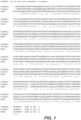
- R178. G179, T180, E187, 1203, and S241 in CspAmy2 correspond to positions N125, Y149, F152, L170, R177, G178, D179, E186, L202, and D240 in PcuAmy1, respectively, and positions N128, Y152, F155, L173, R180, S181, T182, E189, L205, and S243, respectively in BASE. Numbering for other positions through out the molecules can be determned using the alignment and information, herein.
- variant ⁇ -amylases are defined in the claims. Also described are variant ⁇ -amylases having a mutation at an amino acid position corresponding to E187 in combination with at least one mutation at an amino acid position corresponding to a position selected from N126, Y150, F153, L171, T180 and 1203 (using SEQ ID NO: 1 for numbering).
- exemplary mutations at amino acid position E187 include E187V and E187P.
- the mutation at amino acid position S241 is S241Q.
- the mutation at amino acid position N126 is N126Y.
- Exemplary mutations at amino acid position Y150 include Y150F, Y150H, and Y150W.
- Exemplary mutations at amino acid position F153 include F153H, F153W, and F1S3Y.
- Exemplary mutations at amino acid position L171 include L171F, L171G, L1711, L171M, L171R, L171V, L171W, L171Y, L171H, L171K, L171N, L171Q, and L171S.
- Exemplary mutations at amino acid position T180 include T180D and T180H.
- the mutation at amino acid position I203 is I203Y.
- the variant ⁇ -amylases further include a mutation in amino acid residues corresponding to E132, Q167, A277, and/or T400, using SEQ ID NO: 1 for numbering.
- Exemplary mutations at amino acid position E132 include E132A, E132C, E132D, E132F, E132G, E132H, E132I, E132K, E132L, E132M, E132N, E132P, E132Q, E132R, E132V, and E132W.
- Exemplary mutations at amino acid position Q167 include Q167A, Q167D, Q167E, Q167G, Q167H, Q167K, Q167M, Q167N, Q167P, Q167S, Q167T, and Q167V.
- Exemplary mutations at amino acid position A277 include A277C, A277D, A277E, A277F, A277G, A277I, A277K, A277L, A277M, A277N, A277Q, A277R, A277S, A277T, A277V, A277W, and A277Y.
- Exemplary mutations at amino acid position T400 include T400A, T400C, T400D, T400F, T400G, T400I, T400K, T400L, T400M, T400N, T400Q, T400R, T400W, and T400Y.
- the variant ⁇ -amylases further include a mutation in an amino acid residue corresponding to G476, using SEQ ID NO: 1 for numbering.
- Exemplary mutations at amino acid position G476 include G476A, G476C, G476H, G476K. G476N, G476P, G476Q, G476R, G476S, G476T, G476V, and G476Y.
- the variant ⁇ -amylases are those that further include, mutations in both amino acid residues corresponding to G476 and G477, using SEQ ID NO: 1 for numbering.
- SEQ ID NO: 1 for numbering.
- the variant ⁇ -amylases further include mutations in amino acid residues corresponding to R458, T459, and/or D460.
- Exemplary mutations are R458N, T459S, and D460T, respectively.
- the variant ⁇ -amylases further include a deletion in the X 1 G/S 1 X 2 G 2 motif adjacent to the calcium-binding loop corresponding to R178, G179, T180, and G181, using SEQ ID NO: 1 for numbering.
- the variant ⁇ -amylases include adjacent, pair-wise deletions of amino acid residues corresponding to R178 and G179, or T180 and G181.
- a deletion in amino acid residues corresponding to R178 and G179 may be referred to as " ⁇ RG,” while a deletion in amino acid residues corresponding to T180 and G181 " ⁇ TG.” This nomenclature will naturally change depending on the amino acid residues originally present in the parent molecule.
- the variant ⁇ -amylases include mutations at positions corresponding to E132 and/or T180 (using SEQ ID NO: 1 for numbering), in combination with an RG-deletion or a TG-deletion (or equivalent deletion based on the sequence of the parent ⁇ -amylases), such that a stabilizing interaction can occur between the remaining non-G residue in the X 1 G/S 1 X 2 G 2 motif and the residue at position 132.
- the residue at position 132 is negatively charged ( i.e ., D or E) and the remaining non-G residue is positively charged ( i.e ., H, R, or K).
- the residue at position 132 is positively charged ( i.e ., H, R, or K) and the remaining non-G residue is negatively charged ( i.e ., D or E).
- deletions are contemplated for use in conjunction with the aforementioned deletions at positions corresponding to R178, G179, T180, and/or G181.
- Such deletions may be naturally occuring, as in the case of Bacillus licheniformis ⁇ -amylase.
- the PcuAmy1 variants may further include mutations at position T333, A335, and Q337E (using SEQ ID NO: 3 numbering). These positions are in a surface-exposed loop and mutations at these positions, particularly at T333, impart protease resistance to PcuAmy1 but do not otherwise affect performance. These mutations also appear to be fully compatible with other mutations.
- a further mutation in PcuAmy1 variants is N205, which mutation changes the wild-type N residue to D. D is the residue that typically occupies this position in ⁇ -amylases.
- ⁇ -amylases described herein include the all the exemplary combinations of mutations shown above in the context of CspAmy2.
- ⁇ -amylases in which the foregoing mutations are likely to produce a performance benefit include those having a similar fold and/or having 60% or greater amino acid sequence identity to any of the well-known Bacillus amylases (e.g ., from B. lichenifomis ( i.e ., BLA and LAT), B. stearoihermophilus ( i.e ., BSG), and B.
- Bacillus amylases e.g ., from B. lichenifomis ( i.e ., BLA and LAT), B. stearoihermophilus ( i.e ., BSG), and B.
- the present amylases may include any number of conservative amino acid substitutions. Exemplary conservative amino acid substitutions are listed in Table 1 Table 1. Conservative amino acid substitutions For Amino Acid Code Replace with any of Alanine A D-Ala. Gly, beta-Ala, L-Cys, D-Cys Arginine R D-Arg, Lys. D-Lys, homo-Arg, D-homo-Arg. Met, Ile, D-Met.
- D-Ile, Orn, D-Orn Asparagine N D-Asn, Asp, D-Asp, Glu, D-Glu, Gln, D-Gln Aspartic Acid D D-Asp, D-Asn, Asn, Glu, D-Glu, Gln, D-Gln Cysteine C D-Cys, S-Me-Cys, Met. D-Met, Thr, D-Thr Glutamine Q D-Gln, Asn, D-Asn, Glu, D-Glu, Asp, D-Asp Glutamic Acid E D-Glu, D-Asp, Asp. Asn, D-Asn.
- D-Thr allo-Thr, Met, D-Met, Met(O), D-Met(O), L-Cys, D-Cys Threonine T D-Thr, Ser, D-Ser, allo-Thr, Met, D-Met, Met(O), D-Met(O), Val, D-Val Tyrosine Y D-Tyr, Phe.
- D-Phe L-Dopa, His, D-His Valine V D-Val, Leu, D-Leu, Ile, D-Ile, Met, D-Met
- the present amylase may be "precursor,” “immature,” or “full-length,” in which case they include a signal sequence, or “mature,” in which case they lack a signal sequence. Mature forms of the polypeptides are generally the most useful. Unless otherwise noted, the amino acid residue numbering used herein refers to the mature forms of the respective amylase polypeptides. The present amylase polypeptides may also be truncated to remove the N or C-termini, so long as the resulting polypeptides retain amylase activity.
- the present amylase may be a "chimeric" or “hybrid” polypeptide, in that it includes at least a portion of a first amylase polypeptide, and at least a portion of a second amylase polypeptide (such chimeric amylases have recently been “rediscovered” as domain-swap amylases).
- the present amylases may further include heterologous signal sequence, an epitope to allow tracking or purification, or the like.
- Exemplary heterologous signal sequences are from B. licheniformis amylase (LAT), B. subtilis (AmyE or AprE), and Streptomyces CelA.
- the nucleic acid encodes an amylase according to the claims having at least 80%, at least 81%, at least 82%, at least 83%, at least 84%, at least 85%, at least 86%, at least 87%, at least 88%, at least 89%, at least 90%, at least 91%, at least 92%, at least 93%, at least 94%, at least 95%, at least 96%, at least 97%, at least 98% or even at least 99% homology/identity to SEQ ID NO: 1.
- SEQ ID NO: 3, or SEQ ID NO: 5 (excluding the portion of the nucleic acid that encodes the signal sequence). It will be appreciated that due to the degeneracy of the genetic code, a plurality of nucleic acids may encode the same polypeptide.
- Nucleic acids may encode a "full-length” (“fl” or “FL”) amylase, which includes a signal sequence, only the mature form of an amylase, which lacks the signal sequence, or a truncated form of an amylase, which lacks the N or C-terminus of the mature form.
- fl full-length
- FL full-length amylase
- a nucleic acid that encodes a ⁇ -amylase can be operably linked to various promoters and regulators in a vector suitable for expressing the ⁇ -amylase in host cells.
- exemplary promoters are from B. licheniformis amylase (LAT), B. subtilis (AmyE or AprE), and Streptomyces CelA.
- Such a nucleic acid can also be linked to other coding sequences, e.g., to encode a chimeric polypeptide.
- the present variant amylases can be produced in host cells, for example, by secretion or intracellular expression.
- a cultured cell material e.g., a whole-cell broth
- the variant amylase can be isolated from the host cells, or even isolated from the cell broth, depending on the desired purity of the final variant amylase.
- a gene encoding a variant amylase can be cloned and expressed according to methods well known in the art.
- Suitable host cells include bacterial, fungal (including yeast and filamentous fungi), and plant cells (including algae).
- the vector may be any vector that can be transformed into and replicated within a host cell.
- a vector comprising a nucleic acid encoding a variant amylase can be transformed and replicated in a bacterial host cell as a means of propagating and amplifying the vector.
- the vector also may be transformed into an expression host, so that the encoding nucleic acids can be expressed as a functional amylase.
- Host cells that serve as expression hosts can include filamentous fungi, for example.
- the Fungal Genetics Stock Center (FGSC) Catalogue of Strains lists suitable vectors for expression in fungal host cells. See FGSC, Catalogue of Strains, University of Missouri, at www.fgsc.net (last modified January 17, 2007).
- a nucleic acid encoding a variant amylase can be operably linked to a suitable promoter, which allows transcription in the host cell.
- the promoter may be any DNA sequence that shows transcriptional activity in the host cell of choice and may be derived from genes encoding proteins either homologous or heterologous to the host cell.
- Exemplary promoters for directing the transcription of the DNA sequence encoding a variant amylase, especially in a bacterial host, are the promoter of the lac operon of E.
- examples of useful promoters are those derived from the gene encoding Aspergillus oryzae TAKA amylase, Rhizomucor miehei aspartic proteinase, Aspergillus niger neutral ⁇ -amylase, A. niger acid stable ⁇ -amylase, A. niger glucoamylase, Rhizomucor miehei lipase, A. oryzae alkaline protease, A . oryzae triose phosphate isomerase, or A. nidulans acetamidase.
- TAKA amylase Rhizomucor miehei aspartic proteinase
- Aspergillus niger neutral ⁇ -amylase A. niger acid stable ⁇ -amylase
- A. niger glucoamylase Rhizomucor miehei lipase
- Rhizomucor miehei lipase Rhizomucor mie
- a suitable promoter can be selected, for example, from a bacteriophage promoter including a T7 promoter and a phage lambda promoter.
- suitable promoters for the expression in a yeast species include but are not limited to the Gal 1 and Gal 10 promoters of Saccharomyces cerevisiae and the Pichia pastoris AOX1 or AOX2 promoters.
- cbh1 is an endogenous, inducible promoter from T. reesei. See Liu et al. (2008) "Improved heterologous gene expression in Trichoderma reesei by cellobiohydrolase I gene (cbh1) promoter optimization," Acta Biochim. Biophys. Sin (Shanghai) 40(2): 158-65 .
- the polynucleotide encoding an amylase in a vector can be operably linked to a control sequence that is capable of providing for the expression of the coding sequence by the host cell, i.e. the vector is an expression vector.
- the control sequences may be modified, for example by the addition of further transcriptional regulatory elements to make the level of transcription directed by the control sequences more responsive to transcriptional modulators.
- the control sequences may in particular comprise promoters.
- the enzyme containing solution is concentrated using conventional concentration techniques until the desired enzyme level is obtained. Concentration of the enzyme containing solution may be achieved by any of the techniques discussed herein. Exemplary methods of enrichment and purification include but are not limited to rotary vacuum filtration and/or ultrafiltration.
- the enzyme solution is concentrated into a concentrated enzyme solution until the enzyme activity of the concentrated variant ⁇ -amylase polypeptide-containing solution is at a desired level.
- Concentration may be performed using, e.g., a precipitation agent, such as a metal halide precipitation agent.
- a precipitation agent such as a metal halide precipitation agent.
- Metal halide precipitation agents include but are not limited to alkali metal chlorides, alkali metal bromides and blends of two or more of these metal halides.
- Exemplary metal halides include sodium chloride, potassium chloride, sodium bromide, potassium bromide and blends of two or more of these metal halides.
- the metal halide precipitation agent, sodium chloride can also be used as a preservative.
- the metal halide precipitation agent is used in an amount effective to precipitate an amylase.
- the selection of at least an effective amount and an optimum amount of metal halide effective to cause precipitation of the enzyme, as well as the conditions of the precipitation for maximum recovery including incubation time, pH. temperature and concentration of enzyme, will be readily apparent to one of ordinary skill in the art, after routine testing.
- the concentration of the metal halide precipitation agent will depend, among others, on the nature of the specific variant ⁇ -amylase polypeptide and on its concentration in the concentrated enzyme solution.
- organic compound precipitating agents include: 4-hydroxybenzoic acid, alkali metal salts of 4-hydroxybenzoic acid, alkyl esters of 4-hydroxybenzoic acid, and blends of two or more of these organic compounds.
- the addition of the organic compound precipitation agents can take place prior to, simultaneously with or subsequent to the addition of the metal halide precipitation agent, and the addition of both precipitation agents, organic compound and metal halide, may be carried out sequentially or simultaneously.
- the organic compound precipitation agent is used in an amount effective to improve precipitation of the enzyme by means of the metal halide precipitation agent.
- the selection of at least an effective amount and an optimum amount of organic compound precipitation agent, as well as the conditions of the precipitation for maximum recovery including incubation time, pH, temperature and concentration of enzyme, will be readily apparent to one of ordinary skill in the art, in light of the present disclosure, after routine testing.
- the incubation time necessary to obtain an enriched or purified enzyme precipitate depends on the nature of the specific enzyme, the concentration of enzyme, and the specific precipitation agent(s) and its (their) concentration. Generally, the time effective to precipitate the enzyme is between about 1 to about 30 hours; usually it does not exceed about 25 hours. In the presence of the organic compound precipitation agent, the time of incubation can still be reduced to less about 10 hours and in most cases even about 6 hours.
- the temperature during incubation is between about 4°C and about 50°C.
- the method is carried out at a temperature between about 10°C and about 45°C (e.g., between about 20°C and about 40°C).
- the optimal temperature for inducing precipitation varies according to the solution conditions and the enzyme or precipitation agent(s) used.
- the overall recovery of enriched or purified enzyme precipitate, and the efficiency with which the process is conducted, is improved by agitating the solution comprising the enzyme, the added metal halide and the added organic compound.
- the agitation step is done both during addition of the metal halide and the organic compound, and during the subsequent incubation period. Suitable agitation methods include mechanical stirring or shaking, vigorous aeration, or any similar technique.
- the dialyzed sample was then applied to a Mono Q HR5/5 column (Amersham Pharmacia; Cat. No. 17-5167-01) previously equilibrated with 20 mM Tris/HCl buffer (pH 7.0) containing 5 mM CaCl 2 , at a flow rate of 60 mL/hour.
- the active fractions are collected and added to a 1.5 M (NH 4 ) 2 SO 4 solution.
- the active enzyme fractions were rechromatographed on a Toyopearl HW55 column, as before, to yield a homogeneous enzyme as determined by SDS-PAGE. See, e.g ., Sumitani et al. (2000) Biochem. J. 350: 477-484 , for general discussion of the method and variations thereon.
- variant ⁇ -amylase polypeptides can be enriched or partially purified as generally described above by removing cells via flocculation with polymers.
- the enzyme can be enriched or purified by microfiltration followed by concentration by ultrafiltration using available membranes and equipment.
- the enzyme does not need to be enriched or purified, and whole broth culture can be lysed and used without further treatment. The enzyme can then be processed, for example, into granules.
- the desired product may be a syrup rich in glucose and maltose, which can be used in other processes, such as the preparation of HFCS, or which can be converted into a number of other useful products, such as ascorbic acid intermediates (e.g., gluconate; 2-keto-L-gulonic acid; 5-keto-gluconate; and 2,5-diketogluconate); 1,3-propanediol; aromatic amino acids (e.g., tyrosine, phenylalanine and tryptophan); organic acids (e.g., lactate, pyruvate, succinate, isocitrate, and oxaloacetate); amino acids (e.g., serine and glycine); antibiotics; antimicrobials; enzymes; vitamins; and hormones.
- ascorbic acid intermediates e.g., gluconate; 2-keto-L-gulonic acid; 5-keto-gluconate; and 2,5-diketogluconate
- a useful starch substrate may be obtained from tubers, roots, stems, legumes, cereals or whole grain. More specifically, the granular starch may be obtained from corn, cobs, wheat, barley, rye, triticale, milo, sago, millet, cassava, tapioca, sorghum, rice, peas, bean, banana, or potatoes. Corn contains about 60-68% starch; barley contains about 55-65% starch; millet contains about 75-80% starch; wheat contains about 60-65% starch; and polished rice contains 70-72% starch.
- Dry ground grain thus will comprise significant amounts of non-starch carbohydrate compounds, in addition to starch. Dry grinding of the starch substrate can be used for production of ethanol and other biochemicals.
- the starch to be processed may be a highly refined starch quality, for example, at least 90%, at least 95%, at least 97%, or at least 99.5% pure.
- the term "liquefaction” or “liquefy” means a process by which starch is converted to less viscous and shorter chain dextrins. Generally, this process involves gelatinization of starch simultaneously with or followed by the addition of an ⁇ -amylase. although additional liquefaction-inducing enzymes optionally may be added.
- the starch substrate prepared as described above is slurried with water.
- the starch slurry may contain starch as a weight percent of dry solids of about 10-55%, about 20-45%, about 30-45%, about 30-40%, or about 30-35%.
- ⁇ -amylase may be added to the slurry, with a metering pump, for example.
- the ⁇ -amylase typically used for this application is a thermally stable, bacterial ⁇ -amylase.such as a Geobacillus stearothermophilus ⁇ -amylase.
- the ⁇ -amylase is usually supplied, for example, at about 1500 units per kg dry matter of starch.
- the pH of the slurry typically is adjusted to about pH 5.5-6.5 and about 1 mM of calcium (about 40 ppm free calcium ions) can also be added.
- Bacterial ⁇ -amylase remaining in the slurry following liquefaction may be deactivated via a number of methods, including lowering the pH in a subsequent reaction step or by removing calcium from the slurry in cases where the enzyme is dependent upon calcium.
- the liquefied starch can be saccharified into a syrup rich in lower DP (e.g., DP1 + DP2) saccharides, using variant amylases, optionally in the presence of another enzyme(s).
- DP e.g., DP1 + DP2
- variant amylases optionally in the presence of another enzyme(s).
- the exact composition of the products of saccharification depends on the combination of enzymes used, as well as the type of granular starch processed.
- the syrup obtainable using the provided variant amylases may contain a weight percent of DP2 of the total oligosaccharides in the saccharified starch exceeding 30%, e.g., 45% - 65% or 55% - 65%.
- the weight percent of (DP1 + DP2) in the saccharified starch may exceed about 70%, e.g ., 75% - 85% or 80% - 85%.
- the present amylases also produce a relatively high yield of glucose, e.g ., DP1 > 20%, in the syrup product.
- Saccharification is often conducted as a batch process. Saccharification typically is most effective at temperatures of about 60-65°C and a pH of about 4.0-4.5, e.g ., pH 4.3, necessitating cooling and adjusting the pH of the liquefied starch. Saccharification may be performed, for example, at a temperature between about 40°C. about 50°C, or about 55°C to about 60°C or about 65°C. Saccharification is normally conducted in stirred tanks, which may take several hours to fill or empty. Enzymes typically are added either at a fixed ratio to dried solids as the tanks are filled or added as a single dose at the commencement of the filling stage.
- a saccharification reaction to make a syrup typically is run over about 24-72 hours, for example, 24-48 hours. When a maximum or desired DE has been attained, the reaction is stopped by heating to 85°C for 5 min., for example. Further incubation will result in a lower DE, eventually to about 90 DE, as accumulated glucose re-polymerizes to isomaltose and/or other reversion products via an enzymatic reversion reaction and/or with the approach of thermodynamic equilibrium.
- saccharification optimally is conducted at a temperature range of about 30°C to about 75°C, e.g ., 45°C - 75°C or 47°C - 74°C.
- the saccharifying may be conducted over a pH range of about pH 3 to about pH 7, e.g ., pH 3.0 - pH 7.5, pH 3.5 - pH 5.5, pH 3.5, pH 3.8. or pH 4.5.
- An ⁇ -amylase may be added to the slurry as an isolated enzyme solution.
- an ⁇ -amylase can be added in the form of a cultured cell material produced by host cells expressing an amylase.
- An ⁇ -amylase may also be secreted by a host cell into the reaction medium during the fermentation or SSF process, such that the enzyme is provided continuously into the reaction.
- the host cell producing and secreting amylase may also express an additional enzyme, such as a glucoamylase.
- U.S. Patent No. 5,422,267 discloses the use of a glucoamylase in yeast for production of alcoholic beverages.
- a host cell e.g ., Trichoderma reesei or Aspergillus niger
- a host cell maybe engineered to co-express an ⁇ -amylase and a glucoamylase, e.g.. HgGA, TrGA, or a TrGA variant, during saccharification.
- the host cell can be genetically modified so as not to express its endogenous glucoamylase and/or other enzymes, proteins or other materials.
- the host cell can be engineered to express a broad spectrum of various saccharolytic enzymes.
- the recombinant yeast host cell can comprise nucleic acids encoding a glucoamylase, an alpha-glucosidase, an enzyme that utilizes pentose sugar, an ⁇ -amylase, a pullulanase, an isoamylase, and/or an isopullulanase. See , e.g ., WO 2011/153516 A2 .
- the soluble starch hydrolysate produced by treatment with amylase can be converted into high fructose starch-based syrup (HFSS), such as high fructose corn syrup (HFCS).
- HFSS high fructose starch-based syrup
- This conversion can be achieved using a glucose isomerase, particularly a glucose isomerase immobilized on a solid support.
- the pH is increased to about 6.0 to about 8.0, e.g ., pH 7.5 (depending on the isomerase), and Ca 2+ is removed by ion exchange.
- EOF products include metabolites, such as citric acid, lactic acid, succinic acid, monosodium glutamate, gluconic acid, sodium gluconate, calcium gluconate, potassium gluconate, itaconic acid and other carboxylic acids, glucono delta-lactone, sodium erythorbate, lysine and other amino acids, omega 3 fatty acid, butanol, isoprene, 1,3-propanediol and other biomaterials.
- metabolites such as citric acid, lactic acid, succinic acid, monosodium glutamate, gluconic acid, sodium gluconate, calcium gluconate, potassium gluconate, itaconic acid and other carboxylic acids, glucono delta-lactone, sodium erythorbate, lysine and other amino acids, omega 3 fatty acid, butanol, isoprene, 1,3-propanediol and other biomaterials.
- Ethanologenic microorganisms include yeast, such as Saccharomyces cerevisiae and bacteria, e.g., Zymomonas moblis, expressing alcohol dehydrogenase and pyruvate decarboxylase.
- the ethanologenic microorganism can express xylose reductase and xylitol dehydrogenase, which convert xylose to xylulose.
- Improved strains of ethanologenic microorganisms which can withstand higher temperatures, for example, are known in the art and can be used. See Liu et al. (2011) Sheng Wu Gong Cheng Xue Bao 27(7): 1049-56 .
- yeast Commercial sources of yeast include ETHANOL RED ® (LeSaffre); Thermosacc ® (Lallemand); RED STAR ® (Red Star); FERMIOL ® (DSM Specialties); and SUPERSTART ® (Alltech).
- Microorganisms that produce other metabolites, such as citric acid and lactic acid, by fermentation are also known in the art. See, e.g., Papagianni (2007) "Advances in citric acid fermentation by Aspergillus niger: biochemical aspects, membrane transport and modeling," Biotechnol. Adv. 25(3): 244-63 ; John et al. (2009) "Direct lactic acid fermentation: focus on simultaneous saccharification and lactic acid production," Biotechnol. Adv. 27(2): 145-52 .
- the saccharification and fermentation processes may be carried out as an SSF process. Fermentation may comprise subsequent enrichment ,purification, and recovery of ethanol, for example.
- the ethanol content of the broth or "beer” may reach about 8-18% v/v, e.g., 14-15% v/v.
- the broth may be distilled to produce enriched, e.g., 96% pure, solutions of ethanol.
- CO2 generated by fermentation may be collected with a CO2 scrubber, compressed, and marketed for other uses, e.g., carbonating beverage or dry ice production.
- Solid waste from the fermentation process may be used as protein-rich products. e.g., livestock feed.
- an SSF process can be conducted with fungal cells that express and secrete amylase continuously throughout SSF.
- the fungal cells expressing amylase also can be the fermenting microorganism, e.g., an ethanologenic microorganism. Ethanol production thus can be carried out using a fungal cell that expresses sufficient amylase so that less or no enzyme has to be added exogenously.
- the fungal host cell can be from an appropriately engineered fungal strain. Fungal host cells that express and secrete other enzymes, in addition to amylase, also can be used. Such cells may express glucoamylase and/or a pullulanase, phytase.
- alpha-glucosidase isoamylase, beta-amylase cellulase, xylanase, other hemicellulases, protease, beta-glucosidase, pectinase, esterase, redox enzymes, transferase, or other enzyme.
- a variation on this process is a "fed-batch fermentation" system, where the substrate is added in increments as the fermentation progresses.
- Fed-batch systems are useful when catabolite repression may inhibit the metabolism of the cells and where it is desirable to have limited amounts of substrate in the medium.
- the actual substrate concentration in fed-batch systems is estimated by the changes of measurable factors such as pH, dissolved oxygen and the partial pressure of waste gases, such as CO2. Batch and fed-batch fermentations are common and well known in the art.
- Continuous fermentation is an open system where a defined fermentation medium is added continuously to a bioreactor, and an equal amount of conditioned medium is removed simultaneously for processing.
- Continuous fermentation generally maintains the cultures at a constant high density where cells are primarily in log phase growth.
- Continuous fermentation permits modulation of cell growth and/or product concentration. For example, a limiting nutrient such as the carbon source or nitrogen source is maintained at a fixed rate and all other parameters are allowed to moderate. Because growth is maintained at a steady state, cell loss due to medium being drawn off should be balanced against the cell growth rate in the fermentation.
- Variant amylases may be combined with a glucoamylase (EC 3.2.1.3), e.g., a Trichoderma glucoamylase or variant thereof.
- a glucoamylase e.g., Trichoderma glucoamylase or variant thereof.
- An exemplary glucoamylase is Trichoderma reesei glucoamylase (TrGA) and variants thereof that possess superior specific activity and thermal stability. See U.S. Published Applications Nos. 2006/0094080 , 2007/0004018 , and 2007/0015266 (Danisco US Inc.).
- Suitable variants of TrGA include those with glucoamylase activity and at least 80%, at least 90%, or at least 95% sequence identity to wild-type TrGA.
- Variant amylases advantageously increase the yield of glucose produced in a saccharification process catalyzed by TrGA.
- the glucoamylase may be another glucoamylase derived from plants (including algae), fungi, or bacteria.
- the glucoamylases may be Aspergillus niger G1 or G2 glucoamylase or its variants (e.g., Boel et al. (1984) EMBOJ. 3: 1097-1102 ; WO 92/00381 ; WO 00/04136 (Novo Nordisk A/S)); and A. awamori glucoamylase (e.g., WO 84/02921 (Cetus Corp.)).
- amylase suitable enzymes that can be used with amylase include a phytase, protease, pullulanase, ⁇ -amylase, isoamylase, a different ⁇ -amylase, alpha-glucosidase, cellulase, xylanase, other hemicellulases, beta-glucosidase, transferase, pectinase, lipase, cutinase, esterase, redox enzymes, or a combination thereof.
- a debranching enzyme such as an isoamylase (EC 3.2.1.68), may be added in effective amounts well known to the person skilled in the art.
- ⁇ -Amylases (EC 3.2.1.2) are exo-acting maltogenic amylases, which catalyze the hydrolysis of 1,4- ⁇ -glucosidic linkages into amylopectin and related glucose polymers, thereby releasing maltose.
- ⁇ -Amylases have been isolated from various plants and microorganisms. See Fogarty et al. (1979) in Progress in Industrial Microbiology, Vol. 15, pp. 112-115 . These ⁇ -Amylases have optimum temperatures in the range from 40°C to 65°C and optimum pH in the range from about 4.5 to about 7.0.
- the present invention relates to the use of an amylase in the preparation of a food composition, wherein the food composition is baked subsequent to the addition of the polypeptide of the invention.
- baking composition means any composition and/or additive prepared in the process of providing a baked food product, including but not limited to bakers flour, a dough, a baking additive and/or a baked product.
- the food composition or additive may be liquid or solid.
- flour means milled or ground cereal grain.
- the term “flour” also may mean Sago or tuber products that have been ground or mashed.
- flour may also contain components in addition to the milled or mashed cereal or plant matter.
- Cereal grains include wheat, oat, rye, and barley.
- Tuber products include tapioca flour, cassava flour, and custard powder.
- the term “flour” also includes ground corn flour, maize-meal, rice flour, whole-meal flour, self-rising flour, tapioca flour, cassava flour, ground rice, enriched flower, and custard powder.
- An amylase can further be added alone or in a combination with other amylases to prevent or retard staling, i.e ., crumb firming of baked products.
- the amount of anti-staling amylase will typically be in the range of 0.01-10 mg of enzyme protein per kg of flour, e.g., 0.5 mg/kg ds.
- Additional anti-staling amylases that can be used in combination with an amylase include an endo-amylase. e.g., a bacterial endo-amylase from Bacillus.
- the additional amylase can be another maltogenic ⁇ -amylase (EC 3,2.1.133), e.g., from Bacillus.
- NOVAMYL ® is an exemplary maltogenic ⁇ -amylase from B. stearothermophilus strain NCIB 11837 and is described in Christophersen et al. (1997) Starch 50: 39-45 .
- Other examples of anti-staling endo-amylases include bacterial ⁇ -amylases derived from Bacillus, such as B. licheniformis or B. amyloliquefaciens.
- the anti-staling amylase may be an exo-amylase, such as ⁇ -amylase, e.g., from plant sources, such as soy bean, or from microbial sources, such as Bacillus.
- the baking composition comprising an amylase further can comprise a phospholipase or enzyme with phospholipase activity.
- An enzyme with phospholipase activity has an activity that can be measured in Lipase Units (LU).
- the phospholipase may have A1 or A2 activity to remove fatty acid from the phospholipids, forming a lysophospholipid. It may or may not have lipase activity, i.e ., activity on triglyceride substrates.
- the phospholipase typically has a temperature optimum in the range of 30-90°C., e.g., 30-70°C.
- the added phospholipases can be of animal origin, for example, from pancreas, e.g., bovine or porcine pancreas, snake venom or bee venom.
- the phospholipase may be of microbial origin, e.g., from filamentous fungi, yeast or bacteria, for example.
- the phospholipase is added in an amount that improves the softness of the bread during the initial period after baking, particularly the first 24 hours.
- the amount of phospholipase will typically be in the range of 0.01-10 mg of enzyme protein per kg of flour, e.g., 0.1-5 mg/kg. That is, phospholipase activity generally will be in the range of 20-1000 LU/kg of flour, where a Lipase Unit is defined as the amount of enzyme required to release 1 ⁇ mol butyric acid per minute at 30°C, pH 7.0, with gum arabic as emulsifier and tributyrin as substrate.
- compositions of dough generally comprise wheat meal or wheat flour and/or other types of meal, flour or starch such as corn flour, cornstarch, rye meal, rye flour, oat flour, oatmeal, soy flour, sorghum meal, sorghum flour, potato meal, potato flour or potato starch.
- the dough may be fresh, frozen or par-baked.
- the dough can be a leavened dough or a dough to be subjected to leavening.
- the dough may be leavened in various ways, such as by adding chemical leavening agents, e.g., sodium bicarbonate or by adding a leaven, i.e ., fermenting dough.
- Dough also may be leavened by adding a suitable yeast culture, such as a culture of Saccharomyces cerevisiae (baker's yeast), e.g.. a commercially available strain of S. cerevisiae.
- the dough may also comprise other conventional dough ingredients, e.g., proteins, such as milk powder, gluten, and soy; eggs (e.g., whole eggs, egg yolks or egg whites); an oxidant, such as ascorbic acid, potassium bromate, potassium iodate, azodicarbonamide (ADA) or ammonium persulfate; an amino acid such as L-cysteine; a sugar; or a salt, such as sodium chloride, calcium acetate, sodium sulfate or calcium sulfate.
- the dough further may comprise fat, e.g., triglyceride, such as granulated fat or shortening.
- the dough further may comprise an emulsifier such as mono- or diglycerides, diacetyl tartaric acid esters of mono- or diglycerides, sugar esters of fatty acids, polyglycerol esters of fatty acids, lactic acid esters of monoglycerides, acetic acid esters of monoglycerides, polyoxyethylene stearates, or lysolecithin.
- an emulsifier such as mono- or diglycerides, diacetyl tartaric acid esters of mono- or diglycerides, sugar esters of fatty acids, polyglycerol esters of fatty acids, lactic acid esters of monoglycerides, acetic acid esters of monoglycerides, polyoxyethylene stearates, or lysolecithin.
- the dough can be made without addition of emulsifiers.
- the dough product may be any processed dough product, including fried, deep fried, roasted, baked, steamed and boiled doughs, such as steamed bread and rice cakes.
- the food product is a bakery product.
- Typical bakery (baked) products include bread - such as loaves, rolls, buns, bagels, pizza bases etc. pastry, pretzels, tortillas, cakes, cookies, biscuits, crackers etc.
- the xylanase is typically of microbial origin, e.g., derived from a bacterium or fungus, such as a strain of Aspergillus.
- Xylanases include PENTOPAN ® and NOVOZYM 384 ® , for example, which are commercially available xylanase preparations produced from Trichoderma reesei.
- the amyloglucosidase may be an A. niger amyloglucosidase (such as AMG ® ).
- Other useful amylase products include GRINDAMYL ® A 1 000 or A 5000 (Grindsted Products, Denmark) and AMYLASE H TM or AMYLASE P TM (DSM).
- the glucose oxidase may be a fungal glucose oxidase, in particular an Aspergillus niger glucose oxidase (such as GLUZYME ® ).
- An exemplary protease is NEUTRASE ® .
- An amylase may be used in a pre-mix, comprising flour together with an anti-staling amylase, a phospholipase, and/or a phospholipid.
- the pre-mix may contain other dough-improving and/or bread-improving additives, e.g., any of the additives, including enzymes, mentioned above.
- An amylase can be a component of an enzyme preparation comprising an anti-staling amylase and a phospholipase, for use as a baking additive.
- the enzyme preparation is optionally in the form of a granulate or agglomerated powder.
- the preparation can have a narrow particle size distribution with more than 95% (by weight) of the particles in the range from 25 to 500 ⁇ m.
- Granulates and agglomerated powders may be prepared by conventional methods, e.g., by spraying an amylase onto a carrier in a fluid-bed granulator.
- the carrier may consist of particulate cores having a suitable particle size.
- the carrier may be soluble or insoluble, e.g., a salt (such as NaCl or sodium sulfate), a sugar (such as sucrose or lactose), a sugar alcohol (such as sorbitol), starch, rice, corn grits, or soy.
- a salt such as NaCl or sodium sulfate
- a sugar such as sucrose or lactose
- a sugar alcohol such as sorbitol
- starch rice, corn grits, or soy.
- Enveloped particles i.e ., ⁇ -amylase particles
- the enzyme is contacted with a food grade lipid in sufficient quantity to suspend all of the ⁇ -amylase particles.
- Food grade lipids may be any naturally organic compound that is insoluble in water but is soluble in non-polar organic solvents such as hydrocarbon or diethyl ether. Suitable food grade lipids include, but are not limited to, triglycerides either in the form of fats or oils that are either saturated or unsaturated.
- fatty acids and combinations thereof which make up the saturated triglycerides include, but are not limited to, butyric (derived from milk fat), palmitic (derived from animal and plant fat), and/or stearic (derived from animal and plant fat).
- fatty acids and combinations thereof which make up the unsaturated triglycerides include, but are not limited to, palmitoleic (derived from animal and plant fat), oleic (derived from animal and plant fat), linoleic (derived from plant oils), and/or linolenic (derived from linseed oil).
- Other suitable food grade lipids include, but are not limited to, monoglycerides and diglycerides derived from the triglycerides discussed above, phospholipids and glycolipids.
- each ⁇ -amylase particle is individually enveloped in a lipid.
- all or substantially all of the ⁇ -amylase particles are provided with a thin, continuous, enveloping film of lipid. This can be accomplished by first pouring a quantity of lipid into a container, and then slurrying the ⁇ -amylase particles so that the lipid thoroughly wets the surface of each ⁇ -amylase particle.
- the food grade lipid protects the enzyme from thermal denaturation during the baking process for those enzymes that are heat labile. Consequently, while the ⁇ -amylase is stabilized and protected during the proving and baking stages, it is released from the protective coating in the final baked good product, where it hydrolyzes the glucosidic linkages in polyglucans.
- the loaded delivery vehicle also provides a sustained release of the active enzyme into the baked good. That is, following the baking process, active a-amylase is continually released from the protective coating at a rate that counteracts, and therefore reduces the rate of, staling mechanisms.
- the loaded delivery vehicle i.e ., the lipid-enveloped enzyme
- the bakedr computes the amount of enveloped ⁇ -amylase, prepared as discussed above, that will be required to achieve the desired anti-staling effect.
- the amount of the enveloped ⁇ -amylase required is calculated based on the concentration of enzyme enveloped and on the proportion of ⁇ -amylase to flour specified. A wide range of concentrations has been found to be effective, although, as has been discussed, observable improvements in anti-staling do not correspond linearly with the ⁇ -amylase concentration, but above certain minimal levels, large increases in ⁇ -amylase concentration produce little additional improvement.
- the enveloped ⁇ -amylase can be added to the dough during the mix cycle, e.g., near the end of the mix cycle.
- the enveloped ⁇ -amylase is added at a point in the mixing stage that allows sufficient distribution of the enveloped a-amylase throughout the dough; however, the mixing stage is terminated before the protective coating becomes stripped from the ⁇ -amylase particle(s).
- the mixing stage is terminated before the protective coating becomes stripped from the ⁇ -amylase particle(s).
- anywhere from one to six minutes or more might be required to mix the enveloped ⁇ -amylase into the dough, but two to four minutes is average. Thus, several variables may determine the precise procedure.
- the quantity of enveloped ⁇ -amylase should have a total volume sufficient to allow the enveloped ⁇ -amylase to be spread throughout the dough mix. If the preparation of enveloped ⁇ -amylase is highly concentrated, additional oil may need to be added to the pre-mix before the enveloped ⁇ -amylase is added to the dough. Recipes and production processes may require specific modifications; however, good results can generally be achieved when 25% of the oil specified in a bread dough formula is held out of the dough and is used as a carrier for a concentrated enveloped ⁇ -amylase when added near the end of the mix cycle.
- the animal is a ruminant animal including, but not limited to, cattle, young calves, goats, sheep, giraffes, bison, moose, elk, yaks, water buffalo, deer, camels, alpacas, llamas, antelope, pronghorn and nilgai.
- pet food is understood to mean a food for a household animal such as, but not limited to dogs, cats, gerbils, hamsters, chinchillas, fancy rats, guinea pigs; avian pets, such as canaries, parakeets, and parrots; reptile pets, such as turtles, lizards and snakes; and aquatic pets, such as tropical fish and frogs.
- feedstuff and “fodder” are used interchangeably and may comprise one or more feed materials selected from the group comprising a) cereals, such as small grains (e.g., wheat, barley, rye, oats and combinations thereof) and/or large grains such as maize or sorghum; b) by products from cereals, such as corn gluten meal, Distillers Dried Grain Solubles (DDGS) (particularly corn based Distillers Dried Grain Solubles (cDDGS), wheat bran, wheat middlings, wheat shorts, rice bran, rice hulls, oat hulls, palm kernel, and citrus pulp; c) protein obtained from sources such as soya, sunflower, peanut, lupin, peas, fava beans, cotton, canola, fish meal, dried plasma protein, meat and bone meal, potato protein, whey, copra, sesame; d) oils and fats obtained from vegetable and animal sources; e) minerals and vitamins
- An amylase can be used alone or with other desizing chemical reagents and/or desizing enzymes to desize fabrics, including cotton-containing fabrics, as detergent additives. e.g., in aqueous compositions.
- An amylase also can be used in compositions and methods for producing a stonewashed look on indigo-dyed denim fabric and garments.
- the fabric can be cut and sewn into clothes or garments, which are afterwards finished.
- different enzymatic finishing methods have been developed.
- the finishing of denim garment normally is initiated with an enzymatic desizing step, during which garments are subjected to the action of amylolytic enzymes to provide softness to the fabric and make the cotton more accessible to the subsequent enzymatic finishing steps.
- An amylase can be used in methods of finishing denim garments (e.g., a "bio-stoning process"), enzymatic desizing and providing softness to fabrics, and/or finishing process.
- An aspect of the present compositions and methods is a cleaning composition that includes an amylase as a component.
- An amylase polypeptide can be used as a component in detergent compositions for, e.g ., hand washing, laundry washing, dishwashing, and other hard-surface cleaning.
- Such compositions include heavy duty liquid (HDL), heavy duty dry (HDD), and hand (manual) laundry detergent compositions, including unit dose format laundry detergent compositions, and automatic dishwashing (ADW) and hand (manual) dishwashing compositions, including unit dose format dishwashing compositions.
- An amylase polypeptide may be a component of a detergent composition, as the only enzyme or with other enzymes including other amylolytic enzymes. As such, it may be included in the detergent composition in the form of a non-dusting granulate, a stabilized liquid, or a protected enzyme. Non-dusting granulates may be produced, e.g., as disclosed in U.S. Patent Nos. 4,106,991 and 4,661,452 and may optionally be coated by methods known in the art.
- waxy coating materials are poly(ethylene oxide) products (polyethyleneglycol, PEG) with mean molar weights of 1,000 to 20,000; ethoxylated nonylphenols having from 16 to 50 ethylene oxide units: ethoxylated fatty alcohols in which the alcohol contains from 12 to 20 carbon atoms and in which there are 15 to 80 ethylene oxide units; fatty alcohols; fatty acids; and mono- and di- and triglycerides of fatty acids.
- PEG poly(ethylene oxide) products
- ethoxylated nonylphenols having from 16 to 50 ethylene oxide units: ethoxylated fatty alcohols in which the alcohol contains from 12 to 20 carbon atoms and in which there are 15 to 80 ethylene oxide units; fatty alcohols; fatty acids; and mono- and di- and triglycerides of fatty acids.
- film-forming coating materials suitable for application by fluid bed techniques are given in, for example, GB 1483591 .
- the detergent composition may be in any useful form, e.g., as powders, granules, pastes, bars, or liquid.
- a liquid detergent may be aqueous, typically containing up to about 70% of water and 0% to about 30% of organic solvent. It may also be in the form of a compact gel type containing only about 30% water.
- the detergent composition comprises one or more surfactants, each of which may be anionic, nonionic, cationic, or zwitterionic.
- the detergent will usually contain 0% to about 50% of anionic surfactant, such as linear alkylbenzenesulfonate (LAS); ⁇ -olefinsulfonate (AOS); alkyl sulfate (fatty alcohol sulfate) (AS); alcohol ethoxysulfate (AEOS or AES); secondary alkanesulfonates (SAS); ⁇ -sulfo fatty acid methyl esters; alkyl- or alkenylsuccinic acid; or soap.
- anionic surfactant such as linear alkylbenzenesulfonate (LAS); ⁇ -olefinsulfonate (AOS); alkyl sulfate (fatty alcohol sulfate) (AS); alcohol ethoxysulfate (AEOS or AES); secondary alkanesulfonates (SAS);
- Enzymes generally can be protected against deleterious components by known forms of encapsulation, for example, by granulation or sequestration in hydro gels. Enzymes, and specifically amylases, either with or without starch binding domains, can be used in a variety of compositions including laundry and dishwashing applications, surface cleaners, as well as in compositions for ethanol production from starch or biomass.
- the detergent may comprise one or more polymers.
- examples include carboxymethylcellulose (CMC), poly(vinylpyrrolidone) (PVP), polyethyleneglycol (PEG), poly(vinyl alcohol) (PVA), polycarboxylates such as polyacrylates, maleic/acrylic acid copolymers and lauryl methacrylate/acrylic acid copolymers.
- the detergent may contain a bleaching system, which may comprise a H2O2 source such as perborate or percarbonate, which may be combined with a peracid-forming bleach activator such as tetraacetylethylenediamine (TAED) or nonanoyloxybenzenesulfonate (NOBS).
- TAED tetraacetylethylenediamine
- NOBS nonanoyloxybenzenesulfonate
- the bleaching system may comprise peroxyacids (e.g., the amide, imide, or sulfone type peroxyacids).
- the bleaching system can also be an enzymatic bleaching system, for example, perhydrolase, such as that described in International PCT Application WO 2005/056783 .
- the enzymes of the detergent composition may be stabilized using conventional stabilizing agents, e.g., a polyol such as propylene glycol or glycerol; a sugar or sugar alcohol; lactic acid; boric acid or a boric acid derivative such as, e.g., an aromatic borate ester; and the composition may be formulated as described in. e.g., WO 92/19709 and WO 92/19708 .
- a polyol such as propylene glycol or glycerol
- a sugar or sugar alcohol lactic acid
- boric acid or a boric acid derivative such as, e.g., an aromatic borate ester
- the composition may be formulated as described in. e.g., WO 92/19709 and WO 92/19708 .
- the detergent may also contain other conventional detergent ingredients such as e.g., fabric conditioners including clays, foam boosters, suds suppressors, anti-corrosion agents, soil-suspending agents, anti-soil redeposition agents, dyes, bactericides, tarnish inhibiters, optical brighteners, or perfumes.
- fabric conditioners including clays, foam boosters, suds suppressors, anti-corrosion agents, soil-suspending agents, anti-soil redeposition agents, dyes, bactericides, tarnish inhibiters, optical brighteners, or perfumes.
- detergent compositions for inclusion of the present ⁇ -amylase are described, below. Many of these composition can be provided in unit dose format for ease of use. Unit dose formulations and packaging are described in, for example, US20090209445A1 , US20100081598A1 , US7001878B2 , EP1504994B1 , WO2001085888A2 , WO2003089562A1 , WO2009098659A1 , WO2009098660A1 , WO2009112992A1 , WO2009124160A1 , WO2009152031A1 , WO2010059483A1 , WO2010088112A1 , WO2010090915A1 , WO2010135238A1 , WO2011094687A1 , WO2011094690A1 , WO2011127102A1 , WO2011163428A1 , WO2008000567A1 , WO2006045391A1 ,
- Exemplary HDL laundry detergent compositions includes a detersive surfactant (10%-40% wt/wt), including an anionic detersive surfactant (selected from a group of linear or branched or random chain, substituted or unsubstituted alkyl sulphates, alkyl sulphonates, alkyl alkoxylated sulphate, alkyl phosphates, alkyl phosphonates, alkyl carboxylates, and/or mixtures thereof), and optionally non-ionic surfactant (selected from a group of linear or branched or random chain, substituted or unsubstituted alkyl alkoxylated alcohol, for example a C8-C18 alkyl ethoxylated alcohol and/or C6-C12 alkyl phenol alkoxylates), wherein the weight ratio of anionic detersive surfactant (with a hydrophilic index (HIc) of from 6.0 to 9) to non-ionic detersive surfactant is
- Suitable detersive surfactants also include cationic detersive surfactants (selected from a group of alkyl pyridinium compounds, alkyl quarternary ammonium compounds, alkyl quarternary phosphonium compounds, alkyl ternary sulphonium compounds, and/or mixtures thereof); zwitterionic and/or amphoteric detersive surfactants (selected from a group of alkanolamine sulpho-betaines); ampholytic surfactants; semi-polar non-ionic surfactants and mixtures thereof.
- the composition may optionally include, a surfactancy boosting polymer consisting of amphiphilic alkoxylated grease cleaning polymers (selected from a group of alkoxylated polymers having branched hydrophilic and hydrophobic properties, such as alkoxylated polyalkylenimines in the range of 0.05wt%-10wt%) and/or random graft polymers (typically comprising of hydrophilic backbone comprising monomers selected from the group consisting of: unsaturated C1-C6 carboxylic acids, ethers, alcohols, aldehydes, ketones, esters, sugar units, alkoxy units, maleic anhydride, saturated polyalcohols such as glycerol, and mixtures thereof; and hydrophobic side chain(s) selected from the group consisting of: C4-C25 alkyl group, polypropylene, polybutylene, vinyl ester of a saturated C1-C6 mono-carboxylic acid, C1-C6 alkyl ester of acrylic or me
- the composition may include additional polymers such as soil release polymers (include anionically end-capped polyesters, for example SRP1, polymers comprising at least one monomer unit selected from saccharide, dicarboxylic acid, polyol and combinations thereof, in random or block configuration, ethylene terephthalate-based polymers and co-polymers thereof in random or block configuration, for example Repel-o-tex SF, SF-2 and SRP6, Texcare SRA 100, SRA300, SRN100, SRN170, SRN240, SRN300 and SRN325, Marloquest SL), antiredeposition polymers (0.1 wt% to 10wt%, include carboxylate polymers, such as polymers comprising at least one monomer selected from acrylic acid, maleic acid (or maleic anhydride), fumaric acid, itaconic acid, aconitic acid, mesaconic acid, citraconic acid, methylenemalonic acid, and any mixture thereof, vinylpyrrolidone homopolymer, and/
- the composition can be any liquid form, for example a liquid or gel form, or any combination thereof.
- the composition may be in any unit dose form, for example a pouch.
- the composition preferably includes enzymes, e.g., proteases, amylases, lipases, cellulases, choline oxidases, peroxidases/oxidases, pectate lyases, mannanases, cutinases, laccases, phospholipases, lysophospholipases, acyltransferase, perhydrolase, arylesterase, and any mixture thereof.
- enzymes e.g., proteases, amylases, lipases, cellulases, choline oxidases, peroxidases/oxidases, pectate lyases, mannanases, cutinases, laccases, phospholipases, lysophospholipases, acyltransferase, perhydrolase, arylesterase, and any mixture thereof.
- Exemplary ADW detergent composition includes non-ionic surfactants, including ethoxylated non-ionic surfactants, alcohol alkoxylated surfactants, epoxy-capped poly(oxyalkylated) alcohols, or amine oxide surfactants present in amounts from 0 to 10% by weight; builders in the range of 5-60% including phosphate builders (e.g., mono-phosphates, di-phosphates, tri-polyphosphates, other oligomeric-poylphosphates, sodium tripolyphosphate-STPP) and phosphate-free builders (e.g., amino acid-based compounds including methylglycine-diacetic acid (MGDA) and salts and derivatives thereof, glutamic-N,N-diacetic acid (GLDA) and salts and derivatives thereof, iminodisuccinic acid (IDS) and salts and derivatives thereof, carboxy methyl inulin and salts and derivatives thereof, nitrilotriacetic acid (NTA), diethylene
- the present amylase polypeptide may be incorporated at a concentration conventionally employed in detergents. It is at present contemplated that, in the detergent composition, the enzyme may be added in an amount corresponding to 0.00001-1.0 mg (calculated as pure enzyme protein) of amylase polypeptide per liter of wash liquor.
- the detergent composition may be formulated as a hand (manual) or machine (automatic) laundry detergent composition, including a laundry additive composition suitable for pre-treatment of stained fabrics and a rinse added fabric softener composition, or be formulated as a detergent composition for use in general household hard surface cleaning operations, or be formulated for manual or automatic dishwashing operations.
- protease enzymes include but are not limited to: Alcalase ® , Savinase ® . Primase TM , Duralase TM , Esperase ® , BLAZE TM , POLARZYME ® , OVOZYME ® , KANNASE ® , LIQUANASE ® , NEUTRASE ® , RELASE ® , and ESPERASE ® (Novo Nordisk A/S and Novozymes A/S), Maxatase ® , Maxacal TM , Maxapem TM , Properase ® , Purafect ® , Purafect OxP TM , Purafect Prime TM , FNA TM , FN2 TM , FN3 TM , OPTICLEAN ® , OPTIMASE ® , PURAMAX TM , EXCELLASE TM , and URAFAS TM (Danisco US Inc./
- amylases include commercially available amylases, such as but not limited to STAINZYME ® , NATALASE ® , DURAMYL ® , TERMAMYL ® , FUNGAMYL ® and BAN TM (Novo Nordisk A/S and Novozymes A/S); RAPIDASE ® , POWERASE ® , PURASTAR ® , and PREFERENZ TM (from DuPont Industrial Biosciences.).
- STAINZYME ® NATALASE ® , DURAMYL ® , TERMAMYL ® , FUNGAMYL ® and BAN TM (Novo Nordisk A/S and Novozymes A/S); RAPIDASE ® , POWERASE ® , PURASTAR ® , and PREFERENZ TM (from DuPont Industrial Biosciences.).
- the detergent composition can also comprise 2,6- ⁇ -D-fructan hydrolase, which is effective for removal/cleaning of biofilm present on household and/or industrial textile/laundry.
- Liquid enzyme preparations may, for instance, be stabilized by adding a polyol such as propylene glycol, a sugar or sugar alcohol, lactic acid or boric acid according to established methods.
- Protected enzymes may be prepared according to the method disclosed in EP 238,216 .
- the detergent When included therein, the detergent will usually contain from about 0.2% to about 40% of a non-ionic surfactant such as alcohol ethoxylate, nonylphenol ethoxylate, alkylpolyglycoside, alkyldimethylamineoxide, ethoxylated fatty acid monoethanolamide, fatty acid monoethanolamide, polyhydroxy alkyl fatty acid amide, or N-acyl-N-alkyl derivatives of glucosamine (“glucamides").
- a non-ionic surfactant such as alcohol ethoxylate, nonylphenol ethoxylate, alkylpolyglycoside, alkyldimethylamineoxide, ethoxylated fatty acid monoethanolamide, fatty acid monoethanolamide, polyhydroxy alkyl fatty acid amide, or N-acyl-N-alkyl derivatives of glucosamine (“glucamides”).
- glucamides N-acyl-N-alkyl derivatives of glucosamine
- the detergent may contain 0% to about 65% of a detergent builder or complexing agent such as zeolite, diphosphate, triphosphate, phosphonate, carbonate, citrate, nitrilotriacetic acid, ethylenediaminetetraacetic acid (EDTA), diethylenetriaminepentaacetic acid, alkyl- or alkenylsuccinic acid, soluble silicates or layered silicates (e.g.,SKS-6 from Hoechst).
- a detergent builder or complexing agent such as zeolite, diphosphate, triphosphate, phosphonate, carbonate, citrate, nitrilotriacetic acid, ethylenediaminetetraacetic acid (EDTA), diethylenetriaminepentaacetic acid, alkyl- or alkenylsuccinic acid, soluble silicates or layered silicates (e.g.,SKS-6 from Hoechst).
- the enzyme variants may be added in an amount corresponding to about 0.01 to about 100 mg of enzyme protein per liter of wash liquor (e.g., about 0.05 to about 5.0 mg of enzyme protein per liter of wash liquor or 0.1 to about 1.0 mg of enzyme protein per liter of wash liquor).
- exemplary detergent formulations to which the present amylases can be added are described in WO2013063460 .
- These include commercially available unit dose detergent formulations/packages such as PUREX ® UltraPacks (Henkel), FINISH ® Quantum (Reckitt Benckiser), CLOROX TM 2 Packs (Clorox), OxiClean Max Force Power Paks (Church & Dwight), TlDE ® Stain Release, CASCADE ® ActionPacs, and TIDE ® Pods TM (Procter & Gamble), PS.
- the present variant amylase may be a component of a brewing composition used in a process of brewing, i.e ., making a fermented malt beverage.
- Non-fermentable carbohydrates form the majority of the dissolved solids in the final beer. This residue remains because of the inability of malt amylases to hydrolyze the alpha-1,6-linkages of the starch.
- the non-fermentable carbohydrates contribute about 50 calories per 12 ounces of beer, an amylase, in combination with a glucoamylase and optionally a pullulanase and/or isoamylase, assist in converting the starch into dextrins and fermentable sugars, lowering the residual non-fermentable carbohydrates in the final beer.
- adjuncts such as common corn grits, refined corn grits, brewer's milled yeast, rice, sorghum, refined corn starch, barley, barley starch, dehusked barley, wheat, wheat starch, torrified cereal, cereal flakes, rye, oats, potato, tapioca, and syrups, such as corn syrup, sugar cane syrup, inverted sugar syrup, barley and/or wheat syrups, and the like may be used as a source of starch.
- adjuncts such as common corn grits, refined corn grits, brewer's milled yeast, rice, sorghum, refined corn starch, barley, barley starch, dehusked barley, wheat, wheat starch, torrified cereal, cereal flakes, rye, oats, potato, tapioca, and syrups, such as corn syrup, sugar cane syrup, inverted sugar syrup, barley and/or wheat syrups, and the like may be used as a source
- the term "stock” means grains and plant components that are crushed or broken.
- barley used in beer production is a grain that has been coarsely ground or crushed to yield a consistency appropriate for producing a mash for fermentation.
- the term "stock” includes any of the aforementioned types of plants and grains in crushed or coarsely ground forms. The methods described herein may be used to determine ⁇ -amylase activity levels in both flours and stock.
- Processes for making beer are well known in the art. See, e.g., Wolfgang Kunze (2004) "Technology Brewing and Malting," Research and Teaching Institute of Brewing, Berlin (VLB), 3rd editi on. Briefly, the process involves: (a) preparing a mash, (b) filtering the mash to prepare a wort, and (c) fermenting the wort to obtain a fermented beverage, such as beer. Typically, milled or crushed malt is mixed with water and held for a period of time under controlled temperatures to permit the enzymes present in the malt to convert the starch present in the malt into fermentable sugars. The mash is then transferred to a mash filter where the liquid is separated from the grain residue.
- This sweet liquid is called "wort,” and the left over grain residue is called “spent grain.”
- the mash is typically subjected to an extraction, which involves adding water to the mash in order to recover the residual soluble extract from the spent grain.
- the wort is then boiled vigorously to sterilizes the wort and help develop the color, flavor and odor. Hops are added at some point during the boiling.
- the wort is cooled and transferred to a fermentor.
- the wort is then contacted in a fermentor with yeast.
- the fermentor may be chilled to stop fermentation.
- the yeast flocculates and is removed.
- the beer is cooled and stored for a period of time, during which the beer clarifies and its flavor develops, and any material that might impair the appearance, flavor and shelf life of the beer settles out.
- the beer usually contains from about 2% to about 10% v/v alcohol, although beer with a higher alcohol content, e.g., 1 8% v/v, may be obtained.
- the beer Prior to packaging, the beer is carbonated and, optionally, filtered and pasteurized.
- the brewing composition comprising an amylase, in combination with a glucoamylase and optionally a pullulanase and/or isoamylase, may be added to the mash of step (a) above, i.e. , during the preparation of the mash.
- the brewing composition may be added to the mash of step (b) above, i.e. , during the filtration of the mash.
- the brewing composition may be added to the wort of step (c) above, i.e. , during the fermenting of the wort.
- a fermented beverage such as a beer
- the fermented beverage can be a beer, such as full malted beer, beer brewed under the "Rösgebot," ale, IPA, lager, bitter. Happoshu (second beer), third beer, dry beer, near beer, light beer, low alcohol beer, low calorie beer, porter, bock beer, stout, malt liquor, non-alcoholic beer, non-alcoholic malt liquor and the like, but also alternative cereal and malt beverages such as fruit flavored malt beverages, e.g.. citrus flavored, such as lemon-, orange-, lime-, or berry-flavored malt beverages, liquor flavored malt beverages, e.g... vodka-, rum-, or tequila-flavored malt liquor, or coffee flavored malt beverages, such as caffeine-flavored malt liquor, and the like.
- fruit flavored malt beverages e.g.. citrus flavored, such as lemon-, orange-, lime-, or berry-flavored malt beverages
- IPS in saccharide liquor negatively affects final product quality and represents a major issue with downstream processing.
- the amount of IPS can be reduced by isolating the saccharification tank and blending the contents back. IPS nevertheless will accumulate in carbon columns and filter systems, among other things.
- the use of variant amylases is expected to improve overall process performance by reducing the amount of IPS.
- Bacillus strains expressing amylase variants were grown in 2.5 L flasks in cultivation medium (enriched semi-defined media based on MOPs buffer, with urea as the major nitrogen source, glucose as the main carbon source, and supplemented with 1% soytone for robust cell growth) for 60-72 hours at 37°C or in 14 L tanks using a fed batch fermentation process with a medium of corn steep and soy flour supplemented with mineral salts and glucose as carbon source for 100 hours at 36°C. Following incubation, the cells were separated from the fermentation medium by centrifugation and the supernatants were concentrated by ultrafiltration. Ammonium sulphate was added to the concentrate to a final concentration of 0.5M.
- the proteins were purified using hydrophobic interaction chromatography using a phenyl sepharose column on the AKTA Explorer FPLC system (GE Healthcare).
- the column was equilibrated with 50 mM HEPES, pH 8, with 2 mM CaCl 2 and 0.5 M ammonium sulfate, and the proteins were eluted with 50 mM HEPES, pH 8, with 2 mM CaCl 2 and 50% propylene glycol.
- liquid fractions associated with the peak of interest were pooled, and absorbance measurements of the pooled fractions were taken to estimate initial concentrations.
- Protein concentration of concentrated samples was determined by averaging the result from three different measurements: absorbance measurements at 280 nm, SDS-PAGE densitometry of acid-treated samples compared to a known standard, and by running the proteins on an HPLC system and taking absorbance measurements at 215 nm and 280 nm.
- Protein determination assays were performed using chelex bead-treated culture supernatant from cultures grown in 96-well micro-titer plates (MTPs) over 3 days at 37°C with shaking at 300 rpm and 80% humidity, A fresh 96-well round-bottom MTP containing 25 ⁇ L supernatant per well was used for the High Performance Liquid Chromatography (HPLC) protein determination method. Supernatants were diluted four fold into 25 mM sodium acetate pH 5.5, and 10 ⁇ L of each diluted sample was analyzed. An Agilent 1200 (Hewlett Packard) HPLC equipped with a Poroshell 300SB-C8 (Agilent Technologies Santa Clara, CA, USA) column was used.
- HPLC High Performance Liquid Chromatography
- the Ceralpha ⁇ -amylase assay was performed using the Ceralpha Kit (Megazyme, Wicklow, Ireland). The assay involves incubating culture supernatant with a substrate mixture under defined conditions, and the reaction is terminated (and color developed) by the addition of borate buffer (200 mM Boric acid/NaOH buffer, pH 10).
- the substrate is a mixture of the defined oligosaccharide "nonreducing-end blocked p -nitrophenyl maltoheptaoside" (BPNPG7) and excess levels of ⁇ -glucosidase (which has no action on the native substrate due to the presence of the "blocking group").
- the equipment used for this assay included a Biomek FX Robot (Beckman Coulter Brea, CA, USA); a SpectraMAX MTP Reader (type 340-Molecular Devices, Sunnyvale, CA, USA) and iEMS incubator/shaker (Thermo Scientific, Rockford, IL. USA).
- the reagent and solutions used were:
- a vial containing 54.5 mg BPNPG7 substrate was dissolved in 10 mL of MilliQ water and then diluted into 30 mL of dilution buffer to make up 40 mL of the working substrate (1.36 mg/mL).
- the amylase samples (fermentation supernatant) were diluted 40X with dilution buffer.
- the assay was performed by adding 5 ⁇ L of diluted amylase solution into the wells of a MTP followed by the addition of 55 ⁇ L of diluted BPNPG7 working substrate solution. The solutions were mixed and the MTP was sealed with a plate seal and placed in an incubator/shaker (iEMS- Thermo Scientific) for 4 minutes at 25°C.
- the reaction was terminated by adding 70 ⁇ L STOP buffer and the absorbance was read at wavelength 400 nm in an MTP-Reader.
- a non-enzyme control was used to correct for background absorbance values.
- thermostability of CspAmy2-v1 and variants was measured by determining the amylase activity using the Ceralpha ⁇ -amylase assay.
- the equipment used for this assay included a Biomek FX Robot (Beckman Coulter); a SpectraMAX MTP Reader (type 340-Molecular Devices), a Tetrad2DNA Engine PCR machine (Biorad), and iEMS incubator/shaker (Thermo Scientific).
- the reagent solutions used were (* not in all assays):
- thermostability [t résidual value] / [t initial value], so the heat stability activity ratio was calculated based on enzyme activity after heat incubation divided by enzyme activity before heat incubation.
- PI performance index
- the performance index for thermostability stability is determined by comparing the thermostability of the variant enzyme with that of a similarly treated reference enzyme.
- Starch hydrolysis of corn flour and corn starch were used to measure specific activity of CspAmy2-v1 and variants. Activity was measured as reducing ends generated by the enzymatic breakdown of corn flour or corn starch. The reducing ends generated during the incubation with either substrate were quantified using a PAHBAH (p-hydroxy benzoic acid hydrazide) assay.
- PAHBAH p-hydroxy benzoic acid hydrazide
- the equipment used for the assay included a Biomek FX Robot (Beckman Coulter); a SpectraMAX MTP Reader (type 340-Molecular Devices), a Tetrad2DNA Engine PCR machine (Biorad), and iEMS incubator/shaker (Thermo Scientific), and a Bubble Paddle Reservoir.
- Azure Farms Organic Corn Flour (Norco, CA) was ground to a fine powder using a consumer coffee grinder and then sifted to obtain a ⁇ 250 micron fraction.
- the sifted corn flour was washed extensively with MilliQ water by repeated suspension and centrifugation.
- Cargill Farms Organic Corn Starch material was also washed extensively with MilliQ water by repeated suspension and centrifugation.
- Stock solutions of each variant were prepared by diluting purified variants to a final protein concentration of 1 mg/mL in milli-Q water, then each variant was further diluted (200-fold) in each of the above buffers (final enzyme dose is 5 ⁇ g/mL).
- the diluted enzyme solutions were pre-heated to appropriate temperature for two minutes and then cooled on ice to disrupt any protein aggregates.
- 50 ⁇ L of each enzyme solution was transferred to 0.2 mL PCR strip tubes, which were heated to the appropriate temperature (based on buffer pH) and allowed to incubate over a two-hour period. The samples were then placed in an ice-water bath to end the heat-stress period.
- Peak viscosity is defined as the maximum viscosity reached during the experiment, and final viscosity is defined as the viscosity reading at the end of the experiment. Because viscosity has a reciprocal relationship with enzyme dose, dose response curves were linearized by plotting 1/viscosity (also called fluidity) vs. enzyme dose. Slopes of these curves were used as a quantitative measure of the specific activity of each variant. The performance index (PI) for each variant is defined as the ratio of the variant specific activity to the specific activity of a reference parent molecule.
- CspAmy2-C16A For variants CspAmy2-C16A, CspAmy2-C16C, CspAmy2-C16E, CspAmy2-C16G, and CspAmy2-C16I, the reference is CspAmy2-v1-E187P.
- CspAmy2-C16B For variants CspAmy2-C16D, CspAmy2-C16F, CspAmy2-C16H, and CspAmy2-C16J, the reference is CspAmy2-v1-S241Q. Viscosity reduction performance is shown in Tables 3 and 4.
- the cleaning performance of combination variants CspAmy2-C16A - CspAmy2-C16J from Example 5 was analyzed in a microswatch cleaning assay using CFT CS-28 rice starch on cotton swatches.
- the assay was performed using culture supernatants. Protein concentration for the supernatants was quantified using HPLC.
- the equipment used for this assay included a Biomek FX Robot (Beckman Coulter), a SpectraMAX MTP Reader (type 340-Molecular Devices) and iEMS incubator/shaker (Thermo Scientific).
- the reagent and solutions used were:
- CS-28 microswatches of 5.5 mm circular diameter were provided by the Center for Testmaterials (CFT, Vlaardingen, The Netherlands). Two microswatches were placed in each well of a 96-well Corning 9017 flat bottomed polystyrene MTP. The culture supernatants were diluted twenty- fold in 50 mM MOPS pH7.15, 0.005% TWEEN 80.
- the incubator/shaker was set at 25°C (ambient temperature). 178.5 ⁇ L of HEPES buffer, respectively, was added to each well of microswatch containing MTP and subsequently 1.5 ⁇ L of diluted enzyme solution was added to each well resulting in a total volume of 180 ⁇ L/well.
- the MTP was sealed with a plate seal and placed in the iEMS incubator/shaker and incubated for 15 minutes at 1150 rpm at 25°C. Following incubation under the appropriate conditions, 100 ⁇ L of solution from each well was transferred to a new MTP, and the absorbance at 488 nm was measured using a MTP-spectrophotometer. Controls containing two microswatches and buffer but no enzyme were included for subtraction of background cleaning performance,
- the detergent stability of the additional CspAmy2 variants was determined by measuring their activity after incubation under defined conditions, in the presence of a 10% detergent mixture (commercially purchased Persil Color Gel detergent, Henkel (Düsseldorf, Germany), purchased in 2011).
- the detergent was heat-inactivated before use, and the initial and residual amylase activities were determined using the Ceralpha ⁇ -amylase assay.
- the equipment used for this assay included a Biomek FX Robot (Beckman Coulter); a SpectraMAX MTP Reader (type 340-Molecular Devices), a Tetrad2DNA Engine PCR machine (Biorad), and iEMS incubator/shaker (Thermo Scientific).
- the reagent solutions used were as follows:
- CspAmy2 v171 is a variant of CspAmy2 having the mutations T180D, E187P, I203Y, G476K, and lacking R178 and G179.
- CspAmy2 v172 is a variant of CspAmy2 having the mutations N126Y, T180D, E187P, I203Y, G476K, and lacking R178 and G179.
- amino acid sequence of mature CspAmy2-v171 is shown, below, as SEQ ID NO: 22:
- amino acid sequence of mature CspAmy2-v172 is shown, below, as SEQ ID NO: 23:
- CspAmy2 variant The cleaning benefit of a CspAmy2 variant was compared to that of a commercially-available ⁇ -amylase [STAINZYME ® (Novozymes A/S)] in a hand dishwashing application.
- STAINZYME ® Novozymes A/S
- 0.01 % (wt/wt) active enzyme CspAmy2-v6, STAINZYME ® , or no enzyme as a control
- the cleaning benefit of a CspAmy2 variant was compared to that of two benchmark ⁇ -amylases (i.e. , STAINZYME ® and POWERASE ® ) in an automatic dishwashing (ADW) application.
- the cleaning assays were performed in a standard Miele 6382 dishwasher using a normal cycle (50°C and 60 minutes) with water having a hardness of 21 GH and 37.5 FH. 20 g of ADW powder detergent was used for each dishwashing cycle.
- the detergent was either WfK Type B or Type C (Testgewebe GmbH, Bruggen, Germany), which are described in Tables A and B, respectively of Figure 13 .
- the test samples were either pasta or mixed-starch stained dishes.
- the pasta samples were prepared by mixing 150 g of strained pasta cooked in 17 GH water with 200 mL distilled water in a blender for 5 minutes to obtain a chewing gum-like suspension. About 3 g of the suspension was brushed onto the surface of each dish to be incuded in the cleaning assay, allowed to dry for for 24 hours, baked onto the dishes at 120°C for 2 hours, and allowed to cool. Cleaning performance was evaluated by adding iodine to the washed dishes and using a photo scale rating of 1-10.
- the mixed starch samples were prepared by mixing 26 g each of potato, corn, rice, and wheat starch in about 4 L g 16 GH water and heating to 95°C for 10 minutes.
- Figures 14 and 15 show the cleaning performace of CspAmy2-v6 (squares) compared to POWERASE ® (diamonds), dosed at 0, 1, 2. 4. or 8 ppm in about 2.5 cents/kg (ct/kg) WfK B detergent against the mixed starch stain ( Figure 14 ) and the pasta stain ( Figure 15 ).
- CspAmy2-v6 clearly outperformed POWERASE ® , particularly against the mixed starch stain.
- Figures 16 and 17 show the cleaning performace of CspAmy2-v6 (squares) compared to STAINZYME ® (circles), dosed at 0, 1, 2, 4, or 8 ppm in about 2.5 ct/kg WfK B detergent against the mixed starch stain ( Figure 16 ) and the pasta stain ( Figure 17 ).
- CspAmy2-v6 clearly outperformed STAINZYME ® , especially at low doses.
- Figures 18 and 19 show the cleaning performace of CspAmy2-v6 (squares) compared to POWERASE ® (diamonds), dosed at 0. 1, 2. 4, or 8 ppm in about 2.5 ct/kg WfK C detergent against the mixed starch stain ( Figure 18 ) and the pasta stain ( Figure 19 ).
- CspAmy2-v6 clearly outperformed POWERASE ® against both stains.
- SELs Site evaluation libraries were constructed and screened at 283 of 485 positions in variant CspAmy2-C18P (i.e. , CspAmy2 with the mutations N126Y, F153W, T180D, I203Y, and S241Q, and lacking R178 and G179 (referring to SEQ ID NO: 1 for numbering) to identify additional variants with enhanced activity on one or more of the following substrates: corn amylopectin, swelled corn starch, granular corn starch, and corn starch-stained microswatches. Mutations were discovered throughout the molecule that improved activity. A subset of these variants was re-tested at different dose responses to confirm enhanced activity.
- amino acid sequence of the mature CspAmy2-C18P amylase polypeptide is shown, below, as SEQ ID NO: 24 (the substitutions are underlined):
- Hydrolysis of soluble corn amylopectin was used to measure specific activity of amylase variants. Activity was measured as reducing ends generated by the enzymatic hydrolysis of amylopectin polymers as quantified using a bicinchoninic acid (BCA) assay.
- BCA bicinchoninic acid
- the equipment used for the assay included a Biomek FX Robot (Beckman Coulter), a SpectraMAX MTP Reader (type 340-Molecular Devices), and a Tetrad2DNA Engine PCR machine (Biorad).
- Purified corn amylopectin (MP Biomedicals, LLC, cat. # 195048) was solubilized by boiling for 5 minutes while stirring as a 1.5% (w/w) suspension in water. The material was allowed to cool to room temperature and water and concentrated stock solutions were added to obtain a final amylopectin substrate with 1.25% (w/w) amylopectin, 6.25 ppm calcium, 62.5 ppm sodium, 62.5 mM potassium acetate (pH 5.0), and 0.005% (v/v) Tween 80.
- amylopectin substrate 40 ⁇ l of the amylopectin substrate was added to 3 PCR microtiter plates. 10 ⁇ l of culture supernatant diluted 1:2000 in water/0.005% tween 80 was added to plates followed by through mixing by up and down pipetting. The plates were sealed and placed at 70°C for 5 minutes followed by a ramp down to 25°C. Amylopectin hydrolysis was terminated by immediate addition/mixing of 10 ⁇ L 0.5 N NaOH.
- the starch hydrolysis reaction products were analyzed by the BCA assay. Briefly, a reagent provided in a commercial kit (Pierce Chemical, cat. no. 23225) was prepared as per manufacturer's instructions. 90 ⁇ l was aliquoted to PCR plates followed by 10 ⁇ l of the terminated enzyme reaction described above. After through mixing of components the plates were sealed and placed in a thermocycler, programmed for 3 minutes at 95°C to develop color, and then cooled to 30°C. Samples of 70 ⁇ L of the developed BCA reaction mixtures were transferred to a fresh plate and absorbance was measured at 562 nm in a spectrophotometer. Data acquired for three replicate plates were averaged.
- Cargill Corn Starch material (flour or starch) was washed extensively with MilliQ water by repeated suspension and centrifugation prior to use in the assay.
- the washed corn starch was suspended in MilliQ water containing 0.005% sodium azide to obtain 20% (w/w) stock solutions, which were further diluted with a 20X stock buffer solution to 10.9% w/v corn flour and corn starch solutions (final buffer concentration of 55 mM KOAc, pH 5).
- the SCS assay measures alpha-amylase activity on hydrated but intact ("swelled") starch granules.
- the overall number of enzymatic turnovers is assessed using the BCA reducing sugar assay, while the tendency of the enzyme to release large starch fragments into solution is assessed using iodine staining.
- 2% (w/w) swelled corn starch substrate was prepared by suspending 2 g of corn starch (Cargill Farms Organic Corn Starch) in 90 g of MilliQ water and heating in a submerged water bath set to 80°C for 1 hour with regular swirling. After overnight cooling at room temperature, the volume was brought up to 100 mL with the addition of potassium acetate buffer, calcium chloride, sodium chloride and Tween-80 to give final concentrations of 50 mM KOAc (pH5.5), 0.125 mM CaCl 2 , 2 mM NaCl, and 0.005% Tween-80.
- swelled corn starch substrate was dispensed into NUNC V-bottom polystyrene microtiter plates using a bubble paddle reservoir.
- the reaction was initiated by adding 5 ⁇ L of 12x enzyme solution to the plate to give a final enzyme concentration of -0.03 ppm in reaction.
- the reaction plate was sealed with a Nunc seal and immediately placed in an iEMS incubator. Incubation occurred for 10 min at 25°C, or for 4 min at 60°C, while shaking at 1,150 RPM. After incubation, the reaction was terminated with the addition of 70 ⁇ L of 0.1 N NaOH. The plates were sealed and spun for 3 min at 3,000 RPM. Swelled corn starch reactions were done as a single plate, but assayed in triplicate for subsequent Iodine and BCA assays.
- the BCA assay is described above.
- 95 ⁇ L of Lugol's reagent freshly diluted by 12-fold in water; Sigma-Aldrich L6146-1L
- 5 ⁇ L of supernatant sample was added to the plates and mixed six times by pipetting up and down.
- the plates were then shaken on a table top microtiter plate mixer for 1 minute at speed 6-7.
- Absorbance was read at 530 nm using a SpectraMax M5 spectrophotometer.
- the assays were performed as described, above, except that 170 ⁇ l of potassium acetate buffer was added to each well of microswatch-containing MTP and subsequently 10 ⁇ L of diluted enzyme solution was added to each well resulting in a total volume of 180 ⁇ L/well.
- the MTP was sealed and incubated for 20 minutes at 1,150 rpm at 25°C.
- Viscosity experiments were performed using a Rapid Visco Analyser (Newport Scientific) with 38 mm x 68 mm plain washed cans (Part No. AA0384001) and a double-skirted paddle (Part no. NS101783). Data acquisition and analysis was performed with Thermocline for Windows (version 3.11). Immediately before each run, 33 g of 25% dry solids (ds) corn flour slurry was prepared in an RVA can as follows: 9. 17 g corn flour (11.8% moisture content) was weighed out on an analytical balance and mixed with 23.83 g deionized water.
- the sample pH was adjusted with 0.0828 mL 1N sulfuric acid (for pH 5.7) or 0.285 mL 1N sulfuric acid (for pH 5.2). Enzyme was added at appropriate dose, and the can was placed in the viscometer. All runs were 10 minutes in length, with a temperature ramp to 85°C or 95°C over 80 seconds followed by a temperature hold at 85°C or 95°C for the remainder of the run.
- P388T, P388V, L390M, L390V A392C, A392S, K394A, K394C, K394E, K394F, K394G, K394H, K394I, K394L, K394Q, K394R, K394S, K394T, K394V, K394W, K394Y, D395A, D395E, D395N, D395S.
- FIG. 20 shows examples of variants with improved hydrolysis of corn starch at high temperature.
- Figure 21 shows examples of variants with improved hydrolysis of amylopectin from com.
- Figure 22 shows examples of variants with improved generation of reducing sugars from starch.
- Figure 23 shows examples of variants with improved release of iodine staining material from starch.
- the legends adjacent to the graphs indicate the mutations present in addition to those present to the control variant, CspAmy2-C18P.
- Figure 24 shows examples of variants that demonstrate improved reduction of corn slurry viscosity compared to the CspAmy2-C18P control. CspAmy2-C16F is also included for comparison.
- Site evaluation libraries were constructed and screened to determined the effect of pair-wise combinations of mutations at positions 476 and 477 in variant CspAmy2-C16F (CspAmy2 with the mutations N126Y, F153W, T180H, 1203Y, and S241Q, and lacking R178 and G179).
- the matrix in Figure 25 shows the PI values for CspAmy2-C16F position 476/477 variants compared to a CspAmy2-C16F control (with a PI value set at 1) in a CS-26 corn starch microswatch assay, as described, above.
- the amino acid residues at positions 476 and 477 are indicated on the left-side and top of the matrix, respectively.
- a "wild-type" revertant i.e ., G476G/G477G had an experimentally obtained PI score of 1.01, suggesting that the assay produces very reliable results.
- the absence of a number at a position in the matrix indicates poor expression of the particular variant or that the variant was not present among those tested.
- the matrix in Figure 26 shows the PI values for the same variants in an amylose hydrolysis assay, as described, above.
- a "wild-type" revertant i.e ., G476G/G477G had an experimentally obtained PI score corresponding to that of the control.
- While binding tightly to a substrate may be desirable in nature where substrate is limiting, in industrial applications it may be more desirable for the enzyme to release from one starch molecule after hydrolyzing it and find a different starch molecules to hydrolize, rather than remaining associated with the first starch molecule and hydrolysing it processively.
- amino acid sequence of the mature CspAmy2-C25A amylase polypeptide is shown, below, as SEQ ID NO: 25 [the relevant substitutions are underlined]:
- amino acid sequence of the mature CspAmy2-C25B amylase polypeptide is shown, below, as SEQ ID NO: 26 [the relevant substitutions are underlined]:
- amino acid sequence of the mature CspAmy2-C25F amylase polypeptide is shown, below, as SEQ ID NO: 27 [the relevant substitutions are underlined]:
- the cleaning performance of the purified variants was analyzed in a microswatch cleaning assay performed essentially as decribed above.
- CFT CS-28 swatches were punched to form discs measuring 5.5 mm in diameter. Two discs were placed in each well of 3 each flat-bottom, non-binding 96-well assay plates.
- the CspAmy2 variants, STAINZYME ® , and ACE-QK were each diluted to 0.5 mg/mL in dilution buffer (50 mM MOPS (pH 7.2) and 0.005% Tween), and then further diluted to 18 ppm in a microtiter plate. Several dilutions were made in the microtiter plates, down to 0.27 ppm.
- HEPES buffer 25 mM HEPES, pH 8.0 with 2 mM CaCl 2 and 0.005% Tween-80
- the final enzyme concentrations ranged from 1 ppm down to 0.015 ppm.
- the plates were incubated at 25°C with agitation at 1150 rpm for 15 minutes. Enzyme performance was judged by the amount of color released into the wash liquor. Color release was quantified spectrophotometrically at 488 nm by the transfer of 140 ⁇ L of the final wash solution to fresh medium-binding microtiter plates, and triplicate reads were blank-subtracted and averaged.
- thermostability assay The results of the thermostability assay are shown in Figure 29 .
- Variants CspAmy2-v186 and v191 both demonstrated superior thermal stability compared to CspAmy2-v5.
- All the CspAmy2 variants demonstrated superior thermal stability compared to STAINZYME ® and ACE-QK.
- amino acid sequence of mature CspAmy2-v 179 is shown, below, as SEQ ID NO: 28:
- amino acid sequence of mature CspAmy2-v180 is shown, below, as SEQ ID NO: 29:
- amino acid sequence of mature CspAmy2-v181 is shown, below, as SEQ ID NO: 30:
- amino acid sequence of mature CspAmy2-v186 is shown, below, as SEQ ID NO: 31:
- amino acid sequence of mature CspAmy2-v191 is shown, below, as SEQ ID NO: 32:
- the codon-optimized nucleotide sequence of the PcuAmy1 gene is set forth as SEQ ID NO: 33:
- amino acid sequence of the mature of PcuAmy1-v1A polypeptide is shown below as SEQ ID NO: 34:
- amino acid sequence of the mature of PcuAmyl -v6 polypeptide is shown below as SEQ ID NO: 35:
- amino acid sequence of the mature of PcuAmy1-v8 polypeptide is shown below as SEQ ID NO: 36:
- amino acid sequence of the mature of PcuAmy1-v16 polypeptide is shown below as SEQ ID NO: 37:
- the cleaning performance of PcuAmy1-v1, PcuAmy1-v6, and PcuAmy1-v16, compared to STAINZYME ® and ACE-QK is shown in Figure 36 .
- the microswatch assay was performed as described in Example 17.
- PcuAmy1-v6 and PcuAmy1-v16 outperformed PcuAmy1-v1 and STAINZYME ® at low doses (e.g., 0.1 ppm enzyme or less).
- the codon-modified nucleic acid sequence encoding the mature form of BASE is set forth as SEQ ID NO: 38:
- amino acid sequence of BASE-V28 is shown below as SEQ ID NO: 39:
- amino acid sequence of BASE-V29 is shown below as SEQ ID NO: 40:
- amino acid sequence of BASE-V30 is shown below as SEQ ID NO: 41:
- amino acid sequence of BASE-V31 is shown below as SEQ ID NO: 42:
- amino acid sequence of BASE-V32 is shown below as SEQ ID NO: 43:
- amino acid sequence of BASE-V33 is shown below as SEQ ID NO: 44:
- amino acid sequence of BASE-V34 is shown below as SEQ ID NO: 45:
- amino acid sequence of BASE-V35 is shown below as SEQ ID NO: 46:
- amino acid sequence of BASE-V36 is shown below as SEQ ID NO: 47:
- a structural interaction between residues 132 and 180 (refering to SEQ ID NO: 1 for numbering) explains the increased stability of some of the variants.
- Details of the crystal structure of CspAmy2-v1 are shown in Figures 39-42 .
- the naturally occurring glutamate side chain at position 132 is positioned towards the side chain of the naturally-occurring threonine at position 180.
- the distance of 5.4 Angstroms, however, is too great for the formation of any stabilizing interaction.
- a T180H variant e.g., CspAmy2-vC16C
- an aspartic acid at position 180 may also be capable of hydrogen bonding with the glutamate at position 132, although hydrogen bonding may be overwhelmed by unfavorable like charge interactions.
- histidine at position 132 in combination with an aspartate at position 180, restores the possibility for a favorable interaction created by a T180D mutation ( Figure 42 ).
- the stabilizing effect of the E132H mutation in CspAmy2-v191 and CspAmy2-C25A, B, and F, which all have a T180D mutation supports this hypothesis (e.g., Example 16 and Figure 27 ).
- postion E132 corresponds to position T134 and position T180 corresponds to position T182.
- the observations that BASE-V31 is more stable than BASE-V28 and BASE-V33 is more stable than BASE-V29 further supports this hypothesis in the context of a different ⁇ -amylase.
- the mutations T134E and T180H appear to work together to enable the formation of a stabilizing interaction, likely a salt bridge.
- V34 is more stable than V36, because of the stabilizing interaction between the glutamate and histidine in V34, which does not occur between the glutamate and glycine in V36.
- position 132 is negatively charged (i.e., D or E)
- the remaining non-G residue should be positively charged (i.e., H, R. or K).
- position 132 is positively charged (i.e., H, R, or K)
- the remaining non-G residue should be negatively charged (i.e., D or E).
- Figure 43 is an image of an SDS/PAGE gel showing the cleavage of 20 ⁇ g of PcuAmy 1-v1 in the presence of increasing amounts of GG36 protease, (from 0 to 40 ⁇ g as indicated above the gel).
- the letters on the right side of the gel indicate (A) intact full-length PcuAmy1-v1, (B) a first cleavage product of PcuAmy 1-v1, (C) GG36 protease, (D) a contaminant in the GG36 protein preparation, and (E) a second cleavage product of PcuAmy1-v1.
- the main degradation products observed after incubation of PcuAmy-v1 amylase with a subtilisin protease have a molecular weight of about 38 and 16 kDa (B and E, respectively).
- the amount of proteolytic degradation is dependent on the concentration of protease used. This makes PcuAmy1 amylase suboptimal for inclusion in enzyme detergent formulations that contain commonly-used subtilisin proteases.
- PcuAmy1-v3 is a variant of PcuAmy1 with the mutations E186P, G472K and lacking R177 and G178 (using SEQ ID NO: 3 for numbering).
- the substitution E186P and the deletions at R177 and G178 increase the detergent stability of PcuAmy1.
- the substitution G472K improves cleaning performance. None of these mutations has any effect on protease sensitivity (data not shown). Therefore, including these mutations in variants made to explore the effect of other mutations on protease stability does not interfere with the results.
- PcuAmy1 protease sensitivity
- amino acid sequence of PcuAmy1 was compared to that of other CAZy Family GH-13 amylases which show protease-resistance, such as PURASTAR ® ST ( B . licheniformis amylase or AmyL), SPEZYME ® XTRA ( Geobacillus stearothermophilus amylase or AmyS), ACE-QK ( WO2010/115021 ), and STA1NZYME ® (Novozymes).
- PURASTAR ® ST B . licheniformis amylase or AmyL
- SPEZYME ® XTRA Geobacillus stearothermophilus amylase or AmyS
- ACE-QK WO2010/115021
- STA1NZYME ® Novozymes
- PcuAmy1 variants PcuAmy1 -v3A to PcuAmy1-v3L (i.e., 3A-3L) were designed and tested for protease resistance.
- the mutations present in each variant are listed in Table 11. They were introduced into PcuAmy1-v3 (SEQ ID NO: 49), using standard methods, many of which are described above. Table 11.
- the 12 PcuAmy1 variants were expressed in B . subtilis as described, above. 40 ⁇ L filtered supernatant from each PcuAmy1 variant culture broth was incubated with 100 ⁇ g GG36 protease for 6 hours at room temperature, and subsequently analyzed for remaining amylase activity using the Megazyme Ceralpha substrate assay (Megazyme International Ireland, Co. Wicklow, Ireland). Residual activity after protease incubation was compared to the amylase activity of each sample after incubation with buffer alone. The results are shown in Figure 44 . A subset of the samples was also analyzed by SDS-PAGE ( Figure 45 ), with the protein standard. SEEBLUE ® Plus2 (Invitrogen). The commercially available amylases were included for comparison.
- PcuAmy1 variants 3A, 3B, 3C. 3D, and 3L maintained >70% of their enzymatic activity after incubation with GG36 protease.
- PcuAmy1 variants 3J and 3K maintained >65% of their enzymatic activity after incubation with GG36 protease.
- PcuAmy1 variants 3E, 3F, 3G, 3H, and 3I did not show an appreciable increase of stability compared to the wild-type enzyme.
- Samples of the 3B, 3C, 3D and 3L incubations were analyzed by SDS/PAGE and showed significant reduction in degradation products when incubated with GG36 protease, confirming that the increase in residual amylase activity was due to decreased proteolytic cleavage.
- Variants PcuAmy1-v10, PcuAmy1-v11, and PcuAmy1-v12 include pair-wise combination of mutations at positions T333, A335, and Q337.
- PcuAmy1 -v3-v13 includes mutations at all the aforementioned positions and includes the additional mutation T351W.
- the commercial detergents Total Color (MIFA Ag Frenkendorf, Switzerland) and Omo (Unilever, London, UK) were heat inactivated at 90°C for 4 hours to eliminate existing enzyme activities. Enzyme activity in the heat inactivated detergents was measured using the Suc-AAPF-pNA and Ceralpha assays for measuring protease and amylase activity, respectively.
- 2% w/w protease (PURAFECT ® Prime 4000L, Danisco US Inc.) and 0.5% w/w amylase were added to each detergent sample and mixed. Samples were stored in a CO 2 incubator (Sanyo) at 37°C for 14 days.
- Figures 46-50 show the results of the detergent stability assays performed in MIFA Total (MIFA Ag Frenkendorf, Switzerland) and Unilever OMO (Unilever, London, UK) are shown in Figures 46-50 .
- Figures 46 and 48 show the residual activity of PcuAmy1 variants over time in MIFA Total and Unilever Omo, respectively, supplemented with FNA protease.
- Figures 47 and 49 summarize the data for the 3 and 14 day time points.
- PcuAmy1 variants that include the T333 mutation, i.e., 3B, 3L,v10, v13, and to a lesser degree, v11 were the most stable.
- Variants that did not include the T333 mutation. i.e ., V1 and v12 were the least stable.
- the presence of a mutation at Q337E further improves stability.
- Both enzymes and two commercial amylase products were diluted to 0.5 mg/mL in dilution buffer (50 mM MOPS, pH 7.2, 0.005% Tween), and then further diluted to 2 ppm in a microtiter plate. 200 ⁇ L of these samples were transferred into the first row of each of three swatch plates.
- HEPES buffer 25 mM HEPES, pH 8.0 with 2 mM CaCl 2 and 0.005% Tween-80
- serial dilutions were made to result in final enzyme concentrations of 2, 1, 0.5, 0.25, and 0.125 ppm as well as a row of blank (buffer only) wells with 200 ⁇ L in every well. Plates were incubated at 25 °C with agitation at 1150 rpm for 15 minutes. The wash liquor was transferred to fresh microtiter plates and enzyme performance was judged by the amount of color released into the wash liquor. Color release was quantified spectrophotometrically at 488 nm, and triplicate reads were blank-subtracted and averaged.
Landscapes
- Chemical & Material Sciences (AREA)
- Life Sciences & Earth Sciences (AREA)
- Engineering & Computer Science (AREA)
- Organic Chemistry (AREA)
- Wood Science & Technology (AREA)
- Health & Medical Sciences (AREA)
- Zoology (AREA)
- Genetics & Genomics (AREA)
- Bioinformatics & Cheminformatics (AREA)
- Biotechnology (AREA)
- Chemical Kinetics & Catalysis (AREA)
- Biochemistry (AREA)
- General Health & Medical Sciences (AREA)
- Microbiology (AREA)
- General Engineering & Computer Science (AREA)
- Molecular Biology (AREA)
- Biomedical Technology (AREA)
- Oil, Petroleum & Natural Gas (AREA)
- Medicinal Chemistry (AREA)
- General Chemical & Material Sciences (AREA)
- Nutrition Science (AREA)
- Food Science & Technology (AREA)
- Polymers & Plastics (AREA)
- Enzymes And Modification Thereof (AREA)
- Detergent Compositions (AREA)
- Micro-Organisms Or Cultivation Processes Thereof (AREA)
- Preparation Of Compounds By Using Micro-Organisms (AREA)
Claims (20)
- Rekombinante Variante einer Ausgangs-α-Amylase, die Folgendes umfasst:i) eine Kombination von Mutationen, die aus der aus den folgenden bestehenden Gruppe ausgewählt ist:







 unter Verwendung von SEQ ID NO: 1 zur Nummerierung;wobei die α-Amylase-Variante eine Aminosäuresequenzidentität von zumindest 80 % mit SEQ ID NO: 1 aufweist; oderii) eine Kombination von Mutationen, die aus der aus den folgenden bestehenden Gruppe ausgewählt ist:



 unter Verwendung von SEQ ID NO: 3 zur Nummerierung;wobei die α-Amylase-Variante eine Aminosäuresequenzidentität von zumindest 80 % mit SEQ ID NO: 3 aufweist; oder(iii) eine Kombination von Mutationen, die aus der aus den folgenden bestehenden Gruppe ausgewählt ist:wobei die Variante im Vergleich zu der Ausgangs-α-Amylase oder einer Referenz-α-Amylase, die sich von der α-Amylase-Variante nur durch das Fehlen von Mutationen unterscheidet, eine verbesserte Thermostabilität, Detergensstabilität, Stärkeverflüssigungsaktivität oder Reinigungsleistung aufweist.





 unter Verwendung von SEQ ID NO: 5 zur Nummerierung;wobei die α-Amylase-Variante eine Aminosäuresequenzidentität von zumindest 80 % mit SEQ ID NO: 5 aufweist;
 - α-Amylase-Variante nach Anspruch 1(i), die Folgendes umfasst:(a) eine Deletion von zumindest einem Aminosäurerest, der aus R178, G179, T180 und G181 ausgewählt ist, unter Verwendung von SEQ ID NO: 1 zur Nummerierung; und/oder(b) Deletionen der Aminosäurereste R178 und G179 oder T180 und G181 unter Verwendung von SEQ ID NO: 1 zur Nummerierung;wobei die Variante im Vergleich zu der Ausgangsamylase eine verbesserte Thermostabilität, Detergensstabilität, Stärkeverflüssigungsaktivität oder Reinigungsleistung aufweist und wobei SEQ ID NO: 1 zur Nummerierung verwendet wird.
- α-Amylase-Variante nach Anspruch 1(ii), die Folgendes umfasst:(a) eine Deletion von zumindest einem Aminosäurerest, der aus R177, G178, D179 und G180 ausgewählt ist, unter Verwendung von SEQ ID NO: 3 zur Nummerierung; und/oder(b) Deletionen der Aminosäurereste R177 und G178 oder D179 und G180 unter Verwendung von SEQ ID NO: 3 zur Nummerierung;wobei die Variante im Vergleich zu der Ausgangsamylase eine verbesserte Thermostabilität, Detergensstabilität, Stärkeverflüssigungsaktivität oder Reinigungsleistung aufweist und wobei SEQ ID NO: 3 zur Nummerierung verwendet wird.
- α-Amylase-Variante nach Anspruch 1(iii), die Folgendes umfasst:(a) eine Deletion von zumindest einem Aminosäurerest, der aus R180, S181, T182 und G183 ausgewählt ist, unter Verwendung von SEQ ID NO: 5 zur Nummerierung; und/oder(b) Deletionen der Aminosäurereste R180 und S181 oder T182 und G183 unter Verwendung von SEQ ID NO: 5 zur Nummerierung;wobei die Variante im Vergleich zu der Ausgangsamylase eine verbesserte Thermostabilität, Detergensstabilität, Stärkeverflüssigungsaktivität oder Reinigungsleistung aufweist und wobei SEQ ID NO: 5 zur Nummerierung verwendet wird.
- Amylase-Variante nach einem der vorangegangenen Ansprüche, wobei die Ausgangs-α-Amylase nicht von einer Bacillus-Spezies stammt; wobei die Ausgangs-α-Amylase gegebenenfalls von einer Cytophaga-Spezies oder einer Paenibacillus-Spezies stammt.
- Amylase-Variante nach einem der vorangegangenen Ansprüche, wobei die Ausgangs-α-Amylase oder die α-Amylase-Variante eine Aminosäuresequenzidentität von zumindest 90 % mit der Aminosäuresequenz von SEQ ID NO: 1, SEQ ID NO: 3 oder SEQ ID NO: 5 aufweist.
- Amylase-Variante nach einem der vorangegangenen Ansprüche, welche die Kombination von Mutationen, die N126Y + F153W + T180D + I203Y + S241Q entspricht, und eine oder mehrere Mutationen, die Mutationen entsprechen, die aus der aus E132H, Q167E, A277F und T400K bestehenden Gruppe ausgewählt sind, umfasst,
unter Verwendung von SEQ ID NO: 1 zur Nummerierung. - Zusammensetzung, die eine α-Amylase-Variante nach einem der vorangegangenen Ansprüche umfasst.
- Zusammensetzung nach Anspruch 8, wobei:(a) die Zusammensetzung zur Entfernung von stärkehältigen Flecken aus Wäsche, Geschirr oder Textilien wirksam ist; und/oder(b) die Zusammensetzung weiters ein Tensid umfasst.
- Zusammensetzung nach Anspruch 8 oder Anspruch 9, wobei die Zusammensetzung:(a) eine Reinigungsmittelzusammensetzung ist oder(b) ein Waschmittel oder ein Waschmitteladditiv ist; oder(c) ein Spülmittel für den Abwasch oder den Geschirrspüler ist oder(d) weiters ein oder mehrere zusätzliche Enzyme umfasst, die aus der aus Protease, Hemicellulase, Cellulase, Peroxidase, lipolytischem Enzym, metallolipolytischem Enzym, Xylanase, Lipase, Phospholipase, Esterase, Perhydrolase, Cutinase, Pektinase, Pektatlyase, Mannanase, Keratinase, Reduktase, Oxidase, Phenoloxidase, Lipoxygenase, Ligninase, Pullulanase, Tannase, Pentosanase, Malanase, β-Glucanase, Arabinosidase, Hyaluronidase, Chondroitinase, Laccase, Metalloproteinase, Amadoriase, Glucoamylase, Arabinofuranosidase, Phytase, Isomerase, Transferase und einer anderen Amylase als einer Amylase nach einem der Ansprüche 1 bis 7 bestehenden Gruppe ausgewählt sind.
- Zusammensetzung nach Anspruch 8, wobei die Zusammensetzung:(a) zum Verflüssigen von Stärke oder(b) zum Verzuckern einer Zusammensetzung, die Stärke umfasst, zur SSF nach Verflüssigung oder zur direkten SSF ohne vorangegangene Verflüssigung oder(c) zum Erzeugen eines fermentierten Getränks oder(d) zum Erzeugen eines gebackenen Nahrungsmittels oder(e) zu Entschlichten von Textiliendient.
- Verfahren zum Entfernen eines stärkehältigen Flecks oder einer stärkehältigen Verschmutzung von einer Oberfläche, das Folgendes umfasst:das Kontaktieren der Oberfläche in Gegenwart einer Zusammensetzung, die eine wirksame Menge einer Amylase-Variante nach einem der Ansprüche 1 bis 7 umfasst, unddas Hydrolysieren-Lassen von Stärkekomponenten, die in dem stärkehältigen Fleck enthalten sind, durch das Polypeptid, um kleinere, von Stärke abgeleitete Moleküle zu erhalten, die sich in der wässrigen Zusammensetzung lösen,wodurch der stärkehältige Fleck von der Oberfläche entfernt wird.
- Verfahren nach Anspruch 12, wobei:(a) die wässrige Zusammensetzung weiters ein Tensid umfasst; und/oder(b) die Oberfläche eine Textiloberfläche oder eine Oberfläche auf Geschirr ist; und/oder(c) die Zusammensetzung weiters zumindest ein zusätzliches Enzym umfasst, das aus der aus Protease, Hemicellulase, Cellulase, Peroxidase, lipolytischem Enzym, metallolipolytischem Enzym, Xylanase, Lipase, Phospholipase, Esterase, Perhydrolase, Cutinase, Pektinase, Pektatlyase, Mannanase, Keratinase, Reduktase, Oxidase, Phenoloxidase, Lipoxygenase, Ligninase, Pullulanase, Tannase, Pentosanase, Malanase, β-Glucanase, Arabinosidase, Hyaluronidase, Chondroitinase, Laccase, Metalloproteinase, Amadoriase, Glucoamylase, Arabinofuranosidase, Phytase, Isomerase, Transferase und einer anderen Amylase als eine Amylase nach einem der Ansprüche 1 bis 7 bestehenden Gruppe ausgewählt ist.
- Verfahren zum Verzuckern einer Zusammensetzung, die Stärke umfasst, um eine Zusammensetzung zu erzeugen, die Glucose umfasst, wobei das Verfahren Folgendes umfasst:(i) das Kontaktieren der Lösung, die Stärke umfasst, mit einer wirksamen Menge einer Amylase-Variante nach einem der Ansprüche 1 bis 7; und(ii) das Verzuckern der Lösung, die Stärke umfasst, um die Zusammensetzung zu erzeugen, die Glucose umfasst; wobei die Amylase-Variante die Verzuckerung der Stärkelösung zu Glucose- oder anderen angereicherten Kohlenhydrat-Sirupen katalysiert.
- Verfahren nach Anspruch 14, wobei:(a) die Zusammensetzung, die Stärke umfasst, verflüssigte Stärke, gelierte Stärke, granuläre Stärke oder Stärke umfasst, die unter ihrer Geliertemperatur wärmebehandelt wurde; und/oder(b) die Fermentierung eine gleichzeitige Verzuckerungs- und Fermentierungs- (SSF-) Reaktion ist; und/oder(c) das Verfahren weiters das Kontaktieren einer Maische und/oder einer Würze mit einer Amylase umfasst; und/oder(d) das Verfahren weiters das Zusetzen von Glucoamylase, Hexokinase, Xylanase, Glucoseisomerase, Xyloseisomerase, Phosphatase, Phytase, Pullulanase, β-Amylase, α-Amylase, die nicht die α-Amylase-Variante ist, Protease, Cellulase, Hemicellulase, Lipase, Cutinase, Isoamylase, Redoxenzym, Esterase, Transferase, Pektinase, α-Glucosidase, β-Glucosidase oder eine Kombination dieser Enzyme zu der Stärkelösung umfasst; und/oder(e) die Amylase von einer Wirtszelle exprimiert und sezerniert wird, wobei gegebenenfalls:(i) die Zusammensetzung, die Stärke umfasst, mit der Wirtszelle in Kontakt gebracht wird; und/oder(ii) die Wirtszelle weiters ein oder mehrere Enzyme exprimiert oder sezerniert, die aus der aus Glucoamylase, Hexokinase, Xylanase, Glucoseisomerase, Xyloseisomerase, Phosphatase, Phytase, Pullulanase, β-Amylase, α-Amylase, die nicht die α-Amylase-Variante ist, Protease, Cellulase, Hemicellulase, Lipase, Cutinase, Isoamylase, Redoxenzym, Esterase, Transferase, Pektinase, α-Glucosidase und β-Glucosidase bestehenden Gruppe ausgewählt sind; und/oder(iii) die Wirtszelle weiters eine Glucoamylase exprimiert und sezerniert; und/oder(iv) die Wirtszelle dazu in der Lage ist, die Zusammensetzung zu fermentieren.
- Verwendung einer Amylase nach einem der Ansprüche 1 bis 7 zur Herstellung einer Zusammensetzung, die Glucose umfasst, bei der Herstellung einer verflüssigten Stärke, bei der Herstellung eines fermentierten Getränks, beim Reinigen von stärkehältigen Flecken oder beim Entschlichten von Textilien.
- Verfahren zum Entschlichten von Textilien, welches das Kontaktieren einer Entschlichtungszusammensetzung mit einer geschlichteten Textilie über einen Zeitraum, der ausreichend ist, um die Textilie zu entschlichten, umfasst, wobei die Entschlichtungszusammensetzung eine α-Amylase-Variante nach einem der Ansprüche 1 bis 7 umfasst.
- Isoliertes Polynucleotid, das für ein Polypeptid nach einem der Ansprüche 1 bis 7 kodiert.
- Expressionsvektor, der ein Polynucleotid nach Anspruch 18 umfasst.
- Wirtszelle, die einen Expressionsvektor nach Anspruch 19 umfasst.
Priority Applications (1)
| Application Number | Priority Date | Filing Date | Title |
|---|---|---|---|
| EP21166776.1A EP3978604A1 (de) | 2013-03-11 | 2014-03-11 | Kombinatorische alpha-amylase-varianten |
Applications Claiming Priority (5)
| Application Number | Priority Date | Filing Date | Title |
|---|---|---|---|
| US201361776699P | 2013-03-11 | 2013-03-11 | |
| US201361906617P | 2013-11-20 | 2013-11-20 | |
| US201361907131P | 2013-11-21 | 2013-11-21 | |
| EP14722824.1A EP2970930B2 (de) | 2013-03-11 | 2014-03-11 | Kombinatorische alpha-amylase-varianten |
| PCT/US2014/023458 WO2014164777A1 (en) | 2013-03-11 | 2014-03-11 | Alpha-amylase combinatorial variants |
Related Parent Applications (2)
| Application Number | Title | Priority Date | Filing Date |
|---|---|---|---|
| EP14722824.1A Division EP2970930B2 (de) | 2013-03-11 | 2014-03-11 | Kombinatorische alpha-amylase-varianten |
| EP14722824.1A Division-Into EP2970930B2 (de) | 2013-03-11 | 2014-03-11 | Kombinatorische alpha-amylase-varianten |
Related Child Applications (2)
| Application Number | Title | Priority Date | Filing Date |
|---|---|---|---|
| EP21166776.1A Division-Into EP3978604A1 (de) | 2013-03-11 | 2014-03-11 | Kombinatorische alpha-amylase-varianten |
| EP21166776.1A Division EP3978604A1 (de) | 2013-03-11 | 2014-03-11 | Kombinatorische alpha-amylase-varianten |
Publications (3)
| Publication Number | Publication Date |
|---|---|
| EP3336183A1 EP3336183A1 (de) | 2018-06-20 |
| EP3336183B1 EP3336183B1 (de) | 2021-05-12 |
| EP3336183B2 true EP3336183B2 (de) | 2025-04-09 |
Family
ID=50680117
Family Applications (5)
| Application Number | Title | Priority Date | Filing Date |
|---|---|---|---|
| EP14727646.3A Active EP2970931B1 (de) | 2013-03-11 | 2014-03-11 | Kombinatorische alpha-amylase-varianten |
| EP21166776.1A Pending EP3978604A1 (de) | 2013-03-11 | 2014-03-11 | Kombinatorische alpha-amylase-varianten |
| EP14722410.9A Withdrawn EP2970929A1 (de) | 2013-03-11 | 2014-03-11 | Kombinatorische alpha-amylase-varianten |
| EP14722824.1A Active EP2970930B2 (de) | 2013-03-11 | 2014-03-11 | Kombinatorische alpha-amylase-varianten |
| EP18151284.9A Active EP3336183B2 (de) | 2013-03-11 | 2014-03-11 | Kombinatorische alpha-amylase-varianten |
Family Applications Before (4)
| Application Number | Title | Priority Date | Filing Date |
|---|---|---|---|
| EP14727646.3A Active EP2970931B1 (de) | 2013-03-11 | 2014-03-11 | Kombinatorische alpha-amylase-varianten |
| EP21166776.1A Pending EP3978604A1 (de) | 2013-03-11 | 2014-03-11 | Kombinatorische alpha-amylase-varianten |
| EP14722410.9A Withdrawn EP2970929A1 (de) | 2013-03-11 | 2014-03-11 | Kombinatorische alpha-amylase-varianten |
| EP14722824.1A Active EP2970930B2 (de) | 2013-03-11 | 2014-03-11 | Kombinatorische alpha-amylase-varianten |
Country Status (9)
| Country | Link |
|---|---|
| US (5) | US20160017304A1 (de) |
| EP (5) | EP2970931B1 (de) |
| CN (3) | CN105229147B (de) |
| BR (1) | BR112015021647B1 (de) |
| CA (2) | CA3254431A1 (de) |
| DK (3) | DK2970930T4 (de) |
| ES (2) | ES2676895T5 (de) |
| HU (1) | HUE039341T2 (de) |
| WO (3) | WO2014164834A1 (de) |
Families Citing this family (199)
| Publication number | Priority date | Publication date | Assignee | Title |
|---|---|---|---|---|
| US20160053243A1 (en) * | 2012-12-21 | 2016-02-25 | Danisco Us Inc. | Alpha-amylase variants |
| CN114634921B (zh) * | 2013-06-06 | 2024-09-10 | 诺维信公司 | α-淀粉酶变体以及对其进行编码的多核苷酸 |
| EP3872174B1 (de) | 2015-05-13 | 2023-03-01 | Danisco US Inc. | Aprl-clade-protease-varianten and verwendungen davon |
| US20180134997A1 (en) | 2015-06-09 | 2018-05-17 | Danisco Us Inc. | Osmotic burst encapsulates |
| WO2016201040A1 (en) | 2015-06-09 | 2016-12-15 | Danisco Us Inc. | Water-triggered enzyme suspension |
| WO2016201069A1 (en) | 2015-06-09 | 2016-12-15 | Danisco Us Inc | Low-density enzyme-containing particles |
| EP4234693A3 (de) | 2015-06-17 | 2023-11-01 | Danisco US Inc | Bacillus-gibboni-clade-serin-proteasen |
| KR20180069057A (ko) | 2015-10-30 | 2018-06-22 | 다니스코 유에스 인크. | 향상된 단백질 발현 및 이의 방법 |
| JP7364331B2 (ja) | 2015-11-05 | 2023-10-18 | ダニスコ・ユーエス・インク | パエニバチルス(Paenibacillus)属種マンナナーゼ |
| EP4483721A3 (de) | 2015-11-05 | 2025-04-16 | Danisco US Inc. | Paenibacillus und bacillus spp. mannanasen |
| DK3387124T3 (da) * | 2015-12-09 | 2021-08-23 | William Cuevas | Kombinatoriske alfa-amylasevarianter |
| CN108699543B (zh) | 2015-12-18 | 2023-07-14 | 丹尼斯科美国公司 | 具有内切葡聚糖酶活性的多肽及其用途 |
| WO2017116217A1 (ko) * | 2015-12-31 | 2017-07-06 | 씨제이제일제당(주) | 내열성 및 내산성을 가지는 Acidothermus 속 유래 탈분지 효소를 이용한 전분당으로부터 포도당의 생산 방법 및 그 포도당 |
| DK179660B1 (en) | 2016-04-08 | 2019-03-13 | Novozymes A/S | Stabilized Alpha-Amylase Variants and use of the same |
| US20190194636A1 (en) | 2016-05-03 | 2019-06-27 | Danisco Us Inc | Protease variants and uses thereof |
| WO2017192300A1 (en) | 2016-05-05 | 2017-11-09 | Danisco Us Inc | Protease variants and uses thereof |
| JP7609549B2 (ja) | 2016-05-31 | 2025-01-07 | ダニスコ・ユーエス・インク | プロテアーゼ変異体およびその使用 |
| DE102016209880A1 (de) * | 2016-06-06 | 2017-12-07 | Henkel Ag & Co. Kgaa | Neue Amylasen |
| CN109563497A (zh) | 2016-06-17 | 2019-04-02 | 丹尼斯科美国公司 | 蛋白酶变体及其用途 |
| EP3275985A1 (de) | 2016-07-26 | 2018-01-31 | The Procter and Gamble Company | Spülmittelzusammensetzung für automatisches geschirrspülen |
| EP3275987A1 (de) | 2016-07-26 | 2018-01-31 | The Procter and Gamble Company | Spülmittelzusammensetzung für automatisches geschirrspülen |
| EP3275988B1 (de) | 2016-07-26 | 2020-07-08 | The Procter and Gamble Company | Spülmittelzusammensetzung für automatisches geschirrspülen |
| EP3275989A1 (de) | 2016-07-26 | 2018-01-31 | The Procter and Gamble Company | Spülmittelzusammensetzung für automatisches geschirrspülen |
| EP3275986B1 (de) | 2016-07-26 | 2020-07-08 | The Procter and Gamble Company | Spülmittelzusammensetzung für automatisches geschirrspülen |
| EP3275990A1 (de) | 2016-07-28 | 2018-01-31 | The Procter and Gamble Company | Verfahren zur rückvermischung einer ersten flüssigwaschmittelzusammensetzung in eine zweite flüssigwaschmittelzusammensetzung |
| US9598680B1 (en) * | 2016-08-05 | 2017-03-21 | Fornia Biosolutions, Inc. | G16 glucoamylase compositions and methods |
| WO2018085524A2 (en) | 2016-11-07 | 2018-05-11 | Danisco Us Inc | Laundry detergent composition |
| JP6907317B2 (ja) | 2016-12-02 | 2021-07-21 | ザ プロクター アンド ギャンブル カンパニーThe Procter & Gamble Company | 酵素を含む洗浄組成物 |
| JP6907318B2 (ja) | 2016-12-02 | 2021-07-21 | ザ プロクター アンド ギャンブル カンパニーThe Procter & Gamble Company | 酵素を含む洗浄組成物 |
| US20200392477A1 (en) | 2016-12-21 | 2020-12-17 | Danisco Us Inc. | Protease variants and uses thereof |
| CN110312794B (zh) | 2016-12-21 | 2024-04-12 | 丹尼斯科美国公司 | 吉氏芽孢杆菌进化枝丝氨酸蛋白酶 |
| EP3339423A1 (de) | 2016-12-22 | 2018-06-27 | The Procter & Gamble Company | Spülmittelzusammensetzung für geschirrspülautomat |
| CN110699337B (zh) * | 2017-01-16 | 2023-02-17 | 广东溢多利生物科技股份有限公司 | 提高比活的α-淀粉酶突变体BasAmy-4及其编码基因和应用 |
| RU2019123965A (ru) | 2017-02-01 | 2021-02-01 | Дзе Проктер Энд Гэмбл Компани | Очищающие композиции, содержащие варианты амилазы |
| FI3585910T3 (fi) | 2017-02-24 | 2024-06-19 | Danisco Us Inc | Koostumukset ja menetelmät proteiinin tuotannon lisäämiseksi bacillus licheniformiksessa |
| EP3583210B1 (de) | 2017-03-15 | 2021-07-07 | Danisco US Inc. | Trypsinähnliche serinproteasen und deren verwendungen |
| EP3601515A1 (de) | 2017-03-31 | 2020-02-05 | Danisco US Inc. | Enzymformulierungen mit verzögerter freisetzung für bleichmittelhaltige waschmittel |
| WO2018184004A1 (en) | 2017-03-31 | 2018-10-04 | Danisco Us Inc | Alpha-amylase combinatorial variants |
| US12110531B2 (en) | 2017-06-16 | 2024-10-08 | Danstar Ferment Ag | Method for increasing oil yield during ethanol production |
| WO2019006077A1 (en) | 2017-06-30 | 2019-01-03 | Danisco Us Inc | PARTICLES CONTAINING LOW AGGLOMERATION ENZYME |
| EP3668973A2 (de) * | 2017-08-18 | 2020-06-24 | Danisco US Inc. | Alpha-amylase-varianten |
| WO2019040412A1 (en) | 2017-08-23 | 2019-02-28 | Danisco Us Inc | METHODS AND COMPOSITIONS FOR EFFICIENT GENETIC MODIFICATION OF BACILLUS LICHENIFORMIS STRAINS |
| JP7218985B2 (ja) | 2017-09-13 | 2023-02-07 | ダニスコ・ユーエス・インク | バチルス属(Bacillus)におけるタンパク質産生の増加のための改変5’-非翻訳領域(UTR)配列 |
| DE102017125560A1 (de) | 2017-11-01 | 2019-05-02 | Henkel Ag & Co. Kgaa | Reinigungszusammensetzungen, die dispersine iii enthalten |
| WO2019089898A1 (en) | 2017-11-02 | 2019-05-09 | Danisco Us Inc | Freezing point depressed solid matrix compositions for melt granulation of enzymes |
| US20200354708A1 (en) | 2017-11-29 | 2020-11-12 | Danisco Us Inc. | Subtilisin variants having improved stability |
| EP3502227B1 (de) | 2017-12-19 | 2024-09-04 | The Procter & Gamble Company | Spülmittelzusammensetzung für geschirrspülautomat |
| ES3023210T3 (en) | 2017-12-19 | 2025-05-30 | Procter & Gamble | Automatic dishwashing detergent composition |
| EP3502245B1 (de) | 2017-12-19 | 2025-03-05 | The Procter & Gamble Company | Spülmittelzusammensetzung für geschirrspülautomat |
| DK3502246T3 (da) | 2017-12-19 | 2025-07-07 | Procter & Gamble | Rensemiddelsammensætning til automatisk opvask |
| CN111742041B (zh) | 2017-12-21 | 2023-06-06 | 丹尼斯科美国公司 | 包含耐热干燥剂的含酶的热熔细粒 |
| EP3735478B1 (de) | 2018-01-03 | 2023-08-16 | Danisco US Inc. | Mutant und genetisch modifizierte bacillus-zellen und verfahren dafür für gesteigerte proteinproduktion |
| BR112020016068A2 (pt) | 2018-02-08 | 2020-12-08 | Danisco Us Inc. | Partículas cera termicamente resistente matriz para encapsulamento de enzima |
| US20190264140A1 (en) | 2018-02-28 | 2019-08-29 | The Procter & Gamble Company | Methods of cleaning |
| JP2021513590A (ja) * | 2018-02-28 | 2021-05-27 | ザ プロクター アンド ギャンブル カンパニーThe Procter & Gamble Company | 洗浄組成物 |
| JP6947667B2 (ja) * | 2018-03-14 | 2021-10-13 | ヤンマーパワーテクノロジー株式会社 | アイスクリーム類およびその製造方法並びにソフトクリームミックス |
| CN108841809A (zh) * | 2018-03-21 | 2018-11-20 | 中国农业科学院饲料研究所 | 具有高比活及热稳定性的淀粉酶突变体及其基因和应用 |
| JP6947679B2 (ja) * | 2018-03-30 | 2021-10-13 | ヤンマーパワーテクノロジー株式会社 | 冷凍食品及びその製造方法並びに冷凍焼け防止剤 |
| EP3788162A1 (de) | 2018-05-04 | 2021-03-10 | Danisco US Inc. | Vereinfachtes verfahren zur herstellung von maltodextrin und spezialsirupen |
| CN112384616B (zh) * | 2018-05-29 | 2024-09-03 | 巴斯夫欧洲公司 | 淀粉酶 |
| US11541105B2 (en) | 2018-06-01 | 2023-01-03 | The Research Foundation For The State University Of New York | Compositions and methods for disrupting biofilm formation and maintenance |
| JP2021527413A (ja) | 2018-06-19 | 2021-10-14 | ザ プロクター アンド ギャンブル カンパニーThe Procter & Gamble Company | 自動食器洗浄洗剤組成物 |
| EP3810767B1 (de) | 2018-06-19 | 2026-07-15 | Danisco US Inc. | Subtilisin-varianten |
| EP3810769A1 (de) | 2018-06-19 | 2021-04-28 | The Procter & Gamble Company | Spülmittelzusammensetzung für geschirrspülautomat |
| EP3799601A1 (de) | 2018-06-19 | 2021-04-07 | Danisco US Inc. | Subtilisinvarianten |
| WO2020028443A1 (en) | 2018-07-31 | 2020-02-06 | Danisco Us Inc | Variant alpha-amylases having amino acid substitutions that lower the pka of the general acid |
| EP3844255A1 (de) | 2018-08-30 | 2021-07-07 | Danisco US Inc. | Enzymhaltige granulate |
| EP3856882A1 (de) | 2018-09-27 | 2021-08-04 | Danisco US Inc. | Zusammensetzungen für die reinigung von medizinischen instrumenten |
| US20210355469A1 (en) * | 2018-10-12 | 2021-11-18 | Danisco Us Inc | Alpha-amylases with mutations that improve stability in the presence of chelants |
| US12509672B2 (en) | 2018-11-28 | 2025-12-30 | Danisco Us Inc. | Subtilisin variants having improved stability |
| EP3938503A1 (de) | 2019-03-14 | 2022-01-19 | The Procter & Gamble Company | Verfahren zur behandlung von baumwolle |
| WO2020186030A1 (en) | 2019-03-14 | 2020-09-17 | The Procter & Gamble Company | Cleaning compositions comprising enzymes |
| CN113439116B (zh) | 2019-03-14 | 2023-11-28 | 宝洁公司 | 包含酶的清洁组合物 |
| EP3741283B1 (de) | 2019-05-22 | 2025-03-19 | The Procter & Gamble Company | Automatisches geschirrspülverfahren |
| CN114174504B (zh) | 2019-05-24 | 2026-04-17 | 丹尼斯科美国公司 | 枯草杆菌蛋白酶变体和使用方法 |
| EP3976775A1 (de) | 2019-05-24 | 2022-04-06 | The Procter & Gamble Company | Spülmittelzusammensetzung für geschirrspülautomat |
| EP3980517A1 (de) | 2019-06-06 | 2022-04-13 | Danisco US Inc. | Verfahren und zusammensetzungen zum reinigen |
| US20220251528A1 (en) * | 2019-06-24 | 2022-08-11 | Novozymes A/S | Alpha-Amylase Variants |
| EP3986996A1 (de) | 2019-06-24 | 2022-04-27 | The Procter & Gamble Company | Reinigungszusammensetzungen mit amylasevarianten |
| EP4031560A1 (de) | 2019-08-14 | 2022-07-27 | Danisco US Inc | Zusammensetzungen und verfahren zur erhöhung der proteinproduktion in bacillus licheniformis |
| US12410385B2 (en) | 2019-10-24 | 2025-09-09 | The Procter & Gamble Company | Automatic dishwashing detergent composition comprising an amylase |
| BR112022007697A2 (pt) | 2019-10-24 | 2022-07-12 | Danisco Us Inc | Alfa-amilase variante que forma maltopentaose/maltohexaose |
| US11492571B2 (en) | 2019-10-24 | 2022-11-08 | The Procter & Gamble Company | Automatic dishwashing detergent composition comprising a protease |
| JP7656603B2 (ja) | 2019-11-11 | 2025-04-03 | ダニスコ・ユーエス・インク | バチルス属(bacillus)細胞における強化されたタンパク質産生のための組成物及び方法 |
| EP3835396B1 (de) | 2019-12-09 | 2025-12-03 | The Procter & Gamble Company | Waschmittelzusammensetzung mit einem polymer |
| KR102381709B1 (ko) * | 2019-12-20 | 2022-04-01 | 대상 주식회사 | 식이섬유의 제조방법 |
| EP4090738A1 (de) | 2020-01-15 | 2022-11-23 | Danisco US Inc. | Zusammensetzungen und verfahren zur verbesserten proteinproduktion in bacillus licheniformis |
| EP3862412A1 (de) | 2020-02-04 | 2021-08-11 | The Procter & Gamble Company | Reinigungsmittelzusammensetzung |
| MX2022013878A (es) | 2020-06-05 | 2022-11-30 | Procter & Gamble | Composiciones detergentes que contienen un surfactante ramificado. |
| WO2022014428A1 (ja) | 2020-07-15 | 2022-01-20 | 花王株式会社 | アミラーゼ配合洗浄剤組成物 |
| CN111826368B (zh) * | 2020-07-23 | 2021-11-23 | 中国农业科学院农产品加工研究所 | I型普鲁兰酶的突变体酶及其制备方法与应用 |
| WO2022031310A1 (en) | 2020-08-04 | 2022-02-10 | The Procter & Gamble Company | Automatic dishwashing method |
| WO2022031309A1 (en) | 2020-08-04 | 2022-02-10 | The Procter & Gamble Company | Automatic dishwashing method |
| WO2022031312A1 (en) | 2020-08-04 | 2022-02-10 | The Procter & Gamble Company | Automatic dishwashing method and pack |
| CA3187725A1 (en) | 2020-08-04 | 2022-02-10 | The Procter & Gamble Company | Automatic dishwashing method |
| CN116323935A (zh) | 2020-08-27 | 2023-06-23 | 丹尼斯科美国公司 | 用于清洁的酶和酶组合物 |
| JP7510309B2 (ja) * | 2020-08-31 | 2024-07-03 | 花王株式会社 | α-アミラーゼ変異体 |
| WO2022071451A1 (ja) | 2020-10-02 | 2022-04-07 | 花王株式会社 | α-アミラーゼ変異体 |
| EP4237527A1 (de) | 2020-10-29 | 2023-09-06 | The Procter & Gamble Company | Reinigungszusammensetzung mit alginatlyaseenzymen |
| WO2022108766A1 (en) | 2020-11-17 | 2022-05-27 | The Procter & Gamble Company | Automatic dishwashing composition comprising amphiphilic graft polymer |
| EP4001388A1 (de) | 2020-11-17 | 2022-05-25 | The Procter & Gamble Company | Verfahren zum automatischen geschirrspülen mit amphiphilem pfropfpolymer in der spülung |
| JP7667265B2 (ja) | 2020-11-17 | 2025-04-22 | ザ プロクター アンド ギャンブル カンパニー | アルカリ性すすぎによる自動食器洗浄方法 |
| EP4006131A1 (de) | 2020-11-30 | 2022-06-01 | The Procter & Gamble Company | Verfahren zum waschen von textilien |
| WO2023225459A2 (en) | 2022-05-14 | 2023-11-23 | Novozymes A/S | Compositions and methods for preventing, treating, supressing and/or eliminating phytopathogenic infestations and infections |
| CN116529285B (zh) | 2020-12-23 | 2025-05-13 | 巴斯夫股份公司 | 两亲性烷氧基化多胺及其用途 |
| CN112662645B (zh) * | 2021-01-19 | 2022-04-22 | 华南理工大学 | 一种鞘磷脂酶d突变体及其应用 |
| EP4284906A1 (de) | 2021-01-29 | 2023-12-06 | Danisco US Inc. | Zusammensetzungen zur reinigung und zugehörige verfahren |
| CA3207871A1 (en) * | 2021-02-09 | 2022-08-18 | Padmesh Venkitasubramanian | Thermostable maltotriose amylase protein |
| EP4294823A1 (de) | 2021-02-22 | 2023-12-27 | Danisco US Inc. | Verfahren und zusammensetzungen zur herstellung von proteinen von interesse in pigmentdefizienten bacillus-zellen |
| MX2023005793A (es) | 2021-03-15 | 2023-05-29 | Procter & Gamble | Composiciones de limpieza que contienen variantes de polipeptido. |
| WO2022199418A1 (en) | 2021-03-26 | 2022-09-29 | Novozymes A/S | Detergent composition with reduced polymer content |
| JP7688157B2 (ja) | 2021-05-05 | 2025-06-03 | ザ プロクター アンド ギャンブル カンパニー | 洗浄組成物の作製及び汚れの検出の方法 |
| EP4086330A1 (de) | 2021-05-06 | 2022-11-09 | The Procter & Gamble Company | Oberflächenbehandlung |
| US20240263185A1 (en) | 2021-05-24 | 2024-08-08 | Danisco Us Inc. | Compositions and methods for enhanced protein production in bacillus cells |
| EP4108767A1 (de) | 2021-06-22 | 2022-12-28 | The Procter & Gamble Company | Reinigungs- oder behandlungszusammensetzungen mit nuklease-enzymen |
| WO2023278297A1 (en) | 2021-06-30 | 2023-01-05 | Danisco Us Inc | Variant lipases and uses thereof |
| ES3070841T3 (es) | 2021-07-19 | 2026-06-17 | The Procter & Gamble Co | Tratamiento de tejidos mediante esporas bacterianas |
| EP4123006B1 (de) | 2021-07-19 | 2026-03-25 | The Procter & Gamble Company | Zusammensetzung mit sporen und pro-duftstoffen |
| EP4388077A1 (de) | 2021-08-20 | 2024-06-26 | Danisco US Inc. | Polynukleotide zur codierung neuartiger nukleasen, zusammensetzungen davon und verfahren zur entfernung von dna aus proteinpräparaten |
| CN117916354A (zh) | 2021-09-03 | 2024-04-19 | 丹尼斯科美国公司 | 用于清洁的衣物洗涤组合物 |
| WO2023039270A2 (en) | 2021-09-13 | 2023-03-16 | Danisco Us Inc. | Bioactive-containing granules |
| CN118119692A (zh) | 2021-10-14 | 2024-05-31 | 宝洁公司 | 包含阳离子去垢性聚合物和脂肪酶的织物和家庭护理产品 |
| CN118556120A (zh) | 2021-11-16 | 2024-08-27 | 丹尼斯科美国公司 | 用于增强芽孢杆菌属细胞中蛋白质产生的组合物和方法 |
| MX2024006004A (es) * | 2021-11-18 | 2024-08-06 | Danisco Us Inc | Alfa-amilasas de alto rendimiento para la licuefacción de almidón. |
| CN113862233B (zh) * | 2021-12-03 | 2022-03-25 | 中国农业科学院北京畜牧兽医研究所 | 提高葡萄糖氧化酶的酸稳定性的方法及突变体q241e/r499e、基因和应用 |
| EP4194536A1 (de) | 2021-12-08 | 2023-06-14 | The Procter & Gamble Company | Wäschebehandlungskartusche |
| EP4194537A1 (de) | 2021-12-08 | 2023-06-14 | The Procter & Gamble Company | Wäschebehandlungskartusche |
| EP4448750A2 (de) | 2021-12-16 | 2024-10-23 | Danisco US Inc. | Subtilisinvarianten und verwendungen davon |
| WO2023114793A1 (en) | 2021-12-16 | 2023-06-22 | The Procter & Gamble Company | Home care composition |
| WO2023114792A1 (en) | 2021-12-16 | 2023-06-22 | The Procter & Gamble Company | Home care composition comprising an amylase |
| CN118647716A (zh) | 2021-12-16 | 2024-09-13 | 丹尼斯科美国公司 | 成麦芽五糖/麦芽六糖变体α-淀粉酶 |
| CN118679252A (zh) | 2021-12-16 | 2024-09-20 | 丹尼斯科美国公司 | 枯草杆菌蛋白酶变体和使用方法 |
| US20250051748A1 (en) | 2021-12-16 | 2025-02-13 | Danisco Us Inc. | Subtilisin variants and methods of use |
| US20230365897A1 (en) | 2021-12-16 | 2023-11-16 | The Procter & Gamble Company | Fabric and home care composition including a protease |
| JP7842216B2 (ja) | 2021-12-16 | 2026-04-07 | ザ プロクター アンド ギャンブル カンパニー | プロテアーゼを含む自動食器洗浄組成物 |
| JP7867797B2 (ja) | 2021-12-24 | 2026-06-01 | 花王株式会社 | アミラーゼ配合洗浄剤組成物 |
| JP2025502174A (ja) | 2022-01-13 | 2025-01-24 | ダニスコ・ユーエス・インク | グラム陽性細菌細胞におけるタンパク質産生を強化するための組成物及び方法 |
| CA3250270A1 (en) | 2022-02-03 | 2023-08-10 | Corn Products Development, Inc. | LOW-SWEETENING, LOW-VISCOSITY SUGAR SYRUP |
| EP4486858A1 (de) | 2022-03-01 | 2025-01-08 | Danisco US Inc. | Enzyme und enzymzusammensetzungen zur reinigung |
| EP4495232A4 (de) * | 2022-03-18 | 2026-02-25 | Kao Corp | Alpha-amylasevariante |
| WO2023190938A1 (ja) * | 2022-03-31 | 2023-10-05 | 花王株式会社 | α-アミラーゼ変異体 |
| EP4273210A1 (de) | 2022-05-04 | 2023-11-08 | The Procter & Gamble Company | Enzymhaltige waschmittelzusammensetzungen |
| EP4273209A1 (de) | 2022-05-04 | 2023-11-08 | The Procter & Gamble Company | Enzymhaltige maschinenreinigungszusammensetzungen |
| EP4279571A1 (de) | 2022-05-19 | 2023-11-22 | The Procter & Gamble Company | Sporenhaltige wäschezusammensetzung |
| EP4544016A1 (de) | 2022-06-21 | 2025-04-30 | Danisco US Inc. | Reinigungsverfahren und -zusammensetzungen mit einem polypeptid mit thermolysinaktivität |
| EP4321604A1 (de) | 2022-08-08 | 2024-02-14 | The Procter & Gamble Company | Textil- und heimpflegezusammensetzung, die ein tensid und ein polyester umfasst |
| CN119855892A (zh) | 2022-09-02 | 2025-04-18 | 丹尼斯科美国公司 | 洗涤剂组合物及其相关方法 |
| CN120112635A (zh) | 2022-09-02 | 2025-06-06 | 丹尼斯科美国公司 | 枯草杆菌蛋白酶变体及其相关方法 |
| EP4581137A1 (de) | 2022-09-02 | 2025-07-09 | Danisco Us Inc | Mannanasevarianten und verfahren zur verwendung |
| CN116286922A (zh) * | 2022-10-26 | 2023-06-23 | 广州先进技术研究所 | 一种噬菌体与宿主共生进化淀粉酶的方法及应用 |
| EP4612211A1 (de) | 2022-11-04 | 2025-09-10 | The Procter & Gamble Company | Stoff- und heimpflegezusammensetzung |
| WO2024094790A1 (en) | 2022-11-04 | 2024-05-10 | Clariant International Ltd | Polyesters |
| EP4612210A1 (de) | 2022-11-04 | 2025-09-10 | The Procter & Gamble Company | Stoff- und heimpflegezusammensetzung |
| CN120303400A (zh) | 2022-11-09 | 2025-07-11 | 丹尼斯科美国公司 | 枯草杆菌蛋白酶变体和使用方法 |
| EP4630526A1 (de) | 2022-12-05 | 2025-10-15 | The Procter & Gamble Company | Stoff- und haushaltspflegezusammensetzung mit einer polyalkylencarbonatverbindung |
| EP4634352A1 (de) | 2022-12-12 | 2025-10-22 | The Procter & Gamble Company | Stoff- und heimpflegezusammensetzung |
| EP4386074B1 (de) | 2022-12-16 | 2025-12-03 | The Procter & Gamble Company | Stoff- und heimpflegezusammensetzung |
| CN120380140A (zh) | 2022-12-19 | 2025-07-25 | 诺维信公司 | 具有阿魏酸酯酶和/或乙酰木聚糖酯酶活性的碳水化合物酯酶家族1(ce1)多肽和编码其的多核苷酸 |
| EP4638767A1 (de) | 2022-12-19 | 2025-10-29 | Novozymes A/S | Verfahren zur verringerung der sirupviskosität im backend eines verfahrens zur herstellung eines fermentationsprodukts |
| EP4388967A1 (de) | 2022-12-19 | 2024-06-26 | The Procter & Gamble Company | Geschirrspülverfahren |
| EP4638725A1 (de) | 2022-12-19 | 2025-10-29 | Novozymes A/S | Polypeptide der kohlenhydratesterasefamilie 3 (ce3) mit acetylxylanesteraseaktivität und polynukleotide zur codierung davon |
| WO2024137248A1 (en) | 2022-12-19 | 2024-06-27 | Novozymes A/S | Compositions comprising arabinofuranosidases and a xylanase, and use thereof for increasing hemicellulosic fiber solubilization |
| CN115960870A (zh) * | 2022-12-22 | 2023-04-14 | 福州三合元生物科技有限公司 | 提高淀粉酶热稳定性的方法 |
| EP4658776A1 (de) | 2023-02-01 | 2025-12-10 | Danisco US Inc. | Subtilisinvarianten und verfahren zur verwendung |
| JP2026503673A (ja) | 2023-02-01 | 2026-01-29 | ザ プロクター アンド ギャンブル カンパニー | 酵素を含有する洗剤組成物 |
| WO2024186819A1 (en) | 2023-03-06 | 2024-09-12 | Danisco Us Inc. | Subtilisin variants and methods of use |
| CN120813242A (zh) | 2023-03-16 | 2025-10-17 | 营养与生物科学美国第四公司 | 用于清洁和臭味控制的短芽孢杆菌发酵物提取物及其用途 |
| EP4458932A1 (de) | 2023-05-04 | 2024-11-06 | The Procter & Gamble Company | Stoff- und heimpflegezusammensetzung |
| EP4458933A1 (de) | 2023-05-05 | 2024-11-06 | The Procter & Gamble Company | Stoff- und heimpflegezusammensetzung mit einem propoxylierten polyol |
| EP4481027A1 (de) | 2023-06-19 | 2024-12-25 | The Procter & Gamble Company | Reinigungsmittel mit enzymen |
| EP4484536A1 (de) | 2023-06-26 | 2025-01-01 | The Procter & Gamble Company | Stoff- und heimpflegezusammensetzung |
| EP4488351A1 (de) | 2023-07-03 | 2025-01-08 | The Procter & Gamble Company | Zusammensetzungen mit einem porphyrinbindenden protein |
| WO2025071996A1 (en) | 2023-09-28 | 2025-04-03 | Danisco Us Inc. | Variant cutinase enzymes with improved solubility and uses thereof |
| WO2025085351A1 (en) | 2023-10-20 | 2025-04-24 | Danisco Us Inc. | Subtilisin variants and methods of use |
| EP4549541A1 (de) | 2023-11-02 | 2025-05-07 | The Procter & Gamble Company | Stoff- und heimpflegezusammensetzung |
| EP4549540A1 (de) | 2023-11-02 | 2025-05-07 | The Procter & Gamble Company | Stoff- und heimpflegezusammensetzung |
| EP4553137A1 (de) | 2023-11-08 | 2025-05-14 | The Procter & Gamble Company | Textilien- und heimpflegezusammensetzung mit einem polyester |
| EP4559998A1 (de) | 2023-11-22 | 2025-05-28 | The Procter & Gamble Company | Zusammensetzung mit mikrokapseln mit sporen |
| WO2025128568A1 (en) | 2023-12-11 | 2025-06-19 | Novozymes A/S | Composition and use thereof for increasing hemicellulosic fiber solubilization |
| EP4570893A1 (de) | 2023-12-15 | 2025-06-18 | The Procter & Gamble Company | Stoff- und heimpflegezusammensetzung |
| EP4570892A1 (de) | 2023-12-15 | 2025-06-18 | The Procter & Gamble Company | Waschmittelzusammensetzung |
| CN117904079B (zh) * | 2024-02-23 | 2024-12-10 | 南京大学 | 一种α-淀粉酶突变体及其基因、载体和制备方法 |
| EP4610340A1 (de) | 2024-03-01 | 2025-09-03 | The Procter & Gamble Company | Waschmittelzusammensetzung mit einem polyester |
| EP4624554A1 (de) | 2024-03-26 | 2025-10-01 | The Procter & Gamble Company | Stoffpflegezusammensetzungen |
| EP4624555A1 (de) | 2024-03-26 | 2025-10-01 | The Procter & Gamble Company | Stoff- und heimpflegezusammensetzungen |
| WO2025213357A1 (en) | 2024-04-09 | 2025-10-16 | The Procter & Gamble Company | Particulate fabric care composition |
| WO2025217909A1 (en) | 2024-04-19 | 2025-10-23 | The Procter & Gamble Company | Particulate fabric care product |
| EP4636063A1 (de) | 2024-04-19 | 2025-10-22 | The Procter & Gamble Company | Wäschewaschmittelprodukt in einzeldosisform |
| EP4644515A1 (de) | 2024-05-02 | 2025-11-05 | The Procter & Gamble Company | Zusammensetzung mit sporen und kationischem glucan |
| WO2025255017A1 (en) * | 2024-06-03 | 2025-12-11 | Neogen Corporation | Development of a novel, rapid, and quantitative method for the measurement of carry-over α-amylase content in sugar samples |
| EP4660287A1 (de) | 2024-06-06 | 2025-12-10 | The Procter & Gamble Company | Verwendung eines polysaccharidesters in einer waschmittelzusammensetzung |
| EP4663732A1 (de) | 2024-06-10 | 2025-12-17 | The Procter & Gamble Company | Verwendung von pfropfpolymer in einer waschmittelzusammensetzung |
| EP4663733A1 (de) | 2024-06-10 | 2025-12-17 | The Procter & Gamble Company | Verwendung eines pfropfpolymers in einem waschverfahren |
| WO2026008449A2 (en) | 2024-07-04 | 2026-01-08 | Novozymes A/S | A process for producing a fermentation product and a concentrated protein co-product |
| WO2026024922A1 (en) | 2024-07-25 | 2026-01-29 | Danisco Us Inc. | Subtilisin variants and methods of use |
| WO2026050315A1 (en) | 2024-08-29 | 2026-03-05 | Danisco Us Inc. | Subtilisin variants and methods of use |
| WO2026128766A1 (en) | 2024-12-13 | 2026-06-18 | Danisco Usa Inc. | Malodor control compostions comprising bacterial fermentate extracts and methods related thereof |
| WO2026128769A1 (en) | 2024-12-13 | 2026-06-18 | Danisco Usa Inc. | Cleaning compositions comprising bacterial fermentate extracts and methods related thereof |
| WO2026145739A1 (zh) * | 2024-12-31 | 2026-07-09 | 南京百斯杰生物工程有限公司 | α-淀粉酶突变体及其制备方法与应用 |
Family Cites Families (169)
| Publication number | Priority date | Publication date | Assignee | Title |
|---|---|---|---|---|
| US34606A (en) | 1862-03-04 | Improvement in machines for combing cotton | ||
| GB1372034A (en) | 1970-12-31 | 1974-10-30 | Unilever Ltd | Detergent compositions |
| GB1483591A (en) | 1973-07-23 | 1977-08-24 | Novo Industri As | Process for coating water soluble or water dispersible particles by means of the fluid bed technique |
| GB1590432A (en) | 1976-07-07 | 1981-06-03 | Novo Industri As | Process for the production of an enzyme granulate and the enzyme granuate thus produced |
| JPS5534046A (en) | 1978-09-01 | 1980-03-10 | Cpc International Inc | Novel glucoamyrase having excellent heat resistance and production |
| DK187280A (da) | 1980-04-30 | 1981-10-31 | Novo Industri As | Ruhedsreducerende middel til et fuldvaskemiddel fuldvaskemiddel og fuldvaskemetode |
| NO840200L (no) | 1983-01-28 | 1984-07-30 | Cefus Corp | Glukoamylase cdna. |
| US4760025A (en) | 1984-05-29 | 1988-07-26 | Genencor, Inc. | Modified enzymes and methods for making same |
| US4536477A (en) | 1983-08-17 | 1985-08-20 | Cpc International Inc. | Thermostable glucoamylase and method for its production |
| US5422267A (en) | 1984-05-22 | 1995-06-06 | Robert R. Yocum | Industrial yeast comprising an integrated glucoamylase gene |
| US5763257A (en) | 1984-05-29 | 1998-06-09 | Genencor International, Inc. | Modified subtilisins having amino acid alterations |
| DK263584D0 (da) | 1984-05-29 | 1984-05-29 | Novo Industri As | Enzymholdige granulater anvendt som detergentadditiver |
| US5972682A (en) | 1984-05-29 | 1999-10-26 | Genencor International, Inc. | Enzymatically active modified subtilisins |
| US4587215A (en) | 1984-06-25 | 1986-05-06 | Uop Inc. | Highly thermostable amyloglucosidase |
| US4628031A (en) | 1984-09-18 | 1986-12-09 | Michigan Biotechnology Institute | Thermostable starch converting enzymes |
| EP0218272B1 (de) | 1985-08-09 | 1992-03-18 | Gist-Brocades N.V. | Lipolytische Enzyme und deren Anwendung in Reinigungsmitteln |
| EG18543A (en) | 1986-02-20 | 1993-07-30 | Albright & Wilson | Protected enzyme systems |
| DK122686D0 (da) | 1986-03-17 | 1986-03-17 | Novo Industri As | Fremstilling af proteiner |
| EP0258068B1 (de) | 1986-08-29 | 1994-08-31 | Novo Nordisk A/S | Enzymhaltiger Reinigungsmittelzusatz |
| NZ221627A (en) | 1986-09-09 | 1993-04-28 | Genencor Inc | Preparation of enzymes, modifications, catalytic triads to alter ratios or transesterification/hydrolysis ratios |
| EP0305216B1 (de) | 1987-08-28 | 1995-08-02 | Novo Nordisk A/S | Rekombinante Humicola-Lipase und Verfahren zur Herstellung von rekombinanten Humicola-Lipasen |
| JPS6474992A (en) | 1987-09-16 | 1989-03-20 | Fuji Oil Co Ltd | Dna sequence, plasmid and production of lipase |
| JP2624859B2 (ja) | 1988-01-07 | 1997-06-25 | ノボ‐ノルディスク アクティーゼルスカブ | 酵素洗剤 |
| DK6488D0 (da) | 1988-01-07 | 1988-01-07 | Novo Industri As | Enzymer |
| JP3079276B2 (ja) | 1988-02-28 | 2000-08-21 | 天野製薬株式会社 | 組換え体dna、それを含むシュードモナス属菌及びそれを用いたリパーゼの製造法 |
| EP0406314B1 (de) | 1988-03-24 | 1993-12-01 | Novo Nordisk A/S | Cellulosezubereitung |
| US5776757A (en) | 1988-03-24 | 1998-07-07 | Novo Nordisk A/S | Fungal cellulase composition containing alkaline CMC-endoglucanase and essentially no cellobiohydrolase and method of making thereof |
| GB8915658D0 (en) | 1989-07-07 | 1989-08-23 | Unilever Plc | Enzymes,their production and use |
| EP0528828B2 (de) | 1990-04-14 | 1997-12-03 | Genencor International GmbH | Alkalische bacillus-lipasen, hierfür codierende dna-sequenzen sowie bacilli, die diese lipasen produzieren |
| DK115890D0 (da) | 1990-05-09 | 1990-05-09 | Novo Nordisk As | Enzym |
| ES2068586T5 (es) | 1990-05-09 | 2004-12-01 | Novozymes A/S | Una preparacion de celulasa que comprende una enzima endoglucanasa. |
| US5162210A (en) | 1990-06-29 | 1992-11-10 | Iowa State University Research Foundation | Process for enzymatic hydrolysis of starch to glucose |
| ES2121786T3 (es) | 1990-09-13 | 1998-12-16 | Novo Nordisk As | Variantes de lipasa. |
| SK21093A3 (en) | 1990-09-28 | 1993-10-06 | Procter & Gamble | Polyhydroxy fatty acid amide surfactants to enhace enzyme performance |
| DK0562003T4 (en) | 1990-12-10 | 2015-07-13 | Danisco Us Inc | Improved saccharification of cellulose by cloning and amplification of.-Glucosidase gene from Tricodermareesei |
| DE69133035T2 (de) | 1991-01-16 | 2003-02-13 | The Procter & Gamble Company, Cincinnati | Kompakte Waschmittelzusammensetzungen mit hochaktiven Cellulasen |
| CA2108908C (en) | 1991-04-30 | 1998-06-30 | Christiaan A. J. K. Thoen | Built liquid detergents with boric-polyol complex to inhibit proteolytic enzyme |
| EP0511456A1 (de) | 1991-04-30 | 1992-11-04 | The Procter & Gamble Company | Flüssiges Reinigungsmittel mit einem aromatischen Boratester zur Inhibierung des proteolytischen Enzyms |
| KR100258460B1 (ko) | 1991-05-01 | 2000-06-01 | 한센 핀 베네드 | 안정화 효소 및 세제 조성물 |
| US5340735A (en) | 1991-05-29 | 1994-08-23 | Cognis, Inc. | Bacillus lentus alkaline protease variants with increased stability |
| DK72992D0 (da) | 1992-06-01 | 1992-06-01 | Novo Nordisk As | Enzym |
| DK88892D0 (da) | 1992-07-06 | 1992-07-06 | Novo Nordisk As | Forbindelse |
| KR100303619B1 (ko) | 1992-10-06 | 2001-11-22 | 피아 스타르 | 셀룰라제변이체 |
| US5281526A (en) | 1992-10-20 | 1994-01-25 | Solvay Enzymes, Inc. | Method of purification of amylase by precipitation with a metal halide and 4-hydroxybenzic acid or a derivative thereof |
| DK154292D0 (da) | 1992-12-23 | 1992-12-23 | Novo Nordisk As | Nyt enzym |
| KR950702240A (ko) | 1993-04-27 | 1995-06-19 | 한스 발터 라벤 | 세제로의 이용을 위한 새로운 리파제 변형체 |
| DK52393D0 (de) | 1993-05-05 | 1993-05-05 | Novo Nordisk As | |
| DK76893D0 (de) | 1993-06-28 | 1993-06-28 | Novo Nordisk As | |
| JP2859520B2 (ja) | 1993-08-30 | 1999-02-17 | ノボ ノルディスク アクティーゼルスカブ | リパーゼ及びそれを生産する微生物及びリパーゼ製造方法及びリパーゼ含有洗剤組成物 |
| JPH09503916A (ja) | 1993-10-08 | 1997-04-22 | ノボ ノルディスク アクティーゼルスカブ | アミラーゼ変異体 |
| JPH09503664A (ja) | 1993-10-13 | 1997-04-15 | ノボ ノルディスク アクティーゼルスカブ | H▲下2▼o▲下2▼安定ペルオキシダーゼ変異体 |
| JPH07143883A (ja) | 1993-11-24 | 1995-06-06 | Showa Denko Kk | リパーゼ遺伝子及び変異体リパーゼ |
| CA2183431A1 (en) | 1994-02-22 | 1995-08-24 | Allan Svendsen | A method of preparing a variant of a lipolytic enzyme |
| ES2364776T3 (es) | 1994-02-24 | 2011-09-14 | HENKEL AG & CO. KGAA | Enzimas mejoradas y detergentes que las contienen. |
| EP1921147B1 (de) | 1994-02-24 | 2011-06-08 | Henkel AG & Co. KGaA | Verbesserte Enzyme und Detergentien damit |
| US5691295A (en) | 1995-01-17 | 1997-11-25 | Cognis Gesellschaft Fuer Biotechnologie Mbh | Detergent compositions |
| DE69534513T2 (de) | 1994-03-08 | 2006-07-27 | Novozymes A/S | Neuartige alkalische zellulasen |
| ES2250969T3 (es) | 1994-03-29 | 2006-04-16 | Novozymes A/S | Amilasa alcalina de bacilo. |
| AU2524695A (en) | 1994-05-04 | 1995-11-29 | Genencor International, Inc. | Lipases with improved surfactant resistance |
| AU2884595A (en) | 1994-06-20 | 1996-01-15 | Unilever Plc | Modified pseudomonas lipases and their use |
| WO1996000292A1 (en) | 1994-06-23 | 1996-01-04 | Unilever N.V. | Modified pseudomonas lipases and their use |
| EP1995303A3 (de) | 1994-10-06 | 2008-12-31 | Novozymes A/S | Ein Enzympräparat mit Enduglucanase-Aktivität |
| BE1008998A3 (fr) | 1994-10-14 | 1996-10-01 | Solvay | Lipase, microorganisme la produisant, procede de preparation de cette lipase et utilisations de celle-ci. |
| CA2203398A1 (en) | 1994-10-26 | 1996-05-09 | Thomas Sandal | An enzyme with lipolytic activity |
| MX9705906A (es) | 1995-02-03 | 1997-10-31 | Novo Nordisk As | Un metodo para diseñar mutantes de alfa-amilasa con propiedades predeterminadas. |
| AR000862A1 (es) | 1995-02-03 | 1997-08-06 | Novozymes As | Variantes de una ó-amilasa madre, un metodo para producir la misma, una estructura de adn y un vector de expresion, una celula transformada por dichaestructura de adn y vector, un aditivo para detergente, composicion detergente, una composicion para lavado de ropa y una composicion para la eliminacion del |
| JPH08228778A (ja) | 1995-02-27 | 1996-09-10 | Showa Denko Kk | 新規なリパーゼ遺伝子及びそれを用いたリパーゼの製造方法 |
| EP2431462A3 (de) | 1995-03-17 | 2012-05-23 | Novozymes A/S | Neue Endoglukanasen |
| WO1997007202A1 (en) | 1995-08-11 | 1997-02-27 | Novo Nordisk A/S | Novel lipolytic enzymes |
| ATE282087T1 (de) | 1995-07-14 | 2004-11-15 | Novozymes As | Modifiziertes enzym mit lipolytischer aktivität |
| AU6513096A (en) | 1995-07-19 | 1997-02-18 | Novo Nordisk A/S | Treatment of fabrics |
| AU2692897A (en) | 1996-04-30 | 1997-11-19 | Novo Nordisk A/S | Alpha-amylase mutants |
| AU3938997A (en) | 1996-08-26 | 1998-03-19 | Novo Nordisk A/S | A novel endoglucanase |
| WO1998012307A1 (en) | 1996-09-17 | 1998-03-26 | Novo Nordisk A/S | Cellulase variants |
| CN1232384A (zh) | 1996-10-08 | 1999-10-20 | 诺沃挪第克公司 | 作为染料前体的二氨基苯甲酸衍生物 |
| KR100591553B1 (ko) | 1996-11-04 | 2006-06-19 | 노보자임스 에이/에스 | 섭틸라제 변종과 조성물 |
| CA2270593C (en) | 1996-11-04 | 2005-06-07 | Novo Nordisk A/S | Subtilase variants and compositions |
| WO1998034946A1 (en) | 1997-02-12 | 1998-08-13 | Massachusetts Institute Of Technology | Daxx, a novel fas-binding protein that activates jnk and apoptosis |
| WO1999019467A1 (en) | 1997-10-13 | 1999-04-22 | Novo Nordisk A/S | α-AMYLASE MUTANTS |
| AR016969A1 (es) | 1997-10-23 | 2001-08-01 | Procter & Gamble | VARIANTE DE PROTEASA, ADN, VECTOR DE EXPRESIoN, MICROORGANISMO HUESPED, COMPOSICIoN DE LIMPIEZA, ALIMENTO PARA ANIMALES Y COMPOSICIoN PARA TRATAR UN TEXTIL |
| EP2386568B1 (de) * | 1997-10-30 | 2014-08-06 | Novozymes A/S | Mutanten der alpha-Amylase |
| DK1032654T3 (da) | 1997-11-26 | 2009-05-11 | Novozymes As | Thermostabil glucoamylase |
| AU2207099A (en) | 1997-12-24 | 1999-07-19 | Genencor International, Inc. | An improved method of assaying for a preferred enzyme and/or preferred detergentcomposition |
| CA2331340A1 (en) | 1998-07-15 | 2000-01-27 | Novozymes A/S | Glucoamylase variants |
| DE19834180A1 (de) | 1998-07-29 | 2000-02-03 | Benckiser Nv | Zusammensetzung zur Verwendung in einer Geschirrspülmaschine |
| US6376450B1 (en) | 1998-10-23 | 2002-04-23 | Chanchal Kumar Ghosh | Cleaning compositions containing multiply-substituted protease variants |
| US6197565B1 (en) | 1998-11-16 | 2001-03-06 | Novo-Nordisk A/S | α-Amylase variants |
| AU3419300A (en) | 1999-03-30 | 2000-10-23 | Novozymes A/S | Alpha-amylase variants |
| DE60041536D1 (de) * | 1999-03-31 | 2009-03-26 | Novozymes As | Polypeptide mit alkaliner alpha-amylase-aktivität und für diese kodierende nukleinsäuren |
| EP2011864B1 (de) | 1999-03-31 | 2014-12-31 | Novozymes A/S | Polypeptide mit Alkalin-Alpha-Amylase-Aktivität und Nukleinsäuren, die diese codieren |
| CN100523182C (zh) * | 1999-06-10 | 2009-08-05 | 花王株式会社 | 突变α-淀粉酶 |
| US6254645B1 (en) | 1999-08-20 | 2001-07-03 | Genencor International, Inc. | Enzymatic modification of the surface of a polyester fiber or article |
| US6933140B1 (en) | 1999-11-05 | 2005-08-23 | Genencor International, Inc. | Enzymes useful for changing the properties of polyester |
| EP2302048B1 (de) * | 2000-03-08 | 2014-07-09 | Novozymes A/S | Varianten mit veränderten Eigenschaften |
| US20030104969A1 (en) | 2000-05-11 | 2003-06-05 | Caswell Debra Sue | Laundry system having unitized dosing |
| CA2702204C (en) | 2000-08-01 | 2011-09-06 | Novozymes A/S | Alpha-amylase mutants with altered properties |
| AU2001279254A1 (en) | 2000-08-11 | 2002-02-25 | Genencor International, Inc. | Bacillus transformation, transformants and mutant libraries |
| WO2002031124A2 (en) | 2000-10-13 | 2002-04-18 | Novozymes A/S | Alpha-amylase variant with altered properties |
| JP4707933B2 (ja) | 2000-11-27 | 2011-06-22 | ザ プロクター アンド ギャンブル カンパニー | 食器洗浄方法 |
| ATE291077T1 (de) | 2000-11-27 | 2005-04-15 | Procter & Gamble | Reinigungsprodukte, verfahren und herstellung |
| EP3000881A3 (de) | 2001-05-15 | 2016-07-20 | Novozymes A/S | Alpha-Amylasevariante mit veränderten Eigenschaften |
| DE10138753B4 (de) | 2001-08-07 | 2017-07-20 | Henkel Ag & Co. Kgaa | Wasch- und Reinigungsmittel mit Hybrid-Alpha-Amylasen |
| EP1354939A1 (de) | 2002-04-19 | 2003-10-22 | The Procter & Gamble Company | Reinigungsmittelzusammensetzungen in Beuteln |
| GB0305685D0 (en) * | 2003-03-12 | 2003-04-16 | Danisco | Enzyme |
| EP1516917B1 (de) | 2003-09-22 | 2006-07-26 | The Procter & Gamble Company | Flüssiges Einzelportionswasch- oder reinigungsmittel |
| WO2005056783A1 (en) | 2003-12-05 | 2005-06-23 | Government Of The United States Of America As Represented By The Secretary Of The Department Of Health And Human Services | Catalytic domains of beta(1,4)-galactosyltransferase i having altered metal ion specificity |
| DE102004020720A1 (de) | 2004-04-28 | 2005-12-01 | Henkel Kgaa | Verfahren zur Herstellung von Wasch- oder Reinigungsmitteln |
| US7413887B2 (en) | 2004-05-27 | 2008-08-19 | Genecor International, Inc. | Trichoderma reesei glucoamylase and homologs thereof |
| CA2571864C (en) | 2004-07-05 | 2014-09-23 | Novozymes A/S | Alpha-amylase variants with altered properties |
| GB0416155D0 (en) | 2004-07-20 | 2004-08-18 | Unilever Plc | Laundry product |
| DE102004047777B4 (de) | 2004-10-01 | 2018-05-09 | Basf Se | Alpha-Amylase-Varianten mit erhöhter Lösungsmittelstabilität, Verfahren zu deren Herstellung sowie deren Verwendung |
| DE102004047776B4 (de) * | 2004-10-01 | 2018-05-09 | Basf Se | Gegen Di- und/oder Multimerisierung stabilisierte Alpha-Amylase-Varianten, Verfahren zu deren Herstellung sowie deren Verwendung |
| GB0423986D0 (en) | 2004-10-29 | 2004-12-01 | Unilever Plc | Method of preparing a laundry product |
| WO2007044993A2 (en) | 2005-10-12 | 2007-04-19 | Genencor International, Inc. | Use and production of storage-stable neutral metalloprotease |
| ATE530630T1 (de) | 2006-03-22 | 2011-11-15 | Procter & Gamble | Flüssige behandlungszusammensetzung |
| GB0613069D0 (en) | 2006-06-30 | 2006-08-09 | Unilever Plc | Laundry articles |
| CN104232365A (zh) | 2006-07-18 | 2014-12-24 | 丹尼斯科美国公司 | 在宽温度范围内具有活性的蛋白酶变体 |
| US7968691B2 (en) | 2006-08-23 | 2011-06-28 | Danisco Us Inc. | Pullulanase variants with increased productivity |
| GB0700931D0 (en) | 2007-01-18 | 2007-02-28 | Reckitt Benckiser Nv | Dosage element and a method of manufacturing a dosage element |
| BRPI0808513A2 (pt) | 2007-03-09 | 2014-08-19 | Danisco Us Inc Genencor Div | Variantes de alfa-amilase de espécies de bacillus alcalifílico, composições compreendendo variantes de alfa-amilase e métodos de uso |
| RU2009149406A (ru) * | 2007-05-30 | 2011-07-10 | ДАНИСКО ЮЭс, ИНК., ДЖЕНЕНКОР ДИВИЖН (US) | Варианты альфа-амилазы с повышенными уровнями продукции в процессах ферментации |
| CA2689629A1 (en) | 2007-05-30 | 2008-12-18 | Danisco Us Inc. | Improved variants of the bacillus licheniformis alpha-amylase |
| EP2212410B1 (de) * | 2007-11-05 | 2016-08-10 | Danisco US Inc. | Varianten der Alpha-amylase aus Bacillus Licheniformis mit erhöhter Thermostabilität und/oder reduzierter Calciumabhängigkeit |
| AU2008325249B2 (en) * | 2007-11-05 | 2013-10-10 | Danisco Us Inc. | Alpha-amylase variants with altered properties |
| RU2010122896A (ru) * | 2007-11-05 | 2011-12-20 | ДАНИСКО ЮЭс ИНК. (US) | ВАРИАНТЫ АЛЬФА-МИЛАЗЫ TS-23 Bacillus sp. С ИЗМЕНЕННЫМИ СВОЙСТВАМИ |
| WO2009061380A2 (en) * | 2007-11-05 | 2009-05-14 | Danisco Us Inc., Genencor Division | VARIANTS OF BACILLUS sp. TS-23 ALPHA-AMYLASE WITH ALTERED PROPERTIES |
| BRPI0820483B1 (pt) | 2007-11-20 | 2022-04-12 | Danisco Us Inc | Variantes de glicoamilase com propriedades alteradas e composição compreendendo as mesmas |
| EP2380965B1 (de) | 2008-02-08 | 2014-03-19 | The Procter & Gamble Company | Verfahren zur Herstellung eines wasserlöslichen Beutels |
| US8066818B2 (en) | 2008-02-08 | 2011-11-29 | The Procter & Gamble Company | Water-soluble pouch |
| US20090233830A1 (en) | 2008-03-14 | 2009-09-17 | Penny Sue Dirr | Automatic detergent dishwashing composition |
| EP2107107A1 (de) | 2008-04-02 | 2009-10-07 | The Procter and Gamble Company | Wasserlöslicher Beutel mit Waschmittelzusammensetzung |
| MX2010013113A (es) | 2008-06-06 | 2010-12-21 | Danisco Inc | Variantes de alfa-amilasa geobacillus stearothermophilus con propiedades mejoradas. |
| BRPI0915681A2 (pt) | 2008-06-06 | 2015-08-04 | Danisco Us Inc | Composições e métodos compreendendo proteases microbianas variantes |
| BRPI0913378A2 (pt) * | 2008-06-06 | 2015-09-01 | Danisco Us Inc | Produção de glicose a partir do amido usando alfa-amilase do bacillus subtilis |
| PL2133410T3 (pl) | 2008-06-13 | 2012-05-31 | Procter & Gamble | Saszetka wielokomorowa |
| CA2738447C (en) | 2008-09-25 | 2019-01-08 | Danisco Us Inc. | Alpha-amylase blends and methods for using said blends |
| BRPI0922083A2 (pt) | 2008-11-11 | 2017-05-30 | Danisco Us Inc | proteases compreendendo uma ou mais mutações combináveis |
| CN103396904B (zh) | 2008-11-11 | 2015-12-23 | 宝洁公司 | 包含丝氨酸蛋白酶变体的组合物和方法 |
| US20100125046A1 (en) | 2008-11-20 | 2010-05-20 | Denome Frank William | Cleaning products |
| EP2213717B1 (de) | 2009-01-28 | 2017-06-28 | The Procter & Gamble Company | Zusammensetzung für einen Wäschebeutel mit mehreren Fächern |
| EP2216393B1 (de) | 2009-02-09 | 2024-04-24 | The Procter & Gamble Company | Reinigungsmittelzusammensetzung |
| US20120172275A1 (en) * | 2009-03-10 | 2012-07-05 | Danisco Us Inc. | Bacillus Megaterium Strain DSM90-Related Alpha-Amylases, and Methods of Use, Thereof |
| RU2011144134A (ru) | 2009-04-01 | 2013-05-10 | ДАНИСКО ЮЭс ИНК. | Композиции и способы, включающие варианты альфа-амилазы с измененными свойствами |
| GB0906281D0 (en) | 2009-04-09 | 2009-05-20 | Reckitt Benckiser Nv | Detergent compositions |
| HUE036954T2 (hu) | 2009-05-19 | 2018-08-28 | Procter & Gamble | Eljárás vízoldékony film nyomtatására |
| CN102762222B (zh) | 2009-12-09 | 2015-11-25 | 丹尼斯科美国公司 | 包含蛋白酶变体的组合物和方法 |
| CN102884183B (zh) * | 2010-01-04 | 2015-09-16 | 诺维信公司 | 趋于钙耗竭和酸性pH的α-淀粉酶的稳定化 |
| TR201905378T4 (tr) | 2010-01-29 | 2019-05-21 | Monosol Llc | Pvoh polimerlerinin harmanına sahip geliştirilmiş suda çözünür film ve bundan üretilen paketler. |
| EP3892709A3 (de) | 2010-02-10 | 2022-01-19 | Novozymes A/S | Varianten und zusammensetzungen mit varianten mit hoher stabilität in gegenwart eines chelatwirkstoffs |
| EP2357220A1 (de) | 2010-02-10 | 2011-08-17 | The Procter & Gamble Company | Reinigungszusammensetzungen mit Amylasevarianten mit hoher Stabilität in Gegenwart eines Chelatwirkstoffs |
| US20110240510A1 (en) | 2010-04-06 | 2011-10-06 | Johan Maurice Theo De Poortere | Optimized release of bleaching systems in laundry detergents |
| WO2011140316A1 (en) | 2010-05-06 | 2011-11-10 | The Procter & Gamble Company | Consumer products with protease variants |
| BR112012031362A2 (pt) | 2010-06-03 | 2015-10-13 | Mascoma Corp | levedura expressando enzimas sacarolíticas para bioprocessamento consolidado usando amido e celulose |
| PL2399979T5 (pl) | 2010-06-24 | 2022-05-30 | The Procter And Gamble Company | Rozpuszczalne produkty w dawkach jednostkowych zwierające polimer kationowy |
| WO2012027404A1 (en) | 2010-08-23 | 2012-03-01 | The Sun Products Corporation | Unit dose detergent compositions and methods of production and use thereof |
| WO2012059336A1 (en) | 2010-11-03 | 2012-05-10 | Henkel Ag & Co. Kgaa | Laundry article having cleaning properties |
| GB201101536D0 (en) | 2011-01-31 | 2011-03-16 | Reckitt Benckiser Nv | Cleaning article |
| CA3194062A1 (en) | 2011-05-05 | 2012-11-08 | Danisco Us Inc. | Compositions and methods comprising serine protease variants |
| EP2540824A1 (de) * | 2011-06-30 | 2013-01-02 | The Procter & Gamble Company | Reinigungszusammensetzungen mit Amylasevariantenreferenz zu einem Sequenzprotokoll |
| EP3421595B1 (de) * | 2011-06-30 | 2020-10-07 | Novozymes A/S | Alpha-amylase-varianten |
| HUE039835T2 (hu) | 2011-10-17 | 2019-02-28 | Novozymes As | Alfa-amiláz variánsok és az azokat kódoló polinukleotidok |
| CA3253390A1 (en) | 2011-10-17 | 2025-06-17 | Novozymes A/S | Variants of alpha-amylase and the polynucleotides encoding them |
| EP3845641A1 (de) * | 2011-10-28 | 2021-07-07 | Danisco US Inc. | Alpha-amylase-varianten zur bildung von varianter maltohexaosevariante |
| CN102603917B (zh) * | 2012-03-22 | 2013-08-21 | 无锡德冠生物科技有限公司 | 一种酶法提取酵母葡聚糖的方法 |
| ES2909509T3 (es) * | 2012-06-08 | 2022-05-06 | Danisco Us Inc | Variante de alfa-amilasas con mayor actividad en polímeros de almidón |
| CN102824361B (zh) * | 2012-09-20 | 2014-09-10 | 王伟 | 包含葡萄糖的组合物 |
| US20160053243A1 (en) | 2012-12-21 | 2016-02-25 | Danisco Us Inc. | Alpha-amylase variants |
| CN114634921B (zh) | 2013-06-06 | 2024-09-10 | 诺维信公司 | α-淀粉酶变体以及对其进行编码的多核苷酸 |
| CN110312794B (zh) * | 2016-12-21 | 2024-04-12 | 丹尼斯科美国公司 | 吉氏芽孢杆菌进化枝丝氨酸蛋白酶 |
-
2014
- 2014-03-11 ES ES14722824T patent/ES2676895T5/es active Active
- 2014-03-11 WO PCT/US2014/023590 patent/WO2014164834A1/en not_active Ceased
- 2014-03-11 US US14/775,603 patent/US20160017304A1/en not_active Abandoned
- 2014-03-11 EP EP14727646.3A patent/EP2970931B1/de active Active
- 2014-03-11 BR BR112015021647-1A patent/BR112015021647B1/pt active IP Right Grant
- 2014-03-11 EP EP21166776.1A patent/EP3978604A1/de active Pending
- 2014-03-11 US US14/775,595 patent/US20160017303A1/en not_active Abandoned
- 2014-03-11 HU HUE14722824A patent/HUE039341T2/hu unknown
- 2014-03-11 CA CA3254431A patent/CA3254431A1/en active Pending
- 2014-03-11 EP EP14722410.9A patent/EP2970929A1/de not_active Withdrawn
- 2014-03-11 ES ES18151284T patent/ES2882517T5/es active Active
- 2014-03-11 CN CN201480026423.9A patent/CN105229147B/zh active Active
- 2014-03-11 WO PCT/US2014/023458 patent/WO2014164777A1/en not_active Ceased
- 2014-03-11 CA CA2903027A patent/CA2903027A1/en active Pending
- 2014-03-11 EP EP14722824.1A patent/EP2970930B2/de active Active
- 2014-03-11 DK DK14722824.1T patent/DK2970930T4/da active
- 2014-03-11 CN CN201910610194.XA patent/CN110777132B/zh active Active
- 2014-03-11 DK DK14727646.3T patent/DK2970931T3/en active
- 2014-03-11 WO PCT/US2014/023515 patent/WO2014164800A1/en not_active Ceased
- 2014-03-11 DK DK18151284.9T patent/DK3336183T4/da active
- 2014-03-11 US US14/775,610 patent/US20160017305A1/en not_active Abandoned
- 2014-03-11 CN CN201480026463.3A patent/CN105229148B9/zh active Active
- 2014-03-11 EP EP18151284.9A patent/EP3336183B2/de active Active
-
2019
- 2019-03-04 US US16/292,057 patent/US20200087644A1/en not_active Abandoned
-
2022
- 2022-09-01 US US17/901,168 patent/US12577548B2/en active Active
Also Published As
Similar Documents
| Publication | Publication Date | Title |
|---|---|---|
| US12577548B2 (en) | Alpha-amylase combinatorial variants | |
| US12480110B2 (en) | Alpha-amylase combinatorial variants | |
| EP3071691B1 (de) | Variante alpha-amylasen mit verringerter suszeptibilität gegenüber proteasespaltung und verfahren zur verwendung davon | |
| DK2935575T3 (en) | ALPHA-amylase variants | |
| EP2771458A2 (de) | Maltohexaosevariante bildende alpha-amylase-varianten | |
| EP3060659B1 (de) | Alpha-amylase aus exiguobacterium, und deren verfahren und anwendung | |
| EP3052622B1 (de) | Alpha-amylasen aus einem untersatz von exiguobakterium und verfahren zur verwendung davon | |
| WO2014099525A1 (en) | Paenibacillus curdlanolyticus amylase, and methods of use, thereof | |
| US20180112203A1 (en) | Amylase with maltogenic properties | |
| WO2014200658A1 (en) | Alpha-amylase from promicromonospora vindobonensis | |
| WO2014200656A1 (en) | Alpha-amylase from streptomyces umbrinus | |
| US20160130571A1 (en) | Alpha-Amylase from Bacillaceae Family Member | |
| WO2014200657A1 (en) | Alpha-amylase from streptomyces xiamenensis |
Legal Events
| Date | Code | Title | Description |
|---|---|---|---|
| PUAI | Public reference made under article 153(3) epc to a published international application that has entered the european phase |
Free format text: ORIGINAL CODE: 0009012 |
|
| STAA | Information on the status of an ep patent application or granted ep patent |
Free format text: STATUS: THE APPLICATION HAS BEEN PUBLISHED |
|
| AC | Divisional application: reference to earlier application |
Ref document number: 2970930 Country of ref document: EP Kind code of ref document: P |
|
| AK | Designated contracting states |
Kind code of ref document: A1 Designated state(s): AL AT BE BG CH CY CZ DE DK EE ES FI FR GB GR HR HU IE IS IT LI LT LU LV MC MK MT NL NO PL PT RO RS SE SI SK SM TR |
|
| STAA | Information on the status of an ep patent application or granted ep patent |
Free format text: STATUS: REQUEST FOR EXAMINATION WAS MADE |
|
| 17P | Request for examination filed |
Effective date: 20180704 |
|
| RBV | Designated contracting states (corrected) |
Designated state(s): AL AT BE BG CH CY CZ DE DK EE ES FI FR GB GR HR HU IE IS IT LI LT LU LV MC MK MT NL NO PL PT RO RS SE SI SK SM TR |
|
| STAA | Information on the status of an ep patent application or granted ep patent |
Free format text: STATUS: EXAMINATION IS IN PROGRESS |
|
| 17Q | First examination report despatched |
Effective date: 20190214 |
|
| GRAP | Despatch of communication of intention to grant a patent |
Free format text: ORIGINAL CODE: EPIDOSNIGR1 |
|
| STAA | Information on the status of an ep patent application or granted ep patent |
Free format text: STATUS: GRANT OF PATENT IS INTENDED |
|
| INTG | Intention to grant announced |
Effective date: 20200220 |
|
| GRAJ | Information related to disapproval of communication of intention to grant by the applicant or resumption of examination proceedings by the epo deleted |
Free format text: ORIGINAL CODE: EPIDOSDIGR1 |
|
| STAA | Information on the status of an ep patent application or granted ep patent |
Free format text: STATUS: EXAMINATION IS IN PROGRESS |
|
| INTC | Intention to grant announced (deleted) | ||
| GRAP | Despatch of communication of intention to grant a patent |
Free format text: ORIGINAL CODE: EPIDOSNIGR1 |
|
| STAA | Information on the status of an ep patent application or granted ep patent |
Free format text: STATUS: GRANT OF PATENT IS INTENDED |
|
| INTG | Intention to grant announced |
Effective date: 20201123 |
|
| GRAS | Grant fee paid |
Free format text: ORIGINAL CODE: EPIDOSNIGR3 |
|
| GRAA | (expected) grant |
Free format text: ORIGINAL CODE: 0009210 |
|
| STAA | Information on the status of an ep patent application or granted ep patent |
Free format text: STATUS: THE PATENT HAS BEEN GRANTED |
|
| AC | Divisional application: reference to earlier application |
Ref document number: 2970930 Country of ref document: EP Kind code of ref document: P |
|
| AK | Designated contracting states |
Kind code of ref document: B1 Designated state(s): AL AT BE BG CH CY CZ DE DK EE ES FI FR GB GR HR HU IE IS IT LI LT LU LV MC MK MT NL NO PL PT RO RS SE SI SK SM TR |
|
| REG | Reference to a national code |
Ref country code: GB Ref legal event code: FG4D |
|
| REG | Reference to a national code |
Ref country code: CH Ref legal event code: EP |
|
| REG | Reference to a national code |
Ref country code: DE Ref legal event code: R096 Ref document number: 602014077481 Country of ref document: DE |
|
| REG | Reference to a national code |
Ref country code: IE Ref legal event code: FG4D |
|
| REG | Reference to a national code |
Ref country code: AT Ref legal event code: REF Ref document number: 1392201 Country of ref document: AT Kind code of ref document: T Effective date: 20210615 |
|
| REG | Reference to a national code |
Ref country code: NL Ref legal event code: FP |
|
| REG | Reference to a national code |
Ref country code: DK Ref legal event code: T3 Effective date: 20210802 |
|
| REG | Reference to a national code |
Ref country code: LT Ref legal event code: MG9D |
|
| REG | Reference to a national code |
Ref country code: AT Ref legal event code: MK05 Ref document number: 1392201 Country of ref document: AT Kind code of ref document: T Effective date: 20210512 |
|
| PG25 | Lapsed in a contracting state [announced via postgrant information from national office to epo] |
Ref country code: LT Free format text: LAPSE BECAUSE OF FAILURE TO SUBMIT A TRANSLATION OF THE DESCRIPTION OR TO PAY THE FEE WITHIN THE PRESCRIBED TIME-LIMIT Effective date: 20210512 Ref country code: FI Free format text: LAPSE BECAUSE OF FAILURE TO SUBMIT A TRANSLATION OF THE DESCRIPTION OR TO PAY THE FEE WITHIN THE PRESCRIBED TIME-LIMIT Effective date: 20210512 Ref country code: HR Free format text: LAPSE BECAUSE OF FAILURE TO SUBMIT A TRANSLATION OF THE DESCRIPTION OR TO PAY THE FEE WITHIN THE PRESCRIBED TIME-LIMIT Effective date: 20210512 Ref country code: AT Free format text: LAPSE BECAUSE OF FAILURE TO SUBMIT A TRANSLATION OF THE DESCRIPTION OR TO PAY THE FEE WITHIN THE PRESCRIBED TIME-LIMIT Effective date: 20210512 Ref country code: BG Free format text: LAPSE BECAUSE OF FAILURE TO SUBMIT A TRANSLATION OF THE DESCRIPTION OR TO PAY THE FEE WITHIN THE PRESCRIBED TIME-LIMIT Effective date: 20210812 |
|
| PG25 | Lapsed in a contracting state [announced via postgrant information from national office to epo] |
Ref country code: PL Free format text: LAPSE BECAUSE OF FAILURE TO SUBMIT A TRANSLATION OF THE DESCRIPTION OR TO PAY THE FEE WITHIN THE PRESCRIBED TIME-LIMIT Effective date: 20210512 Ref country code: PT Free format text: LAPSE BECAUSE OF FAILURE TO SUBMIT A TRANSLATION OF THE DESCRIPTION OR TO PAY THE FEE WITHIN THE PRESCRIBED TIME-LIMIT Effective date: 20210913 Ref country code: LV Free format text: LAPSE BECAUSE OF FAILURE TO SUBMIT A TRANSLATION OF THE DESCRIPTION OR TO PAY THE FEE WITHIN THE PRESCRIBED TIME-LIMIT Effective date: 20210512 Ref country code: NO Free format text: LAPSE BECAUSE OF FAILURE TO SUBMIT A TRANSLATION OF THE DESCRIPTION OR TO PAY THE FEE WITHIN THE PRESCRIBED TIME-LIMIT Effective date: 20210812 Ref country code: RS Free format text: LAPSE BECAUSE OF FAILURE TO SUBMIT A TRANSLATION OF THE DESCRIPTION OR TO PAY THE FEE WITHIN THE PRESCRIBED TIME-LIMIT Effective date: 20210512 Ref country code: SE Free format text: LAPSE BECAUSE OF FAILURE TO SUBMIT A TRANSLATION OF THE DESCRIPTION OR TO PAY THE FEE WITHIN THE PRESCRIBED TIME-LIMIT Effective date: 20210512 Ref country code: GR Free format text: LAPSE BECAUSE OF FAILURE TO SUBMIT A TRANSLATION OF THE DESCRIPTION OR TO PAY THE FEE WITHIN THE PRESCRIBED TIME-LIMIT Effective date: 20210813 Ref country code: IS Free format text: LAPSE BECAUSE OF FAILURE TO SUBMIT A TRANSLATION OF THE DESCRIPTION OR TO PAY THE FEE WITHIN THE PRESCRIBED TIME-LIMIT Effective date: 20210912 |
|
| REG | Reference to a national code |
Ref country code: ES Ref legal event code: FG2A Ref document number: 2882517 Country of ref document: ES Kind code of ref document: T3 Effective date: 20211202 |
|
| PG25 | Lapsed in a contracting state [announced via postgrant information from national office to epo] |
Ref country code: RO Free format text: LAPSE BECAUSE OF FAILURE TO SUBMIT A TRANSLATION OF THE DESCRIPTION OR TO PAY THE FEE WITHIN THE PRESCRIBED TIME-LIMIT Effective date: 20210512 Ref country code: CZ Free format text: LAPSE BECAUSE OF FAILURE TO SUBMIT A TRANSLATION OF THE DESCRIPTION OR TO PAY THE FEE WITHIN THE PRESCRIBED TIME-LIMIT Effective date: 20210512 Ref country code: SM Free format text: LAPSE BECAUSE OF FAILURE TO SUBMIT A TRANSLATION OF THE DESCRIPTION OR TO PAY THE FEE WITHIN THE PRESCRIBED TIME-LIMIT Effective date: 20210512 Ref country code: SK Free format text: LAPSE BECAUSE OF FAILURE TO SUBMIT A TRANSLATION OF THE DESCRIPTION OR TO PAY THE FEE WITHIN THE PRESCRIBED TIME-LIMIT Effective date: 20210512 Ref country code: EE Free format text: LAPSE BECAUSE OF FAILURE TO SUBMIT A TRANSLATION OF THE DESCRIPTION OR TO PAY THE FEE WITHIN THE PRESCRIBED TIME-LIMIT Effective date: 20210512 |
|
| REG | Reference to a national code |
Ref country code: DE Ref legal event code: R026 Ref document number: 602014077481 Country of ref document: DE |
|
| PLBI | Opposition filed |
Free format text: ORIGINAL CODE: 0009260 |
|
| PLAX | Notice of opposition and request to file observation + time limit sent |
Free format text: ORIGINAL CODE: EPIDOSNOBS2 |
|
| 26 | Opposition filed |
Opponent name: NOVOZYMES A/S Effective date: 20220210 |
|
| PG25 | Lapsed in a contracting state [announced via postgrant information from national office to epo] |
Ref country code: IS Free format text: LAPSE BECAUSE OF FAILURE TO SUBMIT A TRANSLATION OF THE DESCRIPTION OR TO PAY THE FEE WITHIN THE PRESCRIBED TIME-LIMIT Effective date: 20210912 Ref country code: AL Free format text: LAPSE BECAUSE OF FAILURE TO SUBMIT A TRANSLATION OF THE DESCRIPTION OR TO PAY THE FEE WITHIN THE PRESCRIBED TIME-LIMIT Effective date: 20210512 |
|
| PLBB | Reply of patent proprietor to notice(s) of opposition received |
Free format text: ORIGINAL CODE: EPIDOSNOBS3 |
|
| PG25 | Lapsed in a contracting state [announced via postgrant information from national office to epo] |
Ref country code: IT Free format text: LAPSE BECAUSE OF FAILURE TO SUBMIT A TRANSLATION OF THE DESCRIPTION OR TO PAY THE FEE WITHIN THE PRESCRIBED TIME-LIMIT Effective date: 20210512 |
|
| PG25 | Lapsed in a contracting state [announced via postgrant information from national office to epo] |
Ref country code: MC Free format text: LAPSE BECAUSE OF FAILURE TO SUBMIT A TRANSLATION OF THE DESCRIPTION OR TO PAY THE FEE WITHIN THE PRESCRIBED TIME-LIMIT Effective date: 20210512 |
|
| REG | Reference to a national code |
Ref country code: CH Ref legal event code: PL |
|
| PG25 | Lapsed in a contracting state [announced via postgrant information from national office to epo] |
Ref country code: LU Free format text: LAPSE BECAUSE OF NON-PAYMENT OF DUE FEES Effective date: 20220311 Ref country code: LI Free format text: LAPSE BECAUSE OF NON-PAYMENT OF DUE FEES Effective date: 20220331 Ref country code: IE Free format text: LAPSE BECAUSE OF NON-PAYMENT OF DUE FEES Effective date: 20220311 Ref country code: CH Free format text: LAPSE BECAUSE OF NON-PAYMENT OF DUE FEES Effective date: 20220331 |
|
| P01 | Opt-out of the competence of the unified patent court (upc) registered |
Effective date: 20230530 |
|
| PLAY | Examination report in opposition despatched + time limit |
Free format text: ORIGINAL CODE: EPIDOSNORE2 |
|
| PG25 | Lapsed in a contracting state [announced via postgrant information from national office to epo] |
Ref country code: HU Free format text: LAPSE BECAUSE OF FAILURE TO SUBMIT A TRANSLATION OF THE DESCRIPTION OR TO PAY THE FEE WITHIN THE PRESCRIBED TIME-LIMIT; INVALID AB INITIO Effective date: 20140311 |
|
| PG25 | Lapsed in a contracting state [announced via postgrant information from national office to epo] |
Ref country code: MK Free format text: LAPSE BECAUSE OF FAILURE TO SUBMIT A TRANSLATION OF THE DESCRIPTION OR TO PAY THE FEE WITHIN THE PRESCRIBED TIME-LIMIT Effective date: 20210512 Ref country code: CY Free format text: LAPSE BECAUSE OF FAILURE TO SUBMIT A TRANSLATION OF THE DESCRIPTION OR TO PAY THE FEE WITHIN THE PRESCRIBED TIME-LIMIT Effective date: 20210512 |
|
| APAH | Appeal reference modified |
Free format text: ORIGINAL CODE: EPIDOSCREFNO |
|
| APBP | Date of receipt of notice of appeal recorded |
Free format text: ORIGINAL CODE: EPIDOSNNOA2O |
|
| PG25 | Lapsed in a contracting state [announced via postgrant information from national office to epo] |
Ref country code: MT Free format text: LAPSE BECAUSE OF FAILURE TO SUBMIT A TRANSLATION OF THE DESCRIPTION OR TO PAY THE FEE WITHIN THE PRESCRIBED TIME-LIMIT Effective date: 20210512 |
|
| APBU | Appeal procedure closed |
Free format text: ORIGINAL CODE: EPIDOSNNOA9O |
|
| PUAH | Patent maintained in amended form |
Free format text: ORIGINAL CODE: 0009272 |
|
| STAA | Information on the status of an ep patent application or granted ep patent |
Free format text: STATUS: PATENT MAINTAINED AS AMENDED |
|
| 27A | Patent maintained in amended form |
Effective date: 20250409 |
|
| AK | Designated contracting states |
Kind code of ref document: B2 Designated state(s): AL AT BE BG CH CY CZ DE DK EE ES FI FR GB GR HR HU IE IS IT LI LT LU LV MC MK MT NL NO PL PT RO RS SE SI SK SM TR |
|
| REG | Reference to a national code |
Ref country code: DE Ref legal event code: R102 Ref document number: 602014077481 Country of ref document: DE |
|
| REG | Reference to a national code |
Ref country code: DK Ref legal event code: T4 Effective date: 20250606 |
|
| REG | Reference to a national code |
Ref country code: NL Ref legal event code: FP |
|
| REG | Reference to a national code |
Ref country code: ES Ref legal event code: DC2A Ref document number: 2882517 Country of ref document: ES Kind code of ref document: T5 Effective date: 20250728 |
|
| PG25 | Lapsed in a contracting state [announced via postgrant information from national office to epo] |
Ref country code: TR Free format text: LAPSE BECAUSE OF FAILURE TO SUBMIT A TRANSLATION OF THE DESCRIPTION OR TO PAY THE FEE WITHIN THE PRESCRIBED TIME-LIMIT Effective date: 20210512 |
|
| PGFP | Annual fee paid to national office [announced via postgrant information from national office to epo] |
Ref country code: NL Payment date: 20260213 Year of fee payment: 13 |
|
| PGFP | Annual fee paid to national office [announced via postgrant information from national office to epo] |
Ref country code: GB Payment date: 20260202 Year of fee payment: 13 |
|
| PGFP | Annual fee paid to national office [announced via postgrant information from national office to epo] |
Ref country code: DE Payment date: 20260204 Year of fee payment: 13 Ref country code: DK Payment date: 20260313 Year of fee payment: 13 |
|
| PGFP | Annual fee paid to national office [announced via postgrant information from national office to epo] |
Ref country code: BE Payment date: 20260217 Year of fee payment: 13 |
|
| PGFP | Annual fee paid to national office [announced via postgrant information from national office to epo] |
Ref country code: FR Payment date: 20260209 Year of fee payment: 13 |
|
| PGFP | Annual fee paid to national office [announced via postgrant information from national office to epo] |
Ref country code: ES Payment date: 20260406 Year of fee payment: 13 |