EP3277321B1 - Antibodies directed against t cell immunoglobulin and mucin protein 3 (tim-3) - Google Patents
Antibodies directed against t cell immunoglobulin and mucin protein 3 (tim-3) Download PDFInfo
- Publication number
- EP3277321B1 EP3277321B1 EP16774301.2A EP16774301A EP3277321B1 EP 3277321 B1 EP3277321 B1 EP 3277321B1 EP 16774301 A EP16774301 A EP 16774301A EP 3277321 B1 EP3277321 B1 EP 3277321B1
- Authority
- EP
- European Patent Office
- Prior art keywords
- antibody
- antigen
- tim
- binding fragment
- cancer
- Prior art date
- Legal status (The legal status is an assumption and is not a legal conclusion. Google has not performed a legal analysis and makes no representation as to the accuracy of the status listed.)
- Active
Links
Images


Classifications
-
- A—HUMAN NECESSITIES
- A61—MEDICAL OR VETERINARY SCIENCE; HYGIENE
- A61P—SPECIFIC THERAPEUTIC ACTIVITY OF CHEMICAL COMPOUNDS OR MEDICINAL PREPARATIONS
- A61P35/00—Antineoplastic agents
-
- A—HUMAN NECESSITIES
- A61—MEDICAL OR VETERINARY SCIENCE; HYGIENE
- A61P—SPECIFIC THERAPEUTIC ACTIVITY OF CHEMICAL COMPOUNDS OR MEDICINAL PREPARATIONS
- A61P37/00—Drugs for immunological or allergic disorders
-
- C—CHEMISTRY; METALLURGY
- C07—ORGANIC CHEMISTRY
- C07K—PEPTIDES
- C07K16/00—Immunoglobulins [IG], e.g. monoclonal or polyclonal antibodies
- C07K16/18—Immunoglobulins [IG], e.g. monoclonal or polyclonal antibodies against material from animals or humans
- C07K16/28—Immunoglobulins [IG], e.g. monoclonal or polyclonal antibodies against material from animals or humans against receptors, cell surface antigens or cell surface determinants
-
- C—CHEMISTRY; METALLURGY
- C07—ORGANIC CHEMISTRY
- C07K—PEPTIDES
- C07K16/00—Immunoglobulins [IG], e.g. monoclonal or polyclonal antibodies
- C07K16/18—Immunoglobulins [IG], e.g. monoclonal or polyclonal antibodies against material from animals or humans
- C07K16/28—Immunoglobulins [IG], e.g. monoclonal or polyclonal antibodies against material from animals or humans against receptors, cell surface antigens or cell surface determinants
- C07K16/2803—Immunoglobulins [IG], e.g. monoclonal or polyclonal antibodies against material from animals or humans against receptors, cell surface antigens or cell surface determinants against the immunoglobulin superfamily
-
- C—CHEMISTRY; METALLURGY
- C07—ORGANIC CHEMISTRY
- C07K—PEPTIDES
- C07K16/00—Immunoglobulins [IG], e.g. monoclonal or polyclonal antibodies
- C07K16/18—Immunoglobulins [IG], e.g. monoclonal or polyclonal antibodies against material from animals or humans
- C07K16/28—Immunoglobulins [IG], e.g. monoclonal or polyclonal antibodies against material from animals or humans against receptors, cell surface antigens or cell surface determinants
- C07K16/2803—Immunoglobulins [IG], e.g. monoclonal or polyclonal antibodies against material from animals or humans against receptors, cell surface antigens or cell surface determinants against the immunoglobulin superfamily
- C07K16/2809—Immunoglobulins [IG], e.g. monoclonal or polyclonal antibodies against material from animals or humans against receptors, cell surface antigens or cell surface determinants against the immunoglobulin superfamily against the T-cell receptor (TcR)-CD3 complex
-
- C—CHEMISTRY; METALLURGY
- C07—ORGANIC CHEMISTRY
- C07K—PEPTIDES
- C07K16/00—Immunoglobulins [IG], e.g. monoclonal or polyclonal antibodies
- C07K16/18—Immunoglobulins [IG], e.g. monoclonal or polyclonal antibodies against material from animals or humans
- C07K16/28—Immunoglobulins [IG], e.g. monoclonal or polyclonal antibodies against material from animals or humans against receptors, cell surface antigens or cell surface determinants
- C07K16/2803—Immunoglobulins [IG], e.g. monoclonal or polyclonal antibodies against material from animals or humans against receptors, cell surface antigens or cell surface determinants against the immunoglobulin superfamily
- C07K16/2815—Immunoglobulins [IG], e.g. monoclonal or polyclonal antibodies against material from animals or humans against receptors, cell surface antigens or cell surface determinants against the immunoglobulin superfamily against CD8
-
- C—CHEMISTRY; METALLURGY
- C07—ORGANIC CHEMISTRY
- C07K—PEPTIDES
- C07K16/00—Immunoglobulins [IG], e.g. monoclonal or polyclonal antibodies
- C07K16/18—Immunoglobulins [IG], e.g. monoclonal or polyclonal antibodies against material from animals or humans
- C07K16/28—Immunoglobulins [IG], e.g. monoclonal or polyclonal antibodies against material from animals or humans against receptors, cell surface antigens or cell surface determinants
- C07K16/2803—Immunoglobulins [IG], e.g. monoclonal or polyclonal antibodies against material from animals or humans against receptors, cell surface antigens or cell surface determinants against the immunoglobulin superfamily
- C07K16/2818—Immunoglobulins [IG], e.g. monoclonal or polyclonal antibodies against material from animals or humans against receptors, cell surface antigens or cell surface determinants against the immunoglobulin superfamily against CD28 or CD152
-
- A—HUMAN NECESSITIES
- A61—MEDICAL OR VETERINARY SCIENCE; HYGIENE
- A61K—PREPARATIONS FOR MEDICAL, DENTAL OR TOILETRY PURPOSES
- A61K39/00—Medicinal preparations containing antigens or antibodies
- A61K2039/505—Medicinal preparations containing antigens or antibodies comprising antibodies
-
- A—HUMAN NECESSITIES
- A61—MEDICAL OR VETERINARY SCIENCE; HYGIENE
- A61K—PREPARATIONS FOR MEDICAL, DENTAL OR TOILETRY PURPOSES
- A61K39/00—Medicinal preparations containing antigens or antibodies
- A61K2039/505—Medicinal preparations containing antigens or antibodies comprising antibodies
- A61K2039/507—Comprising a combination of two or more separate antibodies
-
- C—CHEMISTRY; METALLURGY
- C07—ORGANIC CHEMISTRY
- C07K—PEPTIDES
- C07K2317/00—Immunoglobulins specific features
- C07K2317/50—Immunoglobulins specific features characterized by immunoglobulin fragments
- C07K2317/52—Constant or Fc region; Isotype
-
- C—CHEMISTRY; METALLURGY
- C07—ORGANIC CHEMISTRY
- C07K—PEPTIDES
- C07K2317/00—Immunoglobulins specific features
- C07K2317/50—Immunoglobulins specific features characterized by immunoglobulin fragments
- C07K2317/56—Immunoglobulins specific features characterized by immunoglobulin fragments variable (Fv) region, i.e. VH and/or VL
-
- C—CHEMISTRY; METALLURGY
- C07—ORGANIC CHEMISTRY
- C07K—PEPTIDES
- C07K2317/00—Immunoglobulins specific features
- C07K2317/50—Immunoglobulins specific features characterized by immunoglobulin fragments
- C07K2317/56—Immunoglobulins specific features characterized by immunoglobulin fragments variable (Fv) region, i.e. VH and/or VL
- C07K2317/565—Complementarity determining region [CDR]
-
- C—CHEMISTRY; METALLURGY
- C07—ORGANIC CHEMISTRY
- C07K—PEPTIDES
- C07K2317/00—Immunoglobulins specific features
- C07K2317/70—Immunoglobulins specific features characterized by effect upon binding to a cell or to an antigen
- C07K2317/73—Inducing cell death, e.g. apoptosis, necrosis or inhibition of cell proliferation
- C07K2317/732—Antibody-dependent cellular cytotoxicity [ADCC]
-
- C—CHEMISTRY; METALLURGY
- C07—ORGANIC CHEMISTRY
- C07K—PEPTIDES
- C07K2317/00—Immunoglobulins specific features
- C07K2317/70—Immunoglobulins specific features characterized by effect upon binding to a cell or to an antigen
- C07K2317/76—Antagonist effect on antigen, e.g. neutralization or inhibition of binding
-
- Y—GENERAL TAGGING OF NEW TECHNOLOGICAL DEVELOPMENTS; GENERAL TAGGING OF CROSS-SECTIONAL TECHNOLOGIES SPANNING OVER SEVERAL SECTIONS OF THE IPC; TECHNICAL SUBJECTS COVERED BY FORMER USPC CROSS-REFERENCE ART COLLECTIONS [XRACs] AND DIGESTS
- Y02—TECHNOLOGIES OR APPLICATIONS FOR MITIGATION OR ADAPTATION AGAINST CLIMATE CHANGE
- Y02A—TECHNOLOGIES FOR ADAPTATION TO CLIMATE CHANGE
- Y02A50/00—TECHNOLOGIES FOR ADAPTATION TO CLIMATE CHANGE in human health protection, e.g. against extreme weather
- Y02A50/30—Against vector-borne diseases, e.g. mosquito-borne, fly-borne, tick-borne or waterborne diseases whose impact is exacerbated by climate change
Definitions
- TIM-3 T Cell Immunoglobulin and Mucin Domain-3
- HAVCR2 Hepatitis A Virus Cellular Receptor 2
- TIM-3 is a Th1-specific cell surface protein that regulates macrophage activation and enhances the severity of experimental autoimmune encephalomyelitis in mice.
- TIM-3 is highly expressed on the surface of multiple immune cell types, including, for example, Th1 IFN- ⁇ + cells, Th17 cells, natural killer (NK) cells, monocytes, and tumor-associated dendritic cells (DCs) (see, e.g., Clayton et al., J. Immunol., 192(2): 782-791 (2014 ); Jones et al., J. Exp.
- TIM-3 also is highly expressed on "exhausted” or impaired CD8+ T-cells in a variety of chronic viral infections (e.g., HIV, HCV, and HBV) and in certain cancers (see, e.g., McMahan et al., J. Clin. Invest., 120(12): 4546-4557 (2010 ); Jin et al., Proc Natl Acad Sci USA, 107(33): 14733-14738 (2010 ); Golden-Mason et al., J. Virol., 83(18): 9122-9130 (2009 ); Jones et al., supra; Fourcade et al., J. Exp.
- Putative ligands for TIM-3 include phosphatidylserine ( Nakayama et al., Blood, 113: 3821-3830 (2009 )), galectin-9 ( Zhu et al., Nat. Immunol., 6: 1245-1252 (2005 )), high-mobility group protein 1 (HMGB1) ( Chiba et al., Nature Immunology, 13: 832-842 (2012 )), and carcinoembryonic antigen cell adhesion molecule 1 (CEACAM1) ( Huang et al., Nature, 517(7534): 386-90 (2015 )).
- HMGB1 high-mobility group protein 1
- CEACAM1 carcinoembryonic antigen cell adhesion molecule 1
- TIM-3 functions to regulate various aspects of the immune response.
- the interaction of TIM-3 and galectin-9 (Gal-9) induces cell death and in vivo blockade of this interaction exacerbates autoimmunity and abrogates tolerance in experimental models, strongly suggesting that TIM-3 is a negative regulatory molecule.
- the TIM-3-Gal-9 interaction exhibits antimicrobial effects by promoting macrophage clearance of intracellular pathogens (see, e.g., Sakuishi et al., Trends in Immunology, 32(8): 345-349 (2011 )).
- TIM-3 In vivo , suppression of TIM-3 has been shown to enhance the pathological severity of experimental autoimmune encephalomyelitis (Monney et al., supra; and Anderson, A. C. and Anderson, D. E., Curr. Opin. Immunol., 18: 665-669 (2006 )). Studies also suggest that dysregulation of the TIM-3-galectin-9 pathway could play a role in chronic autoimmune diseases, such as multiple sclerosis (Anderson and Anderson, supra). TIM-3 promotes clearance of apoptotic cells by binding phosphatidyl serine through its unique binding cleft (see, e.g., DeKruyff et al., J. Immunol., 184(4): 1918-1930 (2010 )).
- Inhibition of TIM-3 activity is currently under investigation as an immunotherapy for tumors based on preclinical studies (see, e.g., Ngiow et al., Cancer Res., 71(21): 1-5 (2011 ); Guo et al., Journal of Translational Medicine, 11: 215 (2013 ); and Ngiow et al., Cancer Res., 71(21): 6567-6571 (2011 )).
- WO 2013/006490 discloses antibodies that specifically bind to TIM3.
- TIM-3 e.g., an antibody
- the invention provides such anti-TIM-3 antibodies.
- the present invention provides an anti-TIM-3 antibody, or an antigen-binding fragment thereof, comprising an immunoglobulin light chain polypeptide comprising SEQ ID NO: 115 and an immunoglobulin heavy chain polypeptide comprising SEQ ID NO: 34.
- a pharmaceutical composition comprising the aforementioned anti-TIM-3 antibody, or antigen-binding fragment thereof, and a pharmaceutically acceptable carrier, is provided.
- the invention provides isolated or purified nucleic acid sequences encoding the foregoing immunoglobulin polypeptides, vectors comprising such nucleic acid sequences, isolated cells comprising such vectors, and a method for producing an anti-TIM-3 antibody comprising the foregoing immunoglobulin polypeptides.
- the invention provides an anti-TIM-3 antibody, or an antigen-binding fragment thereof, comprising an immunoglobulin heavy chain polypeptide comprising SEQ ID NO: 34 and an immunoglobulin light chain polypeptide comprising SEQ ID NO: 115.
- immunoglobulin refers to a protein that is found in blood or other bodily fluids of vertebrates, which is used by the immune system to identify and neutralize foreign objects, such as bacteria and viruses.
- the polypeptide is "isolated” in that it is removed from its natural environment.
- an immunoglobulin or antibody is a protein that comprises at least one complementarity determining region (CDR).
- CDRs form the "hypervariable region” of an antibody, which is responsible for antigen binding (discussed further below).
- a whole immunoglobulin typically consists of four polypeptides: two identical copies of a heavy (H) chain polypeptide and two identical copies of a light (L) chain polypeptide.
- Each of the heavy chains contains one N-terminal variable (V H ) region and three C-terminal constant (C H 1, C H 2, and C H 3) regions, and each light chain contains one N-terminal variable (V L ) region and one C-terminal constant (C L ) region.
- the light chains of antibodies can be assigned to one of two distinct types, either kappa ( ⁇ ) or lambda ( ⁇ ), based upon the amino acid sequences of their constant domains.
- each light chain is linked to a heavy chain by disulphide bonds, and the two heavy chains are linked to each other by disulphide bonds.
- the light chain variable region is aligned with the variable region of the heavy chain, and the light chain constant region is aligned with the first constant region of the heavy chain.
- the remaining constant regions of the heavy chains are aligned with each other.
- variable regions of each pair of light and heavy chains form the antigen binding site of an antibody.
- the V H and V L regions have the same general structure, with each region comprising four framework (FW or FR) regions.
- framework region refers to the relatively conserved amino acid sequences within the variable region which are located between the hypervariable or complementary determining regions (CDRs).
- CDRs hypervariable or complementary determining regions
- the framework regions form the ⁇ sheets that provide the structural framework of the variable region (see, e.g., C.A. Janeway et al. (eds.), Immunobiology, 5th Ed., Garland Publishing, New York, NY (2001 )).
- the framework regions are connected by three complementarity determining regions (CDRs).
- CDRs complementarity determining regions
- the three CDRs known as CDR1, CDR2, and CDR3, form the "hypervariable region" of an antibody, which is responsible for antigen binding.
- the CDRs form loops connecting, and in some cases comprising part of, the beta-sheet structure formed by the framework regions.
- the constant regions of the light and heavy chains are not directly involved in binding of the antibody to an antigen, the constant regions can influence the orientation of the variable regions.
- the constant regions also exhibit various effector functions, such as participation in antibody-dependent complement-mediated lysis or antibody-dependent cellular toxicity via interactions with effector molecules and cells.
- TIM-3 T Cell Immunoglobulin and Mucin Protein 3
- TIM-3 is a 60 kDa type 1 transmembrane protein comprised of three domains: an N-terminal Ig variable (IgV)-like domain, a central Ser/Thr-rich mucin domain, and a transmembrane domain with a short intracellular tail (see, e.g., Kane, L.P., Journal of Immunology, 184(6): 2743-2749 (2010 )).
- TIM-3 was initially identified on terminally differentiated Th1 cells, and negatively regulates the T-cell response by inducing T-cell apoptosis (see, e.g., Hastings et al., Eur. J. Immunol., 39(9): 2492-2501 (2009 )). TIM-3 also is expressed on activated Th17 and Tc1 cells, and dysregulation of Tim-3 expression on CD4+ T-cells and CD8+ T-cells is associated with several autoimmune diseases, viral infections, and cancer (see, e.g. , Liberal et al., Hepatology, 56(2): 677-686 (2012 ); Wu et al., Eur. J.
- Anti-TIM-3 antibodies which bind to TIM-3, and components thereof, are known in the art (see, e.g., U.S. Patent 8,101,176 ; U.S. Patent 8,552,156 ; and U.S. Patent 8,841,418 ).
- Anti-TIM-3 antibodies also are commercially available from sources such as, for example, Abeam (Cambridge, MA), and R&D Systems, Inc. (Minneapolis, MN).
- Nucleic acid or amino acid sequence "identity,” as described herein, can be determined by comparing a nucleic acid or amino acid sequence of interest to a reference nucleic acid or amino acid sequence. The percent identity is the number of nucleotides or amino acid residues that are the same (i.e., that are identical) as between the sequence of interest and the reference sequence divided by the length of the longest sequence (i.e., the length of either the sequence of interest or the reference sequence, whichever is longer).
- a number of mathematical algorithms for obtaining the optimal alignment and calculating identity between two or more sequences are known and incorporated into a number of available software programs.
- Such programs include CLUSTAL-W, T-Coffee, and ALIGN (for alignment of nucleic acid and amino acid sequences), BLAST programs (e.g., BLAST 2.1, BL2SEQ, and later versions thereof) and FASTA programs (e.g., FASTA3x, FASTM, and SSEARCH) (for sequence alignment and sequence similarity searches).
- BLAST programs e.g., BLAST 2.1, BL2SEQ, and later versions thereof
- FASTA programs e.g., FASTA3x, FASTM, and SSEARCH
- Sequence alignment algorithms also are disclosed in, for example, Altschul et al., J. Molecular Biol., 215(3): 403-410 (1990 ), Beigert et al., Proc. Natl. Acad. Sci.
- One or more amino acids of the aforementioned immunoglobulin heavy chain polypeptides and/or light chain polypeptides can be replaced or substituted with a different amino acid.
- An amino acid "replacement” or “substitution” refers to the replacement of one amino acid at a given position or residue by another amino acid at the same position or residue within a polypeptide sequence.
- Amino acids are broadly grouped as "aromatic” or “aliphatic.”
- An aromatic amino acid includes an aromatic ring.
- aromatic amino acids include histidine (H or His), phenylalanine (F or Phe), tyrosine (Y or Tyr), and tryptophan (W or Trp).
- Non-aromatic amino acids are broadly grouped as "aliphatic.”
- aliphatic amino acids include glycine (G or Gly), alanine (A or Ala), valine (V or Val), leucine (L or Leu), isoleucine (I or Ile), methionine (M or Met), serine (S or Ser), threonine (T or Thr), cysteine (C or Cys), proline (P or Pro), glutamic acid (E or Glu), aspartic acid (D or Asp), asparagine (N or Asn), glutamine (Q or Gln), lysine (K or Lys), and arginine (R or Arg).
- Aliphatic amino acids may be sub-divided into four sub-groups.
- the "large aliphatic non-polar sub-group” consists of valine, leucine, and isoleucine.
- the "aliphatic slightly-polar sub-group” consists of methionine, serine, threonine, and cysteine.
- the "aliphatic polar/charged sub-group” consists of glutamic acid, aspartic acid, asparagine, glutamine, lysine, and arginine.
- the "small-residue sub-group” consists of glycine and alanine.
- the group of charged/polar amino acids may be sub-divided into three sub-groups: the "positively-charged sub-group” consisting of lysine and arginine, the "negatively-charged sub-group” consisting of glutamic acid and aspartic acid, and the "polar sub-group” consisting of asparagine and glutamine.
- Aromatic amino acids may be sub-divided into two sub-groups: the "nitrogen ring sub-group” consisting of histidine and tryptophan and the "phenyl sub-group” consisting of phenylalanine and tyrosine.
- the amino acid replacement or substitution can be conservative, semi-conservative, or non-conservative.
- the phrase "conservative amino acid substitution” or “conservative mutation” refers to the replacement of one amino acid by another amino acid with a common property.
- a functional way to define common properties between individual amino acids is to analyze the normalized frequencies of amino acid changes between corresponding proteins of homologous organisms ( Schulz and Schirmer, Principles of Protein Structure, Springer-Verlag, New York (1979 )). According to such analyses, groups of amino acids may be defined where amino acids within a group exchange preferentially with each other, and therefore resemble each other most in their impact on the overall protein structure (Schulz and Schirmer, supra).
- conservative amino acid substitutions include substitutions of amino acids within the sub-groups described above, for example, lysine for arginine and vice versa such that a positive charge may be maintained, glutamic acid for aspartic acid and vice versa such that a negative charge may be maintained, serine for threonine such that a free -OH can be maintained, and glutamine for asparagine such that a free -NH 2 can be maintained.
- “Semi-conservative mutations” include amino acid substitutions of amino acids within the same groups listed above, but not within the same sub-group. For example, the substitution of aspartic acid for asparagine, or asparagine for lysine, involves amino acids within the same group, but different sub-groups. "Non-conservative mutations” involve amino acid substitutions between different groups, for example, lysine for tryptophan, or phenylalanine for serine, etc.
- one or more amino acids can be inserted into the aforementioned immunoglobulin heavy chain polypeptides and/or light chain polypeptides. Any number of any suitable amino acids can be inserted into the amino acid sequence of the immunoglobulin heavy chain polypeptide and/or light chain polypeptide. In this respect, at least one amino acid (e.g., 2 or more, 5 or more, or 10 or more amino acids), but not more than 20 amino acids (e.g., 18 or less, 15 or less, or 12 or less amino acids), can be inserted into the amino acid sequence of the immunoglobulin heavy chain polypeptide and/or light chain polypeptide.
- at least one amino acid e.g., 2 or more, 5 or more, or 10 or more amino acids
- 20 amino acids e.g., 18 or less, 15 or less, or 12 or less amino acids
- Antibody competition can be assayed using routine peptide competition assays which utilize ELISA, Western blot, or immunohistochemistry methods (see, e.g., U.S. Patents 4,828,981 and 8,568,992 ; and Braitbard et al., Proteome Sci., 4: 12 (2006 )).
- TIM-3-binding agent is meant a molecule, preferably a proteinaceous molecule, which binds specifically to the TIM-3 protein.
- the TIM-3-binding agent is an antibody or a fragment (e.g., antigen-binding fragment) thereof.
- the "biological activity" of an TIM-3-binding agent refers to, for example, binding affinity for a particular TIM-3 epitope, neutralization or inhibition of TIM-3 binding to its receptor(s), neutralization or inhibition of TIM-3 activity in vivo (e.g., IC 50 ), pharmacokinetics, and cross- reactivity (e.g., with non-human homologs or orthologs of the TIM-3 protein, or with other proteins or tissues).
- Other biological properties or characteristics of an antigen-binding agent recognized in the art include, for example, avidity, selectivity, solubility, folding, immunotoxicity, expression, and formulation.
- the aforementioned properties or characteristics can be observed, measured, and/or assessed using standard techniques including, but not limited to, ELISA, competitive ELISA, surface plasmon resonance analysis (BIACORE TM ), or KINEXA TM , in vitro or in vivo neutralization assays, receptor-ligand binding assays, cytokine or growth factor production and/or secretion assays, and signal transduction and immunohistochemistry assays.
- standard techniques including, but not limited to, ELISA, competitive ELISA, surface plasmon resonance analysis (BIACORE TM ), or KINEXA TM , in vitro or in vivo neutralization assays, receptor-ligand binding assays, cytokine or growth factor production and/or secretion assays, and signal transduction and immunohistochemistry assays.
- inhibit or “neutralize,” as used herein with respect to the activity of a TIM-3-binding agent, refer to the ability to substantially antagonize, prohibit, prevent, restrain, slow, disrupt, alter, eliminate, stop, or reverse the progression or severity of, for example, the biological activity of TIM-3, or a disease or condition associated with TIM-3.
- the anti-TIM-3 antibody, or an antigen-binding fragment thereof, of the invention preferably inhibits or neutralizes the activity of TIM-3 by at least about 20%, about 30%, about 40%, about 50%, about 60%, about 70%, about 80%, about 90%, about 95%, about 100%, or a range defined by any two of the foregoing values.
- fragment of an antibody means one or more fragments of an antibody that retain the ability to specifically bind to an antigen (see, generally, Holliger et al., Nat. Biotech., 23(9): 1126-1129 (2005 )).
- the antibody fragment desirably comprises, for example, one or more CDRs, the variable region (or portions thereof), the constant region (or portions thereof), or combinations thereof.
- antibody fragments include, but are not limited to, (i) a Fab fragment, which is a monovalent fragment consisting of the V L , V H , C L , and CH 1 domains, (ii) a F(ab') 2 fragment, which is a bivalent fragment comprising two Fab fragments linked by a disulfide bridge at the hinge region, (iii) a Fv fragment consisting of the V L and V H domains of a single arm of an antibody, (iv) a Fab' fragment, which results from breaking the disulfide bridge of an F(ab')2 fragment using mild reducing conditions, (v) a disulfide-stabilized Fv fragment (dsFv), and (vi) a domain antibody (dAb), which is an antibody single variable region domain (VH or VL) polypeptide that specifically binds antigen.
- a Fab fragment which is a monovalent fragment consisting of the V L , V H , C L , and CH 1 domains
- the anti-TIM-3 antibody or an antigen-binding fragment thereof, comprises a fragment of the immunoglobulin heavy chain or light chain polypeptide
- the fragment can be of any size so long as the fragment binds to, and preferably inhibits the activity of, TIM-3.
- a fragment of the immunoglobulin heavy chain polypeptide desirably comprises between about 5 and 18 (e.g., about 5, 6, 7, 8, 9, 10, 11, 12, 13, 14, 15, 16, 17, 18, or a range defined by any two of the foregoing values) amino acids.
- a fragment of the immunoglobulin light chain polypeptide desirably comprises between about 5 and 18 (e.g., about 5, 6, 7, 8, 9, 10, 11, 12, 13, 14, 15, 16, 17, 18, or a range defined by any two of the foregoing values) amino acids.
- the antibody or antibody fragment desirably comprises a heavy chain constant region (F c ) of any suitable class.
- the antibody or antibody fragment comprises a heavy chain constant regionthat is based upon wild-type IgG1, IgG2, or IgG4 antibodies, or variants thereof.
- each antibody class, or isotype engages a distinct set of effector mechanisms for disposing of or neutralizing antigen once recognized.
- the anti-TIM-3 antibody, or an antigen-binding fragment thereof can exhibit one or more effector functions, such as participation in antibody-dependent complement-mediated lysis or antibody-dependent cellular toxicity via interactions with effector molecules and cells (e.g., activation of the complement system).
- the TIM-3-binding agent also can be a single chain antibody fragment.
- single chain antibody fragments include, but are not limited to, (i) a single chain Fv (scFv), which is a monovalent molecule consisting of the two domains of the Fv fragment (i.e., V L and V H ) joined by a synthetic linker which enables the two domains to be synthesized as a single polypeptide chain (see, e.g., Bird et al., Science, 242: 423-426 (1988 ); Huston et al., Proc. Natl. Acad. Sci. USA, 85: 5879-5883 (1988 ); and Osbourn et al., Nat.
- scFv single chain Fv
- a diabody which is a dimer of polypeptide chains, wherein each polypeptide chain comprises a V H connected to a V L by a peptide linker that is too short to allow pairing between the V H and V L on the same polypeptide chain, thereby driving the pairing between the complementary domains on different V H -V L polypeptide chains to generate a dimeric molecule having two functional antigen binding sites.
- Antibody fragments are known in the art and are described in more detail in, e.g., U.S. Patent Application Publication 2009/0093024 A1 .
- the TIM-3-binding agent also can be an intrabody or fragment thereof.
- An intrabody is an antibody which is expressed and which functions intracellularly. Intrabodies typically lack disulfide bonds and are capable of modulating the expression or activity of target genes through their specific binding activity. Intrabodies include single domain fragments such as isolated V H and V L domains and scFvs.
- An intrabody can include sub-cellular trafficking signals attached to the N or C terminus of the intrabody to allow expression at high concentrations in the sub-cellular compartments where a target protein is located.
- an intrabody Upon interaction with a target gene, an intrabody modulates target protein function and/or achieves phenotypic/functional knockout by mechanisms such as accelerating target protein degradation and sequestering the target protein in a non-physiological sub-cellular compartment.
- Other mechanisms of intrabody-mediated gene inactivation can depend on the epitope to which the intrabody is directed, such as binding to the catalytic site on a target protein or to epitopes that are involved in protein-protein, protein-DNA, or protein-RNA interactions.
- the TIM-3-binding agent also can be an antibody conjugate.
- the TIM-3-binding agent can be a conjugate of (1) an antibody, an alternative scaffold, or fragments thereof, and (2) a protein or non-protein moiety comprising the TIM-3-binding agent.
- the TIM-3-binding agent can be all or part of an antibody conjugated to a peptide, a fluorescent molecule, or a chemotherapeutic agent.
- the TIM-3-binding agent can be, or can be obtained from, a human antibody, a non-human antibody, or a chimeric antibody.
- chimeric is meant an antibody or fragment thereof comprising both human and non-human regions.
- the TIM-3-binding agent is a humanized antibody.
- a "humanized” antibody is a monoclonal antibody comprising a human antibody scaffold and at least one CDR obtained or derived from a non-human antibody.
- Non- human antibodies include antibodies isolated from any non-human animal, such as, for example, a rodent (e.g., a mouse or rat).
- a humanized antibody can comprise, one, two, or three CDRs obtained or derived from a non-human antibody.
- a human antibody, a non-human antibody, a chimeric antibody, or a humanized antibody can be obtained by any means, including via in vitro sources (e.g., a hybridoma or a cell line producing an antibody recombinantly) and in vivo sources (e.g., rodents).
- in vitro sources e.g., a hybridoma or a cell line producing an antibody recombinantly
- in vivo sources e.g., rodents.
- a human antibody or a chimeric antibody can be generated using a transgenic animal (e.g., a mouse) wherein one or more endogenous immunoglobulin genes are replaced with one or more human immunoglobulin genes.
- transgenic mice wherein endogenous antibody genes are effectively replaced with human antibody genes include, but are not limited to, the Medarex HUMAB-MOUSE TM , the Kirin TC MOUSE TM , and the Kyowa Kirin KM-MOUSE TM (see, e.g., Lonberg, Nat. Biotechnol., 23(9): 1117-25 (2005 ), and Lonberg, Handb. Exp. Pharmacol., 181: 69-97 (2008 )).
- a humanized antibody can be generated using any suitable method known in the art (see, e.g., An, Z. (ed.), Therapeutic Monoclonal Antibodies: From Bench to Clinic, John Wiley & Sons, Inc., Hoboken, New Jersey (2009 )), including, e.g., grafting of non-human CDRs onto a human antibody scaffold (see, e.g., Kashmiri et al., Methods, 36(1): 25-34 (2005 ); and Hou etal., J. Biochem., 144(1): 115-120 (2008 )).
- a humanized antibody can be produced using the methods described in, e.g., U.S. Patent Application Publication 2011/0287485 A1 .
- variable region of the immunoglobulin heavy chain polypeptide and/or the immunoglobulin light chain polypeptide described herein can be transplanted (i.e., grafted) into another antibody, or an antigen-binding fragment thereof, using either protein chemistry or recombinant DNA technology.
- the anti-TIM-3antibody or an antigen-binding fragment thereof, binds an epitope of TIM-3 which blocks the binding of TIM-3 to any of its putative ligands (e.g., phosphatidylserine, galectin-9, high-mobility group protein 1 (HMGB1 ), and carcinoembryonic antigen cell adhesion molecule 1 (CEACAM1)) and inhibits TIM-3-mediated signaling.
- putative ligands e.g., phosphatidylserine, galectin-9, high-mobility group protein 1 (HMGB1 ), and carcinoembryonic antigen cell adhesion molecule 1 (CEACAM1)
- the invention also provides one or more isolated or purified nucleic acid sequences that encode the inventive immunoglobulin heavy chain polypeptide, the inventive immunoglobulin light chain polypeptide, and the inventive anti-TIM-3antibody, or an antigen-binding fragment thereof.
- nucleic acid sequence is intended to encompass a polymer of DNA or RNA, i.e., a polynucleotide, which can be single-stranded or double-stranded and which can contain non-natural or altered nucleotides.
- nucleic acid and polynucleotide refer to a polymeric form of nucleotides of any length, either ribonucleotides (RNA) or deoxyribonucleotides (DNA). These terms refer to the primary structure of the molecule, and thus include double- and single-stranded DNA, and double- and single-stranded RNA.
- RNA or DNA made from nucleotide analogs and modified polynucleotides such as, though not limited to, methylated and/or capped polynucleotides.
- Nucleic acids are typically linked via phosphate bonds to form nucleic acid sequences or polynucleotides, though many other linkages are known in the art (e.g., phosphorothioates, boranophosphates, and the like).
- the invention further provides a vector comprising one or more nucleic acid sequences encoding the inventive immunoglobulin heavy chain polypeptide, the inventive immunoglobulin light chain polypeptide, and/or the inventive anti-TIM-3 antibody, or an antigen-binding fragment thereof.
- the vector can be, for example, a plasmid, episome, cosmid, viral vector (e.g., retroviral or adenoviral), or phage.
- Suitable vectors and methods of vector preparation are well known in the art (see, e.g., Sambrook et al., Molecular Cloning, a Laboratory Manual, 3rd edition, Cold Spring Harbor Press, Cold Spring Harbor, N.Y. (2001 ), and Ausubel et al., Current Protocols in Molecular Biology, Greene Publishing Associates and John Wiley & Sons, New York, N.Y. (1994 )).
- the vector preferably comprises expression control sequences, such as promoters, enhancers, polyadenylation signals, transcription terminators, signal peptides (e.g., the osteonectin signal peptide), internal ribosome entry sites (IRES), and the like, that provide for the expression of the coding sequence in a host cell.
- expression control sequences such as promoters, enhancers, polyadenylation signals, transcription terminators, signal peptides (e.g., the osteonectin signal peptide), internal ribosome entry sites (IRES), and the like.
- Exemplary expression control sequences are known in the art and described in, for example, Goeddel, Gene Expression Technology: Methods in Enzymology, Vol. 185, Academic Press, San Diego, Calif (1990 ).
- promoters including constitutive, inducible, and repressible promoters, from a variety of different sources are well known in the art.
- Representative sources of promoters include for example, virus, mammal, insect, plant, yeast, and bacteria, and suitable promoters from these sources are readily available, or can be made synthetically, based on sequences publicly available, for example, from depositories such as the ATCC as well as other commercial or individual sources.
- Promoters can be unidirectional (i.e., initiate transcription in one direction) or bi-directional (i.e., initiate transcription in either a 3' or 5' direction).
- Non-limiting examples of promoters include, for example, the T7 bacterial expression system, pBAD (araA) bacterial expression system, the cytomegalovirus (CMV) promoter, the SV40 promoter, the RSV promoter.
- Inducible promoters include, for example, the Tet system ( U.S. Patents 5,464,758 and 5,814,618 ), the Ecdysone inducible system ( No et al., Proc. Natl. Acad.
- Enhancers refers to a DNA sequence that increases transcription of, for example, a nucleic acid sequence to which it is operably linked. Enhancers can be located many kilobases away from the coding region of the nucleic acid sequence and can mediate the binding of regulatory factors, patterns of DNA methylation, or changes in DNA structure. A large number of enhancers from a variety of different sources are well known in the art and are available as or within cloned polynucleotides (from, e.g., depositories such as the ATCC as well as other commercial or individual sources). A number of polynucleotides comprising promoters (such as the commonly-used CMV promoter) also comprise enhancer sequences. Enhancers can be located upstream, within, or downstream of coding sequences.
- the vector also can comprise a "selectable marker gene.”
- selectable marker gene refers to a nucleic acid sequence that allow cells expressing the nucleic acid sequence to be specifically selected for or against, in the presence of a corresponding selective agent. Suitable selectable marker genes are known in the art and described in, e.g., International Patent Application Publications WO 1992/008796 and WO 1994/028143 ; Wigler et al., Proc. Natl. Acad. Sci. USA, 77: 3567-3570 (1980 ); O'Hare et al., Proc. Natl. Acad. Sci. USA, 78: 1527-1531 (1981 ); Mulligan & Berg, Proc.
- the vector is an "episomal expression vector” or "episome,” which is able to replicate in a host cell, and persists as an extrachromosomal segment of DNA within the host cell in the presence of appropriate selective pressure (see, e.g., Conese et al., Gene Therapy, 11: 1735-1742 (2004 )).
- episomal expression vectors include, but are not limited to, episomal plasmids that utilize Epstein Barr Nuclear Antigen 1 (EBNA1) and the Epstein Barr Virus (EBV) origin of replication (oriP).
- the vectors pREP4, pCEP4, pREP7, and pcDNA3.1 from Invitrogen (Carlsbad, CA) and pBK-CMV from Stratagene (La Jolla, CA) represent non-limiting examples of an episomal vector that uses T-antigen and the SV40 origin of replication in lieu of EBNA1 and oriP.
- Suitable vectors include integrating expression vectors, which may randomly integrate into the host cell's DNA, or may include a recombination site to enable the specific recombination between the expression vector and the host cell's chromosome. Such integrating expression vectors may utilize the endogenous expression control sequences of the host cell's chromosomes to effect expression of the desired protein.
- integrating expression vectors may utilize the endogenous expression control sequences of the host cell's chromosomes to effect expression of the desired protein.
- Examples of vectors that integrate in a site specific manner include, for example, components of the flp-in system from Invitrogen (Carlsbad, CA) (e.g., pcDNA TM 5/FRT), or the cre-lox system, such as can be found in the pExchange-6 Core Vectors from Stratagene (La Jolla, CA).
- vectors that randomly integrate into host cell chromosomes include, for example, pcDNA3.1 (when introduced in the absence of T-antigen) from Life Technologies (Carlsbad, CA), UCOE from Millipore (Billerica, MA), and pCI or pFN10A (ACT) FLEXI TM from Promega (Madison, WI).
- Viral vectors also can be used.
- Representative commercially available viral expression vectors include, but are not limited to, the adenovirus-based Per.C6 system available from Crucell, Inc. (Leiden, The Netherlands), the lentiviral-based pLP1 from Invitrogen (Carlsbad, CA), and the retroviral vectors pFB-ERV plus pCFB-EGSH from Stratagene (La Jolla, CA).
- Nucleic acid sequences encoding the inventive amino acid sequences can be provided to a cell on the same vector (i.e., in cis).
- a unidirectional promoter can be used to control expression of each nucleic acid sequence.
- a combination of bidirectional and unidirectional promoters can be used to control expression of multiple nucleic acid sequences.
- Nucleic acid sequences encoding the inventive amino acid sequences alternatively can be provided to the population of cells on separate vectors (i.e., in trans). Each of the nucleic acid sequences in each of the separate vectors can comprise the same or different expression control sequences. The separate vectors can be provided to cells simultaneously or sequentially.
- the vector(s) comprising the nucleic acid(s) encoding the inventive amino acid sequences can be introduced into a host cell that is capable of expressing the polypeptides encoded thereby, including any suitable prokaryotic or eukaryotic cell.
- the invention provides an isolated cell comprising the inventive vector.
- Preferred host cells are those that can be easily and reliably grown, have reasonably fast growth rates, have well characterized expression systems, and can be transformed or transfected easily and efficiently.
- suitable prokaryotic cells include, but are not limited to, cells from the genera Bacillus (such as Bacillus subtilis and Bacillus brevis) , Escherichia (such as E. coli ), Pseudomonas , Streptomyces , Salmonella , and Erwinia.
- Particularly useful prokaryotic cells include the various strains of Escherichia coli (e.g., K12, HB101 (ATCC No. 33694), DH5 ⁇ , DH10, MC1061 (ATCC No. 53338), and CC102).
- the vector is introduced into a eukaryotic cell.
- Suitable eukaryotic cells include, for example, yeast cells, insect cells, and mammalian cells.
- suitable yeast cells include those from the genera Kluyveromyces , Pichia , Rhino-sporidium , Saccharomyces , and Schizosaccharomyces.
- Preferred yeast cells include, for example, Saccharomyces cerivisae and Pichia pastoris.
- Suitable insect cells are described in, for example, Kitts et al., Biotechniques, 14: 810-817 (1993 ); Lucklow, Curr. Opin. Biotechnol., 4: 564-572 (1993 ); and Lucklow et al., J. Virol., 67: 4566-4579 (1993 ).
- Preferred insect cells include Sf-9 and HIS (Invitrogen, Carlsbad, CA).
- mammalian cells are utilized in the invention.
- suitable mammalian host cells are known in the art, and many are available from the American Type Culture Collection (ATCC, Manassas, VA).
- suitable mammalian cells include, but are not limited to, Chinese hamster ovary cells (CHO) (ATCC No. CCL61), CHO DHFR-cells ( Urlaub et al., Proc. Natl. Acad. Sci. USA, 97: 4216-4220 (1980 )), human embryonic kidney (HEK) 293 or 293T cells (ATCC No. CRL1573), and 3T3 cells (ATCC No. CCL92).
- CHO Chinese hamster ovary cells
- CHO DHFR-cells Urlaub et al., Proc. Natl. Acad. Sci. USA, 97: 4216-4220 (1980 )
- human embryonic kidney (HEK) 293 or 293T cells ATCC No. CRL1573)
- 3T3 cells AT
- mammalian host cells include primate cell lines and rodent cell lines, including transformed cell lines. Normal diploid cells, cell strains derived from in vitro culture of primary tissue, as well as primary explants, are also suitable.
- Other suitable mammalian cell lines include, but are not limited to, mouse neuroblastoma N2A cells, HeLa, mouse L-929 cells, and BHK or HaK hamster cell lines, all of which are available from the ATCC. Methods for selecting suitable mammalian host cells and methods for transformation, culture, amplification, screening, and purification of cells are known in the art.
- the mammalian cell is a human cell.
- the mammalian cell can be a human lymphoid or lymphoid derived cell line, such as a cell line of pre-B lymphocyte origin.
- human lymphoid cells lines include, without limitation, RAMOS (CRL-1596), Daudi (CCL-213), EB-3 (CCL-85), DT40 (CRL-2111), 18-81 ( Jack et al., Proc. Natl. Acad. Sci. USA, 85: 1581-1585 (1988 )), Raji cells (CCL-86), PER.C6 cells (Crucell Holland B.V., Leiden, The Netherlands), and derivatives thereof.
- a nucleic acid sequence encoding the inventive amino acid sequence may be introduced into a cell by "transfection,” “transformation,” or “transduction.”
- Transfection refers to the introduction of one or more exogenous polynucleotides into a host cell by using physical or chemical methods.
- Many transfection techniques are known in the art and include, for example, calcium phosphate DNA co-precipitation (see, e.g., Murray E.J. (ed.), Methods in Molecular Biology, Vol.
- Phage or viral vectors can be introduced into host cells, after growth of infectious particles in suitable packaging cells, many of which are commercially available.
- the invention provides a pharmaceutical composition
- a pharmaceutical composition comprising the anti-TIM-3 antibody, or an antigen-binding fragment thereof, and a pharmaceutically acceptable (e.g., physiologically acceptable) carrier.
- a pharmaceutically acceptable carrier can be used within the context of the invention, and such carriers are well known in the art. The choice of carrier will be determined, in part, by the particular site to which the composition may be administered and the particular method used to administer the composition.
- the composition optionally can be sterile.
- the composition can be frozen or lyophilized for storage and reconstituted in a suitable sterile carrier prior to use.
- the compositions can be generated in accordance with conventional techniques described in, e.g., Remington: The Science and Practice of Pharmacy, 21st Edition, Lippincott Williams & Wilkins, Philadelphia, PA (2001 ).
- the invention further provides the anti-TIM-3 antibody, or an antigen-binding fragment thereof, or the pharmaceutical composition for use in treating a disorder in a mammal that is responsive to TIM-3 inhibition or neutralization.
- a disorder that is "responsive to TIM-3 inhibition” or “responsive to TIM-3 neutralization” refers to any disease or disorder in which a decrease in TIM-3 levels or activity has a therapeutic benefit in mammals, preferably humans, or the improper expression (e.g., overexpression) or increased activity of TIM-3 causes or contributes to the pathological effects of the disease or disorder.
- Disorders that are responsive to TIM-3 inhibition include, for example, cancer, infectious diseases, and autoimmune diseases.
- the anti-TIM-3 antibody, or an antigen-binding fragment thereof of the invention can be used to treat any type of cancer known in the art, such as, for example, melanoma, renal cell carcinoma, lung cancer, bladder cancer, breast cancer, cervical cancer, colon cancer, gall bladder cancer, laryngeal cancer, liver cancer, thyroid cancer, stomach cancer, salivary gland cancer, prostate cancer, pancreatic cancer, leukemia, lymphoma, or Merkel cell carcinoma (see, e.g., Bhatia et al., Curr. Oncol. Rep., 13(6): 488-497 (2011 )).
- cancer known in the art, such as, for example, melanoma, renal cell carcinoma, lung cancer, bladder cancer, breast cancer, cervical cancer, colon cancer, gall bladder cancer, laryngeal cancer, liver cancer, thyroid cancer, stomach cancer, salivary gland cancer, prostate cancer, pancreatic cancer, leukemia, lymphoma, or Merkel cell carcinoma (see, e.g., Bhatia et al.,
- the anti-TIM-3 antibody, or an antigen-binding fragment thereof of the invention can be used to treat any type of infectious disease (i.e., a disease or disorder caused by a bacterium, a virus, a fungus, or a parasite).
- infectious diseases i.e., a disease or disorder caused by a bacterium, a virus, a fungus, or a parasite.
- infectious diseases include, but are not limited to, diseases caused by a human immunodeficiency virus (HIV), a respiratory syncytial virus (RSV), an influenza virus, a dengue virus, a hepatitis B virus (HBV, or a hepatitis C virus (HCV)).
- compositions comprising the inventive immunoglobulin heavy chain polypeptide, the inventive immunoglobulin light chain polypeptide, the inventive anti-TIM-3 antibody, or an antigen-binding fragment thereof, induces an immune response against a cancer or infectious disease in a mammal.
- An "immune response” can entail, for example, antibody production and/or the activation of immune effector cells (e.g., T-cells).
- the terms “treatment,” “treating,” and the like refer to obtaining a desired pharmacologic and/or physiologic effect.
- the effect is therapeutic, i.e., the effect partially or completely cures a disease and/or adverse symptom attributable to the disease.
- a “therapeutically effective amount” refers to an amount effective, at dosages and for periods of time necessary, to achieve a desired therapeutic result.
- the therapeutically effective amount may vary according to factors such as the disease state, age, sex, and weight of the individual, and the ability of the TIM-3-binding agent to elicit a desired response in the individual.
- a therapeutically effective amount of a TIM-3-binding agent is an amount which decreases TIM-3 bioactivity in a human.
- the pharmacologic and/or physiologic effect may be prophylactic, i.e., the effect completely or partially prevents a disease or symptom thereof.
- a “prophylactically effective amount” refers to an amount effective, at dosages and for periods of time necessary, to achieve a desired prophylactic result (e.g., prevention of disease onset).
- a typical dose can be, for example, in the range of 1 pg/kg to 20 mg/kg of animal or human body weight; however, doses below or above this exemplary range are within the scope of the invention.
- the daily parenteral dose can be about 0.00001 ⁇ g/kg to about 20 mg/kg of total body weight (e.g., about 0.001 ⁇ g /kg, about 0.1 ⁇ g /kg, about 1 ⁇ g /kg, about 5 ⁇ g /kg, about 10 ⁇ g/kg, about 100 ⁇ g /kg, about 500 ⁇ g/kg, about 1 mg/kg, about 5 mg/kg, about 10 mg/kg, or a range defined by any two of the foregoing values), preferably from about 0.1 ⁇ g/kg to about 10 mg/kg of total body weight (e.g., about 0.5 ⁇ g/kg, about 1 ⁇ g/kg, about 50 ⁇ g/kg, about 150 ⁇ g/kg, about 300 ⁇ g/kg, about 750
- Therapeutic or prophylactic efficacy can be monitored by periodic assessment of treated patients. For repeated administrations over several days or longer, depending on the condition, the treatment can be repeated until a desired suppression of disease symptoms occurs, or alternatively, the treatment can be continued for the lifetime of the patient.
- other dosage regimens may be useful and are within the scope of the invention.
- the desired dosage can be delivered by a single bolus administration of the composition, by multiple bolus administrations of the composition, or by continuous infusion administration of the composition.
- composition comprising the inventive immunoglobulin heavy chain polypeptide, the inventive immunoglobulin light chain polypeptide, the inventive anti-TIM-3 antibody, or an antigen-binding fragment thereof, can be administered to a mammal using standard administration techniques, including oral, intravenous, intraperitoneal, subcutaneous, pulmonary, transdermal, intramuscular, intranasal, buccal, sublingual, or suppository administration.
- the composition preferably is suitable for parenteral administration.
- parenteral includes intravenous, intramuscular, subcutaneous, rectal, vaginal, and intraperitoneal administration. More preferably, the composition is administered to a mammal using peripheral systemic delivery by intravenous, intraperitoneal, or subcutaneous injection.
- the biological activity of the inventive anti-TIM-3 antibody, or an antigen-binding fragment thereof can be measured by any suitable method known in the art.
- the biological activity can be assessed by determining the stability of a particular anti-TIM-3 antibody.
- the anti-TIM-3 antibody, or an antigen-binding fragment thereof has an in vivo half life between about 30 minutes and 45 days (e.g., about 30 minutes, about 45 minutes, about 1 hour, about 2 hours, about 4 hours, about 6 hours, about 10 hours, about 12 hours, about 1 day, about 5 days, about 10 days, about 15 days, about 25 days, about 35 days, about 40 days, about 45 days, or a range defined by any two of the foregoing values).
- the anti-TIM-3 antibody, or an antigen-binding fragment thereof has an in vivo half life between about 2 hours and 20 days (e.g., about 5 hours, about 10 hours, about 15 hours, about 20 hours, about 2 days, about 3 days, about 7 days, about 12 days, about 14 days, about 17 days, about 19 days, or a range defined by any two of the foregoing values).
- the anti-TIM-3 antibody, or an antigen-binding fragment thereof has an in vivo half life between about 10 days and about 40 days (e.g., about 10 days, about 13 days, about 16 days, about 18 days, about 20 days, about 23 days, about 26 days, about 29 days, about 30 days, about 33 days, about 37 days, about 38 days, about 39 days, about 40 days, or a range defined by any two of the foregoing values).
- the stability of the inventive anti-TIM-3 antibody, or an antigen-binding fragment thereof can be measured using any other suitable assay known in the art, such as, for example, measuring serum half-life, differential scanning calorimetry (DSC), thermal shift assays, and pulse-chase assays.
- DSC differential scanning calorimetry
- Other methods of measuring protein stability in vivo and in vitro that can be used in the context of the invention are described in, for example, Protein Stability and Folding, B.A. Shirley (ed.), Human Press, Totowa, New Jersey (1995 ); Protein Structure, Stability, and Interactions (Methods in Molecular Biology), Shiver J.W. (ed.), Humana Press, New York, NY (2010 ); and Ignatova, Microb. Cell Fact., 4: 23 (2005 ).
- the stability of the inventive anti-TIM-3 antibody, or an antigen-binding fragment thereof can be measured in terms of the transition mid-point value (T m ), which is the temperature where 50% of the amino acid sequence is in its native confirmation, and the other 50% is denatured.
- T m transition mid-point value
- the inventive anti-TIM-3 antibody, or an antigen-binding fragment thereof comprises a transition mid-point value (T m ) in vitro of about 60-100 °C.
- the inventive anti-TIM-3 antibody, or an antigen-binding fragment thereof can comprise a T m in vitro of about 65-80 °C (e.g., 66 °C, 68 °C, 70 °C, 71 °C, 75 °C, or 79 °C), about 80-90 °C (e.g., about 81 °C, 85 °C, or 89 °C), or about 90-100 °C (e.g., about 91 °C, about 95 °C, or about 99 °C).
- T m in vitro of about 65-80 °C (e.g., 66 °C, 68 °C, 70 °C, 71 °C, 75 °C, or 79 °C), about 80-90 °C (e.g., about 81 °C, 85 °C, or 89 °C), or about 90-100 °C (e.g., about 91 °C, about 95
- the biological activity of a particular TIM-3-binding agent also can be assessed by determining its binding affinity to TIM-3 or an epitope thereof.
- affinity refers to the equilibrium constant for the reversible binding of two agents and is expressed as the dissociation constant (K D ).
- Affinity of a binding agent to a ligand, such as affinity of an antibody for an epitope can be, for example, from about 1 picomolar (pM) to about 100 micromolar ( ⁇ M) (e.g., from about 1 picomolar (pM) to about 1 nanomolar (nM), from about 1 nM to about 1 micromolar ( ⁇ M), or from about 1 ⁇ M to about 100 ⁇ M).
- the anti-TIM-3 antibody can bind to an TIM-3 protein with a K D less than or equal to 1 nanomolar (e.g., 0.9 nM, 0.8 nM, 0.7 nM, 0.6 nM, 0.5 nM, 0.4 nM, 0.3 nM, 0.2 nM, 0.1 nM, 0.05 nM, 0.025 nM, 0.01 nM, 0.001 nM, or a range defined by any two of the foregoing values).
- 1 nanomolar e.g., 0.9 nM, 0.8 nM, 0.7 nM, 0.6 nM, 0.5 nM, 0.4 nM, 0.3 nM, 0.2 nM, 0.1 nM, 0.05 nM, 0.025 nM, 0.01 nM, 0.001 nM, or a range defined by any two of the foregoing values).
- the anti-TIM-3 antibody can bind to TIM-3 with a K D less than or equal to 200 pM (e.g., 190 pM, 175 pM, 150 pM, 125 pM, 110 pM, 100 pM, 90 pM, 80 pM, 75 pM, 60 pM, 50 pM, 40 pM, 30 pM, 25 pM, 20 pM, 15 pM, 10 pM, 5 pM, 1 pM, or a range defined by any two of the foregoing values).
- Immunoglobulin affinity for an antigen or epitope of interest can be measured using any art-recognized assay.
- Such methods include, for example, fluorescence activated cell sorting (FACS), separable beads (e.g., magnetic beads), surface plasmon resonance (SPR), solution phase competition (KINEXA TM ), antigen panning, competitive binding assays, and/or ELISA (see, e.g., Janeway et al. (eds.), Immunobiology, 5th ed., Garland Publishing, New York, NY, 2001 ).
- FACS fluorescence activated cell sorting
- separable beads e.g., magnetic beads
- SPR surface plasmon resonance
- KINEXA TM solution phase competition
- antigen panning e.g., antigen panning
- competitive binding assays e.g., Janeway et al. (eds.), Immunobiology, 5th ed., Garland Publishing, New York, NY, 2001 ).
- the anti-TIM-3 antibody, or an antigen-binding fragment thereof, of the invention may be administered alone or in combination with other drugs.
- the anti-TIM-3 antibody, or an antigen-binding fragment thereof can be administered in combination with other agents for the treatment or prevention of the diseases disclosed herein, such as agents that are cytotoxic to cancer cells, modulate the immunogenicity of cancer cells, or promote immune responses to cancer cells.
- the anti-TIM-3 antibody, or an antigen-binding fragment thereof can be used in combination with at least one other anticancer agent including, for example, any chemotherapeutic agent known in the art, ionization radiation, small molecule anticancer agents, cancer vaccines, biological therapies (e.g., other monoclonal antibodies, cancer-killing viruses, gene therapy, and adoptive T-cell transfer), and/or surgery.
- the anti-TIM-3 antibody, or an antigen-binding fragment thereof, of the invention is for use in treating an infectious disease
- the anti-TIM-3 antibody, or an antigen-binding fragment thereof can be administered in combination with at least one anti-bacterial agent or at least one anti-viral agent.
- the anti-bacterial agent can be any suitable antibiotic known in the art.
- the anti-viral agent can be any vaccine of any suitable type that specifically targets a particular virus (e.g., live-attenuated vaccines, subunit vaccines, recombinant vector vaccines, and small molecule anti-viral therapies (e.g., viral replication inhibitors and nucleoside analogs).
- the anti-TIM-3 antibody, or an antigen-binding fragment thereof when used to treat cancer or an infectious disease, can be administered in combination with other agents that inhibit immune checkpoint pathways.
- the inventive anti-TIM-3 antibody, or an antigen binding fragment thereof can be administered in combination with agents that inhibit or antagonize the programmed death 1 protein (PD-1), lymphocyte activation gene-3 protein (LAG-3), and/or cytotoxic T-lymphocyte-associated protein 4 (CTLA-4) pathways.
- PD-1 programmed death 1 protein
- LAG-3 lymphocyte activation gene-3 protein
- CTLA-4 cytotoxic T-lymphocyte-associated protein 4
- the inventive anti-TIM-3 antibody, or an antigen-binding fragment thereof is administered in combination with an antibody that binds to LAG-3 and/or an antibody that binds to PD-1.
- the invention for use in treating a disorder that is responsive to TIM-3 inhibition can further comprise administering to the mammal a composition comprising (i) an antibody that binds to a TIM-3 protein and (ii) a pharmaceutically acceptable carrier or a composition comprising (i) an antibody that binds to a PD-1 protein and (ii) a pharmaceutically acceptable carrier.
- a composition comprising (i) an antibody that binds to a TIM-3 protein and (ii) a pharmaceutically acceptable carrier or a composition comprising (i) an antibody that binds to a PD-1 protein and (ii) a pharmaceutically acceptable carrier.
- the anti-TIM-3 antibody, or an antigen-binding fragment thereof, described herein can be used in diagnostic or research applications.
- the anti-TIM-3 antibody, or an antigen-binding fragment thereof can be used in a method to diagnose a disorder or disease in which the improper expression (e.g., overexpression) or increased activity of TIM-3 causes or contributes to the pathological effects of the disease or disorder.
- the anti-TIM-3 antibody, or an antigen-binding fragment thereof can be used in an assay to monitor TIM- 3 protein levels in a subject being tested for a disease or disorder that is responsive to TIM-3 inhibition.
- Research applications include, for example, methods that utilize the anti-TIM-3 antibody, or an antigen-binding fragment thereof, and a label to detect a TIM-3 protein in a sample, e.g., in a human body fluid or in a cell or tissue extract.
- the anti-TIM-3 antibody, or an antigen-binding fragment thereof can be used with or without modification, such as covalent or non-covalent labeling with a detectable moiety.
- the detectable moiety can be a radioisotope (e.g., 3 H, 14 C, 32 P, 35 S, or 125 I), a fluorescent or chemiluminescent compound (e.g., fluorescein isothiocyanate, rhodamine, or luciferin), an enzyme (e.g., alkaline phosphatase, beta-galactosidase, or horseradish peroxidase), or prosthetic groups.
- a radioisotope e.g., 3 H, 14 C, 32 P, 35 S, or 125 I
- a fluorescent or chemiluminescent compound e.g., fluorescein isothiocyanate, rhodamine, or luciferin
- an enzyme e.g., alkaline phosphatase, beta-galactosidase, or horseradish peroxidase
- any method known in the art for separately conjugating an antigen-binding agent (e.g., an antibody) to a detectable moiety may be employed in the context of the invention (see, e.g., Hunter et al., Nature, 194: 495-496 (1962 ); David et al., Biochemistry, 13: 1014-1021 (1974 ); Pain et al., J. Immunol. Meth., 40: 219-230 (1981 ); and Nygren, J. Histochem. and Cytochem., 30: 407-412 (1982 )).
- TIM-3 protein levels can be measured using the inventive anti-TIM-3 antibody, or an antigen-binding fragment thereof, by any suitable method known in the art. Such methods include, for example, radioimmunoassay (RIA), and FACS.
- RIA radioimmunoassay
- Normal or standard expression values of TIM-3 can be established using any suitable technique, e.g., by combining a sample comprising, or suspected of comprising, TIM-3 with a TIM-3-specific antibody under conditions suitable to form an antigen-antibody complex.
- the antibody is directly or indirectly labeled with a detectable substance to facilitate detection of the bound or unbound antibody.
- Suitable detectable substances include various enzymes, prosthetic groups, fluorescent materials, luminescent materials, and radioactive materials (see, e.g., Zola, Monoclonal Antibodies: A Manual of Techniques, CRC Press, Inc. (1987 )). The amount of TIM-3 polypeptide expressed in a sample is then compared with a standard value.
- the anti-TIM-3 antibody, or an antigen-binding fragment thereof can be provided in a kit, i.e., a packaged combination of reagents in predetermined amounts with instructions for performing a diagnostic assay.
- a kit i.e., a packaged combination of reagents in predetermined amounts with instructions for performing a diagnostic assay.
- the kit desirably includes substrates and cofactors required by the enzyme (e.g., a substrate precursor which provides a detectable chromophore or fluorophore).
- substrates and cofactors required by the enzyme e.g., a substrate precursor which provides a detectable chromophore or fluorophore
- other additives may be included in the kit, such as stabilizers, buffers (e.g., a blocking buffer or lysis buffer), and the like.
- the relative amounts of the various reagents can be varied to provide for concentrations in solution of the reagents which substantially optimize the sensitivity of the assay.
- the reagents may be provided as dry powders (typically lyophilized), including excipients which on dissolution will provide a reagent solution having the appropriate concentration.
- This example demonstrates a method of identifying antibodies directed against human TIM-3 from an evolvable library and affinity maturation of the identified antibodies.
- IgG evolvable library based on germline sequence V-gene segments joined to human donor-derived recombined (D)J regions, was constructed as described in Bowers et al. Proc. Natl. Acad. Sci. USA, 108(51): 20455-20460 (2011 ). IgG heavy chain (HC) and light chain (LC) were cloned into separate episomal vectors ( Horlick et al., Gene, 243(1-2): 187-194 (2000 )), with each vector encoding a distinct antibiotic selectable marker.
- HC heavy chain
- LC light chain
- Cells expressing surface-displayed, fully-human antibodies that bind to human TIM-3 were identified from a screening campaign of the evolvable library using magnetic beads coated with huTIM-3 extracellular domain. A panel of antibodies was isolated that bound specifically to TIM-3.
- Stable cell lines co-expressing the HC and LC of each antibody identified in using the evolvable library described above were transfected with activation induced cytidine deaminase (AID) to initiate in vitro SHM.
- AID was also transfected directly into the original mixed population of cells expanded from the library screen. In all cases, cell populations were stained for both IgG expression and binding to antigen, collected by flow cytometry as a bulk population, and then expanded for sequence analysis by next generation sequencing (NGS). This process was repeated iteratively to accumulate SHM-derived mutations in the variable regions of both the heavy and light chains, and their derivatives, for each strategy. Maturation of the initial library hit antibodies was demonstrated by binding studies using BIACORE TM , and binding to TIM-3 presented on the surface of a CHO cell line.
- Matured antibodies were characterized to meet stringent requirements for therapeutic antibody development, including assessment of "developability” criteria as well as functional potency across assays.
- Developability criteria included thermal stability, expression level, absence of problematic sequence motifs (e.g., variable-region N-linked glycosylation sites, free cysteines, high-likelihood sites for deamidation, isomerization, etc.).
- high affinity binding to cynomolgus monkey TIM-3 was selected for to facilitate preclinical studies. Lead and back-up antibodies with potent antagonistic activity were identified that met all criteria for further development.
- the lead antibody contained a heavy chain immunoglobulin polypeptide comprising SEQ ID NO: 34 and a light chain immunoglobulin polypeptide comprising SEQ ID NO: 115, and was designated APE5137.
- the APE5137 heavy chain CDR1, CDR2, and CDR3 comprised SEQ ID NOs: 329, 330, and331, respectively.
- the APE5137 light chain CDR1, CDR2, and CDR3 comprised SEQ ID NOs: 332, 333, and 334, respectively.
- the back-up antibody contained a heavy chain immunoglobulin polypeptide comprising SEQ ID NO: 238 and a light chain immunoglobulin polypeptide comprising SEQ ID NO: 327, and was designated APE5121.
- the APE5121 heavy chain CDR1, CDR2, and CDR3 comprised SEQ ID NOs: 335, 336, and 337, respectively.
- the APE5121 light chain CDR1, CDR2, and CDR3 comprised SEQ ID NOs: 338, 339, and 340, respectively.
- results of this example confirm a method of affinity maturing monoclonal antibodies directed against TIM-3 identified using an evolvable library.
- an inventive anti-TIM-3 monoclonal antibody can inhibit TIM-3 signaling and enhance T-cell activation in vitro alone, and in combination with an anti-PD-1 antibody.
- the functional antagonist activity of antibodies exhibiting improved TIM-3 binding properties was tested in a human CD4+ T-cell mixed lymphocyte reaction (MLR) assay in which activation of CD4+ T-cells in the presence of anti-TIM-3 antibodies is assessed by measuring IL-2 secretion.
- the anti-TIM-3 antibodies were tested alone or in combination with 2 ng/mL or 20 ng/mL of an antagonistic anti-PD-1 antibody.
- isolated peripheral blood monocytes from a human donor were differentiated into dendritic cells (DCs) and then mixed with CD4+ T-cells isolated from a second donor. IL-2 levels were measured after 48 hours.
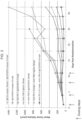
- the anti-TIM-3 antibody increased IL-2 secretion both alone and in combination with the anti-PD1 antibody at 48 hours in the MLR assay, with the anti-TIM-3 antibody exhibiting increased activity in combination with the anti-PD-1 antibody, as shown in Figures 1A-1D .
- This example demonstrates that an anti-TIM-3 antibody antagonizes TIM-3 activity in a syngeneic mouse tumor model.
- MC38 colon adenocarcinoma cells (1 ⁇ 10 6 s.c.) were implanted into C57B1/6 mice and grown for 10 days. Mice with tumors measuring 40-90 mm 3 were randomized (day of randomization designated day 1) to four groups of 10 animals/group and dosed with each antibody at 10 mg/kg on days 1, 4, 8 and 11. Mice injected with PBS served as a control.
- This example demonstrates certain effects of antibody isotype on anti-tumor activity of an anti-TIM-3 antibody alone or in combination with an anti-PD-1 antibody in a syngeneic mouse tumor model.
- rat/mouse chimeric antibodies recognizing mouse PD-1 and mouse TIM-3 of mouse IgG1(D265A) and mouse IgG2a isotypes were constructed from the rat antibodies tested in Example 3. These antibodies were tested in a MC38 syngeneic tumor model alone and in combination with anti-PD-1 antibody of the mouse IgG1(D265A) isotype. Specifically, MC38 colon adenocarcinoma cells (1 ⁇ 10 6 s.c.) were implanted into C57B1/6 mice and grown for 8 days.
- mice with tumors measuring 40-80 mm 3 were randomized (day of randomization designated day 1) to seven groups of 10 animals/group and dosed with each antibody or antibody combination on days 1, 4, 8 and 11 as set forth in Table 2.
- Mice injected with isotype-matched control antibodies not recognizing any mouse antigens served as controls (Groups 1 and2). Tumor volumes were measured twice weekly until reaching 2000 mm 3 which was designated as the endpoint at which time mice were sacrificed.
- FIG. 3 Interim results for this experiment are shown in Figure 3 , which demonstrates that a single agent anti-mouse TIM-3 antibody with effector function (i.e., IgG2a) has increased anti- tumor activity as compared with an anti-mouse TIM-3 antibody with minimal effector function (i.e., IgG1(D265A)).
- an anti-mouse TIM-3 antibody with minimal effector function i.e., IgG1(D265A)
- an anti-mouse TIM-3 antibody with minimal effector function i.e., IgG1(D265A)
- a regimen of an anti-mouse PD-1 IgG1(D265A) antibody exhibited slightly increased anti-tumor activity compared with an anti-mouse PD-1 IgG1(D265A) antibody alone.
- An anti-mouse TIM-3 antibody with full effector function (IgG2a) in combination with an anti-mouse PD-1 IgG1(D265A) antibody exhibited similar anti- tumor activity as an anti-mouse PD-1 IgG1(D265A) antibody alone.
- results of this example demonstrate that anti-mouse TIM-3 and anti-mouse PD-1 antibodies of different isotypes, and moreover with different levels of effector function, alone and in combination, can inhibit tumor growth in a mouse model.
- the data furthermore demonstrate that, in some embodiments, antibodies (or fragments thereof) with only minimal effector function, administered alone or in combination with other antibodies (or fragments thereof, which may or may not display significant effector function), can provide effective therapy.
Landscapes
- Health & Medical Sciences (AREA)
- Chemical & Material Sciences (AREA)
- Immunology (AREA)
- Organic Chemistry (AREA)
- Life Sciences & Earth Sciences (AREA)
- General Health & Medical Sciences (AREA)
- Medicinal Chemistry (AREA)
- Biochemistry (AREA)
- Biophysics (AREA)
- Genetics & Genomics (AREA)
- Molecular Biology (AREA)
- Proteomics, Peptides & Aminoacids (AREA)
- Animal Behavior & Ethology (AREA)
- Chemical Kinetics & Catalysis (AREA)
- General Chemical & Material Sciences (AREA)
- Nuclear Medicine, Radiotherapy & Molecular Imaging (AREA)
- Pharmacology & Pharmacy (AREA)
- Public Health (AREA)
- Veterinary Medicine (AREA)
- Bioinformatics & Cheminformatics (AREA)
- Engineering & Computer Science (AREA)
- Peptides Or Proteins (AREA)
- Medicines Containing Antibodies Or Antigens For Use As Internal Diagnostic Agents (AREA)
- Micro-Organisms Or Cultivation Processes Thereof (AREA)
- Medicines That Contain Protein Lipid Enzymes And Other Medicines (AREA)
Priority Applications (6)
| Application Number | Priority Date | Filing Date | Title |
|---|---|---|---|
| HRP20241498TT HRP20241498T1 (hr) | 2015-04-01 | 2016-04-01 | Antitijela usmjerena protiv t-staničnog imunoglobulina i mucin proteina 3 (tim-3) |
| SI201631851T SI3277321T1 (sl) | 2015-04-01 | 2016-04-01 | Protitelesa, usmerjena proti t-celičnemu imunoglobulinu in mucin protein 3 (tim-3) |
| EP24193943.8A EP4442712A3 (en) | 2015-04-01 | 2016-04-01 | Antibodies directed against t cell immunoglobulin and mucin protein 3 (tim-3) |
| SM20240420T SMT202400420T1 (it) | 2015-04-01 | 2016-04-01 | Anticorpi diretti contro la proteina dell’immunoglobulina delle cellule t e della mucina 3 (tim-3) |
| RS20241112A RS66030B1 (sr) | 2015-04-01 | 2016-04-01 | Antitela usmerena protiv t ćelija imunoglobulina i mucin proteina 3 (tim-3) |
| MA41867A MA41867B1 (fr) | 2015-04-01 | 2016-04-01 | Anticorps dirigés contre l'immunoglobuline de cellule t et protéine 3 de mucine (tim-3) |
Applications Claiming Priority (2)
| Application Number | Priority Date | Filing Date | Title |
|---|---|---|---|
| US201562141353P | 2015-04-01 | 2015-04-01 | |
| PCT/US2016/025532 WO2016161270A1 (en) | 2015-04-01 | 2016-04-01 | Antibodies directed against t cell immunoglobulin and mucin protein 3 (tim-3) |
Related Child Applications (1)
| Application Number | Title | Priority Date | Filing Date |
|---|---|---|---|
| EP24193943.8A Division EP4442712A3 (en) | 2015-04-01 | 2016-04-01 | Antibodies directed against t cell immunoglobulin and mucin protein 3 (tim-3) |
Publications (3)
| Publication Number | Publication Date |
|---|---|
| EP3277321A1 EP3277321A1 (en) | 2018-02-07 |
| EP3277321A4 EP3277321A4 (en) | 2018-12-12 |
| EP3277321B1 true EP3277321B1 (en) | 2024-08-14 |
Family
ID=57007695
Family Applications (2)
| Application Number | Title | Priority Date | Filing Date |
|---|---|---|---|
| EP16774301.2A Active EP3277321B1 (en) | 2015-04-01 | 2016-04-01 | Antibodies directed against t cell immunoglobulin and mucin protein 3 (tim-3) |
| EP24193943.8A Pending EP4442712A3 (en) | 2015-04-01 | 2016-04-01 | Antibodies directed against t cell immunoglobulin and mucin protein 3 (tim-3) |
Family Applications After (1)
| Application Number | Title | Priority Date | Filing Date |
|---|---|---|---|
| EP24193943.8A Pending EP4442712A3 (en) | 2015-04-01 | 2016-04-01 | Antibodies directed against t cell immunoglobulin and mucin protein 3 (tim-3) |
Country Status (24)
| Country | Link |
|---|---|
| US (3) | US10508149B2 (enExample) |
| EP (2) | EP3277321B1 (enExample) |
| JP (1) | JP6949717B2 (enExample) |
| KR (1) | KR102711906B1 (enExample) |
| CN (2) | CN114539409B (enExample) |
| AU (1) | AU2016242964C1 (enExample) |
| DK (1) | DK3277321T3 (enExample) |
| EA (1) | EA201792184A1 (enExample) |
| ES (1) | ES2988351T3 (enExample) |
| FI (1) | FI3277321T3 (enExample) |
| HR (1) | HRP20241498T1 (enExample) |
| HU (1) | HUE068448T2 (enExample) |
| IL (2) | IL283006B2 (enExample) |
| LT (1) | LT3277321T (enExample) |
| MA (1) | MA41867B1 (enExample) |
| MX (1) | MX383216B (enExample) |
| PL (1) | PL3277321T3 (enExample) |
| PT (1) | PT3277321T (enExample) |
| RS (1) | RS66030B1 (enExample) |
| SG (2) | SG11201707705UA (enExample) |
| SI (1) | SI3277321T1 (enExample) |
| SM (1) | SMT202400420T1 (enExample) |
| WO (1) | WO2016161270A1 (enExample) |
| ZA (1) | ZA201706740B (enExample) |
Families Citing this family (138)
| Publication number | Priority date | Publication date | Assignee | Title |
|---|---|---|---|---|
| EP2734205B1 (en) | 2011-07-21 | 2018-03-21 | Tolero Pharmaceuticals, Inc. | Heterocyclic protein kinase inhibitors |
| EP3757130A1 (en) | 2013-09-26 | 2020-12-30 | Costim Pharmaceuticals Inc. | Methods for treating hematologic cancers |
| CA2935423C (en) | 2014-01-24 | 2023-11-07 | Dana-Farber Cancer Institute, Inc. | Antibody molecules to pd-1 and uses thereof |
| AU2015210750B2 (en) | 2014-01-31 | 2020-08-20 | Children's Medical Center Corporation | Antibody molecules to TIM-3 and uses thereof |
| WO2015138920A1 (en) | 2014-03-14 | 2015-09-17 | Novartis Ag | Antibody molecules to lag-3 and uses thereof |
| WO2016040882A1 (en) | 2014-09-13 | 2016-03-17 | Novartis Ag | Combination therapies of egfr inhibitors |
| HUE048111T2 (hu) | 2015-03-23 | 2020-05-28 | Bayer Pharma AG | Anti-CEACAM6 ellenanyagok és alkalmazásuk |
| EP3277321B1 (en) | 2015-04-01 | 2024-08-14 | AnaptysBio, Inc. | Antibodies directed against t cell immunoglobulin and mucin protein 3 (tim-3) |
| PL3298021T3 (pl) | 2015-05-18 | 2019-11-29 | Tolero Pharmaceuticals Inc | Proleki alvocidibu o zwiększonej biodostępności |
| ES2878188T3 (es) | 2015-07-29 | 2021-11-18 | Novartis Ag | Terapias de combinación que comprenden moléculas de anticuerpos contra LAG-3 |
| MX389710B (es) | 2016-05-27 | 2025-03-20 | Agenus Inc | Anticuerpos anti proteina inmunoglobulina de linfocitos t y dominio de mucina 3 (tim-3) y métodos para usarlos. |
| US11472856B2 (en) | 2016-06-13 | 2022-10-18 | Torque Therapeutics, Inc. | Methods and compositions for promoting immune cell function |
| JP7461741B2 (ja) | 2016-06-20 | 2024-04-04 | カイマブ・リミテッド | 抗pd-l1およびil-2サイトカイン |
| SG11201900026TA (en) | 2016-07-14 | 2019-01-30 | Bristol Myers Squibb Co | Antibodies against tim3 and uses thereof |
| JOP20190013A1 (ar) | 2016-08-25 | 2019-01-31 | Lilly Co Eli | أجسام مضادة لـ (تي آي ام -3) |
| EP3666794A1 (en) | 2016-11-01 | 2020-06-17 | AnaptysBio, Inc. | Antibodies directed against programmed death- 1 (pd-1) |
| SG11201903867YA (en) | 2016-11-01 | 2019-05-30 | Anaptysbio Inc | Antibodies directed against t cell immunoglobulin and mucin protein 3 (tim-3) |
| WO2018094275A1 (en) | 2016-11-18 | 2018-05-24 | Tolero Pharmaceuticals, Inc. | Alvocidib prodrugs and their use as protein kinase inhibitors |
| CN108101989A (zh) * | 2016-11-24 | 2018-06-01 | 复旦大学 | 针对人tim-3的全人源单域抗体及应用 |
| US20200024352A1 (en) * | 2016-12-08 | 2020-01-23 | Eli Lilly And Company | Anti-tim-3 antibodies for combination with anti-pd-l1 antibodies |
| JOP20190133A1 (ar) * | 2016-12-08 | 2019-06-02 | Innovent Biologics Suzhou Co Ltd | أجسام مضادة لـ Tim-3 لمزجها بأجسام مضادة لـ PD-1 |
| TWI665216B (zh) * | 2016-12-29 | 2019-07-11 | 財團法人生物技術開發中心 | 抗人類tim-3抗體及其使用方法 |
| EP3565844B8 (en) | 2017-01-09 | 2023-04-12 | Tesaro, Inc. | Methods of treating cancer with anti-pd-1 antibodies |
| JP7118073B2 (ja) * | 2017-01-09 | 2022-08-15 | テサロ, インコーポレイテッド | 抗tim-3抗体を用いてがんを処置する方法 |
| US11345753B2 (en) | 2017-02-27 | 2022-05-31 | Jiangsu Hengrui Medicine Co., Ltd. | TIM-3 antibody, antigen binding fragment thereof, and medicinal uses thereof |
| SG11201909395TA (en) | 2017-04-27 | 2019-11-28 | Tesaro Inc | Antibody agents directed against lymphocyte activation gene-3 (lag-3) and uses thereof |
| AR111651A1 (es) | 2017-04-28 | 2019-08-07 | Novartis Ag | Conjugados de anticuerpos que comprenden agonistas del receptor de tipo toll y terapias de combinación |
| TW202444417A (zh) | 2017-05-09 | 2024-11-16 | 美商提薩羅有限公司 | 治療癌症的組合療法 |
| EP3624850A1 (en) | 2017-05-18 | 2020-03-25 | Tesaro, Inc. | Combination therapies for treating cancer |
| WO2018229715A1 (en) | 2017-06-16 | 2018-12-20 | Novartis Ag | Compositions comprising anti-cd32b antibodies and methods of use thereof |
| US11312783B2 (en) | 2017-06-22 | 2022-04-26 | Novartis Ag | Antibody molecules to CD73 and uses thereof |
| US20190048072A1 (en) | 2017-06-22 | 2019-02-14 | Novartis Ag | USE OF IL-1beta BINDING ANTIBODIES |
| WO2018237173A1 (en) | 2017-06-22 | 2018-12-27 | Novartis Ag | ANTIBODY MOLECULES DIRECTED AGAINST CD73 AND CORRESPONDING USES |
| US20200223924A1 (en) * | 2017-06-27 | 2020-07-16 | Novartis Ag | Dosage regimens for anti-tim-3 antibodies and uses thereof |
| KR20200031659A (ko) | 2017-07-20 | 2020-03-24 | 노파르티스 아게 | 항-lag-3 항체의 투여 요법 및 그의 용도 |
| EP3658185A4 (en) | 2017-07-28 | 2021-07-14 | Phanes Therapeutics, Inc. | ANTI-TIM-3 ANTIBODIES AND USES THEREOF |
| SG11202001211TA (en) | 2017-08-28 | 2020-03-30 | Bristol Myers Squibb Co | Tim-3 antagonists for the treatment and diagnosis of cancers |
| WO2019055579A1 (en) | 2017-09-12 | 2019-03-21 | Tolero Pharmaceuticals, Inc. | TREATMENT REGIME FOR CANCERS THAT ARE INSENSITIVE TO BCL-2 INHIBITORS USING THE MCL-1 ALVOCIDIB INHIBITOR |
| AU2018341479B2 (en) | 2017-09-26 | 2022-02-17 | Tesaro, Inc. | Niraparib formulations |
| KR20200086664A (ko) | 2017-09-30 | 2020-07-17 | 테사로, 인코포레이티드 | 암을 치료하기 위한 조합 요법 |
| MA50618A (fr) | 2017-10-06 | 2020-08-12 | Tesaro Inc | Polyrhérapies et leurs utilisations |
| WO2019081983A1 (en) | 2017-10-25 | 2019-05-02 | Novartis Ag | CD32B TARGETING ANTIBODIES AND METHODS OF USE |
| CN111655288A (zh) | 2017-11-16 | 2020-09-11 | 诺华股份有限公司 | 组合疗法 |
| WO2019108900A1 (en) | 2017-11-30 | 2019-06-06 | Novartis Ag | Bcma-targeting chimeric antigen receptor, and uses thereof |
| CN112218651A (zh) | 2018-01-08 | 2021-01-12 | 诺华公司 | 用于与嵌合抗原受体疗法组合的免疫增强rna |
| AU2019215031C1 (en) | 2018-01-31 | 2026-02-26 | Novartis Ag | Combination therapy using a chimeric antigen receptor |
| WO2019160956A1 (en) | 2018-02-13 | 2019-08-22 | Novartis Ag | Chimeric antigen receptor therapy in combination with il-15r and il15 |
| CA3093407A1 (en) | 2018-03-23 | 2019-09-26 | Bristol-Myers Squibb Company | Antibodies against mica and/or micb and uses thereof |
| WO2019196911A1 (en) | 2018-04-12 | 2019-10-17 | Nanjing Leads Biolabs Co., Ltd. | Antibody binding tim-3 and use thereor |
| US20210147547A1 (en) | 2018-04-13 | 2021-05-20 | Novartis Ag | Dosage Regimens For Anti-Pd-L1 Antibodies And Uses Thereof |
| KR20210003813A (ko) | 2018-04-18 | 2021-01-12 | 젠코어 인코포레이티드 | IL-15/IL-15Rα Fc-융합 단백질 및 LAG-3 항원 결합 도메인을 함유하는 LAG-3 표적화 이종이량체 융합 단백질 |
| JP2021520829A (ja) * | 2018-04-18 | 2021-08-26 | ゼンコア インコーポレイテッド | IL−15/IL−15RA Fc融合タンパク質およびTIM−3抗原結合ドメインを含む、TIM−3標的化ヘテロ二量体融合タンパク質 |
| UY38247A (es) | 2018-05-30 | 2019-12-31 | Novartis Ag | Anticuerpos frente a entpd2, terapias de combinación y métodos de uso de los anticuerpos y las terapias de combinación |
| US20210214459A1 (en) | 2018-05-31 | 2021-07-15 | Novartis Ag | Antibody molecules to cd73 and uses thereof |
| AU2019277029C1 (en) | 2018-06-01 | 2024-01-04 | Novartis Ag | Binding molecules against BCMA and uses thereof |
| AR116109A1 (es) | 2018-07-10 | 2021-03-31 | Novartis Ag | Derivados de 3-(5-amino-1-oxoisoindolin-2-il)piperidina-2,6-diona y usos de los mismos |
| CU20210002A7 (es) | 2018-07-10 | 2021-08-06 | Novartis Ag | Derivados de 3-(5-hidroxi-1-oxoisoindolin-2-il)piperidina-2,6-diona y su uso en el tratamiento de trastornos dependientes de la proteína con dedos de zinc 2 de la familia ikaros (ikzf2) |
| JP2021531306A (ja) | 2018-07-25 | 2021-11-18 | アドバンスド アクセラレーター アプリケーションズ エスエー | 神経内分泌腫瘍の処置の方法 |
| JP2021534093A (ja) | 2018-08-20 | 2021-12-09 | 江蘇恒瑞医薬股▲ふん▼有限公司 | 腫瘍処置用医薬の製造におけるtim−3抗体の使用 |
| US20210261663A1 (en) | 2018-08-28 | 2021-08-26 | Jiangsu Hengrui Medicine Co., Ltd. | Anti-tim3 antibody pharmaceutical composition and use thereof |
| TWI852940B (zh) | 2018-09-04 | 2024-08-21 | 美商泰沙羅公司 | 治療癌症之方法 |
| MX2021003539A (es) | 2018-09-26 | 2021-05-27 | Astellas Pharma Inc | Terapia contra el cancer en donde el virus vaccinia oncolitico e inhibidor de punto de control inmunitario se usan en combinacion, y composicion farmaceutica y medicamento de combinacion usado en ella. |
| US20210347758A1 (en) | 2018-10-03 | 2021-11-11 | Tesaro, Inc. | Crystalline Forms of Niraparib Freebase |
| CN118994103A (zh) | 2018-10-03 | 2024-11-22 | 特沙诺有限公司 | 尼拉帕利盐 |
| JP2022511029A (ja) | 2018-12-04 | 2022-01-28 | スミトモ ダイニッポン ファーマ オンコロジー, インコーポレイテッド | がんの処置のための薬剤としての使用のためのcdk9インヒビターおよびその多形 |
| CN113195538B (zh) * | 2018-12-12 | 2023-03-14 | 上海药明生物技术有限公司 | 抗tim-3抗体及其用途 |
| EP3897844B1 (en) | 2018-12-19 | 2023-11-15 | Deutsches Krebsforschungszentrum | Pharmaceutical combination of anti ceacam6 and tim3 antibodies |
| CN113438961A (zh) | 2018-12-20 | 2021-09-24 | Xencor股份有限公司 | 含有IL-15/IL-15Rα和NKG2D抗原结合结构域的靶向异二聚体Fc融合蛋白 |
| WO2020128972A1 (en) | 2018-12-20 | 2020-06-25 | Novartis Ag | Dosing regimen and pharmaceutical combination comprising 3-(1-oxoisoindolin-2-yl)piperidine-2,6-dione derivatives |
| JP2022514280A (ja) | 2018-12-20 | 2022-02-10 | ノバルティス アーゲー | Mdm2阻害剤のための延長低用量レジメン |
| EP3897613A1 (en) | 2018-12-21 | 2021-10-27 | Novartis AG | Use of il-1beta binding antibodies |
| CN113614109A (zh) | 2018-12-21 | 2021-11-05 | Ose免疫疗法公司 | 双功能抗pd-1/il-7分子 |
| WO2020128637A1 (en) | 2018-12-21 | 2020-06-25 | Novartis Ag | Use of il-1 binding antibodies in the treatment of a msi-h cancer |
| WO2020128636A1 (en) | 2018-12-21 | 2020-06-25 | Novartis Ag | Use of il-1 beta antibodies in the treatment or prevention of myelodysplastic syndrome |
| AU2019408408A1 (en) | 2018-12-21 | 2021-06-03 | Valerio Therapeutics | New conjugated nucleic acid molecules and their uses |
| JP2022514087A (ja) | 2018-12-21 | 2022-02-09 | ノバルティス アーゲー | IL-1β結合抗体の使用 |
| AU2020221247B2 (en) | 2019-02-12 | 2024-12-12 | Sumitomo Pharma America, Inc. | Formulations comprising heterocyclic protein kinase inhibitors |
| WO2020165374A1 (en) | 2019-02-14 | 2020-08-20 | Ose Immunotherapeutics | Bifunctional molecule comprising il-15ra |
| BR112021015672A2 (pt) | 2019-02-15 | 2021-10-05 | Novartis Ag | Derivados de 3-(1-oxoisoindolin-2-il)piperidina-2,6-diona substituída e usos dos mesmos |
| ES3032659T3 (en) | 2019-02-15 | 2025-07-23 | Novartis Ag | 3-(1-oxo-5-(piperidin-4-yl)isoindolin-2-yl)piperidine-2,6-dione derivatives and uses thereof |
| JP2022525149A (ja) | 2019-03-20 | 2022-05-11 | スミトモ ダイニッポン ファーマ オンコロジー, インコーポレイテッド | ベネトクラクスが失敗した急性骨髄性白血病(aml)の処置 |
| EP3941463A1 (en) | 2019-03-22 | 2022-01-26 | Sumitomo Dainippon Pharma Oncology, Inc. | Compositions comprising pkm2 modulators and methods of treatment using the same |
| WO2020192709A1 (en) * | 2019-03-27 | 2020-10-01 | Wuxi Biologics (Shanghai) Co., Ltd. | Novel bispecific polypeptide complexes |
| CN114174538A (zh) | 2019-05-30 | 2022-03-11 | 百时美施贵宝公司 | 适合于免疫肿瘤学疗法的多肿瘤基因特征 |
| WO2020243568A1 (en) | 2019-05-30 | 2020-12-03 | Bristol-Myers Squibb Company | Methods of identifying a subject suitable for an immuno-oncology (i-o) therapy |
| CN114174537A (zh) | 2019-05-30 | 2022-03-11 | 百时美施贵宝公司 | 细胞定位特征和组合疗法 |
| AU2020296124A1 (en) * | 2019-06-21 | 2022-01-27 | Single Cell Technology, Inc. | Anti-TIM-3 antibodies |
| JP2022539208A (ja) | 2019-07-03 | 2022-09-07 | スミトモ ファーマ オンコロジー, インコーポレイテッド | チロシンキナーゼ非受容体1(tnk1)阻害剤およびその使用 |
| BR112022001881A2 (pt) | 2019-08-29 | 2022-06-21 | Astellas Pharma Inc | Vírus vaccinia oncolítico geneticamente manipulado e métodos de usos do mesmo |
| JP2022548627A (ja) * | 2019-09-16 | 2022-11-21 | ノバルティス アーゲー | 骨髄線維症の治療のための、高親和性のリガンドを遮断するヒト化抗t細胞免疫グロブリンドメイン及びムチンドメイン3(tim-3)igg4抗体の使用 |
| JP2022548881A (ja) | 2019-09-18 | 2022-11-22 | ノバルティス アーゲー | Entpd2抗体、組合せ療法並びに抗体及び組合せ療法を使用する方法 |
| CA3158298A1 (en) | 2019-10-21 | 2021-04-29 | Novartis Ag | Combination therapies with venetoclax and tim-3 inhibitors |
| TW202128191A (zh) | 2019-10-21 | 2021-08-01 | 瑞士商諾華公司 | Tim-3抑制劑及其用途 |
| AU2020406083A1 (en) | 2019-12-17 | 2022-06-16 | Boehringer Ingelheim International Gmbh | Bifunctional molecules comprising an IL-7 variant |
| EP4077388A1 (en) | 2019-12-18 | 2022-10-26 | Tesaro, Inc. | Biopharmaceutical compositions and related methods |
| KR20220116257A (ko) | 2019-12-20 | 2022-08-22 | 노파르티스 아게 | 골수섬유증 및 골수이형성 증후군을 치료하기 위한, 데시타빈 또는 항 pd-1 항체 스파르탈리주맙을 포함하거나 또는 포함하지 않는, 항 tim-3 항체 mbg453 및 항 tgf-베타 항체 nis793의 조합물 |
| US20230058489A1 (en) | 2020-01-17 | 2023-02-23 | Novartis Ag | Combination comprising a tim-3 inhibitor and a hypomethylating agent for use in treating myelodysplastic syndrome or chronic myelomonocytic leukemia |
| WO2021209357A1 (en) * | 2020-04-14 | 2021-10-21 | Glaxosmithkline Intellectual Property Development Limited | Combination treatment for cancer involving anti-icos and anti-pd1 antibodies, optionally further involving anti-tim3 antibodies |
| AR122644A1 (es) | 2020-06-19 | 2022-09-28 | Onxeo | Nuevas moléculas de ácido nucleico conjugado y sus usos |
| CN115916199A (zh) | 2020-06-23 | 2023-04-04 | 诺华股份有限公司 | 包含3-(1-氧代异吲哚啉-2-基)哌啶-2,6-二酮衍生物的给药方案 |
| US20230271940A1 (en) | 2020-08-03 | 2023-08-31 | Novartis Ag | Heteroaryl substituted 3-(1-oxoisoindolin-2-yl)piperidine-2,6-dione derivatives and uses thereof |
| WO2022043557A1 (en) | 2020-08-31 | 2022-03-03 | Advanced Accelerator Applications International Sa | Method of treating psma-expressing cancers |
| EP4204020A1 (en) | 2020-08-31 | 2023-07-05 | Advanced Accelerator Applications International S.A. | Method of treating psma-expressing cancers |
| CA3190660A1 (en) | 2020-08-31 | 2022-03-03 | George C. Lee | Cell localization signature and immunotherapy |
| EP4240491A1 (en) | 2020-11-06 | 2023-09-13 | Novartis AG | Cd19 binding molecules and uses thereof |
| WO2022120179A1 (en) | 2020-12-03 | 2022-06-09 | Bristol-Myers Squibb Company | Multi-tumor gene signatures and uses thereof |
| TW202237119A (zh) | 2020-12-10 | 2022-10-01 | 美商住友製藥腫瘤公司 | Alk﹘5抑制劑和彼之用途 |
| SMT202500208T1 (it) | 2020-12-28 | 2025-07-22 | Bristol Myers Squibb Co | Composizioni anticorpali e metodi per il loro uso |
| JP2024501029A (ja) | 2020-12-28 | 2024-01-10 | ブリストル-マイヤーズ スクイブ カンパニー | Pd1/pd-l1抗体の皮下投与 |
| WO2022148781A1 (en) | 2021-01-05 | 2022-07-14 | Institut Curie | Combination of mcoln activators and immune checkpoint inhibitors |
| WO2022165260A1 (en) | 2021-01-29 | 2022-08-04 | Iovance Biotherapeutics, Inc. | Methods of making modified tumor infiltrating lymphocytes and their use in adoptive cell therapy |
| EP4314068A1 (en) | 2021-04-02 | 2024-02-07 | The Regents Of The University Of California | Antibodies against cleaved cdcp1 and uses thereof |
| TW202304979A (zh) | 2021-04-07 | 2023-02-01 | 瑞士商諾華公司 | 抗TGFβ抗體及其他治療劑用於治療增殖性疾病之用途 |
| WO2022214653A1 (en) | 2021-04-09 | 2022-10-13 | Ose Immunotherapeutics | New scaffold for bifunctional molecules with improved properties |
| US20240182572A1 (en) | 2021-04-09 | 2024-06-06 | Ose Immunotherapeutics | Scaffold for bifunctional molecules comprising pd-1 or cd28 and sirp binding domains |
| CA3213079A1 (en) | 2021-04-13 | 2022-10-20 | Kristin Lynne ANDREWS | Amino-substituted heterocycles for treating cancers with egfr mutations |
| JP2024516616A (ja) * | 2021-04-23 | 2024-04-16 | スゾウ ネオロジクス バイオサイエンス シーオー., エルティーディー. | Tim-3を標的とする抗体及びその使用 |
| AR125874A1 (es) | 2021-05-18 | 2023-08-23 | Novartis Ag | Terapias de combinación |
| EP4372006A4 (en) * | 2021-07-16 | 2025-10-08 | Brightpath Biotherapeutics Co Ltd | ANTIBODY OR ANTIBODY DERIVATIVE TO TIM-3 ANTIGEN, AND USE THEREOF |
| WO2023031366A1 (en) | 2021-09-02 | 2023-03-09 | Deutsches Krebsforschungszentrum Stiftung des öffentlichen Rechts | Anti-cecam6 antibodies with reduced side-effects |
| AU2022409713A1 (en) | 2021-12-16 | 2024-06-20 | Valerio Therapeutics | New conjugated nucleic acid molecules and their uses |
| EP4456907A1 (en) | 2021-12-30 | 2024-11-06 | NeoImmuneTech, Inc. | Method of treating a tumor with a combination of il-7 protein and vegf antagonist |
| WO2023147488A1 (en) | 2022-01-28 | 2023-08-03 | Iovance Biotherapeutics, Inc. | Cytokine associated tumor infiltrating lymphocytes compositions and methods |
| JP2025509749A (ja) | 2022-03-18 | 2025-04-11 | ブリストル-マイヤーズ スクイブ カンパニー | ポリペプチドの単離方法 |
| WO2023214325A1 (en) | 2022-05-05 | 2023-11-09 | Novartis Ag | Pyrazolopyrimidine derivatives and uses thereof as tet2 inhibitors |
| CN119562830A (zh) | 2022-06-02 | 2025-03-04 | 百时美施贵宝公司 | 抗体组合物及其使用方法 |
| WO2024003360A1 (en) | 2022-07-01 | 2024-01-04 | Institut Curie | Biomarkers and uses thereof for the treatment of neuroblastoma |
| EP4565610A1 (en) | 2022-08-02 | 2025-06-11 | Ose Immunotherapeutics | Multifunctional molecule directed against cd28 |
| KR20250089492A (ko) | 2022-11-07 | 2025-06-18 | 네오이뮨텍, 인코퍼레이티드 | 비메틸화된 mgmt 프로모터를 갖는 종양의 치료 방법 |
| WO2024163477A1 (en) | 2023-01-31 | 2024-08-08 | University Of Rochester | Immune checkpoint blockade therapy for treating staphylococcus aureus infections |
| EP4687990A1 (en) | 2023-03-30 | 2026-02-11 | Ose Immunotherapeutics | Method of synthesis of targeted lipid nanoparticle and uses thereof |
| JP2026512425A (ja) | 2023-03-30 | 2026-04-16 | オーエスイー・イミュノセラピューティクス | 免疫細胞増強分子の発現のための活性化免疫細胞に標的化された脂質ベースのナノ粒子及びその使用 |
| AU2024252845A1 (en) | 2023-04-06 | 2025-10-16 | Glaxosmithkline Intellectual Property (No.4) Limited | Methods for treating and monitoring cancer |
| WO2025038763A1 (en) | 2023-08-15 | 2025-02-20 | Bristol-Myers Squibb Company | Ceramic hydroxyapatite chromatography flow through method |
| WO2025145207A1 (en) | 2023-12-29 | 2025-07-03 | Bristol-Myers Squibb Company | Combination therapy of kras inhibitor and treg-depleting agent |
| WO2025242835A1 (en) | 2024-05-22 | 2025-11-27 | Ose Immunotherapeutics | Molecules comprising masking linkers and uses thereof for the treatment of cancer |
| WO2025242836A1 (en) | 2024-05-22 | 2025-11-27 | Ose Immunotherapeutics | Molecules comprising masking linkers and uses thereof for the treatment of auto-immune or inflammatory diseases and disorders |
| WO2026068705A1 (en) | 2024-09-26 | 2026-04-02 | Ose Immunotherapeutics | Lipid-based nanoparticles comprising non-glycosylated fc domains and uses thereof |
Family Cites Families (50)
| Publication number | Priority date | Publication date | Assignee | Title |
|---|---|---|---|---|
| US4828981A (en) | 1983-08-24 | 1989-05-09 | Synbiotics Corporation | Immunoassays for determining Dirofilaria immitis infection using antiidiotype monoclonal antibody reagents |
| GB8601597D0 (en) | 1986-01-23 | 1986-02-26 | Wilson R H | Nucleotide sequences |
| WO1992008796A1 (en) | 1990-11-13 | 1992-05-29 | Immunex Corporation | Bifunctional selectable fusion genes |
| AU6953394A (en) | 1993-05-21 | 1994-12-20 | Targeted Genetics Corporation | Bifunctional selectable fusion genes based on the cytosine deaminase (cd) gene |
| US5814618A (en) | 1993-06-14 | 1998-09-29 | Basf Aktiengesellschaft | Methods for regulating gene expression |
| US5464758A (en) | 1993-06-14 | 1995-11-07 | Gossen; Manfred | Tight control of gene expression in eucaryotic cells by tetracycline-responsive promoters |
| WO2001057219A2 (en) | 2000-02-02 | 2001-08-09 | Schering Corporation | Mammalian interleukin-1-delta and -epsilon. their use in therapeutic and diagnostic methods |
| FR2814642B1 (fr) | 2000-10-03 | 2005-07-01 | Ass Pour Le Dev De La Rech En | Souris transgenique pour la recombinaison ciblee mediee par la cre-er modifiee |
| US20030103985A1 (en) * | 2001-05-18 | 2003-06-05 | Boehringer Ingelheim International Gmbh | Cytotoxic CD44 antibody immunoconjugates |
| DE60226641D1 (de) | 2001-12-03 | 2008-06-26 | Amgen Fremont Inc | Antikörperkategorisierung auf der grundlage von bindungseigenschaften |
| JP4694128B2 (ja) | 2002-01-30 | 2011-06-08 | ザ ブライハム アンド ウイメンズ ホスピタル, インコーポレイテッド | TIM−3、Th1特異的細胞表面分子に関連した組成物および方法 |
| WO2003089609A2 (en) * | 2002-04-17 | 2003-10-30 | Richard Metz | Short fragment homologous replacement to provide bse resistant cattle |
| GB0317466D0 (en) | 2003-07-25 | 2003-08-27 | Univ Sheffield | Use |
| PL2161336T5 (pl) | 2005-05-09 | 2017-10-31 | Ono Pharmaceutical Co | Ludzkie przeciwciała monoklonalne przeciwko białku Programmed Death 1 (PD-1) oraz sposoby leczenia raka z zastosowaniem samych przeciwciał anty-PD-1 lub w połączeniu z innymi środkami immunoterapeutycznymi |
| US7824681B2 (en) | 2005-08-16 | 2010-11-02 | The United States Of America As Represented By The Department Of Health And Human Services | Human monoclonal antibodies that specifically bind IGF-II |
| NZ574188A (en) | 2006-07-14 | 2012-05-25 | Ac Immune Sa | Humanized antibody against amyloid beta |
| CA2662549C (en) | 2006-09-08 | 2014-10-28 | Amgen Inc. | Il-1 family variants |
| EA016079B1 (ru) | 2007-01-10 | 2012-01-30 | Институто Ди Ричерке Ди Биолоджиа Молеколаре П. Анджелетти Спа | Амидзамещенные индазолы в качестве ингибиторов поли(adp-рибоза)полимеразы (parp) |
| NZ579010A (en) | 2007-02-20 | 2012-03-30 | Anaptysbio Inc | Somatic hypermutation systems |
| KR101586617B1 (ko) | 2007-06-18 | 2016-01-20 | 머크 샤프 앤 도메 비.브이. | 사람 프로그램된 사멸 수용체 pd-1에 대한 항체 |
| NZ586675A (en) | 2008-01-08 | 2012-04-27 | Merck Sharp & Dohme | Pharmaceutically acceptable salts of 2-{ 4-[(3s)-piperidin-3- yl]phenyl} -2h-indazole-7-carboxamide |
| US8168757B2 (en) | 2008-03-12 | 2012-05-01 | Merck Sharp & Dohme Corp. | PD-1 binding proteins |
| EP2271758B1 (en) | 2008-04-14 | 2018-09-12 | Innovative Targeting Solutions Inc. | Sequence diversity generation in immunoglobulins |
| KR20110048536A (ko) | 2008-08-28 | 2011-05-11 | 와이어쓰 엘엘씨 | 자가면역 질병에서 il-22, il-17 및 il-1 패밀리 시토킨의 용도 |
| WO2011155607A1 (ja) * | 2010-06-11 | 2011-12-15 | 協和発酵キリン株式会社 | 抗tim-3抗体 |
| CA2802344C (en) * | 2010-06-18 | 2023-06-13 | The Brigham And Women's Hospital, Inc. | Bi-specific antibodies against tim-3 and pd-1 for immunotherapy in chronic immune conditions |
| WO2013006490A2 (en) | 2011-07-01 | 2013-01-10 | Cellerant Therapeutics, Inc. | Antibodies that specifically bind to tim3 |
| US20140234330A1 (en) | 2011-07-22 | 2014-08-21 | Amgen Inc. | Il-17 receptor a is required for il-17c biology |
| CN103857700A (zh) | 2011-08-26 | 2014-06-11 | 梅里麦克制药股份有限公司 | 串联fc双特异性抗体 |
| RS67639B1 (sr) | 2011-11-16 | 2026-02-27 | Boehringer Ingelheim Int | Anti il-36r antitela |
| CN102492038B (zh) * | 2011-12-09 | 2014-05-28 | 中国人民解放军军事医学科学院基础医学研究所 | 抗人Tim-3的中和性单克隆抗体L3D及其用途 |
| EP2797952B1 (en) | 2011-12-28 | 2019-02-27 | ImmunoQure AG | Method of providing monoclonal auto-antibodies with desired specificity |
| MY177331A (en) * | 2012-06-15 | 2020-09-12 | Pfizer | Improved antagonist antibodies against gdf-8 and uses therefor |
| US9409977B2 (en) | 2013-03-12 | 2016-08-09 | Decimmune Therapeutics, Inc. | Humanized, anti-N2 antibodies |
| ES2926773T3 (es) | 2013-03-15 | 2022-10-28 | Novo Nordisk As | Anticuerpos capaces de unirse específicamente a dos epítopos en el inhibidor de la ruta del factor tisular |
| JP6742903B2 (ja) | 2013-05-02 | 2020-08-19 | アナプティスバイオ インコーポレイティッド | プログラム死−1(pd−1)に対する抗体 |
| AU2015210750B2 (en) | 2014-01-31 | 2020-08-20 | Children's Medical Center Corporation | Antibody molecules to TIM-3 and uses thereof |
| WO2015138920A1 (en) | 2014-03-14 | 2015-09-17 | Novartis Ag | Antibody molecules to lag-3 and uses thereof |
| GB201419094D0 (en) | 2014-10-27 | 2014-12-10 | Agency Science Tech & Res | Anti-TIM-3-antibodies |
| ES2763548T3 (es) | 2014-11-06 | 2020-05-29 | Hoffmann La Roche | Anticuerpos anti-TIM3 y procedimientos de uso |
| GB201421430D0 (en) | 2014-12-02 | 2015-01-14 | Medimmune Llc | Antibodies to Adam17 and uses thereof |
| MA41463A (fr) | 2015-02-03 | 2017-12-12 | Anaptysbio Inc | Anticorps dirigés contre le gène d'activation 3 des lymphocytes (lag-3) |
| EP3277321B1 (en) * | 2015-04-01 | 2024-08-14 | AnaptysBio, Inc. | Antibodies directed against t cell immunoglobulin and mucin protein 3 (tim-3) |
| UA126272C2 (uk) | 2015-06-05 | 2022-09-14 | Дженентек, Інк. | Антитіло проти тау-білка та спосіб його застосування |
| ES2878188T3 (es) | 2015-07-29 | 2021-11-18 | Novartis Ag | Terapias de combinación que comprenden moléculas de anticuerpos contra LAG-3 |
| KR20250099459A (ko) | 2015-11-03 | 2025-07-01 | 얀센 바이오테크 인코포레이티드 | Pd-1과 특이적으로 결합하는 항체 및 그의 용도 |
| AR108377A1 (es) | 2016-05-06 | 2018-08-15 | Medimmune Llc | Proteínas de unión biespecíficas y sus usos |
| SG11201903867YA (en) | 2016-11-01 | 2019-05-30 | Anaptysbio Inc | Antibodies directed against t cell immunoglobulin and mucin protein 3 (tim-3) |
| JP7118073B2 (ja) | 2017-01-09 | 2022-08-15 | テサロ, インコーポレイテッド | 抗tim-3抗体を用いてがんを処置する方法 |
| AR111651A1 (es) | 2017-04-28 | 2019-08-07 | Novartis Ag | Conjugados de anticuerpos que comprenden agonistas del receptor de tipo toll y terapias de combinación |
-
2016
- 2016-04-01 EP EP16774301.2A patent/EP3277321B1/en active Active
- 2016-04-01 DK DK16774301.2T patent/DK3277321T3/da active
- 2016-04-01 US US15/563,924 patent/US10508149B2/en active Active
- 2016-04-01 SG SG11201707705UA patent/SG11201707705UA/en unknown
- 2016-04-01 FI FIEP16774301.2T patent/FI3277321T3/fi active
- 2016-04-01 ES ES16774301T patent/ES2988351T3/es active Active
- 2016-04-01 PL PL16774301.2T patent/PL3277321T3/pl unknown
- 2016-04-01 IL IL283006A patent/IL283006B2/en unknown
- 2016-04-01 EP EP24193943.8A patent/EP4442712A3/en active Pending
- 2016-04-01 SM SM20240420T patent/SMT202400420T1/it unknown
- 2016-04-01 CN CN202210219598.8A patent/CN114539409B/zh active Active
- 2016-04-01 EA EA201792184A patent/EA201792184A1/ru unknown
- 2016-04-01 SG SG10201909173P patent/SG10201909173PA/en unknown
- 2016-04-01 HR HRP20241498TT patent/HRP20241498T1/hr unknown
- 2016-04-01 CN CN201680031744.7A patent/CN107847589B/zh active Active
- 2016-04-01 RS RS20241112A patent/RS66030B1/sr unknown
- 2016-04-01 JP JP2017550931A patent/JP6949717B2/ja active Active
- 2016-04-01 LT LTEPPCT/US2016/025532T patent/LT3277321T/lt unknown
- 2016-04-01 SI SI201631851T patent/SI3277321T1/sl unknown
- 2016-04-01 KR KR1020177031599A patent/KR102711906B1/ko active Active
- 2016-04-01 HU HUE16774301A patent/HUE068448T2/hu unknown
- 2016-04-01 PT PT167743012T patent/PT3277321T/pt unknown
- 2016-04-01 AU AU2016242964A patent/AU2016242964C1/en active Active
- 2016-04-01 MX MX2017012429A patent/MX383216B/es unknown
- 2016-04-01 WO PCT/US2016/025532 patent/WO2016161270A1/en not_active Ceased
- 2016-04-01 MA MA41867A patent/MA41867B1/fr unknown
-
2017
- 2017-09-18 IL IL254559A patent/IL254559B2/en unknown
- 2017-10-06 ZA ZA2017/06740A patent/ZA201706740B/en unknown
-
2019
- 2019-10-17 US US16/655,939 patent/US11352427B2/en active Active
-
2022
- 2022-05-03 US US17/661,841 patent/US20220363759A1/en active Pending
Non-Patent Citations (2)
| Title |
|---|
| MATHIEU DONDELINGER ET AL: "Understanding the Significance and Implications of Antibody Numbering and Antigen-Binding Surface/Residue Definition", FRONTIERS IN IMMUNOLOGY, vol. 9, 16 October 2018 (2018-10-16), pages 1 - 15, XP055572450, DOI: 10.3389/fimmu.2018.02278 * |
| RUDIKOFF S ET AL: "Single amino acid substitution altering antigen-binding specificity", PROCEEDINGS OF THE NATIONAL ACADEMY OF SCIENCES (PNAS), US, vol. 79, 1 March 1982 (1982-03-01), pages 1979 - 1983, XP007901436, ISSN: 0027-8424, DOI: 10.1073/PNAS.79.6.1979 * |
Also Published As
Similar Documents
| Publication | Publication Date | Title |
|---|---|---|
| US20220363759A1 (en) | Antibodies directed against t cell immunoglobulin and mucin protein 3 (tim-3) | |
| US20230331843A1 (en) | Antibodies Directed Against Programmed Death-1(PD-1) | |
| US20210095026A1 (en) | Antibodies Directed Against Lymphocyte Activation Gene 3 (LAG-3) | |
| EP4176900A1 (en) | Antibodies directed against interleukin 36 receptor (il-36r) | |
| CA2981520C (en) | Antibodies directed against t cell immunoglobulin and mucin protein 3 (tim-3) | |
| HK40116376A (en) | Antibodies directed against t cell immunoglobulin and mucin protein 3 (tim-3) | |
| HK1242616B (en) | Antibodies directed against t cell immunoglobulin and mucin protein 3 (tim-3) | |
| HK1242616A1 (en) | Antibodies directed against t cell immunoglobulin and mucin protein 3 (tim-3) | |
| HK40074137A (en) | Antibodies directed against t cell immunoglobulin and mucin protein 3 (tim-3) | |
| HK40074137B (zh) | 针对t细胞免疫球蛋白和粘蛋白蛋白3(tim-3)的抗体 | |
| HK40045115A (en) | Antibodies directed against programmed death-1 (pd-1) | |
| HK40072034A (en) | Antibodies directed against lymphocyte activation gene 3 (lag-3) | |
| EA040340B1 (ru) | Антитела, направленные против т-клеточного иммуноглобулина и белка муцина-3 (tim-3) | |
| BR112017021040B1 (pt) | Agentes de ligação a imunoglobulina de células t e proteína de mucina 3 (tim-3), composições farmacêuticas e usos dos referidos agentes para tratar câncer | |
| HK1219743B (en) | Antibodies directed against programmed death-1 (pd-1) |
Legal Events
| Date | Code | Title | Description |
|---|---|---|---|
| REG | Reference to a national code |
Ref country code: HR Ref legal event code: TUEP Ref document number: P20241498T Country of ref document: HR |
|
| STAA | Information on the status of an ep patent application or granted ep patent |
Free format text: STATUS: THE INTERNATIONAL PUBLICATION HAS BEEN MADE |
|
| PUAI | Public reference made under article 153(3) epc to a published international application that has entered the european phase |
Free format text: ORIGINAL CODE: 0009012 |
|
| STAA | Information on the status of an ep patent application or granted ep patent |
Free format text: STATUS: REQUEST FOR EXAMINATION WAS MADE |
|
| 17P | Request for examination filed |
Effective date: 20171101 |
|
| AK | Designated contracting states |
Kind code of ref document: A1 Designated state(s): AL AT BE BG CH CY CZ DE DK EE ES FI FR GB GR HR HU IE IS IT LI LT LU LV MC MK MT NL NO PL PT RO RS SE SI SK SM TR |
|
| AX | Request for extension of the european patent |
Extension state: BA ME |
|
| REG | Reference to a national code |
Ref country code: HK Ref legal event code: DE Ref document number: 1242616 Country of ref document: HK |
|
| RIC1 | Information provided on ipc code assigned before grant |
Ipc: A61K 39/395 20060101AFI20180725BHEP Ipc: C07K 16/28 20060101ALI20180725BHEP |
|
| A4 | Supplementary search report drawn up and despatched |
Effective date: 20181114 |
|
| RIC1 | Information provided on ipc code assigned before grant |
Ipc: C07K 16/28 20060101ALI20181108BHEP Ipc: A61K 39/395 20060101AFI20181108BHEP |
|
| STAA | Information on the status of an ep patent application or granted ep patent |
Free format text: STATUS: EXAMINATION IS IN PROGRESS |
|
| 17Q | First examination report despatched |
Effective date: 20190923 |
|
| RAP3 | Party data changed (applicant data changed or rights of an application transferred) |
Owner name: ANAPTYSBIO, INC. |
|
| GRAJ | Information related to disapproval of communication of intention to grant by the applicant or resumption of examination proceedings by the epo deleted |
Free format text: ORIGINAL CODE: EPIDOSDIGR1 |
|
| STAA | Information on the status of an ep patent application or granted ep patent |
Free format text: STATUS: GRANT OF PATENT IS INTENDED |
|
| GRAP | Despatch of communication of intention to grant a patent |
Free format text: ORIGINAL CODE: EPIDOSNIGR1 |
|
| INTG | Intention to grant announced |
Effective date: 20230331 |
|
| P01 | Opt-out of the competence of the unified patent court (upc) registered |
Effective date: 20230519 |
|
| GRAJ | Information related to disapproval of communication of intention to grant by the applicant or resumption of examination proceedings by the epo deleted |
Free format text: ORIGINAL CODE: EPIDOSDIGR1 |
|
| STAA | Information on the status of an ep patent application or granted ep patent |
Free format text: STATUS: EXAMINATION IS IN PROGRESS |
|
| INTC | Intention to grant announced (deleted) | ||
| GRAP | Despatch of communication of intention to grant a patent |
Free format text: ORIGINAL CODE: EPIDOSNIGR1 |
|
| STAA | Information on the status of an ep patent application or granted ep patent |
Free format text: STATUS: GRANT OF PATENT IS INTENDED |
|
| INTG | Intention to grant announced |
Effective date: 20240311 |
|
| GRAS | Grant fee paid |
Free format text: ORIGINAL CODE: EPIDOSNIGR3 |
|
| GRAA | (expected) grant |
Free format text: ORIGINAL CODE: 0009210 |
|
| STAA | Information on the status of an ep patent application or granted ep patent |
Free format text: STATUS: THE PATENT HAS BEEN GRANTED |
|
| AK | Designated contracting states |
Kind code of ref document: B1 Designated state(s): AL AT BE BG CH CY CZ DE DK EE ES FI FR GB GR HR HU IE IS IT LI LT LU LV MC MK MT NL NO PL PT RO RS SE SI SK SM TR |
|
| REG | Reference to a national code |
Ref country code: GB Ref legal event code: FG4D |
|
| REG | Reference to a national code |
Ref country code: CH Ref legal event code: EP |
|
| REG | Reference to a national code |
Ref country code: DK Ref legal event code: T3 Effective date: 20240829 |
|
| REG | Reference to a national code |
Ref country code: DE Ref legal event code: R096 Ref document number: 602016088891 Country of ref document: DE |
|
| REG | Reference to a national code |
Ref country code: IE Ref legal event code: FG4D Ref country code: NL Ref legal event code: FP |
|
| REG | Reference to a national code |
Ref country code: PT Ref legal event code: SC4A Ref document number: 3277321 Country of ref document: PT Date of ref document: 20240917 Kind code of ref document: T Free format text: AVAILABILITY OF NATIONAL TRANSLATION Effective date: 20240910 |
|
| REG | Reference to a national code |
Ref country code: SE Ref legal event code: TRGR |
|
| REG | Reference to a national code |
Ref country code: FI Ref legal event code: FGE |
|
| REG | Reference to a national code |
Ref country code: EE Ref legal event code: FG4A Ref document number: E024571 Country of ref document: EE Effective date: 20240925 |
|
| REG | Reference to a national code |
Ref country code: ES Ref legal event code: FG2A Ref document number: 2988351 Country of ref document: ES Kind code of ref document: T3 Effective date: 20241120 |
|
| REG | Reference to a national code |
Ref country code: GR Ref legal event code: EP Ref document number: 20240402437 Country of ref document: GR Effective date: 20241111 |
|
| REG | Reference to a national code |
Ref country code: MA Ref legal event code: VAGR Ref document number: 41867 Country of ref document: MA Kind code of ref document: B1 |
|
| REG | Reference to a national code |
Ref country code: SK Ref legal event code: T3 Ref document number: E 45059 Country of ref document: SK |
|
| REG | Reference to a national code |
Ref country code: HU Ref legal event code: AG4A Ref document number: E068448 Country of ref document: HU |
|
| REG | Reference to a national code |
Ref country code: HR Ref legal event code: T1PR Ref document number: P20241498 Country of ref document: HR |
|
| PGFP | Annual fee paid to national office [announced via postgrant information from national office to epo] |
Ref country code: HR Payment date: 20250326 Year of fee payment: 10 Ref country code: IS Payment date: 20250324 Year of fee payment: 10 |
|
| REG | Reference to a national code |
Ref country code: HR Ref legal event code: ODRP Ref document number: P20241498 Country of ref document: HR Payment date: 20250326 Year of fee payment: 10 |
|
| REG | Reference to a national code |
Ref country code: DE Ref legal event code: R097 Ref document number: 602016088891 Country of ref document: DE |
|
| VS25 | Lapsed in a validation state [announced via postgrant information from nat. office to epo] |
Ref country code: MD Free format text: LAPSE BECAUSE OF FAILURE TO SUBMIT A TRANSLATION OF THE DESCRIPTION OR TO PAY THE FEE WITHIN THE PRESCRIBED TIME-LIMIT Effective date: 20240814 |
|
| PLBE | No opposition filed within time limit |
Free format text: ORIGINAL CODE: 0009261 |
|
| STAA | Information on the status of an ep patent application or granted ep patent |
Free format text: STATUS: NO OPPOSITION FILED WITHIN TIME LIMIT |
|
| PGFP | Annual fee paid to national office [announced via postgrant information from national office to epo] |
Ref country code: DE Payment date: 20250319 Year of fee payment: 10 |
|
| PGFP | Annual fee paid to national office [announced via postgrant information from national office to epo] |
Ref country code: ES Payment date: 20250502 Year of fee payment: 10 |
|
| PGFP | Annual fee paid to national office [announced via postgrant information from national office to epo] |
Ref country code: HU Payment date: 20250423 Year of fee payment: 10 |
|
| PGFP | Annual fee paid to national office [announced via postgrant information from national office to epo] |
Ref country code: AL Payment date: 20250428 Year of fee payment: 10 |
|
| PGFP | Annual fee paid to national office [announced via postgrant information from national office to epo] |
Ref country code: MT Payment date: 20250402 Year of fee payment: 10 |
|
| 26N | No opposition filed |
Effective date: 20250515 |
|
| PGFP | Annual fee paid to national office [announced via postgrant information from national office to epo] |
Ref country code: CH Payment date: 20250501 Year of fee payment: 10 |
|
| PGFP | Annual fee paid to national office [announced via postgrant information from national office to epo] |
Ref country code: RO Payment date: 20250401 Year of fee payment: 10 Ref country code: AT Payment date: 20250321 Year of fee payment: 10 |
|
| PGFP | Annual fee paid to national office [announced via postgrant information from national office to epo] |
Ref country code: MK Payment date: 20250320 Year of fee payment: 10 |
|
| VSFP | Annual fee paid to validation state [announced via postgrant information from national office to epo] |
Ref country code: MA Payment date: 20250402 Year of fee payment: 10 |
|
| REG | Reference to a national code |
Ref country code: AT Ref legal event code: UEP Ref document number: 1712664 Country of ref document: AT Kind code of ref document: T Effective date: 20240814 |
|
| PGFP | Annual fee paid to national office [announced via postgrant information from national office to epo] |
Ref country code: CY Payment date: 20250219 Year of fee payment: 10 |
|
| PGFP | Annual fee paid to national office [announced via postgrant information from national office to epo] |
Ref country code: SM Payment date: 20260323 Year of fee payment: 11 |
|
| PGFP | Annual fee paid to national office [announced via postgrant information from national office to epo] |
Ref country code: SE Payment date: 20260319 Year of fee payment: 11 |
|
| PGFP | Annual fee paid to national office [announced via postgrant information from national office to epo] |
Ref country code: GB Payment date: 20260319 Year of fee payment: 11 Ref country code: LT Payment date: 20260319 Year of fee payment: 11 |
|
| PGFP | Annual fee paid to national office [announced via postgrant information from national office to epo] |
Ref country code: MC Payment date: 20260323 Year of fee payment: 11 |
|
| PGFP | Annual fee paid to national office [announced via postgrant information from national office to epo] |
Ref country code: NO Payment date: 20260320 Year of fee payment: 11 Ref country code: DK Payment date: 20260319 Year of fee payment: 11 Ref country code: IE Payment date: 20260320 Year of fee payment: 11 |
|
| PGFP | Annual fee paid to national office [announced via postgrant information from national office to epo] |
Ref country code: LU Payment date: 20260319 Year of fee payment: 11 Ref country code: BE Payment date: 20260319 Year of fee payment: 11 Ref country code: FI Payment date: 20260319 Year of fee payment: 11 Ref country code: IT Payment date: 20260319 Year of fee payment: 11 |
|
| VSFP | Annual fee paid to validation state [announced via postgrant information from national office to epo] |
Ref country code: MA Payment date: 20260409 Year of fee payment: 11 |
|
| PGFP | Annual fee paid to national office [announced via postgrant information from national office to epo] |
Ref country code: NL Payment date: 20260319 Year of fee payment: 11 |
|
| PGFP | Annual fee paid to national office [announced via postgrant information from national office to epo] |
Ref country code: RS Payment date: 20260325 Year of fee payment: 11 |
|
| PGFP | Annual fee paid to national office [announced via postgrant information from national office to epo] |
Ref country code: FR Payment date: 20260320 Year of fee payment: 11 |
|
| PGFP | Annual fee paid to national office [announced via postgrant information from national office to epo] |
Ref country code: TR Payment date: 20260326 Year of fee payment: 11 |
|
| PGFP | Annual fee paid to national office [announced via postgrant information from national office to epo] |
Ref country code: PT Payment date: 20260320 Year of fee payment: 11 Ref country code: CZ Payment date: 20260325 Year of fee payment: 11 |
|
| PGFP | Annual fee paid to national office [announced via postgrant information from national office to epo] |
Ref country code: GR Payment date: 20260320 Year of fee payment: 11 Ref country code: PL Payment date: 20260324 Year of fee payment: 11 |
|
| REG | Reference to a national code |
Ref country code: HR Ref legal event code: ODRP Ref document number: P20241498 Country of ref document: HR Payment date: 20260326 Year of fee payment: 11 |
|
| PGFP | Annual fee paid to national office [announced via postgrant information from national office to epo] |
Ref country code: SK Payment date: 20260325 Year of fee payment: 11 Ref country code: EE Payment date: 20260325 Year of fee payment: 11 Ref country code: LV Payment date: 20260319 Year of fee payment: 11 |
|
| PGFP | Annual fee paid to national office [announced via postgrant information from national office to epo] |
Ref country code: SI Payment date: 20260325 Year of fee payment: 11 |
|
| PGFP | Annual fee paid to national office [announced via postgrant information from national office to epo] |
Ref country code: BG Payment date: 20260325 Year of fee payment: 11 |
|
| REG | Reference to a national code |
Ref country code: CH Ref legal event code: U11 Free format text: ST27 STATUS EVENT CODE: U-0-0-U10-U11 (AS PROVIDED BY THE NATIONAL OFFICE) Effective date: 20260501 |