EP3239702B1 - Röntgenfluoreszenzspektrometer - Google Patents
Röntgenfluoreszenzspektrometer Download PDFInfo
- Publication number
- EP3239702B1 EP3239702B1 EP16841733.5A EP16841733A EP3239702B1 EP 3239702 B1 EP3239702 B1 EP 3239702B1 EP 16841733 A EP16841733 A EP 16841733A EP 3239702 B1 EP3239702 B1 EP 3239702B1
- Authority
- EP
- European Patent Office
- Prior art keywords
- analytical
- new detected
- quantitative analysis
- quantitative
- detected element
- Prior art date
- Legal status (The legal status is an assumption and is not a legal conclusion. Google has not performed a legal analysis and makes no representation as to the accuracy of the status listed.)
- Active
Links
Images

Classifications
-
- G—PHYSICS
- G01—MEASURING; TESTING
- G01N—INVESTIGATING OR ANALYSING MATERIALS BY DETERMINING THEIR CHEMICAL OR PHYSICAL PROPERTIES
- G01N23/00—Investigating or analysing materials by the use of wave or particle radiation, e.g. X-rays or neutrons, not covered by groups G01N3/00 – G01N17/00, G01N21/00 or G01N22/00
- G01N23/22—Investigating or analysing materials by the use of wave or particle radiation, e.g. X-rays or neutrons, not covered by groups G01N3/00 – G01N17/00, G01N21/00 or G01N22/00 by measuring secondary emission from the material
- G01N23/223—Investigating or analysing materials by the use of wave or particle radiation, e.g. X-rays or neutrons, not covered by groups G01N3/00 – G01N17/00, G01N21/00 or G01N22/00 by measuring secondary emission from the material by irradiating the sample with X-rays or gamma-rays and by measuring X-ray fluorescence
-
- G—PHYSICS
- G01—MEASURING; TESTING
- G01N—INVESTIGATING OR ANALYSING MATERIALS BY DETERMINING THEIR CHEMICAL OR PHYSICAL PROPERTIES
- G01N23/00—Investigating or analysing materials by the use of wave or particle radiation, e.g. X-rays or neutrons, not covered by groups G01N3/00 – G01N17/00, G01N21/00 or G01N22/00
- G01N23/20—Investigating or analysing materials by the use of wave or particle radiation, e.g. X-rays or neutrons, not covered by groups G01N3/00 – G01N17/00, G01N21/00 or G01N22/00 by using diffraction of the radiation by the materials, e.g. for investigating crystal structure; by using scattering of the radiation by the materials, e.g. for investigating non-crystalline materials; by using reflection of the radiation by the materials
- G01N23/207—Diffractometry using detectors, e.g. using a probe in a central position and one or more displaceable detectors in circumferential positions
-
- G—PHYSICS
- G01—MEASURING; TESTING
- G01N—INVESTIGATING OR ANALYSING MATERIALS BY DETERMINING THEIR CHEMICAL OR PHYSICAL PROPERTIES
- G01N23/00—Investigating or analysing materials by the use of wave or particle radiation, e.g. X-rays or neutrons, not covered by groups G01N3/00 – G01N17/00, G01N21/00 or G01N22/00
- G01N23/20—Investigating or analysing materials by the use of wave or particle radiation, e.g. X-rays or neutrons, not covered by groups G01N3/00 – G01N17/00, G01N21/00 or G01N22/00 by using diffraction of the radiation by the materials, e.g. for investigating crystal structure; by using scattering of the radiation by the materials, e.g. for investigating non-crystalline materials; by using reflection of the radiation by the materials
- G01N23/207—Diffractometry using detectors, e.g. using a probe in a central position and one or more displaceable detectors in circumferential positions
- G01N23/2076—Diffractometry using detectors, e.g. using a probe in a central position and one or more displaceable detectors in circumferential positions for spectrometry, i.e. using an analysing crystal, e.g. for measuring X-ray fluorescence spectrum of a sample with wavelength-dispersion, i.e. WDXFS
-
- G—PHYSICS
- G01—MEASURING; TESTING
- G01N—INVESTIGATING OR ANALYSING MATERIALS BY DETERMINING THEIR CHEMICAL OR PHYSICAL PROPERTIES
- G01N23/00—Investigating or analysing materials by the use of wave or particle radiation, e.g. X-rays or neutrons, not covered by groups G01N3/00 – G01N17/00, G01N21/00 or G01N22/00
- G01N23/22—Investigating or analysing materials by the use of wave or particle radiation, e.g. X-rays or neutrons, not covered by groups G01N3/00 – G01N17/00, G01N21/00 or G01N22/00 by measuring secondary emission from the material
- G01N23/2209—Investigating or analysing materials by the use of wave or particle radiation, e.g. X-rays or neutrons, not covered by groups G01N3/00 – G01N17/00, G01N21/00 or G01N22/00 by measuring secondary emission from the material using wavelength dispersive spectroscopy [WDS]
-
- G—PHYSICS
- G01—MEASURING; TESTING
- G01N—INVESTIGATING OR ANALYSING MATERIALS BY DETERMINING THEIR CHEMICAL OR PHYSICAL PROPERTIES
- G01N2223/00—Investigating materials by wave or particle radiation
- G01N2223/07—Investigating materials by wave or particle radiation secondary emission
- G01N2223/076—X-ray fluorescence
Definitions
- the present invention relates to a scanning-type X-ray fluorescence spectrometer which irradiates a sample with primary X-rays and measures intensities of generated secondary X-rays.
- a scanning-type X-ray fluorescence spectrometer that irradiates a sample with primary X-rays, measures intensities of secondary X-rays such as fluorescent X-rays generated from the sample, and performs a quantitative analysis of, e.g., contents of elements in the sample on the basis of the measured intensities.
- a spectrometer standard samples corresponding to analytical samples are provided. Analytical elements of the analytical samples, and sample constituting elements and their contents (chemical analytical values) of each standard sample are preset as quantitative analysis conditions. Calibration curves are created by measuring the standard samples. And then the quantitative analyses of the analytical samples are performed.
- an X-ray fluorescence spectrometer including a sample type storage unit, a semi-quantitative analysis unit, a type determining unit, and a quantitative analysis unit, wherein determination of a type of a sample based on a semi-quantitative analysis result and the quantitative analysis under analysis conditions appropriate for the determined type are automatically performed (see Patent Document 1).
- an X-ray fluorescence spectrometer wherein, to calculate theoretical matrix correction factors for correcting a calibration curve, a correction model appropriate for a sample is set (see Patent Document 2). According to these spectrometers, the quantitative analysis conditions are automatically selected according to the type of the sample so that even an unskilled operator can accurately perform analysis.
- the present invention has been made in view of the above problems, and an object thereof is to provide a scanning-type X-ray fluorescence spectrometer that, even in a case where standard samples contain an element the content of which is unknown, can appropriately, automatically add the element to the analytical elements to quantitative analysis conditions so as to perform accurate analysis.
- the present invention is a scanning-type X-ray fluorescence spectrometer which irradiates a sample with primary X-rays and measures intensities of generated secondary X-rays, and which includes a plurality of standard samples for creating calibration curves corresponding to analytical samples, and a quantitative analysis condition setting unit configured to preset, as quantitative analysis conditions, with analytical elements of the analytical samples, and sample constituting elements and their contents of each standard sample.
- the quantitative analysis condition setting unit performs a qualitative analysis and a semi-quantitative analysis, which is a quantitative analysis based on the qualitative analysis result, of each standard sample; detects, as a new detected element, an element other than the preset sample constituting elements, and calculates theoretical matrix correction factors, which are relevant to absorption-enhancement of the fluorescent X-rays, for the new detected element and the preset sample constituting elements by a fundamental parameter procedure (hereinafter, also referred to as "FP procedure"); calculates, as an absorption-enhancement effect degree, an effect degree of absorption-enhancement of the fluorescent X-rays by the new detected element on an analytical value of the analytical element, on the basis of the theoretical matrix correction factors, a semi-quantitative analytical value of the new detected element, and the preset contents of the sample constituting elements; and compares the absorption-enhancement effect degree with a corresponding predetermined reference value.
- FP procedure fundamental parameter procedure
- the quantitative analysis condition setting unit calls, from a prestored overlapping correction table, an overlapping correction factor for an interfering line of the new detected element with an analytical line of the analytical element; calculates, as an overlapping effect degree, an effect degree of overlapping by the interfering line of the new detected element on the analytical line of the analytical element, on the basis of the overlapping correction factor, the semi-quantitative analytical value of the new detected element, and the preset contents of the sample constituting elements; compares the overlapping effect degree with a corresponding predetermined reference value; and adds, when at least either the absorption-enhancement effect degree or the overlapping effect degree is greater than each corresponding predetermined reference value, the new detected element as an analytical element of the analytical samples to the quantitative analysis conditions.
- the spectrometer includes the quantitative analysis condition setting unit configured to determine whether or not to add, as the analytical element, the new detected element other than the preset sample constituting elements, from the absorption-enhancement effect degree of the fluorescent X-rays on the analytical value of the analytical element and the overlapping effect degree by the interfering line on the analytical line of the analytical element, on the basis of the qualitative analysis results and the semi-quantitative analysis results of standard samples. Accordingly, even when the standard samples include an element the content of which is unknown, the analytical element is appropriately, automatically added to the quantitative analysis conditions, so that accurate analysis can be performed.
- the quantitative analysis condition setting unit does not add the new detected element as the analytical element of the analytical samples to the quantitative analysis conditions, but sets the new detected element as a residue element in the quantitative analysis conditions.
- the standard samples are steel, for example, iron as the main component should be set not as the analytical element but as the residue element. However, the iron may be detected as a new detected element.
- such a new detected element is not added as the analytical element of the analytical samples but is set as the residue element on the basis of the semi-quantitative analytical value.
- the quantitative analysis condition setting unit sets, in the quantitative analysis conditions, a quantitative calculation condition to be performed by the fundamental parameter procedure using a prestored apparatus sensitivity factor.
- a quantitative calculation method for the new detected element to be added as the analytical element of the analytical samples a calibration curve method may be used in which the semi-quantitative analytical value is set as the content of the added analytical element of the standard samples.
- the semi-quantitative analytical value which is based on the X-ray intensity measured by scanning a goniometer, is not sufficiently accurate.
- the fundamental parameter procedure using the prestored apparatus sensitivity factors is applied, and the more accurate quantitative analytical value, which is based on the X-ray intensity measured with the goniometer being fixed, is used. Accordingly, analysis can be more accurately performed as a whole.
- the spectrometer is a scanning-type X-ray fluorescence spectrometer that irradiates sample 1, 14 with primary X-rays 3, and measures intensities of generated secondary X-rays 5.
- the spectrometer includes a sample stage 2 on which the sample 1, 14 is placed, an X-ray source 4 such as an X-ray tube configured to irradiate the sample 1, 14 with the primary X-rays 3, a spectroscopic device 6 which monochromates the secondary X-rays 5 such as fluorescent X-rays generated from the sample 1, 14, and a detector 8 on which secondary X-rays 7 monochromated by the spectroscopic device 6 are incident and which detects the intensity of the secondary X-rays 7.
- An output from the detector 8 is inputted, through an amplifier, a pulse height analyzer, a counting unit, and the like (not illustrated), to a control unit 11 configured to control the entire spectrometer.
- the spectrometer is a wavelength dispersive and scanning type X-ray fluorescence spectrometer, and includes an interlocking unit 10, i.e., a so-called goniometer, configured to interlock the spectroscopic device 6 with the detector 8 so as to change a wavelength of the secondary X-rays 7 incident on the detector 8.
- an interlocking unit 10 i.e., a so-called goniometer
- a so-called goniometer configured to interlock the spectroscopic device 6 with the detector 8 so as to change a wavelength of the secondary X-rays 7 incident on the detector 8.
- an extended line 9 of the secondary X-rays 5 and the secondary X-rays 7 monochromated (diffracted) by the spectroscopic device 6 form a spectroscopic angle 2 ⁇ , which is twice the incident angle ⁇ .
- the interlocking unit 10 rotates the spectroscopic device 6 around an axis O which passes a center of a surface of the spectroscopic device 6 and is perpendicular to the drawing sheet, and rotates the detector 8 around the axis O and along a circle 12 by an angle of twice the rotation angle of the spectroscopic device 6.
- the value of the spectroscopic angle 2 ⁇ (angle 2 ⁇ ) is inputted from the interlocking unit 10 to the control unit 11.
- the spectrometer includes a plurality of standard samples 14 which are for creating calibration curves corresponding to analytical samples 1 and which have different compositions, and further includes, as a part of the control unit 11, a quantitative analysis condition setting unit 13 configured to be preset, as quantitative analysis conditions, with analytical elements of the analytical samples 1, sample constituting elements and their contents of each of the standard samples 14.
- the analytical sample 1 and the standard sample 14 are both referred to as the sample 1, 14.
- the quantitative analysis condition setting unit 13 performs a qualitative analysis and a semi-quantitative analysis, which is a quantitative analysis based on the qualitative analysis result, of each of the standard samples 14, and detects, as a new detected element, an element other than the preset sample constituting elements.
- the qualitative analysis refers to analysis in which a spectrum is obtained by measuring the intensities of the secondary X-rays 5 in a wide wavelength range under a predetermined standard analysis condition and peaks thereof are identified and analyzed. For example, spectrums of all the elements F to U are measured by scanning the goniometer 10, and the peaks detected from the measured spectrums are identified and analyzed.
- the semi-quantitative analysis refers to analysis in which the contents of the respective elements are determined on the basis of X-ray intensities measured by the qualitative analysis.
- the quantitative analysis refers to analysis in which, on the basis of X-ray intensities measured with the goniometer 10 being fixed respectively, the contents of respective elements are determined by using calibration curves corresponding to the analytical samples 1, or by a fundamental parameter procedure using prestored apparatus sensitivity factors.
- the quantitative analysis condition setting unit 13 calculates, for the new detected element and the preset sample constituting elements, theoretical matrix correction factors, which are relevant to absorption-enhancement of the fluorescent X-rays, by a fundamental parameter procedure, and calculates, as an absorption-enhancement effect degree, an effect degree of absorption-enhancement of the fluorescent X-rays by the new detected element on an analytical value of the analytical element, on the basis of the theoretical matrix correction factors, the semi-quantitative analytical value of the new detected element, and the preset contents of the sample constituting elements, and compares the absorption-enhancement effect degree with a corresponding predetermined reference value.
- the quantitative analysis condition setting unit 13 calls, from a prestored overlapping correction table, an overlapping correction factor for an interfering line of the new detected element with an analytical line of the analytical element, and calculates, as an overlapping effect degree, an effect degree of overlapping by the interfering line of the new detected element on the analytical line of the analytical element, on the basis of the overlapping correction factor, the semi-quantitative analytical value of the new detected element, and the preset contents of the sample constituting elements, and compares the overlapping effect degree with a corresponding predetermined reference value.
- the quantitative analysis condition setting unit 13 adds the new detected element as the analytical element of the analytical samples 1 to the quantitative analysis conditions.
- the quantitative analysis condition setting unit 13 does not add the new detected element as an analytical element of the analytical samples 1 to the quantitative analysis conditions, but sets the new detected element as a residue element in the quantitative analysis conditions.
- the quantitative analysis condition setting unit 13 sets, in the quantitative analysis conditions, a quantitative calculation condition to be performed by the fundamental parameter procedure using a prestored apparatus sensitivity factor.
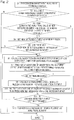
- the quantitative analysis condition setting unit 13 included in the X-ray fluorescence spectrometer according to the present embodiment specifically operates as shown in a flowchart in FIG. 2 .
- YES and NO are abbreviated as "Y" and "N", respectively.
- the analytical elements of the analytical samples 1 the sample constituting elements (which include the analytical elements of the analytical samples 1) and their contents of each of the standard samples 14, the overlapping correction table which is a table of the overlapping correction factors according to theoretical intensities determined for each possible combination of an analytical line and an interfering line, a sensitivity library which is a library of the apparatus sensitivity factors each determined from a ratio of a measured intensity obtained by measuring a pure substance, etc. and a theoretical intensity by an FP procedure for each representative element, and the like are preset in the quantitative analysis condition setting unit 13.
- step S1 the qualitative analysis and the semi-quantitative analysis, which is the quantitative analysis based on the qualitative analysis result, of each of the standard samples 14 are performed.
- step S2 when, as the semi-quantitative analysis results, any element other than the preset sample constituting elements is not detected, the operation is ended.
- the element(s) is regarded as a new detected element(s) and the flow proceeds to step S3.
- step S3 whether the semi-quantitative analytical value of the new detected element, the content of which is the greatest, is greater than a predetermined content (for example, 50%) or not is determined. This is determination on whether the new detected element, the content of which is the greatest, is a main component or not.
- a predetermined content for example, 50%
- the flow proceeds to step S6 (described later).
- the semi-quantitative analytical value for the greatest content is greater than the predetermined content, the flow proceeds to step S4.
- step S4 the new detected element is not added as an analytical element of the analytical samples 1 to the quantitative analysis conditions, but is set as the residue element in the quantitative analysis conditions.
- steps S3 and S4 are performed so that such a new detected element is not added as the analytical element of the analytical samples 1 but is set as the residue element on the basis of the semi-quantitative analytical value.
- step S5 whether or not there is any other new detected element than the new detected element set as the residue element at step S4 is checked. When there is no other new detected element, the operation is ended. When there is another new detected element, the flow proceeds to step S6.
- step S6 the theoretical matrix correction factors ⁇ ik , ⁇ ij , which are relevant to absorption-enhancement of the fluorescent X-rays, are calculated for the new detected element k and the preset sample constituting elements i, j, by the fundamental parameter procedure, and the effect degree of absorption-enhancement of the fluorescent X-rays by the new detected element k on the analytical value of the analytical element i is calculated as the absorption-enhancement effect degree ⁇ W i /W i , through the following expression (1), on the basis of the theoretical matrix correction factors ⁇ ik , ⁇ ij , the semi-quantitative analytical value W k of the new detected element k, and preset contents W i
- the maximum value among those of the plurality of standard samples 14 is used, and the contents W i , W j (including the semi-quantitative analytical values W k of the new detected elements k being not determined) of the other sample constituting elements i, j are adjusted such that the total content of the contents W i , W j and the semi-quantitative analytical value W k used as the maximum value becomes 100% (mass%, the same applies hereinafter).
- the corresponding predetermined reference value for the absorption-enhancement effect degree is, for example, 0.005 in the case where an average content of the analytical element i of the plurality of standard samples 14 is greater than 0.1%, and 0.02 in the case where the average content is equal to or less than 0.1%.
- step S8 when it is determined at step S7 that the influence is significant, the flow proceeds to step S11 (described later).
- the flow proceeds to step S9.
- step S9 the overlapping correction factor 3 ⁇ ik for an interfering line of the new detected element k with the analytical line of the analytical element i is called from the prestored overlapping correction table, and the effect degree of overlapping by the interfering line of the new detected element k on the analytical line of the analytical element i is calculated as the overlapping effect degree 3 ⁇ ik T I k / T I i indicated by the following expression (2), on the basis of the overlapping correction factor 3 ⁇ ik , a theoretical intensity T I k of the interfering line of the new detected element k, and a theoretical intensity T I i of the analytical line of the analytical element i. 3 ⁇ ik T I k / T I i
- the theoretical intensity T I i of the analytical line of the analytical element i and the theoretical intensity T I k of the interfering line of the new detected element k are calculated, by the FP procedure, on the basis of the semi-quantitative analytical value W k of the new detected element k and the preset contents W i , W j of the sample constituting elements i, j, as used at step S6.
- the corresponding predetermined reference value for the overlapping effect degree is, for example, 0.005 in the case where the average content of the analytical element i of the plurality of standard samples 14 is greater than 0.1%, and 0.02 in the case where the average content is equal to or less than 0.1%, similarly to the corresponding predetermined reference values for the absorption-enhancement effect degrees ⁇ W i /W i at step S7.
- step S11 whether or not any new detected element k is left undetermined is determined.
- the flow returns to step S6.
- the flow proceeds to step S12.
- step S12 the new detected elements k for each of which it is determined that the influence is significant are added as the analytical elements i of the analytical samples 1 to the quantitative analysis conditions, and the operation is ended.
- any known content is not set in the standard samples 14.
- a calibration curve method may be used in which, as the content of the added analytical element i of each standard sample 14, the semi-quantitative analytical value W k of this element (the new detected element k) obtained at step S1 is set.
- the semi-quantitative analytical value W k which is based on the X-ray intensity measured by scanning the goniometer 10, is not sufficiently accurate.
- the quantitative analysis condition setting unit 13 sets, in the quantitative analysis conditions for the new analytical element i, the following quantitative calculation condition to be performed by the fundamental parameter procedure using the prestored apparatus sensitivity factor k i .
- this quantitative calculation first, by the following expression (3), an X-ray intensity I Mi measured with the goniometer 10 being fixed is converted to a theoretical intensity scale by using the apparatus sensitivity factor k i read from a preset sensitivity library, to obtain a converted measurement intensity T I Mi .
- T I Mi k i I Mi
- T I iP represents a theoretical intensity when the analytical element i is contained as a pure substance at 100%
- Wi(0) represents the initial content
- W i (n) represents the n-th content
- T I in represents a theoretical intensity for the analytical element i calculated from the composition obtained from the n-th contents of the respective elements
- W i (n+1) represents the n+1-th content, that is, a quantitative analytical value.
- W i 0 100 ⁇ T I Mi / T I iP
- W i n + 1 W i n ⁇ T I Mi / T I in
- the fundamental parameter procedure using the prestored analytical element k i is applied to the new added analytical element i, and the more accurate quantitative analytical value Wi(n+1), which is based on the X-ray intensity I Mi measured with the goniometer 10 being fixed, is used. Therefore, analysis can be more accurately performed as a whole.
- the X-ray fluorescence spectrometer includes the quantitative analysis condition setting unit 13 configured to determine whether or not to add, as the analytical element i, the new detected element k other than the preset sample constituting elements, from the absorption-enhancement effect degree ⁇ W i /W i of the fluorescent X-rays on the analytical value of the analytical element i and the overlapping effect degree 3 ⁇ ik T I k / T I i by the interfering line on the analytical line of the analytical element i, on the basis of the qualitative analysis result and the semi-quantitative analysis results of the standard samples 14. Accordingly, even when any of the standard samples 14 contains an element the content of which is unknown, the analytical element i is appropriately, automatically added to the quantitative analysis conditions, so that analysis can be accurately performed.
Landscapes
- Chemical & Material Sciences (AREA)
- Physics & Mathematics (AREA)
- General Health & Medical Sciences (AREA)
- Life Sciences & Earth Sciences (AREA)
- Analytical Chemistry (AREA)
- Biochemistry (AREA)
- Health & Medical Sciences (AREA)
- General Physics & Mathematics (AREA)
- Immunology (AREA)
- Pathology (AREA)
- Crystallography & Structural Chemistry (AREA)
- Spectroscopy & Molecular Physics (AREA)
- Dispersion Chemistry (AREA)
- Analysing Materials By The Use Of Radiation (AREA)
Claims (3)
- Röntgenfluoreszenzspektrometer vom Rastertyp, das eine Probe (1, 14) mit primären Röntgenstrahlen (3) bestrahlt und die Intensitäten der erzeugten sekundären Röntgenstrahlen (7) misst, wobei das Spektrometer Folgendes umfasst:eine Vielzahl von Standardproben (14), um den analytischen Proben (1) entsprechende Kalibrierkurven zu erzeugen;gekennzeichnet durcheine quantitative Analysebedingungseinstellungseinheit (13), die konfiguriert ist, um, als quantitative Analysebedingungen, mit analytischen Elementen der analytischen Proben (1) und mit Probenaufbauelementen und ihrem Inhalt von jeder Standardprobe (14) voreingestellt zu werden,wobei die quantitative Analysebedingungseinstellungseinheit (13)eine qualitative Analyse und eine halbquantitative Analyse durchführt, die eine quantitative Analyse auf Basis des qualitativen Analyseergebnisses jeder Standardprobe (14) ist, undals neu erfasstes Element ein Element erfasst, das anders ist als die voreingestellten Probenaufbauelemente,theoretische Matrixkorrekturfaktoren, die für die Absorptionsverstärkung von Fluoreszenzröntgenstrahlen relevant sind, für das neu erfasste Element und die voreingestellten Probenaufbauelemente, durch ein Grundparameterverfahren berechnet und als Absorptionsverstärkungseffektgrad einen Effektgrad von Absorptionsverstärkung der Fluoreszenzröntgenstrahlen durch das neu erfasste Element auf einen analytischen Wert des analytischen Elements auf Basis der theoretischen Matrixkorrekturfaktoren, eines halbquantitativen analytischen Wertes des neu erfassten Elements und des voreingestellten Inhalts der Probenaufbauelemente berechnet, und den Absorptionsverstärkungseffektgrad mit einem entsprechenden vorbestimmten Referenzwert vergleicht,aus einer vorab gespeicherten Überlappungskorrekturtabelle einen Überlappungskorrekturfaktor für eine Interferenzlinie des neu erfassten Elements mit einer analytischen Linie des analytischen Elements aufruft und als Überlappungseffektgrad einen Effektgrad der Überlappung durch die Interferenzlinie des neu erfassten Elements auf die analytische Linie des analytischen Elements auf Basis des Überlappungskorrekturfaktors, des halbquantitativen analytischen Werts des neu erfassten Elements und des voreingestellten Inhalts der Probenaufbauelemente berechnet, und den Überlappungseffektgrad mit einem entsprechenden vorbestimmten Referenzwert vergleicht, undwenn mindestens entweder der Absorptionsverstärkungseffektgrad oder der Überlappungseffektgrad größer ist als jeder entsprechende vorbestimmte Referenzwert, das neu erfasste Element als analytisches Element der analytischen Proben (1) zu den quantitativen Analysebedingungen hinzufügt.
- Röntgenfluoreszenzspektrometer nach Anspruch 1, wobei
wenn der halbquantitative analytische Wert des neu erfassten Elements größer ist als ein vorbestimmter Gehalt, die quantitative Analysebedingungseinstelleinheit (13) das neu erfasste Element nicht als analytisches Element der analytischen Proben (1) zu den quantitativen Analysebedingungen hinzufügt, sondern das neu erfasste Element als Restelement in die quantitativen Analysebedingungen einsetzt. - Röntgenfluoreszenzspektrometer nach Anspruch 1, wobei
für das neu erfasste Element, das als analytisches Element der analytischen Proben (1) hinzuzufügen ist, die quantitative Analysebedingungs-Einstelleinheit (13) unter den quantitativen Analysebedingungen eine quantitative Berechnungsbedingung einstellt, die durch das Grundparameterverfahren unter Verwendung eines vorab gespeicherten Geräteempfindlichkeitsfaktors durchzuführen ist.
Applications Claiming Priority (2)
| Application Number | Priority Date | Filing Date | Title |
|---|---|---|---|
| JP2015169543 | 2015-08-28 | ||
| PCT/JP2016/075033 WO2017038701A1 (ja) | 2015-08-28 | 2016-08-26 | 蛍光x線分析装置 |
Publications (3)
| Publication Number | Publication Date |
|---|---|
| EP3239702A1 EP3239702A1 (de) | 2017-11-01 |
| EP3239702A4 EP3239702A4 (de) | 2018-01-03 |
| EP3239702B1 true EP3239702B1 (de) | 2019-03-27 |
Family
ID=58187491
Family Applications (2)
| Application Number | Title | Priority Date | Filing Date |
|---|---|---|---|
| EP16841733.5A Active EP3239702B1 (de) | 2015-08-28 | 2016-08-26 | Röntgenfluoreszenzspektrometer |
| EP16841734.3A Active EP3343211B1 (de) | 2015-08-28 | 2016-08-26 | Röntgenfluoreszenzspektrometer |
Family Applications After (1)
| Application Number | Title | Priority Date | Filing Date |
|---|---|---|---|
| EP16841734.3A Active EP3343211B1 (de) | 2015-08-28 | 2016-08-26 | Röntgenfluoreszenzspektrometer |
Country Status (5)
| Country | Link |
|---|---|
| US (2) | US10082475B2 (de) |
| EP (2) | EP3239702B1 (de) |
| JP (2) | JP6340604B2 (de) |
| CN (2) | CN107209132B (de) |
| WO (2) | WO2017038702A1 (de) |
Families Citing this family (9)
| Publication number | Priority date | Publication date | Assignee | Title |
|---|---|---|---|---|
| JP6614740B2 (ja) * | 2017-03-15 | 2019-12-04 | 株式会社リガク | 蛍光x線分析方法、蛍光x線分析プログラムおよび蛍光x線分析装置 |
| JP6797421B2 (ja) * | 2018-08-09 | 2020-12-09 | 株式会社リガク | 蛍光x線分析装置 |
| JP6998608B2 (ja) * | 2019-09-20 | 2022-01-18 | 株式会社リガク | 定量分析方法、定量分析プログラム、及び、蛍光x線分析装置 |
| JP6838754B1 (ja) * | 2019-09-26 | 2021-03-03 | 株式会社リガク | 蛍光x線分析装置 |
| JP7190749B2 (ja) | 2020-05-18 | 2022-12-16 | 株式会社リガク | 蛍光x線分析装置 |
| JP7190751B2 (ja) * | 2020-10-30 | 2022-12-16 | 株式会社リガク | 蛍光x線分析装置 |
| RU2756666C1 (ru) * | 2021-02-01 | 2021-10-04 | Акционерное общество "Чепецкий механический завод" | Способ определения содержания гафния в металлическом цирконии и сплавах на его основе |
| JP7325849B2 (ja) * | 2021-10-28 | 2023-08-15 | 株式会社リガク | ピーク同定解析プログラム及び蛍光x線分析装置 |
| JP7698901B2 (ja) * | 2023-02-24 | 2025-06-26 | 株式会社リガク | 蛍光x線分析装置 |
Family Cites Families (13)
| Publication number | Priority date | Publication date | Assignee | Title |
|---|---|---|---|---|
| JP2853261B2 (ja) | 1989-05-16 | 1999-02-03 | 三菱マテリアル株式会社 | 金属分析方法および分析装置 |
| US6041096A (en) * | 1995-08-09 | 2000-03-21 | Asahi Kasei Kogyo Kabushiki Kaisha | Method and apparatus for total reflection X-ray fluorescence spectroscopy |
| JP2000310602A (ja) * | 1999-02-23 | 2000-11-07 | Rigaku Industrial Co | 蛍光x線分析装置およびこれに使用する記録媒体 |
| JP2004212406A (ja) * | 1999-02-23 | 2004-07-29 | Rigaku Industrial Co | 蛍光x線分析装置およびこれに使用する記録媒体 |
| JP3567177B2 (ja) * | 2000-04-11 | 2004-09-22 | 理学電機工業株式会社 | 蛍光x線分析装置 |
| JP2002340822A (ja) * | 2001-05-16 | 2002-11-27 | Rigaku Industrial Co | 蛍光x線分析装置 |
| DE10159828B4 (de) * | 2001-12-06 | 2007-09-20 | Rigaku Industrial Corporation, Takatsuki | Röntgenfluoreszenzspektrometer |
| WO2003107037A2 (en) * | 2002-06-17 | 2003-12-24 | Edax Inc. | Scatter spectra method for x-ray fluorescent analysis with optical components |
| JP4908119B2 (ja) | 2005-10-19 | 2012-04-04 | 株式会社リガク | 蛍光x線分析装置 |
| US8433035B2 (en) | 2009-09-07 | 2013-04-30 | Rigaku Corporation | X-ray fluorescence analyzing method |
| JP5874108B2 (ja) * | 2012-03-27 | 2016-03-02 | 株式会社リガク | 蛍光x線分析装置 |
| JP6002890B2 (ja) * | 2014-09-18 | 2016-10-05 | 株式会社リガク | X線分析装置 |
| US9784699B2 (en) * | 2015-03-03 | 2017-10-10 | Panalytical B.V. | Quantitative X-ray analysis—matrix thickness correction |
-
2016
- 2016-08-26 CN CN201680006771.9A patent/CN107209132B/zh active Active
- 2016-08-26 CN CN201680049794.8A patent/CN107923859B/zh active Active
- 2016-08-26 WO PCT/JP2016/075034 patent/WO2017038702A1/ja not_active Ceased
- 2016-08-26 EP EP16841733.5A patent/EP3239702B1/de active Active
- 2016-08-26 JP JP2017537854A patent/JP6340604B2/ja active Active
- 2016-08-26 US US15/544,896 patent/US10082475B2/en active Active
- 2016-08-26 WO PCT/JP2016/075033 patent/WO2017038701A1/ja not_active Ceased
- 2016-08-26 JP JP2017537853A patent/JP6232568B2/ja active Active
- 2016-08-26 EP EP16841734.3A patent/EP3343211B1/de active Active
-
2018
- 2018-02-21 US US15/901,244 patent/US10161889B2/en active Active
Non-Patent Citations (1)
| Title |
|---|
| None * |
Also Published As
| Publication number | Publication date |
|---|---|
| CN107209132B (zh) | 2019-06-21 |
| US20180180563A1 (en) | 2018-06-28 |
| JPWO2017038702A1 (ja) | 2018-06-07 |
| WO2017038701A8 (ja) | 2017-06-15 |
| WO2017038701A1 (ja) | 2017-03-09 |
| EP3343211B1 (de) | 2020-07-29 |
| CN107923859A (zh) | 2018-04-17 |
| WO2017038702A1 (ja) | 2017-03-09 |
| US20180106736A1 (en) | 2018-04-19 |
| EP3343211A4 (de) | 2019-08-07 |
| JPWO2017038701A1 (ja) | 2017-10-12 |
| EP3239702A1 (de) | 2017-11-01 |
| CN107209132A (zh) | 2017-09-26 |
| US10082475B2 (en) | 2018-09-25 |
| JP6340604B2 (ja) | 2018-06-13 |
| JP6232568B2 (ja) | 2017-11-22 |
| EP3239702A4 (de) | 2018-01-03 |
| WO2017038702A8 (ja) | 2018-02-01 |
| EP3343211A1 (de) | 2018-07-04 |
| CN107923859B (zh) | 2018-12-21 |
| US10161889B2 (en) | 2018-12-25 |
Similar Documents
| Publication | Publication Date | Title |
|---|---|---|
| US10082475B2 (en) | X-ray fluorescence spectrometer | |
| US10921267B2 (en) | X-ray fluorescence analysis method, X-ray fluorescence analysis program, and X-ray fluorescence spectrometer | |
| EP3064931B1 (de) | Quantitative röntgenanalyse | |
| EP3521814B1 (de) | Wellenlängendispersive röntgenfluoreszenzspektrometer und röntgenfluoreszenzanalyseverfahren damit | |
| EP3951370B1 (de) | Röntgenfluoreszenzspektrometer | |
| JP4908119B2 (ja) | 蛍光x線分析装置 | |
| EP4033231B1 (de) | Quantitatives analyseverfahren, quantitatives analyseprogramm und fluoreszenz-röntgenanalysegerät | |
| JP6838754B1 (ja) | 蛍光x線分析装置 | |
| US11832981B2 (en) | X-ray fluorescence spectrometer | |
| JP4523958B2 (ja) | 蛍光x線分析装置およびそれに用いるプログラム | |
| US20260118294A1 (en) | X-ray fluorescence spectrometer | |
| US20260110650A1 (en) | X-ray fluorescence spectrometer | |
| JP7653718B2 (ja) | 蛍光x線分析装置 | |
| JP2002340822A (ja) | 蛍光x線分析装置 | |
| JPH08105848A (ja) | 蛍光x線分析方法 |
Legal Events
| Date | Code | Title | Description |
|---|---|---|---|
| STAA | Information on the status of an ep patent application or granted ep patent |
Free format text: STATUS: THE INTERNATIONAL PUBLICATION HAS BEEN MADE |
|
| PUAI | Public reference made under article 153(3) epc to a published international application that has entered the european phase |
Free format text: ORIGINAL CODE: 0009012 |
|
| STAA | Information on the status of an ep patent application or granted ep patent |
Free format text: STATUS: REQUEST FOR EXAMINATION WAS MADE |
|
| 17P | Request for examination filed |
Effective date: 20170728 |
|
| AK | Designated contracting states |
Kind code of ref document: A1 Designated state(s): AL AT BE BG CH CY CZ DE DK EE ES FI FR GB GR HR HU IE IS IT LI LT LU LV MC MK MT NL NO PL PT RO RS SE SI SK SM TR |
|
| AX | Request for extension of the european patent |
Extension state: BA ME |
|
| A4 | Supplementary search report drawn up and despatched |
Effective date: 20171205 |
|
| RIC1 | Information provided on ipc code assigned before grant |
Ipc: G01N 23/207 20180101ALI20171129BHEP Ipc: G01N 23/223 20060101AFI20171129BHEP |
|
| GRAP | Despatch of communication of intention to grant a patent |
Free format text: ORIGINAL CODE: EPIDOSNIGR1 |
|
| STAA | Information on the status of an ep patent application or granted ep patent |
Free format text: STATUS: GRANT OF PATENT IS INTENDED |
|
| INTG | Intention to grant announced |
Effective date: 20181025 |
|
| DAV | Request for validation of the european patent (deleted) | ||
| DAX | Request for extension of the european patent (deleted) | ||
| GRAS | Grant fee paid |
Free format text: ORIGINAL CODE: EPIDOSNIGR3 |
|
| GRAA | (expected) grant |
Free format text: ORIGINAL CODE: 0009210 |
|
| STAA | Information on the status of an ep patent application or granted ep patent |
Free format text: STATUS: THE PATENT HAS BEEN GRANTED |
|
| AK | Designated contracting states |
Kind code of ref document: B1 Designated state(s): AL AT BE BG CH CY CZ DE DK EE ES FI FR GB GR HR HU IE IS IT LI LT LU LV MC MK MT NL NO PL PT RO RS SE SI SK SM TR |
|
| REG | Reference to a national code |
Ref country code: GB Ref legal event code: FG4D |
|
| REG | Reference to a national code |
Ref country code: CH Ref legal event code: EP |
|
| REG | Reference to a national code |
Ref country code: AT Ref legal event code: REF Ref document number: 1113701 Country of ref document: AT Kind code of ref document: T Effective date: 20190415 |
|
| REG | Reference to a national code |
Ref country code: IE Ref legal event code: FG4D |
|
| REG | Reference to a national code |
Ref country code: DE Ref legal event code: R096 Ref document number: 602016011689 Country of ref document: DE |
|
| REG | Reference to a national code |
Ref country code: NL Ref legal event code: FP |
|
| PG25 | Lapsed in a contracting state [announced via postgrant information from national office to epo] |
Ref country code: SE Free format text: LAPSE BECAUSE OF FAILURE TO SUBMIT A TRANSLATION OF THE DESCRIPTION OR TO PAY THE FEE WITHIN THE PRESCRIBED TIME-LIMIT Effective date: 20190327 Ref country code: LT Free format text: LAPSE BECAUSE OF FAILURE TO SUBMIT A TRANSLATION OF THE DESCRIPTION OR TO PAY THE FEE WITHIN THE PRESCRIBED TIME-LIMIT Effective date: 20190327 Ref country code: NO Free format text: LAPSE BECAUSE OF FAILURE TO SUBMIT A TRANSLATION OF THE DESCRIPTION OR TO PAY THE FEE WITHIN THE PRESCRIBED TIME-LIMIT Effective date: 20190627 Ref country code: FI Free format text: LAPSE BECAUSE OF FAILURE TO SUBMIT A TRANSLATION OF THE DESCRIPTION OR TO PAY THE FEE WITHIN THE PRESCRIBED TIME-LIMIT Effective date: 20190327 |
|
| PG25 | Lapsed in a contracting state [announced via postgrant information from national office to epo] |
Ref country code: BG Free format text: LAPSE BECAUSE OF FAILURE TO SUBMIT A TRANSLATION OF THE DESCRIPTION OR TO PAY THE FEE WITHIN THE PRESCRIBED TIME-LIMIT Effective date: 20190627 Ref country code: RS Free format text: LAPSE BECAUSE OF FAILURE TO SUBMIT A TRANSLATION OF THE DESCRIPTION OR TO PAY THE FEE WITHIN THE PRESCRIBED TIME-LIMIT Effective date: 20190327 Ref country code: LV Free format text: LAPSE BECAUSE OF FAILURE TO SUBMIT A TRANSLATION OF THE DESCRIPTION OR TO PAY THE FEE WITHIN THE PRESCRIBED TIME-LIMIT Effective date: 20190327 Ref country code: GR Free format text: LAPSE BECAUSE OF FAILURE TO SUBMIT A TRANSLATION OF THE DESCRIPTION OR TO PAY THE FEE WITHIN THE PRESCRIBED TIME-LIMIT Effective date: 20190628 Ref country code: HR Free format text: LAPSE BECAUSE OF FAILURE TO SUBMIT A TRANSLATION OF THE DESCRIPTION OR TO PAY THE FEE WITHIN THE PRESCRIBED TIME-LIMIT Effective date: 20190327 |
|
| REG | Reference to a national code |
Ref country code: AT Ref legal event code: MK05 Ref document number: 1113701 Country of ref document: AT Kind code of ref document: T Effective date: 20190327 |
|
| PG25 | Lapsed in a contracting state [announced via postgrant information from national office to epo] |
Ref country code: IT Free format text: LAPSE BECAUSE OF FAILURE TO SUBMIT A TRANSLATION OF THE DESCRIPTION OR TO PAY THE FEE WITHIN THE PRESCRIBED TIME-LIMIT Effective date: 20190327 Ref country code: SK Free format text: LAPSE BECAUSE OF FAILURE TO SUBMIT A TRANSLATION OF THE DESCRIPTION OR TO PAY THE FEE WITHIN THE PRESCRIBED TIME-LIMIT Effective date: 20190327 Ref country code: PT Free format text: LAPSE BECAUSE OF FAILURE TO SUBMIT A TRANSLATION OF THE DESCRIPTION OR TO PAY THE FEE WITHIN THE PRESCRIBED TIME-LIMIT Effective date: 20190727 Ref country code: AL Free format text: LAPSE BECAUSE OF FAILURE TO SUBMIT A TRANSLATION OF THE DESCRIPTION OR TO PAY THE FEE WITHIN THE PRESCRIBED TIME-LIMIT Effective date: 20190327 Ref country code: EE Free format text: LAPSE BECAUSE OF FAILURE TO SUBMIT A TRANSLATION OF THE DESCRIPTION OR TO PAY THE FEE WITHIN THE PRESCRIBED TIME-LIMIT Effective date: 20190327 Ref country code: ES Free format text: LAPSE BECAUSE OF FAILURE TO SUBMIT A TRANSLATION OF THE DESCRIPTION OR TO PAY THE FEE WITHIN THE PRESCRIBED TIME-LIMIT Effective date: 20190327 Ref country code: CZ Free format text: LAPSE BECAUSE OF FAILURE TO SUBMIT A TRANSLATION OF THE DESCRIPTION OR TO PAY THE FEE WITHIN THE PRESCRIBED TIME-LIMIT Effective date: 20190327 Ref country code: RO Free format text: LAPSE BECAUSE OF FAILURE TO SUBMIT A TRANSLATION OF THE DESCRIPTION OR TO PAY THE FEE WITHIN THE PRESCRIBED TIME-LIMIT Effective date: 20190327 |
|
| PG25 | Lapsed in a contracting state [announced via postgrant information from national office to epo] |
Ref country code: SM Free format text: LAPSE BECAUSE OF FAILURE TO SUBMIT A TRANSLATION OF THE DESCRIPTION OR TO PAY THE FEE WITHIN THE PRESCRIBED TIME-LIMIT Effective date: 20190327 Ref country code: PL Free format text: LAPSE BECAUSE OF FAILURE TO SUBMIT A TRANSLATION OF THE DESCRIPTION OR TO PAY THE FEE WITHIN THE PRESCRIBED TIME-LIMIT Effective date: 20190327 |
|
| PG25 | Lapsed in a contracting state [announced via postgrant information from national office to epo] |
Ref country code: IS Free format text: LAPSE BECAUSE OF FAILURE TO SUBMIT A TRANSLATION OF THE DESCRIPTION OR TO PAY THE FEE WITHIN THE PRESCRIBED TIME-LIMIT Effective date: 20190727 Ref country code: AT Free format text: LAPSE BECAUSE OF FAILURE TO SUBMIT A TRANSLATION OF THE DESCRIPTION OR TO PAY THE FEE WITHIN THE PRESCRIBED TIME-LIMIT Effective date: 20190327 |
|
| REG | Reference to a national code |
Ref country code: DE Ref legal event code: R097 Ref document number: 602016011689 Country of ref document: DE |
|
| PG25 | Lapsed in a contracting state [announced via postgrant information from national office to epo] |
Ref country code: DK Free format text: LAPSE BECAUSE OF FAILURE TO SUBMIT A TRANSLATION OF THE DESCRIPTION OR TO PAY THE FEE WITHIN THE PRESCRIBED TIME-LIMIT Effective date: 20190327 |
|
| PLBE | No opposition filed within time limit |
Free format text: ORIGINAL CODE: 0009261 |
|
| STAA | Information on the status of an ep patent application or granted ep patent |
Free format text: STATUS: NO OPPOSITION FILED WITHIN TIME LIMIT |
|
| PG25 | Lapsed in a contracting state [announced via postgrant information from national office to epo] |
Ref country code: SI Free format text: LAPSE BECAUSE OF FAILURE TO SUBMIT A TRANSLATION OF THE DESCRIPTION OR TO PAY THE FEE WITHIN THE PRESCRIBED TIME-LIMIT Effective date: 20190327 |
|
| 26N | No opposition filed |
Effective date: 20200103 |
|
| PG25 | Lapsed in a contracting state [announced via postgrant information from national office to epo] |
Ref country code: TR Free format text: LAPSE BECAUSE OF FAILURE TO SUBMIT A TRANSLATION OF THE DESCRIPTION OR TO PAY THE FEE WITHIN THE PRESCRIBED TIME-LIMIT Effective date: 20190327 |
|
| PG25 | Lapsed in a contracting state [announced via postgrant information from national office to epo] |
Ref country code: LI Free format text: LAPSE BECAUSE OF NON-PAYMENT OF DUE FEES Effective date: 20190831 Ref country code: CH Free format text: LAPSE BECAUSE OF NON-PAYMENT OF DUE FEES Effective date: 20190831 Ref country code: LU Free format text: LAPSE BECAUSE OF NON-PAYMENT OF DUE FEES Effective date: 20190826 Ref country code: MC Free format text: LAPSE BECAUSE OF FAILURE TO SUBMIT A TRANSLATION OF THE DESCRIPTION OR TO PAY THE FEE WITHIN THE PRESCRIBED TIME-LIMIT Effective date: 20190327 |
|
| REG | Reference to a national code |
Ref country code: BE Ref legal event code: MM Effective date: 20190831 |
|
| PG25 | Lapsed in a contracting state [announced via postgrant information from national office to epo] |
Ref country code: FR Free format text: LAPSE BECAUSE OF NON-PAYMENT OF DUE FEES Effective date: 20190831 Ref country code: IE Free format text: LAPSE BECAUSE OF NON-PAYMENT OF DUE FEES Effective date: 20190826 |
|
| PG25 | Lapsed in a contracting state [announced via postgrant information from national office to epo] |
Ref country code: BE Free format text: LAPSE BECAUSE OF NON-PAYMENT OF DUE FEES Effective date: 20190831 |
|
| GBPC | Gb: european patent ceased through non-payment of renewal fee |
Effective date: 20200826 |
|
| PG25 | Lapsed in a contracting state [announced via postgrant information from national office to epo] |
Ref country code: CY Free format text: LAPSE BECAUSE OF FAILURE TO SUBMIT A TRANSLATION OF THE DESCRIPTION OR TO PAY THE FEE WITHIN THE PRESCRIBED TIME-LIMIT Effective date: 20190327 |
|
| PG25 | Lapsed in a contracting state [announced via postgrant information from national office to epo] |
Ref country code: HU Free format text: LAPSE BECAUSE OF FAILURE TO SUBMIT A TRANSLATION OF THE DESCRIPTION OR TO PAY THE FEE WITHIN THE PRESCRIBED TIME-LIMIT; INVALID AB INITIO Effective date: 20160826 Ref country code: MT Free format text: LAPSE BECAUSE OF FAILURE TO SUBMIT A TRANSLATION OF THE DESCRIPTION OR TO PAY THE FEE WITHIN THE PRESCRIBED TIME-LIMIT Effective date: 20190327 |
|
| PG25 | Lapsed in a contracting state [announced via postgrant information from national office to epo] |
Ref country code: GB Free format text: LAPSE BECAUSE OF NON-PAYMENT OF DUE FEES Effective date: 20200826 |
|
| PG25 | Lapsed in a contracting state [announced via postgrant information from national office to epo] |
Ref country code: MK Free format text: LAPSE BECAUSE OF FAILURE TO SUBMIT A TRANSLATION OF THE DESCRIPTION OR TO PAY THE FEE WITHIN THE PRESCRIBED TIME-LIMIT Effective date: 20190327 |
|
| PGFP | Annual fee paid to national office [announced via postgrant information from national office to epo] |
Ref country code: NL Payment date: 20250704 Year of fee payment: 10 |
|
| PGFP | Annual fee paid to national office [announced via postgrant information from national office to epo] |
Ref country code: DE Payment date: 20250702 Year of fee payment: 10 |