EP3147306A1 - Schnell reagierendes thermoplastisches formgedächtnispolyimid und herstellungsverfahren dafür - Google Patents
Schnell reagierendes thermoplastisches formgedächtnispolyimid und herstellungsverfahren dafür Download PDFInfo
- Publication number
- EP3147306A1 EP3147306A1 EP15796975.9A EP15796975A EP3147306A1 EP 3147306 A1 EP3147306 A1 EP 3147306A1 EP 15796975 A EP15796975 A EP 15796975A EP 3147306 A1 EP3147306 A1 EP 3147306A1
- Authority
- EP
- European Patent Office
- Prior art keywords
- temperature
- hours
- resultant
- shape memory
- heating
- Prior art date
- Legal status (The legal status is an assumption and is not a legal conclusion. Google has not performed a legal analysis and makes no representation as to the accuracy of the status listed.)
- Granted
Links
- 0 CC(C)(c(cc1)ccc1Oc(cc1C(N2)=O)ccc1C2=O)c(cc1)ccc1Oc1cc(C(N(CCC2*=O)c3cc(Oc4cc(Oc5cc(*(*)*)ccc5)ccc4)ccc3)=[U])c2cc1 Chemical compound CC(C)(c(cc1)ccc1Oc(cc1C(N2)=O)ccc1C2=O)c(cc1)ccc1Oc1cc(C(N(CCC2*=O)c3cc(Oc4cc(Oc5cc(*(*)*)ccc5)ccc4)ccc3)=[U])c2cc1 0.000 description 1
Images


Classifications
-
- C—CHEMISTRY; METALLURGY
- C08—ORGANIC MACROMOLECULAR COMPOUNDS; THEIR PREPARATION OR CHEMICAL WORKING-UP; COMPOSITIONS BASED THEREON
- C08G—MACROMOLECULAR COMPOUNDS OBTAINED OTHERWISE THAN BY REACTIONS ONLY INVOLVING UNSATURATED CARBON-TO-CARBON BONDS
- C08G73/00—Macromolecular compounds obtained by reactions forming a linkage containing nitrogen with or without oxygen or carbon in the main chain of the macromolecule, not provided for in groups C08G12/00 - C08G71/00
- C08G73/06—Polycondensates having nitrogen-containing heterocyclic rings in the main chain of the macromolecule
- C08G73/10—Polyimides; Polyester-imides; Polyamide-imides; Polyamide acids or similar polyimide precursors
-
- C—CHEMISTRY; METALLURGY
- C08—ORGANIC MACROMOLECULAR COMPOUNDS; THEIR PREPARATION OR CHEMICAL WORKING-UP; COMPOSITIONS BASED THEREON
- C08G—MACROMOLECULAR COMPOUNDS OBTAINED OTHERWISE THAN BY REACTIONS ONLY INVOLVING UNSATURATED CARBON-TO-CARBON BONDS
- C08G73/00—Macromolecular compounds obtained by reactions forming a linkage containing nitrogen with or without oxygen or carbon in the main chain of the macromolecule, not provided for in groups C08G12/00 - C08G71/00
- C08G73/02—Polyamines
- C08G73/026—Wholly aromatic polyamines
-
- C—CHEMISTRY; METALLURGY
- C08—ORGANIC MACROMOLECULAR COMPOUNDS; THEIR PREPARATION OR CHEMICAL WORKING-UP; COMPOSITIONS BASED THEREON
- C08G—MACROMOLECULAR COMPOUNDS OBTAINED OTHERWISE THAN BY REACTIONS ONLY INVOLVING UNSATURATED CARBON-TO-CARBON BONDS
- C08G73/00—Macromolecular compounds obtained by reactions forming a linkage containing nitrogen with or without oxygen or carbon in the main chain of the macromolecule, not provided for in groups C08G12/00 - C08G71/00
- C08G73/02—Polyamines
- C08G73/0273—Polyamines containing heterocyclic moieties in the main chain
-
- C—CHEMISTRY; METALLURGY
- C08—ORGANIC MACROMOLECULAR COMPOUNDS; THEIR PREPARATION OR CHEMICAL WORKING-UP; COMPOSITIONS BASED THEREON
- C08G—MACROMOLECULAR COMPOUNDS OBTAINED OTHERWISE THAN BY REACTIONS ONLY INVOLVING UNSATURATED CARBON-TO-CARBON BONDS
- C08G73/00—Macromolecular compounds obtained by reactions forming a linkage containing nitrogen with or without oxygen or carbon in the main chain of the macromolecule, not provided for in groups C08G12/00 - C08G71/00
- C08G73/06—Polycondensates having nitrogen-containing heterocyclic rings in the main chain of the macromolecule
- C08G73/10—Polyimides; Polyester-imides; Polyamide-imides; Polyamide acids or similar polyimide precursors
- C08G73/1003—Preparatory processes
- C08G73/1007—Preparatory processes from tetracarboxylic acids or derivatives and diamines
- C08G73/101—Preparatory processes from tetracarboxylic acids or derivatives and diamines containing chain terminating or branching agents
-
- C—CHEMISTRY; METALLURGY
- C08—ORGANIC MACROMOLECULAR COMPOUNDS; THEIR PREPARATION OR CHEMICAL WORKING-UP; COMPOSITIONS BASED THEREON
- C08G—MACROMOLECULAR COMPOUNDS OBTAINED OTHERWISE THAN BY REACTIONS ONLY INVOLVING UNSATURATED CARBON-TO-CARBON BONDS
- C08G73/00—Macromolecular compounds obtained by reactions forming a linkage containing nitrogen with or without oxygen or carbon in the main chain of the macromolecule, not provided for in groups C08G12/00 - C08G71/00
- C08G73/06—Polycondensates having nitrogen-containing heterocyclic rings in the main chain of the macromolecule
- C08G73/10—Polyimides; Polyester-imides; Polyamide-imides; Polyamide acids or similar polyimide precursors
- C08G73/1003—Preparatory processes
- C08G73/1007—Preparatory processes from tetracarboxylic acids or derivatives and diamines
- C08G73/1028—Preparatory processes from tetracarboxylic acids or derivatives and diamines characterised by the process itself, e.g. steps, continuous
-
- C—CHEMISTRY; METALLURGY
- C08—ORGANIC MACROMOLECULAR COMPOUNDS; THEIR PREPARATION OR CHEMICAL WORKING-UP; COMPOSITIONS BASED THEREON
- C08G—MACROMOLECULAR COMPOUNDS OBTAINED OTHERWISE THAN BY REACTIONS ONLY INVOLVING UNSATURATED CARBON-TO-CARBON BONDS
- C08G73/00—Macromolecular compounds obtained by reactions forming a linkage containing nitrogen with or without oxygen or carbon in the main chain of the macromolecule, not provided for in groups C08G12/00 - C08G71/00
- C08G73/06—Polycondensates having nitrogen-containing heterocyclic rings in the main chain of the macromolecule
- C08G73/10—Polyimides; Polyester-imides; Polyamide-imides; Polyamide acids or similar polyimide precursors
- C08G73/1042—Copolyimides derived from at least two different tetracarboxylic compounds or two different diamino compounds
-
- C—CHEMISTRY; METALLURGY
- C08—ORGANIC MACROMOLECULAR COMPOUNDS; THEIR PREPARATION OR CHEMICAL WORKING-UP; COMPOSITIONS BASED THEREON
- C08G—MACROMOLECULAR COMPOUNDS OBTAINED OTHERWISE THAN BY REACTIONS ONLY INVOLVING UNSATURATED CARBON-TO-CARBON BONDS
- C08G73/00—Macromolecular compounds obtained by reactions forming a linkage containing nitrogen with or without oxygen or carbon in the main chain of the macromolecule, not provided for in groups C08G12/00 - C08G71/00
- C08G73/06—Polycondensates having nitrogen-containing heterocyclic rings in the main chain of the macromolecule
- C08G73/10—Polyimides; Polyester-imides; Polyamide-imides; Polyamide acids or similar polyimide precursors
- C08G73/1067—Wholly aromatic polyimides, i.e. having both tetracarboxylic and diamino moieties aromatically bound
- C08G73/1071—Wholly aromatic polyimides containing oxygen in the form of ether bonds in the main chain
-
- C—CHEMISTRY; METALLURGY
- C08—ORGANIC MACROMOLECULAR COMPOUNDS; THEIR PREPARATION OR CHEMICAL WORKING-UP; COMPOSITIONS BASED THEREON
- C08G—MACROMOLECULAR COMPOUNDS OBTAINED OTHERWISE THAN BY REACTIONS ONLY INVOLVING UNSATURATED CARBON-TO-CARBON BONDS
- C08G73/00—Macromolecular compounds obtained by reactions forming a linkage containing nitrogen with or without oxygen or carbon in the main chain of the macromolecule, not provided for in groups C08G12/00 - C08G71/00
- C08G73/06—Polycondensates having nitrogen-containing heterocyclic rings in the main chain of the macromolecule
- C08G73/10—Polyimides; Polyester-imides; Polyamide-imides; Polyamide acids or similar polyimide precursors
- C08G73/1075—Partially aromatic polyimides
- C08G73/1078—Partially aromatic polyimides wholly aromatic in the diamino moiety
-
- C—CHEMISTRY; METALLURGY
- C08—ORGANIC MACROMOLECULAR COMPOUNDS; THEIR PREPARATION OR CHEMICAL WORKING-UP; COMPOSITIONS BASED THEREON
- C08G—MACROMOLECULAR COMPOUNDS OBTAINED OTHERWISE THAN BY REACTIONS ONLY INVOLVING UNSATURATED CARBON-TO-CARBON BONDS
- C08G73/00—Macromolecular compounds obtained by reactions forming a linkage containing nitrogen with or without oxygen or carbon in the main chain of the macromolecule, not provided for in groups C08G12/00 - C08G71/00
- C08G73/06—Polycondensates having nitrogen-containing heterocyclic rings in the main chain of the macromolecule
- C08G73/10—Polyimides; Polyester-imides; Polyamide-imides; Polyamide acids or similar polyimide precursors
- C08G73/1075—Partially aromatic polyimides
- C08G73/1082—Partially aromatic polyimides wholly aromatic in the tetracarboxylic moiety
-
- C—CHEMISTRY; METALLURGY
- C08—ORGANIC MACROMOLECULAR COMPOUNDS; THEIR PREPARATION OR CHEMICAL WORKING-UP; COMPOSITIONS BASED THEREON
- C08J—WORKING-UP; GENERAL PROCESSES OF COMPOUNDING; AFTER-TREATMENT NOT COVERED BY SUBCLASSES C08B, C08C, C08F, C08G or C08H
- C08J3/00—Processes of treating or compounding macromolecular substances
- C08J3/02—Making solutions, dispersions, lattices or gels by other methods than by solution, emulsion or suspension polymerisation techniques
- C08J3/03—Making solutions, dispersions, lattices or gels by other methods than by solution, emulsion or suspension polymerisation techniques in aqueous media
- C08J3/075—Macromolecular gels
-
- C—CHEMISTRY; METALLURGY
- C08—ORGANIC MACROMOLECULAR COMPOUNDS; THEIR PREPARATION OR CHEMICAL WORKING-UP; COMPOSITIONS BASED THEREON
- C08G—MACROMOLECULAR COMPOUNDS OBTAINED OTHERWISE THAN BY REACTIONS ONLY INVOLVING UNSATURATED CARBON-TO-CARBON BONDS
- C08G2280/00—Compositions for creating shape memory
Definitions
- the invention relates to a polyimide and its preparation method, more specifically, the present invention relates to a preparation method of a novel thermoset shape memory polyimide that has a glass transition temperature in the range of 190-197°C and excellent thermodynamic properties, and can realize quick shape recovery within 5 seconds.
- Shape memory polymers have advantages such as large reversible strain, low density, easy processing, and easy control of the shape recovery temperature, and are finding more and more important applications in fields of, for example, smart textiles, biomedicals, and aerospace, etc.
- Thermoset SMP has a stable crosslinking structure and a high shape fixity and shape recovery rate, thus is the focus of current SMP studies.
- CTD Composite Technology Development, Inc.
- CCD develops thermoset SMP composite materials for spacecraft antenna and light hinges for deploying solar array panel.
- the light hinges of 2 g can be used to drive a mass of 60 g, and can be used on lightweight flexural solar panels.
- SMA shape memory alloy
- NCA National Aeronautics and Space Administration
- T g glass transition temperature
- SMP-based driving device and aerospace applications and the like require high-temperature resistant SMP.
- T g glass transition temperature
- quick shape recovery is another important performance index for the application of SMP.
- most current SMPs recover shape slowly, typically in tens of seconds or even longer.
- Polyimides are heterocyclic aromatic polymers containing imide characteristic groups in the main chain, and they have advantages such as high temperature resistance, radiation resistance, excellent mechanical properties, and versatile processing approaches. They have been widely used in fields of, such as, automobile, microelectronics, and aerospace (journal literature 2). Therefore, shape memory thermoset polyimides have broad application prospects in many different fields.
- the reported polyimides typically use crosslinkable end group-containing low-molecular weight monomers or their oligomers as the starting materials, which are subject to addition reactions to realize a curing process; the properties thereof are very stable, and thus can be used in harsh environment.
- PMR-15 (journal literature 3) is the representative product of matrix resin for heat-resistant polyimide composites.
- thermoset polyimides prepared from common low-molecular weight precursors via crosslinking of active groups have characteristics such as high strength, high modulus, high temperature stability and excellent processability.
- conventional thermoset polyimides shows no shape memory effect.
- Shumaker et al. reports thermoset polymaleimide SMP having a Tg in the range of 110-164°C (journal literature 4).
- Vaia et al. reports thermoset polyimide SMP with a Tg of ca. 220°C (journal literature 5).
- shape memory thermoset polyimides with Tg in the temperature range of 190°C -197°C until now are examples of shape memory thermoset polyimides with Tg in the temperature range of 190°C -197°C until now.
- the objective of the present invention is to overcome the problems related to the high-temperature slow shape recovery, poor stability, and poor mechanical properties of current shape memory polymers prepared by known methods, and to provide a quick responsive, shape memory thermoset polyimide and a preparation method thereof.
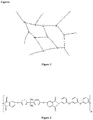
- the inventive quick responsive, shape memory thermoset polyimide has a structure of: wherein, n is from 58 to 156, and the quick responsive, shape memory thermoset polyimides have a molecular weight of 46K-124K between two triamino-crosslinker molecules.
- the preparation method of the quick responsive, shape memory thermoset polyimide according to the present invention is achieved by the following steps:
- step III pour the viscous sol-gel obtained in step III onto a substrate, heat the resultant at a heating rate of 1-2°C /min from room temperature to 70-90°C, and keep it at the temperature for 1-2 hours; then heat the resultant at a heating rate of 1-2°C /min to 120-140°C, and keep it at the temperature for 1-2 hours; then heat the resultant at a heating rate of 1-2°C /min to 170-190°C, and keep it at the temperature for 1-2 hours; then heat the resultant at a heating rate of 1-3°C /min to 220-250°C, and keep it at the temperature for 1-2 hours; then heat the resultant at a heating rate of 1-3°C /min to 270-290°C, and keep it at the temperature for 1-2 hours; finally, cool the resultant at a rate of 1-3°C /min to room temperature; immerse the substrate that has already been cooled down to room temperature in distilled water to peel off a solid film, which is then
- Example 1 A quick responsive, high-performance thermoset, shape memory polyimide according to the example, had a structure of: wherein, n was 58-156, the said quick responsive, high-performance thermoset, shape memory polyimide had a molecular weight of 46-124 k.
- the example used 1,3-bis(3-aminophenoxy)benzene and bisphenol A type diether dianhydride as the reaction monomers to prepare an anhydride terminated polyamic acid precursor, which then formed a network structure by using triamine(4-aminophenyl) to crosslink the polyamic acid, and the resultant was subject to a gradient heating procedure to provide a thermoset shape memory polyimide.
- Example 2 This example was almost the same as Example 1, except that n was 80-156, and the quick responsive, high-performance thermoset, shape memory polyimide had a molecular weight of 80-124 k.
- Example 3 This example was almost the same as Example 1 or 2, except that n was 100-156, and the quick responsive, high-performance thermoset, shape memory polyimide had a molecular weight of 100-124 k.
- Example 4 The preparation method of a quick responsive, high-performance, thermosetting, shape memory polyimide according to this example was achieved by the following steps:
- 1,3-bis(3-aminophenoxy)benzene monomer was weighted out and charged into a three-neck flask containing N,N-dimethylacetamide solvent, and then stirred under the protection of dry nitrogen at room temperature until 1,3-bis(3-aminophenoxy)benzene monomer was completely dissolved, so as to provide a diamine solution; wherein the molar ratio by volume between N,N-dimethylacetamide solvent and 1,3-bis(3-aminophenoxy)benzene monomer was 1mL:(0.2-0.33) mmoL;
- Bisphenol A type diether dianhydride monomer was added for 4-6 times to the diamine solution obtained in step I, the resultant was stirred for 16-20 hours at a speed of 200-300 r/min at room temperature to obtain an anhydride-terminated high molecular weight polyamic acid; wherein, the amount of each addition of the bisphenol A type diether dianhydride monomer is equal to or less than half of the amount of prior addition; wherein, the mass ratio of the bisphenol A type diether dianhydride monomer as mentioned in step II to 1,3-bis(3-aminophenoxy)benzene in the diamine solution was 1:(0.85-0.97);
- Tri(4-aminophenyl)amine was added to the anhydride-terminated high molecular weight polyamic acid obtained in step II, the resultant was stirred for 5-7 hours at a speed of 260-350 r/min at room temperature to produce a sol-gel. Then the obtained sol-gel was dried at 40-65°C in a vacuum oven for 0.5-2 hours to yield a viscous sol-gel; the mass ratio of the tri(4-aminophenyl)amine mentioned in step III to bisphenol A type diether dianhydride monomer in the anhydride-terminated high molecular weight polyamic acid was (0.02-0.10):1;
- the viscous sol-gel obtained in step III was poured onto a substrate, then was heated from room temperature at a heating rate of 1-2°C /min to 70-90°C, and kept at the temperature for 1-2 hours; then was heated at a heating rate of 1-2°C /min to 120-140°C, and kept at the temperature for 1-2 hours; then was heated at a heating rate of 1-2°C /min to 170-190°C, and kept at the temperature for 1-2 hours; then was heated at a heating rate of 1-3°C /min to 220-250°C, and kept at the temperature for 1-2 hours; then was heated at a heating rate of 1-3°C /min to 270-290°C, and kept at the temperature for 1-2 hours; finally, it was cooled at a rate of 1-3°C /min to room temperature; the substrate that has already been cooled down to room temperature was immersed in distilled water to peel off a solid film, which was then washed for 3-5 times using distilled water and finally heated
- Example 1 The N,N-dimethylacetamide mentioned in Example 1 was commercial available and of analytical pure grade, and was vacuum distilled after the removal of water.
- the tri(4-aminophenyl)amine in Example 3 comprised three amino-functional group, rendering the total number of amino functional groups of tri(4-aminophenyl)amine and diamine being equal to the total number of anhydride functional groups of dianhydride monomer, and the mass ratio of the dianhydride to tri(4-aminophenyl)amine was 1:0.02-1:0.10.
- the present example used 1,3-bis(3-aminophenoxy)benzene and bisphenol A type diether dianhydride as the reaction monomers to prepare anhydride terminated polyamic acid precursor, which was then crosslinked to form a network structure by using triamine(4-aminophenyl), and further subject to a gradient heating procedure to provide thermoset shape memory polyimide.
- reaction scheme of the step II according to the example was as follows:
- reaction scheme of the step IV according to this example was as follows:
- Example 5 This example was almost the same as Example 4, except that the purity of 1,3-bis(3-aminophenoxy)benzene monomer as mentioned in step I was 98%.
- Example 6 This example was almost the same as Examples 4 or 5, except that the purity of the bisphenol A type diether dianhydride monomer as mentioned in step II was 97%.
- Example 7 This example was almost the same as one of the Examples 4-6, except that the purity of tri(4-aminophenyl)amine as mentioned in step III was >98%.
- Example 8 This example was almost the same as one of the Examples 4-7, except that the molar ratio by volume between N,N-dimethylacetamide solvent and 1,3-bis(3-aminophenoxy) benzene monomer as mentioned in step I was 1mL:0.27-0.32mmoL.
- Example 9 This example was almost the same as one of the Examples 4-8, except that the molar ratio by volume between N,N-dimethylacetamide solvent and 1,3-bis(3-aminophenoxy) benzene monomer as mentioned in step I was 1mL: 0.33mmoL.
- Example 10 This example was almost the same as one of the Examples 4-9, except that the mass ratio of bisphenol A type diether dianhydride monomer to 1,3-bis(3-aminophenoxy)benzene monomer in the diamine solution as mentioned in step II was 1:(0.90-0.95).
- Example 11 This example was almost the same as one of the Examples 4-10, except that the mass ratio of bisphenol A type diether dianhydride monomer to 1,3-bis(3-aminophenoxy)benzene monomer in the diamine solution as mentioned in step II was 1:(0.90-0.92).
- Example 12 This example was almost the same as one of the Examples 4-11, except that the mass ratio of bisphenol A type diether dianhydride monomer to 1,3-bis(3-aminophenoxy)benzene monomer in the diamine solution as mentioned in step II was 1:0.91.
- Example 13 This example was almost the same as one of the Examples 4-12, except that the mass ratio of tri(aminophenyl)amine to bisphenol A type diether dianhydride monomer in the anhydride terminated high molecular weight polyamic acid as mentioned in step III was (0.03-0.09):1.
- Example 14 This example was almost the same as one of the Examples 4-13, except that the mass ratio of tri(aminophenyl)amine to bisphenol A type diether dianhydride monomer in the anhydride terminated high molecular weight polyamic acid as mentioned in step III was (0.04-0.08):1.
- Example 15 This example was almost the same as one of the Examples 4-14, except that the mass ratio of tri(aminophenyl)amine to bisphenol A type diether dianhydride monomer in the anhydride terminated high molecular weight polyamic acid as mentioned in step III was (0.05-0.07):1.
- Example 16 This example was almost the same as one of the Examples 4-15, except that the mass ratio of tri(aminophenyl)amine to bisphenol A type diether dianhydride monomer in the anhydride terminated high molecular weight polyamic acid as mentioned in step III was 0.06:1.
- Example 17 This example was almost the same as one of the Examples 4-16, except that the stirring as mentioned in step II was at a rate of 250-300 r/min and lasted for 18-20 hours.
- Example 18 This example was almost the same as one of the Examples 4-17, except that the stirring as mentioned in step II was at a rate of 280-300 r/min and lasted for 19-20 hours.
- Example 19 This example was almost the same as one of the Examples 4-18, except that the stirring as mentioned in step III was at a rate of 280-350 r/min and lasted for 5-7 hours.
- Example 20 This example was almost the same as one of the Examples 4-19, except that the stirring as mentioned in step III was at a rate of 300-350 r/min and lasted for lasted 6-7 hours.
- Example 21 This example was almost the same as one of the Examples 4-20, except that the stirring as mentioned in step III was at a rate of 320-350 r/min and lasted for 6-7 hours.
- Example 22 This example was almost the same as one of the Examples 4-21, except that the stirring as mentioned in step III was at a rate of 320-350 r/min and lasted for 6-7 hours.
- Example 23 This example was almost the same as one of the Examples 4-22, except that the sol-gel obtained in step III was dried in a vacuum oven at a temperature of 45-65°C for 0.8-2 hours.
- Example 24 This example was almost the same as one of the Examples 4-23, except that the sol-gel obtained in step III was dried in a vacuum oven at a temperature of 50-65°C for 1-2 hours.
- Example 25 This example was almost the same as one of the Examples 4-24, except that the sol-gel obtained in step III was dried in a vacuum oven at a temperature of 55-65°C for 1.5-2 hours.
- Example 26 This example was almost the same as one of the Examples 4-25, except that the sol-gel obtained in step III was dried in a vacuum oven at a temperature of 60-65°C for 1.5-2 hours.
- Example 27 This example was almost the same as one of the Examples 4-26, except that the sol-gel obtained in step III was dried in a vacuum oven at a temperature of 60-65°C for 1.8-2 hours.
- Example 28 This example was almost the same as one of the Examples 4-27, except that, in step IV, the resultant was heated from room temperature at a rate of 1-2°C /min to 75-90°C, and was kept at the temperature for 1-2 hours; then the resultant was heated at a rate of 1-2°C /min to 125-140°C, and was kept at the temperature for 1-2 hours; then the resultant was heated at a rate of 1-2°C /min to 175-190°C, and was kept at the temperature for 1-2 hours; then the resultant was heated at a rate of 1-3°C /min to 230-250°C, and was kept at the temperature for 1-2 hours; then the resultant was heated at a rate of 1-3°C /min to 275-290°C, and was kept at the temperature for 1-2 hours; finally, the resultant was cooled at a rate of 1-3°C /min to room temperature.
- Example 29 This example was almost the same as one of the Examples 4-28, except that, in step IV, the resultant was heated from room temperature at a rate of 1-2°C /min to 80-90°C, and was kept at the temperature for 1-2 hours; then the resultant was heated at a rate of 1-2°C /min to 130-140°C, and was kept at the temperature for 1-2 hours; then the resultant was heated at a rate of 1-2°C /min to 180-190°C, and was kept at the temperature for 1-2 hours; then the resultant was heated at a rate of 1-3°C /min to 235-250°C, and was kept at the temperature for 1-2 hours; then the resultant was heated at a rate of 1-3°C /min to 280-290°C, and was kept at the temperature for 1-2 hours; finally the resultant was cooled at a rate of 1-3°C /min to room temperature.
- Example 30 This example was almost the same as one of the Examples 4-29, except that, in step IV, the resultant was heated from room temperature at a rate of 1-2°C /min to 85-90°C, and was kept at the temperature for 1.5-2 hours; then the resultant was heated at a rate of 1-2°C /min to 135-140°C, and was kept at the temperature for 1.5-2 hours; then the resultant was heated at a rate of 1-2°C /min to 185-190°C, and was kept at the temperature for 1.5-2 hours; then the resultant was heated at a rate of 1-3°C /min to 240-250°C, and was kept at the temperature for 1.5-2 hours; then the resultant was heated at a rate of 1-3°C /min to 285-290°C, and was kept at the temperature for 1.5-2 hours; finally the resultant was cooled at a rate of 1-3°C /min to room temperature.
- Example 31 This example was almost the same as one of the Examples 4-30, except that, in step IV, the heating was performed at a temperature of 130-180°C for 380-600 minutes.
- Example 32 This example was almost the same as one of the Examples 4-31, except that, in step IV, the heating was performed at a temperature of 140-180°C for 400-600 minutes.
- Example 33 This example was almost the same as one of the Examples 4-32, except that, in step IV, the heating was performed at a temperature of 150-180°C for 450-600 minutes.
- Example 34 This example was almost the same as one of the Examples 4-33, except that, in step IV, the heating was performed at a temperature of 155-180°C for 480-600 minutes.
- Example 35 This example was almost the same as one of the Examples 4-34, except that, in step IV, the heating was performed at a temperature of 160-180°C for 500-600 minutes.
- Example 36 This example was almost the same as one of the Examples 4-35, except that, in step IV, the heating was performed at a temperature of 165-180°C for 520-600 minutes.
- Example 37 This example was almost the same as one of the Examples 4-36, except that, in step IV, the heating was performed at a temperature of 170-180°C for 550-600 minutes.
- Example 38 This example was almost the same as one of the Examples 4-37, except that, in step IV, the heating was performed at a temperature of 175-180°C for 580-600 minutes.
Landscapes
- Chemical & Material Sciences (AREA)
- Health & Medical Sciences (AREA)
- Chemical Kinetics & Catalysis (AREA)
- Medicinal Chemistry (AREA)
- Polymers & Plastics (AREA)
- Organic Chemistry (AREA)
- Dispersion Chemistry (AREA)
- Macromolecular Compounds Obtained By Forming Nitrogen-Containing Linkages In General (AREA)
Applications Claiming Priority (2)
| Application Number | Priority Date | Filing Date | Title |
|---|---|---|---|
| CN201410221959.8A CN103980491B (zh) | 2014-05-23 | 2014-05-23 | 一种快速响应的热固性形状记忆聚酰亚胺及其制备方法 |
| PCT/CN2015/070280 WO2015176544A1 (zh) | 2014-05-23 | 2015-01-07 | 一种快速响应的热固性形状记忆聚酰亚胺及其制备方法 |
Publications (3)
| Publication Number | Publication Date |
|---|---|
| EP3147306A1 true EP3147306A1 (de) | 2017-03-29 |
| EP3147306A4 EP3147306A4 (de) | 2018-03-14 |
| EP3147306B1 EP3147306B1 (de) | 2024-12-18 |
Family
ID=51272675
Family Applications (1)
| Application Number | Title | Priority Date | Filing Date |
|---|---|---|---|
| EP15796975.9A Active EP3147306B1 (de) | 2014-05-23 | 2015-01-07 | Schnell reagierendes thermoplastisches formgedächtnispolyimid und herstellungsverfahren dafür |
Country Status (6)
| Country | Link |
|---|---|
| US (2) | US10155850B2 (de) |
| EP (1) | EP3147306B1 (de) |
| JP (1) | JP6418562B2 (de) |
| KR (1) | KR101922791B1 (de) |
| CN (1) | CN103980491B (de) |
| WO (1) | WO2015176544A1 (de) |
Families Citing this family (31)
| Publication number | Priority date | Publication date | Assignee | Title |
|---|---|---|---|---|
| CN103980491B (zh) | 2014-05-23 | 2016-04-06 | 哈尔滨工业大学 | 一种快速响应的热固性形状记忆聚酰亚胺及其制备方法 |
| CN104788675B (zh) * | 2015-04-22 | 2017-04-26 | 哈尔滨工业大学 | 一种光学透明的浅色耐高温形状记忆聚合物及其制备方法 |
| US10239254B1 (en) * | 2015-08-07 | 2019-03-26 | The United States Of America As Represented By The Secretary Of The Air Force | Method of fabricating shape memory films |
| CN106478949A (zh) * | 2015-08-28 | 2017-03-08 | 深圳市比克动力电池有限公司 | 聚醚酰亚胺热缩膜基体材料及其制备方法 |
| CN105254888B (zh) * | 2015-11-23 | 2019-01-22 | 厦门理工学院 | 聚酰亚胺离聚物及其制备方法 |
| CN105399951B (zh) * | 2015-12-29 | 2018-03-30 | 哈尔滨工业大学 | 一种玻璃化转变温度可调节的形状记忆无规共聚聚酰亚胺及其制备方法 |
| CN105778092B (zh) * | 2016-03-09 | 2018-03-16 | 哈尔滨工业大学 | 一种聚醚酰亚胺高温热缩管及其制备方法 |
| WO2018194936A1 (en) * | 2017-04-21 | 2018-10-25 | Ares Materials Inc. | Polymer substrate design parameters for electronic microfabrication |
| US10749368B2 (en) * | 2017-06-01 | 2020-08-18 | Logitech Europe S.A. | Computer mouse clock tuning to reduce electromagnetic induced noise in a wireless charging system |
| CN107500732B (zh) * | 2017-08-10 | 2019-11-19 | 浙江大学 | 一种制备三维无机陶瓷的方法 |
| CN109679102B (zh) * | 2017-10-18 | 2021-03-23 | 天津大学 | 一种动态热可逆可重塑的石墨烯/聚硅氧烷纳米复合材料及其制备方法 |
| CN109679103B (zh) * | 2017-10-18 | 2021-03-23 | 天津大学 | 一种动态热可逆可重塑的聚硅氧烷弹性体材料及其制备方法 |
| CN107698760A (zh) * | 2017-10-21 | 2018-02-16 | 芮志行 | 一种耐老化型形状记忆聚酰亚胺的制备方法 |
| CN108257783B (zh) * | 2017-12-30 | 2019-12-03 | 山东众鑫电子材料有限公司 | 一种自动还原型电容器金属化薄膜的制备方法 |
| CN108456309B (zh) * | 2018-01-17 | 2020-08-21 | 中国科学院兰州化学物理研究所 | 一种可层压及焊接的高性能热固性形状记忆聚酰亚胺 |
| CN109651611A (zh) * | 2018-12-29 | 2019-04-19 | 哈尔滨工业大学 | 一种形状记忆聚酰亚胺预浸料、复合材料及制备方法 |
| RU2738712C1 (ru) * | 2019-06-25 | 2020-12-15 | Общество с ограниченной ответственностью "Научно-исследовательский институт космических и авиационных материалов" | Цианат-эфирные полимерные смолы для изготовления высокопрочных композиционных изделий космического назначения с эффектом памяти формы |
| US11504899B1 (en) | 2019-09-30 | 2022-11-22 | United States Of America As Represented By The Secretary Of The Air Force | Method for fabricating lightly crosslinked polyimides with phenylethynyl pendants for shape-memory effect and programmed enhancement in Tg and modulus |
| US11613051B1 (en) | 2019-09-30 | 2023-03-28 | United States Of America As Represented By The Secretary Of The Air Force | Shape-memory polyimide nanocomposites and fabrication of same |
| US11840607B1 (en) | 2019-09-30 | 2023-12-12 | United States Of America As Represented By The Secretary Of The Air Force | Cross-linkable thermoplastics, and processes of making and using same |
| US11577448B1 (en) | 2019-09-30 | 2023-02-14 | United States Of America As Represented By The Secretary Of The Air Force | Method for fabricating multiphenylethynyl-containing and lightly crosslinked polyimides capable of memorizing shapes and augmenting thermomechanical stability |
| MX2022013519A (es) | 2020-04-30 | 2022-11-16 | GAF Energy LLC | Hoja frontal y hoja trasera de modulo fotovoltaico. |
| TWI876067B (zh) * | 2020-06-29 | 2025-03-11 | 日商日本化藥股份有限公司 | 異氰酸酯改質聚醯亞胺樹脂、樹脂組成物及其硬化物 |
| KR102741891B1 (ko) | 2022-04-25 | 2024-12-18 | 가톨릭대학교 산학협력단 | 4d 프린팅 공정을 이용한 열자극 반응성 형상 기억 고분자 및 이의 제조방법 |
| CN115536816B (zh) * | 2022-10-28 | 2024-02-20 | 中国科学院兰州化学物理研究所 | 一种热固性环氧树脂形状记忆聚合物及其制备方法 |
| CN115850703B (zh) * | 2022-11-04 | 2024-05-17 | 齐鲁工业大学 | 一种生物基本征型光敏形状记忆聚酰亚胺及三维智能聚酰亚胺的制备方法 |
| CN115873246B (zh) * | 2022-11-30 | 2024-06-07 | 中国科学院兰州化学物理研究所 | 一种耐高温热固性超分子形状记忆聚酰亚胺及其制备方法 |
| CN115850701B (zh) * | 2022-12-06 | 2024-07-02 | 西安工业大学 | 一种低开启电压的阻变活性材料及其存储元件的制备方法 |
| CN116041702B (zh) * | 2023-01-04 | 2025-08-08 | 中国科学院兰州化学物理研究所 | 一种形状记忆聚酰亚胺模塑粉及其制备方法和应用、形状记忆聚酰亚胺三维块体材料 |
| CN116640303A (zh) * | 2023-06-21 | 2023-08-25 | 齐鲁工业大学(山东省科学院) | 一种交联聚酰亚胺大分子链结构互穿型多刺激响应形状记忆聚酰亚胺多孔材料及其制备方法 |
| CN120310011A (zh) * | 2025-04-19 | 2025-07-15 | 哈尔滨工业大学 | 一种基于聚酰亚胺凝胶动态网络重构成膜的制备方法 |
Family Cites Families (20)
| Publication number | Priority date | Publication date | Assignee | Title |
|---|---|---|---|---|
| US6569984B2 (en) * | 2000-04-27 | 2003-05-27 | Virginia Tech Intellectual Properties, Inc. | Method for making polyimide |
| US7147906B2 (en) * | 2003-06-24 | 2006-12-12 | General Electric Company | Data storage medium comprising polyimides |
| JP2005042091A (ja) * | 2003-07-04 | 2005-02-17 | Nitto Denko Corp | 電気絶縁材料用ポリイミド樹脂 |
| JP2007099842A (ja) * | 2005-09-30 | 2007-04-19 | Kaneka Corp | 新規なポリイミド樹脂 |
| JP2007106891A (ja) * | 2005-10-13 | 2007-04-26 | Kaneka Corp | 新規なポリイミド樹脂 |
| JP5119781B2 (ja) * | 2006-07-25 | 2013-01-16 | 宇部興産株式会社 | 無電解めっき促進用多分岐ポリイミド、金属被覆多分岐ポリイミド及びこれらの製造方法 |
| JP4995693B2 (ja) * | 2006-11-08 | 2012-08-08 | エルジー・ケム・リミテッド | 液晶配向用組成物、それによって製造された液晶配向膜、およびそれを含む液晶ディスプレイ |
| CN100441652C (zh) * | 2007-01-19 | 2008-12-10 | 东华大学 | 一种含酚羟基聚酰亚胺粘合剂的制备方法 |
| WO2008114798A1 (ja) * | 2007-03-19 | 2008-09-25 | Ibiden Co., Ltd. | 多孔性ポリイミド |
| CN101139501B (zh) * | 2007-10-11 | 2011-05-25 | 同济大学 | 一种聚酰亚胺耐高温水性分散体涂料及其制备方法和应用 |
| KR101197161B1 (ko) * | 2007-12-21 | 2012-11-12 | 주식회사 엘지화학 | 비선형 폴리아믹산 및 이를 포함하는 감광성 수지조성물. |
| JP2009203414A (ja) * | 2008-02-29 | 2009-09-10 | Toray Ind Inc | 熱硬化性樹脂組成物 |
| CN101289537B (zh) * | 2008-05-19 | 2010-09-08 | 东华大学 | 1,4-双(2,4-二氨基苯氧基)苯型自增韧性不饱和聚酰亚胺粉末的制备方法 |
| JP5329849B2 (ja) * | 2008-06-19 | 2013-10-30 | 富士フイルム株式会社 | 液晶性有機半導体材料および有機電子デバイス |
| JP2010024389A (ja) | 2008-07-23 | 2010-02-04 | Toyobo Co Ltd | ポリイミド構造体、その製造方法および積層フィルム、デバイス構造体 |
| US20100063241A1 (en) * | 2008-09-09 | 2010-03-11 | Spirit Aerosystems, Inc. | High performance polyaspartimide resin |
| TWI405667B (zh) * | 2010-12-15 | 2013-08-21 | Ind Tech Res Inst | 聚醯亞胺薄膜層合物及包含其之金屬積層板 |
| JP2012224697A (ja) * | 2011-04-18 | 2012-11-15 | Sumitomo Electric Wintec Inc | ポリイミド樹脂ワニス及びそれを用いた絶縁電線、電機コイル、モータ |
| JP6325791B2 (ja) * | 2013-10-04 | 2018-05-16 | 旭化成株式会社 | 樹脂組成物、積層体、プリント配線板、及びその製造方法 |
| CN103980491B (zh) | 2014-05-23 | 2016-04-06 | 哈尔滨工业大学 | 一种快速响应的热固性形状记忆聚酰亚胺及其制备方法 |
-
2014
- 2014-05-23 CN CN201410221959.8A patent/CN103980491B/zh active Active
-
2015
- 2015-01-07 EP EP15796975.9A patent/EP3147306B1/de active Active
- 2015-01-07 US US15/110,143 patent/US10155850B2/en active Active
- 2015-01-07 KR KR1020167035960A patent/KR101922791B1/ko active Active
- 2015-01-07 WO PCT/CN2015/070280 patent/WO2015176544A1/zh not_active Ceased
- 2015-01-07 JP JP2016569429A patent/JP6418562B2/ja active Active
-
2018
- 2018-11-19 US US16/195,006 patent/US10738163B2/en active Active
Also Published As
| Publication number | Publication date |
|---|---|
| KR101922791B1 (ko) | 2018-11-27 |
| EP3147306A4 (de) | 2018-03-14 |
| US20190085133A1 (en) | 2019-03-21 |
| US10155850B2 (en) | 2018-12-18 |
| WO2015176544A1 (zh) | 2015-11-26 |
| CN103980491B (zh) | 2016-04-06 |
| KR20170012379A (ko) | 2017-02-02 |
| EP3147306B1 (de) | 2024-12-18 |
| US20160369055A1 (en) | 2016-12-22 |
| US10738163B2 (en) | 2020-08-11 |
| JP6418562B2 (ja) | 2018-11-07 |
| JP2017516900A (ja) | 2017-06-22 |
| CN103980491A (zh) | 2014-08-13 |
Similar Documents
| Publication | Publication Date | Title |
|---|---|---|
| US10738163B2 (en) | Quick responsive, shape memory thermoset polyimide and preparation method thereof | |
| CN101392059B (zh) | 一种无色透明芳香族聚酰亚胺薄膜及其制备方法 | |
| CN104640907B (zh) | 聚酰亚胺及其成形体 | |
| CN102220102B (zh) | 一种耐高温粘合剂及其制备方法 | |
| US12359024B2 (en) | Biomass benzoxazine-based shape memory resin, preparation method therefor, and application thereof | |
| CN105461922B (zh) | 一种低粘度热固性聚酰亚胺树脂及其制备方法和应用 | |
| CN105315469B (zh) | 硅基腈基杂化树脂及其合成方法 | |
| CN109293648B (zh) | 一种含乙炔基和降冰片烯的苯并噁嗪单体及其制备方法和用途 | |
| CN110156946A (zh) | 一种形状记忆酚醛树脂及其制备方法 | |
| CN101487190A (zh) | 一种聚酰亚胺碳纤维定型剂及其制备方法 | |
| CN108586743A (zh) | 热固性形状记忆双马来酰亚胺树脂及其制备方法 | |
| CN102617857B (zh) | 一种聚酰亚胺及其制备方法 | |
| CN107459649A (zh) | 一种聚酰亚胺聚合物、一种透明聚酰亚胺薄膜及其制备方法 | |
| CN104163912B (zh) | 一种双重网络交联型环氧树脂及其制备方法 | |
| HK1232902A1 (en) | Fast-response thermoplastic shape-memory polyimide and preparation method therefor | |
| HK1232902B (en) | Fast-response thermoplastic shape-memory polyimide and preparation method therefor | |
| CN108329688A (zh) | 用于航天飞行器雷达天线罩的高性能复合材料及其制备方法 | |
| CN101962503B (zh) | 耐高温电磁线自粘漆及其制备方法 | |
| CN106750443B (zh) | 一种热塑性聚酰亚胺预浸料及其复合材料的制备方法 | |
| CN106279681A (zh) | 一种生物基可自固化邻苯二甲腈树脂的制备方法 | |
| CN113527731A (zh) | 一种透明聚酰亚胺薄膜的制备方法 | |
| CN105968350A (zh) | 一种高韧性聚醚脲型苯并噁嗪树脂及其制备方法 | |
| CN105111717B (zh) | 一种耐高温bahpfp型层压板及其制备方法 | |
| CN104262586B (zh) | 一种高模量和高玻璃化转变温度环氧树脂及其制备和应用 | |
| CN103288680B (zh) | 自催化芴基双邻苯二甲腈树脂单体及其制备方法 |
Legal Events
| Date | Code | Title | Description |
|---|---|---|---|
| STAA | Information on the status of an ep patent application or granted ep patent |
Free format text: STATUS: THE INTERNATIONAL PUBLICATION HAS BEEN MADE |
|
| PUAI | Public reference made under article 153(3) epc to a published international application that has entered the european phase |
Free format text: ORIGINAL CODE: 0009012 |
|
| STAA | Information on the status of an ep patent application or granted ep patent |
Free format text: STATUS: REQUEST FOR EXAMINATION WAS MADE |
|
| 17P | Request for examination filed |
Effective date: 20161216 |
|
| AK | Designated contracting states |
Kind code of ref document: A1 Designated state(s): AL AT BE BG CH CY CZ DE DK EE ES FI FR GB GR HR HU IE IS IT LI LT LU LV MC MK MT NL NO PL PT RO RS SE SI SK SM TR |
|
| AX | Request for extension of the european patent |
Extension state: BA ME |
|
| RIN1 | Information on inventor provided before grant (corrected) |
Inventor name: LENG, JINGSONG Inventor name: LIU, YANJU Inventor name: KONG, DEYAN Inventor name: XIAO, XINLI |
|
| DAX | Request for extension of the european patent (deleted) | ||
| RIN1 | Information on inventor provided before grant (corrected) |
Inventor name: XIAO, XINLI Inventor name: KONG, DEYAN Inventor name: LIU, YANJU Inventor name: LENG, JINGSONG |
|
| REG | Reference to a national code |
Ref country code: HK Ref legal event code: DE Ref document number: 1232902 Country of ref document: HK |
|
| A4 | Supplementary search report drawn up and despatched |
Effective date: 20180208 |
|
| RIC1 | Information provided on ipc code assigned before grant |
Ipc: C08G 73/02 20060101ALI20180202BHEP Ipc: C08G 73/10 20060101AFI20180202BHEP |
|
| STAA | Information on the status of an ep patent application or granted ep patent |
Free format text: STATUS: EXAMINATION IS IN PROGRESS |
|
| 17Q | First examination report despatched |
Effective date: 20220401 |
|
| GRAP | Despatch of communication of intention to grant a patent |
Free format text: ORIGINAL CODE: EPIDOSNIGR1 |
|
| STAA | Information on the status of an ep patent application or granted ep patent |
Free format text: STATUS: GRANT OF PATENT IS INTENDED |
|
| INTG | Intention to grant announced |
Effective date: 20240712 |
|
| GRAS | Grant fee paid |
Free format text: ORIGINAL CODE: EPIDOSNIGR3 |
|
| GRAA | (expected) grant |
Free format text: ORIGINAL CODE: 0009210 |
|
| STAA | Information on the status of an ep patent application or granted ep patent |
Free format text: STATUS: THE PATENT HAS BEEN GRANTED |
|
| AK | Designated contracting states |
Kind code of ref document: B1 Designated state(s): AL AT BE BG CH CY CZ DE DK EE ES FI FR GB GR HR HU IE IS IT LI LT LU LV MC MK MT NL NO PL PT RO RS SE SI SK SM TR |
|
| REG | Reference to a national code |
Ref country code: GB Ref legal event code: FG4D |
|
| REG | Reference to a national code |
Ref country code: CH Ref legal event code: EP |
|
| REG | Reference to a national code |
Ref country code: DE Ref legal event code: R096 Ref document number: 602015090665 Country of ref document: DE |
|
| REG | Reference to a national code |
Ref country code: IE Ref legal event code: FG4D |
|
| REG | Reference to a national code |
Ref country code: LT Ref legal event code: MG9D |
|
| PG25 | Lapsed in a contracting state [announced via postgrant information from national office to epo] |
Ref country code: HR Free format text: LAPSE BECAUSE OF FAILURE TO SUBMIT A TRANSLATION OF THE DESCRIPTION OR TO PAY THE FEE WITHIN THE PRESCRIBED TIME-LIMIT Effective date: 20241218 |
|
| PGFP | Annual fee paid to national office [announced via postgrant information from national office to epo] |
Ref country code: DE Payment date: 20250210 Year of fee payment: 11 |
|
| PG25 | Lapsed in a contracting state [announced via postgrant information from national office to epo] |
Ref country code: FI Free format text: LAPSE BECAUSE OF FAILURE TO SUBMIT A TRANSLATION OF THE DESCRIPTION OR TO PAY THE FEE WITHIN THE PRESCRIBED TIME-LIMIT Effective date: 20241218 |
|
| PG25 | Lapsed in a contracting state [announced via postgrant information from national office to epo] |
Ref country code: BG Free format text: LAPSE BECAUSE OF FAILURE TO SUBMIT A TRANSLATION OF THE DESCRIPTION OR TO PAY THE FEE WITHIN THE PRESCRIBED TIME-LIMIT Effective date: 20241218 |
|
| PG25 | Lapsed in a contracting state [announced via postgrant information from national office to epo] |
Ref country code: NO Free format text: LAPSE BECAUSE OF FAILURE TO SUBMIT A TRANSLATION OF THE DESCRIPTION OR TO PAY THE FEE WITHIN THE PRESCRIBED TIME-LIMIT Effective date: 20250318 |
|
| REG | Reference to a national code |
Ref country code: NL Ref legal event code: MP Effective date: 20241218 |
|
| PG25 | Lapsed in a contracting state [announced via postgrant information from national office to epo] |
Ref country code: LV Free format text: LAPSE BECAUSE OF FAILURE TO SUBMIT A TRANSLATION OF THE DESCRIPTION OR TO PAY THE FEE WITHIN THE PRESCRIBED TIME-LIMIT Effective date: 20241218 Ref country code: GR Free format text: LAPSE BECAUSE OF FAILURE TO SUBMIT A TRANSLATION OF THE DESCRIPTION OR TO PAY THE FEE WITHIN THE PRESCRIBED TIME-LIMIT Effective date: 20250319 |
|
| PGFP | Annual fee paid to national office [announced via postgrant information from national office to epo] |
Ref country code: FR Payment date: 20250102 Year of fee payment: 11 |
|
| PGFP | Annual fee paid to national office [announced via postgrant information from national office to epo] |
Ref country code: GB Payment date: 20250106 Year of fee payment: 11 |
|
| PG25 | Lapsed in a contracting state [announced via postgrant information from national office to epo] |
Ref country code: RS Free format text: LAPSE BECAUSE OF FAILURE TO SUBMIT A TRANSLATION OF THE DESCRIPTION OR TO PAY THE FEE WITHIN THE PRESCRIBED TIME-LIMIT Effective date: 20250318 |
|
| PG25 | Lapsed in a contracting state [announced via postgrant information from national office to epo] |
Ref country code: NL Free format text: LAPSE BECAUSE OF FAILURE TO SUBMIT A TRANSLATION OF THE DESCRIPTION OR TO PAY THE FEE WITHIN THE PRESCRIBED TIME-LIMIT Effective date: 20241218 |
|
| REG | Reference to a national code |
Ref country code: AT Ref legal event code: MK05 Ref document number: 1752227 Country of ref document: AT Kind code of ref document: T Effective date: 20241218 |
|
| PG25 | Lapsed in a contracting state [announced via postgrant information from national office to epo] |
Ref country code: SM Free format text: LAPSE BECAUSE OF FAILURE TO SUBMIT A TRANSLATION OF THE DESCRIPTION OR TO PAY THE FEE WITHIN THE PRESCRIBED TIME-LIMIT Effective date: 20241218 |
|
| PG25 | Lapsed in a contracting state [announced via postgrant information from national office to epo] |
Ref country code: PL Free format text: LAPSE BECAUSE OF FAILURE TO SUBMIT A TRANSLATION OF THE DESCRIPTION OR TO PAY THE FEE WITHIN THE PRESCRIBED TIME-LIMIT Effective date: 20241218 |
|
| PG25 | Lapsed in a contracting state [announced via postgrant information from national office to epo] |
Ref country code: ES Free format text: LAPSE BECAUSE OF FAILURE TO SUBMIT A TRANSLATION OF THE DESCRIPTION OR TO PAY THE FEE WITHIN THE PRESCRIBED TIME-LIMIT Effective date: 20241218 |
|
| PG25 | Lapsed in a contracting state [announced via postgrant information from national office to epo] |
Ref country code: IS Free format text: LAPSE BECAUSE OF FAILURE TO SUBMIT A TRANSLATION OF THE DESCRIPTION OR TO PAY THE FEE WITHIN THE PRESCRIBED TIME-LIMIT Effective date: 20250418 |
|
| PG25 | Lapsed in a contracting state [announced via postgrant information from national office to epo] |
Ref country code: PT Free format text: LAPSE BECAUSE OF FAILURE TO SUBMIT A TRANSLATION OF THE DESCRIPTION OR TO PAY THE FEE WITHIN THE PRESCRIBED TIME-LIMIT Effective date: 20250421 |
|
| PG25 | Lapsed in a contracting state [announced via postgrant information from national office to epo] |
Ref country code: EE Free format text: LAPSE BECAUSE OF FAILURE TO SUBMIT A TRANSLATION OF THE DESCRIPTION OR TO PAY THE FEE WITHIN THE PRESCRIBED TIME-LIMIT Effective date: 20241218 |
|
| PG25 | Lapsed in a contracting state [announced via postgrant information from national office to epo] |
Ref country code: AT Free format text: LAPSE BECAUSE OF FAILURE TO SUBMIT A TRANSLATION OF THE DESCRIPTION OR TO PAY THE FEE WITHIN THE PRESCRIBED TIME-LIMIT Effective date: 20241218 Ref country code: RO Free format text: LAPSE BECAUSE OF FAILURE TO SUBMIT A TRANSLATION OF THE DESCRIPTION OR TO PAY THE FEE WITHIN THE PRESCRIBED TIME-LIMIT Effective date: 20241218 |
|
| PG25 | Lapsed in a contracting state [announced via postgrant information from national office to epo] |
Ref country code: SK Free format text: LAPSE BECAUSE OF FAILURE TO SUBMIT A TRANSLATION OF THE DESCRIPTION OR TO PAY THE FEE WITHIN THE PRESCRIBED TIME-LIMIT Effective date: 20241218 |
|
| PG25 | Lapsed in a contracting state [announced via postgrant information from national office to epo] |
Ref country code: CZ Free format text: LAPSE BECAUSE OF FAILURE TO SUBMIT A TRANSLATION OF THE DESCRIPTION OR TO PAY THE FEE WITHIN THE PRESCRIBED TIME-LIMIT Effective date: 20241218 |
|
| PG25 | Lapsed in a contracting state [announced via postgrant information from national office to epo] |
Ref country code: IT Free format text: LAPSE BECAUSE OF FAILURE TO SUBMIT A TRANSLATION OF THE DESCRIPTION OR TO PAY THE FEE WITHIN THE PRESCRIBED TIME-LIMIT Effective date: 20241218 |
|
| REG | Reference to a national code |
Ref country code: CH Ref legal event code: PL |
|
| PG25 | Lapsed in a contracting state [announced via postgrant information from national office to epo] |
Ref country code: SE Free format text: LAPSE BECAUSE OF FAILURE TO SUBMIT A TRANSLATION OF THE DESCRIPTION OR TO PAY THE FEE WITHIN THE PRESCRIBED TIME-LIMIT Effective date: 20241218 |
|
| PG25 | Lapsed in a contracting state [announced via postgrant information from national office to epo] |
Ref country code: LU Free format text: LAPSE BECAUSE OF NON-PAYMENT OF DUE FEES Effective date: 20250107 Ref country code: MC Free format text: LAPSE BECAUSE OF FAILURE TO SUBMIT A TRANSLATION OF THE DESCRIPTION OR TO PAY THE FEE WITHIN THE PRESCRIBED TIME-LIMIT Effective date: 20241218 |
|
| REG | Reference to a national code |
Ref country code: DE Ref legal event code: R097 Ref document number: 602015090665 Country of ref document: DE |
|
| PG25 | Lapsed in a contracting state [announced via postgrant information from national office to epo] |
Ref country code: DK Free format text: LAPSE BECAUSE OF FAILURE TO SUBMIT A TRANSLATION OF THE DESCRIPTION OR TO PAY THE FEE WITHIN THE PRESCRIBED TIME-LIMIT Effective date: 20241218 |
|
| PG25 | Lapsed in a contracting state [announced via postgrant information from national office to epo] |
Ref country code: BE Free format text: LAPSE BECAUSE OF NON-PAYMENT OF DUE FEES Effective date: 20250131 |
|
| PG25 | Lapsed in a contracting state [announced via postgrant information from national office to epo] |
Ref country code: CH Free format text: LAPSE BECAUSE OF NON-PAYMENT OF DUE FEES Effective date: 20250131 |
|
| REG | Reference to a national code |
Ref country code: BE Ref legal event code: MM Effective date: 20250131 |
|
| PLBE | No opposition filed within time limit |
Free format text: ORIGINAL CODE: 0009261 |
|
| STAA | Information on the status of an ep patent application or granted ep patent |
Free format text: STATUS: NO OPPOSITION FILED WITHIN TIME LIMIT |
|
| 26N | No opposition filed |
Effective date: 20250919 |