EP3143011B1 - Deuterated heterocyclic compounds and their use as imaging agents - Google Patents
Deuterated heterocyclic compounds and their use as imaging agents Download PDFInfo
- Publication number
- EP3143011B1 EP3143011B1 EP15725253.7A EP15725253A EP3143011B1 EP 3143011 B1 EP3143011 B1 EP 3143011B1 EP 15725253 A EP15725253 A EP 15725253A EP 3143011 B1 EP3143011 B1 EP 3143011B1
- Authority
- EP
- European Patent Office
- Prior art keywords
- compound
- pharmaceutically acceptable
- acceptable salt
- individual
- deuterated
- Prior art date
- Legal status (The legal status is an assumption and is not a legal conclusion. Google has not performed a legal analysis and makes no representation as to the accuracy of the status listed.)
- Active
Links
- 0 C*C(*)(*)CC(CCC1)CCN1C(C=CN12)=NC1=NC1C2=CC=CC1 Chemical compound C*C(*)(*)CC(CCC1)CCN1C(C=CN12)=NC1=NC1C2=CC=CC1 0.000 description 1
Images






Classifications
-
- C—CHEMISTRY; METALLURGY
- C07—ORGANIC CHEMISTRY
- C07D—HETEROCYCLIC COMPOUNDS
- C07D487/00—Heterocyclic compounds containing nitrogen atoms as the only ring hetero atoms in the condensed system, not provided for by groups C07D451/00 - C07D477/00
- C07D487/02—Heterocyclic compounds containing nitrogen atoms as the only ring hetero atoms in the condensed system, not provided for by groups C07D451/00 - C07D477/00 in which the condensed system contains two hetero rings
- C07D487/04—Ortho-condensed systems
-
- A—HUMAN NECESSITIES
- A61—MEDICAL OR VETERINARY SCIENCE; HYGIENE
- A61K—PREPARATIONS FOR MEDICAL, DENTAL OR TOILETRY PURPOSES
- A61K31/00—Medicinal preparations containing organic active ingredients
- A61K31/33—Heterocyclic compounds
- A61K31/395—Heterocyclic compounds having nitrogen as a ring hetero atom, e.g. guanethidine or rifamycins
- A61K31/495—Heterocyclic compounds having nitrogen as a ring hetero atom, e.g. guanethidine or rifamycins having six-membered rings with two or more nitrogen atoms as the only ring heteroatoms, e.g. piperazine or tetrazines
- A61K31/505—Pyrimidines; Hydrogenated pyrimidines, e.g. trimethoprim
- A61K31/519—Pyrimidines; Hydrogenated pyrimidines, e.g. trimethoprim ortho- or peri-condensed with heterocyclic rings
-
- A—HUMAN NECESSITIES
- A61—MEDICAL OR VETERINARY SCIENCE; HYGIENE
- A61K—PREPARATIONS FOR MEDICAL, DENTAL OR TOILETRY PURPOSES
- A61K51/00—Preparations containing radioactive substances for use in therapy or testing in vivo
- A61K51/02—Preparations containing radioactive substances for use in therapy or testing in vivo characterised by the carrier, i.e. characterised by the agent or material covalently linked or complexing the radioactive nucleus
- A61K51/04—Organic compounds
- A61K51/041—Heterocyclic compounds
- A61K51/044—Heterocyclic compounds having nitrogen as a ring hetero atom, e.g. guanethidine, rifamycins
- A61K51/0459—Heterocyclic compounds having nitrogen as a ring hetero atom, e.g. guanethidine, rifamycins having six-membered rings with two nitrogen atoms as the only ring hetero atoms, e.g. piperazine
-
- A—HUMAN NECESSITIES
- A61—MEDICAL OR VETERINARY SCIENCE; HYGIENE
- A61P—SPECIFIC THERAPEUTIC ACTIVITY OF CHEMICAL COMPOUNDS OR MEDICINAL PREPARATIONS
- A61P25/00—Drugs for disorders of the nervous system
-
- A—HUMAN NECESSITIES
- A61—MEDICAL OR VETERINARY SCIENCE; HYGIENE
- A61P—SPECIFIC THERAPEUTIC ACTIVITY OF CHEMICAL COMPOUNDS OR MEDICINAL PREPARATIONS
- A61P25/00—Drugs for disorders of the nervous system
- A61P25/28—Drugs for disorders of the nervous system for treating neurodegenerative disorders of the central nervous system, e.g. nootropic agents, cognition enhancers, drugs for treating Alzheimer's disease or other forms of dementia
-
- A—HUMAN NECESSITIES
- A61—MEDICAL OR VETERINARY SCIENCE; HYGIENE
- A61P—SPECIFIC THERAPEUTIC ACTIVITY OF CHEMICAL COMPOUNDS OR MEDICINAL PREPARATIONS
- A61P43/00—Drugs for specific purposes, not provided for in groups A61P1/00-A61P41/00
-
- C—CHEMISTRY; METALLURGY
- C07—ORGANIC CHEMISTRY
- C07B—GENERAL METHODS OF ORGANIC CHEMISTRY; APPARATUS THEREFOR
- C07B59/00—Introduction of isotopes of elements into organic compounds ; Labelled organic compounds per se
- C07B59/002—Heterocyclic compounds
-
- C—CHEMISTRY; METALLURGY
- C07—ORGANIC CHEMISTRY
- C07D—HETEROCYCLIC COMPOUNDS
- C07D401/00—Heterocyclic compounds containing two or more hetero rings, having nitrogen atoms as the only ring hetero atoms, at least one ring being a six-membered ring with only one nitrogen atom
- C07D401/02—Heterocyclic compounds containing two or more hetero rings, having nitrogen atoms as the only ring hetero atoms, at least one ring being a six-membered ring with only one nitrogen atom containing two hetero rings
- C07D401/04—Heterocyclic compounds containing two or more hetero rings, having nitrogen atoms as the only ring hetero atoms, at least one ring being a six-membered ring with only one nitrogen atom containing two hetero rings directly linked by a ring-member-to-ring-member bond
-
- C—CHEMISTRY; METALLURGY
- C07—ORGANIC CHEMISTRY
- C07B—GENERAL METHODS OF ORGANIC CHEMISTRY; APPARATUS THEREFOR
- C07B2200/00—Indexing scheme relating to specific properties of organic compounds
- C07B2200/05—Isotopically modified compounds, e.g. labelled
Definitions
- NFTs Neurofibrillary tangles
- AD Alzheimer's disease
- tau is a protein associated with cytoskeleton and involved in the transport of vesicles along microtubules in neurons. Under pathological conditions, tau is hyperphosphorylated and forms beta-sheet aggregates with fibrillar appearances similar to A ⁇ in senile plaques.
- tau-targeted therapies aim to slow disease progression by interfering with cell-to-cell transfer of soluble tau oligomers capable infecting adjacent cells by a prion mechanism.
- tau-targeted therapies aim to inhibit tau oligomerization and/or aggregation to larger fibrils and tangles ( Bulic, B., et al., J. Med. Chem., 2013 56 (11), 4135-55 ).
- Such strategies warrant reliable non-invasive tau-specific biomarkers for monitoring of current tau burden and disease progression.
- Tau-specific PET imaging biomarkers have the potential to non-invasively monitor disease progression and also provide a direct readout of tau-targeted agent efficacy and confirmation of its mechanism of action in clinical trials ( Mathis, C. A.; Klunk, W. E., Neuron 2013 79 (6), 1035-7 ; and Jensen, J. R., et al., J. Alzheimer's Disease:JAD 2011 26 Suppl 3, 147-57 ).
- the invention includes a deuterated detectable compound, or salt thereof, that binds to a tau protein.
- the invention in particular relates to compounds of formula (Ie), wherein the carbon marked * has a deuterium isotopic enrichment factor of at least 3500.
- the invention also relates to compounds of formula (Ie) or a salt thereof:
- the invention further relates to a compound selected from the following compounds and salts thereof:
- Another aspect of the invention includes a pharmaceutical composition
- a pharmaceutical composition comprising a deuterated compound as described herein, or a pharmaceutically acceptable salt thereof, and a pharmaceutically acceptable diluent or carrier.
- Another aspect includes a method for detecting neurofibrillary tangles and/or senile plaques in an animal comprising administering a deuterated compound comprising an imaging isotope as described herein, or a pharmaceutically acceptable salt thereof, to the animal, and measuring the radioactive signal of the compound.
- Another aspect includes a method of detecting a neurological disorder associated with amyloid plaque and/or tau protein aggregation in an animal comprising administering a deuterated compound comprising an imaging isotope as described herein, or a pharmaceutically acceptable salt thereof, to the animal, and measuring the radioactive signal of the compound, which is associated with amyloid deposits and/or tau protein aggregates.
- Another aspect includes a method of detecting Alzheimer's disease associated with amyloid plaque and/or tau protein aggregation in an animal comprising administering a deuterated compound comprising an imaging isotope as described herein, or a pharmaceutically acceptable salt thereof, to the animal, and measuring the radioactive signal of the compound associated with amyloid deposits and/or tau protein aggregates.
- Another aspect includes a method of detecting Alzheimer's disease associated with tau protein aggregation comprising administering a deuterated compound comprising an imaging isotope as described herein, or a pharmaceutically acceptable salt thereof, to the animal, and measuring the radioactive signal of the compound associated with tau protein aggregates.
- Another aspect includes a deuterated compound as described herein, or a pharmaceutically acceptable salt thereof, for use in medical diagnosis or treatment.
- Another aspect includes a deuterated compound as described herein, or a pharmaceutically acceptable salt thereof, for use in detecting neurofibrillary tangles and/or senile plaques.
- Another aspect includes a deuterated compound as described herein, or a pharmaceutically acceptable salt thereof, for use in detecting a neurological disorder.
- Another aspect includes a deuterated compound as described herein, or a pharmaceutically acceptable salt thereof, for use in detecting Alzheimer's disease.
- Another aspect includes the use of a deuterated compound as described herein, or a pharmaceutically acceptable salt thereof, to prepare a medicament for detecting neurofibrillary tangles and/or senile plaques in an animal.
- Another aspect includes the use of a deuterated compound as described herein, or a pharmaceutically acceptable salt thereof, to prepare a medicament for detecting a neurological disorder in an animal.
- Another aspect includes the use of a deuterated compound as described herein, or a pharmaceutically acceptable salt thereof, to prepare a medicament for detecting Alzheimer's disease in an animal.
- Another aspect includes a method of detecting progressive supranuclear palsy associated with amyloid plaque and/or tau protein aggregation in an animal, comprising administering a deuterated compound comprising an imaging isotope as described herein, or a pharmaceutically acceptable salt thereof, to the animal, and measuring the radioactive signal of the compound associated with amyloid deposits and/or tau protein aggregates.
- Another aspect includes a method of detecting progressive supranuclear palsy associated with tau protein aggregation, comprising administering a deuterated compound comprising an imaging isotope as described herein, or a pharmaceutically acceptable salt thereof, to the animal, and measuring the radioactive signal of the compound associated with tau protein aggregates.
- the a compounds include enantiomeric, diastereomeric and geometric (or conformational) isomeric forms of a given structure.
- the R and S configurations for each asymmetric center, Z and E double bond isomers, Z and E conformational isomers, single stereochemical isomers, as well as enantiomeric, diastereomeric, and geometric (or conformational) mixtures are included.
- all tautomeric forms of structures depicted herein are included.
- structures depicted herein are also meant to include compounds that differ only in the presence of one or more isotopically enriched atoms.
- compounds wherein the independent replacement or enrichment of one or more hydrogen by deuterium or tritium, carbon by 13 C- or 14 C carbon, nitrogen by a 15 N nitrogen, sulfur by a 33 S, 34 S or 36 S sulfur, or oxygen by a 17 O or 18 O oxygen are included.
- Such compounds are useful, for example, as analytical tools, as probes in biological assays, or as therapeutic agents.
- Optically-enriched means that the mixture of enantiomers is made up of a significantly greater proportion of one enantiomer, and may be described by enantiomeric excess (ee %). In certain embodiments, the mixture of enantiomers is made up of at least about 90% by weight of a given enantiomer (about 90% ee).
- the mixture of enantiomers is made up of at least about 95%, 98% or 99% by weight of a given enantiomer (about 95%, 98% or 99% ee).
- Enantiomers and diastereomers may be isolated from racemic mixtures by any method known to those skilled in the art, including recrystallization from solvents in which one stereoisomer is more soluble than the other, chiral high pressure liquid chromatography (HPLC), supercritical fluid chromatography (SFC), the formation and crystallization of chiral salts, which are then separated by any of the above methods, or prepared by asymmetric syntheses and optionally further enriched.
- HPLC high pressure liquid chromatography
- SFC supercritical fluid chromatography
- “Pharmaceutically acceptable salts” include both acid and base addition salts. It is to be understood that when a compound or Example herein is shown as a specific salt, the corresponding free-base, as well as other salts of the corresponding free-base (including pharmaceutically acceptable salts of the corresponding free-base) are contemplated.
- “Pharmaceutically acceptable acid addition salt” refers to those salts which retain the biological effectiveness and properties of the free bases and which are not biologically or otherwise undesirable, formed with inorganic acids such as hydrochloric acid, hydrobromic acid, sulfuric acid, nitric acid, carbonic acid, phosphoric acid and the like, and organic acids may be selected from aliphatic, cycloaliphatic, aromatic, araliphatic, heterocyclic, carboxylic, and sulfonic classes of organic acids such as formic acid, acetic acid, propionic acid, glycolic acid, gluconic acid, lactic acid, pyruvic acid, oxalic acid, malic acid, maleic acid, maloneic acid, succinic acid, fumaric acid, tartaric acid, citric acid, aspartic acid, ascorbic acid, glutamic acid, anthranilic acid, benzoic acid, cinnamic acid, mandelic acid, embonic acid, phenylacetic acid, methanes
- “Pharmaceutically acceptable base addition salts” include those derived from inorganic bases such as sodium, potassium, lithium, ammonium, calcium, magnesium, iron, zinc, copper, manganese, aluminum salts and the like. Particularly base addition salts are the ammonium, potassium, sodium, calcium and magnesium salts.
- Salts derived from pharmaceutically acceptable organic nontoxic bases includes salts of primary, secondary, and tertiary amines, substituted amines including naturally occurring substituted amines, cyclic amines and basic ion exchange resins, such as isopropylamine, trimethylamine, diethylamine, triethylamine, tripropylamine, ethanolamine, 2-diethylaminoethanol, tromethamine, dicyclohexylamine, lysine, arginine, histidine, caffeine, procaine, hydrabamine, choline, betaine, ethylenediamine, glucosamine, methylglucamine, theobromine, purines, piperizine, piperidine, N-ethylpiperidine, polyamine resins and the like.
- Particular organic non-toxic bases are isopropylamine, diethylamine, ethanolamine, tromethamine, dicyclohexylamine, choline, and caffeine.
- tautomer or “tautomeric form” refers to structural isomers of different energies which are interconvertible via a low energy barrier.
- proton tautomers also known as prototropic tautomers
- Valence tautomers include interconversions by reorganization of some of the bonding electrons.
- Radioactive tracers which emit gamma rays from within the body. These tracers are generally short-lived isotopes linked to chemical compounds which permit specific physiological processes to be scrutinized. They can be given by injection, inhalation or orally.
- the first type is where single photons are detected by a gamma camera which can view organs from many different angles. The camera builds up an image from the points from which radiation is emitted; this image is enhanced by a computer and viewed by a physician on a monitor for indications of abnormal conditions.
- PET Positron Emission Tomography
- a positron-emitting radionuclide is introduced, usually by injection, and accumulates in the target tissue. As it decays it emits a positron, which promptly combines with a nearby electron resulting in the simultaneous emission of two identifiable gamma rays in opposite directions. These are detected by a PET camera and give a very precise indication of their origin. PET's most important clinical role is in oncology, with fluorine-18 as the tracer, since it has proven to be the most accurate non-invasive method of detecting and evaluating most cancers. It is also well used in cardiac and brain imaging.
- PET and SPECT utilize radiolabeled compounds and are well known in the art.
- PET and SPECT are very sensitive techniques and require small quantities of radiolabeled compounds, called tracers.
- the labeled compounds are transported, accumulated and converted in vivo in a similar manner as the corresponding non-radioactively labeled compound.
- Tracers, or probes can be radiolabeled with a radionuclide useful for PET imaging, such as 11 C, 13 N, 15 O, 18 F, 64 Cu, and 124 I, or with a radionuclide useful for SPECT imaging, such as 99 TC, 77 Br, 61 Cu, 153 Gd, 123 I, 125 I, 131 I and 32 P.
- imaging isotopes as that term is used herein.
- PET creates images based on the distribution of molecular imaging tracers carrying positron-emitting isotopes in the tissue of the patient.
- the PET method has the potential to detect malfunction on a cellular level in the investigated tissues or organs.
- PET has been used in clinical oncology, such as for the imaging of tumors and metastases, and has been used for diagnosis of certain brain diseases, as well as mapping brain and heart function.
- SPECT can be used to complement any gamma imaging study, where a true 3D representation can be helpful, for example, imaging tumor, infection (leukocyte), thyroid or bones.
- the present invention is also directed at a method of imaging amyloid deposits and NTFs.
- the compounds of this invention are labeled with one or more suitable imaging isotopes (e.g., radioactive isotopes, radiolabels or radioactive labels), at least with one 18 F
- 125 I isotopes are useful for laboratory testing but they will generally not useful for diagnostic purposes because of the relatively long half-life (60 days) and low gamma-emission (30-65 keV) of 125 I.
- the isotope 123 I has a half-life of thirteen hours and gamma energy of 159 keV, and it is therefore typical that labeling of ligands to be used for diagnostic purposes would be with this isotope or with 18 F (half-life of 2 hours).
- Other imaging isotopes which may be used include 131 I, 77 Br and 76 Br.
- PET positron emission tomography
- SPECT single photon emission computed tomography
- the label that is introduced into the compound can depend on the detection method desired.
- PET detection of a positron-emitting atom such as 18 F.
- the present invention is also directed to specific compounds described herein where the 18 F atom is replaced with a non-radiolabeled fluorine atom.
- SPECT detection of a photon-emitting atom such as 123 I or 99m Tc.
- the radioactive diagnostic or detection agent should have sufficient radioactivity and radioactivity concentration which can assure reliable diagnosis and detection.
- the desired level of radioactivity can be attained by the methods provided herein for preparing compounds.
- the imaging of amyloid deposits and NTFs can also be carried out quantitatively so that the amount of amyloid deposits and NTFs can be determined.
- a prerequisite for an in vivo imaging agent of the brain is the ability to cross the intact blood-brain barrier.
- a labeled compound is introduced into a tissue or a patient in a detectable quantity.
- the compound is typically part of a pharmaceutical composition and is administered to the tissue or the patient by methods well known to those skilled in the art. Typically, administration is intravenously.
- the labeled compound is introduced into a patient in a detectable quantity and after sufficient time has passed for the compound to become associated with amyloid deposits and/or tau proteins, the labeled compound is detected noninvasively.
- a labeled compound is introduced into a patient, sufficient time is allowed for the compound to become associated with amyloid deposits, and then a sample of tissue from the patient is removed and the labeled compound in the tissue is detected apart from the patient.
- a tissue sample is removed from a patient and a labeled compound is introduced into the tissue sample. After a sufficient amount of time for the compound to become bound to amyloid deposits and/or tau proteins, the compound is detected.
- a detectable quantity is a quantity of labeled compound necessary to be detected by the detection method chosen.
- the amount of a labeled compound to be introduced into a patient in order to provide for detection can readily be determined by those skilled in the art. For example, increasing amounts of the labeled compound can be given to a patient until the compound is detected by the detection method of choice.
- a label is introduced into the compounds to provide for detection of the compounds.
- the amount of time necessary can easily be determined by introducing a detectable amount of a labeled compound into a patient and then detecting the labeled compound at various times after administration.
- the administration of the labeled compound to a patient can be by a general or local administration route.
- the labeled compound may be administered to the patient such that it is delivered throughout the body.
- the labeled compound can be administered to a specific organ or tissue of interest. For example, it is desirable to locate and quantitate amyloid deposits in the brain in order to diagnose or track the progress of Alzheimer's disease in a patient.
- One or more imaging isotopes can be incorporated into a compound of formula (I) by replacing one or more atoms (e.g., hydrogen or carbon atoms) in the compound of formula (I) or formula (V) with an imaging isotope.
- the incorporation of an imaging isotope can be carried out using known techniques. For example, techniques may be based on nucleophilic or electrophilic 18 F-fluorination of suitable precursors as reviewed, for example, in Medicinal Chemistry Approaches to Personalized Medicine (Lackey, Roth Eds), Chapter 12 (Wiley-VCH, ISBN 978-3-527-33394-3 ).
- deuterated means enriched in deuterium above its natural abundance at one or more positions of a compound.
- a particular position for example, a carbon atom
- deuterated it is understood that the abundance of deuterium at that position is substantially greater than the natural abundance of deuterium, which is 0.015%.
- a deuterated position typically has a minimum isotopic enrichment factor of at least 3000 (45% deuterium incorporation).
- isotopic enrichment factor means the ratio between the isotopic abundance and the natural abundance of a specified isotope.
- a compound has an isotopic enrichment factor of at least 3500 (52.5% deuterium incorporation) at a given deuterated atom, at least 4000 (60% deuterium incorporation), at least 4500 (67.5% deuterium incorporation), at least 5000 (75% deuterium incorporation), at least 5500 (82.5% deuterium incorporation), at least 6000 (90% deuterium incorporation), at least 6333.3 (95% deuterium incorporation), at least 6466.7 (97% deuterium incorporation), at least 6600 (99% deuterium incorporation), or at least 6633.3 (99.5% deuterium incorporation). In some embodiments, 100% deuterium incorporation is achieved.
- a deuterated compound contains one or more deuterium atoms.
- a deuterated compound may contain just one deuterium.
- a deuterated compound contains just two deuteriums.
- a deuterated compound contains only three deuteriums.
- a deuterated compound contains four deuteriums.
- a deuterated compound contains 1, 2, 3, or 4 deuteriums, or any range derivable therein.
- Deuterium can be incorporated into a compound of formula (I) using a variety of known reagents and synthetic techniques. For example, deuterium can be incorporated into a compound of formula (I) using LiAlD 4 . It can also be incorporated into a compound of formula (I) such as through reduction, catalytic hydrogenation or isotopic exchange using appropriate deuterated reagetns such as deuterides, D 2 and D 2 O.
- the present invention includes a compound having the formula (Ie): wherein the carbon marked * has a deuterium isotopic enrichment factor of at least 3500. In certain embodiments the carbon marked * has a deuterium isotopic enrichment factor of at least 4000. In certain embodiments the carbon marked * has a deuterium isotopic enrichment factor of at least 4500. In certain embodiments the carbon marked * has a deuterium isotopic enrichment factor of at least 5000. In certain embodiments the carbon marked * has a deuterium isotopic enrichment factor of at least 5500. In certain embodiments the carbon marked * has a deuterium isotopic enrichment factor of at least 6000.
- the carbon marked * has a deuterium isotopic enrichment factor of at least 6333.3. In certain embodiments the carbon marked * has a deuterium isotopic enrichment factor of at least 6466.7. In certain embodiments the carbon marked * has a deuterium isotopic enrichment factor of at least 6600. In certain embodiments the carbon marked * has a deuterium isotopic enrichment factor of at least 6633.3. In some embodiments, 100% deuterium incorporation is achieved with respect to the carbon marked * in the compound of formula (Ie).
- the present invention also includes a compound having the formula: or a salt thereof.
- the present invention also includes a compound selected from: and salts thereof.
- Compounds of the present invention may be used in a variety of contexts, such as imaging and detection contexts.
- the compound is introduced into patients who suffer from or are at risk of developing a neurological disorder.
- the neurological disorder is associated with the development of amyloid plaques and/or tau protein aggregates and/or NFTs.
- a “neurological disorder” as used herein refers to a disease or disorder which affects the CNS and/or which has an etiology in the CNS.
- exemplary CNS diseases or disorders include, but are not limited to, neuropathy, amyloidosis, cancer, an ocular disease or disorder, viral or microbial infection, inflammation, ischemia, neurodegenerative disease, seizure, behavioral disorders, and a lysosomal storage disease.
- the CNS will be understood to include the eye, which is normally sequestered from the rest of the body by the blood-retina barrier.
- neurological disorders include, but are not limited to, neurodegenerative diseases including, but not limited to, Lewy body disease, postpoliomyelitis syndrome, Shy-Draeger syndrome, olivopontocerebellar atrophy, Parkinson's disease, multiple system atrophy, striatonigral degeneration, prion diseases (including, but not limited to, bovine spongiform encephalopathy, scrapie, Creutzfeldt-Jakob syndrome, kuru, Gerstmann-Straussler-Scheinker disease, chronic wasting disease, and fatal familial insomnia), bulbar palsy, motor neuron disease, nervous system heterodegenerative disorders (including, but not limited to, Canavan disease, Huntington's disease, neuronal ceroid-lipofuscinosis, Alexander's disease, Tourette's syndrome, Menkes kinky hair syndrome, Cockayne syndrome, Halervorden-Spatz syndrome, lafora disease, Rett syndrome, hepatolenticular degeneration, Lesch-Nyhan
- Tauopathies are also encompassed by the term "neurological disorder” and refer to tau-related disorders or conditions that may overlap with one or more of the conditions noted above.
- Non-limiting examples of tauopathies include, but are not limited to, Alzheimer's disease, progressive supranuclear palsy, corticobasal degeneration, Pick's disease, stroke, aging, traumatic brain injury, and mild cognitive impairment.
- compositions comprising a compound of formula (I) or a pharmaceutically acceptable salt thereof.
- the composition further comprises a pharmaceutically acceptable carrier or vehicle.
- the composition is formulated for administration to a patient in need thereof.
- patient refers to an animal, such as a mammal, such as a human.
- patient or individual refers to a rodent (e.g., mouse or rat), a dog, or a human.
- compositions of this invention refers to a non-toxic carrier or vehicle that does not destroy the pharmacological activity of the compound with which it is formulated.
- pharmaceutically acceptable carriers or vehicles that may be used in the compositions of this invention include, but are not limited to, water, salts, and ethanol
- compositions comprising a compound or salt thereof are typically administered intravenously.
- injectable preparations for example, sterile injectable aqueous or oleaginous suspensions, may be formulated according to the known art using suitable dispersing or wetting agents and suspending agents.
- the sterile injectable preparation may also be a sterile injectable solution, suspension or emulsion in a nontoxic parenterally acceptable diluent or solvent, for example, as a solution in 1,3-butanediol.
- acceptable vehicles and solvents that may be employed are water, Ringer's solution, and saline (e.g., U.S.P. or isotonic sodium chloride solution).
- sterile, fixed oils are conventionally employed as a solvent or suspending medium.
- any bland fixed oil can be employed including synthetic mono- or diglycerides.
- fatty acids such as oleic acid are used in the preparation of injectables.
- Injectable formulations can be sterilized, for example, by filtration through a bacterial-retaining filter, or by incorporating sterilizing agents in the form of sterile solid compositions which can be dissolved or dispersed in sterile water or other sterile injectable medium prior to use.
- compositions may be administered with or without food. In certain embodiments, pharmaceutically acceptable compositions are administered without food. In certain embodiments, pharmaceutically acceptable compositions of this invention are administered with food.
- Specific dosage and treatment regimens for any particular patient will depend upon a variety of factors, including age, body weight, general health, sex, diet, time of administration, rate of excretion, drug combination, the judgment of the treating physician, and the severity of the particular disease being examined.
- the amount of a provided compound or salt thereof in the composition will also depend upon the particular compound in the composition.
- a composition comprising a compound of the present invention is administered intravenously in a trace mass amount and a radioactivity amount to permit safe exposure but sufficient to acquire images.
- the dosage range is from 5-20 mCi per subject. In some embodiments, the dosage range is about, at least about, or at most about 5, 6, 7, 8, 9, 10, 11, 12, 13, 14, 15, 16, 17, 18, 19, 20, 21, 22, 23, 24, or 25 mCi or more per subject, or any range derivable therein.
- System A Analytical LCMS: Waters Acquity UPLC running at 0.7 mL/min. Column: Acquity UPLC BEH C18 1.7 ⁇ m 2.1 ⁇ 30 mm. Mobile phase A: water with 0.1% formic acid, B: acetonitrile with 0.1% formic acid, linear gradient 5-95% B in 2 min. The system was equipped with Acquity PDA and Acquity SQ detectors.
- System B Preparative HPLC: Waters 2545 pump running at 70 mL/min. Column Phenomenex Gemini-NX 10 ⁇ C18 110A AX 100 ⁇ 30.00 mm.
- Mobile phase A1 water with 0.1 formic acid
- A2 water with 0.1% NH 4 OH
- B acetonitrile.
- System D Semi-preparative UPLC: Agilent 1290, running at 4 mL/min. Column: Phenomenex Luna 5 ⁇ C18 100A, 250 ⁇ 10 mm.
- Mobile phase A water with 0.1% formic acid
- B acetonitrile with 0.1% formic acid.
- System E Analytical LCMS system consisting of HPLC: Pump: Agilent 1290, running at 0.5 mL/min. Column: Phenomenex Kinetex 2.6 ⁇ C18 100A, 50 ⁇ 2.1 mm.
- Mobile phase A water with 0.1% formic acid
- B acetonitrile with 0.1% formic acid.
- Linear gradient 5-95% B in 3 min followed by 95% B for 1 min.
- the LC system is equipped with UV and radioactivity (PMT) detectors and coupled to HRMS Agilent 6220 Accurate-Mass TOF LC/MS mass spectrometer (Santa Clara, CA).
- 18 F-Fluoride trapped on a Trap-and-Release cartridge was eluted using a solution containing TBHCO 3 (150 ⁇ L, 0.075 M) in acetonitrile (500 ⁇ L) and water (350 ⁇ L).
- the solvent was evaporated using a gentle stream of nitrogen and microwave heating to 120 °C followed by azeotropic removal of residual water using acetonitrile (4 ⁇ 0.5 mL).
- the precursor 6 (2 mg) was dissolved in 0.5 mL of acetonitrile and added to a vial containing 18 F-fluoride and heated using a microwave heater to 120 °C, 50 W for 350 s.
- the reaction mixture was concentrated to approximately 100 ⁇ L and diluted with water (2 mL) for injection to semi-preparative HPLC (System D).
- the product was eluted with 15% B for 10 min followed by 20% B for 10-15 min.
- the fraction containing the product was diluted with water to double the volume and the product was isolated using HLB plus sep-pak cartridge preconditioned with ethanol (10 mL) and water (10 mL), and eluted with ethanol (3 mL).
- the ethanol was evaporated to dryness and the product [ 18 F] [A] -d2 was formulated.
- the radiochemical purity was assessed by LCMS (System E).
- the intermediate compound 6 was prepared as follows.
- Diethylaminosulfurtrifluoride (0.17 mL, 1.25 mmol) was added to a cooled (-78 °C) solution of compound 5 (75 mg, 0.25 mmol) in dichloromethane (2 mL). The reaction mixture was allowed to warm to room temperature and stirred for 1 hour. The reaction mixture was then cooled to -78 °C and an additional amount of diethylaminosulfur trifluoride (0.17 mL, 1.25 mmol) was added. The reaction mixture was warmed to room temperature and quenched with saturated aqueous solution of NaHCO 3 .
- 18 F-Fluoride trapped on a Trap-and-Release cartridge was eluted using a solution containing TBHCO 3 (150 ⁇ L, 0.075 M) in acetonitrile (500 ⁇ L) and water (350 ⁇ L). The solvent was evaporated using a gentle stream of nitrogen and microwave heating to 120 °C followed by azeotropic removal of residual water using acetonitrile (4 ⁇ 0.5 mL). Compound 9 (2 mg) was dissolved in 0.5 mL of acetonitrile and added to a vial containing 18 F-fluoride and heated using a microwave heater to 120 °C, 50 W for 350 seconds.
- the reaction mixture was concentrated to approximately 100 ⁇ L and diluted with water (2 mL) for injection to semi-preparative HPLC (System D).
- the product was eluted with 15% B for 10 minutes followed by 20% B for 10-15 minutes.
- the fraction containing the product was diluted with water to double the volume and the product was isolated using HLB plus sep-pak cartridge preconditioned with ethanol (10 mL) and water (10 mL), and eluted with ethanol (3 mL).
- the ethanol was evaporated to dryness and the compound [ 18 F] [A] was formulated.
- the radiochemical purity was assessed by LCMS (System E).
- the intermediate compound 9 was prepared as follows.
- Step 2 3-benzyl 6-ethyl (1R,5S,6r)-3-azabicyclo 3.1.0 hexane-3,6-dicarboxylate (C-5) and 3-benzyl 6-ethyl (1R,5S,6s)-3-azabicyclo 3.1.0 hexane-3,6-dicarboxylate (C-6)
- Step 7 2-((1S,5R,6s)-3-azabicyclo 3.1.0 hexan-6-yl)ethanol (C-1)
- Step 8 (1R,5S,6s)-6-(2-(tert-butyldimethylsilyloxy)ethyl)-3-azabicyclo[3.1.0]hexane (C-2)
- Step 4 (1S,5R,6r)-benzyl 6-(2-hydroxyethyl)-3-azabicyclo [3.1.0] hexane-3-carboxylate (D-6)
- Step 5 2-((1S,5R,6r)-3-azabicyclo [3.1.0] hexan-6-yl)ethanol (D-1)
- H 2 IO 6 (85 mg) is suspended in water (1 mL) and acetonitrile (1 mL) and stirred vigorously for 15 min. Amino alcohol (50 mg) is added followed by the addition of pyridinium chlorochromate (5 mg). The reaction mixture is stirred for 2 h at the room temperature and the final product isolated.
- the methylester (Compound 3-1 ) is reduced with LiAlD 4 to deuterated alcohol and deprotected with TFA to provide Compound 4-1 as described above.
- MicroPET Imaging The PET imaging was performed on Inveon PET/CT scanner (Siemens Medical Solutions USA Inc.). Animals anesthetized with sevoflurane were placed head-first, prone position on the scanner bed and dynamic 45 min scans were initiated. Approximately 3.7 MBq of 18 F-radiolabeled tracer in isotonic solution (100-130 ⁇ L) was administered as 60 second intravenous infusion via the tail vein. Body temperature was measured by a rectal probe and maintained with warm air flow at 37 °C. Full-body iterative image reconstructions were obtained using maximum a posteriori algorithm (MAP, hyperparameter ⁇ 0.05) and corrected for signal attenuation using the tissue density obtained from CT. Projections were created with PMOD 3.305 (PMOD Technologies, Ltd., Zurich, Switzerland) and used to obtain quantitative activity levels in each organ of interest using region-of-interest analysis.
- MAP maximum a posteriori algorithm
- the tracer [ 18 F] [A] -d2 or [ 18 F] [A] was dissolved in potassium phosphate (Kpi) buffer (100 mM) at concentration 500-600 ⁇ Ci/mL.
- Kpi potassium phosphate
- the non-radioactive 7 and 10 were dissolved in Kpi buffer at 10 ⁇ M concentration.
- the reaction vessel was charged with human or mouse liver microsome suspension (12.5 ⁇ L, 20 mg/mL) followed by Kpi buffer (388 ⁇ L, 10 mM), NADPH (50 ⁇ L, 10 mM) and incubated at 37 °C for 5-10 min.
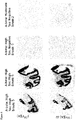
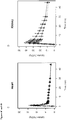
- the maximum intensity projections ( Figure 4F ) illustrate the improvements in image quality.
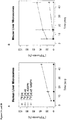
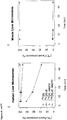
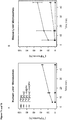
- the PET imaging data is in excellent agreement with results of the comparison of [ 18 F] [A] and [ 18 F] [A] -d2 in vitro using mouse liver microsomes.
- substitution of geminal hydrogens in [ 18 F] [A] with deuterium caused 73% reduction in [ 18 F]F - formation and the reduction in bone uptake observed by in vivo PET is also close to 54%.
- microsomal stability assessment as a predictor of in-vivo stability of [ 18 F] [A] and [ 18 F] [A] -d2 suggests significantly higher metabolic stability of [ 18 F] [A] -d2 compared to [ 18 F] [A] and significantly slower rate of 18 F-fluoride formation in rhesus and mice.
- 18 F-fluoride was not detected as a metabolite of [ 18 F] [A] -d2 using human liver microsomes at all, suggesting much greater stability of [ 18 F] [A] -d2 in human than in rhesus or mice.
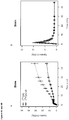
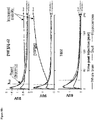
- [ 18 F] [A]- d2, [ 18 F] [A] or 18 F T807 (see Chien et al., J. Alzheimers Dis, 38:171-84 (2014 )) (370 MBq (10 mCi)) was intravenous bolus injected into an anesthetized rhesus, and dynamic PET data acquired over 240 minutes. Standard Uptake Values ([Radioactivity]/(injected dose/body weight)) were measured in the indicated structures from the reconstructed PET data (as shown in Figures 8A , 8B ). Data was collected from the same animal but on different days for each probe. [ 18 F] [A] -d2 exhibited increased stability reflected by a reduction of skull uptake of free fluoride.
- AD Alzheimer's disease
- HV healthy volunteers
- This study protocol required each subject to complete the following components: screening evaluation, MRI, [ 18 F]florbetapir (AD subjects only) and [ 18 F] [A] -d2.
- the screening procedures included neuropsychological assessment, vital signs, ECG, physical exam, MRI, and [ 18 F]florbetapir PET imaging to confirm presence of amyloid deposition in patients clinically diagnosed with probable AD.
- each subject completed clinical assessments and clinical safety labs to ensure the subject was medically stable to complete the study protocol.
- the screening procedures occurred within 30 days prior to [ 18 F] [A] -d2 imaging.
- Eligible subjects participated in a single [ 18 F] [A] -d2 imaging session.
- the distribution of tau binding was assessed in each of the subject groups (AD and HV) to evaluate for binding to tau.
- AD and HV the distribution of A ⁇ and tau was compared.
- Tau binding in brain was assessed with PET using [ 18 F] [A] -d2.
- Radioligand binding was compared in brains of HV subjects who should have minimal to negligible concentrations of tau compared to patients with AD, who are expected to have moderate to high densities of tau.
- Images were acquired using a HR+ PET camera in three-dimensional mode and were reconstructed using an iterative algorithm including scatter and measured attenuation correction ( 68 Ge source). Dynamic images were acquired upon injection ( ⁇ 370 MBq).
- the scanning protocol consisted of 2 scanning segments in the two healthy control (HC) subjects, Subjects 1 & 2 (0-120 min and ⁇ 150-180 min) and of 3 segments in the suspected AD patient, Subject 3 (0-60 min, 93-123 min and 147-177 min).
- the MR volumetric image, a summed image of the first 15 min after tracer administration of [ 18 F] [A] -d2 were coregistered using Statistical Parametic Mapping SPM8 (software provided by members and collaborators of the Wellcome Trust Centre for Neuroimaging). Alignment of the additional PET segments to the first PET segment was performed using in-house developed analysis software written in Matlab® (version 8 Release 2014a). Then, using the MRI scan for anatomical delineation, irregular regions of interest (ROI) were drawn for each subject in the frontal, parietal, occipital, and temporal lobes, cerebellum gray, and white-matter (centrum semi-ovale) using MIM® software.
- ROI regions of interest
- TAC tissue time activity curves
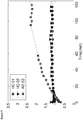
- FIG. 9 shows the temporal lobe SUVR vs. mean frame time in the 3 subjects. A clear separation of the curves is observed as early as 30 min post injection. The SUVR curves in the two healthy controls remained relatively constant soon after injection. The SUVR in the AD subject reached a plateau in the 90-120 min interval.
Landscapes
- Chemical & Material Sciences (AREA)
- Organic Chemistry (AREA)
- Health & Medical Sciences (AREA)
- Life Sciences & Earth Sciences (AREA)
- Medicinal Chemistry (AREA)
- Veterinary Medicine (AREA)
- Pharmacology & Pharmacy (AREA)
- Animal Behavior & Ethology (AREA)
- General Health & Medical Sciences (AREA)
- Public Health (AREA)
- Bioinformatics & Cheminformatics (AREA)
- Engineering & Computer Science (AREA)
- Epidemiology (AREA)
- Nuclear Medicine, Radiotherapy & Molecular Imaging (AREA)
- Biomedical Technology (AREA)
- Neurology (AREA)
- Neurosurgery (AREA)
- Chemical Kinetics & Catalysis (AREA)
- General Chemical & Material Sciences (AREA)
- Optics & Photonics (AREA)
- Physics & Mathematics (AREA)
- Proteomics, Peptides & Aminoacids (AREA)
- Hospice & Palliative Care (AREA)
- Psychiatry (AREA)
- Medicines Containing Antibodies Or Antigens For Use As Internal Diagnostic Agents (AREA)
- Pharmaceuticals Containing Other Organic And Inorganic Compounds (AREA)
- Nitrogen Condensed Heterocyclic Rings (AREA)
- Heterocyclic Carbon Compounds Containing A Hetero Ring Having Nitrogen And Oxygen As The Only Ring Hetero Atoms (AREA)
- Organic Low-Molecular-Weight Compounds And Preparation Thereof (AREA)
- Hydrogenated Pyridines (AREA)
Priority Applications (5)
| Application Number | Priority Date | Filing Date | Title |
|---|---|---|---|
| HRP20210641TT HRP20210641T1 (hr) | 2014-05-13 | 2015-05-12 | Deuterirani heterociklični spojevi i njihova uporaba kao sredstva za kontrastiranje |
| EP21155891.1A EP3901145A1 (en) | 2014-05-13 | 2015-05-12 | Deuterated heterocyclic compounds and their use in the synthesis of imaging agents |
| PL15725253T PL3143011T3 (pl) | 2014-05-13 | 2015-05-12 | Deuterowane związki heterocykliczne i ich zastosowanie jako środki obrazujące |
| RS20210532A RS61810B1 (sr) | 2014-05-13 | 2015-05-12 | Deuterisana heterociklična jedinjenja i njihova upotreba kao sredstva za snimanje |
| SI201531590T SI3143011T1 (sl) | 2014-05-13 | 2015-05-12 | Devterirane heterociklične spojine in njihova uporaba kot kontrastna sredstva |
Applications Claiming Priority (2)
| Application Number | Priority Date | Filing Date | Title |
|---|---|---|---|
| US201461992717P | 2014-05-13 | 2014-05-13 | |
| PCT/EP2015/060447 WO2015173225A1 (en) | 2014-05-13 | 2015-05-12 | Deuterated heterocyclic compounds and their use as imaging agents |
Related Child Applications (1)
| Application Number | Title | Priority Date | Filing Date |
|---|---|---|---|
| EP21155891.1A Division EP3901145A1 (en) | 2014-05-13 | 2015-05-12 | Deuterated heterocyclic compounds and their use in the synthesis of imaging agents |
Publications (2)
| Publication Number | Publication Date |
|---|---|
| EP3143011A1 EP3143011A1 (en) | 2017-03-22 |
| EP3143011B1 true EP3143011B1 (en) | 2021-03-03 |
Family
ID=53269446
Family Applications (2)
| Application Number | Title | Priority Date | Filing Date |
|---|---|---|---|
| EP15725253.7A Active EP3143011B1 (en) | 2014-05-13 | 2015-05-12 | Deuterated heterocyclic compounds and their use as imaging agents |
| EP21155891.1A Pending EP3901145A1 (en) | 2014-05-13 | 2015-05-12 | Deuterated heterocyclic compounds and their use in the synthesis of imaging agents |
Family Applications After (1)
| Application Number | Title | Priority Date | Filing Date |
|---|---|---|---|
| EP21155891.1A Pending EP3901145A1 (en) | 2014-05-13 | 2015-05-12 | Deuterated heterocyclic compounds and their use in the synthesis of imaging agents |
Country Status (21)
| Country | Link |
|---|---|
| US (4) | US10076581B2 (enExample) |
| EP (2) | EP3143011B1 (enExample) |
| JP (2) | JP6529986B2 (enExample) |
| KR (2) | KR102618139B1 (enExample) |
| CN (2) | CN106459059B (enExample) |
| AU (2) | AU2015261008B2 (enExample) |
| CA (1) | CA2948721C (enExample) |
| DK (1) | DK3143011T3 (enExample) |
| ES (1) | ES2867814T3 (enExample) |
| HR (1) | HRP20210641T1 (enExample) |
| HU (1) | HUE053939T2 (enExample) |
| IL (3) | IL280791B2 (enExample) |
| LT (1) | LT3143011T (enExample) |
| MX (2) | MX376163B (enExample) |
| PL (1) | PL3143011T3 (enExample) |
| PT (1) | PT3143011T (enExample) |
| RS (1) | RS61810B1 (enExample) |
| RU (1) | RU2696492C2 (enExample) |
| SG (2) | SG11201609281UA (enExample) |
| SI (1) | SI3143011T1 (enExample) |
| WO (1) | WO2015173225A1 (enExample) |
Families Citing this family (22)
| Publication number | Priority date | Publication date | Assignee | Title |
|---|---|---|---|---|
| MX376163B (es) | 2014-05-13 | 2025-03-07 | Hoffmann La Roche | Compuestos heterocíclicos deuterados y su uso como agentes formadores de imágenes. |
| EP3487545A1 (en) | 2016-07-22 | 2019-05-29 | AC Immune S.A. | Compounds for imaging tau protein aggregates |
| WO2018015549A1 (en) | 2016-07-22 | 2018-01-25 | Ac Immune S.A. | Compounds for imaging tau protein aggregates |
| MX2019005007A (es) * | 2016-11-01 | 2019-07-18 | Arvinas Inc | Protac dirigidos a la proteína tau y métodos asociados de uso. |
| AU2018346597B2 (en) | 2017-10-06 | 2023-07-13 | Forma Therapeutics, Inc. | Inhibiting Ubiquitin Specific Peptidase 30 |
| WO2019145291A1 (en) | 2018-01-24 | 2019-08-01 | Ac Immune Sa | Gamma-carboline compounds for the detection of tau aggregates |
| EP3743426A1 (en) | 2018-01-24 | 2020-12-02 | AC Immune SA | Azacarboline compounds for the detection of tau aggregates |
| WO2019169111A1 (en) | 2018-03-02 | 2019-09-06 | The Trustees Of The University Of Pennsylvania | [1,2,4]triazolo[1,5-a]pyrimidine compounds and use in stabilizing microtubules |
| IL278291B2 (en) | 2018-05-17 | 2023-10-01 | Forma Therapeutics Inc | Condensed bicyclic compounds are useful as ubiquitin-specific peptidase 30 inhibitors |
| US11707452B2 (en) | 2018-08-20 | 2023-07-25 | Arvinas Operations, Inc. | Modulators of alpha-synuclein proteolysis and associated methods of use |
| JP7337174B2 (ja) | 2018-09-18 | 2023-09-01 | ニカング セラピューティクス, インコーポレイテッド | Srcホモロジー-2ホスファターゼ阻害剤としての三置換ヘテロアリール誘導体 |
| EP4218934B1 (en) | 2018-10-05 | 2025-06-18 | Forma Therapeutics, Inc. | Inhibiting ubiquitin-specific protease 30 (usp30) |
| LT3860998T (lt) | 2018-10-05 | 2024-06-25 | Annapurna Bio Inc. | Junginiai ir kompozicijos, skirti gydyti būkles, susijusias su apj receptoriaus aktyvumu |
| TWI767148B (zh) | 2018-10-10 | 2022-06-11 | 美商弗瑪治療公司 | 抑制脂肪酸合成酶(fasn) |
| JP7119978B2 (ja) * | 2018-12-20 | 2022-08-17 | オムロン株式会社 | 制御装置およびプログラム |
| CA3138873C (en) * | 2019-05-09 | 2024-01-09 | Kyle Bradley Pascual CLAGG | Synthesis of labeled imidazo[1,2-a]pyrimidines |
| EP3999182A1 (en) | 2019-07-17 | 2022-05-25 | Arvinas Operations, Inc. | Tau-protein targeting compounds and associated methods of use |
| CN113526526A (zh) * | 2021-07-12 | 2021-10-22 | 苏州大学 | 氘代氨制备方法及以其作为氘源参与的氘代反应 |
| WO2023028591A1 (en) | 2021-08-27 | 2023-03-02 | Genentech, Inc. | Methods of treating tau pathologies |
| EP4536358A1 (en) | 2022-06-13 | 2025-04-16 | Genentech Inc. | Methods of delaying or preventing the onset of alzheimer's disease using crenezumab |
| WO2025155625A1 (en) * | 2024-01-16 | 2025-07-24 | Eli Lilly And Company | Novel compounds for tau imaging |
| CN118957609B (zh) * | 2024-07-23 | 2025-09-09 | 无锡绿能电合科技有限公司 | 一种氟代芳环的氘代方法 |
Family Cites Families (16)
| Publication number | Priority date | Publication date | Assignee | Title |
|---|---|---|---|---|
| DD76515A (enExample) * | ||||
| DE76515C (de) | F. MORA in Mailand | Verfahren zur Herstellung imitirter Ledertapete aus Baumwollstoff | ||
| EP1340759A1 (en) | 2002-02-28 | 2003-09-03 | Sanofi-Synthelabo | 1-[alkyl], 1-[(heteroaryl)alkyl] and 1-[(aryl)alkyl]-7-(pyrimidin-4-yl)-imidazo[1,2-a]pyrimidin-5(1H)-one derivatives |
| US6875784B2 (en) | 2002-10-09 | 2005-04-05 | Pharmacia & Upjohn Company | Antimibicrobial [3.1.0.] bicyclic oxazolidinone derivatives |
| PL1999109T3 (pl) * | 2006-03-30 | 2012-05-31 | Univ Pennsylvania | Pochodne styrylopirydyny i ich zastosowanie do wiązania i obrazowania blaszek amyloidowych |
| JP5647519B2 (ja) | 2007-09-13 | 2014-12-24 | コンサート ファーマシューティカルズ インコーポレイテッド | 重水素化カテコールおよびベンゾ[d][1,3]ジオキソールおよびその誘導体の合成 |
| US8932557B2 (en) | 2008-02-14 | 2015-01-13 | Eli Lilly And Company | Imaging agents for detecting neurological dysfunction |
| EP2599763A1 (en) | 2008-02-14 | 2013-06-05 | Siemens Molecular Imaging, Inc. | Novel imaging agents for detecting neurological dysfunction |
| US20100144657A1 (en) | 2008-12-09 | 2010-06-10 | Auspex Pharmaceuticals, Inc. | PHENYLPIPERIDINE MODULATORS OF mu-OPIOID RECEPTORS |
| US8691187B2 (en) | 2009-03-23 | 2014-04-08 | Eli Lilly And Company | Imaging agents for detecting neurological disorders |
| CN102438660A (zh) | 2009-03-23 | 2012-05-02 | 美国西门子医疗解决公司 | 用于检测神经障碍的显像剂 |
| EP2450332A1 (en) * | 2010-10-22 | 2012-05-09 | Bayer Pharma Aktiengesellschaft | Compounds for use in Imaging, diagnosing and/or treatment of diseases of the central nervous system (F-D2-Deprenyl) |
| KR20140003438A (ko) * | 2010-11-15 | 2014-01-09 | 카톨리에케 유니버시테이트 루벤 | 항바이러스성 축합 헤테로사이클릭 화합물 |
| JP5976206B2 (ja) * | 2012-05-22 | 2016-08-23 | イーライ リリー アンド カンパニー | 神経機能障害を検出するための造影剤 |
| AU2014333996B2 (en) * | 2013-10-08 | 2018-03-15 | F. Hoffmann-La Roche Ag | Diazacarbazole derivatives as tau-pet-ligands |
| MX376163B (es) | 2014-05-13 | 2025-03-07 | Hoffmann La Roche | Compuestos heterocíclicos deuterados y su uso como agentes formadores de imágenes. |
-
2015
- 2015-05-12 MX MX2016014615A patent/MX376163B/es active IP Right Grant
- 2015-05-12 CN CN201580025219.XA patent/CN106459059B/zh active Active
- 2015-05-12 SG SG11201609281UA patent/SG11201609281UA/en unknown
- 2015-05-12 EP EP15725253.7A patent/EP3143011B1/en active Active
- 2015-05-12 IL IL280791A patent/IL280791B2/en unknown
- 2015-05-12 EP EP21155891.1A patent/EP3901145A1/en active Pending
- 2015-05-12 MX MX2020010847A patent/MX384604B/es unknown
- 2015-05-12 RS RS20210532A patent/RS61810B1/sr unknown
- 2015-05-12 HR HRP20210641TT patent/HRP20210641T1/hr unknown
- 2015-05-12 SI SI201531590T patent/SI3143011T1/sl unknown
- 2015-05-12 JP JP2016567651A patent/JP6529986B2/ja active Active
- 2015-05-12 DK DK15725253.7T patent/DK3143011T3/da active
- 2015-05-12 SG SG10201805628TA patent/SG10201805628TA/en unknown
- 2015-05-12 ES ES15725253T patent/ES2867814T3/es active Active
- 2015-05-12 KR KR1020237006997A patent/KR102618139B1/ko active Active
- 2015-05-12 CN CN201910795177.8A patent/CN110483522B/zh active Active
- 2015-05-12 AU AU2015261008A patent/AU2015261008B2/en active Active
- 2015-05-12 LT LTEP15725253.7T patent/LT3143011T/lt unknown
- 2015-05-12 HU HUE15725253A patent/HUE053939T2/hu unknown
- 2015-05-12 CA CA2948721A patent/CA2948721C/en active Active
- 2015-05-12 PL PL15725253T patent/PL3143011T3/pl unknown
- 2015-05-12 PT PT157252537T patent/PT3143011T/pt unknown
- 2015-05-12 WO PCT/EP2015/060447 patent/WO2015173225A1/en not_active Ceased
- 2015-05-12 RU RU2016147742A patent/RU2696492C2/ru active
- 2015-05-12 KR KR1020167034871A patent/KR102530129B1/ko active Active
-
2016
- 2016-01-26 US US15/006,997 patent/US10076581B2/en active Active
- 2016-11-01 IL IL248692A patent/IL248692B/en active IP Right Grant
-
2018
- 2018-07-31 US US16/050,453 patent/US10675367B2/en active Active
-
2019
- 2019-05-14 AU AU2019203369A patent/AU2019203369B2/en active Active
- 2019-05-15 JP JP2019091813A patent/JP6681498B2/ja active Active
- 2019-12-22 IL IL271631A patent/IL271631B/en active IP Right Grant
-
2020
- 2020-06-08 US US16/895,352 patent/US11504440B2/en active Active
-
2022
- 2022-11-18 US US18/056,856 patent/US12214058B2/en active Active
Non-Patent Citations (1)
| Title |
|---|
| None * |
Also Published As
Similar Documents
| Publication | Publication Date | Title |
|---|---|---|
| US12214058B2 (en) | Imaging methods using deuterated compounds | |
| Ono et al. | Development of novel 123I-labeled pyridyl benzofuran derivatives for SPECT imaging of β-amyloid plaques in Alzheimer’s disease | |
| MX2013013946A (es) | Inhibidores de ciclasa de glutaminilo radioetiquetados. | |
| KR20190030727A (ko) | Ido1 효소를 영상화하기 위한 방사성리간드 | |
| Ahn et al. | Preclinical evaluation of [18F] FP-CIT, the radiotracer targeting dopamine transporter for diagnosing Parkinson’s disease: pharmacokinetic and efficacy analysis | |
| JPWO2014132919A1 (ja) | 診断用組成物 | |
| RU2791900C1 (ru) | Дейтрированные гетероциклические соединения и их применение в качестве средств визуализации | |
| KR20180037916A (ko) | 방사성 할로겐 표지 피리도[1,2-a]벤즈이미다졸 유도체 화합물 | |
| HK40014375B (en) | Deuterated heterocyclic compounds and their use as imaging agents | |
| HK40014375A (en) | Deuterated heterocyclic compounds and their use as imaging agents | |
| BR112016026443B1 (pt) | Compostos heterocíclicos deuterados, seus usos, e composição farmacêutica | |
| HK1228902B (en) | Deuterated heterocyclic compounds and their use as imaging agents | |
| HK1228902A1 (en) | Deuterated heterocyclic compounds and their use as imaging agents | |
| HK1194301B (en) | Radiolabelled glutaminyl cyclase inhibitors | |
| HK1194301A (en) | Radiolabelled glutaminyl cyclase inhibitors |
Legal Events
| Date | Code | Title | Description |
|---|---|---|---|
| STAA | Information on the status of an ep patent application or granted ep patent |
Free format text: STATUS: THE INTERNATIONAL PUBLICATION HAS BEEN MADE |
|
| PUAI | Public reference made under article 153(3) epc to a published international application that has entered the european phase |
Free format text: ORIGINAL CODE: 0009012 |
|
| STAA | Information on the status of an ep patent application or granted ep patent |
Free format text: STATUS: REQUEST FOR EXAMINATION WAS MADE |
|
| 17P | Request for examination filed |
Effective date: 20161213 |
|
| AK | Designated contracting states |
Kind code of ref document: A1 Designated state(s): AL AT BE BG CH CY CZ DE DK EE ES FI FR GB GR HR HU IE IS IT LI LT LU LV MC MK MT NL NO PL PT RO RS SE SI SK SM TR |
|
| AX | Request for extension of the european patent |
Extension state: BA ME |
|
| DAV | Request for validation of the european patent (deleted) | ||
| DAX | Request for extension of the european patent (deleted) | ||
| STAA | Information on the status of an ep patent application or granted ep patent |
Free format text: STATUS: EXAMINATION IS IN PROGRESS |
|
| 17Q | First examination report despatched |
Effective date: 20190405 |
|
| REG | Reference to a national code |
Ref country code: DE Ref legal event code: R079 Ref document number: 602015066301 Country of ref document: DE Free format text: PREVIOUS MAIN CLASS: C07D0401040000 Ipc: C07B0059000000 |
|
| GRAP | Despatch of communication of intention to grant a patent |
Free format text: ORIGINAL CODE: EPIDOSNIGR1 |
|
| STAA | Information on the status of an ep patent application or granted ep patent |
Free format text: STATUS: GRANT OF PATENT IS INTENDED |
|
| RIC1 | Information provided on ipc code assigned before grant |
Ipc: A61K 49/10 20060101ALI20200831BHEP Ipc: A61P 25/28 20060101ALI20200831BHEP Ipc: C07B 59/00 20060101AFI20200831BHEP Ipc: A61K 51/04 20060101ALI20200831BHEP Ipc: A61P 43/00 20060101ALI20200831BHEP Ipc: A61K 31/519 20060101ALI20200831BHEP Ipc: C07D 487/04 20060101ALI20200831BHEP |
|
| INTG | Intention to grant announced |
Effective date: 20201001 |
|
| GRAS | Grant fee paid |
Free format text: ORIGINAL CODE: EPIDOSNIGR3 |
|
| GRAA | (expected) grant |
Free format text: ORIGINAL CODE: 0009210 |
|
| STAA | Information on the status of an ep patent application or granted ep patent |
Free format text: STATUS: THE PATENT HAS BEEN GRANTED |
|
| AK | Designated contracting states |
Kind code of ref document: B1 Designated state(s): AL AT BE BG CH CY CZ DE DK EE ES FI FR GB GR HR HU IE IS IT LI LT LU LV MC MK MT NL NO PL PT RO RS SE SI SK SM TR |
|
| REG | Reference to a national code |
Ref country code: GB Ref legal event code: FG4D |
|
| REG | Reference to a national code |
Ref country code: AT Ref legal event code: REF Ref document number: 1367044 Country of ref document: AT Kind code of ref document: T Effective date: 20210315 Ref country code: CH Ref legal event code: EP |
|
| REG | Reference to a national code |
Ref country code: DE Ref legal event code: R096 Ref document number: 602015066301 Country of ref document: DE |
|
| REG | Reference to a national code |
Ref country code: IE Ref legal event code: FG4D |
|
| REG | Reference to a national code |
Ref country code: HR Ref legal event code: TUEP Ref document number: P20210641 Country of ref document: HR |
|
| REG | Reference to a national code |
Ref country code: PT Ref legal event code: SC4A Ref document number: 3143011 Country of ref document: PT Date of ref document: 20210426 Kind code of ref document: T Free format text: AVAILABILITY OF NATIONAL TRANSLATION Effective date: 20210420 |
|
| REG | Reference to a national code |
Ref country code: NL Ref legal event code: FP |
|
| REG | Reference to a national code |
Ref country code: RO Ref legal event code: EPE |
|
| REG | Reference to a national code |
Ref country code: FI Ref legal event code: FGE |
|
| REG | Reference to a national code |
Ref country code: DK Ref legal event code: T3 Effective date: 20210428 |
|
| REG | Reference to a national code |
Ref country code: NO Ref legal event code: T2 Effective date: 20210303 |
|
| REG | Reference to a national code |
Ref country code: SE Ref legal event code: TRGR |
|
| REG | Reference to a national code |
Ref country code: HR Ref legal event code: T1PR Ref document number: P20210641 Country of ref document: HR Ref country code: HR Ref legal event code: ODRP Ref document number: P20210641 Country of ref document: HR Payment date: 20210511 Year of fee payment: 7 |
|
| REG | Reference to a national code |
Ref country code: SK Ref legal event code: T3 Ref document number: E 37048 Country of ref document: SK |
|
| REG | Reference to a national code |
Ref country code: GR Ref legal event code: EP Ref document number: 20210401122 Country of ref document: GR Effective date: 20210614 |
|
| REG | Reference to a national code |
Ref country code: HU Ref legal event code: AG4A Ref document number: E053939 Country of ref document: HU |
|
| PG25 | Lapsed in a contracting state [announced via postgrant information from national office to epo] |
Ref country code: LV Free format text: LAPSE BECAUSE OF FAILURE TO SUBMIT A TRANSLATION OF THE DESCRIPTION OR TO PAY THE FEE WITHIN THE PRESCRIBED TIME-LIMIT Effective date: 20210303 |
|
| REG | Reference to a national code |
Ref country code: ES Ref legal event code: FG2A Ref document number: 2867814 Country of ref document: ES Kind code of ref document: T3 Effective date: 20211020 |
|
| PG25 | Lapsed in a contracting state [announced via postgrant information from national office to epo] |
Ref country code: EE Free format text: LAPSE BECAUSE OF FAILURE TO SUBMIT A TRANSLATION OF THE DESCRIPTION OR TO PAY THE FEE WITHIN THE PRESCRIBED TIME-LIMIT Effective date: 20210303 Ref country code: SM Free format text: LAPSE BECAUSE OF FAILURE TO SUBMIT A TRANSLATION OF THE DESCRIPTION OR TO PAY THE FEE WITHIN THE PRESCRIBED TIME-LIMIT Effective date: 20210303 |
|
| PG25 | Lapsed in a contracting state [announced via postgrant information from national office to epo] |
Ref country code: IS Free format text: LAPSE BECAUSE OF FAILURE TO SUBMIT A TRANSLATION OF THE DESCRIPTION OR TO PAY THE FEE WITHIN THE PRESCRIBED TIME-LIMIT Effective date: 20210703 |
|
| REG | Reference to a national code |
Ref country code: DE Ref legal event code: R097 Ref document number: 602015066301 Country of ref document: DE |
|
| PLBE | No opposition filed within time limit |
Free format text: ORIGINAL CODE: 0009261 |
|
| STAA | Information on the status of an ep patent application or granted ep patent |
Free format text: STATUS: NO OPPOSITION FILED WITHIN TIME LIMIT |
|
| PG25 | Lapsed in a contracting state [announced via postgrant information from national office to epo] |
Ref country code: AL Free format text: LAPSE BECAUSE OF FAILURE TO SUBMIT A TRANSLATION OF THE DESCRIPTION OR TO PAY THE FEE WITHIN THE PRESCRIBED TIME-LIMIT Effective date: 20210303 Ref country code: MC Free format text: LAPSE BECAUSE OF FAILURE TO SUBMIT A TRANSLATION OF THE DESCRIPTION OR TO PAY THE FEE WITHIN THE PRESCRIBED TIME-LIMIT Effective date: 20210303 Ref country code: LU Free format text: LAPSE BECAUSE OF NON-PAYMENT OF DUE FEES Effective date: 20210512 |
|
| 26N | No opposition filed |
Effective date: 20211206 |
|
| PG25 | Lapsed in a contracting state [announced via postgrant information from national office to epo] |
Ref country code: IS Free format text: LAPSE BECAUSE OF FAILURE TO SUBMIT A TRANSLATION OF THE DESCRIPTION OR TO PAY THE FEE WITHIN THE PRESCRIBED TIME-LIMIT Effective date: 20210703 |
|
| REG | Reference to a national code |
Ref country code: HR Ref legal event code: ODRP Ref document number: P20210641 Country of ref document: HR Payment date: 20220428 Year of fee payment: 8 |
|
| REG | Reference to a national code |
Ref country code: AT Ref legal event code: UEP Ref document number: 1367044 Country of ref document: AT Kind code of ref document: T Effective date: 20210303 |
|
| REG | Reference to a national code |
Ref country code: FR Ref legal event code: PLFP Year of fee payment: 9 |
|
| REG | Reference to a national code |
Ref country code: HR Ref legal event code: ODRP Ref document number: P20210641 Country of ref document: HR Payment date: 20230417 Year of fee payment: 9 |
|
| PG25 | Lapsed in a contracting state [announced via postgrant information from national office to epo] |
Ref country code: CY Free format text: LAPSE BECAUSE OF FAILURE TO SUBMIT A TRANSLATION OF THE DESCRIPTION OR TO PAY THE FEE WITHIN THE PRESCRIBED TIME-LIMIT Effective date: 20210303 |
|
| REG | Reference to a national code |
Ref country code: DE Ref legal event code: R082 Ref document number: 602015066301 Country of ref document: DE Representative=s name: KRAUS & LEDERER PARTGMBB, DE |
|
| PG25 | Lapsed in a contracting state [announced via postgrant information from national office to epo] |
Ref country code: MK Free format text: LAPSE BECAUSE OF FAILURE TO SUBMIT A TRANSLATION OF THE DESCRIPTION OR TO PAY THE FEE WITHIN THE PRESCRIBED TIME-LIMIT Effective date: 20210303 |
|
| REG | Reference to a national code |
Ref country code: HR Ref legal event code: ODRP Ref document number: P20210641 Country of ref document: HR Payment date: 20240425 Year of fee payment: 10 |
|
| PG25 | Lapsed in a contracting state [announced via postgrant information from national office to epo] |
Ref country code: MT Free format text: LAPSE BECAUSE OF FAILURE TO SUBMIT A TRANSLATION OF THE DESCRIPTION OR TO PAY THE FEE WITHIN THE PRESCRIBED TIME-LIMIT Effective date: 20210303 |
|
| REG | Reference to a national code |
Ref country code: HR Ref legal event code: ODRP Ref document number: P20210641 Country of ref document: HR Payment date: 20250429 Year of fee payment: 11 |
|
| PGFP | Annual fee paid to national office [announced via postgrant information from national office to epo] |
Ref country code: GB Payment date: 20260317 Year of fee payment: 12 |
|
| PGFP | Annual fee paid to national office [announced via postgrant information from national office to epo] |
Ref country code: NL Payment date: 20260421 Year of fee payment: 12 |
|
| REG | Reference to a national code |
Ref country code: HR Ref legal event code: ODRP Ref document number: P20210641 Country of ref document: HR Payment date: 20260427 Year of fee payment: 12 |
|
| REG | Reference to a national code |
Ref country code: CH Ref legal event code: U11 Free format text: ST27 STATUS EVENT CODE: U-0-0-U10-U11 (AS PROVIDED BY THE NATIONAL OFFICE) Effective date: 20260601 |
|
| PGFP | Annual fee paid to national office [announced via postgrant information from national office to epo] |
Ref country code: ES Payment date: 20260601 Year of fee payment: 12 |
|
| PGFP | Annual fee paid to national office [announced via postgrant information from national office to epo] |
Ref country code: RS Payment date: 20260507 Year of fee payment: 12 Ref country code: DK Payment date: 20260421 Year of fee payment: 12 Ref country code: PL Payment date: 20260422 Year of fee payment: 12 |
|
| PGFP | Annual fee paid to national office [announced via postgrant information from national office to epo] |
Ref country code: GR Payment date: 20260422 Year of fee payment: 12 Ref country code: IT Payment date: 20260421 Year of fee payment: 12 |
|
| PGFP | Annual fee paid to national office [announced via postgrant information from national office to epo] |
Ref country code: DE Payment date: 20260421 Year of fee payment: 12 Ref country code: LT Payment date: 20260421 Year of fee payment: 12 |
|
| PGFP | Annual fee paid to national office [announced via postgrant information from national office to epo] |
Ref country code: NO Payment date: 20260423 Year of fee payment: 12 |
|
| PGFP | Annual fee paid to national office [announced via postgrant information from national office to epo] |
Ref country code: SE Payment date: 20260421 Year of fee payment: 12 Ref country code: AT Payment date: 20260422 Year of fee payment: 12 Ref country code: FI Payment date: 20260421 Year of fee payment: 12 |
|
| PGFP | Annual fee paid to national office [announced via postgrant information from national office to epo] |
Ref country code: RO Payment date: 20260504 Year of fee payment: 12 Ref country code: HU Payment date: 20260601 Year of fee payment: 12 Ref country code: BE Payment date: 20260421 Year of fee payment: 12 Ref country code: CH Payment date: 20260601 Year of fee payment: 12 Ref country code: IE Payment date: 20260422 Year of fee payment: 12 |
|
| PGFP | Annual fee paid to national office [announced via postgrant information from national office to epo] |
Ref country code: HR Payment date: 20260427 Year of fee payment: 12 |
|
| PGFP | Annual fee paid to national office [announced via postgrant information from national office to epo] |
Ref country code: PT Payment date: 20260423 Year of fee payment: 12 |
|
| PGFP | Annual fee paid to national office [announced via postgrant information from national office to epo] |
Ref country code: CZ Payment date: 20260504 Year of fee payment: 12 Ref country code: TR Payment date: 20260426 Year of fee payment: 12 |
|
| PGFP | Annual fee paid to national office [announced via postgrant information from national office to epo] |
Ref country code: FR Payment date: 20260421 Year of fee payment: 12 |
|
| PGFP | Annual fee paid to national office [announced via postgrant information from national office to epo] |
Ref country code: SK Payment date: 20260424 Year of fee payment: 12 |
|
| PGFP | Annual fee paid to national office [announced via postgrant information from national office to epo] |
Ref country code: BG Payment date: 20260427 Year of fee payment: 12 |
|
| PGFP | Annual fee paid to national office [announced via postgrant information from national office to epo] |
Ref country code: SI Payment date: 20260424 Year of fee payment: 12 |