EP2968583B1 - Verfahren zur herstellung eines immunoliganden/nutzlastkonjugats durch ein sequenz-spezifisches transpeptidase enzym - Google Patents
Verfahren zur herstellung eines immunoliganden/nutzlastkonjugats durch ein sequenz-spezifisches transpeptidase enzym Download PDFInfo
- Publication number
- EP2968583B1 EP2968583B1 EP14710285.9A EP14710285A EP2968583B1 EP 2968583 B1 EP2968583 B1 EP 2968583B1 EP 14710285 A EP14710285 A EP 14710285A EP 2968583 B1 EP2968583 B1 EP 2968583B1
- Authority
- EP
- European Patent Office
- Prior art keywords
- antibody
- immunoligand
- sortase
- fragment
- payload
- Prior art date
- Legal status (The legal status is an assumption and is not a legal conclusion. Google has not performed a legal analysis and makes no representation as to the accuracy of the status listed.)
- Active
Links
Images






Classifications
-
- A—HUMAN NECESSITIES
- A61—MEDICAL OR VETERINARY SCIENCE; HYGIENE
- A61K—PREPARATIONS FOR MEDICAL, DENTAL OR TOILETRY PURPOSES
- A61K47/00—Medicinal preparations characterised by the non-active ingredients used, e.g. carriers or inert additives; Targeting or modifying agents chemically bound to the active ingredient
- A61K47/50—Medicinal preparations characterised by the non-active ingredients used, e.g. carriers or inert additives; Targeting or modifying agents chemically bound to the active ingredient the non-active ingredient being chemically bound to the active ingredient, e.g. polymer-drug conjugates
- A61K47/51—Medicinal preparations characterised by the non-active ingredients used, e.g. carriers or inert additives; Targeting or modifying agents chemically bound to the active ingredient the non-active ingredient being chemically bound to the active ingredient, e.g. polymer-drug conjugates the non-active ingredient being a modifying agent
- A61K47/62—Medicinal preparations characterised by the non-active ingredients used, e.g. carriers or inert additives; Targeting or modifying agents chemically bound to the active ingredient the non-active ingredient being chemically bound to the active ingredient, e.g. polymer-drug conjugates the non-active ingredient being a modifying agent the modifying agent being a protein, peptide or polyamino acid
- A61K47/65—Peptidic linkers, binders or spacers, e.g. peptidic enzyme-labile linkers
-
- A—HUMAN NECESSITIES
- A61—MEDICAL OR VETERINARY SCIENCE; HYGIENE
- A61K—PREPARATIONS FOR MEDICAL, DENTAL OR TOILETRY PURPOSES
- A61K47/00—Medicinal preparations characterised by the non-active ingredients used, e.g. carriers or inert additives; Targeting or modifying agents chemically bound to the active ingredient
- A61K47/50—Medicinal preparations characterised by the non-active ingredients used, e.g. carriers or inert additives; Targeting or modifying agents chemically bound to the active ingredient the non-active ingredient being chemically bound to the active ingredient, e.g. polymer-drug conjugates
- A61K47/51—Medicinal preparations characterised by the non-active ingredients used, e.g. carriers or inert additives; Targeting or modifying agents chemically bound to the active ingredient the non-active ingredient being chemically bound to the active ingredient, e.g. polymer-drug conjugates the non-active ingredient being a modifying agent
- A61K47/68—Medicinal preparations characterised by the non-active ingredients used, e.g. carriers or inert additives; Targeting or modifying agents chemically bound to the active ingredient the non-active ingredient being chemically bound to the active ingredient, e.g. polymer-drug conjugates the non-active ingredient being a modifying agent the modifying agent being an antibody, an immunoglobulin or a fragment thereof, e.g. an Fc-fragment
- A61K47/6801—Drug-antibody or immunoglobulin conjugates defined by the pharmacologically or therapeutically active agent
- A61K47/6803—Drugs conjugated to an antibody or immunoglobulin, e.g. cisplatin-antibody conjugates
- A61K47/68031—Drugs conjugated to an antibody or immunoglobulin, e.g. cisplatin-antibody conjugates the drug being an auristatin
-
- A—HUMAN NECESSITIES
- A61—MEDICAL OR VETERINARY SCIENCE; HYGIENE
- A61K—PREPARATIONS FOR MEDICAL, DENTAL OR TOILETRY PURPOSES
- A61K47/00—Medicinal preparations characterised by the non-active ingredients used, e.g. carriers or inert additives; Targeting or modifying agents chemically bound to the active ingredient
- A61K47/50—Medicinal preparations characterised by the non-active ingredients used, e.g. carriers or inert additives; Targeting or modifying agents chemically bound to the active ingredient the non-active ingredient being chemically bound to the active ingredient, e.g. polymer-drug conjugates
- A61K47/51—Medicinal preparations characterised by the non-active ingredients used, e.g. carriers or inert additives; Targeting or modifying agents chemically bound to the active ingredient the non-active ingredient being chemically bound to the active ingredient, e.g. polymer-drug conjugates the non-active ingredient being a modifying agent
- A61K47/68—Medicinal preparations characterised by the non-active ingredients used, e.g. carriers or inert additives; Targeting or modifying agents chemically bound to the active ingredient the non-active ingredient being chemically bound to the active ingredient, e.g. polymer-drug conjugates the non-active ingredient being a modifying agent the modifying agent being an antibody, an immunoglobulin or a fragment thereof, e.g. an Fc-fragment
- A61K47/6801—Drug-antibody or immunoglobulin conjugates defined by the pharmacologically or therapeutically active agent
- A61K47/6803—Drugs conjugated to an antibody or immunoglobulin, e.g. cisplatin-antibody conjugates
- A61K47/68033—Drugs conjugated to an antibody or immunoglobulin, e.g. cisplatin-antibody conjugates the drug being a maytansine
-
- A—HUMAN NECESSITIES
- A61—MEDICAL OR VETERINARY SCIENCE; HYGIENE
- A61K—PREPARATIONS FOR MEDICAL, DENTAL OR TOILETRY PURPOSES
- A61K47/00—Medicinal preparations characterised by the non-active ingredients used, e.g. carriers or inert additives; Targeting or modifying agents chemically bound to the active ingredient
- A61K47/50—Medicinal preparations characterised by the non-active ingredients used, e.g. carriers or inert additives; Targeting or modifying agents chemically bound to the active ingredient the non-active ingredient being chemically bound to the active ingredient, e.g. polymer-drug conjugates
- A61K47/51—Medicinal preparations characterised by the non-active ingredients used, e.g. carriers or inert additives; Targeting or modifying agents chemically bound to the active ingredient the non-active ingredient being chemically bound to the active ingredient, e.g. polymer-drug conjugates the non-active ingredient being a modifying agent
- A61K47/68—Medicinal preparations characterised by the non-active ingredients used, e.g. carriers or inert additives; Targeting or modifying agents chemically bound to the active ingredient the non-active ingredient being chemically bound to the active ingredient, e.g. polymer-drug conjugates the non-active ingredient being a modifying agent the modifying agent being an antibody, an immunoglobulin or a fragment thereof, e.g. an Fc-fragment
- A61K47/6835—Medicinal preparations characterised by the non-active ingredients used, e.g. carriers or inert additives; Targeting or modifying agents chemically bound to the active ingredient the non-active ingredient being chemically bound to the active ingredient, e.g. polymer-drug conjugates the non-active ingredient being a modifying agent the modifying agent being an antibody, an immunoglobulin or a fragment thereof, e.g. an Fc-fragment the modifying agent being an antibody or an immunoglobulin bearing at least one antigen-binding site
- A61K47/6851—Medicinal preparations characterised by the non-active ingredients used, e.g. carriers or inert additives; Targeting or modifying agents chemically bound to the active ingredient the non-active ingredient being chemically bound to the active ingredient, e.g. polymer-drug conjugates the non-active ingredient being a modifying agent the modifying agent being an antibody, an immunoglobulin or a fragment thereof, e.g. an Fc-fragment the modifying agent being an antibody or an immunoglobulin bearing at least one antigen-binding site the antibody targeting a determinant of a tumour cell
-
- A—HUMAN NECESSITIES
- A61—MEDICAL OR VETERINARY SCIENCE; HYGIENE
- A61K—PREPARATIONS FOR MEDICAL, DENTAL OR TOILETRY PURPOSES
- A61K47/00—Medicinal preparations characterised by the non-active ingredients used, e.g. carriers or inert additives; Targeting or modifying agents chemically bound to the active ingredient
- A61K47/50—Medicinal preparations characterised by the non-active ingredients used, e.g. carriers or inert additives; Targeting or modifying agents chemically bound to the active ingredient the non-active ingredient being chemically bound to the active ingredient, e.g. polymer-drug conjugates
- A61K47/51—Medicinal preparations characterised by the non-active ingredients used, e.g. carriers or inert additives; Targeting or modifying agents chemically bound to the active ingredient the non-active ingredient being chemically bound to the active ingredient, e.g. polymer-drug conjugates the non-active ingredient being a modifying agent
- A61K47/68—Medicinal preparations characterised by the non-active ingredients used, e.g. carriers or inert additives; Targeting or modifying agents chemically bound to the active ingredient the non-active ingredient being chemically bound to the active ingredient, e.g. polymer-drug conjugates the non-active ingredient being a modifying agent the modifying agent being an antibody, an immunoglobulin or a fragment thereof, e.g. an Fc-fragment
- A61K47/6889—Conjugates wherein the antibody being the modifying agent and wherein the linker, binder or spacer confers particular properties to the conjugates, e.g. peptidic enzyme-labile linkers or acid-labile linkers, providing for an acid-labile immuno conjugate wherein the drug may be released from its antibody conjugated part in an acidic, e.g. tumoural or environment
-
- A—HUMAN NECESSITIES
- A61—MEDICAL OR VETERINARY SCIENCE; HYGIENE
- A61P—SPECIFIC THERAPEUTIC ACTIVITY OF CHEMICAL COMPOUNDS OR MEDICINAL PREPARATIONS
- A61P25/00—Drugs for disorders of the nervous system
-
- A—HUMAN NECESSITIES
- A61—MEDICAL OR VETERINARY SCIENCE; HYGIENE
- A61P—SPECIFIC THERAPEUTIC ACTIVITY OF CHEMICAL COMPOUNDS OR MEDICINAL PREPARATIONS
- A61P25/00—Drugs for disorders of the nervous system
- A61P25/28—Drugs for disorders of the nervous system for treating neurodegenerative disorders of the central nervous system, e.g. nootropic agents, cognition enhancers, drugs for treating Alzheimer's disease or other forms of dementia
-
- A—HUMAN NECESSITIES
- A61—MEDICAL OR VETERINARY SCIENCE; HYGIENE
- A61P—SPECIFIC THERAPEUTIC ACTIVITY OF CHEMICAL COMPOUNDS OR MEDICINAL PREPARATIONS
- A61P31/00—Antiinfectives, i.e. antibiotics, antiseptics, chemotherapeutics
-
- A—HUMAN NECESSITIES
- A61—MEDICAL OR VETERINARY SCIENCE; HYGIENE
- A61P—SPECIFIC THERAPEUTIC ACTIVITY OF CHEMICAL COMPOUNDS OR MEDICINAL PREPARATIONS
- A61P31/00—Antiinfectives, i.e. antibiotics, antiseptics, chemotherapeutics
- A61P31/04—Antibacterial agents
-
- A—HUMAN NECESSITIES
- A61—MEDICAL OR VETERINARY SCIENCE; HYGIENE
- A61P—SPECIFIC THERAPEUTIC ACTIVITY OF CHEMICAL COMPOUNDS OR MEDICINAL PREPARATIONS
- A61P35/00—Antineoplastic agents
-
- A—HUMAN NECESSITIES
- A61—MEDICAL OR VETERINARY SCIENCE; HYGIENE
- A61P—SPECIFIC THERAPEUTIC ACTIVITY OF CHEMICAL COMPOUNDS OR MEDICINAL PREPARATIONS
- A61P37/00—Drugs for immunological or allergic disorders
- A61P37/02—Immunomodulators
-
- C—CHEMISTRY; METALLURGY
- C07—ORGANIC CHEMISTRY
- C07K—PEPTIDES
- C07K1/00—General methods for the preparation of peptides, i.e. processes for the organic chemical preparation of peptides or proteins of any length
- C07K1/107—General methods for the preparation of peptides, i.e. processes for the organic chemical preparation of peptides or proteins of any length by chemical modification of precursor peptides
- C07K1/1072—General methods for the preparation of peptides, i.e. processes for the organic chemical preparation of peptides or proteins of any length by chemical modification of precursor peptides by covalent attachment of residues or functional groups
- C07K1/1075—General methods for the preparation of peptides, i.e. processes for the organic chemical preparation of peptides or proteins of any length by chemical modification of precursor peptides by covalent attachment of residues or functional groups by covalent attachment of amino acids or peptide residues
-
- C—CHEMISTRY; METALLURGY
- C07—ORGANIC CHEMISTRY
- C07K—PEPTIDES
- C07K16/00—Immunoglobulins [IGs], e.g. monoclonal or polyclonal antibodies
- C07K16/40—Immunoglobulins [IGs], e.g. monoclonal or polyclonal antibodies against enzymes
-
- C—CHEMISTRY; METALLURGY
- C12—BIOCHEMISTRY; BEER; SPIRITS; WINE; VINEGAR; MICROBIOLOGY; ENZYMOLOGY; MUTATION OR GENETIC ENGINEERING
- C12P—FERMENTATION OR ENZYME-USING PROCESSES TO SYNTHESISE A DESIRED CHEMICAL COMPOUND OR COMPOSITION OR TO SEPARATE OPTICAL ISOMERS FROM A RACEMIC MIXTURE
- C12P21/00—Preparation of peptides or proteins
-
- A—HUMAN NECESSITIES
- A61—MEDICAL OR VETERINARY SCIENCE; HYGIENE
- A61K—PREPARATIONS FOR MEDICAL, DENTAL OR TOILETRY PURPOSES
- A61K39/00—Medicinal preparations containing antigens or antibodies
- A61K2039/505—Medicinal preparations containing antigens or antibodies comprising antibodies
-
- C—CHEMISTRY; METALLURGY
- C07—ORGANIC CHEMISTRY
- C07K—PEPTIDES
- C07K2317/00—Immunoglobulins specific features
- C07K2317/20—Immunoglobulins specific features characterized by taxonomic origin
- C07K2317/24—Immunoglobulins specific features characterized by taxonomic origin containing regions, domains or residues from different species, e.g. chimeric, humanized or veneered
-
- C—CHEMISTRY; METALLURGY
- C12—BIOCHEMISTRY; BEER; SPIRITS; WINE; VINEGAR; MICROBIOLOGY; ENZYMOLOGY; MUTATION OR GENETIC ENGINEERING
- C12Q—MEASURING OR TESTING PROCESSES INVOLVING ENZYMES, NUCLEIC ACIDS OR MICROORGANISMS; COMPOSITIONS OR TEST PAPERS THEREFOR; PROCESSES OF PREPARING SUCH COMPOSITIONS; CONDITION-RESPONSIVE CONTROL IN MICROBIOLOGICAL OR ENZYMOLOGICAL PROCESSES
- C12Q2521/00—Reaction characterised by the enzymatic activity
- C12Q2521/50—Other enzymatic activities
- C12Q2521/537—Protease
Definitions
- the present invention relates to a method of producing an immunoligand/payload conjugate, which method encompasses conjugating at least one payload to an immunoligand by means of a sequence-specific transpeptidase, or a catalytic domain thereof.
- the present invention further relates to an immunoligand/payload conjugate obtainable with said method.
- the present invention relates to an use of a low molecular-weight cytotoxic compound not exceeding a molecular weight of 2'500 Daltons for conjugation thereof by means of a sortase enzyme to an immunoligand selected from the group consisting of an antibody, antibody fragment, antibody-based binding protein, or an antibody mimetic.
- immunoligands and payloads e.g., drugs, toxins, cytokines, markers, or the like, preferably full-length monoclonal antibodies to small-molecular weight toxins, for the generation of site-specifically conjugated antibody drug conjugates (ADCs).
- immunoligand is meant to define an entity, an agent or a molecule that has affinity to a given target, e.g., a receptor, a cell surface protein, a cytokine or the like. Such immunoligand may optionally block or dampen agonist-mediated responses, or inhibit receptor-agonist interaction. Most importantly, however, the immonoligand may serve as a shuttle to deliver a payload to a specific site, which is defined by the target recognized by said immunoligand. Thus, an immunoligand targeting, for instance, but not limited to a receptor, delivers its payload to a site which is characterized by abundance of said receptor. Immunoligands include, but are not limited to, antibodies, antibody fragments, antibody-based binding proteins, antibody mimetics, receptors, soluble decoy receptors, scaffold proteins with affinity for a given target and ligands of receptors.
- Antibodies also synonymously called “immunoglobulins” (Ig), are generally comprising four polypeptide chains, two heavy (H) chains and two light (L) chains, and are therefore multimeric proteins, or an equivalent Ig homologue thereof (e.g., a camelid nanobody, which comprises only a heavy chain, single domain antibodies (dAbs) which can be either be derived from a heavy or light chain); including full length functional mutants, variants, or derivatives thereof (including, but not limited to, murine, chimeric, humanized and fully human antibodies, which retain the essential epitope binding features of an Ig molecule, and including dual specific, bispecific, multispecific, and dual variable domain immunoglobulins; Immunoglobulin molecules can be of any class (e.g., IgG, IgE, IgM, IgD, IgA, and IgY), or subclass (e.g., IgG1, IgG2, IgG3, IgG4, IgA1, and IgA2)
- an "antibody-based binding protein”, as used herein, may represent any protein that contains at least one antibody-derived V H , V L , or C H immunoglobulin domain in the context of other non-immunoglobulin, or non-antibody derived components.
- Such antibody-based proteins include, but are not limited to (i) F c -fusion proteins of binding proteins, including receptors or receptor components with all or parts of the immunoglobulin C H domains, (ii) binding proteins, in which V H and or V L domains are coupled to alternative molecular scaffolds, or (iii) molecules, in which immunoglobulin V H , and/or V L , and/or C H domains are combined and/or assembled in a fashion not normally found in naturally occuring antibodies or antibody fragments.
- an “antibody drug conjugate” relates to either an antibody, or an antibody fragment, or and antibody-based binding protein, coupled to a small molecular weight active pharmaceutical ingredient (API), including, but not limited to a toxin (including e.g., but not limited to, tubulin inhibitors, actin binders, RNA polymerase inhibitors, DNA-intercalating and modifying/damaging drugs), a kinase inhibitor, or any API that interferes with a particular cellular pathway that is essential for the survival of a cell and/or essential for a particular physiologic cellular pathway.
- APC antibody drug conjugate
- an "antibody derivative or fragment”, as used herein, relates to a molecule comprising at least one polypeptide chain derived from an antibody that is not full length, including, but not limited to (i) a Fab fragment, which is a monovalent fragment consisting of the variable light (V L ), variable heavy (V H ), constant light (C L ) and constant heavy 1 (C H 1) domains; (ii) a F(ab')2 fragment, which is a bivalent fragment comprising two Fab fragments linked by a disulfide bridge at the hinge region; (iii) a heavy chain portion of a F ab (F d ) fragment, which consists of the V H and C H 1 domains; (iv) a variable fragment (F v ) fragment, which consists of the V L and V H domains of a single arm of an antibody, (v) a domain antibody (dAb) fragment, which comprises a single variable domain; (vi) an isolated complementarity determining region (CDR); (vii)
- modified antibody format encompasses antibody-drug-conjugates, Polyalkylene oxide-modified scFv, Monobodies, Diabodies, Camelid Antibodies, Domain Antibodies, bi- or trispecific antibodies, IgA, or two IgG structures joined by a J chain and a secretory component, shark antibodies, new world primate framework + non-new world primate CDR, IgG4 antibodies with hinge region removed, IgG with two additional binding sites engineered into the CH3 domains, antibodies with altered Fc region to enhance affinity for Fc gamma receptors, dimerised constructs comprising CH3+VL+VH, and the like.
- antibody mimetic refers to proteins not belonging to the immunoglobulin family, and even non-proteins such as aptamers, or synthetic polymers. Some types have an antibody-like beta-sheet structure. Potential advantages of "antibody mimetics” or “alternative scaffolds” over antibodies are better solubility, higher tissue penetration, higher stability towards heat and enzymes, and comparatively low production costs.
- Some antibody mimetics can be provided in large libraries, which offer specific binding candidates against every conceivable target.
- target specific antibody mimetics can be developed by use of High Throughput Screening (HTS) technologies as well as with established display technologies, just like phage display, bacterial display, yeast or mammalian display.
- HTS High Throughput Screening
- Currently developed antibody mimetics encompass, for example, ankyrin repeat proteins (called DARPins), C-type lectins, A-domain proteins of S.
- aureus transferrins, lipocalins, 10th type III domains of fibronectin, Kunitz domain protease inhibitors, ubiquitin derived binders (called affilins), gamma crystallin derived binders, cysteine knots or knottins, thioredoxin A scaffold based binders, nucleic acid aptamers, artificial antibodies produced by molecular imprinting of polymers, peptide libraries from bacterial genomes, SH-3 domains, stradobodies, "A domains" of membrane receptors stabilised by disulfide bonds and Ca2+, CTLA4-based compounds, Fyn SH3, and aptamers (oligonucleic acid or peptide molecules that bind to a specific target molecules).
- Kunitz domain protease inhibitors ubiquitin derived binders (called affilins)
- gamma crystallin derived binders cysteine knots or knottins
- the immunoligand is not a protein or a peptide, e.g., if its an aptamer, it should preferably be provided with a peptide tag in order to provide a suitable substrate for the enzymatic conjugation disclosed further herein.
- Conjugation relates to the covalent association of a molecule to another molecule by formation of a covalent bond.
- an "immunotoxin”, as used herein, relates to an immunoligand conjugated to a protein or polypeptide representing a toxin, including, but not limited to bacterial toxins, e.g. diphteria-toxin A, Pseudomonas exotoxin, botulinum toxin, or e.g. proteinaceous venoms from invertebrates (e.g. but not limited spiders, scorpions, molluscs, jelly-fish), or vetrebrates (e.g., but not limited to snakes), or functional fragments thereof.
- bacterial toxins e.g. diphteria-toxin A, Pseudomonas exotoxin, botulinum toxin
- proteinaceous venoms from invertebrates e.g. but not limited spiders, scorpions, molluscs, jelly-fish
- vetrebrates e.g., but not limited to snakes
- low molecular-weight payload represents a payload with a molecular weight not exceeding 2'500 Dalton.
- payload represents any naturally occuring or synthetically generated molecule, including small-molecular weight molecules or chemical entities that can chemically be synthesized, and larger molecules or biological entities that need to be produced by fermentation of host cells and that confer a novel functionality to an immunoligand specific for binding to targets or antigens.
- small molecular weight toxin means a cytotoxic compound of small molecular weight not exceeding a molecular weight of 2'500 Dalton that is cytotoxic to mammalian cells.
- transpeptidase is an enzyme or a catalytic domain of an enzyme or a protein that is able to catalyze the breakage of peptide bonds and subsequently either directly, or by way of several reaction intermediates, the formation of novel peptide bonds, such that the energy of the first peptide bond is preserved during the reaction and transfered to a new peptide bond.
- said transpeptidases preferably connect the C-terminus of one peptide or protein with the N-terminus of another peptide or protein. Due to the formation of a new peptide bond, these enzymes or functional domains are also refered to as “protein ligases", “peptide ligases”, or nicknamed “protein or peptide staplers”.
- Such protein ligases comprise, but are not limited to sortase enzymes.
- sequence-specific transpepeptidase is meant to define a transpeptidase which needs at least one substrate peptide or protein with a given peptide sequence as recognistion sequence (N-terminally and/or C-terminally) to connect said substrate peptide or protein to another peptide or protein, or a small-molecular weight compound containing a peptide or protein component.
- site-specific transpepeptidase is meant to define a transpeptidase which has a specific site in at least one substrate peptide or protein which it uses to conjugate to another peptide or protein, or a small-molecular weight compound containing a peptide or protein component.
- the invention discloses methods that utilize site-specific transpeptidases, e.g., sortase enzymes, to site-specifically and selectively conjugate payloads, preferably small molecular weight toxins to immunoligands, preferably antibodies, for the generation of immunoligand payloads, preferably antibody drug conjugates (ADCs).
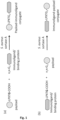
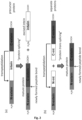
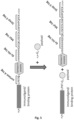
- the preferred payloads are small molecular weight toxins modified with short, preferably less than 13 (thirteen) amino acid long synthetic amino acid sequence, which renders them as substrates for sortase enzymes or split intein mediated covalent conjugation either at the N- or C-terminus of the immunoligands ( Figures 1 & 3 ). This conjugation is achieved in a site-specific manner and with defined stoichiometry, which is a distinguishing feature to conventional chemical conjugation of payloads to immunoligands, where the conjugation is a stochastic process, as disclosed further above.
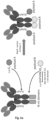
- the invention further discloses site specific transpeptidase, e.g., sortase mediated conjugation of multimeric immunoligands, preferably antibodies specifically with two different toxin molecules or other labels using different modifications of the subunits of the multimeric protein, e.g., antibody heavy and light chains, and different payloads modified with different, short amino acid stretches specific for different transpeptidases, in order to conjugate at least two different functional payloads to the multimeric immunoligand ( Fig. 6 ).
- site specific transpeptidase e.g., sortase mediated conjugation of multimeric immunoligands, preferably antibodies specifically with two different toxin molecules or other labels using different modifications of the subunits of the multimeric protein, e.g., antibody heavy and light chains, and different payloads modified with different, short amino acid stretches specific for different transpeptidases, in order to conjugate at least two different functional payloads to the multimeric immunoligand ( Fig. 6 ).
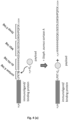
- the invention further discloses methods to add affinity purification and/or detection tags to the N- or C-termini of the immunoligands, which undergo enzyme-mediated transpeptidation. such that the removal of the affinity purification and/or detection tag can be utilized to select for immunologands with complete (100%) conjugation of the payload to the modified binding protein, by means of affinity resins that retain immunoligands that have not been completely conjugated, and therefore still retain the additional affinity purification and/or detection tag ( Fig. 4 ).
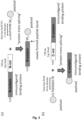
- the invention further discloses immunoligands in which a catalytic transpeptidase domain is directly fused to the N- or C-terminus of the protein to be conjugated, such that the transpeptidation activity is integral part of immunoligand to be conjugated, and no additional soluble sortase enzyme needs to be provided in the course of the transpeptidase-mediated conjugation reaction ( Fig. 5 ).
- the enzymatic conjugation of payloads to immunoligands by sortase enzymes allows site-specific and stoichiometric payload conjugation to proteins and immunoligands, lowering cost-of-goods and providing homogeneous immunoligand-payload conjugates, especially as the selectivity of the transpeptidases allows the conjugation of payloads to immunoligands in crude cell culture supernatant, and does not require purified components as in traditional linker-mediated chemical conjugation. Therefore, the use of sequence-specific transpeptidases for conjugation of payloads to immunoligands could significantly lower the cost of goods in immunoligand-payload, and particularly ADC manufacturing.
- transpeptidase The type of transpeptidase disclosed herein, the sortase enzymes, has been identified in a variety of gram-positive bacteria, like Staphylococcus, Streptococcus and Pneumococcus species, and catalyse the coupling of virulence factors to cell wall proteoglycans, in order to change the surface signature of the bacteria for evading an efficient immune response by the infected host (Mazmanian et al. (1999)).
- Sortase A enzyme of the gram-positive bacterium Staphylococcus aureus has been characterized first (Ton-That et al. (1999)) and has subsequently been characterized further as a tool for many protein modifications (Tsukiji (2009)).
- sortase enzymes The attraction of sortase enzymes is that the two molecules to be conjugated only require to be modified or expressed on one hand with a short 5 amino-acid long peptide tag (sortase tag, LPXTG in case of Staphylococcus aureus sortase A, X being any of the 20 naturally occuring aminoacids), and a short, preferably 3 to 5 amino acid long glycine stretch (Antos et al. (2009a)) ( Fig. 1 ), which can easily be added to each of the molecules to achieve either N-terminal or C-terminal conjugation of proteins. This allows to utilize the system on one hand for the coupling or conjugation of two proteins, but also for the conjugation of smaller molecules to proteins.
- Sortase enzymes have been widely described in the prior art for protein-protein or protein-peptide ligations (Mao et al. (2004), Parthasarathy et al. (2007) or WO2011/133704A2 ), even including circularization of proteins (Antos et al. (2009b)).
- the applications of sortase protein or peptide ligation also included protein or peptide ligation using antibody fragments, like Fab- and scFv-fragments with protein- or peptide labels (Möhlmann et al. (2011), Madej et al. (2012), or US2010/0055761A1 and WO2012/142659A1 ).
- sortase enzymes may accept substrates that contain a minimum of 3 glycine amino acids (Parthasarathy et al. (2007), therefore the invention may include payloads that contain at least three (3) glycine amino acid residues added to the payload molecule of interest, although even one or two glycine residues may be sufficient, and should be comprised by the method disclosed herein.
- payloads that contain at least three (3) glycine amino acid residues added to the payload molecule of interest, although even one or two glycine residues may be sufficient, and should be comprised by the method disclosed herein.
- the addition of few glycine amino acid residues can be achieved by conventional synthetic peptide chemistry, as described herein.
- glycine residues can be added either by adding codons for a number of glycine residues, preferably at least three glycine residues, in-frame to the open reading frame of the protein, or by conventional synthetic peptide chemistry such that the recombinant protein contains at least three N-terminal glycine amino acid residues.
- proteins and immunoligands can also be expressed with a different sortase recognition motif, e.g. a NPQTN pentapeptide motif specific for sortase B from Staphylococcus aureus which can then be conjugated to glycine modified payloads.
- a different sortase recognition motif e.g. a NPQTN pentapeptide motif specific for sortase B from Staphylococcus aureus which can then be conjugated to glycine modified payloads.
- multimeric immunoligands preferably but not limited to antibodies, which are composed of immunoglobulin heavy and light chains, allow the utilization of said different sortase recognition sequences added to the different polypeptides of such multimeric proteins (in case of antibodies adding different sortase recognition sequences to the antibody heavy and light chains), in order to allow conjugation of different payloads to said different polypeptides by performing sequential conjugations with Gly n -tagged payloads (n >2) in the presence of the respective sortase enzyme ( Fig. 6b ).
- an antibody needs to be expressed with different C-terminal modifications at heavy and light chains comprising different sortase recognition motifs for different sortase enzymes.
- Such an antibody can then sequentially be conjugated to two different payloads containing a glycine modification as described further above.
- This format may have the advantage that ADCs specifically be loaded with two different toxins, preferably interfering with a different cellular pathway will be more potent in cancer cell killing, because it is more difficult for a targeted cancer cell to evade the attack of two toxins comprised in the ADCs.
- a sortase pentapeptide recognition motif like the Staphylococcus aureus sortase A LPXTG motif, can be added selectively to individual polypeptides of multimeric immunoligands, in order to provide desired conjugation sites.
- this allows the generation of modified antibodies, either only containing sortase recognition motifs added to the heavy chains (resulting in two payloads per antibody conjugation), or only containing sortase recognition motifs added to the light chains (resulting in two payloads per antibody conjugation), or containing sortase recognition motifs added to the heavy and the light chains (resulting in four payloads per antibody conjugation).
- a multimeric protein preferably an antibody, which is composed of each two disulphide linked heavy and lights chains
- sortase enzyme mediated conjugation can be accomplished by sortase enzyme mediated conjugation, but that it is also possible to conjugate two different payloads to a multimeric protein, preferably an antibody, by utilizing two different sortase enzymes, recognizing different sortase peptide motifs, for instance sortase A and sortase B from Staphylococcus aureus, as mentioned further above ( Fig. 6b ).
- this may also include sortase enzymes of other sortase classes (e.g. sortases C, D, E, F), or sortase enzymes from other bacterial species, differing in their sortase motif specificity.
- Sortase-mediated conjugation of payloads to proteins and immunoligands can be achieved either by providing sortase recognition motif tagged proteins and at least tri-glycine tagged payloads and adding enzymatically active sortase enzyme or a functional fragment thereof as a soluble enzmye.
- the enzymatically active domain of sortase enzyme can also be provided as a domain fused to either the N- or C-terminus of the protein.
- Sortase-mediated conjugation of payloads can be performed at either the N- or the C-termini of proteins and immunoligands. This is only dependent on how the sortase-motif/glycine stretch are positioned at protein and payload ( Fig. 1 ).
- Another aspect of the invention is to improve the efficiency of sortase conjugation of payloads to proteins and immunoligands by adding affinity purification or detection tags, like e.g., but not limited to small peptide tags (e.g. histidine tags, strep-tag, MYC-tag or HA-tag) or larger protein affinity purification tags (e.g. maltose-binding protein (MBP) tag, Glutathione-S-transerase (GST) tag, or Chitin-binding tag) distal to the sortase recognition motif.
- affinity purification or detection tags like e.g., but not limited to small peptide tags (e.g. histidine tags, strep-tag, MYC-tag or HA-tag) or larger protein affinity purification tags (e.g. maltose-binding protein (MBP) tag, Glutathione-S-transerase (GST) tag, or Chitin-binding tag) distal to the sortase
- the affinity purification tag will be removed from the immunoligand to be conjugated as part of the transpeptidation reaction. This can be exploited to enrich fully payload conjugated immunoligands, as unreacted proteins and immunoligands, that still contain the affinity purification tag, can be removed by binding to a suitable affinity resin, while completely payload conjugated proteins and immunoligands will no longer contain the affinity purification tag, and can thus be specifically separated from the unreacted immunoligand substrates.
- This aspect of the invention is particularly powerful in the context of multimeric proteins and immunoligands, like the preferred antibodies, in which several payloads need to be conjugated.
- affinity purification tags located distal to the sortase transpeptidase conjugation site ensures that one can remove proteins and immunoligands in which the affinity purification tag is still present due to incomplete payload conjugation ( Fig. 5 ).
- this provides a significant advantage in the process to obtain homogeneous immunoligand/payload conjugates, and preferably ADCs in which small molecular weight toxins are site specifically conjugated to the C-termini of antibody heavy and/or light chains.
- the disclosed method provides a novel and efficient method to site-specifically and stoichiometrically conjugate payloads, preferably small molecular weight toxins to immunoligands, preferably antibodies, by which defined immunoligand/payload conjugates, preferably ADCs are generated, that are useful for the therapy of diseases, preferably of cancer.
- the method may also be utilized for the generation of immunoligand/payload conjugates useful for the diagnosis of diseases, preferably oncology diseases.
- the novel method allows generation covalent immunoligand/payload conjugates by utilization of peptide-bond breaking and forming enzymes (transpeptidases), including sortase enzymes, or catalytically active fragments thereof.
- Said enzymes can catalyze the covalent and site-specific conjugation of payloads containing short amino acid stretches (preferably shorter than 13 amino acids) either to the N- or C-termini of immunoligands which are suitably modified allowing sortase to break and to form peptide bonds in the course of the reaction.
- Immunoligands are preferably antibodies, for the site-specific conjugation of small molecular weight toxins, in order to generate antibody drug conjugates (ADCs) with defined antibody payload, or drug to antibody ratios.
- a method of producing an immunoligand/payload conjugate encompasses conjugating at least one payload to an immunoligand by means of a sequence-specific transpeptidase, or a catalytic domain thereof, wherein the immunoligand comprised in the immunoligand/payload conjugate is at least one selected from the group consisting of an antibody, antibody fragment, antibody-based binding protein, or an antibody mimetic, wherein
- the payload and/or the immunoligand is a protein
- said protein comprises, at its N- or C-terminus, an amino acid sequence which can be detected by the sequence-specific transpeptidase. If such amino acid sequence is lacking to the naive protein, it can be fused to the N- or C-terminus of said protein by recombinant methods known in the art.
- the payload and/or the immunoligand is not a protein
- such amino acid sequence which can be detected by the sequence-specific transpeptidase is to be conjugated to the former by conventional chemical crosslinking methods known in the art.
- Additional functionalities may be incorprated between the recognition sequence for a specific transpeptidase and the payload.
- This can be realized by chemical structures either being categorized by being cleavable (e.g. containing hydrazone, or disulfide chemistry, or specific peptide sequences for intracellular proteases) or being non-cleavable (e.g. containing thioether chemistry) following internalization into cells.
- Chemical structures containing hydrazone chemistry can selectively be cleaved within the intracellular compartment of lysosomes (lower pH compared to the systemic blood circulation).
- Peptide linkers have the potential to be selectively cleaved by lysosomal proteases (e.g. cathepsin-B) and have demonstrated increased serum stability and improved anti-tumor effects compared to hydrazone linkers.
- Valine-citruline (Val-Cit) pairs are the most commonly used peptide linkers and are ideally suited to work with the auristatin family of drugs such as monomethyl auristatin E (MMAE).
- Non-cleavable linkers have long been overlooked as researchers were convinced the cleaving of the linker was the most reasonable way to free the drug.
- conjugates can, upon binding to a membrane receptor, get rapidly internalized and once internalized, the immunoligand can be degraded to the point where the payload, e.g., the drug is exposed.
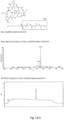
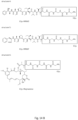
- thioether linkers use the SMCC (N-succinimidyl-4-(N-maleimidomethyl)- cyclohexane-1-carboxylate) linker (See Fig. 14a , structure 2).
- a small molecular payload is rendered as substrate for the sequence-specific transpeptidase by coupling of a peptide of less than 13 amino acids to the small molecular payload, such that it can be conjugated by a transpeptidase to the C-termini of a monoclonal antibody containing C-terminal modifications recognized by said transpeptidases.
- Such C-terminal modifications may be contained on either both heavy chains, or both light chains, or of heavy and light chains of a full-length antibody, thereby allowing generation of a site-specifically conjugated ADC with either drug-to-antibody ratio of 2 or 4 (DAR2 or DAR4).
- the immunoligand binds at least one entity selected from the group consisting of
- the term "receptor” means a cell surface molecule, preferably a cell surface molecule that (i) binds specific, or groups of specific, signalling molecules (i.e. a receptor, like, e.g., the VEGF receptor), and/or (ii) has no known ligand (i.e. an orphan receptor, like, e.g. HER2/neu).
- the natural receptors are expressed on the surface of a population of cells, or they merely represent the extracellular domain of such a molecule (whether such a form exists naturally or not), or a soluble molecule performing natural binding function in the plasma, or within a cell or organ.
- such receptor is a member of a signalling cascade that is involved in a particular pathogenic process (e.g., a receptor that belongs to a signalling cascade of a growth factor), or is expressed on the surface of a cell or particle that is involved in a pathological process, e.g., a cancer cell.
- a particular pathogenic process e.g., a receptor that belongs to a signalling cascade of a growth factor
- a pathological process e.g., a cancer cell.
- antigen means a substance that has the ability to induce a specific immune response, and may include surface proteins or protein complexes (e.g. ion channels). Often times, antigens are associated to pathogenic entities, e.g., a cancer cell.
- cytokine refers to small cell-signaling protein molecules that are secreted by numerous cells and are a category of signaling molecules used extensively in intercellular communication. Cytokines can be classified as proteins, peptides, or glycoproteins; the term “cytokine” encompasses a large and diverse family of regulators produced throughout the body by cells of diverse embryological origin.
- growth factor relates to naturally occurring substances capable of stimulating cellular growth, proliferation and cellular differentiation.
- a growth factor is a protein or a steroid hormone. Growth factors are important for regulating a variety of cellular processes.
- hormone relates to a chemical released by a cell, a gland, or an organ in one part of the body that sends out messages that affect cells in other parts of the organism.
- the term encompasses peptide hormones, lipid and phospholipid-derived hormones including steroid hormones, and monoamines.
- the immunoligand-payload conjugate can for example be directed to a specific site, e.g., to a pathogenic entity, e.g., a cancer cell, where the payload, e.g. a toxin or a chemotherapeutic agent, is delivered.
- the payload e.g. a toxin or a chemotherapeutic agent
- the systemic toxicity of the toxin or the chemotherapeutic agent is reduced, while the local concentration of the latter at the site of action is increased, thus provding a better efficacy while side effects are reduced.
- a respective signalling cascade can be inhibited by the binding of the immunoligand.
- the payload is a marker the latter can thus be used to mark a specific site, e.g., a cancer cell charcterized by a given surface antigen detected by the immunoligand, for diagnosis.
- the immunologand/payload conjugate can for example be directed to the site the growth factor cytokine or hormone usuall binds to, in order to deliver the payload in a site-specific manner. Further, a respective signalling cascade can be inhibited by the binding of the immunoligand.
- the term "to bind” means the well-understood interaction or other nonrandom association between immunoligands, e.g., antibodies, or antibody fragments, and their targets.
- such binding reaction is characterized by high specifity and/or sensitivity to the target.
- the binding reaction is characterized by a dissociation constant (Kd) ⁇ 10 -3 M, preferably ⁇ 10 -4 M, ⁇ 10 -5 M, ⁇ 10 -6 M, ⁇ 10 -7 M, ⁇ 10 -8 M, ⁇ 10 -9 M, and most preferred ⁇ 10 -10 .
- At least one catalytic domain of the sequence-specific transpeptidase is fused to the C-terminus of the immunoligand.
- Such fusion may take place by recombinant engineering, or by chemical coupling.
- the enzymatic activity leading to the site-specific conjugation of the immunoligand to the payload does not need to be added to the reaction as a separate recombinant enzyme, but is rather part of protein substrate to be conjugated.
- the payload e.g., a toxin
- the payload is preferably rendered as substrate for sortase conjugation by addition of a small number of glycine amino acid residues, preferably 3 or 5 glycine residues.
- transpeptidases preferably sortase enzymes for the generation of antibody drug conjugates, in which small molecular weight toxins are conjugated to full-length antibodies, has not yet been described in the prior art (Panowski et al. (2014)).
- Sortase enzymes have been identified in a variety of gram-positive bacteria, like Staphylococcus, Streptococcus and Pneumococcus species, and catalyze, in vivo, the coupling of virulence factors to cell wall proteoglycans, in order to change the surface signature of the bacteria for evading an efficient immune response by the infected host (Mazmanian et al. (1999)).
- the sortase A enzyme of the gram-positive bacterium Staphylococcus aureus has been characterized first (Ton-That et al. (1999)) and has subsequently been characterized further as a tool for many protein modifications (Tsukiji (2009)).
- sortase tags short peptide tags
- Staphylococcus aureus sortase A is for example LPXTG at the C-terminus of one molecule (e.g., the payload), and a short 3 to 5 amino acid glycine stretch at the N-terminus of the other molecule (e.g., the immunoligand, see Fig. 1 ).
- These peptide tags can either be fused to the molecules, or conjugated thereto by means of conventional crosslinking chemistry.
- transpeptidase-mediated conjugation occurs under physiologic aqueous buffer conditions and physiologic temperatures, thereby minimally affecting the protein or antibody integrity in the conjugation reaction. This feature ensures optimal functionality of the resulting conjugate
- the payload comprised in the immunoligand/ payload conjugate is at least one selected from the group consisting of
- marker also called “detection tag”
- detection tag may refer to any molecule or moiety that comprises one or more appropriate chemical substances or enzymes, which directly or indirectly generate a detectable compound or signal in a chemical, physical or enzymatic reaction.
- processing tag may encompass affinity tags, solubilization tags, chromatography tags and epitope tags.
- Affinity tags also used as purification tags
- CBP chitin-binding protein
- MBP maltose binding protein
- GST glutathione-S-transferase
- the poly(His) tag preferably a 6xHis tag, is a widely-used processing tag; it binds to metal matrices.
- Solubilization tags are used, especially for recombinant proteins expressed in chaperone-deficient species such as E. coli, to assist in the proper folding in proteins and keep them from precipitating. These include thioredoxin (TRX) and poly(NANP).
- Chromatography tags are used to alter chromatographic properties of the protein to afford different resolution across a particular separation technique. Often, these consist of polyanionic amino acids, such as FLAG-tag.
- Epitope tags are short peptide sequences which are chosen because high-affinity antibodies can be reliably produced in many different species. Epitope tags are usually derived from viral genes, which explain their high immunoreactivity. Epitope tags include e.g. the V5-tag, MYC-tag, and HA-tag. These tags are particularly useful for western blotting, immunofluorescence and immunoprecipitation experiments, although they also find use in protein purification.
- Processing tags find many other usages, such as specific enzymatic modification (such as biotin ligase tags) and chemical modification (FlAsH) tag. Often tags are combined to produce multifunctional modifications of the protein.
- said marker is at least one selected from the group consisting of
- said drug is at least one selected from the group consisting of
- cytokine refers to small cell-signaling protein molecules that are secreted by numerous cells and are a category of signaling molecules used extensively in intercellular communication. Cytokines can be classified as proteins, peptides, or glycoproteins; the term “cytokine” encompasses a large and diverse family of regulators produced throughout the body by cells of diverse embryological origin. In the present context, cytokines are for example meant to impair, or even kill, pathogenic entity, e.g., a cancer cell.
- radioactive agent relates to an entity which has at least one atom with an unstable nucleus, and which is thus prone to undergo radioactive decay, resulting in the emission of gamma rays and/or subatomic particles such as alpha or beta particles, which have a cell killing effect.
- radioactive agents are meant to impair, or even kill, pathogenic entity, e.g., a cancer cell.
- anti-inflammatory drug relates to compounds that reduce inflammation.
- This can be, e.g., steroids, just like specific glucocorticoids (often referred to as corticosteroids), which reduce inflammation or swelling by binding to glucocorticoid receptors.
- the term further encompasses non-steroidal anti-inflammatory drugs (NSAIDs), which counteract the cyclooxygenase (COX) enzyme. On its own, COX enzyme synthesizes prostaglandins, creating inflammation. In whole, the NSAIDs prevent the prostaglandins from ever being synthesized, reducing or eliminating the pain.
- NSAIDs Immune Selective Anti-Inflammatory Derivatives
- ImSAIDs Immune Selective Anti-Inflammatory Derivatives
- toxin relates to a molecule which is toxic to a living cell or organism.
- Toxins may be peptides, or proteins or preferably small molecular weight compounds, that are meant to impair, or even kill, pathogenic entity, e.g., a cancer cell.
- Toxins as meant herein, encompass, in particular, cellular toxins.
- said toxin is a small molecular toxin, i.e., having a molecular weight of ⁇ 2500 Da.
- chemotherapeutic agent relates to molecules that have the functional property of inhibiting a development or progression of a neoplasm, particularly a malignant (cancerous) lesion, such as a carcinoma, sarcoma, lymphoma, or leukemia. Inhibition of metastasis or angiogenesis is frequently a property of anti-cancer or chemotherapeutic agents.
- a chemotherapeutic agent may be a cytotoxic or chemotherapeutic agent.
- said chemotherapeuic agent is a small molecular weight cytostatic agent, which inhibits or suppresses growth and/or multiplication of cancer cells.
- Conjugating cytokines, radioactive agents, toxins or chemotherapeutic agents to an immunologand can help to reduce side effects and risks related to their administration, because
- the following table is a non restrictive list of potential targets/antigens (1 st column) and examples for existing immunoligands targeting the former (2 nd column).
- the 3 rd column shows a non restrictive list of potential toxins, cytokines or chemotherapeutic agents. Note that the examples from the 1 st and the 3 rd column can be combined with one another ad libitum, while hundereds of further targets and payloads exist. Respective target/payload combinations not explicitly mentioned in the table are encompassed by the scope of the present invention.
- EGFR Endothelial Growth factor receptor
- said immunoligand comprises at least two subunits each being conjugated to a cytotoxic compound not exceeding a molecular weight of 2'500 Daltons that is cytotoxic to mammalian cells and impairs and kills cancer cells.
- At least two different payloads can be conjugated to the at least two subunits.
- This option provides a versatile toolbox with which a large variety of different immunoligand-payload constructs can be created.
- a bispecific dual-domain immunoligand can be conjugated with two different payloads, for example one marker and one toxin.
- the at least two different payloads are toxic payloads interfering with one or more cellular pathways.
- Such embodiment can be accomplished, e.g., by conjugating the two different payloads to each the 2 light chains of a full-length antibody, and to the 2 heavy chains of a full length antibody, respectively, by utilizing two different sortase enzymes, recognizing different sortase recognition motifs, plus an antibody that contains different C-terminal modifications at heavy and light chains comprising the respective recognition motifs for said different sortase enzymes.
- an Antibody Drug Conjugate can be created which is composed of each two full-length Ig light chains and Ig heavy chains, containing different payloads covalently attached to said heavy and light chains.
- Such embodiment results, preferably, in the synchronous conjugation of the at least two subunits for the generation of immunoligand payloads with equal payload conjugation to each of said subunits.
- said immunoligand with at least two subunits is being conjugated with at least 80% efficiency per conjugation site.
- the present invention further relates to said immunoligand with at least two subunits which contains a peptide spacer sequence of at least two amino acids, preferably 2-5 amino acids, appended to the C-termini of at least one of the two subunits.
- the method allows a stoichiometrically defined relationship between immunoligand and payload.
- said stoichiometrically defined relationship between immunoligand and payload is achieved by removal of partially reacted C-terminally modified immunoligand substrate.
- Such removal can, for example, be carried out via affinity purification. Said approach results, preferably, in a homogeneous drug to immunoligand ratio.
- the immunoligand has an affinity purification tag distal to the sortase recognition motif fused to the protein or immunoligand, preferably wherein the affinity purification tag is removed from the immunoligand as part of the transpeptidase reaction.
- said removal is carried out by affinity purification using an affinity tag positioned C-terminal to the transpeptidase recognition motif or domain.
- Standard methods known to the skilled person can be used for this purpose, e.g., HIS tag, CBP tag, CYD (covalent yet dissociable NorpD peptide) tag, Strep II tag, FLAG tag, HPC (heavy chain of protein C) tag, and the GST and MBP protein fusion tags.
- the binding site can thus be exactly determined, so that the characterizing features of the immunoligand (e.g., target specificity) or the payload (e.g., toxicity) are not affected.
- the present invention further relates to an immunoligand/payload conjugate which is obtainable with said method for use in the treatment of a human or animal subject suffering from a neoplastic disease.
- the immunoligand/payload conjugate according to the invention can have beneficial effects, e.g, by directing the latter to a specific site, e.g., a cancer cell, a site of neuropathology, or a site of an autoimmune reaction.
- the payload e.g., a toxin, a chemotherapeutic agent, a cytokine or a drug is delivered at said site, e.g., to deplete a cancer cell, to act anti-proliferatively on a cancer cell, and the like.
- the immunoligand/payload conjugate according to the invention can have beneficial effects, e.g, by directing the latter to a specific site, e.g., a cancer cell, where the payload, e.g. a toxin or a chemotherapeutic agent, is delivered, e.g., to deplete a cancer cell, to act anti-proliferatively on a cancer cell.
- a specific site e.g., a cancer cell
- the payload e.g. a toxin or a chemotherapeutic agent
- the systemic toxicity of the toxin or the chemotherapeutic agent is reduced, while the local of the latter at the site of action is increased, thus provding a better efficacy while side effects are reduced.
- a respective signalling cascade can be inhibited by the binding of the immunoligand.
- the payload is a marker the latter can thus be used to mark a specific site, e.g., a cancer cell charcterized by a given surface antigen detected by the immunoligand, for diagnosis.
- the site-specifity of the conjugating process ensures a high reproducibility and overall performance of the respective immunoligand/payload conjugate particularly for clinical and/or therapeutic applications.
- neoplastic disease refers to an abnormal state or condition of cells or tissue characterized by rapidly proliferating cell growth or neoplasm. In a more specific meaning, the term relates to cancerous processes, e.g., tumors and/or leukemias.
- neuropathological diseases encompasses, among others, neurodegenerative diseases, neuroinflammatory diseases or seizure disorders.
- Neurodegenerative diseases are characterized by progressive loss of structure or function of neurons, including death of neurons. Many neurodegenerative diseases including Parkinson's, Alzheimer's, Huntington's, Amyotrophic lateral sclerosis and Multiple Sclerosis occur as a result of neurodegenerative processes. There are many parallels between different neurodegenerative disorders including atypical protein assemblies as well as induced cell death. Neurodegeneration can further be found in many different levels of neuronal circuitry ranging from molecular to systemic.
- Neurodegenerative diseases and “Neuroinflammatory diseases” have a partially overlapping scope. Inflammatory responses are a hallmark of neurodegenerative disease and participate, or contribute, through different mechanisms in the neuronal cell death. The tryptophan catabolism along the Kynurenine pathway (KP) represents one of these mechanisms.
- KP Kynurenine pathway
- Seizure disorders are brain disorders which are characterized by abnormal signaling between brain cells. Seizure disorders can affect part of the brain (Partial seizures) or the entire brain (Generalized seizures). The most prominent Seizure disorder is epilepsy.
- Autoimmune disease encompasses organ-specific autoimmune diseases, in which an autoimmune response is directed against a single tissue, such as Crohn's disease and ulcerative colitis, Type I diabetes mellitus, myasthenia gravis, vitiligo, Graves' disease, Hashimoto's disease, Addison' s disease and autoimmune gastritis and autoimmune hepatitis.
- organ-specific autoimmune diseases in which an autoimmune response is directed against a single tissue, such as Crohn's disease and ulcerative colitis, Type I diabetes mellitus, myasthenia gravis, vitiligo, Graves' disease, Hashimoto's disease, Addison' s disease and autoimmune gastritis and autoimmune hepatitis.
- non-organ specific autoimmune diseases in which an autoimmune response is directed against a component present in several or many organs throughout the body.
- Such autoimmune diseases include, for example, rheumatoid arthritis, disease, systemic lupus erythematosus, progressive systemic sclerosis and variants, polymyositis and dermatomyositis.
- Additional autoimmune diseases include pernicious anemia including some of autoimmune gastritis, primary biliary cirrhosis, autoimmune thrombocytopenia, Sjögren's syndrome, multiple sclerosis and psoriasis.
- pernicious anemia including some of autoimmune gastritis, primary biliary cirrhosis, autoimmune thrombocytopenia, Sjögren's syndrome, multiple sclerosis and psoriasis.
- infectious disease includes, but is not limited to any disease that is caused by an infectious organism.
- Infectious organisms may comprise viruses, (e.g., single stranded RNA viruses, single stranded DNA viruses, human immunodeficiency virus (HIV), hepatitis A, B, and C virus, herpes simplex virus (HSV), cytomegalovirus (CMV) Epstein-Barr virus (EBV), human papilloma virus (HPV)), parasites (e.g., protozoan and metazoan pathogens such as Plasmodia species, Leishmania species, Schistosoma species, Trypanosoma species), bacteria (e.g., Mycobacteria, in particular, M.
- viruses e.g., single stranded RNA viruses, single stranded DNA viruses, human immunodeficiency virus (HIV), hepatitis A, B, and C virus, herpes simplex virus (HSV), cytomegalovirus (CMV
- tuberculosis Salmonella, Streptococci, E. coli, Staphylococci
- fungi e.g., Candida species, Aspergillus species
- Pneumocystis carinii Pneumocystis carinii, and prions.
- the present invention further relates to a use of a low molecular-weight cytotoxic compound not exceeding a molecular weight of 2'500 Daltons for conjugation thereof by means of a sortase enzyme to an immunoligand selected from the group consisting of an antibody, antibody fragment, antibody-based binding protein, or an antibody mimetic, wherein
- the present invention also further relates to said method of producing an immunoligand/payload conjugate as described above, wherein the immunoligand-payload conjugation is performed in crude cell culture supernatant.
- Gly n -modification means that an oligo- or polypepide consisting of n Glycin residues has been added to said payload.
- low molecular-weight payload compound shall encompass payloads that have a molecular weight of 2500 Da or less.
- Said payload is, preferably, at least one selected from the group consisting of
- Said marker is at least one selected from the group consisting of
- Said drug is at least one selected from the group consisting of
- said toxin is preferably a small molecular toxin, i.e., having a molecular weight of ⁇ 2500 Da.
- said toxin is at least one selected from the group constisting of
- the conjugation is a transpeptidease-mediated conjugation, preferably with a sortase.
- the immunologand is an antibody.
- said immunoligand is an antibody.
- ADC antibody drug conjugate
- the immunologand-payload conjugation reaction is performed in crude cell culture supernatant. This means that, preferably, the conjugation reaction may take place with unpurified or only partially purified components.
- Example 1 Cloning of expression vectors and expression of a CD19 monoclonal antibody with C-terminal LPETG sortase tag and additional 6x-His and strepII affinity purification tags
- a recombinant antibody In order to perform the C-terminal conjugation of a payload to an antibody, first a recombinant antibody needs to be expressed that contains C-terminal modifications, including a recognition motif, e.g. for sortase A of Staphylococcus aureus.
- first ORFs for heavy and light chains of an anti-human CD19 specific antibody can be gene synthesized, e.g. at contract research organizations (CROs) offering such gene synthesis services, like e.g. Genscript (www.genscript.com, Piscataway, NJ, USA).
- CROs contract research organizations
- Genscript www.genscript.com, Piscataway, NJ, USA
- the heavy and light chain sequences of a humanized anti-human CD19 antibody hBU12 can be found in patent US 8,242,252 B2 under Seq 53 (variant HF) and Seq 58 (variant LG).
- the V H and V L regions of this anti-human CD19 antibody are as follows:
- sequences can be fused to human IgG 1 constant heavy and constant light chain regions containing additional C-terminal tags, in order to realize the method disclosed herein.
- the human constant IgG1 heavy chain region can be synthesized with additional 3'-codons, encoding an LPETG Staphylococcus aureus sortase A recognition tag, followed by a 6xHis tag (HHHHHH), a MYC-tag (EQKLISEEDL) and a strep II tag (WSHPQFEK) resulting in a sequence, which is as follows:
- flanking restriction enzyme sites e.g. HindIII and NotI
- pCDNA3.1-hygro (+) Invitrogen
- SEQ ID NO 13 coding region of human IgG1 V H -C H heavy chain for hBU12 with C-terminal LPETG sortase tag, 6xHis tag and a strepII tag underlined, and HindIII and NotI cloning sites shaded
- SEQ ID NO 14 coding region of human IgG1 V L -C L kappa light chain for hBU12 with C-terminal LPETG sortase tag, 6xHis tag, Myc tag, and a strepII tag underlined, and HindIII and NotI cloning sites shaded
- constructs allow upon transfection into mammalian cells, like e.g. - but not limited to -CHO cells, that are typically used for recombinant antibody expression, the expression of the anti-human CD19 specific humanized antibody hBU12 with C-terminal additions of a sortase A tag, a 6xHis tag, a Myc tag, and a strepII tag at both the IgH and IgL chains.
- Example 2 Cloning of expression vectors for monoclonal antibody with C-terminal N-intein domain of Ssp GyrB 11 split-intein with additional C-terninal 6xHis and strepII affinity purification tags (example not according to the present invention)
- the coding regions for a C-terminal fusion of N-intein domain of Ssp GyrB 11 split-intein to either the IgH and IgL chain can be designed as follows, in order to gene synthesize the genes by a qualified CRO (e.g. Genscript (www.genscript.com, Piscataway, NJ, USA), with the same elements for the anti-human CD19 antibody as disclosed further above.
- CRO e.g. Genscript (www.genscript.com, Piscataway, NJ, USA)
- the 150 amino acid sequence of the N-intein domain of Ssp GyrB 11 split-intein can be found in a publication by Appleby et al. (2009), and is as follows:
- the complete IgG1 heavy chain coding region for anti-human CD19 antibody hBU12 with C-terminal extension comprising the N-intein domain of Ssp GyrB 11 split-intein, followed by a 6xHis-tag and a strepII tag can be designed as disclosed in SEQ ID NO 17 below:
- amino acid sequence SEQ ID NO 18 amino acids of the N-intein domain are underlined, 6xHis tag and strepII tag are shaded
- a complete IgG1 kappa light chain coding region for anti-human CD19 antibody hBU12 with C-terminal extension comprising the N-intein domain of Ssp GyrB 11 split-intein, followed by a 6xHis-tag and a strepII tag can be designed as disclosed in SEQ ID NO 19 below:
- amino acid sequence SEQ ID NO 20 amino acids of the N-intein domain are underlined, 6xHis tag and strepII tag are shaded
- the coding regions for the N-intein modified heavy and light chains of the anti-human CD19 specific antibody as disclosed in SEQ ID NOs 17 and 19, respectively, can then be synthesized with flanking restriction enzyme sites (e.g. HindIII and NotI) such that they can be cloned into a standard mammalian expression vector, such as pCDNA3.1-hygro (+) (Invitrogen), by standard molecular biology methods known in the art.
- flanking restriction enzyme sites e.g. HindIII and NotI
- SEQ ID NO 21 coding region of human IgG1 V H -C H heavy chain for hBU12 with C-terminal N-intein domain of Ssp GyrB S11 split intein, followed by 6xHis tag strepII tag (underlined), and HindIII and NotI cloning sites (shaded):
- SEQ ID NO 22 (coding region of human IgG1 V L -C L kappa light chain for hBU12 with C-terminal Ssp GyrB S11 N-intein domain, 6xHis tag and a strepII tag underlined, and HindIII and NotI cloning sites shaded):
- pcDNA3.1-hygro(+) based expression vectors disclosed in SEQ ID NOs 21 and 22 allow upon transfection into mammalian cells, like e.g. but not limited to CHO cells, that are typically used for recombinant antibody expression, the expression of the anti-human CD19 specific humanized antibody hBU12 with C-terminal N-intein domain fused, followed by a 6xHis tag and a strepII tag at both the IgH and IgL chains.
- Example 3 Cloning and expression of recombinant Sortase A enzyme from Staphylococcus aureus.
- the ORF of Sortase A from Staphylococcus aureus is published in Genbank and can be found under entry: AF162687.1.
- the aa-sequence in that record reads is shown as SEQ ID NO 23 (amino acid sequence of sortase A from Staphylococcus aureus ):
- the coding region for the 6xHis tagged sortase A fragment of Staphylococcus aureus, as provided in SEQ ID NO 25, can be cloned into a standard bacterial expression vector, like e.g. pET29 (Novagen), in order to transform E. coli strain BL21(DE3) (Novagen) and to generate an E. coli clone that can be used for the bacterial production of recombinant sortase A according to standard methods known in the art.
- a standard bacterial expression vector like e.g. pET29 (Novagen)
- E. coli strain BL21(DE3) Novagen
- the cells can then be harvested by centrifugation and resuspended in lysis buffer (50 mM Tris pH 8.0, 300 mM NaCl supplemented with 1 mM MgCl2, 2 units/mL DNAseI (NEB), 260 nM aprotinin, 1.2 ⁇ M leupeptin, and 1 mM PMSF). Cells can then be lysed by sonication and clarified supernatant can then be purified on Ni-NTA agarose following the manufacturer's instructions.
- lysis buffer 50 mM Tris pH 8.0, 300 mM NaCl supplemented with 1 mM MgCl2, 2 units/mL DNAseI (NEB), 260 nM aprotinin, 1.2 ⁇ M leupeptin, and 1 mM PMSF.
- Example 4 Expression and purification of sortase tagged or N-intein tagged recombinant antibodies in CHO cells (example not according to the present invention)
- cleared cell culture supernatant is run over a protein A column of appropriate size and capacity equilibrated with PBS. Residual medium is washed with PBS and eventually bound IgG can be eluted with low pH buffer, like 0.1 M citric acid-NaOH, pH 3.0. Eluted IgG should be neutralized immediately with 1/10th volume of 1M Tris/Cl, pH7.4. Combined fractions containing IgG can then be dialized against PBS over night at 4°C.
- Example 4 provide the skilled person in the art with the instruction to produce sufficient quantities of purified, recombinant antibodies from the constructs disclosed in Examples 1 and 2.
- Example 5 Generation of site-specifically C-terminally MMAE toxic payload conjugated monoclonal antibodies by sortase and split-intein mediated transpeptidation
- Monomethyl Auristatin A toxin coupled to a 5 amino acid glycine stretch and a 6 amino acid SSp GyrB S11 C-int split intein peptide according to the formulas provided below, can be custom ordered from qualified chemistry CROs.
- Conjugation of 5 glycine amino acid modified MMAE toxic payload to LPETG sortase A tagged IgG1 antibody can be achieved by mixing appropriate ratios of LPETG tagged IgG1 antibody with the glycine-modified MMAE toxin disclosed in Formula 1 (e.g. at 1:1 ratio and 50 ⁇ M concentration) and with recombinant sortase A (production described in Example 3) (e.g.
- physiologic incubation buffer like e.g.; 5 mM Tris/Cl, 15 mM NaCl, 6 mM CaCl 2 , pH 8.0, and incubating at 37°C to 40°C for a minimum of 2 hours.
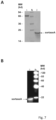
- Efficiency of the conjugation can be monitored by analyzing the absence of the 6xHis tag and/or the strepII tag after stopping the reaction, e.g. by western-blot analysis or ELISA with anti-His-tag and/or anti strepII tag antibodies.
- Conjugation of Ssp GyrB S11 C-intein amino acid modified MMAE toxic payload to N-intein tagged IgG1 antibody can be achieved by mixing appropriate ratios of N-intein tagged IgG1 antibody with the C-intein amino acid-modified MMAE toxin disclosed in Formula 2 (e.g. at 1:10 or 1:25 ratio at 5 ⁇ M concentration of the IgG antibody) using physiologic incubation buffer, like e.g.; 20 mM Tris/Cl, 250 mM NaCl, 1 mM EDTA, pH 8.5, and incubating at room temperature or at 37°C a minimum of 4 hours.
- physiologic incubation buffer like e.g.; 20 mM Tris/Cl, 250 mM NaCl, 1 mM EDTA, pH 8.5, and incubating at room temperature or at 37°C a minimum of 4 hours.
- Efficiency of the conjugation can be monitored by analyzing the absence of the 6xHis tag and/or the strepII tag after stopping the reaction, e.g. by western-blot analysis or ELISA with anti-His-tag and/or anti strepII tag antibodies.
- Completely conjugated product can be enriched by Nickel-NTA columns, or streptactin column binding, which bind to the 6xHis tag or strepII tag, respectively, which can only be present in incompletely reacted IgG1 substrate.
- Final IgG-payload conjugate can eventually be purified using protein A purification as described above.
- Examples 1-5 disclosed above allow a person skilled in the art to practice the invention of enzymatically conjugating a toxic payload site-specifically to the C-terminus either using sortase A mediated or split-intein mediated transpeptidation.
- Example 6 Production of Trastuzumab with C-terminal GS (glycine-serine) linker, LPETG Sortase motif and additional 6x-His and Strep II affinity purification tags on either heavy or light chain
- Antibody expression constructs encoding monoclonal antibody Trastuzumab (Tras) heavy and light chains, either untagged (SEQ ID NOs: 31 - 34) or C-terminally tagged with GS (glycine-serine) linker, LPETG Sortase tag, 6xHis tag, and Strep II tag (SEQ ID NOs: 35 - 38) were generated essentially as described in Example 1.
- Tras-HC-GS-LHS and Tras-LC-GS-LHS were produced in CHO cells by co-transfection of the corresponding expression constructs.
- Tras-HC-GS-LHS is a Trastuzumab variant with an unmodified light chain (SEQ ID NOs: 35 - 36), and a heavy chain C-terminally tagged with GS (glycine-serine) linker, LPETG Sortase motif, 6xHis-tag, and strepII-tag (SEQ ID NOs: 33 - 34).
- Tras-LC-GS-LHS is a Trastuzumab variant with an unmodified heavy chain (SEQ ID NOs: 31 - 32), and a light chain C-terminally tagged with GS linker, LPETG Sortase motif, 6xHis-tag, and strepII-tag (SEQ ID NOs: 37 - 38).
- CHO cell transfection and affinity purification of antibodies by proteinA-sepharose chromatography was done essentially as described in Example 4.
- Example 7 Sortase A-mediated conjugation of heavy or light chain of Trastuzumab with Gly5-modified DM1 toxin
- the Tras-HC-GS-LHS conjugation reaction was incubated at 25°C for 2h; the Tras-LC-GS-LHS conjugation reaction was incubated at 25°C for 18h.
- Each reaction mixture was then passed over a Strep-Tactin ® Sepharose columns (IBA Life-Sciences, Göttingen, Germany). For this, 1ml of Strep-Tactin Agarose was packed under gravity into a fritted column and equilibrated with 2 column volumes of equilibration buffer (100 mM Tris-HCl, pH 8.0; 150 mM NaCl; 1 mM EDTA). Each conjugation mixture was passed twice down the same column using gravity flow (to increase residence time on the resin).
- the resin was washed with an additional column volume of equilibration buffer to maximize conjugate yield and the pool then applied immediately to a protein A column.
- a 1ml Protein A HiTrap column was equilibrated with 10 column volumes of buffer (25mM sodium phosphate pH 7.5). Each conjugation reaction was then applied to an equilibrated column and the column washed with a further 5 column volumes of buffer.
- Bound conjugate was eluted with 5 column volumes of elution buffer (0.1M succinic acid, pH 2.8) with 1 column volume fractions collected (into tubes containing 25% v/v 1M Tris Base to neutralise the acid) and analysed for protein content.
- Protein containing fractions were pooled and formulated by G25 column chromatography. For this, NAP 25 columns of an appropriate size for each scale of manufacture were used to formulate the conjugates for long term storage. The columns were equilibrated, loaded and eluted with 10mM Sodium Succinate pH 5.0, 100mg/mL Trehalose, 0.1% % w/v Polysorbate 20 (Formulation Buffer for Kadcyla ® (T-DM1), marketed by Roche/Genentech) according to the manufacturer's instructions.
- T-DM1 Treatment Buffer for Kadcyla ®
- Tras-HC-GS-LHS and Tras-LC-GS-LHS DM1-conjugate yields were, respectively, 8.0mg (76.2%) and 5.9mg (56.2%).
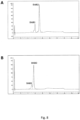
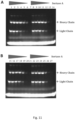
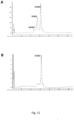
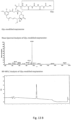
- HIC profiles revealed that for both, Tras-HC-GS-LHS and Tras-LC-GS-LHS, there was no detectable unconjugated mAb left, and a major fraction of each mAb was loaded with 2 drugs (see Figure 8 ).
- Example 8 In vitro toxicity assay with sortase A - mediated Trastuzumab-DM1 conjugates
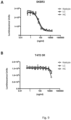
- Cytotoxicity of DM1-sortaseA-conjugated Tras-HC-GS-LHS and DM1-sortaseA-conjugated Tras-LC-GS-LHS was investigated and compared to Kadcyla ® (Roche/Genentech) using SKBR3 cells, a human breast cancer cell line overexpressing the cognate antigen of trastuzumab (Tras) HER-2/neu, and T47D-5R cells, a breast cancer cell line naturally expressing low levels of HER-2/neu, engineered to be devoid of cell surface HER-2/neu (Graus-Porta et al. (1995)). Cells were plated on 96 well plates in 100 ⁇ l complete DMEM (10'000 cells per well).
- the EC 50 values for Her-2/neu positive breast cancer cell line SKBR3 were: Kadcyla ® , 32.4ng/ml; DM1-conjugated Tras-HC-GS-LHS, 45.6ng/ml; Tras-LC-GS-LHS, 51.4ng/ml, and thus are within similar range of potency in the in vitro tumor cell killing experiment.
- no specific cellular toxicity was detectable with the Her-2/neu negative breast cancer cell line T47D-5R, demonstrating the functional equivalence of sortaseA, enzymatically conjugated ADC versus traditional, chemically conjugated ADC, when the comparison entails the same targeting antibody and the same toxin (DM1) ( Fig. 9 ).
- Example 9 Optimization of synchronization of sortaseA mediated antibody heavy chain and light chain payload conjugation by variation of peptide-spacer length inserted between C-terminal end of antibody heavy chain and light chain and the sortaseA recognition motif
- antibody heavy chain and light chain expression constructs encoding chimeric CD30-specific mAb Ac10 heavy and light chains (HC sequence derived from US 2008213289A1 , Seq1, LC sequence derived from US 2008213289A1 , Seq9), C-terminally modified with sequences comprising or not comprising a 2 amino acid GS (glycine-serine) spacer, and comprising a LPETG sortaseA recognition motif, and a strep-II purification tag (SEQ ID NOs: 39 - 46), have been cloned essentially according to instructions disclosed in Example 1.
- Ac10-HC-GS-LHS/LC-GS-LHS and Ac10-HC-LS/LC-LS were produced in CHO cells by co-transfection of the corresponding plasmids.
- Ac10-HC-GS-LHS/LC-GS-LHS is an Ac10 variant with heavy and light chains modified at the C-termini of each HC and LC with a GS peptide spacer, a LPETG sortaseA motif, a 6xHis tag, and a strep-II tag (SEQ ID NOs:39 - 42; Table 3).
- Ac10-HC-LS/LC-LS is an Ac10 variant with heavy and light chains modified at the C-termini with LPETG Sortase motif and strep-II tag without the 2-peptide GS linker (SEQ ID NOs: 43 - 46; Table 3).
- CHO cell transfection and affinity purification of antibodies by protein A-sepharose chromatography was done essentially as described in Example 4.
- Gly 5 -FITC was sortaseA conjugated to two Ac10 variants in 1x Sortase buffer (25mM Tris-HCl, pH8.2; 150mM NaCl; 7.5mM CaCl 2 ), as shown in Table 4. After 4h at 42°C, reaction products were analyzed by denaturing, reducing SDS-PAGE gel electrophoresis, and FITC was visualized by placing the gels on a UV box ( Fig. 10 ). Conjugation to the heavy chain was found to be highly efficient irrespective of the presence absence of the GS-linker between heavy chain C-terminus and LPETG Sortase recognition motif.
- sortaseA mediated conjugation to the light chain was significantly less efficient in comparison to sortaseA mediated heavy chain conjugation. Furthermore, it was surprisingly found that coupling efficiency was dramatically affected by the presence or absence of the 2 peptide GS (glycine-serine) spacer positioned between the C-terminus of the antibody light chains and the LPETG sortaseA recognition motif. Whereas in the presence of the GS-linker, conjugation to the light chain took place with about 5-10x lower efficiency than to the heavy chain, it was about 50-100x less efficient in the absence of a linker. Therefore, it was concluded that increasing the peptide spacer length between the light chain and the LPETG Sortase recognition motif might further improve conjugation efficiency.
- 2 peptide GS glycine-serine
- mAbs Ac10-HC-LS/LC-GS-LS, Ac10-HC-LS/LC-GGS-LS, Ac10-HC-LS/LC-GGGS-LS and Ac10-HC-LS/LC-GGGGS-LS were produced in CHO cells by co-transfection of the corresponding expression constructs.
- the heavy chain is C-terminally modified with an LPETG Sortase recognition motif and a strep-II purification tag (SEQ ID NOs: 43 - 44; Table 3).
- the light chain is C-terminally modified with an LPETG Sortase tag and strep-II tag containing either a GS, GGS, GGGS, or a GGGGS peptide spacer (SEQ ID NOs: 47 - 54; Table 3) in front of the LPETG motif.
- LPETG Sortase tag and strep-II tag containing either a GS, GGS, GGGS, or a GGGGS peptide spacer (SEQ ID NOs: 47 - 54; Table 3) in front of the LPETG motif.
- Example 10 Generation of homogeneous ADC by strepII-tag affinity purification
- Sortase A mediated conjugation with Gly 5 -labeled vc-PAB-MMAE was performed with anti-CD30 antibody Ac10 modified at the C-termini of either the heavy chains, or the light chains with sequences comprising an LPETG sortase A motif and a strepII-affinity purification tag as provided in Table 6 below:
- Table 6 C-terminally modified antibody Ac10 with either HC or LC modification Antibody Heavy Chain modification SEQ ID NOs Light Chain modification SEQ ID NOs Ac10-HC-LS LPETG-G-WSHPQFEK 43,44 none 29, 30 Ac-10-LC Ac10-HC none 27, 28 GS-LPETG-G-HHHHHH-G-WSHPQFEK 41,42 Ac10-LC-GS-LHS
- the expression vectors encoding the Ac10 heavy or light chain sequences of Table 4 have been constructed essentially as disclosed in Example 1. CHO cell transfection and affinity purification of antibodies by protein A-sepharose chromatography was done essentially as described in Example 4.
- Sortase A mediated conjugation of heavy or light chaing sortase motif tagged anti-CD30 antibodies with Gly 5 -labeled vc-PAB-MMAE was performed essentially according to the protocol provided in Example 7.
- Maytansinol (0.6 g, 1.1 mmol) (Clearsynth Labs, Mumbai, India) was dissolved in anhydrous THF (6 ml) and anhydrous DMF (3 ml) after which 1,2 ml DIEA (Sigma-Aldrich, order #496219) was added. The solution was placed under argon atmosphere. Zinc triflate (1.2 g) and NMeAla NCA (0.7 g) were added in one portion. The mixture was sonicated until the solid was dissolved. The reaction mixture was stirred at room temperature for 2 days and then diluted with ethyl acetate (100 ml). It was washed with saturated NaHCO 3 (aq.
- any toxin can be functionalized for sortase mediated enzymatic conjugation, if either 5 glycines (as shown here), or any number of glycine residues greater or equal than one glycine, are attached to the toxins (see Fig. 14 ).
- Example 12 In vivo tumor inhibition of sortase A-conjugated Trastuzumab-DM1 in SKOV3 ovarial carcinoma xenograft models.
- SKOV3 tumor cells in 200 ⁇ l PBS/Matrigel (1:1 ratio) were implanted subcutaneously into the left flanks of 5-6 weeks old female NMRI nude mice.
- Primary tumor volumes were monitored by calipering. After a mean tumor volume of 100-200mm 3 was reached, tumor-bearing animals were randomized into 3 Groups according to tumor sizes (10 animals per group). On the day of randomization (day 0) and on day 21, animals of Groups 1, 2 and 3 were injected intravenously with, respectively, 5ml/kg PBS, 15 mg/kg Kadcyla ® , or 15 mg/kg sortase A-conjugated Trastuzumab-DM1. Tumor volumes were measured bi-weekly by calipering ( Fig. 15 ). The study was terminated after 39 days and animals were euthanized according to accepted animal experimentation guidelines.
- Example 13 Sortase A-mediated conjugation in crude CHO cell supernatant.
- the Trastuzumab variant Tras-HC-LS/LC-GGGGS-LS consisting of heavy chains C-terminally tagged with LPETG Sortase motif and Strep II purification tag (SEQ ID NOs: 055-056), and light chains C-terminally tagged with a 5 amino acid Gly 4 -Ser spacer (GGGGS), LPETG Sortase motif and Strep II tag (SEQ ID NOs: 057-058), was produced in CHO cells essentially as described in Example 4.
- the resulting serum-free crude cell supernatant contained approximately 157mg/L Tras-HC-LS/LC-GGGGS-LS and was directly used for conjugation essentially as described in Example 9, by adding Sortase buffer, Gly 5 -FITC, and serial dilutions of Sortase A directly to the supernatant.
- Tras-HC-LS/LC-GGGGS-LS purified by protein A affinity chromatography was also conjugated under otherwise identical conditions. After 4 hours at 42°C, the reactions were analyzed by denaturing, reducing SDS-PAGE gel electrophoresis. After visualizing FITC by placing the gel on a UV box, protein was stained using Coomassie Brilliant Blue ( Fig. 16 ).
Landscapes
- Health & Medical Sciences (AREA)
- Chemical & Material Sciences (AREA)
- Engineering & Computer Science (AREA)
- Bioinformatics & Cheminformatics (AREA)
- Life Sciences & Earth Sciences (AREA)
- General Health & Medical Sciences (AREA)
- Medicinal Chemistry (AREA)
- Organic Chemistry (AREA)
- Veterinary Medicine (AREA)
- Pharmacology & Pharmacy (AREA)
- Animal Behavior & Ethology (AREA)
- Public Health (AREA)
- Immunology (AREA)
- General Chemical & Material Sciences (AREA)
- Chemical Kinetics & Catalysis (AREA)
- Epidemiology (AREA)
- Nuclear Medicine, Radiotherapy & Molecular Imaging (AREA)
- Proteomics, Peptides & Aminoacids (AREA)
- Biochemistry (AREA)
- Molecular Biology (AREA)
- Genetics & Genomics (AREA)
- Neurology (AREA)
- Neurosurgery (AREA)
- Biomedical Technology (AREA)
- Biophysics (AREA)
- Wood Science & Technology (AREA)
- Zoology (AREA)
- Oncology (AREA)
- Communicable Diseases (AREA)
- Analytical Chemistry (AREA)
- Cell Biology (AREA)
- Microbiology (AREA)
- Biotechnology (AREA)
- General Engineering & Computer Science (AREA)
- Psychiatry (AREA)
- Hospice & Palliative Care (AREA)
- Peptides Or Proteins (AREA)
- Medicinal Preparation (AREA)
- Medicines That Contain Protein Lipid Enzymes And Other Medicines (AREA)
- Enzymes And Modification Thereof (AREA)
Claims (12)
- Verfahren zur Herstellung eines Immunliganden/Nutzlast-Konjugats, wobei das Verfahren das Konjugieren von mindestens einer Nutzlast an einen Immunliganden mittels einer sequenzspezifischen Transpeptidase, oder einer katalytischen Domäne davon, umfasst, wobei der Immunligand, der in dem Immunliganden/Nutzlast-Konjugat enthalten ist, mindestens einer ist, der ausgewählt ist aus der Gruppe, die aus einem Antikörper, einem Antikörperfragment, einem Antikörper-basierten Bindungsprotein, oder einem Antikörper-Mimetikum besteht, wobeia) das Antikörperfragment ausgewählt ist aus der Gruppe bestehend aus (i) einem Fab-Fragment, (ii) einem F(ab')2-Fragment ; (iii) einem Schwer-Kettenabschnitt eines Fab(Fd)-Fragments, der aus den VH- und CH1-Domänen besteht; (iv) einem variablen Fragment (Fv); (v) einem Domänen-Antikörper-Fragment (dAb), das eine einzelne variable Domäne umfasst; (vi) einer isolierten Komplementaritäts-Bestimmungs-Region (CDR); (vii) einem Einzel-Ketten-Fv-Fragment (scFv); (viii) einem Diabody; und (ix) einem linearen Antikörper, der ein Paar von Tandem-Fv-Segmenten (VH-CH1-VH-CH1) umfasst, die zusammen mit Komplementaritäts-Leichtketten-Polypeptiden ein Paar von Antigenbindungsregionen bilden;b) das Antikörper-basierte Bindungsprotein ein Protein ist, das mindestens eine von einem Antikörper abgeleitete VH-, VL- oder CH-Immunglobulindomäne enthält,c) das Antikörper-Mimetikum aus der Gruppe ausgewählt ist, die aus Ankyrin-Repeat-Proteinen, C-Typ-Lektinen, Transferrinen, Lipocalinen, 10. Typ-III-Domänen von Fibronektin, Cystein-Knoten oder Anknoten, SH-3-Domänen, und Fyn SH3 besteht,wobei die sequenzspezifische Transpeptidase ein Sortase-Enzym ist, das ein Pentapeptid-Erkennungsmotiv erkennt, das an ein C-terminales Ende des Immunliganden hinzugefügt ist, wobei es sich bei der Nutzlast um eine zytotoxische Verbindung handelt, die ein Molekulargewicht von 2'500 Dalton nicht überschreitet und für Säugetierzellen zytotoxisch ist und Krebszellen beeinträchtigt und tötet,und wobei der Immunligand ein Sortase-Erkennungsmotiv aufweist und die zytotoxische Verbindung mit einer Glyn-Modifikation modifiziert ist, wobei n>1, undwobei das Sortase-Erkennungsmotiv ein Pentapeptid ist, das an den C-Terminus des Immunliganden gebunden ist.
- Das Verfahren nach dem vorgenannten Anspruch, wobei mindestens eine katalytische Domäne der sequenzspezifischen Transpeptidase mit dem C-Terminus des Immunliganden fusioniert ist.
- Das Verfahren nach einem der vorgenannten Ansprüche, wobei besagter Immunligand mindestens zwei Untereinheiten umfasst, die jeweils an eine zytotoxische Verbindung konjugiert ist, die ein Molekulargewicht von 2'500 Dalton nicht überschreitet und für Säugetierzellen zytotoxisch ist und Krebszellen beeinträchtigt und tötet.
- Das Verfahren nach Anspruch 3, wobei besagter Immunligand mit mindestens zwei Untereinheiten eine Peptidspacer-Sequenz von mindestens zwei Aminosäuren, vorzugsweise 2 - 5 Aminosäuren, enthält, die an den C-Terminus von mindestens einer der beiden Untereinheiten angehängt ist.
- Das Verfahren nach einem der vorgenannten Ansprüche, wobei das Verfahren eine stöchiometrisch definierte Beziehung zwischen Immunligand und Nutzlast ermöglicht.
- Das Verfahren nach Anspruch 5, wobei das Verfahren die stöchiometrisch definierte Beziehung zwischen Immunligand und Nutzlast durch Entfernen eines teilweise umgesetzten C-terminalen modifizierten Immunligandensubstrats erreicht wird.
- Das Verfahren nach Anspruch 6, wobei der Immunligand einen Affinitätsreinigungs-Anhang aufweist, der distal des Sortase-Erkennungsmotivs mit dem Protein oder Immunliganden verschmolzen ist, vorzugsweise wobei der Affinitätsreinigungs-Anhang als Teil der Transpeptidasereaktion von dem Immunliganden entfernt wird.
- Das Verfahren nach einem der vorgenannten Ansprüche, wobei das Verfahren eine ortsspezifische Konjugation der Nutzlast an den Immunliganden ermöglicht.
- Ein Immunligand/Nutzlast-Konjugat, erhältlich mit einem Verfahren gemäß der oben genannten Ansprüche, wobei das Konjugat einen Antikörper, ein Antikörperfragment, ein Antikörper-basiertes Bindungsprotein oder ein Antikörper-Mimetikum umfasst, wobeia) das Antikörperfragment ausgewählt ist aus der Gruppe bestehend aus (i) einem Fab-Fragment, (ii) einem F(ab')2-Fragment; (iii) einem Schwer-Kettenabschnitt eines Fab(Fd)-Fragments, der aus den VH- und CH1-Domänen besteht; (iv) einem variablen Fragment (Fv); (v) einem Domänen-Antikörperfragment (dAb), das eine einzelne variable Domäne umfasst; (vi) einer isolierten Komplementaritäts-Bestimmungs-Region (CDR); (vii) einem Einzel-Ketten-Fv-Fragment (scFv); (viii) einem Diabody; und (ix) einem linearen Antikörper, der ein Paar von Tandem-Fv-Segmenten (VH-CH1-VH-CH1) umfasst, die zusammen mit Komplementaritäts-Leichtkettenpolypeptiden ein Paar von Antigenbindungsregionen bilden;b) das Antikörper-basierte Bindungsprotein ein Protein ist, das mindestens eine von Antikörpern abgeleitete VH-, VL- oder CH-Immunglobulindomäne enthält,c) das Antikörper-Mimetikum aus der Gruppe ausgewählt ist, die aus Ankyrin-Repeat-Proteinen, C-Typ-Lektinen, Transferrinen, Lipocalinen, 10. Typ-III-Domänen von Fibronektin, Cystein-Knoten oder Anknoten, SH-3-Domänen und Fyn SH3 besteht,und eine Nutzlast, bei der es sich um eine zytotoxische Verbindung mit einem Molekulargewicht von nicht mehr als 2'500 Dalton handelt, die für Säugetierzellen zytotoxisch ist und Krebszellen beeinträchtigt und tötet,und wobei die sequenzspezifische Transpeptidase ein Sortase-Enzym ist, das ein Pentapeptid-Erkennungsmotiv erkennt, das an ein C-terminales Ende des Immunliganden hinzugefügt wird,wobei der Immunligand ein Sortase-Erkennungsmotiv aufweist und die zytotoxische Verbindung mit einer Glyn-Modifikation modifiziert ist, wobei n>1, undwobei das Sortase-Erkennungsmotiv ein Pentapeptid ist, das an den C-Terminus des Immunliganden gebunden ist.
- Das Immunligand/Nutzlast-Konjugat, erhältlich mit einem Verfahren nach Anspruch 1, zur Verwendung bei der Behandlung eines menschlichen oder tierischen Subjekts, das an einer neoplastischen Erkrankung leidet.
- Verwendung einer niedermolekularen zytotoxischen Verbindung mit einem Molekulargewicht von nicht mehr als 2'500 Dalton zu deren Konjugation mittels eines Sortase-Enzyms an einen Immunliganden, welcher ausgewählt ist aus der Gruppe bestehend aus einem Antikörper, einem Antikörperfragment, einem Antikörper-basierten Bindungsprotein oder einem Antikörper-Mimetikum, wobeia) das Antikörperfragment ausgewählt ist aus der Gruppe bestehend aus (i) einem Fab-Fragment, (ii) einem F(ab')2-Fragment; (iii) einem Schwer-Kettenabschnitt eines Fab(Fd)-Fragments, der aus den VH- und CH1-Domänen besteht; (iv) einem variablen Fragment (Fv); (v) einem Domänen-Antikörperfragment (dAb), das eine einzelne variable Domäne umfasst; (vi) einer isolierten Komplementaritäts-Bestimmungs-Region (CDR); (vii) einem Einzel-Ketten-Fv-Fragment (scFv); (viii) einem Diabody; und (ix) einem linearen Antikörper, der ein Paar von Tandem-Fv-Segmenten (VH-CH1-VH-CH1) umfasst, die zusammen mit Komplementaritäts-Leichtketten-polypeptiden ein Paar von Antigenbindungsregionen bilden;b) das Antikörper-basierte Bindungsprotein ein Protein ist, das mindestens eine von Antikörpern abgeleitete VH-, VL- oder CH-Immunglobulindomäne enthält,c) das Antikörper-Mimetikum aus der Gruppe ausgewählt ist, die aus Ankyrin-Repeat-Proteinen, C-Typ-Lektinen, Transferrinen, Lipocalinen, 10. Typ-III-Domänen von Fibronektin, Cystein-Knoten oder Anknoten, SH-3-Domänen und Fyn SH3 besteht,wobei der Immunligand ein Sortase-Erkennungsmotiv aufweist und die niedermolekulare zytotoxische Verbindung mit einer Glyn-Modifikation modifiziert ist, wobei n>1,wobei das Sortase-Erkennungsmotiv ein Pentapeptid ist, das an den C-Terminus des Immunliganden gebunden ist,und wobei die zytotoxische Verbindung ein Molekulargewicht von 2'500 Dalton nicht überschreitet, für Säugetierzellen zytotoxisch ist und Krebszellen beeinträchtigt und tötet.
- Das Verfahren nach einem der Ansprüche 1 - 8, bei dem die Immunliganden-Nutzlast-Konjugation in einem unbearbeiteten Zellkulturüberstand durchgeführt wird.
Priority Applications (1)
| Application Number | Priority Date | Filing Date | Title |
|---|---|---|---|
| EP14710285.9A EP2968583B1 (de) | 2013-03-15 | 2014-03-14 | Verfahren zur herstellung eines immunoliganden/nutzlastkonjugats durch ein sequenz-spezifisches transpeptidase enzym |
Applications Claiming Priority (5)
| Application Number | Priority Date | Filing Date | Title |
|---|---|---|---|
| US201361787371P | 2013-03-15 | 2013-03-15 | |
| EP13159484.8A EP2777714A1 (de) | 2013-03-15 | 2013-03-15 | Verfahren zur Herstellung eines Immunoliganden/Nutzlastkonjugats durch ein Sequenz-spezifisches Transpeptidase Enzym |
| US201461939754P | 2014-02-14 | 2014-02-14 | |
| PCT/EP2014/055173 WO2014140317A2 (en) | 2013-03-15 | 2014-03-14 | Method of producing an immunoligand/payload conjugate |
| EP14710285.9A EP2968583B1 (de) | 2013-03-15 | 2014-03-14 | Verfahren zur herstellung eines immunoliganden/nutzlastkonjugats durch ein sequenz-spezifisches transpeptidase enzym |
Publications (2)
| Publication Number | Publication Date |
|---|---|
| EP2968583A2 EP2968583A2 (de) | 2016-01-20 |
| EP2968583B1 true EP2968583B1 (de) | 2025-06-04 |
Family
ID=47900856
Family Applications (2)
| Application Number | Title | Priority Date | Filing Date |
|---|---|---|---|
| EP13159484.8A Withdrawn EP2777714A1 (de) | 2013-03-15 | 2013-03-15 | Verfahren zur Herstellung eines Immunoliganden/Nutzlastkonjugats durch ein Sequenz-spezifisches Transpeptidase Enzym |
| EP14710285.9A Active EP2968583B1 (de) | 2013-03-15 | 2014-03-14 | Verfahren zur herstellung eines immunoliganden/nutzlastkonjugats durch ein sequenz-spezifisches transpeptidase enzym |
Family Applications Before (1)
| Application Number | Title | Priority Date | Filing Date |
|---|---|---|---|
| EP13159484.8A Withdrawn EP2777714A1 (de) | 2013-03-15 | 2013-03-15 | Verfahren zur Herstellung eines Immunoliganden/Nutzlastkonjugats durch ein Sequenz-spezifisches Transpeptidase Enzym |
Country Status (16)
| Country | Link |
|---|---|
| US (4) | US9872923B2 (de) |
| EP (2) | EP2777714A1 (de) |
| JP (3) | JP7213610B2 (de) |
| CN (3) | CN109260478A (de) |
| AU (1) | AU2014230129B2 (de) |
| BR (2) | BR112015023589B1 (de) |
| CA (1) | CA2903581A1 (de) |
| DK (1) | DK2968583T3 (de) |
| ES (1) | ES3034413T3 (de) |
| HU (1) | HUE072754T2 (de) |
| IL (3) | IL240893B (de) |
| MX (1) | MX365547B (de) |
| PL (1) | PL2968583T3 (de) |
| SG (2) | SG10201903962PA (de) |
| WO (1) | WO2014140317A2 (de) |
| ZA (1) | ZA201506005B (de) |
Families Citing this family (84)
| Publication number | Priority date | Publication date | Assignee | Title |
|---|---|---|---|---|
| EP2777714A1 (de) | 2013-03-15 | 2014-09-17 | NBE-Therapeutics LLC | Verfahren zur Herstellung eines Immunoliganden/Nutzlastkonjugats durch ein Sequenz-spezifisches Transpeptidase Enzym |
| AU2014258109B2 (en) | 2013-04-25 | 2016-09-29 | Abtlas Co., Ltd. | Method for refining protein including self-cutting cassette and use thereof |
| EP3138568B1 (de) * | 2014-04-29 | 2019-04-17 | Genequantum Healthcare (Suzhou) Co., Ltd. | Neues stabiles antikörper-wirkstoff-konjugat, herstellungsverfahren dafür und verwendung davon |
| MX376535B (es) | 2014-12-17 | 2025-03-07 | Hoffmann La Roche | Reacción enzimática en un solo recipiente para conjugación de polipéptido doble en un solo paso usando sortasa. |
| EP3234177A1 (de) | 2014-12-17 | 2017-10-25 | F. Hoffmann-La Roche AG | Aktivitätstest für bindungsbildende enzyme |
| SG10202101603TA (en) | 2014-12-23 | 2021-03-30 | Nbe Therapeutics Ag | Binding protein drug conjugates comprising anthracycline derivatives |
| WO2016128410A1 (en) | 2015-02-09 | 2016-08-18 | Nbe Therapeutics Ag | Maytansine-drug conjugates of her- 2 specific binding proteins generated by site specific sortase-enzyme mediated conjugation |
| CA2978182A1 (en) * | 2015-03-17 | 2016-09-22 | Regeneron Pharmaceuticals, Inc. | Amino acid acylation reagents and methods of using the same |
| JP6998862B2 (ja) | 2015-09-25 | 2022-02-04 | エフ.ホフマン-ラ ロシュ アーゲー | 可溶性ソルターゼa |
| ES2896475T3 (es) * | 2015-09-25 | 2022-02-24 | Hoffmann La Roche | Cadenas pesadas de inmunoglobulina recombinante que comprenden un bucle de conjugación de sortasa y conjugados de las mismas |
| CN108026560A (zh) | 2015-09-25 | 2018-05-11 | 豪夫迈·罗氏有限公司 | 在低共熔溶剂中使用分选酶的转酰胺反应 |
| EP3353310B1 (de) | 2015-09-25 | 2020-04-29 | H. Hoffnabb-La Roche Ag | Verfahren zur herstellung von thioestern unter verwendung einer sortase a |
| EA201891066A1 (ru) | 2015-10-30 | 2018-10-31 | ЭнБиИ-ТЕРАПЬЮТИКС АГ | Антитела к ror1 |
| WO2017072366A1 (en) * | 2015-10-30 | 2017-05-04 | Nbe-Therapeutics Ag | Anti-mesothelin antibodies |
| UA125718C2 (uk) | 2016-01-20 | 2022-05-25 | Зе Скріппс Ресеарч Інстітьют | Композиції антитіл до ror1 і пов'язані з ними способи |
| AU2017209313A1 (en) | 2016-01-20 | 2018-08-09 | The Scripps Research Institute | ROR2 antibody compositions and related methods |
| CN105925596A (zh) * | 2016-02-23 | 2016-09-07 | 上海交通大学 | 基于内含肽的药用重组蛋白的合成方法 |
| CN106397598B (zh) * | 2016-02-23 | 2020-07-14 | 上海交通大学 | 多价多特异性抗体及免疫杂合蛋白的表达和制备方法 |
| MA45328A (fr) | 2016-04-01 | 2019-02-06 | Avidity Biosciences Llc | Compositions acide nucléique-polypeptide et utilisations de celles-ci |
| MX2018015683A (es) | 2016-06-17 | 2019-05-27 | Magenta Therapeutics Inc | Composiciones y métodos para el agotamiento de células. |
| EP3272864A1 (de) | 2016-07-20 | 2018-01-24 | Paul Scherrer Institut | Festphasenimmobilisierung von mikrobieller transglutaminase-mtg auf mikrokugeln für proteinkonjugation |
| US10738338B2 (en) | 2016-10-18 | 2020-08-11 | The Research Foundation for the State University | Method and composition for biocatalytic protein-oligonucleotide conjugation and protein-oligonucleotide conjugate |
| SG10202107429WA (en) | 2017-01-06 | 2021-08-30 | Avidity Biosciences Inc | Nucleic acid-polypeptide compositions and methods of inducing exon skipping |
| KR102725761B1 (ko) | 2017-01-20 | 2024-11-04 | 하이델베르크 파마 리서치 게엠베하 | Cd137+ 세포의 고갈을 위한 조성물 및 방법 |
| WO2019016381A1 (en) | 2017-07-20 | 2019-01-24 | Nbe-Therapeutics Ag | MULTISPECIFIC ANTIBODY PRODUCT BINDING TO DIFFERENT ROR1 EPITOPES |
| WO2019016392A1 (en) * | 2017-07-20 | 2019-01-24 | Nbe-Therapeutics Ag | HUMAN ANTIBODIES BINDING TO ROR2 |
| GB201711809D0 (en) | 2017-07-21 | 2017-09-06 | Governors Of The Univ Of Alberta | Antisense oligonucleotide |
| WO2019023247A1 (en) | 2017-07-25 | 2019-01-31 | Immutics, Inc. | TREATMENT OF CANCER BY BLOCKING THE INTERACTION OF TIM-3 AND ITS LIGAND |
| KR102486090B1 (ko) | 2017-08-07 | 2023-01-10 | 엔비이-테라퓨틱스 아게 | 생체 내 내성이 높은 항체 약물 결합체 |
| KR102697329B1 (ko) | 2017-09-19 | 2024-08-23 | 폴 슈레 앙스띠뛰 | 트랜스글루타미나제 컨쥬게이션 방법 및 링커 |
| WO2019071028A1 (en) | 2017-10-04 | 2019-04-11 | Avidity Biosciences Llc | NUCLEIC ACID-POLYPEPTIDE COMPOSITIONS AND USES THEREOF |
| CN107759699A (zh) * | 2017-10-18 | 2018-03-06 | 银丰生物工程集团有限公司 | 靶向cd30抗原的转基因t细胞及其制备方法与应用 |
| WO2019113393A1 (en) | 2017-12-06 | 2019-06-13 | Avidity Biosciences Llc | Compositions and methods of treating muscle atrophy and myotonic dystrophy |
| US12037370B2 (en) | 2018-02-26 | 2024-07-16 | Research Institute At Nationwide Children's Hospital | Split-immunotoxins for boosting oncolytic virus toxicity |
| CA3093477A1 (en) | 2018-03-13 | 2019-09-19 | Zymeworks Inc. | Anti-her2 biparatopic antibody-drug conjugates and methods of use |
| CA3096754A1 (en) | 2018-05-10 | 2019-11-14 | Cis Pharma Ag | Biocompatible copolymer containing multiple active agent molecules |
| CN108593909A (zh) * | 2018-05-23 | 2018-09-28 | 苏州立禾生物医学工程有限公司 | 一种定点标记免疫试剂的方法、标记免疫试剂及应用 |
| US20210388112A1 (en) * | 2018-07-09 | 2021-12-16 | National University Corporation Kumamoto University | Cyclic Single-Chain Antibody |
| US20210246189A1 (en) * | 2018-09-03 | 2021-08-12 | Technische Universitaet Muenchen | A double peptide tag combining reversibility and flexible functionalization |
| CN112888710B (zh) | 2018-09-30 | 2023-06-09 | 美国杰科实验室有限公司 | 一种多肽组合物 |
| EP3636284A1 (de) | 2018-10-11 | 2020-04-15 | NBE Therapeutics AG | Bindende protein-toxin-konjugate mit anthracyclinen, und deren verwendung in immun-onkologischen anwendungen |
| WO2020081493A1 (en) | 2018-10-16 | 2020-04-23 | Molecular Templates, Inc. | Pd-l1 binding proteins |
| EP3647419A1 (de) | 2018-11-02 | 2020-05-06 | NBE Therapeutics AG | Sortase f und deren verwendung in verfahren zur konjugation |
| IL312067B2 (en) | 2018-12-21 | 2025-08-01 | Avidity Biosciences Inc | Anti-transferrin receptor antibodies and uses thereof |
| JP2022523333A (ja) | 2019-01-30 | 2022-04-22 | トゥルーバインディング,インコーポレイテッド | 抗gal3抗体およびその使用 |
| KR20220144753A (ko) * | 2019-03-19 | 2022-10-27 | 폴 슈레 앙스띠뛰 | 글리신 기반 링커를 사용한 트랜스글루타미나제 컨쥬게이션 방법 |
| US12497615B2 (en) | 2019-04-25 | 2025-12-16 | Avidity Biosciences, Inc. | Nucleic acid compositions and methods of multi-exon skipping |
| CN114375297A (zh) | 2019-06-06 | 2022-04-19 | 艾维迪提生物科学公司 | Una亚酰胺及其用途 |
| CA3142283A1 (en) | 2019-06-06 | 2020-12-10 | Avidity Biosciences, Inc. | Nucleic acid-polypeptide compositions and uses thereof |
| WO2020252015A1 (en) * | 2019-06-10 | 2020-12-17 | Sutro Biopharma, Inc. | Immunomodulator antibody drug conjugates and uses thereof |
| US11918649B2 (en) | 2019-09-18 | 2024-03-05 | Molecular Templates, Inc. | PD-L1-binding molecules comprising Shiga toxin a subunit scaffolds |
| GB201914468D0 (en) | 2019-10-07 | 2019-11-20 | Crescendo Biologics Ltd | Binding Molecules |
| AU2020376310A1 (en) | 2019-10-30 | 2022-03-24 | Cis Biopharma Ag | Biocompatible polymeric drug carriers for delivering active agents |
| EP4684799A2 (de) | 2019-12-06 | 2026-01-28 | TrueBinding, Inc. | Antikörper zur unterbrechung der wechselwirkung von gal3 und insulinrezeptor oder integrinen und verfahren zur verwendung davon |
| CA3081503A1 (en) | 2019-12-06 | 2021-06-06 | Zymeworks Inc. | Methods of using a bispecific antigen-binding construct targeting her2 in combination with cdk4/6 inhibitors for the treatment of breast cancer |
| CA3172111A1 (en) | 2020-03-19 | 2021-09-23 | Barbora MALECOVA | Compositions and methods of treating facioscapulohumeral muscular dystrophy |
| EP4126066B1 (de) | 2020-03-27 | 2025-11-19 | Avidity Biosciences, Inc. | Zusammensetzungen und verfahren zur behandlung von muskeldystrophie |
| EP4157338A4 (de) | 2020-05-26 | 2024-11-13 | TrueBinding, Inc. | Verfahren zur behandlung von entzündungskrankheiten durch galectin-3-blockierung |
| IL302017A (en) | 2020-10-25 | 2023-06-01 | Araris Biotech Ag | Means and methods for creating antibody-linker conjugates |
| WO2022122709A1 (en) | 2020-12-07 | 2022-06-16 | Sotio Biotech A.S. | Antibody-drug conjugates based on humanized cldn18.2 antibodies |
| CN116917484A (zh) | 2021-01-28 | 2023-10-20 | 启德医药科技(苏州)有限公司 | 连接酶融合蛋白及其应用 |
| EP4304658A4 (de) | 2021-03-08 | 2025-03-12 | Genequantum Healthcare (Suzhou) Co., Ltd. | Antikörper-immunagonist-konjugat und anwendungen davon |
| EP4308242A1 (de) | 2021-03-17 | 2024-01-24 | Molecular Templates, Inc. | Pd-l1-bindende proteine mit shigatoxin-a-untereinheitsgerüsten und cd8+-t-zellantigenen |
| KR20230170769A (ko) | 2021-04-14 | 2023-12-19 | 진콴텀 헬스케어 (쑤저우) 씨오., 엘티디. | 링커, 접합체 및 그 응용 |
| CN115369127A (zh) * | 2021-05-18 | 2022-11-22 | 苏州有诺真生物科技有限公司 | 一种基于基因改造脊椎动物的携带通用定点偶联接口的抗体的制备方法 |
| JP2024526764A (ja) | 2021-07-13 | 2024-07-19 | トゥルーバインディング,インコーポレイテッド | タンパク質凝集を防止する方法 |
| US20240350649A1 (en) * | 2021-08-05 | 2024-10-24 | Octagon Therapeutics, Inc. | Treatment and diagnosis of immune disorders relating to aberrant immune cells |
| US20240350589A1 (en) | 2021-08-13 | 2024-10-24 | Cytune Pharma | Il-2/il-15rbetagamma agonist combination with antibody-drug conjugates for treating cancer |
| CN113777295B (zh) * | 2021-09-15 | 2024-03-19 | 江南大学 | 用于检测肿瘤标志物pd-l1的高灵敏度量子点探针、制备方法及应用 |
| CN118265544A (zh) | 2021-09-16 | 2024-06-28 | 艾维迪提生物科学公司 | 治疗面肩肱型肌营养不良的组合物和方法 |
| EP4429701A4 (de) | 2021-11-09 | 2025-12-31 | Truebinding Inc | Verfahren zur behandlung oder hemmung von herz-kreislauf-erkrankungen |
| JP2025503504A (ja) | 2021-12-23 | 2025-02-04 | マイリキュール,インコーポレイテッド | ポリヌクレオチドの送達のための組成物 |
| CN118591394A (zh) * | 2022-01-28 | 2024-09-03 | 启德医药科技(苏州)有限公司 | 抗体药物偶联物、药物组合物及用途 |
| US12383631B2 (en) | 2022-02-23 | 2025-08-12 | Bright Peak Therapeutics Ag | Immune antigen specific IL-18 immunocytokines and uses thereof |
| US12071621B2 (en) | 2022-04-05 | 2024-08-27 | Avidity Biosciences, Inc. | Anti-transferrin receptor antibody-PMO conjugates for inducing DMD exon 44 skipping |
| EP4554626A2 (de) | 2022-07-15 | 2025-05-21 | Genequantum Healthcare (Suzhou) Co., Ltd. | Anti-trop2-antikörper und konjugat daraus |
| US20260034230A1 (en) | 2022-07-29 | 2026-02-05 | Regeneron Pharmaceuticals, Inc. | Compositions and methods for transferrin receptor (tfr)-mediated delivery to the brain and muscle |
| AU2023322567A1 (en) | 2022-08-08 | 2025-02-27 | Atb Therapeutics | Humanized antibodies against cd79b |
| KR20250116795A (ko) | 2022-11-14 | 2025-08-01 | 리제너론 파마슈티칼스 인코포레이티드 | 별아교세포로의 섬유아세포 성장 인자 수용체 3-매개된 전달을 위한 조성물 및 방법 |
| US12491257B2 (en) | 2023-06-27 | 2025-12-09 | Avidity Biosciences, Inc. | Compositions and methods of using PRKAG2-targeting antibody-oligonucleotide conjugates |
| AU2024308906A1 (en) | 2023-06-30 | 2026-02-05 | Avidity Biosciences, Inc. | Compositions and methods of using pln-targeting antibody-oligonucleotide conjugates |
| US20250197467A1 (en) | 2023-08-23 | 2025-06-19 | Bright Peak Therapeutics Ag | Activatable il-18 immunocytokines and uses thereof |
| US20250186597A1 (en) | 2023-08-23 | 2025-06-12 | Bright Peak Therapeutics Ag | Targeted immune activation with il-18 immunocytokines |
| WO2025083208A1 (en) | 2023-10-19 | 2025-04-24 | Boehringer Ingelheim International Gmbh | Synthesis of morpholine derivatives and compounds therefore |
Family Cites Families (35)
| Publication number | Priority date | Publication date | Assignee | Title |
|---|---|---|---|---|
| ZA932523B (en) | 1992-04-10 | 1994-10-08 | Res Dev Foundation | Immunotoxins directed against cd33 related surface antigens |
| EP0831917A2 (de) | 1995-06-07 | 1998-04-01 | Innogenetics N.V. | Immunotoxine spezifisch gegen cd80 and cd86 exprimierende zellen |
| WO2002046208A2 (en) | 2000-11-01 | 2002-06-13 | Elusys Therapeutics, Inc. | Method of producing biospecific molecules by protein trans-splicing |
| DE10341812A1 (de) | 2003-09-10 | 2005-04-07 | Ganymed Pharmaceuticals Ag | Differentiell in Tumoren exprimierte Genprodukte und deren Verwendung |
| WO2005051976A2 (en) * | 2003-11-20 | 2005-06-09 | Ansata Therapeutics, Inc. | Protein and peptide ligation processes and one-step purification processes |
| KR100918746B1 (ko) | 2004-09-06 | 2009-09-24 | 교와 핫꼬 기린 가부시키가이샤 | 항 a33 항체 |
| CN101193916B (zh) | 2004-12-09 | 2012-09-05 | 森托科尔公司 | 抗整联蛋白免疫缀合物、方法和用途 |
| DE102005061934A1 (de) | 2005-12-23 | 2007-06-28 | Philipps-Universität Marburg | Verfahren zur Herstellung eines chemisch modifizierten Proteins |
| EP1996236A2 (de) | 2006-03-22 | 2008-12-03 | National Institute of Immunology | Neue biokonjugate als therapeutische mittel und ihre synthese |
| US8993295B2 (en) * | 2006-07-20 | 2015-03-31 | The General Hospital Corporation | Methods, compositions, and kits for the selective activation of protoxins through combinatorial targeting |
| JP5618172B2 (ja) * | 2007-01-05 | 2014-11-05 | 国立大学法人東京大学 | 抗prg−3抗体を用いる癌の診断および治療 |
| CN101903403B (zh) | 2007-10-19 | 2016-03-16 | 西雅图基因公司 | Cd19结合剂及其应用 |
| ES2547552T3 (es) | 2008-02-01 | 2015-10-07 | Genentech, Inc. | Metabolito de nemorrubicina y reactivos análogos, conjugados anticuerpo-fármaco y métodos |
| KR20160066557A (ko) * | 2008-03-14 | 2016-06-10 | 제넨테크, 인크. | 약물 저항성과 관련된 유전적 변이 |
| US8394604B2 (en) * | 2008-04-30 | 2013-03-12 | Paul Xiang-Qin Liu | Protein splicing using short terminal split inteins |
| JP5539971B2 (ja) * | 2008-05-13 | 2014-07-02 | ジェネンテック, インコーポレイテッド | ビーズに基づく親和性キャプチャおよび質量分析による抗体薬剤コンジュゲートの分析 |
| SG192517A1 (en) | 2008-07-15 | 2013-08-30 | Genentech Inc | Anthracycline derivative conjugates, process for their preparation and their use as antitumor compounds |
| WO2010087994A2 (en) * | 2009-01-30 | 2010-08-05 | Whitehead Institute For Biomedical Research | Methods for ligation and uses thereof |
| EP2403524A4 (de) | 2009-03-06 | 2012-09-26 | Agensys Inc | An 24p4c12-proteine bindende antikörper-wirkstoffkonjugate (adc) |
| RU2011145038A (ru) | 2009-04-08 | 2013-05-20 | Дойчес Кребсфоршунгсцентрум | Несущие аматоксины мишень-связывающие молекулы для лечения рака |
| US20120076787A1 (en) | 2009-05-28 | 2012-03-29 | Peter Adamson | Combination of a tnf-alpha antagonist and a vegf antagonist for use in the treatment or prevention of diseases of the eye |
| US20130122043A1 (en) * | 2010-04-20 | 2013-05-16 | Whitehead Institute For Biomedical Research | Modified polypeptides and proteins and uses thereof |
| WO2012073217A1 (en) | 2010-12-02 | 2012-06-07 | Nerviano Medical Sciences S.R.L. | Process for the preparation of morpholinyl anthracycline derivatives |
| JP6261341B2 (ja) * | 2011-02-01 | 2018-01-17 | ゲンマブ エー/エス | Cd74に対するヒト抗体および抗体−薬物コンジュゲート |
| WO2012142659A1 (en) * | 2011-04-19 | 2012-10-26 | Baker Idi Heart And Diabetes Institute Holdings Limited | Site-selective modification of proteins |
| EP2524929A1 (de) * | 2011-05-17 | 2012-11-21 | Sanofi | Verwendung von Anti-CD19-Maytansinoidimmunkonjugat-Antikörper zur Behandlung von CD19+B-Zellen-Malignomsymptomen |
| US20140302084A1 (en) | 2011-08-05 | 2014-10-09 | The University Of Chicago | Immunogenic protein conjugates and method for making and using the same |
| KR20130046322A (ko) | 2011-10-27 | 2013-05-07 | 한국외국어대학교 연구산학협력단 | 식중독 세균 Salmonella enterica 탐지용 탐침자 및 그를 포함한 DNA 칩 |
| WO2013177055A2 (en) | 2012-05-21 | 2013-11-28 | Genentech, Inc. | ANTI-Ly6E ANTIBODIES AND IMMUNOCONJUGATES AND METHODS OF USE |
| CA2874436A1 (en) * | 2012-05-21 | 2013-11-28 | Massachusetts Institute Of Technology | Translocation of non-natural chemical entities through anthrax protective antigen pore |
| WO2013184514A1 (en) * | 2012-06-04 | 2013-12-12 | Irm Llc | Site-specific labeling methods and molecules produced thereby |
| WO2014088928A1 (en) | 2012-12-03 | 2014-06-12 | President And Fellows Of Harvard College | Methods for making targeted protein toxins by sortase-mediated protein ligation |
| EP2777714A1 (de) | 2013-03-15 | 2014-09-17 | NBE-Therapeutics LLC | Verfahren zur Herstellung eines Immunoliganden/Nutzlastkonjugats durch ein Sequenz-spezifisches Transpeptidase Enzym |
| AU2014258109B2 (en) | 2013-04-25 | 2016-09-29 | Abtlas Co., Ltd. | Method for refining protein including self-cutting cassette and use thereof |
| US20180104349A9 (en) | 2013-04-28 | 2018-04-19 | Gang Qin | Novel linker, preparation method, and application thereof |
-
2013
- 2013-03-15 EP EP13159484.8A patent/EP2777714A1/de not_active Withdrawn
-
2014
- 2014-03-14 CN CN201811043204.8A patent/CN109260478A/zh active Pending
- 2014-03-14 ES ES14710285T patent/ES3034413T3/es active Active
- 2014-03-14 EP EP14710285.9A patent/EP2968583B1/de active Active
- 2014-03-14 BR BR112015023589-1A patent/BR112015023589B1/pt active IP Right Grant
- 2014-03-14 US US14/775,374 patent/US9872923B2/en active Active
- 2014-03-14 CN CN202110883878.4A patent/CN113908291A/zh active Pending
- 2014-03-14 AU AU2014230129A patent/AU2014230129B2/en active Active
- 2014-03-14 CA CA2903581A patent/CA2903581A1/en active Pending
- 2014-03-14 SG SG10201903962PA patent/SG10201903962PA/en unknown
- 2014-03-14 CN CN201480018071.2A patent/CN105142675B/zh active Active
- 2014-03-14 PL PL14710285.9T patent/PL2968583T3/pl unknown
- 2014-03-14 BR BR122021025118-5A patent/BR122021025118B1/pt active IP Right Grant
- 2014-03-14 WO PCT/EP2014/055173 patent/WO2014140317A2/en not_active Ceased
- 2014-03-14 MX MX2015012983A patent/MX365547B/es active IP Right Grant
- 2014-03-14 HU HUE14710285A patent/HUE072754T2/hu unknown
- 2014-03-14 SG SG11201507385YA patent/SG11201507385YA/en unknown
- 2014-03-14 DK DK14710285.9T patent/DK2968583T3/da active
- 2014-03-14 JP JP2015562218A patent/JP7213610B2/ja active Active
-
2015
- 2015-08-19 ZA ZA2015/06005A patent/ZA201506005B/en unknown
- 2015-08-27 IL IL240893A patent/IL240893B/en active IP Right Grant
-
2017
- 2017-11-21 US US15/819,116 patent/US10864277B2/en active Active
-
2019
- 2019-08-01 IL IL268423A patent/IL268423B/en unknown
-
2020
- 2020-01-31 JP JP2020015265A patent/JP7481852B2/ja active Active
- 2020-06-29 US US16/915,343 patent/US11364301B2/en active Active
-
2021
- 2021-07-20 IL IL284979A patent/IL284979B/en unknown
-
2022
- 2022-06-13 US US17/839,395 patent/US11986535B2/en active Active
- 2022-06-30 JP JP2022105670A patent/JP2022130634A/ja active Pending
Non-Patent Citations (2)
| Title |
|---|
| BRENT M. DORR ET AL: "Reprogramming the specificity of sortase enzymes", PROCEEDINGS OF THE NATIONAL ACADEMY OF SCIENCES (PNAS), vol. 111, no. 37, 3 September 2014 (2014-09-03), pages 13343 - 13348, XP055340492, ISSN: 0027-8424, DOI: 10.1073/pnas.1411179111 * |
| THOMAS SPIRIG ET AL: "Sortase enzymes in Gram-positive bacteria : Sortase enzymes in Gram-positive bacteria", MOLECULAR MICROBIOLOGY, vol. 82, no. 5, 7 November 2011 (2011-11-07), GB, pages 1044 - 1059, XP055566092, ISSN: 0950-382X, DOI: 10.1111/j.1365-2958.2011.07887.x * |
Also Published As
Similar Documents
| Publication | Publication Date | Title |
|---|---|---|
| US11986535B2 (en) | Method of producing an immunoligand/payload conjugate | |
| JP7360377B2 (ja) | アントラサイクリン誘導体を含む、結合タンパク質薬物複合体(Binding protein drug conjugates) | |
| US20180028682A1 (en) | Maytansine-drug conjugates of her-2 specific binding proteins generated by site specific sortase-enzyme mediated conjugation | |
| HK1217296B (zh) | 通过序列特异性转肽酶制备免疫配体/ 效应分子结合物的方法 | |
| NZ711762B2 (en) | Method of producing an immunoligand/payload conjugate |
Legal Events
| Date | Code | Title | Description |
|---|---|---|---|
| PUAI | Public reference made under article 153(3) epc to a published international application that has entered the european phase |
Free format text: ORIGINAL CODE: 0009012 |
|
| 17P | Request for examination filed |
Effective date: 20151014 |
|
| AK | Designated contracting states |
Kind code of ref document: A2 Designated state(s): AL AT BE BG CH CY CZ DE DK EE ES FI FR GB GR HR HU IE IS IT LI LT LU LV MC MK MT NL NO PL PT RO RS SE SI SK SM TR |
|
| AX | Request for extension of the european patent |
Extension state: BA ME |
|
| DAX | Request for extension of the european patent (deleted) | ||
| STAA | Information on the status of an ep patent application or granted ep patent |
Free format text: STATUS: EXAMINATION IS IN PROGRESS |
|
| 17Q | First examination report despatched |
Effective date: 20170208 |
|
| RAP1 | Party data changed (applicant data changed or rights of an application transferred) |
Owner name: NBE-THERAPEUTICS AG |
|
| REG | Reference to a national code |
Ref country code: DE Ref legal event code: R079 Free format text: PREVIOUS MAIN CLASS: A61K0047480000 Ipc: A61K0047680000 Ref country code: DE Ref legal event code: R079 Ref document number: 602014092000 Country of ref document: DE Free format text: PREVIOUS MAIN CLASS: A61K0047480000 Ipc: A61K0047680000 |
|
| GRAP | Despatch of communication of intention to grant a patent |
Free format text: ORIGINAL CODE: EPIDOSNIGR1 |
|
| STAA | Information on the status of an ep patent application or granted ep patent |
Free format text: STATUS: GRANT OF PATENT IS INTENDED |
|
| RIC1 | Information provided on ipc code assigned before grant |
Ipc: C07K 1/107 20060101ALI20250108BHEP Ipc: A61P 35/00 20060101ALI20250108BHEP Ipc: A61K 47/65 20170101ALI20250108BHEP Ipc: A61K 47/68 20170101AFI20250108BHEP |
|
| INTG | Intention to grant announced |
Effective date: 20250122 |
|
| GRAS | Grant fee paid |
Free format text: ORIGINAL CODE: EPIDOSNIGR3 |
|
| GRAA | (expected) grant |
Free format text: ORIGINAL CODE: 0009210 |
|
| STAA | Information on the status of an ep patent application or granted ep patent |
Free format text: STATUS: THE PATENT HAS BEEN GRANTED |
|
| AK | Designated contracting states |
Kind code of ref document: B1 Designated state(s): AL AT BE BG CH CY CZ DE DK EE ES FI FR GB GR HR HU IE IS IT LI LT LU LV MC MK MT NL NO PL PT RO RS SE SI SK SM TR |
|
| REG | Reference to a national code |
Ref country code: GB Ref legal event code: FG4D |
|
| REG | Reference to a national code |
Ref country code: CH Ref legal event code: EP |
|
| REG | Reference to a national code |
Ref country code: DE Ref legal event code: R096 Ref document number: 602014092000 Country of ref document: DE |
|
| P01 | Opt-out of the competence of the unified patent court (upc) registered |
Free format text: CASE NUMBER: APP_23027/2025 Effective date: 20250515 |
|
| REG | Reference to a national code |
Ref country code: IE Ref legal event code: FG4D |
|
| RAP4 | Party data changed (patent owner data changed or rights of a patent transferred) |
Owner name: NBE-THERAPEUTICS AG |
|
| REG | Reference to a national code |
Ref country code: DK Ref legal event code: T3 Effective date: 20250703 |
|
| REG | Reference to a national code |
Ref country code: SE Ref legal event code: TRGR |
|
| REG | Reference to a national code |
Ref country code: ES Ref legal event code: FG2A Ref document number: 3034413 Country of ref document: ES Kind code of ref document: T3 Effective date: 20250818 |
|
| REG | Reference to a national code |
Ref country code: NL Ref legal event code: FP |
|
| REG | Reference to a national code |
Ref country code: SK Ref legal event code: T3 Ref document number: E 46651 Country of ref document: SK |
|
| PG25 | Lapsed in a contracting state [announced via postgrant information from national office to epo] |
Ref country code: FI Free format text: LAPSE BECAUSE OF FAILURE TO SUBMIT A TRANSLATION OF THE DESCRIPTION OR TO PAY THE FEE WITHIN THE PRESCRIBED TIME-LIMIT Effective date: 20250604 |
|
| REG | Reference to a national code |
Ref country code: LT Ref legal event code: MG9D |
|
| PG25 | Lapsed in a contracting state [announced via postgrant information from national office to epo] |
Ref country code: NO Free format text: LAPSE BECAUSE OF FAILURE TO SUBMIT A TRANSLATION OF THE DESCRIPTION OR TO PAY THE FEE WITHIN THE PRESCRIBED TIME-LIMIT Effective date: 20250904 Ref country code: GR Free format text: LAPSE BECAUSE OF FAILURE TO SUBMIT A TRANSLATION OF THE DESCRIPTION OR TO PAY THE FEE WITHIN THE PRESCRIBED TIME-LIMIT Effective date: 20250905 |
|
| PG25 | Lapsed in a contracting state [announced via postgrant information from national office to epo] |
Ref country code: BG Free format text: LAPSE BECAUSE OF FAILURE TO SUBMIT A TRANSLATION OF THE DESCRIPTION OR TO PAY THE FEE WITHIN THE PRESCRIBED TIME-LIMIT Effective date: 20250604 |
|
| PG25 | Lapsed in a contracting state [announced via postgrant information from national office to epo] |
Ref country code: HR Free format text: LAPSE BECAUSE OF FAILURE TO SUBMIT A TRANSLATION OF THE DESCRIPTION OR TO PAY THE FEE WITHIN THE PRESCRIBED TIME-LIMIT Effective date: 20250604 |
|
| PG25 | Lapsed in a contracting state [announced via postgrant information from national office to epo] |
Ref country code: RS Free format text: LAPSE BECAUSE OF FAILURE TO SUBMIT A TRANSLATION OF THE DESCRIPTION OR TO PAY THE FEE WITHIN THE PRESCRIBED TIME-LIMIT Effective date: 20250904 |
|
| PG25 | Lapsed in a contracting state [announced via postgrant information from national office to epo] |
Ref country code: LV Free format text: LAPSE BECAUSE OF FAILURE TO SUBMIT A TRANSLATION OF THE DESCRIPTION OR TO PAY THE FEE WITHIN THE PRESCRIBED TIME-LIMIT Effective date: 20250604 |
|
| PG25 | Lapsed in a contracting state [announced via postgrant information from national office to epo] |
Ref country code: PT Free format text: LAPSE BECAUSE OF FAILURE TO SUBMIT A TRANSLATION OF THE DESCRIPTION OR TO PAY THE FEE WITHIN THE PRESCRIBED TIME-LIMIT Effective date: 20251006 |
|
| REG | Reference to a national code |
Ref country code: HU Ref legal event code: AG4A Ref document number: E072754 Country of ref document: HU |
|
| PG25 | Lapsed in a contracting state [announced via postgrant information from national office to epo] |
Ref country code: IS Free format text: LAPSE BECAUSE OF FAILURE TO SUBMIT A TRANSLATION OF THE DESCRIPTION OR TO PAY THE FEE WITHIN THE PRESCRIBED TIME-LIMIT Effective date: 20251004 |
|
| PG25 | Lapsed in a contracting state [announced via postgrant information from national office to epo] |
Ref country code: SM Free format text: LAPSE BECAUSE OF FAILURE TO SUBMIT A TRANSLATION OF THE DESCRIPTION OR TO PAY THE FEE WITHIN THE PRESCRIBED TIME-LIMIT Effective date: 20250604 |
|
| PG25 | Lapsed in a contracting state [announced via postgrant information from national office to epo] |
Ref country code: EE Free format text: LAPSE BECAUSE OF FAILURE TO SUBMIT A TRANSLATION OF THE DESCRIPTION OR TO PAY THE FEE WITHIN THE PRESCRIBED TIME-LIMIT Effective date: 20250604 |
|
| PG25 | Lapsed in a contracting state [announced via postgrant information from national office to epo] |
Ref country code: RO Free format text: LAPSE BECAUSE OF FAILURE TO SUBMIT A TRANSLATION OF THE DESCRIPTION OR TO PAY THE FEE WITHIN THE PRESCRIBED TIME-LIMIT Effective date: 20250604 |
|
| REG | Reference to a national code |
Ref country code: HU Ref legal event code: HC9C Owner name: NBE-THERAPEUTICS AG, CH Free format text: FORMER OWNER(S): NBE-THERAPEUTICS AG, CH |