EP2940145B1 - Bacterial cellulose and bacterium producing same - Google Patents
Bacterial cellulose and bacterium producing same Download PDFInfo
- Publication number
- EP2940145B1 EP2940145B1 EP13869657.0A EP13869657A EP2940145B1 EP 2940145 B1 EP2940145 B1 EP 2940145B1 EP 13869657 A EP13869657 A EP 13869657A EP 2940145 B1 EP2940145 B1 EP 2940145B1
- Authority
- EP
- European Patent Office
- Prior art keywords
- bacterial cellulose
- culture
- strain
- bacterium
- intermedius
- Prior art date
- Legal status (The legal status is an assumption and is not a legal conclusion. Google has not performed a legal analysis and makes no representation as to the accuracy of the status listed.)
- Active
Links
Images



Classifications
-
- C—CHEMISTRY; METALLURGY
- C12—BIOCHEMISTRY; BEER; SPIRITS; WINE; VINEGAR; MICROBIOLOGY; ENZYMOLOGY; MUTATION OR GENETIC ENGINEERING
- C12N—MICROORGANISMS OR ENZYMES; COMPOSITIONS THEREOF; PROPAGATING, PRESERVING, OR MAINTAINING MICROORGANISMS; MUTATION OR GENETIC ENGINEERING; CULTURE MEDIA
- C12N1/00—Microorganisms; Compositions thereof; Processes of propagating, maintaining or preserving microorganisms or compositions thereof; Processes of preparing or isolating a composition containing a microorganism; Culture media therefor
- C12N1/20—Bacteria; Culture media therefor
-
- C—CHEMISTRY; METALLURGY
- C12—BIOCHEMISTRY; BEER; SPIRITS; WINE; VINEGAR; MICROBIOLOGY; ENZYMOLOGY; MUTATION OR GENETIC ENGINEERING
- C12P—FERMENTATION OR ENZYME-USING PROCESSES TO SYNTHESISE A DESIRED CHEMICAL COMPOUND OR COMPOSITION OR TO SEPARATE OPTICAL ISOMERS FROM A RACEMIC MIXTURE
- C12P19/00—Preparation of compounds containing saccharide radicals
- C12P19/04—Polysaccharides, i.e. compounds containing more than five saccharide radicals attached to each other by glycosidic bonds
-
- C—CHEMISTRY; METALLURGY
- C08—ORGANIC MACROMOLECULAR COMPOUNDS; THEIR PREPARATION OR CHEMICAL WORKING-UP; COMPOSITIONS BASED THEREON
- C08L—COMPOSITIONS OF MACROMOLECULAR COMPOUNDS
- C08L1/00—Compositions of cellulose, modified cellulose or cellulose derivatives
- C08L1/02—Cellulose; Modified cellulose
-
- C—CHEMISTRY; METALLURGY
- C12—BIOCHEMISTRY; BEER; SPIRITS; WINE; VINEGAR; MICROBIOLOGY; ENZYMOLOGY; MUTATION OR GENETIC ENGINEERING
- C12N—MICROORGANISMS OR ENZYMES; COMPOSITIONS THEREOF; PROPAGATING, PRESERVING, OR MAINTAINING MICROORGANISMS; MUTATION OR GENETIC ENGINEERING; CULTURE MEDIA
- C12N1/00—Microorganisms; Compositions thereof; Processes of propagating, maintaining or preserving microorganisms or compositions thereof; Processes of preparing or isolating a composition containing a microorganism; Culture media therefor
- C12N1/20—Bacteria; Culture media therefor
- C12N1/205—Bacterial isolates
-
- C—CHEMISTRY; METALLURGY
- C12—BIOCHEMISTRY; BEER; SPIRITS; WINE; VINEGAR; MICROBIOLOGY; ENZYMOLOGY; MUTATION OR GENETIC ENGINEERING
- C12P—FERMENTATION OR ENZYME-USING PROCESSES TO SYNTHESISE A DESIRED CHEMICAL COMPOUND OR COMPOSITION OR TO SEPARATE OPTICAL ISOMERS FROM A RACEMIC MIXTURE
- C12P1/00—Preparation of compounds or compositions, not provided for in groups C12P3/00 - C12P39/00, by using microorganisms or enzymes
- C12P1/04—Preparation of compounds or compositions, not provided for in groups C12P3/00 - C12P39/00, by using microorganisms or enzymes by using bacteria
-
- C—CHEMISTRY; METALLURGY
- C12—BIOCHEMISTRY; BEER; SPIRITS; WINE; VINEGAR; MICROBIOLOGY; ENZYMOLOGY; MUTATION OR GENETIC ENGINEERING
- C12R—INDEXING SCHEME ASSOCIATED WITH SUBCLASSES C12C - C12Q, RELATING TO MICROORGANISMS
- C12R2001/00—Microorganisms ; Processes using microorganisms
- C12R2001/01—Bacteria or Actinomycetales ; using bacteria or Actinomycetales
- C12R2001/02—Acetobacter
-
- Y—GENERAL TAGGING OF NEW TECHNOLOGICAL DEVELOPMENTS; GENERAL TAGGING OF CROSS-SECTIONAL TECHNOLOGIES SPANNING OVER SEVERAL SECTIONS OF THE IPC; TECHNICAL SUBJECTS COVERED BY FORMER USPC CROSS-REFERENCE ART COLLECTIONS [XRACs] AND DIGESTS
- Y02—TECHNOLOGIES OR APPLICATIONS FOR MITIGATION OR ADAPTATION AGAINST CLIMATE CHANGE
- Y02E—REDUCTION OF GREENHOUSE GAS [GHG] EMISSIONS, RELATED TO ENERGY GENERATION, TRANSMISSION OR DISTRIBUTION
- Y02E50/00—Technologies for the production of fuel of non-fossil origin
- Y02E50/10—Biofuels, e.g. bio-diesel
Definitions
- the present invention relates to a bacterial cellulose and a bacterium producing it, and particularly to a bacterial cellulose excellent in dispersibility in liquids and a bacterium producing it.
- a bacterial cellulose typically consists of a nanofiber having a width of about 50 nm, and has received attention as a material capable of being utilized in various industrial fields since it has characteristics, such as high mechanical strength and biocompatibility and biodegradability.
- the bacterial cellulose is typically obtained in the form of a film consisting of a gelled substance (hereinafter, referred to as "gelled film") on the culture medium surface by subjecting a bacterium, such as an acetic acid bacterium, to stationary culture; however, the gelled film has a problem, such as being poorly applicable as an actual material since it is poor in moldability and miscibility with other substances when applied to materials and high in cost because of being low in production efficiency.
- Non Patent Literature 1 discloses a bacterial cellulose obtained by subjecting Acetobacter xylinum subsp. sucrofermentans to aerated and agitated culture
- Non Patent Literature 2 also discloses a bacterial cellulose obtained by subjecting Gluconacetobacter xylinum strain JCM10150 to rotary shaking culture in a culture medium containing carboxymethyl cellulose (CMC).
- CMC carboxymethyl cellulose
- Non Patent Literature 1 the bacterial cellulose described in Non Patent Literature 1 is not high in dispersibility in water as is evident from the description that it is not one produced using a culture medium containing CMC having the effect of improving the dispersibility of a bacterial cellulose and that it is dispersed "in the form of tiny grains or fibers" in water (ibid; page 9, right column). Consequently, the bacterial cellulose is insufficient in terms of moldability and miscibility with other substances for practical use.
- Non Patent Literature 2 The bacterial cellulose described in Non Patent Literature 2 is also not high in dispersibility in water since water containing the bacterial cellulose is higher in white turbidity at the bottom than at the top and has sedimentation observed and cellulose grains are visibly large (ibid; Figure 1 ) in any of the cases where the amount of addition of CMC to the culture medium is 0.5%, 1%, and 2%. Consequently, this bacterial cellulose is insufficient in terms of moldability and miscibility with other substances, necessary for practical use.
- Non Patent Literatures 1 and 2 are insufficient in moldability as a material and miscibility with other substances, and also poor in practicability in terms of efficiency of material production.
- the present invention has been made to solve such problems and an object thereof is to provide a bacterial cellulose high in dispersibility in liquids, favorable in moldability and miscibility with other materials in being put to practical use, and excellent in applicability as an actual material, and a bacterium producing the bacterial cellulose.
- strain SIID9587 as a new strain of Gluconacetobacter intermedius (accession number NITE BP-01495) (hereinafter, sometimes referred to as "strain NEDO-01 (G. intermedius strain SIID9587)”) to agitated culture in a CMC-containing culture medium using a glycerol-containing by-product generated in producing a biodiesel fuel from vegetable oil (Bio Diesel Fuel By-product; BDF-B, waste glycerin), reagent glycerol, or molasses as a carbon source, thereby accomplishing the following inventions.
- strain NEDO-01 G. intermedius strain SIID9587
- the bacterial cellulose according to the present invention can provide a bacterial cellulose almost uniformly dispersible in liquids such as water, and can contribute to an improvement in the quality of the final product and production efficiency or a reduction in production cost since this bacterial cellulose is excellent in moldability and miscibility with other substances.
- the present invention can provide a bacterial cellulose almost uniformly dispersible in liquids by purification under mild conditions without requiring steps of refining with a mixer and the like, and can provide a bacterial cellulose having a relatively large average molecular weight.
- the present invention can contribute to effective resource utilization by using a sucrose-containing by-product generated in producing sugar, such as BDF-B or molasses, as a carbon source, and enables the achievement of the reduction of bacterial cellulose price. Further, the present invention can efficiently provide a large amount of a bacterial cellulose by production using Gluconacetobacter intermedius or Gluconacetobacter intermedius strain SIID9587 (strain NEDO-01).
- the bacterial cellulose according to the present invention and a bacterium producing it will be described below in detail.
- the bacterial cellulose according to the present invention refers to a cellulose produced by a bacterium.
- bacterial cellulose "being dispersed" in a liquid such as water refers to bacterial cellulose being floated or suspended in the liquid.
- the high dispersibility refers to, for example, the particle diameter or fiber width of a bacterial cellulose as a dispersoid being relatively small in a liquid, or the bacterial cellulose as a dispersoid being relatively uniformly floated or suspended in the liquid.
- the bacterial cellulose according to the present invention has a high dispersibility in such an extent that it is almost uniformly dispersed in a liquid.
- the liquid in which the bacterial cellulose is dispersed may be any of an organic solvent and an aqueous solvent; however, an aqueous solvent is preferable.
- the light transmittance can be determined by providing water containing the bacterial cellulose at a predetermined concentration to a spectrophotometer, irradiating the water with light at a predetermined wavelength, and measuring the amount of the transmitted light.
- the bacterial cellulose according to the present invention has the physical characteristic of a transmittance of light at a wavelength of 500 nm of water containing the bacterial cellulose at a final concentration of 0.1 ⁇ 0.006% (w/w) of 35% or more.
- examples of the transmittance of light at a wavelength of 500 nm of water containing the bacterial cellulose at a final concentration of 0.1 ⁇ 0.006% (w/w) according to the present invention can include 35% or more as well as 36% or more, 37% or more, 38% or more, 39% or more, 40% or more, 35% to 99% (both inclusive), 36% to 99% (both inclusive), 37% to 99% (both inclusive), 38% to 99% (both inclusive), 40% to 99% (both inclusive), 35% to 95% (both inclusive), 36% to 95% (both inclusive), 37% to 95% (both inclusive), 38% to 95% (both inclusive), 40% to 95% (both inclusive), 35% to 90% (both inclusive), 36% to 90% (both inclusive), 37% to 90% (both inclusive), 38% to 90% (both inclusive), 40% to 90% (both inclusive), 35% to 85% (both inclusive), 36% to 85% (both inclusive), 37% to 85% (both inclusive), 38% to 85% (both inclusive), 40% to 85% (both inclusive),
- the bacterial cellulose according to the present invention may also have a large average molecular weight compared to that of a plant-derived cellulose, such as a pulp-derived cellulose nanofiber.
- the average molecular weight of a cellulose can be measured using, for example, a chromatogram in the gel permeation chromatography as an index; the relationship holds true that a smaller molecular weight results in a larger retention volume of the peak top of such a chromatogram and a larger molecular weight results in a smaller retention volume.
- the bacterial cellulose according to the present invention may have the physical characteristic of a retention volume of the peak top of the chromatogram in the gel permeation chromatography performed under the following conditions i) to vi) of from 2.5 mL inclusive to 3.0 mL exclusive: i) the column is a column 6.0 mm in inside diameter and 15 cm in length, packed with a methacrylate polymer having a particle diameter of 9 ⁇ m; ii) the guard column is 4.6 mm in inside diameter and 3.5 cm in length; iii) the column temperature is 35°C; iv) the feed flow rate is 0.07 mL/minute; v) the eluent is a 40 to 42% (w/w) tetrabutylphosphonium hydroxide aqueous solution; and vi) the final concentration of the bacterial cellulose in the eluent is 0.2% (w/w).
- the bacterial cellulose according to the present invention can be produced, for example, by causing a bacterium to produce a bacterial cellulose by culture in a culture medium containing a suitable carbon source.
- examples of the carbon source can include monosaccharides, such as glucose and fructose; disaccharides, such as sucrose, maltose, and lactose; oligosaccharides; sugar; sucrose-containing by-products generated in producing sugar, hydrolysates thereof, and isomerized sugar; saccharides, such as starch hydrolysates; mannitol; ethanol; acetic acid; citric acid; glycerol; and BDF-B.
- the carbon source can be properly set depending on the type of a bacterium, the culture conditions, the cost of production, and the like.
- BDF-B consists of 41.5% of glycerol, 21.4% of fatty acid, 12.4% of methanol, 6.3% of ignition residue, and 18.4% of others (Japan Food Research Laboratories) as a typical composition, and is a composition containing a large amount of glycerol available as a carbon source for a bacterium.
- sugar refers to a sweetener consisting essentially of sucrose (Kohjien, 6th Ed.), and, for the purpose of the present invention, may be a chemically synthesized one, or one produced using a natural product, such as sugar cane, sugar beet (white beet), sugar maple, gomuti (Borassus flabellifer), or sweet sorghum (Sorghum bicolor dulciusculum), as a raw material.
- a natural product such as sugar cane, sugar beet (white beet), sugar maple, gomuti (Borassus flabellifer), or sweet sorghum (Sorghum bicolor dulciusculum)
- examples of the sugar according to the present invention can include non-centrifugal sugar, such as muscovado, shiroshita-to, casonade (brown sugar), wasanbon, or maple sugar, and centrifugal sugar, such as raw sugar or refined sugar.
- Examples of the refined sugar can include hard sugar, such as shirozara-to, coarse crystal medium soft sugar, or granulated sugar; soft sugar, such as white superior soft sugar or yellow soft sugar; processed sugar, such as cube sugar, crystal sugar, powdered sugar, or frost sugar; and liquid sugar.
- the sucrose-containing by-product generated in producing sugar refers to one containing sucrose among by-products generated in a step of producing sugar, and specific examples thereof can include the pomace of natural raw materials, such as sugar cane and sugar beet as above described; molasses; and the residue generated in a purification step using filtration or ion-exchange resin.
- the hydrolysate of a disaccharide, an oligosaccharide, sugar, or a sucrose-containing by-product generated in producing sugar refers to one obtained by subjecting the disaccharide, oligosaccharide, sugar, or sucrose-containing by-product generated in producing sugar to hydrolysis treatment, such as heating in an acidic solution.
- the components in the culture medium other than the carbon source may be the same ones as those in well-known culture media used for the culture of bacteria, and preferably contain CMC.
- a culture medium can include common nutrient culture media containing CMC, nitrogen sources, inorganic salts, and, as needed, organic trace nutrients, such as amino acids and vitamins.
- the nitrogen source can include organic or inorganic nitrogen sources, such as ammonium salts (e.g., ammonium sulfate, ammonium chloride, and ammonium phosphate), nitrates, urea, or peptone.
- the inorganic salt can also include phosphates, magnesium salts, calcium salts, iron salts, and manganese salts.
- organic trace nutrient can include amino acids, vitamins, fatty acids, nucleic acids, and further peptone, casamino acids, yeast extracts, and soybean protein hydrolysates containing the nutrients.
- the required nutrients may further be supplemented.
- the bacterium is not particularly limited provided that it can produce a bacterial cellulose; however, preferred is a bacterium capable of producing the bacterial cellulose under agitated culture or aerated culture, more preferably a bacterium assimilating BDF-B. Specific examples thereof can include bacteria of the genus Acetobacter, the genus Gluconacetobacter, the genus Pseudomonas, the genus Agrobacterium, the genus Rhizobium, and the genus Enterobacter.
- More specific examples thereof can include Gluconacetobacter intermedius, Gluconacetobacter hansenii, Gluconacetobacter swingsii, Acetobacter pasteurianus, Acetobacter aceti, Acetobacter xylinum, Acetobacter xylinum subsp. sucrofermentans, Acetobacter xylinum subsp. nonacetoxidans, Acetobacter ransens, Sarcina ventriculi, Bacterium xyloides, and Enterobacter sp.; however, among these, Gluconacetobacter intermedius is preferable.
- Still more specific examples thereof can include Gluconacetobacter intermedius strain SIID9587 (strain NEDO-01) (accession number NITE BP-01495), Gluconacetobacter xylinus strain ATCC53582, Gluconacetobacter hansenii strain ATCC23769, Gluconacetobacter xylinus strain ATCC700178 (BPR2001), Gluconacetobacter swingsii strain BPR3001E, Acetobacter xylinum strain JCM10150, and Enterobacter sp. strain CJF-002; among these, Gluconacetobacter intermedius strain SIID9587 (strain NEDO-01) (accession number NITE BP-01495) is preferable.
- Culture methods can include, for example, agitated culture and aerated culture.
- Specific examples of the agitated culture can include culture using a fermenter, not involving aeration (non-aerated and agitated culture), culture using a fermenter, involving aeration (aerated and agitated culture), culture under swaying from side to side using a baffled flask (shake culture), and rotary culture using a baffled flask (rotation culture).
- the culture conditions may be well-known culture conditions used for the culture of the above bacteria; examples thereof can include culture conditions of an aeration volume of 1 to 10 L/minute, a rotation number of 100 to 800 rpm, a temperature of 20 to 40°C, and a culture period of 1 day to 7 days.
- a step of pretreating a carbon source, a pre-preculture step, a preculture step, a step of purifying, drying, and suspending the bacterial cellulose, and the like may be carried out, as needed.
- the bacterial cellulose according to the present invention can be used, for example, as an additive for paper strong agents, thickeners for food products, suspension stabilizers, and the like.
- the bacterium according to the present invention produces the above-described bacterial cellulose.
- the same or equivalent components to those of the bacterial cellulose according to the present invention will not be described again.
- the bacterial cellulose according to the present invention and a bacterium producing it will be described below based on Examples. However, the technical scope of the present invention is not intended to be limited to the features exhibited by these Examples.
- Bacteria producing a bacterial cellulose by assimilating BDF-B were isolated. Specifically, using the protocol shown in Figure 1 , enrichment culture was first carried out employing a culture medium containing 2% (w/v) of reagent glycerol (a guaranteed reagent from Wako Pure Chemical Industries Ltd.) in place of glucose in Hestrin-Schramm standard culture medium (composition; bacto pepton 0.5% (w/v), yeast extract 0.5% (w/v), Na 2 HPO 4 0.27% (w/v), citric acid 0.115% (w/v), glucose 2% (w/v); HS culture medium) (HS/glycerol culture medium) using apple and prune as separation sources.
- reagent glycerol a guaranteed reagent from Wako Pure Chemical Industries Ltd.
- the resultant bacteria were inoculated on an HS/glycerol culture medium containing a cellulose staining reagent and cultured on plates at 30°C, and 15 bacterial strains producing bacterial celluloses were selected. Subsequently, these strains were inoculated on an LB culture medium (composition; trypsin 1% (w/v), yeast extract 0.5% (w/v), and sodium chloride 0.5% (w/v)) containing 2% (w/v) of reagent glycerol (a guaranteed reagent from Wako Pure Chemical Industries Ltd.) and subjected to stationary culture at 30°C to form gelled films.
- reagent glycerol a guaranteed reagent from Wako Pure Chemical Industries Ltd.
- dry film weight The dry weight of the gelled films (hereinafter, referred to as "dry film weight") was measured, and 8 strains for which the dry film weight was large were selected as bacteria assimilating glycerol and having a high bacterial cellulose-producing ability. Then, these strains were inoculated on an LB culture medium containing BDF-B and cultured on plates at 30°C, and further inoculated on the HS culture medium and subjected to stationary culture at 30°C to form gelled films.
- strain SIID9587 The operation of selecting a bacterial strain for which the dry film weight was large among these bacteria, culturing on plates with the glycerol-containing LB culture medium or the HS/glycerol culture medium, and then subjecting the resultant to stationary culture on the HS culture medium was repeated to select one bacterial strain having a BDF-B-assimilating property and having a high bacterial cellulose-producing ability, which was called strain SIID9587.
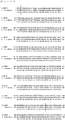
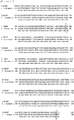
- the 16S rDNA nucleotide sequence analysis was carried out using Aporon 2.0 (TechnoSuruga Laboratory Co., Ltd.) as software and Aporon DB-BA 6.0 (TechnoSuruga Laboratory Co., Ltd.) and the International Nucleotide Sequence Databases (GenBank/DDBJ/EMBL) as databases.
- Aporon 2.0 (TechnoSuruga Laboratory Co., Ltd.)
- Aporon DB-BA 6.0 The 16S rDNA nucleotide sequence for the strain SIID9587 (SEQ ID NO: 1) was found to have high homology to the 16S rDNA nucleotide sequence for the genus Gluconacetobacter and have the highest homology to the 16S rDNA nucleotide sequence for G.
- the 16S rDNA nucleotide sequence for the strain SIID9587 (SEQ ID NO: 1) was also found to have high homology to the 16S rDNA nucleotide sequence for the genus Gluconacetobacter, and that for the type strain was found to have high homology to the 16S rDNA nucleotide sequence for G. intermedius strain TF2 (accession number NR_026435) (homology rate: 99.8%).
- the sequence of the accession number Y14694 is identical to the sequence of the accession number NR_026435.
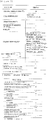
- FIG. 3 The results of bacteriological property test are shown in Figure 3 .
- the strain SIID9587 was different in property in terms of not growing on a 5% acetic acid-containing culture medium from known G. intermedius and not different in other properties therefrom ( BRENNER et al., Bergey's manual of Systematic Bacteriology. Vol. 2. The Proteobacteria, Part C The Alpha-, Beta-, Delta-, and Epsilonproteobacteria. 2005. Springer. p72-77 ).
- this bacterial strain was deposited in the National Institute of Technology and Evaluation, Patent Microorganisms Depositary (NITE-IPOD; #122, 2-5-8 Kazusakamatari, Kisarazu-shi, Chiba 292-0818, Japan) under the accession number NITE BP-01495, December 21, 2012.
- NITE-IPOD National Institute of Technology and Evaluation
- Gluconacetobacter intermedius strain SIID9587 accession number NITE BP-01495
- strain NEDO-01 G. intermedius strain SIID9587.
- the strain NEDO-01 (G. intermedius strain SIID9587) was precultured to proliferate bacterial cells. Subsequently, the culture solution obtained by the preculture (preculture solution) was added to the HS culture medium (carbon source; glucose), which was then subjected to stationary culture at 30°C for about 8 days to perform the main culture to form a gelled film on the culture medium surface.
- the infrared spectroscopy (IR) spectrum and x-ray diffraction profile of the gelled film were obtained and analyzed according to an ordinary method. As a result, the gelled film was shown to be a cellulose having a I-type crystal structure.
- cellulose fibers having a width of the nano order were shown to form a network structure in the gelled film. From these results, the strain NEDO-01 (G. intermedius strain SIID9587) was determined to produce a cellulose.
- BDF-B was subjected to neutralization treatment and further subjected to autoclave treatment to provide pretreated BDF-B.
- Culture media were prepared in which reagent glycerol (a guaranteed reagent from Wako Pure Chemical Industries Ltd.) was added in place of glucose as a carbon source in an HS culture medium containing 2% (w/v) CMC (chemical grade, from Wako Pure Chemical Industries Ltd.) and in which the pretreated BDF-B was added to a concentration of 2% (w/v) in place of glucose in the CMC-containing HS culture medium, and called a main-culture medium with glycerol and a main-culture medium with BDF-B, respectively.
- the strain NEDO-01 G. intermedius strain SIID9587 was first precultured to proliferate bacterial cells.
- the preculture solution was inoculated on 5 L each of the main-culture medium with glycerol and the main culture medium with BDF-B and using the fermenter, subjected to aerated and agitated culture for 4 days under conditions of an aeration volume of 7 to 10 L/minute, a rotation number of 200 to 800 rpm, and a temperature of 30°C to perform main culture.
- a 1% (w/v) NaOH aqueous solution was added to the culture solution obtained by the main culture (main-culture solution), which was then shaken at 60°C and 80 rpm for 4 to 5 hours to lyse bacterial cells.
- the supernatant was removed to recover the precipitate to remove water-soluble bacterial cell components.
- the operation of adding ultrapure water thereto, performing centrifugation, and then removing the supernatant was repeated until the pH of the precipitate in a wet state reaches 7 or less to purify the product, and the resultant was called an agitated-culture BC solution.
- a gelled film was obtained by the method described in (3) of Example 1 and cut to a size of about 1 cm ⁇ 1 cm. Subsequently, a 1% (w/v) NaOH aqueous solution was added thereto, which was then shaken at 60°C and 80 strokes/minute for 4 to 5 hours and then shaken overnight at 20°C. The liquid was removed by filtration using a metal gauze to recover a gelled film. The operation of adding ultrapure water thereto and shaking the resultant overnight at 20°C was repeated until pH reaches 7 or less for purification, followed by suspension treatment using a mixer for several minutes, and the resultant was called a mixer-treated stationary-culture BC solution.
- the agitated-culture BC solution of (1) of this Example 2 and the mixer-treated stationary-culture BC solution of (2) of this Example 2 were each added dropwise onto a silicon plate, dried, and then provided to an infrared spectrophotometer (FT/IR-4200; JASCO Corporation), and measured at a cumulative number of 32 and a resolution of 2 cm -1 or 4 cm -1 to provide an IR spectrum.
- FT/IR-4200 infrared spectrophotometer
- the agitated-culture BC solution using the main-culture solution with BDF-B of (1) of Example 2 and the mixer-treated stationary-culture BC solution of (2) of Example 2 were provided.
- Commercial pulp-derived cellulose nanofibers were added to water for dispersion, and the resultant was called a pulp-derived CNF solution.
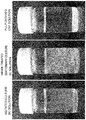
- the agitated-culture BC solution, the mixer-treated stationary-culture BC solution, and the pulp-derived CNF solution were allowed to stand for 1 day, followed by observing their appearance. The results are shown in Figure 5 .
- intermedius strain SIID9587 to agitated culture had high dispersibility and was uniformly dispersed in a liquid, such as water, compared to the bacterial cellulose obtained by subjecting the pulp-derived cellulose nanofibers or the strain NEDO-01 (G. intermedius strain SIID9587) to stationary culture.
- the transmittance of the samples A, B, C, and D was 74.75%, 70.53%, 63.82%, and 49.66%, respectively, prominently high compared to 19.19% for the mixer-treated stationary-culture BC solution and 12.72% for the pulp-derived CNF solution, and roughly in the range of from 40% to 80% (both inclusive).
- the transmittance when the HS culture medium containing CMC was used was 57%, whereas the transmittance when the HS culture medium containing no CMC was used was 18%.
- Agitated-culture BC solutions were each obtained by the method described in (1) of Example 2. However, molasses and reagent glycerol were used as carbon sources in place of glucose. When molasses was used as a carbon source, the number of days in the main culture was set to 3 days in place of 4 days. Subsequently, the light transmittance of each bacterial cellulose-containing water was measured by the method described in (2) [2-1] of Example 3. The agitated-culture BC solution was dried to measure the absolute dry weight of the bacterial cellulose, and the concentration of the bacterial cellulose per 1 L of the culture medium was calculated based on the measurement results and defined as the amount of the bacterial cellulose produced (amount of BC produced; g/L). A value provided by dividing the amount of BC produced by the number of days in the main culture is calculated, and the value was defined as the bacterial cellulose production rate (BC production rate; g/L/day). The results are shown in Figure 6 .
- the transmittance when molasses was used as a carbon source was 57% and was the same (57%) as that when reagent glycerol was used as a carbon source.
- the culture of the strain NEDO-01 (G. intermedius strain SIID9587) using molasses as a carbon source provided a bacterial cellulose having a high light transmittance at a wavelength of 500 nm of water containing the bacterial cellulose at a final concentration of 0.1 ⁇ 0.006% (w/w) and was the same as when reagent glycerol was used as a carbon source.
- the culture of the strain NEDO-01 (G. intermedius strain SIID9587) using molasses as a carbon source was shown to provide a bacterial cellulose having high dispersibility and uniformly dispersible in a liquid.
- the BC production rate when molasses was used as a carbon source was 1.48 g/L/day and was about 1.5 times higher than that (0.95 g/L/day) when reagent glycerol was used as a carbon source.
- Example 5 Comparison in Transmittance and Bacterial Cellulose Production Rate between Different Bacteria
- An agitated-culture BC solution was obtained by the method described in (1) of Example 2. However, molasses was used as a carbon source in place of glucose.
- the strain NEDO-01 G. intermedius strain SIID9587
- Gluconacetobacter hansenii strain ATCC23769 Gluconacetobacter xylinus strain ATCC53582, Gluconacetobacter xylinus strain ATCC700178 (BPR
- the number of days in the main culture was set to 3 days in place of 4 days since the carbon source in the culture medium virtually disappeared at day 3 of the main culture.
- the strain DSM11804 was used, the number of days in the main culture was set to 5 days in place of 4 days since the decrease in the carbon source in the culture medium was small in magnitude even at day 4 of the main culture.
- the light transmittance of each bacterial cellulose-containing water was measured by the method described in (2) [2-1] of Example 3.
- the amount of BC produced (g/L) and the BC production rate (g/L/day) were calculated by the method described in Example 4, and the transmittance and the BC production rate were quantified in bar graphs. The results are shown in Figure 7 .
- the transmittance when the strain NEDO-01 (G. intermedius strain SIID9587) was used was 57%
- G. xylinus strain JCM10150, G. intermedius strain DSM11804, and G. xylinus strain KCCM40274 was 20%, 33%, 29%, 27%, 9%, and 13%, respectively.
- the BC production rate when the strain NEDO-01 (G. intermedius strain SIID9587) was used was 1.48 g/L/day, whereas the BC production rate when G. hansenii strain ATCC23769, G. xylinus strain ATCC53582, G. xylinus strain ATCC700178 (BPR2001), G. xylinus strain JCM10150, G. intermedius strain DSM11804, and G.
- xylinus strain KCCM40274 were used was 1.05 g/L/day, 1.03 g/L/day, 1.11 g/L/day, 1.10 g/L/day, 0.42 g/L/day, and 0.43 g/L/day, respectively.
- the BC production rate when the strain NEDO-01 (G. intermedius strain SIID9587) was used was prominently high compared to the BC production rate when the strains other than NEDO-01 (G. intermedius strain SIID9587) were used.
- the samples A, B, C, and D and pulp-derived CNF solution of (2) of Example 3 were provided as samples. These samples were each freeze-dried, added to a 57 to 59% tetrabutylphosphonium hydroxide aqueous solution, and dissolved by standing at 35°C, followed by adding water to a tetrabutylphosphonium hydroxide concentration of 40 to 42% (w/w) and a sample concentration of 0.2% (w/w). Subsequently, centrifugation was carried out to precipitate impurities to recover the supernatant. The supernatant was subjected to the gel permeation chromatography under the following conditions to measure the retention volume of the peak top of the chromatogram. The supernatant was measured 3 times under the same conditions. The results are shown in Table 3, and a randomly selected chromatogram is shown in Figure 8 .
- the retention volume of the peak top of each of the samples A, B, C, and D was on average 2.79 mL, 2.81 mL, 2.82 mL, and 2.76 mL, respectively and small compared to 3.04 mL for the pulp-derived CNF solution and 3.24 mL for pullulan.
- Table 3 also showed that when the bacterial cellulose obtained by subjecting the strain NEDO-01 (G. intermedius strain SIID9587) to agitated culture was larger than that of the pulp-derived cellulose and more than 85.3 ⁇ 10 4 in terms of pullulan.
- Table 3 also showed that when the bacterial cellulose obtained by subjecting the strain NEDO-01 (G.
- the retention volume of the peak top of the chromatogram reached 2.5 mL (inclusive) to 3.0 mL (exclusive) since the retention volume of the peak top of each of the samples A, B, C, and D was in the range of 2.737 to 2.849 mL.
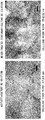
- the agitated-culture BC solution using the main-culture medium with glycerol of (1) of Example 2 and the mixer-treated stationary-culture BC solution of (2) of Example 2 were provided. These cellulose solutions were each adjusted to a concentration of about 0.001% (w/w), and then, 10 ⁇ L of each solution was added dropwise onto a Formvar-coated copper grid and air-dried. Subsequently, 5 ⁇ L of a 5% (w/v) gadolinium acetate aqueous solution was added dropwise thereto, and the excess solution was removed with a paper filter 10 seconds later for negative staining. The resultant was observed under a transmission electron microscope at an acceleration voltage of 80 kV and an observation magnification of 30,000 times to measure the width of cellulose fibers based on the observed image. The results are shown in Figure 9 .
- the width of the cellulose fibers was 17 ⁇ 8 nm for the agitated-culture BC solution, was prominently small compared to 55 ⁇ 22 nm for the mixer-treated stationary-culture BC solution, and had a small standard deviation.
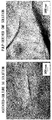
- the agitated-culture BC solution using the main-culture medium with BDF-B of (1) of Example 2 and the pulp-derived CNF solution of (1) of Example 3 were provided. These cellulose solutions were each adjusted to a concentration of about 0.01% (w/w), and then, the operation of spraying the solution on a Formvar-coated copper grid and drying it using a dryer was repeated 10 times. Subsequently, 5 ⁇ L of a 5% (w/v) gadolinium acetate aqueous solution was added dropwise thereto, and the excess solution was removed with a paper filter. In addition, the sequence of dropwise adding 5 ⁇ L of ultrapure water and then removing the excess solution with a paper filter was repeated 2 times, followed by negative staining by air-drying.
- Culture media were prepared in which pretreated BDF-B and reagent glycerol, respectively, were added in place of glucose as a carbon source in the LB culture medium, and called LB/BDF-B culture medium and LB/glycerol culture medium, respectively.
- the strain NEDO-01 (G.
- G. hansenii strain ATCC23769 produced small weights of bacterial celluloses in both of the LB/glycerol culture medium and the LB/BDF-B culture medium.
- G. xylinus strain ATCC53582 and G. xylinus strain ATCC700178 (BPR2001) produced relatively large weights of bacterial celluloses in the LB/glycerol culture medium, whereas no bacterial cellulose production was observed in LB/BDF-B culture medium.
- the strain NEDO-01 G. intermedius strain SIID9587
- strain NEDO-01 G. intermedius strain SIID9587
- BDF-B BDF-B as a carbon source
- Its feature of being capable of producing a bacterial cellulose using BDF-B as a carbon source is a feature which other compared strains do not have, also advantageous on the practical side in which the by-product can be utilized, and greatly contributes to a reduction in production cost.
- strains NEDO-01 G. intermedius strain SIID9587
- strain ATCC53582 strain ATCC23769
- strain ATCC23769 were each inoculated on 10 mL of the HS culture medium and subjected to stationary culture at 30°C for 3 days for pre-preculture. Subsequently, the culture solution obtained by the pre-preculture was inoculated on 10 mL of the HS culture medium and subjected to stationary culture at 30°C for 3 days for preculture.
- G. xylinus strain ATCC53582 was not observed to produce a bacterial cellulose in each of the main-culture medium with glycerol and the main culture medium with BDF-B.
- G. hansenii strain ATCC23769 the absolute dry weight of the bacterial cellulose was relatively large when the main-culture medium with glycerol was used, but no bacterial cellulose production was observed when the main culture medium with BDF-B was used.
- the strain NEDO-01 G. intermedius strain SIID9587
- the absolute dry weight of the bacterial cellulose was large when each of the main-culture medium with glycerol and the main culture medium with BDF-B was used.
Landscapes
- Chemical & Material Sciences (AREA)
- Organic Chemistry (AREA)
- Life Sciences & Earth Sciences (AREA)
- Engineering & Computer Science (AREA)
- Health & Medical Sciences (AREA)
- Wood Science & Technology (AREA)
- Zoology (AREA)
- Biotechnology (AREA)
- Genetics & Genomics (AREA)
- Bioinformatics & Cheminformatics (AREA)
- Microbiology (AREA)
- Biochemistry (AREA)
- General Engineering & Computer Science (AREA)
- General Health & Medical Sciences (AREA)
- Chemical Kinetics & Catalysis (AREA)
- Medicinal Chemistry (AREA)
- General Chemical & Material Sciences (AREA)
- Tropical Medicine & Parasitology (AREA)
- Virology (AREA)
- Biomedical Technology (AREA)
- Polymers & Plastics (AREA)
- Mycology (AREA)
- Preparation Of Compounds By Using Micro-Organisms (AREA)
- Polysaccharides And Polysaccharide Derivatives (AREA)
- Micro-Organisms Or Cultivation Processes Thereof (AREA)
Priority Applications (1)
| Application Number | Priority Date | Filing Date | Title |
|---|---|---|---|
| PL13869657T PL2940145T3 (pl) | 2012-12-28 | 2013-12-27 | Bakteryjna celuloza i bakteria ją wytwarzająca |
Applications Claiming Priority (2)
| Application Number | Priority Date | Filing Date | Title |
|---|---|---|---|
| JP2012289043 | 2012-12-28 | ||
| PCT/JP2013/085163 WO2014104318A1 (ja) | 2012-12-28 | 2013-12-27 | バクテリアセルロースおよびこれを生産する細菌 |
Publications (3)
| Publication Number | Publication Date |
|---|---|
| EP2940145A1 EP2940145A1 (en) | 2015-11-04 |
| EP2940145A4 EP2940145A4 (en) | 2016-10-12 |
| EP2940145B1 true EP2940145B1 (en) | 2018-02-14 |
Family
ID=51021387
Family Applications (1)
| Application Number | Title | Priority Date | Filing Date |
|---|---|---|---|
| EP13869657.0A Active EP2940145B1 (en) | 2012-12-28 | 2013-12-27 | Bacterial cellulose and bacterium producing same |
Country Status (16)
| Country | Link |
|---|---|
| US (2) | US9611495B2 (enExample) |
| EP (1) | EP2940145B1 (enExample) |
| JP (1) | JP5752332B2 (enExample) |
| KR (1) | KR102077716B1 (enExample) |
| CN (2) | CN107164426A (enExample) |
| AU (1) | AU2013366934B2 (enExample) |
| CA (1) | CA2896699C (enExample) |
| DK (1) | DK2940145T3 (enExample) |
| ES (1) | ES2660741T3 (enExample) |
| NO (1) | NO2940145T3 (enExample) |
| PL (1) | PL2940145T3 (enExample) |
| PT (1) | PT2940145T (enExample) |
| RU (1) | RU2654675C2 (enExample) |
| SA (1) | SA515360697B1 (enExample) |
| WO (1) | WO2014104318A1 (enExample) |
| ZA (1) | ZA201505201B (enExample) |
Families Citing this family (22)
| Publication number | Priority date | Publication date | Assignee | Title |
|---|---|---|---|---|
| US10638783B2 (en) | 2015-04-13 | 2020-05-05 | Cp Kelco U.S., Inc. | Gellan gum products and methods of manufacture and use thereof |
| KR20170058790A (ko) | 2015-11-19 | 2017-05-29 | 삼성전자주식회사 | 셀룰로오스 생산성이 향상된 미생물을 스크리닝하는 방법 |
| CN105695531B (zh) * | 2016-04-08 | 2019-06-25 | 海南大学 | 一种控制分子量制备细菌纤维素的方法 |
| KR102336328B1 (ko) * | 2017-04-25 | 2021-12-08 | (주)아모레퍼시픽 | 고체 원물이 포함된 바이오셀룰로오스, 이를 제조하기 위한 배지 조성물 및 이의 제조방법 |
| CN107513177B (zh) * | 2017-09-30 | 2020-09-04 | 中国林业科学研究院林产化学工业研究所 | 一种植物油脂改性细菌纤维素气凝胶吸油材料及其制备方法 |
| CN108018240A (zh) * | 2017-12-26 | 2018-05-11 | 华海科技股份有限公司 | 一种中间葡糖醋杆菌及其应用 |
| JP7018345B2 (ja) * | 2018-03-30 | 2022-02-10 | 大王製紙株式会社 | ゲル状洗浄剤組成物及び洗浄剤製品 |
| JP7048889B2 (ja) * | 2018-04-16 | 2022-04-06 | 日本電信電話株式会社 | バクテリア産生セルロースカーボンの製造方法 |
| JP7269613B2 (ja) | 2018-07-02 | 2023-05-09 | 株式会社Mizkan Holdings | 発酵セルロース含有食酢及びその製造方法 |
| KR102069443B1 (ko) * | 2018-08-31 | 2020-01-22 | (주)대한뷰티산업진흥원 | 울금, 비트 및 무 추출물을 포함하는 바이오셀룰로오스 및 이의 제조방법 |
| RU2695066C1 (ru) * | 2019-01-18 | 2019-07-19 | Федеральное государственное бюджетное образовательное учреждение высшего образования "Национальный исследовательский Мордовский государственный университет им. Н.П. Огарёва" | Способ лечения травматических разрывов печени с использованием пленочного покрытия на основе бактериальной целлюлозы |
| TWI771563B (zh) * | 2019-02-01 | 2022-07-21 | 嬌朋生技股份有限公司 | 生物纖維組成物 |
| US20210115483A1 (en) * | 2019-10-17 | 2021-04-22 | Worcester Polytechnic Institute | Transparent Cellulose-Based Materials and Methods of Making the Same |
| KR102295345B1 (ko) * | 2019-11-12 | 2021-08-30 | 충북대학교 산학협력단 | 증대된 박테리아 나노셀룰로오스 생산능을 갖는 글루콘아세토박터 한세니 돌연변이 균주 및 이를 이용한 박테리아 나노셀룰로오스 생산방법 |
| JP7599637B2 (ja) * | 2020-01-30 | 2024-12-16 | 国立大学法人徳島大学 | 細胞培養足場材料 |
| JP7489656B2 (ja) * | 2020-02-12 | 2024-05-24 | 伊那食品工業株式会社 | バクテリアセルロース複合化粉末およびその製造方法 |
| CN113718001A (zh) * | 2020-05-25 | 2021-11-30 | 华东师范大学 | 一种利用细菌发酵废甘油生产细菌纤维素的方法 |
| KR20240009458A (ko) | 2021-05-17 | 2024-01-22 | 아쿠아컬쳐드 푸즈 인크 | 박테리아와 균류의 공동 배양물을 포함하는 식품 |
| JP2023152376A (ja) * | 2022-04-04 | 2023-10-17 | トヨタ車体株式会社 | バクテリアセルロースの生産方法、樹脂材料、樹脂成形品 |
| CN116422305A (zh) * | 2023-04-19 | 2023-07-14 | 江西理工大学 | 一种吸附性能优越的细菌纤维素/聚合席夫碱复合三维宏观体吸附材料及制备方法 |
| KR102843047B1 (ko) | 2023-08-01 | 2025-08-06 | 숙명여자대학교산학협력단 | 박테리아 셀룰로오스-마린 파우더 복합체 및 이의 제조 방법 |
| WO2025064543A1 (en) * | 2023-09-20 | 2025-03-27 | University Of Washington | Bacterial cellulose derived nanoparticles and uses thereof |
Family Cites Families (10)
| Publication number | Priority date | Publication date | Assignee | Title |
|---|---|---|---|---|
| JP2971024B2 (ja) * | 1995-02-20 | 1999-11-02 | 株式会社バイオポリマー・リサーチ | バクテリアセルロース離解物 |
| DE69625812T2 (de) * | 1995-04-18 | 2003-11-06 | Ajinomoto Co., Inc. | Bakterien welche cellulose produzieren |
| JP4035864B2 (ja) * | 1996-07-26 | 2008-01-23 | 味の素株式会社 | 改質された微生物産生セルロース |
| US20020040134A1 (en) * | 1999-11-09 | 2002-04-04 | Masaru Ishihara | Modified bacterial cellulose |
| JP3809551B2 (ja) * | 2003-09-09 | 2006-08-16 | 学校法人 関西大学 | バクテリアセルロース様多糖生産培地 |
| JPWO2007063854A1 (ja) * | 2005-11-29 | 2009-05-07 | 国立大学法人 北海道大学 | バクテリアセルロースの製造方法 |
| CN101503663A (zh) * | 2008-12-25 | 2009-08-12 | 四川大学 | 1株葡糖醋杆菌及其筛选纯化方法 |
| JP5965104B2 (ja) | 2010-03-03 | 2016-08-03 | 三星ディスプレイ株式會社Samsung Display Co.,Ltd. | 高収率のセルロース産生活性がある新規なグルコンアセトバクター属菌株 |
| CN102168056B (zh) * | 2011-04-11 | 2013-04-03 | 浙江省农业科学院 | 以柑橘果渣为原料生产细菌纤维素的方法 |
| RU2464307C1 (ru) * | 2011-05-31 | 2012-10-20 | Федеральное государственное бюджетное образовательное учреждение высшего профессионального образования "Московский государственный университет пищевых производств" | Штамм бактерии cluconacetobacter hansenii gh-1/2008 - продуцент бактериальной целлюлозы |
-
2013
- 2013-12-27 NO NO13869657A patent/NO2940145T3/no unknown
- 2013-12-27 CA CA2896699A patent/CA2896699C/en active Active
- 2013-12-27 CN CN201710365736.2A patent/CN107164426A/zh not_active Withdrawn
- 2013-12-27 CN CN201380068766.7A patent/CN104995308A/zh active Pending
- 2013-12-27 EP EP13869657.0A patent/EP2940145B1/en active Active
- 2013-12-27 JP JP2014551859A patent/JP5752332B2/ja active Active
- 2013-12-27 DK DK13869657.0T patent/DK2940145T3/en active
- 2013-12-27 WO PCT/JP2013/085163 patent/WO2014104318A1/ja not_active Ceased
- 2013-12-27 PL PL13869657T patent/PL2940145T3/pl unknown
- 2013-12-27 KR KR1020157020229A patent/KR102077716B1/ko active Active
- 2013-12-27 RU RU2015131154A patent/RU2654675C2/ru not_active IP Right Cessation
- 2013-12-27 AU AU2013366934A patent/AU2013366934B2/en active Active
- 2013-12-27 ES ES13869657.0T patent/ES2660741T3/es active Active
- 2013-12-27 PT PT138696570T patent/PT2940145T/pt unknown
- 2013-12-27 US US14/655,862 patent/US9611495B2/en active Active
-
2015
- 2015-06-28 SA SA515360697A patent/SA515360697B1/ar unknown
- 2015-07-20 ZA ZA2015/05201A patent/ZA201505201B/en unknown
-
2017
- 2017-02-16 US US15/434,500 patent/US9879295B2/en active Active
Non-Patent Citations (1)
| Title |
|---|
| None * |
Also Published As
| Publication number | Publication date |
|---|---|
| AU2013366934A1 (en) | 2015-07-30 |
| JP5752332B2 (ja) | 2015-07-22 |
| EP2940145A1 (en) | 2015-11-04 |
| KR20150114479A (ko) | 2015-10-12 |
| CA2896699A1 (en) | 2014-07-03 |
| US9879295B2 (en) | 2018-01-30 |
| RU2654675C2 (ru) | 2018-05-21 |
| US20170191100A1 (en) | 2017-07-06 |
| US20150376666A1 (en) | 2015-12-31 |
| RU2015131154A (ru) | 2017-02-03 |
| EP2940145A4 (en) | 2016-10-12 |
| DK2940145T3 (en) | 2018-04-23 |
| KR102077716B1 (ko) | 2020-02-14 |
| CN107164426A (zh) | 2017-09-15 |
| ZA201505201B (en) | 2016-07-27 |
| NO2940145T3 (enExample) | 2018-07-14 |
| ES2660741T3 (es) | 2018-03-26 |
| CN104995308A (zh) | 2015-10-21 |
| PT2940145T (pt) | 2018-02-26 |
| US9611495B2 (en) | 2017-04-04 |
| AU2013366934B2 (en) | 2017-06-08 |
| JPWO2014104318A1 (ja) | 2017-01-19 |
| SA515360697B1 (ar) | 2018-06-12 |
| WO2014104318A1 (ja) | 2014-07-03 |
| PL2940145T3 (pl) | 2018-06-29 |
| CA2896699C (en) | 2021-11-09 |
Similar Documents
| Publication | Publication Date | Title |
|---|---|---|
| US9879295B2 (en) | Bacterial cellulose and bacterium producing it | |
| Atykyan et al. | Raman and FT-IR Spectroscopy investigation the cellulose structural differences from bacteria Gluconacetobacter sucrofermentans during the different regimes of cultivation on a molasses media | |
| Çakar et al. | Improvement production of bacterial cellulose by semi-continuous process in molasses medium | |
| Ye et al. | Bacterial cellulose production by Acetobacter xylinum ATCC 23767 using tobacco waste extract as culture medium | |
| Raghunandan et al. | Production of gellan gum, an exopolysaccharide, from biodiesel-derived waste glycerol by Sphingomonas spp. | |
| Uzyol et al. | Bacterial cellulose production by Komagataeibacter hansenii using algae-based glucose | |
| Rani et al. | Production of bacterial cellulose by Gluconacetobacter hansenii UAC09 using coffee cherry husk | |
| Öz et al. | A novel static cultivation of bacterial cellulose production from sugar beet molasses: Series static culture (SSC) system | |
| Li et al. | Bio-conversion of kitchen waste into bacterial cellulose using a new multiple carbon utilizing Komagataeibacter rhaeticus: Fermentation profiles and genome-wide analysis | |
| Hyun et al. | Utilization of makgeolli sludge filtrate (MSF) as low-cost substrate for bacterial cellulose production by Gluconacetobacter xylinus | |
| Angela et al. | Isolation and screening of microbial isolates from kombucha culture for bacterial cellulose production in sugarcane molasses medium | |
| Singh et al. | Response surface optimization for cellulose production from agro industrial waste by using new bacterial isolate Gluconacetobacter xylinus C18 | |
| Bhatia et al. | Stepwise bioprocess for exopolysaccharide production using potato starch as carbon source | |
| Esmail et al. | Bacterial cellulose production through the valorization of waste apple pulp and stale bread | |
| Tayo et al. | Comparative effect of agrowastes on bacterial cellulose production by Acinetobacter sp. BAN1 and Acetobacter pasteurianus PW1 | |
| Ye et al. | Bacterial cellulose production by a strain of Komagataeibacter rhaeticus isolated from residual loquat | |
| Wu et al. | Contribution of glycerol on production of poly (γ-glutamic acid) in Bacillus subtilis NX-2 | |
| Bektas et al. | Molecular characterization of bacterial cellulose producing Bacillus strains isolated from soil | |
| Ferreira Filho et al. | From shake flasks to a bench‐scale bioreactor: scaling up exopolysaccharide production in fed‐batch cultivation of Ensifer meliloti SEMIA 135 | |
| Zhang et al. | Biosynthesis of antibacterial bacterial cellulose in-situ using yellow wine wastewater through co-fermentation | |
| JP3800628B2 (ja) | バクテリアセルロースの製造方法 | |
| CN108060187B (zh) | 一种多糖及其制备方法和应用 | |
| Alemam | Isolation and characterization of cellulose nano fiber producing bacterial strain from fermented fruits | |
| JP5887062B2 (ja) | 新規有用深海細菌 | |
| Feng et al. | Characterization and fouling properties of exopolysaccharide produced by Klebsiella oxytoca |
Legal Events
| Date | Code | Title | Description |
|---|---|---|---|
| PUAI | Public reference made under article 153(3) epc to a published international application that has entered the european phase |
Free format text: ORIGINAL CODE: 0009012 |
|
| 17P | Request for examination filed |
Effective date: 20150728 |
|
| AK | Designated contracting states |
Kind code of ref document: A1 Designated state(s): AL AT BE BG CH CY CZ DE DK EE ES FI FR GB GR HR HU IE IS IT LI LT LU LV MC MK MT NL NO PL PT RO RS SE SI SK SM TR |
|
| AX | Request for extension of the european patent |
Extension state: BA ME |
|
| DAX | Request for extension of the european patent (deleted) | ||
| A4 | Supplementary search report drawn up and despatched |
Effective date: 20160913 |
|
| RIC1 | Information provided on ipc code assigned before grant |
Ipc: C12P 19/04 20060101AFI20160907BHEP Ipc: C12N 1/20 20060101ALI20160907BHEP |
|
| RIN1 | Information on inventor provided before grant (corrected) |
Inventor name: SAKURAI HIROAKI Inventor name: KOSE RYOTA Inventor name: TAJIMA KENJI |
|
| GRAP | Despatch of communication of intention to grant a patent |
Free format text: ORIGINAL CODE: EPIDOSNIGR1 |
|
| INTG | Intention to grant announced |
Effective date: 20170717 |
|
| GRAS | Grant fee paid |
Free format text: ORIGINAL CODE: EPIDOSNIGR3 |
|
| GRAA | (expected) grant |
Free format text: ORIGINAL CODE: 0009210 |
|
| AK | Designated contracting states |
Kind code of ref document: B1 Designated state(s): AL AT BE BG CH CY CZ DE DK EE ES FI FR GB GR HR HU IE IS IT LI LT LU LV MC MK MT NL NO PL PT RO RS SE SI SK SM TR |
|
| REG | Reference to a national code |
Ref country code: GB Ref legal event code: FG4D |
|
| REG | Reference to a national code |
Ref country code: CH Ref legal event code: EP |
|
| REG | Reference to a national code |
Ref country code: PT Ref legal event code: SC4A Ref document number: 2940145 Country of ref document: PT Date of ref document: 20180226 Kind code of ref document: T Free format text: AVAILABILITY OF NATIONAL TRANSLATION Effective date: 20180219 |
|
| REG | Reference to a national code |
Ref country code: IE Ref legal event code: FG4D |
|
| REG | Reference to a national code |
Ref country code: DE Ref legal event code: R096 Ref document number: 602013033202 Country of ref document: DE Ref country code: CH Ref legal event code: NV Representative=s name: NIIZUMA WASNER GMBH PATENTANWALTSBUERO, CH Ref country code: AT Ref legal event code: REF Ref document number: 969851 Country of ref document: AT Kind code of ref document: T Effective date: 20180315 |
|
| REG | Reference to a national code |
Ref country code: NL Ref legal event code: FP |
|
| REG | Reference to a national code |
Ref country code: ES Ref legal event code: FG2A Ref document number: 2660741 Country of ref document: ES Kind code of ref document: T3 Effective date: 20180326 |
|
| REG | Reference to a national code |
Ref country code: DK Ref legal event code: T3 Effective date: 20180416 |
|
| REG | Reference to a national code |
Ref country code: SE Ref legal event code: TRGR |
|
| REG | Reference to a national code |
Ref country code: NO Ref legal event code: T2 Effective date: 20180214 |
|
| PG25 | Lapsed in a contracting state [announced via postgrant information from national office to epo] |
Ref country code: CY Free format text: LAPSE BECAUSE OF FAILURE TO SUBMIT A TRANSLATION OF THE DESCRIPTION OR TO PAY THE FEE WITHIN THE PRESCRIBED TIME-LIMIT Effective date: 20180214 Ref country code: HR Free format text: LAPSE BECAUSE OF FAILURE TO SUBMIT A TRANSLATION OF THE DESCRIPTION OR TO PAY THE FEE WITHIN THE PRESCRIBED TIME-LIMIT Effective date: 20180214 Ref country code: LT Free format text: LAPSE BECAUSE OF FAILURE TO SUBMIT A TRANSLATION OF THE DESCRIPTION OR TO PAY THE FEE WITHIN THE PRESCRIBED TIME-LIMIT Effective date: 20180214 |
|
| PG25 | Lapsed in a contracting state [announced via postgrant information from national office to epo] |
Ref country code: LV Free format text: LAPSE BECAUSE OF FAILURE TO SUBMIT A TRANSLATION OF THE DESCRIPTION OR TO PAY THE FEE WITHIN THE PRESCRIBED TIME-LIMIT Effective date: 20180214 Ref country code: BG Free format text: LAPSE BECAUSE OF FAILURE TO SUBMIT A TRANSLATION OF THE DESCRIPTION OR TO PAY THE FEE WITHIN THE PRESCRIBED TIME-LIMIT Effective date: 20180514 Ref country code: GR Free format text: LAPSE BECAUSE OF FAILURE TO SUBMIT A TRANSLATION OF THE DESCRIPTION OR TO PAY THE FEE WITHIN THE PRESCRIBED TIME-LIMIT Effective date: 20180515 Ref country code: RS Free format text: LAPSE BECAUSE OF FAILURE TO SUBMIT A TRANSLATION OF THE DESCRIPTION OR TO PAY THE FEE WITHIN THE PRESCRIBED TIME-LIMIT Effective date: 20180214 |
|
| PG25 | Lapsed in a contracting state [announced via postgrant information from national office to epo] |
Ref country code: AL Free format text: LAPSE BECAUSE OF FAILURE TO SUBMIT A TRANSLATION OF THE DESCRIPTION OR TO PAY THE FEE WITHIN THE PRESCRIBED TIME-LIMIT Effective date: 20180214 Ref country code: RO Free format text: LAPSE BECAUSE OF FAILURE TO SUBMIT A TRANSLATION OF THE DESCRIPTION OR TO PAY THE FEE WITHIN THE PRESCRIBED TIME-LIMIT Effective date: 20180214 Ref country code: EE Free format text: LAPSE BECAUSE OF FAILURE TO SUBMIT A TRANSLATION OF THE DESCRIPTION OR TO PAY THE FEE WITHIN THE PRESCRIBED TIME-LIMIT Effective date: 20180214 |
|
| REG | Reference to a national code |
Ref country code: DE Ref legal event code: R097 Ref document number: 602013033202 Country of ref document: DE |
|
| PG25 | Lapsed in a contracting state [announced via postgrant information from national office to epo] |
Ref country code: SM Free format text: LAPSE BECAUSE OF FAILURE TO SUBMIT A TRANSLATION OF THE DESCRIPTION OR TO PAY THE FEE WITHIN THE PRESCRIBED TIME-LIMIT Effective date: 20180214 Ref country code: CZ Free format text: LAPSE BECAUSE OF FAILURE TO SUBMIT A TRANSLATION OF THE DESCRIPTION OR TO PAY THE FEE WITHIN THE PRESCRIBED TIME-LIMIT Effective date: 20180214 Ref country code: SK Free format text: LAPSE BECAUSE OF FAILURE TO SUBMIT A TRANSLATION OF THE DESCRIPTION OR TO PAY THE FEE WITHIN THE PRESCRIBED TIME-LIMIT Effective date: 20180214 |
|
| PLBE | No opposition filed within time limit |
Free format text: ORIGINAL CODE: 0009261 |
|
| STAA | Information on the status of an ep patent application or granted ep patent |
Free format text: STATUS: NO OPPOSITION FILED WITHIN TIME LIMIT |
|
| 26N | No opposition filed |
Effective date: 20181115 |
|
| PG25 | Lapsed in a contracting state [announced via postgrant information from national office to epo] |
Ref country code: SI Free format text: LAPSE BECAUSE OF FAILURE TO SUBMIT A TRANSLATION OF THE DESCRIPTION OR TO PAY THE FEE WITHIN THE PRESCRIBED TIME-LIMIT Effective date: 20180214 |
|
| PG25 | Lapsed in a contracting state [announced via postgrant information from national office to epo] |
Ref country code: MC Free format text: LAPSE BECAUSE OF FAILURE TO SUBMIT A TRANSLATION OF THE DESCRIPTION OR TO PAY THE FEE WITHIN THE PRESCRIBED TIME-LIMIT Effective date: 20180214 Ref country code: LU Free format text: LAPSE BECAUSE OF NON-PAYMENT OF DUE FEES Effective date: 20181227 |
|
| REG | Reference to a national code |
Ref country code: IE Ref legal event code: MM4A |
|
| PG25 | Lapsed in a contracting state [announced via postgrant information from national office to epo] |
Ref country code: IE Free format text: LAPSE BECAUSE OF NON-PAYMENT OF DUE FEES Effective date: 20181227 |
|
| PG25 | Lapsed in a contracting state [announced via postgrant information from national office to epo] |
Ref country code: MT Free format text: LAPSE BECAUSE OF NON-PAYMENT OF DUE FEES Effective date: 20181227 |
|
| PGFP | Annual fee paid to national office [announced via postgrant information from national office to epo] |
Ref country code: PT Payment date: 20191218 Year of fee payment: 7 |
|
| PGFP | Annual fee paid to national office [announced via postgrant information from national office to epo] |
Ref country code: PL Payment date: 20191216 Year of fee payment: 7 |
|
| PG25 | Lapsed in a contracting state [announced via postgrant information from national office to epo] |
Ref country code: TR Free format text: LAPSE BECAUSE OF FAILURE TO SUBMIT A TRANSLATION OF THE DESCRIPTION OR TO PAY THE FEE WITHIN THE PRESCRIBED TIME-LIMIT Effective date: 20180214 |
|
| PGFP | Annual fee paid to national office [announced via postgrant information from national office to epo] |
Ref country code: ES Payment date: 20200122 Year of fee payment: 7 |
|
| PG25 | Lapsed in a contracting state [announced via postgrant information from national office to epo] |
Ref country code: MK Free format text: LAPSE BECAUSE OF NON-PAYMENT OF DUE FEES Effective date: 20180214 Ref country code: HU Free format text: LAPSE BECAUSE OF FAILURE TO SUBMIT A TRANSLATION OF THE DESCRIPTION OR TO PAY THE FEE WITHIN THE PRESCRIBED TIME-LIMIT; INVALID AB INITIO Effective date: 20131227 |
|
| PG25 | Lapsed in a contracting state [announced via postgrant information from national office to epo] |
Ref country code: IS Free format text: LAPSE BECAUSE OF FAILURE TO SUBMIT A TRANSLATION OF THE DESCRIPTION OR TO PAY THE FEE WITHIN THE PRESCRIBED TIME-LIMIT Effective date: 20180614 |
|
| PG25 | Lapsed in a contracting state [announced via postgrant information from national office to epo] |
Ref country code: PT Free format text: LAPSE BECAUSE OF NON-PAYMENT OF DUE FEES Effective date: 20210628 |
|
| REG | Reference to a national code |
Ref country code: ES Ref legal event code: FD2A Effective date: 20220411 |
|
| PG25 | Lapsed in a contracting state [announced via postgrant information from national office to epo] |
Ref country code: ES Free format text: LAPSE BECAUSE OF NON-PAYMENT OF DUE FEES Effective date: 20201228 |
|
| PG25 | Lapsed in a contracting state [announced via postgrant information from national office to epo] |
Ref country code: PL Free format text: LAPSE BECAUSE OF NON-PAYMENT OF DUE FEES Effective date: 20201227 |
|
| REG | Reference to a national code |
Ref country code: AT Ref legal event code: UEP Ref document number: 969851 Country of ref document: AT Kind code of ref document: T Effective date: 20180214 |
|
| PGFP | Annual fee paid to national office [announced via postgrant information from national office to epo] |
Ref country code: SE Payment date: 20221221 Year of fee payment: 10 Ref country code: NO Payment date: 20221220 Year of fee payment: 10 Ref country code: DK Payment date: 20221221 Year of fee payment: 10 Ref country code: AT Payment date: 20221216 Year of fee payment: 10 |
|
| PGFP | Annual fee paid to national office [announced via postgrant information from national office to epo] |
Ref country code: CH Payment date: 20221201 Year of fee payment: 10 |
|
| PGFP | Annual fee paid to national office [announced via postgrant information from national office to epo] |
Ref country code: IT Payment date: 20221230 Year of fee payment: 10 |
|
| PGFP | Annual fee paid to national office [announced via postgrant information from national office to epo] |
Ref country code: GB Payment date: 20231220 Year of fee payment: 11 |
|
| PGFP | Annual fee paid to national office [announced via postgrant information from national office to epo] |
Ref country code: NL Payment date: 20231219 Year of fee payment: 11 Ref country code: FI Payment date: 20231218 Year of fee payment: 11 |
|
| PGFP | Annual fee paid to national office [announced via postgrant information from national office to epo] |
Ref country code: BE Payment date: 20231218 Year of fee payment: 11 |
|
| REG | Reference to a national code |
Ref country code: DK Ref legal event code: EBP Effective date: 20231231 |
|
| REG | Reference to a national code |
Ref country code: SE Ref legal event code: EUG |
|
| REG | Reference to a national code |
Ref country code: CH Ref legal event code: PL |
|
| REG | Reference to a national code |
Ref country code: AT Ref legal event code: MM01 Ref document number: 969851 Country of ref document: AT Kind code of ref document: T Effective date: 20231227 |
|
| PG25 | Lapsed in a contracting state [announced via postgrant information from national office to epo] |
Ref country code: CH Free format text: LAPSE BECAUSE OF NON-PAYMENT OF DUE FEES Effective date: 20231231 |
|
| PG25 | Lapsed in a contracting state [announced via postgrant information from national office to epo] |
Ref country code: AT Free format text: LAPSE BECAUSE OF NON-PAYMENT OF DUE FEES Effective date: 20231227 |
|
| PG25 | Lapsed in a contracting state [announced via postgrant information from national office to epo] |
Ref country code: NO Free format text: LAPSE BECAUSE OF NON-PAYMENT OF DUE FEES Effective date: 20231231 Ref country code: CH Free format text: LAPSE BECAUSE OF NON-PAYMENT OF DUE FEES Effective date: 20231231 Ref country code: AT Free format text: LAPSE BECAUSE OF NON-PAYMENT OF DUE FEES Effective date: 20231227 |
|
| PG25 | Lapsed in a contracting state [announced via postgrant information from national office to epo] |
Ref country code: DK Free format text: LAPSE BECAUSE OF NON-PAYMENT OF DUE FEES Effective date: 20231231 |
|
| PG25 | Lapsed in a contracting state [announced via postgrant information from national office to epo] |
Ref country code: DK Free format text: LAPSE BECAUSE OF NON-PAYMENT OF DUE FEES Effective date: 20231231 |
|
| PG25 | Lapsed in a contracting state [announced via postgrant information from national office to epo] |
Ref country code: FI Free format text: LAPSE BECAUSE OF NON-PAYMENT OF DUE FEES Effective date: 20241227 |
|
| REG | Reference to a national code |
Ref country code: NL Ref legal event code: MM Effective date: 20250101 |
|
| GBPC | Gb: european patent ceased through non-payment of renewal fee |
Effective date: 20241227 |
|
| PG25 | Lapsed in a contracting state [announced via postgrant information from national office to epo] |
Ref country code: IT Free format text: LAPSE BECAUSE OF NON-PAYMENT OF DUE FEES Effective date: 20231227 |
|
| PG25 | Lapsed in a contracting state [announced via postgrant information from national office to epo] |
Ref country code: NL Free format text: LAPSE BECAUSE OF NON-PAYMENT OF DUE FEES Effective date: 20250101 |
|
| REG | Reference to a national code |
Ref country code: BE Ref legal event code: MM Effective date: 20241231 |
|
| PG25 | Lapsed in a contracting state [announced via postgrant information from national office to epo] |
Ref country code: SE Free format text: LAPSE BECAUSE OF NON-PAYMENT OF DUE FEES Effective date: 20231228 |
|
| PG25 | Lapsed in a contracting state [announced via postgrant information from national office to epo] |
Ref country code: GB Free format text: LAPSE BECAUSE OF NON-PAYMENT OF DUE FEES Effective date: 20241227 Ref country code: BE Free format text: LAPSE BECAUSE OF NON-PAYMENT OF DUE FEES Effective date: 20241231 |
|
| PGFP | Annual fee paid to national office [announced via postgrant information from national office to epo] |
Ref country code: FR Payment date: 20251217 Year of fee payment: 13 |
|
| PGFP | Annual fee paid to national office [announced via postgrant information from national office to epo] |
Ref country code: DE Payment date: 20251222 Year of fee payment: 13 |