EP2868745A1 - Method for manufacturing l-amino acid - Google Patents
Method for manufacturing l-amino acid Download PDFInfo
- Publication number
- EP2868745A1 EP2868745A1 EP14797459.6A EP14797459A EP2868745A1 EP 2868745 A1 EP2868745 A1 EP 2868745A1 EP 14797459 A EP14797459 A EP 14797459A EP 2868745 A1 EP2868745 A1 EP 2868745A1
- Authority
- EP
- European Patent Office
- Prior art keywords
- amino acid
- gene
- protein
- activity
- seq
- Prior art date
- Legal status (The legal status is an assumption and is not a legal conclusion. Google has not performed a legal analysis and makes no representation as to the accuracy of the status listed.)
- Granted
Links
Classifications
-
- C—CHEMISTRY; METALLURGY
- C12—BIOCHEMISTRY; BEER; SPIRITS; WINE; VINEGAR; MICROBIOLOGY; ENZYMOLOGY; MUTATION OR GENETIC ENGINEERING
- C12P—FERMENTATION OR ENZYME-USING PROCESSES TO SYNTHESISE A DESIRED CHEMICAL COMPOUND OR COMPOSITION OR TO SEPARATE OPTICAL ISOMERS FROM A RACEMIC MIXTURE
- C12P13/00—Preparation of nitrogen-containing organic compounds
- C12P13/04—Alpha- or beta- amino acids
- C12P13/14—Glutamic acid; Glutamine
-
- C—CHEMISTRY; METALLURGY
- C07—ORGANIC CHEMISTRY
- C07K—PEPTIDES
- C07K14/00—Peptides having more than 20 amino acids; Gastrins; Somatostatins; Melanotropins; Derivatives thereof
- C07K14/195—Peptides having more than 20 amino acids; Gastrins; Somatostatins; Melanotropins; Derivatives thereof from bacteria
- C07K14/34—Peptides having more than 20 amino acids; Gastrins; Somatostatins; Melanotropins; Derivatives thereof from bacteria from Corynebacterium (G)
-
- C—CHEMISTRY; METALLURGY
- C12—BIOCHEMISTRY; BEER; SPIRITS; WINE; VINEGAR; MICROBIOLOGY; ENZYMOLOGY; MUTATION OR GENETIC ENGINEERING
- C12P—FERMENTATION OR ENZYME-USING PROCESSES TO SYNTHESISE A DESIRED CHEMICAL COMPOUND OR COMPOSITION OR TO SEPARATE OPTICAL ISOMERS FROM A RACEMIC MIXTURE
- C12P13/00—Preparation of nitrogen-containing organic compounds
- C12P13/04—Alpha- or beta- amino acids
Definitions
- the present invention relates to a method for producing an L-amino acid using a coryneform bacterium.
- L-Amino acids are industrially useful as additives for animal feeds, ingredients of seasonings, foods and drinks, amino acid infusions, and so forth.
- L-Amino acids are industrially produced by, for example, fermentation using various microorganisms having an L-amino acid-producing ability.
- methods for producing an L-amino acid by fermentation include, for example, methods of using a wild-type microorganism (wild-type strain), methods of using an auxotrophic strain derived from a wild-type strain, methods of using a metabolic regulation mutant strain derived as a mutant strain resistant to any of various drugs from a wild-type strain, and methods of using a strain having characteristics as both an auxotrophic strain and metabolic regulation mutant strain.
- microorganisms of which an L-amino acid-producing ability is improved by recombinant DNA techniques are used for the L-amino acid production.
- methods for improving an L-amino acid-producing ability of a microorganism include, for example, enhancing the expression of a gene coding for an L-amino acid biosynthetic enzyme (Patent documents 1 and 2), and enhancing inflow of a carbon source into an L-amino acid biosynthesis system (Patent document 3).
- Escherichia coli has at least two kinds of inorganic phosphate uptake systems (Non-patent document 1).
- One is the low-affinity inorganic phosphate transporter (Pit) system, and the other is the high-affinity phosphate-specific transporter (Pst) system.
- the pit system As genes coding for the Pit system, the pitA gene and the pitB gene are known.
- the pstSCAB genes are known.
- the products of the pstSCAB genes form a complex to function as the Pst system.
- the relation between the activities of these phosphate transporters and L-amino acid production was not known.
- Non-patent document 1 R.M. Harris et al., Journal of Bacteriology, Sept. 2001, pp.5008-5014
- An object of the present invention is to develop a novel technique for improving an L-amino acid-producing ability of a coryneform bacterium, and thereby to provide a method for efficiently producing an L-amino acid.
- the inventor of the present invention conducted various researches in order to achieve the aforementioned object. As a result, the inventor found that an L-amino acid-producing ability of a coryneform bacterium could be improved by modifying the coryneform bacterium so that the activity of a phosphate transporter is increased, and accomplished the present invention.
- the present invention can be embodied, for example, as follows.
- the method of the present invention is a method for producing an L-amino acid comprising culturing a coryneform bacterium having an L-amino acid-producing ability in a medium, and collecting the L-amino acid from the medium, wherein the bacterium has been modified so that the activity of a phosphate transporter is increased.
- the coryneform bacterium used for this method is also referred to as "the bacterium of the present invention”.
- the bacterium of the present invention is a coryneform bacterium having an L-amino acid-producing ability, which has been modified so that the activity of a phosphate transporter is increased.
- a "bacterium having an L-amino acid-producing ability” refers to a bacterium having an ability to produce and accumulate an objective L-amino acid in a medium or cells of the bacterium in such a degree that the L-amino acid can be collected, when the bacterium is cultured in the medium.
- the bacterium having an L-amino acid-producing ability may be a bacterium that can accumulate an objective L-amino acid in a medium in an amount larger than that obtainable with a non-modified strain. Examples of the non-modified strain include wild-type strains and parent strains.
- the bacterium having an L-amino acid-producing ability may be a bacterium that can accumulate an objective L-amino acid in a medium in an amount of preferably 0.5 g/L or more, more preferably 1.0 g/L or more.
- L-amino acid examples include basic amino acids such as L-lysine, L-ornithine, L-arginine, L-histidine, and L-citrulline; aliphatic amino acids such as L-isoleucine, L-alanine, L-valine, L-leucine, and glycine; amino acids which are hydroxy-monoaminocarboxylic acids such as L-threonine and L-serine; cyclic amino acids such as L-proline; aromatic amino acids such as L-phenylalanine, L-tyrosine, and L-tryptophan; sulfur-containing amino acids such as L-cysteine, L-cystine, and L-methionine; acidic amino acids such as L-glutamic acid and L-aspartic acid; and amino acids having an amide group in the side chain such as L-glutamine and L-asparagine.
- the bacterium of the present invention can have an ability to produce two or more
- an amino acid is an L-amino acid unless otherwise stated.
- the L-amino acid may be a free compound, a salt thereof, or a mixture thereof. That is, in the present invention, the term "L-amino acid” may mean an L-amino acid in a free form, a salt thereof, or a mixture thereof.
- the salt include, for example, sulfate, hydrochloride, carbonate, ammonium salt, sodium salt, and potassium salt.
- L-lysine may be, for example, L-lysine in a free form, the hydrochloride salt of L-lysine, the carbonate salt of L-lysine, or a mixture thereof.
- L-glutamic acid may be, for example, L-glutamic acid in a free form, monosodium glutamate (MSG), monoammonium glutamate, or a mixture thereof.
- coryneform bacterium examples include bacteria belonging to the genus Corynebacterium, Brevibacterium, Microbacterium bacteria, or the like.
- coryneform bacteria include the following species.
- coryneform bacteria include the following strains.
- Corynebacterium bacteria include bacteria which have previously been classified into the genus Brevibacterium, but are presently united into the genus Corynebacterium ( Int. J. Syst. Bacteriol., 41, 255 (1991 )).
- Corynebacterium stationis includes such a bacterium that has previously been classified into Corynebacterium ammoniagenes, but is presently reclassified into Corynebacterium stationis on the basis of nucleotide sequence analysis of 16S rRNA etc. ( Int. J. Syst. Evol. Microbiol., 60, 874-879 (2010 )).
- strains are available from, for example, the American Type Culture Collection (Address: 12301 Parklawn Drive, Rockville, Maryland 20852, P.O. Box 1549, Manassas, VA 20108, United States of America). That is, registration numbers are assigned to the respective strains, and the strains can be ordered by using these registration numbers (refer to http://www.atcc.org/). The registration numbers of the strains are listed in the catalogue of the American Type Culture Collection.
- the bacterium of the present invention may be a bacterium inherently having an L-amino acid-producing ability, or may be a bacterium modified so that it has an L-amino acid-producing ability.
- the bacterium having an L-amino acid-producing ability can be obtained by imparting an L-amino acid-producing ability to such a bacterium as mentioned above, or by enhancing an L-amino acid-producing ability of such a bacterium as mentioned above.
- one of the above-described properties such as auxotrophy, analogue resistance, and metabolic regulation mutation may be imparted alone, or two or three or more of such properties may be imparted in combination.
- the activity of one of L-amino acid biosynthetic enzymes may be enhanced alone, or the activities of two or three or more of such enzymes may be enhanced in combination.
- imparting property(s) such as auxotrophy, analogue resistance, and metabolic regulation mutation can be combined with enhancing the activity(s) of biosynthetic enzyme(s).
- An auxotrophic mutant strain, L-amino acid analogue-resistant strain, or metabolic regulation mutant strain having an L-amino acid-producing ability can be obtained by subjecting a parent strain or wild-type strain to a usual mutagenesis treatment, and then selecting a strain exhibiting autotrophy, analogue resistance, or a metabolic regulation mutation, and having an L-amino acid-producing ability from the obtained mutant strains.
- the usual mutagenesis treatment include irradiation of X-ray or ultraviolet and a treatment with a mutation agent such as N-methyl-N'-nitro-N-nitrosoguanidine (MNNG), ethyl methanesulfonate (EMS), and methyl methanesulfonate (MMS).
- An L-amino acid-producing ability can also be imparted or enhanced by enhancing the activity of an enzyme involved in biosynthesis of an objective L-amino acid.
- An enzyme activity can be enhanced by, for example, modifying a bacterium so that the expression of a gene coding for the enzyme is enhanced. Methods for enhancing gene expression are described in WO00/18935 , EP 1010755 A , and so forth. The detailed procedures for enhancing enzyme activity will be described later.
- an L-amino acid-producing ability can also be imparted or enhanced by reducing the activity of an enzyme that catalyzes a reaction branching away from the biosynthetic pathway of an objective L-amino acid to generate a compound other than the objective L-amino acid.
- the "enzyme that catalyzes a reaction branching away from the biosynthetic pathway of an objective L-amino acid to generate a compound other than the objective L-amino acid" referred to here includes an enzyme involved in decomposition of the objective amino acid. The method for reducing an enzyme activity will be described later.
- L-amino acid-producing bacteria and methods for imparting or enhancing an L-amino acid-producing ability will be specifically exemplified. All of the properties of the L-amino acid-producing bacteria and modifications for imparting or enhancing an L-amino acid-producing ability may be used independently or in any appropriate combination.
- L-glutamic acid-producing bacteria and parent strains for deriving them include strains in which the activity or activities of one or more kinds of enzymes selected from the L-glutamic acid biosynthetic enzymes are enhanced.
- enzymes include, but not particularly limited to, glutamate dehydrogenase (gdhA), glutamine synthetase (glnA), glutamate synthetase (gltBD), isocitrate dehydrogenase (icdA), aconitate hydratase ( acnA, acnB), citrate synthase (gltA), methylcitrate synthase (prpC), phosphoenolpyruvate carboxylase (ppc), pyruvate dehydrogenase ( aceEF, lpdA ) , pyruvate kinase (pykA, pykF ) , phosphoenolpyruvate syntha
- Examples of coryneform bacteria modified so that expression of the glutamate synthetase gene (gltBD) is increased include those disclosed in WO99/07853 .
- examples of L-glutamic acid-producing bacteria and parent strains for deriving them also include strains in which the activity or activities of one or more kinds of enzymes that catalyze a reaction branching away from the biosynthesis pathway of L-glutamic acid to generate a compound other than L-glutamic acid are reduced or eliminated.
- Such enzymes include, but not particularly limited to, isocitrate lyase (aceA), ⁇ -ketoglutarate dehydrogenase (sucA, odhA), phosphotransacetylase ( pta ) , acetate kinase ( ack ), acetohydroxy acid synthase (ilvG), acetolactate synthase (ilvI), formate acetyltransferase (pfl), lactate dehydrogenase (ldh), glutamate decarboxylase ( gadAB ) , succinate dehydrogenase ( sdhABCD ), and 1-pyroline-5-carboxylate dehydrogenase ( putA ).
- aceA isocitrate lyase
- sucA, odhA ⁇ -ketoglutarate dehydrogenase
- phosphotransacetylase pta
- ack acetate
- Coryneform bacteria in which the ⁇ -ketoglutarate dehydrogenase activity is reduced or eliminated, and methods for obtaining those are disclosed in WO2008/075483 .
- Specific examples of coryneform bacteria in which the ⁇ -ketoglutarate dehydrogenase activity is reduced or eliminated include, for example, the following strains.
- L-glutamic acid-producing bacteria and parent strains for deriving them also include strains in which both the ⁇ -ketoglutarate dehydrogenase (sucA) activity and the succinate dehydrogenase (sdh) activity are reduced or eliminated (Japanese Patent Laid-open (Kokai) No. 2010-041920 ).
- specific examples of such strains include, for example, Corynebacterium glutamicum 8L3G ⁇ SDH strain, which is the odhAsdhA double-deficient strain of Corynebacterium glutamicum ATCC 14067 (Japanese Patent Laid-open (Kokai) No. 2010-041920 ).
- L-glutamic acid-producing bacteria and parent strains for deriving them also include strains which have been modified so that the D-xylulose-5-phosphate phosphoketolase activity and/or the fructose-6-phosphate phosphoketolase activity are/is enhanced (Japanese Patent Laid-open (Kohyo) No. 2008-509661 ). Either one of the D-xylulose-5-phosphate phosphoketolase activity and the fructose-6-phosphate phosphoketolase activity may be enhanced, or both may be enhanced. In this specification, D-xylulose-5-phosphate phosphoketolase and fructose-6-phosphate phosphoketolase may be collectively referred to as phosphoketolase.
- the D-xylulose-5-phosphate phosphoketolase activity means an activity for converting xylulose-5-phosphate into glycelaldehyde-3-phosphate and acetyl phosphate with consuming phosphoric acid to release one molecule of H 2 O.
- This activity can be measured by the method described by Goldberg, M. et al. (Methods Enzymol., 9, 515-520, 1996 ) or the method described by L. Meile (J. Bacteriol., 183:2929-2936, 2001 ).
- the fructose-6-phosphate phosphoketolase activity means an activity for converting fructose-6-phosphate into erythrose-4-phosphate and acetyl phosphate with consuming phosphoric acid to release one molecule of H 2 O. This activity can be measured by the method described by Racker, E. (Methods Enzymol., 5, 276-280, 1962 ) or the method described by L. Meile (J. Bacteriol., 183:2929-2936, 2001 ).
- examples of methods for imparting or enhancing L-glutamic acid-producing ability to or in coryneform bacteria also include methods of imparting resistance to an organic acid analogue, respiratory inhibitor, or the like, and methods of imparting sensitivity to a cell wall synthesis inhibitor.
- examples of such methods include, for example, the method of imparting monofluoroacetic acid resistance (Japanese Patent Laid-open (Kokai) No. 50-113209 ), the method of imparting adenine resistance or thymine resistance (Japanese Patent Laid-open (Kokai) No. 57-065198 ), the method of attenuating the urease activity (Japanese Patent Laid-open (Kokai) No.
- resistant or sensitive bacteria include the following strains.
- examples of methods for imparting or enhancing L-glutamic acid-producing ability to or in coryneform bacteria also include a method of enhancing expression of the yggB gene and a method of introducing a mutant yggB gene having a mutation in the coding region ( WO2006/070944 ).
- the yggB gene is a gene coding for a mechanosensitive channel.
- the yggB gene of the Corynebacterium glutamicum ATCC 13032 strain corresponds to the sequence complementary to the sequence of the nucleotide numbers 1,336,091 to 1,337,692 in the genome sequence registered as Genbank Accession No. NC_003450 in the NCBI database, and is also called NCgl1221.
- the YggB protein is registered as GenBank accession No. NP_600492.
- the nucleotide sequence of the yggB gene of Corynebacterium glutamicum 2256 (ATCC 13869) and the amino acid sequence of the YggB protein encoded by the gene are shown in SEQ ID NOS: 21 and 22, respectively.
- mutant yggB gene usable in the aforementioned methods include yggB genes having the following mutation(s).
- the YggB protein encoded by a mutant yggB gene is also referred to as a mutant YggB protein.
- a yggB gene not having such mutation(s) and the YggB protein encoded by the gene are also referred to as a wild-type yggB gene and wild-type YggB protein, respectively.
- wild-type YggB protein include, for example, a protein having the amino acid sequence shown in SEQ ID NO: 22.
- the mutation on the C-terminal side is a mutation introduced into a part of the nucleotide sequence of the region coding for the sequence of the amino acid numbers 419 to 533 in SEQ ID NO: 22.
- the mutation on the C-terminal side is not particularly limited so long as a mutation is introduced into at least a part of the nucleotide sequence of the aforementioned region, the mutation on the C-terminal side is preferably a mutation for inserting an insertion sequence (henceforth also referred to as "IS”) or inserting transposon.
- the mutation on the C-terminal side may be any of a mutation for introducing amino acid substitution (missense mutation), a mutation for introducing frame shift mutation induced by insertion of the aforementioned IS or the like, and a mutation for introducing nonsense mutation.
- Specific examples of the mutant yggB gene having a mutation on the C-terminal side include, for example, a yggB gene inserted with IS at the site coding for the valine residue at position 419 in SEQ ID NO: 22, and thereby coding for a mutant YggB protein of 423 amino residues in the full length, which is shorter than the wild-type YggB protein (SEQ ID NO: 22) (Japanese Patent Laid-open (Kokai) No. 2007-222163).
- nucleotide sequence of this mutant yggB gene (V419::IS) and the amino acid sequence of the mutant YggB protein encoded by this gene are shown in SEQ ID NOS: 23 and 24, respectively.
- Examples of the mutation on the C-terminal side also include a mutation for replacing a proline residue present in the region of the amino acid numbers 419 to 533 in SEQ ID NO: 22 with another amino acid residue.
- the YggB protein encoded by the yggB gene has five transmembrane regions.
- the transmembrane regions correspond to the regions of the amino acid numbers 1 to 23 (first transmembrane region), 25 to 47 (second transmembrane region), 62 to 84 (third transmembrane region), 86 to 108 (fourth transmembrane region), and 110 to 132 (fifth transmembrane region).
- the yggB gene may have a mutation in a region coding for any of these transmembrane regions.
- the mutation in the transmembrane region is desirably a mutation including substitution, deletion, addition, insertion, or inversion of one or several amino acid residues while not accompanied by frame shift mutation or nonsense mutation.
- Examples of the mutation in the transmembrane region include a mutation for inserting one or several amino acid residues between the leucine residue at position 14 and the tryptophan residue at position 15, a mutation for replacing the alanine residue at position 100 with another amino acid residue, and a mutation for replacing the alanine residue at position 111 with another amino acid residue, in the amino acid sequence shown in SEQ ID NO: 22, and so forth.
- the number of "one or several" is, in particular, preferably 1 to 20, more preferably 1 to 10, still more preferably 1 to 5, particularly preferably 1 to 3.
- the mutant yggB gene may have a mutation in a region coding for the amino acid residue corresponding to the amino acid residue at the aforementioned position in SEQ ID NO: 22.
- which amino acid residue is "the amino acid residue corresponding to the amino acid residue at the aforementioned position in SEQ ID NO: 22" can be determined based on an alignment between the amino acid sequence of the wild-type YggB protein and the amino acid sequence of SEQ ID NO: 22.
- mutant yggB gene and mutant YggB protein the descriptions for variants of the mutant phosphate transporter and the gene coding for it mentioned later can be applied, mutatis mutandis.
- amino acid number X in SEQ ID NO: 22 may be read as the "position X in SEQ ID NO: 22".
- Examples of the method for imparting or enhancing L-glutamine-producing ability include, for example, a method of modifying a bacterium so that the activity or activities of one or more kinds of enzymes selected from the L-glutamine biosynthesis enzymes are enhanced.
- Examples of such enzymes include, but not particularly limited to, glutamate dehydrogenase (gdhA) and glutamine synthetase ( glnA ) .
- Examples of the method for imparting or enhancing L-glutamine-producing ability also include, for example, a method of modifying a bacterium so that the activity or activities of one or more kinds of enzymes that catalyze a reaction branching away from the biosynthesis pathway of L-glutamine to generate a compound other than L-glutamine are reduced.
- Examples of such enzymes include, but not particularly limited to, glutaminase.
- L-glutamine-producing bacteria and parent strains for deriving them include coryneform bacteria in which the activity or activities of glutamate dehydrogenase (gdhA) and/or glutamine synthetase (glnA) ( EP 1229121 , EP 1424398 ) are enhanced, and coryneform bacteria in which the glutaminase activity (Japanese Patent Laid-open (Kokai) No. 2004-187684)is reduced.
- the glutamine synthetase activity can also be enhanced by disruption of the glutamine adenylyltransferase gene (glnE) or disruption of the PII control protein gene (glnB) ( EP 1229121 ).
- Examples of the methods for imparting or enhancing L-glutamine-producing ability to or in coryneform bacteria also include the method of imparting 6-diazo-5-oxo-norleucine resistance (Japanese Patent Laid-open (Kokai) No. 3-232497 ), the method of imparting purine analogue resistance and methionine sulfoxide resistance (Japanese Patent Laid-open (Kokai) No. 61-202694 ), and the method of imparting ⁇ -ketomalonic acid resistance (Japanese Patent Laid-open (Kokai) No. 56-151495 ).
- Specific examples of coryneform bacteria having L-glutamine-producing ability include, for example, the following strains.
- L-proline-producing bacteria and parent strains for deriving them include strains in which the activity or activities of one or more kinds of enzymes selected from the L-proline biosynthetic enzymes are enhanced.
- the enzymes involved in the L-proline biosynthesis include glutamate-5-kinase, ⁇ -glutamylphosphate reductase, and pyroline-5-carboxylate reductase.
- glutamate-5-kinase ⁇ -glutamylphosphate reductase
- pyroline-5-carboxylate reductase pyroline-5-carboxylate reductase.
- the proB gene coding for glutamate kinase desensitized to feedback inhibition by L-proline (German
- Patent No. 3127361 can be preferably used.
- L-proline-producing bacteria and parent strains for deriving them also include strains in which the activity of an enzyme involved in decomposition of L-proline is reduced.
- an enzyme include proline dehydrogenase and ornithine aminotransferase.
- L-threonine-producing bacteria and parent strains for deriving them include strains in which the activity or activities of one or more kinds of enzymes selected from the L-threonine biosynthetic enzymes are enhanced.
- enzymes include, but not particularly limited to, aspartokinase III (lysC), aspartate semialdehyde dehydrogenase ( asd ), aspartokinase I ( thrA ), homoserine kinase (thrB), threonine synthase (thrC), and aspartate aminotransferase (aspartate transaminase) (aspC).
- enzymes selected from aspartokinase III, aspartate semialdehyde dehydrogenase, aspartokinase I, homoserine kinase, aspartate aminotransferase, and threonine synthase, among these enzymes.
- Any of the genes coding for the L-threonine biosynthetic enzymes can be introduced into a strain in which threonine decomposition is reduced.
- the activities of the L-threonine biosynthetic enzymes are inhibited by the endproduct, L-threonine. Therefore, for construction of L-threonine-producing strains, it is preferable to modify genes of the L-threonine biosynthetic enzymes so that the enzymes are desensitized to feedback inhibition by L-threonine.
- the aforementioned thrA, thrB, and thrC genes constitute the threonine operon, which forms an attenuator structure.
- the expression of the threonine operon is inhibited by isoleucine and threonine in the culture medium and also suppressed by attenuation.
- the expression of the threonine operon can be enhanced by removing the leader sequence or attenuator in the attenuation region (refer to Lynn, S.P., Burton, W.S., Donohue, T.J., Gould, R.M., Gumport, R.L, and Gardner, J.F., J. Mol. Biol. 194:59-69 (1987 ); WO02/26993 ; WO2005/049808 ; WO2003/097839 ).
- the native promoter of the threonine operon is present upstream of the threonine operon, but it may be replaced with a non-native promoter (refer to WO98/04715 ).
- the threonine operon may be constructed so that the threonine biosynthesis genes are expressed under the control of the repressor and promoter of ⁇ -phage ( EP 0593792 B ).
- a bacterium modified so that it is desensitized to feedback inhibition by L-threonine can also be obtained by selecting a strain resistant toa-amino- ⁇ -hydroxyisovaleric acid (AHV), which is an L-threonine analogue.
- HAV strain resistant toa-amino- ⁇ -hydroxyisovaleric acid
- the expression amount of the threonine operon that is modified so as to be desensitized to feedback inhibition by L-threonine as described above is increased in a host by increasing the copy number thereof or by ligating it to a potent promoter.
- the copy number can be increased by introducing a plasmid containing the threonine operon into a host.
- the copy number can also be increased by transferring the threonine operon to the genome of a host using a transposon, Mu-phage, or the like.
- the thrA gene coding for aspartokinase homoserine dehydrogenase I of E. coli has been elucidated (nucleotide numbers 337 to 2799, GenBank accession NC_000913.2, gi: 49175990).
- the thrA gene locates between the thrL and thrB genes on the chromosome of E. coli K-12.
- the thrB gene coding for homoserine kinase of Escherichia coli has been elucidated (nucleotide numbers 2801 to 3733, GenBank accession NC 000913.2, gi: 49175990).
- the thrB gene locates between the thrA and thrC genes on the chromosome of E. coli K-12.
- the thrC gene coding for threonine synthase of E. coli has been elucidated (nucleotide numbers 3734 to 5020, GenBank accession NC 000913.2, gi: 49175990).
- the thrC gene locates between the thrB gene and the yaaX open reading frame on the chromosome of E. coli K-12.
- the thrA*BC operon containing a mutant thrA gene coding for aspartokinase homoserine dehydrogenase I resistant to feedback inhibition by threonine and wild-type thrBC genes can be obtained from the well-known pVIC40 plasmid, which is present in the threonine-producing E. coli strain VKPM B-3996 ( U.S. Patent No. 5,705,371 ).
- the rhtA gene of E. coli is present at 18 min on the E. coli chromosome close to the glnHPQ operon, which encodes components of the glutamine transport system.
- the rhtA gene is identical to ORF1 (ybiF gene, nucleotide numbers 764 to 1651, GenBank accession number AAA218541, gi:440181), and locates between the pexB and ompX genes.
- the unit that expresses the protein encoded by the ORPl is referred to as rhtA gene (rht: resistant to homoserine and threonine).
- the asd gene of E. coli has already been elucidated (nucleotide numbers 3572511 to 3571408, GenBank accession NC_000913.1, gi:16131307), and can be obtained by PCR (refer to White, T.J. et al., Trends Genet, 5, 185 (1989 )) utilizing primers prepared on the basis of the nucleotide sequence of the gene.
- the asd genes of other microorganisms can also be obtained in a similar manner.
- the aspC gene of E. coli has also already been elucidated (nucleotide numbers 983742 to 984932, GenBank accession NC 000913.1, gi:16128895), and can be obtained by PCR utilizing primers prepared on the basis of the nucleotide sequence of the gene.
- the aspC genes of other microorganisms can also be obtained in a similar manner.
- coryneform bacteria having L-threonine-producing ability include, for example, Corynebacterium acetoacidophilum AJ12318 (FERM BP-1172, refer to U.S. Patent No. 5,188,949 ).
- L-lysine-producing bacteria and parent strains for deriving them include strains in which the activity or activities of one or more kinds of enzymes selected from the L-lysine biosynthetic enzymes are enhanced.
- enzymes include, but not particularly limited to, dihydrodipicolinate synthase (dapA), aspartokinase III (lysC), dihydrodipicolinate reductase (dapB), diaminopimelate decarboxylase (lysA), diaminopimelate dehydrogenase (ddh) ( U.S. Patent No.
- phosphoenolpyruvate carboxylase ppc
- aspartate semialdehyde dehydrogenase aspartate aminotransferase (aspartate transaminase)
- aspC diaminopimelate epimerase
- dapF diaminopimelate epimerase
- dapD tetrahydrodipicolinate succinylase
- dapE succinyl diaminopimelate deacylase
- aspA aspartase
- enzymes selected from, for example, dihydrodipicolinate reductase, diaminopimelate decarboxylase, diaminopimelate dehydrogenase, phosphoenolpyruvate carboxylase, aspartate aminotransferase, diaminopimelate epimerase, aspartate semialdehyde dehydrogenase, tetrahydrodipicolinate succinylase, and succinyl diaminopimelate deacylase, among these enzymes.
- dihydrodipicolinate reductase diaminopimelate decarboxylase
- diaminopimelate dehydrogenase phosphoenolpyruvate carboxylase
- aspartate aminotransferase diaminopimelate epimerase
- aspartate semialdehyde dehydrogenase tetrahydrodipicolinate succinylase
- succinyl diaminopimelate deacylase among these enzymes.
- L-lysine-producing bacteria and parent strains for deriving them may express an increased level of the gene involved in energy efficiency (cyo) ( EP 1170376 A ), the gene encoding nicotinamide nucleotide transhydrogenase (pntAB) ( U.S. Patent No. 5,830,716 ), the ybjE gene ( WO2005/073390 ), or a combination of these.
- lysC aspartokinase III
- a mutant lysC gene coding for an aspartokinase III desensitized to feedback inhibition by L-lysine U.S. Patent No.
- dihydrodipicolinate synthase (dapA) is subject to from feedback inhibition by L-lysine, a mutant dapA gene coding for a dihydrodipicolinate synthase desensitized to feedback inhibition by L-lysine may be used for enhancing the activity of this enzyme.
- L-lysine-producing bacteria and parent strains for deriving them also include strains in which the activity or activities of one or more kinds of enzymes that catalyze a reaction branching away from the biosynthetic pathway of L-lysine to generate a compound other than L-lysine are reduced or eliminated.
- enzymes include, but not particularly limited to, homoserine dehydrogenase, lysine decarboxylase ( U.S. Patent No. 5,827,698 ), and the malic enzyme ( WO2005/010175 ).
- L-lysine-producing bacteria and parent strains for deriving them also include mutant strains having resistance to an L-lysine analogue.
- L-Lysine analogues inhibit the growth of bacteria such as bacteria of the family Enterobacteriaceae and coryneform bacteria, but this inhibition is fully or partially released when L-lysine is present in the medium.
- L-lysine analogues include, but not particularly limited to, oxalysine, lysine hydroxamate, S-(2-aminoethyl)-L-cysteine (AEC), ⁇ -methyllysine, and ⁇ -chlorocaprolactam.
- Mutant strains having resistance to these lysine analogues can be obtained by subjecting a bacterium to a conventional artificial mutagenesis treatment.
- coryneform bacteria having L-lysine-producing ability include, for example, the AEC-resistant mutant strains (Corynebacterium glutamicum (Brevibacterium lactofermentum AJ11082) (NRRL B-11470) strain etc., refer to Japanese Patent Publication (Kokoku) Nos.
- mutant strains requiring an amino acid such as L-homoserine for their growth (refer to Japanese Patent Publication Nos. 48-28078 and 56-6499 ); mutant strains showing resistance to AEC and further requiring an amino acid such as L-leucine, L-homoserine, L-proline, L-serine, L-arginine, L-alanine, and L-valine (refer to U.S.
- Patent Nos. 3,708,395 and 3,825,472 mutant strains showing resistance to DL- ⁇ -amino- ⁇ -caprolactam, ⁇ -amino-lauryllactam, aspartic acid analogue, sulfa drug, quinoid, and N-lauroylleucine; mutant strains showing resistance to an oxaloacetate decarboxylase inhibitor or a respiratory chain enzyme inhibitor
- Japanese Patent Laid-open (Kokai) Nos. 50-53588 , 50-31093 , 52-102498 , 53-9394 , 53-86089 , 55-9783 , 55-9759 , 56-32995 , 56-39778 Japanese Patent Publication Nos.
- mutant strains requiring inositol or acetic acid Japanese Patent Laid-open (Kokai) Nos. 55-9784 and 56-8692 ); mutant strains that are susceptible to fluoropyruvic acid or a temperature of 34°C or higher (Japanese Patent Laid-open (Kokai) Nos. 55-9783 and 53-86090 ); and mutant strains showing resistance to ethylene glycol ( U.S. Patent No. 4,411,997 ).
- L-arginine-producing bacteria and parent strains for deriving them include strains in which the activity or activities of one or more kinds of enzymes selected from the L-arginine biosynthetic enzymes are enhanced.
- enzymes include, but not particularly limited to, N-acetylglutamate synthetase (argA), N-acetylglutamyl phosphate reductase (argC), ornithine acetyl transferase (argJ), N-acetylglutamate kinase (argB), acetylornithine transaminase (argD), ornithine carbamoyl transferase (argF), argininosuccinate synthetase (argG), argininosuccinate lyase (argH), and carbamoyl phosphate synthetase (carAB).
- argA N-acetylglutamate synthetase
- N-acetylglutamate synthase gene for example, a gene coding for a mutant N-acetylglutamate synthase desensitized to feedback inhibition by L-arginine by substitution for the amino acid residues corresponding to positions 15 to 19 of the wild type enzyme ( EP 1170361 A ) can preferably be used.
- L-arginine-producing bacteria and parent strains for deriving them also include strains having resistance to an amino acid analogue or the like.
- examples of such strains include, for example, the coryneform bacterium strains having resistance to 2-thiazolealanine and further exhibiting auxotrophy for L-histidine, L-proline, L-threonine, L-isoleucine, L-methionine, or L-tryptophan (Japanese Patent Laid-open (Kokai) No. 54-44096 ); coryneform bacterium strains resistant to ketomalonic acid, fluoromalonic acid, or monofluoroacetic acid (Japanese Patent Laid-open (Kokai) No.
- coryneform bacterium strains resistant to argininol Japanese Patent Publication No. 62-24075
- coryneform bacterium strains resistant to X-guanidine X represents an aliphatic chain or a derivative thereof, Japanese Patent Laid-open (Kokai) No. 2-186995
- coryneform bacterium strains resistant to arginine hydroxamate and 6-azauracil Japanese Patent Laid-open (Kokai) No. 57-150381 .
- Specific examples of coryneform bacteria having L-arginine-producing ability include the following strains.
- L-citrulline and L-ornithine are common to that of L-arginine. Therefore, an ability to produce L-citrulline and/or L-ornithine can be imparted or enhanced by increasing the activity or activities of N-acetylglutamate synthase (argA), N-acetylglutamyl phosphate reductase (argC), ornithine acetyltransferase (argJ), N-acetylglutamate kinase (argB), acetylornithine transaminase (argD), and/or acetylornithine deacetylase (argE) ( WO2006/35831 ).
- argA N-acetylglutamate synthase
- argC N-acetylglutamyl phosphate reductase
- argJ ornithine acetyltransferase
- argB N-
- L-histidine-producing bacteria and parent strains for deriving them include strains in which the activity or activities of one or more kinds of enzymes selected from the L-histidine biosynthetic enzymes are enhanced.
- enzymes include, but not particularly limited to, ATP phosphoribosyltransferase (hisG), phosphoribosyl AMP cyclohydrolase (hisI), phosphoribosyl-ATP pyrophosphohydrolase (hisI), phosphoribosylformimino-5-aminoimidazole carboxamide ribotide isomerase (hisA), amidotransferase (hisH), histidinol phosphate aminotransferase (hisC), histidinol phosphatase (hisB), and histidinol dehydrogenase (hisD).
- L-histidine biosynthetic enzymes encoded by hisG and hisBHAFI are known to be inhibited by L-histidine. Therefore, an ability to produce L-histidine can be imparted or enhanced by, for example, introducing a mutation for conferring resistance to feedback inhibition into the gene coding for ATP phosphoribosyltransferase (hisG) ( Russian Patent Nos. 2003677 and 2119536 ).
- L-cysteine-producing bacteria and parent strains for deriving them include strains in which the activity or activities of one of more kinds of enzymes selected from the L-cysteine biosynthetic enzymes are enhanced.
- enzymes include, but not particularly limited to, serine acetyltransferase and 3-phosphoglycerate dehydrogenase.
- the serine acetyltransferase activity can be enhanced by, for example, introducing a mutant cysE gene coding for a mutant serine acetyltransferase resistant to feedback inhibition by cysteine into a bacterium.
- Such a mutant serine acetyltransferase is disclosed in, for example, Japanese Patent Laid-open (Kokai) No. 11-155571 and U.S. Patent Published Application No. 20050112731 .
- the 3-phosphoglycerate dehydrogenase activity can be enhanced by, for example, introducing a mutant serA gene coding for a mutant 3-phosphoglycerate dehydrogenase resistant to feedback inhibition by serine into a bacterium.
- Such a mutant 3-phosphoglycerate dehydrogenase is disclosed in, for example, U.S. Patent No. 6,180,373 .
- examples of L-cysteine-producing bacteria and parent strains for deriving them also include strains in which the activity or activities of one of more kinds of enzymes selected from enzymes that catalyze a reaction branching away from the biosynthesis pathway of L-cysteine to generate a compound other than L-cysteine are reduced or eliminated.
- examples of such enzymes include, for example, enzymes involved in decomposition of L-cysteine.
- examples of the enzymes involved in decomposition of L-cysteine include, but not particularly limited to, cysteine desulfhydrase (aecD) (Japanese Patent Laid-open (Kokai) No. 2002-233384 ).
- examples of L-cysteine-producing bacteria and parent strains for deriving them also include strains in which the L-cysteine excretory system is enhanced, and strains in which the sulfate/thiosulfate transport system is enhanced.
- proteins of the L-cysteine excretory system include the protein encoded by the ydeD gene (Japanese Patent Laid-open (Kokai) No. 2002-233384 ), the protein encoded by the yfiK gene (Japanese Patent Laid-open (Kokai) No.
- proteins encoded by the emrAB, emrKY, yojIH , acrEF, bcr, and cusA genes Japanese Patent Laid-open (Kokai) No. 2005-287333
- the protein encoded by the yeaS gene Japanese Patent Laid-open (Kokai) No. 2010-187552
- proteins of the sulfate/thiosulfate transport system include the proteins encoded by the cysPTWAM gene cluster.
- examples of coryneform bacteria having L-cysteine-producing ability include coryneform bacteria having serine acetyltransferase desensitized to feedback inhibition by L-cysteine thereby to show enhanced intracellular serine acetyltransferase activity (Japanese Patent Laid-open (Kokai) No. 2002-233384 ).
- L-methionine-producing bacteria and parent strains for deriving them examples include L-threonine auxotrophic strains and mutant strains resistant to norleucine (Japanese Patent Laid-open (Kokai) No. 2000-139471 ).
- Examples of L-methionine-producing bacteria and parent strains for deriving them also include a strain containing a mutant homoserine transsuccinylase resistant to feedback inhibition by L-methionine (Japanese Patent Laid-open (Kokai) No. 2000-139471 , U.S. Patent Published Application No. 20090029424 ).
- L-methionine-producing ability can also be improved by improving L-cysteine-producing ability (Japanese Patent Laid-open (Kokai) No. 2000-139471 , U.S. Patent Published Application No. 20080311632 ).
- L-leucine-producing bacteria and parent strains for deriving them include strains in which the activity or activities of one or more kinds of enzymes selected from the L-leucine biosynthetic enzymes are enhanced.
- enzymes include, but not particularly limited to, the enzymes encoded by the genes of the leuABCD operon.
- the mutant leuA gene coding for isopropyl maleate synthase desensitized to feedback inhibition by L-leucine U.S. Patent No. 6,403,342
- the mutant leuA gene coding for isopropyl maleate synthase desensitized to feedback inhibition by L-leucine U.S. Patent No. 6,403,342 ) can be preferably used.
- coryneform bacteria having L-leucine-producing ability examples include, for example, Corynebacterium glutamicum (Brevibacterium lactofermentum) AJ3718 (FERM P-2516), which is resistant to 2-thiazole alanine and ⁇ -hydroxyleucine and auxotrophic for isoleucine and methionine.
- Examples of the method for imparting or enhancing L-isoleucine-producing ability include, for example, a method of modifying a bacterium so that activity or activities of one or more kinds of enzymes selected from the L-isoleucine biosynthetic enzymes are increased.
- Examples of such enzymes include, but not particularly limited to, threonine deaminase and acetohydroxy acid synthase (Japanese Patent Laid-open (Kokai) No. 2-458 , FR 0356739 , U.S. Patent No. 5,998,178 ).
- coryneform bacteria having L-isoleucine-producing ability examples include the coryneform bacterium in which brnE gene coding for a branched chain amino acid excretion protein is amplified (Japanese Patent Laid-open (Kokai) No. 2001-169788 ), the coryneform bacterium to which L-isoleucine-producing ability is imparted by protoplast fusion with an L-lysine-producing bacterium (Japanese Patent Laid-open (Kokai) No. 62-74293 ), the coryneform bacterium in which homoserine dehydrogenase is enhanced (Japanese Patent Laid-open (Kokai) No.
- L-valine-producing bacteria and parent strains for deriving them include strains in which the activity or activities of one or more kinds of enzymes selected from the L-valine biosynthetic enzymes are enhanced.
- enzymes include, but not particularly limited to, the enzymes encoded by the genes of the ilvGMEDA operon and the enzymes encoded by the genes of the ilvBNC operon.
- the ilvBN genes code for acetohydroxy acid synthase
- the ilvC gene codes for isomeroreductase ( WO00/50624 ).
- Expressions of the ilvGMEDA operon and the ilvBNC operon are suppressed (attenuated) by L-valine, L-isoleucine, and/or L-leucine. Therefore, for enhancement of the enzyme activities, it is preferred that the suppression of expression by the produced L-valine is released by removing or modifying a region required for the attenuation.
- the threonine deaminase encoded by the ilvA gene is an enzyme that catalyzes the deamination reaction of L-threonine resulting 2-ketobutyric acid, which is the rate-limiting step of the L-isoleucine biosynthesis system. Therefore, for L-valine production, it is preferred that the threonine deaminase activity is reduced by disrupting the ilvA gene or the like.
- L-valine-producing bacteria and parent strains for deriving them also include strains in which the activity or activities of one or more kinds of enzymes selected from enzymes that catalyze a reaction branching away from the biosynthetic pathway of L-valine to generate a compound other than L-valine are reduced.
- enzymes include, but not particularly limited to, threonine dehydratase involved in the L-leucine synthesis, and the enzymes involved in the D-pantothenic acid synthesis ( WO00/50624 ).
- L-valine-producing bacteria and parent strains for deriving them also include strains resistant to an amino acid analogue or the like.
- examples of such strains include, for example, the coryneform bacterium strains which are auxotrophic for L-isoleucine and L-methionine, and resistant to D-ribose, purine ribonucleoside, or pyrimidine ribonucleoside, and have an ability to produce L-valine (FERM P-1841, FERM P-29) (Japanese Patent Publication No. 53-025034 ), coryneform bacterium strains resistant to polyketides (FERM P-1763, FERM P-1764) (Japanese Patent Publication No.
- L-alanine-producing bacteria and parent strains for deriving them include the coryneform bacteria deficient in the H + -ATPase ( Appl. Microbiol. Biotechnol., 2001 Nov., 57(4):534-40 ) and coryneform bacteria in which the aspartate ⁇ -decarboxylase activity is enhanced (Japanese Patent Laid-open (Kokai) No. 07-163383 ).
- Examples of the method for imparting or enhancing L-tryptophan-producing ability, L-phenylalanine-producing ability, and/or L-tyrosine-producing ability include, for example, a method of modifying a bacterium so that the activity or activities of one or more kinds of enzymes selected from the L-tryptophan, L-phenylalanine, and/or L-tyrosine biosynthetic enzymes are enhanced.
- enzymes common to the biosynthesis systems of these aromatic amino acids include, but not particularly limited to, 3-deoxy-D-arabinoheptulosonate-7-phosphate synthase (aroG), 3-dehydroquinate synthase (aroB), shikimate dehydrogenase (aroE), shikimate kinase (aroL), 5-enolpyruvylshikimate-3-phosphate synthase (aroA), and chorismate synthase (aroC) ( EP 763127 B ).
- the expressions of the genes coding for these enzymes are controlled by the tyrosine repressor (tyrR), and the activities of these enzymes may be enhanced by deleting the tyrR gene ( EP 763127 B ).
- L-tryptophan biosynthetic enzymes include, but not particularly limited to, anthranilate synthase (trpE), tryptophan synthase (trpAB), and phosphoglycerate dehydrogenase (serA).
- trpE anthranilate synthase
- trpAB tryptophan synthase
- serA phosphoglycerate dehydrogenase
- Tryptophan synthase consists of ⁇ and ⁇ subunits encoded by the trpA and trpB genes, respectively.
- a gene coding for this enzyme introduced with a mutation for desensitization to feedback inhibition may be used for enhancing the activity of that enzyme.
- a gene coding for this enzyme introduced with a mutation for desensitization to feedback inhibition may be used for enhancing the activity of that enzyme.
- ace operon consisting of the maleate synthase gene (aceB), isocitrate lyase gene (aceA), and isocitrate dehydrogenase kinase/phosphatase gene (aceK)
- ace operon consisting of the maleate synthase gene (aceB), isocitrate lyase gene (aceA), and isocitrate dehydrogenase kinase/phosphatase gene (aceK)
- L-phenylalanine biosynthetic enzymes include, but not particularly limited to, chorismate mutase and prephenate dehydratase.
- the chorismate mutase and prephenate dehydratase are encoded by the pheA gene as a bifunctional enzyme. Since the chorismate mutase and prephenate dehydratase are subject to feedback inhibition by L-phenylalanine, a gene coding for these enzymes introduced with a mutation for desensitization to feedback inhibition may be used for enhancing the activities of these enzymes.
- L-tyrosine biosynthetic enzymes include, but not particularly limited to, chorismate mutase and prephenate dehydrogenase.
- the chorismate mutase and prephenate dehydrogenase are encoded by the tyrA gene as a bifunctional enzyme. Since the chorismate mutase and prephenate dehydrogenase are subject to feedback inhibition by L-tyrosine, a gene coding for these enzymes introduced with a mutation for desensitization to feedback inhibition may be used for enhancing the activities of these enzymes.
- the L-tryptophan, L-phenylalanine, and/or L-tyrosine-producing bacteria may be modified so that biosynthesis of an aromatic amino acid other than the objective aromatic amino acid is reduced. Further, the L-tryptophan, L-phenylalanine, and/or L-tyrosine-producing bacteria may be modified so that a by-product uptake system is enhanced. Examples of the by-product include aromatic amino acids other than the objective aromatic amino acid.
- Examples of the gene coding for such a by-product uptake system include tnaB and mtr, which are genes coding for the L-tryptophan uptake system, pheP, which is a gene coding for the L-phenylalanine uptake system, and tyrP, which is a gene coding for the L-tyrosine uptake system ( EP 1484410 ).
- coryneform bacteria having L-tryptophan-producing ability examples include Corynebacterium glutamicum AJ12118 (FERM BP-478) (Japanese Patent No. 01681002 ), which is resistant to sulfaguanidine, the strain introduced with the tryptophan operon (Japanese Patent Laid-open (Kokai) No. 63-240794 ), and the strain introduced with a gene coding for shikimate kinase derived from a coryneform bacterium (Japanese Patent Laid-open (Kokai) No. 01-994749 ).
- coryneform bacteria having L-phenylalanine-producing ability examples include, for example, the Corynebacterium glutamicum strains BPS-13 (FERM BP-1777), K77 (FERM BP-2062), and K78 (FERM BP-2063) ( EP 331145 A , Japanese Patent Laid-open (Kokai) No. 02-303495 ), of which phosphoenolpyruvate carboxylase or pyruvate kinase activity is reduced, and the tyrosine-auxotrophic strain (Japanese Patent Laid-open (Kokai) No. 05-049489 ).
- coryneform bacteria having L-tyrosine-producing ability examples include, for example, Corynebacterium glutamicum AJ11655 (FERM P-5836, Japanese Patent Publication No. 2-6517 ), and Corynebacterium glutamicum (Brevibacterium lactofermentum) AJ12081 (FERM P-7249, Japanese Patent Laid-open (Kokai) No. 60-70093 ).
- examples of methods for imparting or enhancing an L-amino acid-producing ability include, for example, a method of modifying a bacterium so that the activity for secreting an L-amino acid from the bacterial cell is increased.
- the activity for secreting an L-amino acid can be increased by, for example, increasing the expression of a gene coding for a protein responsible for secretion of the L-amino acid.
- genes coding for proteins responsible for secretion of various amino acids include, for example, b2682 gene (ygaZ), b2683 gene (ygaH), b1242 gene (ychE), and b3434 gene (yhgN) (Japanese
- Patent Laid-open (Kokai) No. 2002-300874 Patent Laid-open (Kokai) No. 2002-300874 ).
- examples of methods for imparting or enhancing an L-amino acid-producing ability also include, for example, a method of modifying a bacterium so that the activity or activities of one or more of proteins involved in the glycometabolism and proteins involved in the energy metabolism are increased.
- proteins involved in the glycometabolism include proteins involved in uptake of saccharides and the glycolysis system enzymes.
- genes coding for the proteins involved in the glycometabolism include the glucose-6-phosphate isomerase gene (pgi, WO01/02542 ), phosphoenolpyruvate synthase gene (pps, EP 877090 A ), phosphoenolpyruvate carboxylase gene (ppc, WO95/06114 ) pyruvate carboxylase gene (pyc, WO99/18228 , EP 1092776 A ), phosphoglucomutase gene (pgm, WO03/04598 ), fructose bisphosphate aldolase gene (pfkB, fbp, WO03/04664 ) pyruvate kinase gene (pykF, WO03/008609 ), transaldolase gene (talB, WO03/008611 ), fumarase gene (fum,
- genes coding for the proteins involved in the energy metabolism include the transhydrogenase gene (pntAB, U.S. Patent No. 5,830,716 ) and cytochrome bo-type oxidase gene (cyoB, EP 1070376 A ).
- the genes used for the breeding of the aforementioned L-amino acid-producing bacteria are not limited to the genes exemplified above and genes having a known nucleotide sequence, and may also be variants thereof, so long as the functions of the encoded proteins are not degraded.
- the genes used for the breeding of the L-amino acid-producing bacteria may each be a gene coding for a protein having an amino acid sequence of a known protein, but including substitution, deletion, insertion, or addition of one or several amino acid residues at one or several positions.
- the descriptions for variants of the phosphate transporter gene and phosphate transporter mentioned later can be applied, mutatis mutandis.
- the bacterium of the present invention has been modified so that the phosphate transporter activity is increased.
- the bacterium of the present invention can be obtained by modifying a coryneform bacterium having an L-amino acid-producing ability so that the phosphate transporter activity thereof is increased.
- the bacterium of the present invention can also be obtained by modifying a coryneform bacterium so that the phosphate transporter activity thereof is increased, and then imparting or enhancing an L-amino acid-producing ability.
- the bacterium of the present invention may be a bacterium that has acquired an L-amino acid-producing ability by being modified so that the phosphate transporter activity thereof is increased.
- the modifications for constructing the bacterium of the present invention can be performed in an arbitrary order.
- the "phosphate transporter” refers to a protein having the phosphate transporter activity.
- the "phosphate transporter activity” refers to an activity for taking up inorganic phosphoric acid (Pi) into the inside of a cell from the outside of the cell.
- phosphate transporter examples include the low-affinity inorganic phosphate transporter (Pit) system and high-affinity phosphate-specific transporter (Pst) system.
- genes coding for a phosphate transporter include, the pitA gene and pitB gene coding for the Pit system, and the pstSCAB gene coding for the Pst system (Non-patent document 1).
- the Pst system functions as a complex of four proteins (i.e. the pstSCAB gene products).
- the activity of either the Pit system or the Pst system may be increased.
- it is preferable to increase the activity of the Pit system and it is more preferable to increase the activity of the PitA protein, which is the pitA gene product.
- the pitA gene of the Escherichia coli K12 MG1655 strain corresponds to the sequence at positions 3635665 to 3637164 in the genome sequence registered at the NCBI database as GenBank accession NC_000913 (VERSION NC_000913.2 GI: 49175990).
- the pitA gene of the Escherichia coli K12 MG1655 strain is synonymous with ECK3478 and JW3460.
- the nucleotide sequence of the pitA gene of the MG1655 strain and the amino acid sequence of the PitA protein encoded by this gene are shown in SEQ ID NOS: 1 and 2, respectively.
- the pitA gene of the Corynebacterium glutamicum ATCC 13032 strain corresponds to the sequence complementary to the sequence at positions 481391 to 482776 in the genome sequence registered at the NCBI database as GenBank accession NC_003450 (VERSION NC_003450.3 GI: 58036263).
- the pitA gene of the Corynebacterium glutamicum ATCC 13032 strain is synonymous with Cgl0460.
- the nucleotide sequence of the pitA gene of the Corynebacterium glutamicum ATCC 13032 strain and the amino acid sequence of the PitA protein encoded by this gene are shown in SEQ ID NOS: 25 and 26, respectively. Further, the nucleotide sequence of the pitA gene of the Corynebacterium glutamicum 2256 strain (ATCC 13869) and the amino acid sequence of the PitA protein encoded by this gene are shown in SEQ ID NOS: 5 and 6, respectively.
- the phosphate transporter may be a variant of any of the aforementioned phosphate transporters such as the various PitA proteins, so long as it has the phosphate transporter activity. Such a variant may also be referred to as "conservative variant". Examples of the conservative variant include, for example, homologues and artificially modified variants of the aforementioned phosphate transporters such as the various PitA proteins.
- a gene coding for a homologue of the aforementioned PitA protein can easily be obtained from a public database by, for example, BLAST search or FASTA search using the nucleotide sequence of the aforementioned pitA gene (SEQ ID NO: 1, 3, 5, or 25) as a query sequence. Further, a gene coding for a homologue of the aforementioned PitA protein can be obtained by, for example, PCR using the chromosome of a bacterium or yeast as the template, and oligonucleotides prepared on the basis of a known gene sequence thereof as primers.
- the gene coding for a conservative variant of the phosphate transporter may be, for example, such a gene as mentioned below. That is, the phosphate transporter gene may be a gene coding for a protein having the aforementioned amino acid sequence but including substitution, deletion, insertion, or addition of one or several amino acid residues at one or several positions, so long as it codes for a protein having the phosphate transporter activity. In such a case, usually 70% or more, preferably 80% or more, more preferably 90% or more, of the phosphate transporter activity is maintained in the variant protein, relative to the protein before including addition, deletion, insertion, or addition of one or several amino acid residues. Although the number of "one or several" may differ depending on the positions in the three-dimensional structure of the protein or the types of amino acid residues, specifically, it is preferably 1 to 20, more preferably 1 to 10, still more preferably 1 to 5, particularly preferably 1 to 3.
- the aforementioned substitution, deletion, insertion, or addition of one or several amino acid residues is a conservative mutation that maintains normal function of the protein.
- Typical examples of the conservative mutation are conservative substitutions.
- the conservative substitution is a mutation wherein substitution takes place mutually among Phe, Trp, and Tyr, if the substitution site is an aromatic amino acid; among Leu, Ile, and Val, if it is a hydrophobic amino acid; between Gln and Asn, if it is a polar amino acid; among Lys, Arg, and His, if it is a basic amino acid; between Asp and Glu, if it is an acidic amino acid; and between Ser and Thr, if it is an amino acid having a hydroxyl group.
- substitutions considered as conservative substitutions include, specifically, substitution of Ser or Thr for Ala, substitution of Gln, His, or Lys for Arg, substitution of Glu, Gln, Lys, His, or Asp for Asn, substitution of Asn, Glu, or Gln for Asp, substitution of Ser or Ala for Cys, substitution of Asn, Glu, Lys, His, Asp, or Arg for Gln, substitution of Gly, Asn, Gln, Lys, or Asp for Glu, substitution of Pro for Gly, substitution of Asn, Lys, Gln, Arg, or Tyr for His, substitution of Leu, Met, Val, or Phe for Ile, substitution of Ile, Met, Val, or Phe for Leu, substitution of Asn, Glu, Gln, His, or Arg for Lys, substitution of Ile, Leu, Val, or Phe for Met, substitution of Trp, Tyr, Met, Ile, or Leu for Phe, substitution of Thr or Ala for Ser
- the gene having such a conservative mutation as mentioned above may be a gene coding for a protein showing a homology of 80% or more, preferably 90% or more, more preferably 95% or more, still more preferably 97% or more, particularly preferably 99% or more, to the total amino acid sequence mentioned above, and having the phosphate transporter activity.
- “homology” means "identity”.
- the phosphate transporter gene may be a DNA that is able to hybridize under stringent conditions with a probe that can be prepared from a known gene sequence, such as a sequence complementary to a part or the whole of the aforementioned nucleotide sequence, and which DNA codes for a protein having the phosphate transporter activity.
- stringent conditions refer to conditions under which a so-called specific hybrid is formed, and a non-specific hybrid is not formed.
- Examples of the stringent conditions include those under which highly homologous DNAs hybridize to each other, for example, DNAs not less than 80% homologous, preferably not less than 90% homologous, more preferably not less than 95% homologous, still more preferably not less than 97% homologous, particularly preferably not less than 99% homologous, hybridize to each other, and DNAs less homologous than the above do not hybridize to each other, or conditions of washing of typical Southern hybridization, i.e., conditions of washing once, preferably 2 or 3 times, at a salt concentration and temperature corresponding to 1 x SSC, 0.1% SDS at 60°C, preferably 0.1 x SSC, 0.1% SDS at 60°C, more preferably 0.1 x SSC, 0.1% SDS at 68°C.
- the probe used for the aforementioned hybridization may be a part of a sequence that is complementary to the gene as described above.
- a probe can be prepared by PCR using oligonucleotides prepared on the basis of a known gene sequence as primers and a DNA fragment containing the nucleotide sequence as a template.
- a DNA fragment having a length of about 300 bp can be used as the probe.
- the washing conditions of the hybridization may be, for example, 50°C, 2 x SSC and 0.1% SDS.
- the phosphate transporter gene may be a gene in which an arbitrary codon is replaced with an equivalent codon, so long as the gene codes for a protein having the phosphate transporter activity.
- the phosphate transporter gene may be modified so that it has optimal codons according to codon frequencies in a host to be used.
- the percentage of the sequence identity between two sequences can be determined by, for example, using a mathematical algorithm.
- a mathematical algorithm include the algorithm of Myers and Miller (1988) CABIOS 4:11-17 , the local homology algorithm of Smith et al (1981) Adv. Appl. Math. 2:482 , the homology alignment algorithm of Needleman and Wunsch (1970) J. Mol. Biol. 48:443-453 , the method for searching homology of Pearson and Lipman (1988) Proc. Natl. Acad. Sci. 85:2444-2448 , and an modified version of the algorithm of Karlin and Altschul (1990) Proc. Natl. Acad. Sci. USA 87:2264 , such as that described in Karlin and Altschul (1993) Proc. Natl. Acad. Sci. USA 90:5873-5877 .
- sequence comparison i.e. alignment
- the program can be appropriately executed by a computer.
- Examples of such a program include, but not limited to, CLUSTAL of PC/Gene program (available from Intelligenetics, Mountain View, Calif.), ALIGN program (Version 2.0), and GAP, BESTFIT, BLAST, FASTA, and TFASTA of Wisconsin Genetics Software Package, Version 8 (available from Genetics Computer Group (GCG), 575 Science Drive, Madison, Wis., USA). Alignment using these programs can be performed by using, for example, initial parameters.
- the CLUSTAL program is well described in Higgins et al.
- BLAST nucleotide search can be performed by using BLASTN program with score of 100 and word length of 12.
- BLAST protein search can be performed by using BLASTX program with score of 50 and word length of 3. See http://www.ncbi.nlm.nih.gov for BLAST nucleotide search and BLAST protein search.
- Gapped BLAST (BLAST 2.0) can be used in order to obtain an alignment including gap(s) for the purpose of comparison.
- PSI-BLAST can be used in order to perform repetitive search for detecting distant relationships between sequences. See Altschul et al. (1997) Nucleic Acids Res. 25:3389 for Gapped BLAST and PSI-BLAST.
- initial parameters of each program e.g. BLASTN for nucleotide sequences, and BLASTX for amino acid sequences
- Alignment can also be manually performed.
- sequence identity between two sequences is calculated as the ratio of residues matching in the two sequences when aligning the two sequences so as to fit maximally with each other.
- the expression "the activity of a protein is increased” means that the activity of the protein per cell is increased as compared with that of a non-modified strain such as a wild-type strain and parent strain.
- the state that "the activity of a protein is increased” is also expressed as "the activity of a protein is enhanced”.
- the expression “the activity of a protein is increased” means that the number of molecules of the protein per cell is increased, and/or the function of each molecule of the protein is increased as compared with those of a non-modified strain.
- the term "activity" in the expression “the activity of a protein is increased” is not limited to the catalytic activity of the protein, but may mean the transcription amount of a gene (the amount of mRNA) coding for the protein, or the translation amount of the protein (the amount of the protein).
- the degree of the increase in the activity of a protein is not particularly limited so long as the activity of the protein is increased as compared with a non-modified strain, the activity of the protein may be increased 1.5 times or more, 2 times or more, or 3 times or more, as compared with that of a non-modified strain.
- the state that "the activity of a protein is increased” includes not only a state that the activity of an objective protein is increased in a strain inherently having the activity of the objective protein, but also a state that the activity of an objective protein is imparted to a strain not inherently having the activity of the objective protein. Further, so long as the activity of the protein is eventually increased, the activity of the objective protein inherently contained in a host may be attenuated and/or eliminated, and then an appropriate type of the protein may be introduced thereto.
- the modification that increases the activity of a protein is attained by, for example, increasing the expression of a gene coding for the protein.
- the state that "the expression of a gene is increased” is also referred to as “the expression of a gene is enhanced”.
- the expression of a gene may be increased 1.5 times or more, 2 times or more, or 3 times or more, as compared with that observed in a non-modified strain.
- the state that "the expression of a gene is increased” includes not only a state that the expression amount of a target gene is increased in a strain that inherently expresses the target gene, but also a state that the gene is introduced into a strain that does not inherently express the target gene, and expressed therein. That is, the phrase "the expression of a gene is increased” also means, for example, that the target gene is introduced into a strain that does not have the gene, and expressed therein.
- the expression of a gene can be increased by, for example, increasing the copy number of the gene.
- the copy number of a gene can be increased by introducing the gene into the chromosome of a host.
- a gene can be introduced into a chromosome by, for example, using homologous recombination ( Miller, J.H., Experiments in Molecular Genetics, 1972, Cold Spring Harbor Laboratory ). Only one copy, or two or more copies of a gene may be introduced.
- homologous recombination Miller, J.H., Experiments in Molecular Genetics, 1972, Cold Spring Harbor Laboratory
- Only one copy, or two or more copies of a gene may be introduced.
- by performing homologous recombination using a sequence which is present in multiple copies on a chromosome as a target multiple copies of a gene can be introduced into the chromosome. Examples of such a sequence which is present in multiple copies on a chromosome include repetitive DNAs, and inverted repeats located at the both ends of a transposon.
- homologous recombination may be performed by using an appropriate sequence on a chromosome such as a gene unnecessary for the L-amino acid production as a target.
- Homologous recombination can be performed by, for example, a method of using a linear DNA such as Red-driven integration ( Datsenko, K.A., and Wanner, B.L., Proc. Natl. Acad. Sci.
- a method of using a plasmid including a temperature sensitive replication origin a method of using a plasmid capable of conjugative transfer, a method of using a suicide vector not including a replication origin that functions in a host, or a transduction method using a phage.
- a gene can also be randomly introduced into a chromosome by using a transposon or Mini-Mu (Japanese Patent Laid-open (Kokai) No. 2-109985 , U.S. Patent No. 5,882,888 , EP 805867 B1 ).
- a target gene into a chromosome can be confirmed by Southern hybridization using a probe having a sequence complementary to the whole or a part of the gene, PCR using primers prepared on the basis of the sequence of the gene, or the like.
- the copy number of a target gene can also be increased by introducing a vector including the gene into a host.
- the copy number of a target gene can be increased by ligating a DNA fragment including the target gene with a vector that functions in a host to construct an expression vector of the gene, and by transforming the host with the expression vector.
- the DNA fragment including the target gene can be obtained by, for example, PCR using the genomic DNA of a microorganism having the target gene as the template.
- a vector autonomously replicable in the cell of the host can be used.
- the vector is preferably a multi-copy vector.
- the vector preferably includes a marker such as an antibiotic resistance gene for selection of transformant.
- the vector may be, for example, a vector derived from a bacterial plasmid, a vector derived from a yeast plasmid, a vector derived from a bacteriophage, cosmid, phagemid, or the like.
- vector autonomously replicable in coryneform bacteria include, for example, pHM1519 ( Agric. Biol. Chem., 48, 2901-2903 (1984 )); pAM330 ( Agric. Biol. Chem., 48, 2901-2903 (1984 )); plasmids obtained by improving the foregoing vectors and including a drug resistance gene; plasmid pCRY30 described in Japanese Patent Laid-open (Kokai) No.
- the promoter may be a promoter derived from the host, or a heterogenous promoter.
- the promoter may be the native promoter of the gene to be introduced, or a promoter of another gene. As the promoter, for example, such a more potent promoter as mentioned later may also be used.
- genes each are expressibly harbored by the bacterium of the present invention.
- all the genes may be carried by a single expression vector or a chromosome.
- the genes may be separately carried by two or more expression vectors, or separately carried by a single or two or more expression vectors and a chromosome.
- An operon constituted by two or more genes may also be introduced.
- the gene to be introduced is not particularly limited so long as it codes for a protein that functions in the host.
- the gene to be introduced may be a gene derived from the host, or may be a heterogenous gene.
- the expression of a gene can be increased by improving the transcription efficiency of the gene.
- the transcription efficiency of a gene can be improved by, for example, replacing the promoter of the gene on a chromosome with a stronger promoter.
- the "stronger promoter” means a promoter providing an improved transcription of a gene as compared with an inherently existing wild-type promoter of the gene. Examples of stronger promoters usable in coryneform bacteria include the artificially designed P54-6 promoter ( Appl. Microbiol.
- a highly-active type of an existing promoter may also be obtained by using various reporter genes. For example, by making the -35 and -10 regions in a promoter region closer to the consensus sequence, the activity of the promoter can be enhanced ( WO00/18935 ). Methods for evaluating the strength of promoters and examples of strong promoters are described in the paper of Goldstein et al. (Prokaryotic Promoters in Biotechnology, Biotechnol. Annu. Rev., 1, 105-128 (1995 )), and so forth.
- the expression of a gene can also be enhanced by improving the translation efficiency of the gene.
- the translation efficiency of a gene can be improved by, for example, replacing the Shine-Dalgarno (SD) sequence (also referred to as ribosome binding site (RBS)) for the gene on a chromosome with a stronger SD sequence.
- SD Shine-Dalgarno
- RBS ribosome binding site
- the "stronger SD sequence” means a SD sequence that provides an improved translation of mRNA as compared with the inherently existing wild-type SD sequence of the gene. Examples of stronger SD sequences include, for example, RBS of the gene 10 derived from phage T7 ( Olins P.O. et al, Gene, 1988, 73, 227-235 ).
- sites that affect the gene expression are also collectively called "expression control region”.
- An expression control region can be identified by using a promoter search vector or gene analysis software such as GENETYX.
- Such an expression control region can be modified by, for example, a method of using a temperature sensitive vector or the Red driven integration method ( WO2005/010175 ).
- the translation efficiency of a gene can also be improved by, for example, modifying codons.
- the translation efficiency of the gene can be improved by replacing a rare codon present in the gene with a more frequently used synonymous codon.
- Codons can be replaced by, for example, the site-specific mutation method for introducing an objective mutation into an objective site of DNA.
- a gene fragment in which objective codons are replaced may be totally synthesized. Frequencies of codons in various organisms are disclosed in the " Codon Usage Database" (http://www.kazusa.or.jp/codon; Nakamura, Y. et al, Nucl. Acids Res., 28, 292 (2000 )).
- the expression of a gene can also be increased by amplifying a regulator that increases the expression of the gene, or deleting or attenuating a regulator that reduces the expression of the gene.
- Such methods for increasing the gene expression as mentioned above may be used independently or in an arbitrary combination.
- the modification that increases the activity of an enzyme can also be attained by, for example, enhancing the specific activity of the enzyme.
- An enzyme showing an enhanced specific activity can be obtained by, for example, searching various organisms.
- a highly-active type of an existing enzyme may also be obtained by introducing a mutation into the existing enzyme. Enhancement of the specific activity may be independently used, or may be used in an arbitrary combination with such methods for enhancing the gene expression as mentioned above.
- the activity of the phosphate transporter can also be increased by, for example, making a host harbor a phosphate transporter gene coding for a phosphate transporter having a "specific mutation".
- a phosphate transporter having the "specific mutation” is also referred to as a mutant phosphate transporter, and a gene coding for it is also referred to as a mutant phosphate transporter gene.
- a phosphate transporter not having the "specific mutation” is also referred to as a wild-type phosphate transporter, and a gene coding for it is also referred to as a wild-type phosphate transporter gene.
- the mutant phosphate transporter having the "specific mutation” may have a specific activity higher than that of a wild-type phosphate transporter.
- Examples of the wild-type phosphate transporter include PitA proteins not having the "specific mutation” (wild-type PitA protein).
- Examples of the mutant phosphate transporter include PitA proteins having the "specific mutation” (mutant PitA protein).
- a gene coding for a wild-type PitA protein is also referred to as a wild-type pitA gene, and a gene coding for a mutant PitA protein is also referred to as a mutant pitA gene.
- Examples of wild-type PitA proteins include the various PitA proteins exemplified above, and conservative variants thereof not having the "specific mutation”. That is, the mutant phosphate transporter may be the same as a protein selected from the various PitA proteins exemplified above and conservative variants thereof, provided that it has the "specific mutation”.
- the mutant phosphate transporter may be, for example, a protein having the amino acid sequence shown in SEQ ID NO: 2, 4, 6, or 26 provided that it has the "specific mutation”. Further, specifically, the mutant phosphate transporter may also be, for example, a protein having the amino acid sequence shown in SEQ ID NO: 2, 4, 6, or 26, but including substitution, deletion, insertion, or addition of one or several amino acid residues, provided that it has the "specific mutation".
- mutant phosphate transporter may also be, for example, a protein showing a homology of 80% or more, preferably 90% or more, more preferably 95% or more, still more preferably 97% or more, particularly preferably 99% or more, to the amino acid sequence shown in SEQ ID NO: 2, 4, 6, or 26, provided that it has the "specific mutation".
- homology means "identity”.
- the mutant phosphate transporter may be a variant of any of the various PitA proteins exemplified above, which has the "specific mutation” and further includes a conservative mutation at a site other than that of the "specific mutation".
- mutant phosphate transporter may be, for example, a protein having the amino acid sequence shown in SEQ ID NO: 2, 4, 6, or 26, but having the "specific mutation", and further including substitution, deletion, insertion, or addition of one or several amino acid residues at a site other than that of the "specific mutation".
- the number of "one or several” is, in particular, preferably 1 to 20, more preferably 1 to 10, still more preferably 1 to 5, particularly preferably 1 to 3.
- the aforementioned substitution, deletion, insertion, or addition of one or several amino acid residues is a conservative mutation that maintains normal function of the protein. Typical examples of the conservative mutation are conservative substitutions.
- the conservative substitution is a mutation wherein substitution takes place mutually among Phe, Trp, and Tyr, if the substitution site is an aromatic amino acid; among Leu, Ile, and Val, if it is a hydrophobic amino acid; between Gln and Asn, if it is a polar amino acid; among Lys, Arg, and His, if it is a basic amino acid; between Asp and Glu, if it is an acidic amino acid; and between Ser and Thr, if it is an amino acid having a hydroxyl group.
- substitutions considered as conservative substitutions include, specifically, substitution of Ser or Thr for Ala, substitution of Gln, His, or Lys for Arg, substitution of Glu, Gln, Lys, His, or Asp for Asn, substitution of Asn, Glu, or Gln for Asp, substitution of Ser or Ala for Cys, substitution of Asn, Glu, Lys, His, Asp, or Arg for Gln, substitution of Gly, Asn, Gln, Lys, or Asp for Glu, substitution of Pro for Gly, substitution of Asn, Lys, Gln, Arg, or Tyr for His, substitution of Leu, Met, Val, or Phe for Ile, substitution of Ile, Met, Val, or Phe for Leu, substitution of Asn, Glu, Gln, His, or Arg for Lys, substitution of Ile, Leu, Val, or Phe for Met, substitution of Trp, Tyr, Met, Ile, or Leu for Phe, substitution of Thr or Ala for Ser
- the "specific mutation” include, for example, a mutation that an amino acid residue corresponding to the phenylalanine residue at position 246 in SEQ ID NO: 6 is replaced with an amino acid residue other than phenylalanine residue.
- the amino acid residue after the replacement may be any natural amino acid other than phenylalanine, and selected from lysine, glutamic acid, tyrosine, valine, isoleucine, serine, aspartic acid, asparagine, glutamine, arginine, cysteine, methionine, tryptophan, glycine, alanine, and histidine, but it is especially preferably serine.
- the "position X" in an amino acid sequence is the X-th position counted from the N-terminus of the amino acid sequence, and the amino acid residue of the N-terminus is the amino acid residue at position 1.
- the position of an amino acid residue represents a relative position, and the absolute position thereof may shift due to deletion, insertion, addition, or the like of an amino acid residue or residues. That is, when one amino acid residue is deleted on the N-terminal side of position 246 in the sequence of SEQ ID NO: 6, the "amino acid residue corresponding to the phenylalanine residue at position 246 in SEQ ID NO: 6" means the 245th amino acid residue counted from the N-terminus.
- amino acid residue corresponding to the phenylalanine residue at position 246 in SEQ ID NO: 6 means the 247th amino acid residue counted from the N-terminus.
- amino acid residue is the "amino acid residue corresponding to the phenylalanine residue at position 246 in SEQ ID NO: 6" in an arbitrary amino acid sequence
- the alignment can be performed by, for example, using known gene analysis software.
- Specific examples of such software include DNASIS produced by Hitachi Solutions, GENETYX produced by Genetyx, and so forth ( Elizabeth C. Tyler et al., Computers and Biomedical Research, 24 (1) 72-96, 1991 ; Barton GJ et al., Journal of Molecular Biology, 198 (2), 327-37, 1987 ).
- the "amino acid residue corresponding to the phenylalanine residue at position 246 in SEQ ID NO: 6" may not be a phenylalanine residue.
- the "mutation that the amino acid residue corresponding to the phenylalanine residue at position 246 in SEQ ID NO: 6 is replaced with serine residue” is not limited to the mutation that when the amino acid residue corresponding to the phenylalanine residue at position 246 in SEQ ID NO: 6 is a phenylalanine residue, this phenylalanine residue is replaced with serine residue, but also include a mutation that, when the amino acid residue corresponding to the phenylalanine residue at position 246 in SEQ ID NO: 6 is an amino acid residue other than phenylalanine residue and serine residue, this amino acid residue is replaced with serine residue.
- the mutant phosphate transporter gene can be obtained by modifying a wild-type phosphate transporter gene so that the encoded phosphate transporter should have the "specific mutation".
- the wild-type phosphate transporter gene may be a gene derived from a host into which the mutant phosphate transporter gene is to be introduced, or may be a gene of heterogenous origin.
- the modification of DNA can be performed by a known method.
- Specific examples of the site-specific mutagenesis method for introducing an objective mutation into an objective site of DNA include, for example, a method of using PCR ( Higuchi, R., 61, in PCR Technology, Erlich, H.A. Eds., Stockton Press, 1989 ; Carter P., Meth.
- mutant phosphate transporter gene can also be obtained by chemical synthesis.
- the coryneform bacterium By introducing a mutant phosphate transporter gene into a coryneform bacterium, the coryneform bacterium can be made to harbor the mutant phosphate transporter gene.
- the method for introducing the mutant phosphate transporter gene into the coryneform bacterium is not particularly limited, and a conventionally known method may be used.
- a mutant phosphate transporter gene can be introduced into a coryneform bacterium in the same manner as that of the method of increasing the copy number of a gene mentioned above.
- a wild-type phosphate transporter gene of a coryneform bacterium may be modified so that the encoded phosphate transporter should have the "specific mutation" by natural mutation or a treatment with a mutagen.
- the bacterium of the present invention may or may not have a wild-type phosphate transporter gene.
- the bacterium of the present invention may have one or more copies of a mutant phosphate transporter gene.
- the method for the transformation is not particularly limited, and conventionally known methods can be used. There can be used, for example, a method of treating recipient cells with calcium chloride so as to increase the permeability thereof for DNA, which has been reported for the Escherichia coli K-12 strain ( Mandel, M. and Higa, A., J. Mol. Biol., 1970, 53, 159-162 ), and a method of preparing competent cells from cells which are in the growth phase, followed by transformation with DNA, which has been reported for Bacillus subtilis ( Duncan, C.H., Wilson, G.A. and Young, F.E., Gene, 1977, 1:153-167 ).
- DNA-recipient cells into protoplasts or spheroplasts, which can easily take up recombinant DNA, followed by introducing a recombinant DNA into the DNA-recipient cells, which is known to be applicable to Bacillus subtilis, actinomycetes, and yeasts ( Chang, S. and Choen, S.N., 1979, Mol. Gen. Genet., 168:111-115 ; Bibb, M.J., Ward, J.M. and Hopwood, O.A., 1978, Nature, 274:398-400 ; Hinnen, A., Hicks, J.B. and Fink, G.R., 1978, Proc. Natl. Acad. Sci. USA, 75:1929-1933 ).
- the electric pulse method reported for coryneform bacteria Japanese Patent Laid-open (Kokai) No. 2-207791
- Japanese Patent Laid-open (Kokai) No. 2-207791 Japanese Patent Laid-open (K
- the phosphate transporter activity can be measured by, for example, measuring uptake of inorganic phosphoric acid using a known method ( R.M. Harris et al., Journal of Bacteriology, Sept. 2001, pp.5008-5014 ).
- An increase in the activity of a protein can also be confirmed by confirming an increase in the expression of a gene coding for the protein.
- An increase in the expression of a gene can be confirmed by confirming an increase in the transcription amount of the gene, or by confirming an increase in the amount of a protein expressed from the gene.
- An increase of the transcription amount of a gene can be confirmed by comparing the amount of mRNA transcribed from the gene with that observed in a non-modified strain such as a wild-type strain or parent strain.
- a non-modified strain such as a wild-type strain or parent strain.
- Examples of the method for evaluating the amount of mRNA include Northern hybridization, RT-PCR, and so forth ( Sambrook, J., et al., Molecular Cloning A Laboratory Manual/Third Edition, Cold spring Harbor Laboratory Press, Cold Spring Harbor (USA), 2001 ).
- the amount of mRNA may increase, for example, 1.5 times or more, 2 times or more, or 3 times or more, as compared with that of a non-modified strain.
- the amount of a protein can be confirmed by Western blotting using antibodies ( Molecular Cloning, Cold Spring Harbor Laboratory Press, Cold Spring Harbor (USA), 2001 ).
- the amount of the protein may increase, for example, 1.5 times or more, 2 times or more, or 3 times or more, as compared with that of a non-modified strain.
- the aforementioned methods for increasing the activity of a protein can be applied to enhancement of the activity of an arbitrary protein such as L-amino acid biosynthetic enzymes, and enhancement of the expression of an arbitrary gene such as genes coding for those arbitrary protein, in addition to the enhancement of the activity of the phosphate transporter.
- an arbitrary protein such as L-amino acid biosynthetic enzymes
- enhancement of the expression of an arbitrary gene such as genes coding for those arbitrary protein
- the expression "the activity of a protein is reduced” means that the activity of the protein per cell is decreased as compared with that of a non-modified strain such as a wild-type strain or parent strain, and includes a state that the activity has completely disappeared.
- the expression “the activity of a protein is reduced” means that the number of molecules of the protein per cell is reduced, and/or the function of each molecule of the protein is reduced as compared with those of a non-modified strain. That is, the term “activity” in the expression “the activity of a protein is reduced” is not limited to the catalytic activity of the protein, but may mean the transcription amount of a gene (the amount of mRNA) coding for the protein or the translation amount of the protein (the amount of the protein).
- the state that "the number of molecules of the protein per cell is reduced” includes a state that the protein does not exist at all.
- the state that "the function of each molecule of the protein is reduced” includes a state that the function of each protein molecule completely disappears.
- the degree of the reduction in the activity of a protein is not particularly limited so long as the activity is reduced as compared with that of a non-modified strain, it may be reduced to, for example, 50% or less, 20% or less, 10% or less, 5% or less, or 0% of that of a non-modified strain.
- the modification for reducing the activity of a protein can be attained by, for example, reducing the expression of a gene coding for the protein.
- the state that "the expression of a gene is reduced” includes a state that the gene is not expressed at all.
- the state that "the expression of a gene is reduced” is also referred to as "the expression of a gene is attenuated”.
- the expression of a gene may be reduced to 50% or less, 20% or less, 10% or less, 5% or less, or 0% of that of a non-modified strain.
- the reduction in gene expression may be due to, for example, a reduction in the transcription efficiency, a reduction in the translation efficiency, or a combination of them.
- the expression of a gene can be reduced by modifying an expression control sequence of the gene such as a promoter and Shine-Dalgarno (SD) sequence.
- SD Shine-Dalgarno
- an expression control sequence preferably one or more nucleotides, more preferably two or more nucleotides, particularly preferably three or more nucleotides, of the expression control sequence are modified. Further, a part or the whole of an expression control sequence may be deleted.
- the expression of a gene can also be reduced by, for example, manipulating a factor responsible for expression control. Examples of the factor responsible for expression control include low molecules responsible for transcription or translation control (inducers, inhibitors, etc.), proteins responsible for transcription or translation control (transcription factors etc.), nucleic acids responsible for transcription or translation control (siRNA etc.), and so forth.
- the modification for reducing the activity of a protein can also be attained by, for example, disrupting a gene coding for the protein.
- Disruption of a gene can be attained by, for example, deleting a part or the whole of the coding region of the gene on a chromosome.
- the whole of a gene including sequences upstream and downstream from the gene on a chromosome may be deleted.
- the region to be deleted may be any region such as an N-terminus region, an internal region, or a C-terminus region, so long as the activity of the protein can be reduced. Deletion of a longer region can usually more surely inactivate the gene. Further, it is preferred that reading frames of the sequences upstream and downstream from the region to be deleted are not the same.
- Disruption of a gene can also be attained by, for example, introducing a mutation for an amino acid substitution (missense mutation), a stop codon (nonsense mutation), a frame shift mutation which adds or deletes one or two nucleotide residues, or the like into the coding region of the gene on a chromosome ( Journal of Biological Chemistry, 272:8611-8617 (1997 ); Proceedings of the National Academy of Sciences, USA, 95 5511-5515 (1998 ); Journal of Biological Chemistry, 26 116, 20833-20839 (1991 )).
- Disruption of a gene can also be attained by, for example, inserting another sequence into a coding region of the gene on a chromosome.
- Site of the insertion may be in any region of the gene, and insertion of a longer region can usually more surely inactivate the gene. It is preferred that reading frames of the sequences upstream and downstream from the insertion site are not the same.
- the other sequence is not particularly limited so long as a sequence that reduces or eliminates the activity of the encoded protein is chosen, and examples thereof include, for example, a marker gene such as antibiotic resistance genes, and a gene useful for production of an L-amino acid.
- Such modification of a gene on a chromosome as described above can be attained by, for example, preparing a deficient type gene in which a partial sequence of the gene is deleted so that it cannot produce a protein that can normally function, and transforming a host with a recombinant DNA including the deficient type gene to cause homologous recombination between the deficient type gene and the wild-type gene on a chromosome and thereby substitute the deficient type gene for the wild-type gene on the chromosome.
- a marker gene selected according to the characteristics of the host such as auxotrophy
- the protein encoded by the deficient type gene has a conformation different from that of the wild-type protein, even if it is produced, and thus the function thereof is reduced or eliminated.
- Such gene disruption based on gene substitution utilizing homologous recombination has already been established, and there are methods of using a linear DNA such as a method called " Red driven integration" (Datsenko, K.A, and Wanner, B.L., Proc. Natl. Acad. Sci. USA, 97:6640-6645 (2000 )), and a method utilizing the Red driven integration in combination with an excision system derived from ⁇ phage ( Cho, E.H., Gumport, R.I., Gardner, J.F., J.
- Bacteriol., 184:5200-5203 (2002 )) (refer to WO2005/010175 ), a method of using a plasmid including a temperature sensitive replication origin, a method of using a plasmid capable of conjugative transfer, a method of utilizing a suicide vector not including a replication origin that functions in a host ( U.S. Patent No. 6,303,383 , Japanese Patent Laid-open (Kokai) No. 05-007491 ), and so forth.
- the modification for reducing the activity of a protein can also be attained by, for example, a mutagenesis treatment.
- a mutagenesis treatment include usual mutation treatments such as irradiation of X-ray or ultraviolet and treatment with a mutation agent such as N-methyl-N'-nitro-N-nitrosoguanidine (MNNG), ethyl methanesulfonate (EMS), and methyl methanesulfonate (MMS).
- MNNG N-methyl-N'-nitro-N-nitrosoguanidine
- EMS ethyl methanesulfonate
- MMS methyl methanesulfonate
- a reduction in the activity of a protein can be confirmed by measuring the activity of the protein.
- a reduction in the expression of a gene can be confirmed by confirming a reduction in the transcription amount of the gene or a reduction in the amount of the protein expressed from the gene.
- a reduction in the transcription amount of a gene can be confirmed by comparing the amount of mRNA transcribed from the gene with that observed in a non-modified strain.
- Examples of the method for evaluating the amount of mRNA include Northern hybridization, RT-PCR, and so forth ( Molecular Cloning, Cold spring Harbor Laboratory Press, Cold Spring Harbor (USA), 2001 ).
- the amount of mRNA is preferably decreased to, for example, 50% or less, 20% or less, 10% or less, 5% or less, or 0%, of that observed in a non-modified strain.
- the amount of the protein is preferably decreased to, for example, 50% or less, 20% or less, 10% or less, 5% or less, or 0%, of that observed in a non-modified strain.
- Disruption of a gene can be confirmed by determining nucleotide sequence of a part or the whole of the gene, restriction enzyme map, full length, or the like of the gene depending on the means used for the disruption.
- the aforementioned methods for reducing the activity of a protein can be applied to reduction in the activity of an arbitrary protein such as enzymes that catalyze a reaction branching away from the biosynthetic pathway of an objective L-amino acid to generate a compound other than the objective L-amino acid, and reduction in the expression of an arbitrary gene such as genes coding for those arbitrary proteins.
- an arbitrary protein such as enzymes that catalyze a reaction branching away from the biosynthetic pathway of an objective L-amino acid to generate a compound other than the objective L-amino acid
- the method of the present invention is a method for producing an L-amino acid comprising culturing the bacterium of the present invention in a medium, and collecting the L-amino acid from the medium.
- the medium to be used is not particularly limited, so long as the bacterium of the present invention can proliferate in it, and an objective L-amino acid can be produced.
- a usual medium used for culture of bacteria such as coryneform bacteria can be used.
- a medium containing carbon source, nitrogen source, phosphorus source, and sulfur source, as well as components selected from other various organic components and inorganic components as required can be used. Types and concentrations of the medium components can be appropriately determined according to various conditions such as the type of the bacterium to be used and the type of the amino acid to be produced.
- the carbon source include, for example, saccharides such as glucose, fructose, sucrose, lactose, galactose, xylose, arabinose, blackstrap molasses, starch hydrolysates, and hydrolysates of biomass, organic acids such as acetic acid, fumaric acid, citric acid, and succinic acid, alcohols such as glycerol, crude glycerol, and ethanol, and aliphatic acids.
- saccharides such as glucose, fructose, sucrose, lactose, galactose, xylose, arabinose, blackstrap molasses
- starch hydrolysates such as acetic acid, fumaric acid, citric acid, and succinic acid
- alcohols such as glycerol, crude glycerol, and ethanol
- aliphatic acids such as a single kind of carbon source may be used, or two or more kinds of carbon sources may be used in combination.
- the nitrogen source include, for example, ammonium salts such as ammonium sulfate, ammonium chloride, and ammonium phosphate, organic nitrogen sources such as peptone, yeast extract, meat extract, and soybean protein decomposition products, ammonia, and urea. Ammonia gas or aqueous ammonia used for adjusting pH may also be used as the nitrogen source. As the nitrogen source, a single kind of nitrogen source may be used, or two or more kinds of nitrogen sources may be used in combination.
- the phosphate source include, for example, phosphoric acid salts such as potassium dihydrogenphosphate and dipotassium hydrogenphosphate, and phosphoric acid polymers such as pyrophosphoric acid.
- phosphoric acid salts such as potassium dihydrogenphosphate and dipotassium hydrogenphosphate
- phosphoric acid polymers such as pyrophosphoric acid.
- a single kind of phosphate source may be used, or two or more kinds of phosphate sources may be used in combination.
- the sulfur source include, for example, inorganic sulfur compounds such as sulfates, thiosulfates, and sulfites, and sulfur-containing amino acids such as cysteine, cystine, and glutathione.
- inorganic sulfur compounds such as sulfates, thiosulfates, and sulfites
- sulfur-containing amino acids such as cysteine, cystine, and glutathione.
- a single kind of sulfur source may be used, or two or more kinds of sulfur sources may be used in combination.
- organic components and inorganic components include, for example, inorganic salts such as sodium chloride and potassium chloride; trace metals such as iron, manganese, magnesium, and calcium; vitamins such as vitamin B1, vitamin B2, vitamin B6, nicotinic acid, nicotinamide, and vitamin B12; amino acids; nucleic acids; and organic components containing those such as peptone, casamino acid, yeast extract, and soybean protein decomposition product.
- inorganic salts such as sodium chloride and potassium chloride
- trace metals such as iron, manganese, magnesium, and calcium
- vitamins such as vitamin B1, vitamin B2, vitamin B6, nicotinic acid, nicotinamide, and vitamin B12
- amino acids amino acids
- nucleic acids amino acids
- nucleic acids amino acids
- organic components containing those such as peptone, casamino acid, yeast extract, and soybean protein decomposition product.
- organic components containing those such as peptone, casamino acid, yeast extract, and soybean protein decom
- an auxotrophic mutant that requires an amino acid or the like for growth thereof it is preferable to supplement a required nutrient to the medium.
- a required nutrient for example, in many of L-lysine-producing bacteria, the L-lysine biosynthetic pathway is enhanced and the L-lysine degrading ability is attenuated. Therefore, when such an L-lysine-producing bacterium is cultured, for example, one or more kinds of amino acids selected from L-threonine, L-homoserine, L-isoleucine, and L-methionine are preferably added to the medium.
- L-glutamic acid is produced by using a coryneform bacterium, it is preferable to, for example, restrict the amount of biotin in the medium, or add a surfactant or penicillin to the medium.
- the culture conditions are not particularly limited so long as the bacterium of the present invention can proliferate, and an objective L-amino acid can be produced.
- the culture can be performed, for example, under usual conditions used for culturing bacteria such as coryneform bacteria.
- the culture conditions can be appropriately set according to various conditions such as the type of bacterium to be used and the type of amino acid to be produced.
- the culture can be aerobically performed by using a liquid medium. Specifically, the culture can be performed with aeration or shaking.
- the culture temperature may be, for example, 20 to 40°C, preferably 25 to 37°C.
- pH of the medium may be adjusted to, for example, 5 to 8.
- inorganic or organic acidic or alkaline substances such as ammonia gas and so forth, can be used.
- the culture period may be, for example, 15 to 90 hours.
- the culture can be performed as batch culture, fed-batch culture, continuous culture, or a combination of these. Further, the culture may be performed as two steps of a seed culture and a main culture. In such a case, the culture conditions of the seed culture and the main culture may or may not be the same.
- both the seed culture and the main culture may be performed as batch culture.
- the seed culture may be performed as batch culture, and the main culture may be performed as fed-batch culture or continuous culture.
- the main culture may be performed as fed-batch culture or continuous culture.
- the culture can be performed by using a liquid medium adjusted to satisfy a condition under which L-glutamic acid is precipitated, while precipitating L-glutamic acid in the medium.
- a condition under which L-glutamic acid is precipitated include, for example, pH of 5.0 to 4.0, preferably pH 4.5 to 4.0, more preferably pH 4.3 to 4.0, particularly preferably pH 4.0 ( EP 1078989 A ).
- a basic amino acid such as L-lysine
- a method in which the basic amino acid is produced by fermentation using bicarbonate ions and/or carbonate ions as major counter ions for the basic amino acid Japanese Patent Laid-open (Kokai) No. 2002-65287 , U.S. Patent Published Application No. 20020025564 , EP 1813677 A ).
- a basic amino acid can be produced while reducing the amount(s) of sulfate ions and/or chloride ions to be used, which have been conventionally used as counter ions for a basic amino acid.
- the L-amino acid can usually be collected from the fermentation broth by a combination of conventionally known methods such as ion-exchange resin method ( Nagai, H. et al., Separation Science and Technology, 39(16), 3691-3710 ), precipitation, membrane separation (Japanese Patent Laid-open (Kokai) Nos. 9-164323 and 9-173792 ), crystallization ( WO2008/078448 , WO2008/078646 ), and other methods.
- ion-exchange resin method Nagai, H. et al., Separation Science and Technology, 39(16), 3691-3710
- precipitation precipitation
- membrane separation Japanese Patent Laid-open (Kokai) Nos. 9-164323 and 9-173792
- crystallization WO2008/078448 , WO2008/078646
- the cells When the L-amino acid accumulates in cells, the cells can be disrupted with, for example, ultrasonic waves or the like, and then the L-amino acid can be collected by the ion exchange resin method or the like from the supernatant obtained by removing the cells from the cell-disrupted suspension by centrifugation.
- the L-amino acid to be collected may be a free compound, a salt thereof, or a mixture thereof.
- the salt include, for example, sulfate, hydrochloride, carbonate, ammonium salt, sodium salt, and potassium salt.
- monosodium L-glutamate can be obtained by crystalizing monoammonium L-glutamate in the fermentation broth by addition of an acid, and then by adding an equimolar of sodium hydroxide to the crystal.
- decolorization can be performed by using activated carbon before and/or after the crystallization (see, Tetsuya KAWAKITA, "Industrial Crystallization for Monosodium L-Glutamate.”, Bulletin of the Society of Sea Water Science, Japan, Vol.56:5 ).
- the L-amino acid deposits in the medium, it can be collected by centrifugation, filtration, or the like.
- the L-Amino acid deposited in the medium may also be isolated together with the L-amino acid dissolved in the medium after the L-amino acid dissolved in the medium is crystallized.
- the L-amino acid collected may contain bacterial cells, medium components, moisture, and by-product metabolites of the bacterium, in addition to the L-amino acid.
- the purity of the L-amino acid collected may be, for example, 50% or higher, preferably 85% or higher, particularly preferably 95% or higher (Japanese Patent No. 1214636 , U.S. Patent Nos. 5,431,933 , 4,956,471 , 4,777,051 , 4,946,654 , 5,840,358 , 6,238,714 , U.S. Patent Published Application No. 20050025878 ).
- the monosodium L-glutamate crystal can be used as an umami seasoning.
- the monosodium L-glutamate crystal can be used as a seasoning in combination with a nucleic acid such as 5'-GMP disodium salt and 5'-IMP disodium salt, which also have umami taste.
- an embodiment of the method of the present invention is a method for producing an L-amino acid comprising culturing a coryneform bacterium having an L-amino acid-producing ability in a medium, and collecting the L-amino acid from the medium, wherein the bacterium harbors a mutant pitA gene coding for a phosphate transporter having a mutation that the amino acid residue corresponding to the phenylalanine residue at position 246 in SEQ ID NO: 6 is replaced with an amino acid residue other than phenylalanine residue.
- the aforementioned descriptions concerning the bacterium of the present invention and the method of the present invention can be applied, mutatis mutandis.
- the amino acid residue corresponding to the phenylalanine residue at position 246 in SEQ ID NO: 6 is replaced with serine residue.
- the coryneform bacterium is preferably Corynebacterium glutamicum.
- the amino acid to be produced may be any L-amino acid, it is preferably L-glutamic acid.
- Example 1 Glu production culture using pitA -enhanced strain
- Glu production was performed by using a Glu-producing strain of C. glutamicum in which the expression of the pitA gene was enhanced, and influence of the enhancement of pitA gene expression on the Glu production was evaluated.
- the strains used were as follows.
- 2256 ⁇ ldhA ⁇ sucA yggB* strain was constructed by the following method using the C. glutamicum 2256 strain (ATCC 13869) as the parent strain.
- the primers used are shown in Table 1.
- DNA fragments for deleting the ldhA gene were amplified by using the chromosomal DNA of the 2256 strain as the template, and the pair of the primers 1 and 2 and the pair of the primers 3 and 4, individually. Then, PCR was performed by using a mixture of equivalent amounts of both the amplified fragments as the template as well as the primers 5 and 6 to obtain a DNA fragment consisting of both the fragments fused together.
- the obtained DNA fragment was treated with SalI, and introduced into the plasmid pBS4S ( WO2005/113745 ) at the Sal I site to construct a plasmid for deleting ldhA. This plasmid for deleting ldhA was inserted into the chromosome of the 2256 strain, and then cured therefrom, so as to delete the ldhA gene.
- DNA fragments for deleting the sucA gene were amplified by using the chromosomal DNA of the 2256 strain as the template, and the pair of the primers 7 and 8 and the pair of the primers 9 and 10, individually. Then, PCR was performed by using a mixture of equivalent amounts of both the amplified fragments as the template as well as the primers 11 and 12 to obtain a DNA fragment consisting of both the fragments fused together. The obtained DNA fragment was treated with BamHI, and introduced into the plasmid pBS3 ( WO2006/070944 ) at the BamH I site to construct a plasmid for deleting sucA.
- This plasmid for deleting sucA was inserted into the chromosome of the 2256 ⁇ ldhA strain, and then cured therefrom, so as to delete the sucA gene.
- sucA deficient strain Several variants of the obtained sucA deficient strain were cultured under a biotin-sufficient condition, and a strain having Glu-producing ability was selected.
- a Glu-producing strain having an IS mutation (V419::IS) in the yggB gene was obtained.
- the nucleotide sequence of the yggB gene having the IS mutation (V419::IS) and the amino acid sequence of the YggB protein encoded by this gene are shown in SEQ ID NOS: 23 and 24, respectively.
- the obtained Glu-producing strain was designated 2256 ⁇ ldhA ⁇ sucA yggB* strain.
- a pitA expression plasmid (pVK9-Plac-pitA) was constructed by the following method. First, a pitA gene fragment was amplified by using the chromosomal DNA of the 2256 strain as the template as well as the primers 13 and 14. Then, the amplified fragment was ligated to the pVK9 plasmid ( U.S. Patent Published Application No. 20060141588 ) treated with BamHI and PstI using In-Fusion (TaKaRa INC.) to construct a pitA expression plasmid. The constructed pitA expression plasmid was designated pVK9-Plac-pitA.
- the constructed pVK9-Plac-pitA and pVK9 as a vector control each were introduced into the Glu-producing bacterium, 2256 ⁇ ldhA ⁇ sucA yggB* strain, to construct the 2256 ⁇ ldhA ⁇ sucA yggB*/pVK9-Plac-pitA strain and the 2256 ⁇ ldhA ⁇ sucA yggB*/pVK9 strain, respectively.
- Glu production culture was performed by using the 2256 ⁇ ldhA ⁇ sucA yggB*/pVK9-Plac-pitA strain and the 2256 ⁇ ldhA ⁇ sucA yggB*/pVK9 strain.
- the composition of the medium used is shown in Table 2.
- a medium having the aforementioned composition and adjusted to pH 8.0 with KOH was prepared, sterilized by autoclaving (115°C, 15 minutes), and used for the culture.
- Table 3 Strain OD620nm ( ⁇ 51) RS (g/L) Glu (g/L) 2256 ⁇ ldhA ⁇ sucA yggB*/pVK9 0.498 26.2 35.8 2256 ⁇ ldhA ⁇ sucA yggB*/pVK9-Plac-pitA 0.645 15.0 41.8
- Glu production was performed by using a Glu-producing strain of C. glutamicum in which a mutation was introduced into the pitA gene, and influence of the mutation of the pitA gene on the Glu production was evaluated.
- the strains used were as follows.
- the 2256 ⁇ ldhA ⁇ sucA yggB* pitAmut strain in which a mutation was introduced into the pitA gene was constructed by using the 2256 ⁇ ldhA ⁇ sucA yggB* strain, which was a model Glu-producing strain constructed in Example 1, as the parent strain.
- the primers used are shown in Table 4.
- a plasmid pBS4S-pitAmut for introducing a mutation into pitA was constructed by the following method. PCR was performed by using the chromosomal DNA of the Glu-producing bacterium B3 strain in which a mutation replacing the phenylalanine residue at position 246 of the PitA protein with a serine residue (Phe246Ser ttc->tcc) was introduced into the coding region of the pitA gene as the template as well as the primers 15 and 16 to amplify a pitA gene fragment having the aforementioned mutation.
- the amplified fragment was ligated to the pBS4S plasmid treated with Pst I and BamHI by using In-Fusion (TaKaRa INC.) to construct a plasmid for introducing a mutation into pitA.
- the constructed plasmid for introducing a mutation into pitA was designated pBS4S-pitAmut.
- the constructed pBS4S-pitAmut was inserted into the chromosome of the Glu-producing bacterium 2256 ⁇ ldhA ⁇ sucA yggB* strain, and then cured therefrom, so as to construct the 2256 ⁇ ldhA ⁇ sucA yggB* pitAmut strain in which the mutation was introduced into the pitA gene.
- the aforementioned pitA mutated strain 2256 ⁇ ldhA ⁇ sucA yggB* pitAmut strain
- the plasmid for introducing a mutation constructed by using the chromosomal DNA of the Glu-producing bacterium B3 strain as the template it can also be constructed by using a plasmid for introducing a mutation prepared with PrimeSTAR ® Mutagenesis Basal Kit produced by Takara Bio.
- PCR is performed by using the chromosomal DNA of a wild-type strain such as the C. glutamicum 2256 strain (ATCC 13869) as the template as well as the primers 15 and 16 to amplify a pitA gene fragment not having a mutation.
- the amplified fragment is ligated to the plasmid pBS4S treated with BamHI and Pst I by using In-Fusion (TaKaRa INC.) to construct a plasmid including the sequence of the wild-type pitA gene.
- PCR can be performed by using this plasmid as the template as well as appropriate primers for modifying T at position 737 of the pitA gene into C according to the instruction of PrimeSTAR ® Mutagenesis Basal Kit to construct the plasmid pBS4S-pitAmut for introducing a mutation into pitA .
- the same pitA mutant strain can be constructed by using this plasmid.
- Glu production culture was performed by using the 2256 ⁇ ldhA ⁇ sucA yggB* strain and the 2256 ⁇ ldhA ⁇ sucA yggB* pitAmut strain.
- the composition of the medium used is shown in Table 5.
- a medium having the aforementioned composition and adjusted to pH 8.0 with KOH was prepared, sterilized by autoclaving (115°C, 15 minutes), and used for the culture.
- an L-amino acid-producing ability of a coryneform bacterium can be improved, and an L-amino acid can be efficiently produced.
Landscapes
- Chemical & Material Sciences (AREA)
- Organic Chemistry (AREA)
- Life Sciences & Earth Sciences (AREA)
- Engineering & Computer Science (AREA)
- Zoology (AREA)
- Wood Science & Technology (AREA)
- Health & Medical Sciences (AREA)
- Genetics & Genomics (AREA)
- General Health & Medical Sciences (AREA)
- Biochemistry (AREA)
- General Engineering & Computer Science (AREA)
- Bioinformatics & Cheminformatics (AREA)
- Biotechnology (AREA)
- Microbiology (AREA)
- General Chemical & Material Sciences (AREA)
- Chemical Kinetics & Catalysis (AREA)
- Biophysics (AREA)
- Molecular Biology (AREA)
- Gastroenterology & Hepatology (AREA)
- Proteomics, Peptides & Aminoacids (AREA)
- Medicinal Chemistry (AREA)
- Preparation Of Compounds By Using Micro-Organisms (AREA)
- Micro-Organisms Or Cultivation Processes Thereof (AREA)
- Biomedical Technology (AREA)
- Physics & Mathematics (AREA)
- Plant Pathology (AREA)
Abstract
Description
- The present invention relates to a method for producing an L-amino acid using a coryneform bacterium. L-Amino acids are industrially useful as additives for animal feeds, ingredients of seasonings, foods and drinks, amino acid infusions, and so forth.
- L-Amino acids are industrially produced by, for example, fermentation using various microorganisms having an L-amino acid-producing ability. Examples of methods for producing an L-amino acid by fermentation include, for example, methods of using a wild-type microorganism (wild-type strain), methods of using an auxotrophic strain derived from a wild-type strain, methods of using a metabolic regulation mutant strain derived as a mutant strain resistant to any of various drugs from a wild-type strain, and methods of using a strain having characteristics as both an auxotrophic strain and metabolic regulation mutant strain.
- Further, in recent years, microorganisms of which an L-amino acid-producing ability is improved by recombinant DNA techniques are used for the L-amino acid production. Examples of methods for improving an L-amino acid-producing ability of a microorganism include, for example, enhancing the expression of a gene coding for an L-amino acid biosynthetic enzyme (Patent documents 1 and 2), and enhancing inflow of a carbon source into an L-amino acid biosynthesis system (Patent document 3).
- Escherichia coli has at least two kinds of inorganic phosphate uptake systems (Non-patent document 1). One is the low-affinity inorganic phosphate transporter (Pit) system, and the other is the high-affinity phosphate-specific transporter (Pst) system. As genes coding for the Pit system, the pitA gene and the pitB gene are known. As genes coding for the Pst system, the pstSCAB genes are known. The products of the pstSCAB genes form a complex to function as the Pst system. However, the relation between the activities of these phosphate transporters and L-amino acid production was not known.
-
- Patent document 1:
U.S. Patent No. 5,168,056 - Patent document 2:
U.S. Patent No. 5,776,736 - Patent document 3:
U.S. Patent No. 5,906,925 - Non-patent document 1: R.M. Harris et al., Journal of Bacteriology, Sept. 2001, pp.5008-5014
- An object of the present invention is to develop a novel technique for improving an L-amino acid-producing ability of a coryneform bacterium, and thereby to provide a method for efficiently producing an L-amino acid.
- The inventor of the present invention conducted various researches in order to achieve the aforementioned object. As a result, the inventor found that an L-amino acid-producing ability of a coryneform bacterium could be improved by modifying the coryneform bacterium so that the activity of a phosphate transporter is increased, and accomplished the present invention.
- That is, the present invention can be embodied, for example, as follows.
- [1] A method for producing an L-amino acid comprising:
- culturing a coryneform bacterium having an L-amino acid-producing ability in a medium; and
- collecting the L-amino acid from the medium,
- wherein the bacterium has been modified so that the activity of a phosphate transporter is increased.
- [2] The method as mentioned above, wherein the activity of the phosphate transporter is increased by increasing expression of a gene coding for the phosphate transporter.
- [3] The method as mentioned above, wherein the gene is the pitA gene.
- [4] The method as mentioned above, wherein the pitA gene is a DNA defined in the following (a) or (b):
- (a) a DNA comprising the nucleotide sequence shown in SEQ ID NO: 5 or 25,
- (b) a DNA hybridizable under stringent conditions with a sequence complementary to the nucleotide sequence shown in SEQ ID NO: 5 or 25 or with a probe that can be prepared from said complementary sequence, and wherein said hybridizable DNA codes for a protein having the phosphate transporter activity.
- [5] The method as mentioned above, wherein the pitA gene is a DNA coding for a protein defined in the following (A) or (B):
- (A) a protein comprising the amino acid sequence shown in SEQ ID NO: 6 or 26,
- (B) a protein comprising the amino acid sequence shown in SEQ ID NO: 6 or 26 but including substitution, deletion, insertion, or addition of one or several amino acid residues, and wherein said protein has the phosphate transporter activity.
- [6] The method as mentioned above, wherein the expression of the gene is increased by increasing the copy number of the gene, and/or by modifying an expression control sequence of the gene.
- [7] The method as mentioned above, wherein the activity of the phosphate transporter is increased by making the bacterium harbor a mutant pitA gene coding for a phosphate transporter having a mutation that the amino acid residue corresponding to the phenylalanine residue at position 246 in SEQ ID NO: 6 is replaced with an amino acid residue other than phenylalanine residue.
- [8] The method as mentioned above, wherein the amino acid residue corresponding to the phenylalanine residue at position 246 in SEQ ID NO: 6 is replaced with a serine residue.
- [9] A method for producing an L-amino acid comprising:
- culturing a coryneform bacterium having an L-amino acid-producing ability in a medium; and
- collecting the L-amino acid from the medium,
- wherein the bacterium harbors a mutant pitA gene coding for a phosphate transporter having a mutation that the amino acid residue corresponding to the phenylalanine residue at position 246 in SEQ ID NO: 6 is replaced with an amino acid residue other than phenylalanine residue.
- [10] The method as mentioned above, wherein the amino acid residue corresponding to the phenylalanine residue at position 246 in SEQ ID NO: 6 is replaced with a serine residue.
- [11] The method as mentioned above, wherein the bacterium is a Corynebacterium bacterium.
- [12] The method as mentioned above, wherein the bacterium is Corynebacterium glutamicum.
- [13] The method as mentioned above, wherein the L-amino acid is L-glutamic acid.
- [14] The method as mentioned above, wherein the L-glutamic acid is monoammonium L-glutamate or monosodium L-glutamate.
- [15] A DNA coding for a phosphate transporter having a mutation that the amino acid residue corresponding to the phenylalanine residue at position 246 in SEQ ID NO: 6 is replaced with a serine residue.
- [16] A coryneform bacterium harboring a mutant pitA gene coding for a phosphate transporter having a mutation that the amino acid residue corresponding to the phenylalanine residue at position 246 in SEQ ID NO: 6 is replaced with a serine residue.
- Hereafter, the present invention will be explained in detail.
- The method of the present invention is a method for producing an L-amino acid comprising culturing a coryneform bacterium having an L-amino acid-producing ability in a medium, and collecting the L-amino acid from the medium, wherein the bacterium has been modified so that the activity of a phosphate transporter is increased. The coryneform bacterium used for this method is also referred to as "the bacterium of the present invention".
- The bacterium of the present invention is a coryneform bacterium having an L-amino acid-producing ability, which has been modified so that the activity of a phosphate transporter is increased.
- In the present invention, a "bacterium having an L-amino acid-producing ability" refers to a bacterium having an ability to produce and accumulate an objective L-amino acid in a medium or cells of the bacterium in such a degree that the L-amino acid can be collected, when the bacterium is cultured in the medium. The bacterium having an L-amino acid-producing ability may be a bacterium that can accumulate an objective L-amino acid in a medium in an amount larger than that obtainable with a non-modified strain. Examples of the non-modified strain include wild-type strains and parent strains. The bacterium having an L-amino acid-producing ability may be a bacterium that can accumulate an objective L-amino acid in a medium in an amount of preferably 0.5 g/L or more, more preferably 1.0 g/L or more.
- Examples of the L-amino acid include basic amino acids such as L-lysine, L-ornithine, L-arginine, L-histidine, and L-citrulline; aliphatic amino acids such as L-isoleucine, L-alanine, L-valine, L-leucine, and glycine; amino acids which are hydroxy-monoaminocarboxylic acids such as L-threonine and L-serine; cyclic amino acids such as L-proline; aromatic amino acids such as L-phenylalanine, L-tyrosine, and L-tryptophan; sulfur-containing amino acids such as L-cysteine, L-cystine, and L-methionine; acidic amino acids such as L-glutamic acid and L-aspartic acid; and amino acids having an amide group in the side chain such as L-glutamine and L-asparagine. The bacterium of the present invention can have an ability to produce two or more kinds of amino acids.
- In the present invention, an amino acid is an L-amino acid unless otherwise stated. The L-amino acid may be a free compound, a salt thereof, or a mixture thereof. That is, in the present invention, the term "L-amino acid" may mean an L-amino acid in a free form, a salt thereof, or a mixture thereof. Examples of the salt include, for example, sulfate, hydrochloride, carbonate, ammonium salt, sodium salt, and potassium salt. L-lysine may be, for example, L-lysine in a free form, the hydrochloride salt of L-lysine, the carbonate salt of L-lysine, or a mixture thereof. Further, L-glutamic acid may be, for example, L-glutamic acid in a free form, monosodium glutamate (MSG), monoammonium glutamate, or a mixture thereof.
- Examples of the coryneform bacterium include bacteria belonging to the genus Corynebacterium, Brevibacterium, Microbacterium bacteria, or the like.
- Specific examples of the coryneform bacteria include the following species.
- Corynebacterium acetoacidophilum
- Corynebacterium acetoglutamicum
- Corynebacterium alkanolyticum
- Corynebacterium callunae
- Corynebacterium glutamicum
- Corynebacterium lilium
- Corynebacterium melassecola
- Corynebacterium thermoaminogenes (Corynebacterium efficiens)
- Corynebacterium herculis
- Brevibacterium divaricatum (Corynebacterium glutamicum)
- Brevibacterium flavum (Corynebacterium glutamicum)
- Brevibacterium immariophilum
- Brevibacterium lactofermentum (Corynebacterium glutamicum)
- Brevibacterium roseum
- Brevibacterium saccharolyticum
- Brevibacterium thiogenitalis
- Corynebacterium ammoniagenes (Corynebacterium stationis)
- Brevibacterium album
- Brevibacterium cerinum
- Microbacterium ammoniaphilum
- Specific examples of the coryneform bacteria include the following strains.
- Corynebacterium acetoacidophilum ATCC 13870
- Corynebacterium acetoglutamicum ATCC 15806
- Corynebacterium alkanolyticum ATCC 21511
- Corynebacterium callunae ATCC 15991
- Corynebacterium glutamicum ATCC 13020, ATCC 13032, ATCC 13060, ATCC 13869, FERM BP-734
- Corynebacterium lilium ATCC 15990
- Corynebacterium melassecola ATCC 17965
- Corynebacterium efficiens (Corynebacterium thermoaminogenes) AJ12340 (FERM BP-1539)
- Corynebacterium herculis ATCC 13868
- Corynebacterium glutamicum (Brevibacterium divaricatum) ATCC 14020
- Corynebacterium glutamicum (Brevibacterium flavum) ATCC 13826, ATCC 14067, AJ12418 (FERM BP-2205)
- Brevibacterium immariophilum ATCC 14068
- Corynebacterium glutamicum (Brevibacterium lactofermentum) ATCC 13869
- Brevibacterium roseum ATCC 13825
- Brevibacterium saccharolyticum ATCC 14066
- Brevibacterium thiogenitalis ATCC 19240
- Corynebacterium ammoniagenes (Corynebacterium stationis) ATCC 6871, ATCC 6872
- Brevibacterium album ATCC 15111
- Brevibacterium cerinum ATCC 15112
- Microbacterium ammoniaphilum ATCC 15354
- The Corynebacterium bacteria include bacteria which have previously been classified into the genus Brevibacterium, but are presently united into the genus Corynebacterium (Int. J. Syst. Bacteriol., 41, 255 (1991)). Moreover, Corynebacterium stationis includes such a bacterium that has previously been classified into Corynebacterium ammoniagenes, but is presently reclassified into Corynebacterium stationis on the basis of nucleotide sequence analysis of 16S rRNA etc. (Int. J. Syst. Evol. Microbiol., 60, 874-879 (2010)).
- These strains are available from, for example, the American Type Culture Collection (Address: 12301 Parklawn Drive, Rockville, Maryland 20852, P.O. Box 1549, Manassas, VA 20108, United States of America). That is, registration numbers are assigned to the respective strains, and the strains can be ordered by using these registration numbers (refer to http://www.atcc.org/). The registration numbers of the strains are listed in the catalogue of the American Type Culture Collection.
- The bacterium of the present invention may be a bacterium inherently having an L-amino acid-producing ability, or may be a bacterium modified so that it has an L-amino acid-producing ability. The bacterium having an L-amino acid-producing ability can be obtained by imparting an L-amino acid-producing ability to such a bacterium as mentioned above, or by enhancing an L-amino acid-producing ability of such a bacterium as mentioned above.
- To impart or enhance an L-amino acid-producing ability, methods conventionally employed in the breeding of amino acid-producing strains of coryneform bacteria, Escherichia bacteria, and so forth (see "Amino Acid Fermentation", Gakkai Shuppan Center (Ltd.), 1st Edition, published May 30, 1986, pp.77-100) can be used. Examples of such methods include, for example, acquiring an auxotrophic mutant strain, acquiring an L-amino acid analogue-resistant strain, acquiring a metabolic regulation mutant strain, and constructing a recombinant strain in which the activity of an L-amino acid biosynthetic enzyme is enhanced. In the breeding of L-amino acid-producing bacteria, one of the above-described properties such as auxotrophy, analogue resistance, and metabolic regulation mutation may be imparted alone, or two or three or more of such properties may be imparted in combination. The activity of one of L-amino acid biosynthetic enzymes may be enhanced alone, or the activities of two or three or more of such enzymes may be enhanced in combination. Furthermore, imparting property(s) such as auxotrophy, analogue resistance, and metabolic regulation mutation can be combined with enhancing the activity(s) of biosynthetic enzyme(s).
- An auxotrophic mutant strain, L-amino acid analogue-resistant strain, or metabolic regulation mutant strain having an L-amino acid-producing ability can be obtained by subjecting a parent strain or wild-type strain to a usual mutagenesis treatment, and then selecting a strain exhibiting autotrophy, analogue resistance, or a metabolic regulation mutation, and having an L-amino acid-producing ability from the obtained mutant strains. Examples of the usual mutagenesis treatment include irradiation of X-ray or ultraviolet and a treatment with a mutation agent such as N-methyl-N'-nitro-N-nitrosoguanidine (MNNG), ethyl methanesulfonate (EMS), and methyl methanesulfonate (MMS).
- An L-amino acid-producing ability can also be imparted or enhanced by enhancing the activity of an enzyme involved in biosynthesis of an objective L-amino acid. An enzyme activity can be enhanced by, for example, modifying a bacterium so that the expression of a gene coding for the enzyme is enhanced. Methods for enhancing gene expression are described in
WO00/18935 EP 1010755 A , and so forth. The detailed procedures for enhancing enzyme activity will be described later. - Further, an L-amino acid-producing ability can also be imparted or enhanced by reducing the activity of an enzyme that catalyzes a reaction branching away from the biosynthetic pathway of an objective L-amino acid to generate a compound other than the objective L-amino acid. The "enzyme that catalyzes a reaction branching away from the biosynthetic pathway of an objective L-amino acid to generate a compound other than the objective L-amino acid" referred to here includes an enzyme involved in decomposition of the objective amino acid. The method for reducing an enzyme activity will be described later.
- Hereafter, L-amino acid-producing bacteria and methods for imparting or enhancing an L-amino acid-producing ability will be specifically exemplified. All of the properties of the L-amino acid-producing bacteria and modifications for imparting or enhancing an L-amino acid-producing ability may be used independently or in any appropriate combination.
- Examples of L-glutamic acid-producing bacteria and parent strains for deriving them include strains in which the activity or activities of one or more kinds of enzymes selected from the L-glutamic acid biosynthetic enzymes are enhanced. Examples of such enzymes include, but not particularly limited to, glutamate dehydrogenase (gdhA), glutamine synthetase (glnA), glutamate synthetase (gltBD), isocitrate dehydrogenase (icdA), aconitate hydratase (acnA, acnB), citrate synthase (gltA), methylcitrate synthase (prpC), phosphoenolpyruvate carboxylase (ppc), pyruvate dehydrogenase (aceEF, lpdA), pyruvate kinase (pykA, pykF), phosphoenolpyruvate synthase (ppsA), enolase (eno), phosphoglyceromutase (pgmA, pgmI), phosphoglycerate kinase (pgk), glyceraldehyde-3-phophate dehydrogenase (gapA), triose phosphate isomerase (tpiA), fructose bisphosphate aldolase (fbp), phosphofructokinase (pfkA, pfkB), glucose phosphate isomerase (pgi), 6-phosphogluconate dehydratase (edd), 2-keto-3-deoxy-6-phosphogluconate aldolase (eda), and transhydrogenase. Shown in the parentheses after the names of the enzymes are the names of the genes encoding the enzymes (the same shall apply to the same occasions hereafter). It is preferable to enhance the activity or activities of one or more kinds of enzymes selected from, for example, glutamate dehydrogenase, citrate synthase, phosphoenol pyruvate carboxylase, and methylcitrate synthase, among these enzymes.
- Examples of coryneform bacteria modified so that expression of the glutamate synthetase gene (gltBD) is increased include those disclosed in
WO99/07853 - Further, examples of L-glutamic acid-producing bacteria and parent strains for deriving them also include strains in which the activity or activities of one or more kinds of enzymes that catalyze a reaction branching away from the biosynthesis pathway of L-glutamic acid to generate a compound other than L-glutamic acid are reduced or eliminated. Examples of such enzymes include, but not particularly limited to, isocitrate lyase (aceA), α-ketoglutarate dehydrogenase (sucA, odhA), phosphotransacetylase (pta), acetate kinase (ack), acetohydroxy acid synthase (ilvG), acetolactate synthase (ilvI), formate acetyltransferase (pfl), lactate dehydrogenase (ldh), glutamate decarboxylase (gadAB), succinate dehydrogenase (sdhABCD), and 1-pyroline-5-carboxylate dehydrogenase (putA).
- Coryneform bacteria in which the α-ketoglutarate dehydrogenase activity is reduced or eliminated, and methods for obtaining those are disclosed in
WO2008/075483 . Specific examples of coryneform bacteria in which the α-ketoglutarate dehydrogenase activity is reduced or eliminated include, for example, the following strains. - Corynebacterium glutamicum (Brevibacterium lactofermentum) L30-2 strain (Japanese Patent Laid-open (Kokai) No.
2006-340603 - Corynebacterium glutamicum (Brevibacterium lactofermentum) ΔS strain (
WO95/34672 - Corynebacterium glutamicum (Brevibacterium lactofermentum) AJ12821 (FERM BP-4172, French Patent No.
9401748 - Corynebacterium glutamicum (Brevibacterium flavum) AJ12822 (FERM BP-4173, French Patent No.
9401748 - Corynebacterium glutamicum AJ12823 (FERM BP-4174, French Patent No.
9401748 - Corynebacterium glutamicum L30-2 strain (Japanese Patent Laid-open (Kokai) No.
2006-340603 - Examples of L-glutamic acid-producing bacteria and parent strains for deriving them also include strains in which both the α-ketoglutarate dehydrogenase (sucA) activity and the succinate dehydrogenase (sdh) activity are reduced or eliminated (Japanese Patent Laid-open (Kokai) No.
2010-041920 2010-041920 - Examples of L-glutamic acid-producing bacteria and parent strains for deriving them also include strains which have been modified so that the D-xylulose-5-phosphate phosphoketolase activity and/or the fructose-6-phosphate phosphoketolase activity are/is enhanced (Japanese Patent Laid-open (Kohyo) No.
2008-509661 - The D-xylulose-5-phosphate phosphoketolase activity means an activity for converting xylulose-5-phosphate into glycelaldehyde-3-phosphate and acetyl phosphate with consuming phosphoric acid to release one molecule of H2O. This activity can be measured by the method described by Goldberg, M. et al. (Methods Enzymol., 9, 515-520, 1996) or the method described by L. Meile (J. Bacteriol., 183:2929-2936, 2001).
- The fructose-6-phosphate phosphoketolase activity means an activity for converting fructose-6-phosphate into erythrose-4-phosphate and acetyl phosphate with consuming phosphoric acid to release one molecule of H2O. This activity can be measured by the method described by Racker, E. (Methods Enzymol., 5, 276-280, 1962) or the method described by L. Meile (J. Bacteriol., 183:2929-2936, 2001).
- Furthermore, examples of methods for imparting or enhancing L-glutamic acid-producing ability to or in coryneform bacteria also include methods of imparting resistance to an organic acid analogue, respiratory inhibitor, or the like, and methods of imparting sensitivity to a cell wall synthesis inhibitor. Examples of such methods include, for example, the method of imparting monofluoroacetic acid resistance (Japanese Patent Laid-open (Kokai) No.
50-113209 57-065198 52-038088 52-038088 56-1889 56-140895 57-2689 56-35981 4-88994 - Specific examples of such resistant or sensitive bacteria include the following strains.
- Corynebacterium glutamicum (Brevibacterium flavum) AJ3949 (FERM BP-2632, refer to Japanese Patent Laid-open (Kokai) No.
50-113209 - Corynebacterium glutamicum AJ11628 (FERM P-5736, refer to Japanese Patent Laid-open (Kokai) No.
57-065198 - Corynebacterium glutamicum (Brevibacterium flavum) AJ11355 (FERM P-5007, refer to Japanese Patent Laid-open (Kokai) No.
56-1889 - Corynebacterium glutamicum AJ11368 (FERM P-5020, refer to Japanese Patent Laid-open (Kokai) No.
56-1889 - Corynebacterium glutamicum (Brevibacterium flavum) AJ11217 (FERM P-4318, refer to Japanese Patent Laid-open (Kokai) No.
57-2869 - Corynebacterium glutamicum AJ11218 (FERM P-4319, refer to Japanese Patent Laid-open (Kokai) No.
57-2869 - Corynebacterium glutamicum (Brevibacterium flavum) AJ11564 (FERM BP-5472, refer to Japanese Patent Laid-open (Kokai) No.
56-140895 - Corynebacterium glutamicum (Brevibacterium flavum) AJ11439 (FERM BP-5136, refer to Japanese Patent Laid-open (Kokai) No.
56-35981 - Corynebacterium glutamicum H7684 (FERM BP-3004, refer to Japanese Patent Laid-open (Kokai) No. 04-88994)
- Corynebacterium glutamicum (Brevibacterium lactofermentum) AJ11426 (FERM P-5123, refer to Japanese Patent Laid-open (Kokai) No.
56-048890 - Corynebacterium glutamicum AJ11440 (FERM P-5137, refer to Japanese Patent Laid-open (Kokai) No.
56-048890 - Corynebacterium glutamicum (Brevibacterium lactofermentum) AJ11796 (FERM P-6402, refer to Japanese Patent Laid-open (Kokai) No.
58-158192 - Furthermore, examples of methods for imparting or enhancing L-glutamic acid-producing ability to or in coryneform bacteria also include a method of enhancing expression of the yggB gene and a method of introducing a mutant yggB gene having a mutation in the coding region (
WO2006/070944 ). The yggB gene is a gene coding for a mechanosensitive channel. The yggB gene of the Corynebacterium glutamicum ATCC 13032 strain corresponds to the sequence complementary to the sequence of the nucleotide numbers 1,336,091 to 1,337,692 in the genome sequence registered as Genbank Accession No. NC_003450 in the NCBI database, and is also called NCgl1221. The YggB protein is registered as GenBank accession No. NP_600492. The nucleotide sequence of the yggB gene of Corynebacterium glutamicum 2256 (ATCC 13869) and the amino acid sequence of the YggB protein encoded by the gene are shown in SEQ ID NOS: 21 and 22, respectively. - Examples of the mutant yggB gene usable in the aforementioned methods include yggB genes having the following mutation(s). The YggB protein encoded by a mutant yggB gene is also referred to as a mutant YggB protein. A yggB gene not having such mutation(s) and the YggB protein encoded by the gene are also referred to as a wild-type yggB gene and wild-type YggB protein, respectively. Examples of the wild-type YggB protein include, for example, a protein having the amino acid sequence shown in SEQ ID NO: 22.
- The mutation on the C-terminal side is a mutation introduced into a part of the nucleotide sequence of the region coding for the sequence of the amino acid numbers 419 to 533 in SEQ ID NO: 22. Although the mutation on the C-terminal side is not particularly limited so long as a mutation is introduced into at least a part of the nucleotide sequence of the aforementioned region, the mutation on the C-terminal side is preferably a mutation for inserting an insertion sequence (henceforth also referred to as "IS") or inserting transposon. The mutation on the C-terminal side may be any of a mutation for introducing amino acid substitution (missense mutation), a mutation for introducing frame shift mutation induced by insertion of the aforementioned IS or the like, and a mutation for introducing nonsense mutation. Specific examples of the mutant yggB gene having a mutation on the C-terminal side include, for example, a yggB gene inserted with IS at the site coding for the valine residue at position 419 in SEQ ID NO: 22, and thereby coding for a mutant YggB protein of 423 amino residues in the full length, which is shorter than the wild-type YggB protein (SEQ ID NO: 22) (Japanese Patent Laid-open (Kokai) No. 2007-222163). The nucleotide sequence of this mutant yggB gene (V419::IS) and the amino acid sequence of the mutant YggB protein encoded by this gene are shown in SEQ ID NOS: 23 and 24, respectively. Examples of the mutation on the C-terminal side also include a mutation for replacing a proline residue present in the region of the amino acid numbers 419 to 533 in SEQ ID NO: 22 with another amino acid residue.
- It is estimated that the YggB protein encoded by the yggB gene has five transmembrane regions. In the amino acid sequence of the wild-type YggB protein of SEQ ID NO: 22, the transmembrane regions correspond to the regions of the amino acid numbers 1 to 23 (first transmembrane region), 25 to 47 (second transmembrane region), 62 to 84 (third transmembrane region), 86 to 108 (fourth transmembrane region), and 110 to 132 (fifth transmembrane region). The yggB gene may have a mutation in a region coding for any of these transmembrane regions. The mutation in the transmembrane region is desirably a mutation including substitution, deletion, addition, insertion, or inversion of one or several amino acid residues while not accompanied by frame shift mutation or nonsense mutation. Examples of the mutation in the transmembrane region include a mutation for inserting one or several amino acid residues between the leucine residue at position 14 and the tryptophan residue at position 15, a mutation for replacing the alanine residue at position 100 with another amino acid residue, and a mutation for replacing the alanine residue at position 111 with another amino acid residue, in the amino acid sequence shown in SEQ ID NO: 22, and so forth. The number of "one or several" is, in particular, preferably 1 to 20, more preferably 1 to 10, still more preferably 1 to 5, particularly preferably 1 to 3.
- When the wild-type YggB protein has an amino acid sequence other than the amino acid sequence shown in SEQ ID NO: 22, the mutant yggB gene may have a mutation in a region coding for the amino acid residue corresponding to the amino acid residue at the aforementioned position in SEQ ID NO: 22. In an arbitrary wild-type YggB protein, which amino acid residue is "the amino acid residue corresponding to the amino acid residue at the aforementioned position in SEQ ID NO: 22" can be determined based on an alignment between the amino acid sequence of the wild-type YggB protein and the amino acid sequence of SEQ ID NO: 22. To variants of such a mutant yggB gene and mutant YggB protein, the descriptions for variants of the mutant phosphate transporter and the gene coding for it mentioned later can be applied, mutatis mutandis. The "amino acid number X in SEQ ID NO: 22" may be read as the "position X in SEQ ID NO: 22".
- Examples of the method for imparting or enhancing L-glutamine-producing ability include, for example, a method of modifying a bacterium so that the activity or activities of one or more kinds of enzymes selected from the L-glutamine biosynthesis enzymes are enhanced. Examples of such enzymes include, but not particularly limited to, glutamate dehydrogenase (gdhA) and glutamine synthetase (glnA).
- Examples of the method for imparting or enhancing L-glutamine-producing ability also include, for example, a method of modifying a bacterium so that the activity or activities of one or more kinds of enzymes that catalyze a reaction branching away from the biosynthesis pathway of L-glutamine to generate a compound other than L-glutamine are reduced. Examples of such enzymes include, but not particularly limited to, glutaminase.
- Examples of L-glutamine-producing bacteria and parent strains for deriving them include coryneform bacteria in which the activity or activities of glutamate dehydrogenase (gdhA) and/or glutamine synthetase (glnA) (
EP 1229121 ,EP 1424398 ) are enhanced, and coryneform bacteria in which the glutaminase activity (Japanese Patent Laid-open (Kokai) No. 2004-187684)is reduced. The glutamine synthetase activity can also be enhanced by disruption of the glutamine adenylyltransferase gene (glnE) or disruption of the PII control protein gene (glnB) (EP 1229121 ). - Examples of the methods for imparting or enhancing L-glutamine-producing ability to or in coryneform bacteria also include the method of imparting 6-diazo-5-oxo-norleucine resistance (Japanese Patent Laid-open (Kokai) No.
3-232497 61-202694 56-151495 - Corynebacterium glutamicum (Brevibacterium flavum) AJ11573 (FERM P-5492, Japanese Patent Laid-open (Kokai) No.
56-151495 - Corynebacterium glutamicum (Brevibacterium flavum) AJ11576 (FERM BP-10381, Japanese Patent Laid-open (Kokai) No.
56-151495 - Corynebacterium glutamicum (Brevibacterium flavum) AJ12212 (FERM P-8123, Japanese Patent Laid-open (Kokai) No.
61-202694 - Examples of L-proline-producing bacteria and parent strains for deriving them include strains in which the activity or activities of one or more kinds of enzymes selected from the L-proline biosynthetic enzymes are enhanced. Examples of the enzymes involved in the L-proline biosynthesis include glutamate-5-kinase, γ-glutamylphosphate reductase, and pyroline-5-carboxylate reductase. For enhancing such an enzymatic activity, for example, the proB gene coding for glutamate kinase desensitized to feedback inhibition by L-proline (German
- Patent No.
3127361 ) can be preferably used. - Examples of L-proline-producing bacteria and parent strains for deriving them also include strains in which the activity of an enzyme involved in decomposition of L-proline is reduced. Examples of such an enzyme include proline dehydrogenase and ornithine aminotransferase.
- Examples of L-threonine-producing bacteria and parent strains for deriving them include strains in which the activity or activities of one or more kinds of enzymes selected from the L-threonine biosynthetic enzymes are enhanced. Examples of such enzymes include, but not particularly limited to, aspartokinase III (lysC), aspartate semialdehyde dehydrogenase (asd), aspartokinase I (thrA), homoserine kinase (thrB), threonine synthase (thrC), and aspartate aminotransferase (aspartate transaminase) (aspC). It is preferable to enhance activity or activities of one or more kinds of enzymes selected from aspartokinase III, aspartate semialdehyde dehydrogenase, aspartokinase I, homoserine kinase, aspartate aminotransferase, and threonine synthase, among these enzymes. Any of the genes coding for the L-threonine biosynthetic enzymes can be introduced into a strain in which threonine decomposition is reduced.
- The activities of the L-threonine biosynthetic enzymes are inhibited by the endproduct, L-threonine. Therefore, for construction of L-threonine-producing strains, it is preferable to modify genes of the L-threonine biosynthetic enzymes so that the enzymes are desensitized to feedback inhibition by L-threonine. The aforementioned thrA, thrB, and thrC genes constitute the threonine operon, which forms an attenuator structure. The expression of the threonine operon is inhibited by isoleucine and threonine in the culture medium and also suppressed by attenuation. Therefore, the expression of the threonine operon can be enhanced by removing the leader sequence or attenuator in the attenuation region (refer to Lynn, S.P., Burton, W.S., Donohue, T.J., Gould, R.M., Gumport, R.L, and Gardner, J.F., J. Mol. Biol. 194:59-69 (1987);
WO02/26993 WO2005/049808 ;WO2003/097839 ). - The native promoter of the threonine operon is present upstream of the threonine operon, but it may be replaced with a non-native promoter (refer to
WO98/04715 EP 0593792 B ). Furthermore, a bacterium modified so that it is desensitized to feedback inhibition by L-threonine can also be obtained by selecting a strain resistant toa-amino-β-hydroxyisovaleric acid (AHV), which is an L-threonine analogue. - It is preferred that the expression amount of the threonine operon that is modified so as to be desensitized to feedback inhibition by L-threonine as described above is increased in a host by increasing the copy number thereof or by ligating it to a potent promoter. The copy number can be increased by introducing a plasmid containing the threonine operon into a host. The copy number can also be increased by transferring the threonine operon to the genome of a host using a transposon, Mu-phage, or the like.
- The thrA gene coding for aspartokinase homoserine dehydrogenase I of E. coli has been elucidated (nucleotide numbers 337 to 2799, GenBank accession NC_000913.2, gi: 49175990). The thrA gene locates between the thrL and thrB genes on the chromosome of E. coli K-12. The thrB gene coding for homoserine kinase of Escherichia coli has been elucidated (nucleotide numbers 2801 to 3733, GenBank accession NC 000913.2, gi: 49175990). The thrB gene locates between the thrA and thrC genes on the chromosome of E. coli K-12. The thrC gene coding for threonine synthase of E. coli has been elucidated (nucleotide numbers 3734 to 5020, GenBank accession NC 000913.2, gi: 49175990). The thrC gene locates between the thrB gene and the yaaX open reading frame on the chromosome of E. coli K-12. The thrA*BC operon containing a mutant thrA gene coding for aspartokinase homoserine dehydrogenase I resistant to feedback inhibition by threonine and wild-type thrBC genes can be obtained from the well-known pVIC40 plasmid, which is present in the threonine-producing E. coli strain VKPM B-3996 (
U.S. Patent No. 5,705,371 ). - The rhtA gene of E. coli is present at 18 min on the E. coli chromosome close to the glnHPQ operon, which encodes components of the glutamine transport system. The rhtA gene is identical to ORF1 (ybiF gene, nucleotide numbers 764 to 1651, GenBank accession number AAA218541, gi:440181), and locates between the pexB and ompX genes. The unit that expresses the protein encoded by the ORPl is referred to as rhtA gene (rht: resistant to homoserine and threonine). It was also revealed that the rhtA23 mutation, which imparts resistance against a high concentration of threonine or homoserine, is an A-for-G substitution at position -1 with respect to the ATG start codon (ABSTRACTS of the 17th International Congress of Biochemistry and Molecular Biology in conjugation with Annual Meeting of the American Society for Biochemistry and Molecular Biology, San Francisco, California August 24-29, 1997, Abstract No. 457,
EP 1013765 A ). - The asd gene of E. coli has already been elucidated (nucleotide numbers 3572511 to 3571408, GenBank accession NC_000913.1, gi:16131307), and can be obtained by PCR (refer to White, T.J. et al., Trends Genet, 5, 185 (1989)) utilizing primers prepared on the basis of the nucleotide sequence of the gene. The asd genes of other microorganisms can also be obtained in a similar manner.
- The aspC gene of E. coli has also already been elucidated (nucleotide numbers 983742 to 984932, GenBank accession NC 000913.1, gi:16128895), and can be obtained by PCR utilizing primers prepared on the basis of the nucleotide sequence of the gene. The aspC genes of other microorganisms can also be obtained in a similar manner.
- Further, examples of coryneform bacteria having L-threonine-producing ability include, for example, Corynebacterium acetoacidophilum AJ12318 (FERM BP-1172, refer to
U.S. Patent No. 5,188,949 ). - Examples of L-lysine-producing bacteria and parent strains for deriving them include strains in which the activity or activities of one or more kinds of enzymes selected from the L-lysine biosynthetic enzymes are enhanced. Examples of such enzymes include, but not particularly limited to, dihydrodipicolinate synthase (dapA), aspartokinase III (lysC), dihydrodipicolinate reductase (dapB), diaminopimelate decarboxylase (lysA), diaminopimelate dehydrogenase (ddh) (
U.S. Patent No. 6,040,160 ), phosphoenolpyruvate carboxylase (ppc), aspartate semialdehyde dehydrogenase (asd), aspartate aminotransferase (aspartate transaminase) (aspC), diaminopimelate epimerase (dapF), tetrahydrodipicolinate succinylase (dapD), succinyl diaminopimelate deacylase (dapE), and aspartase (aspA) (EP 1253195 A ). It is preferable to enhance the activity or activities of one or more kinds of enzymes selected from, for example, dihydrodipicolinate reductase, diaminopimelate decarboxylase, diaminopimelate dehydrogenase, phosphoenolpyruvate carboxylase, aspartate aminotransferase, diaminopimelate epimerase, aspartate semialdehyde dehydrogenase, tetrahydrodipicolinate succinylase, and succinyl diaminopimelate deacylase, among these enzymes. In addition, L-lysine-producing bacteria and parent strains for deriving them may express an increased level of the gene involved in energy efficiency (cyo) (EP 1170376 A ), the gene encoding nicotinamide nucleotide transhydrogenase (pntAB) (U.S. Patent No. 5,830,716 ), the ybjE gene (WO2005/073390 ), or a combination of these. Since aspartokinase III (lysC) is subject to feedback inhibition by L-lysine, a mutant lysC gene coding for an aspartokinase III desensitized to feedback inhibition by L-lysine (U.S. Patent No. 5,932,453 ) may be used for enhancing the activity of this enzyme. Further, since dihydrodipicolinate synthase (dapA) is subject to from feedback inhibition by L-lysine, a mutant dapA gene coding for a dihydrodipicolinate synthase desensitized to feedback inhibition by L-lysine may be used for enhancing the activity of this enzyme. - Examples of L-lysine-producing bacteria and parent strains for deriving them also include strains in which the activity or activities of one or more kinds of enzymes that catalyze a reaction branching away from the biosynthetic pathway of L-lysine to generate a compound other than L-lysine are reduced or eliminated. Examples of such enzymes include, but not particularly limited to, homoserine dehydrogenase, lysine decarboxylase (
U.S. Patent No. 5,827,698 ), and the malic enzyme (WO2005/010175 ). - Examples of L-lysine-producing bacteria and parent strains for deriving them also include mutant strains having resistance to an L-lysine analogue. L-Lysine analogues inhibit the growth of bacteria such as bacteria of the family Enterobacteriaceae and coryneform bacteria, but this inhibition is fully or partially released when L-lysine is present in the medium. Examples of these L-lysine analogues include, but not particularly limited to, oxalysine, lysine hydroxamate, S-(2-aminoethyl)-L-cysteine (AEC), γ-methyllysine, and α-chlorocaprolactam. Mutant strains having resistance to these lysine analogues can be obtained by subjecting a bacterium to a conventional artificial mutagenesis treatment.
- Specific examples of coryneform bacteria having L-lysine-producing ability include, for example, the AEC-resistant mutant strains (Corynebacterium glutamicum (Brevibacterium lactofermentum AJ11082) (NRRL B-11470) strain etc., refer to Japanese Patent Publication (Kokoku) Nos.
56-1914 56-1915 57-14157 57-14158 57-30474 58-10075 59-4993 61-35840 62-24074 62-36673 5-11958 7-112437 7-112438 48-28078 56-6499 U.S. Patent Nos. 3,708,395 and3,825,472 ); mutant strains showing resistance to DL-α-amino-ε-caprolactam, α-amino-lauryllactam, aspartic acid analogue, sulfa drug, quinoid, and N-lauroylleucine; mutant strains showing resistance to an oxaloacetate decarboxylase inhibitor or a respiratory chain enzyme inhibitor (Japanese Patent Laid-open (Kokai) Nos.50-53588 50-31093 52-102498 53-9394 53-86089 55-9783 55-9759 56-32995 56-39778 53-43591 53-1833 55-9784 56-8692 55-9783 53-86090 U.S. Patent No. 4,411,997 ). - Examples of L-arginine-producing bacteria and parent strains for deriving them include strains in which the activity or activities of one or more kinds of enzymes selected from the L-arginine biosynthetic enzymes are enhanced. Examples of such enzymes include, but not particularly limited to, N-acetylglutamate synthetase (argA), N-acetylglutamyl phosphate reductase (argC), ornithine acetyl transferase (argJ), N-acetylglutamate kinase (argB), acetylornithine transaminase (argD), ornithine carbamoyl transferase (argF), argininosuccinate synthetase (argG), argininosuccinate lyase (argH), and carbamoyl phosphate synthetase (carAB). As the N-acetylglutamate synthase gene (argA), for example, a gene coding for a mutant N-acetylglutamate synthase desensitized to feedback inhibition by L-arginine by substitution for the amino acid residues corresponding to positions 15 to 19 of the wild type enzyme (
EP 1170361 A ) can preferably be used. - Examples of L-arginine-producing bacteria and parent strains for deriving them also include strains having resistance to an amino acid analogue or the like. Examples of such strains include, for example, the coryneform bacterium strains having resistance to 2-thiazolealanine and further exhibiting auxotrophy for L-histidine, L-proline, L-threonine, L-isoleucine, L-methionine, or L-tryptophan (Japanese Patent Laid-open (Kokai) No.
54-44096 57-18989 62-24075 2-186995 57-150381 - Corynebacterium glutamicum (Brevibacterium flavum) AJ11169 (FERM BP-6892)
- Corynebacterium glutamicum (Brevibacterium lactofermentum) AJ12092 (FERM BP-6906)
- Corynebacterium glutamicum (Brevibacterium flavum) AJ11336 (FERM BP-6893)
- Corynebacterium glutamicum (Brevibacterium flavum) AJ11345 (FERM BP-6894)
- Corynebacterium glutamicum (Brevibacterium lactofermentum) AJ12430 (FERM BP-2228)
- The biosynthetic pathways of L-citrulline and L-ornithine are common to that of L-arginine. Therefore, an ability to produce L-citrulline and/or L-ornithine can be imparted or enhanced by increasing the activity or activities of N-acetylglutamate synthase (argA), N-acetylglutamyl phosphate reductase (argC), ornithine acetyltransferase (argJ), N-acetylglutamate kinase (argB), acetylornithine transaminase (argD), and/or acetylornithine deacetylase (argE) (
WO2006/35831 - Examples of L-histidine-producing bacteria and parent strains for deriving them include strains in which the activity or activities of one or more kinds of enzymes selected from the L-histidine biosynthetic enzymes are enhanced. Examples of such enzymes include, but not particularly limited to, ATP phosphoribosyltransferase (hisG), phosphoribosyl AMP cyclohydrolase (hisI), phosphoribosyl-ATP pyrophosphohydrolase (hisI), phosphoribosylformimino-5-aminoimidazole carboxamide ribotide isomerase (hisA), amidotransferase (hisH), histidinol phosphate aminotransferase (hisC), histidinol phosphatase (hisB), and histidinol dehydrogenase (hisD).
- Among these enzymes, the L-histidine biosynthetic enzymes encoded by hisG and hisBHAFI are known to be inhibited by L-histidine. Therefore, an ability to produce L-histidine can be imparted or enhanced by, for example, introducing a mutation for conferring resistance to feedback inhibition into the gene coding for ATP phosphoribosyltransferase (hisG) (Russian Patent Nos.
2003677 2119536 - Examples of L-cysteine-producing bacteria and parent strains for deriving them include strains in which the activity or activities of one of more kinds of enzymes selected from the L-cysteine biosynthetic enzymes are enhanced. Examples of such enzymes include, but not particularly limited to, serine acetyltransferase and 3-phosphoglycerate dehydrogenase. The serine acetyltransferase activity can be enhanced by, for example, introducing a mutant cysE gene coding for a mutant serine acetyltransferase resistant to feedback inhibition by cysteine into a bacterium. Such a mutant serine acetyltransferase is disclosed in, for example, Japanese Patent Laid-open (Kokai) No.
11-155571 U.S. Patent Published Application No. 20050112731 . Further, the 3-phosphoglycerate dehydrogenase activity can be enhanced by, for example, introducing a mutant serA gene coding for a mutant 3-phosphoglycerate dehydrogenase resistant to feedback inhibition by serine into a bacterium. Such a mutant 3-phosphoglycerate dehydrogenase is disclosed in, for example,U.S. Patent No. 6,180,373 . - Further, examples of L-cysteine-producing bacteria and parent strains for deriving them also include strains in which the activity or activities of one of more kinds of enzymes selected from enzymes that catalyze a reaction branching away from the biosynthesis pathway of L-cysteine to generate a compound other than L-cysteine are reduced or eliminated. Examples of such enzymes include, for example, enzymes involved in decomposition of L-cysteine. Examples of the enzymes involved in decomposition of L-cysteine include, but not particularly limited to, cysteine desulfhydrase (aecD) (Japanese Patent Laid-open (Kokai) No.
2002-233384 - Further, examples of L-cysteine-producing bacteria and parent strains for deriving them also include strains in which the L-cysteine excretory system is enhanced, and strains in which the sulfate/thiosulfate transport system is enhanced. Examples of proteins of the L-cysteine excretory system include the protein encoded by the ydeD gene (Japanese Patent Laid-open (Kokai) No.
2002-233384 2004-49237 2005-287333 2010-187552 - Further, examples of coryneform bacteria having L-cysteine-producing ability include coryneform bacteria having serine acetyltransferase desensitized to feedback inhibition by L-cysteine thereby to show enhanced intracellular serine acetyltransferase activity (Japanese Patent Laid-open (Kokai) No.
2002-233384 - Examples of L-methionine-producing bacteria and parent strains for deriving them include L-threonine auxotrophic strains and mutant strains resistant to norleucine (Japanese Patent Laid-open (Kokai) No.
2000-139471 2000-139471 U.S. Patent Published Application No. 20090029424 ). Since L-methionine is biosynthesized via L-cysteine as an intermediate, L-methionine-producing ability can also be improved by improving L-cysteine-producing ability (Japanese Patent Laid-open (Kokai) No.2000-139471 U.S. Patent Published Application No. 20080311632 ). - Examples of L-leucine-producing bacteria and parent strains for deriving them include strains in which the activity or activities of one or more kinds of enzymes selected from the L-leucine biosynthetic enzymes are enhanced. Examples of such enzymes include, but not particularly limited to, the enzymes encoded by the genes of the leuABCD operon. Further, for enhancement of the activity of such an enzyme, for example, the mutant leuA gene coding for isopropyl maleate synthase desensitized to feedback inhibition by L-leucine (
U.S. Patent No. 6,403,342 ) can be preferably used. - Examples of coryneform bacteria having L-leucine-producing ability include, for example, Corynebacterium glutamicum (Brevibacterium lactofermentum) AJ3718 (FERM P-2516), which is resistant to 2-thiazole alanine and β-hydroxyleucine and auxotrophic for isoleucine and methionine.
- Examples of the method for imparting or enhancing L-isoleucine-producing ability include, for example, a method of modifying a bacterium so that activity or activities of one or more kinds of enzymes selected from the L-isoleucine biosynthetic enzymes are increased. Examples of such enzymes include, but not particularly limited to, threonine deaminase and acetohydroxy acid synthase (Japanese Patent Laid-open (Kokai) No.
2-458 FR 0356739 U.S. Patent No. 5,998,178 ). - Examples of coryneform bacteria having L-isoleucine-producing ability include the coryneform bacterium in which brnE gene coding for a branched chain amino acid excretion protein is amplified (Japanese Patent Laid-open (Kokai) No.
2001-169788 62-74293 62-91193 62-195293 61-15695 61-15696 U.S. Patent No. 4,656,135 ). - Examples of L-valine-producing bacteria and parent strains for deriving them include strains in which the activity or activities of one or more kinds of enzymes selected from the L-valine biosynthetic enzymes are enhanced. Examples of such enzymes include, but not particularly limited to, the enzymes encoded by the genes of the ilvGMEDA operon and the enzymes encoded by the genes of the ilvBNC operon. The ilvBN genes code for acetohydroxy acid synthase, and the ilvC gene codes for isomeroreductase (
WO00/50624 - Examples of L-valine-producing bacteria and parent strains for deriving them also include strains in which the activity or activities of one or more kinds of enzymes selected from enzymes that catalyze a reaction branching away from the biosynthetic pathway of L-valine to generate a compound other than L-valine are reduced. Examples of such enzymes include, but not particularly limited to, threonine dehydratase involved in the L-leucine synthesis, and the enzymes involved in the D-pantothenic acid synthesis (
WO00/50624 - Examples of L-valine-producing bacteria and parent strains for deriving them also include strains resistant to an amino acid analogue or the like. Examples of such strains include, for example, the coryneform bacterium strains which are auxotrophic for L-isoleucine and L-methionine, and resistant to D-ribose, purine ribonucleoside, or pyrimidine ribonucleoside, and have an ability to produce L-valine (FERM P-1841, FERM P-29) (Japanese Patent Publication No.
53-025034 06-065314 3006929 - Examples of L-alanine-producing bacteria and parent strains for deriving them include the coryneform bacteria deficient in the H+-ATPase (Appl. Microbiol. Biotechnol., 2001 Nov., 57(4):534-40) and coryneform bacteria in which the aspartate β-decarboxylase activity is enhanced (Japanese Patent Laid-open (Kokai) No.
07-163383 - Examples of the method for imparting or enhancing L-tryptophan-producing ability, L-phenylalanine-producing ability, and/or L-tyrosine-producing ability include, for example, a method of modifying a bacterium so that the activity or activities of one or more kinds of enzymes selected from the L-tryptophan, L-phenylalanine, and/or L-tyrosine biosynthetic enzymes are enhanced.
- Examples of enzymes common to the biosynthesis systems of these aromatic amino acids include, but not particularly limited to, 3-deoxy-D-arabinoheptulosonate-7-phosphate synthase (aroG), 3-dehydroquinate synthase (aroB), shikimate dehydrogenase (aroE), shikimate kinase (aroL), 5-enolpyruvylshikimate-3-phosphate synthase (aroA), and chorismate synthase (aroC) (
EP 763127 B EP 763127 B - Examples of the L-tryptophan biosynthetic enzymes include, but not particularly limited to, anthranilate synthase (trpE), tryptophan synthase (trpAB), and phosphoglycerate dehydrogenase (serA). For example, by introducing a DNA containing the tryptophan operon, L-tryptophan-producing ability can be imparted or enhanced. Tryptophan synthase consists of α and β subunits encoded by the trpA and trpB genes, respectively. Since the anthranilate synthase is subject to feedback inhibition by L-tryptophan, a gene coding for this enzyme introduced with a mutation for desensitization to feedback inhibition may be used for enhancing the activity of that enzyme. Since the phosphoglycerate dehydrogenase is subject to feedback inhibition by L-serine, a gene coding for this enzyme introduced with a mutation for desensitization to feedback inhibition may be used for enhancing the activity of that enzyme. Further, by enhancing expression of the operon (ace operon) consisting of the maleate synthase gene (aceB), isocitrate lyase gene (aceA), and isocitrate dehydrogenase kinase/phosphatase gene (aceK), L-tryptophan-producing ability may be imparted or enhanced (
WO2005/103275 ). - Examples of the L-phenylalanine biosynthetic enzymes include, but not particularly limited to, chorismate mutase and prephenate dehydratase. The chorismate mutase and prephenate dehydratase are encoded by the pheA gene as a bifunctional enzyme. Since the chorismate mutase and prephenate dehydratase are subject to feedback inhibition by L-phenylalanine, a gene coding for these enzymes introduced with a mutation for desensitization to feedback inhibition may be used for enhancing the activities of these enzymes.
- Examples of the L-tyrosine biosynthetic enzymes include, but not particularly limited to, chorismate mutase and prephenate dehydrogenase. The chorismate mutase and prephenate dehydrogenase are encoded by the tyrA gene as a bifunctional enzyme. Since the chorismate mutase and prephenate dehydrogenase are subject to feedback inhibition by L-tyrosine, a gene coding for these enzymes introduced with a mutation for desensitization to feedback inhibition may be used for enhancing the activities of these enzymes.
- The L-tryptophan, L-phenylalanine, and/or L-tyrosine-producing bacteria may be modified so that biosynthesis of an aromatic amino acid other than the objective aromatic amino acid is reduced. Further, the L-tryptophan, L-phenylalanine, and/or L-tyrosine-producing bacteria may be modified so that a by-product uptake system is enhanced. Examples of the by-product include aromatic amino acids other than the objective aromatic amino acid. Examples of the gene coding for such a by-product uptake system include tnaB and mtr, which are genes coding for the L-tryptophan uptake system, pheP, which is a gene coding for the L-phenylalanine uptake system, and tyrP, which is a gene coding for the L-tyrosine uptake system (
EP 1484410 ). - Examples of coryneform bacteria having L-tryptophan-producing ability include Corynebacterium glutamicum AJ12118 (FERM BP-478) (Japanese Patent No.
01681002 63-240794 01-994749 - Examples of coryneform bacteria having L-phenylalanine-producing ability include, for example, the Corynebacterium glutamicum strains BPS-13 (FERM BP-1777), K77 (FERM BP-2062), and K78 (FERM BP-2063) (
EP 331145 A 02-303495 05-049489 - Examples of coryneform bacteria having L-tyrosine-producing ability include, for example, Corynebacterium glutamicum AJ11655 (FERM P-5836, Japanese Patent Publication No.
2-6517 60-70093 - Further, examples of methods for imparting or enhancing an L-amino acid-producing ability include, for example, a method of modifying a bacterium so that the activity for secreting an L-amino acid from the bacterial cell is increased. The activity for secreting an L-amino acid can be increased by, for example, increasing the expression of a gene coding for a protein responsible for secretion of the L-amino acid. Examples of genes coding for proteins responsible for secretion of various amino acids include, for example, b2682 gene (ygaZ), b2683 gene (ygaH), b1242 gene (ychE), and b3434 gene (yhgN) (Japanese
- Patent Laid-open (Kokai) No.
2002-300874 - Further, examples of methods for imparting or enhancing an L-amino acid-producing ability also include, for example, a method of modifying a bacterium so that the activity or activities of one or more of proteins involved in the glycometabolism and proteins involved in the energy metabolism are increased.
- Examples of the proteins involved in the glycometabolism include proteins involved in uptake of saccharides and the glycolysis system enzymes. Examples of genes coding for the proteins involved in the glycometabolism include the glucose-6-phosphate isomerase gene (pgi,
WO01/02542 EP 877090 A WO95/06114 WO99/18228 EP 1092776 A ), phosphoglucomutase gene (pgm,WO03/04598 WO03/04664 WO03/008609 WO03/008611 WO01/02545 EP 149911 A WO90/04636 - Examples of genes coding for the proteins involved in the energy metabolism include the transhydrogenase gene (pntAB,
U.S. Patent No. 5,830,716 ) and cytochrome bo-type oxidase gene (cyoB,EP 1070376 A ). - The genes used for the breeding of the aforementioned L-amino acid-producing bacteria are not limited to the genes exemplified above and genes having a known nucleotide sequence, and may also be variants thereof, so long as the functions of the encoded proteins are not degraded. For example, the genes used for the breeding of the L-amino acid-producing bacteria may each be a gene coding for a protein having an amino acid sequence of a known protein, but including substitution, deletion, insertion, or addition of one or several amino acid residues at one or several positions. For the variants of genes and proteins, the descriptions for variants of the phosphate transporter gene and phosphate transporter mentioned later can be applied, mutatis mutandis.
- The bacterium of the present invention has been modified so that the phosphate transporter activity is increased. The bacterium of the present invention can be obtained by modifying a coryneform bacterium having an L-amino acid-producing ability so that the phosphate transporter activity thereof is increased. The bacterium of the present invention can also be obtained by modifying a coryneform bacterium so that the phosphate transporter activity thereof is increased, and then imparting or enhancing an L-amino acid-producing ability. The bacterium of the present invention may be a bacterium that has acquired an L-amino acid-producing ability by being modified so that the phosphate transporter activity thereof is increased. The modifications for constructing the bacterium of the present invention can be performed in an arbitrary order.
- Hereafter, phosphate transporters and genes coding for them will be explained.
- In the present invention, the "phosphate transporter" refers to a protein having the phosphate transporter activity. In the present invention, the "phosphate transporter activity" refers to an activity for taking up inorganic phosphoric acid (Pi) into the inside of a cell from the outside of the cell.
- Examples of the phosphate transporter include the low-affinity inorganic phosphate transporter (Pit) system and high-affinity phosphate-specific transporter (Pst) system. Examples of genes coding for a phosphate transporter (also referred to as "phosphate transporter gene") include, the pitA gene and pitB gene coding for the Pit system, and the pstSCAB gene coding for the Pst system (Non-patent document 1). The Pst system functions as a complex of four proteins (i.e. the pstSCAB gene products).
- In the present invention, the activity of either the Pit system or the Pst system may be increased. In the present invention, it is preferable to increase the activity of the Pit system, and it is more preferable to increase the activity of the PitA protein, which is the pitA gene product.
- The pitA gene of the Escherichia coli K12 MG1655 strain corresponds to the sequence at positions 3635665 to 3637164 in the genome sequence registered at the NCBI database as GenBank accession NC_000913 (VERSION NC_000913.2 GI: 49175990). The pitA gene of the Escherichia coli K12 MG1655 strain is synonymous with ECK3478 and JW3460. Further, the PitA protein of the Escherichia coli K12 MG1655 strain is registered as GenBank accession NP_417950 (version NP_417950.1 GI: 16131365, locus_tag="b3493"). The nucleotide sequence of the pitA gene of the MG1655 strain and the amino acid sequence of the PitA protein encoded by this gene are shown in SEQ ID NOS: 1 and 2, respectively.
- The pitA gene of the Pantoea ananatis LMG20103 strain corresponds to the sequence complementary to the sequence at positions 1397898 to 1399514 in the genome sequence registered at the NCBI database as GenBank accession NC_013956 (VERSION NC_013956.2 GI: 332139403). Further, the PitA protein of the Pantoea ananatis LMG20103 strain is registered as GenBank accession YP_003519531 (version YP_003519531.1 GI: 291616789, locus_tag="PANA_1236"). The nucleotide sequence of the pitA gene of the Pantoea ananatis LMG20103 strain and the amino acid sequence of the PitA protein encoded by this gene are shown in SEQ ID NOS: 3 and 4, respectively.
- The pitA gene of the Corynebacterium glutamicum ATCC 13032 strain corresponds to the sequence complementary to the sequence at positions 481391 to 482776 in the genome sequence registered at the NCBI database as GenBank accession NC_003450 (VERSION NC_003450.3 GI: 58036263). The pitA gene of the Corynebacterium glutamicum ATCC 13032 strain is synonymous with Cgl0460. Further, the PitA protein of the Corynebacterium glutamicum ATCC 13032 strain is registered as GenBank accession NP_599707 (version NP_599707.1 GI: 19551705, locus_tag="NCgl0445"). The nucleotide sequence of the pitA gene of the Corynebacterium glutamicum ATCC 13032 strain and the amino acid sequence of the PitA protein encoded by this gene are shown in SEQ ID NOS: 25 and 26, respectively. Further, the nucleotide sequence of the pitA gene of the Corynebacterium glutamicum 2256 strain (ATCC 13869) and the amino acid sequence of the PitA protein encoded by this gene are shown in SEQ ID NOS: 5 and 6, respectively.
- The phosphate transporter may be a variant of any of the aforementioned phosphate transporters such as the various PitA proteins, so long as it has the phosphate transporter activity. Such a variant may also be referred to as "conservative variant". Examples of the conservative variant include, for example, homologues and artificially modified variants of the aforementioned phosphate transporters such as the various PitA proteins.
- A gene coding for a homologue of the aforementioned PitA protein can easily be obtained from a public database by, for example, BLAST search or FASTA search using the nucleotide sequence of the aforementioned pitA gene (SEQ ID NO: 1, 3, 5, or 25) as a query sequence. Further, a gene coding for a homologue of the aforementioned PitA protein can be obtained by, for example, PCR using the chromosome of a bacterium or yeast as the template, and oligonucleotides prepared on the basis of a known gene sequence thereof as primers.
- The gene coding for a conservative variant of the phosphate transporter may be, for example, such a gene as mentioned below. That is, the phosphate transporter gene may be a gene coding for a protein having the aforementioned amino acid sequence but including substitution, deletion, insertion, or addition of one or several amino acid residues at one or several positions, so long as it codes for a protein having the phosphate transporter activity. In such a case, usually 70% or more, preferably 80% or more, more preferably 90% or more, of the phosphate transporter activity is maintained in the variant protein, relative to the protein before including addition, deletion, insertion, or addition of one or several amino acid residues. Although the number of "one or several" may differ depending on the positions in the three-dimensional structure of the protein or the types of amino acid residues, specifically, it is preferably 1 to 20, more preferably 1 to 10, still more preferably 1 to 5, particularly preferably 1 to 3.
- The aforementioned substitution, deletion, insertion, or addition of one or several amino acid residues is a conservative mutation that maintains normal function of the protein. Typical examples of the conservative mutation are conservative substitutions. The conservative substitution is a mutation wherein substitution takes place mutually among Phe, Trp, and Tyr, if the substitution site is an aromatic amino acid; among Leu, Ile, and Val, if it is a hydrophobic amino acid; between Gln and Asn, if it is a polar amino acid; among Lys, Arg, and His, if it is a basic amino acid; between Asp and Glu, if it is an acidic amino acid; and between Ser and Thr, if it is an amino acid having a hydroxyl group. Examples of substitutions considered as conservative substitutions include, specifically, substitution of Ser or Thr for Ala, substitution of Gln, His, or Lys for Arg, substitution of Glu, Gln, Lys, His, or Asp for Asn, substitution of Asn, Glu, or Gln for Asp, substitution of Ser or Ala for Cys, substitution of Asn, Glu, Lys, His, Asp, or Arg for Gln, substitution of Gly, Asn, Gln, Lys, or Asp for Glu, substitution of Pro for Gly, substitution of Asn, Lys, Gln, Arg, or Tyr for His, substitution of Leu, Met, Val, or Phe for Ile, substitution of Ile, Met, Val, or Phe for Leu, substitution of Asn, Glu, Gln, His, or Arg for Lys, substitution of Ile, Leu, Val, or Phe for Met, substitution of Trp, Tyr, Met, Ile, or Leu for Phe, substitution of Thr or Ala for Ser, substitution of Ser or Ala for Thr, substitution of Phe or Tyr for Trp, substitution of His, Phe, or Trp for Tyr, and substitution of Met, Ile, or Leu for Val. Further, such substitution, deletion, insertion, addition, inversion, or the like of amino acid residues as mentioned above includes a naturally occurring mutation due to an individual difference, or a difference of species of the organism from which the gene is derived (mutant or variant).
- Furthermore, the gene having such a conservative mutation as mentioned above may be a gene coding for a protein showing a homology of 80% or more, preferably 90% or more, more preferably 95% or more, still more preferably 97% or more, particularly preferably 99% or more, to the total amino acid sequence mentioned above, and having the phosphate transporter activity. In addition, in this specification, "homology" means "identity".
- Moreover, the phosphate transporter gene may be a DNA that is able to hybridize under stringent conditions with a probe that can be prepared from a known gene sequence, such as a sequence complementary to a part or the whole of the aforementioned nucleotide sequence, and which DNA codes for a protein having the phosphate transporter activity. The "stringent conditions" refer to conditions under which a so-called specific hybrid is formed, and a non-specific hybrid is not formed. Examples of the stringent conditions include those under which highly homologous DNAs hybridize to each other, for example, DNAs not less than 80% homologous, preferably not less than 90% homologous, more preferably not less than 95% homologous, still more preferably not less than 97% homologous, particularly preferably not less than 99% homologous, hybridize to each other, and DNAs less homologous than the above do not hybridize to each other, or conditions of washing of typical Southern hybridization, i.e., conditions of washing once, preferably 2 or 3 times, at a salt concentration and temperature corresponding to 1 x SSC, 0.1% SDS at 60°C, preferably 0.1 x SSC, 0.1% SDS at 60°C, more preferably 0.1 x SSC, 0.1% SDS at 68°C.
- The probe used for the aforementioned hybridization may be a part of a sequence that is complementary to the gene as described above. Such a probe can be prepared by PCR using oligonucleotides prepared on the basis of a known gene sequence as primers and a DNA fragment containing the nucleotide sequence as a template. As the probe, for example, a DNA fragment having a length of about 300 bp can be used. When a DNA fragment having a length of about 300 bp is used as the probe, in particular, the washing conditions of the hybridization may be, for example, 50°C, 2 x SSC and 0.1% SDS.
- Further, the phosphate transporter gene may be a gene in which an arbitrary codon is replaced with an equivalent codon, so long as the gene codes for a protein having the phosphate transporter activity. For example, the phosphate transporter gene may be modified so that it has optimal codons according to codon frequencies in a host to be used.
- The percentage of the sequence identity between two sequences can be determined by, for example, using a mathematical algorithm. Non-limiting examples of such a mathematical algorithm include the algorithm of Myers and Miller (1988) CABIOS 4:11-17, the local homology algorithm of Smith et al (1981) Adv. Appl. Math. 2:482, the homology alignment algorithm of Needleman and Wunsch (1970) J. Mol. Biol. 48:443-453, the method for searching homology of Pearson and Lipman (1988) Proc. Natl. Acad. Sci. 85:2444-2448, and an modified version of the algorithm of Karlin and Altschul (1990) Proc. Natl. Acad. Sci. USA 87:2264, such as that described in Karlin and Altschul (1993) Proc. Natl. Acad. Sci. USA 90:5873-5877.
- By using a program based on such a mathematical algorithm, sequence comparison (i.e. alignment) for determining the sequence identity can be performed. The program can be appropriately executed by a computer. Examples of such a program include, but not limited to, CLUSTAL of PC/Gene program (available from Intelligenetics, Mountain View, Calif.), ALIGN program (Version 2.0), and GAP, BESTFIT, BLAST, FASTA, and TFASTA of Wisconsin Genetics Software Package, Version 8 (available from Genetics Computer Group (GCG), 575 Science Drive, Madison, Wis., USA). Alignment using these programs can be performed by using, for example, initial parameters. The CLUSTAL program is well described in Higgins et al. (1988) Gene 73:237-244 (1988), Higgins et al. (1989) CABIOS 5:151-153, Corpet et al. (1988) Nucleic Acids Res. 16:10881-90, Huang et al. (1992) CABIOS 8:155-65, and Pearson et al. (1994) Meth. Mol. Biol. 24:307-331.
- In order to obtain a nucleotide sequence homologous to a target nucleotide sequence, in particular, for example, BLAST nucleotide search can be performed by using BLASTN program with score of 100 and word length of 12. In order to obtain an amino acid sequence homologous to a target protein, in particular, for example, BLAST protein search can be performed by using BLASTX program with score of 50 and word length of 3. See http://www.ncbi.nlm.nih.gov for BLAST nucleotide search and BLAST protein search. In addition, Gapped BLAST (BLAST 2.0) can be used in order to obtain an alignment including gap(s) for the purpose of comparison. In addition, PSI-BLAST can be used in order to perform repetitive search for detecting distant relationships between sequences. See Altschul et al. (1997) Nucleic Acids Res. 25:3389 for Gapped BLAST and PSI-BLAST. When using BLAST, Gapped BLAST, or PSI-BLAST, initial parameters of each program (e.g. BLASTN for nucleotide sequences, and BLASTX for amino acid sequences) can be used. Alignment can also be manually performed.
- The sequence identity between two sequences is calculated as the ratio of residues matching in the two sequences when aligning the two sequences so as to fit maximally with each other.
- The above descriptions concerning variants of genes and proteins can also be applied mutatis mutandis to arbitrary proteins such as L-amino acid biosynthetic enzymes and genes coding for them.
- Hereafter, methods for increasing the activity of a protein will be explained.
- The expression "the activity of a protein is increased" means that the activity of the protein per cell is increased as compared with that of a non-modified strain such as a wild-type strain and parent strain. The state that "the activity of a protein is increased" is also expressed as "the activity of a protein is enhanced". Specifically, the expression "the activity of a protein is increased" means that the number of molecules of the protein per cell is increased, and/or the function of each molecule of the protein is increased as compared with those of a non-modified strain. That is, the term "activity" in the expression "the activity of a protein is increased" is not limited to the catalytic activity of the protein, but may mean the transcription amount of a gene (the amount of mRNA) coding for the protein, or the translation amount of the protein (the amount of the protein). Although the degree of the increase in the activity of a protein is not particularly limited so long as the activity of the protein is increased as compared with a non-modified strain, the activity of the protein may be increased 1.5 times or more, 2 times or more, or 3 times or more, as compared with that of a non-modified strain. Further, the state that "the activity of a protein is increased" includes not only a state that the activity of an objective protein is increased in a strain inherently having the activity of the objective protein, but also a state that the activity of an objective protein is imparted to a strain not inherently having the activity of the objective protein. Further, so long as the activity of the protein is eventually increased, the activity of the objective protein inherently contained in a host may be attenuated and/or eliminated, and then an appropriate type of the protein may be introduced thereto.
- The modification that increases the activity of a protein is attained by, for example, increasing the expression of a gene coding for the protein. The state that "the expression of a gene is increased" is also referred to as "the expression of a gene is enhanced". The expression of a gene may be increased 1.5 times or more, 2 times or more, or 3 times or more, as compared with that observed in a non-modified strain. Further, the state that "the expression of a gene is increased" includes not only a state that the expression amount of a target gene is increased in a strain that inherently expresses the target gene, but also a state that the gene is introduced into a strain that does not inherently express the target gene, and expressed therein. That is, the phrase "the expression of a gene is increased" also means, for example, that the target gene is introduced into a strain that does not have the gene, and expressed therein.
- The expression of a gene can be increased by, for example, increasing the copy number of the gene.
- The copy number of a gene can be increased by introducing the gene into the chromosome of a host. A gene can be introduced into a chromosome by, for example, using homologous recombination (Miller, J.H., Experiments in Molecular Genetics, 1972, Cold Spring Harbor Laboratory). Only one copy, or two or more copies of a gene may be introduced. For example, by performing homologous recombination using a sequence which is present in multiple copies on a chromosome as a target, multiple copies of a gene can be introduced into the chromosome. Examples of such a sequence which is present in multiple copies on a chromosome include repetitive DNAs, and inverted repeats located at the both ends of a transposon. Alternatively, homologous recombination may be performed by using an appropriate sequence on a chromosome such as a gene unnecessary for the L-amino acid production as a target. Homologous recombination can be performed by, for example, a method of using a linear DNA such as Red-driven integration (Datsenko, K.A., and Wanner, B.L., Proc. Natl. Acad. Sci. USA, 97:6640-6645 (2000)), a method of using a plasmid including a temperature sensitive replication origin, a method of using a plasmid capable of conjugative transfer, a method of using a suicide vector not including a replication origin that functions in a host, or a transduction method using a phage. Further, a gene can also be randomly introduced into a chromosome by using a transposon or Mini-Mu (Japanese Patent Laid-open (Kokai) No.
2-109985 U.S. Patent No. 5,882,888 ,EP 805867 B1 - Introduction of a target gene into a chromosome can be confirmed by Southern hybridization using a probe having a sequence complementary to the whole or a part of the gene, PCR using primers prepared on the basis of the sequence of the gene, or the like.
- Further, the copy number of a target gene can also be increased by introducing a vector including the gene into a host. For example, the copy number of a target gene can be increased by ligating a DNA fragment including the target gene with a vector that functions in a host to construct an expression vector of the gene, and by transforming the host with the expression vector. The DNA fragment including the target gene can be obtained by, for example, PCR using the genomic DNA of a microorganism having the target gene as the template. As the vector, a vector autonomously replicable in the cell of the host can be used. The vector is preferably a multi-copy vector. Further, the vector preferably includes a marker such as an antibiotic resistance gene for selection of transformant. The vector may be, for example, a vector derived from a bacterial plasmid, a vector derived from a yeast plasmid, a vector derived from a bacteriophage, cosmid, phagemid, or the like. Specific examples of vector autonomously replicable in coryneform bacteria include, for example, pHM1519 (Agric. Biol. Chem., 48, 2901-2903 (1984)); pAM330 (Agric. Biol. Chem., 48, 2901-2903 (1984)); plasmids obtained by improving the foregoing vectors and including a drug resistance gene; plasmid pCRY30 described in Japanese Patent Laid-open (Kokai) No.
3-210184 2-72876 U.S. Patent No. 5,185,262 ; plasmids pCRY2 and pCRY3 described in Japanese Patent Laid-open (Kokai) No.1-191686 58-192900 57-134500 58-35197 57-183799 - When a gene is introduced, it is sufficient that the gene is expressibly harbored by the bacterium of the present invention. Specifically, it is sufficient that the gene is introduced so that it is expressed under the control of a promoter sequence that functions in the bacterium of the present invention. The promoter may be a promoter derived from the host, or a heterogenous promoter. The promoter may be the native promoter of the gene to be introduced, or a promoter of another gene. As the promoter, for example, such a more potent promoter as mentioned later may also be used.
- Further, when two or more kinds of genes are introduced, it is sufficient that the genes each are expressibly harbored by the bacterium of the present invention. For example, all the genes may be carried by a single expression vector or a chromosome. Further, the genes may be separately carried by two or more expression vectors, or separately carried by a single or two or more expression vectors and a chromosome. An operon constituted by two or more genes may also be introduced.
- The gene to be introduced is not particularly limited so long as it codes for a protein that functions in the host. The gene to be introduced may be a gene derived from the host, or may be a heterogenous gene.
- Further, the expression of a gene can be increased by improving the transcription efficiency of the gene. The transcription efficiency of a gene can be improved by, for example, replacing the promoter of the gene on a chromosome with a stronger promoter. The "stronger promoter" means a promoter providing an improved transcription of a gene as compared with an inherently existing wild-type promoter of the gene. Examples of stronger promoters usable in coryneform bacteria include the artificially designed P54-6 promoter (Appl. Microbiol. Biotechnolo., 53, 674-679 (2000)), pta, aceA, aceB, adh, and amyE promoters inducible in coryneform bacteria with acetic acid, ethanol, pyruvic acid, or the like, cspB, SOD, and tuf promoters, which are potent promoters providing a large expression amount in coryneform bacteria (Journal of Biotechnology, 104 (2003) 311-323; Appl. Environ. Microbiol., 2005 Dec; 71 (12):8587-96.), lac promoter, tac promoter, and trc promoter. Further, as the stronger promoter, a highly-active type of an existing promoter may also be obtained by using various reporter genes. For example, by making the -35 and -10 regions in a promoter region closer to the consensus sequence, the activity of the promoter can be enhanced (
WO00/18935 - Further, the expression of a gene can also be enhanced by improving the translation efficiency of the gene. The translation efficiency of a gene can be improved by, for example, replacing the Shine-Dalgarno (SD) sequence (also referred to as ribosome binding site (RBS)) for the gene on a chromosome with a stronger SD sequence. The "stronger SD sequence" means a SD sequence that provides an improved translation of mRNA as compared with the inherently existing wild-type SD sequence of the gene. Examples of stronger SD sequences include, for example, RBS of the gene 10 derived from phage T7 (Olins P.O. et al, Gene, 1988, 73, 227-235). Further, it is known that substitution, insertion, or deletion of several nucleotides in a spacer region between RBS and the start codon, especially in a sequence immediately upstream of the start codon (5'-UTR), significantly affects the stability and translation efficiency of mRNA, and hence, the translation efficiency of a gene can also be improved by modifying them.
- In the present invention, sites that affect the gene expression, such as a promoter, SD sequence, and spacer region between RBS and the start codon, are also collectively called "expression control region". An expression control region can be identified by using a promoter search vector or gene analysis software such as GENETYX. Such an expression control region can be modified by, for example, a method of using a temperature sensitive vector or the Red driven integration method (
WO2005/010175 ). - The translation efficiency of a gene can also be improved by, for example, modifying codons. For example, in the case of heterogenous expression of a gene or the like, the translation efficiency of the gene can be improved by replacing a rare codon present in the gene with a more frequently used synonymous codon. Codons can be replaced by, for example, the site-specific mutation method for introducing an objective mutation into an objective site of DNA. Alternatively, a gene fragment in which objective codons are replaced may be totally synthesized. Frequencies of codons in various organisms are disclosed in the "Codon Usage Database" (http://www.kazusa.or.jp/codon; Nakamura, Y. et al, Nucl. Acids Res., 28, 292 (2000)).
- Further, the expression of a gene can also be increased by amplifying a regulator that increases the expression of the gene, or deleting or attenuating a regulator that reduces the expression of the gene.
- Such methods for increasing the gene expression as mentioned above may be used independently or in an arbitrary combination.
- Further, the modification that increases the activity of an enzyme can also be attained by, for example, enhancing the specific activity of the enzyme. An enzyme showing an enhanced specific activity can be obtained by, for example, searching various organisms. Further, a highly-active type of an existing enzyme may also be obtained by introducing a mutation into the existing enzyme. Enhancement of the specific activity may be independently used, or may be used in an arbitrary combination with such methods for enhancing the gene expression as mentioned above.
- The activity of the phosphate transporter can also be increased by, for example, making a host harbor a phosphate transporter gene coding for a phosphate transporter having a "specific mutation". In the present invention, a phosphate transporter having the "specific mutation" is also referred to as a mutant phosphate transporter, and a gene coding for it is also referred to as a mutant phosphate transporter gene. Further, in the present invention, a phosphate transporter not having the "specific mutation" is also referred to as a wild-type phosphate transporter, and a gene coding for it is also referred to as a wild-type phosphate transporter gene. The mutant phosphate transporter having the "specific mutation" may have a specific activity higher than that of a wild-type phosphate transporter.
- Examples of the wild-type phosphate transporter include PitA proteins not having the "specific mutation" (wild-type PitA protein). Examples of the mutant phosphate transporter include PitA proteins having the "specific mutation" (mutant PitA protein). A gene coding for a wild-type PitA protein is also referred to as a wild-type pitA gene, and a gene coding for a mutant PitA protein is also referred to as a mutant pitA gene. Examples of wild-type PitA proteins include the various PitA proteins exemplified above, and conservative variants thereof not having the "specific mutation". That is, the mutant phosphate transporter may be the same as a protein selected from the various PitA proteins exemplified above and conservative variants thereof, provided that it has the "specific mutation".
- Specifically, the mutant phosphate transporter may be, for example, a protein having the amino acid sequence shown in SEQ ID NO: 2, 4, 6, or 26 provided that it has the "specific mutation". Further, specifically, the mutant phosphate transporter may also be, for example, a protein having the amino acid sequence shown in SEQ ID NO: 2, 4, 6, or 26, but including substitution, deletion, insertion, or addition of one or several amino acid residues, provided that it has the "specific mutation". Further, specifically, the mutant phosphate transporter may also be, for example, a protein showing a homology of 80% or more, preferably 90% or more, more preferably 95% or more, still more preferably 97% or more, particularly preferably 99% or more, to the amino acid sequence shown in SEQ ID NO: 2, 4, 6, or 26, provided that it has the "specific mutation". In addition, in this specification, "homology" means "identity".
- In other words, the mutant phosphate transporter may be a variant of any of the various PitA proteins exemplified above, which has the "specific mutation" and further includes a conservative mutation at a site other than that of the "specific mutation".
- Specifically, the mutant phosphate transporter may be, for example, a protein having the amino acid sequence shown in SEQ ID NO: 2, 4, 6, or 26, but having the "specific mutation", and further including substitution, deletion, insertion, or addition of one or several amino acid residues at a site other than that of the "specific mutation".
- The number of "one or several" is, in particular, preferably 1 to 20, more preferably 1 to 10, still more preferably 1 to 5, particularly preferably 1 to 3. The aforementioned substitution, deletion, insertion, or addition of one or several amino acid residues is a conservative mutation that maintains normal function of the protein. Typical examples of the conservative mutation are conservative substitutions. The conservative substitution is a mutation wherein substitution takes place mutually among Phe, Trp, and Tyr, if the substitution site is an aromatic amino acid; among Leu, Ile, and Val, if it is a hydrophobic amino acid; between Gln and Asn, if it is a polar amino acid; among Lys, Arg, and His, if it is a basic amino acid; between Asp and Glu, if it is an acidic amino acid; and between Ser and Thr, if it is an amino acid having a hydroxyl group. Examples of substitutions considered as conservative substitutions include, specifically, substitution of Ser or Thr for Ala, substitution of Gln, His, or Lys for Arg, substitution of Glu, Gln, Lys, His, or Asp for Asn, substitution of Asn, Glu, or Gln for Asp, substitution of Ser or Ala for Cys, substitution of Asn, Glu, Lys, His, Asp, or Arg for Gln, substitution of Gly, Asn, Gln, Lys, or Asp for Glu, substitution of Pro for Gly, substitution of Asn, Lys, Gln, Arg, or Tyr for His, substitution of Leu, Met, Val, or Phe for Ile, substitution of Ile, Met, Val, or Phe for Leu, substitution of Asn, Glu, Gln, His, or Arg for Lys, substitution of Ile, Leu, Val, or Phe for Met, substitution of Trp, Tyr, Met, Ile, or Leu for Phe, substitution of Thr or Ala for Ser, substitution of Ser or Ala for Thr, substitution of Phe or Tyr for Trp, substitution of His, Phe, or Trp for Tyr, and substitution of Met, Ile, or Leu for Val. Further, such substitution, deletion, insertion, addition, inversion, or the like of amino acid residues as mentioned above includes a naturally occurring mutation due to an individual difference, or a difference of species of the organism from which the gene is derived (mutant or variant).
- Examples of the "specific mutation" include, for example, a mutation that an amino acid residue corresponding to the phenylalanine residue at position 246 in SEQ ID NO: 6 is replaced with an amino acid residue other than phenylalanine residue. The amino acid residue after the replacement may be any natural amino acid other than phenylalanine, and selected from lysine, glutamic acid, tyrosine, valine, isoleucine, serine, aspartic acid, asparagine, glutamine, arginine, cysteine, methionine, tryptophan, glycine, alanine, and histidine, but it is especially preferably serine.
- The "position X" in an amino acid sequence is the X-th position counted from the N-terminus of the amino acid sequence, and the amino acid residue of the N-terminus is the amino acid residue at position 1. The position of an amino acid residue represents a relative position, and the absolute position thereof may shift due to deletion, insertion, addition, or the like of an amino acid residue or residues. That is, when one amino acid residue is deleted on the N-terminal side of position 246 in the sequence of SEQ ID NO: 6, the "amino acid residue corresponding to the phenylalanine residue at position 246 in SEQ ID NO: 6" means the 245th amino acid residue counted from the N-terminus. Further, when one amino acid residue is inserted into the N-terminal side of position 246 in the sequence of SEQ ID NO: 6, the "amino acid residue corresponding to the phenylalanine residue at position 246 in SEQ ID NO: 6" means the 247th amino acid residue counted from the N-terminus.
- Which amino acid residue is the "amino acid residue corresponding to the phenylalanine residue at position 246 in SEQ ID NO: 6" in an arbitrary amino acid sequence can be determined based on an alignment between the arbitrary amino acid sequence and the amino acid sequence of SEQ ID NO: 6. The alignment can be performed by, for example, using known gene analysis software. Specific examples of such software include DNASIS produced by Hitachi Solutions, GENETYX produced by Genetyx, and so forth (Elizabeth C. Tyler et al., Computers and Biomedical Research, 24 (1) 72-96, 1991; Barton GJ et al., Journal of Molecular Biology, 198 (2), 327-37, 1987).
- In the present invention, when a wild-type phosphate transporter has an amino acid sequence other than the amino acid sequence shown in SEQ ID NO: 6, the "amino acid residue corresponding to the phenylalanine residue at position 246 in SEQ ID NO: 6" may not be a phenylalanine residue. That is, for example, the "mutation that the amino acid residue corresponding to the phenylalanine residue at position 246 in SEQ ID NO: 6 is replaced with serine residue" is not limited to the mutation that when the amino acid residue corresponding to the phenylalanine residue at position 246 in SEQ ID NO: 6 is a phenylalanine residue, this phenylalanine residue is replaced with serine residue, but also include a mutation that, when the amino acid residue corresponding to the phenylalanine residue at position 246 in SEQ ID NO: 6 is an amino acid residue other than phenylalanine residue and serine residue, this amino acid residue is replaced with serine residue.
- The mutant phosphate transporter gene can be obtained by modifying a wild-type phosphate transporter gene so that the encoded phosphate transporter should have the "specific mutation". The wild-type phosphate transporter gene may be a gene derived from a host into which the mutant phosphate transporter gene is to be introduced, or may be a gene of heterogenous origin. The modification of DNA can be performed by a known method. Specific examples of the site-specific mutagenesis method for introducing an objective mutation into an objective site of DNA include, for example, a method of using PCR (Higuchi, R., 61, in PCR Technology, Erlich, H.A. Eds., Stockton Press, 1989; Carter P., Meth. In Enzymol., 154, 382, 1987), and a method of using a phage (Kramer, W. and Frits, H.J., Meth. in Enzymol., 154, 350, 1987; Kunkel, T.A. et al., Meth. in Enzymol., 154, 367, 1987). Further, the mutant phosphate transporter gene can also be obtained by chemical synthesis.
- By introducing a mutant phosphate transporter gene into a coryneform bacterium, the coryneform bacterium can be made to harbor the mutant phosphate transporter gene. The method for introducing the mutant phosphate transporter gene into the coryneform bacterium is not particularly limited, and a conventionally known method may be used. For example, a mutant phosphate transporter gene can be introduced into a coryneform bacterium in the same manner as that of the method of increasing the copy number of a gene mentioned above. Further, a wild-type phosphate transporter gene of a coryneform bacterium may be modified so that the encoded phosphate transporter should have the "specific mutation" by natural mutation or a treatment with a mutagen. When the bacterium of the present invention harbors a mutant phosphate transporter gene, the bacterium of the present invention may or may not have a wild-type phosphate transporter gene. The bacterium of the present invention may have one or more copies of a mutant phosphate transporter gene.
- The method for the transformation is not particularly limited, and conventionally known methods can be used. There can be used, for example, a method of treating recipient cells with calcium chloride so as to increase the permeability thereof for DNA, which has been reported for the Escherichia coli K-12 strain (Mandel, M. and Higa, A., J. Mol. Biol., 1970, 53, 159-162), and a method of preparing competent cells from cells which are in the growth phase, followed by transformation with DNA, which has been reported for Bacillus subtilis (Duncan, C.H., Wilson, G.A. and Young, F.E., Gene, 1977, 1:153-167). Alternatively, there can also be used a method of making DNA-recipient cells into protoplasts or spheroplasts, which can easily take up recombinant DNA, followed by introducing a recombinant DNA into the DNA-recipient cells, which is known to be applicable to Bacillus subtilis, actinomycetes, and yeasts (Chang, S. and Choen, S.N., 1979, Mol. Gen. Genet., 168:111-115; Bibb, M.J., Ward, J.M. and Hopwood, O.A., 1978, Nature, 274:398-400; Hinnen, A., Hicks, J.B. and Fink, G.R., 1978, Proc. Natl. Acad. Sci. USA, 75:1929-1933). Further, the electric pulse method reported for coryneform bacteria (Japanese Patent Laid-open (Kokai) No.
2-207791 - An increase in the activity of a protein can be confirmed by measuring the activity of the protein. The phosphate transporter activity can be measured by, for example, measuring uptake of inorganic phosphoric acid using a known method (R.M. Harris et al., Journal of Bacteriology, Sept. 2001, pp.5008-5014).
- An increase in the activity of a protein can also be confirmed by confirming an increase in the expression of a gene coding for the protein. An increase in the expression of a gene can be confirmed by confirming an increase in the transcription amount of the gene, or by confirming an increase in the amount of a protein expressed from the gene.
- An increase of the transcription amount of a gene can be confirmed by comparing the amount of mRNA transcribed from the gene with that observed in a non-modified strain such as a wild-type strain or parent strain. Examples of the method for evaluating the amount of mRNA include Northern hybridization, RT-PCR, and so forth (Sambrook, J., et al., Molecular Cloning A Laboratory Manual/Third Edition, Cold spring Harbor Laboratory Press, Cold Spring Harbor (USA), 2001). The amount of mRNA may increase, for example, 1.5 times or more, 2 times or more, or 3 times or more, as compared with that of a non-modified strain.
- An increase in the amount of a protein can be confirmed by Western blotting using antibodies (Molecular Cloning, Cold Spring Harbor Laboratory Press, Cold Spring Harbor (USA), 2001). The amount of the protein may increase, for example, 1.5 times or more, 2 times or more, or 3 times or more, as compared with that of a non-modified strain.
- The aforementioned methods for increasing the activity of a protein can be applied to enhancement of the activity of an arbitrary protein such as L-amino acid biosynthetic enzymes, and enhancement of the expression of an arbitrary gene such as genes coding for those arbitrary protein, in addition to the enhancement of the activity of the phosphate transporter.
- Hereafter, methods for reducing the activity of a protein will be explained below.
- The expression "the activity of a protein is reduced" means that the activity of the protein per cell is decreased as compared with that of a non-modified strain such as a wild-type strain or parent strain, and includes a state that the activity has completely disappeared. Specifically, the expression "the activity of a protein is reduced" means that the number of molecules of the protein per cell is reduced, and/or the function of each molecule of the protein is reduced as compared with those of a non-modified strain. That is, the term "activity" in the expression "the activity of a protein is reduced" is not limited to the catalytic activity of the protein, but may mean the transcription amount of a gene (the amount of mRNA) coding for the protein or the translation amount of the protein (the amount of the protein). The state that "the number of molecules of the protein per cell is reduced" includes a state that the protein does not exist at all. The state that "the function of each molecule of the protein is reduced" includes a state that the function of each protein molecule completely disappears. Although the degree of the reduction in the activity of a protein is not particularly limited so long as the activity is reduced as compared with that of a non-modified strain, it may be reduced to, for example, 50% or less, 20% or less, 10% or less, 5% or less, or 0% of that of a non-modified strain.
- The modification for reducing the activity of a protein can be attained by, for example, reducing the expression of a gene coding for the protein. The state that "the expression of a gene is reduced" includes a state that the gene is not expressed at all. The state that "the expression of a gene is reduced" is also referred to as "the expression of a gene is attenuated". The expression of a gene may be reduced to 50% or less, 20% or less, 10% or less, 5% or less, or 0% of that of a non-modified strain.
- The reduction in gene expression may be due to, for example, a reduction in the transcription efficiency, a reduction in the translation efficiency, or a combination of them. The expression of a gene can be reduced by modifying an expression control sequence of the gene such as a promoter and Shine-Dalgarno (SD) sequence. When an expression control sequence is modified, preferably one or more nucleotides, more preferably two or more nucleotides, particularly preferably three or more nucleotides, of the expression control sequence are modified. Further, a part or the whole of an expression control sequence may be deleted. The expression of a gene can also be reduced by, for example, manipulating a factor responsible for expression control. Examples of the factor responsible for expression control include low molecules responsible for transcription or translation control (inducers, inhibitors, etc.), proteins responsible for transcription or translation control (transcription factors etc.), nucleic acids responsible for transcription or translation control (siRNA etc.), and so forth.
- The modification for reducing the activity of a protein can also be attained by, for example, disrupting a gene coding for the protein. Disruption of a gene can be attained by, for example, deleting a part or the whole of the coding region of the gene on a chromosome. Furthermore, the whole of a gene including sequences upstream and downstream from the gene on a chromosome may be deleted. The region to be deleted may be any region such as an N-terminus region, an internal region, or a C-terminus region, so long as the activity of the protein can be reduced. Deletion of a longer region can usually more surely inactivate the gene. Further, it is preferred that reading frames of the sequences upstream and downstream from the region to be deleted are not the same.
- Disruption of a gene can also be attained by, for example, introducing a mutation for an amino acid substitution (missense mutation), a stop codon (nonsense mutation), a frame shift mutation which adds or deletes one or two nucleotide residues, or the like into the coding region of the gene on a chromosome (Journal of Biological Chemistry, 272:8611-8617 (1997); Proceedings of the National Academy of Sciences, USA, 95 5511-5515 (1998); Journal of Biological Chemistry, 26 116, 20833-20839 (1991)).
- Disruption of a gene can also be attained by, for example, inserting another sequence into a coding region of the gene on a chromosome. Site of the insertion may be in any region of the gene, and insertion of a longer region can usually more surely inactivate the gene. It is preferred that reading frames of the sequences upstream and downstream from the insertion site are not the same. The other sequence is not particularly limited so long as a sequence that reduces or eliminates the activity of the encoded protein is chosen, and examples thereof include, for example, a marker gene such as antibiotic resistance genes, and a gene useful for production of an L-amino acid.
- Such modification of a gene on a chromosome as described above can be attained by, for example, preparing a deficient type gene in which a partial sequence of the gene is deleted so that it cannot produce a protein that can normally function, and transforming a host with a recombinant DNA including the deficient type gene to cause homologous recombination between the deficient type gene and the wild-type gene on a chromosome and thereby substitute the deficient type gene for the wild-type gene on the chromosome. In this procedure, if a marker gene selected according to the characteristics of the host such as auxotrophy is included in the recombinant DNA, the operation becomes easy. The protein encoded by the deficient type gene has a conformation different from that of the wild-type protein, even if it is produced, and thus the function thereof is reduced or eliminated. Such gene disruption based on gene substitution utilizing homologous recombination has already been established, and there are methods of using a linear DNA such as a method called "Red driven integration" (Datsenko, K.A, and Wanner, B.L., Proc. Natl. Acad. Sci. USA, 97:6640-6645 (2000)), and a method utilizing the Red driven integration in combination with an excision system derived from λ phage (Cho, E.H., Gumport, R.I., Gardner, J.F., J. Bacteriol., 184:5200-5203 (2002)) (refer to
WO2005/010175 ), a method of using a plasmid including a temperature sensitive replication origin, a method of using a plasmid capable of conjugative transfer, a method of utilizing a suicide vector not including a replication origin that functions in a host (U.S. Patent No. 6,303,383 , Japanese Patent Laid-open (Kokai) No.05-007491 - The modification for reducing the activity of a protein can also be attained by, for example, a mutagenesis treatment. Examples of the mutagenesis treatment include usual mutation treatments such as irradiation of X-ray or ultraviolet and treatment with a mutation agent such as N-methyl-N'-nitro-N-nitrosoguanidine (MNNG), ethyl methanesulfonate (EMS), and methyl methanesulfonate (MMS).
- A reduction in the activity of a protein can be confirmed by measuring the activity of the protein.
- A reduction in the expression of a gene can be confirmed by confirming a reduction in the transcription amount of the gene or a reduction in the amount of the protein expressed from the gene.
- A reduction in the transcription amount of a gene can be confirmed by comparing the amount of mRNA transcribed from the gene with that observed in a non-modified strain. Examples of the method for evaluating the amount of mRNA include Northern hybridization, RT-PCR, and so forth (Molecular Cloning, Cold spring Harbor Laboratory Press, Cold Spring Harbor (USA), 2001). The amount of mRNA is preferably decreased to, for example, 50% or less, 20% or less, 10% or less, 5% or less, or 0%, of that observed in a non-modified strain.
- A reduction in the amount of a protein can be confirmed by Western blotting using antibodies (Molecular Cloning, Cold Spring Harbor Laboratory Press, Cold Spring Harbor (USA) 2001). The amount of the protein is preferably decreased to, for example, 50% or less, 20% or less, 10% or less, 5% or less, or 0%, of that observed in a non-modified strain.
- Disruption of a gene can be confirmed by determining nucleotide sequence of a part or the whole of the gene, restriction enzyme map, full length, or the like of the gene depending on the means used for the disruption.
- The aforementioned methods for reducing the activity of a protein can be applied to reduction in the activity of an arbitrary protein such as enzymes that catalyze a reaction branching away from the biosynthetic pathway of an objective L-amino acid to generate a compound other than the objective L-amino acid, and reduction in the expression of an arbitrary gene such as genes coding for those arbitrary proteins.
- The method of the present invention is a method for producing an L-amino acid comprising culturing the bacterium of the present invention in a medium, and collecting the L-amino acid from the medium.
- The medium to be used is not particularly limited, so long as the bacterium of the present invention can proliferate in it, and an objective L-amino acid can be produced. As the medium, for example, a usual medium used for culture of bacteria such as coryneform bacteria can be used. As the medium, for example, a medium containing carbon source, nitrogen source, phosphorus source, and sulfur source, as well as components selected from other various organic components and inorganic components as required can be used. Types and concentrations of the medium components can be appropriately determined according to various conditions such as the type of the bacterium to be used and the type of the amino acid to be produced.
- Specific examples of the carbon source include, for example, saccharides such as glucose, fructose, sucrose, lactose, galactose, xylose, arabinose, blackstrap molasses, starch hydrolysates, and hydrolysates of biomass, organic acids such as acetic acid, fumaric acid, citric acid, and succinic acid, alcohols such as glycerol, crude glycerol, and ethanol, and aliphatic acids. As the carbon source, a single kind of carbon source may be used, or two or more kinds of carbon sources may be used in combination.
- Specific examples of the nitrogen source include, for example, ammonium salts such as ammonium sulfate, ammonium chloride, and ammonium phosphate, organic nitrogen sources such as peptone, yeast extract, meat extract, and soybean protein decomposition products, ammonia, and urea. Ammonia gas or aqueous ammonia used for adjusting pH may also be used as the nitrogen source. As the nitrogen source, a single kind of nitrogen source may be used, or two or more kinds of nitrogen sources may be used in combination.
- Specific examples of the phosphate source include, for example, phosphoric acid salts such as potassium dihydrogenphosphate and dipotassium hydrogenphosphate, and phosphoric acid polymers such as pyrophosphoric acid. As the phosphate source, a single kind of phosphate source may be used, or two or more kinds of phosphate sources may be used in combination.
- Specific examples of the sulfur source include, for example, inorganic sulfur compounds such as sulfates, thiosulfates, and sulfites, and sulfur-containing amino acids such as cysteine, cystine, and glutathione. As the sulfur source, a single kind of sulfur source may be used, or two or more kinds of sulfur sources may be used in combination.
- Specific examples of other various organic components and inorganic components include, for example, inorganic salts such as sodium chloride and potassium chloride; trace metals such as iron, manganese, magnesium, and calcium; vitamins such as vitamin B1, vitamin B2, vitamin B6, nicotinic acid, nicotinamide, and vitamin B12; amino acids; nucleic acids; and organic components containing those such as peptone, casamino acid, yeast extract, and soybean protein decomposition product. As other various organic components and inorganic components, a single kind of component may be used, or two or more kinds of components may be used in combination.
- Further, when an auxotrophic mutant that requires an amino acid or the like for growth thereof is used, it is preferable to supplement a required nutrient to the medium. For example, in many of L-lysine-producing bacteria, the L-lysine biosynthetic pathway is enhanced and the L-lysine degrading ability is attenuated. Therefore, when such an L-lysine-producing bacterium is cultured, for example, one or more kinds of amino acids selected from L-threonine, L-homoserine, L-isoleucine, and L-methionine are preferably added to the medium.
- Further, when L-glutamic acid is produced by using a coryneform bacterium, it is preferable to, for example, restrict the amount of biotin in the medium, or add a surfactant or penicillin to the medium.
- The culture conditions are not particularly limited so long as the bacterium of the present invention can proliferate, and an objective L-amino acid can be produced. The culture can be performed, for example, under usual conditions used for culturing bacteria such as coryneform bacteria. The culture conditions can be appropriately set according to various conditions such as the type of bacterium to be used and the type of amino acid to be produced.
- The culture can be aerobically performed by using a liquid medium. Specifically, the culture can be performed with aeration or shaking. The culture temperature may be, for example, 20 to 40°C, preferably 25 to 37°C. pH of the medium may be adjusted to, for example, 5 to 8. For adjusting pH, inorganic or organic acidic or alkaline substances, such as ammonia gas and so forth, can be used. The culture period may be, for example, 15 to 90 hours. The culture can be performed as batch culture, fed-batch culture, continuous culture, or a combination of these. Further, the culture may be performed as two steps of a seed culture and a main culture. In such a case, the culture conditions of the seed culture and the main culture may or may not be the same. For example, both the seed culture and the main culture may be performed as batch culture. Alternatively, for example, the seed culture may be performed as batch culture, and the main culture may be performed as fed-batch culture or continuous culture. By culturing the bacterium of the present invention under such conditions, an L-amino acid is accumulated in the medium.
- Moreover, when L-glutamic acid is produced, the culture can be performed by using a liquid medium adjusted to satisfy a condition under which L-glutamic acid is precipitated, while precipitating L-glutamic acid in the medium. Examples of the condition under which L-glutamic acid is precipitated include, for example, pH of 5.0 to 4.0, preferably pH 4.5 to 4.0, more preferably pH 4.3 to 4.0, particularly preferably pH 4.0 (
EP 1078989 A ). - When a basic amino acid such as L-lysine is produced, there may be employed a method in which the basic amino acid is produced by fermentation using bicarbonate ions and/or carbonate ions as major counter ions for the basic amino acid (Japanese Patent Laid-open (Kokai) No.
2002-65287 U.S. Patent Published Application No. 20020025564 ,EP 1813677 A ). By such a method, a basic amino acid can be produced while reducing the amount(s) of sulfate ions and/or chloride ions to be used, which have been conventionally used as counter ions for a basic amino acid. - The L-amino acid can usually be collected from the fermentation broth by a combination of conventionally known methods such as ion-exchange resin method (Nagai, H. et al., Separation Science and Technology, 39(16), 3691-3710), precipitation, membrane separation (Japanese Patent Laid-open (Kokai) Nos.
9-164323 9-173792 WO2008/078448 ,WO2008/078646 ), and other methods. When the L-amino acid accumulates in cells, the cells can be disrupted with, for example, ultrasonic waves or the like, and then the L-amino acid can be collected by the ion exchange resin method or the like from the supernatant obtained by removing the cells from the cell-disrupted suspension by centrifugation. The L-amino acid to be collected may be a free compound, a salt thereof, or a mixture thereof. Examples of the salt include, for example, sulfate, hydrochloride, carbonate, ammonium salt, sodium salt, and potassium salt. For example, in the case of L-glutamic acid, monosodium L-glutamate (MSG) can be obtained by crystalizing monoammonium L-glutamate in the fermentation broth by addition of an acid, and then by adding an equimolar of sodium hydroxide to the crystal. In addition, decolorization can be performed by using activated carbon before and/or after the crystallization (see, Tetsuya KAWAKITA, "Industrial Crystallization for Monosodium L-Glutamate.", Bulletin of the Society of Sea Water Science, Japan, Vol.56:5). - Further, when the L-amino acid deposits in the medium, it can be collected by centrifugation, filtration, or the like. The L-Amino acid deposited in the medium may also be isolated together with the L-amino acid dissolved in the medium after the L-amino acid dissolved in the medium is crystallized.
- The L-amino acid collected may contain bacterial cells, medium components, moisture, and by-product metabolites of the bacterium, in addition to the L-amino acid. The purity of the L-amino acid collected may be, for example, 50% or higher, preferably 85% or higher, particularly preferably 95% or higher (Japanese Patent No.
1214636 U.S. Patent Nos. 5,431,933 ,4,956,471 ,4,777,051 ,4,946,654 ,5,840,358 ,6,238,714 ,U.S. Patent Published Application No. 20050025878 ). - When the L-amino acid is L-glutamic acid, for example, the monosodium L-glutamate crystal can be used as an umami seasoning. The monosodium L-glutamate crystal can be used as a seasoning in combination with a nucleic acid such as 5'-GMP disodium salt and 5'-IMP disodium salt, which also have umami taste.
- Also, an embodiment of the method of the present invention is a method for producing an L-amino acid comprising culturing a coryneform bacterium having an L-amino acid-producing ability in a medium, and collecting the L-amino acid from the medium, wherein the bacterium harbors a mutant pitA gene coding for a phosphate transporter having a mutation that the amino acid residue corresponding to the phenylalanine residue at position 246 in SEQ ID NO: 6 is replaced with an amino acid residue other than phenylalanine residue.
- To this embodiment of the method of the present invention, the aforementioned descriptions concerning the bacterium of the present invention and the method of the present invention can be applied, mutatis mutandis. For example, in this embodiment, it is preferred that the amino acid residue corresponding to the phenylalanine residue at position 246 in SEQ ID NO: 6 is replaced with serine residue. Further, in this embodiment, the coryneform bacterium is preferably Corynebacterium glutamicum. Furthermore, in this embodiment, although the amino acid to be produced may be any L-amino acid, it is preferably L-glutamic acid.
- The present invention will be more specifically explained with reference to the following examples. However, these examples should not be construed to limit the present invention in any meanings.
- In this example, Glu production was performed by using a Glu-producing strain of C. glutamicum in which the expression of the pitA gene was enhanced, and influence of the enhancement of pitA gene expression on the Glu production was evaluated.
- The strains used were as follows.
- C. glutamicum 2256ΔldhAΔsucA yggB*/pVK9
- C. glutamicum 2256ΔldhAΔsucA yggB*/pVK9-Plac-pitA
- As a model Glu-producing strain, 2256ΔldhAΔsucA yggB* strain was constructed by the following method using the C. glutamicum 2256 strain (ATCC 13869) as the parent strain. The primers used are shown in Table 1.
- [Table 1]
Table 1 Primer Nucleotide Sequence (5'→3') SEQ ID NO: 1 cactgcacggccctgcgaac 7 2 cgccaactaggcgccaaaaattcctgatttccctaaccggac 8 3 tgtgggccttcggcgaggac 9 4 gtccggttagggaaatcaggaatttttggcgcctagttggcg 10 5 gagtcgaccgcaccccatttttcata 11 6 tggtcgacgtgaatgctcggcgggatcc 12 7 ccaggcactcgtcctcggtt 13 8 aggctagtgcaggactataaagaccagttctcctaaaaataacgtgtc 14 9 tccatcgtggccaccgatcc 15 10 gacacgttatttttaggagaactggtctttatagtcctgcactagcct 16 11 cgggatccccaccggcgtactcgtg 17 12 ccacggatccttccaatgctattggttg 18 13 agcttgcatgcctgcagaggaggattataatggtcaccccaatca 19 14 cggtacccggggatcctgcccacgagggtgacctca 20 - First, DNA fragments for deleting the ldhA gene were amplified by using the chromosomal DNA of the 2256 strain as the template, and the pair of the primers 1 and 2 and the pair of the primers 3 and 4, individually. Then, PCR was performed by using a mixture of equivalent amounts of both the amplified fragments as the template as well as the primers 5 and 6 to obtain a DNA fragment consisting of both the fragments fused together. The obtained DNA fragment was treated with SalI, and introduced into the plasmid pBS4S (
WO2005/113745 ) at the SalI site to construct a plasmid for deleting ldhA. This plasmid for deleting ldhA was inserted into the chromosome of the 2256 strain, and then cured therefrom, so as to delete the ldhA gene. - Then, DNA fragments for deleting the sucA gene were amplified by using the chromosomal DNA of the 2256 strain as the template, and the pair of the primers 7 and 8 and the pair of the primers 9 and 10, individually. Then, PCR was performed by using a mixture of equivalent amounts of both the amplified fragments as the template as well as the primers 11 and 12 to obtain a DNA fragment consisting of both the fragments fused together. The obtained DNA fragment was treated with BamHI, and introduced into the plasmid pBS3 (
WO2006/070944 ) at the BamHI site to construct a plasmid for deleting sucA. This plasmid for deleting sucA was inserted into the chromosome of the 2256ΔldhA strain, and then cured therefrom, so as to delete the sucA gene. Several variants of the obtained sucA deficient strain were cultured under a biotin-sufficient condition, and a strain having Glu-producing ability was selected. As a result, a Glu-producing strain having an IS mutation (V419::IS) in the yggB gene was obtained. The nucleotide sequence of the yggB gene having the IS mutation (V419::IS) and the amino acid sequence of the YggB protein encoded by this gene are shown in SEQ ID NOS: 23 and 24, respectively. The obtained Glu-producing strain was designated 2256ΔldhAΔsucA yggB* strain. - A pitA expression plasmid (pVK9-Plac-pitA) was constructed by the following method. First, a pitA gene fragment was amplified by using the chromosomal DNA of the 2256 strain as the template as well as the primers 13 and 14. Then, the amplified fragment was ligated to the pVK9 plasmid (
U.S. Patent Published Application No. 20060141588 ) treated with BamHI and PstI using In-Fusion (TaKaRa INC.) to construct a pitA expression plasmid. The constructed pitA expression plasmid was designated pVK9-Plac-pitA. - The constructed pVK9-Plac-pitA and pVK9 as a vector control each were introduced into the Glu-producing bacterium, 2256ΔldhAΔsucA yggB* strain, to construct the 2256ΔldhAΔsucA yggB*/pVK9-Plac-pitA strain and the 2256ΔldhAΔsucA yggB*/pVK9 strain, respectively.
- Glu production culture was performed by using the 2256ΔldhAΔsucA yggB*/pVK9-Plac-pitA strain and the 2256ΔldhAΔsucA yggB*/pVK9 strain. The composition of the medium used is shown in Table 2.
- [Table 2]
Table 2 Medium 1 Medium 2 Glucose 80 g/L 80 g/L (NH4)2SO4 30 g/L 30 g/L KH2PO4 1 g/L 1 g/L MgSO4·7H2O 0.4 g/L 0.4 g/L FeSO4·7H2O 0.01 g/L 0.01 g/L MnSO4·5H2O 0.01 g/L 0.01 g/L VBl 200 µg/L 200 µg/L Biotin 60 µg/L 0 µg/L Mameno 0.48 g/L 0.48 g/L - A medium having the aforementioned composition and adjusted to pH 8.0 with KOH was prepared, sterilized by autoclaving (115°C, 15 minutes), and used for the culture.
- Culture (preculture and main culture) was performed by putting 20 mL of the medium into a Sakaguchi flask, adding 50 g/L of CaCO3 thereto, and shaking the medium at 31.5°C with a box shaker. First, as the preculture, each of the aforementioned strains was cultured for 24 hours by using Medium 1. Then, 2 mL of the obtained preculture broth was inoculated to Medium 2, and Tween 40 (final concentration, 4 g/L) was added thereto 2 hours after the inoculation, to perform the main culture. The medium was sampled 17 hours after the inoculation. The residual saccharide and glutamic acid were quantified by using AS-310 (Asahi Chemical Industry).
- The results are shown in Table 3. In Table 3, "RS" represents the amount of the residual saccharide, and "Glu" represents the amount of glutamic acid. It was revealed by this example that growth and Glu productivity of C. glutamicum are improved by increasing the expression of the pitA gene in C. glutamicum. Therefore, it was concluded that increasing the activity of the phosphate transporter encoded by the pitA gene is effective for production of an amino acid such as glutamic acid.
- [Table 3]
Table 3 Strain OD620nm (×51) RS (g/L) Glu (g/L) 2256 ΔldhAΔsucA yggB*/pVK9 0.498 26.2 35.8 2256 ΔldhAΔsucA yggB*/pVK9-Plac-pitA 0.645 15.0 41.8 - In this example, Glu production was performed by using a Glu-producing strain of C. glutamicum in which a mutation was introduced into the pitA gene, and influence of the mutation of the pitA gene on the Glu production was evaluated.
- The strains used were as follows.
- C. glutamicum 2256ΔldhAΔsucA yggB*
- C. glutamicum 2256ΔldhAΔsucA yggB* pitAmut
- The 2256ΔldhAΔsucA yggB* pitAmut strain in which a mutation was introduced into the pitA gene was constructed by using the 2256ΔldhAΔsucA yggB* strain, which was a model Glu-producing strain constructed in Example 1, as the parent strain. The primers used are shown in Table 4.
- [Table 4]
Table 4 Primer Nucleotide Sequence (5'→3') SEQ ID NO: 15 gagctcggtacccggggatccatggtcaccccaatcatggg 27 16 gccaagcttgcatgcctgcagttacttggttacctcattct 28 - A plasmid pBS4S-pitAmut for introducing a mutation into pitA was constructed by the following method. PCR was performed by using the chromosomal DNA of the Glu-producing bacterium B3 strain in which a mutation replacing the phenylalanine residue at position 246 of the PitA protein with a serine residue (Phe246Ser ttc->tcc) was introduced into the coding region of the pitA gene as the template as well as the primers 15 and 16 to amplify a pitA gene fragment having the aforementioned mutation. Then, the amplified fragment was ligated to the pBS4S plasmid treated with PstI and BamHI by using In-Fusion (TaKaRa INC.) to construct a plasmid for introducing a mutation into pitA. The constructed plasmid for introducing a mutation into pitA was designated pBS4S-pitAmut.
- The constructed pBS4S-pitAmut was inserted into the chromosome of the Glu-producing bacterium 2256ΔldhAΔsucA yggB* strain, and then cured therefrom, so as to construct the 2256ΔldhAΔsucA yggB* pitAmut strain in which the mutation was introduced into the pitA gene.
- Although the aforementioned pitA mutated strain, 2256ΔldhAΔsucA yggB* pitAmut strain, was constructed by using the plasmid for introducing a mutation constructed by using the chromosomal DNA of the Glu-producing bacterium B3 strain as the template, it can also be constructed by using a plasmid for introducing a mutation prepared with PrimeSTAR® Mutagenesis Basal Kit produced by Takara Bio. For example, PCR is performed by using the chromosomal DNA of a wild-type strain such as the C. glutamicum 2256 strain (ATCC 13869) as the template as well as the primers 15 and 16 to amplify a pitA gene fragment not having a mutation. Then, the amplified fragment is ligated to the plasmid pBS4S treated with BamHI and PstI by using In-Fusion (TaKaRa INC.) to construct a plasmid including the sequence of the wild-type pitA gene. Further, PCR can be performed by using this plasmid as the template as well as appropriate primers for modifying T at position 737 of the pitA gene into C according to the instruction of PrimeSTAR® Mutagenesis Basal Kit to construct the plasmid pBS4S-pitAmut for introducing a mutation into pitA. The same pitA mutant strain can be constructed by using this plasmid.
- Glu production culture was performed by using the 2256ΔldhAΔsucA yggB* strain and the 2256ΔldhAΔsucA yggB* pitAmut strain. The composition of the medium used is shown in Table 5.
- [Table 5]
Table 5 Medium 3 Glucose 80 g/L (NN4)2SO4 30 g/L KH2PO4 1 g/L MgSO4·7H2O 0.4 g/L FeSO4·7H2O 0.01 g/L MnSO4·5H2O 0.01 g/L VB1 200 µg/L Biotin 300 µg/L Mameno 0.48 g/L - A medium having the aforementioned composition and adjusted to pH 8.0 with KOH was prepared, sterilized by autoclaving (115°C, 15 minutes), and used for the culture.
- Culture (preculture and main culture) was performed by putting 20 mL of the medium into a Sakaguchi flask, adding 50 g/L of CaCO3 thereto, and shaking the medium at 31.5°C with a box shaker. First, as the preculture, each of the aforementioned strains was cultured for 24 hours by using Medium 3. Then, 2 mL of the obtained preculture broth was inoculated to Medium 3, and Tween 40 (final concentration, 4 g/L) was added thereto 2 hours after the inoculation, to perform the main culture. The medium was sampled 21.5 hours after the inoculation. The residual saccharide and glutamic acid were quantified by using AS-310 (Asahi Chemical Industry).
- The results are shown in Table 6. In Table 6, "RS" represents the amount of the residual saccharide, and "Glu" represents the amount of glutamic acid. It was revealed by this example that growth and Glu productivity of C. glutamicum are improved by introducing the mutation (Phe246Ser) into the pitA gene in C. glutamicum. Therefore, it was concluded that this pitA mutation (Phe246Ser) is effective for production of an amino acid such as glutamic acid.
- [Table 6]
Table 6 Strain OD620nm (×51) RS (g/L) Glu (g/L) 2256 ΔldhAΔsucA yggB* 0.867 0.0 45.8 2256 ΔldhAΔsucA yggB* pitAmut 0.888 0.0 47.3 - According to the present invention, an L-amino acid-producing ability of a coryneform bacterium can be improved, and an L-amino acid can be efficiently produced.
-
- SEQ ID NO: 1, Nucleotide sequence of pitA gene of E. coli MG1655
- SEQ ID NO: 2, Amino acid sequence of PitA protein of E. coli MG1655
- SEQ ID NO: 3, Nucleotide sequence of the pitA gene of Pantoea ananatis LMG20103
- SEQ ID NO: 4, Amino acid sequence of PitA protein of Pantoea ananatis LMG20103
- SEQ ID NO: 5, Nucleotide sequence of pitA gene of Corynebacterium glutamicum 2256 (ATCC 13869)
- SEQ ID NO: 6, Amino acid sequence of PitA protein of Corynebacterium glutamicum 2256 (ATCC 13869)
- SEQ ID NOS: 7 to 20, Primers
- SEQ ID NO: 21, Nucleotide sequence of yggB gene of Corynebacterium glutamicum 2256 (ATCC 13869)
- SEQ ID NO: 22, Amino acid sequence of YggB protein of Corynebacterium glutamicum 2256 (ATCC 13869)
- SEQ ID NO: 23, Nucleotide sequence of yggB gene (V419::IS) of Corynebacterium glutamicum 2256 (ATCC 13869)
- SEQ ID NO: 24, Amino acid sequence of YggB protein (V419::IS) of Corynebacterium glutamicum 2256 (ATCC 13869)
- SEQ ID NO: 25, Nucleotide sequence of pitA gene of Corynebacterium glutamicum ATCC 13032
- SEQ ID NO: 26, Amino acid sequence of PitA protein of Corynebacterium glutamicum ATCC 13032
- SEQ ID NOS: 27 and 28, Primers
-
- <110> Ajinomoto Co., Inc.
- <120> Method for producing L-amino acid
- <130> D563-14092
- <150>
JP2013-219274
<151> 2013-10-22 - <150>
JP2013-101589
<151> 2013-05-13 - <160> 28
- <170> PatentIn version 3.5
- <210> 1
<211> 1500
<212> DNA
<213> Escherichia coli MG1655 - <220>
<221> CDS
<222> (1)..(1500) - <400> 1

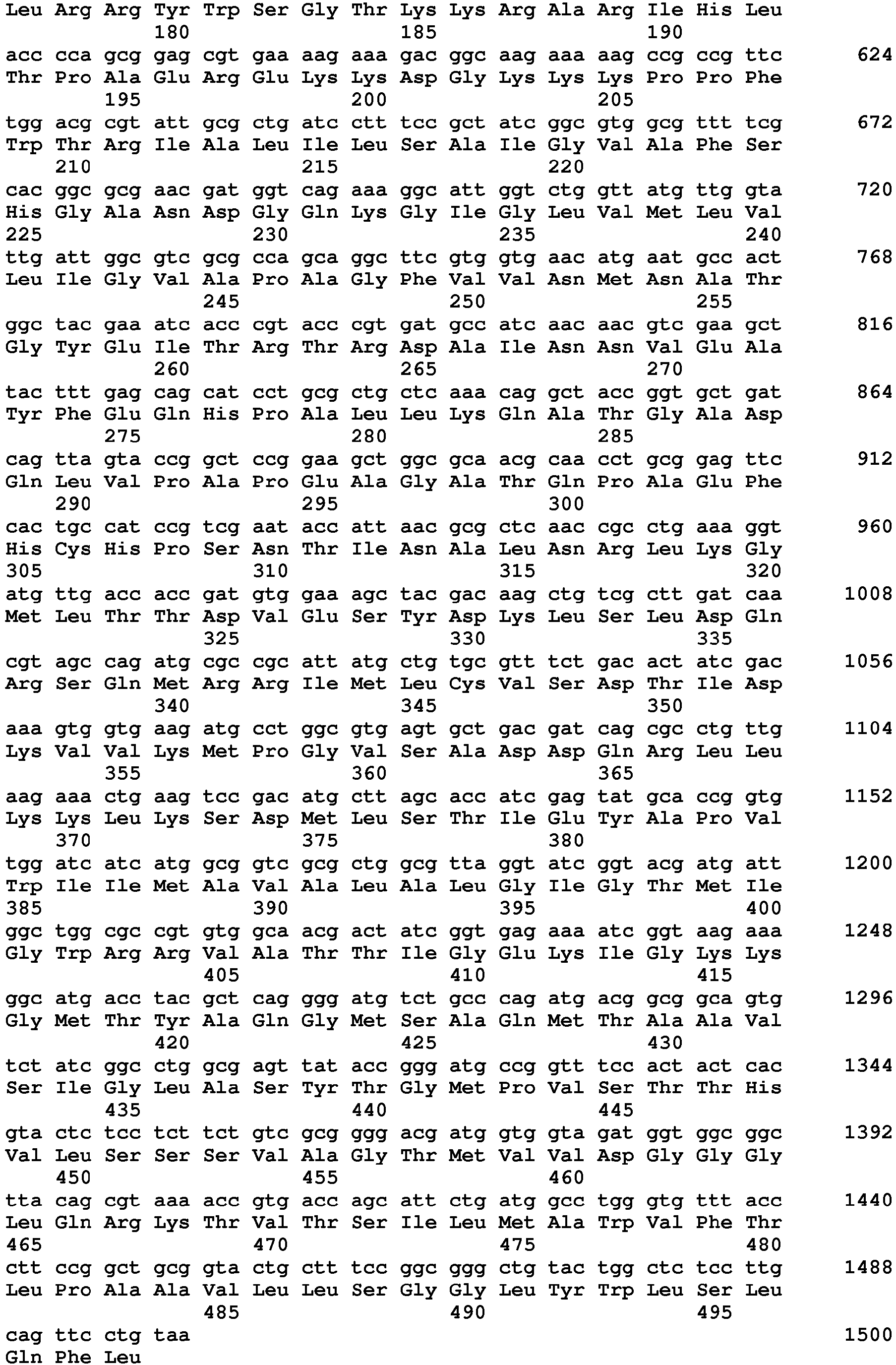
- <210> 2
<211> 499
<212> PRT
<213> Escherichia coli MG1655 - <400> 2


- <210> 3
<211> 1503
<212> DNA
<213> Pantoea ananatis LMG20103 - <220>
<221> CDS
<222> (1)..(1503) - <400> 3


- <210> 4
<211> 500
<212> PRT
<213> Pantoea ananatis LMG20103 - <400> 4


- <210> 5
<211> 1386
<212> DNA
<213> Corynebacterium glutamicum 2256 (ATCC 13869) - <220>
<221> CDS
<222> (1)..(1386) - <400> 5


- <210> 6
<211> 461
<212> PRT
<213> Corynebacterium glutamicum 2256 (ATCC 13869) - <400> 6


- <210> 7
<211> 20
<212> DNA
<213> Artificial Sequence - <220>
<223> primer - <400> 7
cactgcacgg ccctgcgaac 20 - <210> 8
<211> 42
<212> DNA
<213> Artificial Sequence - <220>
<223> primer - <400> 8
cgccaactag gcgccaaaaa ttcctgattt ccctaaccgg ac 42 - <210> 9
<211> 20
<212> DNA
<213> Artificial Sequence - <220>
<223> primer - <400> 9
tgtgggcctt cggcgaggac 20 - <210> 10
<211> 42
<212> DNA
<213> Artificial Sequence - <220>
<223> primer - <400> 10
gtccggttag ggaaatcagg aatttttggc gcctagttgg cg 42 - <210> 11
<211> 26
<212> DNA
<213> Artificial Sequence - <220>
<223> primer - <400> 11
gagtcgaccg caccccattt ttcata 26 - <210> 12
<211> 28
<212> DNA
<213> Artificial Sequence - <220>
<223> primer - <400> 12
tggtcgacgt gaatgctcgg cgggatcc 28 - <210> 13
<211> 20
<212> DNA
<213> Artificial Sequence - <220>
<223> primer - <400> 13
ccaggcactc gtcctcggtt 20 - <210> 14
<211> 48
<212> DNA
<213> Artificial Sequence - <220>
<223> primer - <400> 14
aggctagtgc aggactataa agaccagttc tcctaaaaat aacgtgtc 48 - <210> 15
<211> 20
<212> DNA
<213> Artificial Sequence - <220>
<223> primer - <400> 15
tccatcgtgg ccaccgatcc 20 - <210> 16
<211> 48
<212> DNA
<213> Artificial Sequence - <220>
<223> primer - <400> 16
gacacgttat ttttaggaga actggtcttt atagtcctgc actagcct 48 - <210> 17
<211> 25
<212> DNA
<213> Artificial Sequence - <220>
<223> primer - <400> 17
cgggatcccc accggcgtac tcgtg 25 - <210> 18
<211> 28
<212> DNA
<213> Artificial Sequence - <220>
<223> primer - <400> 18
ccacggatcc ttccaatgct attggttg 28 - <210> 19
<211> 45
<212> DNA
<213> Artificial Sequence - <220>
<223> primer - <400> 19
agcttgcatg cctgcagagg aggattataa tggtcacccc aatca 45 - <210> 20
<211> 36
<212> DNA
<213> Artificial Sequence - <220>
<223> primer - <400> 20
cggtacccgg ggatcctgcc cacgagggtg acctca 36 - <210> 21
<211> 3481
<212> DNA
<213> Corynebacterium glutamicum 2256 (ATCC 13869) - <220>
<221> CDS
<222> (1437)..(3035) - <400> 21
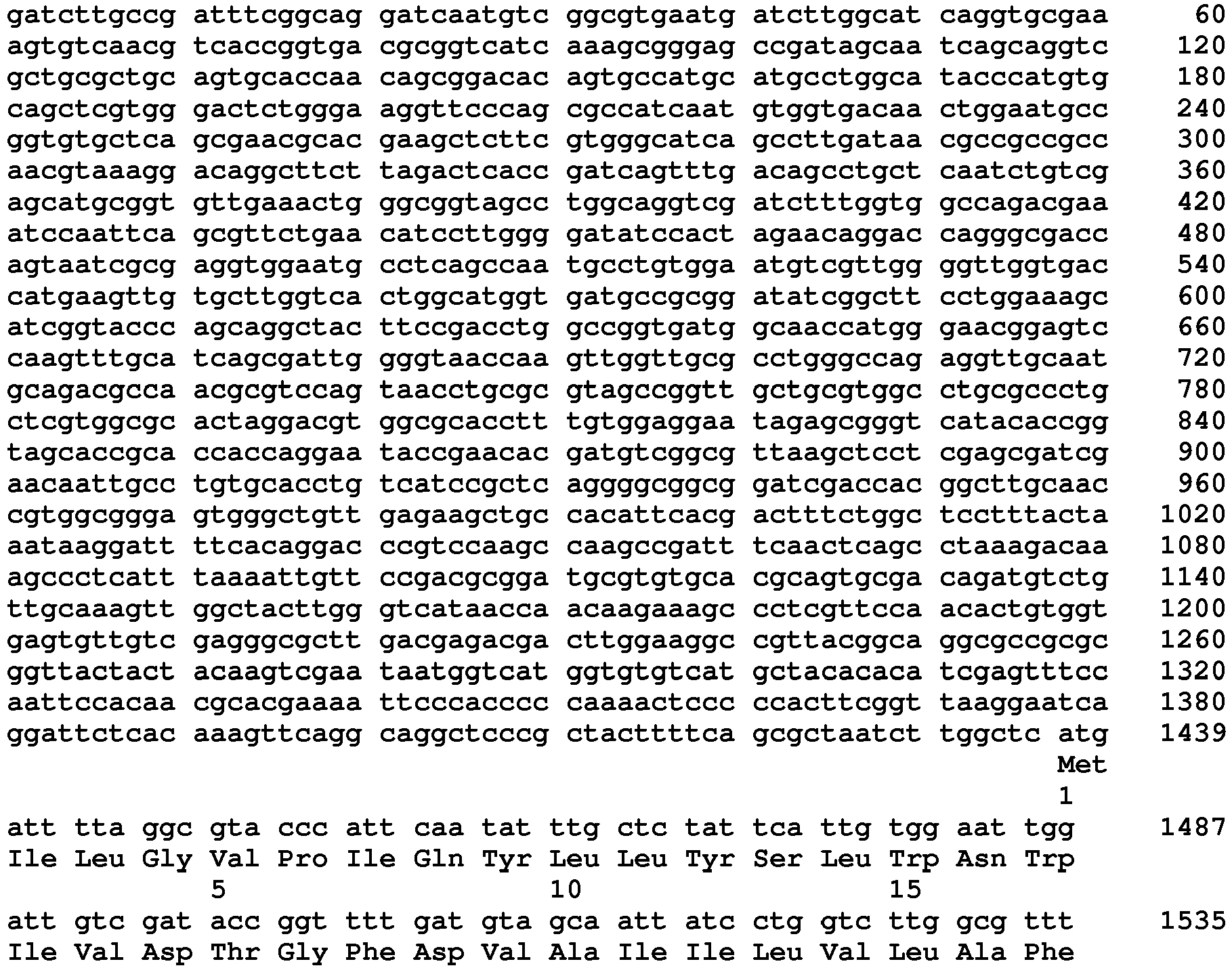


- <210> 22
<211> 533
<212> PRT
<213> Corynebacterium glutamicum 2256 (ATCC 13869) - <400> 22


- <210> 23
<211> 4942
<212> DNA
<213> Corynebacterium glutamicum 2256 (ATCC 13869) - <220>
<221> CDS
<222> (1437)..(2705) - <400> 23
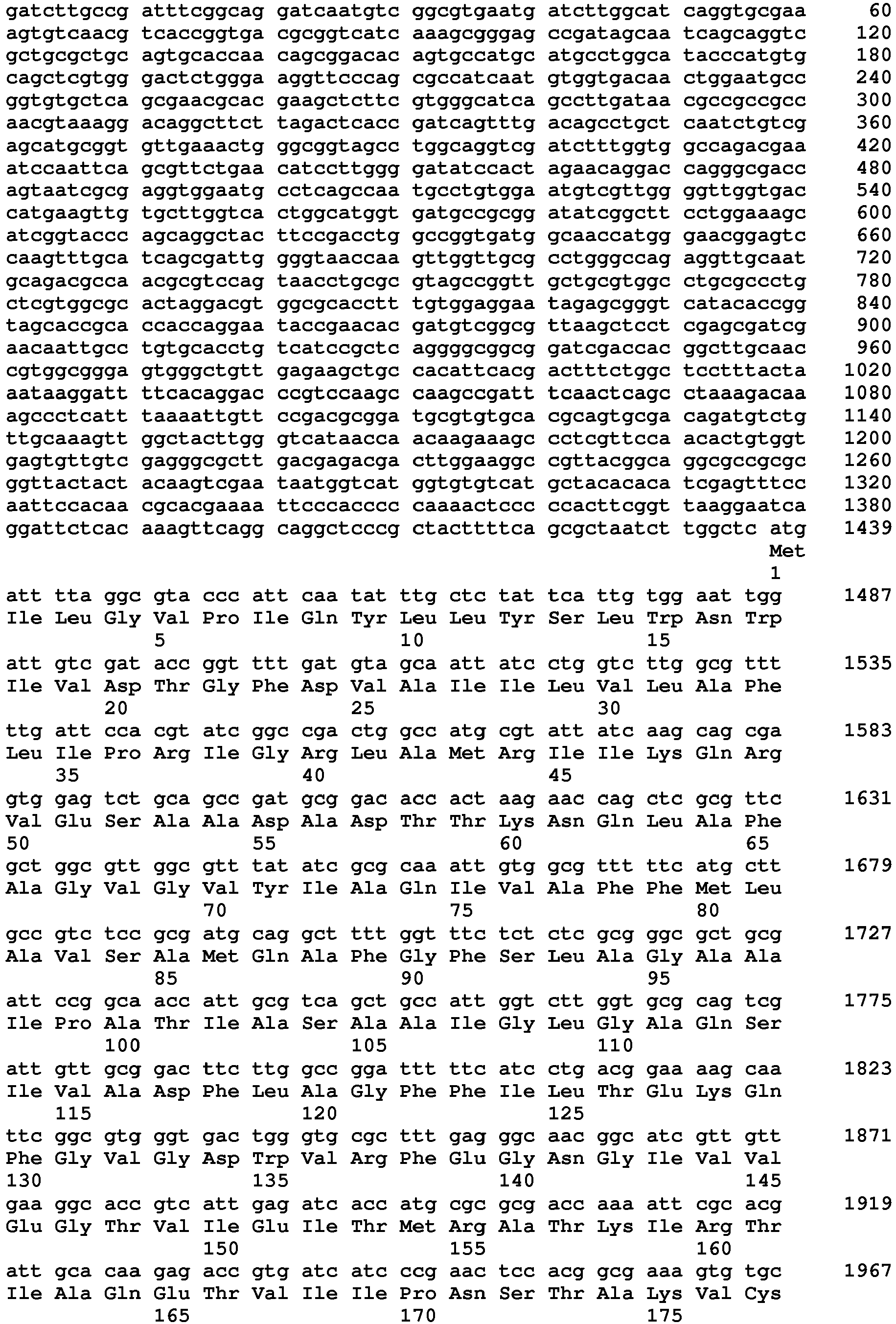


- <210> 24
<211> 423
<212> PRT
<213> Corynebacterium glutamicum 2256 (ATCC 13869) - <400> 24


- <210> 25
<211> 1386
<212> DNA
<213> Corynebacterium glutamicum ATCC13032 - <220>
<221> CDS
<222> (1)..(1386) - <400> 25


- <210> 26
<211> 461
<212> PRT
<213> Corynebacterium glutamicum ATCC13032 - <400> 26

- <210> 27
<211> 41
<212> DNA
<213> Artificial Sequence - <220>
<223> primer - <400> 27
gagctcggta cccggggatc catggtcacc ccaatcatgg g 41 - <210> 28
<211> 41
<212> DNA
<213> Artificial Sequence - <220>
<223> primer - <400> 28
gccaagcttg catgcctgca gttacttggt tacctcattc t 41
Claims (16)
- A method for producing an L-amino acid comprising:culturing a coryneform bacterium having an L-amino acid-producing ability in a medium; andcollecting the L-amino acid from the medium,wherein the bacterium has been modified so that the activity of a phosphate transporter is increased.
- The method according to claim 1, wherein the activity of the phosphate transporter is increased by increasing expression of a gene coding for the phosphate transporter.
- The method according to claim 2, wherein the gene is the pitA gene.
- The method according to claim 3, wherein the pitA gene is a DNA defined in the following (a) or (b):(a) a DNA comprising the nucleotide sequence shown in SEQ ID NO: 5 or 25,(b) a DNA hybridizable under stringent conditions with a sequence complementary to the nucleotide sequence shown in SEQ ID NO: 5 or 25 or with a probe that can be prepared from said complementary sequence, and wherein said hybridizable DNA codes for a protein having the phosphate transporter activity.
- The method according to claim 3 or 4, wherein the pitA gene is a DNA coding for a protein defined in the following (A) or (B):(A) a protein comprising the amino acid sequence shown in SEQ ID NO: 6 or 26,(B) a protein comprising the amino acid sequence shown in SEQ ID NO: 6 or 26 but including substitution, deletion, insertion, or addition of one or several amino acid residues, and wherein said protein has the phosphate transporter activity.
- The method according to any one of claims 2 to 5, wherein the expression of the gene is increased by increasing the copy number of the gene, and/or by modifying an expression control sequence of the gene.
- The method according to any one of claims 1 to 6, wherein the activity of the phosphate transporter is increased by making the bacterium harbor a mutant pitA gene coding for a phosphate transporter having a mutation that the amino acid residue corresponding to the phenylalanine residue at position 246 in SEQ ID NO: 6 is replaced with an amino acid residue other than phenylalanine residue.
- The method according to claim 7, wherein the amino acid residue corresponding to the phenylalanine residue at position 246 in SEQ ID NO: 6 is replaced with a serine residue.
- A method for producing an L-amino acid comprising:culturing a coryneform bacterium having an L-amino acid-producing ability in a medium; andcollecting the L-amino acid from the medium,wherein the bacterium harbors a mutant pitA gene coding for a phosphate transporter having a mutation that the amino acid residue corresponding to the phenylalanine residue at position 246 in SEQ ID NO: 6 is replaced with an amino acid residue other than phenylalanine residue.
- The method according to claim 9, wherein the amino acid residue corresponding to the phenylalanine residue at position 246 in SEQ ID NO: 6 is replaced with a serine residue.
- The method according to any one of claims 1 to 10, wherein the bacterium is a Corynebacterium bacterium.
- The method according to claim 11, wherein the coryneform bacterium is Corynebacterium glutamicum.
- The method according to any one of claims 1 to 12, wherein the L-amino acid is L-glutamic acid.
- The method according to claim 13, wherein the L-glutamic acid is monoammonium L-glutamate or monosodium L-glutamate.
- A DNA coding for a phosphate transporter having a mutation that the amino acid residue corresponding to the phenylalanine residue at position 246 in SEQ ID NO: 6 is replaced with a serine residue.
- A coryneform bacterium harboring a mutant pitA gene coding for a phosphate transporter having a mutation that the amino acid residue corresponding to the phenylalanine residue at position 246 in SEQ ID NO: 6 is replaced with a serine residue.
Applications Claiming Priority (3)
| Application Number | Priority Date | Filing Date | Title |
|---|---|---|---|
| JP2013101589 | 2013-05-13 | ||
| JP2013219274 | 2013-10-22 | ||
| PCT/JP2014/062752 WO2014185430A1 (en) | 2013-05-13 | 2014-05-13 | Method for manufacturing l-amino acid |
Publications (3)
| Publication Number | Publication Date |
|---|---|
| EP2868745A1 true EP2868745A1 (en) | 2015-05-06 |
| EP2868745A4 EP2868745A4 (en) | 2015-09-02 |
| EP2868745B1 EP2868745B1 (en) | 2017-06-21 |
Family
ID=51898407
Family Applications (1)
| Application Number | Title | Priority Date | Filing Date |
|---|---|---|---|
| EP14797459.6A Active EP2868745B1 (en) | 2013-05-13 | 2014-05-13 | Method for manufacturing an L-amino acid |
Country Status (10)
| Country | Link |
|---|---|
| US (1) | US9506094B2 (en) |
| EP (1) | EP2868745B1 (en) |
| JP (1) | JP5831669B2 (en) |
| KR (1) | KR101773755B1 (en) |
| CN (1) | CN105008532B (en) |
| BR (1) | BR112015007916B1 (en) |
| MY (1) | MY185322A (en) |
| PE (1) | PE20150681A1 (en) |
| PH (1) | PH12015500792B1 (en) |
| WO (1) | WO2014185430A1 (en) |
Cited By (1)
| Publication number | Priority date | Publication date | Assignee | Title |
|---|---|---|---|---|
| EP4342990A4 (en) * | 2021-05-21 | 2025-07-30 | Cj Cheiljedang Corp | PURINE NUCLEOTIDE-PRODUCING MICROORGANISM AND PURINE NUCLEOTIDE PRODUCTION METHOD THEREOF |
Families Citing this family (22)
| Publication number | Priority date | Publication date | Assignee | Title |
|---|---|---|---|---|
| JP6623690B2 (en) | 2015-10-30 | 2019-12-25 | 味の素株式会社 | Method for producing glutamic acid-based L-amino acid |
| CN106146329B (en) * | 2016-07-18 | 2018-03-30 | 山东师范大学 | A kind of extracting method of the useless wine with dregs bacteria residue Glutamic Acid of glutamic acid fermentation |
| US10428359B2 (en) * | 2016-10-03 | 2019-10-01 | Ajinomoto Co, Inc. | Method for producing L-amino acid |
| JP7066977B2 (en) | 2017-04-03 | 2022-05-16 | 味の素株式会社 | Manufacturing method of L-amino acid |
| KR101904675B1 (en) * | 2017-12-15 | 2018-10-04 | 씨제이제일제당 (주) | IMP-producing microorganism and method of producing IMP using the same |
| CN108486133B (en) * | 2018-06-29 | 2021-06-01 | 江南大学 | Application method of L-serine transport protein |
| JP7755921B2 (en) | 2019-03-29 | 2025-10-17 | 味の素株式会社 | Control device, control method, program, and method for producing organic compound |
| CN110590920B (en) * | 2019-09-30 | 2020-12-29 | 江南大学 | A kind of L-serine transporter and its application |
| KR102269639B1 (en) * | 2020-02-12 | 2021-06-25 | 대상 주식회사 | Mutant of Corynebacterium glutamicum with enhanced L-glutamic acid productivity and method for preparing L-glutamic acid using the same |
| KR102185850B1 (en) * | 2020-02-21 | 2020-12-02 | 씨제이제일제당 주식회사 | Microorganisms that produce purine nucleotides and methods of producing purine nucleotides using the same |
| EP4239070A4 (en) | 2020-10-28 | 2025-09-10 | Ajinomoto Kk | PROCESS FOR THE PRODUCTION OF L-AMINO ACID |
| KR102266233B1 (en) * | 2021-01-27 | 2021-06-17 | 씨제이제일제당 주식회사 | Novel ABC transporter ATP-binding protein variant and a method for producing L-glutamic acid using the same |
| KR102266230B1 (en) * | 2021-01-27 | 2021-06-17 | 씨제이제일제당 주식회사 | Novel ABC transporter ATP-binding protein variant and a method for producing L-glutamic acid using the same |
| KR102266231B1 (en) * | 2021-01-27 | 2021-06-17 | 씨제이제일제당 주식회사 | Novel MFS transporter variant and a method for producing L-glutamic acid using the same |
| KR102277407B1 (en) * | 2021-04-29 | 2021-07-14 | 씨제이제일제당 주식회사 | Novel glutamate synthase subunit alpha variant and a method for producing L-glutamic acid using the same |
| EP4610350A1 (en) * | 2022-10-24 | 2025-09-03 | Daesang Corporation | Novel phenylalanine:h+ symporter phep variant, and method for producing l-aromatic amino acids using same |
| KR102771797B1 (en) * | 2022-10-24 | 2025-02-25 | 대상 주식회사 | Novel variant of GlpM family protein and method for producing L-aromatic amino acid using the same |
| KR102837216B1 (en) * | 2022-11-01 | 2025-07-23 | 씨제이제일제당 주식회사 | A microorganism for producing purine nucleotides and a method for producing purine nucleotides using the same |
| KR102932427B1 (en) * | 2023-02-27 | 2026-03-03 | 씨제이제일제당 주식회사 | A major facilitator superfamily transporter variant and a method for producing L-glutamic acid using the same |
| KR20250099654A (en) * | 2023-12-22 | 2025-07-02 | 씨제이제일제당 (주) | Microorganism having enhanced activity of aromatic amino acid transporter and uses thereof |
| WO2025141837A1 (en) | 2023-12-28 | 2025-07-03 | 味の素株式会社 | L-glutamic acid-producing bacterium and method for producing l-glutamic acid |
| WO2025141838A1 (en) | 2023-12-28 | 2025-07-03 | 味の素株式会社 | L-glutamic acid-producing bacterium and method for producing l-glutamic acid |
Family Cites Families (169)
| Publication number | Priority date | Publication date | Assignee | Title |
|---|---|---|---|---|
| FR356739A (en) | 1904-09-20 | 1905-12-07 | Charles Glauser Perrin | Winding and time-setting mechanism |
| JPS4828078B1 (en) | 1969-03-20 | 1973-08-29 | ||
| JPS5610036B1 (en) | 1969-07-23 | 1981-03-05 | ||
| US3738479A (en) | 1970-04-14 | 1973-06-12 | S Sato | Disposable rigid thermometer probe cover |
| US3825472A (en) | 1972-04-27 | 1974-07-23 | Ajinomoto Kk | Method of producing l-lysine by fermentation |
| JPS5325034B1 (en) | 1973-01-23 | 1978-07-24 | ||
| JPS5031093A (en) | 1973-07-26 | 1975-03-27 | ||
| JPS5123592B2 (en) | 1973-09-22 | 1976-07-17 | ||
| JPS50113209A (en) | 1974-02-13 | 1975-09-05 | ||
| JPS5119186A (en) | 1974-08-05 | 1976-02-16 | Ajinomoto Kk | Ll rijinno seizoho |
| JPS5122884A (en) | 1974-08-12 | 1976-02-23 | Ajinomoto Kk | Hatsukohonyoru ll rijinnoseizoho |
| JPS5238088A (en) | 1975-09-19 | 1977-03-24 | Ajinomoto Co Inc | Preparation of l-glutamic acid |
| JPS5848147B2 (en) | 1975-12-15 | 1983-10-26 | 味の素株式会社 | Shiryo no Seizouhou |
| JPS52102498A (en) | 1976-02-20 | 1977-08-27 | Ajinomoto Co Inc | Preparation of l-lysine |
| JPS539394A (en) | 1976-07-09 | 1978-01-27 | Kyowa Hakko Kogyo Co Ltd | Preparation of l-lysine by fermentation |
| JPS5386090A (en) | 1976-12-29 | 1978-07-29 | Ajinomoto Co Inc | Preparation of l-lysine by fermentation |
| JPS594993B2 (en) | 1976-12-29 | 1984-02-02 | 味の素株式会社 | Production method of L-lysine by fermentation method |
| JPS5386091A (en) | 1976-12-29 | 1978-07-29 | Ajinomoto Co Inc | Preparation of l-lysine by fermentation |
| JPS5444096A (en) | 1977-09-13 | 1979-04-07 | Ajinomoto Co Inc | Preparation of l-arginine by fermentation |
| JPS559759A (en) | 1978-07-07 | 1980-01-23 | Ajinomoto Co Inc | Preparation of l-lysine by fermentation |
| JPS559785A (en) | 1978-07-10 | 1980-01-23 | Ajinomoto Co Inc | Preparation of l-lysine by fermentation |
| JPS559784A (en) | 1978-07-10 | 1980-01-23 | Ajinomoto Co Inc | Preparation of l-lysine |
| JPS559783A (en) | 1978-07-10 | 1980-01-23 | Ajinomoto Co Inc | Preparation of l-lysine by fermentation |
| JPS55148093A (en) | 1979-05-02 | 1980-11-18 | Ajinomoto Co Inc | Preparation of l-arginine |
| JPS561889A (en) | 1979-06-20 | 1981-01-10 | Ajinomoto Co Inc | Preparation of l-glutamic acid by fermentation |
| JPS568692A (en) | 1979-07-03 | 1981-01-29 | Kyowa Hakko Kogyo Co Ltd | Preparation of l-lysine by fermentation |
| JPS5832596B2 (en) | 1979-08-10 | 1983-07-14 | 味の素株式会社 | Method for producing L-glutamic acid by fermentation method |
| JPS5632995A (en) | 1979-08-28 | 1981-04-02 | Ajinomoto Co Inc | Preparation of l-lysine by fermentation |
| JPS5810075B2 (en) | 1979-08-31 | 1983-02-24 | 味の素株式会社 | New mutant strain |
| JPS5639778A (en) | 1979-09-10 | 1981-04-15 | Ajinomoto Co Inc | Novel modified strain |
| JPS5688799A (en) | 1979-12-21 | 1981-07-18 | Ajinomoto Co Inc | Preparation of l-lysine |
| JPS56140895A (en) | 1980-04-02 | 1981-11-04 | Ajinomoto Co Inc | Preparation of l-glutamic acid by fermentation |
| JPS56151495A (en) | 1980-04-25 | 1981-11-24 | Ajinomoto Co Inc | Production of l-glutamine through fermentation |
| JPS572869A (en) | 1980-06-10 | 1982-01-08 | Tohoku Electric Power Co Inc | Austenite stainless steel for hot corrosive environment |
| JPS5718989A (en) | 1980-07-09 | 1982-01-30 | Ajinomoto Co Inc | Production of l-arginine through fermentation |
| JPS5765198A (en) | 1980-10-09 | 1982-04-20 | Ajinomoto Co Inc | Fermentative production of l-glutamic acid |
| JPS57115186A (en) | 1980-12-29 | 1982-07-17 | Ajinomoto Co Inc | Preparation of l-lysine by fermentation |
| JPS57134500A (en) | 1981-02-12 | 1982-08-19 | Kyowa Hakko Kogyo Co Ltd | Plasmid pcg1 |
| JPS57132892A (en) | 1981-02-12 | 1982-08-17 | Ajinomoto Co Inc | Preparation of l-tyrosine by fermentation method |
| JPS572689A (en) | 1981-03-23 | 1982-01-08 | Ajinomoto Co Inc | Preparation of l-glutamic acid |
| JPS57183799A (en) | 1981-04-17 | 1982-11-12 | Kyowa Hakko Kogyo Co Ltd | Novel plasmid |
| DE3127361A1 (en) | 1981-07-08 | 1983-02-03 | Schering Ag, 1000 Berlin Und 4619 Bergkamen | PRODUCTION AND APPLICATION OF PLASMIDES WITH GENES FOR THE BIOSYNTHESIS OF L-PROLIN |
| JPS5835197A (en) | 1981-08-26 | 1983-03-01 | Kyowa Hakko Kogyo Co Ltd | Plamid pcg 2 |
| JPS5794297A (en) | 1981-09-28 | 1982-06-11 | Ajinomoto Co Inc | Preparation of l-lysine by fermentation |
| JPS5816872B2 (en) | 1982-02-12 | 1983-04-02 | 協和醗酵工業株式会社 | Corynebacterium glutamicum mutant strain |
| JPH07112437B2 (en) | 1982-03-05 | 1995-12-06 | 味の素株式会社 | Method for producing fermentation product from starch |
| JPS58158186A (en) | 1982-03-15 | 1983-09-20 | Ajinomoto Co Inc | Fusion of protoplast of bacterium |
| JPS58158192A (en) | 1982-03-15 | 1983-09-20 | Ajinomoto Co Inc | Preparation of l-glumatic acid by fermentation process |
| JPH07112438B2 (en) | 1982-03-15 | 1995-12-06 | 味の素株式会社 | Method for producing amino acid by fermentation using amino acid-producing bacterium with improved growth |
| JPS58192900A (en) | 1982-05-04 | 1983-11-10 | Ajinomoto Co Inc | Complex plasmid |
| JPS60137298A (en) | 1983-12-23 | 1985-07-20 | Ajinomoto Co Inc | Production of l-tryptophane through fermentation process |
| JPH06102030B2 (en) | 1983-09-28 | 1994-12-14 | 味の素株式会社 | Fermentation method for producing L-tyrosine |
| US4533129A (en) | 1984-01-09 | 1985-08-06 | Minnesota Mining And Manufacturing Company | Electrical connector locator plate |
| EP0163836B1 (en) | 1984-04-07 | 1988-10-12 | Bayer Ag | Process and apparatus for the production of granules |
| EP0167132B1 (en) | 1984-06-29 | 1992-01-02 | Ajinomoto Co., Inc. | Process for producing l-isoleucine by fermentation |
| JPS6115695A (en) | 1984-06-29 | 1986-01-23 | Ajinomoto Co Inc | Preparation of l-isoleucine by fermentation method |
| JPS6115696A (en) | 1984-06-29 | 1986-01-23 | Ajinomoto Co Inc | Preparation of l-isoleucine by fermentation method |
| JPH0724591B2 (en) | 1984-09-27 | 1995-03-22 | 味の素株式会社 | Method for producing aromatic amino acid using coryneform bacterium having recombinant DNA |
| JPS61202694A (en) | 1985-03-07 | 1986-09-08 | Ajinomoto Co Inc | Production of l-glutamine by fermentation method |
| JPS6291193A (en) | 1985-06-05 | 1987-04-25 | Kyowa Hakko Kogyo Co Ltd | Production of l-threonine and l-isoleucine |
| JPS6274293A (en) | 1985-09-28 | 1987-04-06 | Kyowa Hakko Kogyo Co Ltd | Production of l-isoleucine |
| JPS62195293A (en) | 1986-02-22 | 1987-08-28 | Kyowa Hakko Kogyo Co Ltd | Production of l-isoleucine by fermentation method |
| FR2603581B1 (en) | 1986-04-28 | 1993-08-13 | Ajinomoto Kk | PROCESS FOR ISOLATING AND PURIFYING AMINO ACIDS BY CHROMATOGRAPHY |
| US4777051A (en) | 1986-06-20 | 1988-10-11 | Ajinomoto Co., Inc. | Process for the production of a composition for animal feed |
| US5188949A (en) | 1986-09-29 | 1993-02-23 | Ajinomoto Co., Inc. | Method for producing L-threonine by fermentation |
| JPS63240794A (en) | 1987-03-30 | 1988-10-06 | Ajinomoto Co Inc | Production of l-tryptophan |
| JPH0665314B2 (en) | 1987-04-16 | 1994-08-24 | 味の素株式会社 | Fermentation method for producing L-valine |
| JP2536570B2 (en) | 1987-10-12 | 1996-09-18 | 味の素株式会社 | Fermentation method for producing L-isoleucine |
| JPH01191686A (en) | 1988-01-26 | 1989-08-01 | Mitsubishi Petrochem Co Ltd | Composite plasmid |
| FR2627508B1 (en) | 1988-02-22 | 1990-10-05 | Eurolysine | PROCESS FOR THE INTEGRATION OF A SELECTED GENE ON THE CHROMOSOME OF A BACTERIA AND BACTERIA OBTAINED BY SAID METHOD |
| JP2578488B2 (en) | 1988-03-04 | 1997-02-05 | 協和醗酵工業株式会社 | Method for producing amino acids |
| JP2678995B2 (en) | 1988-09-08 | 1997-11-19 | 三菱化学株式会社 | Method for producing tryptophan synthase |
| US5185262A (en) | 1988-07-27 | 1993-02-09 | Mitsubishi Petrochemical Co., Ltd. | DNA fragment containing gene which encodes the function of stabilizing plasmid in host microorganism |
| US5705371A (en) | 1990-06-12 | 1998-01-06 | Ajinomoto Co., Inc. | Bacterial strain of escherichia coli BKIIM B-3996 as the producer of L-threonine |
| JPH03501682A (en) | 1988-10-25 | 1991-04-18 | 味の素株式会社 | Escherichia coli BKIIM strain B-3996 as an L-threonine producer |
| JP2817155B2 (en) | 1989-01-12 | 1998-10-27 | 味の素株式会社 | Production method of L-arginine by fermentation method |
| JPH02207791A (en) | 1989-02-07 | 1990-08-17 | Ajinomoto Co Inc | Transformation of bacterium |
| JP2810697B2 (en) | 1989-05-17 | 1998-10-15 | 協和醗酵工業株式会社 | Method for producing aromatic amino acids |
| JP2973446B2 (en) | 1990-01-11 | 1999-11-08 | 三菱化学株式会社 | New plasmid vector |
| JPH03232497A (en) | 1990-02-08 | 1991-10-16 | Asahi Chem Ind Co Ltd | Production of l-glutamine by fermentation |
| JPH0488994A (en) | 1990-07-30 | 1992-03-23 | Kyowa Hakko Kogyo Co Ltd | Production of l-glutamine by fermentation |
| JP3006929B2 (en) | 1990-09-18 | 2000-02-07 | 協和醗酵工業株式会社 | Production method of L-valine by fermentation method |
| JPH07108228B2 (en) | 1990-10-15 | 1995-11-22 | 味の素株式会社 | Temperature sensitive plasmid |
| US5168056A (en) | 1991-02-08 | 1992-12-01 | Purdue Research Foundation | Enhanced production of common aromatic pathway compounds |
| JPH0549489A (en) | 1991-08-22 | 1993-03-02 | Ajinomoto Co Inc | Method for producing l-phenylalanine by fermentation method |
| DE4130868C2 (en) | 1991-09-17 | 1994-10-13 | Degussa | Animal feed supplement based on an amino acid and process for its preparation |
| RU2003677C1 (en) | 1992-03-30 | 1993-11-30 | Всесоюзный научно-исследовательский институт генетики и селекции промышленных микроорганизмов | Strain of bacterium escherichia coli - a producer of l-histidine |
| DE4232468A1 (en) | 1992-09-28 | 1994-03-31 | Consortium Elektrochem Ind | Microorganisms for the production of tryptophan and process for their production |
| EP0593792B2 (en) | 1992-10-14 | 2004-01-07 | Ajinomoto Co., Inc. | Novel L-threonine-producing microbacteria and a method for the production of L-threonine |
| US5776736A (en) | 1992-12-21 | 1998-07-07 | Purdue Research Foundation | Deblocking the common pathway of aromatic amino acid synthesis |
| CA2169170C (en) | 1993-08-24 | 2007-01-09 | Masakazu Sugimoto | Mutant phosphoenolpyruvate carboxylase, its gene, and production method of amino acid |
| JPH07163383A (en) | 1993-10-18 | 1995-06-27 | Mitsubishi Chem Corp | Method for producing L-alanine |
| RU2182173C2 (en) | 1993-10-28 | 2002-05-10 | Адзиномото Ко., Инк. | Method of production of l-amino acid |
| JPH07155184A (en) | 1993-12-08 | 1995-06-20 | Ajinomoto Co Inc | Fermentation method for producing L-lysine |
| US5998178A (en) | 1994-05-30 | 1999-12-07 | Ajinomoto Co., Ltd. | L-isoleucine-producing bacterium and method for preparing L-isoleucine through fermentation |
| CN1103819C (en) | 1994-06-14 | 2003-03-26 | 味之素株式会社 | α-ketoglutarate dehydrogenase gene |
| EP0782621B1 (en) | 1994-09-16 | 2006-03-08 | THE TEXAS A&M UNIVERSITY SYSTEM | Microorganisms and method for overproduction of DAHP by cloned PPS gene |
| ES2256850T5 (en) | 1994-12-09 | 2013-04-15 | Ajinomoto Co., Inc. | New lysine decarboxylase gene and procedure for the production of L-lysine |
| EP0805867B1 (en) | 1995-01-23 | 2003-12-17 | Novozymes A/S | Dna integration by transposition |
| JP4032441B2 (en) | 1995-08-30 | 2008-01-16 | 味の素株式会社 | Method for producing L-amino acid |
| JP3861341B2 (en) | 1995-10-13 | 2006-12-20 | 味の素株式会社 | Membrane sterilization method of fermentation broth |
| JPH09173792A (en) | 1995-10-23 | 1997-07-08 | Ajinomoto Co Inc | Fermentation liquid treatment method |
| DE19621930C1 (en) | 1996-05-31 | 1997-12-11 | Degussa | Process for the preparation of an animal feed additive based on fermentation broth |
| US5939307A (en) | 1996-07-30 | 1999-08-17 | The Archer-Daniels-Midland Company | Strains of Escherichia coli, methods of preparing the same and use thereof in fermentation processes for l-threonine production |
| JP4088982B2 (en) | 1996-10-15 | 2008-05-21 | 味の素株式会社 | Method for producing L-amino acid by fermentation |
| RU2119536C1 (en) | 1997-01-21 | 1998-09-27 | Государственный научно-исследовательский институт генетики и селекции промышленных микроорганизмов | Strain escherichia coli - a producer of l-histidine |
| AU742609B2 (en) | 1997-08-12 | 2002-01-10 | Ajinomoto Co., Inc. | Process for producing L-glutamic acid by fermentation method |
| DE59812638D1 (en) | 1997-10-04 | 2005-04-14 | Degussa | METHOD FOR MICROBIAL PRODUCTION OF AMINO ACIDS OF THE ASPART AND / OR GLUTAMATE FAMILY AND METHODS USED IN THE PROCESS |
| JP4151094B2 (en) | 1997-11-25 | 2008-09-17 | 味の素株式会社 | Method for producing L-cysteine |
| AU4131699A (en) | 1998-04-09 | 1999-11-01 | Siemens Aktiengesellschaft | Device and method for supplying an electric load with electric energy |
| ES2335828T3 (en) | 1998-09-25 | 2010-04-05 | Ajinomoto Co., Inc. | CORINEFORM BACTERIA TO PRODUCE L-GLU. |
| JP4110641B2 (en) | 1998-11-17 | 2008-07-02 | 味の素株式会社 | Method for producing L-methionine by fermentation |
| BR9906279A (en) | 1998-12-18 | 2001-04-24 | Ajinomoto Kk | Chorineform bacteria, process to produce l-glutamic acid, and, dna. |
| RU2148642C1 (en) | 1998-12-23 | 2000-05-10 | ЗАО "Научно-исследовательский институт АДЖИНОМОТО-Генетика" (ЗАО "АГРИ") | Dna rhtc fragment encoding synthesis of rhtc protein that determines enhanced resistance of bacterium escherichia coli to l-threonine and method of l-amino acid producing |
| DE19907567B4 (en) | 1999-02-22 | 2007-08-09 | Forschungszentrum Jülich GmbH | Process for the microbial production of L-valine |
| JP2000262288A (en) | 1999-03-16 | 2000-09-26 | Ajinomoto Co Inc | Temperature sensitive plasmid of coryneform bacteria |
| US6238714B1 (en) | 1999-05-05 | 2001-05-29 | Degussa-Huls Ag | Feedstuff additive which contains D-pantothenic acid and/or its salts and a process for the preparation thereof |
| JP2003144160A (en) | 1999-07-02 | 2003-05-20 | Ajinomoto Co Inc | Method for producing l-amino acid |
| JP2003159092A (en) | 1999-07-02 | 2003-06-03 | Ajinomoto Co Inc | Method for producing l-amino acid |
| RU2201454C2 (en) | 1999-07-09 | 2003-03-27 | Закрытое акционерное общество "Научно-исследовательский институт Аджиномото-Генетика" | Mutant alpha-isopropylmalate synthase (ipms), dna encoding mutant ipms, method of preparing escherichia coli strain, method of l-leucine preparing |
| JP4427878B2 (en) | 1999-08-20 | 2010-03-10 | 味の素株式会社 | Method for producing L-glutamic acid by fermentation method with precipitation |
| RU2207376C2 (en) | 1999-10-14 | 2003-06-27 | Закрытое акционерное общество "Научно-исследовательский институт Аджиномото-Генетика" | Method for preparing l-amino acid by fermentation method, strain of bacterium escherichia coli as producer of l-amino acid (variants) |
| DE19951708A1 (en) | 1999-10-27 | 2001-05-03 | Degussa | Nicleotide sequences coding for the export of branched-chain amino acids, methods for their isolation and their use |
| JP4623825B2 (en) | 1999-12-16 | 2011-02-02 | 協和発酵バイオ株式会社 | Novel polynucleotide |
| BRPI0016995B1 (en) | 2000-01-21 | 2016-03-08 | Ajinomoto Kk | genetically modified escherichia coli bacteria, and method for producing l-lysine |
| JP4682454B2 (en) | 2000-06-28 | 2011-05-11 | 味の素株式会社 | Process for producing novel mutant N-acetylglutamate synthase and L-arginine |
| JP4380029B2 (en) | 2000-07-05 | 2009-12-09 | 味の素株式会社 | Manufacturing method of substances using microorganisms |
| US6818391B2 (en) * | 2000-07-25 | 2004-11-16 | The Regents Of The University Of California | Glutamate transporters |
| JP4362959B2 (en) | 2000-08-24 | 2009-11-11 | 味の素株式会社 | Method for producing basic amino acid |
| DE10045486A1 (en) * | 2000-09-14 | 2002-04-11 | Degussa | New nucleotide sequences coding for the pstC2 gene |
| US7220571B2 (en) | 2000-09-28 | 2007-05-22 | Archer-Daniels-Midland Company | Escherichia coli strains which over-produce L-threonine and processes for the production of L-threonine by fermentation |
| JP4560998B2 (en) | 2001-02-05 | 2010-10-13 | 味の素株式会社 | Method for producing L-glutamine by fermentation and L-glutamine producing bacteria |
| JP4622111B2 (en) | 2001-02-09 | 2011-02-02 | 味の素株式会社 | L-cysteine producing bacterium and method for producing L-cysteine |
| CN100529057C (en) | 2001-02-13 | 2009-08-19 | 味之素株式会社 | Method for producing L-amino acid by Escherichia bacterium |
| AU2002314169A1 (en) | 2001-07-06 | 2003-01-21 | Degussa Ag | Process for the preparation of l-amino acids using strains of the enterobacteriaceae family |
| ATE441714T1 (en) | 2001-07-18 | 2009-09-15 | Evonik Degussa Gmbh | METHOD FOR PRODUCING L-AMINO ACIDS BY ENTEROBACTERIACEAE STRAINS WITH ENHANCED EXPRESSION OF THE RSEA GENE |
| KR100459758B1 (en) | 2002-05-15 | 2004-12-03 | 씨제이 주식회사 | A nucleotide sequence of threonine operon deregulated from isoleucine and a method for producing L-threonine using a transformed cell containing the same |
| DE10232930A1 (en) | 2002-07-19 | 2004-02-05 | Consortium für elektrochemische Industrie GmbH | Process for the fermentative production of amino acids and amino acid derivatives of the phosphoglycerate family |
| JP2004187684A (en) | 2002-11-26 | 2004-07-08 | Ajinomoto Co Inc | Method for producing l-glutamine and l-glutamine producing bacterium |
| US7335496B2 (en) | 2003-06-05 | 2008-02-26 | Ajinomoto Co., Inc. | Method for producing target substance |
| JP2006340603A (en) | 2003-06-23 | 2006-12-21 | Ajinomoto Co Inc | Method for producing l-glutamic acid |
| DE10331366A1 (en) | 2003-07-11 | 2005-01-27 | Degussa Ag | Granulating feed additives containing amino acids and/or vitamins, especially L-threonine, optionally in fermentation broth form, using circulating fluidized bed |
| US7312058B2 (en) | 2003-07-16 | 2007-12-25 | Ajinomoto Co., Ltd. | Mutant serine acetyltransferase |
| CN100520793C (en) | 2003-07-29 | 2009-07-29 | 味之素株式会社 | Method for determination of metabolic flux affecting production of useful material |
| JP4380305B2 (en) | 2003-11-21 | 2009-12-09 | 味の素株式会社 | Method for producing L-amino acid by fermentation |
| US7741070B2 (en) | 2003-12-24 | 2010-06-22 | Massachusetts Institute Of Technology | Gene targets for enhanced carotenoid production |
| CN103146593B (en) | 2004-01-30 | 2015-07-15 | 味之素株式会社 | L-amino acid-producing microorganism and method for producing l-amino acid |
| JP4604537B2 (en) | 2004-03-31 | 2011-01-05 | 味の素株式会社 | L-cysteine producing bacterium and method for producing L-cysteine |
| WO2005103275A1 (en) | 2004-04-26 | 2005-11-03 | Ajinomoto Co., Ltd. | Process for producing l-tryptophan according to fermentation process |
| WO2005111202A1 (en) | 2004-05-12 | 2005-11-24 | Metabolic Explorer | Recombinant enzyme with altered feedback sensitivity |
| JP5572279B2 (en) | 2004-05-20 | 2014-08-13 | 味の素株式会社 | Succinic acid-producing bacteria and method for producing succinic acid |
| KR100892577B1 (en) | 2004-08-10 | 2009-04-08 | 아지노모토 가부시키가이샤 | The use of phosphoketolase for producing useful metabolites |
| WO2006035831A1 (en) | 2004-09-28 | 2006-04-06 | Kyowa Hakko Kogyo Co., Ltd. | Method of producing l-arginine, l-ornithine or l-citrulline |
| RU2350655C2 (en) | 2004-10-07 | 2009-03-27 | Адзиномото Ко., Инк. | Method of basic substance obtaining |
| CN103468758B (en) | 2004-12-28 | 2015-10-28 | 味之素株式会社 | Produce the microorganism of Pidolidone and produce the method for Pidolidone |
| US7794989B2 (en) | 2004-12-28 | 2010-09-14 | Ajinomoto Co., Inc. | L-glutamic acid-producing microorganism and a method for producing L-glutamic acid |
| KR101078611B1 (en) | 2005-08-26 | 2011-11-01 | 아지노모토 가부시키가이샤 | L-glutamic acid-producing bacterium and method for production of L-glutamic acid |
| JP2008283863A (en) | 2005-08-26 | 2008-11-27 | Ajinomoto Co Inc | L-amino acid-producing bacterium and method for producing l-amino acid |
| PL1969130T3 (en) | 2006-01-04 | 2014-08-29 | Evonik Degussa Gmbh | Process for the preparation of methionine and its precursors homoserine or succinylhomoserine employing a microorganism |
| JP5157180B2 (en) | 2006-01-27 | 2013-03-06 | 味の素株式会社 | Method for producing L-amino acid |
| JP2009089603A (en) | 2006-02-02 | 2009-04-30 | Ajinomoto Co Inc | Method for producing l-lysine using methanol-assimilating bacterium |
| JP2010041920A (en) | 2006-12-19 | 2010-02-25 | Ajinomoto Co Inc | Method for producing l-amino acid |
| WO2008078646A1 (en) | 2006-12-22 | 2008-07-03 | Ajinomoto Co., Inc. | Method for separation of crystal of amino acid or nucleic acid |
| BRPI0703692B1 (en) | 2006-12-25 | 2016-12-27 | Ajinomoto Kk | A method for obtaining the crystals of a basic amino acid hydrochloride comprising generating a basic amino acid using microbial cells by fermentation in a fermentation broth or by an enzymatic method in an enzyme reaction solution using the cells as catalysts. |
| JP2010110217A (en) | 2007-02-22 | 2010-05-20 | Ajinomoto Co Inc | L-amino acid-producing microorganism and method for producing l-amino acid |
| JP2010130899A (en) * | 2007-03-14 | 2010-06-17 | Ajinomoto Co Inc | Microorganism producing l-glutamic acid-based amino acid, and method for producing amino acid |
| EP2382320B1 (en) | 2009-01-23 | 2018-04-18 | Ajinomoto Co., Inc. | Process for producing l-amino acids employing bacteria of the enterobacteriacea family in a culture medium with controlled glycerol concentration |
| JP5521347B2 (en) | 2009-02-16 | 2014-06-11 | 味の素株式会社 | L-amino acid producing bacterium and method for producing L-amino acid |
| RU2013144250A (en) * | 2013-10-02 | 2015-04-10 | Закрытое акционерное общество "Научно-исследовательский институт Аджиномото-Генетика" (ЗАО "АГРИ") | METHOD FOR PRODUCING L-AMINO ACIDS USING THE BACTERIA OF THE Enterobacteriaceae FAMILY IN WHICH THE EXPRESSION OF A GENE CODING A PHOSPHATE TRANSPORTER IS DECREASED |
-
2014
- 2014-05-13 BR BR112015007916-4A patent/BR112015007916B1/en active IP Right Grant
- 2014-05-13 JP JP2015517097A patent/JP5831669B2/en active Active
- 2014-05-13 WO PCT/JP2014/062752 patent/WO2014185430A1/en not_active Ceased
- 2014-05-13 CN CN201480005332.7A patent/CN105008532B/en active Active
- 2014-05-13 PE PE2015000425A patent/PE20150681A1/en active IP Right Grant
- 2014-05-13 MY MYPI2015701942A patent/MY185322A/en unknown
- 2014-05-13 EP EP14797459.6A patent/EP2868745B1/en active Active
- 2014-05-13 KR KR1020157019590A patent/KR101773755B1/en active Active
-
2015
- 2015-04-10 PH PH12015500792A patent/PH12015500792B1/en unknown
- 2015-07-10 US US14/796,326 patent/US9506094B2/en active Active
Cited By (1)
| Publication number | Priority date | Publication date | Assignee | Title |
|---|---|---|---|---|
| EP4342990A4 (en) * | 2021-05-21 | 2025-07-30 | Cj Cheiljedang Corp | PURINE NUCLEOTIDE-PRODUCING MICROORGANISM AND PURINE NUCLEOTIDE PRODUCTION METHOD THEREOF |
Also Published As
| Publication number | Publication date |
|---|---|
| US20150307907A1 (en) | 2015-10-29 |
| US9506094B2 (en) | 2016-11-29 |
| WO2014185430A1 (en) | 2014-11-20 |
| PH12015500792A1 (en) | 2015-06-15 |
| JPWO2014185430A1 (en) | 2017-02-23 |
| MY185322A (en) | 2021-05-04 |
| BR112015007916A2 (en) | 2015-09-29 |
| CN105008532A (en) | 2015-10-28 |
| PE20150681A1 (en) | 2015-05-15 |
| CN105008532B (en) | 2017-07-21 |
| EP2868745A4 (en) | 2015-09-02 |
| KR20150099809A (en) | 2015-09-01 |
| KR101773755B1 (en) | 2017-09-01 |
| BR112015007916B1 (en) | 2023-04-04 |
| PH12015500792B1 (en) | 2015-06-15 |
| EP2868745B1 (en) | 2017-06-21 |
| JP5831669B2 (en) | 2015-12-09 |
Similar Documents
| Publication | Publication Date | Title |
|---|---|---|
| US9506094B2 (en) | Method for producing L-amino acid using microorganism having increased phosphate transporter activity | |
| US10155952B2 (en) | Method for producing target substance | |
| EP3165608B1 (en) | Method for producing l-amino acid of glutamate family | |
| KR100786987B1 (en) | L-amino acid producing microorganism and L-amino acid production method | |
| US10428359B2 (en) | Method for producing L-amino acid | |
| EP3385389B1 (en) | Method for producing l-amino acids from fructose | |
| US20090275090A1 (en) | L-amino acid-producing bacterium and a method for producing l-amino acids | |
| BRPI0808939A2 (en) | Microorganism, and method for producing an L-amino acid. | |
| US10767200B2 (en) | Method for producing L-amino acid | |
| US7871801B2 (en) | L-amino acid-producing bacterium and a method for producing L-amino acids | |
| US20230416793A1 (en) | Method of producing l-amino acid | |
| EP3153586A1 (en) | Method for producing l-amino acids | |
| WO2008044714A1 (en) | Process for the preparation of l-threonine employing a bacterium of the enterobacteriaceae family with enhanced mdte and mdtf expression | |
| JP2007117076A (en) | L-amino acid producing bacteria and method for producing l-amino acid | |
| JP2007117077A (en) | L-amino acid-producing bacteria and method for producing the l-amino acid | |
| BR102018005065B1 (en) | METHOD FOR PRODUCING L-GLUTAMIC ACID |
Legal Events
| Date | Code | Title | Description |
|---|---|---|---|
| PUAI | Public reference made under article 153(3) epc to a published international application that has entered the european phase |
Free format text: ORIGINAL CODE: 0009012 |
|
| 17P | Request for examination filed |
Effective date: 20150128 |
|
| AK | Designated contracting states |
Kind code of ref document: A1 Designated state(s): AL AT BE BG CH CY CZ DE DK EE ES FI FR GB GR HR HU IE IS IT LI LT LU LV MC MK MT NL NO PL PT RO RS SE SI SK SM TR |
|
| AX | Request for extension of the european patent |
Extension state: BA ME |
|
| RA4 | Supplementary search report drawn up and despatched (corrected) |
Effective date: 20150803 |
|
| RIC1 | Information provided on ipc code assigned before grant |
Ipc: C12P 13/14 20060101ALI20150728BHEP Ipc: C12R 1/15 20060101ALI20150728BHEP Ipc: C12N 1/21 20060101ALI20150728BHEP Ipc: C12P 13/04 20060101ALI20150728BHEP Ipc: C12N 15/09 20060101AFI20150728BHEP |
|
| 17Q | First examination report despatched |
Effective date: 20150814 |
|
| REG | Reference to a national code |
Ref country code: DE Ref legal event code: R079 Ref document number: 602014011085 Country of ref document: DE Free format text: PREVIOUS MAIN CLASS: C12N0015090000 Ipc: C07K0014340000 |
|
| GRAP | Despatch of communication of intention to grant a patent |
Free format text: ORIGINAL CODE: EPIDOSNIGR1 |
|
| RIC1 | Information provided on ipc code assigned before grant |
Ipc: C12N 1/20 20060101ALI20160316BHEP Ipc: C12P 13/14 20060101ALI20160316BHEP Ipc: C07K 14/34 20060101AFI20160316BHEP Ipc: C12R 1/15 20060101ALI20160316BHEP |
|
| DAX | Request for extension of the european patent (deleted) | ||
| INTG | Intention to grant announced |
Effective date: 20160412 |
|
| GRAJ | Information related to disapproval of communication of intention to grant by the applicant or resumption of examination proceedings by the epo deleted |
Free format text: ORIGINAL CODE: EPIDOSDIGR1 |
|
| INTC | Intention to grant announced (deleted) | ||
| GRAS | Grant fee paid |
Free format text: ORIGINAL CODE: EPIDOSNIGR3 |
|
| GRAP | Despatch of communication of intention to grant a patent |
Free format text: ORIGINAL CODE: EPIDOSNIGR1 |
|
| INTG | Intention to grant announced |
Effective date: 20170206 |
|
| GRAA | (expected) grant |
Free format text: ORIGINAL CODE: 0009210 |
|
| AK | Designated contracting states |
Kind code of ref document: B1 Designated state(s): AL AT BE BG CH CY CZ DE DK EE ES FI FR GB GR HR HU IE IS IT LI LT LU LV MC MK MT NL NO PL PT RO RS SE SI SK SM TR |
|
| REG | Reference to a national code |
Ref country code: GB Ref legal event code: FG4D |
|
| REG | Reference to a national code |
Ref country code: CH Ref legal event code: EP |
|
| REG | Reference to a national code |
Ref country code: IE Ref legal event code: FG4D |
|
| REG | Reference to a national code |
Ref country code: AT Ref legal event code: REF Ref document number: 902852 Country of ref document: AT Kind code of ref document: T Effective date: 20170715 |
|
| REG | Reference to a national code |
Ref country code: NL Ref legal event code: FP |
|
| REG | Reference to a national code |
Ref country code: DE Ref legal event code: R096 Ref document number: 602014011085 Country of ref document: DE |
|
| PG25 | Lapsed in a contracting state [announced via postgrant information from national office to epo] |
Ref country code: FI Free format text: LAPSE BECAUSE OF FAILURE TO SUBMIT A TRANSLATION OF THE DESCRIPTION OR TO PAY THE FEE WITHIN THE PRESCRIBED TIME-LIMIT Effective date: 20170621 Ref country code: GR Free format text: LAPSE BECAUSE OF FAILURE TO SUBMIT A TRANSLATION OF THE DESCRIPTION OR TO PAY THE FEE WITHIN THE PRESCRIBED TIME-LIMIT Effective date: 20170922 Ref country code: NO Free format text: LAPSE BECAUSE OF FAILURE TO SUBMIT A TRANSLATION OF THE DESCRIPTION OR TO PAY THE FEE WITHIN THE PRESCRIBED TIME-LIMIT Effective date: 20170921 Ref country code: HR Free format text: LAPSE BECAUSE OF FAILURE TO SUBMIT A TRANSLATION OF THE DESCRIPTION OR TO PAY THE FEE WITHIN THE PRESCRIBED TIME-LIMIT Effective date: 20170621 Ref country code: LT Free format text: LAPSE BECAUSE OF FAILURE TO SUBMIT A TRANSLATION OF THE DESCRIPTION OR TO PAY THE FEE WITHIN THE PRESCRIBED TIME-LIMIT Effective date: 20170621 |
|
| REG | Reference to a national code |
Ref country code: LT Ref legal event code: MG4D |
|
| REG | Reference to a national code |
Ref country code: AT Ref legal event code: MK05 Ref document number: 902852 Country of ref document: AT Kind code of ref document: T Effective date: 20170621 |
|
| PG25 | Lapsed in a contracting state [announced via postgrant information from national office to epo] |
Ref country code: SE Free format text: LAPSE BECAUSE OF FAILURE TO SUBMIT A TRANSLATION OF THE DESCRIPTION OR TO PAY THE FEE WITHIN THE PRESCRIBED TIME-LIMIT Effective date: 20170621 Ref country code: LV Free format text: LAPSE BECAUSE OF FAILURE TO SUBMIT A TRANSLATION OF THE DESCRIPTION OR TO PAY THE FEE WITHIN THE PRESCRIBED TIME-LIMIT Effective date: 20170621 Ref country code: BG Free format text: LAPSE BECAUSE OF FAILURE TO SUBMIT A TRANSLATION OF THE DESCRIPTION OR TO PAY THE FEE WITHIN THE PRESCRIBED TIME-LIMIT Effective date: 20170921 Ref country code: RS Free format text: LAPSE BECAUSE OF FAILURE TO SUBMIT A TRANSLATION OF THE DESCRIPTION OR TO PAY THE FEE WITHIN THE PRESCRIBED TIME-LIMIT Effective date: 20170621 |
|
| PG25 | Lapsed in a contracting state [announced via postgrant information from national office to epo] |
Ref country code: EE Free format text: LAPSE BECAUSE OF FAILURE TO SUBMIT A TRANSLATION OF THE DESCRIPTION OR TO PAY THE FEE WITHIN THE PRESCRIBED TIME-LIMIT Effective date: 20170621 Ref country code: SK Free format text: LAPSE BECAUSE OF FAILURE TO SUBMIT A TRANSLATION OF THE DESCRIPTION OR TO PAY THE FEE WITHIN THE PRESCRIBED TIME-LIMIT Effective date: 20170621 Ref country code: CZ Free format text: LAPSE BECAUSE OF FAILURE TO SUBMIT A TRANSLATION OF THE DESCRIPTION OR TO PAY THE FEE WITHIN THE PRESCRIBED TIME-LIMIT Effective date: 20170621 Ref country code: AT Free format text: LAPSE BECAUSE OF FAILURE TO SUBMIT A TRANSLATION OF THE DESCRIPTION OR TO PAY THE FEE WITHIN THE PRESCRIBED TIME-LIMIT Effective date: 20170621 Ref country code: RO Free format text: LAPSE BECAUSE OF FAILURE TO SUBMIT A TRANSLATION OF THE DESCRIPTION OR TO PAY THE FEE WITHIN THE PRESCRIBED TIME-LIMIT Effective date: 20170621 |
|
| PG25 | Lapsed in a contracting state [announced via postgrant information from national office to epo] |
Ref country code: IS Free format text: LAPSE BECAUSE OF FAILURE TO SUBMIT A TRANSLATION OF THE DESCRIPTION OR TO PAY THE FEE WITHIN THE PRESCRIBED TIME-LIMIT Effective date: 20171021 Ref country code: PL Free format text: LAPSE BECAUSE OF FAILURE TO SUBMIT A TRANSLATION OF THE DESCRIPTION OR TO PAY THE FEE WITHIN THE PRESCRIBED TIME-LIMIT Effective date: 20170621 Ref country code: IT Free format text: LAPSE BECAUSE OF FAILURE TO SUBMIT A TRANSLATION OF THE DESCRIPTION OR TO PAY THE FEE WITHIN THE PRESCRIBED TIME-LIMIT Effective date: 20170621 Ref country code: SM Free format text: LAPSE BECAUSE OF FAILURE TO SUBMIT A TRANSLATION OF THE DESCRIPTION OR TO PAY THE FEE WITHIN THE PRESCRIBED TIME-LIMIT Effective date: 20170621 Ref country code: ES Free format text: LAPSE BECAUSE OF FAILURE TO SUBMIT A TRANSLATION OF THE DESCRIPTION OR TO PAY THE FEE WITHIN THE PRESCRIBED TIME-LIMIT Effective date: 20170621 |
|
| REG | Reference to a national code |
Ref country code: DE Ref legal event code: R097 Ref document number: 602014011085 Country of ref document: DE |
|
| REG | Reference to a national code |
Ref country code: FR Ref legal event code: PLFP Year of fee payment: 5 |
|
| PLBE | No opposition filed within time limit |
Free format text: ORIGINAL CODE: 0009261 |
|
| STAA | Information on the status of an ep patent application or granted ep patent |
Free format text: STATUS: NO OPPOSITION FILED WITHIN TIME LIMIT |
|
| PG25 | Lapsed in a contracting state [announced via postgrant information from national office to epo] |
Ref country code: DK Free format text: LAPSE BECAUSE OF FAILURE TO SUBMIT A TRANSLATION OF THE DESCRIPTION OR TO PAY THE FEE WITHIN THE PRESCRIBED TIME-LIMIT Effective date: 20170621 |
|
| 26N | No opposition filed |
Effective date: 20180322 |
|
| PG25 | Lapsed in a contracting state [announced via postgrant information from national office to epo] |
Ref country code: SI Free format text: LAPSE BECAUSE OF FAILURE TO SUBMIT A TRANSLATION OF THE DESCRIPTION OR TO PAY THE FEE WITHIN THE PRESCRIBED TIME-LIMIT Effective date: 20170621 |
|
| REG | Reference to a national code |
Ref country code: CH Ref legal event code: PL |
|
| GBPC | Gb: european patent ceased through non-payment of renewal fee |
Effective date: 20180513 |
|
| PG25 | Lapsed in a contracting state [announced via postgrant information from national office to epo] |
Ref country code: MC Free format text: LAPSE BECAUSE OF FAILURE TO SUBMIT A TRANSLATION OF THE DESCRIPTION OR TO PAY THE FEE WITHIN THE PRESCRIBED TIME-LIMIT Effective date: 20170621 |
|
| REG | Reference to a national code |
Ref country code: IE Ref legal event code: MM4A |
|
| PG25 | Lapsed in a contracting state [announced via postgrant information from national office to epo] |
Ref country code: CH Free format text: LAPSE BECAUSE OF NON-PAYMENT OF DUE FEES Effective date: 20180531 Ref country code: LI Free format text: LAPSE BECAUSE OF NON-PAYMENT OF DUE FEES Effective date: 20180531 |
|
| PG25 | Lapsed in a contracting state [announced via postgrant information from national office to epo] |
Ref country code: LU Free format text: LAPSE BECAUSE OF NON-PAYMENT OF DUE FEES Effective date: 20180513 |
|
| PG25 | Lapsed in a contracting state [announced via postgrant information from national office to epo] |
Ref country code: GB Free format text: LAPSE BECAUSE OF NON-PAYMENT OF DUE FEES Effective date: 20180513 Ref country code: IE Free format text: LAPSE BECAUSE OF NON-PAYMENT OF DUE FEES Effective date: 20180513 |
|
| PG25 | Lapsed in a contracting state [announced via postgrant information from national office to epo] |
Ref country code: MT Free format text: LAPSE BECAUSE OF NON-PAYMENT OF DUE FEES Effective date: 20180513 |
|
| PG25 | Lapsed in a contracting state [announced via postgrant information from national office to epo] |
Ref country code: TR Free format text: LAPSE BECAUSE OF FAILURE TO SUBMIT A TRANSLATION OF THE DESCRIPTION OR TO PAY THE FEE WITHIN THE PRESCRIBED TIME-LIMIT Effective date: 20170621 |
|
| PG25 | Lapsed in a contracting state [announced via postgrant information from national office to epo] |
Ref country code: PT Free format text: LAPSE BECAUSE OF FAILURE TO SUBMIT A TRANSLATION OF THE DESCRIPTION OR TO PAY THE FEE WITHIN THE PRESCRIBED TIME-LIMIT Effective date: 20170621 |
|
| PG25 | Lapsed in a contracting state [announced via postgrant information from national office to epo] |
Ref country code: CY Free format text: LAPSE BECAUSE OF FAILURE TO SUBMIT A TRANSLATION OF THE DESCRIPTION OR TO PAY THE FEE WITHIN THE PRESCRIBED TIME-LIMIT Effective date: 20170621 Ref country code: HU Free format text: LAPSE BECAUSE OF FAILURE TO SUBMIT A TRANSLATION OF THE DESCRIPTION OR TO PAY THE FEE WITHIN THE PRESCRIBED TIME-LIMIT; INVALID AB INITIO Effective date: 20140513 Ref country code: MK Free format text: LAPSE BECAUSE OF NON-PAYMENT OF DUE FEES Effective date: 20170621 |
|
| PG25 | Lapsed in a contracting state [announced via postgrant information from national office to epo] |
Ref country code: AL Free format text: LAPSE BECAUSE OF FAILURE TO SUBMIT A TRANSLATION OF THE DESCRIPTION OR TO PAY THE FEE WITHIN THE PRESCRIBED TIME-LIMIT Effective date: 20170621 |
|
| REG | Reference to a national code |
Ref country code: FR Ref legal event code: PLFP Year of fee payment: 10 |
|
| P01 | Opt-out of the competence of the unified patent court (upc) registered |
Effective date: 20230512 |
|
| PGFP | Annual fee paid to national office [announced via postgrant information from national office to epo] |
Ref country code: NL Payment date: 20250409 Year of fee payment: 12 |
|
| PGFP | Annual fee paid to national office [announced via postgrant information from national office to epo] |
Ref country code: DE Payment date: 20250402 Year of fee payment: 12 |
|
| PGFP | Annual fee paid to national office [announced via postgrant information from national office to epo] |
Ref country code: BE Payment date: 20250410 Year of fee payment: 12 |
|
| PGFP | Annual fee paid to national office [announced via postgrant information from national office to epo] |
Ref country code: FR Payment date: 20250401 Year of fee payment: 12 |