EP2865744B1 - Getränk mit einem wässrigen medienextrakt aus in einer oxidation verwendetem hopfen - Google Patents
Getränk mit einem wässrigen medienextrakt aus in einer oxidation verwendetem hopfen Download PDFInfo
- Publication number
- EP2865744B1 EP2865744B1 EP13806158.5A EP13806158A EP2865744B1 EP 2865744 B1 EP2865744 B1 EP 2865744B1 EP 13806158 A EP13806158 A EP 13806158A EP 2865744 B1 EP2865744 B1 EP 2865744B1
- Authority
- EP
- European Patent Office
- Prior art keywords
- hop
- acid
- beverage
- aqueous medium
- subjected
- Prior art date
- Legal status (The legal status is an assumption and is not a legal conclusion. Google has not performed a legal analysis and makes no representation as to the accuracy of the status listed.)
- Active
Links
Images



Classifications
-
- A—HUMAN NECESSITIES
- A23—FOODS OR FOODSTUFFS; TREATMENT THEREOF, NOT COVERED BY OTHER CLASSES
- A23L—FOODS, FOODSTUFFS OR NON-ALCOHOLIC BEVERAGES, NOT OTHERWISE PROVIDED FOR; PREPARATION OR TREATMENT THEREOF
- A23L2/00—Non-alcoholic beverages; Dry compositions or concentrates therefor; Preparation or treatment thereof
- A23L2/52—Adding ingredients
- A23L2/56—Flavouring or bittering agents
-
- C—CHEMISTRY; METALLURGY
- C12—BIOCHEMISTRY; BEER; SPIRITS; WINE; VINEGAR; MICROBIOLOGY; ENZYMOLOGY; MUTATION OR GENETIC ENGINEERING
- C12C—BEER; PREPARATION OF BEER BY FERMENTATION; PREPARATION OF MALT FOR MAKING BEER; PREPARATION OF HOPS FOR MAKING BEER
- C12C13/00—Brewing devices, not covered by a single group of C12C1/00 - C12C12/04
-
- C—CHEMISTRY; METALLURGY
- C12—BIOCHEMISTRY; BEER; SPIRITS; WINE; VINEGAR; MICROBIOLOGY; ENZYMOLOGY; MUTATION OR GENETIC ENGINEERING
- C12C—BEER; PREPARATION OF BEER BY FERMENTATION; PREPARATION OF MALT FOR MAKING BEER; PREPARATION OF HOPS FOR MAKING BEER
- C12C3/00—Treatment of hops
-
- A—HUMAN NECESSITIES
- A23—FOODS OR FOODSTUFFS; TREATMENT THEREOF, NOT COVERED BY OTHER CLASSES
- A23V—INDEXING SCHEME RELATING TO FOODS, FOODSTUFFS OR NON-ALCOHOLIC BEVERAGES AND LACTIC OR PROPIONIC ACID BACTERIA USED IN FOODSTUFFS OR FOOD PREPARATION
- A23V2002/00—Food compositions, function of food ingredients or processes for food or foodstuffs
Definitions
- Hop is a moraceous perennial plant (scientific name: Humulus lupulus ) native to Europe, and a berry cone (ripe female flower) of the same is generally called as hop and well known by reason of use for imparting bitterness and aroma to beer, and has been ingested for many years.
- the bitterness and aroma are originated from a lupulin part of a hop (a yellow granule formed at a root of an inner glume of a berry cone).
- a hop has been also used as a folk medicine, and as the effects a tranquilizing effect, a quick and sound sleep effect, an appetite stimulation, a stomachic action, a diuretic action, and an antidiabetic action are reported in Japanese Unexamined Patent Application Publication No. S50-70512 (Patent Literature 1), and Japanese Unexamined Patent Application Publication No. S59-59623 (Patent Literature 2).
- a hop glume which is a hop berry cone excluding a lupulin part, a lipase inhibitory action, a body weight increase suppression action, etc.
- Patent Literature 3 Japanese Unexamined Patent Application Publication No. 2001-321166
- Patent Literature 4 Japanese Unexamined Patent Application Publication No. 2001-131080
- a hop has a variety of health-related functions, on the other hand a hop contains a large number of bittering components, such as a acids and iso-a acids as represented by humulones and isohumulones, and is very difficult to be ingested pleasantly.
- Patent Literature 5 Japanese Unexamined Patent Application Publication No. 2008-212041 has reported that a acids, iso-a acids, etc. can be oxidatively decomposed by oxidatively ripening a hop, so that bitterness can be mitigated.
- Patent Literature 6 Japanese Unexamined Patent Application Publication No. 2010-268774 describes that powders of a water extract of roasted barley and/or adlay, and a water extract of a herb are added to a beverage in order to improve the palatability by improving an unpleasant aftertaste of a beverage containing barley tea filled in a container without impairing the original taste of the beverage containing barley tea.
- Patent Literature 7 Japanese Unexamined Patent Application Publication No. 2008-136367 (Patent Literature 7) describes that a tea drink having an excellent flavor suppressing an odor, bitterness, and astringency derived from polyphenols can be provided by adding an extract component of tea leaves including roasted tea leaves, and ⁇ -cyclodextrin to a tea drink containing polyphenols at a high concentration, owing to a synergistic effect of a roast aroma of roasted tea and a masking action of ⁇ -cyclodextrin.
- a hop is sometimes utilized for imparting a good quality taste and aroma as in the case of beer.
- Japanese Unexamined Patent Application Publication No. 2011-83266 (Patent Literature 8) reports that hop tea was produced using branches and leaves, berry cones, etc. of a hop as source materials. However, because of a unique intensive bitterness, when a hop is added to a beverage such as tea with only limited original bitterness, the taste is impaired.
- P.R.ASHURST ET AL JOURNAL OF THE INSTITUTE OF BREWING, vol.72, no.6, 12 November 1966, pages 561-569 :D4 ) discloses further studies on oxidation of hop resins.
- the unpleasant odor can be removed, however, when a hop was utilized in a beverage such as a soft drink, like tea or soda, which does not undergo a step for removing an off-flavor in the production method, the original taste of the beverage was impaired.
- the inventors discovered that the flavor of a beverage can be improved effectively without impairing the original taste of a beverage by using an aqueous medium extract of a hop subjected to an oxidation treatment.
- the present invention is based on the above knowledge.
- an object of the present invention is to provide a beverage containing an aqueous medium extract of a hop, which has been subjected to an oxidation treatment, having a flavor improving action.
- the present invention provides the following inventions.
- the flavor of a beverage can be improved effectively.
- An oxidation reaction product of a hop provided by the present invention can be obtained through an oxidation treatment by making a hop in contact with oxygen in the air.
- the oxidation treatment may be conducted preferably at from 60°C to 80°C, and for from 8 hours to 120 hours.
- the technique for an oxidation treatment will be described below.
- a hop according to the present invention may be in any optional form insofar as a lupulin part is included; and a harvested product before drying, a harvested and dried product, a compressed product, a ground product, and a pelletized product may be used. Further, a pellet of a selectively concentrated lupulin part may be also used. Furthermore, a pellet having been subjected to an isomerization treatment may be also used.
- a hop contains an acidic resin component, such as ⁇ acids (humulones), ⁇ acids (lupulones), and iso-a acids (isohumulones).
- “Humulones” means according to the present invention to include humulone, adhumulone, cohumulone, posthumulone, and prehumulone.
- “Lupulones” means according to the present invention to include lupulone, adlupulone, colupulone, postlupulone, and prelupulone.
- isohumulones means according to the present invention to include isohumulone, isoadhumulone, isocohumulone, isoposthumulone, isoprehumulone, Rho-isohumulone, Rho-isoadhumulone, Rho-isocohumulone, Rho-isoposthumulone, Rho-isoprehumulone, tetrahydro-isohumulone, tetrahydro-isoadhumulone, tetrahydro-isocohumulone, tetrahydro-isoprehumulone, tetra hydro-isoposthumulone, hexahydro-isohumulone, hexahydro-isoadhumulone, hexahydro-isocohumulone, hexahydro-isoposthumulone, and hexahydro-isoprehumulone.
- isohumulone isoadhumulone,
- examples of an "oxidation reaction product of a hop" which is obtained by conducting an oxidation treatment on a hop, include oxidation reaction products, in which the percentage of a peak area of an iso-a acid, an ⁇ acid, and a ⁇ acid to the total HPLC peak area, when a HPLC analysis is conducted similarly as in Example 1, is preferably 20% or less, more preferably 10% or less, and further preferably 5% or less.
- Components contained in an oxidation reaction product according to the present invention other than an ⁇ acid, a ⁇ acid, and an iso- ⁇ acid can be easily detected by a well known analysis means such as HPLC.
- a well known analysis means such as HPLC.
- examples of an oxidation reaction product according to the present invention include oxidation reaction products, in which the percentage of a peak area of a component other than an ⁇ acid, a ⁇ acid, and an iso- ⁇ acid, to the total HPLC peak area, when a HPLC analysis according to Example 1 is conducted, is preferably 80% or more, more preferably 90% or more, and further preferably 95% or more.
- a component other than an ⁇ acid, a ⁇ acid, and an iso- ⁇ acid in an oxidation reaction product of a hop shows a characteristic peak at least near a retention time of 9.7 min, near a retention time of 11.8 min, and near a retention time 12.3 min, when an analysis is made under similar HPLC conditions as in Example 1.
- “near” means in terms of a retention time preferably a measurement error of ⁇ 0.2 min.
- An oxidation reaction product according to the present invention can be produced by performing an oxidation treatment on a hop.
- An oxidation treatment is preferably performed by heating a hop in the air.
- a preferable upper limit is 100°C
- a more preferable upper limit is 80°C. If the heating temperature is 100°C or less, it is advantageous to advance oxidation preferentially rather than isomerization. Meanwhile, a preferable lower limit of the heating temperature is 60°C. If the heating temperature is 60°C or more, it is advantageous to advance an oxidation reaction efficiently.
- the reaction time there is no particular restriction on the reaction time, and it may be decided appropriately according to the kind of hop, or the reaction temperature.
- a hop for example, if it is 60°C, 48 to 120 hours is preferable, and if it is 80°C, 8 to 24 hours is preferable.
- a powdery form so as to shorten the reaction time. Storage in a high humidity environment is allowed.
- an ⁇ acid, a ⁇ acid, and an iso-a acid contained in a hop can be changed to oxidized substances.
- the degree of oxidation of these components can be examined by an analysis with the HPLC, etc.
- a hop to be subjected to an oxidation treatment is commercially supplied as an additive to beer, and a commercial product can be used according to the present invention.
- hop cones compressed to a pellet form (Type 90 pellet), a pellet in which a lupulin part is selectively concentrated (Type 45 pellet), or a pellet of a hop having been subjected to an isomerization treatment (for example, Isomerized Pellets (Hopsteiner)) may be used.
- An aqueous medium extract of a hop subjected to an oxidation treatment which is equivalent to an oxidation reaction product of a hop according to the present invention, can be obtained by extracting a hop subjected to the aforedescribed oxidation treatment with an aqueous medium.
- the extracting step with an aqueous medium is preferable from a viewpoint of reduction of bitterness of an oxidation reaction product of a hop.
- An extracting step according to the present invention can be performed by a publicly known technique, for example, by dipping and mixing a hop having been subjected to an oxidation treatment, or an oxidation reaction product of the hop in an aqueous medium for a certain time period.
- an aqueous medium according to the present invention include water, an aqueous beverage (tea, coffee, wort, fruit juice, etc.), distilled water, an inorganic salt aqueous solution, and various buffer solutions; preferably water and an aqueous beverage, and more preferably water and tea.
- a removing step for an organic solvent becomes dispensable, which is advantageous for beverage production. Extraction may be performed simultaneously with other source materials (tea leaves, coffee, and grains).
- an aqueous medium it is preferably neutral or acidic, and more preferable pH is approx. from 4 to 7. Extraction in a neutral or acidic region is preferable from a viewpoint of reduction of bitterness and an unpleasant odor of an oxidation reaction product of a hop.
- the extraction temperature with an aqueous medium there is no particular restriction on the extraction temperature with an aqueous medium according to the present invention, and it may be adjusted appropriately according to the pH of an aqueous medium, the extraction time, or an amount of a hop subjected to an oxidation treatment, and is preferably from 20 to 75°C, more preferably from 20 to 60°C.
- An extraction treatment at such a low temperature is preferable from a viewpoint of reduction of bitterness and an unpleasant odor.
- the extraction time of a hop subjected to an oxidation treatment is preferably from 0.5 to 10 min, and more preferably from 0.5 to 5 min. If extraction is conducted in such a short time, bitterness and an unpleasant odor can be reduced actually even better, which is an unexpected finding.
- the total concentration of oxidized substances of an ⁇ acid, oxidized substances of an iso- ⁇ acid, and oxidized substances of a ⁇ acid of an oxidation reaction product of a hop in an aqueous medium extract (preferably water extract) of an oxidation reaction product of a hop is, for example, from 1 to 80 w/w% by dry weight, preferably from 1 to 50 w/w%, and more preferably from 5 to 30 w/w%.
- an odor removal treatment for the purpose of reducing further an unpleasant odor of a hop subjected to an oxidation treatment or an extract thereof.
- an odor removal treatment is conducted, the bitterness of a hop and an unpleasant odor, such as an odor of a fatty acid generated in a course of a heated ripening step for removing the bitterness, can be reduced remarkably, which is especially advantageous for ingesting pleasantly an aqueous medium extract, or imparting a flavor without impairing the original taste of a food and drink.
- An odor removal treatment step according to the present invention may be carried out before an extracting step or after the same insofar as a flavor improvement effect according to the present invention can be exhibited, and is preferably carried out after an extracting step.
- a technique for an odor removal treatment there is no particular restriction on a technique for an odor removal treatment according to the present invention, insofar as an unpleasant odor can be removed, and examples of a technique to be applied include a heat treatment, a drying treatment, a deaeration treatment, a pressure reducing treatment, a pulverization treatment, and a combination thereof. More specific examples include boiling, reduced pressure deaeration, reduced pressure concentration, spray drying, freeze-drying, high temperature short time heating treatment, and high temperature short time sterilization. Application of the above treatment step is especially advantageous for removing an unpleasant odor of a hop subjected to an oxidation treatment.
- an unpleasant odor can be selectively removed by applying a commonly used sterilization step for a beverage, such as a heat treatment, and a high temperature short time heating sterilization, to an aqueous medium extract of a hop subjected to an oxidation treatment. More specific conditions for an odor treatment may be determined appropriately by persons skilled in the art taking into consideration a flavor improvement effect to be obtained finally on an aqueous medium extract.
- an aqueous medium extract of a hop subjected to an oxidation treatment may be used as it is, but may contain also other additives hygienically permissible for a food.
- a colorant e.g., a preservative, a thickener, an antioxidant, an acidulant, an emulsifier, a reinforcing agent, a miscellaneous food additive, and a fragrance may be added appropriately.
- An aqueous medium extract of a hop subjected to an oxidation treatment according to the present invention may be in any of a liquid form, a powder form, a granule form, etc.
- the present invention can provide a beverage with an improved flavor by having a beverage contain an aqueous medium extract of a hop subjected to an oxidation treatment.
- the aqueous medium extract may be added to a final product of the beverage, added before a production method of the beverage, or after a production method of the beverage; and a production method of the beverage may include a heating step (for example, a boiling step).
- a heating step for example, a boiling step.
- an aqueous medium extract according to the present invention may be added during or just before ingestion to a beverage. Further, an aqueous medium extract according to the present invention may be added to a beverage dividedly in 2 or more times.
- an aqueous medium extract of a hop subjected to an oxidation treatment according to the present invention may be formed in a beverage by adding a hop subjected to an oxidation treatment to water or an aqueous beverage during production of the beverage.
- an odor removing step may be applied to the beverage for the sake of further removal of an unpleasant odor.
- an aqueous medium extract according to the present invention may be added to a beverage, a beverage may be added to an aqueous medium extract according to the present invention, or a beverage and an aqueous medium extract according to the present invention may be mixed for use.
- Addition of a beverage to an aqueous medium extract according to the present invention includes, for example, an aspect in which a beverage is added to a container where an aqueous medium extract according to the present invention is already present.
- a beverage may contain additionally a food source material, a flavoring, a flavor improving agent, etc.
- An appropriate example of a beverage according to the present invention is a water-based aqueous beverage, and specific examples include non-alcoholic beverages, such as a green tea drink, an oolong tea drink, a black tea drink, a fruit juice, a vegetable juice, a sports drink, an isotonic drink, a coffee drink, a carbonated drink, an energy drink, and a beauty care drink; and alcoholic beverages, such as wine, sake, ume liqueur, whiskey, brandy, Shochu (distilled spirit), rum, gin, and a liqueur.
- non-alcoholic beverages such as a green tea drink, an oolong tea drink, a black tea drink, a fruit juice, a vegetable juice, a sports drink, an isotonic drink, a coffee drink, a carbonated drink, an energy drink, and a beauty care drink
- alcoholic beverages such as wine, sake, ume lique
- a beverage according to the present invention is in a form of a beverage filled in a container.
- an aqueous medium extract according to the present invention may be applied to a food and drink other than an aqueous beverage, and the present invention includes such an aspect.
- the content of an aqueous medium extract according to the present invention in a beverage is preferably 0.01 mg or more based on reduced dry mass, more preferably from 0.05 to 2 mg, and further preferably from 0.1 to 1 mg.
- An aqueous medium extract according to the present invention contains oxidized substances of an ⁇ acid, oxidized substances of an iso-a acid, and oxidized substances of a ⁇ acid, and the oxidized substances contain "tricyclo-isohumulone, etc.”.
- tricyclo-isohumulone, etc.” means a compound group including tricyclooxyisocohumulone (TCOIcoH: Formula 1), tricyclooxyisohumulone (TCOIH: Formula 2), and tricyclooxyisoadhumulone (TCOIadH: Formula 3).
- TCOIcoH, TCOIH, and TCOIadH are collectively called as "TCOIHs”.
- the total content of TCOIHs in oxidized substances of an ⁇ acid, oxidized substances of an iso-a acid, and oxidized substances of a ⁇ acid in an aqueous medium extract of an oxidation reaction product of a hop is, for example, from 0.1 to 50 w/w% based on dry weight, preferably from 0.5 to 30 w/w%, and more preferably from 1.5 to 20 w/w%.
- the content of TCOIHs, as defined in appended claim 1, according to the present invention in a beverage is from 0.00825 to 44 ppm, preferably from 0.1 to 20 ppm, and more preferably from 0.4 to 16 ppm in order to improve the flavor of a beverage.
- a flavor improving agent with an aqueous medium extract of a hop subjected to an oxidation treatment as an active ingredient is provided.
- a flavor improvement effect according to the present invention include impartment of briskness, impartment of luxuriousness, impartment of refreshing feel, impartment of feel of body, improvement of taste, improvement of aftertaste, and masking of heat sterilization odor.
- a flavor improving agent according to the present invention is an agent for briskness impartment, luxuriousness impartment, refreshing feel impartment, feel of body impartment, taste improvement, aftertaste improvement, and heat sterilization odor masking.
- a method for producing a beverage with an improved flavor including a step for adding an aqueous medium extract according to the present invention to a beverage is provided.
- an improvement method for a flavor of a beverage including a step for adding an aqueous medium extract according to the present invention to a beverage is provided.
- an aqueous medium extract according to the present invention as a flavor improving agent for a beverage is provided.
- a method for producing a beverage according to the present invention and a flavor improvement method according to the present invention can be implemented according to the above descriptions concerning a beverage according to the present invention.
- Example 1 Preparation and Analysis of Hop Subjected to Oxidation Treatment (Preparatory Example)
- HPE Type pellet-form Hallertau Perle
- a harvested product was added to ethanol to 10%w/v, and allowed to be extracted at 50°C for 1 hour.
- the obtained extract was diluted 10-fold with ethanol.
- the ratio (%) of peak areas of an ⁇ acid, a ⁇ acid, and an iso-a acid to the total area value (mAU ⁇ min) was calculated.
- a region, where a solvent peak or a negative peak due to an injection shock appears, is defined as an analysis exclusion region.
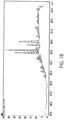
- FIG. 1A A HPLC chromatogram on the occasion of an analysis of the product of Example 1 is shown in FIG. 1A .
- FIG. 1B shows an enlarged view, in which the area relevant to the analysis after 30 min is depicted with hatching lines.
- FIG. 2A A chromatogram on the occasion of an analysis for a case where an oxidation treatment was not performed is shown in FIG. 2A .
- FIG. 2B shows an enlarged view.
- peaks of ⁇ acids, and ⁇ acids the retention times of ⁇ acids (a1, a2, a3), and ⁇ acids (b1, b2) at this analysis were used as reference values.
- a1, a2, and a3 are in this order cohumulone, humulone, and adhumulone; and b1, and b2 are respectively colupulone, lupulone and adlupulone.
- the peak area in the ranges distinguished by the arrows A is a sum of a peak area A1 from a retention time of 3 min to 25 min, and a peak area A2 from a retention time of 32 min to 39 min (excluding peaks of ⁇ acid, and ⁇ acid).
- "to a retention time of 25 min” with respect to A1 means "until a peak identified as trans -isocohumulone appears”.
- characteristic peaks were recognized near a retention time of 9.7 min, near a retention time of 11.8 min, and near a retention time of 12.3 min.
- the area ratio (%) of peaks in the range distinguished by the arrow A1 to all peaks was 78.0%.
- an ⁇ acid, a ⁇ acid, and an iso-a acid contained in a hop or in the product can be quantitatively analyzed.
- standard materials for a quantitative analysis with respect to an ⁇ acid, a ⁇ acid, and an iso-a acid for example, Internal Calibration Standards ICE-2, ICS-I2, and ICS-T2 available from American Society of Brewing Chemists (ASBC) can be applied.
- oxidized substance components of ⁇ acid, iso-a acid, and ⁇ acid contained in an oxidation reaction product of a hop were analyzed quantitatively by the analysis method. Specifically, from the total peak area in the range distinguished by the arrow A1 in FIG. 1A the amount of the above components was calculated as a quantitative value reduced to iso-a acid.
- the oxidized substances of ⁇ acid, iso-a acid, and ⁇ acid in an extract of an oxidation reaction product of a hop were analyzed quantitatively by the HPLC analysis after pretreating a sample under the pretreatment conditions described below.
- TCOIHs can be isolated and purified by a publicly known fractionation technique such as chromatography.
- TCOIHs in an oxidation reaction product of a hop or an extract thereof, and a beverage containing the extract can be analyzed quantitatively using an isolated and purified TCOIH as a standard.
- An example of an analysis of TCOIHs in an oxidation reaction product of a hop will be shown below.
- FIG. 3 shows an analysis result of an oxidation reaction product of a hop obtained by an oxidation treatment of a hop at 60°C for 120 hours.
- a in FIG. 3 corresponds to TCOIcoH, B to TCOIadH, and C to TCOIH.
- An extract of an oxidation reaction product of a hop was dissolved or suspended in water.
- hydrochloric acid was added to a concentration of hydrochloric acid in an aqueous solution of 0.1 N to lower the pH, and oxidized substances of an ⁇ acid, an iso-a acid, and a ⁇ acid were extracted with dichloromethane in a volume 2-fold as much as a water layer.
- dichloromethane extract was collected, dichloromethane was evaporated in a nitrogen stream to replace the solvent with ethanol, and the liquid was subjected to a HPLC analysis.
- a quantitative value of oxidized substances of an ⁇ acid, an iso-a acid, and a ⁇ acid in an extract of an oxidation reaction product of a hop was determined by a method similar to the quantitative analysis method described above for oxidized substances of an ⁇ acid, an iso-a acid, and a ⁇ acid in an oxidation reaction product of a hop.
- the amount of TCOIHs with respect to the amount of oxidized substances of an ⁇ acid, an iso-a acid, and a ⁇ acid in an extract of an oxidation reaction product of a hop fluctuated depending on the kind of a hop for preparing an oxidation reaction product, the oxidation condition, and the extraction condition for an extract, it was approximately in a range from 1.5 to 20 mass-%.
- Example 2 By maintaining a heating reaction time at 60°C for 120 hours on the hop used in Example 1, a hop subjected to an oxidation treatment was obtained.
- the obtained product was added to water to 10%w/v, and left for extraction at 50°C for 1 hour.
- the obtained extract in an amount of 1 L was spray-dried with a spray dryer (B-290, made by Nihon BUCHI K.K.) under conditions of the inlet temperature from 165 to 175°C, the outlet temperature from 80 to 100°C, and the liquid supply rate of 2 mL/min to obtain 25g of powder. Water was added to 1 g of the obtained powder adjusting to 500 g, which was then analyzed by HPLC according to the method in Example 1.
- the ratio (%) of peak area (mAU ⁇ min) of an a acid, a ⁇ acid, and an iso-a acid to the total area of all peaks detected at the detection wavelength of 270 nm in an analysis sample was 2%.
- the ratio of area of peaks (%) in the ranges distinguished by arrows A1, A2 in FIG. 1A (excluding peaks of a acid and ⁇ acid) was 98%. Namely, a water extract containing oxidized substances of an a acid, an iso-a acid, and a ⁇ acid of an oxidation reaction product of a hop at 90% or more expressed as a peak area ratio (%) was produced.
- the concentration of oxidized substances of an a acid, an iso-a acid, and a ⁇ acid in an analysis sample, namely a water extract of an oxidation reaction product of a hop was calculated to find 220 ppm as reduced to an iso-a acid.
- the concentration of oxidized substances of an a acid, an iso-a acid, and a ⁇ acid of an oxidation reaction product of a hop in a powder of a water extract was 11 w/w%.
- the peak area ratio 2, which was the ratio of the peak area of components other than ⁇ acid, ⁇ acid, and iso-a acid (areas in ranges distinguished by arrows A1, A2 in FIG. 1A ) to the area of all peaks were calculated.
- the ratio (%) of peak area (mAU ⁇ min) of an ⁇ acid, a ⁇ acid, and an iso-a acid to the total area of all peaks detected at the detection wavelength of 270 nm in an analysis sample was 8.0%.
- the ratio of area of peaks (%) in the ranges distinguished by arrows A1, A2 in FIG. 1A (excluding peaks of ⁇ acid and ⁇ acid) was 92.0%.
- a hop subjected to an oxidation treatment obtained in Example 2 was extracted with water, and the flavor (bitterness, unpleasant odor) of the obtained aqueous medium extract was evaluated according to the following test method.
- Evaluation item Evaluation criteria Score Bitterness Substantially no feel of bitterness ⁇ Slight feel of bitterness ⁇ Stronq feel of bitterness ⁇ Unpleasant odor No unpleasant odor ⁇ Substantially no unpleasant odor ⁇ Slight feel of unpleasant odor ⁇ Strong feel of unpleasant odor ⁇
- a method of odor removal from an aqueous medium extract of a hop subjected to an oxidation treatment was investigated according to the following test method.
- Example 5 Flavor Evaluation of Tea Drink Containing Aqueous Medium Extract of Hop Subjected to Oxidation Treatment
- a tea drink containing an aqueous medium extract of a hop subjected to an oxidation treatment was evaluated in terms of flavor according to the following test method.
- characteristic peaks are recognized in the same range distinguished by the arrow A1 in FIG. 1A near the same retention times as in FIG. 1A , to confirm presence of an oxidation reaction product of a hop in a tea drink.
- the characteristic peak near the same retention time as in FIG. 1A is a peak corresponding to an oxidized substance of an ⁇ acid, an oxidized substance of an iso-a acid, or an oxidized substances of a ⁇ acid.
- Example 7 Analyses of TCOIH as Components for Oxidized Substances of ⁇ Acid, Iso- ⁇ Acid, and ⁇ Acid Originated from Aqueous Medium Extract of Oxidation Reaction Product of Hop
- TCOIHs were isolated and purified from an oxidation reaction product of a hop by a fractionation technique such as chromatography.
- tricyclooxyisocohumulone (TCOIcoH: Formula 1)
- tricyclooxyisohumulone (TCOIH: Formula 2)
- tricyclooxyisoadhumulone (TCOIadH: Formula 3) expressed by the following formulas were included.
- results of 1H-NMR of TCOIH were as in Table 11. Further, from results of a 13C-NMR measurement and various two-dimensional NMR measurements of TCOIH, the planar structure of TCOIH was determined.
- the concentration of TCOIHs in the powder of the flavor improving agent used in Example 6 was measured to find that 0.8 w/w% was included. In other words the content of TCOIHs in a beverage, on which a flavor improvement effect was confirmed in Example 6, was 0.4 to 16 ppm.
Landscapes
- Chemical & Material Sciences (AREA)
- Engineering & Computer Science (AREA)
- Organic Chemistry (AREA)
- Life Sciences & Earth Sciences (AREA)
- Health & Medical Sciences (AREA)
- Food Science & Technology (AREA)
- General Engineering & Computer Science (AREA)
- Biochemistry (AREA)
- Bioinformatics & Cheminformatics (AREA)
- General Health & Medical Sciences (AREA)
- Genetics & Genomics (AREA)
- Wood Science & Technology (AREA)
- Zoology (AREA)
- Polymers & Plastics (AREA)
- Nutrition Science (AREA)
- Distillation Of Fermentation Liquor, Processing Of Alcohols, Vinegar And Beer (AREA)
- Non-Alcoholic Beverages (AREA)
Claims (7)
- Getränk mit einem verbesserten Geschmack, umfassend einen wässrigen Mediumextrakt eines Hopfens, der einer Oxidationsbehandlung unterzogen wurde, wobei der Gesamtgehalt an 7α-Tricyclooxyisocohumulon, 7α-Tricyclooxyisohumulon und 7α-Tricyclooxyisoadhumulon in dem Getränk von 0,00825 bis 44 ppm beträgt, wobei 7α-Tricyclooxyisocohumulon, 7α-Tricyclooxyisohumulon und 7α-Tricyclooxyisoadhumulon durch die folgenden Formeln 1, 2 bzw. 3 dargestellt werden,


- Getränk gemäß Anspruch 1, wobei der Prozentsatz der Peakfläche einer Iso-α-Säure, einer α Säure und einer β Säure zur gesamten Peakfläche in einer HPLC-Analyse eines Oxidationsreaktionsprodukts eines Hopfens erhalten durch die Oxidationsbehandlung, 20% oder weniger beträgt.
- Getränk gemäß Anspruch 1 oder 2, wobei der wässrige Mediumextrakt einer Geruchsentfernungsbehandlung unterzogen wird.
- Verfahren zur Herstellung eines Getränks mit einem verbesserten Geschmack, umfassend einen Schritt zur Zugabe eines wässrigen Mediumextrakts eines Hopfens, der einer Oxidationsbehandlung unterzogen wurde, zu einem Getränk, wobei der Gesamtgehalt an 7α-Tricyclooxyisocohumulon, 7α-Tricyclooxyisohumulon und 7α-Tricyclooxyisoadhumulon in einem Getränk von 0,00825 bis 44 ppm beträgt, wobei 7α-Tricyclooxyisocohumulon, 7α-Tricyclooxyisohumulon und 7α-Tricyclooxyisoadhumulon wie in Anspruch 1 definiert sind.
- Verfahren gemäß Anspruch 4, ferner umfassend einen Schritt zur Durchführung einer Geruchsentfernungsbehandlung des wässrigen Medienextrakts oder eines denselben umfassenden Getränks.
- Verwendung eines wässrigen Medienextrakts eines Hopfens, der einer Oxidationsbehandlung unterzogen wurde, als geschmacksverbesserndes Mittel für ein Getränk, wobei der Gesamtgehalt an 7α-Tricyclooxyisocohumulon, 7α-Tricyclooxyisohumulon und 7α-Tricyclooxyisoadhumulon in einem Getränk von 0,00825 bis 44 ppm beträgt, wobei 7α-Tricyclooxyisocohumulon, 7α-Tricyclooxyisohumulon und 7α-Tricyclooxyisoadhumulon wie in Anspruch 1 definiert sind.
- Verwendung gemäß Anspruch 6, wobei der wässrige Mediumextrakt einer Geruchsentfernungsbehandlung unterzogen wurde.
Applications Claiming Priority (2)
| Application Number | Priority Date | Filing Date | Title |
|---|---|---|---|
| JP2012139219 | 2012-06-20 | ||
| PCT/JP2013/066994 WO2013191258A1 (ja) | 2012-06-20 | 2013-06-20 | 酸化処理に付したホップの水性媒体抽出物を含有する飲料 |
Publications (3)
| Publication Number | Publication Date |
|---|---|
| EP2865744A1 EP2865744A1 (de) | 2015-04-29 |
| EP2865744A4 EP2865744A4 (de) | 2016-06-22 |
| EP2865744B1 true EP2865744B1 (de) | 2024-07-31 |
Family
ID=49768850
Family Applications (1)
| Application Number | Title | Priority Date | Filing Date |
|---|---|---|---|
| EP13806158.5A Active EP2865744B1 (de) | 2012-06-20 | 2013-06-20 | Getränk mit einem wässrigen medienextrakt aus in einer oxidation verwendetem hopfen |
Country Status (7)
| Country | Link |
|---|---|
| US (1) | US10660351B2 (de) |
| EP (1) | EP2865744B1 (de) |
| JP (1) | JP6199287B2 (de) |
| AU (1) | AU2013278296B9 (de) |
| BR (1) | BR112014032125A2 (de) |
| NZ (1) | NZ703843A (de) |
| WO (1) | WO2013191258A1 (de) |
Families Citing this family (7)
| Publication number | Priority date | Publication date | Assignee | Title |
|---|---|---|---|---|
| JP6809799B2 (ja) * | 2016-03-02 | 2021-01-06 | サッポロビール株式会社 | 飲料の製造方法及び飲料の香味向上方法 |
| JP6994457B2 (ja) * | 2016-04-12 | 2022-02-10 | キリンホールディングス株式会社 | 認知機能改善用組成物 |
| JP2018161109A (ja) * | 2017-03-27 | 2018-10-18 | キリン株式会社 | 脂肪酸含有量の低減した酸化ホップ組成物の製造方法 |
| US11638732B2 (en) | 2018-03-23 | 2023-05-02 | Kirin Holdings Kabushiki Kaisha | Composition for reducing deterioration of mental function |
| JP7173465B2 (ja) * | 2018-11-28 | 2022-11-16 | キリンホールディングス株式会社 | 精神疲労抑制用組成物 |
| JP2023078569A (ja) * | 2021-11-26 | 2023-06-07 | サントリーホールディングス株式会社 | ビールテイスト飲料 |
| WO2024243412A1 (en) * | 2023-05-23 | 2024-11-28 | Phytogenica, Llc | Methods of oxidizing hops and products therefrom |
Family Cites Families (23)
| Publication number | Priority date | Publication date | Assignee | Title |
|---|---|---|---|---|
| JPS589084B2 (ja) | 1973-10-29 | 1983-02-18 | マツイ トクタロウ | ホツプフンマツオヨビホツプエキスノ セイゾウホウホウ |
| DE2613593A1 (de) * | 1975-04-02 | 1976-10-21 | Dev Tech Centre Rech | Verfahren zur behandlung von hopfen |
| JPS5959623A (ja) | 1982-09-29 | 1984-04-05 | Daigo Eiyou Kagaku Kk | 抗糖尿病剤 |
| ZA852712B (en) * | 1984-04-12 | 1985-12-24 | Scottish & Newcastle Breweries | Method of enhancing the bitterness of beer |
| GB8607258D0 (en) * | 1986-03-24 | 1986-04-30 | Brewing Res Found | Production of beer |
| GB8723135D0 (en) * | 1987-10-02 | 1987-11-04 | Steiner Hops Ltd | Preparation of isomerised hop pellets |
| US6020019A (en) * | 1996-03-26 | 2000-02-01 | Miller Brewing Company | Hydrogenation of hop soft resins using CO2 |
| JP4678904B2 (ja) | 1999-11-02 | 2011-04-27 | アサヒビール株式会社 | ホップより得られる体重増加抑制物質 |
| JP4521703B2 (ja) | 2000-05-17 | 2010-08-11 | アサヒビール株式会社 | ホップより得られるリパーゼ阻害剤 |
| ATE522207T1 (de) * | 2002-02-14 | 2011-09-15 | Kirin Brewery | Zusammensetzungen und nahrungsmittel zur verbesserung des fettstoffwechsels |
| JP2007089439A (ja) * | 2005-09-28 | 2007-04-12 | Kirin Brewery Co Ltd | 後熟ホップを使用した発酵アルコール飲料の製造方法 |
| JP5242165B2 (ja) * | 2005-12-08 | 2013-07-24 | キリンホールディングス株式会社 | イソフムロン類包接体およびそれを含有する組成物 |
| JP4823877B2 (ja) | 2006-11-30 | 2011-11-24 | アサヒ飲料株式会社 | 茶飲料の製造方法 |
| RU2495099C2 (ru) * | 2006-12-07 | 2013-10-10 | Инбев С.А. | Способ производства пива с использованием хмелевой дробины, содержащей стильбены и флавоноиды в качестве антиоксидантов |
| JP2008212041A (ja) * | 2007-03-02 | 2008-09-18 | Asahi Breweries Ltd | 発泡性アルコール飲料の製造方法 |
| JP5229933B2 (ja) | 2007-03-19 | 2013-07-03 | 麒麟麦酒株式会社 | 発酵アルコール飲料製造用後熟ホップの製造方法 |
| WO2009050905A1 (ja) * | 2007-10-19 | 2009-04-23 | Sapporo Breweries Limited | 呈味改善用組成物、これを添加した飲食物、及びこれらの製造方法 |
| JP5582725B2 (ja) | 2009-05-25 | 2014-09-03 | サントリー食品インターナショナル株式会社 | 麦茶入り飲料 |
| WO2010143719A1 (ja) * | 2009-06-12 | 2010-12-16 | キリンホールディングス株式会社 | ホップエキスのアルカリ分解産物およびその用途 |
| JP5456443B2 (ja) | 2009-10-19 | 2014-03-26 | 株式会社大雄振興公社 | ホップ組成物及びその製造方法 |
| ES2886057T3 (es) * | 2010-05-21 | 2021-12-16 | Coors Brewing Co | Preparación de ácidos de lúpulo y sus derivados |
| US11179429B2 (en) * | 2010-12-15 | 2021-11-23 | Kirin Holdings Kabushiki Kaisha | Hop oxidation-reaction product, preparing method thereof and use thereof |
| NZ612722A (en) * | 2010-12-15 | 2015-11-27 | Kirin Holdings Kk | Hop extract oxidation-reaction product, preparing method thereof and use thereof |
-
2013
- 2013-06-20 EP EP13806158.5A patent/EP2865744B1/de active Active
- 2013-06-20 JP JP2014521513A patent/JP6199287B2/ja active Active
- 2013-06-20 BR BR112014032125A patent/BR112014032125A2/pt not_active IP Right Cessation
- 2013-06-20 WO PCT/JP2013/066994 patent/WO2013191258A1/ja not_active Ceased
- 2013-06-20 NZ NZ703843A patent/NZ703843A/en not_active IP Right Cessation
- 2013-06-20 US US14/409,591 patent/US10660351B2/en active Active
- 2013-06-20 AU AU2013278296A patent/AU2013278296B9/en not_active Ceased
Also Published As
| Publication number | Publication date |
|---|---|
| AU2013278296B2 (en) | 2017-06-15 |
| EP2865744A4 (de) | 2016-06-22 |
| JPWO2013191258A1 (ja) | 2016-05-26 |
| US10660351B2 (en) | 2020-05-26 |
| AU2013278296B9 (en) | 2017-07-13 |
| JP6199287B2 (ja) | 2017-09-20 |
| NZ703843A (en) | 2017-07-28 |
| US20150245649A1 (en) | 2015-09-03 |
| WO2013191258A1 (ja) | 2013-12-27 |
| BR112014032125A2 (pt) | 2017-06-27 |
| EP2865744A1 (de) | 2015-04-29 |
| AU2013278296A1 (en) | 2015-01-29 |
Similar Documents
| Publication | Publication Date | Title |
|---|---|---|
| EP2865744B1 (de) | Getränk mit einem wässrigen medienextrakt aus in einer oxidation verwendetem hopfen | |
| TWI426867B (zh) | Method of treating raw beans and coffee | |
| JP5685280B2 (ja) | ホップ苞を使用したビールテイスト飲料の製造方法 | |
| US20070254063A1 (en) | Use of hop polyphenols in beer | |
| JPWO2004039936A1 (ja) | 植物加工品の製造方法 | |
| US20210076708A1 (en) | Effervescent beverage comprising an extract of hop oxidation-reaction products | |
| JP2005013166A (ja) | 香味改善剤、香料組成物およびそれを含有するビール様飲料 | |
| JP5981891B2 (ja) | ノンアルコールビールテイスト飲料へのアルコール感付与方法、及び後味改善方法 | |
| Buglass | Chemical composition of beverages and drinks | |
| JP2022554235A (ja) | 醸造粕の液状画分を含む液状食品 | |
| JP6315719B2 (ja) | ノンアルコールビールテイスト飲料の製造方法及びノンアルコールビールテイスト飲料へのアルコール感付与方法 | |
| JP6231604B2 (ja) | ビール様飲料用風味改善剤 | |
| JP2014212781A (ja) | 発泡性ビールテイスト飲料及びその製造方法 | |
| EP3296384B1 (de) | Hopfenextrakt und verfahren zur herstellung davon | |
| JP2015119723A (ja) | 発泡性ビールテイスト飲料及びその製造方法 | |
| CN104270966B (zh) | 抗真菌剂 | |
| KR102600744B1 (ko) | 초피를 포함하는 맥주 및 이의 제조방법 | |
| JP7261076B2 (ja) | 3-メルカプトヘキサナールを有効成分とする香味発現増強剤 | |
| Villanueva et al. | Impact of Dry Hop Residues Reuse on Chemical Properties and Sensory Benefits of Craft Beer | |
| CN120659544A (zh) | 经发酵的火麻仁饮料 |
Legal Events
| Date | Code | Title | Description |
|---|---|---|---|
| PUAI | Public reference made under article 153(3) epc to a published international application that has entered the european phase |
Free format text: ORIGINAL CODE: 0009012 |
|
| 17P | Request for examination filed |
Effective date: 20150113 |
|
| AK | Designated contracting states |
Kind code of ref document: A1 Designated state(s): AL AT BE BG CH CY CZ DE DK EE ES FI FR GB GR HR HU IE IS IT LI LT LU LV MC MK MT NL NO PL PT RO RS SE SI SK SM TR |
|
| AX | Request for extension of the european patent |
Extension state: BA ME |
|
| DAX | Request for extension of the european patent (deleted) | ||
| RA4 | Supplementary search report drawn up and despatched (corrected) |
Effective date: 20160523 |
|
| RIC1 | Information provided on ipc code assigned before grant |
Ipc: C12C 3/00 20060101AFI20160517BHEP Ipc: A23L 2/00 20060101ALI20160517BHEP |
|
| STAA | Information on the status of an ep patent application or granted ep patent |
Free format text: STATUS: EXAMINATION IS IN PROGRESS |
|
| 17Q | First examination report despatched |
Effective date: 20181009 |
|
| RAP1 | Party data changed (applicant data changed or rights of an application transferred) |
Owner name: KIRIN HOLDINGS KABUSHIKI KAISHA |
|
| GRAP | Despatch of communication of intention to grant a patent |
Free format text: ORIGINAL CODE: EPIDOSNIGR1 |
|
| STAA | Information on the status of an ep patent application or granted ep patent |
Free format text: STATUS: GRANT OF PATENT IS INTENDED |
|
| INTG | Intention to grant announced |
Effective date: 20240222 |
|
| GRAS | Grant fee paid |
Free format text: ORIGINAL CODE: EPIDOSNIGR3 |
|
| GRAA | (expected) grant |
Free format text: ORIGINAL CODE: 0009210 |
|
| STAA | Information on the status of an ep patent application or granted ep patent |
Free format text: STATUS: THE PATENT HAS BEEN GRANTED |
|
| AK | Designated contracting states |
Kind code of ref document: B1 Designated state(s): AL AT BE BG CH CY CZ DE DK EE ES FI FR GB GR HR HU IE IS IT LI LT LU LV MC MK MT NL NO PL PT RO RS SE SI SK SM TR |
|
| REG | Reference to a national code |
Ref country code: CH Ref legal event code: EP Ref country code: GB Ref legal event code: FG4D |
|
| P01 | Opt-out of the competence of the unified patent court (upc) registered |
Free format text: CASE NUMBER: APP_39687/2024 Effective date: 20240703 |
|
| REG | Reference to a national code |
Ref country code: DE Ref legal event code: R096 Ref document number: 602013085949 Country of ref document: DE |
|
| REG | Reference to a national code |
Ref country code: IE Ref legal event code: FG4D |
|
| REG | Reference to a national code |
Ref country code: LT Ref legal event code: MG9D |
|
| REG | Reference to a national code |
Ref country code: NL Ref legal event code: MP Effective date: 20240731 |
|
| PG25 | Lapsed in a contracting state [announced via postgrant information from national office to epo] |
Ref country code: PT Free format text: LAPSE BECAUSE OF FAILURE TO SUBMIT A TRANSLATION OF THE DESCRIPTION OR TO PAY THE FEE WITHIN THE PRESCRIBED TIME-LIMIT Effective date: 20241202 |
|
| REG | Reference to a national code |
Ref country code: AT Ref legal event code: MK05 Ref document number: 1708483 Country of ref document: AT Kind code of ref document: T Effective date: 20240731 |
|
| PG25 | Lapsed in a contracting state [announced via postgrant information from national office to epo] |
Ref country code: PT Free format text: LAPSE BECAUSE OF FAILURE TO SUBMIT A TRANSLATION OF THE DESCRIPTION OR TO PAY THE FEE WITHIN THE PRESCRIBED TIME-LIMIT Effective date: 20241202 |
|
| PG25 | Lapsed in a contracting state [announced via postgrant information from national office to epo] |
Ref country code: NO Free format text: LAPSE BECAUSE OF FAILURE TO SUBMIT A TRANSLATION OF THE DESCRIPTION OR TO PAY THE FEE WITHIN THE PRESCRIBED TIME-LIMIT Effective date: 20241031 |
|
| PG25 | Lapsed in a contracting state [announced via postgrant information from national office to epo] |
Ref country code: PL Free format text: LAPSE BECAUSE OF FAILURE TO SUBMIT A TRANSLATION OF THE DESCRIPTION OR TO PAY THE FEE WITHIN THE PRESCRIBED TIME-LIMIT Effective date: 20240731 Ref country code: FI Free format text: LAPSE BECAUSE OF FAILURE TO SUBMIT A TRANSLATION OF THE DESCRIPTION OR TO PAY THE FEE WITHIN THE PRESCRIBED TIME-LIMIT Effective date: 20240731 Ref country code: NL Free format text: LAPSE BECAUSE OF FAILURE TO SUBMIT A TRANSLATION OF THE DESCRIPTION OR TO PAY THE FEE WITHIN THE PRESCRIBED TIME-LIMIT Effective date: 20240731 Ref country code: GR Free format text: LAPSE BECAUSE OF FAILURE TO SUBMIT A TRANSLATION OF THE DESCRIPTION OR TO PAY THE FEE WITHIN THE PRESCRIBED TIME-LIMIT Effective date: 20241101 |
|
| PG25 | Lapsed in a contracting state [announced via postgrant information from national office to epo] |
Ref country code: BG Free format text: LAPSE BECAUSE OF FAILURE TO SUBMIT A TRANSLATION OF THE DESCRIPTION OR TO PAY THE FEE WITHIN THE PRESCRIBED TIME-LIMIT Effective date: 20240731 |
|
| PG25 | Lapsed in a contracting state [announced via postgrant information from national office to epo] |
Ref country code: LV Free format text: LAPSE BECAUSE OF FAILURE TO SUBMIT A TRANSLATION OF THE DESCRIPTION OR TO PAY THE FEE WITHIN THE PRESCRIBED TIME-LIMIT Effective date: 20240731 |
|
| PG25 | Lapsed in a contracting state [announced via postgrant information from national office to epo] |
Ref country code: AT Free format text: LAPSE BECAUSE OF FAILURE TO SUBMIT A TRANSLATION OF THE DESCRIPTION OR TO PAY THE FEE WITHIN THE PRESCRIBED TIME-LIMIT Effective date: 20240731 Ref country code: IS Free format text: LAPSE BECAUSE OF FAILURE TO SUBMIT A TRANSLATION OF THE DESCRIPTION OR TO PAY THE FEE WITHIN THE PRESCRIBED TIME-LIMIT Effective date: 20241130 |
|
| PG25 | Lapsed in a contracting state [announced via postgrant information from national office to epo] |
Ref country code: HR Free format text: LAPSE BECAUSE OF FAILURE TO SUBMIT A TRANSLATION OF THE DESCRIPTION OR TO PAY THE FEE WITHIN THE PRESCRIBED TIME-LIMIT Effective date: 20240731 |
|
| PG25 | Lapsed in a contracting state [announced via postgrant information from national office to epo] |
Ref country code: RS Free format text: LAPSE BECAUSE OF FAILURE TO SUBMIT A TRANSLATION OF THE DESCRIPTION OR TO PAY THE FEE WITHIN THE PRESCRIBED TIME-LIMIT Effective date: 20241031 Ref country code: ES Free format text: LAPSE BECAUSE OF FAILURE TO SUBMIT A TRANSLATION OF THE DESCRIPTION OR TO PAY THE FEE WITHIN THE PRESCRIBED TIME-LIMIT Effective date: 20240731 |
|
| PG25 | Lapsed in a contracting state [announced via postgrant information from national office to epo] |
Ref country code: RS Free format text: LAPSE BECAUSE OF FAILURE TO SUBMIT A TRANSLATION OF THE DESCRIPTION OR TO PAY THE FEE WITHIN THE PRESCRIBED TIME-LIMIT Effective date: 20241031 Ref country code: PL Free format text: LAPSE BECAUSE OF FAILURE TO SUBMIT A TRANSLATION OF THE DESCRIPTION OR TO PAY THE FEE WITHIN THE PRESCRIBED TIME-LIMIT Effective date: 20240731 Ref country code: NO Free format text: LAPSE BECAUSE OF FAILURE TO SUBMIT A TRANSLATION OF THE DESCRIPTION OR TO PAY THE FEE WITHIN THE PRESCRIBED TIME-LIMIT Effective date: 20241031 Ref country code: NL Free format text: LAPSE BECAUSE OF FAILURE TO SUBMIT A TRANSLATION OF THE DESCRIPTION OR TO PAY THE FEE WITHIN THE PRESCRIBED TIME-LIMIT Effective date: 20240731 Ref country code: LV Free format text: LAPSE BECAUSE OF FAILURE TO SUBMIT A TRANSLATION OF THE DESCRIPTION OR TO PAY THE FEE WITHIN THE PRESCRIBED TIME-LIMIT Effective date: 20240731 Ref country code: IS Free format text: LAPSE BECAUSE OF FAILURE TO SUBMIT A TRANSLATION OF THE DESCRIPTION OR TO PAY THE FEE WITHIN THE PRESCRIBED TIME-LIMIT Effective date: 20241130 Ref country code: HR Free format text: LAPSE BECAUSE OF FAILURE TO SUBMIT A TRANSLATION OF THE DESCRIPTION OR TO PAY THE FEE WITHIN THE PRESCRIBED TIME-LIMIT Effective date: 20240731 Ref country code: GR Free format text: LAPSE BECAUSE OF FAILURE TO SUBMIT A TRANSLATION OF THE DESCRIPTION OR TO PAY THE FEE WITHIN THE PRESCRIBED TIME-LIMIT Effective date: 20241101 Ref country code: FI Free format text: LAPSE BECAUSE OF FAILURE TO SUBMIT A TRANSLATION OF THE DESCRIPTION OR TO PAY THE FEE WITHIN THE PRESCRIBED TIME-LIMIT Effective date: 20240731 Ref country code: ES Free format text: LAPSE BECAUSE OF FAILURE TO SUBMIT A TRANSLATION OF THE DESCRIPTION OR TO PAY THE FEE WITHIN THE PRESCRIBED TIME-LIMIT Effective date: 20240731 Ref country code: BG Free format text: LAPSE BECAUSE OF FAILURE TO SUBMIT A TRANSLATION OF THE DESCRIPTION OR TO PAY THE FEE WITHIN THE PRESCRIBED TIME-LIMIT Effective date: 20240731 Ref country code: AT Free format text: LAPSE BECAUSE OF FAILURE TO SUBMIT A TRANSLATION OF THE DESCRIPTION OR TO PAY THE FEE WITHIN THE PRESCRIBED TIME-LIMIT Effective date: 20240731 |
|
| PG25 | Lapsed in a contracting state [announced via postgrant information from national office to epo] |
Ref country code: SM Free format text: LAPSE BECAUSE OF FAILURE TO SUBMIT A TRANSLATION OF THE DESCRIPTION OR TO PAY THE FEE WITHIN THE PRESCRIBED TIME-LIMIT Effective date: 20240731 Ref country code: DK Free format text: LAPSE BECAUSE OF FAILURE TO SUBMIT A TRANSLATION OF THE DESCRIPTION OR TO PAY THE FEE WITHIN THE PRESCRIBED TIME-LIMIT Effective date: 20240731 Ref country code: RO Free format text: LAPSE BECAUSE OF FAILURE TO SUBMIT A TRANSLATION OF THE DESCRIPTION OR TO PAY THE FEE WITHIN THE PRESCRIBED TIME-LIMIT Effective date: 20240731 |
|
| PG25 | Lapsed in a contracting state [announced via postgrant information from national office to epo] |
Ref country code: EE Free format text: LAPSE BECAUSE OF FAILURE TO SUBMIT A TRANSLATION OF THE DESCRIPTION OR TO PAY THE FEE WITHIN THE PRESCRIBED TIME-LIMIT Effective date: 20240731 |
|
| PG25 | Lapsed in a contracting state [announced via postgrant information from national office to epo] |
Ref country code: CZ Free format text: LAPSE BECAUSE OF FAILURE TO SUBMIT A TRANSLATION OF THE DESCRIPTION OR TO PAY THE FEE WITHIN THE PRESCRIBED TIME-LIMIT Effective date: 20240731 |
|
| PG25 | Lapsed in a contracting state [announced via postgrant information from national office to epo] |
Ref country code: SK Free format text: LAPSE BECAUSE OF FAILURE TO SUBMIT A TRANSLATION OF THE DESCRIPTION OR TO PAY THE FEE WITHIN THE PRESCRIBED TIME-LIMIT Effective date: 20240731 Ref country code: IT Free format text: LAPSE BECAUSE OF FAILURE TO SUBMIT A TRANSLATION OF THE DESCRIPTION OR TO PAY THE FEE WITHIN THE PRESCRIBED TIME-LIMIT Effective date: 20240731 |
|
| REG | Reference to a national code |
Ref country code: DE Ref legal event code: R097 Ref document number: 602013085949 Country of ref document: DE |
|
| PLBE | No opposition filed within time limit |
Free format text: ORIGINAL CODE: 0009261 |
|
| STAA | Information on the status of an ep patent application or granted ep patent |
Free format text: STATUS: NO OPPOSITION FILED WITHIN TIME LIMIT |
|
| 26N | No opposition filed |
Effective date: 20250501 |
|
| PGFP | Annual fee paid to national office [announced via postgrant information from national office to epo] |
Ref country code: DE Payment date: 20250624 Year of fee payment: 13 |
|
| PGFP | Annual fee paid to national office [announced via postgrant information from national office to epo] |
Ref country code: GB Payment date: 20250529 Year of fee payment: 13 |
|
| PGFP | Annual fee paid to national office [announced via postgrant information from national office to epo] |
Ref country code: FR Payment date: 20250513 Year of fee payment: 13 |
|
| PG25 | Lapsed in a contracting state [announced via postgrant information from national office to epo] |
Ref country code: SE Free format text: LAPSE BECAUSE OF FAILURE TO SUBMIT A TRANSLATION OF THE DESCRIPTION OR TO PAY THE FEE WITHIN THE PRESCRIBED TIME-LIMIT Effective date: 20240731 |