EP2685293B1 - Optical article comprising an antireflective coating with a low reflection both in the ultraviolet region and in the visible region - Google Patents
Optical article comprising an antireflective coating with a low reflection both in the ultraviolet region and in the visible region Download PDFInfo
- Publication number
- EP2685293B1 EP2685293B1 EP13187908.2A EP13187908A EP2685293B1 EP 2685293 B1 EP2685293 B1 EP 2685293B1 EP 13187908 A EP13187908 A EP 13187908A EP 2685293 B1 EP2685293 B1 EP 2685293B1
- Authority
- EP
- European Patent Office
- Prior art keywords
- layer
- refractive index
- incidence
- lens
- angle
- Prior art date
- Legal status (The legal status is an assumption and is not a legal conclusion. Google has not performed a legal analysis and makes no representation as to the accuracy of the status listed.)
- Active
Links
Images

Classifications
-
- G—PHYSICS
- G02—OPTICS
- G02C—SPECTACLES; SUNGLASSES OR GOGGLES INSOFAR AS THEY HAVE THE SAME FEATURES AS SPECTACLES; CONTACT LENSES
- G02C7/00—Optical parts
- G02C7/02—Lenses; Lens systems ; Methods of designing lenses
- G02C7/022—Ophthalmic lenses having special refractive features achieved by special materials or material structures
-
- G—PHYSICS
- G02—OPTICS
- G02B—OPTICAL ELEMENTS, SYSTEMS OR APPARATUS
- G02B1/00—Optical elements characterised by the material of which they are made; Optical coatings for optical elements
- G02B1/10—Optical coatings produced by application to, or surface treatment of, optical elements
- G02B1/11—Anti-reflection coatings
- G02B1/113—Anti-reflection coatings using inorganic layer materials only
- G02B1/115—Multilayers
-
- G—PHYSICS
- G02—OPTICS
- G02B—OPTICAL ELEMENTS, SYSTEMS OR APPARATUS
- G02B1/00—Optical elements characterised by the material of which they are made; Optical coatings for optical elements
- G02B1/10—Optical coatings produced by application to, or surface treatment of, optical elements
- G02B1/11—Anti-reflection coatings
-
- G—PHYSICS
- G02—OPTICS
- G02B—OPTICAL ELEMENTS, SYSTEMS OR APPARATUS
- G02B1/00—Optical elements characterised by the material of which they are made; Optical coatings for optical elements
- G02B1/10—Optical coatings produced by application to, or surface treatment of, optical elements
- G02B1/11—Anti-reflection coatings
- G02B1/113—Anti-reflection coatings using inorganic layer materials only
- G02B1/115—Multilayers
- G02B1/116—Multilayers including electrically conducting layers
-
- G—PHYSICS
- G02—OPTICS
- G02B—OPTICAL ELEMENTS, SYSTEMS OR APPARATUS
- G02B5/00—Optical elements other than lenses
- G02B5/20—Filters
- G02B5/28—Interference filters
- G02B5/283—Interference filters designed for the ultraviolet
-
- G—PHYSICS
- G02—OPTICS
- G02C—SPECTACLES; SUNGLASSES OR GOGGLES INSOFAR AS THEY HAVE THE SAME FEATURES AS SPECTACLES; CONTACT LENSES
- G02C7/00—Optical parts
- G02C7/02—Lenses; Lens systems ; Methods of designing lenses
-
- G—PHYSICS
- G02—OPTICS
- G02C—SPECTACLES; SUNGLASSES OR GOGGLES INSOFAR AS THEY HAVE THE SAME FEATURES AS SPECTACLES; CONTACT LENSES
- G02C7/00—Optical parts
- G02C7/10—Filters, e.g. for facilitating adaptation of the eyes to the dark; Sunglasses
-
- G—PHYSICS
- G02—OPTICS
- G02C—SPECTACLES; SUNGLASSES OR GOGGLES INSOFAR AS THEY HAVE THE SAME FEATURES AS SPECTACLES; CONTACT LENSES
- G02C7/00—Optical parts
- G02C7/10—Filters, e.g. for facilitating adaptation of the eyes to the dark; Sunglasses
- G02C7/104—Filters, e.g. for facilitating adaptation of the eyes to the dark; Sunglasses having spectral characteristics for purposes other than sun-protection
-
- G—PHYSICS
- G02—OPTICS
- G02C—SPECTACLES; SUNGLASSES OR GOGGLES INSOFAR AS THEY HAVE THE SAME FEATURES AS SPECTACLES; CONTACT LENSES
- G02C2202/00—Generic optical aspects applicable to one or more of the subgroups of G02C7/00
- G02C2202/16—Laminated or compound lenses
Definitions
- the present invention relates to an optical article comprising on its rear face, and optionally on its front face, an antireflective coating which strongly reduce reflection in the UVA- and UVB-radiation range, and in the visible region.
- the optical article may especially be an ophthalmic lens, especially a tinted solar lens.
- the solar spectrum comprises electromagnetic radiations having various wavelengths, especially ultraviolet radiation (UV).
- UV ultraviolet radiation
- the UV spectrum has many bands, especially UVA, UVB and UVC bands. Amongst those UV bands which do reach the earth surface, UVA band, ranging from 315 nm to 380, and UVB band, ranging from 280 nm to 315 nm, are particularly harmful to the retina.
- Anti-reflective coatings are designed and optimized to reduce reflection on the lens surface in the visible region, typically within the spectrum range of from 380 to 780 nm. As a rule, the reflection in the ultraviolet region (280-380 nm) is not optimized, and is frequently reinforced by the traditional antireflective coating itself.
- the mean reflection in the UVA and UVB regions may thus attain high levels (up to 60%) for traditional antireflective lenses.
- the UV mean reflection does range from 10 to 25%, for an angle of incidence of from 30 to 45°. It is not problematic on the front face of the lens, since the major part of the UV radiation which comes from the front of the wearer and might attain the wearer's eye (normal incidence, 0 to 15°) generally get absorbed by the ophthalmic lens substrate.
- a better protection against UV radiation transmission may be obtained through solar ophthalmic lenses, which are studied and designed to reduce the visible spectrum luminosity, totally absorb UVB and totally or partially absorb UVA.
- the UV radiation resulting from light sources located behind the wearer may reflect on the lens rear face and reach the wearer's eye if the lens is not provided with an antireflective coating which is efficient in the ultraviolet region, thus potentially affecting the wearer's health.
- Such phenomenon is made stronger by the trend for fashion sunglasses with high diameters which increase the risk of stray reflections getting into the eyes.
- the light rays that may reflect onto the lens rear face and reach the wearer's eye have a narrow incidence angle range, ranging from 30 to 45° (oblique incidence).
- the application EP 1 174 734 discloses a spectacle lens comprising on its rear face a multilayered antireflective coating designed in such a way that the reflection on the antireflective coating surface be lower as compared to the one on the bare optical article surface within the 280-700 nm wavelength range.
- the function of this antireflective coating consists in minimizing the reflection of the UV radiation originating from behind the wearer or reflected by the wearer's face, on the lens rear face, so as to prevent the same from reaching the wearer's eye.
- the antireflective coatings described in this application are very efficient in the ultraviolet region. However, it would be advisable to improve their mean reflection factors in the visible region. Moreover, the conceived stacks are sometimes relatively sophisticated, as they may have up to 10 layers.
- the application WO 97/28467 discloses a transparent photochromic article comprising a photochromic substrate coated with a tetra-layer-antireflective stack HI/LI/HI/LI, where HI refers to a layer with a high refractive index and LI to a layer with a low refractive index.
- HI refers to a layer with a high refractive index
- LI to a layer with a low refractive index.
- Such coating is designed so as not to interfere with the behavior of the photochromic compounds that are present in or onto the substrate, by minimizing the reflection between 350 and 400 nm, which is the wavelength range enabling their activation.
- the thus prepared antireflective coatings are efficient in the UVA region, but this property is accompanied with a significant decrease in the antireflective performances in the visible region.
- the patent US 4 852 974 discloses an optical article comprising a photochromic substrate and a multilayered antireflective coating, having a mean reflection factor between 290 nm and 330 nm higher than 15% and a mean reflection factor between 330 nm and 380 nm that is lower than 4% for an angle of incidence that was not communicated.
- Such antireflective coating makes it possible to extend the life-time of the photochromic compounds contained in the substrate, but is relatively inefficient within a range where the UV radiation relative efficiency is the highest (290-300 nm). Moreover, it would be desirable to improve its performances in the visible region.
- the application WO 2010/125 667 discloses a spectacle lens provided on its rear face with an antireflective coating enabling to reduce the reflection on the lens rear face of the UV radiation originating from behind the wearer, so that it cannot reach his eye.
- the present invention provides an antireflective coating with an improved conception, comprising a stack made of thin layers, the thicknesses and materials of which have been selected so as to obtain satisfactory antireflective performances both in the visible region and in the ultraviolet region.
- the ultraviolet solar radiation distribution is tempered by the relative spectral efficiency of the UV solar radiation, which is nil or almost nil in the range of from 280 to 295 nm (which belongs to the ultraviolet B-ray region).
- the present invention provides an antireflective coating with lower antireflection performances within this wavelength region, thus allowing to obtain an antireflective coating that is very efficient in the visible region and in the part of the ultraviolet range where the solar radiation distribution tempered by the relative spectral efficiency of such radiation is high for the wearer (300-320 nm).
- the antireflective coatings according to the invention thus tolerate a higher spectral reflection in the 280 to 295 nm region, with no consequence on the wearer.
- the invention therefore relates to an ophthalmic lens comprising all the features of claim 1. Additional embodiments are defined in the dependent claims.
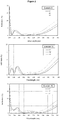
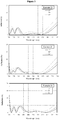
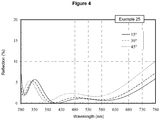
- Figures 1 to 4 show the variation as a function of the reflection wavelength on the surface of the rear face of some lenses prepared in the examples of the present application, for an angle of incidence of 15°, 30°and 45°.
- an optical article comprises one or more coatings onto the surface thereof
- the expression "to deposit a layer or a coating onto the article” is intended to mean that a layer or a coating is deposited onto the external (exposed) surface of the outer coating of the article, that is to say its coating that is the most distant from the substrate.
- a coating, that is said to be “on” a substrate or deposited “onto” a substrate is defined as a coating, which (i) is positioned above the substrate, (ii) is not necessarily in contact with the substrate, that is to say one or more intermediate coatings may be arranged between the substrate and the coating in question, and (iii) does not necessarily completely cover the substrate.
- the coating on a substrate or deposited onto a substrate is in direct contact with this substrate.
- a layer 1 is lying under a layer 2
- layer 2 is more distant from the substrate than layer 1.
- the rear (or the inner) face of the substrate is intended to mean the face which, when using the article, is the nearest from the wearer's eye. It is generally a concave face.
- the front face of the substrate is the face which, when using the article, is the most distant from the wearer's eye. It is generally a convex face.
- the antireflective coating of the optical article according to the invention may be deposited onto any substrate, and preferably onto organic lens substrates, for example a thermoplastic or thermosetting plastic material.
- Thermoplastic materials to be suitably used for the substrates include (meth)acrylic (co)polymers, especially methyl poly(methacrylate) (PMMA), thio(meth)acrylic (co)polymers, polyvinylbutyral (PVB), polycarbonates (PC), polyurethanes (PU), poly(thiourethanes), polyol allylcarbonate (co)polymers, thermoplastic copolymers of ethylene/vinyl acetate, polyesters such as polyethylene terephthalate (PET) or polybutylene terephthalate (PBT), polyepisulfides, polyepoxides, polycarbonate/polyester copolymers, cycloolefin copolymers such as copolymers of ethylene/norbornene or ethylene/cyclopentadiene, and combinations thereof.
- PMMA methyl poly(methacrylate)
- PVB polyvinylbutyral
- PC polycarbonates
- a (co)polymer is intended to mean a copolymer or a polymer.
- a (meth)acrylate is intended to mean an acrylate or a methacrylate.
- a polycarbonate is intended to mean either homopolycarbonates or copolycarbonates and block copolycarbonates.
- Particularly recommended substrates include those substrates obtained through (co)polymerization of the diethyleneglycol bis-allyl-carbonate, marketed, for example, under the trade name CR-39 ® by the PPG Industries company (ORMA ® lenses, ESSILOR), or through polymerization of the thio(meth)acrylate monomers, such as those described in the application of the French patent FR 2 734 827 .
- the substrates may be obtained through polymerization of the above monomer combinations, or may further comprise mixtures of such polymers and (co)polymers.
- the surface of said optionally coated substrate Prior to depositing the antireflective coating onto the optionally coated substrate, for example with an abrasion-resistant layer and/or a scratch-resistant coating or with a sub-layer, the surface of said optionally coated substrate is usually submitted to a physical or chemical surface activating treatment, so as to reinforce the adhesion of the antireflective coating.
- a physical or chemical surface activating treatment is generally conducted under vacuum. It may be a bombardment with energetic and/or reactive species, for example with an ion beam ("Ion Pre-Cleaning" or "IPC") or with an electron beam, a corona discharge treatment, an ion spallation treatment, an ultraviolet treatment or a plasma-mediated treatment under vacuum, generally using an oxygen or an argon plasma. It may also be an acid or basic treatment and/or a solvent-based treatment (water, hydrogen peroxide or any organic solvent).
- the "mean reflection factor,” noted R m is such as defined in the ISO 13666:1998 Standard, and measured in accordance with the ISO 8980-4 Standard (for an angle of incidence lower than 17°, typically of 15°), i.e. this is the (non weighted) spectral reflection average over the whole visible spectrum between 400 and 700 nm.
- the "mean light reflection factor,” noted R v is such as defined in the ISO 13666:1998 Standard, and measured in accordance with the ISO 8980-4 Standard (for an angle of incidence lower than 17°, typically of 15°), i.e. this is theweighted spectral reflection average over the whole visible spectrum between 380 and 780 nm.
- the mean reflection factor between 290 and 330 nm, noted R m-UV1 can be defined by analogy, which corresponds to the mean spectral reflection between 290 and 330 nm. According to the invention, this factor may be measured at an angle of incidence that may range from 30 to 45°.
- the mean reflection facbrs in the UVA and UVB ranges, noted R m-UVA and R m-UVB are defined, the sum of which corresponds to the mean reflection factor in the ultraviolet region (280-380 nm), noted R m-UV .
- the spectral function W( ⁇ ), enabling to calculate the ultraviolet radiation transmission factors, is defined according to the ISO 13666:1998 Standard. It makes it possible to express the ultraviolet solar radiation distribution tempered by the relative spectral efficiency of such radiation for the wearer, since it simultaneously takes both the solar spectral energy Es( ⁇ ) into account, which does globally emit less UVB-rays as compared to UVA-rays, and the spectral efficiency S( ⁇ ), UVB-rays being more harmful than UVA-rays.
- weighting function W( ⁇ ) is nil or almost nil between 280 nm and 295 nm, which means that the weighted mean reflection factor is also nil within this wavelength range. This means that even if the reflection level is high over this spectral range, there will be no consequence on the weighted mean reflection factor value R UV calculated between 280 and 380 nm.
- the antireflective coating deposited onto the rear face of the substrate is such that:
- the anti-UV, antireflective coating according to the invention is especially designed to minimize the reflection towards the eye of the ultraviolet radiation having an angle of incidence on the lenses ranging from 30 to 45°, and its preferred characteristics are described hereunder.
- the mean reflection factor R m-UV1 on said rear face between 290 nm and 330 nm is lower than 15%, for an angle of incidence of 15°, preferably lower than 10%.
- the mean reflection factor is higher than 5%, more preferably higher than 6%, even more preferably higher than 8% over at least 20% of the 280-295 nm wavelength range, for an angle of incidence of 30° and for an angle of incidence of 45°.
- the mean reflection factor over at least 70%, more preferably at least 80%, and even more preferably over 100% of the 280-295 nm wavelength range for an angle of incidence of 15° is higher than 10%, preferably higher than 15%.
- the mean reflection factor on the rear face over at least 70%, more preferably at least 80%, and even more preferably over 100% of the 280-290 nm wavelength range for an angle of incidence of 15°, is higher than 10%, preferably higher than 15%.
- the weighting function W( ⁇ ) is nil or almost nil.
- the mean reflection factor is higher than 5%, more preferably higher than 6%, even more preferably higher than 10%, for at least one wavelength in the 280-295 nm range, for an angle of incidence of 30° and for an angle of incidence of 45°.
- the antireflective properties can be improved in another part of the spectral range, namely in the visible range.
- the mean reflection factor R m-UV2 on said rear face between 300 nm and 320 nm is lower than 4%, more preferably lower than 3%, for an angle of incidence of 15° and/or 30° and/or 45°.
- W( ⁇ ) defined according to the ISO 13666:1998 Standard is very high within such ultraviolet region wavelength range, and reaches a maximum level at 310 nm.
- the mean reflection factor R m-UV3 on said rear face between 300 nm and 380 nm is lower than 5%, more preferably lower than 4.5%, for an angle of incidence of 15°.
- the multilayered antireflective coating of the invention comprises a stack of at least one layer with a high refractive index and of at least one layer with a low refractive index. More preferably, it comprises at least two layers with a low refractive index (LI) and at least two layers with a high refractive index (HI). It is here a simple stack, since the layer total number in the antireflective coating is higher than or equal to 3, preferably higher than or equal to 4, and lower than or equal to 7, more preferably lower than or equal to 6, even more preferably lower than or equal to 5, and most preferably equal to 5 layers.
- a layer of the antireflective coating is defined as having a thickness higher than or equal to 1 nm. Thus, any layer having a thickness lower than 1 nm will not be considered when counting the number of layers in the antireflective coating. The sub-layer either is not considered when counting the number of layers of the antireflective coating.
- HI layers and BI layers don't need to alternate with each other in the stack, although they also may, according to one embodiment of the invention.
- Two HI layers (or more) may be deposited onto each other, as well as two LI layers (or more) may be deposited onto each other.
- a layer of the antireflective coating is said to be a layer with a high refractive index (HI) when its refractive index is higher than 1.6, preferably higher than or equal to 1.65, even more preferably higher than or equal to 1.7, even more preferably higher than or equal to 1.8 and most preferably higher than or equal to 1.9.
- Said HI layer preferably has a refractive index lower than 2.1.
- a layer of an antireflective coating is said to be a low refractive index layer (LI) when its refractive index is lower than or equal to 1.50, preferably lower than or equal to 1.48, more preferably lower than or equal to 1.47.
- Said LI layer preferably has a refractive index higher than 1.1.
- the refractive indexes referred to in the present application are expressed at 25 °C at a wavelength of 550 nm.
- the HI layer is a traditional high refractive index layer, that is well known in the art. It generally comprises one or more metal oxides such as, without limitation, zirconia (ZrO 2 ), titanium dioxide (TiO 2 ), alumina (Al 2 O 3 ), tantalum pentoxide (Ta 2 O 5 ), neodymium oxide (Nd 2 O 5 ), praseodymium oxide (Pr 2 O 3 ), praseodymium titanate (PrTiO 3 ), La 2 O 3 , Nb 2 O 5 , Y 2 O 3 .
- ZrO 2 zirconia
- TiO 2 titanium dioxide
- Al 2 O 3 alumina
- Ta 2 O 5 tantalum pentoxide
- Na 2 O 5 neodymium oxide
- Pr 2 O 3 praseodymium oxide
- PrTiO 3 praseodymium titanate
- the HI layers may further contain silica or other materials with a low refractive index, provided they have a refractive index higher than 1.6 as indicated hereabove.
- the preferred materials include TiO 2 , PrTiO 3 , ZrO 2 , Al 2 O 3 , Y 2 O 3 and mixtures thereof.
- the LI layer is also well known and may comprise, without limitation, SiO 2 , or a mixture of silica and alumina, especially silica doped with alumina, the latter contributing to increase the antireflective coating thermal resistance.
- the LI layer is preferably a layer comprising at least 80% by weight of silica, more preferably at least 90% by weight of silica, relative to the layer total weight, and even more preferably consists in a silica layer.
- the LI layers in the antireflective coating are not MgF 2 layers.
- the LI layers may further contain materials with a high refractive index, provided the refractive index of the resulting layer is lower than or equal to 1.5.
- a LI layer comprising a mixture of SiO 2 and Al 2 O 3
- it preferably comprises from 1 to 10%, more preferably from 1 to 8% and even more preferably from 1 to 5% by weight of Al 2 O 3 relative to the SiO 2 + Al 2 O 3 total weight in such layer.
- SiO 2 doped with 4% Al 2 O 3 by weight, or less, or SiO 2 doped with 8% Al 2 O 3 may be employed.
- the antireflective coating outer layer is necessarily a silica-based layer, comprising preferably at least 80% by weight of silica, more preferably at least 90% by weight of silica (for example a silica layer doped with alumina), relative to the layer total weight, and even more preferably consists in a silica layer.
- the HI layers have a physical thickness ranging from 10 to 120 nm
- the LI layers have a physical thickness ranging from 10 to 100 nm.
- the antireflective coating total thickness is lower than 1 micrometer, preferably lower than or equal to 800 nm, more preferably lower than or equal to 500 nm and even more preferably lower than or equal to 250 nm.
- the antireflective coating total thickness is generally higher than 100 nm, preferably higher than 150 nm.
- the antireflective coating does not comprise any layer comprising titanium oxide with a thickness higher than 90 nm, preferably higher than 70 nm.
- the antireflective coating does not comprise any titanium oxide-containing layer.
- the titanium oxide-containing layers are indeed sensitive to photodegradation.
- titanium oxide is intended to mean titanium dioxide or a substoichiometric titanium oxide (TiOx, where x ⁇ 2).
- the antireflective coating is deposited onto a sub-layer. It should be noted that such antireflective coating sub-layer does not belong to the antireflective coating.
- an antireflective coating sub-layer or adhesion layer is intended to mean a relatively thick coating, used in order to improve the mechanical properties such as the abrasion resistance and/or the scratch resistance of said coating and/or so as to reinforce its adhesion to the substrate or to the underlying coating.
- the sub-layer does not generally take part to the antireflective optical activity, especially when it has a refractive index close to that of the underlying coating (which is generally the anti-abrasion and anti-scratch coating) or to that of the substrate, if the sub-layer is directly deposited onto the substrate.
- the sub-layer should have a thickness that is sufficient for promoting the abrasion resistance of the antireflective coating, but preferably not to such an extent that a light absorption could be caused, which, depending on the sub-layer nature, could significantly reduce the relative transmission factor ⁇ v . Its thickness is generally lower than 300 nm, more preferably lower than 200 nm, and is generally higher than 90 nm, more preferably higher than 100 nm.
- the sub-layer preferably comprises a SiO 2 ⁇ based layer, this layer comprising preferably at least 80% by weight of silica, more preferably at least 90% by weight of silica, relative to the layer total weight, and even more preferably consists in a silica layer.
- the thickness of such silica-based layer is generally lower than 300 nm, more preferably lower than 200 nm, and is generally higher than 90 nm, more preferably higher than 100 nm.
- this SiO 2 ⁇ based layer is a silica layer doped with alumina, in amounts such as defined hereabove, preferably consists in a silica layer doped with alumina.
- the sub-layer consists in a SiO 2 layer.
- a sub-layer of the monolayer type will be preferably used.
- the sub-layer may be laminated (multilayered), especially when the sub-layer and the underlying coating (or the substrate, if the sub-layer is deposited directly onto the substrate) have a substantially different refractive index.
- the underlying coating which is generally an anti-abrasion and/or anti-scratch coating, or the substrate, have a high refractive index, i.a. a refractive index higher than or equal to 1.55, preferably higher than or equal to 1.57.
- the sub-layer may comprise, in addition to a 90-300 nm-thick layer, called the main layer, preferably at most three additional layers, more preferably at most two additional layers, interleaved between the optionally coated substrate and such 90-300 nm-thick layer, which is generally a silica-based layer.
- additional layers are preferably thin layers, which function aims at limiting the reflections at the sub-layer / underlying coating interface or sub-layer / substrate interface, as appropriate.
- a multilayered sub-layer preferably comprises, in addition to the main layer, a layer with a high refractive index and with a thickness lower than or equal to 80 nm, more preferably lower than or equal to 50 nm and most preferably lower than or equal to 30 nm.
- a layer with a high refractive index is directly contacting the substrate with a high refractive index or the underlying coating with a high refractive index, as appropriate.
- this embodiment may be used even if the substrate (or the underlying coating) has a refractive index lower than 1.55.
- the sub-layer comprises, in addition to the main layer and to the previously mentioned layer with a high refractive index, a layer made of a SiO 2 -based material (that is to say comprising preferably at least 80% by weight of silica) with a refractive index lower than or equal to 1.55, preferably lower than or equal to 1.52, more preferably lower than or equal to 1.50, and with a thickness lower than or equal to 80 nm, more preferably lower than or equal to 50 nm and even more preferably lower than or equal to 30 nm, onto which is deposited said layer with a high refractive index.
- a layer made of a SiO 2 -based material that is to say comprising preferably at least 80% by weight of silica
- a refractive index lower than or equal to 1.55, preferably lower than or equal to 1.52, more preferably lower than or equal to 1.50 and with a thickness lower than or equal to 80 nm, more preferably lower than or equal to 50 nm and even more preferably lower
- the sub-layer comprises, deposited in this order onto the optionally coated substrate, a 25 nm-thick SiO 2 layer, a 10 nm ⁇ thick ZrO 2 or Ta 2 O 5 layer and thereafter the sub-layer main layer.
- the optical article of the invention may be made antistatic, that is to say not to retain and/or develop a substantial static charge, by incorporating at least one electrically conductive layer into the stack present on the surface of the article.
- antistatic glasses have a discharge time of about a few hundred milliseconds, preferably 500 ms or less, whereas it is of about several tens of seconds for a static glass. In the present application, discharge times are measured according to the method exposed in the French application FR 2 943 798 .
- an “electrically conductive layer” or an “antistatic layer” is intended to mean a layer which, due to its presence on the surface of a non- antistatic substrate (i.e. having a discharge time higher than 500 ms), enables to have a discharge time of 500 ms or less after a static charge has been applied onto the surface thereof.
- the electrically conductive layer may be located on various places in the stack, generally in or in contact with the antireflective coating, provided the anti-reflective properties thereof are not affected. It is preferably located between two layers of the antireflective coating, and/or is adjacent to a layer with a high refractive index of such antireflective coating. Preferably, the electrically conductive layer is located immediately under a layer with a low refractive index of the antireflective coating, most preferably is the penultimate layer of the antireflective coating by being located immediately under the silica-based outer layer of the antireflective coating.
- the electrically conductive layer should be thin enough not to alter the transparency of the antireflective coating.
- the electrically conductive layer is preferably made from an electrically conductive and highly transparent material, generally an optionally doped metal oxide. In this case, the thickness thereof preferably varies from 1 to 15 nm, more preferably from 1 to 10 nm.
- the electrically conductive layer comprises an optionally doped metal oxide, selected from indium, tin, zinc oxides and mixtures thereof. Tin-indium oxide (In 2 O 3 :Sn, tin-doped indium oxide), aluminium-doped zinc oxide (ZnO:Al), indium oxide (In 2 O 3 ) and tin oxide (SnO 2 ) are preferred.
- the electrically conductive and optically transparent layer is a tin-indium oxide layer, noted ITO layer or a tin oxide layer.
- the electrically conductive layer contributes, within the stack, but in a limited manner, because of its low thickness, to obtaining antireflective properties and represents a layer with a high refractive index in the antireflective coating. This is the case for those layers made from an electrically conductive and highly transparent material such as ITO layers.
- the antireflective coating does not comprise any layer with a thickness higher than or equal to 20 nm, preferably higher than 15 nm, based on indium oxide.
- a plurality of indium oxide ⁇ based layers are present in the antireflective coating, their total thickness is preferably lower than 20 nm, more preferably lower than 15 nm.
- an indium oxide-based layer is intended to mean a layer comprising at least 50% by weight of indium oxide relative to the layer total weight.
- the antireflective coating does not comprise any layer with a thickness higher than or equal to 20 nm, preferably higher than 15 nm, comprising indium oxide, tin oxide or zinc oxide .
- a plurality of layers comprising indium oxide, tin oxide or zinc oxide are present in the antireflective coating, their total thickness is preferably lower than 20 nm, more preferably lower than 15 nm.
- the various layers of the antireflective coating and the optional sub-layer are preferably deposited by chemical vapor deposition, under vacuum, according to any of the following methods: i) by optionally ion-beam assisted, evaporation; ii) by ion-beam sputtering; iii) by cathode sputtering; iv) by plasma-assisted chemical vapor deposition.
- each of the layers of the antireflective coating and of the optional sub-layer is conducted by evaporation under vacuum.
- the antireflective coating of the invention comprises a first layer or superposition of layers consisting in 1, 2 or 3 layers having a refractive index higher than 1.6 coated with a second layer or superposition of layers consisting in 1 or 2 layers having a refractive index lower than 1.5.
- this second layer or superposition of layers is coated with a third layer or superposition of layers consisting in 1 or 2 layers having a refractive index higher than 1.6, itself coated with a fourth layer or superposition of layers consisting in 1 or 2 layers having a refractive index lower than 1.5.
- the anti-UV, antireflective coating comprises, starting from the surface of the substrate optionally coated with one or more functional coatings and preferably coated with a 100 - 200 nm-thick sub-layer, preferably of silica, a layer with a high refractive index with a thickness of from 8 to 25 nm, preferably of from 8 to 20 nm, preferably of zirconia, a layer with a low refractive index with a thickness of from 10 to 35 nm, preferably of from 15 to 25 nm, preferably of silica, a layer with a high refractive index with a thickness of from 75 to 105 nm, preferably of from 75 to 100 nm, more preferably of from 85 to 100 nm, even more preferably of from 90 to 100 nm, preferably of zirconia, optionally an electrically conductive layer with a thickness of from 3 to 10 nm, preferably of from 4 to 8 nm and a layer with
- the anti-UV, antireflective coating comprises, starting from the surface of the substrate optionally coated with one or more functional coatings and coated preferably with a 100 - 200 nm-thick sub-layer, preferably of silica, a layer with a high refractive index with a thickness of from 20 to 65 nm, preferably of zirconia, a layer with a low refractive index with a thickness of from 10 to 30 nm, preferably of silica, a layer with a high refractive index with a thickness of from 5 to 75 nm, preferably of zirconia, a layer with a high refractive index with a thickness of from 20 to 75 nm, preferably of titanium, optionally an electrically conductive layer with a thickness of from 3 to 10 nm, preferably of from 4 to 8 nm and a layer with a low refractive index with a thickness of from 60 to 85 nm, preferably of silica.
- the front face of the optical article of the invention is also coated with a conventional antireflective coating, different from the one provided on its rear face.
- the front face of the optical article it is possible for the front face of the optical article to be coated with an antireflective coating that is more efficient in the visible region than that of the substrate's rear face.
- the front face of the optical article is coated with an antireflective coating so that the mean reflection factor in the visible region R m on this front face is lower than 0.8%, more preferably lower than 0.5%.
- the mean light reflection factor R v on this front face is lower than 0.8%, more preferably lower than 0.5%.
- the mean reflection factor R UV between 280 nm and 380 nm, weighted by the function W( ⁇ ) as defined according to the ISO 13666:1998 Standard, is higher on the front face (preferably > 5%) than on the rear face of the optical article.
- the mean reflection factor R UV between 280 and 380 nm for an angle of incidence of 45° weighted by the function W( ⁇ ) defined according to the ISO 13666:1998 Standard is higher than 7%, more preferably higher than 8%, even more preferably higher than 10% and most preferably higher than 12%.
- the mean reflection factor R UV between 280 and 380 nm for the front face (convex) of the optical article and for an angle of incidence of 45°, weighted by the function W( ⁇ ) defined according to the ISO 13666:1998 Standard, may preferably have values higher than 15%, more preferably higher than 20%, even more preferably higher than 30%.
- the antireflective coating of the invention (such as defined in the appended claims), having in addition the following preferred characteristics:
- the mean reflection factor on said rear face is higher than 5%, more preferably higher than 6%, even more preferably higher than 8%, over at least 20% of the 280 to 295 nm wavelength range, for an angle of incidence of 30° and for an angle of incidence of 45°.
- the mean reflection factor, over at least 70%, preferably over at least 80% and even more preferably over 100% of the 280 to 295 nm-wavelength range, for an angle of incidence of 15°, is higher than 10%, preferably higher than 15%.
- the mean reflection factor, over at least 70%, preferably over at least 80% and even more preferably over 100% of the 280 to 290 nm-wavelength range, for an angle of incidence of 15°, is higher than 10%, preferably higher than 15%.
- the antireflective coating of the front face comprises preferably a stack of at least one layer with a high refractive index and of at least one layer with a low refractive index.
- anti-UV, antireflective coating such as described in the present application on the front face of the optical article.
- the anti-UV antireflective coatings of the front face and of the rear face may then be the same or different.
- the front face of the optical article is not coated with an anti-UV, antireflective coating according to the invention.
- the anti-UV, antireflective coating may be deposited directly onto a bare substrate.
- These functional coatings traditionally used in optics may be, without limitation, an impact-resistant primer layer, an abrasion-resistant coating and/or a scratch-resistant coating, a polarizing coating, a photochromic coating or a tinted coating.
- the ophthalmic lens does not comprise any photochromic coating and/or does not comprise any photochromic substrate.
- the front and/or rear main face of the substrate onto which an antireflective coating will be deposited is coated with an impact-resistant primer layer, with an anti-abrasion and/or anti-scratch coating, or with an impact-resistant primer layer coated with an anti-abrasion and/or anti-scratch coating.
- the anti-UV, antireflective coating of the invention is preferably deposited onto an anti-abrasion and/or anti-scratch coating.
- the anti-abrasion and/or scratch-resistant coating may be any layer traditionally used as an anti-abrasion and/or anti-scratch coating in the field of ophthalmic lenses.
- the anti-abrasion and/or scratch-resistant coatings are preferably hard coatings based on poly(meth)acrylates or silanes, generally comprising one or more mineral fillers intended to increase the hardness and/or the refractive index of the coating once cured.
- Hard anti-abrasion and/or scratch-resistant coatings are preferably prepared from compositions comprising at least one alkoxysilane and/or a hydrolyzate thereof, obtained for example through hydrolysis with a hydrochloric acid solution and optionally condensation and/or curing catalysts.
- Suitable coatings that are recommended for the present invention include coatings based on epoxysilane hydrolyzates such as those described in the patents FR 2 702 486 ( EP 0 614 957 ), US 4 211 823 and US 5 015 523 .
- a preferred anti-abrasion and/or scratch-resistant coating composition is the one disclosed in the patent FR 2 702 486 , in the name of the applicant. It comprises a hydrolyzate of epoxy trialkoxysilane and dialkyl dialkoxysilane, colloidal silica and a catalytic amount of an aluminium-based curing catalyst such as aluminium acetylacetonate, the rest being essentially composed of solvents traditionally used for formulating such compositions.
- the hydrolyzate used is a hydrolyzate of ⁇ -glycidoxypropyltrimethoxysilane (GLYMO) and dimethyldiethoxysilane (DMDES).
- the anti-abrasion and/or scratch-resistant coating composition may be deposited onto the main face of the substrate by dip- or spin-coating. It is then cured by a suitable method (preferably using heat or ultraviolet radiation).
- the thickness of the anti-abrasion and/or scratch-resistant coating does generally vary from 2 to 10 ⁇ m, preferably from 3 to 5 ⁇ m.
- a primer coating Prior to depositing the abrasion-resistant coating and/or the scratch-resistant coating, it is possible to apply onto the substrate a primer coating to improve the impact resistance and/or the adhesion of the subsequent layers in the final product.
- This coating may be any impact-resistant primer layer traditionally used for articles in a transparent polymer material, such as ophthalmic lenses.
- Preferred primer compositions include compositions based on thermoplastic polyurethanes, such as those described in the Japanese patents JP 63-141001 and JP 63-87223 , poly(meth)acrylic primer compositions, such as those described in the patent US 5,015,523 , compositions based on thermosetting polyurethanes, such as those described in the patent EP 0 404 111 and compositions based on poly(meth)acrylic latexes or polyurethane type latexes, such as those described in the patents US 5,316,791 and EP 0 680 492 .
- Preferred primer compositions are compositions based on polyurethanes and compositions based on latexes, especially polyurethane type latexes optionally containing polyester units.
- primer compositions to be suitably used in the present invention include compositions such as Witcobond ® 232, Witcobond ® 234, Witcobond ® 240, Witcobond ® 242, Neorez ® R-962, Neorez ® R-972, Neorez ® R-986 and Neorez ® R-9603.
- Combinations of such latexes may also be used in the primer, especially of polyurethane type latexes and poly(meth)acrylic latexes.
- Such primer compositions may be deposited onto the article faces by dip- or spin-coating, thereafter be dried at a temperature of at least 70 °C and up to 100 °C, preferably of about 90 °C, for a time period ranging from 2 minutes to 2 hours, generally of about 15 minutes, to form primer layers having thicknesses, after curing, of from 0.2 to 2.5 ⁇ m, preferably of from 0.5 to 1.5 ⁇ m.
- the optical article according to the invention may also comprise coatings formed on the antireflective coating and capable of modifying the surface properties thereof, such as hydrophobic and/or oleophobic coatings (antifouling top coat). These coatings are preferably deposited onto the outer layer of the antireflective coating. As a rule, their thickness is lower than or equal to 10 nm, does preferably range from 1 to 10 nm, more preferably from 1 to 5 nm.
- fluorosilane or fluorosilazane type There are generally coatings of the fluorosilane or fluorosilazane type. They may be obtained by depositing a fluorosilane or fluorosilazane precursor, comprising preferably at least two hydrolyzable groups per molecule. Fluorosilane precursors preferably comprise fluoropolyether moieties and more preferably perfluoropolyether moieties. These fluorosilanes are well known and are described, between others, in the patents US 5,081,192 , US 5,763,061 , US 6,183, 872 , US 5,739, 639 , US 5,922,787 , US 6,337,235 , US 6,277,485 and EP 0 933 377 .
- a preferred hydrophobic and/or oleophobic coating composition is marketed by Shin-Etsu Chemical under the trade name KP 801M ® .
- Another preferred hydrophobic and/or oleophobic coating composition is marketed by Daikin Industries under the trade name OPTOOL DSX ® . It is a fluorinated resin comprising perfluoropropylene groups.
- hydrophilic coating may be used which provides antifog properties, or an antifog precursor coating which provides antifog properties when associated with a surfactant. Examples of such antifog precursor coatings are described in the patent application WO 2011/080472 .
- an ophthalmic lens according to the invention comprises a substrate that is successively coated on its rear face with an impact-resistant primer layer, an anti-abrasion and scratch-resistant layer, an anti-UV, antireflective coating according to the invention, and with a hydrophobic and/or oleophobic coating, or with a hydrophilic coating which provides antifog properties, or an antifog precursor coating.
- the ophthalmic lens according to the invention is preferably an ophthalmic lens for spectacles (spectacle lens), or a blank for ophthalmic lenses.
- the lens may be a polarized lens, a photochromic lens or a solar lens, which may be tinted, be corrective, or not.
- the front face of the substrate of the optical article may be successively coated with an impact-resistant primer layer, an abrasion-resistant layer and/or a scratch-resistant layer, an antireflective coating which may be, or not, an anti-UV, antireflective coating according to the invention, and with a hydrophobic and/or oleophobic coating.
- the optical article according to the invention does not absorb in the visible or not much, which means, in the context of the present application, that its transmission factor in the visible range ⁇ v , also called relative transmission factor in the visible range, is higher than 90%, more preferably higher than 95%, even more preferably higher than 96% and most preferably higher than 97%.
- the factor ⁇ v should be understood as defined by the international normalized definition (ISO 13666:1998 Standard) and is measured in accordance with the ISO 8980-3 Standard. It is defined in the wavelength range of from 380 to 780 nm.
- the light absorption of the article coated according to the invention is lower than or equal to 1%.
- the colorimetric coefficients of the optical article of the invention in the international colorimetric CIE L*a*b* are calculated between 380 and 780 nm, taking the standard illuminant D 65 and the observer into account (angle of incidence: 15°). It is possible to prepare antireflective coatings, without limitation as regards their hue angle. However, the hue angle h preferably varies from 120 to 150, thus resulting in a coating having a green reflection, and the chroma C* is preferably lower than 15, more preferably lower than 10. It is much more difficult to obtain an antireflective coating which performances have been optimized in the visible region and in the ultraviolet region when the hue angle lies within the 120-150° range (green) relative to the 235-265° range (blue).
- the chroma C* is higher than 9.
- the ophthalmic lens has a great colorimetric reliability, i.e. the hue angle h and the chroma C* were particularly stable over time.
- optical articles used in the examples comprise an ORMA ® lens substrate from ESSILOR, having a 65 mm diameter, a refractive index of 1.50, and a power of -2,00 diopters and a thickness of 1.2 mm, coated on its rear face with the anti-abrasion and scratch-resistant coating (hard coat) disclosed in Example 3 of the patent EP 0 614 957 (refractive index equal to 1.47 and thickness of 3.5 ⁇ m), based on a hydrolyzate composed of GLYMO and DMDES, of colloidal silica and aluminium acetylacetonate, and thereafter with an antireflective coating according to the present invention.
- ORMA ® lens substrate from ESSILOR having a 65 mm diameter, a refractive index of 1.50, and a power of -2,00 diopters and a thickness of 1.2 mm, coated on its rear face with the anti-abrasion and scratch-resistant coating (hard coat) disclosed in Example 3 of the patent EP 0 614 957 (
- Said anti-abrasion and scratch-resistant coating was obtained by depositing and hardening a composition comprising by weight, 224 parts of GLYMO, 80.5 parts of HCl 0.1 N, 120 parts of DMDES, 718 parts of 30% by weight colloidal silica in methanol, 15 parts of aluminium acetylacetonate and 44 parts of ethylcellosolve.
- the composition also contained 0.1% of surfactant FLUORADTM FC-430 ® manufactured by 3M, by weight relative to the composition total weight.
- the layers of the antireflective coating were deposited without heating the substrates by evaporation under vacuum (evaporation source: electron gun).
- the deposition frame is a Leybold 1104 machine fitted with an electron gun (ESV14 (8kV)) for evaporating oxides, and provided with an ion gun (Commonwealth Mark II) for the preliminary phase to prepare the surface of the substrate using argon ions (IPC).
- ESV14 8kV
- ion gun Commonwealth Mark II
- the thickness of the layers was controlled by means of a quartz microbalance.
- the spectral measurements were effected on a variable incidence-spectrophotometer Perkin-Elmer Lambda 850 with an URA accessory (Universal Reflectance Accessory).
- the method for making optical articles comprises the step of introducing the substrate, coated on its rear face with the anti-abrasion and scratch-resistant coating, into a vacuum deposition chamber, a step of pumping until a high-vacuum is obtained, a step of activating the surface of the substrate by means of an argon ion beam (anode current: 1 A, anode voltage: 100 V, neutralization current: 130 mA), turning the ion irradiation off, forming the sub-layer on the anti-abrasion and scratch-resistant coating, then subsequently the various layers of the antireflective coating by successive evaporations and at last a ventilation step.
- an argon ion beam anode current: 1 A, anode voltage: 100 V, neutralization current: 130 mA
- the structural characteristics and the optical performances of the ophthalmic lenses obtained in the Examples 1 to 26 are detailed hereunder.
- the sub-layer is gray-colored.
- the reflection graphs between 280 and 780 nm of some articles prepared are illustrated on Figures 1-4 , with various angles of incidence.
- the reflection mean factor values are those of the rear face.
- Factors R m and R v are provided for an angle of incidence of 15°.
- the optical articles of the invention possess very good antireflective properties in the visible region (Rv ⁇ 0.86%), with no detrimental influence on the antireflective performances in the ultraviolet region (R UV ⁇ 4.26% for an angle of incidence of 30° and R UV ⁇ 4.71% for an angle of incidence of 45°).
- the reflection level in the ultraviolet region of the lenses of the invention remains lower than that of a bare ORMA ® substrate, for an angle of incidence of 30° or 45° (see Comparative examples hereunder).
- the lenses obtained in Examples 1 to 26 have outstanding transparency properties, a good resistance to abrasion and to scratches, and a good resistance to a hot water dip-treatment, followed with a mechanical stress on the surface.
- the adhesion of the coatings to the substrate was also very satisfactory.
Landscapes
- Physics & Mathematics (AREA)
- General Physics & Mathematics (AREA)
- Optics & Photonics (AREA)
- Health & Medical Sciences (AREA)
- Ophthalmology & Optometry (AREA)
- General Health & Medical Sciences (AREA)
- Chemical & Material Sciences (AREA)
- Inorganic Chemistry (AREA)
- Spectroscopy & Molecular Physics (AREA)
- Surface Treatment Of Optical Elements (AREA)
- Eyeglasses (AREA)
- Laminated Bodies (AREA)
Priority Applications (2)
| Application Number | Priority Date | Filing Date | Title |
|---|---|---|---|
| PL13187908T PL2685293T3 (pl) | 2010-12-10 | 2011-12-09 | Wyrób optyczny zawierający powłokę antyrefleksyjną o małym odbiciu zarówno w zakresie ultrafioletu jak i zakresie widzialnym |
| EP21200741.3A EP3964873A1 (en) | 2010-12-10 | 2011-12-09 | Optical article comprising an antireflective coating with a low reflection both in the ultraviolet region and in the visible region |
Applications Claiming Priority (5)
| Application Number | Priority Date | Filing Date | Title |
|---|---|---|---|
| US42195610P | 2010-12-10 | 2010-12-10 | |
| FR1060394A FR2968774B1 (fr) | 2010-12-10 | 2010-12-10 | Article d'optique comportant un revetement antireflet a faible reflexion dans le domaine ultraviolet et le domaine visible |
| US201161541724P | 2011-09-30 | 2011-09-30 | |
| EP11794167.4A EP2649477B2 (en) | 2010-12-10 | 2011-12-09 | Optical article comprising an antireflective coating with a low reflection both in the ultraviolet region and in the visible region |
| PCT/EP2011/072386 WO2012076714A1 (en) | 2010-12-10 | 2011-12-09 | Optical article comprising an antireflective coating with a low reflection both in the ultraviolet region and in the visible region |
Related Parent Applications (2)
| Application Number | Title | Priority Date | Filing Date |
|---|---|---|---|
| EP11794167.4A Division-Into EP2649477B2 (en) | 2010-12-10 | 2011-12-09 | Optical article comprising an antireflective coating with a low reflection both in the ultraviolet region and in the visible region |
| EP11794167.4A Division EP2649477B2 (en) | 2010-12-10 | 2011-12-09 | Optical article comprising an antireflective coating with a low reflection both in the ultraviolet region and in the visible region |
Related Child Applications (2)
| Application Number | Title | Priority Date | Filing Date |
|---|---|---|---|
| EP21200741.3A Division EP3964873A1 (en) | 2010-12-10 | 2011-12-09 | Optical article comprising an antireflective coating with a low reflection both in the ultraviolet region and in the visible region |
| EP21200741.3A Division-Into EP3964873A1 (en) | 2010-12-10 | 2011-12-09 | Optical article comprising an antireflective coating with a low reflection both in the ultraviolet region and in the visible region |
Publications (3)
| Publication Number | Publication Date |
|---|---|
| EP2685293A2 EP2685293A2 (en) | 2014-01-15 |
| EP2685293A3 EP2685293A3 (en) | 2014-02-26 |
| EP2685293B1 true EP2685293B1 (en) | 2021-11-10 |
Family
ID=44168245
Family Applications (3)
| Application Number | Title | Priority Date | Filing Date |
|---|---|---|---|
| EP13187908.2A Active EP2685293B1 (en) | 2010-12-10 | 2011-12-09 | Optical article comprising an antireflective coating with a low reflection both in the ultraviolet region and in the visible region |
| EP21200741.3A Pending EP3964873A1 (en) | 2010-12-10 | 2011-12-09 | Optical article comprising an antireflective coating with a low reflection both in the ultraviolet region and in the visible region |
| EP11794167.4A Active EP2649477B2 (en) | 2010-12-10 | 2011-12-09 | Optical article comprising an antireflective coating with a low reflection both in the ultraviolet region and in the visible region |
Family Applications After (2)
| Application Number | Title | Priority Date | Filing Date |
|---|---|---|---|
| EP21200741.3A Pending EP3964873A1 (en) | 2010-12-10 | 2011-12-09 | Optical article comprising an antireflective coating with a low reflection both in the ultraviolet region and in the visible region |
| EP11794167.4A Active EP2649477B2 (en) | 2010-12-10 | 2011-12-09 | Optical article comprising an antireflective coating with a low reflection both in the ultraviolet region and in the visible region |
Country Status (19)
| Country | Link |
|---|---|
| US (6) | US8870374B2 (enExample) |
| EP (3) | EP2685293B1 (enExample) |
| JP (4) | JP6117109B2 (enExample) |
| KR (1) | KR101590077B1 (enExample) |
| CN (3) | CN106249322B (enExample) |
| AU (1) | AU2011340436B2 (enExample) |
| BR (1) | BR112013014296B1 (enExample) |
| CA (1) | CA2820840C (enExample) |
| DE (3) | DE202011110944U1 (enExample) |
| EA (1) | EA025284B1 (enExample) |
| ES (2) | ES2548169T5 (enExample) |
| FR (1) | FR2968774B1 (enExample) |
| HU (2) | HUE057391T2 (enExample) |
| IL (1) | IL226607A (enExample) |
| NZ (1) | NZ611198A (enExample) |
| PL (2) | PL2649477T5 (enExample) |
| PT (2) | PT2649477E (enExample) |
| WO (1) | WO2012076714A1 (enExample) |
| ZA (1) | ZA201303970B (enExample) |
Families Citing this family (115)
| Publication number | Priority date | Publication date | Assignee | Title |
|---|---|---|---|---|
| FR2968774B1 (fr) * | 2010-12-10 | 2013-02-08 | Essilor Int | Article d'optique comportant un revetement antireflet a faible reflexion dans le domaine ultraviolet et le domaine visible |
| JP5625127B2 (ja) * | 2012-02-17 | 2014-11-12 | 株式会社ニコン・エシロール | 眼鏡レンズ用光学部品、およびその製造方法 |
| NZ701889A (en) | 2012-05-16 | 2016-08-26 | Essilor Int | Ophthalmic lens |
| CN104903756A (zh) * | 2012-09-28 | 2015-09-09 | 株式会社尼康依视路 | 光学元件及其制造方法 |
| FR2996930B1 (fr) | 2012-10-11 | 2017-11-24 | Essilor Int | Lentille ophtalmique photochromique |
| JP2015007695A (ja) * | 2013-06-25 | 2015-01-15 | 株式会社ニコン・エシロール | 光学部品 |
| BR112016000120B1 (pt) * | 2013-07-05 | 2022-02-08 | Essilor International | Artigo óptico compreendendo um revestimento anti-reflexo com uma reflexão muito reduzida no domínio visível |
| FR3008193B1 (fr) * | 2013-07-05 | 2015-08-14 | Essilor Int | Article optique a couleur de reflet residuel rouge |
| JP6253009B2 (ja) | 2013-08-28 | 2017-12-27 | 東海光学株式会社 | 光学製品及び眼鏡レンズ |
| ES2612697T3 (es) * | 2013-09-20 | 2017-05-18 | Essilor International (Compagnie Générale d'Optique) | Artículo óptico con fotocromatismo con gradiente |
| ES2536827B1 (es) * | 2013-11-27 | 2015-12-18 | Indo Optical S.L. | Lente oftálmica que comprende una base de material polimérico con un recubrimiento con una estructura multicapa interferencial antireflejante, antiiridiscente y con filtro IR |
| BR112016011451B1 (pt) | 2014-01-03 | 2021-01-19 | Essilor International | método implementado por meios de computador para determinar um equipamento óptico compreendendo pelo menos uma lente óptica e uma armação de óculos |
| US10151861B2 (en) * | 2014-02-11 | 2018-12-11 | Pilkington Group Limited | Coated glass article and display assembly made therewith |
| US9291746B2 (en) | 2014-02-25 | 2016-03-22 | iCoat Company, LLC | Visible spectrum anti-reflective coatings with reduced reflections in ultraviolet and infrared spectral bands |
| EP3123232B1 (en) * | 2014-03-26 | 2025-03-05 | Essilor International | Methods and systems for augmented reality |
| ES2893349T3 (es) | 2014-05-05 | 2022-02-08 | Essilor Int | Artículo óptico que comprende un revestimiento anti-reflectante con una reflexión muy baja en las regiones visible y ultravioleta |
| US9057887B1 (en) | 2014-05-06 | 2015-06-16 | Blue Light Eye Protection, Inc. | Materials and methods for mitigating the harmful effects of blue light |
| FR3024554B1 (fr) * | 2014-07-30 | 2016-09-09 | Essilor Int | Lentille ophtalmique comportant un revetement minimisant les reflets ultraviolets et procede de fabrication d'une telle lentille |
| EP2988153B1 (en) * | 2014-08-18 | 2021-02-17 | Essilor International | Ophthalmic lens comprising an antireflective coating with a low reflection in the ultraviolet region |
| US10690944B2 (en) * | 2014-12-01 | 2020-06-23 | Hoya Lens Thailand Ltd. | Spectacle lens that reflects blue light, and spectacles equipped with the spectacle lens |
| FR3031195B1 (fr) | 2014-12-24 | 2017-02-10 | Essilor Int | Article optique comportant un revetement interferentiel a forte reflexion dans le domaine de l'ultraviolet |
| EP3045940B1 (en) * | 2014-12-31 | 2025-08-20 | Essilor International | Ophthalmic lens comprising an anti-reflective coating designed for scotopic conditions |
| US11286553B2 (en) | 2015-03-11 | 2022-03-29 | Essilor International | Method for vapor deposition of optical substrate |
| CN107636495A (zh) * | 2015-03-13 | 2018-01-26 | 卢普+胡布拉赫光学有限公司 | 包括在可见光区域内针对低照度条件的减反射涂层的光学制品 |
| CN107430211B (zh) * | 2015-03-25 | 2020-04-28 | 依视路国际公司 | 具有低Rv和低Ruv的减反射溅射叠层 |
| EP3296277B1 (en) * | 2015-05-11 | 2021-01-13 | AGC Inc. | Heat insulating glass unit for vehicle and manufacturing method thereof |
| CN107533243B (zh) * | 2015-05-11 | 2020-02-28 | 株式会社尼康依视路 | 眼镜透镜 |
| JP6760273B2 (ja) * | 2015-05-11 | 2020-09-23 | Agc株式会社 | 車両用の断熱ガラスユニット |
| FR3039659B1 (fr) * | 2015-07-28 | 2018-08-17 | Essilor International | Lentille ophtalmique et procede de fabrication associe |
| FR3039786B1 (fr) * | 2015-08-05 | 2017-09-29 | Essilor Int | Procede de lamination d'un revetement interferentiel comportant une couche de nature organique-inorganique et article ainsi obtenu |
| KR102478479B1 (ko) * | 2015-10-05 | 2022-12-19 | 토카이 옵티칼 주식회사 | 광학 제품 및 안경 렌즈 |
| US10845625B2 (en) | 2015-11-06 | 2020-11-24 | Essilor International | Optical article protecting from blue light |
| CA3003972A1 (en) * | 2015-11-06 | 2017-05-11 | Essilor International | Optical article cutting blue light |
| US20180321514A1 (en) * | 2015-11-06 | 2018-11-08 | Essilor International | Optical Article Protecting from Blue and UV Light |
| EP3182177B1 (en) * | 2015-12-18 | 2024-02-28 | Essilor International | Composite high index layers for anti reflective stacks |
| US10191305B2 (en) | 2015-12-30 | 2019-01-29 | Signet Armorlite, Inc. | Ophthalmic lens |
| EP3242150B1 (en) | 2016-05-04 | 2019-01-02 | Essilor International | Optical article comprising an antireflective coating with a high reflection in the near infrared region (nir) |
| EP3246746A1 (de) | 2016-05-17 | 2017-11-22 | Carl Zeiss Vision International GmbH | Brillenglas und verfahren zum berechnen und herstellen eines brillenglases |
| EP3458252A4 (en) * | 2016-05-17 | 2020-04-01 | Shamir Optical Industry Ltd. | ANTI-REFLECTIVE BACKSIDE COATINGS, COATING FORMULATIONS AND METHODS OF COATING OPHTHALMIC LENSES |
| EP3282292B1 (en) | 2016-08-09 | 2021-07-07 | Essilor International | Optical article comprising an interferential coating with a high reflection in the near infrared region (nir) |
| EP3301488B1 (en) | 2016-09-29 | 2025-08-20 | Essilor International | Optical lens comprising an antireflective coating with multiangular efficiency |
| CN113835143B (zh) * | 2016-10-07 | 2023-12-05 | Agc株式会社 | 带防眩膜的基体、用于形成防眩膜的液态组合物和带防眩膜的基体的制造方法 |
| DE102016120122C5 (de) * | 2016-10-21 | 2020-03-12 | Carl Zeiss Vision International Gmbh | Brillenglas mit Beschichtung, Verfahren zum Herstellen eines Brillenglases sowie computerimplementiertes oder experimentelles Verfahren zur Auslegung eines Brillenglases |
| CN106517817B (zh) * | 2016-10-27 | 2019-04-19 | 宜昌南玻显示器件有限公司 | 一种抗uv光学膜玻璃及其制备方法 |
| EP3327096A1 (en) | 2016-11-23 | 2018-05-30 | Essilor International | Heat-curable hybrid epoxy functional composition and transparent heat-cured caustic-resistant coatings prepared therefrom |
| PT3327091T (pt) | 2016-11-23 | 2023-04-19 | Essilor Int | Composição epóxi funcional que protege corantes da fotodegradação e revestimentos curados preparados a partir da mesma |
| EP3327488B1 (en) | 2016-11-23 | 2021-01-06 | Essilor International | Optical article comprising a dye resistant to photo-degradation |
| JP2020024237A (ja) * | 2016-12-14 | 2020-02-13 | コニカミノルタ株式会社 | 光学製品 |
| JP2020024238A (ja) * | 2016-12-14 | 2020-02-13 | コニカミノルタ株式会社 | 光学素子 |
| FR3061540B1 (fr) * | 2017-01-02 | 2019-10-11 | Valeo Vision | Module lumineux pour vehicule automobile comprenant une lentille avec un revetement antireflet |
| EP3382429A1 (en) | 2017-03-28 | 2018-10-03 | Essilor International | Optical article comprising an abrasion- and/or scratch-resistant coating having a low sensitivity to cracks |
| EP3392680A1 (en) | 2017-04-18 | 2018-10-24 | Essilor International | Optical article having an abrasion and temperature resistant interferential coating with an optimized thickness ratio of low and high refractive index layers |
| EP3622332A2 (en) * | 2017-05-08 | 2020-03-18 | Corning Incorporated | Reflective, colored, or color-shifting scratch resistant coatings and articles |
| EP3457197A1 (en) | 2017-09-19 | 2019-03-20 | Essilor International | Optical lens for correcting color vision |
| JP7265983B2 (ja) * | 2017-11-24 | 2023-04-27 | ホヤ レンズ タイランド リミテッド | 眼鏡レンズおよび眼鏡 |
| EP3489270A1 (en) | 2017-11-28 | 2019-05-29 | Essilor International (Compagnie Generale D'optique) | Heat-curable hybrid epoxy functional composition and transparent heat-cured abrasion-resistant coatings prepared therefrom |
| EP3495127A1 (en) * | 2017-12-06 | 2019-06-12 | Essilor International | Method for additively manufacturing an opthalmic lens and opthalmic lens |
| EP3542956A1 (en) | 2018-03-23 | 2019-09-25 | Carl Zeiss Vision International GmbH | Method for manufacturing spectacle lenses according to a prescription |
| EP3581991A1 (en) * | 2018-06-15 | 2019-12-18 | Essilor International | Electrically-controlled optical device with a front shell |
| JP7303613B2 (ja) * | 2018-06-29 | 2023-07-05 | ホヤ レンズ タイランド リミテッド | 眼鏡レンズおよび眼鏡 |
| WO2020016620A1 (en) | 2018-07-18 | 2020-01-23 | Essilor International | Optical article with improved antireflective coating, methods for making the same |
| EP3605155B1 (en) | 2018-08-02 | 2021-11-10 | Essilor International | Ophthalmic lens comprising a multilayered interferential coating and manufacturing method thereof |
| DE102018122444B4 (de) * | 2018-09-13 | 2025-12-18 | Rodenstock Gmbh | Optisches Element mit einem Stapel von Schichtpaketen |
| EP3857297A1 (en) | 2018-09-27 | 2021-08-04 | Essilor International | An ophthalmic lens for improving vision |
| ES3032357T3 (en) | 2018-09-28 | 2025-07-17 | Hoya Lens Thailand Ltd | Spectacle lens |
| EP3632950B1 (en) | 2018-10-05 | 2024-07-17 | Essilor International | Storage-stable heat-curable hybrid epoxy functional composition and transparent heat-cured coatings prepared therefrom |
| EP3640688B1 (en) | 2018-10-18 | 2022-10-05 | Essilor International | Optical article having an interferential coating with an improved abrasion-resistance |
| EP3640687B1 (en) | 2018-10-18 | 2024-12-04 | Essilor International | Optical article having an interferential coating with a high abrasion-resistance |
| ES2991906T3 (es) | 2018-11-19 | 2024-12-05 | Essilor Int | Lente óptica con revestimiento interferencial y sistema multicapa para mejorar la resistencia a la abrasión |
| US12135407B2 (en) | 2018-11-19 | 2024-11-05 | Essilor International | Optical lens having an enhanced interferential coating and a multilayer system for improving abrasion-resistance |
| KR102742005B1 (ko) | 2018-11-19 | 2024-12-16 | 에씰로 앙터나시오날 | 내마모성을 개선하기 위한 거울 코팅 및 다층 시스템을 갖는 광학 렌즈 |
| EP3654072B1 (en) | 2018-11-19 | 2024-09-04 | Essilor International | Optical lens having a filtering interferential coating and a multilayer system for improving abrasion-resistance |
| WO2020127564A2 (en) | 2018-12-18 | 2020-06-25 | Essilor International | Optical article having a reflective coating with high abrasion-resistance |
| EP3693765B1 (en) | 2019-02-05 | 2023-04-19 | Essilor International | Article coated with an antireflective coating having improved optical properties |
| EP3693766B1 (en) | 2019-02-05 | 2024-10-30 | Corporation de L'Ecole Polytechnique de Montreal | Article coated with a low refractive index layer based on fluorinated organosilicon compounds |
| US12147008B2 (en) * | 2019-04-25 | 2024-11-19 | Quantum Innovations, Inc. | Thin film optical lens and method for coating a lens |
| US12429714B2 (en) | 2019-11-26 | 2025-09-30 | Oakley, Inc. | High transmittance eyewear with chroma enhancement |
| EP3907537A1 (en) * | 2020-05-07 | 2021-11-10 | Essilor International | Optical article with low reflection in the visible region and in the near infrared region |
| EP3907553B1 (en) * | 2020-05-07 | 2024-11-20 | Essilor International | Ophthalmic lens configured to exhibit a clear state and optionally a dark state |
| EP3919943A1 (en) | 2020-06-03 | 2021-12-08 | Essilor International | Curable coating composition |
| EP3926370A1 (en) | 2020-06-19 | 2021-12-22 | Essilor International | Optical article having a multilayered antireflective coating including an encapsulated metal film |
| CN112130234A (zh) * | 2020-07-16 | 2020-12-25 | 江苏奥天光学有限公司 | 一种耐刮擦抗紫外线镜片 |
| JP2022058236A (ja) * | 2020-09-30 | 2022-04-11 | 日亜化学工業株式会社 | 光学多層膜の製造方法及び光学部材 |
| KR102890216B1 (ko) | 2020-10-23 | 2025-11-24 | 에씰로 앙터나시오날 | 제한된 유령 이미지 가시성을 가진 투과 광학 시스템, 투과 광학 시스템의 유령 이미지 가시성을 평가하기 위한 시스템 및 방법 |
| WO2022136320A1 (en) | 2020-12-21 | 2022-06-30 | Essilor International | Optical article having a multilayered antireflective coating on its rear main face |
| US12235409B2 (en) | 2020-12-23 | 2025-02-25 | Largan Precision Co., Ltd. | Optical lens assembly, imaging apparatus and electronic device |
| EP4297629B1 (en) | 2021-02-26 | 2026-02-11 | Essilor International | Method for determining at least one optical product intended to face an eye of a user using an eye resistance level and a light protection level |
| US20220378971A1 (en) * | 2021-05-25 | 2022-12-01 | Bor-Jen Wu | UVC LED Disinfecting Device |
| EP4095570A1 (en) | 2021-05-27 | 2022-11-30 | Essilor International | Optical lens having an asymmetric mirror |
| US20240255778A1 (en) | 2021-05-31 | 2024-08-01 | Essilor International | Method for evaluating at least one light protection level of at least one optical product intended to face an eye of a user |
| WO2022255791A1 (ko) * | 2021-06-01 | 2022-12-08 | 엘지이노텍 주식회사 | 렌즈 모듈 및 이를 포함하는 디스플레이 장치 |
| CN113341568A (zh) * | 2021-06-04 | 2021-09-03 | 深圳市前海合航科技有限公司 | 智能穿戴及空气净化组合装置 |
| US20240230956A1 (en) | 2021-06-09 | 2024-07-11 | Essilor International | Optical lens having an antireflection coating reflecting blue light |
| EP4102265A1 (en) | 2021-06-09 | 2022-12-14 | Essilor International | Optical lens having an antireflection coating reflecting harmful blue light |
| EP4102264A1 (en) | 2021-06-09 | 2022-12-14 | Essilor International | Optical lens having an antireflection coating reflecting harmful blue light and nir radiation |
| CN117546055A (zh) | 2021-06-21 | 2024-02-09 | 依视路国际公司 | 具有用于改善耐磨性的干涉涂层和多层体系的光学镜片 |
| EP4109141A1 (en) | 2021-06-21 | 2022-12-28 | Essilor International | Optical lens having a light-absorbing interferential coating |
| US12474507B2 (en) | 2021-07-15 | 2025-11-18 | Samsung Electro-Mechanics Co., Ltd. | Lens, lens assembly, and mobile electronic device |
| EP4194188B1 (en) | 2021-12-10 | 2025-12-03 | Essilor International | Process for manufacturing an optical article having microstructures, microstructured optical article and their use for myopia control and/or prevention |
| KR20230090383A (ko) * | 2021-12-14 | 2023-06-22 | 삼성디스플레이 주식회사 | 윈도우 및 이를 포함하는 전자 장치 |
| WO2023145836A1 (ja) * | 2022-01-28 | 2023-08-03 | 株式会社ジンズホールディングス | 眼鏡用レンズ |
| EP4382973B1 (en) | 2022-12-07 | 2025-11-19 | Essilor International | An optical article with reduced visual fatigue |
| CN120303105A (zh) | 2022-12-15 | 2025-07-11 | 依视路国际公司 | 加热光学元件的方法 |
| KR102881452B1 (ko) * | 2023-02-06 | 2025-11-04 | 삼성전기주식회사 | 렌즈 및 렌즈 어셈블리 |
| JP2024146003A (ja) * | 2023-03-31 | 2024-10-15 | ホヤ レンズ タイランド リミテッド | 眼鏡レンズ及び眼鏡 |
| JP2024146054A (ja) | 2023-03-31 | 2024-10-15 | ホヤ レンズ タイランド リミテッド | 眼鏡レンズおよび眼鏡 |
| JP2024146053A (ja) | 2023-03-31 | 2024-10-15 | ホヤ レンズ タイランド リミテッド | 眼鏡レンズおよび眼鏡 |
| EP4528340A1 (en) | 2023-09-22 | 2025-03-26 | Essilor International | Optical article having a very high reflective coating in the 350-380 uv band |
| WO2025070123A1 (ja) * | 2023-09-25 | 2025-04-03 | 株式会社ニコン・エシロール | 眼鏡レンズ |
| WO2025070120A1 (ja) * | 2023-09-25 | 2025-04-03 | 株式会社ニコン・エシロール | 眼鏡レンズ |
| EP4530054A1 (en) | 2023-09-27 | 2025-04-02 | Essilor International | Optical article comprising a substrate for myopia control with embedded nanoparticles |
| EP4535045A1 (en) | 2023-10-02 | 2025-04-09 | Essilor International | Optical lens having a narrow band antireflective coating reflecting blue light |
| EP4571371A1 (en) | 2023-12-14 | 2025-06-18 | Essilor International | Optical article having an interferential coating with color robustness |
| EP4636012A1 (en) | 2024-04-19 | 2025-10-22 | Essilor International | Optical article comprising a high refractive index abrasion- and/or scratch-resistant coating having a low sensitivity to environmental conditions |
| EP4671833A1 (en) | 2024-06-28 | 2025-12-31 | Essilor International | Optical article coated to reduce the visual perception of oil stains |
Family Cites Families (57)
| Publication number | Priority date | Publication date | Assignee | Title |
|---|---|---|---|---|
| US872A (en) | 1838-08-03 | Hand-bellows | ||
| US6183A (en) | 1849-03-13 | Improvement in grain-gatherers | ||
| US5739A (en) | 1848-08-29 | William easby | ||
| US639A (en) | 1838-03-17 | of boston | ||
| FR1060394A (fr) † | 1952-07-18 | 1954-04-01 | Rheinische Rohrenwerke Ag | Procédé et dispositif d'essai de tuyaux |
| CH563945A5 (enExample) * | 1971-10-20 | 1975-07-15 | Balzers Patent Beteilig Ag | |
| JPS53111336A (en) | 1977-03-11 | 1978-09-28 | Toray Ind Inc | Coating composition |
| JPH0642002B2 (ja) | 1983-07-29 | 1994-06-01 | セイコーエプソン株式会社 | プラスチックレンズ |
| DE3525892C1 (de) | 1985-07-19 | 1986-10-02 | Optische Werke G. Rodenstock, 8000 München | Reflexionsvermindernder Belag fuer ein optisches Element aus organischem Material |
| JPH0762722B2 (ja) | 1986-09-30 | 1995-07-05 | ホ−ヤ株式会社 | プラスチックレンズ |
| JPH0679084B2 (ja) | 1986-12-04 | 1994-10-05 | ホーヤ株式会社 | プラスチックレンズ |
| JP2705105B2 (ja) | 1988-05-21 | 1998-01-26 | ダイキン工業株式会社 | 新規ポリマーおよびその製法と用途 |
| US5181141A (en) † | 1989-03-31 | 1993-01-19 | Hoya Corporation | Anti-reflection optical element |
| JP3196780B2 (ja) | 1989-06-20 | 2001-08-06 | 日本板硝子株式会社 | プラスチックレンズの製造法 |
| US5316791A (en) | 1993-01-21 | 1994-05-31 | Sdc Coatings Inc. | Process for improving impact resistance of coated plastic substrates |
| FR2702486B1 (fr) | 1993-03-08 | 1995-04-21 | Essilor Int | Compositions de revêtement antiabrasion à base d'hydrolysats de silanes et de composés de l'aluminium, et articles revêtus correspondants résistants à l'abrasion et aux chocs. |
| JPH07253501A (ja) * | 1994-03-14 | 1995-10-03 | Nikon Corp | 反射防止層を有する光学物品 |
| FR2734827B1 (fr) | 1995-05-31 | 1997-07-11 | Essilor Int | Compositions polymerisables a base de monomeres thio (meth)acrylates, polymeres a faible indice de jaune obtenus a partir de telles compositions et lentilles ophtalmiques correspondantes |
| EP0749021B1 (en) | 1995-06-15 | 2003-03-26 | Sumitomo Chemical Company, Limited | Antireflection filter |
| EP0753762B1 (en) * | 1995-07-06 | 2002-03-27 | Sony Corporation | Electrically conductive, anti-reflection coating |
| DE69624923T2 (de) | 1995-08-11 | 2003-08-21 | Daikin Industries, Ltd. | Silizium enthaltende organische fluorpolymere und ihre verwendung |
| IT1282106B1 (it) | 1996-01-31 | 1998-03-12 | Sola Optical Italia S P A | Substrato trasparente fotocromatico comprendente un rivestimento superficiale antiriflesso |
| JP3344199B2 (ja) | 1996-03-21 | 2002-11-11 | ソニー株式会社 | 防汚膜形成用組成物および反射防止フィルター |
| US5856018A (en) * | 1996-06-17 | 1999-01-05 | Yazaki Corporation | Plastic articles having multi-layer antireflection coatings, and sol-gel process for depositing such coatings |
| US5739639A (en) | 1996-07-03 | 1998-04-14 | Nsi Enterprises, Inc. | Method and apparatus for operating LED array and charging battery for emergency LED operation including DC boost circuit allowing series connection of LED array and battery |
| AU741691C (en) * | 1997-05-16 | 2004-08-12 | Hoya Kabushiki Kaisha | Plastic optical component having a reflection prevention film and mechanism for making reflection prevention film thickness uniform |
| US5993898A (en) | 1997-05-19 | 1999-11-30 | Nikon Corporation | Fabrication method and structure for multilayer optical anti-reflection coating, and optical component and optical system using multilayer optical anti-reflection coating |
| JPH11142603A (ja) * | 1997-11-04 | 1999-05-28 | Bridgestone Corp | 反射防止フィルム |
| US6277485B1 (en) | 1998-01-27 | 2001-08-21 | 3M Innovative Properties Company | Antisoiling coatings for antireflective surfaces and methods of preparation |
| JP4733798B2 (ja) | 1998-01-31 | 2011-07-27 | 凸版印刷株式会社 | 防汚剤、防汚層の形成方法、光学部材、反射防止光学部材、光学機能性部材及び表示装置 |
| US6337235B1 (en) | 1999-03-26 | 2002-01-08 | Semiconductor Energy Laboratory Co., Ltd. | Semiconductor device and manufacturing method thereof |
| US6693746B1 (en) * | 1999-09-29 | 2004-02-17 | Fuji Photo Film Co., Ltd. | Anti-glare and anti-reflection film, polarizing plate, and image display device |
| JP2001108802A (ja) * | 1999-10-06 | 2001-04-20 | Nikon Corp | 反射防止膜 |
| MXPA02007162A (es) * | 2000-01-26 | 2003-09-22 | Sola Int Holdings | Revestimiento antiestatica, antirreflejante. |
| JP4524877B2 (ja) * | 2000-07-17 | 2010-08-18 | コニカミノルタホールディングス株式会社 | 眼鏡用レンズ |
| CA2355021C (en) * | 2000-08-29 | 2004-11-02 | Hoya Corporation | Optical element having antireflection film |
| JP4780845B2 (ja) † | 2001-03-12 | 2011-09-28 | オリンパス株式会社 | 反射防止膜及び光学部品 |
| EP1529124B1 (fr) | 2002-08-08 | 2009-04-01 | Essilor International Compagnie Generale D'optique | Procede d'obtention d'une couche mince de silice fluoree stabilisee, substrat ainsi revetu et lentille ophthalmique ainsi obtenue |
| US6926405B2 (en) * | 2003-06-06 | 2005-08-09 | Younger Mfg. Co. | Eyewear lens having selective spectral response |
| US7217440B2 (en) | 2003-06-13 | 2007-05-15 | Essilor International Compagnie Generale D'optique | Process for replacing an initial outermost coating layer of a coated optical lens with a different coating layer or by depositing thereon a different coating layer |
| JP2005215038A (ja) * | 2004-01-27 | 2005-08-11 | Seiko Epson Corp | 眼鏡レンズ |
| JP2005302088A (ja) | 2004-04-07 | 2005-10-27 | Konica Minolta Opto Inc | 対物レンズ及び光ピックアップ装置 |
| JP2006126233A (ja) * | 2004-10-26 | 2006-05-18 | Seiko Epson Corp | 反射防止膜付き眼鏡レンズ |
| FR2884622B1 (fr) * | 2005-04-19 | 2007-08-10 | Essilor Int | Verre ophtalmique comprenant une couche d'indice de refraction variable |
| WO2007071723A2 (en) | 2005-12-23 | 2007-06-28 | Essilor International (Compagnie Generale D'optique) | Optical article having an antistatic, antireflection coating and method of manufacturing same |
| JP2007279203A (ja) * | 2006-04-04 | 2007-10-25 | Seiko Epson Corp | 多層反射防止層およびその製造方法、プラスチックレンズ |
| FR2903197B1 (fr) * | 2006-06-28 | 2009-01-16 | Essilor Int | Article d'optique revetu d'une sous-couche et d'un revetement anti-reflets multicouches resistant a la temperature, et procede de fabrication |
| JP4803808B2 (ja) * | 2006-07-25 | 2011-10-26 | Hoya株式会社 | 反射防止膜及び反射防止膜を有する光学部材 |
| US7906214B2 (en) * | 2007-01-26 | 2011-03-15 | Transitions Optical, Inc. | Optical elements comprising compatiblizing coatings and methods of making the same |
| FR2913116B1 (fr) | 2007-02-23 | 2009-08-28 | Essilor Int | Procede de fabrication d'un article optique revetu d'un revetement anti-reflets ou reflechissant ayant des proprietes d'adhesion et de resistance a l'abrasion ameliorees |
| JP2009237509A (ja) † | 2008-03-28 | 2009-10-15 | Kanazawa Medical Univ | 眼鏡用レンズ |
| FR2943798B1 (fr) * | 2009-03-27 | 2011-05-27 | Essilor Int | Article d'optique revetu d'un revetement antireflet ou reflechissant comprenant une couche electriquement conductrice a base d'oxyde d'etain et procede de fabrication |
| WO2010125667A1 (ja) | 2009-04-30 | 2010-11-04 | 山本光学株式会社 | 眼鏡用レンズ |
| FR2954832A1 (fr) | 2009-12-31 | 2011-07-01 | Essilor Int | Article d'optique comportant un revetement antibuee temporaire ayant une durabilite amelioree |
| WO2011086472A2 (en) | 2010-01-14 | 2011-07-21 | Yonatan Gerlitz | Low level laser therapy (lllt) systems and devices |
| US8709582B2 (en) * | 2010-07-30 | 2014-04-29 | Essilor International | Optical article including an antireflecting coating having antifog properties and process for making same |
| FR2968774B1 (fr) † | 2010-12-10 | 2013-02-08 | Essilor Int | Article d'optique comportant un revetement antireflet a faible reflexion dans le domaine ultraviolet et le domaine visible |
-
2010
- 2010-12-10 FR FR1060394A patent/FR2968774B1/fr active Active
-
2011
- 2011-12-09 EA EA201300689A patent/EA025284B1/ru not_active IP Right Cessation
- 2011-12-09 PL PL11794167.4T patent/PL2649477T5/pl unknown
- 2011-12-09 KR KR1020137014908A patent/KR101590077B1/ko active Active
- 2011-12-09 PT PT117941674T patent/PT2649477E/pt unknown
- 2011-12-09 CN CN201610878563.XA patent/CN106249322B/zh active Active
- 2011-12-09 HU HUE13187908A patent/HUE057391T2/hu unknown
- 2011-12-09 EP EP13187908.2A patent/EP2685293B1/en active Active
- 2011-12-09 HU HUE11794167A patent/HUE025541T2/en unknown
- 2011-12-09 ES ES11794167T patent/ES2548169T5/es active Active
- 2011-12-09 BR BR112013014296-0A patent/BR112013014296B1/pt active IP Right Grant
- 2011-12-09 JP JP2013542567A patent/JP6117109B2/ja active Active
- 2011-12-09 PL PL13187908T patent/PL2685293T3/pl unknown
- 2011-12-09 AU AU2011340436A patent/AU2011340436B2/en active Active
- 2011-12-09 CN CN201410055584.2A patent/CN103885100B/zh active Active
- 2011-12-09 DE DE202011110944.9U patent/DE202011110944U1/de not_active Expired - Lifetime
- 2011-12-09 NZ NZ611198A patent/NZ611198A/en unknown
- 2011-12-09 US US13/643,272 patent/US8870374B2/en active Active
- 2011-12-09 PT PT131879082T patent/PT2685293T/pt unknown
- 2011-12-09 DE DE202011110945.7U patent/DE202011110945U1/de not_active Expired - Lifetime
- 2011-12-09 CA CA2820840A patent/CA2820840C/en active Active
- 2011-12-09 DE DE202011110943.0U patent/DE202011110943U1/de not_active Expired - Lifetime
- 2011-12-09 EP EP21200741.3A patent/EP3964873A1/en active Pending
- 2011-12-09 EP EP11794167.4A patent/EP2649477B2/en active Active
- 2011-12-09 CN CN201180059774.6A patent/CN103329013B/zh active Active
- 2011-12-09 WO PCT/EP2011/072386 patent/WO2012076714A1/en not_active Ceased
- 2011-12-09 ES ES13187908T patent/ES2904403T3/es active Active
-
2013
- 2013-02-11 US US13/764,232 patent/US8534833B2/en active Active
- 2013-05-28 IL IL226607A patent/IL226607A/en active IP Right Grant
- 2013-05-30 ZA ZA2013/03970A patent/ZA201303970B/en unknown
- 2013-09-06 US US14/020,492 patent/US8690322B2/en active Active
-
2014
- 2014-08-27 US US14/470,605 patent/US9488852B2/en active Active
-
2016
- 2016-10-04 US US15/284,646 patent/US10073279B2/en active Active
- 2016-12-26 JP JP2016251193A patent/JP6740118B2/ja active Active
-
2018
- 2018-09-10 US US16/126,130 patent/US10649232B2/en active Active
-
2019
- 2019-11-05 JP JP2019200519A patent/JP7266510B2/ja active Active
-
2022
- 2022-05-11 JP JP2022077895A patent/JP7547412B2/ja active Active
Non-Patent Citations (1)
| Title |
|---|
| None * |
Also Published As
Similar Documents
| Publication | Publication Date | Title |
|---|---|---|
| US10649232B2 (en) | Optical article comprising an antireflective coating with a low reflection both in the ultraviolet region and in the visible region | |
| EP3017324B1 (en) | Optical article comprising an antireflective coating with a very low reflection in the visible region | |
| EP3282292B1 (en) | Optical article comprising an interferential coating with a high reflection in the near infrared region (nir) | |
| EP3242150B1 (en) | Optical article comprising an antireflective coating with a high reflection in the near infrared region (nir) | |
| EP2988153B1 (en) | Ophthalmic lens comprising an antireflective coating with a low reflection in the ultraviolet region |
Legal Events
| Date | Code | Title | Description |
|---|---|---|---|
| PUAI | Public reference made under article 153(3) epc to a published international application that has entered the european phase |
Free format text: ORIGINAL CODE: 0009012 |
|
| AC | Divisional application: reference to earlier application |
Ref document number: 2649477 Country of ref document: EP Kind code of ref document: P |
|
| AK | Designated contracting states |
Kind code of ref document: A2 Designated state(s): AL AT BE BG CH CY CZ DE DK EE ES FI FR GB GR HR HU IE IS IT LI LT LU LV MC MK MT NL NO PL PT RO RS SE SI SK SM TR |
|
| PUAL | Search report despatched |
Free format text: ORIGINAL CODE: 0009013 |
|
| AK | Designated contracting states |
Kind code of ref document: A3 Designated state(s): AL AT BE BG CH CY CZ DE DK EE ES FI FR GB GR HR HU IE IS IT LI LT LU LV MC MK MT NL NO PL PT RO RS SE SI SK SM TR |
|
| RIC1 | Information provided on ipc code assigned before grant |
Ipc: G02B 5/28 20060101ALI20140123BHEP Ipc: G02B 1/11 20060101AFI20140123BHEP Ipc: G02C 7/02 20060101ALI20140123BHEP |
|
| 17P | Request for examination filed |
Effective date: 20140826 |
|
| RBV | Designated contracting states (corrected) |
Designated state(s): AL AT BE BG CH CY CZ DE DK EE ES FI FR GB GR HR HU IE IS IT LI LT LU LV MC MK MT NL NO PL PT RO RS SE SI SK SM TR |
|
| RAP1 | Party data changed (applicant data changed or rights of an application transferred) |
Owner name: ESSILOR INTERNATIONAL |
|
| STAA | Information on the status of an ep patent application or granted ep patent |
Free format text: STATUS: EXAMINATION IS IN PROGRESS |
|
| 17Q | First examination report despatched |
Effective date: 20190607 |
|
| GRAP | Despatch of communication of intention to grant a patent |
Free format text: ORIGINAL CODE: EPIDOSNIGR1 |
|
| STAA | Information on the status of an ep patent application or granted ep patent |
Free format text: STATUS: GRANT OF PATENT IS INTENDED |
|
| INTG | Intention to grant announced |
Effective date: 20210812 |
|
| RIN1 | Information on inventor provided before grant (corrected) |
Inventor name: POPHILLAT, OLIVIER Inventor name: DE AYGUAVIVES, FRANCISCO Inventor name: CADO, HERVE |
|
| GRAS | Grant fee paid |
Free format text: ORIGINAL CODE: EPIDOSNIGR3 |
|
| GRAA | (expected) grant |
Free format text: ORIGINAL CODE: 0009210 |
|
| STAA | Information on the status of an ep patent application or granted ep patent |
Free format text: STATUS: THE PATENT HAS BEEN GRANTED |
|
| AC | Divisional application: reference to earlier application |
Ref document number: 2649477 Country of ref document: EP Kind code of ref document: P |
|
| AK | Designated contracting states |
Kind code of ref document: B1 Designated state(s): AL AT BE BG CH CY CZ DE DK EE ES FI FR GB GR HR HU IE IS IT LI LT LU LV MC MK MT NL NO PL PT RO RS SE SI SK SM TR |
|
| REG | Reference to a national code |
Ref country code: GB Ref legal event code: FG4D |
|
| REG | Reference to a national code |
Ref country code: AT Ref legal event code: REF Ref document number: 1446594 Country of ref document: AT Kind code of ref document: T Effective date: 20211115 Ref country code: CH Ref legal event code: EP |
|
| REG | Reference to a national code |
Ref country code: DE Ref legal event code: R096 Ref document number: 602011072095 Country of ref document: DE |
|
| REG | Reference to a national code |
Ref country code: IE Ref legal event code: FG4D |
|
| REG | Reference to a national code |
Ref country code: PT Ref legal event code: SC4A Ref document number: 2685293 Country of ref document: PT Date of ref document: 20220124 Kind code of ref document: T Free format text: AVAILABILITY OF NATIONAL TRANSLATION Effective date: 20220118 |
|
| REG | Reference to a national code |
Ref country code: NL Ref legal event code: FP |
|
| REG | Reference to a national code |
Ref country code: SE Ref legal event code: TRGR |
|
| REG | Reference to a national code |
Ref country code: LT Ref legal event code: MG9D |
|
| REG | Reference to a national code |
Ref country code: ES Ref legal event code: FG2A Ref document number: 2904403 Country of ref document: ES Kind code of ref document: T3 Effective date: 20220404 |
|
| REG | Reference to a national code |
Ref country code: AT Ref legal event code: MK05 Ref document number: 1446594 Country of ref document: AT Kind code of ref document: T Effective date: 20211110 |
|
| PG25 | Lapsed in a contracting state [announced via postgrant information from national office to epo] |
Ref country code: RS Free format text: LAPSE BECAUSE OF FAILURE TO SUBMIT A TRANSLATION OF THE DESCRIPTION OR TO PAY THE FEE WITHIN THE PRESCRIBED TIME-LIMIT Effective date: 20211110 Ref country code: LT Free format text: LAPSE BECAUSE OF FAILURE TO SUBMIT A TRANSLATION OF THE DESCRIPTION OR TO PAY THE FEE WITHIN THE PRESCRIBED TIME-LIMIT Effective date: 20211110 Ref country code: FI Free format text: LAPSE BECAUSE OF FAILURE TO SUBMIT A TRANSLATION OF THE DESCRIPTION OR TO PAY THE FEE WITHIN THE PRESCRIBED TIME-LIMIT Effective date: 20211110 Ref country code: BG Free format text: LAPSE BECAUSE OF FAILURE TO SUBMIT A TRANSLATION OF THE DESCRIPTION OR TO PAY THE FEE WITHIN THE PRESCRIBED TIME-LIMIT Effective date: 20220210 Ref country code: AT Free format text: LAPSE BECAUSE OF FAILURE TO SUBMIT A TRANSLATION OF THE DESCRIPTION OR TO PAY THE FEE WITHIN THE PRESCRIBED TIME-LIMIT Effective date: 20211110 |
|
| REG | Reference to a national code |
Ref country code: HU Ref legal event code: AG4A Ref document number: E057391 Country of ref document: HU |
|
| PG25 | Lapsed in a contracting state [announced via postgrant information from national office to epo] |
Ref country code: IS Free format text: LAPSE BECAUSE OF FAILURE TO SUBMIT A TRANSLATION OF THE DESCRIPTION OR TO PAY THE FEE WITHIN THE PRESCRIBED TIME-LIMIT Effective date: 20220310 Ref country code: NO Free format text: LAPSE BECAUSE OF FAILURE TO SUBMIT A TRANSLATION OF THE DESCRIPTION OR TO PAY THE FEE WITHIN THE PRESCRIBED TIME-LIMIT Effective date: 20220210 Ref country code: LV Free format text: LAPSE BECAUSE OF FAILURE TO SUBMIT A TRANSLATION OF THE DESCRIPTION OR TO PAY THE FEE WITHIN THE PRESCRIBED TIME-LIMIT Effective date: 20211110 Ref country code: HR Free format text: LAPSE BECAUSE OF FAILURE TO SUBMIT A TRANSLATION OF THE DESCRIPTION OR TO PAY THE FEE WITHIN THE PRESCRIBED TIME-LIMIT Effective date: 20211110 Ref country code: GR Free format text: LAPSE BECAUSE OF FAILURE TO SUBMIT A TRANSLATION OF THE DESCRIPTION OR TO PAY THE FEE WITHIN THE PRESCRIBED TIME-LIMIT Effective date: 20220211 |
|
| PG25 | Lapsed in a contracting state [announced via postgrant information from national office to epo] |
Ref country code: SM Free format text: LAPSE BECAUSE OF FAILURE TO SUBMIT A TRANSLATION OF THE DESCRIPTION OR TO PAY THE FEE WITHIN THE PRESCRIBED TIME-LIMIT Effective date: 20211110 Ref country code: SK Free format text: LAPSE BECAUSE OF FAILURE TO SUBMIT A TRANSLATION OF THE DESCRIPTION OR TO PAY THE FEE WITHIN THE PRESCRIBED TIME-LIMIT Effective date: 20211110 Ref country code: RO Free format text: LAPSE BECAUSE OF FAILURE TO SUBMIT A TRANSLATION OF THE DESCRIPTION OR TO PAY THE FEE WITHIN THE PRESCRIBED TIME-LIMIT Effective date: 20211110 Ref country code: EE Free format text: LAPSE BECAUSE OF FAILURE TO SUBMIT A TRANSLATION OF THE DESCRIPTION OR TO PAY THE FEE WITHIN THE PRESCRIBED TIME-LIMIT Effective date: 20211110 Ref country code: DK Free format text: LAPSE BECAUSE OF FAILURE TO SUBMIT A TRANSLATION OF THE DESCRIPTION OR TO PAY THE FEE WITHIN THE PRESCRIBED TIME-LIMIT Effective date: 20211110 Ref country code: CZ Free format text: LAPSE BECAUSE OF FAILURE TO SUBMIT A TRANSLATION OF THE DESCRIPTION OR TO PAY THE FEE WITHIN THE PRESCRIBED TIME-LIMIT Effective date: 20211110 |
|
| REG | Reference to a national code |
Ref country code: CH Ref legal event code: PL |
|
| REG | Reference to a national code |
Ref country code: DE Ref legal event code: R097 Ref document number: 602011072095 Country of ref document: DE |
|
| PG25 | Lapsed in a contracting state [announced via postgrant information from national office to epo] |
Ref country code: MC Free format text: LAPSE BECAUSE OF FAILURE TO SUBMIT A TRANSLATION OF THE DESCRIPTION OR TO PAY THE FEE WITHIN THE PRESCRIBED TIME-LIMIT Effective date: 20211110 |
|
| PLBE | No opposition filed within time limit |
Free format text: ORIGINAL CODE: 0009261 |
|
| STAA | Information on the status of an ep patent application or granted ep patent |
Free format text: STATUS: NO OPPOSITION FILED WITHIN TIME LIMIT |
|
| REG | Reference to a national code |
Ref country code: BE Ref legal event code: MM Effective date: 20211231 |
|
| 26N | No opposition filed |
Effective date: 20220811 |
|
| PG25 | Lapsed in a contracting state [announced via postgrant information from national office to epo] |
Ref country code: LU Free format text: LAPSE BECAUSE OF NON-PAYMENT OF DUE FEES Effective date: 20211209 Ref country code: IE Free format text: LAPSE BECAUSE OF NON-PAYMENT OF DUE FEES Effective date: 20211209 Ref country code: AL Free format text: LAPSE BECAUSE OF FAILURE TO SUBMIT A TRANSLATION OF THE DESCRIPTION OR TO PAY THE FEE WITHIN THE PRESCRIBED TIME-LIMIT Effective date: 20211110 |
|
| PG25 | Lapsed in a contracting state [announced via postgrant information from national office to epo] |
Ref country code: SI Free format text: LAPSE BECAUSE OF FAILURE TO SUBMIT A TRANSLATION OF THE DESCRIPTION OR TO PAY THE FEE WITHIN THE PRESCRIBED TIME-LIMIT Effective date: 20211110 Ref country code: BE Free format text: LAPSE BECAUSE OF NON-PAYMENT OF DUE FEES Effective date: 20211231 |
|
| PG25 | Lapsed in a contracting state [announced via postgrant information from national office to epo] |
Ref country code: LI Free format text: LAPSE BECAUSE OF NON-PAYMENT OF DUE FEES Effective date: 20211231 Ref country code: CH Free format text: LAPSE BECAUSE OF NON-PAYMENT OF DUE FEES Effective date: 20211231 |
|
| PG25 | Lapsed in a contracting state [announced via postgrant information from national office to epo] |
Ref country code: CY Free format text: LAPSE BECAUSE OF FAILURE TO SUBMIT A TRANSLATION OF THE DESCRIPTION OR TO PAY THE FEE WITHIN THE PRESCRIBED TIME-LIMIT Effective date: 20211110 |
|
| P01 | Opt-out of the competence of the unified patent court (upc) registered |
Effective date: 20230525 |
|
| PG25 | Lapsed in a contracting state [announced via postgrant information from national office to epo] |
Ref country code: MK Free format text: LAPSE BECAUSE OF FAILURE TO SUBMIT A TRANSLATION OF THE DESCRIPTION OR TO PAY THE FEE WITHIN THE PRESCRIBED TIME-LIMIT Effective date: 20211110 |
|
| PG25 | Lapsed in a contracting state [announced via postgrant information from national office to epo] |
Ref country code: MT Free format text: LAPSE BECAUSE OF FAILURE TO SUBMIT A TRANSLATION OF THE DESCRIPTION OR TO PAY THE FEE WITHIN THE PRESCRIBED TIME-LIMIT Effective date: 20211110 |
|
| PGFP | Annual fee paid to national office [announced via postgrant information from national office to epo] |
Ref country code: PT Payment date: 20251118 Year of fee payment: 15 |
|
| PGFP | Annual fee paid to national office [announced via postgrant information from national office to epo] |
Ref country code: GB Payment date: 20251229 Year of fee payment: 15 |
|
| PGFP | Annual fee paid to national office [announced via postgrant information from national office to epo] |
Ref country code: IT Payment date: 20251219 Year of fee payment: 15 |
|
| PGFP | Annual fee paid to national office [announced via postgrant information from national office to epo] |
Ref country code: HU Payment date: 20251124 Year of fee payment: 15 Ref country code: FR Payment date: 20251226 Year of fee payment: 15 Ref country code: NL Payment date: 20251226 Year of fee payment: 15 |
|
| PGFP | Annual fee paid to national office [announced via postgrant information from national office to epo] |
Ref country code: TR Payment date: 20251121 Year of fee payment: 15 |
|
| PGFP | Annual fee paid to national office [announced via postgrant information from national office to epo] |
Ref country code: SE Payment date: 20251227 Year of fee payment: 15 |
|
| PGFP | Annual fee paid to national office [announced via postgrant information from national office to epo] |
Ref country code: PL Payment date: 20251121 Year of fee payment: 15 |
|
| PGFP | Annual fee paid to national office [announced via postgrant information from national office to epo] |
Ref country code: ES Payment date: 20260102 Year of fee payment: 15 |
|
| PGFP | Annual fee paid to national office [announced via postgrant information from national office to epo] |
Ref country code: DE Payment date: 20251229 Year of fee payment: 15 |