EP2641590B1 - Pharmaceutical compositions comprising imidazoquinolin(amines) and derivatives thereof suitable for local administration - Google Patents
Pharmaceutical compositions comprising imidazoquinolin(amines) and derivatives thereof suitable for local administration Download PDFInfo
- Publication number
- EP2641590B1 EP2641590B1 EP13001958.1A EP13001958A EP2641590B1 EP 2641590 B1 EP2641590 B1 EP 2641590B1 EP 13001958 A EP13001958 A EP 13001958A EP 2641590 B1 EP2641590 B1 EP 2641590B1
- Authority
- EP
- European Patent Office
- Prior art keywords
- amount
- imiquimod
- poloxamer
- carbon atoms
- pharmaceutical composition
- Prior art date
- Legal status (The legal status is an assumption and is not a legal conclusion. Google has not performed a legal analysis and makes no representation as to the accuracy of the status listed.)
- Active
Links
- 0 CCOCc1nc(*(*)nc2c3cccc2)c3[n]1CC(C)(C)O Chemical compound CCOCc1nc(*(*)nc2c3cccc2)c3[n]1CC(C)(C)O 0.000 description 1
Images










Classifications
-
- A—HUMAN NECESSITIES
- A61—MEDICAL OR VETERINARY SCIENCE; HYGIENE
- A61K—PREPARATIONS FOR MEDICAL, DENTAL OR TOILETRY PURPOSES
- A61K31/00—Medicinal preparations containing organic active ingredients
- A61K31/33—Heterocyclic compounds
- A61K31/395—Heterocyclic compounds having nitrogen as a ring hetero atom, e.g. guanethidine or rifamycins
- A61K31/435—Heterocyclic compounds having nitrogen as a ring hetero atom, e.g. guanethidine or rifamycins having six-membered rings with one nitrogen as the only ring hetero atom
- A61K31/47—Quinolines; Isoquinolines
- A61K31/4738—Quinolines; Isoquinolines ortho- or peri-condensed with heterocyclic ring systems
- A61K31/4745—Quinolines; Isoquinolines ortho- or peri-condensed with heterocyclic ring systems condensed with ring systems having nitrogen as a ring hetero atom, e.g. phenantrolines
-
- A—HUMAN NECESSITIES
- A61—MEDICAL OR VETERINARY SCIENCE; HYGIENE
- A61K—PREPARATIONS FOR MEDICAL, DENTAL OR TOILETRY PURPOSES
- A61K47/00—Medicinal preparations characterised by the non-active ingredients used, e.g. carriers or inert additives; Targeting or modifying agents chemically bound to the active ingredient
- A61K47/06—Organic compounds, e.g. natural or synthetic hydrocarbons, polyolefins, mineral oil, petrolatum or ozokerite
- A61K47/08—Organic compounds, e.g. natural or synthetic hydrocarbons, polyolefins, mineral oil, petrolatum or ozokerite containing oxygen, e.g. ethers, acetals, ketones, quinones, aldehydes, peroxides
- A61K47/10—Alcohols; Phenols; Salts thereof, e.g. glycerol; Polyethylene glycols [PEG]; Poloxamers; PEG/POE alkyl ethers
-
- A—HUMAN NECESSITIES
- A61—MEDICAL OR VETERINARY SCIENCE; HYGIENE
- A61K—PREPARATIONS FOR MEDICAL, DENTAL OR TOILETRY PURPOSES
- A61K47/00—Medicinal preparations characterised by the non-active ingredients used, e.g. carriers or inert additives; Targeting or modifying agents chemically bound to the active ingredient
- A61K47/06—Organic compounds, e.g. natural or synthetic hydrocarbons, polyolefins, mineral oil, petrolatum or ozokerite
- A61K47/08—Organic compounds, e.g. natural or synthetic hydrocarbons, polyolefins, mineral oil, petrolatum or ozokerite containing oxygen, e.g. ethers, acetals, ketones, quinones, aldehydes, peroxides
- A61K47/12—Carboxylic acids; Salts or anhydrides thereof
-
- A—HUMAN NECESSITIES
- A61—MEDICAL OR VETERINARY SCIENCE; HYGIENE
- A61K—PREPARATIONS FOR MEDICAL, DENTAL OR TOILETRY PURPOSES
- A61K47/00—Medicinal preparations characterised by the non-active ingredients used, e.g. carriers or inert additives; Targeting or modifying agents chemically bound to the active ingredient
- A61K47/30—Macromolecular organic or inorganic compounds, e.g. inorganic polyphosphates
- A61K47/34—Macromolecular compounds obtained otherwise than by reactions only involving carbon-to-carbon unsaturated bonds, e.g. polyesters, polyamino acids, polysiloxanes, polyphosphazines, copolymers of polyalkylene glycol or poloxamers
-
- A—HUMAN NECESSITIES
- A61—MEDICAL OR VETERINARY SCIENCE; HYGIENE
- A61K—PREPARATIONS FOR MEDICAL, DENTAL OR TOILETRY PURPOSES
- A61K47/00—Medicinal preparations characterised by the non-active ingredients used, e.g. carriers or inert additives; Targeting or modifying agents chemically bound to the active ingredient
- A61K47/30—Macromolecular organic or inorganic compounds, e.g. inorganic polyphosphates
- A61K47/36—Polysaccharides; Derivatives thereof, e.g. gums, starch, alginate, dextrin, hyaluronic acid, chitosan, inulin, agar or pectin
- A61K47/40—Cyclodextrins; Derivatives thereof
-
- A—HUMAN NECESSITIES
- A61—MEDICAL OR VETERINARY SCIENCE; HYGIENE
- A61K—PREPARATIONS FOR MEDICAL, DENTAL OR TOILETRY PURPOSES
- A61K9/00—Medicinal preparations characterised by special physical form
-
- A—HUMAN NECESSITIES
- A61—MEDICAL OR VETERINARY SCIENCE; HYGIENE
- A61K—PREPARATIONS FOR MEDICAL, DENTAL OR TOILETRY PURPOSES
- A61K9/00—Medicinal preparations characterised by special physical form
- A61K9/0012—Galenical forms characterised by the site of application
- A61K9/0014—Skin, i.e. galenical aspects of topical compositions
-
- A—HUMAN NECESSITIES
- A61—MEDICAL OR VETERINARY SCIENCE; HYGIENE
- A61K—PREPARATIONS FOR MEDICAL, DENTAL OR TOILETRY PURPOSES
- A61K9/00—Medicinal preparations characterised by special physical form
- A61K9/0012—Galenical forms characterised by the site of application
- A61K9/0034—Urogenital system, e.g. vagina, uterus, cervix, penis, scrotum, urethra, bladder; Personal lubricants
-
- A—HUMAN NECESSITIES
- A61—MEDICAL OR VETERINARY SCIENCE; HYGIENE
- A61P—SPECIFIC THERAPEUTIC ACTIVITY OF CHEMICAL COMPOUNDS OR MEDICINAL PREPARATIONS
- A61P13/00—Drugs for disorders of the urinary system
-
- A—HUMAN NECESSITIES
- A61—MEDICAL OR VETERINARY SCIENCE; HYGIENE
- A61P—SPECIFIC THERAPEUTIC ACTIVITY OF CHEMICAL COMPOUNDS OR MEDICINAL PREPARATIONS
- A61P13/00—Drugs for disorders of the urinary system
- A61P13/10—Drugs for disorders of the urinary system of the bladder
-
- A—HUMAN NECESSITIES
- A61—MEDICAL OR VETERINARY SCIENCE; HYGIENE
- A61P—SPECIFIC THERAPEUTIC ACTIVITY OF CHEMICAL COMPOUNDS OR MEDICINAL PREPARATIONS
- A61P17/00—Drugs for dermatological disorders
-
- A—HUMAN NECESSITIES
- A61—MEDICAL OR VETERINARY SCIENCE; HYGIENE
- A61P—SPECIFIC THERAPEUTIC ACTIVITY OF CHEMICAL COMPOUNDS OR MEDICINAL PREPARATIONS
- A61P17/00—Drugs for dermatological disorders
- A61P17/12—Keratolytics, e.g. wart or anti-corn preparations
-
- A—HUMAN NECESSITIES
- A61—MEDICAL OR VETERINARY SCIENCE; HYGIENE
- A61P—SPECIFIC THERAPEUTIC ACTIVITY OF CHEMICAL COMPOUNDS OR MEDICINAL PREPARATIONS
- A61P35/00—Antineoplastic agents
-
- Y—GENERAL TAGGING OF NEW TECHNOLOGICAL DEVELOPMENTS; GENERAL TAGGING OF CROSS-SECTIONAL TECHNOLOGIES SPANNING OVER SEVERAL SECTIONS OF THE IPC; TECHNICAL SUBJECTS COVERED BY FORMER USPC CROSS-REFERENCE ART COLLECTIONS [XRACs] AND DIGESTS
- Y02—TECHNOLOGIES OR APPLICATIONS FOR MITIGATION OR ADAPTATION AGAINST CLIMATE CHANGE
- Y02A—TECHNOLOGIES FOR ADAPTATION TO CLIMATE CHANGE
- Y02A50/00—TECHNOLOGIES FOR ADAPTATION TO CLIMATE CHANGE in human health protection, e.g. against extreme weather
- Y02A50/30—Against vector-borne diseases, e.g. mosquito-borne, fly-borne, tick-borne or waterborne diseases whose impact is exacerbated by climate change
Definitions
- the present invention relates in general to the field of modulators of the innate immune system, particularly to pharmaceutical compositions comprising imidazoquinolin(amines) and derivatives thereof, preferably suitable for local administration, such as, intravesical administration.
- the present invention concerns the use of imidazoquinolin(amines) and derivatives thereof for the treatment of bladder diseases, such as, for example, bladder cancer and cystitis, skin disorder, skin cancer, peritoneal cancer and ovarian cancer.
- pattern recognition receptors typically recognize conserved molecular patterns that distinguish foreign organism, like viruses, bacteria, fungi and parasites from cells of their hosts.
- pattern recognition receptors include, inter alia, so called members of the Toll-like receptor (TLR) family, the first family of pattern recognition receptors studied in detail.
- TLR Toll-like receptor
- TLRs are transmembrane proteins which recognize ligands of the extracellular milieu or of the lumen of endosomes. Following ligand-binding they transduce the signal via cytoplasmic adaptor proteins which leads to triggering of a host-defence response and entailing production of antimicrobial peptides, proinflammatory chemokines and cytokines, antiviral cytokines etc. To date, at least 10 members of Toll-like receptors (TLRs 1-10) have been identified in human and 13 (TLRs 1-13) in mice.
- TLRs Toll-like receptors in human include TLR1-TLR2, which recognize Triacyl lipopeptides; Toll-like receptors TLR1-TLR6, which recognize diacyl lipopeptide; Toll-like receptor TLR2, which recognize peptidoglycans; Toll-like receptor TLR3, which is known to recognize dsRNA, a viral product; Toll-like receptor TLR4, which has LPS (lipopolysachharide) of Gram-negative bacteria as a known ligand; Toll-like receptor TLR5, which recognizes bacterial flagellin(s); Toll-like receptors TLR7/8, which known ligands comprise imidazoquinolines, guanosine analogs and ssRNA; Toll-like receptor TLR9, which recognizes unmethylated CpG motifs frequently found in the genome of bacteria, viruses and protozoans, but not in vertebrates; TLR9 furthermore recognizes malaria pigment hemozoin, a digestion product of haemoglobulf
- TLRs After recognition of microbial pathogens, these TLRs typically trigger intracellular signalling pathways that result in induction of inflammatory cytokines (e.g. TNF-alpha, IL-6, IL-1-beta and IL-12), type I interferon (IFN-beta and multiple IFN-alpha) and chemokines ( Kawai, T. and S. Akira (2006). "TLR signalling.” Cell Death Differ 13(5): 816-25 ).
- inflammatory cytokines e.g. TNF-alpha, IL-6, IL-1-beta and IL-12
- IFN-beta and multiple IFN-alpha type I interferon
- chemokines Kawai, T. and S. Akira (2006). "TLR signalling.” Cell Death Differ 13(5): 816-25 ).
- TLR3, TLR7 and TLR9 are of major importance.
- TLR7 recognizes small synthetic immune modifiers including imiquimod, R-848, loxoribine, and bropirimine, all of which are already applied or promising for clinical use against viral infections and cancers.
- plasmacytoid dendritic cells express TLR7 and TLR9, and respond to TLR7 and TLR9 ligands by producing a large amount of interferon (IFN-alpha).
- IFN-alpha interferon
- a particular example of immune modifiers as described above includes imiquimod (within the following description also refered as R-837, TMX, TMX-101), which belongs to the class of imidazoquinolin(amine) immune modifiers.
- the immunomodulatory molecule imiquimod (1-isobutyl-1 H -imidazo[4,5- c ]quinolin-4-amine) was demonstrated to have clinical efficacy in oncological, viral and inflammatory diseases.
- the mechanism for the immunostimulatory activity of imiquimod is thought to be due in substantial part to enhancement of the immune response by induction of various important cytokines (e.g., interferons, interleukins, tumor necrosis factor, etc.).
- TLR7 toll-like receptor 7
- IFN- ⁇ interferon- ⁇
- IL-6 interleukin-6
- TNF- ⁇ tumor necrosis factor- ⁇
- imiquimod is a potent immune modulator currently used as a first line topical therapy for genital warts and superficial basal cell carcinomas ( Purdon CH, Azzi CG, Zhang J, Smith EW, Maibach HI. Penetration enhancement of transdermal deliverycurrent permutations and limitations. Crit Rev Ther Drug Carrier Syst. 2004; 21: 97-132 ; Chang YC, Madkan V, Cook-Norris R, Sra K, Tyring S. Current and potential uses of imiquimod. South Med J. 2005; 98: 914-20 ; Wagstaff AJ, Perry CM.
- Topical imiquimod a review of its use in the management of anogenital warts, actinic keratoses, basal cell carcinoma and other skin lesions. Drugs. 2007; 67: 2187-210 ).
- imiquimod has been used for the treatment of malignant skin lesions including melanoma and basal cell carcinoma ( Wagstaff AJ, Perry CM.
- Topical imiquimod a review of its use in the management of anogenital warts, actinic keratoses, basal cell carcinoma and other skin lesions. Drugs. 2007; 67: 2187-210 ).
- Imiquimod induces proinflammatory cytokines and chemokines in vitro and in vivo ( Chan M, Hayashi T, Kuy CS et al. Synthesis and Immunological Characterization of Toll-Like Receptor 7 Agonistic Conjugates. Bioconjugate chemistry. 2009 ) that attract immune cells to the local site of administration ( Barnetson RS, Satchell A, Zhuang L, Slade HB, Halliday GM. Imiquimod induced regression of clinically diagnosed superficial basal cell carcinoma is associated with early infiltration by CD4 T cells and dendritic cells. Clinical and experimental dermatology, 2004; 29: 639-43 ).
- imidazoquinolines have been shown to direct cytotoxic effects to bladder cancer cells and induce them to secrete proinflammatory cytokines ( Smith EB, Schwartz M, Kawamoto H et al. Antitumor effects of imidazoquinolines in urothelial cell carcinoma of the bladder. The Journal of urology. 2007; 177: 2347-51 ). It is further described that imidazoquinolines have antitumor effects in orthotopic bladder cancer mouse models ( Smith EB, Schwartz M, Kawamoto H et al. Antitumor effects of imidazoquinolines in urothelial cell carcinoma of the bladder. The Journal of urology. 2007; 177: 2347-51 ).
- TLR-7 is also expressed in murine and human bladder cancer cell lines and imidazoquinolines have potent direct biological effects on urothelial cell carcinoma cells by decreasing cell viability and inducing apoptosis and cytokine production ( Smith EB, Schwartz M, Kawamoto H, et al. Antitumour effects of Imidazoquinolines in urothelial cell carcinoma of the bladder. J Urol 2007;177:2347 ).
- the direct effects appear to be the result of c-Myc down-regulation and might synergize with the immunomodulating action of imidazoquinolines ( Liu H, Schwartz MJ, Hwang DH, Scherr OS.
- Tumour growth inhibition by an imidazoquinoline is associated with c-Myc down-regulation in urothelial cell carcinoma. BJU Int 2008; 101 :894-901 ). Additionally, initial results in an immune competent, orthotopic mouse model suggested antitumour effects in vivo ( Smith EB, Schwartz M, Kawamoto H, et al. Antitumour effects of Imidazoquinolines in urothelial cell carcinoma of the bladder. J Urol 2007;177:2347 ; Liu H, Schwartz MJ, Hwang DH, Scherr OS. Tumour growth inhibition by an imidazoquinoline is associated with c-Myc down-regulation in urothelial cell carcinoma. BJU Int 2008; 101: 894-901 ).Therefore, imidazoquinolines have therapeutic potential as intravesical agent for bladder cancer.
- immune modifiers such as imiquimod
- the ability to provide therapeutic benefit via local administration of these immune modifiers for treatment of a particular condition at a particular location may be hindered by a variety of factors. These factors include insolubility and/or degradation of these immune modifiers in the formulation prior, during or even subsequent to administration, but also physical instability of the formulation, including factors such as separation of components, thickening, precipitation/agglomeration of active ingredients, and the like, as well as poor permeation of the immune modifier(s) into the surrrounding tissue or cells upon administration.
- solubility of the immune modifier imiquimod is critical, and its use in pharmaceutical compositions, in particular, in liquid or semi-liquid compositions is limited due to its hydrophobic properties.
- imiquimod is soluble in low concentrations in polar organic solvents such as DMSO, dimethyl formide, and N-methyl-2-pyrrolidone, such solvents do not allow for administration of imiquimod at or in the human body due to their various toxic effects.
- Non-toxic solvents such as water or ethanol solubilise member of the imidazoquinolin(amin)es, such as imiquimod, only slightly and only allow for administration of imiquimod at or in the human body in low (sub-therapeutic) concentrations.
- WO 2008/118763 refers to topical formulations of imiquimod for treating children diagnosed with skin disorders. A larger number of formulations, in particular formulations containing an oil phase, are presented by WO 2008/118763 .
- EP 0 394 026 refers to imiquimod or related compounds for the treatment of a larger variety of diseases. These compounds may be combined with various aqueous acids.
- a pharmaceutical composition particularly as a liquid or semi-liquid formulation, which allows to solubilise imidazoquinolin(amin)es, such as imiquimod, in an appreciably manner and therefore allows for higher effective concentrations of immune modifiers such as imiquimod, when administered to the subject in need thereof.
- a pharmaceutical composition particularly as a liquid or semi-liquid formulation, which allows to solubilise imidazoquinolin(amin)es, such as imiquimod, in an appreciably manner and therefore allows for higher effective concentrations of immune modifiers such as imiquimod, when administered to the subject in need thereof.
- immune modifiers particularly of members of the class of imidazoquinolin(amin)es, such as imiquimod
- imiquimod is reported to cause, for example, agitation, anemia, angioedema, arrhythmias, capillary leak syndrome, cardiac failure, cardiomyopathy, cerebrovascular accident, depression, dyspnea, erythema multiforme, exfoliative dermatitis, Henoch-Schönlein purpura syndrome, idiopathic thrombocytopenia purpura, insomnia, ischemia, leukopenia, liver function abnormal, lymphoma, multiple sclerosis aggravated, paresis, proteinuria, pulmonary edema, seizure, syncope, thrombocytopenia, and thyroiditis.
- routes for systemic administration in general include, for example, transdermal, oral, or parenteral routes, including subcutaneous, intravenous, intramuscular, intraarterial, intradermal and intraperitoneal injections and/or intranasal administration routes.
- transdermal, oral, or parenteral routes including subcutaneous, intravenous, intramuscular, intraarterial, intradermal and intraperitoneal injections and/or intranasal administration routes.
- Such systemic administration typically leads to an overall distribution of the immune modifiers through the humans body and therefore significantly increases the risk of side effects.
- routes for local administration in general include, for example, topical administration routes but also intradermal, transdermal, subcutaneous, or intramuscular injections or intralesional, intracranial, intrapulmonal, intracardial, and sublingual injections, wherein such administration typically occurs at the site of affliction and allows for a direct action of the drug while systemic side effects are significantly reduced, which are envisaged to occur upon systemic administration.
- imidazoquinolin(amin)es such as imiquimod or its derivatives
- the specific requirement of local administration due to the above-mentioned physico-chemical properties of these compounds and side effects upon systemic administration limits their therapeutical application and the number of diseases to be treated therewith.
- the majority of diseases, which may be treated with imiquimod or its derivatives are specific diseases of the skin, including skin cancers, such as, basal cell carcinoma, Bowen's disease, superficial squamous cell carcinoma as well as genital warts (Condylomata acuminata).
- a further prominent disease, which may be treated with immune modifiers, in particular imidazoquinolin(amin)es, such as imiquimod includes bladder diseases, in particular bladder cancer and cystitis.
- bladder cancer refers to any of several types of (malignant or non-malignant) neoplastic diseases of the urinary bladder. It is one of the fastest growing cancers worldwide due to the rapidly aging populations of most countries. Every year in the United States more than 60,000 people are newly diagnosed with bladder cancer, 80 % of these have non-invasive bladder cancer. Since the mortality rate of bladder cancer is relatively low, the total number of patients in the US and in Europe is above 400,000. Thus, urinary bladder cancer is the fifth most common malignancy among men in Western society. The majority of bladder cancer cases are diagnosed as non-invasive, superficial tumors that are potentially curable by surgical and immune therapy ( Schenk-Braat EA, Bangma CH. Immunotherapy for superficial bladder cancer. Cancer Immunol Immunother. 2005; 54: 414-23 ).
- BCG Bacillus Calmette-Guerin
- M. bovis BCG treatment induces non-specific local inflammation in the bladder accompanied with various proinflammatory cytokines (IL-2, IL-6, IL-8 and TNFa)
- IL-2, IL-6, IL-8 and TNFa proinflammatory cytokines
- TNFa proinflammatory cytokines
- De Boer EC Rooijakkers SJ, Schamhart DH, Kurth KH. Cytokine gene expression in a mouse model: the first instillations with viable bacillus Calmette-Guerin determine the succeeding Th1 response.
- chemokines that in turn initiate infiltration of immune cells in the bladder urothelium ( Suttmann H, Riemensberger J, Bentien G et al.
- Neutrophil granulocytes are required for effective Bacillus Calmette-Guerin immunotherapy of bladder cancer and orchestrate local immune responses. Cancer research. 2006; 66: 8250-7 . Simons MP, O'Donnell MA, Griffith TS. Role of neutrophils in BCG immunotherapy for bladder cancer. Urologic oncology. 2008; 26: 341-5 ). BCG instillation causes non-specific stimulation of the immune system, which induces local infiltration of the bladder wall by activated T cells derived by cell mediated Immunity ( Bohle A, Brandau S. Immune mechanisms in bacillus Calmette-Guerin immunotherapy for superficial bladder cancer. The Journal of urology. 2003; 170: 964-9 ).
- NMIBC non-muscle invasive urothelial cell carcinoma of the bladder
- cystitis typically comprises an inflammation of the urinary bladder and occurs when the normally sterile lower urinary tract (urethra and bladder) is infected by bacteria and becomes irritated and inflamed. Because of the risk of the infection spreading to the kidneys and due to the high complication rate in the elderly population and in diabetics, prompt treatment is almost always recommended. In order to control the bacterial infection cystitis is usually treated with antibiotics. Commonly used antibiotics for the treatment include, for example, nitrofurantoin, trimethoprim-sulfamethoxazole, amoxicillin, cephalosporins, ciprofloxacin or levofloxacin, and doxycycline.
- antibiotic therapies often disrupt the normal balance of the intestinal flora causing diarrhea.
- an antibiotic-induced disruption of the population of the bacteria normally present as constituents of the normal vaginal flora may also occur, and may lead to overgrowth of yeast species of the genus Candida in the vulvo-vaginal area.
- imidazoquinolin(amines) in particular the hydrophobicity profile of this compound class, have to be taken into account, which (in view of the approaches described in the art) typically lead to an insufficient in vivo concentration of the administered immune modifier compound acting as TLR-7 ligand.
- imiquimod is an active agent efficient for the treatment of oncological, viral, and inflammatory diseases.
- imidazoquinolin(amin)es such as imiquimod and its derivatives
- the use of imidazoquinolin(amin)es, such as imiquimod and its derivatives, in manufacturing a medicament is strictly limited by its solubility characteristics.
- various side effects are caused by imidazoquinolin(amin)es, such as imiquimod, if administered systemically. Accordingly, administration of this agent in a formulation which allows the agent to be specifically delivered to the target organ by using an appropriate pharmaceutical composition is of utmost importance.
- imidazoquinolin(amin)es such as imiquimod
- imiquimod in sufficiently solubilised amounts to allow efficient treatment of diseases mentioned herein.
- imidazoquinolin(amin)es such as imiquimod and derivatives thereof, were formulated in a suitable formulation to be administered locally, in particular, intravesically, in order to combat bladder diseases, thereby significantly reducing the risk of severe systemic side effects.
- a pharmaceutical composition suitable to comprise immune modifiers in particular imidazoquinolin(amin)es, such as imiquimod, in therapeutically effective amounts.
- the pharmaceutical composition comprises an imidazoquinolin(amine) and acetic acid and lactic acid for use in a method for the treatment of bladder diseases, skin diseases, skin cancer, peritoneal cancer or ovarian cancer according to claim 1.
- the pharmaceutical composition further comprises at least one thermo-sensitive agent, wherein the at least one thermo-sensitive agent is preferably selected from chitosan or its derivatives, or from a poly(ethylene oxide)-poly(propylene oxide)-poly(ethylene oxide) copolymer (also termed PEO-PPO-PEO or poloxamer).
- the at least one thermo-sensitive agent is preferably selected from chitosan or its derivatives, or from a poly(ethylene oxide)-poly(propylene oxide)-poly(ethylene oxide) copolymer (also termed PEO-PPO-PEO or poloxamer).
- the at least one thermo-sensitive agent is selected from chitosan or its derivatives, or from a poly(ethylene oxide)-poly(propylene oxide)-poly(ethylene oxide) copolymer (also termed PEO-PPO-PEO or poloxamer) including Pluronic F 108 Cast Solid Surfacta; Pluronic F 108 Pastille; Pluronic F 108 Prill; Pluronic F 108NF Prill (Poloxamer 338); Pluronic F 127; Pluronic F 127 Prill; Pluronic F 127 NF; Pluronic F 127 NF 500 BHT Prill; Pluronic F 127 NF Prill (Poloxamer 407); Pluronic F 38; Pluronic F 38 Pastille; Pluronic F 68; Pluronic F 68 Pastille; Pluronic F 68 LF Pastille; Pluronic F 68 NF Prill (Poloxamer 188); Pluronic F
- the at least one thermo-sensitive agent is selected from a poly(ethylene oxide)-poly(propylene oxide)-poly(ethylene oxide) copolymer (also termed PEO-PPO-PEO or poloxamer) including Pluronic F 108 Cast Solid Surfacta; Pluronic F 108 Pastille; Pluronic F 108 Prill; Pluronic F 108NF Prill (Poloxamer 338); Pluronic F 127; Pluronic F 127 Prill; Pluronic F 127 NF; Pluronic F 127 NF 500 BHT Prill; Pluronic F 127 NF Prill (Poloxamer 407); Pluronic F 38; Pluronic F 38 Pastille; Pluronic F 68; Pluronic F 68 Pastille; Pluronic F 68 LF Pastille; Pluronic F 68 NF Prill (Poloxamer 188); Pluronic F 68 Prill; Pluronic F 77;
- the inventive pharmaceutical composition comprises as a first component acetic acid and lactic acid.
- organic acids "acetic acid” and “lactic acid” were already known to a skilled person for formulating pharmaceutical compositions in general, the inventors of the present invention surprisingly found that specifically these short chain carboxylic acids are suitable to efficiently solubilise imidazoquinolin(amin) or derivatives thereof, a finding which has not yet been published or discussed in the art.
- acetic acid and lactic acid exhibit solubilisation properties clearly superior to any other (carboxylic) acid.
- acetic acid CH 3 COOH
- lactic acid (2-hydroxy propionic acid)
- solubilise imidazoquinolin(amine) 3 to 100 fold better than other short chain (carboxylic) acids, namely, phosphoric acid, succinic acid and citric acid.
- imidazoquinolin(amin)es refers both to the generic class of imidazoquinolins and, more specifically in a preferred embodiment, also to the subclass of imidazoquinolinamines.
- imidazoquinolin(amines) or their derivatives as used herein have a basic functional group, particularly an amine moiety
- imidazoquinolin(amines) can be solubilised in any acidic solution at pH values below the pK a of compounds of that class, e.g. in case of imiquimod, i.e. of about 4.
- solubility of imidazoquinolin(amines) or their derivatives as used herein does not merely depend on the pH of the solution.
- the inventive pharmaceutical composition as defined above comprises acetic acid and lactic acid in a concentration of about 0.025 M to about 0.200 M, preferably in a concentration of about 0.025 M to about 0.100 M or in a concentration of about 0.100 M to about 0.200 M, or in a concentration of about 0.075 M to about 0.125 M, e.g.
- solubilised imidazoquinolin(amines) or their derivatives as used herein in solution is directly related to the acid concentration, i.e. to the concentration of acetic acid and lactic acid. Accordingly, higher concentrations of acetic acid and/or lactic acid or a mixture of both may be preferred for solubilising, preferably within the above defined ranges.
- the inventive pharmaceutical composition as defined above comprises a mixture of acetic acid and lactic acid, both together preferably exhibiting a "common concentration" of organic acids as defined above for the inventive pharmaceutical composition in general of about 0.025 M to about 0.200 M or of about 0.075 M to about 0.125 M any further concentration as defined above.
- the term "common concentration of organic acids” means that molarities of both organic acids acetic acid and lactic acid used for such a mixture, lead to a concentration as defined above.
- both components of a mixture of (two organic acids selected from) acetic acid and lactic acid as defined above comprises a ratio of acetic acid : lactic acid of about 1:30 to about 30:1 , e.g.
- Ranges of acetic acid lactic acid are disclosed herein, which may be formed on the basis of any of the above values, e.g. 1:30 to 30:24, 1:30 to 23:30, 30:12 to 30:1, 30:8 to 30:1 etc.
- compositions of the invention as described above which do not encompass any other acid, be it an organic or an inorganic acid, except for acetic acid and lactic acid.
- the pharmaceutical composition may comprise just acetic and lactic acid as organic acid components, however, there may be at least one additional inorganic acid be included in the pharmaceutical composition of the invention, e.g. phosphoric acid, HCl etc.
- the inventive pharmaceutical composition as defined herein comprises lactic acid in a concentration of about 0.075 M to about 0.125 M, e.g. of about 0.08 M to about 0.125 M, of about 0.085 M to about 0.125 M, of about 0.09 M to about 0.125 M, of about 0.095 M to about 0.125 M, of about 0.1 M to about 0.125 M, or of about 0.075 M to about 0.120 M, of about 0.075 M to about 0.115 M, of about 0.075 M to about 0.110 M, of about 0.075 M to about 0.105 M, of about 0.075 M to about 0.105 M or of about 0.08 M to about 0.120 M, e.g. of about 0.085 M to about 0.115 M, of about 0.09 M to about 0.110 M, of about 0.095 M to about 0.105 M, or of about 0.1 M.
- the inventive pharmaceutical composition as defined herein typically comprises an pH-value of about 3 to about 8, preferably of about 3 to about 7, more preferably of about 3 to about 6, even more preferably of about 3 to about 5, and most preferably a pH-value of about 3.5 to about 4, including a pH-value in a range of about 3.5 to about 4.9, of about 3.5 to about 4.8, of about 3.6 to about 4.7, of about 3.6 to about 4.6, of about 3.7 to about 4.5, of about 3.7 to about 4.4, of about 3.8 to about 4.3, of about 3.8 to about 4.2, or of about 3.9 to about 4.1.
- the inventive pharmaceutical composition may be prepared and administered in a pH-value as defined above. If necessary, the pH-value may be further adjusted for the specific treatment and administration requirements, e.g. to a more neutral pH-value of about 5, 6, or 7 (pH 5 to 7), e.g. using buffers and additives as disclosed herein.
- the inventive pharmaceutical composition comprises as a further component an imidazoquinolin(amine) compound, such as imiquimod or a derivative thereof, as a biologically (therapeutically) active agent.
- the inventive pharmaceutical composition comprises imidazoquinolin(amines) selected from following formula (I): wherein
- the inventive pharmaceutical composition comprises as imidazoquinolin(amine) the specific compound imiquimod, preferably having the specific formula 1-isobutyl-1 H -imidazo[4,5- c ]quinolin-4-amine, even more preferably comprising the following specific structure:
- the inventive pharmaceutical composition comprises as imidazoquinolin(amine) 1H-imidazo[4,5-c]quinolin-4-amine or the specific compound resiquimod, preferably comprising the following specific structure:
- the pharmaceutical composition according to the invention may also comprise a mixture of more than one imidazoquinolin(amine) as defined above, typically 2 to 4 imidazoquinolin(amines), which may e.g. be selected from any of the above disclosed compounds according to groups (a), (b), (c) and (d) according to claim 1.
- at least one of the therapeutically active components in such a pharmaceutically active composition comprising more than one imidazoquinolin(amine) corresponds to formula (X): imiquimod.
- imidazoquinolin(amines) as defined above in the context of the present invention also may have a chiral center and may be isolated in optically active and racemic forms. Some compounds may exhibit polymorphism.
- the present invention encompasses any racemic, optically-active, polymorphic, or stereoisomeric form, or mixtures thereof, of imidazoquinolin(amines) or their derivatives as defined above, which possess the useful properties described herein, it being well known in the art how to prepare optically active forms (for example, by resolution of the racemic form by recrystallization techniques, by synthesis from optically-active starting materials, by chiral synthesis, or by chromatographie separation using a chiral stationary phase) and how to determine nicotine agonist activity using the standard tests described herein, or using other similar tests which are well known in the art.
- the pharmaceutical composition according to the present invention typically comprises an imidazoquinolin(amine) or a derivative thereof as defined herein, preferably imiquimod or a derivative thereof, in an amount of about 0.005 % (w/v) to about 5 % (w/v), preferably in an amount of about 0.01 % (w/v) to about 5 % (w/v), more preferably in an amount of about 0.1 % (w/v) to about 4 % (w/v), even more preferably in an amount of about 0.1 % (w/v) to about 3 % (w/v), even further preferred in an amount of about 0.2 % (w/v) to about 2 % (w/v), and most preferably in an amount of about 0.2 % (w/v) to about 1 % (w/v) or even in an amount of about 0.5 % (w/v) to about 1 % (w/v), wherein the amounts as defined in % (w/v) may either be determined on the basis of the amount of the
- the above amounts may be defined in % (w/w), wherein the amount as defined in % (w/w) may either be determined on the basis of the weight of imidazoquinolin(amine) or a derivative thereof as defined above, preferably imiquimod or a derivative thereof, with respect to the total weight of the inventive pharmaceutical composition.
- the pharmaceutical composition according to the present invention typically comprises an imidazoquinolin(amine) or a derivative thereof as defined herein, preferably imiquimod or a derivative thereof, in an amount of about 0.005 % (w/v) to about 1, 2, 3, 4, or 5 % (w/v), in an amount of about 0.01 % (w/v) to about 1, 2, 3, 4, or 5 % (w/v), in an amount of about 0.1 % (w/v) to about 1, 2, 3, 4, or 5 % (w/v), in an amount of about 0.2 % (w/v) to about 1, 2, 3, 4, or 5 % (w/v), in an amount of about 0.3 % (w/v) to about 1, 2, 3, 4, or 5 % (w/v), in an amount of about 0.4 % (w/v) to about 1, 2, 3, 4, or 5 % (w/v), in an amount of about 0.5 % (w/v) to about 1, 2, 3, 4, or 5 % (w/v), in an amount of
- the pharmaceutical composition according to the present invention typically comprises an imidazoquinolin(amine) or a derivative thereof as defined herein, preferably imiquimod or a derivative thereof, in an amount of about 0.1 % (w/v) to about 1 % (w/v).
- the pharmaceutical composition according to the present invention typically comprises an imidazoquinolin(amine) or a derivative thereof as defined herein, preferably imiquimod or a derivative thereof, in an amount of about 0.005 % (w/v) to about 0,5 % (w/v), in an amount of about 0.01 % (w/v) to about 0,5 % (w/v), in an amount of about 0.1 % (w/v) to about 0,6 % (w/v), in an amount of about 0.2 % (w/v) to about 0,7 % (w/v), in an amount of about 0.3 % (w/v) to about 0,8 % (w/v), in an amount of about 0.4 % (w/v) to about 0,9 % (w/v), in an amount of about 0.5 % (w/v) to about 1,0 % (w/v), in an amount of about 0.6 % (w/v) to about 1,1 % (w/v), in an amount of about of about 0.005 %
- imidazoquinolin(amine) or a derivative thereof as defined herein may be dissolved in such a (stock) aqueous solution comprising lactic acid and acetic acid as defined above typically in a higher concentration as indicated above for the final inventive pharmaceutical composition.
- the (stock) solution may comprise an amount of about 0.005 % (w/v) or 0.01 % (w/v) to about 30 % (w/v), preferably an amount of about 1 % (w/v) to about 25 % (w/v), more preferably an amount of about 5 % (w/v) to about 25 % (w/v), even more preferably an amount of about 10 % (w/v) to about 25 % (w/v), and most preferably an amount of about 15 % (w/v) to about 20 or 25 % (w/v) of imidazoquinolin(amine) or a derivative thereof as defined herein.
- the above values may alternatively understood as % (w/w). These percentages "% (w/v)" and "%(w/w)" are preferably as defined above.
- the inventive pharmaceutical composition may also comprise additives or further components.
- additives or further components enhance the solubility and/or membrane penetration of the imidazoquinolin(amine) or a derivative thereof as defined herein in the inventive pharmaceutical composition.
- such additives or further components allow to provide a more suitable formulation for a specific disease to be treated, confer a better tolerance to the inventive pharmaceutical composition, etc.
- the inventive pharmaceutical composition may comprise cyclodextrines, which are also designated cycloamyloses.
- cyclodextrines may be used to enhance solubility and, advantageously, membrane penetration of the imidazoquinolin(amine) or a derivative thereof as defined herein in the inventive pharmaceutical composition, even though the imidazoquinolin(amine) or a derivative thereof may not be sufficiently dissolved by just cyclodextrines.
- solubility of the imidazoquinolin(amine) or a derivative thereof as defined herein is not only enhanced in the final inventive pharmaceutical composition using cyclodextrines but also in an intermediate (stock) solution formed by imidazoquinolin(amine) or a derivative thereof as defined herein and lactic acid and acetic acid.
- cyclodextrin in combination with lactic acid and/or acetic acid leads to a small, but significant increment of the solubility of imidazoquinolin(amine) or a derivative thereof, particularly of imiquimod, of at least 10%, more preferably of at least 15% or at least about 18 % compared to the solubility of that therapeutically active agent in combination with lactic acid alone.
- cyclodextrines may be used in any stage of preparation of the pharmaceutical composition to enhance the solubility of the imidazoquinolin(amine) or a derivative thereof as defined herein.
- cyclodextrines are preferably understood as members of a family of cyclic oligosaccharides, composed of 5 or more ⁇ -D-glucopyranoside units linked between positions 1 and 4, as known for amylose, a fragment of starch.
- cyclodextrines particularly comprise ⁇ -cyclodextrins, which form six membered sugar ring molecules, ⁇ -cyclodextrins, which form, seven sugar ring molecules, ⁇ -cyclodextrins, which form eight sugar ring molecules, ⁇ -cyclodextrins and ⁇ -cyclodextrins.
- the inventive pharmaceutical composition comprises ⁇ -cyclodextrins, ⁇ -cyclodextrins, and/or ⁇ -cyclodextrins, even more preferably, ⁇ -cyclodextrins, such as hydroxypropyl- ⁇ -cyclodextrin (HP- ⁇ -CD).
- ⁇ -cyclodextrins such as hydroxypropyl- ⁇ -cyclodextrin (HP- ⁇ -CD).
- the inventive pharmaceutical composition as defined above may comprise cyclodextrines as defined above in an amount of about 0.1 % (w/v) to about 30 % (w/v), typically in an amount of about 1 % (w/v) to about 20 % (w/v), preferably in an amount of about 2 % (w/v) to about 20 % (w/v), more preferably in an amount of about 5 % (w/v) to about 20 % (w/v), even more preferably in an amount of about 5 % (w/v) to about 15 % (w/v), and most preferably in an amount of about 10 % (w/v) to about 15 % (w/v), or in an amount of about 0.1 % (w/v) to about 4 % (w/v), 0,1 to 2%, more preferably in an amount of 0.5 to 2% or, alternatively, in an amount of about 2 % (w/v) to about 6 % (w/v), in an amount of
- the above amounts may be defined in % (w/w), wherein the amount as defined in % (w/w) may either be determined on the basis of the weight of the cyclodextrine with respect to the total weight of the inventive pharmaceutical composition or on the basis of an intermediate stock solution.
- the inventive pharmaceutical composition as defined above may comprise cyclodextrines as defined above in an amount of about 2 % (w/v) to about 6 % (w/v), e.g. of about 2.5 % (w/v) to about 6 % (w/v), of about 3 % (w/v) to about 6 % (w/v), of about 3.5 % (w/v) to about 6 % (w/v), of about 4 % (w/v) to about 6 % (w/v), of about 4.5 % (w/v) to about 6 % (w/v), or of about 2.5 % (w/v) to about 5.5 % (w/v), about 3 % (w/v) to about 5.5 % (w/v), of about 3.5 % (w/v) to about 5.5 % (w/v), of about 4 % (w/v) to about 5.5 % (w/v), of about 4.5 % (w/v) to about 2 % (w/v
- the pharmaceutical composition according to the present invention further comprises at least one thermo-sensitive agent.
- thermo-sensitive agent typically refers to a compound, preferably a polymer, which is able to change its state of aggregation or its viscosity at a defined point of transition (cooperative transition) from a liquid or semi-liquid state into a solid or semi solid state, preferably to a solid state.
- thermal-sensitive agent typically refers to a compound, preferably a(n) (organic) polymer, which is able to change its state of aggregation from a liquid or semi-liquid state into a solid or semi solid state (e.g.
- LCST lower critical solution temperature
- gel transition temperature also called “lower critical solution temperature” (LCST) or “gel transition temperature”
- the specific point of transition is preferably defined by a specific transition temperature in a range of about 15°C to about 35°C, more preferably in a range of about 15°C to about 30°C, even more preferably in a range of about 15 or 20°C to about 30°C, most preferably in a range of about 15 or 20°C to about 25°C.
- the "lower critical solution temperature” according to the present invention is measured at ambient pressure and depends on the molar-mass distributuin if the thermo-sensitive agent.
- thermo-sensitive agent allows an in situ gel formation of the thermo-sensitive agent and any compound or composition formulated therewith, e.g. the inventive pharmaceutical composition at body temperature, whereas the pharmaceutical composition will typically display (semi)liquid properties.
- an in situ gel formation of the thermo-sensitive agent and any compound or composition formulated therewith typically occurs directly upon or directly subsequent to administration of the inventive pharmaceutical composition to the site of affliction of the patient to be treated, i.e. not prior to administration of the inventive pharmaceutical composition.
- Such an in situ gel formation is in particular advantageous for specific applications, which are intended to release imidazoquinolin(amine) or a derivative thereof of the inventive pharmaceutical compoition as defined herein over an extended period of time.
- Such applications are usually directed to place the formulation in a body cavity, e.g. of a tissue or organ, such as the bladder, and may therefore be particularly suitable for, e.g., vesical administration in the therapy of bladder diseases.
- thermo-sensitive agents are the ease of its administration due to selection of a transition point at a temperature range as defined above. More specifically, the selection of a transition point at a temperature range as defined above allows not only for preparation or storage of the inventive pharmaceutical composition in a liquid or semi-liquid aggregate state. It also allows for administration of the (preferably liquid) inventive pharmaceutical composition by e.g. injection, since the inventive pharmaceutical composition directly solidifies or undergoes gelation subsequent to administration due to the increased temperature of the surrounding tissue or organ, which is preferably higher than the temperature of the transition point. Accordingly, gel formation is induced within the tissue or organ.
- Administration thereby may be carried out using non-invasive methods (without surgery), such as an injection needle having a cannula of a suitable diameter, an injection tube, endoscopic methods, etc.
- non-invasive methods such as an injection needle having a cannula of a suitable diameter, an injection tube, endoscopic methods, etc.
- gel formation results in increased bioadhesive properties of the inventive pharmaceutical composition of the present invention leading to a prolonged exposure of the imidazoquinolin(amine) or a derivative thereof of the inventive pharmaceutical composition to TLR7-expressing cells and less systemic drug penetration.
- the exposure of imidazoquinolin(amine) or a derivative thereof to TLR7-expressing cells induces an immunological response exerting the desired therapeutic effect.
- thermo-sensitive agents advantageously avoids or at least significantly reduces systemic side effects of imidazoquinolin(amine) or a derivative thereof due to local administrationat the site of affliction, increased in vivo viscosity of the inventive pharmaceutical composition, reduced diffusion of the biologically active agent to surrounding tissues, and, in addition, in some cases also due to increased bioadhesive properties.
- the pharmaceutical compositions of the present invention comprising thermo-sensitive agents advantageously allow for a so called “extended release” (or sometimes termed “long term release") of the imidazoquinolin(amine) or a derivative thereof contained therein.
- extended release or sometimes termed “long term release”
- the gel formation of the inventive pharmaceutical composition results in a sustained drug release of imidazoquinolin(amine) or a derivative thereof in a zero-order kinetic which enhances the duration of the therapeutic effect.
- Such prolonged therapeutic effect of the imidazoquinolin(amine) or a derivative thereof contained in the inventive pharmaceutical composition also avoids repeated administration of the inventive pharmaceutical composition, particularly in short time intervals, which typically cannot be avoided when using pharmaceutical compositions without exhibiting sustained drug release.
- the depot effect of a pharmaceutical composition of the invention typically lasts at least 24h, more preferably 48h, more preferably at least 7 days, typically releasing the active agent in app. constant amounts over time (e.g. comparable release amounts within 24 h on e.g day 2 and day 8 after administration).
- the inventive pharmaceutical composition as defined above contains a thermo-sensitive agent as defined herein in an amount of about 0.1 % (w/v) to about 40 % (w/v), preferably between 0.1 and 5% (more preferably 0.1. and 2%) or, alternatively, typically in an amount of about 2 % (w/v) to about 30 % (w/v), preferably in an amount of about 5 % (w/v) to about 30 % (w/v), more preferably in an amount of about 10 % (w/v) to about 30 % (w/v), and most preferably in an amount of about 10 % (w/v) to about 25 % (w/v), e.g.
- the above amounts may be defined in % (w/w), wherein the amount as defined in % (w/w) may either be understood to be based on the weight of the thermo-sensitive agent as defined herein with respect to the total weight of the inventive pharmaceutical composition.
- the pharmaceutical composition comprises an imidazoquinolin(amine), acetic acid and lactic acid and at least one thermo-sensitive agent, wherein the at least one thermo-sensitive agent is preferably selected from chitosan or its derivatives, or from a poly(ethylene oxide)-poly(propylene oxide)-poly(ethylene oxide) copolymer (also termed PEO-PPO-PEO or poloxamer).
- the at least one thermo-sensitive agent is preferably selected from chitosan or its derivatives, or from a poly(ethylene oxide)-poly(propylene oxide)-poly(ethylene oxide) copolymer (also termed PEO-PPO-PEO or poloxamer).
- the inventive pharmaceutical composition as defined above contains as a thermo-sensitive agent a chitosan or a derivate thereof.
- a chitosan is preferably understood as a linear polysaccharide composed of randomly distributed ⁇ -(1-4)-linked D-glucosamine (deacetylated unit) and of N-acetyl-D-glucosamine (acetylated unit).
- Chitosan is typically produced commercially by deacetylation of chitin, which is the structural element in the exoskeleton of crustaceans such as crabs, shrimps, etc.
- the degree of deacetylation is typically determined by NMR spectroscopy, wherein the %DA in commercial chitosans is typically in the range 60-100%.
- Chitosans in the context of the present invention furthermore include derivatives thereof such as trimethylchitosan, wherein the amino group of chitosan has been trimethylated or oligomeric derivatives (3-6 kDa) of chitosans.
- the inventive pharmaceutical composition as defined above contains as a thermo-sensitive agent a poloxamer.
- Poloxamers solubilised at relatively high concentrations (> 17.5%) in water, are able to produce systems that are liquid at low temperature (below room temperature) and that form jelly-like, semi-solid or solid structures or gels at elevated temperatures. Poloxamers are commercially available under the trade name Pluronic and Lutrol (BASF AG, Ludwigshafen, Germany). Poloxamers are present in many marketed pharmaceutical products as solubilizers, surfactants, viscosizing and jellifying agents.
- the inventive pharmaceutical composition preferably does not comprise any further components exhibiting surfactant properties apart from such thermo-sensitive components, e.g. poloxamers, which additionally exhibit surfactant properties.
- compositions according to the present invention comprising a thermo-sensitive agent are particularly advantageous.
- intravesical application of pharmaceutical compositions according to the present invention comprising a thermo-sensitive agent such as for instance, poloxamer avoids systemic absorption, and, in addition, provides an increase of the local contact of imidazoquinoline(amine) to the urothelium.
- a thermo-sensitive agent reduces systemic absorption of imidazoquinoline(amine) from bladder urothelium with sustained local infiltration of immune cells.
- Poloxamers in the context of the present invention are typically to be understood as a poly(ethylene oxide)-poly(propylene oxide)-poly(ethylene oxide) copolymer, also abbreviated "PEO-PPO-PEO".
- Such poloxamers are therefore nonionic triblock copolymers composed of a central hydrophobic chain of polyoxypropylene (poly(propylene oxide)) flanked by two hydrophilic chains of polyoxyethylene (poly(ethylene oxide)).
- the molecular weight of such poloxamers is generally not specifically defined and may be varied suitably for each specific purpose. Because the lengths of the polymer blocks can be customized, a multitude of poloxamers may be provided having slightly different properties.
- P407 Poloxamer with a polyoxypropylene molecular mass of 4,000 g/mol and a 70% polyoxyethylene content.
- the first digit (two digits in a three-digit number) in the numerical designation, multiplied by 300, indicates the approximate molecular weight of the hydrophobe; and the last digit x 10 gives the percentage polyoxyethylene content (e.g., L61 Pluronic with a polyoxypropylene molecular mass of 1,800 g/mol and a 10% polyoxyethylene content).
- poloxamer 181 (P181) Pluronic L61.
- Poloxamers suitable for the inventive pharmaceutical composition as a thermo-sensitive agent preferably comprise any poly(ethylene oxide)-poly(propylene oxide)-poly(ethylene oxide) copolymer or mixture of such copolymers suitable for the inventive purpose, i.e. any PEO-PPO-PEO polymer or mixture of such copolymers exhibiting thermo-sensitive properties as defined above.
- Such PEO-PPO-PEO polymers include also commercially available PEO-PPO-PEO polymers and mixtures thereof, e.g.
- poloxamers suitable for the inventive pharmaceutical composition as a thermo-sensitive agent include poloxamers or mixtures thereof, the poloxamers selected from Poloxamer 124, Poloxamer 188, Poloxamer 237, Poloxamer 338, Poloxamer 403, and Poloxamer 407.
- suitable poloxamers are selected from Pluronic/Lutrol F 44 (poloxamer 124), Pluronic/Lutrol F 68 (poloxamer 188), Pluronic/Lutrol F 87 (poloxamer 237), Pluronic/Lutrol F 108 (poloxamer 338), Pluronic/Lutrol F 123 (poloxamer 403), Pluronic/Lutrol F 127 (poloxamer 407).
- poloxamers suitable for the inventive pharmaceutical composition as a thermo-sensitive agent include poloxamers or mixtures thereof, the poloxamers selected from Poloxamer 188, Poloxamer 403, and Poloxamer 407.
- Poloxamer 407 is most preferably selected and represents the first choice-polymer for the production of thermo-responsive gels within the context of the present invention.
- Poloxamer 407 as a thermo-sensitive agent may be used either alone or in admixture with other poloxamers as described above, preferably with Poloxymer 188, to produce a mixture of thermo-sensitive agents agents that "jellify" at a selected temperature, preferably slightly above room temperature (> 20°C), but below the body temperature ( ⁇ 37°C).
- the inventive pharmaceutical composition comprises as a thermo-sensitive agent Poloxamer 407 in an amount as defined above in general for thermo-sensitive agents, more preferably in an amount of about 0.1, 1, 2, 3, 4, 5, 6, 7, 8, 9 or 10 % (w/v) to about 30 % (w/v), even more preferably in an amount of about 5 % (w/v) to about 25 % (w/v), and most preferably in an amount of about 10 % (w/v) to about 25 % (w/v), e.g.
- % (w/v) in an amount of about 0.1, 1, 2, 3, 4, 5, 6, 7, 8, 9 or 10 % (w/v) to about 25 % (w/v), in an amount of about 10.5 % (w/v) to about 25 % (w/v), in an amount of about 11 % (w/v) to about 25 % (w/v), in an amount of about 11.5 % (w/v) to about 25 % (w/v), in an amount of about 12 % (w/v) to about 25 % (w/v), in an amount of about 12.5 % (w/v) to about 25 % (w/v), in an amount of about 13 % (w/v) to about 25 % (w/v), in an amount of about 13.5 % (w/v) to about 25 % (w/v), in an amount of about 14 % (w/v) to about 25 % (w/v), in an amount of about 14.5 % (w/v) to about 25 % (w/v
- the above amounts may be defined in % (w/w), wherein the amount as defined in % (w/w) may either be understood to be based on the weight of the thermo-sensitive agent as defined herein with respect to the total weight of the inventive pharmaceutical composition.
- the inventive pharmaceutical composition may comprise as a thermo-sensitive agent any of the poloxamers as defined above, preferably any of the poloxamers selected from Poloxamer 124, Poloxamer 188, Poloxamer 237, Poloxamer 338, and Poloxamer 403.
- poloxamers are preferably present in the inventive pharmaceutical composition as a thermo-sensitive agent in amounts as described above for thermo-sensitive agents in general or more specifically as described above for Poloxamer 407.
- the inventive pharmaceutical composition may also comprise as a thermo-sensitive agent a mixture of any of the thermo-sensitive agents as defined above.
- a mixture of thermo-sensitive agents preferably comprises an overall amount of the thermo-sensitive agent of such a mixture similar as described above in general for thermo-sensitive agents or more specifically as described above for Poloxamer 407.
- such a mixture of thermo-sensitive agents preferably comprises a ratio of the different poloxamers, which leads to a mixture of thermo-sensitive agents that "jellifies" at a desired temperature, preferably at a temperatur range as defined above.
- the ratio and/or the amount of different poloxamers in the mixture may influence the "Lower Critical Solution Temperature” (LCST) and thus the gel transition temperature.
- LCST Low Critical Solution Temperature
- the amount and/or ratio of the different poloxamers in the mixture is preferably selected with respect to the drug solubility.
- any of two of the thermo-sensitive agents as defined above may be contained in the inventive pharmaceutical composition as a mixture in a range of about 1:10 to about 10:1, e.g. in a ratio of about 1:10, 2:10, 3:10, 4:10, 5:10, 6:10, 7:10, 8:10, 9:10, or 10:10 (i.e. 1:1), or in a ratio of about 10: 9, 10: 8, 10:7, 10:6, 10:5, 10:4, 10:3, 10:2, or 10:1, or in a range formed by any of two of the ratio values as defined above.
- the inventive pharmaceutical composition may comprise as a thermo-sensitive agent a mixture of Poloxamer 407 and any of the above described poloxamers, even more preferably selected from Poloxamer 124, Poloxamer 188, Poloxamer 237, Poloxamer 338, and Poloxamer 403.
- a mixture of thermo-sensitive agents preferably comprises an overall amount of the thermo-sensitive agents of the mixture similar as described above in general for thermo-sensitive agents or more specifically as described above for Poloxamer 407.
- the inventive pharmaceutical composition may comprise as a thermo-sensitive agent a mixture of Poloxamer 407 and Poloxamer 188.
- a mixture of Poloxamer 407 and Poloxamer 188 is contained in the inventive pharmaceutical composition in an overall amount as described above in general for thermo-sensitive agents or more specifically as described above for Poloxamer 407.
- a mixture of Poloxamer 407 and Poloxamer 188 also occurs in the inventive pharmaceutical composition in a ratio as described above in general for mixtures of polyoxamers used as a thermo-sensitive agent in the inventive pharmaceutical composition.
- such a ratio is selected from a ratio of Poloxamer 407 : Poloxamer 188 of about 1:20, 1:19, 2:18:, 3:17, 4:16, 5:15, 6:14, 7:13, 8:12, 9:11, 10:10 (1:1), 11:9, 12:8, 13:7, 14:6, 15:5, 16:4, 17:3, 18:2, 19:1 or 20:1, or a ratio formed by any of two of the values as defined above.
- such a ratio is selected from a ratio of Poloxamer 407 : Poloxamer 188 of about 7:3, 7.5:2.5, 8:2, 8.5:1.5, 9:1, or 9.5:0.5, or a ratio formed by any of two of these values.
- the absolute content of Poloxamer 188 and of Poloxamer 407 in the inventive pharmaceutical composition may be determined on basis of the overall amount and on the specific ratio of both poloxamers in the inventive pharmaceutical composition.
- the inventive pharmaceutical composition may comprise as a thermo-sensitive agent Poloxamer 407 in an (overall) amount of about 17.5 % (w/v)/(w/w) to about 22.5 % (w/v)/(w/w), more preferably in an overall amount of about 17.5 % (w/v)/(w/w), of about 18.0 % (w/v)/(w/w), of about 18.5 % (w/v)/(w/w), of about 19.0 % (w/v)/(w/w), of about 19.5 % (w/v)/(w/w), of about 20.0 % (w/v)/(w/w), of about 20.5 % (w/v)/(w/w), of about 21.0 % (w/v)/(w/w), of about 21.5 % (w/v)/(w/w), of about 22.0 % (w/v)/(w/w), or of about 22.5 % (w/v)/(w/v
- the inventive pharmaceutical composition may comprise as a thermo-sensitive agent a mixture of Poloxamer 407 and Poloxamer 188 in an overall amount of about 22.5 % (w/v)/(w/w) to about 27.5 % (w/v)/(w/w), more preferably in an overall amount of about 25 % (w/v)/(w/w), and preferably in a ratio of Poloxamer 407 : Poloxamer 188 of about 15:5, 16:4, 17:3, 18:2, 19:1 or 20:1, or a ratio formed by any of two of these values, more preferably in a ratio of about 9.5:0.5, of about 9:1, of about 8.5:1.5, or of about 8:2, or a ratio formed by any of two of these values.
- Poloxamer 407 when the inventive pharmaceutical composition comprises a mixture of Poloxamer 407 and Poloxamer 188, Poloxamer 407 may be present in the inventive pharmaceutical composition in an amount of about 15.5 % (w/v)/(w/w) to about 26.5 % (w/v)/(w/w), preferably in an amount of about 17.5 % (w/v)/(w/w) to about 22.5 % (w/v)/(w/w), whereas Poloxamer 188 may be present in the pharmaceutical composition in an amount of about 1.0 % (w/v)/(w/w) to about 6.0 % (w/v)/(w/w), preferably in an amount of about 2.5 % (w/v)/(w/w) to about 4.5 % (w/v)/(w/w). (The term (w/v)/(w/w) means either (w/v) or (w/w)).
- the inventive pharmaceutical composition may furthermore comprise additives or further components, such as e.g. cyclodextrin as defined above.
- additives or further components such as e.g. cyclodextrin as defined above.
- the content of additives, particularly cyclodextrin may have an influence on above defined so called “lower critical solution temperature” (LCST) or "gel transition temperature.
- LCST lower critical solution temperature
- increasing percentages of cyclodextrin result in an increase of LCST of Poloxamer 407 or a mixture of Poloxamer 407 and Poloxamer 188 as defined above. This may suitable applied to other poloxamers as defined above and to other thermo-sensitive agents as defined herein.
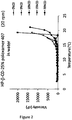
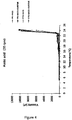
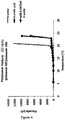
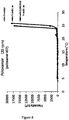
- the LCST of pharmaceutical compositions are differently influenced by acetic acid and lactic acid. Both acids generally increase the LCST of the compositions. However, while e.g. imiquimod does not influence at all the gel transition temperature of pharmaceutical compositions comprising only acetic acid, the LCST of compositions comprising lactic acid is enhanced.
- the pharmaceutical composition according to the invention may further comprise a pharmaceutically acceptable carrier and/or vehicle.
- a pharmaceutically acceptable carrier typically includes a liquid basis of the inventive inventive pharmaceutical composition, e.g. pyrogen-free water; the free water solution may be combined in any appropriate ratio with a water-miscible, pharmaceutically acceptable organic solvent, e.g. an alcohol (e.g. ethanol or isipropanol); the following may also be used: isotonic saline or buffered (aqueous) solutions, e.g phosphate, citrate, etc. buffered solutions, an aqueous buffered solution, containing e.g.
- a sodium salt preferably at least 50 mM of a sodium salt, a calcium salt, preferably at least 0.01 mM of a calcium salt, and/or a potassium salt, preferably at least 3 mM of a potassium salt.
- the sodium, calcium and/or potassium salts may occur in the form of their halogenides, e.g. chlorides, iodides, or bromides, in the form of their hydroxides, carbonates, hydrogen carbonates, or sulfates, etc.
- examples of sodium salts include e.g.
- examples of the optional potassium salts include e.g. KCI, Kl, KBr, K 2 CO 3 , KHCO 3 , K 2 SO 4
- examples of calcium salts include e.g. CaCl 2 , CaI 2 , CaBr 2 , CaCO 3 , CaSO 4 , Ca(OH) 2 .
- organic anions of the aforementioned cations may be contained in the composition of the invention.
- the composition of the invention suitable for injection purposes as defined above may contain salts selected from sodium chloride (NaCl), calcium chloride (CaCl 2 ) and optionally potassium chloride (KCI), wherein further anions may be present additional to the chlorides.
- CaCl 2 can also be replaced by another salt like KCl.
- the composition of the invention may be hypertonic, isotonic or hypotonic with reference to the specific reference medium, i.e. the composition of the invention may have a higher, identical or lower salt content with reference to the specific reference medium, wherein preferably such concentrations of the afore mentioned salts may be used, which do not lead to damage of cells due to osmosis or other concentration effects.
- Reference media are e.g.
- liquids occurring in "in vivo" methods such as blood, lymph, cytosolic liquids, or other body liquids, or e.g. liquids, which may be used as reference media in “in vitro” methods, such as common buffers or liquids.
- common buffers or liquids are known to a skilled person.
- compatible solid or liquid fillers or diluents or encapsulating compounds may be used as well for the inventive pharmaceutical composition, which are suitable for administration to a patient to be treated.
- the term "compatible” as used here means that these constituents of the inventive pharmaceutical composition are capable of being mixed with the imidazoquinolin(amines) or derivatives thereof as defined according to the present invention in such a manner that no interaction occurs which would substantially reduce the pharmaceutical effectiveness of the inventive pharmaceutical composition under typical use conditions.
- Pharmaceutically acceptable carriers, fillers and diluents must, of course, have sufficiently high purity and sufficiently low toxicity to make them suitable for administration to a person to be treated.
- Some examples of compounds which can be used as pharmaceutically acceptable carriers, fillers or constituents thereof are sugars, such as, for example, lactose, glucose and sucrose; starches, such as, for example, corn starch or potato starch; cellulose and its derivatives, such as, for example, sodium carboxymethylcellulose, ethylcellulose, cellulose acetate; powdered tragacanth; malt; gelatin; tallow; solid glidants, such as, for example, stearic acid, magnesium stearate; calcium sulfate; vegetable oils, such as, for example, groundnut oil, cottonseed oil, sesame oil, olive oil, corn oil and oil from theobroma; polyols, such as, for example, polypropylene glycol, glycerol, sorbitol, mannitol and polyethylene glycol; alginic acid.
- sugars such as, for example, lactose, glucose and sucrose
- starches such as, for example, corn star
- emulsifiers such as, for example, Tween ® ; wetting agents, such as, for example, sodium lauryl sulfate; colouring agents; taste-imparting agents, pharmaceutical carriers; tablet-forming agents; stabilizers; antioxidants; preservatives.
- the inventive pharmaceutical composition may comprise an adjuvant.
- an adjuvant may be understood as any compound, which is suitable to initiate or increase an immune response of the innate immune system, i.e. a non-specific immune response.
- the inventive pharmaceutical composition when administered, typically elicits an innate immune response due to the adjuvant, optionally contained therein.
- Such an adjuvant may be selected from any adjuvant known to a skilled person and suitable for the present case, i.e. supporting the induction of an innate immune response in a mammal.
- the adjuvant may be selected from the group consisting of, without being limited thereto, any of the following including chitosan, TDM, MDP, muramyl dipeptide, pluronics, alum solution, aluminium hydroxide, ADJUMERTM (polyphosphazene); aluminium phosphate gel; glucans from algae; algammulin; aluminium hydroxide gel (alum); highly protein-adsorbing aluminium hydroxide gel; low viscosity aluminium hydroxide gel; AF or SPT (emulsion of squalane (5%), Tween 80 (0.2%), Pluronic L121 (1.25%), phosphate-buffered saline, pH 7.4); AVRIDINETM (propanediamine); BAY R1005TM ((N-(2-deoxy-2-L-leucylamino-b-D-glucopyranosyl)-N-octadecyl-dodecanoyl-amide hydro
- TM liposomes
- LOXORIBINETM (7-allyl-8-oxoguanosine); LT oral adjuvant ( E.coli labile enterotoxin-protoxin); microspheres and microparticles of any composition; MF59TM; (squalene-water emulsion); MONTANIDE ISA 51TM (purified incomplete Freund's adjuvant); MONTANIDE ISA 720TM (metabolisable oil adjuvant); MPLTM (3-Q-desacyl-4'-monophosphoryl lipid A); MTP-PE and MTP-PE liposomes ((N-acetyl-L-alanyl-D-isoglutaminyl-L-alanine-2-(1,2-dipalmitoyl-sn-glycero-3-(hydroxyphosphoryloxy))-ethylamide, monosodium salt); MURAMETIDETM (Nac-Mur-L-Ala-D-Gln-OCH 3 );
- the inventive pharmaceutical composition may additionally contain one or more auxiliary substances in order to further increase its immunomoulatory effect.
- various mechanisms can come into consideration in this respect. For example, compounds that permit the maturation of dendritic cells (DCs), for example lipopolysaccharides, TNF-alpha or CD40 ligand, form a first class of suitable auxiliary substances.
- DCs dendritic cells
- TNF-alpha or CD40 ligand form a first class of suitable auxiliary substances.
- auxiliary substance any agent that influences the immune system in the manner of a "danger signal" (LPS, GP96, etc.) or cytokines, such as GM-CSF, which allow for an immune response produced by the immune-stimulating adjuvant according to the invention to be enhanced and/or influenced in a targeted manner.
- a "danger signal” LPS, GP96, etc.
- cytokines such as GM-CSF
- auxiliary substances are cytokines, such as monokines, lymphokines, interleukins or chemokines, that further promote the innate immune response, such as IL-1, IL-2, IL-3, IL-4, IL-5, IL-6, IL-7, IL-8, IL-9, IL-10, IL-12, IL-13, IL-14, IL-15, IL-16, IL-17, IL-18, IL-19, IL-20, IL-21, IL-22, IL-23, IL-24, IL-25, IL-26, IL-27, IL-28, IL-29, IL-30, IL-31, IL-32, IL-33, IFN-alpha, IFN-beta, IFN-gamma, GM-CSF, G-CSF, M-CSF, LT-beta or TNF-alpha, growth factors, such as hGH.
- cytokines such as monokines, lymphokines, interleukins
- the inventive pharmaceutical composition can also additionally or alternatively contain any further compound, which is known to be immune-stimulating due to its binding affinity (as ligands) to human Toll-like receptors TLR1, TLR2, TLR3, TLR4, TLR5, TLR6, TLR7, TLR8, TLR9, TLR10, or due to its binding affinity (as ligands) to murine Toll-like receptors TLR1, TLR2, TLR3, TLR4, TLR5, TLR6, TLR7, TLR8, TLR9, TLR10, TLR11, TLR12 or TLR13.
- any further compound which is known to be immune-stimulating due to its binding affinity (as ligands) to human Toll-like receptors TLR1, TLR2, TLR3, TLR4, TLR5, TLR6, TLR7, TLR8, TLR9, TLR10, TLR11, TLR12 or TLR13.
- CpG nucleic acids in particular CpG-RNA or CpG-DNA.
- a CpG-RNA or CpG-DNA can be a single-stranded CpG-DNA (ss CpG-DNA), a double-stranded CpG-DNA (dsDNA), a single-stranded CpG-RNA (ss CpG-RNA) or a double-stranded CpG-RNA (ds CpG-RNA).
- the CpG nucleic acid is preferably in the form of CpG-RNA, more preferably in the form of single-stranded CpG-RNA (ss CpG-RNA).
- the CpG nucleic acid preferably contains at least one or more (mitogenic) cytosine/guanine dinucleotide sequence(s) (CpG motif(s)).
- CpG motif(s) cytosine/guanine dinucleotide sequence(s)
- at least one CpG motif contained in these sequences that is to say the C (cytosine) and the G (guanine) of the CpG motif, is unmethylated. All further cytosines or guanines optionally contained in these sequences can be either methylated or unmethylated.
- the C (cytosine) and the G (guanine) of the CpG motif can also be present in methylated form.
- the inventive pharmaceutical composition typically comprises a "safe and effective amount" of the above components of the inventive pharmaceutical composition, particularly of the imidazoquinolin(amines) and derivatives thereof as defined according to the present invention.
- a "safe and effective amount” means an amount of these component, particularly of the imidazoquinolin(amines) and derivatives thereof, that is sufficient to significantly induce a positive modification of a disease or disorder as defined herein.
- a "safe and effective amount” is small enough to avoid serious side-effects, that is to say to permit a sensible relationship between advantage and risk. The determination of these limits typically lies within the scope of sensible medical judgment.
- a "safe and effective amount" of the components of the inventive pharmaceutical composition will furthermore vary in connection with the particular condition to be treated and also with the age and physical condition of the patient to be treated, the body weight, general health, sex, diet, time of administration, rate of excretion, drug combination, their activity, the severity of the condition, the duration of the treatment, the nature of the accompanying therapy, of the particular pharmaceutically acceptable carrier used, and similar factors, within the knowledge and experience of the accompanying doctor.
- the inventive pharmaceutical composition may be used for human and also for veterinary medical purposes, preferably for human medical purposes.
- the inventive pharmaceutical composition will contain or release sufficient active imidazoquinolin(amine) or a derivative thereof to provide a dose of about 10, 20, 50, or 100 nanograms per kilogram (ng/kg) to about 50 milligrams per kilogram (mg/kg), preferably about 10 micrograms per kilogram ( ⁇ g/kg) to about 5 mg/kg, of the compound or a salt thereof to the subject.
- the method includes administering sufficient imidazochinolin(amine) or a derivative thereof to provide a dose of from about 0.0001, 0.001, 0.01, or 0.1 mg/m 2 to about 2.0 mg/m 2 to the subject, for example, a dose of from about 0.004, 0.04, or 0.4 mg/m 2 to about 1.2 mg/m 2 .
- the inventive pharmaceutical composition may be administered locally.
- Routes for local administration in general include, for example, topical administration routes but also intravesical, intradermal, transdermal, subcutaneous, or intramuscular injections or intralesional, intracranial, intrapulmonal, intracardial, and sublingual injections. More preferably, the inventive pharmaceutical composition may be administered by an intravesical route.
- the suitable amount of the inventive pharmaceutical composition to be administered can be determined by routine experiments with animal models. Such models include, without implying any limitation, rabbit, sheep, mouse, rat, dog and non-human primate models.
- Preferred unit dose forms for injection include sterile solutions of water, physiological saline or mixtures thereof.
- compositions of the invention being restricted to specific components.
- the pharmaceutical composition as claimed comprises at least one imidazoquinolin(amine) or a derivative thereof as claimed and lactic acid and acetic acid - preferably in such a concentration that its final pH is from pH 3 to 5, preferably 3.5 to 4.5.
- the components of the inventive composition form the inventive adduct structures.
- the inventive pharmaceutical composition as claimed comprises preferably at least one imidazoquinolin(amine) or a derivative thereof as claimed and lactic acid and acetic acid, however containing no more than 4, 3, 2, 1 or most preferably no further organic and/or inorganic acid as defined herein or, alternatively, less than 2 inorganic acids and no further organic acid or, still alternatively, just one additional organic acid and no inorganic acids.
- the inventive pharmaceutical composition as claimed comprises at least one imidazoquinolin(amine) or a derivative thereof as defined herein, and lactic acid and acetic acid, and less than 4, or 3 thermo-sensitive agents or more preferably just one thermo-sensitive agent.
- the inventive composition may also comprise no thermosensitive agent.
- the combination of a restricted number of thermo-sensitive agents in the inventive pharmaceutical composition and a restricted number of acids as defined above are also provided.
- the inventive pharmaceutical composition as defined above may comprise e.g.
- the inventive pharmaceutical composition may comprise no surfactants apart from thermo-sensitive agents (if any), which may have additionally surfactant properties. Accordingly, the inventive composition may comprise also no surfactant and no thermo-sensitive agent.
- the inventive pharmaceutical composition may contain less than 4, 3, or 2 cyclodextrines or, alternatively, no cyclodextrine at all. These embodiments may be combined with the preferred above embodiments. Accordingly, the inventive composition may e.g. contain no thermosensitive agent, no cyclodextrine and no surfactant. In addition, the inventive composition may contain no further solubility enhancer, be it a surfactant, a cyclodextrin or be it another solubility enhancing compound, apart from lactic and acetic acid.
- the inventive composition comprises at least one imidaziquinoli(amine) compound as defined herein, acetic and lactic acid and 1, 2 or no thermosensive agent(s) and no further solubility enhancing compound and no further therapeutically active ingredient and no cellulose or cellulose derivative.
- the inventive composition may exclusively additionally contain one or more of the following standard components belonging to the class of stabilizers and preservatives.
- the inventive pharmaceutical composition comprises acetic acid and lactic acid in a concentration of about 0.025 to about 0.2 M, imidazoquinolin(amine) in an amount of about 0.1 % (w/v) to about 1 % (w/v), cyclodextrin(s) in an amount of about 2 % (w/v) to about 6 % (w/v) and Poloxamer 407 in an amount of about 10 % (w/v) to about 25 % (w/v), preferably the inventive pharmaceutical composition comprises acetic acid and lactic acid in a concentration of about 0.075 to about 0.125 M, e.g. e.g.
- the object of the present invention is solved by the use of imidazoquinolin(amines) and derivatives thereof as defined herein (for the manufacture of a pharmaceutical composition, e.g. as defined herein,) for use in a method for the treatment of any of the diseases and disorders as defined herein, i.e.
- precancerous conditions such as actinic keratosis, genital warts (condylomata), VIN (vulvar intraepithelial neoplasia), VAIN (vaginal intraepithelial neoplasia), etc., Molluscum contagiosum, skin cancers, such as basal cell carcinoma, Bowen's disease, squamous cell carcinoma, superficial malignant melanomas, etc., bladder diseases, such as, for example, bladder cancer and cystitis, etc, peritoneal cancer and ovarian cancer.
- Transurethral bladder tumour resection and adjuvant intravesical immunotherapy with BCG is standard treatment for high grade NMIBC.
- many patients show recurrence of disease and the impact on disease progression is only limited ( Sylvester FJ, Van der Meijden AP, Lamm DL. intravesical bacillus Calmetie-Guerin reduces the risk of progression in patients with superficial bladder cancer: a metaanalysis of the published results of randomized clinical trials. J Urol 2002; 168:196470 ) or even absent ( Malmström PU, Sylvester RJ, Crawford ED, Friedrich M, Krege S, Rintala E, Solsona E, Di Stasi SM, Witjes JA.
- intravesically administered imidazoquinolin(amines) in pigs is well tolerated, causes no bladder wall toxicity and formulations with poloxamer and HP ⁇ CD stay longer in the bladder with less systemic absorption.
- the safety profile of intravesical imidazoquinolin(amines) compares favorable to that of current therapies such as BCG.
- the object of the present invention is solved (according to one embodiment) by the use of imidazoquinolin(amines) and derivatives thereof as defined herein, (for the manufacture of a pharmaceutical composition, e.g. as defined herein,) for the (intravesical) treatment of bladder diseases, such as, for example, bladder cancer, such as for instance non-muscle invasive bladder cancers, and cystitis, etc.
- imidazoquinolin(amines) and derivatives thereof as defined herein are preferably provided in a formulation as described above for the inventive pharmaceutical composition.
- the present invention furthermore comprises the use in methods of treatment of diseases and disorders as defined herein, i.e. skin disorders including precancerous conditions, such as actinic keratosis, genital warts (condylomata), VIN (vulvar intraepithelial neoplasia), VAIN (vaginal intraepithelial neoplasia), etc., Molluscum contagiosum, skin cancers, such as basal cell carcinoma, Bowen's disease, squamous cell carcinoma, superficial malignant melanomas, etc., bladder diseases, such as, for example, bladder cancer, such as for instance non-muscle invasive bladder cancers, and cystitis, etc, peritoneal cancer and ovarian cancer, by using the inventive pharmaceutical composition as claimed.
- skin disorders including precancerous conditions, such as actinic keratosis, genital warts (condylomata), VIN (vulvar intraepithelial neoplasia
- such methods of treatment as defined above preferably comprise administration of the inventive pharmaceutical composition using any administration mode as defined above, preferably including, topical administration routes but also intravesical, intradermal, transdermal, subcutaneous, or intramuscular injections or intralesional, intracranial, intrapulmonal, intracardial, and sublingual injections.
- the present invention comprises the use in methods of (intravesical) treatment of bladder diseases, such as, for example, bladder cancer, such as for instance non-muscle invasive bladder cancers, and cystitis, etc., by using the inventive pharmaceutical composition as claimed.
- bladder diseases such as, for example, bladder cancer, such as for instance non-muscle invasive bladder cancers, and cystitis, etc.
- methods of (intravesical) treatment of bladder diseases typically comprises the intravesical administration of the inventive pharmaceutical composition.
- the inventive pharmaceutical composition may be administered using non-invasive methods, such as an injection needle having a cannula of a suitable diameter, an injection tube, endoscopic methods, etc.
- the drug is slightly soluble in hydrochloric acid 0.1 N, 0.2 N and 2 N.
- the system prepared with HCl 2 N is a transparent solution at 74 °C.
- the theoretical concentration of the drug dissolved in it was 0.042 M corresponding to 1.0 %.
- the solubility of imiquimod at different pH values was determined. Two different procedures were used. The drug was dispersed in the buffer (without acetic acid as co-solvent). 72 mg imiquimod were dispersed with 10 ml citrate buffer, 155 mg imiquimod in 10 ml phosphate buffer and 192 mg in10 ml acetate buffer. After vortexing for 5 minutes, each sample was visually inspected.
- Imiquimod was completely dissolved in glacial acetic acid and 1 ml of this solution (2.41 % imiquimod) was diluted with 9 ml of water, 0.9 %w/w NaCl solution, phosphate buffer pH 7.0 (0.1 M), citrate buffer pH 6.0 (0.1 M) or acetate buffer pH 5.0 (0.1 M). A visual inspection of the systems was carried out.
- a weighed amount of drug (0.0124 g) was dissolved in 100 ml of solvent (acetic acid/water 1:9).
- the solution concentration was 0.0005 M.
- Different amounts of this solution were opportunely diluted with the same solvent to prepare five standard solutions with concentrations ranging from 2x10 -6 - 5x10 -5 M (in particular 2x10 -6 M, 5x10 -6 M, 10x10 -6 M, 20x10 -6 M, 50x10 -6 M). These solutions were spectrophotometrically analyzed. The absorbance was determined at three wavelengths (250, 305, 319 nm).
- a weighed amount of imiquimod (0.0316 g) was dissolved in 250 ml of solvent (acetonitrile (ACN)/water pH 3.5). The solution concentration was 0.0005 M. Different amounts of this solution were appropriately diluted with the same solvent to prepare standard solutions with concentrations in the range 2x10 -6 - 3x10 -5 M (in particular 2x10 -6 M, 3x10 -6 M, 10x10 -6 M, 20x10 -6 M, 30x10 -6 M). These solutions were analyzed by HPLC for imiquimod.
- Solution B solution containing 50 mM ammonium acetate (3.85 g in 11 of water) • Flow (ml/min): 1.0 • Gradient: see Table 2 • Oven temperature (°C): 40 • Wavelength (nm): 250 • Injection volume ( ⁇ l): 20 • Table 2: Gradient for calibration by HPLC time (minutes) solution A (%) solution B (%) elution 0 20 80 equilibration 0-16 20-30 80-70 linear gradient 16-18 30 70 isocratic 18-26 30-50 70-50 linear gradient 26-31 50-80 50-20 linear gradient 31-40 80 20 isocratic 40-42 80-20 20-80 linear gradient 42-50 20 80 re-equilibration
- the solubility was experimentally determined weighing 1200 mg of drug, adding 10 ml of glacial acetic acid and gently shaking the dispersion for 24 hours. This sample, after filtration (0.22 ⁇ m Millipore membrane filter) was analyzed by HPLC for the imiquimod content and its pH was measured.
- Imiquimod (738 mg) was initially dissolved in glacial acetic acid (10 ml). A volume of this solution was appropriately diluted with phosphate buffer pH 7.0 (0.1 M), citrate buffer pH 6.0 (0.1 M) or acetate buffer pH 5.0 (0.1 M) to prepare systems containing 2.0 % of drug. The samples, after filtration by 0.22 ⁇ m Millipore membrane filter, were spectrophotometrically and chromatographically analyzed for the imiquimod content. The pH was determined.
- imiquimod Some inorganic and organic acids were considered as potential solubilizers of the drug.
- 100 mg imiquimod were dissolved in 10 ml of phosphoric acid 0.1 M, succinic acid 0.1 M, citric acid 0.1 M, acetic acid 0.01 M, 0.05 M, 0.1 M and lactic acid 0.01 M, 0.05 M, 0.088 M, and 0.1 M.
- These systems after filtration, were spectrophotometrically analyzed for imiquimod and their pH was measured.
- Imiquimod 200 mg was weighed and mixed with different amounts of surfactants (Tween 20, Tween 80, Cremophor EL or Pluronic F-68) in order to prepare formulations containing 0.5, 2.5 and 5 % of surface active agent. Each mixture was added to 10 ml of lactic acid (0.1 M), gently shaken for 24 hours, filtered and analyzed by spectrophotometry and submitted to pH measurement.
- the imiquimod present in solution in compositions prepared with different acids and surfactants is spectrophotometrically determined and is shown in Table 5 together with the pH value.
- Table 5 Composition, pH value and amount of imiquimod in the formulations Acid (M) excipient (%) imiquimod (%w/v) pH phosphoric acid succinic acid citric acid acetic acid lactic acid Tween 20 Tween 80 Cremophor EL Pluronic F68 HP-( ⁇ -CD 0.100 0.159 1.80 0.100 0.079 2.94 0.100 0.010 2.10 0.010 0.070 4.37 0.050 0.220 4.08 0.100 0.430 3.97 0.010 0.130 4.20 0.050 0.530 3.90 0.088 0.840 3.71 0.100 0.980 3.61 0.100 0.5 0.945 3.88 0.100 2.5 1.004 3.86 0.100 5.0 1.001 3.89 0.100 0.5 0.997 3.83 0.100 2.5 1.009 3.82 0.100 5.0 0.872 3.82 0.100 0.5 0.881 3.90 0.100 2.5
- Imiquimod was weighed (100 mg) and added of glycerol or propylene glycol to a volume of 10 ml. After shaking (at 120°C for 24 hours) and cooling, 10 ml of water were added: the dispersions were filtered and the imiquimod amount in the liquid phases was determined.
- the system prepared with glycerol as solvent showed a pH value of 5.42 and an imiquimod concentration of 0.02 %. When propylene glycol was used the pH was 3.03 and the concentration of imiquimod in solution was 0.02%.
- Imiquimod is appreciably soluble in pure acetic and lactic acid (>7.5 % w/v). These two acids can be used as co-solvent to prepare formulations containing relatively high amount of the active substance.
- solubilizer for imiquimod
- acetic and lactic acids confirm their ability to interact with the drug and solubilize it.
- the amount of drug in solution is directly related to the acid concentration (this is also confirmed by Example 6.1.).
- solubilizer lactic acid is more efficient than acetic acid.
- the surfactants associated to lactic acid do not ameliorate the solubility of imiquimod.
- the obtained results demonstrate that for these systems, the drug solubility depends primarily from the lactic acid and indicate that the drug is not entrapped in the micelles the surfactants form.
- Poloxamer 407 was used to prepare semisolid systems that contained as liquid phase:
- thermo-sensitive agent All systems were constituted of 25% polymer (overal amount/concentration of thermo-sensitive agent).
- thermogelling properties of poloxamer was evaluated: pure HPMC shows gel phase transition between 40 and 50 °C and its Lower Critical Solution Temperature (LCST) can be lowered by chemical modification (by reducing degree of substitution, the gel transition temperature can be lowered to about 40 °C).
- LCST Lower Critical Solution Temperature
- the composition of formulations containing HPMC is the following: Table 6: Compositions containing HPMC Composition (%) Poloxamer HPMC water 25 0 75.0 25 0.5 74.5 25 1.0 74 25 2.0 73
- thermo-sensible semisolid systems CDG. Palmieri et al., 15th Int. Symp. on Microencapsulation, Parma, Italy 18-21 September 2005 .
- Hydroxypropyl- ⁇ -cyclodextrin (HP- ⁇ -CD) at high percentages, ranging from 0 to 20% was used in systems constituted of Poloxamer 407 and water and the LCST of these formulations was determined.
- Poloxamer 188 PEO-PPO-PEO copolymer with MW lower than Poloxamer 407, can be used to modulate the LCST of the gel. Poloxamer 407 was in part substituted by Poloxamer 188 to obtain hydrogels that contain an amount of polymers corresponding to 25%. Table 7: Different mixtures of poloxamers Composition (%) Polymer-ratio Poloxamer 407 Poloxamer 188 water 23.75 1.25 75 9.5/0.5 22.50 2.5 75 9/1 21.25 3.75 75 8.5/1.5 21 4 75 8/2
- the liquid phase (water) was substituted by lactic or acetic acid: their effects and those of the drug on the rheological behavior of thermo-sensitive systems were evaluated.
- the jelled systems we selected contained:
- the composition of the investigated gels was the following: Imiquimod PPG-LA 01 Imiquimod 0.90 g Poloxamer 407 22.50 g Poloxamer 188 2.50 g Lactic acid solution (0.135 M) 74.02 g Imiquimod PG-LA 01 Imiquimod 0.90 g Poloxamer 407 20.00 g Lactic acid solution (0.125 M) 79.02 g Imiquimod PPG-AA 01 Imiquimod 0.40 g Poloxamer 407 22.50 g Poloxamer 188 2.50 g Acetic acid solution (0.135 M) 74.02 g Imiquimod PG- AA 01 Imiquimod 0.40 g Poloxamer 407 20.00 g Acetic acid solution (0.125 M) 79.02 g
- the LCST values cannot be determined by DSC: while systems constituted of pure Poloxamer 407 showed an endothermic peak that can be linked to the gel transition, using mixtures of poloxamers, HP- ⁇ -CD/Poloxamer 407 or HPMC/Poloxamer 407 as gelling agents, the DSC transition signal was lost. So, the gel transition temperature was determined by viscosity measurement. The viscosity of the systems was evaluated in the range of temperature 1-40 °C, using a Rheometer BROOKFIELD DV-II+, equipped with the Small Sample Adapter and the spindle S-25.
- HPMC in the range of concentrations considered ( ⁇ 2%), is found not to modify the gel transition temperature of the formulation containing pure Poloxamer 407.
- Poloxamer 188 has been observed: increasing proportion of this component raises the gel transition temperature (note the linear relationship between P188 concentration and system viscosity) (see Figure 3 ).
- the test is illustrated in " Development and in-vitro evaluation of sustained release Poloxamer 407 (P407) gel formulations of ceftiofur" by L. Zhang -J. Control. Release, 85 (2002) 73-81 .
- the test has been carried out in 10 ml vials, closed with an elastomeric.
- the receiving phase was completely withdrawn and substituted by fresh acid solution.
- the receiving solution was submitted to UV analysis for imiquimod.
- the flux of imiquimod through the artificial barrier is high (1.95x10 -6 g ⁇ cm 2 ⁇ S-1) and constant (almost for the first hour) suggesting that the transfer of the drug through the membrane does not affect the imiquimod kinetics through the poloxamer gels.
- the imiquimod profiles of gel formulations are very different from that of the solution, but very similar between them. Imiquimod diffuses through the gel matrix with relatively high rate: after 6 hours, about 44.4% for imiquimod PG-LA 01 formulation and about 48.3% for Imiquimod PPG-LA01 was in the receiving phase of the Franz cell.
- the drug diffusion profiles for both the gel formulations are linear, suggesting pseudo-zero order kinetics: the imiquimod fluxes through the gel matrix are 2.00x10 -7 g ⁇ cm 2 ⁇ s -1 for imiquimod PG-LA 01 and 2.19x10 -7 g ⁇ cm 2 ⁇ s -1 for imiquimod PPG-LA01 system ( Figure 11 ).
- the polymer gradually dissolves in the liquid that passes the membrane.
- the flux of the liquid in counter-current to the drug, could alter the diffusion of the active molecule from donor to receiving compartment.
- this effect is negligible: the flux of imiquimod through the membrane is ten times higher than its flux through the poloxamer systems.
- compositions submitted to the test were:
- the bladder of 6-9 months-aged female pigs was used: immediately after the excision, the urethra was cut away and the bladder epithelium (BE) was sectioned to obtain pieces of about 3 cm 2 area. Each portion of epithelium was mounted between the compartments of a Franz cell with the internal surface faced up. As receiving phase (bottom compartment), 0.1 M phosphate buffer solution (pH 7.4) was used: it was maintained under stirring (about 300 rpm) at 37 °C during the experiment.
- One of the reported formulations represents the donor phase (top compartment): the formulation (2 g) was introduced in the donor compartment after the temperature of the apparatus attains 37 °C temperature.
- BE removed from the diffusion cell was thoroughly washed with distilled water to remove excess formulation and carefully wiped with tissue paper. Then BE was frozen and sectioned using a cryostatic microtome. Five successive BE sections (each of 100 m thickness) were introduced in a tube, added of 5 ml lactic acid (92 %) and maintained under shaking overnight. The liquid phase was filtered (0.22 ⁇ m) and assayed by HPLC for imiquimod.
- Figure 12 depicts the obtained results reporting the amount of imiquimod recovered in BE after 4 hours of contact with the formulation (data are normalized for the absorption area). Data are the mean of 3 experiments (solution and liposomes) or 6 experiments (gel formulation).
- the gel formulation affects the absorption of imiquimod into the bladder epithelium: the amount of active released from the gel and recovered in BE is lower than that released from the solution. It is interesting to notice that the amount of imiquimod formulated in liposomes and present in the BE is greater than that from solution: this result suggests a promotion effect of lipid vesicles on the absorption of the drug.
- Table 9 Determination of the density formulation density ⁇ S.D. (g/ml) 16% PF127 LA 01 1.0155 ⁇ 0.0032 5% CD-16%PF127 LA 01 1.0299 ⁇ 0.0039 15% CD-16%PF127 LA 01 1.0639 ⁇ 0.0040 5% CD-16%PF127 LA 01 - 0.5% imiquimod 1.0359 ⁇ 0.0033 15% CD-16%PF127 LA 01 - 0.5%imiquimod 1.0670 ⁇ 0.0023 5% CD LA 01 - 0.5%imiquimod 1.0158 ⁇ 0.0036
- the viscosity was determined on the following compositions:
- imiquimod formulations constituted of: 0.9% Imiquimod gel Poloxamer 407 mg 160.162 HP ⁇ CD mg 50.025 Imiquimod mg 9.005 Lactic acid (90,3%) mg 10.017 Water for Injection q.b. mg 1000.000 0.5% Imiquimod gel Poloxamer 407 mg 160.157 HP ⁇ CD mg 50.031 Imiquimod mg 5.002 Lactic acid (90,3%) mg 10.024 Water for Injection q.b. mg 1000.000 0.1% Imiquimod gel Poloxamer 407 mg 160.098 HP ⁇ CD mg 50.013 Imiquimod mg 1.007 Lactic acid (90,3%) mg 10.028 Water for Injection q.b. mg 1000.000
- Artifical Urine Solution had the following composition: Na bicarbonate 25 mM Urea 170 mM Uric acid 0.4 mM Creatinine 7 mM Na chloride 90 mM Na sulphate 10 mM K 2 hydrogen phosphate 7 mM K di-hydrogen phosphate 7 mM NH 4 chloride 25 mM
- the pH was corrected to 6.50 ⁇ 0.05 with 1 M HCl.
- Prefixed volumes of formulation and solvent were transferred in a 10 ml flask in order to obtain mixtures where the solvent/formulation volume ratio were 0.5, 1, 5 and 10. These systems were maintained under agitation for different time periods (25, 50, 240 and 240 minutes for 0.5, 1, 5 and 10 solvent/formulation volume ratio systems respectively).
- the pH of each system was measured.
- Table 11 pH Measurements Sol/formul ratio H 2 O SO 4 2- H 2 KO 4 P/ HK 2 O 4 P HCO 3- A.U.S. 0.9% gel 0.9% Imiquimod gel solution 0 6.53 6.50 6.52 6.51 3.40 1 0.5 3.34 3.30 3.38 3.48 3.56 1 1 3.25 3.31 3.36 3.50 3.80 1 5 4.50 3.28 3.57 4.49 5.73 1 10 3.30 3.30 3.89 6.10 6.33 Sol/formul ratio H 2 O SO 4 2- H 2 KO 4 P/ HK 2 O 4 P HCO 3- A.U.S.
- the bicarbonate one determined the greatest precipitation of drug: at 10:1 volume ratio an almost complete precipitation of imiquimod has been observed for all formulations.
- the sulphate solution separated the drug from 0.9% and 0.5% gels, but not from the 0.1% drug system: for the highest drug-containing gel, a parabolic relationship between imiquimod precipitated percentage and dilution ratio was present.
- the experimental work was aimed to compare some chemico-physical characteristics of imiquimod formulations that contain different amounts of Poloxamer 407 and of drug.
- the investigated systems had the following compositions: Formulation 0.5% - 16 Poloxamer 407 160.06 mg Imiquimod 5.02 mg HP ⁇ CD 50.06 mg Lactic acid (90,3%) 10.00 mg Water for Injection q.b. 1000.00 mg Formulation 0.1% - 16 Poloxamer 407 160.05 mg Imiquimod 1.01 mg HP ⁇ CD 50.02 mg Lactic acid (90,3%) 10.00 mg Water for Injection q.b. 1000.00 mg Formulation 0.5% - 10 Poloxamer 407 160.03 mg Imiquimod 5.01 mg HP ⁇ CD 50.06 mg Lactic acid (90,3%) 10.00 mg Water for Injection q.b. 1000.00 mg Formulation 0.1% 10 Poloxamer 407 100.06 mg Imiquimod 1.04 mg HP ⁇ CD 50.01 mg Lactic acid (90,3%) 10.00 mg Water for Injection q.b. 1000.00 mg
- Portions of pig bladder were placed between the donor (treatment) and acceptor chambers of Franz cells.
- the receiving medium PBS pH 7.4
- the receiving medium was withdrawn and analyzed for imiquimod content.
- the bladder was recovered; the treated portion was separated and divided in two parts: one was fixed in formalin, embedded, sectioned and stained (H&E) for histological examination; and the other part was submitted for drug extraction and analysis.
- the histopathological examination was carried out on five urinary bladder sections i.e. 2 slides from pig 1 (labelled imiquimod 1 and vehicle 1), 2 slides from pig 2 (labelled imiquimod 2 and vehicle 2) and one slide with the NaCl solution (labelled control).
- the slides were examined primarily for urothelial integrity and any sub-mucosal changes including inflammation.
- the investigated imiquimod formulations were:
- composition of systems was the following: 0.5% Imiquimod in 0.1 M lactic acid solution Imiquimod, 5.020 mg Lactic acid (90,3%) 10.020 mg Water for Injection q.b. 1000.00 mg 0.5% Imiquimod -5% HP- ⁇ -CD in 0.1 M lactic acid solution HP- ⁇ -CD 50.080 mg Imiquimod 5.020 mg Lactic acid (90,3%) 10.080 mg Water for Injection q.b. 1000.000 mg 0.5% Imiquimod in 16% poloxamer 407 gel Poloxamer 407 160.020 mg Imiquimod 5.000 mg Lactic acid (90,3%) 10.100 mg Water for Injection q.b.
- the bladder from a 6-9 months-aged female pig, was sectioned and mounted between the compartments of a Franz cell with the internal surface faced up.
- 0.1 M phosphate buffer solution pH 7.4
- An imiquimod-containing formulation (2 g) represented the donor phase.
- bladder epithelium (BE) removed from the diffusion cell was thoroughly washed with distilled water to remove excess formulation and carefully wiped with tissue paper. Then BE was frozen and sectioned using a cryostatic microtome. Five successive BE sections (each of 100 ⁇ m thickness) were introduced in a tube, added of 5 ml lactic acid (92%) and maintained under shaking overnight. The liquid phase was filtered (0.22 pm) and assayed by HPLC for imiquimod.
- Figure 15 depicts the obtained results reporting the amount of imiquimod recovered in BE after 4 hours of contact with the formulation (data are normalized for the absorption areal). Data are the mean of 3 experiments.
- TLR-7 expression in human bladder cancer and normal bladder tissue was studied. Pig tissue samples were studied for model validation. Thereafter, to test the potential and risks of imidazoquinoline(amines) when used intravesically, an animal study was performed in which three different intravesical formulations of imiquimod and a vehicle control were tested. Animal well-being, pharmacokinetic properties, cytokine production and bladder wall histology was studied.
- TLR-7 TLR-7 by Mosaic Laboratories, LLC (Lake Forest, CA, USA). Additionally, 28 different normal human tissue specimens (other than bladder) were stained for TLR-7 expression. In addition, porcine bladder, tonsil, heart, liver, spleen and kidney tissue samples were tested.
- staining intensity of each specimen was judged relative to the intensity of a control slide containing an adjacent section stained with an irrelevant species- and isotypematched antibody. Staining of the section labeled with the negative reagent control was considered "background.” Sections were scored as follows: 0 no staining relative to background, 1+ weak staining, 2+ moderate staining, and 3+ strong staining. Total positive staining (the sum of all staining at 1+, 2+, and 3+ was recorded for each specimen.
- the H-score was calculated based on the summation of the product of percent of cells stained at each intensity using the following equation: (3 x % cells staining at 3+) + (2 x % cells staining at 2+) + (1 x % cells staining at 1+).
- the H-score values ranged from 0-300.
- Premedication contained a mixture of 10 mg/kg ketamine and 0.5 to 1.0 mg/kg midazolam i.m. in one shot. Sedation maintenance was done by the same mixture in half the dosage every 45 minutes. The bladder was emptied without suction trauma prior to the start of treatment (via 12 French Foley catheter) and 50 mL of the study drug was instilled intravesically.
- PK pharmacokinetic analyses
- IL-6 cytokine
- Blood samples for pharmacokinetic analysis and cytokine measurement were collected in 4 mL lithium heparin tubes with gel divider before instillation of the study drug and 15, 30, 60, 120, 240 and 480 minutes after the beginning of drug instillation and also just before cystectomy. The samples were transferred on ice to the laboratory for plasma processing within 30 minutes. The blood was centrifuged for 15 minutes at 3,200 rpm at 4°C, plasma was collected for PK and cytokine analysis, stored at -80°C, and shipped on dry ice for analysis.
- Body temperature was measured rectally before and 1, 8 and 24 hours and one week after starting treatment.
- the well being of the animals was monitored by experienced staff by a selected protocollary list of possible signs and symptoms of toxicity before the experiment, just after the instillation and just before cystectomy.
- the most intense staining was nuclear membrane/perinuclear and weaker cytoplasmic staining ( Figure 16 )
- TLR-7 expression was observed in almost all non-bladder tissues examined (data not shown), most prominently in lymphoid tissue. Lack of staining was observed in heart and smooth muscle.
- TLR-7 expression in pig tissues ( Figure 17 ) was similar to the corresponding human tissues.
- Post-treatment body temperature was not influenced by the instillation of the study drug and comparable with pre-treatment body temperature for all treatment groups. Although a slight increase in creatinine levels was observed one week post-instillation in group 1 and 2, possibly indicating slight kidney impairment, no obvious correlation with treatment modalities was noted.
- IL-6 cytokine levels were similar in all groups, including the vehicle control group, with maximum IL-6 levels reached eight hours after installation of the study drugs (data not shown).
- Macroscopic examination of the resected bladders showed no abnormalities, except some areas with a hemorrhagic appearance in the pigs sacrificed 24 hours post-instillation of imiquimod (group 1-3), which was less apparent or absent in the pigs sacrificed after seven days.
- imiquimod a lead member of the imidazoquinolin(amines) family, has shown efficacy against many tumour types ( Schön MP, Schön M. Imiquimod: mode of action. Br J Dermatol 2007;157:8-13 ).
- the compound binds to TLR-7, inducing the production and secretion of pro-inflammatory cytokines, which consecutively induce a profound tumour specific cell mediated immune response, which is quite similar to the proposed working mechanism of BCG.
- imiquimod can exert direct apoptotic effects on tumour cells, can stimulate TLR-independent gene expression, and can interfere with adenosine receptor signaling pathways ( Schön MP, Schön M. Imiquimod: mode of action. Br J Dermatol2007;157:8-13 ).
- Imiquimod is effective and well tolerated as a topical agent for the treatment of various benign and malignant dermatological lesions. Local skin reactions are the most common side effects ( Geisse J, Caro I, Lindholm J, Golitz L, Stampone P, Owens M. Imiquimod 5% cream for the treatment of superficial basal cell carcinoma: Results from two phase III, randomized, vehicle-controlled studies. J Am Acad Dermatol 2004;50:722-33 ). Imiquimod has also been studied as systemic treatment modality: weekly administration of high dose oral imiquimod was studied in a phase I trial in cancer patients ( Witt PL, Ritch PS, Reding D, McAuliffe TL, Westrick L, Grossberg SE, Borden EC. Phase I trial of an oral immunomodulator and interferon inducer in cancer patients. Cancer Res 1993;53:5176-5180 ). Dose-limiting side effects were influenza-like symptoms and mild lymphocytopenia.
- Bladder cancer might be an interesting target for imiquimod treatment: Intravesical administration of imiquimod resembles the topical treatment of skin lesions with direct contact with malignant cells and direct cytotoxicity or apoptosis induced by imiquimod independent of an immune response. Moreover, intravesical instillation avoids losses from first pass metabolism and allows the therapeutic effect of a drug to be localized at the desirable site with minimal systemic side effects.
- TLR-7 TLR-7 expression in 15 specimens was evaluated. Positive staining was demonstrated in all samples with an average of 90%, however there was some heterogeneity in intensity leading to H-scores ranging from 90 to 165. These results demonstrate that bladder cancer may be an attractive target for imiquimod therapy.
- Plasma IL-6 levels were similar in all groups, including the vehicle control group, with maximum values being reached eight hours after bladder instillations, most likely due to the stress reaction after general anesthesia and bladder catheterization, rather than immunostimulation by imiquimod. Moreover, plasma imiquimod levels were too low to achieve a systemic cytokine response.
- intravesically administered imiquimod in pigs is well tolerated, causes no bladder wall toxicity and formulations with poloxamer and HP ⁇ 3CD stay longer in the bladder with less systemic absorption.
- the safety profile of intravesical imiquimod compares favorable to that of current therapies such as BCG. Considering the very similar pharmacokinetic characteristics a phase I dose escalation marker lesion study will be initiated with imiquimod 0.5% in 0.1 M lactic acid, poloxamer 407 16% and HP ⁇ CD 5% in patients with NMIBC.
- the objective of this study was to optimize the formulation of imiquimod to improve therapeutic application.
- the systemic and local inflammation induced by various formulations of imiquimod was compared.
- the anticancer efficacy of imiquimod in thermosensitive poloxamer polymer was evaluated in murine orthotopic bladder cancer models.
- mice 6- to 8- week old female C57BL/6 mice were purchased from Charles River Laboratory (Wilmington, MA). TLR7 deficient mice were a gift from S. Akira (Osaka University, Osaka, Japan) and backcrossed for 10 generations onto the C57BL/6 background mice. All mice were housed under standard conditions in the University of California, San Diego Animal Facility. All procedures and protocols received prior approval by the institutional review board of UCSD.
- Imiquimod (TMX, TMX-101, R-837) and Lutrol®F127 were provided by Telormedix SA (Bioggio, Switzerland). Lactic acid was purchased from Fisher Scientific (Pittsburgh, PA). 2-(hydroxypropyl)- ⁇ -cyclodextrin (HP ⁇ CD) was purchased from Sigma Aldrich (St. Louis, MO). Imiquimod was solved at the final concentration of 1 % (w/v, 41.7 mM) in 0.1 % lactic acid (lactic acid formulation). Lutrol®F127 (poloxamer 407) was added to 0.1 M lactic acid to make 20% (poloxamer formulation). 5% HP ⁇ CD was incorporated into 16% Lutrol®F127, in 0.1M lactic acid (poloxamer-HP ⁇ CD formulation). All solutions were filtered by 0.22 micron filter before administration.
- mice were anesthetized and catheterized using a 20G Teflon intravenous catheter (Terumo Co. Somerset, NJ).
- 150, 500, or 1500nmoles imiquimod in 50 or 100 ⁇ L vehicles were intravesically administered, respectively. 120 ⁇ L volume was used for installation of 5000nmoles.
- the imiquimod solution was kept in the bladder for 20 min.
- the levels of cytokines were measured by Luminex microbead assay (invitrogen, Carlsbad, CA) according to the manufacture's instruction.
- the minimum detection levels of TNF ⁇ , and KC were 5pg/mL, and 25pg/mL, respectively.
- the level of imiquimod in serum was analyzed by Chiman SRL (Rottofreno, Italy).
- mice were administered 100 ⁇ L 0.1% imiquimod in poloxamer-HP ⁇ CD formulation once, or 50 ⁇ L three times at four-day intervals. 24 hours after the last administration, the bladders were collected. The fixed bladders were paraffin-embedded and were stained with hematoxylin and eosin (H&E) by UCSD Cancer Center Histology Core.
- H&E hematoxylin and eosin
- Imiquimod is known to be insoluble in water and sparingly soluble in common pharmaceutical solvents. As shown above acetic and/or lactic acid solution increases the solubility of imiquimod. Therefore, 0.1M lactic acid was used to prepare 1% imiquimod solution ( ⁇ 41.7mM). Mice intravesically received 150, 500, 1500 and 5000 nmoles. Serum TNFa and KC were induced in a dose-dependent manner (0.1 M lactic acid in Figure 22A and B ). The levels of these factors in the bladder were 10 to 100 times lower than the levels in their serum (p ⁇ 0.001 at 1500 and 5000nmoles, Figure 22C and D ).
- mice received intravesically 0.1% imiquimod in poloxamer-HP ⁇ CD formulation as vehicle. Influx of inflammatory cells in the bladder was evaluated by histological examination ( Figure 25 ). Because patients received repeated intravesical treatments in the clinical application, we tested the effect of repeated administration of imiquimod in poloxamer-HP ⁇ CD formulation on days 0, 4, and 8. After the first instillation of imiquimod, the cell infiltration was initiated ( Figure 25C ) compared to the vehicle alone ( Figure 25A ).
- Orthotopic bladder tumor models were generated using MB49, a cell line derived from transitional cell carcinoma of the murine urinary tracts.
- the mice bearing the MB49 bladder tumor were treated three times (days 3, 6 and 9) with 50 ⁇ L of 0.1% imiquimod in poloxamer-HP ⁇ CD formulation as vehicle.
- the treatment group showed significantly lower average tumor loads compared to the non-treated or vehicle treated group (p ⁇ 0.01, Figure 26 ).
- treatment with imiquimod in poloxamer-HP ⁇ CD formulation maintained the bladder weight nearly to that of non-tumor bearing (na ⁇ ve) mice.
- thermosensitive poloxamer polymer was used to ensure prolonged local contact and minimize systemic absorption of imiquimod.
- Polymer formulation reduced systemic absorption of imiquimod from bladder urothelium with sustained local infiltration of immune cells.
- Incorporating HP ⁇ CD in the formulation improved the physical stability, achieving a clear homogeneous solution.
- This formulation improved the induction of local chemokine and demonstrated anti-tumor effects in an orthotopic mouse model of bladder cancer.
- Intravesical BCG administration is a well established immune therapy of superficial bladder cancer ( Alexandroff AB, Jackson AM, O'Donnell MA, James K. BCG immunotherapy of bladder cancer: 20 years on. Lancet. 1999; 353: 1689-94 ).
- live BCG bacilli provides a significant advantage to evoke the immune response
- use of live BCG requires careful biohazard precaution for the health care staff and patients ( Games J. Nursing implications in the management of superficial bladder cancer. Seminars in urologic oncology. 1996; 14: 36-40 ).
- BCG remains only partially effective and serious side effects may occur, including high fever, pneumonia, hepatitis and sepsis. Efforts continue to develop safer and more effective therapy for bladder cancer.
- TLR9 agonist imiquimod directly affects human and mouse bladder cancer cells to induce chemokinesecretion, and to induce apoptosis and reduce tumor growth ( Smith EB, Schwartz M, Kawamoto H et al. Antitumor effects of imidazoquinolines in urothelial cell carcinoma of the bladder. The Journal of urology. 2007; 177: 2347-51 ).
- imiquimod in poloxamer-HP ⁇ CD formulation could initiate a substantial local innate immune reaction. Because acid formulation increased solubility of imiquimod, imiquimod was initially tested dissolved in 0.1 M lactic acid that is commonly used in the pharmaceutical industry. Imiquimod in lactic acid formulation was absorbed systemically and caused the significant induction of systemic inflammation. Live BCG bacilli adhere to surface of the bladder wall ( Atkins H, Davies BR, Kirby JA, Kelly JD. Polarisation of a T-helper cell immune response by activation of dendritic cells with CpG-containing oligonucleotides: a potential therapeutic regime for bladder cancer immunotherapy. British journal of cancer.
- thermosensitive poloxamer polymer was added to lactic acid formulation.
- the poloxamer formulation significantly reduced the systemic absorption of imiquimod through the bladder surface and reduced the systemic cytokine induction to baseline levels.
- the component of this study that was of particular interest was that the formulation including HP ⁇ CD restored the induction of KC by imiquimod compared to that of poloxamer alone. Complexation using HP ⁇ CD is a common approach for increasing drug solubility and stability in aqueous media ( Brewster ME, Loftsson T. Cyclodextrins as pharmaceutical solubilizers.
- thermosensitive poloxamer Since 20% thermosensitive poloxamer was observed to solidify in the bladder within a short time, causing the obstruction of urethra, the concentration of poloxamer was reduced to 16%.
- incorporating HP ⁇ CD in the polymer formulation improved the aqueous solubility and imiquimod was effective in anti-tumor effectsin an orthoptropic mouse model of bladder cancer. This finding strongly supports use of the poloxamer-HP ⁇ CD formulation for subsequent clinical studies.
Landscapes
- Health & Medical Sciences (AREA)
- Chemical & Material Sciences (AREA)
- Life Sciences & Earth Sciences (AREA)
- Animal Behavior & Ethology (AREA)
- Veterinary Medicine (AREA)
- Medicinal Chemistry (AREA)
- Public Health (AREA)
- General Health & Medical Sciences (AREA)
- Pharmacology & Pharmacy (AREA)
- Epidemiology (AREA)
- General Chemical & Material Sciences (AREA)
- Chemical Kinetics & Catalysis (AREA)
- Engineering & Computer Science (AREA)
- Inorganic Chemistry (AREA)
- Oil, Petroleum & Natural Gas (AREA)
- Urology & Nephrology (AREA)
- Dermatology (AREA)
- Nuclear Medicine, Radiotherapy & Molecular Imaging (AREA)
- Organic Chemistry (AREA)
- Proteomics, Peptides & Aminoacids (AREA)
- Bioinformatics & Cheminformatics (AREA)
- Gynecology & Obstetrics (AREA)
- Reproductive Health (AREA)
- Pharmaceuticals Containing Other Organic And Inorganic Compounds (AREA)
- Medicinal Preparation (AREA)
- Nitrogen Condensed Heterocyclic Rings (AREA)
Priority Applications (1)
| Application Number | Priority Date | Filing Date | Title |
|---|---|---|---|
| EP13001958.1A EP2641590B1 (en) | 2009-02-06 | 2010-02-05 | Pharmaceutical compositions comprising imidazoquinolin(amines) and derivatives thereof suitable for local administration |
Applications Claiming Priority (3)
| Application Number | Priority Date | Filing Date | Title |
|---|---|---|---|
| PCT/EP2009/000834 WO2010088924A1 (en) | 2009-02-06 | 2009-02-06 | Pharmaceutical compositions comprising imidazoquinolin(amines) and derivatives thereof suitable for local administration |
| EP13001958.1A EP2641590B1 (en) | 2009-02-06 | 2010-02-05 | Pharmaceutical compositions comprising imidazoquinolin(amines) and derivatives thereof suitable for local administration |
| EP10703023.1A EP2393474B1 (en) | 2009-02-06 | 2010-02-05 | Pharmaceutical compositions comprising imidazoquinolin(amines) and derivatives thereof suitable for local administration |
Related Parent Applications (2)
| Application Number | Title | Priority Date | Filing Date |
|---|---|---|---|
| EP10703023.1A Division EP2393474B1 (en) | 2009-02-06 | 2010-02-05 | Pharmaceutical compositions comprising imidazoquinolin(amines) and derivatives thereof suitable for local administration |
| EP10703023.1 Division | 2010-02-05 |
Publications (2)
| Publication Number | Publication Date |
|---|---|
| EP2641590A1 EP2641590A1 (en) | 2013-09-25 |
| EP2641590B1 true EP2641590B1 (en) | 2017-04-05 |
Family
ID=41050852
Family Applications (2)
| Application Number | Title | Priority Date | Filing Date |
|---|---|---|---|
| EP13001958.1A Active EP2641590B1 (en) | 2009-02-06 | 2010-02-05 | Pharmaceutical compositions comprising imidazoquinolin(amines) and derivatives thereof suitable for local administration |
| EP10703023.1A Active EP2393474B1 (en) | 2009-02-06 | 2010-02-05 | Pharmaceutical compositions comprising imidazoquinolin(amines) and derivatives thereof suitable for local administration |
Family Applications After (1)
| Application Number | Title | Priority Date | Filing Date |
|---|---|---|---|
| EP10703023.1A Active EP2393474B1 (en) | 2009-02-06 | 2010-02-05 | Pharmaceutical compositions comprising imidazoquinolin(amines) and derivatives thereof suitable for local administration |
Country Status (19)
| Country | Link |
|---|---|
| US (4) | US9066940B2 (enExample) |
| EP (2) | EP2641590B1 (enExample) |
| JP (2) | JP5702734B2 (enExample) |
| KR (1) | KR20110118779A (enExample) |
| CN (1) | CN102307569B (enExample) |
| AU (1) | AU2010211216B2 (enExample) |
| BR (1) | BRPI1008777A2 (enExample) |
| CA (1) | CA2741052C (enExample) |
| DK (1) | DK2393474T3 (enExample) |
| EA (1) | EA023208B1 (enExample) |
| ES (1) | ES2450420T3 (enExample) |
| HR (1) | HRP20140051T1 (enExample) |
| IL (1) | IL212734B (enExample) |
| MX (1) | MX2011007702A (enExample) |
| PL (1) | PL2393474T3 (enExample) |
| PT (1) | PT2393474E (enExample) |
| SI (1) | SI2393474T1 (enExample) |
| SM (1) | SMT201400040B (enExample) |
| WO (2) | WO2010088924A1 (enExample) |
Families Citing this family (39)
| Publication number | Priority date | Publication date | Assignee | Title |
|---|---|---|---|---|
| CA2620182A1 (en) * | 2005-08-22 | 2007-03-01 | Dennis A. Carson | Tlr agonists |
| US8846697B2 (en) * | 2006-05-31 | 2014-09-30 | The Regents Of The University Of California | Purine analogs |
| EP2510946B1 (en) | 2007-02-07 | 2015-08-05 | The Regents of The University of California | Conjugates of synthetic tlr agonists and uses therefor |
| US20100160368A1 (en) | 2008-08-18 | 2010-06-24 | Gregory Jefferson J | Methods of Treating Dermatological Disorders and Inducing Interferon Biosynthesis With Shorter Durations of Imiquimod Therapy |
| EP2378876B1 (en) | 2008-12-19 | 2018-11-14 | Medicis Pharmaceutical Corporation | Lower dosage strength imiquimod formulations and short dosing regimens for treating actinic keratosis |
| WO2010088924A1 (en) | 2009-02-06 | 2010-08-12 | Telormedix Sa | Pharmaceutical compositions comprising imidazoquinolin(amines) and derivatives thereof suitable for local administration |
| KR20110117705A (ko) * | 2009-02-11 | 2011-10-27 | 더 리전트 오브 더 유니버시티 오브 캘리포니아 | 톨-유사 수용체 조정제 및 질병의 치료 |
| PL2453747T3 (pl) | 2009-07-13 | 2018-02-28 | Medicis Pharmaceutical Corporation | Preparaty imikwimodu o niższej mocy dawki i krótkie schematy dawkowania do leczenia brodawek narządów płciowych i okolic odbytu |
| GB201020193D0 (en) * | 2010-11-29 | 2011-01-12 | Biotec Pharmacon Asa | Glucan compositions |
| KR102072041B1 (ko) | 2011-12-22 | 2020-01-31 | 앨리오스 바이오파마 인크. | 치환된 뉴클레오사이드, 뉴클레오타이드 및 그의 유사체 |
| US9441007B2 (en) | 2012-03-21 | 2016-09-13 | Alios Biopharma, Inc. | Substituted nucleosides, nucleotides and analogs thereof |
| USRE48171E1 (en) | 2012-03-21 | 2020-08-25 | Janssen Biopharma, Inc. | Substituted nucleosides, nucleotides and analogs thereof |
| PT2861611T (pt) | 2012-05-25 | 2016-10-11 | Janssen Sciences Ireland Uc | Nucleósidos de espirooxetano de uracilo |
| US9243022B2 (en) | 2012-12-21 | 2016-01-26 | Alios Biopharma, Inc. | Substituted nucleosides, nucleotides and analogs thereof |
| CN105829333A (zh) | 2013-10-11 | 2016-08-03 | 艾丽奥斯生物制药有限公司 | 取代的核苷、核苷酸及其类似物 |
| EP3659603A1 (en) * | 2014-01-10 | 2020-06-03 | Urogen Pharma Ltd. | Pharmaceutical compositions comprising imiquimod for use in the treatment of carcinoma in situ of the bladder |
| WO2015104030A1 (en) * | 2014-01-10 | 2015-07-16 | Telormedix Sa | Pharmaceutical compositions comprising imiquimod for use in the treatment of carcinoma in situ of the bladder |
| CN103751779A (zh) * | 2014-02-25 | 2014-04-30 | 中国农业科学院上海兽医研究所 | O型口蹄疫多肽的泊洛沙姆凝胶佐剂 |
| EP3316874A4 (en) | 2015-06-30 | 2019-03-06 | The Trustees Of The University Of Pennsylvania | TOPICAL AND INJECTABLE RESIQUIMOD COMPOSITIONS FOR THE TREATMENT OF NEOPLASTIC GUM DISEASES |
| CA2936070C (en) | 2015-07-14 | 2023-07-04 | Professional Compounding Centers Of America (Pcca) | Poloxamer-based intralesional injections for the delivery of chemotherapeutic agents |
| WO2017184735A1 (en) * | 2016-04-19 | 2017-10-26 | Ifm Therapeutics, Inc | Nlrp3 modulators |
| EP3445761A1 (en) | 2016-04-19 | 2019-02-27 | Innate Tumor Immunity, Inc. | Nlrp3 modulators |
| US11697851B2 (en) | 2016-05-24 | 2023-07-11 | The Regents Of The University Of California | Early ovarian cancer detection diagnostic test based on mRNA isoforms |
| US10858483B2 (en) | 2016-07-06 | 2020-12-08 | University Of Maryland, College Park | Polyphosphazene polyelectrolytes and uses thereof |
| TWI674261B (zh) * | 2017-02-17 | 2019-10-11 | 美商英能腫瘤免疫股份有限公司 | Nlrp3 調節劑 |
| US20200087625A1 (en) * | 2017-03-30 | 2020-03-19 | Dennis A. Carson | Methods for isolating, expanding and administering cancer specific cd8+ t cells |
| JP2020515629A (ja) | 2017-04-04 | 2020-05-28 | アヴィディア テクノロジーズ, インコーポレイテッド | 免疫応答を誘導するためのペプチドベースのワクチン、それらの製造方法および使用 |
| CN107556310B (zh) * | 2017-09-20 | 2019-10-22 | 石家庄诚志永华显示材料有限公司 | 咪唑衍生物、包含该咪唑衍生物的材料和有机电致发光器件 |
| EA037780B1 (ru) * | 2017-10-18 | 2021-05-20 | Иннэйт Тьюмор Иммунити, Инк. | Модуляторы nlrp3 |
| EP3727334B1 (en) * | 2017-12-20 | 2023-06-07 | Alpha Strumenti S.r.l. | Pharmaceutical preparation comprising a topically released active ingredient and a heat-sensitive carrier, method of obtaining same, and use of same in the treatment of skin or mucosal infections |
| CN113924297A (zh) * | 2019-06-06 | 2022-01-11 | 3M创新有限公司 | N-1支链烷基取代的咪唑并[4,5-c]喹啉化合物、组合物和方法 |
| TWI747143B (zh) * | 2020-01-21 | 2021-11-21 | 中原大學 | 螢光成像方法與系統 |
| EP4168012A4 (en) * | 2020-06-23 | 2024-10-23 | Celista Pharmaceuticals Llc | ANTIVIRAL THERAPY WITH IMIQUIMOD AND COCRYSTALS THEREOF |
| IL299806A (en) * | 2020-07-17 | 2023-03-01 | Surge Therapeutics Inc | Preparations and compositions comprising polymer combination preparations |
| WO2022040584A1 (en) * | 2020-08-21 | 2022-02-24 | Neuronasal, Inc. | Methods of administering glutathione precursors |
| RU2747987C1 (ru) * | 2020-10-07 | 2021-05-18 | Федеральное государственное бюджетное военное образовательное учреждение высшего образования "Военно-медицинская академия имени С.М. Кирова" Министерства обороны Российской Федерации (ВМедА) | Композиция для лечения латентной и субклинической папилломавирусной инфекции шейки матки и способ ее применения |
| WO2023062353A1 (en) * | 2021-10-11 | 2023-04-20 | Newimmune Ii, Llc | Nanoparticulate formulation |
| CA3235477A1 (en) * | 2021-10-17 | 2023-04-20 | Trigone Pharma Ltd. | Compositions and methods for drug instillation into the urinary bladder |
| AU2023367780A1 (en) | 2022-10-25 | 2025-03-27 | Barinthus Biotherapeutics North America, Inc. | Self-assembling nanoparticles |
Family Cites Families (105)
| Publication number | Priority date | Publication date | Assignee | Title |
|---|---|---|---|---|
| CA1271477A (en) | 1983-11-18 | 1990-07-10 | John F. Gerster | 1h-imidazo[4,5-c]quinolin-4-amines |
| IL73534A (en) | 1983-11-18 | 1990-12-23 | Riker Laboratories Inc | 1h-imidazo(4,5-c)quinoline-4-amines,their preparation and pharmaceutical compositions containing certain such compounds |
| DE3346123A1 (de) | 1983-12-21 | 1985-06-27 | Janssen Pharmaceutica, N.V., Beerse | Pharmazeutische praeparate von in wasser schwerloeslichen oder instabilen arzneistoffen und verfahren zu ihrer herstellung |
| US4727064A (en) | 1984-04-25 | 1988-02-23 | The United States Of America As Represented By The Department Of Health And Human Services | Pharmaceutical preparations containing cyclodextrin derivatives |
| JPS61277612A (ja) * | 1985-05-31 | 1986-12-08 | Kiyoshi Morikawa | 接種用徐放性組成物 |
| US6407079B1 (en) | 1985-07-03 | 2002-06-18 | Janssen Pharmaceutica N.V. | Pharmaceutical compositions containing drugs which are instable or sparingly soluble in water and methods for their preparation |
| US4938949A (en) | 1988-09-12 | 1990-07-03 | University Of New York | Treatment of damaged bone marrow and dosage units therefor |
| US5238944A (en) | 1988-12-15 | 1993-08-24 | Riker Laboratories, Inc. | Topical formulations and transdermal delivery systems containing 1-isobutyl-1H-imidazo[4,5-c]quinolin-4-amine |
| US5736553A (en) | 1988-12-15 | 1998-04-07 | Riker Laboratories, Inc. | Topical formulations and transdermal delivery systems containing 1-isobutyl-1H-imidazo 4,5-C!quinolin-4-amine |
| CA2011423A1 (en) * | 1989-03-07 | 1990-09-07 | Peter M. Taylor | Pharmaceutical compositions useful as drug delivery vehicles and/or as wound dressings |
| US4929624A (en) | 1989-03-23 | 1990-05-29 | Minnesota Mining And Manufacturing Company | Olefinic 1H-imidazo(4,5-c)quinolin-4-amines |
| US5037986A (en) | 1989-03-23 | 1991-08-06 | Minnesota Mining And Manufacturing Company | Olefinic 1H-imidazo[4,5-c]quinolin-4-amines |
| NZ232740A (en) * | 1989-04-20 | 1992-06-25 | Riker Laboratories Inc | Solution for parenteral administration comprising a 1h-imidazo(4,5-c) quinolin-4-amine derivative, an acid and a tonicity adjuster |
| CA2044878C (en) * | 1990-08-07 | 2000-12-26 | Tacey X. Viegas | Thermally reversible and irreversible gels |
| DK0553202T3 (da) | 1990-10-05 | 1995-07-03 | Minnesota Mining & Mfg | Fremgangsmåde til fremstilling af imidazo(4,5-c)quinolin-4-aminer |
| US5175296A (en) | 1991-03-01 | 1992-12-29 | Minnesota Mining And Manufacturing Company | Imidazo[4,5-c]quinolin-4-amines and processes for their preparation |
| IL105325A (en) | 1992-04-16 | 1996-11-14 | Minnesota Mining & Mfg | Immunogen/vaccine adjuvant composition |
| US5395937A (en) | 1993-01-29 | 1995-03-07 | Minnesota Mining And Manufacturing Company | Process for preparing quinoline amines |
| US5352784A (en) | 1993-07-15 | 1994-10-04 | Minnesota Mining And Manufacturing Company | Fused cycloalkylimidazopyridines |
| US5648516A (en) | 1994-07-20 | 1997-07-15 | Minnesota Mining And Manufacturing Company | Fused cycloalkylimidazopyridines |
| US5525606A (en) | 1994-08-01 | 1996-06-11 | The United States Of America As Represented By The Department Of Health And Human Services | Substituted 06-benzylguanines and 6(4)-benzyloxypyrimidines |
| US5624677A (en) | 1995-06-13 | 1997-04-29 | Pentech Pharmaceuticals, Inc. | Controlled release of drugs delivered by sublingual or buccal administration |
| US5741908A (en) | 1996-06-21 | 1998-04-21 | Minnesota Mining And Manufacturing Company | Process for reparing imidazoquinolinamines |
| US5693811A (en) | 1996-06-21 | 1997-12-02 | Minnesota Mining And Manufacturing Company | Process for preparing tetrahdroimidazoquinolinamines |
| DE19637209B4 (de) | 1996-09-12 | 2006-12-14 | Siemens Ag | Verfahren zum Steuern des Antriebsstrangs eines Kraftfahrzeugs und integrierte Antriebsstrangsteuerung |
| JP4391592B2 (ja) | 1996-10-25 | 2009-12-24 | スリーエム カンパニー | Th2介在性および関連疾患治療のための免疫応答修飾化合物 |
| JPH10298181A (ja) | 1997-04-25 | 1998-11-10 | Sumitomo Pharmaceut Co Ltd | タイプ2ヘルパーt細胞選択的免疫応答抑制剤 |
| DE69824632T2 (de) | 1997-11-12 | 2005-06-09 | Mitsubishi Chemical Corp. | Purinderivate und medikamente, welche dieselben als aktiven bestandteil enthalten |
| JP4375901B2 (ja) | 1997-11-28 | 2009-12-02 | 大日本住友製薬株式会社 | 新規な複素環化合物 |
| JP4189048B2 (ja) | 1997-12-26 | 2008-12-03 | 大日本住友製薬株式会社 | 複素環化合物 |
| US7001609B1 (en) | 1998-10-02 | 2006-02-21 | Regents Of The University Of Minnesota | Mucosal originated drug delivery systems and animal applications |
| JP2000159767A (ja) | 1998-11-26 | 2000-06-13 | Sumitomo Pharmaceut Co Ltd | 8−ヒドロキシアデニン誘導体の新規製造法 |
| US20020058674A1 (en) | 1999-01-08 | 2002-05-16 | Hedenstrom John C. | Systems and methods for treating a mucosal surface |
| US6486168B1 (en) | 1999-01-08 | 2002-11-26 | 3M Innovative Properties Company | Formulations and methods for treatment of mucosal associated conditions with an immune response modifier |
| PL349773A1 (en) | 1999-01-08 | 2002-09-09 | 3M Innovative Properties Co | Formulations comprising imiquimod or other immune response modifiers for treating mucosal conditions |
| CZ27399A3 (cs) | 1999-01-26 | 2000-08-16 | Ústav Experimentální Botaniky Av Čr | Substituované dusíkaté heterocyklické deriváty, způsob jejich přípravy, tyto deriváty pro použití jako léčiva, farmaceutická kompozice a kombinovaný farmaceutický přípravek tyto deriváty obsahující a použití těchto derivátů pro výrobu léčiv |
| IL131887A0 (en) | 1999-09-14 | 2001-03-19 | Dpharm Ltd | Phospholipid prodrugs of anti-proliferative drugs |
| US20030187261A1 (en) | 2000-01-07 | 2003-10-02 | Libor Havlicek | Purine derivatives, process for their preparation and use thereof |
| JP3675274B2 (ja) | 2000-01-27 | 2005-07-27 | ダイソー株式会社 | 9−(2−ヒドロキシアルキル)プリン誘導体および1−(2−ヒドロキシアルキル)ピリミジン誘導体の製造法 |
| GB2359747B (en) * | 2000-02-29 | 2002-04-24 | Maelor Pharmaceuticals Ltd | Anaesthetic formulations |
| US6733764B2 (en) | 2000-06-14 | 2004-05-11 | Alain Martin | Immunostimulator anti-cancer compounds and methods for their use in the treatment of cancer |
| CA2352645A1 (en) | 2000-07-28 | 2002-01-28 | F. Hoffmann-La Roche Ag | Compositions for dna transfection |
| US20040023211A1 (en) | 2000-09-15 | 2004-02-05 | Kees Groen | System and method for optimizing drug theraphy for the treatment of diseases |
| GB0023008D0 (en) | 2000-09-20 | 2000-11-01 | Glaxo Group Ltd | Improvements in vaccination |
| US20020127224A1 (en) | 2001-03-02 | 2002-09-12 | James Chen | Use of photoluminescent nanoparticles for photodynamic therapy |
| WO2002081443A1 (en) | 2001-04-09 | 2002-10-17 | Chiron Corporation | Novel guanidino compounds |
| JP4331944B2 (ja) | 2001-04-17 | 2009-09-16 | 大日本住友製薬株式会社 | 新規アデニン誘導体 |
| EP1440072A4 (en) | 2001-10-30 | 2005-02-02 | Conforma Therapeutic Corp | PURINE ANALOGS HAVING HSP90 INHIBITORY ACTIVITY |
| GB0206461D0 (en) | 2002-03-19 | 2002-05-01 | Glaxo Group Ltd | Improvements in vaccination |
| WO2004032829A2 (en) | 2002-08-15 | 2004-04-22 | 3M Innovative Properties Company | Immunostimulatory compositions and methods of stimulating an immune response |
| CA2497765A1 (en) | 2002-09-27 | 2004-04-08 | Sumitomo Pharmaceuticals Co., Ltd. | 8-hydroxy substituted adenine compounds and uses thereof |
| JP2004137157A (ja) | 2002-10-16 | 2004-05-13 | Sumitomo Pharmaceut Co Ltd | 新規アデニン誘導体を有効成分として含有する医薬 |
| EP1608384A2 (en) | 2003-01-28 | 2005-12-28 | Shanghai Sunway Biotech Co Ltd | Therapy for primary and metastatic cancers |
| US20040265351A1 (en) | 2003-04-10 | 2004-12-30 | Miller Richard L. | Methods and compositions for enhancing immune response |
| WO2005016235A2 (en) | 2003-04-14 | 2005-02-24 | The Regents Of The University Of California | Combined use of impdh inhibitors with toll-like receptor agonists |
| US20050059613A1 (en) | 2003-07-08 | 2005-03-17 | Bahram Memarzadeh | Compositions and methods for the enhanced uptake of therapeutic agents through the bladder epithelium |
| EP1653975A4 (en) | 2003-07-31 | 2006-10-25 | Univ Texas | COMPOSITIONS AND METHODS FOR TREATING, PREVENTING AND / OR PREVENTING CANCER, THE USE OF CANCER OR THE SYMPTOMS OF CANCER |
| WO2005020892A2 (en) | 2003-08-08 | 2005-03-10 | Mitochroma Research, Inc. | Pharmaceutical compositions and methods for metabolic modulation |
| EP1667694B1 (en) | 2003-09-05 | 2010-04-28 | Anadys Pharmaceuticals, Inc. | Tlr7 ligands for the treatment of hepatitis c |
| JP2005089334A (ja) | 2003-09-12 | 2005-04-07 | Sumitomo Pharmaceut Co Ltd | 8−ヒドロキシアデニン化合物 |
| NZ546611A (en) | 2003-09-18 | 2010-02-26 | Conforma Therapeutics Corp | Novel heterocyclic compounds as HSP90-inhibitors |
| FR2863890B1 (fr) | 2003-12-19 | 2006-03-24 | Aventis Pasteur | Composition immunostimulante |
| JP2007526322A (ja) | 2004-03-02 | 2007-09-13 | マサチューセッツ インスティテュート オブ テクノロジー | ナノセル薬物送達系 |
| WO2005092892A1 (ja) | 2004-03-26 | 2005-10-06 | Dainippon Sumitomo Pharma Co., Ltd. | 8−オキソアデニン化合物 |
| EP2269638A3 (en) | 2004-05-28 | 2012-06-13 | GlaxoSmithKline Biologicals S.A. | Vaccine compositions comprising virosomes and a saponin adjuvant |
| WO2006054129A1 (en) | 2004-11-19 | 2006-05-26 | Institut Gustave Roussy | Improved treatment of cancer by double-stranded rna |
| US8080560B2 (en) * | 2004-12-17 | 2011-12-20 | 3M Innovative Properties Company | Immune response modifier formulations containing oleic acid and methods |
| US20080119508A1 (en) * | 2004-12-30 | 2008-05-22 | 3M Innovative Properties Company | Multi-Route Administration Of Immune Response Modifier Compounds |
| KR20070104936A (ko) | 2005-02-16 | 2007-10-29 | 아스트라제네카 아베 | 화합물 |
| BRPI0609399A2 (pt) | 2005-03-21 | 2010-03-30 | Ferrer Int | método para produzir compostos da 1h-imidazo[4,5-c]quinolin-4-amina 1-substituìda e intermediários dos mesmos |
| US20070292418A1 (en) | 2005-04-26 | 2007-12-20 | Eisai Co., Ltd. | Compositions and methods for immunotherapy |
| EA200702235A1 (ru) | 2005-05-04 | 2008-04-28 | Пфайзер Лимитед | Производные 2-амидо-6-амино-8-оксопурина в качестве модуляторов toll-подобных рецепторов для лечения рака и вирусных инфекций, таких как гепатит с |
| WO2007015877A2 (en) | 2005-07-20 | 2007-02-08 | Kalypsys, Inc. | Inhibitors of p38 kinase and methods of treating inflammatory disorders |
| CA2620182A1 (en) | 2005-08-22 | 2007-03-01 | Dennis A. Carson | Tlr agonists |
| EP1939202A4 (en) | 2005-09-22 | 2010-06-16 | Dainippon Sumitomo Pharma Co | NEW ADENINE CONNECTION |
| JPWO2007034882A1 (ja) | 2005-09-22 | 2009-03-26 | 大日本住友製薬株式会社 | 新規アデニン化合物 |
| WO2007034917A1 (ja) | 2005-09-22 | 2007-03-29 | Dainippon Sumitomo Pharma Co., Ltd. | 新規なアデニン化合物 |
| JPWO2007034881A1 (ja) | 2005-09-22 | 2009-03-26 | 大日本住友製薬株式会社 | 新規アデニン化合物 |
| WO2007038720A2 (en) | 2005-09-27 | 2007-04-05 | Coley Pharmaceutical Gmbh | Modulation of tlr-mediated immune responses using adaptor oligonucleotides |
| CN1947717B (zh) | 2005-10-14 | 2012-09-26 | 卓敏 | 选择性抑制腺苷酸环化酶1的化合物在制备用于治疗神经性疼痛和炎性疼痛的药物中的应用 |
| US20070100146A1 (en) | 2005-11-03 | 2007-05-03 | Trevor Dzwiniel | Process for the preparation of imidazo[4,5-c]-quinolin-4-amines |
| US20070264317A1 (en) * | 2006-05-15 | 2007-11-15 | Perrigo Israel Pharmaceuticals Ltd. | Imiquimod cream formulation |
| US8846697B2 (en) | 2006-05-31 | 2014-09-30 | The Regents Of The University Of California | Purine analogs |
| US8338593B2 (en) | 2006-07-07 | 2012-12-25 | Gilead Sciences, Inc. | Modulators of toll-like receptor 7 |
| US20090181078A1 (en) | 2006-09-26 | 2009-07-16 | Infectious Disease Research Institute | Vaccine composition containing synthetic adjuvant |
| TW200831104A (en) | 2006-10-04 | 2008-08-01 | Pharmacopeia Inc | 6-substituted 2-(benzimidazolyl)purine and purinone derivatives for immunosuppression |
| US7902187B2 (en) | 2006-10-04 | 2011-03-08 | Wyeth Llc | 6-substituted 2-(benzimidazolyl)purine and purinone derivatives for immunosuppression |
| WO2008045529A1 (en) | 2006-10-12 | 2008-04-17 | Serenex, Inc. | Purine and pyrimidine derivatives for treatment of cancer and inflammatory diseases |
| CN101230064A (zh) | 2007-01-22 | 2008-07-30 | 靳广毅 | 9位亚甲基芳基上取代的嘌呤类衍生物 |
| EP2510946B1 (en) | 2007-02-07 | 2015-08-05 | The Regents of The University of California | Conjugates of synthetic tlr agonists and uses therefor |
| JP2010519186A (ja) | 2007-02-19 | 2010-06-03 | スミスクライン ビーチャム コーポレーション | 免疫調節物質としてのプリン誘導体 |
| EP2132209B8 (en) | 2007-03-19 | 2014-04-16 | AstraZeneca AB | 9-substituted-8-oxo-adenine compounds as toll-like receptor (tlr7 ) modulators |
| TW200902018A (en) | 2007-03-20 | 2009-01-16 | Dainippon Sumitomo Pharma Co | Novel adenine compound |
| WO2008118763A1 (en) * | 2007-03-23 | 2008-10-02 | Graceway Pharmaceuticals, Llc. | Methods and packages to enhance safety when using imiquimod to treat children diagnosed with skin disorders |
| EP2170888B1 (en) | 2007-06-29 | 2015-04-22 | Gilead Sciences, Inc. | Purine derivatives and their use as modulators of toll-like receptor 7 |
| CN101129373B (zh) * | 2007-08-16 | 2010-12-01 | 华中师范大学 | 一种制备咪喹莫特壳聚糖纳米粒的方法 |
| CA2699151A1 (en) | 2007-09-11 | 2009-03-19 | Activx Biosciences, Inc. | Cyanoaminoquinolones and tetrazoloaminoquinolones as gsk-3 inhibitors |
| WO2009034386A1 (en) | 2007-09-13 | 2009-03-19 | Astrazeneca Ab | Derivatives of adenine and 8-aza-adenine and uses thereof-796 |
| CA2708203A1 (en) * | 2008-01-15 | 2009-07-23 | Dow Pharmaceutical Sciences, Inc. | Imiquimod formulation |
| WO2009099650A2 (en) * | 2008-02-07 | 2009-08-13 | Carson Dennis A | Treatment of bladder diseases with a tlr7 activator |
| CN101239980B (zh) | 2008-02-18 | 2011-06-22 | 靳广毅 | 免疫受体调节剂偶联体前体和偶联体及其应用 |
| WO2010088924A1 (en) | 2009-02-06 | 2010-08-12 | Telormedix Sa | Pharmaceutical compositions comprising imidazoquinolin(amines) and derivatives thereof suitable for local administration |
| KR20110117705A (ko) | 2009-02-11 | 2011-10-27 | 더 리전트 오브 더 유니버시티 오브 캘리포니아 | 톨-유사 수용체 조정제 및 질병의 치료 |
| US9044481B2 (en) | 2009-08-07 | 2015-06-02 | Glaxosmithkline Biologicals S.A. | Lipidated oxoadenine derivatives |
| EP2563366A4 (en) | 2010-04-30 | 2013-11-20 | Univ California | USE OF PHOSPHOLIPID CONJUGATES FROM SYNTHETIC TLR7 AGONISTS |
-
2009
- 2009-02-06 WO PCT/EP2009/000834 patent/WO2010088924A1/en not_active Ceased
-
2010
- 2010-02-05 DK DK10703023.1T patent/DK2393474T3/da active
- 2010-02-05 EP EP13001958.1A patent/EP2641590B1/en active Active
- 2010-02-05 EP EP10703023.1A patent/EP2393474B1/en active Active
- 2010-02-05 HR HRP20140051AT patent/HRP20140051T1/hr unknown
- 2010-02-05 AU AU2010211216A patent/AU2010211216B2/en not_active Ceased
- 2010-02-05 US US13/147,194 patent/US9066940B2/en active Active
- 2010-02-05 KR KR1020117017550A patent/KR20110118779A/ko not_active Ceased
- 2010-02-05 CN CN201080006838.1A patent/CN102307569B/zh not_active Expired - Fee Related
- 2010-02-05 CA CA2741052A patent/CA2741052C/en active Active
- 2010-02-05 SI SI201030494T patent/SI2393474T1/sl unknown
- 2010-02-05 WO PCT/EP2010/000722 patent/WO2010089128A2/en not_active Ceased
- 2010-02-05 BR BRPI1008777-0A patent/BRPI1008777A2/pt not_active Application Discontinuation
- 2010-02-05 EA EA201101145A patent/EA023208B1/ru not_active IP Right Cessation
- 2010-02-05 PT PT107030231T patent/PT2393474E/pt unknown
- 2010-02-05 ES ES10703023.1T patent/ES2450420T3/es active Active
- 2010-02-05 PL PL10703023T patent/PL2393474T3/pl unknown
- 2010-02-05 MX MX2011007702A patent/MX2011007702A/es active IP Right Grant
- 2010-02-05 JP JP2011548612A patent/JP5702734B2/ja not_active Expired - Fee Related
-
2011
- 2011-05-05 IL IL212734A patent/IL212734B/en active IP Right Grant
-
2013
- 2013-02-25 US US13/775,906 patent/US9107919B2/en active Active
-
2014
- 2014-04-02 SM SM201400040T patent/SMT201400040B/xx unknown
- 2014-10-10 JP JP2014208858A patent/JP5923581B2/ja not_active Expired - Fee Related
-
2015
- 2015-06-26 US US14/752,358 patent/US20160008477A1/en not_active Abandoned
-
2017
- 2017-05-30 US US15/608,487 patent/US20170266297A1/en not_active Abandoned
Non-Patent Citations (1)
| Title |
|---|
| None * |
Also Published As
Similar Documents
| Publication | Publication Date | Title |
|---|---|---|
| EP2393474B1 (en) | Pharmaceutical compositions comprising imidazoquinolin(amines) and derivatives thereof suitable for local administration | |
| Yang et al. | Estrone-modified pH-sensitive glycol chitosan nanoparticles for drug delivery in breast cancer | |
| CN102421451B (zh) | 苯达莫司汀环多糖组合物 | |
| Guan et al. | N-trimethyl chitosan nanoparticle-encapsulated lactosyl-norcantharidin for liver cancer therapy with high targeting efficacy | |
| EP3993807B1 (en) | Method for stabilizing the ph of an aqueous composition comprising a drug | |
| Zhang et al. | Co-delivery of evodiamine and rutaecarpine in a microemulsion-based hyaluronic acid hydrogel for enhanced analgesic effects on mouse pain models | |
| Marotti et al. | A nanoparticle platform for combined mucosal healing and immunomodulation in inflammatory bowel disease treatment | |
| JP5429642B2 (ja) | 薬剤の局所導出を対象とした注射可能なポリマー/脂質ブレンド | |
| Fakhari et al. | Thermosensitive gel–based formulation for intratumoral delivery of toll-like receptor 7/8 dual agonist, MEDI9197 | |
| WO2018049017A1 (en) | Block copolymer systems for local administration of toll-like receptor agonists | |
| Karnaki et al. | Thermoresponsive hydrogels: current status and future perspectives | |
| HK1187271B (en) | Pharmaceutical compositions comprising imidazoquinolin(amines) and derivatives thereof suitable for local administration | |
| HK1187271A (en) | Pharmaceutical compositions comprising imidazoquinolin(amines) and derivatives thereof suitable for local administration | |
| HK1158969B (en) | Pharmaceutical compositions comprising imidazoquinolin(amines) and derivatives thereof suitable for local administration | |
| US12594239B2 (en) | Protection of biological species from degradation | |
| US20260053906A1 (en) | Dna origami vaccines | |
| Esfandiari et al. | Paromomycin-Loaded Mannosylated Chitosan Nanoparticles: Targeted Drug Delivery Against BALB/c Mice Infected To L. Major | |
| Aldawsari | Nanoparticle and Gel Based Formulations for Enhanced Drug Delivery |
Legal Events
| Date | Code | Title | Description |
|---|---|---|---|
| PUAI | Public reference made under article 153(3) epc to a published international application that has entered the european phase |
Free format text: ORIGINAL CODE: 0009012 |
|
| 17P | Request for examination filed |
Effective date: 20130415 |
|
| AC | Divisional application: reference to earlier application |
Ref document number: 2393474 Country of ref document: EP Kind code of ref document: P |
|
| AK | Designated contracting states |
Kind code of ref document: A1 Designated state(s): AT BE BG CH CY CZ DE DK EE ES FI FR GB GR HR HU IE IS IT LI LT LU LV MC MK MT NL NO PL PT RO SE SI SK SM TR |
|
| AX | Request for extension of the european patent |
Extension state: AL BA RS |
|
| REG | Reference to a national code |
Ref country code: HK Ref legal event code: DE Ref document number: 1187271 Country of ref document: HK |
|
| 17Q | First examination report despatched |
Effective date: 20160216 |
|
| GRAP | Despatch of communication of intention to grant a patent |
Free format text: ORIGINAL CODE: EPIDOSNIGR1 |
|
| RIC1 | Information provided on ipc code assigned before grant |
Ipc: A61K 47/10 20060101ALN20160715BHEP Ipc: A61K 47/40 20060101ALN20160715BHEP Ipc: A61K 9/00 20060101AFI20160715BHEP Ipc: A61K 31/4745 20060101ALI20160715BHEP Ipc: A61K 47/12 20060101ALI20160715BHEP Ipc: A61K 47/34 20060101ALN20160715BHEP Ipc: A61P 13/10 20060101ALI20160715BHEP Ipc: A61P 35/00 20060101ALI20160715BHEP |
|
| INTG | Intention to grant announced |
Effective date: 20160810 |
|
| RAP1 | Party data changed (applicant data changed or rights of an application transferred) |
Owner name: UROGEN PHARMA LTD. |
|
| GRAS | Grant fee paid |
Free format text: ORIGINAL CODE: EPIDOSNIGR3 |
|
| STAA | Information on the status of an ep patent application or granted ep patent |
Free format text: STATUS: GRANT OF PATENT IS INTENDED |
|
| GRAJ | Information related to disapproval of communication of intention to grant by the applicant or resumption of examination proceedings by the epo deleted |
Free format text: ORIGINAL CODE: EPIDOSDIGR1 |
|
| GRAL | Information related to payment of fee for publishing/printing deleted |
Free format text: ORIGINAL CODE: EPIDOSDIGR3 |
|
| STAA | Information on the status of an ep patent application or granted ep patent |
Free format text: STATUS: EXAMINATION IS IN PROGRESS |
|
| GRAR | Information related to intention to grant a patent recorded |
Free format text: ORIGINAL CODE: EPIDOSNIGR71 |
|
| STAA | Information on the status of an ep patent application or granted ep patent |
Free format text: STATUS: GRANT OF PATENT IS INTENDED |
|
| INTC | Intention to grant announced (deleted) | ||
| RIC1 | Information provided on ipc code assigned before grant |
Ipc: A61K 47/12 20060101ALI20170103BHEP Ipc: A61K 47/10 20170101ALN20170103BHEP Ipc: A61P 13/10 20060101ALI20170103BHEP Ipc: A61K 31/4745 20060101ALI20170103BHEP Ipc: A61K 9/00 20060101AFI20170103BHEP Ipc: A61P 35/00 20060101ALI20170103BHEP Ipc: A61K 47/34 20170101ALN20170103BHEP Ipc: A61K 47/40 20060101ALN20170103BHEP |
|
| INTG | Intention to grant announced |
Effective date: 20170112 |
|
| GRAA | (expected) grant |
Free format text: ORIGINAL CODE: 0009210 |
|
| STAA | Information on the status of an ep patent application or granted ep patent |
Free format text: STATUS: THE PATENT HAS BEEN GRANTED |
|
| AC | Divisional application: reference to earlier application |
Ref document number: 2393474 Country of ref document: EP Kind code of ref document: P |
|
| AK | Designated contracting states |
Kind code of ref document: B1 Designated state(s): AT BE BG CH CY CZ DE DK EE ES FI FR GB GR HR HU IE IS IT LI LT LU LV MC MK MT NL NO PL PT RO SE SI SK SM TR |
|
| AX | Request for extension of the european patent |
Extension state: AL BA RS |
|
| REG | Reference to a national code |
Ref country code: GB Ref legal event code: FG4D |
|
| REG | Reference to a national code |
Ref country code: CH Ref legal event code: EP |
|
| REG | Reference to a national code |
Ref country code: AT Ref legal event code: REF Ref document number: 881116 Country of ref document: AT Kind code of ref document: T Effective date: 20170415 |
|
| REG | Reference to a national code |
Ref country code: IE Ref legal event code: FG4D |
|
| REG | Reference to a national code |
Ref country code: DE Ref legal event code: R096 Ref document number: 602010041398 Country of ref document: DE |
|
| REG | Reference to a national code |
Ref country code: NL Ref legal event code: MP Effective date: 20170405 |
|
| REG | Reference to a national code |
Ref country code: LT Ref legal event code: MG4D |
|
| REG | Reference to a national code |
Ref country code: AT Ref legal event code: MK05 Ref document number: 881116 Country of ref document: AT Kind code of ref document: T Effective date: 20170405 |
|
| PG25 | Lapsed in a contracting state [announced via postgrant information from national office to epo] |
Ref country code: NL Free format text: LAPSE BECAUSE OF FAILURE TO SUBMIT A TRANSLATION OF THE DESCRIPTION OR TO PAY THE FEE WITHIN THE PRESCRIBED TIME-LIMIT Effective date: 20170405 |
|
| PG25 | Lapsed in a contracting state [announced via postgrant information from national office to epo] |
Ref country code: LT Free format text: LAPSE BECAUSE OF FAILURE TO SUBMIT A TRANSLATION OF THE DESCRIPTION OR TO PAY THE FEE WITHIN THE PRESCRIBED TIME-LIMIT Effective date: 20170405 Ref country code: HR Free format text: LAPSE BECAUSE OF FAILURE TO SUBMIT A TRANSLATION OF THE DESCRIPTION OR TO PAY THE FEE WITHIN THE PRESCRIBED TIME-LIMIT Effective date: 20170405 Ref country code: FI Free format text: LAPSE BECAUSE OF FAILURE TO SUBMIT A TRANSLATION OF THE DESCRIPTION OR TO PAY THE FEE WITHIN THE PRESCRIBED TIME-LIMIT Effective date: 20170405 Ref country code: GR Free format text: LAPSE BECAUSE OF FAILURE TO SUBMIT A TRANSLATION OF THE DESCRIPTION OR TO PAY THE FEE WITHIN THE PRESCRIBED TIME-LIMIT Effective date: 20170706 Ref country code: ES Free format text: LAPSE BECAUSE OF FAILURE TO SUBMIT A TRANSLATION OF THE DESCRIPTION OR TO PAY THE FEE WITHIN THE PRESCRIBED TIME-LIMIT Effective date: 20170405 Ref country code: NO Free format text: LAPSE BECAUSE OF FAILURE TO SUBMIT A TRANSLATION OF THE DESCRIPTION OR TO PAY THE FEE WITHIN THE PRESCRIBED TIME-LIMIT Effective date: 20170705 Ref country code: AT Free format text: LAPSE BECAUSE OF FAILURE TO SUBMIT A TRANSLATION OF THE DESCRIPTION OR TO PAY THE FEE WITHIN THE PRESCRIBED TIME-LIMIT Effective date: 20170405 |
|
| PG25 | Lapsed in a contracting state [announced via postgrant information from national office to epo] |
Ref country code: IS Free format text: LAPSE BECAUSE OF FAILURE TO SUBMIT A TRANSLATION OF THE DESCRIPTION OR TO PAY THE FEE WITHIN THE PRESCRIBED TIME-LIMIT Effective date: 20170805 Ref country code: LV Free format text: LAPSE BECAUSE OF FAILURE TO SUBMIT A TRANSLATION OF THE DESCRIPTION OR TO PAY THE FEE WITHIN THE PRESCRIBED TIME-LIMIT Effective date: 20170405 Ref country code: PL Free format text: LAPSE BECAUSE OF FAILURE TO SUBMIT A TRANSLATION OF THE DESCRIPTION OR TO PAY THE FEE WITHIN THE PRESCRIBED TIME-LIMIT Effective date: 20170405 Ref country code: BG Free format text: LAPSE BECAUSE OF FAILURE TO SUBMIT A TRANSLATION OF THE DESCRIPTION OR TO PAY THE FEE WITHIN THE PRESCRIBED TIME-LIMIT Effective date: 20170705 Ref country code: SE Free format text: LAPSE BECAUSE OF FAILURE TO SUBMIT A TRANSLATION OF THE DESCRIPTION OR TO PAY THE FEE WITHIN THE PRESCRIBED TIME-LIMIT Effective date: 20170405 |
|
| REG | Reference to a national code |
Ref country code: DE Ref legal event code: R097 Ref document number: 602010041398 Country of ref document: DE |
|
| PG25 | Lapsed in a contracting state [announced via postgrant information from national office to epo] |
Ref country code: DK Free format text: LAPSE BECAUSE OF FAILURE TO SUBMIT A TRANSLATION OF THE DESCRIPTION OR TO PAY THE FEE WITHIN THE PRESCRIBED TIME-LIMIT Effective date: 20170405 Ref country code: CZ Free format text: LAPSE BECAUSE OF FAILURE TO SUBMIT A TRANSLATION OF THE DESCRIPTION OR TO PAY THE FEE WITHIN THE PRESCRIBED TIME-LIMIT Effective date: 20170405 Ref country code: SK Free format text: LAPSE BECAUSE OF FAILURE TO SUBMIT A TRANSLATION OF THE DESCRIPTION OR TO PAY THE FEE WITHIN THE PRESCRIBED TIME-LIMIT Effective date: 20170405 Ref country code: EE Free format text: LAPSE BECAUSE OF FAILURE TO SUBMIT A TRANSLATION OF THE DESCRIPTION OR TO PAY THE FEE WITHIN THE PRESCRIBED TIME-LIMIT Effective date: 20170405 Ref country code: RO Free format text: LAPSE BECAUSE OF FAILURE TO SUBMIT A TRANSLATION OF THE DESCRIPTION OR TO PAY THE FEE WITHIN THE PRESCRIBED TIME-LIMIT Effective date: 20170405 |
|
| PLBE | No opposition filed within time limit |
Free format text: ORIGINAL CODE: 0009261 |
|
| STAA | Information on the status of an ep patent application or granted ep patent |
Free format text: STATUS: NO OPPOSITION FILED WITHIN TIME LIMIT |
|
| REG | Reference to a national code |
Ref country code: FR Ref legal event code: PLFP Year of fee payment: 9 |
|
| PG25 | Lapsed in a contracting state [announced via postgrant information from national office to epo] |
Ref country code: SM Free format text: LAPSE BECAUSE OF FAILURE TO SUBMIT A TRANSLATION OF THE DESCRIPTION OR TO PAY THE FEE WITHIN THE PRESCRIBED TIME-LIMIT Effective date: 20170405 Ref country code: IT Free format text: LAPSE BECAUSE OF FAILURE TO SUBMIT A TRANSLATION OF THE DESCRIPTION OR TO PAY THE FEE WITHIN THE PRESCRIBED TIME-LIMIT Effective date: 20170405 |
|
| 26N | No opposition filed |
Effective date: 20180108 |
|
| REG | Reference to a national code |
Ref country code: HK Ref legal event code: GR Ref document number: 1187271 Country of ref document: HK |
|
| PG25 | Lapsed in a contracting state [announced via postgrant information from national office to epo] |
Ref country code: SI Free format text: LAPSE BECAUSE OF FAILURE TO SUBMIT A TRANSLATION OF THE DESCRIPTION OR TO PAY THE FEE WITHIN THE PRESCRIBED TIME-LIMIT Effective date: 20170405 |
|
| REG | Reference to a national code |
Ref country code: CH Ref legal event code: PL |
|
| PG25 | Lapsed in a contracting state [announced via postgrant information from national office to epo] |
Ref country code: MC Free format text: LAPSE BECAUSE OF FAILURE TO SUBMIT A TRANSLATION OF THE DESCRIPTION OR TO PAY THE FEE WITHIN THE PRESCRIBED TIME-LIMIT Effective date: 20170405 |
|
| REG | Reference to a national code |
Ref country code: IE Ref legal event code: MM4A |
|
| REG | Reference to a national code |
Ref country code: BE Ref legal event code: MM Effective date: 20180228 |
|
| PG25 | Lapsed in a contracting state [announced via postgrant information from national office to epo] |
Ref country code: CH Free format text: LAPSE BECAUSE OF NON-PAYMENT OF DUE FEES Effective date: 20180228 Ref country code: LI Free format text: LAPSE BECAUSE OF NON-PAYMENT OF DUE FEES Effective date: 20180228 Ref country code: LU Free format text: LAPSE BECAUSE OF NON-PAYMENT OF DUE FEES Effective date: 20180205 |
|
| PG25 | Lapsed in a contracting state [announced via postgrant information from national office to epo] |
Ref country code: IE Free format text: LAPSE BECAUSE OF NON-PAYMENT OF DUE FEES Effective date: 20180205 |
|
| PG25 | Lapsed in a contracting state [announced via postgrant information from national office to epo] |
Ref country code: BE Free format text: LAPSE BECAUSE OF NON-PAYMENT OF DUE FEES Effective date: 20180228 |
|
| PG25 | Lapsed in a contracting state [announced via postgrant information from national office to epo] |
Ref country code: MT Free format text: LAPSE BECAUSE OF NON-PAYMENT OF DUE FEES Effective date: 20180205 |
|
| PG25 | Lapsed in a contracting state [announced via postgrant information from national office to epo] |
Ref country code: TR Free format text: LAPSE BECAUSE OF FAILURE TO SUBMIT A TRANSLATION OF THE DESCRIPTION OR TO PAY THE FEE WITHIN THE PRESCRIBED TIME-LIMIT Effective date: 20170405 |
|
| PG25 | Lapsed in a contracting state [announced via postgrant information from national office to epo] |
Ref country code: PT Free format text: LAPSE BECAUSE OF FAILURE TO SUBMIT A TRANSLATION OF THE DESCRIPTION OR TO PAY THE FEE WITHIN THE PRESCRIBED TIME-LIMIT Effective date: 20170405 Ref country code: HU Free format text: LAPSE BECAUSE OF FAILURE TO SUBMIT A TRANSLATION OF THE DESCRIPTION OR TO PAY THE FEE WITHIN THE PRESCRIBED TIME-LIMIT; INVALID AB INITIO Effective date: 20100205 |
|
| PG25 | Lapsed in a contracting state [announced via postgrant information from national office to epo] |
Ref country code: CY Free format text: LAPSE BECAUSE OF FAILURE TO SUBMIT A TRANSLATION OF THE DESCRIPTION OR TO PAY THE FEE WITHIN THE PRESCRIBED TIME-LIMIT Effective date: 20170405 Ref country code: MK Free format text: LAPSE BECAUSE OF NON-PAYMENT OF DUE FEES Effective date: 20170405 |
|
| PGFP | Annual fee paid to national office [announced via postgrant information from national office to epo] |
Ref country code: DE Payment date: 20220217 Year of fee payment: 13 |
|
| P01 | Opt-out of the competence of the unified patent court (upc) registered |
Effective date: 20230526 |
|
| REG | Reference to a national code |
Ref country code: DE Ref legal event code: R119 Ref document number: 602010041398 Country of ref document: DE |
|
| PG25 | Lapsed in a contracting state [announced via postgrant information from national office to epo] |
Ref country code: DE Free format text: LAPSE BECAUSE OF NON-PAYMENT OF DUE FEES Effective date: 20230901 |
|
| PGFP | Annual fee paid to national office [announced via postgrant information from national office to epo] |
Ref country code: GB Payment date: 20260219 Year of fee payment: 17 |
|
| PGFP | Annual fee paid to national office [announced via postgrant information from national office to epo] |
Ref country code: FR Payment date: 20260218 Year of fee payment: 17 |