EP2348844B1 - Cross- linked fatty acid-based biomaterials - Google Patents
Cross- linked fatty acid-based biomaterials Download PDFInfo
- Publication number
- EP2348844B1 EP2348844B1 EP09819594.4A EP09819594A EP2348844B1 EP 2348844 B1 EP2348844 B1 EP 2348844B1 EP 09819594 A EP09819594 A EP 09819594A EP 2348844 B1 EP2348844 B1 EP 2348844B1
- Authority
- EP
- European Patent Office
- Prior art keywords
- coating
- oil
- cure
- fatty acid
- compound
- Prior art date
- Legal status (The legal status is an assumption and is not a legal conclusion. Google has not performed a legal analysis and makes no representation as to the accuracy of the status listed.)
- Not-in-force
Links
- 0 CCC(CN*C*(*)*(*)C*C)O Chemical compound CCC(CN*C*(*)*(*)C*C)O 0.000 description 4
Images











Classifications
-
- A—HUMAN NECESSITIES
- A61—MEDICAL OR VETERINARY SCIENCE; HYGIENE
- A61L—METHODS OR APPARATUS FOR STERILISING MATERIALS OR OBJECTS IN GENERAL; DISINFECTION, STERILISATION OR DEODORISATION OF AIR; CHEMICAL ASPECTS OF BANDAGES, DRESSINGS, ABSORBENT PADS OR SURGICAL ARTICLES; MATERIALS FOR BANDAGES, DRESSINGS, ABSORBENT PADS OR SURGICAL ARTICLES
- A61L31/00—Materials for other surgical articles, e.g. stents, stent-grafts, shunts, surgical drapes, guide wires, materials for adhesion prevention, occluding devices, surgical gloves, tissue fixation devices
- A61L31/08—Materials for coatings
-
- A—HUMAN NECESSITIES
- A61—MEDICAL OR VETERINARY SCIENCE; HYGIENE
- A61K—PREPARATIONS FOR MEDICAL, DENTAL OR TOILETRY PURPOSES
- A61K31/00—Medicinal preparations containing organic active ingredients
- A61K31/33—Heterocyclic compounds
- A61K31/395—Heterocyclic compounds having nitrogen as a ring hetero atom, e.g. guanethidine or rifamycins
- A61K31/435—Heterocyclic compounds having nitrogen as a ring hetero atom, e.g. guanethidine or rifamycins having six-membered rings with one nitrogen as the only ring hetero atom
- A61K31/4353—Heterocyclic compounds having nitrogen as a ring hetero atom, e.g. guanethidine or rifamycins having six-membered rings with one nitrogen as the only ring hetero atom ortho- or peri-condensed with heterocyclic ring systems
-
- A—HUMAN NECESSITIES
- A61—MEDICAL OR VETERINARY SCIENCE; HYGIENE
- A61L—METHODS OR APPARATUS FOR STERILISING MATERIALS OR OBJECTS IN GENERAL; DISINFECTION, STERILISATION OR DEODORISATION OF AIR; CHEMICAL ASPECTS OF BANDAGES, DRESSINGS, ABSORBENT PADS OR SURGICAL ARTICLES; MATERIALS FOR BANDAGES, DRESSINGS, ABSORBENT PADS OR SURGICAL ARTICLES
- A61L29/00—Materials for catheters, medical tubing, cannulae, or endoscopes or for coating catheters
- A61L29/08—Materials for coatings
-
- A—HUMAN NECESSITIES
- A61—MEDICAL OR VETERINARY SCIENCE; HYGIENE
- A61L—METHODS OR APPARATUS FOR STERILISING MATERIALS OR OBJECTS IN GENERAL; DISINFECTION, STERILISATION OR DEODORISATION OF AIR; CHEMICAL ASPECTS OF BANDAGES, DRESSINGS, ABSORBENT PADS OR SURGICAL ARTICLES; MATERIALS FOR BANDAGES, DRESSINGS, ABSORBENT PADS OR SURGICAL ARTICLES
- A61L29/00—Materials for catheters, medical tubing, cannulae, or endoscopes or for coating catheters
- A61L29/14—Materials characterised by their function or physical properties, e.g. lubricating compositions
- A61L29/148—Materials at least partially resorbable by the body
-
- A—HUMAN NECESSITIES
- A61—MEDICAL OR VETERINARY SCIENCE; HYGIENE
- A61L—METHODS OR APPARATUS FOR STERILISING MATERIALS OR OBJECTS IN GENERAL; DISINFECTION, STERILISATION OR DEODORISATION OF AIR; CHEMICAL ASPECTS OF BANDAGES, DRESSINGS, ABSORBENT PADS OR SURGICAL ARTICLES; MATERIALS FOR BANDAGES, DRESSINGS, ABSORBENT PADS OR SURGICAL ARTICLES
- A61L29/00—Materials for catheters, medical tubing, cannulae, or endoscopes or for coating catheters
- A61L29/14—Materials characterised by their function or physical properties, e.g. lubricating compositions
- A61L29/16—Biologically active materials, e.g. therapeutic substances
-
- A—HUMAN NECESSITIES
- A61—MEDICAL OR VETERINARY SCIENCE; HYGIENE
- A61L—METHODS OR APPARATUS FOR STERILISING MATERIALS OR OBJECTS IN GENERAL; DISINFECTION, STERILISATION OR DEODORISATION OF AIR; CHEMICAL ASPECTS OF BANDAGES, DRESSINGS, ABSORBENT PADS OR SURGICAL ARTICLES; MATERIALS FOR BANDAGES, DRESSINGS, ABSORBENT PADS OR SURGICAL ARTICLES
- A61L31/00—Materials for other surgical articles, e.g. stents, stent-grafts, shunts, surgical drapes, guide wires, materials for adhesion prevention, occluding devices, surgical gloves, tissue fixation devices
- A61L31/14—Materials characterised by their function or physical properties, e.g. injectable or lubricating compositions, shape-memory materials, surface modified materials
- A61L31/148—Materials at least partially resorbable by the body
-
- A—HUMAN NECESSITIES
- A61—MEDICAL OR VETERINARY SCIENCE; HYGIENE
- A61L—METHODS OR APPARATUS FOR STERILISING MATERIALS OR OBJECTS IN GENERAL; DISINFECTION, STERILISATION OR DEODORISATION OF AIR; CHEMICAL ASPECTS OF BANDAGES, DRESSINGS, ABSORBENT PADS OR SURGICAL ARTICLES; MATERIALS FOR BANDAGES, DRESSINGS, ABSORBENT PADS OR SURGICAL ARTICLES
- A61L31/00—Materials for other surgical articles, e.g. stents, stent-grafts, shunts, surgical drapes, guide wires, materials for adhesion prevention, occluding devices, surgical gloves, tissue fixation devices
- A61L31/14—Materials characterised by their function or physical properties, e.g. injectable or lubricating compositions, shape-memory materials, surface modified materials
- A61L31/16—Biologically active materials, e.g. therapeutic substances
-
- A—HUMAN NECESSITIES
- A61—MEDICAL OR VETERINARY SCIENCE; HYGIENE
- A61P—SPECIFIC THERAPEUTIC ACTIVITY OF CHEMICAL COMPOUNDS OR MEDICINAL PREPARATIONS
- A61P29/00—Non-central analgesic, antipyretic or antiinflammatory agents, e.g. antirheumatic agents; Non-steroidal antiinflammatory drugs [NSAID]
-
- A—HUMAN NECESSITIES
- A61—MEDICAL OR VETERINARY SCIENCE; HYGIENE
- A61P—SPECIFIC THERAPEUTIC ACTIVITY OF CHEMICAL COMPOUNDS OR MEDICINAL PREPARATIONS
- A61P35/00—Antineoplastic agents
-
- A—HUMAN NECESSITIES
- A61—MEDICAL OR VETERINARY SCIENCE; HYGIENE
- A61P—SPECIFIC THERAPEUTIC ACTIVITY OF CHEMICAL COMPOUNDS OR MEDICINAL PREPARATIONS
- A61P37/00—Drugs for immunological or allergic disorders
-
- A—HUMAN NECESSITIES
- A61—MEDICAL OR VETERINARY SCIENCE; HYGIENE
- A61P—SPECIFIC THERAPEUTIC ACTIVITY OF CHEMICAL COMPOUNDS OR MEDICINAL PREPARATIONS
- A61P7/00—Drugs for disorders of the blood or the extracellular fluid
- A61P7/02—Antithrombotic agents; Anticoagulants; Platelet aggregation inhibitors
-
- A—HUMAN NECESSITIES
- A61—MEDICAL OR VETERINARY SCIENCE; HYGIENE
- A61P—SPECIFIC THERAPEUTIC ACTIVITY OF CHEMICAL COMPOUNDS OR MEDICINAL PREPARATIONS
- A61P9/00—Drugs for disorders of the cardiovascular system
-
- A—HUMAN NECESSITIES
- A61—MEDICAL OR VETERINARY SCIENCE; HYGIENE
- A61F—FILTERS IMPLANTABLE INTO BLOOD VESSELS; PROSTHESES; DEVICES PROVIDING PATENCY TO, OR PREVENTING COLLAPSING OF, TUBULAR STRUCTURES OF THE BODY, e.g. STENTS; ORTHOPAEDIC, NURSING OR CONTRACEPTIVE DEVICES; FOMENTATION; TREATMENT OR PROTECTION OF EYES OR EARS; BANDAGES, DRESSINGS OR ABSORBENT PADS; FIRST-AID KITS
- A61F2/00—Filters implantable into blood vessels; Prostheses, i.e. artificial substitutes or replacements for parts of the body; Appliances for connecting them with the body; Devices providing patency to, or preventing collapsing of, tubular structures of the body, e.g. stents
- A61F2/82—Devices providing patency to, or preventing collapsing of, tubular structures of the body, e.g. stents
-
- A—HUMAN NECESSITIES
- A61—MEDICAL OR VETERINARY SCIENCE; HYGIENE
- A61F—FILTERS IMPLANTABLE INTO BLOOD VESSELS; PROSTHESES; DEVICES PROVIDING PATENCY TO, OR PREVENTING COLLAPSING OF, TUBULAR STRUCTURES OF THE BODY, e.g. STENTS; ORTHOPAEDIC, NURSING OR CONTRACEPTIVE DEVICES; FOMENTATION; TREATMENT OR PROTECTION OF EYES OR EARS; BANDAGES, DRESSINGS OR ABSORBENT PADS; FIRST-AID KITS
- A61F2250/00—Special features of prostheses classified in groups A61F2/00 - A61F2/26 or A61F2/82 or A61F9/00 or A61F11/00 or subgroups thereof
- A61F2250/0058—Additional features; Implant or prostheses properties not otherwise provided for
- A61F2250/0067—Means for introducing or releasing pharmaceutical products into the body
-
- A—HUMAN NECESSITIES
- A61—MEDICAL OR VETERINARY SCIENCE; HYGIENE
- A61L—METHODS OR APPARATUS FOR STERILISING MATERIALS OR OBJECTS IN GENERAL; DISINFECTION, STERILISATION OR DEODORISATION OF AIR; CHEMICAL ASPECTS OF BANDAGES, DRESSINGS, ABSORBENT PADS OR SURGICAL ARTICLES; MATERIALS FOR BANDAGES, DRESSINGS, ABSORBENT PADS OR SURGICAL ARTICLES
- A61L2300/00—Biologically active materials used in bandages, wound dressings, absorbent pads or medical devices
- A61L2300/20—Biologically active materials used in bandages, wound dressings, absorbent pads or medical devices containing or releasing organic materials
- A61L2300/216—Biologically active materials used in bandages, wound dressings, absorbent pads or medical devices containing or releasing organic materials with other specific functional groups, e.g. aldehydes, ketones, phenols, quaternary phosphonium groups
-
- A—HUMAN NECESSITIES
- A61—MEDICAL OR VETERINARY SCIENCE; HYGIENE
- A61L—METHODS OR APPARATUS FOR STERILISING MATERIALS OR OBJECTS IN GENERAL; DISINFECTION, STERILISATION OR DEODORISATION OF AIR; CHEMICAL ASPECTS OF BANDAGES, DRESSINGS, ABSORBENT PADS OR SURGICAL ARTICLES; MATERIALS FOR BANDAGES, DRESSINGS, ABSORBENT PADS OR SURGICAL ARTICLES
- A61L2300/00—Biologically active materials used in bandages, wound dressings, absorbent pads or medical devices
- A61L2300/40—Biologically active materials used in bandages, wound dressings, absorbent pads or medical devices characterised by a specific therapeutic activity or mode of action
- A61L2300/404—Biocides, antimicrobial agents, antiseptic agents
-
- A—HUMAN NECESSITIES
- A61—MEDICAL OR VETERINARY SCIENCE; HYGIENE
- A61L—METHODS OR APPARATUS FOR STERILISING MATERIALS OR OBJECTS IN GENERAL; DISINFECTION, STERILISATION OR DEODORISATION OF AIR; CHEMICAL ASPECTS OF BANDAGES, DRESSINGS, ABSORBENT PADS OR SURGICAL ARTICLES; MATERIALS FOR BANDAGES, DRESSINGS, ABSORBENT PADS OR SURGICAL ARTICLES
- A61L2300/00—Biologically active materials used in bandages, wound dressings, absorbent pads or medical devices
- A61L2300/40—Biologically active materials used in bandages, wound dressings, absorbent pads or medical devices characterised by a specific therapeutic activity or mode of action
- A61L2300/404—Biocides, antimicrobial agents, antiseptic agents
- A61L2300/406—Antibiotics
-
- A—HUMAN NECESSITIES
- A61—MEDICAL OR VETERINARY SCIENCE; HYGIENE
- A61L—METHODS OR APPARATUS FOR STERILISING MATERIALS OR OBJECTS IN GENERAL; DISINFECTION, STERILISATION OR DEODORISATION OF AIR; CHEMICAL ASPECTS OF BANDAGES, DRESSINGS, ABSORBENT PADS OR SURGICAL ARTICLES; MATERIALS FOR BANDAGES, DRESSINGS, ABSORBENT PADS OR SURGICAL ARTICLES
- A61L2300/00—Biologically active materials used in bandages, wound dressings, absorbent pads or medical devices
- A61L2300/40—Biologically active materials used in bandages, wound dressings, absorbent pads or medical devices characterised by a specific therapeutic activity or mode of action
- A61L2300/41—Anti-inflammatory agents, e.g. NSAIDs
-
- A—HUMAN NECESSITIES
- A61—MEDICAL OR VETERINARY SCIENCE; HYGIENE
- A61L—METHODS OR APPARATUS FOR STERILISING MATERIALS OR OBJECTS IN GENERAL; DISINFECTION, STERILISATION OR DEODORISATION OF AIR; CHEMICAL ASPECTS OF BANDAGES, DRESSINGS, ABSORBENT PADS OR SURGICAL ARTICLES; MATERIALS FOR BANDAGES, DRESSINGS, ABSORBENT PADS OR SURGICAL ARTICLES
- A61L2300/00—Biologically active materials used in bandages, wound dressings, absorbent pads or medical devices
- A61L2300/40—Biologically active materials used in bandages, wound dressings, absorbent pads or medical devices characterised by a specific therapeutic activity or mode of action
- A61L2300/416—Anti-neoplastic or anti-proliferative or anti-restenosis or anti-angiogenic agents, e.g. paclitaxel, sirolimus
-
- A—HUMAN NECESSITIES
- A61—MEDICAL OR VETERINARY SCIENCE; HYGIENE
- A61L—METHODS OR APPARATUS FOR STERILISING MATERIALS OR OBJECTS IN GENERAL; DISINFECTION, STERILISATION OR DEODORISATION OF AIR; CHEMICAL ASPECTS OF BANDAGES, DRESSINGS, ABSORBENT PADS OR SURGICAL ARTICLES; MATERIALS FOR BANDAGES, DRESSINGS, ABSORBENT PADS OR SURGICAL ARTICLES
- A61L2300/00—Biologically active materials used in bandages, wound dressings, absorbent pads or medical devices
- A61L2300/60—Biologically active materials used in bandages, wound dressings, absorbent pads or medical devices characterised by a special physical form
- A61L2300/606—Coatings
-
- A—HUMAN NECESSITIES
- A61—MEDICAL OR VETERINARY SCIENCE; HYGIENE
- A61L—METHODS OR APPARATUS FOR STERILISING MATERIALS OR OBJECTS IN GENERAL; DISINFECTION, STERILISATION OR DEODORISATION OF AIR; CHEMICAL ASPECTS OF BANDAGES, DRESSINGS, ABSORBENT PADS OR SURGICAL ARTICLES; MATERIALS FOR BANDAGES, DRESSINGS, ABSORBENT PADS OR SURGICAL ARTICLES
- A61L2420/00—Materials or methods for coatings medical devices
- A61L2420/06—Coatings containing a mixture of two or more compounds
-
- A—HUMAN NECESSITIES
- A61—MEDICAL OR VETERINARY SCIENCE; HYGIENE
- A61L—METHODS OR APPARATUS FOR STERILISING MATERIALS OR OBJECTS IN GENERAL; DISINFECTION, STERILISATION OR DEODORISATION OF AIR; CHEMICAL ASPECTS OF BANDAGES, DRESSINGS, ABSORBENT PADS OR SURGICAL ARTICLES; MATERIALS FOR BANDAGES, DRESSINGS, ABSORBENT PADS OR SURGICAL ARTICLES
- A61L2430/00—Materials or treatment for tissue regeneration
Definitions
- vascular interventions such as vascular reperfusion procedures, balloon angioplasty, and mechanical stent deployment, can often result in vascular injury following mechanical dilation and luminal expansion of a narrowed vessel.
- neointimal proliferation and vascular injury remodeling occurs along the luminal surface of the injured blood vessel; more specifically, remodeling occurs in the heart, as well as in vulnerable peripheral blood vessels like the carotid artery, iliac artery, femoral and popliteal arteries.
- No known mechanical suppression means has been found to prevent or suppress such cellular proliferation from occurring immediately following vascular injury from mechanical reperfusion procedures. Left untreated, restenosis commonly occurs following a vascular intervention within the treated vessel lumen within weeks of a vascular injury.
- Restenosis induced by localized mechanical injury, causes proliferation of remodeled vascular lumen tissue, resulting in re-narrowing of the vessel lumen, which can lead to thrombotic closure from turbulent blood flow fibrin activation, platelet deposition and accelerated vascular flow surface injury. Restenosis pre-disposes the patient to a thrombotic occlusion and the stoppage of flow to other locations, resulting in critical ischemic events, often with morbidity.
- Restenosis initiated by mechanical induced vascular injury cellular remodeling can be a gradual process. Multiple processes, including fibrin activation, thrombin polymerization and platelet deposition, luminal thrombosis, inflammation, calcineurin activation, growth factor and cytokine release, cell proliferation, cell migration and extracellular matrix synthesis each contribute to the restenotic process. While the exact sequence of bio-mechanical mechanisms of restenosis is not completely understood, several suspected biochemical pathways involved in cell inflammation, growth factor stimulation and fibrin and platelet deposition have been postulated.
- Cell derived growth factors such as platelet derived growth factor, fibroblast growth factor, epidermal growth factor, thrombin, etc., released from platelets, invading macrophages and/or leukocytes, or directly from the smooth muscle cells, provoke proliferative and migratory responses in medial smooth muscle cells. These cells undergo a change from the contractile phenotype to a synthetic phenotype. Proliferation/migration usually begins within one to two days post-injury and peaks several days thereafter. In the normal arterial wall, smooth muscle cells proliferate at a low rate, approximately less than 0.1 percent per day.
- daughter cells migrate to the intimal layer of arterial smooth muscle and continue to proliferate and secrete significant amounts of extracellular matrix proteins. Proliferation, migration and extracellular matrix synthesis continue until the damaged endothelial layer is repaired, at which time proliferation slows within the intima, usually within seven to fourteen days post-injury. The newly formed tissue is called neointima. The further vascular narrowing that occurs over the next three to six months is due primarily to negative or constrictive remodeling.
- inflammatory cells derived from the medial layer of the vessel wall continually invade and proliferate at the site of vascular injury as part of the healing process. Within three to seven days post-injury, substantial inflammatory cell formation and migration have begun to accumulate along the vessel wall to obscure and heal over the site of the vascular injury. In animal models, employing either balloon injury or stent implantation, inflammatory cells may persist at the site of vascular injury for at least thirty days. Inflammatory cells may contribute to both the acute and protracted chronic phases of restenosis and thrombosis.
- a preferred approach to the local delivery of a drug to the site of vascular injury caused by an intravascular medical device is to place a drug eluting coating on the device.
- a drug eluting coating comprised of either a permanent polymer or degradable polymer and an appropriate therapeutic agent have shown angiographic evidence that vascular wall proliferation following vascular injury and/or vascular reperfusion procedures can be reduced, if not eliminated, for a certain period of time subsequent to balloon angioplasty and/or mechanical stent deployment.
- an anti-platelet medication like clopidegrel combined with an anti-clotting agent, such as ASA
- a drug eluting medical device Prior to and following deployment of a drug eluting medical device, such devices have been shown clinically to thrombose and occlude within days of deployment.
- these commercially available drug eluting polymer coatings employed on medical devices are generally characterized as being biocompatible, the lack of chemical hydrolysis, degradation and absorption of these polymer-based chemistries into smaller, easier to metabolize chemical components or products have now been clinically demonstrated to initiate a protracted localized inflammatory response at the site of the vascular injury, which may lead to unexpected thrombotic occlusion within days of stopping anti-platelet medication.
- Wound healing or response to in-vivo injury follows the same general biological cascade as in vascular injury (see, e.g., Y.C. Cheong et al. Human Reproduction Update. 2001; Vol. 7, No. 6, pgs 556-566 ).
- This cascade includes inflammation of native tissue followed by migration and proliferation of cells to mitigate the inflammatory response, including platelets and macrophages, and a subsequent healing phase which includes fibrin deposition and the formation of fibrin matrix followed by tissue remodeling.
- abnormal peritoneal healing can occur when there is the expression of inflammatory cytokines from macrophages (e.g., ⁇ -TNF) that can result in an inability of the fibrin matrix to be properly broken down and can result in the formation of adhesions (Y.C. Cheong et al., 2001).
- Abdominal adhesions formed after hernia repair can result in pain, bowel strangulation, infertility and in some cases death (Y.C. Cheong et al., 2001).
- the sustained nature of the thrombotic and inflammatory response to injury makes it desirable to provide a biomaterial that can reduce the incidence of inflammatory and foreign body responses after implantation. It would also be preferable to have a biomaterial that provides release of one or more therapeutic agents over a period of time in order to minimize such cell activated responses. Additionally, such a biomaterial would also preferably be metabolized via a bioabsorption mechanism.
- the prior art discloses in US 2008/0109017 A1 a barrier layer device formed of an underlying biocompatible structure having a barrier layer coating that can exhibit anti-inflammatory properties, non-inflammatory properties, and/or adhesion-limiting properties, as well as generate a modulated healing effect on injured tissue.
- a coating for a medical device obtainable according to the invention is neither disclosed nor suggested therein.
- biomaterial e.g ., a coating that can be utilized alone or as a drug delivery carrier that prevents or diminishes chronic inflammation due to either the therapeutic agent or components of the coating. Furthermore, it is desirable that the biomaterial release and deliver therapeutic agents in a sustained and controlled fashion to local tissue.
- the present invention is directed toward various solutions that address this need.
- a biomaterial e.g ., a coating that can be bioabsorbed by cells and that can deliver a drug without inducing chronic localized inflammation to tissues (e.g ., the peritoneal or vascular tissue) that have been injured mechanically or by reperfusion injury, whereby the biomaterial (e.g ., coating) and the therapeutic agent are ingested and metabolized by the cell, as it consumes the hydrolysis products of the biomaterial with the drug.
- the biomaterial is a coating for a medical device.
- the biomaterial can be a fatty acid-based, pre-cure-derived biomaterial.
- the fatty acid-based, pre-cure-derived biomaterial is non-polymeric.
- the source of the fatty acid is an oil, e.g., a fish oil.
- the fatty acid-based, pre-cure-derived biomaterial can also be referred to as an "oil-based, pre-cure-derived biomaterial.”
- the invention provides a fatty acid-based, pre-cure-derived biomaterial (e.g ., coating) that contains a pre-cure component.
- a pre-cure component refers to fatty acids (e.g ., from fish oil) that are partially cured (using heat, UV, etc .) to induce an initial amount of fatty-acid oxidation and crosslinking to form a viscous fatty acid-derived gel.
- the pre-cure component can be dissolved in a solvent, and sprayed onto a device, e.g., a medical device.
- the device can be used for treatment in a subject, or it can be further exposed to additional curing conditions, which may result in a smooth, conformal coating referred to herein as a "fatty-acid based, pre-cure-derived biomaterial (coating)."
- a fatty-acid based, pre-cure-derived biomaterial coating
- the pre-cure and/or the fatty-acid based, pre-cure-derived biomaterial can be characterized as a gel.
- pre-cured fatty acid component (also referred to herein as "pre-cured fatty acid component,” or simply “pre-cure;” when the source of the fatty acid is an oil, such as fish oil, it can also be referred to as “pre-cured oil”) can be added to a therapeutic agent, wherein the therapeutic agent is optionally combined with an oil, and the resulting combination can be further cured, thereby further cross-linking the fatty acids of the oil, to provide a fatty-acid based, pre-cure derived biomaterial, meaning a portion of the fatty acid-based biomaterial was pre-cured before formulation, and then exposed to further curing in the presence of a therapeutic agent.
- the fatty-acid based, pre-cure derived biomaterial has tailored drug release properties.
- the resulting pre-cure-derived biomaterial is used as a coating for a medical device or as a stand-alone film, it may also be referred to herein as a "fatty-acid based, pre-cure-derived coating”.
- the process of creating a pre-cure has the advantage of creating an initial platform of oxidized fatty acid cross-links that will be hydrolyzed by human tissue.
- portions of the pre-cure curing process can be done in the absence of the therapeutic agent, enabling addition of the agent later in the process.
- the pre-cure process can be conducted at a temperature and/or over a time period that would otherwise have lead to degradation of a thermally/chemically sensitive therapeutic agent of interest (e.g ., a rapamycin or cyclosporine derivative), except that the agent is not present for such portions of the pre-cure process.
- a thermally/chemically sensitive therapeutic agent of interest e.g ., a rapamycin or cyclosporine derivative
- the therapeutic agent is then added, and optionally vitamin E is also added.
- the vitamin E component has the advantage of protecting the drug and pre-cured oil from further oxidation, but does not inhibit further cross-linking (e.g. , esterification) of the fatty acid and/or glyceride components of the oil.
- the present disclosure provides methods for producing a hydrophobic, cross-linked, pre-cure-derived biomaterial, wherein the pre-cure-derived biomaterial is utilized with one or more therapeutic agents, wherein the therapeutic agents have a controlled loading and are released in a sustained manner as the coating is absorbed.
- the methods of the present invention tailor the drug release properties of a fatty-acid based, pre-cure-derived biomaterial (e.g ., coating ) by controlling the degree of cross-linking of fatty acids. In various embodiments, the methods of the present invention tailor the drug delivery properties of a pre-cure-derived biomaterial (e.g ., coating) by controlling the level of fatty acids, tocopherols, lipid oxidation products, and soluble components in the fatty acid-based, pre-cure-derived biomaterial.
- the invention is directed to a coating for a medical device obtainable by curing fatty acid based material, wherein the fatty acid based material is an oil, and adding as a therapeutic agent a compound selected from Compound A Compound B Compound C Compound D Compound E wherein the fatty acid was partially cross-linked before association with the therapeutic agent forming a pre-cured material, additionally curing the fatty acid based material after addition of the therapeutic agent, and wherein the oil comprises 5-25% C 14 fatty acids; and wherein the oil comprises 5-30% C 16 fatty acids.
- the present disclosure my provide fatty acid-derived biomaterials with a pre-cured oil component (e.g ., coating) comprising one or more therapeutic agents with a tailored release profile for one or more of the therapeutic agents.
- a pre-cured oil component e.g ., coating
- the tailored release profile comprises a sustained release profile.
- the tailored release profile properties are controlled by the level of fatty acids, tocopherols, lipid oxidation products, and soluble components in the fatty acid-based, pre-cure-derived biomaterial.
- the fatty acid-based, pre-cure-derived biomaterial contains fatty acids, many of which originate as triglycerides. It has previously been demonstrated that triglyceride byproducts, such as partially hydrolyzed triglycerides and fatty acid molecules can integrate into cellular membranes and enhance the solubility of drugs into cellular membranes ( M. Cote, J. of Controlled Release. 2004, Vol. 97, pgs 269-281 .; C. P. Burns et al., Cancer Research. 1979, Vol. 39, pgs 1726-1732 ; R. Beck et al., Circ. Res. 1998, Vol 83, pgs 923-931 .; B.
- the present disclosure my provide a pre-cure-derived biomaterial (e.g., coating or stand-alone film) containing fatty acids, glycerides, lipid oxidation products and alpha-tocopherol in differing amounts and ratios to contribute to a fatty acid-based, pre-cure-derived biomaterial in a manner that provides control over the cellular uptake characteristics of the fatty acid-based, pre-cure-derived biomaterial and any therapeutic agents mixed therein.
- a pre-cure-derived biomaterial e.g., coating or stand-alone film
- fatty acids, glycerides, lipid oxidation products and alpha-tocopherol in differing amounts and ratios to contribute to a fatty acid-based, pre-cure-derived biomaterial in a manner that provides control over the cellular uptake characteristics of the fatty acid-based, pre-cure-derived biomaterial and any therapeutic agents mixed therein.
- the present disclosure may provide coated medical devices having a fatty acid-based, pre-cure-derived biomaterial drug release coating comprising one or more layers of said pre-cure-derived biomaterial, wherein at least one of the pre-cure-derived biomaterial layers contains one or more therapeutic agents.
- the coating can be a hydrophobic, cross-linked pre-cure-derived biomaterial (derived, e.g., from fish oil, making it an "oil-derived, pre-cure-derived biomaterial").
- the coating is non-polymeric.
- the drug release coating hydrolyzes in vivo, into substantially non-inflammatory compounds.
- the pre-cure-derived biomaterial is coated onto a medical device that is implantable in a patent to effect long term local delivery of the therapeutic agent to the patient.
- the delivery is at least partially characterized by the total and relative amounts of the therapeutic agent released over time.
- the tailored delivery profile is controlled by the level of lipid oxidation, vitamin E and/or soluble components on the fatty acid-based, pre-cure-derived biomaterial.
- the delivery profile is a function of the solubility and lipophilicity of the coating components and therapeutic agent in-vivo.
- the pre-cure-derived biomaterial can be a gel, suspension, or emulsion that has the properties discussed above.
- the present invention may provide fatty-acid based, pre-cure-derived coatings where the drug release profile of the coating is tailored through the provision of two or more coatings and selection of the location of the therapeutic agent.
- the drug location can be altered, e.g., by coating a bare portion of a medical device with a first starting material and creating a first cured coating, then coating at least a portion of the first cured-coating with the drug-oil formulation to create a second overlayer coating.
- the process of providing two layers can be extended to provide three or more layers, wherein at least one of the layers comprises a fatty acid-based, pre-cure-derived biomaterial.
- one or more of the layers can be drug releasing, and the drug release profile of such layers can be tailored using the methods described herein.
- the pre-cure-derived biomaterial (e.g ., coating) contains lipids.
- the pre-cure-derived biomaterial can be formed from an oil, such as fish oil, starting material.
- the pre-cure-derived biomaterial (e.g ., coating) can contain saturated, unsaturated, or polyunsaturated fatty acids.
- the fatty acid-based, pre-cure-derived biomaterial is cross-linked, it can contain omega-3 fatty acids.
- the fatty acid-based, pre-cure-derived biomaterial can also contain alpha-tocopherol, or vitamin E derivatives, and/or a therapeutic agent.
- the coatings of the present invention can be formulated to contain a variety of other chemicals and entities in addition to a therapeutic agent, including, but not limited to, one or more of: a pharmaceutically acceptable carrier, an excipient, a surfactant, a binding agent, an adjuvant agent, and/or a stabilizing agent (including preservatives, buffers and antioxidants).
- a pharmaceutically acceptable carrier including, but not limited to, one or more of: a pharmaceutically acceptable carrier, an excipient, a surfactant, a binding agent, an adjuvant agent, and/or a stabilizing agent (including preservatives, buffers and antioxidants).
- a stabilizing agent including preservatives, buffers and antioxidants.
- alpha-tocopherol TPGS may be added to the coatings of the present invention.
- the present disclosure may provide methods for treating injury in a mammal, such as, e.g., a human.
- the injury is a vascular injury.
- the methods comprise locally administering one or more therapeutic agents in a therapeutically effective amount by sustained release of the one or more therapeutic agents from a coating comprising a fatty acid-based, pre-cure-derived biomaterial.
- the teachings of the disclosure herein demonstrate that the cured coatings that comprise a fatty acid-based, pre-cure-derived biomaterial provide the ability to regulate the release profile of drug-loaded fatty acid-based, pre-cure-derived biomaterials or from implantable devices.
- the release profile can be controlled through changes in oil chemistry by varying fatty acid-based, pre-cure-derived biomaterial (e.g ., coating ) composition and cure times.
- pre-cure-derived biomaterial e.g ., coating
- the teachings demonstrate that the release of therapeutic compounds from pre-cure-derived biomaterials ( e.g ., coating) can be modified based on altering the oil curing conditions, the oil starting material, length of curing, and amount of cross-linking.
- the disclosure provides a fatty-acid based, pre-cure-derived coating for a medical device, comprising a cross-linked fish oil.
- the fish oil can optionally include a therapeutic agent.
- the coating can be prepared according to the methods described herein, such that, when the coating does include a therapeutic agent, the coating releases the therapeutic agent at a desired release rate in vivo.
- the disclosure provides a coating for a medical device, comprising a fatty acid and a therapeutic agent, wherein the fatty acid was partially cross-linked before association with the therapeutic agent. That is, the fatty acid was partially cured to induce an initial amount of fatty-acid cross-linking, and then combined with the therapeutic agent. The resulting composition can then be exposed to an additional curing procedure, e.g., after being applied to a medical device, thereby further cross-linking the fatty acids to form a coating.
- the therapeutic agent is contained within the coating in such a manner that the therapeutic agent has an enhanced release profile.
- the phrase "enhanced release profile” refers to the release profile of a therapeutic agent by a pre-cure-derived biomaterial that is prepared using the methods of the current invention. That is, as discussed herein, by preparing a pre-cure, adding a therapeutic agent to the pre-cure, and further curing the therapeutic agent-pre-cure composition, a therapeutic cross-linked biomaterial is created that will release the therapeutic agent in a manner different from a preparation that was not prepared according to the methods of the invention (i.e., a fatty acid-derived biomaterial that was not prepared with the use of a pre-cure composition).
- the therapeutic agent is not exposed to process conditions that would otherwise lead to its degradation.
- the therapeutic agent can then be added to the pre-cure for further processing. Because of this preservation of the therapeutic agent structure, there is less degradation of the therapeutic agent during manufacturing of the coating. Accordingly, there exists a higher amount of therapeutic agent in the coating that can be released, especially compared to a coating that was prepared without a pre-cure ( i.e., compared to a coating in which the uncured, fatty-acid containing material is first combined with a therapeutic agent, and then cured). Thus, the therapeutic agent's release profile is "enhanced.”
- the coating of the invention further comprises a pre-cured glyceride.
- the coating can comprise 5-25% C 14 fatty acids and/or 5-30% C 16 fatty acids.
- the coating can be configured to produce a glyceride upon metabolization in-vivo.
- the coating can comprise approximately 30-90% saturated fatty acids; approximately 30-80% unsaturated fatty acids; a glyceride; one or more of the group consisting of a glyceride, a glycerol, and a fatty alcohol, any of which can be partially cross-linked; and/or vitamin E.
- the coating is associated with an implantable device.
- the coating can be associated with a medical device, and the medical device is a stent, a catheter, a surgical mesh, or a balloon.
- the therapeutic agent that is associated with the coating is an anti-proliferative drug, an anti-inflammatory agent, an antimicrobial agent or antibiotic agent.
- the therapeutic agent is Compound A, Compound B, Compound C, Compound D, Compound E (as described below), a cyclosporine derivative or rapamycin derivative.
- Compound A Compound B
- Compound C Compound D
- Compound E (as described below)
- the coating has a release profile of the therapeutic agent in 0.01M phosphate buffered saline (PBS) out to about 5-20 days.
- the coating can release said therapeutic agent at a desired release rate in vivo.
- the coating has a release profile of the therapeutic agent in 0.01M phosphate buffered saline (PBS) out to more than 20 days.
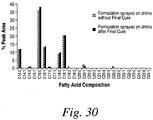
- the coating comprises approximately 10-20% C 14 saturated fatty acids and approximately 25-50 % C 16 saturated fatty acids.
- the coating can comprise lactone and ester cross links.
- the coating can contain disordered hydrocarbon chains as determined by infrared absorption and X-ray diffraction.
- the coating does not contain a cross-linking agent.
- the coating hydrolyzes in vivo into fatty acids, glycerols, and glycerides; hydrolyzes in vivo into non-inflammatory components; and/or contains an amount of carboxylic acid groups sufficient to facilitate hydrolysis in vivo.
- the coating can comprises approximately 50-90% saturated fatty acids; approximately 10-50% unsaturated fatty acids; a glyceride; and/or one or more of the group consisting of a glyceride, a glycerol, and a fatty alcohol, any of which can be partially cross-linked.
- the source of the fatty acids is an oil, such as oil is a fish oil, olive oil, grape oil, palm oil, or flaxseed oil. In one embodiment, the source is a fish oil.
- the disclosure provides a fatty-acid based, pre-cure-derived coating for a medical device, comprising: a pre-cured, cross-linked fatty acid, comprising approximately 5-50% C 16 fatty acids.
- the disclosure provides a fatty-acid based, pre-cure-derived coating for a medical device comprising a non-polymeric, cross-linked fatty acid, comprising approximately 5-25% C 14 fatty acids and 5-50% C 16 fatty acids.
- the disclosure provides a fatty-acid based, pre-cure-derived coating for a medical device comprising cross-linked fatty acids and glycerides, wherein the fatty acids and glycerides have disordered alkyl groups, which cause the coating to be flexible and hydratable
- the disclosure provides a fatty-acid based, pre-cure-derived for a medical device comprising a fatty acid-derived biomaterial, wherein the fatty acid-derived biomaterial comprises delta-lactones.
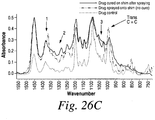
- the disclosure provides a fatty-acid based, pre-cure-derived coating for a medical device, wherein the coating comprises lactone and ester cross links, as indicated by an infrared absorption spectrum having peaks at approximately 1740-1850 cm -1 , respectively.
- the disclosure provides a fatty-acid based, pre-cure-derived coating for a medical device, comprising a cross-linked, fatty acid-derived biomaterial, wherein approximately 60-90% of the biomaterial is constituted by fatty acids with molecular weights below 500.
- the disclosure provides a fatty-acid based, pre-cure-derived biomaterial suitable for achieving modulated healing in a tissue region in need thereof, wherein the biomaterial is administered in an amount sufficient to achieve said modulated healing, wherein the modulated healing comprises a modulation of platelet or fibrin deposition in or near said tissue region.
- the tissue region is the vasculature of a subject.
- the disclosure provides a fatty-acid based, pre-cure-derived biomaterial suitable for achieving modulated healing at a site of vascular injury in need thereof, wherein the composition is administered in an amount sufficient to achieve said modulated healing, wherein the modulated healing comprises a modulation of at least one metric of organized tissue repair.
- the vascular healing is the inflammatory stage of vascular healing.
- the organized tissue repair comprises platelet or fibrin deposition at the site of vascular injury.
- the modulation of at least one metric of organized tissue repair is a delay in the healing process at a site of vascular injury.
- the biomaterials if the invention are administered to the region in need thereof via catheter, balloon, stent, surgical mesh, surgical dressing, or graft.
- a preparation for deriving a coating for a medical device comprising: a pre-cured cross-linked fatty acid oil, wherein the coating contains ester and lactone cross-links, and wherein a portion of the preparation comprises a pre-cured natural oil.
- the preparation can further comprise a therapeutic agent.
- the preparation has a viscosity of about 1.0x10 5 to about 1.0x10 7 cps.
- the preparation can be further dissolved in an organic solvent.
- a method of the disclosure for producing a fatty-acid based, pre-cure-derived coating for a medical device wherein the method comprises:
- the therapeutic agent is combined with an oil-containing material or organic solvent before combining with the second material.
- the curing temperature of the first curing condition and/or total curing duration exceed the degradation temperature of the therapeutic agent.
- the first curing condition results in appreciable formation of esters and lactones in the oil such that substantial cross linking of fatty acids occurs during the second curing condition.
- the curing temperature and duration is adjusted to tailor the release profile of the therapeutic agent. Vitamin E can be added to the second material.
- the third material is combined with an organic solvent, and applied to a medical device before curing to form a conformal coating.
- the third material can then be sprayed on a medical device before curing to form a coating, e.g., a non-conformal coating.
- a coating e.g., a non-conformal coating.
- the oil-containing starting material is fish oil.
- the medical device is a stent, a catheter, a surgical mesh or a balloon.
- the second material produced by the method can have a viscosity of about 1.0x10 5 to about 1.0x10 7 cps.
- the therapeutic agent used in the method of the disclosure can be anti-proliferative drug or an anti-inflammatory agent.
- the therapeutic agent used in the method of the disclosure cans also be Compound A, Compound B, Compound C, Compound D, Compound E, a cyclosporine derivative or a rapamycin derivative.
- the first curing condition is tailored such that the second material, when applied to a medical device, provides a non-conformal coating on the medical device; and wherein the second curing condition is tailored such that the third material, when applied to a coating, provides a conformal coating.
- the curing time for the first curing condition can be substantially increased in order to reduce the curing time required for the second curing condition to obtain desired mechanical properties of the final coating.
- the first curing condition can be substantially increased in order to reduce the curing time required for the second curing condition to obtain desired mechanical properties and preserve a thermally sensitive drug to the final coating.
- a fatty-acid based, pre-cure-derived coating for a medical device wherein said coating comprises: a hydrophobic, non-polymeric cross-linked fish oil; and a therapeutic agent; wherein the coating can withstand 16-22 psi of compressive force.
- a fatty-acid based, pre-cure-derived medical device coating that hydrolyzes in vivo into fatty acids, glycerols, and glycerides.
- a fatty-acid based, pre-cure-derived coating for a medical device comprising: a non-polymeric, partially cross-linked fatty acid, and a therapeutic agent, wherein the therapeutic agent is contained within the coating in such a manner that the therapeutic agent has an enhanced release profile.
- a preparation for deriving a coating for a medical device comprising: a non-polymeric, partially cross-linked fatty acid, and a therapeutic agent, wherein the coating contains ester and lactone cross-links.
- a fatty-acid based, pre-cured-derived coating for a medical device comprising: a cross-linked fatty acid oil, and a therapeutic agent; wherein the coating is prepared by curing a natural oil-containing starting material to induce cross-linking of a portion of the fatty acids; adding a therapeutic agent to the partially-cross linked fatty acid oil to form a therapeutic agent-oil composition; and curing the therapeutic agent-oil composition to induce additional cross links in the fatty acids, such that the coating is formed.
- the therapeutic agent is combined with a natural oil-containing material, organic solvent and/or vitamin E before combining with the partially-cross linked fatty acid oil.
- the therapeutic agent is combined with vitamin E before combining with the partially-cross linked fatty acid oil, such that the therapeutic agent has an enhanced release profile.
- a stand-alone film comprising a pre-cured fatty acid.
- the stand-alone film can comprise approximately 5-50% C 16 fatty acids; 5-25% C 14 fatty acids, 5-40% C 16 fatty acids; and/or vitamin E.
- the film can be bioabsorbable, and/or maintain anti-adhesive properties.
- the stand-alone film can further comprise a therapeutic agent, such as Compound A, Compound B, Compound C, Compound D, Compound E, a cyclosporine derivative or rapamycin derivative.
- the therapeutic agent can be combined with the fatty acid compound prior to formation of the film, resulting in the therapeutic agent being interspersed throughout the film.
- a stand-alone film comprising:
- the present disclosure is directed toward the formation of a fatty-acid based, pre-cure-derived biomaterial that can be utilized alone or in combination with a medical device for the release and local delivery of one or more therapeutic agents, methods of forming and tailoring the properties of said coatings and methods of using said coatings for treating injury in a mammal. Additionally, due to the unique properties of the underlying chemistry of the biomaterial, it will be demonstrated that the coating contains specific chemical components that assist in reducing a foreign body response and inflammation at the site of tissue injury during implantation that improves its in-vivo performance.
- the fatty-acid based, pre-cure-derived biomaterial can be formed from a pre-cure, e.g., a pre-cured fatty acid.
- Vascular injury causing intimal thickening can be broadly categorized as being either biologically or mechanically induced.
- Biologically mediated vascular injury includes, but is not limited to, injury attributed to infectious disorders including endotoxins and herpes viruses, such as cytomegalovirus; metabolic disorders, such as atherosclerosis; and vascular injury resulting from hypothermia, and irradiation.
- Mechanically mediated vascular injury includes, but is not limited to, vascular injury caused by catheterization procedures or vascular scraping procedures, such as percutaneous transluminal coronary angioplasty; vascular surgery; transplantation surgery; laser treatment; and other invasive procedures which disrupt the integrity of the vascular intima or endothelium.
- neointima formation is a healing response to a vascular injury.
- the inflammatory phase is characterized by hemostasis and inflammation. Collagen exposed during wound formation activates the clotting cascade (both the intrinsic and extrinsic pathways), initiating the inflammatory phase. After injury to tissue occurs, the cell membranes, damaged from the wound formation, release thromboxane A2 and prostaglandin 2-alpha, which are potent vasoconstrictors. This initial response helps to limit hemorrhage. After a short period, capillary vasodilatation occurs secondary to local histamine release, and the cells of inflammation are able to migrate to the wound bed. The timeline for cell migration in a normal wound healing process is predictable.
- Platelets the first response cell, release multiple chemokines, including epidermal growth factor (EGF), fibronectin, fibrinogen, histamine, platelet-derived growth factor (PDGF), serotonin, and von Willebrand factor. These factors help stabilize the wound through clot formation. These mediators act to control bleeding and limit the extent of injury. Platelet degranulation also activates the complement cascade, specifically C5a, which is a potent chemoattractant for neutrophils.
- the neutrophil is responsible for debris scavenging, complement-mediated opsonization of bacteria, and bacteria destruction via oxidative burst mechanisms (i.e., superoxide and hydrogen peroxide formation).
- the neutrophils kill bacteria and decontaminate the wound from foreign debris.
- the next cells present in the wound are the leukocytes and the macrophages (monocytes).
- the macrophage referred to as the orchestrator, is essential for wound healing. Numerous enzymes and cytokines are secreted by the macrophage. These include collagenases, which debride the wound; interleukins and tumor necrosis factor (TNF), which stimulate fibroblasts (produce collagen) and promote angiogenesis; and transforming growth factor (TGF), which stimulates keratinocytes. This step marks the transition into the process of tissue reconstruction, i.e., the proliferative phase.
- TNF tumor necrosis factor
- TGF transforming growth factor
- the second stage of wound healing is the proliferative phase.
- Epithelialization, angiogenesis, granulation tissue formation, and collagen deposition are the principal steps in this anabolic portion of wound healing.
- Epithelialization occurs early in wound repair. At the edges of wounds, the epidermis immediately begins thickening. Marginal basal cells begin to migrate across the wound along fibrin strands stopping when they contact each other (contact inhibition).
- the entire wound is epithelialized. Layering of epithelialization is re-established. The depths of the wound at this point contain inflammatory cells and fibrin strands. Aging effects are important in wound healing as many, if not most, problem wounds occur in an older population. For example, cells from older patients are less likely to proliferate and have shorter life spans and cells from older patients are less responsive to cytokines.
- Heart disease can be caused by a partial vascular occlusion of the blood vessels that supply the heart, which is preceded by intimal smooth muscle cell hyperplasia.
- the underlying cause of the intimal smooth muscle cell hyperplasia is vascular smooth muscle injury and disruption of the integrity of the endothelial lining.
- Intimal thickening following arterial injury can be divided into three sequential steps: 1) initiation of smooth muscle cell proliferation following vascular injury, 2) smooth muscle cell migration to the intima, and 3) further proliferation of smooth muscle cells in the intima with deposition of matrix.
- Granulomas are aggregates of particular types of chronic inflamatory cells which form nodules in the millimeter size range. Granulomas may be confluent, forming larger areas.
- Essential components of a granuloma are collections of modified macrophages, termed epithelioid cells, usually with a surrounding zone of lymphocytes. Epithelioid cells are so named by tradition because of their histological resemblance to epithelial cells, but are not in fact epithelial; they are derived from blood monocytes, like all macrophages.
- Epithelioid cells are less phagocytic than other macrophages and appear to be modified for secretory functions. The full extent of their functions is still unclear. Macrophages in granulomas are commonly further modified to form multinucleate giant cells. These arise by fusion of epithelioid macrophages without nuclear or cellular division forming huge single cells which may contain dozens of nuclei. In some circumstances the nuclei are arranged round the periphery of the cell, termed a Langhans-type giant cell; in other circumstances the nuclei are randomly scattered throughout the cytoplasm ( i.e ., the foreign body type of giant cell which is formed in response to the presence of other indigestible foreign material in the tissue). Areas of granulomatous inflammation commonly undergo necrosis.
- Formation of granulomatous inflammation seems to require the presence of indigestible foreign material (derived from bacteria or other sources) and/or a cell-mediated immune reaction against the injurious agent (type IV hypersensitivity reaction).
- the fatty-acid based, pre-cure-derived biomaterials (e.g ., coatings ) of the present invention comprise a hydrophobic cross-linked fatty acid-derived biomaterial and optionally one or more therapeutic agents contained in the fatty-acid based, pre-cure-derived biomaterial.
- the pre-cure-derived biomaterials (e.g., coatings) of the present invention are bio-absorbable as described herein.
- the drug eluting pre-cure-derived biomaterial comprised of a cross-linked fatty acid, e.g., an omega-3 fatty acid.
- the cross-linked fatty acid can be non-polymeric.
- the source of the omega-3 fatty acid can be a naturally occurring oil, e.g., a fish oil.
- the hydrophobic pre-cure-derived pre-cure biomaterial coatings and stand-alone films of the present invention may be formed from an oil component.
- the oil component can be either an oil, or an oil composition.
- the oil component can be a synthetic oil, or a naturally occurring oil, such as fish oil, cod liver oil, flaxseed oil, grape seed oil, or other oils having desired characteristics.
- One embodiment of the present invention makes use of a fish oil in part because of the high content of omega-3 fatty acids.
- the fish oil can also serve as an anti-adhesion agent.
- the fish oil maintains anti-inflammatory or non-inflammatory properties as well.
- the present invention is not limited to formation of the pre-cure-derived biomaterials with fish oil as the oil starting material. However, the following description makes reference to the use of fish oil as one example embodiment. Other naturally occurring oils can be utilized in accordance with the present invention as described herein.
- fish oil fatty acid includes, but is not limited to, omega-3 fatty acid, oil fatty acid, free fatty acid, monoglycerides, diglycerides, or triglycerides, esters of fatty acids, or a combination thereof.
- the fish oil fatty acid includes one or more of arachidic acid, gadoleic acid, arachidonic acid, eicosapentaenoic acid, docosahexaenoic acid or derivatives, analogs and pharmaceuticlly acceptable salts thereof.
- free fatty acid includes but is not limited to one or more of butyric acid, caproic acid, caprylic acid, capric acid, lauric acid, myristic acid, palmitic acid, palmitoleic acid, stearic acid, oleic acid, vaccenic acid, linoleic acid, alpha-linolenic acid, gamma-linolenic acid, behenic acid, erucic acid, lignoceric acid, analogs and pharmaceutically acceptable salts thereof.
- the naturally occurring oils, including fish oil are cured as described herein to form a hydrophobic cross-linked fatty acid-derived pre-cure biomaterial, creating the coating.
- the present disclosure relates to a bio-absorbable medical device coatings and stand-alone films that can exhibit anti-inflammatory properties, non-inflammatory properties, and anti-adhesion properties, and the corresponding method of making.
- the stand-alone film is generally formed of a naturally occurring oil, such as a fish oil.
- the oil composition can include a therapeutic agent component, such as a drug or other bioactive agent.
- the stand-alone film is implantable in a patient for short term or long term applications.
- the stand-alone film is a fatty-acid based, pre-cure-derived biomaterial derived at least in part from a fatty acid compound, wherein the stand-alone film is prepared in accordance with the methods of the invention.
- the stand-alone film can further include a vitamin E compound forming a portion of the fatty acid compound.
- the stand-alone film further includes a therapeutic agent.
- the therapeutic agent can include an agent selected from the group consisting of antioxidants, anti-inflammatory agents, anti-coagulant agents, drugs to alter lipid metabolism, anti-proliferatives, anti-neoplasties, tissue growth stimulants, functional protein/factor delivery agents, anti-infective agents, imaging agents, anesthetic agents, chemotherapeutic agents, tissue absorption enhancers, anti-adhesion agents, germicides, analgesics, prodrugs, and antiseptics.
- the therapeutic agent is combined with the fatty acid compound prior to formation of the film, resulting in the therapeutic agent being interspersed throughout the film.
- the therapeutic agent is applied in the form of a coating.
- the substrate includes expanded polytetrafluoroethylene (ePTFE) or polytetrafluoroethylene (PTFE).
- the curing includes using at least one curing method selected from a group of curing methods including application of UV light and application of heat. The UV light can also be applied to set to the fatty acid compound by forming a skin on the top surface of the fatty acid compound in liquid form prior to additional curing. used in these adhesion prevention applications can be utilized for additional beneficial effects, such as pain relief or infection minimization.
- oils With regard to the aforementioned oils, it is generally known that the greater the degree of unsaturation in the fatty acids the lower the melting point of a fat, and the longer the hydrocarbon chain the higher the melting point of the fat.
- a polyunsaturated fat thus, has a lower melting point, and a saturated fat has a higher melting point. Those fats having a lower melting point are more often oils at room temperature. Those fats having a higher melting point are more often waxes or solids at room temperature. Therefore, a fat having the physical state of a liquid at room temperature is an oil.
- polyunsaturated fats are liquid oils at room temperature
- saturated fats are waxes or solids at room temperature.
- Polyunsaturated fats are one of four basic types of fat derived by the body from food.
- the other fats include saturated fat, as well as monounsaturated fat and cholesterol.
- Polyunsaturated fats can be further composed of omega-3 fatty acids and omega-6 fatty acids. Under the convention of naming the unsaturated fatty acid according to the position of its first double bond of carbons, those fatty acids having their first double bond at the third carbon atom from the methyl end of the molecule are referred to as omega-3 fatty acids. Likewise, a first double bond at the sixth carbon atom is called an omega-6 fatty acid. There can be both monounsaturated and polyunsaturated omega fatty acids.
- Omega-3 and omega-6 fatty acids are also known as essential fatty acids because they are important for maintaining good health, despite the fact that the human body cannot make them on its own. As such, omega-3 and omega-6 fatty acids must be obtained from external sources, such as food. Omega-3 fatty acids can be further characterized as containing eicosapentaenoic acid (EPA), docosahexanoic acid (DHA), and alpha-linolenic acid (ALA). Both EPA and DHA are known to have anti-inflammatory effects and wound healing effects within the human body.
- EPA eicosapentaenoic acid
- DHA docosahexanoic acid
- ALA alpha-linolenic acid
- bio-absorbable generally refers to having the property or characteristic of being able to penetrate the tissue of a patient's body.
- bio-absorption occurs through a lipophilic mechanism.
- the bio-absorbable substance can be soluble in the phospholipid bi-layer of cells of body tissue, and therefore impact how the bio-absorbable substance penetrates into the cells.
- Biodegradable is generally defined as capable of being decomposed by biological agents, or capable of being broken down by microorganisms or biological processes. Biodegradable substances can cause inflammatory response due to either the parent substance or those formed during breakdown, and they may or may not be absorbed by tissues. Because the materials of the invention are biocompatible, and they hydrolyze into non-inflammatory components, and are subsequently bioabsorbed by surrounding tissue, they are referred to as "biomaterials.”
- the pre-cure-derived biomaterials (e.g , coatings) of the present invention deliver one or more therapeutic agents locally to a targeted area using a medical device or apparatus bearing the coating at a selected targeted tissue location of the patient that requires treatment.
- the therapeutic agent is released from the biomaterial to the targeted tissue location.
- the local delivery of a therapeutic agent enables a more concentrated and higher quantity of therapeutic agent to be delivered directly at the targeted tissue location, without having broader systemic side effects. With local delivery, the therapeutic agent that escapes the targeted tissue location dilutes as it travels to the remainder of the patient's body, substantially reducing or eliminating systemic side effects.
- Targeted local therapeutic agent delivery using a fatty-acid based, pre-cure-derived biomaterial can be further broken into two categories, namely, short term and long term.
- the short term delivery of a therapeutic agent occurs generally within a matter of seconds or minutes to a few days or weeks.
- the long term delivery of a therapeutic agent occurs generally within weeks to months.
- sustained release generally refers to the release of a biologically active agent that results in the long term delivery of the active agent.
- controlled release generally refers to the release of a biologically active agent in a substantially predictable manner over the time period of weeks or months, as desired and predetermined upon formation of the biologically active agent on the medical device from which it is being released. Controlled release includes the provision of an initial burst of release upon implantation, followed by the substantially predictable release over the aforementioned time period.
- Prior attempts to create films and drug delivery platforms such as in the field of stents, primarily make use of high molecular weight synthetic polymer based materials to provide the ability to better control the release of the therapeutic agent.
- the polymer in the platform releases the drug or agent at a predetermined rate once implanted at a location within the patient. Regardless of how much of the therapeutic agent would be most beneficial to the damaged tissue, the polymer releases the therapeutic agent based on properties of the polymer, e.g., diffusion in a biostable polymer and bulk erosion in a biodegradable polymeric material. Accordingly, the effect of the therapeutic agent is substantially local at the surface of the tissue making contact with the medical device having the coating.
- the effect of the therapeutic agent is further localized to the specific locations of, for example, stent struts or mesh pressed against the tissue location being treated.
- High concentrations of therapeutic agent present in tissue adjacent to a polymer that elicits an inflammatory response can create the potential for a localized toxic effect.
- the fatty-acid based, pre-cure-derived biomaterial of the invention release one or more therapeutic agents by a dissolution mechanism, e.g., dissolution of a therapeutic agent contained in a soluble component of the coating into the medium in contact with the coating, (e.g ., tissue), in addition to an erosion based release mechanism.
- a dissolution mechanism e.g., dissolution of a therapeutic agent contained in a soluble component of the coating into the medium in contact with the coating, (e.g ., tissue), in addition to an erosion based release mechanism.
- the drug release mechanism can be based on the solubility of the therapeutic agent in the surrounding medium.
- a therapeutic agent near the interface between the hydrophobic coating and the surrounding medium can experience a chemical potential gradient that can motivate the therapeutic agent out of the oil based coating and into solution in the surrounding medium.
- the release of a therapeutic agent is not rate-limited by the break-down or bulk erosion of the coating.
- the break-down products of the fatty-acid based, pre-cure-derived biomaterial of the invention are non-inflammatory byproducts, e.g., free fatty acids and glycerides, that themselves can release one or more of the therapeutic agents via a dissolution mechanism.
- the fatty-acid based, pre-cure derived biomaterial breaks-down according to a controlled surface erosion mechanism, thereby releasing one or more therapeutic agents to the surrounding medium, e.g., tissue, via a dissolution mechanism.
- Compounds of the present invention are the compounds A to E. Further disclosed herein is the phrase "therapeutic agent(s)" which refers to a number of different drugs or agents available, as well as future agents that may be beneficial for use with the fatty acid-derived, pre-cured biomaterials (e.g., coatings and stand-alone films) of the present invention.
- therapeutic agent(s) refers to a number of different drugs or agents available, as well as future agents that may be beneficial for use with the fatty acid-derived, pre-cured biomaterials (e.g., coatings and stand-alone films) of the present invention.
- the therapeutic agent component can take a number of different forms including anti-oxidants, anti-inflammatory agents, anti-coagulant agents, drugs to alter lipid metabolism, anti-proliferatives, anti-neoplastics, tissue growth stimulants, functional protein/factor delivery agents, anti-infective agents, anti-imaging agents, anesthetic agents, therapeutic agents, tissue absorption enhancers, anti-adhesion agents, germicides, anti-septics, analgesics, prodrugs thereof, and any additional desired therapeutic agents such as those listed in Table 1 below.
- statins Fluvastatin, colestipol, lovastatin, atorvastatin, amlopidine ACE Inhibitors Elanapril, fosinopril, cilazapril Antihypertensive Agents Prazosin, doxazosin Antiproliferatives and Antineoplastics Cyclosporine, cochicine, mitomycin C, sirolimus micophenonolic acid, rapamycin, everolimus, tacrolimus, paclitaxel, QP-2, actinomycin, estradiols, dexamethasone, methatrexate, cilostazol, prednisone, cyclosporine, doxorubicin, ranpirnas, troglitzon, valsart, pemirolast, C-MYC antisense, angiopeptin, vincristine, PCNA ribozyme, 2-chloro-deoxyadenosine, mTOR targeting compounds Tissue growth stimulants
- therapeutic agents useful in the anti-restenosis realm include cerivastatin, cilostazol, fluvastatin, lovastatin, paclitaxel, pravastatin, rapamycin, a rapamycin carbohydrate derivative (for example, as described in US Patent No. 7,160,867 ), a rapamycin derivative (for example, as described in US Patent No. 6,200,985 ), everolimus, seco-rapamycin, seco-everolimus, and simvastatin.
- the therapeutic agent is administered orally or intravenously to be systemically processed by the patient.
- mTOR targeting compound refers to any compound that modulates mTOR directly or indirectly.
- An example of an “mTOR targeting compound” is a compound that binds to FKBP 12 to form, e.g., a complex, which in turn inhibits phosphoinostide (PI)-3 kinase, that is, mTOR.
- mTOR targeting compounds inhibit mTOR.
- Suitable mTOR targeting compounds include, for example, rapamycin and its derivatives, analogs, prodrugs, esters and pharmaceutically acceptable salts.
- Calcineurin is a serine/threonine phospho-protein phosphatase and is composed of a catalytic (calcineurin A) and regulatory (calcineurin B) subunit (about 60 and about 18 kDa, respectively).
- a catalytic (calcineurin A) and regulatory (calcineurin B) subunit about 60 and about 18 kDa, respectively.
- three distinct genes (A-alpha, A-beta, A-gamma) for the catalytic subunit have been characterized, each of which can undergo alternative splicing to yield additional variants.
- mRNA for all three genes appears to be expressed in most tissues, two isoforms (A-alpha and A-beta) are most predominant in brain.
- the calcineurin signaling pathway is involved in immune response as well as apoptosis induction by glutamate excitotoxicity in neuronal cells.
- Low enzymatic levels of calcineurin have been associated with Alzheimers disease.
- In the heart or in the brain calcineurin also plays a key role in the stress response after hypoxia or ischemia.
- Substances that are able to block the calcineurin signal pathway can be suitable therapeutic agents for the present invention.
- therapeutic agents include, but are not limited to, FK506, tacrolimus, cyclosporin and include derivatives, analogs, esters, prodrugs, pharmaceutically acceptably salts thereof, and conjugates thereof which have or whose metabolic products have the same mechanism of action.
- cyclosporin derivatives include, but are not limited to, naturally occurring and non-natural cyclosporins prepared by total- or semi-synthetic means or by the application of modified culture techniques.
- the class comprising cyclosporins includes, for example, the naturally occurring Cyclosporins A through Z, as well as various non-natural cyclosporin derivatives, artificial or synthetic cyclosporin derivatives.
- Artificial or synthetic cyclosporins can include dihydrocyclosporins, derivatized cyclosporins, and cyclosporins in which variant amino acids are incorporated at specific positions within the peptide sequence, for example, dihydro-cyclosporin D.
- the therapeutic agent comprises one or more of a mTOR targeting compound and a calcineurin inhibitor.
- the mTOR targeting compound is a rapamycin or a derivative, analog, ester, prodrug, pharmaceutically acceptably salts thereof, or conjugate thereof which has or whose metabolic products have the same mechanism of actions.
- the calcineurin inhibitor is a compound of Tacrolimus, or a derivative, analog, ester prodrug, pharmaceutically acceptably salts thereof, or conjugate thereof which has or whose metabolic products have the same mechanism of action or a compound of Cyclosporin or a derivative, analog, ester, prodrug, pharmaceutically acceptably salts thereof, or conjugate thereof which has or whose metabolic products have the same mechanism of action.
- the therapeutic agents that can be used with the fatty acid-derived, pre-cured biomaterials of the can also include antimicrobial agents, including antivirals antibiotics, antifungals and antiparasitics.
- antimicrobial agents include Penicillin G, ephalothin, Ampicillin, Amoxicillin, Augmentin, Aztreonam, Imipenem, Streptomycin, Gentamicin, Vancomycin, Clindamycin, Erythromycin, Azithromycin, Polymyxin, Bacitracin, Amphotericin, Nystatin, Rifampicin, Tetracycline, Doxycycline, Chloramphenicol, Nalidixic acid, Ciprofloxacin, Sulfanilamide, Gantrisin, Trimethoprim Isoniazid (INH), para-aminosalicylic acid (PAS), and Gentamicin.
- a therapeutically effective amount refers to that amount of a compound sufficient to result in amelioration of symptoms, e.g., treatment, healing, prevention or amelioration of the relevant medical condition, or an increase in rate of treatment, healing, prevention or amelioration of such conditions.
- a therapeutically effective amount refers to that ingredient alone.
- a therapeutically effective amount can refer to combined amounts of the active ingredients that result in the therapeutic effect, whether administered in combination, serially or simultaneously.
- formulations comprise two or more therapeutic agents
- such formulations can be described as a therapeutically effective amount of compound A for indication A and a therapeutically effective amount of compound B for indication B
- such descriptions refer to amounts of A that have a therapeutic effect for indication A, but not necessarily indication B, and amounts of B that have a therapeutic effect for indication B, but not necessarily indication A.
- Actual dosage levels of the active ingredients in a fatty-acid based, pre-cure-derived biomaterial (e.g ., coating) of the present invention may be varied so as to obtain an amount of the active ingredients which is effective to achieve the desired therapeutic response without being unacceptably toxic.
- the selected dosage level will depend upon a variety of pharmacokinetic factors including the activity of the particular therapeutic agent (drug) employed, or the ester, salt or amide thereof, the mechanism of drug action, the time of administration, the drug release profile of the coating, the rate of excretion of the particular compounds being employed, the duration of the treatment, other drugs, compounds and/or materials used in combination with the particular compounds employed, and like factors known in the medical arts.
- the invention provides a fatty-acid based, pre-cure-derived biomaterial comprising a partially cross-linked fatty acid and a therapeutic agent, wherein the therapeutic agent comprises at least 30%, e.g., at least 40%, e.g., at least 50%, e.g., at least 60%, e.g., at least 70%, by weight, of the biomaterial composition.
- the biomaterial can include vitamin E in addition to the therapeutic agent.
- the pre-cure-derived biomaterials (e.g., coatings) of the present disclosure may also comprise one or more other chemicals and entities in addition to the therapeutic agent, including, but not limited to, one or more of: a pharmaceutically acceptable carrier, an excipient, a surfactant, a binding agent, an adjuvant agent, and/or a stabilizing agent (including preservatives, buffers and antioxidants).
- the other agents can perform one or more functions, such as, e.g., an adjuvant may also serve as a stabilizing agent.
- the coatings of the present invention include one or more of a free radical scavenger and uptake enhancer.
- the coatings comprise vitamin E.
- vitamin E and the term alpha-tocopherol are intended to refer to the same or substantially similar substance, such that they are interchangeable and the use of one includes an implicit reference to both.
- vitamin E are such variations including but not limited to one or more of alpha-tocopherol, beta-tocopherol, delta-tocopherol, gamma-tocopherol, alpha-tocotrienol, beta-tocotrienol, delta-tocotrienol, gamma-tocotrienol, alpha-tocopherol acetate, beta-tocopherol acetate, gamma-tocopherol acetate, delta-tocopherol acetate, alpha-tocotrienol acetate, beta-tocotrienol acetate, delta-tocotrienol acetate, gamma-tocotrienol acetate, alpha-tocopherol succinate, beta-tocop
- fatty acids and cellular uptake inhibitors such as alpha-tocopherol can be used alone or in combination to provide an effective transport of a given compound to a given region or location. Both fatty acids and alpha-tocopherol can be included in the fatty acid-derived, pre-cured biomaterials ( e.g ., coatings ) of the present invention described herein.
- fatty acids and alpha-tocopherol can be combined in differing amounts and ratios to contribute to an fatty acid-derived, pre-cured biomaterial (e.g ., coating) in a manner that provides control over the cellular uptake characteristics of the coating and any therapeutic agents mixed therein.
- an fatty acid-derived, pre-cured biomaterial e.g ., coating
- the amount of alpha-tocopherol can be varied in the coating.
- Alpha-tocopherol is known to slow autoxidation in fish oil by reducing hydroperoxide formation, which results in a decrease in the amount of cross-linking in a cured fatty acid-derived, pre-cured biomaterial.
- alpha-tocopherol can be used to increase solubility of drugs in the oil forming the coating.
- alpha-tocopherol can actually protect the therapeutic drug during curing, which increases the resulting drug load in the coating after curing.
- the increase of alpha-tocopherol in the coating can serve to slow and extend drug release due to the increased solubility of the drug in the alpha-tocopherol component of the coating.
- This reflects the cellular uptake inhibitor functionality of alpha-tocopherol, in that the uptake of the drug is slowed and extended over time.
- Preferred methods for curing the starting material to produce a pre-cure, and then a fatty-acid-based, pre-cure-derived biomaterial include, but are not limited to, heating ( e.g ., employing an oven, a broadband infrared (IR) light source, a coherent IR light source ( e.g ., laser), and combinations thereof) and ultraviolet (UV) irradiation.
- the starting material may be cross-linked through auto-oxidation (i.e., oxidative cross-linking).
- the drug release coatings of the present invention are formed of a pre-cure-derived biomaterial, which can be derived from saturated and unsaturated fatty acid compounds (e.g ., free fatty acids, fatty acid ester, monoglycerides, diglycerides, triglycerides, metal salts, etc .).
- the source of fatty acids described herein is saturated and unsaturated fatty acids such as those readily available in triglyceride form in various oils ( e.g., fish oils).
- One method of the formation of a pre-cure-derived biomaterial is accomplished through autoxidation of the oil.
- the type and amount of cross-links formed during oil oxidation can be tailored depending on the conditions selected (e.g ., coating thickness, temperature, metal composition, etc.). For instance, heating of the oil allows for cross-linking between the fish oil unsaturated chains using a combination of peroxide (C-O-O-C), ether (C-O-C), and hydrocarbon (C-C) bridges (see, e.g., F.D. Gunstone, "Fatty Acid and Lipid Chemistry.” 1999 . ).
- oxidation of oils can also be induced by light (e.g ., photo-oxygenation).
- photo-oxygenation using UV is a relatively quicker reaction than autoxidation from heat curing, in the realm of about 1000-1500 times faster. The quicker reaction especially holds true for methylene interrupted polyunsaturated fatty acids, such as EPA and DHA, which are found in the fish oil based embodiments of the present invention.
- Photo-oxygenation such as that which results from UV curing, due to its enhanced ability to create inner hydroperoxides, also results in the ability to form relatively greater amounts of cyclic byproducts, which also relates to peroxide cross-linking between fish oil hydrocarbon chains.
- photo-oxygenation of linolenate results in 6 different types of hydroperoxides to be formed, whereas autoxidation results in only 4.
- the greater amount of hydroperoxides created using photo-oxygenation results in a similar, but slightly different, structure and amount of secondary byproducts to be formed relative to autoxidation from heat curing.
- these byproducts are aldehydes, ketones, alcohols, fatty acids, esters, lactones, ethers, and hydrocarbons.
- a fatty acid-derived biomaterial i.e., pre-cure and pre-cure derived
- a fatty acid-derived biomaterial i.e., pre-cure and pre-cure derived
- curing the oil so as to oxidize the double bonds of the unsaturated fatty acid chains while predominantly preserving triglyceride ester functional groups.
- the oxidation of the unsaturated fatty acid chains results in the formation of hydroperoxides, which, with continued curing, are converted into aldehydes, ketones, alcohols, fatty acids, esters, lactones, ethers, and hydrocarbons.
- ester and lactone cross-links can occur different types of mechanisms (i.e., esterification, alcoholysis, acidolysis, interesterification as described in F.D. Gunstone, 1999) between the hydroxyl and carboxyl functional components in the coating formed from the oxidation process (i.e., glyceride and fatty acid).
- the cross-linking reaction can form different types of ester linkages such as ester, anhydride, aliphatic peroxide, and lactones.
- Figures 3-4 summarize the mechanism for the formation of the oil derived biomaterial and reaction chemistry, respectively.
- a therapeutic agent can optionally be added.
- Vitamin E can also be added in addition to the therapeutic agent, which will protect the agent and pre-cured oil from further oxidation, but does not inhibit further cross linking of the fatty acid and/or glyceride components of the oil.
- Figure 5 provides a schematic of different methods to form esters from oils reaction schemes for illustrative purposes, but is not meant to be limiting in its scope to the invention.
- Pre-cure-derived biomaterial coatings and stand-alone films of the present invention can be formed from an oil component.
- oil component is also referred to herein as the "oil-containing starting material.”
- the "oil-containing starting material” may be natural or derived from synthetic sources.
- the "oil containing starting material” comprises unsaturated fatty acids.
- the oil component can be either an oil, or an oil composition.
- the oil component can be a naturally occurring oil, such as fish oil, flax seed oil, grape seed oil, a synthetic oil, or other oils having desired characteristics.
- One example embodiment of the present invention makes use of a fish oil in part because of the high content of omega-3 fatty acids, which can provide healing support for damaged tissue, as discussed herein.
- the fish oil can also serve as an anti-adhesion agent.
- the fish oil maintains anti-inflammatory or non-inflammatory properties as well.
- the present invention is not limited to formation of the fatty acid-derived, pre-cured biomaterial with fish oil as the naturally occurring oil.
- the following description makes reference to the use of fish oil as one example embodiment.
- Other naturally occurring oils or synthetic oils can be utilized in accordance with the present invention as described herein.
- Biodegradable and bioabsorbable implantable materials with ester, lactone, and anhydride functional groups are typically broken down by either chemical and/or enzymatic hydrolysis mechanisms ( K. Park et al., "Biodegradable Hydrogels for Drug Delivery.” 1993 ; J. M. Andersen, "Perspectives on the In-Vivo Responses of Biodegradable Polymers.” in Biomedical Applications of Synthetic Biodegradable Polymers, edited by Jeffrey O. Hollinger. 1995, pgs 223-233 ).
- Chemical hydrolysis of a pre-cure-derived biomaterial occurs when the functional group present in the material is cleaved by water.
- An example of chemical hydrolysis of a triglyceride under basic conditions is presented in Figure 6 .
- Enzymatic hydrolysis is the cleavage of functional groups in a pre-cure-derived biomaterial caused by the reaction with a specific enzyme (i.e., triglycerides are broken down by lipases (enzymes) that result in free fatty acids that can then be transported across cell membranes).
- a specific enzyme i.e., triglycerides are broken down by lipases (enzymes) that result in free fatty acids that can then be transported across cell membranes.
- the length of time a biodegradable and/or biodegradable pre-cure-derived biomaterial takes to be hydrolyzed is dependent on several factors such as the cross-linking density of the material, the thickness, the hydration ability of the coating, the crystallinity of the pre-cure-derived biomaterial, and the ability for the hydrolysis products to be metabolized by the body (K. Park et al., 1993 and J. M. Andersen, 1995).
- a bio-absorbable substance is different from a biodegradable substance.
- Biodegradable is generally defined as capable of being decomposed by biological agents, or capable of being broken down by microorganisms or biological processes.
- Biodegradable substances can cause an inflammatory response due to either the parent substance or those formed during breakdown, and they may or may not be absorbed by tissues.
- Some biodegradable substances are limited to bulk erosion mechanism for breakdown.
- PLGA poly(lactic-co-glycolic acid) undergoes chemical hydrolysis in-vivo to form two alpha-hydroxy acids, specifically glycolic and lactic acids.
- glycolic and lactic acids are byproducts of various metabolic pathways in the body, it has been previously demonstrated in previous medical implant and local drug delivery applications that a local concentration of these products results in an acidic environment to be produced, which can lead to inflammation and damage to local tissue ( S. Dumitriu, "Polymeric Biomaterials.” 2002 ). Clinically, this can lead to impaired clinical outcomes such as restenosis ( D.E. Drachman and D.I. Simon. Current Atherosclerosis Reports. 2005, Vol 7, pgs 44-49 ; S.E. Goldblum et al. Infection and Immunity. 1989, Vol. 57, No.
- an ideal pre-cure-derived biomaterial should not only demonstrate excellent biocompatibility upon implantation, but should also maintain that biocompatibility during the life of its implantation with its hydrolysis byproducts being absorbable by local tissue.
- the bio-absorbable nature of the pre-cure-derived biomaterials used as a coating for a medical device, or in drug delivery applications results in the biomaterial being absorbed over time by the cells of the body tissue.
- the coatings of the present invention upon absorption and hydrolysis do not produce lactic acid and glycolic acid break-down products in measurable amounts.
- the chemistry of the pre-cure-derived biomaterial described herein consists of predominantly fatty acid and glyceride components that can either be hydrolyzed in-vivo by chemical and/or enzymatic means which results in the release of fatty acid and glyceride components that can be transported across cell membranes. Subsequently, the fatty acid and glyceride components eluted from the pre-cure-derived biomaterial are directly metabolized by cells ( i.e., they are bio-absorbable).
- the bio-absorbable nature of the coating of the present invention results in the coating being absorbed over time, leaving only an underlying delivery or other medical device structure that is biocompatible. There is substantially no foreign body inflammatory response to the bio-absorbable coating or its hydrolysis breakdown products in the preferred embodiments of the present invention.
- Oil oxidation has traditionally been of concern for oil curing procedures due to the formation of reactive byproducts such as hydroperoxides and alpha-beta unsaturated aldehydes that are not considered to be biocompatible ( H.C. Yeo et al. Methods in Enzymology. 1999, Vol. 300, pgs 70-78 .; S-S. Kim et al. Lipids. 1999, Vol. 34, No.5, pgs 489-496 .).
- the oxidation of fatty acids from oils and fats are normal and important in the control of biochemical processes in-vivo. For example, the regulation of certain biochemical pathways, such as to promote or reduce inflammation, is controlled by different lipid oxidation products ( V.N.
- omega-3 fatty acids are known to be important for human health and specifically EPA and DHA are known to have anti-inflammatory properties in-vivo.
- EPA and DHA are not anti-inflammatory themselves, but it is the oxidative byproducts they are biochemically converted into that produce anti-inflammatory effects in-vivo (V.N. Bochkov and N. Leitinger, 2003; L.J. Roberts II et al. The Journal of Biological Chemistry. 1998; Vol. 273, No. 22, pgs 13605-13612 .).
- a fatty acid-derived cross-linked hydrophobic fatty acid-derived, pre-cured biomaterial from, e.g ., fish oil
- oil oxidation chemistry with a final chemical profile that will have a favorable biological performance in-vivo.
- the process of making a pre-cure-derived biomaterial as described herein leads to a final chemical profile that is biocompatible, minimizes adhesion formation, acts as a tissue separating barrier, and is non-inflammatory with respect to the material chemistry and the products produced upon hydrolysis and absorption by the body in-vivo.
- the reason for these properties is due to several unique characteristics of the fatty acid-derived, pre-cured biomaterials ( e.g ., coatings) of the invention.
- One important aspect of the invention is that no toxic, short-chained cross-linking agents (such as glutaraldehyde) are used to form the fatty acid-derived, pre-cured biomaterials (e.g ., coatings) of the invention. It has been previously demonstrated in the literature that short chain cross-linking agents can elute during hydrolysis of biodegradable polymers and cause local tissue inflammation. The process of creating pre-cure-derived biomaterials does not involve cross-linking agents because the oil is solely cured into a coating using oil autoxidation or photo-oxidation chemistry.
- cross-linking agents such as glutaraldehyde
- the oxidation process results in the formation of carboxyl and hydroxyl functional groups that allow for the pre-cure-derived biomaterial to become hydrated very rapidly and become slippery, which allows for frictional injury during and after implantation to be significantly reduced and/or eliminated.
- the methods of making the pre-cure-derived biomaterials described herein allow the alkyl chains of the fatty acid, glyceride and other lipid byproducts present in the coating to be disordered, which creates a coating that is flexible and aids in handling of the material while being implanted.
- the process of creating a pre-cure-derived biomaterial as described herein results in low to non-detectable amounts of oxidized lipid byproducts of biocompatibility concern, such as aldehydes. These products are either almost completely reacted or volatilized during the curing process as described herein.
- the process of creating a pre-cure-derived biomaterial largely preserves the esters of the native oil triglycerides and forms ester and/or lactone cross-links, which are biocompatible (K. Park et al., 1993; J.M. Andersen, 1995).
- fatty acid chemistry produced upon creation of a pre-cure-derived biomaterial is similar to the fatty acid chemistry of tissue, as presented in Figure 7 .
- fatty acids are eluting from the coating they are not viewed as being “foreign” by the body and cause an inflammatory response.
- C14 (myristic) and C16 (palmitic) fatty acids present in the coating have been shown in the literature to reduce production of ⁇ -TNF, an inflammatory cytokine.
- ⁇ -TNF has been identified as one of the key cytokines responsible for "turning on" inflammation in the peoritoneal after hernia repair, which can then lead to abnormal healing and adhesion formation (Y.C. Cheong et al., 2001).
- ⁇ -TNF is also an important cytokine in vascular injury and inflammation (D.E. Drachman and D.I. Simon, 2005; S.E. Goldblum, 1989), such as vascular injury caused during a stent deployment.
- fatty acids just specified there have also been additional oxidized fatty acids identified that have anti-inflammatory properties.
- delta-lactones i.e., 6-membered ring cyclic esters. Delta-lactones have been identified as having anti-tumor properties ( H. Tanaka et al. Life Sciences 2007; Vol. 80, pgs 1851-1855 ).
- the biocompatibility and observed in in-vivo performance of pre-cure-derived biomaterials described herein is due to the elution of fatty acids during hydrolysis of the material during implantation and healing and is not only beneficial as to prevent a foreign body response in-vivo due to the similarity of the fatty acid composition of the material to native tissue (i.e., a biological "stealth" coating), but the specific fatty acids and/or other lipid oxidation components eluting from the coating aid in preventing foreign body reactions and reducing or eliminating inflammation, which leads to improved patient outcomes.
- the fatty acid and glyceride components eluted from the pre-cure-derived biomaterial are able to be absorbed by local tissue and metabolized by cells, in, for example, the Citric Acid Cycle ( M. J. Campell, "Biochemistry: Second Edition.” 1995, pgs 366-389 ).
- the pre-cure-derived biomaterial (e.g ., coating) described herein is also bioabsorbable.
- the invention provides a bio-absorbable, oil-based coating for a medical device, comprising a cross-linked fatty acid oil-derived biomaterial with a pre-cured component and a therapeutic agent.
- the invention also provides a bio-absorbable, oil-based stand-alone film, comprising a cross-linked fatty acid oil-derived biomaterial with a pre-cured component and a therapeutic agent.
- the coating and stand-alone film can be prepared according to the methods discussed herein.
- a fatty acid-based, pre-cure-derived biomaterial suitable for treating or preventing disorders related to vascular injury and/or vascular inflammation.
- the fatty acid-based, pre-cure-derived biomaterial can also be used to treat or prevent injury to tissue, e.g., soft tissue.
- the fatty acid-based, pre-cure-derived biomaterial can be a coating for a medical device or a stand-alone film.
- the source of the fatty acid for the biomaterial is an oil, such as fish oil.
- fatty acid-based, pre-cure-derived biomaterial of the invention can be used to treat injury to these soft tissue areas.
- the fatty acid-based, pre-cure-derived biomaterial of the invention can be used for promotion of proliferation of soft tissue for wound healing.
- soft tissue can undergo changes and adaptations as a result of healing and the rehabilitative process.
- changes include, but are not limited to, metaplasia, which is conversion of one kind of tissue into a form that is not normal for that tissue; dysplasia, with is the abnormal development of tissue; hyperplasia, which is excessive proliferation of normal cells in the normal tissue arrangement; and atrophy, which is a decrease in the size of tissue due to cell death and resorption or decreased cell proliferation.
- the fatty acid-based, pre-cure-derived biomaterial of the invention can be used for the diminishment or alleviation of at least one symptom associated with or caused by acute trauma in soft tissue.
- the fatty acid-based, pre-cure-derived biomaterial can be used, for example, to prevent tissue adhesion.
- the tissue adhesion can be, for example, a result of blunt dissection.
- Blunt dissection can be generally described as dissection accomplished by separating tissues along natural cleavage lines without cutting. Blunt dissection is executed using a number of different blunt surgical tools, as is understood by those of ordinary skill in the art. Blunt dissection is often performed in cardiovascular, colo-rectal, urology, gynecology, upper GI, and plastic surgery applications, among others.
- adhesions are formed when bleeding and leakage of plasma proteins from damaged tissue deposit in the abdominal cavity and form what is called a fibrinous exudate.
- Fibrin which restores injured tissues, is sticky, so the fibrinous exudate may attach to adjacent anatomical structures in the abdomen.
- Post-traumatic or continuous inflammation exaggerates this process, as fibrin deposition is a uniform host response to local inflammation.
- This attachment seems to be reversible during the first few days after injury because the fibrinous exudates go through enzymatic degradation caused by the release of fibrinolytic factors, most notably tissue-type plasminogen activator (t-PA).
- t-PA tissue-type plasminogen activator
- Surgical trauma usually decreases t-PA activity and increases plasminogen-activator inhibitors.
- the fibrin in the fibrinous exudate is replaced by collagen. Blood vessels begin to form, which leads to the development of an adhesion. Once this has occurred, the adhesion is believed to be irreversible. Therefore, the balance between fibrin deposition and degradation during the first few days post-trauma is critical to the development of adhesions ( Holmdahl L. Lancet 1999; 353: 1456-57 ). If normal fibrinolytic activity can be maintained or quickly restored, fibrous deposits are lysed and permanent adhesions can be avoided. Adhesions can appear as thin sheets of tissue or as thick fibrous bands.
- the inflammatory response is also triggered by a foreign substance in vivo, such as an implanted medical device.
- a foreign substance in vivo
- the body sees this implant as a foreign substance, and the inflammatory response is a cellular reaction to wall off the foreign material.
- This inflammation can lead to adhesion formation to the implanted device; therefore a material that causes little to no inflammatory response is desired.
- the fatty acid-based, pre-cure-derived biomaterial of the present invention may be used as a barrier to keep tissues separated to avoid the formation of adhesions, e.g., surgical adhesions.
- adhesion prevention include abdominal surgeries, spinal repair, orthopedic surgeries, tendon and ligament repairs, gynecological and pelvic surgeries, and nerve repair applications.
- the fatty acid-based, pre-cure-derived biomaterial may be applied over the trauma site or wrapped around the tissue or organ to limit adhesion formation.
- the addition of therapeutic agents to the fatty acid-based, pre-cure-derived biomaterial used in these adhesion prevention applications can be utilized for additional beneficial effects, such as pain relief or infection minimization.
- fatty acid-based, pre-cure-derived biomaterial may include using a stand-alone film as a dura patch, buttressing material, internal wound care (such as a graft anastomotic site), and internal drug delivery system.
- the fatty acid-based, pre-cure-derived biomaterial may also be used in applications in transdermal, wound healing, and non-surgical fields.
- the fatty acid-based, pre-cure-derived biomaterial may be used in external wound care, such as a treatment for burns or skin ulcers.
- the fatty acid-based, pre-cure-derived biomaterial may be used without any therapeutic agent as a clean, non-permeable, non-adhesive, non-inflammatory, anti-inflammatory dressing, or the fatty acid-based, pre-cure-derived biomaterial may be used with one or more therapeutic agents for additional beneficial effects.
- the fatty acid-based, pre-cure-derived biomaterial may also be used as a transdermal drug delivery patch when the fatty acid-based, pre-cure-derived biomaterial is loaded or coated with one or more therapeutic agents.
- the process of wound healing involves tissue repair in response to injury and it encompasses many different biologic processes, including epithelial growth and differentiation, fibrous tissue production and function, angiogenesis, and inflammation. Accordingly, the fatty acid-based, pre-cure-derived biomaterial provides an excellent material suitable for wound healing applications.
- a fatty acid-based, pre-cure-derived biomaterial suitable for achieving modulated healing in a tissue region in need thereof, wherein the composition is administered in an amount sufficient to achieve said modulated healing.
- the fatty acid-based, pre-cure-derived biomaterial is a medical coating for a medical device.
- the source of the fatty acid for the biomaterial is an oil, such as fish oil.
- Modulated healing can be described as the in-vivo effect observed post-implant in which the biological response is altered resulting in a significant reduction in foreign body response.
- modulated healing generally refers to the modulation (e.g., alteration, delay, retardation, reduction, detaining) of a process involving different cascades or sequences of naturally occurring tissue repair in response to localized tissue injury, substantially reducing their inflammatory effect.
- Modulated healing encompasses many different biologic processes, including epithelial growth, fibrin deposition, platelet activation and attachment, inhibition, proliferation and/or differentiation, connective fibrous tissue production and function, angiogenesis, and several stages of acute and/or chronic inflammation, and their interplay with each other.
- the fatty acids described herein can alter, delay, retard, reduce, and/or detain one or more of the phases associated with healing of vascular injury caused by medical procedures, including, but not limited to, the inflammatory phase (e.g., platelet or fibrin deposition), and the proliferative phase.
- modulated healing refers to the ability of a fatty acid derived biomaterial to alter a substantial inflammatory phase (e.g., platelet or fibrin deposition) at the beginning of the tissue healing process.
- alter a substantial inflammatory phase refers to the ability of the fatty acid derived biomaterial to substantially reduce the inflammatory response at an injury site.
- a minor amount of inflammation may ensue in response to tissue injury, but this level of inflammation response, e.g., platelet and/or fibrin deposition, is substantially reduced when compared to inflammation that takes place in the absence of the fatty acid derived biomaterial.
- the fatty acid-based, pre-cure-derived biomaterial e.g ., fatty acid-based, pre-cure-derived coating of the present invention has been shown experimentally in animal models to delay or alter the inflammatory response associated with vascular injury, as well as excessive formation of connective fibrous tissue following tissue injury.
- the fatty acid-based, pre-cure-derived biomaterial (e.g ., coating) of the present invention can delay or reduce fibrin deposition and platelet attachment to a blood contact surface following vascular injury.
- the fatty acid-based, pre-cure-derived biomaterial (e.g ., coating ) of the present invention provides an excellent absorbable cellular interface suitable for use with a surgical instrument or medical device that results in a modulated healing effect, avoiding the generation of scar tissue and promoting the formation of healthy tissue at a modulated or delayed period in time following the injury.
- this modulated healing effect can be attributed to the modulation (e.g., alteration, delay, retardation, reduction, detaining) of any of the molecular processes associated with the healing processes of vascular injury.
- the fatty acid-based, pre-cure-derived biomaterial e.g., fatty acid-based, pre-cure-derived coating or fatty acid-based, pre-cure-derived film
- the fatty acid-based, pre-cure-derived biomaterial can act as a barrier or blocking layer between a medical device implant (e.g., a surgical mesh, graft, or stent), or surgical instrument, and the cells and proteins that compose the vessel wall, such as the endothelial cells and smooth muscle cells that line the vessel's interior surface.
- the barrier layer prevents the interaction between the surgical implant and the vessel surface, thereby preventing the initiation of the healing process by the cells and proteins of the vessel wall.
- the barrier layer acts as a patch that binds to the vessel wall and blocks cells and proteins of the vessel wall from recognizing the surgical implant (i.e ., the barrier layer blocks cell-device and/or protein-device interactions), thereby blocking the initiation of the vascular healing process, and avoiding the fibrin activation and deposition and platelet activation and deposition.
- the modulated healing effect can be attributed to the modulation (e.g., alteration, delay, retardation, reduction, detaining) of signaling between the cells and proteins that compose the vessel wall and various components of the bloodstream that would otherwise initiate the vascular healing process.
- the fatty acid derived biomaterial (e.g., coating) of the present disclosure can modulate the interaction of cells of the vessel wall, such as endothelial cells and/or smooth muscle cells, with other cells and/or proteins of the blood that would otherwise interact with the damaged cells to initiate the healing process.
- the fatty acid-based, pre-cure-derived biomaterial (e.g ., coating) of the present invention can modulate the interaction of proteins of the vessel wall with other cells and/or proteins of the blood, thereby modulating the healing process.
- the fatty acid-based, pre-cure-derived biomaterial (e.g ., coating ) of the present invention can be designed to maintain its integrity for a desired period of time, and then begin to hydrolyze and be absorbed into the tissue that it is surrounded by.
- the fatty acid-based, pre-cure-derived biomaterial can be designed such that, to some degree, it is absorbed into surrounding tissue immediately after the fatty acid derived biomaterial is inserted in the subject.
- the fatty acid-based, pre-cure-derived biomaterial can be completely absorbed into surrounding tissue within a time period of 1 day to 24 months, e.g., 1 week to 12 months, e.g., 1 month to 10 months, e.g., 3 months to 6 months.
- Animal studies have shown resorption of the fatty acid derived biomaterial occurring upon implantation and continuing over a 3 to 6 month period, and beyond.
- the present disclosure provides methods of curing a of a fatty acid-derived coating, preferably fish oil, to provide a fatty acid-derived, pre-cured biomaterial coating or stand-alone film containing one or more therapeutic agents that can tailor the release profile of a therapeutic agent from the coating.
- the release profile can be tailored, e.g., through changes in oil (e.g., fish oil) chemistry by varying coating composition, temperature, and cure times.
- the position of the drug-containing layer on the coated device provides an additional mechanism to alter the release profile of the non-polymeric cross-linked fatty acid-derived, pre-cured biomaterial coating. This can be achieved, e.g., by loading a drug into a cured base coating layer and coating a topcoat overlayer cured coating onto the previously cured encapsulating base layer.
- An advantage of the cured fish oil coating and stand-alone film in various embodiments of the present invention is that the curing conditions utilized (i.e ., cure time and temperature) can directly influence the amount of coating cross-linking density and byproduct formation, which in turn effects the coating degradation. Thus, by altering the curing conditions employed, the dissolution rate of a therapeutic compound of interest contained in the coating can also be altered.
- the curing conditions utilized i.e ., cure time and temperature
- an agent such as, e.g., a free radical scavenger
- a free radical scavenger can be added to the starting material to tailor the drug release profile of the fatty acid-derived, pre-cured biomaterial that is formed.
- vitamin E is added to the starting material to, for example, to slow down autoxidation in fish oil by reducing hydroperoxide formation, which can result in a decrease in the amount of cross-linking observed in a cured fish oil coating.
- other agents can be used to increase the solubility of a therapeutic agent in the oil component of the starting material, protect the drug from degradation during the curing process, or both.
- vitamin E can also be used to increase the solubility of certain drugs in a fish oil starting material, and thereby facilitate tailoring the drug load of the eventual cured coating.
- varying the amount of vitamin E present in the coating provides an additional mechanism to alter the cross-linking and chemical composition of the fatty acid-derived, pre-cured biomaterials (e.g., coatings and stand-alone films) of the present invention.
- the present invention provides coatings and stand-alone films where the drug release profile of the fatty acid-derived, pre-cured biomaterial is tailored through the provision of two or more coatings and selection of the location of the therapeutic agent.
- the drug location can be altered, e.g., by coating a bare portion of a medical device with a first starting material and creating a first cured coating, then coating at least a portion of the first cured-coating with the drug-oil formulation to create a second overlayer coating.
- the first starting material can contain one or more therapeutic agents.
- the second overlayer coating is also cured.
- the drug load, drug release profiles, or both, of the first coating, the overlay coating, or both, can be tailored through the use of different curing conditions and/or addition of free radical scavengers (e.g ., vitamin E), as described herein.
- the process of providing two layers can be extended to provide three or more layers, wherein at least one of the layers comprises a hydrophobic, cross-linked fatty acid-derived, pre-cured biomaterial prepared from a fatty-acid containing oil, such as fish oil.
- one or more of the layers can be drug eluting, and the drug release profile of such layers can be tailored using the methods described herein.
- the present disclosure provides coatings where the drug release profile of the overall coating is tailored through the provision of two or more coating regions with different drug release profiles and selection of the location of the therapeutic agent.
- the formation of different coating regions with different drug release properties is obtained by location specific curing conditions, e.g., location specific UV irradiation, and/or location specific deposition of a starting material on the coated device, e.g., by ink jet printing methods.
- Figure 8 illustrates one method of making a medical device of the present invention, such as, e.g., a drug eluting coated stent, in accordance with one embodiment of the present invention.
- the process involves providing a medical device, such as the stent (step 100).
- a coating of a starting material which is a non-polymeric cross-linked fatty acid-derived, pre-cured biomaterial coating, is then applied to the medical device (step 102).
- a coating of a starting material which is a non-polymeric cross-linked fatty acid-derived, pre-cured biomaterial coating
- the step of applying a coating substance to form a coating on the medical device can include a number of different application methods.
- the medical device can be dipped into a liquid solution of the coating substance.
- the coating substance can be sprayed onto the device.
- Another application method is painting the coating substance on to the medical device.
- other methods such as electrostatic adhesion, can be utilized to apply the coating substance to the medical device.
- Some application methods may be particular to the coating substance and/or to the structure of the medical device receiving the coating. Accordingly, the present invention is not limited to the specific embodiments of starting material application described herein, but is intended to apply generally to the application of the starting material which is to become a fatty acid-derived, pre-cured biomaterial coating of a medical device, taking whatever precautions are necessary to make the resulting coating maintain desired characteristics.
- FIG. 9 is a flowchart illustrating one example implementation of the method of Figure 8 .
- a bio-absorbable carrier component e.g., a fatty acid source, such as a naturally occurring oil
- the carrier is then pre-cured (“partially cured") to induce an initial amount of cross linking (step 112).
- the resulting material can then be combined with a therapeutic agent, to form a pre-cured material that is to become a fatty acid-based, pre-cure-derived biomaterial coating (step 114).
- the pre-cured material is applied to the medical device, such as the stent 10, to form the coating (step 116).
- the coating is then cured (step 118) by any of the curing methods described herein to form a fatty acid-derived, pre-cured biomaterial coating.
- a therapeutic agent that is desired for incorporation into a fatty acid-derived biomaterial coating is not stable to the thermal/UV curing process utilized to create the device coating (e.g., there is a significant amount of drug degradation observed).
- the fatty acid starting material e.g., fish oil
- pre-cured the fatty acid starting material
- Such a process increases the viscosity of the oil and reduces its reactivity by partially cross-linking the fatty acids of the oil, for, e.g., medical device coating applications.
- the therapeutic agent can then be combined with the pre-cure in an organic solvent and sprayed and/or cast onto a medical device and/or as a stand-alone film material, and subsequently heated to form a final cross-linked material (i.e., a fatty acid-based, pre-cure-derived coating) for use in its intended application.
- a final cross-linked material i.e., a fatty acid-based, pre-cure-derived coating
- an anti-oxidant such as Vitamin E can be combined with the therapeutic agent and an organic solvent for application onto a medical device or to create a stand-alone film.
- This coating is then also final cured into a fatty acid-derived, pre-cured biomaterial.
- the antioxidant e.g., Vitamin E
- Vitamin E is oxidized during the final cure step, it prevents the therapeutic and oil components from being further oxidized and preserves the drug composition and activity.
- the antioxidant prevents further oxidation of the therapeutic and pre-cured oil components, it does not inhibit the formation of ester cross-links between the fatty acids upon cure, because the reactive carboxyl and hydroxyl functional groups needed to create the fatty acid-derived, pre-cured biomaterial were created during the initial thermal/UV curing treatment of the oil starting material, i.e., during the creation of the pre-cure.
- the coated medical device is then sterilized using any number of different sterilization processes (step 118).
- sterilization can be implemented utilizing ethylene oxide, gamma radiation, E beam, steam, gas plasma, or vaporized hydrogen peroxide.
- sterilization processes can also be applied, and that those listed herein are merely examples of sterilization processes that result in a sterilization of the coated stent, preferably without having a detrimental effect on the coating 20.
- the fatty acid component e.g., a fish oil
- the fatty acid component can be added multiple times to create multiple tiers in forming the coating. For example, if a thicker coating is desired, additional tiers of the fatty acid component can be added after steps 100, 102, 110, 112, 114, 116, 118 and/or 120.
- steps 100, 102, 110, 112, 114, 116, 118 and/or 120 can be added after steps 100, 102, 110, 112, 114, 116, 118 and/or 120.
- Different variations relating to when the fatty acid is cured and when other substances are added are possible in a number of different process configurations.
- Figures 10A-10E illustrate some of the other forms of medical devices mentioned above in combination with the coating 10 of the present invention.
- Figure 10A shows a graft 50 with the coating 10 coupled or adhered thereto.
- Figure 10B shows a catheter balloon 52 with the coating 10 coupled or adhered thereto.
- Figure 10C shows a stent 54 with the coating 10 coupled or adhered thereto.
- Figure 10D illustrates a stent 10 in accordance with one embodiment of the present invention.
- the stent 10 is representative of a medical device that is suitable for having a coating applied thereon to effect a therapeutic result.
- the stent 10 is formed of a series of interconnected struts 12 having gaps 14 formed therebetween.
- the stent 10 is generally cylindrically shaped.
- FIG. 10E illustrates a coated surgical mesh, represented as a biocompatible mesh structure 10, in accordance with one embodiment of the present invention.
- the biocompatible mesh structure 10 is flexible, to the extent that it can be placed in a flat, curved, or rolled configuration within a patient.
- the biocompatible mesh structure 10 is implantable, for both short term and long term applications. Depending on the particular formulation of the biocompatible mesh structure 10, the biocompatible mesh structure 10 will be present after implantation for a period of hours to days, or possibly months, or permanently.
- the biomaterials of the disclosure i.e., a pre-cure biomaterial, or a fatty acid-based, pre-cure-derived biomaterial can be used in the form of an emulsion.
- An "emulsion,” which is a type of suspension, is a combination of two or more immiscible liquids in a particular energetically unstable state. Although an emulsion can be a combination of more than two immiscible liquids, for the sake of clarity, the following explanation will be presented assuming an emulsion of only two liquids.
- the first liquid is dispersed or suspended in a continuous phase of the second liquid. This may be thought of as "droplets" of the first suspended liquid distributed throughout a continuous "pool" of the second liquid.
- the first liquid can include a mixture of any number of miscible liquids and the second liquid can include a mixture of any number of miscible liquids as long as the mixture of the first liquid is immiscible with respect to the mixture of the second liquid.
- emulsions can be formulated using a combination of three or more immiscible liquids, and although such embodiments are not described further herein, they are considered to fall within the scope of the present invention.
- coated medical devices e.g., a polypropylene mesh
- oxidative byproducts i.e., hydrocarbons, aldehydes, ketones, glycerides, fatty acids
- Figure 11 summarizes the fatty acid profile results obtained after drying the PBS solution and then performing a GC-FID fatty acid profile analysis as described in the AOCS official method Ce 1-89b to identify the fatty acids present in solution.
- Figure 11 shows that the fatty acids identified from the PBS solution are the same as those detected from the coating itself.
- GPC analysis was also conducted on the hydrolysis solution and the results are summarized in Table 5. The GPC results showed that the vast majority of molecular weight components identified (80 %) were below a molecular weight of 500, which is consistent with the fatty acid components of the coating. Also, glyceride components of the coating could be identified with molecular weights around 1000 (15 % of the coating).
- the GPC results also showed a negligible amount (approximately 4%) of high molecular weight gel.
- the GPC results support the other analytical characterization experiments on the oil-derived coatings which show that the oil-derived biomaterial is comprised of cross-linked glycerides and fatty acids, and that the majority of the coating is non-polymeric (i.e., approximately 80% of the components identified had a molecular weight of less than 500).
- TABLE 5 GPC Analysis of PBS Hydrolysis Solution after Contact with Fish Fatty acid-Derived Biomaterial for 30 days. Molecular Weight % Peak Area Potential Identity >110,000 4 High Molecular Weight Gel >1000 1 Partially Hydrolyzed Gel 1000 15 Glycerides ⁇ 500 80 Fatty Acids
- EXAMPLE 2 Fatty Acid Based, Pre-Cure Derived Coatings Loaded with Therapeutics and Applied to Metallic Stents
- FIG. 13 The flow diagram presenting the process to create a cured coating on a stent loaded with a therapeutic is outlined in Figure 13 .
- a pre-cured fish oil coating is created in a reaction vessel under agitation with heating in the presence of oxygen at 200 °F for 20 hours.
- the coating is mixed with the therapeutic of interest, and vitamin E with a solvent and then sprayed onto the stent to create a coating.
- the coating is annealed to the stent surface by heating at 200 °F for 7 hours to create a uniform coating.
- a coating with a model anti-inflammatory agent showed that this process allowed for 90 % of the drug to be recovered after curing as determined using extraction of the drug from the device with HPLC analysis.
- Figure 14 shows the drug release profile for this coating in 0.01 M PBS buffer going out to 20 days with over a 90 % recovery of the drug using this process.
- Drug release was quantified for 3 batches of 16mm stainless steel stents, coated with a Compound C drug coating formulation consisting of 60% Compound C, 30% pre-cured Fish Oil, 10% tocopherol
- Pre-cured fish oil was produced using fish oil, pre-cured at 93°C, to achieve a pre-cure viscosity of 1.3X10 5 cps as measured at 22°C.
- the coating was applied to surface of a 16mm Atrium Flyer stainless steel stent by spraying to achieve an overall stent drug load of approximately 100 ⁇ g of Compound C per stent.
- the coated stents were subjected to a second thermal cure process whereby the coating was post-cured in an oven at 93°C for a period of 7.5 hours. Dissolution was carried out in a 4ml solution containing 0.01M purified buffered saline (PBS) at a temperature of 37°C.
- PBS purified buffered saline
- Device trackability forces were quantified for 3.0mmX13mm CoCr stents mounted on a balloon catheter. Trackability forces were quantified for 3 distinct stent coating groups, a bare metal CoCr stent, a CoCr stent coated with a 75% pre-cured fish oil, 25% tocopherol coating and a CoCr stent coated with a 60% Compound B, 22.5% pre-cured fish oil, 12.5% tocopherol coating.
- Pre-cured fish oil was produced using fish oil, pre-cured at 93°C, to achieve a pre-cure viscosity of 1.0x10 6 cps as measured at 22°C.
- the fatty acid-derived, pre-cured biomaterial was prepared by dissolving 75% pre-cured fish oil with 25% tocopherol in MTBE solvent to achieve a 1% solids formulation.
- the formulation is vortexed for 1 minute at 3000RPM.
- the formulation is then applied to the stent via a spray process to achieve a total stent coating weight of approximately 167 ⁇ g.
- the coated stents are subjected to thermal post-curing at 93°C for 6 hours. Following the post-curing process, the stents are crimped onto balloon catheters to achieve a stent profile dimension of approximately .04 inches using a 12 point crimping instrument exerting compressive loads of between 16 and 22psi.
- the Compound B, pre-cured fish oil, tocopherol formulation was prepared by dissolving 75% pre-cured fish oil with 25% tocopherol in MTBE solvent to achieve a 25% solids formulation.
- a quantity of Compound B is weighed out in a proper glass vial and a volume of the pre-cured FO and tocopherol formulation is added into the glass vial to achieve a 60% Compound B, 40% pre-cure fish oil-tocopherol ratio.
- Additional MTBE is added to the glass vial to achieve a total solids ratio of 1%.
- the formulation is vortexed for 1 minute at 3000rpm.
- the formulation is then applied to the stent via a spray process to achieve a total stent coating weight of approximately 167 ⁇ g.
- the coated stents are subjected to thermal post-curing at 93°C for 6 hours. Following the post-curing process, the stents are crimped onto balloon catheters to achieve a stent profile dimension of approximately .04 inches. Catheters with stents mounted over the balloon segment are then threaded through a 6Fr Medtronic Launcher guide catheter inserted within a torturous path consisting of an anatomical model containing 2 bends having radii of 22mm and 14mm with a total set travel distance of 395mm. De-Ionized water was used as the test environment. Forces are measured by a load cell on the mechanism used to drive the catheter forward.
- Trackability force data is shown in Figure 16 .
- This data indicates lower overall trackability forces required to push the devices incorporating the fatty acid-derived, pre-cured biomaterial coating containing tocopherol, Compound B and pre-cured fish oil as compared to the bare metal stent, suggesting that the coatings substantially reduce the coefficient of friction of the stent surface and subsequently the frictional forces between the stent and the guide catheter wall during the process of advancing the balloon catheter within the guide catheter through a torturous pathway.
- CoCr stents were coated with an oil-derived, pre-cured biomaterial coating of Compound B/pre-cured fish oil/tocopherol.
- CoCr stents were pre-cleaned with acetone, and coated with a formulation of 60% Compound B, 30% pre-cured fish oil, 10% tocopherol.
- the Compound B, pre-cured fish oil, tocopherol formulation was prepared by dissolving 75% pre-cured fish oil with 25% tocopherol in MTBE solvent to achieve a 25% solids formulation.
- a quantity of Compound B is weighed out in a glass vial and a volume of the pre-cured FO and tocopherol formulation is added into the glass vial to achieve a 60% Compound B, 40% pre-cure fish oil-tocopherol ratio. Additional MTBE is added to the glass vial to achieve a total solids ratio of 1%.
- the formulation is vortexed for 1 minute at 3000RPM.
- the formulation is then applied to the stent via a spray process to achieve a total stent coating weight of approximately 167 ⁇ g.
- the coated stents were then subjected to thermal post-curing process at temperatures ranging from 60°C to 100°C.
- the stents are crimped onto balloon catheters using a twelve point crimping instrument to achieve a stent profile dimension of approximately .043 inches, requiring 16-22 psi of crimping pressure. Subsequently, the balloon catheters were inflated in air to a nominal inflation pressure of 9 atm. Following crimping and expansion the drug coating is evaluated visually for physical damage. The results of this testing demonstrate that stents post cured at temperatures above 80°C show substantially less coating damage following crimping and subsequent expansion than stents post cured at 80°C or less, demonstrating that mechanical properties of the coating can be significantly altered by changing the final cross link density of the coating by altering the temperature at which the coating is post cured.
- PCFO Pre-cured fish oil
- MTBE methyl-tert-butyl-ether
- Coated stents were subjected to oven post curing at a temperature range between 60°C to 100°C with post curing time ranging from 0 hrs to 24 hours. Following post curing the drug coating was extracted in a 100% acetonitrile solution and analyzed via HPLC to determine the drug concentration in solution from which the total drug mass extracted from the stent is determined. The total drug mass extracted from the stents along with the actual coating weight on the stent determined gravimetrically is used to calculate the percent of drug applied to the stent in coating which is recovered following the post curing process. Percent drug recovery data is shown in Figure 18 . This data illustrates that 100% of the drug is recovered after spray coating the stent and prior to post curing. However, drug recovery drops with post curing and as post curing time increases. The data also shows that the rate at which drug recovery drops over time is directly influenced by the temperature at which post curing is carried out.
- EXAMPLE 6A Influence of curing time on the crosslink density of a pre-cured fish oil as measured by viscosity
- Pre-cured fish oil was prepared by heating fish oil (Ocean Nutrition 18/12TG fish oil) in a reactor at 93°C for a total of 33 hours, while infusing oxygen through a diffuser. During this reaction, oxidation of the oil occurs and cross links are formed. The duration of the reaction directly influences the extent of oxidation and cross linking that occurs, and results in an increase in viscosity of the oil over time during the reaction. Thus the final viscosity of the pre cured fish oil can be correlated to the extent of cross linking and oxidation. Fish oil was reacted at 93°C with oxygen for 23h, 26h, 30.5h, and 33h. Viscosity was measured at 22°C. The results ( Figure 19 ) show an increase in viscosity corresponds to longer reaction times and thus indirectly confirm that increase crosslink density associated with higher viscosities also increases with the time of curing.
- EXAMPLE 7 Method of Producing a Fatty Acid Based, Pre-Cure Derived Coating on a Stent Using the Therapeutic Agent Compound C.
- Pre-cured fish oil was prepared by heating fish oil (Ocean Nutrition 18/12TG fish oil) in a reactor at 93°C for a total of 23 hours, while infusing oxygen through a diffuser.
- the resultant viscosity of the pre-cured fish oil was 1x10 6 cps as measured at 22°C.
- the Compound C drug coating formulation consisting of 70% Compound C, 22.5% PCFO, and 7.5% Vitamin E (DSM Nutritional Products) was made by combining 3.7561g PCFO and 1.2567g Vitamin E to form a 75% PCFO, 25% Vitamin E base coating. 15.04g methyl-tert-butyl-ether (MTBE) was added to produce a base coating solution of 75% solvent, 25% solids.
- MTBE methyl-tert-butyl-ether
- Coated stents were cured in an oven set to 93°C for 7 hours. This process yields a conformal stent coating having a smooth surface characteristic when imaged using scanning electron microscopy (SEM).
- Figure 20A is an SEM of the Compound C drug coated stent at 50X magnification following 7 hours of post curing at 93°C.
- EXAMPLE 8 Method of Producing a Fatty Acid Based, Pre-Cure Derived Coating on a Stent Using Therapeutic Agent Compound B.
- PCFO Pre-cured fish oil
- the formulation consisting of 60% Compound B, 30% PCFO, and 10% Vitamin E was made by combining 3.7582g PCFO and 1.2562g Vitamin E to form a 75% PCFO, 25% Vitamin E base coating. 15.04g methyl-tert-butyl-ether (MTBE) was added to produce a base coating solution of 75% solvent, 25% solids. This solution was vortexed for 30 min until clear.
- MTBE methyl-tert-butyl-ether
- each individual formulation component i.e., pre-cured fish oil, vitamin E, and Compound B
- MBTE methyl-tert-butyl-ether
- FTIR spectra of vitamin E dissolved in MTBE and sprayed onto coupons with and without final curing are presented in Figures 24A , 24B and 24C .
- FTIR results show that the final curing process results in oxidation which is supported by the formation of a peak at 1800-1600 cm -1 ( Figure 24C ). This result is further supported by the loss of the phenol OH absorption band after the final curing step ( Figure 24B ), which occurs after oxidation of vitamin E.
- the vitamin E coated onto coupons before and after curing was extracted off the coupons and assayed by HPLC (Table 8). Each test represents an average of three samples. The results of this study show that when vitamin E is cured ( i.e., oxidized) the recovery is reduced to 81 %.
- FTIR analysis of Compound B drug powder after spraying onto coupons before and after curing is presented in Figures 26A, 26B and 26C .
- FTIR reveals that dissolving Compound B in MBTE solvent and spraying it onto the coupons changes the conformation of the drug's structure in comparison to the control drug power spectrum.
- the FTIR results show that following the spray process the amide band is shifted to the left and showing beginning signs of peak splitting in comparison to the Compound B powder control ( Figure 26B ). This appears to correlate with the peak at ⁇ 1375 cm -1 in the fingerprint region that has changed shape in comparison to the control sample ( Figure 26C , Peak1).
- the Compound B shows decreased recovery as a function of cure time with final curing recovery averaging 75 % for Compound B due to oxidation of the drug, but to a much less degree than the Compound B drug powder subjected to heating alone, which only yielded a 9 % recovery.
- the vitamin E assay results trend similarly to the Compound B where there is a decrease in recovery as a function of time with a final recovery of 69 % being obtained.
- Example 11 From the experiments performed in Examples 11-13 several conclusions can be drawn from the data to elucidate the chemistry of formation of the Compound B oil-derived, pre-cured biomaterial stent coating.
- each formulation component in MTBE was sprayed onto coupons and then post cured onto the coupon surface in order to determine the changes in chemistry for each component in the process.
- GC fatty acid profile analysis of the pre-cured fish oil only coupons before and after post-curing was also consistent with oxidation of the fish oil fatty acid double bonds.
- FTIR analysis of the vitamin E only coupons also determined that the final curing process resulted in oxidation of the vitamin E. This was evidenced by the formation of a vitamin E byproduct peak in the carbonyl absorption region and a loss of the phenol OH absorption band. Oxidation was confirmed by HPLC assay, which showed a 20 % loss of vitamin E recovery after final curing. Finally, testing of the Compound B drug powder sprayed onto coupons showed that that dissolving the drug in solvent and spraying it onto the coupons is changing the Compound B structure when compared to the control powder spectrum ( i.e., shift in amide absorption band).
- the pre-cured fish oil when formulated with vitamin E, showed a decrease in oxidation in formulation when compared to the pre-cured fish oil with no vitamin E as detected in GC fatty acid compositional analysis ( Figure 23 vs. Figure 12 ). However, lactone/ester cross-linking was still observed.
- Partially curing the fish oil creates carboxyl and hydroxyl functional groups that are needed to form lactone/ester cross-links, and thus the presence of the vitamin E in the final curing step only serves to reduce additional oxidation, but cannot reverse the oxidation or the molecular species already formed in the pre-cured oil.
- the therapeutic agent will have an enhanced release profile when released from the coating.
- Pre-cured fish oil was prepared by heating fish oil in a reactor at 93°C for a total of 23 hours, while infusing oxygen through a diffuser.
- the resultant viscosity of the pre-cured fish oil was 1x10 6 cps.
- the coating formulation consisting of 70% Compound E, 22.5% PCFO, and 7.5% Vitamin E was made by combining 18.5mg PCFO, 6.4mg Vitamin E, 57.9mg Compound E, and 8.20g of methyl-tert-butyl-ether (MTBE) (Sigma Chemicals) to produce a coating solution having of 99% solvent, 1% solids for spray coating. This solution was vortexed for 30 min until clear.
- MTBE methyl-tert-butyl-ether
- Atrium CinatraTM CoCr stents (3.5x13mm) were spray coated using a SonoTek Medicoat DES 1000 ultrasonic Spray System.
- the target coating load was 100 ⁇ g Compound E per stent with an actual coating weight of 133.28 ⁇ g, which results in a calculated drug load of 93.2 ⁇ g based upon the calculated final drug fraction in the coating.
- Coated stents were cured in an oven set to 93°C for 6 hours. This process yields a dry, non-tacky, conformal stent coating having a smooth surface characteristic when imaged using scanning electron microscopy (SEM).
- SEM scanning electron microscopy
- the total drug mass extracted from the coupons along with the actual coating weight on the coupon determined gravimetrically is used to calculate the percent of drug applied to the coupon in coating which is recovered following the post curing process.
- the percent drug recovery from coating cured on the CoCr coupons for 6hrs at 93°C was calculated to be 96.7%.
- the drug recovery data clearly shows that the drug integrity is preserved through the coating formulation, application and most importantly the thermal post curing process.
- EXAMPLE 14 Method of Producing a Fatty Acid Based, Pre-Cure Derived Coating on a Stent Using Therapeutic Agent Compound D
- Pre-cured fish oil was prepared by heating fish oil in a reactor at 93°C for a total of 23 hours, while infusing oxygen through a diffuser.
- the resultant viscosity of the pre-cured fish oil was 1x10 6 cps.
- the Compound D drug coating formulation consisting of 50% Compound D, 37.5% PCFO, and 12.5% Vitamin E was made by combining 55.4mg PCFO, 18.5mg Vitamin E, 74.3mg Compound D, and 14.67g solvent solution consisting of 60% methyl-tert-butyl-ether (MTBE) 40% acetone to produce a coating solution having 99% solvent, 1% solids for spray coating. This solution was vortexed for 30 min until clear.
- MTBE 60% methyl-tert-butyl-ether
- Atrium CinatraTM CoCr stents (3.5x13mm) were spray coated using a SonoTek Medicoat DES 1000 ultrasonic Spray System.
- the target coating load was 100 ⁇ g Compound D per stent with an actual coating weight of 164.16 ⁇ g, which results in a calculated drug load of 82.3 ⁇ g based upon the calculated final drug fraction in the coating.
- Coated stents were cured in an oven set to 93°C for 6 hours. This process yields a dry, non-tacky, conformal stent coating having a smooth surface characteristic when imaged using scanning electron microscopy (SEM).
- SEM scanning electron microscopy
- the total drug mass extracted from the coupons along with the actual coating weight on the coupon determined gravimetrically is used to calculate the percent of drug applied to the coupon in coating which is recovered following the post curing process.
- the percent drug recovery from coating cured on the CoCr coupons for 6hrs at 93°C was calculated to be 71.5%.
- the drug recovery data clearly shows that the drug integrity is preserved through the coating formulation, application and most importantly the thermal post curing process. Although the sirolimus drug recovery is less than 100% in this example, the recovery is far better than the near zero percent recovery obtained when the pre-curing of the fish oil step is removed and all coating curing occurs in the final coating with the drug included.
- EXAMPLE 15 In-Vivo Performance and Biological Response of a Coronary Stent Coated with a Cross Linked Fatty Acid Based Coating Incorporating a Therapeutic Agent.
- a coating formulation containing 50% Compound D, 37.5% pre-cured fish oil and 12.5% tocopherol was prepared using pre-cured fish oil having a viscosity of 1x10 5 cps, as measured at 25°C.
- the coating formulation was subsequently sprayed onto 3.0mm x 13mm and 3.5mmX13mm Atrium Cinatra CoCr stents using a Badger airbrush equipped with a medium sized needle.
- the coated stents were oven post cured at 93°C for 6 hours to achieve a uniform and conformal drug coating layer.
- the final drug load per stent, as measured by HPLC, was 68 ⁇ g of Compound D.
- coated stents were crimped onto 3.0mm x 14mm and 3.5mm x 14mm PTCA catheters respectively, the devices were subsequently packaged and sterilized via e-beam sterilization with a nominal dose of 35kgy.
- the sterile drug coated stent devices were then used to conduct a pre-clinical study in a porcine model, where by single stents were implanted into three coronary vessels, the Left Anterior Descending Artery (LAD), the Left Circumflex Artery (L CX) and the Right Coronary Artery (RCA) of the porcine heart.
- LAD Left Anterior Descending Artery
- L CX Left Circumflex Artery
- RCA Right Coronary Artery
- stents Three groups of stents were implanted: 1) Bare metal stents, 2) stents with coating alone (no drug) and 3) drug coated stents (DCS) to assess their comparative biological response. All stents were implanted with an appropriate expansion to achieve a stent to vessel diameter ratio of 1.10:1. Post implantation, animals were recovered and were maintained for 28 ⁇ 2 days, at which time the animals were sacrificed and the hearts harvested and fixed in formalin. Following fixation, the stented vessels were isolated and dissected from the heart. The stented arteries were dissected and embedded in methylmethacrylate for sectioning and histopathologic evaluation. Sections were taken from the proximal portion, mid portion, and distal portion of each stent.
- the images in Figure 32 are representative vessel cross sections having a BMS stent.
- the images in Figure 33 are representative vessel cross sections having a stent with coating alone (no drug).
- the images in Figure 34 are representative vessel cross sections having a DCS stent.
- a comprehensive and quantitative analysis of histomorphometry and histopathology was assessed as part of this study, the specific results for mean injury score, mean intimal inflammation, mean percent diameter stenosis, mean fibrin score and % endothelialization for all three groups and are tabulated in table 11.
- the mean injury scores across the three groups are very similar (no statistical difference), indicating that there were no significant differences between groups in regards to the level of mechanical vessel injury induced during stent implantation. Generally, an injury score of less than 1 is considered to be low. Similar to the injury scores, the mean intimal inflammation scores are similar across all groups (no statistical difference) indicating that the inflammation associated with both the coating alone (no drug) and the DCS was the same as that of a stent with no coating at all. The mean % diameter stenosis data indicates no significant difference in cellular proliferation among groups with all groups showing low overall % diameter stenosis at the 28 day time point.
- the percent endothelialization indicates the degree to which the stent and stented vessel segment is covered with an endothelial monolayer (an endothelial monolayer being the most intimal cell/tissue layer present in a normal functioning arterial vessel and is critical in preventing thrombosis).
- the endothelialization data shows essentially 100% re-endothelialialization of the stented vessel segment across all three groups, indicating that neither the base coating nor drug coating interfere with the endothelial healing process.
Landscapes
- Health & Medical Sciences (AREA)
- Life Sciences & Earth Sciences (AREA)
- Veterinary Medicine (AREA)
- Public Health (AREA)
- General Health & Medical Sciences (AREA)
- Animal Behavior & Ethology (AREA)
- Epidemiology (AREA)
- Medicinal Chemistry (AREA)
- Chemical & Material Sciences (AREA)
- Heart & Thoracic Surgery (AREA)
- Surgery (AREA)
- Vascular Medicine (AREA)
- Engineering & Computer Science (AREA)
- Pharmacology & Pharmacy (AREA)
- Nuclear Medicine, Radiotherapy & Molecular Imaging (AREA)
- Organic Chemistry (AREA)
- General Chemical & Material Sciences (AREA)
- Chemical Kinetics & Catalysis (AREA)
- Molecular Biology (AREA)
- Biomedical Technology (AREA)
- Bioinformatics & Cheminformatics (AREA)
- Rheumatology (AREA)
- Pain & Pain Management (AREA)
- Immunology (AREA)
- Hematology (AREA)
- Diabetes (AREA)
- Cardiology (AREA)
- Materials For Medical Uses (AREA)
- Medicinal Preparation (AREA)
- Medicines That Contain Protein Lipid Enzymes And Other Medicines (AREA)
- Pharmaceuticals Containing Other Organic And Inorganic Compounds (AREA)
Priority Applications (1)
| Application Number | Priority Date | Filing Date | Title |
|---|---|---|---|
| EP18000936.7A EP3603571A1 (en) | 2008-10-10 | 2009-03-17 | Cross-linked fatty acid-based biomaterials |
Applications Claiming Priority (4)
| Application Number | Priority Date | Filing Date | Title |
|---|---|---|---|
| US10457508P | 2008-10-10 | 2008-10-10 | |
| US10456808P | 2008-10-10 | 2008-10-10 | |
| US12/364,763 US9000040B2 (en) | 2004-09-28 | 2009-02-03 | Cross-linked fatty acid-based biomaterials |
| PCT/US2009/037364 WO2010042241A1 (en) | 2008-10-10 | 2009-03-17 | Cross- linked fatty acid-based biomaterials |
Related Child Applications (2)
| Application Number | Title | Priority Date | Filing Date |
|---|---|---|---|
| EP18000936.7A Division-Into EP3603571A1 (en) | 2008-10-10 | 2009-03-17 | Cross-linked fatty acid-based biomaterials |
| EP18000936.7A Division EP3603571A1 (en) | 2008-10-10 | 2009-03-17 | Cross-linked fatty acid-based biomaterials |
Publications (3)
| Publication Number | Publication Date |
|---|---|
| EP2348844A1 EP2348844A1 (en) | 2011-08-03 |
| EP2348844A4 EP2348844A4 (en) | 2012-09-12 |
| EP2348844B1 true EP2348844B1 (en) | 2019-01-09 |
Family
ID=42100885
Family Applications (2)
| Application Number | Title | Priority Date | Filing Date |
|---|---|---|---|
| EP09819594.4A Not-in-force EP2348844B1 (en) | 2008-10-10 | 2009-03-17 | Cross- linked fatty acid-based biomaterials |
| EP18000936.7A Withdrawn EP3603571A1 (en) | 2008-10-10 | 2009-03-17 | Cross-linked fatty acid-based biomaterials |
Family Applications After (1)
| Application Number | Title | Priority Date | Filing Date |
|---|---|---|---|
| EP18000936.7A Withdrawn EP3603571A1 (en) | 2008-10-10 | 2009-03-17 | Cross-linked fatty acid-based biomaterials |
Country Status (5)
| Country | Link |
|---|---|
| US (4) | US9000040B2 (https=) |
| EP (2) | EP2348844B1 (https=) |
| JP (4) | JP6117472B2 (https=) |
| CN (3) | CN102307469A (https=) |
| WO (1) | WO2010042241A1 (https=) |
Families Citing this family (40)
| Publication number | Priority date | Publication date | Assignee | Title |
|---|---|---|---|---|
| US9801982B2 (en) | 2004-09-28 | 2017-10-31 | Atrium Medical Corporation | Implantable barrier device |
| US8367099B2 (en) | 2004-09-28 | 2013-02-05 | Atrium Medical Corporation | Perforated fatty acid films |
| US9012506B2 (en) | 2004-09-28 | 2015-04-21 | Atrium Medical Corporation | Cross-linked fatty acid-based biomaterials |
| US8312836B2 (en) | 2004-09-28 | 2012-11-20 | Atrium Medical Corporation | Method and apparatus for application of a fresh coating on a medical device |
| EP1811935B1 (en) | 2004-09-28 | 2016-03-30 | Atrium Medical Corporation | Heat cured gel and method of making |
| US20060067977A1 (en) | 2004-09-28 | 2006-03-30 | Atrium Medical Corporation | Pre-dried drug delivery coating for use with a stent |
| US9000040B2 (en) | 2004-09-28 | 2015-04-07 | Atrium Medical Corporation | Cross-linked fatty acid-based biomaterials |
| US9592324B2 (en) | 2006-11-06 | 2017-03-14 | Atrium Medical Corporation | Tissue separating device with reinforced support for anchoring mechanisms |
| US20100004738A1 (en) * | 2005-04-29 | 2010-01-07 | Atrium Medical Corporation | Drug delivery coating for use with a medical device and methods of treating vascular injury |
| US9278161B2 (en) * | 2005-09-28 | 2016-03-08 | Atrium Medical Corporation | Tissue-separating fatty acid adhesion barrier |
| US9427423B2 (en) | 2009-03-10 | 2016-08-30 | Atrium Medical Corporation | Fatty-acid based particles |
| AU2006304590A1 (en) | 2005-10-15 | 2007-04-26 | Atrium Medical Corporation | Hydrophobic cross-linked gels for bioabsorbable drug carrier coatings |
| US7886419B2 (en) * | 2006-07-18 | 2011-02-15 | Advanced Cardiovascular Systems, Inc. | Stent crimping apparatus and method |
| US9492596B2 (en) | 2006-11-06 | 2016-11-15 | Atrium Medical Corporation | Barrier layer with underlying medical device and one or more reinforcing support structures |
| US8998846B2 (en) | 2006-11-20 | 2015-04-07 | Lutonix, Inc. | Drug releasing coatings for balloon catheters |
| US8425459B2 (en) | 2006-11-20 | 2013-04-23 | Lutonix, Inc. | Medical device rapid drug releasing coatings comprising a therapeutic agent and a contrast agent |
| US8414525B2 (en) | 2006-11-20 | 2013-04-09 | Lutonix, Inc. | Drug releasing coatings for medical devices |
| US9737640B2 (en) | 2006-11-20 | 2017-08-22 | Lutonix, Inc. | Drug releasing coatings for medical devices |
| US9700704B2 (en) | 2006-11-20 | 2017-07-11 | Lutonix, Inc. | Drug releasing coatings for balloon catheters |
| US8414910B2 (en) | 2006-11-20 | 2013-04-09 | Lutonix, Inc. | Drug releasing coatings for medical devices |
| US8414909B2 (en) | 2006-11-20 | 2013-04-09 | Lutonix, Inc. | Drug releasing coatings for medical devices |
| US8414526B2 (en) | 2006-11-20 | 2013-04-09 | Lutonix, Inc. | Medical device rapid drug releasing coatings comprising oils, fatty acids, and/or lipids |
| US8430055B2 (en) | 2008-08-29 | 2013-04-30 | Lutonix, Inc. | Methods and apparatuses for coating balloon catheters |
| US20080276935A1 (en) | 2006-11-20 | 2008-11-13 | Lixiao Wang | Treatment of asthma and chronic obstructive pulmonary disease with anti-proliferate and anti-inflammatory drugs |
| US20110038910A1 (en) * | 2009-08-11 | 2011-02-17 | Atrium Medical Corporation | Anti-infective antimicrobial-containing biomaterials |
| CN102933658A (zh) | 2009-12-18 | 2013-02-13 | 界面生物公司 | 从自组装涂层局部递送药物 |
| US10322213B2 (en) | 2010-07-16 | 2019-06-18 | Atrium Medical Corporation | Compositions and methods for altering the rate of hydrolysis of cured oil-based materials |
| WO2012166168A1 (en) | 2011-06-02 | 2012-12-06 | Atrium Medical Corporation | Body lumen fluid delivery device |
| AU2013207444B2 (en) * | 2012-01-06 | 2017-08-24 | Atrium Medical Corporation | Implantable prosthesis |
| US9867880B2 (en) * | 2012-06-13 | 2018-01-16 | Atrium Medical Corporation | Cured oil-hydrogel biomaterial compositions for controlled drug delivery |
| CN106659561B (zh) | 2014-03-14 | 2019-07-16 | 阿特利姆医疗公司 | 用于可植入网状假体的可移除展开系统和方法 |
| EP3437471A4 (en) * | 2016-03-28 | 2019-12-04 | Toyo Seikan Group Holdings, Ltd. | DISPERSION LIQUID, METHOD FOR THE PRODUCTION THEREOF AND COPPER COMPOSITE PARTICLES |
| WO2019110600A1 (en) * | 2017-12-06 | 2019-06-13 | Biotronik Ag | Intracranial drug delivery materials and methods |
| EP3733222B1 (en) * | 2017-12-25 | 2023-08-23 | Biotyx Medical (Shenzhen) Co., Ltd. | Absorbable iron-based implantable device |
| JP2021531061A (ja) | 2018-05-22 | 2021-11-18 | インターフェース バイオロジクス,インコーポレーテッド | 薬物を脈管壁に送達するための組成物及び方法 |
| WO2020123997A1 (en) * | 2018-12-13 | 2020-06-18 | The Regents Of The University Of California | Non-living surrogate indicators and methods for sanitation validation |
| EP3714910A1 (en) * | 2019-03-29 | 2020-09-30 | Picosun Oy | Implant coating |
| IL295102B2 (en) | 2020-02-28 | 2026-04-01 | Joyce H Ma | Formulations and their uses |
| CN112763447A (zh) * | 2020-12-21 | 2021-05-07 | 中国电子产品可靠性与环境试验研究所((工业和信息化部电子第五研究所)(中国赛宝实验室)) | 质量一致性提升方法 |
| US20250290188A1 (en) * | 2024-03-18 | 2025-09-18 | General Electric Company | Methods of forming a bondcoat for a barrier coating |
Family Cites Families (534)
| Publication number | Priority date | Publication date | Assignee | Title |
|---|---|---|---|---|
| US2555976A (en) | 1951-06-05 | Oxidation of drying and semidkying | ||
| US2735814A (en) | 1956-02-21 | Die forging compound | ||
| US2403458A (en) | 1946-07-09 | Solvent extraction of drying oils | ||
| US1948959A (en) | 1934-02-27 | Coating material | ||
| US2368306A (en) * | 1941-05-02 | 1945-01-30 | Stackpole Carbon Co | Method of treating electrodes |
| US2986540A (en) | 1958-08-01 | 1961-05-30 | Stamford Rubber Supply Company | Organic plastic materials made from vulcanized oils and their preparation |
| US3328259A (en) | 1964-01-08 | 1967-06-27 | Parachem Corp | Dressing for a wound containing a hemostatic agent and method of treating a wound |
| US3464413A (en) | 1967-05-26 | 1969-09-02 | United Merchants & Mfg | Medical bandages |
| US3556294A (en) * | 1968-11-25 | 1971-01-19 | Bard Inc C R | Catheter package with self-contained lubricant |
| US3567820A (en) * | 1969-04-09 | 1971-03-02 | George S Sperti | Compositions and treatment for the alleviation of diaper rash |
| JPS4826844B1 (https=) * | 1970-11-17 | 1973-08-16 | ||
| JPS4950124U (https=) | 1972-08-05 | 1974-05-02 | ||
| JPS4950124A (https=) | 1972-09-27 | 1974-05-15 | ||
| US3967728A (en) | 1973-03-02 | 1976-07-06 | International Paper Company | Catheter package |
| US4185637A (en) | 1978-05-30 | 1980-01-29 | Ethicon, Inc. | Coating composition for sutures |
| DE2828623C2 (de) * | 1978-06-29 | 1983-11-17 | Kernforschungsanlage Jülich GmbH, 5170 Jülich | Mit radioaktivem Flour markierte C↓1↓↓6↓-bis C↓1↓↓8↓- Fettsäuren, ein Verfahren zu ihrer Herstellung sowie deren Verwendung |
| DE2842938A1 (de) | 1978-10-02 | 1980-04-17 | Roehm Gmbh | Verfahren zum polymerisieren mittels uv-licht |
| EP0011437B1 (en) | 1978-11-20 | 1983-06-22 | Imperial Chemical Industries Plc | A process for setting a product comprising electrostatically spun fibres, and products prepared according to this process |
| US4447418A (en) | 1981-03-06 | 1984-05-08 | Maddoux Lilla A | Animal medicine |
| US4557925A (en) | 1982-07-08 | 1985-12-10 | Ab Ferrosan | Membrane-coated sustained-release tablets and method |
| SE8206744D0 (sv) | 1982-11-26 | 1982-11-26 | Fluidcarbon International Ab | Preparat for kontrollerad avgivning av substanser |
| US4702252A (en) | 1983-10-13 | 1987-10-27 | Smiths Industries Public Limited Company | Catheters |
| DE3339236A1 (de) | 1983-10-28 | 1985-05-09 | Bayer Ag | Arzneimittelzubereitung |
| SU1297865A1 (ru) | 1984-05-04 | 1987-03-23 | Ленинградский Государственный Институт Усовершенствования Врачей Им.С.М.Кирова | Способ лечени больных хроническим неспецифическим звенным колитом |
| SE456346B (sv) | 1984-07-23 | 1988-09-26 | Pharmacia Ab | Gel for att forhindra adhesion mellan kroppsvevnader och sett for dess framstellning |
| US5176956A (en) * | 1984-09-26 | 1993-01-05 | Medtronic, Inc. | Biomedical apparatus having fatty acid dimer derived skin compatible adhesive composition thereon |
| US5411951A (en) | 1984-10-04 | 1995-05-02 | Monsanto Company | Prolonged release of biologically active somatotropin |
| HU193951B (en) * | 1985-03-11 | 1987-12-28 | Richter Gedeon Vegyeszet | Process for producing new sulfur-containing 5-substituted benzimidazol derivatives and pharmaceutical compositions containing them |
| US4824436A (en) | 1985-04-09 | 1989-04-25 | Harvey Wolinsky | Method for the prevention of restenosis |
| US4655221A (en) | 1985-05-06 | 1987-04-07 | American Cyanamid Company | Method of using a surgical repair mesh |
| US4895724A (en) * | 1985-06-07 | 1990-01-23 | Pfizer Inc. | Chitosan compositions for controlled and prolonged release of macromolecules |
| JPS61291520A (ja) | 1985-06-19 | 1986-12-22 | Daigo Eiyou Kagaku Kk | エリスロマイシン脂肪乳剤 |
| US4664114A (en) | 1985-08-12 | 1987-05-12 | Kamran Ghodsian | Dilator for cervical canal |
| US4883667A (en) | 1985-08-16 | 1989-11-28 | Alza Corporation | Process for forming dispensing device |
| JPS6274364A (ja) * | 1985-09-27 | 1987-04-06 | 株式会社 ニツシヨ− | 医療用具 |
| GB2181119A (en) | 1985-10-08 | 1987-04-15 | Grace W R & Co | Plastic container closure with moulded liner |
| US4733665C2 (en) | 1985-11-07 | 2002-01-29 | Expandable Grafts Partnership | Expandable intraluminal graft and method and apparatus for implanting an expandable intraluminal graft |
| US4847301A (en) | 1985-11-13 | 1989-07-11 | Pennwalt Corporation | Methods of use of α-(aminoalkyl)-arylacetic acid derivatives |
| IN166447B (https=) | 1985-11-27 | 1990-05-12 | Ethicon Inc | |
| US5061281A (en) | 1985-12-17 | 1991-10-29 | Allied-Signal Inc. | Bioresorbable polymers and implantation devices thereof |
| US4769038A (en) | 1986-03-18 | 1988-09-06 | C. R. Bard, Inc. | Prostheses and techniques and repair of inguinal and femoral hernias |
| DE3634016A1 (de) | 1986-04-17 | 1987-10-29 | Lohmann Gmbh & Co Kg | Flaechenfoermiges therapeutisches system, verfahren zu seiner herstellung und seine verwendung |
| DE3781686T2 (de) | 1986-05-02 | 1993-03-11 | Brigham & Womens Hospital | Fettsaeure und cyclosporin enthaltende zusammensetzung mit ermaessigter nephrotoxizitaet. |
| US5118493A (en) | 1986-05-02 | 1992-06-02 | Brigham And Women's Hospital | Composition having reduced nephrotoxocity comprising a fatty acid containing component and cyclosporine |
| DE3644984A1 (de) | 1986-07-01 | 1988-07-07 | Eberhardt Schlueter | Patrone oder ampulle fuer eine injektionsvorrichtung sowie selbsttaetige injektionsvorrichtung |
| US5371109A (en) | 1986-07-01 | 1994-12-06 | Drilletten Ab | Controlled release composition for a biologically active material dissolved or dispersed in an L2-phase |
| US5071609A (en) | 1986-11-26 | 1991-12-10 | Baxter International Inc. | Process of manufacturing porous multi-expanded fluoropolymers |
| CA1341231C (en) | 1986-12-16 | 2001-05-15 | Ross Leon Coppel | Primary biliary cirrhosis autoantigen |
| US4911707A (en) * | 1987-02-13 | 1990-03-27 | Ciba-Geigy Corporation | Monolithic user-activated transdermal therapeutic system |
| IL81975A0 (en) | 1987-03-24 | 1987-10-20 | Haifa Chemicals Ltd | Method for the manufacture of slow-release fertilizers |
| US6387379B1 (en) | 1987-04-10 | 2002-05-14 | University Of Florida | Biofunctional surface modified ocular implants, surgical instruments, medical devices, prostheses, contact lenses and the like |
| US4894231A (en) * | 1987-07-28 | 1990-01-16 | Biomeasure, Inc. | Therapeutic agent delivery system |
| US4947840A (en) | 1987-08-21 | 1990-08-14 | Massachusetts Institute Of Technology | Biodegradable templates for the regeneration of tissues |
| US4846844A (en) | 1987-08-31 | 1989-07-11 | Eli Lilly And Company | Antimicrobial coated implants |
| US5705485A (en) | 1987-09-18 | 1998-01-06 | Ethicon, Inc. | Gel formulations containing growth factors |
| US5017229A (en) | 1990-06-25 | 1991-05-21 | Genzyme Corporation | Water insoluble derivatives of hyaluronic acid |
| DE3734147C2 (de) * | 1987-10-09 | 1998-10-29 | Braun Melsungen Ag | Isotone omega-3-fettsäurenhaltige Fettemulsion und ihre Verwendung |
| JPH01175864A (ja) | 1987-12-29 | 1989-07-12 | Terumo Corp | 留置針およびその製法 |
| US5019096A (en) | 1988-02-11 | 1991-05-28 | Trustees Of Columbia University In The City Of New York | Infection-resistant compositions, medical devices and surfaces and methods for preparing and using same |
| US5254105A (en) | 1988-05-26 | 1993-10-19 | Haaga John R | Sheath for wound closure caused by a medical tubular device |
| US4941308A (en) | 1988-07-25 | 1990-07-17 | Abbott Laboratories | Method of packaging for a sterilizable calibratable medical device |
| GB8819110D0 (en) | 1988-08-11 | 1988-09-14 | Norsk Hydro As | Antihypertensive drug & method for production |
| WO1990001969A1 (en) | 1988-08-24 | 1990-03-08 | Slepian Marvin J | Biodegradable polymeric endoluminal sealing |
| US4938763B1 (en) | 1988-10-03 | 1995-07-04 | Atrix Lab Inc | Biodegradable in-situ forming implants and method of producing the same |
| US5087246A (en) | 1988-12-29 | 1992-02-11 | C. R. Bard, Inc. | Dilation catheter with fluted balloon |
| US5041125A (en) | 1989-01-26 | 1991-08-20 | Cordis Corporation | Balloon catheter |
| US4941877A (en) | 1989-01-26 | 1990-07-17 | Cordis Corporation | Balloon catheter |
| US5087244A (en) | 1989-01-31 | 1992-02-11 | C. R. Bard, Inc. | Catheter and method for locally applying medication to the wall of a blood vessel or other body lumen |
| DE3903056A1 (de) | 1989-02-02 | 1990-08-09 | Braun Melsungen Ag | Fettemulsion zur intraperitonealen applikation, ihre herstellung und anwendung |
| US6146358A (en) | 1989-03-14 | 2000-11-14 | Cordis Corporation | Method and apparatus for delivery of therapeutic agent |
| US4994033A (en) | 1989-05-25 | 1991-02-19 | Schneider (Usa) Inc. | Intravascular drug delivery dilatation catheter |
| US5171148A (en) | 1989-06-30 | 1992-12-15 | Ethicon, Inc. | Dental inserts for treatment of periodontal disease |
| FR2653338B1 (fr) * | 1989-10-23 | 1994-06-10 | Dow Corning Sa | Formulation pour des pansements a liberation prolongee de medicament et son utilisation. |
| US5304121A (en) | 1990-12-28 | 1994-04-19 | Boston Scientific Corporation | Drug delivery system making use of a hydrogel polymer coating |
| US5843089A (en) | 1990-12-28 | 1998-12-01 | Boston Scientific Corporation | Stent lining |
| US5049132A (en) | 1990-01-08 | 1991-09-17 | Cordis Corporation | Balloon catheter for delivering therapeutic agents |
| US5179174A (en) * | 1990-04-23 | 1993-01-12 | C. R. Bard, Inc. | Flexible lubricious organic coatings |
| US5199951A (en) | 1990-05-17 | 1993-04-06 | Wayne State University | Method of drug application in a transporting medium to an arterial wall injured during angioplasty |
| US5202310A (en) | 1990-06-06 | 1993-04-13 | Levy Gary A | Cyclosporine metabolites |
| US5498238A (en) | 1990-06-15 | 1996-03-12 | Cortrak Medical, Inc. | Simultaneous angioplasty and phoretic drug delivery |
| CA2081896A1 (en) | 1990-06-15 | 1991-12-16 | James E. Shapland | Drug delivery apparatus and method |
| US5499971A (en) | 1990-06-15 | 1996-03-19 | Cortrak Medical, Inc. | Method for iontophoretically delivering drug adjacent to a heart |
| GB9018144D0 (en) | 1990-08-17 | 1990-10-03 | Unilever Plc | Polymerisation process |
| US5102402A (en) | 1991-01-04 | 1992-04-07 | Medtronic, Inc. | Releasable coatings on balloon catheters |
| WO1992013500A1 (en) | 1991-02-08 | 1992-08-20 | Surgical Innovations, Inc. | Method and apparatus for repair of inguinal hernias |
| US5458568A (en) | 1991-05-24 | 1995-10-17 | Cortrak Medical, Inc. | Porous balloon for selective dilatation and drug delivery |
| DE4133694C2 (de) | 1991-10-11 | 1993-10-07 | Fresenius Ag | Verwendung einer Emulsion mit mehrfach ungesättigten Fettsären zur i.v.-Verabreichung zur Behandlung von Hauterkrankungen |
| CA2380683C (en) | 1991-10-28 | 2006-08-08 | Advanced Cardiovascular Systems, Inc. | Expandable stents and method for making same |
| EP0610441A4 (en) | 1991-10-29 | 1996-01-10 | Clover Cons Ltd | CROSSLINKABLE POLYSACCHARIDES, POLYCATIONS AND LIPIDS CAN BE USED TO ENCODE AND DISPENSE MEDICINAL PRODUCTS. |
| US5206077A (en) | 1991-11-25 | 1993-04-27 | The Dow Chemical Company | Low vaporizable ethylenically unsaturated monomer emission vinyl ester and polyester resin compositions |
| US5147374A (en) | 1991-12-05 | 1992-09-15 | Alfredo Fernandez | Prosthetic mesh patch for hernia repair |
| US5683448A (en) | 1992-02-21 | 1997-11-04 | Boston Scientific Technology, Inc. | Intraluminal stent and graft |
| SE9200541D0 (sv) | 1992-02-24 | 1992-02-24 | Kabi Pharmacia Ab | New usee of omega-3-fatty acids |
| AU673160B2 (en) | 1992-02-28 | 1996-10-31 | Board Of Regents, The University Of Texas System | Photopolymerizable biodegradable hydrogels as tissue contacting materials and controlled-release carriers |
| WO1993017635A1 (en) * | 1992-03-04 | 1993-09-16 | C.R. Bard, Inc. | Composite prosthesis and method for limiting the incidence of postoperative adhesions |
| WO1993021858A1 (en) | 1992-04-24 | 1993-11-11 | Osteotech, Inc. | Devices for preventing tissue adhesion |
| ATE155684T1 (de) | 1992-04-28 | 1997-08-15 | Fresenius Ag | Verwendung einer omega-3-fettsäuren enthaltenden emulsion zur herstellung eines parenteral zu verabreichenden arzneimittels zur behandlung von entzündlichen erkrankungen |
| US5368566A (en) | 1992-04-29 | 1994-11-29 | Cardiovascular Dynamics, Inc. | Delivery and temporary stent catheter having a reinforced perfusion lumen |
| US5637317A (en) | 1992-05-18 | 1997-06-10 | Dietl; Hans | Pharmaceutical preparation containing cyclosporin(s) for oral administration and process for producing same |
| US5766246A (en) | 1992-05-20 | 1998-06-16 | C. R. Bard, Inc. | Implantable prosthesis and method and apparatus for loading and delivering an implantable prothesis |
| US6312442B1 (en) | 1992-06-02 | 2001-11-06 | General Surgical Innovations, Inc. | Method for developing an anatomic space for laparoscopic hernia repair |
| DE4222380A1 (de) * | 1992-07-08 | 1994-01-13 | Ernst Peter Prof Dr M Strecker | In den Körper eines Patienten perkutan implantierbare Endoprothese |
| US5283257A (en) | 1992-07-10 | 1994-02-01 | The Board Of Trustees Of The Leland Stanford Junior University | Method of treating hyperproliferative vascular disease |
| US5879359A (en) * | 1992-08-03 | 1999-03-09 | Fidia S.P.A. | Biodegradable guide channels comprised of esters of hyaluronic acid for use in tissue repair as surgical aids |
| US5753343A (en) * | 1992-08-04 | 1998-05-19 | Minnesota Mining And Manufacturing Company | Corrugated nonwoven webs of polymeric microfiber |
| US5634899A (en) | 1993-08-20 | 1997-06-03 | Cortrak Medical, Inc. | Simultaneous cardiac pacing and local drug delivery method |
| DE4236912A1 (de) * | 1992-10-31 | 1994-05-05 | Huels Chemische Werke Ag | Vernetzte Ricinusöl-Derivate |
| US5336178A (en) | 1992-11-02 | 1994-08-09 | Localmed, Inc. | Intravascular catheter with infusion array |
| US5807306A (en) | 1992-11-09 | 1998-09-15 | Cortrak Medical, Inc. | Polymer matrix drug delivery apparatus |
| DE4238994A1 (de) | 1992-11-19 | 1994-05-26 | Basf Ag | Aniline als Markierungsmittel für Mineralöle |
| CA2114290C (en) | 1993-01-27 | 2006-01-10 | Nagabushanam Totakura | Post-surgical anti-adhesion device |
| US6491938B2 (en) | 1993-05-13 | 2002-12-10 | Neorx Corporation | Therapeutic inhibitor of vascular smooth muscle cells |
| US5279565A (en) | 1993-02-03 | 1994-01-18 | Localmed, Inc. | Intravascular treatment apparatus and method |
| US5356432B1 (en) | 1993-02-05 | 1997-02-04 | Bard Inc C R | Implantable mesh prosthesis and method for repairing muscle or tissue wall defects |
| US5267985A (en) | 1993-02-11 | 1993-12-07 | Trancell, Inc. | Drug delivery by multiple frequency phonophoresis |
| US5368602A (en) | 1993-02-11 | 1994-11-29 | De La Torre; Roger A. | Surgical mesh with semi-rigid border members |
| US5433996A (en) * | 1993-02-18 | 1995-07-18 | W. L. Gore & Associates, Inc. | Laminated patch tissue repair sheet material |
| DE4306850C1 (de) | 1993-03-01 | 1994-08-18 | Ethicon Gmbh | Implantat, insbesondere zum Verschluß von Trokareinstichstellen |
| US6015844A (en) * | 1993-03-22 | 2000-01-18 | Johnson & Johnson Medical, Inc. | Composite surgical material |
| GB2280850B (en) | 1993-07-28 | 1997-07-30 | Johnson & Johnson Medical | Absorbable composite materials for use in the treatment of periodontal disease |
| US5985307A (en) | 1993-04-14 | 1999-11-16 | Emory University | Device and method for non-occlusive localized drug delivery |
| DE4313402A1 (de) | 1993-04-23 | 1994-10-27 | Hexal Pharma Gmbh | Transdermale Wirkstoffzubereitung |
| US5464650A (en) | 1993-04-26 | 1995-11-07 | Medtronic, Inc. | Intravascular stent and method |
| US5380328A (en) * | 1993-08-09 | 1995-01-10 | Timesh, Inc. | Composite perforated implant structures |
| AU7564494A (en) * | 1993-08-13 | 1995-03-14 | Smith & Nephew Richards Inc. | Microporous polymeric foams and microtextured surfaces |
| US5746745A (en) | 1993-08-23 | 1998-05-05 | Boston Scientific Corporation | Balloon catheter |
| JP3694524B2 (ja) | 1993-08-23 | 2005-09-14 | ボストン サイエンティフィック コーポレイション | 改良形バルーンカテーテル |
| FR2710161B1 (fr) | 1993-09-13 | 1995-11-24 | Suisse Electronique Microtech | Réseau miniature d'obturateurs de lumière. |
| FR2709947B1 (fr) | 1993-09-13 | 1995-11-10 | Bard Sa Laboratoires | Filet prothétique galbé et son procédé de fabrication. |
| WO1996014895A1 (en) | 1994-11-14 | 1996-05-23 | Scimed Life Systems, Inc. | Catheter balloon with retraction coating |
| US5411988A (en) | 1993-10-27 | 1995-05-02 | Bockow; Barry I. | Compositions and methods for inhibiting inflammation and adhesion formation |
| US5403283A (en) * | 1993-10-28 | 1995-04-04 | Luther Medical Products, Inc. | Percutaneous port catheter assembly and method of use |
| US5468242A (en) | 1993-11-19 | 1995-11-21 | Leibinger Gmbh | Form-fitting mesh implant |
| JP3185906B2 (ja) | 1993-11-26 | 2001-07-11 | ニプロ株式会社 | 心房中隔欠損の補綴材 |
| JPH09507233A (ja) | 1993-12-29 | 1997-07-22 | マトリクス ファーマスーティカル,インコーポレイティド | 細胞増殖性疾患に罹る宿主の治療方法及び治療のための組成物 |
| WO1995022359A1 (en) | 1994-02-17 | 1995-08-24 | W.L. Gore & Associates, Inc. | A carvable ptfe implant material |
| US6228383B1 (en) | 1994-03-03 | 2001-05-08 | Gs Development Ab | Use of fatty acid esters as bioadhesive substances |
| US5558071A (en) * | 1994-03-07 | 1996-09-24 | Combustion Electromagnetics, Inc. | Ignition system power converter and controller |
| ATE180971T1 (de) | 1994-03-30 | 1999-06-15 | Gs Dev Ab | Verwendung von fettsäureester als bioklebstoffe |
| US5456666A (en) | 1994-04-26 | 1995-10-10 | Boston Scientific Corp | Medical balloon folding into predetermined shapes and method |
| US5760081A (en) | 1994-05-10 | 1998-06-02 | The General Hospital Corporation | Omega 3 fatty acids in the prevention of ventricular fibrillation |
| US5549901A (en) | 1994-05-20 | 1996-08-27 | Novavax, Inc. | Antimicrobial oil-in-water emulsions |
| US5547677A (en) | 1994-05-20 | 1996-08-20 | Novavax, Inc. | Antimicrobial oil-in-water emulsions |
| US5629077A (en) | 1994-06-27 | 1997-05-13 | Advanced Cardiovascular Systems, Inc. | Biodegradable mesh and film stent |
| US5857998A (en) | 1994-06-30 | 1999-01-12 | Boston Scientific Corporation | Stent and therapeutic delivery system |
| US5458572A (en) | 1994-07-01 | 1995-10-17 | Boston Scientific Corp. | Catheter with balloon folding into predetermined configurations and method of manufacture |
| US5716614A (en) | 1994-08-05 | 1998-02-10 | Molecular/Structural Biotechnologies, Inc. | Method for delivering active agents to mammalian brains in a complex with eicosapentaenoic acid or docosahexaenoic acid-conjugated polycationic carrier |
| US5514092A (en) | 1994-08-08 | 1996-05-07 | Schneider (Usa) Inc. | Drug delivery and dilatation-drug delivery catheters in a rapid exchange configuration |
| JPH0865685A (ja) | 1994-08-23 | 1996-03-08 | Nec Corp | 動きベクトル検出回路 |
| US5931165A (en) | 1994-09-06 | 1999-08-03 | Fusion Medical Technologies, Inc. | Films having improved characteristics and methods for their preparation and use |
| US5591230A (en) * | 1994-09-07 | 1997-01-07 | Global Therapeutics, Inc. | Radially expandable stent |
| SE518619C2 (sv) | 1994-12-09 | 2002-10-29 | Gs Dev Ab | Komposition för reglerad frisättning innehållande monokaproin |
| US5891108A (en) | 1994-09-12 | 1999-04-06 | Cordis Corporation | Drug delivery stent |
| DE4432708A1 (de) | 1994-09-14 | 1996-03-21 | Hoechst Ag | Modifizierte Gallensäuren, Verfahren zu ihrer Herstellung und ihre Verwendung |
| US5509899A (en) * | 1994-09-22 | 1996-04-23 | Boston Scientific Corp. | Medical device with lubricious coating |
| US6176863B1 (en) * | 1994-09-29 | 2001-01-23 | Bard Asdi Inc. | Hernia mesh patch with I-shaped filament |
| US5634931A (en) | 1994-09-29 | 1997-06-03 | Surgical Sense, Inc. | Hernia mesh patches and methods of their use |
| US5637113A (en) | 1994-12-13 | 1997-06-10 | Advanced Cardiovascular Systems, Inc. | Polymer film for wrapping a stent structure |
| US6004549A (en) | 1994-12-14 | 1999-12-21 | Schering Corporation | Crystalline protein controlled release compositions |
| US6262109B1 (en) | 1995-12-22 | 2001-07-17 | Henkel Corporation | Methods of preventing and/or treating high serum levels of cholesterol and/or lipids |
| US5569198A (en) | 1995-01-23 | 1996-10-29 | Cortrak Medical Inc. | Microporous catheter |
| US5749845A (en) | 1995-01-25 | 1998-05-12 | Iotek, Inc. | Delivering an agent to an organ |
| US5629021A (en) | 1995-01-31 | 1997-05-13 | Novavax, Inc. | Micellar nanoparticles |
| US6231600B1 (en) | 1995-02-22 | 2001-05-15 | Scimed Life Systems, Inc. | Stents with hybrid coating for medical devices |
| US5496832A (en) | 1995-03-09 | 1996-03-05 | American Home Products Corporation | Method of treating cardiac inflammatory disease |
| US5580923A (en) | 1995-03-14 | 1996-12-03 | Collagen Corporation | Anti-adhesion films and compositions for medical use |
| WO1996029393A1 (en) | 1995-03-17 | 1996-09-26 | Hisamitsu Pharmaceutical Co., Inc. | Recombinant human immunodeficiency virus-producing cell |
| US5900245A (en) | 1996-03-22 | 1999-05-04 | Focal, Inc. | Compliant tissue sealants |
| US5605696A (en) | 1995-03-30 | 1997-02-25 | Advanced Cardiovascular Systems, Inc. | Drug loaded polymeric material and method of manufacture |
| US5837313A (en) | 1995-04-19 | 1998-11-17 | Schneider (Usa) Inc | Drug release stent coating process |
| MY118354A (en) | 1995-05-01 | 2004-10-30 | Scarista Ltd | 1,3-propane diol derivatives as bioactive compounds |
| US5985890A (en) | 1995-06-09 | 1999-11-16 | Novartis Ag | Rapamycin derivatives |
| FR2735015B1 (fr) | 1995-06-12 | 1998-02-13 | Microval | Prothese interne sous forme d'un support textile ou autre et son appareil d'insertion par voie coelioscopique |
| SE504582C2 (sv) | 1995-07-06 | 1997-03-10 | Gs Dev Ab | Cyklosporinkomposition baserad på en L2-fas |
| RU2125887C1 (ru) | 1995-08-25 | 1999-02-10 | Владивостокский государственный медицинский университет | Способ приготовления липосомального интерферона |
| CZ293968B6 (cs) | 1995-08-29 | 2004-08-18 | Fidiaáadvancedábiopolymersźásrl | Složený biomateriál pro zabránění chirurgických adhezí tkáněŹ jeho použití a způsob |
| GB9602638D0 (en) | 1995-09-07 | 1996-04-10 | Croda Int Plc | Triglyceride drying oil derivatives |
| US5868704A (en) | 1995-09-18 | 1999-02-09 | W. L. Gore & Associates, Inc. | Balloon catheter device |
| JPH11513393A (ja) | 1995-10-12 | 1999-11-16 | ジーエス ディベロップメント エービー | 皮膚又は粘膜表面へのもしくは介する活性物質の投与用医薬組成物 |
| US5736152A (en) | 1995-10-27 | 1998-04-07 | Atrix Laboratories, Inc. | Non-polymeric sustained release delivery system |
| US5714360A (en) | 1995-11-03 | 1998-02-03 | Bsi Corporation | Photoactivatable water soluble cross-linking agents containing an onium group |
| US5612074A (en) * | 1995-12-21 | 1997-03-18 | Leach; Robin L. | Nutrient fortified food bar |
| US6132765A (en) | 1996-04-12 | 2000-10-17 | Uroteq Inc. | Drug delivery via therapeutic hydrogels |
| US5817343A (en) | 1996-05-14 | 1998-10-06 | Alkermes, Inc. | Method for fabricating polymer-based controlled-release devices |
| US6764509B2 (en) | 1996-09-06 | 2004-07-20 | Carbomedics Inc. | Prosthetic heart valve with surface modification |
| DE19637082A1 (de) * | 1996-09-12 | 1998-03-19 | Boehringer Mannheim Gmbh | Schnellzerfallende Pellets |
| WO1998012274A1 (en) * | 1996-09-23 | 1998-03-26 | Chandrashekar Pathak | Methods and devices for preparing protein concentrates |
| CN1109543C (zh) | 1996-10-11 | 2003-05-28 | 斯卡里斯塔有限公司 | 包括二十碳五烯酸和/或十八碳四烯酸的药物制剂 |
| FR2754705B1 (fr) | 1996-10-18 | 1998-12-18 | Cogent Sarl | Prothese anatomique pour la reparation de hernies par voie laparoscopique ou ouverte |
| US6245366B1 (en) | 1996-10-25 | 2001-06-12 | Mccormick & Company, Inc. | Fat-coated encapsulation compositions and method for preparing the same |
| US5843919A (en) | 1996-11-25 | 1998-12-01 | Burger; John A. | Composition and method for the treatment of arthritis |
| ZA9710342B (en) | 1996-11-25 | 1998-06-10 | Alza Corp | Directional drug delivery stent and method of use. |
| SE511313C2 (sv) | 1997-01-13 | 1999-09-06 | Gs Dev Ab | Komposition med reglerad frisättning innefattande fettsyraester av diacylglycerol |
| IL121320A (en) * | 1997-02-23 | 2000-12-06 | Ibr Ltd | Extracts from cells or tissue of organisms which are capable of entering dormancy for inhibition of proliferation of target cells or tissue |
| US6152944A (en) | 1997-03-05 | 2000-11-28 | Scimed Life Systems, Inc. | Catheter with removable balloon protector and stent delivery system with removable stent protector |
| US6117911A (en) | 1997-04-11 | 2000-09-12 | Neorx Corporation | Compounds and therapies for the prevention of vascular and non-vascular pathologies |
| US10028851B2 (en) | 1997-04-15 | 2018-07-24 | Advanced Cardiovascular Systems, Inc. | Coatings for controlling erosion of a substrate of an implantable medical device |
| US5843172A (en) | 1997-04-15 | 1998-12-01 | Advanced Cardiovascular Systems, Inc. | Porous medicated stent |
| US6273913B1 (en) | 1997-04-18 | 2001-08-14 | Cordis Corporation | Modified stent useful for delivery of drugs along stent strut |
| US6120539A (en) | 1997-05-01 | 2000-09-19 | C. R. Bard Inc. | Prosthetic repair fabric |
| US6630151B1 (en) | 1997-05-27 | 2003-10-07 | Baker Hughes Incorporated | Method of increasing viscosity of oil-based compositions and compositions resulting therefrom |
| DK0917561T3 (da) | 1997-05-29 | 2003-11-03 | Leuven K U Res & Dev | Fjernelse af forbindelser, der indeholder trans-umættede fedtsyrer, ved selektiv adsorption med zeolitter |
| PT1009387E (pt) | 1997-07-02 | 2006-08-31 | Euro Celtique Sa | Formulacoes estabilizadas de libertacao controlada de tramadol |
| US6500174B1 (en) | 1997-07-08 | 2002-12-31 | Atrionix, Inc. | Circumferential ablation device assembly and methods of use and manufacture providing an ablative circumferential band along an expandable member |
| US5824082A (en) | 1997-07-14 | 1998-10-20 | Brown; Roderick B. | Patch for endoscopic repair of hernias |
| US5897911A (en) | 1997-08-11 | 1999-04-27 | Advanced Cardiovascular Systems, Inc. | Polymer-coated stent structure |
| KR100515184B1 (ko) | 1997-08-15 | 2005-09-16 | 유니티카 가부시끼가이샤 | 만노스-함유 사료 및 그의 제조방법 |
| US5854382A (en) * | 1997-08-18 | 1998-12-29 | Meadox Medicals, Inc. | Bioresorbable compositions for implantable prostheses |
| US6884429B2 (en) | 1997-09-05 | 2005-04-26 | Isotechnika International Inc. | Medical devices incorporating deuterated rapamycin for controlled delivery thereof |
| US6281175B1 (en) | 1997-09-23 | 2001-08-28 | Scimed Life Systems, Inc. | Medical emulsion for lubrication and delivery of drugs |
| US6013055A (en) | 1997-11-13 | 2000-01-11 | Boston Scientific Corporation | Catheter balloon having selected folding characteristics |
| US6083950A (en) | 1997-11-13 | 2000-07-04 | Ranbaxy Laboratories Limited | 1-(4-arylpiperazin-1-yl)-ω-[n-(α,ω-dicarboximido)]-alka nes useful as uro-selective α1-adrenoceptor blockers |
| CA2310232A1 (en) | 1997-11-17 | 1999-05-27 | Ronald H. Lane | Methods for preventing restenosis using tocotrienols |
| WO1999029316A1 (en) | 1997-12-10 | 1999-06-17 | Severson, Mary, L. | Pharmaceutical compositions containing an omega-3 fatty acid oil |
| US6187335B1 (en) | 1997-12-31 | 2001-02-13 | Orasomal Technologies, Inc. | Polymerizable fatty acids, phospholipids and polymerized liposomes therefrom |
| US6221425B1 (en) | 1998-01-30 | 2001-04-24 | Advanced Cardiovascular Systems, Inc. | Lubricious hydrophilic coating for an intracorporeal medical device |
| US6541116B2 (en) | 1998-01-30 | 2003-04-01 | Advanced Cardiovascular Systems, Inc. | Superoxide dismutase or superoxide dismutase mimic coating for an intracorporeal medical device |
| US20020002154A1 (en) * | 1998-02-11 | 2002-01-03 | Pol-Henri Guivarc'h | Method and composition for treatment of inflammatory conditions |
| US6033380A (en) | 1998-02-13 | 2000-03-07 | Cordis Corporation | Six-pleated catheter balloon and device for forming same |
| US6033436A (en) | 1998-02-17 | 2000-03-07 | Md3, Inc. | Expandable stent |
| US6326360B1 (en) | 1998-03-11 | 2001-12-04 | Grelan Pharmaceuticals Co., Ltd. | Bubbling enteric coated preparations |
| US6465525B1 (en) | 1998-03-18 | 2002-10-15 | Surmodics, Inc. | Latent reactive blood compatible agents |
| DE19916086B4 (de) | 1998-04-11 | 2004-11-11 | Inflow Dynamics Inc. | Implantierbare Prothese, insbesondere Gefäßprothese (Stent) |
| US6364856B1 (en) | 1998-04-14 | 2002-04-02 | Boston Scientific Corporation | Medical device with sponge coating for controlled drug release |
| US6206916B1 (en) * | 1998-04-15 | 2001-03-27 | Joseph G. Furst | Coated intraluminal graft |
| US20030040790A1 (en) | 1998-04-15 | 2003-02-27 | Furst Joseph G. | Stent coating |
| AUPP335598A0 (en) | 1998-05-06 | 1998-05-28 | Bose Nominees Pty Ltd | Laparoscopic hernia repair |
| US6056970A (en) | 1998-05-07 | 2000-05-02 | Genzyme Corporation | Compositions comprising hemostatic compounds and bioabsorbable polymers |
| US6010776A (en) * | 1998-05-19 | 2000-01-04 | 3M Innovative Properties Company | Microporous materials containing cross-linked oil |
| US6197357B1 (en) * | 1998-05-28 | 2001-03-06 | University Of Massachusetts | Refined vegetable oils and extracts thereof |
| ES2212558T3 (es) * | 1998-06-03 | 2004-07-16 | Blue Medical Devices B.V. | Dilatadores con un recubrimiento semejante a diamante. |
| US6254634B1 (en) | 1998-06-10 | 2001-07-03 | Surmodics, Inc. | Coating compositions |
| DE19929184A1 (de) * | 1998-06-26 | 1999-12-30 | Mclaughlin James A | Vorrichtung und Verfahren für das Aufbringen von diamantartigem Kohlenstoff (DLC) oder anderen im Vakuum abscheidbaren Materialien auf ein Substrat |
| US6369039B1 (en) * | 1998-06-30 | 2002-04-09 | Scimed Life Sytems, Inc. | High efficiency local drug delivery |
| US6669735B1 (en) | 1998-07-31 | 2003-12-30 | Davol, Inc. | Prosthesis for surgical treatment of hernia |
| US6228040B1 (en) | 1998-08-04 | 2001-05-08 | Western Research Company, Inc. | Method and apparatus for diagnosis of irritable bowel syndrome |
| JP4898991B2 (ja) | 1998-08-20 | 2012-03-21 | クック メディカル テクノロジーズ エルエルシー | 被覆付植込式医療装置 |
| EP1119379A1 (en) | 1998-09-02 | 2001-08-01 | Boston Scientific Limited | Drug delivery device for stent |
| US6740122B1 (en) | 1998-09-11 | 2004-05-25 | C. R. Bard, Inc. | Preformed curved prosthesis that is adapted to the external iliac vessels |
| US6723133B1 (en) | 1998-09-11 | 2004-04-20 | C. R. Bard, Inc. | Performed curved prosthesis having a reduced incidence of developing wrinkles or folds |
| US6093792A (en) | 1998-09-16 | 2000-07-25 | University Of Massachusetts | Bioresorbable copolymers |
| US6048332A (en) | 1998-10-09 | 2000-04-11 | Ave Connaught | Dimpled porous infusion balloon |
| MXPA01004381A (es) | 1998-11-02 | 2005-09-08 | Elan Corp Plc | Composicion de multiparticulado de liberacion modificada. |
| US6463323B1 (en) | 1998-11-12 | 2002-10-08 | Em Vascular, Inc. | Electrically mediated angiogenesis |
| US6211315B1 (en) * | 1998-11-12 | 2001-04-03 | Iowa State University Research Foundation, Inc. | Lewis acid-catalyzed polymerization of biological oils and resulting polymeric materials |
| IL143922A0 (en) | 1998-12-31 | 2002-04-21 | Angiotech Pharm Inc | A stent graft with a bioactive coating |
| DE19900054A1 (de) | 1999-01-04 | 2000-07-06 | Hans Dietl | Taxane enthaltende stabile und sterile Emulsion und Verfahren zu ihrer Herstellung |
| US6040330A (en) * | 1999-01-08 | 2000-03-21 | Bionumerik Pharmaceuticals, Inc. | Pharmaceutical formulations of taxanes |
| US7238711B1 (en) | 1999-03-17 | 2007-07-03 | Cambridge University Technical Services Ltd. | Compounds and methods to inhibit or augment an inflammatory response |
| US6955661B1 (en) | 1999-01-25 | 2005-10-18 | Atrium Medical Corporation | Expandable fluoropolymer device for delivery of therapeutic agents and method of making |
| ES2209813T3 (es) * | 1999-01-25 | 2004-07-01 | Ecosynthetix Inc. | Nanoparticulas de biopolimeros. |
| US7947015B2 (en) | 1999-01-25 | 2011-05-24 | Atrium Medical Corporation | Application of a therapeutic substance to a tissue location using an expandable medical device |
| US7637886B2 (en) | 1999-01-25 | 2009-12-29 | Atrium Medical Corporation | Expandable fluoropolymer device and method of making |
| US6326072B1 (en) | 1999-01-29 | 2001-12-04 | 3M Innovative Properties Company | Release liner incorporating syndiotactic vinyl aromatic polymer |
| SE9900465D0 (sv) | 1999-02-12 | 1999-02-12 | Astra Ab | Storage package |
| US6248363B1 (en) | 1999-11-23 | 2001-06-19 | Lipocine, Inc. | Solid carriers for improved delivery of active ingredients in pharmaceutical compositions |
| US6761903B2 (en) | 1999-06-30 | 2004-07-13 | Lipocine, Inc. | Clear oil-containing pharmaceutical compositions containing a therapeutic agent |
| WO2000051662A1 (en) * | 1999-03-04 | 2000-09-08 | Tepha, Inc. | Bioabsorbable, biocompatible polymers for tissue engineering |
| CN1167462C (zh) | 1999-03-09 | 2004-09-22 | 杭州华东医药集团生物工程研究所有限公司 | 一种含环孢素的药物组合物 |
| US6364903B2 (en) | 1999-03-19 | 2002-04-02 | Meadox Medicals, Inc. | Polymer coated stent |
| JP3030364B1 (ja) | 1999-03-24 | 2000-04-10 | 農林水産省食品総合研究所長 | 単分散固体脂質マイクロスフィアの製造方法 |
| US6287316B1 (en) | 1999-03-26 | 2001-09-11 | Ethicon, Inc. | Knitted surgical mesh |
| US6224579B1 (en) | 1999-03-31 | 2001-05-01 | The Trustees Of Columbia University In The City Of New York | Triclosan and silver compound containing medical devices |
| US6730349B2 (en) | 1999-04-19 | 2004-05-04 | Scimed Life Systems, Inc. | Mechanical and acoustical suspension coating of medical implants |
| US6368658B1 (en) * | 1999-04-19 | 2002-04-09 | Scimed Life Systems, Inc. | Coating medical devices using air suspension |
| US6607598B2 (en) | 1999-04-19 | 2003-08-19 | Scimed Life Systems, Inc. | Device for protecting medical devices during a coating process |
| US6258124B1 (en) | 1999-05-10 | 2001-07-10 | C. R. Bard, Inc. | Prosthetic repair fabric |
| EP1178988B1 (en) | 1999-05-14 | 2007-02-28 | The Australian National University | Compounds and therapeutic methods |
| US6610035B2 (en) | 1999-05-21 | 2003-08-26 | Scimed Life Systems, Inc. | Hydrophilic lubricity coating for medical devices comprising a hybrid top coat |
| US6673843B2 (en) | 1999-06-30 | 2004-01-06 | Emory University | Curcumin and curcuminoid inhibition of angiogenesis |
| JP4421699B2 (ja) | 1999-06-30 | 2010-02-24 | 大洋薬品工業株式会社 | 静脈注射可能なプロスタグランジン脂肪乳剤 |
| WO2001006973A1 (en) | 1999-07-28 | 2001-02-01 | United States Surgical Corporation | Hyaluronic acid anti-adhesion barrier |
| US6762203B2 (en) | 1999-08-03 | 2004-07-13 | Kao Corporation | Oil composition |
| US20020015970A1 (en) | 1999-08-11 | 2002-02-07 | Richard Murray | Novel methods of diagnosis of angiogenesis, compositions, and methods of screening for angiogenesis modulators |
| US20030224071A1 (en) | 1999-08-20 | 2003-12-04 | Howard Murad | Pharmaceutical compositions and methods for managing connective tissue ailments |
| US6159531A (en) | 1999-08-30 | 2000-12-12 | Cardiovasc, Inc. | Coating having biological activity and medical implant having surface carrying the same and method |
| FR2797769B1 (fr) | 1999-09-01 | 2003-07-25 | Cis Bio Int | Produits radiopharmaceutiques et leur procede de preparation |
| US6503556B2 (en) * | 2000-12-28 | 2003-01-07 | Advanced Cardiovascular Systems, Inc. | Methods of forming a coating for a prosthesis |
| US6713119B2 (en) | 1999-09-03 | 2004-03-30 | Advanced Cardiovascular Systems, Inc. | Biocompatible coating for a prosthesis and a method of forming the same |
| US6497833B1 (en) | 1999-09-30 | 2002-12-24 | Amad Tayebi | Colored laminate and a method for coloring the surface of a membrane |
| US6203551B1 (en) * | 1999-10-04 | 2001-03-20 | Advanced Cardiovascular Systems, Inc. | Chamber for applying therapeutic substances to an implant device |
| US6468354B2 (en) * | 1999-10-05 | 2002-10-22 | Taiwan Semiconductor Manufacturing Co., Ltd | Semiconductor wafer support |
| DE60037264D1 (de) | 1999-10-06 | 2008-01-10 | Penn State Res Found | System und vorrichtung zur vermeidung von restenose in körpergefässen |
| WO2001026727A1 (en) | 1999-10-13 | 2001-04-19 | Biocardia, Inc. | Pulmonary vein arrhythmia diagnostic device and method for use |
| JP2001120582A (ja) * | 1999-10-22 | 2001-05-08 | Gunze Ltd | 人工心臓弁およびその作製方法 |
| US6828346B2 (en) | 1999-10-25 | 2004-12-07 | Supergen, Inc. | Methods for administration of paclitaxel |
| US6365893B1 (en) * | 1999-11-23 | 2002-04-02 | Agilent Technologies, Inc. | Internal calibration of time to mass conversion in time-of-flight mass spectrometry |
| US7066912B2 (en) * | 1999-12-17 | 2006-06-27 | Astra Tech Ab | Catheter wetting apparatus |
| ATE283715T1 (de) | 1999-12-17 | 2004-12-15 | Genzyme Corp | Chirurgische prothese |
| US6355063B1 (en) | 2000-01-20 | 2002-03-12 | Impra, Inc. | Expanded PTFE drug delivery graft |
| US6953593B2 (en) | 2000-02-01 | 2005-10-11 | Lipoprotein Technologies, Inc. | Sustained-release microencapsulated delivery system |
| US6447835B1 (en) | 2000-02-15 | 2002-09-10 | Scimed Life Systems, Inc. | Method of coating polymeric tubes used in medical devices |
| WO2001060348A2 (en) * | 2000-02-18 | 2001-08-23 | Cv Therapeutics, Inc. | Partial fatty acid oxidation inhibitors in the treatment of congestive heart failure |
| IL134830A0 (en) * | 2000-03-01 | 2001-05-20 | Chay 13 Medical Res Group N V | Peptides and immunostimulatory and anti-bacterial pharmaceutical compositions containing them |
| DE10010072A1 (de) * | 2000-03-02 | 2001-09-06 | Rheinchemie Rheinau Gmbh | Biozid-Batche auf Basis vernetzter Öle, Verfahren zu ihrer Gerstellung und ihre Verwendung in thermoplastischen Formmassen |
| EP1132058A1 (en) * | 2000-03-06 | 2001-09-12 | Advanced Laser Applications Holding S.A. | Intravascular prothesis |
| US20030009213A1 (en) | 2000-03-13 | 2003-01-09 | Jun Yang | Stent having cover with drug delivery capability |
| CN1487836A (zh) * | 2000-03-14 | 2004-04-07 | 埃米林药品公司 | 胰高糖素样肽1(7-36)对胃窦幽门十二指肠能动性的影响 |
| US9314339B2 (en) | 2000-03-27 | 2016-04-19 | Formae, Inc. | Implants for replacing cartilage, with negatively-charged hydrogel surfaces and flexible matrix reinforcement |
| US20020022052A1 (en) | 2000-04-06 | 2002-02-21 | Dransfield Charles William | Transdermal delivery system |
| SE520688C2 (sv) | 2000-04-11 | 2003-08-12 | Bone Support Ab | Ett injicerbart ersättningsmaterial för benmineral |
| US6527801B1 (en) * | 2000-04-13 | 2003-03-04 | Advanced Cardiovascular Systems, Inc. | Biodegradable drug delivery material for stent |
| US7875283B2 (en) | 2000-04-13 | 2011-01-25 | Advanced Cardiovascular Systems, Inc. | Biodegradable polymers for use with implantable medical devices |
| WO2001079315A1 (en) * | 2000-04-18 | 2001-10-25 | Clemson University | Polylactide/dextran graft co-polymers for biomaterial and tissue engineering applications |
| FR2807936B1 (fr) | 2000-04-20 | 2002-08-02 | Sofradim Production | Renfort de paroi abdominale pour le traitement des hernies inguinales par voie anterieure sans tension |
| FR2808437B1 (fr) | 2000-05-05 | 2002-10-25 | Cousin Biotech | Prothese de reparation herniaire |
| US6544224B1 (en) | 2000-05-05 | 2003-04-08 | Advanced Cardiovascular Systems, Inc. | Lobed balloon catheter and method of use |
| US6776796B2 (en) | 2000-05-12 | 2004-08-17 | Cordis Corportation | Antiinflammatory drug and delivery device |
| US7419678B2 (en) | 2000-05-12 | 2008-09-02 | Cordis Corporation | Coated medical devices for the prevention and treatment of vascular disease |
| US6902522B1 (en) | 2000-06-12 | 2005-06-07 | Acorn Cardiovascular, Inc. | Cardiac disease treatment and device |
| US6730016B1 (en) | 2000-06-12 | 2004-05-04 | Acorn Cardiovascular, Inc. | Cardiac disease treatment and device |
| US6670355B2 (en) | 2000-06-16 | 2003-12-30 | Wyeth | Method of treating cardiovascular disease |
| KR100392501B1 (ko) | 2000-06-28 | 2003-07-22 | 동국제약 주식회사 | 다중 에멀젼법에 의한 서방출성 미립구의 제조방법 |
| US6610006B1 (en) | 2000-07-25 | 2003-08-26 | C. R. Bard, Inc. | Implantable prosthesis |
| KR100734496B1 (ko) | 2000-07-25 | 2007-07-03 | 미쓰이 가가쿠 가부시키가이샤 | 경화성 조성물 및 그 용도 |
| CA2416126C (en) * | 2000-07-28 | 2011-07-05 | Anika Therapeutics, Inc. | Bioabsorbable composites of derivatized hyaluronic acid |
| DE10036832C1 (de) * | 2000-07-28 | 2001-12-13 | Schott Glas | Verfahren und Vorrichtung zum Aufbringen einer hitzefixierten Gleitmittelschicht auf die Innenwandung von zylindrischen Behältern für medizinische Zwecke |
| US6451373B1 (en) | 2000-08-04 | 2002-09-17 | Advanced Cardiovascular Systems, Inc. | Method of forming a therapeutic coating onto a surface of an implantable prosthesis |
| EP1318852A2 (en) | 2000-09-11 | 2003-06-18 | Solutions for Vascular Intervention, Inc. | Method and device to do arteriographies and angiographies with a balloon without injecting contrast media in the vessel lumen |
| US7404819B1 (en) | 2000-09-14 | 2008-07-29 | C.R. Bard, Inc. | Implantable prosthesis |
| US6610068B1 (en) | 2000-09-22 | 2003-08-26 | Scimed Life Systems, Inc. | Non-flush over-the-wire catheter devices |
| US7261735B2 (en) | 2001-05-07 | 2007-08-28 | Cordis Corporation | Local drug delivery devices and methods for maintaining the drug coatings thereon |
| US20020111590A1 (en) | 2000-09-29 | 2002-08-15 | Davila Luis A. | Medical devices, drug coatings and methods for maintaining the drug coatings thereon |
| ATA16992000A (de) | 2000-10-05 | 2001-12-15 | Michael Dr Koncar | Verfahren zur herstellung von fettsäurealkylestern |
| US6485752B1 (en) | 2000-10-23 | 2002-11-26 | Otto Torbjorn Hansen | Composition and method for alleviating joint pain and stiffness |
| US20020161168A1 (en) | 2000-10-27 | 2002-10-31 | Shalaby Shalaby W. | Amorphous polymeric polyaxial initiators and compliant crystalline copolymers therefrom |
| US6794485B2 (en) | 2000-10-27 | 2004-09-21 | Poly-Med, Inc. | Amorphous polymeric polyaxial initiators and compliant crystalline copolymers therefrom |
| KR20030045847A (ko) | 2000-10-31 | 2003-06-11 | 쿡 인코포레이티드 | 코팅된 이식형 의료 장치 |
| US20040241211A9 (en) * | 2000-11-06 | 2004-12-02 | Fischell Robert E. | Devices and methods for reducing scar tissue formation |
| US6534693B2 (en) * | 2000-11-06 | 2003-03-18 | Afmedica, Inc. | Surgically implanted devices having reduced scar tissue formation |
| US20050084514A1 (en) * | 2000-11-06 | 2005-04-21 | Afmedica, Inc. | Combination drug therapy for reducing scar tissue formation |
| US20040018228A1 (en) * | 2000-11-06 | 2004-01-29 | Afmedica, Inc. | Compositions and methods for reducing scar tissue formation |
| US7749539B2 (en) | 2000-11-30 | 2010-07-06 | Efrat Biopolymers Ltd. | Polymeric formulations for drug delivery |
| US20020084178A1 (en) | 2000-12-19 | 2002-07-04 | Nicast Corporation Ltd. | Method and apparatus for manufacturing polymer fiber shells via electrospinning |
| CA2365376C (en) * | 2000-12-21 | 2006-03-28 | Ethicon, Inc. | Use of reinforced foam implants with enhanced integrity for soft tissue repair and regeneration |
| US6599323B2 (en) | 2000-12-21 | 2003-07-29 | Ethicon, Inc. | Reinforced tissue implants and methods of manufacture and use |
| US6852330B2 (en) * | 2000-12-21 | 2005-02-08 | Depuy Mitek, Inc. | Reinforced foam implants with enhanced integrity for soft tissue repair and regeneration |
| US20020082679A1 (en) | 2000-12-22 | 2002-06-27 | Avantec Vascular Corporation | Delivery or therapeutic capable agents |
| US6471980B2 (en) | 2000-12-22 | 2002-10-29 | Avantec Vascular Corporation | Intravascular delivery of mycophenolic acid |
| CN1360951A (zh) * | 2000-12-28 | 2002-07-31 | 微创医疗器械(上海)有限公司 | 一种具有防再狭窄涂层的血管支架 |
| CA2342641C (en) | 2000-12-29 | 2009-03-03 | Ethicon, Inc. | Hernia repair prosthesis and method |
| US6544223B1 (en) | 2001-01-05 | 2003-04-08 | Advanced Cardiovascular Systems, Inc. | Balloon catheter for delivering therapeutic agents |
| US20020120333A1 (en) | 2001-01-31 | 2002-08-29 | Keogh James R. | Method for coating medical device surfaces |
| US20020103494A1 (en) | 2001-01-31 | 2002-08-01 | Pacey John Allen | Percutaneous cannula delvery system for hernia patch |
| US6783542B2 (en) | 2001-02-22 | 2004-08-31 | Scimed Life Systems, Inc | Crimpable balloon/stent protector |
| US6479683B1 (en) | 2001-03-06 | 2002-11-12 | Ag Processing Inc | Process for conjugating fatty acid esters |
| US7771468B2 (en) | 2001-03-16 | 2010-08-10 | Angiotech Biocoatings Corp. | Medicated stent having multi-layer polymer coating |
| DE10115740A1 (de) | 2001-03-26 | 2002-10-02 | Ulrich Speck | Zubereitung für die Restenoseprophylaxe |
| EP1581121B1 (en) | 2001-03-26 | 2011-05-25 | Tyco Healthcare Group LP | Oil coated sutures |
| US7056339B2 (en) * | 2001-04-20 | 2006-06-06 | The Board Of Trustees Of The Leland Stanford Junior University | Drug delivery platform |
| US20020192352A1 (en) | 2001-04-24 | 2002-12-19 | Mccormick & Company, Inc. | Fat encapsulation compositions and method of preparing the same |
| US7068666B2 (en) | 2001-04-27 | 2006-06-27 | The Boeing Company | Method and system for virtual addressing in a communications network |
| US7244853B2 (en) | 2001-05-09 | 2007-07-17 | President And Fellows Of Harvard College | Dioxanes and uses thereof |
| US6685956B2 (en) * | 2001-05-16 | 2004-02-03 | The Research Foundation At State University Of New York | Biodegradable and/or bioabsorbable fibrous articles and methods for using the articles for medical applications |
| WO2002100455A2 (en) | 2001-06-08 | 2002-12-19 | Baylor College Of Medicine | Use of ozone for the prevention of infection caused by medical devices |
| US7201940B1 (en) | 2001-06-12 | 2007-04-10 | Advanced Cardiovascular Systems, Inc. | Method and apparatus for thermal spray processing of medical devices |
| US8703627B2 (en) | 2001-06-15 | 2014-04-22 | Gunze Limited | Antiadhesive material |
| US6565659B1 (en) | 2001-06-28 | 2003-05-20 | Advanced Cardiovascular Systems, Inc. | Stent mounting assembly and a method of using the same to coat a stent |
| US7034037B2 (en) | 2001-06-29 | 2006-04-25 | Ethicon, Inc. | Compositions and medical devices utilizing bioabsorbable polymeric waxes and rapamycin |
| US6787179B2 (en) | 2001-06-29 | 2004-09-07 | Ethicon, Inc. | Sterilization of bioactive coatings |
| US7030127B2 (en) * | 2001-06-29 | 2006-04-18 | Ethicon, Inc. | Composition and medical devices utilizing bioabsorbable polymeric waxes |
| US6682771B2 (en) | 2001-07-02 | 2004-01-27 | Scimed Life Systems, Inc. | Coating dispensing system and method using a solenoid head for coating medical devices |
| WO2003004001A1 (en) | 2001-07-06 | 2003-01-16 | Lifecycle Pharma A/S | Controlled agglomeration |
| EP1273314A1 (en) * | 2001-07-06 | 2003-01-08 | Terumo Kabushiki Kaisha | Stent |
| US6444318B1 (en) | 2001-07-17 | 2002-09-03 | Surmodics, Inc. | Self assembling monolayer compositions |
| US6913626B2 (en) | 2001-08-14 | 2005-07-05 | Mcghan Jim J. | Medical implant having bioabsorbable textured surface |
| US6585997B2 (en) | 2001-08-16 | 2003-07-01 | Access Pharmaceuticals, Inc. | Mucoadhesive erodible drug delivery device for controlled administration of pharmaceuticals and other active compounds |
| US20040137066A1 (en) | 2001-11-26 | 2004-07-15 | Swaminathan Jayaraman | Rationally designed therapeutic intravascular implant coating |
| US6641611B2 (en) | 2001-11-26 | 2003-11-04 | Swaminathan Jayaraman | Therapeutic coating for an intravascular implant |
| US20070238697A1 (en) | 2001-08-29 | 2007-10-11 | University Of British Columbia | Pharmaceutical compositions and methods relating to fucans |
| IN2014DN10834A (https=) | 2001-09-17 | 2015-09-04 | Psivida Inc | |
| US6753071B1 (en) | 2001-09-27 | 2004-06-22 | Advanced Cardiovascular Systems, Inc. | Rate-reducing membrane for release of an agent |
| US20030065345A1 (en) * | 2001-09-28 | 2003-04-03 | Kevin Weadock | Anastomosis devices and methods for treating anastomotic sites |
| US20030064965A1 (en) | 2001-10-02 | 2003-04-03 | Jacob Richter | Method of delivering drugs to a tissue using drug-coated medical devices |
| US20030077310A1 (en) * | 2001-10-22 | 2003-04-24 | Chandrashekhar Pathak | Stent coatings containing HMG-CoA reductase inhibitors |
| EP1439868A2 (en) | 2001-10-31 | 2004-07-28 | Edwards Lifesciences Corporation | Drug eluting radially expandable tubular stented grafts |
| WO2003041756A1 (en) | 2001-11-08 | 2003-05-22 | Dsb Invest Holding Sa | Endoluminal devices coated with latrunculin to prevent ingrowth of cells |
| DE60221287D1 (de) | 2001-11-08 | 2007-08-30 | Atrium Medical Corp | Intraluminale vorrichtung mit einer ein therapeutisches-mittel enthaltenden beschichtung |
| JP2003171301A (ja) | 2001-11-09 | 2003-06-20 | Mahidol Univ | 歯周炎治療における補助剤としてのカルメグゲル |
| CA2467581A1 (en) | 2001-11-30 | 2003-06-05 | Universite Laval | Milk protein biofilm and uses thereof |
| US6663880B1 (en) | 2001-11-30 | 2003-12-16 | Advanced Cardiovascular Systems, Inc. | Permeabilizing reagents to increase drug delivery and a method of local delivery |
| AU2002241676B2 (en) | 2001-12-21 | 2008-10-23 | Nfocus Neuromedical, Inc. | Composite stent with polymeric covering and bioactive coating |
| US20030124087A1 (en) | 2001-12-26 | 2003-07-03 | Amitie Co. Ltd. | Anti-adhesion barrier |
| US6790213B2 (en) | 2002-01-07 | 2004-09-14 | C.R. Bard, Inc. | Implantable prosthesis |
| PT1478648E (pt) | 2002-02-01 | 2014-07-15 | Ariad Pharma Inc | Compostos contendo fósforo e suas utilizações |
| US6887270B2 (en) | 2002-02-08 | 2005-05-03 | Boston Scientific Scimed, Inc. | Implantable or insertable medical device resistant to microbial growth and biofilm formation |
| CA2476258A1 (en) * | 2002-02-13 | 2003-08-21 | Rf & Son, Inc. | Novel laminates for producing high strength porous sterilizable packaging |
| PT1487377E (pt) | 2002-03-01 | 2012-11-23 | Ethicon Inc | Aparelho para o tratamento de prolapsos de órgãos pélvicos em mulheres |
| US6755868B2 (en) | 2002-03-22 | 2004-06-29 | Ethicon, Inc. | Hernia repair device |
| SE0201330D0 (sv) | 2002-04-30 | 2002-04-30 | Astra Tech Ab | Catheter assembly |
| US20030204168A1 (en) | 2002-04-30 | 2003-10-30 | Gjalt Bosma | Coated vascular devices |
| US7048962B2 (en) | 2002-05-02 | 2006-05-23 | Labcoat, Ltd. | Stent coating device |
| US6645547B1 (en) | 2002-05-02 | 2003-11-11 | Labcoat Ltd. | Stent coating device |
| US20030207907A1 (en) | 2002-05-03 | 2003-11-06 | Iversen Patrick L. | Delivery of microparticle-conjugated drugs for inhibition of stenosis |
| US7011688B2 (en) | 2002-05-10 | 2006-03-14 | C.R. Bard, Inc. | Prosthetic repair fabric |
| CN1655738A (zh) * | 2002-05-20 | 2005-08-17 | 奥勃斯医学技术股份有限公司 | 可植入的药物洗脱医疗装置 |
| DE60330860D1 (de) | 2002-06-12 | 2010-02-25 | Boston Scient Ltd The Corporat | Medizinische schlinge |
| EP1539032A2 (en) | 2002-07-02 | 2005-06-15 | Polycord, Inc. | Polymerized and modified rapamycins and their use in coating medical prostheses |
| US6767405B2 (en) | 2002-07-10 | 2004-07-27 | Carmeda Ab | Apparatus and process for coating articles |
| DK1521603T3 (da) * | 2002-07-12 | 2011-04-18 | Cook Inc | Coated medicinsk anordning |
| ES2295647T3 (es) | 2002-07-15 | 2008-04-16 | Alcon, Inc. | Composiciones de implante farmaceuticas lipofilas, no polimeras, para uso intraocular. |
| US7101381B2 (en) | 2002-08-02 | 2006-09-05 | C.R. Bard, Inc. | Implantable prosthesis |
| EP1550477B1 (en) * | 2002-08-23 | 2015-11-04 | National Cerebral and Cardiovascular Center | Stent and process for producing the same |
| US7732535B2 (en) | 2002-09-05 | 2010-06-08 | Advanced Cardiovascular Systems, Inc. | Coating for controlled release of drugs from implantable medical devices |
| US6875231B2 (en) | 2002-09-11 | 2005-04-05 | 3F Therapeutics, Inc. | Percutaneously deliverable heart valve |
| US20040058008A1 (en) | 2002-09-20 | 2004-03-25 | Tarcha Peter J. | Microparticles having serum as a dispersing agent and process for their preparation and use |
| DE10244847A1 (de) | 2002-09-20 | 2004-04-01 | Ulrich Prof. Dr. Speck | Medizinische Vorrichtung zur Arzneimittelabgabe |
| EP1542739B1 (en) | 2002-09-26 | 2008-12-10 | Angiotech International Ag | Perivascular wraps |
| US6966916B2 (en) | 2002-09-26 | 2005-11-22 | Kumar Sarbjeet S | Device and method for surgical repair of abdominal wall hernias |
| US6991096B2 (en) | 2002-09-27 | 2006-01-31 | Medtronic Minimed, Inc. | Packaging system |
| US7112209B2 (en) | 2002-10-07 | 2006-09-26 | Sofradim Production | Anatomical wall reinforcement for the treatment of an inguinal hernia |
| US9211259B2 (en) | 2002-11-29 | 2015-12-15 | Foamix Pharmaceuticals Ltd. | Antibiotic kit and composition and uses thereof |
| FR2846423B1 (fr) | 2002-10-25 | 2005-12-23 | Bsn Glasspack | Procede et dispositif pour detecter des defauts de surface presentes par unr bague d'un recipient de revolution transparent ou translucide |
| US20050095267A1 (en) | 2002-12-04 | 2005-05-05 | Todd Campbell | Nanoparticle-based controlled release polymer coatings for medical implants |
| AU2003293347A1 (en) | 2002-12-13 | 2004-07-09 | Tyco Healthcare Group Lp | Antimicrobial fatty acid containing suture coating |
| US6899729B1 (en) | 2002-12-18 | 2005-05-31 | Advanced Cardiovascular Systems, Inc. | Stent for treating vulnerable plaque |
| US7152611B2 (en) | 2002-12-30 | 2006-12-26 | International Tape Partners, Llc | Coated multifilament dental devices overcoated with imbedded particulate |
| AU2004206826B8 (en) | 2003-01-16 | 2009-03-26 | Cambridge Polymer Group, Inc. | Methods for making oxidation resistant polymeric material |
| US6919100B2 (en) | 2003-01-22 | 2005-07-19 | Cordis Corporation | Method for coating medical devices |
| US20040224003A1 (en) | 2003-02-07 | 2004-11-11 | Schultz Robert K. | Drug formulations for coating medical devices |
| US20040167572A1 (en) | 2003-02-20 | 2004-08-26 | Roth Noah M. | Coated medical devices |
| CA2513443A1 (en) | 2003-02-26 | 2004-09-10 | Medivas, Llc | Bioactive stents and methods for use thereof |
| US7077910B2 (en) | 2003-04-07 | 2006-07-18 | Surmodics, Inc. | Linear rail coating apparatus and method |
| DE10318803B4 (de) | 2003-04-17 | 2005-07-28 | Translumina Gmbh | Vorrichtung zum Aufbringen von Wirkstoffen auf Oberflächen von medizinischen Implantaten, insbesondere Stents |
| US7972616B2 (en) | 2003-04-17 | 2011-07-05 | Nanosys, Inc. | Medical device applications of nanostructured surfaces |
| US20040230176A1 (en) | 2003-04-23 | 2004-11-18 | Medtronic Vascular, Inc. | System for treating a vascular condition that inhibits restenosis at stent ends |
| DE10323676A1 (de) | 2003-05-15 | 2004-12-02 | Aesculap Ag & Co. Kg | Implantat mit antibiotischer Langzeitwirkung |
| US7160867B2 (en) | 2003-05-16 | 2007-01-09 | Isotechnika, Inc. | Rapamycin carbohydrate derivatives |
| US20040236278A1 (en) | 2003-05-22 | 2004-11-25 | Atrium Medical Corp. | Therapeutic agent delivery |
| US8021418B2 (en) | 2003-06-19 | 2011-09-20 | Boston Scientific Scimed, Inc. | Sandwiched radiopaque marker on covered stent |
| US6981944B2 (en) * | 2003-07-07 | 2006-01-03 | Ethicon, Inc. | Implantable surgical mesh having a lubricious coating |
| US20050025805A1 (en) | 2003-07-28 | 2005-02-03 | Adam Heller | Osmium compounds for reduction of adverse inflammation |
| CA2536961A1 (en) | 2003-08-14 | 2005-02-24 | Blue Medical Devices B.V. | Endoluminal prosthesis comprising a therapeutic agent |
| CN1220528C (zh) | 2003-08-19 | 2005-09-28 | 大连永兴医用材料有限公司 | 羧甲基壳聚糖/羧甲基纤维素防手术粘连膜及其制备方法 |
| WO2005027996A2 (en) | 2003-09-15 | 2005-03-31 | Atrium Medical Corporation | Application of a therapeutic substance to a tissue location using an expandable medical device |
| US8021331B2 (en) | 2003-09-15 | 2011-09-20 | Atrium Medical Corporation | Method of coating a folded medical device |
| WO2005027994A2 (en) | 2003-09-15 | 2005-03-31 | Atrium Medical Corporation | Application of a therapeutic substance to a tissue location using a porous medical device |
| US6996952B2 (en) | 2003-09-30 | 2006-02-14 | Codman & Shurtleff, Inc. | Method for improving stability and effectivity of a drug-device combination product |
| GB0326180D0 (en) | 2003-11-11 | 2003-12-17 | Leuven K U Res & Dev | Biocompatible coating of medical devices |
| KR20070010115A (ko) | 2003-11-13 | 2007-01-22 | 알자 코포레이션 | 경피전달용 조성물 및 장치 |
| CA2536242A1 (en) | 2003-11-20 | 2005-06-09 | Angiotech International Ag | Implantable sensors and implantable pumps and anti-scarring agents |
| US20050112170A1 (en) | 2003-11-20 | 2005-05-26 | Hossainy Syed F. | Coatings for implantable devices comprising polymers of lactic acid and methods for fabricating the same |
| US20050208095A1 (en) | 2003-11-20 | 2005-09-22 | Angiotech International Ag | Polymer compositions and methods for their use |
| US20050113849A1 (en) | 2003-11-26 | 2005-05-26 | Nicholas Popadiuk | Prosthetic repair device |
| US7316822B2 (en) | 2003-11-26 | 2008-01-08 | Ethicon, Inc. | Conformable tissue repair implant capable of injection delivery |
| ES2600577T3 (es) | 2003-12-04 | 2017-02-09 | Bend Research, Inc. | Procedimiento de pulverización-solidificación que usa un extrusor para preparar composiciones en multipartículas de fármacos cristalinos |
| US8747881B2 (en) | 2003-12-19 | 2014-06-10 | Cordis Corporation | Intraluminal medical devices in combination with therapeutic agents |
| DE10361667A1 (de) | 2003-12-30 | 2005-07-28 | Omega For Life Gmbh | Neuartige Fettpulver |
| US7323178B1 (en) | 2004-01-16 | 2008-01-29 | The Ohio Department Of Agriculture | Method of identification of equine herpes virus type 1 causing neurological disease, method of producing a vaccine against neurological disease caused by equine herpes virus type 1, and vaccine against neurological disease caused by equine herpes virus type 1 |
| US7303758B2 (en) | 2004-01-20 | 2007-12-04 | Cordis Corporation | Local vascular delivery of mycophenolic acid in combination with rapamycin to prevent restenosis following vascular injury |
| US20050268573A1 (en) | 2004-01-20 | 2005-12-08 | Avantec Vascular Corporation | Package of sensitive articles |
| US20050159809A1 (en) | 2004-01-21 | 2005-07-21 | Medtronic Vascular, Inc. | Implantable medical devices for treating or preventing restenosis |
| US7211108B2 (en) * | 2004-01-23 | 2007-05-01 | Icon Medical Corp. | Vascular grafts with amphiphilic block copolymer coatings |
| US7806924B2 (en) | 2004-02-18 | 2010-10-05 | Cordis Corporation | Implantable structures for local vascular delivery of cladribine in combination with rapamycin for restenosis |
| CA2558141C (en) | 2004-02-28 | 2012-03-06 | Hemoteq Gmbh | Biocompatible coating, method and use of medical surfaces |
| US7775965B2 (en) | 2004-03-09 | 2010-08-17 | The Board Of Regents Of The University Of Oklahoma | Decellularized grafts from umbilical cord vessels and process for preparing and using same |
| US8075910B2 (en) | 2004-05-20 | 2011-12-13 | Pbm Pharmaceuticals, Inc. | Oral compositions comprising edible oils and vitamins and/or minerals and methods for making oral compositions |
| EP1769021B1 (en) | 2004-05-25 | 2009-08-12 | NOVAMONT S.p.A. | Use of perforated biodegradable films and sanitary products obtained therefrom |
| WO2005115341A2 (en) * | 2004-05-27 | 2005-12-08 | Advanced Bionutrition Corporation | Microparticles for oral delivery |
| US20060020031A1 (en) | 2004-07-26 | 2006-01-26 | Roger Berlin | Compositions containing policosanol and omega-3 fatty acids and their pharmaceutical uses |
| CN101010003B (zh) | 2004-07-30 | 2012-07-04 | 金佰利-克拉克国际公司 | 抗微生物的银组合物 |
| US7311980B1 (en) | 2004-08-02 | 2007-12-25 | Advanced Cardiovascular Systems, Inc. | Polyactive/polylactic acid coatings for an implantable device |
| RU2396985C2 (ru) | 2004-08-03 | 2010-08-20 | Тиссьюмед Лимитед | Материалы, обладающие адгезией к тканям |
| US7807750B2 (en) | 2004-08-06 | 2010-10-05 | Surmodics, Inc. | Thermally-reactive polymers |
| WO2006024492A2 (en) | 2004-08-30 | 2006-03-09 | Interstitial Therapeutics | Medical implant provided with inhibitors of atp synthesis |
| US20060058737A1 (en) | 2004-09-16 | 2006-03-16 | Herweck Steve A | Catheter treatment stylet |
| US20060058881A1 (en) * | 2004-09-16 | 2006-03-16 | Trieu Hai H | Intervertebral disc nucleus implants and methods |
| US8298290B2 (en) | 2004-09-20 | 2012-10-30 | Davol, Inc. | Implantable prosthesis for soft tissue repair |
| FR2875396B1 (fr) | 2004-09-20 | 2007-03-02 | Microval Sa | Ensemble prothetique pour le renforcement des tissus dans le traitement des hernies inguinales |
| EP1811935B1 (en) | 2004-09-28 | 2016-03-30 | Atrium Medical Corporation | Heat cured gel and method of making |
| US8367099B2 (en) | 2004-09-28 | 2013-02-05 | Atrium Medical Corporation | Perforated fatty acid films |
| US9000040B2 (en) | 2004-09-28 | 2015-04-07 | Atrium Medical Corporation | Cross-linked fatty acid-based biomaterials |
| US20090011116A1 (en) * | 2004-09-28 | 2009-01-08 | Atrium Medical Corporation | Reducing template with coating receptacle containing a medical device to be coated |
| US9012506B2 (en) | 2004-09-28 | 2015-04-21 | Atrium Medical Corporation | Cross-linked fatty acid-based biomaterials |
| US9801982B2 (en) | 2004-09-28 | 2017-10-31 | Atrium Medical Corporation | Implantable barrier device |
| US9592324B2 (en) | 2006-11-06 | 2017-03-14 | Atrium Medical Corporation | Tissue separating device with reinforced support for anchoring mechanisms |
| US8312836B2 (en) * | 2004-09-28 | 2012-11-20 | Atrium Medical Corporation | Method and apparatus for application of a fresh coating on a medical device |
| US20060067977A1 (en) * | 2004-09-28 | 2006-03-30 | Atrium Medical Corporation | Pre-dried drug delivery coating for use with a stent |
| US20060083768A1 (en) * | 2004-09-28 | 2006-04-20 | Atrium Medical Corporation | Method of thickening a coating using a drug |
| US20060093643A1 (en) | 2004-11-04 | 2006-05-04 | Stenzel Eric B | Medical device for delivering therapeutic agents over different time periods |
| US7727554B2 (en) | 2004-12-21 | 2010-06-01 | Board Of Regents Of The University Of Nebraska By And Behalf Of The University Of Nebraska Medical Center | Sustained-release nanoparticle compositions and methods for using the same |
| TWI244270B (en) | 2005-01-17 | 2005-11-21 | Novatek Microelectronics Corp | Digital-to-analog converter |
| AU2006227112A1 (en) | 2005-03-22 | 2006-09-28 | Tyco Healthcare Group Lp | Bioactive wide-weave mesh |
| US8747882B2 (en) | 2005-04-21 | 2014-06-10 | Astra Tech Ab | Catheter assembly with bactericidal effect |
| US8414907B2 (en) | 2005-04-28 | 2013-04-09 | Warsaw Orthopedic, Inc. | Coatings on medical implants to guide soft tissue healing |
| US9180229B2 (en) | 2005-05-19 | 2015-11-10 | Ethicon, Inc. | Antimicrobial polymer compositions and the use thereof |
| US20080274195A1 (en) | 2005-07-18 | 2008-11-06 | University Of Massachusetts Lowell | Compositions and Methods for Making and Using Nanoemulsions |
| US9278161B2 (en) | 2005-09-28 | 2016-03-08 | Atrium Medical Corporation | Tissue-separating fatty acid adhesion barrier |
| US9427423B2 (en) | 2009-03-10 | 2016-08-30 | Atrium Medical Corporation | Fatty-acid based particles |
| US7691946B2 (en) | 2005-09-30 | 2010-04-06 | The United States Of America As Represented By The Secretary Of Agriculture | Soy-based thermosensitive hydrogels for controlled release systems |
| US20070084144A1 (en) * | 2005-10-14 | 2007-04-19 | Atrium Medical Corporation | Packaging and sterilization of medical devices |
| AU2006304590A1 (en) | 2005-10-15 | 2007-04-26 | Atrium Medical Corporation | Hydrophobic cross-linked gels for bioabsorbable drug carrier coatings |
| US20070093894A1 (en) * | 2005-10-25 | 2007-04-26 | Baylor College Of Medicine | Incorporation of antimicrobial combinations onto devices to reduce infection |
| US10029034B2 (en) | 2005-12-15 | 2018-07-24 | CARDINAL HEALTH SWITZERLAND 515 GmbH | Drug-eluting articles with improved drug release profiles |
| AU2007203715B2 (en) | 2006-01-05 | 2012-08-02 | Veloxis Pharmaceuticals A/S | Disintegrating loadable tablets |
| MX2008010126A (es) | 2006-02-08 | 2010-02-22 | Tyrx Pharma Inc | Protesis de malla temporalmente rigidizadas. |
| JP4878178B2 (ja) | 2006-02-28 | 2012-02-15 | 株式会社日立製作所 | データ処理方法および装置並びにその処理プログラム |
| US8784886B2 (en) | 2006-03-09 | 2014-07-22 | GlaxoSmithKline, LLC | Coating capsules with active pharmaceutical ingredients |
| FR2898486B1 (fr) | 2006-03-14 | 2008-06-27 | Cie De Rech En Composants Impl | Plaque implantable et son procede de fabrication |
| CN101448474A (zh) | 2006-04-12 | 2009-06-03 | 麻省理工学院 | 抑制粘连的组合物和方法 |
| FR2901467B1 (fr) | 2006-05-24 | 2008-08-15 | Aspide Medical Soc Par Actions | Prothese anatomique pour le traitement des hernies, telles que hernies inguinales et crurales et autres |
| US20070280986A1 (en) | 2006-06-01 | 2007-12-06 | Carlos Gil | Intra-operative coating of implants |
| US20070299538A1 (en) | 2006-06-26 | 2007-12-27 | Roeber Peter J | Ease of use tissue repair patch |
| US7892593B2 (en) | 2006-06-27 | 2011-02-22 | Ingo Werner Scheer | Process for coating a substrate |
| WO2008016664A2 (en) | 2006-08-02 | 2008-02-07 | University Of Massachusetts Lowell | Compositions and methods for treating cancer with dacarbazine nanoemulsions |
| KR101272976B1 (ko) | 2006-09-19 | 2013-06-10 | (주)아모레퍼시픽 | 경구용 피복 조성물 |
| JP5765884B2 (ja) * | 2006-09-25 | 2015-08-19 | アーチャー−ダニエルズ−ミッドランド カンパニー | 超吸収性表面処理カルボキシアルキル化多糖類及びその製造方法 |
| US9289279B2 (en) | 2006-10-06 | 2016-03-22 | Promethean Surgical Devices, Llc | Apparatus and method for limiting surgical adhesions |
| US9492596B2 (en) | 2006-11-06 | 2016-11-15 | Atrium Medical Corporation | Barrier layer with underlying medical device and one or more reinforcing support structures |
| JP5518288B2 (ja) | 2006-11-30 | 2014-06-11 | 有限会社ナイセム | 癒着阻止用医用材料 |
| US8906502B2 (en) | 2006-12-29 | 2014-12-09 | Ccp Composites Us Llc | Organic powder useful as the replacement of mineral filler in composites |
| EP1952807A1 (en) | 2007-01-24 | 2008-08-06 | LEK Pharmaceuticals D.D. | Sirolimus formulation |
| US20080207756A1 (en) | 2007-02-27 | 2008-08-28 | Atrium Medical Corporation | Bio-absorbable oil suspension |
| US8139270B2 (en) | 2007-05-31 | 2012-03-20 | Xerox Corporation | Variable data periodic line patterns for composing a font system |
| US20130084243A1 (en) * | 2010-01-27 | 2013-04-04 | Liliane Goetsch | Igf-1r specific antibodies useful in the detection and diagnosis of cellular proliferative disorders |
| US20090036996A1 (en) | 2007-08-03 | 2009-02-05 | Roeber Peter J | Knit PTFE Articles and Mesh |
| ES2701012T3 (es) | 2007-09-19 | 2019-02-20 | Ethicon Inc | Dispositivo de malla con contorno natural, preformado, tridimensional para soporte de implante mamario |
| ES2667945T3 (es) | 2007-10-08 | 2018-05-16 | Aurinia Pharmaceuticals Inc. | Composiciones oftálmicas que comprenden inhibidores de calcineurina o Inhibidores de mTOR |
| US20090099651A1 (en) | 2007-10-10 | 2009-04-16 | Miv Therapeutics, Inc. | Lipid coatings for implantable medical devices |
| CA2711174A1 (en) | 2007-12-31 | 2009-07-16 | Acclarent, Inc. | Mucosal tissue dressing and method of use |
| WO2009091900A1 (en) | 2008-01-15 | 2009-07-23 | Research Foundation Of The City University Of New York | A green approach in metal nanoparticle-embedded antimicrobial coatings from vegetable oils and oil-based materials |
| FR2929835B1 (fr) | 2008-04-11 | 2010-06-11 | Sofradim Production | Attache chirurgicale pour la fixation d'une prothese herniaire |
| KR101515544B1 (ko) | 2008-04-18 | 2015-04-30 | 주식회사 원익아이피에스 | 칼코제나이드 박막 형성방법 |
| US20090270999A1 (en) | 2008-04-24 | 2009-10-29 | Brown Roderick B | Patch for endoscopic repair of hernias |
| CA2735899A1 (en) * | 2008-09-25 | 2010-04-01 | Cephalon, Inc. | Liquid formulations of bendamustine |
| EP2391395A4 (en) | 2009-02-02 | 2014-04-09 | Biomerix Corp | COMPOSITE NETWORKING DEVICE AND METHOD FOR SOFTWARE SAVING |
| US20110028412A1 (en) * | 2009-08-03 | 2011-02-03 | Cappellos, Inc. | Herbal enhanced analgesic formulations |
| US20110038910A1 (en) | 2009-08-11 | 2011-02-17 | Atrium Medical Corporation | Anti-infective antimicrobial-containing biomaterials |
| US20110045050A1 (en) | 2009-08-24 | 2011-02-24 | Atrium Medical Corporation | Nanoemulsion formulations for direct delivery |
| US20110144667A1 (en) | 2009-09-08 | 2011-06-16 | Anthony Richard Horton | Hernia patch |
| US8435307B2 (en) | 2010-05-20 | 2013-05-07 | Ces Advancements, Llc | Reinforcement device with dissolvable layer and its use |
| US10322213B2 (en) | 2010-07-16 | 2019-06-18 | Atrium Medical Corporation | Compositions and methods for altering the rate of hydrolysis of cured oil-based materials |
| WO2012064705A1 (en) | 2010-11-10 | 2012-05-18 | Agrium Advanced Technologies | Cross-linked modified waxes for controlled release fertilizers |
| KR101428145B1 (ko) | 2011-11-24 | 2014-08-08 | (주)아모레퍼시픽 | 수불용성 겔 조성물 및 그 제조방법 |
-
2009
- 2009-02-03 US US12/364,763 patent/US9000040B2/en not_active Expired - Fee Related
- 2009-03-17 EP EP09819594.4A patent/EP2348844B1/en not_active Not-in-force
- 2009-03-17 CN CN2009801493588A patent/CN102307469A/zh active Pending
- 2009-03-17 CN CN201610997993.3A patent/CN106890366B/zh not_active Expired - Fee Related
- 2009-03-17 JP JP2011531038A patent/JP6117472B2/ja not_active Expired - Fee Related
- 2009-03-17 EP EP18000936.7A patent/EP3603571A1/en not_active Withdrawn
- 2009-03-17 WO PCT/US2009/037364 patent/WO2010042241A1/en not_active Ceased
- 2009-03-17 CN CN201610998395.8A patent/CN107029305A/zh active Pending
-
2013
- 2013-12-25 JP JP2013266902A patent/JP2014061444A/ja not_active Withdrawn
-
2015
- 2015-04-06 US US14/679,368 patent/US9827352B2/en not_active Expired - Lifetime
-
2016
- 2016-01-08 JP JP2016002239A patent/JP6306068B2/ja not_active Expired - Fee Related
-
2017
- 2017-07-07 JP JP2017134020A patent/JP2017170252A/ja not_active Withdrawn
- 2017-10-26 US US15/794,086 patent/US10814043B2/en not_active Expired - Fee Related
-
2020
- 2020-10-08 US US17/066,466 patent/US11793912B2/en active Active
Non-Patent Citations (1)
| Title |
|---|
| None * |
Also Published As
| Publication number | Publication date |
|---|---|
| CN102307469A (zh) | 2012-01-04 |
| JP6117472B2 (ja) | 2017-04-19 |
| US20090208552A1 (en) | 2009-08-20 |
| JP2014061444A (ja) | 2014-04-10 |
| JP2017170252A (ja) | 2017-09-28 |
| US20210030928A1 (en) | 2021-02-04 |
| US20180050132A1 (en) | 2018-02-22 |
| EP3603571A1 (en) | 2020-02-05 |
| JP6306068B2 (ja) | 2018-04-04 |
| US11793912B2 (en) | 2023-10-24 |
| JP2012505030A (ja) | 2012-03-01 |
| CN106890366B (zh) | 2021-07-30 |
| EP2348844A4 (en) | 2012-09-12 |
| CN106890366A (zh) | 2017-06-27 |
| EP2348844A1 (en) | 2011-08-03 |
| WO2010042241A1 (en) | 2010-04-15 |
| US9000040B2 (en) | 2015-04-07 |
| US9827352B2 (en) | 2017-11-28 |
| JP2016104197A (ja) | 2016-06-09 |
| CN107029305A (zh) | 2017-08-11 |
| US20150209482A1 (en) | 2015-07-30 |
| US10814043B2 (en) | 2020-10-27 |
Similar Documents
| Publication | Publication Date | Title |
|---|---|---|
| US11793912B2 (en) | Cross-linked fatty acid-based biomaterials | |
| US10772995B2 (en) | Cross-linked fatty acid-based biomaterials | |
| US8124127B2 (en) | Hydrophobic cross-linked gels for bioabsorbable drug carrier coatings | |
| EP2083875B1 (en) | Coated surgical mesh |
Legal Events
| Date | Code | Title | Description |
|---|---|---|---|
| PUAI | Public reference made under article 153(3) epc to a published international application that has entered the european phase |
Free format text: ORIGINAL CODE: 0009012 |
|
| 17P | Request for examination filed |
Effective date: 20110509 |
|
| AK | Designated contracting states |
Kind code of ref document: A1 Designated state(s): AT BE BG CH CY CZ DE DK EE ES FI FR GB GR HR HU IE IS IT LI LT LU LV MC MK MT NL NO PL PT RO SE SI SK TR |
|
| DAX | Request for extension of the european patent (deleted) | ||
| A4 | Supplementary search report drawn up and despatched |
Effective date: 20120814 |
|
| RIC1 | Information provided on ipc code assigned before grant |
Ipc: A61L 31/16 20060101ALI20120808BHEP Ipc: A61K 31/4353 20060101ALI20120808BHEP Ipc: A61K 31/33 20060101ALI20120808BHEP Ipc: A01N 43/00 20060101AFI20120808BHEP |
|
| 17Q | First examination report despatched |
Effective date: 20141204 |
|
| STAA | Information on the status of an ep patent application or granted ep patent |
Free format text: STATUS: EXAMINATION IS IN PROGRESS |
|
| REG | Reference to a national code |
Ref country code: DE Ref legal event code: R079 Ref document number: 602009056676 Country of ref document: DE Free format text: PREVIOUS MAIN CLASS: A01N0043000000 Ipc: A61F0002820000 |
|
| RIC1 | Information provided on ipc code assigned before grant |
Ipc: A61L 31/08 20060101ALI20180711BHEP Ipc: A61F 2/82 20060101AFI20180711BHEP Ipc: A61L 31/16 20060101ALI20180711BHEP Ipc: A61L 31/14 20060101ALI20180711BHEP Ipc: A61K 31/4353 20060101ALI20180711BHEP |
|
| GRAP | Despatch of communication of intention to grant a patent |
Free format text: ORIGINAL CODE: EPIDOSNIGR1 |
|
| STAA | Information on the status of an ep patent application or granted ep patent |
Free format text: STATUS: GRANT OF PATENT IS INTENDED |
|
| INTG | Intention to grant announced |
Effective date: 20180820 |
|
| GRAS | Grant fee paid |
Free format text: ORIGINAL CODE: EPIDOSNIGR3 |
|
| GRAA | (expected) grant |
Free format text: ORIGINAL CODE: 0009210 |
|
| STAA | Information on the status of an ep patent application or granted ep patent |
Free format text: STATUS: THE PATENT HAS BEEN GRANTED |
|
| AK | Designated contracting states |
Kind code of ref document: B1 Designated state(s): AT BE BG CH CY CZ DE DK EE ES FI FR GB GR HR HU IE IS IT LI LT LU LV MC MK MT NL NO PL PT RO SE SI SK TR |
|
| REG | Reference to a national code |
Ref country code: GB Ref legal event code: FG4D |
|
| REG | Reference to a national code |
Ref country code: CH Ref legal event code: EP Ref country code: AT Ref legal event code: REF Ref document number: 1086396 Country of ref document: AT Kind code of ref document: T Effective date: 20190115 |
|
| REG | Reference to a national code |
Ref country code: DE Ref legal event code: R096 Ref document number: 602009056676 Country of ref document: DE |
|
| REG | Reference to a national code |
Ref country code: IE Ref legal event code: FG4D |
|
| REG | Reference to a national code |
Ref country code: NL Ref legal event code: MP Effective date: 20190109 |
|
| REG | Reference to a national code |
Ref country code: LT Ref legal event code: MG4D |
|
| PG25 | Lapsed in a contracting state [announced via postgrant information from national office to epo] |
Ref country code: NL Free format text: LAPSE BECAUSE OF FAILURE TO SUBMIT A TRANSLATION OF THE DESCRIPTION OR TO PAY THE FEE WITHIN THE PRESCRIBED TIME-LIMIT Effective date: 20190109 |
|
| REG | Reference to a national code |
Ref country code: AT Ref legal event code: MK05 Ref document number: 1086396 Country of ref document: AT Kind code of ref document: T Effective date: 20190109 |
|
| PG25 | Lapsed in a contracting state [announced via postgrant information from national office to epo] |
Ref country code: PL Free format text: LAPSE BECAUSE OF FAILURE TO SUBMIT A TRANSLATION OF THE DESCRIPTION OR TO PAY THE FEE WITHIN THE PRESCRIBED TIME-LIMIT Effective date: 20190109 Ref country code: LT Free format text: LAPSE BECAUSE OF FAILURE TO SUBMIT A TRANSLATION OF THE DESCRIPTION OR TO PAY THE FEE WITHIN THE PRESCRIBED TIME-LIMIT Effective date: 20190109 Ref country code: ES Free format text: LAPSE BECAUSE OF FAILURE TO SUBMIT A TRANSLATION OF THE DESCRIPTION OR TO PAY THE FEE WITHIN THE PRESCRIBED TIME-LIMIT Effective date: 20190109 Ref country code: PT Free format text: LAPSE BECAUSE OF FAILURE TO SUBMIT A TRANSLATION OF THE DESCRIPTION OR TO PAY THE FEE WITHIN THE PRESCRIBED TIME-LIMIT Effective date: 20190509 Ref country code: NO Free format text: LAPSE BECAUSE OF FAILURE TO SUBMIT A TRANSLATION OF THE DESCRIPTION OR TO PAY THE FEE WITHIN THE PRESCRIBED TIME-LIMIT Effective date: 20190409 Ref country code: FI Free format text: LAPSE BECAUSE OF FAILURE TO SUBMIT A TRANSLATION OF THE DESCRIPTION OR TO PAY THE FEE WITHIN THE PRESCRIBED TIME-LIMIT Effective date: 20190109 Ref country code: SE Free format text: LAPSE BECAUSE OF FAILURE TO SUBMIT A TRANSLATION OF THE DESCRIPTION OR TO PAY THE FEE WITHIN THE PRESCRIBED TIME-LIMIT Effective date: 20190109 |
|
| PG25 | Lapsed in a contracting state [announced via postgrant information from national office to epo] |
Ref country code: GR Free format text: LAPSE BECAUSE OF FAILURE TO SUBMIT A TRANSLATION OF THE DESCRIPTION OR TO PAY THE FEE WITHIN THE PRESCRIBED TIME-LIMIT Effective date: 20190410 Ref country code: BG Free format text: LAPSE BECAUSE OF FAILURE TO SUBMIT A TRANSLATION OF THE DESCRIPTION OR TO PAY THE FEE WITHIN THE PRESCRIBED TIME-LIMIT Effective date: 20190409 Ref country code: IS Free format text: LAPSE BECAUSE OF FAILURE TO SUBMIT A TRANSLATION OF THE DESCRIPTION OR TO PAY THE FEE WITHIN THE PRESCRIBED TIME-LIMIT Effective date: 20190509 Ref country code: LV Free format text: LAPSE BECAUSE OF FAILURE TO SUBMIT A TRANSLATION OF THE DESCRIPTION OR TO PAY THE FEE WITHIN THE PRESCRIBED TIME-LIMIT Effective date: 20190109 Ref country code: HR Free format text: LAPSE BECAUSE OF FAILURE TO SUBMIT A TRANSLATION OF THE DESCRIPTION OR TO PAY THE FEE WITHIN THE PRESCRIBED TIME-LIMIT Effective date: 20190109 |
|
| REG | Reference to a national code |
Ref country code: DE Ref legal event code: R097 Ref document number: 602009056676 Country of ref document: DE |
|
| PG25 | Lapsed in a contracting state [announced via postgrant information from national office to epo] |
Ref country code: MC Free format text: LAPSE BECAUSE OF FAILURE TO SUBMIT A TRANSLATION OF THE DESCRIPTION OR TO PAY THE FEE WITHIN THE PRESCRIBED TIME-LIMIT Effective date: 20190109 Ref country code: RO Free format text: LAPSE BECAUSE OF FAILURE TO SUBMIT A TRANSLATION OF THE DESCRIPTION OR TO PAY THE FEE WITHIN THE PRESCRIBED TIME-LIMIT Effective date: 20190109 Ref country code: CZ Free format text: LAPSE BECAUSE OF FAILURE TO SUBMIT A TRANSLATION OF THE DESCRIPTION OR TO PAY THE FEE WITHIN THE PRESCRIBED TIME-LIMIT Effective date: 20190109 Ref country code: EE Free format text: LAPSE BECAUSE OF FAILURE TO SUBMIT A TRANSLATION OF THE DESCRIPTION OR TO PAY THE FEE WITHIN THE PRESCRIBED TIME-LIMIT Effective date: 20190109 Ref country code: SK Free format text: LAPSE BECAUSE OF FAILURE TO SUBMIT A TRANSLATION OF THE DESCRIPTION OR TO PAY THE FEE WITHIN THE PRESCRIBED TIME-LIMIT Effective date: 20190109 Ref country code: AT Free format text: LAPSE BECAUSE OF FAILURE TO SUBMIT A TRANSLATION OF THE DESCRIPTION OR TO PAY THE FEE WITHIN THE PRESCRIBED TIME-LIMIT Effective date: 20190109 Ref country code: DK Free format text: LAPSE BECAUSE OF FAILURE TO SUBMIT A TRANSLATION OF THE DESCRIPTION OR TO PAY THE FEE WITHIN THE PRESCRIBED TIME-LIMIT Effective date: 20190109 |
|
| REG | Reference to a national code |
Ref country code: CH Ref legal event code: PL |
|
| PLBE | No opposition filed within time limit |
Free format text: ORIGINAL CODE: 0009261 |
|
| STAA | Information on the status of an ep patent application or granted ep patent |
Free format text: STATUS: NO OPPOSITION FILED WITHIN TIME LIMIT |
|
| PG25 | Lapsed in a contracting state [announced via postgrant information from national office to epo] |
Ref country code: LU Free format text: LAPSE BECAUSE OF NON-PAYMENT OF DUE FEES Effective date: 20190317 |
|
| REG | Reference to a national code |
Ref country code: BE Ref legal event code: MM Effective date: 20190331 |
|
| 26N | No opposition filed |
Effective date: 20191010 |
|
| PG25 | Lapsed in a contracting state [announced via postgrant information from national office to epo] |
Ref country code: LI Free format text: LAPSE BECAUSE OF NON-PAYMENT OF DUE FEES Effective date: 20190331 Ref country code: IE Free format text: LAPSE BECAUSE OF NON-PAYMENT OF DUE FEES Effective date: 20190317 Ref country code: CH Free format text: LAPSE BECAUSE OF NON-PAYMENT OF DUE FEES Effective date: 20190331 |
|
| PG25 | Lapsed in a contracting state [announced via postgrant information from national office to epo] |
Ref country code: SI Free format text: LAPSE BECAUSE OF FAILURE TO SUBMIT A TRANSLATION OF THE DESCRIPTION OR TO PAY THE FEE WITHIN THE PRESCRIBED TIME-LIMIT Effective date: 20190109 Ref country code: BE Free format text: LAPSE BECAUSE OF NON-PAYMENT OF DUE FEES Effective date: 20190331 |
|
| PG25 | Lapsed in a contracting state [announced via postgrant information from national office to epo] |
Ref country code: TR Free format text: LAPSE BECAUSE OF FAILURE TO SUBMIT A TRANSLATION OF THE DESCRIPTION OR TO PAY THE FEE WITHIN THE PRESCRIBED TIME-LIMIT Effective date: 20190109 |
|
| PG25 | Lapsed in a contracting state [announced via postgrant information from national office to epo] |
Ref country code: MT Free format text: LAPSE BECAUSE OF NON-PAYMENT OF DUE FEES Effective date: 20190317 |
|
| PG25 | Lapsed in a contracting state [announced via postgrant information from national office to epo] |
Ref country code: CY Free format text: LAPSE BECAUSE OF FAILURE TO SUBMIT A TRANSLATION OF THE DESCRIPTION OR TO PAY THE FEE WITHIN THE PRESCRIBED TIME-LIMIT Effective date: 20190109 |
|
| PG25 | Lapsed in a contracting state [announced via postgrant information from national office to epo] |
Ref country code: HU Free format text: LAPSE BECAUSE OF FAILURE TO SUBMIT A TRANSLATION OF THE DESCRIPTION OR TO PAY THE FEE WITHIN THE PRESCRIBED TIME-LIMIT; INVALID AB INITIO Effective date: 20090317 |
|
| PGFP | Annual fee paid to national office [announced via postgrant information from national office to epo] |
Ref country code: GB Payment date: 20220223 Year of fee payment: 14 Ref country code: DE Payment date: 20220210 Year of fee payment: 14 |
|
| PGFP | Annual fee paid to national office [announced via postgrant information from national office to epo] |
Ref country code: IT Payment date: 20220315 Year of fee payment: 14 Ref country code: FR Payment date: 20220218 Year of fee payment: 14 |
|
| PG25 | Lapsed in a contracting state [announced via postgrant information from national office to epo] |
Ref country code: MK Free format text: LAPSE BECAUSE OF FAILURE TO SUBMIT A TRANSLATION OF THE DESCRIPTION OR TO PAY THE FEE WITHIN THE PRESCRIBED TIME-LIMIT Effective date: 20190109 |
|
| REG | Reference to a national code |
Ref country code: DE Ref legal event code: R082 Ref document number: 602009056676 Country of ref document: DE Representative=s name: HOEFER & PARTNER PATENTANWAELTE MBB, DE |
|
| REG | Reference to a national code |
Ref country code: DE Ref legal event code: R119 Ref document number: 602009056676 Country of ref document: DE |
|
| GBPC | Gb: european patent ceased through non-payment of renewal fee |
Effective date: 20230317 |
|
| PG25 | Lapsed in a contracting state [announced via postgrant information from national office to epo] |
Ref country code: GB Free format text: LAPSE BECAUSE OF NON-PAYMENT OF DUE FEES Effective date: 20230317 |
|
| PG25 | Lapsed in a contracting state [announced via postgrant information from national office to epo] |
Ref country code: GB Free format text: LAPSE BECAUSE OF NON-PAYMENT OF DUE FEES Effective date: 20230317 Ref country code: FR Free format text: LAPSE BECAUSE OF NON-PAYMENT OF DUE FEES Effective date: 20230331 Ref country code: DE Free format text: LAPSE BECAUSE OF NON-PAYMENT OF DUE FEES Effective date: 20231003 |
|
| PG25 | Lapsed in a contracting state [announced via postgrant information from national office to epo] |
Ref country code: IT Free format text: LAPSE BECAUSE OF NON-PAYMENT OF DUE FEES Effective date: 20230317 |