EP2215269B1 - Construct system and uses therefor - Google Patents
Construct system and uses therefor Download PDFInfo
- Publication number
- EP2215269B1 EP2215269B1 EP08800100.3A EP08800100A EP2215269B1 EP 2215269 B1 EP2215269 B1 EP 2215269B1 EP 08800100 A EP08800100 A EP 08800100A EP 2215269 B1 EP2215269 B1 EP 2215269B1
- Authority
- EP
- European Patent Office
- Prior art keywords
- codon
- cell
- amino acid
- construct
- interrogating
- Prior art date
- Legal status (The legal status is an assumption and is not a legal conclusion. Google has not performed a legal analysis and makes no representation as to the accuracy of the status listed.)
- Active
Links
Images









Classifications
-
- C—CHEMISTRY; METALLURGY
- C12—BIOCHEMISTRY; BEER; SPIRITS; WINE; VINEGAR; MICROBIOLOGY; ENZYMOLOGY; MUTATION OR GENETIC ENGINEERING
- C12N—MICROORGANISMS OR ENZYMES; COMPOSITIONS THEREOF; PROPAGATING, PRESERVING, OR MAINTAINING MICROORGANISMS; MUTATION OR GENETIC ENGINEERING; CULTURE MEDIA
- C12N15/00—Mutation or genetic engineering; DNA or RNA concerning genetic engineering, vectors, e.g. plasmids, or their isolation, preparation or purification; Use of hosts therefor
- C12N15/09—Recombinant DNA-technology
- C12N15/63—Introduction of foreign genetic material using vectors; Vectors; Use of hosts therefor; Regulation of expression
- C12N15/79—Vectors or expression systems specially adapted for eukaryotic hosts
- C12N15/85—Vectors or expression systems specially adapted for eukaryotic hosts for animal cells
-
- A—HUMAN NECESSITIES
- A61—MEDICAL OR VETERINARY SCIENCE; HYGIENE
- A61K—PREPARATIONS FOR MEDICAL, DENTAL OR TOILETRY PURPOSES
- A61K39/00—Medicinal preparations containing antigens or antibodies
- A61K39/12—Viral antigens
-
- A—HUMAN NECESSITIES
- A61—MEDICAL OR VETERINARY SCIENCE; HYGIENE
- A61K—PREPARATIONS FOR MEDICAL, DENTAL OR TOILETRY PURPOSES
- A61K39/00—Medicinal preparations containing antigens or antibodies
- A61K39/12—Viral antigens
- A61K39/145—Orthomyxoviridae, e.g. influenza virus
-
- A—HUMAN NECESSITIES
- A61—MEDICAL OR VETERINARY SCIENCE; HYGIENE
- A61K—PREPARATIONS FOR MEDICAL, DENTAL OR TOILETRY PURPOSES
- A61K39/00—Medicinal preparations containing antigens or antibodies
- A61K39/12—Viral antigens
- A61K39/245—Herpetoviridae, e.g. herpes simplex virus
-
- A—HUMAN NECESSITIES
- A61—MEDICAL OR VETERINARY SCIENCE; HYGIENE
- A61K—PREPARATIONS FOR MEDICAL, DENTAL OR TOILETRY PURPOSES
- A61K39/00—Medicinal preparations containing antigens or antibodies
- A61K39/12—Viral antigens
- A61K39/29—Hepatitis virus
-
- A—HUMAN NECESSITIES
- A61—MEDICAL OR VETERINARY SCIENCE; HYGIENE
- A61K—PREPARATIONS FOR MEDICAL, DENTAL OR TOILETRY PURPOSES
- A61K48/00—Medicinal preparations containing genetic material which is inserted into cells of the living body to treat genetic diseases; Gene therapy
- A61K48/005—Medicinal preparations containing genetic material which is inserted into cells of the living body to treat genetic diseases; Gene therapy characterised by an aspect of the 'active' part of the composition delivered, i.e. the nucleic acid delivered
- A61K48/0066—Manipulation of the nucleic acid to modify its expression pattern, e.g. enhance its duration of expression, achieved by the presence of particular introns in the delivered nucleic acid
-
- A—HUMAN NECESSITIES
- A61—MEDICAL OR VETERINARY SCIENCE; HYGIENE
- A61K—PREPARATIONS FOR MEDICAL, DENTAL OR TOILETRY PURPOSES
- A61K48/00—Medicinal preparations containing genetic material which is inserted into cells of the living body to treat genetic diseases; Gene therapy
- A61K48/0075—Medicinal preparations containing genetic material which is inserted into cells of the living body to treat genetic diseases; Gene therapy characterised by an aspect of the delivery route, e.g. oral, subcutaneous
-
- A—HUMAN NECESSITIES
- A61—MEDICAL OR VETERINARY SCIENCE; HYGIENE
- A61P—SPECIFIC THERAPEUTIC ACTIVITY OF CHEMICAL COMPOUNDS OR MEDICINAL PREPARATIONS
- A61P31/00—Antiinfectives, i.e. antibiotics, antiseptics, chemotherapeutics
- A61P31/04—Antibacterial agents
-
- A—HUMAN NECESSITIES
- A61—MEDICAL OR VETERINARY SCIENCE; HYGIENE
- A61P—SPECIFIC THERAPEUTIC ACTIVITY OF CHEMICAL COMPOUNDS OR MEDICINAL PREPARATIONS
- A61P31/00—Antiinfectives, i.e. antibiotics, antiseptics, chemotherapeutics
- A61P31/04—Antibacterial agents
- A61P31/06—Antibacterial agents for tuberculosis
-
- A—HUMAN NECESSITIES
- A61—MEDICAL OR VETERINARY SCIENCE; HYGIENE
- A61P—SPECIFIC THERAPEUTIC ACTIVITY OF CHEMICAL COMPOUNDS OR MEDICINAL PREPARATIONS
- A61P31/00—Antiinfectives, i.e. antibiotics, antiseptics, chemotherapeutics
- A61P31/10—Antimycotics
-
- A—HUMAN NECESSITIES
- A61—MEDICAL OR VETERINARY SCIENCE; HYGIENE
- A61P—SPECIFIC THERAPEUTIC ACTIVITY OF CHEMICAL COMPOUNDS OR MEDICINAL PREPARATIONS
- A61P31/00—Antiinfectives, i.e. antibiotics, antiseptics, chemotherapeutics
- A61P31/12—Antivirals
-
- A—HUMAN NECESSITIES
- A61—MEDICAL OR VETERINARY SCIENCE; HYGIENE
- A61P—SPECIFIC THERAPEUTIC ACTIVITY OF CHEMICAL COMPOUNDS OR MEDICINAL PREPARATIONS
- A61P31/00—Antiinfectives, i.e. antibiotics, antiseptics, chemotherapeutics
- A61P31/12—Antivirals
- A61P31/14—Antivirals for RNA viruses
-
- A—HUMAN NECESSITIES
- A61—MEDICAL OR VETERINARY SCIENCE; HYGIENE
- A61P—SPECIFIC THERAPEUTIC ACTIVITY OF CHEMICAL COMPOUNDS OR MEDICINAL PREPARATIONS
- A61P31/00—Antiinfectives, i.e. antibiotics, antiseptics, chemotherapeutics
- A61P31/12—Antivirals
- A61P31/14—Antivirals for RNA viruses
- A61P31/16—Antivirals for RNA viruses for influenza or rhinoviruses
-
- A—HUMAN NECESSITIES
- A61—MEDICAL OR VETERINARY SCIENCE; HYGIENE
- A61P—SPECIFIC THERAPEUTIC ACTIVITY OF CHEMICAL COMPOUNDS OR MEDICINAL PREPARATIONS
- A61P31/00—Antiinfectives, i.e. antibiotics, antiseptics, chemotherapeutics
- A61P31/12—Antivirals
- A61P31/14—Antivirals for RNA viruses
- A61P31/18—Antivirals for RNA viruses for HIV
-
- A—HUMAN NECESSITIES
- A61—MEDICAL OR VETERINARY SCIENCE; HYGIENE
- A61P—SPECIFIC THERAPEUTIC ACTIVITY OF CHEMICAL COMPOUNDS OR MEDICINAL PREPARATIONS
- A61P31/00—Antiinfectives, i.e. antibiotics, antiseptics, chemotherapeutics
- A61P31/12—Antivirals
- A61P31/20—Antivirals for DNA viruses
-
- A—HUMAN NECESSITIES
- A61—MEDICAL OR VETERINARY SCIENCE; HYGIENE
- A61P—SPECIFIC THERAPEUTIC ACTIVITY OF CHEMICAL COMPOUNDS OR MEDICINAL PREPARATIONS
- A61P31/00—Antiinfectives, i.e. antibiotics, antiseptics, chemotherapeutics
- A61P31/12—Antivirals
- A61P31/20—Antivirals for DNA viruses
- A61P31/22—Antivirals for DNA viruses for herpes viruses
-
- A—HUMAN NECESSITIES
- A61—MEDICAL OR VETERINARY SCIENCE; HYGIENE
- A61P—SPECIFIC THERAPEUTIC ACTIVITY OF CHEMICAL COMPOUNDS OR MEDICINAL PREPARATIONS
- A61P33/00—Antiparasitic agents
-
- A—HUMAN NECESSITIES
- A61—MEDICAL OR VETERINARY SCIENCE; HYGIENE
- A61P—SPECIFIC THERAPEUTIC ACTIVITY OF CHEMICAL COMPOUNDS OR MEDICINAL PREPARATIONS
- A61P33/00—Antiparasitic agents
- A61P33/02—Antiprotozoals, e.g. for leishmaniasis, trichomoniasis, toxoplasmosis
-
- A—HUMAN NECESSITIES
- A61—MEDICAL OR VETERINARY SCIENCE; HYGIENE
- A61P—SPECIFIC THERAPEUTIC ACTIVITY OF CHEMICAL COMPOUNDS OR MEDICINAL PREPARATIONS
- A61P33/00—Antiparasitic agents
- A61P33/02—Antiprotozoals, e.g. for leishmaniasis, trichomoniasis, toxoplasmosis
- A61P33/04—Amoebicides
-
- A—HUMAN NECESSITIES
- A61—MEDICAL OR VETERINARY SCIENCE; HYGIENE
- A61P—SPECIFIC THERAPEUTIC ACTIVITY OF CHEMICAL COMPOUNDS OR MEDICINAL PREPARATIONS
- A61P33/00—Antiparasitic agents
- A61P33/02—Antiprotozoals, e.g. for leishmaniasis, trichomoniasis, toxoplasmosis
- A61P33/06—Antimalarials
-
- A—HUMAN NECESSITIES
- A61—MEDICAL OR VETERINARY SCIENCE; HYGIENE
- A61P—SPECIFIC THERAPEUTIC ACTIVITY OF CHEMICAL COMPOUNDS OR MEDICINAL PREPARATIONS
- A61P33/00—Antiparasitic agents
- A61P33/10—Anthelmintics
- A61P33/12—Schistosomicides
-
- A—HUMAN NECESSITIES
- A61—MEDICAL OR VETERINARY SCIENCE; HYGIENE
- A61P—SPECIFIC THERAPEUTIC ACTIVITY OF CHEMICAL COMPOUNDS OR MEDICINAL PREPARATIONS
- A61P35/00—Antineoplastic agents
-
- A—HUMAN NECESSITIES
- A61—MEDICAL OR VETERINARY SCIENCE; HYGIENE
- A61P—SPECIFIC THERAPEUTIC ACTIVITY OF CHEMICAL COMPOUNDS OR MEDICINAL PREPARATIONS
- A61P35/00—Antineoplastic agents
- A61P35/02—Antineoplastic agents specific for leukemia
-
- A—HUMAN NECESSITIES
- A61—MEDICAL OR VETERINARY SCIENCE; HYGIENE
- A61P—SPECIFIC THERAPEUTIC ACTIVITY OF CHEMICAL COMPOUNDS OR MEDICINAL PREPARATIONS
- A61P37/00—Drugs for immunological or allergic disorders
- A61P37/02—Immunomodulators
- A61P37/04—Immunostimulants
-
- C—CHEMISTRY; METALLURGY
- C07—ORGANIC CHEMISTRY
- C07K—PEPTIDES
- C07K14/00—Peptides having more than 20 amino acids; Gastrins; Somatostatins; Melanotropins; Derivatives thereof
- C07K14/005—Peptides having more than 20 amino acids; Gastrins; Somatostatins; Melanotropins; Derivatives thereof from viruses
-
- C—CHEMISTRY; METALLURGY
- C12—BIOCHEMISTRY; BEER; SPIRITS; WINE; VINEGAR; MICROBIOLOGY; ENZYMOLOGY; MUTATION OR GENETIC ENGINEERING
- C12N—MICROORGANISMS OR ENZYMES; COMPOSITIONS THEREOF; PROPAGATING, PRESERVING, OR MAINTAINING MICROORGANISMS; MUTATION OR GENETIC ENGINEERING; CULTURE MEDIA
- C12N15/00—Mutation or genetic engineering; DNA or RNA concerning genetic engineering, vectors, e.g. plasmids, or their isolation, preparation or purification; Use of hosts therefor
- C12N15/09—Recombinant DNA-technology
- C12N15/63—Introduction of foreign genetic material using vectors; Vectors; Use of hosts therefor; Regulation of expression
- C12N15/67—General methods for enhancing the expression
-
- C—CHEMISTRY; METALLURGY
- C12—BIOCHEMISTRY; BEER; SPIRITS; WINE; VINEGAR; MICROBIOLOGY; ENZYMOLOGY; MUTATION OR GENETIC ENGINEERING
- C12N—MICROORGANISMS OR ENZYMES; COMPOSITIONS THEREOF; PROPAGATING, PRESERVING, OR MAINTAINING MICROORGANISMS; MUTATION OR GENETIC ENGINEERING; CULTURE MEDIA
- C12N15/00—Mutation or genetic engineering; DNA or RNA concerning genetic engineering, vectors, e.g. plasmids, or their isolation, preparation or purification; Use of hosts therefor
- C12N15/09—Recombinant DNA-technology
- C12N15/63—Introduction of foreign genetic material using vectors; Vectors; Use of hosts therefor; Regulation of expression
- C12N15/79—Vectors or expression systems specially adapted for eukaryotic hosts
-
- C—CHEMISTRY; METALLURGY
- C40—COMBINATORIAL TECHNOLOGY
- C40B—COMBINATORIAL CHEMISTRY; LIBRARIES, e.g. CHEMICAL LIBRARIES
- C40B40/00—Libraries per se, e.g. arrays, mixtures
- C40B40/04—Libraries containing only organic compounds
- C40B40/06—Libraries containing nucleotides or polynucleotides, or derivatives thereof
- C40B40/08—Libraries containing RNA or DNA which encodes proteins, e.g. gene libraries
-
- C—CHEMISTRY; METALLURGY
- C40—COMBINATORIAL TECHNOLOGY
- C40B—COMBINATORIAL CHEMISTRY; LIBRARIES, e.g. CHEMICAL LIBRARIES
- C40B50/00—Methods of creating libraries, e.g. combinatorial synthesis
- C40B50/04—Methods of creating libraries, e.g. combinatorial synthesis using dynamic combinatorial chemistry techniques
-
- A—HUMAN NECESSITIES
- A61—MEDICAL OR VETERINARY SCIENCE; HYGIENE
- A61K—PREPARATIONS FOR MEDICAL, DENTAL OR TOILETRY PURPOSES
- A61K39/00—Medicinal preparations containing antigens or antibodies
- A61K2039/51—Medicinal preparations containing antigens or antibodies comprising whole cells, viruses or DNA/RNA
- A61K2039/53—DNA (RNA) vaccination
-
- A—HUMAN NECESSITIES
- A61—MEDICAL OR VETERINARY SCIENCE; HYGIENE
- A61K—PREPARATIONS FOR MEDICAL, DENTAL OR TOILETRY PURPOSES
- A61K39/00—Medicinal preparations containing antigens or antibodies
- A61K2039/54—Medicinal preparations containing antigens or antibodies characterised by the route of administration
-
- A—HUMAN NECESSITIES
- A61—MEDICAL OR VETERINARY SCIENCE; HYGIENE
- A61K—PREPARATIONS FOR MEDICAL, DENTAL OR TOILETRY PURPOSES
- A61K39/00—Medicinal preparations containing antigens or antibodies
- A61K2039/555—Medicinal preparations containing antigens or antibodies characterised by a specific combination antigen/adjuvant
- A61K2039/55511—Organic adjuvants
- A61K2039/55516—Proteins; Peptides
-
- A—HUMAN NECESSITIES
- A61—MEDICAL OR VETERINARY SCIENCE; HYGIENE
- A61K—PREPARATIONS FOR MEDICAL, DENTAL OR TOILETRY PURPOSES
- A61K39/00—Medicinal preparations containing antigens or antibodies
- A61K2039/57—Medicinal preparations containing antigens or antibodies characterised by the type of response, e.g. Th1, Th2
- A61K2039/575—Medicinal preparations containing antigens or antibodies characterised by the type of response, e.g. Th1, Th2 humoral response
-
- A—HUMAN NECESSITIES
- A61—MEDICAL OR VETERINARY SCIENCE; HYGIENE
- A61K—PREPARATIONS FOR MEDICAL, DENTAL OR TOILETRY PURPOSES
- A61K39/00—Medicinal preparations containing antigens or antibodies
- A61K2039/58—Medicinal preparations containing antigens or antibodies raising an immune response against a target which is not the antigen used for immunisation
- A61K2039/585—Medicinal preparations containing antigens or antibodies raising an immune response against a target which is not the antigen used for immunisation wherein the target is cancer
-
- C—CHEMISTRY; METALLURGY
- C12—BIOCHEMISTRY; BEER; SPIRITS; WINE; VINEGAR; MICROBIOLOGY; ENZYMOLOGY; MUTATION OR GENETIC ENGINEERING
- C12N—MICROORGANISMS OR ENZYMES; COMPOSITIONS THEREOF; PROPAGATING, PRESERVING, OR MAINTAINING MICROORGANISMS; MUTATION OR GENETIC ENGINEERING; CULTURE MEDIA
- C12N2710/00—MICROORGANISMS OR ENZYMES; COMPOSITIONS THEREOF; PROPAGATING, PRESERVING, OR MAINTAINING MICROORGANISMS; MUTATION OR GENETIC ENGINEERING; CULTURE MEDIA dsDNA viruses
- C12N2710/00011—Details
- C12N2710/16011—Herpesviridae
- C12N2710/16211—Lymphocryptovirus, e.g. human herpesvirus 4, Epstein-Barr Virus
- C12N2710/16222—New viral proteins or individual genes, new structural or functional aspects of known viral proteins or genes
-
- C—CHEMISTRY; METALLURGY
- C12—BIOCHEMISTRY; BEER; SPIRITS; WINE; VINEGAR; MICROBIOLOGY; ENZYMOLOGY; MUTATION OR GENETIC ENGINEERING
- C12N—MICROORGANISMS OR ENZYMES; COMPOSITIONS THEREOF; PROPAGATING, PRESERVING, OR MAINTAINING MICROORGANISMS; MUTATION OR GENETIC ENGINEERING; CULTURE MEDIA
- C12N2710/00—MICROORGANISMS OR ENZYMES; COMPOSITIONS THEREOF; PROPAGATING, PRESERVING, OR MAINTAINING MICROORGANISMS; MUTATION OR GENETIC ENGINEERING; CULTURE MEDIA dsDNA viruses
- C12N2710/00011—Details
- C12N2710/16011—Herpesviridae
- C12N2710/16211—Lymphocryptovirus, e.g. human herpesvirus 4, Epstein-Barr Virus
- C12N2710/16234—Use of virus or viral component as vaccine, e.g. live-attenuated or inactivated virus, VLP, viral protein
-
- C—CHEMISTRY; METALLURGY
- C12—BIOCHEMISTRY; BEER; SPIRITS; WINE; VINEGAR; MICROBIOLOGY; ENZYMOLOGY; MUTATION OR GENETIC ENGINEERING
- C12N—MICROORGANISMS OR ENZYMES; COMPOSITIONS THEREOF; PROPAGATING, PRESERVING, OR MAINTAINING MICROORGANISMS; MUTATION OR GENETIC ENGINEERING; CULTURE MEDIA
- C12N2710/00—MICROORGANISMS OR ENZYMES; COMPOSITIONS THEREOF; PROPAGATING, PRESERVING, OR MAINTAINING MICROORGANISMS; MUTATION OR GENETIC ENGINEERING; CULTURE MEDIA dsDNA viruses
- C12N2710/00011—Details
- C12N2710/16011—Herpesviridae
- C12N2710/16611—Simplexvirus, e.g. human herpesvirus 1, 2
- C12N2710/16622—New viral proteins or individual genes, new structural or functional aspects of known viral proteins or genes
-
- C—CHEMISTRY; METALLURGY
- C12—BIOCHEMISTRY; BEER; SPIRITS; WINE; VINEGAR; MICROBIOLOGY; ENZYMOLOGY; MUTATION OR GENETIC ENGINEERING
- C12N—MICROORGANISMS OR ENZYMES; COMPOSITIONS THEREOF; PROPAGATING, PRESERVING, OR MAINTAINING MICROORGANISMS; MUTATION OR GENETIC ENGINEERING; CULTURE MEDIA
- C12N2710/00—MICROORGANISMS OR ENZYMES; COMPOSITIONS THEREOF; PROPAGATING, PRESERVING, OR MAINTAINING MICROORGANISMS; MUTATION OR GENETIC ENGINEERING; CULTURE MEDIA dsDNA viruses
- C12N2710/00011—Details
- C12N2710/16011—Herpesviridae
- C12N2710/16611—Simplexvirus, e.g. human herpesvirus 1, 2
- C12N2710/16634—Use of virus or viral component as vaccine, e.g. live-attenuated or inactivated virus, VLP, viral protein
-
- C—CHEMISTRY; METALLURGY
- C12—BIOCHEMISTRY; BEER; SPIRITS; WINE; VINEGAR; MICROBIOLOGY; ENZYMOLOGY; MUTATION OR GENETIC ENGINEERING
- C12N—MICROORGANISMS OR ENZYMES; COMPOSITIONS THEREOF; PROPAGATING, PRESERVING, OR MAINTAINING MICROORGANISMS; MUTATION OR GENETIC ENGINEERING; CULTURE MEDIA
- C12N2710/00—MICROORGANISMS OR ENZYMES; COMPOSITIONS THEREOF; PROPAGATING, PRESERVING, OR MAINTAINING MICROORGANISMS; MUTATION OR GENETIC ENGINEERING; CULTURE MEDIA dsDNA viruses
- C12N2710/00011—Details
- C12N2710/20011—Papillomaviridae
- C12N2710/20022—New viral proteins or individual genes, new structural or functional aspects of known viral proteins or genes
-
- C—CHEMISTRY; METALLURGY
- C12—BIOCHEMISTRY; BEER; SPIRITS; WINE; VINEGAR; MICROBIOLOGY; ENZYMOLOGY; MUTATION OR GENETIC ENGINEERING
- C12N—MICROORGANISMS OR ENZYMES; COMPOSITIONS THEREOF; PROPAGATING, PRESERVING, OR MAINTAINING MICROORGANISMS; MUTATION OR GENETIC ENGINEERING; CULTURE MEDIA
- C12N2710/00—MICROORGANISMS OR ENZYMES; COMPOSITIONS THEREOF; PROPAGATING, PRESERVING, OR MAINTAINING MICROORGANISMS; MUTATION OR GENETIC ENGINEERING; CULTURE MEDIA dsDNA viruses
- C12N2710/00011—Details
- C12N2710/20011—Papillomaviridae
- C12N2710/20034—Use of virus or viral component as vaccine, e.g. live-attenuated or inactivated virus, VLP, viral protein
-
- C—CHEMISTRY; METALLURGY
- C12—BIOCHEMISTRY; BEER; SPIRITS; WINE; VINEGAR; MICROBIOLOGY; ENZYMOLOGY; MUTATION OR GENETIC ENGINEERING
- C12N—MICROORGANISMS OR ENZYMES; COMPOSITIONS THEREOF; PROPAGATING, PRESERVING, OR MAINTAINING MICROORGANISMS; MUTATION OR GENETIC ENGINEERING; CULTURE MEDIA
- C12N2710/00—MICROORGANISMS OR ENZYMES; COMPOSITIONS THEREOF; PROPAGATING, PRESERVING, OR MAINTAINING MICROORGANISMS; MUTATION OR GENETIC ENGINEERING; CULTURE MEDIA dsDNA viruses
- C12N2710/00011—Details
- C12N2710/20011—Papillomaviridae
- C12N2710/20071—Demonstrated in vivo effect
-
- C—CHEMISTRY; METALLURGY
- C12—BIOCHEMISTRY; BEER; SPIRITS; WINE; VINEGAR; MICROBIOLOGY; ENZYMOLOGY; MUTATION OR GENETIC ENGINEERING
- C12N—MICROORGANISMS OR ENZYMES; COMPOSITIONS THEREOF; PROPAGATING, PRESERVING, OR MAINTAINING MICROORGANISMS; MUTATION OR GENETIC ENGINEERING; CULTURE MEDIA
- C12N2760/00—MICROORGANISMS OR ENZYMES; COMPOSITIONS THEREOF; PROPAGATING, PRESERVING, OR MAINTAINING MICROORGANISMS; MUTATION OR GENETIC ENGINEERING; CULTURE MEDIA ssRNA viruses negative-sense
- C12N2760/00011—Details
- C12N2760/16011—Orthomyxoviridae
- C12N2760/16111—Influenzavirus A, i.e. influenza A virus
- C12N2760/16122—New viral proteins or individual genes, new structural or functional aspects of known viral proteins or genes
-
- C—CHEMISTRY; METALLURGY
- C12—BIOCHEMISTRY; BEER; SPIRITS; WINE; VINEGAR; MICROBIOLOGY; ENZYMOLOGY; MUTATION OR GENETIC ENGINEERING
- C12N—MICROORGANISMS OR ENZYMES; COMPOSITIONS THEREOF; PROPAGATING, PRESERVING, OR MAINTAINING MICROORGANISMS; MUTATION OR GENETIC ENGINEERING; CULTURE MEDIA
- C12N2760/00—MICROORGANISMS OR ENZYMES; COMPOSITIONS THEREOF; PROPAGATING, PRESERVING, OR MAINTAINING MICROORGANISMS; MUTATION OR GENETIC ENGINEERING; CULTURE MEDIA ssRNA viruses negative-sense
- C12N2760/00011—Details
- C12N2760/16011—Orthomyxoviridae
- C12N2760/16111—Influenzavirus A, i.e. influenza A virus
- C12N2760/16134—Use of virus or viral component as vaccine, e.g. live-attenuated or inactivated virus, VLP, viral protein
-
- C—CHEMISTRY; METALLURGY
- C12—BIOCHEMISTRY; BEER; SPIRITS; WINE; VINEGAR; MICROBIOLOGY; ENZYMOLOGY; MUTATION OR GENETIC ENGINEERING
- C12N—MICROORGANISMS OR ENZYMES; COMPOSITIONS THEREOF; PROPAGATING, PRESERVING, OR MAINTAINING MICROORGANISMS; MUTATION OR GENETIC ENGINEERING; CULTURE MEDIA
- C12N2770/00—MICROORGANISMS OR ENZYMES; COMPOSITIONS THEREOF; PROPAGATING, PRESERVING, OR MAINTAINING MICROORGANISMS; MUTATION OR GENETIC ENGINEERING; CULTURE MEDIA ssRNA viruses positive-sense
- C12N2770/00011—Details
- C12N2770/24011—Flaviviridae
- C12N2770/24211—Hepacivirus, e.g. hepatitis C virus, hepatitis G virus
- C12N2770/24222—New viral proteins or individual genes, new structural or functional aspects of known viral proteins or genes
-
- C—CHEMISTRY; METALLURGY
- C12—BIOCHEMISTRY; BEER; SPIRITS; WINE; VINEGAR; MICROBIOLOGY; ENZYMOLOGY; MUTATION OR GENETIC ENGINEERING
- C12N—MICROORGANISMS OR ENZYMES; COMPOSITIONS THEREOF; PROPAGATING, PRESERVING, OR MAINTAINING MICROORGANISMS; MUTATION OR GENETIC ENGINEERING; CULTURE MEDIA
- C12N2770/00—MICROORGANISMS OR ENZYMES; COMPOSITIONS THEREOF; PROPAGATING, PRESERVING, OR MAINTAINING MICROORGANISMS; MUTATION OR GENETIC ENGINEERING; CULTURE MEDIA ssRNA viruses positive-sense
- C12N2770/00011—Details
- C12N2770/24011—Flaviviridae
- C12N2770/24211—Hepacivirus, e.g. hepatitis C virus, hepatitis G virus
- C12N2770/24234—Use of virus or viral component as vaccine, e.g. live-attenuated or inactivated virus, VLP, viral protein
-
- C—CHEMISTRY; METALLURGY
- C12—BIOCHEMISTRY; BEER; SPIRITS; WINE; VINEGAR; MICROBIOLOGY; ENZYMOLOGY; MUTATION OR GENETIC ENGINEERING
- C12N—MICROORGANISMS OR ENZYMES; COMPOSITIONS THEREOF; PROPAGATING, PRESERVING, OR MAINTAINING MICROORGANISMS; MUTATION OR GENETIC ENGINEERING; CULTURE MEDIA
- C12N2800/00—Nucleic acids vectors
- C12N2800/22—Vectors comprising a coding region that has been codon optimised for expression in a respective host
-
- Y—GENERAL TAGGING OF NEW TECHNOLOGICAL DEVELOPMENTS; GENERAL TAGGING OF CROSS-SECTIONAL TECHNOLOGIES SPANNING OVER SEVERAL SECTIONS OF THE IPC; TECHNICAL SUBJECTS COVERED BY FORMER USPC CROSS-REFERENCE ART COLLECTIONS [XRACs] AND DIGESTS
- Y02—TECHNOLOGIES OR APPLICATIONS FOR MITIGATION OR ADAPTATION AGAINST CLIMATE CHANGE
- Y02A—TECHNOLOGIES FOR ADAPTATION TO CLIMATE CHANGE
- Y02A50/00—TECHNOLOGIES FOR ADAPTATION TO CLIMATE CHANGE in human health protection, e.g. against extreme weather
- Y02A50/30—Against vector-borne diseases, e.g. mosquito-borne, fly-borne, tick-borne or waterborne diseases whose impact is exacerbated by climate change
Definitions
- the present invention relates generally to gene expression. More particularly, the present invention relates to construct systems and methods for comparing different iso-accepting codons according to their preference for translating RNA transcripts into proteins in cell or tissues of interest or for producing a selected phenotype in an organism of interest or part thereof.
- the codon preference comparisons thus obtained are particularly useful for modifying the translational efficiency of protein-encoding polynucleotides in cells or tissues of interest or for modulating the quality of a selected phenotype conferred by a phenotype-associated polypeptide upon an organism of interest or part thereof.
- codon preference phenomena on gene expression are manifest in that these phenomena can affect the translational efficiency of messenger RNA (mRNA).
- mRNA messenger RNA
- translation of "rare codons”, for which the corresponding iso-tRNA is in low abundance relative to other iso-tRNAs may cause a ribosome to pause during translation which can lead to a failure to complete a nascent polypeptide chain and an uncoupling of transcription and translation.
- the expression of an exogenous gene may be impeded severely if a particular host cell of an organism or the organism itself has a low abundance of iso-tRNAs corresponding to one or more codons of the exogenous gene.
- a major aim of investigators in this field is to first ascertain the codon preference for particular cells in which an exogenous gene is to be expressed, and to subsequently alter the codon composition of that gene for optimized expression in those cells.
- Codon-optimization techniques are known for improving the translational kinetics of translationally inefficient protein coding regions. Traditionally, these techniques have been based on the replacement of codons that are rarely or infrequently used in the host cell with those that are host-preferred. Codon frequencies can be derived from literature sources for the highly expressed genes of many organisms (see, for example, Nakamura et al., 1996, Nucleic Acids Res 24: 214-215 ). These frequencies are generally expressed on an 'organism-wide average basis' as the percentage of occasions that a synonymous codon is used to encode a corresponding amino acid across a collection of protein-encoding genes of that organism, which are preferably highly expressed.
- codons are classified as: (a) “common” codons (or “preferred” codons) if their frequency of usage is above about 4/3 x the frequency of usage that would be expected in the absence of any bias in codon usage; (b) “rare” codons (or “non-preferred” codons) if their frequency of usage is below about 2/3 x the frequency of usage that would be expected in the absence of any bias in codon usage; and (c) “intermediate” codons (or “less preferred” codons) if their frequency of usage is in-between the frequency of usage of "common” codons and of "rare” codons.
- the frequency of usage of any selected codon which would be expected in the absence of any bias in codon usage, will be dependent upon the number of synonymous codons which code for the same amino acid as the selected codon. Accordingly, for a particular amino acid, the frequency thresholds for classifying codons in the "common”, “intermediate” and “rare” categories will be dependent upon the number of synonymous codons for that amino acid.
- the frequency of codon usage that would be expected in the absence of any bias in codon usage is 16% and thus the "common”, “intermediate” and “rare” codons are defined as those codons that have a frequency of usage above 20%, between 10 and 20% and below 10%, respectively.
- the frequency of codon usage that would be expected in the absence of codon usage bias is 25% and thus the "common”, “intermediate” and “rare” codons are defined as those codons that have a frequency of usage above 33%, between 16 and 33% and below 16%, respectively.
- the frequency of codon usage that would be expected in the absence of any bias in codon usage is 33% and thus the "common”, “intermediate” and “rare” codons for isoleucine are defined as those codons that have a frequency of usage above 45%, between 20 and 45% and below 20%, respectively.
- the frequency of codon usage that would be expected in the absence of codon usage bias is 50% and thus the "common”, “intermediate” and “rare” codons are defined as those codons that have a frequency of usage above 60%, between 30 and 60% and below 30%, respectively.
- codons into the “common”, “intermediate” and “rare” classes has been based conventionally on a compilation of codon usage for an organism in general (e.g., 'human-wide') or for a class of organisms in general (e.g., 'mammal-wide').
- a compilation of codon usage for an organism in general e.g., 'human-wide'
- a class of organisms in general e.g., 'mammal-wide'.
- Seed See U.S. Patent Serial Nos 5,786,464 and 5,795,737 ) who discloses preferred, less preferred and non-preferred codons for mammalian cells in general.
- WO 99/02694 and in WO 00/42190 teach that it is necessary to first determine the translational efficiency for each codon in that cell type, rather than to rely on codon frequencies calculated on an organism-wide average basis, and then to codon modify the polynucleotide based on that determination.
- WO 00/42190 further teaches a vector system for ranking synonymous codons according to their translational efficiencies.
- This vector system comprises a plurality of synthetic constructs, each comprising a regulatory sequence that is operably linked to a tandem repeat of a codon fused in frame with a reporter polynucleotide that encodes a reporter protein, wherein the tandemly repeated codon of one construct is different to the tandemly repeated codon of another.
- the tandem repeated codon is thought to cause a ribosome to pause during translation if the iso-tRNA corresponding to the tandemly repeated codon is limiting. Accordingly, the levels of reporter protein produced using this vector system are sensitive to the intracellular abundance of the iso-tRNA species corresponding to the tandemly repeated codon and provide, therefore, a direct correlation of a cell's or tissue's preference for translating a given codon.
- the levels of the reporter protein obtained in a cell or tissue type to which a synthetic construct having a first tandemly repeated codon is provided are lower than the levels expressed in the same cell or tissue type to which a different synthetic construct having a second tandemly repeated codon is provided (i.e., wherein the first tandemly repeated codon is different than, but synonymous with, the second tandemly repeated codon), then it can be deduced that the second tandemly repeated codon has a higher translational efficiency than the first tandemly repeated codon in the cell or tissue type.
- the present inventor further determined a strategy for enhancing or reducing the quality of a selected phenotype (immunity, tolerance, pathogen resistance, enhancement or prevention of a repair process, pest resistance, frost resistance, herbicide tolerance etc) that is displayed, or proposed to be displayed, by an organism of interest.
- This strategy which is disclosed in WO 2004/042059 , involves codon modification of a polynucleotide that encodes a phenotype-associated polypeptide that either by itself, or in association with other molecules, in the organism of interest imparts or confers the selected phenotype upon the organism.
- this strategy is based on ranking individual synonymous codons according to their preference of usage by the organism or class of organisms, or by a part thereof, for producing the selected phenotype.
- WO 2004/042059 which employs the synthetic construct system disclosed in WO 00/42190 to derive a set of synonymous codons that may display a range of phenotypic preferences, which can be used as a basis for rationally selecting a codon in polynucleotide that encodes a phenotype associated polypeptide for replacement with a synonymous codon that has a different phenotypic preference.
- the present invention is predicated in part on the discovery that the sensitivity of determining the translational efficiency or phenotypic preference of different synonymous codons can be improved using a construct system that employs different reporter polynucleotides that encode the same amino acid sequence, wherein individual reporter polynucleotides use the same codon (also referred to herein as "an interrogating codon") to code for a particular amino acid at one or more positions of the amino acid sequence, and wherein the interrogating codon of one reporter polynucleotide is different to but synonymous with the interrogating codon of another reporter polynucleotide.
- the sensitivity is improved further by incorporating two or more interrogating codons to code for the particular amino acid in the amino acid sequence.
- construct systems for determining the translational efficiency or phenotypic preference of different synonymous codons.
- These systems generally comprise a plurality of synthetic constructs, each comprising a regulatory sequence that is operably connected to a reporter polynucleotide, wherein the reporter polynucleotide of a first construct comprises a first coding sequence for interrogating the translational efficiency or phenotypic preference of a first codon ("the first interrogating codon") that codes for a first amino acid, wherein the reporter polynucleotide of a second construct comprises a second coding sequence for interrogating the translational efficiency or phenotypic preference of a second codon ("the second interrogating codon”) that codes for the first amino acid, wherein the first and second coding sequences encode the same amino acid sequence, wherein the first coding sequence comprises the first interrogating codon to code for the first amino acid at one or more positions of the amino acid sequence, wherein the second coding sequence comprises the second
- the first coding sequence comprises the same number of first interrogating codons as the number of second interrogating codons in the second coding sequence.
- the second coding sequence differs from the first second coding sequence by the substitution of the first interrogating codon with the second interrogating codon to code for the first amino acid at the one or more positions of the amino acid sequence.
- the construct system comprises one or more additional synthetic constructs for interrogating the translational efficiency or phenotypic preference of one or more additional interrogating codons that codes for the first amino acid.
- the construct system comprises a corresponding number of synthetic constructs as the number of synonymous codons that normally encode the first amino acid.
- the coding sequence of individual synthetic constructs comprises at least 2, 3, 4, 5, 6, 7, 8, 9, 10, 11, 12, 13, 14, 15, 16, 17, 18, 19, 20, 30, 40, 50, 60, 70, 80, 90, 100, 150, 200, 250, 300, 350, 400, 500 interrogating codons of the corresponding type.
- the construct system further comprises a third construct and a fourth construct, wherein the reporter polynucleotide of the third construct comprises a third coding sequence for interrogating the translational efficiency or phenotypic preference of a third codon ("the third interrogating codon") that codes for a second amino acid that is different to the first amino acid, wherein the reporter polynucleotide of the fourth construct comprises a fourth coding sequence for interrogating the translational efficiency or phenotypic preference of a fourth codon (“the fourth interrogating codon”) that codes for the second amino acid, wherein the third and fourth coding sequences encode the same amino acid sequence as the first and second coding sequences, wherein the third coding sequence comprises the third interrogating codon to code for the second amino acid at one or more positions of the amino acid sequence, wherein the fourth coding sequence comprises the fourth interrogating codon to code for the second amino acid at one or more positions of the amino acid sequence, and wherein the third and fourth coding sequences differ from one
- the construct system further comprises synthetic constructs for interrogating the translational efficiency or phenotypic preference of codons that code for other amino acids.
- the coding sequence of individual reporter polynucleotides encodes an amino acid sequence that confers a phenotype upon a cell or tissue in which the coding sequence is expressed (e.g., an amino acid sequence of a reporter protein which, when present in a cell or tissue, is detectable either by its presence or activity, including, but not limited to, a chemiluminescent reporter protein such as luciferase, a fluorescent protein such as green fluorescent protein, an enzymatic reporter protein such as chloramphenicol acetyl transferase, ⁇ -galactosidase, secreted placental alkaline phosphatase, ⁇ -lactamase or a growth factor such as human growth hormone).
- a chemiluminescent reporter protein such as luciferase
- a fluorescent protein such as green fluorescent protein
- an enzymatic reporter protein such as chloramphenicol acetyl transferase, ⁇ -galactosidase, secreted
- the coding sequence of individual reporter polynucleotides encodes an amino acid sequence that confers a phenotype upon a cell or tissue in which the coding sequence is not expressed including, for example, the amino acid sequence of a phenotype-associated polypeptide that is the subject of producing a selected phenotype (e.g., cellular immunity to melanoma) or a phenotype of the same class as the selected phenotype (e.g., a cellular immune response),;as for example disclosed in WO 2004/042059 .
- a selected phenotype e.g., cellular immunity to melanoma
- a phenotype of the same class as the selected phenotype e.g., a cellular immune response
- the reporter polynucleotide of individual synthetic constructs further comprises an ancillary coding sequence that encodes a detectable tag, which is suitably a member of a specific binding pair, which includes for example, antibody-antigen (or hapten) pairs, ligand-receptor pairs, enzyme-substrate pairs, biotin-avidin pairs, and the like.
- the ancillary coding sequence of one reporter polynucleotide encodes a different tag than the ancillary coding sequence of another reporter polynucleotide.
- the present disclosure provides methods for determining the translational efficiency of a first codon relative to a second codon is in a cell of interest, wherein the first codon and the second codon code for the same amino acid. These methods generally comprise:
- the reporter polynucleotide of a first construct comprises a first coding sequence for interrogating the translational efficiency of the first codon
- the reporter polynucleotide of a second construct comprises a second coding sequence for interrogating the translational efficiency of the second codon
- the first and second coding sequences encode the same amino acid sequence, which defines in whole or in part a reporter protein
- the first coding sequence comprises the first codon to code for the first amino acid at one or more positions of the amino acid sequence
- the second coding sequence comprises the second codon to code for the first amino acid at one or more positions of the amino acid sequence
- the first and second coding sequences differ from one another in the choice of the first codon or the second codon to code for the first amino acid at the corresponding position(s) in the amino acid sequence
- first and second constructs are separately introduced into different cells. In other embodiments, the first and second constructs are introduced into the same cell.
- the methods further comprise determining a comparison of translational efficiencies of individual synonymous codons in the cell of interest.
- the methods further comprise:
- the present disclosure provides methods for determining the translational efficiency of a first codon and a second codon in a first cell type relative to a second cell type. These methods generally comprise:
- the methods further comprise determining a comparison of translational efficiencies of individual synonymous codons in the first cell type relative to the second cell type.
- the methods further comprise:
- Still another aspect of the present disclosure provides methods for determining the preference of a first codon relative to the preference of a second codon for producing a selected phenotype ("the phenotypic preference") in a organism of interest or part thereof, wherein the first codon and the second codon code for the same amino acid.
- These methods generally comprise:
- the methods further comprise determining a comparison of phenotypic preferences of individual synonymous codons in the organism of interest or part thereof.
- the methods further comprise:
- the methods further comprise:
- the present disclosure provides methods of constructing a synthetic polynucleotide from which an encoded polypeptide is produced at a higher level in a cell of interest than from a parent polynucleotide that encodes the same polypeptide. These methods generally comprise:
- the synonymous codon is selected on the basis that it corresponds to an interrogating codon in a synthetic construct from which the reporter protein is expressed in the cell of interest at a level that is at least about 10%, 15%, 20%, 25%, 30%, 35%, 40%, 45%, 50%, 55%, 60%, 65%, 70%, 75%, 80%, 85%, 90% or 95% higher or at least about 2, 3, 4,5, 6, 7, 8, 9, or 10 times higher than the level of the reporter protein expressed from a synthetic construct that comprises the first codon as the interrogating codon.
- a further aspect of the present disclosure provides methods of constructing a synthetic polynucleotide from which an encoded polypeptide is produced at a lower level in a cell of interest than from a parent polynucleotide that encodes the same polypeptide. These methods generally comprise:
- the synonymous codon is selected on the basis that it corresponds to an interrogating codon in a synthetic construct from which the reporter protein is expressed in the cell of interest at a level that is no more than 95%, 90%, 85%, 80%, 75%, 70%, 65%, 60%, 55%, 50%, 45%, 40%, 35%, 30%, 25%, 20%,15%, 10%, 5%, 1%, 0.5%, 0.1%, 0.05% or 0.01% of the level of the reporter protein expressed from a synthetic construct that comprises the first codon as the interrogating codon.
- Still another aspect of the present disclosure provides methods of constructing a synthetic polynucleotide from which an encoded polypeptide is produced at a higher level in a first cell than in a second cell. These methods generally comprise:
- the synonymous codon is the same as the interrogating codon in a synthetic construct from which the reporter protein is expressed in the first cell at a level that is at least about 10%, 15%, 20%, 25%, 30%, 35%, 40%, 45%, 50%, 55%, 60%, 65%, 70%, 75%, 80%, 85%, 90% or 95% higher or at least about 2, 3, 4, 5, 6, 7, 8, 9, or 10 times higher than tlhe level of the reporter protein expressed from the same synthetic construct in the second cell.
- the present disclosure provides methods of constructing a synthetic polynucleotide from which a polypeptide is producible to confer a selected phenotype upon an organism of interest or part thereof in a different quality than that conferred by a parent polynucleotide that encodes the same polypeptide. These methods generally comprise:
- the synthetic polynucleotide confers the selected phenotype upon the organism of interest or part thereof in a higher quality than that conferred by the parent polynucleotide.
- the synonymous codon is selected on the basis that it corresponds to an interrogating codon in a synthetic construct that confers the selected phenotype in the organism of interest or part thereof in a quality that is at least about 10%, 15%, 20%, 25%, 30%, 35%, 40%, 45%, 50%, 55%, 60%, 65%, 70%, 75%, 80%, 85%, 90% or 95% higher or at least about 2, 3, 4,5, 6, 7, 8, 9, or 10 times higher than the quality of the phenotype conferred by the synthetic construct comprising the first codon as the interrogating codon.
- the synthetic polynucleotide confers the selected phenotype upon the organism of interest or part thereof in a lower quality than that conferred by the parent polynucleotide.
- the synonymous codon is selected on the basis that it corresponds to an interrogating codon in a synthetic construct that confers the selected phenotype in the organism of interest or part thereof in a quality that is no more than 95%, 90%, 85%, 80%, 75%, 70%, 65%, 60%, 55%, 50%, 45%, 40%, 35%, 30%, 25%, 20%, 15%, 10%, 5%, 1%, 0.5%, 0.1%, 0.05% or 0.01% of the quality of the phenotype conferred by the synthetic construct comprising the first codon as the interrogating codon.
- the construct system of the present invention has been used to determine a ranking of individual synonymous codons according to their preference for producing an immune response, including a humoral immune response, to an antigen in a mammal.
- this ranking is not coterminous with a ranking of codon frequency values derivable from an analysis of the frequency with which codons are used to encode their corresponding amino acids across a collection of highly expressed mammalian protein-encoding genes, as for example disclosed by Seed ( supra ).
- this ranking is not coterminous with a ranking of translational efficiency values obtained from an analysis of the translational efficiencies of codons in specific cell types, as disclosed for example in WO 99/02694 for COS-1 cells and epithelial cells and in WO 2004/024915 for CHO cells.
- the present invention enables for the first time the construction of antigen-encoding polynucleotides, which are codon-optimized for efficient production of immune responses, including humoral immune responses, in a mammal.
- methods are provided for constructing a synthetic polynucleotide from which a polypeptide is producible to confer an immune response to a target antigen in a mammal in a different quality than that conferred by a parent polynucleotide that encodes the same polypeptide, wherein the polypeptide corresponds to at least a portion of the target antigen.
- These methods generally comprise: (a) selecting a first codon of the parent polynucleotide for replacement with a synonymous codon, wherein the synonymous codon is selected on the basis that it exhibits a different preference for conferring an immune response ("an immune response preference") than the first codon in a comparison of immune response preferences; and (b) replacing the first codon with the synonymous codon to construct the synthetic polynucleotide, wherein the comparison of immune response preferences of the codons is represented by TABLE 1: TABLE 1 Amino Acid Ranking of Immune Response Preferences for Synonymous Codons Ala Ala GCT > Ala GCC > (Ala GCA , Ala GCG ) Arg (Arg CGA , Arg CGC , Arg CGT , Arg AGA ) > (Arg AGG , Arg CGG ) Asn Asn AAC > Asn AAT Asp Asp GAC > Asp GAT Cys Cys TGC > Cys TGT Glu Glu GAA > Glu GAG
- a stronger or enhanced immune response to the target antigen e.g., an immune response that is at least about 110%, 150%, 200%, 300%, 400%, 500%, 600%, 700%, 800%, 900%, 1000% and all integer percentages in between, of that produced from the parent polynucleotide under identical conditions
- a synonymous codon that has a higher immune response preference than the first codon it replaces.
- the synonymous codon is selected such that it has a higher immune response preference that is at least about 10% (and at least about 11% to at least about 1000% and all integer percentages in between) higher than the immune response preference of the codon it replaces.
- the first and synonymous codons are selected from TABLE 2: TABLE 2 First Codon Synonymous Codon First Codon Synonymous Codon First Codon Synonymous Codon Ala GCG Ala GCT Ile ATA Ile ATC Ser AGT Ser TCG Ala GCG Ala GCC Ile ATA Ile ATT Ser AGT Ser TCT Ala GCA Ala GCT Ile ATT Ile ATC Ser AGT Ser TCA Ala GCA Ala GCC Ser AGT Ser TCC Ala GCC Ala GCT Leu TTA Leu CTG Ser AGC Ser TCG Leu TTA Leu CTC Ser AGC Ser TCT Arg CGG Arg CGA Leu TTA Leu CTA Ser AGC Ser TCA Arg CGG Arg CGC Leu TTA Leu CTT Ser AGC Ser TCC Arg CGG Arg CGT Leu TTA Leu TTG Ser TCC Ser TCG Arg CGG Arg AGA Leu TTG Leu CTG Ser TCA Ser TCA Ser TCG Arg CGG Arg
- the first and synonymous codons are selected from TABLE 3: TABLE 3 First Codon Synonymous Codon First Codon Synonymous Codon First Codon Synonymous Codon Ala GCG Ala GCT Leu TTA Leu CTA Ser AGT Ser TCG Ala GCA Ala GCT Leu TTA Leu CTT Ser AGT Ser TCT Ala GCC Ala GCT Leu TTA Leu TTG Ser AGT Ser TCA Leu TTG Leu CTA Ser AGC Ser TCG Arg CGG Arg CGA Leu TTG Leu CTT Ser AGC Ser TCT Arg CGG Arg CGT Ser AGC Ser TCA Arg CGG Arg AGA Phe TTC Phe TTT Ser AGC Ser TCC Arg AGG Arg CGA Ser TCC Ser TCG Arg AGG Arg CGT Pro CCG Pro CCT Ser TCA Ser TCG Arg AGG Arg AGA Pro CCA Pro CCT Ser TCT Ser TCG Glu GAG Glu GAA Thr
- the method further comprises selecting a second codon of the parent polynucleotide for replacement with a synonymous codon, wherein the synonymous codon is selected on the basis that it exhibits a higher immune response preference than the second codon in a comparison of immune response preferences; and (b) replacing the second codon with the synonymous codon, wherein the comparison of immune response preferences of the codons is represented by TABLE 4: TABLE 4 Second Codon Synonymous Codon Second Codon Synonymous Codon Second Codon Synonymous Codon Second Codon Synonymous Codon Second Codon Synonymous Codon Second Codon Synonymous Codon Ala GCG Ala GCT Ile ATA Ile ATC Ser AGT Ser TCG Ala GCG Ala GCC Ile ATA Ile ATT Ser AGT Ser TCT Ala GCA Ala GCT Ile ATT Ile ATC Ser AGT Ser TCA Ala GCA Ala GCC Ser AGT Ser TCC Ala GCC Ala GCT Leu TTA Leu CTG Ser AGC Ser TCG Leu
- a weaker or reduced immune response to the target antigen can be achieved by selecting a synonymous codon that has a lower immune response preference than the first codon it replaces.
- the synonymous codon is selected such that it has an immune response preference that is less than about 90% of the immune response preference of the codon it replaces.
- the first and synonymous codons are selected from the TABLE 5: TABLE 5 First Codon Synonymous Codon First Codon Synonymous Codon First Codon Synonymous Codon Ala GCT Ala GCG Ile ATC Ile ATA Ser TCG Ser TCT Ala GCT Ala GCA Ile ATC Ile ATT Ser TCG Ser TCA Ala GCT Ala GCC Ile ATT Ile ATA Ser TCG Ser TCC Ala GCC Ala GCG Ser TCG Ser AGC Ala GCC Ala GCA Leu CTG Leu CTA Ser TCG Ser AGT Leu CTG Leu CTT Ser TCT Ser AGC Arg CGA Arg AGG Leu CTG Leu TTG Ser TCT Ser AGT Arg CGA Arg CGG Leu CTG Leu TTA Ser TCA Ser AGC Arg CGC Arg AGG Leu CTC Leu CTA Ser TCA Ser AGT Arg CGC Arg CGG Leu CTC Leu CTT Ser TCC Ser AGC Arg CGC Arg AGG
- the first and synonymous codons are selected from TABLE 6: TABLE 6 First Codon Synonymous Codon First Codon Synonymous Codon First Codon Synonymous Codon First Codon Synonymous Codon Ala GCT Ala GCG Leu CTA Leu TTG Ser TCG Ser TCT Ala GCT Ala GCA Leu CTA Leu TTA Ser TCG Ser TCA Ala GCT Ala GCC Leu CTT Leu TTG Ser TCG Ser TCC Leu CTT Leu TTA Ser TCG Ser AGC Arg CGA Arg AGG Leu TTG Leu TTA Ser TCG Ser AGT Arg CGA Arg CGG Ser TCT Ser AGC Arg CGT Arg AGG Phe TTT Phe TTC Ser TCT Ser AGT Arg CGT Arg CGG Ser TCA Ser AGC Arg AGA Arg AGG Pro CCT Pro CCA Ser TCA Ser AGT Arg AGA Arg CGG Pro CCT Pro CCG Ser TCC Ser AGC Glu GAA Glu GAG Thr ACG
- the method further comprises selecting a second codon of the parent polynucleotide for replacement with a synonymous codon, wherein the synonymous codon is selected on the basis that it exhibits a lower immune response preference than the second codon in a comparison of immune response preferences; and; (b) replacing the second codon with the synonymous codon, wherein the comparison of immune response preferences of the codons is represented by TABLE 7: TABLE 7 Second Codon Synonymous Codon Second Codon Synonymous Codon Second Codon Synonymous Codon Second Codon Synonymous Codon Second Codon Synonymous Codon Ala GCT Ala GCG Ile ATC Ile ATA Ser TCG Ser TCT Ala GCT Ala GCA Ile ATC Ile ATT Ser TCG Ser TCA Ala GCT Ala GCC Ile ATT Ile ATA Ser TCG Ser TCC Ala GCC Ala GCG Ser TCG Ser AGC Ala GCC Ala GCA Leu CTG Leu CTA Ser TCG Ser AGT Leu CTG Leu CTT Ser
- the disclosure provides a synthetic polynucleotide constructed according to any one of the above methods.
- synthetic polynucleotides that are constructed by methods described herein are useful for expression in a mammal to elicit an immune response to a target antigen. Accordingly, in yet another aspect, the present disclosure provides chimeric constructs that comprise a synthetic polynucleotide of the invention, which is operably connected to a regulatory sequence.
- the chimeric construct is in the form of a pharmaceutical composition that optionally comprises a pharmaceutically acceptable excipient and/or carrier. Accordingly, in another aspect, the disclosure provides pharmaceutical compositions that are useful for modulating an immune response to a target antigen in a mammal, which response is conferred by the expression of a parent polynucleotide that encodes a polypeptide corresponding to at least a portion of the target antigen.
- compositions generally comprise a chimeric construct and a pharmaceutically acceptable excipient and/or carrier, wherein the chimeric construct comprises a synthetic polynucleotide that is operably connected to a regulatory sequence and that is distinguished from the parent polynucleotide by the replacement of a first codon in the parent polynucleotide with a synonymous codon that has a different immune response preference than the first codon and wherein the first and synonymous codons are selected according to any one of TABLES 2, 3, 5 and 6.
- the compositions further comprise an adjuvant that enhances the effectiveness of the immune response.
- the composition is formulated for transcutaneous or dermal administration, e.g., by biolistic or microneedle delivery or by intradermal injection.
- the first and synonymous codons are selected according to TABLES 2 or 3.
- the first and synonymous codons are selected according to TABLES 5 or 6.
- the disclosure embraces methods of modulating the quality of an immune response to a target antigen in a mammal, which response is conferred by the expression of a parent polynucleotide that encodes a polypeptide corresponding to at least a portion of the target antigen.
- These methods generally comprise: introducing into the mammal a synthetic polynucleotide that is operably connected to a regulatory sequence and that is distinguished from the parent polynucleotide by the replacement of a first codon in the parent polynucleotide with a synonymous codon that has a different immune response preference than the first codon and wherein the first and synonymous codons are selected according to any one of TABLES 2, 3, 5 and 6.
- the chimeric construct is introduced into the mammal by delivering the construct to antigen-presenting cells (e.g., dendritic cells, macrophages, Langerhans cells or their precursors) of the mammal.
- antigen-presenting cells e.g., dendritic cells, macrophages, Langerhans cells or their precursors
- the chimeric construct is introduced into the dermis and/or epidermis of the mammal (e.g., by transcutaneous or intradermal administration) and in this regard any suitable administration site is envisaged including the abdomen.
- the immune response is selected from a cell-mediated response and a humoral immune response.
- the immune response is a humoral immune response.
- the disclosure encompasses methods of enhancing the quality of an immune response to a target antigen in a mammal, which response is conferred by the expression of a parent polynucleotide that encodes a polypeptide corresponding to at least a portion of the target antigen.
- These methods generally comprise: introducing into the mammal a chimeric construct comprising a synthetic polynucleotide that is operably connected to a regulatory sequence and that is distinguished from the parent polynucleotide by the replacement of a first codon in the parent polynucleotide with a synonymous codon that has a higher immune response preference than the first codon, wherein the first and synonymous codons are selected according to TABLES 2 or 3.
- expression of the synthetic polynucleotide typically results in a stronger or enhanced immune response than the one obtained through expression of the parent polynucleotide under the same conditions.
- the disclosure extends to methods of reducing the quality of an immune response to a target antigen in a mammal, which response is conferred by the expression of a parent polynucleotide that encodes a polypeptide corresponding to at least a portion of the target antigen.
- These methods generally comprise: introducing into the mammal a chimeric construct comprising a synthetic polynucleotide that is operably connected to a regulatory sequence and that is distinguished from the parent polynucleotide by the replacement of a first codon in the parent polynucleotide with a synonymous codon that has a lower immune response preference than the first codon, wherein the first and synonymous codons are selected according to TABLES 5 or 6.
- expression of the synthetic polynucleotide typically results in a weaker or reduced immune response than the one obtained through expression of the parent polynucleotide under the same conditions.
- Yet a further aspect of the present disclosure embraces methods of enhancing the quality of an immune response to a target antigen in a mammal, which response is conferred by the expression of a first polynucleotide that encodes a polypeptide corresponding to at least a portion of the target antigen.
- These methods generally comprise: co-introducing into the mammal a first nucleic acid construct comprising the first polynucleotide in operable connection with a regulatory sequence; and a second nucleic acid construct comprising a second polynucleotide that is operably connected to a regulatory sequence and that encodes an iso-tRNA corresponding to a codon of the first polynucleotide, wherein the codon has a low or intermediate immune response preference and is selected from the group consisting of Ala GCA , Ala GCG , Ala GCC , Arg AGG , Arg CGG , Asn AAT , Asp GAT , Cys TGT , Glu GAG , Gly GGG , Gly GGT , Gly GGC , Ile ATA , Ile ATT , Leu TTG , Leu TTA , Leu CTA , Leu CTT , Phe TTC , Pro CCA , Pro CCG , Pro CCT , Ser
- the codon has a 'low' immune response preference, and is selected from the group consistin of Ala GCA , Ala GCG , Arg AGG , Arg CGG , Asn AAT , Asp GAT , Cys TGT , Glu GAG , Gly GGG , Gly GGT , Gly GGC , Ile ATA , Leu TTG , Leu TTA , Phe TTC , Pro CCA , Pro CCG , Ser AGC , Ser AGT , Thr ACT , Tyr TAT and Val GTA .
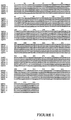
- Figure 1 is a diagrammatic representation depicting a nucleotide sequence alignment of secreted ALA E7 constructs and controls (IgkC1, IgkS1-1, IgkS1-2, IgkS1-3, IgkS1-4 and IgkC2) as further defined in Example 1 and Table 12.
- the sequences are ligated into the Kpn I and Eco RI sites of pCDNA3.
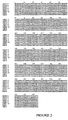
- Figure 2 is a diagrammatic representation depicting a nucleotide sequence alignment of secreted ARG E7 constructs and controls (IgkS1-5, IgkS1-6, IgkS1-7, IgkS1-8, IgkS1-9, IgkS1-10, IgkC1 and IgkC2) as further defined in Example 1 and Table 12.
- the sequences are ligated into the Kpn I and Eco RI sites of pCDNA3.
- Figure 3 is a diagrammatic representation depicting a nucleotide sequence alignment of secreted ASN and LYS E7 constructs and controls (IgkC1, IgkS1-12, IgkS1-31 and IgkC2) as further defined in Example 1 and Table 12.
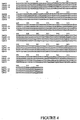
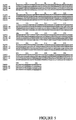
- Figure 4 is a diagrammatic representation depicting a nucleotide sequence alignment of secreted ASP E7 constructs and controls (IgkC1, IgkS1-13, IgkS1-14 and IgkC2) as further defined in Example 1 and Table 12.
- the sequences are ligated into the Kpn I and Eco RI sites of pCDNA3.
- Figure 5 is a diagrammatic representation depicting a nucleotide sequence alignment of secreted CYS E7 constructs and controls (IgkC1, IgkS1-15, IgkS1-16 and IgkC2) as further defined in Example 1 and Table 12.
- Figure 6 is a diagrammatic representation depicting a nucleotide sequence alignment of secreted GLU E7 constructs and controls (IgkS1-17, IgkS1-18, IgkC2 and IgkC1) as further defined in Example 1 and Table 12.
- the sequences are ligated into the Kpn I and Eco RI sites of pCDNA3.
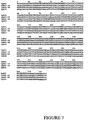
- Figure 7 is a diagrammatic representation depicting a nucleotide sequence alignment of secreted GLN E7 constructs and controls (IgkC1, IgkS1-19, IgkS1-20 and IgkC2) as further defined in Example 1 and Table 12.
- Figure 8 is a diagrammatic representation depicting a nucleotide sequence alignment of secreted GLY E7 constructs and controls (IgkC1, IgkS1-21, IgkS1-22, IgkS1-23, IgkS1-24 and IgkC2) as further defined in Example 1 and Table 12.
- the sequences are ligated into the Kpn I and Eco RI sites of pCDNA3.
- Figure 9 is a diagrammatic representation depicting a nucleotide sequence alignment of secreted HIS E7 constructs and controls (IgkC1, IgkS1-25, IgkS1-26 and IgkC2) as further defined in Example 1 and Table 12.
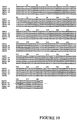
- Figure 10 is a diagrammatic representation depicting a nucleotide sequence alignment of secreted ILE E7 constructs and controls (IgkC1, IgkS1-27, IgkS1-28, IgkS1-29 and IgkC2) as further defined in Example 1 and Table 12.
- the sequences are ligated into the Kpn I and Eco RI sites of pCDNA3.
- Figure 11 is a diagrammatic representation depicting a nucleotide sequence alignment of secreted LEU E7 constructs and controls (IgkS1-50, IgkS1-51, IgkS1-52, IgkS1-53, IgkS1-54, IgkS1-55, IgkC3 and IgkC4) as further defined in Example 1 and Table 12.
- the sequences are ligated into the Kpn I and Eco RI sites of pCDNA3.
- the LEU E7 constructs are oncogenic (i.e., encode wild-type E7 protein).
- Figure 12 is a diagrammatic representation depicting a nucleotide sequence alignment of secreted PHE E7 constructs and controls (IgkS1-32, IgkS1-33, IgkC1 and IgkC2) as further defined in Example 1 and Table 12.
- the sequences are ligated into the Kpn I and Eco RI sites of pCDNA3.
- the two LEU residues were mutated to PHE in this sequence so that there are three instead of one PHE residue.
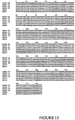
- Figure 13 is a diagrammatic representation depicting a nucleotide sequence alignment of secreted PRO E7 constructs and controls (IgkS1-56, IgkS1-57, IgkS1-58, IgkS1-59, IgkC3 and IgkC4) as further defined in Example 1 and Table 12.
- the sequences are ligated into the Kpn I and Eco RI sites of pCDNA3.
- the PRO E7 constructs are oncogenic (i.e., encode wild-type E7 protein).
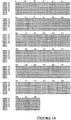
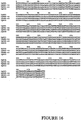
- Figure 14 is a diagrammatic representation depicting a nucleotide sequence alignment of secreted SER E7 constructs and controls (IgkS1-34, IgkS1-35, IgkS1-36, IgkS1-37, IgkS1-38, IgkS1-39, IgkC1 and IgkC2) as further defined in Example 1 and Table 12.
- the sequences are ligated into the Kpn I and Eco RI sites of pCDNA3.
- Figure 15 is a diagrammatic representation depicting a nucleotide sequence alignment of secreted THR E7 constructs and controls (IgkC1, IgkS1-40, IgkS1-41, IgkS1-42, IgkS1-43 and IgkC2) as further defined in Example 1 and Table 12.
- Figure 16 is a diagrammatic representation depicting a nucleotide sequence alignment of secreted TYR E7 constructs and controls (IgkC1, IgkS1-44, IgkS1-45 and IgkC2) as further defined in Example 1 and Table 12.
- the sequences are ligated into the Kpn I and Eco RI sites of pCDNA3.
- Figure 17 is a diagrammatic representation depicting a nucleotide sequence alignment of secreted VAL E7 constructs and controls (IgkC1, IgkS1-46, IgkS1-47, IgkS1-48, IgkS1-49 and IgkC2) as further defined in Example 1 and Table.12.
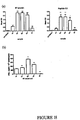
- Figure 18 is a graphical representation showing the response to gene gun immunization with optimized and de-optimized E7 constructs measured by (a) ELISA, (b) Memory B cell ELISPOT, and (c) IFN- ⁇ ELISPOT.
- ELISA ELISA
- Memory B cell ELISPOT IFN- ⁇ ELISPOT.
- IFN- ⁇ ELISPOT IFN- ⁇ ELISPOT.
- mice were immunized twice, three weeks apart and the spleens collected three weeks after the second immunization. The spleens were pooled prior to analysis. The Memory B cell and IFN- ⁇ ELISPOTs were conducted twice and three times, respectively, and the wells done in triplicate. Three mice were used per group per repeat. The results shown in parts (b) and (c) are from individual experiments and are representative of the complete data sets. The particular ELISPOT experimental data included here were gathered together with the corresponding data in Figure 20 and therefore may be directly compared. Unpaired two-tailed t-tests were used to compare the modified constructs to wild-type.
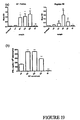
- FIG. 19 is a graphical representation showing the response to immunization by intradermal injection with optimized and de-optimized constructs measured by (a) ELISA, (b) Memory B cell ELISPOT, and (c) IFN- ⁇ ELISPOT.
- mice were immunized per group (4 immunizations, 3 weeks apart) and the sera taken three weeks after the final immunization; (left) E7 protein ELISA, (right) E7 peptide 101 ELISA. Wells were done in duplicate.
- mice were immunized twice, three weeks apart and the spleens collected three weeks after the second immunization. The spleens were pooled prior to analysis. The Memory B cell and IFN- ⁇ ELISPOTs were conducted twice and three times, respectively, and the wells done in triplicate. Three mice were used per group per repeat. The results shown in parts (b) and (c) are from individual experiments and are representative of the complete data sets.
- Figure 20 is a graphical representation showing the results of an ELISA that measures binding of serum from mice immunized with various gD2 constructs by intradermal injection (white bars) or gene gun immunization (black bars), to C-terminally His-tagged gD2tr. Note that the His-tagged gD2tr protein was used in an unpurified state (in CHO cell supernatant) and that background readings of non-specific binding to control supernatant have been subtracted from the results.
- an element means one element or more than one element.
- ⁇ is meant a quantity, level, value, frequency, percentage, dimension, size, or amount that varies by no more than 15%, and preferably by no more than 10%, 9%, 8%, 7%, 6%, 5%, 4%, 3%, 2%, 1% to a reference quantity, level, value, frequency, percentage, dimension, size, or amount.
- administration concurrently or “administering concurrently” or “co-administering” and the like refer to the administration of a single composition containing two or more actives, or the administration of each active as separate compositions and/or delivered by separate routes either contemporaneously or simultaneously or sequentially within a short enough period of time that the effective result is equivalent to that obtained when all such actives are administered as a single composition.
- simultaneous is meant that the active agents are administered at substantially the same time, and desirably together in the same formulation.
- temporary it is meant that the active agents are administered closely in time, e.g., one agent is administered within from about one minute to within about one day before or after another. Any contemporaneous time is useful.
- the agents when not administered simultaneously, the agents will be administered within about one minute to within about eight hours and preferably within less than about one to about four hours.
- the agents are suitably administered at the same site on the subject.
- the term "same site” includes the exact location, but can be within about 0.5 to about 15 centimeters, preferably from within about 0.5 to about 5 centimeters.
- the term "separately” as used herein means that the agents are administered at an interval, for example at an interval of about a day to several weeks or months.
- the active agents may be administered in either order.
- the term “sequentially” as used herein means that the agents are administered in sequence, for example at an interval or intervals of minutes, hours, days or weeks. If appropriate the active agents may be administered in a regular repeating cycle.
- cis- acting sequence or " cis -regulatory region” or similar term shall be taken to mean any sequence of nucleotides which is derived from an expressible genetic sequence wherein the expression of the genetic sequence is regulated, at least in part, by the sequence of nucleotides.
- a cis-regulatory region may be capable of activating, silencing, enhancing, repressing or otherwise altering the level of expression and/or cell-type-specificity and/or developmental specificity of any structural gene sequence.
- a "chimeric construct” refers to a polynucleotide having heterologous nucleic acid elements.
- Chimeric constructs include "expression cassettes" or “expression constructs,” which refer to an assembly that is capable of directing the expression of the sequence(s) or gene(s) of interest.
- An expression cassette generally includes control elements such as a promoter that is operably linked to (so as to direct transcription of) a synthetic polynucleotide, and often includes a polyadenylation sequence as well.
- the chimeric construct may be contained within a vector.
- the vector may include, one or more selectable markers, a signal which allows the vector to exist as single-stranded DNA (e.g., a M13 origin of replication), at least one multiple cloning site, and a "mammalian" origin of replication (e.g., a SV40 or adenovirus origin of replication).
- a signal which allows the vector to exist as single-stranded DNA e.g., a M13 origin of replication
- at least one multiple cloning site e.g., a SV40 or adenovirus origin of replication
- coding sequence is meant any nucleic acid sequence that contributes to the code for the polypeptide product of a polynucleotide (e.g., a reporter polynucleotide).
- a "conferred phenotype” refers to a temporary or permanent change in the state of an organism of interest or class of organisms of interest, or of a part or tissue or cell or cell type or class of cell of an organism of interest, which occurs after the introduction of a polynucleotide to that organism, or to that class of organisms, or to the part or tissue or cell or cell type or class of cell, or to a precursor of that organism or part or tissue or cell or cell type or class of cell, and which would not have occurred in the absence of that introduction.
- such a temporary or permanent change occurs as a result of the transcription and/or translation of genetic information contained within that polynucleotide in the cell, or in at least one cell or cell type or class of cell within the organism of interest or within the class of class of organisms of interest, and can be used to distinguish the organism of interest, or class of organisms of interest, or part or tissue or cell or cell type or class of cell thereof, or genetic progeny of these, to which the polynucleotide has been provided from a similar organism of interest, or class of organisms of interest, or part or tissue or cell or cell type or class of cell thereof, or genetic progeny of these, to which the polynucleotide has not been provided.
- conferred immune response refers to a temporary or permanent change in immune response to a target antigen, which occurs or would occur after the introduction of a polynucleotide to the mammal, and which would not occur in the absence of that introduction.
- such a temporary or permanent change occurs as a result of the transcription and/or translation of genetic information contained within that polynucleotide in a cell, or in at least one cell or cell type or class of cell within a mammal or within a class of mammals, and can be used to distinguish the mammal, or class of mammals to which the polynucleotide has been provided from a similar mammal, or class of mammals, to which the polynucleotide has not been provided.
- an antigen which encodes an amino acid sequence that displays substantial similarity to an amino acid sequence in a target antigen.
- the antigen will display at least about 30, 40, 50, 55, 60, 65, 70, 75, 80, 85, 90, 91, 92, 93, 94, 95, 96, 97, 98,99 % similarity or identity to at least a portion of the target antigen (e.g., at least 10%, 20%, 30%, 40%, 50%, 60%, 70%, 80%, 90% or 95% of the amino acid sequence of the target antigen).
- an effective amount in the context of modulating an immune response or treating or preventing a disease or condition, is meant the administration of that amount of composition to an individual in need thereof, either in a single dose or as part of a series, that is effective for achieving that modulation, treatment or prevention.
- the effective amount will vary depending upon the health and physical condition of the individual to be treated, the taxonomic group of individual to be treated, the formulation of the composition, the assessment of the medical situation, and other relevant factors. It is expected that the amount will fall in a relatively broad range that can be determined through routine trials.
- enhancing an immune response refers to increasing an animal's capacity to respond to a target antigen (e.g., a foreign or disease-specific antigen or a self antigen), which can be determined for example by detecting an increase in the number, activity, and ability of the animal's cells that are primed to attack such antigens or an increase in the titer or activity of antibodies in the animal, which are immuno-interactive with the target antigen.
- a target antigen e.g., a foreign or disease-specific antigen or a self antigen
- Strength of immune response can be measured by standard immunoassays including: direct measurement of antibody titers or peripheral blood lymphocytes; cytolytic T lymphocyte assays; assays of natural killer cell cytotoxicity; cell proliferation assays including lymphoproliferation (lymphocyte activation) assays; immunoassays of immune cell subsets; assays of T-lymphocytes specific for the antigen in a sensitized subject; skin tests for cell-mediated immunity; etc.
- Such assays are well known in the art See, e.g., Erickson et al., 1993, J. Immunol. 151:4189-4199 ; Doe et al., 1994, Eur. J. Immunol. 24:2369-2376 .
- Recent methods of measuring cell-mediated immune response include measurement of intracellular cytokines or cytokine secretion by T-cell populations, or by measurement of epitope specific T-cells (e.g., by the tetramer technique) (reviewed by McMichael, A. J., and O'Callaghan, C. A., 1998, J. Exp. Med. 187(9)1367-1371 ; Mcheyzer-Williams, M. G., et al., 1996, Immunol. Rev. 150:5-21 ; Lalvani, A., et al., 1997, J. Exp. Med. 186:859-865 ).
- Enhanced immune response is also indicated by physical manifestations such as fever and inflammation, as well as healing of systemic and local infections, and reduction of symptoms in disease, i.e., decrease in tumor size, alleviation of symptoms of a disease or condition including, but not restricted to, leprosy, tuberculosis, malaria, naphthous ulcers, herpetic and papillomatous warts, gingivitis, arthrosclerosis, the concomitants of AIDS such as Kaposi's sarcoma, bronchial infections, and the like.
- Such physical manifestations also encompass “enhanced immune response” or “immunoenhancement” as used herein.
- “reducing an immune response” “producing a weaker immune response” and the like refer to decreasing an animal's capacity to respond to a target antigen, which can be determined for example by conducting immunoassays or assessing physical manifestations, as described for example above.
- expression refers to production of RNA message and/or translation of RNA message into proteins or polypeptides.
- expression vector any autonomous genetic element capable of directing the synthesis of a protein encoded by the vector. Such expression vectors are known by practitioners in the art.
- gene is used in its broadest context to include both a genomic DNA region corresponding to the gene as well as a cDNA sequence corresponding to exons or a recombinant molecule engineered to encode a functional form of a product.
- heterologous refers to a combination of elements that are not naturally occurring or that are obtained from different sources.
- Immuno response refers to the concerted action of lymphocytes, antigen-presenting cells, phagocytic cells, granulocytes, and soluble macromolecules produced by the above cells or the liver (including antibodies, cytokines, and complement) that results in selective damage to, destruction of, or elimination from the body of cancerous cells, metastatic tumor cells, metastatic breast cancer cells, invading pathogens, cells or tissues infected with pathogens, or, in cases of autoimmunity or pathological inflammation, normal human cells or tissues.
- an "immune response' encompasses the development in an individual of a humoral and/or a cellular immune response to a polypeptide that is encoded by an introduced synthetic polynucleotide.
- the terms "humoral immune response” includes and encompasses an immune response mediated by antibody molecules
- a “cellular immune response” includes and encompasses an immune response mediated by T-lymphocytes and/or other white blood cells.
- an immune response that is stimulated by a synthetic polynucleotide may be one that stimulates the production of antibodies (e.g., neutralizing antibodies that block bacterial toxins and pathogens such as viruses entering cells and replicating by binding to toxins and pathogens, typically protecting cells from infection and destruction).
- the synthetic polynucleotide may also elicit production of cytolytic T lymphocytes (CTLs).
- CTLs cytolytic T lymphocytes
- an immunological response may include one or more of the following effects: the production of antibodies by B-cells; and/or the activation of suppressor T-cells and/or memory/effector T-cells directed specifically to an antigen or antigens present in the composition or vaccine of interest.
- these responses may serve to neutralize infectivity, and/or mediate antibody-complement, or antibody dependent cell cytotoxicity (ADCC) to provide protection to an immunized host
- ADCC antibody dependent cell cytotoxicity
- the innate immune system of mammals also recognizes and responds to molecular features of pathogenic organisms and cancer cells via activation of Toll-like receptors and similar receptor molecules on immune cells.
- various non-adaptive immune response cells are activated to, e.g., produce various cytokines, lymphokines and chemokines.
- Cells activated by an innate immune response include immature and mature dendritic cells of, for example, the monocyte and plasmacytoid lineage (MDC, PDC), as well as gamma, delta, alpha and beta T cells and B cells and the like.
- MDC monocyte and plasmacytoid lineage
- gamma gamma, delta, alpha and beta T cells and B cells and the like.
- the present disclosure also contemplates an immune response wherein the immune response involves both an innate and adaptive response.
- a composition is "immunogenic” if it is capable of either: a) generating an immune response against a target antigen (e.g., a viral or tumor antigen) in an individual; or b) reconstituting, boosting, or maintaining an immune response in an individual beyond what would occur if the agent or composition was not administered.
- a target antigen e.g., a viral or tumor antigen
- An agent or composition is immunogenic if it is capable of attaining either of these criteria when administered in single or multiple doses.
- Immunomodulation modulating an immune response
- modulating an immune response refers to the modulation of the immune system in response to a stimulus and includes increasing or decreasing an immune response to a target antigen or changing an immune response from one that is predominantly a humoral immune response to one that is a more cell-mediated immune response and vice versa.
- decreasing the amount of antigen for immunization can change the bias of the immune system from a predominantly humoral immune response to a predominantly cellular immune response.
- isoaccepting transfer RNA or “iso-tRNA” is meant one or more transfer RNA molecules that differ in their anticodon nucleotide sequence but are specific for the same amino acid.
- mammal refers to any mammal including, without limitation, humans and other primates, including non-human primates such as chimpanzees and other apes and monkey species; farm animals such as cattle, sheep, pigs, goats and horses; domestic mammals such as dogs and cats; and laboratory animals including rodents such as mice, rats and guinea pigs.
- the term does not denote a particular age. Thus, both adult and newborn individuals are intended to be covered.
- modulating By “modulating,” “modulate” and the like is meant increasing or decreasing, either directly or indirectly, the quality of a selected phenotype (e.g., an immune response).
- modulation or modulating means that a desired/selected immune response is more efficient (e.g., at least 10%, 20%, 30%, 40%, 50%, 60% or more), more rapid (e.g., at least 10%, 20%, 30%, 40%, 50%, 60% or more), greater in magnitude (e.g., at least 10%, 20%, 30%, 40%, 50%, 60% or more), and/or more easily induced (e.g., at least 10%, 20%, 30%, 40%, 50%, 60% or more) than if the parent polynucleotide had been used under the same conditions as the synthetic polynucleotide.
- modulation or modulating means changing an immune response from a predominantly antibody-mediated immune response as conferred by the parent polynucleotide, to a predominantly cellular immune response as conferred by the synthetic polynucleotide under the same conditions.
- modulation or modulating means changing an immune response from a predominantly cellular immune response as conferred by the parent polynucleotide, to a predominantly antibody-mediated immune response as conferred by the synthetic polynucleotide under the same conditions.
- naturally gene is meant a gene that naturally encodes the protein.
- the parent polynucleotide encodes a protein that is not naturally-occurring but has been engineered using recombinant techniques.
- 5' non-coding region is used herein in its broadest context to include all nucleotide sequences which are derived from the upstream region of an expressible gene, other than those sequences which encode amino acid residues which comprise the polypeptide product of the gene, wherein 5' non-coding region confers or activates or otherwise facilitates, at least in part, expression of the gene.
- oligonucleotide refers to a polymer composed of a multiplicity of nucleotide units (deoxyribonucleotides or ribonucleotides, or related structural variants or synthetic analogues thereof) linked via phosphodiester bonds (or related structural variants or synthetic analogues thereof).
- oligonucleotide typically refers to a nucleotide polymer in which the nucleotides and linkages between them are naturally occurring, it will be understood that the term also includes within its scope various analogues including, but not restricted to, peptide nucleic acids (PNAs), phosphoramidates, phosphorothioates, methyl phosphonates, 2-O-methyl ribonucleic acids, and the like. The exact size of the molecule may vary depending on the particular application.
- PNAs peptide nucleic acids
- phosphoramidates phosphoramidates
- phosphorothioates phosphorothioates
- methyl phosphonates 2-O-methyl ribonucleic acids
- oligonucleotide is typically rather short in length, generally from about 10 to 30 nucleotides, but the term can refer to molecules of any length, although the term “polynucleotide” or “nucleic acid” is typically used for large oligonucleotides.
- operably connected refers to an arrangement of elements wherein the components so described are configured so as to perform their usual function.
- a given promoter operably linked to a coding sequence is capable of effecting the expression of the coding sequence when the proper enzymes are present.
- the promoter need not be contiguous with the coding sequence, so long as it functions to direct the expression thereof.
- intervening untranslated yet transcribed sequences can be present between the promoter sequence and the coding sequence and the promoter sequence can still be considered “operably linked" to the coding sequence.
- the preferred positioning of a regulatory sequence element with respect to a heterologous gene to be placed under its control is defined by the positioning of the element in its natural setting; i.e., the genes from which it is derived.
- pharmaceutically-acceptable carrier is meant a solid or liquid filler, diluent or encapsulating substance that may be safely used in topical or systemic administration.
- phenotype means any one or more detectable physical or functional characteristics, properties, attributes or traits of an organism, tissue, or cell, or class of organisms, tissues or cells, which generally result from the interaction between the genetic makeup (i.e., genotype) of the organism, tissue, or cell, or the class of organisms, tissues or cells and the environment.
- genotype the genetic makeup of the organism, tissue, or cell, or the class of organisms, tissues or cells and the environment.
- the term “phenotype” excludes resistance to a selective agent or screening an enzymic or light-emitting activity, conferred directly by a reporter protein.
- phenotypic preference is meant the preference with which an organism uses a codon to produce a selected phenotype. This preference can be evidenced, for example, by the quality of a selected phenotype that is producible by a polynucleotide that comprises the codon in an open reading frame which codes for a polypeptide that produces the selected phenotype.
- the preference of usage is independent of the route by which the polynucleotide is introduced into the organism. However, in other embodiments, the preference of usage is dependent on the route of introduction of the polynucleotide into the organism.
- polynucleotide or “nucleic acid” as used herein designates mRNA, RNA, cRNA, cDNA or DNA.
- the term typically refers to oligonucleotides greater than 30 nucleotides in length.
- Polypeptide “peptide” and “protein” are used interchangeably herein to refer to a polymer of amino acid residues and to variants and synthetic analogues of the same. Thus, these terms apply to amino acid polymers in which one or more amino acid residues is a synthetic non-naturally occurring amino acid, such as a chemical analogue of a corresponding naturally occurring amino acid, as well as to naturally-occurring amino acid polymers.
- polypeptide “peptide” and “protein” are not limited to a minimum length of the product. Thus, peptides, oligopeptides, dimers, multimers, and the like, are included within the definition. Both full-length proteins and fragments thereof are encompassed by the definition.
- polypeptide refers to a protein which includes modifications, such as deletions, additions and substitutions (generally conservative in nature), to the native sequence, so long as the protein maintains the desired activity. These modifications may be deliberate, as through site-directed mutagenesis, or may be accidental, such as through mutations of hosts which produce the proteins or errors due to PCR amplification.
- polypeptide variant refers to polypeptides that vary from a reference polypeptide by the addition, deletion or substitution (generally conservative in nature) of at least one amino acid residue. Typically, variants retain a desired activity of the reference polypeptide, such as antigenic activity in inducing an immune response against a target antigen.
- variant polypeptides are "substantially similar” or substantially identical” to the reference polypeptide, e.g., amino acid sequence identity or similarity of more than 50%, generally more than 60%-70%, even more particularly 80%-85% or more, such as at least 90%-95% or more, when the two sequences are aligned. Often, the variants will include the same number of amino acids but will include substitutions, as explained herein.
- precursor cell or tissue and “progenitor cell or tissue” as used herein refer to a cell or tissue that can gives rise to a particular cell or tissue in which a polypeptide is produced by expression of the coding sequences in the synthetic constructs of the invention.
- precursor and "progenitor,” as used herein in the context of phenotypic preference, refer to a cell or part of organism that can gives rise to an organism of interest in which phenotypic expression is desired or in which phenotypic preference of a codon is to be determined.
- primer an oligonucleotide which, when paired with a strand of DNA, is capable of initiating the synthesis of a primer extension product in the presence of a suitable polymerizing agent.
- the primer is preferably single-stranded for maximum efficiency in amplification but may alternatively be double-stranded.
- a primer must be sufficiently long to prime the synthesis of extension products in the presence of the polymerization agent. The length of the primer depends on many factors, including application, temperature to be employed, template reaction conditions, other reagents, and source of primers. For example, depending on the complexity of the target sequence, the oligonucleotide primer typically contains 15 to 35 or more nucleotides, although it may contain fewer nucleotides.
- Primers can be large polynucleotides, such as from about 200 nucleotides to several kilobases or more. Primers may be selected to be “substantially complementary” to the sequence on the template to which it is designed to hybridize and serve as a site for the initiation of synthesis. By “substantially complementary”, it is meant that the primer is sufficiently complementary to hybridize with a target nucleotide sequence. Preferably, the primer contains no mismatches with the template to which it is designed to hybridize but this is not essential. For example, non-complementary nucleotides may be attached to the 5' end of the primer, with the remainder of the primer sequence being complementary to the template.
- non-complementary nucleotides or a stretch of non-complementary nucleotides can be interspersed into a primer, provided that the primer sequence has sufficient complementarity with the sequence of the template to hybridize therewith and thereby form a template for synthesis of the extension product of the primer.
- production is meant production of a protein to a level sufficient to achieve a particular function or phenotype associated with the protein.
- the terms “not producible” and “not substantially producible” as used interchangeably herein refer to (a) no production of a protein, (b) production of a protein to a level that is not sufficient to effect a particular function or phenotype associated with the protein, (c) production of a protein, which cannot be detected by a monoclonal antibody specific for the protein, or (d) production of a protein, which is less that 1% of the level produced in a wild-type cell that normally produces the protein.
- promoter includes the transcriptional regulatory sequences of a classical genomic gene, including the TATA box which is required for accurate transcription initiation, with or without a CCAAT box sequence and additional regulatory elements (i.e. upstream activating sequences, enhancers and silencers) which alter gene expression in response to developmental and/or environmental stimuli, or in a tissue-specific or cell-type-specific manner.
- a promoter is usually, but not necessarily, positioned upstream or 5', of a structural gene, the expression of which it regulates.
- the regulatory elements comprising a promoter are usually positioned within 2 kb of the start site of transcription of the gene.
- Preferred promoters according to the invention may contain additional copies of one or more specific regulatory elements to further enhance expression in a cell, and/or to alter the timing of expression of a structural gene to which it is operably connected.
- quality is used herein in its broadest sense and includes a measure, strength, intensity, degree or grade of a phenotype, e.g., a superior or inferior immune response, increased or decreased disease resistance, higher or lower sucrose accumulation, better or worse salt tolerance etc.
- regulatory element or “regulatory sequence” is meant a nucleic acid sequence (e.g., DNA) that expresses an operably linked nucleotide sequence (e.g., a coding sequence) in a particular host cell.
- the regulatory sequences that are suitable for prokaryotic cells for example, include a promoter, and optionally a cis -acting sequence such as an operator sequence and a ribosome binding site.
- Control sequences that are suitable for eukaryotic cells include promoters, polyadenylation signals, transcriptional enhancers, translational enhancers, leader or trailing sequences that modulate mRNA stability, as well as targeting sequences that target a product encoded by a transcribed polynucleotide to an intracellular compartment within a cell or to the extracellular environment.
- sequence identity refers to the extent that sequences are identical on a nucleotide-by-nucleotide basis or an amino acid-by-amino acid basis over a window of comparison.
- a “percentage of sequence identity” is calculated by comparing two optimally aligned sequences over the window of comparison, determining the number of positions at which the identical nucleic acid base (e.g., A, T, C, G, I) or the identical amino acid residue (e.g., Ala, Pro, Ser, Thr, Gly, Val, Leu, Ile, Phe, Tyr, Trp, Lys, Arg, His, Asp, Glu, Asn, Gln, Cys and Met) occurs in both sequences to yield the number of matched positions, dividing the number of matched positions by the total number of positions in the window of comparison (i.e., the window size), and multiplying the result by 100 to yield the percentage of sequence identity.
- the identical nucleic acid base e.g., A, T
- sequence identity will be understood to mean the “match percentage” calculated by the DNASIS computer program (Version 2.5 for windows; available from Hitachi Software engineering Co., Ltd., South San Francisco, California, USA) using standard defaults as used in the reference manual accompanying the software.
- Similarity refers to the percentage number of amino acids that are identical or constitute conservative substitutions as defined in Table 10. Similarity may be determined using sequence comparison programs such as GAP ( Deveraux et al. 1984, Nucleic Acids Research 12, 387-395 ). In this way, sequences of a similar or substantially different length to those cited herein might be compared by insertion of gaps into the alignment, such gaps being determined, for example, by the comparison algorithm used by GAP.
- references to describe sequence relationships between two or more polynucleotides or polypeptides include “reference sequence”, “comparison window”, “sequence identity”, “percentage of sequence identity” and “substantial identity”.
- a “reference sequence” is at least 12 but frequently 15 to 18 and often at least 25 monomer units, inclusive of nucleotides and amino acid residues, in length.
- two polynucleotides may each comprise (1) a sequence (i.e., only a portion of the complete polynucleotide sequence) that is similar between the two polynucleotides, and (2) a sequence that is divergent between the two polynucleotides
- sequence comparisons between two (or more) polynucleotides are typically performed by comparing sequences of the two polynucleotides over a "comparison window" to identify and compare local regions of sequence similarity.
- a “comparison window” refers to a conceptual segment of at least 6 contiguous positions, usually about 50 to about 100, more usually about 100 to about 150 in which a sequence is compared to a reference sequence of the same number of contiguous positions after the two sequences are optimally aligned.
- the comparison window may comprise additions or deletions (i.e., gaps) of about 20% or less as compared to the reference sequence (which does not comprise additions or deletions) for optimal alignment of the two sequences.
- Optimal alignment of sequences for aligning a comparison window may be conducted by computerized implementations of algorithms (GAP, BESTFIT, FASTA, and TFASTA in the Wisconsin Genetics Software Package Release 7.0, Genetics Computer Group, 575 Science Drive Madison, WI, USA) or by inspection and the best alignment (i.e., resulting in the highest percentage homology over the comparison window) generated by any of the various methods selected.
- GAP Garnier et al.
- BESTFIT Pearson FASTA
- FASTA Pearson's Alignment of sequences
- TFASTA Pearson's Alignment of Altschul et al.
- a detailed discussion of sequence analysis can be found in Unit 19.3 of Ausubel et al., "Current Protocols in Molecular Biology", John Wiley & Sons Inc, 1994-1998, Chapter 15 .
- specific binding pair refers to a pair of molecules that physically interact with one another in a specific manner that gives rise to a biological activity, that is, to the substantial exclusion of other polypeptides. Members of a specific binding pair interact through complementary interaction domains, such that they interact to the substantial exclusion of proteins that do not have a complementary interaction domain.
- specific binding pairs include antibody-antigen pairs, enzyme-substrate pairs, dimeric transcription factors (e.g., AP-1, composed of Fos specifically bound to Jun via a leucine zipper interaction domain) and receptor-ligand pairs.
- synthetic polynucleotide refers to a nucleic acid molecule that is formed by recombinant or synthetic techniques and typically includes polynucleotides that are not normally found in nature.
- “synonymous codon” refers to a codon having a different nucleotide sequence than another codon but encoding the same amino acid as that other codon.
- treatment means to include both therapeutic and prophylactic treatment.
- vector is meant a nucleic acid molecule, preferably a DNA molecule derived, for example, from a plasmid, bacteriophage, or plant virus, into which a nucleic acid sequence may be inserted or cloned.
- a vector preferably contains one or more unique restriction sites and may be capable of autonomous replication in a defined host cell including a target cell or tissue or a progenitor cell or tissue thereof, or be integrable with the genome of the defined host such that the cloned sequence is reproducible.
- the vector may be an autonomously replicating vector, i.e., a vector that exists as an extrachromosomal entity, the replication of which is independent of chromosomal replication, e.g., a linear or closed circular plasmid, an extrachromosomal element, a minichromosome, or an artificial chromosome.
- the vector may contain any means for assuring self-replication.
- the vector may be one which, when introduced into the host cell, is integrated into the genome and replicated together with the chromosome(s) into which it has been integrated.
- a vector system may comprise a single vector or plasmid, two or more vectors or plasmids, which together contain the total DNA to be introduced into the genome of the host cell, or a transposon.
- the choice of the vector will typically depend on the compatibility of the vector with the host cell into which the vector is to be introduced.
- the vector may also include a selection marker such as an antibiotic resistance gene that can be used for selection of suitable transformants. Examples of such resistance genes are well known to those of skill in the art.
- a construct system for determining the translational efficiency or phenotypic preference of different synonymous codons.
- the system comprises a plurality of synthetic constructs each of which is useful for interrogating the translational efficiency or phenotypic preference of a single codon ("interrogating codon"), wherein the interrogating codon of one construct is different from the interrogating codon of another.
- interrogating codon a single codon
- the synthetic constructs of the invention each comprise a regulatory sequence that is operably connected to a reporter polynucleotide, wherein the reporter polynucleotide of a respective construct encodes the same amino acid sequence as the reporter polynucleotide of another.
- individual reporter polynucleotides use the same interrogating codon to code for a particular amino acid at one or more positions of the amino acid sequence, wherein the interrogating codon of one reporter polynucleotide is different to but synonymous with the interrogating codon of another.
- the coding sequences of individual reporter polynucleotides comprise the same number of interrogating codons.
- all codons in a respective coding sequence which code for a particular amino acid, are the same interrogating codon.
- this is not necessary as it is possible to use fewer interrogating codons than the number of codons in a respective coding sequence, which code for the same amino acid as the interrogating codons.
- the sensitivity of an individual synthetic construct in determining the translational efficiency or phenotypic preference of a corresponding interrogating codon is generally improved by incorporating more interrogating codons in the coding sequence.
- the interrogating codon(s) in one coding sequence is (are) located at the same positions as the interrogating codons in another coding sequence. In other embodiments, the interrogating codon(s) of one coding sequence is (are) located at different positions relative to the interrogating codons in another coding sequence.
- a first coding sequence and a second coding sequence may each contain 5 codons that code for a particular amino acid and only 3 of those are used as interrogating codons.
- the first coding sequence may comprise the sequence:
- the construct system comprises synthetic constructs for interrogating the translational efficiency or phenotypic preference of codons that code for two or more different amino acids.
- the construct system comprises synthetic constructs for interrogating the translational efficiency or phenotypic preference of codons that code for 2, 3, 4, 5, 6, 7, 8, 9, 10, 11, 12, 13, 14, 15, 16,17, 18, 19 or 20 (suitably naturally occuring) amino acids.
- the construct system comprises 59 synthetic constructs for interrogating the translational efficiency or phenotypic preference of all naturally occuring codons for which there are two or more synonymous codons (e.g., Ala GCT , Ala GCC , Ala GCA , Ala GCG , Arg CGA , Arg CGC , Arg CGT , Arg AGA , Arg AGG , Arg CGG , Asn AAC , Asn AAT Asp GAC , Asp GAT , Cys TGC , Cys TGT , Glu GAA , Glu GAG , Gln CAA , Gln CAG , Gly GGA , Gly GGG , Gly GGT , Gly GGC , His CAC , His CAT Ile ATC , Ile ATT , Ile ATA , Leu CTG , Leu CTC , Leu CTA , Leu CTT , Leu TTG , Le
- the reporter polynucleotide encodes an amino acid sequence that defines, in whole or in part, a reporter protein that, when present in a cell, is detectable and distinguishable from other polypeptides present in the cell.
- a reporter protein may be a naturally occurring protein or a protein that is not naturally occurring.
- reporter proteins include fluorescent proteins such as green fluorescent protein (gfp), cyan fluorescent protein (cfp), red fluorescent protein (rfp), or blue fluorescent protein (bfp), or derivatives of these proteins, or enzymatic proteins such as chloramphenicol acetyl transferase, ⁇ -galactosidase, ⁇ -glucuronidase (GUS)secreted placental alkaline phosphatase and ⁇ -lactamase, chemiluminescent proteins such as luciferase, and selectable marker proteins including proteins encoded by antibiotic resistance genes (e.g., hygromycin resistance genes, neomycin resistance genes, tetracycline resistance genes, ampicillin resistance genes, kanamycin resistance genes, phleomycin resistance genes, herbicide resistance genes such as the bialophos resistance (BAR) gene that confers resistance to the herbicide BASTA, bleomycin resistance genes, geneticin resistance genes, carbenicillin resistance genes, chloramphen
- the reporter polynucleotide encodes an amino acid sequence that defines, in whole or in part, a reporter protein confers upon an organism of interest or part thereof, either by itself or in association with other molecules, a selected phenotype or a phenotype of the same class as the selected phenotype.
- the reporter protein may be a phenotype-associated polypeptide (e.g., a melanoma specific antigen such as BAGE or GAGE-1) that will be the subject of producing the selected phenotype (e.g., immunity to melanoma).
- the phenotype-associated polypeptide may not produce the selected phenotype (e.g., immunity to melanoma) but may produce the same class of phenotype (e.g., an immune response) as the selected phenotype.
- the selected phenotype e.g., immunity to melanoma
- the same class of phenotype e.g., an immune response
- the phenotype-associated polypeptide is selected from antigens including antigens from pathogenic organisms or cancers (e.g., wherein the phenotype is immunity to disease) and self antigens or transplantation antigens (e.g., wherein the phenotype is antigen-specific anergy or tolerance), growth factors (e.g., wherein the phenotype is selected from size of the organism or part, wound healing, cell proliferation, cell differentiation, cell migration, immune cell function), hormones (e.g., wherein the phenotype is increased lactation, e.g., using oxytocin, or amelioration of a diabetic state, e.g., using insulin) and toxins (e.g., wherein the phenotype is tumour regression or cell death).
- antigens including antigens from pathogenic organisms or cancers (e.g., wherein the phenotype is immunity to disease) and self antigens or transplantation antigens (e.g., wherein the
- the selected phenotype or class of phenotype corresponds to a beneficial or improved or superior state or condition of the organism or part thereof relative to a reference state or condition.
- the reference state or condition corresponds to a pathophysiological state.
- Phenotypes contemplated by the present invention include any desirable beneficial trait including, but not restricted to: immunity (e.g., immunity to pathogenic infection or cancer); antigen tolerance (e.g., antigen-specific T lymphocyte anergy, tolerance to allergens, transplantation antigens and self antigens); angiogenesis (e.g., blood vessel formation in the heart and vasculature and in tumour growths); anti-angiogenesis (e.g., treatment of ischaemic heart disease and tumours); amelioration of clinical symptoms (e.g., fever; inflammation; encephalitis; weight loss; anaemia; sensory symptoms such as paraesthesia or hypaesthesia; ataxia; neuralgia; paralysis; vertigo; urinary or bowel movement abnormalities; and cognitive dysfunction such memory loss, impaired attention, problem-solving difficulties, slowed information processing, and difficulty in shifting between cognitive tasks); reduced or increased cell death (e.g., apoptosis); reduced or increased cell differentiation; reduced or increased cell proliferation; tumour or cancer
- tolerance or sensitivity to glyphosate or glufosinate starch biosynthesis or modification (e.g. using a starch branching enzyme, starch synthases, ADP-glucose pyrophosphorylase); fatty acid biosynthesis (e.g. using a desaturase or hydroxylase); disease resistance or tolerance (e.g., resistance to animal diseases such as cardiovascular disease, autoimmunity, Alzheimer's disease, Parkinson's disease, diabetes, AIDS etc or resistance to plant diseases such as rust, dwarfism, rot, smut, mould, scab and mildew); pest resistance or tolerance including insect resistance or tolerance (e.g., resistance to borers and worms); viral resistance or tolerance (e.g.
- fungs such as herpesviruses, hepadnaviruses, adenoviruses, flaviviruses, lentiviruses, poxviruses etc or resistance to plant viruses such as badnaviruses, caulimoviruses, potyviruses, luteoviruses, rhabdoviruses etc); fungal resistance or tolerance (e.g., resistance to arbuscular mycorrhizal fungi, endophytic fungi etc); a metabolic trait including sucrose metabolism (e.g., sucrose isomerisation); frost resistance or tolerance; stress tolerance (e.g., salt tolerance, drought tolerance); and improved food content or increased yields.
- sucrose metabolism e.g., sucrose isomerisation
- frost resistance or tolerance e.g., salt tolerance, drought tolerance
- improved food content or increased yields e.g., salt tolerance, drought tolerance
- subclasses of immunity include innate immunity (which can be further subdivided inter alia into complement system, monocytes, macrophages, neutrophils and natural killer cells), cellular immunity (which can be further subdivided inter alia into cytolytic T lymphocytes, dendritic cells and T helper lymphocytes) and humoral immunity (which can be further subdivided inter alia into antibody subclasses IgA, IgD, IgE, IgG and IgM).
- innate immunity which can be further subdivided inter alia into complement system, monocytes, macrophages, neutrophils and natural killer cells
- cellular immunity which can be further subdivided inter alia into cytolytic T lymphocytes, dendritic cells and T helper lymphocytes
- humoral immunity which can be further subdivided inter alia into antibody subclasses IgA, IgD, IgE, IgG and IgM).
- the reporter polynucleotide of individual synthetic constructs further comprises an ancillary coding sequence that encodes a detectable tag (e.g., streptavidin, avidin, an antibody, an antigen, an epitope, a hapten, a protein, or a fluorescent, chemiluminescent or chemically reactive moiety).
- a detectable tag e.g., streptavidin, avidin, an antibody, an antigen, an epitope, a hapten, a protein, or a fluorescent, chemiluminescent or chemically reactive moiety.
- the detectable tag is suitably a member of a specific binding pair, which includes for example, antibody-antigen (or hapten) pairs, ligand-receptor pairs, enzyme-substrate pairs, biotin-avidin pairs, and the like.
- the ancillary coding sequence of one reporter polynucleotide encodes a first tag (e.g., a first epitope to which a first antibody binds) and the ancillary coding sequence of another reporter polynucleotide encodes a second tag (e.g., a second epitope to which a second antibody binds), which is detectably distinguishable from the first tag.
- a first tag e.g., a first epitope to which a first antibody binds
- a second tag e.g., a second epitope to which a second antibody binds
- the reporter polynucleotide is operably linked in the synthetic constructs to a regulatory sequence.
- the regulatory sequence suitably comprises transcriptional and/or translational control sequences, which will be compatible for expression in the cell or organism of interest.
- the transcriptional and translational regulatory control sequences include, but are not limited to, a promoter sequence, a 5' non-coding region, a cis -regulatory region such as a functional binding site for transcriptional regulatory protein or translational regulatory protein, an upstream open reading frame, ribosomal-binding sequences, transcriptional start site, translational start site, and/or nucleotide sequence which encodes a leader sequence, termination codon, translational stop site and a 3' non-translated region.
- promoters may be either naturally occurring promoters, or hybrid promoters that combine elements of more than one promoter.
- Promoter sequences contemplated by the present invention may be native to the organism of interest or may be derived from an alternative source, where the region is functional in the chosen organism. The choice of promoter will differ depending on the intended host.
- promoters which could be used for expression in plants include plant promoters such as: constitutive plant promoters examples of which include CaMV35S plant promoter, CaMV19S plant promoter, FMV34S plant promoter, sugarcane bacilliform badnavirus plant promoter, CsVMV plant promoter, Arabidopsis ACT2/ACT8 actin plant promoter, Arabidopsis ubiquitin UBQ1 plant promoter, barley leaf thionin BTH6 plant promoter, and rice actin plant promoter; tissue specific plant promoters examples of which include bean phaseolin storage protein plant promoter, DLEC plant promoter, PHS ⁇ plant promoter, zein storage protein plant promoter, conglutin gamma plant promoter from soybean, AT2S1 gene plant promoter, ACT11 actin plant promoter from Arabidopsis, napA plant promoter from Brassica napus and potato patatin gene plant promoter; and inducible plant promoters examples of which include a light-inducible plant
- promoters which could be used for expression in mammals include the metallothionein promoter, which can be induced in response to heavy metals such as cadmium, the ⁇ -action promoter as well as viral promoters such as the SV40 large T antigen promoter, human cytomegalovirus (CMV) immediate early (IE) promoter, Rous sarcoma virus LTR promoter, adenovirus promoter, or a HPV promoter, particularly the HPV upstream regulatory region (URR) may also be used. All these promoters are well described and readily available in the art.
- CMV human cytomegalovirus
- IE immediate early
- UTR HPV upstream regulatory region
- the synthetic constructs of the present invention may also comprise a 3' non-translated sequence.
- a 3' non-translated sequence refers to that portion of a gene comprising a DNA segment that contains a polyadenylation signal and any other regulatory signals capable of effecting mRNA processing or gene expression.
- the polyadenylation signal is characterised by effecting the addition of polyadenylic acid tracts to the 3' end of the mRNA precursor.
- Polyadenylation signals are commonly recognised by the presence of homology to the canonical form 5' AATAAA-3' although variations are not uncommon.
- the 3' non-translated regulatory DNA sequence preferably includes from about 50 to 1,000 nucleotide base pairs and may contain transcriptional and translational termination sequences in addition to a polyadenylation signal and any other regulatory signals capable of effecting mRNA processing or gene expression.
- the synthetic constructs further contain a selectable marker gene to permit selection of an organism or a precursor thereof that contains a synthetic construct.
- Selection genes are well known in the art and will be compatible for expression in cell or organism of interest, or a progenitor or precursor thereof.
- the synthetic constructs of the invention are in the form of viral vectors, such as simian virus 40 (SV40) or bovine papilloma virus (BPV), which has the ability to replicate as extra-chromosomal elements ( Eukaryotic Viral Vectors, Cold Spring Harbor Laboratory, Gluzman ed., 1982 ; Sarver et al., 1981, Mol. Cell. Biol. 1:486 ).
- Viral vectors include retroviral (lentivirus), adeno-associated virus (see, e.g., Okada, 1996, Gene Ther. 3:957-964 ; Muzyczka, 1994, J. Clin. Invst. 94:1351 ; U.S. Pat. Nos.
- Retroviral vectors can include those based upon murine leukemia virus (see, e.g., U.S. Pat No.
- Vectors also include those that efficiently deliver genes to animal cells in vivo (e.g., stem cells) (see, e.g., U.S. Pat. Nos. 5,821,235 and 5,786,340 ; Croyle et al., 1998, Gene Ther. 5:645 ; Croyle et al., 1998, Pharm. Res. 15:1348 ; Croyle et al., 1998, Hum. Gene Ther. 9:561 ; Foreman et al., 1998, Hum. Gene Ther. 9:1313 ; Wirtz et al., 1999, Gut 44:800 ).
- Adenoviral and adeno-associated viral vectors suitable for in vivo delivery are described, for example, in U.S.
- Additional vectors suitable for in vivo delivery include herpes simplex virus vectors (see, e.g., U.S. Pat. No. 5,501,979 ), retroviral vectors (see, e.g., U.S. Pat. Nos. 5,624,820 , 5,693,508 and 5,674,703 ; and WO92/05266 and WO92/14829 ), bovine papilloma virus (BPV) vectors (see, e.g., U.S. Pat No. 5,719,054 ), CMV-based vectors (see, e.g., U.S. Pat. No.
- BPV bovine papilloma virus
- Lentiviral vectors are useful for infecting dividing as well as non-dividing cells (see, e.g., U.S. Pat. No. 6,013,516 ).
- Vectors for insect cell expression commonly use recombinant variations of baculoviruses and other nucleopolyhedrovirus, e.g., Bombyx mori nucleopolyhedrovirus vectors (see, e.g., Choi, 2000, Arch. Virol. 145:171-177 ).
- Lepidopteran and Coleopteran cells are used to replicate baculoviruses to promote expression of foreign genes carried by baculoviruses, e.g., Spodoptera frugiperda cells are infected with recombinant Autographa californica nuclear polyhedrosis viruses (AcNPV) carrying a heterologous, e.g., a human, coding sequence (see, e.g., Lee, 2000, J. Virol. 74:11873-11880 ; Wu, 2000, J. Biotechnol. 80:75-83 ). See, e.g., U.S. Pat. No.
- Expression vectors capable of expressing proteins in plants are well known in the art, and include, e.g., vectors from Agrobacterium spp., potato virus X (see, e.g., Angell, 1997, EMBO J. 16:3675-3684 ), tobacco mosaic virus (see, e.g., Casper, 1996, Gene 173:69-73 ), tomato bushy stunt virus (see, e.g., Hillman, 1989, Virology 169:42-50 ), tobacco etch virus (see, e.g., Dolja, 1997, Virology 234:243-252 ), bean golden mosaic virus (see, e.g., Morinaga, 1993, Microbiol Immunol.
- cauliflower mosaic virus see, e.g., Cecchini, 1997, Mol. Plant Microbe Interact. 10:1094-1101
- maize Ac/Ds transposable element see, e.g., Rubin, 1997, Mol. Cell. Biol. 17:6294-6302 ; Kunze, 1996, Curr. Top. Microbiol. Immunol. 204:161-194
- Spm maize suppressor-mutator
- the invention further contemplates cells or organisms containing therein the synthetic constructs of the invention, or alternatively, parts, precursors, cells or tissues produced by the methods described herein.
- the construct system of the present invention is applicable to prokaryotic as well as eukaryotic hosts and includes for example unicellular organisms and multicellular organisms, such as but not limited to yeast, plants and animals including vertebrate animals such as mammals, reptiles, fish, birds etc as well as invertebrate animals such as metazoa, sponges, worms, molluscs, nematodes, crustaceans, echinoderms etc.
- the construct system is used to determine the translational efficiency of different synonymous codons in plant cells or animal cellos or to determine the phenotypic preference of different synonymous codons in plants and mammals.
- Illustrative examples of eukaryotic organisms include, but are not limited to, fungi such as yeast and filamentous fungi, including species of Aspergillus, Trichoderma , and Neurospora ; animal hosts including vertebrate animals illustrative examples of which include fish (e.g., salmon, trout, tilapia, tuna, carp, flounder, halibut, swordfish, cod and zebrafish), birds (e.g., chickens, ducks, quail, pheasants and turkeys, and other jungle foul or game birds) and mammals (e.g., dogs, cats, horses, cows, buffalo, deer, sheep, rabbits, rodents such as mice, rats, hamsters and guinea pigs, goats, pigs, primates, marine mammals including dolphins and whales, as well as cell lines, such as human or other mammalian cell lines of any tissue or stem cell type (e.g., COS, NIH 3T3
- the construct system is used to determine the translational efficiency or phenotypic preference of different synonymous codons in plants or plant cells(e.g., a plant that is suitably selected from monocotyledons, dicotyledons and gymnosperms).
- the plant may be an ornamental plant or crop plant.
- ornamental plants include, but are not limited to, Malus spp, Crataegus spp, Rosa spp., Betula spp, Sorbus spp, Olea spp, Nerium spp, Salix spp, Populus spp.
- Illustrative examples of crop plants include plant species which are cultivated in order to produce a harvestable product such as, but not limited to, Abelmoschus esculentus (okra), Acacia spp., Agave fourcroydes (henequen), Agave sisalana (sisal), Albizia spp., Allium fistulosum (bunching onion), Allium sativum (garlic), Allium spp. (onions), Alpinia galanga (greater galanga), Amaranthus caudatus, Amaranthus spp., Anacardium spp.
- ginseng Panicum miliaceum (common millet), Papaver spp. (poppy), Parthenium argentatum (guayule), Passiflora sp., Paulownia tomemtosa (princess tree), Pelargonium graveolens (rose geranium), Pelargonium sp., Pennisetum americanum (bulrush or pearl millet), Persoonia spp., Petroselinum crispum (parsley), Phacelia tanacetifolia (tansy), Phalaris canariensis (canary grass), Phalaris sp., Phaseolus coccineus (scarlet runner bean), Phaseolus lunatus (lima bean), Phaseolus spp., Phaseolus vulgaris (culinary bean), Phaseolus vulgaris (navy bean), Phaseolus vulgaris (red kidney bean), Pisum sativum (field pea), Plantago ovata (psyll
- Vicia spp. Vigna aconitifolia (mothbean), Vigna angularis (adzuki bean), Vigna mungo (black gram), Vigna radiata (mung bean), Vigna spp., Vigna unguiculata (cowpea), Vitis spp.
- Desirable crops for the practice of the present invention include Nicotiana tabacum (tobacco) and horticultural crops such as, for example, Ananas comosus (pineapple), Saccharum spp (sugar cane), Musa spp (banana), Lycopersicon esculentum (tomato) and Solanum tuberosum (potato).
- Nicotiana tabacum tobacco
- horticultural crops such as, for example, Ananas comosus (pineapple), Saccharum spp (sugar cane), Musa spp (banana), Lycopersicon esculentum (tomato) and Solanum tuberosum (potato).
- the synthetic constructs of the present invention may be introduced directly ex vivo or in cell culture into a cell of interest or into an organism of interest or into one or more of parts of an organism of interest, e.g., cell or tissue types (e.g., a muscle, skin, brain, lung, kidney, pancreas, a reproductive organ such as testes, ovaries and breast, eye, liver, heart, vascular cell, root, leaf, flower, stalk or meristem) or into an organ of an organism of interest.
- cell or tissue types e.g., a muscle, skin, brain, lung, kidney, pancreas, a reproductive organ such as testes, ovaries and breast, eye, liver, heart, vascular cell, root, leaf, flower, stalk or meristem
- the synthetic constructs are introduced into a progenitor of a cell or organism of interest and the progenitor is then grown or cultured for a time and under conditions sufficient to differentiate into the cell of interest or produce the organism of interest, whereby the synthetic construct is contained in the cell of interest or one or more cell types of the organism of interest.
- Suitable progenitor cells include, but are not limited to, stem cells such as embryonic stem cell, pluripotential immune cells, meristematic cells and embryonic callus.
- the synthetic construct is introduced into the organism of interest using a particular route of administration (e.g., for mammals, by the oral, parenteral (e.g., intravenous, intramuscular, intraperitoneal, intraventricular, intraarticular), mucosal (e.g., intranasal, intrapulmonary, oral, buccal, sublingual, rectal, intravaginal), dermal (topical, subcutaneous, transdermal); for plants, administration to flowers, meristem, root, leaves or stalk).
- parenteral e.g., intravenous, intramuscular, intraperitoneal, intraventricular, intraarticular
- mucosal e.g., intranasal, intrapulmonary, oral, buccal, sublingual, rectal, intravaginal
- dermal topical, subcutaneous, transdermal
- the route of administration will differ depending on the choice of organism of interest and the sought-after phenotype.
- the synthetic constructs are suitably introduced into the same or corresponding site of the organism or part thereof.
- the synthetic constructs are introduced into a cell of the organism of interest (e.g., autologous cells), or into a cell that is compatible with the organism of interest (e.g., syngeneic or allogeneic cells) and the genetically-modified cell so produced is introduced into the organism of interest at a selected site or into a part of that organism.
- the synthetic constructs of the present invention may be introduced into a cell or organism of interest or part thereof using any suitable method, and the kind of method employed will differ depending on the intended cell type, part and/or organism of interest.
- four general classes of methods for delivering nucleic acid molecules into cells have been described: (1) chemical methods such as calcium phosphate precipitation, polyethylene glycol (PEG)-mediate precipitation and lipofection; (2) physical methods such as microinjection, electroporation, acceleration methods and vacuum infiltration; (3) vector based methods such as bacterial and viral vector-mediated transformation; and (4) receptor-mediated. Transformation techniques that fall within these and other classes are well known to workers in the art, and new techniques are continually becoming known.
- the particular choice of a transformation technology will be determined by its efficiency to transform certain host species as well as the experience and preference of the person practising the invention with a particular methodology of choice. It will be apparent to the skilled person that the particular choice of a transformation system to introduce a synthetic construct of the invention into cells is not essential to or a limitation of the invention, provided it achieves an acceptable level of nucleic acid transfer.
- the synthetic constructs are introduced into tissues or host cells by any number of routes, including viral infection, phage infection, microinjection, electroporation, or fusion of vesicles, lipofection, infection by Agrobacterium tumefaciens or A. rhizogenes, or protoplast fusion.
- Jet injection may also be used for intra-muscular administration (as described for example by Furth et al., 1992, Anal Biochem 205:365-368 ).
- the synthetic constructs may be coated onto microprojectiles, and delivered into a host cell or into tissue by a particle bombardment device, or "gene gun" (see, for example, Tang et al., 1992, Nature 356:152-154 ).
- the synthetic constructs can be fed directly to, or injected into, a host organism or it may be introduced into a cell (i.e., intracellularly) or introduced extracellularly into a cavity, interstitial space, into the circulation of an organism, introduced orally, etc.
- Methods for oral introduction include direct mixing of the synthetic constructs with food of the organism.
- a hydrodynamic nucleic acid administration protocol is employed (e.g., see Chang et al., 2001, J. Virol. 75:3469-3473 ; Liu et al., 1999, Gene Ther. 6:1258-1266 ; Wolff et al., 1990, Science 247:1465-1468 ; Zhang et al., 1999, Hum. Gene Ther. 10:1735-1737 ; and Zhang et al., 1999, Gene Ther. 7:1344-1349 ).
- Other methods of nucleic acid delivery include, but are not limited to, liposome-mediated transfer, naked DNA delivery (direct injection) and receptor-mediated transfer (ligand-DNA complex).
- the construct system of the present invention can be used to compare the translational efficiency of different synonymous codons in cells of a particular type or to compare the translational efficiency of individual synonymous codons between different types of cells.
- the levels of reporter protein produced in a cell of interest from individual synthetic constructs are sensitive to the intracellular abundance of the iso-tRNA species corresponding to the interrogating codon(s) in the corresponding coding sequences and, therefore, provide a direct correlation of a cell's preference for or efficiency in translating a given codon.
- the level of the reporter protein obtained in a cell of the same type as a cell of interest, to which a synthetic construct having at least one first interrogating codon is provided is higher than the level produced in a cell of the same type as the cell of interest, to which another synthetic construct having at least one second interrogating codon is provided (i.e., wherein the first interrogating codon(s) is (are) different from, but synonymous with, the second interrogating codon(s)), then it can be deduced that the first interrogating codon has a higher translational efficiency than the second interrogating codon in the cell of interest.
- Methods for measuring reporter protein levels include, but are not limited to, immunoassays such as Western blotting, ELISA, and RIA assays, chemiluminescent protein assays such as luciferase assays, enzymatic assays such as assays that measure ⁇ -galactosidase or chloramphenicol acetyl transferase (CAT) activity as well as fluorometric assays that measure fluorescence associated with a fluorescent protein.
- the different synthetic constructs are separately introduced into different cells.
- the different synthetic constructs are introduced into the same cell (e.g., when the reporter polynucleotides comprise ancillary coding sequences that encode a tag, as described herein).
- the level of the reporter protein obtained in a first cell type to which a synthetic construct having at least one interrogating codon is provided is higher than the level obtained in a second cell type to which the same synthetic construct is provided, then it can be deduced that the interrogating codon has a higher translational efficiency in the first cell type than in the second cell type.
- the construct system is used to compare the preference of different synonymous codons for producing a selected phenotype in an organism of interest or part thereof (i.e., "phenotypic preference").
- the synthetic constructs are used to determine the influence of the interrogating codon(s) on the phenotype or class of phenotype displayed by the organism or part in response to the phenotype-associated protein produced by those synthetic constructs.
- the quality of the phenotype displayed by the organism or part to which a synthetic construct having at least one first interrogating codon is provided is higher than the quality of the phenotype displayed by the organism or part to which a synthetic construct having at least one second interrogating codon is provided (i.e., wherein the first interrogating codon is different than, but synonymous with, the second interrogating codon), then it can be deduced that the organism of interest or part thereof has a higher preference for the first interrogating codon than the second interrogating codon with respect to the quality of the phenotype produced. Put another way, the first interrogating codon has a higher phenotypic preference than the second interrogating codon in the organism of interest or part thereof.
- test organisms which are preferably selected from organisms of the same species as the organism of interest or organisms that are related to the organism of interest, or into test parts of such organisms.
- Related organisms are generally species within the same phylum, preferably species within the same subphylum, more preferably species within superclass, even more preferably species within the same class, even more preferably species within the same order and still even more preferably species within the same genus.
- the organism of interest is human
- a related species is suitably selected from mouse, cow, dog or cat, which belong to the same class as human, or a chimpanzee, which belongs to the same order as human.
- the related organism may be selected from taro, ginger, onions, garlic, pineapple, bromeliaeds, palms, orchids, lilies, irises and the like, which are all non-graminaceous monocotyledonous plants and which constitute horticultural or botanical relatives.
- the qualities of their phenotypes are determined by a suitable assay and then compared to determine the relative phenotypic preferences of the synonymous codons.
- the quality is suitably a measure of the strength, intensity or grade of the phenotype, or the relative strength, intensity or grade of two or more desired phenotypic traits.
- Assays for various phenotypes conferred by the production of a chosen reporter protein are known by those of skill in the art.
- immunity may be assayed by any suitable methods that detects an increase in an animal's capacity to respond to foreign or disease-specific antigens (e.g., cancer antigens) i.e., those cells primed to attack such antigens are increased in number, activity, and ability to detect and destroy the those antigens.
- Strength of immune response is measured by standard tests including: direct measurement of peripheral blood lymphocytes by means known to the art; natural killer cell cytotoxicity assays (see, e.g., Provinciali et al (1992, J. Immunol. Meth. 155: 19-24 ), cell proliferation assays (see, e.g., Vollenweider and Groseurth (1992, J. Immunol. Meth.
- Enhanced immune response is also indicated by physical manifestations such as fever and inflammation, as well as healing of systemic and local infections, and reduction of symptoms in disease, i.e., decrease in tumour size, alleviation of symptoms of a disease or condition including, but not restricted to, leprosy, tuberculosis, malaria, naphthous ulcers, herpetic and papillomatous warts, gingivitis, artherosclerosis, the concomitants of AIDS such as Kaposi's sarcoma, bronchial infections, and the like.
- Such physical manifestations may also be used to detect, or define the quality of, the phenotype or class of phenotype displayed by an organism.
- herbicide tolerance may be assayed by treating test organisms (e.g., plants such as cotton plants), which express a herbicide tolerance gene (e.g., glyphosate tolerance protein gene such as a glyphosate resistant EPSP synthase), with a herbicide (e.g., glyphosate) and determining the efficacy of herbicide tolerance displayed by the plants.
- test organisms e.g., plants such as cotton plants
- a herbicide tolerance gene e.g., glyphosate tolerance protein gene such as a glyphosate resistant EPSP synthase
- glyphosate glyphosate
- the amount of boll retention is a measure of efficacy and is a desirable trait
- the qualities of selected phenotype displayed by the test organisms or by the test parts are then compared to provide a ranked order of the individual synonymous codons according to their preference of usage by the organism or part to confer the selected phenotype.
- One of ordinary skill in the art will thereby be able to determine a "codon preference table" for each amino acid in the polypeptide whose expression conveys the selected phenotype to the organism of interest. Comparison of synonymous codons within a codon preference table can then be used to identify codons for tailoring a synthetic polynucleotide to modulate the quality of a selected phenotype.
- the construct system of the present invention can thus be used to provide a comparison of translational efficiencies for synonymous codons in a cell of interest or a comparison of phenotypic preferences for synonymous codons in an organism of interest or in a related organism, or in parts thereof. These comparisons can then be used as a basis for constructing a synthetic or 'codon modified' polynucleotide which differs from a parent or reference polynucleotide by the substitution of at least one 'replaceable' codon (also referred to herein as "a first codon") in the parent polynucleotide with a synonymous codon that has a different translational efficiency or different phenotypic preference than the replaceable codon.
- the synthetic polynucleotide is constructed so that it produces an encoded polypeptide in a cell of interest at a different level than that produced from a parent polynucleotide.
- the method comprises selecting a replaceable codon of the parent polynucleotide for replacement with a synonymous codon, wherein the synonymous codon is selected on the basis that it exhibits a different translational efficiency than the replaceable codon in a comparison of translational efficiencies in the cell of interest, as determined, for example, in Section 4.
- the replaceable codon is then replaced with the synonymous codon to construct the synthetic polynucleotide.
- Synonymous codons can thus be selected to increase or decrease the level of polypeptide that is produced in a cell of interest.
- a synonymous codon whose translational efficiency is at least about 10%, 15%, 20%, 25%, 30%, 35%, 40%, 45%, 50%, 55%, 60%, 65%, 70%, 75%, 80%, 85%, 90% or 95% higher or at least about 2, 3, 4,5, 6, 7, 8, 9,10,50 or 100 times higher than the translational efficiency of the replaceable codon.
- a synonymous codon whose translational efficiency is no more than 95%, 90%, 85%, 80%, 75%, 70%, 65%, 60%, 55%, 50%, 45%, 40%, 35%, 30%, 25%, 20%, 15%, 10%, 5%, 1%, 0.5%, 0.1%, 0.05% or 0.01% of the translational efficiency of the replaceable codon.
- the difference in level of polypeptide produced in the cell from a synthetic polynucleotide as compared to that produced from a parent polynucleotide depends on the number of replaceable codons that are replaced by synonymous codons, and on the difference in translational efficiencies between the replaceable codons and the synonymous codons in the cell of interest. Put another way, the fewer such replacements, and/or the smaller the difference in translational efficiencies between the synonymous and replaceable codons, the smaller the difference will be in protein production between the synthetic polynucleotide and parent polynucleotide. Conversely, the more such replacements, and/or the greater the difference in translational efficiencies between the synonymous and replaceable codons, the greater the difference will be in protein production between the synthetic polynucleotide and parent polynucleotide.
- the replacement step affects at least about 5%, 10%, 15%, 20%, 25%, 30%, 35%, 40%, 50%, 60%, 70%, 80%, 90%, 95%, 99% or more of the replaceable codons of the parent polynucleotide.
- the number of, and difference in translational efficiency between, the replaceable codons and the synonymous codons are selected such that the chosen polypeptide is produced from the synthetic polynucleotide in the cell at a level which is at least about at least about 10%, 15%, 20%, 25%, 30%, 35%, 40%, 45%, 50%, 55%, 60%, 65%, 70%, 75%, 80%, 85%, 90% or 95% higher than, or even at least about 2,3,4,5, 6, 7, 8, 9, 10, 50 or 100 times higher than, or no more than 95%, 90%, 85%, 80%, 75%, 70%, 65%, 60%, 55%, 50%, 45%, 40%, 35%, 30%, 25%, 20%, 15%, 10%, 5%, 1%, 0.5%, 0.1%, 0.05% or 0.01% of, the level at which the polypeptide is produced from the parent polynucleotide in the cell.
- any one of these codons can be used to replace the replaceable codon.
- a parent polynucleotide has a choice of low and intermediate translational efficiency codons
- replacement of low with intermediate or high translational efficiency codons results in a substantial increase in the level of polypeptide produced by the synthetic polynucleotide so constructed.
- the synthetic polynucleotide is constructed so that its expression in the organism or part confers a selected phenotype upon that organism or part but in a different quality than that conferred by a parent polynucleotide that encodes the same polypeptide.
- the method comprises selecting a replaceable codon of the parent polynucleotide for replacement with a synonymous codon, wherein the synonymous codon is selected on the basis that it exhibits a different phenotypic preference than the first codon in a comparison of phenotypic preferences in the organism of interest or in a related organism, or in a part thereof, as determined in Section 4.
- the replaceable codon is then replaced with the synonymous codon to construct the synthetic polynucleotide.
- a parent polynucleotide can be modified with synonymous codons such that quality of the selected phenotype conferred by the polynucleotide so modified (synthetic polynucleotide) is higher than from the parent polynucleotide.
- synthetic polynucleotide quality of the selected phenotype conferred by the polynucleotide so modified (synthetic polynucleotide) is higher than from the parent polynucleotide.
- the difference between the respective phenotypic qualities conferred by a synthetic polynucleotide and by a parent polynucleotide depends on the number of first codons that are replaced by synonymous codons, and on the difference in phenotypic preference between the first codons and the synonymous codons in the organism of interest or part thereof.
- a replaceable codon of the parent polynucleotide is suitably selected for replacement with a synonymous codon, wherein the synonymous codon is selected on the basis that it exhibits a higher phenotypic preference than the replaceable codon in a comparison of phenotypic preferences in the organism of interest or in a related organism, or in a part thereof.
- a higher phenotypic preference will correlate with a higher quality of the selected phenotype.
- a synonymous codon is deemed to have at least about a 10% higher phenotypic preference than a replaceable codon when the quality of phenotype displayed by an organism or part thereof to which a synthetic construct comprising the synonymous codon as the interrogating codon has been provided is at least about 10% higher than the quality of phenotype displayed by an organism or part thereof to which a synthetic construct comprising the replaceable codon as the interrogating codon has been provided.
- a synonymous codon whose phenotypic preference (i.e., preference for conferring that phenotype upon the organism or part) is at least about 10%, 15%, 20%, 25%, 30%, 35%, 40%, 45%, 50%, 55%, 60%, 65%, 70%, 75%, 80%, 85%, 90% or 95% higher or at least about 2, 3, 4,5, 6, 7, 8, 9, 10, 50 or 100 times higher than the phenotypic preference of the replaceable codon.
- phenotypic preference i.e., preference for conferring that phenotype upon the organism or part
- any one of these codons can be used to replace the first codon.
- a parent polynucleotide has a choice of low and intermediate phenotypic preference codons
- replacement of low with intermediate or high phenotypic preference codons results in a substantial increase in the quality of the phenotype conferred by the synthetic polynucleotide so constructed.
- a replaceable codon of the parent polynucleotide is selected for replacement with a synonymous codon, wherein the synonymous codon is selected on the basis that it exhibits a lower phenotypic preference than the replaceable codon in a comparison of phenotypic preferences in the organism of interest or in a related organism or in a part thereof, as determined for example according to method described in Section 4.
- a lower phenotypic preference will typically correlate with a lower quality of the selected phenotype.
- a synonymous codon is deemed to have at least about a 10% lower phenotypic preference than a first codon when the quality of phenotype displayed by an organism or part thereof to which a synthetic construct comprising the synonymous codon as the interrogating codon has been provided is at least about 10% lower than the quality of phenotype displayed by an organism or part thereof to which a synthetic construct comprising the replaceable codon as the interrogating codon has been provided.
- the synonymous codon when selecting the synonymous codon for this embodiment, it is preferred that it has a phenotypic preference in the organism of interest that is no more than about 95%, 90%, 85%, 80%, 75%, 70%, 65%, 60%, 55%, 50%, 45%, 40%, 35%, 30%, 25%, 20%, 15%, 10%, 5%, 1%, 0.5%, 0.1%, 0.05% or 0.01% of the phenotypic preference of the replaceable codon.
- the replacement step affects 5%, 10%, 15%, 20%, 25%, 30%, 35%, 40%, 50%, 60%, 70%, 80%, 90%, 95%, 99% or more of the replaceable codons of the parent polynucleotide.
- the number of, and difference in phenotypic preference between the replaceable codons and the synonymous codons are selected such that the phenotype-associated polypeptide is produced from the synthetic polynucleotide to confer a phenotype upon a chosen organism or organism part in a quality that is at least about 10%, 15%, 20%, 25%, 30%, 35%, 40%, 45%, 50%, 55%, 60%, 65%, 70%, 75%, 80%, 85%, 90% or 95% higher, or even at least about 2, 3, 4,5, 6, 7, 8, 9, 10, 50 or 100 times higher than the quality of phenotype conferred by the parent polynucleotide in the organism or part.
- the number of, and difference in phenotypic preference between, the replaceable codons and the synonymous codons are selected such that the phenotype-associated polypeptide is produced from the synthetic polynucleotide to confer a phenotype upon a chosen organism or part thereof in a quality that is no more than about 95%, 90%, 85%, 80%, 75%, 70%, 65%, 60%, 55%, 50%, 45%, 40%, 35%, 30%, 25%, 20%, 15%, 10%, 5%, 1%, 0.5%, 0.1%, 0.05% or 0.01% of the quality of phenotype conferred by the parent polynucleotide in the organism or part.
- Codon modification of a parent polynucleotide can be effected using several known mutagenesis techniques including, for example, oligonucleotide-directed mutagenesis, mutagenesis with degenerate oligonucleotides, and region-specific mutagenesis.
- exemplary in vitro mutagenesis techniques are described for example in U.S. Patent Nos. 4,184,917 , 4,321,365 and 4,351,901 or in the relevant sections of Ausubel, et al. (CURRENT PROTOCOLS IN MOLECULAR BIOLOGY, John Wiley & Sons, Inc.
- the synthetic polynucleotide can be synthesised de novo using readily available machinery as described, for example, in U.S. Patent No 4,293,652 .
- the present invention is not dependent on, and not directed to, any one particular technique for constructing the synthetic polynucleotide.
- the parent polynucleotide is suitably a natural gene. However, it is possible that the parent polynucleotide that is not naturally-occurring but has been engineered using recombinant techniques.
- Parent polynucleotides can be obtained from any suitable source, such as from eukaryotic or prokaryotic organisms, including but not limited to mammals or other animals, and pathogenic organisms such as yeasts, bacteria, protozoa and viruses.
- the construct system of the present invention has been used to experimentally determine a ranking of individual synonymous codons according to their preference for producing an immune response, including a humoral immune response, to an antigen in a mammal. Accordingly, the present disclosure provides for the first time an immune response preference ranking of individual synonymous codons in mammals.
- This ranking was determined using a construct system that comprises a series of reporter constructs each comprising a different coding sequence for an antigenic polypeptide (e.g., a papillomavirus E7 polypeptide), wherein the coding sequence of individual constructs is distinguished from a parent (e.g., wild-type) coding sequence that encodes the antigenic polypeptide by the substitution of a single species of iso-accepting codon for other species of iso-accepting codon that are present in the parent coding sequence.
- an antigenic polypeptide e.g., a papillomavirus E7 polypeptide
- the coding sequences of individual synthetic constructs use the same "interrogating" iso-accepting codon to encode at least 1, generally at least 2, usually at least 3 instances, typically at least most instances and preferably every instance of a particular amino acid residue in the antigenic polypeptide and individual synthetic constructs differ in the species of interrogating iso-accepting codon used to encode a particular amino acid residue at one or more different positions in the polypeptide sequence.
- the coding sequence of a synthetic construct in the construct system of the present invention may comprise Ala GCT as the interrogating codon for each encoded alanine residue, whereas the coding sequence of another construct may comprise Ala GCC as the interrogating codon for each encoded alanine residue, and so on.
- An illustrative synthetic construct system is described in Example 1, which covers the entire set of synonymous codons that code for amino acids.
- test mammals e.g., mice
- the synthetic construct system in which individual mammals are immunized with a different synthetic construct and the host immune response (e.g., humoral immune response or a cellular immune response) to the antigenic polypeptide is determined for each construct.
- the strength of immune response obtained from individual synthetic constructs provides a direct correlation to the immune preference of a corresponding interrogating codon in a test mammal. Accordingly, the stronger the immune response produced from a given construct in a test mammal, the higher the immune preference will be of the corresponding interrogating codon.
- the present disclosure enables for the first time the modulation of an immune response to a target antigen in a mammal from a polynucleotide that encodes a polypeptide that corresponds to at least a portion of the target antigen by replacing at least one codon of the polynucleotide with a synonymous codon that has a higher or lower preference for producing an immune response than the codon it replaces.
- the present invention embraces methods of constructing a synthetic polynucleotide from which a polypeptide is producible to confer an enhanced or stronger immune response than one conferred by a parent polynucleotide that encodes the same polypeptide.
- These methods generally comprise selecting from TABLE 1 a codon (often referred to herein arbitrarily as a "first codon") of the parent polynucleotide for replacement with a synonymous codon, wherein the synonymous codon is selected on the basis that it exhibits a higher immune response preference than the first codon and replacing the first codon with the synonymous codon to construct the synthetic polynucleotide.
- a codon of the parent polynucleotide for replacement with a synonymous codon
- the synonymous codon is selected on the basis that it exhibits a higher immune response preference than the first codon and replacing the first codon with the synonymous codon to construct the synthetic polynucleotide.
- Illustrative selections of the first and synonymous codons are made according to TABLE 2.
- the selection of the first and synonymous codons is made according to TABLE 3, which is the same as TABLE 2 with the exception that it excludes selections based on codon usage rankings as disclosed by Seed.
- the selection of a second codon (and subsequent codons if desired) for replacement with a synonymous codon is made according to TABLE 4.
- synonymous codons are classified into three ranks ('high', 'intermediate' and 'low' ranks) based on their immune response preference ranking (e.g., the synonymous codons for Ala, Ile, Leu, Pro, Ser, Thr and Val), it is preferred that the synonymous codon that is selected is a high rank codon when the first codon is a low rank codon. However, this is not essential and the synonymous codon can be selected from intermediate rank codons. In the case of two or more synonymous codons having similar immune response preferences, it will be appreciated that any one of these codons can be used to replace the first codon.
- the disclosure provides methods of constructing a synthetic polynucleotide from which a polypeptide is producible to confer a reduced or weaker immune response than one conferred by a parent polynucleotide that encodes the same polypeptide.
- These methods generally comprise selecting from TABLE 1 a first codon of the parent polynucleotide for replacement with a synonymous codon, wherein the synonymous codon is selected on the basis that it exhibits a lower immune response preference than the first codon and replacing the first codon with the synonymous codon to construct the synthetic polynucleotide.
- Illustrative selections of the first and synonymous codons are made according to TABLE 5.
- the selection of the first and synonymous codons is made according to TABLE 6, which is the same as TABLE 5 with the exception that it excludes selections based on codon usage rankings as disclosed by Seed.
- the selection of a second codon (and subsequent codons if desired) for replacement with a synonymous codon is made according to TABLE 7.
- synonymous codons are classified into the three ranks noted above, it is preferred that the synonymous codon that is selected is a low rank codon when the first codon is a high rank codon but this is not essential and thus the synonymous codon can be selected from intermediate rank codons if desired.
- the difference in strength of the immune response produced in the mammal from the synthetic polynucleotide as compared to that produced from the parent polynucleotide depends on the number of first/second codons that are replaced by synonymous codons, and on the difference in immune response preference ranking between the first/second codons and the synonymous codons. Put another way, the fewer such replacements, and/or the smaller the difference in immune response preference ranking between the synonymous and first/codons codons, the smaller the difference will be in the immune response produced by the synthetic polynucleotide and the one produced by the parent polynucleotide.
- the replacement step affects at least about 5%, 10%, 15%, 20%, 25%, 30%, usually at least about 35%, 40%, 50%, and typically at least about 60%, 70%, 80%, 90%, 95%, 96%, 97%, 98%, 99% or more of the first/second codons of the parent polynucleotide.
- the number of, and difference in immune response preference ranking between, the first/second codons and the synonymous codons are selected such that the immune response conferred by the synthetic polynucleotide is at least about 110%, 150%, 200%, 250%, 300%, 350%, 400%, 450%, 500%, 600%, 700%, 800%, 900%, 1000%, or more, of the immune response conferred by the parent polynucleotide under the same conditions.
- the number of, and difference in phenotypic preference ranking between, the first/second codons and the synonymous codons are selected such that the immune response conferred by the synthetic polynucleotide is no more than about 90%, 80%, 70%, 60%, 50%, 40%, 30%, 20%, 10%, 5%, or less of the immune response conferred by the parent polynucleotide under the same conditions.
- the disclosure also features methods of enhancing the quality of an immune response to a target antigen in a mammal, wherein the response is conferred by the expression of a first polynucleotide that encodes a polypeptide corresponding to at least a portion of the target antigen.
- methods generally comprise: introducing into the mammal a first nucleic acid construct comprising the first polynucleotide in operable connection with a regulatory sequence.
- a second nucleic acid construct is then introduced into the mammal, which comprises a second polynucleotide that is operably connected to a regulatory sequence and that encodes an iso-tRNA corresponding to a low immune preference codon of the first polynucleotide.
- an iso-tRNA is introduced into the mammal by the second nucleic acid construct when the iso-tRNA corresponds to a low immune response preference codon in the first polynucleotide, which are suitably selected from the group consisting of Ala GCA , Ala GCG , Ala GCC , Arg AGG , Arg CGG , Asn AAT , Asp GAT , Cys TGT , Glu GAG , Gly GGG , Gly GGT , Gly GGC , Ile ATA , Ile ATT , Leu TTG Leu TTA , Leu CTA , Leu CTT , Phe TTC , Pro CCA , Pro CCG , Pro CCT , Ser AGC , Ser AGT , Ser TCT , Ser TCA , Ser TCC , Thr ACA , Thr ACT , Tyr TAT , Val GTA and Val GTT .
- the supplied iso-tRNAs are specific for codons that have 'low' immune response preference codons, which may be selected from the group consisting of Ala GCA , Ala GCG , Arg AGG , Arg CGG , Asn AAT , Asp GAT , Cys TGT , Glu GAG , Gly GGG , Gly GGT , Gly GGC , Ile ATA , Leu TTG , Leu TTA , Phe TTC , Pro CCA , Pro CCG , Ser AGC , Ser AGT , Thr ACT , Tyr TAT and Val GTA .
- the first construct (i.e., antigen-expressing construct) and the second construct (i.e., the iso-tRNA-expressing construct) may be introduced simultaneously or sequentially (in either order) and may be introduced at the same or different sites.
- the first and second constructs are contained in separate vectors. In other embodiments, they are contained in a single vector. If desired, two or more second constructs may be introduced each expressing a different iso-tRNA corresponding to a low preference codon of the first polynucleotide.
- the first and second nucleic acid constructs may be constructed and administered concurrently or contemporaneously to a mammal according to any suitable method, illustrative examples of which are discussed below for the chimeric constructs.
- a plurality of different iso-tRNA-expressing constructs are administered concurrently or contemporaneously with the antigen-expressing construct, wherein individual iso-tRNA-expressing constructs express a different iso-tRNA than other iso-tRNA-expressing constructs.
- Target antigens useful in the present invention are typically proteinaceous molecules, representative examples of which include polypeptides and peptides.
- Target antigens may be selected from endogenous antigens produced by a host or exogenous antigens that are foreign to the host. Suitable endogenous antigens include, but are not restricted to, cancer or tumor antigens.
- Non-limiting examples of cancer or tumor antigens include antigens from a cancer or tumor selected from ABL1 proto-oncogene, AIDS related cancers, acoustic neuroma, acute lymphocytic leukemia, acute myeloid leukemia, adenocystic carcinoma, adrenocortical cancer, agnogenic myeloid metaplasia, alopecia, alveolar soft-part sarcoma, anal cancer, angiosarcoma, aplastic anemia, astrocytoma, ataxia-telangiectasia, basal cell carcinoma (skin), bladder cancer, bone cancers, bowel cancer, brain stem glioma, brain and CNS tumors, breast cancer, CNS tumors, carcinoid tumors, cervical cancer, childhood brain tumors, childhood cancer, childhood leukemia, childhood soft tissue sarcoma, chondrosarcoma, choriocarcinoma, chronic lymphocytic leukemia, chronic myeloid
- the cancer or tumor relates to melanoma.
- melanoma-related antigens include melanocyte differentiation antigen (e.g., gp100, MART, Melan-A/MART-1, TRP-1, Tyros, TRP2, MC1R, MUC1F, MUC1R or a combination thereof) and melanoma-specific antigens (e.g., BAGE, GAGE-1, gp100In4, MAGE-1 (e.g., GenBank Accession No.
- melanoma antigen e.g., GenBank Accession No. M12154
- p5 protein e.g., GenBank Accession No. M12154
- gp75 e.g., GenBank Accession No. M12154
- oncofetal antigen GM2 and GD2 gangliosides
- cdc27 e.g., p21ras, gp100 Pmel117 or a combination thereof.
- tumour-specific antigens include, but are not limited to: etv6, aml1, cyclophilin b (acute lymphoblastic leukemia); Ig-idiotype (B cell lymphoma); E-cadherin, ⁇ -catenin, ⁇ -catenin, ⁇ -catenin, p120ctn (glioma); p21ras (bladder cancer); p21ras (biliary cancer); MUC family, HER2/neu, c-erbB-2 (breast cancer); p53, p21ras (cervical carcinoma); p21ras, HER2/neu, c-erbB-2, MUC family, Cripto-1protein, Pim-1 protein (colon carcinoma); Colorectal associated antigen (CRC)-CO17-1A/GA733, APC (colorectal cancer); carcinoembryonic antigen (CEA) (colorectal cancer; choriocarcinoma); cyclophilin
- Foreign or exogenous antigens are suitably selected from antigens of pathogenic organisms.
- pathogenic organisms include, but are not limited to, viruses, bacteria, fungi parasites, algae and protozoa and amoebae.
- Illustrative viruses include viruses responsible for diseases including, but not limited to, measles, mumps, rubella, poliomyelitis, hepatitis A, B (e.g., GenBank Accession No. E02707), and C (e.g., GenBank Accession No. E06890), as well as other hepatitis viruses, influenza, adenovirus (e.g., types 4 and 7), rabies (e.g., GenBank Accession No.
- Epstein-Barr virus and other herpesviruses such as papillomavirus, Ebola virus, influenza virus, Japanese encephalitis (e.g., GenBank Accession No. E07883), dengue (e.g., GenBank Accession No. M24444), hantavirus, Sendai virus, respiratory syncytial virus, orthomyxoviruses, vesicular stomatitis virus, visna virus, cytomegalovirus and human immunodeficiency virus (HIV) (e.g., GenBank Accession No. U18552). Any suitable antigen derived from such viruses are useful in the practice of the present invention.
- herpesviruses such as papillomavirus, Ebola virus, influenza virus, Japanese encephalitis (e.g., GenBank Accession No. E07883), dengue (e.g., GenBank Accession No. M24444), hantavirus, Sendai virus, respiratory syncy
- illustrative retroviral antigens derived from HIV include, but are not limited to, antigens such as gene products of the gag, pol, and env genes, the Nef protein, reverse transcriptase, and other HIV components.
- hepatitis viral antigens include, but are not limited to, antigens such as the S, M, and L proteins of hepatitis B virus, the pre-S antigen of hepatitis B virus, and other hepatitis, e.g., hepatitis A, B, and C, viral components such as hepatitis C viral RNA.
- influenza viral antigens include; but are not limited to, antigens such as hemagglutinin and neuraminidase and other influenza viral components.
- measles viral antigens include, but are not limited to, antigens such as the measles virus fusion protein and other measles virus components.
- rubella viral antigens include, but are not limited to, antigens such as proteins E1 and E2 and other rubella virus components; rotaviral antigens such as VP7sc and other rotaviral components.
- cytomegaloviral antigens include, but are not limited to, antigens such as envelope glycoprotein B and other cytomegaloviral antigen components.
- respiratory syncytial viral antigens include antigens such as the RSV fusion protein, the M2 protein and other respiratory syncytial viral antigen components.
- herpes simplex viral antigens include, but are not limited to, antigens such as immediate early proteins, glycoprotein D, and other herpes simplex viral antigen components.
- varicella zoster viral antigens include antigens such as 9PI, gpII, and other varicella zoster viral antigen components.
- Non-limiting examples of Japanese encephalitis viral antigens include antigens such as proteins E, M-E, M-E-NS 1, NS 1, NS 1-NS2A, 80%E, and other Japanese encephalitis viral antigen components.
- Representative examples of rabies viral antigens include, but are not limited to, antigens such as rabies glycoprotein, rabies nucleoprotein and other rabies viral antigen components.
- Illustrative examples of papillomavirus antigens include, but are not limited to, the L1 and L2 capsid proteins as well as the E6/E7 antigens associated with cervical cancers, See Fundamental Virology, Second Edition, eds. Fields, B.N. and Knipe, D.M., 1991, Raven Press, New York , for additional examples of viral antigens.
- fungi include Acremonium spp., Aspergillus spp., Basidiobolus spp., Bipolaris spp., Blastomyces dermatidis, Candida spp., Cladophialophora carrionii, Coccidioides immitis, Conidiobolus spp., Cryptococcus spp., Curvularia spp., Epidermophyton spp., Exophiala jeanselmei, Exserohilum spp., Fonsecaea compacta, Fonsecaea pedrosoi, Fusarium oxysporum, Fusarium solani, Geotrichum candidum, Histoplasma capsulatum var.
- capsulatum Histoplasma capsulatum var. duboisii, Hortaea wasneckii, Lacazia loboi, Lasiodiplodia theobromae, Leptosphaeria senegalensis, Madurella grisea, Madurella mycetomatis, Malassezia furfur, Microsporum spp., Neotestudina rosatii, Onychocola canadensis, Paracoccidioides brasiliensis, Phialophora verrucosa, Piedraia hortae, Piedra iahortae, Pityriasis versicolor, Pseudallescheria boydii, Pyrenochaeta romeroi, Rhizopus arrhizus, Scopulariopsis brevicaulis, Scytalidium dimidiatum, Sporothrix schenckii, Trichophyton spp., Trichosporon s
- representative fungal antigens that can be used in the compositions and methods of the present invention include, but are not limited to, candida fungal antigen components; histoplasma fungal antigens such as heat shock protein 60 (HSP60) and other histoplasma fungal antigen components; cryptococcal fungal antigens such as capsular polysaccharides and other cryptococcal fungal antigen components; coccidioides fungal antigens such as spherule antigens and other coccidioides fungal antigen components; and tinea fungal antigens such as trichophytin and other coccidioides fungal antigen components.
- candida fungal antigen components histoplasma fungal antigens such as heat shock protein 60 (HSP60) and other histoplasma fungal antigen components
- cryptococcal fungal antigens such as capsular polysaccharides and other cryptococcal fungal antigen components
- coccidioides fungal antigens such as spherule antigens
- bacteria include bacteria that are responsible for diseases including, but not restricted to, diphtheria (e.g., Corynebacterium diphtheria ), pertussis (e.g., Bordetella pertussis, GenBank Accession No. M35274), tetanus (e.g., Clostridium tetani, GenBank Accession No. M64353), tuberculosis (e.g., Mycobacterium tuberculosis), bacterial pneumonias (e.g., Haemophilus influenzae.
- diphtheria e.g., Corynebacterium diphtheria
- pertussis e.g., Bordetella pertussis, GenBank Accession No. M35274
- tetanus e.g., Clostridium tetani, GenBank Accession No. M64353
- tuberculosis e.g., Mycobacterium tuberculosis
- cholera e.g., Vibrio cholerae
- anthrax e.g., Bacillus anthracis
- typhoid plague
- shigellosis e.g., Shigella dysenteriae
- botulism e.g., Clostridium botulinum
- salmonellosis e.g., GenBank Accession No. L03833
- peptic ulcers e.g., Helicobacter pylori
- Legionnaire's Disease Lyme disease
- bacterial antigens which can be used in the compositions and methods of the invention include, but are not limited to: pertussis bacterial antigens such as pertussis toxin, filamentous hemagglutinin, pertactin, F M2, FIM3, adenylate cyclase and other pertussis bacterial antigen components; diphtheria bacterial antigens such as diphtheria toxin or toxoid and other diphtheria bacterial antigen components; tetanus bacterial antigens such as tetanus toxin or toxoid and other tetanus bacterial antigen components, streptococcal bacterial antigens such as M proteins and other streptococcal bacterial antigen components; gram-negative bacilli bacterial antigens such as lipopolysaccharides and other gram-negative bacterial antigen components; Mycobacterium tuberculosis bacterial antigens such as mycolic acid, heat
- protozoa examples include protozoa that are responsible for diseases including, but not limited to, malaria (e.g., GenBank Accession No. X53832), hookworm, onchocerciasis (e.g., GenBank Accession No. M27807), schistosomiasis (e.g., GenBank Accession No. LOS 198), toxoplasmosis, trypanosomiasis, leishmaniasis, giardiasis (GenBank Accession No. M33641), amoebiasis, filariasis (e.g., GenBank Accession No. J03266), borreliosis, and trichinosis.
- malaria e.g., GenBank Accession No. X53832
- hookworm e.g., GenBank Accession No. M27807
- schistosomiasis e.g., GenBank Accession No. LOS 198
- toxoplasmosis trypanos
- protozoal antigens which can be used in the compositions and methods of the invention include, but are not limited to: plasmodium falciparum antigens such as merozoite surface antigens, sporozoite surface antigens, circumsporozoite antigens, gametocyte/gamete surface antigens, blood-stage antigen pf 155/RESA and other plasmodial antigen components; toxoplasma antigens such as SAG-1, p30 and other toxoplasma antigen components; schistosoma antigens such as glutathione-S-transferase, paramyosin, and other schistosomal antigen components; leishmania major and other leishmaniae antigens such as gp63, lipophosphoglycan and its associated protein and other leishmanial antigen components; and trypanosoma cruzi antigens such as the 75-77kDa antigen, the 56kDa antigen and other trypanosomal antigen
- toxin components as antigens, illustrative examples of which include staphylococcal enterotoxins, toxic shock syndrome toxin; retroviral antigens (e.g., antigens derived from HIV), streptococcal antigens, staphylococcal enterotoxin-A (SEA), staphylococcal enterotoxin-B (SEB), staphylococcal enterotoxin 1-3 (SE 1-3 ), staphylococcal enterotoxin-D (SED), staphylococcal enterotoxin-E (SEE) as well as toxins derived from mycoplasma, mycobacterium, and herpes viruses.
- retroviral antigens e.g., antigens derived from HIV
- retroviral antigens e.g., antigens derived from HIV
- streptococcal antigens e.g., antigens derived from HIV
- SEB staphylococcal enterotoxin-B
- Codon modification of a parent polynucleotide can be effected using several known mutagenesis techniques including, for example, oligonucleotide-directed mutagenesis, mutagenesis with degenerate oligonucleotides, and region-specific mutagenesis.
- exemplary in vitro mutagenesis techniques are described for example in U.S. Patent Nos. 4,184,917 , 4,321,365 and 4,351,901 or in the relevant sections of Ausubel, et al. (CURRENT PROTOCOLS IN MOLECULAR BIOLOGY, John Wiley & Sons, Inc.
- the synthetic polynucleotide can be synthesized de novo using readily available machinery as described, for example, in U.S. Patent No 4,293,652 .
- the present invention is not dependent on, and not directed to, any one particular technique for constructing the synthetic polynucleotide.
- the parent polynucleotide is suitably a natural gene. However, it is possible that the parent polynucleotide is not naturally-occurring but has been engineered using recombinant techniques.
- Parent polynucleotides can be obtained from any suitable source, such as from eukaryotic or prokaryotic organisms, including but not limited to mammals or other animals, and pathogenic organisms such as yeasts, bacteria, protozoa and viruses.
- the disclosure also contemplates synthetic polynucleotides encoding one or more desired portions of a target antigen.
- the synthetic polynucleotide encodes at least about 5, 6, 7, 8, 9, 10, 11, 12, 13, 14, 15, 16, 17, 18, 19, 20, 21, 22, 23, 24, 25, 30, 40, 50, 60, 70, 80, 90, 100, 120, 150, 300, 400, 500, 600, 700, 800, 900 or 1000, or even at least about 2000, 3000, 4000 or 5000 contiguous amino acid residues, or almost up to the total number of amino acids present in a full-length target antigen.
- the synthetic polynucleotide encodes a plurality of portions of the target antigen, wherein the portions are the same or different.
- the synthetic polynucleotide encodes a multi-epitope fusion protein.
- a number of factors can influence the choice of portion size.
- the size of individual portions encoded by the synthetic polynucleotide can be chosen such that it includes, or corresponds to the size of, T cell epitopes and/or B cell epitopes, and their processing requirements.
- Practitioners in the art will recognize that class I-restricted T cell epitopes are typically between 8 and 10 amino acid residues in length and if placed next to unnatural flanking residues, such epitopes can generally require 2 to 3 natural flanking amino acid residues to ensure that they are efficiently processed and presented.
- Class II-restricted T cell epitopes usually range between 12 and 25 amino acid residues in length and may not require natural flanking residues for efficient proteolytic processing although it is believed that natural flanking residues may play a role.
- Another important feature of class II-restricted epitopes is that they generally contain a core of 9-10 amino acid residues in the middle which bind specifically to class II MHC molecules with flanking sequences either side of this core stabilizing binding by associating with conserved structures on either side of class II MHC antigens in a sequence independent manner.
- the functional region of class II-restricted epitopes is typically less than about 15 amino acid residues long.
- the size of linear B cell epitopes and the factors effecting their processing, like class II-restricted epitopes, are quite variable although such epitopes are frequently smaller in size than 15 amino acid residues. From the foregoing, it is advantageous, but not essential, that the size of individual portions of the target antigen is at least 6, 7, 8,9, 10, 11 12, 13, 14, 15, 20, 25, 30 amino acid residues. Suitably, the size of individual portions is no more than about 500, 200, 100, 80, 60, 50, 40 amino acid residues. In certain advantageous embodiments, the size of individual portions is sufficient for presentation by an antigen-presenting cell of a T cell and/or a B cell epitope contained within the peptide.
- the polypeptide encoded by the synthetic polynucleotide is desirably a variant of at least a portion of the target antigen.
- "Variant" polypeptides include proteins derived from the target antigen by deletion (so-called truncation) or addition of one or more amino acids to the N-terminal and/or C-terminal end of the target antigen; deletion or addition of one or more amino acids at one or more sites in the target antigen; or substitution of one or more amino acids at one or more sites in the target antigen.
- Variant polypeptides will have at least 40%, 50%, 60%, 70%, generally at least 75%, 80%, 85%, typically at least about 90% to 95% or more, and more typically at least about 96%, 97%, 98%, 99% or more sequence similarity or identity with the amino acid sequence of the target antigen or portion thereof as determined by sequence alignment programs described elsewhere herein using default parameters.
- a variant of a target antigen may differ from that antigen generally by as much 1000, 500, 400, 300, 200, 100, 50 or 20 amino acid residues or suitably by as few as 1-15 amino acid residues, as few as 1-10, such as 6-10, as few as 5, as few as 4, 3, 2, or even 1 amino acid residue.
- Variant polypeptides corresponding to at least a portion of a target antigen may contain conservative amino acid substitutions at various locations along their sequence, as compared to the target antigen amino acid sequence.
- a "conservative amino acid substitution” is one in which the amino acid residue is replaced with an amino acid residue having a similar side chain. Families of amino acid residues having similar side chains have been defined in the art, which can be generally sub-classified as follows:
- Acidic The residue has a negative charge due to loss of H ion at physiological pH and the residue is attracted by aqueous solution so as to seek the surface positions in the conformation of a peptide in which it is contained when the peptide is in aqueous medium at physiological pH.
- Amino acids having an acidic side chain include glutamic acid and aspartic acid.
- the residue has a positive charge due to association with H ion at physiological pH or within one or two pH units thereof (e.g., histidine) and the residue is attracted by aqueous solution so as to seek the surface positions in the conformation of a peptide in which it is contained when the peptide is in aqueous medium at physiological pH.
- Amino acids having a basic side chain include arginine, lysine and histidine.
- the residues are charged at physiological pH and, therefore, include amino acids having acidic or basic side chains (i.e., glutamic acid, aspartic acid, arginine, lysine and histidine).
- amino acids having acidic or basic side chains i.e., glutamic acid, aspartic acid, arginine, lysine and histidine.
- Hydrophobic The residues are not charged at physiological pH and the residue is repelled by aqueous solution so as to seek the inner positions in the conformation of a peptide in which it is contained when the peptide is in aqueous medium.
- Amino acids having a hydrophobic side chain include tyrosine, valine, isoleucine, leucine, methionine, phenylalanine and tryptophan.
- Neutral/polar The residues are not charged at physiological pH, but the residue is not sufficiently repelled by aqueous solutions so that it would seek inner positions in the conformation of a peptide in which it is contained when the peptide is in aqueous medium.
- Amino acids having a neutral/polar side chain include asparagine, glutamine, cysteine, histidine, serine and threonine.
- proline This description also characterizes certain amino acids as “small” since their side chains are not sufficiently large, even if polar groups are lacking, to confer hydrophobicity.
- "small” amino acids are those with four carbons or less when at least one polar group is on the side chain and three carbons or less when not.
- Amino acids having a small side chain include glycine, serine, alanine and threonine.
- the gene-encoded secondary amino acid proline is a special case due to its known effects on the secondary conformation of peptide chains.
- the structure of proline differs from all the other naturally-occurring amino acids in that its side chain is bonded to the nitrogen of the ⁇ -amino group, as well as the ⁇ -carbon.
- amino acid similarity matrices e.g., PAM120 matrix and PAM250 matrix as disclosed for example by Dayhoff et al. (1978) A model of evolutionary change in proteins. Matrices for determining distance relationships In M. O. Dayhoff, (ed.), Atlas of protein sequence and structure, Vol. 5, pp. 345-358, National Biomedical Research Foundation, Washington DC ; and by Gonnet et al., 1992, Science 256(5062): 144301445 ), however, include proline in the same group as glycine, serine, alanine and threonine. Accordingly, for the purposes of the present invention, proline is classified as a "small" amino acid.
- the degree of attraction or repulsion required for classification as polar or nonpolar is arbitrary and, therefore, amino acids have been classified as one or the other. Most amino acids not specifically named can be classified on the basis of known behavior.
- Amino acid residues can be further sub-classified as cyclic or noncyclic, and aromatic or nonaromatic, self-explanatory classifications with respect to the side-chain substituent groups of the residues, and as small or large.
- the residue is considered small if it contains a total of four carbon atoms or less, inclusive of the carboxyl carbon, provided an additional polar substituent is present; three or less if not.
- Small residues are, of course, always nonaromatic.
- amino acid residues may fall in two or more classes. For the naturally-occurring protein amino acids, sub-classification according to the this scheme is presented in the Table 10.
- Conservative amino acid substitution also includes groupings based on side chains.
- a group of amino acids having aliphatic side chains is glycine, alanine, valine, leucine, and isoleucine; a group of amino acids having aliphatic-hydroxyl side chains is serine and threonine; a group of amino acids having amide-containing side chains is asparagine and glutamine; a group of amino acids having aromatic side chains is phenylalanine, tyrosine, and tryptophan; a group of amino acids having basic side chains is lysine, arginine, and histidine; and a group of amino acids having sulfur-containing side chains is cysteine and methionine.
- Amino acid substitutions are, in general, accomplished by selecting substitutions that do not differ significantly in their effect on maintaining (a) the structure of the peptide backbone in the area of the substitution, (b) the charge or hydrophobicity of the molecule at the target site, or (c) the bulk of the side chain. After the substitutions are introduced, the variants are screened for biological activity.
- similar amino acids for making conservative substitutions can be grouped into three categories based on the identity of the side chains.
- the first group includes glutamic acid, aspartic acid, arginine, lysine, histidine, which all have charged side chains;
- the second group includes glycine, serine, threonine, cysteine, tyrosine, glutamine, asparagine;
- the third group includes leucine, isoleucine, valine, alanine, proline, phenylalanine, tryptophan, methionine, as described in Zubay, G., Biochemistry, third edition, Wm.C. Brown Publishers (1993 ).
- the disclosure further contemplates a chimeric construct comprising a synthetic polynucleotide, which is operably linked to a regulatory sequence.
- the regulatory sequence suitably comprises transcriptional and/or translational control sequences, which will be compatible for expression in the organism of interest or in cells of that organism.
- the transcriptional and translational regulatory control sequences include, but are not limited to, a promoter sequence, a 5' non-coding region, a cis -regulatory region such as a functional binding site for transcriptional regulatory protein or translational regulatory protein, an upstream open reading frame, ribosomal-binding sequences, transcriptional start site, translational start site, and/or nucleotide sequence which encodes a leader sequence, termination codon, translational stop site and a 3' non-translated region.
- Constitutive or inducible promoters as known in the art are contemplated by the invention.
- the promoters may be either naturally occurring promoters, or hybrid promoters that combine elements of more than one promoter.
- Promoter sequences contemplated by the present invention may be native to the organism of interest or may be derived from an alternative source, where the region is functional in the chosen organism.
- the choice of promoter will differ depending on the intended host or cell or tissue type.
- promoters which could be used for expression in mammals include the metallothionein promoter, which can be induced in response to heavy metals such as cadmium, the ⁇ -actin promoter as well as viral promoters such as the SV40 large T antigen promoter, human cytomegalovirus (CMV) immediate early (IE) promoter, Rous sarcoma virus LTR promoter, the mouse mammary tumor virus LTR promoter, the adenovirus major late promoter (Ad MLP), the herpes simplex virus promoter, and a HPV promoter, particularly the HPV upstream regulatory region (URR), among others. All these promoters are well described and readily available in the art.
- Enhancer elements may also be used herein to increase expression levels of the mammalian constructs. Examples include the SV40 early gene enhancer, as described for example in Dijkema et al. (1985, EMBO J. 4:761 ), the enhancer/promoter derived from the long terminal repeat (LTR) of the Rous Sarcoma Virus, as described for example in Gorman et al., (1982, Proc. Natl. Acad. Sci. USA 79:6777 ) and elements derived from human CMV, as described for example in Boshart et al. (1985, Cell 41:521 ), such as elements included in the CMV intron A sequence.
- LTR long terminal repeat
- the chimeric construct may also comprise a 3' non-translated sequence.
- a 3' non-translated sequence refers to that portion of a gene comprising a DNA segment that contains a polyadenylation signal and any other regulatory signals capable of effecting mRNA processing or gene expression.
- the polyadenylation signal is characterized by effecting the addition of polyadenylic acid tracts to the 3' end of the mRNA precursor.
- Polyadenylation signals are commonly recognized by the presence of homology to the canonical form 5' AATAAA-3' although variations are not uncommon.
- the 3' non-translated regulatory DNA sequence preferably includes from about 50 to 1,000 nts and may contain transcriptional and translational termination sequences in addition to a polyadenylation signal and any other regulatory signals capable of effecting mRNA processing or gene expression.
- the chimeric construct further contains a selectable marker gene to permit selection of cells containing the construct.
- Selection genes are well known in the art and will be compatible for expression in the cell of interest.
- chimeric constructs can be constructed that include sequences coding for adjuvants.
- Particularly suitable are detoxified mutants of bacterial ADP-ribosylating toxins, for example, diphtheria toxin, pertussis toxin (PT), cholera toxin (CT), Escherichia coli heat-labile toxins (LT1 and LT2), Pseudomonas endotoxin A, Clostridium botulinum C2 and C3 toxins, as well as toxins from C. perfringens, C. spiriforma and C. difficile.
- the chimeric constructs include coding sequences for detoxified mutants of E .
- the adjuvant is a protein-destabilising element, which increases processing and presentation of the polypeptide that corresponds to at least a portion of the target antigen through the class I MHC pathway, thereby leading to enhanced cell-mediated immunity against the polypeptide.
- Illustrative protein-destabilising elements include intracellular protein degradation signals or degrons which may be selected without limitation from a destabilising amino acid at the amino-terminus of a polypeptide of interest, a PEST region or a ubiquitin.
- the coding sequence for the polypeptide can be modified to include a destabilising amino acid at its amino-terminus so that the protein so modified is subject to the N-end rule pathway as disclosed, for example, by Bachmair et al. in U.S. Patent Serial No. 5,093,242 and by Varshavsky et al. in U.S. Patent Serial No. 5,122,463 .
- the destabilising amino acid is selected from isoleucine and glutamic acid, especially from histidine tyrosine and glutamine, and more especially from aspartic acid, asparagine, phenylalanine, leucine, tryptophan and lysine.
- the destabilising amino acid is arginine.
- the amino-terminal end is obscured as a result of the protein's conformation (i.e., its tertiary or quaternary structure). In these cases, more extensive alteration of the amino-terminus may be necessary to make the protein subject to the N-end rule pathway. For example, where simple addition or replacement of the single amino-terminal residue is insufficient because of an inaccessible amino-terminus, several amino acids (including lysine, the site of ubiquitin joining to substrate proteins) may be added to the original amino-terminus to increase the accessibility and/or segmental mobility of the engineered amino terminus.
- a nucleic acid sequence encoding the amino-terminal region of the polypeptide can be modified to introduce a lysine residue in an appropriate context This can be achieved most conveniently by employing DNA constructs encoding "universal destabilising segments".
- a universal destabilising segment comprises a nucleic acid construct which encodes a polypeptide structure, preferably segmentally mobile, containing one or more lysine residues, the codons for lysine residues being positioned within the construct such that when the construct is inserted into the coding sequence of the protein-encoding synthetic polynucleotide, the lysine residues are sufficiently spatially proximate to the amino-terminus of the encoded protein to serve as the second determinant of the complete amino-terminal degradation signal.
- the insertion of such constructs into the 5' portion of a polypeptide-encoding synthetic polynucleotide would provide the encoded polypeptide with a lysine residue (or residues) in an appropriate context for destabilization.
- the polypeptide is modified to contain a PEST region, which is rich in an amino acid selected from proline, glutamic acid, serine and threonine, which region is optionally flanked by amino acids comprising electropositive side chains.
- a PEST region which is rich in an amino acid selected from proline, glutamic acid, serine and threonine, which region is optionally flanked by amino acids comprising electropositive side chains.
- amino acid sequences of proteins with intracellular half-lives less than about 2 hours contain one or more regions rich in proline (P), glutamic acid (E), serine (S), and threonine (T) as for example shown by Rogers et al. (1986, Science 234 (4774): 364-368 ).
- the polypeptide is conjugated to a ubiquitin or a biologically active fragment thereof, to produce a modified polypeptide whose rate of intracellular proteolytic degradation is increased, enhanced or otherwise elevated relative to the unmodified polypeptide.
- adjuvant polypeptides may be co-expressed with an 'antigenic' polypeptide that corresponds to at least a portion of the target antigen.
- adjuvant and antigenic polypeptides may be co-expressed in the form of a fusion protein comprising one or more adjuvant polypeptides and one or more antigenic polypeptides.
- adjuvant and antigenic polypeptides may be co-expressed as separate proteins.
- chimeric constructs can be constructed that include chimeric antigen-coding gene sequences, encoding, e.g., multiple antigens/epitopes of interest, for example derived from a single or from more than one target antigen.
- multi-cistronic cassettes e.g., bi-cistronic cassettes
- adjuvants and/or antigenic polypeptides can be encoded on separate coding sequences that are operably connected to independent transcription regulatory elements.
- the chimeric constructs are in the form of expression vectors which are suitably selected from self-replicating extra-chromosomal vectors (e.g., plasmids) and vectors that integrate into a host genome.
- the expression vectors are viral vectors, such as simian virus 40 (SV40) or bovine papilloma virus (BPV), which has the ability to replicate as extra-chromosomal elements ( Eukaryotic Viral Vectors, Cold Spring Harbor Laboratory, Gluzman ed., 1982 ; Sarver et al., 1981, Mol. Cell. Biol. 1:486 ).
- Viral vectors include retroviral (lentivirus), adeno-associated virus (see, e.g., Okada, 1996, Gene Ther. 3:957-964 ; Muzyczka, 1994, J. Clin. Invst. 94:1351 ; U.S. Pat. Nos. 6,156,303 ; 6,143,548 5,952,221 , describing AAV vectors; see also U.S. Pat. Nos. 6,004,799 ; 5,833,993 ), adenovirus (see, e.g., U.S. Pat. Nos.
- Retroviral vectors can include those based upon murine leukemia virus (see, e.g., U.S. Pat. No. 6,132,731 ), gibbon ape leukemia virus (see, e.g., U.S. Pat. No. 6,033,905 ), simian immuno-deficiency virus, human immuno-deficiency virus (see, e.g., U.S. Pat. No. 5,985,641 ), and combinations thereof.
- Vectors also include those that efficiently deliver genes to animal cells in vivo (e.g., stem cells) (see, e.g., U.S. Pat. Nos. 5,821,235 and 5,786,340 ; Croyle et al., 1998, Gene Ther. 5:645 ; Croyle et al., 1998, Pharm. Res. 15:1348 ; Croyle et al., 1998, Hum. Gene Ther. 9:561 ; Foreman et al., 1998, Hum. Gene Ther. 9:1313 ; Wirtz et al., 1999, Gut 44:800 ).
- Adenoviral and adeno-associated viral vectors suitable for in vivo delivery are described, for example, in U.S.
- Additional vectors suitable for in vivo delivery include herpes simplex virus vectors (see, e.g., U.S. Pat. No. 5,501,979 ), retroviral vectors (see, e.g., U.S. Pat Nos. 5,624,820 , 5,693,508 and 5,674,703 ; and WO92/05266 and WO92/14829 ), bovine papilloma virus (BPV) vectors (see, e.g., U.S. Pat. No. 5,719,054 ), CMV-based vectors (see, e.g., U.S. Pat. No.
- BPV bovine papilloma virus
- Lentiviral vectors are useful for infecting dividing as well as non-dividing cells (see, e.g., U.S. Pat. No. 6,013,516 ).
- Additional viral vectors which will find use for delivering the nucleic acid molecules encoding the antigens of interest include those derived from the pox family of viruses, including vaccinia virus and avian poxvirus.
- vaccinia virus recombinants expressing the chimeric constructs can be constructed as follows. The antigen coding sequence is first inserted into an appropriate vector so that it is adjacent to a vaccinia promoter and flanking vaccinia DNA sequences, such as the sequence encoding thymidine kinase (TK). This vector is then used to transfect cells that are simultaneously infected with vaccinia.
- TK thymidine kinase
- Homologous recombination serves to insert the vaccinia promoter plus the gene encoding the coding sequences of interest into the viral genome.
- the resulting TK-recombinant can be selected by culturing the cells in the presence of 5-bromodeoxyuridine and picking viral plaques resistant thereto.
- avipoxviruses such as the fowlpox and canarypox viruses
- Recombinant avipox viruses expressing immunogens from mammalian pathogens, are known to confer protective immunity when administered to non-avian species.
- the use of an avipox vector is particularly desirable in human and other mammalian species since members of the avipox genus can only productively replicate in susceptible avian species and therefore are not infective in mammalian cells.
- Methods for producing recombinant avipoxviruses are known in the art and employ genetic recombination, as described above with. respect to the production of vaccinia viruses. See, e.g., WO 91/12882 ; WO 89/03429 ; and WO 92/03545 .
- Molecular conjugate vectors such as the adenovirus chimeric vectors described in Michael et al., J. Biol. Chem. (1993) 268:6866-6869 and Wagner et al., Proc. Natl. Acad. Sci. USA (1992) 89:6099-6103 , can also be used for gene delivery.
- Sindbis-virus derived vectors useful for the practice of the instant methods, see, Dubensky et al. (1996, J. Virol. 70:508-519 ; and International Publication Nos. WO 95/07995 , WO 96/17072 ); as well as, Dubensky, Jr., T. W., et al., U.S. Pat. No. 5,843,723 , and Dubensky, Jr., T.
- Exemplary vectors of this type are chimeric alphavirus vectors comprised of sequences derived from Sindbis virus and Venezuelan equine encephalitis virus. See, e.g., Perri et al. (2003, J. Virol. 77: 10394-10403 ) and International Publication Nos. WO 02/099035 , WO 02/080982 , WO 01/81609 , and WO 00/61772 .
- lentiviral vectors are employed to deliver a chimeric construct into selected cells or tissues.
- these vectors comprise a 5' lentiviral LTR, a tRNA binding site, a packaging signal, a promoter operably linked to one or more genes of interest, an origin of second strand DNA synthesis and a 3' lentiviral LTR, wherein the lentiviral vector contains a nuclear transport element.
- the nuclear transport element may be located either upstream (5') or downstream (3') of a coding sequence of interest (for example, a synthetic Gag or Env expression cassette).
- lentiviruses may be utilized within the context of the present invention, including for example, lentiviruses selected from the group consisting of HIV, HIV-1, HIV-2, FIV, BIV, EIAV, MW, CAEV, and SIV.
- Illustrative examples of lentiviral vectors are described in PCT Publication Nos. WO 00/66759 , WO 00/00600 , WO 99/24465 , WO 98/51810 , WO 99/51754 , WO 99/31251 , WO 99/30742 , and WO 99/15641 .
- a third generation SIN lentivirus is used.
- lentivirus suppliers include Invitrogen (ViraPower Lentiviral Expression System). Detailed methods for construction, transfection, harvesting, and use of lentiviral vectors are given, for example, in the Invitrogen technical manual "ViraPower Lentiviral Expression System version B 050102 25-0501", available at http://www.invitrogen.com/Content/Tech-Online/molecular_biology/manuals_p-ps/virapower_lentiviral_system_man.pdf. Lentiviral vectors have emerged as an efficient method for gene transfer. Improvements in biosafety characteristics have made these vectors suitable for use at biosafety level 2 (BL2).
- BL2 biosafety level 2
- a number of safety features are incorporated into third generation SIN (self-inactivating) vectors. Deletion of the viral 3' LTR U3 region results in a provirus that is unable to transcribe a full length viral RNA. In addition, a number of essential genes are provided in trans, yielding a viral stock that is capable of but a single round of infection and integration.
- Lentiviral vectors have several advantages, including: 1) pseudotyping of the vector using amphotropic envelope proteins allows them to infect virtually any cell type; 2) gene delivery to quiescent, post mitotic, differentiated cells, including neurons, has been demonstrated; 3) their low cellular toxicity is unique among transgene delivery systems; 4) viral integration into the genome permits long term transgene expression; 5) their packaging capacity (6-14 kb) is much larger than other retroviral, or adeno-associated viral vectors.
- lentiviral vectors expressing GFP were used to infect murine stem cells resulting in live progeny, germline transmission, and promoter-, and tissue-specific expression of the reporter ( Ailles, L. E.
- the chimeric construct can also be delivered without a vector.
- the chimeric construct can be packaged as DNA or RNA in liposomes prior to delivery to the subject or to cells derived therefrom.
- Lipid encapsulation is generally accomplished using liposomes which are able to stably bind or entrap and retain nucleic acid.
- the ratio of condensed DNA to lipid preparation can vary but will generally be around 1:1 (mg DNA:micromoles lipid), or more of lipid.
- Liposomal preparations for use in the present invention include cationic (positively charged), anionic (negatively charged) and neutral preparations, with cationic liposomes particularly preferred.
- Cationic liposomes have been shown to mediate intracellular delivery of plasmid DNA ( Felgner et al., 1987, Proc. Natl. Acad. Sci. USA 84:7413-7416 ); mRNA ( Malone et al., 1989, Proc. Natl. Acad. Sci. USA 86:6077-6081 ); and purified transcription factors ( Debs et al., 1990, J. Biol. Chem. 265:10189-10192 ), in functional form.
- Cationic liposomes are readily available.
- N[1-2,3-dioleyloxy)propyl]-N,N,N-triethylammonium (DOTMA) liposomes are available under the trademark Lipofectin, from GIBCO BRL, Grand Island, N.Y. (See, also, Felgner et al., 1987, Proc. Natl. Acad. Sci. USA 84:7413-7416 ).
- Other commercially available lipids include (DDAB/DOPE) and DOTAP/DOPE (Boerhinger).
- Alternative cationic liposomes can be prepared from readily available materials using techniques well known in the art.
- anionic and neutral liposomes are readily available, such as, from Avanti Polar Lipids (Birmingham, Ala.), or can be easily prepared using readily available materials.
- Such materials include phosphatidyl choline, cholesterol, phosphatidyl ethanolamine, dioleoylphosphatidyl choline (DOPC), dioleoylphosphatidyl glycerol (DOPG), dioleoylphosphatidyl ethanolamine (DOPE), among others.
- DOPC dioleoylphosphatidyl choline
- DOPG dioleoylphosphatidyl glycerol
- DOPE dioleoylphosphatidyl ethanolamine
- These materials can also be mixed with the DOTMA and DOTAP starting materials in appropriate ratios. Methods for making liposomes using these materials are well known in the art.
- the liposomes can comprise multilamellar vesicles (MLVs), small unilamellar vesicles (SUVs), or large unilamellar vesicles (LUVs).
- MLVs multilamellar vesicles
- SUVs small unilamellar vesicles
- LUVs large unilamellar vesicles
- the various liposome-nucleic acid complexes are prepared using methods known in the art. See, e.g., Straubinger et al., in METHODS OF IMMUNOLOGY (1983), Vol. 101, pp. 512-527 ; Szoka et al., 1978, Proc. Natl. Acad. Sci. USA 75:4194-4198 ; Papahadjopoulos et al., 1975, Biochim. Biophys.
- the chimeric construct can also be delivered in cochleate lipid compositions similar to those described by Papahadjopoulos et al., 1975, Biochem. Biophys. Acta. 394:483-491 . See, also, U.S. Pat. Nos. 4,663,161 and 4,871,488 .
- the chimeric construct may also be encapsulated, adsorbed to, or associated with, particulate carriers.
- Such carriers present multiple copies-of a selected chimeric construct to the immune system.
- the particles can be taken up by professional antigen presenting cells such as macrophages and dendritic cells, and/or can enhance antigen presentation through other mechanisms such as stimulation of cytokine release.
- particulate carriers include those derived from polymethyl methacrylate polymers, as well as microparticles derived from poly(lactides) and poly(lactide-co-glycolides), known as PLG. See, e.g., Jeffery et al., 1993, Pharm. Res. 10:362-368 ; McGee J. P., et al., 1997, J Microencapsul. 14(2):197-210 ; O'Hagan D. T., et al., 1993, Vaccine 11 (2):149-54 .
- particulate systems and polymers can be used for the in vivo delivery of the chimeric construct.
- polymers such as polylysine, polyarginine, polyornithine, spermine, spermidine, as well as conjugates of these molecules, are useful for transferring a nucleic acid of interest.
- DEAE dextran-mediated transfection, calcium phosphate precipitation or precipitation using other insoluble inorganic salts, such as strontium phosphate, aluminum silicates including bentonite and kaolin, chromic oxide, magnesium silicate, talc, and the like, will find use with the present methods. See, e.g., Felgner, P.
- Peptoids Zuckerman, R. N., et al., U.S. Pat. No. 5,831,005, issued Nov. 3, 1998 ) may also be used for delivery of a construct of the present invention.
- biolistic delivery systems employing particulate carriers such as gold and tungsten, are especially useful for delivering chimeric constructs.
- the particles are coated with the synthetic expression cassette(s) to be delivered and accelerated to high velocity, generally under a reduced atmosphere, using a gun powder discharge from a "gene gun.”
- a gun powder discharge from a "gene gun” For a description of such techniques, and apparatuses useful therefor, see, e.g., U.S. Pat. Nos. 4,945,050 ; 5,036,006 ; 5,100,792 ; 5,179,022 ; 5,371,015 ; and 5,478,744 .
- gas-driven particle acceleration can be achieved with devices such as those manufactured by PowderMed Pharmaceuticals PLC (Oxford, UK) and PowderMed Vaccines Inc. (Madison, Wis.), some examples of which are described in U.S. Pat. Nos. 5,846,796 ; 6,010,478 ; 5,865,796 ; 5,584,807 ; and EP Patent No. 0500 799 .
- This approach offers a needle-free delivery approach wherein a dry powder formulation of microscopic particles, such as polynucleotide or polypeptide particles, are accelerated to high speed within a helium gas jet generated by a hand held device, propelling the particles into a target tissue of interest.
- compositions include those provided by Bioject, Inc. (Portland, Oreg.), some examples of which are described in U.S. Pat Nos. 4,790,824 ; 5,064,413 ; 5,312,335 ; 5,383,851 ; 5,399,163 ; 5,520,639 and 5,993,412 .
- micro-cannula- and microneedle-based devices can be used to administer the chimeric constructs.
- Illustrative devices of this type are described in EP 1 092 444 A1 , and U.S. application Ser. No. 606,909, filed Jun. 29, 2000 .
- Standard steel cannula can also be used for intra-dermal delivery using devices and methods as described in U.S. Ser. No. 417,671, filed Oct. 14, 1999 .
- These methods and devices include the delivery of substances through narrow gauge (about 30 G) "micro-cannula” with limited depth of penetration, as defined by the total length of the cannula or the total length of the cannula that is exposed beyond a depth-limiting feature. It is within the scope of the present invention that targeted delivery of substances including chimeric constructs can be achieved either through a single microcannula or an array of microcannula (or “microneedles”), for example 3-6 microneedles mounted on an injection device that may include or be attached to a reservoir in which the substance to be administered is contained.
- compositions comprising one or more of the chimeric constructs described herein.
- the immunomodulating compositions may comprise a mixture of chimeric constructs, which in turn may be delivered, for example, using the same or different vectors or vehicles.
- Antigens may be administered individually or in combination, in e.g., prophylactic (i.e., to prevent infection or disease) or therapeutic (to treat infection or disease) immunomodulating compositions.
- the immunomodulating compositions may be given more than once (e.g., a "prime" administration followed by one or more "boosts") to achieve the desired effects.
- the same composition can be administered in one or more priming and one or more boosting steps. Alternatively, different compositions can be used for priming and boosting.
- the immunomodulating compositions will generally include one or more "pharmaceutically acceptable excipients or vehicles" such as water, saline, glycerol, ethanol, etc. Additionally, auxiliary substances, such as wetting or emulsifying agents, pH buffering substances, and the like, may be present in such vehicles.
- pharmaceutically acceptable excipients or vehicles such as water, saline, glycerol, ethanol, etc.
- auxiliary substances such as wetting or emulsifying agents, pH buffering substances, and the like, may be present in such vehicles.
- Immunomodulating compositions will typically, in addition to the components mentioned above, comprise one or more "pharmaceutically acceptable carriers.” These include any carrier which does not itself induce the production of antibodies harmful to the individual receiving the composition. Suitable carriers typically are large, slowly metabolized macromolecules such as proteins, polysaccharides, polylactic acids, polyglycolic acids, polymeric amino acids, amino acid copolymers, and lipid aggregates (such as oil droplets or liposomes). Such carriers are well known to those of ordinary skill in the art. A composition may also contain a diluent, such as water, saline, glycerol, etc. Additionally, an auxiliary substance, such as a wetting or emulsifying agent, pH buffering substance, and the like, may be present. A thorough discussion of pharmaceutically acceptable components is available in Gennaro (2000) Remington: The Science and Practice of Pharmacy. 20th ed., ISBN: 0683306472 .
- compositions for example, mineral salts such as hydrochlorides, hydrobromides, phosphates, or sulfates, as well as salts of organic acids such as acetates, propionates, malonates, or benzoates.
- mineral salts such as hydrochlorides, hydrobromides, phosphates, or sulfates
- organic acids such as acetates, propionates, malonates, or benzoates.
- Especially useful protein substrates are serum albumins, keyhole limpet hemocyanin, immunoglobulin molecules, thyroglobulin, ovalbumin, tetanus toxoid, and other proteins well known to those of skill in the art.
- the chimeric constructs can also be adsorbed to, entrapped within or otherwise associated with liposomes and particulate carriers such as PLG.
- compositions for delivery to a mammal are formulated into compositions for delivery to a mammal.
- These compositions may either be prophylactic (to prevent infection) or therapeutic (to treat disease after infection).
- the compositions will comprise a "therapeutically effective amount" of the gene of interest such that an amount of the antigen can be produced in vivo so that an immune response is generated in the individual to which it is administered.
- the exact amount necessary will vary depending on the subject being treated; the age and general condition of the subject to be treated; the capacity of the subject's immune system to synthesize antibodies; the degree of protection desired; the severity of the condition being treated; the particular antigen selected and its mode of administration, among other factors.
- An appropriate effective amount can be readily determined by one of skill in the art.
- a "therapeutically effective amount” will fall in a relatively broad range that can be determined through routine trials.
- compositions can be administered directly to the subject (e.g., as described above).
- Direct delivery of chimeric construct-containing compositions in vivo will generally be accomplished with or without vectors, as described above, by injection using either a conventional syringe, needless devices such as BiojectTM or a gene gun, such as the AccellTM gene delivery system (PowderMed Ltd, Oxford, England) or microneedle device.
- the constructs can be delivered (e.g., injected) either subcutaneously, epidermally, intradermally, intramuscularly, intravenous, intramucosally (such as nasally, rectally and vaginally), intraperitoneally or orally.
- nucleic acid e.g., DNA
- Other modes of administration include oral ingestion and pulmonary administration, suppositories, needle-less injection, transcutaneous, topical, and transdermal applications.
- Dosage treatment may be a single dose schedule or a multiple dose schedule.
- Oligonucleotides for site-directed mutagenesis were designed according to the guidelines included in the mutagenesis kit manuals (Quikchange II Site-directed Mutagenesis kit or Quikchange Multi Site-directed Mutagenesis Kit; Stratagene, La Jolla CA). These primers were synthesized and PAGE purified by Sigma (formerly Proligo).
- Oligonucleotides for whole gene synthesis were designed by eye and synthesized by Sigma (formerly Proligo). The primers were supplied as standard desalted oligos. No additional purification of the oligonucleotides was carried out.
- Restriction enzyme digests, alkaline phosphatase treatments and ligations were carried out according to the enzyme manufacturers' instructions (various manufacturers including New England Biolabs, Roche and Fermentas).
- Overlapping ⁇ 35-50mer oligonucleotides (Sigma-Proligo) were used to synthesize longer DNA sequences. Restriction enzyme sites were incorporated to facilitate cloning. The method used to synthesize the fragments is based on that given in Smith et al. (2003). First, oligonucleotides for the top or bottom strand were mixed and then phosphorylated using T4 polynucleotide kinase (PNK; New England Biolabs). The oligonucleotide mixes were then purified from the PNK by a standard phenol/ chloroform extraction and sodium acetate/ ethanol (NaAc/EtOH) precipitation.
- PNK polynucleotide kinase
- oligonucleotide mixes for the top and bottom strands were then mixed and the oligonucleotides denatured by heating at 95°C for 2 mins.
- the oligonucleotides were annealed by slowly cooling the sample to 55°C and the annealed oligonucleotides ligated using Taq ligase (New England Biolabs).
- the resulting fragment was purified by phenol/CHCl 3 extraction and NaAc/EtOH precipitation.
- the ends of the fragments were filled in and the fragments then amplified, using the outermost forward and reverse primers, with the Clontech Advantage HF 2 PCR kit (Clontech) according to the manufacturer's instructions.
- the following PCR was used: 35 cycles of a denaturation step of 94°C for 15s, a slow annealing step where the temperature was ramped down to 55°C over 7 minutes and then kept at 55°C for 2 min, and an elongation step of 72°C for 6 minutes. A final elongation step for 7min at 72°C was then carried out.
- the second PCR to amplify the fragment involved: an initial denaturation step at 94°C for 30s, followed by 25 cycles of 94°C for 15s, 55°C 30s and 68°C for 1 min, and a final elongation step of 68°C for 3 mins.
- fragments were then purified by gel electrophoresis, digested and ligated into the relevant vector. Following transformation of E . coli with the ligation mixture, mini-preps were made for multiple colonies and the inserts sequenced. Sometimes it was not possible to isolate clones with entirely correct sequence. In those cases the errors were fixed by single or multi site-directed mutagenesis.
- Mutagenesis was carried out using the Quikchange II Site-directed Mutagenesis kit or Quikchange Multi Site-directed Mutagenesis Kit (Stratagene, La Jolla CA), with appropriate PAGE (polyacrylamide gel electrophoresis)-purified primers (Sigma), according to the manufacturer's instructions.
- Control E7 constructs were based on those from Liu et al. (2002). Both oncogenic (i.e. wild-type) and non-oncogenic E7 control constructs were made with wild-type or mammalian consensus codon usage. "Non-oncogenic" E7 is E7 with D21G, C24G, E26G mutations, i.e. with mutations that have been reported to render E7 non-transforming (Edmonds and Vousden, 1989; Heck et al, 1992).
- the secretory sequence was derived from Mus musculus IgK RNA for the anti-HLA-DR antibody light chain (GenBank accession number D84070). For some constructs the codon usage of this sequence was modified.
- the wild-type (wt) codon usage E7 construct from Liu et al. was used as the template in a site-directed mutagenesis PCR to make the wt codon usage non-oncogenic E7 construct.
- the non-oncogenic and oncogenic wild-type codon usage E7 sequences were amplified to incorporate a 5' Bam HI site and a 3' Eco RI site. The resulting fragments were cloned into Bain HI and Eco RI cut pCDNA3 and sequenced. The secretory fragment was made by whole gene synthesis using wild-type codon usage with flanking Kpn I and Bam HI sites.
- the Kozak-secretory fragments were then ligated into Kpn I lBam HI cut pCDNA3-wtE7 (non-oncogenic or oncogenic) to make pCDNA3-Igk-nE7 and pCDNA3-Igk-E7 (named IgkC1 and IgkC3 respectively; see TABLE 12).
- the identity of the constructs was confirmed by sequencing.
- mc mammalian consensus
- a mc non-oncogenic E7 control construct was synthesized by whole gene synthesis.
- a mc oncogenic E7 (i.e ., wild-type E7) control construct was subsequently made from the mc non-oncogenic E7 construct by single site-directed mutagenesis.
- Secretory mc oncogenic and non-oncogenic constructs were made by amplifying the mc E7 sequence with a forward primer that introduced a Bam HI site and a reverse primer that incorporated an EcoRI site. The resulting E7 fragment was cloned into the respective sites in pCDNA3 and sequenced.
- Plasmids encoding a non-oncogenic form of E7 were made for all of the codons, with the exception of the Pro and Leu codons, stop codons and codons for nondegenerate amino acids. As Phe occurs just once in the E7 sequence, the codons for two Leu residues, L15 and L22, were mutated to Phe codons. A combination of techniques was used to make these constructs. When few mutations were required single or multi site-directed mutagenesis of a control construct encoding non-oncogenic E7 was performed (details of the control construct are given above under "control constructs"). When more extensive modifications were required whole gene synthesis was employed.
- constructs all include an E7 encoding sequence with identical upstream and downstream sequence cloned into the Kpn I and Eco RI sites of pCDNA3. These constructs were then modified to include a secretory sequence, as described below.
- DNA fragments that included a secretory sequence flanked by Kpn I and Bam HI sites were synthesized. For some constructs the amino acid of interest occurred in the secretory sequence so individual modified secretory sequence fragments were made. For constructs for amino acids that did not occur in the secretory sequence, wild-type secretory sequence was used. These fragments were digested with Kpn I and Bam HI . Then, using the relevant nE7 construct as a template and a standard PCR protocol, a Bam HI site was introduced at the 5' end of the E7 sequence. The 3' Eco RI site was retained.
- E7 DNA sequences in which the Pro or Leu codons were individually modified were designed.
- the rest of the codon usage for these E7 DNAs was the same for all of the Pro and Leu constructs but differed from the wild-type or mammalian consensus codon usage. [Note that this codon usage was based on our preliminary data from immunizing mice with the GFP constructs.]
- DNA fragments that included a secretory sequence flanked by Kpn I and Bam HI sites were synthesized. As Pro and Leu occur in the secretory sequence, individually modified secretory sequence fragments were made for the different constructs. These fragments were digested with Kpn I and Bam HI . Then, using the relevant Pro or Leu E7 construct as a template and a standard PCR protocol, a Bam HI site was introduced at the 5' end of the E7 sequence. The 3' Eco RI site was retained. The resulting fragments were cut with Bam HI and Eco RI, purified, and ligated into pCDNA3.
- the plasmids were cut with Kpn I and Bam HI and ligated with the relevant Kpn I/ Bam HI secretory sequences.
- the resulting constructs were sequenced and are denoted IgkS1-50 to IgkS1-59 (see TABLE 12 and Figures 12 and 14 for sequence comparisons).
- Constructs encoding a secreted form of oncogenic E7 were made by site-directed mutagenesis of the plasmids encoding a secreted form of non-oncogenic E7. This was done for constructs for codons for the following amino acids: Asp, Cys, Glu, Gln, Gly, Ile, Ser, Thr and Val.
- Site-directed mutagenesis was carried out using the Quikchange II Site-directed Mutagenesis kit (Stratagene, La Jolla CA) and appropriate PAGE (polyacrylamide gel electrophoresis)-purified primers (Sigma) according to the manufacturer's instructions.
- the pCDNA-kIgkX-nE7X series of constructs were used as templates for the mutagenesis (i.e. constructs IgkS1-13 to 24, IgkS1-27 to 29, IgkS1-34 to 43 and IgkS1-46 to 49).
- the primers introduced the desired G21D, G24C, G26E mutations.
- the resulting constructs IgkS2-13 to 24, IgkS2-27 to 29, IgkS2-34 to 43 and IgkS2-46 to 49 (see Table 8, SEQ ID NOs: 1 to 29), have wild-type codon usage for the Igk secretory sequence and E7 sequence with the exception that the codons for the relevant amino acid were changed, and they encode oncogenic E7.
- Fragments consisting of the Igk secretory sequence (with mammalian consensus codon usage) and the linker sequences were made by PCR using Taq polymerase and standard cycling conditions, as recommended by the manufacturer.
- the fragments were amplified from pCDNA3-kmcIgk-mcE7 using a common forward primer (5'TTGAATAGGTACCGCCGCCACCATGGAGACCGACACCCTCC3'; SEQ IDNO: 90) that annealed to the Kpn I site, the Kozak sequence and the beginning of the Igk secretory sequence.
- the reverse primers were different for each linker construct and annealed to the end of the Igk secretory sequence (with mammalian consensus codon usage), introduced new sequence that encoded the relevant linker sequence and a 3' Bam HI site.
- the fragments were digested with Kpn I lBam HI and were ligated into Kpn I/ Bam HI - cut pCDNA3-mcIgk-mcE7 (i.e. the Kozak sequence and secretory sequence had been removed from the plasmid by digestion) to make pCDNA3-mcIgk-linkerX-mcE7 ( i . e ., IgkS2-1 to 12, IgkS2-25 and 26, IgkS2-30 to 33 and IgkS2-44 and 45 as illustrated in Table 8, SEQ ID NOs: 30 to 49).
- the fragments were also ligated into Kpn I lBam HI - cut pCDNA3-Igk-nE7Asn1/2 (i.e. IgkS1-11 and 12) to make pCDNA3-mcIgk-linkerN1/2-nE7Asn1/2 ( i.e. , IgkS2-11b and IgkS2-12b, see Table 12).
- CHO cells were cultured in DMEM (GIBCO from Invitrogen) containing 10% foetal bovine serum (FBS) (DKSH), penicillin, streptomycin and glutamine (GIBCO from Invitrogen) at 37° C and 5% CO 2 .
- FBS foetal bovine serum
- DKSH penicillin, streptomycin and glutamine
- Lipofectamine (Invitrogen; 5 ⁇ L in 50 ⁇ L OptiMEM) was added and the complexes incubated at RT for 30 min. The cells were rinsed with OptiMEM, 2 mL OptiMEM were added to each well, and the complexes then added. The cells were incubated overnight at 37°C and 5% CO 2 . The following morning the complexes were removed and 2 mL of fresh DMEM containing 2% FBS added to each well.
- Cell pellets and supernatants were collected about 40 h after transfection.
- the cell pellets were resuspended in lysis buffer (0.1% NP-40, 2 ⁇ g/mL Aprotinin, 1 ⁇ g/mL Leupeptin and 2mM PMSF in PBS). Transfections were carried out in duplicate and repeated. Control transfections, with empty vector (pCDNA3), were also carried out.
- Western blots of the CHO cell supernatants or lysates were carried out according to standard protocols. Briefly, this involved firstly separating the samples by polyacrylamide gel electrophoresis (PAGE). For cell lysates, 30 ⁇ g of total protein were loaded for each sample. For supernatants, 30 ⁇ L of each was loaded. The protein samples were boiled with SDS-PAGE loading buffer for 10 mins before loading onto 12% SDS-PAGE gels and the gels were run at 150-200V for approximately 1h.
- PAGE polyacrylamide gel electrophoresis
- the separated proteins were then transferred from the gels to PVDF membrane (100V for 1h).
- the membranes were blocked with 5% skim milk (in PBS/0.05% Tween 20 (PBS-T)) for 1h at room temperature and were then incubated with the primary antibody, HPV-16 E7 Mouse Monoclonal Antibody (Zymed Laboratories) at a concentration of 1:1000 in 5% skim milk (in PBS-T) overnight at 4°C.
- secondary antibody, anti-mouse IgG (Sigma) in 5% skim milk was added and the membrane incubated at room temperature for 4h.
- the membranes were washed as before, incubated in a mixture containing equal volumes of solution A (4.425 mL water, 50 ⁇ L luminol, 22 ⁇ L p-coumaric and 500 ⁇ L 1M Tris pH 8.5) and solution B (4.5 mL water, 3 ⁇ L 30% H 2 O 2 and 500 ⁇ L 1M Tris pH8.5) for 1 min, and then dried and wrapped in plastic wrap. Film was exposed to the blots for various times (1min, 3 min or 10 min) and the film then developed.
- solution A 4.425 mL water, 50 ⁇ L luminol, 22 ⁇ L p-coumaric and 500 ⁇ L 1M Tris pH 8.5
- solution B 4.5 mL water, 3 ⁇ L 30% H 2 O 2 and 500 ⁇ L 1M Tris pH8.5
- Coating of gold particles with plasmid DNA was performed as described in the Biorad Helios Gene Gun System instruction manual using a microcarrier loading quantity (MLQ) of 0.5mg gold/cartridge and a DNA loading ratio of 2 ⁇ g DNA/mg gold. This resulted in 1 ⁇ g of DNA per prepared cartridge.
- MLQ microcarrier loading quantity
- 50 ⁇ L of 0.05M spermidine (Sigma) was added to 25 mg of 1.0 ⁇ m gold particles (Bio-Rad) and the spermidine/gold was sonicated for 3 seconds..
- 50 ⁇ g of plasmid DNA was then added, followed by the dropwise addition of 100 ⁇ L 1M CaCl 2 while vortexing.
- the mixture was allowed to precipitate at room temperature for 10 min, then centrifuged to pellet the DNA/ gold.
- the pellet was washed three times with HPLC grade ethanol (Scharlau), before resuspension in HPLC grade ethanol containing 0.5 mg/mL of polyvinylpyrrolidone (PVP) (Bio-Rad).
- PVP polyvinylpyrrolidone
- GF102 D13G, GF103 D5G/C8G/E10G and GF104E2G peptides were also synthesised. These peptides were used for the ELISA when measuring antibodies to non-oncogenic E7 i.e. these peptides incorporate the mutations that were made to make the E7 protein non-oncogenic.
- Microtiter plates were coated overnight with 50 ⁇ L of 10 ⁇ g/mL E7 peptide per well. After coating, microtiter plates (Maxisorp, Nunc) were washed two times with PBS/0.05% Tween 20 (PBS-T) and then blocked for two hours at 37°C with 100 ⁇ L of 5% skim milk powder in PBS-T. After blocking, plates were washed three times with PBS-T and 50 ⁇ L of mouse sera at a dilution of 1 in 100 was added for 2 hours at 37°C. All serum was assayed in duplicate wells.
- PBS-T PBS/0.05% Tween 20
- the wild-type nucleotide sequence of the influenza A virus, HA gene for hemagglutinin (A/Hong Kong/213/03(H5N1), MDCK isolate, embryonated chicken egg isolate) is shown in SEQ ID NO: 50 and encodes the amino acid sequence shown in SEQ ID NO: 51.
- SEQ ID NO: 50 The wild-type nucleotide sequence of the influenza A virus, HA gene for hemagglutinin (A/Hong Kong/213/03(H5N1), MDCK isolate, embryonated chicken egg isolate) is shown in SEQ ID NO: 50 and encodes the amino acid sequence shown in SEQ ID NO: 51.
- the wild-type nucleotide sequence of the influenza A virus, HA gene for hemagglutinin (A/swine/Korea/PZ72-1/2006(H3N1)) is shown in SEQ ID NO: 53 and encodes the amino acid sequence shown in SEQ ID NO: 54.
- the method involved replacing codons of the wild type nucleotide sequence with corresponding synonymous codons having higher immune response preferences than the codons they replaced, as represented in Table 1.
- An illustrative codon modified nucleotide sequence comprising high immune response preference codons is shown in SEQ ID NO: 55.
- the wild-type nucleotide sequence of the influenza A virus, NA gene for neuraminidase (A/Hong Kong/213/03(H5N1), NA gene neuraminidase, MDCK isolate, embryonated chicken egg isolate) is shown in SEQ ID NO: 56 and encodes the amino acid sequence shown in SEQ ID NO: 57.
- Several codons within that sequence were mutated using the method described in Example 1. Specifically, the method involved replacing codons of the wild type nucleotide sequence with corresponding synonymous codons having higher immune response preferences than the codons they replaced, as represented in Table 1.
- An illustrative codon modified nucleotide sequence comprising high immune response preference codons is shown in SEQ ID NO: 58.
- the wild-type nucleotide sequence of the influenza A virus, NA gene for neuraminidase (A/swine/MI/PU243/04(H3N1)) is shown in SEQ ID NO: 59 and encodes the amino acid sequence shown in SEQ ID NO: 60.
- Several codons within that sequence were mutated using the method described in Example 1. Specifically, the method involved replacing codons of the wild type nucleotide sequence with corresponding synonymous codons having higher immune response preferences than the codons they replaced, as represented in Table 1.
- An illustrative codon modified nucleotide sequence comprising high immune response preference codons is shown in SEQ ID NO: 61.
- the wild-type nucleotide sequence of the hepatitis C Virus E1, (serotype 1A, isolate H77, from polyprotein nucleotide sequence AF009606) is shown in SEQ ID NO: 62 and encodes the amino acid sequence (NP 751920) shown in SEQ ID NO: 63.
- Several codons within that sequence were mutated using the method described in Example 1. Specifically, the method involved replacing codons of the wild type nucleotide sequence with corresponding synonymous codons having higher immune response preferences than the codons they replaced, as represented in Table 1.
- An illustrative codon modified nucleotide sequence comprising high immune response preference codons is shown in SEQ ID NO: 64.
- the wild-type nucleotide sequence of the hepatitis C Virus E2 (serotype 1A, isolate H77, from polyprotein nucleotide sequence AF009606) is shown in SEQ ID NO: 65 and encodes the amino acid sequence (NP 751921) shown in SEQ ID NO: 66.
- Several codons within that sequence were mutated using the method described in Example 1. Specifically, the method involved replacing codons of the wild type nucleotide sequence with corresponding synonymous codons having higher immune response preferences than the codons they replaced, as represented in Table 1.
- An illustrative codon modified nucleotide sequence comprising high immune response preference codons is shown in in SEQ ID NO: 67.
- the wild-type nucleotide sequence of the Epstein - Barr virus, EBV type 1 gp350 (Gene BLLF1, strand 77142-79865) is shown in SEQ ID NO: 68 and encodes amino acid sequence (CAD53417) shown in SEQ ID NO: 69.
- Several codons within that sequence were mutated using the method described in Example 1.Specifically, the method involved replacing codons of the wild type nucleotide sequence with corresponding synonymous codons having higher immune response preferences than the codons they replaced, as represented in Table 1.
- An illustrative codon modified nucleotide sequence comprising high immune response preference codons is shown in SEQ ID NO: 70.
- the wild-type nucleotide sequence of the Epstein - Barr virus, EBV type 2 gp350 (Gene BLLF1, strand 77267-29936) is shown in SEQ ID NO: 71 and encodes the amino acid sequence (YP 001129462) shown in SEQ ID NO: 72.
- Several codons within that sequence were mutated using the method described in Example 1. Specifically, the method involved replacing codons of the wild type nucleotide sequence with corresponding synonymous codons having higher immune response preferences than the codons they replaced, as represented in Table 1.
- An illustrative codon modified nucleotide sequence comprising high immune response preference codons is shown in SEQ ID NO: 73.
- the wild-type nucleotide sequence of the Herpes Simplex virus 2, glycoprotein B strain HG52 (genome strain NC 001798) is shown in SEQ ID NO: 74 and encodes the amino acid sequence (CAB06752) shown in SEQ ID NO: 75.
- SEQ ID NO: 74 The wild-type nucleotide sequence of the Herpes Simplex virus 2, glycoprotein B strain HG52 (genome strain NC 001798) is shown in SEQ ID NO: 74 and encodes the amino acid sequence (CAB06752) shown in SEQ ID NO: 75.
- Several codons within that sequence were mutated using the method described in Example 1. Specifically, the method involved replacing codons of the wild type nucleotide sequence with corresponding synonymous codons having higher immune response preferences than the codons they replaced, as represented in Table 1.
- An illustrative codon modified nucleotide sequence comprising high immune response preference codons is shown in SEQ ID NO: 76.
- the wild-type nucleotide sequence of the Herpes Simplex virus 2, glycoprotein D strain HG52 (genome strain NC 001798) is shown in SEQ ID NO: 77 and encodes the amino acid sequence (NP 044536) shown in SEQ ID NO: 78.
- Several codons within that sequence were mutated using the method described in Example 1. Specifically the method involved replacing codons of the wild type nucleotide sequence with corresponding synonymous codons-having higher immune response preferences than the codons they replaced, as represented in Table 1.
- An illustrative codon modified nucleotide sequence comprising high immune response preference codons is shown in SEQ ID NO: 79.
- 02 whose sequence is shown in SEQ ID NO: 82, is an alternative optimized construct which involved changing all Ala to GCT; Arg CGG and AGG to CGA and AGA, respectively; Glu to GAA; Gly to GGA; Ile to ATC; all Leu to CTG; Phe to TTT, Pro to CCT or CCC, Ser to TCG, Thr to ACG; and all Val except GTG to GTC.
- the amplitudes of the antibody responses to gene gun immunization were larger than that for the intradermally (ID) delivered vaccines, despite the ID immunization delivering more than five times the dose.
- mice C57B1/6 mice were immunized in two groups (8 mice/construct; used intradermal injection (ID) and gene gun delivery) using the same immunization protocol as for the E7 constructs.
- Group 1 included pCDNA3-gD2 and pCDNA3-gD2 O1.
- Group 2 included pCDNA3-gD2, pCDNA3-gD2 02, pCDNA3-gD2 03, and pCDNA3-gD2 W.
- Antibody responses were measured by an ELISA using plates coated with CHO cell supernatant containing C-terminally His tagged and truncated gD2.
- the truncation is at amino acid residue 331 and removes the transmembrane region resulting in the protein being secreted into the medium.
- Control ELISA plates coated with supernatant from CHO cells transfected with empty vector were used as a control.
- mice were immunized twice, at days 0 and 21, and the spleens were collected 3 weeks after the second immunization.
- the timing and frequency of the immunizations by intradermal injection were the same as for gene gun immunization. At each immunization 5 ⁇ g of DNA was injected per ear i.e. a total of 10 ⁇ g was administered per immunization per mouse. Hair removal prior to immunization was not necessary. The timing of bleeds and spleen collection was the same as for the gene gun immunized mice.
- the GST-E7 ELISA was carried out in the same way as the peptide ELISA with the exception that the plates were coated overnight with 50 ⁇ L of 10 ⁇ g/mL GST-tagged E7 protein (kindly provided by the Frazer group from the Diamantina Institute, The University of Queensland, Brisbane).
- This ELISA was carried out in the same way as the E7 ELISAs with the exception that the plates were coated with supernatant from CHO cells transfected with a vector encoding C-terminally His-tagged and truncated gD2 protein. Control plates coated with supernatant from CHO cells transfected with empty vector were also used.
- 96-well filter ELISPOT plates (Millipore) were coated overnight with 10 ⁇ g/mL HPV GST-tagged E7 protein in 0.1 M NaHCO 3 .
- 96-well filter ELISPOT plates were coated overnight with 2 ⁇ g/mL goat anti-mouse Ig (Sigma) in PBS without MgCl 2 and CaCl 2 . After coating, plates were washed once with complete DMEM without FCS and then blocked with complete DMEM supplemented with 10% FCS for one hour at 37° C. Cultured mouse spleen cells were washed and added to ELISPOT plates at 10 6 cells/100 ⁇ L.
- 96-well filter plates (Millipore) were coated overnight with 4 ⁇ g/mL of monoclonal antibody (AN18; Mabtech). After coating, plates were washed once with complete RPMI and blocked for 2 hours with complete RPMI with 10% foetal calf serum (FCS; CSL Ltd). Mouse spleens were made into single cell suspensions and treated with ACK lysis buffer, washed and resuspended at a concentration of 10 7 cells/mL.
- FCS foetal calf serum
- Spleen cells (10 6 /well) were added to each well followed by the addition of complete RPMI supplemented with recombinant hIL-2 (ProSpec-Tany TechnoGene Ltd) and peptide to a final concentration of 10IU/well and 1 ⁇ g/mL, respectively.
- Medium containing hIL-2 without peptide was added to control wells. Plates were incubated for approximately 18 hours at 37° C in 5-8% CO 2 .
Landscapes
- Health & Medical Sciences (AREA)
- Life Sciences & Earth Sciences (AREA)
- Chemical & Material Sciences (AREA)
- Organic Chemistry (AREA)
- General Health & Medical Sciences (AREA)
- Medicinal Chemistry (AREA)
- Veterinary Medicine (AREA)
- Virology (AREA)
- Public Health (AREA)
- Animal Behavior & Ethology (AREA)
- Pharmacology & Pharmacy (AREA)
- Genetics & Genomics (AREA)
- Chemical Kinetics & Catalysis (AREA)
- General Chemical & Material Sciences (AREA)
- Engineering & Computer Science (AREA)
- Molecular Biology (AREA)
- Nuclear Medicine, Radiotherapy & Molecular Imaging (AREA)
- Biotechnology (AREA)
- Microbiology (AREA)
- Biochemistry (AREA)
- Immunology (AREA)
- Bioinformatics & Cheminformatics (AREA)
- Communicable Diseases (AREA)
- Epidemiology (AREA)
- Wood Science & Technology (AREA)
- Zoology (AREA)
- Biomedical Technology (AREA)
- General Engineering & Computer Science (AREA)
- Oncology (AREA)
- Mycology (AREA)
- Biophysics (AREA)
- Tropical Medicine & Parasitology (AREA)
- Physics & Mathematics (AREA)
- Plant Pathology (AREA)
- Pulmonology (AREA)
- Proteomics, Peptides & Aminoacids (AREA)
- Gastroenterology & Hepatology (AREA)
- Hematology (AREA)
- AIDS & HIV (AREA)
- Micro-Organisms Or Cultivation Processes Thereof (AREA)
Applications Claiming Priority (2)
| Application Number | Priority Date | Filing Date | Title |
|---|---|---|---|
| US98014507P | 2007-10-15 | 2007-10-15 | |
| PCT/AU2008/001465 WO2009049351A1 (en) | 2007-10-15 | 2008-10-02 | Construct system and uses therefor |
Publications (3)
| Publication Number | Publication Date |
|---|---|
| EP2215269A1 EP2215269A1 (en) | 2010-08-11 |
| EP2215269A4 EP2215269A4 (en) | 2011-04-06 |
| EP2215269B1 true EP2215269B1 (en) | 2017-12-13 |
Family
ID=40566909
Family Applications (2)
| Application Number | Title | Priority Date | Filing Date |
|---|---|---|---|
| EP08800100.3A Active EP2215269B1 (en) | 2007-10-15 | 2008-10-02 | Construct system and uses therefor |
| EP08800098A Withdrawn EP2215231A4 (en) | 2007-10-15 | 2008-10-02 | EXPRESSION SYSTEM FOR MODULATING AN IMMUNE RESPONSE |
Family Applications After (1)
| Application Number | Title | Priority Date | Filing Date |
|---|---|---|---|
| EP08800098A Withdrawn EP2215231A4 (en) | 2007-10-15 | 2008-10-02 | EXPRESSION SYSTEM FOR MODULATING AN IMMUNE RESPONSE |
Country Status (7)
| Country | Link |
|---|---|
| US (3) | US9593340B2 (enExample) |
| EP (2) | EP2215269B1 (enExample) |
| JP (4) | JP2011500036A (enExample) |
| AU (2) | AU2008314485B9 (enExample) |
| DK (1) | DK2215269T3 (enExample) |
| ES (1) | ES2662030T3 (enExample) |
| WO (2) | WO2009049350A1 (enExample) |
Families Citing this family (31)
| Publication number | Priority date | Publication date | Assignee | Title |
|---|---|---|---|---|
| PL2139515T5 (pl) | 2007-03-30 | 2024-04-08 | The Research Foundation Of The State University Of New York | Atenuowane wirusy przydatne w szczepionkach |
| WO2009049350A1 (en) | 2007-10-15 | 2009-04-23 | The University Of Queensland | Expression system for modulating an immune response |
| US10130697B2 (en) | 2010-03-23 | 2018-11-20 | Wisconsin Alumni Research Foundation (Warf) | Vaccines comprising mutant attenuated influenza viruses |
| US9795658B2 (en) | 2010-04-20 | 2017-10-24 | Admedus Vaccines Pty Ltd | Expression system for modulating an immune response |
| LT3444268T (lt) * | 2010-05-05 | 2022-04-11 | New York University | Staphylococcus aureus leukocidinai, terapinės kompozicijos ir jų panaudojimo būdai |
| ES2655051T3 (es) | 2011-08-26 | 2018-02-16 | Wisconsin Alumni Research Foundation | Virus de la gripe con segmento génico PB2 mutante como vacunas vivas atenuadas |
| US9918724B2 (en) | 2012-12-27 | 2018-03-20 | Wright Medical Technology, Inc. | Ankle replacement system and method |
| WO2014150841A2 (en) * | 2013-03-15 | 2014-09-25 | Dow Corning Corporation | Powdered resin linear organopolysiloxane compositions |
| EP3054971B1 (en) * | 2013-10-11 | 2021-03-10 | The United States of America, represented by the Secretary, Department of Health and Human Services | Epstein-barr virus vaccines |
| US10053671B2 (en) | 2014-06-20 | 2018-08-21 | Wisconsin Alumni Research Foundation (Warf) | Mutations that confer genetic stability to additional genes in influenza viruses |
| CN106999572A (zh) * | 2014-10-01 | 2017-08-01 | 阿德梅杜斯疫苗有限公司 | 用于诱导对单纯疱疹病毒2型(hsv‑2)的免疫应答的治疗组合物和方法 |
| WO2016086988A1 (en) * | 2014-12-03 | 2016-06-09 | Wageningen Universiteit | Optimisation of coding sequence for functional protein expression |
| JP2018517708A (ja) | 2015-06-05 | 2018-07-05 | ニューヨーク・ユニバーシティ | 抗ブドウ球菌生物学的薬剤のための組成物及び方法 |
| US10724040B2 (en) | 2015-07-15 | 2020-07-28 | The Penn State Research Foundation | mRNA sequences to control co-translational folding of proteins |
| RU2744193C2 (ru) * | 2015-10-16 | 2021-03-03 | Канзас Стейт Юниверсити Рисерч Фаундейшн | Иммуногенные композиции для иммунизации свиней против цирковируса типа 3 и способы их получения и применения |
| CN108601951B (zh) * | 2015-12-09 | 2022-11-22 | 金港医疗(澳大利亚)私人有限公司 | 用于治疗的免疫调节组合物 |
| JP2019510481A (ja) | 2016-02-19 | 2019-04-18 | ウィスコンシン アルムニ リサーチ ファンデイション | ワクチン開発のための改善されたb型インフルエンザウイルス複製 |
| WO2019084310A1 (en) | 2017-10-25 | 2019-05-02 | Yoshihiro Kawaoka | HAS RECOMBINANT INFLUENZA VIRUSES STABILIZED FOR EGG REPLICATION |
| SG11202012653XA (en) | 2018-06-19 | 2021-01-28 | Biontech Us Inc | Neoantigens and uses thereof |
| US12343390B2 (en) | 2018-08-07 | 2025-07-01 | Wisconsin Alumni Research Foundation (Warf) | Recombinant biologically contained filovirus vaccine |
| US11389523B2 (en) * | 2018-08-20 | 2022-07-19 | Wisconsin Alumni Research Foundation (Warf) | Vectors for eliciting immune responses to non-dominant epitopes in the hemagglutinin (HA) protein |
| WO2020163804A1 (en) | 2019-02-08 | 2020-08-13 | Wisconsin Alumni Research Foundation (Warf) | Humanized cell line |
| CN114222579A (zh) * | 2019-04-04 | 2022-03-22 | 勃林格殷格翰动物保健美国有限公司 | 猪圆环病毒3型(pcv3)疫苗及其生产和用途 |
| CN114929269A (zh) | 2019-05-01 | 2022-08-19 | 威斯康星校友研究基金会(Warf) | 用于疫苗开发的改进的流感病毒复制 |
| WO2021041624A2 (en) | 2019-08-27 | 2021-03-04 | Yoshihiro Kawaoka | Recombinant influenza viruses with stabilized ha for replication in eggs |
| JP2023511444A (ja) | 2020-01-24 | 2023-03-17 | ウィスコンシン アルムニ リサーチ ファンデイション | 安定化されたnaを有する組換えインフルエンザウイルス |
| CN113461798A (zh) * | 2020-03-18 | 2021-10-01 | 北京鼎成肽源生物技术有限公司 | 一种输卵管癌靶标抗原、输卵管癌靶标抗原刺激培养的ctl细胞及其应用 |
| WO2021195410A1 (en) | 2020-03-25 | 2021-09-30 | Wisconsin Alumni Research Foundation (Warf) | Recombinant multivalent influenza viruses |
| CN115704012A (zh) * | 2021-08-12 | 2023-02-17 | 中国科学院深圳先进技术研究院 | 一种含有降解决定子的重组病毒及其制备方法和应用 |
| CN117448254B (zh) * | 2023-10-23 | 2024-04-09 | 广州梵之容化妆品有限公司 | 一种光果甘草干细胞的制备方法及用途 |
| CN120060262B (zh) * | 2025-04-25 | 2025-08-12 | 中国农业科学院茶叶研究所 | 茶树CsU3启动子及其应用 |
Citations (1)
| Publication number | Priority date | Publication date | Assignee | Title |
|---|---|---|---|---|
| US20030031999A1 (en) * | 1999-01-08 | 2003-02-13 | The University Of Queensland | Method and polynucleotides for determining translational efficiency of a codon |
Family Cites Families (80)
| Publication number | Priority date | Publication date | Assignee | Title |
|---|---|---|---|---|
| US4184917A (en) | 1974-04-01 | 1980-01-22 | Sandoz Ltd. | Process for producing a structurally modified interferon |
| US4321365A (en) | 1977-10-19 | 1982-03-23 | Research Corporation | Oligonucleotides useful as adaptors in DNA cloning, adapted DNA molecules, and methods of preparing adaptors and adapted molecules |
| US4293652A (en) | 1979-05-25 | 1981-10-06 | Cetus Corporation | Method for synthesizing DNA sequentially |
| US4351901A (en) | 1980-03-24 | 1982-09-28 | Cetus Corporation | Method for single nucleotide alteration |
| US5100792A (en) | 1984-11-13 | 1992-03-31 | Cornell Research Foundation, Inc. | Method for transporting substances into living cells and tissues |
| US4945050A (en) | 1984-11-13 | 1990-07-31 | Cornell Research Foundation, Inc. | Method for transporting substances into living cells and tissues and apparatus therefor |
| US5036006A (en) | 1984-11-13 | 1991-07-30 | Cornell Research Foundation, Inc. | Method for transporting substances into living cells and tissues and apparatus therefor |
| US4663161A (en) | 1985-04-22 | 1987-05-05 | Mannino Raphael J | Liposome methods and compositions |
| US4871488A (en) | 1985-04-22 | 1989-10-03 | Albany Medical College Of Union University | Reconstituting viral glycoproteins into large phospholipid vesicles |
| US5093242A (en) | 1986-10-02 | 1992-03-03 | Massachusetts Institute Of Technology | Methods of generating desired amino-terminal residues in proteins |
| US4790824A (en) | 1987-06-19 | 1988-12-13 | Bioject, Inc. | Non-invasive hypodermic injection device |
| US5273876A (en) | 1987-06-26 | 1993-12-28 | Syntro Corporation | Recombinant human cytomegalovirus containing foreign gene |
| DE10399032I1 (de) | 1987-08-28 | 2004-01-29 | Health Research Inc | Rekombinante Viren. |
| US5179022A (en) | 1988-02-29 | 1993-01-12 | E. I. Du Pont De Nemours & Co. | Biolistic apparatus for delivering substances into cells and tissues in a non-lethal manner |
| CA2045129A1 (en) | 1989-02-01 | 1990-08-02 | Alfred I. Geller | Herpes simplex virus type i expression vector |
| DK0737750T3 (da) | 1989-03-21 | 2003-09-01 | Vical Inc | Ekspression af exogene polynucleotidsekvenser i vertebrater |
| DE3909710A1 (de) * | 1989-03-23 | 1990-09-27 | Boehringer Mannheim Gmbh | Verfahren zur expression eines rekombinanten gens |
| GB8923123D0 (en) | 1989-10-13 | 1989-11-29 | Connaught Lab | A vaccine for human immunodeficiency virus |
| US5064413A (en) | 1989-11-09 | 1991-11-12 | Bioject, Inc. | Needleless hypodermic injection device |
| US5312335A (en) | 1989-11-09 | 1994-05-17 | Bioject Inc. | Needleless hypodermic injection device |
| EP0500799B1 (en) | 1989-11-16 | 1998-01-14 | Duke University | Particle mediated transformation of animal skin tissue cells |
| FR2658432B1 (fr) | 1990-02-22 | 1994-07-01 | Medgenix Group Sa | Microspheres pour la liberation controlee des substances hydrosolubles et procede de preparation. |
| US5122463A (en) | 1990-05-17 | 1992-06-16 | Massachusetts Institute Of Technology | Methods for trans-destabilization of specific proteins in vivo and dna molecules useful therefor |
| MY109299A (en) | 1990-08-15 | 1996-12-31 | Virogenetics Corp | Recombinant pox virus encoding flaviviral structural proteins |
| EP0549723A1 (en) | 1990-09-21 | 1993-07-07 | Chiron Corporation | Packaging cells |
| ATE188740T1 (de) | 1991-02-19 | 2000-01-15 | Univ California | Viruspartikel mit veraendertem wirtspektrum |
| GB9105383D0 (en) | 1991-03-14 | 1991-05-01 | Immunology Ltd | An immunotherapeutic for cervical cancer |
| US6013638A (en) | 1991-10-02 | 2000-01-11 | The United States Of America As Represented By The Department Of Health And Human Services | Adenovirus comprising deletions on the E1A, E1B and E3 regions for transfer of genes to the lung |
| AU3972893A (en) | 1992-04-03 | 1993-11-08 | Baylor College Of Medicine | Gene therapy using the intestine |
| US5383851A (en) | 1992-07-24 | 1995-01-24 | Bioject Inc. | Needleless hypodermic injection device |
| US5831005A (en) | 1992-09-24 | 1998-11-03 | Chiron Corporation | Synthesis of N-substituted oligomers |
| AU6014094A (en) | 1992-12-02 | 1994-06-22 | Baylor College Of Medicine | Episomal vectors for gene therapy |
| US5654186A (en) | 1993-02-26 | 1997-08-05 | The Picower Institute For Medical Research | Blood-borne mesenchymal cells |
| AU680508B2 (en) | 1993-04-06 | 1997-07-31 | Government Of The United States Of America, As Represented By The Secretary Of The Department Of Health And Human Services, The | Gibbon ape leukemia virus-based retroviral vectors |
| US6133028A (en) | 1993-05-28 | 2000-10-17 | Transgene S.A. | Defective adenoviruses and corresponding complementation lines |
| US6120764A (en) | 1993-06-24 | 2000-09-19 | Advec, Inc. | Adenoviruses for control of gene expression |
| US6140087A (en) | 1993-06-24 | 2000-10-31 | Advec, Inc. | Adenovirus vectors for gene therapy |
| US5834441A (en) | 1993-09-13 | 1998-11-10 | Rhone-Poulenc Rorer Pharmaceuticals Inc. | Adeno-associated viral (AAV) liposomes and methods related thereto |
| US6015686A (en) | 1993-09-15 | 2000-01-18 | Chiron Viagene, Inc. | Eukaryotic layered vector initiation systems |
| JPH07105638A (ja) * | 1993-10-05 | 1995-04-21 | Matsushita Electric Ind Co Ltd | 画像データの記録再生装置 |
| AU7353494A (en) | 1993-11-12 | 1995-05-29 | Case Western Reserve University | Episomal expression vector for human gene therapy |
| WO1995019799A1 (en) | 1994-01-21 | 1995-07-27 | Agracetus, Inc. | Gas driven gene delivery instrument |
| US5731172A (en) | 1994-03-09 | 1998-03-24 | Sumitomo Pharmaceuticals Company, Ltd. | Recombinant adenovirus and process for producing the same |
| US5833993A (en) | 1994-04-29 | 1998-11-10 | Pharmacia & Upjohn Company | Feline immunodeficiency virus vaccine |
| US5604090A (en) | 1994-06-06 | 1997-02-18 | Fred Hutchinson Cancer Research Center | Method for increasing transduction of cells by adeno-associated virus vectors |
| US5795737A (en) | 1994-09-19 | 1998-08-18 | The General Hospital Corporation | High level expression of proteins |
| US5786464C1 (en) | 1994-09-19 | 2012-04-24 | Gen Hospital Corp | Overexpression of mammalian and viral proteins |
| US5693508A (en) | 1994-11-08 | 1997-12-02 | Chang; Lung-Ji | Retroviral expression vectors containing MoMLV/CMV-IE/HIV-TAR chimeric long terminal repeats |
| WO1996017072A2 (en) | 1994-11-30 | 1996-06-06 | Chiron Viagene, Inc. | Recombinant alphavirus vectors |
| GB9502879D0 (en) | 1995-02-14 | 1995-04-05 | Oxford Biosciences Ltd | Particle delivery |
| JP3770333B2 (ja) | 1995-03-15 | 2006-04-26 | 大日本住友製薬株式会社 | 組換えdnaウイルスおよびその製造方法 |
| GB9506782D0 (en) | 1995-04-01 | 1995-05-24 | British Biotech Pharm | Retroviral vectors |
| JPH11511326A (ja) | 1995-08-30 | 1999-10-05 | ジエンザイム コーポレイション | アデノウィルスおよびaavの精製 |
| US6013516A (en) | 1995-10-06 | 2000-01-11 | The Salk Institute For Biological Studies | Vector and method of use for nucleic acid delivery to non-dividing cells |
| CA2247091A1 (en) | 1996-03-05 | 1997-09-12 | The Regents Of The University Of California | Recombinant live feline immunodeficiency virus and proviral dna vaccines |
| US5952221A (en) | 1996-03-06 | 1999-09-14 | Avigen, Inc. | Adeno-associated virus vectors comprising a first and second nucleic acid sequence |
| US6818222B1 (en) * | 1997-03-21 | 2004-11-16 | Chiron Corporation | Detoxified mutants of bacterial ADP-ribosylating toxins as parenteral adjuvants |
| US6287569B1 (en) * | 1997-04-10 | 2001-09-11 | The Regents Of The University Of California | Vaccines with enhanced intracellular processing |
| CN1247788C (zh) | 1997-05-13 | 2006-03-29 | 北卡罗来纳-查佩尔山大学 | 基于慢病毒的基因转移载体 |
| US5993412A (en) | 1997-05-19 | 1999-11-30 | Bioject, Inc. | Injection apparatus |
| US6156303A (en) | 1997-06-11 | 2000-12-05 | University Of Washington | Adeno-associated virus (AAV) isolates and AAV vectors derived therefrom |
| CA2296067C (en) | 1997-07-09 | 2008-10-07 | The University Of Queensland | Nucleic acid sequence and method for selectively expressing a protein in a target cell or tissue |
| WO2000000600A2 (en) | 1997-09-22 | 2000-01-06 | Chang Lung Ji | Lentiviral vectors, comprising modified major donor splice sites and major packaging signals |
| ATE298371T1 (de) | 1997-09-24 | 2005-07-15 | Univ California | Nicht-primaten lentivirale vektoren und verpackungssysteme |
| WO1999024465A1 (en) | 1997-11-10 | 1999-05-20 | Dana-Farber Cancer Institute | Stabilized primate lentivirus envelope glycoproteins |
| JP2002508338A (ja) | 1997-12-12 | 2002-03-19 | ナルディニ,ルイジ | レンチウィルスベクターの治療使用 |
| US5994136A (en) | 1997-12-12 | 1999-11-30 | Cell Genesys, Inc. | Method and means for producing high titer, safe, recombinant lentivirus vectors |
| WO1999051754A1 (en) | 1998-04-02 | 1999-10-14 | Dana-Farber Cancer Institute, Inc. | Infectious pseudotyped lentiviral vectors lacking matrix protein and uses thereof |
| AUPP807799A0 (en) | 1999-01-08 | 1999-02-04 | University Of Queensland, The | Polynucleotide and method |
| CA2373300C (en) | 1999-04-14 | 2012-02-21 | Chiron Corporation | Compositions and methods for generating an immune response utilizing alphavirus-based vector systems |
| ATE368122T1 (de) | 1999-04-29 | 2007-08-15 | Cell Genesys Inc | Verfahren und mittel für die herstellung von sicheren rekombinanten lentiviralen vektoren mit hohem titer |
| US6494865B1 (en) | 1999-10-14 | 2002-12-17 | Becton Dickinson And Company | Intradermal delivery device including a needle assembly |
| WO2001081609A2 (en) | 2000-03-22 | 2001-11-01 | Chiron Corporation | Compositions and methods for generating an immune response utilizing alphavirus-based vector systems |
| AU2002305914A1 (en) | 2001-01-12 | 2002-10-21 | Chiron Corporation | Nucleic acid mucosal immunization |
| CA2448066A1 (en) | 2001-05-31 | 2002-12-12 | Chiron Corporation | Chimeric alphavirus replicon particles |
| WO2004024915A1 (en) | 2002-09-13 | 2004-03-25 | The University Of Queensland | Gene expression system based on codon translation efficiency |
| AU2003275776B2 (en) * | 2002-11-08 | 2009-06-18 | Jingang Medicine (Australia) Pty Ltd | A method for optimising gene expression using synonymous codon optimisation |
| US7628993B2 (en) * | 2006-07-20 | 2009-12-08 | Vical Incorporated | Compositions and methods for vaccinating against HSV-2 |
| WO2009049350A1 (en) | 2007-10-15 | 2009-04-23 | The University Of Queensland | Expression system for modulating an immune response |
| US9795658B2 (en) | 2010-04-20 | 2017-10-24 | Admedus Vaccines Pty Ltd | Expression system for modulating an immune response |
-
2008
- 2008-10-02 WO PCT/AU2008/001463 patent/WO2009049350A1/en not_active Ceased
- 2008-10-02 EP EP08800100.3A patent/EP2215269B1/en active Active
- 2008-10-02 US US12/738,284 patent/US9593340B2/en active Active
- 2008-10-02 EP EP08800098A patent/EP2215231A4/en not_active Withdrawn
- 2008-10-02 JP JP2010529193A patent/JP2011500036A/ja active Pending
- 2008-10-02 WO PCT/AU2008/001465 patent/WO2009049351A1/en not_active Ceased
- 2008-10-02 ES ES08800100.3T patent/ES2662030T3/es active Active
- 2008-10-02 US US12/738,291 patent/US20120040367A1/en not_active Abandoned
- 2008-10-02 AU AU2008314485A patent/AU2008314485B9/en not_active Ceased
- 2008-10-02 AU AU2008314486A patent/AU2008314486B2/en not_active Ceased
- 2008-10-02 JP JP2010529192A patent/JP5543921B2/ja active Active
- 2008-10-02 DK DK08800100.3T patent/DK2215269T3/en active
-
2014
- 2014-05-09 JP JP2014097256A patent/JP6155223B2/ja active Active
- 2014-07-18 JP JP2014147453A patent/JP2014221068A/ja active Pending
-
2017
- 2017-01-17 US US15/408,201 patent/US20170218393A1/en not_active Abandoned
Patent Citations (1)
| Publication number | Priority date | Publication date | Assignee | Title |
|---|---|---|---|---|
| US20030031999A1 (en) * | 1999-01-08 | 2003-02-13 | The University Of Queensland | Method and polynucleotides for determining translational efficiency of a codon |
Also Published As
| Publication number | Publication date |
|---|---|
| AU2008314486B2 (en) | 2014-06-26 |
| US20110020374A1 (en) | 2011-01-27 |
| ES2662030T3 (es) | 2018-04-05 |
| JP5543921B2 (ja) | 2014-07-09 |
| AU2008314485A1 (en) | 2009-04-23 |
| JP2011500036A (ja) | 2011-01-06 |
| DK2215269T3 (en) | 2018-03-19 |
| AU2008314485B9 (en) | 2015-02-26 |
| EP2215231A1 (en) | 2010-08-11 |
| JP2014221068A (ja) | 2014-11-27 |
| EP2215269A4 (en) | 2011-04-06 |
| US20120040367A1 (en) | 2012-02-16 |
| EP2215231A4 (en) | 2010-12-01 |
| WO2009049351A1 (en) | 2009-04-23 |
| US20170218393A1 (en) | 2017-08-03 |
| JP2014195457A (ja) | 2014-10-16 |
| JP2011500035A (ja) | 2011-01-06 |
| JP6155223B2 (ja) | 2017-06-28 |
| AU2008314486A1 (en) | 2009-04-23 |
| AU2008314485B2 (en) | 2014-11-06 |
| WO2009049350A1 (en) | 2009-04-23 |
| EP2215269A1 (en) | 2010-08-11 |
| US9593340B2 (en) | 2017-03-14 |
Similar Documents
| Publication | Publication Date | Title |
|---|---|---|
| AU2008314486B2 (en) | Construct system and uses therefor | |
| KR101518309B1 (ko) | 개선된 알파바이러스 레플리콘 및 헬퍼 구축물 | |
| JP2023513611A (ja) | Sars-cov2に対する免疫応答を誘導するためのワクチン及びその利用 | |
| CA3121430A1 (en) | Heterologous prime boost vaccine compositions and methods | |
| JP7317017B2 (ja) | B型肝炎ウイルス(hbv)ワクチンおよびその使用 | |
| US8513006B2 (en) | Tetravalent influenza vaccine and use thereof | |
| ES2363079T3 (es) | Vacuna que comprende gp120 y nef y/o tat para la inmunización contra el vih. | |
| EP1578969B1 (en) | A method for optimising gene expression using synonymous codon optimisation | |
| CN111683679A (zh) | 具有异源抗原的活的减毒黄病毒 | |
| US9795658B2 (en) | Expression system for modulating an immune response | |
| KR20210091122A (ko) | 키메릭 플라비바이러스 리사바이러스 백신 | |
| Anraku et al. | Kunjin replicon-based simian immunodeficiency virus gag vaccines | |
| DE60125927T2 (de) | Impfstoffe gegen hiv | |
| EP1553977B1 (de) | Impfstoff gegen infektionen mit onkoviren, wie dem felinen leukosevirus der katze | |
| CN119264229A (zh) | 基于SARS-CoV-2的不同奥密克戎变异型的S蛋白的疫苗和组合物 | |
| HK40037655A (en) | Live-attenuated flaviruses with heterologous antigens | |
| CA3142935A1 (en) | Methods and compositions of astrovirus replicons | |
| KR20230109702A (ko) | 최적화된 보편적 인플루엔자 백신의 설계, 이들의 설계 및 용도 |
Legal Events
| Date | Code | Title | Description |
|---|---|---|---|
| PUAI | Public reference made under article 153(3) epc to a published international application that has entered the european phase |
Free format text: ORIGINAL CODE: 0009012 |
|
| 17P | Request for examination filed |
Effective date: 20100514 |
|
| AK | Designated contracting states |
Kind code of ref document: A1 Designated state(s): AT BE BG CH CY CZ DE DK EE ES FI FR GB GR HR HU IE IS IT LI LT LU LV MC MT NL NO PL PT RO SE SI SK TR |
|
| AX | Request for extension of the european patent |
Extension state: AL BA MK RS |
|
| RIN1 | Information on inventor provided before grant (corrected) |
Inventor name: FRAZER, IAN HECTOR |
|
| DAX | Request for extension of the european patent (deleted) | ||
| REG | Reference to a national code |
Ref country code: DE Ref legal event code: R079 Ref document number: 602008053358 Country of ref document: DE Free format text: PREVIOUS MAIN CLASS: C12Q0001680000 Ipc: C12N0015110000 |
|
| A4 | Supplementary search report drawn up and despatched |
Effective date: 20110307 |
|
| RIC1 | Information provided on ipc code assigned before grant |
Ipc: C12N 15/11 20060101AFI20110301BHEP |
|
| 17Q | First examination report despatched |
Effective date: 20130503 |
|
| RIN1 | Information on inventor provided before grant (corrected) |
Inventor name: FRAZER, IAN HECTOR Inventor name: DUTTON, JULIE |
|
| RAP1 | Party data changed (applicant data changed or rights of an application transferred) |
Owner name: CORIDON PTY LIMITED |
|
| RAP1 | Party data changed (applicant data changed or rights of an application transferred) |
Owner name: ADMEDUS VACCINES PTY LIMITED |
|
| GRAP | Despatch of communication of intention to grant a patent |
Free format text: ORIGINAL CODE: EPIDOSNIGR1 |
|
| INTG | Intention to grant announced |
Effective date: 20151105 |
|
| GRAP | Despatch of communication of intention to grant a patent |
Free format text: ORIGINAL CODE: EPIDOSNIGR1 |
|
| INTG | Intention to grant announced |
Effective date: 20160407 |
|
| GRAS | Grant fee paid |
Free format text: ORIGINAL CODE: EPIDOSNIGR3 |
|
| GRAA | (expected) grant |
Free format text: ORIGINAL CODE: 0009210 |
|
| AK | Designated contracting states |
Kind code of ref document: B1 Designated state(s): AT BE BG CH CY CZ DE DK EE ES FI FR GB GR HR HU IE IS IT LI LT LU LV MC MT NL NO PL PT RO SE SI SK TR |
|
| REG | Reference to a national code |
Ref country code: GB Ref legal event code: FG4D |
|
| REG | Reference to a national code |
Ref country code: AT Ref legal event code: REF Ref document number: 954391 Country of ref document: AT Kind code of ref document: T Effective date: 20171215 Ref country code: CH Ref legal event code: EP |
|
| REG | Reference to a national code |
Ref country code: IE Ref legal event code: FG4D |
|
| REG | Reference to a national code |
Ref country code: DE Ref legal event code: R096 Ref document number: 602008053358 Country of ref document: DE |
|
| REG | Reference to a national code |
Ref country code: DK Ref legal event code: T3 Effective date: 20180314 |
|
| REG | Reference to a national code |
Ref country code: SE Ref legal event code: TRGR |
|
| REG | Reference to a national code |
Ref country code: NL Ref legal event code: FP |
|
| REG | Reference to a national code |
Ref country code: ES Ref legal event code: FG2A Ref document number: 2662030 Country of ref document: ES Kind code of ref document: T3 Effective date: 20180405 |
|
| REG | Reference to a national code |
Ref country code: LT Ref legal event code: MG4D |
|
| PG25 | Lapsed in a contracting state [announced via postgrant information from national office to epo] |
Ref country code: LT Free format text: LAPSE BECAUSE OF FAILURE TO SUBMIT A TRANSLATION OF THE DESCRIPTION OR TO PAY THE FEE WITHIN THE PRESCRIBED TIME-LIMIT Effective date: 20171213 Ref country code: NO Free format text: LAPSE BECAUSE OF FAILURE TO SUBMIT A TRANSLATION OF THE DESCRIPTION OR TO PAY THE FEE WITHIN THE PRESCRIBED TIME-LIMIT Effective date: 20180313 Ref country code: FI Free format text: LAPSE BECAUSE OF FAILURE TO SUBMIT A TRANSLATION OF THE DESCRIPTION OR TO PAY THE FEE WITHIN THE PRESCRIBED TIME-LIMIT Effective date: 20171213 |
|
| PG25 | Lapsed in a contracting state [announced via postgrant information from national office to epo] |
Ref country code: HR Free format text: LAPSE BECAUSE OF FAILURE TO SUBMIT A TRANSLATION OF THE DESCRIPTION OR TO PAY THE FEE WITHIN THE PRESCRIBED TIME-LIMIT Effective date: 20171213 Ref country code: GR Free format text: LAPSE BECAUSE OF FAILURE TO SUBMIT A TRANSLATION OF THE DESCRIPTION OR TO PAY THE FEE WITHIN THE PRESCRIBED TIME-LIMIT Effective date: 20180314 Ref country code: BG Free format text: LAPSE BECAUSE OF FAILURE TO SUBMIT A TRANSLATION OF THE DESCRIPTION OR TO PAY THE FEE WITHIN THE PRESCRIBED TIME-LIMIT Effective date: 20180313 Ref country code: LV Free format text: LAPSE BECAUSE OF FAILURE TO SUBMIT A TRANSLATION OF THE DESCRIPTION OR TO PAY THE FEE WITHIN THE PRESCRIBED TIME-LIMIT Effective date: 20171213 |
|
| PG25 | Lapsed in a contracting state [announced via postgrant information from national office to epo] |
Ref country code: CY Free format text: LAPSE BECAUSE OF FAILURE TO SUBMIT A TRANSLATION OF THE DESCRIPTION OR TO PAY THE FEE WITHIN THE PRESCRIBED TIME-LIMIT Effective date: 20171213 Ref country code: EE Free format text: LAPSE BECAUSE OF FAILURE TO SUBMIT A TRANSLATION OF THE DESCRIPTION OR TO PAY THE FEE WITHIN THE PRESCRIBED TIME-LIMIT Effective date: 20171213 Ref country code: CZ Free format text: LAPSE BECAUSE OF FAILURE TO SUBMIT A TRANSLATION OF THE DESCRIPTION OR TO PAY THE FEE WITHIN THE PRESCRIBED TIME-LIMIT Effective date: 20171213 Ref country code: SK Free format text: LAPSE BECAUSE OF FAILURE TO SUBMIT A TRANSLATION OF THE DESCRIPTION OR TO PAY THE FEE WITHIN THE PRESCRIBED TIME-LIMIT Effective date: 20171213 |
|
| PG25 | Lapsed in a contracting state [announced via postgrant information from national office to epo] |
Ref country code: IS Free format text: LAPSE BECAUSE OF FAILURE TO SUBMIT A TRANSLATION OF THE DESCRIPTION OR TO PAY THE FEE WITHIN THE PRESCRIBED TIME-LIMIT Effective date: 20180413 Ref country code: RO Free format text: LAPSE BECAUSE OF FAILURE TO SUBMIT A TRANSLATION OF THE DESCRIPTION OR TO PAY THE FEE WITHIN THE PRESCRIBED TIME-LIMIT Effective date: 20171213 Ref country code: PL Free format text: LAPSE BECAUSE OF FAILURE TO SUBMIT A TRANSLATION OF THE DESCRIPTION OR TO PAY THE FEE WITHIN THE PRESCRIBED TIME-LIMIT Effective date: 20171213 |
|
| REG | Reference to a national code |
Ref country code: DE Ref legal event code: R097 Ref document number: 602008053358 Country of ref document: DE |
|
| PLBE | No opposition filed within time limit |
Free format text: ORIGINAL CODE: 0009261 |
|
| STAA | Information on the status of an ep patent application or granted ep patent |
Free format text: STATUS: NO OPPOSITION FILED WITHIN TIME LIMIT |
|
| REG | Reference to a national code |
Ref country code: FR Ref legal event code: PLFP Year of fee payment: 11 |
|
| 26N | No opposition filed |
Effective date: 20180914 |
|
| PG25 | Lapsed in a contracting state [announced via postgrant information from national office to epo] |
Ref country code: SI Free format text: LAPSE BECAUSE OF FAILURE TO SUBMIT A TRANSLATION OF THE DESCRIPTION OR TO PAY THE FEE WITHIN THE PRESCRIBED TIME-LIMIT Effective date: 20171213 |
|
| PG25 | Lapsed in a contracting state [announced via postgrant information from national office to epo] |
Ref country code: LU Free format text: LAPSE BECAUSE OF NON-PAYMENT OF DUE FEES Effective date: 20181002 Ref country code: MC Free format text: LAPSE BECAUSE OF FAILURE TO SUBMIT A TRANSLATION OF THE DESCRIPTION OR TO PAY THE FEE WITHIN THE PRESCRIBED TIME-LIMIT Effective date: 20171213 |
|
| PG25 | Lapsed in a contracting state [announced via postgrant information from national office to epo] |
Ref country code: MT Free format text: LAPSE BECAUSE OF NON-PAYMENT OF DUE FEES Effective date: 20181002 |
|
| REG | Reference to a national code |
Ref country code: AT Ref legal event code: UEP Ref document number: 954391 Country of ref document: AT Kind code of ref document: T Effective date: 20171213 |
|
| PG25 | Lapsed in a contracting state [announced via postgrant information from national office to epo] |
Ref country code: TR Free format text: LAPSE BECAUSE OF FAILURE TO SUBMIT A TRANSLATION OF THE DESCRIPTION OR TO PAY THE FEE WITHIN THE PRESCRIBED TIME-LIMIT Effective date: 20171213 |
|
| PG25 | Lapsed in a contracting state [announced via postgrant information from national office to epo] |
Ref country code: PT Free format text: LAPSE BECAUSE OF FAILURE TO SUBMIT A TRANSLATION OF THE DESCRIPTION OR TO PAY THE FEE WITHIN THE PRESCRIBED TIME-LIMIT Effective date: 20171213 |
|
| PG25 | Lapsed in a contracting state [announced via postgrant information from national office to epo] |
Ref country code: HU Free format text: LAPSE BECAUSE OF FAILURE TO SUBMIT A TRANSLATION OF THE DESCRIPTION OR TO PAY THE FEE WITHIN THE PRESCRIBED TIME-LIMIT; INVALID AB INITIO Effective date: 20081002 |
|
| REG | Reference to a national code |
Ref country code: BE Ref legal event code: PD Owner name: JINGANG MEDICINE (AUSTRALIA) PTY LTD; HK Free format text: DETAILS ASSIGNMENT: CHANGE OF OWNER(S), CESSION; FORMER OWNER NAME: ADMEDUS VACCINES PTY LIMITED Effective date: 20200715 |
|
| REG | Reference to a national code |
Ref country code: AT Ref legal event code: PC Ref document number: 954391 Country of ref document: AT Kind code of ref document: T Owner name: JINGANG MEDICINE (AUSTRALIA) PTY LTD, HK Effective date: 20200721 |
|
| REG | Reference to a national code |
Ref country code: ES Ref legal event code: PC2A Owner name: JINGANG MEDICINE (AUSTRALIA) PTY LTD Effective date: 20201214 |
|
| REG | Reference to a national code |
Ref country code: CH Ref legal event code: PUE Owner name: JINGANG MEDICINE (AUSTRALIA) PTY LTD, AU Free format text: FORMER OWNER: ADMEDUS VACCINES PTY LIMITED, AU |
|
| REG | Reference to a national code |
Ref country code: GB Ref legal event code: 732E Free format text: REGISTERED BETWEEN 20210311 AND 20210317 |
|
| REG | Reference to a national code |
Ref country code: NL Ref legal event code: PD Owner name: JINGANG MEDICINE (AUSTRALIA) PTY LTD; HK Free format text: DETAILS ASSIGNMENT: CHANGE OF OWNER(S), ASSIGNMENT; FORMER OWNER NAME: ADMEDUS VACCINES PTY LIMITED Effective date: 20210527 Ref country code: DE Ref legal event code: R081 Ref document number: 602008053358 Country of ref document: DE Owner name: JINGANG MEDICINE (AUSTRALIA) PTY LTD, WOOLLOON, AU Free format text: FORMER OWNER: ADMEDUS VACCINES PTY LTD., STONES CORNER, AU |
|
| PGFP | Annual fee paid to national office [announced via postgrant information from national office to epo] |
Ref country code: NL Payment date: 20241030 Year of fee payment: 17 |
|
| PGFP | Annual fee paid to national office [announced via postgrant information from national office to epo] |
Ref country code: DE Payment date: 20241030 Year of fee payment: 17 |
|
| PGFP | Annual fee paid to national office [announced via postgrant information from national office to epo] |
Ref country code: DK Payment date: 20241031 Year of fee payment: 17 |
|
| PGFP | Annual fee paid to national office [announced via postgrant information from national office to epo] |
Ref country code: BE Payment date: 20241030 Year of fee payment: 17 |
|
| PGFP | Annual fee paid to national office [announced via postgrant information from national office to epo] |
Ref country code: GB Payment date: 20241030 Year of fee payment: 17 |
|
| PGFP | Annual fee paid to national office [announced via postgrant information from national office to epo] |
Ref country code: FR Payment date: 20241030 Year of fee payment: 17 Ref country code: AT Payment date: 20241030 Year of fee payment: 17 |
|
| PGFP | Annual fee paid to national office [announced via postgrant information from national office to epo] |
Ref country code: IE Payment date: 20241030 Year of fee payment: 17 |
|
| PGFP | Annual fee paid to national office [announced via postgrant information from national office to epo] |
Ref country code: IT Payment date: 20241030 Year of fee payment: 17 Ref country code: ES Payment date: 20241127 Year of fee payment: 17 |
|
| PGFP | Annual fee paid to national office [announced via postgrant information from national office to epo] |
Ref country code: SE Payment date: 20241030 Year of fee payment: 17 |
|
| PGFP | Annual fee paid to national office [announced via postgrant information from national office to epo] |
Ref country code: CH Payment date: 20241106 Year of fee payment: 17 |
|
| REG | Reference to a national code |
Ref country code: DE Ref legal event code: R119 Ref document number: 602008053358 Country of ref document: DE |
|
| REG | Reference to a national code |
Ref country code: DK Ref legal event code: EBP Effective date: 20251031 |
|
| REG | Reference to a national code |
Ref country code: CH Ref legal event code: H13 Free format text: ST27 STATUS EVENT CODE: U-0-0-H10-H13 (AS PROVIDED BY THE NATIONAL OFFICE) Effective date: 20260527 |
|
| REG | Reference to a national code |
Ref country code: NL Ref legal event code: MM Effective date: 20251101 |
|
| REG | Reference to a national code |
Ref country code: AT Ref legal event code: MM01 Ref document number: 954391 Country of ref document: AT Kind code of ref document: T Effective date: 20251002 |
|
| REG | Reference to a national code |
Ref country code: BE Ref legal event code: MM Effective date: 20251031 |
|
| GBPC | Gb: european patent ceased through non-payment of renewal fee |
Effective date: 20251002 |
|
| PG25 | Lapsed in a contracting state [announced via postgrant information from national office to epo] |
Ref country code: GB Free format text: LAPSE BECAUSE OF NON-PAYMENT OF DUE FEES Effective date: 20251002 |
|
| PG25 | Lapsed in a contracting state [announced via postgrant information from national office to epo] |
Ref country code: DE Free format text: LAPSE BECAUSE OF NON-PAYMENT OF DUE FEES Effective date: 20260501 |
|
| PG25 | Lapsed in a contracting state [announced via postgrant information from national office to epo] |
Ref country code: SE Free format text: LAPSE BECAUSE OF NON-PAYMENT OF DUE FEES Effective date: 20251003 Ref country code: AT Free format text: LAPSE BECAUSE OF NON-PAYMENT OF DUE FEES Effective date: 20251002 |
|
| PG25 | Lapsed in a contracting state [announced via postgrant information from national office to epo] |
Ref country code: CH Free format text: LAPSE BECAUSE OF NON-PAYMENT OF DUE FEES Effective date: 20251031 Ref country code: BE Free format text: LAPSE BECAUSE OF NON-PAYMENT OF DUE FEES Effective date: 20251031 |
|
| PG25 | Lapsed in a contracting state [announced via postgrant information from national office to epo] |
Ref country code: NL Free format text: LAPSE BECAUSE OF NON-PAYMENT OF DUE FEES Effective date: 20251101 |
|
| PG25 | Lapsed in a contracting state [announced via postgrant information from national office to epo] |
Ref country code: FR Free format text: LAPSE BECAUSE OF NON-PAYMENT OF DUE FEES Effective date: 20251031 |