EP2049566B1 - G-csf site-specific mono-conjugates - Google Patents
G-csf site-specific mono-conjugates Download PDFInfo
- Publication number
- EP2049566B1 EP2049566B1 EP07788029A EP07788029A EP2049566B1 EP 2049566 B1 EP2049566 B1 EP 2049566B1 EP 07788029 A EP07788029 A EP 07788029A EP 07788029 A EP07788029 A EP 07788029A EP 2049566 B1 EP2049566 B1 EP 2049566B1
- Authority
- EP
- European Patent Office
- Prior art keywords
- csf
- site
- mono
- specific
- derivative
- Prior art date
- Legal status (The legal status is an assumption and is not a legal conclusion. Google has not performed a legal analysis and makes no representation as to the accuracy of the status listed.)
- Active
Links
- VRPZBIFJQUHBNC-SNAWJCMRSA-N CCCOCC(C)/C=C/N Chemical compound CCCOCC(C)/C=C/N VRPZBIFJQUHBNC-SNAWJCMRSA-N 0.000 description 1
Images






Classifications
-
- C—CHEMISTRY; METALLURGY
- C07—ORGANIC CHEMISTRY
- C07K—PEPTIDES
- C07K14/00—Peptides having more than 20 amino acids; Gastrins; Somatostatins; Melanotropins; Derivatives thereof
- C07K14/435—Peptides having more than 20 amino acids; Gastrins; Somatostatins; Melanotropins; Derivatives thereof from animals; from humans
- C07K14/52—Cytokines; Lymphokines; Interferons
- C07K14/53—Colony-stimulating factor [CSF]
- C07K14/535—Granulocyte CSF; Granulocyte-macrophage CSF
-
- A—HUMAN NECESSITIES
- A61—MEDICAL OR VETERINARY SCIENCE; HYGIENE
- A61K—PREPARATIONS FOR MEDICAL, DENTAL OR TOILETRY PURPOSES
- A61K47/00—Medicinal preparations characterised by the non-active ingredients used, e.g. carriers or inert additives; Targeting or modifying agents chemically bound to the active ingredient
- A61K47/50—Medicinal preparations characterised by the non-active ingredients used, e.g. carriers or inert additives; Targeting or modifying agents chemically bound to the active ingredient the non-active ingredient being chemically bound to the active ingredient, e.g. polymer-drug conjugates
- A61K47/51—Medicinal preparations characterised by the non-active ingredients used, e.g. carriers or inert additives; Targeting or modifying agents chemically bound to the active ingredient the non-active ingredient being chemically bound to the active ingredient, e.g. polymer-drug conjugates the non-active ingredient being a modifying agent
- A61K47/56—Medicinal preparations characterised by the non-active ingredients used, e.g. carriers or inert additives; Targeting or modifying agents chemically bound to the active ingredient the non-active ingredient being chemically bound to the active ingredient, e.g. polymer-drug conjugates the non-active ingredient being a modifying agent the modifying agent being an organic macromolecular compound, e.g. an oligomeric, polymeric or dendrimeric molecule
- A61K47/59—Medicinal preparations characterised by the non-active ingredients used, e.g. carriers or inert additives; Targeting or modifying agents chemically bound to the active ingredient the non-active ingredient being chemically bound to the active ingredient, e.g. polymer-drug conjugates the non-active ingredient being a modifying agent the modifying agent being an organic macromolecular compound, e.g. an oligomeric, polymeric or dendrimeric molecule obtained otherwise than by reactions only involving carbon-to-carbon unsaturated bonds, e.g. polyureas or polyurethanes
- A61K47/60—Medicinal preparations characterised by the non-active ingredients used, e.g. carriers or inert additives; Targeting or modifying agents chemically bound to the active ingredient the non-active ingredient being chemically bound to the active ingredient, e.g. polymer-drug conjugates the non-active ingredient being a modifying agent the modifying agent being an organic macromolecular compound, e.g. an oligomeric, polymeric or dendrimeric molecule obtained otherwise than by reactions only involving carbon-to-carbon unsaturated bonds, e.g. polyureas or polyurethanes the organic macromolecular compound being a polyoxyalkylene oligomer, polymer or dendrimer, e.g. PEG, PPG, PEO or polyglycerol
-
- A—HUMAN NECESSITIES
- A61—MEDICAL OR VETERINARY SCIENCE; HYGIENE
- A61P—SPECIFIC THERAPEUTIC ACTIVITY OF CHEMICAL COMPOUNDS OR MEDICINAL PREPARATIONS
- A61P31/00—Antiinfectives, i.e. antibiotics, antiseptics, chemotherapeutics
- A61P31/04—Antibacterial agents
-
- A—HUMAN NECESSITIES
- A61—MEDICAL OR VETERINARY SCIENCE; HYGIENE
- A61P—SPECIFIC THERAPEUTIC ACTIVITY OF CHEMICAL COMPOUNDS OR MEDICINAL PREPARATIONS
- A61P43/00—Drugs for specific purposes, not provided for in groups A61P1/00-A61P41/00
-
- A—HUMAN NECESSITIES
- A61—MEDICAL OR VETERINARY SCIENCE; HYGIENE
- A61P—SPECIFIC THERAPEUTIC ACTIVITY OF CHEMICAL COMPOUNDS OR MEDICINAL PREPARATIONS
- A61P7/00—Drugs for disorders of the blood or the extracellular fluid
Definitions
- G-CSF Granulocyte Colony Stimulating Factor
- analogues and derivatives thereof which stimulate proliferation and differentiation of progenitor cells to mature neutrophiles.
- These conjugates have been obtained using transglutaminase to covalently and site-specifically bind a hydrophilic, non-immunogenic polymer to a single glutamine residue of the native human G-CSF polypeptide sequence and analogues thereof
- These novel site-specific mono-conjugated derivatives are recommended for therapeutic use since they are stable in solution and exhibit significant in vitro biological activity and a longer bloodstream half-life, with a consequently prolonged pharmacological activity, compared to the nonconjugated protein.
- h-G-CSF Human Granulocyte Colony Stimulating Factor
- G-CSFR G-CSF receptors
- the main native G-CSF isoform is a 174-aminoacid polypeptide having four cysteine residues employed in two disulfide bonds, a free cysteine residue at position 17 and a glycosilation site on the oxygen (O-linked glycosilation) of the threonine residue side chain at position 133. It has been reported that although glycosilation is not necessary to establish an efficient receptorial bond or for G-CSF biological activity ( N.A. Nicola, "Hemopoietic Cell Growth Factors and their Receptors", Ann. Rev.
- the dosage of recombinant G-CSF prescribed, for example, to reduce the development of infections in patients having non-myeloid tumours and undergoing myelosuppressive chemotherapy consists of daily administration of subcutaneous injections of 5 microgram/kg/die G-CSF for the duration of the chemotherapy cycle, amounting to 10-14 injections per cycle.
- the G-CSF pharmacokinetic profile as with the majority of cytokines, is regulated by a non-specific and nonsaturable renal clearance mechanism (and, to a lesser degree, hepatic clearance), in addition to a specific and saturable mechanism of internalization and partial degradation mediated by cells expressing the G-CSF receptor.
- renal clearance is related to the size of the protein molecule
- one way of reducing renal ultrafiltration is to increase the molecular size and / or the hydrodynamic volume.
- PEGylation reaction in the area of covalent protein-polymer conjugation, the so-called PEGylation reaction has been extensively employed, where the chosen protein is covalently bound to one or more linear or branched poly(ethylene glycol) (PEG) chains, having a molecular weight ranging from 1,000-2,000Da to 20,000-40,000Da or even higher.
- PEGylated proteins show lower renal clearance rates, as well as higher stability and reduced immunogenicity.
- PEG is suitably bound to a polypeptide, its hydrodynamic volume and physico-chemical properties are modified, while fundamental biological functions, such as in vitro activity or receptor recognition, may remain unchanged, undergo a slight reduction or, in some cases, be completely suppressed.
- PEG conjugation masks the protein surface and increases its molecular size, thus decreasing renal ultrafiltration, preventing attachment of antibodies or antigen processing cells and reducing proteolytic enzyme degradation. Finally, PEG conjugation confers the physico-chemical properties of PEG and, therefore, peptide and non-peptide drug biodistribution and solubility are similarly modified.
- other linear or branched biocompatible polymers such as dextran, poly(vinylpyrrolidone), poly(acryloylmorpholine) or polysaccharides may be employed.
- WO 89/06546 describes a G-CSF genetic variant, chemically conjugated to polymer chains of poly(ethylene glycol) or poly(propylene glycol) which maintains biological activity and shows an enhanced bloodstream half-life.
- WO 90/06952 describes a G-CSF modification with PEG chains by chemically binding the amino and carboxyl groups of aminoacid side chains to yield a long half-life PEG-G-CSF conjugate.
- WO 00/44785 describes G-CSF derivatives, chemically bound to 1-15 polymer PEG chains where stability, solubility and bloodstream circulation are improved after in vivo administration.
- EP0335423 describes PEG-G-CSF chemical conjugates showing different structural, physico-chemical and biological properties.
- conjugates mainly obtained by nonselective conjugation with G-CSF amino or carboxyl groups, are usually conjugated isoform mixtures
- G-CSF chemical conjugates have been developed to yield essentially site-specific, mono-conjugate derivatives, as reported below.
- US5985265 describes a method for polymer compound conjugation to the ⁇ -amino group of the N-terminal aminoacid residue of a polypeptide chain, which can be obtained both by an amide bond between the polymer and the protein, and, preferably, by an amine bond between the polymer and the protein through a reductive alkylation reaction ( O. Kinstler et al., Mono-N-terminal Poly-(Ethylen Glycol)-Protein Conjugates, Adv. Drug Deliv. Rev., 54, 477-485, 2002 ).
- cysteine thiol group Another protein residue, which can potentially give rise to site-specific conjugates, is the cysteine thiol group, a highly reactive moiety to PEG molecules functionalized with residues forming a covalent bond with the thiol radical (M.J. Roberts et al., Chemistry for Peptide and Protein PEGylation, Adv. Drug Deliv. Rev., 54, 459-476, 2002 ).
- WO 2005/099769A2 describes r-h-G-CSF conjugation on the native cysteine thiol group not involved in disulfide bonds (Cys 17 ), after partial protein denaturation, so that the free -SH moiety, otherwise masked in a hydrophobic pocket, is exposed to the solvent.
- both EP785276 and US6010871 describe the use of a microbial transglutaminase (MTG) to insert polymer chains in peptides and proteins with at least one glutamine residue in their aminoacid sequence.
- MMG transglutaminase
- the subject of the present invention concerns novel human G-CSF site-specific mono-conjugated derivatives and analogues thereof for therapeutic use, designed to overcome common drawbacks connected with pharmaceutically active proteins, such as high clearance rates and, consequently, reduced blood half-life, susceptibility to proteolytic degradation and potential immunogenic responses.
- the G-CSF site-specific mono-conjugated derivatives have been designed to minimize structural and conformational modifications to the protein so as to obtain a conjugated derivative exhibiting a homogeneous physico-chemical profile and optimal pharmacokinetic and pharmacodynamic behaviour.
- the novel site-specific mono-conjugate derivatives, possessing the abovementioned properties, can be employed as long-lasting equivalents of the normally utilized therapeutic compounds, but with less frequent administration (for example, weekly instead of daily).
- G-CSF explicates its functions after interaction with its specific receptor (G-CSFR), which is mainly expressed on the membrane of neutrophile precursor cells, of neutrophiles and of some leukemia cell lines. Binding of G-CSF to its receptor (which stoichiometrically occurs as two G-CSF molecules for every two G-CSFR molecules) induces receptor dimerization and activates a chain of intracellular reactions which stimulates cell proliferation and nonproliferative differentiation.
- G-CSFR specific receptor
- the product of chemical conjugation is a mixture of several conjugates having 1-4 PEG chains linked at different positions which, to be eligible for therapy, must be separated to isolate the isomer or isomers displaying the best activity, pharmacokinetic and toxicity profiles.
- reaction selectivity of the N-terminal amino group is improved by carrying out the chemical reaction at a pH value of about 5: under these conditions, the ⁇ -amino groups of lysine are only mildly nuclcophilic (pKa of about 9.5), while the ⁇ -N-terminal group is still reactive and has a lower pKa value.
- cysteine conjugation it is necessary to modify the G-CSF primary sequence by insertion of cysteine residues using site-specific mutagenesis reactions (as, for instance, in M.S. Rosendahl et al., 2005) or resort to denaturation of G-CSF to expose and react the native G-CSF Cys 17 (as referred to, for example, in WO 2005/ 099769A2 ).
- transglutaminases In mammals, transglutaminases (TG-ases) are codified by a family of genes, whose products are grouped as nine structurally and functionally correlated isoenzymes (from TG-1 to TG-7; Factor XIIIA; Band 4.2) expressed in various tissues (in particular in epithelial tissues, blood and the prostate gland). They catalyze, in the presence of Ca 2+ ions, post-translational modification reactions of physiological and pathological proteins ( M. Griffin et al., Transglutaminases: Nature's Biological Glues, Biochem. J., 368, 377-396, 2002 ).
- Microbial TG-ases isolated from different micro-organisms, pertaining in particular to the genera Streptoverticillium spp and Bacillus spp, have been described where these enzymes are localized, respectively, at an extracellular level and in spores. Microbial TG-ases, as opposed to the corresponding eukaryotic enzymes, do not require Ca 2+ ion activation. Moreover, microbial TG-ases, derived from Streptoverticillium spp and commonly designated as MTG (Microbial transglutaminases), have also found applications in the food industry to improve the texture of meat, cheese and their derivatives ( P.M. Nielsen, Reactions and Potential Industrial Applications of Transglutaminase. Review of Literature and Patent, Food Biotechnol., 9, 119-156, 1995 ).
- Streptoverticillium mobaraense transglutaminase which can be considered a prototype of microbial transglutaminases (MTG) is smaller than mammalian TG-ascs.
- MMG microbial transglutaminases
- Determination of the former transglutaminase primary sequence and tertiary structure ( T. Kashiwagi et al., Crystal Structure of Microbial Transglutaminase from Streptoverticillium mobaraense, J. Biol. Chem., 277, 44252-44260, 2002 ) emphasized the different aminoacid structures around the active site, inferring that microbial TG-ases are not as specific as mammalian ones.
- microbial transglutaminase specificity as regards the glutamine substrate residues, is less stringent than mammalian transglutaminase specificity, due to the higher flexibility of the protein structure forming the cleft of the active site. Moreover, being smaller probably facilitates interaction of the microbial transglutaminases with the glutamine substrate residue of the target protein.
- the main requirement for glutamine residues on the protein polypeptide chain to be potential microbial or mammalian transglutaminase substrates is to be located in flexible and solvent accessible protein domains or on exposed polypeptide chains.
- G-CSF polypeptide chain About one in ten of the amino acids in the G-CSF polypeptide chain is a glutamine, for a total of 17 residues. These can all be considered putative transglutaminase substrates, although the protein three-dimensional structure plays a fundamental role in rendering only a few of the glutamine residues accessible to the enzyme.
- the aminoacid sequence around the glutamine substrates has been regarded as a contributor in determining the derivatization site ( H. Sato, Enzymatic Procedure for Site-Specific PEGylation of Proteins, Adv. Drug Deliv. Rev., 54, 487-504, 2002 ).
- enzymatic PEGylation of IL-2 selectively takes place on position 74 (-VLNLAQ 74 SK-).
- G-CSF Gln 145 residue (-SAFQ 145 RRAG), with its relatively small, but still significant solvent accessible surface, can be included in those criteria and considered another potential TG-ase substrate.
- Novel, biologically-active, mono-conjugated G-CSF derivatives are hereby described and are one of the subjects of the present invention, wherein a linear or branched chain of a nonimmunogenic hydrophilic polymer functionalized with a primary amino group (for example, monomethoxy-PEG-alkyl-amine or monomethoxy-PEG-amine derivatives or analogues thereof) is site-specifically linked, by a transglutaminase enzyme catalyzed reaction, through a covalent amide bond, to the acyl moiety of the single glutamine residue adjacent to the threonine residue which, in native G-CSF, is conjugated to an oligosaccharide chain.
- a linear or branched chain of a nonimmunogenic hydrophilic polymer functionalized with a primary amino group for example, monomethoxy-PEG-alkyl-amine or monomethoxy-PEG-amine derivatives or analogues thereof
- the mono-conjugated derivatives prepared according to the present invention are characterized by having a glutamine residue, in a position ranging from 132 to 137 and, preferably, from 132 to 134 of the native human 174-aminoacid G-CSF polypeptide chain, covalently linked to a nonimmunogenic hydrophilic polymer.
- the glutamine residue in native human 174-aminoacid G-CSF is represented by the Gln 134 residue
- in the 175-aminoacid methionyl-G-CSF is represented by the Gln 135 residue
- the glutamine residue in a corresponding position on the polypeptide chain is represented by the glutamine residue in a corresponding position on the polypeptide chain.
- the water soluble polymer is selected from linear or branched poly(ethylene glycols), poly(oxypropylenes), poly(oxyethylene)-poly(oxypropylene) block copolymers, poly(vinylpyrrolidones), poly(acryloylmorpholines), poly(saccharides) or aminocarbamyl poly(ethylene glycols).
- the hydrophilic polymer is a linear or branched monomethoxy-polyethylene glycol amine with a molecular weight ranging from 5kDa to 40kDa, preferably from 15 to 25kDa, and even more preferably it is a linear monomethoxy-polyethylene glycol amine with a molecular weight of about 20kDa.
- it may be a linear monomethoxy-polyethylene glycol amine of the formula: NH 2 -CH 2 -CH 2 -O-(CH 2 -CH 2 -O) n -CH 3 where n ranges from about 112 to 907, preferably from about 339 to 566 and, more preferably, is about 453.
- the hydrophilic polymer is a aminocarbamyl polyethylene glycol with a molecular weight ranging from 5kDa to 40kDa, preferably between 15 and 25kDa and, more preferably, 20kDa.
- it may be an O-[methyl-poly(ethylene glycol)]-N-[2-(3-aminopropoxy)ethoxy] ethylcarbamate of the formula: where n ranges from about 109 to 904, preferably from about 336 to 563, and, more preferably, 450.
- G-CSF molecules possessing a stimulating activity over proliferation and differentiation of progenitor cells to mature neutrophiles derivatized by the site-specific mono-conjugated enzymatic reaction described in the previous paragraph and exploitable for the purpose of the present invention, including the native human 174-aminoacid G-CSF molecule, the 175-aminoacid met-G-CSF, with an additional methionyl residue at the N-terminal (filgrastim), or other analogous human G-CSF variants where, in comparison to the native G-CSF sequence, 1 to 15 aminoacid residues have been substituted, removed or added.
- n 0 or 1 refer, respectively, to the native 174-aminoacid G-CSF and to the 175-aminoacid met-G-CSF, and the glutamine residue covalently bound to the polymer is in bold letters and underlined.
- the enzymatic conjugation procedure which exploits a microbial transglutaminase (for example, Streptoverticillium mobaraense MTG enzyme) includes the following steps, hereby mentioned as illustrative examples:
- the enzyme is used in amounts varying between 1 and 20mU/mg G-CSF, preferably in amounts of about 10mU/mg, and the reaction is carried out for 12 - 24 hours.
- Protein dissolution can be carried out in a phosphate buffer or other pH 6 - 8 buffer, and preferably at pH 7.4.
- the reaction can be carried out in the presence of additives, such as NaCl or other inorganic or organic salts (at a concentration between 1 and 200mM) or surfactants at a concentration between 0.001 and 2%.
- Conjugated derivative characterization was carried out according to peptide mapping analysis. Sequencing of the resulting peptides confirmed that the conjugation of native G-CSF to a PEG functionalized with an amino group takes place selectively on the Gln 134 residue and yields a site-specific mono-conjugate.
- the G-CSF derivative, selectively mono-conjugated on glutamine 134 had a significant biological activity in vitro and demonstrated, in comparison to native G-CSF, a prolonged pharmacological activity after in vivo administration.
- met-G-CSF selectively mono-conjugated on glutamine 135 (met-G-CSF-Gln 135 -PEG20kDa) as compared to the marketed reference product Neulasta ® (produced by monoPEGylated met-G-CSF obtained by chemical PEGylation on the methionyl amino-terminal), demonstrated a higher in vitro biological activity and an equivalent pharmacokinetic profile.
- both G-CSF and derivatives thereof, obtained by chemical conjugation when stored in aqueous solution, easily originate soluble or non-soluble aggregates and, in the case of conjugated derivatives, instability increases as a function of position and conjugation techniques, of protein concentration and storage conditions ( M.J. Treuheit et al., Inverse Relationship of Protein Concentration and Aggregation, Pharmac. Res., 19, 511-516, 2002 ; R.S. Rajan et al., Modulation of Protein Aggregation by Polyethylene Glycol Conjugation: G-CSF a Case Study, Prot. Sci., 15, 1063-1075, 2006 ).
- chemical conjugation for example, PEGylated
- the new conjugated derivatives described in the present invention (for example, the derivative PEGylated on Gln 134 of native 174-aminoacid G-CSF) was stable to aggregation, both at concentrations of 5mg/ml and at 10mg/ml, in the presence and absence of a surfactant.
- Another subject of the present invention includes pharmaceutical formulations of G-CSF derivatives and analogues thereof, mono-conjugated on a single and specific glutamine residue to nonimmunogenic hydrophilic polymers, which can include a ready-to-use sterile solution or a sterile lyophilized powder to be reconstituted for use with an appropriate solvent.
- the G-CSF conjugated derivatives for example, the mono-PEGylated derivative conjugated to Gln 134 of native G-CSF
- an isotonic agent selected, for example, amongst sugars such as sucrose, lactose, mannitol or sorbitol and a suitable buffering agent, to control the solution pH to 4 or 5 (preferably 5), may be also included.
- Another ingredient of this formulation can optionally be a non-ionic surfactant, such as Tween 20 or Tween 80.
- one of its ingredients may be a bulking agent such as mannitol, trehalose, sorbitol or glycine and, if necessary, a cryoprotectent, such as trehalose or mannitol.
- the solvent for reconstitution can be water for injectable compounds, with or without a buffering salt to control the pH to 4 to 5.
- Nonglycosilated rcc-G-CSF expressed in E. coli , was dissolved in 10mM potassium dihydrogen phosphate buffer at pH 7.4 to a concentration of 1mg/ml of protein, corresponding to about 53 ⁇ M.
- 20kDa monomethoxy-poly(ethylene glycol) amine (methoxypoly(ethylene glycol) amine 20000, Fluka) was then added to the protein solution to a molar ratio of 10:1 PEG:G-CSF.
- microbial transglutaminase Activa WM, Ajinomoto
- the protein solution was incubated for 16 hours at room temperature under gentle agitation. After completing the reaction, the solution was diluted using 20mM sodium acetate buffer at pH 4.0 and purified by column chromatography (CM Sepharose), eluting with a linear gradient (from 0 to 500mM NaCl in 15 column volumes).
- a pool of the fractions containing monoPEGylated G-CSF was concentrated and subjected to gel filtration on a Sephadex G-25 column, eluted using 20mM sodium acetate buffer at pH 4.0.
- a purified rec-h-G-CSF-Gln 134 -PEG20kDa compound was hydrolysed enzymatically using endoproteinase GluC. It was incubated at pH 8.8 for 18 hours at a temperature of 37°C in 120mM NH 4 HCO 3 buffer.
- Example 3 Gln159Asn and Gln159Asn/Gln135Asn met-G-CSF mutants PEGylation to PEG20kDa-NH 2 by microbial TG-ase.
- Each nonglycosylated mutant, expressed in E. coli was dissolved in 10mM potassium dihydrogen phosphate solution at pH 7.4 and at a concentration of 1mg protein/ml, corresponding to about 53 ⁇ M.
- 20kDa monomethoxy-poly(ethylene glycol) amine (methoxypoly(ethylene glycol) amine 20000, Fluka) was then added to the protein solution to a molar ratio of 10:1 PEG:G-CSF.
- microbial transglutaminase Activa WM, Ajinomoto
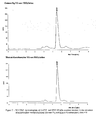
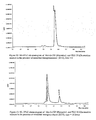
- the protein solution was incubated for 16 hours at room temperature under gentle agitation. An aliquot of the reaction mixture was analysed on a SE-HPLC column at the beginning and the end of the reaction to determine the yield and protein concentration.
- Nonglycosylated rec-G-CSF expressed in E. coli, was dissolved in 100mM tris buffer at pH 7.5 to a concentration of 1mg protein/ml, corresponding to about 53 ⁇ M. 20kDa monomethoxy-poly(ethylene glycol) amine (methoxypoly(ethylene glycol) amine 20000, Fluka) was then added to the protein solution to a molar ratio of 10:1 PEG:G-CSF. After the addition of
- Guinea Pig transglutaminase (Sigma) to a concentration of 0.3U/ml reaction solution and 10mM CaCl 2 , the protein solution was incubated for 16 hours at room temperature under gentle agitation. Samples of the reaction mixture were analysed on a SE-HPLC column at the beginning and the end of the reaction to determine the yield and protein concentration.
- Nonglycosylated rec-G-CSF expressed in E. coli, was dissolved in 100mM tris buffer at pH 7.5 at a concentration of 0.5mg protein/ml, corresponding to about 26.5 ⁇ M. 20kDa monomethoxy-poly(ethylene glycol) amine (methoxypoly(ethylene glycol) amine 20000, Fluka) was then added to the protein solution to a molar ratio of 10:1 PEG:G-CSF.
- human keratinocyte transglutaminase recombinant human keratinocyte transglutaminase, N-Zyme
- human keratinocyte transglutaminase recombinant human keratinocyte transglutaminase, N-Zyme
- the protein solution was incubated for 16 hours at room temperature under gentle agitation.
- An aliquot of the reaction mixture was analysed on a SE-HPLC column at the beginning and the end of the reaction to determine the yield and protein concentration.
- Example 6 Determination of in vitro biological activity of met-G-CSF-Gln 135 -PEG20kDa
- Met-G-CSF-Gln 135 -PEG20kDa biological activity was tested in vitro with a proliferation assay employing the murine myeloblastic cell line M-NFS60 which increases its proliferation activity in the presence of G-CSF ( N. Shirafuji et al., A New Bioassay for Human Granulocyte Colony-Stimulating Factor Using Murine Myeloblastic NFS-60 Cells as Targets and Estimation of Its Level in Sera from Normal Healthy Persons and Patients with Infectious and Haematological Disorders, Exp. Hematol., 17, 116-119, 1989 ).
- M-NFS60 cells were distributed into 96-well plates at a concentration of 10 4 cells/well in 200 ⁇ l of culture medium (RPMI 1640, 10% FBS) containing increasing concentrations of met-G-CSF-Gln 135 -PEG20kDa (1-30ng/ml), standard G-CSF (0.001-5ng/ml) and N-terminally PEGylated met-G-CSF (1-30ng/ml).
- culture medium RPMI 1640, 10% FBS
- the plates were incubated at 37°C in a 5% CO 2 atmosphere. After 48 hours, 20 ⁇ l of WST1 reagent were added and incubation continued for a further 4 hours under the same conditions.
- the adsorbance of the samples was measured in the wavelength range 420-480 nm against a (white) background using an ELISA microplate reader.
- the biological activity of the samples tested was calculated using standard proliferation curves and expressed as an EC 50 value (concentration that stimulates 50 % of the maximum growth).
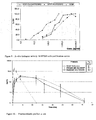
- Table 3 In vitro bioactivity results G-CSF Standard MetG-CSF-NH-PEG20KDa MetG-CSF-Gln 135 -PEG-20kDa EC50 (pg/ml) (*) 60 435 343 Residual Activity (%) ---- 13,7 17,4 (*) concentration in G-CSF equivalents.
- met-G-CSF-Gln 135 -PEG20kDa derivative mono-conjugated to glutamine 135, had an in vitro residual activity of about 20% of the native protein, slightly higher than that of N-terminally PEGylated h-G-CSF (met-G-CSF-NH-PEG20kDa).
- Example 7 Determination of the met-G-CSF-Gln 135 -PEG20kDa pharmacokinetic profile
- This experiment examined the long-lasting effect of met-G-CSF-Gln 135 -PEG20kDa, selectively monoPEGylated on glutamine 135, administered subcutaneously to rats, by time evaluation of the protein sera levels.
- Each of the four animals in the first group received a 0.1mg/kg dose of G-CSF, dissolved in a pH 5 buffered saline solution containing 10mM of acetate buffer.
- Met-G-CSF-NH-PEG20kDa (dissolved in a pH 5 buffered saline solution containing 10mM of acetate buffer) was administered at the dose of 0.1mg/kg, calculated as G-CSF equivalent, to each of the four animals in the second group.
- Met-G-CSF-Gln 135 -PEG20kDa (dissolved in a pH 5 buffered saline solution containing 10mM acetate buffer) was administered at the dose of 0.1mg/kg, calculated as G-CSF equivalent, to each of the four animals in the third group.
- a pH 5 buffered saline solution containing 10mM acetate buffer containing 10mM acetate buffer
- 0.5ml blood samples were taken.
- the blood sample was processed to obtain sera which were tested with an ELISA protein immune assay (Kit ELISA: Human G-CSF Assay Kit; cod. JP27131; IBL Co.
- h-G-CSF as a standard for the sera obtained from rats which had been administered h-G-CSF
- met-G-CSF-NH-PEG20kDa as a standard for the sera obtained from the rats in the second group
- met-G-CSF-Gln 135 -PEG20kDa as a standard for the rat sera dosage for rats treated with met-G-CSF-Gln 135 -PEG20kDa.
- Table 4 Pharmacokinetic parameters hG-CSF Neulasta® MetG-CSF-Gln 135 -PEG-20kDa T max (h) 2 8 8 C max (ng/ml) 132 29.2 36.9 AUC 735 920 794 T 1/2 (h) 2.1 8.1 8.2
- Example 8 Preparation of the site-specific mono-PEGylated met-G-CSF-Gln 135 -PEG20kDa (filgrastim-Gln135-PEG20kDa) derivative
- Nonglycosilated rec-met-G-CSF (filgrastim), expressed in E. coli, was dissolved in 10mM potassium dihydrogen phosphate at pH 7.4 to a concentration of 1mg protein/ml, corresponding to about 53 ⁇ M. 20kDa monomethoxy-poly(ethylene glycol) amine (methoxypoly(ethylene glycol) amine 20000, Fluka) was then added to the protein solution to a molar ratio of 10:1 PEG:G-CSF. After adding microbial transglutaminase (Activa WM, Ajinomoto) to a concentration of 0.024U/ml reaction solution, the protein solution was incubated for 16 hours at room temperature under gentle agitation.
- Activa WM microbial transglutaminase
- the solution was diluted with a 20mM sodium acetate buffer at pH 4.0 and purified by column chromatography (CM Sepharose), eluting with a linear gradient (from 0 to 500mM NaCl in 15 column volumes).
- CM Sepharose column chromatography
- a pool of the fractions containing monoPEGylated G-CSF was concentrated and subjected to gel filtration on a Sephadex G-25 column, eluting with a 20mM sodium acetate buffer at pH 4.0.
- the derivative was selectively monoPEGylated on the Gln 135 residue (rec-h-met-G-CSF-Gln 135 -PEG20kDa) at a concentration of about 1mg/ml in 20mM sodium acetate buffer at pH 4.0.
- Nonglycosylated Gln135Asn met-G-CSF mutant expressed in E. coli, was dissolved in 10mM potassium dihydrogen phosphate buffer at pH 7.4 to a concentration of 1mg protein/ml, corresponding to about 53 ⁇ M.
- 20kDa monomethoxy-poly(ethylene glycol) amine (methoxypoly(ethylene glycol) amine 20000, Fluka) was then added to the protein solution to a molar ratio of 10:1 PEG:G-CSF.
- microbial transglutaminase Activa WM, Ajinomoto
- the protein solution was incubated for 16 hours at room temperature under gentle agitation. Samples of the reaction mixture were analysed on a SE-HPLC column at the beginning and the end of the reaction to determine the yield and protein concentration.
- Example 10 Gln135Asn-Thr134Gln met-G-CSF mutant PEGylation to PEG20kDa-NH 2 by microbial TG-ase
- Nonglycosylated Gln135Asn-Thr134Gln mutant expressed in E. coli , wais dissolved in 10mM potassium dihydrogen phosphate buffer at pH 7.4 to a concentration of 1mg protein/ml, corresponding to about 53 ⁇ M.
- 20kDa monomethoxy-poly(ethylene glycol) amine methoxypoly(ethylene glycol) amine 20000, Fluka
- microbial transglutaminase Activa WM, Ajinomoto
- the protein solution was incubated for 16 hours at room temperature under gentle agitation.
- Example 11 PEGylation of Met-G-CSF (filgrastim) to PEG20kDa-NH 2 by using microbial TG-ase (250mU/mg of protein)
- This example shows that it is possible to quantitatively obtain PEGylation of filgrastim after only 2 hours reaction time, using MTG-ase in a ratio of 250mU MTgase/mg of filgrastim.
- Nonglycosilated rec-met-G-CSF (filgrastim), expressed in E. coli , was dissolved in 10mM potassium dihydrogen phosphate buffer at pH 7.4 to a concentration of 1mg protein/ml, corresponding to about 53 ⁇ M.
- 20kDa monomethoxy-poly(ethylene glycol) amine (methoxypoly(ethylene glycol) amine 20000, Fluka) was then added to the protein solution to a molar ratio of 10:1 PEG:G-CSF.
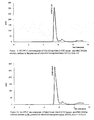
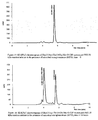
- Microbial transglutaminase (Activa WM, Ajinomoto) was then added to the reaction mixture at a concentration of 0.25U/ml reaction solution. The reaction was carried out under gentle agitation for 2 hours at room temperature. Samples were taken and analysed on a SE-HPLC column to determine the reaction yield. Chromatograms of the reaction mixture at the start and after 2 hours at room temperature are shown respectively in Figures 19 and 20 .
Landscapes
- Health & Medical Sciences (AREA)
- Chemical & Material Sciences (AREA)
- Life Sciences & Earth Sciences (AREA)
- Medicinal Chemistry (AREA)
- Organic Chemistry (AREA)
- General Health & Medical Sciences (AREA)
- Pharmacology & Pharmacy (AREA)
- Animal Behavior & Ethology (AREA)
- Public Health (AREA)
- Veterinary Medicine (AREA)
- Engineering & Computer Science (AREA)
- Bioinformatics & Cheminformatics (AREA)
- Chemical Kinetics & Catalysis (AREA)
- General Chemical & Material Sciences (AREA)
- Nuclear Medicine, Radiotherapy & Molecular Imaging (AREA)
- Biophysics (AREA)
- Epidemiology (AREA)
- Proteomics, Peptides & Aminoacids (AREA)
- Molecular Biology (AREA)
- Immunology (AREA)
- Toxicology (AREA)
- Zoology (AREA)
- Gastroenterology & Hepatology (AREA)
- Biochemistry (AREA)
- Genetics & Genomics (AREA)
- Communicable Diseases (AREA)
- Hematology (AREA)
- Diabetes (AREA)
- Oncology (AREA)
- Peptides Or Proteins (AREA)
- Medicinal Preparation (AREA)
- Medicines That Contain Protein Lipid Enzymes And Other Medicines (AREA)
- Preparation Of Compounds By Using Micro-Organisms (AREA)
- Transition And Organic Metals Composition Catalysts For Addition Polymerization (AREA)
- Saccharide Compounds (AREA)
Priority Applications (1)
| Application Number | Priority Date | Filing Date | Title |
|---|---|---|---|
| PL07788029T PL2049566T3 (pl) | 2006-08-11 | 2007-07-30 | Swoiste dla miejsca monokoniugaty G-CSF |
Applications Claiming Priority (2)
| Application Number | Priority Date | Filing Date | Title |
|---|---|---|---|
| IT001624A ITMI20061624A1 (it) | 2006-08-11 | 2006-08-11 | Mono-coniugati sito-specifici di g-csf |
| PCT/EP2007/057824 WO2008017603A1 (en) | 2006-08-11 | 2007-07-30 | G-csf site-specific mono-conjugates |
Publications (2)
| Publication Number | Publication Date |
|---|---|
| EP2049566A1 EP2049566A1 (en) | 2009-04-22 |
| EP2049566B1 true EP2049566B1 (en) | 2009-12-30 |
Family
ID=38510395
Family Applications (1)
| Application Number | Title | Priority Date | Filing Date |
|---|---|---|---|
| EP07788029A Active EP2049566B1 (en) | 2006-08-11 | 2007-07-30 | G-csf site-specific mono-conjugates |
Country Status (10)
| Country | Link |
|---|---|
| US (1) | US7893019B2 (pl) |
| EP (1) | EP2049566B1 (pl) |
| JP (1) | JP5336372B2 (pl) |
| AT (1) | ATE453666T1 (pl) |
| CA (1) | CA2660615A1 (pl) |
| DE (1) | DE602007004120D1 (pl) |
| ES (1) | ES2338605T3 (pl) |
| IT (1) | ITMI20061624A1 (pl) |
| PL (1) | PL2049566T3 (pl) |
| WO (1) | WO2008017603A1 (pl) |
Cited By (1)
| Publication number | Priority date | Publication date | Assignee | Title |
|---|---|---|---|---|
| EP3050570A1 (en) | 2015-01-31 | 2016-08-03 | Neurovision Pharma GmbH | Pharmaceutical composition consisting of a combination of G-CSF with GM-CSF |
Families Citing this family (51)
| Publication number | Priority date | Publication date | Assignee | Title |
|---|---|---|---|---|
| US7157277B2 (en) * | 2001-11-28 | 2007-01-02 | Neose Technologies, Inc. | Factor VIII remodeling and glycoconjugation of Factor VIII |
| US7173003B2 (en) * | 2001-10-10 | 2007-02-06 | Neose Technologies, Inc. | Granulocyte colony stimulating factor: remodeling and glycoconjugation of G-CSF |
| US7214660B2 (en) * | 2001-10-10 | 2007-05-08 | Neose Technologies, Inc. | Erythropoietin: remodeling and glycoconjugation of erythropoietin |
| US8008252B2 (en) | 2001-10-10 | 2011-08-30 | Novo Nordisk A/S | Factor VII: remodeling and glycoconjugation of Factor VII |
| DE60336555D1 (de) * | 2002-06-21 | 2011-05-12 | Novo Nordisk Healthcare Ag | Pegylierte glykoformen von faktor vii |
| NZ542094A (en) * | 2003-03-14 | 2008-12-24 | Neose Technologies Inc | Branched polymer conjugates comprising a peptide and water-soluble polymer chains |
| PL1615945T3 (pl) | 2003-04-09 | 2012-03-30 | Ratiopharm Gmbh | Sposoby glikopegylacji i białka/peptydy wytwarzane tymi sposobami |
| US8791070B2 (en) | 2003-04-09 | 2014-07-29 | Novo Nordisk A/S | Glycopegylated factor IX |
| JP2007523630A (ja) * | 2003-05-09 | 2007-08-23 | ネオス テクノロジーズ インコーポレイテッド | ヒト成長ホルモングリコシル化突然変異体の組成と調合法 |
| US9005625B2 (en) * | 2003-07-25 | 2015-04-14 | Novo Nordisk A/S | Antibody toxin conjugates |
| US20080305992A1 (en) | 2003-11-24 | 2008-12-11 | Neose Technologies, Inc. | Glycopegylated erythropoietin |
| EP1694347B1 (en) * | 2003-11-24 | 2013-11-20 | BioGeneriX AG | Glycopegylated erythropoietin |
| US8633157B2 (en) * | 2003-11-24 | 2014-01-21 | Novo Nordisk A/S | Glycopegylated erythropoietin |
| JP2007515410A (ja) * | 2003-12-03 | 2007-06-14 | ネオス テクノロジーズ インコーポレイテッド | GlycoPEG化卵胞刺激ホルモン |
| US20060040856A1 (en) | 2003-12-03 | 2006-02-23 | Neose Technologies, Inc. | Glycopegylated factor IX |
| CN1897812B (zh) * | 2003-12-03 | 2011-08-17 | 生物种属学股份公司 | 糖聚乙二醇化的粒细胞集落刺激因子 |
| NZ548123A (en) * | 2004-01-08 | 2010-05-28 | Novo Nordisk As | O-linked glycosylation of peptides |
| US20080300173A1 (en) | 2004-07-13 | 2008-12-04 | Defrees Shawn | Branched Peg Remodeling and Glycosylation of Glucagon-Like Peptides-1 [Glp-1] |
| US20090292110A1 (en) * | 2004-07-23 | 2009-11-26 | Defrees Shawn | Enzymatic modification of glycopeptides |
| WO2006031811A2 (en) * | 2004-09-10 | 2006-03-23 | Neose Technologies, Inc. | Glycopegylated interferon alpha |
| WO2006050247A2 (en) | 2004-10-29 | 2006-05-11 | Neose Technologies, Inc. | Remodeling and glycopegylation of fibroblast growth factor (fgf) |
| US9029331B2 (en) * | 2005-01-10 | 2015-05-12 | Novo Nordisk A/S | Glycopegylated granulocyte colony stimulating factor |
| WO2006121569A2 (en) | 2005-04-08 | 2006-11-16 | Neose Technologies, Inc. | Compositions and methods for the preparation of protease resistant human growth hormone glycosylation mutants |
| EP2975135A1 (en) | 2005-05-25 | 2016-01-20 | Novo Nordisk A/S | Glycopegylated factor IX |
| US20110003744A1 (en) * | 2005-05-25 | 2011-01-06 | Novo Nordisk A/S | Glycopegylated Erythropoietin Formulations |
| US20070105755A1 (en) * | 2005-10-26 | 2007-05-10 | Neose Technologies, Inc. | One pot desialylation and glycopegylation of therapeutic peptides |
| WO2007056191A2 (en) | 2005-11-03 | 2007-05-18 | Neose Technologies, Inc. | Nucleotide sugar purification using membranes |
| EP2049144B8 (en) * | 2006-07-21 | 2015-02-18 | ratiopharm GmbH | Glycosylation of peptides via o-linked glycosylation sequences |
| EP2054521A4 (en) | 2006-10-03 | 2012-12-19 | Novo Nordisk As | PROCESS FOR CLEANING POLYPEPTIDE CONJUGATES |
| ES2655734T3 (es) * | 2006-10-04 | 2018-02-21 | Novo Nordisk A/S | Glicopéptidos y azúcares pegilados unidos a glicerol |
| HRP20130382T1 (hr) * | 2007-04-03 | 2013-05-31 | Biogenerix Ag | Postupci lijeäśenja pomoä†u glikopegiliranog g-csf |
| WO2008151258A2 (en) * | 2007-06-04 | 2008-12-11 | Neose Technologies, Inc. | O-linked glycosylation using n-acetylglucosaminyl transferases |
| CA2690611C (en) * | 2007-06-12 | 2015-12-08 | Novo Nordisk A/S | Improved process for the production of nucleotide sugars |
| US7968811B2 (en) * | 2007-06-29 | 2011-06-28 | Harley-Davidson Motor Company Group, Inc. | Integrated ignition and key switch |
| MX2010002448A (es) | 2007-08-27 | 2010-10-04 | Biogenerix Ag | Formulacion liquida del g-csf conjugado. |
| US8207112B2 (en) * | 2007-08-29 | 2012-06-26 | Biogenerix Ag | Liquid formulation of G-CSF conjugate |
| CA2711503A1 (en) * | 2008-01-08 | 2009-07-16 | Biogenerix Ag | Glycoconjugation of polypeptides using oligosaccharyltransferases |
| PL2257311T3 (pl) | 2008-02-27 | 2014-09-30 | Novo Nordisk As | Koniugaty cząsteczek czynnika VIII |
| CN102159230A (zh) * | 2008-07-23 | 2011-08-17 | Ambrx公司 | 经修饰的牛g-csf多肽和其用途 |
| IT1392655B1 (it) * | 2008-11-20 | 2012-03-16 | Bio Ker S R L | Site-specific monoconjugated insulinotropic glp-1 peptides. |
| TWI480288B (zh) | 2010-09-23 | 2015-04-11 | Lilly Co Eli | 牛顆粒細胞群落刺激因子及其變體之調配物 |
| CA2841313C (en) | 2011-07-19 | 2023-10-24 | Cellmosaic, Llc | Sugar alcohol-based crosslinking reagents, macromolecules, therapeutic bioconjugates, and synthetic methods thereof |
| ITMI20122097A1 (it) * | 2012-12-10 | 2014-06-11 | Bio Ker S R L | Procedimento per la preparazione di proteine terapeutiche peghilate ad elevato grado di purezza |
| NZ739830A (en) | 2015-07-12 | 2021-12-24 | Hangzhou Dac Biotech Co Ltd | Bridge linkers for conjugation of cell-binding molecules |
| US9839687B2 (en) | 2015-07-15 | 2017-12-12 | Suzhou M-Conj Biotech Co., Ltd. | Acetylenedicarboxyl linkers and their uses in specific conjugation of a cell-binding molecule |
| KR20220150408A (ko) | 2016-11-14 | 2022-11-10 | 항저우 디에이씨 바이오테크 씨오, 엘티디 | 결합 링커, 그러한 결합 링커를 함유하는 세포 결합 분자-약물 결합체, 링커를 갖는 그러한 결합체의 제조 및 사용 |
| CN114040778A (zh) | 2019-06-29 | 2022-02-11 | 杭州多禧生物科技有限公司 | 一种细胞结合分子-Tubulysin衍生物偶联物及其制备方法 |
| CN112316120A (zh) * | 2019-08-05 | 2021-02-05 | 天津派格生物技术有限公司 | 使用低动员型g-csf有效且安全治疗粒细胞减少症的方法 |
| TR201917122A2 (tr) * | 2019-11-05 | 2021-05-21 | Hacettepe Ueniversitesi | Protei̇n i̇laçlarin enzi̇mati̇k yolla bi̇yopoli̇merlerle konjugasyonu |
| WO2021188869A2 (en) * | 2020-03-20 | 2021-09-23 | Amgen Inc. | Determination of free n-terminus of pegfilgrastim using an acid protease |
| EP4426727A2 (en) | 2021-11-03 | 2024-09-11 | Hangzhou Dac Biotech Co., Ltd. | Specific conjugation of an antibody |
Family Cites Families (11)
| Publication number | Priority date | Publication date | Assignee | Title |
|---|---|---|---|---|
| US4847325A (en) | 1988-01-20 | 1989-07-11 | Cetus Corporation | Conjugation of polymer to colony stimulating factor-1 |
| CA1340810C (en) | 1988-03-31 | 1999-11-02 | Motoo Yamasaki | Polypeptide derivatives of human granulocyte colony stimulating factor |
| WO1990006952A1 (fr) | 1988-12-22 | 1990-06-28 | Kirin-Amgen, Inc. | Facteur de stimulation de colonies de granulocytes modifies chimiquement |
| EP0785276A4 (en) | 1994-09-29 | 2002-01-09 | Ajinomoto Kk | MODIFICATION OF A PEPTIDE AND A PROTEIN |
| US5824784A (en) | 1994-10-12 | 1998-10-20 | Amgen Inc. | N-terminally chemically modified protein compositions and methods |
| IL144361A0 (en) | 1999-01-29 | 2002-05-23 | Hoffmann La Roche | Gcsf conjugates |
| DE10011926A1 (de) * | 2000-01-14 | 2001-08-02 | Deutsches Krebsforsch | Genetisch veränderte Fibroblastenzellen |
| EP1425304B9 (en) * | 2001-07-11 | 2010-09-08 | Maxygen, Inc. | G-csf conjugates |
| WO2004101619A1 (ja) * | 2003-05-15 | 2004-11-25 | Shionogi Co., Ltd. | 機能的糖ペプチドの合理的設計および合成 |
| EP1586334A1 (en) | 2004-04-15 | 2005-10-19 | TRASTEC scpa | G-CSF conjugates with peg |
| CN101031323A (zh) | 2004-07-16 | 2007-09-05 | 尼克塔治疗亚拉巴马公司 | Gm-csf部分与聚合物的缀合物 |
-
2006
- 2006-08-11 IT IT001624A patent/ITMI20061624A1/it unknown
-
2007
- 2007-07-30 DE DE602007004120T patent/DE602007004120D1/de active Active
- 2007-07-30 PL PL07788029T patent/PL2049566T3/pl unknown
- 2007-07-30 JP JP2009524158A patent/JP5336372B2/ja not_active Expired - Fee Related
- 2007-07-30 WO PCT/EP2007/057824 patent/WO2008017603A1/en not_active Ceased
- 2007-07-30 CA CA002660615A patent/CA2660615A1/en not_active Abandoned
- 2007-07-30 ES ES07788029T patent/ES2338605T3/es active Active
- 2007-07-30 EP EP07788029A patent/EP2049566B1/en active Active
- 2007-07-30 US US12/310,003 patent/US7893019B2/en active Active
- 2007-07-30 AT AT07788029T patent/ATE453666T1/de not_active IP Right Cessation
Cited By (1)
| Publication number | Priority date | Publication date | Assignee | Title |
|---|---|---|---|---|
| EP3050570A1 (en) | 2015-01-31 | 2016-08-03 | Neurovision Pharma GmbH | Pharmaceutical composition consisting of a combination of G-CSF with GM-CSF |
Also Published As
| Publication number | Publication date |
|---|---|
| ATE453666T1 (de) | 2010-01-15 |
| PL2049566T3 (pl) | 2010-06-30 |
| US7893019B2 (en) | 2011-02-22 |
| JP2010500390A (ja) | 2010-01-07 |
| EP2049566A1 (en) | 2009-04-22 |
| ITMI20061624A1 (it) | 2008-02-12 |
| CA2660615A1 (en) | 2008-02-14 |
| JP5336372B2 (ja) | 2013-11-06 |
| ES2338605T3 (es) | 2010-05-10 |
| DE602007004120D1 (de) | 2010-02-11 |
| US20100029555A1 (en) | 2010-02-04 |
| WO2008017603A1 (en) | 2008-02-14 |
Similar Documents
| Publication | Publication Date | Title |
|---|---|---|
| EP2049566B1 (en) | G-csf site-specific mono-conjugates | |
| CA2405716C (en) | Chemically modified novel erythropoietin stimulating protein compositions and methods | |
| EP1037657B1 (en) | Alpha-interferon-polymer-conjugates having enhanced biological activity and methods of preparing the same | |
| EP0247860B1 (en) | Tumor necrosis factor formulation and its preparation | |
| JP2006321808A (ja) | 化学的に修飾されたヒト成長ホルモンコンジュゲート | |
| JPH10510980A (ja) | 巨核球の成長と分化を刺激する組成物とその方法 | |
| TWI281864B (en) | N-terminally monopegylated human growth hormone conjugates and process for their preparation | |
| US20070166278A1 (en) | Novel g-csf conjugates | |
| CN101627056B (zh) | Y型聚乙二醇修饰的g-csf及其制备方法和应用 | |
| KR101483814B1 (ko) | 폴리에틸렌 글리콜에 의해 변형된 인터페론 알파 2a, 이의 합성 방법 및 용도 | |
| KR100735784B1 (ko) | 인간 과립구콜로니자극인자 변이체 및 이의 화학적 접합물 | |
| TW201138831A (en) | Modified granulocyte colony stimulating factor (G-CSF) | |
| US20090203589A1 (en) | Chemically modified human growth hormone receptor antagonist conjugates | |
| KR100808089B1 (ko) | 인간 과립구콜로니자극인자 변이체 및 이의 화학적 접합물 |
Legal Events
| Date | Code | Title | Description |
|---|---|---|---|
| PUAI | Public reference made under article 153(3) epc to a published international application that has entered the european phase |
Free format text: ORIGINAL CODE: 0009012 |
|
| 17P | Request for examination filed |
Effective date: 20090128 |
|
| AK | Designated contracting states |
Kind code of ref document: A1 Designated state(s): AT BE BG CH CY CZ DE DK EE ES FI FR GB GR HU IE IS IT LI LT LU LV MC MT NL PL PT RO SE SI SK TR |
|
| AX | Request for extension of the european patent |
Extension state: AL BA HR MK RS |
|
| GRAP | Despatch of communication of intention to grant a patent |
Free format text: ORIGINAL CODE: EPIDOSNIGR1 |
|
| RIN1 | Information on inventor provided before grant (corrected) |
Inventor name: SERGI, MAURO Inventor name: TAYLOR, GEOFFREY Inventor name: SCHREPFER, RODOLFO Inventor name: ORSINI, GAETANO Inventor name: TONON, GIANCARLO |
|
| GRAS | Grant fee paid |
Free format text: ORIGINAL CODE: EPIDOSNIGR3 |
|
| GRAA | (expected) grant |
Free format text: ORIGINAL CODE: 0009210 |
|
| AK | Designated contracting states |
Kind code of ref document: B1 Designated state(s): AT BE BG CH CY CZ DE DK EE ES FI FR GB GR HU IE IS IT LI LT LU LV MC MT NL PL PT RO SE SI SK TR |
|
| REG | Reference to a national code |
Ref country code: GB Ref legal event code: FG4D |
|
| REG | Reference to a national code |
Ref country code: CH Ref legal event code: EP |
|
| REG | Reference to a national code |
Ref country code: IE Ref legal event code: FG4D |
|
| REF | Corresponds to: |
Ref document number: 602007004120 Country of ref document: DE Date of ref document: 20100211 Kind code of ref document: P |
|
| REG | Reference to a national code |
Ref country code: CH Ref legal event code: NV Representative=s name: PATENTANWAELTE SCHAAD, BALASS, MENZL & PARTNER AG |
|
| REG | Reference to a national code |
Ref country code: NL Ref legal event code: T3 |
|
| REG | Reference to a national code |
Ref country code: GR Ref legal event code: EP Ref document number: 20100400730 Country of ref document: GR |
|
| PG25 | Lapsed in a contracting state [announced via postgrant information from national office to epo] |
Ref country code: LT Free format text: LAPSE BECAUSE OF FAILURE TO SUBMIT A TRANSLATION OF THE DESCRIPTION OR TO PAY THE FEE WITHIN THE PRESCRIBED TIME-LIMIT Effective date: 20091230 Ref country code: SE Free format text: LAPSE BECAUSE OF FAILURE TO SUBMIT A TRANSLATION OF THE DESCRIPTION OR TO PAY THE FEE WITHIN THE PRESCRIBED TIME-LIMIT Effective date: 20091230 Ref country code: FI Free format text: LAPSE BECAUSE OF FAILURE TO SUBMIT A TRANSLATION OF THE DESCRIPTION OR TO PAY THE FEE WITHIN THE PRESCRIBED TIME-LIMIT Effective date: 20091230 |
|
| REG | Reference to a national code |
Ref country code: ES Ref legal event code: FG2A Ref document number: 2338605 Country of ref document: ES Kind code of ref document: T3 |
|
| LTIE | Lt: invalidation of european patent or patent extension |
Effective date: 20091230 |
|
| PG25 | Lapsed in a contracting state [announced via postgrant information from national office to epo] |
Ref country code: SI Free format text: LAPSE BECAUSE OF FAILURE TO SUBMIT A TRANSLATION OF THE DESCRIPTION OR TO PAY THE FEE WITHIN THE PRESCRIBED TIME-LIMIT Effective date: 20091230 Ref country code: LV Free format text: LAPSE BECAUSE OF FAILURE TO SUBMIT A TRANSLATION OF THE DESCRIPTION OR TO PAY THE FEE WITHIN THE PRESCRIBED TIME-LIMIT Effective date: 20091230 |
|
| PG25 | Lapsed in a contracting state [announced via postgrant information from national office to epo] |
Ref country code: AT Free format text: LAPSE BECAUSE OF FAILURE TO SUBMIT A TRANSLATION OF THE DESCRIPTION OR TO PAY THE FEE WITHIN THE PRESCRIBED TIME-LIMIT Effective date: 20091230 |
|
| REG | Reference to a national code |
Ref country code: HU Ref legal event code: AG4A Ref document number: E007623 Country of ref document: HU |
|
| PG25 | Lapsed in a contracting state [announced via postgrant information from national office to epo] |
Ref country code: IS Free format text: LAPSE BECAUSE OF FAILURE TO SUBMIT A TRANSLATION OF THE DESCRIPTION OR TO PAY THE FEE WITHIN THE PRESCRIBED TIME-LIMIT Effective date: 20100430 Ref country code: BG Free format text: LAPSE BECAUSE OF FAILURE TO SUBMIT A TRANSLATION OF THE DESCRIPTION OR TO PAY THE FEE WITHIN THE PRESCRIBED TIME-LIMIT Effective date: 20100330 Ref country code: RO Free format text: LAPSE BECAUSE OF FAILURE TO SUBMIT A TRANSLATION OF THE DESCRIPTION OR TO PAY THE FEE WITHIN THE PRESCRIBED TIME-LIMIT Effective date: 20091230 Ref country code: PT Free format text: LAPSE BECAUSE OF FAILURE TO SUBMIT A TRANSLATION OF THE DESCRIPTION OR TO PAY THE FEE WITHIN THE PRESCRIBED TIME-LIMIT Effective date: 20100430 Ref country code: EE Free format text: LAPSE BECAUSE OF FAILURE TO SUBMIT A TRANSLATION OF THE DESCRIPTION OR TO PAY THE FEE WITHIN THE PRESCRIBED TIME-LIMIT Effective date: 20091230 |
|
| PG25 | Lapsed in a contracting state [announced via postgrant information from national office to epo] |
Ref country code: SK Free format text: LAPSE BECAUSE OF FAILURE TO SUBMIT A TRANSLATION OF THE DESCRIPTION OR TO PAY THE FEE WITHIN THE PRESCRIBED TIME-LIMIT Effective date: 20091230 Ref country code: CZ Free format text: LAPSE BECAUSE OF FAILURE TO SUBMIT A TRANSLATION OF THE DESCRIPTION OR TO PAY THE FEE WITHIN THE PRESCRIBED TIME-LIMIT Effective date: 20091230 |
|
| PG25 | Lapsed in a contracting state [announced via postgrant information from national office to epo] |
Ref country code: CY Free format text: LAPSE BECAUSE OF FAILURE TO SUBMIT A TRANSLATION OF THE DESCRIPTION OR TO PAY THE FEE WITHIN THE PRESCRIBED TIME-LIMIT Effective date: 20091230 |
|
| PLBE | No opposition filed within time limit |
Free format text: ORIGINAL CODE: 0009261 |
|
| STAA | Information on the status of an ep patent application or granted ep patent |
Free format text: STATUS: NO OPPOSITION FILED WITHIN TIME LIMIT |
|
| 26N | No opposition filed |
Effective date: 20101001 |
|
| PG25 | Lapsed in a contracting state [announced via postgrant information from national office to epo] |
Ref country code: DK Free format text: LAPSE BECAUSE OF FAILURE TO SUBMIT A TRANSLATION OF THE DESCRIPTION OR TO PAY THE FEE WITHIN THE PRESCRIBED TIME-LIMIT Effective date: 20091230 |
|
| PG25 | Lapsed in a contracting state [announced via postgrant information from national office to epo] |
Ref country code: MC Free format text: LAPSE BECAUSE OF NON-PAYMENT OF DUE FEES Effective date: 20100731 |
|
| PG25 | Lapsed in a contracting state [announced via postgrant information from national office to epo] |
Ref country code: IE Free format text: LAPSE BECAUSE OF NON-PAYMENT OF DUE FEES Effective date: 20100730 |
|
| PG25 | Lapsed in a contracting state [announced via postgrant information from national office to epo] |
Ref country code: MT Free format text: LAPSE BECAUSE OF FAILURE TO SUBMIT A TRANSLATION OF THE DESCRIPTION OR TO PAY THE FEE WITHIN THE PRESCRIBED TIME-LIMIT Effective date: 20091230 |
|
| PG25 | Lapsed in a contracting state [announced via postgrant information from national office to epo] |
Ref country code: LU Free format text: LAPSE BECAUSE OF NON-PAYMENT OF DUE FEES Effective date: 20100730 |
|
| REG | Reference to a national code |
Ref country code: DE Ref legal event code: R082 Ref document number: 602007004120 Country of ref document: DE Representative=s name: MEISSNER BOLTE PATENTANWAELTE RECHTSANWAELTE P, DE Ref country code: DE Ref legal event code: R082 Ref document number: 602007004120 Country of ref document: DE Representative=s name: MEISSNER, BOLTE & PARTNER GBR, DE |
|
| REG | Reference to a national code |
Ref country code: DE Ref legal event code: R082 Ref document number: 602007004120 Country of ref document: DE Representative=s name: MEISSNER, BOLTE & PARTNER GBR, DE |
|
| REG | Reference to a national code |
Ref country code: FR Ref legal event code: PLFP Year of fee payment: 10 |
|
| REG | Reference to a national code |
Ref country code: FR Ref legal event code: PLFP Year of fee payment: 11 |
|
| REG | Reference to a national code |
Ref country code: FR Ref legal event code: PLFP Year of fee payment: 12 |
|
| PGFP | Annual fee paid to national office [announced via postgrant information from national office to epo] |
Ref country code: NL Payment date: 20220725 Year of fee payment: 16 |
|
| PGFP | Annual fee paid to national office [announced via postgrant information from national office to epo] |
Ref country code: TR Payment date: 20220726 Year of fee payment: 16 Ref country code: IT Payment date: 20220725 Year of fee payment: 16 Ref country code: GB Payment date: 20220825 Year of fee payment: 16 |
|
| PGFP | Annual fee paid to national office [announced via postgrant information from national office to epo] |
Ref country code: PL Payment date: 20220727 Year of fee payment: 16 Ref country code: GR Payment date: 20220726 Year of fee payment: 16 Ref country code: FR Payment date: 20220727 Year of fee payment: 16 Ref country code: BE Payment date: 20220725 Year of fee payment: 16 |
|
| PGFP | Annual fee paid to national office [announced via postgrant information from national office to epo] |
Ref country code: ES Payment date: 20221027 Year of fee payment: 16 Ref country code: DE Payment date: 20220930 Year of fee payment: 16 |
|
| PGFP | Annual fee paid to national office [announced via postgrant information from national office to epo] |
Ref country code: HU Payment date: 20221026 Year of fee payment: 16 Ref country code: CH Payment date: 20221027 Year of fee payment: 16 |
|
| P01 | Opt-out of the competence of the unified patent court (upc) registered |
Effective date: 20230525 |
|
| REG | Reference to a national code |
Ref country code: DE Ref legal event code: R119 Ref document number: 602007004120 Country of ref document: DE |
|
| REG | Reference to a national code |
Ref country code: CH Ref legal event code: PL |
|
| REG | Reference to a national code |
Ref country code: NL Ref legal event code: MM Effective date: 20230801 |
|
| REG | Reference to a national code |
Ref country code: BE Ref legal event code: MM Effective date: 20230731 |
|
| GBPC | Gb: european patent ceased through non-payment of renewal fee |
Effective date: 20230730 |
|
| PG25 | Lapsed in a contracting state [announced via postgrant information from national office to epo] |
Ref country code: GR Free format text: LAPSE BECAUSE OF NON-PAYMENT OF DUE FEES Effective date: 20240207 |
|
| PG25 | Lapsed in a contracting state [announced via postgrant information from national office to epo] |
Ref country code: NL Free format text: LAPSE BECAUSE OF NON-PAYMENT OF DUE FEES Effective date: 20230801 |
|
| PG25 | Lapsed in a contracting state [announced via postgrant information from national office to epo] |
Ref country code: NL Free format text: LAPSE BECAUSE OF NON-PAYMENT OF DUE FEES Effective date: 20230801 Ref country code: HU Free format text: LAPSE BECAUSE OF NON-PAYMENT OF DUE FEES Effective date: 20230731 Ref country code: GR Free format text: LAPSE BECAUSE OF NON-PAYMENT OF DUE FEES Effective date: 20240207 Ref country code: DE Free format text: LAPSE BECAUSE OF NON-PAYMENT OF DUE FEES Effective date: 20240201 Ref country code: CH Free format text: LAPSE BECAUSE OF NON-PAYMENT OF DUE FEES Effective date: 20230731 Ref country code: GB Free format text: LAPSE BECAUSE OF NON-PAYMENT OF DUE FEES Effective date: 20230730 |
|
| PG25 | Lapsed in a contracting state [announced via postgrant information from national office to epo] |
Ref country code: FR Free format text: LAPSE BECAUSE OF NON-PAYMENT OF DUE FEES Effective date: 20230731 Ref country code: BE Free format text: LAPSE BECAUSE OF NON-PAYMENT OF DUE FEES Effective date: 20230731 |
|
| REG | Reference to a national code |
Ref country code: ES Ref legal event code: FD2A Effective date: 20240902 |
|
| PG25 | Lapsed in a contracting state [announced via postgrant information from national office to epo] |
Ref country code: ES Free format text: LAPSE BECAUSE OF NON-PAYMENT OF DUE FEES Effective date: 20230731 |
|
| PG25 | Lapsed in a contracting state [announced via postgrant information from national office to epo] |
Ref country code: ES Free format text: LAPSE BECAUSE OF NON-PAYMENT OF DUE FEES Effective date: 20230731 |
|
| PG25 | Lapsed in a contracting state [announced via postgrant information from national office to epo] |
Ref country code: PL Free format text: LAPSE BECAUSE OF NON-PAYMENT OF DUE FEES Effective date: 20230730 |
|
| PG25 | Lapsed in a contracting state [announced via postgrant information from national office to epo] |
Ref country code: PL Free format text: LAPSE BECAUSE OF NON-PAYMENT OF DUE FEES Effective date: 20230730 |
|
| PG25 | Lapsed in a contracting state [announced via postgrant information from national office to epo] |
Ref country code: IT Free format text: LAPSE BECAUSE OF NON-PAYMENT OF DUE FEES Effective date: 20230730 |