EP2013297B1 - Verfahren zum aufbringen korrosionsschutzschichten auf metallische oberflächen - Google Patents
Verfahren zum aufbringen korrosionsschutzschichten auf metallische oberflächen Download PDFInfo
- Publication number
- EP2013297B1 EP2013297B1 EP07728219.2A EP07728219A EP2013297B1 EP 2013297 B1 EP2013297 B1 EP 2013297B1 EP 07728219 A EP07728219 A EP 07728219A EP 2013297 B1 EP2013297 B1 EP 2013297B1
- Authority
- EP
- European Patent Office
- Prior art keywords
- weight
- monomer
- copolymer
- acid groups
- acid
- Prior art date
- Legal status (The legal status is an assumption and is not a legal conclusion. Google has not performed a legal analysis and makes no representation as to the accuracy of the status listed.)
- Not-in-force
Links
- 238000005260 corrosion Methods 0.000 title claims description 113
- 230000007797 corrosion Effects 0.000 title claims description 107
- 238000000034 method Methods 0.000 title claims description 94
- 239000000178 monomer Substances 0.000 claims description 141
- 229920001577 copolymer Polymers 0.000 claims description 127
- PPBRXRYQALVLMV-UHFFFAOYSA-N Styrene Chemical compound C=CC1=CC=CC=C1 PPBRXRYQALVLMV-UHFFFAOYSA-N 0.000 claims description 125
- 238000000576 coating method Methods 0.000 claims description 108
- 239000011230 binding agent Substances 0.000 claims description 99
- OSSNTDFYBPYIEC-UHFFFAOYSA-N 1-ethenylimidazole Chemical compound C=CN1C=CN=C1 OSSNTDFYBPYIEC-UHFFFAOYSA-N 0.000 claims description 86
- 238000002360 preparation method Methods 0.000 claims description 77
- 239000000203 mixture Substances 0.000 claims description 73
- 229920000642 polymer Polymers 0.000 claims description 71
- 229910052751 metal Inorganic materials 0.000 claims description 66
- 239000002184 metal Substances 0.000 claims description 66
- 239000000049 pigment Substances 0.000 claims description 63
- 239000011248 coating agent Substances 0.000 claims description 60
- 239000002904 solvent Substances 0.000 claims description 53
- ZTWTYVWXUKTLCP-UHFFFAOYSA-N vinylphosphonic acid Chemical compound OP(O)(=O)C=C ZTWTYVWXUKTLCP-UHFFFAOYSA-N 0.000 claims description 47
- 238000009472 formulation Methods 0.000 claims description 38
- 239000006185 dispersion Substances 0.000 claims description 37
- 229910000831 Steel Inorganic materials 0.000 claims description 35
- 239000000945 filler Substances 0.000 claims description 35
- 239000010959 steel Substances 0.000 claims description 35
- 239000002253 acid Substances 0.000 claims description 34
- 238000004132 cross linking Methods 0.000 claims description 27
- JAHNSTQSQJOJLO-UHFFFAOYSA-N 2-(3-fluorophenyl)-1h-imidazole Chemical compound FC1=CC=CC(C=2NC=CN=2)=C1 JAHNSTQSQJOJLO-UHFFFAOYSA-N 0.000 claims description 25
- LVHBHZANLOWSRM-UHFFFAOYSA-N methylenebutanedioic acid Natural products OC(=O)CC(=C)C(O)=O LVHBHZANLOWSRM-UHFFFAOYSA-N 0.000 claims description 25
- 239000011701 zinc Substances 0.000 claims description 24
- 239000002245 particle Substances 0.000 claims description 23
- 239000004814 polyurethane Substances 0.000 claims description 22
- 229910052725 zinc Inorganic materials 0.000 claims description 21
- XAGFODPZIPBFFR-UHFFFAOYSA-N aluminium Chemical compound [Al] XAGFODPZIPBFFR-UHFFFAOYSA-N 0.000 claims description 20
- 229920002635 polyurethane Polymers 0.000 claims description 20
- 239000004971 Cross linker Substances 0.000 claims description 18
- NBIIXXVUZAFLBC-UHFFFAOYSA-N Phosphoric acid Chemical group OP(O)(O)=O NBIIXXVUZAFLBC-UHFFFAOYSA-N 0.000 claims description 18
- HCHKCACWOHOZIP-UHFFFAOYSA-N Zinc Chemical compound [Zn] HCHKCACWOHOZIP-UHFFFAOYSA-N 0.000 claims description 18
- 229920000180 alkyd Polymers 0.000 claims description 18
- 229920000058 polyacrylate Polymers 0.000 claims description 18
- 229920000728 polyester Polymers 0.000 claims description 16
- 230000008569 process Effects 0.000 claims description 16
- 239000000975 dye Substances 0.000 claims description 13
- ABLZXFCXXLZCGV-UHFFFAOYSA-N phosphonic acid group Chemical group P(O)(O)=O ABLZXFCXXLZCGV-UHFFFAOYSA-N 0.000 claims description 11
- 229910000838 Al alloy Inorganic materials 0.000 claims description 10
- 229910001297 Zn alloy Inorganic materials 0.000 claims description 10
- 125000003178 carboxy group Chemical group [H]OC(*)=O 0.000 claims description 10
- 125000002887 hydroxy group Chemical group [H]O* 0.000 claims description 10
- 229910001335 Galvanized steel Inorganic materials 0.000 claims description 9
- 239000008397 galvanized steel Substances 0.000 claims description 9
- 125000000542 sulfonic acid group Chemical group 0.000 claims description 9
- 238000004140 cleaning Methods 0.000 claims description 7
- 229910000611 Zinc aluminium Inorganic materials 0.000 claims description 6
- 229920000877 Melamine resin Polymers 0.000 claims description 5
- 239000003822 epoxy resin Substances 0.000 claims description 5
- LNEPOXFFQSENCJ-UHFFFAOYSA-N haloperidol Chemical compound C1CC(O)(C=2C=CC(Cl)=CC=2)CCN1CCCC(=O)C1=CC=C(F)C=C1 LNEPOXFFQSENCJ-UHFFFAOYSA-N 0.000 claims description 5
- 229920000647 polyepoxide Polymers 0.000 claims description 5
- 150000004945 aromatic hydrocarbons Chemical class 0.000 claims description 4
- 239000012948 isocyanate Substances 0.000 claims description 4
- 150000002513 isocyanates Chemical class 0.000 claims description 4
- 239000000126 substance Substances 0.000 claims description 4
- 238000010276 construction Methods 0.000 claims description 3
- 238000010924 continuous production Methods 0.000 claims description 3
- 230000008878 coupling Effects 0.000 claims description 3
- 238000010168 coupling process Methods 0.000 claims description 3
- 238000005859 coupling reaction Methods 0.000 claims description 3
- 238000005096 rolling process Methods 0.000 claims description 3
- 238000005507 spraying Methods 0.000 claims description 3
- 239000004640 Melamine resin Substances 0.000 claims description 2
- 238000007598 dipping method Methods 0.000 claims description 2
- 239000010410 layer Substances 0.000 description 133
- 239000003973 paint Substances 0.000 description 59
- 238000012360 testing method Methods 0.000 description 46
- NIXOWILDQLNWCW-UHFFFAOYSA-M Acrylate Chemical compound [O-]C(=O)C=C NIXOWILDQLNWCW-UHFFFAOYSA-M 0.000 description 41
- -1 vinyl heteroaromatics Chemical class 0.000 description 37
- XLYOFNOQVPJJNP-UHFFFAOYSA-N water Substances O XLYOFNOQVPJJNP-UHFFFAOYSA-N 0.000 description 28
- POAOYUHQDCAZBD-UHFFFAOYSA-N 2-butoxyethanol Chemical compound CCCCOCCO POAOYUHQDCAZBD-UHFFFAOYSA-N 0.000 description 26
- 239000000243 solution Substances 0.000 description 26
- XEEYBQQBJWHFJM-UHFFFAOYSA-N Iron Chemical compound [Fe] XEEYBQQBJWHFJM-UHFFFAOYSA-N 0.000 description 22
- NIXOWILDQLNWCW-UHFFFAOYSA-N acrylic acid group Chemical group C(C=C)(=O)O NIXOWILDQLNWCW-UHFFFAOYSA-N 0.000 description 22
- SMZOUWXMTYCWNB-UHFFFAOYSA-N 2-(2-methoxy-5-methylphenyl)ethanamine Chemical compound COC1=CC=C(C)C=C1CCN SMZOUWXMTYCWNB-UHFFFAOYSA-N 0.000 description 20
- 238000001723 curing Methods 0.000 description 19
- 239000003112 inhibitor Substances 0.000 description 19
- 239000000654 additive Substances 0.000 description 18
- 229910052782 aluminium Inorganic materials 0.000 description 18
- XHZPRMZZQOIPDS-UHFFFAOYSA-N 2-Methyl-2-[(1-oxo-2-propenyl)amino]-1-propanesulfonic acid Chemical compound OS(=O)(=O)CC(C)(C)NC(=O)C=C XHZPRMZZQOIPDS-UHFFFAOYSA-N 0.000 description 17
- 150000001252 acrylic acid derivatives Chemical class 0.000 description 16
- 239000007787 solid Substances 0.000 description 16
- 238000006386 neutralization reaction Methods 0.000 description 15
- 239000007921 spray Substances 0.000 description 15
- 150000003839 salts Chemical class 0.000 description 14
- 239000003795 chemical substances by application Substances 0.000 description 13
- 239000004922 lacquer Substances 0.000 description 13
- IJGRMHOSHXDMSA-UHFFFAOYSA-N nitrogen Substances N#N IJGRMHOSHXDMSA-UHFFFAOYSA-N 0.000 description 13
- 239000011651 chromium Substances 0.000 description 12
- 238000004519 manufacturing process Methods 0.000 description 12
- LYCAIKOWRPUZTN-UHFFFAOYSA-N Ethylene glycol Chemical compound OCCO LYCAIKOWRPUZTN-UHFFFAOYSA-N 0.000 description 11
- 150000002009 diols Chemical class 0.000 description 11
- 229910052742 iron Inorganic materials 0.000 description 11
- 239000003921 oil Substances 0.000 description 11
- 235000019198 oils Nutrition 0.000 description 11
- QGZKDVFQNNGYKY-UHFFFAOYSA-N Ammonia Chemical compound N QGZKDVFQNNGYKY-UHFFFAOYSA-N 0.000 description 10
- CERQOIWHTDAKMF-UHFFFAOYSA-N Methacrylic acid Chemical compound CC(=C)C(O)=O CERQOIWHTDAKMF-UHFFFAOYSA-N 0.000 description 10
- 230000002378 acidificating effect Effects 0.000 description 10
- 238000005452 bending Methods 0.000 description 10
- 230000000694 effects Effects 0.000 description 10
- 238000006116 polymerization reaction Methods 0.000 description 10
- 229930195733 hydrocarbon Natural products 0.000 description 9
- 150000002430 hydrocarbons Chemical class 0.000 description 9
- 238000009740 moulding (composite fabrication) Methods 0.000 description 9
- 230000005855 radiation Effects 0.000 description 9
- 238000005160 1H NMR spectroscopy Methods 0.000 description 8
- HQOVXPHOJANJBR-UHFFFAOYSA-N 2,2-bis(tert-butylperoxy)butane Chemical compound CC(C)(C)OOC(C)(CC)OOC(C)(C)C HQOVXPHOJANJBR-UHFFFAOYSA-N 0.000 description 8
- OMIGHNLMNHATMP-UHFFFAOYSA-N 2-hydroxyethyl prop-2-enoate Chemical compound OCCOC(=O)C=C OMIGHNLMNHATMP-UHFFFAOYSA-N 0.000 description 8
- GWEVSGVZZGPLCZ-UHFFFAOYSA-N Titan oxide Chemical compound O=[Ti]=O GWEVSGVZZGPLCZ-UHFFFAOYSA-N 0.000 description 8
- 239000011324 bead Substances 0.000 description 8
- 238000006243 chemical reaction Methods 0.000 description 8
- 238000001816 cooling Methods 0.000 description 8
- 238000001035 drying Methods 0.000 description 8
- 239000000463 material Substances 0.000 description 8
- 239000003960 organic solvent Substances 0.000 description 8
- 239000004593 Epoxy Substances 0.000 description 7
- UEEJHVSXFDXPFK-UHFFFAOYSA-N N-dimethylaminoethanol Chemical compound CN(C)CCO UEEJHVSXFDXPFK-UHFFFAOYSA-N 0.000 description 7
- 229960002887 deanol Drugs 0.000 description 7
- MTHSVFCYNBDYFN-UHFFFAOYSA-N diethylene glycol Chemical compound OCCOCCO MTHSVFCYNBDYFN-UHFFFAOYSA-N 0.000 description 7
- 239000012972 dimethylethanolamine Substances 0.000 description 7
- 239000011521 glass Substances 0.000 description 7
- 229910052757 nitrogen Inorganic materials 0.000 description 7
- LRXTYHSAJDENHV-UHFFFAOYSA-H zinc phosphate Chemical compound [Zn+2].[Zn+2].[Zn+2].[O-]P([O-])([O-])=O.[O-]P([O-])([O-])=O LRXTYHSAJDENHV-UHFFFAOYSA-H 0.000 description 7
- LFQSCWFLJHTTHZ-UHFFFAOYSA-N Ethanol Chemical compound CCO LFQSCWFLJHTTHZ-UHFFFAOYSA-N 0.000 description 6
- OKKJLVBELUTLKV-UHFFFAOYSA-N Methanol Chemical compound OC OKKJLVBELUTLKV-UHFFFAOYSA-N 0.000 description 6
- 238000005481 NMR spectroscopy Methods 0.000 description 6
- YXFVVABEGXRONW-UHFFFAOYSA-N Toluene Chemical compound CC1=CC=CC=C1 YXFVVABEGXRONW-UHFFFAOYSA-N 0.000 description 6
- 229910000147 aluminium phosphate Inorganic materials 0.000 description 6
- TZCXTZWJZNENPQ-UHFFFAOYSA-L barium sulfate Chemical compound [Ba+2].[O-]S([O-])(=O)=O TZCXTZWJZNENPQ-UHFFFAOYSA-L 0.000 description 6
- 229910052804 chromium Inorganic materials 0.000 description 6
- 150000002148 esters Chemical class 0.000 description 6
- 230000002401 inhibitory effect Effects 0.000 description 6
- 125000000896 monocarboxylic acid group Chemical group 0.000 description 6
- XNGIFLGASWRNHJ-UHFFFAOYSA-N phthalic acid Chemical compound OC(=O)C1=CC=CC=C1C(O)=O XNGIFLGASWRNHJ-UHFFFAOYSA-N 0.000 description 6
- 229920000570 polyether Polymers 0.000 description 6
- 229920003009 polyurethane dispersion Polymers 0.000 description 6
- 239000011541 reaction mixture Substances 0.000 description 6
- 239000000523 sample Substances 0.000 description 6
- VZCYOOQTPOCHFL-UHFFFAOYSA-N trans-butenedioic acid Natural products OC(=O)C=CC(O)=O VZCYOOQTPOCHFL-UHFFFAOYSA-N 0.000 description 6
- 229910000165 zinc phosphate Inorganic materials 0.000 description 6
- ZWEHNKRNPOVVGH-UHFFFAOYSA-N 2-Butanone Chemical compound CCC(C)=O ZWEHNKRNPOVVGH-UHFFFAOYSA-N 0.000 description 5
- 239000004215 Carbon black (E152) Substances 0.000 description 5
- VYZAMTAEIAYCRO-UHFFFAOYSA-N Chromium Chemical compound [Cr] VYZAMTAEIAYCRO-UHFFFAOYSA-N 0.000 description 5
- JOYRKODLDBILNP-UHFFFAOYSA-N Ethyl urethane Chemical compound CCOC(N)=O JOYRKODLDBILNP-UHFFFAOYSA-N 0.000 description 5
- 239000002174 Styrene-butadiene Substances 0.000 description 5
- 239000002390 adhesive tape Substances 0.000 description 5
- 125000000217 alkyl group Chemical group 0.000 description 5
- 229910021529 ammonia Inorganic materials 0.000 description 5
- 230000015572 biosynthetic process Effects 0.000 description 5
- IISBACLAFKSPIT-UHFFFAOYSA-N bisphenol A Chemical compound C=1C=C(O)C=CC=1C(C)(C)C1=CC=C(O)C=C1 IISBACLAFKSPIT-UHFFFAOYSA-N 0.000 description 5
- MTAZNLWOLGHBHU-UHFFFAOYSA-N butadiene-styrene rubber Chemical compound C=CC=C.C=CC1=CC=CC=C1 MTAZNLWOLGHBHU-UHFFFAOYSA-N 0.000 description 5
- 230000008859 change Effects 0.000 description 5
- 230000000052 comparative effect Effects 0.000 description 5
- 239000003431 cross linking reagent Substances 0.000 description 5
- RTZKZFJDLAIYFH-UHFFFAOYSA-N ether Substances CCOCC RTZKZFJDLAIYFH-UHFFFAOYSA-N 0.000 description 5
- 229920001002 functional polymer Polymers 0.000 description 5
- 230000009477 glass transition Effects 0.000 description 5
- 239000003999 initiator Substances 0.000 description 5
- VZCYOOQTPOCHFL-UPHRSURJSA-N maleic acid Chemical compound OC(=O)\C=C/C(O)=O VZCYOOQTPOCHFL-UPHRSURJSA-N 0.000 description 5
- 150000002739 metals Chemical class 0.000 description 5
- 125000002496 methyl group Chemical group [H]C([H])([H])* 0.000 description 5
- 238000002156 mixing Methods 0.000 description 5
- 238000003756 stirring Methods 0.000 description 5
- 239000011115 styrene butadiene Substances 0.000 description 5
- 229920003048 styrene butadiene rubber Polymers 0.000 description 5
- 239000000454 talc Substances 0.000 description 5
- 229910052623 talc Inorganic materials 0.000 description 5
- 229920002554 vinyl polymer Polymers 0.000 description 5
- NJVOHKFLBKQLIZ-UHFFFAOYSA-N (2-ethenylphenyl) prop-2-enoate Chemical compound C=CC(=O)OC1=CC=CC=C1C=C NJVOHKFLBKQLIZ-UHFFFAOYSA-N 0.000 description 4
- 229920005789 ACRONAL® acrylic binder Polymers 0.000 description 4
- CSCPPACGZOOCGX-UHFFFAOYSA-N Acetone Chemical compound CC(C)=O CSCPPACGZOOCGX-UHFFFAOYSA-N 0.000 description 4
- KAKZBPTYRLMSJV-UHFFFAOYSA-N Butadiene Chemical compound C=CC=C KAKZBPTYRLMSJV-UHFFFAOYSA-N 0.000 description 4
- VZCYOOQTPOCHFL-OWOJBTEDSA-N Fumaric acid Chemical compound OC(=O)\C=C\C(O)=O VZCYOOQTPOCHFL-OWOJBTEDSA-N 0.000 description 4
- 239000002202 Polyethylene glycol Substances 0.000 description 4
- OFOBLEOULBTSOW-UHFFFAOYSA-N Propanedioic acid Natural products OC(=O)CC(O)=O OFOBLEOULBTSOW-UHFFFAOYSA-N 0.000 description 4
- KKEYFWRCBNTPAC-UHFFFAOYSA-N Terephthalic acid Chemical compound OC(=O)C1=CC=C(C(O)=O)C=C1 KKEYFWRCBNTPAC-UHFFFAOYSA-N 0.000 description 4
- 238000010521 absorption reaction Methods 0.000 description 4
- 150000001242 acetic acid derivatives Chemical class 0.000 description 4
- WNLRTRBMVRJNCN-UHFFFAOYSA-N adipic acid Chemical compound OC(=O)CCCCC(O)=O WNLRTRBMVRJNCN-UHFFFAOYSA-N 0.000 description 4
- 150000001298 alcohols Chemical class 0.000 description 4
- 238000005275 alloying Methods 0.000 description 4
- 150000001412 amines Chemical class 0.000 description 4
- 239000012496 blank sample Substances 0.000 description 4
- 150000001735 carboxylic acids Chemical class 0.000 description 4
- 239000003054 catalyst Substances 0.000 description 4
- 150000001875 compounds Chemical class 0.000 description 4
- 239000013530 defoamer Substances 0.000 description 4
- 239000008367 deionised water Substances 0.000 description 4
- 229910021641 deionized water Inorganic materials 0.000 description 4
- 238000011156 evaluation Methods 0.000 description 4
- 125000000524 functional group Chemical group 0.000 description 4
- 238000005246 galvanizing Methods 0.000 description 4
- 238000010438 heat treatment Methods 0.000 description 4
- 230000006872 improvement Effects 0.000 description 4
- QQVIHTHCMHWDBS-UHFFFAOYSA-N isophthalic acid Chemical compound OC(=O)C1=CC=CC(C(O)=O)=C1 QQVIHTHCMHWDBS-UHFFFAOYSA-N 0.000 description 4
- 239000011976 maleic acid Substances 0.000 description 4
- 239000010445 mica Substances 0.000 description 4
- 229910052618 mica group Inorganic materials 0.000 description 4
- 239000002480 mineral oil Substances 0.000 description 4
- 235000010446 mineral oil Nutrition 0.000 description 4
- BDJRBEYXGGNYIS-UHFFFAOYSA-N nonanedioic acid Chemical compound OC(=O)CCCCCCCC(O)=O BDJRBEYXGGNYIS-UHFFFAOYSA-N 0.000 description 4
- 238000000016 photochemical curing Methods 0.000 description 4
- 229920001223 polyethylene glycol Polymers 0.000 description 4
- 229920005862 polyol Polymers 0.000 description 4
- 150000003077 polyols Chemical class 0.000 description 4
- 238000010526 radical polymerization reaction Methods 0.000 description 4
- 238000000518 rheometry Methods 0.000 description 4
- CXMXRPHRNRROMY-UHFFFAOYSA-N sebacic acid Chemical compound OC(=O)CCCCCCCCC(O)=O CXMXRPHRNRROMY-UHFFFAOYSA-N 0.000 description 4
- 125000000391 vinyl group Chemical group [H]C([*])=C([H])[H] 0.000 description 4
- 239000001993 wax Substances 0.000 description 4
- NQBXSWAWVZHKBZ-UHFFFAOYSA-N 2-butoxyethyl acetate Chemical compound CCCCOCCOC(C)=O NQBXSWAWVZHKBZ-UHFFFAOYSA-N 0.000 description 3
- HRPVXLWXLXDGHG-UHFFFAOYSA-N Acrylamide Chemical compound NC(=O)C=C HRPVXLWXLXDGHG-UHFFFAOYSA-N 0.000 description 3
- OKTJSMMVPCPJKN-UHFFFAOYSA-N Carbon Chemical compound [C] OKTJSMMVPCPJKN-UHFFFAOYSA-N 0.000 description 3
- 241000196324 Embryophyta Species 0.000 description 3
- PEDCQBHIVMGVHV-UHFFFAOYSA-N Glycerine Chemical compound OCC(O)CO PEDCQBHIVMGVHV-UHFFFAOYSA-N 0.000 description 3
- 229920002873 Polyethylenimine Polymers 0.000 description 3
- 239000004721 Polyphenylene oxide Substances 0.000 description 3
- 150000008064 anhydrides Chemical class 0.000 description 3
- 239000003125 aqueous solvent Substances 0.000 description 3
- QVGXLLKOCUKJST-UHFFFAOYSA-N atomic oxygen Chemical compound [O] QVGXLLKOCUKJST-UHFFFAOYSA-N 0.000 description 3
- 238000005422 blasting Methods 0.000 description 3
- 239000002981 blocking agent Substances 0.000 description 3
- 125000000484 butyl group Chemical group [H]C([*])([H])C([H])([H])C([H])([H])C([H])([H])[H] 0.000 description 3
- 229910052791 calcium Inorganic materials 0.000 description 3
- 239000011575 calcium Substances 0.000 description 3
- 150000001244 carboxylic acid anhydrides Chemical class 0.000 description 3
- 238000005253 cladding Methods 0.000 description 3
- 150000001991 dicarboxylic acids Chemical class 0.000 description 3
- 150000001993 dienes Chemical class 0.000 description 3
- 239000003085 diluting agent Substances 0.000 description 3
- 150000002118 epoxides Chemical class 0.000 description 3
- 125000001495 ethyl group Chemical group [H]C([H])([H])C([H])([H])* 0.000 description 3
- 239000011888 foil Substances 0.000 description 3
- RAXXELZNTBOGNW-UHFFFAOYSA-N imidazole Natural products C1=CNC=N1 RAXXELZNTBOGNW-UHFFFAOYSA-N 0.000 description 3
- 239000011256 inorganic filler Substances 0.000 description 3
- 229910003475 inorganic filler Inorganic materials 0.000 description 3
- IQPQWNKOIGAROB-UHFFFAOYSA-N isocyanate group Chemical group [N-]=C=O IQPQWNKOIGAROB-UHFFFAOYSA-N 0.000 description 3
- 238000005304 joining Methods 0.000 description 3
- JDSHMPZPIAZGSV-UHFFFAOYSA-N melamine Chemical compound NC1=NC(N)=NC(N)=N1 JDSHMPZPIAZGSV-UHFFFAOYSA-N 0.000 description 3
- 239000007769 metal material Substances 0.000 description 3
- 238000000465 moulding Methods 0.000 description 3
- 239000001301 oxygen Substances 0.000 description 3
- 229910052760 oxygen Inorganic materials 0.000 description 3
- 229910052698 phosphorus Inorganic materials 0.000 description 3
- 239000005056 polyisocyanate Substances 0.000 description 3
- 229920001228 polyisocyanate Polymers 0.000 description 3
- 230000037452 priming Effects 0.000 description 3
- BDERNNFJNOPAEC-UHFFFAOYSA-N propan-1-ol Chemical compound CCCO BDERNNFJNOPAEC-UHFFFAOYSA-N 0.000 description 3
- 229920005989 resin Polymers 0.000 description 3
- 239000011347 resin Substances 0.000 description 3
- 229910052710 silicon Inorganic materials 0.000 description 3
- 239000000758 substrate Substances 0.000 description 3
- 239000002562 thickening agent Substances 0.000 description 3
- 229910052719 titanium Inorganic materials 0.000 description 3
- 239000010936 titanium Substances 0.000 description 3
- 239000004408 titanium dioxide Substances 0.000 description 3
- 238000012546 transfer Methods 0.000 description 3
- 229920001567 vinyl ester resin Polymers 0.000 description 3
- 238000003466 welding Methods 0.000 description 3
- DAFHKNAQFPVRKR-UHFFFAOYSA-N (3-hydroxy-2,2,4-trimethylpentyl) 2-methylpropanoate Chemical compound CC(C)C(O)C(C)(C)COC(=O)C(C)C DAFHKNAQFPVRKR-UHFFFAOYSA-N 0.000 description 2
- HSDVRWZKEDRBAG-UHFFFAOYSA-N 2-[1-(oxiran-2-ylmethoxy)hexoxymethyl]oxirane Chemical compound C1OC1COC(CCCCC)OCC1CO1 HSDVRWZKEDRBAG-UHFFFAOYSA-N 0.000 description 2
- JLBJTVDPSNHSKJ-UHFFFAOYSA-N 4-Methylstyrene Chemical compound CC1=CC=C(C=C)C=C1 JLBJTVDPSNHSKJ-UHFFFAOYSA-N 0.000 description 2
- NDWUBGAGUCISDV-UHFFFAOYSA-N 4-hydroxybutyl prop-2-enoate Chemical compound OCCCCOC(=O)C=C NDWUBGAGUCISDV-UHFFFAOYSA-N 0.000 description 2
- NBDAHKQJXVLAID-UHFFFAOYSA-N 5-nitroisophthalic acid Chemical class OC(=O)C1=CC(C(O)=O)=CC([N+]([O-])=O)=C1 NBDAHKQJXVLAID-UHFFFAOYSA-N 0.000 description 2
- FLCAEMBIQVZWIF-UHFFFAOYSA-N 6-(dimethylamino)-2-methylhex-2-enamide Chemical compound CN(C)CCCC=C(C)C(N)=O FLCAEMBIQVZWIF-UHFFFAOYSA-N 0.000 description 2
- 229910002012 Aerosil® Inorganic materials 0.000 description 2
- VTYYLEPIZMXCLO-UHFFFAOYSA-L Calcium carbonate Chemical compound [Ca+2].[O-]C([O-])=O VTYYLEPIZMXCLO-UHFFFAOYSA-L 0.000 description 2
- RPNUMPOLZDHAAY-UHFFFAOYSA-N Diethylenetriamine Chemical compound NCCNCCN RPNUMPOLZDHAAY-UHFFFAOYSA-N 0.000 description 2
- 229940123457 Free radical scavenger Drugs 0.000 description 2
- UQSXHKLRYXJYBZ-UHFFFAOYSA-N Iron oxide Chemical compound [Fe]=O UQSXHKLRYXJYBZ-UHFFFAOYSA-N 0.000 description 2
- RRHGJUQNOFWUDK-UHFFFAOYSA-N Isoprene Chemical compound CC(=C)C=C RRHGJUQNOFWUDK-UHFFFAOYSA-N 0.000 description 2
- LRHPLDYGYMQRHN-UHFFFAOYSA-N N-Butanol Chemical compound CCCCO LRHPLDYGYMQRHN-UHFFFAOYSA-N 0.000 description 2
- SECXISVLQFMRJM-UHFFFAOYSA-N N-Methylpyrrolidone Chemical compound CN1CCCC1=O SECXISVLQFMRJM-UHFFFAOYSA-N 0.000 description 2
- CTQNGGLPUBDAKN-UHFFFAOYSA-N O-Xylene Chemical compound CC1=CC=CC=C1C CTQNGGLPUBDAKN-UHFFFAOYSA-N 0.000 description 2
- 229910019142 PO4 Inorganic materials 0.000 description 2
- 229920003171 Poly (ethylene oxide) Polymers 0.000 description 2
- 229920000388 Polyphosphate Polymers 0.000 description 2
- VYPSYNLAJGMNEJ-UHFFFAOYSA-N Silicium dioxide Chemical compound O=[Si]=O VYPSYNLAJGMNEJ-UHFFFAOYSA-N 0.000 description 2
- FAPWRFPIFSIZLT-UHFFFAOYSA-M Sodium chloride Chemical compound [Na+].[Cl-] FAPWRFPIFSIZLT-UHFFFAOYSA-M 0.000 description 2
- RTAQQCXQSZGOHL-UHFFFAOYSA-N Titanium Chemical compound [Ti] RTAQQCXQSZGOHL-UHFFFAOYSA-N 0.000 description 2
- ZJCCRDAZUWHFQH-UHFFFAOYSA-N Trimethylolpropane Chemical compound CCC(CO)(CO)CO ZJCCRDAZUWHFQH-UHFFFAOYSA-N 0.000 description 2
- LXEKPEMOWBOYRF-UHFFFAOYSA-N [2-[(1-azaniumyl-1-imino-2-methylpropan-2-yl)diazenyl]-2-methylpropanimidoyl]azanium;dichloride Chemical compound Cl.Cl.NC(=N)C(C)(C)N=NC(C)(C)C(N)=N LXEKPEMOWBOYRF-UHFFFAOYSA-N 0.000 description 2
- 239000006096 absorbing agent Substances 0.000 description 2
- 150000007513 acids Chemical class 0.000 description 2
- DZBUGLKDJFMEHC-UHFFFAOYSA-N acridine Chemical compound C1=CC=CC2=CC3=CC=CC=C3N=C21 DZBUGLKDJFMEHC-UHFFFAOYSA-N 0.000 description 2
- 150000003926 acrylamides Chemical class 0.000 description 2
- 239000002318 adhesion promoter Substances 0.000 description 2
- 239000001361 adipic acid Substances 0.000 description 2
- 235000011037 adipic acid Nutrition 0.000 description 2
- 229910045601 alloy Inorganic materials 0.000 description 2
- 239000000956 alloy Substances 0.000 description 2
- XYLMUPLGERFSHI-UHFFFAOYSA-N alpha-Methylstyrene Chemical compound CC(=C)C1=CC=CC=C1 XYLMUPLGERFSHI-UHFFFAOYSA-N 0.000 description 2
- 125000003277 amino group Chemical group 0.000 description 2
- 125000000129 anionic group Chemical group 0.000 description 2
- 230000008901 benefit Effects 0.000 description 2
- PXKLMJQFEQBVLD-UHFFFAOYSA-N bisphenol F Chemical compound C1=CC(O)=CC=C1CC1=CC=C(O)C=C1 PXKLMJQFEQBVLD-UHFFFAOYSA-N 0.000 description 2
- 238000009835 boiling Methods 0.000 description 2
- WERYXYBDKMZEQL-UHFFFAOYSA-N butane-1,4-diol Chemical compound OCCCCO WERYXYBDKMZEQL-UHFFFAOYSA-N 0.000 description 2
- CQEYYJKEWSMYFG-UHFFFAOYSA-N butyl acrylate Chemical compound CCCCOC(=O)C=C CQEYYJKEWSMYFG-UHFFFAOYSA-N 0.000 description 2
- 229910001424 calcium ion Inorganic materials 0.000 description 2
- 239000006229 carbon black Substances 0.000 description 2
- 150000001845 chromium compounds Chemical class 0.000 description 2
- JOPOVCBBYLSVDA-UHFFFAOYSA-N chromium(6+) Chemical compound [Cr+6] JOPOVCBBYLSVDA-UHFFFAOYSA-N 0.000 description 2
- 239000011231 conductive filler Substances 0.000 description 2
- 229910052802 copper Inorganic materials 0.000 description 2
- 239000010949 copper Substances 0.000 description 2
- 239000010779 crude oil Substances 0.000 description 2
- 238000005520 cutting process Methods 0.000 description 2
- 238000007872 degassing Methods 0.000 description 2
- 239000002270 dispersing agent Substances 0.000 description 2
- 239000004815 dispersion polymer Substances 0.000 description 2
- GHLKSLMMWAKNBM-UHFFFAOYSA-N dodecane-1,12-diol Chemical compound OCCCCCCCCCCCCO GHLKSLMMWAKNBM-UHFFFAOYSA-N 0.000 description 2
- TVIDDXQYHWJXFK-UHFFFAOYSA-N dodecanedioic acid Chemical compound OC(=O)CCCCCCCCCCC(O)=O TVIDDXQYHWJXFK-UHFFFAOYSA-N 0.000 description 2
- 238000004070 electrodeposition Methods 0.000 description 2
- 239000003995 emulsifying agent Substances 0.000 description 2
- 239000000839 emulsion Substances 0.000 description 2
- 238000007720 emulsion polymerization reaction Methods 0.000 description 2
- 230000007613 environmental effect Effects 0.000 description 2
- 125000003700 epoxy group Chemical group 0.000 description 2
- JBKVHLHDHHXQEQ-UHFFFAOYSA-N epsilon-caprolactam Chemical compound O=C1CCCCCN1 JBKVHLHDHHXQEQ-UHFFFAOYSA-N 0.000 description 2
- FJKIXWOMBXYWOQ-UHFFFAOYSA-N ethenoxyethane Chemical compound CCOC=C FJKIXWOMBXYWOQ-UHFFFAOYSA-N 0.000 description 2
- 150000002170 ethers Chemical class 0.000 description 2
- 238000001704 evaporation Methods 0.000 description 2
- 230000008020 evaporation Effects 0.000 description 2
- 238000002474 experimental method Methods 0.000 description 2
- 239000003063 flame retardant Substances 0.000 description 2
- 239000001530 fumaric acid Substances 0.000 description 2
- 230000006870 function Effects 0.000 description 2
- 239000007789 gas Substances 0.000 description 2
- 229920000578 graft copolymer Polymers 0.000 description 2
- 229910052595 hematite Inorganic materials 0.000 description 2
- 239000011019 hematite Substances 0.000 description 2
- 230000007062 hydrolysis Effects 0.000 description 2
- 238000006460 hydrolysis reaction Methods 0.000 description 2
- 229910002011 hydrophilic fumed silica Inorganic materials 0.000 description 2
- 230000002209 hydrophobic effect Effects 0.000 description 2
- WGCNASOHLSPBMP-UHFFFAOYSA-N hydroxyacetaldehyde Natural products OCC=O WGCNASOHLSPBMP-UHFFFAOYSA-N 0.000 description 2
- 238000010348 incorporation Methods 0.000 description 2
- LIKBJVNGSGBSGK-UHFFFAOYSA-N iron(3+);oxygen(2-) Chemical compound [O-2].[O-2].[O-2].[Fe+3].[Fe+3] LIKBJVNGSGBSGK-UHFFFAOYSA-N 0.000 description 2
- 150000002576 ketones Chemical class 0.000 description 2
- 239000004611 light stabiliser Substances 0.000 description 2
- 229910052749 magnesium Inorganic materials 0.000 description 2
- 239000011777 magnesium Substances 0.000 description 2
- HCWCAKKEBCNQJP-UHFFFAOYSA-N magnesium orthosilicate Chemical compound [Mg+2].[Mg+2].[O-][Si]([O-])([O-])[O-] HCWCAKKEBCNQJP-UHFFFAOYSA-N 0.000 description 2
- 239000000391 magnesium silicate Substances 0.000 description 2
- 229910052919 magnesium silicate Inorganic materials 0.000 description 2
- 235000019792 magnesium silicate Nutrition 0.000 description 2
- 229910052748 manganese Inorganic materials 0.000 description 2
- 239000006224 matting agent Substances 0.000 description 2
- 229910044991 metal oxide Inorganic materials 0.000 description 2
- 150000004706 metal oxides Chemical class 0.000 description 2
- 239000004005 microsphere Substances 0.000 description 2
- 125000004108 n-butyl group Chemical group [H]C([H])([H])C([H])([H])C([H])([H])C([H])([H])* 0.000 description 2
- 125000001280 n-hexyl group Chemical group C(CCCCC)* 0.000 description 2
- SLCVBVWXLSEKPL-UHFFFAOYSA-N neopentyl glycol Chemical compound OCC(C)(C)CO SLCVBVWXLSEKPL-UHFFFAOYSA-N 0.000 description 2
- 229910052759 nickel Inorganic materials 0.000 description 2
- PXHVJJICTQNCMI-UHFFFAOYSA-N nickel Substances [Ni] PXHVJJICTQNCMI-UHFFFAOYSA-N 0.000 description 2
- ANISOHQJBAQUQP-UHFFFAOYSA-N octyl prop-2-enoate Chemical compound CCCCCCCCOC(=O)C=C ANISOHQJBAQUQP-UHFFFAOYSA-N 0.000 description 2
- 238000002161 passivation Methods 0.000 description 2
- 235000021317 phosphate Nutrition 0.000 description 2
- 150000003013 phosphoric acid derivatives Chemical class 0.000 description 2
- 229920000768 polyamine Polymers 0.000 description 2
- 239000004848 polyfunctional curative Substances 0.000 description 2
- 239000001205 polyphosphate Substances 0.000 description 2
- 239000000843 powder Substances 0.000 description 2
- 239000011164 primary particle Substances 0.000 description 2
- 238000012545 processing Methods 0.000 description 2
- 239000000047 product Substances 0.000 description 2
- 238000000746 purification Methods 0.000 description 2
- 239000002516 radical scavenger Substances 0.000 description 2
- 238000007670 refining Methods 0.000 description 2
- 230000002441 reversible effect Effects 0.000 description 2
- 239000011877 solvent mixture Substances 0.000 description 2
- 238000003860 storage Methods 0.000 description 2
- BWSZXUOMATYHHI-UHFFFAOYSA-N tert-butyl octaneperoxoate Chemical compound CCCCCCCC(=O)OOC(C)(C)C BWSZXUOMATYHHI-UHFFFAOYSA-N 0.000 description 2
- 125000001302 tertiary amino group Chemical group 0.000 description 2
- 238000010998 test method Methods 0.000 description 2
- 238000001029 thermal curing Methods 0.000 description 2
- LDHQCZJRKDOVOX-UHFFFAOYSA-N trans-crotonic acid Natural products CC=CC(O)=O LDHQCZJRKDOVOX-UHFFFAOYSA-N 0.000 description 2
- 239000008096 xylene Substances 0.000 description 2
- 229910052984 zinc sulfide Inorganic materials 0.000 description 2
- HZAZCFXDTQTSIP-UHFFFAOYSA-N (3-ethenoxy-2-hydroxypropyl) dihydrogen phosphate Chemical compound C=COCC(O)COP(O)(O)=O HZAZCFXDTQTSIP-UHFFFAOYSA-N 0.000 description 1
- PMJHHCWVYXUKFD-SNAWJCMRSA-N (E)-1,3-pentadiene Chemical compound C\C=C\C=C PMJHHCWVYXUKFD-SNAWJCMRSA-N 0.000 description 1
- WRIDQFICGBMAFQ-UHFFFAOYSA-N (E)-8-Octadecenoic acid Natural products CCCCCCCCCC=CCCCCCCC(O)=O WRIDQFICGBMAFQ-UHFFFAOYSA-N 0.000 description 1
- DNIAPMSPPWPWGF-GSVOUGTGSA-N (R)-(-)-Propylene glycol Chemical compound C[C@@H](O)CO DNIAPMSPPWPWGF-GSVOUGTGSA-N 0.000 description 1
- INZDTEICWPZYJM-UHFFFAOYSA-N 1-(chloromethyl)-4-[4-(chloromethyl)phenyl]benzene Chemical compound C1=CC(CCl)=CC=C1C1=CC=C(CCl)C=C1 INZDTEICWPZYJM-UHFFFAOYSA-N 0.000 description 1
- ZFPGARUNNKGOBB-UHFFFAOYSA-N 1-Ethyl-2-pyrrolidinone Chemical compound CCN1CCCC1=O ZFPGARUNNKGOBB-UHFFFAOYSA-N 0.000 description 1
- NVZWEEGUWXZOKI-UHFFFAOYSA-N 1-ethenyl-2-methylbenzene Chemical compound CC1=CC=CC=C1C=C NVZWEEGUWXZOKI-UHFFFAOYSA-N 0.000 description 1
- LHENQXAPVKABON-UHFFFAOYSA-N 1-methoxypropan-1-ol Chemical compound CCC(O)OC LHENQXAPVKABON-UHFFFAOYSA-N 0.000 description 1
- OAAZUWWNSYWWHG-UHFFFAOYSA-N 1-phenoxypropan-1-ol Chemical compound CCC(O)OC1=CC=CC=C1 OAAZUWWNSYWWHG-UHFFFAOYSA-N 0.000 description 1
- HXMAXEWUQAOKGC-UHFFFAOYSA-N 1-phenylprop-2-enylphosphonic acid Chemical compound OP(O)(=O)C(C=C)C1=CC=CC=C1 HXMAXEWUQAOKGC-UHFFFAOYSA-N 0.000 description 1
- VOBUAPTXJKMNCT-UHFFFAOYSA-N 1-prop-2-enoyloxyhexyl prop-2-enoate Chemical compound CCCCCC(OC(=O)C=C)OC(=O)C=C VOBUAPTXJKMNCT-UHFFFAOYSA-N 0.000 description 1
- SDJHPPZKZZWAKF-UHFFFAOYSA-N 2,3-dimethylbuta-1,3-diene Chemical compound CC(=C)C(C)=C SDJHPPZKZZWAKF-UHFFFAOYSA-N 0.000 description 1
- OAYXUHPQHDHDDZ-UHFFFAOYSA-N 2-(2-butoxyethoxy)ethanol Chemical compound CCCCOCCOCCO OAYXUHPQHDHDDZ-UHFFFAOYSA-N 0.000 description 1
- 229920000536 2-Acrylamido-2-methylpropane sulfonic acid Polymers 0.000 description 1
- GOXQRTZXKQZDDN-UHFFFAOYSA-N 2-Ethylhexyl acrylate Chemical compound CCCCC(CC)COC(=O)C=C GOXQRTZXKQZDDN-UHFFFAOYSA-N 0.000 description 1
- 125000000954 2-hydroxyethyl group Chemical group [H]C([*])([H])C([H])([H])O[H] 0.000 description 1
- QENRKQYUEGJNNZ-UHFFFAOYSA-N 2-methyl-1-(prop-2-enoylamino)propane-1-sulfonic acid Chemical group CC(C)C(S(O)(=O)=O)NC(=O)C=C QENRKQYUEGJNNZ-UHFFFAOYSA-N 0.000 description 1
- XEEYSDHEOQHCDA-UHFFFAOYSA-N 2-methylprop-2-ene-1-sulfonic acid Chemical compound CC(=C)CS(O)(=O)=O XEEYSDHEOQHCDA-UHFFFAOYSA-N 0.000 description 1
- BNCADMBVWNPPIZ-UHFFFAOYSA-N 2-n,2-n,4-n,4-n,6-n,6-n-hexakis(methoxymethyl)-1,3,5-triazine-2,4,6-triamine Chemical compound COCN(COC)C1=NC(N(COC)COC)=NC(N(COC)COC)=N1 BNCADMBVWNPPIZ-UHFFFAOYSA-N 0.000 description 1
- AGBXYHCHUYARJY-UHFFFAOYSA-N 2-phenylethenesulfonic acid Chemical compound OS(=O)(=O)C=CC1=CC=CC=C1 AGBXYHCHUYARJY-UHFFFAOYSA-N 0.000 description 1
- LQJBNNIYVWPHFW-UHFFFAOYSA-N 20:1omega9c fatty acid Natural products CCCCCCCCCCC=CCCCCCCCC(O)=O LQJBNNIYVWPHFW-UHFFFAOYSA-N 0.000 description 1
- BCHZICNRHXRCHY-UHFFFAOYSA-N 2h-oxazine Chemical compound N1OC=CC=C1 BCHZICNRHXRCHY-UHFFFAOYSA-N 0.000 description 1
- AGIJRRREJXSQJR-UHFFFAOYSA-N 2h-thiazine Chemical compound N1SC=CC=C1 AGIJRRREJXSQJR-UHFFFAOYSA-N 0.000 description 1
- GNSFRPWPOGYVLO-UHFFFAOYSA-N 3-hydroxypropyl 2-methylprop-2-enoate Chemical compound CC(=C)C(=O)OCCCO GNSFRPWPOGYVLO-UHFFFAOYSA-N 0.000 description 1
- QZPSOSOOLFHYRR-UHFFFAOYSA-N 3-hydroxypropyl prop-2-enoate Chemical compound OCCCOC(=O)C=C QZPSOSOOLFHYRR-UHFFFAOYSA-N 0.000 description 1
- KDHWOCLBMVSZPG-UHFFFAOYSA-N 3-imidazol-1-ylpropan-1-amine Chemical compound NCCCN1C=CN=C1 KDHWOCLBMVSZPG-UHFFFAOYSA-N 0.000 description 1
- JIAOMRAYIPRSLZ-UHFFFAOYSA-N 4-(ethenoxymethyl)-2-hydroxy-1,3,2-dioxaphosphole Chemical compound OP1OC=C(COC=C)O1 JIAOMRAYIPRSLZ-UHFFFAOYSA-N 0.000 description 1
- DPXGHLJSGPBFGC-UHFFFAOYSA-N 4-ethenoxybutyl dihydrogen phosphate Chemical class OP(O)(=O)OCCCCOC=C DPXGHLJSGPBFGC-UHFFFAOYSA-N 0.000 description 1
- JHWGFJBTMHEZME-UHFFFAOYSA-N 4-prop-2-enoyloxybutyl prop-2-enoate Chemical compound C=CC(=O)OCCCCOC(=O)C=C JHWGFJBTMHEZME-UHFFFAOYSA-N 0.000 description 1
- QSBYPNXLFMSGKH-UHFFFAOYSA-N 9-Heptadecensaeure Natural products CCCCCCCC=CCCCCCCCC(O)=O QSBYPNXLFMSGKH-UHFFFAOYSA-N 0.000 description 1
- NLHHRLWOUZZQLW-UHFFFAOYSA-N Acrylonitrile Chemical compound C=CC#N NLHHRLWOUZZQLW-UHFFFAOYSA-N 0.000 description 1
- 239000005995 Aluminium silicate Substances 0.000 description 1
- LCFVJGUPQDGYKZ-UHFFFAOYSA-N Bisphenol A diglycidyl ether Chemical compound C=1C=C(OCC2OC2)C=CC=1C(C)(C)C(C=C1)=CC=C1OCC1CO1 LCFVJGUPQDGYKZ-UHFFFAOYSA-N 0.000 description 1
- LSNNMFCWUKXFEE-UHFFFAOYSA-M Bisulfite Chemical compound OS([O-])=O LSNNMFCWUKXFEE-UHFFFAOYSA-M 0.000 description 1
- BVKZGUZCCUSVTD-UHFFFAOYSA-L Carbonate Chemical compound [O-]C([O-])=O BVKZGUZCCUSVTD-UHFFFAOYSA-L 0.000 description 1
- 239000004908 Emulsion polymer Substances 0.000 description 1
- OTMSDBZUPAUEDD-UHFFFAOYSA-N Ethane Chemical compound CC OTMSDBZUPAUEDD-UHFFFAOYSA-N 0.000 description 1
- VGGSQFUCUMXWEO-UHFFFAOYSA-N Ethene Chemical compound C=C VGGSQFUCUMXWEO-UHFFFAOYSA-N 0.000 description 1
- 239000005977 Ethylene Substances 0.000 description 1
- 239000005057 Hexamethylene diisocyanate Substances 0.000 description 1
- CNCOEDDPFOAUMB-UHFFFAOYSA-N N-Methylolacrylamide Chemical compound OCNC(=O)C=C CNCOEDDPFOAUMB-UHFFFAOYSA-N 0.000 description 1
- 239000005642 Oleic acid Substances 0.000 description 1
- ZQPPMHVWECSIRJ-UHFFFAOYSA-N Oleic acid Natural products CCCCCCCCC=CCCCCCCCC(O)=O ZQPPMHVWECSIRJ-UHFFFAOYSA-N 0.000 description 1
- BPQQTUXANYXVAA-UHFFFAOYSA-N Orthosilicate Chemical compound [O-][Si]([O-])([O-])[O-] BPQQTUXANYXVAA-UHFFFAOYSA-N 0.000 description 1
- 235000019483 Peanut oil Nutrition 0.000 description 1
- OAICVXFJPJFONN-UHFFFAOYSA-N Phosphorus Chemical compound [P] OAICVXFJPJFONN-UHFFFAOYSA-N 0.000 description 1
- 241001499740 Plantago alpina Species 0.000 description 1
- 229920002266 Pluriol® Polymers 0.000 description 1
- 239000004952 Polyamide Substances 0.000 description 1
- 239000004698 Polyethylene Substances 0.000 description 1
- 239000004642 Polyimide Substances 0.000 description 1
- 239000004793 Polystyrene Substances 0.000 description 1
- 229920002396 Polyurea Polymers 0.000 description 1
- 239000004972 Polyurethane varnish Substances 0.000 description 1
- JUJWROOIHBZHMG-UHFFFAOYSA-N Pyridine Chemical compound C1=CC=NC=C1 JUJWROOIHBZHMG-UHFFFAOYSA-N 0.000 description 1
- NRCMAYZCPIVABH-UHFFFAOYSA-N Quinacridone Chemical compound N1C2=CC=CC=C2C(=O)C2=C1C=C1C(=O)C3=CC=CC=C3NC1=C2 NRCMAYZCPIVABH-UHFFFAOYSA-N 0.000 description 1
- 235000019485 Safflower oil Nutrition 0.000 description 1
- 229910000746 Structural steel Inorganic materials 0.000 description 1
- NINIDFKCEFEMDL-UHFFFAOYSA-N Sulfur Chemical compound [S] NINIDFKCEFEMDL-UHFFFAOYSA-N 0.000 description 1
- 235000019486 Sunflower oil Nutrition 0.000 description 1
- NRTOMJZYCJJWKI-UHFFFAOYSA-N Titanium nitride Chemical compound [Ti]#N NRTOMJZYCJJWKI-UHFFFAOYSA-N 0.000 description 1
- DAKWPKUUDNSNPN-UHFFFAOYSA-N Trimethylolpropane triacrylate Chemical compound C=CC(=O)OCC(CC)(COC(=O)C=C)COC(=O)C=C DAKWPKUUDNSNPN-UHFFFAOYSA-N 0.000 description 1
- 229920001807 Urea-formaldehyde Polymers 0.000 description 1
- XTXRWKRVRITETP-UHFFFAOYSA-N Vinyl acetate Chemical compound CC(=O)OC=C XTXRWKRVRITETP-UHFFFAOYSA-N 0.000 description 1
- 241000276425 Xiphophorus maculatus Species 0.000 description 1
- 239000005083 Zinc sulfide Substances 0.000 description 1
- YSVZGWAJIHWNQK-UHFFFAOYSA-N [3-(hydroxymethyl)-2-bicyclo[2.2.1]heptanyl]methanol Chemical compound C1CC2C(CO)C(CO)C1C2 YSVZGWAJIHWNQK-UHFFFAOYSA-N 0.000 description 1
- YIMQCDZDWXUDCA-UHFFFAOYSA-N [4-(hydroxymethyl)cyclohexyl]methanol Chemical compound OCC1CCC(CO)CC1 YIMQCDZDWXUDCA-UHFFFAOYSA-N 0.000 description 1
- JQYXVLUTBKWCGD-UHFFFAOYSA-E [Al+3].[Zn+2].[Mo+4].[O-]P([O-])([O-])=O.[O-]P([O-])([O-])=O.[O-]P([O-])([O-])=O Chemical compound [Al+3].[Zn+2].[Mo+4].[O-]P([O-])([O-])=O.[O-]P([O-])([O-])=O.[O-]P([O-])([O-])=O JQYXVLUTBKWCGD-UHFFFAOYSA-E 0.000 description 1
- YKTSYUJCYHOUJP-UHFFFAOYSA-N [O--].[Al+3].[Al+3].[O-][Si]([O-])([O-])[O-] Chemical compound [O--].[Al+3].[Al+3].[O-][Si]([O-])([O-])[O-] YKTSYUJCYHOUJP-UHFFFAOYSA-N 0.000 description 1
- YGCOKJWKWLYHTG-UHFFFAOYSA-N [[4,6-bis[bis(hydroxymethyl)amino]-1,3,5-triazin-2-yl]-(hydroxymethyl)amino]methanol Chemical compound OCN(CO)C1=NC(N(CO)CO)=NC(N(CO)CO)=N1 YGCOKJWKWLYHTG-UHFFFAOYSA-N 0.000 description 1
- CGBYBGVMDAPUIH-UHFFFAOYSA-N acide dimethylmaleique Natural products OC(=O)C(C)=C(C)C(O)=O CGBYBGVMDAPUIH-UHFFFAOYSA-N 0.000 description 1
- 125000005396 acrylic acid ester group Chemical group 0.000 description 1
- 230000000996 additive effect Effects 0.000 description 1
- 239000000853 adhesive Substances 0.000 description 1
- 230000001070 adhesive effect Effects 0.000 description 1
- 230000002411 adverse Effects 0.000 description 1
- 125000001931 aliphatic group Chemical group 0.000 description 1
- 150000001336 alkenes Chemical class 0.000 description 1
- 125000005907 alkyl ester group Chemical group 0.000 description 1
- HXFVOUUOTHJFPX-UHFFFAOYSA-N alumane;zinc Chemical compound [AlH3].[Zn] HXFVOUUOTHJFPX-UHFFFAOYSA-N 0.000 description 1
- PNEYBMLMFCGWSK-UHFFFAOYSA-N aluminium oxide Inorganic materials [O-2].[O-2].[O-2].[Al+3].[Al+3] PNEYBMLMFCGWSK-UHFFFAOYSA-N 0.000 description 1
- 235000012211 aluminium silicate Nutrition 0.000 description 1
- 238000005269 aluminizing Methods 0.000 description 1
- MHLMPARDYWGGLE-UHFFFAOYSA-K aluminum;zinc;phosphate Chemical compound [Al+3].[Zn+2].[O-]P([O-])([O-])=O MHLMPARDYWGGLE-UHFFFAOYSA-K 0.000 description 1
- 150000001408 amides Chemical class 0.000 description 1
- 229920003180 amino resin Polymers 0.000 description 1
- 229910021417 amorphous silicon Inorganic materials 0.000 description 1
- 229910021486 amorphous silicon dioxide Inorganic materials 0.000 description 1
- 238000000137 annealing Methods 0.000 description 1
- PYKYMHQGRFAEBM-UHFFFAOYSA-N anthraquinone Natural products CCC(=O)c1c(O)c2C(=O)C3C(C=CC=C3O)C(=O)c2cc1CC(=O)OC PYKYMHQGRFAEBM-UHFFFAOYSA-N 0.000 description 1
- 150000004056 anthraquinones Chemical class 0.000 description 1
- 239000013011 aqueous formulation Substances 0.000 description 1
- 238000010420 art technique Methods 0.000 description 1
- 239000012298 atmosphere Substances 0.000 description 1
- 125000000751 azo group Chemical group [*]N=N[*] 0.000 description 1
- QBLDFAIABQKINO-UHFFFAOYSA-N barium borate Chemical compound [Ba+2].[O-]B=O.[O-]B=O QBLDFAIABQKINO-UHFFFAOYSA-N 0.000 description 1
- JXOXZJCHHKIXMI-UHFFFAOYSA-N barium(2+);oxido(oxo)borane;hydrate Chemical compound O.[Ba+2].[O-]B=O.[O-]B=O JXOXZJCHHKIXMI-UHFFFAOYSA-N 0.000 description 1
- 239000010953 base metal Substances 0.000 description 1
- QUKVJODLXMUXSX-UHFFFAOYSA-M benzyl-but-3-enyl-diethylazanium;chloride Chemical compound [Cl-].C=CCC[N+](CC)(CC)CC1=CC=CC=C1 QUKVJODLXMUXSX-UHFFFAOYSA-M 0.000 description 1
- UKEAKQKPXFOVHE-UHFFFAOYSA-M benzyl-dibutyl-hex-5-enylphosphanium;chloride Chemical compound [Cl-].C=CCCCC[P+](CCCC)(CCCC)CC1=CC=CC=C1 UKEAKQKPXFOVHE-UHFFFAOYSA-M 0.000 description 1
- XUCHXOAWJMEFLF-UHFFFAOYSA-N bisphenol F diglycidyl ether Chemical compound C1OC1COC(C=C1)=CC=C1CC(C=C1)=CC=C1OCC1CO1 XUCHXOAWJMEFLF-UHFFFAOYSA-N 0.000 description 1
- 230000000903 blocking effect Effects 0.000 description 1
- 230000001680 brushing effect Effects 0.000 description 1
- PVEOYINWKBTPIZ-UHFFFAOYSA-N but-3-enoic acid Chemical compound OC(=O)CC=C PVEOYINWKBTPIZ-UHFFFAOYSA-N 0.000 description 1
- AGNYGVJOJNYJMS-UHFFFAOYSA-N but-3-enyl dihydrogen phosphate Chemical class OP(O)(=O)OCCC=C AGNYGVJOJNYJMS-UHFFFAOYSA-N 0.000 description 1
- KJLQJEWLKADPDQ-UHFFFAOYSA-N but-3-enylphosphonic acid Chemical compound OP(O)(=O)CCC=C KJLQJEWLKADPDQ-UHFFFAOYSA-N 0.000 description 1
- CDQSJQSWAWPGKG-UHFFFAOYSA-N butane-1,1-diol Chemical compound CCCC(O)O CDQSJQSWAWPGKG-UHFFFAOYSA-N 0.000 description 1
- 229910052793 cadmium Inorganic materials 0.000 description 1
- 229910000019 calcium carbonate Inorganic materials 0.000 description 1
- FUFJGUQYACFECW-UHFFFAOYSA-L calcium hydrogenphosphate Chemical compound [Ca+2].OP([O-])([O-])=O FUFJGUQYACFECW-UHFFFAOYSA-L 0.000 description 1
- WILGHRCLXYDRTM-UHFFFAOYSA-H calcium strontium zinc diphosphate Chemical compound [Ca+2].[Zn+2].[Sr+2].[O-]P([O-])([O-])=O.[O-]P([O-])([O-])=O WILGHRCLXYDRTM-UHFFFAOYSA-H 0.000 description 1
- BIOOACNPATUQFW-UHFFFAOYSA-N calcium;dioxido(dioxo)molybdenum Chemical compound [Ca+2].[O-][Mo]([O-])(=O)=O BIOOACNPATUQFW-UHFFFAOYSA-N 0.000 description 1
- 150000003857 carboxamides Chemical group 0.000 description 1
- 239000004359 castor oil Substances 0.000 description 1
- 235000019438 castor oil Nutrition 0.000 description 1
- 125000002091 cationic group Chemical group 0.000 description 1
- 239000000919 ceramic Substances 0.000 description 1
- 238000010382 chemical cross-linking Methods 0.000 description 1
- HNEGQIOMVPPMNR-IHWYPQMZSA-N citraconic acid Chemical compound OC(=O)C(/C)=C\C(O)=O HNEGQIOMVPPMNR-IHWYPQMZSA-N 0.000 description 1
- 239000008199 coating composition Substances 0.000 description 1
- 239000003240 coconut oil Substances 0.000 description 1
- 235000019864 coconut oil Nutrition 0.000 description 1
- 230000000295 complement effect Effects 0.000 description 1
- 239000002131 composite material Substances 0.000 description 1
- 239000012141 concentrate Substances 0.000 description 1
- 239000007859 condensation product Substances 0.000 description 1
- 239000000470 constituent Substances 0.000 description 1
- 239000004035 construction material Substances 0.000 description 1
- 238000007796 conventional method Methods 0.000 description 1
- 150000004696 coordination complex Chemical class 0.000 description 1
- 239000001033 copper pigment Substances 0.000 description 1
- 239000006184 cosolvent Substances 0.000 description 1
- 238000005336 cracking Methods 0.000 description 1
- LDHQCZJRKDOVOX-NSCUHMNNSA-N crotonic acid Chemical compound C\C=C\C(O)=O LDHQCZJRKDOVOX-NSCUHMNNSA-N 0.000 description 1
- 229910002026 crystalline silica Inorganic materials 0.000 description 1
- 125000004122 cyclic group Chemical group 0.000 description 1
- QSAWQNUELGIYBC-UHFFFAOYSA-N cyclohexane-1,2-dicarboxylic acid Chemical compound OC(=O)C1CCCCC1C(O)=O QSAWQNUELGIYBC-UHFFFAOYSA-N 0.000 description 1
- 230000032798 delamination Effects 0.000 description 1
- 238000001212 derivatisation Methods 0.000 description 1
- 239000003599 detergent Substances 0.000 description 1
- 238000011161 development Methods 0.000 description 1
- 235000019700 dicalcium phosphate Nutrition 0.000 description 1
- KORSJDCBLAPZEQ-UHFFFAOYSA-N dicyclohexylmethane-4,4'-diisocyanate Chemical compound C1CC(N=C=O)CCC1CC1CCC(N=C=O)CC1 KORSJDCBLAPZEQ-UHFFFAOYSA-N 0.000 description 1
- 235000014113 dietary fatty acids Nutrition 0.000 description 1
- ZBCBWPMODOFKDW-UHFFFAOYSA-N diethanolamine Chemical compound OCCNCCO ZBCBWPMODOFKDW-UHFFFAOYSA-N 0.000 description 1
- 238000009792 diffusion process Methods 0.000 description 1
- GYZLOYUZLJXAJU-UHFFFAOYSA-N diglycidyl ether Chemical compound C1OC1COCC1CO1 GYZLOYUZLJXAJU-UHFFFAOYSA-N 0.000 description 1
- 125000005442 diisocyanate group Chemical group 0.000 description 1
- CJSBUWDGPXGFGA-UHFFFAOYSA-N dimethyl-butadiene Natural products CC(C)=CC=C CJSBUWDGPXGFGA-UHFFFAOYSA-N 0.000 description 1
- CGBYBGVMDAPUIH-ARJAWSKDSA-N dimethylmaleic acid Chemical compound OC(=O)C(/C)=C(/C)C(O)=O CGBYBGVMDAPUIH-ARJAWSKDSA-N 0.000 description 1
- 238000003618 dip coating Methods 0.000 description 1
- SZXQTJUDPRGNJN-UHFFFAOYSA-N dipropylene glycol Chemical compound OCCCOCCCO SZXQTJUDPRGNJN-UHFFFAOYSA-N 0.000 description 1
- 239000000982 direct dye Substances 0.000 description 1
- NAGJZTKCGNOGPW-UHFFFAOYSA-N dithiophosphoric acid Chemical class OP(O)(S)=S NAGJZTKCGNOGPW-UHFFFAOYSA-N 0.000 description 1
- 230000005611 electricity Effects 0.000 description 1
- 230000005670 electromagnetic radiation Effects 0.000 description 1
- 230000001804 emulsifying effect Effects 0.000 description 1
- CCIVGXIOQKPBKL-UHFFFAOYSA-N ethanesulfonic acid Chemical compound CCS(O)(=O)=O CCIVGXIOQKPBKL-UHFFFAOYSA-N 0.000 description 1
- UIWXSTHGICQLQT-UHFFFAOYSA-N ethenyl propanoate Chemical compound CCC(=O)OC=C UIWXSTHGICQLQT-UHFFFAOYSA-N 0.000 description 1
- DNJIEGIFACGWOD-UHFFFAOYSA-N ethyl mercaptane Natural products CCS DNJIEGIFACGWOD-UHFFFAOYSA-N 0.000 description 1
- 239000000194 fatty acid Substances 0.000 description 1
- 229930195729 fatty acid Natural products 0.000 description 1
- 150000004665 fatty acids Chemical class 0.000 description 1
- 150000002191 fatty alcohols Chemical class 0.000 description 1
- 239000010685 fatty oil Substances 0.000 description 1
- 239000012530 fluid Substances 0.000 description 1
- 235000021588 free fatty acids Nutrition 0.000 description 1
- 238000010528 free radical solution polymerization reaction Methods 0.000 description 1
- ZEMPKEQAKRGZGQ-XOQCFJPHSA-N glycerol triricinoleate Natural products CCCCCC[C@@H](O)CC=CCCCCCCCC(=O)OC[C@@H](COC(=O)CCCCCCCC=CC[C@@H](O)CCCCCC)OC(=O)CCCCCCCC=CC[C@H](O)CCCCCC ZEMPKEQAKRGZGQ-XOQCFJPHSA-N 0.000 description 1
- 239000010439 graphite Substances 0.000 description 1
- 229910002804 graphite Inorganic materials 0.000 description 1
- 238000000227 grinding Methods 0.000 description 1
- RRAMGCGOFNQTLD-UHFFFAOYSA-N hexamethylene diisocyanate Chemical compound O=C=NCCCCCCN=C=O RRAMGCGOFNQTLD-UHFFFAOYSA-N 0.000 description 1
- ACCCMOQWYVYDOT-UHFFFAOYSA-N hexane-1,1-diol Chemical compound CCCCCC(O)O ACCCMOQWYVYDOT-UHFFFAOYSA-N 0.000 description 1
- XXMIOPMDWAUFGU-UHFFFAOYSA-N hexane-1,6-diol Chemical compound OCCCCCCO XXMIOPMDWAUFGU-UHFFFAOYSA-N 0.000 description 1
- 230000003301 hydrolyzing effect Effects 0.000 description 1
- 125000002768 hydroxyalkyl group Chemical group 0.000 description 1
- 125000002883 imidazolyl group Chemical group 0.000 description 1
- 239000012535 impurity Substances 0.000 description 1
- 230000006698 induction Effects 0.000 description 1
- 239000011261 inert gas Substances 0.000 description 1
- 239000000976 ink Substances 0.000 description 1
- 229910052816 inorganic phosphate Inorganic materials 0.000 description 1
- 238000005342 ion exchange Methods 0.000 description 1
- 239000001034 iron oxide pigment Substances 0.000 description 1
- VAKIVKMUBMZANL-UHFFFAOYSA-N iron phosphide Chemical compound P.[Fe].[Fe].[Fe] VAKIVKMUBMZANL-UHFFFAOYSA-N 0.000 description 1
- LDHQCZJRKDOVOX-IHWYPQMZSA-N isocrotonic acid Chemical compound C\C=C/C(O)=O LDHQCZJRKDOVOX-IHWYPQMZSA-N 0.000 description 1
- QXJSBBXBKPUZAA-UHFFFAOYSA-N isooleic acid Natural products CCCCCCCC=CCCCCCCCCC(O)=O QXJSBBXBKPUZAA-UHFFFAOYSA-N 0.000 description 1
- NLYAJNPCOHFWQQ-UHFFFAOYSA-N kaolin Chemical compound O.O.O=[Al]O[Si](=O)O[Si](=O)O[Al]=O NLYAJNPCOHFWQQ-UHFFFAOYSA-N 0.000 description 1
- 229910052745 lead Inorganic materials 0.000 description 1
- 125000005647 linker group Chemical group 0.000 description 1
- 239000000944 linseed oil Substances 0.000 description 1
- 235000021388 linseed oil Nutrition 0.000 description 1
- 239000007788 liquid Substances 0.000 description 1
- 239000004973 liquid crystal related substance Substances 0.000 description 1
- FPYJFEHAWHCUMM-UHFFFAOYSA-N maleic anhydride Chemical compound O=C1OC(=O)C=C1 FPYJFEHAWHCUMM-UHFFFAOYSA-N 0.000 description 1
- 239000011572 manganese Substances 0.000 description 1
- 238000005259 measurement Methods 0.000 description 1
- 230000007246 mechanism Effects 0.000 description 1
- 150000007974 melamines Chemical class 0.000 description 1
- HNEGQIOMVPPMNR-NSCUHMNNSA-N mesaconic acid Chemical compound OC(=O)C(/C)=C/C(O)=O HNEGQIOMVPPMNR-NSCUHMNNSA-N 0.000 description 1
- FQPSGWSUVKBHSU-UHFFFAOYSA-N methacrylamide Chemical compound CC(=C)C(N)=O FQPSGWSUVKBHSU-UHFFFAOYSA-N 0.000 description 1
- XJRBAMWJDBPFIM-UHFFFAOYSA-N methyl vinyl ether Chemical compound COC=C XJRBAMWJDBPFIM-UHFFFAOYSA-N 0.000 description 1
- HNEGQIOMVPPMNR-UHFFFAOYSA-N methylfumaric acid Natural products OC(=O)C(C)=CC(O)=O HNEGQIOMVPPMNR-UHFFFAOYSA-N 0.000 description 1
- 238000013008 moisture curing Methods 0.000 description 1
- MEFBJEMVZONFCJ-UHFFFAOYSA-N molybdate Chemical compound [O-][Mo]([O-])(=O)=O MEFBJEMVZONFCJ-UHFFFAOYSA-N 0.000 description 1
- CWQXQMHSOZUFJS-UHFFFAOYSA-N molybdenum disulfide Chemical compound S=[Mo]=S CWQXQMHSOZUFJS-UHFFFAOYSA-N 0.000 description 1
- DNIAPMSPPWPWGF-UHFFFAOYSA-N monopropylene glycol Natural products CC(O)CO DNIAPMSPPWPWGF-UHFFFAOYSA-N 0.000 description 1
- 235000021281 monounsaturated fatty acids Nutrition 0.000 description 1
- ZQXSMRAEXCEDJD-UHFFFAOYSA-N n-ethenylformamide Chemical group C=CNC=O ZQXSMRAEXCEDJD-UHFFFAOYSA-N 0.000 description 1
- XFHJDMUEHUHAJW-UHFFFAOYSA-N n-tert-butylprop-2-enamide Chemical compound CC(C)(C)NC(=O)C=C XFHJDMUEHUHAJW-UHFFFAOYSA-N 0.000 description 1
- OEIJHBUUFURJLI-UHFFFAOYSA-N octane-1,8-diol Chemical compound OCCCCCCCCO OEIJHBUUFURJLI-UHFFFAOYSA-N 0.000 description 1
- ZQPPMHVWECSIRJ-KTKRTIGZSA-N oleic acid Chemical compound CCCCCCCC\C=C/CCCCCCCC(O)=O ZQPPMHVWECSIRJ-KTKRTIGZSA-N 0.000 description 1
- 230000003287 optical effect Effects 0.000 description 1
- 239000011146 organic particle Substances 0.000 description 1
- 230000001590 oxidative effect Effects 0.000 description 1
- SOQBVABWOPYFQZ-UHFFFAOYSA-N oxygen(2-);titanium(4+) Chemical class [O-2].[O-2].[Ti+4] SOQBVABWOPYFQZ-UHFFFAOYSA-N 0.000 description 1
- 238000010422 painting Methods 0.000 description 1
- 230000036961 partial effect Effects 0.000 description 1
- 238000005192 partition Methods 0.000 description 1
- 239000000312 peanut oil Substances 0.000 description 1
- WXZMFSXDPGVJKK-UHFFFAOYSA-N pentaerythritol Chemical compound OCC(CO)(CO)CO WXZMFSXDPGVJKK-UHFFFAOYSA-N 0.000 description 1
- 238000011056 performance test Methods 0.000 description 1
- 150000002978 peroxides Chemical class 0.000 description 1
- 239000000546 pharmaceutical excipient Substances 0.000 description 1
- 229930015698 phenylpropene Natural products 0.000 description 1
- NBIIXXVUZAFLBC-UHFFFAOYSA-K phosphate Chemical compound [O-]P([O-])([O-])=O NBIIXXVUZAFLBC-UHFFFAOYSA-K 0.000 description 1
- 239000010452 phosphate Substances 0.000 description 1
- 150000004714 phosphonium salts Chemical class 0.000 description 1
- 239000011574 phosphorus Substances 0.000 description 1
- LGRFSURHDFAFJT-UHFFFAOYSA-N phthalic anhydride Chemical compound C1=CC=C2C(=O)OC(=O)C2=C1 LGRFSURHDFAFJT-UHFFFAOYSA-N 0.000 description 1
- IEQIEDJGQAUEQZ-UHFFFAOYSA-N phthalocyanine Chemical compound N1C(N=C2C3=CC=CC=C3C(N=C3C4=CC=CC=C4C(=N4)N3)=N2)=C(C=CC=C2)C2=C1N=C1C2=CC=CC=C2C4=N1 IEQIEDJGQAUEQZ-UHFFFAOYSA-N 0.000 description 1
- 229910052615 phyllosilicate Inorganic materials 0.000 description 1
- 238000005554 pickling Methods 0.000 description 1
- PMJHHCWVYXUKFD-UHFFFAOYSA-N piperylene Natural products CC=CC=C PMJHHCWVYXUKFD-UHFFFAOYSA-N 0.000 description 1
- 229920002006 poly(N-vinylimidazole) polymer Polymers 0.000 description 1
- 229920002647 polyamide Polymers 0.000 description 1
- 229920000515 polycarbonate Polymers 0.000 description 1
- 239000004417 polycarbonate Substances 0.000 description 1
- 238000006068 polycondensation reaction Methods 0.000 description 1
- 229920000573 polyethylene Polymers 0.000 description 1
- 229920000151 polyglycol Polymers 0.000 description 1
- 239000010695 polyglycol Substances 0.000 description 1
- 229920001721 polyimide Polymers 0.000 description 1
- 239000003505 polymerization initiator Substances 0.000 description 1
- 229920000193 polymethacrylate Polymers 0.000 description 1
- ODGAOXROABLFNM-UHFFFAOYSA-N polynoxylin Chemical compound O=C.NC(N)=O ODGAOXROABLFNM-UHFFFAOYSA-N 0.000 description 1
- 229920000098 polyolefin Polymers 0.000 description 1
- 235000011176 polyphosphates Nutrition 0.000 description 1
- 229920001451 polypropylene glycol Polymers 0.000 description 1
- 229920001296 polysiloxane Polymers 0.000 description 1
- 229920002223 polystyrene Polymers 0.000 description 1
- 235000020777 polyunsaturated fatty acids Nutrition 0.000 description 1
- 239000011527 polyurethane coating Substances 0.000 description 1
- 229920001290 polyvinyl ester Polymers 0.000 description 1
- 125000002924 primary amino group Chemical group [H]N([H])* 0.000 description 1
- 238000007639 printing Methods 0.000 description 1
- UIIIBRHUICCMAI-UHFFFAOYSA-N prop-2-ene-1-sulfonic acid Chemical compound OS(=O)(=O)CC=C UIIIBRHUICCMAI-UHFFFAOYSA-N 0.000 description 1
- QTECDUFMBMSHKR-UHFFFAOYSA-N prop-2-enyl prop-2-enoate Chemical compound C=CCOC(=O)C=C QTECDUFMBMSHKR-UHFFFAOYSA-N 0.000 description 1
- HJWLCRVIBGQPNF-UHFFFAOYSA-N prop-2-enylbenzene Chemical compound C=CCC1=CC=CC=C1 HJWLCRVIBGQPNF-UHFFFAOYSA-N 0.000 description 1
- RZKYDQNMAUSEDZ-UHFFFAOYSA-N prop-2-enylphosphonic acid Chemical compound OP(O)(=O)CC=C RZKYDQNMAUSEDZ-UHFFFAOYSA-N 0.000 description 1
- ULWHHBHJGPPBCO-UHFFFAOYSA-N propane-1,1-diol Chemical compound CCC(O)O ULWHHBHJGPPBCO-UHFFFAOYSA-N 0.000 description 1
- 235000013772 propylene glycol Nutrition 0.000 description 1
- 239000011814 protection agent Substances 0.000 description 1
- 230000001681 protective effect Effects 0.000 description 1
- RQGPLDBZHMVWCH-UHFFFAOYSA-N pyrrolo[3,2-b]pyrrole Chemical compound C1=NC2=CC=NC2=C1 RQGPLDBZHMVWCH-UHFFFAOYSA-N 0.000 description 1
- 150000003254 radicals Chemical class 0.000 description 1
- 239000002994 raw material Substances 0.000 description 1
- 230000009467 reduction Effects 0.000 description 1
- 230000008439 repair process Effects 0.000 description 1
- 238000007761 roller coating Methods 0.000 description 1
- 239000003813 safflower oil Substances 0.000 description 1
- 235000005713 safflower oil Nutrition 0.000 description 1
- 238000005488 sandblasting Methods 0.000 description 1
- 229920006395 saturated elastomer Polymers 0.000 description 1
- 238000006748 scratching Methods 0.000 description 1
- 230000002393 scratching effect Effects 0.000 description 1
- 150000003335 secondary amines Chemical class 0.000 description 1
- 238000005479 sherardizing Methods 0.000 description 1
- 150000004760 silicates Chemical class 0.000 description 1
- 235000012239 silicon dioxide Nutrition 0.000 description 1
- 239000002356 single layer Substances 0.000 description 1
- 238000004513 sizing Methods 0.000 description 1
- 150000003384 small molecules Chemical class 0.000 description 1
- 239000011780 sodium chloride Substances 0.000 description 1
- 239000002689 soil Substances 0.000 description 1
- 239000003549 soybean oil Substances 0.000 description 1
- 235000012424 soybean oil Nutrition 0.000 description 1
- 238000004901 spalling Methods 0.000 description 1
- 239000004575 stone Substances 0.000 description 1
- 150000003440 styrenes Chemical class 0.000 description 1
- 150000005846 sugar alcohols Polymers 0.000 description 1
- BDHFUVZGWQCTTF-UHFFFAOYSA-M sulfonate Chemical group [O-]S(=O)=O BDHFUVZGWQCTTF-UHFFFAOYSA-M 0.000 description 1
- 229910052717 sulfur Inorganic materials 0.000 description 1
- 239000011593 sulfur Substances 0.000 description 1
- 239000002600 sunflower oil Substances 0.000 description 1
- 230000003746 surface roughness Effects 0.000 description 1
- 238000004381 surface treatment Methods 0.000 description 1
- 238000003786 synthesis reaction Methods 0.000 description 1
- 239000003784 tall oil Substances 0.000 description 1
- UWHCKJMYHZGTIT-UHFFFAOYSA-N tetraethylene glycol Chemical compound OCCOCCOCCOCCO UWHCKJMYHZGTIT-UHFFFAOYSA-N 0.000 description 1
- 238000007751 thermal spraying Methods 0.000 description 1
- ANRHNWWPFJCPAZ-UHFFFAOYSA-M thionine Chemical compound [Cl-].C1=CC(N)=CC2=[S+]C3=CC(N)=CC=C3N=C21 ANRHNWWPFJCPAZ-UHFFFAOYSA-M 0.000 description 1
- 229910052718 tin Inorganic materials 0.000 description 1
- 239000011135 tin Substances 0.000 description 1
- OGIDPMRJRNCKJF-UHFFFAOYSA-N titanium oxide Inorganic materials [Ti]=O OGIDPMRJRNCKJF-UHFFFAOYSA-N 0.000 description 1
- 239000001038 titanium pigment Substances 0.000 description 1
- 150000003626 triacylglycerols Chemical class 0.000 description 1
- 125000005270 trialkylamine group Chemical group 0.000 description 1
- 239000001003 triarylmethane dye Substances 0.000 description 1
- 150000003628 tricarboxylic acids Chemical class 0.000 description 1
- ZIBGPFATKBEMQZ-UHFFFAOYSA-N triethylene glycol Chemical compound OCCOCCOCCO ZIBGPFATKBEMQZ-UHFFFAOYSA-N 0.000 description 1
- SRPWOOOHEPICQU-UHFFFAOYSA-N trimellitic anhydride Chemical compound OC(=O)C1=CC=C2C(=O)OC(=O)C2=C1 SRPWOOOHEPICQU-UHFFFAOYSA-N 0.000 description 1
- QXJQHYBHAIHNGG-UHFFFAOYSA-N trimethylolethane Chemical compound OCC(C)(CO)CO QXJQHYBHAIHNGG-UHFFFAOYSA-N 0.000 description 1
- 235000021122 unsaturated fatty acids Nutrition 0.000 description 1
- 150000004670 unsaturated fatty acids Chemical class 0.000 description 1
- 239000002966 varnish Substances 0.000 description 1
- 239000003981 vehicle Substances 0.000 description 1
- NLVXSWCKKBEXTG-UHFFFAOYSA-N vinylsulfonic acid Chemical compound OS(=O)(=O)C=C NLVXSWCKKBEXTG-UHFFFAOYSA-N 0.000 description 1
- 230000000007 visual effect Effects 0.000 description 1
- 238000005406 washing Methods 0.000 description 1
- 238000009736 wetting Methods 0.000 description 1
- 239000000080 wetting agent Substances 0.000 description 1
- 239000012463 white pigment Substances 0.000 description 1
- 239000010456 wollastonite Substances 0.000 description 1
- 229910052882 wollastonite Inorganic materials 0.000 description 1
- 239000002023 wood Substances 0.000 description 1
- AYGUCHAPOTYFRT-UHFFFAOYSA-H zinc molybdenum(4+) diphosphate Chemical compound [Zn+2].[Mo+4].[O-]P([O-])([O-])=O.[O-]P([O-])([O-])=O AYGUCHAPOTYFRT-UHFFFAOYSA-H 0.000 description 1
- XAEWLETZEZXLHR-UHFFFAOYSA-N zinc;dioxido(dioxo)molybdenum Chemical compound [Zn+2].[O-][Mo]([O-])(=O)=O XAEWLETZEZXLHR-UHFFFAOYSA-N 0.000 description 1
- PZRXQXJGIQEYOG-UHFFFAOYSA-N zinc;oxido(oxo)borane Chemical compound [Zn+2].[O-]B=O.[O-]B=O PZRXQXJGIQEYOG-UHFFFAOYSA-N 0.000 description 1
- DRDVZXDWVBGGMH-UHFFFAOYSA-N zinc;sulfide Chemical compound [S-2].[Zn+2] DRDVZXDWVBGGMH-UHFFFAOYSA-N 0.000 description 1
- 229910052726 zirconium Inorganic materials 0.000 description 1
- DGVVWUTYPXICAM-UHFFFAOYSA-N β‐Mercaptoethanol Chemical compound OCCS DGVVWUTYPXICAM-UHFFFAOYSA-N 0.000 description 1
Images

Classifications
-
- C—CHEMISTRY; METALLURGY
- C09—DYES; PAINTS; POLISHES; NATURAL RESINS; ADHESIVES; COMPOSITIONS NOT OTHERWISE PROVIDED FOR; APPLICATIONS OF MATERIALS NOT OTHERWISE PROVIDED FOR
- C09D—COATING COMPOSITIONS, e.g. PAINTS, VARNISHES OR LACQUERS; FILLING PASTES; CHEMICAL PAINT OR INK REMOVERS; INKS; CORRECTING FLUIDS; WOODSTAINS; PASTES OR SOLIDS FOR COLOURING OR PRINTING; USE OF MATERIALS THEREFOR
- C09D5/00—Coating compositions, e.g. paints, varnishes or lacquers, characterised by their physical nature or the effects produced; Filling pastes
- C09D5/08—Anti-corrosive paints
-
- C—CHEMISTRY; METALLURGY
- C08—ORGANIC MACROMOLECULAR COMPOUNDS; THEIR PREPARATION OR CHEMICAL WORKING-UP; COMPOSITIONS BASED THEREON
- C08F—MACROMOLECULAR COMPOUNDS OBTAINED BY REACTIONS ONLY INVOLVING CARBON-TO-CARBON UNSATURATED BONDS
- C08F226/00—Copolymers of compounds having one or more unsaturated aliphatic radicals, each having only one carbon-to-carbon double bond, and at least one being terminated by a single or double bond to nitrogen or by a heterocyclic ring containing nitrogen
- C08F226/06—Copolymers of compounds having one or more unsaturated aliphatic radicals, each having only one carbon-to-carbon double bond, and at least one being terminated by a single or double bond to nitrogen or by a heterocyclic ring containing nitrogen by a heterocyclic ring containing nitrogen
-
- C—CHEMISTRY; METALLURGY
- C08—ORGANIC MACROMOLECULAR COMPOUNDS; THEIR PREPARATION OR CHEMICAL WORKING-UP; COMPOSITIONS BASED THEREON
- C08F—MACROMOLECULAR COMPOUNDS OBTAINED BY REACTIONS ONLY INVOLVING CARBON-TO-CARBON UNSATURATED BONDS
- C08F230/00—Copolymers of compounds having one or more unsaturated aliphatic radicals, each having only one carbon-to-carbon double bond, and containing phosphorus, selenium, tellurium or a metal
- C08F230/02—Copolymers of compounds having one or more unsaturated aliphatic radicals, each having only one carbon-to-carbon double bond, and containing phosphorus, selenium, tellurium or a metal containing phosphorus
-
- C—CHEMISTRY; METALLURGY
- C09—DYES; PAINTS; POLISHES; NATURAL RESINS; ADHESIVES; COMPOSITIONS NOT OTHERWISE PROVIDED FOR; APPLICATIONS OF MATERIALS NOT OTHERWISE PROVIDED FOR
- C09D—COATING COMPOSITIONS, e.g. PAINTS, VARNISHES OR LACQUERS; FILLING PASTES; CHEMICAL PAINT OR INK REMOVERS; INKS; CORRECTING FLUIDS; WOODSTAINS; PASTES OR SOLIDS FOR COLOURING OR PRINTING; USE OF MATERIALS THEREFOR
- C09D139/00—Coating compositions based on homopolymers or copolymers of compounds having one or more unsaturated aliphatic radicals, each having only one carbon-to-carbon double bond, and at least one being terminated by a single or double bond to nitrogen or by a heterocyclic ring containing nitrogen; Coating compositions based on derivatives of such polymers
- C09D139/04—Homopolymers or copolymers of monomers containing heterocyclic rings having nitrogen as ring member
-
- C—CHEMISTRY; METALLURGY
- C08—ORGANIC MACROMOLECULAR COMPOUNDS; THEIR PREPARATION OR CHEMICAL WORKING-UP; COMPOSITIONS BASED THEREON
- C08F—MACROMOLECULAR COMPOUNDS OBTAINED BY REACTIONS ONLY INVOLVING CARBON-TO-CARBON UNSATURATED BONDS
- C08F212/00—Copolymers of compounds having one or more unsaturated aliphatic radicals, each having only one carbon-to-carbon double bond, and at least one being terminated by an aromatic carbocyclic ring
- C08F212/02—Monomers containing only one unsaturated aliphatic radical
- C08F212/04—Monomers containing only one unsaturated aliphatic radical containing one ring
- C08F212/06—Hydrocarbons
- C08F212/08—Styrene
-
- C—CHEMISTRY; METALLURGY
- C08—ORGANIC MACROMOLECULAR COMPOUNDS; THEIR PREPARATION OR CHEMICAL WORKING-UP; COMPOSITIONS BASED THEREON
- C08F—MACROMOLECULAR COMPOUNDS OBTAINED BY REACTIONS ONLY INVOLVING CARBON-TO-CARBON UNSATURATED BONDS
- C08F220/00—Copolymers of compounds having one or more unsaturated aliphatic radicals, each having only one carbon-to-carbon double bond, and only one being terminated by only one carboxyl radical or a salt, anhydride ester, amide, imide or nitrile thereof
- C08F220/02—Monocarboxylic acids having less than ten carbon atoms; Derivatives thereof
- C08F220/04—Acids; Metal salts or ammonium salts thereof
- C08F220/06—Acrylic acid; Methacrylic acid; Metal salts or ammonium salts thereof
-
- C—CHEMISTRY; METALLURGY
- C08—ORGANIC MACROMOLECULAR COMPOUNDS; THEIR PREPARATION OR CHEMICAL WORKING-UP; COMPOSITIONS BASED THEREON
- C08F—MACROMOLECULAR COMPOUNDS OBTAINED BY REACTIONS ONLY INVOLVING CARBON-TO-CARBON UNSATURATED BONDS
- C08F220/00—Copolymers of compounds having one or more unsaturated aliphatic radicals, each having only one carbon-to-carbon double bond, and only one being terminated by only one carboxyl radical or a salt, anhydride ester, amide, imide or nitrile thereof
- C08F220/02—Monocarboxylic acids having less than ten carbon atoms; Derivatives thereof
- C08F220/10—Esters
- C08F220/26—Esters containing oxygen in addition to the carboxy oxygen
-
- C—CHEMISTRY; METALLURGY
- C08—ORGANIC MACROMOLECULAR COMPOUNDS; THEIR PREPARATION OR CHEMICAL WORKING-UP; COMPOSITIONS BASED THEREON
- C08F—MACROMOLECULAR COMPOUNDS OBTAINED BY REACTIONS ONLY INVOLVING CARBON-TO-CARBON UNSATURATED BONDS
- C08F222/00—Copolymers of compounds having one or more unsaturated aliphatic radicals, each having only one carbon-to-carbon double bond, and at least one being terminated by a carboxyl radical and containing at least one other carboxyl radical in the molecule; Salts, anhydrides, esters, amides, imides, or nitriles thereof
- C08F222/02—Acids; Metal salts or ammonium salts thereof, e.g. maleic acid or itaconic acid
-
- C—CHEMISTRY; METALLURGY
- C08—ORGANIC MACROMOLECULAR COMPOUNDS; THEIR PREPARATION OR CHEMICAL WORKING-UP; COMPOSITIONS BASED THEREON
- C08L—COMPOSITIONS OF MACROMOLECULAR COMPOUNDS
- C08L2312/00—Crosslinking
-
- Y—GENERAL TAGGING OF NEW TECHNOLOGICAL DEVELOPMENTS; GENERAL TAGGING OF CROSS-SECTIONAL TECHNOLOGIES SPANNING OVER SEVERAL SECTIONS OF THE IPC; TECHNICAL SUBJECTS COVERED BY FORMER USPC CROSS-REFERENCE ART COLLECTIONS [XRACs] AND DIGESTS
- Y10—TECHNICAL SUBJECTS COVERED BY FORMER USPC
- Y10T—TECHNICAL SUBJECTS COVERED BY FORMER US CLASSIFICATION
- Y10T428/00—Stock material or miscellaneous articles
- Y10T428/26—Web or sheet containing structurally defined element or component, the element or component having a specified physical dimension
- Y10T428/269—Web or sheet containing structurally defined element or component, the element or component having a specified physical dimension including synthetic resin or polymer layer or component
-
- Y—GENERAL TAGGING OF NEW TECHNOLOGICAL DEVELOPMENTS; GENERAL TAGGING OF CROSS-SECTIONAL TECHNOLOGIES SPANNING OVER SEVERAL SECTIONS OF THE IPC; TECHNICAL SUBJECTS COVERED BY FORMER USPC CROSS-REFERENCE ART COLLECTIONS [XRACs] AND DIGESTS
- Y10—TECHNICAL SUBJECTS COVERED BY FORMER USPC
- Y10T—TECHNICAL SUBJECTS COVERED BY FORMER US CLASSIFICATION
- Y10T428/00—Stock material or miscellaneous articles
- Y10T428/31504—Composite [nonstructural laminate]
- Y10T428/31678—Of metal
-
- Y—GENERAL TAGGING OF NEW TECHNOLOGICAL DEVELOPMENTS; GENERAL TAGGING OF CROSS-SECTIONAL TECHNOLOGIES SPANNING OVER SEVERAL SECTIONS OF THE IPC; TECHNICAL SUBJECTS COVERED BY FORMER USPC CROSS-REFERENCE ART COLLECTIONS [XRACs] AND DIGESTS
- Y10—TECHNICAL SUBJECTS COVERED BY FORMER USPC
- Y10T—TECHNICAL SUBJECTS COVERED BY FORMER US CLASSIFICATION
- Y10T428/00—Stock material or miscellaneous articles
- Y10T428/31504—Composite [nonstructural laminate]
- Y10T428/31678—Of metal
- Y10T428/31681—Next to polyester, polyamide or polyimide [e.g., alkyd, glue, or nylon, etc.]
Definitions
- the present invention relates to a method for applying anticorrosion coatings, in particular integrated pretreatment layers or layers for atmospheric corrosion protection, to metallic surfaces, in which copolymers are used which comprise monomers having nitrogen heterocyclic monomers, acidic monomers and vinylaromatic monomers as monomeric building blocks. It furthermore relates to the said copolymers and to preparations for the application of anticorrosion coatings.
- Suitable coating systems for corrosion protection usually contain one or more binders, anticorrosive pigments, optionally organic corrosion inhibitors and other additives and additives.
- Coil-coating is the continuous coating of metal strips, for example aluminum or steel strips, with suitable coating materials on a coil coating line.
- topcoat can be applied to the metal strip pretreated in this way. This can still be done on the coil coating system and / or only at a later date.
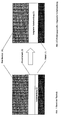
- the layer structure of a metal strip coated in this way is shown schematically in FIG illustration 1 shown.
- a conventional pretreatment layer (2) On the metal (1) a conventional pretreatment layer (2), a primer (3) and one or more different topcoat layers (4) are applied.
- the two-stage coating of the metal strips with the pretreatment layer (2) and a primer (3) is very expensive.
- the demand for Cr (VI) -free systems for corrosion protection is increasing in the market. It is therefore desirable, instead of the pretreatment layer (2) and the organic basecoat (3), to apply a single integrated pretreatment layer (2 ') which takes over the functions of both layers.
- Such a layer structure is exemplary and schematically in FIG Figure 2 shown.
- the production of a coated metal strip is significantly simplified by such a single-step process.
- the anticorrosive coatings can not be applied naturally as described, but are usually brushed or sprayed in place.
- the drying and curing of such anti-corrosion coatings is carried out under atmospheric conditions, ie at ambient temperature and in the presence of air and usual humidity.
- This type of corrosion protection is also referred to as atmospheric corrosion protection, often depending on the nature of the corrosion stress as light, medium or heavy corrosion protection.
- WO 2004/81128 discloses the use of polymers comprising greater than 45 to 100 weight percent vinylimidazole for passivating metal surfaces.
- the polymers may furthermore comprise up to 50% by weight of N-vinyllactams, vinyl heteroaromatics, vinyl esters or C 1 to C 10 (meth) acrylates and also from 0 to 5% by weight of monoethylenically unsaturated monomers having acid groups.
- EP-A 1 288 338 discloses copolymers of maleic acid and maleic anhydride and olefins.
- the maleic acid units can be subsequently functionalized in a polymer-analogous reaction by reaction with 1- (3-aminopropyl) imidazole with imidazole units.
- the polymers can be used as corrosion inhibitors in aqueous systems.
- YES-70 37034 discloses copolymers of 2 to 40% by weight of imidazole-containing monomers, 3 to 50% by weight of monomers having carboxyl groups and 2 to 50% by weight of OH-containing monomers.
- other monomers for example acrylates, may be present.
- the polymers can be used for coating, in particular in electrodeposition paints.
- WO 93/07190 discloses copolymers of from 1 to 20% by weight of vinylimidazole and / or dimethylaminopropylmethacrylamide, from 0 to 50% by weight of OH-containing monomers, from 0 to 50% by weight of monomers having carboxyl groups, and from 30 to 85% by weight of other ethylenically unsaturated monomers.
- the copolymers can be used, for example, as binders in automotive refinish coatings.
- JP-A 2001-215712 discloses copolymers of acidic, basic monomers and, in addition, monomers based on alkyl or arylammonium or phosphonium salts. Specifically discloses a copolymer of 70 wt.% N-vinylimidazole, 10 wt.% Of methacrylic acid and 20 wt.% Vinylbenzyltributylphosphoniumchlorid and a copolymer of 50 wt.% Vinylimidazole, 40 wt.% Vinylbenzylphosphonklare and 20 wt.% Vinylbenzyltriethylammoniumchlorid. Vinyl aromatic hydrocarbons as comonomers are not disclosed.
- DE-A 25 47 970 discloses copolymers as binders for paints which contain from 0.5 to 5% by weight of vinylimidazole and moreover contain (meth) acrylic esters, styrene, vinyl esters or ethylene.
- DE 1 223 247 discloses water-soluble paper sizing copolymers comprising 5 to 95% by weight of vinylimidazole and 95 to 5% by weight of other comonomers, eg, acrylic acid.
- EP 0 699 632 A1 relates to the use of copolymers to prevent corrosion and deposits in high-enthalpy fluid-carrying systems wherein the high-enthalpy fluid is contacted with an effective amount of at least one copolymer.
- Such copolymers are obtainable by reacting at least one vinylically unsaturated monomer having at least one carboxyl group with at least one vinylically unsaturated monomer which is at least one tertiary amino group.
- US 5,483,004 relates to an acrylate copolymer containing amino groups, carboxyl groups and optionally hydroxyl groups, such acrylate copolymer being prepared by free radical solution polymerization at temperatures of 80 ° to 150 ° C, using at least one ethylenically unsaturated monomer having a tertiary amino group.
- Used are from 1 to 20% by weight of vinylimidazole and / or dimethylaminopropylmethacrylamide, 0 to 50% by weight of one or more monomers containing hydroxyl groups, 0 to 50% by weight of one or more monomers containing carboxyl groups and 30 to 85% by weight of at least one other ethylenically unsaturated copolymerizable monomers.
- the acrylate copolymer is then reacted with carboxylic anhydrides, with the amount of carboxylic acid anhydrides chosen such that the resulting copolymer has a desired acid number.
- carboxylic anhydrides with the amount of carboxylic acid anhydrides chosen such that the resulting copolymer has a desired acid number.
- WO 2005/078025 discloses integrated pretreatment layers and a method for applying integrated pretreatment layers which contain dithiophosphoric acid esters as corrosion inhibitors.
- Our still unpublished application WO 2006/084879 discloses a method for applying integrated pretreatment layers containing dithiophosphinic acids as corrosion inhibitors. The use of polymeric corrosion inhibitors is not disclosed.
- the object of the invention was to provide an improved method for applying anticorrosion coatings, in particular of integrated pretreatment layers and layers for atmospheric corrosion protection, improved anticorrosion layers and improved anticorrosive agents.
- a method for applying integrated pretreatment layers which are applied using a thermally and / or photochemically crosslinkable binder system, and the layer is then thermally and / or photochemically crosslinked.
- Another preferred embodiment of the invention is an atmospheric corrosion protection method which employs an atmospheric curable binder system and which is cured after application under atmospheric conditions.
- the invention relates to copolymers of the definition mentioned at the outset as well as formulations for the application of anticorrosion coatings which comprise the copolymers mentioned in the introduction.
- the copolymers according to the invention lead to improved corrosion protection layers.
- the copolymers give the surface good corrosion protection, good adhesion and can also significantly improve the mechanical properties of the coatings.
- the attachment of the copolymers to the binder system can be improved.
- the copolymer has some amphilia, so it is able to stabilize interfaces such as metal paint, paint environment, hydrophobic hydrophilic interfaces in the paint.
- the copolymer (C) according to the invention is composed of the monomers (C1), (C2), (C3) and optionally (C4), it being understood that each of several different monomers (C1), (C2), (C3) or optionally (C4 ) can be used. Except (C1), (C2), (C3) and optionally (C4), no further monomers are present.
- Monomer (C1) is 1-vinylimidazole.
- the amount of monomer (C1) is according to the invention 25 to 65 wt .-%, based on the total amount of all monomeric units in copolymer (C).
- the amount is preferably from 30 to 60% by weight and very particularly preferably from 35 to 55% by weight.
- the monomers (C2) are monoethylenically unsaturated monomers which have at least one acid group.
- the acid group can be in the form of a free acid group or else completely or partially in the form of a salt.
- the acid groups are preferably at least one selected from the group of carboxyl groups, phosphoric acid groups, phosphonic acid groups and sulfonic acid groups.
- Examples of monomers having COOH groups include (meth) acrylic acid, vinylacetic acid, crotonic acid or isocrotonic acid. It may also be monomers with 2 COOH groups. Examples include maleic acid, fumaric acid, methyl fumaric acid, methylmaleic acid, dimethylmaleic acid and optionally the corresponding cyclic anhydrides. Preferred monomers with COOH groups are (meth) acrylic acid and itaconic acid.
- Examples of monomers having phosphoric acid and / or phosphonic acid groups include vinylphosphonic acid, monovinylphosphonic acid, allylphosphonic acid, monoesters of phosphoric acid, 3-butenylphosphonic acid, phosphoric acid (mono-3-butenyl) esters, mono- (4-vinyloxybutyl) phosphorates, phosphonoxyethyl esters , Methacrylic acid (phosphonoxyethyl) ester, mono (- 2-hydroxy-3-vinyloxypropyl) phosphoric acid, phosphoric mono (1-phosphonoxymethyl-2-vinyloxy-ethyl) ester, phosphoric acid mono- (3-allyloxy-2-hydroxy -propyl) ester, phosphoric acid mono-2- (allylox-1-phosphonoxymethyl-ethyl) ester, 2-hydroxy-4-vinyloxymethyl-1,3,2-dioxaphosphol or 2-hydroxy-4-allyloxymethyl-1,3,2 -dioxaphospho
- sulfonic acid group-containing monomers examples include allylsulfonic acid, methallylsulfonic acid, styrenesulfonate, vinylsulfonic acid, allyloxybenzenesulfonic acid, 2-acrylamido-2-methylpropanesulfonic acid or 2- (methyacryloyl) ethylsulfonic acid.
- Preferred as sulfonic acid group-containing monomer is acrylamido-2-methylpropanesulfonic acid.
- particularly preferred monomers (C2) are monomers having phosphoric acid and / or phosphonic acid groups, very particular preference is given to vinylphosphonic acid.
- the monomers (C2) used are more preferably COOH and sulfonic acid group-containing monomers, very particular preference is itaconic acid.
- the amount of all monomers (C2) together amounts to 15 to 45% by weight, based on the total amount of all monomeric units in copolymer (C).
- the amount is preferably from 20 to 40% by weight and very particularly preferably from 22 to 36% by weight.
- the monomers (C3) are at least one monoethylenically unsaturated, aromatic hydrocarbon.
- hydrocarbons examples include, in particular, styrene and derivatives of styrene, such as ⁇ -methylstyrene, 2-vinyltoluene, 4-vinyltoluene or allylbenzene.
- the amount of all monomers (C3) together amounts to 15 to 45% by weight, based on the total amount of all monomeric units in copolymer (C).
- the amount is preferably from 20 to 40% by weight and very particularly preferably from 25 to 35% by weight.
- the copolymers (C) used according to the invention may moreover preferably 0 to 15% by weight and more preferably 0 to 10% by weight of other monoethylenically unsaturated monomers (C4) which are different from (C1), (C2) and (C3) but are copolymerizable with (C1), (C2) and (C3) as building blocks.
- Such monomers may be used, if necessary, to fine tune the properties of the copolymer (C).
- Examples of monomers (C) include C 1 to C 18 alkyl esters of (meth) acrylic acid, such as methyl (meth) acrylate, ethyl (meth) acrylate, butyl (meth) acrylate or 2-ethylhexyl (meth) acrylate.
- Other examples include vinyl or allyl ethers such as methyl vinyl ether, ethyl vinyl ether or vinyl esters such as vinyl acetate or vinyl propionate.
- basic monomers such as acrylamides or alkyl-substituted acrylamides, for example acrylamide, methacrylamide, N-tert-butylacrylamide or N-methyl (meth) acrylamide.
- monomer (C4) is an OH group-containing monomer.
- it may be C 1 - to C 4 -hydroxyalkyl esters of (meth) acrylic acid, such as 2-hydroxyethyl (meth) acrylate, 2-hydroxypropyl (meth) acrylate or 1,4-butanediol mono-acrylate. Preference is given to 2-hydroxyethyl acrylate.
- it may be a monomer having -NH 2 groups, or a monomer which can form -NH 2 groups on hydrolysis.
- a monomer which can form -NH 2 groups on hydrolysis is N-vinylformamide.
- OH and / or NH 2 groups can serve for better attachment of the copolymer (C) to the binder system by reacting with suitable components of the binder system.
- the amount of monomers (C4) is generally from 1 to 15% by weight, based on the total amount of all monomeric building units in copolymer (C).
- the amount is preferably 2 to 10% by weight and very particularly preferably 3 to 7% by weight.
- the monomers (C4) may also be crosslinking monomers having two or more isolated ethylenically unsaturated double bonds.
- examples include di- or poly (meth) acrylates such as ethylene glycol di (meth) acrylate or butanediol-1,4-di (meth) acrylate, di-, tri- or tetraethylene glycol di (meth) acrylate or trimethylolpropane tri (meth) acrylate.
- the copolymers (C) should not be over-crosslinked. If crosslinking monomers are present, their amount should generally not exceed 4% by weight with respect to the sum of all monomers, preferably 3% by weight and more preferably 2% by weight.
- the preparation of the copolymers (C) used according to the invention is preferably carried out by means of radical polymerization.
- Carrying out a free radical polymerization including apparatuses required for this purpose, is known in principle to a person skilled in the art.
- the polymerization will preferably be carried out using thermally decomposing polymerization initiators.
- thermally decomposing polymerization initiators Preferably, peroxides can be used as thermal initiators.
- the polymerization can also be carried out photochemically.
- Monoalcohols may preferably be used as solvents.
- suitable monoalcohols include C 1 to C 8 alkoxy alcohols and especially 2-butoxyethanol.
- the radical polymerization with thermal initiators can be carried out at 60 to 250 ° C., preferably 70 to 220 ° C., particularly preferably at 80 to 200 ° C. and in particular at 100 to 170 ° C.
- the amount of initiator is 0.1 to 15 wt.% With respect to the amount of monomers, preferably 3 to 12 wt.% And particularly preferably 5 to 9 wt.%. As a rule, an amount of about 6% by weight is recommended.
- the polymerization time is usually 1 to 40 hours, preferably 3 to 25 hours and more preferably 7 to 15 hours. If necessary, the copolymers can be isolated from the solvent by methods known to those skilled in the art.
- the acidic groups of the polymer can also be completely or preferably partially neutralized before, during or after the polymerization. Partial neutralization results in better incorporation of the monomers into the polymer, i. there are obtained polymers with low residual monomer content.
- Suitable bases for neutralization include, in particular, linear, cyclic and / or branched C 1 -C 8 -mono-, di- and trialkylamines, linear or branched C 1 -C 8 -mono-, di- or trialkanolamines, in particular mono-, di or trialkanoamines, linear or branched C 1 -C 8 -alkyl ethers of linear or branched C 1 -C 8 -mono-, di- or trialkanolamines, oligo- and polyamines such as, for example, diethylenetriamine.
- the neutralization may preferably be carried out before or during the polymerization.
- the optimum amount of base depends on the particular acidic monomer used. Depending on the acid monomer used, the degree of neutralization during the polymerization can be adjusted so as to obtain the optimum residual monomer content.
- amounts of from 5 to 100 mol% base preferably from 15 to 75 mol%, and particularly preferably 25 mol%, based on the amount used, give the best residual monomer content.
- itaconic acid 0 to 40 mol% base, preferably 0 to 25 mol%, based on the amount used, the best residual monomer content.
- the obtained organic solutions of the modified copolymers can be used directly for the formulation of organic crosslinkable preparations.
- the polymer can be isolated from this but also by methods known in the art.
- the molecular weight M w of the copolymer is chosen by the person skilled in the art according to the intended use.
- any metallic bodies can be protected from corrosion by exposing the metallic surface to a preparation comprising at least one curable and / or crosslinkable binder system (A), a component (B) selected from the group of finely divided fillers, pigments or dyes and a copolymer (C).
- the formulation can furthermore optionally also comprise a solvent or a solvent system (D) in which the components are dissolved or dispersed.
- a solvent is present.
- metals can be coated.
- base metals or alloys which are commonly used as metallic construction materials, and must be protected from corrosion. Examples include in particular iron, steel, zinc, Zinkegleiteren, aluminum or aluminum alloys.
- Binder systems (A), components (B) and suitable solvents for formulating corrosion protection formulations are known to the person skilled in the art. He makes a suitable choice depending on the desired properties of the layer.
- the coating of the surface can be effected by means of customary techniques known to the person skilled in the art, for example by spraying, brushing or by means of coil coating.
- copolymers (C) used according to the invention are particularly useful when employing crosslinkable binder systems for applying the anticorrosive layers, in which the curing is carried out at higher temperatures, for example in suitable furnaces, or photochemically using suitable radiation sources.
- This technique is particularly suitable for flat metallic workpieces, such as sheets or metal bands or for molded, but mobile metallic workpieces, such as automobile bodies or body parts.
- metallic surfaces can be provided with an integrated pretreatment layer by means of the method according to the invention.
- the integrated pretreatment layers according to the invention have a thickness of 1 to 25 ⁇ m.
- integrated pretreatment layer in the sense of this invention means that the coating according to the invention is applied directly to the metal surface, without previously having a corrosion-inhibiting pretreatment such as passivation, application of a conversion layer or phosphating, in particular no treatment with Cr (VI) compounds.
- the integrated pretreatment layer combines the passivation layer with the organic primer and possibly even further layers in a single layer.
- metal surface is of course not to be equated with absolutely bare metal, but means the surface that inevitably forms in the usual handling of the metal in an atmospheric environment or when cleaning the metal before applying the integrated pretreatment layer.
- the actual metal may, for example, still have a moisture film or a thin oxide or Oxidhydrathaut.
- the surface of arbitrarily shaped metallic bodies can be provided with integrated pretreatment layers. It can be made entirely of metals body, but the body can also be coated only with metals and even made of different materials, such as polymers or composites.
- moldings with metallic surface, i. Moldings whose thickness is considerably smaller than the expansion in the other dimensions.
- Examples include metal sheets, foils, sheets and in particular metal strips, as well as, for example, by means of cutting, forming and joining components with metallic surface, such as automobile bodies or parts thereof.
- the thickness or the wall thickness of such metallic materials is preferably less than 4 mm and, for example, 0.25 to 2 mm.
- the method according to the invention can be used to apply integrated pretreatment layers to the surfaces of iron, steel, zinc, zinc alloys, aluminum or aluminum alloys.
- it may be the surface of galvanized iron or steel.
- the method is the surface of a band metal, in particular electrolytically galvanized or hot-dip galvanized steel. It can be both one-sided and two-sided galvanized steel strip.
- Zinc or aluminum alloys and their use for coating steel are known in the art. Depending on the desired application, the skilled person will select the type and amount of alloying components. Typical components of zinc alloys include in particular Al, Pb, Si, Mg, Sn, Cu or Cd. In particular, typical constituents of aluminum alloys include Mg, Mn, Si, Zn, Cr, Zr, Cu or Ti. The term "zinc alloy” is also intended to include Al / Zn alloys in which Al and Zn are present in approximately the same amount , Steel coated with such alloys is commercially available. The steel itself may contain the usual alloying components known to those skilled in the art.
- further lacquer layers can be applied directly to the integrated pretreatment layer without first having to apply an additional organic primer.
- an additional organic primer but in special cases possible, although preferably is dispensed with.
- the nature of further paint layers depends on the intended use of the metal.
- the preparations used for applying integrated pretreatment layers according to the invention may be preparations based on organic solvents, aqueous or predominantly aqueous preparations or solvent-free preparations.
- the preparations comprise at least one thermally and / or photochemically crosslinkable binder system (A '), at least one finely divided inorganic filler (B') and at least one copolymer (C) as corrosion inhibitor.
- crosslinkable binder system designates in the following manner in a manner known in principle those components of the formulation which are responsible for the film formation. They form a polymeric network during thermal and / or photochemical curing. They include thermally and / or photochemically crosslinkable components.
- the crosslinkable components may be low molecular weight, oligomeric or polymeric. They usually have at least two crosslinkable groups.
- Crosslinkable groups can be either reactive functional groups that can react with groups of their type ("with themselves") or with complementary, reactive functional groups. In this case, different combination possibilities are conceivable in a manner known in principle.
- the binder system may comprise, for example, a self-crosslinkable polymeric binder and one or more low molecular weight or oligomeric crosslinkers (V).
- the polymeric binder itself can have crosslinkable groups which can react with other crosslinkable groups on the polymer and / or on an additionally used crosslinker. It is also particularly advantageous to use oligomers or prepolymers containing crosslinkable groups which are crosslinked to one another using crosslinkers.
- Thermally crosslinkable or curing binder systems crosslink on heating the applied layer to temperatures above room temperature.
- paint systems are also referred to by the person skilled in the art as “stoving lacquers". They have crosslinkable groups which do not react at room temperature or at least not at a substantial rate, but only at higher temperatures.
- those crosslinkable binder systems are suitable which are only preferred at temperatures above 60 ° C. 80 ° C, more preferably 100 ° C and particularly preferably 120 ° C crosslink.
- such binder systems can be used which crosslink at 100 to 250 ° C, preferably 120 to 220 ° C and particularly preferably at 150 to 200 ° C.
- the thermally and / or photochemically crosslinkable binder systems (A ') may be the binder systems customary in the field of coil coating lacquers.
- the layers applied with the aid of coil coating paints must have sufficient flexibility.
- Binder systems for coil coating paints therefore preferably have soft segments. Suitable binders or binder systems are known in principle to the person skilled in the art. Of course, it is also possible to use mixtures of different polymers, provided that the mixture does not have any undesired effects.
- Suitable binders include (meth) acrylate (co) polymers, partially saponified polyvinyl esters, polyesters, alkyd resins, polylactones, polycarbonates, polyethers, epoxy resin-amine adducts, polyureas, polyamides, polyimides or polyurethanes.
- binders include (meth) acrylate (co) polymers, partially saponified polyvinyl esters, polyesters, alkyd resins, polylactones, polycarbonates, polyethers, epoxy resin-amine adducts, polyureas, polyamides, polyimides or polyurethanes.
- the person skilled in the art will make an appropriate choice depending on the intended use of the coated metal. It will be clear to those skilled in the art that not every type of binder system is suitable for any type of metallic surface.
- binder systems based on polyesters (A1 '), epoxy resins (A2'), polyurethanes (A3 ') or acrylates (A4') may preferably be used to carry out the invention.
- Binder based on polyesters can be constructed in a manner known in principle from low molecular weight dicarboxylic acids and dialcohols and optionally other monomers. Further monomers include in particular branching monomers, for example tricarboxylic acids or trialcohols.
- polyesters having a comparatively low molecular weight are generally used, preferably those having M n of from 500 to 10 000 g / mol, preferably from 1000 to 5000 g / mol and more preferably from 2000 to 4000 g / mol.
- the hardness and flexibility of the polyester-based layers can be influenced in a manner known in principle by the selection of "hard” or “soft” monomers.
- “hard” dicarboxylic acids include aromatic dicarboxylic acids and / or their hydrogenated derivatives such as, for example, isophthalic acid, terephthalic acid, phthalic acid, hexahydrophthalic acid or derivatives thereof, in particular their anhydrides or esters.
- “soft” dicarboxylic acids include in particular aliphatic 1, ⁇ -dicarboxylic acids having at least 4C atoms such as adipic acid, azelaic acid, sebacic acid or dodecanedioic acid.
- Examples of "hard” dialcohols include Ethylene glycol, 1,2-propanediol, neopentyl glycol or 1,4-cyclohexanedimethanol.
- Examples of “soft” dialcohols include diethylene glycol, triethylene glycol, aliphatic 1, ⁇ -dialcohols having at least 4C atoms, such as 1,4-butanediol, 1,6-hexanediol, 1,8-octanediol or 1,12-dodecanediol.
- Preferred polyesters for practicing the present invention comprise at least one "soft" monomer.
- Polyester for coatings are commercially available. Details of polyesters are shown in, for example, “ Paints and Coatings - Saturated Polyester Coatings "in Ullmann's Encyclopedia of Industrial Chemistry, 6th Edt., 2000, Electronic Release ,
- Epoxy-functional polymers can be prepared in a manner known in principle by the reaction of epoxy-functional monomers such as bisphenol A diglycidyl ether, bisphenol F diglycidyl ether or hexanediol diglycidyl ether with alcohols such as, for example, bisphenol A or bisphenol F.
- Particularly suitable soft segments are polyoxyethylene and / or polyoxypropylene segments. These can be advantageously incorporated by the use of ethoxylated and / or propoxylated bisphenol A.
- the binders should preferably be chloride-free.
- Epoxy-functional polymers are commercially available, for example under the name Epon ® or Epikote ®.
- Epoxy-amine adducts can be obtained, for example, by reaction of said epoxy-functional polymers with amines, in particular secondary amines such as, for example, diethanolamine or N-methylbutanolamine.
- epoxy-functional polymers Details of epoxy-functional polymers are shown, for example, in "Epoxy Resins” in Ullmann's Encyclopedia of Industrial Chemistry, 6 th Edt., 2000, Electronic Release
- Binders based on polyacrylates are particularly suitable for water-based formulations.
- suitable acrylates include emulsion polymers or copolymers, in particular anionically stabilized acrylate dispersions, obtainable in the usual manner from acrylic acid and / or acrylic acid derivatives, for example acrylic acid esters, such as methyl (meth) acrylate, ethyl (meth) acrylate, butyl (meth) acrylate or 2- Ethylhexyl (meth) acrylate and / or vinyl aromatic monomers such as styrene and optionally crosslinking monomers.
- acrylic acid esters such as methyl (meth) acrylate, ethyl (meth) acrylate, butyl (meth) acrylate or 2- Ethylhexyl (meth) acrylate and / or vinyl aromatic monomers such as styrene and optionally crosslinking monomers.
- the hardness of the binder can be determined by the skilled person in a manner known in principle by the ratio of "hard” Monomers such as styrene or methmethacrylate and "soft” monomers such as butyl acrylate or 2-ethylhexyl acrylate can be adjusted.
- Particularly preferred for the preparation of acrylate dispersions continue to be monomers used which have functional groups which can react with crosslinkers. These may in particular be OH groups. OH groups can be incorporated into the polyacrylates through the use of monomers such as hydroxyethyl acrylate, hydroxypropyl acrylate, hydroxybutyl acrylate or N-methylol acrylamide or even epoxy acrylates followed by hydrolysis. Suitable polyacrylate dispersions are commercially available.
- Binders based on polyurethane dispersions are particularly suitable for water-based formulations.
- Dispersions of polyurethanes can be obtained in a manner known in principle by incorporating ionic and / or hydrophilic segments in order to stabilize the dispersion in the PU chain.
- soft segments preferably 20 to 100 mol%, based on the amount of all diols, of higher molecular weight diols, preferably polyester diols, having a M n of about 500 to 5000 g / mol, preferably 1000 to 3000 g / mol can be used.
- Polyurethane dispersion which contain bis (4-isocyanatocyclohexyl) methane as isocyanate component can be used to particular advantage for carrying out the present invention.
- Such polyurethane dispersions are, for example, in DE-A 199 14 896 disclosed. Suitable polyurethane dispersions are commercially available.
- Suitable crosslinkers for thermal crosslinking are known in principle to the person skilled in the art.
- Suitable crosslinking agents are, for example, based on epoxides in which two or more epoxy groups are linked together by means of a linking group.
- examples include low molecular weight compounds having two epoxy groups such as hexanediol diglycidyl ether, phthalic acid diglycidyl ether or cycloaliphatic compounds such as 3,4-Epoxicyclohexancarbonklare 3 ', 4'-epoxycyclohexylmethylester.
- crosslinking agents are highly reactive melamine derivatives, such as, for example, hexamethylolmelamine or corresponding etherified products, such as hexamethoxymethylmelamine, hexabutoxymethylmelamine or else, if appropriate, modified aminoplast resins.
- Such crosslinkers are commercially available, for example, as ® Luwipal (Fa. BASF AG).
- blocked polyisocyanates used as crosslinking agents.
- the isocyanate group is reversibly reacted with a blocking agent.
- the blocking agent is on heating split higher temperatures again.
- suitable blocking agents are in DE-A 199 14 896 , Column 12, line 13 to column 13, line 2.
- Particular preference may be given to using ⁇ -caprolactam blocked polyisocyanates.
- suitable catalysts can be added to the formulations in a manner known in principle.
- crosslinker may advantageously be 10 to 35% by weight relative to the total amount of the binder.
- crosslinking of the epoxy-functional polymers can be carried out, for example, with crosslinkers based on polyamines, for example diethylenetriamine, amine adducts or polyaminoamides.
- crosslinking agents based on carboxylic anhydrides or the already mentioned crosslinkers based on melamine are advantageous, for example. Preference is given in particular to the already mentioned blocked polyisocyanates.
- thermal crosslinking of the acrylate dispersions it is possible to use, for example, the already mentioned crosslinkers based on melamine or blocked isocyanates. Furthermore, epoxy-functional crosslinkers are also suitable.
- thermal crosslinking of polyurethane dispersions or polyesters it is possible, for example, to use the already mentioned crosslinkers based on melamine, blocked isocyanates or epoxy-functional crosslinkers.
- the binder systems (A ') comprise photochemically crosslinkable groups in the case of photochemically crosslinkable preparations.
- photochemical crosslinking is intended to include crosslinking with all types of high-energy radiation, such as UV, VIS, NIR or electron radiation. In principle, it may be all types of photochemically crosslinkable groups, but these are preferably ethylenically unsaturated groups.
- Photochemically crosslinkable binder systems generally comprise oligomeric or polymeric compounds with photochemically crosslinkable groups and optionally also reactive diluents, usually monomers. Reactive diluents have a lower viscosity than the oligomeric or polymeric crosslinkers, and take Therefore, in a radiation-curable systems, the role of a thinner.
- binder systems furthermore generally comprise one or more photoinitiators.
- photochemically crosslinkable binder systems include, for example, multifunctional (meth) acrylates, urethane (meth) acrylates, polyester (meth) acrylates, epoxy (meth) acrylates, carbonate (meth) acrylates, polyether (meth) acrylates, if appropriate in combination with reactive diluents such as methyl (cf. meth) acrylate, butanediol diacrylate, hexanediol diacrylate or trimethylolpropane triacrylate. More details on suitable radiation-curable binders are available in US Pat WO 2005/080484 Page 3, line 10 to page 16, line 35 shown. Suitable photoinitiators can be found in the said document page 18, line 8 to page 19, line 10.
- binder systems which can be thermally and photochemically cured (also known as dual-cure systems) can also be used to carry out the present invention.
- the preparation used according to the invention for applying integrated pretreatment layers comprises from 20 to 70% by weight of the binder system (A), preferably (A ').
- the quantities are based on the sum of all components of the preparation with the exception of the solvent or the solvent mixture.
- the amount is preferably 30 to 60% by weight and more preferably 40 to 50% by weight.
- the preparation used for the inventive method for applying integrated pretreatment layers furthermore comprises at least one finely divided inorganic filler and / or a pigment (B ').
- the filler may also comprise an additional organic coating, for example for hydrophobing or hydrophilization.
- the filler has an average particle size of less than 10 microns.
- the average particle size is preferably 10 nm to 9 ⁇ m and more preferably 100 nm to 5 m. In the case of round or approximately round particles, this information refers to the diameter, in the case of irregularly shaped particles, such as, for example, acicular particles, to the longest axis.
- the particle size means the primary particle size.
- Suitable fillers are on the one hand electrically conductive pigments or fillers in question. Such additives serve to improve the weldability and to improve a subsequent coating with electrodeposition paints.
- suitable electrically conductive fillers or pigments include phosphides, vanadium carbide, titanium nitride, molybdenum sulfide, graphite, carbon black or doped barium sulfate. Preference is given to using metal phosphides of Zn, Al, Si, Mn, Cr, Fe or Ni, in particular iron phosphides. Examples of preferred metal phosphides include CrP, MnP, Fe 3 P, Fe 2 P, Ni 2 P, NiP or NiP 2. 3
- non-conductive pigments or fillers such as, for example, finely divided amorphous silicon, aluminum or titanium oxides, which may also be doped with further elements.
- non-conductive pigments or fillers such as, for example, finely divided amorphous silicon, aluminum or titanium oxides, which may also be doped with further elements.
- non-conductive pigments or fillers such as, for example, finely divided amorphous silicon, aluminum or titanium oxides, which may also be doped with further elements.
- calcium ion-modified amorphous silica can be used.
- pigments include anticorrosive pigments such as zinc phosphate, zinc metaborate or barium metaborate monohydrate.
- pigments and / or fillers can be used.
- the pigments are used in an amount of 20 to 70% by weight. The exact amount will be determined by the skilled person depending on the desired properties of the layer. When using conductivity pigments, the amounts used are usually greater than when using non-conductive fillers. Preferred amounts of conductive pigments and fillers are 40 to 70 wt.%, Preferred amounts of non-conductive pigments 20 to 50 wt.%.
- the copolymers (C) used according to the invention are usually used in an amount of 0.25 to 40% by weight, preferably 0.5 to 30% by weight, more preferably 0.7 to 20% by weight and most preferably 1.0 to 10 wt.% Used, based on the amount of all components of the formulation with the exception of the solvent.
- the preparation generally comprises a suitable solvent in which the components are dissolved and / or dispersed in order to allow a uniform application of the preparation to the surface.
- the solvents are usually removed before curing the coating.
- Suitable solvents are those which are capable of dissolving, dispersing, suspending or emulsifying the compounds of the invention. These may be organic solvents or water. Of course, mixtures of different organic solvents or mixtures of organic solvents with water can be used. The person skilled in the art makes a suitable choice from the solvents which are possible in principle, depending on the intended use and on the nature of the compound according to the invention used.
- organic solvents examples include hydrocarbons such as toluene, xylene, or mixtures such as are obtained in the refining of crude oil, such as hydrocarbon fractions of certain boiling ranges, ethers such as THF or polyethers such as polyethylene glycol, ether alcohols such as butylglycol, ether glycol acetates such as butylglycol acetate, ketones such as acetone, alcohols such as Methanol, ethanol or propanol.
- hydrocarbons such as toluene, xylene, or mixtures such as are obtained in the refining of crude oil, such as hydrocarbon fractions of certain boiling ranges, ethers such as THF or polyethers such as polyethylene glycol, ether alcohols such as butylglycol, ether glycol acetates such as butylglycol acetate, ketones such as acetone, alcohols such as Methanol, ethanol or propanol.
- hydrocarbons such as toluen
- preparations which comprise water or a predominantly aqueous solvent mixture. These are understood as meaning mixtures which comprise at least 50% by weight, preferably at least 65% by weight and particularly preferably at least 80% by weight of water.
- Other components are water-miscible solvents. Examples include monoalcohols such as methanol, ethanol or propanol, higher alcohols such as ethylene glycol or polyether polyols and ether alcohols such as butyl glycol or methoxypropanol.
- the amount of solvent is chosen by the skilled person depending on the desired properties of the preparation and the desired application method.
- the weight ratio of the layer components to the solvent is 10: 1 to 1:10, preferably about 2: 1 without the invention being restricted thereto. It is of course also possible to first produce a concentrate and dilute it to the desired concentration on site.
- the preparation is prepared by intensive mixing of the components of the preparation with the solvents, if used.
- the person skilled in the art is familiar with suitable mixing or dispersing aggregates.
- the copolymers are preferably in the form of Solutions or emulsions used in the hydrolytic opening of the anhydride groups or the derivatization and, where appropriate, solvent exchange incurred. Solvents in these synthetic steps should be chosen to be at least compatible with the binder system to be used, most preferably the same solvent is used.
- the preparation may also comprise one or more auxiliaries and / or additives (E').
- auxiliaries and / or additives are used for fine control of the properties of the layer. As a rule, its amount does not exceed 20% by weight with respect to the sum of all components except the solvents, preferably not 10%.
- suitable additives are color and / or effect pigments, rheology aids, UV absorbers, light stabilizers, free-radical scavengers, initiators for free-radical polymerization, catalysts for thermal crosslinking, photoinitiators and co-initiators, slip additives, polymerization inhibitors, defoamers, emulsifiers, degassing agents, network - and Dipergierstoff, adhesion promoters, leveling agents, film-forming aids, rheology control additives (thickeners), flame retardants, siccatives, skin preventatives, other corrosion inhibitors, waxes and matting agents, as found in the textbook "Paint Additives” by Johan Bieleman, Wiley-VCH, Weinheim, New York, 1998 , or the German patent application DE 199 14 896 A 1 , Column 13, line 56, to column 15, line 54, are known.
- the preparation is applied to the metallic surface.
- the metallic surface can be cleaned before treatment.
- a metallic surface treatment for example an electrolytic galvanizing or hot-dip galvanizing of steel strips
- the strips can normally be brought into contact with the treatment solution according to the invention without prior purification.
- anticorrosive oils are usually provided or contaminated, so that cleaning is required before the coating according to the invention.
- the purification can be carried out by conventional methods known to those skilled in the art with conventional detergents.
- the application of the preparation can be done for example by spraying, dipping, pouring or rolling. After a dip process, you can drain the workpiece to remove excess preparation; in the case of metal sheets, metal foils or the like, excess preparation can also be squeezed or doctored off.
- Application with the preparation is usually carried out at room temperature without that higher temperatures should be excluded in principle.
- metal strips are coated by the method according to the invention (often referred to as “coil coating”).
- the coating can be carried out both on one side and on both sides. It is also possible to coat the top and bottom by means of different formulations.
- the tape coating by means of a continuous process.
- Continuously working coil coating systems are known in principle. They usually comprise at least one coating station, a drying or stoving station and / or UV station and possibly other stations for pre- or post-treatment, such as rinsing or rinsing stations. Examples of coil coating systems can be found in Römpp Lexikon Lacke and printing inks, Georg Thieme publishing house, Stuttgart, New York, 1998, page 55, "Bandbe harshung ", or in the German patent application DE 196 32 426 A 1 , Of course, differently constructed systems can be used.
- the speed of the metal strip is selected by the person skilled in the art in accordance with the application and curing properties of the preparation used. In general, rates of 10 to 200 m / min, preferably 12 to 120 m / min, more preferably 14 to 100 m / min, very particularly preferably 16 to 80 and in particular 20 to 70 m / min have been proven.
- the crosslinkable preparation used according to the invention can be sprayed on, poured on or, preferably, rolled on.
- the rotating pickup roller pick-up roller
- the rotating pickup roller dips into a supply of the preparation used according to the invention and thus takes over the preparation to be applied. This is transmitted from the pickup roller directly or via at least one transfer roller to the rotating application roller. From this, the paint is transferred by rectified or reverse stripping on the tape.
- the counter stripping or the reverse roller coating method is advantageous and is therefore preferred.
- the application roller has a rotational speed which is 110 to 125% of the belt speed
- the take-up roller has a revolution speed which is 20 to 40% of the belt speed.
- the preparation used according to the invention can also be pumped directly into a gap between two rolls, which is also referred to by the experts as a nip feed.
- any solvent present in the layer is removed and the layer is crosslinked. This can be done in two separate steps or simultaneously.
- the layer is preferably heated by means of a suitable device. Drying can also be done by contacting with a gas stream. Both methods can be combined.
- the curing method depends on the nature of the binder system used. It can take place thermally and / or photochemically.
- the applied coating is heated. This may preferably be done by convective heat transfer, near or far infrared irradiation, and / or in iron-based ribbons by electrical induction.
- the temperature required for curing depends in particular on the crosslinkable binder system used. Highly reactive binder systems can be cured at lower temperatures than less reactive binder systems.
- the crosslinking is carried out at temperatures of at least 60 ° C., preferably at least 80 ° C., more preferably at least 100 ° C., and particularly preferably at least 120 ° C.
- the crosslinking at 100 to 250 ° C, preferably 120 to 220 ° C and particularly preferably be carried out at 150 to 200 ° C.
- peak temperature peak metal temperature (PMT)
- PMT peak metal temperature
- the heating time i. the duration of the thermal curing varies depending on the paint used in the invention. Preferably, it is 10 to 2 minutes. If the convection heat transfer is essentially used, circulating air ovens having a length of 30 to 50, in particular 35 to 45, m are required at the preferred belt speeds. The circulating air temperature is naturally higher than the temperature of the layer and can be up to 350 ° C.
- the photochemical curing takes place by means of actinic radiation.
- Actinic radiation is understood here and below to mean electromagnetic radiation, such as near infrared, visible light, UV radiation or X-radiation or corpuscular radiation, such as electron radiation.
- UV / VIS radiation is used for the photochemical curing.
- the irradiation may optionally also in the absence of oxygen, for. B. under inert gas atmosphere, are performed.
- the photochemical curing can be done under normal temperature conditions, ie without heating the coating, but it can also be at elevated temperatures for example, be at 40 to 150 ° C, preferably 40 to 130 ° C and especially at 40 to 100 ° C photochemically crosslinked.
- the inventive method an integrated pretreatment layer on a metallic surface, in particular the surface of iron, steel, zinc or zinc alloys, aluminum or aluminum alloys is available.
- the exact structure and composition of the integrated pretreatment layer is unknown to us. It comprises, in addition to the crosslinked binder system (A), the fillers, the copolymers (C) and optionally further components.
- components which have been dissolved out of the metal surface and deposited again such as customary amorphous oxides of aluminum or zinc and optionally other metals, may also be present.
- the thickness of the integrated pretreatment layer is 1 to 25 ⁇ m and is determined by the person skilled in the art according to the desired properties and the intended use of the layer. As a rule, a thickness of 3 to 15 ⁇ m has proven itself for integrated pretreatment layers. Preferred is a thickness of 4 to 10 microns and more preferably 5 to 8 microns. The thickness results from the amount of each applied composition.
- cathodic dip coating may even be dispensed with.
- the integrated pretreatment layer is also to replace the cathodic electrode, it is recommended to use somewhat thicker integrated pretreatment layers, for example with a thickness of 10 to 25 ⁇ m, preferably 12 to 25 ⁇ m.
- lacquer layers are determined by the skilled person depending on the desired use of the coated metal or metallic molded part.
- the integrated pretreatment layers according to the invention can be well overcoated and have good adhesion with the subsequent paint layers.
- Further lacquer layers may be, for example, layers of colored lacquers, clear lacquers or functional lacquers.
- An example of a functional paint is a soft paint with a relatively high proportion of filler. This can be advantageously applied before the color and / or topcoat to protect the metal and the integrated pretreatment layer from mechanical damage, for example by stone chipping or scratching.
- further lacquer layers can be carried out in the described coil coating plant. There are then several application and optional curing stations connected in series. Alternatively, however, after application and curing of the anticorrosive layer, the coated strip can be rolled up again and further layers applied at a later time in other systems.
- the further processing of the coated metal strips can take place on site, or they can be transported to a different location for further processing. For this purpose, they can be provided, for example, with peelable protective films.
- tapes provided with an integrated pretreatment layer can also initially be processed into metallic moldings, for example by means of cutting, forming and joining. The joining can also be done by welding. The resulting molded body can then be provided with further paint layers as described above.
- the invention therefore also relates to shaped bodies having a metallic surface which are coated with an integrated pretreatment layer having a thickness of from 1 to 25 ⁇ m, as well as shaped bodies which, in addition, have further paint layers.
- shaped body is intended here to include both coated sheets, foils or strips and also the metallic components obtained therefrom.
- Such components are, in particular, those which can be used for cladding, veneering or lining.
- Examples include automobile bodies or parts thereof, truck bodies, frames for two-wheelers such as motorcycles or bicycles or parts for such vehicles such as fenders or panels, linings for household appliances such as washing machines, dishwashers, dryers, gas and electric stoves, microwave ovens, freezers or refrigerators , Cladding for technical equipment or facilities such as machinery, cabinets, computer cases or the like, architectural elements such as wall parts, facade elements, ceiling elements, window or door profiles or partitions, furniture made of metallic materials such as metal cabinets, metal shelves, parts of furniture or fittings. Furthermore, it may also be hollow body for storage of liquids or other substances, such as cans, cans or tanks.
- the method of applying anticorrosive coatings is a method of atmospheric corrosion protection.
- the metallic surfaces that can be protected by the method for atmospheric corrosion protection can in principle be any surface. However, it is preferably the surfaces of metallic structures or metal structures or the components required therefor.
- Metal structures are usually made of structural steel, such as steel beams, steel pipes or steel sheets by riveting, welding or screws to appropriate constructions.
- the surfaces may be in contact with atmospheric air during use, but they may also be surfaces that are in contact with water, soil or other corrosive media during use. Examples include bridges, utility poles, tanks, containers, chemical plants, buildings, roofs, pipes, couplings, flanges, ships, cranes, piles or sheetpiles.
- steel In particular, it is the surfaces of iron, steel, zinc, zinc alloys, aluminum or aluminum alloys.
- Steel may contain the usual alloying components known to those skilled in the art. Examples have already been mentioned above.
- Zn or aluminum coatings may be applied to steel, for example by hot dip processes, e.g. Hot dip galvanizing, or by sherardizing. If the component is immobile or the component geometry does not permit it, corresponding layers can also be applied by means of thermal spraying (spray-galvanizing, spray-aluminizing).
- anticorrosive coatings are usually brushed or sprayed in place.
- the drying and curing of such anticorrosive coatings is generally carried out under atmospheric conditions, ie at ambient temperature and in the presence of air or atmospheric oxygen and normal humidity.
- the corrosion protection of surfaces by anti-corrosive coatings is also referred to as light, medium or heavy corrosion protection.
- the method can be used for atmospheric corrosion protection for those metallic surfaces which are exposed to a corrosion load of the corrosivity categories C2 (according to DIN EN ISO 12944) or higher, preferably corrosivity categories C3 or higher and particularly preferred corrosivity categories C4 or higher.
- the corrosivity categories are defined according to DIN EN ISO 12944 by the area-related mass loss or the reduction in thickness of unalloyed steel or in zinc, the surfaces of which are exposed to a specific corrosive load for 1 year.
- C2 (slightly corrosive): unalloyed steel: Mass loss> 10-200 g / m 2 Thickness decrease> 1.3 - 25 ⁇ m Zinc: Mass loss> 0.7 - 5 g / m 2 Thickness decrease> 0.1 - 0.7 ⁇ m
- C4 (highly corrosive): unalloyed steel: Mass loss> 400 - 650 g / m 2 Thickness decrease> 50 - 80 ⁇
- the present process is preferably a chromium (VI) -free process, more preferably a chromium-free process.
- chromium (VI) free or “chromium-free” for the purposes of this invention means that the preparation itself does not contain any chromium (VI) compounds or no chromium compounds at all and that no corrosion-inhibiting pretreatment of the metal surface with chromium ( V1) compounds or chromium compounds is carried out. Of course, this does not exclude the possibility of traces of chromium in the layer, which may be unintentional. This may be, for example, chrome traces, which are dissolved out of the steel in the course of coating a chromium-containing steel.
- a preparation is used according to the invention which comprises at least one binder system (A ") curable under atmospheric conditions, at least one component (B") selected from the group of finely divided fillers, pigments or dyes, at least one copolymer ( C), and at least one solvent (D ").
- A binder system
- B component selected from the group of finely divided fillers, pigments or dyes
- C copolymer
- D solvent
- Binder system (A )
- the binder systems which are curable under atmospheric conditions may be the binder systems customary in the field of anticorrosive coatings and coatings
- Such binders or binder systems are known in principle to those skilled In the art, it is of course also possible to use mixtures of different binder systems, provided they occur no undesirable effects due to the mixture.
- binder system refers hereinafter in a manner known in principle to those components of the formulation which are responsible for the film formation.
- curable under atmospheric conditions means that the binder systems have the property, after application to the surface under normal environmental conditions, i. at room temperature, in the presence of air and conventional humidity without the use of additional equipment or equipment.
- typical curing temperatures are more than 0 to 40 ° C., preferably 5 to 35 ° C. and for example 15 to 25 ° C. It will be apparent to those skilled in the art that the time to complete cure of one and the same binder system may vary depending on the actual environmental conditions.
- the curing can proceed according to various mechanisms. For example, it may be a purely physical curing, caused by the evaporation of the solvent used. It may also be an oxidative cure by reaction of the binder system with the oxygen of the air. Finally, it can also be a chemical crosslinking (reactive crosslinking).
- Reactive binder systems include crosslinkable components. The crosslinkable components may be low molecular weight, oligomeric or polymeric. These may preferably be 1 K or 2 K systems. Reactive crosslinking systems also include moisture-curing binder systems in which the humidity acts as a hardener component.
- a binder system can also cure by a combination of different curing methods. For 2-component systems, the binder and hardener components are mixed in a manner known in the art prior to using the formulation.
- aqueous-soluble or organic-soluble binder systems can be used. They are preferably water-based binder systems.
- Binder systems for anticorrosion coatings are known in principle to the person skilled in the art. These may be, for example, epoxy resins, polyacrylates, styrene-acrylate polymers, polyesters, alkyd resins, polyurethanes of the styrene-butadiene polymers.
- the amount of binder (A) in the formulation is 15 to 70% by weight, based on the amount of all components of the formulation including the solvent. It is determined by the skilled person depending on the desired properties of the coating. The amount is preferably from 20 to 60% by weight and more preferably from 25 to 50% by weight.
- the binder system is an aqueous or predominantly aqueous dispersion of polyacrylates or styrene-acrylate copolymers (A1 ").
- Aqueous dispersions of polyacrylates or styrene-acrylate copolymers (A1 ") for the preparation of anticorrosive coatings are known in principle to the person skilled in the art.”
- the aqueous dispersions of the polyacrylates (A1) can be both primary dispersions and secondary dispersions.
- Suitable polyacrylates are included as main monomers
- At least one alkyl (meth) acrylate such as, for example, methyl (meth) acrylate, ethyl (meth) acrylate, butyl (meth) acrylate or 2-ethylhexyl (meth) acrylate, may preferably have vinylaromatics, in particular styrene, as further main monomers
- the total of the main monomers is generally at least 60% by weight, preferably at least 80% by weight.
- styrene-acrylate copolymers generally comprise at least 30% by weight, preferably at least 40% by weight.
- polyacrylates or styrene-acrylate copolymers (A1 ") may also contain further comonomer have mers, especially those having functional groups such as hydroxy, carboxy or carboxamide. Examples include (meth) acrylic acid, itaconic acid, maleic acid, fumaric acid, (meth) acrylamide or hydroxyalkyl (meth) acrylates. Other comonomers are preferably acidic comonomers. Furthermore, optionally also crosslinking monomers in small amounts, usually less than 4 wt.%, Preferably less than 2 wt.%, To be present. Examples include butanediol (meth) acrylate, hexanediol di (meth) acrylate or allyl acrylate.
- Polyacrylates (A1 ) can be prepared in a manner known in principle by means of emulsion polymerization Further details of such polymers and their preparation are described, for example, in US Pat EP-A 157 133 . WO 99/46337 , or in " Paints and Coatings, 2.5. Acrylic Coatings "in Ullmann's Encyclopedia of Technical Chemistry, 6th Edition 2000, Electronic Release , The person skilled in the art makes a suitable choice of the polyacrylates (A1) which are possible in principle, depending on the desired properties of the layer.
- styrene-acrylate copolymers which contain as main monomers at least one elastomeric acrylate such as, for example, n-butyl (meth) acrylate, n-hexyl (meth) acrylate, n-octyl acrylate or 2-ethylhexyl (meth) acrylate
- elastomeric acrylate such as, for example, n-butyl (meth) acrylate, n-hexyl (meth) acrylate, n-octyl acrylate or 2-ethylhexyl (meth) acrylate
- binders for the formulation the acid groups may be wholly or partially neutralized with suitable bases such as ammonia.
- the polyacrylates used should generally have a glass transition temperature Tg in the range of 0 to 60 ° C, preferably in the range of 5 to 40 ° C (measured by the DSC method according to DIN EN ISO 11357).
- the glass transition temperature can be selected by the person skilled in the art in a manner known in principle by the choice and the quantitative ratio of hard and soft monomers.
- polyacrylates (A1) can continue with a mean particle size of 50 nm to 400 nm, more preferably 80 nm to 250 nm (as measured by the Malvern ® Autosizer 2 C).
- Suitable acrylate or styrene-acrylate dispersions for the production of anticorrosion coatings are available commercially, for example as Acronal ® S 760 or Acronal ® LR 8977 (Fa. BASF Aktiengesellschaft) or Acronal ® Optive 410 (Fa. BASF Corporation).
- the binder system is an aqueous or predominantly aqueous dispersion of styrene-alkadiene polymers (A2 ").
- Aqueous dispersions of styrene-alkadiene polymers (A2 ) for the preparation of corrosion protection coatings are known in principle to the person skilled in the art and are described, for example, in US Pat EP-A 47380 described. It may preferably be primary dispersions but also secondary dispersions.
- Suitable polymers (A2 ") comprise as main monomers styrene and also at least one conjugated aliphatic diene (alkadiene) .
- the alkadienes may be, for example, butadiene, isoprene, 1,3-pentadiene or dimethylbutadiene
- the styrene may also be substituted by alkyl groups Examples include alpha-methylstyrene or 4-methylstyrene
- the major monomers are styrene and butadiene
- the polymers contain at least 20 weight percent styrene and 20 weight percent alkadienes, with the amount of major monomers combined in the Usually at least 60% by weight, preferably at least 80% by weight, in each case based on the sum of all the monomers, and may also have further comonomers, examples being ethylenically unsaturated carboxylic acids and / or disarboxylic acids such as ( Meth) acrylic acid, maleic acid or
- Styrene-alkadiene polymers (A2 ) can be prepared in a manner known in principle by means of emulsion polymerization.Further details on styrene-butadiene polymers for coating materials and their preparation are described, for example, in US Pat. Paints and Coatings, 2.4.8. Polystyrene and Styrene Copolymers "in Ullmann's Encyclopedia of Technical Chemistry, 6th Edition 2000, Electronic Release ,
- styrene-butadiene polymers which comprise as minor monomer one or more acidic monomers, such as, for example, (meth) acrylic acid, preferably in an amount of from 0.5 to 5% by weight.
- acid groups may preferably be completely or partially neutralized with suitable bases such as ammonia.
- the styrene-butadiene polymers (A2 ") used should generally have a glass transition temperature Tg in the range from 0 to 60 ° C., preferably in the range from 5 to 40 ° C.
- the glass transition temperature can be determined by the person skilled in the art in a manner known in the art the choice and the proportion of hard and soft monomers are selected.
- Styrene-butadiene polymers (A2 ) having an average particle size of 50 nm to 400 nm, particularly preferably 80 nm to 250 nm, can also be used to carry out the invention (as measured above).
- the binder system is an aqueous or predominantly aqueous dispersion of polyurethanes (A3 ").
- Aqueous dispersions of polyurethanes (A3 ") for the preparation of anticorrosion paints are known in principle to the person skilled in the art, details of polyurethanes for coating materials and their preparation are described, for example, in US Pat. Paints and Coatings, 2.9 Polyurethane Coatings in Ullmann's Encyclopedia of Technical Chemistry, 6th Edition 2000, Electronic Release ,
- the aqueous dispersions of the polyurethanes (A3 ") can be both primary dispersions and secondary dispersions.
- Polyurethanes for aqueous dispersions can be synthesized in a manner known in principle from customary diisocyanates and diols. With regard to good film formation and elasticity, particular preference is given to diols having a number average molecular weight M n of about 500 to 5000 g / mol, preferably about 1000 to 3000 g / mol. Both polyether and polyester diols can be used for this purpose. The amount of such higher molecular weight diols is usually 10 to 100 mol% with respect to the sum of all diols.
- the desired hardness and elasticity of the film can be controlled by using, in addition to the diol already mentioned, low molecular weight diols with a number average molecular weight M n of about 60 to 500 g / mol.
- polyurethanes for aqueous dispersions monomers are additionally used which comprise at least one isocyanate group or an isocyanate-reactive group and additionally at least one hydrophilic group.
- These may be nonionic groups such as, for example, polyoxyethylene groups, acidic groups such as COOH, sulfonate or phosphonate groups or basic groups such as amino groups. They are preferably acidic groups.
- the acid groups may preferably be neutralized in whole or in part with suitable bases. Preferred for this purpose are ammonia or amines.
- Further details of such polyurethane dispersions and their preparation are in WO 2005/005565 , Page 4, line 13 to page 14, line 14 described in detail. Further examples of suitable polyurethanes are in US 5,707,941 or in WO 2004/101638 , especially page 2, line 31 to page 14, line 11 discloses.
- polyurethanes may also be modified polyurethanes.
- it may be oxidatively curing urethane alkyds.
- Triglycerides of unsaturated fatty acids are partially hydrolyzed.
- the resulting OH group can react with the isocyanate groups in polyurethane production.
- Alkyd resins (A4 ) Alkyd resins (A4 ).
- the binder system is an aqueous or predominantly aqueous dispersion of alkyd resins (A4 ").
- Alkyd resins (A4 ) are oxidatively curing polycondensation resins of polyols and polybasic carboxylic acids in which at least one OH group of the polyol with fatty oils and / or natural and / or synthetic monounsaturated or polyunsaturated fatty acids, wherein at least one of the polyols used must be trifunctional or higher functional.
- polyhydric alcohols examples include glycerol, pentaerythritol, trimethylolethane, trimethylolpropane, various diols such as ethane / propane diol, diethylene glycol, neopentyl glycol.
- Preferred polybasic carboxylic acids are phthalic acid (anhydride) (PSA), isophthalic acid, terephthalic acid, trimellitic anhydride, adipic acid, azelaic acid, sebacic acid, particularly preferred is phthalic acid (anhydride).
- Suitable oil components or fatty acids are, for example, drying oils such as linseed oil, oiticica oil or wood oil, semi-drying oils such as soybean oil, sunflower oil, safflower oil, ricinoleic oil or tall oil, non-drying oils such as castor oil, coconut oil or peanut oil or free fatty acids of the above oils.
- drying oils such as linseed oil, oiticica oil or wood oil
- semi-drying oils such as soybean oil, sunflower oil, safflower oil, ricinoleic oil or tall oil
- non-drying oils such as castor oil, coconut oil or peanut oil or free fatty acids of the above oils.
- the molecular weight M n of typical alkyd resins is between 1500 and 20 000 g / mol, preferably between 3500 and 6000 g / mol.
- the acid number is preferably 2 to 30 mg KOH / g, with water-dilutable resins also 35-65 mg KOH / g.
- the OH number is generally up to 300, preferably up to 100 mg KOH / g.
- alkyd resins is also meant to include modified alkyd resins such as styrene-modified alkyd resins, urethane alkyds, urethane oils, or epoxy resin-modified alkyd resins. Such modified alkyd resins are known to the person skilled in the art.
- alkyd resins (A4 ) for coating materials and their preparation are described, for example, in” Paints and Coatings, 2.6. Alkyd Coatings "in Ullmann's Encyclopedia of Technical Chemistry, 6th Edition 2000, Electronic Release as in “ Paint formulation and paint formulation ", ed. Ulrich Zorll, p. 188 et seq., Curt R. Vinzentz Verl., Hannover, 2003 ,
- the alkyd resins (A4 ") used should as a rule have a glass transition temperature T 9 in the range from 0 to 60 ° C., preferably from 5 to 40 ° C.
- the preparation used according to the invention furthermore comprises at least one component (B ") selected from the group of finely divided fillers, pigments or dyes.
- the finely divided filler is usually an inorganic filler.
- Fillers and / or pigments may of course comprise an additional organic coating, for example for hydrophobing or hydrophilization.
- the filler should not exceed an average particle size of 10 ⁇ m.
- the average particle size is preferably 10 nm to 8 ⁇ m, more preferably 100 nm to 5 ⁇ m and for example 2 to 4 ⁇ m. In the case of round or approximately round particles, this information refers to the diameter, in the case of irregularly shaped particles, such as, for example, acicular particles, to the longest axis.
- the particle size means the primary particle size. Of course, it will be apparent to those skilled in the art that finely divided solids often agglomerate into larger particles which must be dispersed intensively for use.
- the particle size is selected by the skilled person depending on the desired properties of the layer.
- the pigments may in particular be anti-corrosion pigments. They can be both active and passive anticorrosive pigments.
- active corrosion protection agents include in particular phosphates, phosphate-containing or modified phosphates such as zinc phosphate-based pigments, zinc aluminum orthophosphate, zinc molybdenum orthophosphate, zinc aluminum molybdenum orthophosphate, calcium hydrogen phosphate, zinc calcium strontium orthophosphate silicate, zinc aluminum Polyphosphate, strontium-aluminum-polyphosphate, Zinc-calcium-aluminum-strontium-orthophosphate-polyphosphate-silicate, calcium-aluminum-polyphosphate-silicate.
- phosphates phosphate-containing or modified phosphates such as zinc phosphate-based pigments, zinc aluminum orthophosphate, zinc molybdenum orthophosphate, zinc aluminum molybdenum orthophosphate, calcium hydrogen phosphate, zinc calcium strontium orthophosphate silicate, zinc aluminum Polyphosphate, strontium-aluminum-polyphosphate, Zinc-calcium-aluminum-strontium-or
- inorganic phosphates with sparingly soluble electrochemically active organic corrosion inhibitors such as zinc phosphate modified with Zn or Ca salts of 5-nitroisophthalic acid.
- iron phosphide, zinc hydroxyphosphide, borosilicate pigments such as barium metaborate or zinc borophosphates, Molybdate such as zinc molybdate, Natriumzinkmolybdate or calcium molybdate, pigments with ion-exchanging properties such as calcium-modified amorphous SiO 2 or correspondingly modified silicates, metal oxides such as ZnO or metal powder such as Zinc dust can be used.
- typical organic anti-corrosive pigments such as, for example, Zn or Ca salts of 5-nitroisophthalic acid.
- Passive anti-corrosive pigments extend the diffusion paths for corrosive components, thereby increasing corrosion resistance.
- Examples include especially platy or lamellar pigments such as mica, hematite, phyllosilicates, linear polysilicates such as wollastonite, talc or metal flakes such as aluminum or iron flakes.
- the pigments may also be typical color and / or effect pigments.
- Effect pigments are to be understood as meaning all pigments which have a platelet-like structure and impart special decorative color effects to a surface coating. Effect pigments are known to the person skilled in the art. Examples include pure metal pigments such as aluminum, iron or copper pigments, interference pigments such as titanium dioxide coated mica, iron oxide coated mica, mixed oxide coated mica (eg with titanium dioxide and Fe 2 O 3 ), metal oxide coated aluminum, or liquid crystal pigments.
- pure metal pigments such as aluminum, iron or copper pigments
- interference pigments such as titanium dioxide coated mica, iron oxide coated mica, mixed oxide coated mica (eg with titanium dioxide and Fe 2 O 3 ), metal oxide coated aluminum, or liquid crystal pigments.
- Color pigments are, in particular, customary organic or inorganic absorption pigments which can be used in the paint industry.
- organic absorption pigments are azo pigments, phthalocyanine, quinacridone and pyrrolopyrrole pigments.
- inorganic absorption pigments are iron oxide pigments, titanium dioxide and carbon black.
- dyes examples include azo, azine, anthraquinone, acridine, cyanine, oxazine, polymethine, thiazine, triarylmethane dyes. These dyes can be used find as basic or cationic dyes, mordant, direct, dispersion, development, vat, metal complex, reactive, acid, sulfur, coupling or substantive dyes.
- Fillers can be used to influence the properties of the coating, such as, for example, hardness, rheology or the orientation of the effect pigments. Fillers are often coloristically ineffective; i.e. they have a low intrinsic absorption and the refractive index is similar to the refractive index of the coating medium.
- Examples of fillers include talc, calcium carbonate, kaolin, barium sulfate, magnesium silicate, aluminum silicate, crystalline silica, amorphous silica, alumina, microspheres, or hollow microspheres, e.g. made of glass, ceramic or polymers with sizes of, for example 0.1-10 microns.
- any solid inert organic particles such as e.g. Urea-formaldehyde condensation products, micronized polyolefin wax or micronized amide wax.
- the inert fillers can also be used in each case in a mixture. Preferably, however, only one filler is used in each case.
- the exact amount is determined by a person skilled in the art according to the desired properties of the layer, preferably from 5 to 60% by weight and more preferably from 10 to 50% by weight Weight%.
- pigment volume concentrations of 15 to 40% by volume, preferably 20 to 40% by volume and particularly preferably 20 to 35% by volume, have proven successful without the invention being based thereon should be limited.
- the type and amount of components (B ") are determined by the person skilled in the art according to the intended use of the layer In a particularly preferred embodiment of the invention, no chromium-containing components (B") are used. Of course, mixtures of different components (B ") can be used.
- Preparations intended for priming are usually pigmented higher than preparations intended for intermediate or top coating.
- Preparations intended for priming usually comprise at least one active anticorrosive pigment, at least one passive anticorrosive pigment for preparations provided for intermediate coatings, and at least one color pigment and / or a dye for topcoat preparations.
- preparations intended for priming comprise at least one active corrosion protection pigment, at least one filler and, preferably, at least one further colored pigment.
- a single copolymer (C) or even several different copolymers (C) can be used.
- the person skilled in the art makes a certain selection of the copolymers (C) which are possible in principle, depending on the desired properties of the corrosion protection layer. It will be understood by those skilled in the art that not all types of copolymers (C) are equally well suited to all types of binder systems, solvents or surfaces.
- copolymers (C) having COOH and / or sulfonic acid groups preference is given to using copolymers (C) having COOH and / or sulfonic acid groups. Very particular preference is given to copolymers which comprise itaconic acid as monomer (C2).
- copolymers (C) used according to the invention are used in an amount of 0.1 to 40% by weight, preferably 0.2 to 20% by weight and more preferably 0.5 to 10% by weight, in each case based on the amount of all components the formulation.
- the preparation for atmospheric corrosion protection comprises a suitable solvent Suitable solvents are those which are able to dissolve, disperse, suspend or emulsify the components used according to the invention, in order to uniformly apply the preparation These may be organic solvents or water, and may of course also be mixtures of different solvents.
- organic solvents examples include hydrocarbons such as toluene, xylene, and especially mixtures of hydrocarbons of certain boiling ranges such as are obtained in the refining of crude oil, ethers such as THF or polyethers such as polyethylene glycol, ether alcohols such as butyl glycol, ether glycol acetates such as butyl glycol acetate, ketones such as acetone, alcohols such as methanol , Ethanol or propanol.
- hydrocarbons such as toluene, xylene, and especially mixtures of hydrocarbons of certain boiling ranges such as are obtained in the refining of crude oil
- ethers such as THF or polyethers
- polyethylene glycol such as polyethylene glycol
- ether alcohols such as butyl glycol
- ether glycol acetates such as butyl glycol acetate
- ketones such as acetone
- alcohols such as methanol , Ethanol or propanol.
- the solvent is preferably water or a predominantly aqueous solvent mixture. These are to be understood as meaning those mixtures which are at least 75% by weight, preferably at least 85% by weight, more preferably at least 90% by weight and most preferably at least 95% by weight of water.
- components of predominantly aqueous solvent mixtures may be water-miscible solvents.
- examples include in particular typical cosolvents such as n-butanol, butyl glycol, butyl diglycol, N-methyl-2-pyrrolidone or N-ethyl-2-pyrrolidone.
- other components may also be water-immiscible solvents.
- solvents are frequently used as film-forming aids. Examples include butyl glycol acetate, Butylglykoldiacetat or 2,2,4-trimethyl-1,3-pentanediol-1-isobutyrate (Texanol ®).
- the amount of the solvent or solvent mixture (D ") is from 5 to 83.9% by weight with respect to the sum of all components of the formulation It is determined by the person skilled in the art according to the desired properties of the paint formulation, preferably from 10 to 74.8% by weight .%, Particularly preferably 20 to 64.5 wt.% And for example 30 to 50 wt.%.
- the preparation used according to the invention for atmospheric corrosion protection can also comprise one or more auxiliaries and / or additives (E ") .
- auxiliaries and / or additives serve to finely control the properties of the layer As a rule, their amount does not exceed 20% by weight with respect to the sum of all components except the solvents, preferably not 10%.
- suitable additives for use in atmospheric corrosion protection include rheological aids, UV absorbers, light stabilizers, free-radical scavengers, thermal crosslinking catalysts, slip additives, polymerization inhibitors, defoamers, emulsifiers, degassing agents, wetting and dispersing agents, adhesion promoters, leveling agents, film-forming auxiliaries, rheology control additives ( Thickeners), flame retardants, siccatives, skin preventatives, other corrosion inhibitors or waxes and matting agents.
- rheological aids include rheological aids, UV absorbers, light stabilizers, free-radical scavengers, thermal crosslinking catalysts, slip additives, polymerization inhibitors, defoamers, emulsifiers, degassing agents, wetting and dispersing agents, adhesion promoters, leveling agents, film-forming auxiliaries, rheology control additives ( Thickeners), flame retardants, sicca
- the preparation for carrying out the method can be prepared by thoroughly mixing all the components of the preparation.
- the person skilled in the art is familiar with suitable mixing or dispersing aggregates.
- a dispersion of the binder system (A "), the copolymer (C) and at least part of the solvent (D") can be prepared. If the binder is present as a solid, a solution or a secondary dispersion is first prepared.
- the copolymer (C) is likewise preferably dissolved in a solvent
- the solutions or emulsions of the copolymers (C) obtained in the preparation of the copolymers (C) are advantageously used for this purpose, without the copolymers being previously isolated.
- the components (B ") and optionally further components (E) can then be dissolved or dispersed in the predispersion.
- the anticorrosion coatings can be any type of anticorrosive coatings, such as primers (I), intermediate coatings (II) and topcoats (III). Of course, it may also be anti-corrosion coatings, which combine the properties of at least two of these layers or all three layers, and thus contribute to a simplified layer structure. Furthermore, it can be a production coating. This is understood by the person skilled in the art as meaning a layer which can be applied to freshly blasted steel in order to ensure corrosion protection during the production of steel components, for example during the welding together of parts.
- the method according to the invention can serve for initial protection or also for repair.
- At least one anticorrosion layer having a thickness of at least 15 ⁇ m is applied to the metallic surface, using the described preparation which can be crosslinked under atmospheric conditions.
- the corrosion protection layer can be applied directly to the bare metallic surface or else to a surface which has already been precoated with a corrosion protection layer.
- the at least one corrosion protection layer is preferably a primer layer (I) which is applied either directly to the bare metal or to a metal surface having a production coating.
- the optionally existing production coating can also be obtained with the formulation according to the invention or alternatively by means of another formulation.
- the preparation is preferably spread or sprayed on.
- step (2 ) After application to the surface, the applied coating cures in step (2 ") under atmospheric conditions, in the simplest case by the gradual evaporation of the solvent Depending on the nature of the binder used, other cross-linking processes may occur already shown above.
- the entire layer can be applied in a single operation, or it can also be several similar layers applied one after the other and each cured to achieve the desired total layer thickness of the corrosion protection layer.
- the primer (I) can be provided in further operations with an intermediate layer (II) and with a cover layer (III).
- the primer (I) can be provided in further operations with an intermediate layer (II) and with a cover layer (III).
- any coating systems can be used, provided that no undesired effects occur in combination with the primer (I).
- the copolymer (C) used according to the invention improves the adhesion of further layers to the primer.
- preparations according to the invention may be used for the primer (I), for the intermediate layer (II) and for the cover layer.
- an integrated primer (la) is applied first, which can be overcoated directly with a topcoat (III).
- An integrated primer thus combines the properties of the primer (I) and the intermediate layer (III).
- the thickness of the hardened, at least one corrosion protection layer is according to the invention at least 15 .mu.m, preferably at least 25 .mu.m, more preferably at least 40 .mu.m, most preferably at least 60 .mu.m and for example at least 100 microns. It is determined by the skilled person depending on the desired properties and the intended use of the layer.
- the thickness of anti-corrosive layers which are not manufacturing layers, is generally at least 25 microns, preferably at least 40 microns, more preferably at least 60 microns and most preferably at least 100 microns.
- the upper limit for the total layer thickness in atmospheric corrosion protection, i. the thickness of all applied anti-corrosion layers together is 2 mm, preferably less than 1.5 mm, more preferably less than 1 mm, most preferably less than 800 ⁇ m and in particular less than 500 ⁇ m.
- Example 2 The procedure was as in Example 1, except that the monomer amounts of vinylimidazole and styrene in feed 1 were adjusted.
- Example 2 The procedure was as in Example 1, except that the monomer amount of vinylimidazole was adjusted in feed 1 and 15 g of hydroxyethyl acrylate in feed 1 was added.
- reaction mixture is stirred for a further 2 hours at 125.degree. Thereafter, within 1 hour, 6 g of 2,2-di (tert-butylperoxy) butane (Trigonox® D-C50, 50% solution in mineral oil) in 30 g of butylglycol are added and the mixture is stirred for a further 3 hours. During cooling, 46.4 g of dimethylethanolamine, 60 g of butylglycol and 40 g of demineralized water are added. A brown solution is obtained.
- 2,2-di (tert-butylperoxy) butane Trigonox® D-C50, 50% solution in mineral oil
- Examples 1 and 4 were also repeated with other degrees of neutralization.
- the residual monomer content as a function of the degree of neutralization for Examples 1 to 7 is summarized in Table 1.
- Example 5 40% VI 25% VPS 30% S 5% HEA 50 1 ⁇ 1
- Example 6 45% VI 25% AS 30% S - 50 ⁇ 1 ⁇ 1
- Example 7 45% VI 25% AMPS 30% S - 100 ⁇ 1 ⁇ 1
- VI vinylimidazole
- VPS vinylphosphonic acid
- S styrene
- IS itaconic acid
- AS acrylic acid
- AMPS 2-acrylamido-2-methyl-1-propanesulfonic acid
- HEA hydroxyethyl acrylate
- Tests were carried out in 3 different coil coating lacquers based on epoxides, acrylates and polyurethanes.
- Binders with crosslinking groups Epoxy binder based on bisphenol A (molecular weight 1000 g / mol, viscosity 13dPas / s and 50% solids content) 26.9 fillers Hydrophilic Fumed Silica (Aerosil® 200V, Degussa Company) 0.16 Talc Finntalk M5 2.9 White pigment titanium rutile 2310 10.8 Calcium ion modified silica (Shieldex®, Grace Division) 3.0 Zinc phosphate (Sicor® ZP-BS-M, Waardals Kjemiske factories) 4.1 Black pigment (Sicomix® Black, BASF AG) 1.0 solvent butyl glycol, 5.0
- the components were mixed in a suitable mixing vessel in the order given and predispersed with a dissolver for ten minutes.
- the resulting mixture was transferred in a bead mill with cooling jacket and mixed with 1.8-2.2 mm SAZ glass beads.
- the millbase was ground for 1 h 30 'minutes. Subsequently, the ground material was separated from the glass beads.
- the millbase was in the order given, 5.9 parts by weight of a blocked hexamethylene diisocyanate with stirring (Desmodur ® VP LS 2253 from. Bayer AG) and 0.4 parts by weight of a commercially available tin-free crosslinking catalyst (Borchi ® VP 0245, Fa. Borchers GmbH) ,
- the crosslinkable binder used was an anionic amine-stabilized aqueous acrylate dispersion (solids content 30% by weight) of the main monomers n-butyl acrylate, styrene, acrylic acid and hydroxypropyl methacrylate.
- a suitable stirring vessel in the order given, 18.8 parts by weight of acrylate, 4.5 parts by weight of a dispersing additive, 1.5 parts by weight of a leveling agent with defoamer, 5.5 parts by weight of a melamine resin as crosslinking agent (Luwipal 072 ®, BASF AG), 0 , 2 parts by weight of a hydrophilic fumed silica (Aerosil® 200V from Degussa), 3.5 parts by weight of Finntalk M5 talc, 12.9 parts by weight of titanium rutile 2310 titanium pigment, 8.0 parts by weight of acrylate dispersion, 3.5 parts by weight of calcium ion modified silica (Shieldex ® from Grace Division), 4.9 parts by weight of zinc phosphate (Sicor ® ZP-BS-M company Waardals Kjemiske factories), 1.2 parts by weight black pigment mixed (SICOMIX ® Black from BASF AG) company and predispersed using a dissolver for ten minutes , The
- the millbase was added under stirring in the order given with 27 parts by weight of the acrylate dispersion, 1.0 parts by weight of a defoamer, 3.2 percent of a blocked sulfonic acid, 1.5 parts by weight of a defoamer and 1.0 parts by weight of a flow control.
- Zinc-coated steel plates of grade Z, thickness 0.9 mm (OEHDG 2, Chemetall) and aluminum plates AlMgSi (AA6016, Chemetall) were used for the coating experiments. These were previously purified by known methods.
- coatings were also prepared without the addition of the copolymers.
- the galvanized steel plates were subjected to the VDA climate change test (VDA scholarblatt 621-415 Feb 82) for 10 weeks.
- the evaluation of the samples is based on a comparison with the comparative sample without the addition of the corrosion-inhibiting copolymers.
- the corrosion-inhibiting effect of the steel plates was further carried out by a salt spray test according to DIN 50021.
- the acetic acid salt spray test ESS (DIN 50021, Jun 88) was carried out on aluminum plates. After completion of the corrosion load, the panels were visually evaluated. The circular delaminations were evaluated on the entire paint surface.
- T-bend test (T-bend test):
- test method is used to determine the resistance of an organic coating on a metallic substrate to cracking when it is bent by certain radii.
- test strips are cut from the coated metal.
- the strips, with the coated side facing outward, are gradually bent into a screw according to the procedures described in the standard, as shown schematically below.
- the sheet is thus bent several times, the bending radii decrease with each additional bending process.
- the bending points are each examined immediately after bending for cracks.
- test method is used to determine the adhesion of paints under bending stress at room temperature (20 ° C). For this purpose, a test sheet is bent stepwise as described above to a piebald.
- a transparent adhesive tape with a defined adhesive force is glued to the bending points immediately after bending. (25 mm wide, with a bond strength of (10 ⁇ 1) N per 25 mm width, tested according to IEC 60454-2: 1994, eg Tesa® 4104).
- a gauze compress impregnated with methyl ethyl ketone is rubbed over the paint film with a defined contact weight.
- the number of double strokes up to the first visual damage of the paint film is the MEK value to be specified.
- Table 2 Test of the copolymers in aqueous polyurethane paint monomers Galvanized steel sheet aluminum sheet Example no. Used copolymer A B C D T-Bend T-Tape MEK climate change test salt spray test Acetic acid salt spray test example 1 Polymer 1 45% VI 25% VPS 30% S - 2 0.5 90 + 0 + Example 2 Polymer 2 55% VI 25% VPS 20% S - 2 1 85 + + + Example 3 Polymer 3 35% VI 35% VPS 30% S - 2 1 98 + + - Example 4 Polymer 4 45% VI 25% IS 30% S - 2 0 80 + + - Example 5 Polymer 5 40% VI 25% VPS 30% S 5% HEA 2 1 75 - 0 + Example 6 Polymer 6 45% VI 25% AS 30% S - 2 1.5 85 + 0 - Example 7 Polymer 7 45% VI 25% AMPS 30% S - 2 1.5 30 0 0 - Comparison 1 without - - - - 2.5 1.5 100
- a corrosion protection formulation based on a commercially available aqueous styrene-acrylate dispersion for paints (Acronal® Optive 410, BASF Corp.) was used.
- the dispersion used has the following properties: Solids content 49 - 51% pH 7.5 - 8.5 Brookfield viscosity 500 - 1000 cps density 1.06 g / cm3 MFFT (Minimum Film Forming Temperature (according to ASTM D 2354)) about 12 ° C particle size about 110 nm
- a sample was prepared without the addition of a polymeric corrosion inhibitor.
- each aqueous polymer dispersion 393.4 g of each aqueous polymer dispersion are mixed with 2.2 g of a commercial defoamer for coating materials (mixture of polysiloxanes and hydrophobic solids in polyglycol; BYK ® 022, Byk.) Was added, then a mixture consisting of 0 means a Dispermat, 6 g of an anionic dispersing agent (acidic organophosphate a fatty alcohol alkoxylate; Lutensit ® a-EP from BASF AG.), 11.0 g conc. Ammonia and 58.6 g of water were added. With stirring, a mixture of 7.2 g of phenoxypropanol (film-forming assistant) and 7.2 g of gasoline 180-210 ° C (film-forming assistant) is further incorporated.
- a commercial defoamer for coating materials mixture of polysiloxanes and hydrophobic solids in polyglycol; BYK ® 022, Byk.
- the mixture is mixed with a mixture of 3.7 g of a 25% strength solution of a commercially available urethane-based thickener (Collacral PU 85, BASF AG) and 13.2 g of butylglycol (solvent) and, if appropriate, the pH value. Value with conc. Ammonia adjusted to about 9.5. This gives 1000 g of a Korrosioristik-primer with 61% solids content and a pigment / volume concentration (PVC) of 23%.
- a commercially available urethane-based thickener Collacral PU 85, BASF AG
- butylglycol (solvent) butylglycol (solvent)
- pH value Value with conc. Ammonia adjusted to about 9.5.
- PVC pigment / volume concentration
- the primers to be tested were diluted with demineralized water to the desired viscosity (300 to 1000 mPas (ICI with Rotothinner Ball)) and mounted on a cleaned, non-galvanized steel sheet (200 x 80 x 0.9 mm) with a box doctor blade;
- the gap size is chosen so that there is a dry film thickness of 60-85 microns.
- test sheet After six days of drying at room temperature and a one-day annealing at 50 ° C, the back of the test sheet to protect against corrosion were coated with a solvent-based paint and taped the edges with Tesa film.
- test sheet was scratched on the side coated with the primer to be tested with a scratched spike to the substrate.
- the samples were subjected to a salt spray test in accordance with DIN EN ISO 7253 (test duration 240 h).
- the evaluation was carried out by optical comparison of the tested samples with the standards specified by ISO 7253.
- Table 5 Summary of the results in the salt spray test zero sample Polymer 4 Polymer 6 Polymer 7 Polymeric corrosion inhibitor No VI / IS / S (45/25/30) VI / AS / S (45/25/30) VI / AMPS / S (45/25/30) pH of the formulation 8.5 8.8 8.9 8.6 Layer thickness [ ⁇ m] 63 - 88 65 - 76 63-84 69 - 80 surface corrosion 50 - 80% about 10% 10-20% about 20% Crosshatch after salt spray test Gt 5 Gt 0 Gt 0-1 Gt 0-1 Gt 0-1
Landscapes
- Chemical & Material Sciences (AREA)
- Organic Chemistry (AREA)
- Polymers & Plastics (AREA)
- Health & Medical Sciences (AREA)
- Chemical Kinetics & Catalysis (AREA)
- Medicinal Chemistry (AREA)
- Materials Engineering (AREA)
- Wood Science & Technology (AREA)
- Engineering & Computer Science (AREA)
- Life Sciences & Earth Sciences (AREA)
- Application Of Or Painting With Fluid Materials (AREA)
- Paints Or Removers (AREA)
- Preventing Corrosion Or Incrustation Of Metals (AREA)
Priority Applications (1)
| Application Number | Priority Date | Filing Date | Title |
|---|---|---|---|
| EP07728219.2A EP2013297B1 (de) | 2006-04-26 | 2007-04-18 | Verfahren zum aufbringen korrosionsschutzschichten auf metallische oberflächen |
Applications Claiming Priority (3)
| Application Number | Priority Date | Filing Date | Title |
|---|---|---|---|
| EP06113119 | 2006-04-26 | ||
| PCT/EP2007/053757 WO2007125038A2 (de) | 2006-04-26 | 2007-04-18 | Verfahren zum aufbringen korrosionsschutzschichten auf metallische oberflächen |
| EP07728219.2A EP2013297B1 (de) | 2006-04-26 | 2007-04-18 | Verfahren zum aufbringen korrosionsschutzschichten auf metallische oberflächen |
Publications (2)
| Publication Number | Publication Date |
|---|---|
| EP2013297A2 EP2013297A2 (de) | 2009-01-14 |
| EP2013297B1 true EP2013297B1 (de) | 2013-07-10 |
Family
ID=38269054
Family Applications (1)
| Application Number | Title | Priority Date | Filing Date |
|---|---|---|---|
| EP07728219.2A Not-in-force EP2013297B1 (de) | 2006-04-26 | 2007-04-18 | Verfahren zum aufbringen korrosionsschutzschichten auf metallische oberflächen |
Country Status (10)
| Country | Link |
|---|---|
| US (1) | US8420219B2 (enExample) |
| EP (1) | EP2013297B1 (enExample) |
| JP (1) | JP2009534540A (enExample) |
| KR (1) | KR20080110906A (enExample) |
| CN (1) | CN101479350B (enExample) |
| BR (1) | BRPI0710724A2 (enExample) |
| CA (1) | CA2648483A1 (enExample) |
| ES (1) | ES2429906T3 (enExample) |
| MX (1) | MX2008013443A (enExample) |
| WO (1) | WO2007125038A2 (enExample) |
Families Citing this family (46)
| Publication number | Priority date | Publication date | Assignee | Title |
|---|---|---|---|---|
| BRPI0813675A8 (pt) * | 2007-06-20 | 2018-08-28 | Basf Se | método para aplicar um revestimento de proteção contra corrosão em uma superfície metálica, e, preparação para aplicar um revestimento de proteção contra corrosão em uma superfície metálica |
| EP2160423A1 (de) * | 2007-06-21 | 2010-03-10 | Basf Se | Strahlungshärtbare beschichtungsmassen mit hoher haftung |
| JP5414679B2 (ja) | 2007-10-09 | 2014-02-12 | ビーエーエスエフ ソシエタス・ヨーロピア | 表面をコーティングするための高官能性多分岐ポリエーテルアミンポリオールの使用方法 |
| WO2009050122A1 (de) * | 2007-10-12 | 2009-04-23 | Basf Se | Copolymere der vinylphosphonsäure als additive in vernetzend härtenden lack-formulierungen |
| JP2009144101A (ja) * | 2007-12-17 | 2009-07-02 | Nippon Fine Coatings Inc | プレコートメタル塗料組成物及び塗装金属板 |
| DE102008059014A1 (de) | 2008-05-28 | 2009-12-03 | Basf Coatings Ag | Verfahren zur Beschichtung von Metallbändern |
| CZ303585B6 (cs) * | 2008-12-15 | 2012-12-27 | Ústav makromolekulární chemie, AV CR, v. v. i. | Polymerní alifatické iontovýmenné materiály a zpusoby jejich použití |
| DE102009007632A1 (de) * | 2009-02-05 | 2010-08-12 | Basf Coatings Ag | Beschichtungsmittel für korrosionsstabile Lackierungen |
| DE102009007629A1 (de) * | 2009-02-05 | 2010-08-12 | Basf Coatings Ag | Beschichtungsmittel für korrosionsstabile Lackierungen |
| DE102009007624A1 (de) * | 2009-02-05 | 2010-08-12 | Basf Coatings Ag | Beschichtungsmittel für korrosionsstabile Lackierungen |
| FR2960619B1 (fr) | 2010-06-01 | 2013-02-15 | Vallourec Mannesmann Oil & Gas | Extremite filetee d'un composant tubulaire pour le forage ou l'exploitation des puits d'hydrocarbures, et joint resultant |
| US9034473B2 (en) | 2010-10-05 | 2015-05-19 | Basf Se | Method for passivating a metallic surface with a basic composition |
| BR112013008029A2 (pt) * | 2010-10-05 | 2016-06-14 | Basf Se | método e composição para passivar uma superfície metálica, uso de uma composição, e, revestimento em uma superfície metálica |
| US8986467B2 (en) | 2010-10-05 | 2015-03-24 | Basf Se | Method for passivating metallic surfaces with aqueous compositions comprising surfactants |
| US20120080120A1 (en) * | 2010-10-05 | 2012-04-05 | Basf Se | Method for passivating a metallic surface |
| IN2014CN03533A (enExample) * | 2011-11-03 | 2015-10-09 | Basf Se | |
| US20140134342A1 (en) * | 2012-11-09 | 2014-05-15 | AnCatt | Anticorrosive pigments incorporated in topcoats |
| KR101344561B1 (ko) | 2013-06-04 | 2014-01-23 | 유한회사 영생지엔엔지니어링 | SUS/Al 멀티 코팅 조성물 |
| WO2015016330A1 (ja) * | 2013-08-02 | 2015-02-05 | ダイキン工業株式会社 | 不飽和基を有する新規化合物及びこの化合物を含む組成物 |
| US10066108B2 (en) | 2013-08-02 | 2018-09-04 | Daikin Industries, Ltd. | Composition including fluorine-containing polymer comprising at least one type of group selected from group comprising polymerizable functional groups and cross-linkable functional groups; and coated article |
| CA2873207C (en) * | 2013-12-20 | 2022-04-05 | Rohm And Haas Company | Pigmented coating composition with a phosphorus acid functionalized binder |
| CA2873208C (en) * | 2013-12-20 | 2022-04-05 | Rohm And Haas Company | Pigmented coating composition with itaconic acid functionalized binder |
| DE102014204329A1 (de) * | 2014-03-10 | 2015-09-10 | Aktiebolaget Skf | Korrosionsschützendes Schichtsystem, korrosionsgeschütztes Lagerbauteil und Verfahren zum Schutz eines Lagerbauteils vor Korrosion |
| JP6366333B2 (ja) * | 2014-04-16 | 2018-08-01 | 新日鐵住金株式会社 | 抵抗溶接性、耐食性、成形性に優れる自動車用塗装金属板 |
| CN104277693B (zh) * | 2014-09-25 | 2017-02-08 | 南京悠谷知识产权服务有限公司 | 一种船舶防锈漆及其制备方法 |
| EP3060031B1 (de) * | 2015-02-19 | 2017-05-31 | voestalpine Stahl GmbH | Coil-coating-verfahren |
| EP3081603A1 (en) | 2015-04-17 | 2016-10-19 | Betek Boya ve Kimya Sanayi A.S. | Surface coating composition for formation of films having high water vapor permeability and preparation method thereof |
| JP6489550B2 (ja) * | 2015-10-26 | 2019-03-27 | 八興産業株式会社 | ワイヤロープ装置 |
| JP2018028115A (ja) * | 2016-08-15 | 2018-02-22 | 国立大学法人広島大学 | めっき基材の修復剤および修復方法ならびにめっき基材 |
| RU2655984C1 (ru) * | 2017-05-11 | 2018-05-30 | Общество с ограниченной ответственностью "Компания Металл Профиль" | Способ нанесения покрытия на стальной прокат |
| CN107129739B (zh) * | 2017-06-22 | 2019-10-18 | 杭州固邦防腐科技有限公司 | 一种高分子特种防腐涂料 |
| DE102017211076B4 (de) * | 2017-06-29 | 2019-03-14 | Thyssenkrupp Ag | Verfahren zum Herstellen eines mit einem Überzug versehenen Stahlbauteils und Stahlbauteil |
| DE102017121975A1 (de) * | 2017-09-22 | 2019-03-28 | GEDIA Gebrüder Dingerkus GmbH | Verfahren zur Herstellung von Bauteilen aus Metallblech |
| KR102045640B1 (ko) * | 2017-12-22 | 2019-11-15 | 주식회사 포스코 | 방청 조성물, 금속 기재의 방청처리 방법 및 방청 코팅층을 포함하는 금속재 |
| CN110722623B (zh) * | 2018-07-16 | 2021-07-27 | 拓旷(上海)光电科技有限公司 | 一种切割保护结构 |
| US10829647B2 (en) * | 2018-12-11 | 2020-11-10 | Hamilton Sunstrand Corporation | Chromium-free corrosion inhibition coating |
| JP7216119B2 (ja) | 2019-01-31 | 2023-01-31 | 中国塗料株式会社 | 水系一次防錆塗料組成物およびその用途 |
| CN109825168A (zh) * | 2019-02-14 | 2019-05-31 | 安庆北化大科技园有限公司 | 卷钢用涂料、涂料用光敏稀释剂、涂料的应用 |
| JP7365631B2 (ja) * | 2019-09-02 | 2023-10-20 | 国立大学法人福井大学 | ホスホン酸又はホスホン酸エステル構造を有するコア-シェル型高分子微粒子、粒子分散液、成形体及び前記微粒子の製造方法 |
| CN110961329B (zh) * | 2019-11-21 | 2022-04-08 | 佛山坚美铝业有限公司 | 一种铝型材的喷涂方法及铝型材 |
| US11090687B1 (en) * | 2020-03-10 | 2021-08-17 | Tesla Nanocoatings, Inc. | Fast coating compositions and methods |
| EP4006116A1 (en) * | 2020-11-26 | 2022-06-01 | Rhodia Operations | Metal surface treatment |
| US20230374336A1 (en) * | 2020-10-09 | 2023-11-23 | Rhodia Operations | Metal surface treatment |
| CN112662271A (zh) * | 2020-12-04 | 2021-04-16 | 西咸新区壹德工程有限公司 | 含聚4-乙烯基吡啶水性环氧防腐涂料及其制备方法 |
| CN116670237A (zh) * | 2021-02-04 | 2023-08-29 | Dic株式会社 | 用于金属涂层材料的水分散体以及水性金属涂层材料 |
| CN118725708A (zh) * | 2023-03-30 | 2024-10-01 | 威士伯涂料(上海)有限公司 | 双组分涂料组合物及其制备方法和涂布制品 |
Citations (2)
| Publication number | Priority date | Publication date | Assignee | Title |
|---|---|---|---|---|
| EP0933409A1 (en) * | 1996-10-21 | 1999-08-04 | Nippon Paint Co., Ltd. | Metal surface treatment composition containing acrylic resin having nitrogenous heterocycles, method for treatment, and treated metal materials |
| WO2007010035A1 (de) * | 2005-07-22 | 2007-01-25 | Basf Aktiengesellschaft | Verwendung anionisch und kationisch ampholytischer copolymere |
Family Cites Families (30)
| Publication number | Priority date | Publication date | Assignee | Title |
|---|---|---|---|---|
| US3232980A (en) * | 1961-12-22 | 1966-02-01 | Gen Aniline & Film Corp | Preparation of amino-(nitrobenzamido)benzenesulfonic acids |
| NL289743A (enExample) | 1962-03-14 | |||
| DE1276260B (de) * | 1965-04-24 | 1968-08-29 | Basf Ag | Verfahren zum Herstellen von UEberzuegen durch Elektrophorese |
| DE2547970C2 (de) | 1975-10-27 | 1982-02-04 | Röhm GmbH, 6100 Darmstadt | Filmbildende wäßrige Kunststoffdispersionen und ihre Verwendung als Bindemittel für wäßrige Anstrichfarben |
| JPS5436338A (en) | 1977-08-26 | 1979-03-17 | Toyo Soda Mfg Co Ltd | Cold-curable water-based coating composition |
| DE3033121A1 (de) | 1980-09-03 | 1982-04-22 | Basf Ag, 6700 Ludwigshafen | Waessrige emulgatorarme dispersionen von carboxylgruppen aufweisenden butadien-styrol-emulsionscopolymerisaten und ihre verwendung als bindemittel fuer korrosionsschutzfarben |
| DE3406321A1 (de) | 1984-02-22 | 1985-08-22 | Basf Ag, 6700 Ludwigshafen | Bindemittel fuer korrosionsschutzanstriche auf basis von poly(meth)acrylat-latices und wasserloeslichen polymeren zinkkomplexsalzen |
| JPS61235466A (ja) * | 1984-11-29 | 1986-10-20 | Kansai Paint Co Ltd | 水性顔料分散液 |
| NL8702089A (nl) * | 1987-09-04 | 1989-04-03 | Efka Chemicals Bv | Dispergeermiddel. |
| JP2632167B2 (ja) * | 1987-11-30 | 1997-07-23 | 鐘淵化学工業株式会社 | 熱硬化性組成物 |
| DE4133420A1 (de) | 1991-10-09 | 1993-04-15 | Basf Lacke & Farben | Aminogruppen, carboxylgruppen und ggf. hydroxylgruppen enthaltendes acrylatcopolymerisat, verfahren zu seiner herstellung sowie dessen verwendung |
| JPH0737034A (ja) | 1993-07-15 | 1995-02-07 | Nec Corp | 光学式文字読み取り装置 |
| DE4342281A1 (de) | 1993-12-11 | 1995-06-14 | Basf Ag | Verfahren zur Herstellung von pulverförmigen Polymerisaten auf der Basis von N-Vinylcaprolactam |
| DE4414032A1 (de) | 1994-04-22 | 1995-10-26 | Basf Ag | Als Beschichtungsmittel geeignete Polyurethane |
| DE4431461C2 (de) | 1994-09-03 | 1998-01-29 | Degussa | Verwendung von Copolymeren zur Verhinderung von Schwermetallsulfidbelägen in hochenthalpische Fluide führenden Systemen |
| US5897948A (en) * | 1995-06-15 | 1999-04-27 | Nippon Steel Corporation | Surface-treated steel sheet with resin-based chemical treatment coating and process for its production |
| CN1083300C (zh) | 1996-06-14 | 2002-04-24 | 巴斯福涂料股份公司 | 金属带材涂漆方法 |
| JPH10176119A (ja) * | 1996-12-19 | 1998-06-30 | Takamatsu Yushi Kk | 金属用表面処理剤 |
| DE19810658A1 (de) | 1998-03-12 | 1999-11-25 | Basf Ag | Wäßrige Polymerdispersion, enthaltend einen Emulgator mit Phosphatgruppen |
| JP2000000519A (ja) * | 1998-06-12 | 2000-01-07 | Nkk Corp | 耐白錆性に優れた表面処理鋼板 |
| DE19914896A1 (de) | 1999-04-01 | 2000-10-05 | Basf Coatings Ag | Thermisch und/oder mit aktinischer Strahlung härtbarer wäßriger Beschichtungsstoff und seine Verwendung |
| JP2001215712A (ja) | 2000-02-02 | 2001-08-10 | Fuji Photo Film Co Ltd | 銀塩拡散転写法平版印刷用感光材料 |
| US6756459B2 (en) * | 2000-09-28 | 2004-06-29 | Rohm And Haas Company | Binder compositions for direct-to-metal coatings |
| CA2398425A1 (en) | 2001-09-04 | 2003-03-04 | Rohm And Haas Company | Process for inhibiting metallic corrosion in aqueous systems |
| DE10310972A1 (de) * | 2003-03-13 | 2004-09-23 | Basf Ag | Stickstoffhaltige Polymere für die Metalloberflächenbehandlung |
| DE10322266A1 (de) | 2003-05-16 | 2004-12-02 | Basf Ag | Selbstemulgierende wäßrige Polyurethandispersion |
| DE10330748A1 (de) | 2003-07-07 | 2005-01-27 | Basf Ag | Verfahren zur Kaschierung mit Verwendung spezieller Polyurethan-Klebstoffe |
| DE102004007744A1 (de) | 2004-02-16 | 2005-09-08 | Basf Ag | Verfahren zum Aufbringen integrierter Vorbehandlungsschichten umfassend Dithiophosphorsäureester auf metallische Oberflächen |
| DE102004009437A1 (de) | 2004-02-24 | 2005-09-15 | Basf Ag | Strahlungshärtbare Verbundschichtplatte oder -folie |
| US20080260959A1 (en) | 2005-02-10 | 2008-10-23 | Basf Aktiengesellschaft Patents, Trademarks And Licences | Use of Dithiophosphinic Acid and/or Its Salts for Producing Anti-Corrosion Coatings that are Devoid of Chrome |
-
2007
- 2007-04-18 WO PCT/EP2007/053757 patent/WO2007125038A2/de not_active Ceased
- 2007-04-18 MX MX2008013443A patent/MX2008013443A/es unknown
- 2007-04-18 CA CA 2648483 patent/CA2648483A1/en not_active Abandoned
- 2007-04-18 EP EP07728219.2A patent/EP2013297B1/de not_active Not-in-force
- 2007-04-18 CN CN2007800236188A patent/CN101479350B/zh not_active Expired - Fee Related
- 2007-04-18 KR KR1020087027892A patent/KR20080110906A/ko not_active Ceased
- 2007-04-18 JP JP2009507034A patent/JP2009534540A/ja active Pending
- 2007-04-18 US US12/298,230 patent/US8420219B2/en not_active Expired - Fee Related
- 2007-04-18 ES ES07728219T patent/ES2429906T3/es active Active
- 2007-04-18 BR BRPI0710724-2A patent/BRPI0710724A2/pt not_active IP Right Cessation
Patent Citations (2)
| Publication number | Priority date | Publication date | Assignee | Title |
|---|---|---|---|---|
| EP0933409A1 (en) * | 1996-10-21 | 1999-08-04 | Nippon Paint Co., Ltd. | Metal surface treatment composition containing acrylic resin having nitrogenous heterocycles, method for treatment, and treated metal materials |
| WO2007010035A1 (de) * | 2005-07-22 | 2007-01-25 | Basf Aktiengesellschaft | Verwendung anionisch und kationisch ampholytischer copolymere |
Also Published As
| Publication number | Publication date |
|---|---|
| JP2009534540A (ja) | 2009-09-24 |
| CN101479350A (zh) | 2009-07-08 |
| US8420219B2 (en) | 2013-04-16 |
| WO2007125038A3 (de) | 2008-01-24 |
| CN101479350B (zh) | 2011-11-16 |
| CA2648483A1 (en) | 2007-11-08 |
| ES2429906T3 (es) | 2013-11-18 |
| US20090123742A1 (en) | 2009-05-14 |
| WO2007125038A2 (de) | 2007-11-08 |
| MX2008013443A (es) | 2009-03-10 |
| EP2013297A2 (de) | 2009-01-14 |
| KR20080110906A (ko) | 2008-12-19 |
| BRPI0710724A2 (pt) | 2012-01-31 |
Similar Documents
| Publication | Publication Date | Title |
|---|---|---|
| EP2013297B1 (de) | Verfahren zum aufbringen korrosionsschutzschichten auf metallische oberflächen | |
| EP2167595B1 (de) | Verfahren zum aufbringen von korrosionsschutzschichten auf metallische oberflächen | |
| EP2296830B1 (de) | Verfahren zur beschichtung von metallbändern | |
| EP1919970A1 (de) | Polymerzusammensetzung für den korrosionsschutz | |
| EP2158276A1 (de) | Korrosionsschutzbeschichtungen | |
| EP1844111B1 (de) | Zubereitung und verfahren zum aufbringen von korrosionsschutzschichten | |
| EP1844113A2 (de) | Verfahren zum aufbringen von dicarbonsaeure-olefin-copolymere enthaltenden, integrierten vorbehandlungsschichten auf metallische oberflaechen | |
| EP1851276B1 (de) | Verfahren zum aufbringen chromfreier korrosionsschutzschichten enthaltend dithiophosphinsäuren und/oder deren salzen | |
| DE102005004292A1 (de) | Verfahren zum Aufbringen integrierter Vorbehandlungsschichten umfassend Thioamide auf metallische Oberflächen | |
| WO2008017647A1 (de) | Formkörper mit metallischer oberfläche und einer darauf aufgebrachten vorbehandlungsschicht umfassend ein phosphinsäurederivat | |
| EP1844114A1 (de) | Korrosionsschutzbeschichtungen enthaltend thioamidgruppen | |
| EP1844112A1 (de) | Verfahren zum aufbringen von korrosionsschutzschichten umfassend thioamide auf metallische oberflaechen | |
| DE102005061319A1 (de) | Verfahren zum Aufbringen von Korrosionsschutzschichten umfassend Thioamide auf metallische Oberflächen | |
| DE102005061318A1 (de) | Zubereitung und Verfahren zum Aufbringen von Korrosionsschutzschichten | |
| DE102005061317A1 (de) | Verfahren zum Aufbringen von Dicarbonsäure-Olefin-Copolymere enthaltenden, integrierten Vorbehandlungsschichten auf metallische Oberflächen | |
| DE102004007744A1 (de) | Verfahren zum Aufbringen integrierter Vorbehandlungsschichten umfassend Dithiophosphorsäureester auf metallische Oberflächen | |
| JP2004277805A (ja) | 常温硬化型電着塗料の塗膜形成方法及び塗装物品 | |
| DE4322006A1 (de) | Verfahren zur Herstellung von Korrosionsschutzgrundierungs- und/oder Füllerschichten |
Legal Events
| Date | Code | Title | Description |
|---|---|---|---|
| PUAI | Public reference made under article 153(3) epc to a published international application that has entered the european phase |
Free format text: ORIGINAL CODE: 0009012 |
|
| 17P | Request for examination filed |
Effective date: 20081126 |
|
| AK | Designated contracting states |
Kind code of ref document: A2 Designated state(s): AT BE BG CH CY CZ DE DK EE ES FI FR GB GR HU IE IS IT LI LT LU LV MC MT NL PL PT RO SE SI SK TR |
|
| AX | Request for extension of the european patent |
Extension state: AL BA HR MK RS |
|
| DAX | Request for extension of the european patent (deleted) | ||
| 17Q | First examination report despatched |
Effective date: 20100618 |
|
| RIC1 | Information provided on ipc code assigned before grant |
Ipc: C08F 226/06 20060101ALI20121207BHEP Ipc: C09D 139/04 20060101ALI20121207BHEP Ipc: C09D 5/08 20060101AFI20121207BHEP Ipc: C08F 230/02 20060101ALI20121207BHEP |
|
| GRAP | Despatch of communication of intention to grant a patent |
Free format text: ORIGINAL CODE: EPIDOSNIGR1 |
|
| GRAS | Grant fee paid |
Free format text: ORIGINAL CODE: EPIDOSNIGR3 |
|
| GRAA | (expected) grant |
Free format text: ORIGINAL CODE: 0009210 |
|
| AK | Designated contracting states |
Kind code of ref document: B1 Designated state(s): AT BE BG CH CY CZ DE DK EE ES FI FR GB GR HU IE IS IT LI LT LU LV MC MT NL PL PT RO SE SI SK TR |
|
| REG | Reference to a national code |
Ref country code: GB Ref legal event code: FG4D Free format text: NOT ENGLISH |
|
| REG | Reference to a national code |
Ref country code: AT Ref legal event code: REF Ref document number: 620994 Country of ref document: AT Kind code of ref document: T Effective date: 20130715 Ref country code: CH Ref legal event code: EP |
|
| REG | Reference to a national code |
Ref country code: IE Ref legal event code: FG4D Free format text: LANGUAGE OF EP DOCUMENT: GERMAN |
|
| REG | Reference to a national code |
Ref country code: DE Ref legal event code: R096 Ref document number: 502007012018 Country of ref document: DE Effective date: 20130905 |
|
| REG | Reference to a national code |
Ref country code: SE Ref legal event code: TRGR |
|
| REG | Reference to a national code |
Ref country code: NL Ref legal event code: T3 |
|
| PG25 | Lapsed in a contracting state [announced via postgrant information from national office to epo] |
Ref country code: SI Free format text: LAPSE BECAUSE OF FAILURE TO SUBMIT A TRANSLATION OF THE DESCRIPTION OR TO PAY THE FEE WITHIN THE PRESCRIBED TIME-LIMIT Effective date: 20130710 |
|
| REG | Reference to a national code |
Ref country code: ES Ref legal event code: FG2A Ref document number: 2429906 Country of ref document: ES Kind code of ref document: T3 Effective date: 20131118 |
|
| REG | Reference to a national code |
Ref country code: LT Ref legal event code: MG4D |
|
| PG25 | Lapsed in a contracting state [announced via postgrant information from national office to epo] |
Ref country code: LT Free format text: LAPSE BECAUSE OF FAILURE TO SUBMIT A TRANSLATION OF THE DESCRIPTION OR TO PAY THE FEE WITHIN THE PRESCRIBED TIME-LIMIT Effective date: 20130710 Ref country code: PT Free format text: LAPSE BECAUSE OF FAILURE TO SUBMIT A TRANSLATION OF THE DESCRIPTION OR TO PAY THE FEE WITHIN THE PRESCRIBED TIME-LIMIT Effective date: 20131111 Ref country code: IS Free format text: LAPSE BECAUSE OF FAILURE TO SUBMIT A TRANSLATION OF THE DESCRIPTION OR TO PAY THE FEE WITHIN THE PRESCRIBED TIME-LIMIT Effective date: 20131110 Ref country code: CY Free format text: LAPSE BECAUSE OF FAILURE TO SUBMIT A TRANSLATION OF THE DESCRIPTION OR TO PAY THE FEE WITHIN THE PRESCRIBED TIME-LIMIT Effective date: 20130619 |
|
| PG25 | Lapsed in a contracting state [announced via postgrant information from national office to epo] |
Ref country code: GR Free format text: LAPSE BECAUSE OF FAILURE TO SUBMIT A TRANSLATION OF THE DESCRIPTION OR TO PAY THE FEE WITHIN THE PRESCRIBED TIME-LIMIT Effective date: 20131011 Ref country code: LV Free format text: LAPSE BECAUSE OF FAILURE TO SUBMIT A TRANSLATION OF THE DESCRIPTION OR TO PAY THE FEE WITHIN THE PRESCRIBED TIME-LIMIT Effective date: 20130710 Ref country code: PL Free format text: LAPSE BECAUSE OF FAILURE TO SUBMIT A TRANSLATION OF THE DESCRIPTION OR TO PAY THE FEE WITHIN THE PRESCRIBED TIME-LIMIT Effective date: 20130710 Ref country code: FI Free format text: LAPSE BECAUSE OF FAILURE TO SUBMIT A TRANSLATION OF THE DESCRIPTION OR TO PAY THE FEE WITHIN THE PRESCRIBED TIME-LIMIT Effective date: 20130710 |
|
| PG25 | Lapsed in a contracting state [announced via postgrant information from national office to epo] |
Ref country code: CY Free format text: LAPSE BECAUSE OF FAILURE TO SUBMIT A TRANSLATION OF THE DESCRIPTION OR TO PAY THE FEE WITHIN THE PRESCRIBED TIME-LIMIT Effective date: 20130710 |
|
| PG25 | Lapsed in a contracting state [announced via postgrant information from national office to epo] |
Ref country code: EE Free format text: LAPSE BECAUSE OF FAILURE TO SUBMIT A TRANSLATION OF THE DESCRIPTION OR TO PAY THE FEE WITHIN THE PRESCRIBED TIME-LIMIT Effective date: 20130710 Ref country code: SK Free format text: LAPSE BECAUSE OF FAILURE TO SUBMIT A TRANSLATION OF THE DESCRIPTION OR TO PAY THE FEE WITHIN THE PRESCRIBED TIME-LIMIT Effective date: 20130710 Ref country code: RO Free format text: LAPSE BECAUSE OF FAILURE TO SUBMIT A TRANSLATION OF THE DESCRIPTION OR TO PAY THE FEE WITHIN THE PRESCRIBED TIME-LIMIT Effective date: 20130710 Ref country code: DK Free format text: LAPSE BECAUSE OF FAILURE TO SUBMIT A TRANSLATION OF THE DESCRIPTION OR TO PAY THE FEE WITHIN THE PRESCRIBED TIME-LIMIT Effective date: 20130710 |
|
| PLBE | No opposition filed within time limit |
Free format text: ORIGINAL CODE: 0009261 |
|
| STAA | Information on the status of an ep patent application or granted ep patent |
Free format text: STATUS: NO OPPOSITION FILED WITHIN TIME LIMIT |
|
| 26N | No opposition filed |
Effective date: 20140411 |
|
| REG | Reference to a national code |
Ref country code: DE Ref legal event code: R097 Ref document number: 502007012018 Country of ref document: DE Effective date: 20140411 |
|
| REG | Reference to a national code |
Ref country code: DE Ref legal event code: R119 Ref document number: 502007012018 Country of ref document: DE |
|
| REG | Reference to a national code |
Ref country code: NL Ref legal event code: V1 Effective date: 20141101 |
|
| PG25 | Lapsed in a contracting state [announced via postgrant information from national office to epo] |
Ref country code: LU Free format text: LAPSE BECAUSE OF FAILURE TO SUBMIT A TRANSLATION OF THE DESCRIPTION OR TO PAY THE FEE WITHIN THE PRESCRIBED TIME-LIMIT Effective date: 20140418 Ref country code: MC Free format text: LAPSE BECAUSE OF FAILURE TO SUBMIT A TRANSLATION OF THE DESCRIPTION OR TO PAY THE FEE WITHIN THE PRESCRIBED TIME-LIMIT Effective date: 20130710 |
|
| REG | Reference to a national code |
Ref country code: CH Ref legal event code: PL |
|
| REG | Reference to a national code |
Ref country code: SE Ref legal event code: EUG |
|
| GBPC | Gb: european patent ceased through non-payment of renewal fee |
Effective date: 20140418 |
|
| REG | Reference to a national code |
Ref country code: FR Ref legal event code: ST Effective date: 20141231 |
|
| REG | Reference to a national code |
Ref country code: IE Ref legal event code: MM4A |
|
| PG25 | Lapsed in a contracting state [announced via postgrant information from national office to epo] |
Ref country code: GB Free format text: LAPSE BECAUSE OF NON-PAYMENT OF DUE FEES Effective date: 20140418 Ref country code: CZ Free format text: LAPSE BECAUSE OF NON-PAYMENT OF DUE FEES Effective date: 20140418 Ref country code: CH Free format text: LAPSE BECAUSE OF NON-PAYMENT OF DUE FEES Effective date: 20140430 Ref country code: DE Free format text: LAPSE BECAUSE OF NON-PAYMENT OF DUE FEES Effective date: 20141101 Ref country code: LI Free format text: LAPSE BECAUSE OF NON-PAYMENT OF DUE FEES Effective date: 20140430 Ref country code: SE Free format text: LAPSE BECAUSE OF NON-PAYMENT OF DUE FEES Effective date: 20140419 |
|
| REG | Reference to a national code |
Ref country code: DE Ref legal event code: R119 Ref document number: 502007012018 Country of ref document: DE Effective date: 20141101 |
|
| PG25 | Lapsed in a contracting state [announced via postgrant information from national office to epo] |
Ref country code: FR Free format text: LAPSE BECAUSE OF NON-PAYMENT OF DUE FEES Effective date: 20140430 Ref country code: NL Free format text: LAPSE BECAUSE OF NON-PAYMENT OF DUE FEES Effective date: 20141101 |
|
| PG25 | Lapsed in a contracting state [announced via postgrant information from national office to epo] |
Ref country code: IT Free format text: LAPSE BECAUSE OF NON-PAYMENT OF DUE FEES Effective date: 20140418 |
|
| PG25 | Lapsed in a contracting state [announced via postgrant information from national office to epo] |
Ref country code: IE Free format text: LAPSE BECAUSE OF NON-PAYMENT OF DUE FEES Effective date: 20140418 |
|
| REG | Reference to a national code |
Ref country code: AT Ref legal event code: MM01 Ref document number: 620994 Country of ref document: AT Kind code of ref document: T Effective date: 20140418 |
|
| PG25 | Lapsed in a contracting state [announced via postgrant information from national office to epo] |
Ref country code: AT Free format text: LAPSE BECAUSE OF NON-PAYMENT OF DUE FEES Effective date: 20140418 |
|
| PG25 | Lapsed in a contracting state [announced via postgrant information from national office to epo] |
Ref country code: MT Free format text: LAPSE BECAUSE OF FAILURE TO SUBMIT A TRANSLATION OF THE DESCRIPTION OR TO PAY THE FEE WITHIN THE PRESCRIBED TIME-LIMIT Effective date: 20130710 |
|
| PG25 | Lapsed in a contracting state [announced via postgrant information from national office to epo] |
Ref country code: BG Free format text: LAPSE BECAUSE OF FAILURE TO SUBMIT A TRANSLATION OF THE DESCRIPTION OR TO PAY THE FEE WITHIN THE PRESCRIBED TIME-LIMIT Effective date: 20130710 |
|
| PG25 | Lapsed in a contracting state [announced via postgrant information from national office to epo] |
Ref country code: ES Free format text: LAPSE BECAUSE OF NON-PAYMENT OF DUE FEES Effective date: 20070419 Ref country code: TR Free format text: LAPSE BECAUSE OF FAILURE TO SUBMIT A TRANSLATION OF THE DESCRIPTION OR TO PAY THE FEE WITHIN THE PRESCRIBED TIME-LIMIT Effective date: 20130710 Ref country code: BE Free format text: LAPSE BECAUSE OF FAILURE TO SUBMIT A TRANSLATION OF THE DESCRIPTION OR TO PAY THE FEE WITHIN THE PRESCRIBED TIME-LIMIT Effective date: 20140430 Ref country code: HU Free format text: LAPSE BECAUSE OF FAILURE TO SUBMIT A TRANSLATION OF THE DESCRIPTION OR TO PAY THE FEE WITHIN THE PRESCRIBED TIME-LIMIT; INVALID AB INITIO Effective date: 20070418 |
|
| PG25 | Lapsed in a contracting state [announced via postgrant information from national office to epo] |
Ref country code: ES Free format text: LAPSE BECAUSE OF NON-PAYMENT OF DUE FEES Effective date: 20140419 |