EP1565019A1 - Informationsverteilungssystem, informationsbeschaffungseinrichtung,informationsverteilungsserver, informationswiedergabeeinrichtung, informationswiedergabeverfahren,informationsverteilungssteuerverfahren, informationsverteilungssteuerprogramm,und computerlesbares aufzeichnungsmedium - Google Patents
Informationsverteilungssystem, informationsbeschaffungseinrichtung,informationsverteilungsserver, informationswiedergabeeinrichtung, informationswiedergabeverfahren,informationsverteilungssteuerverfahren, informationsverteilungssteuerprogramm,und computerlesbares aufzeichnungsmedium Download PDFInfo
- Publication number
- EP1565019A1 EP1565019A1 EP03811098A EP03811098A EP1565019A1 EP 1565019 A1 EP1565019 A1 EP 1565019A1 EP 03811098 A EP03811098 A EP 03811098A EP 03811098 A EP03811098 A EP 03811098A EP 1565019 A1 EP1565019 A1 EP 1565019A1
- Authority
- EP
- European Patent Office
- Prior art keywords
- information
- communication
- content item
- communication means
- user
- Prior art date
- Legal status (The legal status is an assumption and is not a legal conclusion. Google has not performed a legal analysis and makes no representation as to the accuracy of the status listed.)
- Withdrawn
Links
- 238000000034 method Methods 0.000 title claims description 47
- 238000004891 communication Methods 0.000 claims abstract description 545
- 230000006854 communication Effects 0.000 claims abstract description 543
- 230000005540 biological transmission Effects 0.000 claims abstract description 80
- 101001093748 Homo sapiens Phosphatidylinositol N-acetylglucosaminyltransferase subunit P Proteins 0.000 claims abstract 7
- 238000012545 processing Methods 0.000 description 38
- 230000006870 function Effects 0.000 description 21
- 230000008901 benefit Effects 0.000 description 12
- 238000010586 diagram Methods 0.000 description 9
- 238000005516 engineering process Methods 0.000 description 6
- 230000004044 response Effects 0.000 description 6
- 230000002452 interceptive effect Effects 0.000 description 5
- 230000008569 process Effects 0.000 description 5
- 238000001514 detection method Methods 0.000 description 4
- 230000000694 effects Effects 0.000 description 4
- 238000012423 maintenance Methods 0.000 description 4
- 238000004364 calculation method Methods 0.000 description 3
- 230000008859 change Effects 0.000 description 3
- 238000007726 management method Methods 0.000 description 3
- 239000000463 material Substances 0.000 description 2
- 230000008439 repair process Effects 0.000 description 2
- 238000012546 transfer Methods 0.000 description 2
- 241000885593 Geisha Species 0.000 description 1
- 230000009471 action Effects 0.000 description 1
- 230000007175 bidirectional communication Effects 0.000 description 1
- 230000015572 biosynthetic process Effects 0.000 description 1
- 230000015556 catabolic process Effects 0.000 description 1
- 230000007547 defect Effects 0.000 description 1
- 230000003111 delayed effect Effects 0.000 description 1
- 238000002716 delivery method Methods 0.000 description 1
- 238000011161 development Methods 0.000 description 1
- 230000010365 information processing Effects 0.000 description 1
- 230000007794 irritation Effects 0.000 description 1
- 238000004519 manufacturing process Methods 0.000 description 1
- 230000003287 optical effect Effects 0.000 description 1
- 238000004088 simulation Methods 0.000 description 1
- 238000003786 synthesis reaction Methods 0.000 description 1
Images











Classifications
-
- H—ELECTRICITY
- H04—ELECTRIC COMMUNICATION TECHNIQUE
- H04W—WIRELESS COMMUNICATION NETWORKS
- H04W4/00—Services specially adapted for wireless communication networks; Facilities therefor
- H04W4/30—Services specially adapted for particular environments, situations or purposes
- H04W4/40—Services specially adapted for particular environments, situations or purposes for vehicles, e.g. vehicle-to-pedestrians [V2P]
- H04W4/44—Services specially adapted for particular environments, situations or purposes for vehicles, e.g. vehicle-to-pedestrians [V2P] for communication between vehicles and infrastructures, e.g. vehicle-to-cloud [V2C] or vehicle-to-home [V2H]
-
- H—ELECTRICITY
- H04—ELECTRIC COMMUNICATION TECHNIQUE
- H04W—WIRELESS COMMUNICATION NETWORKS
- H04W4/00—Services specially adapted for wireless communication networks; Facilities therefor
- H04W4/02—Services making use of location information
Definitions
- the present invention relates to an information delivery system for reproducing information delivered from an information delivery center, with an information reproducing apparatus.
- the present invention particularly relates to a radio information communicating system, which combines short range communication within a range from several meters to several tens of meters, and wide area public communication such as public wireless communication with portable phones.
- the present invention relates to an information delivery system (content item delivery system), an information reproducing apparatus (content item reproducing apparatus) for reproducing the content items, and an information delivery center (content item delivery center) which delivers the content items.
- the information delivery system delivers content items with information delivery means through networks or physical mediums.
- the present invention relates to an information reproduction method (content item reproduction method) for the information reproducing apparatus, an information delivery control method (content item delivery method) for the information delivery center, and its program storage medium.
- the present invention particularly relates to a content item delivery system in which a series of information is downloaded in the background from a certain content item delivery center by content item reproduction means such as car audio, while allowing the user to select an arbitrary one of the received series of information and decide the reproduction order of the selected content item.
- This order of reproducing content item programs is changeable not only by users, but also by the delivery center, or intervention of event information from external sensors or the like.
- the information delivery system allows an information reproducing apparatus to reproduce information, which is delivered from information delivery centers.
- Examples of this delivery system include a system for providing information via dedicated short-range communications (DSRC) such as portable phones (described later), a system for providing information (content items) through FM radios, or a system for providing music information (content items) to be reproduced by CD players or MP3 players.
- DSRC dedicated short-range communications
- CD players music information
- MP3 players music information
- DSRC a car navigation system using an electric wave of 2.45 GHz, or an electronic toll collection system (ETC system) using an electric wave of 5.8 GHz.
- ETC system electronic toll collection system
- DSRC Since the communication range of DSRC is small, it has a shortcoming in that communication can be carried out only near the set point of a DSRC terminal apparatus (antenna). However, taking advantages of this characteristic, DSRC has a strong advantage in that large amount of information can be exchanged at a high speed (normally, a few Mbps per second or more) with high reliability.
- Another excellent feature of DSRC is that, since radios are placed with a certain distance in this system, the same radio frequency can be repeatedly used, allowing efficient utilization of electric wave source.
- an antenna can be placed easily, which ensures low communication costs. Also, as seen in a Japanese car navigation system, a nation or related institutions establish antenna as public infrastructures, allowing the users to receive services in the DSRC system without paying communication fees. Also, in some other services, a sales price of DSRC radios contains a fee for operating a center system in DSRC.
- the DSRC system is extremely useful wireless communication system for downloading a large amount of information such as music data or image data.
- the technique of the short range wireless communication field also includes a wireless local area network (LAN) system which enables connecting to wireless Internet with an antenna set outside or inside a public facility, which has been currently in practical use.
- LAN wireless local area network
- This system may be HotSpot®.
- wireless communication enabling communicating with movable bodies such as cars is expected to widely expand to various applications, including electronic settlement in movable bodies or content item providing services. Therefore, exemplified means of wireless communication such as portable phones, PHSs, and DSRC is likely to further expand in the future with their specific usefulness.
- wide range wireless communication such as portable phones or PHSs
- short range wireless communication such as DSRC, both having excellent features, are structured and operated separately. Therefore, for example, if a user intended to receive information communication services when he/she was driving a car, the user had to choose either of communication with portable phones etc., or communication with DSRC.
- Japanese Laid-Open Patent Application discloses a data transfer system which uses both the DSRC communication and the portable phone communication in vehicle.
- the DSRC communication is primarily used, but when the DSRC communication in the vehicle cannot be completed within a certain period of time, the rest of a series of data is transferred by using the portable phone communication.
- the user is able to request data transfer only when a vehicle is located in an accessible area of the DSRC communication. Therefore, when the user in a vehicle wants to acquire information immediately, the user has to drive the vehicle to the accessible area of the DSRC communication, which is quite troublesome.
- content items delivered from FM radios or the like are reproduced by a FM radio receiving device, which functions as means for reproducing content items, according to the order in delivery, which is decided by content item creators. That is, information is provided unilaterally regardless of user's intention. Therefore, in this case, a user cannot acquire intended information dynamically.
- Japanese Laid-Open Patent Publication discloses a music and information providing apparatus used in vehicle, which allows a user to acquire information from the Internet while he/she is driving a car, aimed at overcoming conventional problems of insecurity of operation in a system of acquiring specifically-customized information.
- the programs reflecting the requests in information delivery of the driver (user), such as the order of delivery which are previously recorded in an information server.
- the device mounted to the vehicle assembles a program based on data structured by the driver, and controls a radio, a CD player, or a text information reading unit to provide the information to the driver.
- a way of providing information to a user is still unilateral in that the information is delivered according to previously-recorded setting in an information server, that is, the system is not capable of handling dynamic change in details each time on user's current demand. In other words, the system may require the user to listen to unwanted information until the target information is provided. In this view, this is not a perfect system for providing information completely on user's demand.
- Japanese Laid-Open patent application Tokukai 2002-318132 discloses an interactive voice communication navigation system, a mobile terminal device, and an interactive voice communication server.
- a user driving a car wants the service, he/she presses the inquiry button in the terminal device mounted in the car, so that a communication line between the user and the interactive voice communication server is established.
- the user send a voice message including a predetermined key word, such as "Route assistance, please", to the interactive voice communication server, which is an information delivery service provider which delivers various useful information in car navigation.
- the information delivery service provider not only provides route assistance information, but also carries out search of information based on destination information and personal information, and transmits various items of information suitable for the user to the terminal in the user's car.
- this system is used only for delivery of traffic report or event information for the route to the destination which is given to the navigation system on user's demand, and is not intended to carry out delivery of other general information, or music information primarily or in a specific order.
- the user cannot dynamically obtain/reproduce a series of information.
- the present invention is made in view of the foregoing conventional problems, and an object is to provide an information delivery system capable of reproducing information, which has been delivered to the user in an optimum way, according to the information reproduction condition, such as available communication method for the information reproduction device, or user's request.
- an object of the present invention is to provide an information system, an information acquisition device, an information delivery server, an information delivery control system, an information delivery control program, and a computer-readable storage medium, which fully use respective benefits of the wide range communication and short range communication, thereby improving user friendliness in obtaining desired information from the information delivery center (center system).
- the present invention is aimed at realizing a service constantly meeting the user's demand, the circumstances, and the condition of the third party, with a function of following any changes in such demands and/or conditions.
- the present invention is also aimed at realizing interactive communication with the users in a system for delivering information from an information delivery center to an information reproduction device.
- the following describes an example where the information user uses an audio system provided in a car as an information reproduction device (content item reproduction terminal).
- This example assumes information including, for example, 1) news program, 2) forecast program, 3) traffic report program, and 4) music program, which is provided to the content item reproduction terminal via a network.
- the reproduction order is not specified, the content items, which are saved in the content item storage section, are reproduced in a predetermined order.
- the reproduction order is set as follows: i) news program, ii) forecast program, iii) traffic report program, and iv) music program, however the order is not reflecting user's intention.
- the system of the present invention allows the user to immediately switch the programs with user's voice instruction or a predetermined operation via user interface means.
- the user is able to cut off the i) news program to display the ii) forecast program with voice instruction of "Next" or the like.
- the information reproduction device enables continuous reproduction of content items.
- the present invention provides an information delivery system in which an information reproduction device reproduces information delivered from an information delivery center, the information delivery system comprising information reproduction mode changing means for changing reproduction mode for the information based on circumstances on information reproduction in the information reproduction device.
- the communication mode used for obtaining the information to be reproduced from the information delivery center.
- the communication mode may be (i) wide-range-communication using a mobile phone or (ii) narrow-range communication using DSRC.
- Order of information reproduction in practice in the information reproduction device when a plurality of content items are delivered from the information delivery center to the information reproduction device.
- the information reproduction mode changing means changes reproduction mode in reproducing the information items above according to reproduction circumstances for the information items. That is, condition in information reproduction in the user's information reproduction device is detected, and the information reproduction mode is changed according to each condition of information reproduction. On this account, reproduction of information delivered from the information delivery center is performed in the optimum manner.
- the present embodiment uses a car navigation device mounted to a vehicle as an information reproduction device of the present invention.
- the car navigation device uses a communication mode for acquiring information from an information delivery center (center system).
- a plurality of DSRC terminal devices (first communication means) 1 are placed at certain intervals on the road where a vehicle (movable body) runs.
- the DSRC terminal device 1 is provided also in a parking area.
- the DSRC terminal device 1 serves to relay transmission between the center system (information delivery server, communication server) 3 and the vehicle 2. More specifically, the DSRC terminal device 1 performs bidirectional communication with a DSRC radio device (first communication means) 4 provided in the vehicle 2 at or higher than a transmission speed of several Mbps/sec within a limited communication area of several meters to 10 meters around the DSRC terminal device 1, using electric waves of 2.45GHz or 5.8GHz.
- a DSRC radio device first communication means
- the vehicle 2 when the vehicle 2 wishes to obtain a large amount of information which requires a long communication period for downloading, it is possible if the vehicle stops at a parking area, and carries out communication with the DSRC terminal device 1 provided in the parking area.
- a mobile phone 5 is provided as wide range radio communication means in addition to the DSRC radio device 4 serving as short range communication means.
- the communication device of the present invention is constituted of the DSRC radio device 4 and the mobile phone 5.
- the mobile phone 5 enables communication with a radio base station in a wireless zone.
- a single cell has a radius of 2kms to several kms. Also, even when the mobile phone moves to another area, the connection is maintained with an automatic searching function.
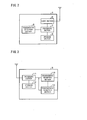
- FIG. 2 shows a specific structure of a DSRC terminal device 1.
- the DSRC terminal device 1 includes a radio section 6, a processing section 7, transmission/reception section 8 and a storage section 9.
- the radio section 6 serves to transmit/receive electric waves so as to carry out communication between the DSRC terminal device 1 and the DSRC radio device 4.
- the processing section 7 processes the electric wave, which is received from the DSRC radio device 4 by the radio section 6, and transmits the processed wave to the transmission/reception section 8.
- the processing section 7 also converts the information transmitted from the transmission/reception section 8 into electric waves which is transmitted from the radio section 6 to the DSRC radio device 4.
- the transmission/reception section 8 serves to transmit the information, which is processed by the processing section 7 based on the electric wave received from the DSRC radio device 4 by the radio section 6, to the center system 3.
- the transmission/reception section 8 also transmits the information received form the center system 3 to the processing section 7.
- the storage section 9 stores processing results of the processing section 7.
- the storage section 9 stores ID information for identifying the center system 3 or the DSRC radio device 4, or frequencies of electric waves used for communication.
- Figure 3 shows a concrete example of the center system 3.
- the center system 3 includes a plurality of transmission/reception sections (determination information transmitting means, selecting result receiving means) 10, a processing section (information reproduction mode changing means, determining means, selecting means) 11, a storage section 12 and a radio section 13.
- the transmission/reception section 10 serves to carry out transmission/reception with the transmission/reception section 8 of the DSRC terminal device 1.
- the center system 3 includes a plurality of transmission/reception sections 10 corresponding to the respective transmission/reception section 8 of plural DSRC terminals 1. Further, each transmission/reception section 10 has a general mobile phone communication function, to be capable of transmission/reception of information with the mobile phone 5. The communication between the transmission/reception section 10 and the mobile phone 5 may otherwise be carried out through a base station (not shown).
- the processing section 11 serves to process information received by the transmission/reception section 10 to enable the information to be stored into the storage section 12. Further, the processing section 11 processes information stored in the storage section 12 to allow the information to be transmitted to the DSRC terminal device 1 and the mobile phone 5.
- the storage section 12 stores processing results of the processing section 11.
- the storage section 12 stores information received from the DSRC terminal device 1, which has been processed by the processing section 11.
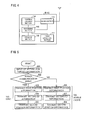
- Figure 4 shows a specific structure of a mobile phone 5.
- the mobile phone 5 includes a radio section (selection result transmission means) 13, a position determining section 14, a processing section 15, a storage section 16, and an input operation section 17.
- the radio section 13 serves to transmit/receive electric waves so as to carry out communication between the mobile phone 5 and the base station.
- the position determining section 14 detects the current position of the mobile phone, that is, the current position of the vehicle 2, based on the information provided by the base station. Note that, when the vehicle 2 includes a GPS (Global Positioning System), the position determining section 14 may detect the current position of the mobile phone 5 based on position information provided from the GPS.
- GPS Global Positioning System
- the processing section 15 serves to administrate all information processing operations among the processing section 15, the radio section 13, the position determining section 14, the storage section 16 and the input operation section 17.
- the storage section 16 stores processing results of the processing section 15. Specifically, the storage section 16 stores position information of the mobile phone 5, or instructions supplied from the user via the input operation section 17.
- the input operation section 17 is constituted of various buttons for allowing the user to input commands with respect to the mobile phone 5, a touch panel, etc.
- the instructions supplied from the user via the input operation section 17 is transmitted to the radio section 13 or the storage section 16 via the processing section 15.
- the DSRC radio device 4 basically has the same structure as that of the mobile phone 5. It however should be noted that, when the DSRC radio device 4 has the structure shown in Figure 4, the DSRC radio device 4 differs from the mobile phone 5 in that the radio section 13 transmits/receives electric waves so as to carry out communication with the DSRC terminal device 1, and the position determining section 14 detects the current position information based on information supplied from the DSRC terminal device 1.
- the communication between the DSRC radio device 4 mounted to the vehicle 2 and the center system is carried out via the DSRC terminal device 1, and the communication between the mobile phone 5 and the center system 3 is carried out by a general mobile phone communication function.
- Step 1 “Step” is hereinafter referred to as S).
- the setting information of the target information or ID information for identifying the user is usually small in amount, and needs to be transmitted quickly; therefore, these information items are transmitted from the mobile phone 5 which is suitable for wide range communication. Meanwhile, when the vehicle 2 happens to be in an communication area with respect to the DSRC terminal device 1, the setting information or the ID information may be transmitted by DSRC communication. In this case, the communication cost can be reduced.
- the processing section 15 of the DSRC radio device 4 carries out judgment as to whether or not the vehicle 2 currently positions in the communication area with respect to the DSRC terminal device 1 (S2).
- the judgment in S2 is made according to whether or not reception of electric waves from the DSRC terminal device 1 by the radio section 13 of the DSRC radio device 4 is properly performed.
- the first position information which indicates the current position of the vehicle 2
- the first position information is transmitted from the position determining section 14 of the DSRC radio device 4 to the DSRC terminal device 1 (S3).
- the first position information is obtained by the GPS provided in the vehicle 2.
- the setting information indicating the target information having been set by the user in S1 and the ID information for identifying the user are transmitted from the DSRC radio device 4 to the DSRC terminal device 1 (S4). Further, the second position information indicating the current information of the vehicle 2 is transmitted from the position determining section 14 of the DSRC radio device 4 to the DSRC terminal device 1 (S5).
- the first position information is transmitted from the radio section 13 of the mobile phone 5 to the center system 3 (S6). Thereafter, the setting information indicating the target information having been set by the user in S1, and the ID information for identifying the user are transmitted from the radio section 13 of the mobile phone 5 to the center system 3 (S7). Further, the second position information indicating the current position of the vehicle 2 is transmitted from the radio section 13 of the mobile phone 5 to the center system 3 (S8). The first position information and the second position information are obtained by the position determining section 14 of the mobile phone 5.
- This judgment allows performing communication with a desirable mode chosen from: (i) the communication with a mobile phone which is suitable for transmission of the first position information having less communication limit in terms of time and position, and (ii) the DSRC communication which can be performed only in a limited area but requires less communication cost.
- the position information indicating the current position of the vehicle 2 is transmitted to the center system twice, in S3 and S5, or in S6 and S8.
- the position information may be transmitted more than twice at predetermined intervals. The continuous transmission of the position information allows detection of the direction the vehicle head for.
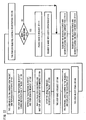
- the transmission/reception sections 10 of the center system 3 receive the position information etc. either via DSRC (S20) or a mobile phone (S21).
- the processing section 11 of the center system 3 finds the traveling direction of the vehicle 2 based on the first position information and the second position information received in S20 or S21.
- the processing section 11 of the center system 3 then carries out search in the center system 3 for the target information requested by the user based on the setting information received in S20 and S21 (S23).
- the processing section 11 of the center system 3 estimates the significance of necessity (urgency, hereinafter) of immediate transmission of the target information to the user (S24).
- the center system 3 transmits the target information to the mobile phone 5 (S25).
- the processing section 11 of the center system 3 carries out judgment as to whether or not the data amount of the target information is higher than a predetermined level ⁇ (S26).
- the center system 3 transmits the target information to the mobile phone 5 (S25).
- the processing section 11 of the center system 3 calculates the distance from the vehicle 2 to a DSRC terminal device nearest the vehicle, or time that the vehicle 2 takes to reach the nearest DSRC terminal device 1, based on the current position information of the vehicle 2 (S27).
- the processing section 11 may calculate required communication time when the target information is transmitted via the mobile phone 5, based on the amount of target information and the communication speed of mobile phone. In calculation of the time the vehicle 2 takes to reach the nearest DSRC terminal device 1, it may be performed based on the average speed of the vehicle if either the speed data of vehicle, or the speed information, which is obtained through the traffic sensor provided on the road, can be obtained.
- the processing section 11 of the center system 3 converts the calculation results in S27, which are the distance and the time to get to the nearest DSRC terminal device 1, into determination information, in addition to the amount of the target information and the communication time.
- the determination information is used as reference to decide whether or not the transmission is performed with a mobile phone 5.
- the center system 3 transmits the determination information to the mobile phone 5 via the transmission/reception section 10 (S29).
- the determination information transmitted in S29 may include information regarding fee of the target information. With this option, it is possible to provide more accurate judgment material by which the user decides whether or not he/she receives the target information via DSRC communication.
- the determination information transmitted in S29 is received in the mobile phone 5 through the radio section 13 (S30). Then, the user decides whether or not he/she receives the target information via DSRC communication (S31). Further, the use input through the input operation section 17 either "OK” or "NG”, which is transmitted from the radio section 13 (S32).
- the processing section 11 of the center system 3 makes a decision as to whether or not the transmission can be performed via DSRC (S34) based on the answer; when the DSRC transmission is allowed, the processing section 11 performs polling operation (S35).
- the DSRC terminal device 1 After the communication between the DSRC terminal device 1 and the DSRC radio device 4 in the vehicle 2 is established as a result of polling operation in S35, the DSRC terminal device 1 carries out judgment as to whether or not the DSRC radio device 4 in the receiving end is identical to the DSRC radio device 4 supposed to receive the target information (S36).
- the ID information of the DSRC radio device 4 is transmitted from the DSRC radio device 4 to the center system 3 through the DSRC terminal device 1. As described, the ID information of mobile phone 5 has already been transmitted to the center system 3 in S21.
- the ID information of mobile phone 5 from which the answer (OK or NG) was transmitted is compared with the ID information of the DSRC radio device 4, so as to carry out the judgment as to whether or not the DSRC radio device 4 in the receiving end is identical to the DSRC radio device 4 supposed to receive the target information.
- the judgment in S36 may be carried out as follows.
- ID information of the vehicle which is supposed to receive the target information, is also sent from the mobile phone 5.
- each DSRC terminal device 1 constantly checks the ID information of vehicle in the other end of DSRC communication. Then, the judgment in S36 may be performed by confirming accordance of the ID information transmitted from the mobile phone 5 with the ID information of the vehicle checked by the DSRC terminal device 1.
- the target information is transmitted via DSRC (S37).
- the vehicle 2 receives the target information via either DSRC or mobile phone 5 (S38), this is the end of the operation of communication system according to the present embodiment.
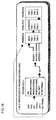
- the determination information may be composed of the information regarding the target information, information regarding required number of DSRC, and information of DSRC.
- the information regarding the target information includes the amount of target information, and estimated communication time in the case of transmitting all of unsent part of target information (unsent target information, hereinafter) via mobile phone when transmission of the target information is not completed by a single DSRC terminal device 1, and estimated communication time of the mobile phone 5 in the case of transmitting the unsent target information via the mobile phone 5 and DSRC communication.
- information regarding the required number of DSRC is the number of DSRC terminal devices 1 required for transmission of the unsent target information via DSRC communication. Further, the DSRC information also includes the potential location of DSRC terminal device 1 for the next DSRC communication, the distance to the location, and estimated traveling time. Note that, Figure 8(a) shows a case of having two potential DSRC terminal devices (DSRC terminal devices (i) and (ii)) for the next DSRC communication.
- the user arbitrarily selects, as the DSRC terminal device for next communication, one of: a mode (A) of using either of DSRC terminal devices (i) and (ii), and a mode (B) of using neither DSRC terminal device (i) nor (ii) but another DSRC terminal device.
- the user is able to make appropriate selection of the most desirable DSRC terminal device based on the information of potential terminal devices.
- DSRC information includes potential DSRC terminal device (DSRC terminals device(i), (ii)) for the next DSRC communication, and potential DSRC terminal device (DSRC terminal devices (i), (ii), (iii)) for DSRC communication after the next.
- the user arbitrarily selects one of: a mode (C) of using both of the DSRC terminal devices (i) and (ii) in the next communication and the rest of information is received by the mobile phone 5; a mode (D) of using either of the DSRC terminal devices (i) and (ii) in the next communication and either of the DSRC terminal devices (i), (ii) and (iii) in the communication after the next; and a mode (E) of using any desired DSRC terminal devices.
- a mode (C) of using both of the DSRC terminal devices (i) and (ii) in the next communication and the rest of information is received by the mobile phone 5 a mode (D) of using either of the DSRC terminal devices (i) and (ii) in the next communication and either of the DSRC terminal devices (i), (ii) and (iii) in the communication after the next
- a mode (E) of using any desired DSRC terminal devices a mode (C) of using both of the DSRC
- DSRC terminal devices are required to transmit all of unsent target information via DSRC communication; however, even when 3 or more DSRC terminal devices are required, the DSRC information contained in the determination information allows the user to make appropriate selection of the most desirable DSRC terminal device.
- the user inputs setting of target information (S50).
- the "DSRC reservation information” refers to information to reserve a DSRC terminal device when using the DSRC terminal device in a specific place for reception of the target information.
- the processing section 15 of the DSRC radio device 4 carries out judgment as to whether or not the vehicle 2 currently positions in the communication area with respect to the DSRC terminal device 1 (S52).
- the DSRC radio device 4 transmits setting information for enabling the center system 3 to select target information, and the DSRC reservation information through the DSRC terminal device 1 (S53).
- the setting information and the DSRC reservation information are transmitted from the DSRC radio device 4 by using the mobile phone 5 via the DSRC terminal device 1 (S54).
- S53 the setting information and the DSRC reservation information.
- the position information of vehicle 2 is transmitted from the mobile phone 5 (S58). Meanwhile, the ID information of each DSRC radio device 4 is transmitted when the DSRC radio device 4 passes through a communication area with respect to the DSRC terminal device 1 (S59).
- each transmission/reception section 10 of the center system 3 receives the position information having been sent in S58 (S60), and the ID information having been sent in S59 (S61). Thereafter, the processing section 11 of the center system 3 carries out polling operation (S62).
- the DSRC terminal device 1 After the communication between the DSRC terminal device 1 and the DSRC radio device 4 in the vehicle 2 is established as a result of polling operation in S62, the DSRC terminal device 1 carries out judgment as to whether or not the DSRC radio device 4 in the receiving end is identical to the DSRC radio device 4 supposed to receive the target information (S63). This judgment in S63 may be carried out by the same manner as that in S36 ( Figure 7).
- the processing section 11 of the center system 3 selects a DSRC terminal device 1 in a specific place based on the DSRC reservation information received in S55 and S56 ( Figure 9) as the DSRC terminal device 1 for transmitting the target information. Then, the center system 3 transmits the target information found in S57 ( Figure 9) through the DSRC terminal device 1 selected in S64 (S65).
- the judgment as to which one of mobile phone and DSRC should used for transmission of the target information is made by the user based on the amount of target information or urgency; however, the present invention is not limited to this.
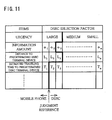
- a determination reference table (minutely described below) may be prepared in the center system 3 in advance, allowing automatic determination of one of the mobile phone and DSRC in the center system 3.
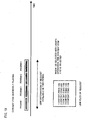
- the determination reference table has specific classification of various determination factors as determination reference, such as urgency of target information, amount of target information, distance to the predetermined DSRC terminal device, and estimated time to get to the predetermined DSRC terminal device.
- the determination reference table classifies the levels of urgency (classified by a thick solid line in the figure) so that highly-urgent target information is transmitted via a mobile phone, and less urgent or not urgent target information is transmitted via DSRC.
- the determination reference table classifies the degree of amount so that, when a target information amount is equal to or less than ⁇ 2 the target information is transmitted via a mobile phone, and when the target information amount is equal to or larger than ⁇ 3, the target information is transmitted via DSRC.
- ⁇ i ⁇ ⁇ i + 1 (i is an integer from 1 to n).
- the determination reference table classifies the degrees of distance so that, when the distance is equal to or more than L3, the target information is transmitted via a mobile phone.
- the determination reference table classifies degrees of time so that, when the estimated time to get to the predetermined DSRC terminal device is equal to or more than T1, the target information is transmitted via a mobile phone, and when the estimated time to get to the predetermined DSRC terminal device is equal to or less than T2, the target information is transmitted via DSRC.
- the determination reference table offering determination reference for each factor in deciding whether the transmission of target information is carried out via DSRC or mobile phone is provided in the processing section 11 (see Figure 3) of the center system 3.
- the step for transmitting determination information (S29) in the flow chart of Figure 6 can be omitted, thereby simplifying the operation in the center system 3.
- the described determination reference may be previously created as recommendation in the center system 3 in consideration of communication cost etc.; otherwise, the user may create the reference by his/her own decision. Further, when the determination reference is previously created as recommendation in the center system 3, the center system 3 may first obtain approval from the user for the use of determination reference, before selecting the transmission mode based on the determination reference.
- the communication system includes the DSRC terminal device 1 which allows communication between the vehicle 2 in the first communication area and the center system 3; the DSRC radio device 4; and the mobile phone which allows communication between the vehicle 2 in the second communication area, which is larger than the first communication area, and the center system 3, wherein the user of the vehicle 2 estimates the level of attribute information of the target information which the user wishes to obtain from the center system 3, the system further including a processing section for selecting either DSRC communication or mobile phone as transmission mode of the target information to the vehicle 2, based on estimation (determination) information of the processing section 11.
- the communication system includes the processing section 11 for determining the level of attribute information of the target information which the user wishes to obtain from the center system 3; the transmission/reception section 10 for transmitting the determination information of the processing section 11 to the vehicle 2 either via DSRC communication or via a mobile phone; and the radio section 13 for transmitting decision of the user as to whether the target information is obtained through DSRC or mobile phone, which decision is made based on the determination information transmitted from the transmission/reception section 10, wherein the processing section 11 makes a decision as to whether the target information is transmitted to the vehicle 2 via DSRC or via mobile phone based on the determination result transmitted from the radio section 13.
- the effect of the foregoing communication system may also be obtained by the communication control method in which the user of the vehicle 2 makes a decision as to whether the target information is transmitted to the vehicle 2 via DSRC communication or via mobile phone, based on the level of attribute information of the target information which the user wishes to obtain from the center system 3.
- the effect of the foregoing communication system may also be obtained by the communication control method in which the center system 3 determines the level of attribute information of the target information which the user of vehicle 2 wishes to obtain from the center system 3, and transmits the determination as determination information to the vehicle 2 either via DSRC communication or via a mobile phone, and the user makes a decision as to whether the target information is obtained through DSRC or mobile phone, which decision is made based on the determination information, and then the determination result is transmitted to the center system 3 where the final determination as to whether the target information is transmitted to the vehicle 2 via DSRC or via mobile is made.
- the communication control method may be structured as a program executed by a computer.
- the communication control program is stored in a medium, such as a floppy disk®, a hard disk, a magnetic tape, an optical disk, a magnetic disk, a magnetooptical disk, an MD etc., or in a storage medium, such as ROM, RAM, or the like; the program is read out from the medium by a computer for execution.
- the DSRC terminal device in the petrol station allows any users who stop by the petrol station to effectively use their waiting time during refuel, maintenance etc. for acquisition of desired information from the DSRC terminal device. Further, the owners of petrol stations are also able to obtain information about the user via DSRC communication using the DSRC radio device, allowing them to use the information for marketing.
- maintenance history, usage history for the petrol station etc. of the vehicle may be stored in the DSRC radio device to enable the owner to obtain these histories via DSRC communication while the vehicle is refueled in the petrol station.
- Such history data allows the owner of the petrol station to offer the most suitable service to the driver of the vehicle. Further, the driver of vehicle will appreciate appropriate advices in vehicle maintenance etc., and would become more willing to use the petrol station.
- the owner may give some kind of amenity to the user who uses the DSRC terminal device to obtain desired information via DSRC communication in the petrol station. This is effective to increase the frequency of visit, and also to increase user's satisfaction.
- the amenity may be discount on petrol or other various services (car wash, oil exchange etc.).
- a DSRC terminal device When a DSRC terminal device is provided in a parking area, information delivery via DSRC communication can be easily performed by the vehicle stopped in the parking area.
- the DSRC terminal device in the parking area allows any users who use the parking area to effectively use the parking time by obtaining desired information from the DSRC terminal device. Besides, when the parking area is full, the DSRC terminal device allows the drivers who are waiting in a line outside the parking area to obtain desired information via DSRC communication. This will contribute to reduce irritation of the drivers from waiting.
- the owners of parking area are able to obtain information about the user via DSRC communication using the DSRC radio device, allowing them to use the information for marketing.
- the usage history for the parking area of the vehicle may be stored in the DSRC radio device to enable the owner to obtain the history via DSRC communication while the vehicle is stopped in the parking area.
- Such history data allows the owner of the parking area to offer some special services to the driver, for example, offering discount on parking fee after a certain number of utilizations.
- the DSRC terminal device in the parking area may be associated with a personal computer inside the shop storing client data, so that the owner is able to obtain/update shopping history of the user for the shop, or service history given to the user.
- client data Such history data allows the owner of the department store, supermarket etc. to offer the more appropriate service to the user of the vehicle.
- the user of vehicle will appreciate superior services in the parking area which has DSRC communication service, and would become more willing to more frequently use the parking area.
- the DSRC radio device stores the number of visits of the user for one of the shops, and the owner obtains this visiting history while the user is parking the car. Then, the owner may offer some kind of amenity, for example, discount on commodity, to the user who has visited one of the shops more than a certain number of times, the amenity may be otherwise music data, image data such as movies etc.
- an information delivery system is arranged so that an information reproduction device reproduces information delivered from an information delivery center, the information delivery system comprising information reproduction mode changing means for changing reproduction mode for the information based on circumstances on information reproduction in the information reproduction device.
- the information delivery system as set forth in claim 1, further comprises first communication means for enabling communication between a mobile body and the information delivery center, the mobile body including the information reproduction device and residing in a first communication area; and second communication means for enabling communication between the mobile body and the information delivery center when the mobile body resides in a second communication area which is larger than the first communication area, the second communication means carrying out communication with a higher speed than the first communication means, wherein: the information reproduction mode changing means includes: determining means for determining a level of attribute information of target information, which is selected by a user of the mobile body and is to be delivered from the information delivery center; and selecting means for selecting either the first communication means or the second communication means to be used for delivery of the target information to the information reproduction device, based on a determination result of the determining means.
- the communication system further comprises first communication means for enabling communication between a mobile body and the center system, the mobile body residing in a first communication area; and second communication means for enabling communication between the mobile body and the center system when the mobile body resides in a second communication area which is larger than the first communication area, the first communication means carrying out communication with a higher speed than the second communication means, the communication system further including determining means for determining a level of attribute information of target information, which is selected by a user of the mobile body and is to be delivered from the center system; and selecting means for selecting either the first communication means or the second communication means to be used for delivery of the target information based on a determination result of the determining means.
- the determining means determines a level of attribute information of target information
- the selecting means selects either the first communication means or the second communication means to be used for delivery of the target information to the mobile body based on the determination result of the determining means.
- the user does not need to select the communication means, and is able to obtain the target information via the communication means selected by the selecting means, only by requesting acquisition of the target information to the information delivery center.
- the first communication means carrying out communication with a higher speed than the second communication means, while the second communication means enables communication in a second communication area which is larger than the first communication area. Further, selecting means selects either the first communication means or the second communication means based on the determination result of the determining means.
- the selecting means is arranged to select the first communication means. With this arrangement, it is possible to further reduce the time for transmitting the target information to the mobile body.
- the selecting means is arranged to select the second communication means. With this arrangement, it is possible to transmit the target information to the mobile body for a wider area.
- the present invention realizes an information delivery system taking advantages of both the first communication means allowing high-speed communication and the second communication means allowing wide-area communication. Therefore, the present invention increases user friendliness in obtaining target information from the information delivery system.
- the selecting means carries out the selecting using a determination reference table in which a level of attribute information and communication means to be used for transmission of the target information are related with each other previously.
- the selecting means automatically selects one of the first communication means and the second communication means to be used for delivery of the target information, based on the determination reference table. With this function, the user can omit the selecting operation for the communication means.
- the present invention further increases user friendliness in obtaining target information from the information delivery system.
- the information delivery system further comprises: first communication means for enabling communication between a mobile body and the information delivery center, the mobile body including the information reproduction device and residing in a first communication area; and second communication means for enabling communication between the mobile body and the information delivery center when the mobile body resides in a second communication area which is larger than the first communication area, the second communication means carrying out communication with a higher speed than the first communication means, wherein: the information reproduction mode changing means includes: determining means for determining a level of attribute information of target information, which is selected by a user of the mobile body and is to be delivered from the information delivery center; determination information transmitting means for transmitting determination information, which is a determination result of the determining means, to the mobile body via either the first communication means or the second communication means; selecting result transmitting means for transmitting to the information delivery center a selecting result made by the user as to which of the first communication means and the second communication means is used for obtaining the target information, which result is made based on the determination information transmitted from the determination information transmitting means
- the communication system further comprises: first communication means for enabling communication between a mobile body and the information delivery center, the mobile body including the information reproduction device and residing in a first communication area; and second communication means for enabling communication between the mobile body and the information delivery center when the mobile body resides in a second communication area which is larger than the first communication area, the first communication means carrying out communication with a higher speed than the second communication means, the communication system further including determining means for determining a level of attribute information of target information, which is selected by a user of the mobile body and is to be delivered from the information delivery center; determination information transmitting means for transmitting determination information, which is a determination result of the determining means, to the mobile body via either the first communication means or the second communication means; selecting result transmitting means for transmitting to the information delivery center a selecting result made by the user as to which of the first communication means and the second communication means is used for obtaining the target information, which result is made based on the determination information transmitted from the determination
- the user selects one of the first communication means and the second communication means to be used for obtaining the target information based on the determination information transmitted from the determination information transmitting means, and transmits the selection result to the information delivery center via the selecting result transmitting means. Then, the information delivery center selects either the first communication means or the second communication means based on the selecting result, and transmits the target information via the selected communication means to the mobile body.
- the information delivery system on transmission of the target information, selects either the first communication means or the second communication means based on the selecting result of the user. On this account, it is possible to carry out transmission of the target information according to user's request.
- the present invention realizes a communication system taking advantages of both the first communication means allowing high-speed communication and the second communication means allowing wide-area communication. Therefore, the present invention increases user friendliness in obtaining target information from the information delivery system.
- the information delivery system is preferably arranged so that the determination information transmitting means transmits the determination information by the second communication means.
- the attribute information may be urgency of transmission of the target information.
- "urgency” here means the allowable interval from the determination of level of attribute information of target information by the determining means to the beginning of transmission of target information to the mobile body. For example, if the target information needs to be transmitted immediately after the request by the user, the "urgency" for the information is high.
- level of attribute information i.e., necessity of immediate transmission of target information to the mobile body
- the selecting means selects the second communication means by which transmission of target information to a mobile body can be performed for a wider communication area.
- the present invention increases user friendliness in obtaining target information from the information delivery system.
- the attribute information may be a data amount of the target information.
- the level of attribute information i.e., the data size of target information can be estimated by the determining means.
- the selecting means selects the first communication means by which transmission of target information to a mobile body can be performed in a shorter communication time than second communication means.
- the present invention increases user friendliness in obtaining target information from the information delivery system.
- the attribute information may be time needed for transmission of the target information via either the first communication means or the second communication means.
- the level of attribute information i.e., time needed for transmission of the target information can be found by the determining means.
- the selecting means selects either of the first communication means or the second communication means according to the transmission time estimated by the determining means. For example, when the time taken for transmission of target information by the second communication means is in an allowable range set by the user, the transmission to the mobile body is performed in a wider range by using the second communication means instead of the first communication means.
- the present invention increases user friendliness in obtaining target information from the information delivery system.
- the second communication means is wireless telephone communication.
- the wireless telephone communication is a mobile phone communication.
- the second communication means is realized by a mobile phone communication, which is currently the most popular wireless communication mode, being available in the most regions in Japan, the transmission of target information to the mobile body can be performed with almost no geographical limit.
- the first communication means is DSRC communication.
- the first communication means is realized by DSRC communication, which is fast-developing communication mode in recent years, a large amount of target information can be rapidly and reliably transmitted and received at a low cost. In this way, benefits of DSRC communication can be used when transmission is performed by the first communication means.
- selecting means selects the first communication means to be used for transmission of the target information to the mobile body, and reserves a DSRC terminal device used for the transmission of the target information before the transmission.
- the selecting means reserves a DSRC terminal device used for the transmission of the target information, before the transmission is started. Therefore, transmission of target information can be immediately performed as soon as the mobile body arrives at the communication area for the DSRC terminal device. Therefore, the present invention increases user friendliness in obtaining target information from the information delivery system.
- the attribute information is a distance from the mobile body to a DSRC terminal device nearest the mobile body.
- the determining means finds the distance to the nearest DSRC terminal device, in other words, the determining means finds whether the mobile body is in a communication area for DSRC. Accordingly, when the determining means finds that mobile body is in an area for DSRC communication, the target information can be transmitted through DSRC communication, thereby reducing communication cost.
- the attribute information is a time that the mobile body takes to reach a communication area for the nearest DSRC terminal device.
- the determining means determines the level of attribute information by finding the time that the mobile body takes to reach the communication area for the DSRC device nearest the mobile body. Accordingly, if it is found, based on the time needed for the mobile body to start DSRC communication, that the target information can be transmitted to the mobile body more rapidly by the second communication means than DSRC communication, the selecting means selects the second communication means. In this way, it is possible to increase user friendliness in obtaining target information from the information delivery system.
- an information acquisition device comprises first communication means for enabling communication between the information delivery center and a mobile body which resides in a first communication area; and second communication means for enabling communication between the information delivery center and the mobile body which resides in a second communication area larger than the first communication area, wherein the first communication means carries out communication with a higher speed than the second communication means, wherein: a user of the mobile body transmits setting information for specifying target information, which is information the user wishes to obtain from the information delivery center, the setting information being transmitted via either the first communication means or the second communication means, and the user obtains the target information via either the first communication means or the second communication means, which is selected by the information delivery center based on the setting information.
- an information acquisition device comprises first communication means for enabling communication between the information delivery center and a mobile body which resides in a first communication area; and second communication means for enabling communication between the information delivery center and the mobile body which resides in a second communication area larger than the first communication area, wherein the first communication means carries out communication with a higher speed than the second communication means, wherein: a user of the mobile body transmits setting information which specifies target information the user wishes to obtain from the information delivery center, the setting information being transmitted via either the first communication means or the second communication means, the user receives from the information delivery center determination information for a level of attribute information of the target information, which level is determined by the information delivery center based on the setting information; and the user selects either the first communication means or the second communication means to be used for obtaining the target information, based on the determination information.
- an information delivery server performs communication with a mobile body residing in a first communication area via first communication means, and performs communication with the mobile body residing in a second communication area, which is larger than the first communication area, via second communication means, the first communication means carrying out communication with a higher speed than the second communication means.
- the information delivery server comprises: determining means for determining a level of attribute information of target information the user wishes to obtain; and selecting means for selecting either the first communication means or the second communication means to be used for delivery of the target information to the mobile body, based on a determination result of the determining means.
- an information delivery server performs communication with a mobile body residing in a first communication area via first communication means, and performs communication with the mobile body residing in a second communication area, which is larger than the first communication area, via second communication means, the first communication means carrying out communication with a higher speed than the second communication means.
- the information delivery server comprises: determining means for determining a level of attribute information of target information the user wishes to obtain from the information delivery center; determination information transmitting means for transmitting determination information, which is a determination result of the determining means, to the mobile body via either the first communication means or the second communication means; selecting result receiving means for receiving from the mobile body a selecting result made by the user as to which of the first communication means and the second communication means is used for obtaining the target information, which result is made based on the determination information transmitted from the determination information transmitting means; and selecting means for selecting either the first communication means or the second communication means to be used for delivery of the target information to the mobile body, based on the selecting result received by the selecting result receiving means.
- the information acquisition device communication device
- the foregoing information delivery server communication server
- an information delivery control method is used for an information delivery system comprising first communication means for enabling communication between an information delivery center and a mobile body which resides in a first communication area; and second communication means for enabling communication between the information delivery center and the mobile body which resides in a second communication area larger than the first communication area, wherein the first communication means carries out communication with a higher speed than the second communication means.
- the method comprises the step of: selecting either the first communication means or the second communication means to be used for transmission of target information which the user wishes to obtain from the information delivery center, based on a level of attribute information of the target information.
- either the first communication means or the second communication means is selected to be used for transmission of target information to the mobile body based on a level of attribute information of the target information.
- the user does not need to select the communication means, and is able to obtain the target information via the communication means selected by the information control method of the present invention, only by requesting acquisition of the target information to the information delivery center.
- the present invention realizes an information delivery system taking advantages of both the first communication means allowing high-speed communication and the second communication means allowing wide-area communication. Therefore, the present invention increases user friendliness in obtaining target information from the information delivery center
- an information delivery control method is used for an information delivery system comprising first communication means for enabling communication between an information delivery center and a mobile body which resides in a first communication area; and second communication means for enabling communication between the information delivery center and the mobile body which resides in a second communication area larger than the first communication area, wherein the first communication means carries out communication with a higher speed than the second communication means
- the method comprising the steps of: determining in the information delivery center a level of attribute information of target information, which a user of the mobile body wishes to obtain from the information delivery center, and transmitting determination, which is as a determination result, to the mobile body via either the first communication means or the second communication means; and transmitting to the information delivery center a selecting result made by the user as to which of the first communication means and the second communication means is used for obtaining the target information, which result is made based on the determination information transmitted from the determination information transmitting means, and selecting either the first communication means or the second communication means to be used for delivery of the target information to the mobile body,
- the information delivery system on transmission of the target information, selects either the first communication means or the second communication means based on the selecting result of the user. On this account, it is possible to carry out transmission of the target information according to user's request.
- the present invention realizes an information delivery system taking advantages of both the first communication means allowing high-speed communication and the second communication means allowing wide-area communication. Therefore, the present invention increases user friendliness in obtaining target information from the information delivery system.
- an information delivery control program causes a computer to execute the foregoing information delivery control method.
- the foregoing information delivery control method can be enforced.
- a computer-readable storage medium stores the foregoing information delivery control program.
- the foregoing information delivery control method can be enforced.
- the information reproduction device is realized by a content item reproduction terminal. Further, in the reproduction of information, transmission of event information (described later) is also performed. Further, the content item reproduction terminal is capable of setting contents or reproduction order of the content items reproduced therein.
- FIG 12 is a schematic diagram of a content item delivery system (information delivery system) 1a according to the present embodiment.
- the content item delivery system 1a includes a content item delivery center 10a as the information provider, and a plurality of content item reproduction terminals 30 as the information receivers.
- the content item reproduction terminals 30 are connected to the content item delivery center 10a via the content item delivery means 20. More specifically, each content item reproduction terminal 30, constantly or as required, receives delivery of newest content item(s) from the content item delivery center 10a via the content item delivery means 20, and carries out reproduction of information for specific contents with a desired reproduction order by way of event information 40 (described later).
- the content item delivery center 10a includes a content item delivery server 11a, a content item DB 12, and accounting means 13a.
- the content item delivery server 11a covers all server functions of the content item delivery system of the present embodiment.
- the content item delivery server 11a functions as an interface to the content item delivery means 20, such as the Internet or the like, and also administrates the ID number, the secret code etc. for each of plural content item reproduction terminal 30.
- the content item delivery center 10a may have the function of accounting means 13a, which carries out accounting processes for the content item delivery service.
- accounting means 13a which carries out accounting processes for the content item delivery service.
- the system may use a plurality of content item delivery centers 10a by connecting them via the Internet or the like.
- This server means may be realized in many ways according to the various existing technologies, therefore the minute explanation thereof is omitted here.
- the content item DB 12 stores a list of various types of brand-new content in the form of a tree-structure.
- the content item here means a wide range of software information including a sound file - music, narration, sound effect, ambient sound, Midi - automatic reproduction by simulation, text - reading of text, or automatic-generation content items which is automatically produced by a program.
- the example in Figure 12 shows, for convenience, local forecast programs, news program of various fields, and trendy music programs; however, the content item DB 12 actually includes 1) program guide, 2) lists of content items and automatic update information, 3) other program reference list (request information), in addition to the foregoing 4) forecast information, news information, traffic information, music information etc.
- those content items are stored in the content item DB 12 in the form of a tree.
- This allows separate selecting of content items in each content item file in the content item DB 12, i.e., the user selects an arbitrary content item after specifying, for example, the content item file 1; or specifies a sub-directory 1 first and then specifying one of the content item files 1, 2 and 3.
- the present invention differs from the conventional content item specifying method, in which each content item is specified by the name.
- the accounting means 13a is used for charging the user of content item reproduction terminal 30 for delivery of content item (product) by the delivery center 10a, the information provider.
- the charging means 13a separately charges the user for each content item reproduction terminal 30 by ID number basis. The fees for each content items are set in advance.
- the content items are delivered unilaterally from the content item delivery center 10a to the content item reproduction terminal 30; however, the present invention may be arranged so that the content item reproduction terminal 30 provides predetermined information to the content item delivery center 10a. In this case, the fee for information delivery from the content item reproduction terminal 30 may be paid to the content item reproduction terminal 30.
- Data acquisition from the content item delivery means 20 may be performed by logging online to network, or by accessing a memory card in a PC in off-line state.
- the content item reproduction terminal 30 is a content item reception device, which is often provided in a car, allowing the user to obtain information. In on-line state, the content item reproduction terminal 30 becomes wirelessly connected to the content item delivery center 10a, the information provider, via the content item delivery means 20 (Internet or the like).
- the content item reproduction terminal 30 includes a content item loader section (information reproduction method changing means) 31, a content item storage section (information reproduction method changing means) 32, a content item reproduction manager (information reproduction method changing means) 33.
- the content item loader section 31 functions as an interface section with respect to the Internet, which is the content item delivery means 20, and downloads various content items (program data) in the background from the content item delivery center 10a according to the event information 40 (described later), and stores the downloaded data into the content item storage section 32.
- the "background downloading” means downloading as parallel operation while the content item reproduction manager 33 is reproducing a content item.
- This enables the user of the content item reproduction terminal 30 to download another desired content item while one content item is being reproduced. Therefore, the user is not required to take the content item delivery operation into account, and is able to continuously obtain and reproduce content items like a FM radio or a CD player. Accordingly, the content items stored in the content item storage section 32 can be constantly updated automatically. Then, according to the mode of the downloaded content item, the content item reproduction manager 33 reproduces the downloaded content item by coordinatedly starting, for example, a TTF-Player, MP3-player, and a MIDI-player provided in the car.
- the content item reproduction terminal 30 downloads content items not stored in the content item storage section 32, from the content item delivery center 10a as required.
- the event information 40 refers to the following various input information items.
- the user gives voice orders, such as "start, pause, next, previous, jump 3, next program etc.” to the terminal, which are interpreted by an existing voice-recognition technology as instructions to carry out the next operation.
- This operation by the user is not limited to this voice message-type order using a voice recognition technology, but may be push-button selecting operation by the user.
- the content item delivery center 10a detects generation of earthquake, the content item delivery center 10a downloads information regarding the earthquake to the content item reproduction terminal 30 regardless the user's intention, so that the user is given the earthquake information without any choices.
- the vehicle has a sensor for each functional part, such as an engine. Then, when the sensor of engine detects some kind of engine trouble, the information given by the sensor is regarded the event information, so that the GPS system in the vehicle transmits information indicating the current position of the vehicle to the content item delivery center 10a. As a result, the content item delivery center 10a transmits the instruction to get to the nearest vehicle workshop, which is found in accumulated data in content item DB12, to the content item reproduction terminal 30, and the instruction is automatically downloaded to the content item reproduction terminal 30 as content item information. This enables the user to automatically obtain required information for vehicle repair.
- this information is any other content item(s) required during reproduction of a predetermined content item.
- the component, the reproduction order etc. of the content items can be selected according to one or plural sets of event information, when the content items are prepared.
- Figure 14 shows an example of flow of program reproduction and downloading when the event information is supplied to the content item reproduction terminal 30 in response to the driver's voice instruction. Note that, as described, since currently there are many voice-recognition technologies which allow the foregoing voice instruction, the minute explanation of voice recognition method is omitted here. This example assumes that one of start, pause, next, previous, jump 3, and next program, can be recognized as voice instruction.
- the current program data A is reproduced in response to the voice instruction "start” (event information) given by the driver.
- the user also may give voice instruction "next program", which cancels the program A and changes the display to the program B1.
- the program data A is edited in advance, including a jingle of several seconds, introduction of program B1, introduction of program B2, a question "make a request?", before the real content of program A is started.
- the content item loader section 31 downloads the program B1 from the content item delivery center 10a in response to the event information from the user. Therefore, in this case, the program A is cancelled halfway, and the program B is reproduced instead after being completely downloaded.
- the program A may be arranged so that the programs B2 and B3 are also downloaded in response to the voice instruction "yes" by the user in parallel with reproduction of program data B1.
- the program data A is arranged as in Figure 14 by the program creator, the user is able to obtain only the most desired content items with limited voice instruction.
- Figure 15 is a block diagram more specifically showing function of the content item reproduction terminal 30.
- the content item reproduction terminal 30 is capable of changing the contents or reproduction order for the content items downloaded from the content item delivery center 10a via the content item delivery means 20, based on various types of event information 40.
- the event information 40 is detected by event detecting means 38.
- the event detecting means 38 is, for example, predetermined judgment means for detecting defects from the microphone in the case of voice instruction, from the switching buttons in the case of push-button instruction, or from the sensor output in the case of detecting engine trouble using the foregoing sensor.
- the detected event information is transmitted from an event management section 39 to the content item loader section 31, the content item reproduction manager 33, a user interface management section 35 etc.
- the voice recognition is carried out by a voice recognition section 36, and the voice guidance to the user is carried out through a voice synthesis section 37.
- the content item loader section 31, the user interface management section 35, and user interface means 34 download desired content items from the content item delivery center 10a via the content item delivery means 20.
- the content items thus downloaded are stored in the content item storage section 32 via the content item loader section 31 as brand-new data, and are reproduced by the content item reproduction manager 33 with various reproduction devices.
- the event detection does not necessarily mean the voice detection above, but may be detection by other functional sensors, or may be instruction automatically generated in the content item reproduction terminal.
- the content item storage section 32 of the content item reproduction terminal 30 currently store the content item files 1 through 4, for example Music 1 through Music 4, which are ready for reproduction in a predetermined order.
- the event information is given to the content item reproduction terminal 30 during reproduction of music 1 as user's voice instruction "next"
- Music 1 is abandoned, and the file is immediately changed to Music 2, followed by Music 3 Music 4. That is, the files are reproduced according to the predetermined order.
- the user wishes to obtain a new desired content item(s), which is not stored in the content item storage section 32, and receives the content item through request operation with respect to the content item reproduction terminal, and then reproduces the obtained content item.
- This request operation for delivery of new content item is processed differently depending on the content item or the operation history of the terminal.
- the request for delivery of new content item may be transmitted to the center via the network immediately in response to the request operation, or the delivery of new content item may be delayed from the time the request operation is made, further, instead of new data delivery, the content item data having been delivered and stored in a memory of the terminal may be used.
- Figures 17 shows a conceptual view showing request operation by the user for downloading a new content item, which is not stored in the content item storage section 32, from the content item delivery center 10a
- Figure 18 shows the flow chart of the operation.
- This example assumes that the programs 1, 2, 3 and 4 are currently reproduced.
- the user input a predetermined request command to the content item reproduction terminal 30 (ST71). More specifically, the user inputs a request command, which functions as the event information 40, either as voice instruction or with predetermined switching operation.
- the content item reproduction terminal 30 demands the user to select a specific content item(s) (ST72), and the user selects the program 5, for example (ST73). The user also specifies other request items, if there are any (ST74 to ST77). Then all requested items are recorded (ST78) before transmitted to the content item delivery center 10a. In this manner, the program 5 and other content items which the user has selected are transmitted to the content item delivery center 10a via the content item delivery means 20.
- Figures 19 and 20 respectively show a conceptual view and a flow chart of another request operation.
- a content item includes link information, which functions as a request guidance for the user to make a request.
- link information which functions as a request guidance for the user to make a request.
- one content item causes loading of another content item(s).
- programs 1 through 4 are currently reproduced, and they are all constituted as epitomes of the available programs. Then, when the user selects the program 1 for example, and makes a request for the program to the content item reproduction terminal 30 (ST91), the program 1 is recorded (ST92 through ST99), and the whole content of the program 1 is transmitted from the content item delivery center 10a.
- Figures 21 and 22 respectively show a conceptual view and a flow chart of still another request operation.
- a content item explains another content item, which is a whole program; and the user makes a request for the content item (program) with reference to the explanation.
- Figure 23 shows a request list of the program (content item).
- the content item reproduction terminal 30 carries out the following operation.
- the content item reproduction terminal first reproduces the file "new_contents_guide.mp3", which contains a five-second jingle (music), followed by the following voice guidance.
- the terminal When the user selects 2 (ST1108), the terminal responds, "You have selected “Tales of Genji' tour. Do you have any more requests ?". When the user says “No”, the selected item is recorded (ST1109 through ST1112), and the terminal starts playing the music content item again from the point where the user issues the "Sightseeing guidance” (ST1113). Then, when the user inputs the "Kyoto sightseeing guidance", the selected content item is reproduced as an additional content item (ST1114).
- Figure 24 is a conceptual view showing yet another request operation.
- the content item selected at the time is automatically recorded.
- the method has a automatic loading function for content items, as shown in Figure 25 in which the content item A currently reproduced is changed into a content item B in response to occurrence of event information 40, such as a request command.
- the content item delivery means 20 shown in Figure 12 carries out delivery of content item through downloading via a network, transportation with a physical medium, transmission using an electric connecting means, automatic production by calculation.
- the content item to be delivered is selected by specifying all data items in a directory of the tree-structure (directory structure).
- the delivery of content item is carried out by copying data of the selected content item, that is, all contents of the directory corresponding to the selected content item, and those in the sub-directory thereof.
- the content item reproduction terminal needs to be capable of some kind of operation to specify a directory.
- the content item reproduction terminal 30 specifies a directory of the content item delivery center 10a via the content item delivery means 20. Then, the all data items contained in the directory are delivered.
- the delivery of content items is completed by shifting all contents of a directory corresponding to the selected content item. Further, on delivering content item, it is possible to separately deliver each file, however, to avoid complication of protocol, it is more preferable that the data items are archived in a single file and are transmitted as compressed data.
- copy-protection means is strongly recommended.
- delivery of content items is carried out by copying all files in the directory corresponding to the content item, regardless of which content item is selected, to the content item reproduction terminal 30. Therefore, a commercially-available copy-protection means works sufficiently.
- the present invention is not limited to this structure.
- the content item data may be stored in a commonly-used physical storage medium, such as a memory card, CD, CD-ROM, CD-R, CD-RW, DVD, DVD-ROM, DVD-R, DVD-RW, DVD-RAM, or a printed matter.
- the content items are delivered by being read out by the content item reproduction terminal.
- the delivery of content item can be performed via electric conduction.
- the content item delivery terminal is provided with a connector which allows conduction between the terminal and the content item delivery terminal, thereby sending content items by electrical transmission. This may be easily realized by using a USB cable or the like.
- the information delivery system (content item delivery system) according to the present invention is arranged so that: the information delivery center (content item deliver server) includes (i) a content item data base for accumulating a plurality of content item files, (ii) an information delivery server (content item delivery server) for delivering the content item files, and (iii) a plurality of information reproduction devices (content item reproduction terminal for reproducing content items received from the information delivery center via content item delivery means.
- the information delivery center includes (i) a content item data base for accumulating a plurality of content item files, (ii) an information delivery server (content item delivery server) for delivering the content item files, and (iii) a plurality of information reproduction devices (content item reproduction terminal for reproducing content items received from the information delivery center via content item delivery means.
- the information delivery system is capable of changing content or reproduction order of the content items in the information reproduction device, which content and order are determined when the content item is created, according to one or a plurality of: event information produced by operation by a user, event information transmitted from the information delivery center, event information from an external sensor, and event information produced in the information reproduction device.
- event information produced by operation by a user event information transmitted from the information delivery center, event information from an external sensor, and event information produced in the information reproduction device.
- the content item deliver center includes (i) a content item data base for accumulating a plurality of content item files, and (ii) a content item delivery server for delivering the content item files, and (iii) a plurality of the content item reproduction terminals for reproducing content items received from the information delivery center via content item delivery means.
- the content item delivery system is capable of changing content or reproduction order of the content items in the content item reproduction terminal, which content and order are determined when the content item is created, according to one or a plurality of: event information produced by operation by a user, event information transmitted from the content item delivery center, event information from an external sensor, and event information produced in the content item reproduction terminal.
- the event information here may be information of unexpected earthquake or the like.
- the information delivery center delivers an information program regarding the earthquake as a content item by priority.
- the event information from an external sensor may be an output of a sensor provided to functional components of vehicle (e.g. engine), informing that the sensor detects an engine trouble.
- the information reproduction device receives such event information, the currently reproduced program, for example, a music program, is immediately cut off, and information of the closest car repair place is transmitted from an external information source via the information delivery center, which information is reproduced after downloading.
- the event information generated in the information reproduction device may be such a condition that the user wants stock quotation information immediately.
- the information reproduction device reproduces a stock quotation program as a content item.
- the plurality of content item files are accumulated in a tree-structure upper directory including a plurality of lower directories, allowing a user of the information reproduction device to select a target upper directory or a lower directory so that all content item data in the target upper directory or the lower directory thus selected are downloaded as one group.
- a directory A as a tree form containing content items 1 through 4 and a sub-directories
- the user may separately selects each content item , or may be selects the whole sub-directories.
- the plurality of content items may be easily downloaded as one group. This function distinguishes the present invention from a general FM radio program.
- the information delivery center since the foregoing information delivery center has an accounting function for carrying out predetermined accounting operation regarding delivery of content items from the information delivery center to a plurality of the information reproduction devices, the information delivery center is capable of pay-content-delivery between a plurality of content item delivery companies and users of plural information reproduction devices. This offers opportunity of creation of new business model.
- each of the plurality of content item files previously includes a guide content item (sub content item) which instructs the user to carry out reproduction of content item.
- the guide content item is reproduced whenever required by switching operation by the user. On this account, the user obtains desired content items with a simple requesting action.
- update event information of the content item data in the information delivery center is transmitted to the information reproduction device, so that the content item files are automatically updated in the information reproduction device by fetching update event information of content item data before the user uses the information reproduction device under a predetermined condition. Accordingly, when the user starts up the information reproduction device, the content items are immediately updated before reproduced, thereby reducing communication load of the information delivery center.
- the information reproduction device when the music program A regarding a singer A is ready to be reproduced in the information reproduction device, if the information reproduction device receives update event information indicating that the program A is updated to the newest music program B in the information delivery center, the information reproduction device automatically acquires the music program B from the information delivery center. In this way, the information reproduction device reproduces the newest song of the singer A at all times without user's operation.
- the information delivery system is arranged so that the information reproduction device is capable of reproduction of a program introducing other programs than the program currently running, allowing the user to select one of the introduced programs with input of event information by operation by a user With this function, the information reproduction device dynamically receives delivery of the subsequent program.
- the information reproduction device when the information reproduction device is arranged to reproduce the programs 1, 2, 3 and 4 in this order, the information reproduction device may cut off reproduction of program 1, and reproduces a program for introducing programs A, B, C and D.
- the information delivery center delivers the program B so that the user can view the programs in order of 1, B, 2, 3 and 4. Note that, even during the reproduction of program B thus selected, a program for introducing further different programs can be reproduced, allowing the user to select one of them as the subsequent program.
- the reproduction can be continued by immediately reproducing the delivered data of subsequent program, thereby performing serial reproduction of programs. More specifically, with content items for introducing other content items, the user is allowed to download the introduced content items, which are linked with further different content items which can also be downloaded. By thus continuously loading content items, it is possible to offer series reproduction of content items.
- the present invention further discloses an information reproduction device used for the information delivery system, an information reproduction method, an information delivery control method, and a computer-readable storage medium storing the method as a program.
- the user is only required to turn on the reproduction device like a FM radio or a television, and dynamically select the target content items.
- the content items are automatically delivered from the information delivery center continuously. Therefore, the users are not required to take trouble to continuously input commands for serial displays of plural content items, like they do in browsing information with a personal computer using a web-browser.
- the user is allowed to carry out on-demand operation through operating means or voice commands during reproduction of a content item.
- the foregoing system allows the users to change the state of content item delivery service by operating the information reproduction device while a content item is reproduced; therefore, the user will more flexibly enjoy the content item delivery service. Further, in this system, the user is free from any concern of system or procedures of content item delivery during the reproduction of content items.
- the user is able to request any desired content items to be downloaded into the information reproduction device.
- This process also enables the content item provider to know which content item the user desires. Consequently, the content items according to user's request are automatically transmitted to the information reproduction device. This is contrary to the conventional broadcast-type services in which the content items are unilaterally transmitted.
- the system allows reference of other content items during reproduction of a content item, and the user may load the reference content items into the information reproduction device according to a change in purposes or circumstances. In this way, a single content item automatically leads the user to another content item, which is linked with still another content item, thereby providing a chain service.
- a content item for introducing other content items is prepared in advance, allowing the user to load the introduced items, the second content items. Further, by incorporating introduction of still further content items, the user is allowed to load the third content items, then the fourth content items in the same way, thereby providing a chain service.
- This method only requires storing files, which contains content items, into one of the directory trees of the storage device. Therefore, it is not necessary to write a program in a programming language or scripting file with complicated grammar.
- the present invention enables reproduction of content items regardless of delivery time of the content items, a wider range of the content item delivery means can be used.
- the content item deliver may be performed not only through a network but also through a physical storage medium such as a CD-R, a DVD-R, a memory card or the like.
- the present invention is useful to realize an information delivery system taking advantages of both DSRC communication allowing high-speed communication and mobile phone communication allowing wide-area communication.
- the present invention is also useful to realize a system in which a series of information is downloaded in the background from a certain content item delivery center by content item reproduction means such as car audio, while allowing the user to select an arbitrary one of the received series of information and decide the reproduction order of the selected content item.
Landscapes
- Engineering & Computer Science (AREA)
- Computer Networks & Wireless Communication (AREA)
- Signal Processing (AREA)
- Mobile Radio Communication Systems (AREA)
- Telephonic Communication Services (AREA)
- Information Transfer Between Computers (AREA)
Applications Claiming Priority (5)
| Application Number | Priority Date | Filing Date | Title |
|---|---|---|---|
| JP2002330863 | 2002-11-14 | ||
| JP2002330863 | 2002-11-14 | ||
| JP2003062582 | 2003-03-07 | ||
| JP2003062582A JP2004271917A (ja) | 2003-03-07 | 2003-03-07 | コンテンツ配信システム、コンテンツ再生端末、コンテンツ再生方法、コンテンツ配信方法ならびにそのプログラム記録媒体 |
| PCT/JP2003/014287 WO2004045235A1 (ja) | 2002-11-14 | 2003-11-10 | 情報配信システム、情報取得装置、情報配信サーバ、情報再生装置、情報再生方法、情報配信制御方法、情報配信制御プログラム、およびコンピュータ読み取り可能な記録媒体 |
Publications (1)
| Publication Number | Publication Date |
|---|---|
| EP1565019A1 true EP1565019A1 (de) | 2005-08-17 |
Family
ID=32314094
Family Applications (1)
| Application Number | Title | Priority Date | Filing Date |
|---|---|---|---|
| EP03811098A Withdrawn EP1565019A1 (de) | 2002-11-14 | 2003-11-10 | Informationsverteilungssystem, informationsbeschaffungseinrichtung,informationsverteilungsserver, informationswiedergabeeinrichtung, informationswiedergabeverfahren,informationsverteilungssteuerverfahren, informationsverteilungssteuerprogramm,und computerlesbares aufzeichnungsmedium |
Country Status (4)
| Country | Link |
|---|---|
| US (1) | US20060069740A1 (de) |
| EP (1) | EP1565019A1 (de) |
| AU (1) | AU2003277660A1 (de) |
| WO (1) | WO2004045235A1 (de) |
Families Citing this family (30)
| Publication number | Priority date | Publication date | Assignee | Title |
|---|---|---|---|---|
| JP4626316B2 (ja) * | 2005-01-25 | 2011-02-09 | Kddi株式会社 | 移動端末の電源制御方法及びシステム |
| JP2007026336A (ja) * | 2005-07-21 | 2007-02-01 | Hakuhodo Inc | コンテンツ制御装置 |
| JP4379738B2 (ja) * | 2005-12-09 | 2009-12-09 | ソニー株式会社 | 転送装置、転送方法及び転送プログラム |
| JP2008061183A (ja) * | 2006-09-04 | 2008-03-13 | Mitsubishi Electric Corp | 車載装置および路側装置 |
| JP4240094B2 (ja) * | 2006-09-19 | 2009-03-18 | 船井電機株式会社 | コンテンツ受信システム |
| JP2009230261A (ja) * | 2008-03-19 | 2009-10-08 | Kenwood Corp | 配信システム及び車載器 |
| US8286171B2 (en) | 2008-07-21 | 2012-10-09 | Workshare Technology, Inc. | Methods and systems to fingerprint textual information using word runs |
| US9092636B2 (en) | 2008-11-18 | 2015-07-28 | Workshare Technology, Inc. | Methods and systems for exact data match filtering |
| JP5347659B2 (ja) * | 2009-03-31 | 2013-11-20 | 株式会社Jvcケンウッド | 路側装置、車載装置、路車間無線通信システム、方法及びプログラム |
| US20120135676A1 (en) * | 2010-11-26 | 2012-05-31 | Industrial Technology Research Institute | System and method for deployment and management of interactive regional broadcast services |
| US10783326B2 (en) | 2013-03-14 | 2020-09-22 | Workshare, Ltd. | System for tracking changes in a collaborative document editing environment |
| US10025759B2 (en) | 2010-11-29 | 2018-07-17 | Workshare Technology, Inc. | Methods and systems for monitoring documents exchanged over email applications |
| US11030163B2 (en) | 2011-11-29 | 2021-06-08 | Workshare, Ltd. | System for tracking and displaying changes in a set of related electronic documents |
| US10963584B2 (en) * | 2011-06-08 | 2021-03-30 | Workshare Ltd. | Method and system for collaborative editing of a remotely stored document |
| US9613340B2 (en) | 2011-06-14 | 2017-04-04 | Workshare Ltd. | Method and system for shared document approval |
| US10574729B2 (en) | 2011-06-08 | 2020-02-25 | Workshare Ltd. | System and method for cross platform document sharing |
| US9170990B2 (en) | 2013-03-14 | 2015-10-27 | Workshare Limited | Method and system for document retrieval with selective document comparison |
| US9948676B2 (en) | 2013-07-25 | 2018-04-17 | Workshare, Ltd. | System and method for securing documents prior to transmission |
| US10880359B2 (en) | 2011-12-21 | 2020-12-29 | Workshare, Ltd. | System and method for cross platform document sharing |
| US9021049B2 (en) * | 2011-10-21 | 2015-04-28 | GM Global Technology Operations LLC | Method and apparatus for augmenting smartphone-centric in-car infotainment system using vehicle Wi-Fi/DSRC |
| US11567907B2 (en) | 2013-03-14 | 2023-01-31 | Workshare, Ltd. | Method and system for comparing document versions encoded in a hierarchical representation |
| US10911492B2 (en) | 2013-07-25 | 2021-02-02 | Workshare Ltd. | System and method for securing documents prior to transmission |
| US10133723B2 (en) | 2014-12-29 | 2018-11-20 | Workshare Ltd. | System and method for determining document version geneology |
| US11182551B2 (en) | 2014-12-29 | 2021-11-23 | Workshare Ltd. | System and method for determining document version geneology |
| US11763013B2 (en) | 2015-08-07 | 2023-09-19 | Workshare, Ltd. | Transaction document management system and method |
| CN106686549A (zh) * | 2017-03-08 | 2017-05-17 | 天津乾丰机电设备有限公司 | 一种基于无线定位基站的共享单车停车场系统 |
| JP2019079224A (ja) * | 2017-10-24 | 2019-05-23 | 富士ゼロックス株式会社 | 情報処理装置及び情報処理プログラム |
| JP2020174273A (ja) * | 2019-04-10 | 2020-10-22 | 株式会社デンソー | 通信装置 |
| JP7331734B2 (ja) * | 2020-03-02 | 2023-08-23 | トヨタ自動車株式会社 | 情報提供方法、情報提供システム、及び端末 |
| CN111601163B (zh) * | 2020-04-26 | 2023-03-03 | 百度在线网络技术(北京)有限公司 | 播放控制方法、装置、电子设备及存储介质 |
Family Cites Families (10)
| Publication number | Priority date | Publication date | Assignee | Title |
|---|---|---|---|---|
| JPH1117606A (ja) * | 1997-06-26 | 1999-01-22 | Toyota Motor Corp | 車両用データ通信装置 |
| US6252544B1 (en) * | 1998-01-27 | 2001-06-26 | Steven M. Hoffberg | Mobile communication device |
| JPH11313373A (ja) * | 1998-04-28 | 1999-11-09 | Seiko Epson Corp | 移動通信端末装置及びその制御方法 |
| JP2000175249A (ja) * | 1998-12-01 | 2000-06-23 | Denso Corp | 車載用通信装置 |
| JP4622070B2 (ja) * | 2000-09-13 | 2011-02-02 | 株式会社デンソー | 適応通信システム、通信端末、及び記録媒体 |
| JP2002101460A (ja) * | 2000-09-25 | 2002-04-05 | Pioneer Electronic Corp | 移動体通信装置及び方法 |
| JP2002209246A (ja) * | 2001-01-11 | 2002-07-26 | Mitsubishi Electric Corp | 無線通信装置 |
| JP4641350B2 (ja) * | 2001-02-13 | 2011-03-02 | クラリオン株式会社 | 情報通信システム、情報端末、サーバー、インターネット接続方法および広告配信方法 |
| US20020156670A1 (en) * | 2001-04-23 | 2002-10-24 | Newman Frederic M. | Method of managing workers at a well site |
| US20020164998A1 (en) * | 2001-05-01 | 2002-11-07 | Saed Younis | System and method for providing position-based information to a user of a wireless device |
-
2003
- 2003-11-10 AU AU2003277660A patent/AU2003277660A1/en not_active Abandoned
- 2003-11-10 EP EP03811098A patent/EP1565019A1/de not_active Withdrawn
- 2003-11-10 WO PCT/JP2003/014287 patent/WO2004045235A1/ja not_active Ceased
- 2003-11-10 US US10/534,638 patent/US20060069740A1/en not_active Abandoned
Non-Patent Citations (1)
| Title |
|---|
| See references of WO2004045235A1 * |
Also Published As
| Publication number | Publication date |
|---|---|
| WO2004045235B1 (ja) | 2004-07-08 |
| US20060069740A1 (en) | 2006-03-30 |
| AU2003277660A1 (en) | 2004-06-03 |
| WO2004045235A1 (ja) | 2004-05-27 |
Similar Documents
| Publication | Publication Date | Title |
|---|---|---|
| US20060069740A1 (en) | Information distribution system, information acquistion device, information distribution server, information reproduction device, information reproduction method, information distribution control method, information distribution control program, and computer readable recording medium | |
| EP1209930B1 (de) | Wegebasierte Planungsarchitektur sowie Verfahren für drahtlose Kommunikation | |
| JP4016792B2 (ja) | 移動体情報配信システム | |
| JP4641350B2 (ja) | 情報通信システム、情報端末、サーバー、インターネット接続方法および広告配信方法 | |
| JP2001250194A (ja) | ナビゲーションシステム | |
| JP2001343979A (ja) | 車内で使用する音楽・情報提供装置 | |
| KR20110082127A (ko) | 차량 내 라디오에서 플레이되는 악곡의 구입 | |
| JP2010516134A (ja) | ナビゲーション装置及びネットワークの受信可能範囲を判定するための方法 | |
| CN111625709B (zh) | 目标信息的推荐处理方法、装置、电子设备及存储介质 | |
| JP4462254B2 (ja) | 情報配信システム、情報取得装置、情報配信サーバ、情報配信制御方法、情報配信制御プログラム、およびコンピュータ読み取り可能な記録媒体 | |
| CN109413616A (zh) | 车辆智能服务系统、方法及车载终端、基站、核心网设备 | |
| JP4153381B2 (ja) | 情報配信局を利用するための経路探索システム、車載装置、及びサーバ | |
| JP3874020B2 (ja) | 情報配信システム、情報取得装置、情報配信サーバ、情報再生装置、情報再生方法、情報配信制御方法、情報配信制御プログラム、およびコンピュータ読み取り可能な記録媒体 | |
| JP2002341875A (ja) | 音楽データの配信方法 | |
| KR101140634B1 (ko) | 컨텐츠 제공 방법 | |
| JP2006113417A (ja) | 音楽購入システム、車載機、制御方法、制御プログラム、記録媒体及び携帯機器 | |
| JP2006119768A (ja) | 配信データ管理システムおよび配信データ管理方法 | |
| KR101229549B1 (ko) | 네비게이션 위치 표시 방법 | |
| JP5862448B2 (ja) | コンテンツデータ配信システム、車載機器、サーバ、及びライセンス発効方法 | |
| KR20190112700A (ko) | 이종의 망 전환 방법 | |
| JP2001308878A (ja) | データ配信システム、データ配信方法及びデータ配信装置 | |
| KR101527509B1 (ko) | 이종의 통신망을 이용한 컨텐츠 수신 방법 | |
| KR101600770B1 (ko) | 이종의 통신망을 이용한 컨텐츠 수신 방법 | |
| KR101519577B1 (ko) | 차량 대상 서비스 제공 방법 | |
| JP2004280298A (ja) | 車両間通信利用統計情報検索装置 |
Legal Events
| Date | Code | Title | Description |
|---|---|---|---|
| PUAI | Public reference made under article 153(3) epc to a published international application that has entered the european phase |
Free format text: ORIGINAL CODE: 0009012 |
|
| 17P | Request for examination filed |
Effective date: 20050603 |
|
| AK | Designated contracting states |
Kind code of ref document: A1 Designated state(s): AT BE BG CH CY CZ DE DK EE ES FI FR GB GR HU IE IT LI LU MC NL PT RO SE SI SK TR |
|
| AX | Request for extension of the european patent |
Extension state: AL LT LV MK |
|
| DAX | Request for extension of the european patent (deleted) | ||
| STAA | Information on the status of an ep patent application or granted ep patent |
Free format text: STATUS: THE APPLICATION HAS BEEN WITHDRAWN |
|
| 18W | Application withdrawn |
Effective date: 20090605 |