EP1556342B1 - Derive de phenethanolamine utilise dans le traitement de maladies respiratoires - Google Patents
Derive de phenethanolamine utilise dans le traitement de maladies respiratoires Download PDFInfo
- Publication number
- EP1556342B1 EP1556342B1 EP03776873A EP03776873A EP1556342B1 EP 1556342 B1 EP1556342 B1 EP 1556342B1 EP 03776873 A EP03776873 A EP 03776873A EP 03776873 A EP03776873 A EP 03776873A EP 1556342 B1 EP1556342 B1 EP 1556342B1
- Authority
- EP
- European Patent Office
- Prior art keywords
- formula
- compound
- phenyl
- hexyl
- amino
- Prior art date
- Legal status (The legal status is an assumption and is not a legal conclusion. Google has not performed a legal analysis and makes no representation as to the accuracy of the status listed.)
- Expired - Lifetime
Links
- 0 Cc1cc(*)c(*)cc1 Chemical compound Cc1cc(*)c(*)cc1 0.000 description 6
Images


Classifications
-
- C—CHEMISTRY; METALLURGY
- C07—ORGANIC CHEMISTRY
- C07D—HETEROCYCLIC COMPOUNDS
- C07D213/00—Heterocyclic compounds containing six-membered rings, not condensed with other rings, with one nitrogen atom as the only ring hetero atom and three or more double bonds between ring members or between ring members and non-ring members
- C07D213/02—Heterocyclic compounds containing six-membered rings, not condensed with other rings, with one nitrogen atom as the only ring hetero atom and three or more double bonds between ring members or between ring members and non-ring members having three double bonds between ring members or between ring members and non-ring members
- C07D213/04—Heterocyclic compounds containing six-membered rings, not condensed with other rings, with one nitrogen atom as the only ring hetero atom and three or more double bonds between ring members or between ring members and non-ring members having three double bonds between ring members or between ring members and non-ring members having no bond between the ring nitrogen atom and a non-ring member or having only hydrogen or carbon atoms directly attached to the ring nitrogen atom
- C07D213/60—Heterocyclic compounds containing six-membered rings, not condensed with other rings, with one nitrogen atom as the only ring hetero atom and three or more double bonds between ring members or between ring members and non-ring members having three double bonds between ring members or between ring members and non-ring members having no bond between the ring nitrogen atom and a non-ring member or having only hydrogen or carbon atoms directly attached to the ring nitrogen atom with hetero atoms or with carbon atoms having three bonds to hetero atoms with at the most one bond to halogen, e.g. ester or nitrile radicals, directly attached to ring carbon atoms
- C07D213/62—Oxygen or sulfur atoms
- C07D213/63—One oxygen atom
- C07D213/65—One oxygen atom attached in position 3 or 5
- C07D213/66—One oxygen atom attached in position 3 or 5 having in position 3 an oxygen atom and in each of the positions 4 and 5 a carbon atom bound to an oxygen, sulphur, or nitrogen atom, e.g. pyridoxal
-
- A—HUMAN NECESSITIES
- A61—MEDICAL OR VETERINARY SCIENCE; HYGIENE
- A61K—PREPARATIONS FOR MEDICAL, DENTAL OR TOILETRY PURPOSES
- A61K31/00—Medicinal preparations containing organic active ingredients
- A61K31/13—Amines
- A61K31/145—Amines having sulfur, e.g. thiurams (>N—C(S)—S—C(S)—N< and >N—C(S)—S—S—C(S)—N<), Sulfinylamines (—N=SO), Sulfonylamines (—N=SO2)
-
- A—HUMAN NECESSITIES
- A61—MEDICAL OR VETERINARY SCIENCE; HYGIENE
- A61P—SPECIFIC THERAPEUTIC ACTIVITY OF CHEMICAL COMPOUNDS OR MEDICINAL PREPARATIONS
- A61P1/00—Drugs for disorders of the alimentary tract or the digestive system
- A61P1/04—Drugs for disorders of the alimentary tract or the digestive system for ulcers, gastritis or reflux esophagitis, e.g. antacids, inhibitors of acid secretion, mucosal protectants
-
- A—HUMAN NECESSITIES
- A61—MEDICAL OR VETERINARY SCIENCE; HYGIENE
- A61P—SPECIFIC THERAPEUTIC ACTIVITY OF CHEMICAL COMPOUNDS OR MEDICINAL PREPARATIONS
- A61P11/00—Drugs for disorders of the respiratory system
-
- A—HUMAN NECESSITIES
- A61—MEDICAL OR VETERINARY SCIENCE; HYGIENE
- A61P—SPECIFIC THERAPEUTIC ACTIVITY OF CHEMICAL COMPOUNDS OR MEDICINAL PREPARATIONS
- A61P11/00—Drugs for disorders of the respiratory system
- A61P11/06—Antiasthmatics
-
- A—HUMAN NECESSITIES
- A61—MEDICAL OR VETERINARY SCIENCE; HYGIENE
- A61P—SPECIFIC THERAPEUTIC ACTIVITY OF CHEMICAL COMPOUNDS OR MEDICINAL PREPARATIONS
- A61P11/00—Drugs for disorders of the respiratory system
- A61P11/08—Bronchodilators
-
- A—HUMAN NECESSITIES
- A61—MEDICAL OR VETERINARY SCIENCE; HYGIENE
- A61P—SPECIFIC THERAPEUTIC ACTIVITY OF CHEMICAL COMPOUNDS OR MEDICINAL PREPARATIONS
- A61P15/00—Drugs for genital or sexual disorders; Contraceptives
- A61P15/06—Antiabortive agents; Labour repressants
-
- A—HUMAN NECESSITIES
- A61—MEDICAL OR VETERINARY SCIENCE; HYGIENE
- A61P—SPECIFIC THERAPEUTIC ACTIVITY OF CHEMICAL COMPOUNDS OR MEDICINAL PREPARATIONS
- A61P17/00—Drugs for dermatological disorders
-
- A—HUMAN NECESSITIES
- A61—MEDICAL OR VETERINARY SCIENCE; HYGIENE
- A61P—SPECIFIC THERAPEUTIC ACTIVITY OF CHEMICAL COMPOUNDS OR MEDICINAL PREPARATIONS
- A61P17/00—Drugs for dermatological disorders
- A61P17/06—Antipsoriatics
-
- A—HUMAN NECESSITIES
- A61—MEDICAL OR VETERINARY SCIENCE; HYGIENE
- A61P—SPECIFIC THERAPEUTIC ACTIVITY OF CHEMICAL COMPOUNDS OR MEDICINAL PREPARATIONS
- A61P21/00—Drugs for disorders of the muscular or neuromuscular system
-
- A—HUMAN NECESSITIES
- A61—MEDICAL OR VETERINARY SCIENCE; HYGIENE
- A61P—SPECIFIC THERAPEUTIC ACTIVITY OF CHEMICAL COMPOUNDS OR MEDICINAL PREPARATIONS
- A61P25/00—Drugs for disorders of the nervous system
- A61P25/02—Drugs for disorders of the nervous system for peripheral neuropathies
-
- A—HUMAN NECESSITIES
- A61—MEDICAL OR VETERINARY SCIENCE; HYGIENE
- A61P—SPECIFIC THERAPEUTIC ACTIVITY OF CHEMICAL COMPOUNDS OR MEDICINAL PREPARATIONS
- A61P25/00—Drugs for disorders of the nervous system
- A61P25/24—Antidepressants
-
- A—HUMAN NECESSITIES
- A61—MEDICAL OR VETERINARY SCIENCE; HYGIENE
- A61P—SPECIFIC THERAPEUTIC ACTIVITY OF CHEMICAL COMPOUNDS OR MEDICINAL PREPARATIONS
- A61P43/00—Drugs for specific purposes, not provided for in groups A61P1/00-A61P41/00
-
- A—HUMAN NECESSITIES
- A61—MEDICAL OR VETERINARY SCIENCE; HYGIENE
- A61P—SPECIFIC THERAPEUTIC ACTIVITY OF CHEMICAL COMPOUNDS OR MEDICINAL PREPARATIONS
- A61P9/00—Drugs for disorders of the cardiovascular system
-
- C—CHEMISTRY; METALLURGY
- C07—ORGANIC CHEMISTRY
- C07C—ACYCLIC OR CARBOCYCLIC COMPOUNDS
- C07C317/00—Sulfones; Sulfoxides
- C07C317/16—Sulfones; Sulfoxides having sulfone or sulfoxide groups and singly-bound oxygen atoms bound to the same carbon skeleton
- C07C317/22—Sulfones; Sulfoxides having sulfone or sulfoxide groups and singly-bound oxygen atoms bound to the same carbon skeleton with sulfone or sulfoxide groups bound to carbon atoms of six-membered aromatic rings of the carbon skeleton
-
- C—CHEMISTRY; METALLURGY
- C07—ORGANIC CHEMISTRY
- C07C—ACYCLIC OR CARBOCYCLIC COMPOUNDS
- C07C323/00—Thiols, sulfides, hydropolysulfides or polysulfides substituted by halogen, oxygen or nitrogen atoms, or by sulfur atoms not being part of thio groups
- C07C323/10—Thiols, sulfides, hydropolysulfides or polysulfides substituted by halogen, oxygen or nitrogen atoms, or by sulfur atoms not being part of thio groups containing thio groups and singly-bound oxygen atoms bound to the same carbon skeleton
- C07C323/18—Thiols, sulfides, hydropolysulfides or polysulfides substituted by halogen, oxygen or nitrogen atoms, or by sulfur atoms not being part of thio groups containing thio groups and singly-bound oxygen atoms bound to the same carbon skeleton having the sulfur atom of at least one of the thio groups bound to a carbon atom of a six-membered aromatic ring of the carbon skeleton
- C07C323/19—Thiols, sulfides, hydropolysulfides or polysulfides substituted by halogen, oxygen or nitrogen atoms, or by sulfur atoms not being part of thio groups containing thio groups and singly-bound oxygen atoms bound to the same carbon skeleton having the sulfur atom of at least one of the thio groups bound to a carbon atom of a six-membered aromatic ring of the carbon skeleton with singly-bound oxygen atoms bound to acyclic carbon atoms of the carbon skeleton
-
- C—CHEMISTRY; METALLURGY
- C07—ORGANIC CHEMISTRY
- C07D—HETEROCYCLIC COMPOUNDS
- C07D213/00—Heterocyclic compounds containing six-membered rings, not condensed with other rings, with one nitrogen atom as the only ring hetero atom and three or more double bonds between ring members or between ring members and non-ring members
- C07D213/02—Heterocyclic compounds containing six-membered rings, not condensed with other rings, with one nitrogen atom as the only ring hetero atom and three or more double bonds between ring members or between ring members and non-ring members having three double bonds between ring members or between ring members and non-ring members
- C07D213/04—Heterocyclic compounds containing six-membered rings, not condensed with other rings, with one nitrogen atom as the only ring hetero atom and three or more double bonds between ring members or between ring members and non-ring members having three double bonds between ring members or between ring members and non-ring members having no bond between the ring nitrogen atom and a non-ring member or having only hydrogen or carbon atoms directly attached to the ring nitrogen atom
- C07D213/60—Heterocyclic compounds containing six-membered rings, not condensed with other rings, with one nitrogen atom as the only ring hetero atom and three or more double bonds between ring members or between ring members and non-ring members having three double bonds between ring members or between ring members and non-ring members having no bond between the ring nitrogen atom and a non-ring member or having only hydrogen or carbon atoms directly attached to the ring nitrogen atom with hetero atoms or with carbon atoms having three bonds to hetero atoms with at the most one bond to halogen, e.g. ester or nitrile radicals, directly attached to ring carbon atoms
- C07D213/62—Oxygen or sulfur atoms
- C07D213/63—One oxygen atom
- C07D213/65—One oxygen atom attached in position 3 or 5
-
- C—CHEMISTRY; METALLURGY
- C07—ORGANIC CHEMISTRY
- C07D—HETEROCYCLIC COMPOUNDS
- C07D215/00—Heterocyclic compounds containing quinoline or hydrogenated quinoline ring systems
- C07D215/02—Heterocyclic compounds containing quinoline or hydrogenated quinoline ring systems having no bond between the ring nitrogen atom and a non-ring member or having only hydrogen atoms or carbon atoms directly attached to the ring nitrogen atom
- C07D215/16—Heterocyclic compounds containing quinoline or hydrogenated quinoline ring systems having no bond between the ring nitrogen atom and a non-ring member or having only hydrogen atoms or carbon atoms directly attached to the ring nitrogen atom with hetero atoms or with carbon atoms having three bonds to hetero atoms with at the most one bond to halogen, e.g. ester or nitrile radicals, directly attached to ring carbon atoms
- C07D215/20—Oxygen atoms
- C07D215/22—Oxygen atoms attached in position 2 or 4
- C07D215/227—Oxygen atoms attached in position 2 or 4 only one oxygen atom which is attached in position 2
-
- C—CHEMISTRY; METALLURGY
- C07—ORGANIC CHEMISTRY
- C07D—HETEROCYCLIC COMPOUNDS
- C07D215/00—Heterocyclic compounds containing quinoline or hydrogenated quinoline ring systems
- C07D215/02—Heterocyclic compounds containing quinoline or hydrogenated quinoline ring systems having no bond between the ring nitrogen atom and a non-ring member or having only hydrogen atoms or carbon atoms directly attached to the ring nitrogen atom
- C07D215/16—Heterocyclic compounds containing quinoline or hydrogenated quinoline ring systems having no bond between the ring nitrogen atom and a non-ring member or having only hydrogen atoms or carbon atoms directly attached to the ring nitrogen atom with hetero atoms or with carbon atoms having three bonds to hetero atoms with at the most one bond to halogen, e.g. ester or nitrile radicals, directly attached to ring carbon atoms
- C07D215/20—Oxygen atoms
- C07D215/24—Oxygen atoms attached in position 8
- C07D215/26—Alcohols; Ethers thereof
-
- C—CHEMISTRY; METALLURGY
- C07—ORGANIC CHEMISTRY
- C07D—HETEROCYCLIC COMPOUNDS
- C07D261/00—Heterocyclic compounds containing 1,2-oxazole or hydrogenated 1,2-oxazole rings
- C07D261/02—Heterocyclic compounds containing 1,2-oxazole or hydrogenated 1,2-oxazole rings not condensed with other rings
- C07D261/06—Heterocyclic compounds containing 1,2-oxazole or hydrogenated 1,2-oxazole rings not condensed with other rings having two or more double bonds between ring members or between ring members and non-ring members
- C07D261/10—Heterocyclic compounds containing 1,2-oxazole or hydrogenated 1,2-oxazole rings not condensed with other rings having two or more double bonds between ring members or between ring members and non-ring members with hetero atoms or with carbon atoms having three bonds to hetero atoms with at the most one bond to halogen, e.g. ester or nitrile radicals, directly attached to ring carbon atoms
-
- C—CHEMISTRY; METALLURGY
- C07—ORGANIC CHEMISTRY
- C07D—HETEROCYCLIC COMPOUNDS
- C07D263/00—Heterocyclic compounds containing 1,3-oxazole or hydrogenated 1,3-oxazole rings
- C07D263/02—Heterocyclic compounds containing 1,3-oxazole or hydrogenated 1,3-oxazole rings not condensed with other rings
- C07D263/08—Heterocyclic compounds containing 1,3-oxazole or hydrogenated 1,3-oxazole rings not condensed with other rings having one double bond between ring members or between a ring member and a non-ring member
- C07D263/16—Heterocyclic compounds containing 1,3-oxazole or hydrogenated 1,3-oxazole rings not condensed with other rings having one double bond between ring members or between a ring member and a non-ring member with hetero atoms or with carbon atoms having three bonds to hetero atoms with at the most one bond to halogen, e.g. ester or nitrile radicals, directly attached to ring carbon atoms
- C07D263/18—Oxygen atoms
- C07D263/20—Oxygen atoms attached in position 2
- C07D263/22—Oxygen atoms attached in position 2 with only hydrogen atoms or radicals containing only hydrogen and carbon atoms, directly attached to other ring carbon atoms
-
- C—CHEMISTRY; METALLURGY
- C07—ORGANIC CHEMISTRY
- C07D—HETEROCYCLIC COMPOUNDS
- C07D309/00—Heterocyclic compounds containing six-membered rings having one oxygen atom as the only ring hetero atom, not condensed with other rings
- C07D309/34—Heterocyclic compounds containing six-membered rings having one oxygen atom as the only ring hetero atom, not condensed with other rings having three or more double bonds between ring members or between ring members and non-ring members
- C07D309/36—Heterocyclic compounds containing six-membered rings having one oxygen atom as the only ring hetero atom, not condensed with other rings having three or more double bonds between ring members or between ring members and non-ring members with oxygen atoms directly attached to ring carbon atoms
- C07D309/40—Oxygen atoms attached in positions 3 and 4, e.g. maltol
-
- C—CHEMISTRY; METALLURGY
- C07—ORGANIC CHEMISTRY
- C07D—HETEROCYCLIC COMPOUNDS
- C07D319/00—Heterocyclic compounds containing six-membered rings having two oxygen atoms as the only ring hetero atoms
- C07D319/04—1,3-Dioxanes; Hydrogenated 1,3-dioxanes
- C07D319/08—1,3-Dioxanes; Hydrogenated 1,3-dioxanes condensed with carbocyclic rings or ring systems
-
- C—CHEMISTRY; METALLURGY
- C07—ORGANIC CHEMISTRY
- C07C—ACYCLIC OR CARBOCYCLIC COMPOUNDS
- C07C2601/00—Systems containing only non-condensed rings
- C07C2601/06—Systems containing only non-condensed rings with a five-membered ring
- C07C2601/08—Systems containing only non-condensed rings with a five-membered ring the ring being saturated
-
- C—CHEMISTRY; METALLURGY
- C07—ORGANIC CHEMISTRY
- C07C—ACYCLIC OR CARBOCYCLIC COMPOUNDS
- C07C2601/00—Systems containing only non-condensed rings
- C07C2601/12—Systems containing only non-condensed rings with a six-membered ring
- C07C2601/14—The ring being saturated
Definitions
- the present invention is concerned with phenethanolamine derivatives, processes for their preparation. compositions containing them and their use in medicine, particularly in the prophylaxis and treatment of respiratory diseases.
- phenethanolamine compounds are known in the art as having selective stimulant action at ⁇ 2 -adrenoreceptors and therefore having utility in the treatment of bronchial asthma and related disorders.
- GB 2 140 800 describes phenethanolamine compounds including 4-hydroxy- ⁇ 1 -[[[6-(4-phenylbutoxy)hexyl]amino]methyl]-1,3-benzenedimethanol 1-hydroxy-2-naphthalenecarboxylate (salmeterol xinafoate) which is now used clinically in the treatment of such medical conditions.
- the present invention provides compounds of formula (I) and salts or solvates wherein formula (I) is as defined hereinabove, except that R 8 does not represent hydrogen.
- the group R' is preferably attached to the meta -position relative to the -O-(CH 2 ) n- link.
- R' preferably represents SOR 8 or SO 2 R 8 , most preferably SO 2 R 8 .
- R 8 preferably represents C 3-7 cycloalkyl, most preferably cyclopentyl.
- R 4 and R 5 are preferably independently selected from hydrogen and methyl, more preferably R 4 and R 5 are both hydrogen.
- n is suitably 4, 5, or 6. and n is suitably 3, 4, 5 or 6.
- m is 5 or 6 and n is 3 or 4, such that m + n is 8, 9 or 10, preferably 9.
- the group Ar is preferably selected from groups (a) and (b) above.
- R 6 represents halogen this is preferably chlorine or fluorine.
- R" and R 12 preferably each independently represent hydrogen or methyl.
- R 13 preferably represents substituted phenyl.
- the integer q preferably represents zero or 1.
- OR 11 preferably represents OH or -CH 2 OH; NR 11 C(O)R 12 preferably represents -NHC(O)H; -SO 2 NR 11 R 12 preferably represents -SO 2 NH 2 or SO 2 NHCH 3 ; NR 11 R 12 preferably represents -NH 2 ; -OCCO)R 13 preferably represents substituted benzoyloxy eg. OC(O)-C 6 H 4 -(p-CH 3 ); and -OC(O)N R 11 R 12 preferably represents OC(O)N(CH 3 ) 2 .
- R 8 represents NHR 14 and together with R 7 forms a 5- or 6- membered heterocyclic ring -NHR 14 -R 7 - preferably represents a group:
- Particularly preferred groups (a) and (b) may be selected from the following groups (i) to (xxi): wherein the dotted line in (xvi) and (xix) denotes an optional double bond.
- Ar represents a group (i).
- the present invention provides a compound of formula (Ia) or a salt or solvate wherein:
- the group R' is preferably attached to the meta -position relative to the -O-(CH 2 ) n - link.
- R' preferably represents SOR 6 or SO 2 R 6 , most preferably SO 2 R 6 .
- R 6 preferably represents C 3-7 cycloalkyl, most preferably cyclopentyl.
- R 4 and R 5 are preferably independently selected from hydrogen and methyl, more preferably R 4 and R 6 are both hydrogen.
- n is suitably 4, 5, or 6, and n is suitably 2, 3, 4, 5 or 6.
- m is 5 or 6 and n is 3 or 4, such that m + n is 8, 9 or 10, preferably 9.
- Preferred compounds of formulae (1) and (1a) include:
- a particularly preferred compound of formula (I) is:
- the compounds of formula (I) and (Ia) include two asymmetric centres, namely the carbon atom of the group and, when R 1 represents SOR 6 . at the sulphur atom of the sulphoxide group
- the compounds may therefore exist in four different isomeric forms.
- the present invention includes both (S) and (R) enantiomers at both chiral centres either in substantially pure form or admixed in any proportions.
- R 4 and R 5 are different groups
- the carbon atom to which they are attached is an asymmetric centre and the present invention includes both (S) and (R) enantiomers at this centre either in substantially pure form or admixed in any proportions.
- the compounds of formula (1) and (1a) include all enantiomers and diastereoisomers as well as mixtures thereof in any proportions.
- Salts and solvates of compounds of formula (I) and (Ia) which are suitable for use in medicine are those wherein the counterion or associated solvent is pharmaceutically acceptable.
- salts and solvates having non-pharmaceutically acceptable counterions or associated solvents are within the scope of the present invention, for example, for use as intermediates in the preparation of other compounds of formula (I) and (Ia) and their pharmaceutically acceptable salts or solvates.
- Suitable salts according to the invention include those formed with both organic and inorganic acids or bases.
- Pharmaceutically acceptable acid addition salts include those formed from hydrochloric, hydrobromic, sulphuric, citric, tartaric, phosphoric, lactic, pyruvic, acetic, trifluoroacetic, triphenylacetic, sulphamic, sulphanilic, succinic, oxalic, fumaric, maleic, malic, glutamic, aspartic, oxaloacetic, methanesulphonic, ethanesulphonic, arylsulphonic (for example p-toluenesulphonic, m-toluenesulphonic, benzenesulphonic, 4-chlorobenzenesulphonic, 4-bromobenzenesulphonic, 4-phenylbenzenesulphonic, naphthalenesulphonic or naphthalenedisulphonic), salicylic, glutaric, gluconic
- Pharmaceutically acceptable base salts include ammonium salts, alkali metal salts such as those of sodium and potassium, alkaline earth metal salts such as those of calcium and magnesium and salts with organic bases such as dicyclohexyl amine and N-methyl-D-glucamine.
- preferred compounds of the invention such as 4- ⁇ (1 R )-2-[(6- ⁇ 4-[3-(cyclopentylsulfonyl)phenyl]butoxy ⁇ hexyl)amino]-1-hydroxyethyl ⁇ -2-(hydroxymethyl)phenol, are provided in the form of a crystalline salt, for example selected from those exemplified in the experimental section below.
- Particularly preferred salts include benzenesulfonate derivatives such as the p-toluenesulfonate, m-toluenesulfonate, 4-chlorobenzenesulfonate, 4-bromobenzenesulfonate, 4-phenylbenzenesulfonate and naphthalene-2-sulfonate salts.
- esters of the compounds of formula (I) and (Ia) may have a hydroxyl group converted to a C 1-6 alkyl, aryl, aryl C 1-6 alkyl, or amino acid ester.
- the compounds of formula (I) and (Ia) are selective ⁇ 2 -adrenoreceptor agonists as demonstrated using functional or reporter gene readout from cell lines transfected with human beta-adrenoreceptors, or membranes derived from these cells, as described below.
- Compounds according to the present invention also have the potential to combine long duration of effect with rapid onset of action.
- certain compounds have shown an improved therapeutic index in animal models relative to existing long-acting ⁇ 2 -agonist bronchodilators. As such, compounds of the invention may be suitable for once-daily administration.
- Preferred compounds of the invention also exhibit relatively low absorption in the rat following oral administration.
- the compounds of the invention are principally intended for administration by inhalation, a certain proportion of the dose, which can be as much as 80%, may be swallowed by the patient, with the potential for unwanted systemic effects. Low oral absorption is therefore a desirable property for compounds of the invention.
- Compounds of formula (I) and (Ia) and their pharmaceutically acceptable salts or solvates have use in the prophylaxis and treatment of clinical conditions for which a selective ⁇ 2 -adrenoreceptor agonist is indicated.
- Such conditions include diseases associated with reversible airways obstruction such as asthma, chronic obstructive pulmonary diseases (COPD) (e.g. chronic and whez bronchitis, emphysema), respiratory tract infection and upper respiratory tract disease (e.g. rhinitis, including seasonal and allergic rhinitis).
- COPD chronic obstructive pulmonary diseases
- rhinitis e.g. chronic and whez bronchitis, emphysema
- respiratory tract infection e.g. rhinitis, including seasonal and allergic rhinitis.
- Other conditions which may be treated include premature labour, depression, congestive heart failure, skin diseases (e.g. inflammatory, allergic, psoriatic, and proliferative skin diseases), conditions where lowering peptic acidity is desirable (e.g. peptic and gastric ulceration) and muscle wasting disease.
- skin diseases e.g. inflammatory, allergic, psoriatic, and proliferative skin diseases
- conditions where lowering peptic acidity is desirable e.g. peptic and gastric ulceration
- muscle wasting disease e.g. peptic and gastric ulceration
- the compound of the present invention can be used for the prophylaxis or treatment of a clinical condition in a mammal, such as a human, for which a selective ⁇ 2 -adrenoreceptor agonist is indicated, which comprises administration of a therapeutically effective amount of a compound of formula (I) or (Ia) or a pharmaceutically acceptable salt, solvate, or physiologically functional derivative thereof.
- a mammal such as a human
- a selective ⁇ 2 -adrenoreceptor agonist which comprises administration of a therapeutically effective amount of a compound of formula (I) or (Ia) or a pharmaceutically acceptable salt, solvate, or physiologically functional derivative thereof.
- the present compounds can be used for the prophylaxis or treatment of a disease associated with reversible airways obstruction such as asthma, chronic obstructive pulmonary disease (COPD), respiratory tract infection or upper respiratory tract disease.
- COPD chronic obstructive pulmonary disease
- the compounds of the present invention can be used for the prophylaxis or treatment of a clinical condition selected from premature labour, depression, congestive heart failure, skin diseases (e.g. inflammatory, allergic, psoriatic, and proliferative skin diseases), conditions where lowering peptic acidity is desirable (e.g. peptic and gastric ulceration) or muscle wasting disease.
- a clinical condition selected from premature labour, depression, congestive heart failure, skin diseases (e.g. inflammatory, allergic, psoriatic, and proliferative skin diseases), conditions where lowering peptic acidity is desirable (e.g. peptic and gastric ulceration) or muscle wasting disease.
- a compound of formula (I) or (1a) or a pharmaceutically acceptable salt or solvate for use in medical therapy, particularly, for use in the prophylaxis or treatment of a clinical condition in a mammal, such as a. human, for which a selective ⁇ 2 -adrenoreceptor agonist is indicated.
- a compound of formula (I) or (1a) or a pharmaceutically acceptable salt, solvate, or physiologically functional derivative thereof for the prophylaxis or treatment of a disease associated with reversible airways obstruction such as asthma, chronic obstructive pulmonary disease (COPD), respiratory tract infection or upper respiratory tract disease.
- COPD chronic obstructive pulmonary disease
- a compound of formula (I) or (Ia) or a pharmaceutically acceptable salt, solvate, or physiologically functional derivative thereof for the prophylaxis or treatment of a clinical condition selected from premature labour, depression, congestive heart failure, skin diseases (e.g. inflammatory, allergic, psoriatic, and proliferative skin diseases), conditions where lowering peptic acidity is desirable (e.g. peptic and gastric ulceration) or muscle wasting disease.
- a clinical condition selected from premature labour, depression, congestive heart failure, skin diseases (e.g. inflammatory, allergic, psoriatic, and proliferative skin diseases), conditions where lowering peptic acidity is desirable (e.g. peptic and gastric ulceration) or muscle wasting disease.
- the present invention also provides the use of a compound of formula (I) or (Ia) or a pharmaceutically acceptable salt, solvate, or physiologically functional derivative thereof in the manufacture of a medicament for the prophylaxis or treatment of a clinical condition for which a selective ⁇ 2 -adrenoreceptor agonist is indicated, for example a disease associated with reversible airways obstruction such as asthma, chronic obstructive pulmonary disease (COPD), respiratory tract infection or upper respiratory tract disease.
- COPD chronic obstructive pulmonary disease
- a clinical condition selected from premature labour, depression, congestive heart failure, skin diseases (e.g. inflammatory, allergic, psoriatic, and proliferative skin diseases), conditions where lowering peptic acidity is desirable (e.g. peptic and gastric ulceration) and muscle wasting disease.
- the amount of a compound of formula (I) or (Ia) or a pharmaceutical acceptable salt or a solvate thereof which is required to achieve a therapeutic effect will, of course, vary with the particular compound, the route of administration, the subject under treatment, and the particular disorder or disease being treated.
- the compounds of the invention may be administered by inhalation at a dose of from 0.0005mg to 10mg, preferably 0.005mg to 0.5mg. eg. 0.05mg to 0.5mg.
- the dose range for adult humans is generally from 0.0005mg to 10mg per day and preferably 0.01 mg to 1 mg per day, most preferrably 0.05mg to 0.5mg.
- the present invention further provides a pharmaceutical formulation comprising a compound of formula (I) or (1a) or a pharmaceutically acceptable salt or a solvate, thereof, and a pharmaceutically acceptable carrier or excipient, and optionally one or more other therapeutic ingredients.
- active ingredient means a compound of formula (I) or (Ia) or a pharmaceutically acceptable salt or a solvate.
- the formulations include those suitable for oral, parenteral (including subcutaneous, intradermal, intramuscular, intravenous and intraarticular), inhalation (including fine particle dusts or mists which may be generated by means of various types of metered dose pressurised aerosols, nebulisers or insufflators), rectal and topical (including dermal, buccal, sublingual and intraocular) administration although the most suitable route may depend upon for example the condition and disorder of the recipient.
- the formulations may conveniently be presented in unit dosage form and may be prepared by any of the methods well known in the art of pharmacy. All methods include the step of bringing the active ingredient into association with the carrier which constitutes one or more accessory ingredients. In general the formulations are prepared by uniformly and intimately bringing into association the active ingredient with liquid carriers or finely divided solid carriers or both and then, if necessary, shaping the product into the desired formulation.
- Formulations of the present invention suitable for oral administration may be presented as discrete units such as capsules, cachets or tablets each containing a predetermined amount of the active ingredient; as a powder or granules; as a solution or a suspension in an aqueous liquid or a non-aqueous liquid; or as an oil-in-water liquid emulsion or a water-in-oil liquid emulsion.
- the active ingredient may also be presented as a bolus, electuary or paste.
- a tablet may be made by compression or moulding, optionally with one or more accessory ingredients.
- Compressed tablets may be prepared by compressing in a suitable machine the active ingredient in a free-flowing form such as a powder or granules, optionally mixed with a binder, lubricant, inert diluent, lubricating, surface active or dispersing agent
- Moulded tablets may be made by moulding in a suitable machine a mixture of the powdered compound moistened with an inert liquid diluent.
- the tablets may optionally be coated or scored and may be formulated so as to provide slow or controlled release of the active ingredient therein.
- Formulations for parenteral administration include aqueous and non-aqueous sterile injection solutions which may contain anti-oxidants, buffers, bacteriostats and solutes which render the formulation isotonic with the blood of the intended recipient; and aqueous and non-aqueous sterile suspensions which may include suspending agents and thickening agents.
- the formulations may be presented in unit-dose or multi-dose containers, for example sealed ampoules and vials, and may be stored in a freeze-dried (lyophilised) condition requiring only the addition of the sterile liquid carrier, for example saline or water-for-injection, immediately prior to use.
- Extemporaneous injection solutions and suspensions may be prepared from sterile powders, granules and tablets of the kind previously described.
- Dry powder compositions for topical delivery to the lung by inhalation may, for example, be presented in capsules and cartridges of for example gelatine, or blisters of for example laminated aluminium foil, for use in an inhaler or insufflator.
- Powder blend formulations generally contain a powder mix for inhalation of the compound of the invention and a suitable powder base (carrier/diluent/excipient substance) such as mono-, di or polysaccharides (eg. lactose or starch). Use of lactose is preferred.
- Each capsule or cartridge may generally contain between 20 ⁇ g-10mg of the compound of formula (I) or (Ia) optionally in combination with another therapeutically active ingredient.
- the compound of the invention may be presented without excipients.
- Packaging of the formulation may be suitable for unit dose or multi-dose delivery. In the case of multi-dose delivery, the formulation can be pre-metered (eg as in Diskus, see GB 2242134 , US Patent Nos.
- the Diskus inhalation device comprises an elongate strip formed from a base sheet having a plurality of recesses spaced along its length and a lid sheet hermetically but peelably sealed thereto to define a plurality of containers, each container having therein an inhalable formulation containing a compound of formula (I) or (1a) preferably combined with lactose.
- the strip is sufficiently flexible to be wound into a roll.
- the lid sheet and base sheet will preferably have leading end portions which are not sealed to one another and at least one of the said leading end portions is constructed to be attached to a winding means.
- the hermetic seal between the base and lid sheets extends over their whole width.
- the lid sheet may preferably be peeled from the base sheet in a longitudinal direction from a first end of the said base sheet.
- Spray compositions for topical delivery to the lung by inhalation may for example be formulated as aqueous solutions or suspensions or as aerosols delivered from pressurised packs, such as a metered dose inhaler, with the use of a suitable liquefied propellant.
- Aerosol compositions suitable for inhalation can be either a suspension or a solution and generally contain the compound of formula (I) or (Ia) optionally in combination with another therapeutically active ingredient and a suitable propellant such as a fluorocarbon or hydrogen-containing chlorofluorocarbon or mixtures thereof, particularly hydrofluoroalkanes, e.g.
- the aerosol composition may be excipient free or may optionally contain additional formulation excipients well known in the art such as surfactants eg oleic acid or lecithin and cosolvents eg ethanol. Pressurised formulations will generally be retained in a canister (eg an aluminium canister) closed with a valve (eg a metering valve) and fitted into an actuator provided with a mouthpiece.
- a canister eg an aluminium canister
- a valve eg a metering valve
- Medicaments for administration by inhalation desirably have a controlled particle size.
- the optimum particle size for inhalation into the bronchial system is usually 1-10 ⁇ m, preferably 2-5 ⁇ m. Particles having a size above 20 ⁇ m are generally too large when inhaled to reach the small airways.
- the particles of the active ingredient as produced may be size reduced by conventional means eg by micronisation.
- the desired fraction may be separated out by air classification or sieving.
- the particles will be crystalline.
- an excipient such as lactose is employed, generally, the particle size of the excipient will be much greater than the inhaled medicament within the present invention.
- the excipient is lactose it will typically be present as milled lactose, wherein not more than 85% of lactose particles will have a MMD of 60-90 ⁇ m and not less than 15% will have a MMD of less than 15 ⁇ m.
- Intranasal sprays may be formulated with aqueous or non-aqueous vehicles with the addition of agents such as thickening agents, buffer salts or acid or alkali to adjust the pH, isotonicity adjusting agents or anti-oxidants.
- agents such as thickening agents, buffer salts or acid or alkali to adjust the pH, isotonicity adjusting agents or anti-oxidants.
- Solutions for inhalation by nebulation may be formulated with an aqueous vehicle with the addition of agents such as add or alkali, buffer salts, isotonicity adjusting agents or antimicrobials. They may be sterilised by filtration or heating in an autoclave, or presented as a non-sterile product.
- Formulations for rectal administration may be presented as a suppository with the usual carriers such as cocoa butter or polyethylene glycol.
- Formulations for topical administration in the mouth include lozenges comprising the active ingredient in a flavoured basis such as sucrose and acacia or tragacanth, and pastilles comprising the active ingredient in a basis such as gelatin and glycerin or sucrose an acacia.
- Preferred unit dosage formulations are those containing an effective dose, as hereinbefore recited, or an appropriate fraction thereof, of the active ingredient.
- formulations of this invention may include other agents conventional in the art having regard to the type of formulation in question, for example those suitable for oral administration may include flavouring agents.
- the compounds and pharmaceutical formulations according to the invention may be used in combination with or include one or more other therapeutic agents, for example selected from anti-inflammatory agents, anticholinergic agents (particularly an M 1 , M 2 , M 1 /M 2 or M 3 receptor antagonist), other ⁇ 2 -adrenoreceptor agonists, antiinfective agents (e.g. antibiotics, antivirals), or antihistamines.
- anti-inflammatory agents for example selected from anti-inflammatory agents, anticholinergic agents (particularly an M 1 , M 2 , M 1 /M 2 or M 3 receptor antagonist), other ⁇ 2 -adrenoreceptor agonists, antiinfective agents (e.g. antibiotics, antivirals), or antihistamines.
- the invention thus provides, in a further aspect, a combination comprising a compound of formula (I) or a pharmaceutically acceptable salt, or a solvate thereof together with one or more other therapeutically active agents, for example selected from an anti-inflammatory agent (for example a corticosteroid or an NSAID), an anticholinergic agent, another ⁇ 2 -adrenoreceptor agonist, an antiinfective agent (e.g. an antibiotic or an antiviral), or an antihistamine.
- an anti-inflammatory agent for example a corticosteroid or an NSAID
- an anticholinergic agent for example a corticosteroid or an NSAID
- an antiinfective agent e.g. an antibiotic or an antiviral
- Preferred combinations comprising a compound of formula (I) or a pharmaceutically acceptable salt or a solvate thereof together with a corticosteroid, and/or an anticholinergic, and/or a PDE-4 inhibitor.
- Preferred combinations are those comprising
- the other therapeutic ingredient(s) may be used in the form of salts, (e.g. as alkali metal or amine salts or as acid addition salts), or prodrugs, or as esters (e.g. lower alkyl esters), or as solvates (e.g. hydrates) to optimise the activity and/or stability and/or physical characteristics (e.g. solubility) of the therapeutic ingredient.
- the therapeutic ingredients may be used in optically pure form.
- Suitable anti-inflammatory agents include corticosteroids and NSAIDs.
- Suitable corticosteroids which may be used in combination with the compounds of the invention are those oral and inhaled corticosteroids and their pro-drugs which have anti-inflammatory activity. Examples include methyl prednisolone, prednisolone, dexamethasone, fluticasone propionate, 6 ⁇ ,9 ⁇ -difluoro-17 ⁇ -[(2-furanylcarbonyl)oxy]-11 ⁇ -hydroxy-16 ⁇ -methyl-3-oxo-androsta-1,4-diene-17 ⁇ -carbothioic acid S-fluoromethyl ester, 6 ⁇ ,9 ⁇ -difluoro-11 ⁇ -hydroxy-16 ⁇ -methyl-3-oxo-17 ⁇ -propionyloxy- androsta-1,4-diene-17 ⁇ -carbothioic acid S-(2-oxo-tetrahydro-furan-3S-yl) ester, beclomethasone esters (e.g.
- the 17-propionate ester or the 17,21-dipropionate ester the 17-propionate ester or the 17,21-dipropionate ester
- budesonide flunisolide
- mometasone esters e.g. the furoate ester
- triamcinolone acetonide e.g. the furoate ester
- rofleponide triamcinolone acetonide
- ciclesonide butixocort propionate
- RPR-106541 the 17-propionate ester or the 17,21-dipropionate ester
- ST-126 the 17-propionate ester or the 17,21-dipropionate ester
- Preferred corticosteroids include fluticasone propionate, 6 ⁇ ,9 ⁇ -difluoro-11 ⁇ -hydroxy-16 ⁇ -methyt-17 ⁇ -[(4-methy ⁇ -1,3-thiazole-5-carbonyl)oxy]-3-oxo-androsta-1,4-diene-17 ⁇ -carbothioic acid S-fluoromethyl ester and 6 ⁇ ,9 ⁇ -diftuoro-17 ⁇ -[(2-furanylcarbonyl)oxy]-11 ⁇ -hydroxy-16 ⁇ -methyl-3-oxo-androsta-1,4-diene-17 ⁇ -carbothioic acid S-fluoromethyl ester, more preferably 6 ⁇ ,9 ⁇ -difluoro-17 ⁇ -[(2-furanylcarbonyl)oxy]-11 ⁇ -hydroxy-16 ⁇ -methyl-oxo-androsta-1,4-diene-17 ⁇ -carbothioic acid S-fluoromethyl ester.
- Suitable NSAIDs include sodium cromoglycate, nedocromil sodium, phosphodiesterase (PDE) inhibitors (e.g. theophylline, PDE4 inhibitors or mixed PDE3/PDE4 inhibitors), leukotriene antagonists, inhibitors of leukotriene synthesis, iNOS inhibitors, tryptase and elastase inhibitors, beta-2 integrin antagonists and adenosine receptor agonists or antagonists (e.g. adenosine 2a agonists), cytokine antagonists (e.g. chemokine antagonists) or inhibitors of cytokine synthesis.
- PDE phosphodiesterase
- Suitable other ⁇ -adrenoreceptor agonists include salmeterol (e.g. as the xinafoate), salbutamol (e.g. as the sulphate or the free base), formoterol (e.g. as the fumarate), fenoterol or terbutaline and salts thereof.
- PDE4-specific inhibitor useful in this aspect of the invention may be any compound that is known to inhibit the PDE4 enzyme or which is discovered to act as a PDE4 inhibitor, and which are only PDE4 inhibitors, not compounds which inhibit other members of the PDE family as well as PDE4.
- a PDE4 inhibitor which has an IC 50 ratio of about 0.1 or greater as regards the IC 50 for the PDE4 catalytic form which binds rolipram with a high affinity divided by the IC 50 for the form which binds rolipram with a low affinity.
- the CAMP catalytic site which binds R and S rolipram with a low affinity is denominated the "low affinity" binding site (LPDE 4) and the other form of this catalytic site which binds rolipram with a high affinity is denominated the "high affinity” binding site (HPDE 4).
- LPDE 4 low affinity binding site
- HPDE 4 high affinity binding site
- the preferred PDE4 inhibitors of use in this invention will be those compounds which have a salutary therapeutic ratio, i.e., compounds which preferentially inhibit cAMP catalytic activity where the enzyme is in the form that binds rolipram with a low affinity, thereby reducing the side effects which apparently are linked to inhibiting the form which binds rolipram with a high affinity.
- the preferred compounds will have an IC 50 ratio of about 0.1 or greater as regards the IC 50 for the PDE4 catalytic form which binds rolipram with a high affinity divided by the IC 50 for the form which binds rolipram with a low affinity.
- a further refinement of this standard is that of one wherein the PDE4 inhibitor has an IC 50 ratio of about 0.1 or greater; said ratio is the ratio of the IC 50 value for competing with the binding of 1 nM of [ 3 H]R-rolipram to a form of PDE4 which binds rolipram with a high affinity over the IC 50 value for inhibiting the PDE4 catalytic activity of a form which binds rolipram with a low affinity using 1 ⁇ M[ 3 H]-cAMP as the substrate.
- PDE4 inhibitors which have an IC 50 ratio of greater than 0.5, and particularly those compounds having a ratio of greater than 1.0.
- Preferred compounds are cis 4-cyano-4-(3-cyclopentyloxy-4-methoxyphenyl)cyclohexan-1-carboxylic acid, 2-carbomethoxy-4-cyano-4-(3-cyclopropylmethoxy-4-difluoromethoxyphenyl)cyclohexan-1-one and cis -[4-cyano-4-(3-cyclopropylmethoxy-4-difluoromethoxyphenyl)cyclohexan-1-ol]; these are examples of compounds which bind preferentially to the low affinity binding site and which have an IC 50 ratio of 0.1 or greater.
- PDE-4 and mixed PDE3/PDE4 inhibitors include those listed in WO01/13953 .
- Suitable anticholinergic agents are those compounds that act as antagonists at the muscarinic receptor, in particular those compounds which are antagonists of the M 1 and M 2 receptors.
- Exemplary compounds include the alkaloids of the belladonna plants as illustrated by the likes of atropine, scopolamine, homatropine, hyoscyamine; these compounds are normally administered as a salt, being tertiary amines.
- These drugs, particularly the salt forms are readily available from a number of commercial sources or can be made or prepared from literature data via, to wit:
- Preferred anticholinergics include ipratropium (e.g. as the bromide), sold under the name Atrovent, oxitropium (e.g. as the bromide) and tiotropium (e.g. as the bromide) (CAS-139404-48-1). Also of interest are: methantheline (CAS-53-46-3), propantheline bromide (CAS- 50-34-9), anisotropine methyl bromide or Valpin 50 (CAS- 80-50-2), clidinium bromide (Quarzan, CAS-3485-62-9), copyrrolate (Robinul), isopropamide iodide (CAS-71-81-8), mepenzolate bromide ( U.S.
- patent 2,918,408 tridihexethyl chloride (Pathilone, CAS-4310-35-4), and hexocyclium methylsulfate (Tral, CAS-115-63-9). See also cyclopentolate hydrochloride (CAS-5870-29-1), tropicamide (CAS-1508-75-4), trihexyphenidyl hydrochloride (CAS-144-11-6), pirenzepine (CAS-29868-97-1), telenzepine (CAS-80880-90-9), AF-DX 116, or methoctramine, and the compounds disclosed in WO01/04118 .
- Suitable antihistamines include any one or more of the numerous antagonists known which inhibit H 1 -receptors, and are safe for human use. All are reversible, competitive inhibitors of the interaction of histamine with H 1 -receptors. The majority of these inhibitors, mostly first generation antagonists, have a core structure, which can be represented by the following formula:
- This generalized structure represents three types of antihistamines generally available: ethanolamines, ethylenediamines, and alkylamines.
- first generation antihistamines include those which can be characterized as based on piperizine and phenothiazines.
- Second generation antagonists which are non-sedating, have a similar structure-activity relationship in that they retain the core ethylene group (the alkylamines) or mimic the tertiary amine group with piperizine or piperidine.
- Exemplary antagonists are as follows:
- the invention thus provides, in a further aspect, a combination comprising a compound of formula (I) or (Ia) or a pharmaceutically acceptable salt, or a solvate thereof together with a PDE4 inhibitor.
- the invention provides a combination comprising a compound of formula (Ia) or a pharmaceutical acceptable salt, or a solvate thereof together with a preferred PDE4 inhibitor as described hereinabove, e.g. cis -4-cyano-4-[3-(cyclopentyloxy)-4-methoxyphenyl]cyclohexane-1-carboxylic acid.
- the invention thus provides, in a further aspect, a combination comprising a compound of formula (I) or (Ia) or a pharmaceutically acceptable salt or a solvate thereof together with a corticosteroid.
- the invention provides a combination comprising a compound of formula (Ia) or a pharmaceutically acceptable salt or a solvate thereof together with a preferred corticosteroid as described hereinabove, e.g.
- fluticasone propionate 6 ⁇ ,9 ⁇ -difluoro-11 ⁇ -hydroxy-16 ⁇ -methyl-17 ⁇ -[(4-methyl-1,3-thiazole-5-carbonyl)oxy]-3-oxo-androsta-1,4-diene-17 ⁇ -carbothioic acid S-fluoromethyl ester and 6 ⁇ ,9 ⁇ -difluoro-17 ⁇ -[(2-furanylcarbonyl)oxy]-11 ⁇ -hydroxy-16 ⁇ -methyl-3-oxo-androsta-1,4-diene-17 ⁇ -carbothioic acid S-fluoromethyl ester.
- the invention thus provides, in a further aspect, a combination comprising a compound of formula (I) or (Ia) or a pharmaceutically acceptable salt, or a solvate thereof together with an anticholinergic.
- the invention provides a combination comprising a compound of formula (Ia) or a pharmaceutically acceptable salt, or a solvate thereof together with a preferred anticholinergic as described hereinabove, e.g. ipratropium, oxitropium or tiotropium
- the invention thus provides, in a further aspect, a combination comprising a compound of formula (I) or (Ia) or a pharmaceutically acceptable salt, or a solvate thereof together with an antihistamine.
- the invention provides a combination comprising a compound of formula (Ia) or a pharmaceutically acceptable salt, or a solvate thereof together with a preferred antihistamine as described hereinabove.
- the invention thus provides, in a further aspect, a combination comprising a compound of formula (I) or (Ia) or a pharmaceutically acceptable salt, or a solvate thereof together with a PDE4 inhibitor and a corticosteroid.
- the invention provides a combination comprising a compound of formula (Ia) or a pharmaceutically acceptable salt, or a solvate thereof together with a preferred antihistamine and a preferred corticosteroid as described hereinabove.
- the invention thus provides, in a further aspect, a combination comprising a compound of formula (I) or (1a) or a pharmaceutically acceptable salt, or a solvate thereof together with an anticholinergic and a PDE-4 inhibitor.
- the invention provides a combination comprising a compound of formula (1a) or a pharmaceutically acceptable salt or a solvate thereof together with a preferred PDE4 inhibitor and a preferred anticholinergic as described hereinabove.
- compositions comprising a combination as defined above together with a physiologically acceptable diluent or carrier represent a further aspect of the invention.
- the individual compounds of such combinations may be administered either sequentially or simultaneously in separate or combined pharmaceutical formulations. Appropriate doses of known therapeutic agents will be readily appreciated by those skilled in the art.
- a process for preparing a compound of formula (I) or (Ia) or a salt or a solvate, thereof which comprises a process as defined below followed by the following steps in any order.
- a compound of formula (I) or (Ia) may be obtained by deprotection of a protected intermediate, for example of formula (II): or a salt or solvate thereof, wherein R 1 , R 2 , R 3 , R 4 , R 5 , m, and n are as defined for the compound of formula (I) or (Ia), R 19 represents an optionally protected form of Ar, and R 20 and R 21 are each independently either hydrogen or a protecting group, provided that the compound of formula (II) contains at least one protecting group:
- Optionally protected forms of the preferred groups Ar may be selected from: wherein R 22 and R 23 are each independently either hydrogen or a protecting group provided that at least one of R 22 and R 23 is a protecting group,and the dotted line in (xvia) and (xixa) denotes an optional double bond.
- R 19 represents the structure (ia) above.
- Suitable protecting groups may be any conventional protecting group such as those described in " Protective Groups in Organic Synthesis by Theodora W Greene and Peter G M Wuts, 3rd edition (John Wiley & Sons, 1999 ).
- suitable hydroxyl protecting groups represented by R 22 and R 23 are esters such as acetate ester, aralkyl groups such as benzyl, diphenylmethyl, or triphenylmethyl, and tetrahydropyranyl.
- suitable amino protecting groups represented by R 20 include benzyl, ⁇ -methylbenzyl, diphenylmethyl, triphenylmethyl, benzyloxycarbonyl, tert-butoxycarbonyl, and acyl groups such as trichloroacetyl or trifluoroacetyl.
- protecting groups may include orthogonal protection of groups in the compounds of formula (II) to facilitate the selective removal of one group in the presence of another, thus enabling selective functionalisation of a single amino or hydroxyl function.
- the -CH(OH) group may be orthogonally protected as -CHOR 21 using, for example, a trialkylsilyl group such as triethylsilyl.
- a trialkylsilyl group such as triethylsilyl.
- orthogonal protection strategies available by conventional means as described in Theodora W Greene (see above).
- the deprotection to yield a compound of formula (I) or (Ia) may be effected using conventional techniques.
- R 22 , R 23 , and/or R 20 is an aralkyl group, this may be cleaved by hydrogenolysis in the presence of a metal catalyst (e.g. palladium on charcoal).
- a metal catalyst e.g. palladium on charcoal
- R 23 and/or R 24 When R 23 and/or R 24 is tetrahydropyranyl this may be cleaved by hydrolysis under acidic conditions.
- Acyl groups represented by R 20 may be removed by hydrolysis, for example with a base such as sodium hydroxide, or a group such as trichloroethoxycarbonyl may be removed by reduction with, for example, zinc and acetic acid.
- Other deprotection methods may be found in Theodora W Greene (see above).
- R 22 and R 23 may together represent a protecting group as in the compound of formula (III). or a salt or solvate thereof, wherein R 1 , R 2 , R 3 , R 4 , R 5 , R 20 , R 21 , m, and n.are as defined for the compound of formula (I)
- R 24 and R 25 are independently selected from hydrogen, C 1-6 alkyl, or aryl or R 24 and R 25 together form a C 3-7 alkyl group. In a preferred aspect, both R 24 and R 25 are methyl.
- a compound of formula (III) may be converted to a compound of formula (I) by hydrolysis with dilute aqueous acid, for example acetic acid or hydrochloric acid in a suitable solvent or by transketalisation in an alcohol, for example ethanol, in the presence of a catalyst such as an acid (for example, toluenesulphonic acid) or a salt (such as pyridinium tosylate) at normal or elevated temperature.
- a catalyst such as an acid (for example, toluenesulphonic acid) or a salt (such as pyridinium tosylate) at normal or elevated temperature.
- protecting groups R 22 , R 23 , R 20 and R 21 may be removed in a single step or sequentially.
- the precise order in which protecting groups are removed will in part depend upon the nature of said groups and will be readily apparent to the skilled worker.
- R 22 and R 23 together form a protecting group as in formula (III) this protecting group is removed together with any protecting group on the CH(OH) moiety, followed by removal of R 20 .
- a compound of formula (IV) to a compound of formula (II) or (III) may be effected by treatment with a base, for example a non-aqueous base, such as potassium trimethylsilanolate, or an aqueous base such as aqueous sodium hydroxide, in a suitable solvent such as tetrahydrofuran.
- a base for example a non-aqueous base, such as potassium trimethylsilanolate, or an aqueous base such as aqueous sodium hydroxide, in a suitable solvent such as tetrahydrofuran.
- R 1 represents a group SR 6
- R 2 , R 3 , R 4 , R 5 , R 10 , m, and n are as defined for formula (II) and L is a leaving group, for example a halo group, (preferably iodo);
- Oxidation may be carried out using conventional oxidising agents, for example sodium periodate, in a suitable solvent, for example an alcohol such as ethanol, or a peracid, for example, metachloroperbenzoic acid in a suitable solvent such as dichloromethane, or hydrogen peroxide in a suitable solvent such as acetic add.
- a suitable solvent for example an alcohol such as ethanol
- a peracid for example, metachloroperbenzoic acid in a suitable solvent such as dichloromethane, or hydrogen peroxide in a suitable solvent such as acetic add.
- R 1 represents SOR 6
- the product may initially be obtained as a mixture of diastereoisomers. These may be separated by conventional methods, for example using chiral chromatography, such as chiral HPLC. Alternatively the sulphoxides can be prepared selectively in one of the diastereomeric forms by the use of a chiral oxidising agent.
- a compound of formula (IV) wherein R 1 represents SO 2 R 6 may be prepared by oxidation of a corresponding compound of formula (IV) wherein R 1 represents SOR 6 or SR 6 by reaction with a peracid, for example metachloroperbenzoic add.
- a peracid for example metachloroperbenzoic add.
- R 1 represents SR 6
- a sulphoxide starting material may conveniently be employed as a mixture of diastereoisomers.
- a compound of formula (V) may be prepared by coupling a compound of formula (VI): or a salt or solvate thereof, wherein R 19 is as defined for the compound of formula (V) with a compound of formula (VII): wherein R 4 , R 5 , L, m and n are as defined for the compound of formula (V) and L 1 is a leaving group, for example a halo group (typically bromo or iodo) or a sulfonate such as an alkyl sulfonate (typically, methanesulfonate), an arylsulfonate (typically, toluenesulfonate), or a haloalkyl sulfonate (typically, trifluoromethanesulfonate).
- a halo group typically bromo or iodo
- a sulfonate such as an alkyl sulfonate (typically, methanesul
- the coupling of a compound of formula (VI) with a compound of formula (VII) may be effected in the presence of a base, such as a metal hydride, for example sodium hydride, or an inorganic base such as cesium carbonate, in an aprotic solvent, for example N,N-dimethylformamide or tetrahydrofuran.
- a base such as a metal hydride, for example sodium hydride, or an inorganic base such as cesium carbonate
- an aprotic solvent for example N,N-dimethylformamide or tetrahydrofuran.
- Compounds of formula (VII) may be prepared from a corresponding dihaloalkane of formula (VIII): L 1 CR 4 R 5 (CH 2 ) m L 1 (VIII) wherein R 4 , R 5 and m are as defined for compounds of formula (I) and each L 1 represents a halo, typically bromo; by reaction with an alcohol of formula (IX): wherein R 2 , R 3 , L and n are as defined for compounds of formula (VII).
- the coupling of compounds (VIII) and (IX) may be effected in the presence of an inorganic base, such as aqueous sodium hydroxide, under phase transfer conditions in the presence of an ammonium salt such as tetraalkylammonium bromide.
- an inorganic base such as aqueous sodium hydroxide
- an ammonium salt such as tetraalkylammonium bromide.
- a compound of formula (I), (II) or (III) wherein R 1 represents a group SO 2 R 6 and R 6 represents a cycloalkenyl group may be prepared from a compound of formula (X): wherein R 2 , R 3 , R 4 , R 5 , m and n are as defined for formula (I), R 19 is an optionally protected form of Ar, R 20 and R 21 each independently represent hydrogen or a protecting group, each R 20 independently represents hydrogen or C 1-4 alkyl, and x and y each represent 0, 1 or 2; by effecting ring closure to form a cycloalkenyl group.
- Ring closure may be effected by olefin metathesis chemistry.
- a compound of formula (X) is reacted with a ruthenium catalyst (Grubbs catalyst) such as benzylidene-bis(tricyclohexylphosphine)-dichlororuthenium, or a molybdenum (Schrock) catalyst, to effect formation of the desired cycloalkene moiety, with concomitant generation of ethylene or a substituted ethylene, preferably as a gas.
- R 26 is preferably a small moiety, eg. hydrogen or methyl, most preferably hydrogen.
- a ruthenium catalyst is employed.
- the catalyst may if desired be polymer-supported.
- a compound of formula (X) may be prepared by reacting a compound of formula (XI): wherein R 4 . R 5 . R 19 , R 20 , R 21 , m and n are as hereinbefore defined for compounds of formula (X), with a compound of formula (XIII): wherein R 2 , R 3 , R 26 , x and y are as defined for formula (X) and L 2 is halo eg. bromo.
- a compound of formula (XI) is initially reacted with a sterically hindered borane compound eg. a cyclic borane derivative such as 9-borabicyclo[3.3.1]nonane, thexylborane, catecholborane or disiamylborane, and followed by coupling with the compound (XII) in the presence of a catalyst such as palladium acetate, PdCl 2 , Pd(PPh 3 ) 4 , or Pd 2 (dba) 3 ; and a phosphine such as triphenylphosphine, (di-tert-butylphosphino)biphenyl, tricyclohexylphosphine, triisopropylphosphine, tricyclopentylphosphine, or tri-tert-butylphosphine; and a base such as aqueous potassium or sodium phosphate, potassium or sodium carbonate, or
- a compound of formula (XIV) may be prepared by standard methods, e.g.from the corresponding dihaloalkane and hydroxyalkene by conventional chemistry, typically in the presence of an inorganic base, such as aqueous sodium hydroxide, under phase transfer conditions in the presence of an ammonium salt such as tetraalkylammonium bromide.
- a compound of formula (IV) wherein R 1 represents -SO 2 R 6 and R 8 represents cycloalkenyl may also be prepared by the method of process (b), using a compound of formula (XVI): wherein R 4 , R 5 , R 19 , m and n are as defined for compounds of formula (II), which in turn may be prepared by reacting a compound of formula (VI) with a compound of formula (XIV) in an analogous manner to the reaction of a compound (XIII) with a compound (XIV).
- step of forming the cycloalkenyl group R 6 may be carried out at any convenient stage of the reaction. However, in order to retain the cycloalkenyl moiety, this step should be carried out after any stages involving hydrogenation, hydroboration or oxidation reactions.
- a compound of formula (I), (II) or (III) may be obtained by alkylation of an amine of formula (XIII): wherein R 19 , represents an optionally protected form of Ar and R 20 and R 21 are each independently either hydrogen or a protecting group, eg.
- reaction of a compound of formula (XIII) with a compound of formula (XVII) is optionally effected in the presence of an organic base such as a trialkylamine, for example, diisopropylethylamine, and in a suitable solvent for example dimethyl formamide.
- organic base such as a trialkylamine, for example, diisopropylethylamine, and in a suitable solvent for example dimethyl formamide.
- a compound of formula (XVII) may also be prepared by reduction of a compound of formula (XX) as defined hereinafter.
- a compound of formula (I), (II) or (III) may be obtained by reduction of a compound of formula (XIX): wherein R 1 , R 2 , R 3 , R 4 , R 5 , m and n are as defined for formula (I), R 19 represents an optionally protected form of Ar and R 20 and R 1 are each independently hydrogen or a protecting group as defined above.
- the reduction may be effected by any suitable method such as hydrogenation in the presence of a catalyst, for example, palladium/charcoal or platinum oxide.
- a catalyst for example, palladium/charcoal or platinum oxide.
- R 19 represents Ar and R 20 and R 21 each represent hydrogen
- the reduction will yield a compound of formula (I)
- one or more of R 19 , R 20 and R 21 contains or represents a protecting group
- reduction will yield a compound of formula (II) or (III), which may then be deprotected to give a compound of formula (I).
- a compound of formula (XIX) may be prepared by reacting a compound of formula (XIII): as hereinbefore defined with a compound of formula (XX): wherein R 1 , R 2 , R 3 , R 4 , R 5 , m, and n are as defined for the compound of formula (I) and L 1 is as defined for the compound of formula (VII) hereinabove.
- reaction of a compound of formula (XIII) with a compound of formula (XX) is optionally effected in the presence of an organic base such as a trialkylamine, for example, diisopropylethylamine, and in a suitable solvent for example N,N-dimethylformamide.
- organic base such as a trialkylamine, for example, diisopropylethylamine, and in a suitable solvent for example N,N-dimethylformamide.
- a compound of formula (XX) may be prepared by coupling a compound of formula (XVIII): as hereinbefore defined, with a compound of formula (XXI): L 1 CR 4 R 5 (CH 2 ) m O(CH 2 ) n-2 ⁇ (XXI) wherein L', R 4 , R 5 , m and n are as defined above for compounds of formula (XV):
- a compound of formula (XIX) may be prepared by reacting a compound of formula (XVIII) as hereinbefore defined with a compound of formula (XXII): or a salt or solvate thereof, wherein R 4 , R 5 , m, n and R 18 are as defined for the compound of formula (XIX), followed by opening of the oxazolidinone ring as described in process (a).
- a compound of formula (XXII) may be prepared by coupling a compound of formula (VI) as hereinbefore defined with a compound of formula (XXI) as hereinbefore defined.
- the coupling of a compound of formula (VI) with a compound of formula (XXI) may be effected in the presence of a base, such as a metal hydride, for example sodium hydride, or an inorganic base such as caesium carbonate, in an aprotic solvent, for example dimethylformamide.
- a base such as a metal hydride, for example sodium hydride, or an inorganic base such as caesium carbonate
- an aprotic solvent for example dimethylformamide.
- Compounds of formula (XXI) may be prepared from the corresponding dihaloalkane and hydroxyalkyne by conventional chemistry, typically in the presence of an inorganic base, such as aqueous sodium hydroxide, under phase transfer conditions in the presence of an ammonium salt such as tetraalkylammonium bromide.
- an inorganic base such as aqueous sodium hydroxide
- an ammonium salt such as tetraalkylammonium bromide.
- a compound of formula (I). (II) or (III) may be prepared by reacting a compound of formula (XXIII): wherein R 19 is as hereinbefore defined and L 3 is a leaving group as defined above for L 1 or L 2 ; or a compound of formula (XXIV): wherein R 19 is as hereinbefore defined with an amine of formula (XXV): followed by removal of any protecting groups present by conventional methods as described above for the deprotection of compounds of formula (II).
- the reaction may be effected using conventional conditions for such displacement reactions.
- a compound of formula (XXV) may be prepared by reacting a compound of formula (XVII) with an amine R 20 NH 2 .
- a compound of formula (I), (II) or (III) may be prepared by removal of a chiral auxiliary from a compound of formula (IIa): wherein R 1 - R 5 , m and n are as defined for formula (I), R 19 represents an optionally protected form of Ar, R 21 represent hydrogen or a protecting group and R 27 represents a chiral auxiliary.
- a “chiral auxiliary” is a moiety that is introduced into a molecule to influence the stereochemistry of the product formed, and is removed in whole or part at a later time.
- a chiral auxiliary may simultaneously function as a protecting group.
- Chiral auxiliaries are commercially available, and persons skilled in the art would choose one based on the properties desired i.e. the absolute stereochemistry desired and compatibility with the processes being used.
- Chiral auxiliaries suitable for use in this process include but are not limited to the S-isomer and/or the R-isomer of phenyl glycinol and substituted derivatives thereof.
- the chiral auxiliary is preferably a moiety of the formula: or a single enantiomer thereof, wherein R 28 represents C 1-6 alkyl or optionally substituted phenyl or benzyl wherein the optional substitution is one or more independently selected from C 1-6 alkyl, halogen, hydroxy, C 1-6 alkoxy or nitro e.g. para-hydroxyphenyl.
- the chiral auxiliary is a moiety: wherein R 28 is as defined above. Alternatively it may be a moiety of formula: wherein R 28 is as defined above.
- R 26 represents phenyl optionally substituted as described above. Most preferably R 28 represents unsubstituted phenyl.
- the chiral auxiliary in this process may typically be removed by hydrogenolysis using for example a palladium on carbon catalyst or preferably using palladium hydroxide (Pearlman's catalyst).
- a palladium on carbon catalyst or preferably using palladium hydroxide (Pearlman's catalyst).
- Pearlman's catalyst the removal of the chiral auxiliary is most efficient. This method of removal is especially suitable where R 18 is phenyl or a substituted phenyl.
- the nitrogen, to which the auxiliary is attached may be derivatised under oxidising conditions to form the N-oxide before elimination by heating to give a secondary amine.
- a compound of formula (IIa) may be prepared by methods analogous to those described above, for example process (c).
- the enantiomeric compounds of the invention may be obtained (i) by separation of the components of the corresponding racemic mixture, for example, by means of a chiral chromatography column, enzymic resolution methods, or preparing and separating suitable diastereoisomers, (ii) by direct synthesis from the appropriate chiral intermediates by the methods described above, or (iii) by enantioselective oxidation of the sulphur atom.
- Optional conversions of a compound of formula (I) or (1a) to a corresponding salt may conveniently be effected by reaction with the appropriate acid or base.
- Optional conversion of a compound of formula (I) or (Ia) to a corresponding solvate may be effected by methods known to those skilled in the art.
- R 19 represents a group (ia): such that the final product is a compound of formula (Ia).
- the present invention provides a novel intermediate for the preparation of compounds of formula (I) and/or (Ia) for example:
- LCMS was conducted on a Supelcosil LCABZ+PLUS column (3.3 cm x 4.6 mm ID) eluting with 0.1% HCO 2 H and 0.01 M ammonium acetate in water (solvent A), and 0.05% HCO 2 H 5% water in acetonitrile (solvent B), using the following elution gradient 0-0.7 min 0%B, 0.7-4.2 min 100%B, 4.2-5.3 min 100%B, 5.3-5.5 min 0%B at a flow rate of 3 ml/min.
- the mass spectra were recorded on a Fisons VG Platform spectrometer using electrospray positive and negative mode (ES+ve and ES-ve).
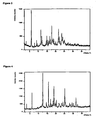
- the XRPD analysis shown in the Figures were performed on a Phillips X'pert Pro powder diffractometer, Model PW3040/60, serial number DY1379 using an X'Celerator detector. The method runs from 2 to 40 degrees 2Theta with 0.0167 degree 2Theta step size and a 31.75 seconds collection time at each step.
- Trifluoroacetic acid (92ml) was added to a stirred solution of di(tert-butyl) 2-(2,2-dimethyl. 4 H -1,3-benzodioxin-6-yl)-2-oxoethylimidodicarbonate, (352.55g) in dichloromethane (3.6litres) at 21° and the reaction was stirred for 1.5 h. Aqueous NaOH solution (1.75litres) was added and after 10 min the phases were separated. The organic layer was washed with water, dried (MgSO 4 ) and evaporated to an oil. This was stored under high vacuum overnight and then triturated with hexane:ether (3:1) to give the crude product (226.61g).
- the organic phase was washed with brine, dried (MgSO 4 ), and evaporated to dryness.
- the residual oil was purified on a silica SPE bond elut cartridge (50g) using a gradient of 10% - 30% EtOAc in cyclohexane (Gradmaster TM ).
- N - ⁇ 5-[(1 R )-2-Amino-1-hydroxyethyl]-2-hydroxyphenyl ⁇ methanesulfonamide (33.2 mg) was added to a solution of 1- ⁇ 4-[(6-bromohexyl)oxy]butyl ⁇ -3-(cyclopentylsulfonyl)benzene (Example 1v.) (50 mg) in DMF (5 ml).
- the reaction mixture was treated with N,N- diisopropylethylamine (29.3 ⁇ l) and stirred at room temperature for 113h.
- the potencies of the compounds of Examples 1-4 were determined using frog melanophores transfected with the human beta 2 adrenoreceptor. The cells were incubated with melatonin to induce pigment aggregation. Pigment dispersal was induced by compounds acting on the human beta 2 adrenoreceptor. The beta 2 agonist activity of test compounds was assessed by their ability to induce a change in light transmittance across a melanophore monolayer (a consequence of pigment dispersal). At the human beta 2 adrenoreceptor, compounds of said examples had IC 50 values below 1 ⁇ M.
- Potency of compounds of the invention at the human beta 2, 1 and 3 receptors was also determined using Chinese hamster ovary cells co-expressing the human receptor with a reporter gene. Studies were performed using either whole cells or membranes derived from those cells.
- the three beta-receptors are coupled via the Gs G-protein to cause a stimulation of adenylate cyclase resulting in increased levels of cAMP in the cell.
- adenylate cyclase resulting in increased levels of cAMP in the cell.
- membranes or frozen cells have been used with either the HitHunter enzyme fragment complementation kit (DiscoveRx) or the FP 2 fluorescence polarisation kit (Perkin Elmer) to quantify the levels of cAMP present.
- HitHunter enzyme fragment complementation kit DiscoveRx
- FP 2 fluorescence polarisation kit Perkin Elmer
- the reporter gene in the cells has also been used to quantify potency at the beta 1 and 3 receptors. This is a reporter of cAMP levels using the cAMP response element upstream of a firefly luciferase gene. After stimulation of the receptor with an agonist an increase in the level of luciferase is measured as a quantification of the level of cAMP in the cell.
Landscapes
- Chemical & Material Sciences (AREA)
- Organic Chemistry (AREA)
- Health & Medical Sciences (AREA)
- General Health & Medical Sciences (AREA)
- Life Sciences & Earth Sciences (AREA)
- Veterinary Medicine (AREA)
- Public Health (AREA)
- Animal Behavior & Ethology (AREA)
- Medicinal Chemistry (AREA)
- Pharmacology & Pharmacy (AREA)
- Bioinformatics & Cheminformatics (AREA)
- General Chemical & Material Sciences (AREA)
- Nuclear Medicine, Radiotherapy & Molecular Imaging (AREA)
- Chemical Kinetics & Catalysis (AREA)
- Engineering & Computer Science (AREA)
- Pulmonology (AREA)
- Neurology (AREA)
- Neurosurgery (AREA)
- Dermatology (AREA)
- Biomedical Technology (AREA)
- Psychiatry (AREA)
- Cardiology (AREA)
- Heart & Thoracic Surgery (AREA)
- Orthopedic Medicine & Surgery (AREA)
- Physical Education & Sports Medicine (AREA)
- Gynecology & Obstetrics (AREA)
- Pregnancy & Childbirth (AREA)
- Endocrinology (AREA)
- Reproductive Health (AREA)
- Pain & Pain Management (AREA)
- Epidemiology (AREA)
- Acyclic And Carbocyclic Compounds In Medicinal Compositions (AREA)
- Pharmaceuticals Containing Other Organic And Inorganic Compounds (AREA)
- Organic Low-Molecular-Weight Compounds And Preparation Thereof (AREA)
- Steroid Compounds (AREA)
- Quinoline Compounds (AREA)
- Pyridine Compounds (AREA)
Abstract
Claims (26)
- Composé de formule (I) :
 m est un entier de 2 à 8 ; etn est un entier de 3 à 11 ;à la condition que m + n est de 5 à 19 ;R1 est SR6, SOR6, ou SO2R6,
dans lequel R6 est un groupe cycloalkyle en C3-7 ou cycloalkényle en C3-7 ;
R2 et R3 sont indépendamment choisis parmi hydrogène, alkyle en C1-6, alkoxy en C1-6, halo, phényl, et haloalkyle en C1-6 ;
R4 et R5 sont indépendamment choisis parmi hydrogène et alkyle en C1-4 à la condition que le nombre total d'atomes de carbone dans R4 et R5 ne dépasse pas 4 ;
Ar est un groupe choisi parmi

et R7 représente un hydrogène, un halogène ou un alkyle en C1-4 i
ou R8 représente -NHR14 et R7 et -NHR14 forment un groupe hétérocyclique à 5- ou 6- membres où -NHR14R7 est sélectionné dans les groupes suivants :- NH-CO-R15- où R15 est un groupe fonctionnel alkyle, alkényle ou alkyloxy ;- NH-SO2R16- où R16 est un groupe fonctionnel alkyloxy ;- NH-R1'- où R17 est un groupe fonctionnel alkyle ou alkényle éventuellement substitué par COOR18 où R18 est un alkyle en C1-4 ; et- NH-CO-S- :où lesdits groupes fonctionnels alkyle, alkényle et alkyloxy contiennent 1 ou 2 atomes de carbone.
R9 représente un hydrogène, un halogène, -OR11 ou -NR11R12,
R10 représente un hydrogène, un halogène, un haloC1-4alkyle, -OR11, -NR11 R12 -OC (O) R13 ou OC(O)NR11R12,
R11 et R12 représentent chacun indépendamment un hydrogène ou un alkyle en C1-4, ou dans les groupes -NR11R12, SO2NR11R12 et -OC(O)NR11R12, R11 et R12 représentent indépendamment un hydrogène ou un alkyle en C1-4 ou forment avec l'atome d'azote auquel ils sont attachés un cycle contenant de l'azote à 5, 6 ou 7 membres,
R13 représente un groupe aryle (par exemple phényle ou naphtyle) qui peut être non substitué ou substitué par un ou plusieurs substitutifs choisis parmi halogène, alkyle en C1-4, hydroxy, alkoxy en C1-4 ou haloC1-4alkyle ; et
q est zéro ou un entier de 1 à 4. - Composé de formule (I) ou sel ou solvate de celui-ci, dans lequel la formule (I) est telle que définie dans la revendication 1, excepté que R8 ne représente pas un hydrogène.
- Composé selon la revendication 1 ou 2, dans lequel R1 représente -SO2R6.
- Composé selon l'une quelconque des revendications 1 à 3, dans lequel R6 représente un groupe cycloalkyle C3-7.
- Composé selon l'une quelconque des revendications 1 à 4, dans lequel R2 et R3 représentent chacun un hydrogène.
- Composé selon l'une quelconque des revendications 1 à 5, dans lequel R4 et R5 sont indépendamment choisis parmi hydrogène et méthyle.
- Composé selon l'une quelconque des revendications 1 à 6, dans lequel Ar est choisi parmi les groupes (a) et (b) :

- Composé de formule (Ia) :
 m est un entier de 2 à 8 ; etn est un entier de 3 à 11 ;à la condition que m + n soit de 5 à 19 ;R1 est SR6, SOR6, ou SO2R6,
dans lequel R6 est un groupe cycloalkyle en C3-7 ou cycloalkényle en C3-7 ;
R2 et R3 sont indépendamment choisis parmi hydrogène, alkyle en C1-6, alkoxy en C1-6, halo, phényle, et haloalkyle en C1-6 ; et
R4 et R5 sont indépendamment choisis parmi hydrogène et alkyle en C1-4 à la condition que le nombre total d'atomes de carbone dans R4 et R5 ne dépasse pas 4. - Composé selon l'une quelconque des revendications 1 à 8, dans lequel m est 5 ou 6 et n est 3 ou 4.
- Composé de formule (I) ou (Ia) choisi parmi :4-{(1R)-2-[(6-{4-[3-(cyclopentylsulfinyl)phényl]butoxy}hexyl)amino]-1-hydroxyéthyl}-2-(hydroxyméthyl) phénol ;4-{(1R)-2-[(6-{4-[3-(cyxlopentylsulfinyl)phényl]butoxy}hexyl)amino]-1-hydroxyéthyl}-2-(hydroxyméthyl) phénol (isomère 1) ;4-{(1R)-2-[(6-{4-[3-(cyclopentylsulfinyl)phényl]butoxy}hexyl)amino]-1-hydroxyéthyl}-2-(hydroxyméthyl) phénol (isomère 2);4-{(1R)-2-[(6-{4-[3-(cyclopentylsulfonyl)phényl] butoxy}hexyl)amino]-1-hydroxyéthyl}-2-(hydroxyméthyl) phénol;4-{(1R)-2-[(6-{4-[4-(cyclopentylsulfonyl)phényl]butoxy}hexyl)amino]-1-hydroxyéthyl}-2-(hydroxyméthyl)phénol ;4-((1R)-2-{[6-({4-[3-(cyclohexylsulfonyl)phényl]butyl}oxy)hexyl]amino}-1-hydroxyéthyl)-2-(hydroxyméthyl) phénol ;4-((1R)-2-[{6-({4-[3-(3-cyclopenten-1-ylsulfonyl)phényl]butyl}oxy)hexyl]amino}-1-hydroxyéthyl)-2-(hydroxyméthyl)phénol ;4-((1R)-2-{[6-({5-[3-(cyclopentylsulfonyl)phényl]pentyl} oxy) hexyl]amino}-1-hydroxyéthyl)-2-(hydroxyméthyl) phénol ;4-((1R)-2-{[7-({3-[3-(cyclopentylsulfonyl)phényl]propyl}oxy)heptyl]amino}-1-hydroxyéthyl)-2-(hydroxyméthyl)phénol ;4-((1R)-2-[{6-({4-[3-(cyclopentylsulfonyl)-5-méthylphényl]butyl}oxy)hexyl)amino}-1-hydroxyéthyl)-2-(hydroxyméthyl)phénol ;N-[5-((1R)-2-{[6-({4-[3-(cyclopentylsulfonyl)phentyl]butyl}oxy)hexyl]amino)-1-hydroxyéthyl)-2-hydroxyphényl]méthanesulfonamide ;4-((1R)-2-{[6-({4-[3-(cyclopentylsulfonyl)phentyl]butyl}oxy)hexyl)amino}-1-hydroxyéthyl)-2-fluorophénol ;6-{2-[(6-{4-[3-(cyclopentylsulfonyl)phényl] butoxy}hexyl)amino]-1-hydroxyéthyl}-2-(hydroxyméthyl) pyridin-3-ol ;5-(1R)-2-[(6-{4-[3-(cyclopentylsulfonyl)phentyl]butoxy}hexyl)amino]-1-hydroxyéthyl}-8-hydroxy-3,4-dihydroquinolin-2(1H)one ;5-{(1R)-2-[(6-{4-[3-(cyclopentylsulfonyl)phényl] butoxy}hexyl)amino]-1-hydroxyéthyl}-2-hydroxyphénylformamide ;et les sels, les solvates deceux-ci.
- Composé de formule (I) ou (Ia) qui est :4-{(1R)-2-[(6-{4-[3-(cyclopentylsulfonyl) phenyl]butoxy}hexyl)amino]-1-hydroxyéthyl}-2-(hydroxyméthyl) phénolou un sel ou solvate, celui-ci.
- Composé selon l'une quelconque des revendications 1 à 11 sous la forme d'un sel formé avec de l'acide anarylsulphonique.
- Composé selon l'une quelconque des revendications 8, 9 ou 12 qui est sélectionné parmi:4-{(1R)-2-[(6-{4-[3-(cyclopentylsulfonyl)phentyl]butoxy}hexyl)amino]-1-hydroxyéthyl}-2-(hydroxyméthyl)phénol 4-méthylbenzènesulfonate ;4-{(1R)-2-[(6-{4-[3-(cyclopentylsulfonyl)phényl] butoxy}hexyl)amino]-1-hydroxyéthyl}-2-(hydroxyméthyl) phénol 4-bromobenzène sulfonate ;4-{(1R)-2-[(6-{4-[3-(cyclopentylsulfonyl)phényl]butoxy}hexyl)amino]-1-hydroxyéthyl}-2-(hydroxyméthyl) phénol 4-chlorobenzène sulfonate ;4-{(1R)-2-[(6-{4-[3-(cyclopentylsulfonyl)phényl]butoxy}hexyl)amino]-1-hydroxyéthyl}-2-(hydroxyméthyl)phénol 3-toluène sulfonate ;4-{(1R)-2-[(6-(4-[3-(cyclopentylsulfonyl)phényl]butoxy}hexyl)amino]-1-hydroxyéthyl}-2-(hydroxyméthyl) phénol 4-biphényl sulfonate ; et4-{(1R)-2-[(6-{4-[3-(cyclopentylsulfonyl)phényl]butoxy}hexyl)amino]-1-hydroxyéthyl}-2-(hydroxyméthyl) phénol, naphthalène-2-sulfonate.
- Composé selon la revendication 13, dans lequel le sel est sous forme cristalline.
- Composé de formule (I) ou (Ia) selon l'une quelconque des revendications 1 à 14 ou sel ou solvate pharmaceutiquement acceptable de celui-ci destiné à une utilisation dans un traitement médical.
- Composition pharmaceutique comprenant un composé de formule (I) ou (Ia) selon l'une quelconque des revendications 1 à 14 ou un sel ou solvate pharmaceutiquement acceptable de celui-ci, et un vecteur ou excipient pharmaceutiquement acceptable, et facultativement un ou plusieurs autres ingrédients thérapeutiques.
- Combinaison comprenant un composé de formule (I) ou (Ia) selon l'une quelconque des revendications 1 à 14 ou un sel ou solvate pharmaceutiquement acceptable de celui-ci, et un ou plusieurs autres ingrédients thérapeutiques.
- Utilisation d'un composé de formule (I) ou (Ia) selon l'une quelconque des revendications 1 à 14 ou un sel ou solvate pharmaceutiquement acceptable de celui-ci dans la fabrication d'un médicament destiné à la prophylaxie ou au traitement d'une obstruction réversible des voies respiratoires, un accouchement prématuré, une dépression, une insuffisance cardiaque congestive, une maladie de la peau, une maladie dans laquelle une réduction de l'activité peptidique est désirable ou une maladie d'atrophie musculaire.
- Utilisation d'un composé de formule (I) ou (Ia) ou un sel ou solvate pharmaceutiquement acceptable de celui-ci selon la revendication 18 pour le traitement de l'asthme, la maladie pulmonaire obstructive chronique, l'infection des voies respiratoires ou la maladie des voies respiratoires supérieures.
- Utilisation d'un composé de formule (I) ou (Ia) ou un sel ou solvate pharmaceutiquement acceptable de celui-ci selon la revendication 19 pour le traitement de la rhinite.
- Procédé de préparation d'un composé de formule (I) ou (Ia) selon l'une quelconque des revendications 1 à 14 ou un sel ou solvate de celui-ci, comprenant :(a) la déprotection d'un intermédiaire protégé, par exemple de formule (II) :
 (b) la réaction d'un composé de formule (X) :
 (c) l'alkylation d'une amine de formule (XIII) :
 (d) la réduction d'un composé de formule (XIX) :
 (e) la réaction d'un composé de formule (XXIII) :

avec une amine de formule (XXV) :
ou (f) le retrait d'un auxiliaire chiral d'un composé de formule (IIa)
suivi des étapes suivantes dans un ordre quelconque :(i) retrait facultatif de tout groupe protecteur ;(ii) séparation facultative d'un énantiomère d'un mélange d'énantiomères ;(iii) conversion facultative d'un composé de formule (I) en un composé différent de formule (I), par exemple conversion d'un composé où R1 est SR6 en un composé où R1 est SOR6 ou SO2R6, ou conversion d'un composé où R1 est SOR6 en un composé où R1 est SO2R6 ;(iv) conversion facultative d'un composé où R6 représente un cycloalkényle en un composé où R6 représente un cycloalkyle, par exemple par hydrogénation ;(v) conversion facultative du produit en un sel, solvate, ou dérivé physiologiquement fonctionnel correspondant de celui-ci. - Intermédiaire de formule (II)

- Intermédiaire de formule (III)

- Intermédiaire de formule (IV)

- Intermédiaire de formule (X)

- Intermédiaire de formule (XIX)

Priority Applications (1)
| Application Number | Priority Date | Filing Date | Title |
|---|---|---|---|
| SI200331215T SI1556342T1 (sl) | 2002-10-28 | 2003-10-24 | Fenetanolaminski derivat za zdravljenje respiratornih bolezni |
Applications Claiming Priority (5)
| Application Number | Priority Date | Filing Date | Title |
|---|---|---|---|
| GB0225028 | 2002-10-28 | ||
| GB0225022 | 2002-10-28 | ||
| GB0225022A GB0225022D0 (en) | 2002-10-28 | 2002-10-28 | Chemical compounds |
| GB0225028A GB0225028D0 (en) | 2002-10-28 | 2002-10-28 | Chemical compounds |
| PCT/EP2003/012035 WO2004037773A1 (fr) | 2002-10-28 | 2003-10-24 | Derive de phenethanolamine utilise dans le traitement de maladies respiratoires |
Publications (2)
| Publication Number | Publication Date |
|---|---|
| EP1556342A1 EP1556342A1 (fr) | 2005-07-27 |
| EP1556342B1 true EP1556342B1 (fr) | 2008-03-26 |
Family
ID=32178883
Family Applications (1)
| Application Number | Title | Priority Date | Filing Date |
|---|---|---|---|
| EP03776873A Expired - Lifetime EP1556342B1 (fr) | 2002-10-28 | 2003-10-24 | Derive de phenethanolamine utilise dans le traitement de maladies respiratoires |
Country Status (23)
| Country | Link |
|---|---|
| US (1) | US7442839B2 (fr) |
| EP (1) | EP1556342B1 (fr) |
| JP (1) | JP2006503888A (fr) |
| KR (1) | KR20050057681A (fr) |
| AR (1) | AR041724A1 (fr) |
| AT (1) | ATE390407T1 (fr) |
| AU (1) | AU2003286143A1 (fr) |
| BR (1) | BR0315720A (fr) |
| CA (1) | CA2503588A1 (fr) |
| DE (1) | DE60320007T2 (fr) |
| DK (1) | DK1556342T3 (fr) |
| ES (1) | ES2302956T3 (fr) |
| IS (1) | IS7814A (fr) |
| MA (1) | MA27697A1 (fr) |
| MX (1) | MXPA05004527A (fr) |
| NO (1) | NO20051962L (fr) |
| NZ (1) | NZ539676A (fr) |
| PL (1) | PL377122A1 (fr) |
| PT (1) | PT1556342E (fr) |
| RU (1) | RU2332400C2 (fr) |
| SI (1) | SI1556342T1 (fr) |
| TW (1) | TWI285195B (fr) |
| WO (1) | WO2004037773A1 (fr) |
Families Citing this family (99)
| Publication number | Priority date | Publication date | Assignee | Title |
|---|---|---|---|---|
| US8337816B2 (en) | 2001-09-17 | 2012-12-25 | Glaxo Group Limited | Dry powder medicament formulations |
| GB0316290D0 (en) | 2003-07-11 | 2003-08-13 | Glaxo Group Ltd | Novel compounds |
| GB0324886D0 (en) * | 2003-10-24 | 2003-11-26 | Glaxo Group Ltd | Medicinal compounds |
| GB0401334D0 (en) | 2004-01-21 | 2004-02-25 | Novartis Ag | Organic compounds |
| GB0411056D0 (en) | 2004-05-18 | 2004-06-23 | Novartis Ag | Organic compounds |
| AR049384A1 (es) | 2004-05-24 | 2006-07-26 | Glaxo Group Ltd | Derivados de purina |
| GB0418045D0 (en) | 2004-08-12 | 2004-09-15 | Glaxo Group Ltd | Compounds |
| GT200500281A (es) | 2004-10-22 | 2006-04-24 | Novartis Ag | Compuestos organicos. |
| GB0424284D0 (en) | 2004-11-02 | 2004-12-01 | Novartis Ag | Organic compounds |
| GB0426164D0 (en) | 2004-11-29 | 2004-12-29 | Novartis Ag | Organic compounds |
| EP1841780B1 (fr) | 2005-01-10 | 2011-07-27 | Glaxo Group Limited | Derives d'androstane-17-alpha-carbonate pour utilisation dans le traitement de conditions allergiques et inflammatoires |
| MY145343A (en) | 2005-03-25 | 2012-01-31 | Glaxo Group Ltd | Novel compounds |
| GB0507577D0 (en) | 2005-04-14 | 2005-05-18 | Novartis Ag | Organic compounds |
| GB0514809D0 (en) | 2005-07-19 | 2005-08-24 | Glaxo Group Ltd | Compounds |
| RU2442771C2 (ru) | 2005-08-08 | 2012-02-20 | Арджента Дискавери Лтд | Производные бицикло[2,2,1]гепт-7-иламина и их применения |
| GB0516313D0 (en) | 2005-08-08 | 2005-09-14 | Argenta Discovery Ltd | Azole derivatives and their uses |
| MY144906A (en) | 2005-10-21 | 2011-11-30 | Novartis Ag | Human antibodies against il13 and therapeutic uses |
| TW200730498A (en) | 2005-12-20 | 2007-08-16 | Glaxo Group Ltd | Compounds |
| GB0601951D0 (en) | 2006-01-31 | 2006-03-15 | Novartis Ag | Organic compounds |
| KR20090003349A (ko) | 2006-04-20 | 2009-01-09 | 글락소 그룹 리미티드 | 화합물 |
| PE20080361A1 (es) | 2006-04-21 | 2008-06-03 | Novartis Ag | Compuestos derivados de purina como activadores del receptor de adenosina a2a |
| GB0611587D0 (en) | 2006-06-12 | 2006-07-19 | Glaxo Group Ltd | Novel compounds |
| AR061571A1 (es) | 2006-06-23 | 2008-09-03 | Smithkline Beecham Corp | Compuesto sal del acido toluenosulfonico de 4-{[6-cloro-3-({[(2- cloro-3-fluorofenil) amino]carbonil} amino)- 2- hidroxifenil]sulfonil] -1- piperazinacarbxilato de 1.1-dimetiletilo, composicion farmaceutica que lo comprende su uso para la fabricacion de un medicamento combinacion farmaceutica con un |
| CA2659539A1 (fr) | 2006-08-01 | 2008-02-07 | Glaxo Group Limited | Composes de pyrazolo[3,4-b]pyridine et leur utilisation en tant qu'inhibiteurs de pde4 |
| DE602007011670D1 (de) | 2007-01-10 | 2011-02-10 | Irm Llc | Verbindungen und zusammensetzungen als kanal-aktivierende proteasehemmer |
| PE20081889A1 (es) | 2007-03-23 | 2009-03-05 | Smithkline Beecham Corp | Indol carboxamidas como inhibidores de ikk2 |
| US8318935B2 (en) | 2007-05-07 | 2012-11-27 | Novartis Ag | Organic compounds 75074 |
| EP2231280B1 (fr) | 2007-12-10 | 2016-08-10 | Novartis AG | Pyrazine carboxamides semblable à l'Amiloride en tant que bloqueurs d'ENaC |
| KR20100113557A (ko) | 2008-01-11 | 2010-10-21 | 노파르티스 아게 | 키나제 억제제로서의 피리미딘 |
| BRPI0912267A2 (pt) | 2008-05-23 | 2015-10-13 | Amira Pharmaceuticals Inc | sal farmaceuticamente aceitável, composição farmacêutica, artigo de fabricação, métodos para tratar asma, rinite alérgica, doença, lesões gástricas e dor, métodos para prevenir broncoconstrição e rinite alérgica, uso de um sal farmaceuticamente aceitável, e, processo para a preparação de um sal farmaceuticamente aceitável. |
| ES2566339T3 (es) | 2008-06-05 | 2016-04-12 | Glaxo Group Limited | Derivados de 4-carboxamida indazol útiles como inhibidores de PI3-quinasas |
| BRPI0915018A2 (pt) | 2008-06-10 | 2015-10-27 | Novartis Ag | compostos orgânicos |
| US8236786B2 (en) | 2008-08-07 | 2012-08-07 | Pulmagen Therapeutics (Inflammation) Limited | Respiratory disease treatment |
| EP2379507B1 (fr) | 2008-12-30 | 2013-10-16 | Pulmagen Therapeutics (Inflammation) Limited | Composés de sulfonamide pour le traitement de troubles respiratoires |
| WO2010094643A1 (fr) | 2009-02-17 | 2010-08-26 | Glaxo Group Limited | Dérivés de quinoline et applications associées dans la rhinite et l'urticaire |
| US8524751B2 (en) | 2009-03-09 | 2013-09-03 | GlaxoSmithKline Intellecutual Property Development | 4-oxadiazol-2-YL-indazoles as inhibitors of P13 kinases |
| JP2012520257A (ja) | 2009-03-10 | 2012-09-06 | グラクソ グループ リミテッド | Ikk2阻害剤としてのインドール誘導体 |
| EP2408769A1 (fr) | 2009-03-17 | 2012-01-25 | Glaxo Group Limited | Dérivés de pyrimidine utilisés comme inhibiteurs de ltk |
| EA201171144A1 (ru) | 2009-03-19 | 2012-04-30 | Мерк Шарп Энд Домэ Корп. | ОПОСРЕДОВАННОЕ РНК-ИНТЕРФЕРЕНЦИЕЙ ИНГИБИРОВАНИЕ ЭКСПРЕССИИ ГЕНА ГОМОЛОГА 1 BTB И CNC, ОСНОВНОГО ФАКТОРА ТРАНСКРИПЦИИ С ЛЕЙЦИНОВОЙ МОЛНИЕЙ 1 (Bach1) С ИСПОЛЬЗОВАНИЕМ МАЛОЙ ИНТЕРФЕРИРУЮЩЕЙ НУКЛЕИНОВОЙ КИСЛОТЫ (миНК) |
| JP2012520685A (ja) | 2009-03-19 | 2012-09-10 | メルク・シャープ・エンド・ドーム・コーポレイション | 低分子干渉核酸(siNA)を用いたGATA結合タンパク質3(GATA3)遺伝子発現のRNA干渉媒介性阻害 |
| EP2408916A2 (fr) | 2009-03-19 | 2012-01-25 | Merck Sharp&Dohme Corp. | Inhibition médiée par arn interférence de l'expression génique de facteur de croissance de tissu conjonctif (ctgf) en utilisant un acide nucléique interférant court (ansi) |
| WO2010107958A1 (fr) | 2009-03-19 | 2010-09-23 | Merck Sharp & Dohme Corp. | INHIBITION INDUITE PAR ARN INTERFÉRENCE DE L'EXPRESSION DU GÈNE TRANSDUCTEUR DE SIGNAL ET ACTIVITATEUR DE TRANSCRIPTION 6 (STAT6) AU MOYEN D'UN ACIDE NUCLÉIQUE INTERFÉRENT COURT (ANsi) |
| JP2012521760A (ja) | 2009-03-27 | 2012-09-20 | メルク・シャープ・エンド・ドーム・コーポレイション | 低分子干渉核酸(siNA)を用いたアポトーシスシグナル調節キナーゼ1(ASK1)遺伝子発現のRNA干渉媒介性阻害 |
| US20120022142A1 (en) | 2009-03-27 | 2012-01-26 | Merck Sharp & Dohme Corp. | RNA Interference Mediated Inhibition of Signal Transducer and Activator of Transcription 1 (STAT1) Gene Expression Using Short Interfering Nucleic Acid (siNA) |
| KR20110138223A (ko) | 2009-03-27 | 2011-12-26 | 머크 샤프 앤드 돔 코포레이션 | 짧은 간섭 핵산 (siNA)을 사용한 세포간 부착 분자 1 (ICAM-1) 유전자 발현의 RNA 간섭 매개 억제 |
| WO2010111468A2 (fr) | 2009-03-27 | 2010-09-30 | Merck Sharp & Dohme Corp. | INHIBITION PAR INTERFÉRENCE ARN DE L'EXPRESSION DU GÈNE DE LA CHAÎNE BÊTA DU FACTEUR DE CROISSANCE DES NERFS (NGFß) AU MOYEN D'UN ACIDE NUCLÉIQUE INTERFÉRENT COURT (ANSI) |
| US20120022143A1 (en) | 2009-03-27 | 2012-01-26 | Merck Sharp & Dohme Corp | RNA Interference Mediated Inhibition of the Thymic Stromal Lymphopoietin (TSLP) Gene Expression Using Short Interfering Nucliec Acid (siNA) |
| EP2421834A1 (fr) | 2009-04-24 | 2012-02-29 | Glaxo Group Limited | Pyrazole et triazole carboxamides en tant qu'inhibiteurs du canal crac |
| US20100273744A1 (en) | 2009-04-24 | 2010-10-28 | Paul Martin Gore | Compounds |
| CN102459253B (zh) | 2009-04-30 | 2015-03-25 | 葛兰素集团有限公司 | 作为pi3-激酶抑制剂的*唑取代的吲唑化合物 |
| WO2010150014A1 (fr) | 2009-06-24 | 2010-12-29 | Pulmagen Therapeutics (Inflammation) Limited | Glitazones 5r-5–deutérés pour le traitement de maladies respiratoires |
| EP2813227A1 (fr) | 2009-10-22 | 2014-12-17 | Vertex Pharmaceuticals Incorporated | Compositions pour le traitement de la mucoviscidose et d'autres maladies chroniques |
| GB0918923D0 (en) | 2009-10-28 | 2009-12-16 | Vantia Ltd | Aminothiazole derivatives |
| GB0918922D0 (en) | 2009-10-28 | 2009-12-16 | Vantia Ltd | Aminopyridine derivatives |
| GB0918924D0 (en) | 2009-10-28 | 2009-12-16 | Vantia Ltd | Azaindole derivatives |
| WO2011061527A1 (fr) | 2009-11-17 | 2011-05-26 | Astrazeneca Ab | Combinaisons qui comprennent un modulateur du récepteur glucocorticoïde, destinées au traitement de maladies respiratoires |
| EP2507223A1 (fr) | 2009-12-03 | 2012-10-10 | Glaxo Group Limited | Dérivés de benzpyrazole comme inhibiteurs des pi3 kinases |
| US20120238559A1 (en) | 2009-12-03 | 2012-09-20 | Glaxo Group Limited | Novel compounds |
| WO2011067366A1 (fr) | 2009-12-03 | 2011-06-09 | Glaxo Group Limited | Dérivés d'indazole comme inhibiteurs des pi3-kinases |
| US20120272951A1 (en) | 2009-12-16 | 2012-11-01 | 3M Innovative Properties Company | Formulations and methods for controlling mdi particle size delivery |
| WO2011098746A1 (fr) | 2010-02-09 | 2011-08-18 | Pulmagen Therapeutics (Inflammation) Limited | Sels d'addition acide cristallins de l'énantiomère (5r) de la pioglitazone |
| GB201002224D0 (en) | 2010-02-10 | 2010-03-31 | Argenta Therapeutics Ltd | Respiratory disease treatment |
| GB201002243D0 (en) | 2010-02-10 | 2010-03-31 | Argenta Therapeutics Ltd | Respiratory disease treatment |
| WO2011110575A1 (fr) | 2010-03-11 | 2011-09-15 | Glaxo Group Limited | Dérivés de 2-[2-(benzo- ou pyrido-)thiazolylamino]-6- aminopyridine, utiles dans le traitement de maladies respiratoires, allergiques ou inflammatoires |
| US8247436B2 (en) | 2010-03-19 | 2012-08-21 | Novartis Ag | Pyridine and pyrazine derivative for the treatment of CF |
| GB201007203D0 (en) | 2010-04-29 | 2010-06-16 | Glaxo Group Ltd | Novel compounds |
| JP5965402B2 (ja) | 2010-09-08 | 2016-08-03 | グラクソスミスクライン、インテレクチュアル、プロパティー、ディベロップメント、リミテッドGlaxosmithkline Intellectual Property Development Limited | N−[5−[4−(5−{[(2r,6s)−2,6−ジメチル−4−モルホリニル]メチル}−1,3−オキサゾール−2−イル)−1h−インダゾール−6−イル]−2−(メチルオキシ)−3−ピリジニル]メタンスルホンアミドの多形体および塩 |
| UY33597A (es) | 2010-09-09 | 2012-04-30 | Irm Llc | Compuestos y composiciones como inhibidores de la trk |
| WO2012034095A1 (fr) | 2010-09-09 | 2012-03-15 | Irm Llc | Composés et compositions comme inhibiteurs de trk |
| US8372845B2 (en) | 2010-09-17 | 2013-02-12 | Novartis Ag | Pyrazine derivatives as enac blockers |
| WO2012035055A1 (fr) | 2010-09-17 | 2012-03-22 | Glaxo Group Limited | Nouveaux composés |
| GB201016912D0 (en) | 2010-10-07 | 2010-11-24 | Astrazeneca Ab | Novel combination |
| EP2630126B1 (fr) | 2010-10-21 | 2015-01-07 | Glaxo Group Limited | Composés pyrazole agissant contre des états allergiques, immunitaires et inflammatoires |
| EP2630127A1 (fr) | 2010-10-21 | 2013-08-28 | Glaxo Group Limited | Composés de pyrazole agissant contre des troubles allergiques, inflammatoires et immunitaires |
| GB201018124D0 (en) | 2010-10-27 | 2010-12-08 | Glaxo Group Ltd | Polymorphs and salts |
| KR20140014184A (ko) | 2011-02-25 | 2014-02-05 | 아이알엠 엘엘씨 | Trk 억제제로서의 화합물 및 조성물 |
| US20140005188A1 (en) | 2011-03-11 | 2014-01-02 | Glaxo Group Limited | Pyrido[3,4-b]pyrazine derivatives as syk inhibitors |
| GB201104153D0 (en) | 2011-03-11 | 2011-04-27 | Glaxo Group Ltd | Novel compounds |
| US8883819B2 (en) | 2011-09-01 | 2014-11-11 | Irm Llc | Bicyclic heterocycle derivatives for the treatment of pulmonary arterial hypertension |
| WO2013038373A1 (fr) | 2011-09-16 | 2013-03-21 | Novartis Ag | Dérivés pyrimidinamides |
| ES2558457T3 (es) | 2011-09-16 | 2016-02-04 | Novartis Ag | Compuestos heterocíclicos para el tratamiento de fibrosis quística |
| WO2013038381A1 (fr) | 2011-09-16 | 2013-03-21 | Novartis Ag | Dérivés d'amide pyridine/pyrazine |
| US9056867B2 (en) | 2011-09-16 | 2015-06-16 | Novartis Ag | N-substituted heterocyclyl carboxamides |
| WO2013038378A1 (fr) | 2011-09-16 | 2013-03-21 | Novartis Ag | Dérivés pyridinamides |
| US8809340B2 (en) | 2012-03-19 | 2014-08-19 | Novartis Ag | Crystalline form |
| US9073921B2 (en) | 2013-03-01 | 2015-07-07 | Novartis Ag | Salt forms of bicyclic heterocyclic derivatives |
| WO2015055691A1 (fr) | 2013-10-17 | 2015-04-23 | Glaxosmithkline Intellectual Property Development Limited | Inhibiteur de pi3k pour le traitement d'une maladie respiratoire |
| EP3057587A1 (fr) | 2013-10-17 | 2016-08-24 | GlaxoSmithKline Intellectual Property Development Limited | Inhibiteur de pi3k pour le traitement d'une maladie respiratoire |
| BR112016024533A8 (pt) | 2014-04-24 | 2021-03-30 | Novartis Ag | derivados de amino pirazina como inibidores de fosfatidilinositol 3-cinase ou sal, seu uso, e composição e combinação farmacêuticas |
| CN106458980A (zh) | 2014-04-24 | 2017-02-22 | 诺华股份有限公司 | 作为磷脂酰肌醇3‑激酶抑制剂的氨基吡啶衍生物 |
| KR20160141856A (ko) | 2014-04-24 | 2016-12-09 | 노파르티스 아게 | 포스파티딜이노시톨 3-키나제 억제제로서의 피라진 유도체 |
| TW201625247A (zh) | 2014-05-12 | 2016-07-16 | 葛蘭素史密斯克藍智慧財產權有限公司 | 用於治療傳染性疾病之醫藥組合物 |
| GB201602527D0 (en) | 2016-02-12 | 2016-03-30 | Glaxosmithkline Ip Dev Ltd | Chemical compounds |
| JP2019524792A (ja) | 2016-08-08 | 2019-09-05 | グラクソスミスクライン、インテレクチュアル、プロパティー、ディベロップメント、リミテッドGlaxosmithkline Intellectual Property Development Limited | 化合物 |
| GB201706102D0 (en) | 2017-04-18 | 2017-05-31 | Glaxosmithkline Ip Dev Ltd | Chemical compounds |
| GB201712081D0 (en) | 2017-07-27 | 2017-09-13 | Glaxosmithkline Ip Dev Ltd | Chemical compounds |
| KR20220019015A (ko) | 2019-06-10 | 2022-02-15 | 노파르티스 아게 | Cf, copd, 및 기관지확장증 치료를 위한 피리딘 및 피라진 유도체 |
| UY38860A (es) | 2019-08-28 | 2021-02-26 | Novartis Ag | Derivados de 1,3–fenil heteroarilo sustituidos, composiciones para su uso en el tratamiento de enfermedades y formas cristalinas |
| WO2023097697A1 (fr) * | 2021-12-03 | 2023-06-08 | 广东莱佛士制药技术有限公司 | Procédé de synthèse de (1r)-1-(2,2-diméthyl-4h-1,3-benzodioxin-6-yl)oxazolidin-2-one |
Family Cites Families (28)
| Publication number | Priority date | Publication date | Assignee | Title |
|---|---|---|---|---|
| US2918408A (en) | 1957-04-08 | 1959-12-22 | Lakeside Lab Inc | Anti-spasmodic compositions specific for treating spasm of the colon |
| CY1308A (en) | 1979-12-06 | 1985-12-06 | Glaxo Group Ltd | Device for dispensing medicaments |
| US4778054A (en) | 1982-10-08 | 1988-10-18 | Glaxo Group Limited | Pack for administering medicaments to patients |
| GB2169265B (en) | 1982-10-08 | 1987-08-12 | Glaxo Group Ltd | Pack for medicament |
| ES286422Y (es) | 1982-10-08 | 1986-09-16 | Glaxo Group Limited | Dispositivo para administrar medicamentos a pacientes |
| ZW6584A1 (en) * | 1983-04-18 | 1985-04-17 | Glaxo Group Ltd | Phenethanolamine derivatives |
| AU581887B2 (en) | 1984-04-17 | 1989-03-09 | Glaxo Group Limited | Ethanolamine compounds |
| DE3513885A1 (de) | 1984-04-17 | 1985-10-17 | Glaxo Group Ltd., London | Phenethanolaminverbindungen, verfahren zu ihrer herstellung und diese verbindungen enthaltende arzneimittel |
| KR910000932B1 (ko) | 1984-04-18 | 1991-02-19 | 가부시기가이샤 다이킨세이사꾸쇼 | 차량용 트랜스퍼장치 |
| CH665632A5 (fr) | 1984-07-13 | 1988-05-31 | Glaxo Group Ltd | Composes d'aminophenol. |
| GB8426191D0 (en) | 1984-10-17 | 1984-11-21 | Glaxo Holdings Ltd | Chemical compounds |
| PT83094B (pt) | 1985-07-30 | 1993-07-30 | Glaxo Group Ltd | Dispositivos proprios para a administracao de medicamentos a pacientes |
| EP0220054A3 (fr) | 1985-10-16 | 1987-12-02 | Glaxo Group Limited | Dérivés d'éthanolamine |
| GB2230523A (en) | 1989-04-14 | 1990-10-24 | Glaxo Group Ltd | 1-(3-Bromoisoxazol-5-yl)-2-aminoethanol derivatives |
| GB9004781D0 (en) | 1990-03-02 | 1990-04-25 | Glaxo Group Ltd | Device |
| CA2133439C (fr) | 1992-04-02 | 2005-07-26 | Siegfried Benjamin Christensen, Iv | Composes utiles pour le traitement des maladies d'origine allergique et inflammatoire |
| US5998428A (en) | 1995-05-31 | 1999-12-07 | Smithkline Beecham Corporation | Compounds and methods for treating PDE IV-related diseases |
| EP0947498B1 (fr) | 1996-12-02 | 2004-09-15 | Chisso Corporation | Derives de nitro-alcool optiquement actifs, derives d'amino-alcool optiquement actifs et procede de leur preparation |
| JP2001507704A (ja) | 1996-12-30 | 2001-06-12 | アメリカン・ホーム・プロダクツ・コーポレイション | 抗肥満薬としての置換ベンゾ[1,4]ジオキサン |
| GB9700226D0 (en) | 1997-01-08 | 1997-02-26 | Glaxo Group Ltd | Inhalation device |
| WO1999016766A1 (fr) | 1997-10-01 | 1999-04-08 | Kyowa Hakko Kogyo Co., Ltd. | Derives de benzodioxole |
| AU3328499A (en) | 1998-03-14 | 1999-10-11 | Byk Gulden Lomberg Chemische Fabrik Gmbh | Phthalazinone pde iii/iv inhibitors |
| AR035987A1 (es) | 1999-03-01 | 2004-08-04 | Smithkline Beecham Corp | Uso de un compuesto inhibidor de la pde 4 para la manufactura de un medicamento y el medicamento para tratar asma inducida por ejercicio |
| CZ302882B6 (cs) | 1999-08-21 | 2012-01-04 | Nycomed Gmbh | Farmaceutický prostredek |
| GB0014546D0 (en) | 2000-06-14 | 2000-08-09 | Glaxo Group Ltd | A novel process |
| GB0103630D0 (en) | 2001-02-14 | 2001-03-28 | Glaxo Group Ltd | Chemical compounds |
| RU2312854C2 (ru) | 2001-09-14 | 2007-12-20 | Глаксо Груп Лимитед | Производные фенэтаноламина для лечения респираторных заболеваний |
| AU2003298094A1 (en) | 2002-10-22 | 2004-05-13 | Glaxo Group Limited | Medicinal arylethanolamine compounds |
-
2003
- 2003-10-24 EP EP03776873A patent/EP1556342B1/fr not_active Expired - Lifetime
- 2003-10-24 WO PCT/EP2003/012035 patent/WO2004037773A1/fr not_active Ceased
- 2003-10-24 ES ES03776873T patent/ES2302956T3/es not_active Expired - Lifetime
- 2003-10-24 BR BR0315720-2A patent/BR0315720A/pt not_active IP Right Cessation
- 2003-10-24 MX MXPA05004527A patent/MXPA05004527A/es active IP Right Grant
- 2003-10-24 JP JP2004546022A patent/JP2006503888A/ja active Pending
- 2003-10-24 SI SI200331215T patent/SI1556342T1/sl unknown
- 2003-10-24 AR ARP030103896A patent/AR041724A1/es unknown
- 2003-10-24 AT AT03776873T patent/ATE390407T1/de not_active IP Right Cessation
- 2003-10-24 NZ NZ539676A patent/NZ539676A/en unknown
- 2003-10-24 US US10/532,869 patent/US7442839B2/en not_active Expired - Fee Related
- 2003-10-24 DK DK03776873T patent/DK1556342T3/da active
- 2003-10-24 CA CA002503588A patent/CA2503588A1/fr not_active Abandoned
- 2003-10-24 AU AU2003286143A patent/AU2003286143A1/en not_active Abandoned
- 2003-10-24 DE DE60320007T patent/DE60320007T2/de not_active Expired - Fee Related
- 2003-10-24 PL PL377122A patent/PL377122A1/pl not_active Application Discontinuation
- 2003-10-24 PT PT03776873T patent/PT1556342E/pt unknown
- 2003-10-24 KR KR1020057007275A patent/KR20050057681A/ko not_active Ceased
- 2003-10-24 RU RU2005111975/04A patent/RU2332400C2/ru not_active IP Right Cessation
- 2003-10-27 TW TW092129753A patent/TWI285195B/zh not_active IP Right Cessation
-
2005
- 2005-04-20 IS IS7814A patent/IS7814A/is unknown
- 2005-04-21 NO NO20051962A patent/NO20051962L/no not_active Application Discontinuation
- 2005-05-11 MA MA28274A patent/MA27697A1/fr unknown
Also Published As
| Publication number | Publication date |
|---|---|
| NO20051962L (no) | 2005-05-19 |
| DK1556342T3 (da) | 2008-07-21 |
| ES2302956T3 (es) | 2008-08-01 |
| US20060205794A1 (en) | 2006-09-14 |
| TWI285195B (en) | 2007-08-11 |
| NZ539676A (en) | 2006-10-27 |
| AU2003286143A1 (en) | 2004-05-13 |
| DE60320007T2 (de) | 2009-06-18 |
| JP2006503888A (ja) | 2006-02-02 |
| WO2004037773A1 (fr) | 2004-05-06 |
| US7442839B2 (en) | 2008-10-28 |
| IS7814A (is) | 2005-04-20 |
| MXPA05004527A (es) | 2005-07-26 |
| EP1556342A1 (fr) | 2005-07-27 |
| WO2004037773A8 (fr) | 2004-07-22 |
| HK1081173A1 (en) | 2006-05-12 |
| ATE390407T1 (de) | 2008-04-15 |
| KR20050057681A (ko) | 2005-06-16 |
| CA2503588A1 (fr) | 2004-05-06 |
| RU2332400C2 (ru) | 2008-08-27 |
| MA27697A1 (fr) | 2006-01-02 |
| TW200418772A (en) | 2004-10-01 |
| DE60320007D1 (de) | 2008-05-08 |
| PT1556342E (pt) | 2008-04-28 |
| BR0315720A (pt) | 2005-09-06 |
| PL377122A1 (pl) | 2006-01-23 |
| RU2005111975A (ru) | 2006-01-20 |
| SI1556342T1 (sl) | 2008-08-31 |
| AR041724A1 (es) | 2005-05-26 |
Similar Documents
| Publication | Publication Date | Title |
|---|---|---|
| EP1556342B1 (fr) | Derive de phenethanolamine utilise dans le traitement de maladies respiratoires | |
| EP1554264B1 (fr) | Derives d'arylethanolamine a usage medicinal | |
| EP1497261B1 (fr) | Derives de la phenethanolamine | |
| EP1675823B1 (fr) | Derives de phenethanolamine utilises dans le traitement de maladies respiratoires | |
| EP1425001B1 (fr) | Derives de phenethanolamine destines au traitement de maladies respiratoires | |
| US20070135490A1 (en) | Phenetanolamine derivatives | |
| EP1525180A2 (fr) | Composes medicamenteux | |
| WO2004037768A2 (fr) | Composes a usage medicinal | |
| WO2004039766A1 (fr) | Derives de phenylethanolamine pour le traitement de maladies respiratoires | |
| EP1592656A2 (fr) | Compos s m dicinaux | |
| WO2004022547A1 (fr) | Derives de phenethanolamine, et leur utilisation pour le traitement des maladies respiratoires | |
| US20070172385A1 (en) | Benzothiophen and thiochrone containing phenethanolamine derivatives for the treatment of respiratory disorders | |
| WO2005058299A1 (fr) | Derives de phenethanolamine destines au traitement de maladies respiratoires | |
| HK1081173B (en) | Phenethanolamine derivative for the treatment of respiratory diseases | |
| ZA200503333B (en) | Phenethanolamine derivative for the treatment of respiratory diseases | |
| HK1066479B (en) | Phenethanolamine derivatives for treatment of respiratory diseases |
Legal Events
| Date | Code | Title | Description |
|---|---|---|---|
| PUAI | Public reference made under article 153(3) epc to a published international application that has entered the european phase |
Free format text: ORIGINAL CODE: 0009012 |
|
| 17P | Request for examination filed |
Effective date: 20050429 |
|
| AK | Designated contracting states |
Kind code of ref document: A1 Designated state(s): AT BE BG CH CY CZ DE DK EE ES FI FR GB GR HU IE IT LI LU MC NL PT RO SE SI SK TR |
|
| AX | Request for extension of the european patent |
Extension state: AL LT LV MK |
|
| RAX | Requested extension states of the european patent have changed |
Extension state: LV Payment date: 20050429 Extension state: LT Payment date: 20050429 |
|
| REG | Reference to a national code |
Ref country code: HK Ref legal event code: DE Ref document number: 1081173 Country of ref document: HK |
|
| 17Q | First examination report despatched |
Effective date: 20070222 |
|
| GRAP | Despatch of communication of intention to grant a patent |
Free format text: ORIGINAL CODE: EPIDOSNIGR1 |
|
| GRAC | Information related to communication of intention to grant a patent modified |
Free format text: ORIGINAL CODE: EPIDOSCIGR1 |
|
| GRAS | Grant fee paid |
Free format text: ORIGINAL CODE: EPIDOSNIGR3 |
|
| GRAA | (expected) grant |
Free format text: ORIGINAL CODE: 0009210 |
|
| AK | Designated contracting states |
Kind code of ref document: B1 Designated state(s): AT BE BG CH CY CZ DE DK EE ES FI FR GB GR HU IE IT LI LU MC NL PT RO SE SI SK TR |
|
| AX | Request for extension of the european patent |
Extension state: LT LV |
|
| REG | Reference to a national code |
Ref country code: GB Ref legal event code: FG4D |
|
| REG | Reference to a national code |
Ref country code: PT Ref legal event code: SC4A Free format text: AVAILABILITY OF NATIONAL TRANSLATION Effective date: 20080414 |
|
| REG | Reference to a national code |
Ref country code: IE Ref legal event code: FG4D Ref country code: CH Ref legal event code: EP |
|
| REF | Corresponds to: |
Ref document number: 60320007 Country of ref document: DE Date of ref document: 20080508 Kind code of ref document: P |
|
| REG | Reference to a national code |
Ref country code: SE Ref legal event code: TRGR Ref country code: RO Ref legal event code: EPE |
|
| REG | Reference to a national code |
Ref country code: GR Ref legal event code: EP Ref document number: 20080401419 Country of ref document: GR |
|
| REG | Reference to a national code |
Ref country code: DK Ref legal event code: T3 |
|
| REG | Reference to a national code |
Ref country code: CH Ref legal event code: NV Representative=s name: ISLER & PEDRAZZINI AG |
|
| REG | Reference to a national code |
Ref country code: ES Ref legal event code: FG2A Ref document number: 2302956 Country of ref document: ES Kind code of ref document: T3 |
|
| REG | Reference to a national code |
Ref country code: HU Ref legal event code: AG4A Ref document number: E003522 Country of ref document: HU |
|
| PGFP | Annual fee paid to national office [announced via postgrant information from national office to epo] |
Ref country code: DK Payment date: 20080916 Year of fee payment: 6 Ref country code: EE Payment date: 20080916 Year of fee payment: 6 |
|
| REG | Reference to a national code |
Ref country code: HK Ref legal event code: GR Ref document number: 1081173 Country of ref document: HK |
|
| PGFP | Annual fee paid to national office [announced via postgrant information from national office to epo] |
Ref country code: MC Payment date: 20080923 Year of fee payment: 6 Ref country code: NL Payment date: 20080915 Year of fee payment: 6 Ref country code: SK Payment date: 20080929 Year of fee payment: 6 |
|
| ET | Fr: translation filed | ||
| PGFP | Annual fee paid to national office [announced via postgrant information from national office to epo] |
Ref country code: GB Payment date: 20080915 Year of fee payment: 6 |
|
| PGFP | Annual fee paid to national office [announced via postgrant information from national office to epo] |
Ref country code: CH Payment date: 20081028 Year of fee payment: 6 Ref country code: CZ Payment date: 20081015 Year of fee payment: 6 Ref country code: DE Payment date: 20081031 Year of fee payment: 6 Ref country code: IE Payment date: 20081016 Year of fee payment: 6 Ref country code: LU Payment date: 20081021 Year of fee payment: 6 Ref country code: TR Payment date: 20080925 Year of fee payment: 6 |
|
| PLBE | No opposition filed within time limit |
Free format text: ORIGINAL CODE: 0009261 |
|
| STAA | Information on the status of an ep patent application or granted ep patent |
Free format text: STATUS: NO OPPOSITION FILED WITHIN TIME LIMIT |
|
| PGFP | Annual fee paid to national office [announced via postgrant information from national office to epo] |
Ref country code: AT Payment date: 20080915 Year of fee payment: 6 Ref country code: ES Payment date: 20081021 Year of fee payment: 6 Ref country code: FI Payment date: 20081013 Year of fee payment: 6 Ref country code: PT Payment date: 20081010 Year of fee payment: 6 Ref country code: RO Payment date: 20081002 Year of fee payment: 6 |
|
| 26N | No opposition filed |
Effective date: 20081230 |
|
| PGFP | Annual fee paid to national office [announced via postgrant information from national office to epo] |
Ref country code: BG Payment date: 20081007 Year of fee payment: 6 Ref country code: IT Payment date: 20081016 Year of fee payment: 6 Ref country code: BE Payment date: 20081031 Year of fee payment: 6 Ref country code: SE Payment date: 20081007 Year of fee payment: 6 |
|
| PGFP | Annual fee paid to national office [announced via postgrant information from national office to epo] |
Ref country code: GR Payment date: 20081014 Year of fee payment: 6 Ref country code: SI Payment date: 20081008 Year of fee payment: 6 |
|
| PGFP | Annual fee paid to national office [announced via postgrant information from national office to epo] |
Ref country code: CY Payment date: 20081015 Year of fee payment: 6 |
|
| PGFP | Annual fee paid to national office [announced via postgrant information from national office to epo] |
Ref country code: HU Payment date: 20081008 Year of fee payment: 6 |
|
| BERE | Be: lapsed |
Owner name: GLAXO GROUP LTD Effective date: 20091031 |
|
| REG | Reference to a national code |
Ref country code: PT Ref legal event code: MM4A Free format text: LAPSE DUE TO NON-PAYMENT OF FEES Effective date: 20100426 |
|
| REG | Reference to a national code |
Ref country code: NL Ref legal event code: V1 Effective date: 20100501 |
|
| PG25 | Lapsed in a contracting state [announced via postgrant information from national office to epo] |
Ref country code: MC Free format text: LAPSE BECAUSE OF NON-PAYMENT OF DUE FEES Effective date: 20091031 |
|
| REG | Reference to a national code |
Ref country code: CH Ref legal event code: PL |
|
| EUG | Se: european patent has lapsed | ||
| REG | Reference to a national code |
Ref country code: DK Ref legal event code: EBP |
|
| REG | Reference to a national code |
Ref country code: EE Ref legal event code: MM4A Ref document number: E002134 Country of ref document: EE Effective date: 20091031 |
|
| REG | Reference to a national code |
Ref country code: SK Ref legal event code: MM4A Ref document number: E 3574 Country of ref document: SK Effective date: 20091024 |
|
| REG | Reference to a national code |
Ref country code: FR Ref legal event code: ST Effective date: 20100630 |
|
| PG25 | Lapsed in a contracting state [announced via postgrant information from national office to epo] |
Ref country code: PT Free format text: LAPSE BECAUSE OF NON-PAYMENT OF DUE FEES Effective date: 20100426 Ref country code: NL Free format text: LAPSE BECAUSE OF NON-PAYMENT OF DUE FEES Effective date: 20100501 Ref country code: HU Free format text: LAPSE BECAUSE OF NON-PAYMENT OF DUE FEES Effective date: 20091025 Ref country code: BG Free format text: FAILURE TO ELECT DOMICILE IN THE NATIONAL COUNTRY Effective date: 20100430 Ref country code: DE Free format text: LAPSE BECAUSE OF NON-PAYMENT OF DUE FEES Effective date: 20100501 Ref country code: EE Free format text: LAPSE BECAUSE OF NON-PAYMENT OF DUE FEES Effective date: 20091031 Ref country code: FR Free format text: LAPSE BECAUSE OF NON-PAYMENT OF DUE FEES Effective date: 20091102 |
|
| REG | Reference to a national code |
Ref country code: SI Ref legal event code: KO00 Effective date: 20100615 |
|
| PG25 | Lapsed in a contracting state [announced via postgrant information from national office to epo] |
Ref country code: FI Free format text: LAPSE BECAUSE OF NON-PAYMENT OF DUE FEES Effective date: 20091024 Ref country code: CZ Free format text: LAPSE BECAUSE OF NON-PAYMENT OF DUE FEES Effective date: 20091024 Ref country code: AT Free format text: LAPSE BECAUSE OF NON-PAYMENT OF DUE FEES Effective date: 20091024 Ref country code: SI Free format text: LAPSE BECAUSE OF NON-PAYMENT OF DUE FEES Effective date: 20091025 Ref country code: SK Free format text: LAPSE BECAUSE OF NON-PAYMENT OF DUE FEES Effective date: 20091024 |
|
| PG25 | Lapsed in a contracting state [announced via postgrant information from national office to epo] |
Ref country code: LI Free format text: LAPSE BECAUSE OF NON-PAYMENT OF DUE FEES Effective date: 20091031 Ref country code: IE Free format text: LAPSE BECAUSE OF NON-PAYMENT OF DUE FEES Effective date: 20091026 Ref country code: GR Free format text: LAPSE BECAUSE OF NON-PAYMENT OF DUE FEES Effective date: 20100504 Ref country code: BE Free format text: LAPSE BECAUSE OF NON-PAYMENT OF DUE FEES Effective date: 20091031 Ref country code: CH Free format text: LAPSE BECAUSE OF NON-PAYMENT OF DUE FEES Effective date: 20091031 |
|
| PG25 | Lapsed in a contracting state [announced via postgrant information from national office to epo] |
Ref country code: GB Free format text: LAPSE BECAUSE OF NON-PAYMENT OF DUE FEES Effective date: 20091024 |
|
| PG25 | Lapsed in a contracting state [announced via postgrant information from national office to epo] |
Ref country code: CY Free format text: LAPSE BECAUSE OF FAILURE TO SUBMIT A TRANSLATION OF THE DESCRIPTION OR TO PAY THE FEE WITHIN THE PRESCRIBED TIME-LIMIT Effective date: 20100421 |
|
| PG25 | Lapsed in a contracting state [announced via postgrant information from national office to epo] |
Ref country code: DK Free format text: LAPSE BECAUSE OF NON-PAYMENT OF DUE FEES Effective date: 20091031 |
|
| PG25 | Lapsed in a contracting state [announced via postgrant information from national office to epo] |
Ref country code: RO Free format text: LAPSE BECAUSE OF NON-PAYMENT OF DUE FEES Effective date: 20091024 |
|
| PG25 | Lapsed in a contracting state [announced via postgrant information from national office to epo] |
Ref country code: IT Free format text: LAPSE BECAUSE OF NON-PAYMENT OF DUE FEES Effective date: 20091024 |
|
| REG | Reference to a national code |
Ref country code: ES Ref legal event code: FD2A Effective date: 20110401 |
|
| PG25 | Lapsed in a contracting state [announced via postgrant information from national office to epo] |
Ref country code: LU Free format text: LAPSE BECAUSE OF NON-PAYMENT OF DUE FEES Effective date: 20091024 |
|
| PG25 | Lapsed in a contracting state [announced via postgrant information from national office to epo] |
Ref country code: SE Free format text: LAPSE BECAUSE OF NON-PAYMENT OF DUE FEES Effective date: 20091025 |
|
| PG25 | Lapsed in a contracting state [announced via postgrant information from national office to epo] |
Ref country code: ES Free format text: LAPSE BECAUSE OF NON-PAYMENT OF DUE FEES Effective date: 20110322 |
|
| PG25 | Lapsed in a contracting state [announced via postgrant information from national office to epo] |
Ref country code: ES Free format text: LAPSE BECAUSE OF NON-PAYMENT OF DUE FEES Effective date: 20091025 |
|
| PG25 | Lapsed in a contracting state [announced via postgrant information from national office to epo] |
Ref country code: TR Free format text: LAPSE BECAUSE OF NON-PAYMENT OF DUE FEES Effective date: 20091024 |
|
| PGFP | Annual fee paid to national office [announced via postgrant information from national office to epo] |
Ref country code: FR Payment date: 20081006 Year of fee payment: 6 |