EP1490052B1 - Vorrichtung zur transdermalen verabreichung von rotigotin-base - Google Patents
Vorrichtung zur transdermalen verabreichung von rotigotin-base Download PDFInfo
- Publication number
- EP1490052B1 EP1490052B1 EP03789421A EP03789421A EP1490052B1 EP 1490052 B1 EP1490052 B1 EP 1490052B1 EP 03789421 A EP03789421 A EP 03789421A EP 03789421 A EP03789421 A EP 03789421A EP 1490052 B1 EP1490052 B1 EP 1490052B1
- Authority
- EP
- European Patent Office
- Prior art keywords
- matrix
- rotigotine
- polymer
- amino
- matrix polymer
- Prior art date
- Legal status (The legal status is an assumption and is not a legal conclusion. Google has not performed a legal analysis and makes no representation as to the accuracy of the status listed.)
- Expired - Lifetime
Links
Images


Classifications
-
- A—HUMAN NECESSITIES
- A61—MEDICAL OR VETERINARY SCIENCE; HYGIENE
- A61K—PREPARATIONS FOR MEDICAL, DENTAL OR TOILETRY PURPOSES
- A61K9/00—Medicinal preparations characterised by special physical form
- A61K9/70—Web, sheet or filament bases ; Films; Fibres of the matrix type containing drug
-
- A—HUMAN NECESSITIES
- A61—MEDICAL OR VETERINARY SCIENCE; HYGIENE
- A61K—PREPARATIONS FOR MEDICAL, DENTAL OR TOILETRY PURPOSES
- A61K9/00—Medicinal preparations characterised by special physical form
- A61K9/70—Web, sheet or filament bases ; Films; Fibres of the matrix type containing drug
- A61K9/7023—Transdermal patches and similar drug-containing composite devices, e.g. cataplasms
- A61K9/703—Transdermal patches and similar drug-containing composite devices, e.g. cataplasms characterised by shape or structure; Details concerning release liner or backing; Refillable patches; User-activated patches
- A61K9/7038—Transdermal patches of the drug-in-adhesive type, i.e. comprising drug in the skin-adhesive layer
- A61K9/7046—Transdermal patches of the drug-in-adhesive type, i.e. comprising drug in the skin-adhesive layer the adhesive comprising macromolecular compounds
- A61K9/7069—Transdermal patches of the drug-in-adhesive type, i.e. comprising drug in the skin-adhesive layer the adhesive comprising macromolecular compounds obtained otherwise than by reactions only involving carbon to carbon unsaturated bonds, e.g. polysiloxane, polyesters, polyurethane, polyethylene oxide
-
- A—HUMAN NECESSITIES
- A61—MEDICAL OR VETERINARY SCIENCE; HYGIENE
- A61K—PREPARATIONS FOR MEDICAL, DENTAL OR TOILETRY PURPOSES
- A61K31/00—Medicinal preparations containing organic active ingredients
- A61K31/33—Heterocyclic compounds
- A61K31/38—Heterocyclic compounds having sulfur as a ring hetero atom
- A61K31/381—Heterocyclic compounds having sulfur as a ring hetero atom having five-membered rings
-
- A—HUMAN NECESSITIES
- A61—MEDICAL OR VETERINARY SCIENCE; HYGIENE
- A61P—SPECIFIC THERAPEUTIC ACTIVITY OF CHEMICAL COMPOUNDS OR MEDICINAL PREPARATIONS
- A61P25/00—Drugs for disorders of the nervous system
- A61P25/14—Drugs for disorders of the nervous system for treating abnormal movements, e.g. chorea, dyskinesia
-
- A—HUMAN NECESSITIES
- A61—MEDICAL OR VETERINARY SCIENCE; HYGIENE
- A61P—SPECIFIC THERAPEUTIC ACTIVITY OF CHEMICAL COMPOUNDS OR MEDICINAL PREPARATIONS
- A61P25/00—Drugs for disorders of the nervous system
- A61P25/14—Drugs for disorders of the nervous system for treating abnormal movements, e.g. chorea, dyskinesia
- A61P25/16—Anti-Parkinson drugs
-
- A—HUMAN NECESSITIES
- A61—MEDICAL OR VETERINARY SCIENCE; HYGIENE
- A61P—SPECIFIC THERAPEUTIC ACTIVITY OF CHEMICAL COMPOUNDS OR MEDICINAL PREPARATIONS
- A61P25/00—Drugs for disorders of the nervous system
- A61P25/24—Antidepressants
Definitions
- the present invention relates to a transdermal administration of rotigotine [(-) - 5,6,7,8-tetrahydro-6- [propyl [2- (2-thienyl) ethyl] amino] -1-naphthol] suitable matrix which is free of solubilizers and dispersing agents and which comprises in the at least one matrix polymer and rotigotine base in a concentration above the solubility limit of the matrix polymer for rotigotine, the fraction of rotigotine not dissolved in the matrix polymer being amorphous particles having a mean diameter of at most 30 ⁇ m in the matrix polymer is dispersed.
- the invention relates to a sheet-like device for the transdermal administration of rotigotine, which contains the above-described, rotigotine-supersaturated, preferably silicone-based matrix and a drug-impermeable backing layer.
- WO 94-07468 discloses a transdermal system containing a drug salt in a two-phase matrix.
- the biphasic matrix consists of a hydrophobic matrix polymer having a silicate dispersed therein for uptake of the hydrophilic drug salt, using hydrophobic solvents in addition.
- the matrix is prepared by drying the dispersion at 70.degree.
- the content of rotigotine in the matrix is 2-5% by weight.
- WO 99/49852 describes a Transdermal Therapeutic System (TTS) containing a pressure-sensitive adhesive system based on acrylate or silicone and in which free-base rotigotine is present.
- TTS Transdermal Therapeutic System
- the disclosed TTS allows therapeutically relevant flux rates of rotigotine through human skin.
- Rotigotine is only slightly soluble in hydrophobic polymers, such as in silicone.
- hydrophobic polymers such as in silicone.
- WO 99/49852 proposes the addition of additives to improve the dissolution behavior of rotigotine.
- additives such as polyvinylpyrrolidone (PVP), copolymers of vinylpyrrolidone and vinyl acetate, polyethylene glycol, polypropylene glycol, copolymers of ethylene and vinyl acetate and glycerol and its esters.
- WO 02/089778 and WO 02/089777 also describe a solvent-based transdermal delivery system for rotigotine. According to WO 02/089778 and WO 02/089777, surface-active substances or amphiphilic substances are also added as crystallization inhibitors.
- EP 1 256 340 also describes a solvent-based transdermal delivery system for rotigotine.
- the matrix contains, besides a silicone mixture e.g. the crystallization inhibitor polyvinylpyrrolidone.
- WO 2004/012721 discloses a transdermal system of a rotigotine base supersaturated matrix polymer which is free of solubilizers, crystallization inhibitors and dispersants.
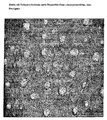
- Figure 1 shows a micrograph of amorphous rotigotine particles in a silicone matrix, which was prepared according to embodiment 2b (comparative example) in the solvent process without dispersant.
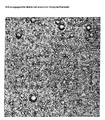
- Figure 2 shows micrographs of amorphous rotigotine particles in a silicone matrix according to the invention, which was prepared according to Embodiment 1 by "tempering" without dispersing agent.
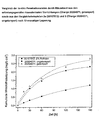
- FIG. 3 shows the comparison of in vitro rotigotine flux rates obtained after application of a device according to the invention (batch 20204071), a comparative batch (batch 20204074) prepared according to example 2b in the solvent method without dispersant and a device described in WO 99/49852 (batch 20107012 ) on mouse skin.
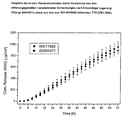
- FIG. 4 shows the comparison of in vitro rotigotine flux rates achieved after application of a device according to the invention (batch 20204071) and a device described in WO 99/49852 (batch WE11682) on human skin.
- FIG. 5 shows, by way of example, the structure of a monolithic TTS with an active substance-containing matrix (1), an active substance-impermeable backing layer (2) and a protective layer (3) that can be removed before use.
- Figure 6 shows a comparison of mouse skin in vitro penetration rates from transdermal devices of the invention (Batch 20204071, annealed) and Comparative Examples 2a (20107012) and 3 (Batch 20204071, unannealed) after 12 months storage.
- Rotigotine base is present as a solid in the form of crystals which are dissolved in the solvents suitable for dissolving matrix polymers, e.g. Hexane, ethyl acetate and toluene, are almost insoluble.
- solvents suitable for dissolving matrix polymers e.g. Hexane, ethyl acetate and toluene
- the rotigotine crystals are first prepared in the prior art in solvents, e.g. Ethanol, and then to the polymer phase, e.g. in hexane, given.
- solvents e.g. Ethanol
- polymer phase e.g. in hexane
- dispersing agents e.g. the hydrophilic polymers mentioned in WO 99/49852. If the dispersants are not added as suggested in this process, large drug islands may form ( Figure 1). The latter then entail the risk of skin irritation, recrystallisation of the active ingredient, reduced adhesion of the adhesive matrix and variation of the active ingredient loading.
- the rotigotine base is stirred in crystalline form into a solution of a silicone polymer, for example an amino-resistant silicone pressure-sensitive adhesive, in heptane, toluene or ethyl acetate, the mixture is coated onto a film, for example a siliconized polyester film, and the solvent is dried removed at 50 ° C. Subsequently, the matrix is heated ("tempered") to a temperature above the melting point of rotigotine, ie above about 74 ° C., until the rotigotine crystals have melted. Finally, it is cooled to room temperature. The rotigotine is then present in the form of amorphous particles or droplets finely distributed in the silicone-based matrix.
- a silicone polymer for example an amino-resistant silicone pressure-sensitive adhesive, in heptane, toluene or ethyl acetate
- silicone-based matrices according to the invention contain no potentially peroxide-containing hydrophilic polymers, such as PVP, it is also possible to dispense with the addition of additives for removing peroxide ("peroxide scavengers").
- the matrix also contains no inorganic silicates or skin penetration enhancers ("enhancers").
- the TTSs of the invention show no signs of rotigotine recrystallization or a change in particle size.
- an unchanged release profile comparable to Kollidon-containing TTS prepared according to Example 2a was found.
- a crystalline rotigotine-containing TTS prepared in accordance with Embodiment 3 which omitted the step of heating above the melting point of rotigotine, provided a significantly lower drug release.
- An object of the invention is therefore a matrix for the transdermal administration of rotigotine [(-) - 5,6,7,8-tetrahydro-6- [propyl [2- (2-thienyl) ethyl] amino] -1-naphthol], containing a matrix polymer supersaturated with rotigotine base, characterized in that the fraction of rotigotine not dissolved in the matrix polymer is dispersed as amorphous particles having a mean diameter of at most 30 ⁇ m in the matrix polymer and the matrix is free of solubilizers, crystallization inhibitors and dispersion agents, with which Assuming that the matrix contains no hot-melt adhesive.
- the matrix according to the invention generally contains at least 60% by weight, preferably 70-95% by weight, particularly preferably 80-91% by weight of matrix polymer, in each case based on the weight of the matrix.
- the matrix polymer is a silicone, preferably an amino-resistant silicone or a silicone mixture.
- matrix in this patent application is understood to mean a pharmaceutical formulation which comprises at least one matrix polymer and which can form a disperse system, with the proviso that the matrix contains no hot-melt pressure-sensitive adhesive.
- rotigotine base in this application means that less than 5% by weight, preferably less than 2% by weight, more preferably less than 1% by weight, of the rotigotine is present in salt form.
- particles in this patent application microscopically visible rotigotine accumulations, e.g. in droplet form, understood in the matrix.
- average diameter is meant the average of all diameters (each in the dimensions x, y, z) of the rotigotine particles present in a given matrix. This can be determined by examining the rotigotine-containing matrix with a microscope and evaluating the image with the software Nikon LuciaDi.
- matrix supersaturated with rotigotine is understood in this patent application to mean that at least some of the rotigotine is not present in the form of a solute in the polymer but is dispersed as a particle in the matrix.
- matrix polymer is understood to mean the polymers which are familiar to a pharmaceutical specialist for the preparation of transdermal dosage forms. Examples include silicones, ethyl vinyl acetates (EVA), styrene block copolymers (SXS), acrylates and methacrylates, polyurethanes, vinyl acetates and gums, especially polyolefins and polyterpenes, e.g. Polyisobutylenes, polybutadienes, neoprenes or polyisoprenes and suitable mixtures of these matrix polymers.
- EVA ethyl vinyl acetates
- SXS styrene block copolymers
- acrylates and methacrylates polyurethanes
- vinyl acetates and gums especially polyolefins and polyterpenes, e.g. Polyisobutylenes, polybutadienes, neoprenes or polyisoprenes and suitable mixtures of these matrix polymers.
- silicon-based matrix in this patent application is understood to mean a matrix which contains at least 60% by weight, preferably 70-95% by weight, particularly preferably 80-91% by weight of silicone, based on the weight of the matrix.
- the matrix polymers used are those in which rotigotine has a solubility of less than 5% by weight, more preferably less than 3% by weight and most preferably less than 1% by weight.
- the matrix supersaturated with rotigotine can be used for processing in various pharmaceutical dosage forms.
- the rotigotine-containing matrix can be designed as an adhesive (self-adhesive) or as a non-adhesive matrix.
- the amorphous rotigotine particles are preferably present in a self-adhesive matrix, particularly preferably dispersed in a self-adhesive silicone pressure-sensitive adhesive matrix.
- Preferred silicone pressure-sensitive adhesives for use in the self-adhesive silicone pressure-sensitive adhesive matrix of the invention are aminoresistant, pressure-sensitive polyorganosiloxane adhesives.
- Silicone pressure-sensitive adhesives are in most cases polydimethylsiloxanes, but in principle instead of methyl groups, other organic radicals such as ethyl or phenyl groups may be present.
- Amino-resistant silicone pressure-sensitive adhesives are generally characterized by containing no or only a few free silanol functions, since the Si-OH groups have been alkylated. Such adhesives are described in the patent EP 180 377.
- Particularly preferred adhesives are condensates or mixtures of silicone resins and polyorganosiloxanes, as described for example in US RE 35 474.
- Suitable polyorganosiloxane adhesives are commercially available from Dow Corning as so-called BIO-PSA pressure-sensitive adhesives. Particularly suitable are pressure sensitive adhesives sold by Dow Corning under the name Bio-PSA 7-4201 and Bio-PSA 7-4301, as well as suitable blends of these adhesives. These blends of strong and medium adhesion adhesives (“tack”), especially 40:60 to 60:40 blends of Bio-PSA 7-4201 and Bio-PSA 7-4301, are characterized by a particularly favorable adhesion / cohesion balance out.
- tack strong and medium adhesion adhesives
- the active substance concentration of the matrix according to the invention is not subject to the process-related limitations as the matrices produced in the solvent process according to the prior art.
- the active substance concentration in the matrix can in principle be between 1 and about 40% by weight, based on the total weight of the matrix, with rotigotine concentrations between 5 and 30% by weight and especially between 7 and 25% by weight being preferred.
- a rotigotine concentration in the matrix of at least 15% by weight, especially of at least 20% by weight, is preferred.
- Antioxidants are preferably added in a total concentration of up to 2% by weight, preferably 0.05-0.5% by weight (based on the weight of the matrix).
- Preferred examples are alpha-tocopherol, ascorbyl palmitate and mixtures thereof.
- the size distribution of the rotigotine particles in the rotigotine-supersaturated, preferably silicone-based matrix should be as uniform as possible, the average diameter preferably being less than 25 ⁇ m, particularly preferably less than 20 ⁇ m.
- the matrix according to the invention is part of a device, in particular a sheet-like device, for the transdermal administration of rotigotine, the device comprising further constituents, e.g. a protective layer, a backing layer, further polymer layers, and / or a drug delivery controlling membrane.
- the device according to the invention is designed as a so-called monolithic patch, that is, it consists of a drug-impermeable backing layer (2), a self-adhesive, rotigotine-suppressed, preferably silicone-based matrix (1) in which free base of rotigotine is dispersed in an amorphous form and contains no solubilizing agent as well as a removable prior to the application on the skin of the patient layer (3), as shown in Figure 5.
- the rotigotine may also be present in a non-adhesive, supersaturated, preferably silicone-based matrix.
- the sheet-like device can then have an additional active ingredient-free adhesive layer or a so-called "overtape".
- the sheet-like device is constructed as a monolithic system and contains a self-adhesive rotigotine-containing matrix layer which is based on an amino-resistant silicone pressure-sensitive adhesive.
- the surface of the device may be between 5 and about 80 cm 2 in size, preferably between 10 and 60 cm 2 and particularly preferably between 20 and 40 cm 2 .
- the thickness of the matrix layer in the devices according to the invention is usually in the range 40-300 .mu.m, preferred matrix thicknesses of 50-200 .mu.m and especially of 70-150 .mu.m. This results in a preferred matrix weight of about 40-200 g / m 2 .
- Preferred rotigotine concentrations in the matrix layer of the device are between 5 and 30% by weight and more preferably between 7 and 25% by weight, based on the total weight of the matrix. If the device is intended for a more than 5-day application, concentrations of rotigotine are generally greater than 15% by weight, preferably more than 20% by weight required. Typical concentrations for 7-day patches are 20-30% by weight.
- the degree of loading of the matrix in the device according to the invention is basically between 0.1 and 9 mg rotigotine / cm 2 matrix surface.
- the preferred loading content is 0.3-6 mg rotigotine / cm 2 .
- a rotigotine loading between 0.3 and 1.5 mg rotigotine / cm 2 , in 7-day systems at 2.5-6.0 mg / cm 2 .
- the following table shows the active ingredient concentration and the matrix weight of the monolithic patches used for the skin permeation experiments (FIGS. 2, 3).
- the size distribution of the rotigotine particles in the silicone-based matrix of the devices according to the invention should be as uniform as possible and on average below 30 .mu.m, wherein the average diameter should preferably be below 25 .mu.m, more preferably below 20 microns.
- no particles should preferably be present in a given matrix layer whose diameter in the largest dimension (x, y, z) is greater than 90% of the thickness of the respective matrix layer.
- the backing layer to which the matrix mass of the device according to the invention is spread, should be inert for the ingredients of the matrix and rotigotine be impermeable.
- Suitable materials include, for example, polyesters, polyamides, polyethylenes, polypropylenes, polyurethanes, PVC or combinations of these materials.
- the films may be siliconized and / or provided with an aluminum layer. The thickness usually varies between 10 and 100 ⁇ m and is preferably between 20 and 40 ⁇ m.
- the device furthermore preferably contains a protective layer or foil which is removed immediately before use of the device, that is to say prior to application to the skin.
- This protective layer can be made of polyester, polyethylene or polypropylene, for example. This layer may additionally be coated with aluminum or fluoropolymers. The thickness of this protective layer is usually between 30 and 200 microns.
- the protective layer immediately before use the protective layer preferably consists of two separate films whose ends can overlap. Corresponding embodiments are known from conventional patches.
- Rotigotine is a dopamine agonist.
- the matrices and devices according to the invention are therefore particularly suitable for the treatment of diseases that are associated with a disturbed dopamine metabolism.
- An object of the invention is therefore the use of a device according to the invention or a matrix according to the invention in a medicament for the treatment of Parkinson's disease, restless leg or depression.
- the rotigotine-supersaturated, preferably silicone-based, matrix according to the invention can be prepared in a simple manner by stirring the rotigotine base in crystalline form into a solution of a corresponding matrix polymer, removing the solvent by drying at 50 ° C. and finally bringing the solvent-free matrix to a temperature Above the melting point of rotigotine, ie above about 74 ° C, as long as heated ("tempered") until the rotigotine crystals are melted. The mixture is then cooled to room temperature so that the rotigotine is finally present in the form of amorphous particles or droplets in the matrix according to the invention.
- the cooling step is preferably carried out "passively", that is, the rotigotine-containing matrix is exposed to room temperature; Additional cooling is usually not required.
- step (c) the removal of the solvent and the melting of the rotigotine by continuous temperature increase, e.g. from 50 ° C to 90 ° C, for example in a drying line.
- step (c) first in a step (c1), the solvent is removed at a temperature of 40-60 ° C and the solvent-free matrix is then heated in a step (c2) to at least 74 ° C until the rotigotine has melted ,
- Suitable process temperatures for the melting of rotigotine are, for example, at 75-120 ° C, preferably at 80-100 ° C, particularly preferably at 90 ° C.
- a device according to the invention is to be prepared which has a drug-impermeable backing layer in addition to the rotigotine-containing matrix, then the rotigotine-containing polymer composition resulting from the matrix preparation described in step (b) above is removed prior to removal of the solvent to a suitable film, e.g. a polyester film streaked.
- a suitable film e.g. a polyester film streaked.
- step (d) The removal of the solvent and the melting of the rotigotine according to step (d) can be carried out either by continuous temperature increase, e.g. be carried out from 50 ° C to 90 ° C or stepwise in two separate steps (d1) and (d2), as already described above.
- the acicular rotigotine crystals which are generally needle-shaped, can be reduced to the desired size, for example 50 ⁇ m in length, if appropriate by suitable pretreatment, for example by grinding or crushing and subsequent sieving.
- Example 3 Production of a Silicone-Based Matrix Without Pre-Dissolving and Annealing
- Example 4 Determination of the active substance flow in the mouse skin model
- Example 5 Determination of the active substance flow in the human skin model
- human skin was obtained in a thickness of 250 microns from the abdomen.
- a TTS with an area of 2.545 cm 2 was applied to human skin of the same area, with the skin resting on a silicone membrane towards the acceptor side.
- the acceptor phase used was PBS (0.066 molar) at pH 6.2 and a temperature of 32 ⁇ 0.5 ° C.
- the experiments were carried out with a flux of 5mL / h over 72 hours. At the sampling times, the release medium is exchanged for fresh, thermostated to 32 ⁇ 0.5 ° C medium and the amount of liberated Rotigotins measured by HPLC.
- the determination of the flux rate Q (t) was based on the area of the measuring cell (0.552 cm 2 ).
Landscapes
- Health & Medical Sciences (AREA)
- Engineering & Computer Science (AREA)
- Bioinformatics & Cheminformatics (AREA)
- Veterinary Medicine (AREA)
- Chemical & Material Sciences (AREA)
- Medicinal Chemistry (AREA)
- Pharmacology & Pharmacy (AREA)
- Life Sciences & Earth Sciences (AREA)
- Animal Behavior & Ethology (AREA)
- General Health & Medical Sciences (AREA)
- Public Health (AREA)
- Epidemiology (AREA)
- Neurology (AREA)
- Biomedical Technology (AREA)
- Dermatology (AREA)
- Neurosurgery (AREA)
- Chemical Kinetics & Catalysis (AREA)
- General Chemical & Material Sciences (AREA)
- Nuclear Medicine, Radiotherapy & Molecular Imaging (AREA)
- Organic Chemistry (AREA)
- Psychology (AREA)
- Pain & Pain Management (AREA)
- Psychiatry (AREA)
- Medicinal Preparation (AREA)
- Pharmaceuticals Containing Other Organic And Inorganic Compounds (AREA)
Description
- Die vorliegende Erfindung betrifft eine zur transdermalen Verabreichung von Rotigotin [(-)-5,6,7,8-Tetrahydro-6-[propyl[2-(2-thienyl)ethyl]amino]-1-naphtol] geeignete Matrix, die frei von Löslichkeitsvermittlern und Dispersionsmitteln ist und die im wenigstens ein Matrixpolymer und Rotigotin-Base in einer Konzentration oberhalb der Löslichkeitsgrenze des Matrixpolymers für Rotigotin umfasst, wobei der nicht im Matrixpolymer gelöste Anteil des Rotigotins als amorphe Partikel mit einem mittleren Durchmesser von maximal 30 µm im Matrixpolymer dispergiert ist.
- Ferner betrifft die Erfindung eine flächenförmige Vorrichtung zur transdermalen Verabreichung von Rotigotin, die die oben beschriebene, mit Rotigotin übersättigte, vorzugsweise silikonbasierte Matrix und eine für den Wirkstoff undurchlässige Rückschicht enthält.
- Aus dem Stand der Technik sind verschiedene silikonbasierte transdermale Systeme zur Verabreichung von Rotigotin bekannt.
- WO 94-07468 offenbart ein transdermales System, das ein Wirkstoffsalz in einer Zweiphasenmatrix enthält. Die Zweiphasenmatrix besteht aus einem hydrophoben Matrixpolymer mit einem darin dispergierten Silikat zur Aufnahme des hydrophilen Arzneistoffsalzes, wobei zusätzlich hydrophobe Lösemittel verwendet werden. Die Herstellung der Matrix erfolgt durch Trocknen der Dispersion bei 70°C. Der Gehalt an Rotigotin in der Matrix beträgt 2-5 Gew%.
- Dieses System weist jedoch eine Reihe von Nachteilen auf:
- Die Herstellung ist mehrstufig und aufwendig. Das Wirkstoffsalz muß gelöst, dann mit dem Silikat gemischt werden, dann mit einem Emulgator vermengt werden, um die Lösung schließlich mit dem in einem organischen Lösungsmittel - üblicherweise Heptan, Ethylacetat oder Toluol - gelösten Matrixpolymer, z.B. in einem Silikonkleber, zu emulgieren.
- Die resultierende Emulsion ist schwierig zu handhaben.
- Die Wirkstoffbeladung ist begrenzt durch die Löslichkeit des Rotigotins im jeweiligen Lösungsmittelsystem. Zudem findet beim Entfernen der Lösungsmittel während der Herstellung eine Aufkonzentrierung statt, bei der es zu einer unerwünschten Kristallbildung kommen kann. Auch hierdurch ist die maximale Menge an Wirkstoff, die sich in die Matrix einarbeiten läßt, beschränkt. Eine niedrige Wirkstoffbeladung wiederum begrenzt die Freisetzungskapazität der Matrix pro Zeiteinheit und/oder ihre funktionale Lebenszeit.
- Das im Pflaster verbleibende Silikat bzw. Siliziumdioxid stellt eine Diffusionsbarriere für den Wirkstoff dar, die die Freigabe des Wirkstoffes negativ beeinflussen kann.
- Das anorganische Silikat beeinflußt die Wasseraufnahme des Pflasters. Porenbildung durch Herauslösen wasserlöslicher Matrixbestandteile an der Grenzfläche zur Haut können zu einer schlecht kontrollierbaren Freisetzung des Wirkstoffes führen.
- WO 99/49852 beschreibt ein Transdermales Therapeutisches System (TTS) enthaltend ein Haftklebesystem, das auf Acrylat oder Silikon basiert und in dem Rotigotin in Form der freien Base vorliegt. Das offenbarte TTS ermöglicht therapeutisch relevante Fluxraten von Rotigotin durch Humanhaut.
- Rotigotin ist in hydrophoben Polymeren, wie z.B. in Silikon, nur schwach löslich. Aus diesen Gründen wird in WO 99/49852 die Zugabe von Zusatzstoffen zur Verbesserung des Lösungsverhaltens des Rotigotins vorgeschlagen. Dabei handelt es sich insbesondere um hydrophile Polymere, wie z.B. Polyvinylpyrrolidon (PVP), Copolymere von Vinylpyrrolidon und Vinylacetat, Polyethylenglycol, Polypropylenglycol, Copolymere aus Ethylen und Vinylacetat sowie um Glycerin und dessen Ester.
- WO 02/089778 und WO 02/089777 beschreiben ebenfalls ein Lösemittel-basiertes transdermales System zur Verabreichung von Rotigotin. Gemäß WO 02/089778 und WO 02/089777 werden ebenfalls oberflächenaktive Substanzen oder amphiphile Substanzen als Kristallisationsinhibitor zugesetzt.
- EP 1 256 340 beschreibt ebenfalls ein Lösemittel-basiertes transdermales System zur Verabreichung von Rotigotin. Die Matrix enthält neben einer Silikon-mischung z.B. den Kristallisationsinhibitor Polyvinylpyrrolidon.
- WO 2004/012721 offenbart ein transdermales System eines mit Rotigotin-Base übersättigten Matrixpolymers, welches frei von Löslichkeitsvermittlern, Kristallisationsinhibitoren und Dispersionsmitteln ist.
- Es war nun die Aufgabe der vorliegenden Erfindung eine Matrix zur Verfügung zu stellen, die einfach aufgebaut ist und möglichst wenige Hilfsstoffe enthält, die aber dennoch die Verabreichung von Rotigotin durch die Haut in therapeutisch relevanten Fluxraten erlaubt, lagerstabil ist und die Einarbeitung von Rotigotin-Base in einem weiten Konzentrationsbereich ermöglicht.
- Abbildung 1 zeigt eine mikroskopische Aufnahme von amorphen Rotigotin-Partikeln in einer Silikonmatrix, die gemäß Ausführungsbeispiel 2b (Vergleichsbeispiel) im Lösemittelverfahren ohne Dispersionsmittel hergestellt wurde.
- Abbildung 2 zeigt mikroskopische Aufnahmen von amorphen Rotigotin-Partikeln in einer erfindungsgemäßen Silikonmatrix, die gemäß Ausführungsbeispiel 1 durch "tempern" ohne Dispersionsmittel hergestellt wurde.
- Abbildung 3 zeigt den Vergleich von in-vitro Rotigotin-Fluxraten, die nach Auftrag einer erfindungsgemäßen Vorrichtung (Charge 20204071), einer gemäß Ausführungsbeispiel 2b im Lösemittelverfahren ohne Dispersionsmittel hergestellten Vergleichscharge (Charge 20204074) und einer in WO 99/49852 beschriebenen Vorrichtung (Charge 20107012) auf Mäusehaut erzielt werden.
- Abbildung 4 zeigt den Vergleich von in-vitro Rotigotin-Fluxraten, die nach Auftrag einer erfindungsgemäßen Vorrichtung (Charge 20204071) und einer in WO 99/49852 beschriebenen Vorrichtung (Charge WE11682) auf Humanhaut erzielt werden.
- Abbildung 5 zeigt beispielhaft den Aufbau eines monolithischen TTS mit einer wirkstoffhaltigen Matrix (1), einer wirkstoffundurchlässigen Rückschicht (2) und einer vor Gebrauch entfernbaren Schutzschicht (3).
- Abbildung 6 zeigt einen Vergleich der in-vitro Penetrationsraten durch Mäusehaut aus den erfindungsgemäßen transdermalen Vorrichtungen (Charge 20204071, getempert) sowie aus den Vergleichsbeispielen 2a (20107012) und 3 (Charge 20204071, ungetempert) nach 12-monatiger Lagerung.
- Rotigotin-Base liegt als Feststoff in Form von Kristallen vor, die in den zur Lösung von Matrixpolymeren geeigneten Lösemitteln, z.B. Hexan, Ethylacetat und Toluol, nahezu unlöslich sind.
- Zur Herstellung einer rotigotinhaltigen Matrix werden die Rotigotin-Kristalle daher nach dem Stand der Technik zunächst in Lösemittel, z.B. Ethanol, gelöst und sodann zur Polymerphase, z.B. in Hexan, gegeben. Zur Herstellung einer Feindispersion der wirkstoffhaltigen Phase in der Polymerphase werden Dispersionsmittel, wie z.B. die in WO 99/49852 genannten hydrophilen Polymere, verwendet. Werden bei diesem Verfahren die Dispersionsmittel nicht wie vorgeschlagen, zugesetzt, können sich große Wirkstoffinseln bilden (Abbildung 1). Letztere bergen dann die Gefahr der Hautreizung, der Wirkstoff-Rekristallisation, der verringerten Adhäsion der Klebermatrix und der Schwankung der Wirkstoffbeladung.
- Es wurde nun überraschenderweise festgestellt, dass dennoch auf die Verwendung eines zusätzlichen Löse- oder Dispersionsmittels bzw. Kristallisationsinhibitors verzichtet werden kann, wenn auf das Vorlösen des Rotigotins in Lösemittel, z.B. in Ethanol, vor dem Einbringen in eine Matrix, z.B. in eine Silikonmatrix, verzichtet wird.
- In einer Ausführungsform der Erfindung wird beispielsweise die Rotigotin-Base in kristalliner Form in eine Lösung eines Silikonpolymers, z.B. eines aminoresistenten Silikonhaftklebers, in Heptan, Toluol oder Ethylactetat eingerührt, die Mischung auf eine Folie, z.B. eine silikonisierte Polyesterfolie, beschichtet und das Lösemittel durch Trocknen bei 50°C entfernt. Anschließend wird die Matrix auf eine Temperatur oberhalb des Schmelzpunkts von Rotigotin, d.h. oberhalb von ca. 74°C, solange erwärmt ("getempert"), bis die Rotigotin-Kristalle geschmolzen sind. Schließlich wird auf Raumtemperatur abgekühlt. Das Rotigotin liegt dann in Form amorpher Partikel oder Tröpfchen feinverteilt in der silikonbasierten Matrix vor.
- Bei mikroskopischer Betrachtung zeigte sich, dass die amorphen Rotigotin-Partikel in der Silikonmatrix überraschend feinverteilt sind und eine Größe von maximal etwa 30-40 µm, in der Mehrzahl aber kleiner als 20 µm aufweisen (Abbildung 2). Selbst nach sechsmonatiger Lagerung bei Raumtemperatur zeigten die amorphen Rotigotin-Partikel in der Silikonmatrix keine Tendenz zur Rekristallisierung.
- Ferner zeigte sich in in-vitro Permeationsexperimenten an Mäusehaut und Humanhaut, dass transdermale Systeme, die die erfindungsgemäß hergestellten, die amorphen Rotigotin-Partikel enthaltenden Silikon-Matrices enthalten, beim Auftrag auf die Haut zu Rotigotin-Permeationsraten führen, die mit den im Lösemittelverfahren gemäß WO 99/49852 hergestellten, therapeutisch einsetzbaren TTS nahezu identisch sind (Abbildungen 3 und 4). Auch nach fünfmonatiger Lagerung bei Raumtemperatur war das Freisetzungsverhalten der erfindungsgemäßen TTS unverändert (Abbildung 4).
- Dies bedeutet, dass der Zusatz eines Lösungsvermittlers/Dispersionsmittels zur Erreichung einer pharmakologisch relevanten Fluxrate von Rotigotin aus Polymermatrices erfindungsgemäß nicht erforderlich ist.
- Vielmehr können überraschenderweise mit einer sehr einfach aufgebauten Matrix therapeutisch relevante Fluxraten erzielt werden, wenn das nicht im Matrixpolymer gelöste Rotigotin feinverteilt in amorphen Partikeln in der Matrix "konserviert" werden kann.
- Gelingt dies, indem beispielsweise die kristalline Wirkstoff-Form durch Erhitzung der mit Rotigotin übersättigten Matrix in die amorphe Form überführt wird, die dann in der Matrix feinverteilt dispergiert vorliegt, ist der Zusatz von Löslichkeitsvermittlern, Kristallisationsinhibitoren und/oder Dispersionsmittel, z.B. in Form polarer innerer-Phase Polymere, nicht erforderlich.
- Da die erfindungsgemäßen übersättigten, vorzugsweise silikonbasierten Matrices keine potentiell peroxidhaltigen hydrophilen Polymere, wie PVP, enthalten, kann auch auf den Zusatz von Additiven zur Peroxidbeseitigung ("Peroxidfängern") verzichtet werden.
- Ferner enthält die Matrix auch keine anorganischen Silikate oder Hautpenetrationsverbesserer ("Enhancer").
- Auch nach 12-monatiger Lagerung zeigen die erfindungsgemäßen TTS keine Zeichen der Rotigotin-Rekristallisierung oder eine Veränderung der Partikelgröße. Zudem zeigte sich in in-vitro Freisetzungsexperimenten bei den erfindungsgemäßen TTS ein unverändertes und mit dem gemäß Beispiel 2a hergestellten, Kollidon-haltigen TTS vergleichbares Freisetzungsprofil. Im Gegensatz dazu lieferte ein gemäß Ausführungsbeispiel 3 hergestelltes, kristallines Rotigotin enthaltendes TTS, bei dem auf den Schritt-des Erhitzens über den Schmelzpunkt von Rotigotin verzichtet wurde, eine deutlich geringere Wirkstofffreisetzung.
- Schließlich kann auch auf den Einsatz von in Heißschmelzverfahren üblichen Weichmachern zur Senkung der dynamischen Viskosität von Matrixpolymeren verzichtet werden, da das Polymer im Lösemittelverfahren verarbeitet wird.
- Ein Gegenstand der Erfindung ist daher eine Matrix zur transdermalen Verabreichung von Rotigotin [(-)-5,6,7,8-Tetrahydro-6-[propyl[2-(2-thienyl)ethyl]amino]-1-naphtol], enthaltend ein mit Rotigotin-Base übersättigtes Matrixpolymer, dadurch gekennzeichnet, dass der nicht im Matrixpolymer gelöste Anteil des Rotigotins als amorphe Partikel mit einem mittleren Durchmesser von maximal 30 µm im Matrixpolymer dispergiert ist und die Matrix frei von Löslichkeitsvermittlern, Kristallisationsinhibitoren und Dispersionsmittein ist, mit der Maßgabe, dass die Matrix keinen heißschmelzfähigen Haftkleber enthält.
- Ein weiterer Gegenstand der Erfindung ist eine Rotigotin [(-)-5,6,7,8-Tetrahydro-6-[propyl[2-(2-thienyl)ethyljamino]-1-naphtol]-haltige Matrix bestehend aus
- (a) Matrixpolymer,
- (b) Rotigotin-Base in einer Konzentration oberhalb der Löslichkeitsgrenze des Matrixpolymers, wobei der nicht im Matrixpolymer gelöste Anteil des Rotigotins als amorphe Partikel mit einem mittleren Durchmesser von maximal 30 µm im Matrixpolymer dispergiert ist und
- (c) optional einem oder mehreren Antioxidanzien, mit der Maßgabe, dass die Matrix keinen heißschmelzfähigen Haftkleber enthält.
- Die erfindungsgemäße Matrix enthält im allgemeinen mindestens 60 Gew%, bevorzugt 70-95 Gew%, besonders bevorzugt 80-91 Gew% Matrixpolymer, jeweils bezogen auf das Matrixgewicht.
- In einer bevorzugten Ausführungsform der Erfindung ist das Matrixpolymer ein Silikon, vorzugsweise ein amino-resistentes Silikon oder eine Silikon-Mischung.
- Ein weiterer Gegenstand der Erfindung ist daher eine Rotigotin [(-)-5,6,7,8-Tetrahydro-6-[propyl[2-(2-theinyl)ethyl]amino]-1-naphtol]-haltige Matrix bestehend aus
- (a) amino-resistentem Silikon,
- (b) Rotigotin-Base in einer Konzentration oberhalb der Löslichkeitsgrenze des Silikons, wobei der nicht im Silikon gelöste Anteil des Rotigotins als amorphe Partikel mit einem mittleren Durchmesser von maximal 30 µm im Silikon dispergiert ist und
- (c) optional einem oder mehreren Antioxidanzien, mit der Maßgabe, dass die Matrix keinen heißschmelzfähigen Haftkleber enthält.
- Unter dem Begriff "Matrix" wird in dieser Patentanmeldung eine pharmazeutische Formulierung verstanden, die mindestens ein Matrixpolymer umfasst und die ein disperses System bilden kann, mit der Maßgabe, dass die Matrix keinen heißschmelzfähigen Haftkleber enthält.
- Unter dem Begriff "Rotigotin-Base" wird in dieser Anmeldung verstanden, dass weniger als 5 Gew%, bevorzugt weniger als 2 Gew%, besonders bevorzugt weniger als 1 Gew% des Rotigotins in Salzform vorliegt.
- Unter dem Begriff "Partikel" werden in dieser Patentanmeldung mikroskopisch sichtbare Rotigotin-Ansammlungen, z.B. in Tröpfchen-Form, in der Matrix verstanden.
- Unter dem Begriff "mittlerer Durchmesser" wird der Durchschnittswert aller Durchmesser (jeweils in den Dimensionen x,y,z) der in einer gegebenen Matrix vorliegenden Rotigotin-Partikel verstanden. Dies kann bestimmt werden, indem die Rotigotin-haltige Matrix mit einem Mikroskop untersucht und das Bild mit der Software Nikon LuciaDi ausgewertet wird.
- Unter dem Ausdruck "mit Rotigotin übersättigte Matrix" wird in dieser Patentanmeldung verstanden, dass zumindestens ein Teil des Rotigotins nicht in im Polymer gelöster Form, sondern als Partikel in der Matrix dispergiert vorliegt.
- Unter dem Begriff "Matrixpolymer" werden die einem pharmazeutischen Fachmann zur Herstellung von transdermalen Arzneiformen geläufigen Polymere verstanden. Beispiele hierfür sind Silikone, Ethylvinylacetate (EVA), Styrol-Block-Copolymere (SXS), Acrylate und Methacrylate, Polyurethane, Vinylacetate sowie Gummen, insbesondere Polyolefine und Polyterpene, z.B. Polyisobutylene, Polybutadiene, Neoprene oder Polyisoprene sowie geeignete Mischungen dieser Matrixpolymere.
- Unter dem Ausdruck "silikonbasierte Matrix" wird in dieser Patentanmeldung eine Matrix verstanden, die mindestens 60 Gew%, bevorzugt 70-95 Gew%, besonders bevorzugt 80-91 Gew% Silikon, bezogen auf das Matrixgewicht, enthält.
- In einer bevorzugten Ausführungsform der Erfindung werden als Matrixpolymere solche verwendet, in denen Rotigotin eine Löslichkeit von weniger als 5 Gew%, besonders bevorzugt weniger als 3 Gew% und ganz besonders bevorzugt weniger als 1 Gew% hat.
- Die mit Rotigotin übersättigte Matrix kann zur Verarbeitung in verschiedenen galenischen Arzneiformen verwendet werden. Die rotigotinhaltige Matrix kann dabei als adhäsive (selbstklebende) oder als nicht-adhäsive Matrix ausgebildet sein.
- Bevorzugt liegen die amorphen Rotigotin-Partikel in einer selbstklebenden Matrix, besonders bevorzugt in einer selbstklebenden Silikonhaftklebermatrix dispergiert vor.
- Bevorzugte Silikonhaftkleber zur Verwendung in der erfindungsgemäßen selbstklebenden Silikonhaftklebermatrix sind aminoresistente, drucksensitive Polyorganosiloxankleber.
- Silikonhaftkleber stellen in den meisten Fällen Polydimethylsiloxane dar, allerdings können prinzipiell statt Methylgruppen auch andere organische Reste, wie z.B. Ethyl- oder Phenylgruppen vorhanden sein. Aminoresistente Silikonhaftkleber zeichnen sich im allgemeinen dadurch aus, dass sie keine oder nur wenige freie Silanolfunktionen enthalten, da die Si-OH-Gruppen alkyliert wurden. Solche Kleber sind in der Patentschrift EP 180 377 beschrieben.
- Besonders bevorzugte Kleber sind Kondensate oder Mischungen von Silikonharzen und Polyorganosiloxanen, wie beispielsweise in US RE 35 474 beschrieben.
- Geeignete Polyorganosiloxankleber sind kommerziell bei Dow Corning als sogenannte BIO-PSA-Haftkleber erhältlich. Besonders geeignet sind Haftkleber, die von Dow Corning unter der Bezeichnung Bio-PSA 7-4201 und Bio-PSA 7-4301 vertrieben werden, sowie geeignete Mischungen dieser Kleber. Diese Mischungen von Silikonklebern mit starker und mittlerer Haftkraft ("tack"), insbesondere Mischungen im Verhältnis 40:60 bis 60:40 von Bio-PSA 7-4201 und Bio-PSA 7-4301, zeichnen sich durch eine besonders günstige Adhesions/Cohesionsbalance aus.
- Die Wirkstoffkonzentration der erfindungsgemäßen Matrix unterliegt nicht den verfahrensbedingten Beschränkungen wie die im Lösungsmittelverfahren nach dem Stand der Technik hergestellten Matrices.
- Da im Verfahren nach dem Stand der Technik die kristalline Rotigotin-Base in Ethanol vorgelöst wird, ist die Wirkstoffbeladung durch die Löslichkeit des Rotigotins im verwendeten Lösemittel begrenzt. Eine Matrixbeladung mit mehr als etwa 15 Gew% Rotigotin ist daher im bekannten Lösemittelverfahren schwierig. Diese Beschränkung entfällt bei den erfindungsgemäß hergestellten Matrices, da ein Vorlösen der Rotigotin-Base in Ethanol nicht erforderlich ist.
- Aus diesem Grund ist auch die Inkorporation von Rotigotin-Base in Konzentrationen oberhalb von 15 Gew% möglich. Dies ist zum Beispiel besonders hilfreich, wenn eine längere Rotigotin-Freisetzung aus der Matrix zum Beispiel über 5, 6 oder 7 Tage gewünscht ist.
- Die Wirkstoffkonzentration in der Matrix kann prinzipiell zwischen 1 und etwa 40 Gew%, bezogen auf das Gesamtgewicht der Matrix, liegen, wobei Rotigotin-Konzentrationen zwischen 5 und 30 Gew% und besonders zwischen 7 und 25 Gew% bevorzugt werden.
- Für eine 7 Tage dauernde Freisetzung von Rotigotin aus der Matrix wird eine Rotigotin-Konzentration in der Matrix von mindestens 15 Gew%, besonders von mindestens 20 Gew% bevorzugt.
- Antioxidanzien werden bevorzugt in einer Gesamtkonzentration bis 2 Gew%, bevorzugt 0,05-0,5 Gew% (bezogen auf das Matrixgewicht) zugesetzt. Bevorzugte Beispiele sind Alpha-Tocopherol, Ascorbylpalmitat und Mischungen davon.
- In einer bevorzugten Ausführungsform der Erfindung besteht die erfindungsgemäße Matrix aus
- (a) 60-95 Gew% wenigstens eines Matrixpolymers, bevorzugt eines Silikons oder Silikongemischs,
- (b) 1-40 Gew%, bevorzugt 5-30 Gew%, besonders bevorzugt 7-20.Gew% im Matrixpolymer dispergierte amorphe Rotigotin-Base, wobei der nicht im Silikon gelöste Teil des Rotigotins in Form amorpher Partikel mit einem mittleren Durchmesser von maximal 30 µm im Silikon dispergiert ist und
- (c) 0-2 Gew%, bevorzugt 0,05-0,5 Gew% Antioxidans, mit der Maßgabe, dass die Matrix keinen heißschmelzfähigen Haftkleber enthält.
- Die Größenverteilung der Rotigotin-Partikel in der mit Rotigotin übersättigten, bevorzugt silikonbasierten Matrix sollte möglichst gleichmäßig sein, wobei der mittlere Durchmesser bevorzugt unter 25 µm, besonders bevorzugt unter 20 µm liegen sollte.
- In einer bevorzugten Ausführungsform ist die erfindungsgemäße Matrix Bestandteil einer Vorrichtung, insbesondere einer flächenförmigen Vorrichtung, zur transdermalen Verabreichung von Rotigotin, wobei die Vorrichtung weitere Bestandteile, wie z.B. eine Schutzschicht, eine Rückschicht, weitere Polymerschichten und/oder eine die Wirkstoffabgabe kontrollierende Membran.enthalten kann.
- In einer besonders bevorzugten Ausführungsform der Erfindung ist die erfindungsgemäße Vorrichtung als sogenanntes monolithisches Pflaster ausgestaltet, das heißt, sie besteht aus einer für den Wirkstoff undurchlässigen Rückschicht (2), einer selbstklebenden, mit Rotigotin übersättigten, vorzugsweise silikonbasierten Matrix (1), in der die freie Base von Rotigotin in amorpher Form dispergiert ist und die keinen Löslichkeitsvermittler enthält sowie einer vor dem Auftrag auf die Haut des Patienten ablösbaren Schicht (3), wie in Abbildung 5 dargestellt.
- In anderen Ausführungsformen der Erfindung kann das Rotigotin auch in einer nichtadhäsiven, übersättigten, vorzugsweise silikonbasierten Matrix vorliegen. Die flächenförmige Vorrichtung kann dann eine zusätzliche wirkstoffreie Kleberschicht oder ein sogenanntes "overtape" aufweisen.
- Ein Gegenstand der Erfindung ist daher eine flächenförmige Vorrichtung zur transdermalen Verabreichung von Rotigotin [(-)-5,6,7,8-Tetrahydro-6-[propyl[2-(2-theinyl)ethyl]amino]-1-naphtolj, enthaltend eine Rotigotin-haltige Matrixschicht und eine für den Wirkstoff undurchlässige Rückschicht, dadurch charakterisiert, dass die Matrixschicht besteht aus
- (a) Matrixpolymer, vorzugsweise einem amino-resistenten Silikon oder einer Silikon-Mischung,
- (b) Rotigotin-Base in einer Konzentration oberhalb der Löslichkeitsgrenze des Matrixpolymers, wobei der ,nicht im Matrixpolymer gelöste Anteil des Rotigotins als amorphe Partikel mit einem mittleren Durchmesser von maximal 30 µm im Matrixpolymer dispergiert ist und
- (c) optional einem oder mehreren Antioxidanzien, mit der Maßgabe, dass die Matrix keinen heißschmelzfähigen Haftkleber enthält.
- In einer bevorzugten Ausführungsform der Erfindung ist die flächenförmige Vorrichtung als monolithisches System aufgebaut und enthält eine selbstklebende Rotigotin-haltige Matrixschicht, die auf einem aminoresistenten Silikonhaftkleber basiert.
- Die Oberfläche der Vorrichtung kann zwischen 5 und ca. 80 cm2 groß sein, liegt bevorzugt zwischen 10 und 60 cm2 und besonders bevorzugt zwischen 20 und 40 cm2.
- Die Dicke der Matrixschicht in den erfindungsgemäßen Vorrichtungen liegt üblicherweise im Bereich 40-300 µm, wobei Matrixstärken von 50-200 µm und besonders von 70-150 µm bevorzugt werden. Daraus ergibt sich ein bevorzugtes Matrixgewicht von ca. 40-200 g/m2.
- Bevorzugte Rotigotin-Konzentrationen in der Matrixschicht der Vorrichtung liegen zwischen 5 und 30 Gew% und besonders bevorzugt zwischen 7 und 25 Gew%, bezogen auf das Gesamtgewicht der Matrix. Ist die Vorrichtung für eine mehr als 5-tägige Applikation vorgesehen, sind in der Regel Konzentrationen des Rotigotins von mehr als 15 Gew%, bevorzugt mehr als 20 Gew% erforderlich. Typische Konzentrationen für 7 Tage-Pflaster liegen bei 20-30 Gew%.
- Der Beladungsgrad der Matrix in der erfindungsgemäßen Vorrichtung liegt dabei grundsätzlich zwischen 0.1 und 9 mg Rotigotin/cm2 Matrixoberfläche. Der bevorzugte Beladungsgehalt liegt im Bereich 0.3 - 6 mg Rotigotin/cm2. Für Vorrichtungen zur täglichen oder 2-tägigen Verabreichung besonders bevorzugt wird eine Rotigotin-Beladung zwischen 0.3 und 1,5 mg Rotigotin/cm2, bei 7-Tage-Systemen bei 2,5-6,0 mg/cm2.
- Die nachfolgende Tabelle zeigt Wirkstoffkonzentration und Matrixgewicht der für die Hautpermeationsexperimente (Fig. 2, 3) eingesetzten monolithischen Pflaster.
Chargennummer Herstellbedingung Wirkstoff-Konzentration Matrixgewicht (g/m2) Kumulativer Flux durch Humanhaut µg/cm2/72h Kumulativer Flux durch Mäusehaut µg/cm2/72h 20204071 Getempert 90°C, 75 Min 8,87 Gew% 129 850 1030 20107012 Lösungsmittel-verfahren1 9 Gew% 110 n.b. 1080 WE 11682 Lösungsmittel-verfahren1 9 Gew% 50 900 n.b. 1= Vergleichsbeispiel entsprechend WO 99/49852; siehe Ausführungsbeispiel 2a n.b.=nicht bestimmt - Die Größenverteilung der Rotigotin-Partikel in der silikonbasierten Matrix der erfindungsgemäßen Vorrichtungen sollte möglichst gleichmäßig sein und im Mittel unter 30 µm liegen, wobei der mittlere Durchmesser bevorzugt unter 25 µm, besonders bevorzugt unter 20 µm liegen sollte.
- Bevorzugt sollten zudem in einer gegebenen Matrixschicht keine Partikel vorhanden sein, deren Durchmesser in der größten Dimension (x,y,z) größer ist als 90% der Dicke der jeweiligen Matrixschicht.
- Die Rückschicht, auf die die Matrixmasse der erfindungsgemäßen Vorrichtung ausgestrichen wird, sollte für die Inhaltsstoffe der Matrix inert und für Rotigotin undurchlässig sein. Geeignete Materialien sind beispielsweise Polyester, Polyamide, Polyethylene, Polyproylene, Polyurethane, PVC oder Kombinationen dieser Materialien. Die Folien können silikonsiert sein und/oder mit einer Aluminiumschicht versehen sein. Die Dicke variiert üblicherweise zwischen 10 und 100 µm und liegt bevorzugt zwischen 20 und 40 µm.
- Die Vorrichtung enthält weiterhin bevorzugt eine Schutzschicht oder Folie, die unmittelbar vor Gebrauch der Vorrichtung, das heißt vor dem Auftrag auf die Haut, entfernt wird. Diese Schutzschicht kann beispielsweise aus Polyester, Polyethylen oder Polypropylen bestehen. Diese Schicht kann zusätzlich mit Aluminium oder Fluorpolymeren beschichtet sein. Die Dicke dieser Schutzschicht liegt üblicherweise zwischen 30 und 200 µm. Zur besseren Entfernung, der Schutzschicht unmittelbar vor Gebrauch besteht die Schutzschicht bevorzugt aus zwei getrennten Folien, deren Enden überlappen können. Entsprechende Ausgestaltungen sind von konventionellen Pflastern bekannt.
- Rotigotin ist ein Dopamin-Agonist. Die erfindungsgemäßen Matrices und Vorrichtungen sind daher insbesondere zur Behandlung von Erkrankungen, die mit einem gestörten Dopamin-Stoffwechsel einhergehen, geeignet.
- Ein Gegenstand der Erfindung ist daher die Verwendung einer erfindungsgemäßen Vorrichtung oder einer erfindungsgemäßen Matrix in einem Medikament zur Behandlung von Morbus Parkinson, Restless Leg oder Depressionen.
- Die erfindungsgemäße mit Rotigotin übersättigte, vorzugsweise silikonbasierte Matrix kann in einfacher Weise hergestellt werden, indem die Rotigotin-Base in kristalliner Form in eine Lösung eines entsprechenden Matrixpolymers eingerührt wird, das Lösemittel durch Trocknen bei 50°C entfernt und schließlich die lösungsmittelfreie Matrix auf eine Temperatur oberhalb des Schmelzpunkts von Rotigotin, d.h. oberhalb von ca 74°C, solange erhitzt ("getempert") wird, bis die Rotigotin-Kristalle geschmolzen sind. Anschließend wird auf Raumtemperatur abgekühlt, so dass das Rotigotin schließlich in Form amorpher Partikel oder Tröpfchen in der erfindungsgemäßen Matrix vorliegt. Der Abkühlschritt wird bevorzugt "passiv" durchgeführt, das heißt, die Rotigotin-haltige Matrix wird Raumtemperatur ausgesetzt; eine zusätzliche Kühlung ist in der Regel nicht erforderlich.
- Ein Gegenstand der Erfindung ist daher ein Verfahren zur Herstellung einer Matrix zur transdermalen Verabreichung von Rotigotin, gekennzeichnet durch die aufeinanderfolgenden Schritte:
- (a) Auflösen des Matrixpolymers, z.B. des Silikons, in einem Lösemittel, z.B. in Heptan, Ethylacetat und Toluol,
- (b) Zugabe von Rotigotin-Base in kristalliner Form in einer Menge oberhalb der Löslichkeitsgrenze des Polymers,
- (c) Entfernen des Lösemittels und Erwärmen der hergestellten Matrixmasse auf eine Temperatur von mindestens 74°C bis das Rotigotin in der Matrixmasse geschmolzen ist,
- (d) Abkühlen, bevorzugt passives Abkühlen der Matrixmasse, mit der Maßgabe, dass die Matrix keinen heißschmelzfähigen Haftkleber enthält.
- Dabei kann in Schritt (c) die Entfernung des Lösemittels und das Schmelzen des Rotigotins durch kontinuierliche Temperaturerhöhung, z.B. von 50°C auf 90°C, beispielsweise in einer Trockenstrasse, realisiert werden.
- Alternativ kann in Schritt (c) zunächst in einem Schritt (c1) das Lösemittel bei einer Temperatur von 40-60 °C entfernt und die lösemittelfreie Matrix in einem Schritt (c2) sodann auf mindestens 74°C erwärmt werden, bis das Rotigotin geschmolzen ist.
- Geeignete Prozesstemperaturen für das Schmelzen von Rotigotin liegen beispielsweise bei 75-120°C, bevorzugt bei 80-100°C, besonders bevorzugt bei 90°C.
- Soll eine erfindungsgemäße Vorrichtung hergestellt werden, die neben der Rotigotin-haltigen Matrix eine Wirkstoff-undurchlässige Rückschicht aufweist, so wird die bei der oben beschriebenen Matrixherstellung in Schritt (b) entstehende Rotigotin-haltige Polymermasse vor der Entfernung des Lösemittels auf eine geeignete Folie, z.B. eine Polyesterfolie ausgestrichen.
- Ein Gegenstand der Erfindung ist daher ein Verfahren zur Herstellung einer flächenförmigen Vorrichtung zur transdermalen Verabreichung von Rotigotin, umfassend eine Rotigotin-haltige Matrix, gekennzeichnet durch die aufeinanderfolgenden Schritte:
- (a) Auflösen des Matrixpolymers, z.B. des Silikons, in einem Lösemittel,
- (b) Zugabe von Rotigotin-Base in kristalliner Form in einer Menge oberhalb der Löslichkeitsgrenze des Polymers,
- (c) Ausstreichen der Rotigotin-haltigen Polymermasse auf einer geeigneten Folie,
- (d) Entfernen des Lösemittels und Erwärmen der hergestellten Matrixmasse auf eine Temperatur von mindestens 74°C, bis das Rotigotin in der Matrixmasse geschmolzen ist,
- (e) Abkühlen, bevorzugt passives Abkühlen, der Matrixmasse, mit der Maßgabe, dass die Matrix keinen heißschmelzfähigen Haftkleber enthält.
- Dabei kann die Entfernung des Lösemittels und das Schmelzen des Rotigotins gemäß Schritt (d) entweder durch kontinuierliche Temperaturerhöhung z.B. von 50°C auf 90°C erfolgen oder aber stufenweise in zwei separaten Schritten (d1) und (d2) erfolgen, wie bereits weiter oben beschrieben.
- Vor Zugabe des kristallinen Rotigotins können die in der Regel nadelförmigen Rotigotin-Kristalle gegebenenfalls durch geeignete Vorbehandlung, z.B. durch Mahlen oder Zerstossen und anschliessendes Sieben auf die gewünschte Größe, z.B. 50 µm Länge, reduziert werden.
- 1,8 g kristallines Rotigotin (freie Base) wurden gemahlen und als Puder mit einer Korngröße unter 40 µm zu einer 74%igen (g/g) Lösung von Silikon-Polymeren in Heptan (entspricht 9 g Bio-PSA 7-4201 und 9 g BIO-PSA 7-4301) gegeben. Die Mischung wurde zur Herstellung einer homogenen Dispersion mit einem Ultraturrax bei 10 000 UpM für 1 Minute gerührt. Anschließend wurde die Rotigotin-haltige Silikonmasse auf eine Scotch Pak 1109 Folie ausgestrichen (6 mm/Sec) und für 30 Minuten bei 50°C getrocknet. Schließlich wurde Schutzfolie (MN 19) aufgetragen.
- Anschließend wurde für 75 Minuten auf 90°C erhitzt.
- 1,8 g kristallines Rotigotin (freie Base) wurden gemahlen und mit oder ohne 2,4 g Kollidon (PVP) in 4 g Ethanol (96%) gelöst zu einer 74%igen (g/g) Lösung von Silikon-Polymeren in Heptan (entspricht einem Gemisch von 9 g Bio-PSA 7-4201 und 9 g BIO-PSA 7-4301) gegeben. Die Mischung wurde zur Herstellung einer homogenen Dispersion mit einem Ultraturrax bei 10 000 UpM für 1 Minute gerührt. Anschließend wurde die Rotigotin-haltige Silikonmasse auf eine Scotch Pak 1109 Folie ausgestrichen (6 mm/Sec) und für 30 Minuten bei 50°C getrocknet. Schließlich wurde Schutzfolie (MN 19) aufgetragen.
- 1,8 g kristallines Rotigotin (freie Base) wurden gemahlen und als Puder mit einer Korngröße unter 40 µm zu einer 74%igen (g/g) Lösung von Silikon-Polymeren in Heptan (entspricht 9 g Bio-PSA 7-4201 und 9 g BIO-PSA 7-4301) gegeben. Die Mischung wurde zur Herstellung einer homogenen Dispersion mit einem Ultraturrax bei 10 000 UpM für 1 Minute gerührt. Anschließend wurde die Rotigotin-haltige Silikonmasse auf eine Scotch Pak 1109 Folie ausgestrichen (6 mm/Sec) und für 30 Minuten bei 50°C getrocknet. Schließlich wurde Schutzfolie (MN 19) aufgetragen.
- Für die Fluxmessungen durch Mäusehaut wurde Bauch und Rückenhaut einer Dicke von ca. 120 bis 150 µm verwendet. Ein TTS mit einer ausgestanzten Fläche von 2,55 cm2 wird in einer horizontalen Diffusionszelle auf die Hornschichtseite der Bauch- und Rückenhaut haarloser Mäuse fixiert. Unmittelbar anschließend wird die Akzeptorkammer der Zelle mit auf 32°C vortemperierter Phosphat-Pufferlösung (0,066 molar), pH 6,2, luftblasenfrei befüllt und das Freisetzungsmedium auf 32 ± 0,5°C thermostatisiert. Zu den Probeentnahmezeiten wird das Freisetzungsmedium gegen frisches, auf 32 ± 0,5°C thermostatisiertes Medium ausgetauscht. Die Rotigotine-Freisetzung wird per HPLC bestimmt.
- Die Bestimmung des Rotigotinfluxes durch Humanhaut wurde im wesentlichen durchgeführt wie in H. Tanojo et al, J. Control Rel. 45 (1997) 41-47 beschrieben.
- Hierzu wurde Humanhaut in einer Dicke von 250 µm aus dem Abdomen gewonnen. Ein TTS mit einer Fläche von 2,545 cm2 wurde auf Humanhaut gleicher Fläche aufgebracht, wobei die Haut zur Akzeptorseite hin auf einer Silikonmembran aufliegt. Als Akzeptorphase wurde PBS (0,066 molar) bei PH 6,2 und einer Temperatur von 32±0.5°C verwendet. Die Experimente wurden mit einem Flux von 5mL/h über 72 Stunden durchgeführt. Zu den Probenentnahmezeiten wird das Freisetzungsmedium gegen frisches, auf 32±0.5°C thermostatiertes Medium ausgetauscht und die Menge des freigesetzten Rotigotins per HPLC gemessen. Die Bestimmung der Fluxrate Q(t) erfolgte bezogen auf die Fläche der Meßzelle (0.552 cm2).
Claims (14)
- Matrix zur transdermalen Verabreichung von Rotigotin [(-)-5,6,7,8-Tetrahydro-6-[propyl[2-(2-thienyl)ethyl]amino]-1-naphtol], enthaltend ein mit Rotigotin-Base übersättigtes Matrixpolymer, dadurch gekennzeichnet, dass der nicht im Matrixpolymer gelöste Anteil des Rotigotins als amorphe Partikel mit einem mittleren Durchmesser von maximal 30 µm im Matrixpolymer dispergiert ist und die Matrix frei von Löslichkeitsvermittlern, Kristallisationsinhibitoren und Dispersionsmitteln ist, mit der Maßgabe, dass die Matrix keinen heißschmelzfähigen Haftkleber enthält.
- Matrix zur transdermalen Verabreichung von Rotigotin [(-)-5,6,7,8-Tetrahydro-6-[propyl[2-(2-thienyl)ethyl]amino]-1-naphtol], bestehend aus(a) Matrixpolymer,(b) Rotigotin-Base in einer Konzentration oberhalb der Löslichkeitsgrenze des Matrixpolymers, wobei der nicht im Matrixpolymer gelöste Anteil des Rotigotins als amorphe Partikel mit einem mittleren Durchmesser von maximal 30 µm im Matrixpolymer dispergiert ist und(c) optional einem oder mehreren Antioxidanzien, mit der Maßgabe, dass die Matrix keinen heißschrnelzfähigen Haftkleber enthält.
- Matrix nach einem der vorhergehenden Ansprüche, wobei das Matrixpolymer ein aminoresistentes Silikon oder eine Mischung aminoresistenter Silikone ist.
- Matrix nach einem der vorhergehenden Ansprüche, dadurch gekennzeichnet, dass die Matrix selbstklebend ist.
- Matrix nach einem der vorhergehenden Ansprüche dadurch gekennzeichnet, dass die Matrix besteht aus(a) 60-95 Gew% eines aminoresistenten Silikons oder einer aminoresistenten Silikonmischung,(b) 5-40 Gew% im Silikon dispergierte amorphe Rotigotin-Base und(c) 0-2 Gew% Antioxidans.
- Flächenförmige Vorrichtung zur transdermalen Verabreichung von Rotigotin, enthaltend eine Matrix nach einem der vorhergehenden Ansprüche sowie eine Rotigotin-undurchlässige Rückschicht.
- Flächenförmige Vorrichtung nach Anspruch 5, dadurch gekennzeichnet, dass der Beladungsgrad mit Rotigotin zwischen 0.3 und 6 mg/cm2 liegt.
- Verwendung einer Vorrichtung oder einer Matrix nach einem der vorhergehenden Ansprüche zur Herstellung eines Arzneimittels zur Behandlung von Morbus Parkinson oder dem Restless Leg Syndrom.
- Verwendung einer Vorrichtung oder einer Matrix nach einem der vorhergehenden Ansprüche zur Herstellung eines Arzneimittels zur Behandlung von Depressionen.
- Verfahren zur Herstellung einer pharmazeutischen Matrix zur transdermalen Verabreichung von Rotigotin, gekennzeichnet durch die aufeinanderfolgenden Schritte:(a) Auflösen von Matrixpolymer in einem Lösemittel,(b) Zugabe von Rotigotin-Base in kristalliner Form in einer Menge oberhalb der Löslichkeitsgrenze des in (a) verwendeten Matrixpolymers,(c) Entfernen des Lösemittels und Erwärmen der hergestellten Matrixmasse auf eine Temperatur von mindestens 74°C, bis das Rotigotin geschmolzen ist,(d) Abkühlen der Matrixmasse, mit der Maßgabe, dass die Matrix keinen heißschmelzfähigen Haftkleber enthält.
- Verfahren nach Anspruch 10, wobei die in Schritt (b) entstehende, mit Rotigotin übersättigte Polymermasse auf einer Rotigotin-undurchlässigen Folie ausgestrichen wird und sodann, wie in den Schritten (c) und (d) des Anspruchs 10 beschrieben, weiterbehandelt wird.
- Verfahren nach einem der vorhergehenden Ansprüche, dadurch gekennzeichnet, dass das Matrixpolymer eine Löslichkeit für Rotigotin von < 3 Gew% hat.
- Verfahren nach einem der vorhergehenden Ansprüche, dadurch gekennzeichnet, dass das Matrixpolymer ein aminoresistentes Silikon ist.
- Verfahren nach einem der vorhergehenden Ansprüche, dadurch gekennzeichnet, dass das Matrixpolymer ein aminoresistenter Silikonhaftkleber oder eine Mischung mehrerer aminoresistenter Silikonhaftkleber ist.
Priority Applications (2)
| Application Number | Priority Date | Filing Date | Title |
|---|---|---|---|
| SI200330911T SI1490052T1 (sl) | 2002-12-30 | 2003-12-24 | Naprava za transdermalno dajanje rotigotinske baze |
| CY20071100977T CY1108084T1 (el) | 2002-12-30 | 2007-07-23 | Συσκευη για τη διαδερμικη χορηγηση ροτιγοτινης-βασης |
Applications Claiming Priority (3)
| Application Number | Priority Date | Filing Date | Title |
|---|---|---|---|
| DE10261696 | 2002-12-30 | ||
| DE2002161696 DE10261696A1 (de) | 2002-12-30 | 2002-12-30 | Vorrichtung zur transdermalen Verabreichung von Rotigotin-Base |
| PCT/EP2003/014902 WO2004058247A1 (de) | 2002-12-30 | 2003-12-24 | Vorrichtung zur transdermalen verabreichung von rotigotin-base |
Publications (2)
| Publication Number | Publication Date |
|---|---|
| EP1490052A1 EP1490052A1 (de) | 2004-12-29 |
| EP1490052B1 true EP1490052B1 (de) | 2007-05-30 |
Family
ID=32519524
Family Applications (1)
| Application Number | Title | Priority Date | Filing Date |
|---|---|---|---|
| EP03789421A Expired - Lifetime EP1490052B1 (de) | 2002-12-30 | 2003-12-24 | Vorrichtung zur transdermalen verabreichung von rotigotin-base |
Country Status (21)
| Country | Link |
|---|---|
| US (2) | US20050175678A1 (de) |
| EP (1) | EP1490052B1 (de) |
| JP (1) | JP5134187B2 (de) |
| KR (1) | KR100875532B1 (de) |
| CN (1) | CN1731995B (de) |
| AT (1) | ATE363274T1 (de) |
| AU (1) | AU2003294007B2 (de) |
| BR (1) | BR0311637A (de) |
| CA (1) | CA2485656C (de) |
| CY (1) | CY1108084T1 (de) |
| DE (2) | DE10261696A1 (de) |
| DK (1) | DK1490052T3 (de) |
| ES (1) | ES2285234T3 (de) |
| IL (1) | IL165131A (de) |
| MX (1) | MXPA04012151A (de) |
| NO (1) | NO335200B1 (de) |
| PL (1) | PL215307B1 (de) |
| PT (1) | PT1490052E (de) |
| RU (1) | RU2340339C2 (de) |
| WO (1) | WO2004058247A1 (de) |
| ZA (1) | ZA200408523B (de) |
Families Citing this family (69)
| Publication number | Priority date | Publication date | Assignee | Title |
|---|---|---|---|---|
| JP2959751B2 (ja) | 1995-06-14 | 1999-10-06 | 日産アルティア株式会社 | ホイールドーリー |
| DE19814084B4 (de) * | 1998-03-30 | 2005-12-22 | Lts Lohmann Therapie-Systeme Ag | D2-Agonist enthaltendes transdermales therapeutisches System zur Behandlung des Parkinson-Syndroms und Verfahren zu seiner Herstellung |
| DE10041479A1 (de) * | 2000-08-24 | 2002-03-14 | Sanol Arznei Schwarz Gmbh | Neue pharmazeutische Zusammensetzung zur Verabreichung von N-0923 |
| DE10041478A1 (de) | 2000-08-24 | 2002-03-14 | Sanol Arznei Schwarz Gmbh | Neue pharmazeutische Zusammensetzung |
| US20040048779A1 (en) * | 2002-05-06 | 2004-03-11 | Erwin Schollmayer | Use of rotigotine for treating the restless leg syndrome |
| US8246979B2 (en) | 2002-07-30 | 2012-08-21 | Ucb Pharma Gmbh | Transdermal delivery system for the administration of rotigotine |
| DE10234673B4 (de) * | 2002-07-30 | 2007-08-16 | Schwarz Pharma Ag | Heißschmelz-TTS zur Verabreichung von Rotigotin und Verfahren zu seiner Herstellung sowie Verwendung von Rotigotin bei der Herstellung eines TTS im Heißschmelzverfahren |
| US8246980B2 (en) * | 2002-07-30 | 2012-08-21 | Ucb Pharma Gmbh | Transdermal delivery system |
| US8211462B2 (en) * | 2002-07-30 | 2012-07-03 | Ucb Pharma Gmbh | Hot-melt TTS for administering rotigotine |
| EP1426049B1 (de) * | 2002-12-02 | 2005-05-18 | Schwarz Pharma Ag | Verabreichung von Rotigotine zur Behandlung der Parkinson'schen Krankheit durch Iontophorese |
| DE10261696A1 (de) | 2002-12-30 | 2004-07-15 | Schwarz Pharma Ag | Vorrichtung zur transdermalen Verabreichung von Rotigotin-Base |
| SI1594483T1 (sl) * | 2003-02-21 | 2006-12-31 | Schering Ag | UV-stabilni transdermalni terapevtski obliz |
| DE10334187A1 (de) * | 2003-07-26 | 2005-03-03 | Schwarz Pharma Ag | Substituierte 2-Aminotetraline zur Behandlung von Depressionen |
| DE10334188B4 (de) * | 2003-07-26 | 2007-07-05 | Schwarz Pharma Ag | Verwendung von Rotigotin zur Behandlung von Depressionen |
| US8668925B2 (en) | 2003-12-12 | 2014-03-11 | Bayer Intellectual Property Gmbh | Transdermal delivery of hormones without the need of penetration enhancers |
| DE10359528A1 (de) * | 2003-12-18 | 2005-07-28 | Schwarz Pharma Ag | (S)-2-N-Propylamino-5-hydroxytetralin als D3-agonistisches Therapeutikum |
| DE10361258A1 (de) | 2003-12-24 | 2005-07-28 | Schwarz Pharma Ag | Verwendung von substituierten 2-Aminotetralinen zur vorbeugenden Behandlung von Morbus Parkinson |
| US20050197385A1 (en) * | 2004-02-20 | 2005-09-08 | Schwarz Pharma Ag | Use of rotigotine for treatment or prevention of dopaminergic neuron loss |
| DE102004014841B4 (de) * | 2004-03-24 | 2006-07-06 | Schwarz Pharma Ag | Verwendung von Rotigotin zur Behandlung und Prävention des Parkinson-Plus-Syndroms |
| JP2008514376A (ja) * | 2004-09-29 | 2008-05-08 | シュウォーツ ファーマ インコーポレイテッド | パーキンソン病のための経皮治療システム |
| US8962013B2 (en) * | 2005-05-02 | 2015-02-24 | Bayer Intellectual Property Gmbh | Multi-layered transdermal system with triazine UV absorber |
| JP2007284370A (ja) * | 2006-04-14 | 2007-11-01 | Alcare Co Ltd | 体表面用貼付材 |
| TWI392670B (zh) * | 2006-06-22 | 2013-04-11 | Ucb Pharma Gmbh | 經取代的2-胺基萘滿之於製造用於預防、減緩及/或治療各種類型疼痛之藥物上的用途 |
| DE102006054732B4 (de) | 2006-11-21 | 2010-12-30 | Lts Lohmann Therapie-Systeme Ag | Transdermales therapeutisches System mit Ionenpaar-Mikroreservoiren |
| US20080226698A1 (en) * | 2007-03-16 | 2008-09-18 | Mylan Technologies, Inc. | Amorphous drug transdermal systems, manufacturing methods, and stabilization |
| EP1987815A1 (de) * | 2007-05-04 | 2008-11-05 | Schwarz Pharma Ag | Im Mund-Nasen-Rachenraum verabreichbare pharmazeutische Zusammensetzungen enthaltend Dopaminagonisten zur Vorbeugung und/oder Behandlung von unruhigen Gliedmassen |
| WO2008146284A2 (en) * | 2007-05-30 | 2008-12-04 | Chemagis Ltd. | Crystalline rotigotine base and preparation process therefor |
| CN101147739B (zh) * | 2007-07-06 | 2010-12-08 | 北京康倍得医药技术开发有限公司 | 含罗替戈汀的组合物及其制药用途以及含该组合物的透皮贴剂 |
| EA017836B1 (ru) | 2007-11-28 | 2013-03-29 | ЮСиБи ФАРМА ГМБХ | Новая полиморфная форма ротиготина и способ ее получения |
| US20090202647A1 (en) * | 2008-02-11 | 2009-08-13 | Mayur Devjibhai Khunt | Solid form of racemic rotigotine |
| DE102008013123A1 (de) | 2008-03-07 | 2009-09-10 | GM Global Technology Operations, Inc., Detroit | Kopfstütze für einen Kraftfahrzeugsitz mit einem Kleiderbügel |
| KR101590209B1 (ko) * | 2008-05-30 | 2016-02-01 | 밀란 인크. | 안정화 경피 약물 전달 시스템 |
| KR20110082142A (ko) * | 2008-10-06 | 2011-07-18 | 밀란 테크놀로지즈 인코포레이티드 | 비정질 로티고틴 경피 시스템 |
| DE102008060203A1 (de) | 2008-12-07 | 2010-06-10 | Dietrich Wilhelm Schacht | Wirkstoffstabilisierende flächenförmige Vorrichtung |
| EP2281559A1 (de) | 2009-06-26 | 2011-02-09 | UCB Pharma GmbH | Pharmazeutische Zusammensetzung enthaltend Rotigotin (Salze oder Na), insbesondere für Iontophorese |
| EP2490673A2 (de) | 2009-10-19 | 2012-08-29 | Actavis Group Ptc Ehf | Amorphe rotigotin-copräzipitate |
| DE102009052972A1 (de) | 2009-11-12 | 2011-09-15 | Lts Lohmann Therapie-Systeme Ag | Verfahren zur Verhinderung der Kristallisation von Arzneistoffen in einem Polymerfilm |
| CN104189912A (zh) | 2009-12-22 | 2014-12-10 | 优时比制药有限公司 | 用于使非结晶形式的罗替戈汀的固体分散体稳定化的聚乙烯吡咯烷酮 |
| JP5766475B2 (ja) * | 2010-03-30 | 2015-08-19 | 日東電工株式会社 | 貼付製剤およびその製造方法 |
| ES2617334T3 (es) | 2010-09-06 | 2017-06-16 | Bayer Intellectual Property Gmbh | Parches transdérmicos de dosificación baja con liberación elevada de fármaco |
| DE102010040299A1 (de) * | 2010-09-06 | 2012-03-08 | Bayer Schering Pharma Aktiengesellschaft | Transdermale therapeutische Systeme mit kristallisationsinhibierender Schutzfolie (Release Liner) |
| EP2457565A1 (de) | 2010-11-29 | 2012-05-30 | Ratiopharm GmbH | Transdermales therapeutisches System enthaltend Rotigotin |
| WO2012074988A1 (en) * | 2010-12-02 | 2012-06-07 | Ratiopharm Gmbh | Rotigotine ionic liquid |
| US9155710B2 (en) | 2011-05-31 | 2015-10-13 | Hisamitsu Pharmaceutical Co., Inc. | Ropinirole-containing patch and package thereof |
| CN103561737A (zh) | 2011-05-31 | 2014-02-05 | 久光制药株式会社 | 含有罗匹尼罗的贴附剂及其包装体 |
| CA2790749A1 (en) * | 2011-09-29 | 2013-03-29 | Nitto Denko Corporation | Manufacturing method of patch preparation |
| WO2013075823A1 (en) * | 2011-11-22 | 2013-05-30 | Alfred E. Tiefenbacher (Gmbh & Co. Kg) | Transdermal therapeutic system comprising rotigotine and crystallization inhibitor |
| DE102011119043A1 (de) | 2011-11-22 | 2013-05-23 | Alfred E. Tiefenbacher (Gmbh & Co. Kg) | Transdermales therapeutisches System (TDS) mit Rotigotin |
| DE102011090178A1 (de) * | 2011-12-30 | 2013-07-04 | Lts Lohmann Therapie-Systeme Ag | Transdermales therapeutisches System mit geringer Neigung zur Spontankristallisation |
| TW201431570A (zh) | 2012-11-22 | 2014-08-16 | Ucb Pharma Gmbh | 用於經皮投服羅替戈汀(Rotigotine)之多天式貼片 |
| CN103919755B (zh) * | 2013-01-15 | 2019-10-18 | 江苏康倍得药业股份有限公司 | 妥洛特罗透皮贴剂及其制备方法 |
| WO2014198422A1 (de) * | 2013-06-14 | 2014-12-18 | Tesa Labtec Gmbh | Transdermales therapiesystem (tts) mit rotigotin |
| US20160199316A1 (en) * | 2013-06-14 | 2016-07-14 | Tesa Labtec Gmbh | Three-layer transdermal therapy system (tts) |
| JP5415645B1 (ja) * | 2013-06-28 | 2014-02-12 | 久光製薬株式会社 | 貼付剤の製造方法、貼付剤及び包装体 |
| US10046151B2 (en) | 2013-07-03 | 2018-08-14 | Lts Lohmann Therapie-Systeme, Ag | Transdermal therapeutic system with electronic component |
| US11633367B2 (en) | 2014-05-20 | 2023-04-25 | Lts Lohmann Therapie-Systeme Ag | Transdermal delivery system containing rotigotine |
| WO2015177212A1 (en) | 2014-05-20 | 2015-11-26 | Lts Lohmann Therapie-Systeme Ag | Transdermal delivery system including an interface mediator |
| WO2015177209A1 (en) | 2014-05-20 | 2015-11-26 | Lts Lohmann Therapie-Systeme Ag | Method for adjusting the release of active agent in a transdermal delivery system |
| KR102364378B1 (ko) * | 2014-05-21 | 2022-02-16 | 에스케이케미칼 주식회사 | 안정성을 향상시킨 로티고틴 함유 경피흡수제제 |
| DE102018120506A1 (de) * | 2017-10-20 | 2019-04-25 | Amw Gmbh | Stabilisiertes transdermales Darreichungssystem |
| ES2988819T3 (es) | 2017-12-19 | 2024-11-21 | Hisamitsu Pharmaceutical Co | Parche que contiene rotigotina |
| WO2019234662A1 (en) * | 2018-06-07 | 2019-12-12 | Nal Pharmaceutical Group Limited | Transdermal drug delivery system containing rotigotine |
| KR102721898B1 (ko) | 2019-02-15 | 2024-10-24 | 히사미쓰 세이야꾸 가부시키가이샤 | 로티고틴 안정화 방법 |
| EP3854388B1 (de) | 2020-01-24 | 2023-10-04 | Luye Pharma Switzerland AG | Transdermales therapeutisches system mit dem wirkstoff rotigotin und mindestens einem nicht aminresistenten silikonkleber |
| CN112076177B (zh) * | 2020-10-28 | 2021-08-31 | 江苏集萃新型药物制剂技术研究所有限公司 | 一种口腔粘膜给药系统 |
| KR102363479B1 (ko) | 2021-03-12 | 2022-02-15 | 환인제약 주식회사 | 로티고틴 함유 경피 흡수 제제 |
| KR102827113B1 (ko) | 2023-09-15 | 2025-06-27 | 김건한 | 생분해성 기화성 방청액 제조방법 |
| KR102882517B1 (ko) | 2024-02-01 | 2025-11-05 | 김건한 | 연무기용 생분해성 기화성 방청액 제조방법 |
| KR20250001528U (ko) | 2024-03-27 | 2025-10-14 | 김건한 | 정전기 방지 및 수분 흡습기능이 있는 기화성 방청액 조성물 및 이를 이용한 기화성 방청폼 제조방법 |
Family Cites Families (94)
| Publication number | Priority date | Publication date | Assignee | Title |
|---|---|---|---|---|
| US5177112A (en) * | 1983-01-03 | 1993-01-05 | Whitby Research, Inc. | Substituted 2-aminotetralins |
| US4655767A (en) * | 1984-10-29 | 1987-04-07 | Dow Corning Corporation | Transdermal drug delivery devices with amine-resistant silicone adhesives |
| JPH066534B2 (ja) * | 1986-10-09 | 1994-01-26 | 積水化学工業株式会社 | 経皮吸収貼付剤 |
| US4863970A (en) * | 1986-11-14 | 1989-09-05 | Theratech, Inc. | Penetration enhancement with binary system of oleic acid, oleins, and oleyl alcohol with lower alcohols |
| US5273757A (en) * | 1987-09-01 | 1993-12-28 | Lts Lohmann Therapie-Systeme Gmbh & Co. Kg | Apparatus for the delivery of substances, processes for the production thereof and use thereof |
| US4915950A (en) * | 1988-02-12 | 1990-04-10 | Cygnus Research Corporation | Printed transdermal drug delivery device |
| US5656286A (en) * | 1988-03-04 | 1997-08-12 | Noven Pharmaceuticals, Inc. | Solubility parameter based drug delivery system and method for altering drug saturation concentration |
| DE3827561C1 (de) * | 1988-08-13 | 1989-12-28 | Lts Lohmann Therapie-Systeme Gmbh & Co Kg, 5450 Neuwied, De | |
| US4973468A (en) * | 1989-03-22 | 1990-11-27 | Cygnus Research Corporation | Skin permeation enhancer compositions |
| FR2648131B1 (fr) * | 1989-06-13 | 1991-10-18 | Oreal | Nouveaux derives de tetrahydro -5,6,7,8 naphtalenol-1, leur procede de preparation et leur utilisation en tant qu'agents antioxydants dans des compositions cosmetiques et pharmaceutiques les contenant |
| US5252335A (en) * | 1989-07-12 | 1993-10-12 | Cygnus Therapeutic Systems | Transdermal administration of lisuride |
| US5091186A (en) * | 1989-08-15 | 1992-02-25 | Cygnus Therapeutic Systems | Biphasic transdermal drug delivery device |
| US5124157A (en) * | 1989-08-18 | 1992-06-23 | Cygnus Therapeutic Systems | Method and device for administering dexmedetomidine transdermally |
| US5252334A (en) * | 1989-09-08 | 1993-10-12 | Cygnus Therapeutic Systems | Solid matrix system for transdermal drug delivery |
| US5271940A (en) * | 1989-09-14 | 1993-12-21 | Cygnus Therapeutic Systems | Transdermal delivery device having delayed onset |
| DE3933460A1 (de) * | 1989-10-06 | 1991-04-18 | Lohmann Therapie Syst Lts | Oestrogenhaltiges wirkstoffpflaster |
| US5246997A (en) * | 1990-02-21 | 1993-09-21 | Dow Corning Corporation | Method of making a hot-melt silicone pressure sensitive adhesive-coated substrate |
| US5147916A (en) * | 1990-02-21 | 1992-09-15 | Dow Corning Corporation | Hot-melt silicone pressure sensitive adhesive composition and related methods and articles |
| US5069909A (en) * | 1990-06-20 | 1991-12-03 | Cygnus Therapeutic Systems | Transdermal administration of buprenorphine |
| CA2103725C (en) | 1991-02-18 | 2002-06-04 | Reginald Morton Taylor | Composition for use in transdermal administration |
| US5273756A (en) * | 1991-08-23 | 1993-12-28 | Cygnus Therapeutic Systems | Transdermal drug delivery device using a membrane-protected microporous membrane to achieve delayed onset |
| US5273755A (en) * | 1991-08-23 | 1993-12-28 | Cygnus Therapeutic Systems | Transdermal drug delivery device using a polymer-filled microporous membrane to achieve delayed onset |
| US5234690A (en) * | 1991-08-23 | 1993-08-10 | Cygnus Therapeutic Systems | Transdermal drug delivery device using an unfilled microporous membrane to achieve delayed onset |
| JPH06510290A (ja) * | 1991-08-27 | 1994-11-17 | シグナス,インコーポレイテッド | プラゾシンを投与するための経皮処方物 |
| US5225198A (en) * | 1991-08-27 | 1993-07-06 | Cygnus Therapeutic Systems | Transdermal administration of short or intermediate half-life benzodiazepines |
| AU2782592A (en) | 1991-10-15 | 1993-05-21 | Cygnus Therapeutic Systems | Thermal enhancement of transdermal drug administration |
| WO1993014727A1 (en) | 1992-01-31 | 1993-08-05 | Cygnus Therapeutic Systems | Transdermal administration of buprenorphine in the form of ion pair complexes |
| GB9202915D0 (en) | 1992-02-12 | 1992-03-25 | Wellcome Found | Chemical compounds |
| US5234229A (en) * | 1992-02-25 | 1993-08-10 | General Motors Corporation | Pressure limited restraint system |
| EP0656771A4 (de) | 1992-08-25 | 1996-07-31 | Cygnus Therapeutic Systems | Vorrichtung zur transdermalen medikamentenabgabe. |
| US5308625A (en) * | 1992-09-02 | 1994-05-03 | Cygnus Therapeutic Systems | Enhancement of transdermal drug delivery using monoalkyl phosphates and other absorption promoters |
| US5989586A (en) * | 1992-10-05 | 1999-11-23 | Cygnus, Inc. | Two-phase matrix for sustained release drug delivery device |
| DE4301781C2 (de) * | 1993-01-23 | 1995-07-20 | Lohmann Therapie Syst Lts | Nitroglycerinhaltiges Pflaster, Verfahren zu seiner Herstellung und Verwendung |
| US5382596A (en) * | 1993-08-05 | 1995-01-17 | Whitby Research, Inc. | Substituted 2-aminotetralins |
| US5554381A (en) * | 1993-08-09 | 1996-09-10 | Cygnus, Inc. | Low flux matrix system for delivering potent drugs transdermally |
| US5482988A (en) * | 1994-01-14 | 1996-01-09 | Dow Corning Corporation | Hot-melt silicone pressure sensitive adhesive with siloxylated polyether waxes as additives |
| US5771890A (en) * | 1994-06-24 | 1998-06-30 | Cygnus, Inc. | Device and method for sampling of substances using alternating polarity |
| US6024974A (en) * | 1995-01-06 | 2000-02-15 | Noven Pharmaceuticals, Inc. | Composition and methods for transdermal delivery of acid labile drugs |
| FR2732223B1 (fr) * | 1995-03-30 | 1997-06-13 | Sanofi Sa | Composition pharmaceutique pour administration transdermique |
| US5601839A (en) * | 1995-04-26 | 1997-02-11 | Theratech, Inc. | Triacetin as a penetration enhancer for transdermal delivery of a basic drug |
| US6316022B1 (en) * | 1995-06-07 | 2001-11-13 | Noven Pharmaceuticals, Inc. | Transdermal compositions containing low molecular weight drugs which are liquid at room temperatures |
| HU228434B1 (en) * | 1995-06-07 | 2013-03-28 | Ortho Mcneil Pharm Inc | Transdermal medicament for administering 17-deacetyl norgestimate alone or in combination with an estrogen |
| US5906830A (en) * | 1995-09-08 | 1999-05-25 | Cygnus, Inc. | Supersaturated transdermal drug delivery systems, and methods for manufacturing the same |
| US5902603A (en) * | 1995-09-14 | 1999-05-11 | Cygnus, Inc. | Polyurethane hydrogel drug reservoirs for use in transdermal drug delivery systems, and associated methods of manufacture and use |
| US5891461A (en) * | 1995-09-14 | 1999-04-06 | Cygnus, Inc. | Transdermal administration of olanzapine |
| US6063398A (en) * | 1995-09-20 | 2000-05-16 | L'oreal | Cosmetic or dermopharmaceutical patch containing, in an anhydrous polymeric matrix, at least one active compound which is, in particular, unstable in oxidizing mediums, and at least one water-absorbing agent |
| US5807570A (en) * | 1995-09-29 | 1998-09-15 | Cygnus, Inc. | Transdermal administration of ropinirole and analogs thereof |
| US5733571A (en) * | 1995-12-08 | 1998-03-31 | Euro-Celtique, S.A. | Transdermal patch for comparative evaluations |
| US5695214A (en) * | 1996-02-06 | 1997-12-09 | Trw Vehicle Safety Systems Inc. | Air bag module with vent |
| US5843472A (en) * | 1997-02-28 | 1998-12-01 | Cygnus, Inc. | Transdermal drug delivery sytem for the administration of tamsulosin, and related compositions and methods of use |
| US5879701A (en) * | 1997-02-28 | 1999-03-09 | Cygnus, Inc. | Transdermal delivery of basic drugs using nonpolar adhesive systems and acidic solubilizing agents |
| DE19814084B4 (de) * | 1998-03-30 | 2005-12-22 | Lts Lohmann Therapie-Systeme Ag | D2-Agonist enthaltendes transdermales therapeutisches System zur Behandlung des Parkinson-Syndroms und Verfahren zu seiner Herstellung |
| DE19814083C2 (de) * | 1998-03-30 | 2002-02-07 | Lohmann Therapie Syst Lts | Verfahren zur Herstellung von transdermalen therapeutischen Systemen unter Verwendung von basischen Alkalimetallsalzen zur Umwandlung von Wirkstoffsalzen in die freien Basen |
| DE69902229T2 (de) * | 1998-05-13 | 2003-02-20 | Cygnus, Inc. | Sammelvorrichtungen für transdermale probennahmesysteme |
| DE19828273B4 (de) * | 1998-06-25 | 2005-02-24 | Lts Lohmann Therapie-Systeme Ag | Transdermales therapeutisches System, enthaltend Hormone und Kristallisationsinhibitoren |
| JP2002524178A (ja) * | 1998-09-17 | 2002-08-06 | シグナス, インコーポレイテッド | ゲル/センサアセンブリ用のプレス装置 |
| US6082765A (en) * | 1998-11-10 | 2000-07-04 | Trw Vehicle Safety Systems Inc. | Air bag module with fluid venting |
| FR2792529B1 (fr) * | 1999-04-26 | 2001-09-28 | Sod Conseils Rech Applic | Nouvelles compositions pharmaceutiques comprenant des derives de 2-isoxazole-8-aminotetralines |
| US6465004B1 (en) * | 1999-06-05 | 2002-10-15 | Noven Pharmaceuticals, Inc. | Solubility enhancement of drugs in transdermal drug delivery systems and methods of use |
| US6218421B1 (en) * | 1999-07-01 | 2001-04-17 | Smithkline Beecham P.L.C. | Method of promoting smoking cessation |
| DE19940238A1 (de) * | 1999-08-25 | 2001-03-01 | Lohmann Therapie Syst Lts | Wirkstoffhaltiges therapeutisches System zur Applikation auf der Haut mit mindestens zwei polymerhaltigen Schichten |
| AR026505A1 (es) * | 1999-11-23 | 2003-02-12 | Aderis Pharmaceuticals Inc | Proceso mejorado para la preparacion de aminotetralinas sustituidas con nitrogeno |
| MXPA02005292A (es) * | 1999-11-29 | 2002-12-11 | Lohmann Therapie Syst Lts | Sistemas terapeuticos transdermicos que tienen estabilidad mejorada y su produccion. |
| US20020110585A1 (en) * | 1999-11-30 | 2002-08-15 | Godbey Kristin J. | Patch therapeutic agent delivery device having texturized backing |
| DE10041479A1 (de) * | 2000-08-24 | 2002-03-14 | Sanol Arznei Schwarz Gmbh | Neue pharmazeutische Zusammensetzung zur Verabreichung von N-0923 |
| DE10041478A1 (de) * | 2000-08-24 | 2002-03-14 | Sanol Arznei Schwarz Gmbh | Neue pharmazeutische Zusammensetzung |
| US20020119187A1 (en) * | 2000-09-29 | 2002-08-29 | Cantor Adam S. | Composition for the transdermal delivery of fentanyl |
| DE10060550C1 (de) * | 2000-12-06 | 2002-04-18 | Lohmann Therapie Syst Lts | Transdermales therapeutisches System mit dem Wirkstoff Oxybutynin und Verfahren zur Herstellung Oxybutynin enthaltender Wirkstoffschichten |
| DK1256340T3 (da) * | 2001-05-08 | 2003-12-01 | Sanol Arznei Schwarz Gmbh | Forbedret transdermalt, terapeutisk system til behandlingen af Parkinsons sygdom |
| EP1344522A1 (de) * | 2001-05-08 | 2003-09-17 | Schwarz Pharma Ag | Transdermales therapeutisches System für die Erzielung hoher Plasmaspiegel von Rotigotin in der Behandlung von Morbus Parkinson |
| US20030026830A1 (en) | 2001-05-08 | 2003-02-06 | Thomas Lauterback | Transdermal therapeutic system for parkinson's disease inducing high plasma levels of rotigotine |
| US20030027793A1 (en) | 2001-05-08 | 2003-02-06 | Thomas Lauterback | Transdermal treatment of parkinson's disease |
| FR2829028B1 (fr) * | 2001-08-29 | 2004-12-17 | Aventis Pharma Sa | Association d'un antagoniste du recepteur cb1 et d'un produit qui active la neurotransmission dopaminergique dans le cerveau, les compositions pharmaceutiques les contenant et leur utilisation pour le traitement de la maladie de |
| US20060263419A1 (en) * | 2002-03-12 | 2006-11-23 | Hans-Michael Wolff | Transdermal therapeutic system for Parkinson's Disease |
| MXPA04009352A (es) * | 2002-04-18 | 2005-01-25 | Pharmacia Corp | Terapia de combinacion para el tratamiento de la enfermedad de parkinson con inhibidores de ciclooxigenasa-2 (cox2). |
| US20040048779A1 (en) | 2002-05-06 | 2004-03-11 | Erwin Schollmayer | Use of rotigotine for treating the restless leg syndrome |
| CA2489865C (en) * | 2002-06-25 | 2012-05-08 | Acrux Dds Pty Ltd | Transdermal delivery rate control using amorphous pharmaceutical compositions |
| US8246980B2 (en) * | 2002-07-30 | 2012-08-21 | Ucb Pharma Gmbh | Transdermal delivery system |
| US8246979B2 (en) * | 2002-07-30 | 2012-08-21 | Ucb Pharma Gmbh | Transdermal delivery system for the administration of rotigotine |
| US8211462B2 (en) | 2002-07-30 | 2012-07-03 | Ucb Pharma Gmbh | Hot-melt TTS for administering rotigotine |
| DE10234673B4 (de) * | 2002-07-30 | 2007-08-16 | Schwarz Pharma Ag | Heißschmelz-TTS zur Verabreichung von Rotigotin und Verfahren zu seiner Herstellung sowie Verwendung von Rotigotin bei der Herstellung eines TTS im Heißschmelzverfahren |
| EP1426049B1 (de) * | 2002-12-02 | 2005-05-18 | Schwarz Pharma Ag | Verabreichung von Rotigotine zur Behandlung der Parkinson'schen Krankheit durch Iontophorese |
| US9102726B2 (en) * | 2002-12-04 | 2015-08-11 | Argos Therapeutics, Inc. | Nucleic acid of recombination expression vector encoding soluble forms of CD83, host cells transformed/transfected therewith and pharmaceutical compositions containing same |
| DE10261696A1 (de) | 2002-12-30 | 2004-07-15 | Schwarz Pharma Ag | Vorrichtung zur transdermalen Verabreichung von Rotigotin-Base |
| DE10334187A1 (de) | 2003-07-26 | 2005-03-03 | Schwarz Pharma Ag | Substituierte 2-Aminotetraline zur Behandlung von Depressionen |
| DE10334188B4 (de) | 2003-07-26 | 2007-07-05 | Schwarz Pharma Ag | Verwendung von Rotigotin zur Behandlung von Depressionen |
| DE10359528A1 (de) | 2003-12-18 | 2005-07-28 | Schwarz Pharma Ag | (S)-2-N-Propylamino-5-hydroxytetralin als D3-agonistisches Therapeutikum |
| EP1547592A1 (de) * | 2003-12-23 | 2005-06-29 | Schwarz Pharma Ag | Intranasale formulierung enthaltend |
| DE10361258A1 (de) * | 2003-12-24 | 2005-07-28 | Schwarz Pharma Ag | Verwendung von substituierten 2-Aminotetralinen zur vorbeugenden Behandlung von Morbus Parkinson |
| US20050197385A1 (en) * | 2004-02-20 | 2005-09-08 | Schwarz Pharma Ag | Use of rotigotine for treatment or prevention of dopaminergic neuron loss |
| DE102004014841B4 (de) * | 2004-03-24 | 2006-07-06 | Schwarz Pharma Ag | Verwendung von Rotigotin zur Behandlung und Prävention des Parkinson-Plus-Syndroms |
| TWI392670B (zh) * | 2006-06-22 | 2013-04-11 | Ucb Pharma Gmbh | 經取代的2-胺基萘滿之於製造用於預防、減緩及/或治療各種類型疼痛之藥物上的用途 |
| EP1987815A1 (de) * | 2007-05-04 | 2008-11-05 | Schwarz Pharma Ag | Im Mund-Nasen-Rachenraum verabreichbare pharmazeutische Zusammensetzungen enthaltend Dopaminagonisten zur Vorbeugung und/oder Behandlung von unruhigen Gliedmassen |
| EA017836B1 (ru) | 2007-11-28 | 2013-03-29 | ЮСиБи ФАРМА ГМБХ | Новая полиморфная форма ротиготина и способ ее получения |
-
2002
- 2002-12-30 DE DE2002161696 patent/DE10261696A1/de not_active Ceased
-
2003
- 2003-12-24 KR KR1020047019516A patent/KR100875532B1/ko not_active Expired - Fee Related
- 2003-12-24 DE DE50307373T patent/DE50307373D1/de not_active Expired - Lifetime
- 2003-12-24 RU RU2005124166/15A patent/RU2340339C2/ru not_active IP Right Cessation
- 2003-12-24 CA CA002485656A patent/CA2485656C/en not_active Expired - Fee Related
- 2003-12-24 CN CN2003801080893A patent/CN1731995B/zh not_active Expired - Fee Related
- 2003-12-24 PL PL378243A patent/PL215307B1/pl unknown
- 2003-12-24 MX MXPA04012151A patent/MXPA04012151A/es active IP Right Grant
- 2003-12-24 DK DK03789421T patent/DK1490052T3/da active
- 2003-12-24 WO PCT/EP2003/014902 patent/WO2004058247A1/de not_active Ceased
- 2003-12-24 PT PT03789421T patent/PT1490052E/pt unknown
- 2003-12-24 AU AU2003294007A patent/AU2003294007B2/en not_active Ceased
- 2003-12-24 BR BR0311637-9A patent/BR0311637A/pt not_active Application Discontinuation
- 2003-12-24 JP JP2004563207A patent/JP5134187B2/ja not_active Expired - Fee Related
- 2003-12-24 EP EP03789421A patent/EP1490052B1/de not_active Expired - Lifetime
- 2003-12-24 US US10/517,157 patent/US20050175678A1/en not_active Abandoned
- 2003-12-24 ES ES03789421T patent/ES2285234T3/es not_active Expired - Lifetime
- 2003-12-24 AT AT03789421T patent/ATE363274T1/de active
-
2004
- 2004-10-21 ZA ZA2004/08523A patent/ZA200408523B/en unknown
- 2004-11-10 IL IL165131A patent/IL165131A/en not_active IP Right Cessation
-
2005
- 2005-06-30 NO NO20053202A patent/NO335200B1/no not_active IP Right Cessation
-
2007
- 2007-07-23 CY CY20071100977T patent/CY1108084T1/el unknown
-
2011
- 2011-02-03 US US13/020,414 patent/US8545872B2/en not_active Expired - Fee Related
Non-Patent Citations (1)
| Title |
|---|
| None * |
Also Published As
Similar Documents
| Publication | Publication Date | Title |
|---|---|---|
| EP1490052B1 (de) | Vorrichtung zur transdermalen verabreichung von rotigotin-base | |
| EP0695177B1 (de) | Wirkstoffplaster | |
| DE60021099T2 (de) | Transdermale, in form einer haftschicht ausgebildete zweifachmedikamenten-verabreichungsvorrichtung | |
| EP2477616B1 (de) | Transdermales therapeutisches system zur verabreichung von fentanyl oder einem analogstoff davon | |
| DE60100994T2 (de) | Transdermales therapeutisches System für die Erzielung hoher Plasmaspiegel von Rotigotin in der Therapie von Morbus Parkinson | |
| DE10012908B4 (de) | Stabilisierte übersättigte transdermale therapeutische Matrixsysteme und Verfahren zu ihrer Herstellung | |
| DE60311449T2 (de) | Transdermales therapeutisches system mit zwei übereinanderliegenden matrixschichten, die verschiedene affinitäten zum enthaltenen wirkstoff ausweisen | |
| EP2111857A1 (de) | Transdermales therapeutisches System zur Verabreichung von Fentanyl oder einem Analogstoff hiervon | |
| EP2797588B1 (de) | Transdermales therapeutisches system mit geringer neigung zur spontankristallisation | |
| EP1220662B1 (de) | Transdermales therapeutisches system mit einem gehalt an tulobuterol-hydrochlorid zur verabreichung des bronchodilatators tulobuterol über die haut | |
| EP2614820B1 (de) | Transdermales therapeutisches System mit Cholinesterase-Hemmer | |
| EP4093383B1 (de) | Transdermales therapeutisches system mit dem wirkstoff rotigotin und mindestens einem nicht aminresistenten silikonkleber | |
| DE102004062182B4 (de) | Transdermales Pflaster mit Progesteron A-Spezifische Liganden (PRASL) als Wirkstoff | |
| DE60108870T2 (de) | Transdermales Verabreichungssystem für die Behandlung von Harnwegserkrankungen | |
| EP0659079B1 (de) | Transdermales therapeutisches system mit pentylentetrazol als wirkstoff | |
| EP3829550B1 (de) | Transdermales therapeutisches system zur abgabe von scopolamin ohne membran | |
| DE102010040299A1 (de) | Transdermale therapeutische Systeme mit kristallisationsinhibierender Schutzfolie (Release Liner) | |
| EP3697394A1 (de) | Transdermales darreichungssystem enthaltend einen dopaminagonisten | |
| DE102021128912A1 (de) | Okklusives pflaster mit flexibler backing |
Legal Events
| Date | Code | Title | Description |
|---|---|---|---|
| PUAI | Public reference made under article 153(3) epc to a published international application that has entered the european phase |
Free format text: ORIGINAL CODE: 0009012 |
|
| 17P | Request for examination filed |
Effective date: 20040916 |
|
| AK | Designated contracting states |
Kind code of ref document: A1 Designated state(s): AT BE BG CH CY CZ DE DK EE ES FI FR GB GR HU IE IT LI LU MC NL PT RO SE SI SK TR |
|
| AX | Request for extension of the european patent |
Extension state: AL LT LV MK |
|
| 17Q | First examination report despatched |
Effective date: 20050223 |
|
| RAX | Requested extension states of the european patent have changed |
Extension state: LV Payment date: 20040916 Extension state: LT Payment date: 20040916 |
|
| GRAP | Despatch of communication of intention to grant a patent |
Free format text: ORIGINAL CODE: EPIDOSNIGR1 |
|
| RIN1 | Information on inventor provided before grant (corrected) |
Inventor name: BREITENBACH, ARMIN |
|
| GRAS | Grant fee paid |
Free format text: ORIGINAL CODE: EPIDOSNIGR3 |
|
| GRAA | (expected) grant |
Free format text: ORIGINAL CODE: 0009210 |
|
| AK | Designated contracting states |
Kind code of ref document: B1 Designated state(s): AT BE BG CH CY CZ DE DK EE ES FI FR GB GR HU IE IT LI LU MC NL PT RO SE SI SK TR |
|
| AX | Request for extension of the european patent |
Extension state: LT LV |
|
| REG | Reference to a national code |
Ref country code: GB Ref legal event code: FG4D Free format text: NOT ENGLISH |
|
| GBT | Gb: translation of ep patent filed (gb section 77(6)(a)/1977) |
Effective date: 20070530 |
|
| REG | Reference to a national code |
Ref country code: CH Ref legal event code: EP Ref country code: CH Ref legal event code: NV Representative=s name: E. BLUM & CO. AG PATENT- UND MARKENANWAELTE VSP |
|
| REG | Reference to a national code |
Ref country code: IE Ref legal event code: FG4D Free format text: LANGUAGE OF EP DOCUMENT: GERMAN |
|
| REF | Corresponds to: |
Ref document number: 50307373 Country of ref document: DE Date of ref document: 20070712 Kind code of ref document: P |
|
| REG | Reference to a national code |
Ref country code: RO Ref legal event code: EPE |
|
| REG | Reference to a national code |
Ref country code: SE Ref legal event code: TRGR Ref country code: GR Ref legal event code: EP Ref document number: 20070402383 Country of ref document: GR Ref country code: PT Ref legal event code: SC4A Free format text: AVAILABILITY OF NATIONAL TRANSLATION Effective date: 20070823 |
|
| ET | Fr: translation filed | ||
| REG | Reference to a national code |
Ref country code: DK Ref legal event code: T3 |
|
| REG | Reference to a national code |
Ref country code: ES Ref legal event code: FG2A Ref document number: 2285234 Country of ref document: ES Kind code of ref document: T3 |
|
| REG | Reference to a national code |
Ref country code: HU Ref legal event code: AG4A Ref document number: E002092 Country of ref document: HU |
|
| PLBE | No opposition filed within time limit |
Free format text: ORIGINAL CODE: 0009261 |
|
| STAA | Information on the status of an ep patent application or granted ep patent |
Free format text: STATUS: NO OPPOSITION FILED WITHIN TIME LIMIT |
|
| 26N | No opposition filed |
Effective date: 20080303 |
|
| PG25 | Lapsed in a contracting state [announced via postgrant information from national office to epo] |
Ref country code: CY Free format text: LAPSE BECAUSE OF NON-PAYMENT OF DUE FEES Effective date: 20071224 |
|
| REG | Reference to a national code |
Ref country code: CH Ref legal event code: PFA Owner name: UCB PHARMA GMBH Free format text: SCHWARZ PHARMA AG#ALFRED-NOBEL-STRASSE 10#40789 MONHEIM (DE) -TRANSFER TO- UCB PHARMA GMBH#ALFRED-NOBEL-STRASSE 10#40789 MONHEIM (DE) |
|
| REG | Reference to a national code |
Ref country code: FR Ref legal event code: CD Ref country code: FR Ref legal event code: CJ |
|
| REG | Reference to a national code |
Ref country code: HU Ref legal event code: FH1C Free format text: FORMER REPRESENTATIVE(S): SZENTPETERI ZSOLT, S.B.G. & K. SZABADALMI UEGYVIVOEI IRODA, HU Representative=s name: S.B.G. & K. SZABADALMI ES UEGYVEDI IRODAK, HU Ref country code: HU Ref legal event code: GB9C Owner name: UCB PHARMA GMBH, DE Free format text: FORMER OWNER(S): SCHWARZ PHARMA AG, DE |
|
| REG | Reference to a national code |
Ref country code: NL Ref legal event code: TD Effective date: 20101112 |
|
| REG | Reference to a national code |
Ref country code: EE Ref legal event code: HC1A Ref document number: E001157 Country of ref document: EE |
|
| REG | Reference to a national code |
Ref country code: ES Ref legal event code: PC2A Owner name: UCB PHARMA GMBH Effective date: 20110315 |
|
| REG | Reference to a national code |
Ref country code: SI Ref legal event code: SP73 Owner name: UCB PHARMA GMBH; DE Effective date: 20110512 |
|
| REG | Reference to a national code |
Ref country code: SK Ref legal event code: TC4A Ref document number: E 2453 Country of ref document: SK Owner name: UCB PHARMA GMBH, MONHEIM, DE Effective date: 20110804 |
|
| REG | Reference to a national code |
Ref country code: FR Ref legal event code: PLFP Year of fee payment: 13 |
|
| REG | Reference to a national code |
Ref country code: FR Ref legal event code: PLFP Year of fee payment: 14 |
|
| PGFP | Annual fee paid to national office [announced via postgrant information from national office to epo] |
Ref country code: FR Payment date: 20161111 Year of fee payment: 14 Ref country code: HU Payment date: 20161124 Year of fee payment: 14 Ref country code: CH Payment date: 20161213 Year of fee payment: 14 Ref country code: MC Payment date: 20161027 Year of fee payment: 14 Ref country code: DE Payment date: 20161220 Year of fee payment: 14 Ref country code: EE Payment date: 20161128 Year of fee payment: 14 Ref country code: IE Payment date: 20161209 Year of fee payment: 14 Ref country code: DK Payment date: 20161212 Year of fee payment: 14 Ref country code: GB Payment date: 20161221 Year of fee payment: 14 Ref country code: SK Payment date: 20161121 Year of fee payment: 14 Ref country code: FI Payment date: 20161212 Year of fee payment: 14 Ref country code: CZ Payment date: 20161130 Year of fee payment: 14 Ref country code: NL Payment date: 20161212 Year of fee payment: 14 Ref country code: LU Payment date: 20161213 Year of fee payment: 14 |
|
| PGFP | Annual fee paid to national office [announced via postgrant information from national office to epo] |
Ref country code: PT Payment date: 20161222 Year of fee payment: 14 Ref country code: GR Payment date: 20161118 Year of fee payment: 14 Ref country code: SE Payment date: 20161213 Year of fee payment: 14 Ref country code: BG Payment date: 20161021 Year of fee payment: 14 Ref country code: RO Payment date: 20161115 Year of fee payment: 14 Ref country code: BE Payment date: 20161024 Year of fee payment: 14 Ref country code: SI Payment date: 20161110 Year of fee payment: 14 Ref country code: ES Payment date: 20161111 Year of fee payment: 14 Ref country code: IT Payment date: 20161221 Year of fee payment: 14 Ref country code: AT Payment date: 20161125 Year of fee payment: 14 |
|
| PGFP | Annual fee paid to national office [announced via postgrant information from national office to epo] |
Ref country code: TR Payment date: 20161201 Year of fee payment: 14 |
|
| PGFP | Annual fee paid to national office [announced via postgrant information from national office to epo] |
Ref country code: CY Payment date: 20161108 Year of fee payment: 14 |
|
| REG | Reference to a national code |
Ref country code: DE Ref legal event code: R119 Ref document number: 50307373 Country of ref document: DE |
|
| REG | Reference to a national code |
Ref country code: EE Ref legal event code: MM4A Ref document number: E001157 Country of ref document: EE Effective date: 20171231 |
|
| REG | Reference to a national code |
Ref country code: LT Ref legal event code: MM9D Effective date: 20171224 |
|
| REG | Reference to a national code |
Ref country code: DK Ref legal event code: EBP Effective date: 20171231 |
|
| PG25 | Lapsed in a contracting state [announced via postgrant information from national office to epo] |
Ref country code: FI Free format text: LAPSE BECAUSE OF NON-PAYMENT OF DUE FEES Effective date: 20171224 Ref country code: CY Free format text: LAPSE BECAUSE OF NON-PAYMENT OF DUE FEES Effective date: 20171224 Ref country code: CZ Free format text: LAPSE BECAUSE OF NON-PAYMENT OF DUE FEES Effective date: 20171224 Ref country code: PT Free format text: LAPSE BECAUSE OF NON-PAYMENT OF DUE FEES Effective date: 20180625 |
|
| REG | Reference to a national code |
Ref country code: CH Ref legal event code: PL |
|
| REG | Reference to a national code |
Ref country code: NL Ref legal event code: MM Effective date: 20180101 |
|
| REG | Reference to a national code |
Ref country code: AT Ref legal event code: MM01 Ref document number: 363274 Country of ref document: AT Kind code of ref document: T Effective date: 20171224 |
|
| GBPC | Gb: european patent ceased through non-payment of renewal fee |
Effective date: 20171224 |
|
| PG25 | Lapsed in a contracting state [announced via postgrant information from national office to epo] |
Ref country code: RO Free format text: LAPSE BECAUSE OF NON-PAYMENT OF DUE FEES Effective date: 20171224 Ref country code: SE Free format text: LAPSE BECAUSE OF NON-PAYMENT OF DUE FEES Effective date: 20171225 |
|
| REG | Reference to a national code |
Ref country code: SK Ref legal event code: MM4A Ref document number: E 2453 Country of ref document: SK Effective date: 20171224 |
|
| REG | Reference to a national code |
Ref country code: IE Ref legal event code: MM4A |
|
| PG25 | Lapsed in a contracting state [announced via postgrant information from national office to epo] |
Ref country code: NL Free format text: LAPSE BECAUSE OF NON-PAYMENT OF DUE FEES Effective date: 20180101 Ref country code: LU Free format text: LAPSE BECAUSE OF NON-PAYMENT OF DUE FEES Effective date: 20171224 |
|
| REG | Reference to a national code |
Ref country code: SI Ref legal event code: KO00 Effective date: 20180806 Ref country code: FR Ref legal event code: ST Effective date: 20180831 |
|
| REG | Reference to a national code |
Ref country code: BE Ref legal event code: MM Effective date: 20171231 |
|
| PG25 | Lapsed in a contracting state [announced via postgrant information from national office to epo] |
Ref country code: EE Free format text: LAPSE BECAUSE OF NON-PAYMENT OF DUE FEES Effective date: 20171231 Ref country code: IE Free format text: LAPSE BECAUSE OF NON-PAYMENT OF DUE FEES Effective date: 20171224 Ref country code: HU Free format text: LAPSE BECAUSE OF NON-PAYMENT OF DUE FEES Effective date: 20171225 Ref country code: FR Free format text: LAPSE BECAUSE OF NON-PAYMENT OF DUE FEES Effective date: 20180102 Ref country code: DE Free format text: LAPSE BECAUSE OF NON-PAYMENT OF DUE FEES Effective date: 20180703 Ref country code: IT Free format text: LAPSE BECAUSE OF NON-PAYMENT OF DUE FEES Effective date: 20171224 |
|
| PG25 | Lapsed in a contracting state [announced via postgrant information from national office to epo] |
Ref country code: SK Free format text: LAPSE BECAUSE OF NON-PAYMENT OF DUE FEES Effective date: 20171224 Ref country code: AT Free format text: LAPSE BECAUSE OF NON-PAYMENT OF DUE FEES Effective date: 20171224 Ref country code: GR Free format text: LAPSE BECAUSE OF NON-PAYMENT OF DUE FEES Effective date: 20180705 Ref country code: CH Free format text: LAPSE BECAUSE OF NON-PAYMENT OF DUE FEES Effective date: 20171231 Ref country code: GB Free format text: LAPSE BECAUSE OF NON-PAYMENT OF DUE FEES Effective date: 20171224 Ref country code: BE Free format text: LAPSE BECAUSE OF NON-PAYMENT OF DUE FEES Effective date: 20171231 Ref country code: LI Free format text: LAPSE BECAUSE OF NON-PAYMENT OF DUE FEES Effective date: 20171231 Ref country code: SI Free format text: LAPSE BECAUSE OF NON-PAYMENT OF DUE FEES Effective date: 20171225 |
|
| PG25 | Lapsed in a contracting state [announced via postgrant information from national office to epo] |
Ref country code: BG Free format text: LAPSE BECAUSE OF NON-PAYMENT OF DUE FEES Effective date: 20180706 Ref country code: DK Free format text: LAPSE BECAUSE OF NON-PAYMENT OF DUE FEES Effective date: 20171231 |
|
| PG25 | Lapsed in a contracting state [announced via postgrant information from national office to epo] |
Ref country code: MC Free format text: LAPSE BECAUSE OF NON-PAYMENT OF DUE FEES Effective date: 20180102 |
|
| REG | Reference to a national code |
Ref country code: ES Ref legal event code: FD2A Effective date: 20190704 |
|
| PG25 | Lapsed in a contracting state [announced via postgrant information from national office to epo] |
Ref country code: ES Free format text: LAPSE BECAUSE OF NON-PAYMENT OF DUE FEES Effective date: 20171225 |
|
| PG25 | Lapsed in a contracting state [announced via postgrant information from national office to epo] |
Ref country code: TR Free format text: LAPSE BECAUSE OF NON-PAYMENT OF DUE FEES Effective date: 20171224 |