EP1479950A1 - Wälzlager - Google Patents
Wälzlager Download PDFInfo
- Publication number
- EP1479950A1 EP1479950A1 EP03743057A EP03743057A EP1479950A1 EP 1479950 A1 EP1479950 A1 EP 1479950A1 EP 03743057 A EP03743057 A EP 03743057A EP 03743057 A EP03743057 A EP 03743057A EP 1479950 A1 EP1479950 A1 EP 1479950A1
- Authority
- EP
- European Patent Office
- Prior art keywords
- film
- rolling bearing
- seal
- alloy
- shield member
- Prior art date
- Legal status (The legal status is an assumption and is not a legal conclusion. Google has not performed a legal analysis and makes no representation as to the accuracy of the status listed.)
- Granted
Links
Images


Classifications
-
- C—CHEMISTRY; METALLURGY
- C23—COATING METALLIC MATERIAL; COATING MATERIAL WITH METALLIC MATERIAL; CHEMICAL SURFACE TREATMENT; DIFFUSION TREATMENT OF METALLIC MATERIAL; COATING BY VACUUM EVAPORATION, BY SPUTTERING, BY ION IMPLANTATION OR BY CHEMICAL VAPOUR DEPOSITION, IN GENERAL; INHIBITING CORROSION OF METALLIC MATERIAL OR INCRUSTATION IN GENERAL
- C23C—COATING METALLIC MATERIAL; COATING MATERIAL WITH METALLIC MATERIAL; SURFACE TREATMENT OF METALLIC MATERIAL BY DIFFUSION INTO THE SURFACE, BY CHEMICAL CONVERSION OR SUBSTITUTION; COATING BY VACUUM EVAPORATION, BY SPUTTERING, BY ION IMPLANTATION OR BY CHEMICAL VAPOUR DEPOSITION, IN GENERAL
- C23C28/00—Coating for obtaining at least two superposed coatings either by methods not provided for in a single one of groups C23C2/00 - C23C26/00 or by combinations of methods provided for in subclasses C23C and C25C or C25D
-
- C—CHEMISTRY; METALLURGY
- C23—COATING METALLIC MATERIAL; COATING MATERIAL WITH METALLIC MATERIAL; CHEMICAL SURFACE TREATMENT; DIFFUSION TREATMENT OF METALLIC MATERIAL; COATING BY VACUUM EVAPORATION, BY SPUTTERING, BY ION IMPLANTATION OR BY CHEMICAL VAPOUR DEPOSITION, IN GENERAL; INHIBITING CORROSION OF METALLIC MATERIAL OR INCRUSTATION IN GENERAL
- C23C—COATING METALLIC MATERIAL; COATING MATERIAL WITH METALLIC MATERIAL; SURFACE TREATMENT OF METALLIC MATERIAL BY DIFFUSION INTO THE SURFACE, BY CHEMICAL CONVERSION OR SUBSTITUTION; COATING BY VACUUM EVAPORATION, BY SPUTTERING, BY ION IMPLANTATION OR BY CHEMICAL VAPOUR DEPOSITION, IN GENERAL
- C23C28/00—Coating for obtaining at least two superposed coatings either by methods not provided for in a single one of groups C23C2/00 - C23C26/00 or by combinations of methods provided for in subclasses C23C and C25C or C25D
- C23C28/30—Coatings combining at least one metallic layer and at least one inorganic non-metallic layer
- C23C28/32—Coatings combining at least one metallic layer and at least one inorganic non-metallic layer including at least one pure metallic layer
- C23C28/321—Coatings combining at least one metallic layer and at least one inorganic non-metallic layer including at least one pure metallic layer with at least one metal alloy layer
-
- C—CHEMISTRY; METALLURGY
- C23—COATING METALLIC MATERIAL; COATING MATERIAL WITH METALLIC MATERIAL; CHEMICAL SURFACE TREATMENT; DIFFUSION TREATMENT OF METALLIC MATERIAL; COATING BY VACUUM EVAPORATION, BY SPUTTERING, BY ION IMPLANTATION OR BY CHEMICAL VAPOUR DEPOSITION, IN GENERAL; INHIBITING CORROSION OF METALLIC MATERIAL OR INCRUSTATION IN GENERAL
- C23C—COATING METALLIC MATERIAL; COATING MATERIAL WITH METALLIC MATERIAL; SURFACE TREATMENT OF METALLIC MATERIAL BY DIFFUSION INTO THE SURFACE, BY CHEMICAL CONVERSION OR SUBSTITUTION; COATING BY VACUUM EVAPORATION, BY SPUTTERING, BY ION IMPLANTATION OR BY CHEMICAL VAPOUR DEPOSITION, IN GENERAL
- C23C28/00—Coating for obtaining at least two superposed coatings either by methods not provided for in a single one of groups C23C2/00 - C23C26/00 or by combinations of methods provided for in subclasses C23C and C25C or C25D
- C23C28/30—Coatings combining at least one metallic layer and at least one inorganic non-metallic layer
- C23C28/32—Coatings combining at least one metallic layer and at least one inorganic non-metallic layer including at least one pure metallic layer
- C23C28/322—Coatings combining at least one metallic layer and at least one inorganic non-metallic layer including at least one pure metallic layer only coatings of metal elements only
-
- C—CHEMISTRY; METALLURGY
- C23—COATING METALLIC MATERIAL; COATING MATERIAL WITH METALLIC MATERIAL; CHEMICAL SURFACE TREATMENT; DIFFUSION TREATMENT OF METALLIC MATERIAL; COATING BY VACUUM EVAPORATION, BY SPUTTERING, BY ION IMPLANTATION OR BY CHEMICAL VAPOUR DEPOSITION, IN GENERAL; INHIBITING CORROSION OF METALLIC MATERIAL OR INCRUSTATION IN GENERAL
- C23C—COATING METALLIC MATERIAL; COATING MATERIAL WITH METALLIC MATERIAL; SURFACE TREATMENT OF METALLIC MATERIAL BY DIFFUSION INTO THE SURFACE, BY CHEMICAL CONVERSION OR SUBSTITUTION; COATING BY VACUUM EVAPORATION, BY SPUTTERING, BY ION IMPLANTATION OR BY CHEMICAL VAPOUR DEPOSITION, IN GENERAL
- C23C28/00—Coating for obtaining at least two superposed coatings either by methods not provided for in a single one of groups C23C2/00 - C23C26/00 or by combinations of methods provided for in subclasses C23C and C25C or C25D
- C23C28/30—Coatings combining at least one metallic layer and at least one inorganic non-metallic layer
- C23C28/32—Coatings combining at least one metallic layer and at least one inorganic non-metallic layer including at least one pure metallic layer
- C23C28/322—Coatings combining at least one metallic layer and at least one inorganic non-metallic layer including at least one pure metallic layer only coatings of metal elements only
- C23C28/3225—Coatings combining at least one metallic layer and at least one inorganic non-metallic layer including at least one pure metallic layer only coatings of metal elements only with at least one zinc-based layer
-
- C—CHEMISTRY; METALLURGY
- C23—COATING METALLIC MATERIAL; COATING MATERIAL WITH METALLIC MATERIAL; CHEMICAL SURFACE TREATMENT; DIFFUSION TREATMENT OF METALLIC MATERIAL; COATING BY VACUUM EVAPORATION, BY SPUTTERING, BY ION IMPLANTATION OR BY CHEMICAL VAPOUR DEPOSITION, IN GENERAL; INHIBITING CORROSION OF METALLIC MATERIAL OR INCRUSTATION IN GENERAL
- C23C—COATING METALLIC MATERIAL; COATING MATERIAL WITH METALLIC MATERIAL; SURFACE TREATMENT OF METALLIC MATERIAL BY DIFFUSION INTO THE SURFACE, BY CHEMICAL CONVERSION OR SUBSTITUTION; COATING BY VACUUM EVAPORATION, BY SPUTTERING, BY ION IMPLANTATION OR BY CHEMICAL VAPOUR DEPOSITION, IN GENERAL
- C23C28/00—Coating for obtaining at least two superposed coatings either by methods not provided for in a single one of groups C23C2/00 - C23C26/00 or by combinations of methods provided for in subclasses C23C and C25C or C25D
- C23C28/30—Coatings combining at least one metallic layer and at least one inorganic non-metallic layer
- C23C28/34—Coatings combining at least one metallic layer and at least one inorganic non-metallic layer including at least one inorganic non-metallic material layer, e.g. metal carbide, nitride, boride, silicide layer and their mixtures, enamels, phosphates and sulphates
- C23C28/345—Coatings combining at least one metallic layer and at least one inorganic non-metallic layer including at least one inorganic non-metallic material layer, e.g. metal carbide, nitride, boride, silicide layer and their mixtures, enamels, phosphates and sulphates with at least one oxide layer
-
- C—CHEMISTRY; METALLURGY
- C23—COATING METALLIC MATERIAL; COATING MATERIAL WITH METALLIC MATERIAL; CHEMICAL SURFACE TREATMENT; DIFFUSION TREATMENT OF METALLIC MATERIAL; COATING BY VACUUM EVAPORATION, BY SPUTTERING, BY ION IMPLANTATION OR BY CHEMICAL VAPOUR DEPOSITION, IN GENERAL; INHIBITING CORROSION OF METALLIC MATERIAL OR INCRUSTATION IN GENERAL
- C23C—COATING METALLIC MATERIAL; COATING MATERIAL WITH METALLIC MATERIAL; SURFACE TREATMENT OF METALLIC MATERIAL BY DIFFUSION INTO THE SURFACE, BY CHEMICAL CONVERSION OR SUBSTITUTION; COATING BY VACUUM EVAPORATION, BY SPUTTERING, BY ION IMPLANTATION OR BY CHEMICAL VAPOUR DEPOSITION, IN GENERAL
- C23C30/00—Coating with metallic material characterised only by the composition of the metallic material, i.e. not characterised by the coating process
-
- F—MECHANICAL ENGINEERING; LIGHTING; HEATING; WEAPONS; BLASTING
- F16—ENGINEERING ELEMENTS AND UNITS; GENERAL MEASURES FOR PRODUCING AND MAINTAINING EFFECTIVE FUNCTIONING OF MACHINES OR INSTALLATIONS; THERMAL INSULATION IN GENERAL
- F16C—SHAFTS; FLEXIBLE SHAFTS; ELEMENTS OR CRANKSHAFT MECHANISMS; ROTARY BODIES OTHER THAN GEARING ELEMENTS; BEARINGS
- F16C33/00—Parts of bearings; Special methods for making bearings or parts thereof
- F16C33/72—Sealings
- F16C33/76—Sealings of ball or roller bearings
- F16C33/78—Sealings of ball or roller bearings with a diaphragm, disc, or ring, with or without resilient members
- F16C33/7816—Details of the sealing or parts thereof, e.g. geometry, material
-
- F—MECHANICAL ENGINEERING; LIGHTING; HEATING; WEAPONS; BLASTING
- F16—ENGINEERING ELEMENTS AND UNITS; GENERAL MEASURES FOR PRODUCING AND MAINTAINING EFFECTIVE FUNCTIONING OF MACHINES OR INSTALLATIONS; THERMAL INSULATION IN GENERAL
- F16C—SHAFTS; FLEXIBLE SHAFTS; ELEMENTS OR CRANKSHAFT MECHANISMS; ROTARY BODIES OTHER THAN GEARING ELEMENTS; BEARINGS
- F16C33/00—Parts of bearings; Special methods for making bearings or parts thereof
- F16C33/72—Sealings
- F16C33/76—Sealings of ball or roller bearings
- F16C33/78—Sealings of ball or roller bearings with a diaphragm, disc, or ring, with or without resilient members
- F16C33/784—Sealings of ball or roller bearings with a diaphragm, disc, or ring, with or without resilient members mounted to a groove in the inner surface of the outer race and extending toward the inner race
- F16C33/7843—Sealings of ball or roller bearings with a diaphragm, disc, or ring, with or without resilient members mounted to a groove in the inner surface of the outer race and extending toward the inner race with a single annular sealing disc
- F16C33/7846—Sealings of ball or roller bearings with a diaphragm, disc, or ring, with or without resilient members mounted to a groove in the inner surface of the outer race and extending toward the inner race with a single annular sealing disc with a gap between the annular disc and the inner race
- F16C33/785—Bearing shields made of sheet metal
-
- F—MECHANICAL ENGINEERING; LIGHTING; HEATING; WEAPONS; BLASTING
- F16—ENGINEERING ELEMENTS AND UNITS; GENERAL MEASURES FOR PRODUCING AND MAINTAINING EFFECTIVE FUNCTIONING OF MACHINES OR INSTALLATIONS; THERMAL INSULATION IN GENERAL
- F16C—SHAFTS; FLEXIBLE SHAFTS; ELEMENTS OR CRANKSHAFT MECHANISMS; ROTARY BODIES OTHER THAN GEARING ELEMENTS; BEARINGS
- F16C19/00—Bearings with rolling contact, for exclusively rotary movement
- F16C19/02—Bearings with rolling contact, for exclusively rotary movement with bearing balls essentially of the same size in one or more circular rows
- F16C19/04—Bearings with rolling contact, for exclusively rotary movement with bearing balls essentially of the same size in one or more circular rows for radial load mainly
- F16C19/06—Bearings with rolling contact, for exclusively rotary movement with bearing balls essentially of the same size in one or more circular rows for radial load mainly with a single row or balls
-
- F—MECHANICAL ENGINEERING; LIGHTING; HEATING; WEAPONS; BLASTING
- F16—ENGINEERING ELEMENTS AND UNITS; GENERAL MEASURES FOR PRODUCING AND MAINTAINING EFFECTIVE FUNCTIONING OF MACHINES OR INSTALLATIONS; THERMAL INSULATION IN GENERAL
- F16C—SHAFTS; FLEXIBLE SHAFTS; ELEMENTS OR CRANKSHAFT MECHANISMS; ROTARY BODIES OTHER THAN GEARING ELEMENTS; BEARINGS
- F16C2240/00—Specified values or numerical ranges of parameters; Relations between them
- F16C2240/40—Linear dimensions, e.g. length, radius, thickness, gap
- F16C2240/60—Thickness, e.g. thickness of coatings
-
- F—MECHANICAL ENGINEERING; LIGHTING; HEATING; WEAPONS; BLASTING
- F16—ENGINEERING ELEMENTS AND UNITS; GENERAL MEASURES FOR PRODUCING AND MAINTAINING EFFECTIVE FUNCTIONING OF MACHINES OR INSTALLATIONS; THERMAL INSULATION IN GENERAL
- F16C—SHAFTS; FLEXIBLE SHAFTS; ELEMENTS OR CRANKSHAFT MECHANISMS; ROTARY BODIES OTHER THAN GEARING ELEMENTS; BEARINGS
- F16C33/00—Parts of bearings; Special methods for making bearings or parts thereof
- F16C33/72—Sealings
- F16C33/76—Sealings of ball or roller bearings
- F16C33/78—Sealings of ball or roller bearings with a diaphragm, disc, or ring, with or without resilient members
- F16C33/784—Sealings of ball or roller bearings with a diaphragm, disc, or ring, with or without resilient members mounted to a groove in the inner surface of the outer race and extending toward the inner race
- F16C33/7843—Sealings of ball or roller bearings with a diaphragm, disc, or ring, with or without resilient members mounted to a groove in the inner surface of the outer race and extending toward the inner race with a single annular sealing disc
- F16C33/7846—Sealings of ball or roller bearings with a diaphragm, disc, or ring, with or without resilient members mounted to a groove in the inner surface of the outer race and extending toward the inner race with a single annular sealing disc with a gap between the annular disc and the inner race
Definitions
- the present invention relates to a rolling bearing, in particular to a technique for improving corrosion resistance.
- the rolling bearing is provided with a seal or a shield member (also called as "seal material” hereafter) on a bearing ring for avoiding leakage of a sealed grease, a lubricant or invasion of foreign materials from an outside.
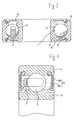
- a ball bearing shown with a cross section in Figure 1 has a structure which rotatably holds, via a retainer 7a, plurality of balls 5 between an inner ring 2 having an inner ring raceway 1 and an outer ring 4 having an outer ring raceway 3, and further secures seal materials 6 to the outer ring 4.
- the seal material 6 employs a metal-made seal material by processing such as a steel sheet in a desired shape, and beside as shown in Figure 2, it employs a rubber-made seal material as one-body of a steel-made core 6a and an elastic member 6b.
- the seal material 6 is treated with corrosion resistance for avoiding corrosion by oxidation.
- Japanese Patent Laid Open No.62989/1999 describes, as schematically shown in Figure 12, a product made by plating a Zn film 11 on a surface of a steel material 10, and on this Zn plated steel material, forming a chromate film 12 to protect the Zn film 11.
- another product is also known where, as schematically shown in Figure 13, the steel material 10 is plated on the surface with the Zn film 11, and the chromate film 12 is formed on the Zn plated steel material to protect the Zn film 11, and further a protective film 13 of lithium silicate is provided thereon.
- the above Znplated steel material prevents the steel material 10 from corrosion by selectively ionizing a zinc being a metal which is electrochemically baser than the iron existing in the steel material 10, and this is the steel sheet of corrosion resistance being so-called self-sacrifice type.
- the zinc is checked from elusion by the chromate film 12 formed on the Zn film 11, the corrosion resistance by the inherent self-sacrifice type is not enough displayed, and rusts are not enough checked.
- inconveniences such as acoustic failure or non-uniformity in torque are caused, and become fatal defects.
- the rust easily occurs on the raceway surface, and this is a big problem.
- the chromate film 12 is usually formed by an electrolytic treatment of chromate (VI) solution, and the chromate (VI) elutes into a soil from wastes of the chromate treated parts, creating a serious environmental problem, and there is another problem that the forming of the chromate film 12 is not preferable from a viewpoint of an environmental protection.
- VI chromate
- the present invention has been made, and it is an object to offer such a rolling bearing excellent in the corrosion resistance and also suited to the environmental protection.
- the present invention is to offer the under disclosed bearing.
- Figure 1 is a cross sectional view showing one embodiment (having the metal-made seal material) of the rolling bearing of the present invention and the conventional art.
- Figure 2 is a cross sectional view showing another embodiment (having the rubber-made seal material) of the rolling bearing of the present invention and the conventional art.
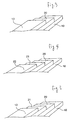
- Figure 3 is a schematic view showing a structure of the core metal comprising the metal seal material or the rubber seal material used to the rolling bearing of the present invention.
- Figure 4 is a schematic view showing another structure of the core metal comprising the metal seal material or the rubber seal material used to the rolling bearing of the present invention.
- Figure 5 is a schematic view showing a further structure of the core metal comprising a metal seal material or the rubber seal material used to the rolling bearing of the present invention.
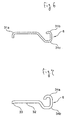
- Figure 6 is a schematic view showing a still further structure of the core metal comprising a metal seal material or the rubber seal material used to the rolling bearing of the present invention.
- Figure 7 a schematic view showing a yet further structure of the core metal comprising a metal seal material or the rubber seal material used to the rolling bearing of the present invention.
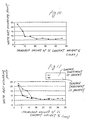
- Figure 8 is a graph showing the relation between the film thickness of the Zn alloy film and the rust occurring points obtained in the examples.
- Figure 9 is a graph showing the relation between the Si amount in the protective film at the coating weight of 10 g/m 2 of the Zn alloy and the white rust occurring points obtained in the examples.
- Figure 10 is a graph showing the relation between the Si amount in the protective film at the coating weight of 5 g/m 2 of the Zn alloy and the white rust occurring points obtained in the examples.
- Figure 11 is a graph showing the relation between the surface treatment of the Zn alloy plated film and the Si amount in the protective film obtained in the examples.
- Figure 12 and Figure 13 are schematic views showing the structures of the core metals of the conventional metal-made seal material or the conventional rubber-made seal material.
- reference numeral 1 designates the inner ring raceway
- 2 designates the inner ring
- 3 is the outer ring raceway
- 4 is the outer ring
- 5 is the ball
- 6 is the seal material
- 7 is the retainer
- 10 is the steel sheet
- 11 is the Zn film
- 12 is the chromate film
- 13 is the protective film
- 20 is the corrosion resistant film
- 21 is the film of a vanadium compound
- 22 is the resin-made protective film
- 31a to 31c and 34a to 34b are bent portions
- 32 is a plane part
- 33 is a curved part.
- the structure of the rolling bearing itself is limitless, for example, the ball bearing shown in Figure 1 may be exemplified. That is, the ball bearing has a structure which rotatably holds, via the retainer 7, plurality of balls 5 between the inner ring 2 having the inner ring raceway 1 and the outer ring 4 having the outer ring raceway 3, and further secures seal materials 6 to the outer ring 4.
- the present invention structures the seal material 6 as mentioned under so as to impart the corrosion resistance by far excellent than the conventional corrosion resistance.
- the seal material 6 employs the metal-made seal material as shown in Figure 1, and beside as shown in Figure 2, it may also employ the rubber-made seal material as one-body of the core 6a and an elastic member 6b such as the rubber.
- a film 20 (called as "corrosion resistant film” hereafter), which comprises a metal or an alloy having a smaller oxidation-reduction potential than that of iron, is formed on the surface of the steel plate 10, and a protective film 13 of an inorganic substance (silicate) of lithium and silica is further formed thereon so as to use to the core metal 6b of the metal-made seal material or the rubber-made seal.
- the steel sheet 10 is not limited, and an ordinary cold-rolled steel sheet or the like may be served, and the thickness thereof is generally 0.1 to 0.5 mm.
- the iron being a basis material of the steel sheet 10 functions as an anode to a metal having a larger ionization tendency than that of the iron (the metal being baser than the iron; e.g., Zn or Mn) under a existence of an electrolytic solution such as a steam dissolved with a small amount of salt or the like, or a salt water).
- an electrolytic solution such as a steam dissolved with a small amount of salt or the like, or a salt water.
- values of standard electrode potential e0 at 25°C are Mn
- Metals having a smaller oxidation-reduction potential than that of the iron include gallium, zinc, cobalt, molybdenum, vanadium, titanium, aluminum, magnesium, or alloy thereof. Zinc, cobalt, molybdenum or alloy thereof are preferable in cost, and zinc or its alloy (for example, Zn-Co-Mo) is most preferable in view of magnification of difference in oxidation-reduction potential from that of the iron.
- layers of these metals or their alloys may be plurally laminated.
- the thickness of the corrosion resistant film 20 is 0.2 to 50 ⁇ m, and being less than 0.2 ⁇ m, a time durable against the sacrificial protection is insufficient, and although thickening than 50 ⁇ m, an effect by thickening is not recognized to cause uneconomical, and workability in the seal material is worsened.
- a preferable thickness is 0.2 to 20 ⁇ m, especially 0.2 to 10 ⁇ m, andmost preferably 0.5 to 3 ⁇ m.
- a method of forming the corrosion resistant film 20 is not limited, and an electroplating method or a method of immersing the steel sheet 10 in a molten metal are available. For a comparatively thin film, the electroplating method is desirable, while for a comparatively thicker film, the immersion method is desirable.
- the thickness of the protective film 13 of lithium and silicate is preferably 0.01 to 5 ⁇ m, more preferably 0.05 to 0.5 ⁇ m. Being less than 0.01 ⁇ m, an effect of improving the corrosion resistance is insufficient, and exceeding 5 ⁇ m, when processing into the core metal, the protective film 13 is broken and broken particles mix into a rolling face and those are likely to cause bad influences to acoustic characteristics. A method of forming the protective film 13 is sufficient with existing methods.
- the corrosion resistance is varied.
- the Si content in the protective film 13 is 10 to 40 wt%, and if the coating weight of the complex Zn plating is 10 g/m 2 , the Si content in the protective film 13 is 6 to 26 wt%.
- the film structures as shown in Figures 4 and 5 may be possible. That is, as schematically shown in Figure 4, it is sufficient that the corrosion resistant film 20 similarly to the above is placed on the steel sheet 10, the film 21 of the vanadium compound is further interposed thereon, and the resin-made protective film 22 comprising the acrylic resin or the urethane resin is furthermore providedthereon.
- the thickness of this resin protective film 22 is similar to that of the film 13 of the above lithium and silicate.
- the thickness of the film 21 comprising the vanadium compound is not especially limited.
- the corrosion resistant film 20 similar to the above is pl aced on the steel sheet 10, the film 21 of the vanadium compound is further interposed thereon, and the protective film 13 of lithium and silicate is furthermore provided thereon.
- the film comprising phosphate may be provided instead of the resin protective film 22.
- the film thickness may be similar to the resin protective film 22.
- a chemical conversion treating solution includes Pal bond L15C, Pal bond L18, Pal bond 20, Pal bond 37 group, Pal bond N144, Pal bond N160, Pal bond L3007, Pal bond L3027, Pal bond 3050, Pal bond 3100, Pal bond 3112 group, Pal bond 3118, Pal bond 3140, and Pal bond WL35 made by Nippon Parkarising (KK), and other chemical conversion solutions according to them may be used.
- the above mentioned corrosion resistant film 20 and the protective film 13, the film 21 comprising the vanadium compound, the resin protective film or the phosphate protective film 22 are preferably formed on both surfaces of the steel sheet 10, and are useful particularly in the metal-made seal material 6 allover exposed as shown in Figure 1.
- the film may be formed on the steel sheet 10, followed by shaping as desirably through the press-forming, otherwise, the steel sheet 10 previously shaped as desirablymay be formed with these films.
- the surface treatment on the film is a primary layer.
- a water-rinsing is generally performed after the electroplating to remove the plating liquid adhered to the Zn plated film, and at this time, an oxidized film containing a plating liquid is formed on electrode surface of the Zn plated film to decrease adhesion with the film comprising lithium and silicate formed thereon.
- the Zn plated film is cleansed on the surface by a physical cleaning such as plasma cleaning or ion bombard, or a chemical cleaning (etching) using acid or alkali .
- a physical cleaning such as plasma cleaning or ion bombard, or a chemical cleaning (etching) using acid or alkali .
- the etching with an acid solution or an alkaline solution otherwise the electrolytic treatment are suited.
- the acid solution for this case, a solution having a hydrogen ion concentration of pH4 or less, such as nitric acid, hydrochloric acid, phosphoric acid or sulfuric acid is effective, and as the alkaline solution, ammonia or soda are effective.
- the non-volatile acid solution of phosphoric acid, sulfuric acid or the like of less changing in the acid density for a long period.
- the adhesion with the film to be formed thereon is heightened, so that the film thickness may be made thin advantageously in cost.
- the overall thickness including the uppermost layer of the shield plate is less than 0.41 mm.
- the shield plate 6 is, as shown in Figures 6 and 7, oftenprocessed into shapes having a bent portion, a curved portion or a curled portion.
- the shield plate 6 shown in Figure 6 is formed with the bent portions 31a, 31b, 31c having a radius of curvature of 0.04 mm and more at a front end and parts to be caulked
- the shield plate 6 shown in Figure 7 is formed with the curved portion 33 having a radius of curvature of 0.04 mm and more at a front end of plane part 32 and with a curled portion of the bent portions 34a, 34b at the caulked part.
- the corrosion resistance in these portions can be heightened. Being less than 200 mg/m 2 , the corrosion inhibition effect is not obtained, and the corrosion of the steel sheet progresses with increasing speed. Exceeding 600 mg/m 2 , cracks are easy to occur in these parts while processing.
- the coating weight in the uppermost layer is shown in terms of the Si content by the ZAF method, as shown in later mentioned Examples, 200 mg/m 2 is 10 wt% (accelerating voltage 10 kV) and 5.8 wt% (accelerating voltage 15 kV), and 600 mg/m 2 is 36 wt% (accelerating voltage 10 kV) and 21 wt% (accelerating voltage 15 kV) .
- these amounts per unit surface area correspond to 0.18 to 0.65 ⁇ m.
- the seal material 6 structured as mentioned above is excellent in the corrosion resistance, and is useful especially to the rolling bearing sealed with the grease, and the effect of suppressing the rust occurrence in the raceway surface is largely improved in comparison with the conventional cases. Since there is not the chromate film (see reference numeral 12 of Figure 13) as the conventional art, the circumferential pollution is not brought about by chromate (VI).
- the lubricant to be sealed for lubrication is not limited, and for example, lithium soap-mineral based grease, lithium soap-ester oil based grease, urea compound-ester oil based grease, or urea compound-synthetic hydrocarbon oil based grease are appropriately selected and may be sealed.
- the lubrication is possible in other than the grease.
- a cold rolled steel sheet having 0.3 mm thickness was formed with a film of Zn alloy (Zn-Co-Mo) through the electroplating by changing the film thickness, and another film of a compound of lithium and silicate having the fixed thickness of 0.3 ⁇ m was further formed thereon. Subsequently, the steel sheet of Zn alloy film was press-formed into a shield plate for the bearing No. 6203 by NSK Ltd. and attached to the above bearing to make a test sample.
- Zn alloy Zn-Co-Mo
- the above test sample was left for 360 hours in an acid atmosphere (40°C) adjusted to be relative moisture 40% by use of the solution of glycerin 64% and water 36% containing a formic acid 300 ppm.
- a reason for using the formic acid was because considering occurrence of the formic acid and an acetic acid when insufficient drying a varnish used to the rotor of the motor support-bearing or the like.
- the raceway surface was observed to investigate rust occurring points.
- the rust occurring points by difference in the film thickness of the Zn alloy film are shown with a graph in Figure 8, and it is seen that the rust occurrences are surely checked in the range of 0.2 ⁇ m or more thickness of the Zn alloy film.
- a cold rolled steel sheet having 0.2 mm thickness was electroplated with a film of Zn alloy (Zn-Co-Mo) in the coating weight of 10 g/m 2 , and another film of a compound of lithium and silicate having the fixed thickness of 0.3 ⁇ m was further formed thereon. Subsequently, the steel sheet of Zn alloy film was press-formed into a shield plate for the bearing No. 608 by NSK Ltd., and attached to the above bearing to make a test sample. The coating weight was measured in that the steel sheet was based on a plate adhering amount test by the fluorescent X ray of JIS G3313. Also in the following Examples and Comparative Examples, the coating weight was measured in the same manner.
- Zn alloy Zn-Co-Mo
- a cold rolled steel sheet having 0.2 mm thickness was electroplated with a film of Zn alloy (Zn-Co-Mo) in the coating weight of 10 g/m 2 , and another film of vanadium compound was further formed thereon through the electrolytic reduction, and a film of an acrylic resin having the 0.3 ⁇ m fixed thickness was furthermore formed thereon. Subsequently, the steel sheet of Zn alloy film was press-formed into a shield plate for the bearing No. 608 by NSK Ltd., and attached to the above bearing to make a test sample.
- Zn alloy Zn-Co-Mo
- test sample was made in the same manner as Example 3 other than a urethane resin in substitution for the acrylic resin.
- a cold rolled steel sheet having 0.2 mm thickness was electroplated with a film of Zn alloy (Zn-Co-Mo) in the coating weight of 10 g/m 2 , another film of vanadium compound was further formed thereon through the electrolytic reduction, and a film of a compound of lithium and silicate having the 0.3 ⁇ m fixed thickness was furthermore formed thereon. Subsequently, the steel sheet of Zn alloy film was press-formed into a shield plate for the bearing No. 608 by NSK Ltd., and attached to the above bearing to a make test sample.
- Zn alloy Zn-Co-Mo
- a cold rolled steel sheet having 0.2 mm thickness was electroplated with a film of Zn alloy (Zn-Co-Mo) in the coating weight of 10 g/m 2 , a chromate layer was further formed thereon from the Cr solution through the electrolytic treatment and a film of a compound of lithium and silicate having the 0.3 ⁇ m fixed thickness was furthermore formed thereon. Subsequently, the steel sheet of Zn alloy film was press-formed into a shield plate for the bearing No. 608 by NSK Ltd., and attached to the above bearing to make a test sample.
- Zn alloy Zn-Co-Mo
- the present test of the corrosion resistance is an accelerated test, and causes of the rust occurrence are governed by the Zn plated layer in the surface of the shield plate and conditions of the bearing ring in association therewith. That is, the effect of the sacrificial protection may be expected by covering the surface of the shield plate with the metal being baser than the metal kinds forming the bearing raceway surface. It is considered that being without the chromate layer, the effect of the sacrificial protection works more effectively.
- Each of cold rolled steel sheets having 0.2 mm thickness was electroplated with a film of Zn alloy (Zn-Co-Mo) in the coating weight of 10 g/m 2 , and another film (the protective film) of a lithium-silicate compound being different in the Si content was further formed on each of the resulting sheets to make test samples. This is why since the determination of the accurate thickness of the lithium- silicate compound layer was difficult, the intensity of X ray of Si was substituted to seek for the appropriate range of the lithium-silicate layer.
- Zn alloy Zn-Co-Mo
- the Si content was measured under the following conditions by use of the secondary electron microscope (SEM) "JSM-5610” made by Nippon Electron Optics Laboratory and the energy dispersion type x ray spectroscope "Phoenix/Falcon” made EDAX Inc. in U.S. attached thereto. Accelerating voltage ... 10 kV Visual filed (magnification) ... 300 times or less Takeoff angle ... 30° Tilt angle ...0 Integration time ...60 sec. Measuring elements ... oxygen, zinc, silicon, chromium and iron Quantitative correction ... ZAF method
- the Si measuring values of the protective layer are different depending on the thickness of the Zn plated layer.
- the Si content is 12 to 40 wt%, but at 15 kV, it changes from 8 to 30 wt%.
- the accelerating voltage of the electron beam is determined to be 10 kV.
- the corrosion resistant film (the Zn alloy thin film) is formed at the thickness specified in the present invention, and preferably, the protective film (compound of lithium and silicon) is formed by adjusting Si to the optimum content in response to the thickness of the corrosion resistant film, the corrosion resistance of the steel sheet is largely improved.
- the testing steel sheets A to D (the conventional products) formed with the chromate layers on the cold rolled steel sheets of 0.2 mm and the testing steel sheets E to H (the products of the present invention) formed with the Zn alloy films (Zn-Co-Mo) on the cold rolled steel sheets of 0.2 mm and further surface-treated with the acid solution were prepared.
- the coating weight of the Zn alloy plated film was 10 g/m 2 .
- the film of the compound of lithium and silicate being different in the Si content was formed by ranging from 6 to 26 wt% in the Si content.
- the Si content was demanded by the ZAF method (the accelerating voltage: 15 kV) in the same manner as above.
- test steel sheets were subjected to the press-forming into the shield plates for the deep groove ball bearing No.6201 by NSK Ltd., and was observed as to cracks at the plane parts, the press-compressed parts, and the press-tension parts. Cracks were confirmed by the photograph decision of the electron microscope at the respective parts, and no crack is " ⁇ " and crack occurrence is ⁇ , and the results are shown in Table 2.
- the plane part is scarcely loaded with the pressing stress
- the press-compressed part is loaded with the compression stress by deformation when processing
- the press-tension part is loaded with the tension stress by deformation when processing.
- the tested steel sheet I and the steel sheet J were prepared.
- the cold rolled steel sheet of 0.2 mm was formed with the plated film of the Zn alloy (Zn-Co-Mo), and the film of lithium and silicate was formed thereon by changing the Si contents
- the cold rolled steel sheet of 0.2 mm was formed with the plated film of the Zn alloy (Zn-Co-Mo) and surface-treated with the sulfuric acid solution (the hydrogen ion density: 10 -4 ) , and the film of lithium and silicate was formed thereon by changing the Si contents.
- the coating weight of the Zn alloy plated film was each 10 g/m 2 .
- test steel sheets were subjected to the press-forming into the shield sheet for the deep groove ball bearing No.6201 by NSK Ltd., and each of the shield sheets was attached to the same bearing to make a test sample for carrying out the corrosion resistant test similarly to the above.
- the surface treatment such as the sulfuric acid (the surface activation treatment) on the Zn plated layer is useful for the uniform reaction also in the case of the chemical conversion treatment such as bonderizing.
- the Zn alloy film (Zn-Co-Mo) was electroplated at the coating weight of 10 g/m 2 , performed with the activation treatment by the sulfuric acid solution of pH3, and the film (the protective film) of the compound of lithium and silicate was further formed thereon, by changing the coating weight.
- the Si content was measured by the ZAF method (the accelerating voltage 10 kV and 15 kV) similarly to the above. The results are shown in Table 3.
- this steel sheet covered with the Zn alloy was press-formed into the shield sheet having the curved part (the radius of curvature was in response to each of the bearing numbers) , the plane part and the curled part as shown in Figure 7.
- Crack occurrences were confirmed at the curved part, the plane part and the curled part when press-forming.
- Table 3 The results are shown in Table 3, and in the photographic decision by the electron microscopic observation, no change in the surface property after press forming is o ⁇ , the slight crack occurrence is ⁇ , and the crack development is ⁇ .
- the coating weight of the protective film is appropriate at 200 to 600 mg/m 2 in view of the corrosion resistance.
- the rolling bearing excellent in the corrosion resistance and suited to the environmental protection.
Landscapes
- Chemical & Material Sciences (AREA)
- Engineering & Computer Science (AREA)
- Mechanical Engineering (AREA)
- Chemical Kinetics & Catalysis (AREA)
- Materials Engineering (AREA)
- Metallurgy (AREA)
- Organic Chemistry (AREA)
- Inorganic Chemistry (AREA)
- General Engineering & Computer Science (AREA)
- Other Surface Treatments For Metallic Materials (AREA)
- Rolling Contact Bearings (AREA)
Applications Claiming Priority (7)
| Application Number | Priority Date | Filing Date | Title |
|---|---|---|---|
| JP2002051475 | 2002-02-27 | ||
| JP2002051475 | 2002-02-27 | ||
| JP2002216833 | 2002-07-25 | ||
| JP2002216833 | 2002-07-25 | ||
| JP2002342280 | 2002-11-26 | ||
| JP2002342280 | 2002-11-26 | ||
| PCT/JP2003/002247 WO2003072984A1 (fr) | 2002-02-27 | 2003-02-27 | Roulement |
Publications (3)
| Publication Number | Publication Date |
|---|---|
| EP1479950A1 true EP1479950A1 (de) | 2004-11-24 |
| EP1479950A4 EP1479950A4 (de) | 2011-04-13 |
| EP1479950B1 EP1479950B1 (de) | 2019-07-31 |
Family
ID=27767755
Family Applications (1)
| Application Number | Title | Priority Date | Filing Date |
|---|---|---|---|
| EP03743057.6A Expired - Lifetime EP1479950B1 (de) | 2002-02-27 | 2003-02-27 | Wälzlager |
Country Status (5)
| Country | Link |
|---|---|
| US (1) | US7547146B2 (de) |
| EP (1) | EP1479950B1 (de) |
| CN (1) | CN100353083C (de) |
| AU (1) | AU2003220844A1 (de) |
| WO (1) | WO2003072984A1 (de) |
Cited By (4)
| Publication number | Priority date | Publication date | Assignee | Title |
|---|---|---|---|---|
| WO2005078298A1 (ja) | 2004-02-18 | 2005-08-25 | Jtekt Corporation | 過給機用転がり軸受 |
| WO2007137928A1 (de) * | 2006-06-01 | 2007-12-06 | Schaeffler Kg | Wälzlager |
| EP1484520B1 (de) * | 2003-06-06 | 2011-03-09 | JTEKT Corporation | Dichtungselement und mit diesem versehenes Wälzlager |
| US8292512B2 (en) | 2007-01-29 | 2012-10-23 | Nsk Ltd. | Ball bearing and supporting construction |
Families Citing this family (18)
| Publication number | Priority date | Publication date | Assignee | Title |
|---|---|---|---|---|
| DE10355441A1 (de) * | 2003-11-27 | 2005-06-23 | Contitech Luftfedersysteme Gmbh | Verfahren und Vorrichtung zur Herstellung einer Rollbalgluftfeder und Rollbalgluftfeder mit einer Bördelplatte |
| DE102008036623A1 (de) * | 2008-08-06 | 2010-02-11 | Oerlikon Leybold Vacuum Gmbh | Verwendung eines Wälzlagers zur Lagerung rotierender Bauteile in Vakuumeinirchtungen sowie Vakuumeinrichtung |
| FR2953576B1 (fr) * | 2009-12-07 | 2012-03-16 | Skf Ab | Joint d'etancheite et palier a roulement comportant un tel joint. |
| JP2012189207A (ja) * | 2011-02-24 | 2012-10-04 | Nsk Ltd | 複列アンギュラ玉軸受 |
| US9958011B2 (en) | 2011-04-01 | 2018-05-01 | Roller Bearing Company Of America, Inc. | Bearing assembly having surface protrusions and a seal |
| US9316257B2 (en) | 2011-04-01 | 2016-04-19 | Roller Bearing Company Of America, Inc. | Spherical bearing with sealing member member |
| TWI414693B (zh) * | 2011-04-26 | 2013-11-11 | Tange Seiki Taichung Co Ltd | Lightweight bearings |
| US8783953B2 (en) | 2011-07-21 | 2014-07-22 | Roller Bearing Company Of America, Inc. | Low friction seal for bearings |
| JP6017216B2 (ja) * | 2012-07-26 | 2016-10-26 | 東洋シール工業株式会社 | 軸受シール |
| DE102012218619A1 (de) * | 2012-10-12 | 2014-04-17 | Schaeffler Technologies Gmbh & Co. Kg | Mediengeschmiertes Lager |
| US9562567B2 (en) | 2014-02-07 | 2017-02-07 | Roller Bearing Company Of America, Inc. | Spherical bearing with axially compressed annular seal |
| CN104454998A (zh) * | 2014-12-23 | 2015-03-25 | 常熟市董浜镇徐市嘉峰机械厂 | 一种表面渗碳处理的轴承 |
| JP6582566B2 (ja) * | 2015-06-03 | 2019-10-02 | 株式会社ジェイテクト | 転がり軸受 |
| JP6957836B2 (ja) | 2016-01-26 | 2021-11-02 | 株式会社ジェイテクト | 転がり軸受 |
| JP6874455B2 (ja) | 2017-03-22 | 2021-05-19 | 株式会社ジェイテクト | 転がり軸受 |
| JP6946697B2 (ja) | 2017-03-31 | 2021-10-06 | 株式会社ジェイテクト | 転がり軸受 |
| JP7003683B2 (ja) * | 2017-09-01 | 2022-01-20 | 日本精工株式会社 | アンギュラ玉軸受、軸受装置、及び主軸装置 |
| JP6950430B2 (ja) | 2017-10-04 | 2021-10-13 | 株式会社ジェイテクト | 玉軸受 |
Family Cites Families (20)
| Publication number | Priority date | Publication date | Assignee | Title |
|---|---|---|---|---|
| JPS5898248A (ja) | 1981-12-08 | 1983-06-11 | 日本鋼管株式会社 | 亜鉛含有層を有する複層表面処理鋼板 |
| US4659631A (en) * | 1984-05-17 | 1987-04-21 | Sumitomo Metal Industries, Ltd. | Corrosion resistant duplex plated sheet steel |
| JPH0565670A (ja) | 1991-09-10 | 1993-03-19 | Honda Motor Co Ltd | 耐摩耗性Ti合金製構造部材 |
| US6652990B2 (en) * | 1992-03-27 | 2003-11-25 | The Louis Berkman Company | Corrosion-resistant coated metal and method for making the same |
| JPH0650343A (ja) | 1992-07-27 | 1994-02-22 | Ntn Corp | 固体潤滑転がり軸受 |
| US6003876A (en) * | 1994-08-26 | 1999-12-21 | Koyo Seiko Co., Ltd. | Sealing member and capped bearing |
| JPH0941168A (ja) | 1995-07-31 | 1997-02-10 | Nippon Steel Corp | 耐疵性および耐食性に優れた亜鉛・無機質系表面処理鋼板 |
| JPH0988980A (ja) | 1995-09-25 | 1997-03-31 | Nakanishi Kinzoku Kogyo Kk | 軸受用シール及びその製造方法 |
| US5961222A (en) * | 1996-03-29 | 1999-10-05 | Nsk Ltd. | Anti-electrolytic corrosion rolling bearing |
| JPH1015487A (ja) | 1996-07-02 | 1998-01-20 | Nisshin Kokan Kk | 粉体塗装性に優れたZnまたはZn−Al系合金めっき鋼 管およびその製造方法 |
| JPH1162989A (ja) | 1997-08-28 | 1999-03-05 | Ntn Corp | 軸受軌道輪およびその製造方法 |
| JP2953658B1 (ja) | 1998-07-24 | 1999-09-27 | 株式会社神戸製鋼所 | 表面処理金属板およびその製造方法 |
| JP3869577B2 (ja) | 1999-03-16 | 2007-01-17 | 日本パーカライジング株式会社 | 金属材料用水系表面処理剤および表面処理金属板 |
| JP2001027253A (ja) * | 1999-07-14 | 2001-01-30 | Nsk Ltd | 転がり軸受 |
| JP2001131712A (ja) | 1999-11-01 | 2001-05-15 | Ntn Corp | 転がり機構を有する機械要素およびその転動接触部材 |
| JP2001215133A (ja) | 2000-02-01 | 2001-08-10 | Ntn Corp | 車輪用軸受 |
| JP2002286044A (ja) * | 2000-04-27 | 2002-10-03 | Nsk Ltd | トランスミッション用密封板付転がり軸受及びトランスミッション |
| FI110515B (fi) * | 2000-05-15 | 2003-02-14 | Panipol Oy | Korroosiolta suojaavat pinnoitteet |
| JP4169139B2 (ja) | 2000-05-18 | 2008-10-22 | Ntn株式会社 | 密封装置 |
| JP4329323B2 (ja) | 2002-10-16 | 2009-09-09 | 日本精工株式会社 | 転がり軸受の製造方法 |
-
2003
- 2003-02-27 AU AU2003220844A patent/AU2003220844A1/en not_active Abandoned
- 2003-02-27 US US10/505,771 patent/US7547146B2/en not_active Expired - Lifetime
- 2003-02-27 CN CNB038047993A patent/CN100353083C/zh not_active Expired - Lifetime
- 2003-02-27 WO PCT/JP2003/002247 patent/WO2003072984A1/ja not_active Ceased
- 2003-02-27 EP EP03743057.6A patent/EP1479950B1/de not_active Expired - Lifetime
Cited By (6)
| Publication number | Priority date | Publication date | Assignee | Title |
|---|---|---|---|---|
| EP1484520B1 (de) * | 2003-06-06 | 2011-03-09 | JTEKT Corporation | Dichtungselement und mit diesem versehenes Wälzlager |
| WO2005078298A1 (ja) | 2004-02-18 | 2005-08-25 | Jtekt Corporation | 過給機用転がり軸受 |
| EP1719927A4 (de) * | 2004-02-18 | 2007-09-26 | Jtekt Corp | Wälzlager für auflader |
| WO2007137928A1 (de) * | 2006-06-01 | 2007-12-06 | Schaeffler Kg | Wälzlager |
| US8292512B2 (en) | 2007-01-29 | 2012-10-23 | Nsk Ltd. | Ball bearing and supporting construction |
| DE102007061589B4 (de) * | 2007-01-29 | 2017-06-22 | Nsk Ltd. | Kugellager und Halterungskonstruktion |
Also Published As
| Publication number | Publication date |
|---|---|
| CN1639490A (zh) | 2005-07-13 |
| US7547146B2 (en) | 2009-06-16 |
| US20050117826A1 (en) | 2005-06-02 |
| EP1479950A4 (de) | 2011-04-13 |
| CN100353083C (zh) | 2007-12-05 |
| EP1479950B1 (de) | 2019-07-31 |
| WO2003072984A1 (fr) | 2003-09-04 |
| AU2003220844A1 (en) | 2003-09-09 |
Similar Documents
| Publication | Publication Date | Title |
|---|---|---|
| US7547146B2 (en) | Rolling bearing seal or shield member | |
| US9034480B2 (en) | Hot-dip Al—Zn coated steel sheet | |
| CN1829817B (zh) | 制造硬化钢零件的方法 | |
| US9234267B2 (en) | Hot-dip Al—Zn coated steel sheet | |
| EP0870847B1 (de) | Rostgeschütztes stahlblech für einen kraftstofftank mit ausgezeichneter gasdichtigkeit nach schweissen und korrosionsbeständigkeit nach formen | |
| JP5256936B2 (ja) | 高強度冷延鋼板の製造方法 | |
| US6322906B1 (en) | Perforative corrosion resistant galvanized steel sheet | |
| EP2495346A1 (de) | Legiertes feuerverzinktes stahlblech mit hervorragender formbarkeit und ablösungsresistenz nach der befestigung sowie verfahren zu seiner herstellung | |
| JP6682691B1 (ja) | 表面処理された亜鉛系めっき鋼板およびその製造方法 | |
| WO2022014645A1 (ja) | ホットスタンプ部材およびその製造方法 | |
| JP3399729B2 (ja) | プレス加工性、耐食性に優れた燃料タンク用防錆鋼板の製造法 | |
| JP4036347B2 (ja) | 成型後耐食性に優れた燃料タンク用防錆鋼板 | |
| EP4685266A1 (de) | Mit einer legierung auf sn-zn-basis plattiertes stahlmaterial, batteriegehäuse und kraftstofftank | |
| JP2008261024A (ja) | 耐食性及びめっき密着性に優れた合金化溶融亜鉛めっき鋼板 | |
| JP4470376B2 (ja) | 転がり軸受 | |
| EP4464813A1 (de) | Heissgestanzter formartikel | |
| JP3254160B2 (ja) | 接着性に優れた合金化溶融亜鉛めっき鋼板 | |
| JP4329323B2 (ja) | 転がり軸受の製造方法 | |
| JP2002357227A (ja) | 転がり軸受 | |
| JP2010280981A (ja) | 塩害耐食性に優れた自動車用燃料タンク用表面処理ステンレス鋼板 | |
| JP5194366B2 (ja) | 表面外観に優れた溶融亜鉛めっき鋼板 | |
| EP4431217A1 (de) | Projektionsgeschweisste verbindung und projektionsschweissverfahren | |
| Textor et al. | Car body alloys and methods of corrosion protection: Aluminium Sheet | |
| WO2025169775A1 (ja) | めっき鋼板及びそれを含む部品 | |
| WO2021065026A1 (ja) | 表面処理された亜鉛系めっき鋼板およびその製造方法 |
Legal Events
| Date | Code | Title | Description |
|---|---|---|---|
| PUAI | Public reference made under article 153(3) epc to a published international application that has entered the european phase |
Free format text: ORIGINAL CODE: 0009012 |
|
| 17P | Request for examination filed |
Effective date: 20040817 |
|
| AK | Designated contracting states |
Kind code of ref document: A1 Designated state(s): AT BE BG CH CY CZ DE DK EE ES FI FR GB GR HU IE IT LI LU MC NL PT SE SI SK TR |
|
| AX | Request for extension of the european patent |
Extension state: AL LT LV MK RO |
|
| A4 | Supplementary search report drawn up and despatched |
Effective date: 20110310 |
|
| 17Q | First examination report despatched |
Effective date: 20110928 |
|
| STAA | Information on the status of an ep patent application or granted ep patent |
Free format text: STATUS: EXAMINATION IS IN PROGRESS |
|
| REG | Reference to a national code |
Ref country code: DE Ref legal event code: R079 Ref document number: 60352165 Country of ref document: DE Free format text: PREVIOUS MAIN CLASS: F16J0015320000 Ipc: C23C0028000000 |
|
| GRAP | Despatch of communication of intention to grant a patent |
Free format text: ORIGINAL CODE: EPIDOSNIGR1 |
|
| GRAJ | Information related to disapproval of communication of intention to grant by the applicant or resumption of examination proceedings by the epo deleted |
Free format text: ORIGINAL CODE: EPIDOSDIGR1 |
|
| GRAP | Despatch of communication of intention to grant a patent |
Free format text: ORIGINAL CODE: EPIDOSNIGR1 |
|
| STAA | Information on the status of an ep patent application or granted ep patent |
Free format text: STATUS: GRANT OF PATENT IS INTENDED |
|
| RIC1 | Information provided on ipc code assigned before grant |
Ipc: F16J 15/32 20160101ALI20190204BHEP Ipc: F16C 19/06 20060101ALI20190204BHEP Ipc: F16C 33/78 20060101ALI20190204BHEP Ipc: C23C 28/00 20060101AFI20190204BHEP Ipc: C23C 30/00 20060101ALI20190204BHEP |
|
| INTG | Intention to grant announced |
Effective date: 20190222 |
|
| INTC | Intention to grant announced (deleted) | ||
| INTG | Intention to grant announced |
Effective date: 20190312 |
|
| GRAS | Grant fee paid |
Free format text: ORIGINAL CODE: EPIDOSNIGR3 |
|
| GRAA | (expected) grant |
Free format text: ORIGINAL CODE: 0009210 |
|
| STAA | Information on the status of an ep patent application or granted ep patent |
Free format text: STATUS: THE PATENT HAS BEEN GRANTED |
|
| AK | Designated contracting states |
Kind code of ref document: B1 Designated state(s): DE FR |
|
| REG | Reference to a national code |
Ref country code: DE Ref legal event code: R096 Ref document number: 60352165 Country of ref document: DE |
|
| REG | Reference to a national code |
Ref country code: DE Ref legal event code: R097 Ref document number: 60352165 Country of ref document: DE |
|
| PGFP | Annual fee paid to national office [announced via postgrant information from national office to epo] |
Ref country code: FR Payment date: 20200113 Year of fee payment: 18 |
|
| PLBE | No opposition filed within time limit |
Free format text: ORIGINAL CODE: 0009261 |
|
| STAA | Information on the status of an ep patent application or granted ep patent |
Free format text: STATUS: NO OPPOSITION FILED WITHIN TIME LIMIT |
|
| 26N | No opposition filed |
Effective date: 20200603 |
|
| PG25 | Lapsed in a contracting state [announced via postgrant information from national office to epo] |
Ref country code: FR Free format text: LAPSE BECAUSE OF NON-PAYMENT OF DUE FEES Effective date: 20210228 |
|
| PGFP | Annual fee paid to national office [announced via postgrant information from national office to epo] |
Ref country code: DE Payment date: 20220105 Year of fee payment: 20 |
|
| REG | Reference to a national code |
Ref country code: DE Ref legal event code: R071 Ref document number: 60352165 Country of ref document: DE |