EP1386617A1 - Méthode de diagnostic in vitro de l'infection par le circovirus porcin de type II et réactifs de diagnostic - Google Patents
Méthode de diagnostic in vitro de l'infection par le circovirus porcin de type II et réactifs de diagnostic Download PDFInfo
- Publication number
- EP1386617A1 EP1386617A1 EP03016998A EP03016998A EP1386617A1 EP 1386617 A1 EP1386617 A1 EP 1386617A1 EP 03016998 A EP03016998 A EP 03016998A EP 03016998 A EP03016998 A EP 03016998A EP 1386617 A1 EP1386617 A1 EP 1386617A1
- Authority
- EP
- European Patent Office
- Prior art keywords
- porcine circovirus
- type
- specific
- antigen
- antibodies
- Prior art date
- Legal status (The legal status is an assumption and is not a legal conclusion. Google has not performed a legal analysis and makes no representation as to the accuracy of the status listed.)
- Granted
Links
Classifications
-
- C—CHEMISTRY; METALLURGY
- C12—BIOCHEMISTRY; BEER; SPIRITS; WINE; VINEGAR; MICROBIOLOGY; ENZYMOLOGY; MUTATION OR GENETIC ENGINEERING
- C12N—MICROORGANISMS OR ENZYMES; COMPOSITIONS THEREOF; PROPAGATING, PRESERVING, OR MAINTAINING MICROORGANISMS; MUTATION OR GENETIC ENGINEERING; CULTURE MEDIA
- C12N15/00—Mutation or genetic engineering; DNA or RNA concerning genetic engineering, vectors, e.g. plasmids, or their isolation, preparation or purification; Use of hosts therefor
- C12N15/09—Recombinant DNA-technology
- C12N15/11—DNA or RNA fragments; Modified forms thereof; Non-coding nucleic acids having a biological activity
-
- C—CHEMISTRY; METALLURGY
- C07—ORGANIC CHEMISTRY
- C07K—PEPTIDES
- C07K14/00—Peptides having more than 20 amino acids; Gastrins; Somatostatins; Melanotropins; Derivatives thereof
- C07K14/005—Peptides having more than 20 amino acids; Gastrins; Somatostatins; Melanotropins; Derivatives thereof from viruses
-
- A—HUMAN NECESSITIES
- A23—FOODS OR FOODSTUFFS; TREATMENT THEREOF, NOT COVERED BY OTHER CLASSES
- A23C—DAIRY PRODUCTS, e.g. MILK, BUTTER OR CHEESE; MILK OR CHEESE SUBSTITUTES; PREPARATION THEREOF
- A23C19/00—Cheese; Cheese preparations; Making thereof
- A23C19/02—Making cheese curd
- A23C19/032—Making cheese curd characterised by the use of specific microorganisms, or enzymes of microbial origin
- A23C19/0321—Propionic acid bacteria
-
- A—HUMAN NECESSITIES
- A23—FOODS OR FOODSTUFFS; TREATMENT THEREOF, NOT COVERED BY OTHER CLASSES
- A23C—DAIRY PRODUCTS, e.g. MILK, BUTTER OR CHEESE; MILK OR CHEESE SUBSTITUTES; PREPARATION THEREOF
- A23C19/00—Cheese; Cheese preparations; Making thereof
- A23C19/02—Making cheese curd
- A23C19/032—Making cheese curd characterised by the use of specific microorganisms, or enzymes of microbial origin
- A23C19/0323—Making cheese curd characterised by the use of specific microorganisms, or enzymes of microbial origin using only lactic acid bacteria, e.g. Pediococcus and Leuconostoc species; Bifidobacteria; Microbial starters in general
-
- A—HUMAN NECESSITIES
- A61—MEDICAL OR VETERINARY SCIENCE; HYGIENE
- A61K—PREPARATIONS FOR MEDICAL, DENTAL OR TOILETRY PURPOSES
- A61K39/00—Medicinal preparations containing antigens or antibodies
- A61K39/12—Viral antigens
-
- A—HUMAN NECESSITIES
- A61—MEDICAL OR VETERINARY SCIENCE; HYGIENE
- A61P—SPECIFIC THERAPEUTIC ACTIVITY OF CHEMICAL COMPOUNDS OR MEDICINAL PREPARATIONS
- A61P31/00—Antiinfectives, i.e. antibiotics, antiseptics, chemotherapeutics
- A61P31/12—Antivirals
-
- A—HUMAN NECESSITIES
- A61—MEDICAL OR VETERINARY SCIENCE; HYGIENE
- A61P—SPECIFIC THERAPEUTIC ACTIVITY OF CHEMICAL COMPOUNDS OR MEDICINAL PREPARATIONS
- A61P31/00—Antiinfectives, i.e. antibiotics, antiseptics, chemotherapeutics
- A61P31/12—Antivirals
- A61P31/20—Antivirals for DNA viruses
-
- A—HUMAN NECESSITIES
- A61—MEDICAL OR VETERINARY SCIENCE; HYGIENE
- A61P—SPECIFIC THERAPEUTIC ACTIVITY OF CHEMICAL COMPOUNDS OR MEDICINAL PREPARATIONS
- A61P37/00—Drugs for immunological or allergic disorders
- A61P37/02—Immunomodulators
- A61P37/04—Immunostimulants
-
- C—CHEMISTRY; METALLURGY
- C12—BIOCHEMISTRY; BEER; SPIRITS; WINE; VINEGAR; MICROBIOLOGY; ENZYMOLOGY; MUTATION OR GENETIC ENGINEERING
- C12N—MICROORGANISMS OR ENZYMES; COMPOSITIONS THEREOF; PROPAGATING, PRESERVING, OR MAINTAINING MICROORGANISMS; MUTATION OR GENETIC ENGINEERING; CULTURE MEDIA
- C12N7/00—Viruses; Bacteriophages; Compositions thereof; Preparation or purification thereof
-
- A—HUMAN NECESSITIES
- A61—MEDICAL OR VETERINARY SCIENCE; HYGIENE
- A61K—PREPARATIONS FOR MEDICAL, DENTAL OR TOILETRY PURPOSES
- A61K39/00—Medicinal preparations containing antigens or antibodies
- A61K2039/51—Medicinal preparations containing antigens or antibodies comprising whole cells, viruses or DNA/RNA
-
- A—HUMAN NECESSITIES
- A61—MEDICAL OR VETERINARY SCIENCE; HYGIENE
- A61K—PREPARATIONS FOR MEDICAL, DENTAL OR TOILETRY PURPOSES
- A61K39/00—Medicinal preparations containing antigens or antibodies
- A61K2039/51—Medicinal preparations containing antigens or antibodies comprising whole cells, viruses or DNA/RNA
- A61K2039/525—Virus
- A61K2039/5252—Virus inactivated (killed)
-
- A—HUMAN NECESSITIES
- A61—MEDICAL OR VETERINARY SCIENCE; HYGIENE
- A61K—PREPARATIONS FOR MEDICAL, DENTAL OR TOILETRY PURPOSES
- A61K39/00—Medicinal preparations containing antigens or antibodies
- A61K2039/55—Medicinal preparations containing antigens or antibodies characterised by the host/recipient, e.g. newborn with maternal antibodies
- A61K2039/552—Veterinary vaccine
-
- A—HUMAN NECESSITIES
- A61—MEDICAL OR VETERINARY SCIENCE; HYGIENE
- A61K—PREPARATIONS FOR MEDICAL, DENTAL OR TOILETRY PURPOSES
- A61K39/00—Medicinal preparations containing antigens or antibodies
- A61K2039/555—Medicinal preparations containing antigens or antibodies characterised by a specific combination antigen/adjuvant
- A61K2039/55511—Organic adjuvants
- A61K2039/55566—Emulsions, e.g. Freund's adjuvant, MF59
-
- A—HUMAN NECESSITIES
- A61—MEDICAL OR VETERINARY SCIENCE; HYGIENE
- A61K—PREPARATIONS FOR MEDICAL, DENTAL OR TOILETRY PURPOSES
- A61K38/00—Medicinal preparations containing peptides
-
- A—HUMAN NECESSITIES
- A61—MEDICAL OR VETERINARY SCIENCE; HYGIENE
- A61K—PREPARATIONS FOR MEDICAL, DENTAL OR TOILETRY PURPOSES
- A61K39/00—Medicinal preparations containing antigens or antibodies
-
- A—HUMAN NECESSITIES
- A61—MEDICAL OR VETERINARY SCIENCE; HYGIENE
- A61K—PREPARATIONS FOR MEDICAL, DENTAL OR TOILETRY PURPOSES
- A61K48/00—Medicinal preparations containing genetic material which is inserted into cells of the living body to treat genetic diseases; Gene therapy
-
- C—CHEMISTRY; METALLURGY
- C12—BIOCHEMISTRY; BEER; SPIRITS; WINE; VINEGAR; MICROBIOLOGY; ENZYMOLOGY; MUTATION OR GENETIC ENGINEERING
- C12N—MICROORGANISMS OR ENZYMES; COMPOSITIONS THEREOF; PROPAGATING, PRESERVING, OR MAINTAINING MICROORGANISMS; MUTATION OR GENETIC ENGINEERING; CULTURE MEDIA
- C12N2710/00—MICROORGANISMS OR ENZYMES; COMPOSITIONS THEREOF; PROPAGATING, PRESERVING, OR MAINTAINING MICROORGANISMS; MUTATION OR GENETIC ENGINEERING; CULTURE MEDIA dsDNA viruses
- C12N2710/00011—Details
- C12N2710/10011—Adenoviridae
- C12N2710/10311—Mastadenovirus, e.g. human or simian adenoviruses
- C12N2710/10341—Use of virus, viral particle or viral elements as a vector
- C12N2710/10343—Use of virus, viral particle or viral elements as a vector viral genome or elements thereof as genetic vector
-
- C—CHEMISTRY; METALLURGY
- C12—BIOCHEMISTRY; BEER; SPIRITS; WINE; VINEGAR; MICROBIOLOGY; ENZYMOLOGY; MUTATION OR GENETIC ENGINEERING
- C12N—MICROORGANISMS OR ENZYMES; COMPOSITIONS THEREOF; PROPAGATING, PRESERVING, OR MAINTAINING MICROORGANISMS; MUTATION OR GENETIC ENGINEERING; CULTURE MEDIA
- C12N2710/00—MICROORGANISMS OR ENZYMES; COMPOSITIONS THEREOF; PROPAGATING, PRESERVING, OR MAINTAINING MICROORGANISMS; MUTATION OR GENETIC ENGINEERING; CULTURE MEDIA dsDNA viruses
- C12N2710/00011—Details
- C12N2710/16011—Herpesviridae
- C12N2710/16711—Varicellovirus, e.g. human herpesvirus 3, Varicella Zoster, pseudorabies
- C12N2710/16741—Use of virus, viral particle or viral elements as a vector
- C12N2710/16743—Use of virus, viral particle or viral elements as a vector viral genome or elements thereof as genetic vector
-
- C—CHEMISTRY; METALLURGY
- C12—BIOCHEMISTRY; BEER; SPIRITS; WINE; VINEGAR; MICROBIOLOGY; ENZYMOLOGY; MUTATION OR GENETIC ENGINEERING
- C12N—MICROORGANISMS OR ENZYMES; COMPOSITIONS THEREOF; PROPAGATING, PRESERVING, OR MAINTAINING MICROORGANISMS; MUTATION OR GENETIC ENGINEERING; CULTURE MEDIA
- C12N2710/00—MICROORGANISMS OR ENZYMES; COMPOSITIONS THEREOF; PROPAGATING, PRESERVING, OR MAINTAINING MICROORGANISMS; MUTATION OR GENETIC ENGINEERING; CULTURE MEDIA dsDNA viruses
- C12N2710/00011—Details
- C12N2710/24011—Poxviridae
- C12N2710/24041—Use of virus, viral particle or viral elements as a vector
- C12N2710/24043—Use of virus, viral particle or viral elements as a vector viral genome or elements thereof as genetic vector
-
- C—CHEMISTRY; METALLURGY
- C12—BIOCHEMISTRY; BEER; SPIRITS; WINE; VINEGAR; MICROBIOLOGY; ENZYMOLOGY; MUTATION OR GENETIC ENGINEERING
- C12N—MICROORGANISMS OR ENZYMES; COMPOSITIONS THEREOF; PROPAGATING, PRESERVING, OR MAINTAINING MICROORGANISMS; MUTATION OR GENETIC ENGINEERING; CULTURE MEDIA
- C12N2750/00—MICROORGANISMS OR ENZYMES; COMPOSITIONS THEREOF; PROPAGATING, PRESERVING, OR MAINTAINING MICROORGANISMS; MUTATION OR GENETIC ENGINEERING; CULTURE MEDIA ssDNA viruses
- C12N2750/00011—Details
- C12N2750/10011—Circoviridae
- C12N2750/10021—Viruses as such, e.g. new isolates, mutants or their genomic sequences
-
- C—CHEMISTRY; METALLURGY
- C12—BIOCHEMISTRY; BEER; SPIRITS; WINE; VINEGAR; MICROBIOLOGY; ENZYMOLOGY; MUTATION OR GENETIC ENGINEERING
- C12N—MICROORGANISMS OR ENZYMES; COMPOSITIONS THEREOF; PROPAGATING, PRESERVING, OR MAINTAINING MICROORGANISMS; MUTATION OR GENETIC ENGINEERING; CULTURE MEDIA
- C12N2750/00—MICROORGANISMS OR ENZYMES; COMPOSITIONS THEREOF; PROPAGATING, PRESERVING, OR MAINTAINING MICROORGANISMS; MUTATION OR GENETIC ENGINEERING; CULTURE MEDIA ssDNA viruses
- C12N2750/00011—Details
- C12N2750/10011—Circoviridae
- C12N2750/10022—New viral proteins or individual genes, new structural or functional aspects of known viral proteins or genes
-
- C—CHEMISTRY; METALLURGY
- C12—BIOCHEMISTRY; BEER; SPIRITS; WINE; VINEGAR; MICROBIOLOGY; ENZYMOLOGY; MUTATION OR GENETIC ENGINEERING
- C12N—MICROORGANISMS OR ENZYMES; COMPOSITIONS THEREOF; PROPAGATING, PRESERVING, OR MAINTAINING MICROORGANISMS; MUTATION OR GENETIC ENGINEERING; CULTURE MEDIA
- C12N2750/00—MICROORGANISMS OR ENZYMES; COMPOSITIONS THEREOF; PROPAGATING, PRESERVING, OR MAINTAINING MICROORGANISMS; MUTATION OR GENETIC ENGINEERING; CULTURE MEDIA ssDNA viruses
- C12N2750/00011—Details
- C12N2750/10011—Circoviridae
- C12N2750/10034—Use of virus or viral component as vaccine, e.g. live-attenuated or inactivated virus, VLP, viral protein
-
- C—CHEMISTRY; METALLURGY
- C12—BIOCHEMISTRY; BEER; SPIRITS; WINE; VINEGAR; MICROBIOLOGY; ENZYMOLOGY; MUTATION OR GENETIC ENGINEERING
- C12N—MICROORGANISMS OR ENZYMES; COMPOSITIONS THEREOF; PROPAGATING, PRESERVING, OR MAINTAINING MICROORGANISMS; MUTATION OR GENETIC ENGINEERING; CULTURE MEDIA
- C12N2750/00—MICROORGANISMS OR ENZYMES; COMPOSITIONS THEREOF; PROPAGATING, PRESERVING, OR MAINTAINING MICROORGANISMS; MUTATION OR GENETIC ENGINEERING; CULTURE MEDIA ssDNA viruses
- C12N2750/00011—Details
- C12N2750/10011—Circoviridae
- C12N2750/10041—Use of virus, viral particle or viral elements as a vector
- C12N2750/10043—Use of virus, viral particle or viral elements as a vector viral genome or elements thereof as genetic vector
-
- C—CHEMISTRY; METALLURGY
- C12—BIOCHEMISTRY; BEER; SPIRITS; WINE; VINEGAR; MICROBIOLOGY; ENZYMOLOGY; MUTATION OR GENETIC ENGINEERING
- C12N—MICROORGANISMS OR ENZYMES; COMPOSITIONS THEREOF; PROPAGATING, PRESERVING, OR MAINTAINING MICROORGANISMS; MUTATION OR GENETIC ENGINEERING; CULTURE MEDIA
- C12N2750/00—MICROORGANISMS OR ENZYMES; COMPOSITIONS THEREOF; PROPAGATING, PRESERVING, OR MAINTAINING MICROORGANISMS; MUTATION OR GENETIC ENGINEERING; CULTURE MEDIA ssDNA viruses
- C12N2750/00011—Details
- C12N2750/10011—Circoviridae
- C12N2750/10061—Methods of inactivation or attenuation
- C12N2750/10064—Methods of inactivation or attenuation by serial passage
Definitions
- the present invention relates to new strains of porcine circovirus (PCV for Porcine Circo Virus ) responsible for PMWS syndrome (Porcine Multisystemic Wasting Syndrome or Post-Weaning Multisystemic Wasting Syndrome also called generalized wasting syndrome post-weaning) and methods for their detection, to vaccination methods and vaccines, and to methods of producing such reagents and vaccines.
- PCV Porcine Circo Virus
- PMWS syndrome Porcine Multisystemic Wasting Syndrome or Post-Weaning Multisystemic Wasting Syndrome also called generalized wasting syndrome post-weaning
- PCV was originally detected as a non-cytopathogenic contaminant in PK / 15 pig kidney cell lines. This virus has been classified as Circoviridae with the Chicken Anemia Virus (CAV ) and the Pscittacine Beak and Feather Disease Virus (PBFDV). These are small, non-enveloped viruses (15 to 24 nm) whose common characteristic is to contain a genome in the form of circular single stranded DNA of 1.76 to 2.31 kb. This genome was first thought to encode a polypeptide of about 30 kDa (Todd et al., Arch Virol 1991, 117: 129-135).
- CAV Chicken Anemia Virus
- PPFDV Pscittacine Beak and Feather Disease Virus
- PCV from PK / 15 cells is considered not to be pathogenic.
- Nayar et al. detected PCV DNA in pigs with PMWS syndrome by PCR techniques. No wild strain of PCV was however isolated and purified to date.
- PMWS syndrome detected in Canada, the United States and France is characterized clinically by progressive weight loss and by manifestations such as tachypnea, dyspnea and jaundice. In the plan pathological, it results in iymphocytic infiltrations or granulomatous, lymphadenopathies and, more rarely, by hepatitis and lymphocytic or granulomatous nephritis (Clark E. G., Proc. Am. Assoc. Swine Prac. 1997: 499-501; Veterinary Week n ° 26, supplement to La Semaine Vurinaire 1996 (834); Veterinary Week 1997 (857): 54; Gupi P. S. Nayar et al., Can Vet J, vol. 38, 1997: 385-387).
- strains from Canada and the United States as well than two French strains.
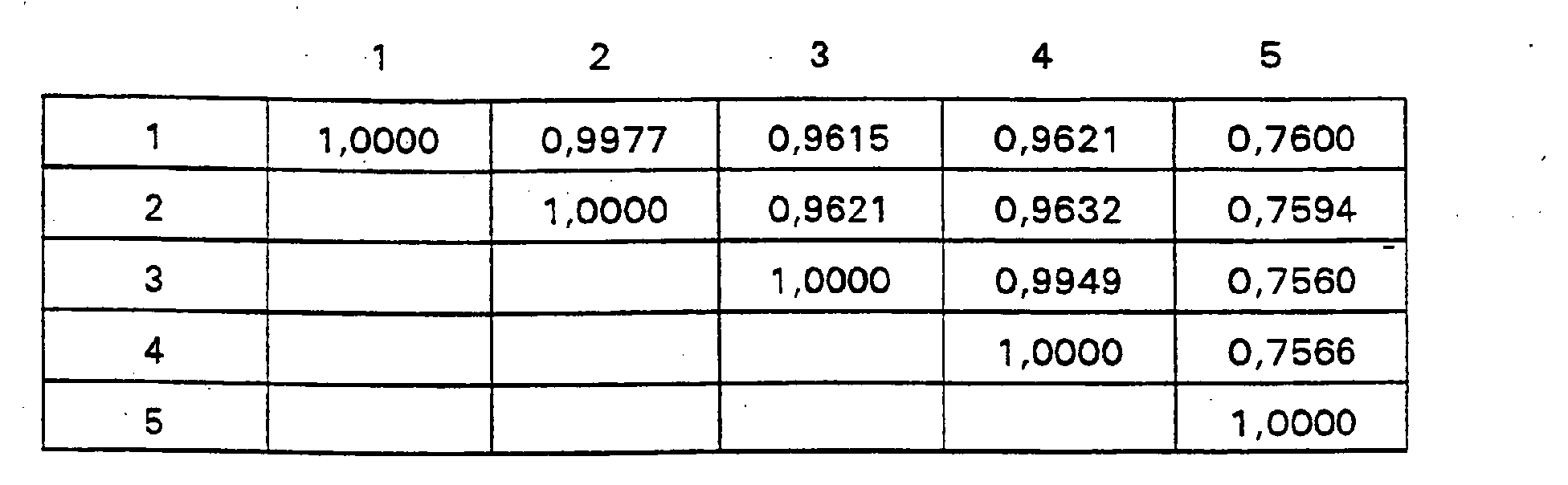
- the strains have a very strong nucleotide homology exceeding 96% and much lower with the PK / 15 strain, approximately 76%.
- New strains can therefore be considered representative of a new type of circovirus porcine, here called type II, type I being represented by PK / 15.
- the subject of the present invention is therefore the group porcine circovirus II, as defined above, isolated or in the form of a purified preparation.
- the invention relates to any porcine circovirus capable of being isolated from a physiological sample or a tissue sample, including lesions, a sick pig with PMWS syndrome, in particular by following the method described in the examples, in particular circovirus type II.
- the invention intends to consider porcine circoviruses isolated from a pig sick and / or circoviruses having a significant serological relationship with the strains of the invention and / or the circoviruses having a cross-hybridization with the strains of the invention under stringency conditions such that it there is no hybridization with the strain PCV PK / 15.
- Viral strains isolated from a physiological sample or a tissue sample, particularly from a lesion, of a pig with PMWS syndrome can be advantageously spread over lineages cells such as in particular pig kidney cell lines, in particular particular contamination-free PK / 15 cells (in particular for PCV, as well as for pestivirus, porcine adenovirus and porcine parvovirus) with a view to their multiplication or specifically for the production of whole antigen (e.g. viruses) and / or subunits (e.g. polypeptides).
- whole antigen e.g. viruses
- subunits e.g. polypeptides
- the present invention also relates to preparations of circoviruses. isolated after passage through cells, in particular cell lines, e.g. cells PK / 15, cultured in vitro by being infected with at least one of the circoviruses according to the invention or of any porcine circovirus capable of being isolated from a physiological sample or tissue sample, including lesions, of a pig with PMWS syndrome. It also has for object supernatants or culture extracts, possibly purified by techniques standards, and in general any antigenic preparation obtained at from in vitro cultures.
- cell lines e.g. cells PK / 15
- porcine circovirus capable of being isolated from a physiological sample or tissue sample, including lesions, of a pig with PMWS syndrome.
- object supernatants or culture extracts possibly purified by techniques standards, and in general any antigenic preparation obtained at from in vitro cultures.
- the subject of the invention is also the immunogenic active principles and the vaccines containing at least one antigen as defined above.
- vaccines may be immunogenic active ingredients based on whole viruses live attenuated, or vaccines prepared with these active ingredients, attenuation being carried out according to the usual methods, e.g. by passage through cells, preferably by passage over pig cells, in particular lines, such as PK / 15 cells (for example from 50 to 150, in particular of the order of 100, passages).
- These vaccines generally include a vehicle or diluent acceptable from the veterinary point of view, possibly an adjuvant acceptable on the veterinary plan as well as possibly a lyophilization stabilizer.
- antigen preparations and vaccines will preferably comprise from 10 3 to 10 6 TCID50.
- Vaccines can also be immunogenic active ingredients or vaccines to base of circovirus antigen according to the invention, in the inactivated state.
- Vaccines also include a plan acceptable vehicle or thinner veterinarian, possibly with an additionally acceptable adjuvant veterinary.
- the circoviruses according to the invention are inactivated according to techniques known to those skilled in the art job. Inactivation will preferably be carried out chemically, e.g. by exposure of the antigen to a chemical agent such as formaldehyde (formalin), paraformaldehyde, ß-propiolactone or ethylene imine or its derivatives.
- a chemical agent such as formaldehyde (formalin), paraformaldehyde, ß-propiolactone or ethylene imine or its derivatives.
- the preferred inactivation method here will be exposure to a chemical agent and in particular with ethylene imine or with ⁇ -propiolactone.
- the inactivated vaccines according to the invention will be adjuvanted, advantageously by being presented in the form of emulsions, for example water-in-oil or oil-in-water, according to well-known techniques of the skilled person.
- the adjuvant nature may also come from the incorporation into the active principle of a usual adjuvant compound.
- adjuvants which can be used, mention may be made of for example alumina hydroxide, saponins (e.g. Quillaja saponin or Quil AT ; see Vaccine Design, The Subunit and Adjuvant Approach, 1995, edited by Michael F. Powel and Mark J. Newman, Plennum Press, New-York and London, p 210), Avridine® (Vaccine Design p 148), DDA (Dimethyldioctadecylammonium bromide, Vaccine Design p 157), the Polyphosphazene (Vaccine Design p 204), or oil-in-water emulsions based on mineral oil, squalane (e.g.
- SPT emulsion SPT emulsion, Vaccine Design p 147), squalene (e.g. MF59, Vaccine Design p 183), or water-in-oil based on metabolizable oil (preferably according to WO-A-94 20071) as well as the emulsions described in US-A-5,422,109.
- adjuvants for example Avridine® or DDA associated with a emulsion.
- These vaccines will preferably comprise from 10 6 to 10 8 TCID50.
- the adjuvants of the live vaccine may be chosen from those given for the inactivated vaccine. Emulsions are preferred. To those indicated for the inactivated vaccine, we can add those described in WO-A-9416681.
- lyophilization stabilizer there may be mentioned by way of example SPGA (Bovarnik et al., J. Bacteriology 59, 509, 950), hydrates of carbon such as sorbitol, mannitol, starch, sucrose, dextran or glucose, proteins such as albumin or casein, derivatives of these compounds, or buffers such as alkali metal phosphates.
- the applicant also obtained the genome of four of the isolates, identified SEQ ID NO: 1 to 4 and possibly 6.
- the present invention therefore relates to a DNA fragment containing all or part of one of these sequences. It goes without saying that the invention covers automatically equivalent sequences, i.e. sequences do not not changing the functionality or strain specificity of the sequence described neither of the polypeptides encoded by this sequence. Will of course included the sequences differing by degeneracy of the code.
- the invention also covers the equivalent sequences in this sense that they are capable of hybridizing to the above sequence under conditions of high stringency and / or have a strong homology with the strains of the invention and belong to group II defined above.
- sequences and their fragments can advantageously be used for in vitro or in vivo expression of polypeptides using appropriate vectors.
- open reading frames forming DNA fragments according to the invention, which can be used for this purpose have been identified on the sequence genomics of type II circoviruses.
- the invention relates to any polypeptide. containing at least one of these open reading frames (acid sequence corresponding amines).
- the invention relates to a protein formed essentially by COL4, COL7, COL10 or COL13.
- E. coli or baculovirus For the expression of subunits in vitro, as a means of expression, preferably use E. coli or baculovirus (US-A-4,745,051).
- baculovirus e.g. baculovirus Autographa californica Nuclear Polyhedrosis Virus AcNPV
- insect cells e.g. Spodoptera frugiperda Sf9 (deposit ATCC CRL 1711).
- yeast e.g. Saccharomyces cerevisiae
- mammalian cells e.g. CHO, BHK.
- the subject of the invention is also the polypeptides which will be produced in vitro by these means of expression, then possibly purified according to the techniques classics. It also relates to subunit vaccines comprising at least a polypeptide as thus obtained, or fragment, in a vehicle or diluent acceptable from a veterinary point of view and possibly an adjuvant acceptable on the veterinary plan.
- viruses can be used live, preferably capable of multiplying in pigs, non-pathogenic for pork (naturally non-pathogenic or made such), according to techniques well known to those skilled in the art.
- swine herpesvirus such as Aujeszky's disease virus, adenovirus porcine, poxviruses, in particular vaccinia virus, avipox, canarypox, swinepox.
- Plasmid DNAs can also be used as vectors (WO-A-90 11092, WO-A-93 19813, WO-A-94 21797, WO-A-95 20660).
- the invention therefore also relates to vectors and live vaccines recombinant or plasmid (polynucleotide or DNA vaccines) thus produced, vaccines which also include a vehicle or diluent acceptable in terms of veterinary.
- the vaccines according to the invention may include one or more principles active (antigens) of one or more (2 or 3) of the circoviruses according to the invention.
- the invention also provides for combining, for each of the types of vaccines described above, vaccination against porcine circovirus to a vaccination against other swine pathogens, especially those that may be associated with PMWS syndrome.
- the vaccines according to the invention in particular inactivated, may therefore understand another valence corresponding to another pathogen of pork.
- PRRS Porcine Reproductory and Respiratory Syndrome
- the present invention also relates to a method for inducing an immune response in pigs to the circoviruses according to the invention. It relates in particular to an effective vaccination method in pigs.
- This method provides for the administration to the pig, in one or more times, of a vaccine above. It is also possible to combine several types of vaccines above in the same vaccination protocol.
- This method not only provides for administration to adult pigs, but also to young or pregnant females. Vaccination of the latter allows passive immunity to be given to newborns (maternal antibodies).
- the present invention also offers the possibility of diagnosing the presence circoviruses according to the invention in pigs. It therefore relates to tests of '' and related methods using the reagents that will be described below.
- Sequence alignments allow those skilled in the art to choose a reagent according to his wishes.
- a first reagent consists of the DNA sequences disclosed here and their fragments; which will be used in particular as probes or primers in hybridization techniques or PCR ("Polymerase Chain Reaction") well known.
- a second reagent consists of the polypeptides encoded by these sequences from the virus or expressed using a vector (see above), or chemically synthesized according to conventional synthesis techniques peptide.
- a third and fourth reagent consists of antibodies polyclonal and monoclonal respectively which can be produced according to usual techniques using the virus, polypeptides or fragments, extracts or encoded by DNA sequences.
- These second, third and fourth reagents can be used in a diagnostic method, object of the invention, in which one searches, in a sample of physiological fluid (blood, plasma, serum, etc.) or tissue sample (lymph nodes, liver, lungs, kidneys, etc.) from a pig to be tested, the presence of a specific antigen of a circovirus according to the invention, by seeking to detect either the antigen itself, or antibodies directed against this antigen.
- physiological fluid blood, plasma, serum, etc.
- tissue sample lymph nodes, liver, lungs, kidneys, etc.
- the antigens and antibodies according to the invention can be used in all known laboratory diagnostic techniques.
- the diagnostic techniques that will preferably be used in the scope of the present invention are Western blotting, immunofluorescence, ELISA and immunochromatography.
- the specialist may refer in particular to Robert F. Zurk et al., Clin. Chem. 7/31, 1144-1150 (1985) as well as in patents or Patent applications WO-A-88/08 534, WO-A-91/1 2528, EP-A-291 176, EP-A-299 428, EP-A-291 194, EP-A-284 232, US-A-5 120 643, US-A-5 030 558, US-A-5 266 497, US-A-4 740 468, US-A-5 266 497, US-A-4 855 240, US-A-5 451 504, US-A-5 141 850, US-A-5 232 835 and US-A-5 238 652.
- the antigen itself is used as a diagnostic reagent, or a fragment of this antigen, retaining the recognition of antibodies.
- the marking can advantageously be a peroxidase labeling or a particulate labeling, preferably colloidal gold.
- antibody specific for the antigen which can be used in particular in competition or displacement or for the detection of the antigen itself, is meant monoclonal and polyclonal antibodies specific for the antigen, fragments of these antibodies, preferably Fab or F fragments (ab ) ' 2.
- Another aspect of the invention is the production of antibodies, polyclonal or monoclonal, specific for the antigen according to the invention, these antibodies which can then be used in particular as diagnostic reagents for the detection of the antigen in a sample. of physiological fluid or in a tissue sample, or even for the detection of antibodies present in such a sample or sample.
- the invention also includes the immunologically functional fragments of these antibodies, in particular the F (ab) and F (ab) ' 2 fragments.
- Antibodies can be prepared by the usual techniques. We can especially refer to Antibodies, A Laboratory Manual, 1988, Cold Spring Harbor Laboratory, USA or J.W. Goding, Monoclonal Antibodies: Principles and Pratice, Academic Press Inc., the content of which is incorporated herein by reference.
- the subject of the invention is also a preparation, preferably pure or partially purified, or even crude from monoclonal or polyclonal antibodies specific for the antigen, in particular mouse or rabbit antibodies.
- the present invention also makes it possible to determine epitopes of particular interest based on the DNA sequences described here, whether epitopes of vaccine interest or epitopes of diagnostic interest.
- AT from the DNA sequence of the genome of the circovirus according to the invention humans of the trade is able to determine epitopes according to known methods for example an appropriate computer program or PEPSCAN.
- the epitopes are immunodominant regions of proteins and are as such regions exposed on the surface of proteins. They can therefore be recognized by antibodies and thus be particularly used in the diagnostic field either for the preparation of antibodies for diagnostic purposes or for the realization corresponding peptides usable as diagnostic reagents.
- an epitope is a peptide having 8 to 9 amino acids. We will generally prefer a minimum of 13 to 25 amino acids.
- the subject of the invention is also a diagnostic kit comprising this antigen and / or polyclonal or monoclonal antibodies specific for this antigen. These are in particular diagnostic kits corresponding to the diagnostic techniques described above.
- Example 1 Culture and isolation of porcine circovirus strains:
- Tissue samples have been collected in France, Canada and the USA from lungs and lymph nodes of piglets. These piglets showed clinical signs typical of General dieback of post-weaning. To help isolate viruses, tissue samples were frozen at -70 ° C immediately after autopsy.
- suspensions containing approximately 15% of tissue samples were prepared in a minimum medium containing salts of Earl (EMEM, BioWhittaker UK Ltd., Wokingham, UK), of penicillin (100 IU / ml) and streptomycin (100 ⁇ g / ml) (MEM-SA medium), by grinding the tissues with sterile sand using a sterile mortar and pestle. This crushed preparation was then taken up in MEM-SA, then centrifuged at 3000 g for 30 minutes at + 4 ° C to collect the supernatant.
- EMEM EEM, BioWhittaker UK Ltd., Wokingham, UK
- penicillin 100 IU / ml
- streptomycin 100 ⁇ g / ml
- porcine circoviruses The isolation of porcine circoviruses was carried out according to the following technique:
- the culture medium of the semi-confluent monolayers was treated with 300 mM of D-glucosamine (Cat # G48175, Sigma-Aldrich Company Limited, Poole, UK) (Tischr I. et al., Arch. Virol. 1987 96 39-57), then incubation was continued for an additional 48-72 hours at + 37 ° C. Following this last incubation, one of the two Falcons of each inoculum underwent 3 successive cycles of freezing / thawing.
- the PK / 15 cells of the remaining Falcon were treated with a solution of trypsin-versene, resuspended in 20 ml of MEM-G medium, then seeded in 75 cm 2 Falcons at a concentration of 400,000 cells / ml.
- the freshly sown vials were then "superinfected" by adding 5 ml of the corresponding lysate obtained after the freeze / thaw cycles.
- Example 2 Preparation of cell culture samples for detection of porcine circoviruses by immunofluorescence or by in situ hybridization .
- a volume of 5 ml of the "superinfected" suspension was removed and sown in a 55 mm diameter Petri dish containing a sterile, degreased glass slide.
- the cultures in flasks and on glass slides were incubated at + 37 ° C. and treated with glucosamine as described in Example 1.
- the cultures on glass slides were harvested 24 to 48 hours after treatment with glucosamine. and fixed, either with acetone for 10 minutes at room temperature, or with 10% buffered formaldehyde for 4 hours. Following this fixation, all the glass slides were stored at -70 ° C., on silica gel, before their use for the in situ hybridization studies and the immunocytochemical labeling studies.
- the in situ hybridization was carried out on the tissues removed from the sick pigs and fixed with formaldehyde and also on the preparations of cell cultures inoculated for viral isolation (see example 2) and fixed on glass slides.
- An analogous plasmid, pCAA1, containing the replicative form 2.3 kbp of the avian circovirus CAV was used as a negative control.
- the respective glycerol stocks of these two plasmids were used for the production and purification of the plasmids according to the alkaline lysis technique (Sambrook J. et al. Molecular cloning: A Laboratory Manual. 2 nd Edition. Cold Spring Harbor Laboratory. Cold Spring Harbor, New York, 1989) so that they can then be used as matrices for the preparation of the probes.
- Circovirus probes representative of the complete PCV and CAV genomes were produced from the purified plasmids described above (1 ⁇ g for each probe) and random hexanucleotide primers using a commercial non-radioactive labeling kit ("DIG DNA labeling kit ", Boehringer Mannheim, Lewes, UK) according to the supplier's recommendations.
- DIG DNA labeling kit Boehringer Mannheim, Lewes, UK
- the probes labeled with digoxigenin were taken up in a volume of 50-100 ⁇ l of sterile water before their use for in situ hybridization .
- Tissue samples from diseased pigs, included in paraffin and fixed with formaldehyde, as well as preparations of cultures of infected cells, fixed with formaldehyde, have been prepared for the detection of nucleic acids PCV according to the following technique
- Sections 5 ⁇ m thick were cut from the blocks of tissues included in paraffin, dewaxed, then rehydrated in solutions successive alcohol in decreasing concentration.
- the tissue sections and cell cultures attached to formaldehyde were incubated respectively for 15 minutes and 5 minutes at + 37 ° C in a proteinase K solution at 0.5% in 0.05M Tris-HCl buffer, 5 mM EDTA (pH 7.6).
- the blades were then placed in a 1% glycine solution in autoclaved distilled water, for 30 seconds, washed twice with PBS buffer (phosphate buffer saline) 0.01 M (pH 7.2), and finally washed for 5 minutes in sterile distilled water. They were finally dried in the open air and brought into contact with the probes.
- tissue / probe preparation was covered with a clean coverslip and degreased, then placed in an oven at + 90 ° C for 10 minutes, put then in contact with a block of ice for 1 minute, and finally incubated for T8 hours at + 37 ° C.
- the preparations were then immersed briefly in 2X sodium salt-citrate (SSC) buffer (pH 7.0) to remove protective coverslips, then washed twice for 5 minutes in SSC 2X buffer and finally washed twice for 5 minutes in PBS buffer.
- SSC sodium salt-citrate
- the preparations were immersed in a solution 0.1 M maleic acid, 0.15 M NaCl (pH 7.5) (maleic buffer) for 10 minutes, then incubated in a solution of 1% blocking reagent (Cat # 1096176, Boehringer Mannheim UK, Lewis, East Canal, UK) in buffer maleic for 20 minutes at + 37 ° C.
- the preparations were then incubated with a 1/250 solution of a monoclonal anti-digoxigenin antibody (Boehringer Mannheim), diluted in buffer blocker, for 1 hour at + 37 ° C, washed in PBS and finally incubated with a biotinylated anti-mouse immunoglobulin antibody for 30 minutes at + 37 ° C.
- the preparations were washed in PBS and the endogenous peroxidase activity was blocked by treatment with a 0.5% hydrogen peroxide solution in PBS for 20 minutes at room temperature. Preparations have been washed again in PBS and treated with a 3-amino-9-diethylcarbazole substrate (AEC) (Cambridge Bioscience, Cambridge, UK) prepared extemporaneously.
- AEC 3-amino-9-diethylcarbazole substrate
- IFI indirect immunofluorescence
- the cultures of cells are then stained with a 1/80 dilution in PBS of an antibody of pork anti-immunoglobulin rabbit conjugated to fluorescein isothiocyanate for one hour, then washed in PBS and mounted in glycerol buffer prior to microscopic observation under ultraviolet light.
- Example 5 Results of the in situ hybridization on the tissues of diseased pigs
- PCV genomic probe carried out on tissues taken from French, Canadian and Californian piglets presenting generalized dieback lesions and fixed with formaldehyde, revealed the presence of PCV nucleic acids associated with the lesions, in several of the lesions studied. No signal was observed when the PCV genomic probe was used on tissues taken from non-sick pigs or when the CAV probe was used on tissues from sick pigs.
- the presence of PCV nucleic acid has been identified in the cytoplasm and nucleus of many mononuclear cells infiltrating lesions in the lungs of Californian piglets.
- the presence of PCV nucleic acid has also been demonstrated in pneumocytes, bronchial and bronchiolar epithelial cells, and in endothelial cells of small arterioles, venules and lymphatic vessels.
- PCV nucleic acid In sick French pigs, the presence of PCV nucleic acid has been detected in the cytoplasm of many follicular lymphocytes and in intrasinusoidal mononuclear cells of the lymph nodes. The acid PCV nucleic acid has also been detected in occasional syncytia. In based on these detection results, samples from pig lungs Californians, mesenteric lymph nodes of French pigs, and Canadian Pig Organ Bodies Selected for New Isolation porcine circovirus strains.
- CPE cytopathic effect
- the replicative forms of the new porcine circovirus (PCV) strains were prepared from cultures of infected PK / 15 cells (see example 1) (10 Falcons of 75 cm 2 ) harvested after 72-76 hours of incubation and treated with glucosamine, as described for the cloning of the replicative form of CAV (Todd. D. et al. Dot blot hybridization assay for chicken anemia agent using a cloned DNA probe. J. Clin. Microbiol. 1991. 29. 933-939) .
- the double stranded DNA of these replicative forms was extracted according to a modification of the Hirt technique (Hirt B. Selective extraction of polyoma virus DNA from infected cell cultures. J. Mol. Biol. 1967. 36. 365-369), as described by Molitor (Molitor TW et al. Porcine parvovirus DNA: characterization of the genomic and replicative form DNA of two virus isolates. Virology. 1984. 137. 24
- the DNA (1-5 ⁇ g) extracted according to the Hirt technique was treated with nuclease S1 (Amersham) according to the supplier's recommendations, then this DNA was digested with different restriction enzymes (Boehringer Mannheim, Lewis, East Wales , UK) and the digestion products were separated by 1.5% agarose gel electrophoresis in the presence of ethidium bromide as described by Todd et al . (Purification and biochemical characterization of chicken anemia agent. J. Gen. Virol. 1990. 71. 819-823).
- the DNA extracted from cultures of the lmp.999 strain has a single EcoRI site, 2 SacI sites and does not have a PstI site.
- the approximately 1.8 kbp restriction fragment generated by digestion of the double-stranded replicative form of the PCV lmp.999 strain with the restriction enzyme EcoRI was isolated after electrophoresis on 1.5% agarose gel ( see example 3) using a Qiagen commercial kit (QIAEXII Gel Extraction Kit, Cat # 20021, QIAGEN Ltd., Crawley, Westshire, UK). This EcoRI-EcoRI restriction fragment was then ligated with the vector pGEM-7 (Promega, Medical Supply Company, Dublin, Ireland), previously digested with the same restriction enzymes and dephosphorylated, using standard cloning techniques (Sambrook J . et al. Molecular cloning: A Laboratory Manual. 2 nd Edition. Cold Spring Harbor Laboratory.
- the plasmids obtained were transformed into an Escherichia coli JM109 host strain (Stratagene, La Jolla, USA) according to standard techniques.
- the EcoRI-EcoRI restriction fragment of the PCV lmp.999 strain was also cloned into the EcoRI site of the vector pBlueScript SK + (Stratagene inc. La Jolla, USA).
- the clones obtained for each host strain at least 2 clones containing the fragments of the expected size were selected.
- the clones obtained were then cultured and the plasmids containing the complete genome of the lmp.999 strain were purified in small volume (2 ml) or in large volume (250 ml) according to standard techniques for the preparation and purification of the plasmids.
- the nucleotide sequence of 2 EcoRI lmp.999 clones was determined using the dideoxynucleotide technique of Sanger using the "AmpliTaq DNA polymerase FS" sequencing kit (Cat # 402079 PE Applied Biosystems, Warrington, UK) and a sequencing device Automatic Applied BioSystems ABI373A according to the recommendations of the provider. Initial sequencing reactions were done with primers universal M13 "forward” and “reverse”. The following sequencing reactions were generated using the "DNA walk” technique. Oligonucleotides necessary for these subsequent sequencing were synthesized by Life Technologies (Inchinnan Business Park, Paisley, UK).
- the generated sequences were assembled and analyzed using the MacDNASIS software version 3.2. (Cat # 22020101, Appligene, Durham, UK). The different open reading frames were analyzed using the algorithm BLAST available on the server of the "National Center for Biotechnology Information (NCBI, Bethesda, MD, USA).
- SEQ ID NO: 3 ( Figure 3) gives the total sequence of this strain, which we started arbitrarily at the start of the EcoRI site, ie G as the first nucleotide.
- Example 11 Analysis of the sequence of the PCV lmp strain. 999.
- the homology between the two French strains Imp 1011-48121 and Imp 1011-48285 is greater than 99% (0.9977).
- the homology between the two North American strains Imp 999 and Imp 1010 is also greater than 99% (0.9949). Homology between French strains and North American strains is just over 96%.
- strains according to the invention are representative of a new type of porcine circovirus, distinct from the type represented by the strain PK / 15.
- This new type isolated from pigs with PMWS syndrome, is called porcine circovirus type II, PK / 15 representing type 1.
- the strains belonging to this type II exhibit a remarkable homogeneity of nucleotide sequence, even though they have been isolated in regions very distant geographical.
- the nucleotide sequence of the lmp isolate. 1010 was considered representative of the other circovirus strains associated with generalized wasting syndrome. This sequence was analyzed in more detail using the BLASTX algorithm (Altschul et al. J. Mol. Biol. 1990. 215. 403-410) and a combination of programs from the MacVector software package 6.0 (Oxford Molecular Group, Oxford OX4 4GA, UK). It was possible to detect 13 open reading frames (or COLs) larger than 20 amino acids on this sequence (circular genome).
- the start and end positions of each COL refer to the sequence presented in figure N ° 4 (SEQ ID N ° 4).
- the size of the COL (in nucleotides nt) includes the stop codon.
- the sequence identity between the COL13 Imp. 1010 and the COL2 PK-15 is less strong (66.4% homology), but each of these two COLs does indeed have a very conserved basic N-terminal region, which is identical to the N-terminal region of the structural protein of the avian circovirus CAV (Meehan et al. Arch. Virol. 1992. 124. 301-319). Larger differences are observed between COL7 Imp. 1010 and COL3 PK-15 and between COL10 Imp. 1010 and COL4 PK-15. In each case, there is a deletion of the C-terminal region of COL7 and COL10 from the Imp isolate. 1010 when compared to COL3 and COL4 of PCV PK-15. The highest sequence homology is observed in the N-terminal regions of COL7 / COL3 (61.5% homology at the level of the overlap) and COL10 / COL4 (83% homology at the level of the overlap).
- any open reading frame (COL1 to COL13) as described in the table above, may represent all or part of an antigenic protein encoded by porcine circovirus type II and is therefore potentially a usable antigen for specific diagnosis and / or for vaccination.
- the invention therefore relates any protein comprising at least one of these COLs.
- the invention relates to a protein formed essentially by COL4, COL7, COL10 or ORF13.
- the plasmid pGEM-7/8 containing the complete genome (replicative form) of the isolate lmp.999 was transfected into PK / 15 cells according to the technique described by Meehan B. et al. (Characterization of viral DNAs from cells infected with chicken anemia agent: sequence analysis of the cloned replicative form and transfection capabilities of cloned genome fragments. Arch. Virol. 1992. 124. 301-319). The immunofluorescence analysis (see example 4) carried out on the first passage after transfection on uncontaminated PK / 15 cells showed that the plasmid of the clone pGEM7 / 8 was capable of inducing the production of infectious PCV virus.
- Example 2 Culture of uncontaminated PK / 15 cells and viral multiplication are carried out according to the same methods as in Example 1.
- the infected cells are harvested after trypsination after 4 days of incubation at 37 ° C and digitized.
- the following passage is inoculated with 400,000 infected cells per ml.
- the infected cells are harvested and lysed by ultrasound (Branson Sonifier) or using a rotor-stator type colloid mill (UltraTurrax, IKA). The suspension is then centrifuged at 3700 g for 30 minutes. The virus suspension is inactivated by 0.1% ethylene imine for 18 hours at + 37 ° C or with 0.5% beta-propiolactone for 24 hours at + 28 ° C. If the virus titer before inactivation is insufficient, the virus suspension is concentrated by ultrafiltration using a membrane with a threshold of 300 kDa cut-off (Millipore PTMK300). The inactivated virus suspension is stored at + 5 ° C.
- Example 17 Preparation of the Vaccine in the Form of an Oil-Based Emulsion mineral.
- One dose of vaccine contains approximately 10 7.5 DICT50.
- the volume of a vaccine dose is 0.5 ml for intradermal administration, and 2 ml for intramuscular administration.
- the aqueous phase and the oily phase are sterilized separately by filtration.
- the emulsion is prepared by mixing and homogenizing the ingredients using a Silverson turbine foam concentrate.
- One dose of vaccine contains approximately 10 7.5 DICT50.
- the volume of one dose of vaccine is 2 ml for intramuscular administration.
- Example 19 Results of Indirect Immunofluorescence Against Strains of US and French PCV virus and contaminant PK / 15 with hyperimmune serum (PCV-T), a panel of F99 monoclonal antibodies, prepared from PK / 15 and a hyperimmune serum prepared from the Canadian strain (PCV-C)
Landscapes
- Life Sciences & Earth Sciences (AREA)
- Health & Medical Sciences (AREA)
- Chemical & Material Sciences (AREA)
- Engineering & Computer Science (AREA)
- Organic Chemistry (AREA)
- General Health & Medical Sciences (AREA)
- Virology (AREA)
- Microbiology (AREA)
- Genetics & Genomics (AREA)
- Medicinal Chemistry (AREA)
- Immunology (AREA)
- Animal Behavior & Ethology (AREA)
- Molecular Biology (AREA)
- Pharmacology & Pharmacy (AREA)
- Public Health (AREA)
- Veterinary Medicine (AREA)
- Bioinformatics & Cheminformatics (AREA)
- Zoology (AREA)
- Biotechnology (AREA)
- Biochemistry (AREA)
- Wood Science & Technology (AREA)
- Biomedical Technology (AREA)
- Food Science & Technology (AREA)
- Polymers & Plastics (AREA)
- Chemical Kinetics & Catalysis (AREA)
- General Chemical & Material Sciences (AREA)
- General Engineering & Computer Science (AREA)
- Biophysics (AREA)
- Nuclear Medicine, Radiotherapy & Molecular Imaging (AREA)
- Epidemiology (AREA)
- Mycology (AREA)
- Communicable Diseases (AREA)
- Proteomics, Peptides & Aminoacids (AREA)
- Oncology (AREA)
- Gastroenterology & Hepatology (AREA)
- Physics & Mathematics (AREA)
- Plant Pathology (AREA)
- Medicines Containing Antibodies Or Antigens For Use As Internal Diagnostic Agents (AREA)
- Micro-Organisms Or Cultivation Processes Thereof (AREA)
- Peptides Or Proteins (AREA)
Abstract
Description
- n° d'accès V97100219 (appelé ici Imp.1008PCV)
- n ° d'accès V97100218 (appelé ici lmp.1010PCV)
- n° d'accès V97100217 (appelé ici lmp.999PCV).
- n° d'accès V98 011608 (appelé ici lmp 1011-48285)
- n° d'accès V98 011609 (appelé ici Imp 1011-48121)
L'ADN extrait des cultures de la souche lmp.999 possède un site unique EcoRI, 2 sites Sacl et ne possède pas de site Pstl. Ce profil de restriction est donc différent du profil de restriction présenté par la souche PCV PK/15 (Meehan B. et al. Séquence of porcine circovirus DNA: affinities with plant circoviruses. 1997. 78. 221-227) qui possède au contraire un site Pstl et ne possède pas de site EcoRI.
- Imp 1011-48121
- 1767 nucléotides
- Imp 1011-48285
- 1767 nucléotides
- Imp 999
- 1768 nucléotides
- lmp 1010
- 1768 nucléotides
| Nom | Début | Fin | Brin | Taille du COL (nucléotides (nt)) | Taille protéine (acides aminés (aa)) |
| COL1 | 103 | 210 | sens | 108 nt | 35 aa |
| COL2 | 1180 | 1317 | sens | 138 nt | 45 aa |
| COL3 | 1363 | 1524 | sens | 162 nt | 53 aa |
| COL4 | 398 | 1342 | sens | 945 nt | 314 aa |
| COLS | 900 | 1079 | sens | 180 nt | 59 aa |
| COL6 | 1254 | 1334 | sens | 81 nt | 26 aa |
| COL7 | 1018 | 704 | antisens | 315 nt | 104 aa |
| COL8 | 439 | 311 | antisens | 129 nt | 42 aa |
| COL9 | 190 | 101 | antisens | 90 nt | 29 aa |
| COL10 | 912 | 733 | antisens | 180 nt | 59 aa |
| COL11 | 645 | 565 | antisens | 81 nt | 26 aa |
| COL12 | 1100 | 1035 | antisens | 66 nt | 21 aa |
| COL13 | 314 | 1381 | antisens | 702 nt | 213 aa |
- COL3
- 1432-1539, sens, 108 nt, 35aa
- COL13
- 314-1377, antisens, 705 nt, 234 aa.
| Nom | Début | Fin | Brin | Taille du COL (nt) | Taille protéine (acides aminés) | Masse moléculaire |
| COL4 | 398 | 1342 | sens | 945 nt | 314 aa | 37,7 kDa |
| COL7 | 1018 | 704 | antisens | 315 nt | 104 aa | 11,8 kDa |
| COL10 | 912 | 733 | antisens | 180 nt | 59 aa | 6,5 kDa |
| COL13 | 314 | 1381 | antisens | 702 nt | 233 aa | 27,8 kDa |
| COL lmp.1010/COL PCV PK-15 | Pourcentage d'homologie |
| COL4/COL1 | 86 % |
| COL13/COL2 | 66,4 % |
| COL7/COL3 | 61,5 % (au niveau du recouvrement (104 aa) |
| COL10/COL4 | 83 % (au niveau du recouvrement (59 aa) |
- suspension de circovirus porcin inactivé : 250 ml
- Montanide® ISA 70 (SEPPIC): 750 ml
- suspension de circovirus porcin inactivé : 200 ml
- Dehymuls HRE 7 (Henkel) : 60 ml
- Radia 7204 (Oleofina) : 740 ml
| VIRUS | |||
| PK/15 | USA | France | |
| PCV-T antiserum | ≥ 6 400 | 200 | 800 |
| PCV-C antiserum | 200 | ≥ 6,400 | ≥ 6,400 |
| F99 1H4 | ≥ 10 000 | < 100 | 100 |
| F99 4B10 | ≥10 000 | <100 | <100 |
| F99 2B7 | ≥10 000 | 100 | <100 |
| F99 2E12 | ≥ 10 000 | <100 | <100 |
| F99 1C9 | ≥10 000 | <100 | 100 |
| F99 2E1 | ≥ 10 000 | < 100 | <100 |
| F99 1H4 | ≥ 10000 | 100 | <100 |
| * inverse de la dernière dilution du sérum ou de l'anticorps monoclonal qui donne une réaction positive en immunofluorescence indirecte. |
Claims (23)
- Méthode de diagnostic de l'infection par un circovirus porcin de type II responsable chez le porc du syndrome de dépérissement généralisé de post-sevrage (PMWS), méthode dans laquelle l'on met en présence un échantillon de fluide physiologique ou un prélèvement de tissu d'un porc et un réactif de diagnostic spécifique du circovirus de type II, et l'on révèle la présence éventuelle d'antigène, anticorps ou acide nucléique spécifique du circovirus porcin de type II, dans cet échantillon ou prélèvement.
- Méthode selon la revendication 1, caractérisée en ce que le réactif de diagnostic comprend au moins une séquence d'ADN formant une sonde ou une amorce spécifique du circovirus porcin de type II.
- Méthode selon la revendication 1, caractérisée en ce que le réactif de diagnostic comprend la séquence SEQ ID NO : 6.
- Méthode selon la revendication 1, caractérisée en ce que le réactif de diagnostic comprend au moins un fragment de la séquence SEQ ID NO: 6, ce fragment permettant de former une sonde ou une amorce spécifique du circovirus porcin de type II.
- Méthode selon l'une quelconque des revendications 1 à 4, caractérisée en ce que la méthode est basée sur une technique d'hybridation ou de Polymerase Chain Reaction.
- Méthode selon la revendication 1, caractérisée en ce que le réactif comprend un antigène spécifique du circovirus porcin de type II.
- Méthode selon la revendication 6, caractérisée en ce que le réactif comprend un épitope où un polypeptide spécifique du circovirus porcin de type II, codé par un fragment de la séquence SEQ ID NO : 6.
- Méthode selon la revendication 6 ou 7, caractérisée en ce que l'antigène, épitope ou polypeptide permet de détecter des anticorps dans l'échantillon ou prélèvement, ces anticorps étant spécifiques du circovirus porcin de type II.
- Méthode selon la revendication 1, caractérisée en ce que le réactif comprend un anticorps spécifique d'un antigène du circovirus porcin de type II.
- Méthode selon la revendication 1, caractérisée en ce que l'on utilise un réactif comprenant un anticorps spécifique du circovirus porcin de type II, et un réactif qui comprend un antigène spécifique du circovirus porcin de type II.
- Méthode selon l'une quelconque des revendications 6 à 10, caractérisée en ce que l'on applique une méthode de type Western Blot, immunofluorescence, ELISA ou immunochromatographie.
- Méthode selon la revendications 11, caractérisée en ce que l'on applique une méthode de test indirect, de compétition ou de déplacement.
- Préparation d'anticorps spécifiques du circovirus porcin de type II responsable chez le porc du syndrome de dépérissement généralisé de post-sevrage (PMWS), susceptible d'être obtenue à partir d'un circovirus porcin de type II ou d'un fragment antigénique d'un circovirus porcin de type II, ou à partir d'un polypeptide codé par un fragment de la séquence SEQ ID NO : 6.
- Préparation selon la revendication 13, caractérisée en ce que le circovirus porcin de type II est choisi parmi ceux déposés auprès de l'ECACC sous les références V97100217, V97100218 et V97100219.
- Préparation selon la revendication 13 ou 14, caractérisée en ce que les anticorps sont des anticorps polyclonaux ou des anticorps monoclonaux.
- Préparation selon la revendication 13, 14 ou 15, caractérisée en ce que les anticorps comprennent des anticorps marqués.
- Préparation selon la revendication 16, caractérisée en ce que les anticorps sont marqués à la peroxydase ou par un marquage particulaire, e.g. or colloïdal.
- Préparation antigénique, comprenant un antigène spécifique du circovirus porcin de type II responsable chez le porc du syndrome de dépérissement généralisé de post-sevrage (PMWS), cet antigène étant reconnu par des anticorps spécifiques du circovirus porcin de type II et permettant de diagnostiquer l'infection par un circovirus porcin de type II.
- Kit pour le diagnostic de l'infection par un circovirus porcin de type II responsable chez le porc du syndrome de dépérissement généralisé de post-sevrage (PMWS), comprenant au moins un anticorps et/ou antigène tel(s) que défini(s) à l'une quelconque des revendications 13 à 18.
- Kit selon la revendication 19, caractérisé en ce qu'il comprend les moyens de mise en oeuvre d'une méthode de diagnostic de type Western Blot, immunofluorescence, ELISA ou immunochromatographie.
- Kit selon la revendication 20, caractérisé en ce qu'il comprend les moyens de mise en oeuvre d'une méthode de test indirect, de compétition ou de déplacement.
- Méthode de diagnostic de l'infection par un circovirus porcin, méthode dans laquelle l'on met en présence un échantillon de fluide physiologique ou un prélèvement de tissu d'un porc et un réactif de diagnostic spécifique à la fois du circovirus de type II et du circovirus PK/15, et l'on révèle la présence éventuelle d'antigène, anticorps ou acide nucléique spécifique d'un circovirus porcin, dans cet échantillon ou prélèvement.
- Méthode selon la revendication 22, caractérisée en ce que le réactif comprend un anticorps, un antigène ou une séquence d'ADN formant sonde ou amorce.
Priority Applications (1)
| Application Number | Priority Date | Filing Date | Title |
|---|---|---|---|
| CY20081100583T CY1108113T1 (el) | 1997-10-03 | 2008-06-03 | Μεθοδος διαγνωσεως ιν vitro της μολυνσεως απο σιρκoïο χοιρων τυπου ιι και αντιδραστηρια διαγνωσεως |
Applications Claiming Priority (8)
| Application Number | Priority Date | Filing Date | Title |
|---|---|---|---|
| FR9712382A FR2769321B1 (fr) | 1997-10-03 | 1997-10-03 | Nouveaux circovirus porcins, vaccins et reactifs de diagnostics |
| FR9712382 | 1997-10-03 | ||
| FR9800873A FR2769322B1 (fr) | 1997-10-03 | 1998-01-22 | Nouveaux circovirus porcins, vaccins et reactifs de diagnostic |
| FR9800873 | 1998-01-22 | ||
| FR9803707A FR2776294B1 (fr) | 1998-03-20 | 1998-03-20 | Nouveaux circovirus porcins ; vaccins et reactifs de diagnostic |
| FR9803707 | 1998-03-20 | ||
| EP02017134A EP1281760B9 (fr) | 1997-10-03 | 1998-10-01 | Circovirus porcins |
| EP98946547A EP1019510B1 (fr) | 1997-10-03 | 1998-10-01 | Vaccins a base de circovirus porcins |
Related Parent Applications (1)
| Application Number | Title | Priority Date | Filing Date |
|---|---|---|---|
| EP02017134A Division EP1281760B9 (fr) | 1997-10-03 | 1998-10-01 | Circovirus porcins |
Publications (2)
| Publication Number | Publication Date |
|---|---|
| EP1386617A1 true EP1386617A1 (fr) | 2004-02-04 |
| EP1386617B1 EP1386617B1 (fr) | 2008-03-05 |
Family
ID=27253376
Family Applications (4)
| Application Number | Title | Priority Date | Filing Date |
|---|---|---|---|
| EP98946547A Expired - Lifetime EP1019510B1 (fr) | 1997-10-03 | 1998-10-01 | Vaccins a base de circovirus porcins |
| EP02017134A Expired - Lifetime EP1281760B9 (fr) | 1997-10-03 | 1998-10-01 | Circovirus porcins |
| EP05014998.8A Expired - Lifetime EP1741785B1 (fr) | 1997-10-03 | 1998-10-01 | Circovirus porcins, acides nucléiques, polypeptides et vaccins |
| EP03016998A Expired - Lifetime EP1386617B1 (fr) | 1997-10-03 | 1998-10-01 | Méthode de diagnostic in vitro de l'infection par le circovirus porcin de type II et réactifs de diagnostic |
Family Applications Before (3)
| Application Number | Title | Priority Date | Filing Date |
|---|---|---|---|
| EP98946547A Expired - Lifetime EP1019510B1 (fr) | 1997-10-03 | 1998-10-01 | Vaccins a base de circovirus porcins |
| EP02017134A Expired - Lifetime EP1281760B9 (fr) | 1997-10-03 | 1998-10-01 | Circovirus porcins |
| EP05014998.8A Expired - Lifetime EP1741785B1 (fr) | 1997-10-03 | 1998-10-01 | Circovirus porcins, acides nucléiques, polypeptides et vaccins |
Country Status (20)
| Country | Link |
|---|---|
| US (1) | US6368601B1 (fr) |
| EP (4) | EP1019510B1 (fr) |
| JP (5) | JP5008218B2 (fr) |
| KR (4) | KR100854615B1 (fr) |
| CN (2) | CN100584948C (fr) |
| AT (3) | ATE245191T1 (fr) |
| AU (1) | AU756554C (fr) |
| BR (1) | BR9812845B1 (fr) |
| CA (1) | CA2305623C (fr) |
| CY (3) | CY1110359T1 (fr) |
| DE (7) | DE69830858D1 (fr) |
| DK (4) | DK1281760T5 (fr) |
| ES (4) | ES2524359T3 (fr) |
| FR (1) | FR05C0021I2 (fr) |
| HU (2) | HU230340B1 (fr) |
| NL (1) | NL300326I2 (fr) |
| PL (1) | PL198506B1 (fr) |
| PT (4) | PT1741785E (fr) |
| UA (1) | UA78180C2 (fr) |
| WO (1) | WO1999018214A1 (fr) |
Cited By (14)
| Publication number | Priority date | Publication date | Assignee | Title |
|---|---|---|---|---|
| WO2006113372A3 (fr) * | 2005-04-15 | 2007-06-14 | Merial Ltd | Vaccins faits d'une combinaison d'helicobacter et de circovirus porcin, et procedes d'utilisation |
| US7604808B2 (en) | 1997-12-05 | 2009-10-20 | Wyeth | Circovirus sequences associated with piglet weight loss disease (PWD) |
| US7829101B2 (en) | 2004-12-30 | 2010-11-09 | Boehringer Ingelheim Vetmedica, Inc. | PCV2 immunogenic compositions and methods of producing such compositions |
| US7829273B2 (en) | 2005-12-29 | 2010-11-09 | Boehringer Ingelheim Vetmedica, Inc. | Use of a PCV2 immunogenic composition for lessening clinical symptoms in pigs |
| US7829274B2 (en) | 2007-09-04 | 2010-11-09 | Boehringer Ingelheim Vetmedica, Inc. | Reduction of concomitant infections in pigs by the use of PCV2 antigen |
| US7914992B2 (en) | 2007-01-03 | 2011-03-29 | Boehringer Ingelheim Vetmedica, Inc. | Treatment of PRDC in pigs |
| US7943298B2 (en) | 2007-02-13 | 2011-05-17 | Boehringer Ingelheim Vetmedica, Inc. | Prevention and treatment of sub-clinical PCVD |
| US8119143B2 (en) | 2005-12-29 | 2012-02-21 | Boehringer Ingelheim Vetmedica, Inc. | Multivalent PCV2 immunogenic compositions and methods of producing such compositions |
| US8865183B2 (en) | 2006-12-15 | 2014-10-21 | Boehringer Ingelheim Vetmedica, Inc. | Treatment of pigs with PCV2 antigent |
| US9505808B2 (en) | 2013-10-02 | 2016-11-29 | Boehringer Ingelheim Vetmedica, Inc. | PCV2 ORF2 protein variant and virus like particles composed thereof |
| US9561270B2 (en) | 2009-09-02 | 2017-02-07 | Boehringer Ingelheim Vetmedica, Inc. | Methods of reducing virucidal activity in PCV-2 compositions and PCV-2 compositions with an improved immunogenicity |
| US9636389B2 (en) | 2006-12-11 | 2017-05-02 | Boehringer Ingelheim Vetmedica, Inc. | Effective method of treatment of porcine circovirus and Lawsonia intracellularis infections |
| US9669086B2 (en) | 2008-01-23 | 2017-06-06 | Boehringer Ingelheim Vetmedica, Inc. | PCV2 Mycoplasma hyopneumoniae immunogenic compositions and methods of producing such compositions |
| US9919041B2 (en) | 2004-12-30 | 2018-03-20 | Boehringer Ingelheim Vetmedica, Inc. | PCV2 immunogenic compositions and methods of producing such compositions |
Families Citing this family (46)
| Publication number | Priority date | Publication date | Assignee | Title |
|---|---|---|---|---|
| US6391314B1 (en) * | 1997-10-03 | 2002-05-21 | Merial | Porcine circoviruses vaccines diagnostic reagents |
| US7211379B2 (en) * | 1997-10-03 | 2007-05-01 | Merial Sas | Prevention of myocarditis, abortion and intrauterine infection associated with porcine circovirus-2 |
| US6517843B1 (en) * | 1999-08-31 | 2003-02-11 | Merial | Reduction of porcine circovirus-2 viral load with inactivated PCV-2 |
| FR2781159B1 (fr) * | 1998-07-06 | 2000-10-06 | Merial Sas | Vaccin circovirus et parvovirus porcin |
| US7192594B2 (en) * | 1997-10-03 | 2007-03-20 | Merial Limited | Postweaning multisystemic wasting syndrome and porcine circovirus from pigs |
| US20040062775A1 (en) * | 1997-12-05 | 2004-04-01 | Agence Francaise De Securite Sanitaire Des Aliments | Circovirus sequences associated with piglet weight loss disease (PWD) |
| EP1816200B1 (fr) | 1997-12-11 | 2016-03-09 | Merial | Virus de syndrome de dépérissement post-sevrage pour cochons |
| JP3795751B2 (ja) * | 1997-12-11 | 2006-07-12 | ユニバーシティ オブ サスカッチェワン | ブタからの離乳後多全身系消耗症候群ウイルス |
| US6497883B1 (en) * | 1999-06-10 | 2002-12-24 | Merial | Porcine circovirus recombinant poxvirus vaccine |
| US6943152B1 (en) * | 1999-06-10 | 2005-09-13 | Merial | DNA vaccine-PCV |
| ES2170622B1 (es) * | 1999-12-03 | 2004-05-16 | Consejo Superior De Investigaciones Cientificas | Clones y vectores infectivos derivados de coronavirus y sus aplicaciones. |
| JP2004503234A (ja) * | 2000-06-15 | 2004-02-05 | パーデュー・リサーチ・ファウンデーション | ブタの先天性振せん用ワクチン |
| US7018638B2 (en) * | 2000-12-19 | 2006-03-28 | Wyeth | Mycoplasma hyopneumoniae bacterin vaccine |
| CN1309836C (zh) | 2001-03-27 | 2007-04-11 | 萨斯喀彻温大学 | 培养环状病毒的方法 |
| HUP0500722A2 (hu) | 2001-07-20 | 2005-11-28 | The University of Georgia Research Foundation, Inc@Á | Attenuált veszettség vírus, a veszettség elleni vakcináláshoz és a központi idegrendszer génterápiájához egy nukleoprotein mutációval a foszforilezés helyén |
| US7279166B2 (en) * | 2001-12-12 | 2007-10-09 | Virginia Tech Intellectual Properties, Inc. | Chimeric infectious DNA clones, chimeric porcine circoviruses and uses thereof |
| US7276353B2 (en) * | 2001-12-12 | 2007-10-02 | Virginia Tech Intellectual Properties, Inc. | Chimeric infectious DNA clones, chimeric porcine circoviruses and uses thereof |
| RS20050177A (sr) * | 2002-08-26 | 2007-06-04 | Pfizer Products Inc., | Vakcina za infekcije respiratornog i reproduktivnog sistema kod stoke |
| KR20040021988A (ko) * | 2002-09-06 | 2004-03-11 | 서상희 | 바이러스 증식용 돼지 신장 상피 세포주, 및 이의 용도 |
| US7700285B1 (en) | 2005-12-29 | 2010-04-20 | Boehringer Ingelheim Vetmedica, Inc. | PCV2 immunogenic compositions and methods of producing such compositions |
| US8834891B2 (en) * | 2005-03-14 | 2014-09-16 | Boehringer Ingelheim Vetmedica, Inc. | Immunogenic compositions comprising Lawsonia intracellularis |
| DK1869471T3 (en) * | 2005-04-13 | 2016-08-01 | Merial Inc | PROCEDURE FOR MANUFACTURING PIG CIRCOVIRUS |
| EP1792996A1 (fr) * | 2005-12-01 | 2007-06-06 | Consejo Superior de Investigaciones Cientificas | Acides nucléiques encodant des vaccins contre le virus du syndrome reproductif et respiratoire porcin (PRRSV) |
| KR100870077B1 (ko) * | 2006-10-27 | 2008-11-25 | 권영득 | 이유후 전신소모성증후군(pmws)의 치료용 복합제조성물 |
| RU2337690C1 (ru) * | 2007-02-22 | 2008-11-10 | Сергей Михайлович Юдин | Способ экстренной неспецифической профилактики и лечения вирусных заболеваний свиней с синдромом pmws и парвовирусного энтерита плотоядных |
| CN101688185B (zh) * | 2007-05-11 | 2013-05-22 | 淡马锡生命科学研究院有限公司 | 对2型猪环状构象病毒(pcv2)感染高度容许的均质细胞系的产生 |
| KR100948127B1 (ko) * | 2007-06-27 | 2010-03-18 | 주식회사 중앙백신연구소 | 복합호흡기 질환 돼지의 조직유제를 함유하는 백신 조성물 |
| US20090017064A1 (en) * | 2007-07-10 | 2009-01-15 | Wyeth | Methods and Compositions for Immunizing Pigs Against Porcine Circovirus |
| CA2710247C (fr) * | 2007-12-21 | 2014-02-18 | Wyeth Llc | Procedes et compositions pour immuniser des porcs contre le circovirus porcin |
| WO2009088950A2 (fr) * | 2007-12-31 | 2009-07-16 | Boehringer Ingelheim Vetmedica, Inc. | Particule de type virus pcv2 orf2 avec insertion d'acides aminés étrangers |
| TWI442935B (zh) | 2010-12-22 | 2014-07-01 | Sbc Virbac Ltd | 豬第二型環狀病毒(Porcine Circovirus Type 2)、含彼之免疫組合物、檢測套組及其應用 |
| EP2564869A1 (fr) | 2011-09-02 | 2013-03-06 | Ceva Sante Animale | Protéines de capside synthétiques et leurs utilisations |
| EP2789346A1 (fr) | 2013-04-11 | 2014-10-15 | CEVA Santé Animale SA | Vaccins et polypeptides de fusion |
| ES2882374T3 (es) | 2013-05-08 | 2021-12-01 | Pharmgate Biologics Inc | Vacuna para PCV2 y micoplasma |
| EP3049106A1 (fr) | 2013-09-25 | 2016-08-03 | Zoetis Services LLC | Composition vaccinale divergente anti-pcv2b et ses procédés d'utilisation |
| CN104383527A (zh) * | 2014-11-18 | 2015-03-04 | 天津瑞普生物技术股份有限公司 | 一种猪圆环病毒2型灭活冻干疫苗的制备方法 |
| EP3034609A1 (fr) | 2014-12-19 | 2016-06-22 | Ceva Sante Animale | Virus de recombinaison de la variole porcine et vaccins |
| HK1252427A1 (zh) | 2015-05-14 | 2019-05-24 | Boehringer Ingelheim Animal Health USA Inc. | 猪环状病毒生产方法和pcv2疫苗 |
| EP3254692A1 (fr) | 2016-06-10 | 2017-12-13 | Ceva Sante Animale | Spv recombiné multivalent |
| EP3720485A1 (fr) | 2017-12-08 | 2020-10-14 | Ceva Sante Animale | Virus recombiné de la variole porcine et vaccins associés |
| CN119488586A (zh) | 2018-03-26 | 2025-02-21 | 勃林格殷格翰动物保健美国有限公司 | 制备免疫原性组合物的方法 |
| CN112292149A (zh) | 2018-06-11 | 2021-01-29 | 法国诗华大药厂 | 针对猪圆环病毒的疫苗接种 |
| KR102124260B1 (ko) * | 2018-10-19 | 2020-06-26 | 대한민국(관리부서 질병관리본부장) | 신속 면역크로마토그래피법을 이용한 콜레라균 진단·탐지 키트 및 이를 위한 특이항체와 항체생산세포주 |
| JP7657287B2 (ja) | 2020-07-24 | 2025-04-04 | ベーリンガー インゲルハイム アニマル ヘルス ユーエスエイ インコーポレイテッド | 組合せブタワクチン |
| CN121463956A (zh) | 2023-05-03 | 2026-02-03 | 勃林格殷格翰动物保健有限公司 | 诱导免疫应答的方法 |
| EP4704977A1 (fr) | 2023-05-03 | 2026-03-11 | Boehringer Ingelheim Vetmedica GmbH | Composition immunogène utile pour l'auto-administration par des porcs |
Citations (1)
| Publication number | Priority date | Publication date | Assignee | Title |
|---|---|---|---|---|
| WO1999029717A2 (fr) * | 1997-12-11 | 1999-06-17 | University Of Saskatchewan | Virus porcins du syndrome de deperissement multisystemique apres sevrage |
Family Cites Families (33)
| Publication number | Priority date | Publication date | Assignee | Title |
|---|---|---|---|---|
| US4745051A (en) | 1983-05-27 | 1988-05-17 | The Texas A&M University System | Method for producing a recombinant baculovirus expression vector |
| US4740468A (en) | 1985-02-14 | 1988-04-26 | Syntex (U.S.A.) Inc. | Concentrating immunochemical test device and method |
| US5232835A (en) | 1986-11-07 | 1993-08-03 | Syntex (U.S.A.) Inc. | Qualitative immunochromatographic method and device |
| US5030558A (en) | 1986-11-07 | 1991-07-09 | Syntex (U.S.A.) Inc. | Qualitative immunochromatographic method and device |
| CA1303983C (fr) | 1987-03-27 | 1992-06-23 | Robert W. Rosenstein | Essai en phase solide |
| DE3856421T2 (de) | 1987-04-27 | 2000-12-14 | Unilever Nv | Spezifische Bindungstestverfahren |
| US4855240A (en) | 1987-05-13 | 1989-08-08 | Becton Dickinson And Company | Solid phase assay employing capillary flow |
| US5120643A (en) | 1987-07-13 | 1992-06-09 | Abbott Laboratories | Process for immunochromatography with colloidal particles |
| DE3886332T2 (de) * | 1987-09-28 | 1994-03-31 | Beecham Inc | Inaktivierung von Viren und Bakterien. |
| CA2489769A1 (fr) | 1989-03-21 | 1990-10-04 | Philip L. Felgner | Expression des sequences polynocleotides exogenes chez un vertebre |
| FR2649013B1 (fr) | 1989-07-03 | 1991-10-25 | Seppic Sa | Vaccins et vecteurs de principes actifs fluides contenant une huile metabolisable |
| US5141850A (en) | 1990-02-07 | 1992-08-25 | Hygeia Sciences, Inc. | Porous strip form assay device method |
| CA2082155C (fr) | 1990-05-29 | 2008-04-15 | Krishnaswamy I. Dayalu | Vaccin contre la pneumonie du porc et methode de preparation |
| US5238652A (en) | 1990-06-20 | 1993-08-24 | Drug Screening Systems, Inc. | Analytical test devices for competition assay for drugs of non-protein antigens using immunochromatographic techniques |
| US5565205A (en) | 1990-08-16 | 1996-10-15 | Solvay Animal Health, Inc. | Inactivated Mycoplasma hypopneumoniae bacterin and method of use thereof |
| US5266497A (en) | 1990-08-31 | 1993-11-30 | Japan Synthetic Rubber Co., Ltd. | Immunochromatographic assay with improved colored latex |
| US5451504A (en) | 1991-07-29 | 1995-09-19 | Serex, Inc. | Method and device for detecting the presence of analyte in a sample |
| AU2684792A (en) | 1991-10-14 | 1993-05-21 | Akzo Nobel N.V. | Porcine reproductive respiratory syndrome vaccine and diagnostic |
| US5338543A (en) * | 1992-02-27 | 1994-08-16 | Ambico, Inc. | Thimerosal inactivated mycoplasma hyopneumoniae vaccine |
| DE9204303U1 (de) | 1992-03-30 | 1992-06-25 | Marx, Günter Wolfgang, 7953 Bad Schussenried | Trainingsgerät |
| EP0571648A1 (fr) | 1992-05-26 | 1993-12-01 | Chung-Nan Weng | Vaccin protégeant contre la pneumonie mycoplasmique |
| US6592873B1 (en) * | 1992-10-30 | 2003-07-15 | Iowa State University Research Foundation, Inc. | Polynucleic acids isolated from a porcine reproductive and respiratory syndrome virus (PRRSV) and proteins encoded by the polynucleic acids |
| FR2700957B1 (fr) | 1993-01-29 | 1995-03-03 | Seppic Sa | Composition de vaccin sous-unitaire recombinant vivant et procédé de préparation. |
| KR100374295B1 (ko) | 1993-02-08 | 2003-12-24 | 바이엘 코포레이션 | 돼지생식및호흡증후군바이러스의생육방법과백신에서그의용도 |
| FR2702373B1 (fr) | 1993-03-08 | 1996-06-07 | Rhone Merieux | Emulsions vaccinales fluides eau-dans-l'huile contenant une huile métabolisable. |
| EP0620277A1 (fr) | 1993-03-18 | 1994-10-19 | Merck & Co. Inc. | Acides nucléiques comme produits pharmaceutiques |
| ES2074950B1 (es) | 1993-09-17 | 1996-03-16 | Iberica Cyanamid | Vacuna para la prevencion de la enfermedad reproductiva y respiratoria de la cerda. |
| ATE475668T1 (de) | 1994-01-27 | 2010-08-15 | Univ Massachusetts Medical | Immunisierung durch impfung von dns transkriptionseinheit |
| ES2165405T3 (es) * | 1994-04-11 | 2002-03-16 | Akzo Nobel Nv | Cepas de vacuna europeas del virus del sindrome reproductor y respiratorio porcino (prrsv). |
| WO1996004091A1 (fr) * | 1994-08-05 | 1996-02-15 | Schneider Karl P | Foret a auto-chanfreinage |
| FR2781159B1 (fr) * | 1998-07-06 | 2000-10-06 | Merial Sas | Vaccin circovirus et parvovirus porcin |
| FR2772047B1 (fr) * | 1997-12-05 | 2004-04-09 | Ct Nat D Etudes Veterinaires E | Sequence genomique et polypeptides de circovirus associe a la maladie de l'amaigrissement du porcelet (map), applications au diagnostic et a la prevention et/ou au traitement de l'infection |
| KR100298125B1 (ko) * | 1999-04-15 | 2001-09-13 | 정명식 | 구리의 화학 증착에 유용한 유기 구리 전구체 |
-
1998
- 1998-01-10 UA UA2000042372A patent/UA78180C2/uk unknown
- 1998-05-21 US US09/082,558 patent/US6368601B1/en not_active Expired - Lifetime
- 1998-10-01 ES ES05014998.8T patent/ES2524359T3/es not_active Expired - Lifetime
- 1998-10-01 CA CA002305623A patent/CA2305623C/fr not_active Expired - Lifetime
- 1998-10-01 EP EP98946547A patent/EP1019510B1/fr not_active Expired - Lifetime
- 1998-10-01 CN CN98810652A patent/CN100584948C/zh not_active Expired - Lifetime
- 1998-10-01 PL PL339631A patent/PL198506B1/pl unknown
- 1998-10-01 DE DE69830858A patent/DE69830858D1/de not_active Expired - Lifetime
- 1998-10-01 ES ES03016998T patent/ES2302885T3/es not_active Expired - Lifetime
- 1998-10-01 HU HU0800330A patent/HU230340B1/hu unknown
- 1998-10-01 KR KR1020067010174A patent/KR100854615B1/ko not_active Expired - Fee Related
- 1998-10-01 DE DE05014998T patent/DE05014998T1/de active Pending
- 1998-10-01 EP EP02017134A patent/EP1281760B9/fr not_active Expired - Lifetime
- 1998-10-01 KR KR1020007003628A patent/KR100736129B1/ko not_active Expired - Lifetime
- 1998-10-01 DE DE69839227T patent/DE69839227T2/de not_active Expired - Lifetime
- 1998-10-01 BR BRPI9812845-0A patent/BR9812845B1/pt not_active IP Right Cessation
- 1998-10-01 PT PT50149988T patent/PT1741785E/pt unknown
- 1998-10-01 PT PT03016998T patent/PT1386617E/pt unknown
- 1998-10-01 WO PCT/FR1998/002107 patent/WO1999018214A1/fr not_active Ceased
- 1998-10-01 AU AU93555/98A patent/AU756554C/en not_active Expired
- 1998-10-01 KR KR1020087004310A patent/KR100904852B1/ko not_active Expired - Lifetime
- 1998-10-01 PT PT02017134T patent/PT1281760E/pt unknown
- 1998-10-01 AT AT98946547T patent/ATE245191T1/de active
- 1998-10-01 EP EP05014998.8A patent/EP1741785B1/fr not_active Expired - Lifetime
- 1998-10-01 DE DE69816460T patent/DE69816460T2/de not_active Expired - Lifetime
- 1998-10-01 CN CN200910252636.4A patent/CN101724606B/zh not_active Expired - Lifetime
- 1998-10-01 KR KR1020097009112A patent/KR100944144B1/ko not_active Expired - Lifetime
- 1998-10-01 PT PT98946547T patent/PT1019510E/pt unknown
- 1998-10-01 HU HU0003756A patent/HU226247B1/hu active Protection Beyond IP Right Term
- 1998-10-01 DK DK02017134T patent/DK1281760T5/da active
- 1998-10-01 AT AT02017134T patent/ATE299531T1/de active
- 1998-10-01 DK DK98946547T patent/DK1019510T3/da active
- 1998-10-01 DE DE200512000009 patent/DE122005000009I1/de active Pending
- 1998-10-01 JP JP2000515010A patent/JP5008218B2/ja not_active Expired - Lifetime
- 1998-10-01 DE DE69830858T patent/DE69830858T4/de not_active Expired - Lifetime
- 1998-10-01 DK DK05014998.8T patent/DK1741785T3/da active
- 1998-10-01 EP EP03016998A patent/EP1386617B1/fr not_active Expired - Lifetime
- 1998-10-01 AT AT03016998T patent/ATE387914T1/de active
- 1998-10-01 ES ES02017134T patent/ES2246001T3/es not_active Expired - Lifetime
- 1998-10-01 DE DE122008000069C patent/DE122008000069I1/de active Pending
- 1998-10-01 ES ES98946547T patent/ES2203984T3/es not_active Expired - Lifetime
- 1998-10-01 DK DK03016998T patent/DK1386617T3/da active
-
2005
- 2005-04-26 FR FR05C0021C patent/FR05C0021I2/fr active Active
- 2005-10-07 CY CY20051101221T patent/CY1110359T1/el unknown
-
2007
- 2007-09-28 JP JP2007254101A patent/JP4680245B2/ja not_active Expired - Lifetime
- 2007-12-18 NL NL300326C patent/NL300326I2/nl unknown
-
2008
- 2008-06-03 CY CY20081100583T patent/CY1108113T1/el unknown
-
2011
- 2011-01-13 JP JP2011004965A patent/JP5362750B2/ja not_active Expired - Lifetime
-
2012
- 2012-03-16 JP JP2012060619A patent/JP2012193179A/ja not_active Ceased
-
2014
- 2014-11-13 CY CY20141100947T patent/CY1115749T1/el unknown
- 2014-12-18 JP JP2014255849A patent/JP5869658B2/ja not_active Expired - Lifetime
Patent Citations (1)
| Publication number | Priority date | Publication date | Assignee | Title |
|---|---|---|---|---|
| WO1999029717A2 (fr) * | 1997-12-11 | 1999-06-17 | University Of Saskatchewan | Virus porcins du syndrome de deperissement multisystemique apres sevrage |
Non-Patent Citations (3)
| Title |
|---|
| ALLAN G M ET AL: "PORCINE CIRCOVIRUSES: A REVIEW", JOURNAL OF VETERINARY DIAGNOSTIC INVESTIGATION, AAVLD, COLUMBIA, MO, US, vol. 12, no. 1, January 2000 (2000-01-01), pages 3 - 14, XP001023034, ISSN: 1040-6387 * |
| MEEHAN B.M. ET AL.: "Characterization of novel circovirus DNAs associated with wasting syndromes in pigs", JOURNAL OF GENERAL VIROLOGY, vol. 79, no. 9, September 1998 (1998-09-01), pages 2171 - 2179, XP002090386 * |
| NAYAR G.P.S. ET AL.: "Detection and characterization of porcine circovirus associated with postweaning multisystemic wasting syndrome in pigs", CANADIAN VETERINARY JOURNAL - REVUE VETERINAIRE CANADIENNE, vol. 38, June 1997 (1997-06-01), pages 385 - 386, XP002068396 * |
Cited By (45)
| Publication number | Priority date | Publication date | Assignee | Title |
|---|---|---|---|---|
| US9717784B2 (en) | 1997-12-05 | 2017-08-01 | Zoetis Services Llc | Circovirus sequences associated with piglet weight loss disease (PWD) |
| US9700613B2 (en) | 1997-12-05 | 2017-07-11 | Zoetis Services Llc | Circovirus sequences associated with piglet weight loss disease (PWD) |
| US7722883B2 (en) | 1997-12-05 | 2010-05-25 | Wyeth | Circovirus sequences associated with piglet weight loss disease (PWD) |
| US7740865B2 (en) | 1997-12-05 | 2010-06-22 | Wyeth | Circovirus sequences associated with piglet weight loss disease (PWD) |
| US7758865B2 (en) | 1997-12-05 | 2010-07-20 | Wyeth | Circovirus sequences associated with piglet weight loss disease (PWD) |
| US7604808B2 (en) | 1997-12-05 | 2009-10-20 | Wyeth | Circovirus sequences associated with piglet weight loss disease (PWD) |
| US7833707B2 (en) | 2004-12-30 | 2010-11-16 | Boehringer Ingelheim Vetmedica, Inc. | Methods of overexpression and recovery of porcine circovirus type 2 ORF2 |
| US7829101B2 (en) | 2004-12-30 | 2010-11-09 | Boehringer Ingelheim Vetmedica, Inc. | PCV2 immunogenic compositions and methods of producing such compositions |
| US8025888B2 (en) | 2004-12-30 | 2011-09-27 | Boehringer Ingelheim Vetmedica, Inc. | PCV2 immunogenic compositions and methods of producing such compositions |
| US10576142B2 (en) | 2004-12-30 | 2020-03-03 | Boehringer Ingelheim Vetmedica, Inc. | PCV2 immunogenic compositions and methods of producing such compositions |
| US7910306B2 (en) | 2004-12-30 | 2011-03-22 | Boehringer Ingelheim Vetmedica, Inc. | PCV2 immunogenic compositions and methods of producing such compositions |
| US9919041B2 (en) | 2004-12-30 | 2018-03-20 | Boehringer Ingelheim Vetmedica, Inc. | PCV2 immunogenic compositions and methods of producing such compositions |
| US9011872B2 (en) | 2004-12-30 | 2015-04-21 | Boehringer Ingelheim Vetmedica, Inc. | PCV2 immunogenic compositions and methods of producing such compositions |
| WO2006113372A3 (fr) * | 2005-04-15 | 2007-06-14 | Merial Ltd | Vaccins faits d'une combinaison d'helicobacter et de circovirus porcin, et procedes d'utilisation |
| US9101561B2 (en) | 2005-12-29 | 2015-08-11 | Boehringer Ingelheim Vetmedica, Inc. | Multivalent PCV2 immunogenic compositions and methods of producing such compositions |
| US10568955B2 (en) | 2005-12-29 | 2020-02-25 | Boehringer Ingelheim Vetmedica, Inc. | Use of a PCV2 immunogenic composition for lessening clinical symptoms in pigs |
| US8119143B2 (en) | 2005-12-29 | 2012-02-21 | Boehringer Ingelheim Vetmedica, Inc. | Multivalent PCV2 immunogenic compositions and methods of producing such compositions |
| US10624963B2 (en) | 2005-12-29 | 2020-04-21 | Boehringer Ingelheim Vetmedica, Inc. | Multivalent PCV2 immunogenic compositions and methods of producing such compositions |
| US7968285B2 (en) | 2005-12-29 | 2011-06-28 | Boehringer Ingelheim Vetmedica, Inc. | Use of a PCV2 immunogenic composition for lessening clinical symptoms in pigs |
| US7838213B2 (en) | 2005-12-29 | 2010-11-23 | Boehringer Ingelheim Vetmedica, Inc. | Use of a PCV2 immunogenic composition for lessening clinical symptoms in pigs |
| US9011868B2 (en) | 2005-12-29 | 2015-04-21 | Boehringer Ingelheim Vetmedica, Inc. | Use of a PCV2 immunogenic composition for lessening clinical symptoms in pigs |
| US7838214B2 (en) | 2005-12-29 | 2010-11-23 | Boehringer Ingelheim Vetmedical, Inc. | Use of a PCV2 immunogenic composition for lessening clinical symptoms in pigs |
| US9925256B2 (en) | 2005-12-29 | 2018-03-27 | Boehringer Ingelheim Vetmedica, Inc. | Multivalent PCV2 immunogenic compositions and methods of producing such compositions |
| US7829273B2 (en) | 2005-12-29 | 2010-11-09 | Boehringer Ingelheim Vetmedica, Inc. | Use of a PCV2 immunogenic composition for lessening clinical symptoms in pigs |
| US9669087B2 (en) | 2005-12-29 | 2017-06-06 | Boehringer Ingelheim Vetmedica, Inc. | Use of a PCV2 immunogenic composition for lessening clinical symptoms in pigs |
| US9925255B2 (en) | 2005-12-29 | 2018-03-27 | Boehringer Ingelheim Vetmedica, Inc. | Multivalent PCV2 immunogenic compositions and methods of producing such compositions |
| US9610345B2 (en) | 2005-12-29 | 2017-04-04 | Boehringer Ingelheim Vetmedica, Inc. | Use of a PCV2 immunogenic composition for lessening clinical symptoms in pigs |
| US9987349B2 (en) | 2005-12-29 | 2018-06-05 | Boehringer Ingelheim Vetmedica, Inc. | Use of a PCV2 immunogenic composition for lessening clinical symptoms in pigs |
| US9636389B2 (en) | 2006-12-11 | 2017-05-02 | Boehringer Ingelheim Vetmedica, Inc. | Effective method of treatment of porcine circovirus and Lawsonia intracellularis infections |
| US9517260B2 (en) | 2006-12-15 | 2016-12-13 | Boehringer Ingelheim Vetmedica, Inc. | Treatment of pigs with PCV2 antigen |
| US8865183B2 (en) | 2006-12-15 | 2014-10-21 | Boehringer Ingelheim Vetmedica, Inc. | Treatment of pigs with PCV2 antigent |
| US9522182B2 (en) | 2007-01-03 | 2016-12-20 | Boehringer Ingelheim Vetmedica, Inc. | Prophylaxis and treatment of PRDC |
| US7914992B2 (en) | 2007-01-03 | 2011-03-29 | Boehringer Ingelheim Vetmedica, Inc. | Treatment of PRDC in pigs |
| US9555092B2 (en) | 2007-02-13 | 2017-01-31 | Boehringer Ingelheim Vetmedica, Inc. | Prevention and treatment of sub-clinical PCVD |
| US9132187B2 (en) | 2007-02-13 | 2015-09-15 | Boehringer Ingelheim Vetmedica, Inc. | Prevention and treatment of sub-clinical PCVD |
| US7943298B2 (en) | 2007-02-13 | 2011-05-17 | Boehringer Ingelheim Vetmedica, Inc. | Prevention and treatment of sub-clinical PCVD |
| US8496940B2 (en) | 2007-02-13 | 2013-07-30 | Boehringer Ingelheim Vetmedica, Inc. | Prevention and treatment of sub-clinical PCVD |
| US7829274B2 (en) | 2007-09-04 | 2010-11-09 | Boehringer Ingelheim Vetmedica, Inc. | Reduction of concomitant infections in pigs by the use of PCV2 antigen |
| US9132186B2 (en) | 2007-09-04 | 2015-09-15 | Boehringer Ingelheim Vetmedica, Inc. | Reduction of concomitant infections in pigs by the use of PCV2 antigen |
| US8475805B2 (en) | 2007-09-04 | 2013-07-02 | Boehringer Ingelheim Vetmedica, Inc. | Methods of reducing concomitant infections in pigs with a PCV2 antigen |
| US9669086B2 (en) | 2008-01-23 | 2017-06-06 | Boehringer Ingelheim Vetmedica, Inc. | PCV2 Mycoplasma hyopneumoniae immunogenic compositions and methods of producing such compositions |
| US9561270B2 (en) | 2009-09-02 | 2017-02-07 | Boehringer Ingelheim Vetmedica, Inc. | Methods of reducing virucidal activity in PCV-2 compositions and PCV-2 compositions with an improved immunogenicity |
| US9505808B2 (en) | 2013-10-02 | 2016-11-29 | Boehringer Ingelheim Vetmedica, Inc. | PCV2 ORF2 protein variant and virus like particles composed thereof |
| US11858963B2 (en) | 2013-10-02 | 2024-01-02 | Boehringer Ingelheim Animal Health USA Inc. | PCV2 ORF2 protein variant and virus like particles composed thereof |
| US12247051B2 (en) | 2013-10-02 | 2025-03-11 | Boehringer Ingelheim Animal Health USA Inc. | PCV2 ORF2 protein variant and virus like particles composed thereof |
Also Published As
Similar Documents
| Publication | Publication Date | Title |
|---|---|---|
| EP1019510B1 (fr) | Vaccins a base de circovirus porcins | |
| FR2781159A1 (fr) | Vaccin circovirus et parvovirus porcin | |
| US6391314B1 (en) | Porcine circoviruses vaccines diagnostic reagents | |
| FR2769322A1 (fr) | Nouveaux circovirus porcins, vaccins et reactifs de diagnostic | |
| FR2769321A1 (fr) | Nouveaux circovirus porcins, vaccins et reactifs de diagnostics | |
| FR2776294A1 (fr) | Nouveaux circovirus porcins ; vaccins et reactifs de diagnostic | |
| AU2002302120B2 (en) | Porcine circoviruses, vaccines and diagnostic reagents |
Legal Events
| Date | Code | Title | Description |
|---|---|---|---|
| PUAI | Public reference made under article 153(3) epc to a published international application that has entered the european phase |
Free format text: ORIGINAL CODE: 0009012 |
|
| 17P | Request for examination filed |
Effective date: 20030725 |
|
| AC | Divisional application: reference to earlier application |
Ref document number: 1281760 Country of ref document: EP Kind code of ref document: P Ref document number: 1019510 Country of ref document: EP Kind code of ref document: P |
|
| AK | Designated contracting states |
Kind code of ref document: A1 Designated state(s): AT BE CH CY DE DK ES FI FR GB GR IE IT LI LU MC NL PT SE |
|
| AKX | Designation fees paid |
Designated state(s): AT BE CH CY DE DK ES FI FR GB GR IE IT LI LU MC NL PT SE |
|
| 17Q | First examination report despatched |
Effective date: 20060908 |
|
| GRAP | Despatch of communication of intention to grant a patent |
Free format text: ORIGINAL CODE: EPIDOSNIGR1 |
|
| GRAS | Grant fee paid |
Free format text: ORIGINAL CODE: EPIDOSNIGR3 |
|
| GRAA | (expected) grant |
Free format text: ORIGINAL CODE: 0009210 |
|
| AC | Divisional application: reference to earlier application |
Ref document number: 1281760 Country of ref document: EP Kind code of ref document: P Ref document number: 1019510 Country of ref document: EP Kind code of ref document: P |
|
| AK | Designated contracting states |
Kind code of ref document: B1 Designated state(s): AT BE CH CY DE DK ES FI FR GB GR IE IT LI LU MC NL PT SE |
|
| REG | Reference to a national code |
Ref country code: GB Ref legal event code: FG4D Free format text: NOT ENGLISH |
|
| REG | Reference to a national code |
Ref country code: CH Ref legal event code: EP |
|
| REG | Reference to a national code |
Ref country code: IE Ref legal event code: FG4D Free format text: LANGUAGE OF EP DOCUMENT: FRENCH |
|
| REF | Corresponds to: |
Ref document number: 69839227 Country of ref document: DE Date of ref document: 20080417 Kind code of ref document: P |
|
| REG | Reference to a national code |
Ref country code: PT Ref legal event code: SC4A Free format text: AVAILABILITY OF NATIONAL TRANSLATION Effective date: 20080603 |
|
| REG | Reference to a national code |
Ref country code: CH Ref legal event code: NV Representative=s name: ROTTMANN, ZIMMERMANN + PARTNER AG |
|
| REG | Reference to a national code |
Ref country code: SE Ref legal event code: TRGR |
|
| REG | Reference to a national code |
Ref country code: DK Ref legal event code: T3 |
|
| REG | Reference to a national code |
Ref country code: GR Ref legal event code: EP Ref document number: 20080401458 Country of ref document: GR |
|
| REG | Reference to a national code |
Ref country code: ES Ref legal event code: FG2A Ref document number: 2302885 Country of ref document: ES Kind code of ref document: T3 |
|
| PLBI | Opposition filed |
Free format text: ORIGINAL CODE: 0009260 |
|
| 26 | Opposition filed |
Opponent name: INTERVET INTERNATIONAL B.V. Effective date: 20081205 |
|
| PLAX | Notice of opposition and request to file observation + time limit sent |
Free format text: ORIGINAL CODE: EPIDOSNOBS2 |
|
| NLR1 | Nl: opposition has been filed with the epo |
Opponent name: INTERVET INTERNATIONAL B.V. |
|
| REG | Reference to a national code |
Ref country code: GB Ref legal event code: S72Z Free format text: CLAIM LODGED |
|
| PLBB | Reply of patent proprietor to notice(s) of opposition received |
Free format text: ORIGINAL CODE: EPIDOSNOBS3 |
|
| PG25 | Lapsed in a contracting state [announced via postgrant information from national office to epo] |
Ref country code: CY Free format text: LAPSE BECAUSE OF NON-PAYMENT OF DUE FEES Effective date: 20081001 |
|
| REG | Reference to a national code |
Ref country code: CH Ref legal event code: NV Representative=s name: MICHELI & CIE SA |
|
| REG | Reference to a national code |
Ref country code: GB Ref legal event code: S75Z Free format text: APPLICATION OPEN FOR OPPOSITION; PATENT COURT ACTION NUMBER:HC 09 C00779 |
|
| RDAF | Communication despatched that patent is revoked |
Free format text: ORIGINAL CODE: EPIDOSNREV1 |
|
| APBM | Appeal reference recorded |
Free format text: ORIGINAL CODE: EPIDOSNREFNO |
|
| APBP | Date of receipt of notice of appeal recorded |
Free format text: ORIGINAL CODE: EPIDOSNNOA2O |
|
| APAH | Appeal reference modified |
Free format text: ORIGINAL CODE: EPIDOSCREFNO |
|
| APBQ | Date of receipt of statement of grounds of appeal recorded |
Free format text: ORIGINAL CODE: EPIDOSNNOA3O |
|
| PLBP | Opposition withdrawn |
Free format text: ORIGINAL CODE: 0009264 |
|
| APAH | Appeal reference modified |
Free format text: ORIGINAL CODE: EPIDOSCREFNO |
|
| PGFP | Annual fee paid to national office [announced via postgrant information from national office to epo] |
Ref country code: GB Payment date: 20121025 Year of fee payment: 15 |
|
| REG | Reference to a national code |
Ref country code: GB Ref legal event code: S75Z Free format text: APPLICATION REFUSED; APPLICATION TO AMEND THE SPECIFICATION UNDER SECTION 75 FILED ON 11 JANUARY 2010 REFUSED BY COURT ORDER DATED 15 MARCH 2010 (HC09C00779) Ref country code: GB Ref legal event code: S72Z Free format text: APPEAL LODGED; APPEAL LODGED AT THE COURT OF APPEAL DATED 12 APRIL 2010 AGAINST COURT ORDER DATED 15 MARCH 2010 (A3/2010/0842) Ref country code: GB Ref legal event code: S72Z Free format text: PATENT REVOKED - STAYED PENDING APPEAL; CLAIM FOR REVOCATION LODGED AT THE PATENTS COURT ON 13 MARCH 2009. PATENT REVOKED BY COURT ORDER DATED 15 MARCH 2010, STAYED PENDING APPEAL. (HC09C00779). Ref country code: GB Ref legal event code: S72Z Free format text: APPEAL LODGED AT THE COURT OF APPEAL ON 12 APRIL 2010, DISMISSED BY COURT ORDER DATED 11 MARCH 2011. PATENT REVOKED (A3/2010/0842). |
|
| PG25 | Lapsed in a contracting state [announced via postgrant information from national office to epo] |
Ref country code: GB Free format text: THE PATENT HAS BEEN ANNULLED BY A DECISION OF A NATIONAL AUTHORITY Effective date: 20100315 |
|
| APBU | Appeal procedure closed |
Free format text: ORIGINAL CODE: EPIDOSNNOA9O |
|
| REG | Reference to a national code |
Ref country code: DE Ref legal event code: R100 Ref document number: 69839227 Country of ref document: DE |
|
| PLBN | Opposition rejected |
Free format text: ORIGINAL CODE: 0009273 |
|
| PLCK | Communication despatched that opposition was rejected |
Free format text: ORIGINAL CODE: EPIDOSNREJ1 |
|
| STAA | Information on the status of an ep patent application or granted ep patent |
Free format text: STATUS: OPPOSITION REJECTED |
|
| 27O | Opposition rejected |
Effective date: 20141106 |
|
| REG | Reference to a national code |
Ref country code: DE Ref legal event code: R100 Ref document number: 69839227 Country of ref document: DE Effective date: 20141106 |
|
| REG | Reference to a national code |
Ref country code: FR Ref legal event code: PLFP Year of fee payment: 18 |
|
| REG | Reference to a national code |
Ref country code: FR Ref legal event code: PLFP Year of fee payment: 19 |
|
| REG | Reference to a national code |
Ref country code: FR Ref legal event code: PLFP Year of fee payment: 20 |
|
| PGFP | Annual fee paid to national office [announced via postgrant information from national office to epo] |
Ref country code: LU Payment date: 20171025 Year of fee payment: 20 |
|
| PGFP | Annual fee paid to national office [announced via postgrant information from national office to epo] |
Ref country code: FI Payment date: 20171027 Year of fee payment: 20 Ref country code: FR Payment date: 20171025 Year of fee payment: 20 Ref country code: DK Payment date: 20171025 Year of fee payment: 20 Ref country code: MC Payment date: 20171005 Year of fee payment: 20 Ref country code: DE Payment date: 20171027 Year of fee payment: 20 |
|
| PGFP | Annual fee paid to national office [announced via postgrant information from national office to epo] |
Ref country code: CH Payment date: 20171027 Year of fee payment: 20 Ref country code: SE Payment date: 20171027 Year of fee payment: 20 Ref country code: AT Payment date: 20171004 Year of fee payment: 20 Ref country code: IT Payment date: 20171024 Year of fee payment: 20 Ref country code: GR Payment date: 20171027 Year of fee payment: 20 Ref country code: ES Payment date: 20171102 Year of fee payment: 20 Ref country code: IE Payment date: 20171031 Year of fee payment: 20 Ref country code: CY Payment date: 20171006 Year of fee payment: 20 Ref country code: PT Payment date: 20171004 Year of fee payment: 20 Ref country code: BE Payment date: 20171027 Year of fee payment: 20 Ref country code: NL Payment date: 20171026 Year of fee payment: 20 |
|
| REG | Reference to a national code |
Ref country code: DE Ref legal event code: R071 Ref document number: 69839227 Country of ref document: DE |
|
| REG | Reference to a national code |
Ref country code: NL Ref legal event code: MK Effective date: 20180930 |
|
| REG | Reference to a national code |
Ref country code: DK Ref legal event code: EUP Effective date: 20181001 |
|
| REG | Reference to a national code |
Ref country code: CH Ref legal event code: PL |
|
| REG | Reference to a national code |
Ref country code: IE Ref legal event code: MK9A |
|
| REG | Reference to a national code |
Ref country code: AT Ref legal event code: MK07 Ref document number: 387914 Country of ref document: AT Kind code of ref document: T Effective date: 20181001 |
|
| REG | Reference to a national code |
Ref country code: BE Ref legal event code: MK Effective date: 20181001 |
|
| REG | Reference to a national code |
Ref country code: SE Ref legal event code: EUG |
|
| PG25 | Lapsed in a contracting state [announced via postgrant information from national office to epo] |
Ref country code: IE Free format text: LAPSE BECAUSE OF EXPIRATION OF PROTECTION Effective date: 20181001 Ref country code: PT Free format text: LAPSE BECAUSE OF EXPIRATION OF PROTECTION Effective date: 20181010 |
|
| REG | Reference to a national code |
Ref country code: ES Ref legal event code: FD2A Effective date: 20201203 |
|
| PG25 | Lapsed in a contracting state [announced via postgrant information from national office to epo] |
Ref country code: ES Free format text: LAPSE BECAUSE OF EXPIRATION OF PROTECTION Effective date: 20181002 |