EP1381640B1 - Leitfähige kunststoffformmasse, ihre verwendung und daraus hergestellte formkörper - Google Patents
Leitfähige kunststoffformmasse, ihre verwendung und daraus hergestellte formkörper Download PDFInfo
- Publication number
- EP1381640B1 EP1381640B1 EP02712873A EP02712873A EP1381640B1 EP 1381640 B1 EP1381640 B1 EP 1381640B1 EP 02712873 A EP02712873 A EP 02712873A EP 02712873 A EP02712873 A EP 02712873A EP 1381640 B1 EP1381640 B1 EP 1381640B1
- Authority
- EP
- European Patent Office
- Prior art keywords
- lcp
- graphite
- comparative example
- pps
- molding
- Prior art date
- Legal status (The legal status is an assumption and is not a legal conclusion. Google has not performed a legal analysis and makes no representation as to the accuracy of the status listed.)
- Expired - Lifetime
Links
- 239000000463 material Substances 0.000 title description 14
- 238000010137 moulding (plastic) Methods 0.000 title description 4
- OKTJSMMVPCPJKN-UHFFFAOYSA-N Carbon Chemical compound [C] OKTJSMMVPCPJKN-UHFFFAOYSA-N 0.000 claims abstract description 65
- 229910002804 graphite Inorganic materials 0.000 claims abstract description 62
- 239000010439 graphite Substances 0.000 claims abstract description 62
- 239000000203 mixture Substances 0.000 claims abstract description 61
- 238000000465 moulding Methods 0.000 claims abstract description 49
- 239000006229 carbon black Substances 0.000 claims abstract description 38
- 229920003023 plastic Polymers 0.000 claims abstract description 21
- 239000004033 plastic Substances 0.000 claims abstract description 20
- 229920001887 crystalline plastic Polymers 0.000 claims abstract description 17
- 229910052751 metal Inorganic materials 0.000 claims abstract description 13
- 239000002184 metal Substances 0.000 claims abstract description 13
- 239000000843 powder Substances 0.000 claims abstract description 12
- 229920000412 polyarylene Polymers 0.000 claims abstract description 11
- DOIRQSBPFJWKBE-UHFFFAOYSA-N dibutyl phthalate Chemical compound CCCCOC(=O)C1=CC=CC=C1C(=O)OCCCC DOIRQSBPFJWKBE-UHFFFAOYSA-N 0.000 claims abstract description 10
- UCKMPCXJQFINFW-UHFFFAOYSA-N Sulphide Chemical compound [S-2] UCKMPCXJQFINFW-UHFFFAOYSA-N 0.000 claims abstract description 8
- 239000002245 particle Substances 0.000 claims description 30
- 238000000034 method Methods 0.000 claims description 25
- 238000001746 injection moulding Methods 0.000 claims description 19
- 238000000748 compression moulding Methods 0.000 claims description 16
- 238000004519 manufacturing process Methods 0.000 claims description 14
- 239000000446 fuel Substances 0.000 claims description 13
- 238000002360 preparation method Methods 0.000 claims description 13
- 229920000642 polymer Polymers 0.000 claims description 11
- 239000000945 filler Substances 0.000 claims description 10
- 238000013329 compounding Methods 0.000 claims description 6
- 239000011159 matrix material Substances 0.000 claims description 5
- 239000000835 fiber Substances 0.000 claims description 2
- 239000000470 constituent Substances 0.000 claims 3
- 230000000052 comparative effect Effects 0.000 description 107
- 239000004734 Polyphenylene sulfide Substances 0.000 description 84
- 229920000069 polyphenylene sulfide Polymers 0.000 description 84
- XEEYBQQBJWHFJM-UHFFFAOYSA-N Iron Chemical compound [Fe] XEEYBQQBJWHFJM-UHFFFAOYSA-N 0.000 description 34
- 235000019241 carbon black Nutrition 0.000 description 31
- 239000000314 lubricant Substances 0.000 description 16
- -1 poly (p-phenylene phthalimide Chemical compound 0.000 description 13
- 238000005461 lubrication Methods 0.000 description 12
- 150000001875 compounds Chemical class 0.000 description 11
- 239000004071 soot Substances 0.000 description 10
- 229920000106 Liquid crystal polymer Polymers 0.000 description 8
- 229920001634 Copolyester Polymers 0.000 description 7
- HCHKCACWOHOZIP-UHFFFAOYSA-N Zinc Chemical compound [Zn] HCHKCACWOHOZIP-UHFFFAOYSA-N 0.000 description 7
- 238000012545 processing Methods 0.000 description 7
- 239000007788 liquid Substances 0.000 description 6
- 238000007493 shaping process Methods 0.000 description 6
- 238000005259 measurement Methods 0.000 description 5
- 238000012360 testing method Methods 0.000 description 5
- 239000001993 wax Substances 0.000 description 5
- 229910052725 zinc Inorganic materials 0.000 description 5
- 239000011701 zinc Substances 0.000 description 5
- 229910000831 Steel Inorganic materials 0.000 description 4
- 239000007924 injection Substances 0.000 description 4
- 238000002347 injection Methods 0.000 description 4
- 239000004206 montan acid ester Substances 0.000 description 4
- 235000013872 montan acid ester Nutrition 0.000 description 4
- UTOPWMOLSKOLTQ-UHFFFAOYSA-N octacosanoic acid Chemical class CCCCCCCCCCCCCCCCCCCCCCCCCCCC(O)=O UTOPWMOLSKOLTQ-UHFFFAOYSA-N 0.000 description 4
- 229920000728 polyester Polymers 0.000 description 4
- 239000010959 steel Substances 0.000 description 4
- OKKJLVBELUTLKV-UHFFFAOYSA-N Methanol Chemical compound OC OKKJLVBELUTLKV-UHFFFAOYSA-N 0.000 description 3
- 239000004698 Polyethylene Substances 0.000 description 3
- 239000000956 alloy Substances 0.000 description 3
- 229910045601 alloy Inorganic materials 0.000 description 3
- 229910052799 carbon Inorganic materials 0.000 description 3
- 125000004432 carbon atom Chemical group C* 0.000 description 3
- 235000014113 dietary fatty acids Nutrition 0.000 description 3
- 239000000194 fatty acid Substances 0.000 description 3
- 229930195729 fatty acid Natural products 0.000 description 3
- 239000000155 melt Substances 0.000 description 3
- 229920000573 polyethylene Polymers 0.000 description 3
- 239000000047 product Substances 0.000 description 3
- 239000002994 raw material Substances 0.000 description 3
- 239000000344 soap Substances 0.000 description 3
- 229920001169 thermoplastic Polymers 0.000 description 3
- 239000004416 thermosoftening plastic Substances 0.000 description 3
- 150000003568 thioethers Chemical class 0.000 description 3
- FJKROLUGYXJWQN-UHFFFAOYSA-N 4-hydroxybenzoic acid Chemical compound OC(=O)C1=CC=C(O)C=C1 FJKROLUGYXJWQN-UHFFFAOYSA-N 0.000 description 2
- WKBOTKDWSSQWDR-UHFFFAOYSA-N Bromine atom Chemical compound [Br] WKBOTKDWSSQWDR-UHFFFAOYSA-N 0.000 description 2
- VTYYLEPIZMXCLO-UHFFFAOYSA-L Calcium carbonate Chemical compound [Ca+2].[O-]C([O-])=O VTYYLEPIZMXCLO-UHFFFAOYSA-L 0.000 description 2
- 229920000049 Carbon (fiber) Polymers 0.000 description 2
- ZAMOUSCENKQFHK-UHFFFAOYSA-N Chlorine atom Chemical compound [Cl] ZAMOUSCENKQFHK-UHFFFAOYSA-N 0.000 description 2
- PXGOKWXKJXAPGV-UHFFFAOYSA-N Fluorine Chemical compound FF PXGOKWXKJXAPGV-UHFFFAOYSA-N 0.000 description 2
- 229920013633 Fortron Polymers 0.000 description 2
- 239000004738 Fortron® Substances 0.000 description 2
- 241001076195 Lampsilis ovata Species 0.000 description 2
- PXHVJJICTQNCMI-UHFFFAOYSA-N Nickel Chemical compound [Ni] PXHVJJICTQNCMI-UHFFFAOYSA-N 0.000 description 2
- GWFGDXZQZYMSMJ-UHFFFAOYSA-N Octadecansaeure-heptadecylester Natural products CCCCCCCCCCCCCCCCCOC(=O)CCCCCCCCCCCCCCCCC GWFGDXZQZYMSMJ-UHFFFAOYSA-N 0.000 description 2
- KDLHZDBZIXYQEI-UHFFFAOYSA-N Palladium Chemical compound [Pd] KDLHZDBZIXYQEI-UHFFFAOYSA-N 0.000 description 2
- VYPSYNLAJGMNEJ-UHFFFAOYSA-N Silicium dioxide Chemical compound O=[Si]=O VYPSYNLAJGMNEJ-UHFFFAOYSA-N 0.000 description 2
- 235000021355 Stearic acid Nutrition 0.000 description 2
- 239000002253 acid Substances 0.000 description 2
- 239000000654 additive Substances 0.000 description 2
- 229910052782 aluminium Inorganic materials 0.000 description 2
- XAGFODPZIPBFFR-UHFFFAOYSA-N aluminium Chemical compound [Al] XAGFODPZIPBFFR-UHFFFAOYSA-N 0.000 description 2
- 150000001491 aromatic compounds Chemical class 0.000 description 2
- GDTBXPJZTBHREO-UHFFFAOYSA-N bromine Substances BrBr GDTBXPJZTBHREO-UHFFFAOYSA-N 0.000 description 2
- 229910052794 bromium Inorganic materials 0.000 description 2
- 239000004917 carbon fiber Substances 0.000 description 2
- 239000000460 chlorine Substances 0.000 description 2
- 229910052801 chlorine Inorganic materials 0.000 description 2
- 230000000694 effects Effects 0.000 description 2
- 238000005516 engineering process Methods 0.000 description 2
- 150000002148 esters Chemical class 0.000 description 2
- 238000001125 extrusion Methods 0.000 description 2
- 150000004665 fatty acids Chemical class 0.000 description 2
- 229910052731 fluorine Inorganic materials 0.000 description 2
- 239000011737 fluorine Substances 0.000 description 2
- 229910052736 halogen Inorganic materials 0.000 description 2
- 150000002367 halogens Chemical class 0.000 description 2
- 238000004898 kneading Methods 0.000 description 2
- 238000002156 mixing Methods 0.000 description 2
- 239000002114 nanocomposite Substances 0.000 description 2
- 125000001038 naphthoyl group Chemical group C1(=CC=CC2=CC=CC=C12)C(=O)* 0.000 description 2
- QIQXTHQIDYTFRH-UHFFFAOYSA-N octadecanoic acid Chemical class CCCCCCCCCCCCCCCCCC(O)=O QIQXTHQIDYTFRH-UHFFFAOYSA-N 0.000 description 2
- NKBWPOSQERPBFI-UHFFFAOYSA-N octadecyl octadecanoate Chemical compound CCCCCCCCCCCCCCCCCCOC(=O)CCCCCCCCCCCCCCCCC NKBWPOSQERPBFI-UHFFFAOYSA-N 0.000 description 2
- 229910052760 oxygen Inorganic materials 0.000 description 2
- BASFCYQUMIYNBI-UHFFFAOYSA-N platinum Chemical compound [Pt] BASFCYQUMIYNBI-UHFFFAOYSA-N 0.000 description 2
- 229920001515 polyalkylene glycol Polymers 0.000 description 2
- 229920013639 polyalphaolefin Polymers 0.000 description 2
- 229920001343 polytetrafluoroethylene Polymers 0.000 description 2
- 239000004810 polytetrafluoroethylene Substances 0.000 description 2
- 150000003254 radicals Chemical class 0.000 description 2
- 229920002545 silicone oil Polymers 0.000 description 2
- 238000004088 simulation Methods 0.000 description 2
- 239000007787 solid Substances 0.000 description 2
- 229910052720 vanadium Inorganic materials 0.000 description 2
- VCGRFBXVSFAGGA-UHFFFAOYSA-N (1,1-dioxo-1,4-thiazinan-4-yl)-[6-[[3-(4-fluorophenyl)-5-methyl-1,2-oxazol-4-yl]methoxy]pyridin-3-yl]methanone Chemical compound CC=1ON=C(C=2C=CC(F)=CC=2)C=1COC(N=C1)=CC=C1C(=O)N1CCS(=O)(=O)CC1 VCGRFBXVSFAGGA-UHFFFAOYSA-N 0.000 description 1
- DOMQFIFVDIAOOT-ROUUACIJSA-N (2S,3R)-N-[4-(2,6-dimethoxyphenyl)-5-(5-methylpyridin-3-yl)-1,2,4-triazol-3-yl]-3-(5-methylpyrimidin-2-yl)butane-2-sulfonamide Chemical compound COC1=C(C(=CC=C1)OC)N1C(=NN=C1C=1C=NC=C(C=1)C)NS(=O)(=O)[C@@H](C)[C@H](C)C1=NC=C(C=N1)C DOMQFIFVDIAOOT-ROUUACIJSA-N 0.000 description 1
- MAYZWDRUFKUGGP-VIFPVBQESA-N (3s)-1-[5-tert-butyl-3-[(1-methyltetrazol-5-yl)methyl]triazolo[4,5-d]pyrimidin-7-yl]pyrrolidin-3-ol Chemical compound CN1N=NN=C1CN1C2=NC(C(C)(C)C)=NC(N3C[C@@H](O)CC3)=C2N=N1 MAYZWDRUFKUGGP-VIFPVBQESA-N 0.000 description 1
- UKGJZDSUJSPAJL-YPUOHESYSA-N (e)-n-[(1r)-1-[3,5-difluoro-4-(methanesulfonamido)phenyl]ethyl]-3-[2-propyl-6-(trifluoromethyl)pyridin-3-yl]prop-2-enamide Chemical compound CCCC1=NC(C(F)(F)F)=CC=C1\C=C\C(=O)N[C@H](C)C1=CC(F)=C(NS(C)(=O)=O)C(F)=C1 UKGJZDSUJSPAJL-YPUOHESYSA-N 0.000 description 1
- ZGYIXVSQHOKQRZ-COIATFDQSA-N (e)-n-[4-[3-chloro-4-(pyridin-2-ylmethoxy)anilino]-3-cyano-7-[(3s)-oxolan-3-yl]oxyquinolin-6-yl]-4-(dimethylamino)but-2-enamide Chemical compound N#CC1=CN=C2C=C(O[C@@H]3COCC3)C(NC(=O)/C=C/CN(C)C)=CC2=C1NC(C=C1Cl)=CC=C1OCC1=CC=CC=N1 ZGYIXVSQHOKQRZ-COIATFDQSA-N 0.000 description 1
- MOWXJLUYGFNTAL-DEOSSOPVSA-N (s)-[2-chloro-4-fluoro-5-(7-morpholin-4-ylquinazolin-4-yl)phenyl]-(6-methoxypyridazin-3-yl)methanol Chemical compound N1=NC(OC)=CC=C1[C@@H](O)C1=CC(C=2C3=CC=C(C=C3N=CN=2)N2CCOCC2)=C(F)C=C1Cl MOWXJLUYGFNTAL-DEOSSOPVSA-N 0.000 description 1
- ZPQOPVIELGIULI-UHFFFAOYSA-N 1,3-dichlorobenzene Chemical compound ClC1=CC=CC(Cl)=C1 ZPQOPVIELGIULI-UHFFFAOYSA-N 0.000 description 1
- SWJPEBQEEAHIGZ-UHFFFAOYSA-N 1,4-dibromobenzene Chemical compound BrC1=CC=C(Br)C=C1 SWJPEBQEEAHIGZ-UHFFFAOYSA-N 0.000 description 1
- QKMNFFSBZRGHDJ-UHFFFAOYSA-N 1,4-dichloro-2-methoxybenzene Chemical compound COC1=CC(Cl)=CC=C1Cl QKMNFFSBZRGHDJ-UHFFFAOYSA-N 0.000 description 1
- KFAKZJUYBOYVKA-UHFFFAOYSA-N 1,4-dichloro-2-methylbenzene Chemical compound CC1=CC(Cl)=CC=C1Cl KFAKZJUYBOYVKA-UHFFFAOYSA-N 0.000 description 1
- OCJBOOLMMGQPQU-UHFFFAOYSA-N 1,4-dichlorobenzene Chemical compound ClC1=CC=C(Cl)C=C1 OCJBOOLMMGQPQU-UHFFFAOYSA-N 0.000 description 1
- APWRZPQBPCAXFP-UHFFFAOYSA-N 1-(1-oxo-2H-isoquinolin-5-yl)-5-(trifluoromethyl)-N-[2-(trifluoromethyl)pyridin-4-yl]pyrazole-4-carboxamide Chemical compound O=C1NC=CC2=C(C=CC=C12)N1N=CC(=C1C(F)(F)F)C(=O)NC1=CC(=NC=C1)C(F)(F)F APWRZPQBPCAXFP-UHFFFAOYSA-N 0.000 description 1
- ABDDQTDRAHXHOC-QMMMGPOBSA-N 1-[(7s)-5,7-dihydro-4h-thieno[2,3-c]pyran-7-yl]-n-methylmethanamine Chemical compound CNC[C@@H]1OCCC2=C1SC=C2 ABDDQTDRAHXHOC-QMMMGPOBSA-N 0.000 description 1
- URUJZHZLCCIILC-UHFFFAOYSA-N 1-chloro-4-(4-chlorophenoxy)benzene Chemical compound C1=CC(Cl)=CC=C1OC1=CC=C(Cl)C=C1 URUJZHZLCCIILC-UHFFFAOYSA-N 0.000 description 1
- KJGYFISADIZFEL-UHFFFAOYSA-N 1-chloro-4-(4-chlorophenyl)sulfinylbenzene Chemical compound C1=CC(Cl)=CC=C1S(=O)C1=CC=C(Cl)C=C1 KJGYFISADIZFEL-UHFFFAOYSA-N 0.000 description 1
- CXKCZFDUOYMOOP-UHFFFAOYSA-N 3,5-dichlorobenzoic acid Chemical compound OC(=O)C1=CC(Cl)=CC(Cl)=C1 CXKCZFDUOYMOOP-UHFFFAOYSA-N 0.000 description 1
- HCDMJFOHIXMBOV-UHFFFAOYSA-N 3-(2,6-difluoro-3,5-dimethoxyphenyl)-1-ethyl-8-(morpholin-4-ylmethyl)-4,7-dihydropyrrolo[4,5]pyrido[1,2-d]pyrimidin-2-one Chemical compound C=1C2=C3N(CC)C(=O)N(C=4C(=C(OC)C=C(OC)C=4F)F)CC3=CN=C2NC=1CN1CCOCC1 HCDMJFOHIXMBOV-UHFFFAOYSA-N 0.000 description 1
- BYHQTRFJOGIQAO-GOSISDBHSA-N 3-(4-bromophenyl)-8-[(2R)-2-hydroxypropyl]-1-[(3-methoxyphenyl)methyl]-1,3,8-triazaspiro[4.5]decan-2-one Chemical compound C[C@H](CN1CCC2(CC1)CN(C(=O)N2CC3=CC(=CC=C3)OC)C4=CC=C(C=C4)Br)O BYHQTRFJOGIQAO-GOSISDBHSA-N 0.000 description 1
- YGYGASJNJTYNOL-CQSZACIVSA-N 3-[(4r)-2,2-dimethyl-1,1-dioxothian-4-yl]-5-(4-fluorophenyl)-1h-indole-7-carboxamide Chemical compound C1CS(=O)(=O)C(C)(C)C[C@@H]1C1=CNC2=C(C(N)=O)C=C(C=3C=CC(F)=CC=3)C=C12 YGYGASJNJTYNOL-CQSZACIVSA-N 0.000 description 1
- WNEODWDFDXWOLU-QHCPKHFHSA-N 3-[3-(hydroxymethyl)-4-[1-methyl-5-[[5-[(2s)-2-methyl-4-(oxetan-3-yl)piperazin-1-yl]pyridin-2-yl]amino]-6-oxopyridin-3-yl]pyridin-2-yl]-7,7-dimethyl-1,2,6,8-tetrahydrocyclopenta[3,4]pyrrolo[3,5-b]pyrazin-4-one Chemical compound C([C@@H](N(CC1)C=2C=NC(NC=3C(N(C)C=C(C=3)C=3C(=C(N4C(C5=CC=6CC(C)(C)CC=6N5CC4)=O)N=CC=3)CO)=O)=CC=2)C)N1C1COC1 WNEODWDFDXWOLU-QHCPKHFHSA-N 0.000 description 1
- SRVXSISGYBMIHR-UHFFFAOYSA-N 3-[3-[3-(2-amino-2-oxoethyl)phenyl]-5-chlorophenyl]-3-(5-methyl-1,3-thiazol-2-yl)propanoic acid Chemical compound S1C(C)=CN=C1C(CC(O)=O)C1=CC(Cl)=CC(C=2C=C(CC(N)=O)C=CC=2)=C1 SRVXSISGYBMIHR-UHFFFAOYSA-N 0.000 description 1
- YTBRNEUEFCNVHC-UHFFFAOYSA-N 4,4'-dichlorobiphenyl Chemical group C1=CC(Cl)=CC=C1C1=CC=C(Cl)C=C1 YTBRNEUEFCNVHC-UHFFFAOYSA-N 0.000 description 1
- VJPPLCNBDLZIFG-ZDUSSCGKSA-N 4-[(3S)-3-(but-2-ynoylamino)piperidin-1-yl]-5-fluoro-2,3-dimethyl-1H-indole-7-carboxamide Chemical compound C(C#CC)(=O)N[C@@H]1CN(CCC1)C1=C2C(=C(NC2=C(C=C1F)C(=O)N)C)C VJPPLCNBDLZIFG-ZDUSSCGKSA-N 0.000 description 1
- YFCIFWOJYYFDQP-PTWZRHHISA-N 4-[3-amino-6-[(1S,3S,4S)-3-fluoro-4-hydroxycyclohexyl]pyrazin-2-yl]-N-[(1S)-1-(3-bromo-5-fluorophenyl)-2-(methylamino)ethyl]-2-fluorobenzamide Chemical compound CNC[C@@H](NC(=O)c1ccc(cc1F)-c1nc(cnc1N)[C@H]1CC[C@H](O)[C@@H](F)C1)c1cc(F)cc(Br)c1 YFCIFWOJYYFDQP-PTWZRHHISA-N 0.000 description 1
- XYWIPYBIIRTJMM-IBGZPJMESA-N 4-[[(2S)-2-[4-[5-chloro-2-[4-(trifluoromethyl)triazol-1-yl]phenyl]-5-methoxy-2-oxopyridin-1-yl]butanoyl]amino]-2-fluorobenzamide Chemical compound CC[C@H](N1C=C(OC)C(=CC1=O)C1=C(C=CC(Cl)=C1)N1C=C(N=N1)C(F)(F)F)C(=O)NC1=CC(F)=C(C=C1)C(N)=O XYWIPYBIIRTJMM-IBGZPJMESA-N 0.000 description 1
- KVCQTKNUUQOELD-UHFFFAOYSA-N 4-amino-n-[1-(3-chloro-2-fluoroanilino)-6-methylisoquinolin-5-yl]thieno[3,2-d]pyrimidine-7-carboxamide Chemical compound N=1C=CC2=C(NC(=O)C=3C4=NC=NC(N)=C4SC=3)C(C)=CC=C2C=1NC1=CC=CC(Cl)=C1F KVCQTKNUUQOELD-UHFFFAOYSA-N 0.000 description 1
- 229940090248 4-hydroxybenzoic acid Drugs 0.000 description 1
- KCBWAFJCKVKYHO-UHFFFAOYSA-N 6-(4-cyclopropyl-6-methoxypyrimidin-5-yl)-1-[[4-[1-propan-2-yl-4-(trifluoromethyl)imidazol-2-yl]phenyl]methyl]pyrazolo[3,4-d]pyrimidine Chemical compound C1(CC1)C1=NC=NC(=C1C1=NC=C2C(=N1)N(N=C2)CC1=CC=C(C=C1)C=1N(C=C(N=1)C(F)(F)F)C(C)C)OC KCBWAFJCKVKYHO-UHFFFAOYSA-N 0.000 description 1
- ZCYVEMRRCGMTRW-UHFFFAOYSA-N 7553-56-2 Chemical compound [I] ZCYVEMRRCGMTRW-UHFFFAOYSA-N 0.000 description 1
- CYJRNFFLTBEQSQ-UHFFFAOYSA-N 8-(3-methyl-1-benzothiophen-5-yl)-N-(4-methylsulfonylpyridin-3-yl)quinoxalin-6-amine Chemical compound CS(=O)(=O)C1=C(C=NC=C1)NC=1C=C2N=CC=NC2=C(C=1)C=1C=CC2=C(C(=CS2)C)C=1 CYJRNFFLTBEQSQ-UHFFFAOYSA-N 0.000 description 1
- ZRPZPNYZFSJUPA-UHFFFAOYSA-N ARS-1620 Chemical compound Oc1cccc(F)c1-c1c(Cl)cc2c(ncnc2c1F)N1CCN(CC1)C(=O)C=C ZRPZPNYZFSJUPA-UHFFFAOYSA-N 0.000 description 1
- NLHHRLWOUZZQLW-UHFFFAOYSA-N Acrylonitrile Chemical compound C=CC#N NLHHRLWOUZZQLW-UHFFFAOYSA-N 0.000 description 1
- 229910001369 Brass Inorganic materials 0.000 description 1
- VYZAMTAEIAYCRO-UHFFFAOYSA-N Chromium Chemical compound [Cr] VYZAMTAEIAYCRO-UHFFFAOYSA-N 0.000 description 1
- RYGMFSIKBFXOCR-UHFFFAOYSA-N Copper Chemical compound [Cu] RYGMFSIKBFXOCR-UHFFFAOYSA-N 0.000 description 1
- GISRWBROCYNDME-PELMWDNLSA-N F[C@H]1[C@H]([C@H](NC1=O)COC1=NC=CC2=CC(=C(C=C12)OC)C(=O)N)C Chemical compound F[C@H]1[C@H]([C@H](NC1=O)COC1=NC=CC2=CC(=C(C=C12)OC)C(=O)N)C GISRWBROCYNDME-PELMWDNLSA-N 0.000 description 1
- FYYHWMGAXLPEAU-UHFFFAOYSA-N Magnesium Chemical compound [Mg] FYYHWMGAXLPEAU-UHFFFAOYSA-N 0.000 description 1
- ZOKXTWBITQBERF-UHFFFAOYSA-N Molybdenum Chemical compound [Mo] ZOKXTWBITQBERF-UHFFFAOYSA-N 0.000 description 1
- AYCPARAPKDAOEN-LJQANCHMSA-N N-[(1S)-2-(dimethylamino)-1-phenylethyl]-6,6-dimethyl-3-[(2-methyl-4-thieno[3,2-d]pyrimidinyl)amino]-1,4-dihydropyrrolo[3,4-c]pyrazole-5-carboxamide Chemical compound C1([C@H](NC(=O)N2C(C=3NN=C(NC=4C=5SC=CC=5N=C(C)N=4)C=3C2)(C)C)CN(C)C)=CC=CC=C1 AYCPARAPKDAOEN-LJQANCHMSA-N 0.000 description 1
- FEYNFHSRETUBEM-UHFFFAOYSA-N N-[3-(1,1-difluoroethyl)phenyl]-1-(4-methoxyphenyl)-3-methyl-5-oxo-4H-pyrazole-4-carboxamide Chemical compound COc1ccc(cc1)N1N=C(C)C(C(=O)Nc2cccc(c2)C(C)(F)F)C1=O FEYNFHSRETUBEM-UHFFFAOYSA-N 0.000 description 1
- 239000006057 Non-nutritive feed additive Substances 0.000 description 1
- 239000004677 Nylon Substances 0.000 description 1
- IDRGFNPZDVBSSE-UHFFFAOYSA-N OCCN1CCN(CC1)c1ccc(Nc2ncc3cccc(-c4cccc(NC(=O)C=C)c4)c3n2)c(F)c1F Chemical compound OCCN1CCN(CC1)c1ccc(Nc2ncc3cccc(-c4cccc(NC(=O)C=C)c4)c3n2)c(F)c1F IDRGFNPZDVBSSE-UHFFFAOYSA-N 0.000 description 1
- 229920006448 PE-UHMW Polymers 0.000 description 1
- 229910052772 Samarium Inorganic materials 0.000 description 1
- BQCADISMDOOEFD-UHFFFAOYSA-N Silver Chemical compound [Ag] BQCADISMDOOEFD-UHFFFAOYSA-N 0.000 description 1
- PPBRXRYQALVLMV-UHFFFAOYSA-N Styrene Natural products C=CC1=CC=CC=C1 PPBRXRYQALVLMV-UHFFFAOYSA-N 0.000 description 1
- ATJFFYVFTNAWJD-UHFFFAOYSA-N Tin Chemical compound [Sn] ATJFFYVFTNAWJD-UHFFFAOYSA-N 0.000 description 1
- RTAQQCXQSZGOHL-UHFFFAOYSA-N Titanium Chemical compound [Ti] RTAQQCXQSZGOHL-UHFFFAOYSA-N 0.000 description 1
- 239000004699 Ultra-high molecular weight polyethylene Substances 0.000 description 1
- 239000004164 Wax ester Substances 0.000 description 1
- LXRZVMYMQHNYJB-UNXOBOICSA-N [(1R,2S,4R)-4-[[5-[4-[(1R)-7-chloro-1,2,3,4-tetrahydroisoquinolin-1-yl]-5-methylthiophene-2-carbonyl]pyrimidin-4-yl]amino]-2-hydroxycyclopentyl]methyl sulfamate Chemical compound CC1=C(C=C(S1)C(=O)C1=C(N[C@H]2C[C@H](O)[C@@H](COS(N)(=O)=O)C2)N=CN=C1)[C@@H]1NCCC2=C1C=C(Cl)C=C2 LXRZVMYMQHNYJB-UNXOBOICSA-N 0.000 description 1
- 238000010521 absorption reaction Methods 0.000 description 1
- 150000007513 acids Chemical class 0.000 description 1
- 239000002318 adhesion promoter Substances 0.000 description 1
- 239000003963 antioxidant agent Substances 0.000 description 1
- 239000004760 aramid Substances 0.000 description 1
- 229920006231 aramid fiber Polymers 0.000 description 1
- 125000003118 aryl group Chemical group 0.000 description 1
- 150000005840 aryl radicals Chemical class 0.000 description 1
- QVGXLLKOCUKJST-UHFFFAOYSA-N atomic oxygen Chemical compound [O] QVGXLLKOCUKJST-UHFFFAOYSA-N 0.000 description 1
- 238000005452 bending Methods 0.000 description 1
- 230000015572 biosynthetic process Effects 0.000 description 1
- 229910052797 bismuth Inorganic materials 0.000 description 1
- JCXGWMGPZLAOME-UHFFFAOYSA-N bismuth atom Chemical compound [Bi] JCXGWMGPZLAOME-UHFFFAOYSA-N 0.000 description 1
- 239000010951 brass Substances 0.000 description 1
- 229910000019 calcium carbonate Inorganic materials 0.000 description 1
- 229910002091 carbon monoxide Inorganic materials 0.000 description 1
- 150000004649 carbonic acid derivatives Chemical class 0.000 description 1
- 238000005266 casting Methods 0.000 description 1
- DGLFSNZWRYADFC-UHFFFAOYSA-N chembl2334586 Chemical compound C1CCC2=CN=C(N)N=C2C2=C1NC1=CC=C(C#CC(C)(O)C)C=C12 DGLFSNZWRYADFC-UHFFFAOYSA-N 0.000 description 1
- 238000006243 chemical reaction Methods 0.000 description 1
- 239000007795 chemical reaction product Substances 0.000 description 1
- 229910052804 chromium Inorganic materials 0.000 description 1
- 239000011651 chromium Substances 0.000 description 1
- 229910017052 cobalt Inorganic materials 0.000 description 1
- 239000010941 cobalt Substances 0.000 description 1
- GUTLYIVDDKVIGB-UHFFFAOYSA-N cobalt atom Chemical compound [Co] GUTLYIVDDKVIGB-UHFFFAOYSA-N 0.000 description 1
- 239000002131 composite material Substances 0.000 description 1
- 229920001577 copolymer Polymers 0.000 description 1
- 229910052802 copper Inorganic materials 0.000 description 1
- 239000010949 copper Substances 0.000 description 1
- 230000007797 corrosion Effects 0.000 description 1
- 238000005260 corrosion Methods 0.000 description 1
- 238000000151 deposition Methods 0.000 description 1
- GUJOJGAPFQRJSV-UHFFFAOYSA-N dialuminum;dioxosilane;oxygen(2-);hydrate Chemical compound O.[O-2].[O-2].[O-2].[Al+3].[Al+3].O=[Si]=O.O=[Si]=O.O=[Si]=O.O=[Si]=O GUJOJGAPFQRJSV-UHFFFAOYSA-N 0.000 description 1
- 150000001990 dicarboxylic acid derivatives Chemical class 0.000 description 1
- 238000009826 distribution Methods 0.000 description 1
- 238000004049 embossing Methods 0.000 description 1
- 238000002474 experimental method Methods 0.000 description 1
- 150000002191 fatty alcohols Chemical class 0.000 description 1
- 150000002193 fatty amides Chemical class 0.000 description 1
- 229920002313 fluoropolymer Polymers 0.000 description 1
- 239000007789 gas Substances 0.000 description 1
- 238000007429 general method Methods 0.000 description 1
- 239000011521 glass Substances 0.000 description 1
- 239000003365 glass fiber Substances 0.000 description 1
- PCHJSUWPFVWCPO-UHFFFAOYSA-N gold Chemical compound [Au] PCHJSUWPFVWCPO-UHFFFAOYSA-N 0.000 description 1
- 229910052737 gold Inorganic materials 0.000 description 1
- 239000010931 gold Substances 0.000 description 1
- 229920000578 graft copolymer Polymers 0.000 description 1
- 239000008187 granular material Substances 0.000 description 1
- 239000001257 hydrogen Substances 0.000 description 1
- 229910052739 hydrogen Inorganic materials 0.000 description 1
- 150000002431 hydrogen Chemical class 0.000 description 1
- 229910052740 iodine Inorganic materials 0.000 description 1
- 239000011630 iodine Substances 0.000 description 1
- 229910052741 iridium Inorganic materials 0.000 description 1
- GKOZUEZYRPOHIO-UHFFFAOYSA-N iridium atom Chemical compound [Ir] GKOZUEZYRPOHIO-UHFFFAOYSA-N 0.000 description 1
- 229910052742 iron Inorganic materials 0.000 description 1
- QZUPTXGVPYNUIT-UHFFFAOYSA-N isophthalamide Chemical compound NC(=O)C1=CC=CC(C(N)=O)=C1 QZUPTXGVPYNUIT-UHFFFAOYSA-N 0.000 description 1
- 239000003273 ketjen black Substances 0.000 description 1
- 230000001050 lubricating effect Effects 0.000 description 1
- 238000003754 machining Methods 0.000 description 1
- 229910052749 magnesium Inorganic materials 0.000 description 1
- 239000011777 magnesium Substances 0.000 description 1
- WPBNNNQJVZRUHP-UHFFFAOYSA-L manganese(2+);methyl n-[[2-(methoxycarbonylcarbamothioylamino)phenyl]carbamothioyl]carbamate;n-[2-(sulfidocarbothioylamino)ethyl]carbamodithioate Chemical compound [Mn+2].[S-]C(=S)NCCNC([S-])=S.COC(=O)NC(=S)NC1=CC=CC=C1NC(=S)NC(=O)OC WPBNNNQJVZRUHP-UHFFFAOYSA-L 0.000 description 1
- 238000010309 melting process Methods 0.000 description 1
- 150000002739 metals Chemical class 0.000 description 1
- 239000010445 mica Substances 0.000 description 1
- 229910052618 mica group Inorganic materials 0.000 description 1
- 239000002557 mineral fiber Substances 0.000 description 1
- 239000012764 mineral filler Substances 0.000 description 1
- 239000006082 mold release agent Substances 0.000 description 1
- 229910052750 molybdenum Inorganic materials 0.000 description 1
- 239000011733 molybdenum Substances 0.000 description 1
- 229910052901 montmorillonite Inorganic materials 0.000 description 1
- FMASTMURQSHELY-UHFFFAOYSA-N n-(4-fluoro-2-methylphenyl)-3-methyl-n-[(2-methyl-1h-indol-4-yl)methyl]pyridine-4-carboxamide Chemical compound C1=CC=C2NC(C)=CC2=C1CN(C=1C(=CC(F)=CC=1)C)C(=O)C1=CC=NC=C1C FMASTMURQSHELY-UHFFFAOYSA-N 0.000 description 1
- NNKPHNTWNILINE-UHFFFAOYSA-N n-cyclopropyl-3-fluoro-4-methyl-5-[3-[[1-[2-[2-(methylamino)ethoxy]phenyl]cyclopropyl]amino]-2-oxopyrazin-1-yl]benzamide Chemical compound CNCCOC1=CC=CC=C1C1(NC=2C(N(C=3C(=C(F)C=C(C=3)C(=O)NC3CC3)C)C=CN=2)=O)CC1 NNKPHNTWNILINE-UHFFFAOYSA-N 0.000 description 1
- 229910052759 nickel Inorganic materials 0.000 description 1
- 229910052758 niobium Inorganic materials 0.000 description 1
- 239000010955 niobium Substances 0.000 description 1
- GUCVJGMIXFAOAE-UHFFFAOYSA-N niobium atom Chemical compound [Nb] GUCVJGMIXFAOAE-UHFFFAOYSA-N 0.000 description 1
- 239000002667 nucleating agent Substances 0.000 description 1
- 229920001778 nylon Polymers 0.000 description 1
- 229910052762 osmium Inorganic materials 0.000 description 1
- SYQBFIAQOQZEGI-UHFFFAOYSA-N osmium atom Chemical compound [Os] SYQBFIAQOQZEGI-UHFFFAOYSA-N 0.000 description 1
- 239000004209 oxidized polyethylene wax Substances 0.000 description 1
- 235000013873 oxidized polyethylene wax Nutrition 0.000 description 1
- 239000001301 oxygen Substances 0.000 description 1
- 229910052763 palladium Inorganic materials 0.000 description 1
- 238000005325 percolation Methods 0.000 description 1
- 125000000843 phenylene group Chemical group C1(=C(C=CC=C1)*)* 0.000 description 1
- 229910052697 platinum Inorganic materials 0.000 description 1
- 229920003055 poly(ester-imide) Polymers 0.000 description 1
- 229920001230 polyarylate Polymers 0.000 description 1
- 229920000343 polyazomethine Polymers 0.000 description 1
- 229920006149 polyester-amide block copolymer Polymers 0.000 description 1
- 229920000098 polyolefin Polymers 0.000 description 1
- LZMJNVRJMFMYQS-UHFFFAOYSA-N poseltinib Chemical compound C1CN(C)CCN1C(C=C1)=CC=C1NC1=NC(OC=2C=C(NC(=O)C=C)C=CC=2)=C(OC=C2)C2=N1 LZMJNVRJMFMYQS-UHFFFAOYSA-N 0.000 description 1
- 238000003825 pressing Methods 0.000 description 1
- 239000011164 primary particle Substances 0.000 description 1
- 230000001172 regenerating effect Effects 0.000 description 1
- 239000012779 reinforcing material Substances 0.000 description 1
- 238000011160 research Methods 0.000 description 1
- 229920005989 resin Polymers 0.000 description 1
- 239000011347 resin Substances 0.000 description 1
- 229910052702 rhenium Inorganic materials 0.000 description 1
- WUAPFZMCVAUBPE-UHFFFAOYSA-N rhenium atom Chemical compound [Re] WUAPFZMCVAUBPE-UHFFFAOYSA-N 0.000 description 1
- 229910052703 rhodium Inorganic materials 0.000 description 1
- 239000010948 rhodium Substances 0.000 description 1
- MHOVAHRLVXNVSD-UHFFFAOYSA-N rhodium atom Chemical compound [Rh] MHOVAHRLVXNVSD-UHFFFAOYSA-N 0.000 description 1
- KZUNJOHGWZRPMI-UHFFFAOYSA-N samarium atom Chemical compound [Sm] KZUNJOHGWZRPMI-UHFFFAOYSA-N 0.000 description 1
- XIIOFHFUYBLOLW-UHFFFAOYSA-N selpercatinib Chemical compound OC(COC=1C=C(C=2N(C=1)N=CC=2C#N)C=1C=NC(=CC=1)N1CC2N(C(C1)C2)CC=1C=NC(=CC=1)OC)(C)C XIIOFHFUYBLOLW-UHFFFAOYSA-N 0.000 description 1
- 150000004760 silicates Chemical class 0.000 description 1
- 239000000377 silicon dioxide Substances 0.000 description 1
- 235000012239 silicon dioxide Nutrition 0.000 description 1
- 229910052709 silver Inorganic materials 0.000 description 1
- 239000004332 silver Substances 0.000 description 1
- XGVXKJKTISMIOW-ZDUSSCGKSA-N simurosertib Chemical compound N1N=CC(C=2SC=3C(=O)NC(=NC=3C=2)[C@H]2N3CCC(CC3)C2)=C1C XGVXKJKTISMIOW-ZDUSSCGKSA-N 0.000 description 1
- 239000012899 standard injection Substances 0.000 description 1
- 239000000126 substance Substances 0.000 description 1
- 150000003457 sulfones Chemical class 0.000 description 1
- 230000002195 synergetic effect Effects 0.000 description 1
- 239000000454 talc Substances 0.000 description 1
- 229910052623 talc Inorganic materials 0.000 description 1
- 239000008399 tap water Substances 0.000 description 1
- 235000020679 tap water Nutrition 0.000 description 1
- 229920001187 thermosetting polymer Polymers 0.000 description 1
- 239000011135 tin Substances 0.000 description 1
- 229910052718 tin Inorganic materials 0.000 description 1
- 239000010936 titanium Substances 0.000 description 1
- 229910052719 titanium Inorganic materials 0.000 description 1
- 238000001721 transfer moulding Methods 0.000 description 1
- 239000010937 tungsten Substances 0.000 description 1
- WFKWXMTUELFFGS-UHFFFAOYSA-N tungsten Chemical compound [W] WFKWXMTUELFFGS-UHFFFAOYSA-N 0.000 description 1
- 229910052721 tungsten Inorganic materials 0.000 description 1
- 229920000785 ultra high molecular weight polyethylene Polymers 0.000 description 1
- GPPXJZIENCGNKB-UHFFFAOYSA-N vanadium Chemical compound [V]#[V] GPPXJZIENCGNKB-UHFFFAOYSA-N 0.000 description 1
- XLYOFNOQVPJJNP-UHFFFAOYSA-N water Substances O XLYOFNOQVPJJNP-UHFFFAOYSA-N 0.000 description 1
- 235000019386 wax ester Nutrition 0.000 description 1
- 239000010456 wollastonite Substances 0.000 description 1
- 229910052882 wollastonite Inorganic materials 0.000 description 1
Images



Classifications
-
- H—ELECTRICITY
- H01—ELECTRIC ELEMENTS
- H01M—PROCESSES OR MEANS, e.g. BATTERIES, FOR THE DIRECT CONVERSION OF CHEMICAL ENERGY INTO ELECTRICAL ENERGY
- H01M8/00—Fuel cells; Manufacture thereof
- H01M8/02—Details
- H01M8/0202—Collectors; Separators, e.g. bipolar separators; Interconnectors
- H01M8/0204—Non-porous and characterised by the material
- H01M8/0206—Metals or alloys
-
- C—CHEMISTRY; METALLURGY
- C08—ORGANIC MACROMOLECULAR COMPOUNDS; THEIR PREPARATION OR CHEMICAL WORKING-UP; COMPOSITIONS BASED THEREON
- C08K—Use of inorganic or non-macromolecular organic substances as compounding ingredients
- C08K3/00—Use of inorganic substances as compounding ingredients
- C08K3/02—Elements
- C08K3/04—Carbon
-
- C—CHEMISTRY; METALLURGY
- C08—ORGANIC MACROMOLECULAR COMPOUNDS; THEIR PREPARATION OR CHEMICAL WORKING-UP; COMPOSITIONS BASED THEREON
- C08K—Use of inorganic or non-macromolecular organic substances as compounding ingredients
- C08K3/00—Use of inorganic substances as compounding ingredients
- C08K3/02—Elements
- C08K3/08—Metals
-
- C—CHEMISTRY; METALLURGY
- C08—ORGANIC MACROMOLECULAR COMPOUNDS; THEIR PREPARATION OR CHEMICAL WORKING-UP; COMPOSITIONS BASED THEREON
- C08L—COMPOSITIONS OF MACROMOLECULAR COMPOUNDS
- C08L81/00—Compositions of macromolecular compounds obtained by reactions forming in the main chain of the macromolecule a linkage containing sulfur with or without nitrogen, oxygen or carbon only; Compositions of polysulfones; Compositions of derivatives of such polymers
- C08L81/06—Polysulfones; Polyethersulfones
-
- H—ELECTRICITY
- H01—ELECTRIC ELEMENTS
- H01B—CABLES; CONDUCTORS; INSULATORS; SELECTION OF MATERIALS FOR THEIR CONDUCTIVE, INSULATING OR DIELECTRIC PROPERTIES
- H01B1/00—Conductors or conductive bodies characterised by the conductive materials; Selection of materials as conductors
- H01B1/20—Conductive material dispersed in non-conductive organic material
- H01B1/22—Conductive material dispersed in non-conductive organic material the conductive material comprising metals or alloys
-
- H—ELECTRICITY
- H01—ELECTRIC ELEMENTS
- H01B—CABLES; CONDUCTORS; INSULATORS; SELECTION OF MATERIALS FOR THEIR CONDUCTIVE, INSULATING OR DIELECTRIC PROPERTIES
- H01B1/00—Conductors or conductive bodies characterised by the conductive materials; Selection of materials as conductors
- H01B1/20—Conductive material dispersed in non-conductive organic material
- H01B1/24—Conductive material dispersed in non-conductive organic material the conductive material comprising carbon-silicon compounds, carbon or silicon
-
- H—ELECTRICITY
- H01—ELECTRIC ELEMENTS
- H01M—PROCESSES OR MEANS, e.g. BATTERIES, FOR THE DIRECT CONVERSION OF CHEMICAL ENERGY INTO ELECTRICAL ENERGY
- H01M8/00—Fuel cells; Manufacture thereof
- H01M8/02—Details
- H01M8/0202—Collectors; Separators, e.g. bipolar separators; Interconnectors
- H01M8/0204—Non-porous and characterised by the material
- H01M8/0213—Gas-impermeable carbon-containing materials
-
- H—ELECTRICITY
- H01—ELECTRIC ELEMENTS
- H01M—PROCESSES OR MEANS, e.g. BATTERIES, FOR THE DIRECT CONVERSION OF CHEMICAL ENERGY INTO ELECTRICAL ENERGY
- H01M8/00—Fuel cells; Manufacture thereof
- H01M8/02—Details
- H01M8/0202—Collectors; Separators, e.g. bipolar separators; Interconnectors
- H01M8/0204—Non-porous and characterised by the material
- H01M8/0221—Organic resins; Organic polymers
-
- H—ELECTRICITY
- H01—ELECTRIC ELEMENTS
- H01M—PROCESSES OR MEANS, e.g. BATTERIES, FOR THE DIRECT CONVERSION OF CHEMICAL ENERGY INTO ELECTRICAL ENERGY
- H01M8/00—Fuel cells; Manufacture thereof
- H01M8/02—Details
- H01M8/0202—Collectors; Separators, e.g. bipolar separators; Interconnectors
- H01M8/0204—Non-porous and characterised by the material
- H01M8/0223—Composites
- H01M8/0226—Composites in the form of mixtures
-
- Y—GENERAL TAGGING OF NEW TECHNOLOGICAL DEVELOPMENTS; GENERAL TAGGING OF CROSS-SECTIONAL TECHNOLOGIES SPANNING OVER SEVERAL SECTIONS OF THE IPC; TECHNICAL SUBJECTS COVERED BY FORMER USPC CROSS-REFERENCE ART COLLECTIONS [XRACs] AND DIGESTS
- Y02—TECHNOLOGIES OR APPLICATIONS FOR MITIGATION OR ADAPTATION AGAINST CLIMATE CHANGE
- Y02E—REDUCTION OF GREENHOUSE GAS [GHG] EMISSIONS, RELATED TO ENERGY GENERATION, TRANSMISSION OR DISTRIBUTION
- Y02E60/00—Enabling technologies; Technologies with a potential or indirect contribution to GHG emissions mitigation
- Y02E60/30—Hydrogen technology
- Y02E60/50—Fuel cells
Definitions
- the present invention relates to conductive plastic molding compositions, in particular highly conductive plastic molding compositions with an intrinsic resistance RD of less than 10 ⁇ cm using liquid-crystalline plastic or polyphenylene sulfide as matrix polymers.
- conductive plastic molding compositions in particular highly conductive plastic molding compositions with an intrinsic resistance RD of less than 10 ⁇ cm using liquid-crystalline plastic or polyphenylene sulfide as matrix polymers.
- One of the most expensive parts of a fuel cell to date is the bipolar plate.
- V2A and V4A steels are currently used to manufacture the bipolar plates. Disadvantages are the high cost of the material, the difficult processing, the often insufficient corrosion resistance and the high weight, since the densities are in the range of 7-8 g / ml.
- a carbon-based compound based on polyphenylene sulfide or liquid crystalline plastic is described in WO 00/30202. Be here Carbon powder and carbon fibers used in combination
- the object of the present invention is to eliminate the disadvantages of the prior art by simple measures.
- This object is achieved by a plastic molding compound based on polyarylene sulfide and / or liquid-crystalline plastic, the compound containing carbon black and graphite and / or metal powder, the carbon black having a specific surface area of 500 to 1500 m 2 / g, a dibutyl phthalate number of 100 to 700 ml / 100g and the graphite has a specific surface area of 1 m 2 / g to 35 m 2 / g.
- the mass-related filling degrees ⁇ M of the molding compositions according to the invention are different from zero and less than 85, advantageously less than or equal to 80 and particularly advantageously in the range from 60 to 80.
- the molding compositions according to the invention can advantageously also contain lubricants with internal and external lubrication which can also be removed after the compounding.
- the molding compositions according to the invention have better electrical conductivity and thermal conductivity with improved flowability and improved mechanical properties.
- the molding compositions according to the invention have the same electrical conductivity and similar thermal conductivity with reduced density and higher strength.
- the carbon blacks suitable according to the invention also have a dibutyl phthalate number of 100 to 700 ml / 100 g, advantageously 200 to 700 ml / 100 g, particularly advantageously 300 to 520 ml / 100 g, in particular in the ranges from 300 to 345 ml / 100 g and 470 to 520 ml / 100g.
- the particle sizes of the carbon blacks in the polymer matrix of the molding composition are in the range from 0.01 ⁇ m to 2 ⁇ m, advantageously in the ranges from 0.05 ⁇ m to 0.15 ⁇ m.
- the primary particle size is in the range of 0.02 ⁇ m to 0.05 ⁇ m.
- the carbon blacks used have agglomerate particle sizes of 10-50 ⁇ m, densities from 0.1 to 1.6 g / ml, specific electrical resistances in the range from 10 to 80 * 10 -4 ⁇ * cm, advantageously from 30 to 50 * 10 -4 ⁇ * cm, especially 40 * 10 -4 ⁇ * cm and low thermal conductivities of less than 0.15 W / m * K, especially 0.07 W / m * K.
- the electrical conductivity in relation to the degree of filling can be modified by the structure of the carbon black in the matrix, so that the person skilled in the art can easily control and optimize the product properties by changing the shear energy input and the residence time
- the graphite used according to the invention is a graphite with a weak structure.
- the specific surface area of the graphite is 1 m 2 / g to 35 m 2 / g, advantageously 2 m 2 / g to 20 m 2 / g, particularly advantageously 3 m 2 / g to 10 m 2 / g.
- the graphite has a particle size of 1 ⁇ m to 1100 ⁇ m with an average particle size of 50 to 450 ⁇ m.
- the particle size is advantageously in the range from 10 to 1000 ⁇ m, particularly advantageously from 10 to 800 ⁇ m, very particularly advantageously from 10 to 500 ⁇ m.
- the average particle size is advantageously in the range from 100 to 300 ⁇ m, particularly advantageously 200 ⁇ m.
- the figures are uncorrected values that have to be corrected for the error limits of the measuring methods used according to smaller or larger values.
- the graphite used also has high thermal conductivities of more than 100 W / m K, advantageously more than 180 W / m K, particularly advantageously more than 200 W / m K.
- the specific electrical resistances are generally 5 to 15 * 10 -4 ⁇ cm, advantageous at less than 10 * 10 -4 ⁇ cm, especially at about 8 * 10 -4 ⁇ cm.
- metal powders with a defined particle size and particle distribution can be used as metal powder.
- the metal powder used advantageously has a bulk density according to ISO 3923/1 of 1 to 4 g / ml, advantageously from 2.7 to 3.2 g / ml, particularly advantageously from 2.8 to 3.1 g / ml.
- the metal powder used has particle sizes of up to 45 ⁇ m in a proportion of 5% by weight, advantageously 4 to 1% by weight, particularly advantageously less than 1% by weight, in particular 0.8% by weight.
- the particle sizes of greater than 45 ⁇ m are present to an extent of more than 95% by weight, advantageously to 96 to 99% by weight, particularly advantageously to more than 99% by weight, in particular 99.2% by weight.
- Aluminum, chromium, iron, gold, iridium, cobalt, copper, magnesium, manganese, molybdenum, nickel, niobium, osmium, palladium, platinum, rhenium, rhodium, samarium, silver, titanium, vanadium, bismuth, for example, can advantageously be used as metal powder , Tungsten, zinc, tin, alloys or mixtures of two or more of these metals, including mixtures and / or alloys, which are liquid under the processing conditions.
- Brass, steel, V2A steel, or V4A steel are only examples of alloys.
- the polyarylene sulfides known per se can be used become. Suitable materials are described for example in Saechtling, Plastic paperback, Hanser Verlag, 27th edition, on pages 495 to 498, what is referred to. Thermoplastic polyarylene sulfides are advantageous. Polyphenylene sulfide, PPS, is particularly advantageous.
- Polyarylene sulfides can be made via dihalogenated aromatic compounds become.
- Preferred dihalogenated aromatic compounds are p-dichlorobenzene, m-dichlorobenzene, 2,5-dichlorotoluene, p-dibromobenzene, 1,4-dichlomaphthalene, 1-methoxy-2,5-dichlorobenzene, 4,4'-dichlorobiphenyl, 3,5-dichlorobenzoic acid, 4,4'-dichlorodiphenyl ether, 4,4'-dichlodiphenyl sulfone, 4,4'-dichlorodiphenyl sulfoxide and 4,4'-dichlorodiphenyl ketone.
- Other halogenated compounds such as trihalogenated aromatics can be used in small amounts to achieve the To influence the properties of the polymer in a targeted manner.
- polyphenylene sulfide is preferably used as the polyarylene sulfide.
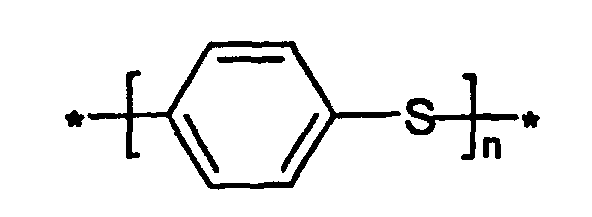
- Polyphenylene sulfide (PPS) is a partially crystalline polymer with the general formula: where n> 1 and the polymer has at least a molecular weight (M w ) of greater than 200 g / mol.
- liquid-crystalline plastics known per se can also be used.
- materials which can be processed thermoplastically are advantageous. Particularly suitable materials are described, for example, in Saechtling, Kunststoff-Taschenbuch, Hanser-Verlag, 27th edition, on pages 517 to 521, to which reference is made.
- Materials which can advantageously be used are polyterephthalates, polyisophthalates, PET-LCP, PBT-LCP, poly (mphenylene isophthalamide), PMPI-LCP, poly (p-phenylene phthalimide), PPTA-LCP, polyarylates, PAR-LCP, polyester carbonates, PEC-LCP, polyazomethines, Polythioesters, polyester amides, polyester imides.
- Liquid-crystalline plastics such as copolyesters and copolyesteramides based on p-hydroxybenzoic acid are particularly advantageous.
- Mw weight average
- a suitable class of liquid crystalline polymers is described in US-A-4 161 470, which is incorporated by reference.
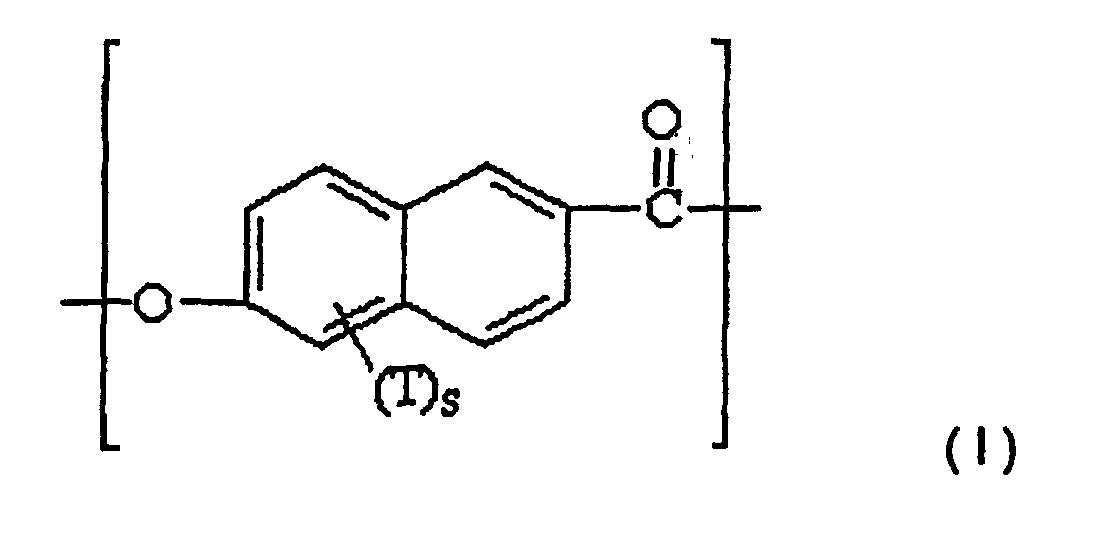
- naphthoyl copolyesters with recurring structural units of the formula I and II wherein T is selected from an alkyl radical, an alkoxy radical, each having 1 to 4 carbon atoms or a halogen, preferably chlorine, bromine or fluorine, s is zero or an integer 1, 2, 3 or 4, where in the case of several radicals T these are independently the same or different.
- the naphthoyl copolyesters contain 10 to 90 mol%, preferably 25 to 45 mol% of structural units of the formula I and 90 to 10 mol%, preferably 85 to 55 mol% of structural units of the formula II, the proportions of the structural units of Add formulas I and II to 100 mol%.
- liquid-crystalline polyesters suitable for the molding compositions according to the invention are described in EP-A-0 278 066 and US-A-3 637 595, to which reference is made.
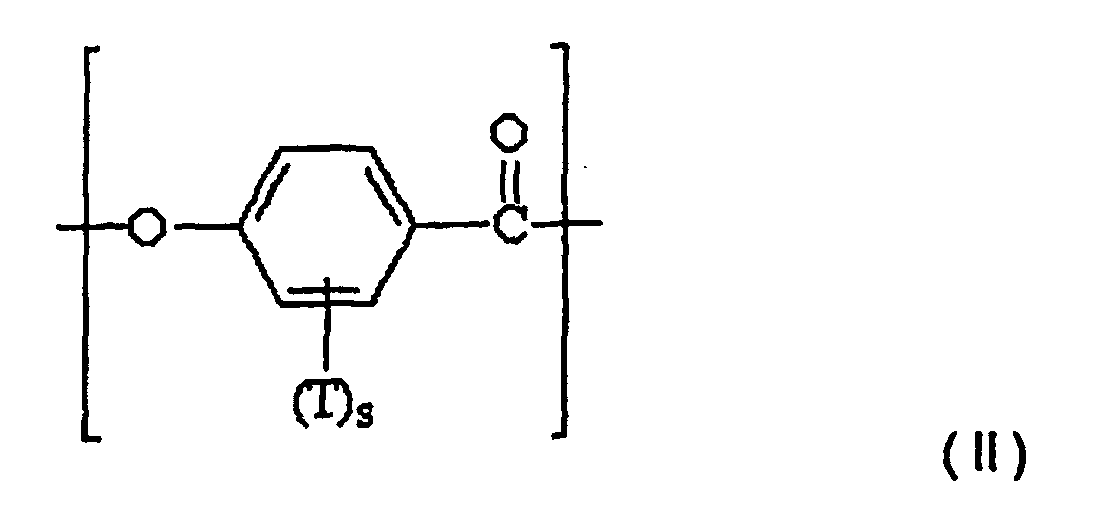
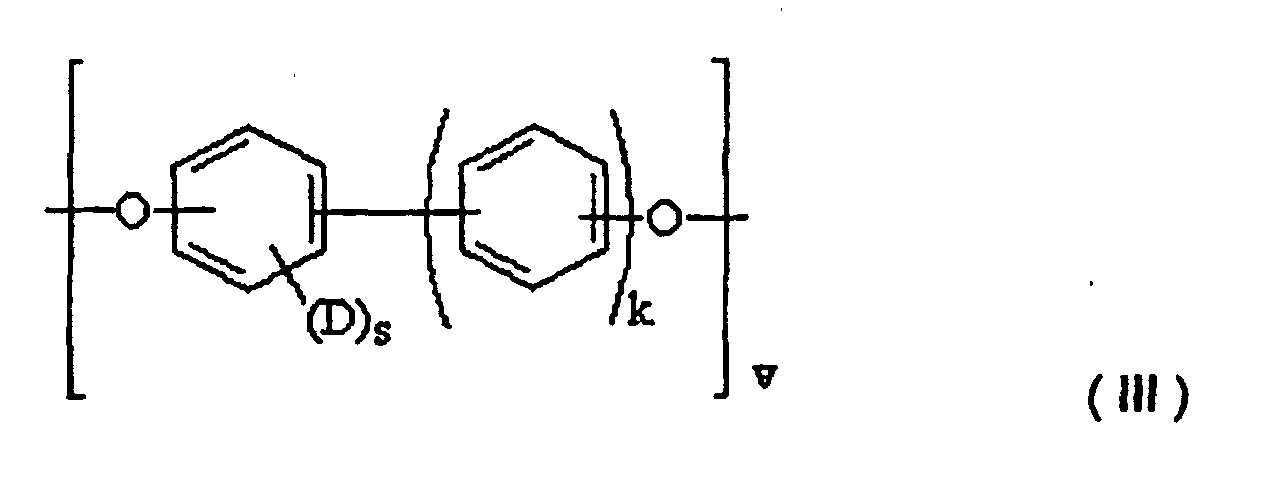
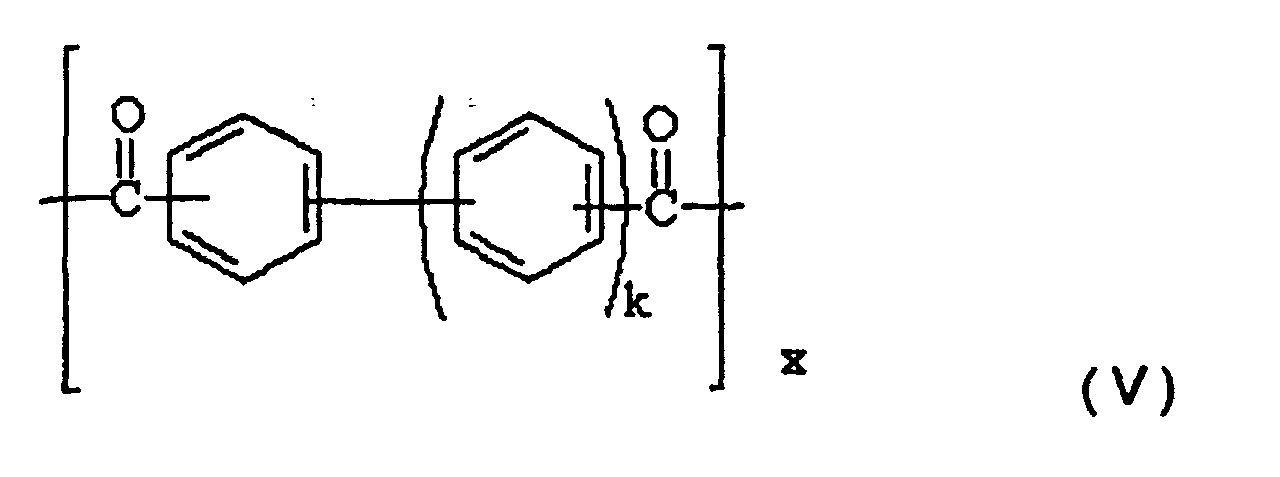
- the oxybenzoyl copolyesters listed there contain structural units of the formulas III, IV and V, it being possible for one or more of the structural units mentioned to be present.
- k is zero or 1
- v, w and x are integers that are equal to or greater than 1
- D is selected from an alkyl radical having 1 to 4 Carbon atoms, an aryl radical, an aralkyl radical each having 6 to 10 Carbon atoms or a halogen such as fluorine, chlorine or bromine, s has the above Meaning, with several radicals D these are independent of one another are the same or different.
- the sum of the index numbers v, w and x has values from 30 to 600.
- the oxybenzoyl copolyesters generally contain 0.6 to 60 preferably 8 to 48 mol% of structural units of the formula III, 0.4 to 98.5, preferably 5 to 85 mol% of structural units of the formula IV and 1 to 60, preferably 8 to 48 mol% of structural units of the formula V, the proportions of the structural units of the formulas III, IV and V to 100 mol%.
- copolyesters which only have structural units of the formulas III and V contain.
- These liquid crystalline polymers generally contain 40 to 60 mol% of the structural units of the formula III and 60 to 40 mol% of structural units of the Formula V. A molar ratio of 1 to 1 is preferred here.
- Such polyesters are described, for example, in US-A-4,600,765; US-A-4 614 790 and US-A-4 614 791 described what is referred to.
- copolyesters which, in addition to the structural units selected from the formulas III to V, including those of the formulas I and / or II contain; e.g. with a proportion of structural units of the formula I from 15 to 1 mol%, of formula II from 50 to 79 mol%, of formula III from 20 to 10 mol% and Formula V from 20 to 10 mol%.
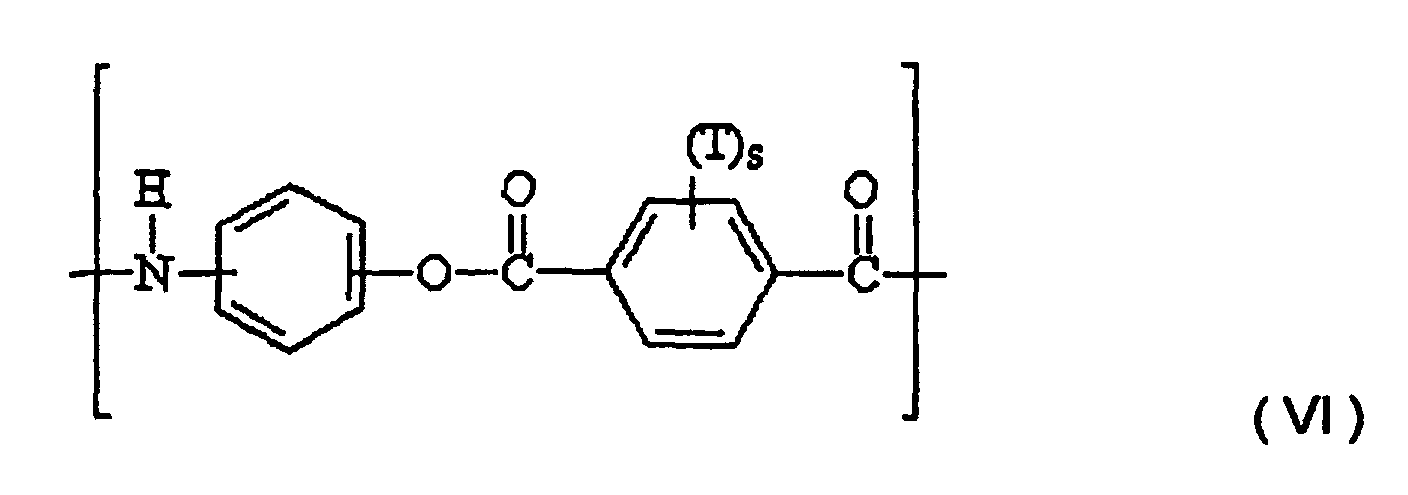
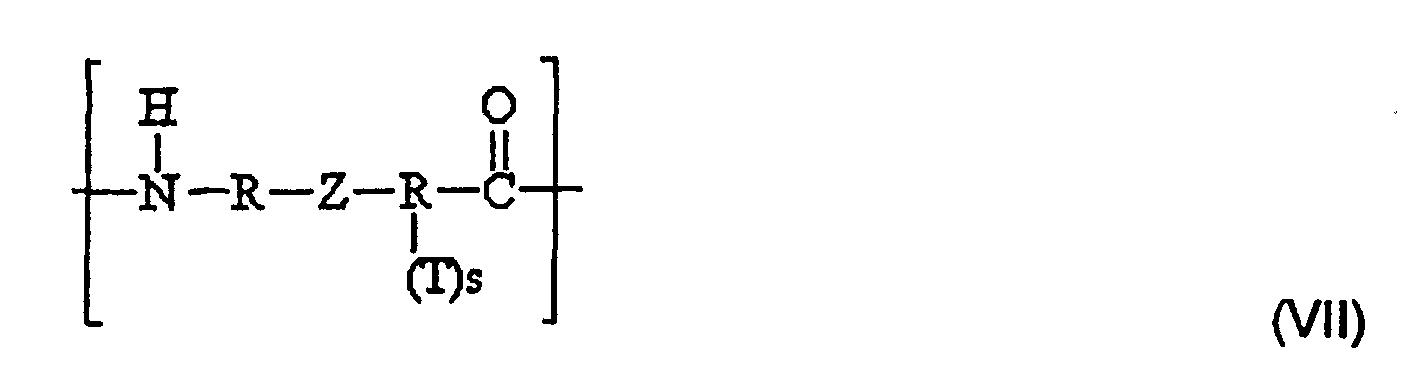
- Liquid-crystalline plastics which can be used particularly advantageously for the molding compositions according to the invention are also copolyesteramides which, in addition to one or more structural units of the formulas I to V, also additionally have at least one structural unit of the formula VI or VII contain, wherein R can be a phenylene or naphthoylene, Z can be a group CO or O (oxygen), T and s have the meaning described above.
- the suitable liquid crystalline plastics can be used individually or as mixtures.
- other suitable liquid-crystalline plastics additionally contain at least one structural unit VIII where T and s have the meaning described above.
- Both the liquid-crystalline plastic and the polyarylene sulfide can be customary Contain additives and reinforcing materials, such as fibers, in particular Glass fibers, carbon fibers, aramid fibers, mineral fibers, processing aids, polymeric lubricants, lubricants with external and / or internal lubrication, ultra high molecular weight polyethylene (PE-UHMW), polytetrafluoroethylene (PTFE) or a graft copolymer which is a product of an olefin polymer graft reaction and an acrylonitrile / styrene copolymer, antioxidants, adhesion promoters, Waxes, nucleating agents, mold release agents, glass balls, mineral fillers such as chalk, calcium carbonate, wollastonite, silicon dioxide, talc, mica, Montmorillonite, organically modified or unmodified, organically modified or unmodified layered silicates, with the liquid crystalline plastic or Polyarylene sulfide nano
- a mixture of a lubricant with external lubrication and a lubricant with internal lubrication can be used as the lubricant.
- the mixing ratio of lubricants with internal lubrication to lubricants with external lubrication can be from 0 to 100 to 100 to 0 parts by weight.
- Solid and / or liquid paraffins, montanic acid esters, partially saponified montanic acid esters, stearic acids, polar and / or non-polar polyethylene waxes, poly- ⁇ -olefin oligomers, silicone oils, polyalkylene glycols and perfluoroalkyl ethers can be used as lubricants with a predominantly external lubricating action.
- Soaps and esters are both lubricants with external and internal lubrication.
- a high molecular weight, oxidized and thus polar polyethylene wax is preferably used. It improves the tribological behavior and reduces the mechanical properties less.
- Stearyl stearate is preferably used as the lubricant with predominantly internal lubrication.
- Solid and liquid paraffins, stearic acids, non-polar and polar polyethylene waxes, poly- ⁇ -olefin oligomers, silicone oils, polyalkylene glycols and perfluoroalkyl ethers are lubricants with external lubrication.
- Soaps and esters, also partially saponified, are lubricants with both external and internal lubrication.
- Montanic acid esters and montanic acid esters, partially saponified, are lubricants with external lubrication.
- the preferred oxidized polyethylene wax is a high molecular weight, polar wax and generally has an acid number of 12 to 20 mg KOH / g and a viscosity of 3000 to 5000 mPa ⁇ s at 140 ° C.
- Lubricants with predominantly internal lubrication: fatty alcohols, Dicarboxylic acid esters, fatty acid esters, fatty acids, fatty acid soaps, fatty amides, Wax ester and stearyl stearate, the latter being preferred.
- Lubricants are described in Gumbleter / Müller, “Taschenbuch der Kunststoff-Additive”, 3rd edition, Carl Hanser Verlag Kunststoff / Vienna 1994, pages 478-504, what is referred to.
- the molding compositions according to the invention can be according to the conventional Manufacture and process processes for thermoplastics, such as Example kneading, extruding, injection molding, transfer molding and compression molding.
- the middle ones are used to develop good electrical conductivity in the component Particle dimensions of the graphite are decisive. To these particle dimensions not to reduce too much by high shear forces, it is especially necessary to practice gentle preparation and shaping processes.
- graphite types with an average particle size in the Range from 50 to 450 microns, advantageously in the range from 100 to 300 microns, particularly advantageous at 200 microns, with a degree of filling of less than 85 wt .-%, advantageous of less than or equal to 80% by weight, particularly advantageously from 60 to 80% by weight be incorporated into the matrix polymers according to the invention.
- IMC Injection Molding Compounder
- Molding presses Plastic pocket book , 25th edition, Carl Hanser-Verlag, Kunststoff (1998), ISBN 3-446-16498-7, page 113 ff., To which reference is made.
- the n molding compositions n according to the invention are pre-ground after the preparation step and before the molding process, for. B. on a grinder, a jaw crusher or a ball or pin mill.
- Particle sizes of the pre-ground molding compositions from 1500 to 50 ⁇ m, preferably from 1000 to 100 ⁇ m and particularly preferably from 800 to 150 ⁇ m are particularly advantageous for shaping by compression molding.
- the molding compositions according to the invention can be used in all areas in which conductive plastics are required. They can be used advantageously Molding compositions according to the invention for parts of fuel cells, in particular parts of end plates of a fuel cell, end plates and bipolar plates of Fuel cells. Manufactured from the molding compositions according to the invention Bipolar plates, end plates and end plate parts are more efficient for production Fuel cells with a specific output of more than one kilowatt per Suitable for kilograms, specific electrical conductivities can exceed Reach 100 S / cm and are chemically resistant to all operating materials Fuel cells, such as tap water, fully demineralized water, Acids, hydrogen, methanol and are also impermeable to them; see also also the German patent application with the file number. 10064656.5-45.
- the heat resistance of the molding compositions according to the invention is> 130 ° C. 1.82 MPa test load. Their bending strength is 30 to 50 MPa and is therefore well above the minimum requirement of 20 MPa. Since no machining conventional injection molding and injection molding processes are necessary high production rates can be achieved. By choosing more suitable Filler systems are accessible to components with the same electrical properties, the filler content reduced by 10 to 23% and the filler content reduced by 3 to 10% Component density with improved mechanical and rheological properties have. Therefore, can be made from the molding compositions of the invention Components are not only used in stationary fuel cells, but are especially suitable for use in mobile fuel cells.
- molding compositions were produced from liquid-crystalline plastic (Vectra A 950, Ticona GmbH, Frankfurt). Ketjenblack EC-600JD from Akzo Nobel with a dibutyl phthalate number of 480-510 ml / 100 g, an iodine absorption of 1000-1150 mg / g and a bulk density of 100-120 kg / m 3 was used as carbon black. This carbon black contains 7% of particles with a size of less than 125 ⁇ m. Thermocarb CF-300 from Conoco was used as graphite.
- a zinc powder from Eckart Dorn was used as zinc powder, which has an average particle size of 20 ⁇ m, a bulk density of 3.06 g / ml and 0.8% particles with a size of less than 45 ⁇ m (measured according to ISO 4497).
- the degree of filling is identical to the content of the filler.
- the carbon black content was 7.5% by weight, and the degree of filling was achieved by increasing the graphite or zinc content.
- the Resistance measurements were carried out according to ISO 3915-1981 on extrudate round strands carried out.
- the volume resistances specified in the above examples and comparative examples were determined on round strands as they emerge from the nozzle of the processing unit. These values are reduced by a factor of approx. 5-20 for the carbon black / graphite molding compounds, depending on the pressure level in the production of bipolar plates. This is due to the compacting effects of the material and its flow properties (pseudoplastic flow behavior with flow limit), since crack formation can be observed when it emerges from the nozzle, which leads to an increase in the specific resistance. This becomes clear from the specific resistances of bipolar plates which were produced from molding compositions according to Examples 41 and 43. These are listed in Table 3 as Examples 49 and 50.
- Bipolar plate blanks were formed by compression molding on a laboratory press of the type P300P made with Collin plunge edge tool. The plate surface was 160 * 160 mm. The mixtures of the raw materials were in the mold at 300 ° C heated, then pressed for 5 min at 100 - 250 bar and then at 50 - 125 bar in 900s from 300 ° C to 40 ° C, i.e. cooled down to ⁇ 0.3 ° C / s.
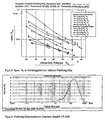
- Table 4 The results of the measurements on liquid-crystalline plastic are listed in Table 4 and plotted semi-logarithmically in FIG.
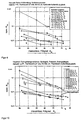
- Table 5 shows the results of the measurements on a polyphenylene sulfide (Fortron, Ticona GmbH, Frankfurt) and is shown graphically in FIG. 4.
- the degree of filling is identical to the content of the filler.
- carbon black / graphite mixtures the carbon black content is stated; the degree of filling was achieved by adding graphite.
- Bipolar plate blanks were formed by compression molding on a laboratory press of the type P300P made with Collin plunge edge tool. The plate surface was 160 * 160 mm. The mixtures of the raw materials were in the mold at 300 ° C heated, then pressed for 5 min at 100 - 250 bar and then at 50 - 125 bar in 900s from 300 ° C to 40 ° C, i.e. cooled down to ⁇ 0.3 ° C / s.
- LCP plastic
- soot soot
- Bipolar plate blanks were formed by compression molding on a laboratory press of the type P300P made with Collin plunge edge tool. The plate surface was 160 * 160 mm. The mixtures of the raw materials were in the mold at 300 ° C heated, then pressed for 5 min at 100 - 250 bar and then at 50 - 125 bar cooled to 40 ° C at 0.3 ° C / s.
- the latter screw configuration includes after the graphite filler (s) Conveying elements with double axial stowage and as few or no functional elements (mixing and kneading elements) as possible.
- the granulate was used to press-mold the plate specimens "Optimized preparation" setting before the shaping step with a Jaw crusher ground and fractionated with a 1000 ⁇ m sieve to get a better one To ensure bipolar plate homogeneity. This improves both mechanical as well as electrical properties, since on the one hand there are no limits in the device under test remain and on the other hand fillers coated with polymer (especially graphite) be broken up.
- test panels by compression molding Process parameters such as for the production of bipolar plate blanks (Table 7 & 8) used. Machines from Arburg (type Allrounder) and Krauss-Maffei used. The processing recommendations for Vectra (LCP) and Fortron (PPS) in the product brochures of Ticona GmbH were observed.
- LCP Vectra
- PPS Fortron
- For the production of test panels by strand laying was a laboratory press of the type P300P with plunge edge tool from Collin directly with that from an extruder (type ZSK 25 from Werner & Pfleiderer) escaping melt strand fed. The plate area was 160 * 160 mm.
- the smear strand temperature was 300 - 320 ° C, the temperature of the cavity Press 300 ° C.
- the melt was pressed for 5 min at 100-250 bar and then cooled to 40 ° C at 50 - 125 bar at 0.3 ° C / s.
- sample plates manufactured using standard injection molding have significantly higher volume resistances than molded test specimens.
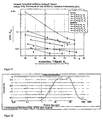
- the samples produced by depositing the strand, in this case flat strand sections, into a molding cavity show somewhat worse measured values than that of the molding (FIG. 10).
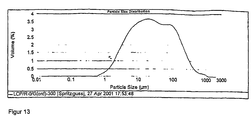
- FIGS. 12 and 13 the renewed shear energy-induced melting process in the plasticizing unit of the injection molding machine, and in particular by shear and deformation processes when the plasticized material is injected into the cavity, results in graphite particle damage, as occurs in compression molding or extrusion or injection molding, and in particular is not observed in such processes, which run in one step.
- Example 209 LCP / 7.5 R / G 242.5 72,99 0.0035
- Example 210 LCP / 7.5 R / G 192.5 68.37 0.0041
- Example 211 LCP / 7.5 R / G 142.5 61,89 0.0060
- Example 212 LCP / 7.5 R / G 92.5 51.9 0.0095
- Example 213 LCP / R-10 / G-140 62.56 0.0056
- Example 214 LCP / R-10 / G-90 52.66 0.0075
- Example 215 LCP / 12.5 R / G 87.5 53.28 0.0073
- Example 216 LCP / R-5 / G 0 5 13,45
- Example 217 LCP / 7.5 R / G 0 7.5 1.71
- Example 218 LCP / R-10 / G-0 10 0.51
- Example 219 LCP / 12.5 R / G 0 12.5 0.21 LCP, standard graphite CF-300 injection composition ⁇
Landscapes
- Chemical & Material Sciences (AREA)
- Chemical Kinetics & Catalysis (AREA)
- General Chemical & Material Sciences (AREA)
- Life Sciences & Earth Sciences (AREA)
- Electrochemistry (AREA)
- Sustainable Energy (AREA)
- Sustainable Development (AREA)
- Manufacturing & Machinery (AREA)
- Engineering & Computer Science (AREA)
- Health & Medical Sciences (AREA)
- Organic Chemistry (AREA)
- Polymers & Plastics (AREA)
- Medicinal Chemistry (AREA)
- Spectroscopy & Molecular Physics (AREA)
- Dispersion Chemistry (AREA)
- Physics & Mathematics (AREA)
- Composite Materials (AREA)
- Compositions Of Macromolecular Compounds (AREA)
- Fuel Cell (AREA)
- Conductive Materials (AREA)
- Laminated Bodies (AREA)
Description
Vor dem Hintergrund der Verknappung nichtregenerativer Energieträger ist die Forschung an Brennstoffzellen von Interesse. Eines der bislang kostenintensivsten Teile einer Brennstoffzelle ist die Bipolarplatte.
Derzeit werden zur Herstellung der Bipolarplatten V2A- und V4A-Stähle verwendet. Nachteilig sind hierbei die hohen Kosten des Materials, die schwierige Bearbeitung, die oftmals nicht ausreichende Korrosionsbeständigkeit sowie das hohe Gewicht, da die Dichten im Bereich von 7-8 g/ml liegen.
Aluminium ist mit Dichten im Bereich von 2,7 g/ml zwar leichter, aber ebenfalls kostenintensiv und bildet Oxidschichten aus, die zur Erhöhung des Oberflächenwiderstandes führen.
Graphit besitzt eine Dichte von 2,24 g/ml, jedoch ist die mechanische Stabilität gering, so daß die Dicke nicht beliebig reduziert werden kann. Durch Gaspermeation in die Schichtgitterstruktur treten darüber hinaus weitere Probleme auf.
Um diese Nachteile zu beheben, wurden zum Beispiel Graphit-Polymer-Composite auf Duromerharzbasis entwickelt. Das US-Patent 4 339 322 offenbart Compounds auf Basis fluorierter und teilfluorierter Polymere. Nachteilig sind hierbei jedoch die mangelnde Rezyklierbarkeit und hohe Zykluszeiten bei der Produktion.
Es ist bekannt, daß Ruß/Polymer-Compounds in Folge ihrer Struktur schon bei 5 bis 20 Gewichtsprozent Rußgehalt Grenzleitfähigkeiten von etwa 10 S/cm besitzen. Nachteilig bei diesen Formmassen ist jedoch deren schlechte Fließfähigkeit, die sich nachteilig auf die Verarbeitbarkeit auswirkt.
Die erfindungsgemäßen Formmassen können vorteilhaft noch Gleitmittel mit innerer und äußerer Gleitwirkung enthalten, die nach der Compoundierung auch entfernt werden können.
Verglichen mit herkömmlichen Rußcompounds besitzen die erfindungsgemäßen Formmassen bessere elektrische Leitfähigkeiten und Wärmeleitfähigkeiten bei verbesserter Fließfähigkeit und verbesserten mechanischen Eigenschaften. Verglichen mit Graphitcompounds besitzen die erfindungsgemäßen Formmassen eine gleiche elektrische Leitfähigkeit und ähnliche Wärmeleitfähigkeit bei reduzierter Dichte und höherer Festigkeit.
Als Ruß können Leitfähigkeitsruße mit einer spezifischen Oberfläche von 500 bis 1500 m2/g, vorteilhaft von 800 bis 1250 m2/g, eingesetzt werden. Die erfindungsgemäß geeigneten Ruße haben darüber hinaus eine Dibutylphthalatzahl von 100 bis 700 ml/100g, vorteilhaft von 200 bis 700 ml/100g, besonders vorteilhaft von 300 bis 520 ml/100g, insbesondere in den Bereichen von 300 bis 345 ml/100g und 470 bis 520 ml/100g. Die Teilchengrößen der Ruße in der Polymermatrix der Formmasse liegen im Bereich von 0,01 µm bis 2 µm, vorteilhaft in den Bereichen von 0,05 µm bis 0,15 µm. Die Primärteilchengröße liegt im Bereich von 0,02 µm bis 0,05 µm. Die verwendeten Ruße besitzen Agglomerat-Teilchengrößen von 10-50 µm, Dichten von 0,1 bis 1,6 g/ml, spezifische elektrische Widerstände im Bereich von 10 bis 80*10-4 Ω*cm, vorteilhaft von 30 bis 50*10-4 Ω*cm, insbesondere 40*10-4 Ω*cm und niedrige Wärmeleitfähigkeiten von weniger als 0,15 W/m*K, insbesondere 0,07 W/m*K. Die elektrischen Leitfähigkeiten im Verhältnis zum Füllgrad (der Perkolationskurvenverlauf) läßt sich durch die Struktur des Rußes in der Matrix modifizieren, so daß der Fachmann durch Änderungen beim Scherenergieeintrag und der Verweilzeit die Produkteigenschaften leicht kontrollieren und optimieren kann
Vorteilhaft liegt die Partikelgröße im Bereich von 10 bis 1000 µm, besonders vorteilhaft von 10 bis 800 µm, ganz besonders vorteilhaft von 10 bis 500 µm. Die mittlere Partikelgröße liegt vorteilhaft im Bereich von 100 bis 300 µm, besonders vorteilhaft bei 200 µm. Die Zahlenangaben sind hierbei unkorrigierte Werte, die um die Fehlergrenzen der verwendeten Meßverfahren nach kleineren oder größeren Werten korrigiert werden müssen. Der verwendete Graphit besitzt außerdem hohe Wärmeleitfähigkeiten von mehr als 100 W/m K, vorteilhaft mehr als 180 W/m K, besonders vorteilhaft mehr als 200 W/m K. Die spezifischen elektrischen Widerstände liegen im Allgmeinen bei 5 bis 15* 10-4 Ω cm, vorteilhaft bei weniger als 10 * 10-4 Ω cm, insbesondere bei etwa 8 * 10-4 Ω cm.
Das verwendete Metallpulver besitzt vorteilhaft eine Fülldichte nach ISO 3923/1 von 1 bis 4 g/ml, vorteilhaft von 2,7 bis 3,2 g/ml, besonders vorteilhaft von 2,8 bis 3,1 g/ml.
Das verwendete Metallpulver besitzt Teilchengrößen bis 45 µm zu einem Anteil von 5 Gew.-%, vorteilhaft von 4 bis 1 Gew.-%, besonders vorteilhaft von weniger als 1 Gew.-%, insbesondere 0,8 Gew.-%. Die Teilchengrößen von größer 45 µm liegen zu mehr als 95 Gew.-% vor, vorteilhaft zu 96 bis 99 Gew.-%, besonders vorteilhaft bei mehr als 99 Gew.-%, insbesondere 99,2 Gew.-%. Vorteilhaft einsetzbar als Metallpulver sind zum Beispiel Aluminium, Chrom, Eisen, Gold, Iridium, Kobalt, Kupfer, Magnesium, Mangan, Molybdän, Nickel, Niob, Osmium, Palladium, Platin, Rhenium, Rhodium, Samarium, Silber, Titan, Vanadium, Wismut, Wolfram, Zink, Zinn, Legierungen oder Mischungen aus zwei oder mehreren dieser Metalle, auch Mischungen und/oder Legierungen, die bei den Verarbeitungsbedingungen flüssig sind. Nur beispielhaft für Legierungen seien an dieser Stelle Messing, Stahl, V2A-Stahl, oder V4A-Stahl genannt.

Weitere geeignete flüssigkristalline Kunststoffe enthalten neben den Struktureinheiten I bis VII noch zusätzlich mindestens eine Struktureinheit VIII

Paraffine fest und flüssig, Stearinsäuren, Polyethylenwachse unpolar und polar, Poly-α-Olefin Oligomere, Silikonöle, Polyalkylenglykole und Perfluoralkylether sind Gleitmittel mit äußerer Gleitwirkung. Seifen und Ester, auch teilverseifte, sind Gleitmittel mit sowohl äußerer als auch innerer Gleitwirkung. Montansäureester und Montansäureester teilverseift sind Gleitmittel mit äußerer Gleitwirkung.
Das bevorzugte oxidierte Polyethylenwachs ist ein hochmolekulares, polares Wachs und besitzt im allgemeinen eine Säurezahl von 12 bis 20 mg KOH/g und eine Viskosität von 3000 bis 5000 mPa·s bei 140°C.
Spritzgieß-Compoundieren ohne Spritzprägeeinheit: siehe R. Jensen: Synergien intelligent nutzen - IMC-Spritzgießcompounder erhöht Wertschöpfung; Kunststoffe plast europe, 9/2001; sowie R. Jensen: Synergie schafft neue Technologie; Kunststoffe plast europe 10/2001, worauf Bezug genommen wird.
Spritzgieß-Compoundieren mit Spritzprägeeinheit (sogenanntes Spritzprägen): siehe F. Johannaber, W. Michaeli: Handbuch Spritzgiessen, Carl Hanser-Verlag, München (2001), ISBN 3-446-15632-1, Seite 417; sowie H. Saechtling:
Kunststofftaschenbuch, 27. Ausgabe, Carl Hanser-Verlag, München (1998), ISBN 3-446-19054-6, Seite 226, worauf Bezug genommen wird.
Strangablegen: T. Hofer: Fillflow - A comparison between simulation and experiment in the case of the extrusion compression moulding. Proceedings of the 3rd ESAFORM Conference on Material Forming, Stuttgart (2000); ISBN 3-00-005861-3; sowie R. D. Krause, Dissertation, Universität Stuttgart, Fakultät Verfahrenstechnik, Institut für Kunststofftechnologie (1998): Modellierung und Simulation rheologischthermodynamischer Vorgänge bei der Herstellung großflächiger thermoplastischer Formteile mittels Kompressionsformverfahren, worauf Bezug genommen wird.
| Füllgrad M / % | Spez. Widerstand RD / Ω cm | Dichte / g/ml | |
| Ruß | |||
| Vergleichsbeispiel 1 | 4,76 | 68,45 | 1,33 |
| Vergleichsbeispiel 2 | 6,98 | 20,67 | 1,3 |
| Vergleichsbeispiel 3 | 9,09 | 4,87 | 1,27 |
| Vergleichsbeispiel 4 | 11,11 | 2,59 | 1,24 |
| Vergleichsbeispiel 5 | 13,04 | 1,12 | 1,21 |
| Graphit | |||
| Vergleichsbeispiel 6 | 33,33 | 999,72 | 1,68 |
| Vergleichsbeispiel 7 | 42,86 | 29,33 | 1,76 |
| Vergleichsbeispiel 8 | 50 | 11,82 | 1,82 |
| Vergleichsbeispiel 9 | 55,56 | 4,16 | 1,87 |
| Vergleichsbeispiel 10 | 60 | 2,18 | 1,9 |
| Vergleichsbeispiel 11 | 66,67 | 0,67 | 1,96 |
| Vergleichsbeispiel 12 | 75 | 0,36 | 2,03 |
| Ruß/Graphit | |||
| Beispiel 13 | 14,89 | 11,77 | 1,39 |
| Beispiel 14 | 18,37 | 7,59 | 1,42 |
| Beispiel 15 | 21,57 | 6,69 | 1,46 |
| Beispiel 16 | 24,53 | 4,34 | 1,49 |
| Beispiel 17 | 27,28 | 3,49 | 1,51 |
| Beispiel 18 | 61,47 | 0,35 | 1,86 |
| Beispiel 19 | 67,48 | 0,25 | 1,93 |
| Beispiel 20 | 75,46 | 0,19 | 1,99 |
| Füllgrad M / % | Spez. Widerstand RD / Ω cm | Dichte / g/ml | |
| Ruß | |||
| Vergleichsbeispiel 21 | 4,76 | 137,12 | 1,34 |
| Vergleichsbeispiel 22 | 6,98 | 22,94 | 1,3 |
| Vergleichsbeispiel 23 | 9,09 | 4,01 | 1,28 |
| Vergleichsbeispiel 24 | 11,11 | 2,86 | 1,24 |
| Vergleichsbeispiel 25 | 13,04 | 1,53 | 1,21 |
| Graphit | |||
| Vergleichsbeispiel 26 | 33,33 | 1021 | 1,68 |
| Vergleichsbeispiel 27 | 50 | 13,42 | 1,83 |
| Vergleichsbeispiel 28 | 60 | 2,49 | 1,9 |
| Vergleichsbeispiel 29 | 67 | 1,24 | 1,97 |
| Vergleichsbeispiel 30 | 75 | 0,6 | 2,04 |
| Zink | |||
| Vergleichsbeispiel 31 | 78,57 | 575,12 | 2,64 |
| Vergleichsbeispiel 32 | 80 | 266,45 | 2,67 |
| Vergleichsbeispiel 33 | 81,25 | 0,72 | 2,69 |
| Vergleichsbeispiel 34 | 82,35 | 0,01 | 2,71 |
| Vergleichsbeispiel35 | 83,33 | 0,005 | 2,72 |
| Ruß/Graphit | |||
| Beispiel 36 | 14,89 | 14,68 | 1,39 |
| Beispiel 37 | 21,57 | 7,5 | 1,46 |
| Beispiel 38 | 27,28 | 3,55 | 1,51 |
| Beispiel 39 | 40,29 | 2,12 | 1,64 |
| Beispiel 40 | 51,81 | 1,29 | 1,76 |
| Beispiel 41 | 71,83 | 0,136 | 1,98 |
| Beispiel 42 | 75,31 | 0,086 | 2,01 |
| Beispiel 43 | 76,74 | 0,077 | 2,03 |
| Ruß/Zink | |||
| Beispiel 44 | 51,22 | 361,41 | 2,17 |
| Beispiel 45 | 60,78 | 85,77 | 2,33 |
| Beispiel 46 | 75,3 | 0,04 | 2,58 |
| Beispiel 47 | 80,19 | 0,01 | 2,66 |
| Beispiel 48 | 81,13 | 0,002 | 2,68 |
| Beispiel | Massestrom Polymer / kg/h | Massestrom Ruß / kg/h | Massestrom Graphit / kg/h | Spez. Widerstand Compound / Ω cm | Spez. Widerstand Platte / Ω cm |
| 49 | 1,425 | 0,075 | 3,75 | 0,136 | 0,0187 |
| 50 | 1,425 | 0,075 | 4,5 | 0,077 | 0,0042 |
| M / Gew.% | RD (Rundstrang ) / Ω cm | RD (Bipolarplatte) / Ω cm | Dichte / g/ml | |
| LCP, nur Ruß | ||||
| Vergleichsbeispiel 51 | 5 | 35,49 | 13,45 | 1,42 |
| Vergleichsbeispiel52 | 7,5 | 5,24 | 1,71 | 1,43 |
| Vergleichsbeispiel 53 | 10 | 2,04 | 0,51 | 1,44 |
| Vergleichsbeispiel 54 | 12,5 | 1,84 | 0,21 | 1,45 |
| Vergleichsbeispiel 55 | 15 | 1,00 | 0,20 | 1,46 |
| LCP, nur Graphit | ||||
| Vergleichsbeispiel 56 | 50 | 5,24 | 0,18 | 1,72 |
| Vergleichsbeispiel 57 | 60 | 0,63 | 0,05 | 1,81 |
| Vergleichsbeispiel 58 | 66,6 | 0,52 | 0,027 | 1,87 |
| Vergleichsbeispiel 59 | 71,4 | 0,33 | 0,019 | 1,91 |
| Vergleichsbeispiel 60 | 75 | 0,25 | 0,009 | 1,95 |
| LCP, 5% Ruß und Graphit | ||||
| Beispiel 61 | 51,17 | 1,26 | 0,064 | 1,71 |
| Beispiel 62 | 61,24 | 0,40 | 0,019 | 1,80 |
| Beispiel 63 | 67,7 | 0,21 | 0,012 | 1,86 |
| Beispiel 64 | 72,45 | 0,13 | 0,009 | 1,92 |
| Beispiel 65 | 75,87 | 0,12 | 0,005 | 1,95 |
| LCP, 7,5% Ruß und Graphit | ||||
| Beispiel 66 | 51,9 | 0,51 | 0,032 | 1,71 |
| Beispiel 67 | 61,89 | 0,17 | 0,016 | 1,81 |
| Beispiel 68 | 68,365 | 0,10 | 0,007 | 1,87 |
| Beispiel 69 | 72,99 | 0,10 | 0,006 | 1,92 |
| LCP, 10% Ruß und Graphit | ||||
| Beispiel 70 | 52,66 | 0,18 | 0,022 | 1,73 |
| Beispiel 71 | 62,66 | 0,12 | 0,012 | 1,82 |
| LCP, 12,5% Ruß | ||||
| Beispiel 72 | 53,275 | 0,14 | 0,019 | 1,74 |
| M / Gew.-% | RD (Rundstrang ) / Ω cm | RD (Bipolarplatte) / Ω cm | Dichte / g/ml | |
| PPS, nur Ruß | ||||
| Vergleichsbeispiel 73 | 5 | 111,77 | 13,45 | 1,42 |
| Vergleichsbeispiel 74 | 10 | 1,00 | 1,71 | 1,43 |
| Vergleichsbeispiel 75 | 15 | 0,89 | 0,51 | 1,44 |
| PPS, nur Graphit | ||||
| Vergleichsbeispiel 76 | 50 | 5,26 | 0,99 | 1,72 |
| Vergleichsbeispiel77 | 60 | 0,93 | 0,26 | 1,81 |
| Vergleichsbeispiel 78 | 66,6 | 0,64 | 0,093 | 1,87 |
| Vergleichsbeispiel 79 | 71,4 | 0,36 | 0,085 | 1,91 |
| Vergleichsbeispiel 80 | 75 | 0,24 | 0,076 | 1,95 |
| PPS, 5 % Ruß und Graphit | ||||
| Beispiel 81 | 51,17 | 0,32 | 0,048 | 1,69 |
| Beispiel 82 | 61,24 | 0,17 | 0,035 | 1,77 |
| Beispiel 83 | 67,7 | 0,12 | 0,023 | 1,84 |
| Beispiel 84 | 72,45 | 0,09 | 0,013 | 1,90 |
| Beispiel 85 | 75,87 | 0,10 | 0,009 | 1,94 |
| PPS, 10 % Ruß und Graphit | ||||
| Beispiel 86 | 52,66 | 0,08 | 0,027 | 1,70 |
| Beispiel 87 | 62,56 | 0,06 | 0,01 | 1,78 |
| Beispiel 88 | 68,86 | 0,04 | 0,008 | 1,85 |
| PPS, 15 % Ruß und Graphit | ||||
| Beispiel 89 | 53,93 | 0,03 | 0,014 | 1,70 |
| LCP, Standard Graphit CF-300 | Zusammensetzung | M / Gew.-% | Spez. Widerstand RD / Ω cm |
| Vergleichsbeispiel 90 | LCP/R-0/G-300 | 75 | 0,0043 |
| Vergleichsbeispiel 91 | LCP/R-0/G-250 | 71,4 | 0,0048 |
| Vergleichsbeispiel 92 | LCP/R-0/G-200 | 66,6 | 0,0065 |
| Vergleichsbeispiel 93 | LCP/R-0/G-150 | 60 | 0,0105 |
| Vergleichsbeispiel 94 | LCP/R-0/G-100 | 50 | 0,0277 |
| Beispiel 95 | LCP/R-5/G-295 | 75,87 | 0,0028 |
| Beispiel 96 | LCP/R-5/G-245 | 72,45 | 0,0033 |
| Beispiel 97 | LCP/R-5/G-195 | 67,7 | 0,0045 |
| Beispiel 98 | LCP/R-5/G-145 | 61,24 | 0,0063 |
| Beispiel 99 | LCP/R-5/G-95 | 51,17 | 0,0127 |
| Beispiel 100 | LCP/R-7,5/G-267,5 | 74,48 | 0,0034 |
| Beispiel 101 | LCP/R-7,5/G-242,5 | 72,99 | 0,0035 |
| Beispiel 102 | LCP/R-7,5/G-192,5 | 68,37 | 0,0041 |
| Beispiel 103 | LCP/R-7,5/G-142,5 | 61,89 | 0,0060 |
| Beispiel 104 | LCP/R-7,5/G-92,5 | 51,9 | 0,0095 |
| Beispiel 105 | LCP/R-10/G-190 | 68,96 | - |
| Beispiel 106 | LCP/R-10/G-140 | 62,56 | 0,0056 |
| Beispiel 107 | LCP/R-10/G-90 | 52,66 | 0,0075 |
| Beispiel 108 | LCP/R-12,5/G-87,5 | 53,28 | 0,0073 |
| LCP, Micronized Graphit, CF-300 | Zusammensetzung | M / Gew.-% | Spez. Widerstand RD / Ω cm |
| Vergleichsbeispiel 109 | LCP/R-0/G-400 | 80 | 0,0050 |
| Vergleichsbeispiel 110 | LCP/R-0/G-375 | 78,95 | 0,0055 |
| Vergleichsbeispiel 111 | LCP/R-0/G-350 | 77,78 | 0,0068 |
| Vergleichsbeispiel 112 | LCP/R-0/G-325 | 76,47 | 0,0075 |
| Vergleichsbeispiel 113 | LCP/R-0/G-300 | 75 | 0,0086 |
| Vergleichsbeispiel 114 | LCP/R-0/G)-250 | 71,4 | 0,0110 |
| Vergleichsbeispiel 115 | LCP/R-0/G-200 | 66,6 | 0,0160 |
| Vergleichsbeispiel 116 | LCP/R-0/G-150 | 60 | 0,0308 |
| Vergleichsbeispiel 117 | LCP/R-0/G-100 | 50 | 0,0865 |
| Beispiel 118 | LCP/R-5/G-295 | 75,87 | 0,0066 |
| Beispiel 119 | LCP/R-5/G-245 | 72,45 | 0,0083 |
| Beispiel 120 | LCP/R-5/G-195 | 67,7 | 0,0118 |
| Beispiel 121 | LCP/R-5/G-145 | 61,24 | 0,0169 |
| Beispiel 122 | LCP/R-5/G-95 | 51,17 | 0,0392 |
| Beispiel 123 | LCP/R-7,5/G-267,5 | 74,48 | 0,0053 |
| Beispiel 124 | LCP/R-7,5/G-242,5 | 72,99 | 0,0073 |
| Beispiel 125 | LCP/R-7,5/G-192,5 | 68,37 | 0,0103 |
| Beispiel 126 | LCP/R-7,5/G-142,5 | 61,89 | 0,0139 |
| Beispiel 127 | LCP/R-7,5/G-92,5 | 51,9 | 0,0295 |
| Beispiel 128 | LCP/R-10/G-190 | 68,96 | 0,0071 |
| Beispiel 129 | LCP/R-10/G-140 | 62,56 | 0,0105 |
| Beispiel 130 | LCP/R-10/G-90 | 52,66 | 0,0194 |
| Beispiel 131 | LCP/R-12,5/G-87,5 | 53,28 | - |
| LCP, Standard Graphit CF-300 Optimierte Aufbereitung | Zusammensetzung | M / Gew.-% | Spez. Widerstand RD / Ω cm |
| Vergleichsbeispiel 132 | LCP/R-0/G-300 | 75 | 0,0043 |
| Vergleichsbeispiel 133 | LCP/R-0/G-250 | 71,4 | 0,0048 |
| Vergleichsbeispiel 134 | LCP/R-0/G-200 | 66,6 | 0,0065 |
| Vergleichsbeispiel135 | LCP/R-0/G-150 | 60 | 0,0105 |
| Vergleichsbeispiel 136 | LCP/R-0/G-100 | 50 | 0,0277 |
| Beispiel 137 | LCP/R-5/G-295 | 75,87 | 0,0028 |
| Beispiel 138 | LCP/R-5/G-245 | 72,45 | 0,0033 |
| Beispiel 139 | LCP/R-5/G-195 | 67,7 | 0,0045 |
| Beispiel 140 | LCP/R-5/G-145 | 61,24 | 0,0062 |
| Beispiel 141 | LCP/R-5/G-95 | 51,17 | 0,0127 |
| Beispiel 142 | LCP/R-7,5/G-267,5 | 74,48 | 0,0034 |
| Beispiel 143 | LCP/R-7,5/G-242,5 | 72,99 | 0,0035 |
| Beispiel 144 | LCP/R-7,5/G-192,5 | 68,37 | 0,0041 |
| Beispiel 145 | LCP/R-7,5/G-142,5 | 61,89 | 0,0060 |
| Beispiel 146 | LCP/R-7,5/G-92,5 | 51,9 | 0,0095 |
| Beispiel 147 | LCP/R-10/G-190 | 68,96 | -- |
| Beispiel 148 | LCP/R-10/G-140 | 62,56 | 0,0056 |
| Beispiel 149 | LCP/R-10/G-90 | 52,66 | 0,0075 |
| Beispiel 150 | LCP/R-12,5/G-87,5 | 53,28 | 0,0073 |
| LCP, Standard Graphit CF-300 Standard Aufbereitung | Zusammensetzung | M / Gew.-% | Spez. Widerstand RD / Ω cm |
| Vergleichsbeispiel 151 | LCP/R-0/G-300 | 75 | 0,0093 |
| Vergleichsbeispiel152 | LCP/R-0/G-250 | 71,4 | 0,0190 |
| Vergleichsbeispiel 153 | LCP/R-0/G-200 | 66,6 | 0,0275 |
| Vergleichsbeispiel 154 | LCP/R-0/G-150 | 60 | 0,0497 |
| Vergleichsbeispiel 155 | LCP/R-0/G-100 | 50 | 0,1819 |
| Beispiel 156 | LCP/R-5/G-295 | 75,87 | 0,0049 |
| Beispiel 157 | LCP/R-5/G-245 | 72,45 | 0,0087 |
| Beispiel 158 | LCP/R-5/G-195 | 67,7 | 0,0122 |
| Beispiel 159 | LCP/R-5/G-145 | 61,24 | 0,0195 |
| Beispiel 160 | LCP/R-5/G-95 | 51,17 | 0,0642 |
| Beispiel 161 | LCP/R-7,5/G-267,5 | 74,48 | - |
| Beispiel 162 | LCP/R-7,5/G-242,5 | 72,99 | 0,0062 |
| Beispiel 163 | LCP/R-7,5/G-192,5 | 68,37 | 0,0066 |
| Beispiel 164 | LCP/R-7,5/G-142,5 | 61,89 | 0,0155 |
| Beispiel 165 | LCP/R-7,5/G-92,5 | 51,9 | 0,0319 |
| Beispiel 166 | LCP/R-10/G-190 | 68,96 | - |
| Beispiel 167 | LCP/R-10/G-140 | 62,56 | 0,0124 |
| Beispiel 168 | LCP/R-10/G-90 | 52,66 | 0,0221 |
| Beispiel 169 | LCP/R-12,5/G-87,5 | 53,28 | 0,0194 |
| PPS, Standard Graphit CF-300 Optimierte Aufbereitung | Zusammensetzung | M / Gew.-% | Spez. Widerstand RD / Ω cm |
| Beispiel 170 | PPS/R-15/G-85 | 53,93 | 0,0067 |
| Beispiel 171 | PPS/R-10/G-190 | 68,86 | 0,0055 |
| Beispiel 172 | PPS/R-10/G-140 | 62,56 | 0,0053 |
| Beispiel 173 | PPS/R-10/G-90 | 52,66 | 0,0112 |
| Beispiel 174 | PPS/R-5/G-295 | 75,87 | 0,0065 |
| Beispiel 175 | PPS/R-5/G-245 | 72,45 | 0,0074 |
| Beispiel 176 | PPS/R-5/G-195 | 67,7 | 0,0088 |
| Beispiel 177 | PPS/R-5/G-145 | - 61,24 | 0,0106 |
| Beispiel 178 | PPS/R-5/G-95 | 51,17 | 0,0196 |
| Vergleichsbeispiel 179 | PPS/R-0/G-300 | 75 | 0,0198 |
| Vergleichsbeispiel 180 | PPS/R-0/G-250 | 71,4 | 0,0193 |
| Vergleichsbeispiel 181 | PPS/R-0/G-200 | 66,6 | 0,0332 |
| Vergleichsbeispiel 182 | PPS/R-0/G-150 | 60 | 0,0372 |
| Vergleichsbeispiel 183 | PPS/R-0/G-100 | 50 | 0,0685 |
| PPS, Standard Graphit CF-300 Standard Aufbereitung | Zusammensetzung | M / Gew.-% | Spez. Widerstand RD / Ω cm |
| Beispiel 184 | PPS/R-15/G-85 | 53,93 | 0,0142 |
| Beispiel 185 | PPS/R-10/G-190 | 68,86 | 0,0080 |
| Beispiel 1.86 | PPS/R-10/G-140 | 62,56 | 0,0096 |
| Beispiel 187 | PPS/R-10/G-90 | 52,66 | 0,0271 |
| Beispiel 188 | PPS/R-5/G-295 | 75,87 | 0,0088 |
| Beispiel 189 | PPS/R-5/G-245 | 72,45 | 0,0132 |
| Beispiel 190 | PPS/R-5/G-195 | 67,7 | 0,0229 |
| Beispiel 191 | PPS/R-5/G-145 | 61,24 | 0,0346 |
| Beispiel 192 | PPS/R-5/G-95 | 51,17 | 0,0481 |
| Vergleichsbeispiel 193 | PPS/R-0/G-300 | 75 | 0,0762 |
| Vergleichsbeispiel 194 | PPS/R-0/G-250 | 71,4 | 0,0849 |
| Vergleichsbeispiel 195 | PPS/R-0/G-200 | 66,6 | 0,0932 |
| Vergleichsbeispiel 196 | PPS/R-0/G-150 | 60 | 0,2602 |
| Vergleichsbeispiel 197 | PPS/R-0/G-100 | 50 | 0,9852 |
| LCP, Standard Graphit CF-300 Graphit Formpressen | Zusammensetzung | M / Gew.-% | Spez. Widerstand SPez. Widerstand RD / Ω cm |
| Vergleichsbeispiel 198 | LCP/R-0/G-300 | 75 | 0,0043 |
| Vergleichsbeispiel 199 | LCP/R-0/G-250 | 71,4 | 0,0048 |
| Vergleichsbeispiel 200 | LCP/R-0/G-200 | 66,6 | 0,0065 |
| Vergleichsbeispiel 201 | LCP/R-0/G-150 | 60 | 0,0105 |
| Vergleichsbeispiel 202 | LCP/R-0/G-100 | 50 | 0,0277 |
| Beispiel 203 | LCP/R-5/G-295 | 75,87 | 0,0028 |
| Beispiel 204 | LCP/R-5/G-245 | 72,45 | 0,0033 |
| Beispiel 205 | LCP/R-5/G-195 | 67,7 | 0,0045 |
| Beispiel 206 | LCP/R-5/G-145 | 61,24 | 0,0063 |
| Beispiel 207 | LCP/R-5/G-95 | 51,17 | 0,0127 |
| Beispiel 208 | LCP/R-7,5/G-267,5 | 74,48 | 0,0034 . |
| Beispiel 209 | LCP/R-7,5/G-242,5 | 72,99 | 0,0035 |
| Beispiel 210 | LCP/R-7,5/G-192,5 | 68,37 | 0,0041 |
| Beispiel 211 | LCP/R-7,5/G-142,5 | 61,89 | 0,0060 |
| Beispiel 212 | LCP/R-7,5/G-92,5 | 51,9 | 0,0095 |
| Beispiel 213 | LCP/R-10/G-140 | 62,56 | 0,0056 |
| Beispiel 214 | LCP/R-10/G-90 | 52,66 | 0,0075 |
| Beispiel 215 | LCP/R-12,5/G-87,5 | 53,28 | 0,0073 |
| Beispiel 216 | LCP/R-5/G-0 | 5 | 13,45 |
| Beispiel 217 | LCP/R-7,5/G-0 | 7,5 | 1,71 |
| Beispiel 218 | LCP/R-10/G-0 | 10 | 0,51 |
| Beispiel 219 | LCP/R-12,5/G-0 | 12,5 | 0,21 |
| LCP, Standard Graphit CF-300 Spritzguß | Zusammensetzung | M / Gew.-% | Spez. Wdersiand RD / Ω cm |
| Vergleichsbeispiel 220 | LCP/R-0/G-300 | 75 | 0,0177 |
| Vergleichsbeispiel 221 | LCP/R-0/G-250 | 71,4 | 0,0252 |
| Vergleichsbeispiel 222 | LCP/R-0/G-200 | 66,6 | 0,0427 |
| Vergleichsbeispiel 223 | LCP/R-0/G-150 | 60 | 0,0970 |
| Vergleichsbeispiel 224 | LCP/R-0/G-100 | 50 | 0,3285 |
| Beispiel 225 | LCP/R-5/G-295 | 75,87 | 0,0131 |
| Beispiel 226 | LCP/R-5/G-245 | 72,45 | 0,0235 |
| Beispiel 227 | LCP/R-5/G-195 | 67,7 | 0,0347 |
| Beispiel 228 | LCP/R-5/G-145 | 61,24 | 0,0439 |
| Beispiel 229 | LCP/R-5/G-95 | 51,17 | 0,1652 |
| Beispiel 230 | LCP/R-7,5/G-267,5 | 72,99 | 0,0168 |
| Beispiel 231 | LCP/R-7,5/G-242,5 | 68,37 | 0,0279 |
| Beispiel 232 | LCP/R-7,5/G-192,5 | 61,89 | 0,0363 |
| Beispiel 233 | LCP/R-7,5/G-142,5 | 51,9 | 0,0889 |
| Beispiel 234 | LCP/R-7,5/G-92,5 | ||
| Beispiel 235 | LCP/R-10/G-140 | 62,56 | 0,0299 |
| Beispiel 236 | LCP/R-10/G-90 | , 52,66 | 0,0459 |
| Beispiel 237 | LCP/R-12,5/G-87,5 | 53,28 | 0,0357 |
| Beispiel 238 | LCP/R-5/G-0 | 5 | 3,76 |
| Beispiel 239 | LCP/R-7,5/G-0 | 7,5 | 1,77 |
| Beispiel 240 | LCP/R-10/G-0 | 10 | 0,61 |
| Beispiel 241 | LCP/R-12,5/G-0 | 12,5 | 0,35 |
| LCP Standard Graphit CF-300 Strangablegen | Zusammensetzung | M / Gew.-% | Spez. Widerstand RD / Ω cm |
| Beispiel 242 | LCP/R-5/G-345 | 78,65 | 0,0041 |
| Beispiel 243 | LCP/R-5/G-320 | 77,38 | 0,0046 |
| Beispiel 244 | LCP/R-5/G-295 | 75,87 | 0,0049 |
| Beispiel 245 | LCP/R-5/G-245 | 72,45 | 0,0055 |
| Beispiel 246 | LCP/R-7,5/G-267,5 | 74,48 | 0,0051 |
| Beispiel 247 | LCP/R-7,5/G-242,5 | 72,99 | 0,0055 |
| Beispiel 248 | LCP/R-7,5/G-192,5 | 68,37 | 0,0064 |
| PPS, Standard Graphit CF-300 Formpressen | Zusammensetzung | M / Gew.-% | Spez. Widerstand RD / Ω cm |
| Beispiel 249 | PPS/R-15/G-85 | 53,93 | 0,0067 |
| Beispiel 250 | PPS/R-10/G-190 | 68,86 | 0,0055 |
| Beispiel 251 | PPS/R-10/G-140 | 62,56 | 0,0054 |
| Beispiel 252 | PPS/R-10/G-90 | 52,66 | 0,0112 |
| Beispiel 253 | PPS/R-5/G-295 | 75,87 | 0,0065 |
| Beispiel 254 | PPS/R-5/G-245 | 72,45 | 0,0074 |
| Beispiel 255 | PPS/R-5/G-195 | 67,7 | 0,0088 |
| Beispiel 256 | PPS/R-5/G-145 | 61,24 | 0,0106 |
| Beispiel 257 | PPS/R-5/G-95 | 51,17 | 0,0196 |
| Vergleichsbeispiel 258 | PPS/R-0/G-300 | 75 | 0,0198 |
| Vergleichsbeispiel 259 | PPS/R-0/G-250 | 71,4 | 0,0193 |
| Vergleichsbeispiel 260 | PPS/R-0/G-200 | 66,6 | 0,0332 |
| Vergleichsbeispiel 261 | PPS/R-0/G-150 | 60 | 0,0372 |
| Vergleichsbeispiel 262 | PPS/R-0/G-100 | 50 | 0,0685 |
| Vergleichsbeispiel 263 | PPS/R-5/G-0 | 5 | 5,02 |
| Vergleichsbeispiel 264 | PPS/R-10/G-0 | 10 | 0,29 |
| Vergleichsbeispiel 265 | PPS/R-15/G-0 | 15 | 0,093 |
| PPS, Standard Graphit CF-300 Spritzguß | Zusammensetzung | M / Gew.-% | Spez. Widerstand RD / Ω cm |
| Beispiel 266 | PPS/R-15/G-85 | 53,93 | 0,0149 |
| Beispiel 267 | PPS/R-10/G-190 | 68,86 | 0,0159 |
| Beispiel 268 | PPS/R-10/G-140 | 62,56 | 0,0214 |
| Beispiel 269 | PPS/R-10/G-90 | 52,66 | 0,0347 |
| Vergleichsbeispiel 270 | PPS/R-5/G-295 | 75,87 | |
| Vergleichsbeispiel 271 | PPS/R-5/G-245 | 72,45 | 0,0246 |
| Vergleichsbeispiel 272 | PPS/R-5/G-195 | 67,7 | 0,0266 |
| Vergleichsbeispiel 273 | PPS/R-5/G-145 | 61,24 | 0,0449 |
| Vergleichsbeispiel 274 | PPS/R-5/G-95 | 51,17 | 0,1099 |
| Vergleichsbeispiel 275 | PPS/R-0/G-300 | 75 | 0,0331 |
| Vergleichsbeispiel 276 | PPS/R-0/G-250 | 71,4 | 0,0419 |
| Vergleichsbeispiel 277 | PPS/R-0/G-200 | 66,6 | 0,0848 |
| Vergleichsbeispiel 278 | PPS/R-0/G-150 | 60 | 0,24 |
| Vergleichsbeispiel 279 | PPS/R-0/G-100 | 50 | 1,34 |
| Vergleichsbeispiel 280 | PPS/R-5/G-0 | 5 | 1,58 |
| Vergleichsbeispiel 281 | PPS/R-10/G-0 | 10 | 0,40 |
Claims (16)
- Leitfähige Kunststoff-Formmasse basierend auf Polyarylensulfid und/oder flüssigkristallinem Kunststoff, wobei die Formmasse als leitfähige Bestandtelleenthält, der Ruß eine spezifische Oberfläche von 500 bis 1500 m2/g und eine Dibutylphthalatzahl von 100 bis 700 ml/100g und der Graphit eine spezifische Oberfläche von 1 m2/g bis 35 m2/g besitzt.A) Ruß und Graphit, oderB) Ruß und Metallpulver, oderC) Ruß und Graphit und Metallpulver
- Kunststoff-Formmasse nach Anspruch 1, wobei der massenbezogene Füllgrad von Null verschieden und kleiner als 85, vorteilhaft kleiner oder gleich 80 ist.
- Kunststoff-Formmasse nach Anspruch 1 oder 2, wobei die Teilchengrößen der Rußpartikel in der Polymermatrix der Formmasse im Bereich von 0,01 µm bis 2 µm, vorteilhaft im den Bereich von 0,05 µm bis 0,15 µm liegt.
- Kunststoff-Formmasse nach einem oder mehreren der Ansprüche 1 bis 3, wobei der verwendete Graphit ein Graphit mit schwach ausgeprägter Struktur ist.
- Kunststoff-Formmasse nach einem oder mehreren der Ansprüche 1 bis 4, wobei der verwendete Graphit eine Partikelgröße von 1 µm bis 1100 µm bei einer mittleren Partikelgröße von 50 bis 450 µm besitzt.
- Kunststoff-Formmasse nach einem oder mehreren der Ansprüche 1 bis 5, wobei das verwendete Metallpulver eine Fülldichte nach ISO 3923/1 von 1 bis 4 g/ml besitzt.
- Kunststoff-Formmasse nach einem oder mehreren der Ansprüche 1 bis 6, wobei das Metallpulver Teilchengrößen bis 45 µm zu einem Anteil von 5% enthält
- Verwendung einer Formmasse nach einem der Ansprüche 1 bis 7 zur Herstellung von Formkörpern, Folien und Fasern.
- Verwendung nach Anspruch 8, wobei der Formkörper eine Bipolarplatte, eine Endplatte oder ein Teil einer Endplatte einer Brennstoffzelle ist.
- Verfahren zur Erhöhung der Leitfähigkeit von Kunststoff-Formmassen aus Polyarylensulfid und/oder flüssigkristallinem Kunststoff durch leitfähige Bestandteile gemäß Anspruch 1.
- Bipolarplatte, Endplatte oder Teil einer Endplatte einer Brennstoffzelle enthaltend Polyarylensulfid und/oder flüssigkristallinem Kunststoff und leitfähige Bestandteile gemäß Anspruch 1.,
- Verfahren zur Herstellung einer Bipolarplatte, Endplatte oder Teil einer Endplatte für Brennstoffzellen aus Kunststoff-Formmassen nach einem oder mehreren der Ansprüche 1 bis 7, dadurch gekennzeichnet, dass die Herstellung durch Formpressen erfolgt.
- Verfahren nach Anspruch 12, dadurch gekennzeichnet, dass die Kunststoffformmasse vorgemahlen ist und Partikelgrößen von 1500 bis 50 µm, vorteilhaft von 1000 bis 100 µm und besonders vorteilhaft von 800 bis 150 µm aufweist.
- Verfahren zur Herstellung einer Bipolarplatte, Endplatte oder Teil einer Endplatte für Brennstoffzellen aus Kunststoff-Formmassen nach einem oder mehreren der Ansprüche 1 bis 7, dadurch gekennzeichnet, dass die Herstellung in einem einzigen Verfahrensschritt, d.h. unter Zusammenfassung von Compoundier- und Aufbereitungsschritt zu einem Einstufenverfahren erfolgt.
- Verfahren nach Anspruch 14, dadurch gekennzeichnet, dass die Herstellung durch Spnitzgieß-Compoundieren mit Spritzprägeeinheit erfolgt.
- Verfahren nach Anspruch 14, dadurch gekennzeichnet, dass die Herstellung durch Strangablegen erfolgt.
Applications Claiming Priority (3)
| Application Number | Priority Date | Filing Date | Title |
|---|---|---|---|
| DE10112394 | 2001-03-13 | ||
| DE10112394A DE10112394A1 (de) | 2001-03-13 | 2001-03-13 | Leitfähige Kunststofformmasse, ihre Verwendung und daraus hergestellte Formkörper |
| PCT/EP2002/000936 WO2002072669A1 (de) | 2001-03-13 | 2002-01-30 | Leitfähige kunststoffformmasse, ihre verwendung und daraus hergestellte formkörper |
Publications (3)
| Publication Number | Publication Date |
|---|---|
| EP1381640A1 EP1381640A1 (de) | 2004-01-21 |
| EP1381640B1 true EP1381640B1 (de) | 2004-09-08 |
| EP1381640B2 EP1381640B2 (de) | 2008-11-12 |
Family
ID=7677518
Family Applications (1)
| Application Number | Title | Priority Date | Filing Date |
|---|---|---|---|
| EP02712873A Expired - Lifetime EP1381640B2 (de) | 2001-03-13 | 2002-01-30 | Verwendung leitfähiger kunststoffformmassen |
Country Status (7)
| Country | Link |
|---|---|
| US (1) | US7419720B2 (de) |
| EP (1) | EP1381640B2 (de) |
| JP (1) | JP4187530B2 (de) |
| AT (1) | ATE275597T1 (de) |
| DE (2) | DE10112394A1 (de) |
| ES (1) | ES2229109T5 (de) |
| WO (1) | WO2002072669A1 (de) |
Cited By (2)
| Publication number | Priority date | Publication date | Assignee | Title |
|---|---|---|---|---|
| DE102005012057A1 (de) * | 2005-03-16 | 2006-09-21 | Volkswagen Ag | Bipolarplatte |
| EP4585666A1 (de) | 2024-01-05 | 2025-07-16 | Müller, Marc | Verbundwerkstoff |
Families Citing this family (23)
| Publication number | Priority date | Publication date | Assignee | Title |
|---|---|---|---|---|
| WO2002093670A1 (en) * | 2001-05-11 | 2002-11-21 | Kureha Chemical Industry Company, Limited | Separator for solid state polymer type fuel cell and method for producing the same |
| ATE349776T1 (de) * | 2003-09-17 | 2007-01-15 | Huettenberger Produktionstechn | Verfahren zur herstellung von bipolarplatten für brennstoffzellen- oder elektrolyseur-stapel, sowie bipolarplatte |
| JP5044920B2 (ja) * | 2004-11-25 | 2012-10-10 | 日産自動車株式会社 | 固体高分子型燃料電池 |
| JP2006179207A (ja) * | 2004-12-21 | 2006-07-06 | Izuru Izeki | 燃料電池用セパレーターおよびその製造方法 |
| JPWO2007046451A1 (ja) * | 2005-10-19 | 2009-04-23 | ポリプラスチックス株式会社 | ポリアリーレンサルファイド樹脂組成物及び有機溶剤に接するポリアリーレンサルファイド樹脂成形品 |
| WO2007078228A1 (en) * | 2005-12-30 | 2007-07-12 | Höganäs Ab | Lubricant for powder metallurgical compositions |
| US20080009576A1 (en) * | 2006-06-30 | 2008-01-10 | Alexander Charles W | Process for manufacturing of thermoplastic composites with improved properties |
| US20080139065A1 (en) * | 2006-12-11 | 2008-06-12 | Jayantha Amarasekera | Intrinsically conductive thermoplastic composition and compounding processing for making conductive fiber |
| DE102007009118A1 (de) * | 2007-02-24 | 2008-08-28 | Teijin Monofilament Germany Gmbh | Elektrisch leitfähige Fäden, daraus hergestellte Flächengebilde und deren Verwendung |
| DE102007009117A1 (de) * | 2007-02-24 | 2008-08-28 | Teijin Monofilament Germany Gmbh | Elektrisch leitfähige Fäden, daraus hergestellte Flächengebilde und deren Verwendung |
| DE102007009119A1 (de) * | 2007-02-24 | 2008-08-28 | Teijin Monofilament Germany Gmbh | Elektrisch leitfähige Fäden, daraus hergestellte Flächengebilde und deren Verwendung |
| WO2009077804A1 (en) * | 2007-12-14 | 2009-06-25 | Prysmian S.P.A. | Electric article comprising at least one element made from a semiconductive polymeric material and semiconductive polymeric composition |
| GB2472450A (en) * | 2009-08-07 | 2011-02-09 | Afc Energy Plc | Cell Stack Plates |
| JP5594005B2 (ja) * | 2009-09-25 | 2014-09-24 | 東レ株式会社 | 二軸配向ポリアリーレンスルフィドフィルム |
| WO2011142750A1 (en) * | 2010-05-12 | 2011-11-17 | Utc Power Corporation | Applying a seal to a fuel cell component |
| WO2012131829A1 (ja) | 2011-03-25 | 2012-10-04 | 東レ株式会社 | 熱可塑性樹脂組成物およびそれを用いた成形品 |
| US9941546B2 (en) | 2011-09-09 | 2018-04-10 | East Penn Manufacturing Co., Inc. | Bipolar battery and plate |
| US8597817B2 (en) | 2011-09-09 | 2013-12-03 | East Penn Manufacturing Co., Inc. | Bipolar battery and plate |
| US9634319B2 (en) | 2011-09-09 | 2017-04-25 | East Penn Manufacturing Co., Inc. | Bipolar battery and plate |
| JP6034876B2 (ja) * | 2012-11-21 | 2016-12-07 | 株式会社高木化学研究所 | フィラー高充填高熱伝導性材料、およびその製造方法、並びに組成物、塗料液、および成形品 |
| DE102013107514A1 (de) * | 2013-07-16 | 2015-01-22 | Fraunhofer-Gesellschaft zur Förderung der angewandten Forschung e.V. | Verfahren zur Herstellung eines Verbundhalbzeugs |
| US9604181B2 (en) | 2014-05-30 | 2017-03-28 | Pall Corporation | Membrane comprising self-assembled block copolymer and process for producing the same by spray coating (IIc) |
| DE102015015254A1 (de) * | 2015-11-20 | 2017-05-24 | Licence | Vorrichtung zur Kühlung |
Family Cites Families (28)
| Publication number | Priority date | Publication date | Assignee | Title |
|---|---|---|---|---|
| US4698179A (en) | 1983-08-31 | 1987-10-06 | Taiho Kogyo Co., Ltd. | Electric conductive and sliding resin material |
| US4689179A (en) * | 1984-07-30 | 1987-08-25 | Nippon Shokubai Kagaku Kogyo Co., Ltd. | Method for production of fluorinated quinones |
| JPH0629367B2 (ja) * | 1985-12-02 | 1994-04-20 | ポリプラスチックス株式会社 | 導電性樹脂組成物 |
| US4772442A (en) | 1986-11-28 | 1988-09-20 | Jim Walter Research Corp. | Isocyanate-carboxyl group-containing fatty compounds for manufacture of lignocellulosic composites |
| JPS63213534A (ja) * | 1987-03-02 | 1988-09-06 | Inoue Mtp Co Ltd | 導電性ポリマ−複合体およびその製造方法 |
| JPH0813902B2 (ja) * | 1987-07-02 | 1996-02-14 | ライオン株式会社 | 導電性樹脂組成物 |
| JPS6411161U (de) * | 1987-07-10 | 1989-01-20 | ||
| DE3806664A1 (de) | 1988-02-13 | 1989-08-24 | Bayer Ag | Leitfaehige, kohlenstoffhaltige polyarylensulfidmischungen |
| DE3824516A1 (de) | 1988-07-20 | 1990-01-25 | Bayer Ag, 5090 Leverkusen | Leitfaehige polymermischungen |
| DE3828696A1 (de) | 1988-08-24 | 1990-03-01 | Bayer Ag | Elastomermodifizierte, kohlenstoffhaltige polyarylensulfidabmischungen |
| JPH0391556A (ja) * | 1989-09-04 | 1991-04-17 | Lion Corp | 導電性樹脂組成物 |
| US5173684A (en) * | 1989-09-08 | 1992-12-22 | Mitsubishi Cable Industries, Ltd. | Low molecular weight organic liquid sensor and detection system using same |
| EP0437851A3 (en) | 1990-01-10 | 1992-01-15 | Idemitsu Kosan Company Limited | Process for preparation of resin composition for powder molding and process for production of powder molded product |
| JP2992059B2 (ja) * | 1990-08-03 | 1999-12-20 | 福田金属箔粉工業株式会社 | 金属短繊維粉末 |
| FR2681461B1 (fr) * | 1991-09-12 | 1993-11-19 | Geoservices | Procede et agencement pour la transmission d'informations, de parametres et de donnees a un organe electro-magnetique de reception ou de commande associe a une canalisation souterraine de grande longueur. |
| TW401454B (en) * | 1992-06-02 | 2000-08-11 | Sumitomo Chemical Co | Liquid crystal polyester resin composition and molded article |
| JPH07133371A (ja) * | 1993-11-08 | 1995-05-23 | Calp Corp | 導電性樹脂組成物 |
| JP3450897B2 (ja) * | 1994-04-19 | 2003-09-29 | ライオン株式会社 | 導電性樹脂マスターバッチペレット及び導電性熱可塑性樹脂製品 |
| JPH0953606A (ja) * | 1995-08-15 | 1997-02-25 | Koganei Corp | ロータリーアクチュエータ |
| CN1244887A (zh) | 1996-11-27 | 2000-02-16 | 吴羽化学工业株式会社 | 聚芳硫醚树脂组合物 |
| JP3525071B2 (ja) * | 1998-03-10 | 2004-05-10 | 株式会社東郷製作所 | 導電性樹脂組成物 |
| US6103413A (en) * | 1998-05-21 | 2000-08-15 | The Dow Chemical Company | Bipolar plates for electrochemical cells |
| JP3693275B2 (ja) * | 1998-06-30 | 2005-09-07 | ニチアス株式会社 | 燃料電池用セパレーター |
| US6180275B1 (en) * | 1998-11-18 | 2001-01-30 | Energy Partners, L.C. | Fuel cell collector plate and method of fabrication |
| US6379795B1 (en) | 1999-01-19 | 2002-04-30 | E. I. Du Pont De Nemours And Company | Injection moldable conductive aromatic thermoplastic liquid crystalline polymeric compositions |
| JP2001052721A (ja) * | 1999-08-12 | 2001-02-23 | Osaka Gas Co Ltd | 燃料電池用セパレータおよびその製造方法 |
| JP2001122677A (ja) * | 1999-10-26 | 2001-05-08 | Osaka Gas Co Ltd | 燃料電池用セパレータの製造方法 |
| JP2002025340A (ja) * | 2000-07-04 | 2002-01-25 | Nisshinbo Ind Inc | 導電性樹脂組成物、燃料電池セパレータ及びその製造方法並びに固体高分子型燃料電池 |
-
2001
- 2001-03-13 DE DE10112394A patent/DE10112394A1/de not_active Withdrawn
-
2002
- 2002-01-30 DE DE50200972T patent/DE50200972D1/de not_active Expired - Lifetime
- 2002-01-30 EP EP02712873A patent/EP1381640B2/de not_active Expired - Lifetime
- 2002-01-30 WO PCT/EP2002/000936 patent/WO2002072669A1/de not_active Ceased
- 2002-01-30 JP JP2002571570A patent/JP4187530B2/ja not_active Expired - Fee Related
- 2002-01-30 AT AT02712873T patent/ATE275597T1/de not_active IP Right Cessation
- 2002-01-30 ES ES02712873T patent/ES2229109T5/es not_active Expired - Lifetime
- 2002-01-30 US US10/471,469 patent/US7419720B2/en not_active Expired - Fee Related
Cited By (2)
| Publication number | Priority date | Publication date | Assignee | Title |
|---|---|---|---|---|
| DE102005012057A1 (de) * | 2005-03-16 | 2006-09-21 | Volkswagen Ag | Bipolarplatte |
| EP4585666A1 (de) | 2024-01-05 | 2025-07-16 | Müller, Marc | Verbundwerkstoff |
Also Published As
| Publication number | Publication date |
|---|---|
| DE50200972D1 (de) | 2004-10-14 |
| US7419720B2 (en) | 2008-09-02 |
| DE10112394A1 (de) | 2002-10-02 |
| EP1381640A1 (de) | 2004-01-21 |
| ES2229109T3 (es) | 2005-04-16 |
| WO2002072669A1 (de) | 2002-09-19 |
| ES2229109T5 (es) | 2009-04-16 |
| ATE275597T1 (de) | 2004-09-15 |
| EP1381640B2 (de) | 2008-11-12 |
| JP2004529229A (ja) | 2004-09-24 |
| JP4187530B2 (ja) | 2008-11-26 |
| US20040119056A1 (en) | 2004-06-24 |
Similar Documents
| Publication | Publication Date | Title |
|---|---|---|
| EP1381640B2 (de) | Verwendung leitfähiger kunststoffformmassen | |
| EP2178981B1 (de) | Polyphenylensulfid-(per-)fluorpolymer-materialien und verfahren zu ihrer herstellung und verwendung | |
| DE102015225443B4 (de) | Formgegenstand, umfassend eine thermoplastische Harzzusammensetzung und dessen Verwendung | |
| EP0013753B1 (de) | Verfahren zur Herstellung elektrisch leitender Polyolefinformkörper und deren Verwendung | |
| DE2435418B2 (de) | Formmasse auf der Grundlage eines Gemisches aus Polyolefinen, einem weiteren thermoplastischen Polymerisat und Ruß und ihre Verwendung zur Herstellung von Formkörpern | |
| EP0026806A1 (de) | Thermoplastischer Fluorkunststoff mit Polytetrafluoräthylen-Beimischung und Verfahren zu dessen Herstellung | |
| EP3627600B1 (de) | Zusammensetzungen für bipolarplatten und methoden für ihre herstellung | |
| EP0690095B1 (de) | Antistatische Polyethylenformmassen | |
| DE4024268C2 (de) | ||
| EP1713148B1 (de) | Verfahren zur Herstellung von Kohlebürsten und nach diesem Verfahren hergestellte Kohlebürsten | |
| DE102004032152A1 (de) | Verbund umfassend mindestens eine harte Komponente und mindestens eine weiche Komponente | |
| DE3720135A1 (de) | Oel enthaltendes harz und harzgemisch | |
| DE19619232A1 (de) | Verfahren zum Spritzgießen von Polytetrafluorethylen | |
| DE69932426T3 (de) | In der Schmelze verarbeitbares Polytetrafluorethylen | |
| DE69017368T2 (de) | Aromatische Polysulfon-Harzzusammensetzung. | |
| DE10159116A1 (de) | Verfahren zur Herstellung von Elektrodenplatten durch Spritzgießen aus mit Graphit od. dgl. beladenem Kunststoff | |
| DE102015015276A1 (de) | Kunststoffzusammensetzung, Herstellungsverfahren und Verwendung | |
| KR102738379B1 (ko) | 바이폴라 플레이트용 조성물 및 상기 조성물을 제조하는 방법 | |
| DE102005054612A1 (de) | Polyetherketon-Perfluorpolymer-Materialien und Verfahren zu ihrer Herstellung und Verwendung | |
| WO2002081571A1 (en) | Polymer blend and method of preparing same | |
| DE19526712C2 (de) | Zusammensetzung auf Polymerbasis zur Herstellung von nicht magnetischen metallhaltigen Formkörpern, Verfahren und Verwendung | |
| WO1997013257A1 (de) | Zusammensetzung auf polymerbasis und verfahren zu ihrer herstellung | |
| DE19629420A1 (de) | Zusammensetzung auf Polymerbasis mit Metallfaser und Verfahren zu ihrer Herstellung | |
| DE3502077A1 (de) | Verfahren zur herstellung geformter artikel aus leitfaehigen thermoplasten und deren verwendung in der elektroindustrie | |
| EP0774486B1 (de) | Verfahren zur Herstellung von Granulaten bestehend aus Polyarylensulfid, Russ und Graphit |
Legal Events
| Date | Code | Title | Description |
|---|---|---|---|
| PUAI | Public reference made under article 153(3) epc to a published international application that has entered the european phase |
Free format text: ORIGINAL CODE: 0009012 |
|
| 17P | Request for examination filed |
Effective date: 20031013 |
|
| AK | Designated contracting states |
Kind code of ref document: A1 Designated state(s): AT BE CH CY DE DK ES FI FR GB GR IE IT LI LU MC NL PT SE TR |
|
| AX | Request for extension of the european patent |
Extension state: AL LT LV MK RO SI |
|
| GRAP | Despatch of communication of intention to grant a patent |
Free format text: ORIGINAL CODE: EPIDOSNIGR1 |
|
| GRAS | Grant fee paid |
Free format text: ORIGINAL CODE: EPIDOSNIGR3 |
|
| GRAA | (expected) grant |
Free format text: ORIGINAL CODE: 0009210 |
|
| AK | Designated contracting states |
Kind code of ref document: B1 Designated state(s): AT BE CH CY DE DK ES FI FR GB GR IE IT LI LU MC NL PT SE TR |
|
| PG25 | Lapsed in a contracting state [announced via postgrant information from national office to epo] |
Ref country code: TR Free format text: LAPSE BECAUSE OF FAILURE TO SUBMIT A TRANSLATION OF THE DESCRIPTION OR TO PAY THE FEE WITHIN THE PRESCRIBED TIME-LIMIT Effective date: 20040908 Ref country code: IE Free format text: LAPSE BECAUSE OF FAILURE TO SUBMIT A TRANSLATION OF THE DESCRIPTION OR TO PAY THE FEE WITHIN THE PRESCRIBED TIME-LIMIT Effective date: 20040908 |
|
| REG | Reference to a national code |
Ref country code: GB Ref legal event code: FG4D Free format text: NOT ENGLISH |
|
| REG | Reference to a national code |
Ref country code: CH Ref legal event code: EP |
|
| REG | Reference to a national code |
Ref country code: IE Ref legal event code: FG4D Free format text: GERMAN |
|
| REF | Corresponds to: |
Ref document number: 50200972 Country of ref document: DE Date of ref document: 20041014 Kind code of ref document: P |
|
| PG25 | Lapsed in a contracting state [announced via postgrant information from national office to epo] |
Ref country code: SE Free format text: LAPSE BECAUSE OF FAILURE TO SUBMIT A TRANSLATION OF THE DESCRIPTION OR TO PAY THE FEE WITHIN THE PRESCRIBED TIME-LIMIT Effective date: 20041208 Ref country code: GR Free format text: LAPSE BECAUSE OF FAILURE TO SUBMIT A TRANSLATION OF THE DESCRIPTION OR TO PAY THE FEE WITHIN THE PRESCRIBED TIME-LIMIT Effective date: 20041208 Ref country code: DK Free format text: LAPSE BECAUSE OF FAILURE TO SUBMIT A TRANSLATION OF THE DESCRIPTION OR TO PAY THE FEE WITHIN THE PRESCRIBED TIME-LIMIT Effective date: 20041208 |
|
| PG25 | Lapsed in a contracting state [announced via postgrant information from national office to epo] |
Ref country code: CY Free format text: LAPSE BECAUSE OF FAILURE TO SUBMIT A TRANSLATION OF THE DESCRIPTION OR TO PAY THE FEE WITHIN THE PRESCRIBED TIME-LIMIT Effective date: 20050130 Ref country code: LU Free format text: LAPSE BECAUSE OF NON-PAYMENT OF DUE FEES Effective date: 20050130 |
|
| PG25 | Lapsed in a contracting state [announced via postgrant information from national office to epo] |
Ref country code: AT Free format text: LAPSE BECAUSE OF NON-PAYMENT OF DUE FEES Effective date: 20050131 Ref country code: BE Free format text: LAPSE BECAUSE OF NON-PAYMENT OF DUE FEES Effective date: 20050131 Ref country code: MC Free format text: LAPSE BECAUSE OF NON-PAYMENT OF DUE FEES Effective date: 20050131 |
|
| GBT | Gb: translation of ep patent filed (gb section 77(6)(a)/1977) |
Effective date: 20050124 |
|
| LTIE | Lt: invalidation of european patent or patent extension |
Effective date: 20040908 |
|
| REG | Reference to a national code |
Ref country code: ES Ref legal event code: FG2A Ref document number: 2229109 Country of ref document: ES Kind code of ref document: T3 |
|
| REG | Reference to a national code |
Ref country code: IE Ref legal event code: FD4D |
|
| PLAQ | Examination of admissibility of opposition: information related to despatch of communication + time limit deleted |
Free format text: ORIGINAL CODE: EPIDOSDOPE2 |
|
| PLBQ | Unpublished change to opponent data |
Free format text: ORIGINAL CODE: EPIDOS OPPO |
|
| PLAQ | Examination of admissibility of opposition: information related to despatch of communication + time limit deleted |
Free format text: ORIGINAL CODE: EPIDOSDOPE2 |
|
| PLAR | Examination of admissibility of opposition: information related to receipt of reply deleted |
Free format text: ORIGINAL CODE: EPIDOSDOPE4 |
|
| PLBQ | Unpublished change to opponent data |
Free format text: ORIGINAL CODE: EPIDOS OPPO |
|
| PLBI | Opposition filed |
Free format text: ORIGINAL CODE: 0009260 |
|
| PLAQ | Examination of admissibility of opposition: information related to despatch of communication + time limit deleted |
Free format text: ORIGINAL CODE: EPIDOSDOPE2 |
|
| PLAR | Examination of admissibility of opposition: information related to receipt of reply deleted |
Free format text: ORIGINAL CODE: EPIDOSDOPE4 |
|
| PLBQ | Unpublished change to opponent data |
Free format text: ORIGINAL CODE: EPIDOS OPPO |
|
| PLAB | Opposition data, opponent's data or that of the opponent's representative modified |
Free format text: ORIGINAL CODE: 0009299OPPO |
|
| PLAX | Notice of opposition and request to file observation + time limit sent |
Free format text: ORIGINAL CODE: EPIDOSNOBS2 |
|
| 26 | Opposition filed |
Opponent name: GENERAL ELECTRIC COMPANY Effective date: 20050602 |
|
| BERE | Be: lapsed |
Owner name: TICONA G.M.B.H. Effective date: 20050131 |
|
| R26 | Opposition filed (corrected) |
Opponent name: GENERAL ELECTRIC COMPANY Effective date: 20050602 |
|
| ET | Fr: translation filed | ||
| NLR1 | Nl: opposition has been filed with the epo |
Opponent name: GENERAL ELECTRIC COMPANY |
|
| PLAF | Information modified related to communication of a notice of opposition and request to file observations + time limit |
Free format text: ORIGINAL CODE: EPIDOSCOBS2 |
|
| PLAF | Information modified related to communication of a notice of opposition and request to file observations + time limit |
Free format text: ORIGINAL CODE: EPIDOSCOBS2 |
|
| PG25 | Lapsed in a contracting state [announced via postgrant information from national office to epo] |
Ref country code: CH Free format text: LAPSE BECAUSE OF NON-PAYMENT OF DUE FEES Effective date: 20060131 Ref country code: LI Free format text: LAPSE BECAUSE OF NON-PAYMENT OF DUE FEES Effective date: 20060131 |
|
| PLAF | Information modified related to communication of a notice of opposition and request to file observations + time limit |
Free format text: ORIGINAL CODE: EPIDOSCOBS2 |
|
| PLBB | Reply of patent proprietor to notice(s) of opposition received |
Free format text: ORIGINAL CODE: EPIDOSNOBS3 |
|
| PLAB | Opposition data, opponent's data or that of the opponent's representative modified |
Free format text: ORIGINAL CODE: 0009299OPPO |
|
| R26 | Opposition filed (corrected) |
Opponent name: GENERAL ELECTRIC COMPANY Effective date: 20050602 |
|
| NLR1 | Nl: opposition has been filed with the epo |
Opponent name: GENERAL ELECTRIC COMPANY |
|
| REG | Reference to a national code |
Ref country code: CH Ref legal event code: PL |
|
| RTI2 | Title (correction) |
Free format text: USE OF CONDUCTIVE PLASTIC MOULDING MATERIAL |
|
| APAH | Appeal reference modified |
Free format text: ORIGINAL CODE: EPIDOSCREFNO |
|
| APBP | Date of receipt of notice of appeal recorded |
Free format text: ORIGINAL CODE: EPIDOSNNOA2O |
|
| BERE | Be: lapsed |
Owner name: *TICONA G.M.B.H. Effective date: 20050131 |
|
| PG25 | Lapsed in a contracting state [announced via postgrant information from national office to epo] |
Ref country code: PT Free format text: LAPSE BECAUSE OF NON-PAYMENT OF DUE FEES Effective date: 20050208 |
|
| APBU | Appeal procedure closed |
Free format text: ORIGINAL CODE: EPIDOSNNOA9O |
|
| PUAH | Patent maintained in amended form |
Free format text: ORIGINAL CODE: 0009272 |
|
| STAA | Information on the status of an ep patent application or granted ep patent |
Free format text: STATUS: PATENT MAINTAINED AS AMENDED |
|
| 27A | Patent maintained in amended form |
Effective date: 20081112 |
|
| AK | Designated contracting states |
Kind code of ref document: B2 Designated state(s): AT BE CH CY DE DK ES FI FR GB GR IE IT LI LU MC NL PT SE TR |
|
| NLR2 | Nl: decision of opposition |
Effective date: 20081112 |
|
| NLR3 | Nl: receipt of modified translations in the netherlands language after an opposition procedure | ||
| REG | Reference to a national code |
Ref country code: ES Ref legal event code: DC2A Date of ref document: 20090129 Kind code of ref document: T5 |
|
| REG | Reference to a national code |
Ref country code: FR Ref legal event code: PLFP Year of fee payment: 15 |
|
| PGFP | Annual fee paid to national office [announced via postgrant information from national office to epo] |
Ref country code: ES Payment date: 20151214 Year of fee payment: 15 Ref country code: FR Payment date: 20151208 Year of fee payment: 15 |
|
| PGFP | Annual fee paid to national office [announced via postgrant information from national office to epo] |
Ref country code: NL Payment date: 20160111 Year of fee payment: 15 |
|
| REG | Reference to a national code |
Ref country code: DE Ref legal event code: R081 Ref document number: 50200972 Country of ref document: DE Owner name: CELANESE SALES GERMANY GMBH, DE Free format text: FORMER OWNER: TICONA GMBH, 65451 KELSTERBACH, DE |
|
| PGFP | Annual fee paid to national office [announced via postgrant information from national office to epo] |
Ref country code: GB Payment date: 20160127 Year of fee payment: 15 Ref country code: FI Payment date: 20160112 Year of fee payment: 15 |
|
| REG | Reference to a national code |
Ref country code: ES Ref legal event code: PC2A Owner name: CELANESE SALES GERMANY GMBH Effective date: 20160602 |
|
| REG | Reference to a national code |
Ref country code: GB Ref legal event code: 732E Free format text: REGISTERED BETWEEN 20160616 AND 20160622 |
|
| REG | Reference to a national code |
Ref country code: NL Ref legal event code: HC Owner name: CELANESE SALES GERMANY GMBH; DE Free format text: DETAILS ASSIGNMENT: VERANDERING VAN EIGENAAR(S), VERANDERING VAN NAAM VAN DE EIGENAAR(S); FORMER OWNER NAME: NUTRINOVA NUTRITION SPECIALTIES & FOOD INGREDIENTS GMBH Effective date: 20160329 Ref country code: NL Ref legal event code: PD Owner name: NUTRINOVA NUTRITION SPECIALTIES & FOOD INGREDIENTS Free format text: DETAILS ASSIGNMENT: VERANDERING VAN EIGENAAR(S), OVERDRACHT; FORMER OWNER NAME: TICONA GMBH Effective date: 20160329 |
|
| REG | Reference to a national code |
Ref country code: FR Ref legal event code: TP Owner name: CELANESE SALES GERMANY GMBH, DE Effective date: 20160818 Ref country code: FR Ref legal event code: CA Effective date: 20160818 Ref country code: FR Ref legal event code: CD Owner name: CELANESE SALES GERMANY GMBH, DE Effective date: 20160818 |
|
| REG | Reference to a national code |
Ref country code: NL Ref legal event code: MM Effective date: 20170201 |
|
| GBPC | Gb: european patent ceased through non-payment of renewal fee |
Effective date: 20170130 |
|
| REG | Reference to a national code |
Ref country code: FR Ref legal event code: ST Effective date: 20170929 |
|
| PG25 | Lapsed in a contracting state [announced via postgrant information from national office to epo] |
Ref country code: FR Free format text: LAPSE BECAUSE OF NON-PAYMENT OF DUE FEES Effective date: 20170131 Ref country code: FI Free format text: LAPSE BECAUSE OF NON-PAYMENT OF DUE FEES Effective date: 20170130 |
|
| PGFP | Annual fee paid to national office [announced via postgrant information from national office to epo] |
Ref country code: DE Payment date: 20170720 Year of fee payment: 16 Ref country code: IT Payment date: 20170713 Year of fee payment: 16 |
|
| PG25 | Lapsed in a contracting state [announced via postgrant information from national office to epo] |
Ref country code: GB Free format text: LAPSE BECAUSE OF NON-PAYMENT OF DUE FEES Effective date: 20170130 Ref country code: NL Free format text: LAPSE BECAUSE OF NON-PAYMENT OF DUE FEES Effective date: 20170201 |
|
| PG25 | Lapsed in a contracting state [announced via postgrant information from national office to epo] |
Ref country code: ES Free format text: LAPSE BECAUSE OF NON-PAYMENT OF DUE FEES Effective date: 20170131 |
|
| REG | Reference to a national code |
Ref country code: DE Ref legal event code: R119 Ref document number: 50200972 Country of ref document: DE |
|
| PG25 | Lapsed in a contracting state [announced via postgrant information from national office to epo] |
Ref country code: DE Free format text: LAPSE BECAUSE OF NON-PAYMENT OF DUE FEES Effective date: 20180801 |
|
| REG | Reference to a national code |
Ref country code: ES Ref legal event code: FD2A Effective date: 20181113 |
|
| PG25 | Lapsed in a contracting state [announced via postgrant information from national office to epo] |
Ref country code: IT Free format text: LAPSE BECAUSE OF NON-PAYMENT OF DUE FEES Effective date: 20180130 |