EP1378490A1 - Verfahren zur herstellung von hochreinen kaliumfluorotantalat- oder kaliumfluoroniobatkristallen und umkristallisationsgefäss zur verwendung in diesem verfahren und nach diesem verfahren hegestellte hochreine kaliumfluorotantalat- oder kaliumfluroniobatkristalle - Google Patents
Verfahren zur herstellung von hochreinen kaliumfluorotantalat- oder kaliumfluoroniobatkristallen und umkristallisationsgefäss zur verwendung in diesem verfahren und nach diesem verfahren hegestellte hochreine kaliumfluorotantalat- oder kaliumfluroniobatkristalle Download PDFInfo
- Publication number
- EP1378490A1 EP1378490A1 EP02707290A EP02707290A EP1378490A1 EP 1378490 A1 EP1378490 A1 EP 1378490A1 EP 02707290 A EP02707290 A EP 02707290A EP 02707290 A EP02707290 A EP 02707290A EP 1378490 A1 EP1378490 A1 EP 1378490A1
- Authority
- EP
- European Patent Office
- Prior art keywords
- crystal
- potassium
- solution
- recrystallizing
- temperature
- Prior art date
- Legal status (The legal status is an assumption and is not a legal conclusion. Google has not performed a legal analysis and makes no representation as to the accuracy of the status listed.)
- Granted
Links
Images


Classifications
-
- C—CHEMISTRY; METALLURGY
- C01—INORGANIC CHEMISTRY
- C01G—COMPOUNDS CONTAINING METALS NOT COVERED BY SUBCLASSES C01D OR C01F
- C01G35/00—Compounds of tantalum
- C01G35/006—Compounds containing tantalum, with or without oxygen or hydrogen, and containing two or more other elements
-
- B—PERFORMING OPERATIONS; TRANSPORTING
- B01—PHYSICAL OR CHEMICAL PROCESSES OR APPARATUS IN GENERAL
- B01D—SEPARATION
- B01D9/00—Crystallisation
- B01D9/0004—Crystallisation cooling by heat exchange
- B01D9/0013—Crystallisation cooling by heat exchange by indirect heat exchange
-
- B—PERFORMING OPERATIONS; TRANSPORTING
- B01—PHYSICAL OR CHEMICAL PROCESSES OR APPARATUS IN GENERAL
- B01D—SEPARATION
- B01D9/00—Crystallisation
- B01D9/0036—Crystallisation on to a bed of product crystals; Seeding
-
- C—CHEMISTRY; METALLURGY
- C01—INORGANIC CHEMISTRY
- C01G—COMPOUNDS CONTAINING METALS NOT COVERED BY SUBCLASSES C01D OR C01F
- C01G33/00—Compounds of niobium
- C01G33/006—Compounds containing niobium, with or without oxygen or hydrogen, and containing two or more other elements
-
- C—CHEMISTRY; METALLURGY
- C01—INORGANIC CHEMISTRY
- C01P—INDEXING SCHEME RELATING TO STRUCTURAL AND PHYSICAL ASPECTS OF SOLID INORGANIC COMPOUNDS
- C01P2004/00—Particle morphology
- C01P2004/60—Particles characterised by their size
- C01P2004/61—Micrometer sized, i.e. from 1-100 micrometer
-
- C—CHEMISTRY; METALLURGY
- C01—INORGANIC CHEMISTRY
- C01P—INDEXING SCHEME RELATING TO STRUCTURAL AND PHYSICAL ASPECTS OF SOLID INORGANIC COMPOUNDS
- C01P2004/00—Particle morphology
- C01P2004/60—Particles characterised by their size
- C01P2004/62—Submicrometer sized, i.e. from 0.1-1 micrometer
-
- C—CHEMISTRY; METALLURGY
- C01—INORGANIC CHEMISTRY
- C01P—INDEXING SCHEME RELATING TO STRUCTURAL AND PHYSICAL ASPECTS OF SOLID INORGANIC COMPOUNDS
- C01P2006/00—Physical properties of inorganic compounds
- C01P2006/80—Compositional purity
Definitions
- the present invention relates to a method for manufacturing a high-purity potassium fluorotantalate crystal or a high-purity potassium fluoroniobate crystal, a recrystallization bath used in the manufacturing method thereof, and a high-purity potassium fluorotantalate crystal or a high-purity potassium fluoroniobate crystal obtained by the process thereof.
- a granular potassium fluorotantalate crystal and a high-purity potassium fluoroniobate crystal as materials for obtaining tantalum particles or niobium particles used for producing an anode of a condenser, a tantalum condenser or a niobium condenser.
- a high-purity potassium fluorotantalate crystal or a high-purity potassium fluoroniobate crystal is used as tantalum particles or niobium particles obtained by reduction of the crystal, for example, by contact-reacting it with fumes of metallic sodium.
- the interface area of the contact reaction with metallic sodium fumes is a factor of determining the reduction rate when the crystal is reduced to tantalum particles or niobium particles.
- a potassium fluorotantalate crystal or a potassiumfluoroniobate crystal is granular.
- the finer the particles the larger the interface area of the contact reaction is allowed to be. This seems to preferably increase the reduction rate as well.
- the particle size of a potassium fluorotantalate crystal being 4 mm or smaller in order to attain a reduction rate of a minimum requirement industrially needed.
- contact with metallic sodium fumes is carried out at a high temperature, and therefore containing crystals with a particle size of 0.15 mm or less in quantity effects sintering of tantalum particles or niobium particles reduced during reduction treatment.
- tantalum particles or niobium particles used in production of a high capacity condenser need to be fine.
- a high-purity potassium fluorotantalate crystal or a high-purity potassium fluoroniobate crystal the raw material thereof, is too fine, it cannot be obtained as fine metallic particles due to the occurrence of sintering during the reduction to metallic tantalum or metallic niobium.
- fine metallic particles are highly flammable and thus an easily scattering level of fine particles is not preferable from the viewpoint of operational safety as well.
- a potassium fluorotantalate crystal or a potassium fluoroniobate crystal has a particle size of 4 mm or less and the number of particles with a particle size of 0 .15 mm or less is to be decreased as much as possible.
- a potassium fluorotantalate crystal with a particle size of 0.15 mm or less accounts on average for 42% or more of the total weight.
- the present inventors have invented a process, etc., as will be described below, for producing a high-purity potassium fluorotantalate crystal or a high-purity potassiumfluoroniobate crystal, which feature recrystallizing steps thereof.
- the authors will, first, discuss general processes of manufacturing a high-purity potassium fluorotantalate crystal or a high-purity potassium fluoroniobate crystal, relating to the present invention.
- Common high-purity potassium fluorotantalate crystals or high-purity potassium fluoroniobate crystals are shipped as packaged products subsequent to manufacturing steps that include ⁇ 1> a dissolving step of dissolving into hydrofluoric acid solution a saturated solution any one of raw potassium fluorotantalate, raw potassium fluoroniobate and raw potassium oxyfluoroniobate obtained by synthesis, ⁇ 2> a recrystallizing step of obtaining granular recrystallized potassium fluorotantalate or recrystallized potassium fluoroniobate by cooling the saturated solution in a recrystallization bath, ⁇ 3> a filtering step of filtering granular recrystallized potassium fluorotantalate or recrystallized potassium fluoroniobate from a solution subsequent to the recrystallizing step, ⁇ 4> a drying step of drying filtered granular recrystallized potassium fluorotantalate or recrystallized potassium fluoroniobate, and ⁇ 5> a sieving step
- the claims include a process of manufacturing a high-purity potassium fluorotantalate crystal or a high-purity potassium fluoroniobate crystal comprising a dissolving step of producing a saturated solution using a hydrofluoric acid solution and any one of raw potassium fluorotantalate, raw potassium fluoroniobate and raw potassium oxyfluoroniobate, a recrystallizing step of obtaining granular recrystallized potassium fluorotantalate or recrystallized potassium fluoroniobate by cooling the saturated solution in a recrystallization bath, a filtering step of filtering granular recrystallized potassium fluorotantalate or recrystallized potassium fluoroniobate from a solution subsequent to the recrystallizing step, and a drying step of drying filtered granular recrystallized potassium fluorotantalate or recrystallized potassium fluoroniobate; in which the recrystallizing steps comprises a first cooling process of cooling the saturated solution with a temperature of 60°C to
- This manufacturing method has two characteristics: ⁇ 1> the solution temperature of a saturated solution in the dissolving step being from 60°C to 90°C and ⁇ 2> the cooling speed in the recrystallizing step being controlled in a given condition. Namely, the solution is cooled at T°C/hour from a solution temperature of 60°C to 90°C of the saturated solution to 35 to 50°C, and after the temperature reaches the range of the target solution temperature, the solution is cooled at a speed of [T-18] °C/hour to [T-1] °C/hour to a temperature of 10°C to 20°C.
- the aforementioned characteristic ⁇ 1>, the solution temperature starting recrystallization being controlled in a given range, means the following. Any one of raw potassium fluorotantalate, raw potassium fluoroniobate and raw potassium oxyfluoroniobate is used as a starting material.
- Raw potassium fluorotantalate as a starting material is dissolved with stirring in a hydrofluoric acid solution to give a saturated potassium fluorotantalate solution;
- raw potassium fluoroniobate or raw potassium oxyfluoroniobate as a starting material is dissolved in a hydrofluoric acid solution to give a saturated potassium fluoroniobate solution. Therefore, in above and below, a "saturated solution” refers to at least one of a saturated potassium fluorotantalate solution and a saturated potassium fluoroniobate solution.
- a saturated solution means that the content of potassium fluorotantalate or potassium fluoroniobate in a saturated solution is controlled in a given level because the amount of potassium fluorotantalate or potassium fluoroniobate dissolved in a saturated solution differs dependent on the temperature of each solution.
- composition of a saturated solution of potassium fluorotantalate determined by taking into account the object of the present invention, preferably used are the solution compositions of 20 g/L to 30 g/L for the tantalum concentration, 5 g/L to 20 g/L for the potassium concentration and 50 to 80 g/L for the hydrofluoric acid (the total hydrof luoric acid concentration calculated from the fluorine concentration).
- composition of a saturated solution of potassium fluoroniobate preferably used are the solution compositions of 30 g/L to 50 g/L for the niobium concentration, 30 g/L to 70 g/L for the potassium concentration and 250 to 350 g/L for the hydrofluoric acid (the total hydrofluoric acid concentration calculated from the fluorine concentration).
- a saturated solution obtained in the solution temperature range of 60°C to 90°C is used as a starting solution for recrystallization.
- the aforementioned condition ⁇ 2> means that the formation range of a seed crystal, a process of recrystallization, is separated from the growth range of the formed seed crystal to obtain a variety of recrystallized particles of a targeted particle size distribution.
- the recrystallization process in a recrystallizing step when a saturated solution is in a supersaturated concentration relative to the solution temperature, crystallization of a seed crystal continuously occurs to the temperature range of a low temperature solution even if the solution temperature is lowered.
- the present invention includes the first cooling process for obtaining a necessary amount of seed crystal to primarily crystallize the seed crystal and the second cooling process for restraining the crystallization of the seed crystal, set as a step of more mildly cooling the crystal than the first cooling process, in such a way that the growth of the seed crystal crystallized in the first cooling process is superior to that in the second cooling process.
- the present invention can attain its object only when the aforementioned characteristic ⁇ 2> is combined with the aforementioned characteristic ⁇ 1>.
- raw potassium fluorotantalate generally refers to material obtained by precipitating and filtering raw potassium fluorotantalate after a tantalum solution is mixed with a hydrofluoric acid solution and to this mixture is added potassium chloride and then is allowed to react with stirring at a specific solution temperature.
- raw potassium fluoroniobate or raw potassium oxyfluoroniobate generally refers to material obtained by precipitating and filtering raw potassium fluoroniobate or raw potassium oxyfluoroniobate after a niobium solution is admixed with a hydrofluoric acid solution and to this mixture is added potassium chloride and then is allowed to react with stirring at a specific solution temperature.
- this dissolving step obtains a saturated solution by re-dissolving with agitation raw potassium fluorotantalate, raw potassium fluoroniobate or raw potassium oxyfluoroniobate through the use of a 55 wt% hydrofluoric acid solution.
- Dissolution of raw potassium oxyfluoroniobate by the addition of a hydrofluoric acid solution eliminates its oxygen, causing the saturated solution itself to become a saturated potassium fluoroniobate solution.
- the solution temperature at this time is made to be 60°C to 90°C.
- a primary purpose of setting the temperature in this range is to adjust the content of raw potassium fluorotantalate or raw potassium fluoroniobate in a saturated solution prior to recrystallization. Normally, as the content of raw potassium fluorotantalate or raw potassium fluoroniobate in a saturated solution is increased, the amount of crystal precipitated by recrystallization increases as a matter of course. Therefore, when higher productivity is to be obtained, the dissolving temperature must be raised and the contents of potassium fluorotantalate or potassium fluoroniobate must be increased.
- the lower limit temperature of 60°C. ensures efficient productivity of potassium fluorotantalate or potassium fluoroniobate and is determined in terms of obtaining a saturated solution of a minimally needed concentration in order to gain a recrystallized particle distribution of industrially required high-purity potassium fluorotantalate or high-purity potassium fluoroniobate.
- a saturated solution obtained as discussed above is introduced into a recrystallizing bath in the recrystallizing step and granular recrystallized potassium fluorotantalate or recrystallized potassium fluoroniobate is obtained by utilizing the saturated solution as a mother liquor and cooling it.
- the present invention separates this cooling step into two stage areas as discussed below and controls them.
- a step of cooling a saturated solution with a temperature of 60°C to 90°C obtained in the dissolving step to a temperature of 35 to 50°C of the solution is referred to as the first cooling process.
- a step of cooling the solution from the end point of the first cooling process to a temperature of 10 to 20°C is designated as the second cooling process.
- the second cooling process is controlled at a cooling speed of [T-18] °C/hour to [T-1] °C/hour.
- Control of the cooling speed is not limited to the two-stage step as described above and the control of the cooling speed by a multi-stage step is possible.
- the latter case increases the cost required for the control system of the cooling speed, which in turn increases the production cost, making it impossible to industrially realize.
- this first cooling process includes the area wherein a seed crystal of potassium fluorotantalate to be recrystallized is crystallized from a saturated potassium fluorotantalate solution.
- the first cooling process includes the area of being able to control the number and properties of seed crystals to be crystallized. For example, the number of seed crystals to be crystallized is increased when the cooling speed is increased, while the particle size distribution of recrystallization particles tends to readily vary. On the other hand, the number of seed crystals to be crystallized is decreased when the cooling speed is made slow, while the particle size distribution of recrystallization particles tends to hardly vary.
- setting of the value of the cooling speed itself for recrystallization is to be determined taking into account the final applications and productivity inasmuch as products of high-purity potassium fluorotantalate crystals or high-purity potassium fluoroniobate crystals have a wide variety of applications.
- arbitrary temperature setting is regarded to be possible.
- the crystal particle size distribution of a product of a high-purity potassium fluorotantalate crystal or a high-purity potassium fluoroniobate crystal varies dependent on the way to control the temperature of the subsequent second cooling process as well.
- This second cooling process appears to be a step of growing the seed crystal crystallized in the first cooling process. Therefore, the reason why the second cooling speed has a specific range is that the speed is to be set depending on the level of the particle size distribution of a recrystallization particle to be obtained.
- Table 1 shows a particle size distribution of a high-purity potassium fluorotantalate crystal that is obtained by recrystallization using as a mother liquor a saturated potassium fluorotantalate solution with a solution temperature of 65°C and collection by filtration of the resultant granular recrystallized potassium fluorotantalate and drying.
- a targeted particle size distribution to be formed was set from 0.15 mm to 4.0 mm. Accordingly, particle sizes are classified into a recrystallized particle with a particle diameter over 4.0 mm, a recrystallized particle with a particle diameter of 0.15 mm to 4.0 mm, and a recrystallized particle with a particle diameter under 0.15 mm, the ratios by weight of which will be indicated.
- a particle size distribution of Sample (c) is shown that is a high-purity potassium fluorotantalate crystal produced by recrystallization using a constant cooling speed of 10°C/hour.
- a particle size distribution of Sample (d) is shown in Table 1 that is a high-purity potassium fluorotantalate crystal produced by recrystallization using a constant cooling speed of 7°C/hour. Manufacturing test for high-purity potassium fluorotantalate Range of particle size distribution (mm) Formation ratio by weight (wt%) Sample (a) Sample (b) Sample (c) Sample (d) Under 0.15 30 45 60 20 0.15 to 4.00 70 55 40 45 Over 4.00 0 0 0 35
- Table 1 clearly shows that Samples (a) and (b) have a higher yield of a crystal particle with a particle size distribution of 0.15 mm to 4.0 mm as compared with Samples (c) and (d). Also, comparison of the results of Sample (b) with those of Sample (c) reveals that making the cooling speed of the second cooling process slower only by 1°C/hour than that of the first cooling speed renders higher the yield of the crystal particle of 0.15 mm to 4.0 mm in the particle size distribution.
- Table 2 shows a similar verification test on high-purity potassium fluoroniobate, indicating that the results are almost identical to those of potassium fluorotantalate in Table 1.
- the following claim is the method for manufacturing a high-purity potassium fluorotantalate crystal or a high-purity potassium fluoroniobate crystal described in claim 1 at a cooling speed of T°C/hour being from 5°C/hour to 10°C/hour.
- a recrystallized potassium fluorotantalate or a recrystallized potassium fluoroniobate allows the average particle diameter of a recrystallized potassium fluorotantalate or a recrystallized potassium fluoroniobate to be 4 mm or smaller and allows the particle with a diameter of 0 .15 mm or smaller to be decreased more than conventionally.
- the setting allows the high-purity recrystallized potassium fluorotantalate crystal or the high-purity recrystallized potassium fluoroniobate crystal with a particle diameter of 0.15 to 4.0 mm, thus obtained, to make up 50 wt% or more.
- a high-purity potassium fluorotantalate crystal of this particle size distribution is particularly suitable for applications in tantalum condensers.
- a high-purity potassium fluoroniobate crystal of a similar particle size distribution is particularly suitable for applications in niobium condensers.
- a claim is a method for manufacturing a high-purity potassium fluorotantalate crystal or a high-purity potassium fluoroniobate crystal according to claim 1 or 2, wherein, with a recrystallizing bath where a poured saturated solution does not fill the entire space within the recrystallizing bath and the upper portion of the inside space has some unfilled part when the pouring of the solution has been completed, the recrystallizing step controls the space temperature of the unfilled part to be higher than the temperature of the aforementioned saturated solution in the recrystallizing bath by -5°C to 20°C.
- the recrystallizing step must not cause unintentional recrystalliztion so as not to vary the particle size distribution of recrystallized potassium fluorotantalate or recrystallized potassium fluoroniobate.
- the claims discussed above and the claims to be described below show inventions for solving the problems in the recrystallizing step from such a viewpoint.
- a saturated solution is placed in the recrystallizing bath and a recrystallized crystal of potassium fluorotantalate is formed by cooling therein.
- the initial temperature of a saturated potassium fluorotantalate solution placed in a recrystallizing bath was set to be 65°C
- the cooling temperature of the first cooling process in recrystallization 10°C/hour was set to be 65°C
- the cooling temperature of the second cooling process 5°C/hour to obtain recrystallized potassium fluorotantalate.
- granular recrystallized potassium fluorotantalate was subjected to particle classification by way of a sieving step to try to obtain a high-purity potassium fluorotantalate crystal with a particle diameter of 0.15 to 4.0 mm.
- Table 3 shows the relationship between the aforementioned space temperature and the proportion of the presence of the recrystallized crystal with particle diameters of 0.15 to 4.0 mm in the obtained high-purity potassium fluorotantalate crystal.
- Initial solution temperature (°C) Cooling speed (°C/hour) Difference between solution temperature and space air temperature (°C) Proportion of presence of recrystallized particles with particle diameters of 0.15 to 4.0 mm in product (%)
- First cooling process Second cooling process 65 10 5 +25 61 +20 77 +15 81 +10 90 +5 95 0 87 - 5 65 - 10 48 - 15 48 - 20 44 •
- the initial solution temperature refers to a temperature when a saturated potassium fluorotantalate solution is placed in the recrystallizing bath.
- the cooling speed means a cooling speed in the recrystallizing step.
- the difference between the solution temperature and the space air temperature refers to a temperature difference relative to the solution temperature when the air temperature of the space created in the upper portion of the inside space of the recrystallizing bath is controlled. Therefore, when the solution temperature is decreased in the recrystallizing step, the space air temperature is also lowered to maintain the temperature difference.
- the product refers to a high-purity potassium fluorotantalate crystal obtained passing through the sieve-classifying step subsequent to the recrystallizing step.
- the results of Table 3 show that the initial space air temperature needs to be within the range of 60°C to 85°C when the initial solution temperature is set at 65°C in order for the proportion of presence of the recrystallized crystal with a particle diameter of 0.15 to 4.0 mm in the aforementioned high-purity potassium fluorotantalate crystal making up 50% or more. Namely, the space air temperature needs to lie in the range of (solution temperature -5°C) to (solution temperature +20°C).
- the space air temperature is set in the range of (solution temperature +20°C) or higher, the saturated potassium fluorotantalate solution is caused to condense at the gas liquid interface in the recrystallizing bath to thereby effect unintentional recrystallization, when considering the relationship between the evaporation of water and the recrystallizing speed.
- the recrystallizing step appears to be difficult to control, which may lower the yield of a product having a target range of particle diameter.
- the space air temperature becomes a temperature less than the solution temperature, unintentional recrystallization results inasmuch as the solution temperature of the saturated potassium fluorotantalate solution lowers earlier at the gas liquid interface in the recrystallizing bath.
- Table 4 shows the results of verification testing using a saturated potassium fluoroniobate solution, similar to and under conditions similar to the case of the saturated potassium fluorotantalate solution shown in Table 3 . In this case as well, the results are similar.
- Initial solution temperature temperature (°C) Cooling speed (°C/hour) Difference between solution temperature and space air temperature (°C) Proportion of presence of recrystallized particles with particle diameters of 0.15 to 4.0 mm in product (%)
- First cooling process Second cooling process 65 10 5 +25 61 +20 79 +15 80 +10 88 +5 92 0 90 -5 51 - 10 46 - 15 45 - 20 41 •
- the initial solution temperature refers to a temperature when a saturated potassium fluoroniobate solution is placed in the recrystallizing bath.
- the cooling speed means a cooling speed in the recrystallizing step.
- the difference between the solution temperature and the space air temperature refers to a temperature difference relative to the solution temperature when the air temperature of the space created in the upper portion of the inside space of the recrystallizing bath is controlled. Therefore, when the solution temperature is decreased in the recrystallizing step, the space air temperature is also lowered to maintain the temperature difference.
- the product refers to a high-purity potassium fluoroniobate crystal obtained passing through the sieve-classifying step subsequent to the recrystallizing step.
- the space temperature of the unfilled portion needs to be controlled to lie in the range of (solution temperature -5°C) to (solution temperature +20°C). Therefore, in the recrystallizing step, as the solution is cooled, the space air temperature as well as the initial space air temperature needs to be lowered.
- another claim is a method for manufacturing a high-purity potassium fluorotantalate crystal or a high-purity potassium fluoroniobate crystal according to claim 1 or 2, wherein the recrystallizing step uses a recrystallizing bath that can have a poured saturated solution filled in the entire space within the recrystallizing bath.
- the recrystallizing step uses a recrystallizing bath that can have a poured saturated solution filled in the entire space within the recrystallizing bath.
- agitation must prevent the precipitation and standstill of generated, recrystallized potassium fluorotantalate or recrystallized potassium fluoroniobate in a saturated solution within the recrystallizing bath.
- the agitation of a solution in a recrystallizing bath is generally carried out for the purpose of eliminating the ununiformity of the solution temperature and a concentration distribution of the. solution.
- the agitation is of a level of simply leveling the temperature distribution and concentration distribution of a solution leading to a flow of the solution only.
- agitation prevents the precipitation and standstill of generated, recrystallized potassium fluorotantalate or recrystallized potassium fluoroniobate.
- the purpose of the agitation is to prevent generated, recrystallized potassium fluorotantalate or recrystallized potassium fluoroniobate from precipitating in the bottom of a recrystallizing bath and coming to stand still.
- the force of agitation is weak, the precipitation speed increases with growth of a crystal, and when the precipitation speed is larger than the flowing speed of the solution, the formed crystal precipitates.
- the flow of generated, recrystallized potassium fluorotantalate or recrystallized potassium fluoroniobate is also required at the same time.
- Means for agitation at the time is not particularly limited and any means that can be used for agitation of a saturated solution used in the present invention can be utilized.
- means equipped with a stirring blade for agitation in the bottom of a recrystallizing bath is common.
- the flow speed of the solution must be set at 10 cm/second or more because the precipitation speed of this recrystallized particle is about 10 cm/second.
- the agitation conditions of preventing the precipitation and standstill of generated, recrystallized potassium fluorotantalate or recrystallized potassium fluoroniobate do not simply depend on only the speed of stirring the solution, but on other factors such as particularly the shape of the blade, and vary with the design of equipment to be adopted, and thus cannot strictly limit the flow speed of the solution.
- the precipitation speed of a recrystallized particle to be generated is taken as 1, the flow speed of the solution has been shown to be set to be 3 to 30.
- the flow speed of the solution is set in the range of 30 cm/second to 300 cm/second.
- a flow speed less than this does not allow the growth of a seed crystal to exceed the crystallization of a seed crystal.
- agitation of the solution at a flow speed exceeding the speed causes generated recrystallized particles to collide to each other or collide with the stirring blade, resulting in crushing of the particles.
- a claim is a recrystallizing bath used in a method for manufacturing a high-purity potassium fluorotantalate crystal or a high-purity potassium fluoroniobate crystal relating to the present invention, the recrystallizing bath comprising means for pouring a saturated solution obtained in the dissolving step into the bath, cooling means for lowering the solution temperature in the bath, and an outlet for taking out granular recrystallized potassium fluorotantalate or recrystallized potassium fluoroniobate obtained, as well as means for controlling the temperature of the space created in the upper portion of the bath after the saturated solution has been poured into the recrystallizing bath.
- a recrystallizing bath used in the aforementioned manufacturing method must comprise at least ⁇ 1> a piping pathway as means for pouring a saturated solution obtained in the dissolving step into the bath, ⁇ 2> cooling means for lowering the solution temperature in order to control the cooling temperature of the recrystallizing step, ⁇ 3> an outlet for taking obtained, granular recrystallized potassium fluorotantalate or recrystallized potassium fluoroniobate out of the bath, and ⁇ 4> means for controlling the temperature of the space created in the upper portion of the bath.
- FIG. 1 schematically shows such a recrystallizing bath.
- a recrystallizing bath relating to the present invention features the addition of the element described in ⁇ 4> above.
- the invention does not particularly limit the shape of the whole of the recrystallizing bath, the method used in each procedure, and the kind of disposition of each means in the recrystallizing bath.
- Means for controlling the aforementioned space temperature can utilize methods that include keeping the temperature by enclosing the upper portion of the recrystallizing bath using an insulating material and heating the upper portion of the recrystallizing bath via a heater.
- the present inventors have adopted a structure of embedding a heater in an insulating material. As a result, the manufacturing conditions indicated in the claim become possible to attain.
- Another claim is a high-purity potassium fluorotantalate crystal obtained from a method for manufacturing a high-purity potassium fluorotantalate crystal or a high-purity potassium fluorotantalate crystal mentioned in the present invention, wherein the recrystallized particle with a particle diameter in the range of 0.15 mm to 4.0 mm makes up 50 wt% or more of the total recrystallized particle weight.
- Still another claim is a high-purity potassium fluoroniobate crystal obtained from a method for manufacturing a high-purity potassium fluorotantalate crystal or a high-purity potassium fluoroniobate crystal mentioned in the present invention, wherein the recrystallized particle with a particle diameter in the range of 0.15 mm to 4.0 mm makes up 50 wt% or more of the total recrystallized particle weight.
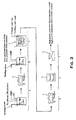
- Raw potassium fluorotantalate as shown in a synthesizing step A in Figure 3, was obtained by adding 360 g of a potassium chloride crystal to 3.6 liters of a high-purity tantalum solution (tantalum: 80 g/L, content of hydrogen fluoride: 30 g/L) , dissolving the crystal with agitation at a solution temperature of 80°C, cooling the resulting solution to room temperature, and subsequently filtering using a filter press P.
- a high-purity tantalum solution tantalum: 80 g/L, content of hydrogen fluoride: 30 g/L
- the raw potassium fluorotantalate thus obtained was re-dissolved in a hydrofluoric acid solution, or a recrystallizing solvent, to produce a saturated potassium fluorotantalate solution, at a solution temperature of 60°C, with a tantalum concentration of 25 g/L, a potassium concentration of 10 g/L and a hydrofluoric acid concentration of 60 g/L calculated from the fluorine concentration.
- this saturated potassium fluorotantalate solution was delivered to a recrystallizing bath 1 of the following recrystallizing step C.
- the piping was covered with an insulating material during the delivery to prevent a decrease in the solution temperature of the saturated potassium fluorotantalate solution during the transport.
- recrystallizing bath 1 used in this recrystallizing step C a recrystallizing bath 1 with a structure as illustrated in Figure 1, wherein a saturated potassium fluorotantalate solution poured and filled in the recrystallizing bath 1 did not fill the entire inside space of the bath and kept an unfilled portion in the upper part. Therefore, a portion indicated in Figure 1 as a "space temperature controlling means" was covered with an insulating material, and a decrease in the space temperature of the unfilled portion was prevented by inserting a heater into the inside of the insulating material to thereby enable the control of the space temperature.
- the initial space temperature was controlled to become 70°C.
- Recrystallized potassium fluorotantalate was obtained by adopting two kinds of conditions: conditions (i), in which the solution was cooled to 40°C at a cooling speed of 10°C/hour in the first cooling process and then cooled to 10°C at a cooling speed of 5°C/hour in the second cooling process, and conditions (ii), in which the solution was cooled to 40°C at a cooling 5°C/hour in the first cooling process and then cooled to 10°C at a cooling speed of 3°C/hour in the second cooling process was set.
- recrystallized potassium fluorotantalate was filtration collected by means of a filter press P in the filtering step D. Filtrated and collected, recrystallized potassium fluorotantalate was placed in a heat drying furnace 2 and dried at a temperature of 120°C in the following drying step E.
- the recrystallized potassium fluorotantalate after completion of drying operation was subjected to removal of a rough particle of 4.0 mm or larger using a 5 mesh sieve 3 in the sieving step F.
- the conduct of this sieving operation is not always needed, dependent on required quality of a product.
- the steps are completed at this stage and the recrystallized potassium fluorotantalate after this sieving operation becomes a product as a high-purity potassium fluorotantalate crystal.
- the proportion was measured which the recrystallized particle with a particle diameter within the range of 0.15 mm to 4.0 mm contained in a high-purity potassium fluorotantalate crystal obtained from the manufacturing method relating to the present invention made up.
- the weight of the crystal remaining on a 5 mesh sieve was measured when a sieving operation was carried out using the sieve. Further, a sieving operation was conducted by means of a 100 mesh sieve and the weight of the crystal passed through the 100 mesh sieve was measured. These two crystal weights were subtracted from the crystal weight immediately after drying. This weight calculated was regarded as the weight that makes up the recrystallized particle with a particle diameter within the range of 0.15 mm to 4.0 mm and was taken as the proportion with respect to the crystal weight just subsequent to drying. The same thing was applied to the example below. As a consequence, the values were 89.7 wt% for the cooling step conditions (i) and 93.4 wt% for the cooling step conditions (ii), which are very good levels, not available in the current market.
- Raw potassium fluoroniobate as shown in a synthesizing step A in Figure 4 , was obtained by adding 360 g of a potassium chloride crystal to 3.6 liters of a high-purity niobium solution (niobium: 200 g/L, content of hydrogen fluoride: 250 g/L), dissolving the crystal with agitation at a solution temperature of 80°C, cooling the resulting solution to room temperature, and subsequently filtering using a filter press P.
- a high-purity niobium solution niobium: 200 g/L, content of hydrogen fluoride: 250 g/L
- the raw potassium fluoroniobate thus obtained was re-dissolved in a hydrofluoric acid solution, or a recrystallizing solvent, to produce a saturated potassium fluoroniobate solution, at a solution temperature of 60°C, with a niobium concentration of 40 g/L, a potassium concentration of 50 g/L and a hydrofluoric acid concentration of 300 g/L calculated from the fluorine concentration.
- this saturated potassium fluoroniobate solution was delivered to a recrystallizing bath 1 of the following recrystallizing step C.
- the piping was covered with an insulating material during the delivery to prevent a decrease in the solution temperature of the saturated potassium fluoroniobate solution during the transport.
- recrystallizing bath 1 used in this recrystallizing step C a recrystallizing bath 1 with a structure as illustrated in Figure 1, wherein a saturated potassium fluoroniobate solution poured and filled in the recrystallizing bath 1 did not fill the entire inside space of the bath and kept an unfilled portion in the upper part. Therefore, a portion indicated in Figure 2 as a "space temperature controlling means" was covered with an insulating material, and a decrease in the space temperature of the unfilled portion was prevented by inserting a heater into the inside of the insulating material to thereby enable the control of the space temperature.
- the initial space temperature was controlled to become 70°C.
- Recrystallized potassium fluoroniobate was obtained by adopting two kinds of conditions: conditions (i), in which the solution was cooled to 40°C at a cooling speed of 10°C/hour in the first cooling process and then cooled to 10°C at a cooling speed of 5°C/hour in the second cooling process, and conditions (ii), in which the solution was cooled to 40°C at a cooling 5°C/hour in the first cooling process and then cooled to 10°C at a cooling speed of 3°C/hour in the second cooling process was set.
- recrystallized potassium fluoroniobate was filtration collected by means of a filter press P in the filtering step D. Filtrated and collected, recrystallized potassium fluoroniobate was placed in a heat drying furnace 2 and dried at a temperature of 120°C in the following drying step E.
- the recrystallized potassium fluoroniobate after completion of drying operation was subjected to removal of a rough particle of 4.0 mm or larger using a 5 mesh sieve in the sieving step F.
- the recrystallized potassium fluoroniobate after this sieving operation becomes a product as a high-purity potassium fluoroniobate crystal.
- the proportion was measured which the recrystallized particle with a particle diameter within the range of 0.15 mm to 4.0 mm containedin a high-purity potassium fluoroniobate crystal obtained from the manufacturing method relating to the present invention made up, as with the First Example.
- the values were 89.7 wt% for the cooling step conditions (i) and 93.4 wt% for the cooling step conditions (ii) , which are very good levels, not available in the current market.
- separating into two speeds the cooling speed in the recrystallizing step and controlling when obtaining a high-purity potassium fluorotantalate crystal or a high-purity potassium fluoroniobate crystal enables the great improvement of the yield of a recrystallized crystal with a targeted particle size distribution.
- This facilitates the handling in fields that industrially utilize a high-purity potassium fluorotantalate crystal or a high-purity potassium fluoroniobate crystal, particularly in the field of manufacturing condensers, and also enables dramatic improvement of the production yield of a product that utilizes as a raw material a high-purity potassium fluorotantalate crystal or a high-purity potassium fluoroniobate crystal.
Landscapes
- Chemical & Material Sciences (AREA)
- Organic Chemistry (AREA)
- Inorganic Chemistry (AREA)
- Physics & Mathematics (AREA)
- Thermal Sciences (AREA)
- Crystallography & Structural Chemistry (AREA)
- Chemical Kinetics & Catalysis (AREA)
- Organic Low-Molecular-Weight Compounds And Preparation Thereof (AREA)
- Inorganic Compounds Of Heavy Metals (AREA)
- Crystals, And After-Treatments Of Crystals (AREA)
Applications Claiming Priority (3)
| Application Number | Priority Date | Filing Date | Title |
|---|---|---|---|
| JP2001108408 | 2001-04-06 | ||
| JP2001108408A JP4118527B2 (ja) | 2001-04-06 | 2001-04-06 | 高純度フッ化タンタル酸カリウム結晶又は高純度フッ化ニオブ酸カリウム結晶の製造方法及びそれらの製造方法で用いる再結晶槽並びにそれらの製造方法で得られたフッ化タンタル酸カリウム結晶又は高純度フッ化ニオブ酸カリウム結晶 |
| PCT/JP2002/003286 WO2002083568A1 (en) | 2001-04-06 | 2002-04-02 | Method for producing high purity potassium fluorotantalate crystal or high purity potassium fluoroniobate crystal and recrystallization vessel for use in the method for production, and potassium fluorotantalate crystal or high purity potassium fluoroniobate crystal produced by the method for production |
Publications (3)
| Publication Number | Publication Date |
|---|---|
| EP1378490A1 true EP1378490A1 (de) | 2004-01-07 |
| EP1378490A4 EP1378490A4 (de) | 2006-06-21 |
| EP1378490B1 EP1378490B1 (de) | 2007-03-21 |
Family
ID=18960550
Family Applications (1)
| Application Number | Title | Priority Date | Filing Date |
|---|---|---|---|
| EP02707290A Expired - Lifetime EP1378490B1 (de) | 2001-04-06 | 2002-04-02 | Verfahren zur herstellung von hochreinen kaliumfluorotantalat- oder kaliumfluoroniobatkristallen und umkristallisationsgefäss zur verwendung in diesem verfahren und nach diesem verfahren hegestellte hochreine kaliumfluorotantalat- oder kaliumfluroniobatkristalle |
Country Status (6)
| Country | Link |
|---|---|
| US (1) | US6860941B2 (de) |
| EP (1) | EP1378490B1 (de) |
| JP (1) | JP4118527B2 (de) |
| CN (1) | CN1199865C (de) |
| DE (1) | DE60218994T2 (de) |
| WO (1) | WO2002083568A1 (de) |
Families Citing this family (15)
| Publication number | Priority date | Publication date | Assignee | Title |
|---|---|---|---|---|
| US6764669B2 (en) * | 1999-12-28 | 2004-07-20 | Mitsui Mining & Smelting Co., Ltd. | Method for producing fluorinated potassium tantalate crystal |
| DE10195201B4 (de) * | 2000-11-29 | 2007-06-21 | Mitsui Mining & Smelting Co., Ltd. | Verfahren zur Herstellung von Kaliumfluorniobat-Kristallen sowie Kaliumfluorniobat-Kristalle |
| JP4094835B2 (ja) * | 2001-09-27 | 2008-06-04 | 三井金属鉱業株式会社 | 低酸素フッ化タンタル酸カリウム結晶及び低酸素フッ化ニオブ酸カリウム結晶の製造方法、これらの製造方法で得られた低酸素フッ化ニオブ酸カリウム結晶、並びにフッ化タンタル酸カリウム結晶及びフッ化ニオブ酸カリウム結晶の酸素分析方法 |
| CN102352444B (zh) * | 2011-05-30 | 2013-07-24 | 宁夏东方钽业股份有限公司 | 用钽冶金副产物生产复合盐的方法 |
| CN102336438B (zh) * | 2011-06-29 | 2014-11-12 | 宁夏东方钽业股份有限公司 | 利用回收钠还原制备钽粉的副产物制备氟钽酸钾的方法 |
| CN102382993B (zh) * | 2011-10-09 | 2013-08-28 | 广东致远新材料有限公司 | 一种靶材级超高纯钽金属的制取方法 |
| CN105658293A (zh) * | 2013-08-29 | 2016-06-08 | 株式会社明治 | 采用冷冻浓缩法的浓缩制品的制造方法 |
| JP6241309B2 (ja) * | 2014-02-17 | 2017-12-06 | 旭硝子株式会社 | ガラス化学強化用再生塩の製造方法及び化学強化ガラスの製造方法 |
| CN105561624A (zh) * | 2016-01-29 | 2016-05-11 | 太仓市微贯机电有限公司 | 一种球状结晶体的反应器设备 |
| RU2623522C1 (ru) * | 2016-04-21 | 2017-06-27 | Общество с ограниченной ответственностью "Научно-производственная компания "Русредмет" (ООО "НПК "Русредмет") | Способ получения фтортанталата калия из танталсодержащих растворов |
| CN108910949B (zh) * | 2018-07-18 | 2021-01-15 | 宁夏东方钽业股份有限公司 | 高纯氟钽酸钾的制备方法 |
| CN113181679A (zh) * | 2021-04-20 | 2021-07-30 | 金溪华香香料有限公司 | 一种乙酸芳樟酯的重结晶提纯装置 |
| CN113428900A (zh) * | 2021-07-23 | 2021-09-24 | 宁夏东方钽业股份有限公司 | 一种水热结晶法制备大晶粒氟钽酸钾的方法 |
| CN115634474A (zh) * | 2022-11-08 | 2023-01-24 | 鞍山市利多环保科技有限公司 | 一种应用于两种无机钠盐饱和溶液的低温曝气分离方法 |
| CN116947100A (zh) * | 2023-08-11 | 2023-10-27 | 稀美资源(广东)有限公司 | 一种动态结晶方式生产氟钽酸钾的方法 |
Family Cites Families (11)
| Publication number | Priority date | Publication date | Assignee | Title |
|---|---|---|---|---|
| JPS4932897A (de) | 1972-07-27 | 1974-03-26 | ||
| US3907976A (en) * | 1974-11-29 | 1975-09-23 | Mallinckrodt Inc | Continuous process for preparing potassium fluotantalate crystals |
| JPH01192728A (ja) * | 1988-01-26 | 1989-08-02 | Fuji Kagaku Kenkyusho:Kk | 高純度フルオロタンタル酸カリウムの製造方法 |
| JPH042618A (ja) * | 1990-04-20 | 1992-01-07 | Nikko Kyodo Co Ltd | 弗化タンタルカリウムの精製方法 |
| JPH0421524A (ja) * | 1990-05-15 | 1992-01-24 | Nikko Kyodo Co Ltd | 弗化タンタルカリウムの精製方法 |
| US5620936A (en) * | 1993-12-14 | 1997-04-15 | E. I. Dupont De Nemours And Company | Recovery of spent catalyst |
| US6323055B1 (en) * | 1998-05-27 | 2001-11-27 | The Alta Group, Inc. | Tantalum sputtering target and method of manufacture |
| JP3295687B2 (ja) | 1999-12-28 | 2002-06-24 | 三井金属鉱業株式会社 | フッ化タンタル酸カリウムの製造方法 |
| JP3291493B2 (ja) | 2000-09-04 | 2002-06-10 | 三井金属鉱業株式会社 | フッ化タンタル酸カリウム結晶の製造方法およびフッ化タンタル酸カリウム結晶 |
| JP3641190B2 (ja) | 2000-05-18 | 2005-04-20 | 三井金属鉱業株式会社 | タンタル/ニオブ含有原料の処理方法 |
| DE10195201B4 (de) | 2000-11-29 | 2007-06-21 | Mitsui Mining & Smelting Co., Ltd. | Verfahren zur Herstellung von Kaliumfluorniobat-Kristallen sowie Kaliumfluorniobat-Kristalle |
-
2001
- 2001-04-06 JP JP2001108408A patent/JP4118527B2/ja not_active Expired - Fee Related
-
2002
- 2002-04-02 WO PCT/JP2002/003286 patent/WO2002083568A1/ja not_active Ceased
- 2002-04-02 EP EP02707290A patent/EP1378490B1/de not_active Expired - Lifetime
- 2002-04-02 CN CNB028010949A patent/CN1199865C/zh not_active Expired - Fee Related
- 2002-04-02 DE DE60218994T patent/DE60218994T2/de not_active Expired - Fee Related
- 2002-04-02 US US10/276,295 patent/US6860941B2/en not_active Expired - Fee Related
Also Published As
| Publication number | Publication date |
|---|---|
| EP1378490A4 (de) | 2006-06-21 |
| US20030136330A1 (en) | 2003-07-24 |
| EP1378490B1 (de) | 2007-03-21 |
| DE60218994D1 (de) | 2007-05-03 |
| WO2002083568A1 (en) | 2002-10-24 |
| CN1199865C (zh) | 2005-05-04 |
| JP4118527B2 (ja) | 2008-07-16 |
| US6860941B2 (en) | 2005-03-01 |
| DE60218994T2 (de) | 2007-11-29 |
| CN1460088A (zh) | 2003-12-03 |
| JP2002308624A (ja) | 2002-10-23 |
Similar Documents
| Publication | Publication Date | Title |
|---|---|---|
| US6860941B2 (en) | Method for manufacturing high-purity potassium fluoroniobate crystal, recrystallization bath used in manufacturing method thereof and high-purity potassium fluorotantalate crystal or high-purity potassium fluoroniobate crystal obtained by manufacturing method thereof | |
| JP4381401B2 (ja) | ニオブ粉末の製造方法 | |
| DE69804411T3 (de) | Verfahren zur Herstellung eines Calciumfluoridkristalles und zur Behandlung eines Calciumfluoridpulvers | |
| DE2909786C2 (de) | Verfahren und Vorrichtung zur Herstellung von Tantal- oder Niobpulver | |
| JPS6187842A (ja) | 二重結晶を含有するアルミニウム結晶微細化剤 | |
| JP5361739B2 (ja) | パラタングステン酸アンモニウム四水和物及び高純度のパラタングステン酸アンモニウム四水和物を製造する方法 | |
| US4491560A (en) | Large crystal grains or single crystals of molybdenum and process for production thereof | |
| RU2431546C9 (ru) | Способ восстановления | |
| JP5375813B2 (ja) | アルカリ金属炭酸水素塩の製造方法 | |
| JP2005194153A (ja) | 硫安結晶の製造方法 | |
| JPS6263604A (ja) | 球状銅微粉の製造方法 | |
| CN1051711A (zh) | 大颗粒硫酸铵的制备方法 | |
| Claassen et al. | Particle growth parameters in the precipitation of metastable iron phases from zinc-rich solutions | |
| US6284005B1 (en) | Sodium carbonate recrystallization | |
| RU2408450C2 (ru) | Получение порошков вентильных металлов с улучшенными физическими и электрическими свойствами | |
| US5734960A (en) | Process for producing KS molybdenum | |
| US8951328B2 (en) | Production of valve metal powders | |
| JP2000281337A (ja) | 酸化インジウム−酸化錫粉末及びその製造方法 | |
| JPH03275509A (ja) | 重曹の製造方法 | |
| RU2242329C2 (ru) | Способ получения порошка тантала | |
| JPH05262691A (ja) | フマル酸の製造方法 | |
| JP2802421B2 (ja) | 高純度・高結晶化度塩化カルシウムの製造方法 | |
| CN109628993B (zh) | 制备砷掺杂剂的方法、应用氧化砷掺杂生长单晶硅的方法和单晶炉以及砷掺杂单晶硅 | |
| CN120943255A (zh) | 硅晶体沫子料的处理方法和硅晶体沫子料、硅棒、硅片 | |
| CN120680005A (zh) | 一种具有孪晶结构的银粉及其制备方法 |
Legal Events
| Date | Code | Title | Description |
|---|---|---|---|
| PUAI | Public reference made under article 153(3) epc to a published international application that has entered the european phase |
Free format text: ORIGINAL CODE: 0009012 |
|
| 17P | Request for examination filed |
Effective date: 20021220 |
|
| AK | Designated contracting states |
Kind code of ref document: A1 Designated state(s): AT BE CH CY DE DK ES FI FR GB GR IE IT LI LU MC NL PT SE TR |
|
| A4 | Supplementary search report drawn up and despatched |
Effective date: 20060522 |
|
| RIC1 | Information provided on ipc code assigned before grant |
Ipc: C01G 33/00 20060101ALI20060516BHEP Ipc: C01G 35/00 20060101AFI20021030BHEP |
|
| GRAP | Despatch of communication of intention to grant a patent |
Free format text: ORIGINAL CODE: EPIDOSNIGR1 |
|
| RBV | Designated contracting states (corrected) |
Designated state(s): DE |
|
| GRAS | Grant fee paid |
Free format text: ORIGINAL CODE: EPIDOSNIGR3 |
|
| GRAA | (expected) grant |
Free format text: ORIGINAL CODE: 0009210 |
|
| AK | Designated contracting states |
Kind code of ref document: B1 Designated state(s): DE |
|
| REF | Corresponds to: |
Ref document number: 60218994 Country of ref document: DE Date of ref document: 20070503 Kind code of ref document: P |
|
| PLBE | No opposition filed within time limit |
Free format text: ORIGINAL CODE: 0009261 |
|
| STAA | Information on the status of an ep patent application or granted ep patent |
Free format text: STATUS: NO OPPOSITION FILED WITHIN TIME LIMIT |
|
| 26N | No opposition filed |
Effective date: 20071227 |
|
| PGFP | Annual fee paid to national office [announced via postgrant information from national office to epo] |
Ref country code: DE Payment date: 20080411 Year of fee payment: 7 |
|
| PG25 | Lapsed in a contracting state [announced via postgrant information from national office to epo] |
Ref country code: DE Free format text: LAPSE BECAUSE OF NON-PAYMENT OF DUE FEES Effective date: 20091103 |