EP1071297B1 - Bestimmung der Betriebszustände eines bedienbares Geräts - Google Patents
Bestimmung der Betriebszustände eines bedienbares Geräts Download PDFInfo
- Publication number
- EP1071297B1 EP1071297B1 EP00115361A EP00115361A EP1071297B1 EP 1071297 B1 EP1071297 B1 EP 1071297B1 EP 00115361 A EP00115361 A EP 00115361A EP 00115361 A EP00115361 A EP 00115361A EP 1071297 B1 EP1071297 B1 EP 1071297B1
- Authority
- EP
- European Patent Office
- Prior art keywords
- sensor
- decision
- vehicle
- speed
- operatable
- Prior art date
- Legal status (The legal status is an assumption and is not a legal conclusion. Google has not performed a legal analysis and makes no representation as to the accuracy of the status listed.)
- Expired - Lifetime
Links
- 230000008859 change Effects 0.000 claims description 4
- 238000011156 evaluation Methods 0.000 claims description 4
- 230000036962 time dependent Effects 0.000 claims description 2
- 230000005540 biological transmission Effects 0.000 description 5
- 238000004891 communication Methods 0.000 description 5
- 230000000903 blocking effect Effects 0.000 description 2
- 230000001419 dependent effect Effects 0.000 description 2
- 230000000694 effects Effects 0.000 description 2
- 230000006870 function Effects 0.000 description 2
- 238000000034 method Methods 0.000 description 2
- 230000003044 adaptive effect Effects 0.000 description 1
- 238000004378 air conditioning Methods 0.000 description 1
- 230000006399 behavior Effects 0.000 description 1
- 230000009286 beneficial effect Effects 0.000 description 1
- 238000011161 development Methods 0.000 description 1
- 230000018109 developmental process Effects 0.000 description 1
- 230000008569 process Effects 0.000 description 1
- 230000009467 reduction Effects 0.000 description 1
- 230000003068 static effect Effects 0.000 description 1
- 230000001960 triggered effect Effects 0.000 description 1
Images
Classifications
-
- H—ELECTRICITY
- H04—ELECTRIC COMMUNICATION TECHNIQUE
- H04M—TELEPHONIC COMMUNICATION
- H04M1/00—Substation equipment, e.g. for use by subscribers
- H04M1/60—Substation equipment, e.g. for use by subscribers including speech amplifiers
- H04M1/6033—Substation equipment, e.g. for use by subscribers including speech amplifiers for providing handsfree use or a loudspeaker mode in telephone sets
- H04M1/6041—Portable telephones adapted for handsfree use
- H04M1/6075—Portable telephones adapted for handsfree use adapted for handsfree use in a vehicle
-
- H—ELECTRICITY
- H04—ELECTRIC COMMUNICATION TECHNIQUE
- H04M—TELEPHONIC COMMUNICATION
- H04M1/00—Substation equipment, e.g. for use by subscribers
- H04M1/60—Substation equipment, e.g. for use by subscribers including speech amplifiers
- H04M1/6033—Substation equipment, e.g. for use by subscribers including speech amplifiers for providing handsfree use or a loudspeaker mode in telephone sets
- H04M1/6041—Portable telephones adapted for handsfree use
- H04M1/6075—Portable telephones adapted for handsfree use adapted for handsfree use in a vehicle
- H04M1/6083—Portable telephones adapted for handsfree use adapted for handsfree use in a vehicle by interfacing with the vehicle audio system
-
- H—ELECTRICITY
- H04—ELECTRIC COMMUNICATION TECHNIQUE
- H04M—TELEPHONIC COMMUNICATION
- H04M1/00—Substation equipment, e.g. for use by subscribers
- H04M1/72—Mobile telephones; Cordless telephones, i.e. devices for establishing wireless links to base stations without route selection
- H04M1/724—User interfaces specially adapted for cordless or mobile telephones
- H04M1/72448—User interfaces specially adapted for cordless or mobile telephones with means for adapting the functionality of the device according to specific conditions
- H04M1/72463—User interfaces specially adapted for cordless or mobile telephones with means for adapting the functionality of the device according to specific conditions to restrict the functionality of the device
-
- H—ELECTRICITY
- H04—ELECTRIC COMMUNICATION TECHNIQUE
- H04M—TELEPHONIC COMMUNICATION
- H04M1/00—Substation equipment, e.g. for use by subscribers
- H04M1/66—Substation equipment, e.g. for use by subscribers with means for preventing unauthorised or fraudulent calling
Definitions
- the invention makes a contribution to the safe and / or comfortable use of operable devices in or under circumstances that otherwise utilize the attention of a user.
- a plurality of operable devices are known, each having a control panel over which a user of the device can establish existing operating conditions and / or change.
- Such devices are only called telephones or music systems.
- These devices are characterized by the fact that for the production and / or change of operating conditions at least one head or a button must be operated. This may still be acceptable if the user can pay close attention to the operable device. But in many cases it is the case that through other processes or circumstances the user does not want or can not pay attention to the operable device. If, for example, a telephone or a music system is installed in a vehicle, it is hardly comprehensible from the safety point of view if the driver nevertheless makes a telephone call or changes a cassette during operation of the vehicle.
- a radio communication apparatus comprising a radio communication circuit and a circuit for detecting the speed of the radio communication circuit with respect to a base station.
- the speed is in EP0851699 determined from an output of the radio communication circuit.
- EP0851699 discloses various security procedures such as disregard of incoming calls can be made selectively according to the speed when the vehicle in which the radio communication circuit is located moves at high speed.
- the comfort aspect is also poorly designed for many operable devices. For example, in a vehicle provided with a built-in telephone, a user will be prompted for a corresponding input by a user requesting call diversion. This is often perceived as annoying and therefore omitted. This omission is irrelevant, apart from the lack of accessibility. The situation is different, however, if a user accidentally uses his mobile phone or laptop in places where, for security reasons, for example, the use of such devices is prohibited.
- the invention has the object to provide an operable device, which on the one hand considers both the safety and the comfort aspect.
- an operable device for or in a vehicle.
- the operable device has a control panel via which a user can establish and / or modify existing operating states of the operable device.
- the operable device includes a decision device that can receive data from the at least one sensor.
- the decision arrangement is designed such that the sensor data obtained from the at least one sensor are converted into a time-dependent driving profile.
- the decision-making arrangement evaluates the driving profile. On the basis of the evaluation decides the decision on the usability of the operable device by certain operating conditions of the operable device are disabled or enabled.
- the decision device locks certain operating states of the operable device or switches it free.
- dangerous situations can be determined from the data, which may mean, for example, that certain operating states can no longer be executed and / or manual operation of the control panel becomes impossible.
- the latter also leads to a not to be underestimated learning effect, because by the function restriction of any kind the user develops a better feeling for dangerous situations and therefore due to the knowledge of the Failure of his actions in dangerous situations automatically omits the operation of the operable device.
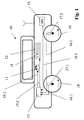
- FIG. 1 schematically a motor vehicle 10 is shown.
- This motor vehicle is equipped with a car phone 11, a car radio 12 and a navigation system 13.
- the car telephone 11, the car radio 12 and the navigation system 13 each fill in the term of an operable device.
- the control panel 14 is illustrated in more detail.
- a decision 15 is still available.
- This decision arrangement 15 is connected via lines 16.1, 16.2 with sensors 17.1, 17.2.
- the sensor 17.1 has the task of determining the speed of the vehicle 10. Via the sensor 17.2, the operation of the vehicle brake (not shown) is determined. Even if the representation in Fig. 1 limited to only two sensors 17, so no reduction is connected to these sensors 17. Rather, in another - not shown - embodiment also be present sensors which determine, for example, the steering angles of the vehicle 10 or the inclination angle of the vehicle 10. Which type of sensors 17 are used is at the discretion of the person skilled in the art. Also, the arrangement of the sensors 17.1, 17.2 - not as in Fig. 1 shown - limited to the wheels 18 of the vehicle 10. Thus, it is conceivable, for example, in another embodiment (not shown) that the sensor 17.1 determines the speed of the vehicle 10 on the tachometer (not shown) or that at speed data already present in the vehicle 10, these are fed directly to the decision arrangement 15.
- the decision arrangement 15 is connected to the car phone 11 via a data line 19.1 and to the car radio 12 via a data line 19.2.
- the decision arrangement 15 is designed as a threshold value switch (not shown in greater detail). If speed values are provided to the threshold value switch by the sensor 17.1 which are above the speed of 130 km / h regarded as dangerous, a signal is triggered and applied to the data lines 19.1, 19.2. This signal then blocks the operability of the control panel 14 on the car radio 12 and prevents neither telephone calls in the vehicle 10 are accepted nor can be performed from the vehicle 10.
- the car radio 12 and the car phone 11 it should be pointed out that it is not necessary for the car radio 12 and the car phone 11 to have the same speed limiting the use. For example, telephoning may already be exposed at speeds above 100 km / h, while the operability of the car radio 12 is limited only at speeds above 120 km / h. Also, the various operating states of the car telephone 11 may be dependent on the respective speed. Thus, for example, a call setup from the vehicle 10 can be excluded even at speeds above 50 km / h, while receiving telephone calls - especially if a hands-free device is available - remains possible up to 160 km / h.
- the driver can be informed visually or acoustically simultaneously with the signal output to the data lines 19.1, 19.2 about this state.
- the car phone 12 can be provided that incoming calls are then communicated to the driver, even if the speed currently driving an acceptance of the call excludes. This gives the driver the opportunity to reduce his speed to then accept the call.
- the arrangement may be such that incoming calls can be immediately redirected to another phone when phoning out-of-bounds speeds.
- the arrangement may be arranged so that the number of the caller is stored for incoming calls above speeds that exclude the phone calls. If, in the following time, the driven speed drops below the critical value, the stored number can be used to automatically dial the caller.
- the decision arrangement 15 can also be designed such that the fluctuation range of a driven speed is measured over a period of time t and made the yardstick for the operability or usability of the operable devices. If, for example, a speed of 100 km / h is detected with a fluctuation range of +/- 5 km / h during the period t, then this is in comparison to a fluctuation range of +/- 30 km / h for a low and thus, for example, telephoning permissible stress of the driver.
- the decision arrangement 15 can also be modified such that at speeds which are above a critical speed, the corresponding announcements are reproduced at least twice while at lower speeds the announcement is issued only once.
- the respective driven speed is not immediately used for influencing the operating states of the operable devices 11, 12, but the speeds traveled within the decision arrangement 15 are averaged over a period of time t. Only when this averaged value is above the critical speed is its corresponding signal given to the data line 19.1, 19.2.
- the sensor 17.1 not only the sensor 17.1, but also the sensor 17.2 is active. If, for example, it is determined that the actual speed traveled is above a critical value stored in the decision arrangement, but the sensor 17.2, which monitors the actuation of the brakes, does not transmit braking maneuvers to the decision unit 15 over a period of time t1, this can be taken as a reason. that despite the actual driven speed, the operability or usability of the operable devices 11, 12 is maintained.
- the vehicle In addition to the vehicle-specific conditions (speed, braking behavior), external conditions can also be taken into account as influencing variables. If, for example, the vehicle is provided with a receiving arrangement 20 with which, for example, traffic and / or weather information can be received, this information can be used to effect the locking or unlocking of the operable devices 11, 12, 13. For this purpose, it is necessary for the data received by the receiving arrangement 20 to be transmitted to the decision arrangement 15 (in FIG Fig. 1 Not shown). Very beneficial affects in this context, if a navigation arrangement 13 is present, since the knowledge of the respective location of the vehicle, the corresponding information can be limited to the current location.
- a navigation arrangement 13 is also advantageous because the knowledge of the just used or the roads still to be used important insights for the blocking of operating conditions can be obtained. If only the traffic information and the navigation arrangement 13 are used, objective knowledge can be obtained as to whether, for example, telephoning should be possible in the near future or not.
- the decision arrangement 15 can also be designed in such a way that all values obtained by the sensors 17 are evaluated and converted into a driving profile which, after comparison with a driving profile stored in the decision-making system, determines the usability of the vehicle operable devices 11, 12 decides.
- the travel profile stored in the decision arrangement 15 can also be designed to be adaptive. This means that the decision arrangement 15 adapts, based on the values obtained by the sensors 17, the driving profile stored in it, for example, to the abilities of the respective driver. This ensures that when the sensors 17 determine values which allow conclusions to be drawn to a responsive driver, such a driver can still use the operable devices 11, 12 in a somewhat more critical situation compared to a less responsive driver.
- the navigation system 13 is not like the car phone 11 and the car radio 12 is an operable device, but acts through the arrow guide as a sensor, it should be noted that the navigation system 13 or better its control panel (in Fig. 1 not shown) in a similar manner as the control panel 14 of the car radio 12 is blocked, if based on the sensors 17 in the decision arrangement 15, the operability or use of the navigation system 13 excluding situation is determined.
- the navigation system 13 can also be used to improve comfort. Since the navigation system, the location of the vehicle is always known, this information can be easily used to make a call diversion. If the vehicle is parked, for example, in front of the office or the private house, the respective location data is transmitted to the car phone 12. From this information, the call forwarding is activated so that the user is automatically redirected to the car telephone 12 given calls depending on the respective location of the vehicle to his office or private line.
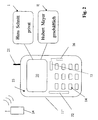
- a mobile phone 11 ' is shown.
- This mobile phone is provided with a display 20, a control panel 14 and an antenna 21.
- a memory 22 is provided inside the mobile telephone 11 ', in which a user can store the telephone number, name and type of the number.
- a decision arrangement 15 is provided inside the mobile telephone 11 ', which is connected to a clock 26 in the first embodiment. If, for example, a general input of the decision arrangement 15 indicates that business calls are only permitted between 8 and 18 o'clock, a call from the subscriber Hans Thomas (see display illustration I) would only be "put through” to the user between 6 and 8 o'clock, while the Participant Hubert Mayer (see Display II) because of the addition "business" the user can reach between 8 and 18 clock.
- the arbitration assembly 15 may also be associated with a calendar (not shown) to exclude business calls, for example, over the weekend. Of course, that can be done in Fig. 2 also be modified so that subscribers whose data in the memory 22 with the note "private" are stored, for calls during the blocking period (8 to 18 o'clock) are redirected to the private connection of the user.
- a sensor is drawn in the mobile phone 11 '.
- This sensor 23 is connected to the decision arrangement 15 and has the task of receiving signals which are emitted by a transmitter 24 remote from the mobile telephone 11 '.
- This transmitter 24 may be installed, for example, in aircraft, offices, hospitals, private homes or gas station areas. If the signal transmitted by the respective transmitter 23 is received by the sensor 23, this can lead, for example, to the fact that signals are no longer transmitted by the mobile telephone 11 via the antenna 21 and that incoming calls are no longer displayed. The latter is useful, for example, in aircraft, where according to statements of the airlines operational mobile phones 11 'cause problems. If such transmitter 24 is installed in offices or private homes, it can be ensured that, depending on where the mobile 11 'is currently located, unwanted calls are not "put through" to the user.
- the mobile telephone 11 ' may be set, for example, so that no personal calls are made in the determination of location data which conclude use of the mobile telephone 11' in the office or company, and no business calls are transmitted to the user in the home.
- the combination of mobile phone 11 'and GPS module may be designed so that, for example, when storing a phone number, which is made in the office, this is provided in the mobile phone 11' immediately based on the location information from the GPS module with the note "business" , so that subsequent calls of the subscriber whose phone number has been stored, will only be "put through” to the user when the GPS module as the current location of the mobile phone 11 'recognizes the office.
Landscapes
- Engineering & Computer Science (AREA)
- Signal Processing (AREA)
- Human Computer Interaction (AREA)
- Computer Networks & Wireless Communication (AREA)
- Multimedia (AREA)
- Fittings On The Vehicle Exterior For Carrying Loads, And Devices For Holding Or Mounting Articles (AREA)
- Telephone Function (AREA)
- Navigation (AREA)
- Mobile Radio Communication Systems (AREA)
- Selective Calling Equipment (AREA)
- Input From Keyboards Or The Like (AREA)
- Electrophonic Musical Instruments (AREA)
- Circuits Of Receivers In General (AREA)
- Transceivers (AREA)
Description
- Die Erfindung bildet einen Beitrag zur sicheren und/oder komfortablen Nutzung von bedienbaren Geräten in oder unter Gegebenheiten, die die Aufmerksamkeit eines Nutzers anderweitig auslasten.
- Im Stand der Technik sind eine Vielzahl von bedienbaren Geräten bekannt, die jeweils über ein Bedienfeld verfügen, über welches ein Nutzer des Geräts vorhandene Betriebszustände herstellen und/oder verändern kann. Als Beispiele für derartige Geräte seien nur Telefone oder Musikanlagen genannt. Diese Geräte zeichnen sich dadurch aus, dass zur Herstellung und/oder Veränderung von Betriebszuständen mindestens ein Kopf oder eine Taste bedient werden muss. Dies mag noch hinnehmbar sein, wenn der Nutzer dem bedienbaren Gerät die uneingeschränkte Aufmerksamkeit schenken kann. Vielfach ist es aber so, dass durch anderweitige Vorgänge oder Umstände der Nutzer dem bedienbaren Gerät gar keine Aufmerksamkeit schenken will oder kann. Ist beispielsweise ein Telefon oder eine Musikanlage in einem Fahrzeug installiert, ist es vom Sicherheitsaspekt her kaum nachvollziehbar, wenn der Fahrer während des Betriebs Fahrzeugs dennoch telefoniert oder eine Kassette wechselt.
- In dem Dokument
EP0851699 ist beispielsweise ein Funkkommunikationsgerät offenbart, das eine Funkkommunikationsschaltung und eine Schaltung zur Erfassung der Geschwindigkeit der Funkkommunikationsschaltung in Bezug auf eine Basisstation umfasst. Die Geschwindigkeit wird inEP0851699 aus einer Ausgabe der Funkkommunikations-Schaltung ermittelt.EP0851699 offenbart dabei verschiedene Sicherheitsvorgänge wie das Missachten eingehender Anrufe können selektiv entsprechend der Geschwindigkeit ausgeführt werden, wenn sich das Fahrzeug, in dem sich die Funkkommunikationsschaltung befindet, mit hoher Geschwindigkeit bewegt. - Neben dem Sicherheitsaspekt ist auch bei vielen bedienbaren Geräten der Komfort aspekt wenig ausgebildet. So wird beispielsweise in einem Fahrzeug, welches mit einem fest eingebauten Telefon versehen ist, von einem Nutzer, wenn er eine Rufumleitung wünscht, eine entsprechende Eingabe verlangt. Dies wird oftmals als lästig empfunden und daher unterlassen. Dieses Unterlassen ist abgesehen von der nicht gegebenen Erreichbarkeit folgenlos. Anders verhält es sich aber, wenn ein Nutzer sein Mobiltelefon oder Laptops versehentlich an Orten benutzt, an denen beispielsweise aus Sicherheitsgründen die Benutzung von derartigen Geräten verboten ist.
- Auch ist es kaum nachvollziehbar, dass bei Mobiltelefonen sämtliche eingehenden Gespräche an den Nutzer weitergegeben werden. Dies mag in der Mehrzahl der Fälle wünschenswert sein, kann aber im Einzelfall etwa dann zu Problemen führen, wenn beispielsweise während einer geschäftlichen Besprechung auch Privat gespräche an den Nutzer "durchgestellt" werden.
- Auch wenn sich die in diesem Zusammenhang dargestellten Probleme nur auf Telefone und Musikanlagen beziehen, sei der Vollständigkeit halber darauf hingewiesen, dass diese Probleme auch bei anderen bedienbaren Geräten gegeben sind. So ist beispielweise die Einstellung der Klimaanlage oder des Navigations systems während einer Autofahrt ebenso gefährlich, wie der Betrieb des Autotelefons.
- Daher liegt der Erfindung die Aufgabe zugrunde, ein bedienbares Gerät anzugeben,
welches zum einen sowohl den Sicherheits- als auch den Komfortaspekt berücksichtigt. - Diese Aufgabe wird mit den in Anspruch 1 angegebenen Merkmalen gelöst. Vorteilhafte Aus- und Weiterbildungen der Erfindung sind den Ansprüchen 2 und 3 entnehmbar.
- Es wird gemäß der vorliegenden Erfindung ein Bedienbares Gerät für bzw. in einem Fahrzeug bereitgestellt. Das bedienbare Gerät verfügt über ein Bedienfeld, über welches ein Nutzer vorhandene Betriebszustände des bedienbaren Geräts herstellen und/oder verändern kann. In dem Fahrzeug ist mindestens ein Sensor vorhanden. Das bedienbare Gerät umfasst eine Entscheidungsanordnung, die Daten des mindestens einen Sensors empfangen kann. Die Entscheidungsanordnung ist so ausgebildet, dass die von dem mindestens einem Sensor erhaltenen Sensordaten in ein zeitabhängiges Fahrprofil umgesetzt werden. Die Entscheidungsanordnung wertet das Fahrprofil aus. Auf der Grundlage der Auswertung entscheidet die Entscheidungsanordnung über die Nutzbarkeit des bedienbaren Gerätes, indem bestimmte Betriebszustände des bedienbaren Gerätes gesperrt oder freigeschaltet werden.
- Anhand von empfangenen Daten sperrt die Entscheidungsvorrichtung sperrt bestimmte Betriebszustände des bedienbaren Geräts oder schaltet sie frei. Dadurch können anhand der Daten gefährliche Situationen ermittelt werden, was dazu führen kann, dass beispielsweise bestimmte Betriebszustände nicht mehr ausgeführt werden können und/oder die manuelle Betätigung des Bedienfeldes unmöglich wird.
Letzteres führt auch zu einem nicht zu unterschätzenden Lerneffekt, da durch die wie auch immer geartete Funktionseinschränkung der Nutzer ein besseres Gefühl für gefährliche Situationen entwickelt und daher aufgrund des Wissens um die Erfolglosigkeit seines Tuns in gefährlichen Situationen die Bedienung des bedienbaren Geräts automatisch unterlässt. - Es zeigen:
- Fig. 1
- ein Kraftfahrzeug
- Fig. 2
- ein Mobiltelefon
- Die Erfindung soll nun anhand der Figuren näher erläutert werden.
InFig. 1 ist schematisch ein Kraftfahrzeug 10 gezeigt. Dieses Kraftfahrzeug ist mit einem Autotelefon 11, einem Autoradio 12 und einem Navigationssystem 13 ausgestattet. Nur der Vollständigkeit halber sei darauf hingewiesen, dass das Autotelefon 11, das Autoradio 12 und das Navigationssystem 13 jeweils den Begriff eines bedienbaren Geräts ausfüllen. Aus Gründen der Übersichtlichkeit wurde aber nur beim Autoradio 12 das Bedienfeld 14 näher veranschaulicht. - Außerdem ist noch eine Entscheidungsanordnung 15 vorhanden. Diese Entscheidungsanordnung 15 ist über Leitungen 16.1, 16.2 mit Sensoren 17.1, 17.2 verbunden. Dabei hat der Sensor 17.1 die Aufgabe, die Geschwindigkeit des Fahrzeugs 10 zu ermitteln. Über den Sensor 17.2 wird die Betätigung der Fahrzeugbremse (nicht gezeigt) ermittelt. Auch wenn sich die Darstellung in
Fig. 1 nur auf zwei Sensoren 17 beschränkt, ist damit keine Reduktion auf diese Sensoren 17 verbunden. Vielmehr können in einem anderen - nicht dargestellten - Ausführungsbeispiel auch Sensoren vorhanden sein, welche beispielsweise die Lenkeinschläge des Fahrzeugs 10 oder den Neigungswinkel des Fahrzeugs 10 ermitteln. Welche Art von Sensoren 17 verwendet werden, liegt im Belieben des Fachmanns. Auch ist die Anordnung der Sensoren 17.1, 17.2 - nicht wie inFig. 1 gezeigt - auf die Räder 18 des Fahrzeugs 10 beschränkt. So ist es beispielsweise in einem anderen - nicht dargestellten - Ausführungsbeispiel denkbar, dass der Sensor 17.1 die Geschwindigkeit des Fahrzeugs 10 am Tachometer (nicht gezeigt) ermittelt oder dass bei ohnehin schon im Fahrzeug 10 vorliegenden Geschwindigkeitsdaten diese direkt der Entscheidungsanordnung 15 zugeführt werden. - Ferner ist die Entscheidungsanordnung 15 über eine Datenleitung 19.1 mit dem Autotelefon 11 und über eine Datenleitung 19.2 mit dem Autoradio 12 verbunden.
- Zum besseren Verständnis der Erfindung sei angenommen, dass das Fahrzeug 10 mit einer Geschwindigkeit zwischen 100 und 140 km/h über eine Autobahn bewegt wird. Ferner sei angenommen, dass eine Bedienung des Autotelefons 11 und/oder des Autoradios 12 oberhalb einer Geschwindigkeit von 130 km/h als gefährlich gilt.
- In diesem Beispiel ist nur der Sensor 17.1 vorhanden und liefert laufend Geschwindigkeitswerte an die Entscheidungsanordnung 15. Die Entscheidungsanordnung 15 ist als Schwellwertschalter - nicht näher dargestellt - ausgebildet. Werden dem Schwellwertschalter vom Sensor 17.1 Geschwindigkeitswerte zur Verfügung gestellt, die oberhalb der als gefährlich angesehenen Geschwindigkeit von 130 km/h liegen, wird ein Signal ausgelöst und auf die Datenleitungen 19.1, 19.2 gegeben. Dieses Signal sperrt dann die Bedienbarkeit des Bedienfeldes 14 am Autoradio 12 und verhindert, dass weder Telefongespräche im Fahrzeug 10 angenommen werden noch aus dem Fahrzeug 10 geführt werden können.
- Nur der Vollständigkeit halber sei darauf hingewiesen, dass nicht notwendig für das Autoradio 12 und das Autotelefon 11 gleiche die Nutzung einschränkende Geschwindigkeiten gelten müssen. So kann beispielsweise das Telefonieren schon bei Geschwindigkeiten oberhalb von 100 km/h ausgesetzt sein, während die Bedienbarkeit des Autoradios 12 erst bei Geschwindigkeiten von oberhalb 120 km/h beschränkt wird. Auch können die verschiedenen Betriebszustände des Autotelefons 11 von der jeweiligen Geschwindigkeit abhängig sein. So kann beispielsweise ein Rufaufbau aus dem Fahrzeug 10 schon bei Geschwindigkeiten oberhalb von 50 km/h ausgeschlossen sein, während ein Empfangen von Telefongesprächen - insbesondere wenn eine Freisprecheinrichtung vorhanden ist - noch bis 160 km/h möglich bleibt.
- Wird die Telefonfunktion des Autotelefons 12 bzw. die Bedienbarkeit des Autoradios 11 wegen der gefahrenen Geschwindigkeit ausgesetzt, kann der Fahrer gleichzeitig mit der Signalabgabe auf die Datenleitungen 19.1, 19.2 über diesen Zustand optisch oder akustisch informiert werden. Im Zusammenhang mit dem Autotelefon 12 kann vorgesehen sein, dass eingehende Gespräche auch dann dem Fahrer mitgeteilt werden, selbst wenn die gerade gefahrene Geschwindigkeit eine Annahme des Gesprächs ausschließt. Hierdurch wird dem Fahrer die Möglichkeit gegeben, seine Geschwindigkeit zu reduzieren, um dann das Gespräch anzunehmen. Auch kann die Anordnung so beschaffen sein, dass bei das Telefonieren ausschließenden Geschwindigkeiten eingehende Anrufe sofort auf ein anderes Telefon umgeleitet werden. Schließlich kann die Anordnung so ausgebildet sein, dass bei eingehenden Gesprächen oberhalb von Geschwindigkeiten, die das Telefonieren ausschließen, die Nummer des Anrufers gespeichert wird. Sinkt dann in der Folgezeit die gefahrene Geschwindigkeit unter den kritischen Wert ab, kann die gespeicherte Nummer zur automatischen Anwahl des Anrufers genutzt werden.
- Auch kann die Entscheidungsanordnung 15 so ausgebildet sein, dass über einen Zeitraum t die Schwankungsbreite einer gefahrenen Geschwindigkeit gemessen und zum Maßstab für die Bedienbarkeit bzw. Nutzbarkeit der bedienbaren Geräte gemacht wird. Wird beispielsweise während des Zeitraums t eine Geschwindigkeit von 100 km/h mit einer Schwankungsbreite von +/- 5 km/h festgestellt, so spricht dies im Vergleich zu einer Schwankungsbreite von +/- 30 km/h für eine gering und damit beispielsweise das Telefonieren erlaubende Beanspruchung des Fahrers.
- Ist das Fahrzeug 10 mit einem Navigationssystem 13 ausgestattet, welches dem Fahrer durch entsprechende Ansagen den Weg zu seinem Zielort angibt, kann die Entscheidungsanordnung 15 auch so modifiziert sein, dass bei Geschwindigkeiten, die oberhalb einer kritischen Geschwindigkeit liegen, die entsprechenden Ansagen mindestens doppelt wiedergegeben werden, während bei niedrigeren Geschwindigkeiten die Ansage nur einmal ausgegeben wird.
- Wenngleich die im Beispiel 1 erörterte geschwindigkeitsabhängige Nutzbarkeit der bedienbaren Geräte 11, 12 schon einen unbestrittenen Beitrag zur Sicherheit leistet, ist diese Art der Beeinflussung von Betriebszuständen sehr statisch, denn vom Sicherheitsstandpunkt kann bei ruhiger Fahrweise beispielweise ein Telefonieren auch oberhalb einer Geschwindigkeit von 130 km/h unkritisch sein, während in einer anderen Situation schon Geschwindigkeiten oberhalb von 70 km/h ein Sicherheitsrisiko darstellen können. Deshalb wird im Zusammenhang mit dem Beispiel 2 eine flexiblere Lösung erörtert werden.
- Um dies zu realisieren, wird in einer ersten Ausführung die jeweils gefahrene Geschwindigkeit nicht sofort zur Beeinflussung der Betriebszustände der bedienbaren Geräte 11, 12 verwendet, sondern die gefahrenen Geschwindigkeiten innerhalb der Entscheidungsanordnung 15 über einen Zeitraum t gemittelt. Erst wenn dieser gemittelte Wert oberhalb der kritischen Geschwindigkeit liegt, wird sein entsprechendes Signal auf die Datenleitung 19.1, 19.2 gegeben.
- In einer zweiten Ausführung ist nicht nur der Sensor 17.1, sondern auch der Sensor 17.2 aktiv. Wird beispielsweise festgestellt, dass die tatsächlich gefahrene Geschwindigkeit oberhalb eines in der Entscheidungsanordnung abgelegten kritischen Wertes liegt, aber der Sensor 17.2, welche die Betätigung der Bremsen überwacht, über eine Zeitspanne t1 keine Bremsmanöver an die Entscheidungsanordnung 15 übermittelt, kann dies zum Anlass genommen werden, dass trotz der tatsächlichen gefahrenen Geschwindigkeit die Bedienbarkeit bzw. Nutzbarkeit der bedienbaren Geräte 11, 12 erhalten bleibt.
- Neben den fahrzeugspezifischen Gegebenheiten (Geschwindigkeit, Bremsverhalten) können auch externe Gegebenheiten als Einflussgrößen berücksichtigt werden. Ist beispielsweise das Fahrzeug mit einer Empfangsanordnung 20 versehen, mit welcher beispielsweise Verkehrs- und oder Wetterinformationen empfangen werden können, können diese Information dazu genutzt werden, um das Sperren oder Freischalten der bedienbaren Geräte 11, 12, 13 zu bewirken. Dazu ist es notwendig, dass die von der Empfangsanordnung 20 empfangenen Daten an die Entscheidungsanordnung 15 übermittelt werden (in
Fig. 1 nicht gezeigt). Sehr vorteilhaft wirkt sich in diesem Zusammenhang aus, wenn eine Navigationsanordnung 13 vorhanden ist, da durch die Kenntnis des jeweiligen Standorts des Fahrzeugs die entsprechenden Informationen auf den momentanen Standort beschränkt werden können. Außerdem ist das Vorhandensein einer Navigationsanordnung 13 auch deshalb von Vorteil, weil durch die Kenntnis der gerade benutzten oder der noch zu benutzenden Strassen wichtige Erkenntnisse für das Sperren von Bedienzuständen gewonnen werden können. Werden allein die Verkehrsinformationen und die Navigationsanordnung 13 eingesetzt, können objektive Erkenntnisse darüber gewonnen werden, ob beispielsweise in nächster Zeit ein Telefonieren möglich sein soll oder nicht. - Nur der Vollständigkeit halber sei darauf hingewiesen, dass die Entscheidungsanordnung 15 auch so ausgebildet sein kann, dass sämtliche von den Sensoren 17 erhaltenen Werte ausgewertet und in ein Fahrprofil umgesetzt werden, welches dann nach einem Vergleich mit einem in der Entscheidungsanordnung abgelegten Fahrprofil über die Nutzbarkeit der bedienbaren Geräte 11, 12 entscheidet. Dabei kann das in der Entscheidungsanordnung 15 abgelegte Fahrprofil auch lernfähig ausgebildet sein. Dies bedeutet, dass die Entscheidungsanordnung 15 anhand der von den Sensoren 17 erhaltenen Werte das in ihr abgelegte Fahrprofil beispielsweise an die Fähigkeiten des jeweiligen Fahrers anpasst. Hierdurch wird sichergestellt, dass wenn die Sensoren 17 Werte ermitteln, die Rückschlüsse auf einen reaktionsschnellen Fahrer zulassen, ein solcher Fahrer im Vergleich zu einem weniger reaktionsschnellen Fahrer auch in etwas kritischeren Situationen noch die bedienbaren Geräte 11, 12 nutzen kann.
- Auch wenn entsprechend der Darstellung in
Fig. 1 das Navigationssystem 13 nicht wie das Autotelefon 11 und das Autoradio 12 ein bedienbares Gerät ist, sondern durch die Pfeilführung wie ein Sensor wirkt, sei darauf hingewiesen, dass das Navigationssystem 13 oder besser dessen Bedienfeld (inFig. 1 nicht gezeigt) in ähnlicher Weise wie das Bedienfeld 14 des Autoradios 12 blockiert wird, wenn anhand der Sensoren 17 in der Entscheidungsanordnung 15 eine die Bedienbarkeit oder die Nutzung des Navigationssystems 13 ausschließende Situation festgestellt wird. - Wirkt das Navigationssystem 13 entsprechend der Darstellung in
Fig. 1 als Sensor, kann beispielsweise, wenn ein Fahrzeug auf Strecken bewegt wird, die wie Bergstraßen anspruchsvoll sind oder die unfallträchtig sind, ein entsprechendes Signal über die Leitung 16.3 an die Entscheidungsanordnung 15 gegeben und für eine mögliche Blockierung der bedienbaren Geräte 11, 12 verwendet werden. - Hierneben kann das Navigationssystem 13 auch zur Komfortverbesserung eingesetzt werden. Da dem Navigationssystem der Standort des Fahrzeugs immer bekannt ist, kann diese Information sehr einfach zur Herstellung einer Rufumleitung genutzt werden. Ist das Fahrzeug beispielsweise vor dem Büro oder dem Privathaus abgestellt, werden die jeweiligen Standortdaten an das Autotelefon 12 übertragen. Aus dieser Information wird die Rufumleitung aktiviert, so dass dem Benutzer die auf das Autotelefon 12 gegebenen Gespräche in Abhängigkeit von dem jeweiligen Standort des Fahrzeugs automatisch zu seinem Büro- oder Privatanschluss umgeleitet werden.
- In
Fig. 2 ist ein Mobiltelefon 11' gezeigt. Dieses Mobiltelefon ist mit einem Display 20, einem Bedienfeld 14 und einer Antenne 21 versehen. Außerdem ist ein Speicher 22 im Inneren des Mobiltelefons 11' vorhanden, in welchem ein Nutzer die Rufnummer, Namen und die Art der Nummer ablegen kann. - Ferner ist im Inneren des Mobiltelefons 11' auch eine Entscheidungsanordnung 15 vorgesehen, die in der ersten Ausführung mit einer Uhr 26 verbunden ist. Wird beispielsweise durch eine generelle Eingabe der Entscheidungsanordnung 15 mitgeteilt, dass geschäftliche Gespräche nur zwischen 8 und 18 Uhr zulässig sind, würde ein Anruf des Teilnehmers Hans Schnitt (siehe Displaydarstellung I) nur zwischen 18 und 8 Uhr an den Nutzer "durchgestellt", während der Teilnehmer Hubert Mayer (siehe Displaydarstellung II) wegen des Zusatzes "geschäftlich" den Nutzer auch zwischen 8 und 18 Uhr erreichen kann. Zusätzlich zur Uhr 26 kann die Entscheidungsanordnung 15 auch noch mit einem Kalender (nicht gezeigt) in Verbindung stehen, um geschäftliche Anrufe zum Beispiel am Wochenende auszuschließen. Selbstverständlich kann das in
Fig. 2 gezeigte Mobiltelefon auch so modifiziert sein, dass Teilnehmer, deren Daten im Speicher 22 mit dem Vermerk "privat" abgespeichert sind, bei Anrufen während der Sperrzeit (8 bis 18 Uhr) auf den Privatanschluss des Nutzers umgeleitet werden. - Mit dem Bezugzeichen 23 ist bei dem Mobiltelefon 11' ein Sensor gezeichnet. Dieser Sensor 23 ist mit der Entscheidungsanordnung 15 verbunden und hat die Aufgabe Signale zu empfangen, die von einem vom Mobiltelefon 11' abgesetzten Sender 24 ausgestrahlt werden. Dieser Sender 24 kann beispielsweise in Flugzeugen, Büros, Krankhäusern, Privatwohnungen oder in Tankstellenbereichen installiert sein. Wird von dem Sensor 23 das vom jeweiligen Sender 23 ausgesandte Signal empfangen, kann dies beispielsweise dazu führen, dass vom Mobiltelefon 11 keine Signale mehr über die Antenne 21 abgegeben werden und eingehende Gespräche nicht mehr angezeigt werden. Letzteres ist beispielsweise in Flugzeugen sinnvoll, wo nach Verlautbarungen der Fluggesellschaften betriebsbereite Mobiltelefone 11' Probleme verursachen sollen. Wird sein solcher Sender 24 in Büros oder Privathäusern installiert, kann sichergestellt werden, dass je nach dem, wo das Mobiltelefon 11' sich gerade befindet, unerwünschte Anrufe nicht dem Nutzer "durchgestellt" werden.
- Natürlich kann das in
Fig. 2 gezeigte Mobiltelefon 11' auch mit einem den jeweiligen Nutzungsort des Mobiltelefons 11' ermittelnden GPS Modul (nicht gezeigt) ausgestattet oder verbunden sein. In diesem Fall kann das Mobiltelefon 11' beispielsweise so eingestellt sein, dass bei Ermittlung von Ortsdaten, welche auf eine Nutzung des Mobiltelefons 11' im Büro oder Firma schließen, keine Privatgespräche und bei Nutzung im häuslichen Bereich keine geschäftlichen Gespräche an den Nutzer übermittelt werden. Auch kann die Kombination von Mobiltelefon 11' und GPS Modul so ausgebildet sein, dass beispielsweise bei der Speicherung einer Rufnummer, welche im Büro vorgenommen wird, diese im Mobiltelefon 11' gleich anhand der Standortinformation aus dem GPS Modul mit dem Vermerk "geschäftlich" versehen wird, so dass spätere Anrufe des Teilnehmers, dessen Rufnummer gespeichert wurde, nur noch dann an den Nutzer "durchgestellt" werden, wenn das GPS Modul als momentanen Standort des Mobiltelefons 11' das Büro erkennt. - Was bisher nur für das Telefonieren im klassischen Sinne erörtert wurde, gilt natürlich auch für solche Dienste, die sich allein auf die Datenübertragung beschränken. Dies bedeutet, dass ein Nutzer, der beispielsweise keine oder nur bestimmte Faxe, E-Mails, Kurzmitteilungen über SMS und/oder Informationen aus dem Internet via dem Mobil Media Mode (WWW:MMM) außerhalb seiner Bürozeiten auf seinem Mobiltelefon 11' erhalten will, dies wie oben beschrieben durch eine Uhrzeit- oder GPS-Steuerung ausschließen kann.
- Abschließend sei noch auf folgendes hingewiesen: Hat der Nutzer beispielsweise die "Übermittlung" von geschäftlichen Telefongesprächen oder Datenübertragungen in seiner Wohnung ausgeschlossen, so kann dies so realisiert sein, dass die jeweiligen Übermittlungen dem Nutzer nicht angezeigt werden. Um jedoch überflüssige und dem Nutzer nicht angezeigte Übermittlungen auszuschließen, kann zur Netzentlastung auch vorgesehen sein, dass, wenn Zeit- oder Orts-Ereignisse eintreten, die nach Nutzervorgaben bestimmte Dienste bestimmte Dienste sperren oder aktivieren sollen, diese Zeit- oder Orts-Ereignisse automatisch dem Provider mitgeteilt werden.
Claims (3)
- Bedienbares Gerät (11, 12, 13) in einem Fahrzeug (10), wobei das bedienbare Gerät (11, 12, 13) über ein Bedienfeld (14) verfügt, über welches ein Nutzer vorhandene Betriebszustände des bedienbaren Geräts (11, 12, 13) herstellen und/oder
verändern kann, wobei in dem Fahrzeug mindestens ein Sensor (17.1, 17.2) vorhanden ist, dadurch gekennzeichnet, dass
das bedienbare Gerät eine Entscheidungsanordnung (15) umfasst, die Daten des mindestens einen Sensors (17.1, 17.2) empfangen kann, und
die Entscheidungsanordnung (1 5) so ausgebildet ist, dass die von dem mindestens einen Sensor (17.1, 17.2) erhaltenen Sensordaten in ein zeitabhängiges Fahrprofil umgesetzt werden, wobei die Entscheidungsanordnung (15) das Fahrprofil auswertet und auf der Grundlage der Auswertung über die Nutzbarkeit des bedienbaren Gerätes (11, 12, 13) entscheidet, indem bestimmte Betriebszustände des bedienbaren Gerätes (11, 12, 13) gesperrt oder freigeschaltet werden. - Bedienbares Gerät nach Anspruch 1, dadurch gekennzeichnet, dass der mindestens eine Sensor (17.1) Geschwindigkeitsdaten liefert und die Entscheidungsanordnung bei der Auswertung des Fahrprofiles die Grösse der Geschwindigkeitsänderung über einen Zeitraum bei der Auswertung des Fahrprofiles berücksichtigt.
- Bedienbares Gerät nach Anspruch 1, dadurch gekennzeichnet, dass der mindestens eine Sensor Daten über den Lenkradeinschlag liefert und die Entscheidungsanordnung bei der Auswertung des Fahrprofiles die Daten über den Lenkradeinschlag über einen Zeitraum bei der Auswertung des Fahrprofiles berücksichtigt.
Applications Claiming Priority (2)
| Application Number | Priority Date | Filing Date | Title |
|---|---|---|---|
| DE19934105A DE19934105A1 (de) | 1999-07-21 | 1999-07-21 | Bedienbares Gerät |
| DE19934105 | 1999-07-21 |
Publications (3)
| Publication Number | Publication Date |
|---|---|
| EP1071297A2 EP1071297A2 (de) | 2001-01-24 |
| EP1071297A3 EP1071297A3 (de) | 2002-10-02 |
| EP1071297B1 true EP1071297B1 (de) | 2008-02-20 |
Family
ID=7915485
Family Applications (1)
| Application Number | Title | Priority Date | Filing Date |
|---|---|---|---|
| EP00115361A Expired - Lifetime EP1071297B1 (de) | 1999-07-21 | 2000-07-15 | Bestimmung der Betriebszustände eines bedienbares Geräts |
Country Status (5)
| Country | Link |
|---|---|
| US (1) | US7711355B1 (de) |
| EP (1) | EP1071297B1 (de) |
| JP (2) | JP2001119451A (de) |
| AT (1) | ATE387066T1 (de) |
| DE (2) | DE19934105A1 (de) |
Families Citing this family (31)
| Publication number | Priority date | Publication date | Assignee | Title |
|---|---|---|---|---|
| US6353778B1 (en) * | 2001-03-15 | 2002-03-05 | International Business Machines Corporation | Automobile computer control system for limiting the usage of wireless telephones on moving automobiles |
| DE10129668A1 (de) * | 2001-06-20 | 2003-01-02 | Bosch Gmbh Robert | Verfahren zum Betreiben eines mobilen Telekommunikationsendgerätes in einem Fahrzeug und mobiles Telekommunikationsendgerät |
| DE10134098C2 (de) * | 2001-07-13 | 2003-12-11 | Siemens Ag | Verfahren zur Voreinstellung eines Mobilfunk-Kommunikationsmodus und Fahrzeug-Mobilfunkanordnung |
| US6828924B2 (en) * | 2001-11-06 | 2004-12-07 | Volvo Trucks North America, Inc. | Integrated vehicle communications display |
| FR2847409B1 (fr) * | 2002-11-20 | 2005-10-21 | France Telecom | Systeme electronique embarque pour piloter l'utilisation en emission ou en reception d'un telephone mobile |
| US20040198332A1 (en) * | 2002-11-27 | 2004-10-07 | Lundsgaard Soren K. | System and method of automatically answering calls in a wireless communication device |
| DE10316477A1 (de) * | 2003-04-09 | 2004-10-28 | Daimlerchrysler Ag | Benutzerschnittstelle und Kommunikationssystem für ein Kraftfahrzeug und zugehörige Betriebsverfahren |
| JP4593492B2 (ja) * | 2006-02-16 | 2010-12-08 | Necカシオモバイルコミュニケーションズ株式会社 | 携帯端末、動作制御プログラムおよびデータアクセス制御プログラム |
| JP4729440B2 (ja) * | 2006-06-07 | 2011-07-20 | 日立オートモティブシステムズ株式会社 | 通信システム、通信端末および情報処理装置 |
| US8346266B2 (en) * | 2006-10-25 | 2013-01-01 | Research In Motion Limited | Automatic operation of a wireless device based on physical speed |
| IL179404A0 (en) * | 2006-11-20 | 2007-05-15 | Shmuel Sadovsky | Method and system for reducing distraction during driving |
| US8200291B2 (en) * | 2007-07-24 | 2012-06-12 | Allan Steinmetz | Vehicle safety device for reducing driver distractions |
| US8965394B2 (en) * | 2008-06-19 | 2015-02-24 | John L. Rogitz | Disabling wireless telephone use while in vehicle |
| WO2009158338A1 (en) * | 2008-06-27 | 2009-12-30 | Ford Global Technologies, Llc | System and method for controlling an entertainment device in a vehicle based on driver status and a predetermined vehicle event |
| MY160944A (en) * | 2009-09-16 | 2017-03-31 | John J Fischer | Standard mobile communication device distraction prevention and safety protocols |
| US9294603B2 (en) | 2009-09-16 | 2016-03-22 | Try Safety First, Inc. | Standard mobile communication device distraction prevention and safety protocols |
| DE102010049188A1 (de) * | 2010-10-21 | 2012-04-26 | Fujitsu Technology Solutions Intellectual Property Gmbh | Verfahren zur Konfiguration einer Anordnung mit einem Computersystem und einer Telefonanlage sowie Anordnung mit einem Computersystem und einer Telefonanlage |
| DE102011121043A1 (de) * | 2011-12-14 | 2012-08-16 | Daimler Ag | Verfahren zum Betreiben einer Kommunikationseinrichtungeines Fahrzeugs und Fahrzeug mit einer Vorrichtung zum Betreiben der Kommunikationseinrichtung |
| US9367668B2 (en) | 2012-02-28 | 2016-06-14 | Precor Incorporated | Dynamic fitness equipment user interface adjustment |
| US20130244625A1 (en) * | 2012-03-19 | 2013-09-19 | Nokia Corporation | Apparatus and method for providing for enabling use of an application based on a determined operating condition and safety rating |
| US10805861B2 (en) | 2013-05-08 | 2020-10-13 | Cellcontrol, Inc. | Context-aware mobile device management |
| US10477454B2 (en) | 2013-05-08 | 2019-11-12 | Cellcontrol, Inc. | Managing iOS-based mobile communication devices by creative use of CallKit API protocols |
| US11751123B2 (en) | 2013-05-08 | 2023-09-05 | Cellcontrol, Inc. | Context-aware mobile device management |
| US10268530B2 (en) | 2013-05-08 | 2019-04-23 | Cellcontrol, Inc. | Managing functions on an iOS-based mobile device using ANCS notifications |
| WO2016025925A1 (en) | 2014-08-14 | 2016-02-18 | Roybuck Enterprises Llc | Transmission detection, interruption, and notification system |
| DE102014014601A1 (de) | 2014-10-07 | 2016-04-07 | Audi Ag | Verfahren zum Betreiben eines Kraftfahrzeugs und Kraftfahrzeug |
| US9681361B2 (en) | 2015-06-22 | 2017-06-13 | Invictus Technology Group, Inc. | Method and apparatus for controlling input to a mobile computing device located inside a vehicle |
| US9167418B1 (en) | 2015-06-22 | 2015-10-20 | Invictus Technology Group, Inc. | Method and apparatus for controlling input to a mobile computing device located inside a vehicle |
| US10474946B2 (en) | 2016-06-24 | 2019-11-12 | Microsoft Technology Licensing, Llc | Situation aware personal assistant |
| US11178272B2 (en) | 2017-08-14 | 2021-11-16 | Cellcontrol, Inc. | Systems, methods, and devices for enforcing do not disturb functionality on mobile devices |
| KR20210141503A (ko) * | 2019-02-14 | 2021-11-23 | 셀컨트롤 인코포레이티드 | 컨텍스트 인식 모바일 장치 관리 |
Citations (1)
| Publication number | Priority date | Publication date | Assignee | Title |
|---|---|---|---|---|
| JPH04246925A (ja) * | 1991-01-31 | 1992-09-02 | Nec Corp | 車載型自動車電話装置 |
Family Cites Families (34)
| Publication number | Priority date | Publication date | Assignee | Title |
|---|---|---|---|---|
| DE3816918C1 (de) * | 1988-05-18 | 1989-07-27 | Adam Opel Ag, 6090 Ruesselsheim, De | |
| JP2902413B2 (ja) * | 1989-09-05 | 1999-06-07 | 株式会社デンソー | 車載用表示装置 |
| JPH0714818Y2 (ja) * | 1990-04-27 | 1995-04-10 | 本田技研工業株式会社 | 車両のナビゲーションシステム |
| DE4204996B4 (de) * | 1992-02-19 | 2004-01-08 | Siemens Ag | Einrichtung zur Bedienung von Geräten in einem Kraftfahrzeug |
| EP0655150A4 (de) * | 1992-08-14 | 1996-06-05 | Vorad Safety Systems Inc | Aufzeichnung von operationsereignissen in einem kraftfahrzeug. |
| KR950000937U (ko) * | 1993-06-30 | 1995-01-03 | 운전식 균형장치 | |
| US6553130B1 (en) * | 1993-08-11 | 2003-04-22 | Jerome H. Lemelson | Motor vehicle warning and control system and method |
| US5483692A (en) * | 1993-11-22 | 1996-01-09 | Chrysler Corporation | Automatic variable radio volume control system |
| JPH08167100A (ja) * | 1994-12-12 | 1996-06-25 | Hisaji Nakamura | 操縦装置 |
| US5633484A (en) * | 1994-12-26 | 1997-05-27 | Motorola, Inc. | Method and apparatus for personal attribute selection and management using a preference memory |
| JPH09153195A (ja) * | 1995-12-01 | 1997-06-10 | Toyota Motor Corp | 車両用情報表示装置 |
| US6317593B1 (en) * | 1996-08-12 | 2001-11-13 | Gateway, Inc. | Intelligent cellular telephone function |
| JPH10154002A (ja) * | 1996-09-26 | 1998-06-09 | Yamaha Motor Co Ltd | 総合制御方式 |
| JP3111909B2 (ja) * | 1996-09-27 | 2000-11-27 | 松下電器産業株式会社 | 移動電話機 |
| DE19643454C2 (de) * | 1996-10-10 | 2003-08-21 | Mannesmann Ag | Verfahren und Vorrichtung zur Übermittlung von Daten zur Verkehrslagebeurteilung |
| JP2868481B2 (ja) * | 1996-10-24 | 1999-03-10 | 埼玉日本電気株式会社 | 自動応答機能を持つ無線機 |
| EP0846945B1 (de) * | 1996-12-03 | 2002-06-19 | AVL List GmbH | Verfahren und Vorrichtung zur Analyse des Fahrverhaltens von Kraftfahrzeugen |
| JPH10190557A (ja) * | 1996-12-26 | 1998-07-21 | Matsushita Electric Ind Co Ltd | 無線機 |
| DE19702895C1 (de) * | 1997-01-20 | 1998-07-02 | Mannesmann Ag | Zusatzgerät für ein Mobilfunktelefon |
| JP3230451B2 (ja) * | 1997-02-28 | 2001-11-19 | トヨタ自動車株式会社 | 移動体用電話システム |
| GB2323245A (en) * | 1997-03-14 | 1998-09-16 | Nokia Mobile Phones Ltd | Mobile phone |
| JP3043653B2 (ja) * | 1997-03-28 | 2000-05-22 | 日本電気テレコムシステム株式会社 | 移動電話装置 |
| JP3005496B2 (ja) * | 1997-05-21 | 2000-01-31 | 日本電気株式会社 | 送信規制装置及び無線送受信端末装置並びにこれ等を用いた送信規制システム |
| JPH1090390A (ja) * | 1997-07-23 | 1998-04-10 | Mazda Motor Corp | 車両用ナビゲーション装置 |
| JP3646492B2 (ja) * | 1997-10-24 | 2005-05-11 | 日産自動車株式会社 | ブレーキアシストシステム |
| JPH11168767A (ja) * | 1997-12-03 | 1999-06-22 | Nec Corp | 自動車内無線電話システム |
| DE19821803A1 (de) * | 1998-05-15 | 1999-11-18 | Daimler Chrysler Ag | Verfahren und Vorrichtung zur Längsgeschwindigkeitssteuerung eines Kraftfahrzeuges |
| US6450587B1 (en) * | 1998-07-01 | 2002-09-17 | 55 Brake Company | Vehicle brake safety system apparatus and methods |
| US6233448B1 (en) * | 1998-07-22 | 2001-05-15 | Ericsson Inc. | System, method and apparatus for automatic feature activation/deactivation based upon positioning |
| US6263282B1 (en) * | 1998-08-27 | 2001-07-17 | Lucent Technologies, Inc. | System and method for warning of dangerous driving conditions |
| US6060989A (en) * | 1998-10-19 | 2000-05-09 | Lucent Technologies Inc. | System and method for preventing automobile accidents |
| US6311078B1 (en) * | 1998-11-20 | 2001-10-30 | Avaya Technology Corp. | Automatic shutoff for wireless endpoints in motion |
| US6549792B1 (en) * | 1999-06-25 | 2003-04-15 | Agere Systems Inc. | Accelerometer influenced communication device |
| US6687497B1 (en) * | 2000-02-11 | 2004-02-03 | Sony Electronics Inc. | Method, system, and structure for disabling a communication device during the occurrence of one or more predetermined conditions |
-
1999
- 1999-07-21 DE DE19934105A patent/DE19934105A1/de not_active Withdrawn
-
2000
- 2000-07-15 AT AT00115361T patent/ATE387066T1/de not_active IP Right Cessation
- 2000-07-15 DE DE50014974T patent/DE50014974D1/de not_active Expired - Lifetime
- 2000-07-15 EP EP00115361A patent/EP1071297B1/de not_active Expired - Lifetime
- 2000-07-21 US US09/621,085 patent/US7711355B1/en not_active Expired - Fee Related
- 2000-07-21 JP JP2000220627A patent/JP2001119451A/ja active Pending
-
2011
- 2011-03-03 JP JP2011045938A patent/JP5276132B2/ja not_active Expired - Fee Related
Patent Citations (1)
| Publication number | Priority date | Publication date | Assignee | Title |
|---|---|---|---|---|
| JPH04246925A (ja) * | 1991-01-31 | 1992-09-02 | Nec Corp | 車載型自動車電話装置 |
Non-Patent Citations (1)
| Title |
|---|
| PATENT ABSTRACTS OF JAPAN vol. 017, no. 019 (E - 1306) 13 January 1993 (1993-01-13) * |
Also Published As
| Publication number | Publication date |
|---|---|
| JP2011168272A (ja) | 2011-09-01 |
| JP5276132B2 (ja) | 2013-08-28 |
| DE50014974D1 (de) | 2008-04-03 |
| US7711355B1 (en) | 2010-05-04 |
| DE19934105A1 (de) | 2001-01-25 |
| JP2001119451A (ja) | 2001-04-27 |
| EP1071297A3 (de) | 2002-10-02 |
| ATE387066T1 (de) | 2008-03-15 |
| EP1071297A2 (de) | 2001-01-24 |
Similar Documents
| Publication | Publication Date | Title |
|---|---|---|
| DE19934105A1 (de) | Bedienbares Gerät | |
| EP0929953B1 (de) | Telematikgerät für ein kraftfahrzeug mit autoradio, ortungssystem und funktelefon | |
| EP1467543B1 (de) | System, Betriebsverfahren und Benutzerschnittstelle für Funkkommunikationen mit einem Einschränkungs-Betriebsmodus in einem Kraftfahrzeug | |
| DE4244468C2 (de) | Bedieneinrichtung für ein Bediensystem | |
| DE102011087633A1 (de) | Selektive Hinweisverarbeitung | |
| DE19750366C2 (de) | Verfahren zur Nutzung von einer Zentrale angebotener Dienste durch ein Endgerät und Endgerät | |
| DE102009018074A1 (de) | Verfahren zum Verwalten von Telefonanrufen in einem Fahrzeug | |
| WO2012000751A1 (de) | Verfahren zum verarbeiten von daten in einem oder mehreren steuergeräten eines fahrzeugs, insbesondere eines kraftfahrzeugs | |
| DE102012214436B4 (de) | Freisprechsystem für ein fahrzeug | |
| DE102012023109A1 (de) | Verfahren zur Datenübermittlung zwischen einem Mobiltelefon und einem Kraftfahrzeug und Kraftfahrzeug | |
| DE102017207541A1 (de) | Kommunikationsintegration per drahtlosem kurzreichweiten-konnektivitätsrelais | |
| EP3205078B1 (de) | Verfahren zum betreiben eines kraftfahrzeugs und kraftfahrzeug | |
| EP1041362B1 (de) | Eingabeverfahren in ein Fahrerinformationssystem | |
| DE102012219470A1 (de) | Konfigurierbares Verkehrszonen-Steuerungssystem | |
| EP2891572B1 (de) | Verfahren und Vorrichtung zum Ausgeben einer Information in einem Fahrzeug | |
| DE60307303T2 (de) | Datenschnittstelle und verfahren zur verwaltung von fahrerdaten | |
| DE102005021602A1 (de) | Einrichtung und Verfahren bezüglich Bewegbarrieren-Steuersystem-Komponente mit hörbarer Sprachausgabe | |
| DE102011121043A1 (de) | Verfahren zum Betreiben einer Kommunikationseinrichtungeines Fahrzeugs und Fahrzeug mit einer Vorrichtung zum Betreiben der Kommunikationseinrichtung | |
| DE19852237A1 (de) | Verfahren und Vorrichtung zur Wiedergabe von Signalen in einem Telematikmodul | |
| DE102004043853B3 (de) | Modul und Verfahren zur adaptiven Mensch-Maschine-Kommunikation in einem Kraftfahrzeug | |
| DE102004035988A1 (de) | Notrufsystem für ein Personentransportsystem, insbesondere für ein Kraftfahrzeug, und Verfahren zur automatischen Übermittlung eines Notrufes | |
| DE102018006831A1 (de) | Vorrichtung und Verfahren zur Ermittlung und Anzeige von Gefahrenzuständen | |
| DE102005013443A1 (de) | Verfahren und Vorrichtung zum Übermitteln von Nachrichten von einem Kraftfahrzeug an einen Empfänger | |
| DE102016200796A1 (de) | Verfahren zur Ansteuerung einer Anzeigevorrichtung eines Kraftfahrzeugs | |
| EP3259860A1 (de) | Verfahren zum betreiben eines radiosystems, radiosystem und kraftwagen mit einem radiosystem |
Legal Events
| Date | Code | Title | Description |
|---|---|---|---|
| PUAI | Public reference made under article 153(3) epc to a published international application that has entered the european phase |
Free format text: ORIGINAL CODE: 0009012 |
|
| AK | Designated contracting states |
Kind code of ref document: A2 Designated state(s): AT BE CH CY DE DK ES FI FR GB GR IE IT LI LU MC NL PT SE |
|
| AX | Request for extension of the european patent |
Free format text: AL;LT;LV;MK;RO;SI |
|
| RAP1 | Party data changed (applicant data changed or rights of an application transferred) |
Owner name: NOKIA CORPORATION |
|
| PUAL | Search report despatched |
Free format text: ORIGINAL CODE: 0009013 |
|
| AK | Designated contracting states |
Kind code of ref document: A3 Designated state(s): AT BE CH CY DE DK ES FI FR GB GR IE IT LI LU MC NL PT SE |
|
| AX | Request for extension of the european patent |
Free format text: AL;LT;LV;MK;RO;SI |
|
| 17P | Request for examination filed |
Effective date: 20030311 |
|
| AKX | Designation fees paid |
Designated state(s): AT BE CH CY DE DK ES FI FR GB GR IE IT LI LU MC NL PT SE |
|
| 17Q | First examination report despatched |
Effective date: 20050317 |
|
| GRAP | Despatch of communication of intention to grant a patent |
Free format text: ORIGINAL CODE: EPIDOSNIGR1 |
|
| GRAS | Grant fee paid |
Free format text: ORIGINAL CODE: EPIDOSNIGR3 |
|
| GRAA | (expected) grant |
Free format text: ORIGINAL CODE: 0009210 |
|
| AK | Designated contracting states |
Kind code of ref document: B1 Designated state(s): AT BE CH CY DE DK ES FI FR GB GR IE IT LI LU MC NL PT SE |
|
| REG | Reference to a national code |
Ref country code: GB Ref legal event code: FG4D Free format text: NOT ENGLISH |
|
| REG | Reference to a national code |
Ref country code: CH Ref legal event code: EP |
|
| REG | Reference to a national code |
Ref country code: IE Ref legal event code: FG4D Free format text: LANGUAGE OF EP DOCUMENT: GERMAN |
|
| REF | Corresponds to: |
Ref document number: 50014974 Country of ref document: DE Date of ref document: 20080403 Kind code of ref document: P |
|
| GBT | Gb: translation of ep patent filed (gb section 77(6)(a)/1977) |
Effective date: 20080313 |
|
| PG25 | Lapsed in a contracting state [announced via postgrant information from national office to epo] |
Ref country code: ES Free format text: LAPSE BECAUSE OF FAILURE TO SUBMIT A TRANSLATION OF THE DESCRIPTION OR TO PAY THE FEE WITHIN THE PRESCRIBED TIME-LIMIT Effective date: 20080531 Ref country code: FI Free format text: LAPSE BECAUSE OF FAILURE TO SUBMIT A TRANSLATION OF THE DESCRIPTION OR TO PAY THE FEE WITHIN THE PRESCRIBED TIME-LIMIT Effective date: 20080220 |
|
| ET | Fr: translation filed | ||
| NLV1 | Nl: lapsed or annulled due to failure to fulfill the requirements of art. 29p and 29m of the patents act | ||
| REG | Reference to a national code |
Ref country code: IE Ref legal event code: FD4D |
|
| PG25 | Lapsed in a contracting state [announced via postgrant information from national office to epo] |
Ref country code: DK Free format text: LAPSE BECAUSE OF FAILURE TO SUBMIT A TRANSLATION OF THE DESCRIPTION OR TO PAY THE FEE WITHIN THE PRESCRIBED TIME-LIMIT Effective date: 20080220 Ref country code: PT Free format text: LAPSE BECAUSE OF FAILURE TO SUBMIT A TRANSLATION OF THE DESCRIPTION OR TO PAY THE FEE WITHIN THE PRESCRIBED TIME-LIMIT Effective date: 20080721 Ref country code: NL Free format text: LAPSE BECAUSE OF FAILURE TO SUBMIT A TRANSLATION OF THE DESCRIPTION OR TO PAY THE FEE WITHIN THE PRESCRIBED TIME-LIMIT Effective date: 20080220 Ref country code: IE Free format text: LAPSE BECAUSE OF FAILURE TO SUBMIT A TRANSLATION OF THE DESCRIPTION OR TO PAY THE FEE WITHIN THE PRESCRIBED TIME-LIMIT Effective date: 20080220 Ref country code: SE Free format text: LAPSE BECAUSE OF FAILURE TO SUBMIT A TRANSLATION OF THE DESCRIPTION OR TO PAY THE FEE WITHIN THE PRESCRIBED TIME-LIMIT Effective date: 20080520 |
|
| PLBE | No opposition filed within time limit |
Free format text: ORIGINAL CODE: 0009261 |
|
| STAA | Information on the status of an ep patent application or granted ep patent |
Free format text: STATUS: NO OPPOSITION FILED WITHIN TIME LIMIT |
|
| 26N | No opposition filed |
Effective date: 20081121 |
|
| REG | Reference to a national code |
Ref country code: CH Ref legal event code: PL |
|
| PG25 | Lapsed in a contracting state [announced via postgrant information from national office to epo] |
Ref country code: MC Free format text: LAPSE BECAUSE OF NON-PAYMENT OF DUE FEES Effective date: 20080731 |
|
| PG25 | Lapsed in a contracting state [announced via postgrant information from national office to epo] |
Ref country code: CH Free format text: LAPSE BECAUSE OF NON-PAYMENT OF DUE FEES Effective date: 20080731 Ref country code: LI Free format text: LAPSE BECAUSE OF NON-PAYMENT OF DUE FEES Effective date: 20080731 |
|
| PG25 | Lapsed in a contracting state [announced via postgrant information from national office to epo] |
Ref country code: CY Free format text: LAPSE BECAUSE OF FAILURE TO SUBMIT A TRANSLATION OF THE DESCRIPTION OR TO PAY THE FEE WITHIN THE PRESCRIBED TIME-LIMIT Effective date: 20080220 |
|
| PG25 | Lapsed in a contracting state [announced via postgrant information from national office to epo] |
Ref country code: IT Free format text: LAPSE BECAUSE OF FAILURE TO SUBMIT A TRANSLATION OF THE DESCRIPTION OR TO PAY THE FEE WITHIN THE PRESCRIBED TIME-LIMIT Effective date: 20080220 |
|
| PG25 | Lapsed in a contracting state [announced via postgrant information from national office to epo] |
Ref country code: AT Free format text: LAPSE BECAUSE OF NON-PAYMENT OF DUE FEES Effective date: 20080715 |
|
| PG25 | Lapsed in a contracting state [announced via postgrant information from national office to epo] |
Ref country code: LU Free format text: LAPSE BECAUSE OF NON-PAYMENT OF DUE FEES Effective date: 20080715 |
|
| PG25 | Lapsed in a contracting state [announced via postgrant information from national office to epo] |
Ref country code: BE Free format text: LAPSE BECAUSE OF NON-PAYMENT OF DUE FEES Effective date: 20080731 |
|
| PG25 | Lapsed in a contracting state [announced via postgrant information from national office to epo] |
Ref country code: GR Free format text: LAPSE BECAUSE OF FAILURE TO SUBMIT A TRANSLATION OF THE DESCRIPTION OR TO PAY THE FEE WITHIN THE PRESCRIBED TIME-LIMIT Effective date: 20080521 |
|
| REG | Reference to a national code |
Ref country code: GB Ref legal event code: 732E Free format text: REGISTERED BETWEEN 20150910 AND 20150916 |
|
| REG | Reference to a national code |
Ref country code: DE Ref legal event code: R082 Ref document number: 50014974 Country of ref document: DE Representative=s name: BECKER, KURIG, STRAUS, DE Ref country code: DE Ref legal event code: R081 Ref document number: 50014974 Country of ref document: DE Owner name: NOKIA TECHNOLOGIES OY, FI Free format text: FORMER OWNER: NOKIA CORP., 02610 ESPOO, FI |
|
| REG | Reference to a national code |
Ref country code: FR Ref legal event code: PLFP Year of fee payment: 17 |
|
| REG | Reference to a national code |
Ref country code: FR Ref legal event code: TP Owner name: NOKIA TECHNOLOGIES OY, FI Effective date: 20170109 |
|
| REG | Reference to a national code |
Ref country code: FR Ref legal event code: PLFP Year of fee payment: 18 |
|
| REG | Reference to a national code |
Ref country code: FR Ref legal event code: PLFP Year of fee payment: 19 |
|
| PGFP | Annual fee paid to national office [announced via postgrant information from national office to epo] |
Ref country code: FR Payment date: 20180612 Year of fee payment: 19 |
|
| PGFP | Annual fee paid to national office [announced via postgrant information from national office to epo] |
Ref country code: DE Payment date: 20180703 Year of fee payment: 19 |
|
| PGFP | Annual fee paid to national office [announced via postgrant information from national office to epo] |
Ref country code: GB Payment date: 20180711 Year of fee payment: 19 |
|
| REG | Reference to a national code |
Ref country code: DE Ref legal event code: R119 Ref document number: 50014974 Country of ref document: DE |
|
| GBPC | Gb: european patent ceased through non-payment of renewal fee |
Effective date: 20190715 |
|
| PG25 | Lapsed in a contracting state [announced via postgrant information from national office to epo] |
Ref country code: DE Free format text: LAPSE BECAUSE OF NON-PAYMENT OF DUE FEES Effective date: 20200201 Ref country code: GB Free format text: LAPSE BECAUSE OF NON-PAYMENT OF DUE FEES Effective date: 20190715 |
|
| PG25 | Lapsed in a contracting state [announced via postgrant information from national office to epo] |
Ref country code: FR Free format text: LAPSE BECAUSE OF NON-PAYMENT OF DUE FEES Effective date: 20190731 |