EP0909993B1 - Elektrophotographisches, lichtempfindliches Element, Verfahrenskassette und elektrophotographischer Apparat - Google Patents
Elektrophotographisches, lichtempfindliches Element, Verfahrenskassette und elektrophotographischer Apparat Download PDFInfo
- Publication number
- EP0909993B1 EP0909993B1 EP98402572A EP98402572A EP0909993B1 EP 0909993 B1 EP0909993 B1 EP 0909993B1 EP 98402572 A EP98402572 A EP 98402572A EP 98402572 A EP98402572 A EP 98402572A EP 0909993 B1 EP0909993 B1 EP 0909993B1
- Authority
- EP
- European Patent Office
- Prior art keywords
- substituted
- group
- represent
- same
- unsubstituted
- Prior art date
- Legal status (The legal status is an assumption and is not a legal conclusion. Google has not performed a legal analysis and makes no representation as to the accuracy of the status listed.)
- Expired - Lifetime
Links
- 238000000034 method Methods 0.000 title claims description 21
- 239000010410 layer Substances 0.000 claims description 88
- 229920005989 resin Polymers 0.000 claims description 54
- 239000011347 resin Substances 0.000 claims description 54
- 125000004435 hydrogen atom Chemical group [H]* 0.000 claims description 42
- 125000000217 alkyl group Chemical group 0.000 claims description 40
- 125000003118 aryl group Chemical group 0.000 claims description 40
- 125000005843 halogen group Chemical group 0.000 claims description 38
- 239000002344 surface layer Substances 0.000 claims description 30
- 229920001230 polyarylate Polymers 0.000 claims description 28
- 229920005668 polycarbonate resin Polymers 0.000 claims description 28
- 239000004431 polycarbonate resin Substances 0.000 claims description 28
- 125000003545 alkoxy group Chemical group 0.000 claims description 12
- 125000002947 alkylene group Chemical group 0.000 claims description 12
- 229910052799 carbon Inorganic materials 0.000 claims description 8
- 238000004140 cleaning Methods 0.000 claims description 8
- 238000012546 transfer Methods 0.000 claims description 7
- 125000004432 carbon atom Chemical group C* 0.000 claims 6
- 239000000463 material Substances 0.000 description 20
- 239000011230 binding agent Substances 0.000 description 19
- YMWUJEATGCHHMB-UHFFFAOYSA-N Dichloromethane Chemical compound ClCCl YMWUJEATGCHHMB-UHFFFAOYSA-N 0.000 description 18
- -1 methoxyl group Chemical group 0.000 description 16
- 239000002904 solvent Substances 0.000 description 16
- OKKJLVBELUTLKV-UHFFFAOYSA-N Methanol Chemical compound OC OKKJLVBELUTLKV-UHFFFAOYSA-N 0.000 description 15
- 238000011156 evaluation Methods 0.000 description 13
- 238000001035 drying Methods 0.000 description 12
- 238000005336 cracking Methods 0.000 description 11
- KPUWHANPEXNPJT-UHFFFAOYSA-N disiloxane Chemical group [SiH3]O[SiH3] KPUWHANPEXNPJT-UHFFFAOYSA-N 0.000 description 11
- 239000011248 coating agent Substances 0.000 description 10
- 238000000576 coating method Methods 0.000 description 10
- 229920001577 copolymer Polymers 0.000 description 10
- IISBACLAFKSPIT-UHFFFAOYSA-N bisphenol A Chemical compound C=1C=C(O)C=CC=1C(C)(C)C1=CC=C(O)C=C1 IISBACLAFKSPIT-UHFFFAOYSA-N 0.000 description 9
- 230000000052 comparative effect Effects 0.000 description 9
- 125000001997 phenyl group Chemical group [H]C1=C([H])C([H])=C(*)C([H])=C1[H] 0.000 description 8
- 150000001875 compounds Chemical class 0.000 description 7
- 239000006185 dispersion Substances 0.000 description 7
- XEKOWRVHYACXOJ-UHFFFAOYSA-N Ethyl acetate Chemical compound CCOC(C)=O XEKOWRVHYACXOJ-UHFFFAOYSA-N 0.000 description 6
- HEMHJVSKTPXQMS-UHFFFAOYSA-M Sodium hydroxide Chemical compound [OH-].[Na+] HEMHJVSKTPXQMS-UHFFFAOYSA-M 0.000 description 6
- 238000003618 dip coating Methods 0.000 description 6
- 239000000049 pigment Substances 0.000 description 6
- 230000035945 sensitivity Effects 0.000 description 6
- 125000001424 substituent group Chemical group 0.000 description 6
- 229930185605 Bisphenol Natural products 0.000 description 5
- 239000000203 mixture Substances 0.000 description 5
- SDDLEVPIDBLVHC-UHFFFAOYSA-N Bisphenol Z Chemical compound C1=CC(O)=CC=C1C1(C=2C=CC(O)=CC=2)CCCCC1 SDDLEVPIDBLVHC-UHFFFAOYSA-N 0.000 description 4
- WKBOTKDWSSQWDR-UHFFFAOYSA-N Bromine atom Chemical group [Br] WKBOTKDWSSQWDR-UHFFFAOYSA-N 0.000 description 4
- LRHPLDYGYMQRHN-UHFFFAOYSA-N N-Butanol Chemical compound CCCCO LRHPLDYGYMQRHN-UHFFFAOYSA-N 0.000 description 4
- 239000004677 Nylon Substances 0.000 description 4
- YGYAWVDWMABLBF-UHFFFAOYSA-N Phosgene Chemical compound ClC(Cl)=O YGYAWVDWMABLBF-UHFFFAOYSA-N 0.000 description 4
- TZCXTZWJZNENPQ-UHFFFAOYSA-L barium sulfate Chemical compound [Ba+2].[O-]S([O-])(=O)=O TZCXTZWJZNENPQ-UHFFFAOYSA-L 0.000 description 4
- 125000000484 butyl group Chemical group [H]C([*])([H])C([H])([H])C([H])([H])C([H])([H])[H] 0.000 description 4
- 229910052801 chlorine Inorganic materials 0.000 description 4
- 125000001309 chloro group Chemical group Cl* 0.000 description 4
- JHIVVAPYMSGYDF-UHFFFAOYSA-N cyclohexanone Chemical compound O=C1CCCCC1 JHIVVAPYMSGYDF-UHFFFAOYSA-N 0.000 description 4
- 125000001495 ethyl group Chemical group [H]C([H])([H])C([H])([H])* 0.000 description 4
- 229910052731 fluorine Inorganic materials 0.000 description 4
- 125000001153 fluoro group Chemical group F* 0.000 description 4
- 125000002496 methyl group Chemical group [H]C([H])([H])* 0.000 description 4
- 239000012046 mixed solvent Substances 0.000 description 4
- 239000000178 monomer Substances 0.000 description 4
- 125000001624 naphthyl group Chemical group 0.000 description 4
- 229920001778 nylon Polymers 0.000 description 4
- 125000001436 propyl group Chemical group [H]C([*])([H])C([H])([H])C([H])([H])[H] 0.000 description 4
- XOLBLPGZBRYERU-UHFFFAOYSA-N tin dioxide Chemical compound O=[Sn]=O XOLBLPGZBRYERU-UHFFFAOYSA-N 0.000 description 4
- QTBSBXVTEAMEQO-UHFFFAOYSA-N Acetic acid Chemical compound CC(O)=O QTBSBXVTEAMEQO-UHFFFAOYSA-N 0.000 description 3
- MWUXSHHQAYIFBG-UHFFFAOYSA-N Nitric oxide Chemical compound O=[N] MWUXSHHQAYIFBG-UHFFFAOYSA-N 0.000 description 3
- ZMANZCXQSJIPKH-UHFFFAOYSA-N Triethylamine Chemical compound CCN(CC)CC ZMANZCXQSJIPKH-UHFFFAOYSA-N 0.000 description 3
- 229910052782 aluminium Inorganic materials 0.000 description 3
- XAGFODPZIPBFFR-UHFFFAOYSA-N aluminium Chemical compound [Al] XAGFODPZIPBFFR-UHFFFAOYSA-N 0.000 description 3
- 230000015572 biosynthetic process Effects 0.000 description 3
- 238000007334 copolymerization reaction Methods 0.000 description 3
- IEQIEDJGQAUEQZ-UHFFFAOYSA-N phthalocyanine Chemical compound N1C(N=C2C3=CC=CC=C3C(N=C3C4=CC=CC=C4C(=N4)N3)=N2)=C(C=CC=C2)C2=C1N=C1C2=CC=CC=C2C4=N1 IEQIEDJGQAUEQZ-UHFFFAOYSA-N 0.000 description 3
- 239000011241 protective layer Substances 0.000 description 3
- 239000011541 reaction mixture Substances 0.000 description 3
- 239000004576 sand Substances 0.000 description 3
- 238000003756 stirring Methods 0.000 description 3
- 238000012360 testing method Methods 0.000 description 3
- 125000005259 triarylamine group Chemical group 0.000 description 3
- LHENQXAPVKABON-UHFFFAOYSA-N 1-methoxypropan-1-ol Chemical compound CCC(O)OC LHENQXAPVKABON-UHFFFAOYSA-N 0.000 description 2
- VPWNQTHUCYMVMZ-UHFFFAOYSA-N 4,4'-sulfonyldiphenol Chemical class C1=CC(O)=CC=C1S(=O)(=O)C1=CC=C(O)C=C1 VPWNQTHUCYMVMZ-UHFFFAOYSA-N 0.000 description 2
- KFZMGEQAYNKOFK-UHFFFAOYSA-N Isopropanol Chemical compound CC(C)O KFZMGEQAYNKOFK-UHFFFAOYSA-N 0.000 description 2
- 239000004235 Orange GGN Substances 0.000 description 2
- NBIIXXVUZAFLBC-UHFFFAOYSA-N Phosphoric acid Chemical compound OP(O)(O)=O NBIIXXVUZAFLBC-UHFFFAOYSA-N 0.000 description 2
- GWEVSGVZZGPLCZ-UHFFFAOYSA-N Titan oxide Chemical compound O=[Ti]=O GWEVSGVZZGPLCZ-UHFFFAOYSA-N 0.000 description 2
- 238000002441 X-ray diffraction Methods 0.000 description 2
- 125000004429 atom Chemical group 0.000 description 2
- 239000011324 bead Substances 0.000 description 2
- 150000001721 carbon Chemical group 0.000 description 2
- 238000006243 chemical reaction Methods 0.000 description 2
- MVPPADPHJFYWMZ-UHFFFAOYSA-N chlorobenzene Chemical compound ClC1=CC=CC=C1 MVPPADPHJFYWMZ-UHFFFAOYSA-N 0.000 description 2
- 238000010276 construction Methods 0.000 description 2
- 238000007796 conventional method Methods 0.000 description 2
- 230000006866 deterioration Effects 0.000 description 2
- 238000011161 development Methods 0.000 description 2
- 125000000816 ethylene group Chemical group [H]C([H])([*:1])C([H])([H])[*:2] 0.000 description 2
- 239000012530 fluid Substances 0.000 description 2
- 239000011521 glass Substances 0.000 description 2
- 238000013007 heat curing Methods 0.000 description 2
- 239000004973 liquid crystal related substance Substances 0.000 description 2
- 229910052751 metal Inorganic materials 0.000 description 2
- 239000002184 metal Substances 0.000 description 2
- 150000002739 metals Chemical class 0.000 description 2
- 125000001570 methylene group Chemical group [H]C([H])([*:1])[*:2] 0.000 description 2
- 238000002156 mixing Methods 0.000 description 2
- 239000000123 paper Substances 0.000 description 2
- 239000005011 phenolic resin Substances 0.000 description 2
- XNGIFLGASWRNHJ-UHFFFAOYSA-N phthalic acid Chemical compound OC(=O)C1=CC=CC=C1C(O)=O XNGIFLGASWRNHJ-UHFFFAOYSA-N 0.000 description 2
- 229920002037 poly(vinyl butyral) polymer Polymers 0.000 description 2
- 229920000515 polycarbonate Polymers 0.000 description 2
- 239000004417 polycarbonate Substances 0.000 description 2
- 238000006068 polycondensation reaction Methods 0.000 description 2
- 229920000642 polymer Polymers 0.000 description 2
- 239000000843 powder Substances 0.000 description 2
- 125000004805 propylene group Chemical group [H]C([H])([H])C([H])([*:1])C([H])([H])[*:2] 0.000 description 2
- 238000006748 scratching Methods 0.000 description 2
- 230000002393 scratching effect Effects 0.000 description 2
- 210000002374 sebum Anatomy 0.000 description 2
- 229920002545 silicone oil Polymers 0.000 description 2
- 239000002356 single layer Substances 0.000 description 2
- 238000003786 synthesis reaction Methods 0.000 description 2
- OGIDPMRJRNCKJF-UHFFFAOYSA-N titanium oxide Inorganic materials [Ti]=O OGIDPMRJRNCKJF-UHFFFAOYSA-N 0.000 description 2
- 230000007306 turnover Effects 0.000 description 2
- 230000000007 visual effect Effects 0.000 description 2
- 238000005406 washing Methods 0.000 description 2
- OWEYKIWAZBBXJK-UHFFFAOYSA-N 1,1-Dichloro-2,2-bis(4-hydroxyphenyl)ethylene Chemical compound C1=CC(O)=CC=C1C(=C(Cl)Cl)C1=CC=C(O)C=C1 OWEYKIWAZBBXJK-UHFFFAOYSA-N 0.000 description 1
- 229910016523 CuKa Inorganic materials 0.000 description 1
- 239000001856 Ethyl cellulose Substances 0.000 description 1
- ZZSNKZQZMQGXPY-UHFFFAOYSA-N Ethyl cellulose Chemical compound CCOCC1OC(OC)C(OCC)C(OCC)C1OC1C(O)C(O)C(OC)C(CO)O1 ZZSNKZQZMQGXPY-UHFFFAOYSA-N 0.000 description 1
- 235000000177 Indigofera tinctoria Nutrition 0.000 description 1
- 238000012696 Interfacial polycondensation Methods 0.000 description 1
- 239000004420 Iupilon Substances 0.000 description 1
- CBENFWSGALASAD-UHFFFAOYSA-N Ozone Chemical compound [O-][O+]=O CBENFWSGALASAD-UHFFFAOYSA-N 0.000 description 1
- 229920003171 Poly (ethylene oxide) Polymers 0.000 description 1
- 239000004952 Polyamide Substances 0.000 description 1
- 239000004372 Polyvinyl alcohol Substances 0.000 description 1
- NRCMAYZCPIVABH-UHFFFAOYSA-N Quinacridone Chemical compound N1C2=CC=CC=C2C(=O)C2=C1C=C1C(=O)C3=CC=CC=C3NC1=C2 NRCMAYZCPIVABH-UHFFFAOYSA-N 0.000 description 1
- ZTWQZJLUUZHJGS-UHFFFAOYSA-N Vat Yellow 4 Chemical compound C12=CC=CC=C2C(=O)C2=CC=C3C4=CC=CC=C4C(=O)C4=C3C2=C1C=C4 ZTWQZJLUUZHJGS-UHFFFAOYSA-N 0.000 description 1
- JWGLGQHIGMBQRK-UHFFFAOYSA-N [3-(4-chlorophenyl)-5-thiophen-2-yl-3,4-dihydropyrazol-2-yl]-phenylmethanone Chemical compound C1=CC(Cl)=CC=C1C1N(C(=O)C=2C=CC=CC=2)N=C(C=2SC=CC=2)C1 JWGLGQHIGMBQRK-UHFFFAOYSA-N 0.000 description 1
- 229910000147 aluminium phosphate Inorganic materials 0.000 description 1
- PGEHNUUBUQTUJB-UHFFFAOYSA-N anthanthrone Chemical compound C1=CC=C2C(=O)C3=CC=C4C=CC=C5C(=O)C6=CC=C1C2=C6C3=C54 PGEHNUUBUQTUJB-UHFFFAOYSA-N 0.000 description 1
- 239000003963 antioxidant agent Substances 0.000 description 1
- 230000003078 antioxidant effect Effects 0.000 description 1
- 239000008346 aqueous phase Substances 0.000 description 1
- 230000004888 barrier function Effects 0.000 description 1
- FDQSRULYDNDXQB-UHFFFAOYSA-N benzene-1,3-dicarbonyl chloride Chemical compound ClC(=O)C1=CC=CC(C(Cl)=O)=C1 FDQSRULYDNDXQB-UHFFFAOYSA-N 0.000 description 1
- KXHPPCXNWTUNSB-UHFFFAOYSA-M benzyl(trimethyl)azanium;chloride Chemical compound [Cl-].C[N+](C)(C)CC1=CC=CC=C1 KXHPPCXNWTUNSB-UHFFFAOYSA-M 0.000 description 1
- 239000006229 carbon black Substances 0.000 description 1
- 239000005018 casein Substances 0.000 description 1
- BECPQYXYKAMYBN-UHFFFAOYSA-N casein, tech. Chemical compound NCCCCC(C(O)=O)N=C(O)C(CC(O)=O)N=C(O)C(CCC(O)=N)N=C(O)C(CC(C)C)N=C(O)C(CCC(O)=O)N=C(O)C(CC(O)=O)N=C(O)C(CCC(O)=O)N=C(O)C(C(C)O)N=C(O)C(CCC(O)=N)N=C(O)C(CCC(O)=N)N=C(O)C(CCC(O)=N)N=C(O)C(CCC(O)=O)N=C(O)C(CCC(O)=O)N=C(O)C(COP(O)(O)=O)N=C(O)C(CCC(O)=N)N=C(O)C(N)CC1=CC=CC=C1 BECPQYXYKAMYBN-UHFFFAOYSA-N 0.000 description 1
- 235000021240 caseins Nutrition 0.000 description 1
- 239000003795 chemical substances by application Substances 0.000 description 1
- 239000000470 constituent Substances 0.000 description 1
- 125000004122 cyclic group Chemical group 0.000 description 1
- 125000000664 diazo group Chemical group [N-]=[N+]=[*] 0.000 description 1
- 238000007599 discharging Methods 0.000 description 1
- 239000000975 dye Substances 0.000 description 1
- 230000008030 elimination Effects 0.000 description 1
- 238000003379 elimination reaction Methods 0.000 description 1
- 229920001249 ethyl cellulose Polymers 0.000 description 1
- 235000019325 ethyl cellulose Nutrition 0.000 description 1
- 239000007789 gas Substances 0.000 description 1
- 229940097275 indigo Drugs 0.000 description 1
- COHYTHOBJLSHDF-UHFFFAOYSA-N indigo powder Natural products N1C2=CC=CC=C2C(=O)C1=C1C(=O)C2=CC=CC=C2N1 COHYTHOBJLSHDF-UHFFFAOYSA-N 0.000 description 1
- 229910010272 inorganic material Inorganic materials 0.000 description 1
- 239000011147 inorganic material Substances 0.000 description 1
- 239000007788 liquid Substances 0.000 description 1
- 239000007791 liquid phase Substances 0.000 description 1
- 239000000314 lubricant Substances 0.000 description 1
- 229910044991 metal oxide Inorganic materials 0.000 description 1
- 150000004706 metal oxides Chemical class 0.000 description 1
- 239000002923 metal particle Substances 0.000 description 1
- NYGZLYXAPMMJTE-UHFFFAOYSA-M metanil yellow Chemical group [Na+].[O-]S(=O)(=O)C1=CC=CC(N=NC=2C=CC(NC=3C=CC=CC=3)=CC=2)=C1 NYGZLYXAPMMJTE-UHFFFAOYSA-M 0.000 description 1
- 230000007935 neutral effect Effects 0.000 description 1
- 230000003287 optical effect Effects 0.000 description 1
- 239000011368 organic material Substances 0.000 description 1
- 150000002916 oxazoles Chemical class 0.000 description 1
- 239000002245 particle Substances 0.000 description 1
- 230000002093 peripheral effect Effects 0.000 description 1
- 125000002080 perylenyl group Chemical group C1(=CC=C2C=CC=C3C4=CC=CC5=CC=CC(C1=C23)=C45)* 0.000 description 1
- CSHWQDPOILHKBI-UHFFFAOYSA-N peryrene Natural products C1=CC(C2=CC=CC=3C2=C2C=CC=3)=C3C2=CC=CC3=C1 CSHWQDPOILHKBI-UHFFFAOYSA-N 0.000 description 1
- 239000012071 phase Substances 0.000 description 1
- 239000004033 plastic Substances 0.000 description 1
- 229920003023 plastic Polymers 0.000 description 1
- 229920002647 polyamide Polymers 0.000 description 1
- 229920006254 polymer film Polymers 0.000 description 1
- 239000003505 polymerization initiator Substances 0.000 description 1
- 238000006116 polymerization reaction Methods 0.000 description 1
- 229920002635 polyurethane Polymers 0.000 description 1
- 239000004814 polyurethane Substances 0.000 description 1
- 229920002451 polyvinyl alcohol Polymers 0.000 description 1
- 239000002244 precipitate Substances 0.000 description 1
- 230000002265 prevention Effects 0.000 description 1
- 150000003219 pyrazolines Chemical class 0.000 description 1
- WVIICGIFSIBFOG-UHFFFAOYSA-N pyrylium Chemical compound C1=CC=[O+]C=C1 WVIICGIFSIBFOG-UHFFFAOYSA-N 0.000 description 1
- 230000000452 restraining effect Effects 0.000 description 1
- 229910001220 stainless steel Inorganic materials 0.000 description 1
- 239000010935 stainless steel Substances 0.000 description 1
- PJANXHGTPQOBST-UHFFFAOYSA-N stilbene Chemical class C=1C=CC=CC=1C=CC1=CC=CC=C1 PJANXHGTPQOBST-UHFFFAOYSA-N 0.000 description 1
- 239000000126 substance Substances 0.000 description 1
- 230000001360 synchronised effect Effects 0.000 description 1
- 229910052714 tellurium Inorganic materials 0.000 description 1
- LXEJRKJRKIFVNY-UHFFFAOYSA-N terephthaloyl chloride Chemical compound ClC(=O)C1=CC=C(C(Cl)=O)C=C1 LXEJRKJRKIFVNY-UHFFFAOYSA-N 0.000 description 1
- 150000003557 thiazoles Chemical class 0.000 description 1
- ANRHNWWPFJCPAZ-UHFFFAOYSA-M thionine Chemical compound [Cl-].C1=CC(N)=CC2=[S+]C3=CC(N)=CC=C3N=C21 ANRHNWWPFJCPAZ-UHFFFAOYSA-M 0.000 description 1
- 238000001132 ultrasonic dispersion Methods 0.000 description 1
- XLYOFNOQVPJJNP-UHFFFAOYSA-N water Substances O XLYOFNOQVPJJNP-UHFFFAOYSA-N 0.000 description 1
Images

Classifications
-
- G—PHYSICS
- G03—PHOTOGRAPHY; CINEMATOGRAPHY; ANALOGOUS TECHNIQUES USING WAVES OTHER THAN OPTICAL WAVES; ELECTROGRAPHY; HOLOGRAPHY
- G03G—ELECTROGRAPHY; ELECTROPHOTOGRAPHY; MAGNETOGRAPHY
- G03G5/00—Recording members for original recording by exposure, e.g. to light, to heat, to electrons; Manufacture thereof; Selection of materials therefor
- G03G5/02—Charge-receiving layers
- G03G5/04—Photoconductive layers; Charge-generation layers or charge-transporting layers; Additives therefor; Binders therefor
- G03G5/05—Organic bonding materials; Methods for coating a substrate with a photoconductive layer; Inert supplements for use in photoconductive layers
- G03G5/0528—Macromolecular bonding materials
- G03G5/0557—Macromolecular bonding materials obtained otherwise than by reactions only involving carbon-to-carbon unsatured bonds
- G03G5/0578—Polycondensates comprising silicon atoms in the main chain
-
- G—PHYSICS
- G03—PHOTOGRAPHY; CINEMATOGRAPHY; ANALOGOUS TECHNIQUES USING WAVES OTHER THAN OPTICAL WAVES; ELECTROGRAPHY; HOLOGRAPHY
- G03G—ELECTROGRAPHY; ELECTROPHOTOGRAPHY; MAGNETOGRAPHY
- G03G5/00—Recording members for original recording by exposure, e.g. to light, to heat, to electrons; Manufacture thereof; Selection of materials therefor
- G03G5/02—Charge-receiving layers
- G03G5/04—Photoconductive layers; Charge-generation layers or charge-transporting layers; Additives therefor; Binders therefor
- G03G5/05—Organic bonding materials; Methods for coating a substrate with a photoconductive layer; Inert supplements for use in photoconductive layers
- G03G5/0528—Macromolecular bonding materials
- G03G5/0557—Macromolecular bonding materials obtained otherwise than by reactions only involving carbon-to-carbon unsatured bonds
- G03G5/0564—Polycarbonates
Definitions
- This invention relates to an electrophotographic photosensitive member, and a process cartridge and an electrophotographic apparatus which have the electrophotographic photosensitive member. More particularly, it relates to an electrophotographic photosensitive member having a surface layer containing a specific resin, and a process cartridge and an electrophotographic apparatus which have such electrophotographic photosensitive member.
- U.S. Patent No. 3,837,851 discloses a photosensitive member having a charge transport layer containing triarylpyrazoline
- U.S. Patent No. 3,871,880 discloses a photosensitive member having a charge generation layer and a charge transport layer, the former containing a derivative of a perylene pigment.
- the organic photoconductive compounds have their own different wavelength regions where they are sensitive.
- Japanese Patent Applications Laid-open No. 61-272754 and No. 56-167759 disclose compounds having a high sensitivity at the visible region
- Japanese Patent Applications Laid-open No. 57-19576 and No. 61-228453 disclose compounds having a sensitivity up to the infrared region.
- those having a sensitivity at the infrared region are used in laser beam printers and LED printers, and the demand for them and its frequency are increasing.
- electrophotographic photosensitive members are required to have sensitivities, electrical properties, mechanical properties and also optical properties which are suited for electrophotographic processes to be applied.
- the photosensitive members are required to have a durability thereto.
- the photosensitive members are required to have a durability against deterioration caused by ozone and nitrogen oxide generated at the time of charging and against electrical and mechanical deterioration such as surface wear and scratches caused by discharging and cleaning.
- the lubricity of photosensitive member surfaces and the strength of resins used are given as important factors therefor.
- Japanese Patent Applications Laid-open No. 5-72753, No. 6-51544, No. 6-75415 and No. 6-136108 propose a method in which a siloxane chain is copolymerized on the backbone chain of polycarbonate.
- An object of the present invention is to provide an electrophotographic photosensitive member that has superior lubricity, strength and solvent cracking resistance, has a long lifetime and can form a high image quality, and a process cartridge and an electrophotographic apparatus which have such electrophotographic photosensitive member.
- the present invention provides an electrophotographic photosensitive member comprising a support and a photosensitive layer provided on the support; the electrophotographic photosensitive member having a surface layer which contains a polyarylate resin or polycarbonate resin having a structural unit having a cyclic siloxane structure in its backbone chain.
- the present invention also provides a process cartridge and an electrophotographic apparatus which have the electrophotographic photosensitive member described above.
- the single Figure schematically illustrates an example of the construction of an electrophotographic apparatus having a process cartridge having the electrophotographic photosensitive member of the present invention.
- the electrophotographic photosensitive member of the present invention has a surface layer which contains a polyarylate resin or polycarbonate resin having a structural unit having a cyclic siloxane structure in its backbone chain.
- the siloxane chain is cyclic. This has enabled an improvement in stress relaxation and surface lubricity while restraining mechanical strength from lowering.
- the cyclic siloxane structure in the present invention refers to a structure wherein the siloxane chain forms a ring.
- This structure is present as not the side chain but the backbone chain, of a structural unit the polyarylate resin or polycarbonate resin has. Stated more specifically, this structure is present as the backbone chain between phenyl groups at the both terminals a bisphenol used when the polyarylate resin or polycarbonate resin is synthesized has.
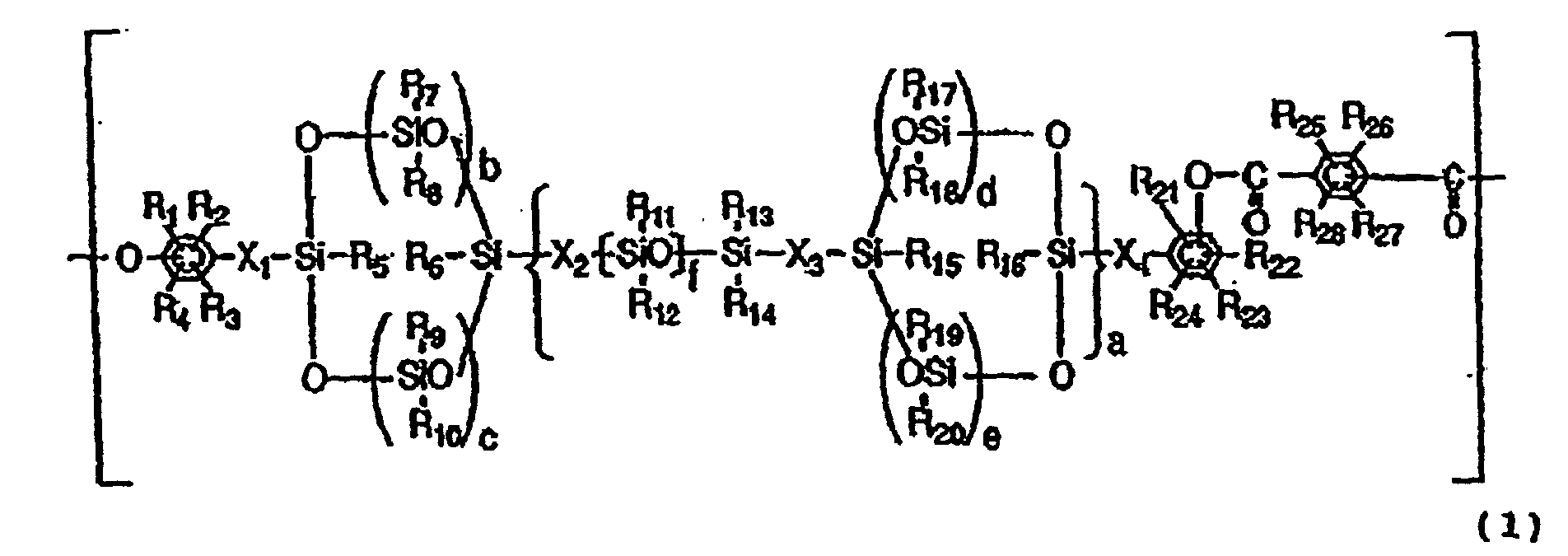
- the structural unit having a cyclic siloxane structure in the backbone chain may preferably be represented by the following Formula (1).
- R 1 to R 4 and R 21 to R 28 are the same or different and each represent a hydrogen atom, a halogen atom, a substituted or unsubstituted alkyl group, a substituted or unsubstituted alkoxyl group or a substituted or unsubstituted aryl group
- R 5 to R 20 are the same or different and each represent a hydrogen atom, a halogen atom, a substituted or unsubstituted alkyl group or a substituted or unsubstituted aryl group
- X 1 to X 4 are the same or different and each represent a substituted or unsubstituted alkylene group
- a represents an integer of 0 to 100
- b, c, d and e are the same or different and each represent an integer which is 0 to
- the halogen atom may include a fluorine atom, a chlorine atom and a bromine atom.
- the alkyl group may include a methyl group, an ethyl group, a propyl group and a butyl group.
- the alkoxyl group may include a methoxyl group, an ethoxyl group, a propoxyl group and a butoxyl group.
- the aryl group may include a phenyl group and a naphthyl group.
- the alkylene group may include a methylene group, an ethylene group and a propylene group.
- the substituent the above alkyl group, alkoxyl group, aryl group and alkylene group may each have may include alkyl groups such as a methyl group, an ethyl group, a propyl group and a butyl group, aryl groups such as a phenyl group and a naphthyl group, and halogen atoms such as a fluorine atom, a chlorine atom and a bromine atom.
- the group -O- at the left terminal may be bonded at any of ortho-, meta- and para-positions with respect to X 1
- the group at the right terminal may be bonded at any of ortho-, meta- and para-positions with respect to the group
- R 1 to R 4 and R 21 to R 28 may preferably be all hydrogen atoms.
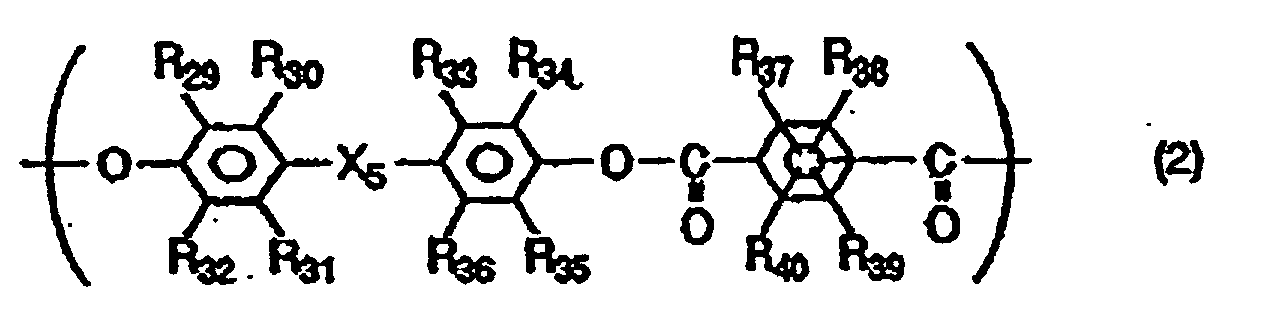
- the polyarylate resin may preferably further have a structural unit represented by the following Formula (2).
- R 29 to R 40 are the same or different and each represent a hydrogen atom, a halogen atom, a substituted or unsubstituted alkyl group or a substituted or unsubstituted aryl group
- X 5 represents a single bond, -O-, -S- or a group represented by the following formula: wherein R 41 and R 42 are the same or different and each represent a hydrogen atom, a halogen atom, a substituted or unsubstituted alkyl group or a substituted or unsubstituted aryl group; or R 41 and R 42 may be joined together to form a substituted or unsubstituted cycloalkylidene group together with the intervening carbon atom.
- the halogen atom, the alkyl group and the aryl group may include the same atoms or groups as those in Formula (1).
- the cycloalkylidene group may include a cyclopentylidene group, a cyclohexylidene group and a cycloheptylidene group.
- the substituent these groups may each have may include the same substituents as those in Formula (1).
- the group at the right terminal may be bonded at any of ortho-, meta- and para-positions with respect to the group on the left side.
- R 30 , R 31 , R 33 , R 36 to R 39 and R 40 may preferably be all hydrogen atoms.
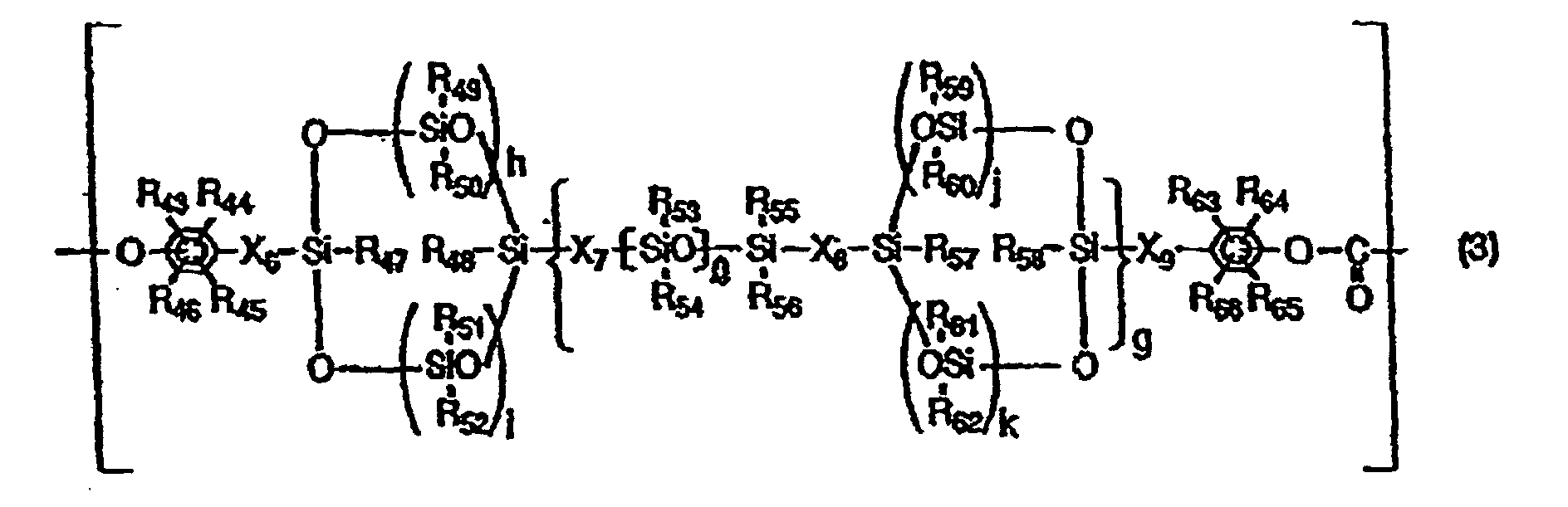
- the structural unit having a cyclic siloxane structure in the backbone chain may preferably be represented by the following Formula (3).
- R 43 to R 46 and R 63 to R 66 are the same or different and each represent a hydrogen atom, a halogen atom, a substituted or unsubstituted alkyl group, a substituted or unsubstituted alkoxyl group or a substituted or unsubstituted aryl group
- R 47 to R 62 are the same or different and each represent a hydrogen atom, a halogen atom, a substituted or unsubstituted alkyl group or a substituted or unsubstituted aryl group
- X 6 to X 9 are the same or different and each represent a substituted or unsubstituted alkylene group
- g represents an integer of 0 to 100
- h, i, j and k are the same or different and each represent an integer which is
- the halogen atom may include a fluorine atom, a chlorine atom and a bromine atom.
- the alkyl group may include a methyl group, an ethyl group, a propyl group and a butyl group.
- the alkoxyl group may include a methoxyl group, an ethoxyl group, a propoxyl group and a butoxyl group.
- the aryl group may include a phenyl group and a naphthyl group.
- the alkylene group may include a methylene group, an ethylene group and a propylene group.
- the substituent the above alkyl group, alkoxyl group, aryl group and alkylene group may each have may include alkyl groups such as a methyl group, an ethyl group, a propyl group and a butyl group, aryl groups such as a phenyl group and a naphthyl group, and halogen atoms such as a fluorine atom, a chlorine atom and a bromine atom.
- the group -O- at the left terminal may be bonded at any of ortho-, meta- and para-positions with respect to X 6
- the group at the right terminal may be bonded at any of ortho-, meta- and para-positions with respect to the group -X 9 -.
- R 43 to R 46 and R 63 to R 66 may preferably be all hydrogen atoms.
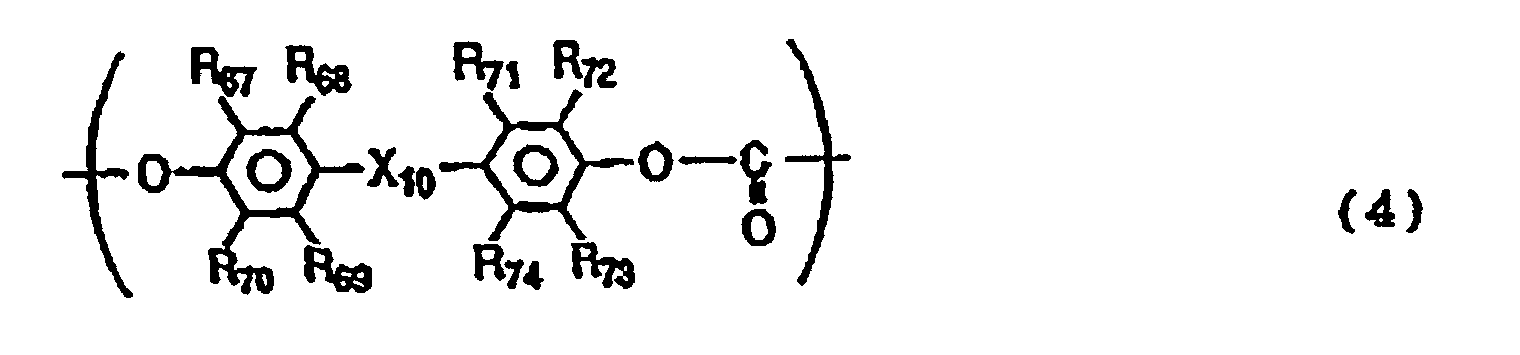
- the polycarbonate resin may preferably further have a structural unit represented by the following Formula (4).
- R 67 to R 74 are the same or different and each represent a hydrogen atom, a halogen atom, a substituted or unsubstituted alkyl group or a substituted or unsubstituted aryl group
- X 10 represents a single bond, -O-, -S- or a group represented by the following formula: wherein R 75 and R 76 are the same or different and each represent a hydrogen atom, a halogen atom, a substituted or unsubstituted alkyl group or a substituted or unsubstituted aryl group; or R 75 and R 76 may be joined together to form a substituted or unsubstituted cycloalkylidene group together with the intervening carbon atom.
- the halogen atom, the alkyl group and the aryl group may include the same atoms or groups as those in Formula (3).
- the cycloalkylidene group may include, for example, a cyclohexylidene group.
- the substituent these groups may each have may include the same substituents as those in Formula (3).
- R 68 , R 69 , R 71 and R 74 may preferably be all hydrogen atoms.
- units (2)-1, (2)-2, (2)-10 and (2)-16 are particularly preferred.
- units (4)-1, (4)-2, (4)-10 and (4)-13 are particularly preferred.
- the polyarylate resin used in the present invention there are no particular limitations on how to synthesize the polyarylate resin used in the present invention.
- it can be obtained by subjecting as monomers two kinds of bisphenols capable .of deriving the structural units of Formulas (1) and (2), to polycondensation with phthalic acid by a conventional method (e.g., interfacial polycondensation).
- polycarbonate resin used in the present invention there are also no particular limitations on how to synthesize the polycarbonate resin used in the present invention.
- it can be obtained by subjecting as monomers two kinds of bisphenols capable of deriving the structural units of Formulas (3) and (4), to polycondensation with phosgene by a conventional method.
- Mw weight-average molecular weight
- Mv viscosity-average molecular weight
- the surface layer of the electrophotographic photosensitive member of the present invention is roughly grouped into an instance where it is a photosensitive layer and an instance where it is a protective layer provided on the photosensitive layer.
- the surface layer is a photosensitive layer and when the photosensitive layer is of a single-layer type in which a charge-generating material and a charge-transporting material are contained in the same layer, that layer is the surface layer. Also, when the photosensitive layer is of a multi-layer type in which a charge transport layer containing a charge-transporting material is provided on a charge generation layer containing a charge-generating material, the charge transport layer is the surface layer, and when conversely the charge generation layer is an upper layer, the charge generation layer is the surface layer.
- the charge transport layer is the surface layer.
- the charge transport layer can be formed by coating a solution prepared by dissolving a charge-transporting material and a binder resin using a suitable solvent, followed by drying.
- the charge-transporting material used may include triarylamine compounds, hydrazone compounds, stilbene compounds, pyrazoline compounds, oxazole compounds, triarylmethane compounds and thiazole compounds.
- the binder resin may include the polyarylate resin and polycarbonate resin of the present invention in the case when the charge transport layer is the surface layer, and other various resins in the case when it is not the surface layer.
- the charge-transporting material and the binder resin may preferably be used in a weight ratio of from 1:0.5 to 1:2.
- the charge transport layer may preferably have a layer thickness of from 5 to 40 ⁇ m, and particularly preferably from 15 to 30 ⁇ m.
- the charge generation layer can be formed by coating a dispersion prepared by well dispersing a charge-generating material together with a binder resin used in 0.3- to 4-fold weight and a solvent by means of a homogenizer, an ultrasonic dispersion machine, a ball mill, a vibration ball mill, a sand mill, an attritor, a roll mill or a liquid impact type high-speed dispersion machine, followed by drying.
- the charge-generating material used in the present invention may include dyes of selenium-tellurium, pyrylium and thiapyrylium types, and pigments of phthalocyanine, anthanthrone, dibenzpyrenequinone, trisazo, cyanine, disazo, monoazo, indigo, quinacridone and unsymmetrical quinocyanine types.
- the binder resin may include the polyarylate resin and polycarbonate resin of the present invention in the case when the charge generation layer is the surface layer, and other various resins in the case when it is not the surface layer.
- the charge generation layer may preferably have a layer thickness of 5 ⁇ m or smaller, and particularly preferably from 0.1 to 2 ⁇ m.
- the layer can be formed by coating a solution prepared by dispersing and dissolving in a binder resin the charge-generating material and charge-transporting material as described above, followed by drying.
- a photosensitive layer may preferably have a layer thickness of from 5 to 40 ⁇ m, and particularly preferably from 15 to 30 ⁇ m.
- the protective layer can be formed by coating a solution containing the polyarylate resin or polycarbonate resin of the present invention and optionally an organic or inorganic material resistance control agent, followed by drying.
- the protective layer may preferably have a layer thickness of from 0.5 to 10 ⁇ m, and preferably from 1 to 5 ⁇ m.
- an antioxidant and a lubricant may also be added to the surface layer.
- the support used in the present invention may be any of those having a conductivity. It may be made of a material including metals such as aluminum and stainless steel, and metals, papers or plastics provided with conductive layers, and may have a form of a sheet or a cylinder.
- a conductive layer may also be provided between the support and the photosensitive layer.
- a conductive layer can be formed by coating a dispersion prepared by dispersing a conductive powder such as carbon black, metal particles or metal oxide particles in a binder resin, followed by drying.
- the conductive layer may preferably have a layer thickness of from 5 to 40 ⁇ m, and particularly preferably from 10 to 30 ⁇ m.
- an intermediate layer having the function of adhesion and the function as a barrier may optionally be provided between the support and the photosensitive layer or between the conductive layer and the photosensitive layer.
- Materials for the intermediate layer may include polyamide, polyvinyl alcohol, polyethylene oxide, ethyl cellulose, casein, polyurethane and polyether-urethane.
- the intermediate layer can be formed by coating a solution prepared by dissolving any of these materials in a suitable solvent, followed by drying. It may preferably have a layer thickness of from 0.05 to 5 ⁇ m, and particularly preferably from 0.3 to 1 ⁇ m.
- the Figure schematically illustrates the construction of an electrophotographic apparatus having a process cartridge having the electrophotographic photosensitive member of the present invention.
- reference numeral 1 denotes a drum type electrophotographic photosensitive member of the present invention, which is rotatingly driven around an axis 2 in the direction of an arrow at a given peripheral speed.
- the photosensitive member 1 is uniformly electrostatically charged on its periphery to a positive or negative, given potential through a primary charging means 3.
- the photosensitive member thus charged is then photoimagewise exposed to light 4 emitted from an imagewise exposure means (not shown) for slit exposure or laser beam scanning exposure. In this way, electrostatic latent images are successively formed on the periphery of the photosensitive member 1.
- the electrostatic latent images thus formed are subsequently developed by toner by the operation of a developing means 5.
- the toner-developed images formed by development are then successively transferred by the operation of a transfer means 6, to the surface of a transfer medium 7 fed from a paper feed section (not shown) to the part between the photosensitive member 1 and the transfer means 6 in the manner synchronized with the rotation of the photosensitive member 1.
- the transfer medium 7 on which the images have been transferred is separated from the surface of the photosensitive member, is led through an image fixing means 8, where the images are fixed, and is then printed out of the apparatus as a copied material (a copy).
- the surface of the photosensitive member 1 from which images have been transferred is brought to removal of the toner remaining after the transfer, through a cleaning means 9.
- the photosensitive member is cleaned on its surface, further subjected to charge elimination by pre-exposure light 10 emitted from a pre-exposure means (not shown), and then repeatedly used for the formation of images.
- the primary charging means 3 is a contact charging means making use of a charging roller, the pre-exposure is not necessarily required.
- the apparatus may be constituted of a combination of plural components integrally joined as a process cartridge from among the constituents such as the above electrophotographic photosensitive member 1, primary charging means 3, developing means 5 and cleaning means 9 so that the process cartridge is detachable from the body of the electrophotographic apparatus such as a copying machine or a laser beam printer.
- the primary charging means 3, the developing means 5 and the cleaning means 9 may be integrally supported in a cartridge together with the photosensitive member 1 to form a process cartridge 11 that is detachable from the body of the apparatus through a guide means such as a rail 12 provided in the body of the apparatus.
- the light 4 of imagewise exposure is light reflected from, or transmitted through, an original, or light irradiated by the scanning of a laser beam, the driving of an LED array or the driving of a liquid crystal shutter array according to signals obtained by reading an original through a sensor and converting the information into signals.
- the electrophotographic photosensitive member of the present invention may be not only utilized in electrophotographic copying machines, but also widely used in the fields where electrophotography is applied, e.g., laser beam printers, CRT printers, LED printers, liquid-crystal printers and laser beam engravers.
- a coating fluid comprised of the following materials was coated by dip coating, followed by heat-curing at 140°C for 30 minutes to form a conductive layer with a layer thickness of 15 ⁇ m.
- Conductive pigment SnO 2 -coated barium sulfate 10 parts
- Resistance modifying pigment Titanium oxide 2 parts
- Binder resin Phenol resin 6 parts
- Leveling material Silicone oil 0.001 part
- Solvent Methanol/methoxypropanol (0.2/0.8) 20 parts
- a charge transport layer forming coating solution was prepared.
- the resultant solution was coated on the charge generation layer by dip coating, followed by drying at 120°C for 1 hour to form a charge transport layer with a layer thickness of 20 ⁇ m.
- This photosensitive member was set in a copying machine GP-215 (using the roller contact charging system), manufactured by CANON INC.
- a running test to reproduce images on 20,000 A4-size sheets was made in an environment of 30°C and 85%RH and in an intermittent mode where copying was stopped once for each sheet.
- the depth of wear of the surface layer was measured and also image quality was evaluated by visual observation.
- an eddy-current layer thickness measuring device (Permascope Type-E111) manufactured by Fischer Co. was used.
- Photosensitive members were produced in the same manner as in Example 1 except that the binder resin for the charge transport layer was replaced with those shown in Table 3. Evaluation was made similarly.
- a photosensitive member was produced in the same manner as in Example 1 except that the binder resin for the charge transport layer was replaced with bisphenol A type polyarylate resin (Mw: about 60,000; U-100, available from Unichika, Ltd.) having only the structural unit of Formula (2)-1. Evaluation was made similarly.
- a photosensitive member was produced in the same manner as in Example 1 except that the binder resin for the charge transport layer was replaced with a compound represented by the following formula (A). Evaluation was made similarly.
- the photosensitive member was set also in a copying machine GP-55 (a corona charging system), manufactured by Canon Kabushiki Kaisha to make running tests similarly.
- Photosensitive members were produced in the same manner as in Example 12 except that the binder resin for the charge transport layer was replaced with those shown in Table 4. Evaluation was made similarly.
- a coating fluid comprised of the following materials was coated by dip coating, followed by heat-curing at 140°C for 30 minutes to form a conductive layer with a layer thickness of 15 ⁇ m.
- Conductive pigment SnO 2 -coated barium sulfate 10 parts
- Resistance modifying pigment Titanium oxide 2 parts
- Binder resin Phenol resin 6 parts
- Leveling material Silicone oil 0.001 part
- Solvent Methanol/methoxypropanol (0.2/0.8) 20 parts
- a charge transport layer forming coating solution was prepared.
- the resultant solution was coated on the charge generation layer by dip coating, followed by drying at 120°C for 1 hour to form a charge transport layer with a layer thickness of 23 ⁇ m.
- This photosensitive member was set in a laser beam printer LASER JET 4 PLUS, manufactured by Hullet Packard Co., having a roller contact charging means.
- a running test to reproduce images on 3,000 A4-size sheets was made in an environment of 30°C and 85%RH and in an intermittent mode where copying was stopped once for each sheet.
- the depth of wear of the surface layer was measured and also image quality was evaluated by visual observation.
- an eddy-current layer thickness measuring device (Permascope Type-E111) manufactured by Fischer Co. was used.
- Photosensitive members were produced in the same manner as in Example 18 except that the binder resin for the charge transport layer was replaced with those shown in Table 5. Evaluation was made similarly.
- a photosensitive member was produced in the same manner as in Example 18 except that the binder resin for the charge transport layer was replaced with bisphenol Z type polycarbonate resin (Mv: 40,000; IUPILON, available from Mitsubishi Gas Chemical Company, Inc.) having only the structural unit of Formula (4)-13. Evaluation was made similarly.
- a photosensitive member was produced in the same manner as in Example 18 except that the binder resin for the charge transport layer was replaced with a compound represented by the following formula (B). Evaluation was made similarly.
- Photosensitive members were produced in the same manner as in Example 29 except that the binder resin for the charge transport layer was replaced with those shown in Table 6. Evaluation was made similarly.
Landscapes
- Physics & Mathematics (AREA)
- Chemical & Material Sciences (AREA)
- Chemical Kinetics & Catalysis (AREA)
- Spectroscopy & Molecular Physics (AREA)
- General Physics & Mathematics (AREA)
- Photoreceptors In Electrophotography (AREA)
Claims (27)
- Elektrofotografisches lichtempfindliches Element mit einem Träger und einer auf dem Träger bereitgestellten lichtempfindlichen Schicht;
wobei das elektrofotografische lichtempfindliche Element eine Oberfläche hat, die ein Polyarylatharz oder ein Polycarbonatharz mit einer strukturellen Einheit enthält, die in ihrer Hauptkette eine cyclische Siloxanstruktur hat. - Elektrofotografisches lichtempfindliches Element nach Anspruch 1, wobei die Oberflächenschicht das Polyarylatharz enthält.
- Elektrofotografisches lichtempfindliches Element nach Anspruch 2, wobei die strukturelle Einheit des Polyarylatharzes mit einer cyclischen Siloxanstruktur durch die folgende Formel (1) dargestellt wird:wobei R1 bis R4 und R21 bis R28 gleich oder verschieden sind und jeweils ein Wasserstoffatom, ein Halogenatom, eine substituierte oder unsubstituierte Alkylgruppe, eine substituierte oder unsubstituierte Alkoxylgruppe oder eine substituierte oder unsubstituierte Arylgruppe bezeichnen; R5 bis R20 gleich oder verschieden sind und jeweils ein Wasserstoffatom, ein Halogenatom, eine substituierte oder unsubstituierte Alkylgruppe oder eine substituierte oder unsubstituierte Arylgruppe bezeichnen; X1 bis X4 gleich oder verschieden sind und jeweils eine substituierte oder unsubstituierte Alkylengruppe bezeichnen; a eine ganze Zahl von 0 bis 100 darstellt; b, c, d und e gleich oder verschieden sind und jeweils eine ganze Zahl bezeichnen, wobei diese 0 bis 10 ist und b + c ≥ 2 und d + e ≥ 2 sind; und f eine ganze Zahl von 0 bis 10 bezeichnet.

- Elektrofotografisches lichtempfindliches Element nach Anspruch 3, wobei das Polyarylatharz des Weiteren eine strukturelle Einheit hat, die durch die folgende Formel (2) dargestellt wird:wobei R29 bis R40 gleich oder verschieden sind und jeweils ein Wasserstoffatom, ein Halogenatom, eine substituierte oder unsubstituierte Alkylgruppe oder eine substituierte oder unsubstituierte Arylgruppe darstellen; X5 eine Einfachbindung, -O-, -S- oder eine durch die folgenden Formel dargestellte Gruppe bezeichnt:
 wobei R41 und R42 gleich oder verschieden sind und jeweils ein Wasserstoffatom, ein Halogenatom, eine substituierte oder unsubstituierte Alkylgruppe oder eine substituierte oder unsubstituierte Arylgruppe bezeichnen; oder R41 und R42 verbunden sein können, um zusammen mit dem dazwischen liegenden Kohlenstoffatom eine substituierte oder unsubstituierte Cycloalkylidengruppe zu bilden.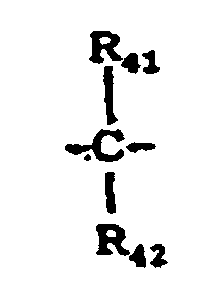
- Elektrofotografisches lichtempfindliches Element nach Anspruch 4, wobei R1 bis R4, R21 bis R28, R30, R31, R33, R36 bis R39 und R40 alle Wasserstoffatome sind.
- Elektrofotografisches lichtempfindliches Element nach Anspruch 1, wobei die Oberflächenschicht das Polycarbonatharz enthält.
- Elektrofotografisches lichtempfindliches Element nach Anspruch 6, wobei die strukturelle Einheit des Polycarbonatharzes mit einer cyclischen Siloxanstruktur durch die folgende Formel (3) dargestellt wird:wobei R43 bis R46 und R63 bis R66 gleich oder verschieden sind und jeweils ein Wasserstoffatom, ein Halogenatom, eine substituierte oder unsubstituierte Alkylgruppe, eine substituierte oder unsubstituierte Alkoxylgruppe oder eine substituierte oder unsubstituierte Arylgruppe bezeichnen; R47 bis R62 gleich oder verschieden sind und jeweils ein Wasserstoffatom, ein Halogenatom, eine substituierte oder unsubstituierte Alkylgruppe oder eine substituierte oder unsubstituierte Arylgruppe bezeichnen; X6 bis X9 gleich oder verschieden sind und jeweils eine substituierte oder unsubstituierte Alkylengruppe bezeichnen; g eine ganze Zahl von 0 bis 100 bezeichnet; h, i, j und k gleich oder verschieden sind und jeweils eine ganze Zahl bezeichnen, wobei diese 0 bis 10 ist und h + i ≥ 2 und j + k ≥ 2 sind; und ℓ eine ganze Zahl von 0 bis 10 bezeichnet.

- Elektrofotografisches lichtempfindliches Element nach Anspruch 7, wobei das Polycarbonatharz des Weiteren eine strukturelle Einheit hat, die durch die folgende Formel (4) dagestellt wird:wobei R67 bis R74 gleich oder verschieden sind und jeweils ein Wasserstoffatom, ein Halogenatom, eine substituierte oder unsubstituierte Alkylgruppe oder eine substituierte oder unsubstituierte Arylgruppe bezeichnen; X10 eine Einfachbindung, -O-, -S- oder eine durch die folgende Formel dagestellte Gruppe bezeichnet:
 wobei R75 und R76 gleich oder verschieden sind und jeweils ein Wasserstoffatom, ein Halogenatom, eine substituierte oder unsubstituierte Alkylgruppe oder eine substituierte oder unsubstituierte Arylgruppe bezeichnen; oder R75 und R76 miteinander verbunden sein können, um zusammen mit dem dazwischen liegenden Kohlenstoffatom eine substituierte oder unsubstituierte Cycloalkylidengruppe zu bilden.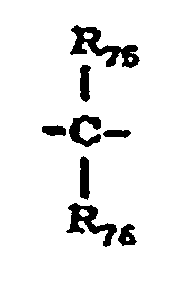
- Elektrofotografisches lichtempfindliches Element nach Anspruch 8, wobei R43 bis R46, R63 bis R66, R68, R69, R71 und R74 alle Wasserstoffatome sind.
- Verfahrenskartusche mit einem elektrofotografischen lichtempfindlichen Element und wenigstens einer Einrichtung ausgewählt aus der Gruppe bestehend aus einer Aufladeeinrichtung, einer Entwicklungseinrichtung und einer Reinigungseinrichtung;
wobei das elektrofotografische lichtempfindliche Element und die wenigstens eine Einrichtung als eine Einheit geträgert sind und abnehmbar an den Hauptkörper eines elektrofotografischen Geräts angebracht sind; und
das elektrofotografische lichtempfindliche Element einen Träger und eine auf dem Träger bereitgestellte lichtempfindliche Schicht umfasst;
wobei das elektrofotografische lichtempfindliche Element eine Oberflächenschicht hat, die ein Polyarylatharz oder ein Polycarbonatharz mit einer strukturellen Einheit enthält, die in ihrer Hauptkette eine cyclische Siloxanstruktur hat. - Verfahrenskartusche nach Anspruch 10, wobei die Oberflächenschicht des elektrofotografischen lichtempfindlichen Elements das Polyarylatharz enthält.
- Verfahrenskartusche nach Anspruch 11, wobei die strukturelle Einheit des Polyarylatharzes mit einer cyclischen Siloxanstruktur durch die folgende Formel (1) dargestellt wird:wobei R1 bis R4 und R21 bis R28 gleich oder verschieden sind und jeweils ein Wasserstoffatom, ein Halogenatom, eine substituierte oder unsubstituierte Alkylgruppe, eine substituierte oder unsubstituierte Alkoxylgruppe oder eine substituierte oder unsubstituierte Arylgruppe bezeichnen; R5 bis R20 gleich oder verschieden sind und jeweils ein Wasserstoffatom, ein Halogenatom, eine substituierte oder unsubstituierte Alkylgruppe oder eine substituierte oder unsubstituierte Arylgruppe bezeichnen; X1 bis X4 gleich oder verschieden sind und jeweils eine substituierte oder unsubstituierte Alkylengruppe bezeichnen; a eine ganze Zahl von 0 bis 100 bezeichnet; b, c, d und e gleich oder verschieden sind und jeweils eine ganze Zahl bezeichnen, wobei diese 0 bis 10 ist und b + c ≥ 2 und d + e ≥ 2 sind; und f eine ganze Zahl von 0 bis 10 bezeichnet.
- Verfahrenskartusche nach Anspruch 12, wobei das Polyarylatharz des Weiteren eine strukturelle Einheit hat, die durch die folgende Formel (2) dargestellt wird:wobei R29 bis R40 gleich oder verschieden sind und jeweils ein Wasserstoffatom, ein Halogenatom, eine substituierte oder unsubstituierte Alkylgruppe oder eine substituierte oder unsubstituierte Arylgruppe bezeichnen; X5 eine Einfachbindung, -O-, -S- oder eine durch die folgende Formel dargestellte Gruppe bezeichnet:
 wobei R41 und R42 gleich oder verschieden sind und jeweils ein Wasserstoffatom, ein Halogenatom, eine substituierte oder unsubstituierte Alkylgruppe oder eine substituierte oder unsubstituierte Arylgruppe bezeichnen; oder R41 und R42 miteinander verbunden sein können, um zusammen mit dem dazwischen liegenden Kohlenstoffatom eine substituierte oder unsubstituierte Cycloalkylidengruppe zu bilden.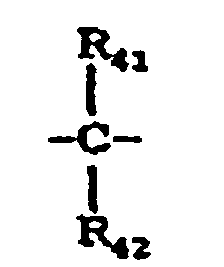
- Verfahrenskartusche nach Anspruch 13, wobei R1 bis R4, R21 bis R28, R30, R31, R33, R36 bis R39 und R40 alle Wasserstoffatome sind.
- Verfahrenskartusche nach Anspruch 10, wobei die Oberflächenschicht des elektrofotografischen lichtempfindlichen Elements das Polycarbonatharz enthält.
- Verfahrenskartusche nach Anspruch 15, wobei die strukturelle Einheit des Polycarbonatharzes mit einer cyclischen Siloxanstruktur durch die folgende Formel (3) dargestellt wird:wobei R43 bis R46 und R63 bis R66 gleich oder verschieden sind und jeweils ein Wasserstoffatom, ein Halogenatom, eine substituierte oder unsubstituierte Alkylgruppe, eine substituierte oder unsubstituierte Alkoxylgruppe oder eine substituierte oder unsubstituierte Arylgruppe bezeichnen; R47 bis R62 gleich oder verschieden sind und jeweils ein Wasserstoffatom, ein Halogenatom, eine substituierte oder unsubstituierte Alkylgruppe oder eine substituierte oder unsubstituierte Arylgruppe bezeichnen; X6 bis X9 gleich oder verschieden sind und jeweils eine substituierte oder unsubstituierte Alkylengruppe bezeichnen; g eine ganze Zahl von 0 bis 100 bezeichnet; h, i, j und k gleich oder verschieden sind und jeweils eine ganze Zahl bezeichnen, wobei diese 0 bis 10 ist und h + i ≥ 2 und j + k ≥ 2 sind; und ℓ eine ganze Zahl von 0 bis 10 bezeichnet.
- Verfahrenskartusche nach Anspruch 16, wobei das Polycarbonatharz des Weiteren eine strukturelle Einheit hat, die durch die folgende Formel (4) dargestellt wird:wobei R67 bis R74 gleich oder verschieden sind und jeweils ein Wasserstoffatom, ein Halogenatom, eine substituierte oder unsubstituierte Alkylgruppe oder eine substituierte oder unsubstituierte Arylgruppe bezeichnen; X10 eine Einfachbindung, -O-, -S- oder eine durch die folgende Formel dargestellte Gruppe bezeichnet:
 wobei R75 und R76 gleich oder verschieden sind und jeweils ein Wasserstoffatom, ein Halogenatom, eine substituierte oder unsubstituierte Alkylgruppe oder eine substituierte oder unsubstituierte Arylgruppe bezeichnen; oder R75 und R76 miteinander verbunden sein können, um zusammen mit dem dazwischen liegenden Kohlenstoffatom eine substituierte oder unsubstituierte Cycloalkylidengruppe bilden.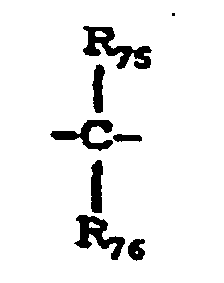
- Verfahrenskartusche nach Anspruch 17, wobei R43 bis R46, R63 bis R66, R68, R69, R71 und R74 alle Wasserstoffatome sind.
- Elektrofotografisches Gerät mit einem elektrofotografischen lichtempfindlichen Element, einer Aufladeeinrichtung, einer Belichtungseinrichtung, einer Entwicklungseinrichtung und einer Übertragungseinrichtung;
wobei das elektrofotografische lichtempfindliche Element einen Träger und eine auf dem Träger bereitgestellte lichtempfindliche Schicht umfasst;
wobei das elektrofotografische lichtempfindliche Element eine Oberflächenschicht hat, die ein Polyarylatharz oder ein Polycarbonatharz mit einer strukturellen Einheit enthält, die in ihrer Hauptkette eine cyclische Siloxanstruktur hat. - Elektrofotografisches Gerät nach Anspruch 19, wobei die Oberflächenschicht des elektrofotografischen lichtempfindlichen Elements das Polyarylatharz enthält.
- Elektrofotografisches Gerät nach Anspruch 20, wobei die strukturelle Einheit des Polyarylatharzes mit einer cyclischen Siloxanstruktur durch die folgende Formel (1) dargestellt wird:wobei R1 bis R4 und R21 bis R28 gleich oder verschieden sind und jeweils ein Wasserstoffatom, ein Halogenatom, eine substituierte oder unsubstituierte Alkylgruppe, eine substituierte oder unsubstituierte Alkoxylgruppe oder eine substituierte oder unsubstituierte Arylgruppe bezeichnen; R5 bis R20 gleich oder verschieden sind und jeweils ein Wasserstoffatom, ein Halogenatom, eine substituierte oder unsubstituierte Alkylgruppe oder eine substituierte oder unsubstituierte Arylgruppe bezeichnen; X1 bis X4 gleich oder verschieden sind und jeweils eine substituierte oder unsubstituierte Alkylengruppe bezeichnen; a eine ganze Zahl von 0 bis 100 bezeichnet; b, c, d und e gleich oder verschieden sind und jeweils eine ganze Zahl bezeichnen, wobei diese 0 bis 10 ist und b + c ≥ 2 und d + e ≥ 2 sind; und f eine ganze Zahl von 0 bis 10 bezeichnet.

- Elektrofotografisches Gerät nach Anspruch 21, wobei das Polyarylatharz des Weiteren eine strukturelle Einheit hat, die durch die folgende Formel (2) dargestellt wird:wobei R29 bis R40 gleich oder verschieden sind und jeweils ein Wasserstoffatom, ein Halogenatom, eine substituierte oder unsubstituierte Alkylgruppe oder eine substituierte oder unsubstituierte Arylgruppe bezeichnen; X5 eine Einfachbindung, -O-, -S- oder eine durch die folgende Formel dargestellte Gruppe bezeichnet:
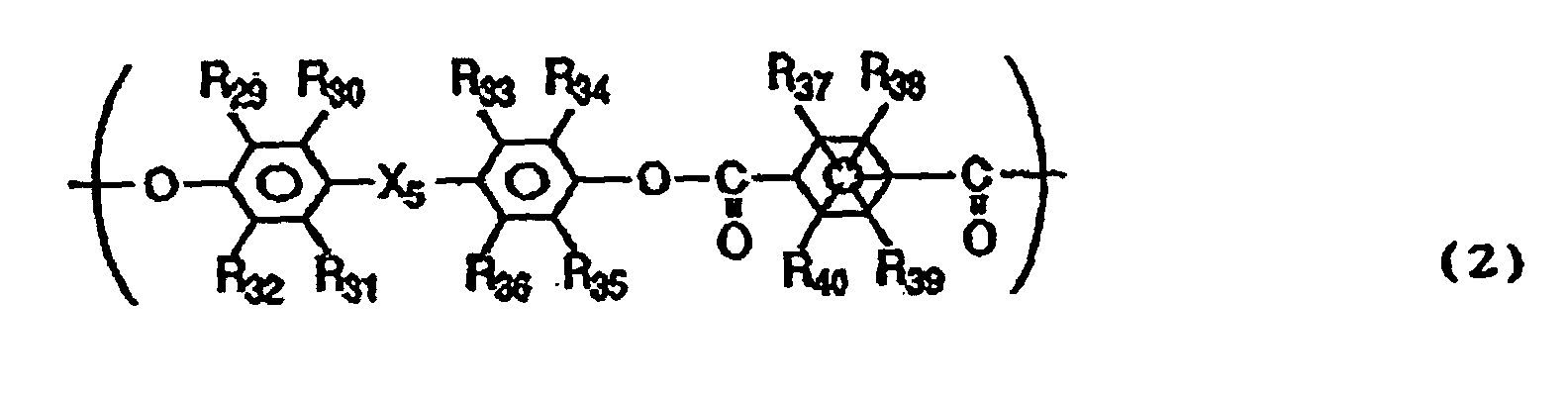 wobei R41 und R42 gleich oder verschieden sind und jeweils ein Wasserstoffatom, ein Halogenatom, eine substituierte oder unsubstituierte Alkylgruppe oder eine substituierte oder unsubstituierte Arylgruppe bezeichnen; oder R41 und R42 miteinander verbunden sein können, um zusammen mit dem dazwischen liegenden Kohlenstoffatom eine substituierte oder unsubstituierte Cycloalkylidengruppe zu bilden.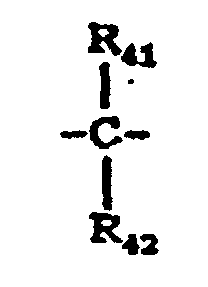
- Elektrofotografisches Gerät nach Anspruch 22, wobei R1 bis R4, R21 bis R28, R30, R31, R33, R36 bis R39 und R40 alle Wasserstoffatome sind.
- Elektrofotografisches Gerät nach Anspruch 19, wobei die Oberflächenschicht des elektrofotografischen lichtempfindlichen Elements das Polycarbonatharz enthält.
- Elektrofotografisches Gerät nach Anspruch 24, wobei die strukturelle Einheit des Polycarbonatharzes mit einer cyclischen Siloxanstruktur durch die folgenden Formel (3) dargestellt wird:wobei R43 bis R46 und R63 bis R66 gleich oder verschieden sind und jeweils ein Wasserstoffatom, ein Halogenatom, eine substituierte oder unsubstituierte Alkylgruppe, eine substituierte oder unsubstituierte Alkoxylgruppe oder eine substituierte oder unsubstituierte Arylgruppe bezeichnen; R47 bis R62 gleich oder verschieden sind und jeweils ein Wasserstoffatom, ein Halogenatom, eine substituierte oder unsubstituierte Alkylgruppe oder eine substituierte oder unsubstituierte Arylgruppe bezeichnen; X6 bis X9 gleich oder verschieden sind und jeweils eine substituierte oder unsubstituierte Alkylengruppe bezeichnen; g eine ganze Zahl von 0 bis 100 bezeichnet; h, i, j und k gleich oder verschieden sind und jeweils eine ganze Zahl bezeichnen, wobei diese 0 bis 10 ist und h + i ≥ 2 und j + k ≥ 2 sind; und ℓ eine ganze Zahl von 0 bis 10 bezeichnet.
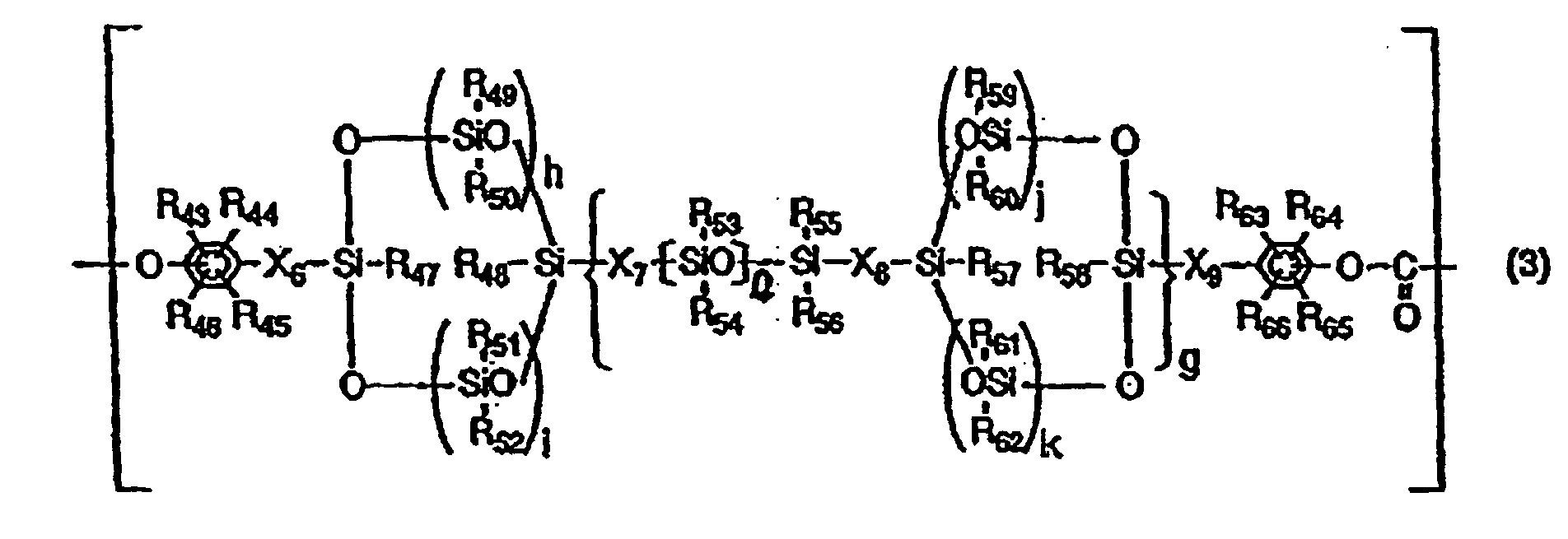
- Elektrofotografisches Gerät nach Anspruch 25, wobei das Polycarbonatharz des Weiteren eine strukturelle Einheit hat, die durch die folgenden Formel (4) dargestellt wird:wobei R67 bis R74 gleich oder verschieden sind und jeweil ein Wasserstoffatom, ein Halogenatom, eine substituierte oder unsubstituierte Alkylgruppe oder eine substituierte oder unsubstituierte Arylgruppe bezeichnen; X10 eine Einfachbindung -O-, -S- oder eine durch die folgende Formel dargestellte Gruppe bezeichnet:
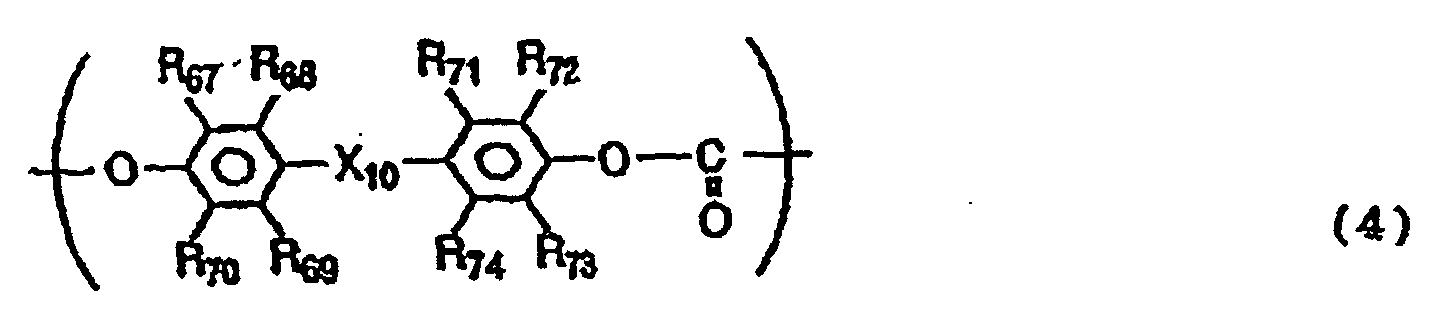 wobei R75 und R76 gleich oder verschieden sind und jeweils ein Wasserstoffatom, ein Halogenatom, eine substituierte oder unsubstituierte Alkylgruppe oder eine substituierte oder unsubstituierte Arylgruppe bezeichnen; oder R75 und R76 miteinander verbunden sein können, um zusammen mit dem dazwischen liegenden Kohlenstoffatom eine substituierte oder unsubstituierte Cycloalkylidengruppe zu bilden.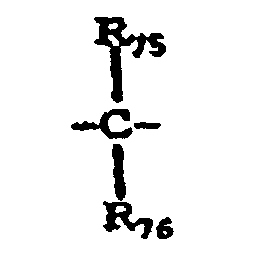
- Elektrofotografisches Gerät nach Anspruch 26, wobei R43 bis R46, R63 bis R66, R68, R69, R71 und R74 alle Wasserstoffatome sind.
Applications Claiming Priority (6)
| Application Number | Priority Date | Filing Date | Title |
|---|---|---|---|
| JP28526297 | 1997-10-17 | ||
| JP285263/97 | 1997-10-17 | ||
| JP28526397 | 1997-10-17 | ||
| JP28526397 | 1997-10-17 | ||
| JP28526297 | 1997-10-17 | ||
| JP285262/97 | 1997-10-17 |
Publications (2)
| Publication Number | Publication Date |
|---|---|
| EP0909993A1 EP0909993A1 (de) | 1999-04-21 |
| EP0909993B1 true EP0909993B1 (de) | 2004-01-02 |
Family
ID=26555815
Family Applications (1)
| Application Number | Title | Priority Date | Filing Date |
|---|---|---|---|
| EP98402572A Expired - Lifetime EP0909993B1 (de) | 1997-10-17 | 1998-10-16 | Elektrophotographisches, lichtempfindliches Element, Verfahrenskassette und elektrophotographischer Apparat |
Country Status (3)
| Country | Link |
|---|---|
| US (1) | US6146800A (de) |
| EP (1) | EP0909993B1 (de) |
| DE (1) | DE69820829T2 (de) |
Families Citing this family (9)
| Publication number | Priority date | Publication date | Assignee | Title |
|---|---|---|---|---|
| JP3879294B2 (ja) * | 1999-01-13 | 2007-02-07 | コニカミノルタホールディングス株式会社 | 電子写真感光体、画像形成方法、画像形成装置及び装置ユニット |
| JP2001337467A (ja) * | 2000-05-25 | 2001-12-07 | Fuji Denki Gazo Device Kk | 電子写真感光体 |
| US6562531B2 (en) * | 2000-10-04 | 2003-05-13 | Ricoh Company, Ltd. | Electrophotographic photoreceptor, and image forming method and apparatus using the photoreceptor |
| JP4322468B2 (ja) * | 2002-04-23 | 2009-09-02 | 富士ゼロックス株式会社 | 電子写真感光体、プロセスカートリッジ及び画像形成装置 |
| JP3953360B2 (ja) * | 2002-04-24 | 2007-08-08 | シャープ株式会社 | カラー画像形成装置 |
| CN102099750B (zh) * | 2008-07-18 | 2014-07-23 | 佳能株式会社 | 电子照相感光构件、处理盒和电子照相设备 |
| JP6071439B2 (ja) | 2011-11-30 | 2017-02-01 | キヤノン株式会社 | フタロシアニン結晶の製造方法、および電子写真感光体の製造方法 |
| JP5993720B2 (ja) | 2011-11-30 | 2016-09-14 | キヤノン株式会社 | 電子写真感光体、プロセスカートリッジおよび電子写真装置 |
| JP5827612B2 (ja) | 2011-11-30 | 2015-12-02 | キヤノン株式会社 | ガリウムフタロシアニン結晶の製造方法、及び該ガリウムフタロシアニン結晶の製造方法を用いた電子写真感光体の製造方法 |
Family Cites Families (17)
| Publication number | Priority date | Publication date | Assignee | Title |
|---|---|---|---|---|
| US3871880A (en) * | 1972-12-01 | 1975-03-18 | Pitney Bowes Inc | Organic photoconductor for electrophotography |
| US3837851A (en) * | 1973-01-15 | 1974-09-24 | Ibm | Photoconductor overcoated with triarylpyrazoline charge transport layer |
| US3935154A (en) * | 1973-03-30 | 1976-01-27 | Eastman Kodak Company | Block copolyesters of polysiloxanes |
| JPS6045664B2 (ja) * | 1980-04-30 | 1985-10-11 | 株式会社リコー | 新規なジスアゾ化合物およびその製造方法 |
| JPS61228453A (ja) * | 1985-04-02 | 1986-10-11 | Canon Inc | 電子写真感光体 |
| JPS61272754A (ja) * | 1985-05-29 | 1986-12-03 | Canon Inc | 電子写真感光体 |
| JP2567086B2 (ja) * | 1989-03-15 | 1996-12-25 | キヤノン株式会社 | 電子写真感光体 |
| DE69018020T2 (de) * | 1989-11-13 | 1995-09-07 | Agfa Gevaert Nv | Mit besonderer Aussenschicht versehenes photoleitendes Aufzeichnungsmaterial. |
| US5283142A (en) * | 1991-02-21 | 1994-02-01 | Canon Kabushiki Kaisha | Image-holding member, and electrophotographic apparatus, apparatus unit, and facsimile machine employing the same |
| JP2568352B2 (ja) * | 1991-06-28 | 1997-01-08 | キヤノン株式会社 | 電子写真感光体、それを有する電子写真装置及び装置ユニット |
| JPH0572753A (ja) * | 1991-09-12 | 1993-03-26 | Mitsubishi Kasei Corp | 電子写真感光体 |
| DE69221064T2 (de) * | 1991-10-17 | 1997-11-13 | Canon Kk | Elektrophotographisches, lichtempfindliches Element, elektrophotographische Geräteeinheit und Faksimile-Gerät mit demselben |
| JP3150227B2 (ja) * | 1992-05-19 | 2001-03-26 | キヤノン株式会社 | 電子写真感光体、該電子写真感光体を有する電子写真装置及び装置ユニット |
| DE69308067T2 (de) * | 1992-05-19 | 1997-07-31 | Canon Kk | Elektrophotographisches lichtempfindliches Element, elektrophotographisches Gerät und Vorrichtungseinheit unter Verwendung desselben |
| JP3179219B2 (ja) * | 1992-10-22 | 2001-06-25 | 出光興産株式会社 | ポリカーボネートとその製法及びこれを用いた電子写真感光体 |
| US5876888A (en) * | 1996-07-04 | 1999-03-02 | Canon Kabushiki Kaisha | Electrophotographic photosensitive member, and apparatus and process cartridge provided with the same |
| JP3986160B2 (ja) * | 1997-06-12 | 2007-10-03 | 山梨電子工業株式会社 | 電子写真感光体 |
-
1998
- 1998-10-16 US US09/173,440 patent/US6146800A/en not_active Expired - Lifetime
- 1998-10-16 EP EP98402572A patent/EP0909993B1/de not_active Expired - Lifetime
- 1998-10-16 DE DE69820829T patent/DE69820829T2/de not_active Expired - Lifetime
Also Published As
| Publication number | Publication date |
|---|---|
| DE69820829T2 (de) | 2004-12-02 |
| US6146800A (en) | 2000-11-14 |
| EP0909993A1 (de) | 1999-04-21 |
| DE69820829D1 (de) | 2004-02-05 |
Similar Documents
| Publication | Publication Date | Title |
|---|---|---|
| EP0909993B1 (de) | Elektrophotographisches, lichtempfindliches Element, Verfahrenskassette und elektrophotographischer Apparat | |
| JP3740310B2 (ja) | 電子写真感光体、プロセスカートリッジ及び電子写真装置 | |
| EP0816927B1 (de) | Elektrophotographisches, lichtempfindliches Element, sowie ein Apparat und eine Prozesskassette damit ausgerüstet | |
| JPH0973183A (ja) | 電子写真感光体、該電子写真感光体を有するプロセスカ−トリッジ及び電子写真装置 | |
| JP3287379B2 (ja) | 電子写真感光体、プロセスカートリッジ及び電子写真装置 | |
| JPH1073944A (ja) | 電子写真感光体、該電子写真感光体を有するプロセスカートリッジ及び電子写真装置 | |
| EP0899616B1 (de) | Elektrophotographisches lichtempfindliches Element, Prozesskartusche und elektrophotographisches Gerät | |
| JP3703318B2 (ja) | 電子写真感光体、プロセスカートリッジ及び電子写真装置 | |
| JP3825852B2 (ja) | 電子写真感光体、プロセスカートリッジ及び電子写真装置 | |
| JP4250275B2 (ja) | 電子写真感光体、プロセスカートリッジ及び電子写真装置 | |
| JP3710294B2 (ja) | 電子写真感光体、プロセスカートリッジ及び電子写真装置 | |
| JPH0980791A (ja) | 電子写真感光体、プロセスカートリッジ及び電子写真装置 | |
| US6410195B1 (en) | Electrophotographic photosensitive member, process cartridge, and electrophotographic apparatus | |
| JP3679641B2 (ja) | 電子写真感光体、プロセスカートリッジ及び電子写真装置 | |
| JP3423538B2 (ja) | 電子写真感光体、プロセスカートリッジ及び電子写真装置 | |
| JPH1073946A (ja) | 電子写真感光体、プロセスカートリッジ及び電子写真装置 | |
| JP3703312B2 (ja) | 電子写真感光体、プロセスカートリッジ及び電子写真装置 | |
| JP3402970B2 (ja) | 電子写真感光体、該電子写真感光体を有するプロセスカ−トリッジ及び電子写真装置 | |
| JP4402275B2 (ja) | 電子写真感光体、該電子写真感光体を有するプロセスカートリッジおよび電子写真装置 | |
| JP3273717B2 (ja) | 電子写真感光体、プロセスカートリッジ及び電子写真装置 | |
| JPH0980773A (ja) | 電子写真感光体、プロセスカートリッジ及び電子写真装置 | |
| JPH0980792A (ja) | 電子写真感光体、該電子写真感光体を有するプロセスカ−トリッジ及び電子写真装置 | |
| JPH10123741A (ja) | 電子写真感光体、プロセスカートリッジ及び電子写真装置 | |
| JPH0980790A (ja) | 電子写真感光体、プロセスカートリッジ及び電子写真装置 | |
| JP2000162810A (ja) | 電子写真感光体、プロセスカートリッジ及び電子写真装置 |
Legal Events
| Date | Code | Title | Description |
|---|---|---|---|
| PUAI | Public reference made under article 153(3) epc to a published international application that has entered the european phase |
Free format text: ORIGINAL CODE: 0009012 |
|
| AK | Designated contracting states |
Kind code of ref document: A1 Designated state(s): DE FR GB IT |
|
| AX | Request for extension of the european patent |
Free format text: AL;LT;LV;MK;RO;SI |
|
| 17P | Request for examination filed |
Effective date: 19990913 |
|
| AKX | Designation fees paid |
Free format text: DE FR GB IT |
|
| GRAH | Despatch of communication of intention to grant a patent |
Free format text: ORIGINAL CODE: EPIDOS IGRA |
|
| GRAH | Despatch of communication of intention to grant a patent |
Free format text: ORIGINAL CODE: EPIDOS IGRA |
|
| 17Q | First examination report despatched |
Effective date: 20030305 |
|
| GRAA | (expected) grant |
Free format text: ORIGINAL CODE: 0009210 |
|
| AK | Designated contracting states |
Kind code of ref document: B1 Designated state(s): DE FR GB IT |
|
| REG | Reference to a national code |
Ref country code: GB Ref legal event code: FG4D |
|
| REF | Corresponds to: |
Ref document number: 69820829 Country of ref document: DE Date of ref document: 20040205 Kind code of ref document: P |
|
| ET | Fr: translation filed | ||
| PLBE | No opposition filed within time limit |
Free format text: ORIGINAL CODE: 0009261 |
|
| STAA | Information on the status of an ep patent application or granted ep patent |
Free format text: STATUS: NO OPPOSITION FILED WITHIN TIME LIMIT |
|
| 26N | No opposition filed |
Effective date: 20041005 |
|
| PGFP | Annual fee paid to national office [announced via postgrant information from national office to epo] |
Ref country code: IT Payment date: 20081020 Year of fee payment: 11 |
|
| PGFP | Annual fee paid to national office [announced via postgrant information from national office to epo] |
Ref country code: FR Payment date: 20081024 Year of fee payment: 11 |
|
| REG | Reference to a national code |
Ref country code: FR Ref legal event code: ST Effective date: 20100630 |
|
| PG25 | Lapsed in a contracting state [announced via postgrant information from national office to epo] |
Ref country code: FR Free format text: LAPSE BECAUSE OF NON-PAYMENT OF DUE FEES Effective date: 20091102 |
|
| PG25 | Lapsed in a contracting state [announced via postgrant information from national office to epo] |
Ref country code: IT Free format text: LAPSE BECAUSE OF NON-PAYMENT OF DUE FEES Effective date: 20091016 |
|
| PGFP | Annual fee paid to national office [announced via postgrant information from national office to epo] |
Ref country code: DE Payment date: 20141031 Year of fee payment: 17 Ref country code: GB Payment date: 20141021 Year of fee payment: 17 |
|
| REG | Reference to a national code |
Ref country code: DE Ref legal event code: R119 Ref document number: 69820829 Country of ref document: DE |
|
| GBPC | Gb: european patent ceased through non-payment of renewal fee |
Effective date: 20151016 |
|
| PG25 | Lapsed in a contracting state [announced via postgrant information from national office to epo] |
Ref country code: DE Free format text: LAPSE BECAUSE OF NON-PAYMENT OF DUE FEES Effective date: 20160503 Ref country code: GB Free format text: LAPSE BECAUSE OF NON-PAYMENT OF DUE FEES Effective date: 20151016 |