EP0447066B2 - Luftreifen - Google Patents
Luftreifen Download PDFInfo
- Publication number
- EP0447066B2 EP0447066B2 EP91301615A EP91301615A EP0447066B2 EP 0447066 B2 EP0447066 B2 EP 0447066B2 EP 91301615 A EP91301615 A EP 91301615A EP 91301615 A EP91301615 A EP 91301615A EP 0447066 B2 EP0447066 B2 EP 0447066B2
- Authority
- EP
- European Patent Office
- Prior art keywords
- silane
- group
- weight
- parts
- styrene
- Prior art date
- Legal status (The legal status is an assumption and is not a legal conclusion. Google has not performed a legal analysis and makes no representation as to the accuracy of the status listed.)
- Expired - Lifetime
Links
Classifications
-
- C—CHEMISTRY; METALLURGY
- C08—ORGANIC MACROMOLECULAR COMPOUNDS; THEIR PREPARATION OR CHEMICAL WORKING-UP; COMPOSITIONS BASED THEREON
- C08C—TREATMENT OR CHEMICAL MODIFICATION OF RUBBERS
- C08C19/00—Chemical modification of rubber
- C08C19/30—Addition of a reagent which reacts with a hetero atom or a group containing hetero atoms of the macromolecule
- C08C19/42—Addition of a reagent which reacts with a hetero atom or a group containing hetero atoms of the macromolecule reacting with metals or metal-containing groups
- C08C19/44—Addition of a reagent which reacts with a hetero atom or a group containing hetero atoms of the macromolecule reacting with metals or metal-containing groups of polymers containing metal atoms exclusively at one or both ends of the skeleton
-
- B—PERFORMING OPERATIONS; TRANSPORTING
- B60—VEHICLES IN GENERAL
- B60C—VEHICLE TYRES; TYRE INFLATION; TYRE CHANGING; CONNECTING VALVES TO INFLATABLE ELASTIC BODIES IN GENERAL; DEVICES OR ARRANGEMENTS RELATED TO TYRES
- B60C1/00—Tyres characterised by the chemical composition or the physical arrangement or mixture of the composition
- B60C1/0016—Compositions of the tread
-
- C—CHEMISTRY; METALLURGY
- C08—ORGANIC MACROMOLECULAR COMPOUNDS; THEIR PREPARATION OR CHEMICAL WORKING-UP; COMPOSITIONS BASED THEREON
- C08K—Use of inorganic or non-macromolecular organic substances as compounding ingredients
- C08K5/00—Use of organic ingredients
- C08K5/54—Silicon-containing compounds
- C08K5/5406—Silicon-containing compounds containing elements other than oxygen or nitrogen
Definitions
- This invention relates to pneumatic tires, and more particularly to a pneumatic tire simultaneously satisfying good wet-skid resistance, rolling resistance and wear resistance.
- the viscoelastic properties in the rubber composition have been theoretically related to the wet-skid resistance and rolling resistance of the tire. That is, it is indicated to effectively reduce the fuel consumption by decreasing the hysteresis loss of the tread rubber for reducing the rolling resistance during the running of the tire, i.e. by viscoelastically decreasing the loss factor ( tan ⁇ ) at a temperature of 50-70°C used in the running of the tire.
- the wet-skid resistance is well interrelated to the loss factor ( tan ⁇ ) at about 0°C at a frequency of 10-20 Hz. Therefore, it is required to make the loss factor at about 0°C large in order to improve the gripping performance of the tire.
- Japanese Patent laid open No. 55-12133 and No. 56-127650 disclose that high vinyl content polybutadiene rubber is effective for solving these problems
- Japanese Patent laid open No. 57-55204 and No. 57-73030 disclose that high vinyl content styrene-butadiene copolymer rubber is similarly effective.
- Japanese Patent laid open No. 59-117514, No. 61-103902, No. 61-14214 and No. 61-141741 disclose that the heat generation is reduced by using a modified polymer obtained by introducing a functional group such as benzophenone, isocyanate or the like into a molecular chain of the polymer. Even in these techniques, the low value recently required for the rolling resistance is not yet sufficient.
- an object of the invention to overcome the aforementioned problems of the conventional techniques and to provide a pneumatic tire simultaneously satisfying good wet-skid resistance, rolling resistance and wear resistance.
- the inventor has made various studies in order to solve the above problems and found that the above properties of the tire are considerably improved by using as a tread a rubber composition obtained by compounding silica and a silane coupling agent with styrene-butadiene copolymer rubber having a particular glass transition temperature (Tg) through polymerization with an organic alkali metal initiator, preferably styrene-butadiene copolymer modified with a silane compound, and as a result the present invention has been accomplished.
- Tg glass transition temperature
- the present invention in a first aspect provides a pneumatic tire having a tread made from a rubber composition comprising 10-150 parts by weight of a silica filler, not more than 150 parts by weight of carbon black, wherein said carbon black and silica filler are present in a weight ratio of 95/5 - 10/90, and 0.2 -10 parts by weight of at least one silane coupling agent represented by the following general formula: Y 3 -Si-C n H 2n A wherein Y is an alkyl group or alkoxyl group having a carbon number of 1-4, provided that the three Ys are the same or different, n is an integer of 1-6, and A is an -S m C n H 2n Si-Y 3 group, an -X group or an SmZ group (in which X is a nitroso group, an amino group, an epoxy group, an imido group or a chlorine atom, Z is an group, each of m and n is an integer of 1-6 and Y is the same
- the invention in a second aspect provides a pneumatic tire having a tread made from a rubber composition comprising 10-150 parts by weight of a silica filler, 0-150 parts by weight of carbon black and 0.2-10 parts by weight of at least one silane coupling agent represented by the following general formula: Y 3 -Si-C n H 2n A wherein Y is an alkyl group or alkoxyl group having a carbon number of 1-4 or a chlorine atom, provided that the three Ys are the same or different, n is an integer of 1-6, and A is an -S m C n H 2n Si-Y 3 group , an -X group or an SmZ group (in which X is a nitroso group, a mercapto group, an amino group, an epoxy group, a vinyl group, an imido group or a chlorine atom, Z is an group, each of m and n is an integer of 1-6 and Y is the same as mentioned above), based on 100 parts by weight
- said copolymer preferably has a content of bound styrene of 15-50% by weight.
- said copolymer preferably has a structure that styrene single chain of styrene unit in the molecule of the copolymer is less than 40% by weight of total bound styrene content and styrene long chain of 8 or more styrene units is not more than 10% by weight of total bound styrene content.
- said rubber composition preferably contains 15-100 parts by weight of said silica filler and 0.5-5 parts by weight of said silane coupling agent.
- said silane compound may be suitably selected from tetrakis (2-ethylhexyloxy) silane, methyltris (2-ethylhexyloxy) silane, ethyltris(2-ethylhexyloxy) silane, ethyltrisphenoxy silane, vinyltris(2-ethylhexyloxy) silane, vinyltriphenoxy silane, methylvinylbis(2-ethylhexyloxy) silane, ethylvinyldiphenoxy silane, monomethyltriphenoxy silane, dimethyldiphenoxy silane, monoethyltriphenoxy silane, diethyldiphenoxy silane, phenyltriphenoxy silane, diphenyldiphenoxy silane, tetraphenoxy silane, tri-t-butoxymonochloro silane, dichloro-di-t-butoxy silane, di-t-butoxy-dii
- a weight ratio of carbon black to silica filler is preferably within a range of 95/5-10/90.
- the polymer used in the invention can be produced by the well-known method using the organic alkali metal initiator.
- the production of such a polymer is usually carried out in an inert organic solvent.
- the inert organic solvent use may be made of pentane, hexane, cyclohexane, heptane, benzene, xylene, toluene, tetrahydrofuran and diethyl ether.
- the copolymerization of 1,3-butadiene and styrene is carried out in the presence of an organic alkali metal initiator.
- organic alkali metal initiator mention may be made of alkyllithiums such as n-butyllithium, sec-butyllithium, t-butyllithium, 1,4-dilithium butane, reaction product of butyllithium and divinylbenzene and the like; alkylene dilithium, phenyl lithium, stilbene dilithium, diisopropenylbenzene dilithium, sodium naphthalene, lithium naphthalene.
- a Lewis base may be used as a randomizing agent and a regulating agent for microstructure of butadiene unit in the copolymer, if necessary.
- the Lewis base mention may be made of ethers and tertiary amines such as dimethoxybenzene, tetrahydrofuran, dimethoxy ethane, diethylene glycol dibutyl ether, diethylene glycol dimethyl ether, triethylamine, pyridine, N-methyl morpholine, N,N,N', N'-tetramethyl ethylenediamine and 1,2-dipiperidinoethane.
- the content of bound styrene in the copolymer can be controlled by varying the amount of styrene monomer in the monomer mixture, while the introduction of styrene single chain in the copolymer, i.e. arrangement of styrene chain without sequence of styrene chain unit, can be controlled by the use of an organic potassium compound such as potassium dodecylbenzene sulfonate.
- the content of 1,2-bond in butadiene unit of the copolymer molecule can be controlled by varying the polymerization temperature.
- the living polymer may be produced by charging the monomers, i.e. 1,3-butadiene and styrene, the inert organic solvent, the organic alkali metal initiator and, if necessary, the Lewis base into a reaction vessel purged with nitrogen gas together, discontinuously or continuously.
- the polymerization temperature is usually -120°C to +150°C, preferably -80°C to +120°C, and the polymerization time is usually 5 minutes to 24 hours, preferably 10 minutes to 10 hours.
- the polymerization temperature may be held at a constant value within the above range or may be raised or be adiabatic. Also, the polymerization reaction may be carried out by batch system or continuous system.
- the concentration of the monomer in the solvent is usually 5-50% by weight, preferably 10-35% by weight.
- the living polymer In the formation of the living polymer, it is necessary to prevent the incorporation of a compound exhibiting a deactivation function such as halogen compound, oxygen, water or carbon dioxide gas into the polymerization system as far as possible in order to avoid the deactivation of the organic alkali metal initiator and the resulting living polymer.
- a compound exhibiting a deactivation function such as halogen compound, oxygen, water or carbon dioxide gas
- the silane-modified polymer used in the invention is a modified rubbery polymer having Si-O-R bond (R is the same as mentioned above) obtained by reacting the aforementioned silane compound with an active terminal of the resulting living polymer.
- the silane compound to be reacted with the living polymer is a silane compound having at least one alkoxy group in one molecule and is represented by the general formula (II): U i Si(OR) j R' 4-i-j wherein U, R, R', i and j are the same as mentioned above.
- OR group is non-hydrolytic, i.e. OR is a non-hydrolytic alkoxy group, aryloxy group or cycloalkoxy group having a carbon number of 4-20.
- a in the OR group is a hydrocarbon residue in which three carbon atoms are bonded to carbon in ⁇ -position, a hydrocarbon residue in which a hydrocarbon group having a carbon number of not less than 1 is bonded to carbon in ⁇ -position, or an aromatic hydrocarbon residue such as phenyl group or tolyl group.
- non-hydrolysis used herein means that when 60 g of a rubber sheet shaped through hot rolls at 120°C at a roll gap of 0.5 mm is placed in a stainless steel vessel of 10 litre capacity together with 3 litre of warm water and left to stand while boiling the warm water by blowing steam and then dried, the rise of Mooney viscosity (ML 1+4, 100°C) of the polymer is substantially not more than value 10, preferably not more than value 5, as compared with the non-treated polymer.
- the alkyl group includes methyl group, ethyl group, n-propyl group, and t-butyl group
- the aryl group includes phenyl group, tolyl group and naphthyl group
- the halogenated alkyl group includes chloromethyl group, bromomethyl group, iodomethyl group and chloroethyl group.
- a compound of the formula (II) in which i is 0 and j is 2 is dialkyldialkoxy silane, and a compound in which i is 0 and j is 3 is monoalkyltrialkoxy silane, and a compound in which i is 0 and j is 4 is tetraalkoxy silane, and a compound in which i is 1 and j is 1 is monohalogenated dialkylmonoalkoxy silane, and a compound in which i is 1 and j is 2 is monohalogenated monoalkyldialkoxy silane, a compound in which i is 1 and j is 3 is monohalogenated trialkoxy silane, and a compound in which i is 2 and j is 1 is dihalogenated monoalkylmonoalkoxy silane, and a compound in which i is 2 and j is 2 dihalogenated dialkoxy silane. All of these compounds have a reactivity with the active terminal of the living polymer.
- the alkoxy type compound containing no halogen includes tetrakis(2-ethylhexyloxy) silane, methyltris(2-ethylhexyloxy) silane, ethyltris(2-ethylhexyloxy) silane, vinyltris(2-ethylhexyloxy) silane, and methylvinylbis(2-ethylhexyloxy) silane;
- the aryloxy type compound containing no halogen includes tetraphenoxy silane, ethylvinyldiphenoxy silane, ethyltriphenoxy silane, vinyltriphenoxy silane, monomethyltriphenoxy silane, dimethyldiphenoxy silane, monoethyltriphenoxy silane, diethyldiphenoxy silane, phenyltriphenoxy silane, and diphenyldiphenoxy silane.
- the compound containing a halogen and having a non-hydrolytic OR group with a carbon number of 4 includes tri-t-butoxymonochloro silane, dichloro-di-t-butoxy silane, and di-t-butoxy-diiodo silane, and the compound containing a halogen and having a non-hydrolytic OR group with a carbon number of 5 or more includes monochloromethylbis (2-ethylhexyloxy) silane, monobromoisopropenylbis(2-ethylhexyloxy) silane, ditolyldichloro silane, methyltris(2-methylbutoxy) silane, vinyltris(2-methylbutoxy) silane, monochloromethylbis(2-methylbutoxy) silane, and vinyltris(3-methylbutoxy) silane.
- the halogen-containing aryloxy type compound includes triphenoxymonochloro silane, monochloromethyldiphenoxy silane, monobromoethyldiphenoxy silane, monobromovinyldiphenoxy silane, ditolyloxydichloro silane, and diphenoxydiiodo silane.
- the silane-modified polymer according to the invention is obtained by reacting the active terminal of the above living polymer with the silane compound of the formula (II).
- the amount of the silane compound used is not less than 0.7 molecule per one active terminal of the living polymer, preferably 0.7-5.0, more particularly 0.7-2.0.
- the amount of the silane compound used is less than 0.7 molecule, the production of branched polymer becomes larger and the change of the molecular weight distribution is large and hence the control of the molecular weight and the molecular weight distribution is difficult, while when it exceeds 5.0 molecule, no further effect of improving the wear resistance and fracture properties is obtained and it becomes unfavourable in view of economic reasons.
- silane-modified polymer there may be adopted two-stage addition wherein a small amount of the silane compound is first added to the active terminal of the living polymer to form a polymer having a branched structure and then another silane compound is added to the remaining active terminal.
- the reaction between the active terminal of the living polymer and the functional group of the silane compound is carried out by adding the silane compound to the solution in the living polymer system, or by adding the solution of the living polymer to an organic solvent solution containing the silane compound.
- the reaction temperature is -120°C to +150°C, preferably -80°C to +120°C, and the reaction time is 1 minute to 5 hours, preferably 5 minutes to 2 hours.
- the silane-modified polymer can be obtained by blowing steam into the polymer solution to remove the solvent or adding a poor solvent such as methanol to solidify the resulting silane-modified polymer and then drying through hot rolls or under a reduced pressure.
- the solvent may be directly removed from the polymer solution under a reduced pressure to obtain a silane-modified polymer.
- the Mooney viscosity (ML1+4, 100°C) is preferably within a range of 10-150. When the Mooney viscosity is less than 10, the wear resistance is poor, while when it exceeds 150, the processability is poor.
- silane-modified polymer used in the invention can be confirmed, for example, by an infrared absorption spectrum wherein Si-O-C bond is assigned to about 1100cm -1 , Si-O- ⁇ bond is assigned to about 1250cm- 1 and Si-C bond is assigned to about 1160cm- 1 .
- the polymer or silane-modified polymer used in the invention has a glass transition temperature (Tg) of not lower than -50°C, preferably not lower than -40°C.
- Tg glass transition temperature
- the content of bound styrene is preferably 15-50% by weight. Furthermore, it is preferable that the styrene single chain in the arrangement of bound styrene units is less than 40% by weight of total bound styrene and the styrene long chain consisting 8 or more styrene units is not more than 10% by weight of the total bound styrene.
- the styrene chain distribution according to the invention is determined by decomposing the polymer sample through ozone and analyzing through gel permeation chromatography (Tanaka et al., Kobunshi Gakkai Yokoshu, 29, (9), page 2055).
- the polymer or the silane-modified polymer can be used alone as a rubber ingredient. If necessary, it may be used as a rubber blend with not more than 70 parts by weight, preferably not more than 50 parts by weight, of at least one other diene series rubber such as natural rubber, cis-1,4-polyisoprene, emulsion-polymerized styrene-butadiene copolymer, solution-polymerized styrene-butadiene copolymer, low cis-1,4-polybutadi-ene, high cis-1,4-polybutadiene, ethylene-propylene-diene terpolymer, chloroprene, halogenated butyl rubber and butadiene-acrylonitrile copolymer rubber based on 100 parts by weight of total rubber ingredient.
- diene series rubber such as natural rubber, cis-1,4-polyisoprene, emulsion-polymer
- the amount of the silane-modified polymer used is preferably not less than 10% by weight, more preferably not less than 20% by weight per the total rubber ingredient. When the amount is less than 10% by weight, the improving effect against silica is not recognized.
- the amount of the silica filler to be compounded is 10-150 parts by weight, preferably 15-100 parts by weight, based on 100 parts by weight of total rubber ingredient.
- the amount is less than 10 parts by weight, the reinforcing effect is small and the wear resistance is poor, while when it exceeds 150 parts by weight, the processability and the fracture properties are poor.
- 0-150 parts by weight of carbon black may be used together with the silica filler as a filler, whereby the processability, wear resistance and cut resistance can be further improved as compared with the use of the silica filler alone.
- the weight ratio of carbon black to silica filler is preferably within a range of 95/5-10/90 in order to achieve a balance of wet-skid resistance, rolling resistance and wear resistance,
- silane coupling agent used in the invention and represented by the formula (I) mention may be made of bis(3-triethoxysilylpropyl) tetrasulfide, bis(2-triethoxysilylethyl) tetrasulfide, bis(3-trimethoxysilylpropyl) tetrasulfide, bis (2-trimethoxysilylethyl) tetrasulfide, 3-mercaptopropyl trimethoxysilane, 3-mercaptopropyl triethoxysilane, 2-mercaptoethyl trimethoxysilane, 2-mercaptoethyl triethoxysilane, 3-nitropropyl trimethoxysilane, 3-nitropropyltriethoxysilane, 3-chloropropyltrimethoxysilane, 3-chloropropyl triethoxysilane, 2-chloroethyl trimethoxysilane, 2-chloro
- bis(3-triethoxysilylpropyl) tetrasulfide, 3-trimethoxysilylpropyl benzothiazole tetrasulfide are preferable.
- the compound of the formula (I) in which three Ys are different mention may be made of bis(3-diethoxymethylsilylpropyl) tetrasulfide, 3-mercaptopropyl dimethoxymethylsilane, 3-nitropropyl dimethoxymethylsilane, 3-chloropropyl dimethoxymethylsilane, dimethoxymethylsilylpropyl-N,N-dimethylthiocarbamoyl tetrasulfide, dimethoxymethylsilylpropyl benzothiazole tetrasulfide.
- the amount of the silane coupling agent added is varied in accordance with the amount of silica filler added, but is 0.2-10 parts by weight, preferably 0.5-5 parts by weight.
- the amount of the silane coupling agent is less than 0.2 part by weight, the coupling effect is very small and the effect of improving the rolling resistance and wear resistance is not observed, while when it exceeds 10 parts by weight, the reinforcing effect lowers and the wear resistance and cut resistance are degraded.
- the rubber composition according to the invention may be further compounded with a powdery filler such as magnesium carbonate, calcium carbonate, or clay, a fibrous filler such as glass fiber or whisker, zinc white, an antioxidant, a vulcanization accelerator, a vulcanizing agent, if necessary.
- a powdery filler such as magnesium carbonate, calcium carbonate, or clay
- a fibrous filler such as glass fiber or whisker, zinc white, an antioxidant, a vulcanization accelerator, a vulcanizing agent, if necessary.
- the Mooney viscosity was measured at a temperature of 100°C after preheating for 1 minute and heating for 4 minutes.
- the microstructure in butadiene portion was measured by infrared absorption spectrometry (Molero's method).
- the content of bound styrene was measured by using a calibration curve of phenyl group of 699cm -1 previously determined through infrared absorption spectrometry.
- a Lambourn abrasion index was measured by a Lambourn abrasion testing method.
- the measuring conditions were a load of 4.5 kg, a surface speed of grindstone of 100 m/sec, a speed of sample of 130 m/sec, a slipping rate of 305, a falling rate of stone of 20 g/min and room temperature.
- the internal loss ( tan ⁇ ) was measured by means of a mechanical spectrometer made by Rheometrix Inc. at various temperatures under dynamic shearing strain having an amplitude of 1.0% and a frequency of 15 Hz.
- the rolling resistance index was measured by rotating the tire on a drum of 1.7 m in outer diameter to increase the rotating speed up to a given value, stopping the rotation to rotate the drum by inertia force and evaluated according to the following equation from a calculated value based on inertia moment (the larger the value, the smaller the rolling resistance). inertia moment of control tire/inertia moment of test tire x 100
- skid resistance on wet road surface was evaluated according to the following equation from a running distance after the vehicle was subjected to rapid braking at a speed of 80 km/hr on a wet concrete road surface having a water depth of 3 mm (the larger the value, the better the wet-skid resistance). running distance of control tire/running distance of test tire x 100
- the wear resistance index was evaluated according to the following equation from average value when the remaining groove depth was measured at 10 positions after the tire was actually run over a distance of 40000 km (the larger the value, the better the wear resistance). remaining groove depth of test tire/remaining groove depth of control tire x 100
- the steering stability was evaluated according to ASTM F516-77.
- Rubber compositions were prepared by using the copolymer of Table 1 and the silane coupling agent of Table 2 according to a compounding recipe shown in Table 3 (parts by weight). In Table 3, the amount of each of the copolymers used was 100 parts by weight.
- compounding chemicals other than copolymer, filler and silane coupling agent were the same in Examples 1-10 and Comparative Examples 1-6 and were shown by "note” in Table 3.
- the fracture strength (Tb), Lambourn abrasion index and tan ⁇ were measured to obtain results as shown in Table 3.
- each of these rubber compositions was used to form a tread of a tire having a tire size of 165 SR 13, and thereafter the wet-skid resistance, rolling resistance and wear resistance were measured to obtain results as shown in Table 3.
- the pneumatic tires according to the invention are excellent in all of the wet-skid resistance, rolling resistance and wear resistance.
- Rubber compositions were prepared according to a compounding recipe shown in Table 4. Then, the same tests as in Example 1 were made with respect to these rubber compositions as well as pneumatic tires made therefrom to obtain results as shown in Table 4.
- the remaining polymer solution was added with 9.38 m of a solution of monomethyltriphenoxy silane in cyclohexane (concentration: 0.50 mol/l, mol ratio of monomethyltriphenoxy silane to n-butyllithium of 1.0), whereby the yellowish red of the living anion disappeared and the viscosity of the solution was increased.
- the reaction was further continued at 50°C for 30 minutes.
- Copolymer Nos. 10-14 were prepared by the same method as described above except that various modifying agents shown in Table 5 were used instead of monomethyltriphenoxy silane.
- the copolymer No. 15 was prepared by the same method as in the copolymer No. 9 except that the modifying agent was not used.
- Rubber compositions were prepared by using the copolymer of Table 5 and the silane coupling agent according to a compounding recipe shown in Table 6 (parts by weight).
- compounding chemicals other than copolymer, filler and silane coupling agent were the same in Examples 15-23 and Comparative Examples 10-16 and were shown by "note” in Table 6.
- the fracture strength (Tb), Lambourn abrasion index and tan ⁇ were measured to obtain results as shown in Table 6.
- each of these rubber compositions was used to form a tread of a tire having a tire size of 165 SR 13, and thereafter the wet-skid resistance, rolling resistance and wear resistance were measured to obtain results as shown in Table 6.
- the rubber composition comprising polybutadiene or butadiene-styrene copolymer or silane-modified polymer having a glass transition temperature of not lower than -50°C, silica filler and silane coupling agent within particular compounding ratio range is used as a tread rubber, so that the wet-skid resistance, rolling resistance and wear resistance are simultaneously satisfied.
Landscapes
- Chemical & Material Sciences (AREA)
- Health & Medical Sciences (AREA)
- Chemical Kinetics & Catalysis (AREA)
- Medicinal Chemistry (AREA)
- Polymers & Plastics (AREA)
- Organic Chemistry (AREA)
- General Chemical & Material Sciences (AREA)
- Engineering & Computer Science (AREA)
- Mechanical Engineering (AREA)
- Compositions Of Macromolecular Compounds (AREA)
- Tires In General (AREA)
- Addition Polymer Or Copolymer, Post-Treatments, Or Chemical Modifications (AREA)
Claims (7)
- Luftreifen mit einer Lauffläche, hergestellt aus einer Kautschukmischung, umfassend 10 bis 150 Gewichtsteile Silica-Füllstoff, nicht mehr als 150 Gewichtsteile Ruß, wobei der Ruß und der Silica-Füllstoff in einem Gewichtsverhältnis von 95/5 bis 10/90 vorliegen, und 0,2 bis 10 Gewichtsteile mindestens eines Silan-Haftverbesserers, dargestellt durch die Formeljedes m ist eine ganze Zahl von 1 bis 6 und Y wie vorstehend festgelegt), bezogen auf 100 Gewichtsteile eines Copolymerkautschuks mit einer Glasübergangstemperatur nicht niedriger als -50°C, und zwar durch Copolymerisation von 1,3-Butadien und Styrol in einem inerten organischen Lösemittel mit einem organischen Alkalimetall-Initiator, wobei das Copolymer einen Gehalt an gebundenem Styrol von 15 bis 50 Gewichtsprozent hat, oder ein Kautschuk-Blend von nicht weniger als 30 Gewichtsteilen des Copolymers und nicht mehr als 70 Gewichtsteilen eines anderen Kautschuks der Dien-Reihe.
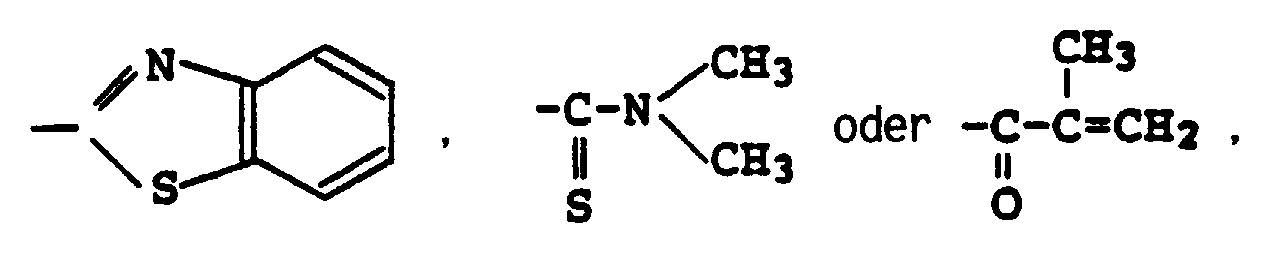
- Luftreifen mit einer Lauffläche, hergestellt aus einer Kautschukmischung, umfassend 10 bis 150 Gewichtsteile Silica-Füllstoff, 0 bis 150 Gewichtsteile Ruß, und 0,2 bis 10 Gewichtsteile mindestens eines Silan-Haftverbesserers, dargestellt durch die Formeljedes m ist eine ganze Zahl von 1 bis 6 und Y wie vorstehend festgelegt), bezogen auf 100 Gewichtsteile eines Silan-modifiziertes Copolymer mit einer Glasübergangstemperatur nicht niedriger als -50°C ist und erhalten wird durch Umsetzen eines aktiven Terminals eines resultierenden lebenden Polymers, erhalten durch Copolymerisation von 1,3-Butadien und Styrol mit einem organischen Alkalimetall-Initiator mit einer Silan-Verbindung, dargestellt durch die folgende allgemeine Formel:

- Reifen nach Anspruch 2, bei welchem das Copolymer einen Gehalt von 15 bis 50 Gewichtsprozent an gebundenem Styrol hat.
- Reifen nach einem der Ansprüche 1 bis 3, bei welchem das Copolymer eine solche Struktur hat, daß die einzelne Styrol-Kette der Styrol-Einheit in dem Molekül des Copolymers weniger ausmacht als 40 Gewichtsprozent des Gesamtgehalts an gebundenem Styrol und die lange Styrol-Kette von 8 oder mehr Styrol-Einheiten nicht mehr als 10 Gewichtsprozent des Gesamtgehalts an gebundenem Styrol.
- Reifen nach einem der Ansprüche 1 bis 4, bei welchem die Kautschukmischung 15 bis 100 Gewichtsteile des Silica-Füllstoffes und 0,5 bis 5 Gewichtsteile des Silan-Haftverbesserers enthält.
- Reifen nach Anspruch 2, bei welchem die Silan-Verbindung ausgewählt wird aus:Tetrakis(2-ethylhexyloxy)silan, Methyltris(2-ethylhexyloxy)silan, Ethyltris(2-ethylhexyl-oxy)silan, Ethyltrisphenoxysilan, Vinyltris(2-ethylhexyloxy)silan, Vinyltriphenoxysilan, Methylvinylbis(2-ethylhexyloxy)silan, Ethylvinyldiphenoxysilan, Monomethyltriphenoxy-silan. Dimethyldiphenoxysilan, Monoethyltriphenoxysilan, Diethyldiphenoxysilan, Phenyl-triphenoxysilan, Diphenyldiphenoxysilan, Tetraphenoxysilan, Tri-tert-butoxymonochlorsilan, Dichlor-di-tert-butoxysilan, Di-tert-butoxydiiodsilan, Triphenoxymonochlorsilan, Monochlormethyldiphenoxysilan, Monochlormethylbis(2-ethylhexyloxy)silan, Monobromethyldiphenoxysilan, Monobromvinyldiphenoxysilan, Monobromisopropenylbis(2-ethylhexyloxy)-silan, Ditolyldichlorsilan, Ditolyloxydichlorsilan, Diphenoxydiiodsilan, Methyl-tris(2-methylbutoxy)silan, Vinyltris(2-methylbutoxy)silan, Monochlormethylbis(2-methyl-butoxy)silan sowie Vinyltris(3-methylbutoxy)silan.
- Reifen nach einem der Ansprüche 2 bis 6, wobei das Gewichtsverhältnis von Ruß zu Silica-Füllstoff im Bereich von 95:5 bis 10:90 liegt.
Applications Claiming Priority (6)
| Application Number | Priority Date | Filing Date | Title |
|---|---|---|---|
| JP49624/90 | 1990-03-02 | ||
| JP49625/90 | 1990-03-02 | ||
| JP2049624A JP2846394B2 (ja) | 1990-03-02 | 1990-03-02 | 空気入りタイヤ |
| JP2049625A JP3021516B2 (ja) | 1990-03-02 | 1990-03-02 | 空気入りタイヤ |
| JP4962590 | 1990-03-02 | ||
| JP4962490 | 1990-03-02 |
Publications (3)
| Publication Number | Publication Date |
|---|---|
| EP0447066A1 EP0447066A1 (de) | 1991-09-18 |
| EP0447066B1 EP0447066B1 (de) | 1996-05-01 |
| EP0447066B2 true EP0447066B2 (de) | 2000-08-16 |
Family
ID=26390041
Family Applications (1)
| Application Number | Title | Priority Date | Filing Date |
|---|---|---|---|
| EP91301615A Expired - Lifetime EP0447066B2 (de) | 1990-03-02 | 1991-02-27 | Luftreifen |
Country Status (4)
| Country | Link |
|---|---|
| US (2) | US5409969A (de) |
| EP (1) | EP0447066B2 (de) |
| DE (1) | DE69119125T3 (de) |
| ES (1) | ES2085959T5 (de) |
Cited By (3)
| Publication number | Priority date | Publication date | Assignee | Title |
|---|---|---|---|---|
| US6180710B1 (en) | 1997-07-11 | 2001-01-30 | Bridgestone Corporation | Addition of salts to improve the interaction of silica with rubber |
| US6384118B1 (en) | 1997-07-11 | 2002-05-07 | Bridgestone Corporation | Processability of silica-filled rubber stocks |
| US6384117B1 (en) | 1997-07-11 | 2002-05-07 | Bridgestone Corporation | Processability of silica-filled rubber stocks |
Families Citing this family (123)
| Publication number | Priority date | Publication date | Assignee | Title |
|---|---|---|---|---|
| IL80707A (en) * | 1985-12-23 | 1991-03-10 | Hughes Aircraft Co | Gaseous discharge device simmering circuit |
| EP0447066B2 (de) * | 1990-03-02 | 2000-08-16 | Bridgestone Corporation | Luftreifen |
| EP0641824B1 (de) * | 1993-09-01 | 1999-12-01 | Sumitomo Rubber Industries Ltd. | Gummimischungen für Reifenlaufflächen |
| CA2108763A1 (en) * | 1993-09-07 | 1995-03-08 | David John Zanzig | Tire with silica reinforced tread |
| DE4400996C2 (de) * | 1994-01-14 | 1997-04-24 | Uniroyal Englebert Gmbh | Reifenlaufstreifen |
| JPH07292157A (ja) * | 1994-04-26 | 1995-11-07 | Bridgestone Corp | ゴム組成物 |
| DE4417354A1 (de) * | 1994-05-18 | 1995-11-23 | Bayer Ag | Kieselsäure-gefüllte Kautschukmischungen mit verbesserter Vulkanisationskinetik |
| DE4424582A1 (de) * | 1994-07-13 | 1996-01-18 | Uniroyal Englebert Gmbh | Kautschukmischung und Reifenkarkasse auf Basis derselben |
| FR2722503A1 (fr) * | 1994-07-15 | 1996-01-19 | Michelin & Cie | Polymeres dieniques fonctionnels, leur procede de preparation et leur utilisation dans des compositions elastomeres chargees a la silice utilisables pour des enveloppes de pneumatiques |
| FR2722505B1 (fr) | 1994-07-15 | 1996-09-27 | Michelin & Cie | Compositions elastomeres chargees a la silice utilisables pour des enveloppes de pneumatiques |
| CA2195226C (en) * | 1994-08-08 | 2001-02-13 | Yasunobu Nakafutami | A hydrogenated rubber composition |
| US6489389B1 (en) * | 1994-08-19 | 2002-12-03 | Bridgestone Corporation | Rubber composition for tire treads |
| DE4437646C2 (de) * | 1994-10-21 | 1999-01-14 | Uniroyal Englebert Gmbh | Reifen umfassend seitliche Kissenstreifen |
| DE4438712A1 (de) * | 1994-10-29 | 1996-05-02 | Uniroyal Englebert Gmbh | Kautschukmischung und Reifenseitenwände auf Basis derselben |
| EP0714937B1 (de) | 1994-11-30 | 2000-03-15 | SP Reifenwerke GmbH | Kautschukmischung, daraus hergestellte Reifenlauffläche und Reifen mit dieser Reifenlauffläche |
| US6022923A (en) * | 1995-01-13 | 2000-02-08 | Bridgestone Corporation | Pneumatic tires |
| US6080835A (en) * | 1995-02-01 | 2000-06-27 | Bridgestone Corporation | Aminoalkyllithium compounds containing cyclic amines and polymers therefrom |
| US5785778A (en) * | 1995-02-01 | 1998-07-28 | Bridgestone Corporation | Aminoalkyllithium compounds containing cyclic amines and polymers therefrom |
| IT1274257B (it) * | 1995-02-24 | 1997-07-15 | Pirelli | Procedimento per la produzione di una mescola di gomma vulcanizzabile con carica rinforzante a base di silice |
| KR100394129B1 (ko) * | 1995-03-17 | 2003-10-22 | 제온 코포레이션 | 고무조성물 |
| JP3449724B2 (ja) * | 1995-03-29 | 2003-09-22 | 日本ゼオン株式会社 | ジエン系ゴム組成物 |
| DE19512543C2 (de) | 1995-04-06 | 1999-02-25 | Continental Ag | Laufstreifenmischung für pneumatische Reifen sowie Verfahren zu ihrer Herstellung und Ihre Verwendung |
| CA2174284A1 (en) * | 1995-04-17 | 1996-10-18 | Keisaku Yamamoto | Rubber composition |
| US5569697A (en) * | 1995-05-08 | 1996-10-29 | Uniroyal Chemical Company, Inc. | Tire tread composition |
| US5711904A (en) * | 1995-09-05 | 1998-01-27 | The Goodyear Tire & Rubber Company | Continuous mixing of silica loaded elastomeric compounds |
| AT405285B (de) * | 1995-09-07 | 1999-06-25 | Semperit Ag | Kautschukmischung |
| DE69622235T2 (de) * | 1995-10-04 | 2003-01-23 | Compagnie Generale Des Etablissements Michelin-Michelin & Cie., Clermont-Ferrand | Kautschukmischung basierend auf einem Dienpolymer mit von Organosilanen abgeleiteten Gruppen zur Verwendung in Reifenlaufflächen |
| JP3622803B2 (ja) | 1995-11-28 | 2005-02-23 | 日本ゼオン株式会社 | ゴム組成物 |
| DE19547630A1 (de) | 1995-12-20 | 1997-06-26 | Bayer Ag | Vulkanisierbare Kautschukmischungen für die Herstellung von Fahrzeugreifen |
| FR2744127A1 (fr) * | 1996-01-26 | 1997-08-01 | Michelin & Cie | Composition de caoutchouc a base d'un polymere dienique ayant une fonction silanol et comprenant un derive organosilane |
| CA2197387A1 (en) * | 1996-03-06 | 1997-09-06 | Rene Jean Zimmer | Process for the preparation of a particulate reinforced rubber composition |
| US5719207A (en) * | 1996-03-18 | 1998-02-17 | The Goodyear Tire & Rubber Company | Silica reinforced rubber composition and tire with tread |
| DE69722925T2 (de) | 1996-04-17 | 2004-05-19 | Nippon Zeon Co., Ltd. | Kautschukzusammensetzung |
| US5929157A (en) * | 1996-04-22 | 1999-07-27 | Sumitomo Rubber Industries, Ltd. | Rubber composition for tire sidewall and tire |
| US5708053A (en) * | 1996-08-15 | 1998-01-13 | The Goodyear Tire & Rubber Company | Silica-filled rubber compositions and the processing thereof |
| JP3634520B2 (ja) * | 1996-09-09 | 2005-03-30 | 東洋ゴム工業株式会社 | 転がり抵抗が小さいタイヤ |
| EP0881256B1 (de) * | 1996-12-16 | 2002-11-13 | Bridgestone Corporation | Gummizusammensetzung und daraus hergestellte pneumatische reifen |
| JP3685572B2 (ja) * | 1996-12-17 | 2005-08-17 | 住友ゴム工業株式会社 | タイヤトレッド用ゴム組成物 |
| DE19709873A1 (de) * | 1997-03-11 | 1998-09-17 | Bayer Ag | Polysulfidische Polyethersilane enthaltende Kautschukmischungen |
| IT1290083B1 (it) * | 1997-03-14 | 1998-10-19 | Pirelli | Pneumatico a bassa temperatura d'esercizio |
| DE19717091A1 (de) * | 1997-04-22 | 1998-10-29 | Bayer Ag | Oberflächenmodifizierte, oxidische oder silikatische Füllstoffe und ihre Verwendung |
| FR2763074B1 (fr) * | 1997-05-07 | 1999-06-25 | Michelin & Cie | Composition de caoutchouc a base de noir de carbone ayant de la silice fixee a sa surface et de polymere dyenique fonctionalise ou modifie par des fonctions silanols |
| DE19726729A1 (de) * | 1997-06-24 | 1999-01-07 | Continental Ag | Kautschukmischung |
| US6525118B2 (en) | 1997-07-11 | 2003-02-25 | Bridgestone Corporation | Processability of silica-filled rubber stocks with reduced hysteresis |
| US6228908B1 (en) | 1997-07-11 | 2001-05-08 | Bridgestone Corporation | Diene polymers and copolymers incorporating partial coupling and terminals formed from hydrocarboxysilane compounds |
| US6369138B2 (en) | 1997-07-11 | 2002-04-09 | Bridgestone Corporation | Processability of silica-filled rubber stocks with reduced hysteresis |
| FR2770849B1 (fr) * | 1997-11-10 | 1999-12-03 | Michelin & Cie | Composition de caoutchouc destinee a la fabrication d'enveloppes de pneumatiques a base d'elastomere comportant des fonctions oxygenees et de charge de type silice |
| EP0934973B1 (de) * | 1998-02-06 | 2004-04-28 | PIRELLI PNEUMATICI S.p.A. | Vulkanisierbare Kautschukzusammensetzung für Reifenlaufflächen mit einem geringerem Rollwiderstand |
| CA2261252A1 (en) * | 1998-02-26 | 1999-08-26 | Friedrich Visel | Asymmetrical siloxy compounds |
| US6211271B1 (en) | 1998-07-15 | 2001-04-03 | Pirelli Pneumatici S.P.A. | Process for producing a vulcanizable rubber composition including carbon black-based and silica-based reinforcing fillers |
| EP0974616A1 (de) | 1998-07-18 | 2000-01-26 | Bayer Aktiengesellschaft | Hydroxylgruppenhaltige Lösungskautschuke |
| KR20000020407A (ko) * | 1998-09-21 | 2000-04-15 | 홍건희 | 타이어 벨트용 고무 조성물 |
| US6362272B1 (en) | 1998-10-07 | 2002-03-26 | Jsr Corporation | Oil extended rubber and rubber composition |
| EP1000971B1 (de) | 1998-11-16 | 2003-10-15 | Bayer Aktiengesellschaft | Carboxylgruppen-haltige Lösungskautschuke enthaltende Kautschukmischungen |
| US6184306B1 (en) | 1999-02-18 | 2001-02-06 | The Goodyear Tire & Rubber Company | Asymmetrical siloxy compounds |
| DE19914848A1 (de) | 1999-04-01 | 2000-10-05 | Bayer Ag | Hydroxylgruppenhaltige Lösungskautschuke |
| DE19920894A1 (de) | 1999-05-06 | 2000-11-09 | Bayer Ag | Hydroxylgruppenhaltige Dienkautschuke |
| US6624233B2 (en) | 1999-05-31 | 2003-09-23 | Pirelli Pneumatici S.P.A. | Low rolling resistance tire for vehicles |
| US6255404B1 (en) | 1999-07-26 | 2001-07-03 | Bridgestone Corporation | Method to control increase in viscosity during aging of siloxane modified polymers |
| US6279632B1 (en) | 1999-11-24 | 2001-08-28 | Bridgestone Corporation | Method to control increase in viscosity during aging of siloxane modified polymers |
| US6548573B1 (en) * | 1999-12-20 | 2003-04-15 | Caterpillar Inc | Composition and process for making a water and mud repellant rubber |
| DE10009909A1 (de) | 2000-03-01 | 2001-09-27 | Bayer Ag | Kautschuke mit Polyether-Seitengruppen |
| US6590017B1 (en) | 2000-05-15 | 2003-07-08 | Bridgestone Corporation | Processability of silica-reinforced rubber containing an amide compound |
| DE10044989A1 (de) | 2000-09-11 | 2002-03-21 | Bayer Ag | Flüssige schwefelhaltige Oligosiloxane und ihre Verwendung in Kautschukmischungen |
| NO20011128L (no) * | 2000-11-01 | 2002-05-02 | Kvaerner Technology & Res Ltd | Overflatebehandlet carbon black, plast og gummi forbindelser inneholdende det samme |
| MXPA02011982A (es) | 2001-03-12 | 2003-05-27 | Michelin Rech Tech | Composicion de caucho para banda de rodadura de neumatico. |
| KR100401181B1 (ko) * | 2001-04-06 | 2003-10-10 | 금호산업주식회사 | 클로로프렌 고무가 함유된 실리카로 보강된 타이어용천연고무조성물 |
| WO2003031510A1 (en) | 2001-10-05 | 2003-04-17 | Bridgestone Corporation | Rubber composition |
| DE10216657A1 (de) * | 2002-04-15 | 2003-10-23 | Rhein Chemie Rheinau Gmbh | Vulkanisierbare Kautschukmischungen und Verfahren zur Herstellung |
| FR2839720B1 (fr) * | 2002-05-15 | 2005-07-22 | Rhodia Chimie Sa | Composes organosiliciques utilisables notamment en tant qu'agent de couplage, compositions d'elastomere(s) les contenant et articles en elastomeres(s) prepares a partir de telles compositions |
| EP1511800A1 (de) * | 2002-05-15 | 2005-03-09 | Société de Technologie Michelin | Kautschukzusammensetzung für reifen, die ein kupplungsmittel mit einer polythiobenzothiazil-gruppe enthält |
| CN101880415B (zh) * | 2002-07-09 | 2013-05-22 | 莫门蒂夫性能材料股份有限公司 | 具有改进硬度的二氧化硅-橡胶混合物 |
| JP5016924B2 (ja) | 2003-06-09 | 2012-09-05 | 株式会社ブリヂストン | 逐次的に停止させたポリマーを含む改良されたヒステリシスを有するエラストマー組成物 |
| US7572851B2 (en) * | 2003-07-30 | 2009-08-11 | The Goodyear Tire & Rubber Company | Process for preparing a silica rubber blend |
| US7141622B2 (en) * | 2003-07-30 | 2006-11-28 | The Goodyear Tire & Rubber Company | Process for preparing a silica/rubber blend which includes dispersing silica, asilica coupling agent, and a low molecular weight end-group functionalized diene rubber throughout a cement of a conventional rubbery polymer, and subsequently recovering the silica/rubber blend from an organic solvent |
| US7858690B2 (en) * | 2006-10-06 | 2010-12-28 | Bridgestone Corporation | Functional coupling agents and polymers prepared therewith |
| DE102006059530A1 (de) * | 2006-12-16 | 2008-06-19 | Continental Aktiengesellschaft | Kautschukmischung und Reifen |
| JP5214886B2 (ja) | 2007-01-12 | 2013-06-19 | 東洋ゴム工業株式会社 | 空気入りタイヤ |
| DE102007020451A1 (de) | 2007-04-27 | 2008-10-30 | Lanxess Deutschland Gmbh | Verfahren zur Herstellung von Kautschukmischungen |
| DE102007044174A1 (de) | 2007-09-15 | 2009-03-19 | Lanxess Deutschland Gmbh | Funktionalisierte rußhaltige Kautschuke |
| DE102007044175A1 (de) | 2007-09-15 | 2009-03-19 | Lanxess Deutschland Gmbh | Funktionalisierte Hochvinyl-Dienkautschuke |
| US8273820B2 (en) * | 2008-01-18 | 2012-09-25 | Bridgestone Corpopration | Rubber composition and tire |
| RU2475368C2 (ru) * | 2008-04-30 | 2013-02-20 | Бриджстоун Корпорейшн | Покрышка, изготовленная с использованием каучуковой композиции, содержащей модифицированный полимер |
| DE102008023885A1 (de) | 2008-05-16 | 2009-11-19 | Lanxess Deutschland Gmbh | Funktionalisierte hochvinylaromaten-haltige Dienkautschuke |
| US7825202B2 (en) * | 2008-10-09 | 2010-11-02 | The Goodyear Tire & Rubber Company | Potassium based catalyst systems for synthesizing rubbery polymers |
| DE102008052057A1 (de) | 2008-10-16 | 2010-04-22 | Lanxess Deutschland Gmbh | Funktionalisierte Dienkautschuke |
| CN101724185B (zh) * | 2008-10-16 | 2013-10-23 | 住友橡胶工业株式会社 | 橡胶组合物及轮胎 |
| DE102008052116A1 (de) | 2008-10-20 | 2010-04-22 | Lanxess Deutschland Gmbh | Kautschukmischungen mit funktionalisierten Dienkautschuken und Mikrogelen, ein Verfahren zur Herstellung und deren Verwendung |
| DE102009005713A1 (de) | 2009-01-22 | 2010-07-29 | Lanxess Deutschland Gmbh | Silanhaltige Kautschukmischungen mit gegebenenfalls funktionalisierten Dienkautschuken und Mikrogelen, ein Verfahren zur Herstellung und deren Verwendung |
| RU2540088C2 (ru) | 2009-06-11 | 2015-01-27 | Аризона Кемикал Компани, Ллк | Шины и протекторы, изготовленные из смолы, полученной полимеризацией фенольных, ароматических и терпеновых соединений |
| JP5545619B2 (ja) | 2009-07-22 | 2014-07-09 | 株式会社ブリヂストン | タイヤ |
| FR2951178B1 (fr) | 2009-10-08 | 2012-08-17 | Michelin Soc Tech | Elastomere dienique fonctionnalise et composition de caoutchouc le contenant. |
| EP2311889A1 (de) | 2009-10-16 | 2011-04-20 | LANXESS Deutschland GmbH | Neodym-katalysierte Polybutadiene |
| EP2311907A1 (de) | 2009-10-19 | 2011-04-20 | LANXESS Deutschland GmbH | Neue Kautschukmischungen |
| EP2363303A1 (de) | 2010-02-19 | 2011-09-07 | LANXESS Deutschland GmbH | Bimodales NdBR |
| TW201211083A (en) | 2010-06-15 | 2012-03-16 | Styron Europe Gmbh | Low vinyl styrene-butadiene polymers and methods of making the same |
| FR2968006B1 (fr) | 2010-11-26 | 2012-12-21 | Michelin Soc Tech | Bande de roulement de pneumatique |
| FR2968005B1 (fr) | 2010-11-26 | 2012-12-21 | Michelin Soc Tech | Bande de roulement de pneumatique neige |
| FR2968600A1 (fr) | 2010-12-08 | 2012-06-15 | Michelin Soc Tech | Bande de roulement pour pneumatique neige |
| EP2495266A1 (de) | 2011-03-04 | 2012-09-05 | Styron Deutschland GmbH | Styrol-Butadien Kautschuk mit hohem Styrol- sowie hohem Vinyl-Gehalt und Herstellungsverfahren dafür |
| ES2598035T3 (es) | 2011-03-04 | 2017-01-24 | Trinseo Europe Gmbh | Caucho de estireno-butadieno de alto contenido de estireno y alto contenido de vinilo y métodos para la preparación del mismo |
| EP2517899A1 (de) | 2011-04-29 | 2012-10-31 | Lanxess Deutschland GmbH | Verfahren zur Herstellung von Kautschukmischungen |
| ES2545332T3 (es) | 2011-06-22 | 2015-09-10 | Trinseo Europe Gmbh | Caucho de estireno-butadieno de alto contenido en estireno, alto contenido en vinilo, con distribución de pesos moleculares estrecha y métodos para la preparación de los mismos |
| HUE040405T2 (hu) | 2011-06-22 | 2019-03-28 | Trinseo Europe Gmbh | Nagy sztirol- és nagy viniltartalmú sztirol-butadién gumi, szûk molekultömeg-eloszlással, valamint ezek elõállítási módszerei |
| JP5339008B2 (ja) | 2011-08-26 | 2013-11-13 | 横浜ゴム株式会社 | タイヤトレッド用ゴム組成物 |
| FR2984904B1 (fr) | 2011-12-22 | 2014-01-03 | Michelin Soc Tech | Composition de caoutchouc |
| EP2676968A1 (de) | 2012-06-18 | 2013-12-25 | LANXESS Deutschland GmbH | Hoch Mooney NdBR mit Mooneysprung |
| US9296840B2 (en) | 2013-10-25 | 2016-03-29 | China Petroleum & Chemical Corporation | Functional diene polymer, preparation method thereof, and rubber composition comprising the same |
| FR3036115B1 (fr) | 2015-05-11 | 2017-05-19 | Michelin & Cie | Composition de caoutchouc |
| FR3061187B1 (fr) | 2016-12-22 | 2019-02-01 | Compagnie Generale Des Etablissements Michelin | Composition de caoutchouc avec une bonne dispersion de quantites elevees de charge inorganique renforcante |
| JP6908731B2 (ja) * | 2017-05-12 | 2021-07-28 | ランクセス・ドイチュランド・ゲーエムベーハー | 硫黄含有有機ケイ素化合物を含むゴム混合物 |
| JP6939231B2 (ja) * | 2017-08-10 | 2021-09-22 | 住友ゴム工業株式会社 | 空気入りタイヤ |
| WO2019122604A1 (fr) | 2017-12-19 | 2019-06-27 | Compagnie Generale Des Etablissements Michelin | Bande de roulement de pneumatique dont le systeme de reticulation est a base de peroxyde organique |
| US20210079200A1 (en) | 2017-12-19 | 2021-03-18 | Compagnie Generale Des Etablissements Michelin | Tire tread, the crosslinking system of which is based on organic peroxide |
| WO2019122602A1 (fr) | 2017-12-19 | 2019-06-27 | Compagnie Generale Des Etablissements Michelin | Bande de roulement de pneumatique dont le systeme de reticulation est a base de peroxyde organique |
| US20210087370A1 (en) | 2017-12-19 | 2021-03-25 | Compagnie Generale Des Etablissements Michelin | Tire tread, the crosslinking system of which is based on organic peroxide |
| EP3505366A1 (de) | 2017-12-29 | 2019-07-03 | ARLANXEO Deutschland GmbH | Neue kautschukmischungen |
| EP3505523A1 (de) | 2017-12-29 | 2019-07-03 | ARLANXEO Deutschland GmbH | Neue kautschukmischungen |
| FR3081161B1 (fr) | 2018-05-17 | 2020-07-10 | Compagnie Generale Des Etablissements Michelin | Bande de roulement de pneumatique dont le systeme de reticulation est a base de peroxyde organique |
| FR3081162B1 (fr) | 2018-05-17 | 2020-04-24 | Compagnie Generale Des Etablissements Michelin | Bande de roulement de pneumatique dont le systeme de reticulation est a base de peroxyde organique |
| EP4112626A1 (de) | 2021-06-30 | 2023-01-04 | LANXESS Deutschland GmbH | Organosilylpolysulfide und diese enthaltende kautschukmischungen |
| EP4112625A1 (de) | 2021-06-30 | 2023-01-04 | LANXESS Deutschland GmbH | Organosilylpolysulfide und diese enthaltende kautschukmischungen |
| EP4112624A1 (de) | 2021-06-30 | 2023-01-04 | LANXESS Deutschland GmbH | Organosilylpolysulfide und diese enthaltende kautschukmischungen |
Citations (5)
| Publication number | Priority date | Publication date | Assignee | Title |
|---|---|---|---|---|
| US4473094A (en) † | 1981-06-12 | 1984-09-25 | Anchor Continental Incorporated | Air inlet |
| US4519430A (en) † | 1982-07-29 | 1985-05-28 | The B. F. Goodrich Company | Energy saving tire with silica-rich tread |
| JPS6160738A (ja) † | 1984-09-03 | 1986-03-28 | Bridgestone Corp | 優れた耐摩耗性および加工性を有するゴム組成物 |
| JPH01129045A (ja) † | 1987-11-13 | 1989-05-22 | Japan Synthetic Rubber Co Ltd | ブタジエン系ゴム組成物 |
| JPH01230647A (ja) † | 1987-11-11 | 1989-09-14 | Japan Synthetic Rubber Co Ltd | ジエン系ゴム組成物 |
Family Cites Families (14)
| Publication number | Priority date | Publication date | Assignee | Title |
|---|---|---|---|---|
| US3664403A (en) * | 1969-07-07 | 1972-05-23 | Ppg Industries Inc | A vulcanized rubber comprising a siliceous pigment, a rubber and an organic coupling agent having an active olefinic linkage |
| DE2056460A1 (en) * | 1970-11-17 | 1972-05-25 | Goetzewerke | Rubber gasket rings - of profiled, varying cross section |
| US3873489A (en) * | 1971-08-17 | 1975-03-25 | Degussa | Rubber compositions containing silica and an organosilane |
| US3881536A (en) * | 1972-08-31 | 1975-05-06 | Ppg Industries Inc | Rubber vulcanizates |
| US3768537A (en) * | 1972-11-09 | 1973-10-30 | Ppg Industries Inc | Tire |
| CA1046681A (en) * | 1974-06-25 | 1979-01-16 | Union Carbide Corporation | Mercapto-silane coupler-inorganic powder mixtures |
| DE2933345C2 (de) * | 1979-08-17 | 1983-01-20 | Degussa Ag, 6000 Frankfurt | Vulkanisierbare Kautschuk-Mischung auf Basis von halogenfreien Kautschuken und Verfahren zum Vulkanisieren dieser Kautschukmischungen |
| US4436847A (en) * | 1982-05-27 | 1984-03-13 | Ppg Industries, Inc. | Rubber compositions |
| US4431755A (en) * | 1982-07-16 | 1984-02-14 | Standard Oil Company (Indiana) | Rubber composition comprising phyllosilicate minerals, silanes, and quaternary ammonium salts |
| JPS5936144A (ja) * | 1982-08-23 | 1984-02-28 | Sumitomo Rubber Ind Ltd | ジエン系ゴム組成物及び該組成物をトレツドに用いたタイヤ |
| JPH0713158B2 (ja) * | 1987-01-14 | 1995-02-15 | 株式会社ブリヂストン | タイヤ |
| JPH068366B2 (ja) * | 1987-04-23 | 1994-02-02 | 株式会社ブリヂストン | タイヤ用ゴム組成物 |
| AT387738B (de) * | 1987-07-03 | 1989-03-10 | Voest Alpine Ag | Anlage zum getrennten abgiessen von huettenschlacke und metallschmelze aus einem metallschmelzen/huettenschlackengemisch |
| EP0447066B2 (de) * | 1990-03-02 | 2000-08-16 | Bridgestone Corporation | Luftreifen |
-
1991
- 1991-02-27 EP EP91301615A patent/EP0447066B2/de not_active Expired - Lifetime
- 1991-02-27 DE DE69119125T patent/DE69119125T3/de not_active Expired - Lifetime
- 1991-02-27 ES ES91301615T patent/ES2085959T5/es not_active Expired - Lifetime
-
1993
- 1993-08-02 US US08/100,339 patent/US5409969A/en not_active Expired - Lifetime
-
1994
- 1994-12-21 US US08360445 patent/US5496883B1/en not_active Expired - Lifetime
Patent Citations (5)
| Publication number | Priority date | Publication date | Assignee | Title |
|---|---|---|---|---|
| US4473094A (en) † | 1981-06-12 | 1984-09-25 | Anchor Continental Incorporated | Air inlet |
| US4519430A (en) † | 1982-07-29 | 1985-05-28 | The B. F. Goodrich Company | Energy saving tire with silica-rich tread |
| JPS6160738A (ja) † | 1984-09-03 | 1986-03-28 | Bridgestone Corp | 優れた耐摩耗性および加工性を有するゴム組成物 |
| JPH01230647A (ja) † | 1987-11-11 | 1989-09-14 | Japan Synthetic Rubber Co Ltd | ジエン系ゴム組成物 |
| JPH01129045A (ja) † | 1987-11-13 | 1989-05-22 | Japan Synthetic Rubber Co Ltd | ブタジエン系ゴム組成物 |
Cited By (3)
| Publication number | Priority date | Publication date | Assignee | Title |
|---|---|---|---|---|
| US6180710B1 (en) | 1997-07-11 | 2001-01-30 | Bridgestone Corporation | Addition of salts to improve the interaction of silica with rubber |
| US6384118B1 (en) | 1997-07-11 | 2002-05-07 | Bridgestone Corporation | Processability of silica-filled rubber stocks |
| US6384117B1 (en) | 1997-07-11 | 2002-05-07 | Bridgestone Corporation | Processability of silica-filled rubber stocks |
Also Published As
| Publication number | Publication date |
|---|---|
| ES2085959T5 (es) | 2001-02-01 |
| ES2085959T3 (es) | 1996-06-16 |
| DE69119125D1 (de) | 1996-06-05 |
| DE69119125T2 (de) | 1996-10-02 |
| EP0447066A1 (de) | 1991-09-18 |
| US5496883B1 (en) | 1998-06-02 |
| DE69119125T3 (de) | 2001-01-11 |
| EP0447066B1 (de) | 1996-05-01 |
| US5496883A (en) | 1996-03-05 |
| US5409969A (en) | 1995-04-25 |
Similar Documents
| Publication | Publication Date | Title |
|---|---|---|
| EP0447066B1 (de) | Luftreifen | |
| US5066721A (en) | Tires made of silica filled, silane modified rubber | |
| EP1000970B1 (de) | Polymodale Zusammensetzung mit Diolefin-Vinylaromat-Kautschuk | |
| JP3021516B2 (ja) | 空気入りタイヤ | |
| US4519431A (en) | Styrene-butadiene copolymers with high styrene content | |
| EP1113024B1 (de) | Polymer, Verfahren zur Herstellung und Verwendung dieses Polymers in einer Kautschukmischung | |
| JP2846394B2 (ja) | 空気入りタイヤ | |
| JP2604999B2 (ja) | タイヤ | |
| JPWO1988005448A1 (ja) | タイヤ | |
| US6242516B1 (en) | Rubber composition and pneumatic tire using said rubber composition | |
| WO2002038663A1 (en) | Silica-reinforced rubber compounded with an alkoxysilane and a catalytic alkyl tin compound | |
| CN117396551A (zh) | 轮胎用橡胶组合物、胎面橡胶和轮胎 | |
| US6177503B1 (en) | Rubber composition and pneumatic tire using the same rubber composition | |
| KR102036375B1 (ko) | 공액 다이엔계 고무의 제조방법 및 해당 고무의 복합체 | |
| JP3546586B2 (ja) | ゴム組成物、ゴム組成物の製造方法及びタイヤトレッド | |
| US5905112A (en) | Tire tread of diene rubber, and naphthenic and/or paraffinic oil, or aromatic oil and mineral filler | |
| JP7847155B2 (ja) | タイヤ用ゴム組成物、トレッドゴム及びタイヤ | |
| JPH0453894B2 (de) | ||
| EP4349616B1 (de) | Kautschukzusammensetzung für reifen, laufflächenkautschuk und reifen | |
| US20110184086A1 (en) | Rubber composition and tire using the same | |
| JPH09268238A (ja) | タイヤトレッド用ゴム組成物 | |
| JP2021098765A (ja) | タイヤ | |
| JP7558198B2 (ja) | タイヤ | |
| CN117396552A (zh) | 轮胎用橡胶组合物、胎面橡胶和轮胎 | |
| US6469106B2 (en) | Process for producing modified diene polymer rubber |
Legal Events
| Date | Code | Title | Description |
|---|---|---|---|
| PUAI | Public reference made under article 153(3) epc to a published international application that has entered the european phase |
Free format text: ORIGINAL CODE: 0009012 |
|
| AK | Designated contracting states |
Kind code of ref document: A1 Designated state(s): DE ES FR GB IT NL |
|
| 17P | Request for examination filed |
Effective date: 19920226 |
|
| 17Q | First examination report despatched |
Effective date: 19940718 |
|
| GRAA | (expected) grant |
Free format text: ORIGINAL CODE: 0009210 |
|
| AK | Designated contracting states |
Kind code of ref document: B1 Designated state(s): DE ES FR GB IT NL |
|
| ITF | It: translation for a ep patent filed | ||
| REF | Corresponds to: |
Ref document number: 69119125 Country of ref document: DE Date of ref document: 19960605 |
|
| ET | Fr: translation filed | ||
| REG | Reference to a national code |
Ref country code: ES Ref legal event code: FG2A Ref document number: 2085959 Country of ref document: ES Kind code of ref document: T3 |
|
| PLBQ | Unpublished change to opponent data |
Free format text: ORIGINAL CODE: EPIDOS OPPO |
|
| PLBI | Opposition filed |
Free format text: ORIGINAL CODE: 0009260 |
|
| PLBF | Reply of patent proprietor to notice(s) of opposition |
Free format text: ORIGINAL CODE: EPIDOS OBSO |
|
| 26 | Opposition filed |
Opponent name: THE GOODYEAR TIRE & RUBBER COMPANY Effective date: 19970131 |
|
| NLR1 | Nl: opposition has been filed with the epo |
Opponent name: THE GOODYEAR TIRE & RUBBER COMPANY |
|
| PLBF | Reply of patent proprietor to notice(s) of opposition |
Free format text: ORIGINAL CODE: EPIDOS OBSO |
|
| PLBF | Reply of patent proprietor to notice(s) of opposition |
Free format text: ORIGINAL CODE: EPIDOS OBSO |
|
| PLAW | Interlocutory decision in opposition |
Free format text: ORIGINAL CODE: EPIDOS IDOP |
|
| PLAW | Interlocutory decision in opposition |
Free format text: ORIGINAL CODE: EPIDOS IDOP |
|
| PUAH | Patent maintained in amended form |
Free format text: ORIGINAL CODE: 0009272 |
|
| STAA | Information on the status of an ep patent application or granted ep patent |
Free format text: STATUS: PATENT MAINTAINED AS AMENDED |
|
| 27A | Patent maintained in amended form |
Effective date: 20000816 |
|
| AK | Designated contracting states |
Kind code of ref document: B2 Designated state(s): DE ES FR GB IT NL |
|
| ET3 | Fr: translation filed ** decision concerning opposition | ||
| NLR2 | Nl: decision of opposition | ||
| ITF | It: translation for a ep patent filed | ||
| NLR3 | Nl: receipt of modified translations in the netherlands language after an opposition procedure | ||
| REG | Reference to a national code |
Ref country code: ES Ref legal event code: DC2A Kind code of ref document: T5 Effective date: 20001116 |
|
| REG | Reference to a national code |
Ref country code: GB Ref legal event code: IF02 |
|
| PGFP | Annual fee paid to national office [announced via postgrant information from national office to epo] |
Ref country code: ES Payment date: 20100226 Year of fee payment: 20 |
|
| PGFP | Annual fee paid to national office [announced via postgrant information from national office to epo] |
Ref country code: IT Payment date: 20100220 Year of fee payment: 20 Ref country code: FR Payment date: 20100223 Year of fee payment: 20 |
|
| PGFP | Annual fee paid to national office [announced via postgrant information from national office to epo] |
Ref country code: DE Payment date: 20100312 Year of fee payment: 20 Ref country code: GB Payment date: 20100224 Year of fee payment: 20 |
|
| PGFP | Annual fee paid to national office [announced via postgrant information from national office to epo] |
Ref country code: NL Payment date: 20100218 Year of fee payment: 20 |
|
| REG | Reference to a national code |
Ref country code: DE Ref legal event code: R071 Ref document number: 69119125 Country of ref document: DE |
|
| REG | Reference to a national code |
Ref country code: NL Ref legal event code: V4 Effective date: 20110227 |
|
| REG | Reference to a national code |
Ref country code: GB Ref legal event code: PE20 Expiry date: 20110226 |
|
| PG25 | Lapsed in a contracting state [announced via postgrant information from national office to epo] |
Ref country code: NL Free format text: LAPSE BECAUSE OF EXPIRATION OF PROTECTION Effective date: 20110227 |
|
| PG25 | Lapsed in a contracting state [announced via postgrant information from national office to epo] |
Ref country code: GB Free format text: LAPSE BECAUSE OF EXPIRATION OF PROTECTION Effective date: 20110226 |
|
| PG25 | Lapsed in a contracting state [announced via postgrant information from national office to epo] |
Ref country code: DE Free format text: LAPSE BECAUSE OF EXPIRATION OF PROTECTION Effective date: 20110227 |
|
| REG | Reference to a national code |
Ref country code: ES Ref legal event code: FD2A Effective date: 20130801 |
|
| PG25 | Lapsed in a contracting state [announced via postgrant information from national office to epo] |
Ref country code: ES Free format text: LAPSE BECAUSE OF EXPIRATION OF PROTECTION Effective date: 20110228 |