EP0377264B1 - Anlage zur Aufspürung von Undichtigkeiten - Google Patents
Anlage zur Aufspürung von Undichtigkeiten Download PDFInfo
- Publication number
- EP0377264B1 EP0377264B1 EP89300071A EP89300071A EP0377264B1 EP 0377264 B1 EP0377264 B1 EP 0377264B1 EP 89300071 A EP89300071 A EP 89300071A EP 89300071 A EP89300071 A EP 89300071A EP 0377264 B1 EP0377264 B1 EP 0377264B1
- Authority
- EP
- European Patent Office
- Prior art keywords
- vacuum
- probe gas
- valve
- inner chamber
- helium
- Prior art date
- Legal status (The legal status is an assumption and is not a legal conclusion. Google has not performed a legal analysis and makes no representation as to the accuracy of the status listed.)
- Expired - Lifetime
Links
Images


Classifications
-
- G—PHYSICS
- G01—MEASURING; TESTING
- G01M—TESTING STATIC OR DYNAMIC BALANCE OF MACHINES OR STRUCTURES; TESTING OF STRUCTURES OR APPARATUS, NOT OTHERWISE PROVIDED FOR
- G01M3/00—Investigating fluid-tightness of structures
- G01M3/02—Investigating fluid-tightness of structures by using fluid or vacuum
- G01M3/04—Investigating fluid-tightness of structures by using fluid or vacuum by detecting the presence of fluid at the leakage point
- G01M3/20—Investigating fluid-tightness of structures by using fluid or vacuum by detecting the presence of fluid at the leakage point using special tracer materials, e.g. dye, fluorescent material, radioactive material
- G01M3/202—Investigating fluid-tightness of structures by using fluid or vacuum by detecting the presence of fluid at the leakage point using special tracer materials, e.g. dye, fluorescent material, radioactive material using mass spectrometer detection systems
- G01M3/205—Accessories or associated equipment; Pump constructions
Definitions
- the invention relates generally to leak detection systems for testing cast metallic articles for fluid leakage through the metal matrix and more particularly to a leak detection apparatus employing a means for sensing the presence of an inert probe gas passing from a sealed annular chamber to a vacuumized inner chamber.
- drum wheels In the field of vehicle manufacturing, most motor cars and trucks are fitted with drum wheels.
- the source of the drum wheels may be the vehicle manufacturer or a vendor supplier, each of whom are required to provide wheels that satisfy certain engineering specifications.
- One such specification is that wheels that are mounted on vehicles or supplied to wholesale-retail suppliers should be free of structural flaws that result in leakage of the pneumatic medium air. Certain minute structural flaws may result in very slow leakage, evidence of which may not appear until after the wheel is in use.
- the manufacturer or vendor supplier would be obligated to repair or replace the defective wheels resulting in considerable expense for shipping, labor and material to the supplier and obvious inconvenience to the customer.
- GB 2,000,300 A describes a simple method and apparatus for detection of leaks in hollow articles.
- the article is placed in a test chamber which is then evacuated. Either the interior of the article is evacuated or the space within the chamber surrounding the article to produce a pressure differential across the wall of the article.
- a test gas is then admitted to the region of higher pressure and a test gas detector is connected to the region of lower pressure.
- a leakage detection apparatus particularly adapted for the leakage testing of drum wheels is illustrated in Fig. 1 and is referred to by the general reference character 10.
- the leakage detection apparatus 10 includes a plurality of guages including a vacuum "A" guage 12, a vacuum “B” guage 14, a vacuum manifold 16, a top vacuum valve 18, a sample separating valve 20, a detection valve 22, a bottom vacuum (main) valve 26, a vacuum release valve 28, a main vacuum line 30, and a vacuum draw line 32.
- the detection apparatus 10 further includes an outer chamber 34 having a top platen 36 with a top plated seal ring 38 (shown in Fig.
- a bottom (table) platen 40 also having a bottom (table) plated seal ring 42, a support platform 44, an upper support structure 45, a plurality of blower nozzles 46, a plurality of air cylinders 48 for raising the outer chamber 34, an air cylinder 50 for raising and lowering the top platen 36, a plurality of helium supply inlets 52 and a gas vacuum line 54.
- a mass spectrometer 60 for testing air samples drawn from inside a drum wheel 62.
- FIGs. 2, 3 and 4 each illustrating a cross-sectional view of the detection apparatus 10, there is further included an outer chamber seal ring 70, an outer chamber volume reducing disc 72 and a plurality of mechanical fasteners 74.
- the invention is embodied in the leakage detection apparatus 10 which engages the unmounted drum wheel 62 (or tubular member) with the top platen 36 and the bottom platen 40 to form a hermetically sealed inner first chamber 80.
- the top platen seal ring 38 and the bottom platen seal ring 42 axially engage a pair of drum wheel rim flanges 82 to form the inner first chamber 80.
- the outer chamber 34 vertically translates along the air cylinders 48 and the volume reducing disc 72 is lowered and raised by the air cylinder 50.
- the volume reducing disc 72 is lowered to a rest position on the top platen 36.
- the outer chamber 34 is then lowered until seated upon the bottom platen seal ring 42.
- the outer chamber 34 envelopes the drum wheel 62 while the disc 72 reduces the volume of the outer chamber 34 to define an annular helium chamber 84 (see Fig. 4) circumventing the wheel 62 and the defined inner chamber 80.
- the annular helium chamber 84 is comprised of that volume bounded by the volume reducing disc 72, the bottom platen 40, the outer chamber 34 and that portion of the wheel 62 which lies between the top platen 36 and the bottom platen 40.
- the volume of space between the upper portion of the outer chamber 34 and the volume reducing disc 72 (when the outer chamber 34 is in the lower position) is not included within the annular helium chamber 84.
- the plurality of helium supply inlets 52 In gaseous communication with the helium chamber 84 is the plurality of helium supply inlets 52 which deliver the probe gas to the helium chamber 84.
- the inner chamber 80 is under vacuum and a sample of the atmosphere within the wheel 62 is analyzed to ascertain if the probe gas has leaked from the helium chamber 84 to the inner chamber 80 through the structure of the wheel 62.
- the detection apparatus 10 includes structure which stores, premeasures, delivers, purges and evacuates the probe gas and further cleanses the top platen 36 of the probe gas via the plurality of blower nozzles 46.
- helium is employed as the probe gas because the mass spectrometer, which is the analyzing device, is sensitive to gas molecules.
- the probe gas selected to act as a mixture element must be capable of being ionized.
- Helium although an inert gas, is capable of being ionized while other more active gases (oxygen, nitrogen, hydrogen, carbon, etc.) appear in the combined state naturally.
- the support platform 44 acts as a table to support the bottom platen 40, the wheel 62 and the vacuum draw line 32 extending therefrom.
- the support platform 44 has additional vertical structure in the upper support structure 45 (shown in Fig. 1) which is employed to support the air cylinders 48, 50 used to guide the vertical movement of the outer chamber 34, the volume reducing disc 72 and the top platen 36.
- the invention is not to be limited by the type of support element 44 or support structure 45 that is employed. It is only significant that the support platform 44 and the support structure 45 maintain a sufficient spaced relationship to enable the leakage detection apparatus 10 to operate therebetween.
- the air cylinder 50 includes a shaft 86 which extends from the upper support structure 45 toward the support platform 44.
- the shaft 86 is slidably mounted to the support structure 45 by a pneumatic expansion means 88 (see Fig. 1) to permit selective vertical axial movement relative to support platform 44.
- the pneumatic expansion means 88 is a solenoid operated pneumatic jack in the preferred embodiment, but could be any conventional device such as an electric motor driven actuator.
- the top platen 36 may be a plate or a circular disc approximately two feet in diameter.
- the top platen 36 may have an aperture (not shown) formed therein to enable gaseous communication therethrough.
- the top platen 36 is controlled by the solenoid operated air cylinder 50 and acts to seal off the inside cavity of the drum wheel 62.
- the air cylinder 50 incorporates a standard four-way solenoid valve for inducing vertical travel in the top platen 36.
- the air cylinder 50 includes a single cylinder driver which is electrically operated and air driven.
- the bottom platen 40 Mounted atop the support platform 44 and positioned opposite and substantially parallel to the top platen 36 is the bottom platen 40.
- the seal rings 38 and 42 are mounted on opposite inwardly facing surfaces of the top and bottom platens 36 and 40.
- the seal rings 38, 42 include annular rings formed of an elastomeric material of sufficient diameter to interface with the wheel rim flanges 82.
- the seal ring 38 is coaxially mounted on the top platen 36 by the plurality of mechanical fasteners 74.
- the bottom platen seal ring 42 is not fastened to the bottom platen 40 with fasteners 74.
- mechanical fasteners could be employed in an alternative embodiment. It should be recognized that when the top platen 36 is moved by the shaft 86 into emgagement with the wheel 62 mounted atop the bottom platen 40, the inner chamber 80 is created and defined by the platens 36, 40, the rim flanges 82 and the inside cavity of the wheel 62.
- the outer chamber 34 which is substantially coaxial with the shaft 86.
- the outer chamber 34 is slidably mounted upon the pair of air cylinders 48 controlled from a pneumatic air jack means 89 to permit vertical axial movement of the outer chamber 34 relative to the platens 36, 40 and the support platform 44.
- the outer chamber 34 includes a cup-shaped housing 90 having a cylindrical wall 92 forming an enclosed end 94.
- a substantially coaxial central aperture 96 formed in the enclosed end 94 of the cylindrical wall 92 enables the shaft 86 to pass through the housing 90.
- a pair of venting apertures 97 are provided in the enclosed end 94 which are always open to vent the housing 90 to the atmosphere and to provide passage for the gas vacuum line 54.
- the pair of air cylinders 48 are mounted atop the cup-shaped housing 92 with each cylinder 48 having a first end mounted to the support structure 45 (see Fig. 1) and a second opposite end mounted to the enclosed end 94 of the housing 90.
- the air cylinders 48 are electrically actuated pneumatic devices which selectively move the housing 90 axially along the shaft 86 relative to the top platen 36 and the support platform 44 from an engaged position shown in Fig. 4 to a resting position shown in Figs. 2 and 3. Downward motion of the housing 90 is helped by the force of gravity.
- the cylindrical wall 92 extends downward from the periphery of and substantially perpendicular to the enclosed end 94 of housing 90.
- a plurality of gas inlet apertures 100 are formed in the cylindrical wall 92 to permit the helium supply inlets 52 to communicate with the annular helium chamber 84.
- the apertures 100 are preferably located toward the bottom portion of the cylindrical wall 92 in a symmetrical manner.
- One embodiment includes a group of eight apertures 100 distributed circumferentially.
- annular flange 102 extends radially inward from the bottom edge of the cylindrical wall 92.
- the inwardly extending annular flange 102 defines a bottom aperture 104 forming an open end of the cup-shaped housing 90 to pass the wheel 62 and the top platen 36 into the interior of the housing 90.
- Mounted to the annular flange 102 and extending radially inward therefrom is the helium chamber seal ring 70 which extends inward to engage the top or bottom platens 36, 40 respectively to provide a seal.
- each of Figs. 2-4 illustrate the volume reducing disc 72 which is coaxially and slidably mounted to enable vertical axial movement upon the shaft 86 relative to the cup-shaped housing 90 and the top platen 36.
- the disc 72 is disposed within the housing 90 and is sized to engage and rest atop the top surface of the annular flange 102 when the detection apparatus 10 is in the rest position.
- the location of the disc 72 reduces the amount of probe gas escaping through the bottom aperture 104 with the disc 72 sized to ride close to the inside surface of the cylindrical wall 92 reducing the volume of the annular helium chamber 84.
- the detection apparatus 10 is designed to accommodate a range of wheel sizes.
- the fixed volume of probe gas injected into the annular helium chamber 84 must be in proportion to the volume about the test wheel 62.
- the volume of the helium and air mixture in the annular helium chamber 84 must be in proportion to the volume inside the inner chamber 80 within the wheel 62 for different sized wheels 62.
- the disc 72 serves to adjust the volume within the outer chamber 34 to accomplish this requirement in combination with premeasurement of the probe gas discussed hereinafter. As is shown clearly in Fig.
- the position of the outer chamber 34 and the disc 72 form the annular helium chamber 84 sized in proportion to the wheel 62 under test with the volume of the inner chamber 80 being controlled by the wheel cavity.
- the walls of the wheel 62 form a portion of the boundary between the inner chamber 80 and the annular helium chamber 84.
- the detection apparatus 10 includes a gas supply means which provides the probe gas to the annular helium chamber 84.
- the gas supply means is incorporated within a pressurized flow control system 200 (shown in Fig. 6).
- the flow control system 200 is in gaseous communication with the annular helium chamber 84 via a gas connection line 110 (see Figs. 5 and 6).
- the flow control system 200 includes a gas source of compressed helium 202 and a standard pressure regulator 204 and a flow control device 206, each in communication with the gas connection line 110.
- the compressed helium is inert and non-flammable and the gas connection line 110 communicates the helium to the plurality of helium supply inlets 52 substantially distributing the probe gas symmetrically to the annular helium chamber 84.
- a helium injector valve 112 Disposed within the gas connection line 110 is a helium injector valve 112 located between the compressed gas source 212 and the helium supply inlets 52 connected to the circular gas supply loop 130.
- the helium injector valve 112 enables the selective communication of helium to the annular helium chamber 84.
- the helium injector valve 112 is operated by an electrically controlled solenoid (shown in Fig. 7).
- the present invention also includes a vacuuming means for enabling the sampling of the atmosphere of the inner chamber 80 for the probe gas.
- a vacuum pump 114 shown by connection in Figs. 1-4. Any readily available commercial vacuum pump providing a pressure of 10-1 torr or a pressure of 100 microns mercury is acceptable. While vacuum pumps providing a lower pressure as herein described can be utilized with a commensurate reduction in cycle time, a pressure of 10-1 torr or 100 microns mercury is sufficient to operate the present invention within the desired time constraints.
- the vacuum drag line 32 connects the vacuum pump 114 to the inner chamber 80 via the main vacuum line 30.
- the bottom vacuum valve 26 is interposed between the inner chamber 80 and the vacuum pump 114 to allow for the selective application of vacuum to the inner chamber 80 and the main vacuum line 30.
- a vacuum filter (not shown) is interposed between the vacuum pump 114 and the bottom vacuum valve 26 to prevent the passage of oil fumes to the inner chamber 80.
- the bottom vacuum valve 26 is operated by an electric solenoid while a vacuum release line 116 connects the main vacuum line 30 to the atmosphere.
- the vacuum release valve 28 selectively seals off the vacuum release line 116 from the atmosphere.
- the vacuum release valve 28 is electrically operated.
- the vacuum manifold 16 is also in gaseous communication with the vacuum pump 114 and the inner chamber 80 as well as the main vacuum line 30.
- the vacuum manifold 16 includes the vacuum pipes located within the boundary defined by the top vacuum valve 18, the detection valve 22, the sample separating valve 20 and the vacuum lines extending from gauges 12 and 14.
- the top vacuum valve 18 is connected between the vacuum manifold 16 and the main vacuum line 30 with the sample separating valve 20 connected in the gas vacuum line 54.
- the vacuum manifold 16 assists in developing and preserving the high vacuum necessary to properly operate the mass spectrometer 60.
- the detection valve 22 is interposed between the mass spectrometer 60 and the sample separating valve 20 while the vacuum gauges 12 and 14 are mounted to the vacuum manifold 16 between the top vacuum valve 18 and the detection valve 22.
- a sample connection line 122 gaseously communicates the detection valve 22 to the mass spectrometer 60 which analyzes the sample of atmosphere from inside the inner chamber 80.
- the mass spectrometer 60 is separated from the leakage detection apparatus 10 by the detection valve 22 and is energized during the entire cycle of the leakage detection apparatus 10.
- the mass spectrometer 60 receives the sample of atmosphere from the inner chamber 80 via the vacuum manifold 16 and the sample connection line 122. Normally, the connection line 122 is closed even when the mass spectrometer 60 is energized.
- a small suction pump (not shown) which is located inside the mass spectrometer 60 is always energized. If the detector valve 22 is closed, the mass spectrometer 60 does not receive samples of atmosphere from the manifold 16. When the detector valve 22 is opened, a small amount of air sample is vacuum drawn into the mass spectrometer 60. If the helium probe gas concentration is below a preset level, the small suction pump draws a sample that contains essentially no helium. If the probe gas concentration is above the preset level, the helium will be detected.
- the mass spectrometer 60 includes a detector switch (not shown) which includes a pair of wire leads extending therefrom which are either open or closed. If the analyzer of the mass spectrometer 60 indicates insufficient helium concentration, the detector switch remains open but operates to close if the helium concentration is above the preset level. The operated detector switch activates the electrical system (see Fig. 7) to indicate a leaking wheel. The detection valve 22 also selectively communicates the inner chamber 80 with the mass spectrometer 60.
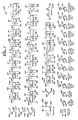
- Fig. 7 of the preferred embodiment illustrates the actuation of the recited solenoid operated valves and indicator lights.
- the solenoids are activated electrically and sequentially to operate the plurality of valves.
- the above-indicated circuitry provides a means to monitor the process by various indicators disclosed supra. It should be noted that the disclosed electrical circuit is but one of several circuit designs capable of performing the timed sequence of events.
- the present invention also includes a gas purging means illustrated in Figs. 1-4 to disburse residual probe gas remaining under the top platen 36 and adjacent the bottom platen 40 after the previously tested wheel 62 is removed from the detection apparatus 10. More specifically, in the preferred embodiment the pair of blower nozzles 46 are mounted adjacent the bottom platen 40 on the support platform 44. The blower nozzles 46 are directed upward relative to the support platform 44 to effect a swirling current by the communicated air. As will be discussed hereinafter, an air blower 124 (shown in Fig.
- a compressed air source is selectively connected to the pair of blower nozzles 46 while an electrically actuated solenoid is operated to open or close an interposed compressed air source valve (see Fig. 6).
- each pneumatically operated (air actuated) device including the plurality of air cylinders (pneumatic jacks) 48 and the pneumatic air jack means 89 (each for the outer chamber 34) and the air cylinder 50 including the pneumatic expansion means 88 (for the top platen 36) may be operated from a local low pressure air supply (shown in Fig. 6).
- FIG. 5 A cross-sectional view of the bottom of the annular helium chamber 84 is disclosed in Fig. 5 illustrating the gas connection line 110 intersecting the helium injector valve 112.
- the gas connection line 110 surrounds a portion of the housing 90 and terminates in a circular gas supply loop 130 with eight of the helium supply inlets 52 distributed equally about the circumference thereof.
- Each of the helium supply inlets 52 are T-type fittings that penetrate the cylindrical wall 92 of the cup-shaped housing 90. Viewing the penetrations as they appear across the cross-section line in a direction towards the bottom platen 40, the first interfacing line is the annular flange 102 located at the base of the cylindrical wall 92.
- the next interface line is the terminal edge of the helium chamber seal ring 70 with the remainder of the annular helium chamber 84 being bounded by the side edge of the wheel rim flange 82 and the cross-section through the side of the drum wheel 62.
- the speckled marks located between the annular flange 102 and the side edge of the wheel rim flange 82 represent the helium probe gas.
- the view down through the wheel 62 discloses an opening 132 in the bottom platen 40 for routing the vacuum draw line 32 therethrough. If leakage of the probe gas occurs across the boundary layer of the side of the drum wheel 62, defects in the structural integrity of the wheel 62 are indicated.
- the vacuum pump 114 (indicated in Figs. 1-4) draws a vacuum through the draw line 32 evacuating the inner chamber 80 of the ambient environment.
- the probe gas After the helium gas is injected into the annular helium chamber 84 through the eight helium supply inlets 52, the probe gas will drift in the sealed annular helium chamber 84 due to the injection velocity applied thereto. If the probe gas appears in the inner chamber 80, the existing environment in combination with the probe gas forms a mixture which is evacuated by the vacuum draw line 32 and dispatched to the mass spectrometer 60 for analysis via the main vacuum line 30 and the vacuum manifold 16. The operation of the vacuum valve system will be explained in conjunction with Figs. 6 and 7.
- the operation of the vacuum valve system is controlled by an electrical circuit having a general reference character 300 and is illustrated in Fig. 7.
- the bottom vacuum valve 26 is located in the main vacuum line 30 and serves to switch the main vacuum supply on and off while providing the vacuum required at the bottom of the detection apparatus 10 for evacuating the inner chamber 80.
- the top vacuum valve 18 is located in the vacuum manifold 16 and serves to control the vacuum supply in the vacuum manifold 16 and also assists in drawing the helium probe gas from the helium supply inlets 52 into the annular chamber 84.
- the vacuum release valve 28 is located in the main vacuum line 30 and the vacuum release line 116 and acts to release the vacuum from the inner chamber 80 when the test on the wheel 62 is complete.
- the sample separating valve 20 is located in the vacuum manifold 16 and serves to draw a fixed volume of the mixture of air and helium (or just air in the absence of a leak) from the inner chamber 80. The mixture sample is temporarily retained awaiting injection thereof into the mass spectrometer 60.
- the detection valve 22 located at the entrance of the mass spectrometer 60 in the sample connection line receives the mixture sample from the sample separating valve 20 and delivers the sample to the mass spectrometer 60 in a timed sequence.
- the pressurized flow control system 200 which illustrates those components necessary to initiate the delivery of the probe gas to the annular helium chamber 84 and then to deliver low pressure air for purging residual probe gas is shown in Fig. 6.
- Those components further include a helium measure valve 208, a measuring cylinder valve 210, a measuring cylinder 212, the helium injector valve 112, an outer chamber cleaner valve 214, a top platen solenoid valve 216, an outer chamber solenoid valve 218, the air blower (platen cleaner) valve 124, the air blower connecting lines 126, the blower nozzles 46, the gas connection line 110, the circular gas supply loop 130, and the plurality of helium supply inlets 52. Additionally, there is illustrated in Fig.
- a low pressure air source 220 is illustrated and further includes an air hand valve 222 and an air cleaning, lubricating and regulating device 224.
- the low pressure air source 220 is in series with an air line 226.
- the premeasurement means is incorporated into the pressurized flow control system 200 and specifically includes the helium measure valve 208, the measuring cylinder valve 210, the measuring cylinder 212 and the helium injector valve 112. Once the premeasurement and injection of the helium probe gas is complete, the purging of residual probe gas is accomplished by employing the outer chamber cleaner valve 214 and the air blower valve 124 in combination with the air line 226.
- the measuring cylinder 212 includes a piston which is pneumatically operated and spring returned. The piston travels within the measuring cylinder 212 to create a chamber therein.
- pressurized air from the low pressure air source 220 is free to travel through the air line 226 and the measuring cylinder valve 210.
- the low pressure air passing through the measuring cylinder valve 210 enters the bottom of the measuring cylinder 212 forcing the piston to the top of the travel of the chamber therein.
- the measuring cylinder valve 210 is closed, the piston is spring returned to the bottom of the measuring cylinder 212.
- the measuring cylinder valve 210 is closed and the helium measure valve 208 is open permitting helium from the gas source 202 to pass through the helium measure valve 208 and accumulate within the measuring cylinder 212.
- the size of the wheel 62 under test influences the length of time necessary to draw the initial vacuum in the system.
- vacuum B gauge 14 will cause the vacuum B switch 120 to close which will cause the electrical operators in the vacuum valves to position themselves to deliver the helium probe gas to the annular helium chamber 84.
- the helium measure valve 208 remains open permitting the probe gas to accumulate within the measuring cylinder 212. Therefore, the volume of probe gas that accumulates within the measuring cylinder 212 is directly proportional to the time required to draw the necessary vacuum and thus proportional to the volume of the inner chamber 80 of the wheel 62 under test.
- the helium measure valve 208 closes and the helium injector valve 112 opens.
- the measuring cylinder valve 210 is opened permitting low pressure air from the air line 226 to pass through the measuring cylinder valve 210 into the measuring cylinder 212.
- the low pressure air forces the piston in the measuring cylinder 212 to the top of the chamber forcing the helium probe gas out of the measuring cylinder 212 and through the opened helium injector valve 112.
- the probe gas passes through the gas connection line 110 and into the circular gas supply loop 130.
- the probe gas then passes through the plurality of helium supply inlets 52 which feed the probe gas to the annular helium chamber 84.
- the measuring cylinder valve 210 closes preventing the air from the air line 226 from passing into the cylinder 212 and allowing the spring of the cylinder 212 to return the piston to its normal position.
- the volume of the helium probe gas is measured by the time the helium probe gas flows during the premeasuring stage. This time interval determines how much helium probe gas is required to be stored in the chamber of the measuring cylinder 212.
- the helium injector valve 112 closes and the outer chamber cleaner valve 214 opens providing a pathway for the low pressure air of the air line 226 to the gas connection line 110.
- the low pressure air passes through the gas connection line 110 and the gas supply loop 130 forcing the evacuation of residual probe gas.
- the low pressure air also passes through the inlets 52 and into the annular helium chamber 84 to clean and purge the system of the helium probe gas for the next cycle.
- the venting apertures 97 located in the enclosed end 94 permit the purged helium probe gas to be vented out of the top of the housing 90.
- the air blower valve 124 is activated. Low pressure air is then free to pass through the air blower connecting lines 126 and the blower nozzles 46 to clean the area around the bottom platen 40.
- the same fluid piping system is used during the premeasurement stage to measure and deliver the helium probe gas to the annular helium chamber 84 and is used during the purging stage to pass unmeasured purging air in the range of 90 to 100 psi for cleansing the system.
- the top platen solenoid valve 216, the outer chamber solenoid valve 218, and the valve pilots in each of the five vacuum operating valves (18, 20, 22, 26, 28), include a standard four-way solenoid valve.
- Each of the valves include a valve sphere (not shown) which, in essence, passes the effect of the vacuum when the sphere is in a first position and blocks the effect of the vacuum when the sphere is in a second position.
- the valve sphere is pneumatically operated by an air cylinder.
- the air cylinder is electrically operated to either pass or block the pneumatic force that operates a shaft for positioning the valve sphere.
- the reset position is assumed in which the outer chamber 34 is returned to the rest position in which the top platen 36 and the associated seal ring 38 are spaced apart from the bottom platen 40 and the associated seal ring 42.
- the spacing is of a sufficient distance that the top platen 36 is above the wheel rim flange 82 which permits the removal of the previously tested wheel 62 and the replacement therebetween with of the next wheel to be tested.
- the volume reducing disc 72 is resting on the top surface of the annular flange 102. The position of those components prevents the escape of residual probe gas from the bottom of the outer chamber 34 and further prevents the contamination of the inner chamber 80 prior to the initiation of the vacuuming and testing of the next wheel.
- the venting apertures 97 in the enclosed end 94 of the cup-shaped housing 90 remain open for the evacuation of the probe gas.
- the vacuum should be released by opening the vacuum release valve 28 and the flow of the probe gas should be halted by the closure of the helium injector valve 112.
- the next wheel 62 to be tested is coaxially positioned atop the bottom platen seal ring 42 which will engage the bottom wheel rim flange 82. All the vacuum valves are closed in the reset position between the test of each wheel 62 and then operated in sequence as explained hereinafter.
- the electrical circuit 300 includes the solenoids and actuators for the top vacuum valve 18, the bottom vacuum valve 26, the vacuum release valve 28, the open sample separating valve 20 and the detection valve 22. Also included are the solenoids and actuators for the helium measure valve 208, the helium injector valve 112, the measuring cylinder valve 210, the air blower valve 124, the outer chamber solenoid valve 218, the outer chamber cleaner valve 214 and the top platen solenoid valve 216. Additionally, the detector switch located in the mass spectrometer 60 is schematically illustrated in Fig. 7 and is identified by the characteristic numeral 302. Further, Fig.
- FIG. 7 illustrates a bottom vacuum indicating lamp 304, a detection indicating lamp 306, a top vacuum indicating lamp 308, a sample separating indicating lamp 310, a helium injector indicating lamp 312, a vacuum release indicating lamp 314, an air blower indicating lamp 316, an outer chamber cleaner indicating lamp 318, a power-on switch 320, a power available indicating lamp 322, a reset switch 324 and a start switch 326.
- Additional indicating devices include a white lamp 328 which signifies a wheel which has passed the leakage test, a red lamp 330 which signifies a wheel that has not passed the leakage test, and a buzzer 332 which indicates a tested wheel having excessive leakage.
- a white lamp 328 which signifies a wheel which has passed the leakage test
- a red lamp 330 which signifies a wheel that has not passed the leakage test
- a buzzer 332 which indicates a tested wheel having excessive leakage.
- a relay 336 include a relay 336, a relay 338, a relay 340, a relay 342, a relay 344, a relay 346, a relay 348, a relay 350, a relay 352, a relay 354, a timer 356, a timer 358, a timer 360, a timer 362, a timer 364, a timer 366, a timer 368, a switch 370, a switch 372, a switch 374, and a switch 376.
- the top platen 36 and the outer chamber 34 are each in the raised (rest) position. Also, each of the vacuum operating valves are closed, and the air blower valve 124 is closed.
- the testing procedure for the next wheel 62 is initiated by closing the power-on switch 320 which connects the power input terminals 400, 401, to the electrical circuit and illuminates the power available lamp 322.
- the start switch 326 is a two-pole spring loaded normally open push button switch which connects the energized lead 401 from the power-on switch to switches 374, 376. The switches 374, 376 are activated by electrical impulse from the start switch 326.
- a first impulse on lead 403 will cause one of the switches to pulse on, while the second of the two switches will pulse off through the leads 403 and 422.
- a second operation of the start switch 326 will provide a pulse which reverses the leads 403 and 422 causing the operation of the switches 374 and 376 to reverse.
- the electric switches 374, 376 are reversed.
- This causes lead 407 on switch 374 to become energized and to subsequently cause the measuring cylinder 212 to reduce its volume to zero.
- the top platen 36 which is connected to lead 407 descends by gravity to form the inner chamber 80 in combination with wheel 62 and the bottom platen 40. Simultaneously the bottom vacuum valve 26, the top vacuum valve 18 and the sample separating valve 20 each open while the detection valve 22 and the vacuum release valve 28, the air blower valve 124 and the vacuum release valve 28 each remain closed.
- the vacuum pump 114 begins to draw vacuum in the inner chamber 80 which increases over time and simultaneously, the timer 360 begins to count.
- the timer 360 is a 32 second timer which is employed for limiting the time permitted for the testing of any particular wheel.
- the cup-shaped housing 90 supports the volume reducing disc 72 which acts as a gravity bottom lid of the housing 90.
- the disc 72 remains several inches above the top platen 36 to isolate the inner chamber 80 from any helium contamination residue in the outer chamber 34 from the last test cycle.
- the disc 72 remains elevated and supported by the outer chamber 34 as long as the top platen 36 is not sealed to the inner chamber 80 by a sufficient amount of vacuum.
- the vacuum A gauge 12 is adjusted to operate the vacuum switch 118 when the initial level of vacuum is reached in the manifold 16. Electrical lead 406 on vacuum A switch 12 becomes energized operating relays 342 and 344. Timer 366 energizes lead 410 which opens the helium measure valve 208 while lead 424 on relay 344 causes the measuring cylinder valve 210 to close which permits the spring to draw the piston down creating the chamber which becomes larger over time. Lead 438 on relay 342 is operated causing the corresponding lead on relay 352 to energize lead 420 which permits the cup-shaped housing 90 to descend around the inner chamber 80 until it rests upon the bottom platen 40. The volume reducing disc 72 of the housing 90 rests upon the top platen 36 and becomes the top lid of the annular helium chamber 84.
- the inner chamber 80 is vacuum sealed before the outer chamber 34 is lowered into position onto the bottom platen 40.
- the top and bottom platen seals 38, 42 leak and if the outer chamber 34 was lowered prematurely, residue probe gas would leak into the inner chamber 80 causing contamination. Therefore, an acceptable level of vacuum must be reached in the A gauge 12 prior to the lowering of the outer chamber 34.
- lead 420 becomes energized permitting the outer chamber 34 to gravity fall.
- the outer chamber solenoid 218 is energized by lead 420 which causes the air cylinders 48 to maintain the outer chamber 34 in an elevated position.
- lead 420 is energized, the outer housing 34 is permitted to gently gravity fall onto the bottom platen 40. At this point, the helium probe gas is premeasured as it enters the measuring cylinder 212.
- the vacuum B switch 14 Upon the vacuum reaching a preset level in the manifold 16, the vacuum B switch 14 operates closing vacuum switch 120. The bottom vacuum valve 26 then closes by operation of lead 411 from relay 350. The volume of the helium probe gas in the chamber of the measuring cylinder 212 is proportional to the volume of the inner chamber 80 of the wheel 62 being tested.
- lead 408 energizes the corresponding lead in switch 372 which operates lead 416 in relay 346.
- Relay 346 energizes lead 448 which energizes the corresponding lead in timer 366.
- Lead 410 of timer 366 is operated in order to close the helium measure valve 208.
- the measuring cylinder 212 increased its volume against the spring pressure while the helium measure valve 208 was open.
- the helium probe gas was admitted slowly into the measuring cylinder 212 in preparation of transmission to the annular helium chamber 84 through the helium injection valve 112.
- the relay 346 After a delay of from one-to-five seconds, the relay 346 also energizes lead 435 which energizes the corresponding lead in relay 344.
- Lead 424 of relay 344 in turn energizes the helium injector valve coil 112 for providing a passageway for the probe gas from the measuring cylinder 212 to the gas connection line 110.
- Lead 424 of relay 344 also energizes the measuring cylinder valve 210 which enables the low pressure air from air line 226 to force the plunger of measuring cylinder 212 upward against spring pressure forcing the helium probe gas through the helium injector valve 112 and onward towards the circular gas supply loop 130 through the gas connection line 110.
- the vacuum continues slowly to increase with a sample of the air mixture from the inner chamber 80 circulating slowly through the open sample separating valve 20, the manifold 16 and the top vacuum valve 18 towards the vacuum pump 114.
- the distribution of the air sample from the inner chamber 80 continues for a few seconds regulated by the three second timer 362 causing the gaseous content of the manifold 16 to be the same as the gaseous content of the air mixture within the inner chamber 80.
- the timer 362 energizes lead 417 to close the top vacuum valve 18 while lead 447 of timer 362 energizes relay 350 causing lead 419 to close the sample separating valve 20.
- lead 415 of timer 358 energizes the corresponding lead to open the detection valve 22 which is regulated by the three second timer 358.
- the drum wheel 62 does not include penetrating holes and thus does not pass the probe gas. In this situation the drum wheel 62 is labeled a "good wheel”. If the drum wheel 62 includes small penetrating holes, the probe gas will pass through the wheel 62 and thus the wheel is labeled a "bad wheel”. In the worse case, large penetrating holes exist which permit an excessive volume of the probe gas to pass through the drum wheel 62. In this case, the drum wheel 62 is labeled a "very bad wheel” and the testing procedure is interrupted and terminated.
- the leak detection apparatus 10 selects a different cycle based upon the supervision and reaction of the combination of the vacuum switch 118, the vacuum switch 120, and the 32 second limiting timer 360.
- the foregoing discussion of the pressurized flow control system 200 and the electrical diagram 300 is identical for all three situations until the detection valve 22 opens and passes a sample of the atmosphere from the inner chamber 80 to the mass spectrometer 60.
- the result of the analysis of the gas sample by the mass spectrometer 60 determines if the detector switch 302 within the mass spectrometer 60 will close energizing lead 413.
- the remainder of the discussion of the test procedure concerns the operation of the leak detection apparatus 10 resulting from the analysis of the gas sample.
- the helium concentration in the probe gas sample is very low, the helium concentration will not be detected by the mass spectrometer 60 and the timer 358 will count to the end of its three second cycle.
- the white lamp 328 which indicates a "good wheel” will be illuminated and the timer 360 will cease counting. Since the very low helium concentration is not detected by the analyzer in the mass spectrometer 60, the detector switch 302 is not activated and line 413 circuited therefrom is not energized.
- line 433 energizes the corresponding line in relay 342 which in turn activates lines 407 and 450 of relay 342.
- Line 450 in relay 342 activates the corresponding line in timer 360 which energizes line W prior to the thirty-two second time limit counted out by timer 360.
- Line W of timer 360 energizes the white lamp 328 indicating that the wheel 62 under test did not leak the probe gas.
- line 438 of relay 342 is deactivated which simultaneously deactivates line 438 of relay 352 resulting in the deactivation of line 420 from relay 352 to the coil of the outer chamber solenoid valve 218. This action results in activating the air cylinders 48 for driving the cup-shaped housing 90 upward to the rest position.
- the detection valve 22 is closed by the deactivation of line 415 after timer 358 completes its three second cycle.
- Each of the remaining vacuum operating valves are now in the closed position including the helium injector valve 112 which was closed after the delivery of the helium probe gas to the outer helium chamber 84 and before the outer chamber 34 was lifted to the rest position.
- Relay 336 stops counting and resets the basic thirty-two second cycle timer 360.
- Line W is also connected from timer 360 to relay 336 which deenergizes line 451 in relay 336 since line W and relay 336 return to the common line 400. This results in line 451 on relay 336 to change to the open position from the contact position.
- line 451 is also connected to timer 356 and to timer 360 so that when line 451 on timer 356 is deenergized, line 444 on timer 356 also deenergizes the corresponding line to timer 360 which ends the cycle.
- the purging cycle is initiated by lines 439 and 440 on the three second timer 368.
- Line 422 on timer 368 energizes the corresponding line on switch 376 which supplies power to line 425 on switch 376 and energizes the corresponding line on relay 352.
- the cup-shaped housing 90 has reached the rest position and lead 425 has energized lead 434 on relay 352.
- lead 434 on timer 364 is energized for seven seconds.
- lead 434 on relay 352 energizes lead 417 for opening the top vacuum halve 18 for the purging cycle.
- Lead 434 of relay 352 additionally activates the corresponding lead on relay 348 which energizes the lead 419 for opening the sample separating valve 20.
- Line 426 on relay 348 is also energized for opening the vacuum release valve 28 to release the vacuum in the manifold 16, and for energizing the air blower valve 124 and the outer chamber cleaner valve 214. The operation of each of these valves by line 426 on relay 348 begins the purging cycle to clean the lower platen area 40, the annular helium chamber 84 and the manifold system 16.
- the existing vacuum holds the wheel 62 clamped between the top platen 36 and the bottom platen 40 for receiving a stamped insignia indicating that the wheel does not leak or that it is a "good wheel".
- the stamping of the wheel may be done manually or by employing robotics.
- the reset switch 324 is activated either manually or by robotics for lifting the top platen 36 and purging the detection system 10.
- Reset switch 324 energizes lead 439 and 440 on timer 368 which in sequence reverses the order and closes each of the vacuum operating valves and the air blower valve 124, the outer chamber cleaner valve 214, the vacuum release valve 28, and deenergizes the top platen solenoid coil 216 through lead 407 for activating the air cylinder 50 for driving the top platen 36 upward.
- the leak detection apparatus 10 is now positioned for testing the next wheel.
- the mass spectrometer 60 will detect the presence of helium in the manifold 16 by indicating on a microvolt meter incorporated within the mass spectrometer 60 a reading which will show the relative proportionality (in percent) of the helium in the gas sample distributed in the manifold 16. Additionally, the presence of helium in the gas sample analyzed by the mass spectrometer 60 will energize the detector switch 302 and provide power to line 413 as described hereinafter.
- the detector switch 302 is an adjustable device such that the activation point of the switch can be calibrated to make contact over a range of microvolt meter readings. Thus, the boundary point between a high helium concentration indicating a bad wheel and a low helium concentration indicating a good wheel may be adjusted to reflect the desired sensitivity.
- lead 413 could be employed to activate robotic automated equipment to determine a leakage coefficient of each test wheel 62.
- the corresponding lead of switch 370 activates lead R to energize the red lamp 330 indicating that the wheel 62 has failed the leakage test.
- line 413 of the mass spectrometer 60 also energizes the corresponding line in relay 354 energizing normally open leads 439 and 440. Leads 439 and 440 energize the corresponding leads in the three second timer 368 shorting the leads together causing timer 368 to activate which initiates the purging cycle and the resetting of the leakage detection apparatus 10.
- the reset switch 324 must be activated either manually or automatically to contact leads 439 and 440 to operate the timer 368.
- lead 413 of detector switch 302 short circuits the leads 439 and 440 in relay 354 to automatically activate the timer 368 to initiate the purging cycle.
- switch 372 activates line 416 for assisting in the opening of the vacuum valves and activating the purging system.
- Switch 374 open circuits the line 407 which deenergizes the corresponding lead for relay 342.
- Lead 438 from relay 342 then energizes the corresponding lead in relay 352 which activates lead 420 causing the outer chamber solenoid 218 to be driven up by the air cylinders 48.
- the deenergizing of lead 407 deenergizes the top platen solenoid 216 which causes the air cylinder 50 to drive the top platen 36 upward to the rest position.
- the wheel 62 under test is no longer clamped between the top platen 36 and the bottom platen 40.
- Switch 376 energizes lead 425 which activates the seven second timer 364 which regulates the amount of time for purging the detection apparatus 10 of the probe gas.
- Line 434 of timer 364 energizes the corresponding lead in relay 348.
- Lead 426 of relay 348 is energized activating the electrical coil in the vacuum release valve 28, the air blower valve 124 and the outer chamber cleaner valve 214 for the seven second purging cycle.
- Switches 374 and 376 are identical, each having a common wire 400 connected to the chassis return. Also note that each of the switches have connected thereto leads 403 and 422. Note that these two leads are connected in reverse order in the switches 374 and 376. In switch 374, if the electrical energy is supplied to lead 422, line 407 is disconnected from the power lead 401. However, if the electrical energy is delivered to lead 403, switch 374 changes position and lead 407 becomes energized for restarting the test cycle. Since leads 403 and 422 are in reverse order on switch 376, if the electrical energy is supplied to lead 422 lead 425 is energized by way of the power lead 401. However, if the electrical energy is supplied to lead 403 then lead 425 becomes disconnected from the power lead 401.
- the detection apparatus 10 cycles through the complete procedure when a wheel has passed the leakage test and when a wheel has failed the leakage test.
- the timer 356 and the timer 360 cease counting which terminates the test cycle.
- lead 439 and lead 440 of relay 354 are short circuited activating timer 368. In essence, this action by-passes the reset switch 324 which also terminates the cycle.
- the mere activation of the vacuum B switch 14 indicates either that the wheel is good and does not leak, or that the wheel has a leak and has failed the leak detection test. If the vacuum level in the manifold 16 does not reach a sufficient level to activate the vacuum B switch 14, a very bad leak in the test wheel 62 is indicated. Under these conditions the remainder of the test cycle lasts for less than forty seconds.
- the capacity of the vacuum pump 114 is limited. Under these conditions, the vacuum increases very slowly taking much longer than the thirty-two seconds allotted by the limit timer 360. If the necessary vacuum level to operate the mass spectrometer 60 is not reached, then the vacuum switch 120 does not close and the timer 360 reacts to stop development of the vacuum.
- the absolute maximum length of a cycle of the detection apparatus 10 is fifty-five seconds.
- Timer 356 and the timer 360 start counting at the initiation of each test cycle.
- Timer 360 is the basic thirty-two second limit timer which will reject the wheel if the test is not completed within the thirty-two seconds allotted.
- the timer 356 is a forty second limit timer that continues to count eight additional seconds beyond the timer 360 to provide the purging function of the detection apparatus 10.
- line 445 is energized for the eight additional seconds required for timer 356 to complete its forty-second cycle.
- Line 445 from timer 360 energizes the buzzer to provide an audible signal that the wheel being tested is rejected.
- the vacuum operating system is reset and the purging cycle is completed.
- line 445 of timer 360 is deenergized and the detection apparatus 10 is reset.
- line 445 activates relay 350 energizing lead 447 which activates lead 419 closing the sample separating valve 20. Additionally, lead 411 of relay 350 activates and closes the bottom vacuum valve 26. Under the conditions in which the operating vacuum is reached closing vacuum switch 120, the detection apparatus 10 would complete the normal cycle within the allotted thirty-two seconds. Under these conditions, lead 408 on vacuum B switch 14 would energize the corresponding lead of switch 372. The detection apparatus 10 would continue the test cycle to determine if the wheel under test was acceptable or not. However, the bottom vacuum valve 26 and the sample separating valve 20 were closed prior to the termination of the fortieth count by timer 356 for the following reason.
- the mass spectrometer 60 requires a high vacuum to properly operate and when the vacuum level is not achieved, the cycle is interrupted. To properly reset the detection apparatus 10 for the next test cycle, the vacuum in the manifold 16 must be released and the gas sample which includes a high concentration of helium must be purged. To properly purge this system each of the vacuum operating valves must be cycled open to permit the low pressure air that is routed through the outer chamber cleaner valve 214 and the air blower valve 124 to cleanse the inside of the manifold 16. If the detection valve 22 is opened for the purpose of purging while the vacuum level in the manifold 16 is less than the normal operating level, the mass spectrometer 60 will be damaged.
- the bottom vacuum valve 26 and the sample separating valve 20 were closed by the operation of relay 350 as previously described. This action in effect separates the wheel 62 from the process of vacuuming. Since the large hole in the wheel 62 passes the probe gas and impedes the development of the vacuum, isolation of the wheel from the manifold 16 is necessary to reset the apparatus 10.
- the vacuum pump 114 continues to draw a vacuum in the manifold 16 through the top vacuum valve 18.
- the detection valve 22 remains closed until the vacuum in the manifold 16 reaches the operating level closing the vacuum switch 120.
- the three second timer 358 energizes lead 415 which opens the detection valve 22 to complete the analyzing and purging steps of the cycle.
- the mass spectrometer 60 Since the necessary vacuum level has been achieved, the mass spectrometer 60 will not be damaged. A sample of the atmosphere from the inner chamber 80 passes the detection valve 22 and is admitted to the mass spectrometer 60 for analysis. Because of the large hole in the wheel being tested, the sample has a high percentage of helium concentration.
- the detector switch 302 is normally open, but closes in response to the high concentration of helium in the gas sample energizing lead 413.
- the corresponding lead activates switch 370 which energizes lead R illuminating the red lamp 330 indicating that the wheel is rejected.
- the values of detection apparatus 10 are postured as if the wheel under test included only a minor leak, but was still rejected upon completion of the test cycle. Therefore, once lead 413 of the detector switch 302 has been energized, the electrical system 300 responds in the same manner to purge and reset itself as previously described for a rejected wheel with only a minor leak.
- the leakage detection apparatus of the present invention permits each drum wheel to be tested for air leakage in a rapid and efficient manner, that the test is reliable and is conducted by principles consistent with the normal operation of the wheel. Further, the detection apparatus is fully automated and is immediately reset after each test cycle providing stamped insignia to each "good wheel" for post-testing identification.
- the detection apparatus can be equipped with robotics which eliminate the need for the presence of a human operator.
- system of the present invention can be used to test cast metallic articles other than wheels for fluid leakage, by way of example air conditioning pumps, water pumps, power steering pumps, compressor housings, engine cylinder blocks, cylinder heads, carburetor housings and transmission housings.
Landscapes
- Physics & Mathematics (AREA)
- General Physics & Mathematics (AREA)
- Examining Or Testing Airtightness (AREA)
Claims (9)
- Vorrichtung zum Erfassen eines Fluidlecks in einem gegossenem Gegenstand (62) mit einem Hohlraum (80), welche Vorrichtung umfaßt:
Dichtmittel (38, 42) zum Abdichten des Hohlraums (80) des gegossenen Gegenstands (62) zur Bildung einer Innenkammer (80) in dem Hohlraum;
ein Umhüllungsmittel (34) mit einem offenen Boden zum Abdecken des gegossenen Gegenstands (62) und zur Bildung einer Ringkammer (84) um die Innenkammer (80) herum;
ein Evakuierungsmittel (114) in Verbindung mit der Innenkammer (80) zur Bildung eines Vakuums in der Innenkammer;
ein Zufuhrmittel (200) zum Zuführen einer Prüfgasmenge zu der Ringkammer (84);
Ventilmittel (28, 26, 18, 20, 22, 124), die in dem Evakuierungsmittel (114) angeordnet sind, um das Vakuum in der Vorrichtung zu steuern und um ein Probengemisch aus der Innenkammer (80) aufzufangen; und
ein Nachweismittel (60) zur Analyse des Probengemischs und zum Erfassen der Gegenwart des Prüfgases, wobei die Gegenwart des Prüfgases in dem Probengemisch ein Leck durch den gegossenen Gegenstand anzeigt;
dadurch gekennzeichnet,
daß Vorabmeßmittel (208, 210, 212, 220) vorgesehen sind, um eine Prüfgasmenge aus dem Zuführmittel (200) vor dem Einblasen in die Ringkammer (84) auszumessen und zu sammeln, welche Vorabmeßmittel durch Schaltmittel (118, 120) gesteuert sind, die in Antwort auf das Evakuierungsmittel (114) ein Prüfgasvolumen in dem gleichen Zeitintervall ausmessen und sammeln, in dem das Evakuierungsmittel (114) arbeitet, um in der Innenkammer (80) einen vorbestimmten Betriebsvakuumpegel zu erreichen, so daß das in die Ringkammer (84) einzublasende Prüfgasvolumen proportional zu dem Volumen der Innenkammer (80) ist. - Vorrichtung nach Anspruch 1, die weiter einen Meßzylinder (212) umfaßt, um das Prüfgas aus einem Prüfgasspeichermittel (202) aufzunehmen und um das Prüfgas zur Abgabe an das Gaszuführmittel (52) zu halten.
- Vorrichtung nach Anspruch 1 oder Anspruch 2, in der das Evakuierungsmittel (114) einen ersten Vakuumschalter (118) zur Betätigung nach Erreichen eines ersten Vakuumpegels in der Innenkammer (80) umfaßt, wobei der aktivierte erste Vakuumschalter (118) die Messung des Prüfgases in einem Durchflußsteuermittel (206) einleitet.
- Vorrichtung nach einem der vorhergehenden Ansprüche, die weiter Spülmittel umfaßt, die das Umhüllungsmittel (34) durchdringen, um eine Luftmenge aus einer Niederdruckluftquelle in die Ringkammer (84) einzublasen, um das Prüfgas zu entfernen und um die Ringkammer (84) nach Beendigung des Leckerfassungsprüfzyklus zu reinigen.
- Vorrichtung nach einem der vorhergehenden Ansprüche, die weiter ein Heliumeinblasventil (112) umfaßt, um das Prüfgas von dem Meßmittel (212) an das Zuführmittel (52) abzugeben.
- Vorrichtung nach einem der vorhergehenden Ansprüche, die weiter umfaßt: mit dem Umhüllungsmittel (34) in mechanischer Verbindung stehende Hubmittel (48), um das Umhüllungsmittel (34) während eines Leckerfassungsvorgangs vertikal zu bewegen; und
Spülmittel (114), die unterhalb des Umhüllungsmittels (34) angebracht sind, um die Vorrichtung von Prüfgas zu reinigen, nachdem das Umhüllungsmittel (34) bei einer Beendigung des Leckerfassungsvorgangs durch die Hubmittel (84) vertikal bewegt wurde. - Vorrichtung nach einem der vorhergehenden Ansprüche, die weiter eine Volumenreduzierscheibe (72) mit einem Mitteldurchbruch (96) zur Aufnahme einer an einem mittleren Luftzylinder (48) befestigten Mittelachse (86) umfaßt, welche Volumenreduzierscheibe (72) zwischen einer vertikal beweglichen oberen Platte (36) der Dichtmittel und einem geschlossenem Ende eines vertikal beweglichen topfförmigen Gehäuses (90) des Umhüllungsmittels (34) angeordnet ist, wobei die Volumenreduzierscheibe (72) auf der oberen Platte (36) ruht und mit dieser axial bewegt wird, um das Volumen der Ringkammer (84) Proportional zum Volumen der Radtrommel einzustellen.
- Vorrichtung nach einem der vorhergehenden Ansprüche, in der der gegossene Gegenstand eine Radtrommel ist.
- Verfahren zum Erfassen eines Fluidlecks in einem gegossenen Gegenstand, welches Verfahren die Schritte umfaßt:
Abdichten eines Hohlraums in dem gegossenen Gegenstand (62) zur Bildung einer Innenkammer (80) in dem Hohlraum;
Evakuieren der Innenkammer (80) zur Bildung eines Vakuummilieus;
Einschließen des abgedichteten gegossenen Gegenstands (62) in einem Gehäuse (34) zur Bildung einer den gegossenen Gegenstand umgebenden Ringkammer (84);
Zuführen einer vorbestimmten Menge eines Prüfgases zu der Ringkammer (84), um Prüfgaslecks zu dem Vakuummilieu der Innenkammer (80) hin zu erfassen;
Betätigen mehrerer Vakuumleitungsventile (28, 26, 18, 20, 22, 24) zur Steuerung des Vakuummilieus;
Entnehmen eines Teils der Vakuummilieus in der Innenkammer (80) zur Durchführung einer chemischen Analyse;
Analysieren des entnommenen Teils des Vakuummilieus zum Nachweis des Prüfgases; und
Anzeigen des Ergebnisses der Analyse des entnommenen Teils, wobei die Gegenwart des Prüfgases in dem Vakuummilieu ein Leck in dem gegossenen Gegenstand anzeigt;
dadurch gekennzeichnet,
daß die Prüfgasmenge durch Ausmessen und Sammeln eines Prüfgasvolumens bestimmt wird, das zu dem Volumen der Innenkammer (80) proportional ist.
Priority Applications (1)
| Application Number | Priority Date | Filing Date | Title |
|---|---|---|---|
| DE1989607190 DE68907190T2 (de) | 1989-01-05 | 1989-01-05 | Anlage zur Aufspürung von Undichtigkeiten. |
Applications Claiming Priority (2)
| Application Number | Priority Date | Filing Date | Title |
|---|---|---|---|
| US07/029,149 US4813268A (en) | 1987-03-23 | 1987-03-23 | Leakage detection apparatus for drum wheels and method therefore |
| CA000587558A CA1329496C (en) | 1987-03-23 | 1989-01-05 | Leakage detection apparatus for drum wheels and method therefore |
Publications (2)
| Publication Number | Publication Date |
|---|---|
| EP0377264A1 EP0377264A1 (de) | 1990-07-11 |
| EP0377264B1 true EP0377264B1 (de) | 1993-06-16 |
Family
ID=25672357
Family Applications (1)
| Application Number | Title | Priority Date | Filing Date |
|---|---|---|---|
| EP89300071A Expired - Lifetime EP0377264B1 (de) | 1987-03-23 | 1989-01-05 | Anlage zur Aufspürung von Undichtigkeiten |
Country Status (3)
| Country | Link |
|---|---|
| US (1) | US4813268A (de) |
| EP (1) | EP0377264B1 (de) |
| CA (1) | CA1329496C (de) |
Families Citing this family (47)
| Publication number | Priority date | Publication date | Assignee | Title |
|---|---|---|---|---|
| US5010761A (en) * | 1990-03-01 | 1991-04-30 | Superior Industries International, Inc. | Automated leak detection apparatus and method therefor |
| IT1248111B (it) * | 1991-06-21 | 1995-01-05 | Borli Srl | Macchina per prove di tenuta d'aria su cerchi ruota ottenuti per fusione. |
| US5344480A (en) * | 1992-05-05 | 1994-09-06 | Praxair Technology, Inc. | Pressurizing with and recovering helium |
| IT1263038B (it) * | 1993-01-14 | 1996-07-24 | Apparecchio per verificare la tenuta di cerchioni per autoveicoli e simili | |
| JP2000501833A (ja) * | 1995-12-08 | 2000-02-15 | ヘイズ、ホィールズ、インタナシャナル、インク | 車両車輪の漏れ試験用の装置及び方法 |
| US5767391A (en) * | 1996-11-25 | 1998-06-16 | Taiwan Semiconductor Manufacturing Company, Ltd | Leakage detect tool for vacuum bellows |
| US5777209A (en) * | 1996-12-13 | 1998-07-07 | Taiwan Semiconductor Manufacturing Company, Ltd. | Leakage detection apparatus equipped with universal adapter head and method of testing |
| US6082184A (en) * | 1997-05-27 | 2000-07-04 | Martin Lehmann | Method for leak testing and leak testing apparatus |
| US6155313A (en) * | 1998-03-06 | 2000-12-05 | Beverly Smalley | Tire evacuation and inflation apparatus and method |
| DE19825025A1 (de) * | 1998-06-04 | 1999-12-09 | Siemens Ag | Verfahren und Prüfstand zur Ermittlung der Dichtigkeit von Unterflurfeuern oder anderen auf Flughäfen oder zur Straßenbeleuchtung eingesetzten abdichtungskritischen Geräten sowie entsprechendes Unterflurfeuer bzw. Gerät |
| US6014893A (en) * | 1998-08-11 | 2000-01-18 | Chrysler Corporation | Test fixture |
| JP4567270B2 (ja) * | 1999-12-22 | 2010-10-20 | インフィコン ゲゼルシャフト ミット ベシュレンクテル ハフツング | シート型漏洩探査器を運転する方法並びに該方法を実施するために適したシート型探査器 |
| DE50015394D1 (de) | 1999-12-22 | 2008-11-20 | Inficon Gmbh | Verfahren zum betrieb eines folien-lecksuchers sowie für die durchführung dieses verfahrens geeigneter folien-lecksucher |
| US6357280B1 (en) * | 2000-06-06 | 2002-03-19 | Winbond Electronics Corp. | Leakage testing tool for a bellow of a semiconductor manufacturing machine |
| US6393897B1 (en) * | 2000-09-22 | 2002-05-28 | The Goodyear Tire & Rubber Company | Accelerated leakage testing |
| AU8808301A (en) * | 2000-10-02 | 2002-04-15 | Takachiho Seiki Co Ltd | Leakage detecting device for sealed packages |
| US6520002B2 (en) * | 2001-06-14 | 2003-02-18 | Solar Turbines Inc | Apparatus and method for testing a recuperator cell for an air leak |
| US20040000200A1 (en) * | 2002-06-26 | 2004-01-01 | Seagate Technology Llc | Purge system and method for accelerating environmental stress tests |
| US6696960B1 (en) * | 2003-04-01 | 2004-02-24 | Donald G. Martinez | Hydraulic system with fluid leak warning apparatus |
| US7013710B2 (en) * | 2004-03-19 | 2006-03-21 | Carleton Technologies, Inc. | Open package test fixture |
| TWM318123U (en) * | 2007-01-05 | 2007-09-01 | Smart Ant Telecom Co Ltd | Gastightness examination apparatus |
| US8113069B2 (en) * | 2007-06-19 | 2012-02-14 | The Penn State Research Foundation | Aerodynamic sampler for chemical/biological trace detection |
| US7549330B2 (en) * | 2007-09-14 | 2009-06-23 | The Goodyear Tire & Rubber Company | Leak down device for tire pressure monitoring system |
| KR100915557B1 (ko) * | 2007-10-31 | 2009-09-07 | 주식회사 에이스테크놀로지 | Rf 장비의 기밀 테스트 장치 및 방법 |
| US8205484B2 (en) * | 2009-02-17 | 2012-06-26 | Fukuda Co., Ltd. | Apparatus and method for leak testing |
| ITPD20110150A1 (it) * | 2011-05-12 | 2012-11-13 | Eng Service S R L | Apparato per il rilevamento di perdite di un componente a tenuta ed un relativo processo di rilevamento |
| US8720253B2 (en) * | 2011-08-01 | 2014-05-13 | Gm Global Technology Operations, Llc | Reconfigurable leak testing system |
| US8991236B2 (en) | 2011-08-01 | 2015-03-31 | Gm Global Technology Operations, Llc | Reconfigurable leak testing system |
| WO2014124349A1 (en) * | 2013-02-11 | 2014-08-14 | Pneumacore, Inc. | Detecting wheel rim cracks |
| EP2801808A1 (de) * | 2013-05-07 | 2014-11-12 | Lüdolph Management GmbH | Dichtheitsprüfanordnung und Dichtheitsprüfverfahren |
| CN105358951B (zh) * | 2013-05-07 | 2019-06-28 | 吕多尔管理有限公司 | 密封性检验装置和密封性检验方法 |
| JP6146281B2 (ja) * | 2013-11-29 | 2017-06-14 | 株式会社デンソー | 気体漏れ検出装置 |
| CN103868657B (zh) * | 2014-03-25 | 2016-02-03 | 中信戴卡股份有限公司 | 一种旋转式车轮气密检测机 |
| CN104614134B (zh) * | 2015-02-03 | 2018-12-21 | 中信戴卡股份有限公司 | 一种检测铝合金轮毂气密性的方法 |
| AU2017268056B2 (en) * | 2016-05-18 | 2021-08-05 | Lineriders Inc. | Apparatus and methodologies for leak detection using gas and infrared thermography |
| CN114018497B (zh) * | 2016-06-30 | 2024-03-26 | 株式会社开滋 | 阀用耐压检查装置和其检查方法、以及氢气检测单元 |
| AT519682A1 (de) | 2017-02-24 | 2018-09-15 | Mits Gmbh | Verfahren zum Überprüfen einer Dichtheit eines flexiblen Behälters |
| US10508976B1 (en) | 2017-03-31 | 2019-12-17 | Advanced Micro Instruments, Inc. | Gas sampling device and method |
| TW201914634A (zh) * | 2017-09-14 | 2019-04-16 | 瑞士商隆薩有限公司 | 用於確定容器之柔性部件密封穩固性的方法、裝置及用途 |
| JP6708191B2 (ja) * | 2017-09-21 | 2020-06-10 | 株式会社デンソー | 漏れ検査装置及び漏れ検査方法 |
| CN207556773U (zh) * | 2017-12-20 | 2018-06-29 | 米亚索乐装备集成(福建)有限公司 | 一种气密性检测设备 |
| CN108692878A (zh) * | 2018-08-07 | 2018-10-23 | 安徽信息工程学院 | 用于滤清器密封性检测的气罩结构 |
| CN110614233A (zh) * | 2019-11-08 | 2019-12-27 | 东阳普润保温容器有限公司 | 一种检测容器漏气设备 |
| US11624672B2 (en) * | 2020-06-23 | 2023-04-11 | Ateq | Apparatus and method for automatic leak detection |
| CN114397065B (zh) * | 2022-01-05 | 2024-03-22 | 侯文峰 | 一种全自动智能化罐体检测系统 |
| CN115342987B (zh) * | 2022-10-18 | 2023-05-23 | 烟台市永盛密封科技有限公司 | 一种密封圈密封效果检测设备 |
| CN117906940B (zh) * | 2024-03-20 | 2024-07-19 | 山东北方创信防水科技集团股份有限公司 | 一种橡胶密封圈密封性能检测装置 |
Family Cites Families (21)
| Publication number | Priority date | Publication date | Assignee | Title |
|---|---|---|---|---|
| US1507486A (en) * | 1923-06-25 | 1924-09-02 | Jones John | Means for ascertaining the position of punctures in the air tubes of pneumatic tires |
| US2819609A (en) * | 1954-04-19 | 1958-01-14 | Gen Electric | Closure leak detection |
| US3027753A (en) * | 1960-04-29 | 1962-04-03 | Gen Electric | Leak detection device |
| US3174329A (en) * | 1962-08-14 | 1965-03-23 | Samuel H Kauffman | Method for testing ordnance seals |
| US3186214A (en) * | 1963-07-29 | 1965-06-01 | Gen Electric | Leak test station |
| GB1047204A (de) * | 1964-05-26 | 1900-01-01 | ||
| DE1648648C3 (de) * | 1967-04-12 | 1980-01-24 | Arthur Pfeiffer-Hochvakuumtechnik Gmbh, 6330 Wetzlar | Anordnung zur Lecksuche nach dem Massenspektrometer-Prinzip |
| US3572096A (en) * | 1968-12-23 | 1971-03-23 | North American Rockwell | Method and apparatus for inspecting sealed packages for leaks |
| DE2054428A1 (de) * | 1970-11-05 | 1972-05-10 | Daimler Benz Ag | Verfahren und Vorrichtung zum Aufspüren von Undichtigkeiten am Unterdrucksystem in Kraftfahrzeugen |
| US3762212A (en) * | 1971-07-15 | 1973-10-02 | Advanced Technologies Inc | Leak testing apparatus and methods |
| US3721117A (en) * | 1971-08-18 | 1973-03-20 | Carlisle Corp | Method and apparatus for detecting leaks in pneumatic wheels |
| US3813923A (en) * | 1972-05-23 | 1974-06-04 | Universal Sales Eng Inc | Adaptive fixture for leak testing of containers |
| US3855844A (en) * | 1973-11-15 | 1974-12-24 | Gen Motors Corp | Leak detection system for sealed beam headlamp units |
| US3888111A (en) * | 1973-11-21 | 1975-06-10 | Gen Motors Corp | Sealed beam headlamp unit leak detection system |
| US3968675A (en) * | 1974-06-07 | 1976-07-13 | Varian Associates | Method and apparatus for preparing a mass spectrometer leak detector system for operation |
| DE2533830A1 (de) * | 1975-07-29 | 1977-02-10 | Leybold Heraeus Gmbh & Co Kg | Einrichtung zur lecksuche an prueflingen mit leicht verformbaren wandungen |
| GB2000300B (en) * | 1977-06-27 | 1982-02-03 | Leybold Heraeus Gmbh & Co Kg | Method and apparatus for leak detection |
| US4158960A (en) * | 1978-05-04 | 1979-06-26 | The United States Of America As Represented By The Secretary Of The Army | Microcircuit fine leak test apparatus |
| JPS5817336A (ja) * | 1981-07-23 | 1983-02-01 | Topy Ind Ltd | ホイールのエア洩れ検査装置 |
| JPS5826240A (ja) * | 1981-08-10 | 1983-02-16 | Topy Ind Ltd | チユ−ブレスタイヤ用リムのエア洩れ防止検査装置 |
| US4754638A (en) * | 1986-05-23 | 1988-07-05 | Antares Engineering, Inc. | Apparatus and method for leak testing automotive wheel rims |
-
1987
- 1987-03-23 US US07/029,149 patent/US4813268A/en not_active Expired - Lifetime
-
1989
- 1989-01-05 EP EP89300071A patent/EP0377264B1/de not_active Expired - Lifetime
- 1989-01-05 CA CA000587558A patent/CA1329496C/en not_active Expired - Fee Related
Also Published As
| Publication number | Publication date |
|---|---|
| US4813268A (en) | 1989-03-21 |
| EP0377264A1 (de) | 1990-07-11 |
| CA1329496C (en) | 1994-05-17 |
Similar Documents
| Publication | Publication Date | Title |
|---|---|---|
| EP0377264B1 (de) | Anlage zur Aufspürung von Undichtigkeiten | |
| US4754638A (en) | Apparatus and method for leak testing automotive wheel rims | |
| EP0139202B1 (de) | Vorrichtung zum Prüfen von Filtermembranen, und Vorrichtung zum Sterilisieren von Flüssigkeiten mittels einer Filtermembran | |
| US5029463A (en) | Leak detection device for in-line measurement of package integrity | |
| US4470265A (en) | Refrigerant charging system | |
| JPS6173055A (ja) | 複数のコアサンプルの気孔率および通気率自動試験装置および方法 | |
| JPS61283843A (ja) | 流体容器の漏れ検出方法と装置 | |
| US3416359A (en) | Method and apparatus for testing hermetically sealed transistor devices | |
| US3578758A (en) | Orifice gross leak tester | |
| JP2000501833A (ja) | 車両車輪の漏れ試験用の装置及び方法 | |
| US4184362A (en) | Bottle leak tester | |
| US4402214A (en) | Filter element test method and apparatus | |
| EP3690419A1 (de) | System und verfahren zur erfassung eines möglichen integritätsverlustes einer flexiblen tasche für biopharmazeutische produkte | |
| CN117109821A (zh) | 真空箱氦检漏系统 | |
| JP2003106930A (ja) | リーク検出装置 | |
| KR20220045417A (ko) | 대량 검사가 용이한 다목적 누설검사 장치 | |
| EP0379946A2 (de) | Verfahren und Vorrichtung zur He-Leckprüfung von Kernbrennstäben | |
| KR960014002B1 (ko) | 누설 검출 시스템 | |
| JPH02205739A (ja) | 鋳造物品の流体漏洩検出装置および方法 | |
| US4539836A (en) | Package leak tester | |
| US5606114A (en) | Battery leak testing apparatus | |
| CN219178846U (zh) | 一种继电器密封性检测装置 | |
| JP4377070B2 (ja) | 総合テストガス漏洩検出するための装置並びに該装置のための運転方法 | |
| CN219870206U (zh) | 真空检测系统 | |
| JP5766057B2 (ja) | ガス式漏洩検査方法 |
Legal Events
| Date | Code | Title | Description |
|---|---|---|---|
| PUAI | Public reference made under article 153(3) epc to a published international application that has entered the european phase |
Free format text: ORIGINAL CODE: 0009012 |
|
| AK | Designated contracting states |
Kind code of ref document: A1 Designated state(s): DE ES FR GB IT NL |
|
| 17P | Request for examination filed |
Effective date: 19901022 |
|
| 17Q | First examination report despatched |
Effective date: 19911112 |
|
| GRAA | (expected) grant |
Free format text: ORIGINAL CODE: 0009210 |
|
| AK | Designated contracting states |
Kind code of ref document: B1 Designated state(s): DE ES FR GB IT NL |
|
| PG25 | Lapsed in a contracting state [announced via postgrant information from national office to epo] |
Ref country code: NL Effective date: 19930616 Ref country code: FR Effective date: 19930616 Ref country code: ES Free format text: THE PATENT HAS BEEN ANNULLED BY A DECISION OF A NATIONAL AUTHORITY Effective date: 19930616 |
|
| REF | Corresponds to: |
Ref document number: 68907190 Country of ref document: DE Date of ref document: 19930722 |
|
| ITF | It: translation for a ep patent filed | ||
| EN | Fr: translation not filed | ||
| NLV1 | Nl: lapsed or annulled due to failure to fulfill the requirements of art. 29p and 29m of the patents act | ||
| PLBI | Opposition filed |
Free format text: ORIGINAL CODE: 0009260 |
|
| 26 | Opposition filed |
Opponent name: LEYBOLD AKTIENGESELLSCHAFT Effective date: 19940316 |
|
| PLBN | Opposition rejected |
Free format text: ORIGINAL CODE: 0009273 |
|
| STAA | Information on the status of an ep patent application or granted ep patent |
Free format text: STATUS: OPPOSITION REJECTED |
|
| 27O | Opposition rejected |
Effective date: 19950715 |
|
| PGFP | Annual fee paid to national office [announced via postgrant information from national office to epo] |
Ref country code: GB Payment date: 19971230 Year of fee payment: 10 |
|
| PGFP | Annual fee paid to national office [announced via postgrant information from national office to epo] |
Ref country code: DE Payment date: 19980130 Year of fee payment: 10 |
|
| PG25 | Lapsed in a contracting state [announced via postgrant information from national office to epo] |
Ref country code: GB Free format text: LAPSE BECAUSE OF NON-PAYMENT OF DUE FEES Effective date: 19990105 |
|
| GBPC | Gb: european patent ceased through non-payment of renewal fee |
Effective date: 19990105 |
|
| PG25 | Lapsed in a contracting state [announced via postgrant information from national office to epo] |
Ref country code: DE Free format text: LAPSE BECAUSE OF NON-PAYMENT OF DUE FEES Effective date: 19991103 |
|
| PG25 | Lapsed in a contracting state [announced via postgrant information from national office to epo] |
Ref country code: IT Free format text: LAPSE BECAUSE OF NON-PAYMENT OF DUE FEES;WARNING: LAPSES OF ITALIAN PATENTS WITH EFFECTIVE DATE BEFORE 2007 MAY HAVE OCCURRED AT ANY TIME BEFORE 2007. THE CORRECT EFFECTIVE DATE MAY BE DIFFERENT FROM THE ONE RECORDED. Effective date: 20050105 |