EP0339055B1 - Elektrochemische zelle - Google Patents
Elektrochemische zelle Download PDFInfo
- Publication number
- EP0339055B1 EP0339055B1 EP88908161A EP88908161A EP0339055B1 EP 0339055 B1 EP0339055 B1 EP 0339055B1 EP 88908161 A EP88908161 A EP 88908161A EP 88908161 A EP88908161 A EP 88908161A EP 0339055 B1 EP0339055 B1 EP 0339055B1
- Authority
- EP
- European Patent Office
- Prior art keywords
- electrolyte
- cell
- volume
- percent
- basic
- Prior art date
- Legal status (The legal status is an assumption and is not a legal conclusion. Google has not performed a legal analysis and makes no representation as to the accuracy of the status listed.)
- Expired - Lifetime
Links
- 239000003792 electrolyte Substances 0.000 claims abstract description 27
- FYSNRJHAOHDILO-UHFFFAOYSA-N thionyl chloride Chemical compound ClS(Cl)=O FYSNRJHAOHDILO-UHFFFAOYSA-N 0.000 claims abstract description 24
- YBBRCQOCSYXUOC-UHFFFAOYSA-N sulfuryl dichloride Chemical compound ClS(Cl)(=O)=O YBBRCQOCSYXUOC-UHFFFAOYSA-N 0.000 claims abstract description 14
- 229910052751 metal Inorganic materials 0.000 claims abstract description 8
- 239000002184 metal Substances 0.000 claims abstract description 8
- 239000007800 oxidant agent Substances 0.000 claims abstract description 5
- OKTJSMMVPCPJKN-UHFFFAOYSA-N Carbon Chemical compound [C] OKTJSMMVPCPJKN-UHFFFAOYSA-N 0.000 claims abstract description 3
- 239000003049 inorganic solvent Substances 0.000 claims abstract description 3
- 229910001867 inorganic solvent Inorganic materials 0.000 claims abstract description 3
- 239000011244 liquid electrolyte Substances 0.000 claims abstract 2
- WHXSMMKQMYFTQS-UHFFFAOYSA-N Lithium Chemical group [Li] WHXSMMKQMYFTQS-UHFFFAOYSA-N 0.000 claims description 12
- 229910052744 lithium Inorganic materials 0.000 claims description 12
- 239000000203 mixture Substances 0.000 claims description 6
- ZAMOUSCENKQFHK-UHFFFAOYSA-N Chlorine atom Chemical compound [Cl] ZAMOUSCENKQFHK-UHFFFAOYSA-N 0.000 claims description 5
- 229910052801 chlorine Inorganic materials 0.000 claims description 5
- 239000000460 chlorine Substances 0.000 claims description 5
- 239000003054 catalyst Substances 0.000 claims description 3
- KMHSUNDEGHRBNV-UHFFFAOYSA-N 2,4-dichloropyrimidine-5-carbonitrile Chemical compound ClC1=NC=C(C#N)C(Cl)=N1 KMHSUNDEGHRBNV-UHFFFAOYSA-N 0.000 claims description 2
- 229910052799 carbon Inorganic materials 0.000 claims description 2
- 229910001537 lithium tetrachloroaluminate Inorganic materials 0.000 claims description 2
- 229910052723 transition metal Inorganic materials 0.000 claims description 2
- 150000003624 transition metals Chemical class 0.000 claims description 2
- 230000001590 oxidative effect Effects 0.000 claims 2
- HSFWRNGVRCDJHI-UHFFFAOYSA-N alpha-acetylene Natural products C#C HSFWRNGVRCDJHI-UHFFFAOYSA-N 0.000 claims 1
- VSCWAEJMTAWNJL-UHFFFAOYSA-K aluminium trichloride Chemical compound Cl[Al](Cl)Cl VSCWAEJMTAWNJL-UHFFFAOYSA-K 0.000 claims 1
- 230000003197 catalytic effect Effects 0.000 claims 1
- 150000001875 compounds Chemical class 0.000 claims 1
- 230000003247 decreasing effect Effects 0.000 claims 1
- 125000002534 ethynyl group Chemical group [H]C#C* 0.000 claims 1
- 230000000977 initiatory effect Effects 0.000 claims 1
- MPDOUGUGIVBSGZ-UHFFFAOYSA-N n-(cyclobutylmethyl)-3-(trifluoromethyl)aniline Chemical compound FC(F)(F)C1=CC=CC(NCC2CCC2)=C1 MPDOUGUGIVBSGZ-UHFFFAOYSA-N 0.000 claims 1
- 230000000737 periodic effect Effects 0.000 claims 1
- 239000004071 soot Substances 0.000 claims 1
- 230000004913 activation Effects 0.000 abstract description 7
- 239000000470 constituent Substances 0.000 abstract 1
- 229910002804 graphite Inorganic materials 0.000 abstract 1
- 239000010439 graphite Substances 0.000 abstract 1
- 210000004027 cell Anatomy 0.000 description 26
- 239000002904 solvent Substances 0.000 description 5
- 229910006124 SOCl2 Inorganic materials 0.000 description 3
- 150000003839 salts Chemical class 0.000 description 3
- WKBOTKDWSSQWDR-UHFFFAOYSA-N Bromine atom Chemical compound [Br] WKBOTKDWSSQWDR-UHFFFAOYSA-N 0.000 description 2
- 229910006024 SO2Cl2 Inorganic materials 0.000 description 2
- GDTBXPJZTBHREO-UHFFFAOYSA-N bromine Substances BrBr GDTBXPJZTBHREO-UHFFFAOYSA-N 0.000 description 2
- 229910052794 bromium Inorganic materials 0.000 description 2
- 238000006243 chemical reaction Methods 0.000 description 2
- 239000007788 liquid Substances 0.000 description 2
- 230000001681 protective effect Effects 0.000 description 2
- 239000002841 Lewis acid Substances 0.000 description 1
- SOZVEOGRIFZGRO-UHFFFAOYSA-N [Li].ClS(Cl)=O Chemical compound [Li].ClS(Cl)=O SOZVEOGRIFZGRO-UHFFFAOYSA-N 0.000 description 1
- 239000006230 acetylene black Substances 0.000 description 1
- 239000000654 additive Substances 0.000 description 1
- 230000000996 additive effect Effects 0.000 description 1
- 238000001311 chemical methods and process Methods 0.000 description 1
- 239000007795 chemical reaction product Substances 0.000 description 1
- 230000006378 damage Effects 0.000 description 1
- 238000000354 decomposition reaction Methods 0.000 description 1
- 239000010411 electrocatalyst Substances 0.000 description 1
- 230000005518 electrochemistry Effects 0.000 description 1
- 239000004615 ingredient Substances 0.000 description 1
- 150000007517 lewis acids Chemical class 0.000 description 1
- 230000009467 reduction Effects 0.000 description 1
- 210000002325 somatostatin-secreting cell Anatomy 0.000 description 1
- 230000002269 spontaneous effect Effects 0.000 description 1
- 239000000758 substrate Substances 0.000 description 1
- 238000009736 wetting Methods 0.000 description 1
Images
Classifications
-
- H—ELECTRICITY
- H01—ELECTRIC ELEMENTS
- H01M—PROCESSES OR MEANS, e.g. BATTERIES, FOR THE DIRECT CONVERSION OF CHEMICAL ENERGY INTO ELECTRICAL ENERGY
- H01M6/00—Primary cells; Manufacture thereof
- H01M6/14—Cells with non-aqueous electrolyte
Definitions
- Electrochemical cells of the type mentioned are described in US Pat. No. 4,517,736, in EP-A 158 104, in DE-A 3122080, in DE-A 31302002.
- Activatable lithium / thionyl chloride cells are shown there, i.e. Cells in which the cathode only wets when the electrolyte is used.
- K. A. Klinedinst active lithium / sulfuryl chloride cells are described in Electrochem. Soc. 128 (1981) 1631, C.C. Liang, M.E. Bokster et al describe active wound D cells with lithium / sulfuryl chloride, chlorine being added to the sulfuryl chloride. Thionyl chloride is not mixed in there.
- electrochemical cells with an electrolyte solvent in the form of a mixture of SOCl2 and SO2Cl2 are known. LiAlCl4 was dissolved in it. A lithium reference electrode was also used in some cases. In particular, the cell capacity depending on the composition and different temperatures was examined.
- the investigated mixtures of sulfuryl chloride and thionyl chloride have approximately the same volume ratios. There is no indication of a reduction in sulfuryl chloride at a higher potential in this publication. Rather, there is a mixed potential when this cell is discharged.
Landscapes
- Engineering & Computer Science (AREA)
- Manufacturing & Machinery (AREA)
- Chemical & Material Sciences (AREA)
- Chemical Kinetics & Catalysis (AREA)
- Electrochemistry (AREA)
- General Chemical & Material Sciences (AREA)
- Primary Cells (AREA)
Description
- Die Erfindung bezieht sich auf eine elektrochemische Zelle gemäß dem Oberbegriff des Anspruches 1.
- Derartige Zellen weisen einen hohen gravimetrischen Energieinhalt und eine hohe Energiedichte pro Volumen auf. Darüberhinaus sind derartige Zellen in einem sehr breiten Temperaturbereich von etwa - 55 ° C, bei speziellen Ausführungsformen sogar bis + 150 ° C und höher einsetzbar. Besonders vorteilhafte Ergebnisse erzielt man mit einem Lithium-Thionylchlorid-System ( Li/SOCl₂), insbesondere auch wegen des weiten Flüssig-Temperaturbereiches von Thionylchlorid.
- Elektrochemische Zellen der genannten Art sind in US-PS 4517 736, in EP-A 158 104, in der DE-A 3122080, in der DE-A 31302002 beschrieben. Dort sind aktivierbare Lithium/Thionylchlorid-Zellen dargestellt, d.h. Zellen, bei denen erst bei der Benutzungsaufnahme der Elektrolyt die Kathode benetzt. In Electrochem. Soc. 131 (1984) 1985, M. Binder, S. Gilman et al, in Electrochem. Soc. 131 (1984) 492, K. A. Klinedinst, sind aktive Lithium /Sulfurylchlorid-Zellen beschrieben, in Electrochem. Soc. 128 (1981) 1631, C.C. Liang, M.E. Bokster et al, sind aktive gewickelte D-Zellen mit Lithium/Sulfurylchlorid beschrieben, wobei dem Sulfurylchlorid Chlor beigemischt wurde. Thionylchlorid ist dort nicht beigemischt.
- In der Zeitschrift J. Electrochem. Soc. Vol.128 (1981), S. 1631-1636, werden elektrochemische Zellen mit reinem Sulphurylchlorid-Elektrolyt und einem Chlor-Zusatz beschrieben. Durch den Chlor-Zusatz, dessen Menge verhältnismäßig unwesentlich ist, soll die Entladekapazität bzw. das gesamte Entlade verhalten verbessert werden, dagegen dient er nicht dazu, das Potential während der Entladung zu erhöhen. Gemäß FR-PS 2 593 968 wird einem reinen Sulphurylchlorid-Elektrolyt zur Verbesserung des Entladeverhaltens Brom statt Chlor beigefügt. Das Brom wirkt dabei als Katalysator und nicht als Oxidationsmittel, das als Depolarisator wirken könnte. Verwendet wird dieser Elektrolyt in einem Füllelement, bei dem der Elektrolyt zunächst in einem getrennten Behälter gelagert und erst bei Inbetriebsetzung in die Zelle eingeführt wird.
- In der FR-PS 2 497 607 ist eine Zelle mit einer Lithium-Negativelektrode beschrieben, wobei als Elektrolyt-Lösungsmittel eine Mischung von Sulphurylchlorid und Thionylchlorid vorgeschlagen wird. Weiterhin sind eine bestimmte Lewis-Säure und ein bestimmtes Leitsalz vorgesehen.
- Aus J. Electrochem. Soc., Vol.138 (1987), Heft 1, S. 258-259, sind elektrochemische Zellen mit einem Elektrolyt-Lösungsmittel in Form einer Mischung von SOCl₂ und SO₂Cl₂ bekannt. Darin wurde LiAlCl₄ gelöst. Teilweise wurde auch eine Lithium-Bezugselektrode eingesetzt. Insbesondere wurde die Zellenkapazität in Abhängigkeit von der Zusammensetzung und verschiedenen Temperaturen untersucht. Die untersuchten Gemische von Sulphurylchlorid und Thionylchlorid weisen in etwa gleiche Volumenverhältnisse auf. Ein Hinweis auf eine Reduktion von Sulphurylchlorid bei höherem Potential ist dieser Druckschrift nicht zu entnehmen. Vielmehr stellt sich bei der Entladung dieser Zelle ein Mischpotential ein.
- Aus der DE-OS 32 36 042 ist eine elektrochemische Zelle mit einer Metallanode und einem Elektrolyt in Form eines Depolarisators aus Sulphurylchlorid und einem Elektrolytsalz bekannt. Zur Verbesserung der Ausbeute und Spannungserhöhung soll die Kathode mit einem Katalysator in Form eines makrozyklischen Komplexes eines Übergangsmetalles dotiert werden.
- In "extended abstracts", Band 83, Nr. 2, Seite 57, Beispiele 5-16, werden Mischungen von SOCl₂ mit SO₂Cl₂ in Li- Zellen untersucht, die Li Al Cl₄ als Leitsalz verwenden. Als Kathode dient ein Acetylenruß- Substrat, welches mit einem Eisenphtalocyanin als Elektrokatalysator versehen ist.
- Eine Schwierigkeit bei derartigen elektrochemischen Zellen unter Verwendung einer Leichtmetallanode ist, daß im wesentlichen sämtliche als Elektrolyt infrage kommenden nicht wäßrigen, anorganischen Lösungs mittel gegenüber einer derartigen Leichtmetallanode, insbesondere gegenüber Lithium, thermodynamisch instabil sind. Infolgedessen findet im Kontakt mit dieser Leichtmetallanode, ins besondere Lithium, eine spontane Zersetzungsreaktion des als Elektrolyt dienenden Lösungsmittels statt. Diese Reaktion läuft allerdings überraschenderweise nicht so lange ab, bis alles Lithium oder alles Lösungsmittel verbraucht ist, sondern kommt nach kurzer Zeit zum Stillstand. Dies liegt daran, daß die Reaktionsprodukte einen sehr schwer löslichen, schützenden Film auf dem Lithium bilden und somit eine weitere Reaktion des Lithiums mit dem Lösungsmittel verhindern. Dadurch ist eine langjährige Lagerzeit derartiger betriebs bereiter elektrochemischer Zellen möglich.
- Für längere Lagerzeiten ist es jedoch vorteilhafter, eine elektrochemische Zelle gattungsgemäß so auszubilden, daß der Elektrolyt während der Lagerzeit völlig getrennt von der übrigen Zelle in einem geschlossenen Behälter aufbewahrt wird und erst bei der Inbetriebnahme der übrigen Zelle zugeführt wird.
- Beispielsweise wird der innerhalb einer derartigen Zelle angeordnete Behälter durch einen Schlag zerstört oder anderweitig geöffnet, wobei anschließend der Elektrolyt möglichst rasch die Kathode benetzen soll. Die Zeit vom Öffnen des Behälters, beispielsweise dem mechanischen Zerschlagen eines zerbrechlichen Behälters, bis zum Erreichen einer Sollspannüng, wird als Aktivierungszeit bezeichnet. Verständlicherweise ist der mechanische Aufbau für das Erreichen einer möglichst kurzen Aktivierungszeit bedeutsam.
- Darüberhinaus spielen auch chemische Vorgänge eine Rolle, wie ein begrenzter Flüssigkeitstransport und ein - wenn auch in diesem Falle dünner - Schutzfilm auf der Lithiumoberfläche.
- Der Erfindung liegt das Problem zugrunde, die Aktivierungszeit einer elektrochemischen Zelle gemäß dem Oberbegriff des Anspruches 1 so zu verringern und gleichzeitig die erhaltene Sollspannung so zu erhöhen, daß ein effektiver Einsatz bei Füllelementen, bei denen der Elekrolyt erst bei Inbetriebsetzung in die Zelle eingeführt wird, möglich wird.
- Das Problem wird durch die Merkmale des Kennzeichens des Anspruches 1 gelöst. Weitere Ausgestaltungen der Erfindung sind in den Unteransprüchen unter Schutz gestellt.
- Durch den Erfindungsgegenstand sind somit gleichzeitig mehrere Vorteile erfüllt, nämlich zum einen ein rascherer Anstieg der Aktivierungszeit nach dem Zerbrechen oder Öffnen des Elektrolyt-Behälters, zum anderen wird eine höhere Sollspannung, damit eine höhere Leistungsfähigkeit der Batterie bei gleichen äußeren Abmessungen, erzielt.
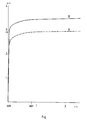
- In der einzigen Figur ist der zeitliche Anstieg der Zellenspannung mit und ohne Elektrolyt-Zusatz dargestellt.
- Die Ordinate zeigt hierbei die Spannung U, angegeben in Volt (V), die Abszisse zeigt die Zeit t, angegeben in Sekunden (s). Die gestrichelte Kurve A zeigt den Spannungsanstieg in einer elektrochemischen Zelle nach der Zerstörung oder Öffnung des Elektrolyt-Behälters unter Verwendung eines üblichen Elektrolyt in Form von Thionylchlorid, die Kurve B zeigt den entsprechenden Spannungsanstieg bei Zusatz des Oxidationsmittels Sulphurylchlorid in Höhe von 5 % zum Elektrolyt-Grundbestandteil in Form von Thionylchlorid.
- Ein Vergleich zeigt einen erheblich rascheren Spannungs anstieg bis zu einem deutlich höheren Wert an den Zellen- Klemmen, wobei eine konstante deutlich höhere Sollspannung erhalten bleibt. Somit ist nicht nur die Aktivierungszeit bis zum Erreichen der Sollspannung kürzer, auch die Höhe der Sollspannung und damit die Leistungsfähigkeit eines derartigen Akkumulators wird vergrößert.
Claims (3)
- Elektrochemische Zelle mit einer Leichtmetallanode, einer porösen Metall- oder Kohlenstoffkathode und einem flüssigen Elektrolyten in form eines nicht wäßrigen, anorganischen Lösungsmittels, bestehend aus einer Ox-Verbindung oder Oxidhalogenid-Verbindung aus der V. und/oder VI. Hauptgruppe des Periodensystems der Elemente,
dadurch gekennzeichnet,a) daß der Elektrolyt in einem geschlossenen, von den übrigen Zellbestandteilen getrennten Behälter gelagert und bei Inbetriebsetzung in die Zelle einführbar ist,b) daß der Grundbestandteil, des Elektrolyten Thionylchlorid ist, das zur Leitfähigkeitserhöhung Lithiumtetrachloraluminat und einen höheren Anteil an Aluminiumtrichlorid enthält,c) daß dem Elektrolyt-Grundbestandteil ein als Oxidationsmittel wirkender Elektrolyt-Zusatz in form einer Mischung aus Sulphurylchlorid und Chlor in gegenseitigen Mengenverhältnissen von 5 : 95 Vol.-% bis zu 95: 5 Vol.-% zugesetzt wird, der bei einem höheren, das heißt positiveren Potential als der Grundbestandteil des Elektrolyten elektrochemisch reduziert wird, und in einer Menge zwischen 1 und 90 Vol.-%, vorzugsweise 1 und 10 Vol.-%, des Grundbestandteiles zugesetzt wird.d) daß die Kathode aus Acetylenruß besteht. - Zelle nach Anspruch 1, dadurch gekennzeichnet, daß als Leichtmetallanode Lithium eingesetzt ist.
- Zelle nach Anspruch 1 oder 2, dadurch gekennzeichnet, daß dem Elektrolyten unter weiterer entsprechender anteilmäßiger Verringerung des Oxidationsmittel-Zusatzes ein üblicher Katalysator zugesetzt ist, vorzugsweise ein katalytisch wirkender Übergangsmetallkomplex wie Eisenphthalocyanin.
Applications Claiming Priority (2)
| Application Number | Priority Date | Filing Date | Title |
|---|---|---|---|
| DE3733812 | 1987-10-07 | ||
| DE19873733812 DE3733812A1 (de) | 1987-10-07 | 1987-10-07 | Elektrolyt fuer aktivierbare li-zellen |
Publications (2)
| Publication Number | Publication Date |
|---|---|
| EP0339055A1 EP0339055A1 (de) | 1989-11-02 |
| EP0339055B1 true EP0339055B1 (de) | 1993-01-27 |
Family
ID=6337749
Family Applications (1)
| Application Number | Title | Priority Date | Filing Date |
|---|---|---|---|
| EP88908161A Expired - Lifetime EP0339055B1 (de) | 1987-10-07 | 1988-10-06 | Elektrochemische zelle |
Country Status (6)
| Country | Link |
|---|---|
| EP (1) | EP0339055B1 (de) |
| JP (1) | JPH02503132A (de) |
| DE (2) | DE3733812A1 (de) |
| DK (1) | DK46989A (de) |
| IL (1) | IL87926A (de) |
| WO (1) | WO1989003597A1 (de) |
Families Citing this family (2)
| Publication number | Priority date | Publication date | Assignee | Title |
|---|---|---|---|---|
| DE3912954C1 (de) * | 1989-04-20 | 1990-08-23 | Sonnenschein Lithium Gmbh, 6470 Buedingen, De | |
| CA2353765A1 (en) * | 2000-08-07 | 2002-02-07 | Paul W. Krehl | High voltage electrochemical cell capable of operating at extremely low temperatures |
Family Cites Families (9)
| Publication number | Priority date | Publication date | Assignee | Title |
|---|---|---|---|---|
| CA1133049A (en) * | 1979-08-08 | 1982-10-05 | Charles C. Liang | Electrochemical cell having mixed soluble depolarizer including halogens and interhalogens |
| FR2497607B2 (fr) * | 1980-05-07 | 1985-12-06 | Comp Generale Electricite | Pile au lithium-chlorure de thionyle perfectionnee |
| IL60238A (en) * | 1980-06-05 | 1983-07-31 | Tadiran Israel Elect Ind Ltd | Cathode and electric cell containing same |
| IL60740A (en) * | 1980-08-01 | 1983-06-15 | Tadiran Israel Elect Ind Ltd | Electrolyte container for use in reserve cells |
| US4405693A (en) * | 1981-10-05 | 1983-09-20 | Honeywell Inc. | High rate metal-sulfuryl chloride batteries |
| US4517736A (en) * | 1984-03-21 | 1985-05-21 | Gte Communications Products Corp. | Method of fabrication of an electrochemical cell |
| IL77786A (en) * | 1986-02-04 | 1990-02-09 | Univ Ramot | Electrochemical cell |
| FR2593968B1 (fr) * | 1986-02-04 | 1994-12-09 | Accumulateurs Fixes | Pile amorcable mettant en oeuvre le couple li/so2 cl2 |
| DE3702290A1 (de) * | 1987-01-27 | 1988-08-04 | Sonnenschein Lithium Gmbh | Elektrochemische zelle |
-
1987
- 1987-10-07 DE DE19873733812 patent/DE3733812A1/de active Granted
-
1988
- 1988-10-05 IL IL87926A patent/IL87926A/xx unknown
- 1988-10-06 EP EP88908161A patent/EP0339055B1/de not_active Expired - Lifetime
- 1988-10-06 WO PCT/DE1988/000617 patent/WO1989003597A1/de not_active Ceased
- 1988-10-06 JP JP63507840A patent/JPH02503132A/ja active Pending
- 1988-10-06 DE DE8888908161T patent/DE3877950D1/de not_active Expired - Fee Related
-
1989
- 1989-02-02 DK DK046989A patent/DK46989A/da not_active Application Discontinuation
Non-Patent Citations (4)
| Title |
|---|
| Chemical Abstracts, Band 107, Nr. 4, Juli 1987, (Columbus, Ohio, US)K.A. Klinedinst: "Lithium-anode cells with flowing oxyhalide electrolytes" siehe Seite 158, Zusammenfassung Nr. 25958j & Proc.-Electrochem.Soc. 1987, 87-1 (Proc.Symp.Lithium Batteries, 1986) * |
| Extended Abstracts, Band 83, Nr. 2, 9-14. Oktober 1983 (Washington, DC, US), N. Doddapaneni: "Li/SO2-C12 system: the influence of cathode substrate and electrocatalysts on performance characteristics", Seiten 57, 58 s. den ganzen Artikel * |
| Journal of Electrochemical Society, Band 128, Nr. 4, April 1981 (Manchester, New Hampshire, US), H.V. Venkatasetty et al.: "Properties of LiA1C14-SOC12 Solutions for Li/SOC12 Battery", Seiten 773-777, s. Zusammenfassung; Seite 776, Figuren 8, 9 * |
| Journal of the Electrochemical Society, Band 130, Nr. 6, Juni 1983 (Manchester, New Hampshire, US) R.M. Murphy et al.: "The Li/C12 in SO2C12 inorganic battery system" Seiten 1231-1237, s. Zusammenfassung, Seite 1231, "Experimental" * |
Also Published As
| Publication number | Publication date |
|---|---|
| IL87926A (en) | 1992-11-15 |
| DE3733812A1 (de) | 1989-06-15 |
| DK46989A (da) | 1989-04-20 |
| EP0339055A1 (de) | 1989-11-02 |
| IL87926A0 (en) | 1989-03-31 |
| DE3877950D1 (de) | 1993-03-11 |
| JPH02503132A (ja) | 1990-09-27 |
| DE3733812C2 (de) | 1990-05-03 |
| DK46989D0 (da) | 1989-02-02 |
| WO1989003597A1 (en) | 1989-04-20 |
Similar Documents
| Publication | Publication Date | Title |
|---|---|---|
| DE69628978T2 (de) | Polymerisierbare aromatische Zusatzstoffe zum Überladeschutz in nichtwässrigen wiederaufladbaren Lithiumbatterien | |
| US4952330A (en) | Nonaqueous electrolyte | |
| DE69021637T2 (de) | Sekundärbatterie mit nichtwässerigen Elektrolyten. | |
| DE69709740T2 (de) | Zusammensetzung verwendbar in elektrolyten für sekundär batteriezellen | |
| DE69635736T2 (de) | Kaliumionenzusätze für spannungskontrolle und leistungsverbesserung in nichtwässrigen zellen | |
| DE3132600C2 (de) | ||
| DE60001967T2 (de) | Anode für wiederaufladbare elektrochemische lithiumzelle | |
| DE3645116C2 (de) | ||
| JP3304187B2 (ja) | リチウム2次電池用電解液 | |
| DE3032556C2 (de) | ||
| FR2713403A1 (fr) | Pile électro-chimique. | |
| DE2628752A1 (de) | Elektrochemisches element | |
| DE68908570T2 (de) | Verbesserte nichtwässrige Aktivmetalzelle. | |
| DE3884572T2 (de) | Überladeschutz für nichtwässrige Sekundärbatterien. | |
| DE3703195A1 (de) | Elektrochemische zelle | |
| DE3224032C2 (de) | ||
| DD152029A5 (de) | Elektrolytsalz fuer nicht-waessrige elektrochemische zellen | |
| DE3733812C2 (de) | ||
| DE2557600A1 (de) | Verfahren zur herstellung einer zelle mit einem nicht-waessrigen elektrolyten, der crotonsaeurenitril enthaelt | |
| DE2756927B2 (de) | Galvanische Bleioxidzelle mit organischem Lösungsmittel für das Elektrolytsalz | |
| JPS63257184A (ja) | 3Me2Ox系電解液使用Bi↓2O↓3‐リチウム電池 | |
| DD202081A5 (de) | Wiederaufladbare vollstaendig anorganische li/so tief 2 trockenzelle mit ligacl tief 4 als elektrolytsalz | |
| DE2951169A1 (de) | Elektrochemische primaerzelle | |
| JP2632011B2 (ja) | 非水電解液電池 | |
| EP0393418B1 (de) | Elektrochemische Zelle |
Legal Events
| Date | Code | Title | Description |
|---|---|---|---|
| PUAI | Public reference made under article 153(3) epc to a published international application that has entered the european phase |
Free format text: ORIGINAL CODE: 0009012 |
|
| AK | Designated contracting states |
Kind code of ref document: A1 Designated state(s): CH DE FR GB LI |
|
| 17P | Request for examination filed |
Effective date: 19890824 |
|
| 17Q | First examination report despatched |
Effective date: 19910610 |
|
| GRAA | (expected) grant |
Free format text: ORIGINAL CODE: 0009210 |
|
| AK | Designated contracting states |
Kind code of ref document: B1 Designated state(s): CH DE FR GB LI |
|
| REF | Corresponds to: |
Ref document number: 3877950 Country of ref document: DE Date of ref document: 19930311 |
|
| GBT | Gb: translation of ep patent filed (gb section 77(6)(a)/1977) |
Effective date: 19930217 |
|
| ET | Fr: translation filed | ||
| PGFP | Annual fee paid to national office [announced via postgrant information from national office to epo] |
Ref country code: CH Payment date: 19931119 Year of fee payment: 6 |
|
| PLBE | No opposition filed within time limit |
Free format text: ORIGINAL CODE: 0009261 |
|
| STAA | Information on the status of an ep patent application or granted ep patent |
Free format text: STATUS: NO OPPOSITION FILED WITHIN TIME LIMIT |
|
| 26N | No opposition filed | ||
| PG25 | Lapsed in a contracting state [announced via postgrant information from national office to epo] |
Ref country code: DE Effective date: 19940701 |
|
| PG25 | Lapsed in a contracting state [announced via postgrant information from national office to epo] |
Ref country code: LI Effective date: 19941031 Ref country code: CH Effective date: 19941031 |
|
| REG | Reference to a national code |
Ref country code: CH Ref legal event code: PL |
|
| REG | Reference to a national code |
Ref country code: GB Ref legal event code: IF02 |
|
| PGFP | Annual fee paid to national office [announced via postgrant information from national office to epo] |
Ref country code: FR Payment date: 20021017 Year of fee payment: 15 |
|
| PGFP | Annual fee paid to national office [announced via postgrant information from national office to epo] |
Ref country code: GB Payment date: 20021018 Year of fee payment: 15 |
|
| PG25 | Lapsed in a contracting state [announced via postgrant information from national office to epo] |
Ref country code: GB Free format text: LAPSE BECAUSE OF NON-PAYMENT OF DUE FEES Effective date: 20031006 |
|
| GBPC | Gb: european patent ceased through non-payment of renewal fee |
Effective date: 20031006 |
|
| PG25 | Lapsed in a contracting state [announced via postgrant information from national office to epo] |
Ref country code: FR Free format text: LAPSE BECAUSE OF NON-PAYMENT OF DUE FEES Effective date: 20040630 |
|
| REG | Reference to a national code |
Ref country code: FR Ref legal event code: ST |