EP0286734B1 - Gepfropfte lineare Polyethylene mit geringer Dichte, Verfahren zu ihrer Herstellung und ihre Verwendungen - Google Patents
Gepfropfte lineare Polyethylene mit geringer Dichte, Verfahren zu ihrer Herstellung und ihre Verwendungen Download PDFInfo
- Publication number
- EP0286734B1 EP0286734B1 EP87200680A EP87200680A EP0286734B1 EP 0286734 B1 EP0286734 B1 EP 0286734B1 EP 87200680 A EP87200680 A EP 87200680A EP 87200680 A EP87200680 A EP 87200680A EP 0286734 B1 EP0286734 B1 EP 0286734B1
- Authority
- EP
- European Patent Office
- Prior art keywords
- polyethylene
- grafted
- density
- mixture
- polyethylenes
- Prior art date
- Legal status (The legal status is an assumption and is not a legal conclusion. Google has not performed a legal analysis and makes no representation as to the accuracy of the status listed.)
- Expired - Lifetime
Links
- 229920000578 graft copolymer Polymers 0.000 title claims description 4
- 229920000092 linear low density polyethylene Polymers 0.000 title abstract description 11
- 239000004707 linear low-density polyethylene Substances 0.000 title abstract description 6
- 238000002360 preparation method Methods 0.000 title description 3
- -1 polyethylenes Polymers 0.000 claims abstract description 98
- 229920000573 polyethylene Polymers 0.000 claims abstract description 88
- 239000004698 Polyethylene Substances 0.000 claims abstract description 86
- 238000006243 chemical reaction Methods 0.000 claims abstract description 11
- 239000000463 material Substances 0.000 claims abstract description 9
- 239000000853 adhesive Substances 0.000 claims abstract description 7
- 230000001070 adhesive effect Effects 0.000 claims abstract description 7
- 239000003963 antioxidant agent Substances 0.000 claims abstract description 7
- 239000002904 solvent Substances 0.000 claims abstract description 7
- 239000003795 chemical substances by application Substances 0.000 claims abstract description 6
- 239000000203 mixture Substances 0.000 claims description 37
- 150000001875 compounds Chemical class 0.000 claims description 29
- PPBRXRYQALVLMV-UHFFFAOYSA-N Styrene Chemical compound C=CC1=CC=CC=C1 PPBRXRYQALVLMV-UHFFFAOYSA-N 0.000 claims description 24
- 229920000642 polymer Polymers 0.000 claims description 22
- 125000003178 carboxy group Chemical group [H]OC(*)=O 0.000 claims description 16
- 238000000034 method Methods 0.000 claims description 12
- FPYJFEHAWHCUMM-UHFFFAOYSA-N maleic anhydride Chemical compound O=C1OC(=O)C=C1 FPYJFEHAWHCUMM-UHFFFAOYSA-N 0.000 claims description 10
- 229920003023 plastic Polymers 0.000 claims description 6
- 239000004033 plastic Substances 0.000 claims description 6
- 230000003078 antioxidant effect Effects 0.000 claims description 5
- 239000004711 α-olefin Substances 0.000 claims description 5
- 239000003999 initiator Substances 0.000 claims description 4
- 230000008569 process Effects 0.000 claims description 4
- 229920003244 diene elastomer Polymers 0.000 claims description 3
- 230000000694 effects Effects 0.000 claims description 3
- 238000004519 manufacturing process Methods 0.000 claims description 3
- 239000012764 mineral filler Substances 0.000 claims description 2
- 239000002313 adhesive film Substances 0.000 claims 1
- 239000000945 filler Substances 0.000 claims 1
- 239000003607 modifier Substances 0.000 claims 1
- 238000007789 sealing Methods 0.000 claims 1
- 238000010008 shearing Methods 0.000 claims 1
- 229920001684 low density polyethylene Polymers 0.000 abstract description 32
- 229920001862 ultra low molecular weight polyethylene Polymers 0.000 abstract description 31
- 239000004708 Very-low-density polyethylene Substances 0.000 abstract description 30
- 229920001866 very low density polyethylene Polymers 0.000 abstract description 30
- 239000004702 low-density polyethylene Substances 0.000 abstract description 27
- 239000004952 Polyamide Substances 0.000 abstract description 15
- 229920002647 polyamide Polymers 0.000 abstract description 15
- 239000004609 Impact Modifier Substances 0.000 abstract description 10
- 229920000728 polyester Polymers 0.000 abstract description 8
- 239000012790 adhesive layer Substances 0.000 abstract description 5
- 239000010410 layer Substances 0.000 abstract description 5
- 230000009471 action Effects 0.000 abstract description 4
- WOLATMHLPFJRGC-UHFFFAOYSA-N furan-2,5-dione;styrene Chemical compound O=C1OC(=O)C=C1.C=CC1=CC=CC=C1 WOLATMHLPFJRGC-UHFFFAOYSA-N 0.000 abstract description 4
- 238000002845 discoloration Methods 0.000 abstract description 3
- 238000000576 coating method Methods 0.000 abstract description 2
- 239000011953 free-radical catalyst Substances 0.000 abstract 1
- 239000012793 heat-sealing layer Substances 0.000 abstract 1
- VGGSQFUCUMXWEO-UHFFFAOYSA-N Ethene Chemical compound C=C VGGSQFUCUMXWEO-UHFFFAOYSA-N 0.000 description 31
- 229920002292 Nylon 6 Polymers 0.000 description 14
- 150000002978 peroxides Chemical class 0.000 description 13
- 238000002156 mixing Methods 0.000 description 11
- CSCPPACGZOOCGX-UHFFFAOYSA-N Acetone Chemical compound CC(C)=O CSCPPACGZOOCGX-UHFFFAOYSA-N 0.000 description 9
- 239000004677 Nylon Substances 0.000 description 9
- 238000002474 experimental method Methods 0.000 description 9
- 229920001778 nylon Polymers 0.000 description 9
- 239000003054 catalyst Substances 0.000 description 8
- 229920002554 vinyl polymer Polymers 0.000 description 8
- 229920001577 copolymer Chemical group 0.000 description 7
- 229920000098 polyolefin Polymers 0.000 description 7
- 239000003381 stabilizer Substances 0.000 description 7
- WSFSSNUMVMOOMR-UHFFFAOYSA-N Formaldehyde Chemical compound O=C WSFSSNUMVMOOMR-UHFFFAOYSA-N 0.000 description 6
- SSDSCDGVMJFTEQ-UHFFFAOYSA-N octadecyl 3-(3,5-ditert-butyl-4-hydroxyphenyl)propanoate Chemical compound CCCCCCCCCCCCCCCCCCOC(=O)CCC1=CC(C(C)(C)C)=C(O)C(C(C)(C)C)=C1 SSDSCDGVMJFTEQ-UHFFFAOYSA-N 0.000 description 6
- 229920000515 polycarbonate Polymers 0.000 description 6
- 239000004417 polycarbonate Substances 0.000 description 6
- 239000005977 Ethylene Substances 0.000 description 5
- 239000000178 monomer Substances 0.000 description 5
- GJBRNHKUVLOCEB-UHFFFAOYSA-N tert-butyl benzenecarboperoxoate Chemical compound CC(C)(C)OOC(=O)C1=CC=CC=C1 GJBRNHKUVLOCEB-UHFFFAOYSA-N 0.000 description 5
- KAKZBPTYRLMSJV-UHFFFAOYSA-N Butadiene Chemical compound C=CC=C KAKZBPTYRLMSJV-UHFFFAOYSA-N 0.000 description 4
- KKEYFWRCBNTPAC-UHFFFAOYSA-N Terephthalic acid Chemical compound OC(=O)C1=CC=C(C(O)=O)C=C1 KKEYFWRCBNTPAC-UHFFFAOYSA-N 0.000 description 4
- NIXOWILDQLNWCW-UHFFFAOYSA-N acrylic acid group Chemical class C(C=C)(=O)O NIXOWILDQLNWCW-UHFFFAOYSA-N 0.000 description 4
- WNLRTRBMVRJNCN-UHFFFAOYSA-N adipic acid Chemical compound OC(=O)CCCCC(O)=O WNLRTRBMVRJNCN-UHFFFAOYSA-N 0.000 description 4
- IISBACLAFKSPIT-UHFFFAOYSA-N bisphenol A Chemical compound C=1C=C(O)C=CC=1C(C)(C)C1=CC=C(O)C=C1 IISBACLAFKSPIT-UHFFFAOYSA-N 0.000 description 4
- 125000004432 carbon atom Chemical group C* 0.000 description 4
- QQVIHTHCMHWDBS-UHFFFAOYSA-N isophthalic acid Chemical compound OC(=O)C1=CC=CC(C(O)=O)=C1 QQVIHTHCMHWDBS-UHFFFAOYSA-N 0.000 description 4
- 239000000155 melt Substances 0.000 description 4
- 239000000123 paper Substances 0.000 description 4
- 229920006324 polyoxymethylene Polymers 0.000 description 4
- CXMXRPHRNRROMY-UHFFFAOYSA-N sebacic acid Chemical compound OC(=O)CCCCCCCCC(O)=O CXMXRPHRNRROMY-UHFFFAOYSA-N 0.000 description 4
- 229920002943 EPDM rubber Polymers 0.000 description 3
- LYCAIKOWRPUZTN-UHFFFAOYSA-N Ethylene glycol Chemical compound OCCO LYCAIKOWRPUZTN-UHFFFAOYSA-N 0.000 description 3
- MUBZPKHOEPUJKR-UHFFFAOYSA-N Oxalic acid Chemical compound OC(=O)C(O)=O MUBZPKHOEPUJKR-UHFFFAOYSA-N 0.000 description 3
- 239000004743 Polypropylene Substances 0.000 description 3
- DNIAPMSPPWPWGF-UHFFFAOYSA-N Propylene glycol Chemical compound CC(O)CO DNIAPMSPPWPWGF-UHFFFAOYSA-N 0.000 description 3
- 239000002253 acid Substances 0.000 description 3
- 238000005452 bending Methods 0.000 description 3
- 239000011521 glass Substances 0.000 description 3
- 229910052751 metal Inorganic materials 0.000 description 3
- 239000002184 metal Substances 0.000 description 3
- 239000002245 particle Substances 0.000 description 3
- 229920000139 polyethylene terephthalate Polymers 0.000 description 3
- 239000005020 polyethylene terephthalate Substances 0.000 description 3
- 229920001155 polypropylene Polymers 0.000 description 3
- 230000003068 static effect Effects 0.000 description 3
- 229920001897 terpolymer Polymers 0.000 description 3
- SMZOUWXMTYCWNB-UHFFFAOYSA-N 2-(2-methoxy-5-methylphenyl)ethanamine Chemical compound COC1=CC=C(C)C=C1CCN SMZOUWXMTYCWNB-UHFFFAOYSA-N 0.000 description 2
- CNPURSDMOWDNOQ-UHFFFAOYSA-N 4-methoxy-7h-pyrrolo[2,3-d]pyrimidin-2-amine Chemical compound COC1=NC(N)=NC2=C1C=CN2 CNPURSDMOWDNOQ-UHFFFAOYSA-N 0.000 description 2
- NLHHRLWOUZZQLW-UHFFFAOYSA-N Acrylonitrile Chemical compound C=CC#N NLHHRLWOUZZQLW-UHFFFAOYSA-N 0.000 description 2
- VZCYOOQTPOCHFL-OWOJBTEDSA-N Fumaric acid Chemical compound OC(=O)\C=C\C(O)=O VZCYOOQTPOCHFL-OWOJBTEDSA-N 0.000 description 2
- 229920011453 Hytrel® 4056 Polymers 0.000 description 2
- JHWNWJKBPDFINM-UHFFFAOYSA-N Laurolactam Chemical compound O=C1CCCCCCCCCCCN1 JHWNWJKBPDFINM-UHFFFAOYSA-N 0.000 description 2
- BAPJBEWLBFYGME-UHFFFAOYSA-N Methyl acrylate Chemical compound COC(=O)C=C BAPJBEWLBFYGME-UHFFFAOYSA-N 0.000 description 2
- VVQNEPGJFQJSBK-UHFFFAOYSA-N Methyl methacrylate Chemical compound COC(=O)C(C)=C VVQNEPGJFQJSBK-UHFFFAOYSA-N 0.000 description 2
- 229920000571 Nylon 11 Polymers 0.000 description 2
- 229920000305 Nylon 6,10 Polymers 0.000 description 2
- 239000005062 Polybutadiene Substances 0.000 description 2
- OFOBLEOULBTSOW-UHFFFAOYSA-N Propanedioic acid Natural products OC(=O)CC(O)=O OFOBLEOULBTSOW-UHFFFAOYSA-N 0.000 description 2
- 230000006750 UV protection Effects 0.000 description 2
- 150000007513 acids Chemical class 0.000 description 2
- 125000005396 acrylic acid ester group Chemical group 0.000 description 2
- 239000001361 adipic acid Substances 0.000 description 2
- 235000011037 adipic acid Nutrition 0.000 description 2
- 125000002723 alicyclic group Chemical group 0.000 description 2
- 125000001931 aliphatic group Chemical group 0.000 description 2
- 125000000217 alkyl group Chemical group 0.000 description 2
- WERYXYBDKMZEQL-UHFFFAOYSA-N butane-1,4-diol Chemical compound OCCCCO WERYXYBDKMZEQL-UHFFFAOYSA-N 0.000 description 2
- HNEGQIOMVPPMNR-IHWYPQMZSA-N citraconic acid Chemical compound OC(=O)C(/C)=C\C(O)=O HNEGQIOMVPPMNR-IHWYPQMZSA-N 0.000 description 2
- 238000004132 cross linking Methods 0.000 description 2
- LDCRTTXIJACKKU-ONEGZZNKSA-N dimethyl fumarate Chemical compound COC(=O)\C=C\C(=O)OC LDCRTTXIJACKKU-ONEGZZNKSA-N 0.000 description 2
- 229960004419 dimethyl fumarate Drugs 0.000 description 2
- 125000000118 dimethyl group Chemical group [H]C([H])([H])* 0.000 description 2
- JBKVHLHDHHXQEQ-UHFFFAOYSA-N epsilon-caprolactam Chemical compound O=C1CCCCCN1 JBKVHLHDHHXQEQ-UHFFFAOYSA-N 0.000 description 2
- HQQADJVZYDDRJT-UHFFFAOYSA-N ethene;prop-1-ene Chemical group C=C.CC=C HQQADJVZYDDRJT-UHFFFAOYSA-N 0.000 description 2
- 230000002349 favourable effect Effects 0.000 description 2
- 239000000835 fiber Substances 0.000 description 2
- NAQMVNRVTILPCV-UHFFFAOYSA-N hexane-1,6-diamine Chemical compound NCCCCCCN NAQMVNRVTILPCV-UHFFFAOYSA-N 0.000 description 2
- 229920001519 homopolymer Polymers 0.000 description 2
- 150000002896 organic halogen compounds Chemical class 0.000 description 2
- 229920002857 polybutadiene Polymers 0.000 description 2
- 150000003440 styrenes Chemical class 0.000 description 2
- TYFQFVWCELRYAO-UHFFFAOYSA-N suberic acid Chemical compound OC(=O)CCCCCCC(O)=O TYFQFVWCELRYAO-UHFFFAOYSA-N 0.000 description 2
- 239000000126 substance Substances 0.000 description 2
- 229920005992 thermoplastic resin Polymers 0.000 description 2
- VZCYOOQTPOCHFL-UHFFFAOYSA-N trans-butenedioic acid Natural products OC(=O)C=CC(O)=O VZCYOOQTPOCHFL-UHFFFAOYSA-N 0.000 description 2
- VDFVNEFVBPFDSB-UHFFFAOYSA-N 1,3-dioxane Chemical compound C1COCOC1 VDFVNEFVBPFDSB-UHFFFAOYSA-N 0.000 description 1
- PQUXFUBNSYCQAL-UHFFFAOYSA-N 1-(2,3-difluorophenyl)ethanone Chemical compound CC(=O)C1=CC=CC(F)=C1F PQUXFUBNSYCQAL-UHFFFAOYSA-N 0.000 description 1
- DPQHRXRAZHNGRU-UHFFFAOYSA-N 2,4,4-trimethylhexane-1,6-diamine Chemical compound NCC(C)CC(C)(C)CCN DPQHRXRAZHNGRU-UHFFFAOYSA-N 0.000 description 1
- ODBCKCWTWALFKM-UHFFFAOYSA-N 2,5-bis(tert-butylperoxy)-2,5-dimethylhex-3-yne Chemical compound CC(C)(C)OOC(C)(C)C#CC(C)(C)OOC(C)(C)C ODBCKCWTWALFKM-UHFFFAOYSA-N 0.000 description 1
- JAHNSTQSQJOJLO-UHFFFAOYSA-N 2-(3-fluorophenyl)-1h-imidazole Chemical compound FC1=CC=CC(C=2NC=CN=2)=C1 JAHNSTQSQJOJLO-UHFFFAOYSA-N 0.000 description 1
- FZZMTSNZRBFGGU-UHFFFAOYSA-N 2-chloro-7-fluoroquinazolin-4-amine Chemical compound FC1=CC=C2C(N)=NC(Cl)=NC2=C1 FZZMTSNZRBFGGU-UHFFFAOYSA-N 0.000 description 1
- VEORPZCZECFIRK-UHFFFAOYSA-N 3,3',5,5'-tetrabromobisphenol A Chemical compound C=1C(Br)=C(O)C(Br)=CC=1C(C)(C)C1=CC(Br)=C(O)C(Br)=C1 VEORPZCZECFIRK-UHFFFAOYSA-N 0.000 description 1
- SDQGRJKYBWFIDP-UHFFFAOYSA-N 3-but-2-enyl-4-methyloxolane-2,5-dione Chemical compound CC=CCC1C(C)C(=O)OC1=O SDQGRJKYBWFIDP-UHFFFAOYSA-N 0.000 description 1
- AYKYXWQEBUNJCN-UHFFFAOYSA-N 3-methylfuran-2,5-dione Chemical compound CC1=CC(=O)OC1=O AYKYXWQEBUNJCN-UHFFFAOYSA-N 0.000 description 1
- OFNISBHGPNMTMS-UHFFFAOYSA-N 3-methylideneoxolane-2,5-dione Chemical compound C=C1CC(=O)OC1=O OFNISBHGPNMTMS-UHFFFAOYSA-N 0.000 description 1
- DZIHTWJGPDVSGE-UHFFFAOYSA-N 4-[(4-aminocyclohexyl)methyl]cyclohexan-1-amine Chemical compound C1CC(N)CCC1CC1CCC(N)CC1 DZIHTWJGPDVSGE-UHFFFAOYSA-N 0.000 description 1
- ODJUOZPKKHIEOZ-UHFFFAOYSA-N 4-[2-(4-hydroxy-3,5-dimethylphenyl)propan-2-yl]-2,6-dimethylphenol Chemical compound CC1=C(O)C(C)=CC(C(C)(C)C=2C=C(C)C(O)=C(C)C=2)=C1 ODJUOZPKKHIEOZ-UHFFFAOYSA-N 0.000 description 1
- QYJGMAIQZRWXSD-UHFFFAOYSA-N 4-methylbicyclo[2.2.1]hept-5-ene-2,3-dicarboxylic acid Chemical compound C1C2C=CC1(C)C(C(O)=O)C2C(O)=O QYJGMAIQZRWXSD-UHFFFAOYSA-N 0.000 description 1
- OEMSKMUAMXLNKL-UHFFFAOYSA-N 5-methyl-3a,4,7,7a-tetrahydro-2-benzofuran-1,3-dione Chemical compound C1C(C)=CCC2C(=O)OC(=O)C12 OEMSKMUAMXLNKL-UHFFFAOYSA-N 0.000 description 1
- HRPVXLWXLXDGHG-UHFFFAOYSA-N Acrylamide Chemical compound NC(=O)C=C HRPVXLWXLXDGHG-UHFFFAOYSA-N 0.000 description 1
- NIXOWILDQLNWCW-UHFFFAOYSA-M Acrylate Chemical compound [O-]C(=O)C=C NIXOWILDQLNWCW-UHFFFAOYSA-M 0.000 description 1
- 229930185605 Bisphenol Natural products 0.000 description 1
- NLZUEZXRPGMBCV-UHFFFAOYSA-N Butylhydroxytoluene Chemical compound CC1=CC(C(C)(C)C)=C(O)C(C(C)(C)C)=C1 NLZUEZXRPGMBCV-UHFFFAOYSA-N 0.000 description 1
- VEXZGXHMUGYJMC-UHFFFAOYSA-M Chloride anion Chemical compound [Cl-] VEXZGXHMUGYJMC-UHFFFAOYSA-M 0.000 description 1
- ZAMOUSCENKQFHK-UHFFFAOYSA-N Chlorine atom Chemical compound [Cl] ZAMOUSCENKQFHK-UHFFFAOYSA-N 0.000 description 1
- QXNVGIXVLWOKEQ-UHFFFAOYSA-N Disodium Chemical compound [Na][Na] QXNVGIXVLWOKEQ-UHFFFAOYSA-N 0.000 description 1
- IAYPIBMASNFSPL-UHFFFAOYSA-N Ethylene oxide Chemical compound C1CO1 IAYPIBMASNFSPL-UHFFFAOYSA-N 0.000 description 1
- PEEHTFAAVSWFBL-UHFFFAOYSA-N Maleimide Chemical compound O=C1NC(=O)C=C1 PEEHTFAAVSWFBL-UHFFFAOYSA-N 0.000 description 1
- CERQOIWHTDAKMF-UHFFFAOYSA-N Methacrylic acid Chemical compound CC(=C)C(O)=O CERQOIWHTDAKMF-UHFFFAOYSA-N 0.000 description 1
- 229920000299 Nylon 12 Polymers 0.000 description 1
- 229920002302 Nylon 6,6 Polymers 0.000 description 1
- 229920000577 Nylon 6/66 Polymers 0.000 description 1
- YGYAWVDWMABLBF-UHFFFAOYSA-N Phosgene Chemical compound ClC(Cl)=O YGYAWVDWMABLBF-UHFFFAOYSA-N 0.000 description 1
- KDYFGRWQOYBRFD-UHFFFAOYSA-N Succinic acid Natural products OC(=O)CCC(O)=O KDYFGRWQOYBRFD-UHFFFAOYSA-N 0.000 description 1
- KYPYTERUKNKOLP-UHFFFAOYSA-N Tetrachlorobisphenol A Chemical compound C=1C(Cl)=C(O)C(Cl)=CC=1C(C)(C)C1=CC(Cl)=C(O)C(Cl)=C1 KYPYTERUKNKOLP-UHFFFAOYSA-N 0.000 description 1
- RTAQQCXQSZGOHL-UHFFFAOYSA-N Titanium Chemical compound [Ti] RTAQQCXQSZGOHL-UHFFFAOYSA-N 0.000 description 1
- ORLQHILJRHBSAY-UHFFFAOYSA-N [1-(hydroxymethyl)cyclohexyl]methanol Chemical compound OCC1(CO)CCCCC1 ORLQHILJRHBSAY-UHFFFAOYSA-N 0.000 description 1
- FDLQZKYLHJJBHD-UHFFFAOYSA-N [3-(aminomethyl)phenyl]methanamine Chemical compound NCC1=CC=CC(CN)=C1 FDLQZKYLHJJBHD-UHFFFAOYSA-N 0.000 description 1
- BGYHLZZASRKEJE-UHFFFAOYSA-N [3-[3-(3,5-ditert-butyl-4-hydroxyphenyl)propanoyloxy]-2,2-bis[3-(3,5-ditert-butyl-4-hydroxyphenyl)propanoyloxymethyl]propyl] 3-(3,5-ditert-butyl-4-hydroxyphenyl)propanoate Chemical compound CC(C)(C)C1=C(O)C(C(C)(C)C)=CC(CCC(=O)OCC(COC(=O)CCC=2C=C(C(O)=C(C=2)C(C)(C)C)C(C)(C)C)(COC(=O)CCC=2C=C(C(O)=C(C=2)C(C)(C)C)C(C)(C)C)COC(=O)CCC=2C=C(C(O)=C(C=2)C(C)(C)C)C(C)(C)C)=C1 BGYHLZZASRKEJE-UHFFFAOYSA-N 0.000 description 1
- OXIKYYJDTWKERT-UHFFFAOYSA-N [4-(aminomethyl)cyclohexyl]methanamine Chemical compound NCC1CCC(CN)CC1 OXIKYYJDTWKERT-UHFFFAOYSA-N 0.000 description 1
- ISKQADXMHQSTHK-UHFFFAOYSA-N [4-(aminomethyl)phenyl]methanamine Chemical compound NCC1=CC=C(CN)C=C1 ISKQADXMHQSTHK-UHFFFAOYSA-N 0.000 description 1
- 229940048053 acrylate Drugs 0.000 description 1
- 239000000654 additive Substances 0.000 description 1
- XYLMUPLGERFSHI-UHFFFAOYSA-N alpha-Methylstyrene Chemical compound CC(=C)C1=CC=CC=C1 XYLMUPLGERFSHI-UHFFFAOYSA-N 0.000 description 1
- 150000001408 amides Chemical class 0.000 description 1
- 150000008064 anhydrides Chemical class 0.000 description 1
- 150000004984 aromatic diamines Chemical class 0.000 description 1
- 125000003118 aryl group Chemical group 0.000 description 1
- QVGXLLKOCUKJST-UHFFFAOYSA-N atomic oxygen Chemical compound [O] QVGXLLKOCUKJST-UHFFFAOYSA-N 0.000 description 1
- TZYHIGCKINZLPD-UHFFFAOYSA-N azepan-2-one;hexane-1,6-diamine;hexanedioic acid Chemical compound NCCCCCCN.O=C1CCCCCN1.OC(=O)CCCCC(O)=O TZYHIGCKINZLPD-UHFFFAOYSA-N 0.000 description 1
- KLCVPRKLKYXYMX-UHFFFAOYSA-N benzene-1,4-diol;1,4-di(propan-2-yl)benzene Chemical compound OC1=CC=C(O)C=C1.OC1=CC=C(O)C=C1.CC(C)C1=CC=C(C(C)C)C=C1 KLCVPRKLKYXYMX-UHFFFAOYSA-N 0.000 description 1
- BKDVBBSUAGJUBA-UHFFFAOYSA-N bicyclo[2.2.2]oct-7-ene-2,3,5,6-tetracarboxylic acid Chemical compound C1=CC2C(C(O)=O)C(C(=O)O)C1C(C(O)=O)C2C(O)=O BKDVBBSUAGJUBA-UHFFFAOYSA-N 0.000 description 1
- 125000001246 bromo group Chemical group Br* 0.000 description 1
- KDYFGRWQOYBRFD-NUQCWPJISA-N butanedioic acid Chemical compound O[14C](=O)CC[14C](O)=O KDYFGRWQOYBRFD-NUQCWPJISA-N 0.000 description 1
- 239000006229 carbon black Substances 0.000 description 1
- 150000001735 carboxylic acids Chemical class 0.000 description 1
- 239000000460 chlorine Substances 0.000 description 1
- 229910052801 chlorine Inorganic materials 0.000 description 1
- 229940018560 citraconate Drugs 0.000 description 1
- 229940018557 citraconic acid Drugs 0.000 description 1
- 239000011248 coating agent Substances 0.000 description 1
- 239000002131 composite material Substances 0.000 description 1
- 238000009833 condensation Methods 0.000 description 1
- 230000005494 condensation Effects 0.000 description 1
- LDHQCZJRKDOVOX-NSCUHMNNSA-N crotonic acid Chemical compound C\C=C\C(O)=O LDHQCZJRKDOVOX-NSCUHMNNSA-N 0.000 description 1
- 150000004292 cyclic ethers Chemical class 0.000 description 1
- QYQADNCHXSEGJT-UHFFFAOYSA-N cyclohexane-1,1-dicarboxylate;hydron Chemical compound OC(=O)C1(C(O)=O)CCCCC1 QYQADNCHXSEGJT-UHFFFAOYSA-N 0.000 description 1
- NLDGJRWPPOSWLC-UHFFFAOYSA-N deca-1,9-diene Chemical compound C=CCCCCCCC=C NLDGJRWPPOSWLC-UHFFFAOYSA-N 0.000 description 1
- YQLZOAVZWJBZSY-UHFFFAOYSA-N decane-1,10-diamine Chemical compound NCCCCCCCCCCN YQLZOAVZWJBZSY-UHFFFAOYSA-N 0.000 description 1
- 238000007872 degassing Methods 0.000 description 1
- 239000012933 diacyl peroxide Substances 0.000 description 1
- 150000004985 diamines Chemical class 0.000 description 1
- 150000001993 dienes Chemical class 0.000 description 1
- 150000005690 diesters Chemical class 0.000 description 1
- RXNWFGQCYAZACC-UHFFFAOYSA-L dilithium;2-methylidenebutanedioate Chemical compound [Li+].[Li+].[O-]C(=O)CC(=C)C([O-])=O RXNWFGQCYAZACC-UHFFFAOYSA-L 0.000 description 1
- WQEXBUQDXKPVHR-PLNGDYQASA-N dimethyl (z)-2-methylbut-2-enedioate Chemical compound COC(=O)\C=C(\C)C(=O)OC WQEXBUQDXKPVHR-PLNGDYQASA-N 0.000 description 1
- SHPKCSFVQGSAJU-UAIGNFCESA-L dipotassium;(z)-but-2-enedioate Chemical compound [K+].[K+].[O-]C(=O)\C=C/C([O-])=O SHPKCSFVQGSAJU-UAIGNFCESA-L 0.000 description 1
- MSJMDZAOKORVFC-SEPHDYHBSA-L disodium fumarate Chemical compound [Na+].[Na+].[O-]C(=O)\C=C\C([O-])=O MSJMDZAOKORVFC-SEPHDYHBSA-L 0.000 description 1
- MSJMDZAOKORVFC-UAIGNFCESA-L disodium maleate Chemical compound [Na+].[Na+].[O-]C(=O)\C=C/C([O-])=O MSJMDZAOKORVFC-UAIGNFCESA-L 0.000 description 1
- 229920001971 elastomer Polymers 0.000 description 1
- 150000002148 esters Chemical class 0.000 description 1
- 238000001125 extrusion Methods 0.000 description 1
- 239000004088 foaming agent Substances 0.000 description 1
- 239000001530 fumaric acid Substances 0.000 description 1
- NKHAVTQWNUWKEO-UHFFFAOYSA-N fumaric acid monomethyl ester Natural products COC(=O)C=CC(O)=O NKHAVTQWNUWKEO-UHFFFAOYSA-N 0.000 description 1
- QQYNRBAAQFZCLF-UHFFFAOYSA-N furan-maleic anhydride adduct Chemical compound O1C2C3C(=O)OC(=O)C3C1C=C2 QQYNRBAAQFZCLF-UHFFFAOYSA-N 0.000 description 1
- VOZRXNHHFUQHIL-UHFFFAOYSA-N glycidyl methacrylate Chemical compound CC(=C)C(=O)OCC1CO1 VOZRXNHHFUQHIL-UHFFFAOYSA-N 0.000 description 1
- 239000008187 granular material Substances 0.000 description 1
- 150000004820 halides Chemical class 0.000 description 1
- 150000002366 halogen compounds Chemical class 0.000 description 1
- XXMIOPMDWAUFGU-UHFFFAOYSA-N hexane-1,6-diol Chemical compound OCCCCCCO XXMIOPMDWAUFGU-UHFFFAOYSA-N 0.000 description 1
- 229920001903 high density polyethylene Polymers 0.000 description 1
- 239000004700 high-density polyethylene Substances 0.000 description 1
- 125000004435 hydrogen atom Chemical group [H]* 0.000 description 1
- 125000002887 hydroxy group Chemical group [H]O* 0.000 description 1
- 150000003949 imides Chemical class 0.000 description 1
- 230000006872 improvement Effects 0.000 description 1
- 150000002576 ketones Chemical class 0.000 description 1
- 150000003951 lactams Chemical class 0.000 description 1
- 229920004889 linear high-density polyethylene Polymers 0.000 description 1
- 239000000314 lubricant Substances 0.000 description 1
- VZCYOOQTPOCHFL-UPHRSURJSA-N maleic acid Chemical compound OC(=O)\C=C/C(O)=O VZCYOOQTPOCHFL-UPHRSURJSA-N 0.000 description 1
- 239000011976 maleic acid Substances 0.000 description 1
- 238000002074 melt spinning Methods 0.000 description 1
- 150000002739 metals Chemical class 0.000 description 1
- NKHAVTQWNUWKEO-IHWYPQMZSA-N methyl hydrogen fumarate Chemical compound COC(=O)\C=C/C(O)=O NKHAVTQWNUWKEO-IHWYPQMZSA-N 0.000 description 1
- LVHBHZANLOWSRM-UHFFFAOYSA-N methylenebutanedioic acid Natural products OC(=O)CC(=C)C(O)=O LVHBHZANLOWSRM-UHFFFAOYSA-N 0.000 description 1
- RXOHFPCZGPKIRD-UHFFFAOYSA-N naphthalene-2,6-dicarboxylic acid Chemical compound C1=C(C(O)=O)C=CC2=CC(C(=O)O)=CC=C21 RXOHFPCZGPKIRD-UHFFFAOYSA-N 0.000 description 1
- SLCVBVWXLSEKPL-UHFFFAOYSA-N neopentyl glycol Chemical compound OCC(C)(C)CO SLCVBVWXLSEKPL-UHFFFAOYSA-N 0.000 description 1
- 239000004745 nonwoven fabric Substances 0.000 description 1
- 150000001451 organic peroxides Chemical class 0.000 description 1
- 150000004967 organic peroxy acids Chemical class 0.000 description 1
- 150000002899 organoaluminium compounds Chemical class 0.000 description 1
- 150000002901 organomagnesium compounds Chemical class 0.000 description 1
- 235000006408 oxalic acid Nutrition 0.000 description 1
- RPQRDASANLAFCM-UHFFFAOYSA-N oxiran-2-ylmethyl prop-2-enoate Chemical compound C=CC(=O)OCC1CO1 RPQRDASANLAFCM-UHFFFAOYSA-N 0.000 description 1
- 229910052760 oxygen Inorganic materials 0.000 description 1
- 239000001301 oxygen Substances 0.000 description 1
- ISWSIDIOOBJBQZ-UHFFFAOYSA-N phenol group Chemical group C1(=CC=CC=C1)O ISWSIDIOOBJBQZ-UHFFFAOYSA-N 0.000 description 1
- 239000002798 polar solvent Substances 0.000 description 1
- 229920001707 polybutylene terephthalate Polymers 0.000 description 1
- 238000006068 polycondensation reaction Methods 0.000 description 1
- 229920006254 polymer film Polymers 0.000 description 1
- LLLCSBYSPJHDJX-UHFFFAOYSA-M potassium;2-methylprop-2-enoate Chemical compound [K+].CC(=C)C([O-])=O LLLCSBYSPJHDJX-UHFFFAOYSA-M 0.000 description 1
- QQONPFPTGQHPMA-UHFFFAOYSA-N propylene Natural products CC=C QQONPFPTGQHPMA-UHFFFAOYSA-N 0.000 description 1
- 125000004805 propylene group Chemical group [H]C([H])([H])C([H])([*:1])C([H])([H])[*:2] 0.000 description 1
- 229920001384 propylene homopolymer Polymers 0.000 description 1
- 239000000376 reactant Substances 0.000 description 1
- 229920005989 resin Polymers 0.000 description 1
- 239000011347 resin Substances 0.000 description 1
- 239000005060 rubber Substances 0.000 description 1
- 150000003839 salts Chemical class 0.000 description 1
- 239000002356 single layer Substances 0.000 description 1
- 229940047670 sodium acrylate Drugs 0.000 description 1
- 235000019294 sodium fumarate Nutrition 0.000 description 1
- VRVKOZSIJXBAJG-ODZAUARKSA-M sodium;(z)-but-2-enedioate;hydron Chemical compound [Na+].OC(=O)\C=C/C([O-])=O VRVKOZSIJXBAJG-ODZAUARKSA-M 0.000 description 1
- SONHXMAHPHADTF-UHFFFAOYSA-M sodium;2-methylprop-2-enoate Chemical compound [Na+].CC(=C)C([O-])=O SONHXMAHPHADTF-UHFFFAOYSA-M 0.000 description 1
- 239000000758 substrate Substances 0.000 description 1
- 239000000454 talc Substances 0.000 description 1
- 229910052623 talc Inorganic materials 0.000 description 1
- 125000000383 tetramethylene group Chemical group [H]C([H])([*:1])C([H])([H])C([H])([H])C([H])([H])[*:2] 0.000 description 1
- 239000004753 textile Substances 0.000 description 1
- 229920001169 thermoplastic Polymers 0.000 description 1
- 229920006345 thermoplastic polyamide Polymers 0.000 description 1
- 239000004416 thermosoftening plastic Substances 0.000 description 1
- 229910052719 titanium Inorganic materials 0.000 description 1
- 239000010936 titanium Substances 0.000 description 1
- 150000003609 titanium compounds Chemical class 0.000 description 1
- LDHQCZJRKDOVOX-UHFFFAOYSA-N trans-crotonic acid Natural products CC=CC(O)=O LDHQCZJRKDOVOX-UHFFFAOYSA-N 0.000 description 1
- 150000003623 transition metal compounds Chemical class 0.000 description 1
- 150000003628 tricarboxylic acids Chemical class 0.000 description 1
- 239000013638 trimer Substances 0.000 description 1
- 150000004072 triols Chemical class 0.000 description 1
- KQBSGRWMSNFIPG-UHFFFAOYSA-N trioxane Chemical compound C1COOOC1 KQBSGRWMSNFIPG-UHFFFAOYSA-N 0.000 description 1
- GPPXJZIENCGNKB-UHFFFAOYSA-N vanadium Chemical compound [V]#[V] GPPXJZIENCGNKB-UHFFFAOYSA-N 0.000 description 1
- 229910052720 vanadium Inorganic materials 0.000 description 1
- 150000003682 vanadium compounds Chemical class 0.000 description 1
- 239000002023 wood Substances 0.000 description 1
- 239000002759 woven fabric Substances 0.000 description 1
Images
Classifications
-
- C—CHEMISTRY; METALLURGY
- C08—ORGANIC MACROMOLECULAR COMPOUNDS; THEIR PREPARATION OR CHEMICAL WORKING-UP; COMPOSITIONS BASED THEREON
- C08F—MACROMOLECULAR COMPOUNDS OBTAINED BY REACTIONS ONLY INVOLVING CARBON-TO-CARBON UNSATURATED BONDS
- C08F255/00—Macromolecular compounds obtained by polymerising monomers on to polymers of hydrocarbons as defined in group C08F10/00
- C08F255/02—Macromolecular compounds obtained by polymerising monomers on to polymers of hydrocarbons as defined in group C08F10/00 on to polymers of olefins having two or three carbon atoms
-
- C—CHEMISTRY; METALLURGY
- C09—DYES; PAINTS; POLISHES; NATURAL RESINS; ADHESIVES; COMPOSITIONS NOT OTHERWISE PROVIDED FOR; APPLICATIONS OF MATERIALS NOT OTHERWISE PROVIDED FOR
- C09J—ADHESIVES; NON-MECHANICAL ASPECTS OF ADHESIVE PROCESSES IN GENERAL; ADHESIVE PROCESSES NOT PROVIDED FOR ELSEWHERE; USE OF MATERIALS AS ADHESIVES
- C09J151/00—Adhesives based on graft polymers in which the grafted component is obtained by reactions only involving carbon-to-carbon unsaturated bonds; Adhesives based on derivatives of such polymers
- C09J151/06—Adhesives based on graft polymers in which the grafted component is obtained by reactions only involving carbon-to-carbon unsaturated bonds; Adhesives based on derivatives of such polymers grafted on to homopolymers or copolymers of aliphatic hydrocarbons containing only one carbon-to-carbon double bond
-
- Y—GENERAL TAGGING OF NEW TECHNOLOGICAL DEVELOPMENTS; GENERAL TAGGING OF CROSS-SECTIONAL TECHNOLOGIES SPANNING OVER SEVERAL SECTIONS OF THE IPC; TECHNICAL SUBJECTS COVERED BY FORMER USPC CROSS-REFERENCE ART COLLECTIONS [XRACs] AND DIGESTS
- Y10—TECHNICAL SUBJECTS COVERED BY FORMER USPC
- Y10T—TECHNICAL SUBJECTS COVERED BY FORMER US CLASSIFICATION
- Y10T428/00—Stock material or miscellaneous articles
- Y10T428/12—All metal or with adjacent metals
- Y10T428/12493—Composite; i.e., plural, adjacent, spatially distinct metal components [e.g., layers, joint, etc.]
- Y10T428/12535—Composite; i.e., plural, adjacent, spatially distinct metal components [e.g., layers, joint, etc.] with additional, spatially distinct nonmetal component
- Y10T428/12556—Organic component
- Y10T428/12569—Synthetic resin
-
- Y—GENERAL TAGGING OF NEW TECHNOLOGICAL DEVELOPMENTS; GENERAL TAGGING OF CROSS-SECTIONAL TECHNOLOGIES SPANNING OVER SEVERAL SECTIONS OF THE IPC; TECHNICAL SUBJECTS COVERED BY FORMER USPC CROSS-REFERENCE ART COLLECTIONS [XRACs] AND DIGESTS
- Y10—TECHNICAL SUBJECTS COVERED BY FORMER USPC
- Y10T—TECHNICAL SUBJECTS COVERED BY FORMER US CLASSIFICATION
- Y10T428/00—Stock material or miscellaneous articles
- Y10T428/31504—Composite [nonstructural laminate]
- Y10T428/31725—Of polyamide
- Y10T428/31739—Nylon type
- Y10T428/31743—Next to addition polymer from unsaturated monomer[s]
- Y10T428/31746—Polymer of monoethylenically unsaturated hydrocarbon
-
- Y—GENERAL TAGGING OF NEW TECHNOLOGICAL DEVELOPMENTS; GENERAL TAGGING OF CROSS-SECTIONAL TECHNOLOGIES SPANNING OVER SEVERAL SECTIONS OF THE IPC; TECHNICAL SUBJECTS COVERED BY FORMER USPC CROSS-REFERENCE ART COLLECTIONS [XRACs] AND DIGESTS
- Y10—TECHNICAL SUBJECTS COVERED BY FORMER USPC
- Y10T—TECHNICAL SUBJECTS COVERED BY FORMER US CLASSIFICATION
- Y10T428/00—Stock material or miscellaneous articles
- Y10T428/31504—Composite [nonstructural laminate]
- Y10T428/31725—Of polyamide
- Y10T428/3175—Next to addition polymer from unsaturated monomer[s]
Definitions
- the invention relates to new grafted linear polyethylenes with a density below 940 kg / m3, with the exception of ethylene- ⁇ -olefin and ethylene- ⁇ -olefin-diene rubbers, processes for their preparation and the use of these polyethylenes.
- DE-A-2 108 749 discloses polymers which contain free carboxyl groups, in particular linear high-density polyethylenes (d> 940 kg / m3, HDPE) and branched low-density polyethylenes (d ⁇ 940 kg / m3, LDPE) . These polymers are not suitable as impact modifiers for plastics.
- US-A-4440911 relates to a linear low density polyethylene which is only modified with compounds containing carboxyl groups. However, if this modified polyethylene contains more than 3% by weight of carboxyl groups, the adhesion is not further improved. In addition, discoloration also occurs.
- EP-A-268985 describes a modified EPDM or EPM rubber.
- the previously known impact modifiers for plastics such as polyethylene modified with acrylic acid, EPDM rubber modified with maleic anhydride, copolymers from acrylic acid and acrylic acid esters and ethylene and terpolymers from ethylene, acrylic acid esters and maleic anhydride, have the disadvantage that they discolor the modified polyamides and Polyesters require elaborate production, relatively low sales are achievable, and their impact-modifying effect is still in need of improvement.
- Grafted polybutadiene has the disadvantage of not being sufficiently UV-resistant, while acrylate-based polymers (eg methyl methacrylate polymer) become brittle even at relatively high temperatures.
- the object of the invention is to create new compounds which combine the advantages and possible uses of the polymers known from DE-A-2 108 749 with the possible use as impact modifiers for plastics without the disadvantages mentioned above and good UV Resistance and high toughness even at low temperatures.
- This task is accomplished by grafted linear polyethylenes with a density below 940 kg / m3 (LLDPE), with the exception of ethylene- ⁇ -olefin and ethylene- ⁇ -olefin-diene rubbers, which contain one or more compounds containing carboxyl groups and one or more vinyl aromatic compounds are grafted, loosened.
- LLDPE grafted linear polyethylenes with a density below 940 kg / m3
- the invention is based on the finding that grafted linear, low-density polyethylenes surprisingly have particularly favorable properties and are both very good impact modifiers for, for example, polyamide, polycarbonate, polyacetates, vinyl aromatic polymers and polyesters, and also very good UV resistance and high They have toughness and do not cause discoloration, and they are also outstandingly suitable as adhesives or adhesive layers, as adhesive layers in multilayer films, as heat seal layers, as compatibilizing agents for polar and apolar plastics, which may be filled with mineral fillers, whereby they are also suitable for use in blends with other polymers, in particular polyolefin homo- and copolymers (such as polypropylene, EPDM rubber, various polyethylenes, etc.). They can be made to measure in a simple manner to achieve the desired properties.
- the grafted linear low density polyethylenes according to the invention are grafted with conventional carboxyl group-containing grafting materials for polyethylenes, such as, for example, acrylic acid, methacrylic acid, maleic acid, fumaric acid, itaconic acid, citraconic acid, crotonic acid, endo-cis-bicyclo (2,2,1) hepto- 5-en-2,3-dicarboxylic acid and bicyclo (2,2,1) hepto-2-en-5,6-dicarboxylic acid, the derivatives of these acids, such as their acid halides, amides, imides, anhydrides, esters and salts.
- carboxyl group-containing grafting materials for polyethylenes such as, for example, acrylic acid, methacrylic acid, maleic acid, fumaric acid, itaconic acid, citraconic acid, crotonic acid, endo-cis-bicyclo (2,2,1) hepto- 5-en-2,3-dicarboxylic acid and bicycl
- Examples of these derivatives are malenyl chloride, maleimide, acrylamide, methacylamide, glycidyl methacrylate, maleic anhydride, itaconic anhydride, citraconic anhydride, bicyclo (2,2,1) hepto-2-en-5,6-dicarboxylic acid anhydride, monomethyl maleate, dimethyl malateate, dimethyl fumarate, dimethyl fumarate , Dimethyl citraconate, dimethyl bicyclo (2,2,1) hepto-2-en-5,6-dicarboxylate, methyl acrylate, methyl methacrylate, glycidyl acrylate, sodium acrylate, sodium methacrylate, potassium methacrylate, disodium maleate, dipotassium maleate, Monosodium maleate, disodium fumarate, dilithium itaconate, diammonium citraconate, disodium bicyclo (2,2,1) hepto-2-en-5,6-dicarboxylate
- the vinyl aromatic compound (s) used to graft linear low density polyethylenes are, for example, styrene, substituted styrenes such as R-styrene, where R represents an alkyl group having 1 to 10 carbon atoms. Mixtures of these vinyl aromatic monomers can also be used.
- the molar ratio of the vinyl aromatic monomer to the carboxyl group-containing compound is preferably 5: 1 to 1: 5, and in particular 2: 1 to 1: 2.
- linear low-density polyethylenes grafted with a mixture of styrene and maleic anhydride, preferably in a molar ratio of 5: 1 to 1: 5 and in particular 2: 1 to 1: 2, have proven to be particularly advantageous impact modifiers for polymers.
- grafted polyethylene with very low density (density Dichte 910 kg / m3) (VLDPE) and in particular with a density ⁇ 900 kg / m3 (ULDPE).
- the density is generally not less than 870 kg / m3, especially not less than 880 kg / m3.
- the linear polyethylene copolymers of ethylene and one or more ⁇ -olefins having 3 to 18 carbon atoms, in particular having 5 to 12 carbon atoms, are preferred for grafting.
- Ethylene terpolymers such as propylene or butylene and ⁇ -olefins with 5 to 12 carbon atoms
- polyunsaturated compounds such as dienes (for example 1,9-decadiene) can also be present.
- the linear low density (LLDPE) and very low density (VLDPE) and extremely low density (ULDPE) linear polyethylenes according to the invention can be produced by known methods, e.g. by processes catalyzed with transition metal compounds, in particular using Ziegler-Natta catalysts (cf. for example GB-A-1 235 062).
- a vanadium compound is preferably also present, and also a halogen compound, in particular an organic halogen compound.
- a catalyst is used which contains a titanium, vanadium, organoaluminium, organic halogen and organomagnesium compound.
- Common additives, such as stabilizers, lubricants, etc. can be present in the polymers.
- a degree of grafting of 0.2 to 20% by weight has proven to be favorable, in particular degrees of grafting of 0.5 to 15% by weight and in particular preferably from 1 to 10% by weight.
- the size of the particles of the grafted polymer is preferably small, that is to say ⁇ 0.5 ⁇ m, in particular ⁇ 0.1 ⁇ m, and> 0.001 ⁇ m, in particular> 0.005 ⁇ m.
- a method for grafting styrene / maleic anhydride onto polymers with active or labile hydrogen atoms, such as polyethylene, is described in DE-A-2 108 749.
- this method consists in reacting a mixture of styrene and maleic anhydride with the polyethylene at a temperature above about 120 ° C.
- the polyethylenes according to the invention grafted with styrene and maleic anhydride, can be prepared This method can be used, which advises against the use of solvents and radical catalysts to accelerate the reaction.
- a solvent in particular a polar solvent, such as a ketone, for example acetone
- radical initiators such as peroxides and azo compounds
- a high shear effect, which causes intimate contact of the material to be grafted on, is also essential in this context.
- the invention accordingly also relates to a process for the preparation of grafted low-density polyethylenes by reacting the polyethylenes with one or more compounds containing carboxyl groups and one or more vinylaromatic compounds, at a temperature above 110 ° C. under the action of shear forces, in the presence of a solvent and / or a radical catalyst and optionally an antioxidant.
- the low-density polyethylenes in question are expediently used, in accordance with the preferred embodiment using styrene / maleic anhydride, in particular in a molar ratio of 5: 1 to 1: 5, preferably 2: 1 to 1: 2, in the Grafted such that the grafting reaction is carried out at a temperature of 110 to 200 ° C in a device which uses strong shear to intimately mix the reactants with a solvent such as acetone in a weight ratio to the graft material of 5: 1 to 1:20, in particular 2: 1 to 1:10, and a radical catalyst selected from organic peroxides, such as dialkyl peroxides, diaryl peroxides, diacyl peroxides, organic peracids, organic peracid esters, alkyl hydroperoxides, aralkyl peroxides, or azo compounds, preferably in one Amount of 0.01 to 0.5 wt .-%, based on the polyethylene, can be used.
- the residence time in the reaction device is preferably 1 to 15 minutes.
- the solvent and any monomers still present can be removed in a conventional manner, for example in a degassing device, whereupon the grafted polyethylene can be granulated or otherwise deformed.
- An antioxidant to prevent crosslinking can expediently be added to it, for example a phenolic or thiophenolic antioxidant such as Irganox 1076 R , Irganox 1010 R or di-tert-butyl-p-cresol. These antioxidants do not affect grafting, but prevent unwanted crosslinking.
- Brabender kneaders and single- or twin-screw mixers are reaction devices in which, under the action of a high shear action, the polyethylenes used can be grafted with the carboxyl group-containing compound (s) and the vinylaromatic compound (s).
- Extruders behind which one or more static mixers can be attached to extend the residence time, are possible.
- the polyethylene is introduced into such a device and melted, whereupon a solution of the graft compounds, which may contain a radical initiator and / or an antioxidant, is fed in at the point where the melted polyethylene is present and intimately with the melt Exposure to high shear forces is mixed to carry out the grafting reaction.
- the grafted polyethylenes according to the invention which expediently have melt indices of 0.01 to 50 g / 10 ', measured by the ASTM D-1238-E method, are used in amounts of 10 to 90, preferably 20 to 80,% by weight. %, used as impact modifier for, for example, polycarbonates, polyacetals, vinyl aromatic polymers, polyamides and polyesters. They can be mixed in a manner known per se with the respective polymers in extruders.
- Polycarbonates are known and can be prepared by reacting dihydroxy or polyhydroxy compounds with phosgene or diesters of carboxylic acids.
- Particularly suitable dihydroxy compounds are dihydroxydiarylalkanes, for example those which have alkyl groups or chlorine or bromine atoms in the o-position with respect to the hydroxyl group.
- dihydroxydiarylalkanes 4,4'-dihydroxy-2,2-diphenylpropane (bisphenol A), tetramethylbisphenol A, tetrachlorobisphenol A, tetrabromobisphenol A and bis (4-hydroxyphenol) -p-diisopropylbenzene.
- bisphenol A 4,4'-dihydroxy-2,2-diphenylpropane
- tetramethylbisphenol A tetrachlorobisphenol A
- tetrabromobisphenol A bis (4-hydroxyphenol) -p-diisopropylbenzene.
- branched polycarbonates can be used. To produce polycarbonates of this type, part of the dihydroxy compound can be replaced by a polyhydroxy compound.
- the polyacetals are crystalline thermoplastic resins.
- examples of these polyacetals are formaldehyde homo- and copolymers of trioxane (i.e. the trimer of formaldehyde) and a small amount of cyclic ethers such as ethylene oxide and 1,3-dioxane. These polyacetals can be used alone or in a mixture.
- the vinyl aromatic polymers are homopolymers and copolymers of vinyl aromatic monomers, such as styrene, substituted styrenes, such as ⁇ -methylstyrene, butadiene (SBR), acrylonitrile (SAN), maleic anhydride (SMA), butadiene / acrylonitrile (ABS) etc. used as comonomers can be.
- vinyl aromatic monomers such as styrene, substituted styrenes, such as ⁇ -methylstyrene, butadiene (SBR), acrylonitrile (SAN), maleic anhydride (SMA), butadiene / acrylonitrile (ABS) etc.
- the polyamides are obtained by polycondensation of aliphatic, alicyclic and aromatic diamines, such as hexamethylene diamine, decamethylene diamine, dodecamethyl diamine, 2,2,4- or 2,4,4-trimethylhexamethylene diamine, 1,3- or 1,4-bis (aminomethyl) cyclohexane, Bis (p-amino-cyclohexyl) methane and m- or p-xylene diamine with aliphatic, alicyclic and aromatic dicarboxylic acids, such as adipic acid, suberic acid, sebacic acid, cyclohexanedicarboxylic acid, terephthalic acid and isophthalic acid, and by condensation of lactams, such as ⁇ -caprolactam Laurolactam obtained, copolyamides of the substances mentioned above also being suitable.
- These Polyamides can be used alone or as a mixture.
- Typical examples of the above-mentioned polyamides are nylon 6, nylon 4.6, nylon 6.6, nylon 610, nylon 9, nylon 11, nylon 12, nylon 6/66, nylon 66/610 and nylon 6/11.
- the polyesters are crystalline thermoplastic resins consisting of dihydroxy compound units based on at least one compound selected from the group consisting of aliphatic glycols such as ethylene glycol, propylene glycol, 1,4-butanediol, neopentyl glycol and hexamethylene glycol, alicyclic glycols such as cyclohexanedimethanol and aromatic dihydroxy compounds such as bisphenol with at least one dicarboxylic acid selected from the group consisting of aromatic dicarboxylic acids such as terephthalic acid, isophthalic acid and 2,6-naphthalenedicarboxylic acid, aliphatic dicarboxylic acids such as oxalic acid, succinic acid, adipic acid, sebacic acid and Undecadicarbonkla, and alicyclic dicarboxylic acids such as tetrahydroterephthalic , are formed. These polyesters can be modified with a small amount of tri- or polyhydroxy compounds and polycarbox
- polyesters mentioned above are polyethylene terephthalate, polybutylene terephthalate and polyethylene isophthalate-terephthalate copolymers.
- the main use of the grafted linear polyethylene of lower density according to the invention is in its use as an impact modifier for polymers.
- they can also be processed to shaped articles by customary methods, such as films, tubes, fibers or the like, for example by melt extrusion, advantageously using the same extruder in which the grafting took place.
- the films produced can be single-layer or multi-layer.
- a further use of the grafted linear low-density polyethylenes according to the invention consists in their use as adhesives or adhesive layers or as adhesive layers between layers of other materials, such as other polymers (such as Polyolefins), metals, paper etc., ie they can be used for the production of multilayer composites, for example for connecting polymer with polymer, polymer with metal, as well as glass, woven or non-woven fabrics or mats, paper or the like.
- Another use is the use as heat seal layers on substrates, such as other polymers, in particular polyolefins, such as polyethylenes or polypropylenes or the like. If carboxyl groups are present in the grafted linear, low-density polyethylenes, then in most cases it is unnecessary to prepare the polymer film surfaces to which the grafted polyethylenes according to the invention are to be applied, to improve the adhesiveness by means of electrical discharges or by flame treatment, or to apply an adhesive coating .
- the polyethylenes according to the invention can also be processed into foamed products using conventional foaming agents.
- the grafted linear polyethylenes according to the invention can be processed, for example by melt spinning or film splitting, into fibers which can be processed into woven or non-woven structures. Both woven and non-woven structures can be printed with conventional paper or textile cover and printing compositions.
- the grafted linear low-density polyethylenes according to the invention are also particularly suitable as agents for making materials which are inherently incompatible or poorly compatible.
- polyolefins such as polyethylene, polypropylene etc.
- glass in a compatible manner if at least 5% by weight and in particular at least 10% by weight of the polyethylene according to the invention is present in the polyolefins.
- polar and apolar polymers with the addition of the polyethylene according to the invention.
- the grafted linear polyethylenes according to the invention low density can also be used as components of mixtures or blends in amounts of 5 to 95% by weight, based on the mixture, and advantageously in an amount of 10 to 90% by weight, in particular 15 to 85% by weight , based on the mixture.
- the other components of such mixtures can be plastics, such as polyolefins (ethylene and propylene homopolymers and copolymers), vinylaromatic homopolymers and copolymers, optionally with monomers containing, for example, carboxyl groups, etc., and also other grafted polymers.
- the other components can also consist of materials other than polymers, for example glass, talc, carbon black, metal, wood, paper etc. The following examples illustrate the invention.
- This polyethylene is grafted with a 2: 2: 1 mixture of styrene, maleic anhydride and acetone in a Schwabenthan single screw extruder, which is followed by three static Kennics mixers.
- the polyethylene is fed into the extruder, which is kept at a temperature of 150 ° C and whose screw rotates at 150 rpm.
- a 2: 2: 1 mixture of styrene (S) -maleic anhydride (MA) -acetone (Ac) is fed to the extruder at the point where the polyethylene has melted.
- S styrene
- MA maleic anhydride
- Ac styrene / maleic anhydride
- the amounts of polyethylene (PE), the amounts of S / MA / Ac, the amounts of peroxide initiator and stabilizing agents which have been previously mixed in the granulate polyethylene (PE), the weight percentages of MA, which are used in relation to the PE (Accordingly, the corresponding amounts of styrene are also used, the amount of bound styrene is also not shown), the conversions and the melt indices of the grafted products obtained are shown in Table 1 below. TABLE 1 Trial No.
- Trigonox C Trigonox C used as a peroxide catalyst.
- the twin-screw extruder used in Example 3 is used, and the procedure described there is also observed.
- the temperature of the extruder is 190 ⁇ C and Trigonox C is used as the peroxide catalyst.
- the mixing ratio of polyamide / grafted PE is 80/20. Mixing takes place in a twin-screw extruder at a temperature of 240 ⁇ C when using polyamide 6, 275 ⁇ C when using polyamide 6.6 or 310 ⁇ C when using polyamide 4.6.
- Example 6 the conditions described in Example 6 are observed, in which case the mixing ratios of polyamide 6 and grafted PE are varied.
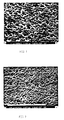
- This example shows photographs of the mixtures according to Example 7, experiment No. 2 (for comparison), FIG. 1, enlarged 8500 times, and example 7, experiment No. 10, (for example), FIG. 2, enlarged 6800 times.
- the S / MA-LDPE-PA mixture or S / MA-VLDPE-PA mixture has been etched with oxygen plasma.
- Table 14 TABLE 14 Trial No. Schl. f. mod.-medium PET / mod. (Wt.) Izod 23 ⁇ C KJ / m2 1 - 100/0 4th 2nd Polybond 1016 R. 80/20 5.5 3rd Polybond 1016 R. 70/30 5.2 4th Hytrel 4056 R. 80/20 6.8 5 Hytrel 4056 R. 70/30 8.3 6 Paraloid 334 R. 80/20 9.2 7 Paraloid 334 R. 70/30 8.9 8th SMA-VLDPE 80/20 10.7 9 SMA-VLDPE 70/30 11.9
Landscapes
- Chemical & Material Sciences (AREA)
- Chemical Kinetics & Catalysis (AREA)
- Organic Chemistry (AREA)
- Health & Medical Sciences (AREA)
- Medicinal Chemistry (AREA)
- Polymers & Plastics (AREA)
- Graft Or Block Polymers (AREA)
- Compositions Of Macromolecular Compounds (AREA)
- Laminated Bodies (AREA)
- Extrusion Moulding Of Plastics Or The Like (AREA)
- Adhesives Or Adhesive Processes (AREA)
- Addition Polymer Or Copolymer, Post-Treatments, Or Chemical Modifications (AREA)
Description
- Die Erfindung betrifft neue gepfropfte lineare Polyethylene mit einer Dichte unter 940 kg/m³, ausgenommen Ethylen-α-Olefin- und Ethylen-α-Olefin-Dien-Kautschuke, ferner Verfahren zu ihrer Herstellung und die Verwendung dieser Polyethylene.
- Aus der DE-A-2 108 749 sind Polymere, die freie Carboxylgruppen enthalten, insbesondere lineare Polyethylene mit hoher Dichte (d > 940 kg/m³, HDPE) und verzweigte Polyethylene mit niedriger Dichte (d < 940 kg/m³, LDPE) bekannt. Diese Polymere eignen sich nicht als Schlagfestigkeitsmodifizierungsmittel für Kunststoffe.
- US-A-4440911 betrifft ein lineaires Polyethylen mit niedriger Dichte das nur mit carboxylgruppenhaltigen Verbindungen modifiziert ist. Wenn dieses modifizierte Polyethylen aber mehr als 3 gew.% Carboxylgruppen enthält wird die Adhäsion nicht weiter verbessert. Ausserdem tritt dann auch Verfärbung ein.
- In das nicht vorveröffentlichte Dokument EP-A-268985 wird ein modifizierter EPDM- oder EPM-Kautschuk beschrieben.
- Die bisher bekannten Schlagfestigkeitsmodifizierungsmittel für Kunststoffe, wie mit Acrylsäure modifiziertes Polyethylen, mit Maleinsäureanhydrid modifizierter EPDM-Kautschuk, Copolymere aus Acrylsäure und Acrylsäureestern und Ethylen und Terpolymere aus Ethylen, Acrylsäureestern und Maleinsäureanhydrid, sind mit dem Nachteil behaftet, dass sie eine Verfärbung der modifizierten Polyamide und Polyester bedingen, aufwendig herzustellen sind, wobei relativ niedrige Umsätze erreichbar sind, und bezüglich ihrer schlagfestigkeitsmodifizierenden Wirkung noch verbesserungswürdig sind.
- Gepfropftes Polybutadien hat den Nachteil, nicht genügend UV-beständig zu sein, während Polymere auf Acrylatbasis (z.B. Methylmethacrylatpolymer) schon bei relativ hohen Temperaturen spröde werden.
- Die Erfindung hat sich die Aufgabe gestellt, neue Verbindungen zu schaffen, welche in sich die Vorteile und Verwendungsmöglichkeiten der aus der DE-A-2 108 749 bekannten Polymeren mit der Einsatzmöglichkeit als Schlagfestigkeitsmodifizierungsmittel für Kunststoff ohne die obengenannten Nachteile in sich vereinigen und eine gute UV-Beständigkeit sowie eine hohe Zähigkeit auch bei niedrigen Temperaturen besitzen.
- Diese Aufgabe wird durch gepfropfte lineare Polyethylene mit einer Dichte unter 940 kg/m³ (LLDPE), ausgenommen Ethylen-α-Olefin- und Ethylen-α-Olefin-Dien-Kautschuke, die mit einer oder mehreren carboxylgruppenhaltigen Verbindungen und einer oder mehreren vinylaromatischen Verbindungen gepfropft sind, gelöst.
- Die Erfindung beruht auf der Feststellung, dass gepfropfte lineare Polyethylene mit niedriger Dichte in überraschender Weise besonders günstige Eigenschaften haben und sowohl sehr gute Schlagfestigkeitsmodifizierungsmittel für beispielsweise Polyamid, Polycarbonat, Polyacetate, vinylaromatische Polymere und Polyester sind, als auch eine sehr gute UV-Beständigkeit und hohe Zähigkeit aufweisen und keine Verfärbungen bedingen, wobei sie ausserdem in hervorragender Weise geeignet sind als Klebemittel oder Klebschichten, als Haftschichten in Mehrschichtfolien, als Heisssiegelschichten, als verträglich machende Mittel für polare und apolare Kunststoffe, die qegebenenfalls mit mineralischen Füllstoffen gefüllt sind, wobei sie sich ausserdem für einen Einsatz in Mischungen mit anderen Polymeren, insbesondere Polyolefinhomo- und -copolymeren (wie beispielsweise Polypropylen, EPDM-Kautschuk, verschiedene Polyethylene etc.) eignen. Dabei können sie in einfacher Weise zur Erzielung der jeweils gewünschten Eigenschaften massgeschneidert hergestellt werden.
- Vorzugsweise sind die gepfropften linearen Polyethylene mit niedriger Dichte gemäss der Erfindung mit herkömmlichen carboxylgruppenhaltigen Pfropfungsmaterialien für Polyethylene gepfropft, wie beispielsweise Acrylsäure, Methacrylsäure, Maleinsäure, Fumarsäure, Itaconsäure, Citraconsäure, Crotonsäure, Endo-cis-bicyclo(2,2,1)hepto-5-en-2,3-dicarbonsäure und Bicyclo(2,2,1)hepto-2-en-5,6-dicarbonsäure, den Derivaten dieser Säuren, wie ihren Säurehalogeniden, Amiden, Imiden, Anhydriden, Estern und Salzen. Beispiele für diese Derivate sind Malenylchlorid, Maleimid, Acrylamid, Methacylamid, Glycidylmethacrylat, Maleinsäureanhydrid, Itaconsäureanhydrid, Citraconsäureanhydrid, Bicyclo(2,2,1)hepto-2-en-5,6-dicarbonsäureanhydrid, Monomethylmaleat, Dimethylmaleat, Glycidylmaleat, Dimethylfumarat, Diethylitaconat, Dimethylcitraconat, Dimethylbicyclo(2,2,1)hepto-2-en-5,6-dicarboxylat, Methylacrylat, Methylmethacrylat, Glycidylacrylat, Natriumacrylat, Natriummethacrylat, Kaliummethacrylat, Dinatriummaleat, Dikaliummaleat, Mononatriummaleat, Dinatriumfumarat, Dilithiumitaconat, Diammoniumcitraconat, Dinatrium-bicyclo(2,2,1)hepto-2-en-5,6-dicarboxylat, 4-Methylcyclohex-4-en-1,2-dicarbonsäureanhydrid, 1,2,3,4,5,8,9,10-Octahydronaphthalin-2,3-dicarbonsäureanhydrid, Bicyclo(2,2,2)oct-7-en-2,3,5,6-tetracarbonsäure-2,3,5,6-dianhydrid, Bicyclo(2,2,1)hept-5-en-2,3-dicarbonsäureanhydrid, Methylbicyclo(2,2,1)hept-5-en-2,3-dicarbonsäure sowie 7-Oxabicyclo(2,2,1)hept-5-en-2,3-dicarbonsäureanhydrid. Auch Mischungen aus diesen Substanzen können verwendet werden.
- Die zum Pfropfen von linearen Polyethylenen mit niedriger Dichte verwendete(n) vinylaromatische(n) Verbindung(en) sind beispielsweise Styrol, substituierte Styrole, wie R-Styrol, wobei R für eine Alkylgruppe mit 1 bis 10 Kohlenstoffatomen steht. Auch Mischungen dieser vinylaromatischen Monomere können verwendet werden.
- Das Molverhältnis des vinylaromatischen Monomers zu der carboxylgruppenhaltigen Verbindung beträgt vorzugsweise 5 : 1 bis 1 : 5, und insbesondere 2 : 1 bis 1 : 2.
- Insbesondere haben sich lineare Polyethylene mit niedriger Dichte, die mit einer Mischung von Styrol und Maleinsäureanhydrid, vorzugsweise im Molverhältnis von 5 : 1 bis 1 : 5 und insbesondere 2 : 1 bis 1 : 2 gepfropft sind, als besonders vorteilhafte Schlagfestigkeitsmodifizierungsmittel für Polymere erwiesen.
- Besonders herausragende Ergebnisse werden unter Einsatz von gepfropften Polyethylenen mit sehr geringer Dichte (Dichte ≦ 910 kg/m³) (VLDPE) und insbesondere mit einer Dichte ≦ 900 kg/m³ (ULDPE), erzielt. Die Dichte liegt im allgemeinen nicht unter 870 kg/m³, insbesondere nicht unter 880 kg/m³. Vorzugsweise sind die zur Aufpfropfung in Frage kommenden linearen Polyethylene Copolymere von Ethylen und einem oder mehreren α-Olefinen mit 3 bis 18 C-Atomen, insbesondere mit 5 bis 12 C-Atomen. Auch Ethylenterpolymere (wie z.B. Propylen oder Butylen und α-Olefine mit 5 bis 12 C-Atomen) kommen in Frage. Ausserdem können auch mehrfach ungesättigte Verbindungen, wie Diene (z.B. 1,9-Dekadien) anwesend sein.
- Mit Vorteil kann man auch Mischungen aus diesen linearen Polyethylenen pfropfen oder Mischungen mit anderen Polyolefinen, wie beispielsweise Polypropylen, Ethylen/Propylen-Copolymeren, Ethylen/Propylen-Terpolymeren, anderen Polyethylenen, Polybutadien oder Mischungen davon etc. Wenigstens sollten jedoch 5 Gew.-%, insbesondere 10 Gew.-% und in besonders vorteilhafter Weise 30 Gew.-% der Mischung aus einem linearen Polyethylen mit niedriger Dichte bestehen.
- Die erfindungsgemäss in Frage kommenden linearen Polyethylene mit niedriger Dichte (LLDPE) und mit sehr geringer Dichte (VLDPE) und äußerst geringer Dichte (ULDPE) können nach bekannten Methoden hergestellt werden, wie z.B. nach mit Übergangsmetallverbindungen katalysierten Verfahren, insbesondere unter Einsatz von Ziegler-Natta-Katalysatoren (vgl. beispielsweise die GB-A-1 235 062). Vorzugsweise ist ausser der Titanverbindung auch eine Vanadiumverbindung anwesend, und auch noch eine Halogenverbindung, insbesonders eine organische Halogenverbindung. Vorzugsweise wird ein Katalysator verwendet, der eine Titan-, Vanadium-, Organoaluminium-, organische Halogen- und Organomagnesiumverbindung enthält. Übliche Zusatzstoffe, wie Stabilisatoren, Gleitmittel etc., können in den Polymeren zugegen sein.
- Für die erfindungsgemässen Zwecke hat sich ein Pfropfungsgrad von 0,2 bis 20 Gew.-% (Anteil an carboxylgruppenhaltigen Verbindungen), bezogen auf das Polyethylen, als günstig erwiesen, wobei insbesondere Pfropfungsgrade von 0,5 bis 15 Gew.-% und in besonders bevorzugter Weise von 1 bis 10 Gew.-%, in Frage kommen.
- Die größe der Teilchen des gepfropften Polymers ist vorzugsweise klein, das heißt < 0,5 µm, insbesondere < 0,1 µm, und > 0,001 µm, insbesondere > 0,005 µm.
- Eine Methode zur Aufpfropfung von Styrol/Maleinsäureanhydrid auf Polymere mit aktiven oder labilen Wasserstoffatomen, wie Polyethylen, wird in der DE-A-2 108 749 beschrieben. Diese Methode besteht darin, bei Verwendung von Polyethylen ein Gemisch aus Styrol und Maleinsäureanhydrid mit dem Polyethylen bei einer Temperatur oberhalb von etwa 120¤C umzusetzen.
- Zur Herstellung der erfindungsgemäßen, mit Styrol und Maleinsäureanhydrid gepfropften Polyethylene kann dieses Verfahren angewendet werden, das von dem Einsatz von Lösungsmitteln und radikalischen Katalysatoren zur Beschleunigung der Reaktion abrät. Es hat sich jedoch herausgestellt, dass die Verwendung eines Lösungsmittels, insbesondere eines polaren Lösungsmittels, wie eines Ketons, beispielsweise Aceton, und/oder der Einsatz von radikalischen Initiatoren, wie Peroxiden und Azoverbindungen, sowohl die Aufpfropfungsgeschwindigkeit als auch den Aufpfropfungsgrad und den Umsetzungsgrad erhöhen.
- Eine hohe Scherwirkung, die einen innigen Kontakt des aufzupfropfenden Materials bewirkt, ist in diesem Zusammenhang ebenfalls wesentlich.
- Die Erfindung betrifft demgemäss auch ein Verfahren zur Herstellung von gepfropften Polyethylenen mit geringer Dichte durch Umsetzung der Polyethylene mit einer oder mehreren carboxylgruppenhaltigen Verbindungen und einer oder mehreren vinylaromatischen Verbindungen, bei einer Temperatur oberhalb 110¤C unter der Einwirkung von Scherkräften, in Anwesenheit eines Lösingsmittels und/oder eines radikalischen Katalysators sowie gegebenenfalls eines Antioxidationsmittels.
- In zweckmässiger Weise werden erfindungsgemäss die in Frage kommenden Polyethylene mit niedriger Dichte, entsprechend der bevorzugten Ausführungsform unter Einsatz von Styrol/Maleinsäureanhydrid, insbesondere in einem Molverhältnis von 5 : 1 bis 1 : 5, vorzugsweise von 2 : 1 bis 1 : 2, in der Weise gepfropft, dass die Pfropfungsreaktion bei einer Temperatur von 110 bis 200¤C in einer Vorrichtung, die eine starke Scherwirking ausübt, um die Reaktanten innig miteinander zu vermischen, durchgeführt wird, wobei ein Lösungsmittel, wie Aceton, in einem Gewichtsverhältnis zu dem Pfropfmaterial von 5 : 1 bis 1 : 20, insbesondere 2 : 1 bis 1 : 10, und ein radikalischer Katalysator, ausgewählt aus organischen Peroxiden, wie Dialkylperoxiden, Diarylperoxiden, Diacylperoxiden, organischen Persäuren, organischen Persäureestern, Alkylhydroperoxiden, Aralkylperoxiden, oder Azoverbindungen, vorzugsweise in einer Menge von 0,01 bis 0,5 Gew.-%, bezogen auf das Polyethylen, verwendet werden. Vorzugsweise beträgt dabei die Verweilzeit in der Reaktionsvorrichtung 1 bis 15 Minuten. Vor dem Austreten aus der Reaktionsvorrichtung können in üblicher Weise das Lösungsmittel und etwa noch vorhandene Monomere entfernt werden, beispielsweise in einer Entgasungsvorrichtung, worauf das gepfropfte Polyethylen granuliert werden oder anderweitig verformt werden kann. In zweckmässiger Weise kann ihm ein Antioxidationsmittel zur Verhinderung einer Vernetzung zugesetzt werden, beispielsweise ein phenolisches oder thiophenolisches Antioxidationsmittel, wie Irganox 1076R, Irganox 1010R oder Di-tert.-butyl-p-cresol. Diese Antioxidationsmittel beeinflussen nicht die Pfropfung, verhindern jedoch eine unerwünschte Vernetzung.
- Als Reaktionsvorrichtungen, in denen unter Einwirkung einer hohen Scherwirkung die eingesetzten Polyethylene mit dem (den) carboxylgruppenhaltigen Verbindung(en) und der (den) vinylaromatischen Verbindung(en) gepfropft werden können, kommen beispielsweise Brabender-Kneter und Ein- oder Zwei-Schnecken-Extruder, hinter denen ein oder mehrere statische Mischgeräte angebracht sein können, um die Verweilzeit zu verlängern, in Frage. In zweckmässiger Weise wird dabei das Polyethylen in eine derartige Vorrichtung eingeführt und aufgeschmolzen, worauf an der Stelle, an der aufgeschmolzenes Polyethylen vorliegt, eine Lösung der Pfropfverbindungen, die gegebenenfalls einen radikalischen Initiator und/oder ein Antioxidationsmittel enthält, zugeführt und innig mit der Schmelze unter Einwirkung hoher Scherkräfte zur Durchführung der Aufpfropfungsreaktion vermischt wird.
- Die erfindungsgemässen gepfropften Polyethylene, die in zweckmässiger Weise Schmelzindices von 0,01 bis 50 g/10', gemessen nach der ASTM D-1238-E-Methode, besitzen, werden in Mengen von 10 bis 90, vorzugsweise 20 bis 80 Gew.-%, als Schlagfestigkeitsmodifizierungsmittel für beispielsweise Polycarbonate, Polyacetale, vinylaromatische Polymere, Polyamide und Polyester verwendet. Sie können in an sich bekannter weise mit den jeweiligen Polymeren in Extrudern vermischt werden.
- Polycarbonate sind bekannt und können durch Umsetzung von Dihydroxy- oder Polyhydroxyverbindungen mit Phosgen oder Diestern von Carbonsäuren hergestellt werden. Besonders geeignete Dihydroxyverbindungen sind Dihydroxydiarylalkane, beispielsweise solche, die Alkylgruppen oder Chlor- oder Bromatome in der o-Stellung bezüglich der Hydroxylgruppe aufweisen.
- Die folgenden Verbindungen sind bevorzugte Dihydroxydiarylalkane: 4,4'-Dihydroxy-2,2-diphenylpropan (Bisphenol A), Tetramethylbisphenol A, Tetrachlorbisphenol A, Tetrabrombisphenol A sowie Bis(4-hydroxyphenol)-p-diisopropylbenzol. Neben den Polycarbonaten, die aus Dihydroxydiarylalkanen allein hergestellt werden können, können verzweigte Polycarbonate verwendet werden. Zur Herstellung von Polycarbonaten dieses Typs kann ein Teil der Dihydroxyverbindung durch eine Polyhydroxyverbindung ersetzt werden.
- Die Polyacetale sind kristalline thermoplastische Harze. Beispiele für diese Polyacetale sind Formaldehydhomo- und -copolymere von Trioxan (d.h. dem Trimer von Formaldehyd) und einer kleinen Menge cyclischer Ether, wie Ethylenoxid und 1,3-Dioxan. Diese Polyacetale können allein oder in Mischung verwendet werden.
- Die vinylaromatischen Polymere sind Homo- und Copolymere von vinylaromatischen Monomeren, wie Styrol, substituierten Styrolen, wie α-Methylstyrol, wobei als Comonomere Butadien (SBR), Acrylnitril (SAN), Maleinsäureanhydrid (SMA), Butadien/Acrylnitril (ABS) etc. eingesetzt werden können.
- Die Polyamide werden durch Polykondensation von aliphatischen, alicyclischen und aromatischen Diaminen, wie Hexamethylendiamin, Decamethylendiamin, Dodecamethyldiamin, 2,2,4- oder 2,4,4-Trimethylhexamethylendiamin, 1,3- oder 1,4-Bis(aminomethyl)cyclohexan, Bis(p-amino-cyclohexyl)methan sowie m- oder p-Xyloldiamin mit aliphatischen, alicyclischen und aromatischen Dicarbonsäuren, wie Adipinsäure, Suberinsäure, Sebacinsäure, Cyclohexandicarbonsäure, Terephthalsäure und Isophthalsäure, sowie durch Kondensation von Lactamen, wie ε-Caprolactam und ω-Laurolactam erhalten, wobei auch Copolyamide der vorstehend erwähnten Substanzen in Frage kommen. Diese Polyamide können allein oder in Mischung eingesetzt werden.
- Typische Beispiele für die vorstehend erwähnten Polyamide sind Nylon 6, Nylon 4,6, Nylon 6,6, Nylon 610, Nylon 9, Nylon 11, Nylon 12, Nylon 6/66, Nylon 66/610 sowie Nylon 6/11.
- Die Polyester sind kristalline thermoplastische Harze, die aus Dihydroxyverbindungseinheiten, welche auf wenigstens eine Verbindung zurückgehen, ausgewählt aus der Gruppe bestehend aus aliphatischen Glycolen, wie Ethylenglycol, Propylenglycol, 1,4-Butandiol, Neopentylglycol und Hexamethylenglycol, alicyclischen Glycolen, wie Cyclohexandimethanol, und aromatischen Dihydroxyverbindungen, wie Bisphenol, mit wenigstens einer Dicarbonsäure, ausgewählt aus der Gruppe bestehend aus aromatischen Dicarbonsäuren, wie Terephthalsäure, Isophthalsäure und 2,6-Naphthalindicarbonsäure, aliphatischen Dicarbonsäuren, wie Oxalsäure, Bernsteinsäure, Adipinsäure, Sebacinsäure und Undecadicarbonsäure, sowie alicyclischen Dicarbonsäuren, wie Tetrahydroterephthalsäure, gebildet werden. Diese Polyester können mit einer kleinen Menge an Tri- oder Polyhydroxyverbindungen und Polycarbonsäuren, wie Triolen und Tricarbonsäuren, modifiziert werden, sofern die modifizierten Harze thermoplastisch sind. Diese Polyester können allein oder in Mischung verwendet werden.
- Typische Beispiele für die vorstehend erwähnten Polyester sind Polyethylenterephthalat, Polybutylenterephthalat sowie Polyethylenisophthalat-terephthalat-Copolymere.
- Der Hauptverwendungszweck des erfindungsgemässen gepfropften linearen Polyethylens mit niedrigerer Dichte besteht in seinem Einsatz als Schlagfestigkeitsmodifizierungsmittel für Polymere. Daneben können sie jedoch auch nach üblichen Methoden zu Formgegenständen verarbeitet werden, wie Filmen, Rohren, Fasern oder dergleichen, beispielsweise durch Schmelzextrusion, wobei in vorteilhafter Weise derselbe Extruder verwendet wird, in welchem die Pfropfung stattgefunden hat. Die erzeugten Filme können einschichtig oder mehrschichtig sein.
- Eine weitere Verwendung der erfindungsgemässen gepfropften linearen Polyethylene mit niedriger Dichte besteht in ihrem Einsatz als Klebemittel oder Klebeschichten oder als Haftschichten zwischen Schichten aus anderen Materialien, wie anderen Polymeren (wie Polyolefinen), Metallen, Papier etc., d.h. sie können zur Herstellung von Mehrschichtenverbundstoffen verwendet werden, beispielsweise zum Verbinden von Polymer mit Polymer, Polymer mit Metall, sowie Glass, gewebten oder nicht gewebten Stoffen oder Matten, Papier oder dergleichen.
- Eine weitere Verwendung besteht in dem Einsatz als Heisssiegelschichten auf Substraten, wie anderen Polymeren, insbesondere Polyolefinen, wie Polyethylenen oder Polypropylenen oder dergleichen. Liegen Carboxylgruppen in den gepfropften linearen Polyethylenen mit niedriger Dichte vor, dann ist es in den meisten Fällen unnötig, die Polymerfilmoberflächen, auf welche die erfindungsgemässen gepfropften Polyethylene aufgebracht werden sollen, zur Verbesserung der Haftfähigkeit durch elektrische Entladungen oder durch Flammbehandlung zu präparieren oder einen Haftüberzug aufzubringen.
- Die erfindungsgemässen Polyethylene können auch zu geschäumten Produkten unter Einsatz üblicher Schäumungsmittel verarbeitet werden.
- Ausserdem lassen sich die erfindungsgemässen gepfropften linearen Polyethylene beispielsweise durch Schmelzspinnen oder Folienspaltung zu Fasern verarbeiten, welche zu gewebten oder nicht gewebten Strukturen verarbeitet werden können. Sowohl gewebte als auch nichtgewebte Strukturen können mit üblichen Papier- oder Textilüberzugs- und -druckmassen bedruckt werden.
- Besonders gut eignen sich die erfindungsgemässen gepfropften linearen Polyethylene mit niedriger Dichte auch als Mittel zum Verträglichmachen an sich unverträglicher oder schlecht verträglicher Materialien. Zum Beispiel ist es möglich, Polyolefine, wie Polyethylen, Polypropylen etc., mit Glas in verträglicher Weise zu vermischen, wenn wenigstens 5 Gew.-% und insbesondere wenigstens 10 Gew.-% des erfindungsgemässen Polyethylens in den Polyolefinen vorliegt. Es ist ferner auch möglich, polare und apolare Polymere unter Zusatz des erfindungsgemässen Polyethylens zu vermischen.
- Die erfindungsgemässen gepfropften linearen Polyethylene mit geringer Dichte können auch als Komponenten von Mischungen oder Blends in Mengen von 5 bis 95 Gew.-%, bezogen auf die Mischung, und in vorteilhafter Weise in einer Menge von 10 bis 90 Gew.-%, insbesondere 15 bis 85 Gew.-%, bezogen auf die Mischung, verwendet werden. Die anderen Komponenten derartiger Mischungen können Kunststoffe sein, wie Polyolefine (Ethylen- und Propylen-homo- und -copolymere), vinylaromatische Homo- und Copolymere, gegebenenfalls mit beispielsweise carboxylgruppenhaltigen Monomeren, etc., sowie auch andere gepfropfte Polymere. Die anderen Komponenten können auch aus anderen Materialien als Polymeren bestehen, beispielsweise aus Glas, Talk, Russ, Metall, Holz, Papier etc.
Die folgenden Beispiele erläutern die Erfindung. - Zur Durchführung dieses Beispiels wird ein verzweigtes LDPE (d = 918; Schmelzindex (MI) = 8) verwendet.
- Dieses Polyethylen wird mit einer 2 : 2 : 1-Mischung aus Styrol, Maleinsäureanhydrid und Aceton in einem Schwabenthan-Einschneckenextruder, dem drei statische Kennics-Mischer nachgeschaltet sind, gepfropft.
- Das Polyethylen wird in den Extruder, der auf einer Temperatur von 150¤C gehalten wird und dessen Schnecke sich mit 150 UpM dreht, eingeführt. Dem Extruder wird an der Stelle, an welcher das Polyethylen geschmolzen ist, eine 2 : 2 : 1-Mischung aus Styrol (S)-Maleinsäureanhydrid (MA)-Aceton (Ac) zugeführt. Beim Durchwandern des Polyethylens und der S/MA/Ac-Mischung durch den Extruder sowie die auf einer Temperatur von 150¤C gehaltenen statischen Mischer erfolgt die Aufpfropfung von Styrol/Maleinsäureanhydrid auf das Polyethylen. Die Verweilzeit betrug ungefähr 11 Minuten.
- Die durchgesetzten Mengen an Polyethylen (PE), die eingesetzten Mengen an S/MA/Ac, die eingesetzten Mengen an Peroxid-Initiator sowie Stabilisierungsmittel, die dem in Granulatform dem Extruder zugeführten Polyethylen (PE) zuvor zugemischt worden sind, die Gewichtsprozentmengen an MA, die, bezogen auf das PE, eingesetzt werden, (es werden demgemäss auch die entsprechenden Styrolmengen eingesetzt, die Menge an gebundenem Styrol sind ebenfalls nicht aufgeführt), die Umsätze und die Schmelzindices der erhaltenen gepfropften Produkte gehen aus der folgenden Tabelle 1 hervor.
TABELLE 1 Versuch Nr. Durchsatz g/min S/MA/Ac (2:2:1) ccm/min MA Gew.-% Peroxid Gew.-% Stabilisiermittel, Irganox 1076 Gew.-% gebundenes MA Gew.-% Umsatz % MI g/10' Peroxidtyp 1 29 8 5 0,05 - 3,0 60 3,0 TRIG.C 2 62 6 4 - 0,1 0,7 18 6,1 - 3 62 6 4 0,05 0,1 2,7 67,5 3,6 TRIG.C 4 56 6 4,3 0,1 0,1 2,5 58 2,8 TRIG.C 5 48 6 5 0,15 0,1 2,6 52 2,1 TRIG.C 6 52 6 4,6 0,05 0,1 2,0 40 - LUPr130 7 58 6 4,1 - 0,1 0,1 - 7,7 - 8 56 6 4,2 0,05 0,1 3,0 71 3,5 TRIG.C 9 52 6 4,6 0,1 0,1 2,4 52 2,8 TRIG.C 10 54 6 4,4 0,15 0,1 2,3 52 2,3 TRIG.C TRIG.C = Trigonox CR; LUPr130 = Luperox 130R. - Es wird in der gleichen Weise, wie in Beispiel 1 beschrieben, gearbeitet, wobei zur Durchführung der Versuche 1 und 2 ein VLDPE (d = 902, M.I. = 2,2) und der Versuche 3 bis 20 ein ULDPE (d = 900, M.I. = 2,2) verwendet wird. Als Peroxid wird Trigonox CR eingesetzt.
- Die Einzelheiten dieses Versuchs sowie die erhaltenen Ergebnisse gehen aus der folgenden Tabelle 2 hervor.
TABELLE 2 Versuch Nr. Durchsatz g/min S/MA/Ac (2:2:1) ccm/min MA Gew.-% Peroxid Gew.-% Stabilisator, Irganox 1076 Gew.-% gebundenes MA Gew.-% Umsatz % MI g/10 min 1 37 4,4 4,8 0,15 - 1,6 33 0,06 2 38 4,4 4,6 0,15 - 1,7 22 0,04 3 40 4,8 4,8 0,15 - 1,7 35 0,04 4 32 3,3 4 0,05 0,05 1,2 30 0,6 5 40 4 4 0,05 0,1 1,6 36 0,7 6 41 4,5 4,3 0,05 0,1 1,4 33 0,6 7 43 4,5 4,2 0,05 0,15 1,4 34 0,6 8 45 4,5 4 0,05 0,2 1,0 25 0,5 9 40 4 4 0,1 0,2 1,3 33 0,2 10 36 3,5 4 0,05 0,05 1,0 25 0,5 11 33 3,5 4,2 0,1 0,05 1,6 38 0,2 12 31 3 4 0,15 0,05 1,5 38 0,1 13 39 4 4 0,05 0,1 0,8 20 0,1 14 38 4 4,1 0,1 0,1 1,3 32,5 0,4 15 40 4 4 0,15 0,1 1,7 42 0,2 16 45 4,5 4 0,05 0,15 1,3 29 0,9 17 45 4,5 4 0,1 0,15 1,4 35 0,3 18 41 4 4 0,15 0,15 1,8 38 0,1 19 45 4,5 4 0,05 0,2 1,6 40 0,9 20 43 4,5 4 0,1 0,2 1,4 35 0,4 - Als Polyethylen wird ein LDPE (d = 918, MI = 8) eingesetzt. Die Pfropfungsreaktion erfolgt in einem Zweischneckenextruder (WPZSK 42 D) bei den in der folgenden Tabelle 3 angegebenen Temperaturen. Zur Durchführung der Versuche 1 bis 7 wird das MA dem PE vor der Einführung in den Extruder zugemischt, während das Styrol in einer Menge von 5 %, bezogen auf das PE, in den Extruder eingespritzt wird.
- Zur Durchführung der Versuche 8 bis 14 wird eine Mischung aus Styrol, Maleinsäureanhydrid und Aceton (2 : 2 : 1, Gewichtsverhältnis) in den Extruder eingeführt. Trigonox CR wird als Peroxidkatalysator eingesetzt.
- In der folgenden Tabelle 3 sind die Versuchsbedingungen sowie die Schmelzindices der erhaltenen gepfropften PE zusammengefasst.
TABELLE 3 Versuch Nr. Durchsatz g/min UpM Temp. ¤C S/MA/Ac ccm/min MA Gew.-% Peroxid Gew.-% Stabilisator, Irganox 1076 Gew.-% gebundenes MA Gew.-% Umsatz % MI g/10' 1 50 250 150 - 5 0,1 0,05 2,0 40 5,1 2 50 150 150 - 5 0,1 0,05 2,1 42 4,0 3 50 250 170 - 5 0,1 0,05 5,0 100 4,4 4 50 150 170 - 5 0,1 0,05 2,5 50 3,2 5 50 100 170 - 5 0,1 0,05 2,5 50 4,4 6 50 250 170 - 5 0,1 0,1 3,3 66 1,5 7 50 150 170 - 5 0,1 0,1 2,7 54 2,6 8 48 250 150 5 4 0,05 0,05 3,7 92 3,6 9 48 250 150 6,5 5,4 0,05 0,05 5,5 100 3,0 10 48 250 150 7 6 0,075 0,05 5,6 93 2,6 11 48 250 150 6 5 0,075 0,05 4,8 96 2,7 12 48 250 170 6 5 0,075 0,05 4,9 100 2,7 13 48 250 150 6 5 0,025 - 4,7 100 3,9 14 48 250 150 7 6 0,025 - 6,1 100 3,6 - Zur Durchführung der Versuche 1-6 dieses Beispiels werden LDPE (d = 918; MI = 8) und zur Durchführung der Versuche 7-9 ULDPE (d = 900; MI = 2,2) verwendet und es wird der in Beispiel 3 beschriebene Zweischneckenextruder eingesetzt und Trigonox C als Peroxidkatalysator eingesetzt.
- Einzelheiten der durchgeführten Versuche 1-9 sowie die Schmelzindices der erhaltenen gepfropften Polyethylene gehen aus der folgenden Tabelle 4 hervor.
TABELLE 4 Versuch Nr. Durchsatz g/min UpM Temp. ¤C S/MA/Ac (2:2:1) ccm/min MA Gew.-% Peroxid Gew.-% Stabilisator, Irganox 1076 Gew.-% gebundenes MA Gew.-% Umsatz % MI g/10' 1 50 250 150 7 6,3 0,075 0,05 6,2 98 2,8 2 104 250 150 14 6,4 0,075 0,05 6,3 99 2,8 3 50 250 170 7 7,6 0,075 0,05 7,4 97 2,3 4 102 250 170 14 5,9 0,075 0,05 5,8 98 2,7 5 50 250 170 7 7,5 0,025 - 7,1 95 3,0 6 52 250 150 7 6,8 0,025 - 6,7 96 3,3 7 52 250 190 7 5,4 0,05 0,05 5,4 100 0,4 8 52 250 190 7 5,4 0,05 0,1 4,8 89 0,5 9 52 100 190 7 5,4 0,05 0,05 5,1 94 0,4 - Zur Durchführung dieses Beispiels wird ein ULDPE (d = 900; MI = 2,2) eingesetzt. Es wird der in Beispiel 3 verwendete Zweischneckenextruder eingesetzt und auch die dort beschriebene Arbeitsweise eingehalten. Die Temperatur des Extruders beträgt 190¤C und als Peroxidkatalysator wird Trigonox C verwendet.
- Die Ergebnisse gehen aus der Tabelle 5 hervor.
TABELLE 5 Versuch Nr. Durchsatz g/min UpM S/MA/Ac (2:2:1) ccm/min MA Gew.-% Peroxid Gew.-% Stabilisator, Irganox 1076 Gew.-% gebundenes MA Gew.-% Umsatz % MI g/10' 1 50 250 7 5,6 - - 5,6 100 1,6 2 50 100 7 5,6 - - 4,2 75 1,9 3 50 250 7 5,6 0,025 - 5,1 91 0,7 4 50 100 7 5,6 0,025 - 5,3 95 0,7 5 96 250 14 5,6 0,025 - 5,6 100 0,4 6 50 250 7 5,6 0,025 0,013 4,6 82 0,6 7 100 250 14 5,6 0,025 0,013 5,7 100 0,4 8 100 250 14 5,6 - - 4,5 80 1,7 - Die folgenden Beispiele 6 bis 13 erläutern die Anwendung der erfindungsgemässen gepfropften linearen Polyethylene zur Schlagfestigkeitsmodifizierung von thermoplastischen Polyamiden.
- Es werden folgende Eigenschaften der schlagfestigkeitsmodifizierten Polyamide ermittelt:
- Izod-Schlagfestigkeit (gemessen nach ISO 180)
- E-Modul (gemessen nach ASTM-D-790)
- Formbeständigkeit (gemessen nach ISO R 527-1)
- Maximale Biegefestigkeit (gemessen nach ISO R 527-1)
- Bruchfestigkeit (gemessen nach ASTM-D-790)
- Dehnung (gemessen nach ASTM-D-790)
- Dieses Beispiel zeigt zum Vergleich das Vermischen von gemäss Beispiel 1 mit S/MA gepfropftem LDPE (d = 918; MI = 8) und zum Beispiel von gemäss Beispiel 2 mit S/MA gepfropftem VLDPE (d = 902; MI = 2,2) mit Polyamid 6, Polyamid 6,6 und Polyamid 4,6. Das Mischungsverhältnis Polyamid/gepfropftes PE beträgt 80/20. Das Vermischen erfolgt in einem Zweischneckenextruder bei einer Temperatur von 240¤C beim Einsatz von Polyamid 6, 275¤C beim Einsatz von Polyamid 6,6 bzw. 310¤C beim Einsatz von Polyamid 4,6.
- Der folgenden Tabelle 6 sind die Eigenschaften der modifizierten Polyamide zu entnehmen.
TABELLE 6 Versuch Nr. PE IZOD (KJ/m²) Formbeständigkeit ¤C Polyamid gepfropftes PE gebundenes MA Gew.-% MI g/10' 23¤C -30¤C -40¤C 1 LDPE 3,0 3,5 118 13,1 12,8 57,8 PA 6 2 LDPE 1,8 3,7 105 10,7 9,5 59,6 PA 6 3 VLDPE 1,6 0,05 108 17,2 15 59,3 PA 6 4 VLDPE 1,7 0,04 117 18,8 18,1 61,3 PA 6 5 LDPE 3,0 3,5 11,2 8,1 6,6 71,8 PA 6.6 6 LDPE 1,8 3,7 9,9 6,2 5,5 74,3 PA 6.6 7 VLDPE 1,6 0,05 82,5 12,8 12,1 69,6 PA 6.6 8 VLDPE 1,7 0,04 89 13,8 11,1 71,9 PA 6.6 9 LDPE 3,0 3,5 76,1 11,3 12,1 84,9 PA 4.6 10 LDPE 1,8 3,7 29 12,7 11,7 83,2 PA 4.6 11 VLDPE 1,6 0,05 124 36,9 28,6 85,4 PA 4.6 12 VLDPE 1,7 0,04 123 41,9 25,4 84,5 PA 4.6 - Zur Durchführung dieses Beispiels werden die in Beispiel 6 beschriebenen Bedingungen eingehalten, wobei in diesem Falle die Mischungsverhältnisse von Polyamid 6 und gepfropftem PE variiert werden.
- Nähere Einzelheiten sind der Tabelle 7 zu entnehmen.
TABELLE 7 Versuch Nr. PE PA 6/PE IZOD (KJ/m²) E-MOD N/mm² gepfropftes PE gebundenes MA Gew.-% MI g/10' 23¤C -30¤C -40¤C 1 LDPE 3,0 3,5 85/15 85,8 12,3 10,3 2500 2 LDPE 3,0 3,5 80/20 99,2 12,9 11,8 2360 3 LDPE 3,0 3,5 75/25 90,1 9,3 9,5 2190 4 LDPE 3,0 3,5 70/30 6,5 3,9 3,7 1650 5 LDPE 1,8 3,7 85/15 84,9 11,4 10,1 2500 6 LDPE 1,8 3,7 80/20 96,2 10,7 10,2 2380 7 LDPE 1,8 3,7 75/25 58,3 9,7 8,0 2190 8 LDPE 1,8 3,7 70/30 7,2 5,2 5,1 1770 9 VLDPE 1,6 0,05 85/15 69,9 14,2 12,6 2200 10 VLDPE 1,6 0,05 80/20 105 18,3 17,7 2050 11 VLDPE 1,6 0,05 75/25 125 26,8 20,9 1910 12 VLDPE 1,6 0,05 70/30 112 83,7 30,6 1740 13 VLDPE 1,7 0,04 85/15 80,3 17,2 14,2 2210 14 VLDPE 1,7 0,04 80/20 109 20,5 17,5 2015 15 VLDPE 1,7 0,04 75/25 123 56,6 26,0 1865 16 VLDPE 1,7 0,04 70/30 121 91,9 30,5 1700 - Dieses Beispiel zeigt das Vermischen von gemäss Beispiel 2 mit S/MA gepfropftem VLDPE (d = 902; MI = 2,2) und ULDPE (d = 900; MI = 2,2) mit Nylon 6 (PA 6).
- Die Versuchsbedingungen sowie die Eigenschaften der erhaltenen Produkte gehen aus der Tabelle 8 hervor.
TABELLE 8 Versuch Nr. PE PA/PE IZOD (KJ/m²) E-MOD N/mm² maximale Biegefestigkeit N/mm² gepfropftes PE gebundenes MA Gew.-% MI g/10' 23¤C -30¤C -40¤C 1 - - - 100/0 5,4 4,2 4,1 2075 86,9 2 VLDPE 1,8 0,04 80/20 98,7 18,8 15,7 1900 77,6 3 VLDPE 1,8 0,04 60/40 > 100 19,3 16,9 1260 52,4 4 VLDPE 1,8 0,04 50/50 90 15,4 8,8 990 41,2 5 VLDPE 1,8 0,04 40/60 85 8,4 4,8 720 29,9 6 ULDPE 1,2 0,55 80/20 116 18,0 15,0 2020 81,8 7 ULDPE 1,2 0,55 70/30 122 20,1 15,8 1750 71,3 8 ULDPE 1,2 0,55 60/40 114 14,7 12,2 1330 54,2 9 ULDPE 1,2 0,55 50/50 110 17,0 14,3 980 40,8 10 ULDPE 1,2 0,55 40/60 95 22,7 16,0 780 32,1 11 ULDPE 1,5 0,50 80/20 122 17,4 13,8 2130 85,3 12 ULDPE 1,5 0,50 70/30 124 18,5 15,2 1785 73,0 13 ULDPE 1,5 0,50 60/40 107 13,5 11,1 1340 54,3 14 ULDPE 1,5 0,50 50/50 95 15,0 12,5 1000 40,4 15 ULDPE 1,5 0,50 40/60 80 20,9 15,5 750 31,3 16 ULDPE 0 2,2 80/20 20,6 7,5 7,2 2200 91,7 - Dieses Beispiel zeigt das Vermischen von ULDPE (d = 900; MI = 2,2), gepfropft mit S/MA gemäss Beispiel 2, mit Nylon 6,6.
- Die Ergebnisse gehen aus der Tabelle 9 hervor.
TABELLE 9 Versuch Nr. PE PA/PE IZOD (KJ/m²) E-MOD N/mm² maximale Biegefestigkeit N/mm² gepfropftes PE gebundenes MA Gew.-% MI g/10' 23¤C -30¤C -40¤C 1 - - - 100/0 4,6 4,2 3,9 2150 89,2 2 ULDPE 1,2 0,55 80/20 84,0 12,8 11,6 2140 89,5 3 ULDPE 1,2 0,55 70/30 103 17,1 12,8 1830 75,7 4 ULDPE 1,2 0,55 60/40 102 16,0 12,7 1410 59,8 5 ULDPE 1,2 0,55 50/50 85,3 16,5 13,8 990 41,9 6 ULDPE 1,2 0,55 40/60 68,4 16,2 12,3 600 25,6 7 ULDPE 1,5 0,50 80/20 79,3 14,9 12,2 2140 88,5 8 ULDPE 1,5 0,50 70/30 80,6 15,2 12,4 1855 76,5 9 ULDPE 1,5 0,50 60/40 72,1 13,4 11,3 1410 59,9 10 ULDPE 1,5 0,50 50/50 62,1 11,7 9,2 1010 41,6 11 ULDPE 1,5 0,40 40/60 64,2 14,7 11,1 630 27,4 - Dieses Beispiel zeigt das Vermischen von ULDPE (d = 900; MI = 2,2) gepfropft mit S/MA gemäss Beispiel 4, mit Nylon 6.
- Die Versuchsbedingungen sowie die Eigenschaften der erhaltenen Produkte gehen aus der folgenden Tabelle 10 hervor.
TABELLE 10 Versuch Nr. gebundenes MA Gew.-% MI 9/10' PA/PE IZOD (KJ/m²) 23¤C -30¤C -40¤C 1 4,5 1,0 80/20 »100 17,0 14,5 2 4,5 1,0 70/30 » 100 16,9 13,8 3 4,5 1,0 60/40 109,7 14,9 11,5 4 4,5 1,0 50/50 87,1 12,8 10,5 5 4,5 1,0 40/60 74,8 14,2 8,9 6 4,9 0,9 80/20 » 100 16,2 12,9 7 4,9 0,9 70/30 » 100 17,2 12,6 8 4,9 0,9 60/40 112,9 13,9 10,3 9 4,9 0,9 50/50 93,3 12,7 10,9 10 4,9 0,9 40/60 77,5 13,3 11,6 11 5,8 0,8 80/20 » 100 20,6 14,8 12 5,8 0,8 70/30 » 100 18,6 13,5 13 5,8 0,8 60/40 98,6 17,7 12,1 14 5,8 0,8 50/50 98,1 14,0 11,3 15 5,8 0,8 40/60 84,6 18,5 14,7 - Dieses Beispiel zeigt zum Vergleich das Vermischen von LDPE (d = 918; MI = 8) und zum Beispiel von VLDPE (d = 902; MI = 2,2) und Mischungen mit dem LDPE, jeweils gepfropft mit S/MA gemäss den Beispielen 3 und 4, mit Nylon 6.
- Die Versuchsbedingungen sowie die Eigenschaften des modifizierten Nylons gehen aus der folgenden Tabelle 11 hervor.

- Dieses Beispiel zeigt zum Vergleich das Vermischen von LDPE (d = 918; MI = 8) und zum Beispiel von ULDPE (d = 900; MI = 2,2) und Mischungen mit dem LDPE, jeweils gepfropft mit S/MA gemäss den Beispielen 3 und 4 mit Nylon 6,6.
- Die Versuchsbedingungen sowie die Eigenschaften des modifizierten Nylons gehen aus der folgenden Tabelle 12 hervor.

- Dieses Beispiel zeigt zum Vergleich das Vermischen von LDPE (d = 918; MI = 8) und zum Beispiel von VLDPE (d = 902; MI = 2,2) und Mischungen mit dem LDPE, jeweils gepfropft mit S/MA gemäss den Beispielen 3 und 4 mit Nylon 4,6.
- Die Versuchsbedingungen sowie die Eigenschaften des modifizierten Nylons gehen aus der folgenden Tabelle 13 hervor.

- Dieses Beispiel zeigt Aufnahmen der Mischungen gemäss Beispiel 7, Versuch Nr. 2 (zum Vergleich), Fig. 1, 8500 x vergrössert, und Beispiel 7, Versuch Nr. 10, (zum Beispiel), Fig. 2, 6800 x vergrössert. Zum Zweck dieser Aufnahmen ist die S/MA-LDPE-PA-Mischung bzw. S/MA-VLDPE-PA-Mischung mit Sauerstoffplasma geätzt worden. Diese Aufnahmen zeigen deutlich dass die gepfropften LDPE-Teilchen grösser (bis 0,6 µm) als die gepfropften VLDPE-Teilchen (bis 0,07 µm) sind.
- Dieses Beispiel zeigt zum Vergleich das Vermischen von handelsüblichen Schlagfestigkeitsmodifizierungsmitteln und zum Beispiel von gemäss Beispiel 4 mit S/MA gepfropftem VLDPE (d = 902; MI = 2,2) mit Polyethylenterephthalat (Arnite A 104-900). Tabelle 14.
TABELLE 14 Versuch Nr. Schl. f. mod.-mittel PET/mod. (Gew.) Izod 23¤C KJ/m² 1 - 100/0 4 2 Polybond 1016R 80/20 5,5 3 Polybond 1016R 70/30 5,2 4 Hytrel 4056R 80/20 6,8 5 Hytrel 4056R 70/30 8,3 6 Paraloid 334R 80/20 9,2 7 Paraloid 334R 70/30 8,9 8 SMA-VLDPE 80/20 10,7 9 SMA-VLDPE 70/30 11,9
Claims (15)
- Gepfropftes lineares Polyethylen mit einer Dichte unter 940 kg/m³, ausgenommen Ethylen-α-Olefin- und Ethylen-α-Olefin-Dien-Kautschuke, dadurch gekennzeichnet, dass das Polyethylen mit einer oder mehreren carboxylgruppenhaltigen Verbindungen und einer oder mehreren vinylaromatischen Verbindungen gepfropft ist.
- Polyethylen nach Anspruch 1, dadurch gekennzeichnet, dass die carboxylgruppenhaltige Verbindung Maleinsäureanhydrid ist.
- Polyethylen nach einem der Ansprüche 1 bis 2, dadurch gekennzeichnet, dass die vinylaromatische Verbindung Styrol ist.
- Polyethylen nach einem der Ansprüche 1 bis 3, dadurch gekennzeichnet, dass das Molverhältnis der vinylaromatischen Verbindung(en) zu der (den) carboxylgruppenhaltigen Verbindung(en) 5 : 1 bis 1 : 5 beträgt.
- Polyethylen nach einem der Ansprüche 1 bis 4, dadurch gekennzeichnet, dass die Menge an carboxylhaltiger(n) Verbindung(en) 0,2 bis 20 Gew.-%, bezogen auf das Polyethylen, beträgt.
- Polyethylen nach einem der Ansprüche 1 bis 5, dadurch gekennzeichnet, dass die Dichte des linearen Polyethylens ≦ 910 kg/m³ ist.
- Polyethylen nach Anspruch 6, dadurch gekennzeichnet, dass die Dichte des linearen Polyethylens ≦ 900 kg/m³ ist.
- Mischung von 5 bis 95 Gew.-%, bezogen auf die Gesamtmischung, eines gepfropften linearen Polyethylens gemäss einem der Ansprüche 1 bis 7, mit 5 bis 95 Gew.-% eines oder mehrerer mineralischer Füllstoffe und/oder anderer Kunststoffe.
- Verfahren zur Herstellung von gepfropftem Polyethylen mit einer Dichte unter 940 kg/m³ durch Umsetzung des Polyethylens mit einer oder mehreren carboxylgruppenhaltigen Verbindungen und einer oder mehreren vinylaromatischen Verbindungen bei einer Temperatur oberhalb 110¤C unter der Einwirkung von Scherkräften in Anwesenheit eines Lösungsmittels und/oder eines Radikalinitiators sowie gegebenenfalls eines Antioxidationsmittels.
- Verwendung eines Polyethylens oder einer Mischung gemäss einem der Ansprüche 1 bis 8 als Schlagfestigkeitsmodifizierungsmittel oder als Komponente eines derartigen Mittels.
- Verwendung eines Polyethylens oder einer Mischung gemäss einem der Ansprüche 1 bis 8 als Klebemittel oder Klebeschicht oder als Komponente eines derartigen Mittels oder einer derartigen Schicht.
- Verwendung eines Polyethylens oder einer Mischung gemäss einem der Ansprüche 1 bis 8 als Heisssiegelschicht oder als Komponente einer derartigen Schicht.
- Verwendung eines Polyethylens oder einer Mischung gemäss einem der Ansprüche 1 bis 8 als Haftschicht in einem Mehrschichtfilm oder als Komponente einer derartigen Haftschicht.
- Verwendung des Polyethylens gemäss einem der Ansprüche 1 bis 7 oder einer Mischung gemäss Anspruch 8 zur Erhöhung der Verträglichkeit von an sich unverträglicher oder schlecht verträglicher Materialien.
- Verwendung eines Polyethylens oder einer Mischung gemäss einem der Ansprüche 1 bis 8 als Haftverbesserungsmittel von Polymeren und Füllstoffen oder als Komponente eines derartigen Mittels.
Priority Applications (8)
| Application Number | Priority Date | Filing Date | Title |
|---|---|---|---|
| EP87200680A EP0286734B1 (de) | 1987-04-11 | 1987-04-11 | Gepfropfte lineare Polyethylene mit geringer Dichte, Verfahren zu ihrer Herstellung und ihre Verwendungen |
| DE8787200680T DE3783031D1 (de) | 1987-04-11 | 1987-04-11 | Gepfropfte lineare polyethylene mit geringer dichte, verfahren zu ihrer herstellung und ihre verwendungen. |
| AT87200680T ATE83250T1 (de) | 1987-04-11 | 1987-04-11 | Gepfropfte lineare polyethylene mit geringer dichte, verfahren zu ihrer herstellung und ihre verwendungen. |
| IN227/MAS/88A IN171050B (de) | 1987-04-11 | 1988-04-07 | |
| CN88102228A CN1018458B (zh) | 1987-04-11 | 1988-04-07 | 接枝改性的线性低密度聚乙烯的制备方法 |
| JP63-87424A JPH01110A (ja) | 1987-04-11 | 1988-04-11 | グラフト変性された線状ポリエチレン、その製法、及び該ポリエチレンより成る耐衝撃性改良剤、接着剤、ヒートシール層、結合層、相溶性増強剤及び結合促進剤 |
| US07/418,754 US5021510A (en) | 1987-04-11 | 1989-10-05 | Graft-modified linear low-density polyethylenes, process for their preparation and the application thereof |
| US07/651,987 US5180788A (en) | 1987-04-11 | 1991-02-07 | Graft-modified linear low-density polyethylenes, process for their preparation and the application thereof |
Applications Claiming Priority (1)
| Application Number | Priority Date | Filing Date | Title |
|---|---|---|---|
| EP87200680A EP0286734B1 (de) | 1987-04-11 | 1987-04-11 | Gepfropfte lineare Polyethylene mit geringer Dichte, Verfahren zu ihrer Herstellung und ihre Verwendungen |
Publications (2)
| Publication Number | Publication Date |
|---|---|
| EP0286734A1 EP0286734A1 (de) | 1988-10-19 |
| EP0286734B1 true EP0286734B1 (de) | 1992-12-09 |
Family
ID=8197600
Family Applications (1)
| Application Number | Title | Priority Date | Filing Date |
|---|---|---|---|
| EP87200680A Expired - Lifetime EP0286734B1 (de) | 1987-04-11 | 1987-04-11 | Gepfropfte lineare Polyethylene mit geringer Dichte, Verfahren zu ihrer Herstellung und ihre Verwendungen |
Country Status (5)
| Country | Link |
|---|---|
| US (1) | US5021510A (de) |
| EP (1) | EP0286734B1 (de) |
| CN (1) | CN1018458B (de) |
| AT (1) | ATE83250T1 (de) |
| DE (1) | DE3783031D1 (de) |
Families Citing this family (50)
| Publication number | Priority date | Publication date | Assignee | Title |
|---|---|---|---|---|
| US4762890A (en) * | 1986-09-05 | 1988-08-09 | The Dow Chemical Company | Method of grafting maleic anhydride to polymers |
| US5126199A (en) * | 1988-11-02 | 1992-06-30 | The Dow Chemical Company | Maleic anhydride-grafted polyolefin fibers |
| US5120778A (en) * | 1991-04-30 | 1992-06-09 | Miles Inc. | Flame retardant polycarbonate composition having improved impact strength |
| US5290954A (en) * | 1992-08-13 | 1994-03-01 | Eastman Kodak Company | High clarity emulsions containing high melt viscosity maleated polypropylene wax |
| US5346963A (en) * | 1993-04-28 | 1994-09-13 | The Dow Chemical Company | Graft-modified, substantially linear ethylene polymers and methods for their use |
| AU738756B2 (en) * | 1993-04-28 | 2001-09-27 | Dow Chemical Company, The | Blends of graft-modified substantially linear ethylene polymers and other thermoplastic polymers |
| US5420303A (en) * | 1993-12-16 | 1995-05-30 | Eastman Chemical Company | Process for the maleation of polyethylene waxes |
| BE1007888A3 (fr) * | 1993-12-27 | 1995-11-14 | Solvay | Procede continu de greffage d'une polyolefine, les polyolefines greffees obtenues au moyen de ce procede. |
| MX9606273A (es) * | 1994-06-17 | 1998-03-31 | Allied Signal Inc | Articulos de manufactura que comprende mezclas extruidas de injertos de poliamida y polietileno de baja densidad. |
| US7408007B2 (en) * | 1994-08-25 | 2008-08-05 | Eastman Chemical Company | Maleated high acid number high molecular weight polypropylene of low color |
| MX9701375A (es) * | 1994-08-25 | 1997-05-31 | Eastman Chem Co | Polipropileno maleatizado, de baja coloracion, alto numero de acido y alto peso molecular. |
| US5597650A (en) * | 1994-11-14 | 1997-01-28 | Mallonee; William C. | Conjugate carpet face yarn |
| US5620797A (en) * | 1995-09-05 | 1997-04-15 | Mallonee; William C. | Polypropylene and polyester conjugate carpet face yarn |
| US6831116B2 (en) | 1995-03-07 | 2004-12-14 | Landec Corporation | Polymeric modifying agents |
| US6255367B1 (en) | 1995-03-07 | 2001-07-03 | Landec Corporation | Polymeric modifying agents |
| US5587118A (en) * | 1995-03-14 | 1996-12-24 | Mallonee; William C. | Process for making fiber for a carpet face yarn |
| EP0884353B1 (de) * | 1997-06-12 | 2002-10-30 | Advanced Elastomer Systems, L.P. | Zähigkeitsvermittler für thermoplastische Polyolefine |
| US6017586A (en) * | 1998-02-19 | 2000-01-25 | Catalyst Group, Inc. | Polymer material and method of making same utilizing inert atmosphere |
| US6391977B1 (en) | 1998-06-12 | 2002-05-21 | Exxon Mobil Chemical Patents Inc | Impact modifier for thermoplastic polyolefins |
| KR20010041013A (ko) * | 1998-12-17 | 2001-05-15 | 간디 지오프레이 에이치. | 폴리올레핀 그래프트 공중합체/폴리아미드 블렌드 |
| BE1012638A3 (fr) * | 1999-04-29 | 2001-01-09 | Solvay | Compositions de polyolefines, procede pour leur preparation et utilisation de celles-ci. |
| JP3615103B2 (ja) * | 1999-11-18 | 2005-01-26 | 日本製紙株式会社 | 変性ポリオレフィン組成物およびその用途 |
| WO2001040395A1 (en) * | 1999-11-30 | 2001-06-07 | D & K Custom Machine Design, Inc. | Thermal laminating film |
| DE10047772A1 (de) | 2000-09-27 | 2002-04-18 | Kalle Nalo Gmbh & Co Kg | Polyamidhaltige Kunststoff-Zusammensetzungen und daraus hergestellte Folien |
| US8058354B2 (en) * | 2001-02-09 | 2011-11-15 | Eastman Chemical Company | Modified carboxylated polyolefins and their use as adhesion promoters |
| DE10206924B4 (de) * | 2002-02-19 | 2005-12-15 | Papierfabrik Schoeller & Hoesch Gmbh & Co. Kg | Heisssiegelfähige Filtermaterialien |
| EP1362870A1 (de) * | 2002-05-16 | 2003-11-19 | Atofina | Mehrschichtiger Aufbau mit einem Bindemittel auf Basis eines mit einem Acrylatmonomer gepfropften Polyolefins |
| UA79975C2 (en) * | 2002-07-05 | 2007-08-10 | Becker & Co Naturinwerk | Biaxial stretch tubular film for the packaging and covering of meat, meat with bones or paste like foodstuffs, bag made from this film and their use |
| UA80287C2 (en) * | 2002-07-05 | 2007-09-10 | Becker & Co Naturinwerk | Biaxial stretch tubular film for the packaging and covering of meat, meat with bones or paste-like foodstuffs and use thereof |
| DE10231403B3 (de) * | 2002-07-11 | 2004-02-05 | Papierfabrik Schoeller & Hoesch Gmbh & Co. Kg | Heisssiegelfähiges Filtermaterial |
| US20040147678A1 (en) * | 2003-01-29 | 2004-07-29 | Clariant International, Ltd. | Solid concentrate composition for polymeric chain extension |
| US8058355B2 (en) | 2004-10-06 | 2011-11-15 | Eastman Chemical Company | Modified chlorinated carboxylated polyolefins and their use as adhesion promoters |
| DE102008019804B4 (de) | 2008-04-15 | 2019-11-14 | Byk-Chemie Gmbh | Funktionalisierte Ethylenpolymere mit hohem Haftvermögen und Verfahren zu ihrer Herstellung |
| DE102008032053A1 (de) * | 2008-07-08 | 2010-01-14 | Kaindl Decor Gmbh | Verfahren und Vorrichtung zum Trocknen und Vorkondensieren von Imprägnaten, welche aus mit Kunstharz getränktem, folienartigem Bahnmaterial gebildet sind; Melaminharz-freies Imprägnat |
| CN101560282B (zh) * | 2009-05-26 | 2011-02-02 | 金发科技股份有限公司 | 一种PEB-g-SAN增韧剂及其制备方法与工程塑料AEBS |
| WO2011120891A1 (en) * | 2010-03-30 | 2011-10-06 | Nv Bekaert Sa | A splice for jointing steel cord strips encased in thermoplastic material |
| US9573348B2 (en) * | 2012-11-05 | 2017-02-21 | Toray Plastics (America), Inc. | Lidding structure based on aromatic polyester film, coextruded with a sealable/peelable epdxy-containing thermoplastic polymer |
| CN102936473B (zh) * | 2012-11-27 | 2014-05-21 | 上海天洋热熔胶有限公司 | 一种聚乙烯防渗土工布专用复合热熔胶的制备方法 |
| CN103224593B (zh) * | 2013-04-16 | 2015-12-09 | 哈尔滨工程大学 | 一种线性低密度聚乙烯接枝极性单体的方法 |
| CN103421455B (zh) * | 2013-07-03 | 2015-11-18 | 上海天洋热熔粘接材料股份有限公司 | 一种聚氯乙烯装饰板专用复合热熔胶的制备方法 |
| CN103435753B (zh) * | 2013-09-02 | 2014-11-05 | 北京航天凯恩化工科技有限公司 | 一种抗应力开裂剂、其制备方法及应用以及一种抗应力pc聚酯 |
| US10940678B2 (en) * | 2013-11-15 | 2021-03-09 | Performance Polyamides, Sas | Polyamide compositions for metal coating and metal components coated with the same |
| KR101695515B1 (ko) | 2014-01-09 | 2017-01-11 | 롯데첨단소재(주) | 전도성 폴리아미드/폴리페닐렌 에테르 수지 조성물 및 이로부터 제조된 자동차용 성형품 |
| KR101690832B1 (ko) * | 2014-02-27 | 2016-12-28 | 롯데첨단소재(주) | 도장 성형품 |
| CN105710938A (zh) * | 2016-03-11 | 2016-06-29 | 北京海科华昌新材料技术有限公司 | 一种接枝聚乙烯无醛胶合板及其制备方法 |
| CN109265803B (zh) * | 2018-09-11 | 2021-02-09 | 江南大学 | 一种聚苯乙烯/聚乙烯互聚物复合材料及其制备方法 |
| KR102261240B1 (ko) * | 2020-12-11 | 2021-06-08 | 이에스지산업 주식회사 | 아스팔트 혼합물용 아스팔트 개질제 및 이를 포함하는 아스팔트 혼합물 |
| CN113563660A (zh) * | 2021-09-23 | 2021-10-29 | 北京能之光科技有限公司 | 用于汽车工程塑料的增韧剂 |
| CN115850584B (zh) * | 2022-03-23 | 2025-10-28 | 嘉兴华雯化工股份有限公司 | 一种改善聚酰胺性能的聚合物及其制备方法 |
| CN115109194B (zh) * | 2022-08-15 | 2024-01-26 | 山东京博石油化工有限公司 | 聚乙烯接枝马来酸酐热熔胶改性材料及其制备方法 |
Citations (1)
| Publication number | Priority date | Publication date | Assignee | Title |
|---|---|---|---|---|
| EP0268985A2 (de) * | 1986-11-21 | 1988-06-01 | Sumitomo Chemical Company, Limited | Verfahren zur Herstellung eines modifizierten Äthylen-alpha-Olefin-copolymergummis |
Family Cites Families (4)
| Publication number | Priority date | Publication date | Assignee | Title |
|---|---|---|---|---|
| FR1322448A (fr) * | 1961-04-12 | 1963-03-29 | Union Carbide Corp | Production continue de polyoléfines modifiées |
| JPS6036217B2 (ja) * | 1981-04-07 | 1985-08-19 | 東亜燃料工業株式会社 | 変性ポリエチレン組成物 |
| IT1199626B (it) * | 1985-01-08 | 1988-12-30 | Dutral Spa | Procedimento per innestare anidride maleica su polimeri olefinici |
| JPH0621132B2 (ja) * | 1985-07-08 | 1994-03-23 | 三菱化成株式会社 | 変性ポリオレフイン樹脂およびその組成物 |
-
1987
- 1987-04-11 DE DE8787200680T patent/DE3783031D1/de not_active Expired - Fee Related
- 1987-04-11 EP EP87200680A patent/EP0286734B1/de not_active Expired - Lifetime
- 1987-04-11 AT AT87200680T patent/ATE83250T1/de not_active IP Right Cessation
-
1988
- 1988-04-07 CN CN88102228A patent/CN1018458B/zh not_active Expired
-
1989
- 1989-10-05 US US07/418,754 patent/US5021510A/en not_active Expired - Fee Related
Patent Citations (1)
| Publication number | Priority date | Publication date | Assignee | Title |
|---|---|---|---|---|
| EP0268985A2 (de) * | 1986-11-21 | 1988-06-01 | Sumitomo Chemical Company, Limited | Verfahren zur Herstellung eines modifizierten Äthylen-alpha-Olefin-copolymergummis |
Also Published As
| Publication number | Publication date |
|---|---|
| DE3783031D1 (de) | 1993-01-21 |
| JPS64110A (en) | 1989-01-05 |
| CN1018458B (zh) | 1992-09-30 |
| US5021510A (en) | 1991-06-04 |
| CN88102228A (zh) | 1988-11-02 |
| EP0286734A1 (de) | 1988-10-19 |
| ATE83250T1 (de) | 1992-12-15 |
Similar Documents
| Publication | Publication Date | Title |
|---|---|---|
| EP0286734B1 (de) | Gepfropfte lineare Polyethylene mit geringer Dichte, Verfahren zu ihrer Herstellung und ihre Verwendungen | |
| DE69311758T2 (de) | Masse aus einem Konstruktionswerkstoff und einem Propylenpfropfpolymer | |
| DE3243318C2 (de) | ||
| DE69401224T2 (de) | Thermoplastische Harzzusammensetzung und Verfahren zur Herstellung von Harz des modifizierten Polyolefin-Typs | |
| DE69312578T2 (de) | Konzentrate, nützlich für die Herstellung von funktionalisierten Polyolefinen und Funktionalisierungsprozess, worin diese Konzentrate verwendet werden | |
| DE69419146T2 (de) | Mischungen von pfropfmodifizierten im wesentlichen linearen ethylenpolymeren und anderen thermoplastischen polymeren | |
| DE3486302T2 (de) | Modifizierte Polyolefin-Zusammensetzung. | |
| DE3313607C2 (de) | Klebstoffmischungen und deren Verwendung zur Herstellung von Verbundstoffen | |
| DE3230715C2 (de) | Verbundwerkstoff mit einem Polypropylensubstrat und Verfahren zu dessen Herstellung | |
| DE3301445C2 (de) | ||
| DE2420942C3 (de) | Verfahren zur Herstellung eines pfropfmodifizierten Äthylenpolynieren oder -copolymeren | |
| DE3783251T2 (de) | Klebemittelzusammensetzung, daraus hergestellte laminierte gegenstaende und diese enthaltende harzzusammensetzung. | |
| DE2747032B2 (de) | Masse auf Basis von modifizierten Polyolefingemischen mit verbesserter Klebfähigkeit an Substraten und die damit erhaltenen Verbundmaterialien | |
| DE2658547B2 (de) | Thermoplastische Formmasse mit verbesserter Adhäsion an polaren festen Materialien | |
| DE3022258C2 (de) | Thermoplastische Polymermasse | |
| DE69615159T2 (de) | Verfahren zur herstellung von epoxidiertem organischem polymer, thermoplastische harzzusammensetzung, primerzusammensetzung, nicht-vulkanisierte kautschukzusammensetzung, kautschukformmassen und verfahren zu deren herstellung | |
| DE2242324B2 (de) | Verfahren zur Herstellung von glasverstärkten Polyolefinmassen | |
| DE3105329C2 (de) | ||
| DE3782003T2 (de) | Thermoplastische harzzusammensetzung. | |
| DE3306447C2 (de) | ||
| DE69016711T2 (de) | Klebstoffzusammensetzung, Laminat, das eine aus diese Zusammensetzung gefertigte Klebeschicht enthält und Verfahren zu deren Herstellung. | |
| DE3881129T2 (de) | Faserverstärkte wärmebeständige polyolefin-zusammensetzung. | |
| DE69612901T2 (de) | Verfahren zur Nachbehandlung von modifizierten Polymeren | |
| DE69508891T2 (de) | Thermoplastische Zusammensetzungen auf Polyvinylidenfluorid-Basis | |
| EP0323650B1 (de) | Verfahren zur Pfropfung von Polyolefinmischungen und Verwendung der Pfropfcopolymermischung als Haftvermittler und zur Herstellung von Ionomeren |
Legal Events
| Date | Code | Title | Description |
|---|---|---|---|
| PUAI | Public reference made under article 153(3) epc to a published international application that has entered the european phase |
Free format text: ORIGINAL CODE: 0009012 |
|
| AK | Designated contracting states |
Kind code of ref document: A1 Designated state(s): AT BE CH DE ES FR GB GR IT LI LU NL SE |
|
| RBV | Designated contracting states (corrected) |
Designated state(s): AT BE CH DE ES FR GB IT LI NL SE |
|
| 17P | Request for examination filed |
Effective date: 19890418 |
|
| 17Q | First examination report despatched |
Effective date: 19890904 |
|
| RAP1 | Party data changed (applicant data changed or rights of an application transferred) |
Owner name: DSM N.V. |
|
| GRAA | (expected) grant |
Free format text: ORIGINAL CODE: 0009210 |
|
| AK | Designated contracting states |
Kind code of ref document: B1 Designated state(s): AT BE CH DE ES FR GB IT LI NL SE |
|
| PG25 | Lapsed in a contracting state [announced via postgrant information from national office to epo] |
Ref country code: IT Free format text: LAPSE BECAUSE OF FAILURE TO SUBMIT A TRANSLATION OF THE DESCRIPTION OR TO PAY THE FEE WITHIN THE PRE;WARNING: LAPSES OF ITALIAN PATENTS WITH EFFECTIVE DATE BEFORE 2007 MAY HAVE OCCURRED AT ANY TIME BEFORE 2007. THE CORRECT EFFECTIVE DATE MAY BE DIFFERENT FROM THE ONE RECORDED.SCRIBED TIME-LIMIT Effective date: 19921209 Ref country code: BE Effective date: 19921209 Ref country code: NL Effective date: 19921209 Ref country code: GB Effective date: 19921209 Ref country code: FR Effective date: 19921209 Ref country code: SE Effective date: 19921209 |
|
| REF | Corresponds to: |
Ref document number: 83250 Country of ref document: AT Date of ref document: 19921215 Kind code of ref document: T |
|
| REF | Corresponds to: |
Ref document number: 3783031 Country of ref document: DE Date of ref document: 19930121 |
|
| PG25 | Lapsed in a contracting state [announced via postgrant information from national office to epo] |
Ref country code: ES Free format text: LAPSE BECAUSE OF FAILURE TO SUBMIT A TRANSLATION OF THE DESCRIPTION OR TO PAY THE FEE WITHIN THE PRESCRIBED TIME-LIMIT Effective date: 19930320 |
|
| PG25 | Lapsed in a contracting state [announced via postgrant information from national office to epo] |
Ref country code: AT Effective date: 19930411 |
|
| EN | Fr: translation not filed | ||
| PG25 | Lapsed in a contracting state [announced via postgrant information from national office to epo] |
Ref country code: LI Effective date: 19930430 Ref country code: CH Effective date: 19930430 |
|
| NLV1 | Nl: lapsed or annulled due to failure to fulfill the requirements of art. 29p and 29m of the patents act | ||
| GBV | Gb: ep patent (uk) treated as always having been void in accordance with gb section 77(7)/1977 [no translation filed] |
Effective date: 19921209 |
|
| PLBE | No opposition filed within time limit |
Free format text: ORIGINAL CODE: 0009261 |
|
| STAA | Information on the status of an ep patent application or granted ep patent |
Free format text: STATUS: NO OPPOSITION FILED WITHIN TIME LIMIT |
|
| 26N | No opposition filed | ||
| REG | Reference to a national code |
Ref country code: CH Ref legal event code: PL |
|
| PG25 | Lapsed in a contracting state [announced via postgrant information from national office to epo] |
Ref country code: DE Effective date: 19940101 |