EP0185192A2 - Verfahren zur Hartanodisation von im Vakuumdruckguss hergestellten Aluminium-Gussteilen - Google Patents
Verfahren zur Hartanodisation von im Vakuumdruckguss hergestellten Aluminium-Gussteilen Download PDFInfo
- Publication number
- EP0185192A2 EP0185192A2 EP85114290A EP85114290A EP0185192A2 EP 0185192 A2 EP0185192 A2 EP 0185192A2 EP 85114290 A EP85114290 A EP 85114290A EP 85114290 A EP85114290 A EP 85114290A EP 0185192 A2 EP0185192 A2 EP 0185192A2
- Authority
- EP
- European Patent Office
- Prior art keywords
- casting
- hard
- content
- aluminum
- anodization
- Prior art date
- Legal status (The legal status is an assumption and is not a legal conclusion. Google has not performed a legal analysis and makes no representation as to the accuracy of the status listed.)
- Granted
Links
- 238000000034 method Methods 0.000 title claims abstract description 25
- 238000005266 casting Methods 0.000 title claims abstract description 22
- XAGFODPZIPBFFR-UHFFFAOYSA-N aluminium Chemical compound [Al] XAGFODPZIPBFFR-UHFFFAOYSA-N 0.000 title claims description 13
- 229910052782 aluminium Inorganic materials 0.000 title claims description 13
- 238000007743 anodising Methods 0.000 title abstract description 5
- 239000004411 aluminium Substances 0.000 title 1
- 229910052710 silicon Inorganic materials 0.000 claims abstract description 8
- 239000011734 sodium Substances 0.000 claims abstract description 6
- 229910052708 sodium Inorganic materials 0.000 claims abstract description 6
- DGAQECJNVWCQMB-PUAWFVPOSA-M Ilexoside XXIX Chemical compound C[C@@H]1CC[C@@]2(CC[C@@]3(C(=CC[C@H]4[C@]3(CC[C@@H]5[C@@]4(CC[C@@H](C5(C)C)OS(=O)(=O)[O-])C)C)[C@@H]2[C@]1(C)O)C)C(=O)O[C@H]6[C@@H]([C@H]([C@@H]([C@H](O6)CO)O)O)O.[Na+] DGAQECJNVWCQMB-PUAWFVPOSA-M 0.000 claims abstract description 5
- XUIMIQQOPSSXEZ-UHFFFAOYSA-N Silicon Chemical compound [Si] XUIMIQQOPSSXEZ-UHFFFAOYSA-N 0.000 claims abstract description 5
- 238000000137 annealing Methods 0.000 claims abstract description 5
- 239000010703 silicon Substances 0.000 claims abstract description 5
- 229910052712 strontium Inorganic materials 0.000 claims abstract description 5
- CIOAGBVUUVVLOB-UHFFFAOYSA-N strontium atom Chemical compound [Sr] CIOAGBVUUVVLOB-UHFFFAOYSA-N 0.000 claims abstract description 5
- 238000002048 anodisation reaction Methods 0.000 claims description 13
- 239000010949 copper Substances 0.000 claims description 7
- 229910052802 copper Inorganic materials 0.000 claims description 6
- OYPRJOBELJOOCE-UHFFFAOYSA-N Calcium Chemical compound [Ca] OYPRJOBELJOOCE-UHFFFAOYSA-N 0.000 claims description 4
- 229910052787 antimony Inorganic materials 0.000 claims description 4
- WATWJIUSRGPENY-UHFFFAOYSA-N antimony atom Chemical compound [Sb] WATWJIUSRGPENY-UHFFFAOYSA-N 0.000 claims description 4
- 229910052788 barium Inorganic materials 0.000 claims description 4
- DSAJWYNOEDNPEQ-UHFFFAOYSA-N barium atom Chemical compound [Ba] DSAJWYNOEDNPEQ-UHFFFAOYSA-N 0.000 claims description 4
- 229910052791 calcium Inorganic materials 0.000 claims description 4
- 239000011575 calcium Substances 0.000 claims description 4
- 229910052746 lanthanum Inorganic materials 0.000 claims description 4
- FZLIPJUXYLNCLC-UHFFFAOYSA-N lanthanum atom Chemical compound [La] FZLIPJUXYLNCLC-UHFFFAOYSA-N 0.000 claims description 4
- RYGMFSIKBFXOCR-UHFFFAOYSA-N Copper Chemical compound [Cu] RYGMFSIKBFXOCR-UHFFFAOYSA-N 0.000 claims description 3
- 238000004512 die casting Methods 0.000 abstract description 7
- QAOWNCQODCNURD-UHFFFAOYSA-N Sulfuric acid Chemical compound OS(O)(=O)=O QAOWNCQODCNURD-UHFFFAOYSA-N 0.000 abstract description 3
- MYHXWQZHYLEHIU-UHFFFAOYSA-N oxalic acid;sulfuric acid Chemical compound OS(O)(=O)=O.OC(=O)C(O)=O MYHXWQZHYLEHIU-UHFFFAOYSA-N 0.000 abstract description 2
- AZDRQVAHHNSJOQ-UHFFFAOYSA-N alumane Chemical group [AlH3] AZDRQVAHHNSJOQ-UHFFFAOYSA-N 0.000 abstract 1
- 235000011149 sulphuric acid Nutrition 0.000 abstract 1
- 239000001117 sulphuric acid Substances 0.000 abstract 1
- 239000010410 layer Substances 0.000 description 30
- 229910045601 alloy Inorganic materials 0.000 description 13
- 239000000956 alloy Substances 0.000 description 13
- 238000010438 heat treatment Methods 0.000 description 9
- 238000005299 abrasion Methods 0.000 description 7
- 229910052749 magnesium Inorganic materials 0.000 description 4
- 230000003647 oxidation Effects 0.000 description 3
- 238000007254 oxidation reaction Methods 0.000 description 3
- 230000015572 biosynthetic process Effects 0.000 description 2
- 238000004519 manufacturing process Methods 0.000 description 2
- 239000002344 surface layer Substances 0.000 description 2
- 238000011282 treatment Methods 0.000 description 2
- 229910000838 Al alloy Inorganic materials 0.000 description 1
- 229910000789 Aluminium-silicon alloy Inorganic materials 0.000 description 1
- 230000032683 aging Effects 0.000 description 1
- 238000010276 construction Methods 0.000 description 1
- 238000005260 corrosion Methods 0.000 description 1
- 230000007797 corrosion Effects 0.000 description 1
- 238000005336 cracking Methods 0.000 description 1
- 230000003247 decreasing effect Effects 0.000 description 1
- 238000009826 distribution Methods 0.000 description 1
- 230000000694 effects Effects 0.000 description 1
- 239000003792 electrolyte Substances 0.000 description 1
- 229910001651 emery Inorganic materials 0.000 description 1
- 238000005259 measurement Methods 0.000 description 1
- 239000000203 mixture Substances 0.000 description 1
- 239000011148 porous material Substances 0.000 description 1
- 239000011856 silicon-based particle Substances 0.000 description 1
- 230000035882 stress Effects 0.000 description 1
- 239000000126 substance Substances 0.000 description 1
- XLYOFNOQVPJJNP-UHFFFAOYSA-N water Substances O XLYOFNOQVPJJNP-UHFFFAOYSA-N 0.000 description 1
- 229910052725 zinc Inorganic materials 0.000 description 1
Images
Classifications
-
- C—CHEMISTRY; METALLURGY
- C22—METALLURGY; FERROUS OR NON-FERROUS ALLOYS; TREATMENT OF ALLOYS OR NON-FERROUS METALS
- C22F—CHANGING THE PHYSICAL STRUCTURE OF NON-FERROUS METALS AND NON-FERROUS ALLOYS
- C22F1/00—Changing the physical structure of non-ferrous metals or alloys by heat treatment or by hot or cold working
- C22F1/04—Changing the physical structure of non-ferrous metals or alloys by heat treatment or by hot or cold working of aluminium or alloys based thereon
- C22F1/043—Changing the physical structure of non-ferrous metals or alloys by heat treatment or by hot or cold working of aluminium or alloys based thereon of alloys with silicon as the next major constituent
-
- C—CHEMISTRY; METALLURGY
- C25—ELECTROLYTIC OR ELECTROPHORETIC PROCESSES; APPARATUS THEREFOR
- C25D—PROCESSES FOR THE ELECTROLYTIC OR ELECTROPHORETIC PRODUCTION OF COATINGS; ELECTROFORMING; APPARATUS THEREFOR
- C25D11/00—Electrolytic coating by surface reaction, i.e. forming conversion layers
- C25D11/02—Anodisation
- C25D11/04—Anodisation of aluminium or alloys based thereon
- C25D11/16—Pretreatment, e.g. desmutting
Definitions
- the invention relates to a method for hard anodization of aluminum castings produced in vacuum pressure casting with a silicon content of more than 5%, a strontium content of 0.005-0.08% and / or a sodium content of 0.003-0.02%. .
- the aim of heat treatment is to achieve the highest possible strength. This takes place only with longer glow times and correspondingly high temperatures of around 5 00 ° C.
- Die-casting alloys such as GD-AlSi12, GD-AlSi12 (Cu) and GD-AlSi9Cu3 in particular can only be hard anodized using special processes (Aluminum-Taschenbuch, 14th edition 1983, p. 725; R. Nissen “Wear-resistant surface layers on aluminum -hard anodization- ", Metall Chemistry 36, (1982) 4, pages 148-149;” Corrosion and wear protection for die-cast aluminum alloys ", company information AHC Kerpen, Metall 37 (1983) 4, page 304).
- the object of the present invention is to provide a process for the production of easily anodizable die-cast parts with Si contents above 5%, optionally with the addition of 1-5% Cu, produced by vacuum die-casting, which makes it possible, in particular, on castings made from these alloys economically after GS or GSX process to produce a wear-resistant, evenly formed hard oxide layer.
- the invention With a special heat treatment of the castings with the addition of sodium, strontium, possibly antimony, calcium, barium and lanthanum to the alloy, the invention now enables an anodization layer on the casting with a uniform layer structure.
- alloy components such as antimony, calcium, barium and / or lanthanum ensures a particularly smooth, dense structure in the die-cast part. There are no voids or pores on the casting surface.
- the aluminum casting has an additional 1-5% copper. Then a uniform hard oxide layer with a high layer thickness is formed. With a Si content between 8 and 14%, it has been shown that the surface layer is particularly wear-resistant after hard anodization.
- the additional elements specified in subclaims 3-5 have their effect particularly favorably at annealing temperatures between 430 and 480 ° C.
- the temperatures used according to the invention now enable a hard anodization layer to be produced on the cast part surfaces with a very uniform layer structure.
- the silicon particles are molded in and the distribution is more homogeneous during the annealing treatment of the cast part.
- the theoretically possible layer thickness (“aluminum" 41 (1965) 7, pages 417-422) of 46 ⁇ m was not reached with the passage of current of 140 A min / dm 2.
- a Parallelyrobe was after the casting for 15 minutes at 180 ° Cgeglüht, quenched in water and aged for 2 hours at 15 0 ° C warm. Weak gas formation was observed on the surface of this part using the same anodization conditions. It was possible to produce a substantially thicker oxide layer of 40-45 ⁇ m in accordance with the theoretically possible layer thickness ("Aluminum" 41 (1965) 7, pages 417-422). The relative fluctuation in layer thickness was less than in the case of the non-heat-treated casting.
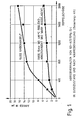
- the oxide layer of the first sample (untreated) after 2000 double drawers 16 / had decreased by the abrasion with the second sample was (heat treated) only 6 / um.
- the decrease in layer thickness in the area near the surface was significantly higher in the untreated sample; that is, the outer surface of the oxide layer, which is first claimed in practice, was relatively soft.
- the fluctuations in the oxide layer thickness for GD-AlSi12Cu in the "cast untreated" state were very large, while when using the process according to the invention (refined melt and heat treatment of the cast part), a very uniform layer thickness was achieved for die-casting alloys during anodic oxidation .
- the layer thicknesses of the well-known anodizable alloy GD-AlMg9 were approximately the same regardless of the heat treatments carried out in the same way. Based on this finding, the different behavior of the die casting alloy GD-AlSi12Cu was not to be expected.
- the anodized samples of GD-AlSi12Cu showed a significant improvement in the abrasion resistance when using the listed heat treatment before the anodic oxidation, while the same heat treatment with GD-AlMg9 did not affect the abrasion resistance.
Landscapes
- Chemical & Material Sciences (AREA)
- Organic Chemistry (AREA)
- Engineering & Computer Science (AREA)
- Materials Engineering (AREA)
- Metallurgy (AREA)
- Electrochemistry (AREA)
- Crystallography & Structural Chemistry (AREA)
- Mechanical Engineering (AREA)
- Physics & Mathematics (AREA)
- Thermal Sciences (AREA)
- Chemical Kinetics & Catalysis (AREA)
- Molds, Cores, And Manufacturing Methods Thereof (AREA)
- Mold Materials And Core Materials (AREA)
- Cylinder Crankcases Of Internal Combustion Engines (AREA)
- Solid-Phase Diffusion Into Metallic Material Surfaces (AREA)
- Superconductors And Manufacturing Methods Therefor (AREA)
- Treatment Of Steel In Its Molten State (AREA)
- Thermally Insulated Containers For Foods (AREA)
- Manufacture Of Alloys Or Alloy Compounds (AREA)
Abstract
Description
- Die Erfindung betrifft ein Verfahren zur Hart-Anodisation von im Vakuumdruckguß hergestellten Aluminium-Gußteilen mit einem Silizium-Gehalt von mehr als 5 %, einem Strontium-Gehalt von 0,005 - 0,08 % und/oder einem Natriumgehalt von 0,003 - 0,02 %.
- Aus der Zeitschrift "Gießerei", 1982, Heft 19, Seite 521 ff., ist es bekannt, vergütbare Aluminiumgußstücke durch Vakuumdruckgießen herzustellen. Die dabei verwendeten AlSi-Legierungen können auch aushärtende Zusatzelemente, wie Cu, Zn, Mg aufweisen. Durch die dort beschriebenen Maßnahmen wird erreicht, daß die Gasporosität der hergestellten Druckgußteile so gering ist, daß eine nachfolgende Lösungsglühbehandlung und Warmauslagerung zur Verbesserung der mechanischen Eigenschaften der Gußstücke durchgeführt werden kann. In allen Fällen konnte festgestellt werden, daß die Wärmebehandlung ohne innere und äußere Blasenbildung und Gefügeauflockung sowie Rißbildung überstanden wurde.
- Nach dieser Veröffentlichung ist es Ziel der Wärmebehandlung, eine möglichst hohe Festigkeit zu erreichen. Dies erfolgt erst bei längeren Glühzeiten und entsprechend hohen Temperaturen von etwa 500 °C.
- Aus der Zeitschrift "Aluminium 1978, Seite 396 ff., ist die Erzeugung und Anwendung von Hartoxidschichten an Konstruktionselementen aus Aluminium bekannt. Danach muß bei Legierungen mit hohem Anteil an Silizium oder Kupfer mit größeren Schwankungsbreiten der Schichtdickentoleranz gerechnet werden (Bild 2, Seite 397).
- Zwar lassen sich dabei Schichtdicken bis zu 100/um erzeugen, die Schichten weisen aber selbst an mechanisch vorbearbeiteten Flächen ein ungleichmäßiges Schichtwachstum auf (Bild 2, S. 397 der Veröffentlichung "Aluminium" 1978, S. 396 ff.). Hierdurch ergibt sich bei mechanischer Beanspruchung ein geringerer Verschleißwiderstand, da auch bei hoher Schichthärte die Verschleißfestigkeit von den Schwachstellen der Oxidschicht her begrenzt ist.
- Insbesondere Druckgußlegierungen wie GD-AlSi12, GD-AlSi12(Cu) und GD-AlSi9Cu3 lassen sich nur mit Hilfe von Sonderverfahren hartanodisieren (Aluminium-Taschenbuch, 14. Auflage 1983, S. 725; R. Nissen "Verschleißfeste Oberflächenschichten auf Aluminium -Hartanodisation- ", Metalloberfläche 36, (1982) 4, Seite 148-149; "Korrosions- und Verschleißschutz für Aluminium-Druckgußlegierungen", Firmeninformation AHC Kerpen, Metall 37 (1983) 4, Seite 304).
- Lediglich bei der Druckgußlegierung GD-AlMg9 ist nach dem bisherigen Stand der Technik eine Hartanodisation nach dem Gleichstrom-Schwefelsäureverfahren (GS-Verfahren) bzw. dem Gleichstrom-Schwefelsäure-Oxalsäureverfahren (GSX-Verfahren) bei niedriger Temperatur (0 - 5 °C) möglich. Si-haltige Druckgußlegierungen erfordern beim Hartanodisieren hingegen die Anwendung von aufwendigen Sonderverfahren mit bestimmten Elektrolytmischungen bzw. Stromformen wie Gleichstrom mit überlagertem Wechselstrom (H. Winterhager, R. Nissen "Hart- anodisation mit Wechselstromüberlagerung" DFBO-Mitteilungen (1973) 10, Seiten 174\182) sowie Pulsanodisation (DE-OS 32 44 217). Andererseits lassen sich insbesondere kompliziert geformte Druckgußteile nur gießen, wenn Legierungen mit höheren Si-Gehalten verwendet werden.
- Aufgabe der vorliegenden Erfindung ist es, ein Verfahren zur Herstellung von gut anodisierbaren Druckgußteilen mit Si-Gehalten über 5 %, ggf. unter Zusatz von 1 - 5 % Cu, hergestellt durch Vakuumdruckgießen, anzugeben, das es ermöglicht, auf Gußstücken aus diesen Legierungen besonders wirtschaftlich nach dem GS- bzw. GSX-Verfahren eine verschleißfeste, gleichmäßig ausgebildete Hartoxidschicht herzustellen.
- Erfindungsgemäß wird dies durch die in den Patentansprüchen angegebenen Merkmale ermöglicht.
- Die Erfindung ermöglicht nun bei einer speziellen Wärmebehandlung der Gußstücke unter Zusatz von Natrium, Strontium, ggf. von Antimon, Calzium, Barium und Lanthan zur Legierung eine Anodisationsschicht auf dem Gußteil mit gleichmäßigem Schichtaufbau.
- Die Zugabe von weiteren Legierungsbestandteilen, wie Antimon, Calzium, Barium und/oder Lanthan sorgt für ein besonders glattes, dichtes Gefüge im Druckgußteil. Es sind keine Lunker oder Poren an der Gußoberfläche zu erkennen.
- Es ist besonders vorteilhaft, wenn das Aluminium-Gußteil zusätzlich 1 - 5 % Kupfer aufweist. Dann bildet sich eine gleichmäßige Hartoxidschicht mit hoher Schichtdicke aus. Bei einem Si-Gehalt zwischen 8 und 14 % hat es sich gezeigt, daß die Oberflächenschicht nach der Hartanodisation besonders verschleißfest ist. Die in den Unteransprüchen 3 - 5 angegebenen Zusatzelemente entfalten ihre Wirkung besonders günstig bei Glühtemperaturen zwischen 430 und 480 °C.
- Die erfindungsgemäß angewandten Temperaturen ermöglichen nun bei einer speziellen Wärmebehandlung der Gußstücke unter Zusatz von Natrium, Strontium, ggf. von Antimon, Calcium, Barium und/oder Lanthan zur Legierung, daß eine Hartanodisationsschicht auf den Gußteiloberflächen mit sehr gleichmäßigem Schichtaufbau erzeugt werden kann.
- Bei Durchführung des erfindungsgemäßen Verfahrens wird während der Glühbehandlung des Gußteils eine Einformung der Silizium-Partikel und eine homogenere Verteilung bewirkt.
- Bei der Hartanodisation hat dies zur Folge, daß im Unterschied zu nicht geglühten Gußteilen die relativen Unterschiede der Oxidschichtdicken gering sind. Zudem steigt die Anodisationsspannung beim Hartanodisieren langsamer an, weshalb weniger Wärme erzeugt wird. Daraus folgt eine geringere chemische Rücklösung der Oxidschicht und damit eine größere Härte und höhere Verschleißfestigkeit. Auch das Aussehen der Oxidschicht wird dadurch einheitlicher.
- Im folgenden wird die Erfindung anhand mehrerer Ausfünrungsbeispiele näher erläutert.
- Ein Gußteil aus GD-A1Si10Mg (10 % Si, 0,3 % Fe, 0,25 % Mg) mit einem Sr-Zusatz von 0,02 %, hergestellt im Vakuumdruckgießverfahren, wurde nach Abdrehen der Oberfläche entfettet, kurz gebeizt und nach dem GSX-Verfahren mit einer Stromdichte von 2 A/dm2 während 70 min bei 10 °C anodisiert. Hierbei trat an der Oberfläche des Gußteils eine deutliche Gasbildung auf. Die bei dem Stromdurchgang von 140 A min/dm2 theoretisch mögliche Schichtdicke ("Aluminium" 41 (1965) 7, Seiten 417-422) von 46 /um wurde nicht erreicht.. Im Querschliff wurde eine Schichtdicke von 30 /um mit Einzelwerten bis herunter zu 20 /um gemessen.
- Eine Parallelyrobe wurde nach dem Gießen 15 min bei 180°Cgeglüht, in Wasser abgeschreckt und 2 Stunden bei 150 °C warm ausgelagert. Bei Anwendung derselben Anodisationsbedingungen wurde an der Oberfläche dieses Teils nur eine schwache Gasbildung beobachtet. Dabei konnte eine wesentlich dickere Oxidschicht von 40 - 45/um entsprechend der theoretisch möglichen Schichtdicke ("Aluminium" 41 (1965) 7, Seiten 417-422) erzeugt werden. Die relative Schichtdickenschwankung war geringer als bei dem nicht wärmebehandelten Gußteil.
- Zusätzlich wurde das Abriebverhalten der beiden Proben mit Hilfe des Abriebgeräts "Typ 317 neu" von der Firma Erichsen untersucht ("Aluminium" 54 (1978) 8, Seiten 510-514). Hierbei wird die Oberfläche der Oxidschicht mit Hilfe eines mit Schmirgelpapier belegten Reibrades, das auf einer Fläche von 12 x 30 mm hin- und herbewegt wird, abgerieben. Die Schichtdikkenabnahme wird in Abhängigkeit von der Anzahl der Hin- und Her- bewegungen ("Doppelschübe") bestimmt. Als Anpreßdruck werden 4 N gewählt. Das Ergebnis dieser Versuche für die beschriebenen Proben ist in Fig. 1 dargestellt. Während die Oxidschicht der ersten Probe (unbehandelt) nach 2000 Doppelschüben um 16/um abgenommen hatte, betrug der Abtrag bei der zweiten Probe (wärmebehandelt) nur 6/um. Außerdem war die Schichtdickenabnahme im oberflächennahen Bereich (bis zu 800 Doppelschüben) bei der unbehandelten Prbbe wesentlich höher; d.h., die äußere Oberfläche der Oxidschicht, die in der Praxis zuerst beansprucht wird, war relativ weich.
- Ein Gußteil aus GD-AlS12Cu (11% Si, 0,9% Fe, 1% Cu, 0,4% Mg), veredelt mit 0,01 % Na, wurde im Vergleich zu einem Gußteil derselben Art aus GD-AlMg9 (8,4% Mg, 1,1% Si, 0,6% Fe) untersucht. Die Wärmebehandlung wurde gemäß der folgenden Tabelle durchgeführt. Anodisiert wurde 120 min nach dem GSX-Verfahren mit einer
- Stromdichte von 3 A/dm2, wobei theoretisch eine Oxidschichtdicke von 120/um zu erwarten war. An ebenen, vor der anodischen Oxidation mechanisch bearbeiteten Oberflächen wurde mit Hilfe des nach dem Wirbelstromverfahren arbeitenden Meßgeräts "Permascope" (DIN 50 984) die Schichtdicke gemessen.
- Die Meßergebnisse waren wie folgt:

- Wie die Aufstellung zeigt, waren die Schwankungen der Oxidschichtdicke bei GD-AlSi12Cu im Zustand "Guß unbehandelt" sehr groß, während bei Anwendung des erfindungsgemäßen Verfahrens (veredelte Schmelze u. Wärmebehandlung des Gußteiles) eine für Druckgußlegierungen bei der anodischen Oxidation sehr gleichmäßige Schichtdicke erzielt wurde. Bei der bekannt gut anodisierbaren Legierung GD-AlMg9 waren hingegen - unabhängig von den.inderselben Weise durchgeführten Wärmebehandlungen - die Schichtdicken annähernd gleich. Auf Grund dieses Befunds war das andersartige Verhalten der Druckgußlegierung GD-AlSi12Cu nicht zu erwarten.
- Das Abriebverhalten der anodisierten Proben wurde in derselben Weise, wie in Beispiel 1 beschrieben, geprüft.
- Hierbei ergaben sich die folgenden Abriebfestigkeiten:

- Die anodisierten Proben aus GD-AlSi12Cu zeigten eine erhebliche Verbesserung der Abriebfestigkeit bei Anwendung der aufgeführten Wärmebehandlung vor der anodischen Oxidation, während dieselbe Wärmebehandlung bei GD-AlMg9 sich auf die Abriebfestigkeit nicht auswirkte.
Claims (6)
Priority Applications (1)
| Application Number | Priority Date | Filing Date | Title |
|---|---|---|---|
| AT85114290T ATE50604T1 (de) | 1984-11-22 | 1985-11-09 | Verfahren zur hartanodisation von im vakuumdruckguss hergestellten aluminiumgussteilen. |
Applications Claiming Priority (2)
| Application Number | Priority Date | Filing Date | Title |
|---|---|---|---|
| DE3442591 | 1984-11-22 | ||
| DE19843442591 DE3442591A1 (de) | 1984-11-22 | 1984-11-22 | Verfahren zur hartanodisation von im vakuumdruckguss hergestellten aluminium-gussteilen |
Publications (3)
| Publication Number | Publication Date |
|---|---|
| EP0185192A2 true EP0185192A2 (de) | 1986-06-25 |
| EP0185192A3 EP0185192A3 (en) | 1987-02-25 |
| EP0185192B1 EP0185192B1 (de) | 1990-02-28 |
Family
ID=6250880
Family Applications (1)
| Application Number | Title | Priority Date | Filing Date |
|---|---|---|---|
| EP85114290A Expired - Lifetime EP0185192B1 (de) | 1984-11-22 | 1985-11-09 | Verfahren zur Hartanodisation von im Vakuumdruckguss hergestellten Aluminium-Gussteilen |
Country Status (3)
| Country | Link |
|---|---|
| EP (1) | EP0185192B1 (de) |
| AT (1) | ATE50604T1 (de) |
| DE (2) | DE3442591A1 (de) |
Cited By (1)
| Publication number | Priority date | Publication date | Assignee | Title |
|---|---|---|---|---|
| US6040059A (en) * | 1997-11-18 | 2000-03-21 | Luk Gmbh & Co. | Component made of an aluminium silicon cast alloy |
Families Citing this family (2)
| Publication number | Priority date | Publication date | Assignee | Title |
|---|---|---|---|---|
| AU2001219047A1 (en) * | 2000-09-18 | 2002-03-26 | Nikolai Alexandrovich Belov | Construction material based on aluminium and method for producing parts from said material |
| EP2096187A1 (de) * | 2008-02-28 | 2009-09-02 | Georg Fischer Engineering AG | Verfahren zum gleichzeitigen Wärmebehandeln und Beschichten eines Aluminiumbauteils sowie nach dem Verfahren hergestelltes Bauteil |
Family Cites Families (4)
| Publication number | Priority date | Publication date | Assignee | Title |
|---|---|---|---|---|
| DE1191116B (de) * | 1959-09-02 | 1965-04-15 | Ver Deutsche Metallwerke Ag | Verfahren zur Erzielung einer gleichmaessigen Graufaerbung von bestimmt einstellbarer Grautoenung an aushaertbaren Aluminiumlegierungen |
| FR1427043A (fr) * | 1964-12-02 | 1966-02-04 | Pechiney Prod Chimiques Sa | Procédé d'obtention de coloration spéciale des alliages d'aluminium-silicium |
| DE3244217A1 (de) * | 1982-11-30 | 1984-05-30 | Electro Chemical Engineering Gmbh, Zug | Verfahren zur anodischen oxydation von aluminiumlegierungen |
| JPS60250893A (ja) * | 1984-05-25 | 1985-12-11 | Sumitomo Light Metal Ind Ltd | アルミニウム製熱交換器用アルミニウム合金ろう |
-
1984
- 1984-11-22 DE DE19843442591 patent/DE3442591A1/de active Granted
-
1985
- 1985-11-09 AT AT85114290T patent/ATE50604T1/de not_active IP Right Cessation
- 1985-11-09 DE DE8585114290T patent/DE3576176D1/de not_active Expired - Lifetime
- 1985-11-09 EP EP85114290A patent/EP0185192B1/de not_active Expired - Lifetime
Cited By (1)
| Publication number | Priority date | Publication date | Assignee | Title |
|---|---|---|---|---|
| US6040059A (en) * | 1997-11-18 | 2000-03-21 | Luk Gmbh & Co. | Component made of an aluminium silicon cast alloy |
Also Published As
| Publication number | Publication date |
|---|---|
| DE3576176D1 (de) | 1990-04-05 |
| EP0185192B1 (de) | 1990-02-28 |
| DE3442591A1 (de) | 1986-05-22 |
| EP0185192A3 (en) | 1987-02-25 |
| DE3442591C2 (de) | 1993-07-15 |
| ATE50604T1 (de) | 1990-03-15 |
Similar Documents
| Publication | Publication Date | Title |
|---|---|---|
| DE69022543T2 (de) | Verfahren zur oberflächenbehandlung von aluminium und seinen legierungen. | |
| DE1446002C3 (de) | Verfahren zur Herstellung gleichmäßig gefärbter Oxidschichten auf Aluminium und Aluminiumlegierungen durch anodische Oxydation | |
| EP0902849B1 (de) | Kurzzeit-heissverdichtung anodisierter metalloberflächen mit tensidhaltigen lösungen | |
| DE3515462C2 (de) | ||
| DE1558628B2 (de) | Verfahren zur Herstellung einer oxidationsbestaendigen Kupferlegierung | |
| DE2826630A1 (de) | Verfahren zur verbesserung der korrosionseigenschaften von mit chrom plattierten gegenstaenden aus aluminium und aluminiumlegierungen | |
| CH495429A (de) | Aluminiumlegierung | |
| DE2455048A1 (de) | Verfahren zur herstellung von oberflaechenueberzuegen, sowie mittels desselben erhaltene ueberzuege und ueberzogene werkstuecke | |
| EP0857227B1 (de) | Kurzzeit-heissverdichtung anodisierter metalloberflächen | |
| EP0185192B1 (de) | Verfahren zur Hartanodisation von im Vakuumdruckguss hergestellten Aluminium-Gussteilen | |
| DE882168C (de) | Bad und Verfahren zur elektrolytischen Herstellung von Zinkueberzuegen | |
| DE1294031B (de) | Verfahren zur Waermebehandlung einer anodisch zu oxydierenden Al-Mg-Si-Knetlegierung | |
| DE2254857B2 (de) | Verfahren zur Herstellung von abnutzungsfesten Nickeldispersionsüberzügen | |
| DE10022657B4 (de) | Verfahren zur Oberflächenbehandlung von Aluminium oder Aluminiumlegierung und nach dem Verfahren behandelter Kolben einer Zylinder-Kolben-Anordnung | |
| DE3408753C2 (de) | Verfahren zur Herstellung eines Aluminiumsubstrats mit anodischer Oxidschicht für magnetische Aufzeichnungsmedien | |
| DE1496718C3 (de) | Verfahren zur anodischen Herstellung von eigenfarbenen Oxidüberzügen auf Aluminium und Aluminiumlegierungen | |
| DE1201562C2 (de) | Verfahren zur herstellung von porenarmen, warmrissunempfindlichen druckfussteilen aus almgsi-legierungen | |
| DE3838829A1 (de) | Anodisch oxidiertes und elektrolytisch eingefaerbtes gussteil aus einer titanhaltigen almg-gusslegierung | |
| DE102021003120A1 (de) | Metallfärbelösung für chemische umwandlungsbehandlung und verfahren zum färben von metall | |
| DE2431763C2 (de) | Verfahren zur Erniedrigung der magnetischen Suszeptibilität von Aluminiumlegierungen | |
| DE824396C (de) | Verfahren zur Verbesserung der Kriechfestigkeit von Nickellegierungen | |
| DE2443885B2 (de) | Verfahren zur oberflaechenbehandlung von eisenlegierungen durch galvanische abscheidung einer kupfer-zinn-legierung und anschliessende thermische diffusionsbehandlung | |
| DE3917187C2 (de) | ||
| DE957616C (de) | Verfahren zur galvanischen Herstellung gleichmäßig körniger, glänzender Oberflächen auf Aluminium und Aluminiumlegierungen | |
| EP0919645A2 (de) | Aluminiumdruckgussteil mit einer Aluminiumoxid-Konversionsschicht und Verfahren zu seiner Herstellung |
Legal Events
| Date | Code | Title | Description |
|---|---|---|---|
| PUAI | Public reference made under article 153(3) epc to a published international application that has entered the european phase |
Free format text: ORIGINAL CODE: 0009012 |
|
| AK | Designated contracting states |
Kind code of ref document: A2 Designated state(s): AT BE CH DE FR GB IT LI LU NL SE |
|
| PUAL | Search report despatched |
Free format text: ORIGINAL CODE: 0009013 |
|
| AK | Designated contracting states |
Kind code of ref document: A3 Designated state(s): AT BE CH DE FR GB IT LI LU NL SE |
|
| 17P | Request for examination filed |
Effective date: 19870217 |
|
| 17Q | First examination report despatched |
Effective date: 19880509 |
|
| GRAA | (expected) grant |
Free format text: ORIGINAL CODE: 0009210 |
|
| AK | Designated contracting states |
Kind code of ref document: B1 Designated state(s): AT BE CH DE FR GB IT LI LU NL SE |
|
| REF | Corresponds to: |
Ref document number: 50604 Country of ref document: AT Date of ref document: 19900315 Kind code of ref document: T |
|
| ITF | It: translation for a ep patent filed | ||
| REF | Corresponds to: |
Ref document number: 3576176 Country of ref document: DE Date of ref document: 19900405 |
|
| GBT | Gb: translation of ep patent filed (gb section 77(6)(a)/1977) | ||
| ET | Fr: translation filed | ||
| PLBE | No opposition filed within time limit |
Free format text: ORIGINAL CODE: 0009261 |
|
| STAA | Information on the status of an ep patent application or granted ep patent |
Free format text: STATUS: NO OPPOSITION FILED WITHIN TIME LIMIT |
|
| 26N | No opposition filed | ||
| ITTA | It: last paid annual fee | ||
| PGFP | Annual fee paid to national office [announced via postgrant information from national office to epo] |
Ref country code: GB Payment date: 19931025 Year of fee payment: 9 |
|
| PGFP | Annual fee paid to national office [announced via postgrant information from national office to epo] |
Ref country code: LU Payment date: 19931116 Year of fee payment: 9 Ref country code: FR Payment date: 19931116 Year of fee payment: 9 |
|
| PGFP | Annual fee paid to national office [announced via postgrant information from national office to epo] |
Ref country code: SE Payment date: 19931125 Year of fee payment: 9 Ref country code: AT Payment date: 19931125 Year of fee payment: 9 |
|
| PGFP | Annual fee paid to national office [announced via postgrant information from national office to epo] |
Ref country code: NL Payment date: 19931130 Year of fee payment: 9 |
|
| PGFP | Annual fee paid to national office [announced via postgrant information from national office to epo] |
Ref country code: BE Payment date: 19931206 Year of fee payment: 9 |
|
| PGFP | Annual fee paid to national office [announced via postgrant information from national office to epo] |
Ref country code: CH Payment date: 19931220 Year of fee payment: 9 |
|
| EPTA | Lu: last paid annual fee | ||
| PG25 | Lapsed in a contracting state [announced via postgrant information from national office to epo] |
Ref country code: LU Free format text: LAPSE BECAUSE OF NON-PAYMENT OF DUE FEES Effective date: 19941109 Ref country code: GB Effective date: 19941109 Ref country code: AT Effective date: 19941109 |
|
| PG25 | Lapsed in a contracting state [announced via postgrant information from national office to epo] |
Ref country code: SE Effective date: 19941110 |
|
| PG25 | Lapsed in a contracting state [announced via postgrant information from national office to epo] |
Ref country code: LI Effective date: 19941130 Ref country code: CH Effective date: 19941130 Ref country code: BE Effective date: 19941130 |
|
| EAL | Se: european patent in force in sweden |
Ref document number: 85114290.1 |
|
| BERE | Be: lapsed |
Owner name: VEREINIGTE ALUMINIUM-WERKE A.G. Effective date: 19941130 |
|
| PG25 | Lapsed in a contracting state [announced via postgrant information from national office to epo] |
Ref country code: NL Effective date: 19950601 |
|
| GBPC | Gb: european patent ceased through non-payment of renewal fee |
Effective date: 19941109 |
|
| NLV4 | Nl: lapsed or anulled due to non-payment of the annual fee | ||
| PG25 | Lapsed in a contracting state [announced via postgrant information from national office to epo] |
Ref country code: FR Effective date: 19950731 |
|
| REG | Reference to a national code |
Ref country code: CH Ref legal event code: PL |
|
| EUG | Se: european patent has lapsed |
Ref document number: 85114290.1 |
|
| REG | Reference to a national code |
Ref country code: FR Ref legal event code: ST |
|
| PGFP | Annual fee paid to national office [announced via postgrant information from national office to epo] |
Ref country code: DE Payment date: 20010122 Year of fee payment: 16 |
|
| PG25 | Lapsed in a contracting state [announced via postgrant information from national office to epo] |
Ref country code: DE Free format text: LAPSE BECAUSE OF NON-PAYMENT OF DUE FEES Effective date: 20020702 |