EP0094095A2 - Bicyclische Carbonsäuren und deren Alkyl- und Aralkylester - Google Patents
Bicyclische Carbonsäuren und deren Alkyl- und Aralkylester Download PDFInfo
- Publication number
- EP0094095A2 EP0094095A2 EP83104668A EP83104668A EP0094095A2 EP 0094095 A2 EP0094095 A2 EP 0094095A2 EP 83104668 A EP83104668 A EP 83104668A EP 83104668 A EP83104668 A EP 83104668A EP 0094095 A2 EP0094095 A2 EP 0094095A2
- Authority
- EP
- European Patent Office
- Prior art keywords
- octahydro
- dioxo
- pyridazo
- formula
- diazepine
- Prior art date
- Legal status (The legal status is an assumption and is not a legal conclusion. Google has not performed a legal analysis and makes no representation as to the accuracy of the status listed.)
- Granted
Links
- 0 BCN(C(C)(*)*)N(C(C)*)C(C(*)N**I)=O Chemical compound BCN(C(C)(*)*)N(C(C)*)C(C(*)N**I)=O 0.000 description 3
- JYVZGQHTVLULOE-FPLPWBNLSA-N CC(C)(C/C1=C(\C2)/C2I)N(CBC2)N2C1=O Chemical compound CC(C)(C/C1=C(\C2)/C2I)N(CBC2)N2C1=O JYVZGQHTVLULOE-FPLPWBNLSA-N 0.000 description 1
Classifications
-
- C—CHEMISTRY; METALLURGY
- C07—ORGANIC CHEMISTRY
- C07D—HETEROCYCLIC COMPOUNDS
- C07D209/00—Heterocyclic compounds containing five-membered rings, condensed with other rings, with one nitrogen atom as the only ring hetero atom
- C07D209/02—Heterocyclic compounds containing five-membered rings, condensed with other rings, with one nitrogen atom as the only ring hetero atom condensed with one carbocyclic ring
- C07D209/44—Iso-indoles; Hydrogenated iso-indoles
- C07D209/48—Iso-indoles; Hydrogenated iso-indoles with oxygen atoms in positions 1 and 3, e.g. phthalimide
-
- C—CHEMISTRY; METALLURGY
- C07—ORGANIC CHEMISTRY
- C07D—HETEROCYCLIC COMPOUNDS
- C07D231/00—Heterocyclic compounds containing 1,2-diazole or hydrogenated 1,2-diazole rings
- C07D231/02—Heterocyclic compounds containing 1,2-diazole or hydrogenated 1,2-diazole rings not condensed with other rings
- C07D231/04—Heterocyclic compounds containing 1,2-diazole or hydrogenated 1,2-diazole rings not condensed with other rings having no double bonds between ring members or between ring members and non-ring members
-
- C—CHEMISTRY; METALLURGY
- C07—ORGANIC CHEMISTRY
- C07D—HETEROCYCLIC COMPOUNDS
- C07D237/00—Heterocyclic compounds containing 1,2-diazine or hydrogenated 1,2-diazine rings
- C07D237/02—Heterocyclic compounds containing 1,2-diazine or hydrogenated 1,2-diazine rings not condensed with other rings
- C07D237/04—Heterocyclic compounds containing 1,2-diazine or hydrogenated 1,2-diazine rings not condensed with other rings having less than three double bonds between ring members or between ring members and non-ring members
-
- C—CHEMISTRY; METALLURGY
- C07—ORGANIC CHEMISTRY
- C07D—HETEROCYCLIC COMPOUNDS
- C07D403/00—Heterocyclic compounds containing two or more hetero rings, having nitrogen atoms as the only ring hetero atoms, not provided for by group C07D401/00
- C07D403/02—Heterocyclic compounds containing two or more hetero rings, having nitrogen atoms as the only ring hetero atoms, not provided for by group C07D401/00 containing two hetero rings
- C07D403/06—Heterocyclic compounds containing two or more hetero rings, having nitrogen atoms as the only ring hetero atoms, not provided for by group C07D401/00 containing two hetero rings linked by a carbon chain containing only aliphatic carbon atoms
-
- C—CHEMISTRY; METALLURGY
- C07—ORGANIC CHEMISTRY
- C07D—HETEROCYCLIC COMPOUNDS
- C07D487/00—Heterocyclic compounds containing nitrogen atoms as the only ring hetero atoms in the condensed system, not provided for by groups C07D451/00 - C07D477/00
- C07D487/02—Heterocyclic compounds containing nitrogen atoms as the only ring hetero atoms in the condensed system, not provided for by groups C07D451/00 - C07D477/00 in which the condensed system contains two hetero rings
- C07D487/04—Ortho-condensed systems
-
- C—CHEMISTRY; METALLURGY
- C07—ORGANIC CHEMISTRY
- C07F—ACYCLIC, CARBOCYCLIC OR HETEROCYCLIC COMPOUNDS CONTAINING ELEMENTS OTHER THAN CARBON, HYDROGEN, HALOGEN, OXYGEN, NITROGEN, SULFUR, SELENIUM OR TELLURIUM
- C07F9/00—Compounds containing elements of Groups 5 or 15 of the Periodic Table
- C07F9/02—Phosphorus compounds
- C07F9/28—Phosphorus compounds with one or more P—C bonds
- C07F9/38—Phosphonic acids [RP(=O)(OH)2]; Thiophosphonic acids ; [RP(=X1)(X2H)2(X1, X2 are each independently O, S or Se)]
- C07F9/3804—Phosphonic acids [RP(=O)(OH)2]; Thiophosphonic acids ; [RP(=X1)(X2H)2(X1, X2 are each independently O, S or Se)] not used, see subgroups
- C07F9/3886—Acids containing the structure -C(=X)-P(=X)(XH)2 or NC-P(=X)(XH)2, (X = O, S, Se)
-
- C—CHEMISTRY; METALLURGY
- C07—ORGANIC CHEMISTRY
- C07F—ACYCLIC, CARBOCYCLIC OR HETEROCYCLIC COMPOUNDS CONTAINING ELEMENTS OTHER THAN CARBON, HYDROGEN, HALOGEN, OXYGEN, NITROGEN, SULFUR, SELENIUM OR TELLURIUM
- C07F9/00—Compounds containing elements of Groups 5 or 15 of the Periodic Table
- C07F9/02—Phosphorus compounds
- C07F9/28—Phosphorus compounds with one or more P—C bonds
- C07F9/38—Phosphonic acids [RP(=O)(OH)2]; Thiophosphonic acids ; [RP(=X1)(X2H)2(X1, X2 are each independently O, S or Se)]
- C07F9/40—Esters thereof
- C07F9/4071—Esters thereof the ester moiety containing a substituent or a structure which is considered as characteristic
- C07F9/409—Compounds containing the structure P(=X)-X-acyl, P(=X) -X-heteroatom, P(=X)-X-CN (X = O, S, Se)
-
- C—CHEMISTRY; METALLURGY
- C07—ORGANIC CHEMISTRY
- C07F—ACYCLIC, CARBOCYCLIC OR HETEROCYCLIC COMPOUNDS CONTAINING ELEMENTS OTHER THAN CARBON, HYDROGEN, HALOGEN, OXYGEN, NITROGEN, SULFUR, SELENIUM OR TELLURIUM
- C07F9/00—Compounds containing elements of Groups 5 or 15 of the Periodic Table
- C07F9/02—Phosphorus compounds
- C07F9/547—Heterocyclic compounds, e.g. containing phosphorus as a ring hetero atom
- C07F9/645—Heterocyclic compounds, e.g. containing phosphorus as a ring hetero atom having two nitrogen atoms as the only ring hetero atoms
- C07F9/6509—Six-membered rings
- C07F9/650905—Six-membered rings having the nitrogen atoms in the positions 1 and 2
- C07F9/650947—Six-membered rings having the nitrogen atoms in the positions 1 and 2 condensed with carbocyclic rings or carbocyclic ring systems
-
- C—CHEMISTRY; METALLURGY
- C07—ORGANIC CHEMISTRY
- C07F—ACYCLIC, CARBOCYCLIC OR HETEROCYCLIC COMPOUNDS CONTAINING ELEMENTS OTHER THAN CARBON, HYDROGEN, HALOGEN, OXYGEN, NITROGEN, SULFUR, SELENIUM OR TELLURIUM
- C07F9/00—Compounds containing elements of Groups 5 or 15 of the Periodic Table
- C07F9/02—Phosphorus compounds
- C07F9/547—Heterocyclic compounds, e.g. containing phosphorus as a ring hetero atom
- C07F9/6561—Heterocyclic compounds, e.g. containing phosphorus as a ring hetero atom containing systems of two or more relevant hetero rings condensed among themselves or condensed with a common carbocyclic ring or ring system, with or without other non-condensed hetero rings
-
- C—CHEMISTRY; METALLURGY
- C07—ORGANIC CHEMISTRY
- C07K—PEPTIDES
- C07K5/00—Peptides containing up to four amino acids in a fully defined sequence; Derivatives thereof
- C07K5/04—Peptides containing up to four amino acids in a fully defined sequence; Derivatives thereof containing only normal peptide links
- C07K5/06—Dipeptides
- C07K5/06139—Dipeptides with the first amino acid being heterocyclic
Definitions
- the present invention relates to bicyclic compounds, a process for their preparation, medicaments containing these compounds and the use of these compounds.
- the compounds of formula I contain asymmetric carbon atoms and can therefore exist as optically pure diastereomers, as diastereomeric racemates or as diastereomeric mixtures.
- the present invention encompasses all of these forms.
- the compounds according to the invention preferably have the (S) configuration on each asymmetric carbon atom.
- alkyl used in the present description - alone or in combination - means straight-chain or branched alkyl radicals having 1-8, preferably 1-4, carbon atoms, such as methyl, ethyl, propyl, isopropyl, butyl, tert-butyl; Pentyl and hexyl.
- the aryl radical in aralkyl, aryloxycarbonylaminoalkyl, aralkoxycarbonylaminoalkyl, arylaminocarbonylaminoalkyl, aralkyl aminocarbonylaminoalkyl or arylsulfonylaminoalkyl is the phenyl group which can be substituted one or more times by halogen (ie fluorine, chlorine, bromine or iodine), alkyl, alkoxy, trifluoromethyl, phenyl and the like.
- aryl groups are phenyl, 4-chlorophenyl, p-tolyl, biphenylyl and the like and examples of aralkyl groups are benzyl, 4-chlorobenzyl, 2-phenylethyl, 3-phenylpropyl, 3- (4-chlorophenyl) propyl, 3- (4- Methoxyphenyl) propyl, 4-phenylbutyl and the like.
- Aminomethyl, 2-aminoethyl and the like are examples of aminoalkyl groups.
- monoalkylaminoalkyl groups methylaminomethyl, 2-methylaminoethyl, 2-ethylaminoethyl and the like and as examples of dialkylaminoalkyl groups, 2-dimethylaminoethyl, 2-diethylaminoethyl, 3-dimethylaminopropyl and the like can be mentioned.
- the acyl radical of an acylaminoalkyl group is derived from a saturated or unsaturated aliphatic carboxylic acid, a cycloaliphatic carboxylic acid, an aromatic carboxylic acid, an araliphatic carboxylic acid or a heterocyclic carboxylic acid, such as acetic acid, propionic acid, butyric acid, valeric acid, cyclopropane carboxylic acid, cyclopentane carboxylic acid, benzbenoic acid, benzoic acid, benzoic acid, Phenylacetic acid, nicotinic acid and the like.
- alkoxy group and the alkoxy radical in an alkoxycarbonyl group is straight-chain or branched and contains 1-8, preferably 1-4 carbon atoms.
- Specific examples of alkoxycarbonyl groups are methoxycarbonyl and ethoxycarbonyl.
- a heteromonocyclic ring pyrrolidine, piperidine, morpholine, thiamorpholine and the like can be mentioned.
- R 1 is hydrogen, alkyl, aralkyl, aminoalkyl, monoalkylaminoalkyl, dialkylaminoalkyl, acylaminoalkyl, alkoxycarbonylaminoalkyl, aryloxycarbonylaminoalkyl, aralkoxycarbonylaminoalkyl, alkylaminocarbonylaminoalkyl, arylaminocarbonylaminoalkyl, aralkylaminocylylaminoalkyl, aralkylaminocylylaminoalkyl, aralkylaminoalkyl, aralkylaminoaminoalkyl sulfonylaminoalkyl, R carboxyl or alkoxycarbonyl or a group of the formula (i) and R3 carboxyl or alkoxycarbonyl.
- a preferred class of compounds according to the invention are those in which B is methylene or ethylene.
- R 1 preferably denotes alkyl, aralkyl, acylaminoalkyl, phthalimidoalkyl, aralkoxycarbonylaminoalkyl or arälkylaminocarbonylaminoalkyl.
- R 2 is preferably carboxyl, alkoxycarbonyl or aralkoxycarbonyl or a group of the formula (ii).
- R 3 preferably denotes a carboxyl group. Compounds of the formula I in which n is 2 are also preferred.
- the reaction of a compound of formula II with a compound of formula III according to process variant a) is carried out in a manner known per se.
- the reaction is expediently carried out in an inert organic solvent in the presence of an acid-binding agent.
- Suitable inert organic solvents are aromatic hydrocarbons such as benzene or toluene, dimethylformamide and the like.
- the acid-binding agent is preferably an inorganic base, particularly preferably a tertiary organic base such as triethylamine and the like. If an excess of a compound of formula III is used, this also serves as an acid binder.
- the reaction is expediently carried out at elevated temperature, for example at a temperature between about 60 ° and the reflux temperature of the reaction mixture.
- the reductive alkylation of a compound of formula IV with a compound of formula V according to the process variant b) is also carried out in a manner known per se.
- the reaction is carried out in the presence of Natriumcyan b orhydrid in a suitable solvent such as water, a mixture of water and an alkanol, for example aqueous ethanol, and the like.
- the reaction is expediently carried out under neutral reaction conditions and at approximately room temperature.
- the compound of formula IV is reacted with the compound of formula V and the ship base obtained is catalytically hydrogenated in situ. In this catalytic hydrogenation, a vinylene group B is simultaneously reduced to the ethylene group.
- the catalytic hydrogenation is carried out under the usual reaction conditions, for example using a noble metal catalyst such as palladium on carbon or Raney nickel, in an inert organic solvent, such as an alkanol, for example ethanol, at room temperature and a pressure of 1-10 atmospheres.
- a noble metal catalyst such as palladium on carbon or Raney nickel
- an inert organic solvent such as an alkanol, for example ethanol
- reaction of a compound of formula IV, in which R 3 is alkoxycarbonyl or aralkoxycarbonyl, with a compound of formula VI according to process variant c) is conveniently carried out in the presence of an inert organic solvent such as dimethylformamide, dimethylsulfoxide, acetonitrile and the like at a temperature between about 0 ° and 100 ° C and in the presence of an acid binder such as an alkali metal carbonate, such as sodium carbonate, a tert. organic base, for example triethylamine, or a basic ion exchange resin.
- an inert organic solvent such as dimethylformamide, dimethylsulfoxide, acetonitrile and the like at a temperature between about 0 ° and 100 ° C
- an acid binder such as an alkali metal carbonate, such as sodium carbonate, a tert. organic base, for example triethylamine, or a basic ion exchange resin.
- the leaving group denoted by Q in a compound of the formula VI can be, for example, a halogen atom, such as a bromine atom or a sulfonate group of the formula -O-S0 2 Y, where Y is methyl, trifluoromethyl, p-tolyl and the like.
- a halogen atom such as a bromine atom or a sulfonate group of the formula -O-S0 2 Y, where Y is methyl, trifluoromethyl, p-tolyl and the like.
- the catalytic hydrogenation of a compound of formula I, in which B is vinylene, according to process variant e) is also carried out by known methods.
- Suitable catalysts which can be used are noble metal catalysts such as palladium, platinum, rhutenium or rhodium, and Raney-Nicxel.
- the noble metal catalysts can be applied to a suitable support material, such as palladium on carbon, rhodium on aluminum oxide and the like.
- the catalytic hydrogenation is carried out in a conventional inert organic solvent such as an aromatic hydrocarbon, e.g. Benzene, toluene, xylene, etc., an alkanol, e.g. Methanol, ethanol etc. or an ether e.g. Dioxane etc.
- the catalytic hydrogenation is preferably carried out at room temperature and atmospheric pressure, although it can also be carried out at elevated temperature and / or pressure.
- esterification of a compound of the formula I in which R 2 and / or R 3 is carboxyl likewise takes place in a manner known per se.
- a compound of formula I, wherein R 2 and / or R 3 is carboxyl with a suitable alkanol, for example methanol, ethanol etc., in the presence of an acid, for example a mineral acid such as hydrochloric acid etc. or with a suitable diazoalkane, for example Diazomethane or phenyldiazomethane, implemented.
- a compound of the formula I in which R 2 and / or R 3 are carboxyl can be converted in a known manner, for example by reaction with thionyl chloride, phosphorus trichloride or phosphorus pentachloride, into the corresponding acid chloride, which is then likewise known in a known manner suitable alkanol is implemented.
- a compound of the formula I in which R 2 and / or R 3 is carboxyl can also be reacted with isobutene in the presence of sulfuric acid, the corresponding Ver receives bond of formula I, wherein R 2 and / or R 3 ter t . Butoxycarbonyl mean.
- a compound of the formula I in which R 2 and / or R 3 is alkoxycarbonyl is converted according to process variant g) by reaction with an acid or a base into the corresponding compound of the formula I in which R 2 and / or R is carboxyl.
- This transfer is carried out in a known manner, for example by reaction with an alkali metal hydroxide, such as sodium hydroxide or potassium hydroxide, advantageously at a temperature between room temperature and the boiling point of the reaction mixture or, if the alkoxycarbonyl group is tert. Butoxycarbonyl group, by reacting with anhydrous acid.
- the cleavage according to process variant i) is carried out in a manner known per se, the specific method chosen depending on the type of group to be cleaved.
- an aralkoxycarbonyl group e.g. Benzyloxycarbonyl, split off by hydrogenolysis or hydrolysis.
- acids of the formula I can be reacted with pharmaceutically acceptable ones Acids or bases into which pharmaceutically acceptable salts are converted.
- pharmaceutically usable acids are inorganic acids, such as hydrohalic acids, for example hydrogen bromide or hydrogen chloride, sulfuric acid, phosphoric acid and nitric acid, and organic acids, such as acetic acid, maleic acid, fumaric acid, tartaric acid, citric acid, methanesulfonic acid and p-toluenesulfonic acid.
- Examples of pharmaceutically usable bases are alkali metal hydroxides, for example sodium or potassium hydroxide, alkaline earth metal hydroxides, for example calcium or magnesium hydroxide, ammonium hydroxide and organic bases, for example dicyclohexylamine.
- the other starting materials of formula II are still new and also the subject of the present invention. You can, for example, by cyclization of a compound of the general formula wherein R 4 , R 5 , n, B and Hal are as defined above and X is halogen and R 30 is alkoxycarbonyl.
- an alkoxycarbonyl group R 30 in the product obtained can be converted into carboxyl or into another alkoxycarbonyl or aralkoxycarbonyl group.
- the cyclization of a compound of formula VIII takes place according to conventional methods, for example in In the presence of a suitable inert organic solvent, such as dimethylformamide or tetrahydrofuran, if desired in the presence of a base, such as an alkali metal carbonate, for example sodium carbonate, potassium carbonate, etc. or a tertiary organic base, for example triethylamine, n-ethylmorpholine, etc., at a suitable temperature between 0 ° and 80 ° C.
- a suitable inert organic solvent such as dimethylformamide or tetrahydrofuran
- a base such as an alkali metal carbonate, for example sodium carbonate, potassium carbonate, etc. or a tertiary organic base, for example triethylamine, n-ethy
- the compounds of the formula VIII, in which R 4 and R 5 are each hydrogen, can be prepared, for example, by using a compound of the general formula with a compound of the general formula implemented and in the compound of the general formula obtained removed the benzyloxycarbonyl group, wherein in the above formulas B, R 30 , n X and Hal have the above meaning and Z is benzyloxycarbonyl.
- reaction of a compound of formula IX, which is known or is an analog to a known compound, with a compound of formula X, which is also known or is an analog of a known compound is carried out by generally known methods, for example in the presence of an inert organic solvent , e.g. a halogenated hydrocarbon such as methylene chloride and in the presence of an acid binding agent such as an alkali metal carbonate, e.g. Sodium carbonate, or an alkali metal bicarbonate, e.g. Sodium bicarbonate, at around room temperature.
- an inert organic solvent e.g. a halogenated hydrocarbon such as methylene chloride
- an acid binding agent such as an alkali metal carbonate, e.g. Sodium carbonate, or an alkali metal bicarbonate, e.g. Sodium bicarbonate, at around room temperature.
- the benzyloxycarbonyl group can be split off from a compound of the formula XI, for example by reaction with hydrogen bromide in glacial acetic acid at about room temperature or by means of hydrogen in the presence of a catalyst by known methods.
- Bz means benzyl, converts the benzyl and benzyloxycarbonyl groups in the compound of the general formula obtained wherein B, R 30 , n, Hal, Bz and Z have the above meaning, removed and the acid obtained of the general formula where B, R 30 , n and Hal have the meaning given above, converted into the corresponding acid halide.
- reaction of a compound of formula IX with a compound of formula XII can be carried out in an analogous manner to that indicated above for the reaction of a compound of formula IX with a compound of formula X.
- the benzyl and benzyloxycarbonyl groups can be removed from a compound of the formula XIII by generally known methods, for example by means of Hydrogen in the presence of a catalyst, such as a noble metal catalyst, for example palladium on carbon, or if R 30 is something other than tert.
- a catalyst such as a noble metal catalyst, for example palladium on carbon, or if R 30 is something other than tert.
- Butoxycarbonyl means, using hydrogen bromide in glacial acetic acid.
- the conversion of an acid of the formula XIV into the corresponding acid halide of the formula VIII can also be carried out by known methods, for example using a suitable halogenating agent, such as thionyl chloride, phosphorus pentachloride and the like.
- a suitable halogenating agent such as thionyl chloride, phosphorus pentachloride and the like.
- the compounds of formula IV can be prepared for example by reacting a compound of formula II with a lkalimetallazid A and the azide of the general formula obtained wherein B, R 3 , R 4 , R and n have the above meaning reduced.
- reaction of a compound of formula II with an alkali metal azide is carried out in a known manner, for example in the presence of an inert organic solvent, such as a ketone, for example acetone, at an elevated temperature, for example at the reflux temperature of the reaction mixture.
- an inert organic solvent such as a ketone, for example acetone
- an azide of formula XV is reacted with triphenylphosphine in a suitable inert organic solvent, such as dioxane, at about room temperature and then using acid, e.g. Hydrochloric acid, hydrolyzed.
- a suitable inert organic solvent such as dioxane
- the compounds of the formula IV can also be obtained, for example, by cyclization of a compound of the general formula wherein B, R 30 , R 4 , R 5 , n and X are as defined above and R 8 is phthaloylamino, and removing the phthaloyl group from the compound of the general formula obtained wherein B, R 30 , R 4 , R 5 , R and n have the above meaning are obtained.
- the alkoxydarbonyl group R 30 may, before or after removal of the phthaloyl group, optionally in carboxyl, another alkoxycarbonyl or aralkoxycarbonyl group be transferred.
- the cyclization of a compound of formula XVI can be carried out according to generally known methods, for example essentially in the same manner as indicated above in connection with the cyclization of a compound of formula VIII.
- the compounds of formula XVI are preferably cyclized in situ.
- the phthaloyl group is also removed from a compound of the formula XVII in a manner known per se by means of hydrazine, advantageously in an inert organic solvent such as an alkanol, e.g. Ethanol, at room temperature or at an elevated temperature, e.g. at the reflux temperature of the reaction mixture.
- an alkanol e.g. Ethanol
- the compounds of the formula XVI, in which R 4 and R 5 are each hydrogen, can, for example, by reacting a compound of the above formula IX with a compound of the general formula wherein R 8 , n and X are as defined above, and cleaving off the benzyloxycarbonyl group from the compound of the general formula obtained wherein B , R 30 , R8, n, X and Z are as defined above.
- reaction of a compound of formula IX with a compound of formula XVIII, which is known or an analog of a known compound can be carried out in the same manner as indicated above in connection with the reaction of a compound of formula IX with a compound of formula X. .
- the benzyloxycarbonyl group can be cleaved from a compound of the formula XIX in the same manner as indicated above in connection with the cleavage of the benzyloxycarbonyl group from a compound of the formula XI.
- the compounds of formula XVI, wherein R 4 and R 5 together represent an oxo group can be prepared by, for example, a compound of the above formula IX with a compound of the general formula wherein R, n and Bz have the meaning given above, the benzyl and benzyloxycarbonyl groups from the compound of the general formula obtained wherein B, R 8 , R 30 , n, Z and Bz have the meaning given above, and cleaves off the acid of the general formula wherein B, R 8 , R30 and n have the meaning given above, converted into the corresponding acid halide.
- reaction of a compound of the formula IX with a compound of the formula XX which is known or is an analog to a known compound can be carried out under the same reaction conditions as indicated above in connection with the reaction of a compound of the formula IX with a compound of the formula X. .
- benzyl and benzyloxycarbonyl groups can be cleaved from a compound of the formula XXI in the same manner as stated above in connection with the cleavage of these groups from a compound of the formula XIII.
- the compounds of the formulas V and VI used as starting materials in process variants b) and c) are either known or analogs of known compounds, which in turn can be prepared in a manner similar to the known compounds.
- the compounds of formula I and their pharmaceutically acceptable salts are valuable antihypertensives. They inhibit the angiotensin converting: enzyme (ACE), which is responsible for the conversion of angiotensin I to angiotensin II, and are therefore useful for reducing or relieving high blood pressure caused by angiotensin.
- ACE angiotensin converting: enzyme
- the activity of the present compounds to inhibit the angiotensin converting enzyme in vitro can be determined by the following test.
- the method used is based on a method by Cushman and Cheung (Biochem. Pharmacol., 20, 1637-1648) taking into account the modifications by Hayakari et al. (Anal. Biochem., 84, 361-369).
- the substrate (hippurylhistidyl-leucine, 2 mM) in the absence or presence of various concentrations of the test compounds in potassium phosphate buffer (pH 8.3; 100 mM) containing sodium chloride (3 mM) with angiotensin converting enzyme for 24 minutes at 37 ° C (Total value 500 ⁇ l) (If the test substance is an ester, it is advisable to cleave it using pork liver esterase before running the test).
- the reaction is stopped by adding 3 ml of potassium phosphate buffer (pH 8.3; 200 mM) at 0 ° C. Then 2,4,6-trichloro-s-triazine (3%) in 1.5 ml of dioxane are added and the mixture obtained is shaken, until the yellow chromophore is fully developed. The samples are then centrifuged in order to separate any solid that may have formed. The yellow chromophore formed by reaction of 2,4,6-trichloro-s-triazine with free hippuric acid is measured spectrophotometrically at 382 nm.
- the IC 50 value is the concentration of a test compound which reduces the cleavage of hippuryl-histidyl-leucine by means of an enzyme converting angiotensin by 50% under the conditions mentioned above.
- the compounds of the formula I and their pharmaceutically usable salts can be used as pharmaceuticals in the form of pharmaceutical preparations which contain these compounds together with suitable pharmaceutical carrier materials.
- suitable carrier materials are organic or inorganic carrier materials suitable for enteral, for example oral or parenteral administration, for example water, gelatin, gum arabic, lactose, starch, magnesium stearate, talc, vegetable oils, polyalkylene glycols, petroleum jelly and the like.
- the pharmaceutical preparations can be processed in solid form, for example as tablets, dragees, suppositories or capsules or in liquid form, for example as solutions, suspensions or emulsions.
- the pharmaceutical preparations can be subjected to conventional pharmaceutical treatments, such as sterilization, and / or contain additives, such as preservatives, stabilizers, wetting agents or emulsifiers, salts for varying the osmotic pressure or buffers.
- additives such as preservatives, stabilizers, wetting agents or emulsifiers, salts for varying the osmotic pressure or buffers.
- the pharmaceutical preparations can also be used therapeutically contain valuable connections.
- the compounds of the formula I and their pharmaceutically acceptable salts can be administered to adults in daily doses of about 0.1 to 100 mg, preferably about 1-50 mg / kg of body weight.
- the daily dose can be administered in a single dose or in divided doses. It should be emphasized at this point that the above dosages are given as examples and that they can be varied up or down depending on factors such as the specific properties of the compound or salt administered, the mode of administration, the degree of the indication to be treated and the condition of the patient as determined by the treating doctor.
- the pH is adjusted to 7.5-8 by adding sodium hydroxide solution and the mixture is left to stand for 3 days.
- 100 ml of diethyl ether, 20 ml of water and 30 g of Duolit C 225 ion exchange resin (h + form) are added and the mixture is thoroughly mixed for 100 minutes.
- the ethereal phase is then removed and the aqueous phase containing the resin is placed on a column which is filled with another 10 g of the above resin.
- the column is washed with 80 ml of water and then eluted with 200 ml of water containing 2% pyridine.
- Diastereomer A is eluted before Diastereomer B; Diastereomer A also has a higher Rf value on silica gel thin layer chromatography plates which are eluted with butan-1-ol / water / acetic acid (4: 1: 1).
- diastereomer A and 0.35 g of diastereomer B are obtained in the form of the ammonium salts, from which the ammonia is removed by means of Duolit C 225 resin, using 2% pyridine-containing water as eluent.
- the mixture is evaporated, the residue is diluted with 120 ml of ethyl acetate and the solution obtained is extracted with twice 50 ml of water and with 5 ml of saturated aqueous sodium bicarbonate solution.
- the aqueous extracts are washed with 30 ml of diethyl ether, then acidified (pH 3-4) and extracted with 100 ml of ethyl acetate and 50 ml of ethyl acetate.
- the two diastereomers are separated by chromatography on a silica gel column using diethyl ether which contains 5-15% acetic acid as the eluent.
- the diastereomer with the lower Rf value is dissolved in toluene and treated with dry hydrogen chloride.
- a solution of 3.0 g of sodium cyanoborohydride in 40 ml of 50% aqueous ethanol is converted into a stirred suspension of 9.3 g of ethyl 2-oxo-4-phenylbutanoate and 3.4 g of octahydro-8 (s) - amino-6, 9-dioxopyridazo [1,2-a] pyridazin-1-carboxylic acid (diastereomer B) in 90 ml of 50% aqueous ethanol.
- Two further portions of 3.1 g of ethyl 2-oxo-4-phenylbutanoate are added at one-hour intervals and the mixture is stirred at 20 ° for 18 hours.
- a solution of 160 mg of sodium hydroxide in 8 ml of water becomes a solution of 403 mg of methyl octahydro-8- (1-methoxycarbonyl-3-phenylpropylamino) -9-oxopyridazo [1,2-a] pyridazine-1-carboxylate (racemate A) added to 8 ml of methanol, and the mixture was stirred at room temperature for 3 hours.
- the solution obtained becomes 8 ml zerolit 225 ion exchange resin (H + form).
- a solution of 120 mg of sodium hydroxide in 6 ml of water becomes a solution of 240 mg of methyl octahydro-8- (1-methoxycarbonyl-3-phenylpropylamino) -9-oxo-pyridazo [1,2-a] pyridazine-1-carboxylate (Racemat B) added to 6 ml of methanol, and the mixture was stirred for 3 hours at room temperature. The solution obtained is added to 6 ml of Z with 225 ion exchange resin (H ⁇ form).
- 8-amino-1,4,6,7,8,9-hexahydro-6,9-dioxopyridazo [1,2-a] pyridazin-1 is obtained from 90 mg -carboxylic acid 8- (1-carboxy-3-phenylpropylamino) -1,4,6,7,8,9-hexa- hydro-6,9-dioxopyridazo [1,2-a] pyridazine-1-carboxylic acid in the form of a lyophilized mixture from Diastereo meren.
- racemate B 2- (1- carboxy-3-phenylpropylamino) -hexahydro-3-oxo-lH-pyrazolo [1,2-a] pyridazine-5-carboxylic acid
- a solution of 160 mg of sodium hydroxide in 10 ml of water becomes a solution of 1.04 g of methyl 8- (5-benzyloxyformamido-l-ethoxycarbonylpentylamino) octahydro-9-oxo pyridazo [1,2-a] pyridazin-1 -carboxylate (2 diastereomers) in 10 ml of methanol, and the mixture was stirred for 3 hours at room temperature. A further 80 mg of sodium hydroxide in 5 ml of water are then added, and the mixture is stirred for a further 2 hours. The solution obtained is added to 10 ml of Z erolit 225 ion exchange resin (H + form).
- a solution of 210 mg of sodium hydroxide in 17 ml of water becomes a solution of 740 mg of methyl 8- (1-methoxycarbonyl-4-phenylbutylamino) octahydro-9-oxopyridazo [1,2-aJ-pyridazine-1-carboxylate (Racemat A ) in 13 ml of methanol, and the mixture was stirred at room temperature for 13 hours. The solution obtained is added to 25 ml of Zerolit 225 ion exchange resin (H + form).
- a solution of 240 mg of sodium hydroxide in 15 ml of water becomes a solution of 834 mg of methyl 8- (1-methoxycarbonyl-4-phenylbutylamino) octahydro-9-oxopyridazo [1,2-a] pyridazine-1-carboxylate (Racemat B ) in 15 ml of methanol, and the mixture was stirred for 3 hours at room temperature. The solution obtained is added to 30 ml of Zerolit 225 ion exchange resin (H form).
- Extensive chromatography of the remaining oil on silica gel initially provides 0.35 g (14%) of methyl 8- (1-methoxycarbonyl-4-methylpentylaminö) octahydro-9-oxopyridazo [1,2-a] pyridazine-1-carboxylate (Racemat A ) as a white solid with a melting point of 81-84 ° (from ethyl acetate / n-hexane) and then 0.15 g (6%) of methyl 8- (1-methoxycarbonyl-4-methylpentylamino) -octahydro-9-oxopyridazo [1,2 -a] pyridazine-1-carboxylate (Racemat B) in the form of a light yellow oil.
- a solution of 156 mg of sodium hydroxide in 8 ml of water becomes a solution of 490 mg of methyl 8- (1-methoxycarbonyl-4-methylpentylamino) octahydro-9-oxopyridazo [1,2- ⁇ -pyridazine-1-carboxylate (Racemat A ) in 8 ml of methanol, and the mixture was stirred for 3 hours at room temperature. The solution obtained is added to 20 ml of Zerolit 225 ion exchange resin (H form).
- a solution of 48 mg sodium hydroxide in 3 ml water becomes a solution of 150 mg methyl 8- (1-methoxycarbonyl-4-methylpentylamino) octahydro-9-oxopyridazo [1,2-a] pyridazine-1-carboxylate (Racemat B ) in 3 ml of methanol, and the mixture was stirred for 2 1/2 hours at room temperature.
- the solution obtained is added to 8 ml of Zerolit 225 ion exchange resin (H + form).
- a solution of 80 mg of sodium hydroxide in 10 ml of water becomes a solution of 775 mg of methyl 8- [5- (3-benzyl-ureido-1-ethoxycarbonyl) pentylamino] octahydro-9-oxopyridazo- [1,2-a] pyridazine -1-carboxylate (2 diastereomers) in 10 ml of methanol, and the mixture was stirred for 2 hours at room temperature. A further 40 mg of sodium hydroxide in 5 ml of water are then added and the mixture is stirred for a further 2 hours. The solution obtained is added to 30 ml of Zerolit 225 ion exchange resin (H + form).
- a solution of 160 mg of sodium hydroxide in 10 ml of water becomes a solution of 1.05 g of methyl octahydro-8- [l-methoxycarbonyl-5- (p-toluenesulfonamido) pentylamino] -9-oxopyridazo [1,2-Jpyridazin-1 -carboxylate (2 diastereomers) in 15 ml of methanol, and the mixture was stirred for 2 1/2 hours at room temperature. A further 80 mg of sodium hydroxide in 5 ml of water are then added and the mixture is stirred for a further hour. The solution obtained is added to 40 ml of Zerolit 225 ion exchange resin (H + form).
- a solution of 115 mg of sodium hydroxide in 8 ml of water becomes a solution of 900 mg of methyl 8- / C5- (6-benzyloxyformamidohexanamido) -1-ethoxycarbonyl] pentylamino / -octa-hydro-9-oxopyridazo [1,2- a] pyridazine-1-carboxylate (2 diastereomers) in 12 ml of methanol, and the mixture was stirred for 2 1/2 hours at room temperature. A further 57 mg of sodium hydroxide in 4 ml of water are then added and the mixture is stirred for a further 2 1/2 hours.
- 8-amino-1,4,6,7,8,9-hexahydro-6,9-dioxopyridazo [1,2-a] pyridazin-1- is obtained from 1.78 g. carboxylic acid in 30% yield (calculated on the converted amino acid starting material) 0.54 g of 8 (S) - [1- (R, S) -ethoxycarbonyl-3-phenylpropylamino] -1,4,6,7,8,9 -hexahydro - 6,9-dioxopyri- dazo [1,2-a] pyridazin-1-carboxylic acid in the form of an oil.
- the diastereomers are separated by chromatography on silica gel (eluting with 5% acetic acid in diethyl ether), giving 2 solids with melting points 166-167 ° and 183-184 ° (from ethyl acetate / n-hexane).
- Tablets containing the following ingredients can be made in a conventional manner:
- Capsules containing the following ingredients can be made in a conventional manner:
Landscapes
- Chemical & Material Sciences (AREA)
- Organic Chemistry (AREA)
- Molecular Biology (AREA)
- Life Sciences & Earth Sciences (AREA)
- Biochemistry (AREA)
- General Health & Medical Sciences (AREA)
- Health & Medical Sciences (AREA)
- Crystallography & Structural Chemistry (AREA)
- Biophysics (AREA)
- Genetics & Genomics (AREA)
- Medicinal Chemistry (AREA)
- Proteomics, Peptides & Aminoacids (AREA)
- Pharmaceuticals Containing Other Organic And Inorganic Compounds (AREA)
- Nitrogen Condensed Heterocyclic Rings (AREA)
- Indole Compounds (AREA)
Abstract
Description
- Die vorliegende Erfindung betrifft bicyclische Verbindungen, ein Verfahren zu deren Herstellung, Arzneimittel enthaltend diese Verbindungen sowie die Verwendung dieser Verbindungen.
- Im speziellen betrifft die Erfindung bicyclische Verbindungen der allgemeinen Formel

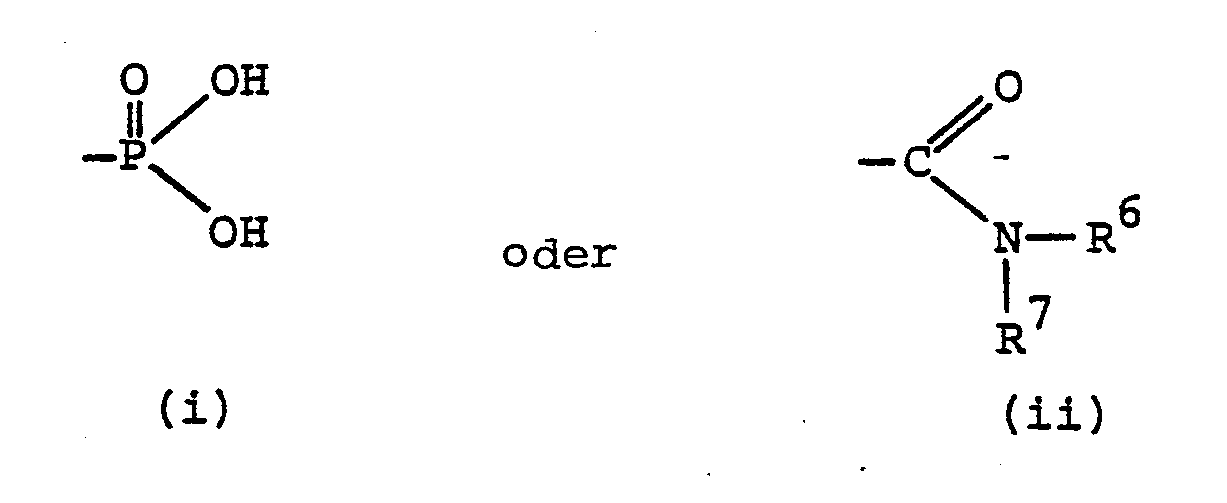
- Die Verbindungen der Formel I enthalten asymmetrische Kohlenstoffatome und können demnach als optisch reine Diastereomere, als diastereomere Racemate oder als diastereomere Mischungen vorliegen. Die vorliegende Erfindung umfasst alle diese Formen. Die erfindungsgemässen Verbindungen weisen vorzugsweise an jedem asymmetrischen Kohlenstoffatom die (S)-Konfiguration auf.
- Der in der vorliegenden Beschreibung verwendete Ausdruck "Alkyl" - allein oder in Kombination - bedeutet geradkettige oder verzweigte Alkylreste mit 1-8, vorzugsweise 1-4, Kohlenstoffatomen, wie Methyl, Aethyl, Propyl, Isopropyl, Butyl, tert.-Butyl; Pentyl und Hexyl. Der Arylrest in Aralkyl, Aryloxycarbonylaminoalkyl, Aralkoxycarbonylaminoalkyl, Arylaminocarbonylaminoalkyl, Aralkylaminocarbonylaminoalkyl oder Arylsulfonylaminoalkyl ist die Phenylgruppe, welche durch Halogen (d.h. Fluor, Chlor, Brom oder Jod), Alkyl, Alkoxy, Trifluormethyl, Phenyl und dergleichen ein oder mehrfach substituiert sein kann. Beispiele von Arylgruppen sind Phenyl, 4-Chlorphenyl, p-Tolyl, Biphenylyl und dergleichen und Beispiele von Aralkylgruppen sind Benzyl, 4-Chlorbenzyl, 2-Phenyläthyl, 3-Phenylpropyl, 3-(4-Chlorphenyl)propyl, 3-(4-Methoxyphenyl)propyl, 4-Phenylbutyl und dergleichen. Aminomethyl, 2-Aminoäthyl und dergleichen sind Beispiele für Aminoalkylgruppen. Als Beispiele für Monoalkylaminoalkylgruppen können Methylaminomethyl, 2-Methylaminoäthyl, 2-Aethylaminoäthyl und dergleichen und als Beispiele für Dialkylaminoalkylgruppen, 2-Dimethylaminoäthyl, 2-Diäthylaminoäthyl, 3-Dimethylaminopropyl und dergleichen genannt werden. Der Acylrest einer Acylaminoalkylgruppe leitet sich von einer gesättigten oder ungesättigten aliphatischen Carbonsäure, einer cycloaliphatischen Carbonsäure, einer aromatischen Carbonsäure, einer araliphatischen Carbonsäure oder einer heterocyclischen Carbonsäure ab, wie Essigsäure, Propionsäure, Buttersäure, Valeriansäure, Cyclopropancarbonsäure, Cyclopentancarbonsäure, Benzoesäure, p-Chlorbenzoesäure, Phenylessigsäüre, Nikotinsäure und dergleichen. Eine Alkoxygruppe und der Alkoxyrest in einer Alkoxycarbonylgruppe ist geradkettig oder verzweigt und enthält 1-8, vorzugsweise 1-4 Kohlenstoffatome. Spezifische Beispiele für Alkoxycarbonylgruppen sind Methoxycarbonyl und Aethoxycarbonyl. Als Beispiele für einen heteromonocyclischen Ring können Pyrrolidin, Piperidin, Morpholin , Thiamorpholin und dergleichen genannt werden.
- Eine interessante Untergruppe von Verbindungen derr: Formel I sind solche, worin R1 Wasserstoff, Alkyl, Aralkyl, Aminoalkyl, Monoalkylaminoalkyl, Dialkylaminoalkyl, Acylaminoalkyl, Alkoxycarbonylaminoalkyl, Aryloxycarbonylaminoalkyl, Aralkoxycarbonylaminoalkyl, Alkylaminocarbonylaminoalkyl, Arylaminocarbonylaminoalkyl, Aralkylaminocarbonylaminoalkyl, Alkylsulfonylaminoalkyl oder Arylsulfonylaminoalkyl, R Carboxyl oder Alkoxycarbonyl oder eine Gruppe der Formel (i) und R3Carboxyl oder Alkoxycarbonyl bedeuten.
- Eine bevorzugte Klasse von erfindungsgemässen Verbindungen sind solche, worin B Methylen oder Aethylen bedeutet. R1 bedeutet vorzugsweise Alkyl, Aralkyl, Acylaminoalkyl, Phthalimidoalkyl, Aralkoxycarbonylaminoalkyl oder Arälkylaminocarbonylaminoalkyl. R2 bedeutet vorzugsweise Carboxyl, Alkoxycarbonyl oder Aralkoxycarbonyl oder eine Gruppe der Formel (ii). Vorzugsweise bedeutet R3 eine Carboxylgruppe. Verbindungen der Formel I, worin n die Zahl 2 bedeutet sind ebenfalls bevorzugt.
- Aus dem obigen folgt, dass Verbindungen der Formel I, worin B Methylen oder Aethylen, R1 Alkyl, Aralkyl, Acylaminoalkyl, Phthalimidoalkyl, Aralkoxycarbonylaminoalkyl oder Aralkylaminocarbonylaminoalkyl, R2 Carboxyl, Alkoxy- carbonyl oder Aralkoxycarbonylamino oder eine Gruppe der Formel (ii), R3 Carboxyl und n die Zahl 2 bedeuten, besonders bevorzugt sind.
- Ganz besonders bevorzugte Verbindungen der allgemeinen Formel I sind:
- 9-(1-Carboxy-3-phenylpropylamino)-octähydro-6,10-dioxo-6H-pyridazo[1,2-a][1,2]diazepin-1-carbonsäure,
- 9-(1-Aethoxycarbonyl-3-phenylpropylamino)-octa- hydro-6,10-dioxo-6H-pyridazo[1,2-a][1,2]diazepin-1-carbonsäure,
- 8-(1-Carboxy-3-phenylpropylamino)-2,3,6,7,8,9-hexahydro-5,9-dioxo-1H,5H-pyrazolo[1,2-a][1,2]diazepin-1-carbonsäure,
- 9-(1-Benzyloxycarbonyl-3-phenylpropylamino)-octa- hydro-6,10-dioxoy-6H-pyridazo[1,2-a][1,2]diazepin-1-carbonsäure,
- 9-(1-Carbamoyl-3-phenylpropylamino)-octahydro-6,10-dioxo-6H-pyridazo[1,2-a][1,2]diazepin-1-carbonsäre,
- 9-(1-Aethylcarbamoyl-3-phenylpropylamino)octahydro-6,10-dioxo-6H-pyridazo[1,2-a][1,2]diazepin-1-carbonsäure,
- 9-(1-Carboxy-4-phenylbutylamino)-octahydro-6,10-dioxo-6H-pyridazo[1,2-a][1,2]diazepin-1-carbonsäure,
- 9-(1-Carboxy-2-phenyläthylamino)-octahydro-6,10-dioxo-6H-pyridazo[1,2-a1[1,2]diazepin-1-carbonsäure,
- 9-(1-Carboxy-4-methylpentylamino)-octahydro-6,10-dioxo-6H-pyridazo[1,2-a][1,2]diazepin-1-carbonsäure,
- 9-(1-Aethoxycarbonyl-4-methylpentylamino)-octahydro-6,10-dioxo-6H-pyridazo[1,2-a][1,2]diazepin-1-carbonsäure,
- 9-[3-(4-Chlorphenyl)-1-äthoxycarbonylpropylamino]-octahydro-6,10-dioxo-6H-pyridazo[1,2-a1[1,2]diazepin-1-carbonsäure,
- 9-[1-Aethoxycarbonyl-3-(4-methoxyphenyl)propylaminol- octahydro-6,10-dioxo-6H-pyridazo[1,2-a1[1,2]diazepin-l-carbonsäure,
- 9-[3-(4-Biphenylyl)-1-äthoxycarbonylpropylaminoJ- octahydro-6,10-dioxo-6H-pyridazo[1,2-a][1,2]diazepin-1-carbonsäure,
- 9-(1-Aethoxycarbonyl-5-phthalimidopentylamino)-octa- hydro-6,10-dioxo-6H-pyridazo[1,2-a][1,2]diazepin-1-carbonsäure,
- 8-(1-Aethoxycarbonyl-3-phenylpropylamino)-2,3,6,7,8,9-hexahydro-5,9-dioxo-1H,5H-pyrazolo[1,2-a1[1,2]diazepin-1-carbonsäure,
- 9-(1-Aethoxycarbonyl-3-phenylpropylamino)-octahydro-10-oxo-6H-pyridazo[1,2-a][1,2]diazepin-1-carbonsäure und
- 9-(5-Benzyloxyformamido-1-äthoxycarbonylpentylamino)-octahydro-6,10-dioxo-6H-pyridazo[1,2-a][1,2]diazepin-1-carbonsäure.
- Weitere interessante Verbindungen der Formel I sind:
- 8-(1-Aethoxycarbonyl-3-phenylpropylamino)-octahydro-6,9-dioxopyridazo[1,2-a]pyridazin-1-carbonsäure,
- tert.Butyl 8-(1--äthoxycarbonyl-3-phenylpropylamino)-octahydro-6,9-dioxopyridazo[1,2-a]pyridazin-1-carboxylat,
- Methyl octahydro-8-(1-methoxycarbonyl-3-phenylpropyl amino)-9-oxopyridazo[1,2-a]pyridazin-1-carboxylat,
- Octahydro-8-(3-phenyl-1-phosphonopropylamino)-6,9-dioxopyridazo[1,2-a]pyridazin-1-carbonsäure,
- 8-(1-Carboxy-3-phenylpropylamino)-1,4,5,7,8,9-hexa- hydro-6,9-dioxopyridazo[1,2-a]pyridazin-1-carbonsäure,
- 2-(1-Carboxy-3-phenylpropylamino)-hexahydro-3-oxo-1H-pyrazolo[1,2-a]pyridazin-5-carbonsäure,
- Methyl 8-(5-benzyloxyformamido-1-äthoxycarbonyl- pentylamino)-9-oxopyridazo[1,2-a]pyridazin-1-carboxylat,
- 8-(5-Benzyloxyformamido-l-carboxypentylamino)-octa- hydro-9-oxopyridazo[1,2-a]pyridazin-1-carbonsäure,
- 8-(5-Amino-l-carboxypentylamino)-octahydro-9-oxo- pyridazo[1,2-a]pyridazin-1-carbonsäure,
- Methyl 8-(1-methoxycarbonyl-4-phenylbutylamino)-octahydro-9-oxopyridazo[1,2-a]pyridazin-1-carboxylat,
- 8-(1-Carboxy-4-phenylbutylamino)-octahydro-9-oxo- pyridazo[1,2-a]pyridazin-1-carbonsäure,
- Methyl 8-(1-methoxycarbonyl-4-methylpentylamino)-octahydro-9-oxopyridazo[1,2-a]pyridazin-1-carboxylat,
- 8-(1-Carboxy-4-methylpentylamino)-octahydro-9- oxopyridazo[1,2-a]pyridazin-1-carbonsäure,
- Methyl octahydro-8-[1-methoxycarbonyl-5-(3-phenyl- propionamido)pentylamino]-9-oxopyridazo[1,2-a]pyridazin-1-carboxylat,
- 8-[1-Carboxy-5-(3-phenylpropionamido)pentylamino]-octahydro-9-oxopyridazo[1,2-a]pyridazin-1-carbonsäure,
- Methyl 8-[5-(3-benzylureido-1-äthoxycarbonyl)-pentylamino]-octahydro-9-oxopyridazo[1,2-a]pyridazin-1-carboxylat,
- 8-[5-(3-Benzylureido-1-carboxy)pentylamino]-octa- hydro-9-oxopyridazo[1,2-a]pyridazin-1-carbonsäure,
- Methyl octahydro-8-[1-methoxycarbonyl-5-(p-toluol- sulfonamido)pentylamino]-9-oxopyridazo[1,2-a]pyridazin-1-carboxylat,
- 8-11-Carboxy-5-(p-toluolsulfonamido)pentylamino]-octahydro-9-oxopyridazo[1,2-a]pyridazin-1-carbonsäure,
- Methyl 8-/[5-(6-benzylformamidohexanamido)-1- äthoxycarbonyl]pentylamino/-octahydro-9-oxopyridazo-[1,2-a]pyridazin-1-carboxylat,
- 8-/[5-(6-benzyloxyformamidohexanamido)-1-carboxy]-pentylamino/-octahydro-9-oxopyridazo[1,2-a]pyridazin-1-carbonsäure und
- 8-(1-Aethoxycarbonyl-3-phenylpropylamino)-1,4,6,7,8,9-hexahydro-6,9-dioxopyridazo[1,2-a]pyridazin-1-carbonsäure.
- Weitere Beispiele interessanter Verbindungen der Formel I sind:
- tert.Butyl 9-(1-äthoxycarbonyl-3-phenylpropylamino)-octahydro-6,10-dioxo-6H-pyridazo[1,2-a][1,2]diazepin-1-carboxylat,
- tert.Butyl 9-(1-benzyloxycarbonyl-3-phenylpropyl- amino)-octahydro-6,10-dioxo-6H-pyridazo[1,2-a][1,2]diazepin-1-carboxylat,
- Methyl 9-(1-benzyloxycarbonyl-3-phenylpropylamino)-octahydro-6,10-dioxo-6H-pyridazo[1,2-a][1,2]diazepin-1-carboxylat,
- Methyl 9-(1-carboxy-3-phenylpropylamino)-octahydro-6,10-dioxo-6H-pyridazo[1,2-a][1,2]diazepin-1-carboxylat,
- Methyl 9-(1-äthoxycarbonyl-3-phenylpropylamino)-octahydro-6,10-dioxo-6H-pyridazo[1,2-a][1,2]diazepin-1-carboxylat,
- Aethyl 9-(1-äthoxycarbonyl-3-phenylpropylamino)-octa- hydro-6,10-dioxo-6H-pyridazo[1,2-a][1,2]diazepin-1-carboxylat,
- tert.Butyl 9-(1-carbamoyl-3-phenylpropylamino)-octa- hydro-6,10-dioxo-6H-pyridazo[1,2-a][1,2]diazepin-1-carboxylat,
- tert.Butyl 9-(1-äthylcarbamoyl-3-phenylpropylamino)-octahydro-6,10-dioxo-6H-pyridazo[1,2-a][1,2]diazepin-1-carboxylat,
- tert.Butyl 9-(1-äthoxycarbonyl-4-methylpentylamino)-octahydro-6,10-dioxo-6H-pyridazo[1,2-a][1,2]diazepin-1-carboxylat,
- tert.Butyl 9-[3-(4-chlorphenyl)-1-äthoxycarbonyl- propylamino]-octahydro-6,10-dioxo-6H-pyridazo[1,2-a][1,2]-diazepin-1-carboxylat,
- tert.Butyl 9-[1-äthoxycarbonyl-3-(4-methoxyphenyl)-propylamino]-octahydro-6,10-dioxo-6H-pyridazo[1,2-a][1,2]-diazepin-1-carboxylat,
- tert.Butyl 9-[3-(4-biphenylyl)-1-äthoxycarbonylpro- pylamino]-octahydro-6,10-dioxo-6H-pyridazo[1,2-a][1,2]-diazepin-1-carboxylat,
- tert.Butyl 9-(1-äthoxycarbonyl-5-phthalimidopentyl- amino)-octahydro-6,10-dioxo-6H-pyridazo[1,2-a1[1,2]diaze- pin-1-carboxylat,
- tert.Butyl 8-(1-äthoxycarbonyl-3-phenylpropylamino)-2,3,6,7,8,9-hexahydro-5,9-dioxo-1H,5H-pyrazolo[1,2-a][1,2]-diazepin-1-carboxylat,
- Benzyl 9-(1-äthoxycarbonyl-3-phenylpropylamino)-octahydro-10-oxo-6H-pyridazo[1,2-a][1,2]diazepin-1-carboxylat und
- tert.Butyl 9-(5-benzyloxyformamido-1-äthoxycarbonyl- pentylamino)-octahydro-6,10-dioxo-6H-pyridazo[1,2-a][1,2]-diazepin-1-carboxylat.
- Die Verbindungen der Formel I und deren pharmazeutisch verwendbare Salze können erfindungsgemäss dadurch hergestellt werden, dass man
- a) eine Verbindung der allgemeinen Formel

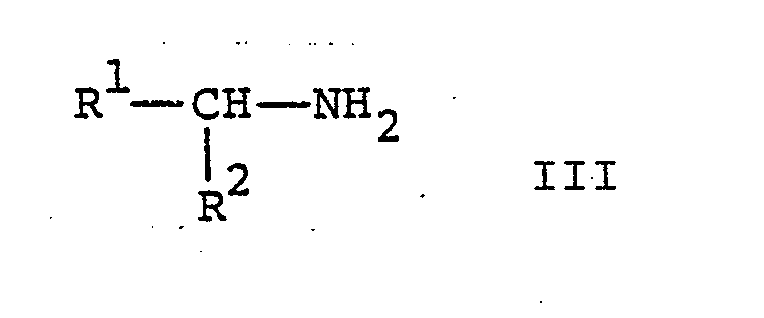
- b) eine Verbindung der allgemeinen Formel


- c) zur Herstellung von Verbindungen der Formel I, worin R2 Alkoxycarbonyl oder Aralkoxycarbonyl oder eine Gruppe der Formel (ii) und R3 Alkoxycarbonyl oder Aralkoxycarbonyl bedeuten, eine Verbindung der obigen Formel IV, worin R3 Alkoxycarbonyl oder Aralkoxycarbonyl bedeutet, mit einer Verbindung der allgemeinen Formel

- d) zur Herstellung von Verbindungen der Formel I, worin R2 eine Gruppe der Formel (ii) und R3 Carboxyl oder tert. Butoxycarbonyl bedeuten, eine Verbindung der Formel I, worin R2 Alkoxycarbonyl und R Carboxyl oder tert. Butoxycarbonyl bedeuten, mit einer Verbindung der allgemeinen Formel

- e) zur Herstellung von Verbindungen der Formel I, worin B Aethylen bedeutet, eine Verbindung der Formel I, worin B Vinylen bedeutet, katalytisch hydriert, oder
- f) zur Herstellung von Verbindungen der Formel I, worin R2 und/oder R3 Alkoxycarbonyl oder Aralkoxycarbonyl bedeuten, eine Verbindung der Formel I, worin R2 und/oder R3 Carboxyl bedeuten, verestert, oder
- g) zur Herstellung von Verbindungen der Formel I, worin R2 und/oder R3 Carboxyl bedeuten, eine Verbindung der Formel I, worin R2 und/oder R3 Alkoxycarbonyl bedeuten, mit einer Säure oder einer Base behandelt, oder
- h) zur Herstellung von Verbindungen der Formel I, worin B Methylen oder Aethylen und R2 und/oder R Carboxyl bedeuten, eine Verbindung der Formel I, worin R2 und/oder R3 Aralkoxycarbonyl bedeuten, hydriert oder
- i) zur Herstellung von Verbindungen der Formel I, worin R1 Aminoalkyl bedeutet,in einer Verbindung der Formel I, worin R1 Alkoxycarbonylaminoalkyl, Aryloxycarbonylaminoalkyl oder Aralkoxycarbonylaminoalkyl bedeutet, die Alkoxycarbonyl-, Aryloxycarbonyl-oder Aralkoxycarbonylgruppe abspaltet und
- j) erwünschtenfalls ein erhaltenes Gemisch von Diastereomeren in die entsprechenden diastereomeren Racemate oder optisch reinen Diastereomeren auftrennt und/oder
- k) erwünschtenfalls ein erhaltenes Racemat in die beiden Antipoden auftrennt und
- 1) erwünschtenfalls eine erhaltene Verbindung der Formel I innein pharmazeutisch verwendbares Salz überführt.
- Die Umsetzung einer Verbindung der Formel II mit einer Verbindung der Formel III gemäss Verfahrensvariante a) erfolgt in an sich bekannter Weise. Zweckmässigerweise wird die Reaktion in einem inerten organischen Lösungsmittel in Gegenwart eines säurebindenden Mittels durchgeführt. Geeignete inerte organische Lösungsmittel sind aromatische Kohlenwasserstoffe wie Benzol oder Toluol, Dimethylformamid und dergleichen. Das säurebindende Mittel ist vorzugsweise eine anorganische Base, besonders bevorzugt eine tertiäre organische Base wie Triäthylamin und dergleichen. Wird ein Ueberschuss an einer Verbindung der Formel III eingesetzt so dient diese gleichzeitig als Säurebindemittel. Die Reaktion wird zweckmässigerweise bei erhöhter Temperatur durchgeführt, beispielsweise bei einer Temperatur zwischen etwa 60° und der Rückflusstemperatur des Reaktionsgemisches.
- Die reduktive Alkylierung einer Verbindung der Formel IV mit einer Verbindung der Formel V gemäss Verfahrensvariante b) erfolgt ebenfalls in an sich bekannter Weise. Gemäss einer Methode erfolgt die Umsetzung in Gegenwart von Natriumcyanb orhydrid in einem geeigneten Lösungsmittel, wie Wasser, einer Mischung von Wasser und einem Alkanol, z.B. wässrigem Aethanol, und dergleichen. Zweckmässigerweise wird die Reaktion unter neutralen Reaktionsbedingungen und bei ungefähr Raumtemperatur durchgeführt. Gemäss einer anderen Methode wird die Verbindung der Formel IV mit der Verbindung der Formel V umgesetzt und die erhaltene Schiffbase in situ katalytisch hydriert. Bei dieser katalytischen Hydrierung wird eine Vinylengruppe B gleichzeitig zur Aethylengruppe reduziert. Die katalytische Hydrierung erfolgt unter den üblichen Reaktionsbedingungen, beispielsweise unter Verwendung eines Edelmetallkatalysators wie Palladium auf Kohle oder Raney-Nickel, in einem inerten organischen Lösungsmittel, wie einem Alkanol, z.B. Aethanol, bei Raumtemperatur und einem Druck von 1-10 Atmosphären.
- Die Umsetzung einer Verbindung der Formel IV, worin R3 Alkoxycarbonyl oder Aralkoxycarbonyl bedeutet, mit einerr Verbindung der Formel VI gemäss Verfahrensvariante c) erfolgt zweckmässigerweise in Gegenwart eines inerten organischen Lösungsmittels wie Dimethylformamid, Dimethylsulfoxid, Acetonitril und dergleichen bei einer Temperatur zwischen etwa 0° und 100°C und in Gegenwart eines Säurebindemittels wie einem Alkalimetallcarbonat, z.B. Natriumcarbonat, einer tert. organischen Base, z.B. Triäthylamin, oder einem basischen Ionenaustauscherharz. Die mit Q bezeichnete Abgangsgruppe in einer Verbindung der Formel VI kann beispielsweise ein Halogenatom, wie ein Bromatom oder eine Sulfonatgruppe der Formel -O-S02Y sein, worin Y Methyl, Trifluormethyl, p-Tolyl und dergleichen bedeutet.
- Die Reaktion einer Verbindung der Formel I, worin R2 Alkoxycarbonyl und R 3 Carboxyl oder tert. Butoxycarbonyl bedeutet mit einer Verbindung der Formel VII gemäss Verfahrensvariante d) erfolgt in an sich bekannter Weise, beispielsweise in Wasser oder einem alkoholischen Medium bei einer niedrigen Temperatur, z.B. bei ungefähr 0°Coder in einer verschlossenen Röhre bei erhöhter Temperatur.
- Die katalytische Hydrierung einer Verbindung der Formel I, worin B Vinylen bedeutet, gemäss Verfahrensvariante e) erfolgt ebenfalls nach bekannten Methoden. Geeignete Katalysatoren welche verwendet werden können sind Edelmetallkatalysatoren wie Palladium, Platin, Rhutenium oder Rhodium, und Raney-Nicxel. Die Edelmetallkatalysatoren können auf einem geeigneten Trägermaterial aufgebracht sein, wie Palladium auf Kohle, Rhodium auf Alluminiumoxid und dergleichen. Die katalytische Hydrierung erfolgt in einem konventionellen inerten organischen Lösungsmittel, wie einem aromatischen Kohlenwasserstoff, z.B. Benzol, Toluol, Xylol etc., einem Alkanol, z.B. Methanol, Aethanol etc. oder einem Aether z.B. Dioxan etc.. Die katalytische Hydrierung erfolgt vorzugsweise bei Raumtemperatur und Atmosphärendruck obwohl sie auch bei erhöhter Temperatur und/oder Druck durchgeführt werden kann.
- Die Veresterung einer Verbindung der Formel I, worin R2 und/oder R3 Carboxyl bedeuten, gemäss Verfahrensvariante f) erfolgt ebenfalls in an sich bekannter Weise. Beispielsweise wird eine Verbindung der Formel I, worin R2 und/oder R3 Carboxyl bedeuten, mit einem geeigneten Alkanol, z.B. Methanol, Aethanol etc., in Gegenwart einer Säure, z.B. einer Mineralsäure wie Salzsäure etc. oder mit einem geeigneten Diazoalkan, z.B. Diazomethan oder Phenyldiazomethan, umgesetzt. Gemäss einer alternativen Ausführungsform kann eine Verbindung der Formel I, worin R2 und/oder R3 Carboxyl bedeuten,in bekannter Weise, z.B. durch Umsetzen mit Thionylchlorid, Phosphortrichlorid oder Phosphorpentachlorid, in das entsprechende Säurechlorid überführt werden welches danach ebenfalls in bekannter Weise mit einem geeigneten Alkanol umgesetzt wird. Eine Verbindung der Formel I, worin R 2 und/oder R 3 Carboxyl bedeutet kann auch mit Isobuten in Gegenwart von Schwefelsäure umgesetzt werden, wobei man die entsprechende Verbindung der Formel I erhält, worin R 2 und/oder R3 tert. Butoxycarbonyl bedeuten.
- Eine Verbindung der Formel I, worin R2 und/oder R3 Alkoxycarbonyl bedeuten, wird gemäss Verfahrensvariante g) durch Umsetzen mit einer Säure oder einer Base in die entsprechende Verbindung der Formel I übergeführt, worin R 2 und/oder R Carboxyl bedeuten. Diese Ueberführung erfolgt in bekannter Weise, beispielsweise durch Umsetzen mit einem Alkalimetallhydroxid, wie Natriumhydroxid oder Kaliumhydroxid, zweckmässigerweise bei einer Temperatur zwischen Raumtemperatur und dem Siedepunkt des Reaktionsgemisches oder, falls die Alkoxycarbonylgruppe die tert. Butoxycarbonylgruppe ist, durch Umsetzen mit wasserfreier Säure.
- Die Hydrogenolyse einer Verbindung der Formel I, worin R2 und/oder R3 Aralkoxycarbonyl bedeuten, zu einer Verbindung der Formel I, worin B Methylen oder Aethylen und R2 und/oder R 3 Carboxyl bedeuten, gemäss Verfahrensvariante h) erfolgt ebenfalls in bekannter Weise. Bei dieser Hydrogenolyse wird eine Vinylengruppe B gleichzeitig zur Aethylengruppe reduziert.
- Die Abspaltung gemäss Verfahrensvariante i) erfolgt in an sich bekannter Weise, wobei die gewählte spezifische Methode von der Art der abzuspaltenden Gruppe abhängt. Beispielsweise wird eine Aralkoxycarbonylgruppe, z.B. Benzyloxycarbonyl, durch Hydrogenolyse oder Hydrolyse abgespalten.
- Die Auftrennung von diastereomeren Mischungen in die diastereomeren Racemate oder optisch reinen Diastereomeren gemäss Verfahrensvariante j) und die Auftrennung von Racematen in die beiden optischen Antipoden gemäss Verfahrensvariante k) erfolgen ebenfalls nach bekannten Methoden.
- Gemäss Verfahrensvariante 1) können Verbindungen der Formel I durch Umsetzen mit pharmazeutisch verwendbaren Säuren oder Basen, in die pharmazeutisch verwendbaren Salze übergeführt werden. Beispiele von pharmazeutisch verwendbaren Säuren sind anorganische Säuren, wie Hydrohalogensäuren, z.B. Bromwasserstoff oder Chlorwasserstoff, Schwefelsäure, Phosphorsäure und Salpetersäure, und organische Säuren, wie Essigsäure, Maleinsäure, Fumarsäure, Weinsäure, Zitronensäure, Methansulfonsäure und p-Toluolsulfonsäure. Beispiele von pharmazeutisch verwendbaren Basen sind Alkalimetallhydroxide, z.B. Natrium- oder Kaliumhydroxid, Erdalkalimetallhydroxide, z.B. Calcium- oder Magnesiumhydroxid, Ammoniumhydroxid und organische Basen, z.B. Dicyclohexylamin.
- Die in Verfahrensvariante a) als Ausgangsstoffe eingesetzten Verbindungen der Formel II, worin B Methylen oder Vinylen, R3 Carboxyl oder Alkoxycarbonyl, R4 und R zusammen eine Oxogruppe und n die Zahl 1 bedeuten, gehören einer bekannten Verbindungsklasse an. Spezifische Vertreter, welche bisher nicht beschrieben sind, können wie in den folgenden Beispielen beschrieben, oder in Analogie dazu hergestellt werden. Die übrigen Ausgangsstoffe der Formel II sind noch neu und ebenfalls Gegenstand der vorliegenden Erfindung. Sie können beispielsweise durch Cyclisation einer Verbindung der allgemeinen Formel

- Die Ueberführung einer Alkoxycarbonylgruppe R 30 im erhaltenen Produkt, d.h. in einer Verbindung der Formel II, worin R3 Alkoxycarbonyl bedeutet, in die Carboxylgruppe, kann in analoger Weise durchgeführt werden wie oben für die Verfahrensvariante g) angegeben. Die so erhaltene Verbindung der Formel II, worin R3 Carboxyl bedeutet, kann dann erwünschtenfalls in analoger Weise wie oben für die Verfahrensvariante f) angegeben verestert werden. Alternativ dazu kann eine Verbindung der Formel II, worin R3 Alkoxycarbonyl bedeutet, nach bekannten Methoden zu einer Verbindung der Formel II umgeestert werden, worin R3 eine andere Alkoxycarbonyl- oder Aralkoxycarbonylgruppe bedeutet.
- Die Verbindungen der Formel VIII, worin R 4 und R 5 je Wasserstoff bedeuten, können beispielsweise hergestellt werden, indem man eine Verbindung der allgemeinen Formel


- Die Umsetzung einer Verbindung der Formel IX, welche bekannt oder ein Analogon zu einer bekannten Verbindung ist, mit einer Verbindung der Formel X, welche ebenfalls bekannt oder ein Analogon einer bekannten Verbindung ist, erfolgt nach allgemein bekannten Methoden, beispielsweise in Gegenwart eines inerten organischen Lösungsmittels, z.B. eines halogenierten Kohlenwasserstoffs, wie Methylenchlorid, und in Gegenwart eines säurebindenden Mittels, wie eines Alkalimetallcarbonates, z.B. Natriumcarbonat, oder eines Alkalimetallbicarbonates, z.B. Natriumbicarbonat, bei ungefähr Raumtemperatur.
- Die Abspaltung der Benzyloxycarbonylgruppe aus einer Verbindung der Formel XI kann beispielsweise durch Umsetzen mit Bromwasserstoff in Eisessig bei ungefähr Raumtemperatur oder mittels Wasserstoff in Gegenwart eines Katalysators nach bekannten Methoden erfolgen.
- Die Verbindungen der Formel VIII, worin R4 und R5 zusammen eine Oxogruppe bedeuten, können hergestellt werden, indem man beispielsweise eine Verbindung der obigen Formel IX mit einer Verbindung der allgemeinen Formel

- Bz Benzyl bedeutet, umsetzt, die Benzyl- und Benzyloxycarbonylgruppen in der erhaltenen Verbindung der allgemeinen Formel


- Die Reaktion einer Verbindung der Formel IX mit einer Verbindung der Formel XII, welche bekannt oder ein Analogon einer bekannten Verbindung ist, kann in analoger Weise durchgeführt werden wie weiter oben für die Umsetzung einer Verbindung der Formel IX mit einer Verbindung der Formel X angegeben.
- Die Entfernung der Benzyl- und Benzyloxycarbonylgruppen aus einer Verbindung der Formel XIII kann nach allgemein bekannten Methoden durchgeführt werden, beispielsweise mittels Wasserstoff in Gegenwart eines Katalysators,wie eines Edelmetallkatalysators, z.B. Palladium auf Kohle, oder, falls R30 etwas anderes als tert. Butoxycarbonyl bedeutet, mittels Bromwasserstoff in Eisessig.
- Die Ueberführung einer Säure der Formel XIV in das entsprechende Säurehalogenid der Formel VIII kann ebenfalls nach bekannten Methoden erfolgen, beispielsweise unter Verwendung eines geeigneten Halogenierungsmittels, wie Thionylchlorid, Phosphorpentachlorid und dergleichen.
- Die ebenfalls in Verfahrensvariante a) als Ausgangsstoffe verwendeten Verbindungen der Formel III sind bekannt oder Analoga von bekannten Verbindungen welche in ähnlicher Weise wie die bekannten hergestellt werden können.
- Die in Verfahrensvariante b) als Ausgangsstoffe eingesetzten Verbindungen der Formel IV sind neu und ebenfalls Gegenstand vorliegender Erfindung.
- Die Verbindungen der Formel IV können beispielsweise hergestellt werden, indem man eine Verbindung der Formel II mit einem Alkalimetallazid umsetzt und das erhaltene Azid der allgemeinen Formel
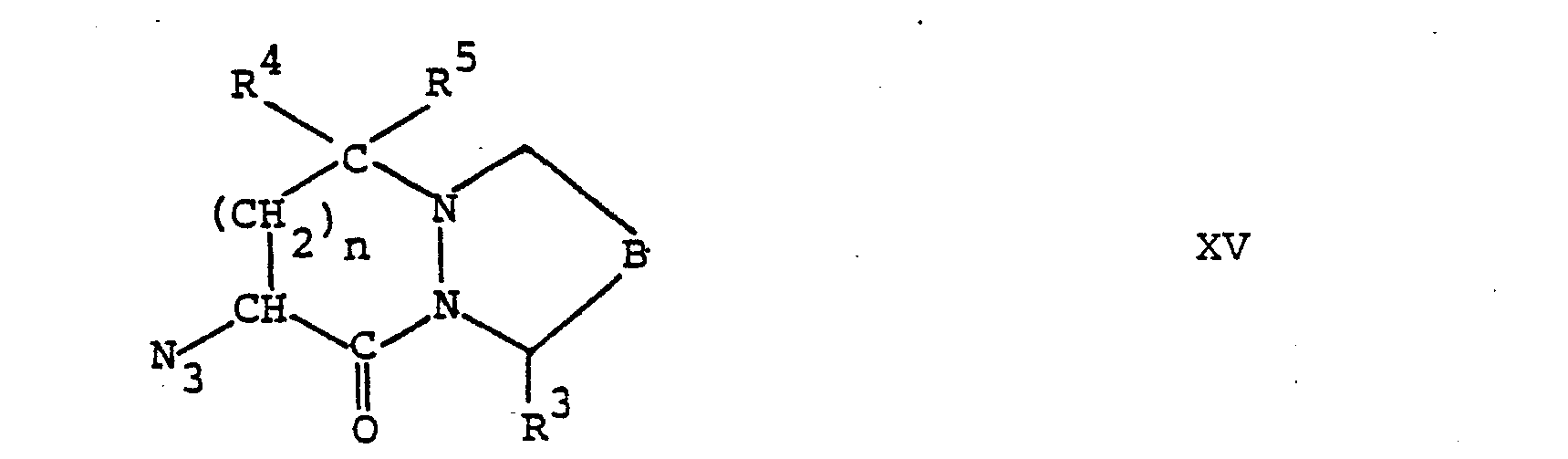
- Die Umsetzung einer Verbindung der Formel II mit einem Alkalimetallazid, vorzugsweise Natriumazid, erfolgt in bekannter Weise, beispielsweise in Gegenwart eines inerten organischen Lösungsmittels, wie einem Keton, z.B. Aceton, bei erhöhter Temperatur, z.B. bei der Rückflusstemperatur des Reaktionsgemisches.
- Konventionelle Methoden werden für die Reduktion eines Azids der Formel XV zu einer Verbindung der Formel IV verwendet. Gemäss einer bevorzugten Ausführungsform wird ein Azid der Formel XV mit Triphenylphosphin in einem geeigneten inerten organischen Lösungsmittel, wie Dioxan, bei ungefähr Raumtemperatur umgesetzt und anschliessend mittels Säure, z.B. Salzsäure, hydrolysiert.
- Die Verbindungen der Formel IV können beispielsweise auch durch Cyclisation einer Verbindung der allgemeinen Formel


- Die Alkoxydarbonylgruppe R30 kann vor oder nach dem Entfernen der Phthaloylgruppe erwünschtenfalls in Carboxyl, eine andere Alkoxycarbonyl- oder Aralkoxycarbonylgruppe überführt werden.
- Die Cyclisation einer Verbindung der Formel XVI kann nach allgemein bekannten Methoden durchgeführt werden, beispielsweise im wesentlichen in der selben Weise wie weiter oben im Zusammenhang mit der Cyclisation einer Verbindung der Formel VIII angegeben. Die Verbindungen der Formel XVI werden vorzugsweise in situ cyclisiert.
- Das Entfernen der Phthaloylgruppe aus einer Verbindung der Formel XVII erfolgt ebenfalls in an sich bekannter Weise mittels Hydrazin, zweckmässigerweise in einem inerten organischen Lösungsmittel wie einem Alkanol, z.B. Aethanol, bei Raumtemperatur oder einer erhöhten Temperatur, z.B. bei der Rückflusstemperatur des Reaktionsgemisches.
- Die allfällige Ueberführung einer Alkoxycarbonylgruppe R30 in eine Carboxylgruppe, eine andere Alkoxycarbonyl- oder Aralkoxycarbonylgruppe kann in analoger Weise durchgeführt werden wie weiter oben im Zusammenhang mit der Herstellung der Ausgangsstoffe der Formel II angegeben.
- Die Verbindungen der Formel XVI, worin R4 und R 5 je Wasserstoff bedeuten, können beispielsweise durch Umsetzen einer Verbindung der obigen Formel IX mit einer Verbindung der allgemeinen Formel


- Die Umsetzung einer Verbindung der Formel IX mit einer Verbindung der Formel XVIII, welche bekannt oder ein Analogoneiner bekannten Verbindung ist, kann in der selben Weise durchgeführt werden wie weiter oben im Zusammenhang mit der Umsetzung einer Verbindung der Formel IX mit einer Verbindung der Formel X angegeben.
- Die Abspaltung der Benzyloxycarbonylgruppe aus einer Verbindung der Formel XIX kann in derselben Weise erfolgen wie weiter oben im Zusammenhang mit dem Abspalten der Benzyloxycarbonylgruppe aus einer Verbindung der Formel XI angegeben.
- Die Verbindungen der Formel XVI, worin R4 und R5 zusammen eine Oxogruppe bedeuten, können hergestellt werden, indem man beispielsweise eine Verbindung der obigen Formel IX mit einer Verbindung der allgemeinen Formel


- Die Umsetzung einer Verbindung der Formel IX mit einer Verbindung der Formel XX welche bekannt oder ein Analogen zu einer bekannten Verbindung ist, kann unter denselben Reaktionsbedingungen durchgeführt werden wie weiter oben im Zusammenhang mit der Umsetzung einer Verbindung der Formel IX mit einer Verbindung der Formel X angegeben.
- Das Abspalten der Benzyl- und Benzyloxycarbonylgruppen aus einer Verbindung der Formel XXI kann in derselben Weise erfolgen wie weiter oben im Zusammenhang mit dem Abspalten dieser Gruppen aus einer Verbindung der Formel XIII angegeben.
- Die Ueberführung einer Säure der Formel XXII in das entsprechende Säurehalogenid der Formel XVI kann in analoger Weise erfolgen wie weiter oben im Zusammenhang mit der Ueberführung einer Säure der Formel XIV in das entsprechende Säurehalogenid angegeben.
- Die in den Verfahrensvarianten b) und c) als Ausgangsstoffe eingesetzten Verbindungen der Formeln V und VI sind entweder bekannt oder Analoga bekannter Verbindungen, welche ihrerseits in ähnlicher Weise wie die bekannten Verbindungen hergestellt werden können.
- Die in Verfahrensvariante d) als Ausgangsstoffe eingesetzten Verbindungen der Formel VII sind bekannt.
- Die Verbindungen der Formel I und deren pharmazeutisch verwendbaren Salze sind wertvolle Antihypertensiva. Sie hemmen das Angiotensin umwandelnde :Enzym (ACE),welches für die Umwandlung von Angiotensin I zu Angiotensin II verantwortlich ist, und sind deshalb nützlich, einen durch Angiotensin bewirkten Bluthochdruck zu vermindern oder zu lindern.
- Die Aktivität der vorliegenden Verbindungen, das Angiotensin umwandelnde Enzym in vitro zu hemmen, kann durch den folgenden Test bestimmt werden.
- Die verwendete Methode basiert auf einer Methode von Cushman and Cheung (Biochem. Pharmacol., 20, 1637-1648) unter Berücksichtigung der Modifikationen von Hayakari et al. (Anal. Biochem., 84, 361-369). Das Substrat (Hippurylhistidyl-leucin, 2 mM) wird in Abwesenheit oder Gegenwart verschiedener Konzentrationen der Testverbindungen in Kaliumphosphatpuffer (pH 8,3; 100 mM), welches Natriumchlorid (3 mM) enthält, mit Angiotensin umwandelndem Enzym während 24 Minuten bei 37°C (Gesamtwert 500 ul) inkubiert.(Falls die Testsubstanz ein Ester ist, so ist es angezeigt, diesen mittels Schweineleberesterase vor Ausführung des Test zu spalten). Die Reaktion wird durch Zugabe von 3 ml Kaliumphosphatpuffer (pH 8,3; 200 mM) bei 0°C abgebrochen. Man versetzt anschliessend mit 2,4,6-Trichlor-s-triazin (3%) in 1,5 ml Dioxan und schüttelt die erhaltene Mischung, bis der gelbe Chromophor voll entwickelt ist. Die Proben werden anschliessend zentrifugiert, um allenfalls entstandenen Festkörper abzutrennen. Der durch Reaktion von 2,4,6-Trichlor-s-triazin mit freier Hippursäure gebildete gelbe Chromophor wird spektrophotometrisch bei 382 nm ausgemessen. Der IC50-Wert ist diejenige Konzentration einer Testverbindung, welche die Spaltung von Hippuryl-histidyl-leucin mittels Angiotensin umwandelndem Enzym unter den oben genannten Bedingungen um 50% reduziert.
- Die nachfolgende Tabelle enthält die Resultate, welche mit repräsentativen Vertretern der Verbindungen der Formel I im vorhergehend beschriebenen Text erhalten wurden.
- Verbindung A: 9(S)-(1-Carboxy-3-phenylpropylamino)-octahydro-6,10-dioxo-6H-pyridazo-[1,2-a][1,2]diazepin-1(S)-carbonsäure; Isomer A (vergleiche Beispiel 1).
- Verbindung B: 8(S)-(1-Carboxy-3-phenylpropylamino)- octahydro-6,9-dioxopyridazo[1,2-a]pyridazin-1-carbonsäure; Isomer 2 (vergleiche Beispiel 4).
- Verbindung C: 8-(1-Carboxy-3-phenylpropylamino)-octahydro-9-oxopyridazo[1,2-aJpyri- dazin-1-carbonsäure; Racemat B (vergleiche Beispiel 9).
- Verbindung D: 9(S)-[1(R und S)-Carboxy-4-phenyl- butylamino]-octahydro-6,10-dioxo-6H-pyridazo[1,2-a][1,2]diazepin-1(S)-carbonsäure (vergleiche Beispiel 48).
- Verbindung E: 9(S)-[1(R und S)-Carboxy-2-phenyl- äthylamino]-octahydro-6,10-dioxo-6H-pyridazo[1,2-a][1,2]diazepin-1(S)-carbonsäure (vergleiche Beispiel 49).
- Verbindung F: 9(S)-[1(R und S)-Carboxy-4-methyl- pentylamino]-octahydro-6,10-dioxo-6H-pyridazo[1,2-aJ[1,2Jdiazepin-1(S)-carbonsäure (vergleiche Beispiel 50).

- Die Verbindungen der Formel I und deren pharmazeutisch verwendbare Salze können in Form pharmazeutischer Präparate, welche diese Verbindungen zusammen mit geeigneten pharmazeutischen Trägermaterialien enthalten, als Arzneimittel verwendet werden. Als Trägermaterialien kommen dabei für die enterale, beispielsweise orale, oder parenterale Verabreichung geeignete organische oder anorganische Trägermaterialien in Frage, beispielsweise Wasser, Gelatine, Gummi arabicum, Lactose, Stärke, Magnesiumstearat, Talk, pflanzliche Oele, Polyalkylenglykole, Vaselin und dergleichen. Die pharmazeutischen Präparate können in fester Form, beispielsweise als Tabletten, Dragees, Suppositorien oder Kapseln oder in flüssiger Form, z.B. als Lösungen, Suspensionen oder Emulsionen verarbeitet werden. Die pharmazeutischen Präparate können üblichen pharmazeutischen Behandlungen, wie Sterilisation, unterworfen werden und/oder Zusatzstoffe enthalten, wie Konservierungsmittel, Stabilisierungsmittel, Netzmittel oder Emulgiermittel, Salze zum Variieren des osmotischen Druckes oder Puffer. Die pharmazeutischen Präparate können auch noch andere therapeutisch wertvolle Verbindungen enthalten.
- Die Verbindungen der Formel I und deren pharmazeutisch verwendbare Salze können Erwachsenen in täglichen Dosen von etwa 0,1 bis 100 mg, vorzugsweise etwa 1-50 mg/kg Körpergewicht verabreicht werden. Die tägliche Dosis kann in einer einzigen Dosis oder in Teildosen verabreicht werden. Es sei an dieser Stelle betont, dass die oben genannten Dosierungen als Beispiele angegeben wurden, und dass sie nach oben oder nach unten variiert werden können in Abhängigkeit von Faktoren, wie den spezifischen Eigenschaften der verabreichten Verbindung oder des verabreichten Salzes, der Art der Verabreichung, dem Grad der zu behandelnden Indikation und dem Zustand des Patienten, wie er vom behandelnden Arzt festgestellt wird.
- Die nachfolgenden Beispiele veranschaulichen die vorliegende Erfindung. Alle Temperaturen sind in Celsiusgraden angegeben.
- 1,25 g 9(S)-Amino-octahydro-6,10-dioxo-6H-pyridazo-[1,2-a][1,2]diazepin-1-(S)-carbonsäure-monohydrat und 1,8 g 2-oxo-4-phenylbuttersäure werden in 6 ml 2N-Natriumhydroxidlösung bei Raumtemperatur gelöst. Man gibt 0,3 g Natriumcyanborhydrid zu und rührt das Gemisch während 50 Minuten. Dann gibt man weitere 0,3 g Natriumcyanborhydrid zu und nach weiteren 85 Minuten nochmals 0,3 g Natriumcyanborhydrid und.0,9 g 2-Oxo-4-phenylbuttersäure. Der pH-Wert wird durch Zugabe von Natriumhydroxidlösung auf 7,5 - 8 eingestellt, und das Gemisch während 3 Tagen stehengelassen. Man gibt 100 ml Diäthyläther, 20 ml Wasser und 30 g Duolit C 225 Ionenaustauscherharz (h+-Form) zu und mischt das Gemisch während 100 Minuten gut durch. Die ätherische Phase wird dann entfernt und die wässrige Phase, welche das Harz enthält, wird auf eine Säule gegeben, welche mit weiteren 10 g des oben genannten Harzes gefüllt ist. Die Kolonne wird mit 80 ml Wasser gewaschen und dann mit 200 ml Wasser, welches 2% Pyridin enthält, eluiert. Die Eluate werden eingedampft, wobei man 1,1 g rohes 9(S)-:[1(R und S)-Carboxy-3-phenylpropylamino]octahydro-6,10-dioxo-6H-pyridazo[1,2-a][1,2]dia-zepin-1(s) -carbonsäure erhält.
- Das Isomerengemisch wird auf Amberlit XAD 2 Polistyrolharzsäulen mit 0,1 N wässrigem Ammoniak, welches 5% Methanol enthält, als Eluierungsmittel aufgetrennt. Diastereomer A wird vor Diastereomer B eluiert; Diastereomer A weist auch auf Silicagel-Dünnschichtchromatographieplatten, welche mit Butan-1-ol/Wasser/Essigsäure (4:1:1) eluiert werden, einen höheren Rf-Wert auf. Auf diese Weise werden 0,32 g Diastereomer A und 0,35 g Diastereomer B in Form der Ammoniumsalze erhalten, aus denen das Ammoniak mittels Duolit C 225 Harz entfernt wird, wobei man 2% Pyridin enthaltendes Wasser als Eluierungsmittel verwendet.
- Das als Ausgangsmaterial verwendete 9(S)-Amino- octahydro-6,10-dioxo-6H-pyridazo[1,2-a][1,2]diazepin-1-(S)-carbonsäuremonohydrat kann wie folgt hergestellt werden:
- A) 16 g L-Glutaminsäure―γ―benzylester und 11 g Phthalsäureanhydrid, beide fein verrieben, werden bei der Rückflusstemperatur während 2 Stunden in 20 ml Toluol gerührt. Dann gibt man 50 ml Toluol zu und dampft das Reaktionsgemisch ein. Dann gibt man weitere 80 ml Toluol zu und lässt das Gemisch kristallisieren. Umkristallisation aus Toluol liefert 15 g a(S)-2-Benzyloxycarbonyl- äthyl-1,3-dihydro-1,3-dioxo-2-isoindolessigsäure vom Schmelzpunkt 96-98°,

- B) 56 g α(S)-(2-Benzyloxycarbonyläthyl)-1,3-dihydro-1,3-dioxo-2-isoindolessigsäure in 500 ml trockenem Dimethyl- äther werden während 2 Stunden mit 40 g Phosphorpentachlorid bei Raumtemperatur gerührt. Man gibt weitere 2 g Phosphorpentachlorid zu, rührt das Gemisch während 30 Minuten, filtriert ungelösten Festkörper ab und dampft das Filtrat ein. Der Rückstand wird zweimal mit Toluol eingedampft und danach in 262 ml Methylenchlorid gelöst und mit Eis/Wasser gekühlt. Unter Rühren gibt man 262 ml Methylenchlorid, welche 44 g tert.-Butyl 1-(benzyloxy- carbonyllhexahydro-3-pyridazincarboxylat enthalten und unmittelbar darauf 420 ml gesättigte wässrige Natriumbicarbonatlösung zu. Das Gemisch wird bei Raumtemperatur über Nacht gerührt, danach mit Aethylacetat verdünnt und partiell soweit eingedampft, bis sich die Emulsion abscheidet. Die organische Phase wird danach mit wässriger Natriumdihydrogenphosphatlösung, wässriger Natriumcarbonatlösung und Kochsalzlösung gewaschen, getrocknet und eingedampft. Der Rückstand wird in 1040 ml Methanol gelöst und bei Atmosphärendruck über 7,4 g 10% Palladium auf Kohle bis zur beendeten Wasserstoffaufnahme hydriert. Der Katalysator wird entfernt und das Filtrat eingedampft, wobei man 61 g rohe gamma(s) -(-tert.-Butoxycarbonyl- hexahydro-1-pyridazinyl)-carbonyl-1,3-dioxo-2-isoindolin- buttersäure (2 Diastereomere) erhält. Kristallisation aus Aethylacetat/Diäthyläther liefert 19 g des (S,S)-Isomeren vom Schmelzpunkt 132-134°;
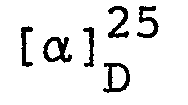

- C) 2,2 g gamma(s)-(6 · (S)-tert.-Butoxycarbonyl-hexa- hydro-1-pyridaziny])-carbonyl-1,3-dioxo-2-isoindol in buttersäure in 60 ml trockenem Tetrahydrofuran werden bei 00 mit 1,1 ml N-Aethylmorpholin und 1,1 g Phosphorpentachlorid gerührt. Nach 1 Stunde gibt man weitere 0,2 ml N-Aethylmorpholin und 0,2 g Phosphorpentachlorid zu und nach weiteren 5 Stunden weitere 0,15 ml N-Aethylmorpholin und 0,15 g Phosphorpentachlorid. Man lässt das Reaktionsgemisch über Nacht bei Raumtemperatur stehen, dampft ein, verdünnt den Rückstand mit 150 ml Aethylacetat, wäscht die Lösung mit 1N-Salzsäure- und Natriumchloridlösung und trocknet über Magnesiumsulfat. Eindampfen des Lösungsmittels liefert 2,4 g rohes tert.-Butyl octahydro-6,10-dioxo-9(S)-phthalimido-6H-pyridazo[1,2-a][1,2]diazepin- l(S)-carboxylat. Nach Reinigung durch Chromatographie an Silicagel unter Verwendung von Aether als Eluierungsmittel und Kristallisation aus Aethylacetat/Diäthyläther schmilzt das Produkt bei 181-185°,
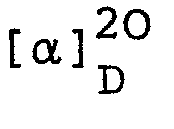
- D) 2,4 g tert.-Butyl octahydro-6,10-dioxo-9(S)-phthalimido-6H-pyridazo[1,2-a][1,2]diazepin-1(s)―carboxylat werden in 20 ml Trifuloressigsäure gelöst. Nach 80 Minuten wird das Gemisch eingedampft, und der Rückstand zweimal mit Toluol versetzt und wieder eingedampft. Der Rückstand wird mit Aethylacetat verrieben, wobei man 1,7 g Octahydro-6,10-dioxo-9(S)-phthalimido-6H-pyridazo]1,2-a][1,2]diazepin-1-(S)-carbonsäure erhält. Eine Probe wird aus Aceton/Wasser umkristallisiert und schmilzt bei 307-3100 (Zers.);

- E) 4,9 g Octahydro-6,10-dioxo-9(S)-phthalimido-6H-pyridazo[1,2-a][1,2]diazepin-1(S)―carbonsäure werden während 40 Minuten in 80 ml Aethanol, welches 1,4 ml Hydrazinhydrat enthält, erhitzt. Das Gemisch wird über Nacht bei Raumtemperatur stehengelassen und danach eingedampft. 100 ml 2N-Essigsäure werden zugegeben, das Gemisch bei Raumtemperatur während 70 Minuten gerührt und dann filtriert. Das Filtrat wird eingedampft und der Rückstand nochmals mit Wasser eingedampft. Der Rückstand wird danach in 60 ml warmem Wasser gelöst, filtriert und das Filtrat eingeengt. Dann verdünnt man mit 30 ml Aethanol und lässt kristallisieren. Auf diese Weise erhält man 2,65 g 9(S)-Amino-octahydro-6,10-dioxo-6H-pyridazo[1,2-a]-[1,2]diazepin-1(S)―carbonsäuremonohydrat vom Schmelzpunkt 195-2000 (Zers.);

- 2,3 g 9(S)-Amino-octahydro-6,10-dioxo-6H-pyridazo[1,2-a]-[1,2]diazepin-1(S)―carbonsäuremonohydrat werden bei Raumtemperatur in 25 ml Aethanol und 5 ml Wasser mit 1,1 g Aethyl 2-oxo-4-phenylbutyrat und 0,3 g Natriumcyanborhydrid gerührt. Während der nächsten 48 Stunden werden weitere 8 g Aethyl 2-oxo-4-phenylbutyrat und 1,5 g Natriumcyanborhydrid in 5 Portionen zu der gerührten Mischung gegeben, welche danach für 3 Tage stehengelassen wird. Das Gemisch wird eingedampft, der Rückstand mit 120 ml Aethylacetat verdünnt, und die erhaltene Lösung mit zweimal 50 ml Wasser und mit 5 ml gesättigter wässriger Natriumbicarbonatlösung extrahiert. Die wässrigen Extrakte werden mit 30 ml Diäthyläther gewaschen, danach angesäuert (pH 3-4) und mit 100 ml Aethylacetat und 50 ml Aethylacetat extrahiert. Die vereinigten organischen Extrakte werden mit Natriumchloridlösung gewaschen, über Magnesiumsulfat getrocknet und eingedampft, wobei man 3,7 g rohe 9(S)-[1(R und S)-Aethoxycarbonyl-3-phenylpropylaming-octa- hydro-6,10-dioxo-6H-pyridazo[1,2-a][1,2]diazepin-1(S)-carbonsäure in Form eines Diastereomerengemisches erhält, welches auf einer Silicageldünnschichtchromatographieplatte mit Diäthyläther, welcher 10% Essigsäure enthält, als Laufmittel aufgetrennt werden. Die Auftrennung der beiden Diastereomeren erfolgt durch Chromatographie auf einer Silicagelsäule unter Verwendung von Diäthyläther, welcher 5-15% Essigsäure enthält, als Eluierungsmittel. Das Diastereomere mit dem niedrigeren Rf-Wert (Isomer B) wird in Toluol gelöst und mit trockenem Chlorwasserstoff behandelt. Der so erhaltene Festkörper wird aus Aethanol/ Aethylacetat umkristallisiert, wobei man 9(S)-[1(R oder S)-Aethoxycarbonyl-3-phenylpropylamino]-octahydro-6,10-dioxo-6H-pyridazo[1,2-a][1,2]diazepin-1(S)- carbonsäurehydrochlorid vom Schmelzpunkt 202-2070 (Zers.) erhält.
- In analoger Weise wie im ersten Absatz von Beispiel 1 beschrieben, erhält man aus 1,13 g 8(S)-Amino-2,3,6,7,8,9-hexahydro-5,9-dioxo-1H,5H-pyrazolo[1,2-a][1,2]diazepin-1(S)―carbonsäure und 2,7 g 2-Oxo-4-phenylbuttersäure 350 mg 8(S)-1-(Carboxy-3-phenylpropylamino)-2,3,6,7,8,9-hexahydro-5,9-dioxo-1H,5H-pyrazolo[1,2-a][1,2]diazepin-1-(S)-carbonsäure in Form einer lyophylisierten Mischung.
- Die als Ausgangsmaterial verwendete 8(S)-Amino-2,3,6,7i8,9-hexahydro-5,9-dioxo-lH 5H-pyrazolo[1,2-a]-[1,2]diazepin-1(s)―carbonsäure kann wie folgt hergestellt werden:
- A) 17,2 g tert.-Butylacrylat werden solange mit einer Lösung von Diazomethan in Diäthyläther versetzt, bis die gelbe Färbung während 2 Minuten nach der Zugabe bestehenbleibt. Man entfernt das Lösungsmittel durch Eindampfen, löst das zurückbleibende Oel in 300 ml Aethanol und hydriert die Lösung über 10% Palladium auf Kohle. Der Katalysator wird abfiltriert und das Filtrat eingedampft. Man löst das zurückbleibende Oel in 260 ml Aethylacetat und gibt eine Lösung von 24 g Natriumbicarbonat in 260 ml Wasser zu. Man kühlt die Mischung unter Rühren auf 0 ab und versetzt diese tropfenweise mit einer Lösung von 18,76 g Benzylchloroformat in 50 ml Aethylacetat. Nach 1 Stunde wird die organische Phase abgetrennt, mit 2N-Salzsäure und Natriumchloridlösung gewaschen, über Magnesiumsulfat getrocknet und eingedampft. Das zurückbleibende Oel wird an Silicagel chromatographiert. Eluieren mit Aethylacetat/n-Hexan (1:1) liefert 10,81 g (25%) 1-Benzyl 3-tert.-butyl 1,3-pyrazolidindicarboxylat als weissen Festkörper vom Schmelzpunkt 55-57 (aus Diäthyläther/n-Hexan).
- B) 22,02 g α(S)-(2-Benzyloxycarbonyläthy)-1,3-dihydro-1,3-dioxo-2-isoindolessigsäure (hergestellt wie in Beispiel 1 beschrieben) in 210 ml trockenem Diäthyläther werden mit 15,01 g Phosphorpentachlorid während 2 1/2 Stunden gerührt. Das Gemisch wird filtriert und das Filtrat eingedampft. Man nimmt den Rückstand zweimal in Toluol auf und dampft ihn jedesmal wieder ein, löst danach den Rückstand in 110 ml Methylenchlorid und kühlt die Lösung auf 0°. Die Lösung wird dann bei 0 gerührt und mit einer Lösung von 15,3 g 1-Benzyl,3-tert.-butyl 1,3-pyrazolidindicarboxylat in 110 ml Methylenchlorid versetzt. 170 ml gesättigte wässrige Natriumbicarbonatlösung wird zugegeben, und das Gemisch während 1 Stunde bei Raumtemperatur gerührt. Das organische Lösungsmittel wird abgedampft, und der Rückstand mit Aethylacetat extrahiert. Die Extrakte werden mit Natriumchloridlösung gewaschen, über Magnesiumsulfat getrocknet und eingedampft. Das so erhaltene Oel wird an Silicagel chromatographiert. Eluieren mit Aethylacetat/n-Hexan (1:1) liefert 25,62 g (78%) tert.-Butyl 1-benzyloxycarbonyl-2-(5 benzyloxycarbonyl-2-phthalimidobutyryl)-3-pyrazolidincarboxylat (2 Diastereomere) in Form eines farblosen Oels.
- C) 24,97 g tert.-Butyl 1-benzyloxycarbonyl-2-(5-benzy- loxycarbonyl-2-phthalimidobutyryl)-3- pyrazolidincarboxylat werden in 250 ml Methanol gelöst und über 2 g 10% Palladium auf Kohle hydriert. Der Katalysator wird abfiltriert, und das Filtrat eingedampft, wobei man 16 g (98%) tert.-Butyl 2-(5-carboxy-2-phthalimidobutyryl)-3-pyrazolidincarboxylat (2 Diastereomere) in Form eines Gummis erhält.
- D) Eine Lösung von 3,45 g tert.-Butyl 2-(5-carboxy-2-phthalimidobutyryl)-3-pyrazolidincarboxylat und 0,92 g N-Aethylmorpholin in 50 ml trockenem Tetrahydrofuran wird unter Rühren auf O° abgekühlt und mit 1,66 g Phosphorpentachlorid versetzt. Nach 1 Stunde werden weitere 0,92 g N-Aethylmorpholin und 1,66 g Phosphorpentachlorid zugegeben, und nach einer weiteren Stunde, weitere 0,92 g N-Aethylmorpholin. Das Lösungsmittel wird abgedampft, und der Rückstand zwischen Wasser und Aethylacetat verteilt. Die organische Phase wird mit gesättigter wässriger Natriumbicarbonatlösung gewaschen, über Magnesiumsulfat getrocknet und eingedampft. Das zurückbleibende Oel wird an Silicagel chromatographiert. Eluieren mit Diäthyläther liefert zunächst 1,1 g (33%) tert.-Butyl 2,3,6,7,8,9-hexahydro-5,9-dioxo-8(S)-phthalimido-1H 5H-pyrazolo[1,2-a][1,2]diazepin-1(S)-carboxylat in Form eines weissen Schaumes und danach 0,52 g (15%) tert.-Butyl 2,3,6,7,8,9-hexahydro-5,9-dioxo-8(S)-phthalimido-1H,5H-pyrazolo[1,2-a][1,2]diazepin-1(R)-carboxylat in Form eines weissen Festkörpers vom Schmelzpunkt 180-1810 (aus Aethylacetat/n-Hexan).
- E) In analoger Weise wie in Beispiel 1 D) beschrieben, erhält man aus 3,72 g tert.-Butyl 2,3,6,7,8,9-hexahydro-5,9-dioxo-8(S)-phthalimdio-1H-5H-pyrazolo[1,2-a][1,2]-diazepin-1(s)-carboxylat und 30 ml Trifluoressigsäure 2,09 g (65%) 2,3,6,7,8,9-Hexahydro-5,9-dioxo-8(s)-phthalimido-lH,5H-pyrazolo[1,2-a][1,2]diazepin-l(s)-carbonsäure in Form eines weissen Festkörpers vom Schmelzpunkt 232-2330 (aus Acetonitril).
- F) In analoger Weise wie in Beispiel 1 E) beschrieben, jedoch unter Verwendung von Hydrazinhydrat bei Raumtemperatur anstelle von 70°, erhält man aus 3,57 g 2,3,6,7,8,9-Hexahydro-5,9-dioxo-8(S)--phthalimido-1H, 5H-pyrazolo-[1,2-a][1,2]diazepin-1(S)- carbonsäure 2,0 g (88%) 8(S)-Amino-2,3,6,7,8,9-hexahydro-5,9-dioxo-1H,5H-pyrazolo-[1,2-a][1,2]diazepin-1(S)- carbonsäure in Form eines lyophylisierten Festkörpers.
- 0,9 g Octahydro-8(S)-amino-6,9-dioxo-pyridazo[1,2-a]-pyridazin-1-carbonsäure (Isomer B) und 3,5 g 2-Oxo-4-phenylbuttersäure werden in 25 ml Wasser suspendiert und mit Natriumhydroxid auf den pH-Wert 7 eingestellt. 0,72 g Natriumcyanborhydrid werden zugegeben, und die Lösung während 24 Stunden bei 20° gerührt. Eluieren mit 2% Pyridin in Wasser von einem Sulfonsäure-Ionenaustauscherharz und Eindampfen liefert 0,8 g eines weissen Festkörpers, welcher an Amberlit XAD 2 chromatographiert wird. Eluieren mit O,lN Ammoniumhydroxid in Wasser, welches 5% Methanol enthält, liefert 8(S)-(1-Carboxy-3- phenylpropylamino)-octahydro-6,9-dioxo-pyridazo[1,2-a]-pyridazin-1-carbonsäure in Form von 2 Diastereomeren: Isomer 1 (240 mg) wird zuerst eluiert und bildet ein Hydrat; Isomer 2 (320 mg), welches als Zweites eluiert wird, bildet ein Hemihydrat vom Schmelzpunkt 2140 (Zers.). Im weiteren erhält man auch noch 200 mg der als Ausgangsmaterial eingesetzten Aminosäure.
- Die als Ausgangsmaterial verwendete Octahydro-8-(S)-amino-6,9-dioxo-pyridazo[1,2-a]pyridazin-l-carbonsäure (Isomer B) kann wie folgt hergestellt werden:
- A) Eine Lösung von 29,5 g N-Phthaloyl-(S)-aspartinsäure- benzylester in 500 ml trockenem Aether wird bei 00 mit 16,7 g Phosphorpentachlorid versetzt. Das Reaktionsgemisch wird während 1 1/2 Stunden bei 0° gerührt und danach eingedampft. Das zurückbleibende Oel wird in 250 ml Methylenchlorid gelöst und danach langsam bei 0° unter Rühren zu einem Gemisch von 26,8 g 1-Benzyloxycarbonyl-piperazinsäure-tert.-butylester in 500 ml Methylenchlorid und 380 ml gesättigter wässriger Natriumbicarbonatlösung gegeben. Man rührt das Gemisch bei 20° während 17 Stunden und trennt danach die beiden Phasen. Die organische Phase wird mit Natriumchloridlösung gewaschen, über Magnesiumsulfat getrocknet und eingedampft. Nach Säulenchromatographie an Silicagel unter Verwendung von Aethylacetat/n-Hexan (1:2, V/V) als Eluierungsmittel, erhält man aus dem Rückstand 16,8 g (31%) öliges Benzyl tert.-butyl hexahydro-2-[3-benzyloxycarbonyl-2(S)-phthali- midcpropionyll-1,3-pyridazindicarboxylat (Diastereomer A) und 21,4 g (39%) öliges Benzyl tert.-butyl hexahydro-2-[3-benzyloxycarbonyl-2 (S)-phthalimidopropionyl]-1,3-pyridazindidarboxylat (Diastereomer B).
- B) Eine Lösung von 11,1 g Benzyl tert.-butyl hexahydro-2-[3-benzyloxycarbonyl-2(s)―phthalimidopropionyl]-1,3-pyridazindicarboxylat (Diastereomer B) in 220 ml Methanol wird über 1,1 g 10%. Palladium auf Kohle während 18 Stunden hydriert. Der Katalysator wird abfiltriert, und das Filtrat eingedampft, wobei man 6,9 g (94%) tert.-Butyl hexahydro-2-[3-carboxy-2(s)-phthalimidopropionyl]-3-pyridazincarboxylat (Diastereomer B) als Gummi erhält.
- C) Eine eisgekühlte Lösung von 6,9 g tert.-Butyl hexa- hydro-2-[3-carboxy-2(s)―phthalimidopropionyl]-3-pyridazincarboxylat (Diastereomer B) in 270 ml Tetrahydrofuran wird mit 3,4 ml N-Aethylmorpholin und 3,4 g Phosphorpentachlorid versetzt. Das Gemisch wird während 1 1/2 Stunden bei 200 gerührt. Das Lösungsmittel wird unter vermindertem Druck entfernt, und der Rückstand zwischen Aethylacetat und 0,5N Salzsäure verteilt. Die organische Phase wird nacheinander mit Natriumchloridlösung, gesättigter Natriumbicarbonatlösung und Natriumchloridlösung gewaschen und eingedampft, wobei man 6,6 g (99%) tert.-Butyl octahydro-6,9-dioxo-8(s)-phthalimidopyridazo-[1,2-alpyridazin-l-carboxylat (Diastereomer B) in Form von weissen Kristallen vom Schmelzpunkt 131° (aus Aethylacetat/n-Hexan) erhält.
- D) 6,6 g tert.-Butyl octahydro-6,9-dioxo-8(s)-phthali- midopyridazo[1,2-a]pyridazin-1-carboxylat (Diastereomer B) werden während 1 Stunde bei Raumtemperatur in 30 ml Trifluoressigsäure stehengelassen. Man dampft ein und kristallisiert den Rückstand aus Essigsäure/Diäthyl- äther um, wokei man 4,1 g (72%) Octahydro-6,9-dioxo-8-(S)-phthalimido pyridazo [1,2-a]pyridazin-1-carbonsäure (Diastereomer B) in Form von weissen Kristallen vom Schmelzpunkt 275-2770 (Zers.) erhält.
- E) Eine Suspension von 7,5 g Octahydro-6,9-dioxo-8-(S)-phthalimidopyridazo[1,2-a]pyridazin-1-carbonsäure in 290 ml Aethanol wird mit 3 ml Hydrazinhydrat versetzt. Das Gemisch wird während 1 Stunde zum Rückfluss erhitzt. Man lässt das Gemisch abkühlen und filtriert. Man rührt den Rückstand mit 160 ml 2N Essigsäure bei 20° während 1 Stunde und filtriert das Gemisch. Das Filtrat wird zur Trockene eingedampft und der Rückstand mit viermal 10 ml Aethanol gewaschen. So werden 3,4 g (71%) Octahydro-8-(S)-amino-6,9-dioxopyridazo [1,2-a]pyridazin-1-carbonsäure (Diastereomer B) in Form eines weissen Festkörpers vom Schmelzpunkt 263-265° (Zers.) erhalten.
- Eine Lösung von 3,0 g Natriumcyanborhydrid in 40 ml 50%igem wässrigem Aethanol wird zu einer gerührten Suspension von 9,3 g Aethyl 2-oxo-4-phenylbutanoat und 3,4 g Octahydro-8(s)- amino-6,9-dioxo-pyridazo[1,2-a]pyridazin-1-carbonsäure (Diastereomer B) in 90 ml 50%igem wässrigem Aethanol gegeben. Man gibt 2 weitere Portionen von 3,1 g Aethyl 2-oxo-4-phenylbutanoat in einstündigen Intervallen zu und rührt die Mischung bei 20° während 18 Stunden. Man eluiert von einem Sulfonsäure-Ionenaustauscherharz mit 2% Pyridin enthaltendem Wasser und dampft danach ein, wobei man einen weissen Festkörper erhält, den man zwischen Aethylacetat und Wasser verteilt. Man rekuperiert von der wässrigen Phase 1,2 g der als Ausgangsmaterial eingesetzten Aminosäure. 1,8 g 8(S)-[1-(R,S)-Aethoxy- carbonyl-3-phenylpropylamino]-octahydro-6,9-dioxopyridazo-[1,2-alpyridazin-l-carbonsäure werden von der organischen Phase in Form eines weissen Festkörpers vom Schmelzpunkt 193-1950 (aus Aethylacetat) erhalten, wobei die Ausbeute basierend auf der umgesetzten Aminosäure 45% beträgt.
- Eine Lösung von 0,6 g tert.-Butyl 8(S)-amino-octa- hydro-6,9-dioxopyridazo [1,2-a]pyridazin-1-carboxylat und 2,4 g Aethyl 2-oxo-4-phenylbutanoat in 30 ml Aethanol wird über 0,5 g 10% Palladium auf Kohle in Gegenwart von Molekularsieb während 65 Stunden gerührt. Danach wird der Katalysator abfiltriert, das Filtrat eingedampft, und der Rückstand an Silicagel chromatographiert, wobei man 2 Diastereomere von tert.-Butyl 8(S)-(1-äthoxy- carbonyl-3-phenylpropylamino)-octahydro-6,9-dioxopyridazo-[1,2-a]pyridazin-l-carboxylat erhält: Isomer 1 (180 mg), welches zuerst eluiert wird, bildet weisse Kristalle vom Schmelzpunkt 122-123° (aus Aethylacetat/n-Hexan) und Isomer 2 (100 mg), welches als zweites Produkt eluiert wird, bildet weisse Kristalle vom Schmelzpunkt 96-990 (aus n-Hexan).
- Das als Ausgangsmaterial verwendete tert.-Butyl 8(S)- amino-octahydro-6,9-dioxopyridazo [1,2-a]pyridazin-1-carboxylat kann wie folgt hergestellt werden:
- Eine Lösung von 1,0 g tert.-Butyl octahydro-6,9-dioxo-8(S)-phthalimido pyridazo[1,2-a]pyridazin-1-carboxylat (Diastereomer B) in 50 ml Aethanol wird mit 0,25 ml Hydrazinhydrat versetzt. Das Gemisch wird während 4 Stunden bei Raumtemperatur stehengelassen. Das Lösungsmittel wird unter vermindertem Druck entfernt, und der Rückstand mit 40 ml 2N-Essigsäure während 1 Stunde gerührt. Nach Filtrieren wird das Filtrat mit Natriumcarbonat basisch gestellt und mit Aethylacetat extrahiert. Aus den Aethylacetatextrakten erhält man 0,6 g tert.-Butyl 8(S)- amino-octahydro-6,9-dioxopyridazo [1,2-a]-pyridazin-l-carboxylat (Diastereomer B) in Form eines Oels.
- 1,6 g Methyl 8-brom-octahydro-9-oxopyridazo[1,2-a] pyridazin-1-carboxylat (Racemat A), 1, 27 g Methyl 2-amino-4-phenylbutanoat und 0,55 g Triäthylamin in 10 ml Dimethylformamid werden während 24 Stunden bei 60° und danach während 48 Stunden bei Raumtemperatur gerührt. Die Lösungsmittel werden abgedampft, und der Rückstand zwischen Methylenchlorid und gesättigter wässriger Natriumbicarbonatlösung verteilt. Die organische Phase wird abgetrennt, über Magnesiumsulfat getrocknet und eingedampft. Das zurückbleibende Oel wird an Silicagel chromatographiert. Eluieren mit Aethylacetat liefert zunächst 0,52 g (23%) Methyl octahydro-8-(1-methoxycar- bonyl-3-phenylpropylamino-9-oxopyridazo[1,2-a]pyridazin-1-carboxylat (Racemat A) in Form eines leicht gelben Oels und danach 0,9 g (40%) Methyl octahydro-8-(1-methoxycarbonyl-3-phenylpropylamino)-9-oxopyridazo[1,2-a]pyridazin-l-carboxylat (Racemat B) in Form eines leicht gelben Oels.
- Das als Ausgangsmaterial eingesetzte Methyl 8-brom- octahydro-9-oxo pyridazo[1,2-a]pyridazin-1-carboxylat (Racemat A) kann wie folgt hergestellt werden:
- A) Eine Lösung von 10 g 1-Benzyloxycarbonylpiperazin- säure-tert.-butylester und 16,5 g 2,4-Dibromobutyrylchlorid in 50 ml Methylenchlorid wird während 3 Stunden mit 100 ml gesättigter wässriger Natriumcarbonatlösung bei Raumtemperatur gerührt. Die organische Phase wird danach abgetrennt, mit gesättigter wässriger Natriumbicarbonatlösung und Natriumchloridlösung gewaschen, über Magnesiumsulfat getrocknet und eingedampft. Das zurückbleibende Oel wird mit Diäthyläther als Eluierungsmittel an Silicagel chromatographiert, wobei man 12,38 g (73%) 1-Benzyl 3-tert.-butyl 2-(2,4-dibrombutyryl)-hexahydro-1,3-pyridazindicarboxylat (2 Racemate) in Form eines weissen Festkörpers vom Schmelzpunkt 81-82° (aus Diäthyläther/ Petroläther) erhält.
- B) 4 g 1-Benzyl 3-tert.-butyl 2-(2,4-dibrombutyryl)-hexahydro-1,3-pyridazindicarboxylat (2 Racemate) werden während 1 Stunde mit 25 ml Trifluoressigsäure bei Raumtemperatur gerührt. Das Gemisch wird danach eingedampft, und das zurückbleibende Oel in 20 ml Methanol gelöst und unter Verwendung von Diazomethan in Diäthyläther verestert. Eindampfen des Reaktionsgemisches liefert 3,2 g (87%) 1-Benzyl 3-methyl 2-(2,4-dibrombutyryl)-hexa- hydro-1,3-pyridazindicarboxylat (2 Racemate) in Form eines weissen Festkörpers vom Schmelzpunkt 76-76,5 (aus Diäthyläther).
- C) 11 g 1-Benzyl 3-methyl 2-(2,4-dibrombutyryl)-hexa- hydro-l,3-pyridazindicarboxylat (2 Racemate) werden während 1 Stunde mit 35 ml einer 45%igen Lösung von Bromwasserstoff in Eisessig bei Raumtemperatur gerührt. Das Gemisch wird danach eingedampft, und der zurückbleibende ölige Festkörper mit Diäthyläther gewaschen. Danach verteilt man zwischen Methylenchlorid und gesättigter wässriger Natriumbicarbonatlösung. Die organische Phase wird abgetrennt, über Natriumsulfat getrocknet und eingedampft. Das zurückbleibende Oel wird in 50 ml Dimethylformamid gelöst und während 2 Stunden mit 3 g wasserfreiem Natriumcarbonat bei 80° gerührt. Das Gemisch wird danach eingedampft, und der Rückstand zwischen Methylenchlorid und gesättigter wässriger Natriumbicarbonatlösung verteilt. Die organische Phase wird abgetrennt, über Natriumsulfat getrocknet und eingedampft. Der Rückstand wird an Silicagel chromatographiert. Eluieren mit tert.-Butylmethyläther ergibt zunächst 3,57 g (30%) Methyl 8-brom-octahydro-9-oxopyridazo[1,2-a]-pyridazin-l-carboxylat (Racemat A) in Form eines weissen Festkörpers vom Schmelzpunkt 95-96 (aus Aethylacetat/ n-Hexan) und danach 2,1 g (33%) Methyl 8-brom-octahydro-9-oxopyridazo (1,2-a]pyridazin-1-carboxylat (Racemat B) in Form eines weissen Festkörpers vom Schmelzpunkt 102-103° (aus Aethylacetat/n-Hexan).
- Eine Lösung von 160 mg Natriumhydroxid in 8 ml Wasser wird zu einer Lösung von 403 mg Methyl octahydro-8-(1-methoxycarbonyl-3-phenylpropylamino)-9-oxopyridazo-[1,2-a]pyridazin-1-carboxylat (Racemat A) in 8 ml Methanol gegeben, und das Gemisch während 3 Stunden bei Raumtemperatur gerührt. Die erhaltene Lösung wird zu 8 ml zerolit 225 Ionenaustauscherharz (H+-Form) gegeben. Eluieren mit 2% Pyridin enthaltendem Wasser liefert 112 mg (30%) 8-(1-Carboxy-3-phenylpropylamino)-octahydro-9-oxo-pyridazo[1,2-a]pyridazin-1-carbonsäure (Racemat A) in Form eines weissen Festkörpers der nach Kristallisation aus Wasser bei 203-204° schmilzt (Zers.).
- Eine Lösung von 120 mg Natriumhydroxid in 6 ml Wasser wird zu einer Lösung von 240 mg Methyl octahydro-8-(1-methoxycarbonyl-3-phenylpropylamino)-9-oxo-pyridazo-[1,2-a]pyridazin-1-carboxylat (Racemat B) in 6 ml Methanol gegeben, und das Gemisch während 3 Stunden bei Raumtemperatur gerührt. Die erhaltene Lösung wird zu 6 ml Z erlit 225 Ionenaustauscherharz (H±Form) gegeben. Eluieren mit 2% Pyridin enthaltendem Wasser liefert 173 mg (77%) 8-(1-Carboxy-3-phenylpropylamino)-octahydro-9-oxo- pyridazo[1,2-a]pyridazin-1-carbonsäure (Racemat B) in Form eines weissen Festkörpers der nach Umkristallisation aus Wasser bei 208-210° schmilzt (Zers.).
- Eine Lösung von ungefähr 3,7 g 3-Phenylpropionylphosphonsäure in 100 ml Wasser wird mit 15,5 ml 2N-Natriumhydroxidlösung auf pH 7 titriert. 0,8 g Octahydro-8-(S)-amino-6,9-dioxopyridazo [1,2-a]pyridazin-1-carbonsäure (Diastereomer B) werden unter Rühren zugegeben, und die erhaltene Lösung mit 1,5 ml 2N-Natriumhydroxidlösung auf pH 7,5 eingestellt. 0,67 g Natriumcyanborhydrid wird zugegeben, und das Gemisch über Nacht bei Raumtemperatur gerührt. Man eluiert von einem Sulfonsäure-Ionenaustauscherharz mit Wasser und erhält nach dem Eindampfen 0,295 g Octahydro-8(s)-[3-phenyl-1-(R,S)-phosphonopropylamino]-6,9-dioxopyridazo[1,2-a]pyridazin-1(S)- carbonsäure in Form eines weissen Festkörpers vom Schmelzpunkt 165-185°. Die Ausbeute beträgt 40%, berechnet auf das umgesetzte Aminosäureausgangsmaterial. Eluieren des Harzes mit 2N Ammoniak liefert 0,4 g (50%) des Aminosäureausgangsmaterials. Die als Ausgangsmaterial eingesetzte(3-Phenylpropiony)phosphonsäure kann wie folgt hergestellt werden:
- A) 10,7 g Trimethylsilylbromid werden tropfenweise bei Raumtemperatur über einen Zeitraum von 1 Stunde zu 8,5 g Dimethyl(3-phenylpropionyl)phosphonat gegeben. Das Gemisch wird danach während einer weiteren Stunde gerührt und dann bei 300/0,1 ml Hg eingedampft, wobei man 12,5 g Bis(trimethylsilyl)-(3-phenylpropionyl)phosphat in Form eines leicht gelben Oels erhält. Dieses Oel wird in den nächsten Schritt ohne weitere Reinigung eingesetzt.
- B) 6,3 g Bis(trimethylsilyl)-(3-phenylpropionyl)phosphonat werden in 100 ml Wasser bei Raumtemperatur während 1 Stunde gerührt. Das erhaltene ölige Gemisch wird mit zwei 50 ml Portionen Diäthyläther extrahiert. Die ungefähr 3,7 9(3-Phenylpropionylo)phosphonsäure enthaltende wässrige Phase wird ohne weitere Reinigung in das im ersten Absatz dieses Beispiels beschriebene Verfahren eingesetzt.
- In analoger Weise wie im ersten Absatz von Beispiel 4 beschrieben, erhält man aus 90 mg 8-Amino-1,4,6,7,8,9-hexahydro-6,9-dioxopyridazo[1,2-a]pyridazin-1-carbonsäure 8-(1-Carboxy-3-phenylpropylamino)-1,4,6,7,8,9-hexa- hydro-6,9-dioxopyridazo[1,2-a]pyridazin-1-carbonsäure in Form eines lyophylisierten Gemisches von Diastereomeren.
- Die als Ausgangsmaterial eingesetzte 8-Amino-1,4,6-7,8,9-hexahydro-6,9-dioxopyridazo [1,2-a]pyridazin-l-carbonsäure kann wie folgt hergestellt werden:
- A) 6,3 ml tert.- Butylhypochlorit werden bei -20° zu einer gerührten Suspension von 10 g 4-Brom-3,6-dioxo-1,2,3,6-tetrahydropyridazin und 5,83 g Methyl pentadienoat in 150 ml Methylenchlorid gegeben. Die Suspension wird bei -20° unter Stickstoff während 8 Stunden gerührt und danach für weitere 17 Stunden bei 20°. 5,7 g unreagiertes 4-Brom-3,6-dioxo-1,2,3,6-tetrahydropyridazin wird abfiltriert, und das Filtrat eingedampft. 2,5 g Methyl 8-brom-1,4,6,9-tetrahydro-6,9-dioxo pyridazo[1,2-a]pyridazin-l-carboxylat werden als weisse Kristalle vom Schmelzpunkt 201-203° (aus Aceton) erhalten. Chromatographie der Mutterlauge an Silicagel unter Verwendung von Methylacetat/n-Hexan (1:1, V/V) als Eluierungsmittel liefert 1,2 g Methyl 8-brom-1,4,6,9-tetrahydro-6,9-dioxopyridazo-[1,2-a]pyridazin-1-carboxylat als weisse Kristalle vom Schmelzpunkt 137-141° (aus Toluol).
- B) 2,1 g Methyl 8-brom-1,4,6,9-tetrahydro-6,9-dioxo- pyridazo[1,2-a]pyridazin-1-carboxylat und 0,9 g Natriumazid werden in 50 ml Aceton während 8 Stunden zum Rückfluss erhitzt. Das Lösungsmittel wird unter vermindertem Druck eingedampft, und der Rückstand zwischen Aethylacetat und Wasser verteilt. Aus der organischen Phase erhält man nach Umkristallisation aus Aethylacetat/n-Hexan 1,06 g Methyl 8-azido-1,4,6,9-tetrahydro-6,9-dioxo- pyridazo[1,2-a]pyridazin-1-carboxylat vom Schmelzpunkt 123-1260 (Zers.).
- C) Eine Lösung von 1 g Methyl 8-azido-1,4,6,9-tetra- hydro-6,9-dioxo pyridazo[1,2-a]pyridazin-l-carboxylat und 1 g Triphenylphosphin in 15 ml Dioxan wird während 2 Stunden bei 200 gerührt. Nach Eindampfen wird der Rückstand während 1 Stunde bei 20° mit 40 ml 2N-Salzsäure gerührt. Das Triphenylphosphinoxid wird abfiltriert, und das Filtrat mit Natriumchlorid gesättigt und mit Chloroform extrahiert. Aus den Chloroformextrakten isoliert man 0,74 g Methyl 8-amino-1,4,6,9-tetrahydro-6,9-dioxopyridazo [1,2-a]pyridazin-1-carboxylat als leicht gelbliche Kristalle vom Schmelzpunkt 193-1940 (aus Aethylacetat/n-Hexan).
- D) 100 mg Methyl 8-amino-1,4,6,9-tetrahydro-6,9-dioxo- pyridazo[1,2-a]pyridazin-1-carboxylat werden in 4 ml trockenem Methanol gelöst und der pH-Wert mit methanolischer Salzsäure auf 4 eingestellt. 26 mg Natriumcyanborhydrid werden zugegeben, und das Gemisch während 24 Stunden bei 200 gerührt. Weitere 26 mg Natriumcyanborhydrid werden zugegeben, und das Gemisch während weiteren 24 Stunden gerührt. Während der gesamten Reaktion wird der pH-Wert bei 4 gehalten, durch gelegentliche Zugabe von methanolischer Salzsäure. Die Lösung wird zur Trockene eingedampft, und der Rückstand zwischen verdünnter Salzsäure und Chloroform verteilt, wobei man 75 mg nicht umgesetztes Ausgangsmaterial aus der organischen Phase erhält. Die wässrige Phase wird mit Natriumbicarbonat alkalisch gestellt und mit Chloroform extrahiert. Eindampfen der Chloroformextrakte liefert 25 mg Methyl 8-amino-1,4,6,7,8,9-hexahydro-6,9-dioxopyridazo[1,2-a]-pyridazin-l-carboxylat als weisse Kristalle vom Schmelzpunkt 174-175° (Zers.; aus Aethylacetat).
- E) 120 mg Methyl 8-amino-1,4,6,7,8,9-hexahydro-6,9-dioxopyridazo [1,2-alpyridazin-l-carboxylat werden mit 10 ml Methanol und 0,32 ml 2N-Natriumhydroxidlösung bei 0 während 45 Minuten gerührt. Die erhaltene Lösung wird eingedampft, und der Rückstand in Wasser aufgenommen und auf eine Kolonne von 10 g eines Sulfonsäure-Ionenaustauscherharzes gegeben. Die Kolonne wird mit Wasser gewaschen und dann mit 2N Natriumhydroxid eluiert, wobei man 100 mg 8-Amino-1,4,6,7,8,9-hexahydro-6,9-dioxcpyri- dazo[1,2-a]pyridazin-1-carbonsäure in Form eines weissen Lyophylisates erhält.
- 0,896 g 2-Amino-hexahydro-3-oxo-lH-pyrazolo[1,2-a]-pyridazin-5-carbonsäure (Racemat A) wird in 6 ml Wasser gelöst. 2,4 g 2-Oxo-4-phenylbuttersäure werden zugegeben, und das Gemisch mit 2N wässriger Natriumhydroxidlösung auf pH 6 eingestellt. 0,504 g Natriumcyanborhydrid werden danach zugegeben, und das Gemisch während 22 Stunden bei Raumtemperatur gerührt. Die erhaltene Lösung wird auf 10 g zerolit 225 Ionenaustauscherharz (H+-Form) gegeben. Eluieren mit 2% Pyridin enthaltendem Wasser liefert 0,98 g eines rohen diastereomeren Produktes. Kristallisation aus Wasser liefert einen Festkörper. Dieser wird aus Methanol umkristallisiert, wobei man 0,36 g (22%) 2-(1-Carboxy-3-phenylpropylamino)-hexahydro-3-oxo-1H-pyra- zolo[1,2-a]pyridazin-5-carbonsäure (Racemat A) in Form eines weissen Festkörpers vom Schmelzpunkt 233-2350 (Zers.) erhält.
- Das verbleibende Rohprodukt wird an Amberlit XAD 2 Polystyrolharz chromatographiert. Eluieren mit 0,1N Ammoniumhydroxid in Wasser/Methanol (95:5, V/V) liefert zuerst weitere 0,09 g (6%) des oben genannten Racemates A und danach 0,16 g (10%) 2-(1-Carboxy-3-phenylpropylamino)-hexahydro-3-oxo-lH-pyrazolo[1,2-a]pyridazin-5-carbonsäure (Racemat B) welches aus wässrigem Aethanol in Form eines weissen Festkörpers vom Schmelzpunkt 200-2020 (Zers.) kristallisiert.
- 0,51 g 2-Amino-hexahydro-3-oxo-lH-pyrazolo[1,2-a]-pyridazin-5-carbonsäure (Racemat B) wird in 4 ml Wasser gelöst. 1,37 g 2-Oxo-4-phenylbuttersäure werden zugegeben, und das Gemisch unter Verwendung von 2N wässriger Natriumhydroxidlösung auf pH 6 eingestellt. 0,33 g Natriumcyanborhydrid werden danach zugegeben, und das Gemisch während 22 Stunden bei Raumtemperatur gerührt. Das Produkt wird an einem stark sauren Ionenaustauscherharz absorbiert und mit 2% Pyridin enthaltendem Wasser eluiert, wobei man 0,62 g Rohprodukt erhält. Kristallisation aus Wasser liefert 0,3 g (32%) 2-(1-Carboxy-3- phenylpropylamino)-hexahydro-3-oxo-1H-pyrazolo[1,2-a]-pyridazin-5-carbonsäure (2 Racemate: Racemate C und D) in Form eines weissen Festkörpers.
- Die als Ausgangsmaterial eingesetzte 2-Amino-hexa- hydro-3-oxo-lH-pyrazolo[1,2-a]pyridazin-5-carbonsäure (Racemate A und B) kann wie folgt hergestellt werden:
- A) Eine Lösung von 3,2 g 1-Benzyloxycarbonylpiperazin- säure-tert.-butylester und 5,01 g 2,3-Dibrompropionylchlorid in 50 ml Methylenchlorid wird während 1 Stunde bei Raumtemperatur mit 50 ml gesättigter Natriumcarbonatlösung gerührt. Die organische Phase wird dann abgetrennt, mit gesättigter wässriger Natriumbicarbonatlösung und Natriumchloridlösung gewaschen, über Magnesiumsulfat getrocknet und eingedampft. Kristallisation aus Diäthyl- äther/Petroläther liefert 3,7 g (69%) tert.-Butyl 1-benzyloxycarbonyl-2-(2,3-dibrompropionyl)-hexahydro-3-pyridazincarboxylat (2 Racemate) als weissen Festkörper vom Schmelzpunkt l05-l06°.
- B) 1,0 g tert.-Butyl 1-benzyloxycarbonyl-2-(2,3-dibrompropionyl)-hexahydro-3-pyridazincarboxylat (2 Racemate) wird während 1 Stunde bei Raumtemperatur mit 15 ml Trifluoressigsäure gerührt. Das Gemisch wird danach eingedampft, und das verbleibende Oel in 10 ml Aethanol gelöst. Die Lösung wird zur Veresterung mit einer Lösung von Diazomethanin Diäthyläther versetzt, wobei man 0,89 g (95%) Methyl 1-benzyloxycarbonyl-2-(2,3-dibrompropionyl)-hexahydro-3-pyridazincarboxylat (2 Racemate) in Form eines weissen Festkörpers vom Schmelzpunkt 132-1340 (aus Aethanol/Diäthyläther) erhält.
- C) 5,8 g Methyl l-benzyloxycarbonyl-2-(2,3-dibrompropionyl)-hexahydro-3-pyridazincarboxylat (2 Racemate) werden während 1 Stunde bei Raumtemperatur mit 15 ml einer 45%igen Lösung von Bromwasserstoff in Eisessig gerührt. Das Gemisch wird danach eingedampft, und der zurückbleibende ölige Festkörper mit Diäthyläther gewaschen, und danach zwischen Methylenchlorid und gesättigter wässriger Natriumbicarbonatlösung verteilt. Die organische Phase wird abgetrennt, über Natriumsulfat getrocknet und eingedampft. Der Rückstand wird an Silicagel chromatographiert. Eluieren mit tert.-Butylmethyläther liefert zunächst 0,4 g (12%) Methyl 2-brom-hexahydro-3-oxo-lH-pyrazolo[1,2-a]pyridazin-5-carboxylat (Racemat A) in Form eines weissen Festkörpers vom Schmelzpunkt 115-117° (aus Aethylacetat/n-Hexan) und danach 2,54 g (78%) Methyl 2-brom-hexahydro-3-oxo-lH-pyrazolo[1,2-a]pyridazin-5-carboxylat (Racemat B) in Form eines weissen Festkörpers vom Schmelzpunkt 109-112° (aus Aethylacetat/n-Hexan).
- D) 4,5 g Methyl 2-brom-hexahydro-3-oxo-1H-pyrazolo-[1,2-a]pyridazin-5-carboxylat (2 Racemate) und 1,58 g Natriumazid in 30 ml Aceton werden unter Rühren während 48 Stunden zum Rückfluss erhitzt. Das Gemisch wird eingedampft, und der Rückstand zwischen Methylenchlorid und Wasser verteilt. Die organische Phase wird abgetrennt, über Magnesiumsulfat getrocknet und eingedampft. Der Rückstand wird an Silicagel chromatographiert. Eluieren mit Diäthyläther/Methanol (19:1, V/V) liefert zunächst 2,5 g (65%) Methyl 2-azido-hexahydro-3-oxo-1H-pyrazolo-[1,2-a]pyridazin-5-carboxylat (Racemat A) als weissen Festkörper vom Schmelzpunkt 92-930 (aus Aethylacetat/ n-Hexan) und danach 1,08 g (28%) Methyl 2-azido-hexa- hydro-3-oxo-lH-pyrazolo[1,2-a]pyridazin-5-carboxylat (Racemat B) als weissen Festkörper vom Schmelzpunkt 70-71,50 (aus Diäthyläther/n-Hexan).
- E) 1,19 g Methyl 2-azido-hexahydro-3-oxo-1H-pyrazolo-[1,2-a]pyridazin-5-carboxylat (Racemat A) und 1,31 g Triphenylphosphin in 25 ml Dioxan werden während 1 Stunde bei Raumtemperatur gerührt. Danach dampft man das Gemisch ein und behandelt den Rückstand mit 40 ml 2N wässrigem Ammoniak während 2 1/2 Stunden bei 50°. Das ausgefallene Triphenylphosphinoxid wird abfiltriert und das Filtrat eingedampft, wobei man 0,756 g (76%) 2-Amino-hexahydro-3-oxo-1H-pyrazolo[1,2-a]pyridazin-5-carbonsäure (Racemat A) als weissen Festkörper erhält, der nach Umkristallisation aus wässrigem Methanol bei 245-2460 schmilzt (Zers.).
- F) 0,95 g Methyl 2-azido-hexahydro-3-oxo-1H-pyrazolo-[1,2-a]pyridazin-3-carboxylat (Racemat B) und 1,05 g Triphenylphosphin in 20 ml Dioxan werden bei Raumtemperatur während 1 Stunde gerührt. Man dampft das Gemisch danach ein und behandelt den Rückstand mit 40 ml 2N wässrigem Ammoniak bei 50° während 2 1/2 Stunden. Das ausgefallene Triphenylphosphinoxid wird abfiltriert und das Filtrat eingedampft, wobei man 0,53 g (66%) 2-Amino- hexahydro-3-oxo-1H-pyrazolo[1,2-a]pyridazin-5-carbonsäure (Racemat B) als weissen Festkörper erhält, der nach Umkristallisation aus wässrigem Methanol bei 228-230° schmilzt (Zers.).
- 0,873 g Methyl 8-brom-octahydro-9-oxopyridazo[1,2-a]-pyridazin-l-carboxylat (Racemat A), 1,016 g Aethyl-N-benzyloxycarbonyl-L-lysinat und 0,303 g Triäthylamin in 5 ml Dimethylformamid wird während 16 Stunden bei 60° gerührt. Das Lösungsmittel wird abgedampft, und der Rückstand zwischen Methylenchlorid und gesättigter wässriger Natriumbicarbonatlösung verteilt. Die organische Phase wird abgetrennt, über Magnesiumsulfat getrocknet und eingedampft. Das zurückbleibende Oel wird an Silicagel chromatographiert. Eluieren mit Diäthyläther/Methanol (19:1) liefert 0,933 g (60%) Methyl 8-(5-benzyloxyforma- mido-l-äthoxycarbonylpentylamino)-octahydro-9-oxopyri- dazo[1,2-alpyridazin-1-carboxylat (2 Diastereomere) in Form eines leicht gelben Oels.
- Eine Lösung von 160 mg Natriumhydroxid in 10 ml Wasser wird zu einer Lösung von 1,04 g Methyl 8-(5-benzy- loxyformamido-l-äthoxycarbonylpentylamino)-octahydro-9-oxo pyridazo[1,2-a]pyridazin-1-carboxylat (2 Diastereomere) in 10 ml Methanol gegeben, und das Gemisch während 3 Stunden bei Raumtemperatur gerührt. Weitere 80 mg Natriumhydroxid in 5 ml Wasser werden danach zugegeben, und das Gemisch weitere 2 Stunden gerührt. Die erhaltene Lösung wird zu 10 ml Zerolit 225 Ionenaustauscherharz (H+-Form) gegeben. Eluieren mit 2% Pyridin enthaltendem Wasser liefert 600 mg (63%) 8-(5-Benzyloxyformamido-1-carboxypentylamono)-octahydro-9-oxo-pyridazo[1,2-a]pyridazin-1-carbonsäure (2 Diastereomere) in Form eines weissen Festkörpers (aus Methanol/Acetonitril).
- 250 mg 8-(5-Benzyloxyformamido-l-carboxypentyl- amino)-octahydro-9-oxopyridazo [1,2-a]pyridazin-1-carbonsäure (2 Diastereomere) in 25 ml Methanol wird über 50 mg 10% Palladium auf Kohle während 2 1/2 Stunden hydriert. Der Katalysator wird abfiltriert, und das Filtrat eingedampft, wobei man 80 mg (45%) 8-(5-Amino-1-carboxypentylamino)-octahydro-9-oxopyridazo[1,2-a]-pyridazin-1-carbonsäure (2 Diastereomere) als weissen Festkörper erhält (aus Acetonitril).
- 2,91 g Methyl 8-brom-octahydro-9-oxopyridazo[1,2-a]-pyridazin-1-carboxylat, 2,48 g Methyl-2-amino-5-phenyl- pentanoat und 1,01 g Triäthylamin in 200 ml Dimethylformamid werden bei 60° während 18 Stunden gerührt. Die Lösungsmittel werden abgedampft und der Rückstand zwischen Methylenchlorid und gesättigter wässriger Natriumbicarbonatlösung verteilt. Die organische Phase wird abgetrennt, über Magnesiumsulfat getrocknet und eingedampft. Extensive Chromatographie des verbleibenden Oels an Silicagel liefert zunächst 0,97 g (23%) Methyl 8-(1-methoxycarbonyl-4-phenylbutylamino)-octahydro-9-oxopyridazo[1,2-a]pyridazin-1-carboxylat (Racemat A) als leicht gelbliches Oel und danach 1,77 g (42%) Methyl 8-(1-methoxycarbonyl-4-phenylbutylamino)-octahydro-9-oxopyridazo[1,2-a]pyridazin-1-carboxylat (Racemat B) als leicht gelbliches Oel.
- Eine Lösung von 210 mg Natriumhydroxid in 17 ml Wasser wird zu einer Lösung von 740 mg Methyl 8-(1-methoxycarbonyl-4-phenylbutylamino)-octahydro-9-oxopyridazo[1,2-aJ- pyridazin-1-carboxylat (Racemat A) in 13 ml Methanol gegeben, und das Gemisch bei Raumtemperatur während 13 Stunden gerührt. Die erhaltene Lösung wird zu 25 ml Zerolit 225 Ionenaustauscherharz (H+-Form) gegeben. Eluieren mit 2% Pyridin enthaltendem Wasser liefert 0,48 g (69%) 8-(1-Carboxy-4-phenylbutylamino)-octahydro-9-oxo-pyridazo[1,2-aJ- pyridazin-1-carbonsäure (Racemat A) als weissen Festkörper, der nach Umkristallisation aus wässrigem Methanol bei 192-194° schmilzt (Zers.).
- Eine Lösung von 240 mg Natriumhydroxid in 15 ml Wasser wird zu einer Lösung von 834 mg Methyl 8-(1-methoxycarbonyl-4-phenylbutylamino)-octahydro-9-oxopyridazo[1,2-a]pyridazin-1-carboxylat (Racemat B) in 15 ml Methanol gegeben, und das Gemisch während 3 Stunden bei Raumtemperatur gerührt. Die erhaltene Lösung wird zu 30 ml Zerolit 225 Ionenaustauscherharz (H -Form) gegeben. Eluieren mit 2% Pyridin enthaltendem Wasser liefert 0,48 g (61%) 8-(1-Carboxy-4-phenylbutylamino)-octahydro-9-oxopyridazo[1,2-a]pyridazin-1-carbonsäure (Racemat B) in Form eines weissen Festkörpers, der nach Kristallisation aus wässrigem Methanol bei 213° schmilzt (Zers.).
- 2,04 g Methyl 8-brom-octahydro-9-oxopyridazo[1,2-a]pyridazin-1-carboxylat, 1,23 g Methyl 2-amino-5-methylhexanoat und 0,71 g Triäthylamin in 15 ml Dimethylformamid werden während 24 Stunden bei 60° gerührt und danach während 48 Stunden bei Raumtemperatur. Die Lösungsmittel werden abgedampft, und der Rückstand zwischen Methylenchlorid und gesättigter wässriger Natriumbicarbonatlösung verteilt. Die organische Phase wird abgetrennt, über Magnesiumsulfat getrocknet und eingedampft. Extensive Chromatographie des verbleibenden Oels an Silicagel liefert zunächst 0,35 g (14%) Methyl 8-(1-methoxycarbonyl-4-methylpentylaminö)-octahydro-9-oxopyridazo[1,2-a]pyridazin-1-carboxylat (Racemat A) als weissen Festkörper vom Schmelzpunkt 81-84° (aus Aethylacetat/n-Hexan) und danach 0,15 g (6%) Methyl 8-(1-methoxycarbonyl-4-methylpentylamino)-octahydro-9- oxopyridazo[1,2-a]pyridazin-1-carboxylat (Racemat B) in Form eines leicht gelben Oels.
- Eine Lösung von 156 mg Natriumhydroxid in 8 ml Wasser wird zu einer Lösung von 490 mg Methyl 8-(1-methoxycarbonyl-4-methylpentylamino)-octahydro-9-oxopyridazo[1,2-aJpyri- dazin-1-carboxylat (Racemat A) in 8 ml Methanol gegeben, und das Gemisch während 3 Stunden bei Raumtemperatur gerührt. Die erhaltene Lösung wird zu 20 ml Zerolit 225 Ionenaustauscherharz (H -Form) gegeben. Eluieren mit 2% Pyridin enthaltendem Wasser liefert 210 mg (47%) 8-(1-Carboxy-4-methyl- pentylamino)-octahydro-9-oxopyridazo[1,2-a]pyridazin-1-carbonsäure (Racemat A) in Form eines weissen Festkörper, der nach Kristallisation aus Wasser/Acetonitril bei 181-184° schmilzt (Zers.).
- Eine Lösung von 48 mg Natriumhydroxid in 3 ml Wasser wird zu einer Lösung von 150 mg Methyl 8-(1-methoxycarbonyl-4-methylpentylamino)-octahydro-9-oxopyridazo[1,2-a]pyridazin-1-carboxylat (Racemat B) in 3 ml Methanol gegeben, und das Gemisch während 2 1/2 Stunden bei Raumtemperatur gerührt. Die erhaltene Lösung wird zu 8 ml Zerolit 225 Ionenaustauscherharz (H+-Form) gegeben. Eluieren mit 2% Pyridin enthaltendem Wasser liefert 66 mg (48%) 8-(1-Carboxy-4-methyl- pentylamino)-octahydro-9-oxopyridazo[1,2-a]pyridazin-1-carbonsäure (Racemat B) in Form eines weissen Festkörpers, der nach Kristallisation aus Wasser/Acetonitril bei 190-191° schmilzt (Zers.).
- 2,91 g Methyl 8-brom-octahydro-9-oxopyridazo[1,2-a]-pyridazin-1-carboxylat, 3,5 g Methyl N -(3-phenylpropionyl)-L-lysinat und 1,01 g Triäthylamin in 10 ml Dimethylformamid werden bei 60° während 18 Stunden gerührt. Die Lösungsmittel werden abgedampft, und der Rückstand zwischen Methylenchlorid und gesättigter wässriger Natriumbicarbonatlösung verteilt. Die organische Phase wird abgetrennt, über Magnesiumsulfat getrocknet und eingedampft. Das erhaltene Oel wird an Silicagel chromatographiert. Eluieren mit Diäthyläther/Methanol (19:1) liefert 2,6 g (52%) Methyl octahydro-8-[1-methoxycarbonyl-5--(3-phenylpropionamido)pentylamino]-9-oxopyri- dazo[1,2-a]pyridazin-1-carboxylat (2 Diastereomere) als leicht gelbliches Oel.
- Eine Lösung von 480 mg Natriumhydroxid in 20 ml Wasser wird zu einer Lösung von 2,08 g Methyl octahydro-8-[1-methoxycarbonyl-5-(3-phenylpropionamido(pentylamino]-9- oxopyridazo[1,2-a]pyridazin-1-carboxylat (2 Diastereomere) in 20 ml Methanol gegeben, und das Gemisch während 3 Stunden bei Raumtemperatur gerührt. Die erhaltene Lösung wird zu 40 ml Zerolit 225 Ionenaustauscherharz (H+-Form) gegeben. Eluieren mit 2% Pyridin enthaltendem Wasser liefert 920 mg (48%) 8-11-Carboxy-5-(3-phenylpropionamido)pentylamino]-octahydro-9-oxopyridazo[1,2-a]pyridazin-1-carbonsäure (2 Diastereomere) als weissen Festkörper (aus Wasser/ Acetonitril).
- 1,75 g Methyl 8-brom-octahydro-9-oxopyridazo[1,2-a]pyridazin-1-carboxylat, 2,46 g Aethyl N6- benzylcarbamoyl-L-lysinat und 0,61 g Triäthylamin in 10 ml Dimethylformamid werden während 24 Stunden bei 60°C gerührt und danach während 16 Stunden bei Raumtemperatur. Die Lösungsmittel werden abgedampft, und der Rückstand zwischen Methylenchlorid und gesättigter wässriger Natriumbicarbonatlösung verteilt. Die organische Phase wird abgetrennt, über Magnesiumsulfat getrocknet und eingedampft. Das zurückbleibende Oel wird am Silicagel chromatographiert. Eluieren mit Methylenchlorid/ Methanol (9:1) liefert 1,14 g (37%) Methyl 8-[5-(3-benzyl- ureido-1-äthoxycarbonyl)pentylamino]-octahydro-9-oxopy- ridazo[1,2-a]pyridazin-1-carboxylat (2 Diastereomere) als leicht gelbes Oel.
- Eine Lösung von 80 mg Natriumhydroxid in 10 ml Wasser wird zu einer Lösung von 775 mg Methyl 8-[5-(3-benzyl- ureido-1-äthoxycarbonyl)pentylamino]octahydro-9-oxopyridazo-[1,2-a]pyridazin-1-carboxylat (2 Diastereomere) in 10 ml Methanol gegeben, und das Gemisch während 2 Stunden bei Raumtemperatur gerührt. Weitere 40 mg Natriumhydroxid in 5 ml Wasser werden danach zugegeben und das Gemisch während weiteren 2 Stunden gerührt. Die erhaltene Lösung wird zu 30 ml Zerolit 225 Ionenaustauscherharz (H+-Form) gegeben. Eluieren mit 2% Pyridin enthaltendem Wasser liefert 370 mg (52%) 8-[5-(3-Benzylureido-1-carboxy)pentylamino]-octa- hydro-9-oxopyridazo[1,2-aJpyridazin-1-carbonsäure in Form eines lyophilisierten Gemisches von Diastereomeren.
- 2,91 g Methyl 8-brom-octahydro-9-oxopyridazo-[1,2-a7-pyridazin-1-carboxylat, 3,77 g Methyl N2-tolylsulphonyl-L-lysinat und 1,01 g Triäthylamin in 20 ml Dimethylformamid werden während 18 Stunden bei 60° gerührt. Die Lösungsmittel werden abgedampft und der Rückstand zwischen Methylenchlorid und gesättigter wässriger Natriumbicarbonatlösung verteilt. Die organische Phase wird abgetrennt, über Magnesiumsulfat getrocknet und eingedampft. Das zurückbleibende Oel wird an Silicagel chromatographiert. Eluieren mit Diäthyläther/ Methanol (19:1) liefert 3,63 g (69%) Methyl octahydro-8-[1-methoxycarbonyl-5-(p-toluolsulfönamido)pentylamino]-9- oxopyridazo[1,2-a]pyridazin-1-carboxylat (2 Diastereomere) als leicht gelbes Oel.
- Eine Lösung von 160 mg Natriumhydroxid in 10 ml Wasser wird zu einer Lösung von 1,05 g Methyl octahydro-8-[l-methoxycarbonyl-5-(p-toluolsulfonamido)pentylamino]-9- oxopyridazo[1,2-Jpyridazin-1-carboxylat (2 Diastereomere) in 15 ml Methanol gegeben, und das Gemisch während 2 1/2 Stunden bei Raumtemperatur gerührt. Weitere 80 mg Natriumhydroxid in 5 ml Wasser werden danach zugegeben, und das Gemisch während einer weiteren Stunde gerührt. Die erhaltene Lösung wird zu 40 ml Zerolit 225 Ionenaustauscherharz (H+-Form) gegeben. Eluieren mit Wasser, welches 2% Pyridin enthält, liefert 552 mg (56%) 8-[1-Carboxy-5-(p-toluolsulfon- amido) pentylamino]-octahydro-9-oxopyridazo[1,2-a]pyridazin-1-carbonsäure (2 Diastereomere) als weissen Festkörper.
- 1,05 g Methyl 8-bromo-octahydro-9-oxopyridazo[1,2-a]-pyridazin-1-carboxylat, 1,81 g Aethyl N -(6-benzyloxy- formamidohexanoyl)-L-lysinat und 0,61 g Triäthylamin in 8 ml Dimethylformamid werden während 18 Stunden bei 70° gerührt. Die Lösungsmittel werden abgedampft, und der Rückstand zwischen Methylenchlorid und gesättigter wässriger Natriumbicarbonatlösung verteilt. Die organische Phase wird abgetrennt, über Magnesiumsulfat getrocknet und eingedampft. Das zurückbleibende Oel wird an Silicagel chromatographiert. Eluieren mit Methylenchlorid/Methanol (9:1) liefert 1,21 g (53%) Methyl 8-/[5-(6-benzyloxyformamidohexanamido)-1- äthoxycarbonyl]pentylamino/-octahydro-9-oxopyridazo[1,2-a]-pyridazin-1-carboxylat (2 Diastereomere) in Form eines leicht gelben Oels.
- Eine Lösung von 115 mg Natriumhydroxid in 8 ml Wasser wird zu einer Lösung von 900 mg Methyl 8-/C5-(6-benzyloxy- formamidohexanamido)-1-äthoxycarbonyl]pentylamino/-octa- hydro-9-oxopyridazo[1,2-a]pyridazin-1-carboxylat (2 Diastereomere) in 12 ml Methanol gegeben, und das Gemisch während 2 1/2 Stunden bei Raumtemperatur gerührt. Weitere 57 mg Natriumhydroxid in 4 ml Wasser werden danach zugegeben, und das Gemisch weitere 2 1/2 Stunden gerührt. Die erhaltene Lösung wird zu 30 ml Zerolit 225 Ionenaustauscherharz (H+-Form) gegeben. Eluieren mit 2% Pyridin enthaltendem Wasser liefert 320 mg (38%) 8-/[5-(6-Benzyloxyformamido- hexanamido)-1-carboxyl]pentylamino/-octahydro-9-oxopyri- dazo[1,2-a]pyridazin-1-carbonsäure (2 Diastereomere) als weissen Festkörper.
- In analoger Weise wie in Beispiel 5 beschrieben, erhält man aus 1,78 g 8-Amino-1,4,6,7,8,9-hexahydro-6,9-dioxopyridazo[1,2-a]pyridazin-1-carbonsäure in 30%-iger Ausbeute (berechnet auf das umgesetzte Aminosäureausgangsmaterial) 0,54 g 8(S)-[1-(R,S)-Aethoxycarbonyl-3-phenylpropylamino]-1,4,6,7,8,9-hexahydro-6,9-dioxopyri- dazo[1,2-a]pyridazin-1-carbonsäure in Form eines Oels. Die Diastereomeren werden durch Chromatographie an Silicagel aufgetrennt (Eluieren mit 5% Essigsäure in Diäthyläther), wobei man 2 Festkörper mit den Schmelzpunkten 166-167° und 183-184° (aus Aethylacetat/n-Hexan) erhält.
- 5,94 g tert.Butyl 9(S)-amino-octahydro-6,10-dioxo-6H-pyridazo[1,2-a][1,2]diazepin-1(S)-carboxylat, 5,42 g Aethyl 2-brom-4-phenylbutanoat und 2,0 g Triäthylamin werden in 65 ml Acetonitril gelöst, und die Lösung während 17 Stunden unter Rückfluss gekocht. Nach dem Eindampfen wird der Rückstand zwischen Aethylacetat und Wasser verteilt. Die organische Phase wird nacheinander mit 2N wässriger Essigsäure und wässriger Natriumcarbonatlösung gewaschen und danach eingedampft. Nach Säulenchromatographie an Silicagel unter Verwendung von Diäthyläther/n-Hexan als Eluierungsmittel erhält man 3,1 g tert. Butyl 9(S)-[1(R)-äthoxycarbonyl-3-phenylpropylamino]-octahydro-6,10-dioxo-6H-pyridazo[1,2-a][1,2]diazepin-1(S)-carboxylat als Gummi und 3,25 g tert.Butyl 9(S)-[1(S)-äthoxycarbonyl-3-phenyl- propylamino]-octahydro-6,10-dioxo-6H-pyridazo[1,2-a][1,2]-diazepin-1(S)-carboxylat als weisse Kristalle vom Schmelzpunkt 55-58° nach Behandlung mit Hexan.
- Das als Ausgangsmaterial verwendete tert.Butyl 9(S)-amino-octahydro-6,10-dioxo-6H-pyridazo[1,2-aJ[1,2]diazepin- l(S)-carboxylat kann wie folgt hergestellt werden:
- 8,54 g tert.Butyl octahydro-6,10-dioxo-9(S)-phthali- mido-6H-pyridazo[1,2-a][1,2]diazepin-1(S)-carboxylat werden in 85 ml Aethanol suspendiert und mit 2 ml Hydrazinhydrat versetzt. Das Gemisch wird während 2 1/2 Stunden bei 20° gerührt und danach eingedampft. Der Rückstand wird während 1 Stunde mit 2N wässriger Essigsäure gerührt und danach filtriert. Das Filtrat wird mit festem Natriumcarbonat basisch gestellt und mit Methylenchlorid extrahiert. Die organischen Extrakte werden getrocknet und eingedampft, wobei man 5,9 g tert.Butyl 9(S)-amino-octahydro-6,10-dioxo-6H-pyridazo[1,2-a][1,2]diazepin-(S)-carboxylat als Gummi erhält.
- 131,8 g tert.Butyl 9(S)-amino-octahydro-6,10-dioxo-6H-pyridazo[1,2-a][1,2]diazepin-1(S)-carboxylat und 61,6 ml Triäthylamin werden in 2,8 1 Acetonitril gelöst. Die Lösung wird mit 150,9 g Aethyl 2(R)-trifluormethansulfonyloxy-4-phenylbutanoat (nach Standardmethoden aus 2(R)-Hydroxy-4-phenylbuttersäure hergestellt) versetzt, und das Gemisch während 90 Minuten bei 20° gerührt. Die Lösung wird eingedampft, und das zurückbleibende Oel zwischen Aethylacetat und Wasser verteilt. Die organische Phase wird getrocknet und eingedampft, und der Rückstand durch eine kurze Kolonne von Silicagel unter Verwendung von Aethylacetat/n-Hexan (3:1) als Eluierungsmittel filtriert. Eindampfen der Eluate liefert 187,5 g tert.Butyl 9(S)-[1(S)-äthoxycarbonyl-3-phenylpropylamino]-octahydro-6,10-dioxo-6H-pyridazo[1,2-a]-[1,2]diazepin-1(S)-carboxylat.
- 13,7 g tert.Butyl 9(S)-amino-octahydro-6,10-dioxo-6H-pyridazo[1,2-a1[1,2]diazepin-1(S)-carboxylat und 29 g Aethyl 2-oxo-4-phenylbutanoat werden bei 20° während 17 Stunden in 200 ml Tetrahydrofuran in Gegenwart von 15 g verriebenem 4A Molekularsieb gerührt. Fünf 1,5 g-Portionen Natriumcyanborhydrid werden in stündlichen Intervallen zugegeben. Nach beendeter Zugabe wird für weitere 2 Stunden gerührt. Das Lösungsmittel wird abgedampft, und der Rückstand zwischen Aethylacetat und wässriger Natriumcarbonatlösung verteilt. Die organische Phase wird eingedampft, und der Rückstand an Silicagel chromatographiert, wobei man Diäthyläther/n-Hexan als Eluierungsmittel verwendet. So werden 4,8 g tert.Butyl 9(S)-[1(R)-äthoxycarbonyl-3-phenyl- propylamino]-octahydro-6,10-dioxo-6H-pyridazo[1,2-a][1,2]-diazepin-1(S)-carboxylat und 4,1 g tert.Butyl 9(S)-[1(S)-äthoxycarbonyl-3-phenylpropylamino]-octahydro-6,10-dioxo-6H-pyridazo[1,2-a1[1,2]diazepin-1(S)-carboxylat erhalten.
- 2,0 g tert.Butyl 9(S)-amino-octahydro-6,10-dioxo-6H-pyridazo[1,2-a][1,2]diazepin-1(S)-carboxylat und 4,2 g Aethyl 2-oxo-4-phenylbutanoat werden in 50 ml Aethanol, welches 5 ml Essigsäure enthält, gelöst. 4 g zerriebenes Molekularsieb werden zugegeben, und das Gemisch über 10% Palladium auf Kohle bei 20° und 4 Atmosphären während 40 Stunden hydriert. Abfiltrieren und Eindampfen liefert einen öligen Rückstand, der an Silicagel unter Verwendung von Aethylacetat/n-Hexan als Eluierungsmittel chromatographiert wird. Auf diese Weise werden 950 mg tert.Butyl 9(S)-[1(R)-äthoxycarbonyl-3-phenylpropylamino]-octahydro-6,10-dioxo-6H-pyridazo[1,2-a][1,2]diazepin-1(S)-carboxylat und 870 mg tert.Butyl 9(S)-C1(S)-äthoxycarbonyl-3-phenylpropylamino]-octahydro-6,10-dioxo-6H-pyridazo[1,2-a][1,2]diazepin-1(S)-carboxylat erhalten.
- 860 mg tert.Butyl 9(S)-[1(S)-äthoxycarbonyl-3-phenylpropylamino]-octahydro-6,10-dioxo-6H-pyridazo[1,2-a]-[1,2]diazepin-1(S)-carboxylat werden in 1 ml Essigsäure gelöst und mit 4 ml einer 45%-igen Lösung von Bromwasserstoff in Essigsäure versetzt. Die Lösung wird während einer Stunde bei 20° stehen gelassen und danach eingedampft. Der Rückstand wird mit Diäthyläther gerührt und filtriert, wobei man 840 mg 9(S)-[1(S)-äthoxycarbonyl-3-phenylpropyl- amino]-octahydro-6,10-dioxo-6H-pyridazo[1,2-a][1,2]dia- zepin-1(S)-carbonsäure-hydrobromid vom Schmelzpunkt 216-218° (aus Aethanol/Aethylacetat) erhält.
- In analoger Weise wie in Beispiel 35 beschrieben, erhält man aus 5,4 g tert.Butyl 9(S)-[1(R)-äthoxycarbonyl-3-phenylpropylamino]-octahydro-6,10-dioxo-6H-pyridazo[1,2-a]-[1,2]diazepin-1(S)-carboxylat 4,41 g 9(S)-[1(R)-äthoxy- carbonyl-3-phenylpropylamino]-octahydro-6,10-dioxo-6H-pyridazo[1,2-a][1,2]diazepin-1(S)-carbonsäure-hydrobromid vom Schmelzpunkt 201-203° (aus Aethanol/Aethylacetat).
- In analoger Weise wie in Beispiel 34 beschrieben, erhält man aus 5,34 g 2-Oxo-4-phenylbuttersäure und 2,97 g tert.Butyl 9(S)-amino-octahydro-6,10-dioxo-6H-pyridazo-[1,2-a][1,2]diazepin-1(S)-carboxylat 1,7 g tert.Butyl 9(S)-[1(R)-carboxy-3-phenylpropylamino]-octahydro-6,10-dioxo-6H-pyridazo[1,2-a][1,2]diazepin-1(S)-carboxylat und 1,75 g tert.Butyl 9(S)-[1(S)-carboxy-3-phenylpropylamino]-octahydro-6,10-dioxo-6H-pyridazo[1,2-a]C1,2]diazepin-1(S)-carboxylat, wobei beide Diastereomere nach Chromatographie an Silicagel als Gummi isoliert werden.
- 500 mg tert.Butyl 9(S)-[1(S)-carboxy-3-phenylpropyl- amino]-octahydro-6,10-dioxo-6H-pyridazo[1,2-a][1,2]dia- zepin-1(S)-carboxylat werden in Diäthyläther gelöst und bei 20° mit einer Lösung von Phenyldiazomethan in Diäthyläther versetzt. Die Lösung wird mit wässriger Natriumbicarbonatlösung gewaschen, getrocknet und eingedampft. Der Rückstand wird an Silicagel chromatographiert, wobei man Aethylacetat/n-Hexan (1:1) als Eluierungsmittel verwendet. Auf diese Weise erhält man 430 mg tert.Butyl 9(S)-[1(S)-benzyloxycarbonyl-3-phenylpropylamino]-octahydro-6,10-dioxo-6H-pyridazo[1,2-a][1,2]diazepin-1(S)-carboxylat als Gummi.
- 410 mg tert.Butyl 9(S)-[1(S)-benzyloxycarbonyl-3-phenylpropylamino]-octahydro-6,10-dioxo-6H-pyridazo[1,2-a]-[1,2]diazepin-1(S)-carboxylat werden mit 3 ml Trifluoressigsäure versetzt. Die Lösung wird während 1 1/2 Stunden bei 20° stehen gelassen und danach eingedampft. Der zurückbleibende Schaum wird in Aethylacetat aufgenommen und eine Lösung von Chlorwasserstoff in Aethylacetat zugegeben. Der ausgefallene Festkörper wird abfiltriert, wobei man 330 mg 9(S)-[1(S)-benzyloxycarbonyl-3-phenylpropylaminoJ-octahydro-6,10-dioxo-6H-pyridazo[1,2-a][1,2]diazepin-1(S)-carbonsäurehydrochlorid als weissen Festkörper vom Schmelzpunkt 198-202° erhält.
- 260 mg 9(S)-[1(S)-benzyloxycarbonyl-3-phenylpropyl- amino]-octahydro-6,10-dioxo-6H-pyridazo[1,2-a][1,2]diazepin- l(S)-carbonsäure wird in Diäthyläther gelöst, und die Lösung bei 20° mit einer Lösung von Diazomethan in Diäthyläther versetzt. Nach 10 Minuten wird die Lösung mit wässriger Natriumbicarbonatlösung gewaschen, getrocknet und eingedampft. Chromatographie des verbleibenden Gummis an Silicagel unter Verwendung von Aethylacetat/Hexan (1:1) als Eluierungsmittel liefert 180 mg Methyl 9(S)-[1(S)-benzyloxycarbonyl-3-phenylpropylamino]-octahydro-6,10-dioxo-6H-pyridazo[1,2-a][1,2]diazepin-1(S)-carboxylat als farblosen Gummi.
- 170 mg Methyl 9(S)-[1(S)-benzyloxycarbonyl-3-phenyl- propylamino]-octahydro-6,10-dioxo-6H-pyridazo[1,2-a][1,2]-diazepin-1(S)-carboxylat werden in 5 ml Essigsäure gelöst und über 10% Palladium auf Kohle bei 20° und Atmosphärendruck während 17 Stunden hydriert. Der Katalysator wird abfiltriert, und das Filtrat eingedampft. Der Rückstand wird in Aethylacetat aufgenommen, und eine Lösung von Chlorwasserstoff in Aethylacetat zugegeben. Der ausgefallene Festkörper wird abfiltriert, wobei man 85 mg Methyl 9(S)-[1(S)-carboxy-3-phenylpropylamino]-octahydro-6,10-dioxo-6H-pyridazo[1,2-a][1,2]diazepin-1(S)-carboxylat als weissen Festkörper mit einem diffusen Schmelzpunkt erhält.
- 715 mg 9(S)-[1(R und S)-äthoxycarbonyl-3-phenylpropyl- aminol-octahydro-6,10-dioxo-6H-pyridazo[1,2-a][1,2]dia- zepin-1(S)-carbonsäure werden in Diäthyläther gelöst, und die Lösung mit einer Lösung von Diazomethan in Diäthyläther versetzt. Die Diastereomeren werden chromatographisch an Silicagel aufgetrennt, wobei man Aethylacetat/n-Hexan (1:1) als Eluierungsmittel verwendet. Auf diese Weise erhält man in Form ihrer kristallinen Hydrochloridsalze aus Aethylacetat Methyl 9(S)-[1(R)-äthoxycarbonyl-3-phenyl- propylamino]-octahydro-6,10-dioxo-6H-pyridazo[1,2-a][1,2]-diazepin-1(S)-carboxylat-hydrochlorid vom Schmelzpunkt 161-163° (Zers.) und Methyl 9(S)-[1(S)-äthoxycarbonyl-3-phenyl- propylamino]-octahydro-6,10-dioxo-6H-pyridazo[1,2-a][1,2]-diazepin-1(S)-carboxylat-hydrochlorid vom Schmelzpunkt 175-178° (Zers.).
- 500 mg 9(S)-[1(S)-äthoxycarbonyl-3-phenylpropylamino]-octahydro-6,10-dioxo-6H-pyridazo[1,2-a1[1,2]diazepin-1(S)-carbonsäure werden in 30 ml Aethanol gelöst, und die Lösung mit trockenem Chlorwasserstoff gesättigt. Nach 17-stündigem Stehen bei 20° wird die Lösung eingedampft, und der Rückstand mit Diäthyläther versetzt. Durch Filtrieren erhält man Aethyl 9(S)-[1(S)-äthoxycarbonyl-3-phenylpropylaminoJ-octa- hydro-6,10-dioxo-6H-pyridazo[1,2-a][1,2]diazepin-1(S)-carboxylat-hydrochlorid als weissen Festkörper vom Schmelzpunkt 187-189° (Zers.).
- 487 mg tert.Butyl 9(S)-[1(S)-äthoxycarbonyl-3-phenyl- propylamino]-octahydro-6,10-dioxo-6H-pyridazo[1,2-a][1,2]-diazepin-1(S)-carboxylat werden in Methanol aufgenommen, und die Lösung mit Ammoniak gesättigt. Das Gemisch lässt man 15 Tage bei 0° stehen und dampft danach ein. Chromatographie des Rückstandes an Silicagel unter Verwendung von Aethylacetat/n-Hexan (3:1) als Eluierungsmittel liefert 340 mg tert.Butyl 9(S)-[1(S)-carbamoyl-3-phenylpropyl- amino]-octahydro-6,10-dioxo-6H-pyridazo[1,2-a][1,2]diazepin-1(S)-carboxylat als Gummi.
- In analoger Weise wie in Beispiel 35 beschrieben, erhält man aus 260 mg tert.Butyl 9(S)-[1(S)-carbamoyl-3-phenylpropylamino]-octahydro-6,10-dioxo-6H-pyridazo[1,2-a]-[1,2]diazepin-1(S)-carboxylat 250 mg 9(S)-[1(S)-Carbamoyl-3-phenylpropylamino]-octahydro-6,10-dioxo-6H-pyridazo[1,2-a]-[1,2]diazepin-1(S)-carbonsäure-hydrobromid als weisse Kristalle vom Schmelzpunkt 170-190° (Zers.);(aus Aethanol/Aethylacetat).
- In analoger Weise wie in Beispiel 44 beschrieben, erhält man aus 487 mg tert.Butyl 9(S)-[1(S)-äthoxycarbonyl-3-phenylpropylamino]-octahydro-6,10-dioxo-6H-pyridazo[1,2-a]-[1,2]diazepin-1(S)-carboxylat unter Verwendung von äthanolischem Aethylamin 260 mg tert.Butyl 9(S)-[1(S)-Aethyl- carbamoyl-3-phenylpropylamino]-octahydro-6,10-dioxo-6H-pyridazo[1,2-a][1,2]diazepin-1(S)-carboxylat als Gummi.
- In analoger Weise wie in Beispiel 35 beschrieben, erhält man aus 210 mg tert.Butyl 9(S)-[1(S)-äthylcarbamoyl-3-phenylpropylamino]-octahydro-6,10-dioxo-6H-pyridazo[1,2-a]-[1,2]diazepin-1(S)-carboxylat 180 mg 9(S)-[1(S)-Aethyl- carbamoyl-3-phenylpropylamino]-octahydro-6,10-dioxo-6H-pyridazo[1,2-a][1,2]diazepin-1(S)-carbonsäure als weissen Festkörper, der sich nach Kristallisation aus Aethanol/Aethylacetat oberhalb 170° zersetzt.
- In analoger Weise wie in Beispiel 1 beschrieben, erhält man aus 241 mg 9(S)-Amino-octahydro-6,10-dioxo-6H-pyridazo[1,2-a][1,2]diazepin-1(S)-carbonsäure und 576 mg 2-Oxo-5-phenylpentansäure 100 mg 9(S)-[1(R und S)-Carboxy-4-phenylbutylamino]-octahydro-6,10-dioxo-6H-pyridazo[1,2-a]-[1,2]diazepin-1(S)-carbonsäure als weissen Festkörper.
- In analoger Weise wie in Beispiel 1 beschrieben, erhält man aus 241 mg 9(S)-Amino-octahydro-6,10-dioxo-6H-pyridazo[1,2-a][1,2]diazepin-1(S)-carbonsäure und 612 mg Natriumphenylpyruvat-monohydrat 110 mg 9(S)-[1(R und S)-Carboxy-2-phenyläthylamino]-octahydro-6,10-dioxo-6H-pyri- dazo[1,2-a][1,2]diazepin-1(S)-carbonsäure als weissen Festkörper.
- In analoger Weise wie in Beispiel 1 beschrieben, erhält man aus 241 mg 9(S)-Amino-octahydro-6,10-dioxo-6H-pyridazo[1,2-a][1,2]diazepin-1(S)-carbonsäure und 432 mg 2-Oxo-5-methylhexansäure 68 mg 9(S)-[1(R und S)-Carboxy-4-methylpentylamino]-octahydro-6,10-dioxo-6H-pyridazo[1,2-a]-[1,2]diazepin-1(S)-carbonsäure als weissen Festkörper.
- In analoger Weise wie in Beispiel 31 beschrieben, erhält man aus 2,97 g tert.Butyl 9(S)-Amino-octahydro-6,10-dioxo-6H-pyridazo[1,2-a][1,2]diazepin-1(S)-carboxylat und 2,6 g Aethyl 2-brom-5-methylhexanoat 1,5 g (33%) tert.Butyl 9(S)-[1(R)-äthoxycarbonyl-4-methylpentylaminoJ-octahydro-6,10-dioxo-6H-pyridazo[1,2-a][1,2]diazepin-1(S)-carboxylat und 1,6 g (35%) tert.Butyl 9(S)-[1(S)-äthoxycarbonyl-4-methylpentylamino]-octahydro-6,10-dioxo-6H-pyridazo[1,2-a]-[1,2]diazepin-1(S)-carboxylat, beide in Form leicht gelblicher Oele.
- In analoger Weise wie in Beispiel 35 beschrieben, erhält man aus 1,0 g tert.Butyl 9(S)-[1(R)-äthoxycarbonyl-4-methylpentylamino]-octahydro-6,10-dioxo-6H-pyridazo[1,2-a]-[1,2]diazepin-1(S)-carboxylat 0,4 g (38%) 9(S)-[1(R)-Aethoxycarbonyl-4-methylpentylamino]-octahydro-6,10-dioxo-6H-pyridazo[1,2-a][1,2]diazepin-1(S)-carbonsäure-hydrobromid als weissen Festkörper vom Schmelzpunkt 220-221° (aus Aethanol/Aethylacetat).
- In analoger Weise wie in Beispiel 35 beschrieben, erhält man aus 1 g tert.Butyl 9(S)-[1(S)-äthoxycarbonyl-4-methylpentylamino]-octahydro-6,10-dioxo-6H-pyridazoll,2-a]-[1,2]diazepin-1(S)-carboxylat 0,74 g (70%) 9(S)-[1(S)-Aethoxycarbonyl-4-methylpentylamino]-octahydro-6,10-dioxo-6H-pyridazo[1,2-a][1,2]diazepin-1(S)-carbonsäure-hydrobromid als weissen Festkörper vom Schmelzpunkt 209-210° (aus Aethanol/Aethylacetat).
- In analoger Weise wie in Beispiel 33 beschrieben, erhält man aus 4,45 g tert.Butyl 9(S)-amino-octahydro-6,10-dioxo-6H-pyridazo[1,2-a][1,2]diazepin-1(S)-carboxylat und 7,21 g Aethyl 4-(4-chlorphenyl)-2-oxo-butanoat 2,13 g (27%) tert.Butyl 9(S)-[3-(4-chlorphenyl)-1(R)-äthoxycarbonyl- propylamino]-octahydro-6,10-dioxo-6H-pyridazo[1,2-a][1,2]-diazepin-1(S)-carboxylat in Form weisser Kristalle vom Schmelzpunkt 82-83° (aus Diäthyläther/n-Hexan) und 1,49 g (19%) tert.Butyl 9(S)-[3-(4-chlorphenyl)-1(S)-äthoxy- carbonylpropylamino]-octahydro-6,10-dioxo-6H-pyridazo-[1,2-a][1,2]diazepin-1(S)-carboxylat als weisse Kristalle vom Schmelzpunkt 86-88° (aus Diäthyläther/n-Hexan).
- In analoger Weise wie in Beispiel 35 beschrieben, erhält man aus 1,28 g tert.Butyl 9(S)-[3-(4-chlorphenyl)-1(S)-äthoxycarbonylpropylamino]-octahydro-6,10-dioxo-6H-pyridazo[1,2-a]1,2]diazepin-1(S)-carboxylat 0,78 g (57%) 9(S)-[3-(4-Chlorphenyl)-1(S)-äthoxycarbonylpropyl- amino]-octahydro-6,10-dioxo-6H-pyridazo[1,2-a][1,2]diazepin-1(S)-carbonsäure als weisse Kristalle vom Schmelzpunkt 224-225° (aus Aethanol/Aethylacetat).
- In analoger Weise wie in Beispiel 33 beschrieben, erhält man aus 4,45 g tert.Butyl 9(S)-amino-octahydro-6,10-dioxo-6H-pyridazo[1,2-a][1,2]diazepin-1(S)-carboxylat und 5,66 g Aethyl 4-(4-Methoxyphenyl)-2-oxo-butanoat 1,21 g (16%) tert.Butyl 9(S)-[1(R)-äthoxycarbonyl-3-(4-methoxyphenyl)propylamino]-octahydro-6,10-dioxo-6H-pyridazo-[1,2-a][1,2]diazepin-1(S)-carboxylat als weisse Kristalle vom Schmelzpunkt 73-74° (aus Diäthyläther/n-Hexan) und 0,81 g (10%) tert.Butyl 9(S)-[1(S)-äthoxycarbonyl-3-(4-methoxy phenyl)propylamino]-octahydro-6,10-dioxo-6H-pyri- dazo[1,2-a][1,2]diazepin-1(S)-carboxylat als weisse Nadeln vom Schmelzpunkt 100-101,5° (aus Diäthyläther/n-Hexan).
- In analoger Weise wie in Beispiel 35 beschrieben, erhält man aus 0,71 g tert.Butyl 9(S)-[1(S)-äthoxycarbonyl-3-(4-methoxyphenyl)propylamino]-octahydro-6,10-dioxo-6H-pyridazo[1,2-a][1,2]diazepin-1(S)-carboxylat 0,49 g (66%) 9(S)-[1(S)-Aethoxycarbonyl-3-(4-methoxyphenyl)propylaminoJ- octahydro-6,10-dioxo-6H-pyridazo[1,2-a][1,2]diazepin-1(S)-carbonsäure-hydrobromid als weissen Festkörper vom Schmelzpunkt 123-127° (aus Aethanol/Aethylacetat).
- In analoger Weise wie in Beispiel 33 beschrieben, erhält man aus 4,45 g tert.Butyl.9(S)-amino-octahydro-6,10-dioxo-6H-pyridazo[1,2-a][1,2]diazepin-1(S)-carboxylat und 8,46 g Aethyl 4-biphenylyl-2-oxo-butanoat 1,83 g (22%) tert.Butyl 9(S)-[3-(4-biphenylyl)-1(R)-äthoxycarbonylpro- pylamino]-octahydro-6,10-dioxo-6H-pyridazo[1,2-a][1,2]-diazepin-1(S)-carboxylat als weisse Kristalle vom Schmelzpunkt 136-139° (aus Diäthyläther) und 1,56 g (18%) tert.Butyl 9(S)-[3-(4-biphenylyl)-1(S)-äthoxycarbonylpro- pylamino]-octahydro-6,10-dioxo-6H-pyridazo[1,2-a][1,2]dia- zepin-1(S)-carboxylat als weisse Kristalle vom Schmelzpunkt 101-103° (aus Diäthyläther).
- In analoger Weise wie in Beispiel 35 beschrieben, erhält man aus 1,36 g tert.Butyl 9(S)-[3-(4-biphenylyl)-1(S)-äthoxycarbonylpropylamino]-octahydro-6,10-dioxo-6H-pyridazo[1,2-a][1,2]diazepin-1(S)-carboxylat 0,63 g (45%) 9(S)-[3-(4-Biphenylyl)-1(S)-äthoxycarbonylpropylamino]-octahydro-6,10-dioxo-6H-pyridazo[1,2-a][1,2]diazepin-1(S)-carbonsäu-hydrobromid als hygroskopischen weissen Festkörper.
- In analoger Weise wie in Beispiel 32 beschrieben, erhält man aus 1,78 g tert.Butyl 9(S)-amino-octahydro-6,10-dioxo-6H-pyridazo[1,2-a][1,2]diazepin-1(S)-carboxylat und 2,62 g Aethyl 2(R,S)-trifluormethansulfonyloxy-6-phthali- midohexanoat 1,62 g (46%) tert.Butyl 9(S)-[1(R)-äthoxy- carbonyl-5-phthalimidopentylamino]-octahydro-6,10-dioxo-6H-pyridazo[1,2-a][1,2]diazepin-1(S)-carboxylat und 1,58 g (45%) tert.Butyl 9(S)-[1(S)-äthoxycarbonyl-5-phthalimido- pentylamino]-octahydro-6,10-dioxo-6H-pyridazo[l,2-a][1.2]-diazepin-1(S)-carboxylat, beide in Form leicht gelblicher Oele.
- In analoger Weise wie in Beispiel 35 beschrieben, erhält man aus 1,9 g tert.Butyl 9(S)-[1(R)-äthoxycarbonyl-5-phthalimidopentylamino]-octahydro-6,10-dioxo-6H-pyridazo-[1,2-a][1,2]diazepin-1(S)-carboxylat 1,36 g (69%) 9(S)-[1(R)-Aethoxycarbonyl-5-phthalimidopentylamino]-octahydro-6,10-dioxo-6H-pyridazo[1,2-a][1,2]diazepin-1(S)-carbonsäure-hydrobromid als weissen Festkörper vom Schmelzpunkt 207-208° (aus Aethanol/Aethylacetat).
- In analoger Weise wie in Beispiel 35 beschrieben, erhält man 1,79 g tert.Butyl 9(S)-[1(S)-äthoxycarbonyl-5-phthalimidopentylamino]-octahydro-6,10-dioxo-6H-pyridazo-[1,2-a][1,2]diazepin-1(S)-carboxylat 1,36 g (74%) 9(S)-[1(S)-Aethoxycarbonyl-5-phthalimidopentylamino]-octahydro-6,10-dioxo-6H-pyridazo[1,2-a][1,2]diazepin-1(S)-carbonsäure-hydrobromid als weissen Festkörper vom Schmelzpunkt 227-229° (aus Aethanol/Aethylacetat).
- Eine Lösung von 1,15 g tert.Butyl 8(S)-amino-2,3,6,7,8,9-hexahydro-5,9-dioxo-1H,5H-pyrazolo[1,2-a][1,2]diazepin-1(S)-carboxylat und 3,10 g Aethyl 2-oxo-4-phenylbutanoat in 50 ml Aethanol wird über 1,0 g 10% Palladium auf Kohle in Gegenwart von Molekularsieb bei 4 Atmosphären während 48 Stunden hydriert. Der Katalysator wird abfiltriert, und das Filtrat eingedampft. Der Rückstand wird an Silicagel chromatographiert, wobei man zunächst 0,18 g tert.Butyl 8(S)-[1(R)-äthoxycarbonyl-3-phenylpropylamino]-2,3,6,7,8,9-hexahydro-5,9-dioxo-1H,5H,pyrazolo[1,2-a][1,2]diazepin-1(S)-carboxylat als leicht gelbliches Oel und danach 0,19 g tert.Butyl 8(S)-C1(S)-äthoxycarbonyl-3-phenylpropylamino]-2,3,6,7,8,9-hexahydro-5,9-dioxo-1H,5H-pyrazolo[1,2-a][1,2]-diazepin-1(S)-carboxylat als leicht gelbliches Oel erhält.
- Das als Ausgangsmaterial verwendete tert.Butyl 8(S)-amino-2,3,6,7,8,9-hexahydro-5,9-dioxo-1H,5H-pyrazolo[1,2-a]-[1,2]diazepin-1(S)-carboxylat kann wie folgt hergestellt werden:
- 2,48 g tert.Butyl 2,3,6,7,8,9-hexahydro-5,9-dioxo-8(S)-phthalimido-1H,5H-pyrazolo[1,2-a][1,2]diazepin-1(S)-carboxylat [hergestellt wie in Beispiel 3D)beschrieben] werden bei Raumtemperatur während einer halben Stunde in 80 ml Aethanol mit 0,3 g Hydrazinhydrat gerührt. Danach dampft man das Reaktionsgemisch ein, gibt 90 ml 2N Essigsäure zu, rührt das Gemisch während einer Stunde bei Raumtemperatur und filtriert. Das Filtrat wird mit festem Natriumcarbonat basisch gestellt und danach zweimal mit Methylenchlorid extrahiert. Die vereinigten Methylenchloridextrakte werden über Magnesiumsulfat getrocknet und eingedampft, wobei man 1,58 g (93%) tert.Butyl 8(S)-amino-2,3,6,7,8,9-hexahydro-5,9-dioxo-1H,5H-pyrazolo[1,2-a][1,2]-diazepin-1(S)-carboxylat als Gummi erhält.
- Eine Lösung von 0,15 g tert.Butyl 8(S)-[1(S)-äthoxy- carbonyl-3-phenylpropylamino]-2,3,6,7,8,9-hexahydro-5,9-dioxo-1H,5H-pyrazolo[1,2-a][1,2]diazepin-1(S)-carboxylat in 0,3 ml Essigsäure wird bei Raumtemperatur während einer halben Stunde mit 1,3 ml einer 45%-igen Lösung von Bromwasserstoff in Essigsäure versetzt. Das Gemisch wird danach eingedampft, und der zurückbleibende ölige Festkörper mit Diäthyläther angerieben, wobei man 0,11 g (65%) 8(S)-[1(S)-Aethoxycarbonyl-3-phenylpropylamino]-2,3,6,7,8,9-hexa- hydro-5,9-dioxo-1H,5H-pyrazolo[1,2-a][1,2]diazepin-1(S)-carbonsäure-hydrobromid als leicht gelbbraunen gefärbten Festkörper vom Schmelzpunkt 207-210° erhält.
- 1,27 g Benzyl 9(S)-amino-octahydro-10-oxo-6H-pyridazo-[1,2-a][1,2]diazepin-1(S)-carboxylat, 1,36 g Aethyl 2(R)-trifluoromehhansulfonyloxy-4-phenylbutanoat und 0,4 g Triäthylamin in 10 ml Acetonitril werden während 16 Stunden bei Raumtemperatur gerührt. Das Lösungsmittel wird abgedampft, und der Rückstand zwischen Wasser und Aethylacetat verteilt. Die organische Lösung wird über Magnesiumsulfat getrocknet und eingedampft. Nach Reinigung durch Chromatographie an Silicagel unter Verwendung von Aethylacetat/ n-Hexan (1:1) als Eluierungsmittel erhält man 1,55 g Benzyl 9(S)-[1(S)-äthoxycarbonyl-3-phenylpropylaminol-octahydro-10-oxo-6H-pyridazo[l,2-a][l,2]diazepin-l(S)-carboxylat als farbloses Oel.
- Das als Ausgangsmaterial eingesetzte Benzyl 9(S)-amino- octahydro-10-oxo-6H-pyridazo[1,2-a][1,2]diazepin-1(S)-carboxylat kann wie folgt hergestellt werden:
- A) 2 g α(S)-(3-Brompropyl)-1,3-dioxo-2-isoindolinessigsäure in 15 ml trockenem Diäthyläther werden bei Raumtemperatur während 1 1/2 Stunden mit 1,34 g Phosphorpentachlorid gerührt. Das Lösungsmittel wird abgedampft und der Rückstand zweimal in Toluol aufgenommen und wieder eingedampft und danach in 25 ml Methylenchlorid gelöst. Zu dieser Lösung werden unter Rühren 1,64 g tert.Butyl 1-benzyloxycarbonyl- hexahydro-3-pyridazincarboxylat in 10 ml Methylenchlorid und danach 25 ml gesättigte wässrige Natriumbicarbonatlösung gegeben. Das Reaktionsgemisch wird 3 Stunden bei Raumtemperatur gerührt, und danach werden die Phasen getrennt. Die organische Phase wird mit Natriumchloridlösung gewaschen, über Magnesiumsulfat getrocknet und eingedampft. Nach Reinigung durch Chromatographie an Silicagel unter Verwendung von Toluol/Acetonitril (4:1) als Eluierungsmittel erhält man 2,4 g (75%) 1-Benzyl 3-tert.butyl 2-(5-brom-2-phthalimidovaleryl)-1,3-pyridazindicarboxylat (2 Diastereomere) als Oel.
- B) 2,37 g 1-Benzyl 3-tert.butyl 2-(5-brom-2-phthali- midovaleryl)-1,3-pyridazindicarboxylat (2 Diastereomere) werden in 25 ml Aethanol gelöst, und die Lösung wird bei Atmosphärendruck über 50 mg 10% Palladium auf Kohle solange hydriert, bis die Wasserstoffaufnahme beendet ist. Der Katalysator wird abfiltriert, und das Filtrat eingedampft, wobei man 1,79 g (96%) tert.Butyl 2-(5-brom-2-phthalimidovaleryl)-3-pyridazincarboxylat (2 Diastereomere) als Oel erhält.
- C) 15 g tert.Butyl 2-(5-brom-2-phthalimidovaleryl)-3-pyridazincarboxylat (2 Diastereomere) werden in 200 ml trockenem Dimethylformamid gelöst, und die Lösung bei 80° während 60 Stunden gerührt. Das Lösungsmittel wird danach abgedampft, und der Rückstand zwischen Wasser und Methylenchlorid verteilt. Die organische Phase wird über Magnesiumsulfat getrocknet und eingedampft. Nach Reinigung des Rückstands durch Chromatographie an Silicagel unter Verwendung von Toluol/Essigsäure (4:1) als Eluierungsmittel erhält man 3,6 g (33%) Octahydro-10-oxo-9(S)-phthalimido-6H-pyridazo[1,2-a][1,2]diazepin-1(S)-carbonsäure als weisse Kristalle vom Schmelzpunkt 256-258° (aus Aethylacetat/ n-Hexan) und 1,4 g (13%) Octahydro-10-oxo-9(S)-phthalimido-6H-pyridazo[1,2-a][1,2]diazepin-1(R)-carbonsäure als weisse Kristalle vom Schmelzpunkt 241-244° (aus Aethylacetat/ n-Hexan).
- D) 3,57 g Octahydro-10-oxo-9(s)-phthalimido-6H-pyridazo-[1,2-a1[1,2]diazepin-1(S)-carbonsäure werden in 25 ml 0,4M äthanolischer Natriumhydroxidlösung gelöst und 0,5 g Hydrazinhydrat in 25 ml Aethanol zugegeben. Das Gemisch wird bei Raumtemperatur während 4 Stunden gerührt und danach eingedampft. 80 ml 2N Essigsäure werden zugegeben, das Gemisch bei Raumtemperatur 3 Stunden gerührt und danach filtriert. Das Filtrat wird eingedampft und der Rückstand auf eine Kolonne von 40 g Duolit C225 Ionenaustauscherharz (H+-Form) gegeben. Die Kolonne wird mit 2% Pyridin enthaltendem Wasser eluiert, und die Eluate eingedampft, wobei man 1,7 g (75%) 9(S)-Amino-octahydro-10-oxo-6H-pyridazo-[1,2-a][1,2]diazepin-1(S)-carbonsäure als weissen Festkörper erhält. Nach Kristallisation aus Wasser/Acetonitril schmilzt die Säure bei 247-249° (Zers.);

- E) 1,6 g 9(S)-Amino-octahydro-10-oxo-6H-pyridazo[1,2-al-[1,2]diazepin-1(S)-carbonsäure in 5 ml Methanol werden mit einer Lösung von Phenyldiazomethan in Diäthyläther bis zur vollständigen Umsetzung versetzt. Die Lösungsmittel werden abgedampft, und der Rückstand zwischen Methylenchlorid und 2N Salzsäure verteilt. Die wässrige Lösung wird mit Kaliumcarbonat basisch gestellt und mit Methylenchlorid exttahiert. Die organische Lösung wird mit Natriumchloridlösung gewaschen, über Magnesiumsulfat getrocknet und eingedampft, wobei man 1,36 g rohes Benzyl 9(S)-amino-octa- hydro-10-oxo-6H-pyridazo[1,2-a][1,2]diazepin-1(S)-carboxylat als Oel erhält, welches ohne weitere Reinigung verwendet wird.
- 1,35 g Benzyl 9(S)-[1(S)-Aethoxycarbonyl-3-phenylpro- pylamino]-octahydro-10-oxo-6H-pyridazo[1,2-a][1.2]diazepin- l(S)-carboxylat werden in 20 ml Aethanol gelöst, und die Lösung bei Atmosphärendruck über 50 mg 10% Palladium auf Kohle bis zur beendeten Wasserstoffaufnahme hydriert. Der Katalysator wird abfiltriert, und das Filtrat eingedampft, wobei man 1,02 g 9(S)-[1(S)-Aethoxycarbonyl-3-phenylpropylamino]-octahydro-10-oxo-6H-pyridazo[1,2-a][1,2]-diazepin-1(S)-carbonsäure als farbloses Oel erhält. Dieses Oel wird in 10 ml Aethylacetat gelöst und 2 ml 2,5N Chlorwasserstoff in Aethylacetat zugegeben. 100 ml Diäthyläther werden danach zugegeben,und das Gemisch für eine Stunde gerührt. Der erhaltene Festkörper wird abfiltriert, wobei man 0,72 g (60%) 9(S)-[1(S)-Aethoxycarbonyl-3-phenylpro- pylamino]-octahydro-10-oxo-6H-pyridazo[1,2-a][1,2]diazepin- l(S)-carbonsäure-hydrochlorid als hygroskopischen Festkörper erhält;

- In analoger Weise wie in Beispiel 31 beschrieben, erhält man aus 1,10 g tert.Butyl 9(S)-amino-octahydro-6,10-dioxo-6H-pyridazo[1,2-a][1,2]diazepin-1(S)-carboxylat, 1,40 g Aethyl 2-brom-6-benzyloxyformamidohexanoat und 0,37 g Triäthylamin 0,4 g tert.Butyl 9(S)-[5-benzyloxyformamido-1(R)-äthoxycarbonylpentylamino]-octahydro-6,10-dioxo-6H-pyridazo[1,2-a][1,2]diazepin-1(S)-carboxylat als leicht gelbliches Oel und 0,33 g tert.Butyl 9(S)-[5-benzyloxy- formamido-1(S)-äthoxycarbonylpentylamino]-octahydro-6,10-dioxo-6H-pyridazo[1,2-a][1,2]diazepin-1(S)-carboxylat als gelbliches Oel.
- Durch Umsetzen von tert.Butyl 9(S)-[5-benzyloxyforma- mido-1(S)-äthoxycarbonylpentylamino]-octahydro-6,10-dioxo-6H-pyridazo[1,2-a][1,2]diazepin-1(S)-carboxylat mit Trifluoressigsäure erhält man 9(S)-[5-Benzyloxyformamido-1(S)-äthoxycarbonylpentylamino]-octahydro-6,10-dioxo-6H-pyridazo-[1,2-a][1,2]diazepin-1(S)-carbonsäure.
- Die folgenden Beispiele veranschaulichen pharmazeutische Kompositionen, enthaltend eine erfindungsgemässe Verbindung:
- Tabletten enthaltend die folgenden Bestandteile können in herkömmlicher Weise hergestellt werden:

- Kapseln enthaltend die folgenden Bestandteile können in herkömmlicher Weise hergestellt werden:

Claims (38)





Priority Applications (1)
| Application Number | Priority Date | Filing Date | Title |
|---|---|---|---|
| AT83104668T ATE56718T1 (de) | 1982-05-12 | 1983-05-11 | Bicyclische carbonsaeuren und deren alkyl- und aralkylester. |
Applications Claiming Priority (4)
| Application Number | Priority Date | Filing Date | Title |
|---|---|---|---|
| GB8213850 | 1982-05-12 | ||
| GB8213850 | 1982-05-12 | ||
| GB08305505A GB2128984B (en) | 1982-05-12 | 1983-02-28 | Diaza-bicyclic compounds |
| GB8305505 | 1983-02-28 |
Publications (3)
| Publication Number | Publication Date |
|---|---|
| EP0094095A2 true EP0094095A2 (de) | 1983-11-16 |
| EP0094095A3 EP0094095A3 (en) | 1984-11-21 |
| EP0094095B1 EP0094095B1 (de) | 1990-09-19 |
Family
ID=26282820
Family Applications (1)
| Application Number | Title | Priority Date | Filing Date |
|---|---|---|---|
| EP83104668A Expired - Lifetime EP0094095B1 (de) | 1982-05-12 | 1983-05-11 | Bicyclische Carbonsäuren und deren Alkyl- und Aralkylester |
Country Status (32)
| Country | Link |
|---|---|
| US (3) | US4512924A (de) |
| EP (1) | EP0094095B1 (de) |
| KR (1) | KR890002106B1 (de) |
| AR (1) | AR240940A1 (de) |
| AU (1) | AU567873B2 (de) |
| BG (1) | BG61123B2 (de) |
| CA (1) | CA1234568A (de) |
| CS (2) | CS249128B2 (de) |
| CU (1) | CU21532A3 (de) |
| DE (2) | DE3381884D1 (de) |
| DK (1) | DK160612C (de) |
| DO (1) | DOP1983004163A (de) |
| DZ (1) | DZ540A1 (de) |
| ES (6) | ES522291A0 (de) |
| FI (1) | FI77244C (de) |
| FR (1) | FR2531956B1 (de) |
| GB (1) | GB2128984B (de) |
| GR (1) | GR77462B (de) |
| HK (1) | HK91692A (de) |
| HU (3) | HU195965B (de) |
| IE (1) | IE56480B1 (de) |
| IL (1) | IL68620A (de) |
| IT (1) | IT1212738B (de) |
| LU (2) | LU84803A1 (de) |
| MC (1) | MC1515A1 (de) |
| MY (1) | MY102889A (de) |
| NL (2) | NL8301640A (de) |
| NO (1) | NO160368C (de) |
| PT (1) | PT76681B (de) |
| SE (1) | SE461792B (de) |
| SG (1) | SG81192G (de) |
| ZW (1) | ZW9883A1 (de) |
Cited By (15)
| Publication number | Priority date | Publication date | Assignee | Title |
|---|---|---|---|---|
| EP0202046A1 (de) * | 1985-04-30 | 1986-11-20 | Eli Lilly And Company | 7-Substituierte bicyclische Pyrazolidinone |
| EP0211220A1 (de) * | 1985-07-01 | 1987-02-25 | F. Hoffmann-La Roche Ag | Pyridazo[1,2-a][1,2]diazepinderivate, Zwischenprodukte und Verfahren zu deren Herstellung sowie diese enthaltende Arzneimittel |
| US4782149A (en) * | 1986-12-15 | 1988-11-01 | Hoffman-La Roche Inc. | Pyridazodiazepine derivatives |
| EP0172552A3 (de) * | 1984-08-24 | 1989-01-11 | F. HOFFMANN-LA ROCHE & CO. Aktiengesellschaft | Bicyclische Carbonsäuren und deren Alkylester, Verfahren und Zwischenprodukte zu deren Herstellung sowie diese enthaltende Arzneimittel |
| EP0487453A1 (de) * | 1990-11-21 | 1992-05-27 | Ciba-Geigy Ag | Silylierte Acylphosphinoxide |
| WO1992016510A1 (en) * | 1991-03-19 | 1992-10-01 | Ciba-Geigy Ag | Novel herbicidally, acaricidally and insecticidally active compounds |
| WO1993008193A1 (en) * | 1991-10-24 | 1993-04-29 | The Upjohn Company | Imidazole derivatives and pharmaceutical compositions containing the same |
| EP0524512A3 (en) * | 1991-07-23 | 1993-09-01 | F. Hoffmann-La Roche Ag | Antihypertensive combinations |
| WO1993023403A1 (en) * | 1992-05-15 | 1993-11-25 | Merrell Dow Pharmaceuticals Inc. | NOVEL MERCAPTOACETYLAMIDO PYRIDAZO[1,2]PYRIDAZINE, PYRAZOLO[1,2]PYRIDAZINE, PYRIDAZO[1,2-a][1,2]DIAZEPINE AND PYRAZOLO[1,2-a][1,2]DIAZEPINE DERIVATIVES USEFUL AS INHIBITORS OF ENKEPHALINASE AND ACE |
| WO1994017069A1 (en) * | 1993-01-28 | 1994-08-04 | The Upjohn Company | Pyrazole derivatives and pharmaceutical compositions thereof |
| US5442062A (en) * | 1991-10-24 | 1995-08-15 | The Upjohn Company | Imidazole derivatives and pharmaceutical compositions containing the same |
| WO2000010979A1 (en) * | 1998-08-19 | 2000-03-02 | Vertex Pharmaceuticals Incorporated | Process for preparing piperazic acid and its conversion to n-acylated bicyclic rings containing n,n-linkages useful as intermediates for caspase inhibitors |
| RU2146522C1 (ru) * | 1993-07-15 | 2000-03-20 | Ф.Хоффманн - Ля Рош АГ | Фармацевтический препарат |
| FR2788276A1 (fr) * | 1999-01-12 | 2000-07-13 | Hoechst Marion Roussel Inc | NOUVEAU PROCEDE DE PREPARATION DE COMPOSES BICYCLIQUES ET L'APPLICATION DE CE PROCEDE COMME ETAPE INTERMEDIAIRE POUR LA PREPARATION D'UN COMPOSE INHIBITEUR DE L'ENZYME DE CONVERSION DE L'INTERLEUKINE 1-BETA (ice) |
| EP2537534A1 (de) | 2011-06-22 | 2012-12-26 | Hexal AG | Prodrugs aus (1S,9S)-9-[[(1S)-1-carboxy-3-phenylpropyl]amin]octahydro-10-oxo-6H-pyridazin[1,2-a][1,2]diazepin-1-carboxylsäure und ihre Verwendung in transdermalen therapeutischen Systemen |
Families Citing this family (87)
| Publication number | Priority date | Publication date | Assignee | Title |
|---|---|---|---|---|
| NZ204130A (en) * | 1982-05-12 | 1986-03-14 | Hoffmann La Roche | Bicyclic heterocyclic compounds and pharmaceutical compositions |
| GB2128984B (en) * | 1982-05-12 | 1985-05-22 | Hoffmann La Roche | Diaza-bicyclic compounds |
| DE3315464A1 (de) * | 1983-04-28 | 1984-10-31 | Hoechst Ag, 6230 Frankfurt | Verfahren zur herstellung von n-alkylierten dipeptiden und deren estern |
| US4801721A (en) * | 1984-08-16 | 1989-01-31 | Ryan James W | Stereospecific synthesis of carboxyalkyl peptides |
| US4826992A (en) * | 1985-04-30 | 1989-05-02 | Eli Lilly And Company | 2,3-(Dihydro) bicyclic pyrazolidinones |
| US4940718A (en) * | 1985-04-30 | 1990-07-10 | Eli Lilly And Company | 7-substituted bicyclic pyrazolidinones, pharmaceutical compositions and use |
| US4902707A (en) * | 1985-04-30 | 1990-02-20 | Eli Lilly And Company | Bicyclic pyrazolidinones, compositions and use |
| US4832763A (en) * | 1985-10-15 | 1989-05-23 | Westinghouse Electric Corp. | Method of stress-relief annealing a magnetic core containing amorphous material |
| DE3542794A1 (de) * | 1985-12-04 | 1987-06-11 | Bayer Ag | Antihypertensives kombinationspraeparat |
| EP0566157A1 (de) | 1986-06-20 | 1993-10-20 | Schering Corporation | Hemmer der neutralen Metalloendopeptidase zur Behandlung von Hypertension |
| EP0254032A3 (de) * | 1986-06-20 | 1990-09-05 | Schering Corporation | Hemmer der neutralen Metallendopeptidase zur Behandlung von Hypertension |
| US5262436A (en) * | 1987-03-27 | 1993-11-16 | Schering Corporation | Acylamino acid antihypertensives in the treatment of congestive heart failure |
| US4956490A (en) * | 1989-03-09 | 1990-09-11 | Merck & Co., Inc. | Process for preparing benzylpyruvic acids and esters |
| ZA902661B (en) * | 1989-04-10 | 1991-01-30 | Schering Corp | Mercapto-acyl amino acids |
| DE3917255A1 (de) * | 1989-05-26 | 1990-11-29 | Schopf Masch | Verfahren und vorrichtung zum aufnehmen eines flugzeugbugfahrwerks durch einen flugzeugschlepper |
| US5011938A (en) * | 1989-10-02 | 1991-04-30 | Eli Lilly And Company | 7-substituted bicyclic pyrazolidinones |
| EP0502075A1 (de) * | 1989-11-21 | 1992-09-09 | Schering Corporation | Endopeptidase-hemmende carboxyalkylcarboxylaminosäure |
| WO1991009840A1 (en) * | 1989-12-22 | 1991-07-11 | Schering Corporation | Mercaptocycloacyl aminoacid endopeptidase inhibitors |
| US5075302A (en) * | 1990-03-09 | 1991-12-24 | Schering Corporation | Mercaptoacyl aminolactam endopeptidase inhibitors |
| US5173506A (en) * | 1990-08-16 | 1992-12-22 | Schering Corporation | N-(mercaptoalkyl)ureas and carbamates |
| US5208230A (en) * | 1990-12-21 | 1993-05-04 | Merrell Dow Pharmaceuticals | Amino and nitro containing tricyclic compounds useful as inhibitors of ACE |
| US5457196A (en) * | 1991-09-27 | 1995-10-10 | Merrell Dow Pharmaceuticals Inc. | 2-substituted indane-2-carboxyalkyl derivatives useful as inhibitors of enkephalinase and ACE |
| CA2078759C (en) * | 1991-09-27 | 2003-09-16 | Alan M. Warshawsky | Novel carboxyalkyl derivatives useful as inhibitors of enkephalinase and ace |
| US5455242A (en) * | 1991-09-27 | 1995-10-03 | Merrell Dow Pharmaceuticals Inc. | Carboxyalkyl tricyclic derivatives useful as inhibitors of enkephalinase and ace |
| US5972990A (en) * | 1992-04-10 | 1999-10-26 | Brigham And Women's Hospital, Inc. | Methods for reducing risk of repeat myocardial infarction and increasing survival in heart attack victims |
| US5977160A (en) * | 1992-04-10 | 1999-11-02 | Brigham And Women's Hospital, Inc. | Methods for reducing risk of repeat myocardial infarction and increasing survival in heart attack victims |
| US5552397A (en) * | 1992-05-18 | 1996-09-03 | E. R. Squibb & Sons, Inc. | Substituted azepinone dual inhibitors of angiotensin converting enzyme and neutral exdopeptidase |
| ES2164056T3 (es) * | 1992-05-18 | 2002-02-16 | Hoffmann La Roche | Hidrogenacion asimetrica. |
| US5238932A (en) * | 1992-05-20 | 1993-08-24 | Merrell Dow Pharmaceuticals Inc. | Mercaptoacetylamide tricyclic derivatives useful as inhibitors of enkephalinase |
| PT669936E (pt) * | 1992-10-30 | 2001-04-30 | Merrell Pharma Inc | Derivados de lactama biciclica de mercaptoacetilamida uteis como inibidores de encefalinase e de ace |
| US5476395A (en) * | 1993-03-01 | 1995-12-19 | Methode Electronics, Inc. | Planar fuse panel |
| US5654294A (en) * | 1993-05-13 | 1997-08-05 | Bristol-Myers Squibb | Spiro lactam dual action inhibitors |
| CN1142831A (zh) * | 1994-02-14 | 1997-02-12 | 默里尔药物公司 | 用作脑啡肽酶和ace抑制剂的新的2-取代的1,2-二氢化茚-2-巯基乙酰胺二硫化物衍生物 |
| WO1995021839A1 (en) * | 1994-02-14 | 1995-08-17 | Merrell Pharmaceuticals Inc. | Novel mercaptoacetylamide disulfide derivatives useful as inhibitors of enkephalinase and ace |
| CA2183315C (en) * | 1994-02-14 | 1999-08-31 | Gary A. Flynn | Novel mercaptoacetylamido 1,3,4,5-tetrahydro-benzo[c]azepin-3-one disulfide derivatives useful as inhibitors of enkephalinase and ace |
| NZ279396A (en) * | 1994-02-14 | 1997-08-22 | Merrell Pharma Inc | Octahydro-6-hetring[2,1-a][2]benzazepine disulphide derivatives |
| US5530013A (en) * | 1994-02-14 | 1996-06-25 | American Home Products Corporation | Venlafaxine in the inducement of cognition enhancement |
| US5484783A (en) * | 1994-03-24 | 1996-01-16 | Merrell Dow Pharmaceuticals Inc. | Hypocholesterolemic, antiatherosclerotic and hypotriglyceridemic mercaptoacetylamide and benzazapine derivatives |
| FI963784L (fi) * | 1994-03-24 | 1996-09-23 | Merrell Pharma Inc | Hypokolesteroleemisiä, antiateroskleroottisia ja hypotriglyserideemisiä merkaptoasetyyliamididisulfidijohdannaisia |
| WO1995025532A1 (en) * | 1994-03-24 | 1995-09-28 | Merrell Pharmaceuticals Inc. | Hypocholesterolemic, antiatherosclerotic and hypotriglyceridemic aminoacetylmercapto derivatives |
| US5756466A (en) | 1994-06-17 | 1998-05-26 | Vertex Pharmaceuticals, Inc. | Inhibitors of interleukin-1β converting enzyme |
| US5587375A (en) * | 1995-02-17 | 1996-12-24 | Bristol-Myers Squibb Company | Azepinone compounds useful in the inhibition of ACE and NEP |
| US5877313A (en) | 1995-05-17 | 1999-03-02 | Bristol-Myers Squibb | Benzo-fused azepinone and piperidinone compounds useful in the inhibition of ACE and NEP |
| US5650408A (en) * | 1995-06-07 | 1997-07-22 | Karanewsky; Donald S. | Thiazolo benzazepine containing dual action inhibitors |
| US5635504A (en) * | 1995-06-07 | 1997-06-03 | Bristol-Myers Squibb Co. | Diazepine containing dual action inhibitors |
| FR2777888B1 (fr) * | 1998-04-27 | 2004-07-16 | Hoechst Marion Roussel Inc | Nouveaux derives de l'acide (3,4,7,8,9,10-hexahydro-6,10- dioxo-6h-pyridazino[1,2-a][1,2]diazepine-1-carboxylique, leur procede de preparation et leur application a la preparation de medicaments |
| FR2777889B1 (fr) * | 1998-04-27 | 2004-07-09 | Hoechst Marion Roussel Inc | Nouveaux derives de l'acide octahydro-6,10-dioxo-6h- pyridazino[1,2-a][1,2]diazepine-1-carboxylique, leur procede de preparation et leur application a la preparation de composes therapeutiquement actifs |
| AU2003200034B2 (en) * | 1998-04-27 | 2006-07-20 | Aventis Pharma S.A. | New derivatives of octahydro-6, 10-dioxo-6H-pyridazino [1,2-A][1,2]diazepine-1-carboxylic acid, their preparation process and their use in the preparation of therapeutically active compounds |
| US6559304B1 (en) | 1998-08-19 | 2003-05-06 | Vertex Pharmaceuticals Incorporated | Method for synthesizing caspase inhibitors |
| US6703500B2 (en) | 1998-08-19 | 2004-03-09 | Vertex Pharmaceuticals, Incorporated | Method of preparing bicyclic intermediates from piperazic acid or an ester thereof useful in the manufacture of caspase inhibitors |
| US6376242B1 (en) * | 1999-09-21 | 2002-04-23 | Emory University | Methods and compositions for treating platelet-related disorders using MPL pathway inhibitory agents |
| US20030113330A1 (en) * | 1999-11-08 | 2003-06-19 | Uhal Bruce D. | Methods for treating pulmonary fibrosis |
| CA2427271A1 (en) | 2000-12-14 | 2002-06-20 | Brigham And Women's Hospital, Inc. | Inflammatory markers for detection and prevention of diabetes mellitus |
| GB0119305D0 (en) | 2001-04-12 | 2001-10-03 | Aventis Pharma Gmbh | Mercaptoacetylamide derivatives,a process for their preparation and their use |
| SI2336359T1 (sl) | 2002-05-09 | 2016-08-31 | The Brigham And Women's Hospital, Inc. | 1L1RL-1 kot marker kardiovaskularne bolezni |
| US20040110241A1 (en) * | 2002-12-06 | 2004-06-10 | Segal Mark S. | Materials and methods for monitoring vascular endothelial function |
| CA2510320C (en) | 2002-12-20 | 2012-10-09 | St. James Associates Llc/Faber Research Series | Coated particles for sustained-release pharmaceutical administration |
| EP1603916A1 (de) * | 2003-03-06 | 2005-12-14 | Ranbaxy Laboratories, Ltd. | Enantiomerisch reines cilazapril, verfahren zum herstellung |
| WO2005003134A1 (en) * | 2003-07-07 | 2005-01-13 | Hetero Drugs Limited | A novel process for the preparation of cilazapril |
| WO2005077344A2 (en) | 2003-08-29 | 2005-08-25 | The Brigham And Women's Hospital, Inc. | Hydantoin derivatives as inhibitors of cellular necrosis |
| US7781219B2 (en) | 2003-12-05 | 2010-08-24 | The Cleveland Clinic Foundation | Risk markers for cardiovascular disease |
| US7803838B2 (en) * | 2004-06-04 | 2010-09-28 | Forest Laboratories Holdings Limited | Compositions comprising nebivolol |
| WO2005122682A2 (en) | 2004-06-18 | 2005-12-29 | Ranbaxy Laboratories Limited | Process for the preparation of esters of piperazic acid |
| EP2927693A1 (de) | 2004-10-06 | 2015-10-07 | The Brigham and Women's Hospital | Relevanz erzielter Niveaus von Markern für systemische Entzündung nach Behandlung |
| CA2595579A1 (en) * | 2005-01-21 | 2006-07-27 | Nitromed, Inc. | Cardiovascular compounds comprising heterocyclic nitric oxide donor group compositions and methods of use |
| EP1848424B1 (de) * | 2005-01-31 | 2017-04-05 | Mylan Laboratories, Inc | Pharmazeutische zusammensetzung enthaltend hydroxyliertes nebivolol |
| EP1982711A1 (de) | 2005-05-31 | 2008-10-22 | Mylan Laboratories, Inc | Zusammensetzungen mit Nebivolol |
| US8119358B2 (en) | 2005-10-11 | 2012-02-21 | Tethys Bioscience, Inc. | Diabetes-related biomarkers and methods of use thereof |
| PT1864677E (pt) | 2006-06-02 | 2008-03-13 | Teva Pharma | Formulação estável compreendendo um fármaco sensível à humidade e processo para a sua produção |
| US20070281000A1 (en) * | 2006-06-02 | 2007-12-06 | Michael Fox | Stable formulation comprising moisture sensitive drug/s and manufacturing procedure thereof |
| EP2924440A3 (de) * | 2006-06-07 | 2016-03-09 | Health Diagnostic Laboratory, Inc. | Mit arteriovaskulären ereignissen assoziierte marker und verfahren zur verwendung davon |
| US20080008751A1 (en) * | 2006-07-10 | 2008-01-10 | Michael Fox | Stable formulation comprising a combination of a moisture sensitive drug and a second drug and manufacturing procedure thereof |
| DK2147315T3 (da) | 2007-04-18 | 2013-09-23 | Tethys Bioscience Inc | Diabetesrelaterede biomarkører og fremgangsmåder til anvendelse deraf |
| US7828840B2 (en) * | 2007-11-15 | 2010-11-09 | Med Institute, Inc. | Medical devices and methods for local delivery of angiotensin II type 2 receptor antagonists |
| GB2460915B (en) | 2008-06-16 | 2011-05-25 | Biovascular Inc | Controlled release compositions of agents that reduce circulating levels of platelets and methods therefor |
| EP2221299A3 (de) | 2009-02-11 | 2010-11-03 | Dr. Reddy's Laboratories Ltd. | Herstellung von Cilazapril-Zwischenprodukten |
| US20110190807A1 (en) | 2010-02-01 | 2011-08-04 | The Hospital For Sick Children | Remote ischemic conditioning for treatment and prevention of restenosis |
| WO2011121402A2 (en) | 2010-03-31 | 2011-10-06 | The Hospital For Sick Children | Use of remote ischemic conditioning to improve outcome after myocardial infarction |
| SG10201502029RA (en) | 2010-04-08 | 2015-05-28 | Hospital For Sick Children | Use of remote ischemic conditioning for traumatic injury |
| WO2012049646A1 (en) | 2010-10-12 | 2012-04-19 | Ranbaxy Laboratories Limited | Process for the preparation of an intermediate of cilazapril |
| CN103796669B (zh) | 2011-07-18 | 2016-11-09 | 重症监护诊断股份有限公司 | 治疗心血管疾病和预测运动疗法功效的方法 |
| RU2654484C1 (ru) | 2012-05-11 | 2018-05-21 | Ресет Терапьютикс, Инк. | Карбазолсодержащие сульфонамиды в качестве модуляторов криптохрома |
| CA2881563C (en) | 2012-08-01 | 2021-07-20 | Zahra TAVAKOLI | Free flowing, frozen compositions comprising a therapeutic agent |
| EP2968276A4 (de) | 2013-03-15 | 2017-02-15 | President and Fellows of Harvard College | Hybride nekroptoseinhibitoren |
| SG10201604814WA (en) | 2013-03-21 | 2016-08-30 | Eupraxia Pharmaceuticals USA LLC | Injectable sustained release composition and method of using the same for treating inflammation in joints and pain associated therewith |
| TWI690521B (zh) | 2014-04-07 | 2020-04-11 | 美商同步製藥公司 | 作為隱花色素調節劑之含有咔唑之醯胺類、胺基甲酸酯類及脲類 |
| PT3206672T (pt) | 2015-10-27 | 2018-06-20 | Eupraxia Pharmaceuticals Inc | Formulações de libertação prolongada de anestésicos locais |
Family Cites Families (6)
| Publication number | Priority date | Publication date | Assignee | Title |
|---|---|---|---|---|
| IL58849A (en) * | 1978-12-11 | 1983-03-31 | Merck & Co Inc | Carboxyalkyl dipeptides and derivatives thereof,their preparation and pharmaceutical compositions containing them |
| IL60617A0 (en) * | 1979-07-23 | 1980-09-16 | Sparamedica Ag | Triazolopyridazine derivative,their preparation and pharmaceutical compositions containing them |
| DE3062972D1 (en) * | 1979-09-19 | 1983-06-09 | Hoffmann La Roche | Pyridazopyridazine derivatives, processes for their preparation and pharmaceutical compositions containing these pyridazopyridazine derivatives |
| EP0042100A1 (de) * | 1980-06-13 | 1981-12-23 | F. HOFFMANN-LA ROCHE & CO. Aktiengesellschaft | Pyrazolopyridazin-Derivate, Zwischenprodukte und Verfahren zu deren Herstellung, sowie diese enthaltende Arzneimittel |
| EP0047620B1 (de) * | 1980-09-10 | 1985-03-13 | Beecham Group Plc | Diazabicyclische Arylamide, Verfahren zu ihrer Herstellung und ihre Verwendung |
| GB2128984B (en) * | 1982-05-12 | 1985-05-22 | Hoffmann La Roche | Diaza-bicyclic compounds |
-
1983
- 1983-02-28 GB GB08305505A patent/GB2128984B/en not_active Expired
- 1983-04-29 CA CA000427095A patent/CA1234568A/en not_active Expired
- 1983-04-29 ZW ZW98/83A patent/ZW9883A1/xx unknown
- 1983-05-02 DK DK194783A patent/DK160612C/da not_active IP Right Cessation
- 1983-05-06 IL IL68620A patent/IL68620A/xx not_active IP Right Cessation
- 1983-05-09 HU HU831589A patent/HU195965B/hu unknown
- 1983-05-09 IT IT8321000A patent/IT1212738B/it active
- 1983-05-09 AU AU14364/83A patent/AU567873B2/en not_active Expired
- 1983-05-09 NL NL8301640A patent/NL8301640A/nl not_active Application Discontinuation
- 1983-05-09 HU HU875409A patent/HU199842B/hu not_active IP Right Cessation
- 1983-05-09 CU CU8335899A patent/CU21532A3/xx unknown
- 1983-05-09 HU HU875410A patent/HU198935B/hu unknown
- 1983-05-10 DZ DZ836846A patent/DZ540A1/fr active
- 1983-05-10 FR FR8307785A patent/FR2531956B1/fr not_active Expired
- 1983-05-10 MC MC821633A patent/MC1515A1/fr unknown
- 1983-05-11 KR KR1019830002033A patent/KR890002106B1/ko not_active Expired
- 1983-05-11 IE IE1084/83A patent/IE56480B1/en not_active IP Right Cessation
- 1983-05-11 DE DE8383104668T patent/DE3381884D1/de not_active Expired - Lifetime
- 1983-05-11 DE DE19833317290 patent/DE3317290A1/de not_active Ceased
- 1983-05-11 SE SE8302716A patent/SE461792B/sv not_active IP Right Cessation
- 1983-05-11 EP EP83104668A patent/EP0094095B1/de not_active Expired - Lifetime
- 1983-05-11 LU LU84803A patent/LU84803A1/de unknown
- 1983-05-11 ES ES522291A patent/ES522291A0/es active Granted
- 1983-05-11 AR AR292991A patent/AR240940A1/es active
- 1983-05-11 NO NO831675A patent/NO160368C/no not_active IP Right Cessation
- 1983-05-11 CS CS833303A patent/CS249128B2/cs unknown
- 1983-05-12 FI FI831661A patent/FI77244C/fi not_active IP Right Cessation
- 1983-05-12 PT PT76681A patent/PT76681B/pt unknown
- 1983-05-12 US US06/493,876 patent/US4512924A/en not_active Expired - Lifetime
- 1983-05-12 DO DO1983004163A patent/DOP1983004163A/es unknown
- 1983-05-12 GR GR71331A patent/GR77462B/el unknown
-
1984
- 1984-01-02 ES ES528628A patent/ES8706672A1/es not_active Expired
- 1984-01-02 ES ES528625A patent/ES8505173A1/es not_active Expired
- 1984-01-02 ES ES528627A patent/ES528627A0/es active Granted
- 1984-01-02 ES ES528630A patent/ES8607970A1/es not_active Expired
-
1985
- 1985-02-01 US US06/697,559 patent/US4658024A/en not_active Expired - Lifetime
-
1986
- 1986-05-14 ES ES554935A patent/ES8800170A1/es not_active Expired
- 1986-11-28 US US06/936,003 patent/US4772701A/en not_active Expired - Lifetime
-
1987
- 1987-09-08 MY MYPI87001597A patent/MY102889A/en unknown
-
1991
- 1991-12-23 CS CS914021A patent/CS402191A3/cs unknown
-
1992
- 1992-08-12 SG SG811/92A patent/SG81192G/en unknown
- 1992-11-19 HK HK916/92A patent/HK91692A/xx not_active IP Right Cessation
-
1993
- 1993-06-09 LU LU88299C patent/LU88299I2/fr unknown
- 1993-06-11 NL NL930055C patent/NL930055I2/nl unknown
-
1994
- 1994-02-21 BG BG098502A patent/BG61123B2/bg unknown
Cited By (28)
| Publication number | Priority date | Publication date | Assignee | Title |
|---|---|---|---|---|
| EP0172552A3 (de) * | 1984-08-24 | 1989-01-11 | F. HOFFMANN-LA ROCHE & CO. Aktiengesellschaft | Bicyclische Carbonsäuren und deren Alkylester, Verfahren und Zwischenprodukte zu deren Herstellung sowie diese enthaltende Arzneimittel |
| EP0202046A1 (de) * | 1985-04-30 | 1986-11-20 | Eli Lilly And Company | 7-Substituierte bicyclische Pyrazolidinone |
| EP0211220A1 (de) * | 1985-07-01 | 1987-02-25 | F. Hoffmann-La Roche Ag | Pyridazo[1,2-a][1,2]diazepinderivate, Zwischenprodukte und Verfahren zu deren Herstellung sowie diese enthaltende Arzneimittel |
| US4782149A (en) * | 1986-12-15 | 1988-11-01 | Hoffman-La Roche Inc. | Pyridazodiazepine derivatives |
| EP0271795A3 (de) * | 1986-12-15 | 1989-08-09 | F. Hoffmann-La Roche Ag | Octahydro-10-oxo-6H-pyridazo [1,2-a] [1,2] diazepin-Derivate, Zwischenprodukte und Verfahren zu deren Herstellung sowie diese enthaltende Arzneimittel |
| EP0487453A1 (de) * | 1990-11-21 | 1992-05-27 | Ciba-Geigy Ag | Silylierte Acylphosphinoxide |
| US5494890A (en) * | 1991-03-19 | 1996-02-27 | Ciba-Geigy Corporation | Herbicidally, acaricidally and insecticidally active pyrazolidine compounds |
| WO1992016510A1 (en) * | 1991-03-19 | 1992-10-01 | Ciba-Geigy Ag | Novel herbicidally, acaricidally and insecticidally active compounds |
| TR25475A (tr) * | 1991-03-19 | 1993-05-01 | Ciba Geigy Ag | Yeni herbisid, akarisid ve insektisid olarak etkili bilesikler |
| US5506193A (en) * | 1991-03-19 | 1996-04-09 | Ciba-Geigy Corporation | Herbicidally, acaricidally and insecticidally active pyrazolidine compounds |
| US5620975A (en) * | 1991-07-23 | 1997-04-15 | Hoffmann-La Roche Inc. | Pharmaceutical composition and method for the control of hypertension |
| EP0524512A3 (en) * | 1991-07-23 | 1993-09-01 | F. Hoffmann-La Roche Ag | Antihypertensive combinations |
| WO1993008193A1 (en) * | 1991-10-24 | 1993-04-29 | The Upjohn Company | Imidazole derivatives and pharmaceutical compositions containing the same |
| US5442062A (en) * | 1991-10-24 | 1995-08-15 | The Upjohn Company | Imidazole derivatives and pharmaceutical compositions containing the same |
| EP0540209A1 (de) * | 1991-10-24 | 1993-05-05 | The Upjohn Company | Imidazolderivate und diese enthaltende Arzneimittel |
| WO1993023403A1 (en) * | 1992-05-15 | 1993-11-25 | Merrell Dow Pharmaceuticals Inc. | NOVEL MERCAPTOACETYLAMIDO PYRIDAZO[1,2]PYRIDAZINE, PYRAZOLO[1,2]PYRIDAZINE, PYRIDAZO[1,2-a][1,2]DIAZEPINE AND PYRAZOLO[1,2-a][1,2]DIAZEPINE DERIVATIVES USEFUL AS INHIBITORS OF ENKEPHALINASE AND ACE |
| AU669364B2 (en) * | 1992-05-15 | 1996-06-06 | Merrell Pharmaceuticals Inc. | Novel mercaptoacetylamido pyridazo(1,2)pyridazine, pyrazolo(1,2)pyridazine, pyridazo(1,2-a)(1,2)diazepine and pyrazolo(1,2-a)(1,2)diazepine derivatives useful as inhibitors of enkephalinase and ace |
| WO1994017069A1 (en) * | 1993-01-28 | 1994-08-04 | The Upjohn Company | Pyrazole derivatives and pharmaceutical compositions thereof |
| RU2146522C1 (ru) * | 1993-07-15 | 2000-03-20 | Ф.Хоффманн - Ля Рош АГ | Фармацевтический препарат |
| WO2000010979A1 (en) * | 1998-08-19 | 2000-03-02 | Vertex Pharmaceuticals Incorporated | Process for preparing piperazic acid and its conversion to n-acylated bicyclic rings containing n,n-linkages useful as intermediates for caspase inhibitors |
| FR2788276A1 (fr) * | 1999-01-12 | 2000-07-13 | Hoechst Marion Roussel Inc | NOUVEAU PROCEDE DE PREPARATION DE COMPOSES BICYCLIQUES ET L'APPLICATION DE CE PROCEDE COMME ETAPE INTERMEDIAIRE POUR LA PREPARATION D'UN COMPOSE INHIBITEUR DE L'ENZYME DE CONVERSION DE L'INTERLEUKINE 1-BETA (ice) |
| WO2000042061A1 (fr) * | 1999-01-12 | 2000-07-20 | Aventis Pharma S.A. | Procede de preparation de composes bicycliques et l'application de ce procede pour la preparation d'un compose inhibiteur de ice |
| US6512111B1 (en) | 1999-01-12 | 2003-01-28 | Aventis Pharma S.A. | Process for the preparation of bicyclic compounds and the use of this process for the preparation of an ice inhibitor compound |
| AU774752B2 (en) * | 1999-01-12 | 2004-07-08 | Aventis Pharma S.A. | Method for preparing bicyclic compounds and use of said method for preparing an interleukin-1beta conversion enzyme (ICE) inhibitor |
| KR100797349B1 (ko) * | 1999-01-12 | 2008-01-22 | 아벤티스 파마 소시에떼아노님 | 비시클릭 화합물의 제조 방법 및 이 방법의인터루킨-1Sg(B) 전환 효소 (ICE) 억제제를제조하기 위한 용도 |
| EP2537534A1 (de) | 2011-06-22 | 2012-12-26 | Hexal AG | Prodrugs aus (1S,9S)-9-[[(1S)-1-carboxy-3-phenylpropyl]amin]octahydro-10-oxo-6H-pyridazin[1,2-a][1,2]diazepin-1-carboxylsäure und ihre Verwendung in transdermalen therapeutischen Systemen |
| WO2012175554A1 (en) | 2011-06-22 | 2012-12-27 | Hexal Ag | Prodrugs of (1s,9s)-9-[[(1s)-1-carboxy-3-phenylpropyl]amino]octahydro-10-oxo-6h-pyridazino[1,2-a][1,2]diazepine-1-carboxylic acid and their use in transdermal therapeutic systems |
| US8785431B2 (en) | 2011-06-22 | 2014-07-22 | Hexal Ag | Prodrugs of (1S,9S)-9-[[(1S)-1-carboxy-3-phenylpropyl]amino]octahydro-10-oxo-6H-pyridazino[1,2-a][1,2]diazepine-1-carboxylic acid and their use in transdermal therapeutic systems |
Also Published As
Similar Documents
| Publication | Publication Date | Title |
|---|---|---|
| EP0094095B1 (de) | Bicyclische Carbonsäuren und deren Alkyl- und Aralkylester | |
| US4808713A (en) | Anthypertensive pyridazo [1,2-a][1,2]diazepines | |
| EP0172552A2 (de) | Bicyclische Carbonsäuren und deren Alkylester, Verfahren und Zwischenprodukte zu deren Herstellung sowie diese enthaltende Arzneimittel | |
| EP0042100A1 (de) | Pyrazolopyridazin-Derivate, Zwischenprodukte und Verfahren zu deren Herstellung, sowie diese enthaltende Arzneimittel | |
| DD202546A5 (de) | Verfahren zur herstellung von neuen benzapetin-2-onen | |
| US4782149A (en) | Pyridazodiazepine derivatives | |
| DE3885252T2 (de) | Nichtpeptidische Renin-Hemmer. | |
| EP0116842A2 (de) | Aminosäure-Derivate, Verfahren zu ihrer Herstellung und Verwendung | |
| EP0024309A2 (de) | Triazolopyridazinderivate, Verfahren und Zwischenprodukte zu ihrer Herstellung und diese enthaltende Arzneimittel | |
| EP0213499A2 (de) | Aminosäure-Derivate, Verfahren zu ihrer Herstellung und Verwendung | |
| US4652641A (en) | Benzofused lactams useful as antihypertensive agents and as cholecystokinin antagonists | |
| DE3586445T2 (de) | Kondensierte benzo-laktam-verbindungen und deren pharmazeutische zusammensetzungen. | |
| EP0025941B1 (de) | Pyridazopyridazinderivate, Verfahren zu deren Herstellung und Arzneimittel enthaltend solche Pyridazopyridazinderivate | |
| EP0279350B1 (de) | Annelierte Azepinon- und Azocinon-Derivate, Verfahren zu ihrer Herstellung, diese enthaltende Mittel und ihre Verwendung, sowie Zwischenprodukte bei ihrer Herstellung | |
| EP0211220A1 (de) | Pyridazo[1,2-a][1,2]diazepinderivate, Zwischenprodukte und Verfahren zu deren Herstellung sowie diese enthaltende Arzneimittel | |
| DE3722007A1 (de) | Verfahren zur herstellung bicyclischer aminocarbonsaeuren, zwischenprodukte dieses verfahrens und deren verwendung | |
| FI81580C (fi) | Foerfarande foer framstaellning av nya terapeutiskt anvaendbara pyridazopyridazinderivat och nya mellanprodukter. | |
| DE3782190T2 (de) | Antihypertensives mittel. |
Legal Events
| Date | Code | Title | Description |
|---|---|---|---|
| PUAI | Public reference made under article 153(3) epc to a published international application that has entered the european phase |
Free format text: ORIGINAL CODE: 0009012 |
|
| 17P | Request for examination filed |
Effective date: 19830511 |
|
| AK | Designated contracting states |
Designated state(s): AT BE CH DE FR GB IT LI LU NL SE |
|
| PUAL | Search report despatched |
Free format text: ORIGINAL CODE: 0009013 |
|
| AK | Designated contracting states |
Designated state(s): AT BE CH DE FR GB IT LI LU NL SE |
|
| 17Q | First examination report despatched |
Effective date: 19860429 |
|
| RAP1 | Party data changed (applicant data changed or rights of an application transferred) |
Owner name: F. HOFFMANN-LA ROCHE AG |
|
| GRAA | (expected) grant |
Free format text: ORIGINAL CODE: 0009210 |
|
| AK | Designated contracting states |
Kind code of ref document: B1 Designated state(s): AT BE CH DE FR GB IT LI LU NL SE |
|
| REF | Corresponds to: |
Ref document number: 56718 Country of ref document: AT Date of ref document: 19901015 Kind code of ref document: T |
|
| ITF | It: translation for a ep patent filed | ||
| REF | Corresponds to: |
Ref document number: 3381884 Country of ref document: DE Date of ref document: 19901025 |
|
| ET | Fr: translation filed | ||
| GBT | Gb: translation of ep patent filed (gb section 77(6)(a)/1977) | ||
| ITTA | It: last paid annual fee | ||
| PLBE | No opposition filed within time limit |
Free format text: ORIGINAL CODE: 0009261 |
|
| STAA | Information on the status of an ep patent application or granted ep patent |
Free format text: STATUS: NO OPPOSITION FILED WITHIN TIME LIMIT |
|
| 26N | No opposition filed | ||
| REG | Reference to a national code |
Ref country code: FR Ref legal event code: CC Free format text: FRCC 92C0115, 920430 |
|
| MEDD | It: supplementary protection certificate for pharmaceutical products: granted |
Free format text: CCP 177, 19920428; F. HOFFMANN-LA ROCHE AG. |
|
| REG | Reference to a national code |
Ref country code: FR Ref legal event code: CB Free format text: FRCB 92C0115, 830511 |
|
| REG | Reference to a national code |
Ref country code: FR Ref legal event code: CL |
|
| CCPA | Be: application for a complementary protection certificate |
Free format text: 093C0084 |
|
| REG | Reference to a national code |
Ref country code: GB Ref legal event code: CTFF Free format text: GBCTFFSPC/GB93/083, 930621 |
|
| REG | Reference to a national code |
Ref country code: NL Ref legal event code: AC1 Free format text: NLAC1 930055, 930611 |
|
| REG | Reference to a national code |
Ref country code: NL Ref legal event code: KC1 Free format text: NLKC1 930055, 20030511, EXPIRES:20050805 |
|
| CCPV | Be: grant of a complementary protection certificate |
Free format text: 093C0084, EXPIRES 20050806 |
|
| REG | Reference to a national code |
Ref country code: GB Ref legal event code: CTFG Free format text: GBCTFGSPC/GB93/083, 940204, EXPIRES:20050805 |
|
| REG | Reference to a national code |
Ref country code: SE Ref legal event code: SPCF Free format text: 83104668 |
|
| REG | Reference to a national code |
Ref country code: SE Ref legal event code: SPCG Free format text: 83104668, EXPIRES: 20060117 |
|
| EPTA | Lu: last paid annual fee | ||
| EAL | Se: european patent in force in sweden |
Ref document number: 83104668.5 |
|
| REG | Reference to a national code |
Ref country code: AT Ref legal event code: ESZA Ref document number: 83104668 Country of ref document: AT Kind code of ref document: T Free format text: PRODUCT NAME: CILAZAPRIL Spc suppl protection certif: SZ 119/1994 Filing date: 19941222 |
|
| REG | Reference to a national code |
Ref country code: CH Ref legal event code: SPCF Free format text: CHSPCFIKS 50373, 900221 |
|
| REG | Reference to a national code |
Ref country code: CH Ref legal event code: SPCG Free format text: IKS 50373/900221, 951102, EXPIRES:20050221 |
|
| REG | Reference to a national code |
Ref country code: AT Ref legal event code: EEZF Ref document number: 83104668 Country of ref document: AT Kind code of ref document: T Free format text: PRODUCT NAME: CILAZAPRIL Spc suppl protection certif: SZ 119/1994 Filing date: 19941222 Extension date: 20050806 Effective date: 19970117 |
|
| REG | Reference to a national code |
Ref country code: GB Ref legal event code: IF02 |
|
| PGFP | Annual fee paid to national office [announced via postgrant information from national office to epo] |
Ref country code: SE Payment date: 20020508 Year of fee payment: 20 Ref country code: FR Payment date: 20020508 Year of fee payment: 20 Ref country code: GB Payment date: 20020508 Year of fee payment: 20 |
|
| PGFP | Annual fee paid to national office [announced via postgrant information from national office to epo] |
Ref country code: AT Payment date: 20020513 Year of fee payment: 20 |
|
| PGFP | Annual fee paid to national office [announced via postgrant information from national office to epo] |
Ref country code: LU Payment date: 20020515 Year of fee payment: 20 |
|
| PGFP | Annual fee paid to national office [announced via postgrant information from national office to epo] |
Ref country code: DE Payment date: 20020516 Year of fee payment: 20 |
|
| PGFP | Annual fee paid to national office [announced via postgrant information from national office to epo] |
Ref country code: CH Payment date: 20020517 Year of fee payment: 20 |
|
| PGFP | Annual fee paid to national office [announced via postgrant information from national office to epo] |
Ref country code: NL Payment date: 20020529 Year of fee payment: 20 |
|
| PGFP | Annual fee paid to national office [announced via postgrant information from national office to epo] |
Ref country code: BE Payment date: 20020717 Year of fee payment: 20 |
|
| PG25 | Lapsed in a contracting state [announced via postgrant information from national office to epo] |
Ref country code: LI Free format text: LAPSE BECAUSE OF EXPIRATION OF PROTECTION Effective date: 20030510 Ref country code: CH Free format text: LAPSE BECAUSE OF EXPIRATION OF PROTECTION Effective date: 20030510 Ref country code: GB Free format text: LAPSE BECAUSE OF EXPIRATION OF PROTECTION Effective date: 20030510 |
|
| PG25 | Lapsed in a contracting state [announced via postgrant information from national office to epo] |
Ref country code: AT Free format text: LAPSE BECAUSE OF EXPIRATION OF PROTECTION Effective date: 20030511 Ref country code: NL Free format text: LAPSE BECAUSE OF EXPIRATION OF PROTECTION Effective date: 20030511 Ref country code: LU Free format text: LAPSE BECAUSE OF EXPIRATION OF PROTECTION Effective date: 20030511 |
|
| REG | Reference to a national code |
Ref country code: CH Ref legal event code: PL |
|
| BE20 | Be: patent expired |
Owner name: F. *HOFFMANN-LA ROCHE A.G. Effective date: 20030511 |
|
| REG | Reference to a national code |
Ref country code: GB Ref legal event code: PE20 |
|
| EUG | Se: european patent has lapsed | ||
| NLV7 | Nl: ceased due to reaching the maximum lifetime of a patent |
Effective date: 20030511 |
|
| REG | Reference to a national code |
Ref country code: AT Ref legal event code: EELA Ref document number: 56718 Country of ref document: AT Kind code of ref document: T |
|
| REG | Reference to a national code |
Ref country code: BE Ref legal event code: CCRE Free format text: PROD. NAME CILAZAPRIL; REG NO DATE 218 S 195 F 3 19920116 / FIRST REG CC NO DATE GR 23871 19900806 Spc suppl protection certif: 93C0084 Filing date: 19931228 Expiry date: 20030511 Extension date: 20050806 Ref country code: GB Ref legal event code: SPCE Free format text: SPC/GB93/083, EXPIRES: 20050805 Spc suppl protection certif: SPC/GB93/083 Expiry date: 20050805 |