WO2025004263A1 - 活性エネルギー線硬化型塗料組成物 - Google Patents
活性エネルギー線硬化型塗料組成物 Download PDFInfo
- Publication number
- WO2025004263A1 WO2025004263A1 PCT/JP2023/024176 JP2023024176W WO2025004263A1 WO 2025004263 A1 WO2025004263 A1 WO 2025004263A1 JP 2023024176 W JP2023024176 W JP 2023024176W WO 2025004263 A1 WO2025004263 A1 WO 2025004263A1
- Authority
- WO
- WIPO (PCT)
- Prior art keywords
- active energy
- energy ray
- coating composition
- curable coating
- reflecting agent
- Prior art date
- Legal status (The legal status is an assumption and is not a legal conclusion. Google has not performed a legal analysis and makes no representation as to the accuracy of the status listed.)
- Ceased
Links
Images

Classifications
-
- C—CHEMISTRY; METALLURGY
- C09—DYES; PAINTS; POLISHES; NATURAL RESINS; ADHESIVES; COMPOSITIONS NOT OTHERWISE PROVIDED FOR; APPLICATIONS OF MATERIALS NOT OTHERWISE PROVIDED FOR
- C09D—COATING COMPOSITIONS, e.g. PAINTS, VARNISHES OR LACQUERS; FILLING PASTES; CHEMICAL PAINT OR INK REMOVERS; INKS; CORRECTING FLUIDS; WOODSTAINS; PASTES OR SOLIDS FOR COLOURING OR PRINTING; USE OF MATERIALS THEREFOR
- C09D201/00—Coating compositions based on unspecified macromolecular compounds
-
- C—CHEMISTRY; METALLURGY
- C09—DYES; PAINTS; POLISHES; NATURAL RESINS; ADHESIVES; COMPOSITIONS NOT OTHERWISE PROVIDED FOR; APPLICATIONS OF MATERIALS NOT OTHERWISE PROVIDED FOR
- C09D—COATING COMPOSITIONS, e.g. PAINTS, VARNISHES OR LACQUERS; FILLING PASTES; CHEMICAL PAINT OR INK REMOVERS; INKS; CORRECTING FLUIDS; WOODSTAINS; PASTES OR SOLIDS FOR COLOURING OR PRINTING; USE OF MATERIALS THEREFOR
- C09D7/00—Features of coating compositions, not provided for in group C09D5/00; Processes for incorporating ingredients in coating compositions
- C09D7/40—Additives
- C09D7/60—Additives non-macromolecular
- C09D7/61—Additives non-macromolecular inorganic
Definitions
- the present invention relates to an active energy ray-curable coating composition.
- a photocurable coating composition contains a photocurable resin, a photopolymerization initiator, and an extender pigment such as precipitated barium sulfate (Patent Document 1).
- the extender pigment is said to be used in the range of 1 to 30 parts by weight per 100 parts by weight of the photocurable resin.
- this function of the coating film is referred to as a temperature reducing effect, but when the above conventional photocurable coating composition was examined, it was confirmed that it had almost no temperature reducing effect.
- the present invention solves the above problem by including an active energy ray-curable resin and an amount of a light reflector that can suppress a temperature rise in the substrate.
- the present invention can reduce the amount of light absorbed by the object to be coated, thereby suppressing the temperature rise of the object to be coated.
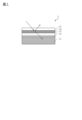
- FIG. 1 is a cross-sectional view showing an example of a multi-layer coating film using an active energy ray-curable coating composition according to the present invention.
- FIG. 2 is a side view showing a method for testing the temperature reducing effect of a coating film using the active energy ray-curable coating composition according to the present invention.
- FIG. 2 is a plan view showing a method for testing the temperature reducing effect of a coating film using the active energy ray-curable coating composition according to the present invention.
- 1 is a graph showing the relationship between the content of light reflecting agent and the amount of temperature increase.
- the active energy ray-curable coating composition comprises an active energy ray-curable resin, a light reflector in an amount sufficient to suppress a temperature rise in an object to be coated, a solvent, and, if necessary, a colorant as well as known coating additives (for example, an antifoaming agent such as silicone oil, a fluorine-based surfactant, a silicone-based surfactant, a leveling agent such as an acrylic copolymer, a thickener, a viscosity reducer, etc.).
- an antifoaming agent such as silicone oil, a fluorine-based surfactant, a silicone-based surfactant, a leveling agent such as an acrylic copolymer, a thickener, a viscosity reducer, etc.
- the term "active energy rays" includes light such as ultraviolet rays and electron beams
- the active energy ray curable resin composition of this embodiment includes an ultraviolet ray curable resin composition and an electron beam curable resin composition.
- the ultraviolet ray curable resin composition includes an ultraviolet radical curable resin composition represented by epoxy acrylate resin, urethane acrylate resin, thermosetting acrylic resin, and thermosetting polyester resin, and a cationic curable resin composition represented by ultraviolet ray curable epoxy resin. Since ultraviolet rays have a smaller curing energy than electron beams, ultraviolet ray curable resin compositions are used together with a photopolymerization initiator.
- the electron beam curable resin composition can use the same materials as the ultraviolet ray curable resin composition described above, and since electron beams have a larger curing energy, the polymerization initiator can be omitted.
- the light reflecting agent of this embodiment has the property of reflecting sunlight including infrared rays, and preferably has a light reflectance of 99% or more, although this is not particularly limited.
- Examples of light reflecting agents of this embodiment include barium sulfate, titanium oxide, zirconium dioxide, aluminum oxide, magnesium oxide, aluminum nitride, boron nitride, silica, mica powder, and powdered glass. Of these, it is more preferable to use barium sulfate and/or titanium oxide as the light reflecting agent of this embodiment.
- amounts capable of suppressing the temperature rise of the coated object include a reflector content of 29-75% by weight, preferably 37-75% by weight, more preferably 44-75% by weight, even more preferably 50-75% by weight, and even more preferably 54-75% by weight relative to the total paint. This is because a reflector content of less than 29% by weight cannot adequately suppress the temperature rise of the coated object.
- the upper limit for the reflector content is 75% by weight, due to the limit of the paint's solids ratio, i.e., in relation to coating workability.
- Fig. 1 is a cross-sectional view showing an example of a laminated coating film 1 using an active energy ray-curable coating composition according to the present invention.
- the laminated coating film 1 of the embodiment shown in the figure is composed of an electrodeposition coating film 12 formed on the surface of a steel plate 11, an intermediate coating film 13 formed on the surface of the electrodeposition coating film, a top coating film 14 formed on the surface of the intermediate coating film 13, and a clear coating film 15 formed on the surface of the top coating film.
- An aluminum plate may be used instead of the steel plate 11.
- the active energy ray curable paint according to the embodiment of the present invention described above is used for the topcoat coating film 14, and is formed with a film thickness of 15 to 30 ⁇ m, although this is not limited thereto.
- the active energy ray curable paint according to the embodiment of the present invention can also be used for the electrodeposition coating film 12, the intermediate coating film 13, or the clear coating film 15 other than the topcoat coating film 14.
- the light reflector is contained in an amount such that the temperature rise of the coated object is 194,500°C ⁇ lx or less, so specifically, it is possible to suppress the absorption of sunlight, including infrared rays, by the steel sheet 11.
- the active energy ray-curable resin is an amorphous resin, so it can contain a large amount of light reflector, which further suppresses the absorption of sunlight, including infrared rays, by the steel sheet 11.
- the light reflecting agent is barium sulfate and/or titanium oxide, so more specifically, it is possible to suppress the absorption of sunlight, including infrared rays, by the steel sheet 11.
- the light reflectance of the light reflecting agent is 99% or more, so more specifically, it is possible to suppress the absorption of sunlight, including infrared rays, by the steel sheet 11.
- the solid content ratio including the active energy ray-curable resin and the light reflector is 90% by weight or less, so that deterioration of coating workability using a coating tool such as an applicator can be suppressed.
- the active energy ray-curable coating composition of this embodiment is applied to the exterior panels of an automobile body, it is possible to suppress temperature rise inside the vehicle even if the vehicle is left under the blazing sun in midsummer.
- Example 1 50g of ultraviolet-curing paint (DIC, solid content 60%) was mixed with 21g of barium sulfate (Sakai Chemical, average particle size 0.2 ⁇ m) as a light reflecting agent, and the paint was applied to the surface of a steel plate measuring 0.15m x 0.07m using an applicator, and then irradiated with ultraviolet light to produce a coating film with a cured film thickness of 10-15 ⁇ m.
- Figure 2A is a side view showing a test method for the temperature reduction effect of a steel plate sample 2 on which a coating has been formed
- Figure 2B is a plan view of the same.
- Light from a 40 W incandescent light bulb 3 is irradiated onto the surface of the coating of the steel plate sample 2 on which a coating has been formed as described above, from a position with a center distance R of 0.2 m.
- Thermocouples 4 and 5 which serve as temperature sensors, are fixed to the center and one end of the back surface of the steel plate sample 2.
- the temperature of the steel plate sample 2 before the light from the incandescent light bulb 3 was irradiated was 25°C.
- the temperature detected by the thermocouples 4 and 5 stabilized 30 minutes after the start of irradiation with the light from the incandescent light bulb 3, the temperature was measured, and the center was 46.2°C, as shown in Table 1.
- the 40W incandescent light bulb 3 is considered to have a luminous flux of 485 lumens (lm).
- Examples 2 to 14 Steel plate sample 2 was prepared under the same conditions as in Example 1, except that the weight of barium sulfate as a light reflecting agent mixed into 50 g of the ultraviolet-curable coating material in Example 1 was set to the weight shown in Table 1, and the temperature rise of steel plate sample 2 was measured by the test method shown in Figures 2A and 2B. The results are shown in Table 1 and Figure 3.
- Comparative Example 1 A steel plate sample 2 was prepared under the same conditions as in Example 1, except that the weight of barium sulfate as a light reflecting agent mixed into 50 g of the ultraviolet curable paint in Example 1 was changed to 0.5 g, and the temperature rise of the steel plate sample 2 was measured by the test method shown in Figures 2A and 2B. The results are shown in Table 1 and Figure 3.
- Comparative Example 2 A paint was prepared by mixing 160 g of barium sulfate as a light reflecting agent with 50 g of the ultraviolet curing paint of Example 1. An attempt was made to apply this paint to the surface of a steel plate of the same size as in Example 1 using an applicator, but the paint got caught on the applicator and it was not possible to form a uniform film. Therefore, the measurement of the temperature rise of the steel plate sample 2 using the test method shown in Figures 2A and 2B was abandoned.
- Examples 15 to 28 and Comparative Examples 3 to 4 Steel plate sample 2 was prepared under the same conditions as in Examples 1 to 14 and Comparative Examples 1 and 2, except that the reflector in each of Examples 1 to 14 and Comparative Examples 1 and 2 was titanium oxide (manufactured by Sakai Chemical Industry Co., Ltd., average particle size 0.2 to 0.3 ⁇ m), and the temperature rise of steel plate sample 2 was measured by the test method shown in Figures 2A and 2B. The results are shown in Table 2.
- the effect of suppressing the temperature rise of steel plate sample 2 was confirmed when the amount of temperature rise of steel plate sample 2 was 1,945,000°C ⁇ lx or less, compared to Comparative Example 1.
- the effect of suppressing the temperature rise of steel plate sample 2 was further enhanced when the amount was 1,920,000°C ⁇ lx or less, more preferably 1,750,000°C ⁇ lx or less, even more preferably 1,400,000°C ⁇ lx or less, and even more preferably 1,280,000°C ⁇ lx or less.
- Example 14 and Comparative Example 2 and Example 17 and Comparative Example 4 it was confirmed that when the solid content ratio including the UV-curable resin and the light reflector was 90% by weight or less, there was no problem with the coating workability, but when it exceeded 90% by weight, it was not possible to apply the coating in a uniform film shape.
Landscapes
- Chemical & Material Sciences (AREA)
- Life Sciences & Earth Sciences (AREA)
- Engineering & Computer Science (AREA)
- Materials Engineering (AREA)
- Wood Science & Technology (AREA)
- Organic Chemistry (AREA)
- Inorganic Chemistry (AREA)
- Paints Or Removers (AREA)
Priority Applications (4)
| Application Number | Priority Date | Filing Date | Title |
|---|---|---|---|
| JP2025529120A JPWO2025004263A1 (https=) | 2023-06-29 | 2023-06-29 | |
| EP23943658.7A EP4737528A1 (en) | 2023-06-29 | 2023-06-29 | Active energy ray-curable coating composition |
| CN202380099298.3A CN121285607A (zh) | 2023-06-29 | 2023-06-29 | 活性能量射线固化型涂料组合物 |
| PCT/JP2023/024176 WO2025004263A1 (ja) | 2023-06-29 | 2023-06-29 | 活性エネルギー線硬化型塗料組成物 |
Applications Claiming Priority (1)
| Application Number | Priority Date | Filing Date | Title |
|---|---|---|---|
| PCT/JP2023/024176 WO2025004263A1 (ja) | 2023-06-29 | 2023-06-29 | 活性エネルギー線硬化型塗料組成物 |
Publications (1)
| Publication Number | Publication Date |
|---|---|
| WO2025004263A1 true WO2025004263A1 (ja) | 2025-01-02 |
Family
ID=93937962
Family Applications (1)
| Application Number | Title | Priority Date | Filing Date |
|---|---|---|---|
| PCT/JP2023/024176 Ceased WO2025004263A1 (ja) | 2023-06-29 | 2023-06-29 | 活性エネルギー線硬化型塗料組成物 |
Country Status (4)
| Country | Link |
|---|---|
| EP (1) | EP4737528A1 (https=) |
| JP (1) | JPWO2025004263A1 (https=) |
| CN (1) | CN121285607A (https=) |
| WO (1) | WO2025004263A1 (https=) |
Citations (11)
| Publication number | Priority date | Publication date | Assignee | Title |
|---|---|---|---|---|
| JPS56131675A (en) * | 1980-02-20 | 1981-10-15 | American Can Co | Photopolymerizable epoxy paint composition containing titanium dioxide pigment |
| JP2003311877A (ja) * | 2002-04-22 | 2003-11-06 | Nippon Steel Corp | 高耐久性塗装鋼板 |
| JP2004202730A (ja) * | 2002-12-24 | 2004-07-22 | Toppan Printing Co Ltd | 積層体 |
| JP2004351406A (ja) * | 2003-05-01 | 2004-12-16 | Bekku Kk | 建築物外壁の改装方法 |
| JP2005246299A (ja) | 2004-03-05 | 2005-09-15 | Chugoku Marine Paints Ltd | 光硬化性塗料組成物からなる塗膜の硬化方法、その方法で形成された塗膜およびその塗膜で被覆された基材 |
| WO2011152404A1 (ja) * | 2010-06-01 | 2011-12-08 | リケンテクノス株式会社 | 塗料および接着剤組成物、接着方法ならびに積層体 |
| JP2013049813A (ja) * | 2011-08-31 | 2013-03-14 | Kmew Co Ltd | 化粧建築材の製造方法及び化粧建築材 |
| JP2013155240A (ja) * | 2012-01-27 | 2013-08-15 | Mura Cam Co Ltd | 熱遮蔽塗料 |
| JP2014522722A (ja) * | 2011-08-05 | 2014-09-08 | コンストラクション リサーチ アンド テクノロジー ゲーエムベーハー | 太陽放射を反射するための防水コーティングシステム、並びにコーティングシステムにおいて白色装飾及び反射層を形成するための水性コーティング |
| WO2017122734A1 (ja) * | 2016-01-13 | 2017-07-20 | 日本ペイントホールディングス株式会社 | 複層塗膜及び複層塗膜の形成方法 |
| WO2017122733A1 (ja) * | 2016-01-13 | 2017-07-20 | 日本ペイントホールディングス株式会社 | 赤外反射性塗料組成物 |
-
2023
- 2023-06-29 JP JP2025529120A patent/JPWO2025004263A1/ja active Pending
- 2023-06-29 WO PCT/JP2023/024176 patent/WO2025004263A1/ja not_active Ceased
- 2023-06-29 EP EP23943658.7A patent/EP4737528A1/en active Pending
- 2023-06-29 CN CN202380099298.3A patent/CN121285607A/zh active Pending
Patent Citations (11)
| Publication number | Priority date | Publication date | Assignee | Title |
|---|---|---|---|---|
| JPS56131675A (en) * | 1980-02-20 | 1981-10-15 | American Can Co | Photopolymerizable epoxy paint composition containing titanium dioxide pigment |
| JP2003311877A (ja) * | 2002-04-22 | 2003-11-06 | Nippon Steel Corp | 高耐久性塗装鋼板 |
| JP2004202730A (ja) * | 2002-12-24 | 2004-07-22 | Toppan Printing Co Ltd | 積層体 |
| JP2004351406A (ja) * | 2003-05-01 | 2004-12-16 | Bekku Kk | 建築物外壁の改装方法 |
| JP2005246299A (ja) | 2004-03-05 | 2005-09-15 | Chugoku Marine Paints Ltd | 光硬化性塗料組成物からなる塗膜の硬化方法、その方法で形成された塗膜およびその塗膜で被覆された基材 |
| WO2011152404A1 (ja) * | 2010-06-01 | 2011-12-08 | リケンテクノス株式会社 | 塗料および接着剤組成物、接着方法ならびに積層体 |
| JP2014522722A (ja) * | 2011-08-05 | 2014-09-08 | コンストラクション リサーチ アンド テクノロジー ゲーエムベーハー | 太陽放射を反射するための防水コーティングシステム、並びにコーティングシステムにおいて白色装飾及び反射層を形成するための水性コーティング |
| JP2013049813A (ja) * | 2011-08-31 | 2013-03-14 | Kmew Co Ltd | 化粧建築材の製造方法及び化粧建築材 |
| JP2013155240A (ja) * | 2012-01-27 | 2013-08-15 | Mura Cam Co Ltd | 熱遮蔽塗料 |
| WO2017122734A1 (ja) * | 2016-01-13 | 2017-07-20 | 日本ペイントホールディングス株式会社 | 複層塗膜及び複層塗膜の形成方法 |
| WO2017122733A1 (ja) * | 2016-01-13 | 2017-07-20 | 日本ペイントホールディングス株式会社 | 赤外反射性塗料組成物 |
Also Published As
| Publication number | Publication date |
|---|---|
| CN121285607A (zh) | 2026-01-06 |
| EP4737528A1 (en) | 2026-05-06 |
| JPWO2025004263A1 (https=) | 2025-01-02 |
Similar Documents
| Publication | Publication Date | Title |
|---|---|---|
| TWI534002B (zh) | 光學積層體及光學積層體之製造方法 | |
| ES2278761T3 (es) | Medio de pelicula opticamente activa. | |
| KR101441829B1 (ko) | 하드 코트층용 경화성 수지 조성물, 하드 코트 필름의 제조 방법, 하드 코트 필름, 편광판 및 디스플레이 패널 | |
| JP6414173B2 (ja) | 防眩性反射防止ハードコートフィルム、画像表示装置、防眩性反射防止ハードコートフィルムの製造方法 | |
| JP4632403B2 (ja) | 反射防止フィルム | |
| JP5232448B2 (ja) | 防眩材料 | |
| KR20160024803A (ko) | 광경화성 수지 조성물, 이 조성물로 형성되는 경화 피막 및 방현 필름과, 경화 피막 및 방현 필름의 제조방법 | |
| KR102793429B1 (ko) | 반사 방지 코팅을 갖는 복합 필름 | |
| KR102826036B1 (ko) | 방현성 필름, 방현성 필름의 제조 방법, 광학 부재 및 화상 표시 장치 | |
| JP2003027003A (ja) | コーティング組成物、その塗膜、反射防止膜、及び、反射防止フィルム | |
| JP6797548B2 (ja) | 遮熱膜、遮熱塗料、および光学機器 | |
| JP4215458B2 (ja) | 防眩フィルム | |
| JP4490622B2 (ja) | 防眩フィルム | |
| WO2025004263A1 (ja) | 活性エネルギー線硬化型塗料組成物 | |
| JP5911785B2 (ja) | 光学積層体 | |
| JP2007127823A (ja) | 光学フィルム及びその製造法 | |
| WO2019221000A1 (ja) | 感光性樹脂組成物及び防眩性フィルム | |
| JP2019085473A (ja) | コートフィルム | |
| TWI912385B (zh) | 抗反射膜 | |
| JP2021530728A (ja) | 反射防止コーティングを有する複合フィルム | |
| JP2012063504A (ja) | 防眩性フィルム | |
| JP2015104865A (ja) | 熱線遮蔽フィルム及びセパレータ・粘着層付き熱線遮蔽フィルム | |
| JP2013156643A (ja) | 光学積層体 | |
| JP2008292987A (ja) | 光学積層体 | |
| JP5069929B2 (ja) | 光学積層体 |
Legal Events
| Date | Code | Title | Description |
|---|---|---|---|
| 121 | Ep: the epo has been informed by wipo that ep was designated in this application |
Ref document number: 23943658 Country of ref document: EP Kind code of ref document: A1 |
|
| ENP | Entry into the national phase |
Ref document number: 2025529120 Country of ref document: JP Kind code of ref document: A |
|
| WWE | Wipo information: entry into national phase |
Ref document number: 2025529120 Country of ref document: JP |
|
| WWE | Wipo information: entry into national phase |
Ref document number: 2023943658 Country of ref document: EP |
|
| NENP | Non-entry into the national phase |
Ref country code: DE |
|
| ENP | Entry into the national phase |
Ref document number: 2023943658 Country of ref document: EP Effective date: 20260129 |
|
| ENP | Entry into the national phase |
Ref document number: 2023943658 Country of ref document: EP Effective date: 20260129 |