WO2023248351A1 - 地中埋設型構造物の補強方法 - Google Patents
地中埋設型構造物の補強方法 Download PDFInfo
- Publication number
- WO2023248351A1 WO2023248351A1 PCT/JP2022/024745 JP2022024745W WO2023248351A1 WO 2023248351 A1 WO2023248351 A1 WO 2023248351A1 JP 2022024745 W JP2022024745 W JP 2022024745W WO 2023248351 A1 WO2023248351 A1 WO 2023248351A1
- Authority
- WO
- WIPO (PCT)
- Prior art keywords
- underground structure
- reinforcing
- underground
- ground
- wall
- Prior art date
- Legal status (The legal status is an assumption and is not a legal conclusion. Google has not performed a legal analysis and makes no representation as to the accuracy of the status listed.)
- Ceased
Links
Images



Classifications
-
- E—FIXED CONSTRUCTIONS
- E02—HYDRAULIC ENGINEERING; FOUNDATIONS; SOIL SHIFTING
- E02D—FOUNDATIONS; EXCAVATIONS; EMBANKMENTS; UNDERGROUND OR UNDERWATER STRUCTURES
- E02D29/00—Independent underground or underwater structures; Retaining walls
- E02D29/045—Underground structures, e.g. tunnels or galleries, built in the open air or by methods involving disturbance of the ground surface all along the location line; Methods of making them
- E02D29/05—Underground structures, e.g. tunnels or galleries, built in the open air or by methods involving disturbance of the ground surface all along the location line; Methods of making them at least part of the cross-section being constructed in an open excavation or from the ground surface, e.g. assembled in a trench
Definitions
- the present disclosure relates to a method for reinforcing underground structures.
- Patent Document 1 describes a method of drilling holes in each part of a concrete structure and inserting reinforcing members into the drilled holes.
- Patent Documents 2 and 3 describe a method of excavating a side wall buried underground at multiple locations, constructing a formwork, and pouring concrete.
- Patent Document 4 describes a method of excavating the entire side surface of a relatively large underground structure, building a formwork, and pouring concrete.
- an object of the present disclosure is to provide a reinforcing method for reinforcing an underground structure to which a superstructure is attached in a short period of time.
- a method for reinforcing an underground structure is a method for reinforcing an underground structure that is buried in the ground and has a superstructure attached thereto, the method comprising: 1 a removal step of removing the superstructure; an excavation step of excavating the ground on the side of the underground structure; and a reinforcing wall placed and fixed on the side of the underground structure. and an installation step of forming a reinforced underground structure, and an installation step of attaching a second superstructure onto the reinforced underground structure.
- an underground structure to which an upper structure is attached can be reinforced in a short period of time.
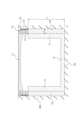
- FIG. 2 is a cross-sectional view showing a structure before reinforcement of an underground structure reinforced by a reinforcement method according to an embodiment of the present disclosure.
- FIG. 2 is a cross-sectional view showing a reinforced structure of an underground structure reinforced by a reinforcement method according to an embodiment of the present disclosure.
- FIG. 3 is a cross-sectional view showing a state after a removal step of the reinforcing method according to an embodiment of the present disclosure.
- FIG. 3 is a cross-sectional view showing a state after an excavation step of the reinforcing method according to an embodiment of the present disclosure.
- FIG. 3 is a cross-sectional view showing a state after an installation step of the reinforcing method according to an embodiment of the present disclosure.
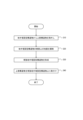
- 3 is a flowchart illustrating an example of a reinforcing method according to an embodiment of the present disclosure.
- FIG. 1 is a sectional view of an underground structure 20 to which a superstructure 10 is attached.
- the underground structure 20 is an underground structure before being reinforced by the reinforcement method according to an embodiment of the present disclosure.
- the upper structure 10 and the underground structure 20 are buried in the ground 1000.
- the upper structure 10 may include a lid 11, a receiving frame 12, a neck ring (building block) 13, and an anchor bolt 14.
- the lid 11 may have a rectangular shape when viewed from above when attached to the underground structure 20.
- the lid 11 may have a circular shape or another shape when viewed from above when attached to the underground structure 20.
- a flange 11f may be formed on the outer edge of the lid 11.
- the thickness of the flange 11f may be thinner than that of the portion of the lid 11 other than the flange 11f.
- the thickness of the portion of the lid 11 other than the flange 11f may be thinner at the center and thicker toward the outside in the in-plane direction.
- the lid 11 may be exposed to the ground surface.
- the lid 11 may be made of iron.
- the receiving frame 12 may have a shape that receives the lid 11.
- the receiving frame 12 may include a rectangular ring-shaped receiving part 12r that receives the lid 11, and a protruding part 12 1958 that projects from the receiving part 12r at the outer edge of the receiving frame 12.
- the receiving frame 12 may be made of iron.
- the neck ring 13 may have a rectangular ring shape when viewed from above.
- the upper structure (first upper structure) 10 may include two neck rings 13.
- the number of neck rings 13 may be determined depending on the installation environment. Specifically, in a configuration in which the underground structure 20 is buried deep, the number of neck rings 13 may be increased.
- the neck ring 13 may be constructed of concrete.
- the anchor bolt 14 may be inserted through the receiving frame 12 and the two neck rings 13 to connect them.
- Anchor bolt 14 may be constructed of iron.
- a cap 15 may be attached to the anchor bolt 14.
- the receiving frame 12 and neck ring 13 may be bonded together with mortar or the like.
- the two neck rings 13 may be bonded together using an adhesive or the like.
- the adhesive may be an epoxy resin adhesive.
- the underground structure 20 may have a hollow rectangular parallelepiped shape.
- the underground structure 20 may include a side wall 21 and a lower slab 22. Instead of these configurations, the underground structure 20 may have a cylindrical shape.
- the underground structure 20 may have an opening 20 Kab at the top. Wiring and the like may pass through the inside of the underground structure 20.
- the underground structure 20 may be a hand hole.
- the underground structure 20 is buried in the ground 1000.
- the side wall 21 and the lower floor slab 22 may have a flat plate shape.
- the top surface of the side wall 21 and the bottom surface of the upper structure 10 (for example, the neck ring 13) may be bonded with an adhesive or the like.
- the thickness t of the side wall 21 and the thickness of the lower floor slab 22 are, for example, 10 cm.
- the height h of the side wall 21 may be, for example, 60 cm to 185 cm.
- FIG. 2 is a sectional view of the reinforced underground structure 120 to which the superstructure 110 (second superstructure) is attached.
- a reinforced underground structure 120 may be formed by applying a reinforcing method according to an embodiment of the present disclosure to the underground structure 20 of FIG. 1 .
- the same configuration as the superstructure 10 or the underground structure 20 will not be explained again, but a different configuration from the superstructure 10 or the underground structure 20 will be explained.
- the dimensions of the lid 111 may be larger than the dimensions of the lid 11 in FIG.
- the dimensions of the lid 111 viewed from above may be larger than the dimensions of the lid 11 in FIG.
- the lid 111 may be the same member as the lid 11.
- the dimensions of the receiving frame 112 may be larger than the dimensions of the receiving frame 12 in FIG.
- the dimensions of the receiving frame 112 viewed from above may be larger than the dimensions of the receiving frame 12.
- a receiving frame 112 having a width larger than that of the receiving frame 12 may be formed.
- the cross-sectional shape of the receiving frame 112 may be such that the side surface is inclined outward in the width direction with respect to the normal to the main surface.
- the dimensions of the neck ring 113 may be larger than the dimensions of the neck ring 13 of FIG.
- the dimensions of the neck ring 113 viewed from above may be larger than the dimensions of the neck ring 13.
- the reinforced underground structure 120 further includes a reinforced wall 123.
- the reinforcement wall 123 can improve the strength of the reinforced underground structure 120.
- the reinforcing wall 123 may have a rectangular ring shape.
- the reinforcing wall 123 may be fixed to the underground structure 20. Specifically, the surface of the reinforcing wall 123 facing the underground structure 20 may be bonded to the side wall 21 of the underground structure 20 with an adhesive, mortar, or the like.
- the superstructure 110 may be fixed on top of the reinforcing wall 123. Specifically, the bottom surface of the neck ring 13 may be adhered to the top surface of the reinforcing wall 123 with an adhesive or the like.
- the thickness t of the reinforcing wall 123 is, for example, 10 cm. The thickness t may be determined depending on the required strength of the reinforced underground structure 120.
- the height h' of the reinforcing wall 123 may be equal to the height h of the side wall 21. The height h' may be, for example, between 60 cm and 185 cm.
- the reinforcing wall 123 may be made of resin, concrete, mortar, or the like. Reinforcement wall 123 may be constructed from a high strength or early strength material.
- the superstructure 110 may rest on the reinforcing wall 123.
- the upper structure 110 may not rest on the side wall 21 but only on the reinforcing wall 123.
- the superstructure 110 may rest on the side wall 21 and the reinforcing wall 123.
- the superstructure 110 may rest only on the side wall 21.
- FIG. 4 is a flowchart illustrating an example of a reinforcing method according to an embodiment of the present disclosure.
- step S10 the upper structure 10 (see FIG. 1) is removed from the underground structure 20.
- Structure 10 may be removed. More specifically, the upper structure 10 may be removed after the upper surface of the side wall 21 and the lowermost neck ring 13 have been separated. Drills, jackhammers, etc. may be used for separation.
- the anchor bolt 14 may be removed from the receiving frame 12 and the two neck rings 13, and the receiving frame 12 and the two neck rings 13 may be separated before or after separation.
- step S10 the ground 1000 on the sides of the superstructure 10 may be removed.
- the underground structure 20 and the bottom surface of the upper structure 10 can be easily separated or removed, and the time required for step S20, which will be described later, can be shortened.
- step S20 the ground 1000 on the side of the underground structure 20 is excavated.
- the ground 1000 outside the four side walls 21 of the underground structure 20 has an excavation width w perpendicular to the side walls 21 and an excavation depth (ground A depth of 1000) d from the surface may be excavated. Only the ground 1000 outside three or less side walls 21 of the underground structure 20 may be excavated.
- the excavation width w may be equal to the thickness t' of the reinforcing wall 123. Specifically, the excavation width w may be 10 cm. In other words, the ground 1000 having a width w into which the reinforcing wall 123 can be inserted may be excavated. The excavation width w may be wider (for example, by 5 cm) than the thickness t' of the reinforcing wall 123.
- the excavation depth d may be equal to the depth of the bottom of the underground structure 20.
- the ground 1000 may be excavated to the bottom of the underground structure 20 (to the same depth as the bottom of the lower plate 22).
- the excavation depth d may be, for example, 65 cm to 90 cm.
- the reinforced underground structure 120 has sufficient strength.
- the underground structure 20 can be reinforced in a shorter period of time.
- a gap 124 is formed. Gravel may be laid at the bottom of the gap 124. The bottom of the gap 124 may be compacted with a rod or the like.
- step S30 the reinforcing wall 123 is placed and fixed on the side of the underground structure 20, and the reinforced underground structure 120 is formed.
- a rectangular ring-shaped reinforcing wall 123 may be arranged to cover each of the four side walls 21 of the underground structure 20 .
- Mortar or adhesive may be applied on each of the four sides of the underground structure 20.
- Mortar or adhesive may be applied on the surface of each reinforcing wall 123 facing the underground structure 20.
- the reinforcing wall 123 may be a pre-hardened concrete wall.
- the reinforced wall 123 may be formed by pouring concrete into the gap 124 and solidifying it.
- the gap 124 may be refilled with ground.
- the backfilled ground may then be compacted from above using a compactor.
- the compacted ground may press the reinforcing wall 123 against the side wall 21. Thereby, the adhesiveness between the reinforcing wall 123 and the side wall 21 can be improved.
- the reinforcing wall 123w After the reinforcing wall 123w is placed on the side of the underground structure 20, it may be cured for a predetermined curing period. By curing, the mortar, adhesive, etc. between the reinforcing wall 123w and the underground structure 20 may be solidified. The curing period may be 30 minutes to 1 hour. In a configuration in which early strength mortar is applied to the reinforcing wall 123 or the underground structure 20, the curing period can be shortened.
- step S40 the upper structure 110 is installed on the reinforced underground structure 120.
- a superstructure 110 may be mounted, in particular on top of the reinforcement wall 123.
- an adhesive may be applied on the reinforced underground structure 120, and then the superstructure 110 may be placed on the reinforced underground structure 120. More specifically, an adhesive may be applied to the top surface of the reinforcing wall 123 of the reinforced underground structure 120, and then one or more (eg, two) neck rings 113 may be placed thereon. Mortar may be applied to the top surface of the uppermost neck ring 113 and then the receiver frame 112 may be placed on top of the uppermost neck ring 113.
- the anchor bolt 14 may be inserted through the receiving frame 112 and the one or more neck rings 13 to connect the receiving frame 112 and the one or more neck rings 13.
- a lid 111 may be placed on the receiving frame 112.
- ground 1000 may be refilled on the sides of the superstructure 110.
- a method for reinforcing an underground structure buried in the ground and having a superstructure attached comprising: a removal step of removing the first superstructure from the underground structure; an excavation step of excavating the ground above the side of the underground structure; placing and securing a reinforcing wall on the side of the underground structure to form a reinforced underground structure; an installation step of installing a second superstructure on the reinforced underground structure; Methods for reinforcing underground structures, including (Additional note 2) The reinforcing method according to supplementary note 1, wherein in the attaching step, the second upper structure is attached on the reinforcing wall.
Landscapes
- Engineering & Computer Science (AREA)
- Mining & Mineral Resources (AREA)
- Environmental & Geological Engineering (AREA)
- Life Sciences & Earth Sciences (AREA)
- General Life Sciences & Earth Sciences (AREA)
- Paleontology (AREA)
- Civil Engineering (AREA)
- General Engineering & Computer Science (AREA)
- Structural Engineering (AREA)
- Underground Structures, Protecting, Testing And Restoring Foundations (AREA)
Priority Applications (2)
| Application Number | Priority Date | Filing Date | Title |
|---|---|---|---|
| PCT/JP2022/024745 WO2023248351A1 (ja) | 2022-06-21 | 2022-06-21 | 地中埋設型構造物の補強方法 |
| JP2024528151A JPWO2023248351A1 (https=) | 2022-06-21 | 2022-06-21 |
Applications Claiming Priority (1)
| Application Number | Priority Date | Filing Date | Title |
|---|---|---|---|
| PCT/JP2022/024745 WO2023248351A1 (ja) | 2022-06-21 | 2022-06-21 | 地中埋設型構造物の補強方法 |
Publications (1)
| Publication Number | Publication Date |
|---|---|
| WO2023248351A1 true WO2023248351A1 (ja) | 2023-12-28 |
Family
ID=89379597
Family Applications (1)
| Application Number | Title | Priority Date | Filing Date |
|---|---|---|---|
| PCT/JP2022/024745 Ceased WO2023248351A1 (ja) | 2022-06-21 | 2022-06-21 | 地中埋設型構造物の補強方法 |
Country Status (2)
| Country | Link |
|---|---|
| JP (1) | JPWO2023248351A1 (https=) |
| WO (1) | WO2023248351A1 (https=) |
Citations (10)
| Publication number | Priority date | Publication date | Assignee | Title |
|---|---|---|---|---|
| JPH10204905A (ja) * | 1997-01-24 | 1998-08-04 | Maezawa Kasei Ind Co Ltd | 下水用点検口防護蓋装置 |
| JPH11158820A (ja) * | 1997-12-01 | 1999-06-15 | Hanshin Expressway Public Corp | 地中柱の耐震補強方法 |
| JP2005226326A (ja) * | 2004-02-13 | 2005-08-25 | Ohbayashi Corp | 既設橋脚基礎の補強構造および既設橋脚基礎の補強方法 |
| JP2009013660A (ja) * | 2007-07-04 | 2009-01-22 | Oriental Shiraishi Corp | 地中構造物の外部補強方法 |
| JP3198669U (ja) * | 2015-04-09 | 2015-07-16 | 株式会社センタービレッジ | マンホール更新構造及び新設のマンホール構造 |
| JP2016199993A (ja) * | 2016-03-29 | 2016-12-01 | 株式会社アイビルド | マンホールの更新構造及び新設のマンホール構造 |
| JP2017197941A (ja) * | 2016-04-26 | 2017-11-02 | 株式会社アイビルド | マンホール更生工法及びマンホール更生構造 |
| JP2020007735A (ja) * | 2018-07-04 | 2020-01-16 | 鹿島建設株式会社 | 基礎構造補強方法及び基礎構造補強構造 |
| US20210214914A1 (en) * | 2018-04-05 | 2021-07-15 | Predl Systems North America Inc. | Manhole Assembly |
| JP2022015796A (ja) * | 2020-07-10 | 2022-01-21 | 株式会社アイビルド | マンホール更生工法及びマンホール更生構造 |
-
2022
- 2022-06-21 JP JP2024528151A patent/JPWO2023248351A1/ja active Pending
- 2022-06-21 WO PCT/JP2022/024745 patent/WO2023248351A1/ja not_active Ceased
Patent Citations (10)
| Publication number | Priority date | Publication date | Assignee | Title |
|---|---|---|---|---|
| JPH10204905A (ja) * | 1997-01-24 | 1998-08-04 | Maezawa Kasei Ind Co Ltd | 下水用点検口防護蓋装置 |
| JPH11158820A (ja) * | 1997-12-01 | 1999-06-15 | Hanshin Expressway Public Corp | 地中柱の耐震補強方法 |
| JP2005226326A (ja) * | 2004-02-13 | 2005-08-25 | Ohbayashi Corp | 既設橋脚基礎の補強構造および既設橋脚基礎の補強方法 |
| JP2009013660A (ja) * | 2007-07-04 | 2009-01-22 | Oriental Shiraishi Corp | 地中構造物の外部補強方法 |
| JP3198669U (ja) * | 2015-04-09 | 2015-07-16 | 株式会社センタービレッジ | マンホール更新構造及び新設のマンホール構造 |
| JP2016199993A (ja) * | 2016-03-29 | 2016-12-01 | 株式会社アイビルド | マンホールの更新構造及び新設のマンホール構造 |
| JP2017197941A (ja) * | 2016-04-26 | 2017-11-02 | 株式会社アイビルド | マンホール更生工法及びマンホール更生構造 |
| US20210214914A1 (en) * | 2018-04-05 | 2021-07-15 | Predl Systems North America Inc. | Manhole Assembly |
| JP2020007735A (ja) * | 2018-07-04 | 2020-01-16 | 鹿島建設株式会社 | 基礎構造補強方法及び基礎構造補強構造 |
| JP2022015796A (ja) * | 2020-07-10 | 2022-01-21 | 株式会社アイビルド | マンホール更生工法及びマンホール更生構造 |
Also Published As
| Publication number | Publication date |
|---|---|
| JPWO2023248351A1 (https=) | 2023-12-28 |
Similar Documents
| Publication | Publication Date | Title |
|---|---|---|
| KR101263557B1 (ko) | 조립식 중공 세그먼트 교각 | |
| US20100319280A1 (en) | Precast Temporary Facility Structure and a Construction Method for the Same | |
| KR101021137B1 (ko) | 마이크로 파일을 이용한 확장 보도용 프리캐스트 블록, 이를 이용한 확장 보도 및 그 시공 방법 | |
| WO2023248351A1 (ja) | 地中埋設型構造物の補強方法 | |
| JP5367452B2 (ja) | 地下壁体構築方法および地下壁体 | |
| WO2023248354A1 (ja) | 地中埋設型構造物の補強方法 | |
| KR20090043625A (ko) | 변단면 철골보를 이용한 지하층의 슬래브 시공 방법 | |
| JP2009185487A (ja) | 浄化槽基礎構造体及びその構築法 | |
| JP5534861B2 (ja) | Pcウェル及び橋梁の施工方法 | |
| JP6895740B2 (ja) | 水平力拘束構造 | |
| JPH11310928A (ja) | 既存構造物の免震補強工法 | |
| KR20110103087A (ko) | 송전 맨홀의 시공 방법 및 그 방법에 의해 시공된 송전 맨홀의 구조 | |
| JP7836004B2 (ja) | 地中埋設型構造物の補強方法 | |
| JP3681990B2 (ja) | 推進用立坑構造物 | |
| JP3653000B2 (ja) | マンホール構造物 | |
| KR20190081605A (ko) | 프리캐스트 콘크리트 암거 설치구조 및 방법 | |
| KR20230110051A (ko) | Rps 빔을 이용한 흙막이 벽체 구조물 및 그 시공 방법 | |
| JP4511080B2 (ja) | 地下構造物の構築方法 | |
| JP4924967B2 (ja) | 塔状構造体 | |
| JPH03257226A (ja) | 地下構築物における地下躯体壁の振動遮断工法 | |
| KR20220002858U (ko) | 통신용 강관주 지지용 기초 조립체 | |
| WO2024257192A1 (ja) | コンクリート構造物の補強方法、及びコンクリート構造物組立体 | |
| JP4146250B2 (ja) | オープンケーソンの底盤築造方法 | |
| KR102630184B1 (ko) | 모듈러 건축용 조인트 부재 및 이를 이용한 시공 방법 | |
| JPH10266239A (ja) | 合成樹脂製マンホールの施工方法及び合成樹脂製マンホール |
Legal Events
| Date | Code | Title | Description |
|---|---|---|---|
| 121 | Ep: the epo has been informed by wipo that ep was designated in this application |
Ref document number: 22947913 Country of ref document: EP Kind code of ref document: A1 |
|
| WWE | Wipo information: entry into national phase |
Ref document number: 2024528151 Country of ref document: JP |
|
| NENP | Non-entry into the national phase |
Ref country code: DE |
|
| 122 | Ep: pct application non-entry in european phase |
Ref document number: 22947913 Country of ref document: EP Kind code of ref document: A1 |