WO2023162942A1 - 電極形成用組成物 - Google Patents
電極形成用組成物 Download PDFInfo
- Publication number
- WO2023162942A1 WO2023162942A1 PCT/JP2023/006101 JP2023006101W WO2023162942A1 WO 2023162942 A1 WO2023162942 A1 WO 2023162942A1 JP 2023006101 W JP2023006101 W JP 2023006101W WO 2023162942 A1 WO2023162942 A1 WO 2023162942A1
- Authority
- WO
- WIPO (PCT)
- Prior art keywords
- group
- electrode
- forming composition
- acid
- containing compound
- Prior art date
- Legal status (The legal status is an assumption and is not a legal conclusion. Google has not performed a legal analysis and makes no representation as to the accuracy of the status listed.)
- Ceased
Links
Images

Classifications
-
- H—ELECTRICITY
- H01—ELECTRIC ELEMENTS
- H01M—PROCESSES OR MEANS, e.g. BATTERIES, FOR THE DIRECT CONVERSION OF CHEMICAL ENERGY INTO ELECTRICAL ENERGY
- H01M4/00—Electrodes
- H01M4/02—Electrodes composed of, or comprising, active material
- H01M4/62—Selection of inactive substances as ingredients for active masses, e.g. binders, fillers
-
- H—ELECTRICITY
- H01—ELECTRIC ELEMENTS
- H01M—PROCESSES OR MEANS, e.g. BATTERIES, FOR THE DIRECT CONVERSION OF CHEMICAL ENERGY INTO ELECTRICAL ENERGY
- H01M10/00—Secondary cells; Manufacture thereof
- H01M10/05—Accumulators with non-aqueous electrolyte
- H01M10/052—Li-accumulators
- H01M10/0525—Rocking-chair batteries, i.e. batteries with lithium insertion or intercalation in both electrodes; Lithium-ion batteries
-
- H—ELECTRICITY
- H01—ELECTRIC ELEMENTS
- H01M—PROCESSES OR MEANS, e.g. BATTERIES, FOR THE DIRECT CONVERSION OF CHEMICAL ENERGY INTO ELECTRICAL ENERGY
- H01M10/00—Secondary cells; Manufacture thereof
- H01M10/05—Accumulators with non-aqueous electrolyte
- H01M10/056—Accumulators with non-aqueous electrolyte characterised by the materials used as electrolytes, e.g. mixed inorganic/organic electrolytes
- H01M10/0561—Accumulators with non-aqueous electrolyte characterised by the materials used as electrolytes, e.g. mixed inorganic/organic electrolytes the electrolyte being constituted of inorganic materials only
- H01M10/0562—Solid materials
-
- H—ELECTRICITY
- H01—ELECTRIC ELEMENTS
- H01M—PROCESSES OR MEANS, e.g. BATTERIES, FOR THE DIRECT CONVERSION OF CHEMICAL ENERGY INTO ELECTRICAL ENERGY
- H01M4/00—Electrodes
- H01M4/02—Electrodes composed of, or comprising, active material
- H01M4/13—Electrodes for accumulators with non-aqueous electrolyte, e.g. for lithium-accumulators; Processes of manufacture thereof
-
- H—ELECTRICITY
- H01—ELECTRIC ELEMENTS
- H01M—PROCESSES OR MEANS, e.g. BATTERIES, FOR THE DIRECT CONVERSION OF CHEMICAL ENERGY INTO ELECTRICAL ENERGY
- H01M4/00—Electrodes
- H01M4/02—Electrodes composed of, or comprising, active material
- H01M4/13—Electrodes for accumulators with non-aqueous electrolyte, e.g. for lithium-accumulators; Processes of manufacture thereof
- H01M4/139—Processes of manufacture
-
- H—ELECTRICITY
- H01—ELECTRIC ELEMENTS
- H01M—PROCESSES OR MEANS, e.g. BATTERIES, FOR THE DIRECT CONVERSION OF CHEMICAL ENERGY INTO ELECTRICAL ENERGY
- H01M4/00—Electrodes
- H01M4/02—Electrodes composed of, or comprising, active material
- H01M4/36—Selection of substances as active materials, active masses, active liquids
- H01M4/38—Selection of substances as active materials, active masses, active liquids of elements or alloys
-
- H—ELECTRICITY
- H01—ELECTRIC ELEMENTS
- H01M—PROCESSES OR MEANS, e.g. BATTERIES, FOR THE DIRECT CONVERSION OF CHEMICAL ENERGY INTO ELECTRICAL ENERGY
- H01M4/00—Electrodes
- H01M4/02—Electrodes composed of, or comprising, active material
- H01M4/36—Selection of substances as active materials, active masses, active liquids
- H01M4/48—Selection of substances as active materials, active masses, active liquids of inorganic oxides or hydroxides
- H01M4/50—Selection of substances as active materials, active masses, active liquids of inorganic oxides or hydroxides of manganese
- H01M4/505—Selection of substances as active materials, active masses, active liquids of inorganic oxides or hydroxides of manganese of mixed oxides or hydroxides containing manganese for inserting or intercalating light metals, e.g. LiMn2O4 or LiMn2OxFy
-
- H—ELECTRICITY
- H01—ELECTRIC ELEMENTS
- H01M—PROCESSES OR MEANS, e.g. BATTERIES, FOR THE DIRECT CONVERSION OF CHEMICAL ENERGY INTO ELECTRICAL ENERGY
- H01M4/00—Electrodes
- H01M4/02—Electrodes composed of, or comprising, active material
- H01M4/36—Selection of substances as active materials, active masses, active liquids
- H01M4/48—Selection of substances as active materials, active masses, active liquids of inorganic oxides or hydroxides
- H01M4/52—Selection of substances as active materials, active masses, active liquids of inorganic oxides or hydroxides of nickel, cobalt or iron
- H01M4/525—Selection of substances as active materials, active masses, active liquids of inorganic oxides or hydroxides of nickel, cobalt or iron of mixed oxides or hydroxides containing iron, cobalt or nickel for inserting or intercalating light metals, e.g. LiNiO2, LiCoO2 or LiCoOxFy
-
- H—ELECTRICITY
- H01—ELECTRIC ELEMENTS
- H01M—PROCESSES OR MEANS, e.g. BATTERIES, FOR THE DIRECT CONVERSION OF CHEMICAL ENERGY INTO ELECTRICAL ENERGY
- H01M4/00—Electrodes
- H01M4/02—Electrodes composed of, or comprising, active material
- H01M4/36—Selection of substances as active materials, active masses, active liquids
- H01M4/58—Selection of substances as active materials, active masses, active liquids of inorganic compounds other than oxides or hydroxides, e.g. sulfides, selenides, tellurides, halogenides or LiCoFy; of polyanionic structures, e.g. phosphates, silicates or borates
- H01M4/583—Carbonaceous material, e.g. graphite-intercalation compounds or CFx
- H01M4/587—Carbonaceous material, e.g. graphite-intercalation compounds or CFx for inserting or intercalating light metals
-
- H—ELECTRICITY
- H01—ELECTRIC ELEMENTS
- H01M—PROCESSES OR MEANS, e.g. BATTERIES, FOR THE DIRECT CONVERSION OF CHEMICAL ENERGY INTO ELECTRICAL ENERGY
- H01M4/00—Electrodes
- H01M4/02—Electrodes composed of, or comprising, active material
- H01M4/62—Selection of inactive substances as ingredients for active masses, e.g. binders, fillers
- H01M4/621—Binders
- H01M4/622—Binders being polymers
- H01M4/623—Binders being polymers fluorinated polymers
-
- H—ELECTRICITY
- H01—ELECTRIC ELEMENTS
- H01M—PROCESSES OR MEANS, e.g. BATTERIES, FOR THE DIRECT CONVERSION OF CHEMICAL ENERGY INTO ELECTRICAL ENERGY
- H01M4/00—Electrodes
- H01M4/02—Electrodes composed of, or comprising, active material
- H01M4/62—Selection of inactive substances as ingredients for active masses, e.g. binders, fillers
- H01M4/624—Electric conductive fillers
- H01M4/625—Carbon or graphite
-
- H—ELECTRICITY
- H01—ELECTRIC ELEMENTS
- H01M—PROCESSES OR MEANS, e.g. BATTERIES, FOR THE DIRECT CONVERSION OF CHEMICAL ENERGY INTO ELECTRICAL ENERGY
- H01M4/00—Electrodes
- H01M4/02—Electrodes composed of, or comprising, active material
- H01M2004/021—Physical characteristics, e.g. porosity, surface area
-
- Y—GENERAL TAGGING OF NEW TECHNOLOGICAL DEVELOPMENTS; GENERAL TAGGING OF CROSS-SECTIONAL TECHNOLOGIES SPANNING OVER SEVERAL SECTIONS OF THE IPC; TECHNICAL SUBJECTS COVERED BY FORMER USPC CROSS-REFERENCE ART COLLECTIONS [XRACs] AND DIGESTS
- Y02—TECHNOLOGIES OR APPLICATIONS FOR MITIGATION OR ADAPTATION AGAINST CLIMATE CHANGE
- Y02E—REDUCTION OF GREENHOUSE GAS [GHG] EMISSIONS, RELATED TO ENERGY GENERATION, TRANSMISSION OR DISTRIBUTION
- Y02E60/00—Enabling technologies; Technologies with a potential or indirect contribution to GHG emissions mitigation
- Y02E60/10—Energy storage using batteries
Definitions
- the present invention relates to an electrode-forming composition.
- Lithium-ion secondary batteries have high energy density, high voltage, and no memory effect during charging and discharging. And with the expansion of the amount of use, there is a demand for further lower resistance, longer life, higher capacity, safety, and lower cost.
- Lithium-ion secondary batteries have the problem of deterioration due to repeated charging and discharging.
- Various factors have been reported as the mechanism of deterioration, but the main reasons are the deterioration of the active material due to the decomposition of the electrolyte solution and the trace amount of water remaining inside the battery, and the formation of decomposition products of the electrolyte solution. Examples include an increase in internal resistance and isolation of the active material caused by cracks generated in the electrode mixture layer (hereinafter sometimes referred to as "electrode layer").
- Non-Patent Document 1 the surface of the positive electrode active material is coated with metal oxides such as Mg, Al, Ti, Sn, Si and Cu, phosphorus compounds, carbon, and the like.
- Inorganic compounds such as transition metal oxides containing alkali metals and transition metal chalcogens are known as positive electrode active materials for lithium ion secondary batteries capable of obtaining a battery voltage of about 4V.
- high-nickel positive electrode active materials represented by LixNiO 2 have high discharge capacity and are attractive positive electrode materials.
- the high-nickel positive electrode active material has, on its surface, LiOH formed by a proton exchange reaction with the residue of the raw material and moisture, and Li 2 CO 3 etc. produced by reaction of this LiOH with carbon dioxide gas in the air.
- LiOH formed by a proton exchange reaction with the residue of the raw material and moisture
- Li 2 CO 3 etc. produced by reaction of this LiOH with carbon dioxide gas in the air.
- LiOH is an alkaline component
- a composition containing the positive electrode active material, polyvinylidene fluoride (PVdF) as a binder, and N-methyl-2-pyrrolidone (NMP) as a solvent is kneaded. Gelation of the slurry occurs when the composition is kneaded or when the composition is applied after kneading.
- the alkaline component not only increases the resistance of the battery by corroding aluminum, which is generally used as the current collector foil of the positive electrode, but also reacts with the electrolyte in the battery to increase the resistance of the battery. It becomes a factor that deteriorates life expectancy.
- Li 2 CO 3 decomposes during charging and discharging to generate CO 2 gas and CO 3 gas, and these gas components increase the pressure inside the battery, causing swelling of the battery and deterioration of the cycle life. . Moreover, there is a possibility that the battery may be damaged due to an increase in internal pressure caused by the generated gas.
- Patent Document 1 reports a method of treating a positive electrode active material with fluorine gas to fix residual LiOH as LiF, thereby preventing gelation and suppressing gas generation.
- fluorine gas is highly toxic and difficult to handle
- LiF produced as a by-product increases the internal resistance of the battery, and corrosion of the positive electrode active material by the fluorine gas also reduces the capacity.
- residual fluorine reacts with a small amount of moisture present in the active material or the electrolyte to produce hydrogen fluoride, which tends to cause cycle deterioration.
- Patent Document 2 reports a method of removing unreacted lithium hydroxide and impurities derived from raw materials by washing a positive electrode active material with an aqueous solution containing a lithium salt.
- Patent Document 2 reports a method of removing unreacted lithium hydroxide and impurities derived from raw materials by washing a positive electrode active material with an aqueous solution containing a lithium salt.
- the resistance of a battery has a plurality of resistance components, which are roughly divided into electronic resistance, ion diffusion resistance in solution, ion diffusion resistance in particles, and charge transfer resistance.
- the electronic resistance can be relatively easily solved by adding a carbon material, and the intra-particle ion diffusion resistance can be solved by reducing the particle size and shortening the diffusion length.
- the group -M - is a group having a lithium ion coordination energy of 100 to 1500 kJ / mol determined by density functional calculation (B3LYP/6-31G (d)), and has a lithium salt structure (- M ⁇ Li + ) and a compound having a polymerizable group is used in an electrode or an electrolyte solution, so that a lithium ion-coordinating polymer film is formed on the surface of the active material, and the main resistance component of the charge transfer resistance is It has been reported that the desolvation energy, which is However, since a large amount of polyvinylidene fluoride is used in the electrode and a large amount of the compound is added, the Li diffusion resistance increases, and the resistance cannot be sufficiently reduced.
- Patent Document 4 in a non-aqueous electrolytic solution for a secondary battery containing a non-aqueous solvent and a lithium salt, ethylene carbonate in a mixed solvent containing ethylene carbonate and chain carbonates contained in the non-aqueous solvent
- the low-temperature characteristics of the battery are improved by controlling the ratio and using an electrolytic solution to which a compound having an SF bond in the molecule, which is a sulfonyl fluoride or a fluorosulfonic acid ester, is added.
- a compound having an SF bond in the molecule which is a sulfonyl fluoride or a fluorosulfonic acid ester
- Non-Patent Document 2 Journal of The Electrochemical Society, 165 (5) A1027-A1037 (2016) reports that the use of methyl acetate improves ionic conduction and improves charge-discharge characteristics. However, the deterioration of the battery is accelerated, and complicated additive technology and the use of high-cost active materials are required, and the problem has not yet been solved.
- the present invention has investigated the formulation of an electrode-forming composition for the purpose of reducing the above-mentioned resistance. It was found that an electrode with low charge transfer resistance and high ion diffusivity can be produced by using a fluorine-based binder in combination. An object of the present invention is to provide an electrode-forming composition capable of improving battery characteristics.
- an electrode-forming composition containing an acidic group-containing compound, a hydrogen-bonding group-containing compound, a fluorine-based binder, a conductive carbon material, and an active material.
- the acidic group-containing compound a polymeric organic compound having an acidic group and/or salt thereof content of 15% by mass or more per molecule, or a molecule having 4 or more acidic groups and/or A polymeric organic compound using a specific amount of a non-polymeric organic compound having a salt, and further containing less than 15% by mass of an acidic group and/or a salt thereof per molecule as the hydrogen-bonding group-containing compound.
- the amount of fluorine-based binder used is reduced while reducing the diffusion resistance of metal ions such as Li.
- the present inventors have completed the present invention based on the discovery that the battery characteristics can be maintained.
- the present invention provides the following electrode-forming composition. 1. including an acidic group-containing compound, a hydrogen-bonding group-containing compound, a fluorine-based binder, a conductive carbon material and an active material,
- the above acidic group-containing compound is a polymeric organic compound in which the content of acidic groups and/or salts thereof per molecule is 15% by mass or more, or four or more acidic groups and/or salts thereof in the molecule.
- the hydrogen-bonding group-containing compound is a polymeric organic compound having an acidic group and/or salt content of less than 15% by mass per molecule, or an acidic group and/or acid group containing 3 or less in the molecule.
- a non-polymeric organic compound having a salt The content of the acidic group-containing compound is 0.001 to 0.5% by mass in the total solid content, The content of the fluorine-based binder is 0.01 to 1.0% by mass in the total solid content
- a composition for forming an electrode 2. 1. The electrode-forming composition according to 1, wherein the content of the fluorine-based binder is 0.1 to 0.7% by mass based on the total solid content. 3. 3. The electrode-forming composition according to 1 or 2, wherein the content of the acidic group-containing compound is 0.01 to 0.3% by mass based on the total solid content. 4. 4.
- the acidic group-containing compound is a polymer-type organic compound in which the content of acidic groups and/or salts thereof per molecule is 25% by mass or more, or five or more acidic groups and/or salts thereof in the molecule.
- the electrode-forming composition according to any one of 1 to 4 which is a non-polymer type organic compound. 6.
- the hydrogen-bonding group-containing compound is at least one selected from the group consisting of carbonyl group-containing compounds, hydroxyl group-containing compounds, ether group-containing compounds, amino group-containing compounds and sulfonyl group-containing compounds.
- the hydrogen-bonding group-containing compound is The group consisting of polylactic acid, maleic anhydride polymer, maleimide anhydride polymer, polyphenol, polyvinyl alcohol, polyethylene glycol, polyethyleneimine, polyethersulfone, polysulfone and polyarylsulfone, and copolymers containing at least one of these and derivatives thereof.
- a polymeric organic compound selected from Maleic anhydride, acetone, citric acid, tannic acid, diethyl ether, tetrahydrofuran, amino acids alanine, aspartic acid, asparagine, glutamic acid, serine, arginine, cysteine, glutamine, glycine, proline, tyrosine, histidine, isoleucine, leucine, lysine, methionine , phenylalanine, threonine, tryptophan, valine, sulfonic acid halides, triethylene glycol ditosylate, and ethyl p-toluenesulfonate. composition. 12.
- the hydrogen-bonding group-containing compound is a polymeric organic compound selected from the group consisting of polylactic acid, maleic anhydride polymer, maleimide anhydride polymer, polyvinyl alcohol, and copolymers containing at least one of these and derivatives thereof. 11 composition for forming the electrode. 13.
- the acidic group-containing compound is a repeating unit derived from a monomer having a group selected from the group consisting of an aromatic ring, an alkyl group, an amino group, an ether group, a nitrile group, a hydroxy group and a carbonyl group, a carboxylic acid group and/or or a repeating unit derived from a monomer having a salt thereof. 14.
- the acidic group-containing compound comprises a repeating unit derived from a monomer having a group selected from the group consisting of a nitrile group, a hydroxy group and a carbonyl group, and a repeating unit derived from a monomer having a carboxylic acid group and/or a salt thereof.
- Electrode-forming compositions that are copolymers comprising: 15. 14. The electrode-forming composition according to any one of 1 to 14, wherein the fluorine-based binder has a weight average molecular weight of 600,000 to 3,000,000. 16. 15.
- the dispersant is a homopolymer of a monomer selected from the group consisting of nitrile monomers, aromatic olefin monomers and aliphatic olefin monomers, or a copolymer of two or more of these monomers, and has a weight average molecular weight of 1,000 to 2.
- 18 electrode-forming compositions that are 1,000,000. 20. 19.
- 21. 21. The electrode-forming composition according to any one of 1 to 20, wherein the active material contains Li and an oxide containing at least one selected from Ni and Fe, or S, and is a composition for a positive electrode. 22. 22.
- An energy storage device comprising 23 electrodes. 25. 24 energy storage devices that are all-solid-state batteries.
- the electrode-forming composition of the present invention can be suitably used to form an electrode for an energy storage device, and an energy storage device equipped with an electrode produced using the composition can reduce the amount of fluorine-based binder used.
- Reduction of diffusion resistance of metal ions such as Li improvement of battery characteristics
- cost reduction by improving reaction uniformity, extension of life by improvement of reaction uniformity, reduction of environmental load, reduction of solvent usage and drying by high solidification of slurry The advantage of shortening the time is expected, and the addition of an organic compound having an acidic group is also expected to suppress deterioration due to the effect of neutralizing alkaline components.
- the mechanism by which the effect is manifested is not clear, but by using a specific acidic group-containing compound as an electrode additive, alkaline impurities are neutralized, and the resulting carboxylate is further neutralized. etc. are considered to be insoluble in the electrode slurry and can be immobilized on the surface of the active material.
- the amount of fluorine-based binders that are usually used is on the order of several mass % in the electrode, whereas the specific acidic group-containing compound and the specific hydrogen-bonding group-containing compound are used in the electrode. In this electrode used as an additive, the required amount can be as low as 1% by mass or less.
- the ability to greatly reduce the amount of fluorine-based binder used means that the cost of manufacturing batteries can be reduced, and the environmental load for manufacturing batteries can also be reduced. It is expected that the recyclability of the electrode will be improved, and that it will also have a longer life and improve safety.
- FIG. 2 is an enlarged view showing a part of the NMR spectrum of the fluorine-based binder Solef5140;
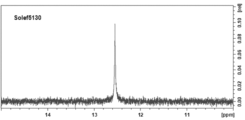
- FIG. 2 is an enlarged view showing a part of the NMR spectrum of the fluorine-based binder Solef5130;
- the electrode-forming composition of the present invention comprises an acidic group-containing compound, a hydrogen-bonding group-containing compound, a fluorine-based binder, a conductive carbon material, and an active material, and the acidic group-containing compound has an acidic group per molecule and / Or a polymeric organic compound having a salt content of 15% by mass or more, or a non-polymeric organic compound having four or more acidic groups and / or salts thereof in the molecule, wherein the hydrogen bonding group
- the containing compound is a polymer-type organic compound in which the content of acidic groups and/or salts thereof per molecule is less than 15% by mass, or a non-polymer having 3 or less acidic groups and/or salts thereof in the molecule. type organic compound, the content of the acidic group-containing compound is 0.001 to 0.5% by mass in the total solid content, and the content of the fluorine-based binder is 0.01 to 1 in the total solid content 0% by mass of the electrode-forming composition.
- the polymer-type organic compound means an organic compound formed by polymerizing a plurality of monomers (monomers), and the non-polymer-type organic compound means an organic compound other than the above polymer-type organic compound. means.
- the acidic group-containing compound is a polymer-type organic compound
- the content of the acidic group and/or its salt per molecule is 15% by mass or more, preferably 25% by mass or more.
- a non-polymer type organic compound it has 4 or more acidic groups and/or salts thereof in its molecule, preferably 5 or more acidic groups and/or salts thereof in its molecule.
- the upper limit of the content of the acidic group and/or its salt is not particularly limited, but in the case of a polymer type organic compound, it is preferably 85% by mass or less per molecule, and a non-polymer type In the case of an organic compound, it is preferable that there are 12 or less in the molecule. From the viewpoint of increasing the strength of the electrode, the acidic group-containing compound is preferably a polymer-type organic compound.
- the acidic group is preferably a carboxylic acid group, a phosphoric acid group, or a sulfonic acid group, and more preferably a carboxylic acid group.
- Salts of carboxylic acid group, phosphoric acid group and sulfonic acid group include alkali metal salts such as sodium and potassium; group 2 metal salts such as magnesium and calcium; ammonium salts; fats such as propylamine, dimethylamine, triethylamine and ethylenediamine.
- amine salts alicyclic amine salts such as imidazoline, piperazine, and morpholine; aromatic amine salts such as aniline and diphenylamine; more preferred.
- One of these acidic groups and salts thereof may be contained alone, or two or more thereof may be contained.
- polymeric organic compounds containing acidic groups include polyacrylic acid, polyitaconic acid, polymaleic acid, polyfumaric acid, polymethacrylic acid, poly(vinylsulfonic acid), poly(4-styrenesulfonic acid), alginic acid, and Examples include sulfonated polysaccharides such as cellulose, phosphoric oxides and salts thereof, and polyacrylic acid, polyitaconic acid, polymaleic acid and salts thereof are preferred.
- the polymer may be a copolymer, and specific examples include monomers having groups selected from the group consisting of aromatic rings, alkyl groups, amino groups, ether groups, nitrile groups, hydroxy groups and carbonyl groups.
- Examples include copolymers containing repeating units derived from and repeating units derived from monomers having a carboxylic acid group and / or a salt thereof, and derived from a monomer having a group selected from the group consisting of a nitrile group, a hydroxy group and a carbonyl group and repeating units derived from monomers having carboxylic acid groups and/or salts thereof are preferred.
- the aromatic ring examples include benzene ring, biphenyl ring, naphthalene ring, anthracene ring, and phenanthrene ring.
- the above alkyl group is preferably a linear, branched or cyclic alkyl group having 1 to 6 carbon atoms, and specific examples thereof include methyl group, ethyl group, n-propyl group, isopropyl group and n-butyl group. , isobutyl group, tert-butyl group, n-pentyl group, isopentyl group, neopentyl group, n-hexyl group, cyclopentyl group, cyclohexyl group and the like.
- the average molecular weight of the polymer-type organic compound is not particularly limited, but the weight average molecular weight (Mw) is preferably 250 to 2,000,000, more preferably 1,000 to 1,000,000. are more preferred, and those between 1,000 and 250,000 are even more preferred.
- Mw is a polystyrene conversion value by a gel permeation chromatography (GPC).
- non-polymeric organic compounds containing acidic groups include compounds having four or more carboxylic acid groups, phosphoric acid groups or sulfonic acid groups in the molecule.
- Compounds having a carboxylic acid group include aromatic carboxylic acids, alicyclic carboxylic acids, and aliphatic carboxylic acids.
- compounds having four carboxylic acid groups include pyromellitic acid, 3,3′,4,4′-biphenyltetracarboxylic acid, 3,3′,4,4′-benzophenonetetracarboxylic acid, 3, Aromatic tetracarboxylic acids such as 3′,4,4′-diphenylethertetracarboxylic acid and 3,3′,4,4′-diphenylsulfonetetracarboxylic acid; 1,2,3,4-cyclobutanetetracarboxylic acid, 1 ,2-dimethyl-1,2,3,4-cyclobutanetetracarboxylic acid, 1,2,3,4-tetramethyl-1,2,3,4-cyclobutanetetracarboxylic acid, 1,2,3,4- Alicyclic tetracarboxylic acids such as cyclopentanetetracarboxylic acid, 1,2,3,4-cyclohexanetetracarboxylic acid, 3,4-dicarboxy-1
- compounds having five carboxylic acid groups include aromatic pentacarboxylic acids such as benzenepentacarboxylic acid and 1,2,4,5,8-naphthalenepentacarboxylic acid; -Cyclohexanepentacarboxylic acid, cycloaliphatic pentacarboxylic acids such as diethylenetriaminepentaacetic acid, and the like.
- compounds having six carboxylic acid groups include benzenehexacarboxylic acid, [1,1':4',1''-Terphenyl]-2',3,3'',5,5',5 Aromatic hexacarboxylic acids such as ''-hexacarboxylic acid; alicyclic hexacarboxylic acids such as cyclohexanehexacarboxylic acid and 1,2,3,4,5,7-naphthalenehexacarboxylic acid; 1,8,9,10 , 11,18-Octadecanehexacarboxylic acid, 1,4,5,6,7,10-Decanehexacarboxylic acid and the like.
- compounds having seven carboxylic acid groups include 4,6-Bis(carboxymethyl)-1,2,4,6,11-tridecanepentacarboxylic acid, 1,8,9,10,11-heptadecanepentacarboxylic acid, and the like. Aliphatic peptacarboxylic acids may be mentioned.
- compounds having eight carboxylic acid groups include [1,1'-Biphenyl]-2,2',3,3',5,5',6,6'-octacarboxylic acid, [1,1 ':4',1''-Terphenyl]-2',3,3',3'',5,5',5'',6'-octacarboxylic acid; 9-methyl-1,2,3,4,5,6,7,8-pentadecaneoctacarboxylic acid, 1,2,3,4,5,6,7,8-Octaneoctacarboxylic acid, 1,3,9,15, Aliphatic octacarboxylic acids such as 21,27,33,39-Nonatriacontaneoctacarboxylic acid can be mentioned.
- Specific examples of compounds having four phosphate groups include Tetraphosphoric acid and N,N,N',N'-Ethylenediaminetetrakis (methylenephosphonic Acid).
- Specific examples of compounds having five phosphate groups include pentaphosphoric acid and phytic acid.
- Specific examples of compounds having six phosphate groups include hexaphosphoric acid and the like.
- Specific examples of compounds having four sulfonic acid groups include phthalocyanine tetrasulfonate and biphenyltetrasulfonic acid.
- the above acidic group-containing compounds can be used singly or in combination of two or more.
- the content of the acidic group-containing compound is 0.001 to 0.5% by mass, preferably 0.001 to 0.3% by mass, more preferably 0.001 to 0.2% by mass, based on the total solid content. is.
- the content of the acidic group-containing compound within the above range, the amount of the fluorine-based binder to be used can be reduced, and the battery characteristics of the resulting battery can be maintained.
- solid content means components other than the solvent which comprise a composition (the same applies hereafter).
- the hydrogen-bonding group includes a carbonyl group, a hydroxy group, an ether group, an amino group, and a sulfonyl group, with a carbonyl group and a hydroxy group being preferred.
- These hydrogen-bonding groups may contain one type alone or may contain two or more types.
- the hydrogen-bonding group-containing compound may contain an acidic group, but when it is a polymer-type organic compound, the content of the acidic group and/or its salt per molecule is less than 15% by mass, When it is a non-polymer type organic compound, it has 3 or less acidic groups and/or salts thereof in the molecule.
- polymer-type organic compounds containing hydrogen-bonding groups include polylactic acid, maleic anhydride polymer, maleimide anhydride polymer (carbonyl group-containing compound); polyphenol, polyvinyl alcohol (hydroxy group-containing compound); polyethylene glycol (ether group-containing compound); polyethyleneimine (amino group-containing compound); polyethersulfone, polysulfone, polyarylsulfone (sulfonyl group-containing compound), and copolymers containing at least one of these and derivatives thereof.
- the polymer-type organic compound containing the hydrogen-bonding group when it is a copolymer, it may contain repeating units derived from other monomers such as isobutylene in addition to repeating units derived from the raw material monomers of the polymer.
- Copolymers of isobutylene and maleic anhydride are preferred in the present invention. Copolymers of isobutylene and maleic anhydride can reduce the amount of water by reacting with minute amounts of water in the electrode slurry due to the sites derived from carboxylic anhydride, and the copolymers have high oxidation resistance due to the sites derived from isobutylene. is preferred.
- the average molecular weight of the polymer-type organic compound is not particularly limited, but the weight average molecular weight (Mw) is preferably 250 to 2,000,000, more preferably 1,000 to 1,000,000. are more preferred, and those between 1,000 and 250,000 are even more preferred.
- Mw weight average molecular weight
- non-polymeric organic compounds containing hydrogen bonding groups include maleic anhydride, acetone, citric acid (carbonyl group-containing compounds); tannic acid (hydroxy group-containing compounds); diethyl ether, tetrahydrofuran (ether group-containing compounds).
- Examples include sulfonic acid halides, triethylene glycol ditosylate, ethyl p-toluenesulfonate (sulfonyl group-containing compound), and maleic anhydride, citric acid and tannic acid are preferred.
- sulfonic acid halides include benzenesulfonic acid, p-toluenesulfonic acid, 4-bromobenzenesulfonic acid, 4-methoxybenzenesulfonic acid, 4-benzyloxybenzenesulfonic acid, 1-naphthylsulfonic acid, 2 -chlorides, bromides and iodides of organic sulfonic acids such as naphthylsulfonic acid, 1,3-benzenedisulfonic acid, methanesulfonic acid and ethanesulfonic acid.
- the organic sulfonic acid halide may be synthesized according to a standard method such as reacting an organic sulfonic acid with a halogenating agent, or a commercially available product may be used.
- the above hydrogen-bonding group-containing compounds can be used singly or in combination of two or more.
- the content of the hydrogen-bonding group-containing compound is 0.001 to 0.5% by mass, preferably 0.001 to 0.3% by mass, more preferably 0.001 to 0.2%, based on the total solid content. % by mass.
- the fluorine-based binder can be appropriately selected from known materials and used, and is not particularly limited. Specific examples thereof include polyvinylidene fluoride (PVdF), polytetrafluoroethylene; vinylidene fluoride , copolymers containing at least one monomer selected from the group consisting of tetrafluoroethylene and hexafluoropropylene. Moreover, the fluorine-based binder may be modified with a polar functional group. The polar functional group can be confirmed by the presence or absence of a clear peak detected in the range of 10 to 15 ppm in measurement by a nuclear magnetic resonance apparatus (NMR apparatus). As a specific example of the NMR spectrum, the NMR spectrum of Solef5140, which is PVdF manufactured by SOLVAY, is shown in FIG. 1, and the NMR spectrum of Solef5130 is shown in FIG.
- NMR apparatus nuclear magnetic resonance apparatus
- the weight average molecular weight (Mw) of the fluorine-based binder is preferably 600,000 to 3,000,000, more preferably 700,000 to 3,000,000, from the viewpoint of improving the adhesion between the current collector and the electrode layer. 2,000,000, more preferably 700,000 to 1,500,000, even more preferably 700,000 to 1,300,000.
- the fluorine-based binder preferably has a heat of fusion of 10 to 35.8 J/g, more preferably 15 to 35.5 J/g, and even more preferably 20 to 35.8 J/g, as determined by a differential scanning calorimeter (DSC). 35.5 J/g, more preferably 25 to 35.5 J/g. Adhesion between the current collector and the electrode layer can be improved by using a fluorine-based binder having a heat of fusion within the above range.
- the content of the fluorine-based binder is 0.01 to 1.0% by mass, preferably 0.05 to 0.6% by mass, more preferably 0.1 to 0.7% by mass, based on the total solid content. , more preferably 0.2 to 0.7% by mass, more preferably 0.3 to 0.6% by mass. If the content of the fluorine-based binder is too large, the composition may gel and become unusable.
- the conductive carbon material is not particularly limited, and known conductive materials such as carbon black, ketjen black, acetylene black (AB), carbon whisker, carbon nanotube (CNT), carbon fiber, natural graphite, artificial graphite, etc. Although it can be used by appropriately selecting it from carbon materials having a high conductivity, AB and CNT are particularly preferable from the viewpoint of conductivity, dispersibility, availability, and the like.
- CNTs are generally produced by an arc discharge method, a chemical vapor deposition method (CVD method), a laser ablation method, or the like, and the CNTs used in the present invention may be obtained by any method.
- the CNT has a single-layer CNT (hereinafter also abbreviated as SWCNT) in which one sheet of carbon film (graphene sheet) is cylindrically wound, and a two-layer structure in which two graphene sheets are concentrically wound.
- SWCNT single-layer CNT
- DWCNTs multilayer CNTs
- MWCNTs multilayer CNTs
- Baytubes [manufactured by Bayer: trade name], GRAPHISTRENGTH [manufactured by Arkema: trade name], MWNT7 [manufactured by Hodogaya Chemical Co., Ltd.: trade name], Hyperion CNT [manufactured by Hyperion Catalysis International] : product name], TC series [manufactured by Toda Kogyo Co., Ltd.: product name], FloTube series [manufactured by Jiangsu Cnano Technology: product name], LUCAN BT1003M [LG Chem. Ltd. Product: trade name] and the like.
- the content of the conductive carbon material is not particularly limited, it is preferably 0.1 to 4.0% by mass, more preferably 0.5 to 3.0% by mass, based on the total solid content. Good electrical conductivity can be obtained by setting the content of the conductive carbon material within the above range.
- active material various active materials conventionally used in electrodes for energy storage devices such as secondary batteries can be used.
- active materials for positive electrodes can be preferably used.
- the positive electrode active material for example, in the case of a lithium secondary battery or a lithium ion secondary battery, a chalcogen compound capable of adsorbing and desorbing lithium ions, a chalcogen compound containing lithium ions, a polyanion compound, elemental sulfur and its compounds, etc. are used. be able to.
- Examples of such chalcogen compounds capable of adsorbing and desorbing lithium ions include FeS 2 , TiS 2 , MoS 2 , V 2 O 6 , V 6 O 13 and MnO 2 .
- Examples of lithium ion- containing chalcogen compounds include LiCoO2 , LiMnO2 , LiMn2O4 , LiMo2O4 , LiV3O8 , LiNiO2 , LixNiyM1 -yO2 ( M is Co, represents at least one metal element selected from Mn, Ti, Cr, V, Al, Sn, Pb, and Zn, 0.05 ⁇ x ⁇ 1.10, 0.3 ⁇ y ⁇ 1.0), LiaNi (1-xy) CoxM1yM2zXwO2 ( M1 is at least one selected from the group consisting of Mn and Al ; M2 is Zr, Ti , Mg, W and represents at least one selected from the group consisting of V, 1.00 ⁇ a ⁇ 1.50, 0.00
- oxides containing Li and at least one selected from Ni and Fe, or materials containing S that is, FeS 2 , TiS 2 , MoS 2 , LiNiO 2 , Li x Ni y M 1-y O 2
- M represents at least one metal element selected from Co, Mn, Ti, Cr, V, Al, Sn, Pb, and Zn, and 0.05 ⁇ x ⁇ 1 .10 , 0.3 ⁇ y ⁇ 1.0
- LiaNi ( 1 -xy) CoxM1yM2zXwO2 M1 is at least one selected from the group consisting of Mn and Al
- M2 represents at least one selected from the group consisting of Zr, Ti, Mg, W and V, and 1.00 ⁇ a ⁇ 1.50, 0.00 ⁇ x ⁇ 0.50, 0 ⁇ y ⁇ 0.50, 0.000 ⁇ z ⁇ 0.020, 0.000 ⁇ w ⁇ 0.020), LiFePO4 , Li2S , rubeanic acid are preferred.
- the content of the active material is preferably 94.000 to 99.888% by mass, more preferably 95.0 to 99.0% by mass, based on the total solid content.
- the electrode-forming composition of the present invention may contain binders other than the fluorine-based binder as long as the effects of the present invention are not impaired.
- binders can be appropriately selected from known materials and used, and are not particularly limited, but non-aqueous binders can be preferably used in the present invention. Specific examples include polyimide, ethylene-propylene-diene terpolymer, styrene-butadiene rubber, polyethylene and polypropylene. These can be used individually by 1 type or in combination of 2 or more types.
- the content is not particularly limited, but is preferably 5.0% by mass or less, more preferably 3.0% by mass or less, and 3.0% by mass of the total solid content The following are even more preferred, and most preferably not included.
- the electrode-forming composition of the present invention may further contain a dispersant in order to improve the dispersibility of the conductive carbon material and active material.
- the dispersing agent can be appropriately selected from those conventionally used as dispersing agents for conductive carbon materials such as CNTs. preferable.
- the nonionic polymer include polyvinylpyrrolidone (PVP); and a polymer having at least one group selected from the group consisting of a nitrile group, a carbonyl group, a sulfonyl group, a phenyl group (aromatic ring) and an ether group. mentioned.
- polyvinylpyrrolidone PVP
- homopolymers of monomers selected from the group consisting of nitrile monomers, aromatic olefin monomers and aliphatic olefin monomers, or copolymers of two or more of these monomers are preferred.
- nitrile monomers examples include acrylonitrile, 2-methylenepentanedinitrile, and fumaronitrile.
- Aromatic olefin monomers include styrene, vinylbiphenyl, vinylpyridine, and the like.
- aliphatic olefin monomers examples include butadiene, isobutene, and propene.
- polymers include polyacrylonitrile, polyester, polyimide, styrene, acrylonitrile/styrene copolymer, acrylonitrile/butadiene copolymer, etc.
- Polyacrylonitrile is preferred.
- the above dispersants can be used singly or in combination of two or more.
- the average molecular weight of the dispersant is not particularly limited, but the weight average molecular weight (Mw) is preferably from 1,000 to 2,000,000, and is from 1,000 to 1,000,000. are more preferred, and those between 1,000 and 250,000 are even more preferred.
- Mw weight average molecular weight
- the dispersant when included, its content is not particularly limited, but is preferably 0.01 to 0.5% by mass, more preferably 0.01 to 0.3% by mass, based on the total solid content, 0.01 to 0.2% by mass is even more preferable.
- the acidic group-containing compound or the hydrogen bonding group-containing compound has a function as a dispersant
- part or all of the dispersant is the acidic group-containing compound and/or the hydrogen bonding group-containing compound. It can also be replaced with a compound.
- a solvent can also be used in the preparation of the electrode-forming composition.
- the solvent is not particularly limited as long as it is conventionally used for the preparation of electrode-forming compositions. Examples include water; ethers such as 1,2-dimethoxyethane (DME); methylene chloride, chloroform, Halogenated hydrocarbons such as 2-dichloroethane; amides such as N,N-dimethylformamide (DMF), N,N-dimethylacetamide (DMAc), N-methyl-2-pyrrolidone (NMP); methyl ethyl ketone, methyl isobutyl ketones such as ketones and cyclohexanone; alcohols such as methanol, ethanol, n-propanol, isopropanol, n-butanol and t-butanol; aliphatic hydrocarbons such as n-heptane, n-hexane and cyclohexane; benzene, tolu
- Suitable solvents in this case include water, NMP, DMSO, ethylene carbonate, propylene carbonate, dimethyl carbonate, diethyl carbonate, methyl ethyl carbonate, ⁇ -butyrolactone, THF, dioxolane, sulfolane, DMF, DMAc and the like.
- NMP is suitable for water-insoluble binders such as PVdF, and water is suitable for water-soluble binders.
- the solid content concentration of the electrode-forming composition of the present invention is appropriately set in consideration of the coatability of the composition, the thickness of the thin film to be formed, etc., but is usually about 50 to 90% by mass. Yes, preferably about 60 to 88% by mass, more preferably about 70 to 85% by mass.
- the loss elastic modulus measured by dynamic viscoelasticity measurement is preferably larger than the storage elastic modulus.
- the loss elastic modulus By making the loss elastic modulus larger than the storage elastic modulus, an electrode-forming composition having good applicability can be obtained.
- the lower limit of the loss elastic modulus of the electrode-forming composition is preferably 1 Pa or more from the viewpoint of coating properties.
- the upper limit of the loss elastic modulus of the electrode-forming composition is also preferably 1,000 Pa or less, more preferably 100 Pa or less, and even more preferably 50 Pa or less, from the same viewpoint.
- the loss elastic modulus and storage elastic modulus by dynamic viscoelasticity measurement are 0.1 to 1,000% strain and 0.00628 to 62.9 (shear rate) under conditions of 25 ° C. 1/s).
- the magnitude of the loss modulus and storage modulus is determined using the loss modulus and storage modulus measured for the electrode-forming composition immediately after preparation and after standing at 25° C. for 3 hours. At this time, the measured value at a strain of 0.1% shall be used.
- the loss elastic modulus measured by dynamic viscoelasticity measurement is larger than the storage elastic modulus immediately after preparation and after standing at 25°C for 3 hours.
- the storage elastic modulus and the loss elastic modulus measured by the dynamic viscoelasticity measurement have a rate of change of less than 300% after standing at 25° C. for 3 hours from immediately after preparation.
- the electrode-forming composition of the present invention can be obtained by mixing the components described above at a predetermined temperature.
- the additive and active material may be mixed together with the optional component, or both components may be mixed in advance and then mixed with the optional component. good.
- the surface of the active material can be coated with the additive, and the effects of the present invention can be fully exhibited.
- the electrode of the present invention comprises an electrode layer made of the electrode-forming composition described above on at least one surface of a substrate which is a current collector.
- a method for forming the electrode layer on the substrate an electrode-forming composition prepared without using a solvent is pressure-molded onto the substrate (dry method), or an electrode-forming composition is formed using a solvent.
- dry method a method of preparing a substance, coating it on a substrate, and drying it (wet method) can be mentioned. These methods are not particularly limited, and conventionally known various methods can be used.
- wet methods include various printing methods such as offset printing and screen printing, blade coating method, dip coating method, spin coating method, bar coating method, slit coating method, inkjet method, die coating method and the like.
- the temperature is preferably about 50 to 400°C, more preferably about 70 to 150°C.
- the substrate used for the electrode examples include metal substrates such as platinum, gold, iron, stainless steel, copper, aluminum, and lithium, alloy substrates made of any combination of these metals, indium tin oxide (ITO), Examples include oxide substrates such as indium zinc oxide (IZO) and antimony tin oxide (ATO), and carbon substrates such as glassy carbon, pyrolytic graphite, and carbon felt.
- ITO indium tin oxide
- oxide substrates such as indium zinc oxide (IZO) and antimony tin oxide (ATO)
- carbon substrates such as glassy carbon, pyrolytic graphite, and carbon felt.
- the thickness of the substrate is not particularly limited, but is preferably 1 to 100 ⁇ m in the present invention.
- the film thickness of the electrode layer is not particularly limited, it is preferably about 0.01 to 1,000 ⁇ m, more preferably about 5 to 300 ⁇ m. In addition, when using an electrode layer as an electrode independently, it is preferable that the film thickness shall be 10 micrometers or more.
- the electrodes may be pressed if necessary.
- a generally employed method can be used as the pressing method, but a die pressing method and a roll pressing method are particularly preferred.
- the press pressure is not particularly limited, but is preferably 1 kN/cm or more, preferably 2 kN/cm or more, and more preferably 5 kN/cm or more.
- the upper limit of the press pressure is not particularly limited, but is preferably 50 kN/cm or less.
- the secondary battery of the present invention includes the electrodes described above, and more specifically, includes at least a pair of positive and negative electrodes, a separator interposed between the electrodes, and an electrolyte. At least one of the negative electrodes is composed of the electrodes described above. Other constituent members of the battery element may be appropriately selected from conventionally known ones and used.
- Examples of materials used for the separator include glass fiber, cellulose, porous polyolefin, polyamide, and polyester.
- the electrolyte may be either a liquid or a solid, and may be either aqueous or non-aqueous. From the viewpoint of easily exhibiting practically sufficient performance, an electrolytic solution composed of an electrolyte salt, a solvent, etc. can be preferably used.
- electrolyte salt examples include LiPF6 , LiBF4 , LiN( SO2F ) 2, LiN( C2F5SO2 ) 2 , LiAsF6, LiSbF6 , LiAlF4 , LiGaF4 , LiInF4 , LiClO4. , LiN( CF3SO2 ) 2 , LiCF3SO3 , LiSiF6 , LiN( CF3SO2 ) , Lithium salts such as ( C4F9SO2 ), LiI, NaI, KI, CsI, CaI2 , etc.
- electrolyte salts of quaternary imidazolium compounds, iodides and perchlorates of tetraalkylammonium compounds, and metal bromides such as LiBr, NaBr, KBr, CsBr and CaBr2 .
- electrolyte salts can be used singly or in combination of two or more.
- the solvent is not particularly limited as long as it does not corrode or decompose the substances constituting the battery to deteriorate the performance and dissolves the electrolyte salt.
- non-aqueous solvents include cyclic esters such as ethylene carbonate, propylene carbonate, butylene carbonate and ⁇ -butyrolactone; ethers such as tetrahydrofuran and dimethoxyethane; esters, nitriles such as acetonitrile, and the like are used. These solvents can be used singly or in combination of two or more.
- solid electrolyte inorganic solid electrolytes such as sulfide solid electrolytes and oxide solid electrolytes, and organic solid electrolytes such as polymer electrolytes can be suitably used. By using these solid electrolytes, it is possible to obtain an all-solid battery that does not use an electrolytic solution.
- the sulfide-based solid electrolyte examples include Li 2 S—SiS 2 -lithium compounds (here, the lithium compound is at least one selected from the group consisting of Li 3 PO 4 , LiI and Li 4 SiO 4 ) , Li 2 SP 2 O 5 , Li 2 SB 2 S 5 , Li 2 SP 2 S 5 --GeS 2 and other thiolysicone-based materials.
- Oxygenate compounds based on the 3 PO 4 structure, perovskite type, Li 3.3 PO 3.8 N 0.22 generically called LIPON, sodium/alumina, and the like can be mentioned.
- polymer solid electrolyte examples include polyethylene oxide materials, hexafluoropropylene, tetrafluoroethylene, trifluoroethylene, ethylene, propylene, acrylonitrile, vinylidene chloride, acrylic acid, methacrylic acid, methyl acrylate, ethyl acrylate, and methyl methacrylate. , polymer compounds obtained by polymerizing or copolymerizing monomers such as styrene and vinylidene fluoride.
- the polymer-based solid electrolyte may contain a supporting salt and a plasticizer.
- Examples of supporting salts contained in the polymer solid electrolyte include lithium (fluorosulfonylimide), and examples of plasticizers include succinonitrile.
- a battery manufactured using the electrode-forming composition of the present invention has high battery characteristics even if the amount of fluorine binder is less than that of a general secondary battery.
- the form of the secondary battery and the type of electrolyte are not particularly limited, and any form such as a lithium ion battery, a nickel hydrogen battery, a manganese battery, an air battery, etc. may be used, but a lithium ion battery is preferable. .
- the lamination method and production method are also not particularly limited.
- the electrode of the present invention described above When applied to a coin shape, the electrode of the present invention described above may be punched into a predetermined disk shape and used. For example, in a lithium-ion secondary battery, one electrode is placed on the lid to which a coin cell washer and spacer are welded, and a separator of the same shape impregnated with an electrolytic solution is placed on top of it. It can be made by stacking the electrode of the present invention layer down, placing the case and gasket on top, and sealing with a coin cell crimping machine.
- the resulting diluted solution was filtered through a filter (material: polytetrafluoroethylene, pore diameter: 0.45 ⁇ m) to obtain a measurement sample.
- This measurement sample was supplied to a gel permeation chromatograph, GPC measurement was performed under the above conditions, the polystyrene equivalent molecular weight of the fluoropolymer was measured, and the weight average molecular weight (Mw) was determined.
- DSC Differential scanning calorimeter
- NCM811 Ningbo Ronbay New Energy Technology Co. , Ltd. , lithium nickel manganese cobaltate (LiNi 0.8 Co 0.1 Mn 0.1 O 2 ), “S-800” LFP: Lithium iron phosphate Solef5140: manufactured by SOLVAY, modified PVdF, Mw 1,033,408 (measured value), heat of fusion 32.94 J / g (measured value), with polar functional group
- NMR measurement results are shown in FIG.
- Reference AB Denka Black (acetylene black, manufactured by Denka Co., Ltd.)
- CNT FloTube 6120, Jiangsu Nano Technology Co., Ltd.; , Ltd.
- PAA manufactured by Fujifilm Wako Pure Chemical Industries, Ltd., polyacrylic acid, Mw 5,000 PAN: Sigma-Aldrich, polyacrylonitrile, Mw 150,000 Phosphorous acid: manufactured by Junsei Chemical Co., Ltd.
- AC-10P manufactured by Toagosei Co., Ltd., polyacrylic acid, Mw 5,000 H-PAN: manufactured by Dolan GmbH, polyacrylonitrile, Mw 200,000 Isoban-18: manufactured by Kuraray Co., Ltd., a copolymer of isobutylene and maleic anhydride, Mw 300,000 to 350,000 Isovan-310: manufactured by Kuraray Co., Ltd., a copolymer of isobutylene and maleic anhydride, Mw 160,000 to 170,000 PVA: Sigma-Aldrich, polyvinyl alcohol, Mw61,000 PLA: Polylactic acid, Lacea-H100, manufactured by Mitsui Chemicals, Inc.
- NMP manufactured by Junsei Chemical Co., Ltd.
- N-methyl-2-pyrrolidone dehydrated NMP manufactured by Kanto Chemical Co., Ltd., N - methyl-2-pyrrolidone, water content 50 ppm or less
- Electrode composition (electrode slurry) [Examples 1-1 to 1-6, Comparative Examples 1-1 to 1-9] Based on the composition shown in Table 2, an active material, a fluorine-based binder, a conductive carbon material, an acidic group-containing compound, a hydrogen bonding group-containing compound, a dispersant, and a solvent were mixed in a dry base. This was mixed with a homodisper at 8,000 rpm for 1 minute, and then mixed twice at a peripheral speed of 20 m/sec for 30 seconds using a thin-film rotating high-speed mixer to prepare an electrode slurry. The properties of the obtained electrode slurry were evaluated by the following methods. Table 3 shows the results.
- CMC carboxymethyl cellulose
- SBR styrene-butadiene copolymer
- a sheet of separator glass fiber circular filter paper GF/F, manufactured by WATT MANN CO., LTD.
- a positive electrode was stacked from above with the surface coated with the active material facing down. After dropping one drop of the electrolytic solution, the case and the gasket to which the washer and spacer were welded were placed and sealed with a coin cell caulking machine. After that, they were allowed to stand still for 24 hours, and four secondary batteries for testing were produced.
- the secondary battery using the positive electrode produced using the electrode-forming composition according to the present invention has high battery characteristics even with a small amount of fluorine binder. .
Landscapes
- Chemical & Material Sciences (AREA)
- Chemical Kinetics & Catalysis (AREA)
- Electrochemistry (AREA)
- General Chemical & Material Sciences (AREA)
- Engineering & Computer Science (AREA)
- Inorganic Chemistry (AREA)
- Materials Engineering (AREA)
- Manufacturing & Machinery (AREA)
- Physics & Mathematics (AREA)
- Condensed Matter Physics & Semiconductors (AREA)
- General Physics & Mathematics (AREA)
- Battery Electrode And Active Subsutance (AREA)
Priority Applications (3)
| Application Number | Priority Date | Filing Date | Title |
|---|---|---|---|
| KR1020247029985A KR20240157686A (ko) | 2022-02-28 | 2023-02-21 | 전극형성용 조성물 |
| JP2024503148A JPWO2023162942A1 (https=) | 2022-02-28 | 2023-02-21 | |
| CN202380022882.9A CN118743062A (zh) | 2022-02-28 | 2023-02-21 | 电极形成用组合物 |
Applications Claiming Priority (2)
| Application Number | Priority Date | Filing Date | Title |
|---|---|---|---|
| JP2022-029321 | 2022-02-28 | ||
| JP2022029321 | 2022-02-28 |
Publications (1)
| Publication Number | Publication Date |
|---|---|
| WO2023162942A1 true WO2023162942A1 (ja) | 2023-08-31 |
Family
ID=87765863
Family Applications (1)
| Application Number | Title | Priority Date | Filing Date |
|---|---|---|---|
| PCT/JP2023/006101 Ceased WO2023162942A1 (ja) | 2022-02-28 | 2023-02-21 | 電極形成用組成物 |
Country Status (5)
| Country | Link |
|---|---|
| JP (1) | JPWO2023162942A1 (https=) |
| KR (1) | KR20240157686A (https=) |
| CN (1) | CN118743062A (https=) |
| TW (1) | TW202345444A (https=) |
| WO (1) | WO2023162942A1 (https=) |
Cited By (1)
| Publication number | Priority date | Publication date | Assignee | Title |
|---|---|---|---|---|
| WO2025110680A1 (ko) * | 2023-11-22 | 2025-05-30 | 주식회사 씨엔피솔루션즈 | 전극제조용 바인더조성물, 상기 바인더조성물을 포함하는 건식공정용 전극물질층조성물 및 이를 포함하는 이차전지 |
Citations (13)
| Publication number | Priority date | Publication date | Assignee | Title |
|---|---|---|---|---|
| JPH087896A (ja) * | 1994-06-27 | 1996-01-12 | Toshiba Battery Co Ltd | アルカリ二次電池 |
| JPH1064549A (ja) * | 1996-08-23 | 1998-03-06 | Matsushita Electric Ind Co Ltd | 非水電解液二次電池 |
| JP2001068145A (ja) * | 1999-08-30 | 2001-03-16 | Toshiba Battery Co Ltd | 角形アルカリ二次電池 |
| JP2001307722A (ja) * | 2000-04-24 | 2001-11-02 | Toshiba Battery Co Ltd | アルカリ二次電池 |
| JP2002184405A (ja) * | 2000-12-12 | 2002-06-28 | Matsushita Electric Ind Co Ltd | アルカリ蓄電池用非焼結式ニッケル正極およびその製造方法ならびにそれを用いたアルカリ蓄電池 |
| JP2013182673A (ja) * | 2012-02-29 | 2013-09-12 | Sekisui Chem Co Ltd | リチウムイオン二次電池用負極剤、リチウムイオン二次電池用負極、およびリチウムイオン二次電池 |
| JP2016046188A (ja) * | 2014-08-26 | 2016-04-04 | 東洋インキScホールディングス株式会社 | カーボンブラック分散液およびその利用 |
| JP2019021427A (ja) * | 2017-07-12 | 2019-02-07 | 日本ケミコン株式会社 | カーボンスラリー及びこれを用いた活物質スラリー |
| WO2019044491A1 (ja) * | 2017-08-31 | 2019-03-07 | 日本電気株式会社 | 蓄電デバイス用電極及びその製造方法 |
| WO2019082587A1 (ja) * | 2017-10-23 | 2019-05-02 | Necエナジーデバイス株式会社 | 水系電極スラリー、リチウムイオン電池用電極、リチウムイオン電池およびリチウムイオン電池用電極の製造方法 |
| JP2020057606A (ja) * | 2018-10-03 | 2020-04-09 | ダイキン工業株式会社 | 正極構造体および二次電池 |
| JP2020129448A (ja) * | 2019-02-07 | 2020-08-27 | 日産自動車株式会社 | 電池用電極の製造方法 |
| WO2021065457A1 (ja) * | 2019-09-30 | 2021-04-08 | 日本ゼオン株式会社 | 二次電池用バインダー組成物、二次電池電極用スラリー組成物、二次電池用電極および二次電池 |
Family Cites Families (4)
| Publication number | Priority date | Publication date | Assignee | Title |
|---|---|---|---|---|
| JP5208353B2 (ja) | 2005-03-31 | 2013-06-12 | 東洋炭素株式会社 | 正極活物質及びその製造方法 |
| JP2014082220A (ja) | 2005-10-28 | 2014-05-08 | Mitsubishi Chemicals Corp | 二次電池用非水系電解液及びそれを用いた非水系電解液二次電池 |
| JPWO2013002186A1 (ja) | 2011-06-27 | 2015-02-23 | 三洋化成工業株式会社 | 電極保護膜形成剤、電極、電解液、リチウム二次電池、リチウムイオンキャパシタ、及び、電極保護膜の形成方法 |
| JP6733140B2 (ja) | 2015-08-27 | 2020-07-29 | 住友金属鉱山株式会社 | 非水系電解質二次電池用正極活物質の製造方法 |
-
2023
- 2023-02-21 CN CN202380022882.9A patent/CN118743062A/zh active Pending
- 2023-02-21 WO PCT/JP2023/006101 patent/WO2023162942A1/ja not_active Ceased
- 2023-02-21 JP JP2024503148A patent/JPWO2023162942A1/ja active Pending
- 2023-02-21 KR KR1020247029985A patent/KR20240157686A/ko active Pending
- 2023-02-24 TW TW112106888A patent/TW202345444A/zh unknown
Patent Citations (13)
| Publication number | Priority date | Publication date | Assignee | Title |
|---|---|---|---|---|
| JPH087896A (ja) * | 1994-06-27 | 1996-01-12 | Toshiba Battery Co Ltd | アルカリ二次電池 |
| JPH1064549A (ja) * | 1996-08-23 | 1998-03-06 | Matsushita Electric Ind Co Ltd | 非水電解液二次電池 |
| JP2001068145A (ja) * | 1999-08-30 | 2001-03-16 | Toshiba Battery Co Ltd | 角形アルカリ二次電池 |
| JP2001307722A (ja) * | 2000-04-24 | 2001-11-02 | Toshiba Battery Co Ltd | アルカリ二次電池 |
| JP2002184405A (ja) * | 2000-12-12 | 2002-06-28 | Matsushita Electric Ind Co Ltd | アルカリ蓄電池用非焼結式ニッケル正極およびその製造方法ならびにそれを用いたアルカリ蓄電池 |
| JP2013182673A (ja) * | 2012-02-29 | 2013-09-12 | Sekisui Chem Co Ltd | リチウムイオン二次電池用負極剤、リチウムイオン二次電池用負極、およびリチウムイオン二次電池 |
| JP2016046188A (ja) * | 2014-08-26 | 2016-04-04 | 東洋インキScホールディングス株式会社 | カーボンブラック分散液およびその利用 |
| JP2019021427A (ja) * | 2017-07-12 | 2019-02-07 | 日本ケミコン株式会社 | カーボンスラリー及びこれを用いた活物質スラリー |
| WO2019044491A1 (ja) * | 2017-08-31 | 2019-03-07 | 日本電気株式会社 | 蓄電デバイス用電極及びその製造方法 |
| WO2019082587A1 (ja) * | 2017-10-23 | 2019-05-02 | Necエナジーデバイス株式会社 | 水系電極スラリー、リチウムイオン電池用電極、リチウムイオン電池およびリチウムイオン電池用電極の製造方法 |
| JP2020057606A (ja) * | 2018-10-03 | 2020-04-09 | ダイキン工業株式会社 | 正極構造体および二次電池 |
| JP2020129448A (ja) * | 2019-02-07 | 2020-08-27 | 日産自動車株式会社 | 電池用電極の製造方法 |
| WO2021065457A1 (ja) * | 2019-09-30 | 2021-04-08 | 日本ゼオン株式会社 | 二次電池用バインダー組成物、二次電池電極用スラリー組成物、二次電池用電極および二次電池 |
Cited By (1)
| Publication number | Priority date | Publication date | Assignee | Title |
|---|---|---|---|---|
| WO2025110680A1 (ko) * | 2023-11-22 | 2025-05-30 | 주식회사 씨엔피솔루션즈 | 전극제조용 바인더조성물, 상기 바인더조성물을 포함하는 건식공정용 전극물질층조성물 및 이를 포함하는 이차전지 |
Also Published As
| Publication number | Publication date |
|---|---|
| CN118743062A (zh) | 2024-10-01 |
| TW202345444A (zh) | 2023-11-16 |
| JPWO2023162942A1 (https=) | 2023-08-31 |
| KR20240157686A (ko) | 2024-11-01 |
Similar Documents
| Publication | Publication Date | Title |
|---|---|---|
| EP3401981B1 (en) | Electrode for energy storage devices | |
| CN103733289B (zh) | 电化学元件的电极用粘合剂、电化学元件的电极用组合物、电化学元件的电极及电化学元件 | |
| CN111279518B (zh) | 锂硫电池用隔膜和包含其的锂硫电池 | |
| EP3401982A1 (en) | Electrode for energy storage devices | |
| JP7311059B2 (ja) | 負極バインダー組成物、負極、及び二次電池 | |
| CN108028418A (zh) | 锂离子二次电池 | |
| WO2023282246A1 (ja) | 電極形成用組成物 | |
| JP5428126B2 (ja) | 非水電解液系エネルギーデバイス電極用バインダ樹脂組成物、これを用いた非水電解液系エネルギーデバイス電極及び非水電解液系エネルギーデバイス | |
| WO2023162942A1 (ja) | 電極形成用組成物 | |
| WO2024150446A1 (ja) | 電極形成用組成物 | |
| WO2023282248A1 (ja) | 電極形成用組成物 | |
| JP7736222B2 (ja) | 電極形成用組成物および添加剤 | |
| JP7736223B2 (ja) | 電極形成用組成物および添加剤 | |
| JP7694857B2 (ja) | 電極形成用組成物および添加剤 | |
| CN117501471A (zh) | 电极形成用组合物 | |
| CN117480633A (zh) | 电极形成用组合物 | |
| US20260074204A1 (en) | Electrode active material and battery | |
| WO2026053578A1 (ja) | 電極形成用組成物、添加剤およびゲル化抑制剤 | |
| WO2024262372A1 (ja) | 電極形成用組成物およびゲル化抑制剤 | |
| WO2024176815A1 (ja) | 二次電池用負極、二次電池、及び二次電池用負極の製造方法 | |
| WO2025263249A1 (ja) | 電極形成用組成物、添加剤、及びゲル化抑制剤 | |
| WO2024150813A1 (ja) | 電極形成用組成物および添加剤 | |
| JP2012079493A (ja) | リチウムイオン二次電池用電極及びリチウムイオン二次電池 |
Legal Events
| Date | Code | Title | Description |
|---|---|---|---|
| 121 | Ep: the epo has been informed by wipo that ep was designated in this application |
Ref document number: 23759943 Country of ref document: EP Kind code of ref document: A1 |
|
| ENP | Entry into the national phase |
Ref document number: 2024503148 Country of ref document: JP Kind code of ref document: A |
|
| WWE | Wipo information: entry into national phase |
Ref document number: 202380022882.9 Country of ref document: CN |
|
| ENP | Entry into the national phase |
Ref document number: 20247029985 Country of ref document: KR Kind code of ref document: A |
|
| NENP | Non-entry into the national phase |
Ref country code: DE |
|
| 122 | Ep: pct application non-entry in european phase |
Ref document number: 23759943 Country of ref document: EP Kind code of ref document: A1 |