WO2022009971A1 - グラファイトシートの製造方法及びグラファイトシート用のポリイミドフィルム - Google Patents
グラファイトシートの製造方法及びグラファイトシート用のポリイミドフィルム Download PDFInfo
- Publication number
- WO2022009971A1 WO2022009971A1 PCT/JP2021/025895 JP2021025895W WO2022009971A1 WO 2022009971 A1 WO2022009971 A1 WO 2022009971A1 JP 2021025895 W JP2021025895 W JP 2021025895W WO 2022009971 A1 WO2022009971 A1 WO 2022009971A1
- Authority
- WO
- WIPO (PCT)
- Prior art keywords
- graphite sheet
- polyimide film
- weight
- phosphorus
- inorganic particles
- Prior art date
- Legal status (The legal status is an assumption and is not a legal conclusion. Google has not performed a legal analysis and makes no representation as to the accuracy of the status listed.)
- Ceased
Links
Images
Classifications
-
- C—CHEMISTRY; METALLURGY
- C01—INORGANIC CHEMISTRY
- C01B—NON-METALLIC ELEMENTS; COMPOUNDS THEREOF; METALLOIDS OR COMPOUNDS THEREOF NOT COVERED BY SUBCLASS C01C
- C01B32/00—Carbon; Compounds thereof
- C01B32/20—Graphite
- C01B32/205—Preparation
-
- C—CHEMISTRY; METALLURGY
- C08—ORGANIC MACROMOLECULAR COMPOUNDS; THEIR PREPARATION OR CHEMICAL WORKING-UP; COMPOSITIONS BASED THEREON
- C08G—MACROMOLECULAR COMPOUNDS OBTAINED OTHERWISE THAN BY REACTIONS ONLY INVOLVING UNSATURATED CARBON-TO-CARBON BONDS
- C08G73/00—Macromolecular compounds obtained by reactions forming a linkage containing nitrogen with or without oxygen or carbon in the main chain of the macromolecule, not provided for in groups C08G12/00 - C08G71/00
- C08G73/06—Polycondensates having nitrogen-containing heterocyclic rings in the main chain of the macromolecule
- C08G73/10—Polyimides; Polyester-imides; Polyamide-imides; Polyamide acids or similar polyimide precursors
-
- C—CHEMISTRY; METALLURGY
- C08—ORGANIC MACROMOLECULAR COMPOUNDS; THEIR PREPARATION OR CHEMICAL WORKING-UP; COMPOSITIONS BASED THEREON
- C08K—Use of inorganic or non-macromolecular organic substances as compounding ingredients
- C08K3/00—Use of inorganic substances as compounding ingredients
- C08K3/32—Phosphorus-containing compounds
-
- C—CHEMISTRY; METALLURGY
- C08—ORGANIC MACROMOLECULAR COMPOUNDS; THEIR PREPARATION OR CHEMICAL WORKING-UP; COMPOSITIONS BASED THEREON
- C08K—Use of inorganic or non-macromolecular organic substances as compounding ingredients
- C08K5/00—Use of organic ingredients
- C08K5/16—Nitrogen-containing compounds
- C08K5/17—Amines; Quaternary ammonium compounds
- C08K5/18—Amines; Quaternary ammonium compounds with aromatically bound amino groups
-
- C—CHEMISTRY; METALLURGY
- C08—ORGANIC MACROMOLECULAR COMPOUNDS; THEIR PREPARATION OR CHEMICAL WORKING-UP; COMPOSITIONS BASED THEREON
- C08K—Use of inorganic or non-macromolecular organic substances as compounding ingredients
- C08K5/00—Use of organic ingredients
- C08K5/49—Phosphorus-containing compounds
-
- C—CHEMISTRY; METALLURGY
- C08—ORGANIC MACROMOLECULAR COMPOUNDS; THEIR PREPARATION OR CHEMICAL WORKING-UP; COMPOSITIONS BASED THEREON
- C08L—COMPOSITIONS OF MACROMOLECULAR COMPOUNDS
- C08L79/00—Compositions of macromolecular compounds obtained by reactions forming in the main chain of the macromolecule a linkage containing nitrogen with or without oxygen or carbon only, not provided for in groups C08L61/00 - C08L77/00
- C08L79/04—Polycondensates having nitrogen-containing heterocyclic rings in the main chain; Polyhydrazides; Polyamide acids or similar polyimide precursors
- C08L79/08—Polyimides; Polyester-imides; Polyamide-imides; Polyamide acids or similar polyimide precursors
-
- C—CHEMISTRY; METALLURGY
- C08—ORGANIC MACROMOLECULAR COMPOUNDS; THEIR PREPARATION OR CHEMICAL WORKING-UP; COMPOSITIONS BASED THEREON
- C08J—WORKING-UP; GENERAL PROCESSES OF COMPOUNDING; AFTER-TREATMENT NOT COVERED BY SUBCLASSES C08B, C08C, C08F, C08G or C08H
- C08J2379/00—Characterised by the use of macromolecular compounds obtained by reactions forming in the main chain of the macromolecule a linkage containing nitrogen with or without oxygen, or carbon only, not provided for in groups C08J2361/00 - C08J2377/00
- C08J2379/04—Polycondensates having nitrogen-containing heterocyclic rings in the main chain; Polyhydrazides; Polyamide acids or similar polyimide precursors
- C08J2379/08—Polyimides; Polyester-imides; Polyamide-imides; Polyamide acids or similar polyimide precursors
-
- C—CHEMISTRY; METALLURGY
- C08—ORGANIC MACROMOLECULAR COMPOUNDS; THEIR PREPARATION OR CHEMICAL WORKING-UP; COMPOSITIONS BASED THEREON
- C08J—WORKING-UP; GENERAL PROCESSES OF COMPOUNDING; AFTER-TREATMENT NOT COVERED BY SUBCLASSES C08B, C08C, C08F, C08G or C08H
- C08J5/00—Manufacture of articles or shaped materials containing macromolecular substances
- C08J5/18—Manufacture of films or sheets
-
- C—CHEMISTRY; METALLURGY
- C08—ORGANIC MACROMOLECULAR COMPOUNDS; THEIR PREPARATION OR CHEMICAL WORKING-UP; COMPOSITIONS BASED THEREON
- C08K—Use of inorganic or non-macromolecular organic substances as compounding ingredients
- C08K3/00—Use of inorganic substances as compounding ingredients
- C08K3/32—Phosphorus-containing compounds
- C08K2003/321—Phosphates
- C08K2003/325—Calcium, strontium or barium phosphate
Definitions
- the present invention relates to a method for manufacturing a graphite sheet and a polyimide film for a graphite sheet.
- the graphite sheet Since the graphite sheet has excellent heat dissipation characteristics, it is used as a heat dissipation component for semiconductor elements and other heat-generating components mounted on various electronic devices such as computers or electrical devices.
- Such a graphite sheet can be obtained by firing a polyimide film.
- Patent Document 1 describes a technique for producing a graphite sheet by firing a polyimide film containing inorganic particles.
- One aspect of the present invention is a method for producing a graphite sheet having a high heat diffusion rate and improved interlayer strength, and by preventing fusion of the film during graphitization, a good graphite sheet can be obtained. It is an object of the present invention to provide a method for producing a graphite sheet and a polyimide film for a graphite sheet for producing with productivity.
- the present inventors have obtained a polyimide film containing inorganic particles and a non-metal additive containing phosphorus, and the inorganic particles and the total phosphorus content are within a predetermined range.
- a polyimide film containing inorganic particles and a non-metal additive containing phosphorus By using it as a raw material, it is possible to produce a graphite sheet with high productivity by preventing fusion of films during graphitization of a graphite sheet having a high thermal diffusion rate and improved interlayer strength.
- the present invention includes the following.
- a non-metal additive containing inorganic particles and phosphorus the content of the inorganic particles is 0.01% by weight or more and 0.08% by weight or less, and the inorganic particles and the phosphorus are contained.
- inorganic particles and non-metal additives containing phosphorus The content of the inorganic particles is 0.01% by weight or more and 0.08% by weight or less.
- a polyimide film for a graphite sheet wherein the total phosphorus content of the inorganic particles and the non-metal additive containing phosphorus is 0.018% by weight or more and 0.032% by weight or less.
- a graphite sheet having good thermal diffusivity and interlayer strength can be obtained.
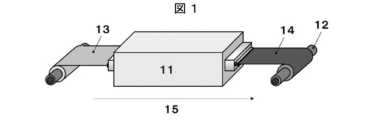
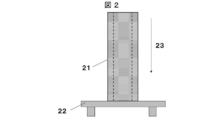
- the schematic diagram of the continuous carbonization process and the continuous carbonization apparatus of this invention An example of a film setting method in the graphitization process.
- the graphite sheet obtained by the conventional graphite sheet manufacturing method described in Patent Document 1 has problems in thermal diffusivity and interlayer strength.
- the present inventors have conducted diligent studies, and as a result, in addition to the conventionally known inorganic particles, (i) a non-metal containing phosphorus. Thermal diffusion is performed by heat-treating a polyimide film containing an additive and (ii) the inorganic particles and the phosphorus content (total amount) of the phosphorus-containing non-metal additive within a certain range. For the first time, it has been found that a graphite sheet having excellent ratio and interlayer strength can be provided. In addition, the present inventors have also found for the first time that according to the above method, fusion of a carbonaceous film in a graphitization step can be prevented, and a graphite sheet can be provided with high productivity.
- a graphite sheet made of a polyimide film containing inorganic particles has been significantly inferior in thermal diffusivity and interlayer strength.
- the present inventors added "a non-metal additive containing phosphorus", and further, "the total phosphorus content of the inorganic particles and the non-metal additive containing phosphorus” was set within a certain range. By doing so, it has been found that it is possible to provide a method for producing a graphite sheet, which is excellent in heat diffusion rate and interlayer strength and can prevent film fusion in the production process.
- the present inventors speculate on the reason why the above-mentioned method for producing a graphite sheet can provide a graphite sheet having excellent thermal diffusivity and interlayer strength as follows.
- the phosphorus-containing non-metal additive does not easily disturb the orientation of graphite when sublimated. Therefore, it is considered that the orientation of graphite is maintained and the decrease in thermal diffusivity and layer strength of the graphite sheet is suppressed.
- the content of inorganic particles is 0.01% by weight or more and 0.08% by weight or less, and the total phosphorus content is 0.018% by weight or more and 0.032% by weight or less. Anything may include a step of heat-treating the polyimide film to 2800 ° C. or higher.
- a method for producing a graphite sheet according to an aspect of the present invention may be referred to as "the present production method”.
- This manufacturing method is a so-called polymer thermal decomposition method in which a polyimide film is heat-treated under an inert gas atmosphere or under reduced pressure. Specifically, a carbonization step of preheating the polyimide film to a temperature of about 1000 ° C. to obtain a carbonized polyimide film and a heat treatment of the carbonized polyimide film produced by the carbonization step to a temperature of 2800 ° C. or higher. A graphite sheet is obtained through a graphitization step of (heating) and graphitization, and optionally a compression step of compressing the graphite.
- the carbonization step and the graphitization step may be continuously performed, or the carbonization step may be completed and then only the graphitization step may be performed independently.
- the carbonization step is a step of heat-treating the polyimide film to a temperature of about 1000 ° C. to carbonize (carbonize) the polyimide film.
- the method for carbonizing the polyimide film in the carbonization step is not particularly limited.
- the polyimide film may be carbonized in a laminated state, or the roll-shaped polyimide film may be carbonized in a roll-like state.
- the film may be unwound from the polyimide film and continuously carbonized.
- the continuous carbonization method in which the film is unwound from the roll-shaped polyimide film and continuously carbonized is preferable because it is excellent in productivity.
- the carbonization step is carried out under reduced pressure or in an inert gas, and nitrogen is preferably used as the inert gas.
- the carbonized polyimide film obtained by the carbonization step may be referred to as a carbonaceous film.
- the graphitization step is a step of heat-treating the carbonaceous film obtained in the carbonization step to a temperature of 2800 ° C. or higher to graphitize the carbonaceous film. It can be said that the graphitization step is a step of heat-treating a carbonaceous film to obtain a graphite sheet.
- the temperature (maximum temperature) when the carbonaceous film obtained in the carbonization step is heat-treated for example, 2800 ° C. or higher, 2900 ° C. or higher, or 3000 ° C. or higher can be preferably exemplified.
- the upper limit is not particularly limited, but is preferably 3300 ° C or lower, and more preferably 3200 ° C or lower.
- the temperature (maximum temperature) at which the carbonic film obtained in the carbonization step is heat-treated is 2800 ° C. or higher, there is an advantage that the heat diffusion rate of the obtained graphite sheet is good, and the temperature is 3300 ° C. If the following, there is an advantage that the sublimation of the graphite member in the graphitization furnace can be suppressed.
- the graphitization step is carried out under reduced pressure or in an inert gas, and argon or helium is suitable as the inert gas.
- graphitization may be performed in a state in which rectangular carbonaceous films are laminated, or the roll-shaped carbonaceous film may be graphitized as a roll, and the film is continuously fed out from the roll-shaped carbonaceous film. It may be graphitized. Since a long film can be obtained, a method of graphitizing the roll-shaped film or feeding out the rolled carbonaceous film to continuously graphitize the film is preferable.
- the foamed graphite sheet after graphitization may be subjected to a compression step. Flexibility can be imparted to the graphite sheet by performing a compression step.
- a compression step a method of compressing in a planar shape, a method of rolling using a metal roll or the like can be used.
- the compression step may be carried out at room temperature or during the graphitization step.
- the compression process can also be said to be a softening process.
- Graphite sheet > Thermal diffusivity of the graphite sheet obtained by the present production method, is preferably 10.0 cm 2 / s or more, more preferably 10.4 cm 2 / s or more, is 10.8 cm 2 / s or more Is even more preferable.
- the interlayer strength of the graphite sheet according to the embodiment of the present invention is preferably 35 gf / inch or more, more preferably 40 gf / inch or more, and further preferably 45 gf / inch or more.
- the release film of the double-sided tape bonded to the graphite sheet is peeled off, delamination that causes a decrease in the thermal diffusivity of the graphite sheet does not occur, which is preferable.
- the thickness of the graphite sheet according to the embodiment of the present invention is preferably 16 to 85 ⁇ m, more preferably 16 ⁇ m to 80 ⁇ m, further preferably 23 ⁇ m to 60 ⁇ m, and even more preferably 30 ⁇ m to 50 ⁇ m. Is even more preferable. If the thickness of the graphite sheet is within the above range, it has an advantage that it exhibits an excellent heat dissipation effect when used in, for example, a thin electronic device (for example, a high-performance smartphone).
- the lower limit of the thickness of the graphite sheet according to the embodiment of the present invention is preferably 16 ⁇ m or more, more preferably 20 ⁇ m or more, further preferably 23 ⁇ m or more, still more preferably 30 ⁇ m or more. preferable.
- the upper limit of the thickness of the graphite sheet is preferably 85 ⁇ m or less, more preferably 80 ⁇ m or less, further preferably 60 ⁇ m or less, still more preferably 50 ⁇ m or less. If the thickness of the graphite sheet is 16 ⁇ m or more, it has a sufficient heat dissipation effect for heat dissipation of electronic devices, and if it is 85 ⁇ m or less, it has an advantage that it can be mounted in a thin electronic device having a small space. ..
- the density of the graphite sheet according to one embodiment of the present invention is preferably 1.80 g / cm 3 or more, more preferably 2.00 g / cm 3 or more, and further preferably 2.05 g / cm 3 or more. It is more preferably 2.10 g / cm 3 or more, and even more preferably 2.15 g / cm 3 or more.
- the upper limit of the density is not particularly determined, but the graphite sheet is usually 2.26 g / cm 3 or less. When the density of the graphite sheet is within the above range, the graphite sheet has an advantage of exhibiting an excellent heat dissipation effect.
- the polyimide film for a graphite sheet used in this production method is a polyimide film made from an acid dianhydride component and a diamine component as raw materials, and contains a predetermined amount of inorganic particles and phosphorus.
- the lower limit of the content of the inorganic particles in the polyimide film according to the embodiment of the present invention is preferably 0.01% by weight, more preferably 0.02% by weight, and 0.03% by weight. It is more preferable to have.
- the upper limit of the content of the inorganic particles is preferably 0.10% by weight, more preferably 0.08% by weight, further preferably 0.06% by weight, and 0.05% by weight. Is particularly preferred. Within such a range, the physical properties of both the thermal diffusivity and the interlayer strength of the finally obtained graphite sheet are excellent, and the transportability is also good.
- the content of the inorganic particles in the polyimide film is 0.01% by weight or more, the polyimide film is excellent in transportability. Therefore, in the manufacturing process (for example, carbonization process), there is no possibility that the polyimide film is broken. Further, when the content of the inorganic particles in the polyimide film is less than 0.10% by weight, the thermal diffusivity of the finally obtained graphite sheet is excellent.
- Examples of the inorganic particles that can be used in one embodiment of the present invention include calcium carbonate (CaCO 3 ), silica, calcium hydrogen phosphate (CaHPO 4 ), calcium phosphate (Ca 2 P 2 O 7 ) and the like.
- the inorganic particles containing phosphorus such as calcium hydrogen phosphate and calcium phosphate can reduce the amount of the non-metal additive containing phosphorus described later, and achieve both the thermal diffusion rate and the interlayer strength of the graphite sheet. It can be preferably used because it is easy to use.
- the polyimide film according to the embodiment of the present invention preferably contains a non-metal additive containing phosphorus so that the total phosphorus content of the inorganic particles described later and the non-metal additive containing phosphorus is in a preferable range. ..
- the phosphorus-containing non-metal additive that can be used in one embodiment of the present invention include phosphoric acid esters, phosphin oxides, phosphite esters, phosphins, phosphonic acid esters, phosphinic acid esters, and pyrophosphoric acid. , Metaphosphoric acid, red phosphorus, and the like.
- organophosphorus compounds such as phosphate esters, phosphin oxides, phosphite esters, phosphins, phosphonic acid esters, and phosphinic acid esters are stable against polyamic acid and polyimide. It can be preferably used. Further, from the viewpoint of stability, it is preferable that the organic phosphorus compound contains pentavalent phosphorus as a main component.
- the polyimide film according to the embodiment of the present invention contains a non-metal additive containing phosphorus, the polyimide film can provide a graphite sheet having excellent thermal diffusion rate and interlayer strength, and further, a graphitization step. Since it is possible to prevent the fusion of the carbonaceous film in the graphite sheet, the graphite sheet can be provided with high productivity.
- the temperature at which the weight loss rate of the non-metal additive containing phosphorus is 5% is preferably 200 ° C. or higher, more preferably 250 ° C. or higher, and more preferably 300 ° C. The above is more preferable.
- the temperature at which the weight reduction rate of the non-metal additive containing phosphorus is 5% is 200 ° C. or higher, it is possible to reduce the contamination of the furnace that carbonizes the polyimide film.
- non-metal additive containing phosphorus one having excellent compatibility with the polyimide resin is preferably used. With such an additive, it is possible to obtain a graphite sheet that is well dispersed in the polyimide film and has little variation in the degree of in-plane foaming.
- non-metal additive containing phosphorus a liquid at normal temperature and pressure is preferably used. With such an additive, it is possible to obtain a graphite sheet that does not precipitate in the polyimide film and hardly causes abnormal foaming during graphitization.
- Total phosphorus content of inorganic particles and non-metal additives containing phosphorus The lower limit of the total phosphorus content of the inorganic particles and the non-metal additive containing phosphorus in the polyimide film according to the embodiment of the present invention is more than 0.015% by weight, preferably 0.018% by weight. , 0.021% by weight, more preferably 0.025% by weight.
- the upper limit of the total phosphorus content of the inorganic particles and the non-metal additive containing phosphorus is preferably 0.032% by weight, more preferably 0.031% by weight, and 0.030% by weight. Is even more preferable.
- the thermal diffusion rate and the interlayer of the finally obtained graphite sheet Both physical properties of strength are excellent.
- the carbonaceous film obtained by carbonizing the polyimide film is obtained in the graphitization step. Even if graphitization is performed in a roll state, there is no possibility that the carbonaceous films are fused to each other, and a long graphite sheet can be provided.
- the total phosphorus content of the polyimide film of the inorganic particles and the non-metal additive containing phosphorus is 0.021% by weight to 0.031% by weight, the physical characteristics of both the heat diffusion rate and the interlayer strength are good. It has the advantage of being superior.
- the acid dianhydride component that can be used as a raw material for the polyimide film according to the embodiment of the present invention is pyromellitic acid dianhydride, 2,3,6,7, -naphthalenetetracarboxylic acid dianhydride, 3,3.
- these acid dianhydrides may be used alone, or a plurality of types of these acid dianhydrides may be mixed at an arbitrary ratio.
- these acid dianhydrides it is preferable to use pyromellitic dianhydride or 3,3', 4,4'-biphenyltetracarboxylic dianhydride.
- diamine component examples of the diamine component that can be used as a raw material for the polyimide film according to the embodiment of the present invention include 4,4'-diaminodiphenyl ether, p-phenylenediamine, 4,4'-diaminodiphenylmethane, benzidine, and 3,3'-dichloro.
- Benzidine 4,4'-diaminodiphenyl sulfide, 3,3'-diaminodiphenyl sulfone, 4,4'-diaminodiphenyl sulfone, 3,3'-diaminodiphenyl ether, 3,4'-diaminodiphenyl ether, 1,5-diamino Naphthalene, 4,4'-diaminodiphenyldiethylsilane, 4,4'-diaminodiphenylsilane, 4,4'-diminodiphenylethylphosphine oxide, 4,4'-diaminodiphenylN-methylamine, 4,4'- Examples thereof include diaminodiphenyl N-phenylamine, 1,3-diaminobenzene, 1,2-diaminobenzene and their analogs.
- the raw material of the polyimide film according to the embodiment of the present invention it is preferable to use pyromellitic acid dianhydride in combination with 4,4'-diaminodiphenyl ether and / or p-phenylenediamine. According to this configuration, there is an advantage that the polyimide film has excellent film-forming properties.
- the thickness of the polyimide film according to the embodiment of the present invention is preferably 37 ⁇ m to 160 ⁇ m, more preferably 37 ⁇ m to 150 ⁇ m, further preferably 50 ⁇ m to 125 ⁇ m, and 62 ⁇ m to 100 ⁇ m. Even more preferable.
- a graphite sheet having both thermal diffusivity and interlayer strength can be obtained.
- the lower limit of the thickness of the polyimide film according to the embodiment of the present invention is preferably 37 ⁇ m or more, more preferably 50 ⁇ m or more, and further preferably 62 ⁇ m or more.
- the upper limit of the thickness of the polyimide film is preferably 160 ⁇ m or less, more preferably 150 ⁇ m or less, further preferably 125 ⁇ m or less, still more preferably 100 ⁇ m or less.
- the thickness of the polyimide film is 37 ⁇ m or more, it has an advantage of excellent interlayer strength, and when it is 160 ⁇ m or less, it has an advantage of excellent thermal diffusivity.
- the polyimide film according to the embodiment of the present invention can be produced by imidizing (imidoconverting) the polyamic acid as a precursor.
- a method for imidizing a polyamic acid as a precursor for example, a thermal cure method in which the polyamic acid as a precursor is heated to be imidized, or an acetic anhydride or the like is added to the polyamic acid.
- an imidization accelerator when the chemical cure method is used, the tertiary amines mentioned above are preferable.
- the chemical cure method is preferable.
- the combined use of the dehydrating agent and the imidization accelerator is preferable because the linear expansion coefficient of the obtained film can be smaller, the elastic modulus can be larger, and the birefringence can be larger.
- the chemical cure method can complete the imidization reaction in a short time in the heat treatment, and is an industrially advantageous method with excellent productivity.
- the method for producing the polyamic acid is not particularly limited, but for example, aromatic acid dianhydride and diamine are dissolved in an organic solvent in substantially equal molar amounts, and this organic solution is used as an acid dianhydride and diamine.
- Polyamic acids can be produced by stirring under controlled temperature conditions until the polymerization is complete.
- the polymerization method is not particularly limited, but for example, any of the following polymerization methods (1)-(5) is preferable.
- the ratio of the molar amount of two or more kinds of substances different from the substantially equimolar amount is in the range of 100:98 to 100:102.
- Aromatic tetracarboxylic acid dianhydride is reacted with an aromatic diamine compound in a small molar amount in an organic polar solvent to obtain a prepolyma having an acid anhydride group at both ends. Subsequently, a method of polymerizing an aromatic diamine compound having a substantially equal molar amount with respect to an aromatic tetracarboxylic dianhydride on a prepolyma.
- a prepolyma having the acid dianhydride at both ends is synthesized using a diamine and an acid dianhydride, and the prepolyma is the same as the diamine used for the synthesis of the prepolyma.
- examples thereof include a method of synthesizing a polyamic acid by reacting a diamine or a different type of diamine.
- the aromatic diamine to be reacted with the prepolyma may be the same type of aromatic diamine as the aromatic diamine used for the synthesis of the prepolyma, or may be a different type of aromatic diamine. ..
- Aromatic tetracarboxylic acid dianhydride is reacted with an excess molar amount of an aromatic diamine compound in an organic polar solvent to obtain a prepolyma having amino groups at both ends. Subsequently, after the aromatic diamine compound is additionally added to this prepolyma, the prepolyma and the aromatic tetracarboxylic acid dianhydride are so that the aromatic tetracarboxylic acid dianhydride and the aromatic diamine compound have substantially the same molar amount.
- a method of polymerizing with an object is reacted with an excess molar amount of an aromatic diamine compound in an organic polar solvent to obtain a prepolyma having amino groups at both ends. Subsequently, after the aromatic diamine compound is additionally added to this prepolyma, the prepolyma and the aromatic tetracarboxylic acid dianhydride are so that the aromatic tetracarboxylic acid dianhydride and the aromatic diamine compound have substantially the
- an aromatic diamine compound is added so as to have a substantially equal molar amount with respect to the acid dianhydride.
- One embodiment of the present invention may have the following configuration.
- It contains inorganic particles and a non-metal additive containing phosphorus, and the content of the inorganic particles is 0.01% by weight or more and 0.08% by weight or less, and the inorganic particles and the non-containing phosphorus are contained.
- the heat diffusion rate is 10.0 cm 2 / s or more, which comprises a step of heat-treating a graphite film having a total phosphorus content of 0.018% by weight or more and 0.032% by weight or less to 2800 ° C. or higher. How to manufacture graphite sheet.
- It contains inorganic particles and a non-metal additive containing phosphorus, and the content of the inorganic particles is 0.01% by weight or more and 0.08% by weight or less, and the inorganic particles and the non-containing phosphorus are contained.
- phosphorus content in polyimide film was determined using a wavelength dispersive fluorescent X-ray analyzer (ZSX PrimusII manufactured by Rigaku Co., Ltd.) in proportion to a polyimide film having a known phosphorus concentration.
- Transportability of polyimide film was evaluated based on whether or not an abnormality was found in the polyimide film in the continuous carbonization step described in Examples described later.
- the evaluation criteria for the transportability of the polyimide film were as follows. A: No problem with handleability / appearance B: Films stick to each other due to static electricity, but can be handled without any problem in appearance C: Fine scratches and wrinkles are formed during transportation, but handling is possible D: During transportation Large wrinkles and scratches, film breaks during carbonization ⁇ Contaminated continuous carbonization furnace> Regarding the contamination of the continuous carbonization furnace, the degree of contamination of the continuous carbonization furnace was evaluated in the continuous carbonization step described in Examples described later.
- the evaluation criteria for contamination of the continuous carbonization furnace are as follows. A: Almost no stains are seen B: Dirt that can be easily wiped off C: Dirt that can be wiped off with an organic solvent adheres D: Dirt accumulates during continuous carbonization and causes fine scratches on the film.
- ⁇ Film fusion in graphitization process> Regarding the fusion of the films in the graphitization step, the degree of fusion between the films when the films were wound up was evaluated in the films after the graphitization step described in Examples described later.
- the evaluation criteria for film fusion in the graphitization step were as follows. A: No fusion is seen. B: There is a fusion part, but it easily peels off when winding. C: There is a fusion part, and tearing occurs when it is continuously wound, so peel it off by hand. Necessary D: It is strongly fused and tears even if it is peeled off by hand ⁇ Thermal diffusivity in the plane direction of the graphite sheet> The thermal diffusivity in the plane direction of the graphite sheet was measured at a frequency of 100 Hz in an atmosphere of 25 ° C.
- the central portion refers to a portion of the obtained graphite sheet that is central in the width direction and also central in the longitudinal direction.
- the interlayer strength of the graphite sheet was determined as follows. Double-sided tape was attached to both sides of the obtained graphite sheet, and the central portion was punched to a size of 25 mm ⁇ 80 mm to obtain a sample. One side of this sample was fixed to a plate made of SUS, and the double-sided tape on the other side was peeled off so as to maintain an angle of 90 °. At that time, the force when peeling occurred inside the graphite sheet was measured with a digital force gauge (ZTS-5N manufactured by Imada Co., Ltd.) and used as the interlayer strength of the graphite sheet.
- ZTS-5N manufactured by Imada Co., Ltd.
- ⁇ Thickness of graphite sheet> In the obtained graphite sheet, the thicknesses at four corners and one center were measured using a micrometer manufactured by Mitutoyo Co., Ltd.
- the "central one point” indicates the position of the intersection when a diagonal line is drawn from the four measurement points at each corner to the measurement points located diagonally in the obtained graphite sheet. Then, the average value of the measured values of the obtained thickness was taken as the thickness of the graphite sheet.
- Example 1 ⁇ Method of manufacturing polyimide film>
- ODA 4,4'-diaminodiphenyl ether
- PMDA pyromellitic acid dianhydride
- PDA p-phenylenediamine
- this mixed solution was applied onto an aluminum foil so as to have a thickness of 75 ⁇ m after drying to obtain a mixed solution layer.
- the mixed solution layer on the aluminum foil was dried using a hot air oven and a far infrared heater.
- the specific drying method is as follows. First, the mixed solution layer on the aluminum foil was dried in a hot air oven at 120 ° C. for 240 seconds to obtain a self-supporting gel film. The gel film was peeled off from the aluminum foil and fixed to the frame. Further, the gel film is heated stepwise in a hot air oven at 120 ° C. for 30 seconds, 275 ° C. for 40 seconds, 400 ° C. for 42 seconds, 450 ° C. for 50 seconds, and a far-infrared heater at 460 ° C. for 22 seconds. And dried. A part of resorcinol bis (diphenyl phosphate) volatilized during drying (during film formation).
- a polyimide film having a calcium hydrogen phosphate content of 0.04% by weight, a resorcinol bis (diphenyl phosphate) content of 0.21% by weight, a total phosphorus content of 0.032% by weight, and a thickness of 75 ⁇ m ( A-1) was produced.
- a roll of a polyimide film (A-1) having a thickness of 75 ⁇ m, a width of 250 mm, and a length of 300 m was set on the unwinding side of a device for transporting the film, and a continuous carbonization step was carried out while continuously moving the film to a heat treatment device. ..
- the continuous carbonization step was performed using a continuous carbonization device as shown in FIG.
- the continuous carbonization device combines a device 12 for transporting the polyimide film 13, a heat treatment device 11 having an entrance / exit and a heating space, and heat-treats the polyimide film 13 in the heat treatment device 11.
- Step) is an apparatus for continuously obtaining the carbonized film 14.
- the heat treatment device 11 has six heating spaces in the MD direction, each heating space has a length of 500 mm in the MD direction and a length of 300 mm in the TD direction, and each heating space is replaced with nitrogen to flow under a nitrogen atmosphere.
- the temperature was set at (2 L / min), and the set temperatures were adjusted to 600 ° C, 615 ° C, 630 ° C, 645 ° C, 670 ° C, and 720 ° C, respectively.
- the transport speed of the films (the polyimide film 13 and the carbonaceous film 14) in the continuous carbonization step is adjusted to 1.6 m / min, and the film is transported in the transport direction 15 so that the tension with respect to the film is 10 N. did.
- the film was sandwiched from above and below by an expanded graphite sheet (thermal conductivity 200 W / m ⁇ K, thickness 400 ⁇ m), which is a material inside the furnace, and the film was conveyed.
- the material in the front furnace is provided so as to be in contact with the film, and in the continuous carbonization step, the film is conveyed so as to slide on the material in the furnace. Further, the material in the furnace was provided so as to cover a wider range than the passing range of the film in the heating space.
- the carbonaceous film 14 after the continuous carbonization step was cooled to room temperature (23 ° C.) and formed into a roll having an inner diameter of 100 mm to obtain a carbonaceous film roll 21 shown in FIG.
- the carbonaceous film scroll 21 was set on the hearth 22 so that the width direction of the film was vertical, and the graphitization step was performed at a heating rate of 1 ° C./min up to 3100 ° C.
- the arrow 23 indicates the direction of gravity.
- the film after the graphitization step was cooled to room temperature (23 ° C.), and the graphitized film was subjected to a compression step (flexibility step) at room temperature (23 ° C.) at a pressure of 10 MPa to obtain a graphite sheet.
- the characteristics of the compressed graphite sheet were examined by the above-mentioned test.
- Examples 2 to 10, Comparative Examples 1 to 5 A polyimide film was prepared in the same manner as in Example 1 except that the amounts of calcium hydrogen phosphate and resorcinol bis (diphenyl phosphate) added were set to the amounts shown in Table 1, and a graphite sheet was prepared using the polyimide film.
- Example 11 Resorcinol bis (diphenylphosphate) content 0.21% by weight, total phosphorus content 0.022% by weight, in the same manner as in Example 1 except that calcium carbonate was used instead of calcium hydrogen phosphate.
- a polyimide film having a thickness of 75 ⁇ m was prepared, and a graphite sheet was prepared using the polyimide film.
- Example 12 Resorcinol bis (diphenylphosphate) content 0.21% by weight, total phosphorus content 0.022% by weight, thickness in the same manner as in Example 1 except that silica was used instead of calcium hydrogen phosphate.
- a polyimide film having a size of 75 ⁇ m was prepared, and a graphite sheet was prepared using the polyimide film.
- Example 13 Resorcinol bis (diphenylphosphate) content 0.11% by weight, total phosphorus content 0.020% by weight, thickness in the same manner as in Example 3 except that calcium phosphate was used instead of calcium hydrogen phosphate.
- a polyimide film having a size of 75 ⁇ m was prepared, and a graphite sheet was prepared using the polyimide film.
- Example 14 Examples except that 0.49% by weight of triphenylphosphate (phosphorus content: 9.5% by weight, 5% weight loss temperature in TG-DTA: 220 ° C.) was added instead of resorcinolbis (diphenylphosphate).
- a polyimide film having a triphenyl phosphate content of 0.13% by weight, a total phosphorus content of 0.022% by weight, and a thickness of 75 ⁇ m was prepared, and a graphite sheet was prepared using the polyimide film.
- Example 15 Performed except that 0.30% by weight of triphenylphosphine oxide (phosphorus content: 11.1% by weight, 5% weight loss temperature in TG-DTA: 243 ° C.) was added instead of resorcinolbis (diphenylphosphate).
- a polyimide film having a triphenylphosphine oxide content of 0.11% by weight, a total phosphorus content of 0.022% by weight, and a thickness of 75 ⁇ m was prepared, and a graphite sheet was prepared using the polyimide film. ..
- Example 16 Except for the addition of 0.15% by weight of biphenol bis (diphenyl phosphate) (phosphorus content: 9.5% by weight, 5% weight loss temperature in TG-DTA: 395 ° C) instead of resorcinol bis (diphenyl phosphate).
- a polyimide film having a biphenol bis (diphenyl phosphate) content of 0.13% by weight, a total phosphorus content of 0.022% by weight, and a thickness of 75 ⁇ m was prepared, and graphite was used. A sheet was prepared.
- Example 17 to 20 A polyimide film was produced in the same manner as in Example 1 except that the thickness of the polyimide film was set to the thickness shown in Table 1, and a graphite sheet was produced using the polyimide film. Regarding the film formation time of the polyimide film and the temperature rise time in the graphitization step, the firing time was adjusted in proportion to the thickness. For example, in the case of a film having a thickness of 50 ⁇ m, the firing time was set to 1/2 shorter than in the case of a film having a thickness of 100 ⁇ m.
- Table 1 shows the production conditions and physical properties of the graphite sheets of Examples 1 to 20 and Comparative Examples 1 to 5.
- Examples 1 to 20 are obtained from a polyimide film having an inorganic particle content of 0.01% by weight or more and 0.08% by weight or less and a phosphorus content of 0.018% by weight or more and 0.032% by weight or less. It can be seen that the graphite sheet is excellent in both the physical characteristics of the heat diffusivity and the interlayer strength, and the fusion between the films in the graphitization step is improved. On the other hand, according to Comparative Example 1, the graphite sheet obtained from the polyimide film having an inorganic particle content of 0.10% by weight or more has high interlayer strength and does not show a big problem in fusion between the films in the graphitization step. However, it can be seen that the heat diffusion rate is inferior.
- the graphite sheet obtained in the present invention is excellent in productivity because there is little fusion between films in the graphitization process, and has good thermal diffusivity and interlayer strength, so that it is suitable as a heat dissipation member for electronic equipment. It can be used.
Landscapes
- Chemical & Material Sciences (AREA)
- Organic Chemistry (AREA)
- Health & Medical Sciences (AREA)
- Chemical Kinetics & Catalysis (AREA)
- Medicinal Chemistry (AREA)
- Polymers & Plastics (AREA)
- Engineering & Computer Science (AREA)
- Manufacturing & Machinery (AREA)
- Geology (AREA)
- Inorganic Chemistry (AREA)
- General Life Sciences & Earth Sciences (AREA)
- Life Sciences & Earth Sciences (AREA)
- Materials Engineering (AREA)
- Carbon And Carbon Compounds (AREA)
- Compositions Of Macromolecular Compounds (AREA)
Abstract
熱拡散率及び層間強度が良好なグラファイトシートを高い生産性で提供することを課題とする。0.01重量%以上、0.08重量%以下の無機粒子と、0.018重量%以上0.032重量%以下のリンを含む非金属添加剤とを含有するポリイミドフィルムを2800℃以上に熱処理する工程を含む、熱拡散率が、10.0cm2/s以上であるグラファイトシートの製造方法により、前記課題を達成する。
Description
本発明は、グラファイトシートの製造方法及びグラファイトシート用のポリイミドフィルムに関する。
グラファイトシートは、優れた放熱特性を有していることから、コンピュータなどの各種電子機器又は電気機器に搭載されている半導体素子、他の発熱部品などに放熱部品として用いられる。
このようなグラファイトシートは、ポリイミドフィルムを焼成して得ることができる。例えば、特許文献1には、無機粒子を含有したポリイミドフィルムを焼成してグラファイトシートを製造する技術が記載されている。
従来、種々のグラファイトシートが知られているが、熱拡散率及び層間強度が両立したグラファイトシートを得るためには、未だ改善の余地があった。特に、高い熱拡散率を有するグラファイトシートを得ようとする際に、特許文献1に記載の製造方法では、層間強度が低く黒鉛化工程中にフィルム同士が融着するため、不良品の発生により生産性が下がるという課題があることを新たに見出した。
本発明の一態様は、高い熱拡散率を有し、かつ層間強度が改善されたグラファイトシートの製造方法であって、黒鉛化中のフィルムの融着を防ぐことで、良好なグラファイトシートを高い生産性で製造するための、グラファイトシートの製造方法及びグラファイトシート用のポリイミドフィルムを提供することを目的とする。
本発明者らは、上記の課題を解決するために鋭意検討した結果、無機粒子及びリンを含む非金属添加剤を含有し、無機粒子および合計リン含有量が所定の範囲内であるポリイミドフィルムを原料とすることにより、高い熱拡散率を有し、かつ層間強度が改善されたグラファイトシートの黒鉛化中のフィルム同士の融着を防止することで、高い生産性でグラファイトシートを製造することができることを見出し、本発明を完成させた。本発明は、以下を包含する。
無機粒子とリンを含む非金属添加剤とを含有し、前記無機粒子の含有量が0.01重量%以上、0.08重量%以下であり、前記無機粒子と前記リンを含む非金属添加剤の合計リン含有量が0.018重量%以上0.032重量%以下であるポリイミドフィルムを2800℃以上に熱処理する工程を含む、熱拡散率が、10.0cm2/s以上であるグラファイトシートの製造方法。
無機粒子とリンを含む非金属添加剤とを含有し、
前記無機粒子の含有量が0.01重量%以上、0.08重量%以下であり、
前記無機粒子と前記リンを含む非金属添加剤の合計リン含有量が0.018重量%以上0.032重量%以下である、グラファイトシート用のポリイミドフィルム。
前記無機粒子の含有量が0.01重量%以上、0.08重量%以下であり、
前記無機粒子と前記リンを含む非金属添加剤の合計リン含有量が0.018重量%以上0.032重量%以下である、グラファイトシート用のポリイミドフィルム。
本発明の一態様によれば、熱拡散率及び層間強度が良好なグラファイトシートを得ることができる。
本発明の一実施形態について以下に説明するが、本発明はこれに限定されるものではない。本発明は、以下に説明する各構成に限定されるものではなく、特許請求の範囲に示した範囲で種々の変更が可能であり、異なる実施形態や実施例にそれぞれ開示された技術的手段を適宜組み合わせて得られる実施形態や実施例についても本発明の技術的範囲に含まれる。また、本明細書中に記載された学術文献及び特許文献の全てが、本明細書中において参考文献として援用される。また、本明細書において特記しない限り、数値範囲を表す「A~B」は、「A以上B以下」を意図する。
<1.本発明の技術的思想>
特許文献1に記載の従来のグラファイトシート製造方法により得られるグラファイトシートは、熱拡散率及び層間強度に課題があった。
特許文献1に記載の従来のグラファイトシート製造方法により得られるグラファイトシートは、熱拡散率及び層間強度に課題があった。
そこで、本発明者らは、熱拡散率及び層間強度に優れるグラファイトシートの製造方法を提供するべく鋭意検討を行った結果、従来知られていた無機粒子に加え、(i)リンを含む非金属添加剤を含み、かつ、(ii)上記無機粒子と、上記リンを含む非金属添加剤の含むリンの含有量(合計量)が一定の範囲内であるポリイミドフィルムを熱処理することにより、熱拡散率及び層間強度に優れるグラファイトシートを提供できることを初めて見出した。また、本発明者らは、上記方法によれば、黒鉛化工程における炭素質フィルムの融着を防ぐことができ、グラファイトシートを高い生産性で提供できることも初めて見出した。
従来、無機粒子を含むポリイミドフィルムからなるグラファイトシートは、熱拡散率及び層間強度には大きく劣るものであった。このような状況下、本発明者らは「リンを含む非金属添加剤」を添加し、さらに、「無機粒子と前記リンを含む非金属添加剤の合計リン含有量」を一定の範囲内とすることで、熱拡散率及び層間強度に優れ、さらに、製造過程におけるフィルムの融着を防ぐことができるグラファイトシートの製造方法を提供できることを見出した。
本発明者らは、上記のグラファイトシートの製造方法によって、熱拡散率及び層間強度に優れるグラファイトシートを提供できる理由について、以下のように推察している。
グラファイトシートの製造方法において、ポリイミドフィルムを炭素化してなる炭素質フィルムを黒鉛化する際に、前記ポリイミドフィルムに由来する無機粒子が加熱によって昇華する。この際に、従来使用される無機粒子(例えば、カルシウム)は、炭素と親和性が高いため、グラファイトシートを形成する炭素(グラファイト)と反応しつつ昇華する。これにより、グラファイトシートにおけるグラファイトの配向が乱されるため、当該グラファイトシートの熱拡散率及び層関強度が低下する。
一方、リン含有の非金属添加剤は、昇華する際に、グラファイトの配向を乱しにくい。そのため、グラファイトの配向が維持され、当該グラファイトシートの熱拡散率および層関強度の低下が抑制されると考えられる。
<2.グラファイトシートの製造方法>
本発明の一態様のグラファイトシートの製造方法は、無機粒子の含有量が0.01重量%以上0.08重量%以下、かつ合計リン含有量が0.018重量%以上0.032重量%以下であるポリイミドフィルムを2800℃以上に熱処理する工程を含むものであればよい。本明細書において、「本発明の一態様のグラファイトシートの製造方法」を、「本製造方法」と称する場合がある。
本発明の一態様のグラファイトシートの製造方法は、無機粒子の含有量が0.01重量%以上0.08重量%以下、かつ合計リン含有量が0.018重量%以上0.032重量%以下であるポリイミドフィルムを2800℃以上に熱処理する工程を含むものであればよい。本明細書において、「本発明の一態様のグラファイトシートの製造方法」を、「本製造方法」と称する場合がある。
本製造方法は、ポリイミドフィルムを不活性ガス雰囲気下や減圧下で熱処理する、いわゆる高分子熱分解法である。具体的には、ポリイミドフィルムを1000℃程度の温度まで予備加熱し、炭素化されたポリイミドフィルムを得る炭化工程と、炭化工程で作製された炭素化されたポリイミドフィルムを2800℃以上の温度まで熱処理(加熱)し、グラファイト化する黒鉛化工程と、任意で、これを圧縮する圧縮工程とを経て、グラファイトシートが得られる。なお、炭化工程と黒鉛化工程とは連続して行っても、炭化工程を終了させて、その後黒鉛化工程のみを単独で行っても構わない。
(炭化工程)
炭化工程は、ポリイミドフィルムを1000℃程度の温度まで熱処理し、ポリイミドフィルムを炭素化(炭化)する工程である。炭化工程におけるポリイミドフィルムの炭化方法は特に限定されず、例えば、長方形状のポリイミドフィルムを積層した状態で炭化してもよく、ロール状のポリイミドフィルムをロール状のまま炭化してもよく、ロール状ポリイミドフィルムからフィルムを繰り出して連続的に炭化してもよい。中でも、ロール状ポリイミドフィルムからフィルムを繰り出して連続的に炭化する、連続炭化方式は、生産性に優れるため、好ましい。なお、炭化工程は、減圧下もしくは不活性ガス中でおこなわれるが、不活性ガスとしては窒素が好適に用いられる。なお、本明細書において、炭化工程により得られる炭素化したポリイミドフィルムを、炭素質フィルムと称する場合がある。
炭化工程は、ポリイミドフィルムを1000℃程度の温度まで熱処理し、ポリイミドフィルムを炭素化(炭化)する工程である。炭化工程におけるポリイミドフィルムの炭化方法は特に限定されず、例えば、長方形状のポリイミドフィルムを積層した状態で炭化してもよく、ロール状のポリイミドフィルムをロール状のまま炭化してもよく、ロール状ポリイミドフィルムからフィルムを繰り出して連続的に炭化してもよい。中でも、ロール状ポリイミドフィルムからフィルムを繰り出して連続的に炭化する、連続炭化方式は、生産性に優れるため、好ましい。なお、炭化工程は、減圧下もしくは不活性ガス中でおこなわれるが、不活性ガスとしては窒素が好適に用いられる。なお、本明細書において、炭化工程により得られる炭素化したポリイミドフィルムを、炭素質フィルムと称する場合がある。
(黒鉛化工程)
黒鉛化工程は、炭化工程で得た炭素質フィルムを2800℃以上の温度まで熱処理し、炭素質フィルムを黒鉛化する工程である。黒鉛化工程は、炭素質フィルムを熱処理し、グラファイトシートを得る工程であるとも言える。黒鉛化工程において、炭化工程で得た炭素質フィルムを熱処理する際の温度(最高温度)としては、例えば、2800℃以上、2900℃以上、又は3000℃以上を好ましく例示できる。上限は特に限定されないが、3300℃以下であることが好ましく、3200℃以下であることがより好ましい。黒鉛化工程において、炭化工程で得た炭素質フィルムを熱処理する際の温度(最高温度)が2800℃以上であれば、得られるグラファイトシートの熱拡散率が良好となるという利点があり、3300℃以下であれば、黒鉛化炉中の黒鉛部材の昇華を抑制できるという利点がある。なお、黒鉛化工程は、減圧下もしくは不活性ガス中でおこなわれるが、不活性ガスとしてはアルゴン、又はヘリウムが適当である。
黒鉛化工程は、炭化工程で得た炭素質フィルムを2800℃以上の温度まで熱処理し、炭素質フィルムを黒鉛化する工程である。黒鉛化工程は、炭素質フィルムを熱処理し、グラファイトシートを得る工程であるとも言える。黒鉛化工程において、炭化工程で得た炭素質フィルムを熱処理する際の温度(最高温度)としては、例えば、2800℃以上、2900℃以上、又は3000℃以上を好ましく例示できる。上限は特に限定されないが、3300℃以下であることが好ましく、3200℃以下であることがより好ましい。黒鉛化工程において、炭化工程で得た炭素質フィルムを熱処理する際の温度(最高温度)が2800℃以上であれば、得られるグラファイトシートの熱拡散率が良好となるという利点があり、3300℃以下であれば、黒鉛化炉中の黒鉛部材の昇華を抑制できるという利点がある。なお、黒鉛化工程は、減圧下もしくは不活性ガス中でおこなわれるが、不活性ガスとしてはアルゴン、又はヘリウムが適当である。
黒鉛化工程では、長方形状の炭素質フィルムを積層した状態で黒鉛化してもよく、ロール状の炭素質フィルムをロール状のまま黒鉛化してもよく、ロール状炭素質フィルムからフィルムを繰り出して連続的に黒鉛化してもよい。長尺のフィルムが得られるため、ロール状のまま黒鉛化又はロール状炭素質フィルムを繰り出して連続的に黒鉛化する方法が好ましい。
(圧縮工程)
黒鉛化後の発泡したグラファイトシートに圧縮工程を施してもよい。圧縮工程を施すことによって、グラファイトシートに柔軟性を付与することができる。圧縮工程は、面状に圧縮する方法や、金属ロールなどを用いて圧延する方法などを用いることができる。圧縮工程は室温でおこなっても、黒鉛化工程中におこなってもかまわない。圧縮工程は、柔軟化工程とも言える。
黒鉛化後の発泡したグラファイトシートに圧縮工程を施してもよい。圧縮工程を施すことによって、グラファイトシートに柔軟性を付与することができる。圧縮工程は、面状に圧縮する方法や、金属ロールなどを用いて圧延する方法などを用いることができる。圧縮工程は室温でおこなっても、黒鉛化工程中におこなってもかまわない。圧縮工程は、柔軟化工程とも言える。
<3.グラファイトシート>
本製造方法で得られるグラファイトシートの熱拡散率は、10.0cm2/s以上であることが好ましく、10.4cm2/s以上であることがより好ましく、10.8cm2/s以上であることがさらに好ましい。
本製造方法で得られるグラファイトシートの熱拡散率は、10.0cm2/s以上であることが好ましく、10.4cm2/s以上であることがより好ましく、10.8cm2/s以上であることがさらに好ましい。
また、本発明の一実施形態に係るグラファイトシートの層間強度は、35gf/inch以上であることが好ましく、40gf/inch以上であることがより好ましく、45gf/inch以上であることがさらに好ましい。かかる範囲内であれば、グラファイトシートに貼り合わせた両面テープの剥離フィルムを剥がす際に、グラファイトシートの熱拡散率低下の原因となる、層間剥離を起こさないため、好ましい。
また、本発明の一実施形態に係るグラファイトシートの厚みは、16~85μmであることが好ましく、16μm~80μmであることがより好ましく、23μm~60μmであることがさらに好ましく、30μm~50μmであることがよりさらに好ましい。グラファイトシートの厚みが上記範囲内であれば、例えば、薄型の電子機器内(例えば、高機能スマートフォン等)で使用した際に優れた放熱効果を発揮するという利点を有する。
本発明の一実施形態に係るグラファイトシートの厚みの下限は、16μm以上であることが好ましく、20μm以上であることがより好ましく、23μm以上であることがさらに好ましく、30μm以上であることがよりさらに好ましい。また、グラファイトシートの厚みの上限としては、85μm以下であることが好ましく、80μm以下であることがより好ましく、60μm以下であることがさらに好ましく、50μm以下であることよりさらに好ましい。グラファイトシートの厚みが16μm以上であれば、電子機器の放熱に十分な放熱効果を有し、85μm以下であれば、空間に余裕の少ない薄型電子機器内等にも搭載可能であるいう利点を有する。
本発明の一実施形態に係るグラファイトシートの密度は、1.80g/cm3以上が好ましく、2.00g/cm3以上であることがより好ましく、2.05g/cm3以上であることがさらに好ましく、2.10g/cm3以上であることがさらに好ましく、2.15g/cm3以上であることがさらに好ましい。密度の上限は特に決められていないが、通常、グラファイトシートは2.26g/cm3以下である。グラファイトシートの密度が上記範囲内であれば、当該グラファイトシートは、優れた放熱効果を発揮するという利点を有する。
<4.グラファイトシート用のポリイミドフィルム>
以下、本発明の一実施形態に使用し得るポリイミドフィルムについて詳説する。本製造方法に用いられるグラファイトシート用のポリイミドフィルムは、酸二無水物成分と、ジアミン成分とを原料とするポリイミドフィルムであり、所定量の無機粒子とリンを含有するものである。
以下、本発明の一実施形態に使用し得るポリイミドフィルムについて詳説する。本製造方法に用いられるグラファイトシート用のポリイミドフィルムは、酸二無水物成分と、ジアミン成分とを原料とするポリイミドフィルムであり、所定量の無機粒子とリンを含有するものである。
(無機粒子)
本発明の一実施形態に係るポリイミドフィルムの、無機粒子の含有量の下限は、0.01重量%であることが好ましく、0.02重量%であることがより好ましく、0.03重量%であることがさらに好ましい。無機粒子含有量の上限は、0.10重量%であることが好ましく、0.08重量%であることがより好ましく、0.06重量%であることがさらに好ましく、0.05重量%であることが特に好ましい。かかる範囲内であれば、最終的に得られるグラファイトシートの熱拡散率と層間強度の両方の物性が優れ、かつ搬送性も良好となる。また、ポリイミドフィルムにおける無機粒子の含有量が、0.01重量%以上であれば、当該ポリイミドフィルムは搬送性に優れる。それゆえ、製造過程(例えば、炭化工程)において、当該ポリイミドフィルムに破断が生じる虞がない。また、ポリイミドフィルムにおける無機粒子の含有量が0.10重量%未満であれば、最終的に得られるグラファイトシートの熱拡散率が優れる。
本発明の一実施形態に係るポリイミドフィルムの、無機粒子の含有量の下限は、0.01重量%であることが好ましく、0.02重量%であることがより好ましく、0.03重量%であることがさらに好ましい。無機粒子含有量の上限は、0.10重量%であることが好ましく、0.08重量%であることがより好ましく、0.06重量%であることがさらに好ましく、0.05重量%であることが特に好ましい。かかる範囲内であれば、最終的に得られるグラファイトシートの熱拡散率と層間強度の両方の物性が優れ、かつ搬送性も良好となる。また、ポリイミドフィルムにおける無機粒子の含有量が、0.01重量%以上であれば、当該ポリイミドフィルムは搬送性に優れる。それゆえ、製造過程(例えば、炭化工程)において、当該ポリイミドフィルムに破断が生じる虞がない。また、ポリイミドフィルムにおける無機粒子の含有量が0.10重量%未満であれば、最終的に得られるグラファイトシートの熱拡散率が優れる。
本発明の一実施形態において使用可能な無機粒子としては、炭酸カルシウム(CaCO3)、シリカ、リン酸水素カルシウム(CaHPO4)、リン酸カルシウム(Ca2P2O7)などを挙げることができる。これら無機粒子のなかでも、リン酸水素カルシウム及びリン酸カルシウム等のリンを含む無機粒子が、後述のリンを含む非金属添加剤の量を減らすことができ、グラファイトシートの熱拡散率と層間強度を両立しやすいことから好ましく使用し得る。
(リンを含む非金属添加剤)
本発明の一実施形態に係るポリイミドフィルムは、後述する無機粒子とリンを含む非金属添加剤との合計リン含有量が好ましい範囲になるように、リンを含む非金属添加剤を含むことが好ましい。本発明の一実施形態において使用可能なリンを含む非金属添加剤としては、リン酸エステル類、ホスフィンオキシド類、亜リン酸エステル類、ホスフィン類、ホスホン酸エステル類、ホスフィン酸エステル類、ピロリン酸、メタリン酸、赤リン、などを挙げることができる。なかでも、リン酸エステル類、ホスフィンオキシド類、亜リン酸エステル類、ホスフィン類、ホスホン酸エステル類、ホスフィン酸エステル類、などの有機リン化合物は、ポリアミド酸やポリイミドに対して安定であるため、好ましく使用し得る。また、安定性の観点から、有機リン化合物は5価のリンを主成分とすることが好ましい。本発明の一実施形態に係るポリイミドフィルムがリンを含む非金属添加剤を含む場合、当該ポリイミドフィルムは、熱拡散率及び層間強度に優れるグラファイトシートを提供できすることができ、さらに、黒鉛化工程における炭素質フィルムの融着を防ぐことができるため、グラファイトシートを高い生産性で提供できる。
本発明の一実施形態に係るポリイミドフィルムは、後述する無機粒子とリンを含む非金属添加剤との合計リン含有量が好ましい範囲になるように、リンを含む非金属添加剤を含むことが好ましい。本発明の一実施形態において使用可能なリンを含む非金属添加剤としては、リン酸エステル類、ホスフィンオキシド類、亜リン酸エステル類、ホスフィン類、ホスホン酸エステル類、ホスフィン酸エステル類、ピロリン酸、メタリン酸、赤リン、などを挙げることができる。なかでも、リン酸エステル類、ホスフィンオキシド類、亜リン酸エステル類、ホスフィン類、ホスホン酸エステル類、ホスフィン酸エステル類、などの有機リン化合物は、ポリアミド酸やポリイミドに対して安定であるため、好ましく使用し得る。また、安定性の観点から、有機リン化合物は5価のリンを主成分とすることが好ましい。本発明の一実施形態に係るポリイミドフィルムがリンを含む非金属添加剤を含む場合、当該ポリイミドフィルムは、熱拡散率及び層間強度に優れるグラファイトシートを提供できすることができ、さらに、黒鉛化工程における炭素質フィルムの融着を防ぐことができるため、グラファイトシートを高い生産性で提供できる。
また、リンを含む非金属添加剤は、TG-DTAの測定において、重量減少率が5%となる温度が、200℃以上であることが好ましく、250℃以上であることがより好ましく、300℃以上であることが更に好ましい。リンを含む非金属添加剤の重量減少率が5%となる温度が、200℃以上であれば、ポリイミドフィルムを炭化する炉の汚れを軽減することができる。
リンを含む非金属添加剤は、ポリイミド樹脂に対する相溶性に優れるものが、好適に用いられる。かかる添加剤であれば、ポリイミドフィルム中に良好に分散し、面内の発泡度のばらつきの少ないグラファイトシートを得ることができる。
また、リンを含む非金属添加剤は、常温常圧で液体のものが、好適に用いられる。かかる添加剤であれば、ポリイミドフィルム中で析出することが無く、黒鉛化中に異常な発泡を起こすことが少ないグラファイトシートを得ることができる。
(無機粒子とリンを含む非金属添加剤との合計リン含有量)
本発明の一実施形態に係るポリイミドフィルムにおける、無機粒子とリンを含む非金属添加剤との合計リン含有量の下限は、0.015重量%より多く、0.018重量%であることが好ましく、0.021重量%であることがより好ましく、0.025重量%であることがさらに好ましい。無機粒子とリンを含む非金属添加剤との合計リン含有量の上限は、0.032重量%であることが好ましく、0.031重量%であることがより好ましく、0.030重量%であることがさらに好ましい。ポリイミドフィルムにおける、無機粒子とリンを含む非金属添加剤との合計リン含有量が、0.018重量%~0.032重量%であれば、最終的に得られるグラファイトシートの熱拡散率と層間強度の両方の物性が優れる。特に、ポリイミドフィルムにおける、無機粒子とリンを含む非金属添加剤との合計リン含有量が0.015重量%より多い場合、当該ポリイミドフィルムを炭素化してなる炭素質フィルムは、黒鉛化工程において、ロール状の状態で黒鉛化を行ったとしても、当該炭素質フィルム同士が融着する虞がなく、長尺のグラファイトシートを提供することができる。また、ポリイミドフィルムにおける、無機粒子とリンを含む非金属添加剤との合計リン含有量が、0.021重量%~0.031重量%であれば、熱拡散率と層間強度の両方の物性がより優れるという利点を有する。
本発明の一実施形態に係るポリイミドフィルムにおける、無機粒子とリンを含む非金属添加剤との合計リン含有量の下限は、0.015重量%より多く、0.018重量%であることが好ましく、0.021重量%であることがより好ましく、0.025重量%であることがさらに好ましい。無機粒子とリンを含む非金属添加剤との合計リン含有量の上限は、0.032重量%であることが好ましく、0.031重量%であることがより好ましく、0.030重量%であることがさらに好ましい。ポリイミドフィルムにおける、無機粒子とリンを含む非金属添加剤との合計リン含有量が、0.018重量%~0.032重量%であれば、最終的に得られるグラファイトシートの熱拡散率と層間強度の両方の物性が優れる。特に、ポリイミドフィルムにおける、無機粒子とリンを含む非金属添加剤との合計リン含有量が0.015重量%より多い場合、当該ポリイミドフィルムを炭素化してなる炭素質フィルムは、黒鉛化工程において、ロール状の状態で黒鉛化を行ったとしても、当該炭素質フィルム同士が融着する虞がなく、長尺のグラファイトシートを提供することができる。また、ポリイミドフィルムにおける、無機粒子とリンを含む非金属添加剤との合計リン含有量が、0.021重量%~0.031重量%であれば、熱拡散率と層間強度の両方の物性がより優れるという利点を有する。
(酸二無水物成分)
本発明の一実施形態に係るポリイミドフィルムの原料として使用し得る酸二無水物成分は、ピロメリット酸二無水物、2,3,6,7,-ナフタレンテトラカルボン酸二無水物、3,3’,4,4’-ビフェニルテトラカルボン酸二無水物、1,2,5,6-ナフタレンテトラカルボン酸二無水物、2,2’,3,3’-ビフェニルテトラカルボン酸二無水物、3,3’,4,4’-ベンゾフェノンテトラカルボン酸二無水物、2,2-ビス(3,4-ジカルボキシフェニル)プロパン二無水物、3,4,9,10-ペリレンテトラカルボン酸二無水物、1,1-(3,4-ジカルボキシフェニル)エタン二無水物、1,1-ビス(2,3-ジカルボキシフェニル)エタン二無水物、1,1-ビス(3,4-ジカルボキシフェニル)エタン二無水物、ビス(2,3-ジカルボキシフェニル)メタン二無水物、ビス(3,4-ジカルボキシフェニル)メタン二無水物、オキシジフタル酸二無水物、ビス(3,4-ジカルボキシフェニル)スルホン二無水物、p-フェニレンビス(トリメリット酸モノエステル酸無水物)、エチレンビス(トリメリット酸モノエステル酸無水物)、ビスフェノールAビス(トリメリット酸モノエステル酸無水物)及びそれらの類似物を挙げることができる。酸二無水物成分としては、これら酸二無水物を単独で使用してもよく、これら酸二無水物の複数種類を任意の割合で混合することもできる。これら酸二無水物のなかでも、ピロメリット酸二無水物、または、3,3’,4,4’-ビフェニルテトラカルボン酸二無水物を使用することが好ましい。かかる酸二無水物成分を使用することにより、最終的に得られるグラファイトシートの熱拡散率が良好なものとなる。
本発明の一実施形態に係るポリイミドフィルムの原料として使用し得る酸二無水物成分は、ピロメリット酸二無水物、2,3,6,7,-ナフタレンテトラカルボン酸二無水物、3,3’,4,4’-ビフェニルテトラカルボン酸二無水物、1,2,5,6-ナフタレンテトラカルボン酸二無水物、2,2’,3,3’-ビフェニルテトラカルボン酸二無水物、3,3’,4,4’-ベンゾフェノンテトラカルボン酸二無水物、2,2-ビス(3,4-ジカルボキシフェニル)プロパン二無水物、3,4,9,10-ペリレンテトラカルボン酸二無水物、1,1-(3,4-ジカルボキシフェニル)エタン二無水物、1,1-ビス(2,3-ジカルボキシフェニル)エタン二無水物、1,1-ビス(3,4-ジカルボキシフェニル)エタン二無水物、ビス(2,3-ジカルボキシフェニル)メタン二無水物、ビス(3,4-ジカルボキシフェニル)メタン二無水物、オキシジフタル酸二無水物、ビス(3,4-ジカルボキシフェニル)スルホン二無水物、p-フェニレンビス(トリメリット酸モノエステル酸無水物)、エチレンビス(トリメリット酸モノエステル酸無水物)、ビスフェノールAビス(トリメリット酸モノエステル酸無水物)及びそれらの類似物を挙げることができる。酸二無水物成分としては、これら酸二無水物を単独で使用してもよく、これら酸二無水物の複数種類を任意の割合で混合することもできる。これら酸二無水物のなかでも、ピロメリット酸二無水物、または、3,3’,4,4’-ビフェニルテトラカルボン酸二無水物を使用することが好ましい。かかる酸二無水物成分を使用することにより、最終的に得られるグラファイトシートの熱拡散率が良好なものとなる。
(ジアミン成分)
本発明の一実施形態に係るポリイミドフィルムの原料として使用し得るジアミン成分としては、4,4’-ジアミノジフェニルエーテル、p-フェニレンジアミン、4,4’-ジアミノジフェニルメタン、ベンジジン、3,3’-ジクロロベンジジン、4,4’-ジアミノジフェニルスルフィド、3,3’-ジアミノジフェニルスルホン、4,4’-ジアミノジフェニルスルホン、3,3’-ジアミノジフェニルエーテル、3,4’-ジアミノジフェニルエーテル、1,5-ジアミノナフタレン、4,4’-ジアミノジフェニルジエチルシラン、4,4’-ジアミノジフェニルシラン、4,4’-ジミノジフェニルエチルホスフィンオキシド、4,4’-ジアミノジフェニルN-メチルアミン、4,4’-ジアミノジフェニルN-フェニルアミン、1,3-ジアミノベンゼン、1,2-ジアミノベンゼン及びそれらの類似物を挙げることができる。これらを任意の割合で混合することができる。なかでも、4,4’-ジアミノジフェニルエーテルやp-フェニレンジアミンを使用することが好ましい。かかるジアミン成分を使用することにより、最終的に得られるグラファイトシートの熱拡散率が良好なものとなる。
本発明の一実施形態に係るポリイミドフィルムの原料として使用し得るジアミン成分としては、4,4’-ジアミノジフェニルエーテル、p-フェニレンジアミン、4,4’-ジアミノジフェニルメタン、ベンジジン、3,3’-ジクロロベンジジン、4,4’-ジアミノジフェニルスルフィド、3,3’-ジアミノジフェニルスルホン、4,4’-ジアミノジフェニルスルホン、3,3’-ジアミノジフェニルエーテル、3,4’-ジアミノジフェニルエーテル、1,5-ジアミノナフタレン、4,4’-ジアミノジフェニルジエチルシラン、4,4’-ジアミノジフェニルシラン、4,4’-ジミノジフェニルエチルホスフィンオキシド、4,4’-ジアミノジフェニルN-メチルアミン、4,4’-ジアミノジフェニルN-フェニルアミン、1,3-ジアミノベンゼン、1,2-ジアミノベンゼン及びそれらの類似物を挙げることができる。これらを任意の割合で混合することができる。なかでも、4,4’-ジアミノジフェニルエーテルやp-フェニレンジアミンを使用することが好ましい。かかるジアミン成分を使用することにより、最終的に得られるグラファイトシートの熱拡散率が良好なものとなる。
本発明の一実施形態に係るポリイミドフィルムの原料としては、ピロメリット酸二無水物と、4,4’-ジアミノジフェニルエーテル、および/または、p-フェニレンジアミンとを組み合わせて使用することが好ましい。当該構成によれば、ポリイミドフィルムの製膜性に優れるという利点を有する。
(ポリイミドフィルムの厚み)
本発明の一実施形態に係るポリイミドフィルムの厚みは、37μm~160μmであることが好ましく、37μm~150μmであることがより好ましく、50μm~125μmであることがさらに好ましく、62μm~100μmであることがよりさらに好ましい。ポリイミドフィルムの厚みが前記範囲内であれば、熱拡散率と層間強度の両立したグラファイトシートが得られる。
本発明の一実施形態に係るポリイミドフィルムの厚みは、37μm~160μmであることが好ましく、37μm~150μmであることがより好ましく、50μm~125μmであることがさらに好ましく、62μm~100μmであることがよりさらに好ましい。ポリイミドフィルムの厚みが前記範囲内であれば、熱拡散率と層間強度の両立したグラファイトシートが得られる。
本発明の一実施形態に係るポリイミドフィルムの厚みの下限は、37μm以上であることが好ましく、50μm以上であることがより好ましく、62μm以上であることがさらに好まし。また、ポリイミドフィルムの厚みの上限としては、160μm以下であることが好ましく、150μm以下であることがより好ましく、125μm以下であることがさらに好ましく、100μm以下であることよりさらに好ましい。ポリイミドフィルムの厚みが37μm以上であれば、層間強度に優れるという利点を有し、160μm以下であれば、熱拡散率に優れるという利点を有する。
(ポリイミドフィルムの作製方法)
本発明の一実施形態に係るポリイミドフィルムは、前駆体であるポリアミド酸をイミド化(イミド転化)することにより作製することができる。ポリイミドフィルムの作製方法において、前駆体であるポリアミド酸をイミド化方法する方法としては、例えば、前駆体であるポリアミド酸を加熱してイミド転化する熱キュア法、または、ポリアミド酸に無水酢酸等の酸無水物に代表される脱水剤や、ピコリン、キノリン、イソキノリン、ピリジン等の第3級アミン類に代表されるイミド化促進剤を用いて前駆体であるポリアミド酸をイミド転化するケミカルキュア法、のいずれを用いてもよい。ケミカルキュア法を用いる場合のイミド化促進剤としては、上で挙げた第3級アミン類が好ましい。
本発明の一実施形態に係るポリイミドフィルムは、前駆体であるポリアミド酸をイミド化(イミド転化)することにより作製することができる。ポリイミドフィルムの作製方法において、前駆体であるポリアミド酸をイミド化方法する方法としては、例えば、前駆体であるポリアミド酸を加熱してイミド転化する熱キュア法、または、ポリアミド酸に無水酢酸等の酸無水物に代表される脱水剤や、ピコリン、キノリン、イソキノリン、ピリジン等の第3級アミン類に代表されるイミド化促進剤を用いて前駆体であるポリアミド酸をイミド転化するケミカルキュア法、のいずれを用いてもよい。ケミカルキュア法を用いる場合のイミド化促進剤としては、上で挙げた第3級アミン類が好ましい。
特に、得られるフィルムの線膨張係数が小さく、弾性率が高く、複屈折が大きくなりやすく、また比較的低温で迅速なグラファイト化が可能で、品質のよいグラファイトシートを得ることができるという観点から、ケミカルキュア法の方が好ましい。特に、脱水剤とイミド化促進剤とを併用することで、得られるフィルムの線膨張係数がより小さく、弾性率がより大きく、複屈折がより大きくなり得るので好ましい。また、ケミカルキュア法は、イミド化反応がより速く進行するので、加熱処理においてイミド化反応を短時間で完結させることができ、生産性に優れた工業的に有利な方法である。
(ポリアミド酸の作製方法)
ポリアミド酸の製造方法としては特に制限されないが、例えば、芳香族酸二無水物とジアミンとを実質的に等モル量で有機溶媒中に溶解し、この有機溶液を酸二無水物とジアミンとの重合が完了するまで制御された温度条件下で攪拌することによってポリアミド酸が製造され得る。重合方法としては特に制限されないが、例えば次のような重合方法(1)-(5)のいずれかが好ましい。なお、本明細書において、実質的に等モル量とは、それぞれ異なる2種類以上の物質のモル量の比率が、100:98~100:102の範囲内であることを意図する。
ポリアミド酸の製造方法としては特に制限されないが、例えば、芳香族酸二無水物とジアミンとを実質的に等モル量で有機溶媒中に溶解し、この有機溶液を酸二無水物とジアミンとの重合が完了するまで制御された温度条件下で攪拌することによってポリアミド酸が製造され得る。重合方法としては特に制限されないが、例えば次のような重合方法(1)-(5)のいずれかが好ましい。なお、本明細書において、実質的に等モル量とは、それぞれ異なる2種類以上の物質のモル量の比率が、100:98~100:102の範囲内であることを意図する。
(1)芳香族ジアミンを有機極性溶媒中に溶解し、芳香族ジアミンと、これと実質的に等モル量の芳香族テトラカルボン酸二無水物とを反応させて重合する方法。
(2)芳香族テトラカルボン酸二無水物と、これに対して過小モル量の芳香族ジアミン化合物とを有機極性溶媒中で反応させ、両末端に酸無水物基を有するプレポリマを得る。続いて、プレポリマに、芳香族テトラカルボン酸二無水物に対して実質的に等モル量である芳香族ジアミン化合物を重合させる方法。
上記(2)の方法の具体例は、ジアミンと酸二無水物を用いて前記酸二無水物を両末端に有するプレポリマを合成し、前記プレポリマに、前記プレポリマの合成に使用したジアミンと同種のジアミンまたは異なる種類のジアミンを反応させてポリアミド酸を合成する方法が挙げられる。(2)の方法においても、プレポリマと反応させる芳香族ジアミンは、前記プレポリマの合成に使用した芳香族ジアミンと同種の芳香族ジアミンであってもよく、異なる種類の芳香族ジアミンであってもよい。
(3)芳香族テトラカルボン酸二無水物と、これに対し過剰モル量の芳香族ジアミン化合物とを有機極性溶媒中で反応させ、両末端にアミノ基を有するプレポリマを得る。続いて、このプレポリマに芳香族ジアミン化合物を追加添加後に、芳香族テトラカルボン酸二無水物と芳香族ジアミン化合物とが実質的に等モル量となるように、プレポリマと芳香族テトラカルボン酸二無水物とを重合する方法。
(4)芳香族テトラカルボン酸二無水物を有機極性溶媒中に溶解および/または分散させた後に、その酸二無水物に対して実質的に等モル量になるように芳香族ジアミン化合物を加えて、芳香族テトラカルボン酸二無水物と芳香族ジアミン化合物とを重合させる方法。
(5)実質的に等モル量の芳香族テトラカルボン酸二無水物と芳香族ジアミンとの混合物を、有機極性溶媒中で反応させて重合する方法。
本発明の一実施形態は、以下の様な構成であってもよい。
〔1〕無機粒子とリンを含む非金属添加剤とを含有し、前記無機粒子の含有量が0.01重量%以上、0.08重量%以下であり、前記無機粒子と前記リンを含む非金属添加剤の合計リン含有量が0.018重量%以上0.032重量%以下であるポリイミドフィルムを2800℃以上に熱処理する工程を含む、熱拡散率が、10.0cm2/s以上であるグラファイトシートの製造方法。
〔2〕前記無機粒子が、リン酸水素カルシウムまたはリン酸カルシウムである、〔1〕に記載のグラファイトシートの製造方法。
〔3〕前記リンを含む非金属添加剤が、有機リン化合物である、〔1〕または〔2〕に記載のグラファイトシートの製造方法。
〔4〕前記有機リン化合物のリンの価数が5価である、〔3〕に記載のグラファイトシートの製造方法。
〔5〕前記リンを含む非金属添加剤が、TG-DTAの測定において、重量減少率が5%となる温度が200℃以上である、〔1〕~〔4〕のいずれかに記載のグラファイトシートの製造方法。
〔6〕前記グラファイトシートが、ロール状で黒鉛化されることを特徴とする、〔1〕~〔5〕のいずれかに記載のグラファイトシートの製造方法。
〔7〕前記ポリイミドフィルムの厚みは、37μm~160μmである、〔1〕~〔6〕のいずれかに記載のグラファイトシートの製造方法。
〔8〕前記ポリイミドフィルムは、4,4’-ジアミノジフェニルエーテルを含む、〔1〕~〔7〕のいずれかに記載のグラファイトシートの製造方法。
〔9〕前記グラファイトシートの厚みが、16μm~85μmである、〔1〕~〔8〕のいずれかに記載のグラファイトシートの製造方法。
〔10〕前記無機粒子と前記リンを含む非金属添加剤の合計リン含有量が0.021重量%以上0.031重量%以下である〔1〕~〔9〕のいずれかに記載のグラファイトシートの製造方法。
〔11〕無機粒子とリンを含む非金属添加剤とを含有し、前記無機粒子の含有量が0.01重量%以上、0.08重量%以下であり、前記無機粒子と前記リンを含む非金属添加剤の合計リン含有量が0.018重量%以上0.032重量%以下である、グラファイトシート用のポリイミドフィルム。
〔12〕前記無機粒子が、リン酸水素カルシウムまたはリン酸カルシウムである、〔11〕に記載のグラファイトシート用のポリイミドフィルム。
〔13〕前記リンを含む非金属添加剤が、有機リン化合物である、〔11〕または〔12〕に記載のグラファイトシート用のポリイミドフィルム。
〔14〕前記有機リン化合物のリンの価数が5価である、〔13〕に記載のグラファイトシート用のポリイミドフィルム。
〔15〕前記リンを含む非金属添加剤が、TG-DTAの測定において、重量減少率が5%となる温度が200℃以上である、〔11〕~〔14〕のいずれかに記載のグラファイトシート用のポリイミドフィルム。
〔16〕厚みが37μm~160μmである、〔11〕~〔15〕のいずれかに記載のグラファイトシート用のポリイミドフィルム。
〔17〕4,4’-ジアミノジフェニルエーテルを含む、〔11〕~〔16〕のいずれかに記載のグラファイトシート用のポリイミドフィルム。
〔18〕前記無機粒子と前記リンを含む非金属添加剤の合計リン含有量が0.021重量%以上0.031重量%以下である〔11〕~〔17〕のいずれかに記載のグラファイトシート用のポリイミドフィルム。
以下、実施例により本発明をさらに詳細に説明するが、本発明は下記実施例のみに限定されるものではない。
<ポリイミドフィルム中のリンの含有量>
ポリイミドフィルム中のリンの含有量を、波長分散型蛍光X線分析装置(株式会社リガク社製 ZSX PrimusII)を用いて、リン濃度既知のポリイミドフィルムとの比率で求めた。
ポリイミドフィルム中のリンの含有量を、波長分散型蛍光X線分析装置(株式会社リガク社製 ZSX PrimusII)を用いて、リン濃度既知のポリイミドフィルムとの比率で求めた。
<ポリイミドフィルムの搬送性>
ポリイミドフィルムの搬送性は、後述の実施例で記述する連続炭化工程において、ポリイミドフィルムに異常が見られるかどうかに基づいて、評価をおこなった。
ポリイミドフィルムの搬送性は、後述の実施例で記述する連続炭化工程において、ポリイミドフィルムに異常が見られるかどうかに基づいて、評価をおこなった。
なお、ポリイミドフィルムの搬送性の評価基準は以下のとおりとした。
A:ハンドリング性・外観などに問題が見られない
B:静電気によってフィルム同士が貼り付くが、外観に問題なくハンドリング可能
C:搬送中に細かいキズやシワができるものの、ハンドリング可能
D:搬送中に大きなシワや傷ができ、炭化中にフィルムが破断
<連続炭化炉の汚染>
連続炭化炉の汚染は、後述の実施例で記述する連続炭化工程において、連続炭化炉の汚染の程度について評価をおこなった。
A:ハンドリング性・外観などに問題が見られない
B:静電気によってフィルム同士が貼り付くが、外観に問題なくハンドリング可能
C:搬送中に細かいキズやシワができるものの、ハンドリング可能
D:搬送中に大きなシワや傷ができ、炭化中にフィルムが破断
<連続炭化炉の汚染>
連続炭化炉の汚染は、後述の実施例で記述する連続炭化工程において、連続炭化炉の汚染の程度について評価をおこなった。
なお、連続炭化炉の汚染の評価基準は以下のとおりとした。
A:ほとんど汚れは見られない
B:簡単に拭き取ることができる汚れが付着
C:有機溶剤を用いて拭き取ることができる汚れが付着
D:連続炭化中に汚れがたまり、フィルムに細かなキズをつける
<黒鉛化工程でのフィルムの融着>
黒鉛化工程でのフィルムの融着は、後述の実施例で記述する黒鉛化工程後のフィルムにおいて、フィルムを巻き取る際のフィルム同士の融着の程度について評価をおこなった。
A:ほとんど汚れは見られない
B:簡単に拭き取ることができる汚れが付着
C:有機溶剤を用いて拭き取ることができる汚れが付着
D:連続炭化中に汚れがたまり、フィルムに細かなキズをつける
<黒鉛化工程でのフィルムの融着>
黒鉛化工程でのフィルムの融着は、後述の実施例で記述する黒鉛化工程後のフィルムにおいて、フィルムを巻き取る際のフィルム同士の融着の程度について評価をおこなった。
なお、黒鉛化工程でのフィルムの融着の評価基準は以下のとおりとした。
A:融着は見られない
B:一部に融着部があるものの、巻き取る際に簡単に剥がれる
C:融着部があり、連続的に巻き取ると裂けが発生するため、手で剥がす必要がある
D:強く融着しており、手で剥がそうとしても破れる
<グラファイトシートの面方向の熱拡散率>
グラファイトシートの面方向の熱拡散率は、(株)ベテル社の「サーモウェーブアナライザTA3」を用い、30mm×30mmの形状に切り取られたグラファイトシートのサンプルについて、25℃の雰囲気下で周波数100Hzの条件下で測定することにより求めた。なおサンプルは、シートの中央部を打ち抜き、作製した。ここで、「中央部」とは、得られたグラファイトシートにおいて、幅方向において中央であって、かつ、長手方向においても中央である部分を示す。
A:融着は見られない
B:一部に融着部があるものの、巻き取る際に簡単に剥がれる
C:融着部があり、連続的に巻き取ると裂けが発生するため、手で剥がす必要がある
D:強く融着しており、手で剥がそうとしても破れる
<グラファイトシートの面方向の熱拡散率>
グラファイトシートの面方向の熱拡散率は、(株)ベテル社の「サーモウェーブアナライザTA3」を用い、30mm×30mmの形状に切り取られたグラファイトシートのサンプルについて、25℃の雰囲気下で周波数100Hzの条件下で測定することにより求めた。なおサンプルは、シートの中央部を打ち抜き、作製した。ここで、「中央部」とは、得られたグラファイトシートにおいて、幅方向において中央であって、かつ、長手方向においても中央である部分を示す。
<グラファイトシートの層間強度>
グラファイトシートの層間強度は、以下のようにして求めた。得られたグラファイトシートの両面に、両面テープを貼り合わせ、中央部を25mm×80mmに打ち抜き、サンプルを得た。このサンプルの片面をSUS製の板に固定し、反対面の両面テープを、90°の角度を保つように剥離した。その際、グラファイトシート内部で剥離が起きた時の力を、デジタルフォースゲージ((株)イマダ社製ZTS-5N)で測定し、グラファイトシートの層間強度とした。
グラファイトシートの層間強度は、以下のようにして求めた。得られたグラファイトシートの両面に、両面テープを貼り合わせ、中央部を25mm×80mmに打ち抜き、サンプルを得た。このサンプルの片面をSUS製の板に固定し、反対面の両面テープを、90°の角度を保つように剥離した。その際、グラファイトシート内部で剥離が起きた時の力を、デジタルフォースゲージ((株)イマダ社製ZTS-5N)で測定し、グラファイトシートの層間強度とした。
<グラファイトシートの密度>
得られたグラファイトシートの中央部を50mm角に打ち抜き、サンプルを得た。その後、上記サンプルの重量、面積、および厚みを測定した。その重量の測定値に基づき、グラファイトシートの密度=サンプルの重量/(サンプルの面積×サンプルの厚み)の式を用いて、グラファイトシートの密度を算出した。
得られたグラファイトシートの中央部を50mm角に打ち抜き、サンプルを得た。その後、上記サンプルの重量、面積、および厚みを測定した。その重量の測定値に基づき、グラファイトシートの密度=サンプルの重量/(サンプルの面積×サンプルの厚み)の式を用いて、グラファイトシートの密度を算出した。
<グラファイトシートの厚み>
得られたグラファイトシートにおいて、その角の4箇所および中央の1箇所の厚みを(株)ミツトヨ製マイクロメーターを用いて測定した。ここで、「中央の1箇所」とは、得られたグラファイトシートにおいて、それぞれの角における4点の測定箇所から対角に位置する測定箇所に対角線を引いた際のその交点の位置を示す。そして、得られた厚みの測定値の平均値をグラファイトシートの厚さとした。
得られたグラファイトシートにおいて、その角の4箇所および中央の1箇所の厚みを(株)ミツトヨ製マイクロメーターを用いて測定した。ここで、「中央の1箇所」とは、得られたグラファイトシートにおいて、それぞれの角における4点の測定箇所から対角に位置する測定箇所に対角線を引いた際のその交点の位置を示す。そして、得られた厚みの測定値の平均値をグラファイトシートの厚さとした。
(実施例1)
<ポリイミドフィルムの作製方法>
4,4’-ジアミノジフェニルエーテル(ODA)75モル%を溶解したジメチルホルムアミド溶液に、ピロメリット酸二無水物(PMDA)を100モル%溶解した後、p-フェニレンジアミン(PDA)25モル%を溶解して、ポリアミド酸を18.5重量%含むポリアミド酸溶液を得た。得られたポリアミド酸溶液に、リン酸水素カルシウムを濃度がポリアミド酸の固形分に対して0.04重量%となるように添加した。この溶液を冷却しながら、ポリアミド酸に含まれるカルボン酸基に対して、1当量の無水酢酸、1当量のイソキノリン、ジメチルホルムアミド、およびレゾルシノールビス(ジフェニルホスフェート)をポリアミド酸の固形分に対して0.32重量%となるように含むイミド化触媒を添加し脱泡し、混合溶液を得た。なお、この際に用いたレゾルシノールビス(ジフェニルホスフェート)は、リン含有率が10.5重量%、TG-DTAにおける5%重量減少温度は261℃であった。
<ポリイミドフィルムの作製方法>
4,4’-ジアミノジフェニルエーテル(ODA)75モル%を溶解したジメチルホルムアミド溶液に、ピロメリット酸二無水物(PMDA)を100モル%溶解した後、p-フェニレンジアミン(PDA)25モル%を溶解して、ポリアミド酸を18.5重量%含むポリアミド酸溶液を得た。得られたポリアミド酸溶液に、リン酸水素カルシウムを濃度がポリアミド酸の固形分に対して0.04重量%となるように添加した。この溶液を冷却しながら、ポリアミド酸に含まれるカルボン酸基に対して、1当量の無水酢酸、1当量のイソキノリン、ジメチルホルムアミド、およびレゾルシノールビス(ジフェニルホスフェート)をポリアミド酸の固形分に対して0.32重量%となるように含むイミド化触媒を添加し脱泡し、混合溶液を得た。なお、この際に用いたレゾルシノールビス(ジフェニルホスフェート)は、リン含有率が10.5重量%、TG-DTAにおける5%重量減少温度は261℃であった。
次にこの混合溶液を、乾燥後に厚さ75μmになるようにアルミ箔上に塗布し、混合溶液層を得た。アルミ箔上の混合溶液層は、熱風オーブン、および、遠赤外線ヒーターを用いて乾燥した。
具体的な乾燥方法は以下のとおりである。まず、アルミ箔上の混合溶液層を、熱風オーブンで120℃において240秒乾燥して、自己支持性を有するゲルフィルムにした。そのゲルフィルムをアルミ箔から引き剥がし、フレームに固定した。さらに、ゲルフィルムを、熱風オーブンにて120℃で30秒、275℃で40秒、400℃で42秒、450℃で50秒、および遠赤外線ヒーターにて460℃で22秒と段階的に加熱して乾燥した。なお、レゾルシノールビス(ジフェニルホスフェート)は乾燥中(製膜中)に一部が揮発した。かかる操作により、リン酸水素カルシウムの含有量0.04重量%、レゾルシノールビス(ジフェニルホスフェート)の含有量0.21重量%、合計リン含有量が0.032重量%、厚さ75μmのポリイミドフィルム(A-1)を作製した。
<グラファイトシートの製造方法>
厚み75μm、幅250mm、長さ300mのポリイミドフィルム(A-1)の巻き物を、フィルムを搬送する装置の巻き出し側にセットし、加熱処理装置に連続的に移動させながら連続炭化工程を実施した。
厚み75μm、幅250mm、長さ300mのポリイミドフィルム(A-1)の巻き物を、フィルムを搬送する装置の巻き出し側にセットし、加熱処理装置に連続的に移動させながら連続炭化工程を実施した。
連続炭化工程は、図1に示すような連続炭化装置を用いておこなった。当該連続炭化装置は、ポリイミドフィルム13を搬送する装置12と、出入口と、加熱空間と、を有する加熱処理装置11とを組み合わせて、前記ポリイミドフィルム13を前記加熱処理装置11内で加熱処理(炭化工程)することにより炭素質フィルム14を連続的に得られる装置である。前記加熱処理装置11は、MD方向に6つの加熱空間を持ち、各加熱空間のMD方向の長さは500mm、TD方向の長さは300mmとし、各加熱空間を窒素で置換し窒素雰囲気流通下(2L/min)におき、設定温度はそれぞれ600℃、615℃、630℃、645℃、670℃、720℃に調整した。連続炭化工程におけるフィルム(前記ポリイミドフィルム13および前記炭素質フィルム14)の搬送速度は1.6m/min、調整し、前記フィルムに対する張力が10Nとなるように搬送方向15の方向に前記フィルムを搬送した。前記加熱処理装置11の加熱空間内では炉内材である膨張黒鉛シート(熱伝導率200W/m・K、厚み400μm)で前記フィルムを上下から挟み込み、前記フィルムを搬送した。なお、前炉内材は、前記フィルムと接触するように設けられており、連続炭化工程においては、前記フィルムを、前記炉内材上を滑らせるように搬送した。また、前記炉内材は加熱空間内の前記フィルムの通過範囲よりも広い範囲を覆うように設けた。
次に、連続炭化工程後の炭素質フィルム14を室温(23℃)まで冷却し、内径100mmのロール状にして、図2に示す炭素質フィルムの巻物21を得た。図2のようにフィルムの幅方向が垂直になるように炭素質フィルムの巻物21を炉床22にセットして3100℃まで1℃/minの昇温速度で黒鉛化工程を行なった。なお、図2において矢印23は重力方向を表している。
次いで、黒鉛化工程後のフィルムを室温(23℃)まで冷却し、室温(23℃)にて黒鉛化フィルムを10MPaの圧力で圧縮工程(柔軟化工程)を実施し、グラファイトシートを得た。圧縮後のグラファイトシートについて、上述の試験により特性を調べた。
(実施例2~10、比較例1~5)
リン酸水素カルシウムとレゾルシノールビス(ジフェニルホスフェート)の添加量を表1に記載の量とした以外は、実施例1と同様にして、ポリイミドフィルムを作製し、これを用いてグラファイトシートを作製した。
リン酸水素カルシウムとレゾルシノールビス(ジフェニルホスフェート)の添加量を表1に記載の量とした以外は、実施例1と同様にして、ポリイミドフィルムを作製し、これを用いてグラファイトシートを作製した。
(実施例11)
リン酸水素カルシウムに代えて、炭酸カルシウムを用いた以外は、実施例1と同様にして、レゾルシノール ビス(ジフェニルホスフェート)の含有量0.21重量%、合計リン含有量が0.022重量%、厚さ75μmのポリイミドフィルムを作製し、これを用いてグラファイトシートを作製した。
リン酸水素カルシウムに代えて、炭酸カルシウムを用いた以外は、実施例1と同様にして、レゾルシノール ビス(ジフェニルホスフェート)の含有量0.21重量%、合計リン含有量が0.022重量%、厚さ75μmのポリイミドフィルムを作製し、これを用いてグラファイトシートを作製した。
(実施例12)
リン酸水素カルシウムに代えて、シリカを用いた以外は、実施例1と同様にして、レゾルシノール ビス(ジフェニルホスフェート)の含有量0.21重量%、合計リン含有量が0.022重量%、厚さ75μmのポリイミドフィルムを作製し、これを用いてグラファイトシートを作製した。
リン酸水素カルシウムに代えて、シリカを用いた以外は、実施例1と同様にして、レゾルシノール ビス(ジフェニルホスフェート)の含有量0.21重量%、合計リン含有量が0.022重量%、厚さ75μmのポリイミドフィルムを作製し、これを用いてグラファイトシートを作製した。
(実施例13)
リン酸水素カルシウムに代えて、リン酸カルシウムを用いた以外は、実施例3と同様にして、レゾルシノール ビス(ジフェニルホスフェート)の含有量0.11重量%、合計リン含有量が0.020重量%、厚さ75μmのポリイミドフィルムを作製し、これを用いてグラファイトシートを作製した。
リン酸水素カルシウムに代えて、リン酸カルシウムを用いた以外は、実施例3と同様にして、レゾルシノール ビス(ジフェニルホスフェート)の含有量0.11重量%、合計リン含有量が0.020重量%、厚さ75μmのポリイミドフィルムを作製し、これを用いてグラファイトシートを作製した。
(実施例14)
レゾルシノールビス(ジフェニルホスフェート)に代えて、トリフェニルホスフェート(リン含有率が9.5重量%、TG-DTAにおける5%重量減少温度は220℃)を0.49重量%添加した以外は、実施例1と同様にして、トリフェニルホスフェートの含有量0.13重量%、合計リン含有量が0.022重量%、厚さ75μmのポリイミドフィルムを作製し、これを用いてグラファイトシートを作製した。
レゾルシノールビス(ジフェニルホスフェート)に代えて、トリフェニルホスフェート(リン含有率が9.5重量%、TG-DTAにおける5%重量減少温度は220℃)を0.49重量%添加した以外は、実施例1と同様にして、トリフェニルホスフェートの含有量0.13重量%、合計リン含有量が0.022重量%、厚さ75μmのポリイミドフィルムを作製し、これを用いてグラファイトシートを作製した。
(実施例15)
レゾルシノールビス(ジフェニルホスフェート)に代えて、トリフェニルホスフィンオキシド(リン含有率が11.1重量%、TG-DTAにおける5%重量減少温度は243℃)を0.30重量%添加した以外は、実施例1と同様にして、トリフェニルホスフィンオキシドの含有量0.11重量%、合計リン含有量が0.022重量%、厚さ75μmのポリイミドフィルムを作製し、これを用いてグラファイトシートを作製した。
レゾルシノールビス(ジフェニルホスフェート)に代えて、トリフェニルホスフィンオキシド(リン含有率が11.1重量%、TG-DTAにおける5%重量減少温度は243℃)を0.30重量%添加した以外は、実施例1と同様にして、トリフェニルホスフィンオキシドの含有量0.11重量%、合計リン含有量が0.022重量%、厚さ75μmのポリイミドフィルムを作製し、これを用いてグラファイトシートを作製した。
(実施例16)
レゾルシノールビス(ジフェニルホスフェート)に代えて、ビフェノールビス(ジフェニルホスフェート)(リン含有率が9.5重量%、TG-DTAにおける5%重量減少温度は395℃)を0.15重量%添加した以外は、実施例1と同様にして、ビフェノールビス(ジフェニルホスフェート)の含有量0.13重量%、合計リン含有量が0.022重量%、厚さ75μmのポリイミドフィルムを作製し、これを用いてグラファイトシートを作製した。
レゾルシノールビス(ジフェニルホスフェート)に代えて、ビフェノールビス(ジフェニルホスフェート)(リン含有率が9.5重量%、TG-DTAにおける5%重量減少温度は395℃)を0.15重量%添加した以外は、実施例1と同様にして、ビフェノールビス(ジフェニルホスフェート)の含有量0.13重量%、合計リン含有量が0.022重量%、厚さ75μmのポリイミドフィルムを作製し、これを用いてグラファイトシートを作製した。
(実施例17~20)
ポリイミドフィルムの厚みを表1に記載の厚みとした以外は、実施例1と同様にして、ポリイミドフィルムを作製し、これを用いてグラファイトシートを作製した。なお、ポリイミドフィルムの製膜時間および、黒鉛化工程の昇温時間については、厚みに比例して焼成時間を調整した。例えば厚さ50μmのフィルムの場合には、100μmの場合よりも焼成時間を1/2に短く設定した。
ポリイミドフィルムの厚みを表1に記載の厚みとした以外は、実施例1と同様にして、ポリイミドフィルムを作製し、これを用いてグラファイトシートを作製した。なお、ポリイミドフィルムの製膜時間および、黒鉛化工程の昇温時間については、厚みに比例して焼成時間を調整した。例えば厚さ50μmのフィルムの場合には、100μmの場合よりも焼成時間を1/2に短く設定した。
実施例1~20および比較例1~5のグラファイトシートの製造条件および物性を表1に示す。

本発明で得られるグラファイトシートは、黒鉛化工程におけるフィルム同士の融着が少ないため生産性に優れており、かつ、良好な熱拡散率と層間強度を有するため、電子機器の放熱部材として好適に利用することができる。
Claims (18)
- 無機粒子とリンを含む非金属添加剤とを含有し、
前記無機粒子の含有量が0.01重量%以上、0.08重量%以下であり、前記無機粒子と前記リンを含む非金属添加剤の合計リン含有量が0.018重量%以上0.032重量%以下であるポリイミドフィルムを2800℃以上に熱処理する工程を含む、熱拡散率が、10.0cm2/s以上であるグラファイトシートの製造方法。 - 前記無機粒子が、リン酸水素カルシウムまたはリン酸カルシウムである、請求項1に記載のグラファイトシートの製造方法。
- 前記リンを含む非金属添加剤が、有機リン化合物である、請求項1または2に記載のグラファイトシートの製造方法。
- 前記有機リン化合物のリンの価数が5価である、請求項3に記載のグラファイトシートの製造方法。
- 前記リンを含む非金属添加剤が、TG-DTAの測定において、重量減少率が5%となる温度が200℃以上である、請求項1~4のいずれか一項に記載のグラファイトシートの製造方法。
- 前記グラファイトシートが、ロール状で黒鉛化されることを特徴とする、請求項1~5のいずれか一項に記載のグラファイトシートの製造方法。
- 前記ポリイミドフィルムの厚みは、37μm~160μmである、請求項1~6のいずれか一項に記載のグラファイトシートの製造方法。
- 前記ポリイミドフィルムは、4,4’-ジアミノジフェニルエーテルを含む、請求項1~7のいずれか一項に記載のグラファイトシートの製造方法。
- 前記グラファイトシートの厚みが、16μm~85μmである、請求項1~8のいずれか一項に記載のグラファイトシートの製造方法。
- 前記無機粒子と前記リンを含む非金属添加剤の合計リン含有量が0.021重量%以上0.031重量%以下である請求項1~9のいずれか一項に記載のグラファイトシートの製造方法。
- 無機粒子とリンを含む非金属添加剤とを含有し、
前記無機粒子の含有量が0.01重量%以上、0.08重量%以下であり、
前記無機粒子と前記リンを含む非金属添加剤の合計リン含有量が0.018重量%以上0.032重量%以下である、グラファイトシート用のポリイミドフィルム。 - 前記無機粒子が、リン酸水素カルシウムまたはリン酸カルシウムである、請求項11に記載のグラファイトシート用のポリイミドフィルム。
- 前記リンを含む非金属添加剤が、有機リン化合物である、請求項11または12に記載のグラファイトシート用のポリイミドフィルム。
- 前記有機リン化合物のリンの価数が5価である、請求項13に記載のグラファイトシート用のポリイミドフィルム。
- 前記リンを含む非金属添加剤が、TG-DTAの測定において、重量減少率が5%となる温度が200℃以上である、請求項11~14のいずれか一項に記載のグラファイトシート用のポリイミドフィルム。
- 厚みが37μm~160μmである、請求項11~15のいずれか一項に記載のグラファイトシート用のポリイミドフィルム。
- 4,4’-ジアミノジフェニルエーテルを含む、請求項11~16のいずれか一項に記載のグラファイトシート用のポリイミドフィルム。
- 前記無機粒子と前記リンを含む非金属添加剤の合計リン含有量が0.021重量%以上0.031重量%以下である請求項11~17のいずれか一項に記載のグラファイトシート用のポリイミドフィルム。
Priority Applications (3)
| Application Number | Priority Date | Filing Date | Title |
|---|---|---|---|
| CN202180042483.XA CN115916697B (zh) | 2020-07-09 | 2021-07-09 | 石墨片的制造方法及石墨片用聚酰亚胺膜 |
| JP2022535398A JP7367220B2 (ja) | 2020-07-09 | 2021-07-09 | グラファイトシートの製造方法及びグラファイトシート用のポリイミドフィルム |
| US18/065,034 US20230111677A1 (en) | 2020-07-09 | 2022-12-13 | Production method for graphite sheet, and polyimide film for graphite sheet |
Applications Claiming Priority (2)
| Application Number | Priority Date | Filing Date | Title |
|---|---|---|---|
| JP2020118400 | 2020-07-09 | ||
| JP2020-118400 | 2020-07-09 |
Related Child Applications (1)
| Application Number | Title | Priority Date | Filing Date |
|---|---|---|---|
| US18/065,034 Continuation US20230111677A1 (en) | 2020-07-09 | 2022-12-13 | Production method for graphite sheet, and polyimide film for graphite sheet |
Publications (1)
| Publication Number | Publication Date |
|---|---|
| WO2022009971A1 true WO2022009971A1 (ja) | 2022-01-13 |
Family
ID=79552503
Family Applications (1)
| Application Number | Title | Priority Date | Filing Date |
|---|---|---|---|
| PCT/JP2021/025895 Ceased WO2022009971A1 (ja) | 2020-07-09 | 2021-07-09 | グラファイトシートの製造方法及びグラファイトシート用のポリイミドフィルム |
Country Status (4)
| Country | Link |
|---|---|
| US (1) | US20230111677A1 (ja) |
| JP (1) | JP7367220B2 (ja) |
| CN (1) | CN115916697B (ja) |
| WO (1) | WO2022009971A1 (ja) |
Cited By (6)
| Publication number | Priority date | Publication date | Assignee | Title |
|---|---|---|---|---|
| WO2023162643A1 (ja) * | 2022-02-25 | 2023-08-31 | 株式会社カネカ | グラファイトシート用のポリイミドフィルム、グラファイトシートおよびそれらの製造方法 |
| JP2023174334A (ja) * | 2022-05-27 | 2023-12-07 | 株式会社カネカ | グラファイトシート、グラファイトシート用のポリイミドフィルムおよびそれらの製造方法 |
| JP2024521539A (ja) * | 2021-06-07 | 2024-05-31 | デュポン エレクトロニクス インコーポレイテッド | 電子デバイスで使用するためのポリマー |
| WO2024144358A1 (ko) * | 2022-12-30 | 2024-07-04 | 피아이첨단소재 주식회사 | 폴리이미드 전구체 |
| TWI870923B (zh) * | 2022-07-07 | 2025-01-21 | 南韓商聚酰亞胺先端材料有限公司 | 石墨片、製造其的方法以及用於製造其之聚醯亞胺膜 |
| KR102954555B1 (ko) * | 2022-12-30 | 2026-04-20 | 피아이첨단소재 주식회사 | 폴리이미드 전구체 |
Citations (4)
| Publication number | Priority date | Publication date | Assignee | Title |
|---|---|---|---|---|
| JP2016017169A (ja) * | 2014-07-11 | 2016-02-01 | 東レ・デュポン株式会社 | グラファイトシート用ポリイミドフィルム及びその製造方法 |
| KR20190103638A (ko) * | 2018-02-28 | 2019-09-05 | 에스케이씨코오롱피아이 주식회사 | 그래핀 함유의 구형 pi계 필러를 포함하는 그라파이트 시트용 폴리이미드 필름, 이의 제조방법 및 이를 이용하여 제조되는 그라파이트 시트 |
| WO2019187621A1 (ja) * | 2018-03-29 | 2019-10-03 | 株式会社カネカ | グラファイトシートの製造方法及びグラファイトシート用のポリイミドフィルム |
| WO2019187620A1 (ja) * | 2018-03-29 | 2019-10-03 | 株式会社カネカ | グラファイトシート及びその製造方法 |
Family Cites Families (5)
| Publication number | Priority date | Publication date | Assignee | Title |
|---|---|---|---|---|
| JP3246474B2 (ja) * | 1999-05-27 | 2002-01-15 | 松下電器産業株式会社 | グラファイトフィルムの製造方法 |
| JP6121168B2 (ja) | 2013-01-16 | 2017-04-26 | 東レ・デュポン株式会社 | ポリイミドフィルム及びその製造方法 |
| JP6735542B2 (ja) * | 2015-08-25 | 2020-08-05 | 東レ・デュポン株式会社 | ポリイミドフィルム及びその製造方法 |
| CN105368048B (zh) | 2015-12-11 | 2018-04-10 | 桂林电器科学研究院有限公司 | 防静电吸附的聚酰亚胺薄膜及其制备方法 |
| JP2020164611A (ja) | 2019-03-28 | 2020-10-08 | 東レ・デュポン株式会社 | ポリイミドフィルム及びその製造方法 |
-
2021
- 2021-07-09 CN CN202180042483.XA patent/CN115916697B/zh active Active
- 2021-07-09 JP JP2022535398A patent/JP7367220B2/ja active Active
- 2021-07-09 WO PCT/JP2021/025895 patent/WO2022009971A1/ja not_active Ceased
-
2022
- 2022-12-13 US US18/065,034 patent/US20230111677A1/en active Pending
Patent Citations (4)
| Publication number | Priority date | Publication date | Assignee | Title |
|---|---|---|---|---|
| JP2016017169A (ja) * | 2014-07-11 | 2016-02-01 | 東レ・デュポン株式会社 | グラファイトシート用ポリイミドフィルム及びその製造方法 |
| KR20190103638A (ko) * | 2018-02-28 | 2019-09-05 | 에스케이씨코오롱피아이 주식회사 | 그래핀 함유의 구형 pi계 필러를 포함하는 그라파이트 시트용 폴리이미드 필름, 이의 제조방법 및 이를 이용하여 제조되는 그라파이트 시트 |
| WO2019187621A1 (ja) * | 2018-03-29 | 2019-10-03 | 株式会社カネカ | グラファイトシートの製造方法及びグラファイトシート用のポリイミドフィルム |
| WO2019187620A1 (ja) * | 2018-03-29 | 2019-10-03 | 株式会社カネカ | グラファイトシート及びその製造方法 |
Cited By (6)
| Publication number | Priority date | Publication date | Assignee | Title |
|---|---|---|---|---|
| JP2024521539A (ja) * | 2021-06-07 | 2024-05-31 | デュポン エレクトロニクス インコーポレイテッド | 電子デバイスで使用するためのポリマー |
| WO2023162643A1 (ja) * | 2022-02-25 | 2023-08-31 | 株式会社カネカ | グラファイトシート用のポリイミドフィルム、グラファイトシートおよびそれらの製造方法 |
| JP2023174334A (ja) * | 2022-05-27 | 2023-12-07 | 株式会社カネカ | グラファイトシート、グラファイトシート用のポリイミドフィルムおよびそれらの製造方法 |
| TWI870923B (zh) * | 2022-07-07 | 2025-01-21 | 南韓商聚酰亞胺先端材料有限公司 | 石墨片、製造其的方法以及用於製造其之聚醯亞胺膜 |
| WO2024144358A1 (ko) * | 2022-12-30 | 2024-07-04 | 피아이첨단소재 주식회사 | 폴리이미드 전구체 |
| KR102954555B1 (ko) * | 2022-12-30 | 2026-04-20 | 피아이첨단소재 주식회사 | 폴리이미드 전구체 |
Also Published As
| Publication number | Publication date |
|---|---|
| JP7367220B2 (ja) | 2023-10-23 |
| CN115916697A (zh) | 2023-04-04 |
| CN115916697B (zh) | 2024-11-19 |
| US20230111677A1 (en) | 2023-04-13 |
| JPWO2022009971A1 (ja) | 2022-01-13 |
Similar Documents
| Publication | Publication Date | Title |
|---|---|---|
| JP7367220B2 (ja) | グラファイトシートの製造方法及びグラファイトシート用のポリイミドフィルム | |
| JP7367221B2 (ja) | グラファイトシートの製造方法及びグラファイトシート用のポリイミドフィルム | |
| CN109761637B (zh) | 具有优异的导热性的石墨片材和其制备方法 | |
| TWI690487B (zh) | 石墨片之製造方法及石墨片用之聚醯亞胺膜 | |
| JP6303046B2 (ja) | グラファイトフィルムの製造方法 | |
| JP6121168B2 (ja) | ポリイミドフィルム及びその製造方法 | |
| KR101826855B1 (ko) | 흑연 시트의 제조 방법 | |
| KR20160007442A (ko) | 그래파이트 시트용 폴리이미드 필름 및 그 제조방법 | |
| JP2004299937A (ja) | グラファイトフィルムの製造方法 | |
| US11945912B2 (en) | Polyimide film comprising omnidirectional polymer chain, method for manufacturing same, and graphite sheet manufactured using same | |
| JP6704463B2 (ja) | グラファイトフィルムの製造方法 | |
| JPWO2019187620A1 (ja) | グラファイトシート及びその製造方法 | |
| WO2023008033A1 (ja) | グラファイトシート用のポリイミドフィルム、グラファイトシートおよびそれらの製造方法 | |
| CN107850684A (zh) | 射束传感器用石墨片、使用其的射束传感器用电极和射束传感器 | |
| CN109311676B (zh) | 石墨片加工物及石墨片加工物的制造方法 | |
| JP2023174334A (ja) | グラファイトシート、グラファイトシート用のポリイミドフィルムおよびそれらの製造方法 | |
| WO2023162643A1 (ja) | グラファイトシート用のポリイミドフィルム、グラファイトシートおよびそれらの製造方法 | |
| WO2023162644A1 (ja) | グラファイトシート用のポリイミドフィルム、グラファイトシートおよびそれらの製造方法 | |
| JP2024085847A (ja) | 樹脂フィルム、グラファイトシートおよびそれらの製造方法 | |
| WO2023080047A1 (ja) | グラファイトフィルムおよびグラファイトフィルムの製造方法 | |
| KR102919264B1 (ko) | 그라파이트 시트용 폴리이미드 필름 및 이로부터 제조된 그라파이트 시트 |
Legal Events
| Date | Code | Title | Description |
|---|---|---|---|
| 121 | Ep: the epo has been informed by wipo that ep was designated in this application |
Ref document number: 21838699 Country of ref document: EP Kind code of ref document: A1 |
|
| ENP | Entry into the national phase |
Ref document number: 2022535398 Country of ref document: JP Kind code of ref document: A |
|
| NENP | Non-entry into the national phase |
Ref country code: DE |
|
| 122 | Ep: pct application non-entry in european phase |
Ref document number: 21838699 Country of ref document: EP Kind code of ref document: A1 |