WO2021182208A1 - 圧電同軸センサ及び圧電同軸センサの製造方法 - Google Patents
圧電同軸センサ及び圧電同軸センサの製造方法 Download PDFInfo
- Publication number
- WO2021182208A1 WO2021182208A1 PCT/JP2021/008067 JP2021008067W WO2021182208A1 WO 2021182208 A1 WO2021182208 A1 WO 2021182208A1 JP 2021008067 W JP2021008067 W JP 2021008067W WO 2021182208 A1 WO2021182208 A1 WO 2021182208A1
- Authority
- WO
- WIPO (PCT)
- Prior art keywords
- jacket layer
- layer
- jacket
- film
- peripheral surface
- Prior art date
- Legal status (The legal status is an assumption and is not a legal conclusion. Google has not performed a legal analysis and makes no representation as to the accuracy of the status listed.)
- Ceased
Links
Images




Classifications
-
- H—ELECTRICITY
- H10—SEMICONDUCTOR DEVICES; ELECTRIC SOLID-STATE DEVICES NOT OTHERWISE PROVIDED FOR
- H10N—ELECTRIC SOLID-STATE DEVICES NOT OTHERWISE PROVIDED FOR
- H10N30/00—Piezoelectric or electrostrictive devices
- H10N30/60—Piezoelectric or electrostrictive devices having a coaxial cable structure
-
- H—ELECTRICITY
- H10—SEMICONDUCTOR DEVICES; ELECTRIC SOLID-STATE DEVICES NOT OTHERWISE PROVIDED FOR
- H10N—ELECTRIC SOLID-STATE DEVICES NOT OTHERWISE PROVIDED FOR
- H10N30/00—Piezoelectric or electrostrictive devices
- H10N30/01—Manufacture or treatment
- H10N30/02—Forming enclosures or casings
-
- H—ELECTRICITY
- H10—SEMICONDUCTOR DEVICES; ELECTRIC SOLID-STATE DEVICES NOT OTHERWISE PROVIDED FOR
- H10N—ELECTRIC SOLID-STATE DEVICES NOT OTHERWISE PROVIDED FOR
- H10N30/00—Piezoelectric or electrostrictive devices
- H10N30/30—Piezoelectric or electrostrictive devices with mechanical input and electrical output, e.g. functioning as generators or sensors
- H10N30/302—Sensors
-
- H—ELECTRICITY
- H10—SEMICONDUCTOR DEVICES; ELECTRIC SOLID-STATE DEVICES NOT OTHERWISE PROVIDED FOR
- H10N—ELECTRIC SOLID-STATE DEVICES NOT OTHERWISE PROVIDED FOR
- H10N30/00—Piezoelectric or electrostrictive devices
- H10N30/80—Constructional details
- H10N30/85—Piezoelectric or electrostrictive active materials
- H10N30/857—Macromolecular compositions
-
- H—ELECTRICITY
- H10—SEMICONDUCTOR DEVICES; ELECTRIC SOLID-STATE DEVICES NOT OTHERWISE PROVIDED FOR
- H10N—ELECTRIC SOLID-STATE DEVICES NOT OTHERWISE PROVIDED FOR
- H10N30/00—Piezoelectric or electrostrictive devices
- H10N30/80—Constructional details
- H10N30/88—Mounts; Supports; Enclosures; Casings
-
- G—PHYSICS
- G01—MEASURING; TESTING
- G01L—MEASURING FORCE, STRESS, TORQUE, WORK, MECHANICAL POWER, MECHANICAL EFFICIENCY, OR FLUID PRESSURE
- G01L1/00—Measuring force or stress, in general
- G01L1/16—Measuring force or stress, in general using properties of piezoelectric devices
Definitions
- the present invention relates to a piezoelectric coaxial sensor and a method for manufacturing a piezoelectric coaxial sensor in which deterioration of output characteristics is suppressed.
- a piezoelectric coaxial sensor in which a piezoelectric element is arranged between a central conductor and an outer conductor of a coaxial cable is known.
- the piezoelectric coaxial sensor detects the force by detecting the voltage of the piezoelectric element generated when a force is applied from the outer peripheral surface of the sensor via the center conductor and the outer conductor. Utilizing this property, the deformation of the object to be measured provided with the piezoelectric coaxial sensor, the force applied to the object to be measured, the vibration, and the like are detected.
- a piezoelectric element of such a piezoelectric coaxial sensor a polymer piezoelectric body made of polyvinylidene fluoride (PVDF) is known.
- Patent Document 1 describes such a piezoelectric coaxial sensor.
- This piezoelectric coaxial sensor covers a central conductor, a polymer piezoelectric layer composed of PVDF that covers the outer peripheral surface of the central conductor, an outer conductor that surrounds the outer peripheral surface of the polymer piezoelectric layer, and the outer peripheral surface of the outer conductor. It is composed of an insulating layer which is a jacket layer. This jacket layer is formed by extrusion molding.
- the piezoelectric coaxial sensor described in Patent Document 1 tends to have a small output. It is considered that this is because the polarization of PVDF is reduced when the jacket layer is formed by extrusion molding. Therefore, there is a demand that the jacket layer be formed by winding with tape. In the case of tape winding, at least the tape constituting the jacket exposed to the outside needs to be fixed by adhesion.
- an adhesive tape there is a demand to use an adhesive made of a thermoplastic resin due to manufacturing problems.
- using such an adhesive reduces the polarization of PVDF during heating. There is a concern that the output characteristics will deteriorate.
- an object of the present invention is to provide a piezoelectric coaxial sensor and a method for manufacturing a piezoelectric coaxial sensor in which deterioration of output characteristics is suppressed.
- the piezoelectric coaxial sensor of the present invention has a linear center conductor, a polymer piezoelectric layer containing polyvinylidene fluoride that covers the outer peripheral surface of the center conductor, and an outer periphery of the polymer piezoelectric layer.
- the sensor portion having a first outer conductor surrounding the surface and at least one jacket layer having a tape-shaped film wound so as to surround the outer peripheral surface of the sensor portion are provided, and the jacket layer is exposed to the outside.
- the film in the jacket layer is characterized in that it is adhered to a member in contact with the adhesive layer by an adhesive layer made of a thermoplastic resin having a melting point of 120 ° C. or lower.
- the method for manufacturing a piezoelectric coaxial sensor of the present invention includes a linear central conductor, a polymer piezoelectric layer containing vinylidene fluoride that covers the outer peripheral surface of the central conductor, and the height.
- the jacket layer forming step includes a jacket layer forming step of forming the jacket layer, and the jacket layer forming step includes an exposed jacket forming step of forming the jacket layer exposed to the outside of the jacket layer, and the exposed jacket forming step is exposed to the outside.
- the sensor portion around which the film to be the jacket layer exposed to the outside is wound is heated at 120 ° C. or lower, and the film is adhered to the member by the adhesive layer. Is what you do.
- the present inventor used an adhesive layer made of a thermoplastic resin as an adhesive to fix the film to the sensor unit at various temperatures.
- an adhesive layer made of a thermoplastic resin as an adhesive to fix the film to the sensor unit at various temperatures.
- a jacket layer exposed to the outside is formed by heating at 120 ° C. or lower, a decrease in the polarization of PVDF can be suppressed and a deterioration in output characteristics is suppressed. Sensors can be manufactured.
- thermoplastic resin may contain an ethylene-vinyl acetate copolymer.
- an adhesive layer having a melting point of 120 degrees or less can be used.
- the piezoelectric coaxial sensor includes a first jacket layer including one or more jacket layers and covering the outer peripheral surface of the sensor portion, and a second outer conductor surrounding the outer peripheral surface of the first jacket layer.
- a second jacket layer including one or more jacket layers and covering the outer peripheral surface of the second outer conductor is provided, and the outermost jacket layer of the second jacket layer is the jacket layer exposed to the outside. It is preferable to have.
- the method for manufacturing the piezoelectric coaxial sensor includes a first jacket layer forming step of forming a first jacket layer including one or more jacket layers and covering the outer peripheral surface of the sensor portion, and the first jacket layer.
- the second outer conductor acts as a shield layer, and it is possible to suppress the influence of an external electromagnetic field or the like from reaching the central conductor or the first outer conductor. Therefore, it is possible to prevent noise from being superimposed on the central conductor and the first outer conductor due to an external electromagnetic field or the like. Therefore, the piezoelectric coaxial sensor can have excellent noise resistance characteristics.
- the noise resistance characteristic is a characteristic that suppresses external noise, and when the noise resistance is high, the S / N ratio is high.
- the second jacket layer can insulate the outer peripheral surface of the second outer conductor acting as a shield layer from the outside. Therefore, it is possible to further suppress the superimposition of noise on the central conductor and the first outer conductor via the second outer conductor.
- the piezoelectric coaxial sensor includes the first jacket layer, the second outer conductor, and the second jacket layer as described above, the first jacket layer covers the outer peripheral surface of the sensor portion, and the film is formed.
- An inner first jacket layer that is not adhered to the sensor portion and an outer first jacket layer that covers the outer peripheral surface of the inner first jacket layer and the film is adhered to the inner first jacket layer by the adhesive layer. And, it is preferable to have.
- the first jacket layer forming step is the sensor.
- the inner first jacket layer forming step of covering the outer peripheral surface of the portion and forming the inner first jacket layer in which the film is non-adhesive to the sensor portion, and the outer peripheral surface of the inner first jacket layer are covered.
- the outer first jacket layer forming step includes an outer first jacket layer forming step of forming an outer first jacket layer in which the film is adhered to the inner first jacket layer by an adhesive layer, and the outer first jacket layer forming step is the outer first jacket layer forming step.
- the inner first jacket layer and the sensor portion around which the film to be a layer is wound are heated at 120 ° C. or lower, and the film to be the outer first jacket layer by the adhesive layer is made into the inner first jacket layer. It is preferable to include an outer first jacket layer bonding step of bonding.
- the manufacturing method of such a piezoelectric coaxial sensor and the piezoelectric coaxial sensor since the inner first jacket layer is not adhered to the sensor portion, it is easy to pull out the sensor portion. Further, since the outer first jacket layer is adhered to the inner first jacket layer, it is possible to prevent the first jacket layer from being unraveled even when the piezoelectric coaxial sensor is bent. Further, according to such a piezoelectric coaxial sensor, since the first jacket layer can be formed by heating at 120 ° C. or lower, the decrease in the polarization of PVDF can be suppressed, and the deterioration of the output characteristics can be suppressed. Further, according to such a method for manufacturing a piezoelectric coaxial sensor, since the first jacket layer is formed by heating at 120 ° C. or lower, it is possible to suppress a decrease in the polarization of PVDF.
- the piezoelectric coaxial sensor includes the first jacket layer, the second outer conductor, and the second jacket layer as described above, the second jacket layer covers the outer peripheral surface of the second outer conductor, and the said.
- the manufacturing method of the piezoelectric coaxial sensor includes a first jacket layer forming step, a second outer conductor forming step, and a second jacket layer forming step as described above
- the second jacket layer forming step is the first.
- a step of forming an outer second jacket layer, which is a jacket layer covers the outer peripheral surface of the inner second jacket layer, and forms an outer second jacket layer in which the film is adhered to the inner second jacket layer by the adhesive layer.
- the outer second jacket layer forming step is preferably the exposed jacket forming step.
- the manufacturing method of such a piezoelectric coaxial sensor and the piezoelectric coaxial sensor since the inner second jacket layer is not adhered to the second outer conductor, it is easy to pull out the second outer conductor. Further, since the outer second jacket layer is adhered to the inner second jacket layer, it is possible to prevent the second jacket layer from being unraveled even when the piezoelectric coaxial sensor is bent. Further, according to such a piezoelectric coaxial sensor, since the second jacket layer can be formed by heating at 120 ° C. or lower, the decrease in the polarization of PVDF can be suppressed, and the deterioration of the output characteristics can be suppressed. Further, according to the method for manufacturing such a piezoelectric coaxial sensor, since the second jacket layer is formed by heating at 120 ° C. or lower, the decrease in polarization of PVDF can be suppressed.
- a piezoelectric coaxial sensor and a method for manufacturing a piezoelectric coaxial sensor in which deterioration of output characteristics is suppressed.
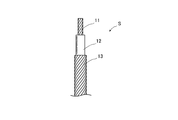
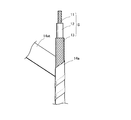
- FIG. 1 shows the piezoelectric coaxial sensor which concerns on embodiment of this invention. It is a figure which shows the structure in the cross section perpendicular to the longitudinal direction of the piezoelectric coaxial sensor of FIG. It is a flowchart which shows the process of manufacturing the piezoelectric coaxial sensor of FIG. It is a figure which shows the state after a preparatory process. It is a figure which shows the state of the process of forming the inner first jacket layer. It is a figure which shows the state of the outer 1st jacket layer winding process. It is a figure which shows the state of the outer 1st jacket layer bonding process. It is a figure which shows the state after the 2nd outer conductor forming process.
- FIG. 1 is a diagram showing a piezoelectric coaxial sensor according to this embodiment.
- the piezoelectric coaxial sensor 1 of the present embodiment includes a central conductor 11, a polymer piezoelectric layer 12, a first outer conductor 13, a first jacket layer 14, and a second outer conductor 15. , A second jacket layer 16 and the like.
- the central conductor 11 is a linear conductor composed of stranded wires of a plurality of conductive wires.
- the central conductor 11 is not particularly limited as long as it is a conductor, and examples thereof include a conductor made of copper, aluminum, a tin-plated annealed copper alloy, or the like. Note that FIG. 1 shows an example in which the central conductor 11 is composed of stranded wires of a plurality of conductive wires as described above, but the central conductor 11 is a linear conductor composed of a single conductive wire. Is also good.
- the polymer piezoelectric layer 12 is a layer that covers the outer peripheral surface of the central conductor 11. In the present embodiment, the polymer piezoelectric layer 12 is in contact with the outer peripheral surface of the central conductor 11.
- the polymer piezoelectric layer 12 exhibits piezoelectricity and is made of a polymer containing PVDF.
- the outer shape of the cross section of the polymer piezoelectric layer 12 is formed into a substantially circular shape by extrusion molding or the like.
- the polymer piezoelectric layer 12 may be formed by winding a tape-shaped film made of a polymer piezoelectric material containing PVDF around a central conductor 11. In this case, the film may be wound in a spiral winding or in a vertical winding.
- the first outer conductor 13 is a conductor that surrounds the outer peripheral surface of the polymer piezoelectric layer 12. In the present embodiment, the first outer conductor 13 is in contact with the outer peripheral surface of the polymer piezoelectric layer 12.
- the first outer conductor 13 has a configuration in which a plurality of conducting wires are spirally wound in the same direction.
- Such a first outer conductor 13 is not particularly limited as long as it is made of a conductor, but is made of, for example, a conductor similar to that of the central conductor 11.
- FIG. 1 shows an example in which a plurality of conductors are spirally wound as the first outer conductor 13, the first outer conductor 13 may be a net wire in which a plurality of conductors are woven.
- the sensor unit S is composed of the central conductor 11 having the above configuration, the polymer piezoelectric layer 12, and the first outer conductor 13. As described above, the polymer piezoelectric layer 12 is in contact with the outer peripheral surface of the central conductor 11, and the first outer conductor 13 is in contact with the outer peripheral surface of the polymer piezoelectric layer 12. Therefore, in the sensor unit S, when the external force applied to the piezoelectric coaxial sensor 1 is transmitted to the piezoelectric body layer 12 and an induced charge is generated in the polymer piezoelectric layer 12, the central conductor 11 and the first outer conductor 13 A voltage is generated between them based on the induced charge generated in the polymer piezoelectric layer 12. Therefore, by attracting the voltage between the central conductor 11 and the first outer conductor 13 to the outside of the piezoelectric coaxial sensor 1 and measuring the voltage, it is possible to measure the force applied to the piezoelectric coaxial sensor 1.
- FIG. 2 is a diagram showing a structure of the piezoelectric coaxial sensor 1 of FIG. 1 in a cross section perpendicular to the longitudinal direction.
- the first jacket layer 14 is a layer that covers the outer peripheral surface of the first outer conductor 13. Therefore, the first jacket layer 14 covers the outer peripheral surface of the sensor portion S. As shown in FIGS. 1 and 2, in the present embodiment, the first jacket layer 14 has two jacket layers, an inner first jacket layer 14a and an outer first jacket layer 14b.
- the inner first jacket layer 14a is made of a tape-shaped film 14at made of resin, and the film 14at is spirally wound on the outer peripheral surface of the first outer conductor 13. No adhesive layer is provided on any surface of the film 14at, and the inner first jacket layer 14a is non-adhesive to the first outer conductor 13.
- the material of the film 14at is not particularly limited, and examples thereof include insulating resins such as polyethylene terephthalate, polyethylene naphthalate, polyimide, polyvinyl chloride, polypropylene, polyether ether ketone, polyetherimide, and polyphenylene sulfide. can.
- An adhesive layer may be provided on one surface of the film 14at, but in this case, when the first outer conductor 13 is squeezed out, the inner first jacket layer 14a and the first outer conductor 13 can be easily separated from each other. From the viewpoint of being removable, the adhesive layer is preferably provided on the surface of the film 14at which is the outer side of the inner first jacket layer 14a.
- the outer first jacket layer 14b is the outermost jacket layer of the first jacket layer 14, and is provided on one surface of the tape-shaped film 14bt made of resin and the film 14bt. It consists of a layer 14ba.
- the adhesive layer 14ba faces the inner first jacket layer 14a side and is spirally wound on the outer peripheral surface of the inner first jacket layer 14a. Therefore, the adhesive layer 14ba is in contact with the inner first jacket layer 14a, and the film 14bt is adhered to the inner first jacket layer 14a by the adhesive layer 14ba.
- the film 14bt of the outer first jacket layer 14b is wound in the same direction as the film 14at of the inner first jacket layer 14a, but the film 14bt of the outer first jacket layer 14b and the inner th.
- the film 14at of the jacket layer 14a may be wound in the opposite direction. Further, at least one of the film 14at and the film 14bt may be wound vertically.
- the material of the film 14bt is not particularly limited, and examples thereof include the same material as the film 14at.
- the adhesive used for the adhesive layer 14ba is made of a thermoplastic resin having a melting point of 120 ° C. or lower. Examples of such a resin include ethylene vinyl acetate copolymer (EVA). By including EVA, the melting point of the thermoplastic resin can be set to 120 ° C. or lower.
- the adhesive layer when the adhesive layer is provided on the surface of the film 14at which is the outer side of the inner first jacket layer 14a, the adhesive layer is exposed on the outer peripheral surface of the inner first jacket layer 14a.
- the adhesive layer may not be provided on any surface of the film 14bt, and the adhesive layer 14ba may be provided on the inner surface of the film 14bt on the inner first jacket layer 14a side as described above. Further, as described above, even if the adhesive layer is not provided on any surface of the film 14at, the adhesive layer 14ba may not be provided, but the piezoelectric coaxial sensor 1 is repeatedly bent. It is preferable that the adhesive layer 14ba is provided as described above from the viewpoint of suppressing the film 14bt from being unraveled.
- the first jacket layer 14 may be composed of the other of the inner first jacket layer 14a and the outer first jacket layer 14b. ..
- the first jacket layer 14 is non-adhesive as described above. It is preferably composed of an inner first jacket layer 14a and an outer first jacket layer 14b having an adhesive layer 14ba.
- the second outer conductor 15 is a conductor that surrounds the outer peripheral surface of the first jacket layer 14.
- the second outer conductor 15 has a configuration in which a plurality of conducting wires are spirally wound in the same direction.
- Such a second outer conductor 15 is not particularly limited as long as it is made of a conductor, but is made of, for example, the same conductor as the first outer conductor 13.
- FIG. 1 shows an example in which a plurality of conductors are spirally wound as the second outer conductor 15, the second outer conductor 15 may be a net wire in which a plurality of conductors are woven.
- the second jacket layer 16 is a layer that covers the outer peripheral surface of the second outer conductor 15.
- the second jacket layer 16 has two jacket layers, an inner second jacket layer 16a and an outer second jacket layer 16b.
- the inner second jacket layer 16a is made of a tape-shaped film 16at made of resin, and the film 16at is spirally wound on the outer peripheral surface of the second outer conductor 15. No adhesive layer is provided on any surface of the film 16at, and the inner second jacket layer 16a is non-adhesive to the second outer conductor 15.
- the material of the film 16at is not particularly limited, and examples thereof include the same material as the film 14at.
- An adhesive layer may be provided on one surface of the film 16at, but in this case, when the second outer conductor 15 is squeezed out, the inner second jacket layer 16a and the second outer conductor 15 can be easily separated from each other. From the viewpoint of being peelable, the adhesive layer is preferably provided on the surface of the film 16at which is the outer side of the inner second jacket layer 16a.
- the outer second jacket layer 16b is the outermost jacket layer of the second jacket layer 16 and is a jacket layer exposed to the outside.
- the outer second jacket layer 16b is composed of a tape-shaped film 16bt made of resin and an adhesive layer 16ba provided on one surface of the film 16bt.
- the adhesive layer 16ba faces the inner second jacket layer 16a side and is spirally wound on the outer peripheral surface of the inner second jacket layer 16a. Therefore, the adhesive layer 16ba is in contact with the inner second jacket layer 16a, and the film 16bt is adhered to the inner second jacket layer 16a by the adhesive layer 16ba.
- the film 16bt of the outer second jacket layer 16b is wound in the same direction as the film 16at of the inner second jacket layer 16a, but the film 16bt of the outer second jacket layer 16b and the inner second jacket layer 16b.
- the film 16at of the jacket layer 16a may be wound in the opposite direction. Further, at least one of the film 16at and the film 16bt may be wound vertically.
- the material of the film 16bt is not particularly limited, and examples thereof include the same material as the film 16at.
- the adhesive used for the adhesive layer 16ba is made of a thermoplastic resin having a melting point of 120 ° C. or lower. Therefore, the adhesive used for the adhesive layer 16ba is made of, for example, a thermoplastic resin similar to the thermoplastic resin used for the adhesive layer 14ba.
- the adhesive layer when the adhesive layer is provided on the surface of the film 16at which is the outer side of the inner second jacket layer 16a, the adhesive layer is exposed on the outer peripheral surface of the inner second jacket layer 16a.
- the adhesive layer may not be provided on any surface of the film 16bt, and the adhesive layer 16ba may be provided on the surface of the film 16bt on the inner second jacket layer 16a side as described above.
- the inner second jacket layer 16a may be omitted, and the second jacket layer 16 may be composed of the outer second jacket layer 16b.
- the second jacket layer 16 is non-adhesive as described above. It is preferably composed of an inner second jacket layer 16a and an outer second jacket layer 16b having an adhesive layer 16ba.
- the piezoelectric coaxial sensor 1 of the present embodiment includes a linear center conductor 11, a polymer piezoelectric layer 12 including a PVDF covering the outer peripheral surface of the center conductor 11, and a polymer piezoelectric layer 12.
- a sensor portion S having a first outer conductor 13 surrounding the outer peripheral surface and at least one jacket layer having a tape-shaped film wound so as to surround the outer peripheral surface of the sensor portion S are provided, and the jacket layer is exposed to the outside.
- the film 16bt in the outer second jacket layer 16b is adhered to the inner second jacket layer 16a in contact with the adhesive layer 16ba by the adhesive layer 16ba made of a thermoplastic resin having a melting point of 120 ° C. or lower.
- the piezoelectric coaxial sensor 1 having such a configuration, it is possible to form the outer second jacket layer 16b that is exposed to the outside by heating at 120 ° C. or lower. Therefore, it is possible to suppress a decrease in the polarization of PVDF. Therefore, in the piezoelectric coaxial sensor 1 of the present embodiment, deterioration of output characteristics can be suppressed.
- the melting point of the adhesive layer 16ba can be set to 120 ° C. or lower.
- the piezoelectric coaxial sensor 1 of the present embodiment includes a first jacket layer 14 including one or more jacket layers and covering the outer peripheral surface of the sensor portion S, and a second outer conductor surrounding the outer peripheral surface of the first jacket layer 14.
- An outer second jacket layer that includes 15 and a second jacket layer 16 that includes one or more jacket layers and covers the outer peripheral surface of the second outer conductor 15, and is the outermost jacket layer of the second jacket layer 16.
- Reference numeral 16b is a jacket layer exposed to the outside.
- the second outer conductor 15 acts as a shield layer, and it is possible to suppress the influence of an external electromagnetic field or the like from reaching the central conductor 11 or the first outer conductor 13.
- the piezoelectric coaxial sensor 1 can have excellent noise resistance characteristics.
- the second jacket layer 16 can insulate the outer peripheral surface of the second outer conductor 15 acting as a shield layer from the outside. Therefore, since the second outer conductor 15 can be reliably grounded, the second outer conductor 15 acts as a shield layer, and noise can be further suppressed from being superimposed on the center conductor 11 and the first outer conductor 13. ..
- the first jacket layer 14 covers the outer peripheral surface of the sensor portion S, and the inner first jacket layer 14a in which the film 14at is not adhered to the sensor portion S and the inner first jacket layer 14a. 1 It has an outer first jacket layer 14b that covers the outer peripheral surface of the jacket layer 14a and the film 14bt is adhered to the inner first jacket layer 14a by the adhesive layer 14ba. According to such a piezoelectric coaxial sensor 1, since the inner first jacket layer 14a is not adhered to the sensor portion S, it is easy to pull out the sensor portion S. Therefore, the first outer conductor 13 can be easily connected to another member.
- the outer first jacket layer 14b is adhered to the inner first jacket layer 14a, it is possible to prevent the first jacket layer 14 from being unraveled even when the piezoelectric coaxial sensor 1 is bent. Further, according to such a piezoelectric coaxial sensor 1, since the first jacket layer 14 can be formed by heating at 120 ° C. or lower, a decrease in the polarization of PVDF can be suppressed, so that deterioration of output characteristics is suppressed. obtain.
- the second jacket layer 16 covers the outer peripheral surface of the second outer conductor 15, and the inner second jacket layer 16a in which the film 16at is not adhered to the second outer conductor 15
- the outer second jacket which is the outermost jacket layer of the second jacket layer 16 covers the outer peripheral surface of the inner second jacket layer 16a, and the film 16bt is adhered to the inner second jacket layer 16a by the adhesive layer 16ba. It has a layer 16b and. According to such a piezoelectric coaxial sensor 1, since the inner second jacket layer 16a is not adhered to the second outer conductor 15, it is easy to pull out the second outer conductor 15. Therefore, the second outer conductor 15 can be easily connected to another member such as a ground.
- the outer second jacket layer 16b is adhered to the inner second jacket layer 16a, it is possible to prevent the second jacket layer 16 from being unraveled even when the piezoelectric coaxial sensor 1 is bent. Further, according to such a piezoelectric coaxial sensor 1, since the second jacket layer 16 can be formed by heating at 120 ° C. or lower, the decrease in the polarization of PVDF can be suppressed, so that the deterioration of the output characteristics is suppressed. obtain.
- FIG. 3 is a flowchart showing a process of manufacturing the piezoelectric coaxial sensor 1 of FIG.
- the manufacturing method of the piezoelectric coaxial sensor 1 of the present embodiment includes a preparation step P1, a first jacket layer forming step P2, a second outer conductor forming step P3, and a second jacket layer forming step P4. And.
- This step is a step of preparing the sensor unit S.
- the sensor unit S has a central conductor 11, a polymer piezoelectric layer 12, and a first outer conductor 13. Therefore, first, the linear center conductor 11 is prepared. Then, the polymer piezoelectric layer 12 containing PVDF is formed on the outer peripheral surface of the central conductor 11. In the case of the polymer piezoelectric layer 12 shown in FIGS. 1 and 2, the polymer piezoelectric layer 12 is formed by extrusion molding. Further, unlike FIGS.
- the polymer piezoelectric layer 12 when the polymer piezoelectric layer 12 is formed by winding a tape-shaped film made of a polymer piezoelectric material containing PVDF around the center conductor 11, the film is centered. It is wound around the conductor 11 by spiral winding or vertical winding.
- the first outer conductor 13 is formed on the outer peripheral surface of the polymer piezoelectric layer 12 formed around the central conductor 11. In the case of the first outer conductor 13 shown in FIG. 1, a plurality of conductors are spirally wound on the outer peripheral surface of the polymer piezoelectric layer 12.
- the first outer conductor 13 is a net wire in which a plurality of conductor wires are woven
- the plurality of conductor wires are woven on the outer peripheral surface of the polymer piezoelectric layer 12 to form a net wire.
- the sensor unit S shown in FIG. 4 is prepared.
- the sensor unit S may be prepared by a method other than the above steps.
- the sensor unit S may be prepared by purchasing the sensor unit S from the outside.
- This step is a step of forming the first jacket layer 14. As shown in FIG. 3, this step includes an inner first jacket layer forming step P2a and an outer first jacket layer forming step P2b.
- FIG. 5 is a diagram showing a state of this process.
- a film 14at having no adhesive layer formed on both sides is prepared, and the film 14at is spirally wound on the outer peripheral surface of the sensor portion S.
- the film 14at is wound vertically along the outer peripheral surface of the sensor unit S, the film 14at is wound vertically along the outer peripheral surface. In this way, the inner first jacket layer 14a is formed.
- the film 14at When the adhesive layer is provided on the surface of the film 14at as described above, the film 14at is wound on the outer peripheral surface of the sensor portion S so that the surface on which the adhesive layer of the film 14at is provided is on the outside. .. In this case, the film 14at is a member with which the adhesive layer is in contact.
- This step is a step of forming the outer first jacket layer 14b by covering the outer peripheral surface of the inner first jacket layer 14a and adhering the film 14bt to the inner first jacket layer 14a by the adhesive layer 14ba.
- This step includes an outer first jacket layer winding step P2bw and an outer first jacket layer bonding step P2ba.
- This step is a step of winding the film 14bt, which is the outer first jacket layer 14b, around the outer peripheral surface of the inner first jacket layer 14a.
- FIG. 6 is a diagram showing a state of this process. As shown in FIG. 6, in this step, a film 14bt provided with the adhesive layer 14ba is prepared, and the film 14bt is placed on the inner first jacket layer 14a so that the adhesive layer 14ba is in contact with the inner first jacket layer 14a. Wrap it in a spiral on the outer peripheral surface. Unlike FIG.
- the film 14bt when the film 14bt is wound vertically, the film 14bt is vertically placed on the outer peripheral surface of the inner first jacket layer 14a so that the adhesive layer 14ba is in contact with the inner first jacket layer 14a. Roll along the roll. In this way, the adhesive layer 14ba is in contact with the inner first jacket layer 14a, and the film 14bt is wound on the outer peripheral surface of the inner first jacket layer 14a. In this step, the film 14bt surrounds the outer peripheral surface of the sensor portion S via the inner first jacket layer 14a.
- the film 14at when the film 14at is wound on the outer peripheral surface of the sensor portion S so that the adhesive layer is provided on the surface of the film 14at and the surface on which the adhesive layer of the film 14at is provided is on the outside. May wind the film 14bt on which the adhesive layer 14ba is not provided on the outer peripheral surface of the inner first jacket layer 14a via the adhesive layer on the film 14at, and the adhesive layer 14ba is provided as described above.
- the film 14bt may be wound on the outer peripheral surface of the inner first jacket layer 14a.
- the film 14bt to be the outer first jacket layer 14b is wound around the outer peripheral surface of the inner first jacket layer 14a via the adhesive layer.
- the adhesive layer does not have to be provided on any surface of the film 14at and the film 14bt.
- This step is a step of adhering the film 14bt of the outer first jacket layer 14b to the inner first jacket layer 14a by the adhesive layer 14ba.
- the inner first jacket layer 14a around which the film 14bt is wound and the sensor portion S are heated at 120 ° C. or lower to bond the film 14bt to the inner first jacket layer 14a by the adhesive layer 14ba.
- FIG. 7 is a diagram showing a state of this process.
- the film 14bt is wound as described above, and the heated body 1a composed of the film 14bt, the inner first jacket layer 14a, and the sensor portion S is passed through the heating furnace H. Then, the heated body 1a is heated.
- the heated body 1a heated in this way is wound on the reel R1 before being passed through the heating furnace H.
- the heated body 1a sent out from the reel R1 is turned around by the guide roller G1 and passed through the heating furnace H.
- the temperature in the heating furnace H is adjusted to be 120 ° C. or lower above the melting point of the adhesive layer 14ba. If the adhesive layer 14ba contains EVA as described above, the temperature in the heating furnace H is adjusted to be, for example, 100 ° C. or higher and 120 ° C. or lower.
- the melting point of EVA is 110 ° C.
- the length of the heating furnace H is, for example, 1 m or more and 2 m or less.
- the speed at which the heated body 1a moves is, for example, 1 m / min or more and 5 m / min or less.
- the temperature in the heating furnace H, the length of the heating furnace H, and the speed at which the heated body 1a moves are particularly limited as long as the adhesive layer 14ba is heated to 120 ° C. or higher than the melting point in the heating furnace H. Not done.
- the heated body 1a passed through the heating furnace H is turned around by the guide roller G2 and wound on the reel R2.
- the section from the heating furnace H to the guide roller G2 is a cooling section.
- the length of the cooling section is not particularly limited as long as the adhesive layer 14ba can be solidified, but is, for example, 3 m or more.
- the film 14bt of the outer first jacket layer 14b is adhered to the inner first jacket layer 14a by the adhesive layer 14ba, and the first jacket layer 14 is formed.
- the film of the outer first jacket layer 14b is provided by the adhesive layer provided on the film 14at. 14bt is adhered to the inner first jacket layer 14a.
- the adhesive layer provided on the film 14at and the adhesive layer 14ba provided on the film 14bt form the outer side first.
- the film 14bt of the 1 jacket layer 14b is adhered to the inner first jacket layer 14a.
- This step is a step of forming the second outer conductor 15 that surrounds the outer peripheral surface of the first jacket layer 14.
- a plurality of conductors are spirally wound on the outer peripheral surface of the first jacket layer 14.
- the second outer conductor 15 is a net wire in which a plurality of conductor wires are woven
- the plurality of conductor wires are woven on the outer peripheral surface of the first jacket layer 14 to form a net wire. In this way, as shown in FIG. 8, the second outer conductor 15 is formed.
- This step is a step of forming the second jacket layer 16. As shown in FIG. 3, this step includes an inner second jacket layer forming step P4a and an outer second jacket layer forming step P4b.
- This step is a step of covering the outer peripheral surface of the second outer conductor 15 and forming the inner second jacket layer 16a in which the film 16at is not adhered to the second outer conductor 15.
- FIG. 9 is a diagram showing a state of this process. As shown in FIG. 9, in this step, a film 16at having no adhesive layer formed on both sides is prepared, and the film 16at is spirally wound on the outer peripheral surface of the second outer conductor 15. Unlike FIG. 9, when the film 16at is wound vertically along the outer peripheral surface, the film 16at is wound vertically along the outer peripheral surface of the second outer conductor 15. In this way, the inner second jacket layer 16a is formed.
- the film 16at is placed on the second outer conductor 15 so that the surface on which the adhesive layer of the film 16at is provided faces outward. Wrap on the outer peripheral surface of.
- the film 16at is a member with which the adhesive layer is in contact.
- Outer second jacket layer forming step P4b is a step of forming the outer second jacket layer 16b by covering the outer peripheral surface of the inner second jacket layer 16a and adhering the film 16bt to the inner second jacket layer 16a by the adhesive layer. Since the outer second jacket layer 16b is a jacket layer exposed to the outside as described above, this step can be understood as an exposed jacket forming step.
- This step includes an outer second jacket layer winding step P4bw and an outer second jacket layer bonding step P4ba.
- This step is a step of winding the film 16bt provided with the adhesive layer 16ba around the outer peripheral surface of the inner second jacket layer 16a.
- FIG. 10 is a diagram showing a state of this step. As shown in FIG. 10, in this step, a film 16bt provided with the adhesive layer 16ba is prepared, and the film 16bt is placed on the inner second jacket layer 16a so that the adhesive layer 16ba is in contact with the inner second jacket layer 16a. Wrap it in a spiral on the outer peripheral surface. Unlike FIG.
- the film 16bt when the film 16bt is wound vertically, the film 16bt is vertically placed on the outer peripheral surface of the inner second jacket layer 16a so that the adhesive layer 16ba is in contact with the inner second jacket layer 16a. Roll along the roll. In this way, the adhesive layer 16ba is in contact with the inner second jacket layer 16a, and the film 16bt is wound on the outer peripheral surface of the inner second jacket layer 16a. In this step, the film 16bt surrounds the outer peripheral surface of the sensor portion S via the inner second jacket layer 16a, the second outer conductor 15, and the first jacket layer 14.
- the film 16at is wound on the outer peripheral surface of the second outer conductor 15 so that the adhesive layer is provided on the surface of the film 16at and the surface on which the adhesive layer of the film 16at is provided is on the outside.
- the film 16bt in which the adhesive layer 16ba is not provided may be wound on the outer peripheral surface of the inner second jacket layer 16a via the adhesive layer on the film 16at, and the adhesive layer 16ba is provided as described above.
- the obtained film 16bt may be wound on the outer peripheral surface of the inner second jacket layer 16a.
- the film 16bt to be the outer second jacket layer 16b is wound around the outer peripheral surface of the inner second jacket layer 16a via the adhesive layer.
- This step is a step of adhering the film 16bt of the outer second jacket layer 16b to the inner second jacket layer 16a by the adhesive layer 16ba.
- the inner second jacket layer 16a around which the film 16bt is wound, the second outer conductor 15, the first jacket layer 14, and the sensor portion S are heated at 120 ° C. or lower, so that the film 16bt is formed by the adhesive layer 16ba. It adheres to the inner second jacket layer 16a.
- the outer first jacket layer bonding step P2ba shown in FIG. 7 is similarly performed.
- the body to be heated 1a includes an inner second jacket layer 16a around which the film 16bt is wound, a second outer conductor 15, a first jacket layer 14, and a sensor portion S.
- the heated body 1a is passed through the heating furnace H, the heated body 1a is heated, and the adhesive layer 16ba after being passed through the heating furnace H is solidified, so that the film 16bt is formed on the inner side. 2 Adhered to the jacket layer 16a.
- the temperature in the heating furnace H, the length of the heating furnace H, and the speed at which the heated body 1a moves in this step are as long as the adhesive layer 16ba is heated to 120 ° C. or higher in the heating furnace H.
- the temperature inside the heating furnace H, the length of the heating furnace H, and the speed at which the heated body 1a moves may differ from the temperature inside the heating furnace H in the outer first jacket layer bonding step P2ba.
- the film 16bt of the outer second jacket layer 16b is adhered to the inner second jacket layer 16a by the adhesive layer 16ba, and the piezoelectric coaxial sensor 1 shown in FIGS. 1 and 2 is manufactured.
- the film of the outer second jacket layer 16b is provided by the adhesive layer provided on the film 16at. 16bt is adhered to the inner second jacket layer 16a.
- the adhesive layer provided on the surface of the film 16at and the adhesive layer 16ba is also provided on the film 16bt, the adhesive layer provided on the film 16at and the adhesive layer 16ba provided on the film 16bt form the outer side first.
- the film 16bt of the 2 jacket layer 16b is adhered to the inner second jacket layer 16a.
- This manufacturing method includes a jacket layer forming step of forming a plurality of jacket layers. That is, the jacket layer forming step for forming the plurality of jacket layers includes the inner first jacket layer forming step P2a, the outer first jacket layer forming step P2b, the inner second jacket layer forming step P4a, and the outer second jacket layer forming step. Includes P4b.
- the method for manufacturing the piezoelectric coaxial sensor 1 of the present embodiment includes a preparation step P1 for preparing the sensor unit S and at least one having a tape-shaped film wound so as to surround the outer peripheral surface of the sensor unit S. It comprises a jacket layer forming step of forming one jacket layer.
- This jacket layer forming step includes an outer second jacket layer forming step P4b, which is an exposed jacket forming step of forming a jacket layer exposed to the outside among the jacket layers.
- the outer second jacket layer forming step P4b is an outer second jacket layer winding step of winding a film 16bt provided with an adhesive layer 16ba made of a thermoplastic resin having a melting point of 120 ° C. or lower so as to surround the outer peripheral surface of the sensor portion S.
- the outer second jacket layer is heated at 120 ° C. or lower to heat P4bw and the sensor portion S around which the film 16bt is wound, and the film 16bt is adhered to the inner second jacket layer 16a which is a member in contact with the adhesive layer 16ba by the adhesive layer 16ba.
- the bonding step P4ba and the like are included.
- the jacket layer exposed to the outside is formed by heating at 120 ° C. or lower, the decrease in the polarization of PVDF can be suppressed and the deterioration of the output characteristics is suppressed.
- the coaxial sensor 1 can be manufactured.
- thermoplastic resin of the adhesive layer 16ba contains an ethylene-vinyl acetate copolymer
- the adhesive layer having a melting point of 120 degrees or less can be obtained.
- the method for manufacturing the piezoelectric coaxial sensor 1 of the present embodiment includes a first jacket layer forming step P2 for forming a first jacket layer 14 including a plurality of jacket layers and covering the outer peripheral surface of the sensor portion S, and a first jacket.
- a second outer conductor forming step P3 for forming a second outer conductor 15 surrounding the outer peripheral surface of the layer 14, and a second jacket layer 16 including a plurality of jacket layers and covering the outer peripheral surface of the second outer conductor 15 are formed.
- the jacket layer forming step P4 is provided.
- the outer second jacket layer 16b which is the outermost jacket layer of the second jacket layer 16, is a jacket layer exposed to the outside.
- the second outer conductor 15 acts as a shield layer and has excellent noise resistance characteristics
- the second jacket layer 16 acts as a shield layer for the second outer conductor 15.
- a piezoelectric coaxial sensor 1 capable of insulating the outer peripheral surface of the above surface from the outside can be manufactured.
- the outer peripheral surface of the sensor portion S is covered, and the inner first jacket layer in which the film 14at is not adhered to the sensor portion S.
- the inner first jacket layer forming step P2a for forming 14a and the outer outer surface of the inner first jacket layer 14a are covered, and the film 14bt is adhered to the inner first jacket layer 14a by the adhesive layer 14ba.
- the outer first jacket layer forming step P2b is provided with the outer first jacket layer forming step P2b.
- the inner first jacket layer 14a and the sensor portion S around which the film 14bt was wound in the 1 jacket layer winding step P2bw and the outer 1st jacket layer winding step P2b are heated at 120 ° C. or lower, and the outer first jacket layer 14ba is used to heat the outer first jacket layer 14a and the sensor portion S at 120 ° C. or lower.
- the outer first jacket layer bonding step P2ba for bonding the film 14bt of the jacket layer 14b to the inner first jacket layer 14a is included. According to such a method for manufacturing the piezoelectric coaxial sensor 1, since the inner first jacket layer 14a is not adhered to the sensor portion S, the sensor portion S can be easily pulled out, and the outer first jacket layer 14b is the inner first jacket layer 14b.
- the piezoelectric coaxial sensor 1 Since it is adhered to the jacket layer 14a, it is possible to manufacture the piezoelectric coaxial sensor 1 in which the first jacket layer 14 is prevented from being unraveled even when the piezoelectric coaxial sensor 1 is bent. Further, according to the manufacturing method of the piezoelectric coaxial sensor 1 of the present embodiment, since the first jacket layer 14 is formed by heating at 120 ° C. or lower, it is possible to suppress a decrease in the polarization of PVDF.
- the outer peripheral surface of the second outer conductor 15 is covered, and the film 16at is non-adhesive to the second outer conductor 15.
- the inner second jacket layer forming step P4a for forming the two jacket layers 16a and the outermost jacket layer of the second jacket layer 16 cover the outer peripheral surface of the inner second jacket layer 16a, and the adhesive layer 16ba covers the film 16bt.
- the second jacket layer 16 is formed by heating at 120 ° C. or lower, so that the decrease in the polarization of PVDF can be suppressed.
- the present embodiment has been described above by taking the embodiment as an example, the present invention is not limited to the above embodiment.
- the second outer conductor 15 and the second jacket layer 16 are not essential configurations.
- the outer first jacket layer 14b of the first jacket layer 14 is a jacket layer exposed to the outside. Therefore, in this case, in the outer first jacket layer 14b, the film 14bt is adhered to the member in contact with the adhesive layer 14ba by the adhesive layer 14ba. In the film 14bt, the adhesive layer 14ba is heated to 120 ° C.
- the piezoelectric coaxial sensor 1 does not include the second outer conductor 15 and the second jacket layer 16, the outer first jacket layer forming step P2b is an exposed jacket forming step of forming a jacket layer exposed to the outside.
- the inner first jacket layer forming step P2a is omitted, and the film 14bt of the outer first jacket layer is made of the sensor portion S by the adhesive layer 14ba. Is glued to. Further, when the first jacket layer 14 does not have the outer first jacket layer 14b, the outer first jacket layer forming step P2b is omitted. In this case, the second jacket layer 16 is an indispensable configuration.
- the inner second jacket layer forming step P4a is omitted, and the film 16bt of the outer second jacket layer is made of the second outer by the adhesive layer 16ba. It is adhered to the conductor 15.
- the outer second jacket layer 16b is an indispensable configuration.
- Example 1 A piezoelectric coaxial sensor having a length of 100 cm was manufactured with substantially the same configuration as the piezoelectric coaxial sensor 1 shown in FIGS. 1 and 2.
- the sensor unit S was prepared in substantially the same manner as in the preparation step P1.
- the center conductor 11 a stranded wire composed of seven annealed copper wires having a diameter of about 0.05 mm and having an outer diameter of about 0.15 mm was used.
- the polymer piezoelectric layer 12 has a configuration in which a tape-shaped film made of PVDF is spirally wound around the outer peripheral surface of the central conductor 11. At this time, the film was wound so that a part of the film overlapped twice.
- the outer diameter of the polymer piezoelectric layer 12 was 0.3 mm.
- the first outer conductor 13 has a configuration in which a plurality of tin-plated annealed copper alloy wires having a diameter of 0.03 mm are spirally wound on the outer peripheral surface of the polymer piezoelectric layer 12.
- the outer diameter of the first outer conductor 13 was 0.36 mm. In this way, the sensor unit S was prepared.
- the first jacket layer 14 was formed by the inner first jacket layer 14a and the outer first jacket layer 14b in the same manner as in the first jacket layer forming step P2.
- the inner first jacket layer 14a was formed in the inner first jacket layer forming step P2a.
- the inner first jacket layer 14a was formed by spirally winding a film 14at made of polyethylene terephthalate (PET) on the outer peripheral surface of the first outer conductor 13. At this time, the film 14at was wound so that a part of the film 14at overlapped twice.
- the outer diameter of the inner first jacket layer 14a was 0.38 mm.
- the outer first jacket layer 14b was formed in the same manner as in the outer first jacket layer forming step P2b.
- the outer first jacket layer 14b is provided with an adhesive layer 14ba on one surface in the same manner as in the outer first jacket layer winding step P2bw, and a film 14bt made of PET is placed on the outer peripheral surface of the inner first jacket layer 14a. It was formed by winding it in a spiral shape. At this time, the film 14bt was wound so that a part of the film 14bt overlapped twice. The outer diameter of the outer first jacket layer 14b was 0.39 mm.
- the adhesive layer 14ba was made of a thermoplastic resin containing EVA. Then, the film 14bt of the outer first jacket layer 14b was adhered to the inner first jacket layer 14a by the adhesive layer 14ba in the same manner as in the outer first jacket layer bonding step P2ba. At this time, the set temperature of the heating furnace H was set to 120 ° C., the length of the heating furnace was set to 1.1 m, and the linear velocity of the heated body 1a was set to 3 m / min.
- the second outer conductor 15 was formed by the second outer conductor forming step P3.
- the second outer conductor 15 has a configuration in which a plurality of tin-plated annealed copper alloy wires having a diameter of 0.03 mm are spirally wound on the outer peripheral surface of the first jacket layer 14.
- the outer diameter of the second outer conductor 15 was 0.45 mm.
- the inner second jacket layer 16a and the outer second jacket layer 16b were formed.
- the inner second jacket layer 16a was formed in the inner second jacket layer forming step P4a.
- the inner second jacket layer 16a was formed by spirally winding a film 16at made of PET on the outer peripheral surface of the second outer conductor 15. At this time, the film 16at was wound so that a part of the film 16at overlaps twice.
- the outer diameter of the inner second jacket layer 16a was 0.47 mm.
- the outer second jacket layer 16b was formed in the same manner as in the outer second jacket layer forming step P4b.
- the outer second jacket layer 16b is provided with an adhesive layer 16ba on one surface in the same manner as in the outer second jacket layer winding step P4bw, and a film 16bt made of PET is placed on the outer peripheral surface of the inner second jacket layer 16a. It was formed by winding it in a spiral shape. At this time, the film 16bt was wound so that a part of the film 16bt overlapped twice. The outer diameter of the outer second jacket layer 16b was 0.54 mm.
- the adhesive layer 16ba was made of a thermoplastic resin containing EVA. Then, the film 16bt of the outer second jacket layer 16b was adhered to the inner second jacket layer 16a by the adhesive layer 16ba in the same manner as in the outer second jacket layer bonding step P4ba. At this time, the set temperature of the heating furnace H was set to 120 ° C., the length of the heating furnace was set to 1.1 m, and the linear velocity of the heated body 1a was set to 3 m / min.
- Example 1 A piezoelectric coaxial sensor was manufactured in the same manner as in Example 1 except that the adhesive layer 14ba of the outer first jacket layer 14b and the adhesive layer 16ba of the outer second jacket layer 16b were made of an acrylic thermoplastic resin. The melting point of this thermoplastic resin was 130 ° C.
- the adhesive layer 14ba of the outer first jacket layer 14b and the adhesive layer 16ba of the outer second jacket layer 16b are made of a polyester-based thermoplastic resin, and in the outer first jacket layer bonding step P2ba and the outer second jacket layer bonding step P4ba.
- a piezoelectric coaxial sensor was manufactured in the same manner as in Example 1 except that the set temperature of the heating furnace H was set to 150 ° C. The melting point of this thermoplastic resin was 140 ° C.
- the adhesive layer 14ba of the outer first jacket layer 14b and the adhesive layer 16ba of the outer second jacket layer 16b are made of a polyamide-based thermoplastic resin, and in the outer first jacket layer bonding step P2ba and the outer second jacket layer bonding step P4ba.
- a piezoelectric coaxial sensor was manufactured in the same manner as in Example 1 except that the set temperature of the heating furnace H was set to 160 ° C. The melting point of this thermoplastic resin was 150 ° C.
- the outer second jacket layer 16b of Example 1 was adhered with sufficient strength, and the outer second jacket layer 16b could not be easily peeled off.
- the outer second jacket layer 16b of Comparative Example 1 was not adhered with sufficient strength, and the outer second jacket layer 16b was easily peeled off. The same result was obtained even when the set temperature of the heating furnace H in the outer first jacket layer bonding step P2ba and the outer second jacket layer bonding step P4ba of Comparative Example 1 was raised to 170 ° C.
- the outer second jacket layer 16b of Comparative Example 2 was adhered with sufficient strength, and the outer second jacket layer 16b could not be easily peeled off.
- the set temperature of the heating furnace H in the outer first jacket layer bonding step P2ba and the outer second jacket layer bonding step P4ba of Comparative Example 2 was set to 120 ° C., the films 14bt and 16bt were not bonded.
- the outer second jacket layer 16b of Comparative Example 3 was adhered with sufficient strength, and the outer second jacket layer 16b could not be easily peeled off.
- the set temperature of the heating furnace H in the outer first jacket layer bonding step P2ba and the outer second jacket layer bonding step P4ba of Comparative Example 3 was set to 120 ° C., the films 14bt and 16bt were not bonded.
- a piezoelectric coaxial sensor having the same configuration as that of the first embodiment was manufactured by changing the set temperature of the heating furnace H in the outer first jacket layer bonding step P2ba and the outer second jacket layer bonding step P4ba.
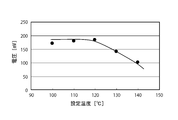
- an external force is applied from the side surface to each of the manufactured piezoelectric coaxial sensors over a length of 10 mm with a pressing force of 10 N, and the voltage generated between the central conductor 11 and the first outer conductor 13 is amplified 20 times. And measured. The result is shown in FIG.
- FIG. 11 is a diagram showing the relationship with the measurement result of the voltage generated in the piezoelectric coaxial sensor when the set temperature of the heating furnace H is changed to 100 ° C., 110 ° C., 120 ° C., 130 ° C., and 140 ° C. As shown in FIG. 11, it was found that when the set temperature of the heating furnace was 120 ° C. or lower, the voltage was sufficiently high.
- the method for manufacturing a piezoelectric coaxial sensor of the present invention it is possible to manufacture a piezoelectric coaxial sensor in which deterioration of output characteristics is suppressed, and the piezoelectric coaxial sensor of the present invention is manufactured by heating at 120 ° C. or lower. Therefore, it is possible to obtain a piezoelectric coaxial sensor in which deterioration of output characteristics is suppressed.
- a method for manufacturing a piezoelectric coaxial sensor and a piezoelectric coaxial sensor in which deterioration of output characteristics is suppressed is provided, and it is expected to be used in fields such as measurement of equipment.
Landscapes
- Engineering & Computer Science (AREA)
- Manufacturing & Machinery (AREA)
- Physics & Mathematics (AREA)
- Spectroscopy & Molecular Physics (AREA)
- Ultra Sonic Daignosis Equipment (AREA)
- Investigating Or Analyzing Materials By The Use Of Ultrasonic Waves (AREA)
- Insulated Conductors (AREA)
Priority Applications (4)
| Application Number | Priority Date | Filing Date | Title |
|---|---|---|---|
| CN202180014697.6A CN115104192B (zh) | 2020-03-09 | 2021-03-03 | 压电同轴传感器及压电同轴传感器的制造方法 |
| US17/910,236 US12543502B2 (en) | 2020-03-09 | 2021-03-03 | Piezoelectric coaxial sensor and method for manufacturing piezoelectric coaxial sensor |
| EP21767144.5A EP4120373B1 (en) | 2020-03-09 | 2021-03-03 | Piezoelectric coaxial sensor and method for manufacturing piezoelectric coaxial sensor |
| JP2022505957A JP7350155B2 (ja) | 2020-03-09 | 2021-03-03 | 圧電同軸センサ及び圧電同軸センサの製造方法 |
Applications Claiming Priority (2)
| Application Number | Priority Date | Filing Date | Title |
|---|---|---|---|
| JP2020040227 | 2020-03-09 | ||
| JP2020-040227 | 2020-03-09 |
Publications (1)
| Publication Number | Publication Date |
|---|---|
| WO2021182208A1 true WO2021182208A1 (ja) | 2021-09-16 |
Family
ID=77671626
Family Applications (1)
| Application Number | Title | Priority Date | Filing Date |
|---|---|---|---|
| PCT/JP2021/008067 Ceased WO2021182208A1 (ja) | 2020-03-09 | 2021-03-03 | 圧電同軸センサ及び圧電同軸センサの製造方法 |
Country Status (5)
| Country | Link |
|---|---|
| US (1) | US12543502B2 (https=) |
| EP (1) | EP4120373B1 (https=) |
| JP (1) | JP7350155B2 (https=) |
| CN (1) | CN115104192B (https=) |
| WO (1) | WO2021182208A1 (https=) |
Families Citing this family (1)
| Publication number | Priority date | Publication date | Assignee | Title |
|---|---|---|---|---|
| EP4120374A4 (en) * | 2020-03-09 | 2024-05-15 | Fujikura Ltd. | Piezoelectric coaxial sensor |
Citations (5)
| Publication number | Priority date | Publication date | Assignee | Title |
|---|---|---|---|---|
| WO2011099457A1 (ja) * | 2010-02-12 | 2011-08-18 | 株式会社フジクラ | 漏洩同軸ケーブル |
| JP2017183570A (ja) | 2016-03-31 | 2017-10-05 | 東邦化成株式会社 | 圧電ワイヤー及びその製造方法、並びにその圧電ワイヤーを備えた圧電装置 |
| JP2018153085A (ja) * | 2017-03-09 | 2018-09-27 | イマージョン コーポレーションImmersion Corporation | 触覚フィードバックのためのファイバーアクチュエーター |
| JP6501958B1 (ja) * | 2018-09-06 | 2019-04-17 | 東邦化成株式会社 | 圧電素子 |
| WO2019117037A1 (ja) * | 2017-12-11 | 2019-06-20 | ロボセンサー技研株式会社 | 線状センサ、帯状センサ、および面状センサ |
Family Cites Families (16)
| Publication number | Priority date | Publication date | Assignee | Title |
|---|---|---|---|---|
| JPS54161552A (en) * | 1978-06-10 | 1979-12-21 | Arakawa Shatai Kogyo | Production of pipe frame for vehicle seats |
| GB2203587A (en) * | 1987-04-15 | 1988-10-19 | Baynext Limited | Musical instrument |
| ATE142375T1 (de) * | 1992-06-24 | 1996-09-15 | Algra Holding Ag | Verfahren zur herstellung einer piezoelektrischen drucksensitiven taste oder tastatur und durch dieses verfahren erhaltenes produkt |
| JP3838684B2 (ja) | 1995-11-30 | 2006-10-25 | 富士電機ホールディングス株式会社 | 可撓性太陽電池の製造方法 |
| EP0908961B1 (fr) * | 1997-10-13 | 2003-06-04 | Sagem S.A. | Actionneur amplifié à matériaux actifs |
| US6271621B1 (en) * | 1998-08-05 | 2001-08-07 | Matsushita Electric Industrial Co., Ltd. | Piezoelectric pressure sensor |
| US6204756B1 (en) * | 1998-10-23 | 2001-03-20 | Visteon Global Technologies, Inc. | Diagnostics for vehicle deformation sensor system |
| US6526834B1 (en) | 2000-08-23 | 2003-03-04 | Measurement Specialties, Incorporated | Piezoelectric sensor |
| JP4348480B2 (ja) | 2004-06-08 | 2009-10-21 | 独立行政法人産業技術総合研究所 | ケーブル状圧電センサ |
| JP2008181755A (ja) * | 2007-01-24 | 2008-08-07 | Sumitomo Electric Ind Ltd | 同軸ケーブル及び多心ケーブル |
| JP5588702B2 (ja) * | 2010-03-11 | 2014-09-10 | 株式会社クレハ | Pvdfを含む無延伸の圧電体および圧電センサ |
| JP6041978B2 (ja) * | 2013-03-21 | 2016-12-14 | 株式会社村田製作所 | 変位センサ、押込量検出センサ、およびタッチ式入力装置 |
| JP6912919B2 (ja) | 2017-03-31 | 2021-08-04 | ロボセンサー技研株式会社 | 触覚センサ |
| JP6791799B2 (ja) * | 2017-04-03 | 2020-11-25 | オリンパス株式会社 | 超音波内視鏡 |
| CN110506341B (zh) * | 2017-04-20 | 2023-01-17 | 三井化学株式会社 | 压电基材、力传感器及致动器 |
| US10615332B2 (en) * | 2017-05-11 | 2020-04-07 | Signal Solutions, Llc | Monitoring using piezo-electric cable sensing |
-
2021
- 2021-03-03 US US17/910,236 patent/US12543502B2/en active Active
- 2021-03-03 WO PCT/JP2021/008067 patent/WO2021182208A1/ja not_active Ceased
- 2021-03-03 JP JP2022505957A patent/JP7350155B2/ja active Active
- 2021-03-03 CN CN202180014697.6A patent/CN115104192B/zh active Active
- 2021-03-03 EP EP21767144.5A patent/EP4120373B1/en active Active
Patent Citations (5)
| Publication number | Priority date | Publication date | Assignee | Title |
|---|---|---|---|---|
| WO2011099457A1 (ja) * | 2010-02-12 | 2011-08-18 | 株式会社フジクラ | 漏洩同軸ケーブル |
| JP2017183570A (ja) | 2016-03-31 | 2017-10-05 | 東邦化成株式会社 | 圧電ワイヤー及びその製造方法、並びにその圧電ワイヤーを備えた圧電装置 |
| JP2018153085A (ja) * | 2017-03-09 | 2018-09-27 | イマージョン コーポレーションImmersion Corporation | 触覚フィードバックのためのファイバーアクチュエーター |
| WO2019117037A1 (ja) * | 2017-12-11 | 2019-06-20 | ロボセンサー技研株式会社 | 線状センサ、帯状センサ、および面状センサ |
| JP6501958B1 (ja) * | 2018-09-06 | 2019-04-17 | 東邦化成株式会社 | 圧電素子 |
Non-Patent Citations (1)
| Title |
|---|
| See also references of EP4120373A4 |
Also Published As
| Publication number | Publication date |
|---|---|
| EP4120373A1 (en) | 2023-01-18 |
| US12543502B2 (en) | 2026-02-03 |
| JPWO2021182208A1 (https=) | 2021-09-16 |
| EP4120373A4 (en) | 2024-05-22 |
| JP7350155B2 (ja) | 2023-09-25 |
| US20230131853A1 (en) | 2023-04-27 |
| EP4120373B1 (en) | 2025-10-08 |
| CN115104192A (zh) | 2022-09-23 |
| CN115104192B (zh) | 2025-11-18 |
Similar Documents
| Publication | Publication Date | Title |
|---|---|---|
| CN101401170B (zh) | 同轴线缆跨接设备 | |
| WO2002078015A1 (en) | Parallel two-core shielding wire and method for producing the same | |
| KR20150052210A (ko) | 동축 케이블 | |
| JP7350155B2 (ja) | 圧電同軸センサ及び圧電同軸センサの製造方法 | |
| JP5799881B2 (ja) | 同軸ケーブルの保護構造 | |
| JP2008181755A (ja) | 同軸ケーブル及び多心ケーブル | |
| CN110520939B (zh) | 制造线缆的方法、电导体、阻隔层及其应用 | |
| JP2014146506A (ja) | ワイヤハーネス | |
| JPH11149832A (ja) | 電気信号ケーブルアッセンブリ | |
| CN104515633B (zh) | 摩擦电压力感应电缆 | |
| JP2001291436A (ja) | ケーブル用遮水テープおよび遮水ケーブル | |
| WO2020050180A1 (ja) | ラミネートテープ及びケーブル | |
| JP2012151049A (ja) | ケーブル、及び、その製造方法 | |
| JPH11134949A (ja) | 音響または映像用中継ケーブル | |
| JP6037333B2 (ja) | ケーブル | |
| JP2000111422A (ja) | ケーブル状圧力センサ | |
| JP3651300B2 (ja) | ケーブル状圧力センサ | |
| JP3659043B2 (ja) | ケーブル状圧力センサとその製造方法 | |
| JP4488820B2 (ja) | ケーブル状圧力センサ | |
| JP4824905B2 (ja) | 最外層テープギャップ巻き電線 | |
| CN203616028U (zh) | 摩擦电压力感应电缆 | |
| JPH09213139A (ja) | 遮水ケーブル | |
| JPS6140019Y2 (https=) | ||
| JPS61289191A (ja) | 遮水型金属撚線 | |
| WO2021182209A1 (ja) | 圧電同軸センサ |
Legal Events
| Date | Code | Title | Description |
|---|---|---|---|
| 121 | Ep: the epo has been informed by wipo that ep was designated in this application |
Ref document number: 21767144 Country of ref document: EP Kind code of ref document: A1 |
|
| ENP | Entry into the national phase |
Ref document number: 2022505957 Country of ref document: JP Kind code of ref document: A |
|
| WWE | Wipo information: entry into national phase |
Ref document number: 202180014697.6 Country of ref document: CN |
|
| NENP | Non-entry into the national phase |
Ref country code: DE |
|
| ENP | Entry into the national phase |
Ref document number: 2021767144 Country of ref document: EP Effective date: 20221010 |
|
| WWG | Wipo information: grant in national office |
Ref document number: 2021767144 Country of ref document: EP |
|
| WWG | Wipo information: grant in national office |
Ref document number: 17910236 Country of ref document: US |