WO2019010815A1 - Cu-SAPO-34分子筛合成方法及合成的分子筛和应用 - Google Patents
Cu-SAPO-34分子筛合成方法及合成的分子筛和应用 Download PDFInfo
- Publication number
- WO2019010815A1 WO2019010815A1 PCT/CN2017/102291 CN2017102291W WO2019010815A1 WO 2019010815 A1 WO2019010815 A1 WO 2019010815A1 CN 2017102291 W CN2017102291 W CN 2017102291W WO 2019010815 A1 WO2019010815 A1 WO 2019010815A1
- Authority
- WO
- WIPO (PCT)
- Prior art keywords
- molecular sieve
- sapo
- ssz
- copper
- source
- Prior art date
- Legal status (The legal status is an assumption and is not a legal conclusion. Google has not performed a legal analysis and makes no representation as to the accuracy of the status listed.)
- Ceased
Links
Images



Classifications
-
- C—CHEMISTRY; METALLURGY
- C01—INORGANIC CHEMISTRY
- C01B—NON-METALLIC ELEMENTS; COMPOUNDS THEREOF; METALLOIDS OR COMPOUNDS THEREOF NOT COVERED BY SUBCLASS C01C
- C01B39/00—Compounds having molecular sieve and base-exchange properties, e.g. crystalline zeolites; Their preparation; After-treatment, e.g. ion-exchange or dealumination
- C01B39/54—Phosphates, e.g. APO or SAPO compounds
-
- B—PERFORMING OPERATIONS; TRANSPORTING
- B01—PHYSICAL OR CHEMICAL PROCESSES OR APPARATUS IN GENERAL
- B01J—CHEMICAL OR PHYSICAL PROCESSES, e.g. CATALYSIS OR COLLOID CHEMISTRY; THEIR RELEVANT APPARATUS
- B01J29/00—Catalysts comprising molecular sieves
- B01J29/82—Phosphates
- B01J29/84—Aluminophosphates containing other elements, e.g. metals, boron
- B01J29/85—Silicoaluminophosphates [SAPO compounds]
-
- C—CHEMISTRY; METALLURGY
- C01—INORGANIC CHEMISTRY
- C01B—NON-METALLIC ELEMENTS; COMPOUNDS THEREOF; METALLOIDS OR COMPOUNDS THEREOF NOT COVERED BY SUBCLASS C01C
- C01B37/00—Compounds having molecular sieve properties but not having base-exchange properties
- C01B37/06—Aluminophosphates containing other elements, e.g. metals, boron
- C01B37/08—Silicoaluminophosphates [SAPO compounds], e.g. CoSAPO
-
- C—CHEMISTRY; METALLURGY
- C01—INORGANIC CHEMISTRY
- C01P—INDEXING SCHEME RELATING TO STRUCTURAL AND PHYSICAL ASPECTS OF SOLID INORGANIC COMPOUNDS
- C01P2002/00—Crystal-structural characteristics
- C01P2002/70—Crystal-structural characteristics defined by measured X-ray, neutron or electron diffraction data
- C01P2002/72—Crystal-structural characteristics defined by measured X-ray, neutron or electron diffraction data by d-values or two theta-values, e.g. as X-ray diagram
-
- C—CHEMISTRY; METALLURGY
- C01—INORGANIC CHEMISTRY
- C01P—INDEXING SCHEME RELATING TO STRUCTURAL AND PHYSICAL ASPECTS OF SOLID INORGANIC COMPOUNDS
- C01P2004/00—Particle morphology
- C01P2004/01—Particle morphology depicted by an image
- C01P2004/03—Particle morphology depicted by an image obtained by SEM
Definitions
- the invention belongs to the field of chemistry and chemical industry, and relates to a molecular sieve and a preparation method thereof, in particular to a method for synthesizing Cu-SAPO-34, a product obtained by the method and a use thereof.
- the Cu-SAPO-34 can be used as a catalyst for the oxynitride elimination process.
- NOx nitrogen oxides
- NH 3 reductant to NOx selective catalytic reduction techniques NH 3 -SCR i.e., it can be converted to harmless nitrogen gas, NOx removal process plays a very important role in the catalyst is.
- the key core is the development of SCR catalysts.
- the traditional denitration catalyst is mainly V-Ti-W system.
- Cu-based small pore molecular sieve catalysts with CHA structure Cu-SSZ-13 and Cu-SAPO-34 (SSZ-13 is a molecular sieve having the same topology as SAPO-34, the difference being that the former is a silica-alumina molecular sieve, after It is a silicoaluminophosphate molecular sieve), which has received extensive attention due to its high efficiency of low temperature catalytic activity and N 2 selectivity, excellent hydrothermal stability and anti-poisoning ability.
- the copper ion loading in the molecular sieve catalyst is achieved by ion exchange.
- ion exchange In order to ensure the amount of copper introduced and its high dispersion, it is often necessary to carry out a multi-step ion exchange process.
- the partial hydrolysis of the SAPO molecular sieve skeleton tends to cause a decrease in the specific surface area and stability of the molecular sieve.
- the utilization rate of copper ions in the copper salt solution is low during the exchange process, the washing process consumes a large amount of pure water and is converted into sewage, and the high temperature roasting process takes time and energy.
- CN102259892A discloses a method for synthesizing a silicoaluminophosphate molecular sieve catalyst by using a metal-amine complex as a template agent, thereby avoiding a cumbersome ion exchange process, but the high temperature hydrothermal stability of the one-step synthesis of Cu-SAPO-34 is poor.
- Limit its industrial applications For example, Corma et al. synthesized Cu-SAPO-34 molecular sieve with copper amine complex and diethylamine as template, the copper loading was controlled at 3.4-10.4%, and the crystal size was about 6-10 ⁇ m.
- the low copper loading catalyst synthesized by this method has a significant decrease in activity after hydrothermal aging at 750 °C for 13 h, while for the Cu-SAPO-34 catalyst with medium and high copper content, the skeletal structure after hydration at 750 °C for 13 h Collapse (Applied Catalysis B: Environmental, 2012, 127: 273).
- the distribution of negative charge of the framework also affects the stability of copper ions outside the framework, thus affecting the hydrothermal stability of copper-loaded molecular sieve samples.
- the amount and distribution of the negative charge of the skeleton is directly derived from the amount of introduction of silicon atoms and their distribution.
- a single substitution of a P atom by a Si atom can form a Si(4Al) linkage to form an acid center.
- Si atoms simultaneously replace adjacent P and Al atoms Si-rich regions or even silicon islands are formed, resulting in an uneven distribution of negative charges of the skeleton, which is not conducive to the stable existence of copper ions.
- the present application firstly synthesizes a high copper content of Cu-SSZ-13 using a copper amine complex as a templating agent, and uses Cu-SAPO-34 molecular sieve as a Cu source, a partial silicon aluminum source and a seed crystal. synthesis.
- the copper amine complex encapsulated in the Cu-SSZ-13 pore cage avoids competition with other organic amine templates and better exerts the guiding role of other organic amine template agents in the synthesis.
- the method can achieve effective regulation of crystal grain size, Cu content, and silicon content and distribution of the product, thereby obtaining more excellent catalytic performance and hydrothermal stability.
- the present invention provides a method of preparing a Cu-SAPO-34 molecular sieve, comprising the steps of:
- the Cu-SSZ-13 molecular sieve obtained in the step (1) is used as a raw material and mixed with the crystallization liquid obtained in the step (2), and hydrothermally crystallized to obtain a Cu-SAPO-34 molecular sieve product.
- the Cu-SSZ-13 molecular sieve in the step (1) may be synthesized using a templating agent containing a copper amine complex, and has a Cu content of 5-15 wt% and a silicon/aluminium atomic ratio of 4 /1-20/1.
- the Cu-SSZ-13 molecular sieve in the step (1) may also be obtained by SSZ-13 by ion exchange method, wherein the Cu content is 5-15 wt%, and the silicon/aluminium atomic ratio may be greater than or equal to 4/ 1, preferably 10/1-30/1.
- the copper amine complex in the step (1) comprises a copper-polyethylene polyamine complex, preferably a Cu-tetraethylene pentamine complex and a Cu-triethylenetetramine complex, Cu-di An ethylene triamine complex, a Cu-tetraethylenetetramine complex, and a Cu-pentaethylene hexamine complex.
- the silicon source used in the step (2) is selected from one or more of tetraethyl orthosilicate, silica sol and white carbon;
- the aluminum source is selected from aluminum isopropoxide, pseudo-thick aluminum One or more of stone, aluminum sol and aluminum hydroxide;
- the phosphorus source is selected from one or more of phosphoric acid, phosphorous acid and phosphorus pentoxide;
- the organic amine template R is selected from the group consisting of triethylamine and diethyl Mixture of one or more of amine, morpholine, tetraethylammonium hydroxide, propylamine, diisopropylamine, N,N diisopropylethylamine, trimethylamine, diethanolamine, and piperazine.
- the Cu-SSZ-13 raw material in the step (3) is added in an amount of 5 to 80% by weight based on the total mass of the solid oxide in the formulated crystallization solution.
- the temperature of hydrothermal crystallization in the step (3) is 140-240 ° C for 0.5-72 hours; more preferably, the crystallization temperature is 150-200 ° C.
- the copper loading of the Cu-SAPO-34 molecular sieve product prepared in the step (3) The amount is 0.5-8 wt%.
- the present invention provides a Cu-SAPO-34 molecular sieve raw powder which is synthesized by the above method.
- the present invention provides a method for the removal of NO x selective reduction catalyst reaction, which is obtained from the molecular sieve synthesized according to the method described above was air calcined 550-800 deg.] C.
- the catalyst is especially useful for catalytic removal of nitrogen oxides and exhibits good catalytic performance. The activity was still well maintained after the catalyst was treated with saturated water vapor at 800 ° C for 16 hours.
- the present invention provides a method for improving high temperature hydrothermal stability of a Cu-SAPO-34 molecular sieve, characterized in that the method comprises: synthesis by using a templating agent comprising a copper amine complex
- the copper-containing silicon-aluminum molecular sieve Cu-SSZ-13 is mixed with a crystallization liquid and subjected to hydrothermal crystallization, wherein the crystallization liquid is obtained by using an organic amine templating agent R and water and optionally a silicon source, an aluminum source and a phosphorus source.
- the method comprises: synthesis by using a templating agent comprising a copper amine complex
- the copper-containing silicon-aluminum molecular sieve Cu-SSZ-13 is mixed with a crystallization liquid and subjected to hydrothermal crystallization, wherein the crystallization liquid is obtained by using an organic amine templating agent R and water and optionally a silicon source, an aluminum source and a phosphorus source.
- the prepared molecular sieve can be used as a catalyst for the catalytic removal reaction of nitrogen oxides and exhibits good catalytic performance; the catalytic performance of the catalyst is still well maintained after being treated by steam at 800 ° C for 16 hours.
- Example 1 is an XRD pattern of a high copper content Cu-SSZ-13 synthesized in Example 1.
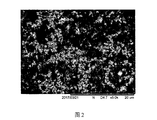
- Example 2 is a scanning electron micrograph (SEM) of the high copper content Cu-SSZ-13 synthesized in Example 1.
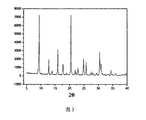
- Figure 3 is an XRD pattern of the product of Example 2.
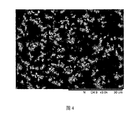
- Figure 4 is a scanning electron micrograph (SEM) of the product of Example 3.
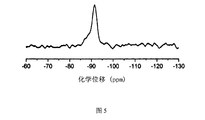
- Figure 5 is a solid 29 Si nuclear magnetic spectrum of Example 3.
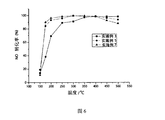
- Fig. 6 is a result of evaluation of NH 3 -SCR reaction of Examples 3, 5, and 7.
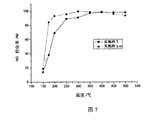
- Fig. 7 is a comparison of the evaluation results of the NH 3 -SCR reaction of the catalyst of Example 3 before the high temperature hydrothermal treatment (Example 3) and after (Example 3H).
- Figure 8 is an XRD pattern of a synthetic high copper Cu-SSZ-13 sample Cu-13-e.
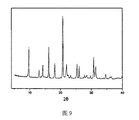
- Figure 9 is an XRD diffraction spectrum of the synthesized sample of Example 12.
- Fig. 10 is a result of evaluation of NH 3 -SCR reaction of Example 12 and evaluation of NH 3 -SCR reaction after 10 times of low-temperature hydrothermal treatment at 80 °C.
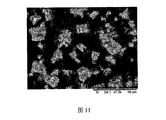
- Figure 11 is a SEM electron micrograph of a sample of Comparative Example 3.
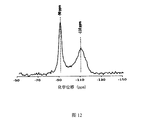
- Figure 12 is a solid 29 Si nuclear magnetic spectrum of a sample of Comparative Example 3.
- test conditions of this application are as follows:
- Elemental composition was determined using a Philips Magix X X-ray Fluorescence Analyzer (XRF).
- the specific surface area and pore size distribution of the samples were determined using a Micromeritics ASAP Model 2020 physical adsorber. Before the analysis, the sample was preheated at 350 ° C for 6 h, and the free volume of the sample tube was measured with He as the medium. When the sample was analyzed, the adsorption and desorption measurements were carried out at a liquid nitrogen temperature (77 K) using nitrogen as an adsorption gas. The specific surface area of the material was determined using the BET formula; the total pore volume of the material was calculated using the amount of adsorption of N 2 at a relative pressure (P/P 0 ) of 0.99. The micropore surface area and micropore volume were calculated by the t-plot method. When calculated, the cross-sectional area of the N 2 molecule was taken to be 0.162 nm 2 .
- Solid NMR experiments of the samples were performed on a Bruker Avance III 600 (14.1 Tesla) spectrometer.
- the 29 Si MAS NMR experiment used a 7 mm dual resonance probe with a speed of 6 kHz.
- the sampling frequency is 5000-6000
- the pulse width of ⁇ /4 is 2.5 ⁇ s
- the sampling delay is 10s
- the sodium 4,4-dimethyl-4-propane sulfonate (DSS) is used as the chemistry.
- Displacement reference corrected to 0ppm.
- the seed crystal is added to reduce the particle size of the synthesized high copper Cu-SSZ-13, so that it is better involved in the subsequent crystallization, and acts as a seed crystal and a copper source.
- the addition of seed crystals is also beneficial to increase product yield.
- the seed crystal may be conventional SSZ-13 or Cu-SSZ-13 synthesized according to the above-mentioned literature Chem. Commun. 2011, 47, 9789-9791, or may be a conventional SAPO-34 molecular sieve, or a nanoscale synthesized by reference patent CN104340986B. SAPO-34 molecular sieve.
- the XRD of the synthesized high copper Cu-SSZ-13 samples Cu-13-a and Cu-13-b is shown in Fig. 1, and the SEM of the sample Cu-13-a is shown in Fig. 2, and the particle size is 300-500 nm.
- a seed seeding amount (M seed crystal / (M Al2O3 + M SiO2 )) * 100%
- product yield (M product raw powder / (M CuO + M Al2O3 + M SiO2 ) * 100%
- the optional aluminum source is first dissolved in water and then an optional phosphorus source, silicon source and templating agent R are added thereto in turn.
- a sample of the Cu-SSZ-13 molecular sieve prepared in Example 1 was added to the above mixture. After stirring at room temperature, the gel was transferred to a stainless steel reaction vessel. After the reactor was placed in an oven, the temperature was raised to 140-240 ° C for 0.5-72 h, and the crystallization was completed. The solid product was centrifuged, washed, and dried in air at 120 ° C to obtain a sample of the molecular sieve raw powder.
- FIG. 4 shows an SEM photograph of the Cu-SAPO-34 molecular sieve prepared in Example 3. It can be seen that the morphology of the obtained sample is rhombohedral and the particle size ranges from 1-2 ⁇ m. It can be seen that the particle size of the sample prepared by the synthesis method of this patent is smaller than that of the conventional hydrothermal synthesis SAPO molecular sieve. This is directly related to the use of Cu-SSZ-13 as a raw material and seed crystal.
- FIG. 5 shows the solid nuclear magnetic 29 Si spectrum of the sample of Example 3. The results show that the sample shows a single peak at 91 ppm, respectively, which is assigned to the Si (4Al) coordination environment of the sample.
- Samples 3,5 and 7 obtained in Example embodiments will be baked at a high temperature 650 °C 2h, after removal of the template agent for removing NH 3 reacts with NO x selective reduction catalyst performance tests.
- the specific experimental procedures and conditions are as follows: After calcination, the sample is tableted, and 0.1 g of a 60 to 80 mesh sample is weighed and mixed with 0.4 g of quartz sand (60 to 80 mesh), and charged into a fixed bed reactor. The reaction was started by nitrogen at 600 ° C for 40 min, then the temperature was lowered to 120 ° C, and the temperature was raised to 550 ° C.
- the reaction raw material gas was: NO: 500 ppm, NH 3 : 500 ppm, O 2 : 5%, H 2 O: 5%, N 2 as a balance gas, and a gas flow rate of 300 mL/min.
- the reaction tail gas was analyzed by online FTIR using a Bruker Tensor 27 instrument. The results are shown in Fig. 6. It can be seen that the sample of Example 3 has a low NO conversion rate in the low temperature section, a 89% NO conversion rate in the high temperature section at 250 ° C, and a high NO conversion rate in the entire temperature range.
- the samples of Examples 5 and 7 are With a higher Cu content, the reactivity in the low temperature section is further improved. However, due to the increase of copper content, a side reaction occurs in the high temperature section, so that the NO conversion rate decreases after 400 ° C, and the decrease is within 10%.
- Example 3 Samples of high temperature firing at 650 °C 2h, after removal of the templating agent, further heat treated 16 hours at 800 °C hot water, followed by removal of NH2 3 reacts with NO x selective reduction catalyst performance tests.
- the test conditions were the same as in Example 10, and the results are shown in Fig. 7. It can be seen that after high-temperature hydrothermal treatment, the reactivity of the sample is well maintained or even increased in the low temperature section. It can be seen that Cu-SAPO-34 prepared according to the method of the present invention has excellent high temperature hydrothermal stability.
- the solid product was centrifuged, and the sample was washed with deionized water to neutrality, dried in air at 120 ° C, and then calcined at 600 ° C for 5 h to obtain a hydrogen type H-SSZ-13 molecular sieve sample.
- the optional pseudoboehmite is mixed with water, and then silica sol, phosphoric acid and diethylamine are sequentially added thereto.
- a sample of the Cu-13-e molecular sieve prepared in Example 11 was added to the above mixture.
- the gel was transferred to a stainless steel reaction vessel. After the reaction vessel was placed in an oven, the temperature was raised to 180 ° C for 30 hours, and the crystallization was completed.
- the solid product was centrifuged, washed, and dried in air at 120 ° C to obtain a sample of the molecular sieve raw powder.
- the sample was subjected to XRD analysis, and the peak shape showed a typical CHA structural characteristic peak.
- the XRD diffraction spectrum of the synthesized sample of Example 12 is shown in Fig. 9.
- the sample composition obtained by XRF test was Al 0.37 P 0.28 Si 0.35 O 2 and the copper content was 6.2% by weight.
- Example 12 The embodiment of the sample obtained in Example 12 650 °C calcination temperature 2h, after removal of the template agent for removing NH 3 reacts with NO x selective reduction catalyst performance tests.
- the test conditions were the same as in Example 9, and the catalytic results are shown in Fig. 10. It can be seen that the sample of Example 12 has a NO conversion rate of 7% at a low temperature of 175 ° C and a NO of 94% at a high temperature of 500 ° C.
- Example 13 The sample after the catalytic reaction of Example 13 was further calcined at a high temperature of 650 ° C for 2 h, and further hydrothermally treated at a low temperature of 80 ° C for 30 minutes after the regeneration, and the catalytic performance test for selective removal of NO x by NH 3 was repeated after 10 treatments. .
- the test conditions were the same as in Example 9, and the catalytic results are shown in Fig. 10. It can be seen that after repeated low-temperature hydrothermal treatment, the reactivity of the sample can be well maintained, and the reduction is small. It can be seen that Cu-SAPO-34 prepared according to the process of the present invention has excellent low temperature hydrothermal stability.
- Figure 11 shows a SEM electron micrograph of Comparative Sample 3, which shows that the sample has a particle size of 5-10 microns.
- Figure 12 shows the 29 Si NMR solid NMR spectrum of Comparative Sample 3. It can be seen that in addition to the Si (4Al) signal, the sample has a significant signal at 110 ppm, which is attributed to Si (0Al). Copper amine complex templating agents tend to cause formation of silicon islands. From the results of the four comparative examples, it is known that for the Cu-SAPO-34 molecular sieve synthesized by using a copper amine complex with other organic amines, reducing the amount of the copper amine complex can reduce the copper content in the product.
- the copper content of the synthesized product is also controlled by the amount of silica charged in the synthesis system.
- the amount of silicon oxide is reduced, the amount of copper in the product is reduced to a limited extent.
- the simultaneous loading of the silica and copper amine complexes also resulted in a slower crystallization rate of the SAPO molecular sieve and a significant decrease in yield (Comparative Example 4).
- the method provided by the present invention cleverly solves the above problems.
- the copper amine complex encapsulated in the Cu-SSZ-13 pore cage can avoid competition with other organic amine templates, and better play the guiding role of other organic amine template in the synthesis, Cu
- the content can be adjusted within a relatively low range and meeting the needs of catalytic performance. The economic utilization of Cu atoms is realized.
- the distribution of silicon atoms is mainly controlled by the selected organic amine template, thus providing a possibility to improve the hydrothermal stability of the synthesized Cu-SAPO-34.
- the distribution and coordination environment of silicon atoms in SAPO molecular sieves are greatly affected by organic amine templating agents. Therefore, this method can flexibly modulate the type of organic amines and also improve the hydrothermal stability of synthetic Cu-SAPO-34. Sex offers.
- Comparative Example 1-4 The sample obtained in Comparative Example 1-4 was calcined at a high temperature of 650 ° C for 2 h, and after removing the templating agent, it was further subjected to a hydrothermal treatment at 800 ° C for 16 hours.
- XRD test results show that the first three diffraction peaks belonging to the CHA crystal phase disappear, and the sample has a diffraction peak in the range of 20-25 degrees, forming a dense phase. It can be seen that the synthetic sample provided by this patent has better high temperature hydrothermal stability.
Landscapes
- Chemical & Material Sciences (AREA)
- Organic Chemistry (AREA)
- Engineering & Computer Science (AREA)
- Chemical Kinetics & Catalysis (AREA)
- Materials Engineering (AREA)
- Inorganic Chemistry (AREA)
- Life Sciences & Earth Sciences (AREA)
- General Life Sciences & Earth Sciences (AREA)
- Geology (AREA)
- Catalysts (AREA)
- Silicates, Zeolites, And Molecular Sieves (AREA)
Abstract
一种合成Cu-SAPO-34分子筛的方法,其包括将使用铜胺络合物为模板剂合成的高Cu含量的Cu-SSZ-13分子筛作为Cu源,和部分硅铝源及晶种等进行Cu-SAPO-34分子筛的合成。该方法不但可以在一定范围内控制SAPO-34分子筛中的铜负载量,还可以有效调控分子筛中的硅原子含量及其分布,产品收率高。所得到的Cu-SAPO-34分子筛催化剂表现出优异的水热稳定性和选择性还原脱除NOx反应的催化性能。还公开了一种Cu-SAPO-34分子筛原粉、一种用于NO X选择还原脱除反应的催化剂和一种用于改进Cu-SAPO-34分子筛高温水热稳定性的方法。
Description
本发明属于化学化工领域,涉及分子筛及其制备方法,尤其涉及一种合成Cu-SAPO-34的方法和通过该方法获得的产品及其用途。所述Cu-SAPO-34可用于氮氧化合物消除过程的催化剂。
氮氧化物(NOx)作为主要大气污染物之一,能引起酸雨,光化学烟雾等诸多环境问题,且对人体健康构成严重危害。移动源汽车尾气的排放和固定源工厂废气的排放是NOx的主要来源。以NH3为还原剂选择催化还原NOx即NH3-SCR技术可以将其转化为无害的氮气,在催化去除NOx过程中起到极为重要的作用。其关键核心是SCR催化剂的开发。传统的脱硝催化剂主要是V-Ti-W体系,但是随着发动机技术中稀燃技术的广泛采用,稀燃尾气排放温度降低,V-Ti-W体系的催化剂较窄温度适用范围不能满足要求,而且其潜在的对环境造成污染的可能性也限制了其应用。1986年,Iwamoto等人首次报道了Cu2+交换的ZSM-5有催化NO直接分解为N2和O2的能力,但是后续研究发现,NO直接分解由于效率低下,很难被直接应用。到上世纪90年代初,Cu-ZSM-5才被用于SCR反应中。在之后的研究中,分子筛催化体系逐渐成为研究热点。近年来,具有CHA结构的Cu基小孔分子筛催化剂,Cu-SSZ-13和Cu-SAPO-34(SSZ-13是与SAPO-34具有相同拓扑结构的分子筛,区别在于前者是硅铝分子筛,后者是磷酸硅铝分子筛),由于其高效的低温催化活性和N2选择性、优异的水热稳定性和抗中毒能力受到广泛关注。
通常,分子筛催化剂中的铜离子负载是通过离子交换法实现的。为了保证引入铜的量及其较高的分散度,往往需要进行多步的离子交换过程,离子交换过程中SAPO分子筛骨架往往会发生部分水解导致分子筛比表面积和稳定性的下降。同时,在交换过程中铜盐溶液中铜离子的利用率低,洗涤过程耗费大量的纯净水并转化成污水,高温焙烧过程耗时耗能。相比
离子交换法,一步法合成含铜分子筛具有明显优势。CN102259892A公开了一种以金属-胺络合物为模板剂合成磷酸硅铝分子筛催化剂的方法,避免了繁琐的离子交换工艺,但是,一步合成的Cu-SAPO-34的高温水热稳定性较差,限制其工业应用。如Corma等以铜胺络合物和二乙胺为模板剂合成Cu-SAPO-34分子筛,铜负载量控制在3.4-10.4%,晶体粒度约6-10μm。研究表明,该方法合成的低铜负载量催化剂经750℃水热老化13h后活性明显下降,而对于具有中、高铜含量的Cu-SAPO-34催化剂,750℃水热老化13h后骨架结构全部倒塌(Applied CatalysisB:Environmental,2012,127:273)。除Cu负载量影响分子筛水热稳定性外,骨架负电荷的分布也影响骨架外铜离子的稳定性,从而影响铜负载分子筛样品的水热稳定性。对于SAPO分子筛,骨架负电荷的量及分布直接源于硅原子的引入量及其分布。如Si原子单一取代P原子可以形成Si(4Al)连接,形成酸中心。而当Si原子同时取代相邻的P和Al原子时,就会形成富Si区域甚至硅岛,导致骨架负电荷的不均匀分布,这不利于铜离子的稳定存在。为了进一步改进合成Cu-SAPO-34分子筛的水热稳定性,大量研究工作尝试使用各种有机模板剂与铜胺络合物复配合成Cu-SAPO-34,以期调变其铜含量和分子筛中的硅量及硅原子分布(J.Catalysis 2014,314,73-82;Chemical Engineering Journal 2016,294,254-263;CN104209141A;CN103818927A)。这些工作显示,铜胺络合物作为合成模板,容易使SAPO分子筛骨架中产生硅岛。但如果为了控制铜负载量并避免硅岛形成,采用同时降低体系中铜胺络合物模板剂和硅源的投料量,又将影响产品收率和结晶度。
发明内容
为解决上述问题,本申请使用铜胺络合物作为模板剂首先合成高铜含量的Cu-SSZ-13,将其作为Cu源、部分硅铝源以及晶种,进行Cu-SAPO-34分子筛的合成。包裹在Cu-SSZ-13孔笼内的铜胺络合物可避免与其它有机胺模板的竞争,更好地发挥其它有机胺模板剂在合成中的导向作用。尤其地,该方法可以实现对产品的晶体粒度、Cu含量及硅含量和分布的有效调控,从而获得更优异的催化性能和水热稳定性。
在一个方面,本发明提供一种制备Cu-SAPO-34分子筛的方法,其特征在于,包括如下步骤:
(1)制备含铜硅铝分子筛Cu-SSZ-13;
(2)将有机胺模板剂R和水以及可选的硅源、铝源和磷源混合制得晶化液;
(3)将步骤(1)中得到的Cu-SSZ-13分子筛作为原料与步骤(2)中制得的晶化液混合并进行水热晶化,得到Cu-SAPO-34分子筛产品。
可选地,所述步骤(1)中的Cu-SSZ-13分子筛可以是使用包含铜胺络合物的模板剂合成的,其Cu含量为5-15wt%,硅/铝原子比可以为4/1-20/1。
可选地,所述步骤(1)中的Cu-SSZ-13分子筛也可以是由SSZ-13通过离子交换法获得,其中Cu含量为5-15wt%,硅/铝原子比可以大于等于4/1,优选10/1-30/1。
可选地,步骤(1)中的铜胺络合物包括铜-多乙烯多胺络合物,优选Cu-四乙烯五胺络合物和Cu-三乙烯四胺络合物、Cu-二乙烯三胺络合物、Cu-四乙烯四胺络合物和Cu-五乙烯六胺络合物。
可选地,所述步骤(2)中使用的硅源选自正硅酸乙酯、硅溶胶和白炭黑中的一种或几种;铝源选自异丙醇铝、拟薄水铝石、铝溶胶和氢氧化铝中的一种或几种;磷源选自磷酸、亚磷酸和五氧化二磷中的一种或几种;有机胺模板剂R选自三乙胺、二乙胺、吗啉、四乙基氢氧化铵、丙胺、二异丙胺、N,N二异丙基乙胺、三甲胺、二乙醇胺和哌嗪中的一种或几种的混合。
可选地,所述步骤(2)中使用的铝源、磷源、硅源、有机胺模板剂R和水的摩尔比例为Al2O3:P2O5:SiO2:R:H2O=1:0.5~2:0.01~1.5:0.5~10:15~200,优选为Al2O3:P2O5:SiO2:R:H2O=1:0.7~1.5:0.1~1.0:1~5:30~100。
可选地,所述步骤(3)中的Cu-SSZ-13原料的加入量为配制的晶化液中固体氧化物质量总和的5-80wt%。
可选地,所述步骤(3)中进行水热晶化的温度为140-240℃,时间为0.5~72小时;更优选的晶化温度为150-200℃。
可选地,所述步骤(3)中制备的Cu-SAPO-34分子筛产品的铜负载
量为0.5-8wt%。
在另一方面,本发明提供一种Cu-SAPO-34分子筛原粉,其由上述方法合成。
在另一方面,本发明提供一种用于NOx选择还原脱除反应的催化剂,其由根据上述方法合成的分子筛经550-800℃空气中焙烧得到。所述催化剂尤其可用于氮氧化物的催化脱除反应,表现出良好的催化性能。催化剂经800℃饱和水蒸气16小时处理后活性仍然得到良好地保持。
在另一方面,本发明提供一种用于改进Cu-SAPO-34分子筛高温水热稳定性的方法,其特征在于,所述方法包括:将通过使用包含铜胺络合物的模板剂合成的含铜硅铝分子筛Cu-SSZ-13与晶化液混合并进行水热晶化,其中所述晶化液是通过将有机胺模板剂R和水以及可选的硅源、铝源和磷源混合而制得的。
本发明可以产生以下有益效果中的至少一种:
(1)提供一种合成Cu-SAPO-34分子筛的新方法,此方法实现了具有高水热稳定性Cu-SAPO-34的高收率合成和Cu源的高效利用,其晶体粒度、Cu含量及硅含量和分布可以得到有效调控。
(2)所制备的分子筛可作为催化剂用于氮氧化物的催化脱除反应,并表现出良好的催化性能;催化剂经800℃水蒸气处理16小时后催化性能仍得到良好地保持。
图1是实施例1中合成的高铜含量Cu-SSZ-13的XRD图谱。
图2是实施例1中合成的高铜含量Cu-SSZ-13的扫描电镜图(SEM)。
图3是实施例2产物的XRD图谱。
图4实施例3产物的扫描电镜图(SEM)。
图5是实施例3的固体29Si核磁谱图。
图6是实施例3,5,7的NH3-SCR反应评价结果。
图7是实施例3催化剂经高温水热处理前(实施例3)、后(实施例3H)的NH3-SCR反应评价结果对比。
图8是合成的高铜Cu-SSZ-13样品Cu-13-e的XRD图谱。
图9是实施例12合成样品的XRD衍射谱图
图10是实施例12的NH3-SCR反应评价结果及80℃低温水热处理10次后的NH3-SCR反应评价结果。
图11是对比例3样品的SEM电镜照片。
图12是对比例3样品的固体29Si核磁谱图。
下面结合实施例,进一步阐述本发明。应理解,这些实施例仅用于说明本发明而不用于限制本发明的范围。下列实施例中未注明具体条件的实验方法,通常按照常规条件或按照制造厂商所建议的条件。未做特殊说明的情况下,本申请所使用原料,均通过商业途径购买,不经特殊处理直接使用。
未做特殊说明的情况下,本申请的测试条件如下:
元素组成采用Philips公司的Magix X型X射线荧光分析仪(XRF)测定。
X射线粉末衍射物相分析(XRD)采用荷兰帕纳科(PANalytical)公司的X’Pert PRO型X射线衍射仪,Cu靶,Kα辐射源(λ=0.15418nm),电压40KV,电流40mA。
采用美国Micromeritics公司ASAP 2020型物理吸附仪测定样品的比表面积和孔径分布。分析前,样品在350℃下抽真空加热预处理6h,以He为介质测量样品管自由体积。分析样品时,以氮气为吸附气体,在液氮温度(77K)下进行物理吸附和脱附测定。采用BET公式确定材料的比表面积;使用相对压力(P/P0)为0.99时的N2的吸附量计算材料的总孔容。用t-plot方法计算微孔表面积和微孔孔容。计算时,N2分子横截面积取0.162nm2。
SEM形貌分析采用Hitachi TM3000型和HitachiSU8020型台式扫描电子显微镜。
样品的固体核磁实验在Bruker AvanceIII600(14.1Tesla)谱仪上进行。29Si MAS NMR实验采用7mm双共振探头,转速为6kHz。采用高功率质子去偶程序,采样次数为5000-6000,π/4的脉冲宽度为2.5μs,采
样延迟为10s,以4,4-二甲基-4-丙磺酸钠(DSS)为化学位移参考,校正到0ppm。
实施例1:
作为铜源的Cu-SSZ-13样品的合成。合成方法可以参考文献Chem.Commun.2011,47,9789-9791。各原料摩尔比例和晶化条件见表1。具体配料过程如下:
向2L合成釜中依次加入一定量的铝酸钠(65重量%)、水、五水合硫酸铜、四乙烯五胺(TEPA)、氢氧化钠、硅溶胶(31重量%)和可选的晶种。将原料混合物搅拌均匀,然后密封,在搅拌下升温至140-180℃,转动晶化5-24h。固体产物经离心分离、用去离子水洗涤样品至中性,在120℃空气中干燥后,得到待用的Cu-SSZ-13分子筛样品(命名为Cu-13-x,x=a,b,c,d)。加入晶种是为了降低合成的高铜Cu-SSZ-13的粒度,使其更好的参与后续的晶化,起到晶种和铜源的作用。晶种的加入也有利于提高产品收率。晶种可以是常规的SSZ-13或参考上述文献Chem.Commun.2011,47,9789-9791合成的Cu-SSZ-13,也可以是常规的SAPO-34分子筛,或参考专利CN104340986B合成的纳米级SAPO-34分子筛。合成的高铜Cu-SSZ-13样品Cu-13-a和Cu-13-b的XRD见图1,样品Cu-13-a的SEM见图2,粒度为300-500nm。
表1作为铜源的Cu-SSZ-13的原料摩尔比例、晶化条件及合成结果


a晶种投料量(wt%)=(M晶种/(MAl2O3+MSiO2))*100%,产品收率=(M产品原粉/(MCuO+MAl2O3+MSiO2)*100%
实施例2~8:高水热稳定性Cu-SAPO-34分子筛产品的制备各原料摩尔比例和晶化条件见表2。具体配料过程如下:
首先将可选的铝源与水混合溶解,然后依次向其中加入可选的磷源、硅源和模板剂R。向上述混合物中加入实施例1中制备的Cu-SSZ-13分子筛样品。在室温搅拌均匀后将凝胶转移到不锈钢反应釜中。反应釜放入烘箱后,升温到140-240℃反应0.5-72h,晶化结束。将固体产物离心,洗涤,在120℃空气中烘干后,得到所述分子筛原粉样品。样品做XRD分析,峰形呈现典型的CHA结构特征峰,实施例2的XRD衍射谱图见图3。另外,图4给出了实施例3中制备的Cu-SAPO-34分子筛的SEM照片。可以看出,所得样品的形貌为菱面体状,粒径范围为1-2μm。可见使用本专利合成方法制备样品的粒度较常规水热合成SAPO分子筛的晶体粒度偏小。这与使用Cu-SSZ-13作为原料和晶种有直接关系。将样品焙烧脱除模板剂后,测其比表面积及孔容,样品具有高的BET比表面积570.3m2g-1,及大的孔体积0.28cm3g-1,其中按照t-plot方法计算得到的微孔比表面积和微孔容积分别为548.5m2g-1和0.26cm3g-1。图5给出了实施例3样品的固体核磁29Si谱图,结果显示样品分别在91ppm出现单一的峰,归属为样品的Si(4Al)配位环境。

实施例9
将实施例3、5和7得到的样品于650℃高温焙烧2h,除去模板剂后,用于NH3选择性还原脱除NOx反应的催化性能测试。具体实验过程和条件如下:焙烧后样品压片筛分,称取0.1g 60到80目样品与0.4g石英砂(60到80目)混合,装入固定床反应器。于600℃下通氮气活化40min,然后降温至120℃开始反应,并升温到550℃。反应原料气为:NO:500ppm,NH3:500ppm,O2:5%,H2O:5%,N2作为平衡气,气体流速300mL/min。反应尾气采用Bruker公司的Tensor 27型仪器,进行在线FTIR分析,结果见图6。可以看到,实施例3样品在低温段NO转化率偏低,高温段250℃有89%的NO转化率,整个温度范围内有较高的NO转化率,实施例5和实施例7样品由于具有较高的Cu含量,低温段反应活性有进一步的提升。但是,由于铜含量的增加,高温段存在副反应发生,使得NO转化率在400℃之后有所下降,下降幅度在10%以内。
实施例10
实施例3的样品在650℃高温焙烧2h,除去模板剂后,进一步在800℃高温水热处理16小时,然后进行NH3选择性还原脱除NOx反应的催化性能测试。测试条件同实施例10,结果见图7。可以看到,高温水热处理后,样品的反应活性都得到了较好的保持甚至低温段有所提升。可见按照本发明方法制备的Cu-SAPO-34具有优异的高温水热稳定性。
实施例11
向2L合成釜中依次加入硫酸铝(34重量%)、水、氢氧化钠、硅溶胶(31重量%)和1-金刚烷基三甲基氢氧化铵。投料配比Al2O3:SiO2:1-金刚烷基三甲基氢氧化铵:NaOH:H2O=1.0:40:24:40:800将原料混合物搅拌均匀,然后密封,在搅拌下升温至150℃,转动晶化2天。固体产物经离心分离、用去离子水洗涤样品至中性,在120℃空气中干燥后,再于600℃焙烧5h,得到氢型H-SSZ-13分子筛样品。
将100g硝酸铵溶于1300ml去离子水中,完全溶解后加入20g H-SSZ-13样品,85℃油浴下搅拌10h,静置冷却后离心分离、用去离子水洗涤样品
至中性。重复上述离子交换步骤3次,得到的铵型的NH4-SSZ-13样品。
将20g醋酸铜加入到500ml去离子水中,完全溶解后加入10g NH4-SSZ-13样品,在室温下搅拌2h,离心、洗涤样品至中性,重复上述离子交换2次,在120℃空气中干燥,得到Cu-SSZ-13,命名为Cu-13-e,其XRD衍射谱图见图8。通过XRF测试可知样品SiO2/Al2O3=28,铜含量为11.3wt%。
实施例12
将可选的拟薄水铝石与水混合溶解,然后依次向其中加入硅溶胶、磷酸和二乙胺。向上述混合物中加入实施例11中制备的Cu-13-e分子筛样品。投料配比Al2O3:SiO2:P2O5:二乙胺:H2O=1:0.4:1:2.5:50,氧化物投料量:Cu-13-e投料量=55wt%。在室温搅拌均匀后将凝胶转移到不锈钢反应釜中。反应釜放入烘箱后,升温到180℃反应30h,晶化结束。将固体产物离心,洗涤,在120℃空气中烘干后,得到所述分子筛原粉样品。样品做XRD分析,峰形呈现典型的CHA结构特征峰,实施例12合成样品的XRD衍射谱图见图9。通过XRF测试得到样品组成为Al0.37P0.28Si0.35O2,铜含量为6.2wt%。
实施例13
将实施例12得到的样品于650℃高温焙烧2h,除去模板剂后,用于NH3选择性还原脱除NOx反应的催化性能测试。测试条件同实施例9,催化结果见图10。可以看到,实施例12样品在低温段NO转化率较高175℃有80%的NO转化率,高温段500℃也有94%的NO转化率。
实施例14
实施例13催化反应之后的样品继续在650℃高温焙烧2h,再生后进一步在80℃低温水热处理30分钟,如此反复处理10次后再进行NH3选择性还原脱除NOx反应的催化性能测试。测试条件同实施例9,催化结果见图10。可以看到,反复低温水热处理后,样品的反应活性都能较好的保持,降低幅度很小。可见按照本发明方法制备的Cu-SAPO-34具有优
异的低温水热稳定性。
对比例1-4:
向100mL合成釜中依次加入一定量的拟薄水铝石(65重量%)、水、磷酸(85重量%)、硅溶胶(31重量%)、五水合硫酸铜、四乙烯五胺及二乙胺。SAPO-34晶种均添加反应混合物固含量的5wt%,搅拌均匀,然后密封,在搅拌下升温至170℃,晶化3d。固体产物经离心分离。用去离子水洗涤样品至中性,在120℃空气中干燥后,得到待用的Cu-SAPO-34分子筛样品。
表3原料摩尔比例和晶化条件

a产品收率=(M产品*85%/(MP2O5+MAl2O3+MSiO2)*100%
图11给出了对比例样品3的SEM电镜照片,结果显示样品的粒度在5-10微米。图12给出了对比例样品3的29Si NMR固体核磁谱图,可以发现,除Si(4Al)信号外,样品在110ppm存在明显的信号,归属于Si(0Al)。铜胺络合物模板剂易于导致硅岛形成。从四个对比例的结果可知,对于使用铜胺络合物与其他有机胺共模板合成Cu-SAPO-34分子筛来说,减少铜胺络合物的投料量可以降低产品中的铜含量。但是,所合成产品的铜含量还同时受控于合成体系中氧化硅投料量。当氧化硅的投料量降低时,产品中的铜含量下降程度有限。氧化硅和铜胺络合物的投料量同时降低,还会导致SAPO分子筛的晶化速度减慢,收率明显下降(对比例4)。
本发明提供的方法巧妙的解决了上述问题。首先预制高铜含量的小晶
粒Cu-SSZ-13分子筛。然后,将其作为铜源、部分硅铝源和晶种进行Cu-SAPO-34的合成。在此步合成过程中,包裹在Cu-SSZ-13孔笼内的铜胺络合物可避免与其它有机胺模板的竞争,更好地发挥其它有机胺模板剂在合成中的导向作用,Cu含量可以在相对较低且满足催化性能需要的范围内调控。实现了Cu原子的经济利用。同时硅原子分布主要受控于选择的有机胺模板剂,因此为改善合成Cu-SAPO-34的水热稳定性提供了可能。另外,硅原子在SAPO分子筛中的分布和配位环境受有机胺模板剂的影响较大,因此该方法可灵活调变有机胺的类型,也为提高合成的Cu-SAPO-34的水热稳定性提供了可能。
对比例5
将对比例1-4得到的样品于650℃高温焙烧2h,除去模板剂后,进一步在800℃高温水热处理16小时。XRD测试结果显示,前三个属于CHA晶相的衍射峰消失,样品在20-25度范围内有衍射峰,形成致密相,可见本专利提供的合成样品高温水热稳定性更好。
应当指出,对于本技术领域的专业技术人员,在不脱离本发明原理的前提下,能够实现对这些实施例的多种修改,而这些修改也应视为在本发明的保护范围内。
Claims (12)
- 一种制备Cu-SAPO-34分子筛的方法,其特征在于,所述方法包括以下步骤:(1)制备含铜硅铝分子筛Cu-SSZ-13;(2)将有机胺模板剂R和水以及可选的硅源、铝源和磷源混合制得晶化液;(3)将步骤(1)中的Cu-SSZ-13分子筛作为原料与步骤(2)中制得的晶化液混合并进行水热晶化,得到Cu-SAPO-34分子筛产品。
- 按照权利要求1所述的方法,其特征在于,所述步骤(1)中的Cu-SSZ-13分子筛的Cu含量为5-15wt%。
- 按照权利要求1所述的方法,其特征在于,所述步骤(1)中的Cu-SSZ-13分子筛是使用包含铜胺络合物的模板剂合成的,或者由SSZ-13通过离子交换法获得。
- 按照权利要求3所述的方法,其特征在于,所述铜胺络合物包括铜-多乙烯多胺络合物,优选Cu-四乙烯五胺络合物、Cu-三乙烯四胺络合物、Cu-二乙烯三胺络合物和Cu-五乙烯六胺络合物。
- 按照权利要求1所述的方法,其特征在于,所述步骤(2)中使用的硅源选自正硅酸乙酯、硅溶胶和白炭黑中的一种或几种;铝源选自异丙醇铝、拟薄水铝石、铝溶胶和氢氧化铝中的一种或几种;磷源选自磷酸、亚磷酸和五氧化二磷中的一种或几种;有机胺模板剂R选自三乙胺、二乙胺、吗啉、四乙基氢氧化铵、丙胺、二异丙胺、N,N二异丙基乙胺、三甲胺、二乙醇胺和哌嗪中的一种或几种的混合。
- 按照权利要求1所述的方法,其特征在于,所述步骤(2)中使用的铝源、磷源、硅源、有机胺模板剂R和水的摩尔比例为Al2O3:P2O5:SiO2:R:H2O=1:0.5~2:0.01~1.5:0.5~10:15~200,优选为Al2O3:P2O5:SiO2:R:H2O=1:0.7~1.5:0.1~1.0:1~5:30~100。
- 按照权利要求1所述的方法,其特征在于,步骤(3)中所述的Cu-SSZ-13原料的加入量为配制的晶化液中固体氧化物质量总和的5-80wt%。
- 按照权利要求1所述的方法,其特征在于,所述步骤(3)中进行水热晶化的温度为140-240℃,时间为0.5~72小时;更优选的晶化温度为150-200℃。
- 按照权利要求1所述的方法,其特征在于,步骤(3)中制备的Cu-SAPO-34分子筛产品的Cu含量为0.5-8wt%。
- 一种Cu-SAPO-34分子筛原粉,其由根据权利要求1-9中任一项所述的方法合成。
- 一种用于NOx选择还原脱除反应的催化剂,其由根据权利要求1-9中所述的方法合成的分子筛经550~800℃空气中焙烧得到。
- 一种用于改进Cu-SAPO-34分子筛高温水热稳定性的方法,其特征在于,所述方法包括:将含铜硅铝分子筛Cu-SSZ-13与晶化液混合并进行水热晶化,其中所述晶化液是通过将有机胺模板剂R和水以及可选的硅源、铝源和磷源混合而制得的。
Applications Claiming Priority (2)
| Application Number | Priority Date | Filing Date | Title |
|---|---|---|---|
| CN201710566782.9A CN109250729B (zh) | 2017-07-12 | 2017-07-12 | Cu-SAPO-34分子筛合成方法及合成的分子筛和应用 |
| CN201710566782.9 | 2017-07-12 |
Publications (1)
| Publication Number | Publication Date |
|---|---|
| WO2019010815A1 true WO2019010815A1 (zh) | 2019-01-17 |
Family
ID=65000881
Family Applications (1)
| Application Number | Title | Priority Date | Filing Date |
|---|---|---|---|
| PCT/CN2017/102291 Ceased WO2019010815A1 (zh) | 2017-07-12 | 2017-09-19 | Cu-SAPO-34分子筛合成方法及合成的分子筛和应用 |
Country Status (2)
| Country | Link |
|---|---|
| CN (1) | CN109250729B (zh) |
| WO (1) | WO2019010815A1 (zh) |
Cited By (20)
| Publication number | Priority date | Publication date | Assignee | Title |
|---|---|---|---|---|
| CN110255579A (zh) * | 2019-06-19 | 2019-09-20 | 正大能源材料(大连)有限公司 | 一种金属改性的中空sapo-34分子筛及其制备方法和应用 |
| CN111592011A (zh) * | 2020-05-21 | 2020-08-28 | 浙江大学 | 以teaoh为有机模板剂直接合成ssz-13沸石分子筛的方法 |
| CN112830499A (zh) * | 2021-01-15 | 2021-05-25 | 天津大学 | 一种单分散ssz-32分子筛、其制备方法和应用 |
| CN113716585A (zh) * | 2021-09-08 | 2021-11-30 | 天津派森新材料技术有限责任公司 | 一步法制备Cu-SSZ-13分子筛的方法 |
| CN114054074A (zh) * | 2020-07-31 | 2022-02-18 | 大连理工大学 | 一种脱硝催化剂的制备方法及其应用 |
| CN114210363A (zh) * | 2022-01-18 | 2022-03-22 | 天津派森新材料技术有限责任公司 | 一种ssz-16含铜催化剂的制备方法 |
| CN114426293A (zh) * | 2020-09-27 | 2022-05-03 | 中国石油化工股份有限公司 | Scm-35分子筛、其制备方法和应用 |
| CN114477224A (zh) * | 2020-10-26 | 2022-05-13 | 中国石油化工股份有限公司 | 一种beta分子筛的制备方法、产品及其应用 |
| CN114602544A (zh) * | 2022-03-29 | 2022-06-10 | 潍柴动力股份有限公司 | 一种改性Cu-CHA分子筛复合催化剂及其制备方法和应用 |
| CN114849765A (zh) * | 2022-05-13 | 2022-08-05 | 苏州大学 | 一种分子筛催化剂的超快制备方法 |
| CN115193244A (zh) * | 2022-06-27 | 2022-10-18 | 上海淳禧应用技术股份有限公司 | 一种用于cems的高温固态除氨聚合物及其制备方法 |
| CN115193408A (zh) * | 2022-07-15 | 2022-10-18 | 盐城工学院 | 一种Ag-SAPO-34@Cu-BTC复合材料及其制备和应用方法 |
| CN115318334A (zh) * | 2022-09-13 | 2022-11-11 | 陕西煤业化工技术研究院有限责任公司 | 一种含活性金属的m-cha/m-mor复合分子筛及制备方法 |
| CN115770613A (zh) * | 2022-12-02 | 2023-03-10 | 江西省科学院应用化学研究所 | 一种分子筛催化剂及其制备方法 |
| CN116393164A (zh) * | 2023-03-30 | 2023-07-07 | 华中科技大学 | 助剂金属改性的Fe-SSZ-13分子筛、制备及作为脱硝催化剂的应用 |
| CN116493040A (zh) * | 2023-04-26 | 2023-07-28 | 济南大学 | 一种高性能Cu基小孔分子筛催化剂的制备方法及所得产品及应用 |
| CN116768229A (zh) * | 2023-06-14 | 2023-09-19 | 中化学科学技术研究有限公司 | 一种分子筛及其制备方法和应用 |
| CN117138784A (zh) * | 2023-10-30 | 2023-12-01 | 潍坊学院 | 高载量高分散Cu基催化剂及其合成方法与应用 |
| CN117654612A (zh) * | 2023-12-04 | 2024-03-08 | 陕西延长石油(集团)有限责任公司 | 一种分子筛脱硝催化剂的制备方法及其应用 |
| CN117943098A (zh) * | 2024-01-15 | 2024-04-30 | 万华化学集团股份有限公司 | 一种氧化酯化催化剂、制备方法和应用 |
Families Citing this family (4)
| Publication number | Priority date | Publication date | Assignee | Title |
|---|---|---|---|---|
| CN111298831B (zh) * | 2019-11-25 | 2022-10-25 | 上海绿强新材料有限公司 | 一种用于mto催化反应的ssz-13分子筛的制备方法 |
| CN112978749B (zh) * | 2019-12-02 | 2022-11-04 | 中国石油天然气股份有限公司 | 一种多级孔ssz-13分子筛的制备方法及用途、甲醇制烯烃的方法 |
| CN111437878A (zh) * | 2020-01-21 | 2020-07-24 | 大连理工大学盘锦产业技术研究院 | 一种Cu-SAPO-34分子筛、其制备方法及其在选择性催化还原脱硝中的应用 |
| CN115057451B (zh) * | 2022-05-20 | 2023-12-26 | 大连理工大学 | 无碱金属离子体系合成全硅zsm-22分子筛及油脂制生物航煤催化剂的制备方法 |
Citations (5)
| Publication number | Priority date | Publication date | Assignee | Title |
|---|---|---|---|---|
| CN101555022A (zh) * | 2009-04-22 | 2009-10-14 | 神华集团有限责任公司 | 一种金属改性sapo-34分子筛和含有该分子筛的催化剂的制备方法 |
| CN101767800A (zh) * | 2009-01-06 | 2010-07-07 | 神华集团有限责任公司 | 一种sapo-34分子筛的制备方法 |
| EP2269733A1 (en) * | 2009-06-08 | 2011-01-05 | Basf Se | Process for the direct synthesis of cu containing silicoaluminophosphate (cu-sapo-34) |
| CN103818927A (zh) * | 2014-02-20 | 2014-05-28 | 无锡威孚环保催化剂有限公司 | 一步法合成高水热稳定性含铜cha型分子筛的方法 |
| CN104891528A (zh) * | 2015-06-12 | 2015-09-09 | 杭州回水科技股份有限公司 | 铜胺络合物作为模板剂固相合成Cu-SAPO-34分子筛的方法 |
Family Cites Families (4)
| Publication number | Priority date | Publication date | Assignee | Title |
|---|---|---|---|---|
| BRPI0810133B1 (pt) * | 2007-04-26 | 2023-01-17 | Johnson Matthey Public Limited Company | Método para converter óxidos de nitrogênio de um gás em nitrogênio, sistema de escapamento para um motor de combustão interna de queima pobre veicular, e, aparelho |
| EP2841202A1 (en) * | 2012-04-27 | 2015-03-04 | Haldor Topsøe A/S | Process for the direct synthesis of cu-sapo-34 |
| CN104340985B (zh) * | 2013-07-30 | 2017-03-29 | 中国科学院大连化学物理研究所 | 制备小晶粒sapo分子筛的方法及其产品和用途 |
| CN105251528A (zh) * | 2015-09-14 | 2016-01-20 | 天津大学 | 以四乙基氢氧化铵与铜氨络合物混合作为模板剂一步合成Cu-CHA催化剂的方法 |
-
2017
- 2017-07-12 CN CN201710566782.9A patent/CN109250729B/zh active Active
- 2017-09-19 WO PCT/CN2017/102291 patent/WO2019010815A1/zh not_active Ceased
Patent Citations (5)
| Publication number | Priority date | Publication date | Assignee | Title |
|---|---|---|---|---|
| CN101767800A (zh) * | 2009-01-06 | 2010-07-07 | 神华集团有限责任公司 | 一种sapo-34分子筛的制备方法 |
| CN101555022A (zh) * | 2009-04-22 | 2009-10-14 | 神华集团有限责任公司 | 一种金属改性sapo-34分子筛和含有该分子筛的催化剂的制备方法 |
| EP2269733A1 (en) * | 2009-06-08 | 2011-01-05 | Basf Se | Process for the direct synthesis of cu containing silicoaluminophosphate (cu-sapo-34) |
| CN103818927A (zh) * | 2014-02-20 | 2014-05-28 | 无锡威孚环保催化剂有限公司 | 一步法合成高水热稳定性含铜cha型分子筛的方法 |
| CN104891528A (zh) * | 2015-06-12 | 2015-09-09 | 杭州回水科技股份有限公司 | 铜胺络合物作为模板剂固相合成Cu-SAPO-34分子筛的方法 |
Cited By (30)
| Publication number | Priority date | Publication date | Assignee | Title |
|---|---|---|---|---|
| CN110255579A (zh) * | 2019-06-19 | 2019-09-20 | 正大能源材料(大连)有限公司 | 一种金属改性的中空sapo-34分子筛及其制备方法和应用 |
| CN111592011A (zh) * | 2020-05-21 | 2020-08-28 | 浙江大学 | 以teaoh为有机模板剂直接合成ssz-13沸石分子筛的方法 |
| CN114054074A (zh) * | 2020-07-31 | 2022-02-18 | 大连理工大学 | 一种脱硝催化剂的制备方法及其应用 |
| CN114054074B (zh) * | 2020-07-31 | 2023-04-25 | 大连理工大学 | 一种脱硝催化剂的制备方法及其应用 |
| CN114426293B (zh) * | 2020-09-27 | 2023-09-29 | 中国石油化工股份有限公司 | Scm-35分子筛、其制备方法和应用 |
| CN114426293A (zh) * | 2020-09-27 | 2022-05-03 | 中国石油化工股份有限公司 | Scm-35分子筛、其制备方法和应用 |
| CN114477224A (zh) * | 2020-10-26 | 2022-05-13 | 中国石油化工股份有限公司 | 一种beta分子筛的制备方法、产品及其应用 |
| CN114477224B (zh) * | 2020-10-26 | 2023-03-14 | 中国石油化工股份有限公司 | 一种beta分子筛的制备方法、产品及其应用 |
| CN112830499B (zh) * | 2021-01-15 | 2022-12-13 | 天津大学 | 一种单分散ssz-32分子筛、其制备方法和应用 |
| CN112830499A (zh) * | 2021-01-15 | 2021-05-25 | 天津大学 | 一种单分散ssz-32分子筛、其制备方法和应用 |
| CN113716585A (zh) * | 2021-09-08 | 2021-11-30 | 天津派森新材料技术有限责任公司 | 一步法制备Cu-SSZ-13分子筛的方法 |
| CN114210363A (zh) * | 2022-01-18 | 2022-03-22 | 天津派森新材料技术有限责任公司 | 一种ssz-16含铜催化剂的制备方法 |
| CN114602544A (zh) * | 2022-03-29 | 2022-06-10 | 潍柴动力股份有限公司 | 一种改性Cu-CHA分子筛复合催化剂及其制备方法和应用 |
| CN114849765A (zh) * | 2022-05-13 | 2022-08-05 | 苏州大学 | 一种分子筛催化剂的超快制备方法 |
| CN114849765B (zh) * | 2022-05-13 | 2023-05-26 | 苏州大学 | 一种分子筛催化剂的超快制备方法 |
| CN115193244A (zh) * | 2022-06-27 | 2022-10-18 | 上海淳禧应用技术股份有限公司 | 一种用于cems的高温固态除氨聚合物及其制备方法 |
| CN115193408A (zh) * | 2022-07-15 | 2022-10-18 | 盐城工学院 | 一种Ag-SAPO-34@Cu-BTC复合材料及其制备和应用方法 |
| CN115193408B (zh) * | 2022-07-15 | 2023-05-05 | 盐城工学院 | 一种Ag-SAPO-34@Cu-BTC复合材料及其制备和应用方法 |
| CN115318334A (zh) * | 2022-09-13 | 2022-11-11 | 陕西煤业化工技术研究院有限责任公司 | 一种含活性金属的m-cha/m-mor复合分子筛及制备方法 |
| CN115318334B (zh) * | 2022-09-13 | 2024-01-26 | 陕西煤业化工技术研究院有限责任公司 | 一种含活性金属的m-cha/m-mor复合分子筛及制备方法 |
| CN115770613A (zh) * | 2022-12-02 | 2023-03-10 | 江西省科学院应用化学研究所 | 一种分子筛催化剂及其制备方法 |
| CN115770613B (zh) * | 2022-12-02 | 2024-03-12 | 江西省科学院应用化学研究所 | 一种分子筛催化剂及其制备方法 |
| CN116393164A (zh) * | 2023-03-30 | 2023-07-07 | 华中科技大学 | 助剂金属改性的Fe-SSZ-13分子筛、制备及作为脱硝催化剂的应用 |
| CN116493040A (zh) * | 2023-04-26 | 2023-07-28 | 济南大学 | 一种高性能Cu基小孔分子筛催化剂的制备方法及所得产品及应用 |
| CN116493040B (zh) * | 2023-04-26 | 2024-05-07 | 济南大学 | 一种高性能Cu基小孔分子筛催化剂的制备方法及所得产品及应用 |
| CN116768229A (zh) * | 2023-06-14 | 2023-09-19 | 中化学科学技术研究有限公司 | 一种分子筛及其制备方法和应用 |
| CN117138784A (zh) * | 2023-10-30 | 2023-12-01 | 潍坊学院 | 高载量高分散Cu基催化剂及其合成方法与应用 |
| CN117138784B (zh) * | 2023-10-30 | 2024-02-06 | 潍坊学院 | 高载量高分散Cu基催化剂及其合成方法与应用 |
| CN117654612A (zh) * | 2023-12-04 | 2024-03-08 | 陕西延长石油(集团)有限责任公司 | 一种分子筛脱硝催化剂的制备方法及其应用 |
| CN117943098A (zh) * | 2024-01-15 | 2024-04-30 | 万华化学集团股份有限公司 | 一种氧化酯化催化剂、制备方法和应用 |
Also Published As
| Publication number | Publication date |
|---|---|
| CN109250729A (zh) | 2019-01-22 |
| CN109250729B (zh) | 2022-02-25 |
Similar Documents
| Publication | Publication Date | Title |
|---|---|---|
| WO2019010815A1 (zh) | Cu-SAPO-34分子筛合成方法及合成的分子筛和应用 | |
| CN109250728B (zh) | Cu-SAPO分子筛合成方法及合成的Cu-SAPO分子筛和应用 | |
| CN110950354B (zh) | 一种以氟改性y型分子筛为原料制备ssz-39分子筛的方法 | |
| CN110668458B (zh) | Al-SBA-15介孔分子筛和脱硝催化剂及各自的制备方法和应用 | |
| CN116199236B (zh) | 一种纳米级ssz-39分子筛的制备方法和应用 | |
| CN111943224B (zh) | 一种Cu-SSZ-13分子筛催化剂的制备方法及所得产品和应用 | |
| CN103561865A (zh) | 大晶体、不含有机物的菱沸石以及制造和使用其的方法 | |
| CN111886202B (zh) | 用于合成沸石ssz-13的方法 | |
| CN102259892B (zh) | 以金属-胺-络合物作为模板剂合成磷硅铝分子筛的方法 | |
| CN111017950A (zh) | 一种低成本ssz-13分子筛的制备方法及应用 | |
| CN112875720B (zh) | 一种制备富含铝对的ssz-13分子筛的方法及应用 | |
| JP6990712B2 (ja) | Cu-SAPO分子篩、合成方法及びその触媒としての使用 | |
| CN110980761B (zh) | 一种以硫改性y型分子筛为原料制备ssz-39分子筛的方法 | |
| CN110980756B (zh) | 一种以磷改性y型分子筛为原料制备ssz-39分子筛的方法 | |
| CN112537778A (zh) | 一种高硅铝比丝光沸石的制备方法及应用 | |
| CN112079363A (zh) | Afn结构硅磷铝分子筛及其合成方法和应用 | |
| CN114436279B (zh) | Zsm-22分子筛及其制备方法和应用、正十二烷异构化反应 | |
| CN112499644A (zh) | 一种低SiO2/Al2O3的Cu-CHA分子筛及其制备方法 | |
| Lv et al. | Al-rich Cu-SSZ-13 zeolite synthesized by interconversion from Y: Crystallization process resolution and application in the selective catalytic reduction of NO with NH3 | |
| CN106276964A (zh) | 一种晶内含磷的zsm-5分子筛及其制备方法 | |
| CN111514929B (zh) | 具有双铝中心的Cu-SSZ-13催化剂和H-SSZ-13分子筛及其制备方法和应用 | |
| CN117534083A (zh) | 一种低硅铝比的ssz-39分子筛的合成方法及应用 | |
| CN115196651B (zh) | 一种无钠Cu-SSZ-13沸石的制备方法及其应用 | |
| CN111410207B (zh) | 一种sapo-11分子筛的常压合成方法 | |
| JP2023551654A (ja) | 有機テンプレートを組み合わせて使用するチャバザイトゼオライトの合成 |
Legal Events
| Date | Code | Title | Description |
|---|---|---|---|
| 121 | Ep: the epo has been informed by wipo that ep was designated in this application |
Ref document number: 17917506 Country of ref document: EP Kind code of ref document: A1 |
|
| NENP | Non-entry into the national phase |
Ref country code: DE |
|
| 122 | Ep: pct application non-entry in european phase |
Ref document number: 17917506 Country of ref document: EP Kind code of ref document: A1 |