WO2016121924A1 - メタクリル系樹脂組成物およびそれを用いた積層体 - Google Patents
メタクリル系樹脂組成物およびそれを用いた積層体 Download PDFInfo
- Publication number
- WO2016121924A1 WO2016121924A1 PCT/JP2016/052645 JP2016052645W WO2016121924A1 WO 2016121924 A1 WO2016121924 A1 WO 2016121924A1 JP 2016052645 W JP2016052645 W JP 2016052645W WO 2016121924 A1 WO2016121924 A1 WO 2016121924A1
- Authority
- WO
- WIPO (PCT)
- Prior art keywords
- methacrylic resin
- resin composition
- mass
- parts
- polycarbonate
- Prior art date
- Legal status (The legal status is an assumption and is not a legal conclusion. Google has not performed a legal analysis and makes no representation as to the accuracy of the status listed.)
- Ceased
Links
Classifications
-
- B—PERFORMING OPERATIONS; TRANSPORTING
- B32—LAYERED PRODUCTS
- B32B—LAYERED PRODUCTS, i.e. PRODUCTS BUILT-UP OF STRATA OF FLAT OR NON-FLAT, e.g. CELLULAR OR HONEYCOMB, FORM
- B32B27/00—Layered products comprising a layer of synthetic resin
- B32B27/30—Layered products comprising a layer of synthetic resin comprising vinyl (co)polymers; comprising acrylic (co)polymers
-
- B—PERFORMING OPERATIONS; TRANSPORTING
- B32—LAYERED PRODUCTS
- B32B—LAYERED PRODUCTS, i.e. PRODUCTS BUILT-UP OF STRATA OF FLAT OR NON-FLAT, e.g. CELLULAR OR HONEYCOMB, FORM
- B32B27/00—Layered products comprising a layer of synthetic resin
- B32B27/06—Layered products comprising a layer of synthetic resin as the main or only constituent of a layer, which is next to another layer of the same or of a different material
- B32B27/08—Layered products comprising a layer of synthetic resin as the main or only constituent of a layer, which is next to another layer of the same or of a different material of synthetic resin
-
- B—PERFORMING OPERATIONS; TRANSPORTING
- B32—LAYERED PRODUCTS
- B32B—LAYERED PRODUCTS, i.e. PRODUCTS BUILT-UP OF STRATA OF FLAT OR NON-FLAT, e.g. CELLULAR OR HONEYCOMB, FORM
- B32B27/00—Layered products comprising a layer of synthetic resin
- B32B27/30—Layered products comprising a layer of synthetic resin comprising vinyl (co)polymers; comprising acrylic (co)polymers
- B32B27/308—Layered products comprising a layer of synthetic resin comprising vinyl (co)polymers; comprising acrylic (co)polymers comprising acrylic (co)polymers
-
- B—PERFORMING OPERATIONS; TRANSPORTING
- B32—LAYERED PRODUCTS
- B32B—LAYERED PRODUCTS, i.e. PRODUCTS BUILT-UP OF STRATA OF FLAT OR NON-FLAT, e.g. CELLULAR OR HONEYCOMB, FORM
- B32B27/00—Layered products comprising a layer of synthetic resin
- B32B27/36—Layered products comprising a layer of synthetic resin comprising polyesters
-
- B—PERFORMING OPERATIONS; TRANSPORTING
- B32—LAYERED PRODUCTS
- B32B—LAYERED PRODUCTS, i.e. PRODUCTS BUILT-UP OF STRATA OF FLAT OR NON-FLAT, e.g. CELLULAR OR HONEYCOMB, FORM
- B32B27/00—Layered products comprising a layer of synthetic resin
- B32B27/36—Layered products comprising a layer of synthetic resin comprising polyesters
- B32B27/365—Layered products comprising a layer of synthetic resin comprising polyesters comprising polycarbonates
-
- C—CHEMISTRY; METALLURGY
- C08—ORGANIC MACROMOLECULAR COMPOUNDS; THEIR PREPARATION OR CHEMICAL WORKING-UP; COMPOSITIONS BASED THEREON
- C08F—MACROMOLECULAR COMPOUNDS OBTAINED BY REACTIONS ONLY INVOLVING CARBON-TO-CARBON UNSATURATED BONDS
- C08F220/00—Copolymers of compounds having one or more unsaturated aliphatic radicals, each having only one carbon-to-carbon double bond, and only one being terminated by only one carboxyl radical or a salt, anhydride ester, amide, imide or nitrile thereof
- C08F220/02—Monocarboxylic acids having less than ten carbon atoms; Derivatives thereof
- C08F220/10—Esters
- C08F220/12—Esters of monohydric alcohols or phenols
-
- C—CHEMISTRY; METALLURGY
- C08—ORGANIC MACROMOLECULAR COMPOUNDS; THEIR PREPARATION OR CHEMICAL WORKING-UP; COMPOSITIONS BASED THEREON
- C08L—COMPOSITIONS OF MACROMOLECULAR COMPOUNDS
- C08L33/00—Compositions of homopolymers or copolymers of compounds having one or more unsaturated aliphatic radicals, each having only one carbon-to-carbon double bond, and only one being terminated by only one carboxyl radical, or of salts, anhydrides, esters, amides, imides or nitriles thereof; Compositions of derivatives of such polymers
- C08L33/04—Homopolymers or copolymers of esters
- C08L33/06—Homopolymers or copolymers of esters of esters containing only carbon, hydrogen and oxygen, which oxygen atoms are present only as part of the carboxyl radical
- C08L33/10—Homopolymers or copolymers of methacrylic acid esters
-
- C—CHEMISTRY; METALLURGY
- C08—ORGANIC MACROMOLECULAR COMPOUNDS; THEIR PREPARATION OR CHEMICAL WORKING-UP; COMPOSITIONS BASED THEREON
- C08L—COMPOSITIONS OF MACROMOLECULAR COMPOUNDS
- C08L69/00—Compositions of polycarbonates; Compositions of derivatives of polycarbonates
-
- B—PERFORMING OPERATIONS; TRANSPORTING
- B32—LAYERED PRODUCTS
- B32B—LAYERED PRODUCTS, i.e. PRODUCTS BUILT-UP OF STRATA OF FLAT OR NON-FLAT, e.g. CELLULAR OR HONEYCOMB, FORM
- B32B2307/00—Properties of the layers or laminate
- B32B2307/40—Properties of the layers or laminate having particular optical properties
- B32B2307/412—Transparent
-
- C—CHEMISTRY; METALLURGY
- C08—ORGANIC MACROMOLECULAR COMPOUNDS; THEIR PREPARATION OR CHEMICAL WORKING-UP; COMPOSITIONS BASED THEREON
- C08L—COMPOSITIONS OF MACROMOLECULAR COMPOUNDS
- C08L2201/00—Properties
- C08L2201/10—Transparent films; Clear coatings; Transparent materials
Definitions
- the present invention relates to a resin composition and a laminate using the same. More specifically, a methacrylic resin composition containing a methacrylic resin and a polycarbonate and excellent in heat resistance, moisture resistance and impact resistance, and a layer containing the methacrylic resin composition; and a layer containing the polycarbonate And a laminate having excellent transparency and impact resistance and less warping at high temperature and high humidity.
- Methacrylic resin is excellent in transparency, scratch resistance, weather resistance and the like.
- polycarbonate is excellent in impact resistance.
- a laminate comprising a layer containing a methacrylic resin and a layer containing a polycarbonate is excellent in transparency, scratch resistance, weather resistance, impact resistance, etc., and is a wall of a house, furniture, home appliances, electronic equipment, display device. Used for surface members such as
- Patent Document 1 is selected from a methyl methacrylate unit, a methacrylic acid unit, an acrylic acid unit, a maleic anhydride unit, an N-substituted or unsubstituted maleimide unit, a glutaric anhydride structural unit, and a glutarimide structural unit.
- Patent Document 2 discloses a layer made of a methacrylic resin having a glass transition temperature of 120 to 180 ° C. containing a structural unit derived from a methacrylic acid ester having an alicyclic hydrocarbon group, and a layer made of a polycarbonate.
- a laminate comprising the same is disclosed. However, these laminates have a problem of low impact resistance as compared to conventional laminates.
- Patent Document 3 discloses a (meth) acrylate copolymer having an aromatic (meth) acrylate unit and a methyl methacrylate unit having a weight average molecular weight of 5,000 to 30,000 and a weight average molecular weight of 21,000 to 40,000.
- a laminate including a resin layer containing 000 polycarbonate and a layer containing polycarbonate is known.
- An object of the present invention is to provide a methacrylic resin composition excellent in heat resistance, moisture resistance and impact resistance, and a laminate having excellent transparency and impact resistance, and less warping at high temperature and high humidity. It is in.
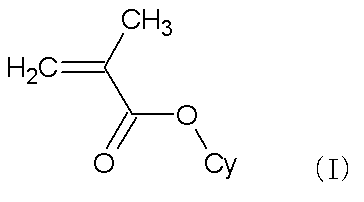
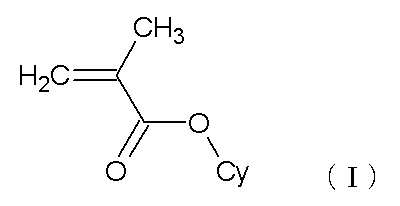
- the methacrylic acid ester represented by the formula (I) is tricyclo [5.2.1.0 2,6 ] dec-8-yl methacrylate, tricyclo [3.3.1 3,7 ] methacrylate. ]
- the methacrylic resin composition of the present invention is excellent in heat resistance, moisture resistance and impact resistance, it is suitable as a laminate material.
- the laminate of the present invention is excellent in transparency and impact resistance, and is less likely to warp at high temperatures and high humidity, and is suitable as a display protective plate, particularly as a display window protective plate for portable information terminals.
- methacrylic resin composition (A) of the present invention will be described in detail.
- the methacrylic resin composition (A) contains at least a methacrylic resin (a) and a polycarbonate (b).
- the methacrylic resin (a) contains a structural unit derived from a methacrylic acid ester.
- the content of the structural unit derived from the methacrylic acid ester is usually 90% by mass or more, preferably 95% by mass or more, more preferably 98% by mass or more, and most preferably 100% by mass.
- the gloss is good.
- the methacrylic resin (a) is a structural unit derived from a methacrylic acid ester represented by the formula (I) (hereinafter sometimes referred to as methacrylic acid ester (I)) among structural units derived from a methacrylic acid ester. It contains 10 to 60% by mass. (Cy in formula (I) is a tricyclic aliphatic hydrocarbon group.)
- Examples of the methacrylic acid ester (I) include tricyclo [3.3.1 3,7 ] decan-1-yl methacrylate and 2-methyltricyclo [3.3.1.1 3,7 ] decane-2 methacrylate.
- -Yl 3,5-dimethyl-1-adamantyl methacrylate, tricyclo [5.2.1.0 2,6 ] deca-8-yl methacrylate (hereinafter sometimes referred to as "TCDMA”), methacrylic acid And tricyclo [5.2.1.0 2,6 ] dec-4-methyl.
- TCDMA is preferable because of excellent compatibility with the polycarbonate (b).
- the content of the structural unit derived from the methacrylic ester (I) in the methacrylic resin (a) is 10 to 60% by mass, preferably 15 to 55% by mass, and more preferably 20 to 40% by mass. preferable.
- the content of the structural unit derived from the methacrylic ester (I) in the methacrylic resin (a) is 10% by mass or more, so that it has excellent heat resistance and compatibility with the polycarbonate (b), and is 60% by mass or less. Can suppress a decrease in impact resistance.
- the compatibility between the two components is generally better as the solubility parameter of each component is closer.
- the solubility parameter can be made close to that of the polycarbonate, and excellent compatibility with the polycarbonate (b) can be exhibited.
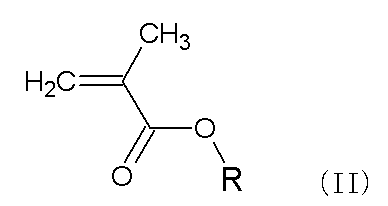
- the methacrylic resin (a) includes a structural unit derived from a methacrylic acid ester represented by the formula (II) (hereinafter sometimes referred to as methacrylic acid ester (II)).
- R represents a hydrocarbon group (excluding a tricyclic aliphatic hydrocarbon group).
- the hydrocarbon group R excluding the tricyclic aliphatic hydrocarbon group may be a saturated hydrocarbon group or an unsaturated hydrocarbon group.
- the hydrocarbon group represented by R may be an acyclic saturated hydrocarbon group such as a methyl group, an ethyl group or a propyl group, an alicyclic hydrocarbon group such as a cyclohexyl group, a phenyl group, It may be an aromatic hydrocarbon group such as a benzyl group.
- methacrylic acid ester (II) examples include methyl methacrylate (hereinafter sometimes referred to as “MMA”), ethyl methacrylate, n-propyl methacrylate, isopropyl methacrylate, n-butyl methacrylate, isobutyl methacrylate, methacrylic acid.
- MMA methyl methacrylate
- ethyl methacrylate ethyl methacrylate
- n-propyl methacrylate isopropyl methacrylate
- n-butyl methacrylate isobutyl methacrylate
- methacrylic acid examples include methyl methacrylate (hereinafter sometimes referred to as “MMA”), ethyl methacrylate, n-propyl methacrylate, isopropyl methacrylate, n-butyl methacrylate, isobutyl methacrylate, methacrylic acid.
- Methacrylic acid alkyl esters such as tert-butyl acid, pentyl methacrylate, hexyl methacrylate, heptyl methacrylate, 2-ethylhexyl methacrylate, nonyl methacrylate, decyl methacrylate, dodecyl methacrylate; 1-methylcyclopentyl methacrylate, methacrylic acid Monocyclic cycloalkyl methacrylates such as cyclohexyl, cycloheptyl methacrylate and cyclooctyl methacrylate; 2-isobornyl methacrylate (hereinafter referred to as “IBMA”) Methacrylic acid aryl esters such as phenyl methacrylate; methacrylic acid aralkyl esters such as benzyl methacrylate; and the like.
- IBMA 2-isobornyl methacrylate
- MMA ethyl methacrylate, N-propyl methacrylate, isopropyl methacrylate, n-butyl methacrylate, isobutyl methacrylate, and tert-butyl methacrylate are preferred, and MMA is most preferred.
- the content of the structural unit derived from the methacrylic ester (II) in the methacrylic resin (a) is preferably 40 to 90% by mass, more preferably 45 to 85% by mass, and 50 to 80% by mass. More preferably it is.
- the content of the structural unit derived from the methacrylic ester (II) in the methacrylic resin (a) is 40% by mass or more, the transparency is excellent, and when the content is 90% by mass or less, a decrease in surface hardness can be suppressed.
- the methacrylic resin (a) may contain a structural unit derived from another monomer other than the methacrylic ester.
- Such other monomers include methyl acrylate (hereinafter referred to as “MA”), ethyl acrylate, n-propyl acrylate, isopropyl acrylate, n-butyl acrylate, isobutyl acrylate, tert-acrylate Butyl, hexyl acrylate, 2-ethylhexyl acrylate, nonyl acrylate, decyl acrylate, dodecyl acrylate, stearyl acrylate, 2-hydroxyethyl acrylate, 2-hydroxypropyl acrylate, 4-hydroxybutyl acrylate, acrylic Cyclohexyl acid, 2-methoxyethyl acrylate, 3-methoxybutyl acrylate, trifluoromethyl acrylate, trifluoroethyl acrylate, pentafluoroe
- MA ethyl acrylate, n-propyl acrylate, isopropyl acrylate
- Acrylates such as n-butyl acrylate, isobutyl acrylate, tert-butyl acrylate, etc. are preferred, MA and ethyl acrylate are more preferred, and MA is most preferred.
- the total content of structural units derived from these other monomers in the methacrylic resin (a) is preferably 10% by mass or less, more preferably 5% by mass or less, and even more preferably 2% by mass or less.
- the methacrylic resin (a) can be obtained by polymerizing the above methacrylic acid ester and other monomers as optional components.
- the plurality of types of monomers are mixed to prepare a monomer mixture and then subjected to polymerization.
- radical polymerization is preferably performed by a method such as a bulk polymerization method, a suspension polymerization method, a solution polymerization method, and an emulsion polymerization method from the viewpoint of productivity.
- the weight average molecular weight (hereinafter referred to as “Mw”) of the methacrylic resin (a) is preferably 60,000 to 200,000, and more preferably 80,000 to 150,000.
- Mw weight average molecular weight
- the laminate of the present invention is excellent in surface hardness and impact resistance.
- the methacrylic resin (a) is the same as the polycarbonate (b).
- the compatibility is good, and the resulting methacrylic resin composition is excellent in moldability.
- Mw means the standard polystyrene conversion value measured using a gel perem chromatography (GPC).
- the glass transition temperature of the methacrylic resin (a) is preferably in the range of 120 to 160 ° C, more preferably in the range of 130 to 155 ° C, and further preferably in the range of 140 to 150 ° C.
- the glass transition temperature in this specification is a temperature when it measures with the temperature increase rate of 10 degree-C / min using a differential scanning calorimeter, and is calculated by the midpoint method.
- the saturated water absorption of the methacrylic resin (a) is preferably 1.5% by mass or less, more preferably 1.3% by mass or less, and further preferably 1.1% by mass or less.
- the melt flow rate (hereinafter referred to as “MFR”) of the methacrylic resin (a) is preferably in the range of 1 to 10 g / 10 minutes, more preferably in the range of 1.5 to 7 g / 10 minutes, More preferably, it is 2 to 4 g / 10 minutes.
- MFR melt flow rate
- the MFR of the methacrylic resin (a) in the present specification is a value measured using a melt indexer at a temperature of 230 ° C. and a load of 3.8 kg.
- the polycarbonate (b) used in the methacrylic resin composition of the present invention is preferably obtained by reacting a dihydric phenol and a carbonate precursor.
- dihydric phenol examples include 2,2-bis (4-hydroxyphenyl) propane (commonly called bisphenol A), 1,1-bis (4-hydroxyphenyl) ethane, and 1,1-bis (4-hydroxyphenyl) cyclohexane.
- 2,2-bis (3-methyl-4-hydroxyphenyl) propane, 2,2-bis (3,5-dimethyl-4-hydroxyphenyl) propane, bis (4-hydroxyphenyl) sulfide, bis (4- Hydroxyphenyl) sulfone and the like, and among them, bisphenol A is preferred.
- These dihydric phenols may be used individually by 1 type, or may use multiple types together.
- carbonate precursor examples include carbonyl halides such as phosgene, carbonate esters such as diphenyl carbonate, and haloformates such as dihaloformate of dihydric phenol. These carbonate precursors may be used individually by 1 type, or may use multiple types together.
- the production method of the polycarbonate (b) for example, an interfacial polymerization method in which an aqueous solution of a dihydric phenol and an organic solvent solution of a carbonate precursor are reacted at the interface, or a dihydric phenol and a carbonate precursor at a high temperature, Examples thereof include a transesterification method in which the reaction is carried out under reduced pressure and solvent-free conditions.
- the Mw of the polycarbonate (b) is preferably in the range of 25,000 to 65,000, more preferably in the range of 30,000 to 55,000.
- the Mw is 25,000 or more
- the methacrylic resin composition of the present invention is excellent in impact resistance and heat resistance.
- compatibility with the methacrylic resin (a) and molding processing are achieved. Excellent in properties.
- the glass transition temperature of the polycarbonate (b) is preferably in the range of 120 to 160 ° C., more preferably in the range of 135 to 155 ° C., and further preferably in the range of 140 to 150 ° C.
- the glass transition temperature is in the range of 120 to 160 ° C.
- the methacrylic resin composition of the present invention is excellent in heat resistance.
- the saturated water absorption of the polycarbonate (b) is preferably 1.0% by mass or less, more preferably 0.7% by mass or less, and further preferably 0.5% by mass or less.
- the saturated water absorption is 1.5% by mass or less, the methacrylic resin composition obtained in the present invention is excellent in moisture resistance.
- the MFR of the polycarbonate (b) is preferably in the range of 3 to 50 g / 10 minutes, more preferably in the range of 5 to 40 g / 10 minutes, and further in the range of 7 to 30 g / 10 minutes. preferable.
- the MFR is in the range of 3 to 50 g / 10 min, the compatibility with the methacrylic resin (a) is good.
- the MFR of polycarbonate in the present specification is measured using a melt indexer under conditions of a temperature of 300 ° C. and a load of 1.2 kg.
- polycarbonate Commercially available products may be used as the polycarbonate.
- the content of the methacrylic resin (a) in the methacrylic resin composition (A) of the present invention is in the range of 51 to 94 parts by mass, preferably in the range of 55 to 90 parts by mass, and preferably 60 to 85 parts by mass. More preferably, it is the range.
- the methacrylic resin composition (A) of the present invention is excellent in transparency, surface hardness, weather resistance and the like when the content of the methacrylic resin (a) is 51 parts by mass or more, and is 94 parts by mass or less. It has excellent impact resistance.
- the content of the polycarbonate (b) in the methacrylic resin composition (A) is in the range of 6 to 49 parts by mass, preferably in the range of 10 to 45 parts by mass, and in the range of 15 to 40 parts by mass. More preferably.
- the methacrylic resin composition (A) of the present invention has excellent heat resistance, moisture resistance, impact resistance and the like when the content of the polycarbonate (b) is 6 parts by mass or more, and is 49 parts by mass or less. As a result, the compatibility is good and the transparency is excellent.
- the methacrylic resin composition (A) is obtained by mixing the methacrylic resin (a) and the polycarbonate (b).
- a melt mixing method or a solution mixing method can be used.
- the melt mixing method for example, using a melt kneader such as a single-screw or multi-screw kneader, an open roll, a Banbury mixer, a kneader, and the like, under an inert gas atmosphere such as nitrogen gas, argon gas, helium gas, etc. Melt and knead.
- a methacrylic resin and a polycarbonate are dissolved and mixed in an organic solvent such as toluene, tetrahydrofuran, or methyl ethyl ketone.
- the methacrylic resin composition (A) may contain a polymer other than the methacrylic resin (a) and the polycarbonate (b) as long as the effects of the present invention are not impaired.
- examples of such other polymers include polyolefins such as polyethylene and polypropylene, thermoplastic resins such as polyamide, polyphenylene sulfide, polyether ether ketone, polyester, polysulfone, polyphenylene oxide, polyimide, polyether imide, and polyacetal. These other polymers may be used individually by 1 type, or may use multiple types together.
- the content of these other polymers in the methacrylic resin composition (A) is preferably 10% by mass or less, more preferably 5% by mass or less, and further preferably 2% by mass or less. .
- the methacrylic resin composition (A) may contain various additives as necessary.
- additives include antioxidants, thermal deterioration inhibitors, ultraviolet absorbers, light stabilizers, lubricants, mold release agents, polymer processing aids, antistatic agents, flame retardants, dyes / pigments, and light diffusing agents. , Matting agents, impact resistance modifiers, phosphors and the like.
- the content of these additives can be appropriately set within a range not impairing the effects of the present invention.
- the content of the antioxidant is 0.01 to 1 with respect to 100 parts by mass of the methacrylic resin composition (A).
- Part by mass, content of UV absorber is 0.01-3 parts by mass
- content of light stabilizer is 0.01-3 parts by mass
- content of lubricant is 0.01-3 parts by mass
- dye / pigment The content is preferably 0.01 to 3 parts by mass.
- the methacrylic resin composition (A) contains other polymer and / or additive
- the methacrylic resin (a) and / or the polycarbonate (b) may be added when polymerizing the methacrylic resin (a). It may be added when a) and polycarbonate (b) are mixed, or may be further added after mixing methacrylic resin (a) and polycarbonate (b).
- the glass transition temperature of the methacrylic resin composition (A) is preferably in the range of 120 to 160 ° C, more preferably in the range of 130 to 155 ° C, and in the range of 140 to 150 ° C. Further preferred. When the glass transition temperature is in the range of 120 to 160 ° C., the methacrylic resin composition (A) obtained in the present invention is excellent in heat resistance.
- the saturated water absorption of the methacrylic resin composition (A) is preferably 1.0% by mass or less, more preferably 0.8% by mass or less, and 0.6% by mass or less. Further preferred. When the saturated water absorption is 1.0% by mass or less, the methacrylic resin composition (A) obtained in the present invention is excellent in moisture resistance.
- the MFR of the methacrylic resin composition (A) is preferably in the range of 1 to 8 g / 10 minutes, more preferably in the range of 1.5 to 6 g / 10 minutes, and 2 to 4 g / 10 minutes. More preferably it is.
- the MFR is in the range of 1 to 10 g / 10 minutes
- the methacrylic resin composition (A) obtained by the present invention has good stability in heat-melt molding.
- the methacrylic resin composition (A) of the present invention is subjected to an extrusion molding method such as a (co) extrusion molding method, a T-die laminate molding method, and an extrusion coating method; insert injection molding method, two-color injection molding method, core back injection molding Various molded products can be obtained by hot-melt molding using injection molding methods such as the injection molding method, sandwich injection molding method, injection breath molding method; blow molding method; calendar molding method; press molding method; .
- the methacrylic resin composition (A) of the present invention has the characteristics of methacrylic resin and polycarbonate, and is excellent in heat resistance, moisture resistance and impact resistance. It is suitable for manufacturing a 0 mm thin and wide molded product.
- the methacrylic resin composition (A) of the present invention is used for various molded products such as films and sheets.
- various molded products include billboard parts such as advertising towers, stand signboards, sleeve signboards, bamboard signs, and rooftop signs; display parts such as showcases, partition plates, and store displays; fluorescent lamp covers and mood lighting covers.
- Lighting parts such as lamp shades, light ceilings, light walls, and chandeliers; interior parts such as pendants and mirrors; for buildings such as doors, domes, safety window glass, partitions, stair waist plates, balcony waist plates, and roofs of leisure buildings Parts: Aircraft windshield, pilot visor, motorcycle, motorboat windshield, bus shading plate, automotive side visor, rear visor, head wing, headlight cover, and other transport related parts; audio visual nameplate, stereo cover, TV protection mask Electronic devices such as vending machine display covers Products: Medical equipment parts such as incubators and X-ray parts; equipment-related parts such as machine covers, instrument covers, experimental devices, rulers, dials, observation windows; LCD protective plates, light guide plates, light guide films, Fresnel lenses, lenticulars Optical parts such as lenses, front plates and diffusers for various displays; traffic-related parts such as road signs, guide boards, curve mirrors, and sound barriers; surface materials for automobile interiors, surface materials for mobile phones, films such as marking films Components: Household appliances such as washing machine
- the laminate of the present invention is a laminate comprising: a layer made of a methacrylic resin composition (A); and a layer made of a polycarbonate (B).
- the polycarbonate (B) will be described below. [Polycarbonate (B)]
- the polycarbonate (B) of this invention can use the same thing as the said polycarbonate (b) as described in this specification.
- the polycarbonate (B) and the polycarbonate (b) may be the same or different.
- the laminate of the present invention may be any layer provided that it comprises at least one layer comprising the methacrylic resin composition (A) and at least one layer comprising the polycarbonate (B). You may have two or more layers which consist of a layer which consists of (A), and / or polycarbonate (B).
- the laminate of the present invention has, in addition to the layer made of the methacrylic resin composition (A) and the layer made of the polycarbonate (B), a layer made of another resin (another resin layer), a layer made of a metal, and the like. It may be.
- the resin contained in the other resin layer include various thermoplastic resins other than the methacrylic resin composition (A) and the polycarbonate (B); a thermosetting resin; an energy beam curable resin;
- Examples of other resin layers described above include a scratch-resistant layer, an antistatic layer, an antifouling layer, a friction reducing layer, an antiglare layer, an antireflection layer, an adhesive layer, and an impact strength imparting layer.
- These other resin layers may be one layer or plural. When there are a plurality of these other resin layers, they may be made of the same resin or different resins. In the laminate of the present invention, the arrangement order of the other resin layers is not particularly limited, and may be a surface layer or an inner layer.
- the thickness of the laminate of the present invention is preferably in the range of 0.03 to 5.0 mm, and preferably 0.05 to 4.0 mm from the viewpoint of manufacturing with good productivity while maintaining an excellent appearance. Is more preferable, and a range of 0.1 to 3.0 mm is more preferable.
- the thickness of the layer made of the methacrylic resin composition (A) in the laminate of the present invention is preferably in the range of 0.01 to 0.5 mm, more preferably in the range of 0.015 to 0.3 mm. A range of 0.02 to 0.1 mm is more preferable. When the thickness is less than 0.01 mm, scratch resistance and weather resistance may be insufficient. If it exceeds 0.5 mm, the impact resistance may be insufficient. When the thickness of the layer made of the methacrylic resin composition (A) in the laminate of the present invention is thin, for example, 0.1 mm or less, the total light transmittance of the methacrylic resin composition (A) is low. Even in this case, the total light transmittance as the laminate of the present invention can be maintained high.
- the thickness of the layer made of the polycarbonate (B) in the laminate of the present invention is preferably in the range of 0.02 to 4.9 mm, more preferably in the range of 0.035 to 3.9 mm.
- the range of 08 to 2.9 mm is more preferable. If the thickness is less than 0.02 mm, the impact resistance may be insufficient. Moreover, when it exceeds 4.9 mm, productivity may fall.
- the layer made of the methacrylic resin composition (A) is (1) and the polycarbonate (B)
- the layer composed of (2) is expressed as (1)-(2); (1)-(2)-(1); (2)-(1)- (2); (1)-(2)-(1)-(2)-(1); and the like.
- the layer composed of (2) is expressed as (1)-(2); (1)-(2)-(1); (2)-(1)- (2); (1)-(2)-(1)-(2)-(1); and the like.
- at least one surface is a layer (1) made of the methacrylic resin composition (A). It is preferable that they are laminated.
- the stacking order of the laminate of the present invention is (1)-(2) -(3); (3)-(1)-(2); (3)-(1)-(2)-(3); (3)-(1)-(2)-(1)-( 3); (1)-(2)-(3)-(2)-(1);
- the stacking order of the laminate of the present invention is (3 ′)-(1)-(2); At least one surface such as 3 ′)-(1)-(2)-(3 ′), (3 ′)-(1)-(2)-(1)-(3 ′) is a scratch-resistant layer It is preferable that they are laminated.
- the stacking order of the laminate of the present invention is (1)-(2)-(3)-(4); (4)-(3)-(1)-(2); (4)-( 3)-(1)-(2)-(3); (4)-(1)-(2)-(3); (4)-(3)-(1)-(2)-(3) -(4); (4)-(3)-(1)-(2)-(1)-(3)-(4);
- the antireflection layer is expressed as (4 ′), and (4 ′) ⁇ (3 ′) ⁇ (1) ⁇ ( 2); (4 ')-(3')-(1)-(2)-(3 '); (4')-(3 ')-(1)-(2)-(3')-( 4 ′); (4 ′)-(3 ′)-(1)-(2)-(1)-(3 ′)-(4 ′);
- the laminate of the present invention preferably has a lamination order that is symmetric in the thickness direction, and the thickness of each layer is further symmetric in the thickness direction. It is more preferable that it is symmetrical.
- the production method of the laminate of the present invention is not particularly limited, and can be produced by a multilayer molding method such as multilayer extrusion molding, multilayer blow molding, multilayer press molding, multicolor injection molding, insert injection molding or the like.
- multilayer extrusion molding of a methacrylic resin composition (A) and a polycarbonate (B) is preferable from the viewpoint of productivity.
- a method of further laminating other resin layers As a method of further laminating other resin layers, a method of multilayer molding by the above-described method together with a layer made of methacrylic resin composition (A) and a layer made of polycarbonate (B), a methacrylic resin composition ( A method of applying a fluid other resin to the surface of a layer made of A) or a layer made of polycarbonate (B) and drying or curing, a layer made of a pre-made acryl-based resin composition (A) or polycarbonate (B ) And the like are bonded to the surface via an adhesive layer.
- a method of applying a fluid other resin to the surface of a layer made of A) or a layer made of polycarbonate (B) and drying or curing a layer made of a pre-made acryl-based resin composition (A) or polycarbonate (B ) And the like are bonded to the surface via an adhesive layer.
- the method of multilayer extrusion molding is not particularly limited, and a known multilayer extrusion molding method used for the production of multilayer laminates of thermoplastic resins can be preferably employed, and more preferably a flat T die and a surface with a mirror-finished polishing. Molded by an apparatus equipped with a roll.
- the T-die method includes a feed block method in which a methacrylic resin composition (A) and a polycarbonate (B) in a heated and melted state are laminated before inflow of the T-die, a methacrylic resin composition (A) and a polycarbonate ( A multi-manifold system in which B) is stacked inside the T die can be adopted. From the viewpoint of improving the smoothness of the interface between the layers constituting the laminate, the multi-manifold method is preferable.
- the methacrylic resin composition (A) and the polycarbonate (B) are preferably melt-filtered with a filter before multilayer molding.
- a filter medium used is not particularly limited, and is appropriately selected depending on the operating temperature, viscosity, and filtration accuracy.
- nonwoven fabric made of polypropylene, cotton, polyester, rayon, glass fiber, etc .; phenol resin-impregnated cellulose film; Bonded film; metal powder sintered film; wire mesh; or a combination thereof.
- the filtration accuracy of the filter is not particularly limited, but is preferably 30 ⁇ m or less, more preferably 10 ⁇ m or less, and even more preferably 5 ⁇ m or less.
- the total light transmittance of the laminate of the present invention is preferably 80% or more, more preferably 85% or more, and further preferably 90% or more.
- the laminate obtained in the present invention is excellent in transparency.
- inventions include, for example, billboard parts such as advertising towers, stand signboards, sleeve signboards, billboard signs, and rooftop signs; display parts such as showcases, partition plates, and store displays; fluorescent lamp covers, mood lighting Lighting parts such as covers, lamp shades, light ceilings, light walls, and chandeliers; interior parts such as pendants and mirrors; architectures such as doors, domes, safety window glass, partitions, staircases, balcony waistboards, and roofs for leisure buildings Parts: Aircraft windshields, pilot visors, motorcycles, motorboat windshields, bus shading plates, automotive side visors, rear visors, head wings, headlight covers, and other transport related parts; audio visual nameplates, stereo covers, TV protection Electronic devices such as masks and vending machine display covers Products: Medical equipment parts such as incubators and X-ray parts; equipment-related parts such as machine covers, instrument covers, experimental devices, rulers, dials, observation windows; LCD protective plates, light guide plates, light guide films, Fresnel lenses,
- the physical properties of the methacrylic resins and methacrylic resin compositions obtained in Examples 1a to 7a and Comparative Examples 1a to 6a were measured by the following methods.
- the physical properties of laminates comprising a layer made of the methacrylic resin composition obtained in Examples 1b to 7b and Comparative Examples 1b to 6b; and a layer made of polycarbonate were measured by the following methods.
- Glass-transition temperature Based on the JIS K7121 test method, the methacrylic resin or the methacrylic resin composition obtained in Examples and Comparative Examples was heated at room temperature to 200 ° C for the first time at 20 ° C / min and held for 10 minutes. Then, differential scanning calorimetry (DSC) analysis was performed under a temperature condition in which the temperature was cooled to room temperature and then raised from room temperature to 200 ° C. at a rate of 10 ° C./min for the second time. The midpoint glass transition temperature obtained from the DSC curve measured at the second temperature increase was adopted as the glass transition temperature in the present invention. A DSC-50 manufactured by Shimadzu Corporation was used as a measuring device.
- DSC differential scanning calorimetry
- Total light transmittance In accordance with the method described in JIS K7361, injection molded articles (thickness 1 mm) of methacrylic resins or methacrylic resin compositions of Examples and Comparative Examples and laminates (Thickness 1 mm) of Examples and Comparative Examples A spectral color difference meter SE5000 manufactured by Nippon Denshoku Industries Co., Ltd. was used for measurement.
- all the test pieces had a layer made of the methacrylic resin compositions (A-1) to (A-11) along the long side of the test piece (or the methacrylic resin (A) used instead thereof). Or a layer made of methacrylic resin (A) ′) on the inner side and a layer made of polycarbonate on the outer side, resulting in an arcuate warp. Place the bowed warped test piece on the surface plate so that both ends of the test piece are in contact with the surface plate (that is, the test piece is upwardly convex) and use the gap gauge to The maximum value of the gap with the surface plate was measured and taken as the amount of warpage at high temperature.
- all the test pieces had a layer made of polycarbonate along the long side of the test piece, and a layer made of the methacrylic resin compositions (A-1) to (A-11) (or instead)
- the methacrylic resin (A) or the layer made of the methacrylic resin (A) ′) was used on the outside, and a bow-shaped warp was generated. Place the bowed warped test piece on the surface plate so that both ends of the test piece are in contact with the surface plate (that is, the test piece is upwardly convex) and use the gap gauge to The maximum value of the gap with the surface plate was measured and taken as the amount of warpage under high humidity.
- the laminates obtained in the examples and comparative examples are defined by defining the direction perpendicular to the extrusion flow direction as the short side and the parallel direction as the long side, and cutting them into rectangles having a short side of 70 mm and a long side of 110 mm, respectively.
- the pedestal having a rectangular opening having a short side of 50 mm and a long side of 90 mm the long side and the short side of the opening of the test piece and the pedestal are respectively parallel, and the center of the test piece and the center of the opening Were fixed with double-sided tape so that they matched.
- each test piece was fixed so that the base and the layer made of polycarbonate were in contact with each other.
- a steel ball having a diameter of 30 mm and a mass of 112 g was freely dropped from the vertical height of 10 cm at the center of the test piece, and the presence or absence of appearance changes such as dents, cracks, fractures, cloudiness, and whitening was observed with the naked eye. Further, the height at which the steel ball is allowed to freely fall is increased by 10 cm, and the same observation is repeated. The height at which the appearance change is made ⁇ 10 cm, that is, the highest height at which the appearance change has not occurred is determined as the impact resistance. Recorded as an indicator.
- ⁇ Production Example 1> In an autoclave, 63 parts by weight of MMA, 35 parts by weight of TCDMA, 2 parts by weight of MA, 0.47 parts by weight of pentaerythritol tetrakisthiopropionate, 0.06 parts by weight of azobisisobutyronitrile, 01 parts by weight of 1,1-bis (1,1-dimethylperoxy) cyclohexane, 231 parts by weight of water, 1.4 parts by weight of a dispersant and 17.5 parts by weight of a pH adjuster were added.
- the TCDMA used here corresponds to the methacrylic acid ester (I) in this specification.
- the liquid temperature was raised from room temperature to 70 ° C., held at 70 ° C. for 120 minutes, and then held at 120 ° C. for 60 minutes to effect suspension polymerization.
- the liquid temperature was lowered to room temperature, and the polymerization reaction liquid was extracted from the autoclave.
- the solid content was removed from the polymerization reaction solution by filtration, washed with water, and dried in hot air at 80 ° C. for 24 hours.
- ⁇ Production Example 2> In an autoclave, 63 parts by mass of MMA, 35 parts by mass of TCDMA, 2 parts by mass of MA, 0.42 parts by mass of pentaerythritol tetrakisthiopropionate, 0.06 parts by mass of azobisisobutyronitrile, 01 parts by weight of 1,1-bis (1,1-dimethylperoxy) cyclohexane, 231 parts by weight of water, 1.4 parts by weight of a dispersant and 17.5 parts by weight of a pH adjuster were added. While stirring the inside of the autoclave, the liquid temperature was raised from room temperature to 70 ° C., held at 70 ° C. for 120 minutes, and then held at 120 ° C.
- the liquid temperature was lowered to room temperature, and the polymerization reaction liquid was extracted from the autoclave.
- the solid content was removed from the polymerization reaction solution by filtration, washed with water, and dried in hot air at 80 ° C. for 24 hours.
- ⁇ Production Example 3> In an autoclave, 85 parts by weight of MMA, 13 parts by weight of TCDMA, 2 parts by weight of MA, 0.47 parts by weight of pentaerythritol tetrakisthiopropionate, 0.06 parts by weight of azobisisobutyronitrile, 01 parts by weight of 1,1-bis (1,1-dimethylperoxy) cyclohexane, 231 parts by weight of water, 1.4 parts by weight of a dispersant and 17.5 parts by weight of a pH adjuster were added. While stirring the inside of the autoclave, the liquid temperature was raised from room temperature to 70 ° C., held at 70 ° C. for 120 minutes, and then held at 120 ° C.
- the liquid temperature was lowered to room temperature, and the polymerization reaction liquid was extracted from the autoclave.
- the solid content was removed from the polymerization reaction solution by filtration, washed with water, and dried in hot air at 80 ° C. for 24 hours.
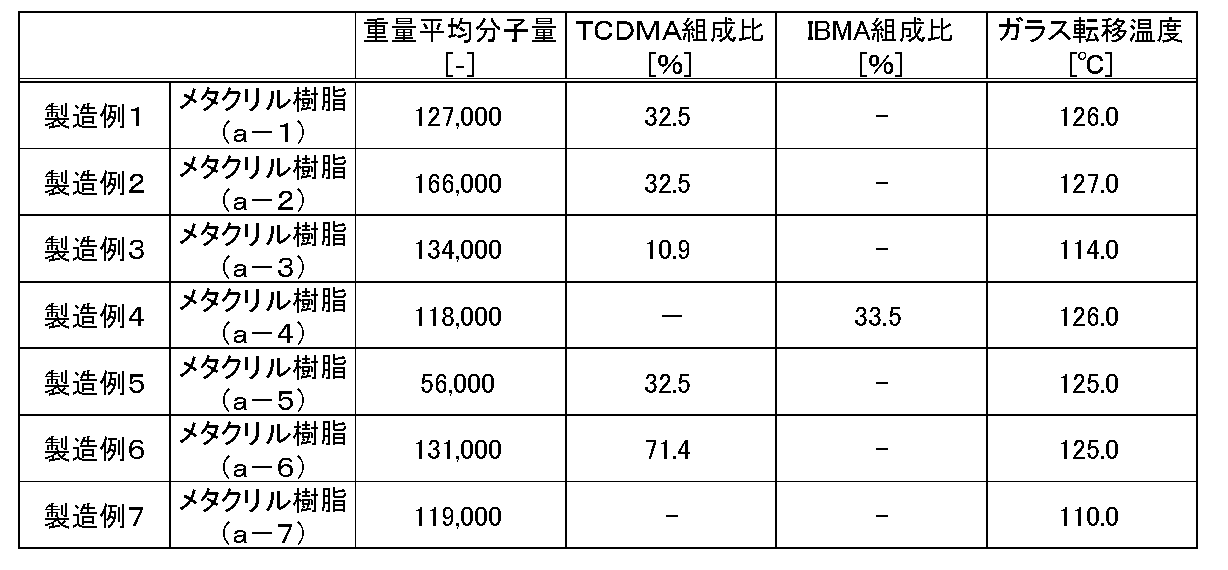
- the obtained solid content was supplied to a hopper of a twin screw extruder and melt kneaded at a cylinder temperature of 230 ° C. Thereafter, the molten resin was extruded to obtain a pellet-shaped methacrylic resin (a-3) having a Mw of 134,000, a TCDMA composition ratio of 10.9 mass%, and a glass transition temperature of 114 ° C.
- ⁇ Production Example 4> In an autoclave, 63 parts by weight of MMA, 35 parts by weight of IBMA, 2 parts by weight of MA, 0.49 parts by weight of pentaerythritol tetrakisthiopropionate, 0.06 parts by weight of azobisisobutyronitrile, 01 parts by weight of 1,1-bis (1,1-dimethylperoxy) cyclohexane, 231 parts by weight of water, 1.4 parts by weight of a dispersant and 17.5 parts by weight of a pH adjuster were added.
- IBMA used here corresponds to methacrylic acid ester (II) in this specification.
- the liquid temperature was raised from room temperature to 70 ° C., held at 70 ° C. for 120 minutes, and then held at 120 ° C. for 60 minutes to effect suspension polymerization.
- the liquid temperature was lowered to room temperature, and the polymerization reaction liquid was extracted from the autoclave.
- the solid content was removed from the polymerization reaction solution by filtration, washed with water, and dried in hot air at 80 ° C. for 24 hours.
- ⁇ Production Example 5> In an autoclave, 63 parts by weight of MMA, 35 parts by weight of TCDMA, 2 parts by weight of MA, 0.6 parts by weight of pentaerythritol tetrakisthiopropionate, 0.06 parts by weight of azobisisobutyronitrile, 01 parts by weight of 1,1-bis (1,1-dimethylperoxy) cyclohexane, 231 parts by weight of water, 1.4 parts by weight of a dispersant and 17.5 parts by weight of a pH adjuster were added. While stirring the inside of the autoclave, the liquid temperature was raised from room temperature to 70 ° C., held at 70 ° C. for 120 minutes, and then held at 120 ° C.
- the liquid temperature was lowered to room temperature, and the polymerization reaction liquid was extracted from the autoclave.
- the solid content was removed from the polymerization reaction solution by filtration, washed with water, and dried in hot air at 80 ° C. for 24 hours.
- ⁇ Production Example 7> In an autoclave, 96.5 parts by weight of MMA, 2.5 parts by weight of MA, 0.06 parts by weight of azobisisobutyronitrile, 0.25 parts by weight of n-octyl mercaptan, 231 parts by weight of water, 4 parts by weight of dispersant and 17.5 parts by weight of pH adjuster were added. While stirring the inside of the autoclave, the liquid temperature was raised from room temperature to 70 ° C., and maintained at 70 ° C. for 120 minutes to perform suspension polymerization. The liquid temperature was lowered to room temperature, and the polymerization reaction liquid was extracted from the autoclave.
- the solid content was removed from the polymerization reaction solution by filtration, washed with water, and dried in hot air at 80 ° C. for 24 hours.
- Table 1 shows the composition and physical properties of the methacrylic resins obtained in Production Examples 1 to 7.
- Mw Weight average molecular weight (Mw)] Mw of the polycarbonates used in the methacrylic resins (a-1) to (a-7) described in Production Examples 1 to 7 and Examples and Comparative Examples were obtained by the GPC method according to the following procedure. Tetrahydrofuran was used as the eluent, and TSKgel SuperMultipore HZM-M manufactured by Tosoh Corporation and SuperHZ4000 were connected in series as the column. As a GPC apparatus, HLC-8320 (product number) manufactured by Tosoh Corporation equipped with a differential refractive index detector (RI detector) was used.
- RI detector differential refractive index detector
- a sample solution was prepared by dissolving 4 mg of methacrylic resins (a-1) to (a-7) in 5 ml of tetrahydrofuran.
- the column oven temperature was set to 40 ° C., 20 ⁇ l of sample solution was injected at an eluent flow rate of 0.35 ml / min, and the chromatogram was measured.
- Ten standard polystyrenes having a molecular weight in the range of 400 to 5000000 were measured by GPC, and a calibration curve showing the relationship between retention time and molecular weight was prepared. Mw was determined based on this calibration curve.
- composition ratio of TCDMA and IBMA The TCDMA and IBMA composition ratios of the methacrylic resins (a-1) to (a-6) described in Production Examples 1 to 6 were determined by 1H-NMR method according to the following procedure.
- a nuclear magnetic resonance apparatus ULTRA SHIELD 400 PLUSGX-270 manufactured by JEOL Bruker
- a sample solution was prepared by dissolving 20.0 mg of methacrylic resins (a-1) to (a-6) in 1.5 ml of deuterated chloroform, and measurement was performed under the conditions of room temperature and 32 times of accumulation. The following values were determined from the measurement results.
- Example 2a A methacrylic resin composition (A-2) was obtained in the same manner as in Example 1a, except that 80 parts by weight of methacrylic resin (a-1) and 20 parts by weight of polycarbonate (b-1) were used. Table 2 shows the composition and physical properties of the methacrylic resin composition (A-2).
- Example 3a A methacrylic resin composition (A-3) was obtained in the same manner as in Example 1a, except that the amount was changed to 70 parts by weight of methacrylic resin (a-1) and 30 parts by weight of polycarbonate (b-1). Table 2 shows the composition and physical properties of the methacrylic resin composition (A-3).
- Example 4a A methacrylic resin composition (A-4) was obtained in the same manner as in Example 1a, except that the amount was changed to 60 parts by weight of methacrylic resin (a-1) and 40 parts by weight of polycarbonate (b-1). Table 2 shows the composition and physical properties of the methacrylic resin composition (A-4).
- Example 6a A methacrylic resin composition (A-6) was obtained in the same manner as in Example 3a, except that the methacrylic resin (a-2) was used as the methacrylic resin.
- Table 2 shows the composition and physical properties of the methacrylic resin composition (A-6).
- Example 7a A methacrylic resin composition (A-7) was obtained in the same manner as in Example 3a, except that the methacrylic resin (a-3) was used as the methacrylic resin.
- Table 2 shows the composition and physical properties of the methacrylic resin composition (A-7).
- Example 1a A methacrylic resin composition (A-8) was obtained in the same manner as in Example 1a except that the amount was changed to 30 parts by weight of methacrylic resin (a-1) and 70 parts by weight of polycarbonate (b-1). Table 2 shows the composition and physical properties of the methacrylic resin composition (A-8).
- Example 3a A methacrylic resin composition (A-10) was obtained in the same manner as in Example 2a, except that the methacrylic resin (a-4) was used as the methacrylic resin.
- Table 2 shows the composition and physical properties of the methacrylic resin composition (A-10).
- Example 4a A methacrylic resin composition (A-11) was obtained in the same manner as in Example 3a, except that the methacrylic resin (a-5) was used as the methacrylic resin.
- Table 2 shows the composition and physical properties of the methacrylic resin composition (A-11).
- Example 5a A methacrylic resin composition (A-12) was obtained in the same manner as in Example 3a, except that the methacrylic resin (a-6) was used as the methacrylic resin.
- Table 2 shows the composition and physical properties of the methacrylic resin composition (A-12).
- Example 6a A methacrylic resin composition (A) was obtained in the same manner as in Example 1a, except that 100 parts by mass of the methacrylic resin (a-1) was used. Table 2 shows the composition and physical properties of the methacrylic resin composition (A).
- Example 7a A methacrylic resin composition (A) ′ was obtained in the same manner as in Example 1a, except that 100 parts by mass of the methacrylic resin (a-7) was used. Table 2 shows the composition and physical properties of the methacrylic resin composition (A) ′.
- Example 8a A methacrylic resin composition (A-13) was obtained in the same manner as in Example 1a, except that 80 parts by weight of methacrylic resin (a-7) and 20 parts by weight of polycarbonate (b-1) were used. Table 2 shows the composition and physical properties of the methacrylic resin composition (A-13). Since the methacrylic resin composition (A-13) was phase-separated, the total light transmittance could not be measured.
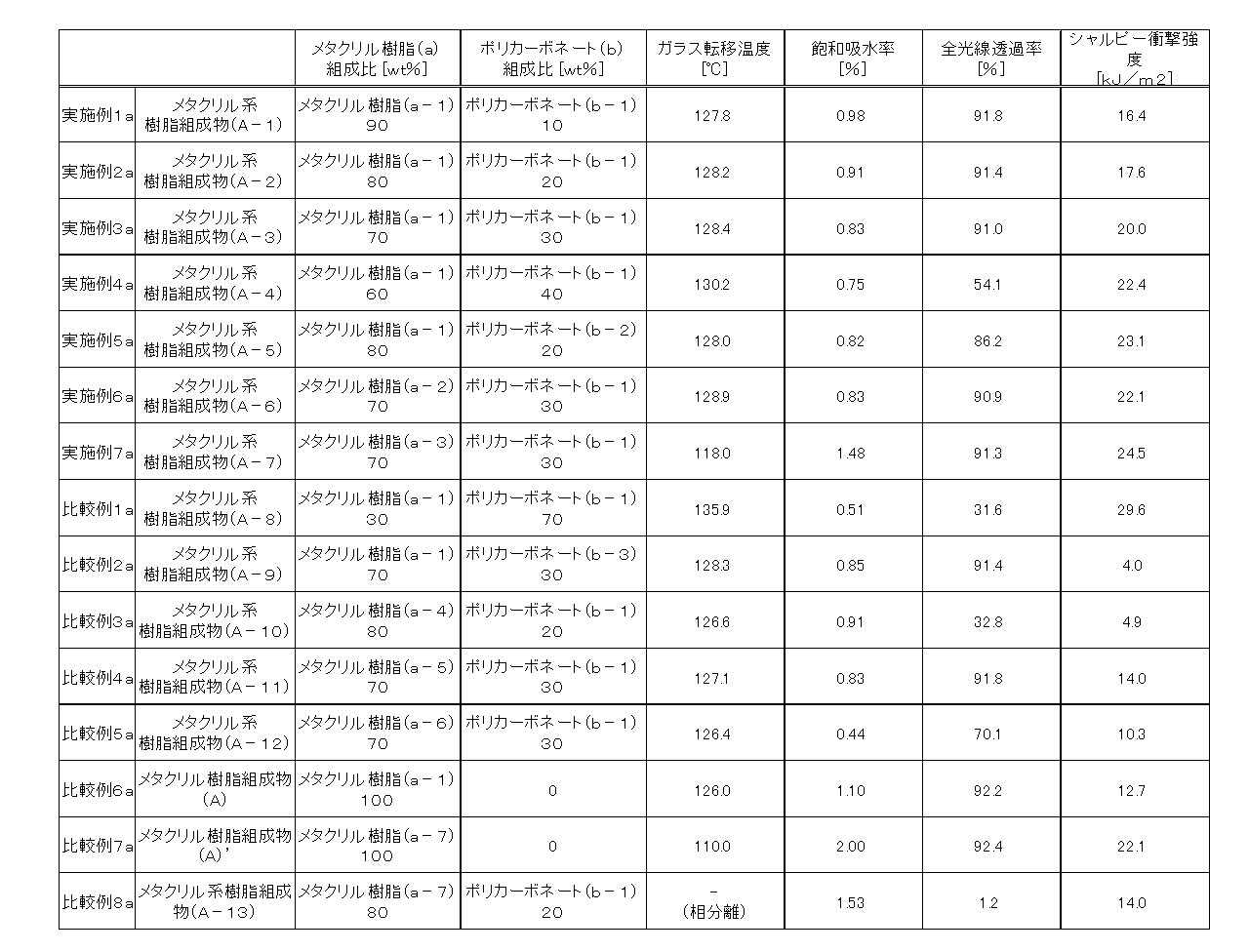
- Table 2 shows Examples 1a to 7a and Comparative Examples 1a to 8a.
- the molten polycarbonate and methacrylic resin composition (A-1) are introduced into a junction block, laminated with a multi-manifold die set at 250 ° C., extruded into a sheet, and a methacrylic resin composition having a thickness of 80 ⁇ m.
- Table 3 shows the evaluation results of the laminate.
- Example 2b Similar to Example 1b, except that the methacrylic resin composition (A-2) was used instead of the methacrylic resin composition (A-1) of Example 1b, a methacrylic resin composition (A A laminate having a total thickness of 1000 ⁇ m consisting of a layer made of -2) and a layer made of polycarbonate having a thickness of 920 ⁇ m was produced. Table 3 shows the evaluation results of the laminate.
- Example 3b Similar to Example 1b, except that the methacrylic resin composition (A-3) was used instead of the methacrylic resin composition (A-1) of Example 1b, a methacrylic resin composition (A A laminate having a total thickness of 1000 ⁇ m consisting of a layer made of -3) and a layer made of polycarbonate having a thickness of 920 ⁇ m was produced. Table 3 shows the evaluation results of the laminate.
- Example 4b 80 ⁇ m thick methacrylic resin composition (A) as in Example 1b, except that the methacrylic resin composition (A-4) was used instead of the methacrylic resin composition (A-1) of Example 1b. -4) and a layer made of polycarbonate having a thickness of 920 ⁇ m were produced to produce a laminate having a total thickness of 1000 ⁇ m.
- Table 3 shows the evaluation results of the laminate.
- Example 5b 80 ⁇ m thick methacrylic resin composition (A) as in Example 1b, except that the methacrylic resin composition (A-5) was used instead of the methacrylic resin composition (A-1) of Example 1b.
- Example 6b Similar to Example 1b, except that the methacrylic resin composition (A-6) was used instead of the methacrylic resin composition (A-1) of Example 1b, a methacrylic resin composition (A A laminate having a total thickness of 1000 ⁇ m composed of a layer made of ⁇ 6) and a layer made of polycarbonate having a thickness of 920 ⁇ m was produced. Table 3 shows the evaluation results of the laminate.
- Example 7b Similar to Example 1b, except that the methacrylic resin composition (A-7) was used instead of the methacrylic resin composition (A-1) of Example 1b, a methacrylic resin composition (A A laminate having a total thickness of 1000 ⁇ m composed of a layer consisting of ⁇ 7) and a layer consisting of polycarbonate having a thickness of 920 ⁇ m was produced. Table 3 shows the evaluation results of the laminate.
- Example 1b 80 ⁇ m thick methacrylic resin composition (A) as in Example 1b, except that the methacrylic resin composition (A-8) was used instead of the methacrylic resin composition (A-1) of Example 1b.
- Example 2b A methacrylic resin composition (A) having a thickness of 80 ⁇ m was used in the same manner as in Example 1b except that the methacrylic resin composition (A-9) was used instead of the methacrylic resin composition (A-1) of Example 1b.
- Example 3b 80 ⁇ m thick methacrylic resin composition (A) as in Example 1b, except that the methacrylic resin composition (A-10) was used instead of the methacrylic resin composition (A-1) of Example 1b.
- Example 4b A 80 ⁇ m thick methacrylic resin composition (A) as in Example 1b, except that the methacrylic resin composition (A-11) was used instead of the methacrylic resin composition (A-1) of Example 1b.
- Example 5b A 80 ⁇ m thick methacrylic resin composition (A) as in Example 1b, except that the methacrylic resin composition (A-12) was used instead of the methacrylic resin composition (A-1) of Example 1b.
- Example 6b A layer made of a methacrylic resin composition (A) having a thickness of 80 ⁇ m, as in Example 1b, except that the methacrylic resin composition (A) was used instead of the methacrylic resin composition (A-1) of Example 1b. And a laminate having a total thickness of 1000 ⁇ m, which is made of a polycarbonate layer having a thickness of 920 ⁇ m. Table 3 shows the evaluation results of the laminate.
- Example 7b From the methacrylic resin composition (A) ′ having a thickness of 80 ⁇ m, as in Example 1b, except that the methacrylic resin composition (A) ′ was used instead of the methacrylic resin composition (A-1) of Example 1b.
- a laminate having a total thickness of 1000 ⁇ m was manufactured, comprising a layer made of polycarbonate and a layer made of polycarbonate having a thickness of 920 ⁇ m. Table 3 shows the evaluation results of the laminate.
- Example 8b Similar to Example 1b, the methacrylic resin composition (A-13) having a thickness of 80 ⁇ m was used except that the methacrylic resin composition (A-13) was used instead of the methacrylic resin composition (A-1) of Example 1b. ) And a layer made of polycarbonate having a thickness of 920 ⁇ m were produced to produce a laminate having a total thickness of 1000 ⁇ m. Table 3 shows the evaluation results of the laminate.
- the methacrylic resin compositions (A-1) to (A-7) (Examples 1a to 7a) of the present invention have a high glass transition temperature and a low saturated water absorption rate. In addition, it maintains a certain level of transparency and excels in Charpy impact strength.
- the laminates of the present invention (Examples 1b to 7b) provided with the methacrylic resin composition of the present invention can suppress warpage under high temperature and high humidity while maintaining high transparency and impact resistance.
- the methacrylic resin composition (A-8) (Comparative Example 1a) having a high polycarbonate content contains a structural unit derived from the methacrylic acid ester represented by the formula (I) in the methacrylic resin.
- the methacrylic resin composition (A-10) (Comparative Example 3a) composed of a non-methacrylic resin and a polycarbonate is not compatible with the methacrylic resin and the polycarbonate, and is opaque.
- the transparency of the laminate using the product (Comparative Examples 1b and 3b) is also low.
- a methacrylic resin composition (A-9) having a low molecular weight of polycarbonate (Comparative Example 2a)
- a methacrylic resin composition (A-11) having a low molecular weight of methacrylic resin (Comparative Example 4a)
- formula (I) A methacrylic resin composition (A-12) (Comparative Example 5a) using a methacrylic resin having a high TCDMA ratio belonging to the methacrylic acid ester represented, and a methacrylic resin composition (A) containing no polycarbonate (Comparative Example) 6a) has low Charpy impact strength.
- the laminates (Comparative Examples 2b, 4b to 6b) using the methacrylic resin composition and the methacrylic resin of the comparative example have low impact resistance. Furthermore, the methacrylic resin composition (A) ′ (Comparative Example 7a) containing no structural unit derived from the methacrylic acid ester represented by the formula (I) in the methacrylic resin has a low glass transition temperature and saturated water absorption. Since the rate is high, the laminate (Comparative Example 7b) using the methacrylic resin of the comparative example has a large warp under high temperature and high humidity.
- the methacrylic resin composition of the present invention is excellent in heat resistance, moisture resistance, and impact resistance while maintaining a certain transparency. By these characteristics, the laminated body provided with the methacrylic resin composition of the present invention can suppress warpage under high temperature and high humidity while maintaining high transparency and impact resistance.
- a laminate comprising a layer made of the methacrylic resin composition of the present invention is characterized by excellent transparency, less warpage at high temperature and high humidity, and good impact resistance, and a display device It is suitable for use as a cover or a casing of a vehicle, a window material or a cover of a vehicle interior / exterior.
Landscapes
- Chemical & Material Sciences (AREA)
- Health & Medical Sciences (AREA)
- Chemical Kinetics & Catalysis (AREA)
- Medicinal Chemistry (AREA)
- Polymers & Plastics (AREA)
- Organic Chemistry (AREA)
- Laminated Bodies (AREA)
- Compositions Of Macromolecular Compounds (AREA)
- Addition Polymer Or Copolymer, Post-Treatments, Or Chemical Modifications (AREA)
Abstract
Description
[3];前記メタクリル樹脂が、式(I)で表されるメタクリル酸エステルに由来する構造単位を15~40質量%含有する[1]または[2]のメタクリル系樹脂組成物。
[4];前記メタクリル樹脂を71~90質量部と;前記ポリカーボネートを10~29質量部と;を含有する[1]~[3]のいずれかのメタクリル系樹脂組成物。
[5];[1]~[4]のいずれかのメタクリル系樹脂組成物からなる成形品。
[6];[1]~[4]のいずれかのメタクリル系樹脂組成物からなる層;に、ポリカーボネートからなる層;が積層されてなる積層体。
[7];厚さ1mmの全光線透過率が80%以上である[6]の積層体。
[8];厚さ1mmの全光線透過率が90%以上である[7]の積層体。
本発明の積層体は、透明性及び耐衝撃性に優れ、さらに高温および高湿下における反りの発生が少なく、ディスプレイ保護板、特に携帯用情報端末の表示窓保護板として好適である。
メタクリル樹脂(a)について以下説明する。
なお本明細書において、Mwはゲルパーエミーションクロマトグラフィー(GPC)を用いて測定される標準ポリスチレン換算値を意味する。
飽和吸水率(%)=[(吸水質量-初期質量)/初期質量]×100
なお、本明細書におけるメタクリル樹脂(a)のMFRとは、メルトインデクサーを用いて、温度230℃、3.8kg荷重下で測定した値である。
ポリカーボネート(b)について以下説明する。
なお、本明細書におけるポリカーボネートのMFRとは、メルトインデクサーを用いて、温度300℃、1.2kg荷重下の条件で測定したものである。
本発明のメタクリル系樹脂組成物(A)中のメタクリル樹脂(a)の含有量は51~94質量部の範囲であり、55~90質量部の範囲であることが好ましく、60~85質量部の範囲であることがより好ましい。本発明のメタクリル系樹脂組成物(A)は、メタクリル樹脂(a)の含有量が51質量部以上であることで、透明性、表面硬度、耐候性などに優れるものとなり、94質量部以下であることで耐衝撃性に優れる。
メタクリル系樹脂組成物(A)中におけるこれら他の重合体の含有量は10質量%以下であることが好ましく、5質量%以下であることがより好ましく、2質量%以下であることがさらに好ましい。
本発明の積層体は、メタクリル系樹脂組成物(A)からなる層;と、ポリカーボネート(B)からなる層;とを備える積層体である。
[ポリカーボネート(B)]
ポリカーボネート(B)とポリカーボネート(b)とは、全く同じものを用いても良いし、異なるものを用いても良い。
本発明の積層体は、メタクリル系樹脂組成物(A)からなる層を少なくとも1層と、ポリカーボネート(B)からなる層を少なくとも1層と、を備えるものであれば良く、メタクリル系樹脂組成物(A)からなる層および/またはポリカーボネート(B)からなる層を、複数有していてもよい。
また本発明の積層体におけるメタクリル系樹脂組成物(A)からなる層の厚さが薄い場合、例えば0.1mm以下であれば、メタクリル系樹脂組成物(A)の全光線透過率が低くい場合でも、本発明の積層体としての全光線透過率は高く維持できる。
例えば(3)が、耐擦傷層である場合、かかる本発明の積層体の積層順序は、耐擦傷層を(3’)と表記すると、(3’)-(1)-(2);(3’)-(1)-(2)-(3’)、(3’)-(1)-(2)-(1)-(3’)など、少なくとも一方の表面が耐擦傷層となるように積層されていることが好ましい。
この場合のTダイの方式としては、加熱溶融状態のメタクリル系樹脂組成物(A)およびポリカーボネート(B)をTダイ流入前に積層するフィードブロック方式、メタクリル系樹脂組成物(A)およびポリカーボネート(B)がTダイ内部で積層されるマルチマニホールド方式などを採用できる。積層体を構成する各層間の界面の平滑性を高める観点から、マルチマニホールド方式が好ましい。
JIS K7121試験法に準拠して、実施例および比較例で得られたメタクリル樹脂またはメタクリル系樹脂組成物を、室温から200℃まで20℃/分で1回目の昇温をし、10分間保持し、室温まで冷却し、次いで室温から200℃までを10℃/分で2回目の昇温をさせる温度条件において示差走査熱量(DSC)分析を行った。2回目の昇温時に測定されるDSC曲線から求められる中間点ガラス転移温度を本発明におけるガラス転移温度として採用した。測定装置として島津製作所製DSC-50を用いた。
射出成形機(住友重機械工業株式会社製、SE-180DU-HP)を用いて、シリンダ温度280℃、金型温度75℃および成形サイクル1分の条件で実施例および比較例で得られたメタクリル樹脂またはメタクリル系樹脂組成物を射出成形して、厚さ2mm、一辺50mmの正方形の試験片を得た。温度80℃、5mmHgの条件下において試験片を24時間真空乾燥させた。次いで、試験片をデシケータ中で放冷した。デシケータから試験片を取り出して直ぐに質量(初期質量)を測定した。次いで該試験片を23℃の蒸留水に浸漬した。試験片を水から取り出し、表面に付着した水を拭き取って質量を測定した。質量変化がなくなるまで蒸留水への浸漬、質量測定を繰り返した。質量変化がなくなったときの質量(吸水質量)と、初期質量とから、下式によって飽和吸水率を算出した。
飽和吸水率(%)=[(吸水質量-初期質量)/初期質量]×100]
JIS K7361に記載された方法に準拠して、実施例および比較例のメタクリル樹脂またはメタクリル系樹脂組成物の射出成形体(厚さ1mm)および実施例および比較例の積層体(厚さ1mm)を分光色差計SE5000 日本電色工業(株)製を使用し、測定した。
射出成形機(住友重機械工業株式会社製、SE-180DU-HP)を用いて、シリンダ温度280℃、金型温度75℃および成形サイクル1分の条件で実施例および比較例で得られたメタクリル樹脂またはメタクリル系樹脂組成物を射出成形して、厚さ1mm、長辺80mm、短辺4mmの長方形の試験片を得た。JIS K7111試験法に準拠して、得られた試験片(ノッチ無し)のシャルピー衝撃強度を測定した。なお、測定には、株式会社東洋精機製デジタル衝撃試験機DG-CB」を用いた。
実施例および比較例の積層体を押出流れ方向に対して平行な方向が短辺、押出流れ方向に対して垂直な方向が長辺となるように長方形に切り出して、短辺20mm、長辺150mmの試験片を作製した後、温度100℃、相対湿度50%の環境に4時間放置した。
次いで、温度120℃、相対湿度50%に設定した環境試験機の中に短辺側をクリップで止めた試験片を吊り下げ、その状態で72時間放置した後、23℃、相対湿度50%環境下で30分放冷した。その結果、すべての試験片は、試験片の長辺に沿って、メタクリル系樹脂組成物(A-1)~(A-11)からなる層(または、その代わりに用いたメタクリル樹脂(A)、またはメタクリル樹脂(A)’からなる層)を内側、ポリカーボネートからなる層を外側にして弓状の反りを生じた。定盤上に、かかる弓状の反りを生じた試験片の両末端部が定盤に接するように(すなわち試験片が上向きの凸状となるように)置き、隙間ゲージを用いて試験片と定盤との隙間の最大値を測定し、高温下での反り量とした。
実施例および比較例の積層体を押出流れ方向に対して平行な方向が短辺、押出流れ方向に対して垂直な方向が長辺となるように長方形に切り出して、短辺20mm、長辺150mmの試験片を作製した後、温度100℃、相対湿度50%の環境に7時間放置した。
次いで、温度25℃、相対湿度85%に設定した環境試験機の中に短辺側をクリップで止めた試験片を吊り下げ、その状態で72時間放置した後、23℃、相対湿度50%環境下で30分放置した。その結果、すべての試験片は、試験片の長辺に沿って、ポリカーボネートからなる層を内側、メタクリル系樹脂組成物(A-1)~(A-11)からなる層(または、その代わりに用いたメタクリル樹脂(A)、またはメタクリル樹脂(A)’からなる層)を外側にして弓状の反りを生じた。定盤上に、かかる弓状の反りを生じた試験片の両末端部が定盤に接するように(すなわち試験片が上向きの凸状となるように)置き、隙間ゲージを用いて試験片と定盤との隙間の最大値を測定し、高湿下での反り量とした。
実施例および比較例で得られた積層体を、押出流れ方向に垂直な方向を短辺、平行な方向を長辺と定義し、それぞれ、短辺70mm、長辺110mmの長方形に切り出して試験片を作製した。次いで短辺が50mm、長辺が90mmとなる長方形の開口部を有する台座上に、試験片および台座の開口部の長辺、短辺がそれぞれ平行になり、試験片の中心と開口部の中心が一致するよう、両面テープで固定した。この際、各試験片については、台座とポリカーボネートからなる層とが接触するように固定した。
次いで試験片の中央部に直径30mm、質量112gの鋼球を10cmの鉛直高さより自由落下させ、凹み、ひび割れ、破断、曇り、白化等の外観変化の有無を肉眼で観察した。さらに鋼球を自由落下させる高さを10cmずつ上げて、同様の観察を繰り返し行い、外観変化を生じた高さ-10cm、すなわち、外観変化の生じなかった最も高い高さを、耐衝撃性の指標として記録した。
オートクレーブに、63質量部のMMA、35質量部のTCDMA、2質量部のMA、0.47質量部のペンタエリスリトールテトラキスチオプロピオネート、0.06質量部のアゾビスイソブチロニトリル、0.01質量部の1,1-ビス(1,1-ジメチルペルオキシ)シクロへキサン、231質量部の水、1.4質量部の分散剤および17.5質量部のpH調整剤を入れた。なお、ここで用いたTCDMAは、本明細書におけるメタクリル酸エステル(I)に該当するものである。
オートクレーブ内を攪拌しながら、液温を室温から70℃に上げ、70℃で120分間保持し、その後120℃で60分間保持して、懸濁重合させた。液温を室温まで下げ、重合反応液をオートクレーブから抜き出した。重合反応液から固形分を濾過で取り出し、水で洗浄し、80℃にて24時間熱風乾燥させた。得られた固形分を二軸押出機のホッパーに供給し、シリンダ温度230℃で溶融混練した。その後、溶融樹脂を押し出して、Mw=127,000、TCDMA組成比率=32.5質量%、ガラス転移温度126℃のペレット状のメタクリル樹脂(a-1)を得た。
オートクレーブに、63質量部のMMA、35質量部のTCDMA、2質量部のMA、0.42質量部のペンタエリスリトールテトラキスチオプロピオネート、0.06質量部のアゾビスイソブチロニトリル、0.01質量部の1,1-ビス(1,1-ジメチルペルオキシ)シクロへキサン、231質量部の水、1.4質量部の分散剤および17.5質量部のpH調整剤を入れた。
オートクレーブ内を攪拌しながら、液温を室温から70℃に上げ、70℃で120分間保持し、その後120℃で60分間保持して、懸濁重合させた。液温を室温まで下げ、重合反応液をオートクレーブから抜き出した。重合反応液から固形分を濾過で取り出し、水で洗浄し、80℃にて24時間熱風乾燥させた。得られた固形分を二軸押出機のホッパーに供給し、シリンダ温度230℃で溶融混練した。その後、溶融樹脂を押し出して、Mw=166,000、TCDMA組成比率=32.5質量%、ガラス転移温度127℃のペレット状のメタクリル樹脂(a-2)を得た。
オートクレーブに、85質量部のMMA、13質量部のTCDMA、2質量部のMA、0.47質量部のペンタエリスリトールテトラキスチオプロピオネート、0.06質量部のアゾビスイソブチロニトリル、0.01質量部の1,1-ビス(1,1-ジメチルペルオキシ)シクロへキサン、231質量部の水、1.4質量部の分散剤および17.5質量部のpH調整剤を入れた。
オートクレーブ内を攪拌しながら、液温を室温から70℃に上げ、70℃で120分間保持し、その後120℃で60分間保持して、懸濁重合させた。液温を室温まで下げ、重合反応液をオートクレーブから抜き出した。重合反応液から固形分を濾過で取り出し、水で洗浄し、80℃にて24時間熱風乾燥させた。得られた固形分を二軸押出機のホッパーに供給し、シリンダ温度230℃で溶融混練した。その後、溶融樹脂を押し出して、Mw=134,000、TCDMA組成比率=10.9質量%、ガラス転移温度114℃のペレット状のメタクリル樹脂(a-3)を得た。
オートクレーブに、63質量部のMMA、35質量部のIBMA、2質量部のMA、0.49質量部のペンタエリスリトールテトラキスチオプロピオネート、0.06質量部のアゾビスイソブチロニトリル、0.01質量部の1,1-ビス(1,1-ジメチルペルオキシ)シクロへキサン、231質量部の水、1.4質量部の分散剤および17.5質量部のpH調整剤を入れた。なお、ここで用いたIBMAは、本明細書におけるメタクリル酸エステル(II)に該当するものである。
オートクレーブ内を攪拌しながら、液温を室温から70℃に上げ、70℃で120分間保持し、その後120℃で60分間保持して、懸濁重合させた。液温を室温まで下げ、重合反応液をオートクレーブから抜き出した。重合反応液から固形分を濾過で取り出し、水で洗浄し、80℃にて24時間熱風乾燥させた。得られた固形分を二軸押出機のホッパーに供給し、シリンダ温度230℃で溶融混練した。その後、溶融樹脂を押し出して、Mw=118,000、IBMA組成比率=33.5質量%、ガラス転移温度126℃のペレット状のメタクリル樹脂(a-4)を得た。
オートクレーブに、63質量部のMMA、35質量部のTCDMA、2質量部のMA、0.6質量部のペンタエリスリトールテトラキスチオプロピオネート、0.06質量部のアゾビスイソブチロニトリル、0.01質量部の1,1-ビス(1,1-ジメチルペルオキシ)シクロへキサン、231質量部の水、1.4質量部の分散剤および17.5質量部のpH調整剤を入れた。
オートクレーブ内を攪拌しながら、液温を室温から70℃に上げ、70℃で120分間保持し、その後120℃で60分間保持して、懸濁重合させた。液温を室温まで下げ、重合反応液をオートクレーブから抜き出した。重合反応液から固形分を濾過で取り出し、水で洗浄し、80℃にて24時間熱風乾燥させた。得られた固形分を二軸押出機のホッパーに供給し、シリンダ温度230℃で溶融混練した。その後、溶融樹脂を押し出して、Mw=56,000、TCDMA組成比率=32.5質量%、ガラス転移温度125℃のペレット状のメタクリル樹脂(a-5)を得た。
オートクレーブに、22質量部のMMA、76質量部のTCDMA、2質量部のMA、0.47質量部のペンタエリスリトールテトラキスチオプロピオネート、0.06質量部のアゾビスイソブチロニトリル、0.01質量部の1,1-ビス(1,1-ジメチルペルオキシ)シクロへキサン、231質量部の水、1.4質量部の分散剤および17.5質量部のpH調整剤を入れた。
オートクレーブ内を攪拌しながら、液温を室温から70℃に上げ、70℃で120分間保持し、その後120℃で60分間保持して、懸濁重合させた。液温を室温まで下げ、重合反応液をオートクレーブから抜き出した。重合反応液から固形分を濾過で取り出し、水で洗浄し、80℃にて24時間熱風乾燥させた。得られた固形分を二軸押出機のホッパーに供給し、シリンダ温度230℃で溶融混練した。その後、溶融樹脂を押し出して、Mw=131,000、TCDMA組成比率=71.4質量%、ガラス転移温度125℃のペレット状のメタクリル樹脂(a-6)を得た。
オートクレーブに、96.5質量部のMMA、2.5質量部のMA、0.06質量部のアゾビスイソブチロニトリル、0.25質量部のn-オクチルメルカプタン、231質量部の水、1.4質量部の分散剤および17.5質量部のpH調整剤を入れた。
オートクレーブ内を攪拌しながら、液温を室温から70℃に上げ、70℃で120分間保持して、懸濁重合を行った。液温を室温まで下げ、重合反応液をオートクレーブから抜き出した。重合反応液から固形分を濾過で取り出し、水で洗浄し、80℃にて24時間熱風乾燥させた。得られた固形分を二軸押出機のホッパーに供給し、シリンダ温度230で溶融混練した。その後、溶融樹脂を押し出して、Mw=119,000、ガラス転移温度110℃のペレット状のメタクリル樹脂(a-7)を得た。
製造例1~7に記載したメタクリル樹脂(a-1)~(a-7)および実施例、比較例に用いたポリカーボネートのMwは、下記の手順でGPC法により求めた。溶離液としてテトラヒドロフラン、カラムとして東ソー株式会社製のTSKgel SuperMultipore HZM-Mの2本とSuperHZ4000を直列に繋いだものを用いた。GPC装置として、示差屈折率検出器(RI検出器)を備えた東ソー株式会社製のHLC-8320(品番)を使用した。メタクリル樹脂(a-1)~(a-7)4mgをテトラヒドロフラン5mlに溶解させて試料溶液を調整した。カラムオーブンの温度を40℃に設定し、溶離液流量0.35ml/分で、試料溶液20μlを注入して、クロマトグラムを測定した。分子量が400~5000000の範囲内にある標準ポリスチレン10点をGPCで測定し、保持時間と分子量との関係を示す検量線を作成した。この検量線に基づいてMwを決定した。
製造例1~6に記載したメタクリル樹脂(a-1)~(a-6)のTCDMAおよびIBMA組成比率は、下記の手順で1H-NMR法により求めた。1H-NMR法スペクトルは、核磁気共鳴装置(日本電子Bruker社製 ULTRA SHIELD 400 PLUSGX-270)を用いた。メタクリル樹脂(a-1)~(a-6)20.0mgを重水素化クロロホルム1.5mlに溶解させて試料溶液を調整し、室温環境下、積算回数32回の条件にて、測定した。測定結果より、以下の値を求めた。
・〔IBMA由来のプロトンピーク(4.72ppm付近)の積分強度〕/水素数1個
・〔TCDMA由来のプロトンピーク(4.45ppm付近)の積分強度〕/水素数1個
・〔MMA由来のプロトンピーク(3.7ppm付近)の積分強度〕/水素数3個
以上の面積比から、試料中のTCDMA単位、IBMA単位、MMA単位のモル比を求めた。得られたモル比とそれぞれのモノマー単位の質量比(TCDMA:IBMA:MMA=220.3:220:100)から、メタクリル樹脂(a-1)~(a-3)、(a-5)、(a-6)のTCDMA組成比率およびメタクリル樹脂(a-4)のIBMA組成比率を求めた。
メタクリル樹脂(a-1)90質量部とポリカーボネート(住化スタイロンポリカーボネート(株)製、商品名:カリバー300-22、Mw=42,000)(b-1)10質量部をタンブラーで乾式混合し、軸径20mmの二軸押出機((株)テクノベル製、商品名:KZW20TW-45MG-NH-600)で、シリンダ温度180~240℃、ダイ温度240℃、スクリュ回転数100rpmの条件で溶融混練を行い、ペレット状のメタクリル系樹脂組成物(以下「メタクリル系樹脂組成物(A-1)と称する」)を得た。メタクリル系樹脂組成物(A-1)の組成および物性を表2に示す。
メタクリル樹脂(a-1)80質量部、ポリカーボネート(b-1)20質量部に変えた以外は、実施例1aと同じ方法にてメタクリル系樹脂組成物(A-2)を得た。メタクリル系樹脂組成物(A-2)の組成および物性を表2に示す。
メタクリル樹脂(a-1)70質量部、ポリカーボネート(b-1)30質量部に変えた以外は、実施例1aと同じ方法にてメタクリル系樹脂組成物(A-3)を得た。メタクリル系樹脂組成物(A-3)の組成および物性を表2に示す。
メタクリル樹脂(a-1)60質量部、ポリカーボネート(b-1)40質量部に変えた以外は、実施例1aと同じ方法にてメタクリル系樹脂組成物(A-4)を得た。メタクリル系樹脂組成物(A-4)の組成および物性を表2に示す。
ポリカーボネートとして、ポリカーボネート(住化スタイロンポリカーボネート(株)製、商品名:カリバー300-4、Mw=59,000)(b-2)を用いた以外は、実施例2aと同じ方法にてメタクリル系樹脂組成物(A-5)を得た。メタクリル系樹脂組成物(A-5)の組成および物性を表2に示す。
メタクリル樹脂として、メタクリル樹脂(a-2)を用いた以外は、実施例3aと同じ方法にてメタクリル系樹脂組成物(A-6)を得た。メタクリル系樹脂組成物(A-6)の組成および物性を表2に示す。
メタクリル樹脂として、メタクリル樹脂(a-3)を用いた以外は、実施例3aと同じ方法にてメタクリル系樹脂組成物(A-7)を得た。メタクリル系樹脂組成物(A-7)の組成および物性を表2に示す。
メタクリル樹脂(a-1)30質量部、ポリカーボネート(b-1)70質量部に変えた以外は、実施例1aと同じ方法にてメタクリル系樹脂組成物(A-8)を得た。メタクリル系樹脂組成物(A-8)の組成および物性を表2に示す。
ポリカーボネートとして、ポリカーボネート(住化スタイロンポリカーボネート(株)製、商品名:SDポリカ TR2201、Mw=21,000)(b-3)を用いた以外は、実施例3aと同じ方法にてメタクリル系樹脂組成物(A-9)を得た。メタクリル系樹脂組成物(A-9)の組成および物性を表2に示す。
メタクリル樹脂として、メタクリル樹脂(a-4)を用いた以外は、実施例2aと同じ方法にてメタクリル系樹脂組成物(A-10)を得た。メタクリル系樹脂組成物(A-10)の組成および物性を表2に示す。
メタクリル樹脂として、メタクリル樹脂(a-5)を用いた以外は、実施例3aと同じ方法にてメタクリル系樹脂組成物(A-11)を得た。メタクリル系樹脂組成物(A-11)の組成および物性を表2に示す。
メタクリル樹脂として、メタクリル樹脂(a-6)を用いた以外は、実施例3aと同じ方法にてメタクリル系樹脂組成物(A-12)を得た。メタクリル系樹脂組成物(A-12)の組成および物性を表2に示す。
メタクリル樹脂(a-1)100質量部を用いた以外は、実施例1aと同じ方法にてメタクリル樹脂組成物(A)を得た。メタクリル樹脂組成物(A)の組成および物性を表2に示す。
メタクリル樹脂(a-7)100質量部を用いた以外は、実施例1aと同じ方法にてメタクリル樹脂組成物(A)’を得た。メタクリル樹脂組成物(A)’の組成および物性を表2に示す。
メタクリル樹脂(a-7)80質量部、ポリカーボネート(b-1)20質量部に変えた以外は、実施例1aと同じ方法にてメタクリル系樹脂組成物(A-13)を得た。メタクリル系樹脂組成物(A-13)の組成および物性を表2に示す。なお、メタクリル系樹脂組成物(A-13)は相分離していたため、全光線透過率は測定不可であった。
軸径50mmの単軸押出機にポリカーボネート(住化スタイロンポリカーボネート株式会社製「カリバー300-8」、Mw=50,000、ガラス転移温度=150℃)のペレットを連続的に投入し、シリンダ温度280℃、吐出量30kg/時の条件にて溶融状態で押し出した。一方、軸径30mmの単軸押出機にメタクリル系樹脂組成物(A-1)のペレットを連続的に投入し、シリンダ温度220℃、吐出量2kg/時の条件にて溶融状態で押し出した。かかる溶融状態のポリカーボネートとメタクリル系樹脂組成物(A-1)をジャンクションブロックに導入し、250℃に設定したマルチマニホールドダイで積層し、シート状に押出成形し、厚さ80μmのメタクリル系樹脂組成物(A-1)からなる層(第一層)と厚さ920μmのポリカーボネートからなる層(第二層)との2層から形成される厚さ1000μmの積層体を製造した。かかる積層体の評価結果を表3に示す。
実施例1bのメタクリル系樹脂組成物(A-1)の代わりにメタクリル系樹脂組成物(A-2)を使用した以外は実施例1bと同様に、厚さ80μmのメタクリル系樹脂組成物(A-2)からなる層と厚さ920μmのポリカーボネートからなる層とからなる総厚さ1000μmの積層体を製造した。かかる積層体の評価結果を表3に示す。
実施例1bのメタクリル系樹脂組成物(A-1)の代わりにメタクリル系樹脂組成物(A-3)を使用した以外は実施例1bと同様に、厚さ80μmのメタクリル系樹脂組成物(A-3)からなる層と厚さ920μmのポリカーボネートからなる層とからなる総厚さ1000μmの積層体を製造した。かかる積層体の評価結果を表3に示す。
実施例1bのメタクリル系樹脂組成物(A-1)の代わりにメタクリル系樹脂組成物(A-4)を使用した以外は実施例1bと同様に、厚さ80μmのメタクリル系樹脂組成物(A-4)からなる層と厚さ920μmのポリカーボネートからなる層とからなる総厚さ1000μmの積層体を製造した。かかる積層体の評価結果を表3に示す。
実施例1bのメタクリル系樹脂組成物(A-1)の代わりにメタクリル系樹脂組成物(A-5)を使用した以外は実施例1bと同様に、厚さ80μmのメタクリル系樹脂組成物(A-5)からなる層と厚さ920μmのポリカーボネートからなる層とからなる総厚さ1000μmの積層体を製造した。かかる積層体の評価結果を表3に示す。
実施例1bのメタクリル系樹脂組成物(A-1)の代わりにメタクリル系樹脂組成物(A-6)を使用した以外は実施例1bと同様に、厚さ80μmのメタクリル系樹脂組成物(A-6)からなる層と厚さ920μmのポリカーボネートからなる層とからなる総厚さ1000μmの積層体を製造した。かかる積層体の評価結果を表3に示す。
実施例1bのメタクリル系樹脂組成物(A-1)の代わりにメタクリル系樹脂組成物(A-7)を使用した以外は実施例1bと同様に、厚さ80μmのメタクリル系樹脂組成物(A-7)からなる層と厚さ920μmのポリカーボネートからなる層とからなる総厚さ1000μmの積層体を製造した。かかる積層体の評価結果を表3に示す。
実施例1bのメタクリル系樹脂組成物(A-1)の代わりにメタクリル系樹脂組成物(A-8)を使用した以外は実施例1bと同様に、厚さ80μmのメタクリル系樹脂組成物(A-8)からなる層と厚さ920μmのポリカーボネートからなる層とからなる総厚さ1000μmの積層体を製造した。かかる積層体の評価結果を表3に示す。
実施例1bのメタクリル系樹脂組成物(A-1)の代わりにメタクリル系樹脂組成物(A-9)を使用した以外は実施例1bと同様に、厚さ80μmのメタクリル系樹脂組成物(A-9)からなる層と厚さ920μmのポリカーボネートからなる層とからなる総厚さ1000μmの積層体を製造した。かかる積層体の評価結果を表3に示す。
実施例1bのメタクリル系樹脂組成物(A-1)の代わりにメタクリル系樹脂組成物(A-10)を使用した以外は実施例1bと同様に、厚さ80μmのメタクリル系樹脂組成物(A-10)からなる層と厚さ920μmのポリカーボネートからなる層とからなる総厚さ1000μmの積層体を製造した。かかる積層体の評価結果を表3に示す。
実施例1bのメタクリル系樹脂組成物(A-1)の代わりにメタクリル系樹脂組成物(A-11)を使用した以外は、実施例1bと同様に厚さ80μmのメタクリル系樹脂組成物(A-11)からなる層と厚さ920μmのポリカーボネートからなる層とからなる総厚さ1000μmの積層体を製造した。かかる積層体の評価結果を表3に示す。
実施例1bのメタクリル系樹脂組成物(A-1)の代わりにメタクリル系樹脂組成物(A-12)を使用した以外は、実施例1bと同様に厚さ80μmのメタクリル系樹脂組成物(A-12)からなる層と厚さ920μmのポリカーボネートからなる層とからなる総厚さ1000μmの積層体を製造した。かかる積層体の評価結果を表3に示す。
実施例1bのメタクリル系樹脂組成物(A-1)の代わりにメタクリル樹脂組成物(A)を使用した以外は実施例1bと同様に、厚さ80μmのメタクリル樹脂組成物(A)からなる層と厚さ920μmのポリカーボネートからなる層とからなる総厚さ1000μmの積層体を製造した。かかる積層体の評価結果を表3に示す。
実施例1bのメタクリル系樹脂組成物(A-1)の代わりにメタクリル樹脂組成物(A)’を使用した以外は実施例1bと同様に、厚さ80μmのメタクリル樹脂組成物(A)’からなる層と厚さ920μmのポリカーボネートからなる層とからなる総厚さ1000μmの積層体を製造した。かかる積層体の評価結果を表3に示す。
実施例1bのメタクリル系樹脂組成物(A-1)の代わりにメタクリル樹脂組成物(A-13)を使用した以外は実施例1bと同様に、厚さ80μmのメタクリル樹脂組成物(A-13)からなる層と厚さ920μmのポリカーボネートからなる層とからなる総厚さ1000μmの積層体を製造した。かかる積層体の評価結果を表3に示す。

これに対して、ポリカーボネートの含有量が高いメタクリル系樹脂組成物(A-8)(比較例1a)、メタクリル樹脂中に式(I)で表されるメタクリル酸エステルに由来する構造単位を含有していないメタクリル樹脂とポリカーボネートとからなるメタクリル系樹脂組成物(A-10)(比較例3a)は、メタクリル樹脂とポリカーボネートとの相溶性が芳しくなく、不透明であり、かかる比較例のメタクリル系樹脂組成物を用いた積層体(比較例1b、3b)の透明性も低い。また、ポリカーボネートの分子量が低いメタクリル系樹脂組成物(A-9)(比較例2a)、メタクリル樹脂の分子量が低いメタクリル系樹脂組成物(A-11)(比較例4a),式(I)で表されるメタクリル酸エステルに属するTCDMA比率の高いメタクリル樹脂を用いたメタクリル系樹脂組成物(A-12)(比較例5a)および、ポリカーボネートを含有していないメタクリル樹脂組成物(A)(比較例6a)は、シャルピー衝撃強度が低い。したがって、かかる比較例のメタクリル系樹脂組成物およびメタクリル樹脂を用いた積層体(比較例2b、4b~6b)は、耐衝撃性が低い。さらに、メタクリル樹脂中に式(I)で表されるメタクリル酸エステルに由来する構造単位を含有していないメタクリル樹脂組成物(A)’(比較例7a)は、ガラス転移温度が低く、飽和吸水率が高いため、かかる比較例のメタクリル樹脂を用いた積層体(比較例7b)は、高温および高湿下での反りが大きい。
このように本発明のメタクリル系樹脂組成物は、一定の透明性を保持しつつ、耐熱性、耐湿性、耐衝撃性に優れる。これらの特徴により、本発明のメタクリル系樹脂組成物を備える積層体は、高い透明性、耐衝撃性を維持したまま、高温および高湿下での反りを抑制できる。
Claims (8)
- 重量平均分子量が60,000以上200,000以下のメタクリル樹脂を51~94質量部と;重量平均分子量が25,000以上65,000以下のポリカーボネートを6~49質量部と;を含有し、前記のメタクリル樹脂が、式(I)で表されるメタクリル酸エステルに由来する構造単位を10~60質量%含有するメタクリル系樹脂組成物。

- 式(I)で表されるメタクリル酸エステルが、メタクリル酸トリシクロ[5.2.1.02,6 ]デカ-8-イル、メタクリル酸トリシクロ[3.3.13,7]デカン-1-イル、メタクリル酸2-メチルトリシクロ[3.3.1.13,7]デカン-2-イル、メタクリル酸3,5-ジメチル-1-アダマンチル、またはメタクリル酸トリシクロ[5.2.1.02,6]デカ-4-メチルである、請求項1に記載のメタクリル系樹脂組成物。
- 前記メタクリル樹脂が、式(I)で表されるメタクリル酸エステルに由来する構造単位を15~40質量%含有する請求項1または2に記載のメタクリル系樹脂組成物。
- 前記メタクリル樹脂を71~90質量部と;前記ポリカーボネートを10~29質量部と;を含有する請求項1~3のいずれか1項に記載のメタクリル系樹脂組成物。
- 請求項1~4のいずれか1項に記載のメタクリル系樹脂組成物からなる成形品。
- 請求項1~4のいずれか1項に記載のメタクリル系樹脂組成物からなる層;に、ポリカーボネートからなる層;が積層されてなる積層体。
- 厚さ1mmの全光線透過率が80%以上である請求項6に記載の積層体。
- 厚さ1mmの全光線透過率が90%以上である請求項7に記載の積層体。
Priority Applications (3)
| Application Number | Priority Date | Filing Date | Title |
|---|---|---|---|
| CN201680008098.2A CN107207822A (zh) | 2015-01-30 | 2016-01-29 | 甲基丙烯酸类树脂组合物和使用该树脂组合物的层叠体 |
| JP2016572179A JPWO2016121924A1 (ja) | 2015-01-30 | 2016-01-29 | メタクリル系樹脂組成物およびそれを用いた積層体 |
| KR1020177023111A KR20170108982A (ko) | 2015-01-30 | 2016-01-29 | 메타크릴계 수지 조성물 및 그것을 사용한 적층체 |
Applications Claiming Priority (2)
| Application Number | Priority Date | Filing Date | Title |
|---|---|---|---|
| JP2015-016903 | 2015-01-30 | ||
| JP2015016903 | 2015-01-30 |
Publications (1)
| Publication Number | Publication Date |
|---|---|
| WO2016121924A1 true WO2016121924A1 (ja) | 2016-08-04 |
Family
ID=56543528
Family Applications (1)
| Application Number | Title | Priority Date | Filing Date |
|---|---|---|---|
| PCT/JP2016/052645 Ceased WO2016121924A1 (ja) | 2015-01-30 | 2016-01-29 | メタクリル系樹脂組成物およびそれを用いた積層体 |
Country Status (4)
| Country | Link |
|---|---|
| JP (1) | JPWO2016121924A1 (ja) |
| KR (1) | KR20170108982A (ja) |
| CN (1) | CN107207822A (ja) |
| WO (1) | WO2016121924A1 (ja) |
Cited By (1)
| Publication number | Priority date | Publication date | Assignee | Title |
|---|---|---|---|---|
| WO2018124007A1 (ja) * | 2016-12-26 | 2018-07-05 | 株式会社クラレ | 延伸フィルムおよび位相差フィルム |
Families Citing this family (2)
| Publication number | Priority date | Publication date | Assignee | Title |
|---|---|---|---|---|
| WO2019225299A1 (ja) * | 2018-05-22 | 2019-11-28 | 旭化成株式会社 | 二色射出成形体 |
| KR102920211B1 (ko) * | 2022-11-09 | 2026-02-04 | 주식회사 에스폴리텍 | 빛 반사방지 성능이 우수한 방음시트 및 그 제조방법 |
Citations (12)
| Publication number | Priority date | Publication date | Assignee | Title |
|---|---|---|---|---|
| JP2004131549A (ja) * | 2002-10-09 | 2004-04-30 | Shin Etsu Chem Co Ltd | 下塗り剤組成物、該組成物を用いたコーティング方法、及びコーティング物品 |
| JP2009248416A (ja) * | 2008-04-04 | 2009-10-29 | Sumitomo Chemical Co Ltd | 耐擦傷性樹脂板及びその用途 |
| JP2012167195A (ja) * | 2011-02-15 | 2012-09-06 | Sumitomo Chemical Co Ltd | 樹脂組成物の製造方法、樹脂組成物及び成形体 |
| WO2013125500A1 (ja) * | 2012-02-22 | 2013-08-29 | 三菱瓦斯化学株式会社 | 合成樹脂積層体 |
| JP2013534942A (ja) * | 2010-06-08 | 2013-09-09 | エルジー・ケム・リミテッド | 耐熱性・高強度のアクリル系共重合体及びそれを含む光学フィルム |
| WO2014024949A1 (ja) * | 2012-08-06 | 2014-02-13 | 住友化学株式会社 | 樹脂組成物、樹脂組成物の製造方法および成形体 |
| WO2014050136A1 (ja) * | 2012-09-28 | 2014-04-03 | 株式会社クラレ | 複層板 |
| JP2015081295A (ja) * | 2013-10-23 | 2015-04-27 | 住友化学株式会社 | 樹脂組成物およびその製造方法 |
| JP2015147858A (ja) * | 2014-02-06 | 2015-08-20 | 住友化学株式会社 | 樹脂組成物およびその成形体 |
| JP2015165017A (ja) * | 2014-02-06 | 2015-09-17 | 住友化学株式会社 | 熱可塑性樹脂フィルム、延伸フィルム、偏光子保護フィルムおよび偏光板 |
| JP2015183158A (ja) * | 2014-03-26 | 2015-10-22 | 住友化学株式会社 | メタクリル樹脂、樹脂組成物およびその成形体 |
| JP2015182414A (ja) * | 2014-03-26 | 2015-10-22 | 住友化学株式会社 | 加飾用フィルム |
Family Cites Families (4)
| Publication number | Priority date | Publication date | Assignee | Title |
|---|---|---|---|---|
| JP5912877B2 (ja) * | 2012-05-31 | 2016-04-27 | 本田技研工業株式会社 | 鞍乗り型車両の補機取付構造 |
| JP6003331B2 (ja) * | 2012-07-23 | 2016-10-05 | 株式会社大林組 | 配筋情報取得方法 |
| JP2014021066A (ja) * | 2012-07-23 | 2014-02-03 | Denso Corp | 光センサ |
| KR102360380B1 (ko) * | 2013-12-02 | 2022-02-10 | 스미또모 가가꾸 가부시키가이샤 | 수지 적층판 및 그것을 사용한 내찰상성 수지 적층판 |
-
2016
- 2016-01-29 WO PCT/JP2016/052645 patent/WO2016121924A1/ja not_active Ceased
- 2016-01-29 JP JP2016572179A patent/JPWO2016121924A1/ja active Pending
- 2016-01-29 CN CN201680008098.2A patent/CN107207822A/zh active Pending
- 2016-01-29 KR KR1020177023111A patent/KR20170108982A/ko not_active Withdrawn
Patent Citations (12)
| Publication number | Priority date | Publication date | Assignee | Title |
|---|---|---|---|---|
| JP2004131549A (ja) * | 2002-10-09 | 2004-04-30 | Shin Etsu Chem Co Ltd | 下塗り剤組成物、該組成物を用いたコーティング方法、及びコーティング物品 |
| JP2009248416A (ja) * | 2008-04-04 | 2009-10-29 | Sumitomo Chemical Co Ltd | 耐擦傷性樹脂板及びその用途 |
| JP2013534942A (ja) * | 2010-06-08 | 2013-09-09 | エルジー・ケム・リミテッド | 耐熱性・高強度のアクリル系共重合体及びそれを含む光学フィルム |
| JP2012167195A (ja) * | 2011-02-15 | 2012-09-06 | Sumitomo Chemical Co Ltd | 樹脂組成物の製造方法、樹脂組成物及び成形体 |
| WO2013125500A1 (ja) * | 2012-02-22 | 2013-08-29 | 三菱瓦斯化学株式会社 | 合成樹脂積層体 |
| WO2014024949A1 (ja) * | 2012-08-06 | 2014-02-13 | 住友化学株式会社 | 樹脂組成物、樹脂組成物の製造方法および成形体 |
| WO2014050136A1 (ja) * | 2012-09-28 | 2014-04-03 | 株式会社クラレ | 複層板 |
| JP2015081295A (ja) * | 2013-10-23 | 2015-04-27 | 住友化学株式会社 | 樹脂組成物およびその製造方法 |
| JP2015147858A (ja) * | 2014-02-06 | 2015-08-20 | 住友化学株式会社 | 樹脂組成物およびその成形体 |
| JP2015165017A (ja) * | 2014-02-06 | 2015-09-17 | 住友化学株式会社 | 熱可塑性樹脂フィルム、延伸フィルム、偏光子保護フィルムおよび偏光板 |
| JP2015183158A (ja) * | 2014-03-26 | 2015-10-22 | 住友化学株式会社 | メタクリル樹脂、樹脂組成物およびその成形体 |
| JP2015182414A (ja) * | 2014-03-26 | 2015-10-22 | 住友化学株式会社 | 加飾用フィルム |
Cited By (2)
| Publication number | Priority date | Publication date | Assignee | Title |
|---|---|---|---|---|
| WO2018124007A1 (ja) * | 2016-12-26 | 2018-07-05 | 株式会社クラレ | 延伸フィルムおよび位相差フィルム |
| JPWO2018124007A1 (ja) * | 2016-12-26 | 2019-10-31 | 株式会社クラレ | 延伸フィルムおよび位相差フィルム |
Also Published As
| Publication number | Publication date |
|---|---|
| CN107207822A (zh) | 2017-09-26 |
| JPWO2016121924A1 (ja) | 2017-11-09 |
| KR20170108982A (ko) | 2017-09-27 |
Similar Documents
| Publication | Publication Date | Title |
|---|---|---|
| KR102394025B1 (ko) | 메타크릴 수지 또는 메타크릴 수지 조성물 | |
| US10619043B2 (en) | Methacrylic resin composition | |
| JP6743024B2 (ja) | 樹脂組成物、成形品および積層体 | |
| KR102093533B1 (ko) | 메타크릴 수지 조성물 및 그 성형체 | |
| JP6470255B2 (ja) | 積層体 | |
| JP6430950B2 (ja) | 積層体 | |
| JPWO2016167292A1 (ja) | メタクリル樹脂組成物 | |
| JP6832334B2 (ja) | 透明樹脂積層体 | |
| TW201532817A (zh) | 透明樹脂層合體 | |
| JP6345086B2 (ja) | 樹脂組成物および成形体 | |
| US9802395B2 (en) | Synthetic resin laminate | |
| US20150017408A1 (en) | Synthetic resin laminate | |
| CN105555863B (zh) | 树脂组合物及其成型品 | |
| CN115427227A (zh) | 层叠体 | |
| JP6679562B2 (ja) | 樹脂組成物、成形品および積層体 | |
| JPWO2016121924A1 (ja) | メタクリル系樹脂組成物およびそれを用いた積層体 | |
| KR20160080277A (ko) | 다층시트 | |
| JP6712926B2 (ja) | 透明樹脂積層体 | |
| WO2020100913A1 (ja) | 変性メタクリル樹脂および成形体 | |
| JP2017101163A (ja) | 成形体及び光学フィルム | |
| JP2025065317A (ja) | メタクリル系共重合体及びその製造方法、メタクリル系共重合体組成物及び成形体 |
Legal Events
| Date | Code | Title | Description |
|---|---|---|---|
| 121 | Ep: the epo has been informed by wipo that ep was designated in this application |
Ref document number: 16743527 Country of ref document: EP Kind code of ref document: A1 |
|
| ENP | Entry into the national phase |
Ref document number: 2016572179 Country of ref document: JP Kind code of ref document: A |
|
| NENP | Non-entry into the national phase |
Ref country code: DE |
|
| ENP | Entry into the national phase |
Ref document number: 20177023111 Country of ref document: KR Kind code of ref document: A |
|
| 122 | Ep: pct application non-entry in european phase |
Ref document number: 16743527 Country of ref document: EP Kind code of ref document: A1 |