WO2016013344A1 - カラーフィルター下層膜形成用樹脂組成物 - Google Patents
カラーフィルター下層膜形成用樹脂組成物 Download PDFInfo
- Publication number
- WO2016013344A1 WO2016013344A1 PCT/JP2015/068388 JP2015068388W WO2016013344A1 WO 2016013344 A1 WO2016013344 A1 WO 2016013344A1 JP 2015068388 W JP2015068388 W JP 2015068388W WO 2016013344 A1 WO2016013344 A1 WO 2016013344A1
- Authority
- WO
- WIPO (PCT)
- Prior art keywords
- color filter
- resin composition
- underlayer film
- forming
- film
- Prior art date
- Legal status (The legal status is an assumption and is not a legal conclusion. Google has not performed a legal analysis and makes no representation as to the accuracy of the status listed.)
- Ceased
Links
Images










Classifications
-
- G—PHYSICS
- G03—PHOTOGRAPHY; CINEMATOGRAPHY; ANALOGOUS TECHNIQUES USING WAVES OTHER THAN OPTICAL WAVES; ELECTROGRAPHY; HOLOGRAPHY
- G03F—PHOTOMECHANICAL PRODUCTION OF TEXTURED OR PATTERNED SURFACES, e.g. FOR PRINTING, FOR PROCESSING OF SEMICONDUCTOR DEVICES; MATERIALS THEREFOR; ORIGINALS THEREFOR; APPARATUS SPECIALLY ADAPTED THEREFOR
- G03F7/00—Photomechanical, e.g. photolithographic, production of textured or patterned surfaces, e.g. printing surfaces; Materials therefor, e.g. comprising photoresists; Apparatus specially adapted therefor
- G03F7/004—Photosensitive materials
- G03F7/09—Photosensitive materials characterised by structural details, e.g. supports, auxiliary layers
- G03F7/11—Photosensitive materials characterised by structural details, e.g. supports, auxiliary layers having cover layers or intermediate layers, e.g. subbing layers
-
- C—CHEMISTRY; METALLURGY
- C08—ORGANIC MACROMOLECULAR COMPOUNDS; THEIR PREPARATION OR CHEMICAL WORKING-UP; COMPOSITIONS BASED THEREON
- C08F—MACROMOLECULAR COMPOUNDS OBTAINED BY REACTIONS ONLY INVOLVING CARBON-TO-CARBON UNSATURATED BONDS
- C08F212/00—Copolymers of compounds having one or more unsaturated aliphatic radicals, each having only one carbon-to-carbon double bond, and at least one being terminated by an aromatic carbocyclic ring
- C08F212/02—Monomers containing only one unsaturated aliphatic radical
- C08F212/04—Monomers containing only one unsaturated aliphatic radical containing one ring
- C08F212/14—Monomers containing only one unsaturated aliphatic radical containing one ring substituted by heteroatoms or groups containing heteroatoms
- C08F212/22—Oxygen
-
- C—CHEMISTRY; METALLURGY
- C08—ORGANIC MACROMOLECULAR COMPOUNDS; THEIR PREPARATION OR CHEMICAL WORKING-UP; COMPOSITIONS BASED THEREON
- C08F—MACROMOLECULAR COMPOUNDS OBTAINED BY REACTIONS ONLY INVOLVING CARBON-TO-CARBON UNSATURATED BONDS
- C08F220/00—Copolymers of compounds having one or more unsaturated aliphatic radicals, each having only one carbon-to-carbon double bond, and only one being terminated by only one carboxyl radical or a salt, anhydride ester, amide, imide or nitrile thereof
- C08F220/02—Monocarboxylic acids having less than ten carbon atoms; Derivatives thereof
- C08F220/10—Esters
- C08F220/12—Esters of monohydric alcohols or phenols
- C08F220/14—Methyl esters, e.g. methyl (meth)acrylate
-
- C—CHEMISTRY; METALLURGY
- C08—ORGANIC MACROMOLECULAR COMPOUNDS; THEIR PREPARATION OR CHEMICAL WORKING-UP; COMPOSITIONS BASED THEREON
- C08F—MACROMOLECULAR COMPOUNDS OBTAINED BY REACTIONS ONLY INVOLVING CARBON-TO-CARBON UNSATURATED BONDS
- C08F220/00—Copolymers of compounds having one or more unsaturated aliphatic radicals, each having only one carbon-to-carbon double bond, and only one being terminated by only one carboxyl radical or a salt, anhydride ester, amide, imide or nitrile thereof
- C08F220/02—Monocarboxylic acids having less than ten carbon atoms; Derivatives thereof
- C08F220/10—Esters
- C08F220/20—Esters of polyhydric alcohols or phenols, e.g. 2-hydroxyethyl (meth)acrylate or glycerol mono-(meth)acrylate
-
- C—CHEMISTRY; METALLURGY
- C08—ORGANIC MACROMOLECULAR COMPOUNDS; THEIR PREPARATION OR CHEMICAL WORKING-UP; COMPOSITIONS BASED THEREON
- C08F—MACROMOLECULAR COMPOUNDS OBTAINED BY REACTIONS ONLY INVOLVING CARBON-TO-CARBON UNSATURATED BONDS
- C08F220/00—Copolymers of compounds having one or more unsaturated aliphatic radicals, each having only one carbon-to-carbon double bond, and only one being terminated by only one carboxyl radical or a salt, anhydride ester, amide, imide or nitrile thereof
- C08F220/02—Monocarboxylic acids having less than ten carbon atoms; Derivatives thereof
- C08F220/10—Esters
- C08F220/26—Esters containing oxygen in addition to the carboxy oxygen
- C08F220/32—Esters containing oxygen in addition to the carboxy oxygen containing epoxy radicals
- C08F220/325—Esters containing oxygen in addition to the carboxy oxygen containing epoxy radicals containing glycidyl radical, e.g. glycidyl (meth)acrylate
-
- C—CHEMISTRY; METALLURGY
- C09—DYES; PAINTS; POLISHES; NATURAL RESINS; ADHESIVES; COMPOSITIONS NOT OTHERWISE PROVIDED FOR; APPLICATIONS OF MATERIALS NOT OTHERWISE PROVIDED FOR
- C09D—COATING COMPOSITIONS, e.g. PAINTS, VARNISHES OR LACQUERS; FILLING PASTES; CHEMICAL PAINT OR INK REMOVERS; INKS; CORRECTING FLUIDS; WOODSTAINS; PASTES OR SOLIDS FOR COLOURING OR PRINTING; USE OF MATERIALS THEREFOR
- C09D125/00—Coating compositions based on homopolymers or copolymers of compounds having one or more unsaturated aliphatic radicals, each having only one carbon-to-carbon double bond, and at least one being terminated by an aromatic carbocyclic ring; Coating compositions based on derivatives of such polymers
- C09D125/18—Homopolymers or copolymers of aromatic monomers containing elements other than carbon and hydrogen
-
- C—CHEMISTRY; METALLURGY
- C09—DYES; PAINTS; POLISHES; NATURAL RESINS; ADHESIVES; COMPOSITIONS NOT OTHERWISE PROVIDED FOR; APPLICATIONS OF MATERIALS NOT OTHERWISE PROVIDED FOR
- C09D—COATING COMPOSITIONS, e.g. PAINTS, VARNISHES OR LACQUERS; FILLING PASTES; CHEMICAL PAINT OR INK REMOVERS; INKS; CORRECTING FLUIDS; WOODSTAINS; PASTES OR SOLIDS FOR COLOURING OR PRINTING; USE OF MATERIALS THEREFOR
- C09D133/00—Coating compositions based on homopolymers or copolymers of compounds having one or more unsaturated aliphatic radicals, each having only one carbon-to-carbon double bond, and at least one being terminated by only one carboxyl radical, or of salts, anhydrides, esters, amides, imides, or nitriles thereof; Coating compositions based on derivatives of such polymers
- C09D133/04—Homopolymers or copolymers of esters
- C09D133/06—Homopolymers or copolymers of esters of esters containing only carbon, hydrogen and oxygen, the oxygen atom being present only as part of the carboxyl radical
- C09D133/08—Homopolymers or copolymers of acrylic acid esters
-
- C—CHEMISTRY; METALLURGY
- C09—DYES; PAINTS; POLISHES; NATURAL RESINS; ADHESIVES; COMPOSITIONS NOT OTHERWISE PROVIDED FOR; APPLICATIONS OF MATERIALS NOT OTHERWISE PROVIDED FOR
- C09D—COATING COMPOSITIONS, e.g. PAINTS, VARNISHES OR LACQUERS; FILLING PASTES; CHEMICAL PAINT OR INK REMOVERS; INKS; CORRECTING FLUIDS; WOODSTAINS; PASTES OR SOLIDS FOR COLOURING OR PRINTING; USE OF MATERIALS THEREFOR
- C09D133/00—Coating compositions based on homopolymers or copolymers of compounds having one or more unsaturated aliphatic radicals, each having only one carbon-to-carbon double bond, and at least one being terminated by only one carboxyl radical, or of salts, anhydrides, esters, amides, imides, or nitriles thereof; Coating compositions based on derivatives of such polymers
- C09D133/04—Homopolymers or copolymers of esters
- C09D133/14—Homopolymers or copolymers of esters of esters containing halogen, nitrogen, sulfur or oxygen atoms in addition to the carboxy oxygen
-
- G—PHYSICS
- G02—OPTICS
- G02B—OPTICAL ELEMENTS, SYSTEMS OR APPARATUS
- G02B5/00—Optical elements other than lenses
- G02B5/20—Filters
-
- G—PHYSICS
- G02—OPTICS
- G02B—OPTICAL ELEMENTS, SYSTEMS OR APPARATUS
- G02B5/00—Optical elements other than lenses
- G02B5/20—Filters
- G02B5/22—Absorbing filters
- G02B5/223—Absorbing filters containing organic substances, e.g. dyes, inks or pigments
-
- G—PHYSICS
- G03—PHOTOGRAPHY; CINEMATOGRAPHY; ANALOGOUS TECHNIQUES USING WAVES OTHER THAN OPTICAL WAVES; ELECTROGRAPHY; HOLOGRAPHY
- G03F—PHOTOMECHANICAL PRODUCTION OF TEXTURED OR PATTERNED SURFACES, e.g. FOR PRINTING, FOR PROCESSING OF SEMICONDUCTOR DEVICES; MATERIALS THEREFOR; ORIGINALS THEREFOR; APPARATUS SPECIALLY ADAPTED THEREFOR
- G03F7/00—Photomechanical, e.g. photolithographic, production of textured or patterned surfaces, e.g. printing surfaces; Materials therefor, e.g. comprising photoresists; Apparatus specially adapted therefor
- G03F7/0005—Production of optical devices or components in so far as characterised by the lithographic processes or materials used therefor
- G03F7/0007—Filters, e.g. additive colour filters; Components for display devices
-
- G—PHYSICS
- G03—PHOTOGRAPHY; CINEMATOGRAPHY; ANALOGOUS TECHNIQUES USING WAVES OTHER THAN OPTICAL WAVES; ELECTROGRAPHY; HOLOGRAPHY
- G03F—PHOTOMECHANICAL PRODUCTION OF TEXTURED OR PATTERNED SURFACES, e.g. FOR PRINTING, FOR PROCESSING OF SEMICONDUCTOR DEVICES; MATERIALS THEREFOR; ORIGINALS THEREFOR; APPARATUS SPECIALLY ADAPTED THEREFOR
- G03F7/00—Photomechanical, e.g. photolithographic, production of textured or patterned surfaces, e.g. printing surfaces; Materials therefor, e.g. comprising photoresists; Apparatus specially adapted therefor
- G03F7/004—Photosensitive materials
-
- G—PHYSICS
- G03—PHOTOGRAPHY; CINEMATOGRAPHY; ANALOGOUS TECHNIQUES USING WAVES OTHER THAN OPTICAL WAVES; ELECTROGRAPHY; HOLOGRAPHY
- G03F—PHOTOMECHANICAL PRODUCTION OF TEXTURED OR PATTERNED SURFACES, e.g. FOR PRINTING, FOR PROCESSING OF SEMICONDUCTOR DEVICES; MATERIALS THEREFOR; ORIGINALS THEREFOR; APPARATUS SPECIALLY ADAPTED THEREFOR
- G03F7/00—Photomechanical, e.g. photolithographic, production of textured or patterned surfaces, e.g. printing surfaces; Materials therefor, e.g. comprising photoresists; Apparatus specially adapted therefor
- G03F7/004—Photosensitive materials
- G03F7/09—Photosensitive materials characterised by structural details, e.g. supports, auxiliary layers
- G03F7/094—Multilayer resist systems, e.g. planarising layers
-
- G—PHYSICS
- G03—PHOTOGRAPHY; CINEMATOGRAPHY; ANALOGOUS TECHNIQUES USING WAVES OTHER THAN OPTICAL WAVES; ELECTROGRAPHY; HOLOGRAPHY
- G03F—PHOTOMECHANICAL PRODUCTION OF TEXTURED OR PATTERNED SURFACES, e.g. FOR PRINTING, FOR PROCESSING OF SEMICONDUCTOR DEVICES; MATERIALS THEREFOR; ORIGINALS THEREFOR; APPARATUS SPECIALLY ADAPTED THEREFOR
- G03F7/00—Photomechanical, e.g. photolithographic, production of textured or patterned surfaces, e.g. printing surfaces; Materials therefor, e.g. comprising photoresists; Apparatus specially adapted therefor
- G03F7/16—Coating processes; Apparatus therefor
-
- G—PHYSICS
- G03—PHOTOGRAPHY; CINEMATOGRAPHY; ANALOGOUS TECHNIQUES USING WAVES OTHER THAN OPTICAL WAVES; ELECTROGRAPHY; HOLOGRAPHY
- G03F—PHOTOMECHANICAL PRODUCTION OF TEXTURED OR PATTERNED SURFACES, e.g. FOR PRINTING, FOR PROCESSING OF SEMICONDUCTOR DEVICES; MATERIALS THEREFOR; ORIGINALS THEREFOR; APPARATUS SPECIALLY ADAPTED THEREFOR
- G03F7/00—Photomechanical, e.g. photolithographic, production of textured or patterned surfaces, e.g. printing surfaces; Materials therefor, e.g. comprising photoresists; Apparatus specially adapted therefor
- G03F7/16—Coating processes; Apparatus therefor
- G03F7/168—Finishing the coated layer, e.g. drying, baking, soaking
-
- G—PHYSICS
- G03—PHOTOGRAPHY; CINEMATOGRAPHY; ANALOGOUS TECHNIQUES USING WAVES OTHER THAN OPTICAL WAVES; ELECTROGRAPHY; HOLOGRAPHY
- G03F—PHOTOMECHANICAL PRODUCTION OF TEXTURED OR PATTERNED SURFACES, e.g. FOR PRINTING, FOR PROCESSING OF SEMICONDUCTOR DEVICES; MATERIALS THEREFOR; ORIGINALS THEREFOR; APPARATUS SPECIALLY ADAPTED THEREFOR
- G03F7/00—Photomechanical, e.g. photolithographic, production of textured or patterned surfaces, e.g. printing surfaces; Materials therefor, e.g. comprising photoresists; Apparatus specially adapted therefor
- G03F7/20—Exposure; Apparatus therefor
-
- G—PHYSICS
- G03—PHOTOGRAPHY; CINEMATOGRAPHY; ANALOGOUS TECHNIQUES USING WAVES OTHER THAN OPTICAL WAVES; ELECTROGRAPHY; HOLOGRAPHY
- G03F—PHOTOMECHANICAL PRODUCTION OF TEXTURED OR PATTERNED SURFACES, e.g. FOR PRINTING, FOR PROCESSING OF SEMICONDUCTOR DEVICES; MATERIALS THEREFOR; ORIGINALS THEREFOR; APPARATUS SPECIALLY ADAPTED THEREFOR
- G03F7/00—Photomechanical, e.g. photolithographic, production of textured or patterned surfaces, e.g. printing surfaces; Materials therefor, e.g. comprising photoresists; Apparatus specially adapted therefor
- G03F7/26—Processing photosensitive materials; Apparatus therefor
-
- G—PHYSICS
- G03—PHOTOGRAPHY; CINEMATOGRAPHY; ANALOGOUS TECHNIQUES USING WAVES OTHER THAN OPTICAL WAVES; ELECTROGRAPHY; HOLOGRAPHY
- G03F—PHOTOMECHANICAL PRODUCTION OF TEXTURED OR PATTERNED SURFACES, e.g. FOR PRINTING, FOR PROCESSING OF SEMICONDUCTOR DEVICES; MATERIALS THEREFOR; ORIGINALS THEREFOR; APPARATUS SPECIALLY ADAPTED THEREFOR
- G03F7/00—Photomechanical, e.g. photolithographic, production of textured or patterned surfaces, e.g. printing surfaces; Materials therefor, e.g. comprising photoresists; Apparatus specially adapted therefor
- G03F7/26—Processing photosensitive materials; Apparatus therefor
- G03F7/30—Imagewise removal using liquid means
- G03F7/32—Liquid compositions therefor, e.g. developers
-
- G—PHYSICS
- G03—PHOTOGRAPHY; CINEMATOGRAPHY; ANALOGOUS TECHNIQUES USING WAVES OTHER THAN OPTICAL WAVES; ELECTROGRAPHY; HOLOGRAPHY
- G03F—PHOTOMECHANICAL PRODUCTION OF TEXTURED OR PATTERNED SURFACES, e.g. FOR PRINTING, FOR PROCESSING OF SEMICONDUCTOR DEVICES; MATERIALS THEREFOR; ORIGINALS THEREFOR; APPARATUS SPECIALLY ADAPTED THEREFOR
- G03F7/00—Photomechanical, e.g. photolithographic, production of textured or patterned surfaces, e.g. printing surfaces; Materials therefor, e.g. comprising photoresists; Apparatus specially adapted therefor
- G03F7/26—Processing photosensitive materials; Apparatus therefor
- G03F7/40—Treatment after imagewise removal, e.g. baking
-
- C—CHEMISTRY; METALLURGY
- C08—ORGANIC MACROMOLECULAR COMPOUNDS; THEIR PREPARATION OR CHEMICAL WORKING-UP; COMPOSITIONS BASED THEREON
- C08F—MACROMOLECULAR COMPOUNDS OBTAINED BY REACTIONS ONLY INVOLVING CARBON-TO-CARBON UNSATURATED BONDS
- C08F220/00—Copolymers of compounds having one or more unsaturated aliphatic radicals, each having only one carbon-to-carbon double bond, and only one being terminated by only one carboxyl radical or a salt, anhydride ester, amide, imide or nitrile thereof
- C08F220/02—Monocarboxylic acids having less than ten carbon atoms; Derivatives thereof
- C08F220/10—Esters
- C08F220/26—Esters containing oxygen in addition to the carboxy oxygen
- C08F220/28—Esters containing oxygen in addition to the carboxy oxygen containing no aromatic rings in the alcohol moiety
- C08F220/281—Esters containing oxygen in addition to the carboxy oxygen containing no aromatic rings in the alcohol moiety and containing only one oxygen, e.g. furfuryl (meth)acrylate or 2-methoxyethyl (meth)acrylate
Definitions
- the present invention relates to a resin composition for forming a color filter underlayer film. More specifically, the present invention relates to a resin composition used for forming a cured film and a flattening film that are the base of the color filter in a device including a color filter such as an image sensor and a display device.
- a transparent resin film such as a protective film and a flattening film is formed on the upper layer of the color filter.
- the transparent resin film is also applied to the lower layer of the color filter for the purpose of improving the adhesion between the color filter and the base substrate and smoothing the unevenness caused by the presence of the circuit wiring part, the light shielding film, the inner lens, etc. Is formed.
- Compositions for forming such a transparent resin film are disclosed in, for example, Patent Documents 1 to 4.
- the color filter for example, three color resists of red, green and blue containing pigments or dyes are generally used.
- a first color resist is applied, and exposure, development, and heat treatment are performed to form a first color resist pattern.
- second and third color resist patterns are formed to form a color filter.
- the transparent resin film When a color filter is formed on the transparent resin film, the transparent resin film is required to have characteristics that suppress the generation of the color resist residue as described above. However, when a color resist pattern is formed on a conventional transparent resin film, the property of suppressing the generation of color resist residues has not been fully satisfactory.
- the present invention has been made based on the above circumstances, and its purpose is to form a cured film having excellent solvent resistance, heat resistance and transparency, and to form a color filter on the cured film.
- Another object of the present invention is to provide a resin composition for forming a color filter underlayer film that can suppress the occurrence of color resist residues.
- Another object of the present invention is to provide a color filter underlayer film and a flattening film having excellent solvent resistance, heat resistance and transparency.
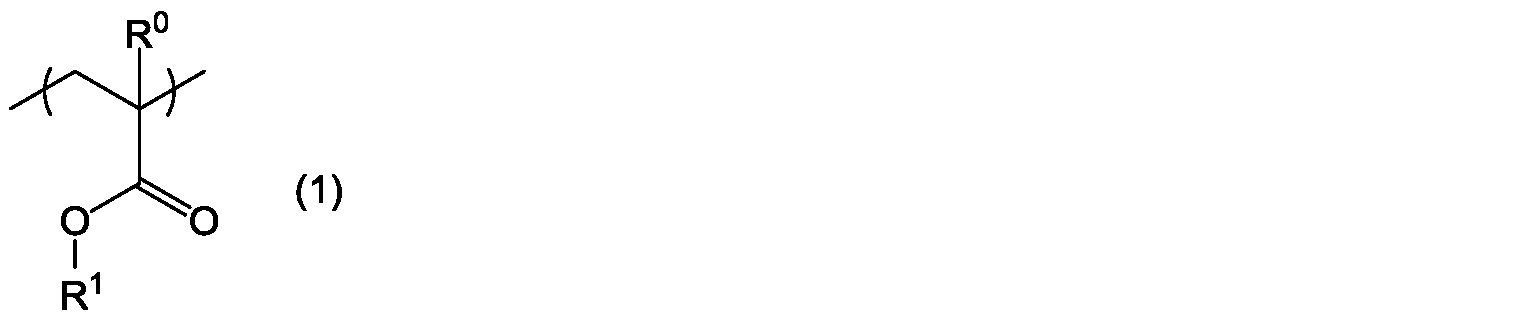
- the present invention provides a 0% to 35% by weight cross-linkage based on the solid content in the homopolymer or copolymer having the structural unit represented by the following formula (1), the acid compound, the solvent and the resin composition. It is a resin composition for forming a color filter underlayer film containing an agent.
- R 0 represents a hydrogen atom or a methyl group
- R 1 represents a hydrocarbon group having 1 to 6 carbon atoms having at least one hydroxy group as a substituent, and the carbon atom having 1 to 6 carbon atoms
- the hydrogen group may further have an ether bond.
- the copolymer may further have a structural unit other than the structural unit represented by the formula (1).
- the present invention is also a color filter underlayer film or a planarizing film produced from the color filter underlayer film forming resin composition.
- the present invention also includes a step of applying the color filter underlayer film forming resin composition on a substrate and heating to form a color filter underlayer film, applying a color resist on the color filter underlayer film and heating to color It is a method for forming a color filter, which includes a step of forming a resist film, and a step of exposing, developing and rinsing the color resist film to form a color resist pattern.
- the color filter underlayer film or flattened film formed from the resin composition for forming a color filter underlayer film of the present invention has excellent chemical resistance, heat resistance and transparency.
- the color filter underlayer film or planarizing film formed from the resin composition for forming a color filter underlayer film of the present invention is a solvent, acid, or alkali in the formation process or the formation process of peripheral devices such as wiring.
- the resin composition for forming a color filter underlayer film of the present invention is suitable as a material for forming the color filter underlayer film and the planarizing film.
- the present invention is a resin composition for forming a color filter underlayer film containing a specific homopolymer or copolymer, an acid compound and a solvent.
- the solid content obtained by removing the solvent from the resin composition for forming a color filter underlayer film of the present invention is usually 0.01% by mass to 50% by mass.
- the homopolymer or copolymer contained in the resin composition for forming a color filter underlayer film of the present invention is a polymer having a structural unit represented by the formula (1).
- the copolymer means a polymer obtained by polymerizing two or more monomers.
- examples of the hydrocarbon group having 1 to 6 carbon atoms having at least one hydroxy group as the substituent represented by R 1 include a hydroxymethyl group, a hydroxyethyl group, a hydroxypropyl group, and a hydroxybutyl group. Groups, dihydroxypropyl groups, and dihydroxybutyl groups.
- hydrocarbon group having 1 to 6 carbon atoms further has an ether bond, for example, a —C 2 H 4 OC 2 H 4 OH group, a —C 2 H 4 OC 2 H 4 OC 2 H 4 OH group, and And —C 3 H 6 OC 3 H 6 OH group.
- Examples of the compound (monomer) forming the structural unit represented by the formula (1) include hydroxymethyl (meth) acrylate, 2-hydroxyethyl (meth) acrylate, 2-hydroxypropyl (meth) acrylate, 3- Hydroxypropyl (meth) acrylate, 2,3-dihydroxypropyl (meth) acrylate, 2-hydroxybutyl (meth) acrylate, 4-hydroxybutyl (meth) acrylate, 3,4-dihydroxybutyl (meth) acrylate, diethylene glycol mono ( And (meth) acrylate and dipropylene glycol mono (meth) acrylate. These compounds may be used alone or in combination of two or more.
- (meth) acrylate means methacrylate and acrylate.
- a structural unit other than the structural unit represented by the formula (1) can be contained.
- the compound (monomer) forming such a structural unit is not particularly limited as long as the effects of the present invention are not impaired.
- the content of the structural unit represented by the formula (1) is set to the formula (1) with respect to the total mass of the monomers forming the structural unit of the copolymer. For example, it is 17% by mass to 100% by mass, and preferably 20% by mass to 100% by mass.
- the weight average molecular weight of the polymer is usually 1,000 to 200,000, preferably 3,000 to 100,000.
- the weight average molecular weight is a value obtained by gel permeation chromatography (GPC).
- the homopolymer or copolymer may be used alone or in combination of two or more.
- the content of the polymer in the resin composition for forming a color filter underlayer film of the present invention is usually 30% by mass to 99% by mass based on the solid content in the resin composition, preferably It is 50 mass% to 95 mass%.
- the method for obtaining the polymer is not particularly limited, but in general, the compound (monomer) that forms the structural unit represented by the formula (1), and if desired, the compound (monomer) other than the compound.
- the polymer thus obtained is usually in a solution state dissolved in a solvent, and can be used in the resin composition of the present invention without isolation in this state.
- the polymer solution obtained as described above is put into a poor solvent such as hexane, diethyl ether, toluene, methanol, water and the like which has been stirred to reprecipitate the polymer, and the generated precipitate is decanted.
- the polymer can be made into an oily product or powder by filtering and washing as necessary, followed by drying at normal temperature or reduced pressure at room temperature or heating. By such an operation, the polymerization initiator and unreacted compounds that coexist with the polymer can be removed.
- the oily substance or powder of the polymer may be used as it is, or the oily substance or powder may be redissolved in a solvent described later and used as a solution.
- Examples of the acid compound contained in the resin composition for forming a color filter underlayer film of the present invention include p-toluenesulfonic acid, p-toluenesulfonic acid monohydrate, trifluoromethanesulfonic acid, pyridinium p-toluenesulfonate, camphor Sulfonic acid, 5-sulfosalicylic acid, 5-sulfosalicylic acid dihydrate, 4-chlorobenzenesulfonic acid, 4-chlorobenzenesulfonic acid monohydrate, 4-hydroxybenzenesulfonic acid, 4-hydroxybenzenesulfonic acid monohydrate , Benzenedisulfonic acid, benzenesulfonic acid, benzenesulfonic acid monohydrate, 2-naphthalenesulfonic acid, 2-naphthalenesulfonic acid monohydrate and other sulfonic acid compounds, salicylic acid, citric acid, benzoic
- Carboxylic acid compounds of 2,4,4,6-tetrabro Sulfonic acid esters such as cyclohexadienone, benzoin tosylate, 2-nitrobenzyl tosylate, 4-nitrobenzyl tosylate, isopropyl p-toluenesulfonate, tert-butyl p-toluenesulfonate, cyclohexyl p-toluenesulfonate
- the content of the acid compound in the resin composition for forming a color filter underlayer film of the present invention is usually 0.1% by mass to 20% by mass based on the solid content in the resin composition.
- the content is preferably 0.2% by mass to 15% by mass.
- the method for preparing the resin composition for forming a color filter underlayer film of the present invention is not particularly limited.
- a homopolymer or copolymer having the structural unit represented by the formula (1) is dissolved in a solvent, and the solution is dissolved in this solution.
- a method in which an acid compound is mixed at a predetermined ratio to form a uniform solution is exemplified.
- a method in which other additives are further added and mixed as necessary may be mentioned.
- the solvent is not particularly limited as long as it dissolves the homopolymer or copolymer contained in the resin composition for forming a color filter underlayer film of the present invention.
- solvents include ethylene glycol monomethyl ether, ethylene glycol monoethyl ether, methyl cellosolve acetate, ethyl cellosolve acetate, diethylene glycol monomethyl ether, diethylene glycol monoethyl ether, propylene glycol, propylene glycol monomethyl ether, propylene glycol monomethyl ether acetate.
- propylene glycol monomethyl ether propylene glycol monomethyl ether acetate, propylene from the viewpoint of improving the leveling property of the coating film formed by applying the resin composition for forming a color filter underlayer film of the present invention on a substrate.
- Glycol monoethyl ether, propylene glycol monopropyl ether, 2-heptanone, ethyl lactate, butyl lactate, cyclopentanone, cyclohexanone and ⁇ -butyrolactone are preferred.
- the resin composition for forming a color filter underlayer film of the present invention can form a cured film by using a homopolymer or copolymer and an acid compound contained in the composition, but for the purpose of improving curability, it is further a crosslinking agent.
- a crosslinking agent can also be contained.
- the cross-linking agent include hydroxymethyl group-substituted phenol compounds and compounds having an alkoxyalkylated amino group. These crosslinking agents can be used alone or in combination of two or more.
- hydroxymethyl group-substituted phenol compound examples include 2-hydroxymethyl-4,6-dimethylphenol, 1,3,5-trihydroxymethylbenzene, and 3,5-dihydroxymethyl-4-methoxytoluene [2, 6-bis (hydroxymethyl) -p-cresol].
- Examples of the compound having an alkoxyalkylated amino group include (poly) methylolated melamine, (poly) methylolated glycoluril, (poly) methylolated benzoguanamine, (poly) methylolated urea, And a nitrogen-containing compound having a plurality of active methylol groups, wherein at least one hydrogen atom of the hydroxy group in the methylol group is substituted with an alkyl group such as a methyl group or a butyl group.
- the alkoxyalkylated amino group-containing compound may be a mixture in which a plurality of substituted compounds are mixed, and there is a mixture containing an oligomer component that is partially self-condensed, and such a mixture is also used. be able to. More specifically, for example, hexamethoxymethyl melamine (manufactured by Nippon Cytec Industries, Ltd., CYMEL [registered trademark] 303), tetrabutoxymethyl glycoluril (manufactured by Nippon Cytec Industries, Ltd., CYMEL [registered trademark] 1170).
- CYMEL series products such as tetramethoxymethyl benzoguanamine (CYMEL [registered trademark] 1123 manufactured by Nippon Cytec Industries, Ltd.), tetramethoxymethyl glycoluril (POWDERLINK [registered trademark] 1174 manufactured by Nippon Cytec Industries, Ltd.), etc.
- POWDERLINK series products and methylated melamine resin (manufactured by Sanwa Chemical Co., Ltd., Nicalac [registered trademark] MW-30HM, MW-390, MW-100LM, MX) 750LM), methylated urea resins (Co.
- the content of the crosslinking agent in the resin composition for forming a color filter underlayer film of the present invention is based on the solid content in the resin composition for forming a color filter underlayer film, For example, it is 35% by mass or less, preferably 1% by mass to 30% by mass, or 1% by mass to 20% by mass, and more preferably 1% by mass to 10% by mass.
- the content of the crosslinking agent is excessive, the color resist residue observed on the color filter underlayer film increases.
- the resin composition of the present invention can also contain a surfactant for the purpose of improving the coating property.
- the surfactant include polyoxyethylene lauryl ether, polyoxyethylene stearyl ether, polyoxyethylene cetyl ether, polyoxyethylene alkyl ethers such as polyoxyethylene oleyl ether, polyoxyethylene octyl phenyl ether, polyoxyethylene Polyoxyethylene alkyl aryl ethers such as ethylene nonylphenyl ether, polyoxyethylene / polyoxypropylene block copolymers, sorbitan monolaurate, sorbitan monopalmitate, sorbitan monostearate, sorbitan monooleate, sorbitan trioleate, sorbitan Sorbitan fatty acid esters such as tristearate, polyoxyethylene sorbitan monolaurate, polyoxyethylene Nonionic surfactants such as polyoxyethylene sorbitan fatty acid esters such as rubitan monopalmitate, polyoxyethylene sorbit
- the content of the surfactant in the resin composition for forming a color filter underlayer film of the present invention is based on the solid content in the resin composition for forming a color filter underlayer film. In general, it is 0.001% to 3% by mass, preferably 0.01% to 2% by mass, and more preferably 0.1% to 1% by mass.
- the resin composition for forming a color filter underlayer film of the present invention may contain a light stabilizer, an ultraviolet absorber, a sensitizer, a plasticizer, an antioxidant, an adhesion assistant, as necessary, as long as the effects of the present invention are not impaired. Additives such as agents and antifoaming agents can be included.
- a method for producing a color filter underlayer film or a flattened film using the resin composition for forming a color filter underlayer film of the present invention will be described.
- a base material for example, a semiconductor substrate, a glass substrate, a quartz substrate, a silicon wafer, and a substrate on which various metal films, a flattening film, etc. are formed
- this is applied by an appropriate coating method such as a spinner or a coater.
- the color filter underlayer film or the flattened film is prepared by baking and curing using a heating means such as a hot plate or an oven.
- the baking conditions are appropriately selected from baking temperatures of 80 ° C. to 300 ° C. and baking times of 0.3 minutes to 60 minutes. Bake may be processed in two steps or more.
- the film thickness of the film formed from the color filter underlayer film forming resin composition of the present invention is, for example, 0.001 ⁇ m to 100 ⁇ m, preferably 0.01 ⁇ m to 10 ⁇ m.
- GPC system (Shodex [registered trademark] GPC-101) Column: Shodex (registered trademark) KD-800RH, KD-800RL, KD-803 and KD-805 Column temperature: 50 ° C Eluent: N, N-dimethylformamide (as additives, lithium bromide-hydrate (LiBr ⁇ H 2 O) 30 mmol / L, phosphoric acid / anhydrous crystals (o-phosphoric acid) 30 mmol / L, tetrahydrofuran) (THF) is 10 ml / L) Flow rate: 1.0 mL / min.
- Standard sample for preparing a calibration curve TSK standard polyethylene oxide (weight average molecular weight (Mw) of about 900,000, 150,000, 100,000, 30,000) manufactured by Tosoh Corporation Polyethylene glycol manufactured by Polymer Laboratory (peak top molecular weight (Mp) of about 12,000, 4,000, 1,000).
- Mw weight average molecular weight
- Mp peak top molecular weight
- the measurement was performed by mixing four types of 900,000, 100,000, 12,000, and 1,000, and three types of 150,000, 30,000, and 4,000. Two samples of mixed samples are measured separately.
- Example 2 8.0 g of the polymer solution obtained in Synthesis Example 1, 0.02 g of p-toluenesulfonic acid monohydrate as the acid compound, and tetramethoxymethylglycoluril (POWDERLINK [registered trademark] 1174 (Nippon Cytec Industries ( 0.2 g) was dissolved in 76.1 g of propylene glycol monomethyl ether and 26.6 g of ethyl lactate to prepare a solution. Then, it filtered using the polyethylene micro filter with a hole diameter of 0.10 micrometer, and prepared the resin composition for color filter lower layer film formation.
- POWDERLINK tetramethoxymethylglycoluril
- Example 3 8.0 g of the polymer solution obtained in Synthesis Example 1, 0.02 g of p-toluenesulfonic acid monohydrate as the acid compound, and methylated melamine resin (Nicarac (registered trademark) MW-390 (Co., Ltd.)) as the crosslinking agent Sanwa Chemical Co., Ltd.)) 0.2 g was dissolved in 76.1 g of propylene glycol monomethyl ether and 26.6 g of ethyl lactate to prepare a solution. Then, it filtered using the polyethylene micro filter with a hole diameter of 0.10 micrometer, and prepared the resin composition for color filter lower layer film formation.
- methylated melamine resin Naicarac (registered trademark) MW-390 (Co., Ltd.)
- Example 4 8.0 g of the polymer solution obtained in Synthesis Example 2, 0.02 g of pyridinium p-toluenesulfonate as an acid compound, and tetramethoxymethylglycoluril (POWDERLINK [registered trademark] 1174 (manufactured by Nippon Cytec Industries Co., Ltd.) as a crosslinking agent )) 0.2 g was dissolved in 70.1 g of propylene glycol monomethyl ether and 32.6 g of ethyl lactate to prepare a solution. Then, it filtered using the polyethylene micro filter with a hole diameter of 0.10 micrometer, and prepared the resin composition for color filter lower layer film formation.
- POWDERLINK tetramethoxymethylglycoluril
- Example 5 8.0 g of the polymer solution obtained in Synthesis Example 3 and 0.2 g of pyridinium p-toluenesulfonate as an acid compound were dissolved in 69.5 g of propylene glycol monomethyl ether and 32.3 g of ethyl lactate to obtain a solution. Then, it filtered using the polyethylene micro filter with a hole diameter of 0.10 micrometer, and prepared the resin composition for color filter lower layer film formation.
- Example 6 8.0 g of the polymer solution obtained in Synthesis Example 3, 0.2 g of pyridinium p-toluenesulfonate as an acid compound and 0.01 g of DFX-18 (manufactured by Neos) as a surfactant are mixed with propylene glycol monomethyl ether. A solution was prepared by dissolving in 69.8 g and 32.5 g of ethyl lactate. Then, it filtered using the polyethylene micro filter with a hole diameter of 0.10 micrometer, and prepared the resin composition for color filter lower layer film formation.
- Example 7 8.0 g of the polymer solution obtained in Synthesis Example 3, 0.02 g of pyridinium p-toluenesulfonate as an acid compound, and tetramethoxymethylglycoluril (POWDERLINK [registered trademark] 1174 (manufactured by Nippon Cytec Industries Co., Ltd.) as a crosslinking agent )) 0.2 g and 0.01 g of DFX-18 (manufactured by Neos Co., Ltd.) as a surfactant were dissolved in 70.5 g of propylene glycol monomethyl ether and 32.8 g of ethyl lactate to obtain a solution. Then, it filtered using the polyethylene micro filter with a hole diameter of 0.10 micrometer, and prepared the resin composition for color filter lower layer film formation.
- POWDERLINK tetramethoxymethylglycoluril
- DFX-18 manufactured by Neos Co., Ltd.
- Example 8 8.0 g of the polymer solution obtained in Synthesis Example 4 and 0.2 g of pyridinium p-toluenesulfonate as an acid compound were dissolved in 69.5 g of propylene glycol monomethyl ether and 32.3 g of ethyl lactate to obtain a solution. Then, it filtered using the polyethylene micro filter with a hole diameter of 0.10 micrometer, and prepared the resin composition for color filter lower layer film formation.
- Example 9 8.0 g of the polymer solution obtained in Synthesis Example 4, 0.02 g of pyridinium p-toluenesulfonate as an acid compound, and tetramethoxymethylglycoluril (POWDERLINK [registered trademark] 1174 (manufactured by Nippon Cytec Industries Co., Ltd.) as a crosslinking agent )) 0.2 g was dissolved in 70.1 g of propylene glycol monomethyl ether and 32.6 g of ethyl lactate to prepare a solution. Then, it filtered using the polyethylene micro filter with a hole diameter of 0.10 micrometer, and prepared the resin composition for color filter lower layer film formation.
- POWDERLINK tetramethoxymethylglycoluril
- Example 10 8.0 g of the polymer solution obtained in Synthesis Example 5 and 0.2 g of pyridinium p-toluenesulfonate as an acid compound were dissolved in 69.5 g of propylene glycol monomethyl ether and 32.3 g of ethyl lactate to obtain a solution. Then, it filtered using the polyethylene micro filter with a hole diameter of 0.10 micrometer, and prepared the resin composition for color filter lower layer film formation.
- Example 11 8.0 g of the polymer solution obtained in Synthesis Example 5, 0.02 g of pyridinium p-toluenesulfonate as an acid compound, and tetramethoxymethylglycoluril (POWDERLINK [registered trademark] 1174 (manufactured by Nippon Cytec Industries Co., Ltd.) as a crosslinking agent )) 0.2 g was dissolved in 70.1 g of propylene glycol monomethyl ether and 32.6 g of ethyl lactate to prepare a solution. Then, it filtered using the polyethylene micro filter with a hole diameter of 0.10 micrometer, and prepared the resin composition for color filter lower layer film formation.
- Example 12 8.0 g of the polymer solution obtained in Synthesis Example 1, 0.02 g of p-toluenesulfonic acid monohydrate as the acid compound, and tetramethoxymethylglycoluril (POWDERLINK [registered trademark] 1174 (Nippon Cytec Industries ( 0.6 g) was dissolved in 89.9 g of propylene glycol monomethyl ether and 32.5 g of ethyl lactate to prepare a solution. Then, it filtered using the polyethylene micro filter with a hole diameter of 0.10 micrometer, and prepared the resin composition for color filter lower layer film formation.
- POWDERLINK tetramethoxymethylglycoluril
- Example 13 8.0 g of the polymer solution obtained in Synthesis Example 1, 0.02 g of p-toluenesulfonic acid monohydrate as the acid compound, and tetramethoxymethylglycoluril (POWDERLINK [registered trademark] 1174 (Nippon Cytec Industries ( 0.8 g) was dissolved in 96.7 g of propylene glycol monomethyl ether and 35.5 g of ethyl lactate to obtain a solution. Then, it filtered using the polyethylene micro filter with a hole diameter of 0.10 micrometer, and prepared the resin composition for color filter lower layer film formation.
- POWDERLINK tetramethoxymethylglycoluril
- Example 14 8.0 g of the polymer solution obtained in Synthesis Example 1, 0.02 g of p-toluenesulfonic acid monohydrate as the acid compound, and tetramethoxymethylglycoluril (POWDERLINK [registered trademark] 1174 (Nippon Cytec Industries ( 1.0 g) was dissolved in 103.6 g of propylene glycol monomethyl ether and 38.4 g of ethyl lactate to prepare a solution. Then, it filtered using the polyethylene micro filter with a hole diameter of 0.10 micrometer, and prepared the resin composition for color filter lower layer film formation.
- POWDERLINK tetramethoxymethylglycoluril
- Example 15 8.0 g of the polymer solution obtained in Synthesis Example 9 and 0.2 g of p-toluenesulfonic acid monohydrate as an acid compound were dissolved in 69.5 g of propylene glycol monomethyl ether and 32.3 g of ethyl lactate to obtain a solution. did. Then, it filtered using the polyethylene micro filter with a hole diameter of 0.10 micrometer, and prepared the resin composition for color filter lower layer film formation.
- Example 16 8.0 g of the polymer solution obtained in Synthesis Example 9 and 0.1 g of K-PURE (registered trademark) TAG-2687 (manufactured by King Industries Inc.) as an acid compound, 66.0 g of propylene glycol monomethyl ether and 30 of ethyl lactate The solution was dissolved in 9 g. Then, it filtered using the polyethylene micro filter with a hole diameter of 0.10 micrometer, and prepared the resin composition for color filter lower layer film formation.
- K-PURE registered trademark
- TAG-2687 manufactured by King Industries Inc.
- a methylated melamine resin Naicarac [registered trademark] MX-706 (2-propanol solution, solid concentration 70 mass%) as a crosslinking agent (Sanwa Chemical Co., Ltd.) 0.6
- ⁇ Comparative example 4> 8.0 g of the polymer solution obtained in Synthesis Example 1, 0.02 g of p-toluenesulfonic acid monohydrate as the acid compound, and tetramethoxymethylglycoluril (POWDERLINK [registered trademark] 1174 (Nippon Cytec Industries ( 1.2 g) was dissolved in 111.8 g of propylene glycol monomethyl ether and 41.9 g of ethyl lactate to prepare a solution. Then, it filtered using the polyethylene micro filter with a hole diameter of 0.10 micrometer, and prepared the resin composition for color filter lower layer film formation.
- POWDERLINK tetramethoxymethylglycoluril
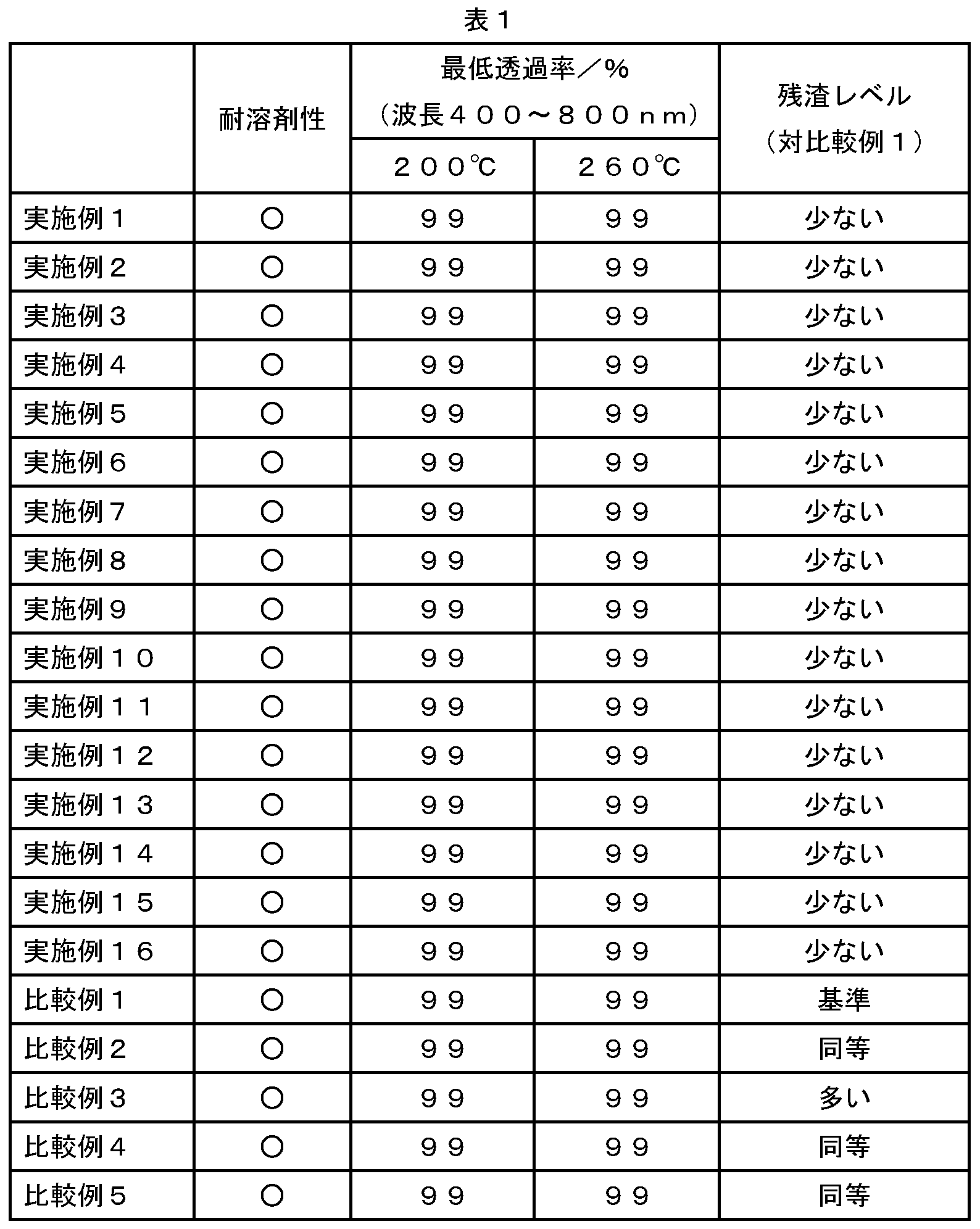
- Table 1 shows the values of the minimum transmittance measured in the wavelength range of 400 nm to 800 nm before and after heating at 260 ° C. for 5 minutes.
- the film formed from the resin composition for forming a color filter underlayer film of the present invention has high solvent resistance and high transparency, and also has high heat resistance that is not colored even after heating at 260 ° C. I had it. Moreover, on the film formed from the resin composition for forming a color filter underlayer film of the present invention, almost no color resist residue is observed, and the film formed from the resin composition for forming a color filter underlayer film of the present invention is It was excellent in the effect of suppressing the generation of color resist residues. On the other hand, the films formed from the resin compositions for forming the color filter underlayer film prepared in Comparative Examples 1 to 5 have high solvent resistance and high transparency and are not colored even after being heated at 260 ° C. It had high heat resistance.
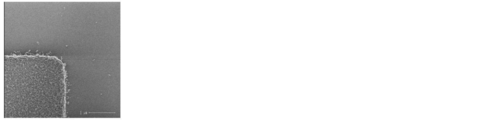
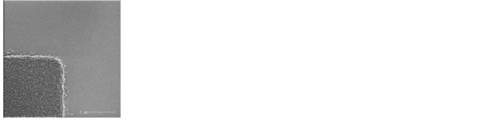
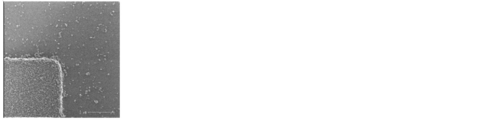
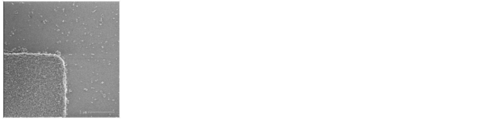
- the film formed from the resin composition for forming a color filter underlayer film prepared in Comparative Examples 1 to 5 is compared with the film formed from the resin composition for forming a color filter underlayer film of the present invention. Many color resist residues were observed. That is, the film formed from the resin composition for forming the color filter underlayer film prepared in Comparative Examples 1 to 5 had no or insufficient effect of suppressing the generation of the color resist residue.
- the resin composition for forming a color filter underlayer film of the present invention forms a color filter underlayer film, a planarizing film, a filler-dispersed resist underlayer film, etc. in devices such as CCD image sensors, CMOS image sensors, liquid crystal displays, and organic EL displays. It is suitable as a material to be used.
- a color resist pattern is formed on the color filter underlayer film of the present invention, generation of color resist residues can be suppressed, which is useful for improving the quality and yield of a device equipped with a color filter.
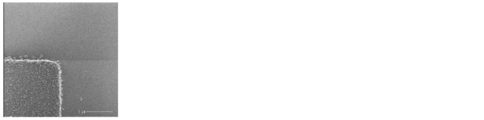
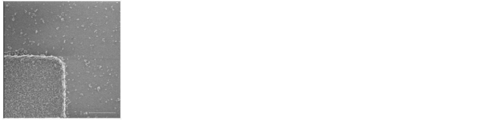
- FIG. 1 is an electron micrograph of a blue color resist residue around a rectangular pattern on a color filter underlayer film formed from the resin composition for forming a color filter underlayer film of Example 1 at a magnification of 30,000.
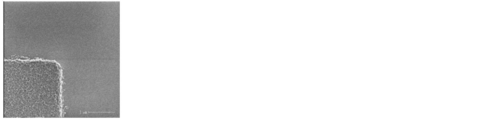
- FIG. 2 is an electron micrograph of a blue color resist residue around a rectangular pattern formed on the color filter underlayer film formed from the resin composition for forming a color filter underlayer film of Example 2 at a magnification of 30,000.
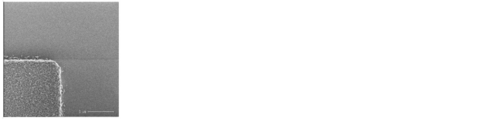
- FIG. 3 is an electron micrograph of a blue color resist residue around a rectangular pattern formed on the color filter underlayer film formed from the resin composition for forming a color filter underlayer film of Example 3 at a magnification of 30,000.
- FIG. 1 is an electron micrograph of a blue color resist residue around a rectangular pattern on a color filter underlayer film formed from the resin composition for forming a color filter underlayer film of Example 1 at a magnification of 30,000.
- FIG. 2 is an electron micrograph of a blue color resist residue around a rectangular pattern formed on
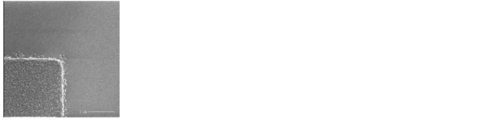
- FIG. 4 is an electron micrograph of a blue color resist residue around a rectangular pattern formed on the color filter underlayer film formed from the resin composition for forming a color filter underlayer film of Example 4 at a magnification of 30,000.
- FIG. 5 is an electron micrograph of a blue color resist residue around a rectangular pattern formed on the color filter underlayer film formed from the resin composition for forming a color filter underlayer film of Example 5 at a magnification of 30,000.
- FIG. 6 is an electron micrograph of a blue color resist residue around a rectangular pattern formed on the color filter underlayer film formed from the resin composition for forming a color filter underlayer film of Example 6 at a magnification of 30,000.
- FIG. 5 is an electron micrograph of a blue color resist residue around a rectangular pattern formed on the color filter underlayer film formed from the resin composition for forming a color filter underlayer film of Example 5 at a magnification of 30,000.
- FIG. 6 is an electron micrograph of a blue color resist residue around a rectangular pattern formed on
- FIG. 7 is an electron micrograph of the blue color resist residue around the rectangular pattern on the color filter underlayer film formed from the resin composition for forming the color filter underlayer film of Example 7 taken at a magnification of 30,000.
- FIG. 8 is an electron micrograph of a blue color resist residue around a rectangular pattern on a color filter underlayer film formed from the color filter underlayer film forming resin composition of Example 8 taken at a magnification of 30,000.
- 9 is an electron micrograph of the blue color resist residue around the rectangular pattern formed on the color filter underlayer film formed from the resin composition for forming the color filter underlayer film of Example 9 taken at a magnification of 30,000 times.
- FIG. 10 is an electron micrograph of a blue color resist residue around a rectangular pattern on a color filter underlayer film formed from the color filter underlayer film forming resin composition of Example 10 taken at a magnification of 30,000.
- FIG. 11 is an electron micrograph of a blue color resist residue around a rectangular pattern formed on the color filter underlayer film formed from the resin composition for forming a color filter underlayer film of Example 11 at a magnification of 30,000.
- FIG. 12 is an electron micrograph of a blue color resist residue around a rectangular pattern formed on the color filter underlayer film formed from the resin composition for forming a color filter underlayer film of Example 12 at a magnification of 30,000.
- FIG. 11 is an electron micrograph of a blue color resist residue around a rectangular pattern formed on the color filter underlayer film formed from the resin composition for forming a color filter underlayer film of Example 12 at a magnification of 30,000.
- FIG. 12 is an electron micrograph of a blue color resist residue around a rectangular pattern formed on the color
- FIG. 13 is an electron micrograph of a blue color resist residue around a rectangular pattern formed on the color filter underlayer film formed from the resin composition for forming a color filter underlayer film of Example 13 at a magnification of 30,000.
- FIG. 14 is an electron micrograph of the blue color resist residue around the rectangular pattern formed on the color filter underlayer film formed from the resin composition for forming a color filter underlayer film of Example 14 at a magnification of 30,000.
- FIG. 15 is an electron micrograph of the blue color resist residue around the rectangular pattern formed on the color filter underlayer film formed from the resin composition for forming the color filter underlayer film of Example 15 at a magnification of 30,000.
- FIG. 14 is an electron micrograph of the blue color resist residue around the rectangular pattern formed on the color filter underlayer film formed from the resin composition for forming a color filter underlayer film of Example 14 at a magnification of 30,000.
- FIG. 15 is an electron micrograph of the blue color resist residue around the rectangular pattern formed on the color filter underlayer film formed from the
- FIG. 16 is an electron micrograph of a blue color resist residue around a rectangular pattern on a color filter underlayer film formed from the resin composition for forming a color filter underlayer film of Example 16 taken at a magnification of 30,000.
- FIG. 17 is an electron micrograph of the blue color resist residue around the rectangular pattern formed on the color filter underlayer film formed from the resin composition for forming the color filter underlayer film of Comparative Example 1 at a magnification of 30,000.
- 18 is an electron micrograph of a blue color resist residue around a rectangular pattern on a color filter underlayer film formed from the color filter underlayer film forming resin composition of Comparative Example 2 taken at a magnification of 30,000 times.
- FIG. 17 is an electron micrograph of the blue color resist residue around the rectangular pattern formed on the color filter underlayer film formed from the resin composition for forming a color filter underlayer film of Comparative Example 1 at a magnification of 30,000.
- FIG. 19 is an electron micrograph of a blue color resist residue around a rectangular pattern formed on the color filter underlayer film formed from the resin composition for forming a color filter underlayer film of Comparative Example 3 at a magnification of 30,000.
- FIG. 20 is an electron micrograph of the blue color resist residue around the rectangular pattern formed on the color filter underlayer film formed from the resin composition for forming the color filter underlayer film of Comparative Example 4 at a magnification of 30,000.
- FIG. 21 is an electron micrograph of the blue color resist residue around the rectangular pattern formed on the color filter underlayer film formed from the resin composition for forming the color filter underlayer film of Comparative Example 5 at a magnification of 30,000.
Landscapes
- Physics & Mathematics (AREA)
- Chemical & Material Sciences (AREA)
- General Physics & Mathematics (AREA)
- Organic Chemistry (AREA)
- Engineering & Computer Science (AREA)
- Health & Medical Sciences (AREA)
- Chemical Kinetics & Catalysis (AREA)
- Medicinal Chemistry (AREA)
- Polymers & Plastics (AREA)
- Architecture (AREA)
- Structural Engineering (AREA)
- Life Sciences & Earth Sciences (AREA)
- Materials Engineering (AREA)
- Wood Science & Technology (AREA)
- Optics & Photonics (AREA)
- Emergency Medicine (AREA)
- Materials For Photolithography (AREA)
- Optical Filters (AREA)
- Compositions Of Macromolecular Compounds (AREA)
Abstract
Description
本発明のカラーフィルター下層膜形成用樹脂組成物に含まれるホモポリマー又はコポリマーは、前記式(1)で表される構造単位を有するポリマーである。ここで、コポリマーとは、2種以上のモノマーを重合して得られるポリマーを意味する。前記式(1)において、R1が表す置換基としてヒドロキシ基を少なくとも1つ有する炭素原子数1乃至6の炭化水素基としては、例えば、ヒドロキシメチル基、ヒドロキシエチル基、ヒドロキシプロピル基、ヒドロキシブチル基、ジヒドロキシプロピル基、及びジヒドロキシブチル基が挙げられる。前記炭素原子数1乃至6の炭化水素基がエーテル結合をさらに有する場合、例えば、-C2H4OC2H4OH基、-C2H4OC2H4OC2H4OH基、及び-C3H6OC3H6OH基が挙げられる。
本発明のカラーフィルター下層膜形成用樹脂組成物に含まれる酸化合物は、例えば、p-トルエンスルホン酸、p-トルエンスルホン酸一水和物、トリフルオロメタンスルホン酸、ピリジニウムp-トルエンスルホナート、カンファースルホン酸、5-スルホサリチル酸、5-スルホサリチル酸二水和物、4-クロロベンゼンスルホン酸、4-クロロベンゼンスルホン酸一水和物、4-ヒドロキシベンゼンスルホン酸、4-ヒドロキシベンゼンスルホン酸一水和物、ベンゼンジスルホン酸、ベンゼンスルホン酸、ベンゼンスルホン酸一水和物、2-ナフタレンスルホン酸、2-ナフタレンスルホン酸一水和物等のスルホン酸化合物、サリチル酸、クエン酸、安息香酸、ヒドロキシ安息香酸等のカルボン酸化合物、2,4,4,6-テトラブロモシクロヘキサジエノン、ベンゾイントシレート、2-ニトロベンジルトシレート、4-ニトロベンジルトシレート、p-トルエンスルホン酸イソプロピル、p-トルエンスルホン酸tert-ブチル、p-トルエンスルホン酸シクロヘキシル等のスルホン酸エステル系熱酸発生剤、及びTA-100、TA-120、TA-160(以上、サンアプロ(株)製)、K-PURE〔登録商標〕TAG-2689、同TAG-2690、同CXC-1614、同CXC-1738(以上、King Industries Inc.製)、サンエイド〔登録商標〕SI-110L、同SI-180L(以上、三新化学工業(株)製)等の有機オニウム塩系熱酸発生剤が挙げられる。これらの酸化合物は、単独で又は2種以上を組み合わせて用いることができる。
本発明のカラーフィルター下層膜形成用樹脂組成物を用いたカラーフィルター下層膜又は平坦化膜の作製方法について説明する。基材(例えば、半導体基板、ガラス基板、石英基板、シリコンウエハー、及びこれらの表面に各種金属膜、平坦化膜等が形成された基板)上に、スピナー、コーター等の適当な塗布方法により本発明のカラーフィルター下層膜形成用樹脂組成物を塗布後、ホットプレート、オーブン等の加熱手段を用いてベークして硬化させてカラーフィルター下層膜又は平坦化膜を作製する。ベーク条件は、ベーク温度80℃乃至300℃、ベーク時間0.3分乃至60分間の中から適宜選択される。ベークは2ステップ以上処理してもよい。また、本発明のカラーフィルター下層膜形成用樹脂組成物から形成される膜の膜厚としては、例えば0.001μm乃至100μmであり、好ましくは0.01μm乃至10μmである。
〔下記合成例で得られたポリマーの重量平均分子量の測定〕
ポリマーの分子量はGPC装置によって測定し、ポリエチレングリコール、ポリエチレンオキシド換算値として重量平均分子量Mwを算出した。
GPC装置:昭和電工(株)製GPCシステム(Shodex〔登録商標〕GPC-101)
カラム:Shodex〔登録商標〕KD-800RH、KD-800RL、KD-803及びKD-805
カラム温度:50℃
溶離液:N,N-ジメチルホルムアミド(添加剤として、臭化リチウム-水和物(LiBr・H2O)が30mmol/L、リン酸・無水結晶(o-リン酸)が30mmol/L、テトラヒドロフラン(THF)が10ml/L)
流速:1.0mL/分
検量線作成用標準サンプル:東ソー(株)製 TSK 標準ポリエチレンオキサイド(重量平均分子量(Mw)約900,000、150,000、100,000、30,000)、及び、ポリマーラボラトリー社製 ポリエチレングリコール(ピークトップ分子量(Mp)約12,000、4,000、1,000)。測定は、ピークが重なるのを避けるため、900,000、100,000、12,000、1,000の4種を混合したサンプル、及び150,000、30,000、4,000の3種を混合したサンプルの2サンプルを別々に測定。
<合成例1>
2-ヒドロキシエチルアクリレート40.0g及び2,2’-アゾビスイソブチロニトリル3.1gを乳酸エチル80.1gに溶解させた後、この溶液を、乳酸エチル49.2gを70℃に保持したフラスコ中に4時間かけて滴下した。滴下終了後、さらに18時間反応させて、ポリマーの溶液(固形分濃度25質量%)を得た。得られたポリマーの重量平均分子量Mwは7,300であった。
2-ヒドロキシエチルアクリレート8.0g、メチルアクリレート32.0g及び2,2’-アゾビスイソブチロニトリル2.0gをプロピレングリコールモノメチルエーテル78.0gに溶解させた後、この溶液を、プロピレングリコールモノメチルエーテル48.0gを65℃に保持したフラスコ中に4時間かけて滴下した。滴下終了後、さらに18時間反応させて、ポリマーの溶液(固形分濃度25.0質量%)を得た。得られたポリマーの重量平均分子量Mwは7,000であった。
2-ヒドロキシエチルメタクリレート40.0g及び2,2’-アゾビスイソブチロニトリル3.0gをプロピレングリコールモノメチルエーテル80.0gに溶解させた後、この溶液を、プロピレングリコールモノメチルエーテル49.0gを70℃に保持したフラスコ中に4時間かけて滴下した。滴下終了後、さらに18時間反応させて、ポリマーの溶液(固形分濃度25質量%)を得た。得られたポリマーの重量平均分子量Mwは24,200であった。
4-ヒドロキシブチルアクリレート40.0g及び2,2’-アゾビスイソブチロニトリル3.2gをプロピレングリコールモノメチルエーテル80.2gに溶解させた後、この溶液を、プロピレングリコールモノメチルエーテル49.4gを70℃に保持したフラスコ中に4時間かけて滴下した。滴下終了後、さらに18時間反応させて、ポリマーの溶液(固形分濃度25質量%)を得た。得られたポリマーの重量平均分子量Mwは5,500であった。
2-ヒドロキシプロピルアクリレート30.2g、ベンジルアクリレート10.0g及び2,2’-アゾビスイソブチロニトリル3.4gをプロピレングリコールモノメチルエーテル80.9gに溶解させた後、この溶液を、プロピレングリコールモノメチルエーテル49.8gを70℃に保持したフラスコ中に4時間かけて滴下した。滴下終了後、さらに18時間反応させて、ポリマーの溶液(固形分濃度25.0質量%)を得た。得られたポリマーの重量平均分子量Mwは13,500であった。
スチレン8.0g、グリシジルメタクリレート32.0g及び2,2’-アゾビスイソブチロニトリル2.4gをプロピレングリコールモノメチルエーテルアセテート78.7gに溶解させた後、この溶液を、プロピレングリコールモノメチルエーテルアセテート48.5gを70℃に保持したフラスコ中に4時間かけて滴下した。滴下終了後、さらに18時間反応させて、ポリマーの溶液(固形分濃度25.0質量%)を得た。得られたポリマーの重量平均分子量Mwは6,500であった。
メチルメタクリレート40.0g、2-ヒドロキシエチルメタクリレート4.7g、メタクリル酸2.4g及び2,2’-アゾビスイソブチロニトリル3.1gをプロピレングリコールモノメチルエーテルアセテート61.2gに溶解させた後、この溶液を、プロピレングリコールモノメチルエーテルアセテート55.7gを70℃に保持したフラスコ中に4時間かけて滴下した。滴下終了後、さらに18時間反応させて、ポリマーの溶液(固形分濃度30.0質量%)を得た。得られたポリマーの重量平均分子量Mwは9,300であった。
スチレン25.0g、2-ヒドロキシエチルアクリレート10.1g、2-[(3,5-ジメチルピラゾリル)カルボニルアミノ]エチルメタクリレート(カレンズ〔登録商標〕MOI-BP(昭和電工(株)製))27.4g及び2,2’-アゾビスイソブチロニトリル2.8gをプロピレングリコールモノメチルエーテル65.4gに溶解させた後、この溶液を、プロピレングリコールモノメチルエーテル32.7gを70℃に保持したフラスコ中に4時間かけて滴下した。滴下終了後、さらに18時間反応させて、ポリマーの溶液(固形分濃度40.0質量%)を得た。得られたポリマーの重量平均分子量Mwは22,500であった。
2,3-ジヒドロキシプロピルメタクリレート(ブレンマー〔登録商標〕GLM(日油(株)製))40.0g及び2,2’-アゾビスイソブチロニトリル3.0gをプロピレングリコールモノメチルエーテル80.0gに溶解させた後、この溶液を、プロピレングリコールモノメチルエーテル49.0gを70℃に保持したフラスコ中に4時間かけて滴下した。滴下終了後、さらに18時間反応させて、ポリマーの溶液(固形分濃度25質量%)を得た。得られたポリマーの重量平均分子量Mwは19,400であった。
<実施例1>
合成例1で得られたポリマーの溶液8.0g及び酸化合物としてp-トルエンスルホン酸一水和物0.1gを、プロピレングリコールモノメチルエーテル72.0g及び乳酸エチル24.9gに溶解させて溶液とした。その後、孔径0.10μmのポリエチレン製ミクロフィルターを用いてろ過して、カラーフィルター下層膜形成用樹脂組成物を調製した。
合成例1で得られたポリマーの溶液8.0g、酸化合物としてp-トルエンスルホン酸一水和物0.02g及び架橋剤としてテトラメトキシメチルグリコールウリル(POWDERLINK〔登録商標〕1174(日本サイテックインダストリーズ(株)製))0.2gを、プロピレングリコールモノメチルエーテル76.1g及び乳酸エチル26.6gに溶解させて溶液とした。その後、孔径0.10μmのポリエチレン製ミクロフィルターを用いてろ過して、カラーフィルター下層膜形成用樹脂組成物を調製した。
合成例1で得られたポリマーの溶液8.0g、酸化合物としてp-トルエンスルホン酸一水和物0.02g及び架橋剤としてメチル化メラミン樹脂(ニカラック〔登録商標〕MW-390((株)三和ケミカル製))0.2gを、プロピレングリコールモノメチルエーテル76.1g及び乳酸エチル26.6gに溶解させて溶液とした。その後、孔径0.10μmのポリエチレン製ミクロフィルターを用いてろ過して、カラーフィルター下層膜形成用樹脂組成物を調製した。
合成例2で得られたポリマーの溶液8.0g及び酸化合物としてピリジニウムp-トルエンスルホナート0.02g及び架橋剤としてテトラメトキシメチルグリコールウリル(POWDERLINK〔登録商標〕1174(日本サイテックインダストリーズ(株)製))0.2gを、プロピレングリコールモノメチルエーテル70.1g及び乳酸エチル32.6gに溶解させて溶液とした。その後、孔径0.10μmのポリエチレン製ミクロフィルターを用いてろ過して、カラーフィルター下層膜形成用樹脂組成物を調製した。
合成例3で得られたポリマーの溶液8.0g及び酸化合物としてピリジニウムp-トルエンスルホナート0.2gを、プロピレングリコールモノメチルエーテル69.5g及び乳酸エチル32.3gに溶解させて溶液とした。その後、孔径0.10μmのポリエチレン製ミクロフィルターを用いてろ過して、カラーフィルター下層膜形成用樹脂組成物を調製した。
合成例3で得られたポリマーの溶液8.0g、酸化合物としてピリジニウムp-トルエンスルホナート0.2g及び界面活性剤としてDFX-18((株)ネオス製)0.01gを、プロピレングリコールモノメチルエーテル69.8g及び乳酸エチル32.5gに溶解させて溶液とした。その後、孔径0.10μmのポリエチレン製ミクロフィルターを用いてろ過して、カラーフィルター下層膜形成用樹脂組成物を調製した。
合成例3で得られたポリマーの溶液8.0g、酸化合物としてピリジニウムp-トルエンスルホナート0.02g、架橋剤としてテトラメトキシメチルグリコールウリル(POWDERLINK〔登録商標〕1174(日本サイテックインダストリーズ(株)製))0.2g及び界面活性剤としてDFX-18((株)ネオス製)0.01gを、プロピレングリコールモノメチルエーテル70.5g及び乳酸エチル32.8gに溶解させて溶液とした。その後、孔径0.10μmのポリエチレン製ミクロフィルターを用いてろ過して、カラーフィルター下層膜形成用樹脂組成物を調製した。
合成例4で得られたポリマーの溶液8.0g及び酸化合物としてピリジニウムp-トルエンスルホナート0.2gを、プロピレングリコールモノメチルエーテル69.5g及び乳酸エチル32.3gに溶解させて溶液とした。その後、孔径0.10μmのポリエチレン製ミクロフィルターを用いてろ過して、カラーフィルター下層膜形成用樹脂組成物を調製した。
合成例4で得られたポリマーの溶液8.0g、酸化合物としてピリジニウムp-トルエンスルホナート0.02g及び架橋剤としてテトラメトキシメチルグリコールウリル(POWDERLINK〔登録商標〕1174(日本サイテックインダストリーズ(株)製))0.2gを、プロピレングリコールモノメチルエーテル70.1g及び乳酸エチル32.6gに溶解させて溶液とした。その後、孔径0.10μmのポリエチレン製ミクロフィルターを用いてろ過して、カラーフィルター下層膜形成用樹脂組成物を調製した。
合成例5で得られたポリマーの溶液8.0g及び酸化合物としてピリジニウムp-トルエンスルホナート0.2gを、プロピレングリコールモノメチルエーテル69.5g及び乳酸エチル32.3gに溶解させて溶液とした。その後、孔径0.10μmのポリエチレン製ミクロフィルターを用いてろ過して、カラーフィルター下層膜形成用樹脂組成物を調製した。
合成例5で得られたポリマーの溶液8.0g、酸化合物としてピリジニウムp-トルエンスルホナート0.02g及び架橋剤としてテトラメトキシメチルグリコールウリル(POWDERLINK〔登録商標〕1174(日本サイテックインダストリーズ(株)製))0.2gを、プロピレングリコールモノメチルエーテル70.1g及び乳酸エチル32.6gに溶解させて溶液とした。その後、孔径0.10μmのポリエチレン製ミクロフィルターを用いてろ過して、カラーフィルター下層膜形成用樹脂組成物を調製した。
合成例1で得られたポリマーの溶液8.0g、酸化合物としてp-トルエンスルホン酸一水和物0.02g及び架橋剤としてテトラメトキシメチルグリコールウリル(POWDERLINK〔登録商標〕1174(日本サイテックインダストリーズ(株)製))0.6gを、プロピレングリコールモノメチルエーテル89.9g及び乳酸エチル32.5gに溶解させて溶液とした。その後、孔径0.10μmのポリエチレン製ミクロフィルターを用いてろ過して、カラーフィルター下層膜形成用樹脂組成物を調製した。
合成例1で得られたポリマーの溶液8.0g、酸化合物としてp-トルエンスルホン酸一水和物0.02g及び架橋剤としてテトラメトキシメチルグリコールウリル(POWDERLINK〔登録商標〕1174(日本サイテックインダストリーズ(株)製))0.8gを、プロピレングリコールモノメチルエーテル96.7g及び乳酸エチル35.5gに溶解させて溶液とした。その後、孔径0.10μmのポリエチレン製ミクロフィルターを用いてろ過して、カラーフィルター下層膜形成用樹脂組成物を調製した。
合成例1で得られたポリマーの溶液8.0g、酸化合物としてp-トルエンスルホン酸一水和物0.02g及び架橋剤としてテトラメトキシメチルグリコールウリル(POWDERLINK〔登録商標〕1174(日本サイテックインダストリーズ(株)製))1.0gを、プロピレングリコールモノメチルエーテル103.6g及び乳酸エチル38.4gに溶解させて溶液とした。その後、孔径0.10μmのポリエチレン製ミクロフィルターを用いてろ過して、カラーフィルター下層膜形成用樹脂組成物を調製した。
合成例9で得られたポリマーの溶液8.0g及び酸化合物としてp-トルエンスルホン酸一水和物0.2gを、プロピレングリコールモノメチルエーテル69.5g及び乳酸エチル32.3gに溶解させて溶液とした。その後、孔径0.10μmのポリエチレン製ミクロフィルターを用いてろ過して、カラーフィルター下層膜形成用樹脂組成物を調製した。
合成例9で得られたポリマーの溶液8.0g及び酸化合物としてK-PURE〔登録商標〕TAG-2689(King Industries Inc.製)0.1gを、プロピレングリコールモノメチルエーテル66.0g及び乳酸エチル30.9gに溶解させて溶液とした。その後、孔径0.10μmのポリエチレン製ミクロフィルターを用いてろ過して、カラーフィルター下層膜形成用樹脂組成物を調製した。
合成例6で得られたポリマーの溶液7.0g、エポキシ樹脂jER〔登録商標〕828(三菱化学(株)製)0.4g及び酸化合物としてサンエイド〔登録商標〕SI-100L(γ-ブチロラクトン溶液、固形分濃度49質量%)(三新化学工業(株)製)0.08gを、プロピレングリコールモノメチルエーテルアセテート89.1gに溶解させて溶液とした。その後、孔径0.10μmのポリエチレン製ミクロフィルターを用いてろ過して、カラーフィルター下層膜形成用樹脂組成物を調製した。
合成例7で得られたポリマーの溶液7.0g及び架橋剤としてメチル化メラミン樹脂(ニカラック〔登録商標〕MX-706(2-プロパノール溶液、固形分濃度70質量%)((株)三和ケミカル製))0.6gを、プロピレングリコールモノメチルエーテル33.4g及びプロピレングリコールモノメチルエーテルアセテート73.5gに溶解させて溶液とした。その後、孔径0.10μmのポリエチレン製ミクロフィルターを用いてろ過して、カラーフィルター下層膜形成用樹脂組成物を調製した。
合成例8で得られたポリマーの溶液5.0gを、プロピレングリコールモノメチルエーテル65.6g及びプロピレングリコールモノメチルエーテルアセテート29.4gに溶解させて溶液とした。その後、孔径0.10μmのポリエチレン製ミクロフィルターを用いてろ過して、カラーフィルター下層膜形成用樹脂組成物を調製した。
合成例1で得られたポリマーの溶液8.0g、酸化合物としてp-トルエンスルホン酸一水和物0.02g及び架橋剤としてテトラメトキシメチルグリコールウリル(POWDERLINK〔登録商標〕1174(日本サイテックインダストリーズ(株)製))1.2gを、プロピレングリコールモノメチルエーテル111.8g及び乳酸エチル41.9gに溶解させて溶液とした。その後、孔径0.10μmのポリエチレン製ミクロフィルターを用いてろ過して、カラーフィルター下層膜形成用樹脂組成物を調製した。
合成例1で得られたポリマーの溶液8.0g、酸化合物としてp-トルエンスルホン酸一水和物0.02g及び架橋剤としてテトラメトキシメチルグリコールウリル(POWDERLINK〔登録商標〕1174(日本サイテックインダストリーズ(株)製))1.4gを、プロピレングリコールモノメチルエーテル118.7g及び乳酸エチル44.9gに溶解させて溶液とした。その後、孔径0.10μmのポリエチレン製ミクロフィルターを用いてろ過して、カラーフィルター下層膜形成用樹脂組成物を調製した。
実施例1乃至実施例16及び比較例1乃至比較例5で調製したカラーフィルター下層膜形成用樹脂組成物をそれぞれ、シリコンウエハー上にスピンコーターを用いて塗布し、ホットプレート上において100℃で1分間、さらに200℃で5分間ベークを行い、膜厚0.06μmの膜を形成した。これらの膜に対して、プロピレングリコールモノメチルエーテル、プロピレングリコールモノメチルエーテルアセテート、乳酸エチル、シクロヘキサノン、2-プロパノール及び2.38質量%濃度の水酸化テトラメチルアンモニウム(以下、TMAHと略称する。)水溶液に、それぞれ23℃の温度条件下、5分間浸漬した後、100℃で1分間乾燥ベークを行った。浸漬前及び乾燥ベーク後の膜厚測定を行い、膜厚変化を算出した。前記浸漬溶剤のうち1つでも、浸漬前の膜厚に対して10%以上の膜厚増減があった場合は“×”、全ての溶剤について膜厚増減が10%未満であった場合は“○”として耐溶剤性を評価した。評価結果を表1に示す。
実施例1乃至実施例16及び比較例1乃至比較例5で調製したカラーフィルター下層膜形成用樹脂組成物をそれぞれ、石英基板上にスピンコーターを用いて塗布し、ホットプレート上において100℃で1分間、さらに200℃で5分間ベークを行い、膜厚0.06μmの膜を形成した。これらの膜に対して、紫外線可視分光光度計UV-2550((株)島津製作所製)を用いて、波長400nm~800nmの範囲で波長を2nmずつ変化させて透過率を測定した。さらにこの膜を260℃で5分間加熱した後、再び波長400nm~800nmの範囲で波長を2nmずつ変化させて透過率を測定した。260℃で5分間加熱する前及び後での、波長400nm~800nmの範囲で測定された最低透過率の値を表1に示す。
実施例1乃至実施例16及び比較例1乃至比較例5で調製したカラーフィルター下層膜形成用樹脂組成物をそれぞれ、シリコンウエハー上にスピンコーターを用いて塗布し、ホットプレート上において100℃で1分間、さらに200℃で5分間ベークを行い、膜厚0.06μmの膜を形成した。この膜上に、顔料としてC.I.Pigment Blue 15:6及びC.I.Pigment Violet 23を含む、光ラジカル重合性顔料分散型青色カラーレジスト液を塗布し、ホットプレート上において100℃で1分間ベークを行い、膜厚0.5μmの青色カラーレジスト膜を形成した。次いで、i線ステッパーNSR-2205i12D(NA=0.63)((株)ニコン製)を用いて、前記青色カラーレジスト膜を、マスクを介して露光し、2.38質量%のTMAH水溶液で60秒間現像し、超純水で20秒間リンス後、乾燥して、100μm×100μmの矩形パターンを形成した。走査型電子顕微鏡S-9260((株)日立ハイテクノロジーズ製)を用いて、矩形パターン周囲のカラーフィルター下層膜上の青色カラーレジスト残渣の観察を行った。比較例1と比較した際の残渣レベル評価結果を表1に示す。さらに矩形パターン周囲を30,000倍の倍率で撮影した写真を図1乃至図21に示す。カラーフィルター下層膜上に観察される青色カラーレジスト残渣が、比較例1よりも“少ない”、“多い”、“同等”の3レベルで、残渣レベルを評価した。
Claims (9)
- 下記式(1)で表される構造単位を有するホモポリマー又はコポリマー、酸化合物、溶剤及び樹脂組成物中の固形分の含有量に基づいて0質量%乃至35質量%の架橋剤を含有するカラーフィルター下層膜形成用樹脂組成物。

- 前記コポリマーは前記式(1)で表される構造単位以外の構造単位をさらに有する、請求項1に記載のカラーフィルター下層膜形成用樹脂組成物。
- 前記コポリマーにおいて、前記式(1)で表される構造単位の含有率は17質量%乃至100質量%である、請求項1又は請求項2に記載のカラーフィルター下層膜形成用樹脂組成物。
- 前記酸化合物が、スルホン酸化合物、カルボン酸化合物、スルホン酸エステル系熱酸発生剤又は有機オニウム塩系熱酸発生剤である請求項1乃至請求項3のいずれか一項に記載のカラーフィルター下層膜形成用樹脂組成物。
- さらに前記カラーフィルター下層膜形成用樹脂組成物中の固形分の含有量に基づいて1質量%乃至30質量%の架橋剤を含む請求項1乃至請求項4のいずれか一項に記載のカラーフィルター下層膜形成用樹脂組成物。
- さらに界面活性剤を含む請求項1乃至請求項5のいずれか一項に記載のカラーフィルター下層膜形成用樹脂組成物。
- 請求項1乃至請求項6のいずれか一項に記載のカラーフィルター下層膜形成用樹脂組成物から得られるカラーフィルター下層膜。
- 請求項1乃至請求項6のいずれか一項に記載のカラーフィルター下層膜形成用樹脂組成物から得られる平坦化膜。
- 基材上に請求項1乃至請求項6のいずれか一項に記載のカラーフィルター下層膜形成用樹脂組成物を塗布し加熱してカラーフィルター下層膜を形成する工程、前記カラーフィルター下層膜上にカラーレジストを塗布し加熱してカラーレジスト膜を形成する工程、及び前記カラーレジスト膜に対し露光、現像及びリンスを行い、カラーレジストパターンを形成する工程を有する、カラーフィルターの形成方法。
Priority Applications (4)
| Application Number | Priority Date | Filing Date | Title |
|---|---|---|---|
| CN201580039849.2A CN106537195B (zh) | 2014-07-24 | 2015-06-25 | 滤色器下层膜形成用树脂组合物 |
| JP2016535851A JP6587068B2 (ja) | 2014-07-24 | 2015-06-25 | カラーフィルター下層膜形成用樹脂組成物 |
| KR1020167036647A KR102165728B1 (ko) | 2014-07-24 | 2015-06-25 | 칼라필터 하층막 형성용 수지 조성물 |
| US15/328,650 US10634999B2 (en) | 2014-07-24 | 2015-06-25 | Resin composition for forming color filter underlayer film |
Applications Claiming Priority (2)
| Application Number | Priority Date | Filing Date | Title |
|---|---|---|---|
| JP2014-150974 | 2014-07-24 | ||
| JP2014150974 | 2014-07-24 |
Publications (1)
| Publication Number | Publication Date |
|---|---|
| WO2016013344A1 true WO2016013344A1 (ja) | 2016-01-28 |
Family
ID=55162879
Family Applications (1)
| Application Number | Title | Priority Date | Filing Date |
|---|---|---|---|
| PCT/JP2015/068388 Ceased WO2016013344A1 (ja) | 2014-07-24 | 2015-06-25 | カラーフィルター下層膜形成用樹脂組成物 |
Country Status (6)
| Country | Link |
|---|---|
| US (1) | US10634999B2 (ja) |
| JP (1) | JP6587068B2 (ja) |
| KR (1) | KR102165728B1 (ja) |
| CN (1) | CN106537195B (ja) |
| TW (1) | TWI666256B (ja) |
| WO (1) | WO2016013344A1 (ja) |
Cited By (5)
| Publication number | Priority date | Publication date | Assignee | Title |
|---|---|---|---|---|
| CN108062002A (zh) * | 2016-11-08 | 2018-05-22 | 东友精细化工有限公司 | 着色感光性树脂组合物、滤色器和图像显示装置 |
| JP2018150423A (ja) * | 2017-03-10 | 2018-09-27 | 日産化学株式会社 | 熱硬化性樹脂組成物 |
| WO2020067183A1 (ja) * | 2018-09-28 | 2020-04-02 | Jsr株式会社 | 多層レジストプロセス用下層膜形成組成物及びパターン形成方法 |
| JPWO2020203074A1 (ja) * | 2019-03-29 | 2020-10-08 | ||
| KR20230038241A (ko) | 2020-08-28 | 2023-03-17 | 후지필름 가부시키가이샤 | 하층막 형성용 조성물, 컬러 필터, 컬러 필터의 제조 방법, 고체 촬상 소자 및 화상 표시 장치 |
Citations (4)
| Publication number | Priority date | Publication date | Assignee | Title |
|---|---|---|---|---|
| JPH07181473A (ja) * | 1993-12-21 | 1995-07-21 | Sekisui Chem Co Ltd | 液晶ディスプレイ用カラーフィルタとその製造方法 |
| JPH07294723A (ja) * | 1994-04-28 | 1995-11-10 | Toppan Printing Co Ltd | カラーフィルタ及びカラーフィルタの製造方法 |
| JPH08271715A (ja) * | 1995-03-31 | 1996-10-18 | Canon Inc | カラーフィルタおよびその製造方法ならびに液晶表示装置 |
| JP2005241728A (ja) * | 2004-02-24 | 2005-09-08 | Dainippon Printing Co Ltd | 半透過型カラー液晶表示装置用カラーフィルタおよびそれを用いた半透過型カラー液晶表示装置 |
Family Cites Families (21)
| Publication number | Priority date | Publication date | Assignee | Title |
|---|---|---|---|---|
| DE3843428C2 (de) * | 1988-12-23 | 1993-12-09 | Klein Schanzlin & Becker Ag | Kreiselpumpenlaufrad geringer spezifischer Drehzahl |
| US6323287B1 (en) | 1999-03-12 | 2001-11-27 | Arch Specialty Chemicals, Inc. | Hydroxy-amino thermally cured undercoat for 193 NM lithography |
| JP2000344866A (ja) | 1999-06-07 | 2000-12-12 | Jsr Corp | 平坦化膜用硬化性組成物および平坦化膜 |
| JP4222457B2 (ja) | 2000-01-14 | 2009-02-12 | 日本化薬株式会社 | カラーフィルターの保護層用の熱硬化性樹脂組成物及びその硬化物 |
| JP4654544B2 (ja) * | 2000-07-12 | 2011-03-23 | 日産化学工業株式会社 | リソグラフィー用ギャップフィル材形成組成物 |
| CN100567353C (zh) * | 2003-02-07 | 2009-12-09 | 三菱化学株式会社 | 着色树脂组合物、滤色器和液晶显示器 |
| JP4595955B2 (ja) * | 2003-10-23 | 2010-12-08 | セイコーエプソン株式会社 | 有機el装置の製造方法、有機el装置、電子機器 |
| US7277230B2 (en) * | 2004-03-31 | 2007-10-02 | General Electric Company | Methods for producing and purifying 2-hydrocarbyl-3,3-bis(4-hydroxyaryl)phthalimidine monomers and polycarbonates derived therefrom |
| JP2006096983A (ja) * | 2004-08-30 | 2006-04-13 | Jsr Corp | 平坦化層用硬化性樹脂組成物、平坦化層、平坦化層の製造方法及び固体撮像素子 |
| JP4687898B2 (ja) * | 2006-03-14 | 2011-05-25 | 信越化学工業株式会社 | 含フッ素ケイ素化合物、シリコーン樹脂、それを用いたレジスト組成物、及びパターン形成方法 |
| JP2008031370A (ja) | 2006-07-31 | 2008-02-14 | Tokyo Ohka Kogyo Co Ltd | 平坦化膜形成用組成物 |
| WO2008029706A1 (en) * | 2006-09-01 | 2008-03-13 | Nissan Chemical Industries, Ltd. | Resin composition for forming highly flattening films |
| JP4917969B2 (ja) * | 2007-06-01 | 2012-04-18 | 東京応化工業株式会社 | 反射防止膜形成用組成物、及びこれを用いたレジストパターン形成方法 |
| US8257910B1 (en) * | 2008-06-24 | 2012-09-04 | Brewer Science Inc. | Underlayers for EUV lithography |
| TWI477897B (zh) * | 2008-10-31 | 2015-03-21 | Jsr Corp | 著色組成物、彩色濾光片及彩色液晶顯示元件 |
| JP5479163B2 (ja) * | 2009-03-31 | 2014-04-23 | 富士フイルム株式会社 | カラーフィルタ用着色硬化性組成物、カラーフィルタ及びその製造方法、並びに固体撮像素子 |
| KR101400193B1 (ko) * | 2010-12-10 | 2014-05-28 | 제일모직 주식회사 | 컬러필터용 감광성 수지 조성물 및 이를 이용한 컬러필터 |
| US8722307B2 (en) * | 2011-05-27 | 2014-05-13 | International Business Machines Corporation | Near-infrared absorptive layer-forming composition and multilayer film comprising near-infrared absorptive layer |
| KR101822804B1 (ko) | 2011-07-07 | 2018-01-29 | 닛산 가가쿠 고교 가부시키 가이샤 | 수지 조성물 |
| JP5932745B2 (ja) * | 2012-09-28 | 2016-06-08 | 富士フイルム株式会社 | 顔料、それを用いた顔料分散物、着色組成物、およびカラーフィルタ |
| JP6029506B2 (ja) | 2013-03-26 | 2016-11-24 | 富士フイルム株式会社 | インプリント用下層膜形成組成物およびパターン形成方法 |
-
2015
- 2015-06-25 WO PCT/JP2015/068388 patent/WO2016013344A1/ja not_active Ceased
- 2015-06-25 KR KR1020167036647A patent/KR102165728B1/ko active Active
- 2015-06-25 JP JP2016535851A patent/JP6587068B2/ja active Active
- 2015-06-25 US US15/328,650 patent/US10634999B2/en active Active
- 2015-06-25 CN CN201580039849.2A patent/CN106537195B/zh active Active
- 2015-07-08 TW TW104122155A patent/TWI666256B/zh active
Patent Citations (4)
| Publication number | Priority date | Publication date | Assignee | Title |
|---|---|---|---|---|
| JPH07181473A (ja) * | 1993-12-21 | 1995-07-21 | Sekisui Chem Co Ltd | 液晶ディスプレイ用カラーフィルタとその製造方法 |
| JPH07294723A (ja) * | 1994-04-28 | 1995-11-10 | Toppan Printing Co Ltd | カラーフィルタ及びカラーフィルタの製造方法 |
| JPH08271715A (ja) * | 1995-03-31 | 1996-10-18 | Canon Inc | カラーフィルタおよびその製造方法ならびに液晶表示装置 |
| JP2005241728A (ja) * | 2004-02-24 | 2005-09-08 | Dainippon Printing Co Ltd | 半透過型カラー液晶表示装置用カラーフィルタおよびそれを用いた半透過型カラー液晶表示装置 |
Cited By (12)
| Publication number | Priority date | Publication date | Assignee | Title |
|---|---|---|---|---|
| CN108062002A (zh) * | 2016-11-08 | 2018-05-22 | 东友精细化工有限公司 | 着色感光性树脂组合物、滤色器和图像显示装置 |
| JP2018150423A (ja) * | 2017-03-10 | 2018-09-27 | 日産化学株式会社 | 熱硬化性樹脂組成物 |
| WO2020067183A1 (ja) * | 2018-09-28 | 2020-04-02 | Jsr株式会社 | 多層レジストプロセス用下層膜形成組成物及びパターン形成方法 |
| JPWO2020067183A1 (ja) * | 2018-09-28 | 2021-09-24 | Jsr株式会社 | 多層レジストプロセス用下層膜形成組成物及びパターン形成方法 |
| JP7355024B2 (ja) | 2018-09-28 | 2023-10-03 | Jsr株式会社 | 多層レジストプロセス用下層膜形成組成物及びパターン形成方法 |
| JPWO2020203074A1 (ja) * | 2019-03-29 | 2020-10-08 | ||
| WO2020203074A1 (ja) * | 2019-03-29 | 2020-10-08 | 日産化学株式会社 | 低温硬化性樹脂組成物 |
| KR20210148100A (ko) * | 2019-03-29 | 2021-12-07 | 닛산 가가쿠 가부시키가이샤 | 저온경화성 수지 조성물 |
| JP7208593B2 (ja) | 2019-03-29 | 2023-01-19 | 日産化学株式会社 | 低温硬化性樹脂組成物 |
| TWI808313B (zh) * | 2019-03-29 | 2023-07-11 | 日商日產化學股份有限公司 | 低溫硬化性樹脂組成物,及具備彩色濾光片之裝置的製作方法 |
| KR102574725B1 (ko) | 2019-03-29 | 2023-09-06 | 닛산 가가쿠 가부시키가이샤 | 저온경화성 수지 조성물 |
| KR20230038241A (ko) | 2020-08-28 | 2023-03-17 | 후지필름 가부시키가이샤 | 하층막 형성용 조성물, 컬러 필터, 컬러 필터의 제조 방법, 고체 촬상 소자 및 화상 표시 장치 |
Also Published As
| Publication number | Publication date |
|---|---|
| US20170227848A1 (en) | 2017-08-10 |
| KR102165728B1 (ko) | 2020-10-14 |
| CN106537195A (zh) | 2017-03-22 |
| KR20170035847A (ko) | 2017-03-31 |
| JPWO2016013344A1 (ja) | 2017-04-27 |
| JP6587068B2 (ja) | 2019-10-09 |
| TW201615732A (zh) | 2016-05-01 |
| TWI666256B (zh) | 2019-07-21 |
| CN106537195B (zh) | 2019-12-06 |
| US10634999B2 (en) | 2020-04-28 |
Similar Documents
| Publication | Publication Date | Title |
|---|---|---|
| JP5950125B2 (ja) | 樹脂組成物 | |
| CN104718229B (zh) | 非感光性树脂组合物 | |
| JP5737538B2 (ja) | 樹脂組成物 | |
| JP6587068B2 (ja) | カラーフィルター下層膜形成用樹脂組成物 | |
| CN105934693B (zh) | 树脂组合物 | |
| JP6936449B2 (ja) | 熱硬化性樹脂組成物 | |
| JP7311846B2 (ja) | 非感光性樹脂組成物 | |
| JP6478053B2 (ja) | マイクロレンズ形成用樹脂組成物 | |
| JP6792207B2 (ja) | 樹脂組成物 | |
| TWI808313B (zh) | 低溫硬化性樹脂組成物,及具備彩色濾光片之裝置的製作方法 | |
| TW202142572A (zh) | 著色硬化性樹脂組合物 |
Legal Events
| Date | Code | Title | Description |
|---|---|---|---|
| 121 | Ep: the epo has been informed by wipo that ep was designated in this application |
Ref document number: 15823988 Country of ref document: EP Kind code of ref document: A1 |
|
| ENP | Entry into the national phase |
Ref document number: 2016535851 Country of ref document: JP Kind code of ref document: A |
|
| ENP | Entry into the national phase |
Ref document number: 20167036647 Country of ref document: KR Kind code of ref document: A |
|
| NENP | Non-entry into the national phase |
Ref country code: DE |
|
| 122 | Ep: pct application non-entry in european phase |
Ref document number: 15823988 Country of ref document: EP Kind code of ref document: A1 |