WO2015147288A1 - 熱転写受像シート用支持体および熱転写受像シートならびにそれらの製造方法 - Google Patents
熱転写受像シート用支持体および熱転写受像シートならびにそれらの製造方法 Download PDFInfo
- Publication number
- WO2015147288A1 WO2015147288A1 PCT/JP2015/059713 JP2015059713W WO2015147288A1 WO 2015147288 A1 WO2015147288 A1 WO 2015147288A1 JP 2015059713 W JP2015059713 W JP 2015059713W WO 2015147288 A1 WO2015147288 A1 WO 2015147288A1
- Authority
- WO
- WIPO (PCT)
- Prior art keywords
- layer
- thermal transfer
- polyolefin resin
- transfer image
- receiving sheet
- Prior art date
- Legal status (The legal status is an assumption and is not a legal conclusion. Google has not performed a legal analysis and makes no representation as to the accuracy of the status listed.)
- Ceased
Links
Images
Classifications
-
- B—PERFORMING OPERATIONS; TRANSPORTING
- B41—PRINTING; LINING MACHINES; TYPEWRITERS; STAMPS
- B41M—PRINTING, DUPLICATING, MARKING, OR COPYING PROCESSES; COLOUR PRINTING
- B41M5/00—Duplicating or marking methods; Sheet materials for use therein
- B41M5/50—Recording sheets characterised by the coating used to improve ink, dye or pigment receptivity, e.g. for ink-jet or thermal dye transfer recording
- B41M5/502—Recording sheets characterised by the coating used to improve ink, dye or pigment receptivity, e.g. for ink-jet or thermal dye transfer recording characterised by structural details, e.g. multilayer materials
- B41M5/508—Supports
-
- B—PERFORMING OPERATIONS; TRANSPORTING
- B41—PRINTING; LINING MACHINES; TYPEWRITERS; STAMPS
- B41M—PRINTING, DUPLICATING, MARKING, OR COPYING PROCESSES; COLOUR PRINTING
- B41M5/00—Duplicating or marking methods; Sheet materials for use therein
- B41M5/26—Thermography ; Marking by high energetic means, e.g. laser otherwise than by burning, and characterised by the material used
- B41M5/40—Thermography ; Marking by high energetic means, e.g. laser otherwise than by burning, and characterised by the material used characterised by the base backcoat, intermediate, or covering layers, e.g. for thermal transfer dye-donor or dye-receiver sheets; Heat, radiation filtering or absorbing means or layers; combined with other image registration layers or compositions; Special originals for reproduction by thermography
- B41M5/41—Base layers supports or substrates
-
- B—PERFORMING OPERATIONS; TRANSPORTING
- B32—LAYERED PRODUCTS
- B32B—LAYERED PRODUCTS, i.e. PRODUCTS BUILT-UP OF STRATA OF FLAT OR NON-FLAT, e.g. CELLULAR OR HONEYCOMB, FORM
- B32B27/00—Layered products comprising a layer of synthetic resin
- B32B27/06—Layered products comprising a layer of synthetic resin as the main or only constituent of a layer, which is next to another layer of the same or of a different material
- B32B27/08—Layered products comprising a layer of synthetic resin as the main or only constituent of a layer, which is next to another layer of the same or of a different material of synthetic resin
-
- B—PERFORMING OPERATIONS; TRANSPORTING
- B32—LAYERED PRODUCTS
- B32B—LAYERED PRODUCTS, i.e. PRODUCTS BUILT-UP OF STRATA OF FLAT OR NON-FLAT, e.g. CELLULAR OR HONEYCOMB, FORM
- B32B27/00—Layered products comprising a layer of synthetic resin
- B32B27/32—Layered products comprising a layer of synthetic resin comprising polyolefins
-
- B—PERFORMING OPERATIONS; TRANSPORTING
- B32—LAYERED PRODUCTS
- B32B—LAYERED PRODUCTS, i.e. PRODUCTS BUILT-UP OF STRATA OF FLAT OR NON-FLAT, e.g. CELLULAR OR HONEYCOMB, FORM
- B32B3/00—Layered products comprising a layer with external or internal discontinuities or unevennesses, or a layer of non-planar shape; Layered products comprising a layer having particular features of form
- B32B3/26—Layered products comprising a layer with external or internal discontinuities or unevennesses, or a layer of non-planar shape; Layered products comprising a layer having particular features of form characterised by a particular shape of the outline of the cross-section of a continuous layer; characterised by a layer with cavities or internal voids ; characterised by an apertured layer
-
- B—PERFORMING OPERATIONS; TRANSPORTING
- B32—LAYERED PRODUCTS
- B32B—LAYERED PRODUCTS, i.e. PRODUCTS BUILT-UP OF STRATA OF FLAT OR NON-FLAT, e.g. CELLULAR OR HONEYCOMB, FORM
- B32B37/00—Methods or apparatus for laminating, e.g. by curing or by ultrasonic bonding
- B32B37/14—Methods or apparatus for laminating, e.g. by curing or by ultrasonic bonding characterised by the properties of the layers
- B32B37/15—Methods or apparatus for laminating, e.g. by curing or by ultrasonic bonding characterised by the properties of the layers with at least one layer being manufactured and immediately laminated before reaching its stable state, e.g. in which a layer is extruded and laminated while in semi-molten state
- B32B37/153—Methods or apparatus for laminating, e.g. by curing or by ultrasonic bonding characterised by the properties of the layers with at least one layer being manufactured and immediately laminated before reaching its stable state, e.g. in which a layer is extruded and laminated while in semi-molten state at least one layer is extruded and immediately laminated while in semi-molten state
-
- B—PERFORMING OPERATIONS; TRANSPORTING
- B32—LAYERED PRODUCTS
- B32B—LAYERED PRODUCTS, i.e. PRODUCTS BUILT-UP OF STRATA OF FLAT OR NON-FLAT, e.g. CELLULAR OR HONEYCOMB, FORM
- B32B5/00—Layered products characterised by the non- homogeneity or physical structure, i.e. comprising a fibrous, filamentary, particulate or foam layer; Layered products characterised by having a layer differing constitutionally or physically in different parts
- B32B5/18—Layered products characterised by the non- homogeneity or physical structure, i.e. comprising a fibrous, filamentary, particulate or foam layer; Layered products characterised by having a layer differing constitutionally or physically in different parts characterised by features of a layer of foamed material
-
- B—PERFORMING OPERATIONS; TRANSPORTING
- B32—LAYERED PRODUCTS
- B32B—LAYERED PRODUCTS, i.e. PRODUCTS BUILT-UP OF STRATA OF FLAT OR NON-FLAT, e.g. CELLULAR OR HONEYCOMB, FORM
- B32B7/00—Layered products characterised by the relation between layers; Layered products characterised by the relative orientation of features between layers, or by the relative values of a measurable parameter between layers, i.e. products comprising layers having different physical, chemical or physicochemical properties; Layered products characterised by the interconnection of layers
- B32B7/02—Physical, chemical or physicochemical properties
-
- B—PERFORMING OPERATIONS; TRANSPORTING
- B41—PRINTING; LINING MACHINES; TYPEWRITERS; STAMPS
- B41M—PRINTING, DUPLICATING, MARKING, OR COPYING PROCESSES; COLOUR PRINTING
- B41M5/00—Duplicating or marking methods; Sheet materials for use therein
- B41M5/26—Thermography ; Marking by high energetic means, e.g. laser otherwise than by burning, and characterised by the material used
- B41M5/382—Contact thermal transfer or sublimation processes
-
- B—PERFORMING OPERATIONS; TRANSPORTING
- B41—PRINTING; LINING MACHINES; TYPEWRITERS; STAMPS
- B41M—PRINTING, DUPLICATING, MARKING, OR COPYING PROCESSES; COLOUR PRINTING
- B41M5/00—Duplicating or marking methods; Sheet materials for use therein
- B41M5/50—Recording sheets characterised by the coating used to improve ink, dye or pigment receptivity, e.g. for ink-jet or thermal dye transfer recording
- B41M5/502—Recording sheets characterised by the coating used to improve ink, dye or pigment receptivity, e.g. for ink-jet or thermal dye transfer recording characterised by structural details, e.g. multilayer materials
- B41M5/504—Backcoats
-
- B—PERFORMING OPERATIONS; TRANSPORTING
- B41—PRINTING; LINING MACHINES; TYPEWRITERS; STAMPS
- B41M—PRINTING, DUPLICATING, MARKING, OR COPYING PROCESSES; COLOUR PRINTING
- B41M5/00—Duplicating or marking methods; Sheet materials for use therein
- B41M5/50—Recording sheets characterised by the coating used to improve ink, dye or pigment receptivity, e.g. for ink-jet or thermal dye transfer recording
- B41M5/502—Recording sheets characterised by the coating used to improve ink, dye or pigment receptivity, e.g. for ink-jet or thermal dye transfer recording characterised by structural details, e.g. multilayer materials
- B41M5/506—Intermediate layers
-
- B—PERFORMING OPERATIONS; TRANSPORTING
- B41—PRINTING; LINING MACHINES; TYPEWRITERS; STAMPS
- B41M—PRINTING, DUPLICATING, MARKING, OR COPYING PROCESSES; COLOUR PRINTING
- B41M5/00—Duplicating or marking methods; Sheet materials for use therein
- B41M5/50—Recording sheets characterised by the coating used to improve ink, dye or pigment receptivity, e.g. for ink-jet or thermal dye transfer recording
- B41M5/52—Macromolecular coatings
- B41M5/5254—Macromolecular coatings characterised by the use of polymers obtained by reactions only involving carbon-to-carbon unsaturated bonds, e.g. vinyl polymers
-
- B—PERFORMING OPERATIONS; TRANSPORTING
- B32—LAYERED PRODUCTS
- B32B—LAYERED PRODUCTS, i.e. PRODUCTS BUILT-UP OF STRATA OF FLAT OR NON-FLAT, e.g. CELLULAR OR HONEYCOMB, FORM
- B32B2250/00—Layers arrangement
- B32B2250/04—4 layers
-
- B—PERFORMING OPERATIONS; TRANSPORTING
- B32—LAYERED PRODUCTS
- B32B—LAYERED PRODUCTS, i.e. PRODUCTS BUILT-UP OF STRATA OF FLAT OR NON-FLAT, e.g. CELLULAR OR HONEYCOMB, FORM
- B32B2255/00—Coating on the layer surface
- B32B2255/10—Coating on the layer surface on synthetic resin layer or on natural or synthetic rubber layer
-
- B—PERFORMING OPERATIONS; TRANSPORTING
- B32—LAYERED PRODUCTS
- B32B—LAYERED PRODUCTS, i.e. PRODUCTS BUILT-UP OF STRATA OF FLAT OR NON-FLAT, e.g. CELLULAR OR HONEYCOMB, FORM
- B32B2307/00—Properties of the layers or laminate
- B32B2307/40—Properties of the layers or laminate having particular optical properties
- B32B2307/402—Coloured
-
- B—PERFORMING OPERATIONS; TRANSPORTING
- B32—LAYERED PRODUCTS
- B32B—LAYERED PRODUCTS, i.e. PRODUCTS BUILT-UP OF STRATA OF FLAT OR NON-FLAT, e.g. CELLULAR OR HONEYCOMB, FORM
- B32B2307/00—Properties of the layers or laminate
- B32B2307/70—Other properties
- B32B2307/72—Density
-
- B—PERFORMING OPERATIONS; TRANSPORTING
- B32—LAYERED PRODUCTS
- B32B—LAYERED PRODUCTS, i.e. PRODUCTS BUILT-UP OF STRATA OF FLAT OR NON-FLAT, e.g. CELLULAR OR HONEYCOMB, FORM
- B32B2323/00—Polyalkenes
- B32B2323/04—Polyethylene
-
- B—PERFORMING OPERATIONS; TRANSPORTING
- B41—PRINTING; LINING MACHINES; TYPEWRITERS; STAMPS
- B41M—PRINTING, DUPLICATING, MARKING, OR COPYING PROCESSES; COLOUR PRINTING
- B41M2205/00—Printing methods or features related to printing methods; Location or type of the layers
- B41M2205/02—Dye diffusion thermal transfer printing (D2T2)
-
- B—PERFORMING OPERATIONS; TRANSPORTING
- B41—PRINTING; LINING MACHINES; TYPEWRITERS; STAMPS
- B41M—PRINTING, DUPLICATING, MARKING, OR COPYING PROCESSES; COLOUR PRINTING
- B41M2205/00—Printing methods or features related to printing methods; Location or type of the layers
- B41M2205/32—Thermal receivers
-
- B—PERFORMING OPERATIONS; TRANSPORTING
- B41—PRINTING; LINING MACHINES; TYPEWRITERS; STAMPS
- B41M—PRINTING, DUPLICATING, MARKING, OR COPYING PROCESSES; COLOUR PRINTING
- B41M2205/00—Printing methods or features related to printing methods; Location or type of the layers
- B41M2205/34—Both sides of a layer or material are treated, e.g. coated
-
- B—PERFORMING OPERATIONS; TRANSPORTING
- B41—PRINTING; LINING MACHINES; TYPEWRITERS; STAMPS
- B41M—PRINTING, DUPLICATING, MARKING, OR COPYING PROCESSES; COLOUR PRINTING
- B41M2205/00—Printing methods or features related to printing methods; Location or type of the layers
- B41M2205/36—Backcoats; Back layers
-
- B—PERFORMING OPERATIONS; TRANSPORTING
- B41—PRINTING; LINING MACHINES; TYPEWRITERS; STAMPS
- B41M—PRINTING, DUPLICATING, MARKING, OR COPYING PROCESSES; COLOUR PRINTING
- B41M2205/00—Printing methods or features related to printing methods; Location or type of the layers
- B41M2205/38—Intermediate layers; Layers between substrate and imaging layer
Definitions
- the present invention relates to a support for a thermal transfer image receiving sheet, and more specifically, a porous layer, a first polyolefin resin layer, a base material layer, and a second polyolefin resin layer are laminated in this order.
- the present invention relates to a support for a thermal transfer image receiving sheet. Further, the present invention relates to a thermal transfer image receiving sheet obtained by laminating a color material receiving layer on a porous layer of a support for a thermal transfer image receiving sheet.
- the present invention also relates to a thermal transfer image receiving sheet support and a method for producing a thermal transfer image receiving sheet.
- the heat-sensitive sublimation type transfer method uses a sublimation dye as a color material, and uses a heating device such as a thermal head that controls heat generation according to image information, using a sublimation dye formed on a thermal transfer ink sheet.
- the dye in the layer is transferred to the thermal transfer image receiving sheet to form an image.
- the amount of dye transfer can be controlled in units of dots by heating for an extremely short time.
- the coloring material is a dye, it also has excellent transparency, and the formed image is very clear and at the same time has excellent halftone reproducibility and gradation, so it has extremely high definition. A high-quality image comparable to a full-color silver salt photograph can be obtained.
- a heat transfer image-receiving sheet for sublimation transfer (hereinafter referred to as a heat transfer image-receiving sheet) used in such a heat-sensitive sublimation type transfer system, a sheet in which a color material receiving layer is formed on a base material layer is generally used. Yes.
- performance required for the image receiving sheet not only high printing sensitivity but also stability of the image receiving sheet itself against curling (curling resistance) is important. For this reason, in particular, when creating a sheet-shaped image receiving sheet, a method of preventing curling by using a plastic sheet or paper support and a plastic sheet laminated symmetrically on both front and back surfaces, resin, etc.
- a thermal transfer image-receiving sheet having the same smoothness, texture, and texture as a photographic paper that reproduces a full-color silver salt photograph, and having an excellent texture on the surface of the printed material
- a thermal transfer image-receiving sheet in which a porous film is laminated and a dye-receiving layer is further provided on the porous film (see Patent Document 2).
- a base sheet is a sheet in which a polyolefin resin layer is provided on both surfaces of a core material made of uncoated paper, and one polyolefin resin layer and a dye-receiving layer are bonded with an adhesive layer.
- the present invention has been made in view of the above-mentioned background art, and its purpose is to have good curl stability when printed under high temperature and high humidity environmental conditions, and to provide a texture on the surface of the printed material.
- An object of the present invention is to provide a support for a thermal transfer image receiving sheet that can provide an excellent thermal transfer image receiving sheet.
- the present inventors have conducted thermal transfer in which a porous layer, a first polyolefin resin layer, a base material layer, and a second polyolefin resin layer are laminated in this order.
- the inventors have found that the above problems can be solved by adjusting the density of the first polyolefin resin layer and the second polyolefin resin layer, and have completed the present invention.
- a porous layer made of a porous film, a first polyolefin resin layer, a base material layer, and a second polyolefin resin layer are laminated in this order,
- the density of the first polyolefin resin layer is 0.93 g / cm 3 or less;
- a support for a thermal transfer image receiving sheet is provided, wherein the density of the second polyolefin resin layer exceeds 0.93 g / cm 3 .
- the thickness of the second polyolefin resin layer is 1 to 5 times the thickness of the first polyolefin resin layer.
- the first polyolefin resin layer and / or the second polyolefin resin layer is polyethylene.
- thermo transfer image receiving sheet obtained by further laminating a color material receiving layer on the porous layer of the support for a thermal transfer image receiving sheet.
- a method for producing a thermal transfer image-receiving sheet comprising: In the manufacturing method of the support for a thermal transfer image receiving sheet, the method further includes a step of laminating a colorant receiving layer on the porous layer before the step of bonding the porous layer and the base material layer.
- a method for producing a thermal transfer image-receiving sheet is provided.
- thermo transfer image-receiving sheet that has good curl stability when printed under high temperature and high-humidity environmental conditions and has excellent texture on the surface of the printed material.
- a support can be provided.
- the manufacturing method of such a support body for thermal transfer image receiving sheets can be provided.
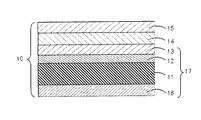
- FIG. 2 is a schematic cross-sectional view showing an example of a thermal transfer image receiving sheet support and a thermal transfer image receiving sheet according to the present invention.
- the support for a thermal transfer image receiving sheet according to the present invention is formed by laminating a porous layer, a first polyolefin resin layer, a base material layer, and a second polyolefin resin layer in this order.
- the support for a thermal transfer image receiving sheet according to the present invention may further have a primer layer and a colorant receiving layer laminated on the porous layer.
- the thermal transfer image-receiving sheet support 17 shown in FIG. 1 is formed by laminating a base layer 11 and a first polyolefin resin layer 12 and a porous layer 13 in this order on one surface of the base layer 11. It will be.
- the second polyolefin resin layer 16 is laminated on the other surface of the base material layer 11.
- Base material layer Since the base material layer of the support for a thermal transfer image receiving sheet according to the present invention is heated at the time of thermal transfer, it is preferable to use a material having a mechanical strength that does not hinder handling even in a heated state. As a material for such a base material layer, it is preferable to use a paper base material. As the paper substrate, uncoated paper is preferably used, and examples thereof include base paper, photographic base paper, and high-quality paper. In the present invention, base paper, photographic base paper, high-quality paper and the like can be used.
- high-quality paper or art paper having a basis weight of 78 g / m 2 or more and 400 g / m 2 or less, preferably 100 g / m 2 or more and 200 g / m 2 or less can be used.
- coated paper can be used.
- the thickness of the base material layer is not particularly limited, but is preferably 50 ⁇ m or more and 300 ⁇ m or less, more preferably 100 ⁇ m or more and 250 ⁇ m or less, and further preferably 150 ⁇ m or more and 175 ⁇ m or less. If the thickness of the base material layer is within the above range, the curling stability of the printed material can be improved and the texture of the surface of the printed material can be improved when printed under high temperature and high humidity environmental conditions. .
- the first polyolefin resin layer of the support for a thermal transfer image receiving sheet according to the present invention is formed on one surface (coloring material receiving layer side) of the base material layer, and the second polyolefin resin layer is a base material layer. It is formed on the other side (back side) of the material layer.
- the first polyolefin resin layer is 0.93 g / cm 3 or less, preferably 0.90 g / cm 3 or more and 0.93 g / cm 3 or less, more preferably 0.915 g / cm 3 or more and 0.925 g / cm 3 or less. It can form from the 1st polyolefin resin which has the density of.
- the second polyolefin resin layer is greater than 0.93 g / cm 3, preferably 0.94 g / cm 3 or more 0.975 g / cm 3 or less, more preferably 0.945 g / cm 3 or more 0.96 g / It can be formed from a second polyolefin resin having a density of cm 3 or less.
- the curled stability of the printed matter is improved when printing is performed under high temperature and high humidity environmental conditions, and printing is performed.
- the texture of the object surface can be improved.
- the density of the polyolefin is a value measured according to JIS K6760.
- the thickness of the first polyolefin resin layer is preferably 5 ⁇ m or more and 30 ⁇ m or less, more preferably 10 ⁇ m or more and 25 ⁇ m or less, and further preferably 12 ⁇ m or more and 20 ⁇ m or less.
- the thickness of the second polyolefin resin layer is preferably 15 ⁇ m or more and 50 ⁇ m or less, more preferably 20 ⁇ m or more and 40 ⁇ m or less, and further preferably 25 ⁇ m or more and 35 ⁇ m or less.
- the first polyolefin resin layer and / or the second polyolefin resin layer preferably uses a resin such as polyethylene, polypropylene, and a propylene-ethylene copolymer, and particularly preferably contains a polyethylene resin as a main component.
- the main component means that the polyethylene resin is contained in an amount of 50% by mass or more of the solid content of the polyolefin resin layer.
- a polyethylene resin you may use what mixed resin of 1 type, or 2 or more types, such as low density polyethylene, linear low density polyethylene, medium density polyethylene, and high density polyethylene.
- Low density polyethylene is also called high pressure low density polyethylene or soft polyethylene, and is an ethylene homopolymer or a copolymer of ethylene and ⁇ -olefin, and has a structure in which ethylene as a repeating unit is randomly branched.
- the density of low-density polyethylene is usually about, 0.900 g / cm 3 or more 0.930 g / cm 3 or less.
- the high-density polyethylene is an ethylene homopolymer or a copolymer of ethylene and ⁇ -olefin, which is also called a medium-low pressure polyethylene or a hard polyethylene, and has a structure in which ethylene of a repeating unit hardly branches. Also good.
- the density of the high-density polyethylene is usually about 0.940 g / cm 3 or more and 0.975 g / cm 3 or less.
- low density polyethylene can be used as the first polyolefin resin
- a mixture of high density polyethylene and low density polyethylene can be used as the second polyolefin resin to adjust the above numerical range of the density.
- the mass ratio of the high density polyethylene to the total mass of the low density polyethylene and the high density polyethylene is preferably 0.3 or more and less than 1.0, more preferably 0.5 or more and 0.9 or less, More preferably, a mixture of 0.6 or more and 0.8 or less can be used.
- the porous layer of the support for a thermal transfer image receiving sheet according to the present invention comprises a porous film.
- the thickness of the porous film is preferably 10 ⁇ m or more and 100 ⁇ m or less, more preferably 15 ⁇ m or more and 80 ⁇ m or less, and further preferably 20 ⁇ m or more and 50 ⁇ m or less.
- the porous film preferably has a density measured according to JISK6922 of 0.1 g / cm 3 or more and 1.5 g / cm 3 or less, and preferably 0.3 g / cm 3 or more and 1.0 g / cm 3 or less. More preferably, it is more preferably 0.5 g / cm 3 or more and 0.8 g / cm 3 or less.
- the porous film is preferably a porous film containing a polyolefin resin, for example, a polypropylene resin or a polyethylene terephthalate resin as a base resin and having fine voids inside.
- a porous layer made of a porous film with a thickness in the above range and containing a polypropylene resin By providing a porous layer made of a porous film with a thickness in the above range and containing a polypropylene resin, the curl stability of the printed matter is improved when printing under high temperature and high humidity environmental conditions. And the texture of the surface of the printed material can be improved.
- a compound is prepared by kneading organic fine particles or inorganic fine particles (one kind or plural kinds) incompatible with the resin as the base of the film. Microscopically, this compound forms a fine sea-island structure with the base resin and fine particles incompatible with the base resin, and the compound is formed into a film and stretched to form the sea-island interface.
- the fine voids as described above are generated by the peeling of the film or the large deformation of the region forming the island.
- a porous film having high printing sensitivity can be obtained by preparing a compound composed mainly of polypropylene, blended with acrylic resin or polyester, and polyisoprene, forming a compound, and stretching.
- the thermal transfer image receiving sheet according to the present invention is obtained by further laminating a color material receiving layer on the porous layer of the support for a thermal transfer image receiving sheet.
- a thermal transfer image-receiving sheet having good curl stability when printed under high temperature and high humidity environmental conditions and having excellent texture on the surface of the printed material is obtained. Can do.
- thermal transfer image receiving sheet 10 shown in FIG. 1 is obtained by laminating a primer layer 14 and a color material receiving layer 15 in this order on a porous layer 13 of a support 17 for a thermal transfer image receiving sheet.
- each layer constituting the thermal transfer image receiving sheet according to the present invention will be described in detail.
- the color material receiving layer of the thermal transfer image receiving sheet according to the present invention is for receiving the sublimation dye transferred from the thermal transfer ink sheet and maintaining the formed image.
- the resin for forming the colorant receiving layer includes polycarbonate resin, polyester resin, polyamide resin, acrylic resin, cellulose resin, polysulfone resin, polyvinyl chloride resin, polyvinyl acetate resin, and vinyl chloride.
- the thermal transfer image receiving sheet according to the present invention can have a release agent in the colorant receiving layer in order to improve the release property from the thermal transfer ink sheet.
- Various release agents such as solid waxes such as polyethylene wax, amide wax, Teflon (registered trademark), fluorine-based or phosphate-based surfactant, silicone oil, reactive silicone oil, curable silicone oil, etc. Silicone oil and various silicone resins can be mentioned, and silicone oil is preferable. An oily oil can be used as the silicone oil, but a modified silicone oil is preferred.
- modified silicone oil amino-modified silicone, epoxy-modified silicone, aralkyl-modified silicone, epoxy-aralkyl-modified silicone, alcohol-modified silicone, vinyl-modified silicone, urethane-modified silicone and the like can be preferably used.
- Epoxy-aralkyl-modified silicones are particularly preferred. It is also preferable to use a combination of two or more of these release agents.
- the addition amount of these modified silicone oils is preferably 0.5% by mass or more and 30% by mass or less of the resin constituting the colorant receiving layer.
- titanium oxide, zinc oxide, kaolin, clay, calcium carbonate, fine powder silica, etc. are used for the purpose of improving the whiteness of the colorant receiving layer and further enhancing the clarity of the transferred image.
- Pigments and fillers can be added.
- plasticizers such as a phthalic acid ester compound, a sebacic acid ester compound, and a phosphoric acid ester compound.
- the thermal transfer image receiving sheet according to the present invention may further have a release layer on at least a part of the surface of the colorant receiving layer.
- the release layer can be formed by applying the above release agent dissolved or dispersed in an appropriate solvent and then drying. Although it does not specifically limit as a mold release agent used for a mold release layer, The reaction hardened
- the thickness of the release agent layer is preferably 0.01 ⁇ m or more and 5.0 ⁇ m or less, and more preferably 0.05 ⁇ m or more and 2.0 ⁇ m or less.
- titanium oxide, zinc oxide, kaolin, clay, calcium carbonate, and finely divided silica are used for the purpose of improving the whiteness of the colorant receiving layer and further enhancing the clarity of the transferred image.
- a pigment or a filler such as can be added.
- a plasticizer such as a phthalic acid ester compound, a sebacic acid ester compound, and a phosphoric acid ester compound may be added.
- the primer layer of the thermal transfer image receiving sheet according to the present invention is provided between the color material receiving layer and the porous layer, and the adhesion between the color material receiving layer and the porous film, whiteness, cushioning property, hiding property,
- the purpose is to impart antistatic properties and anti-curling properties.
- any conventionally known primer layer can be provided.
- the binder resin used in the primer layer is polyurethane resin, polyester resin, polycarbonate resin, polyamide resin, acrylic resin, polystyrene resin, polysulfone resin, polyvinyl chloride resin, polyvinyl acetate resin, polyvinyl chloride- Vinyl acetate copolymer resin, polyvinyl acetal resin, polyvinyl butyral resin, polyvinyl alcohol resin, epoxy resin, cellulose resin, ethylene-vinyl acetate copolymer resin, polyethylene resin, polypropylene resin, and the like.
- those isocyanate cured products can be used as a binder.
- fillers such as titanium oxide, zinc oxide, magnesium carbonate, and calcium carbonate in order to impart whiteness and concealment.
- stilbene compounds, benzimidazole compounds, and benzoxazole compounds are added as fluorescent brightening agents to enhance whiteness
- hindered amine compounds and hindered phenol compounds are used to increase the light fastness of printed materials.
- Add compounds, benzotriazole compounds, benzophenone compounds, etc. as UV absorbers or antioxidants, or add cationic acrylic resins, polyaniline resins, and various conductive fillers to impart antistatic properties can do.
- the coating amount of the primer layer is preferably about 0.5 g / m 2 or more and 5 g / m 2 or less in a dry state.
- the support for a thermal transfer image-receiving sheet according to the present invention can be produced by laminating a porous layer, a first polyolefin resin layer, a base material layer, and a second polyolefin resin layer by a known method.
- the second polyolefin resin layer is formed by extruding the second polyolefin resin layer on one surface of the base material layer by an extrusion laminating method, and then opposite to the second polyolefin resin layer of the base material layer.
- a support for a thermal transfer image receiving sheet can be obtained. Further, the porous layer and the base material layer are formed on one surface of the base material layer by the first polyolefin resin layer formed by extruding the first polyolefin resin by an extrusion laminating method (also called a sand laminating method).
- a support for a thermal transfer image receiving sheet can also be obtained.
- an extrusion laminating method also called a sand laminating method
- an adhesive layer formed by a dry lamination method is not formed between the porous layer and the base material layer.
- a support for a thermal transfer image receiving sheet can be obtained.
- the thermal transfer image receiving sheet according to the present invention can be produced by laminating a color material receiving layer on the porous layer of the above-mentioned support for a thermal transfer image receiving sheet by a known method.
- the thermal transfer image-receiving sheet according to the present invention is a method for producing a support for a thermal transfer image-receiving sheet as described above, wherein the color material is received on the porous layer before laminating the porous layer made of the porous film and the base material layer. It can also be produced by laminating layers.
- the second polyolefin resin layer is formed on one surface of the base material layer by extruding the second polyolefin resin by an extrusion laminating method. Subsequently, the second polyolefin resin layer of the base material layer is formed.
- a porous layer and a base material layer in which a colorant receiving layer is laminated by a known method are pasted on a surface opposite to the surface by a first polyolefin resin formed by an extrusion laminating method (also called a sand laminating method).
- an extrusion laminating method also called a sand laminating method
- stacked the color material receiving layer by the well-known method, and the base material layer on one surface of the base material layer by the extrusion laminating method (it is also called the sand laminating method)
- the extrusion laminating method By laminating by layers, and subsequently, extruding the second polyolefin resin by extrusion lamination method on the surface of the base material layer opposite to the first polyolefin resin layer to form a second polyolefin resin layer, A thermal transfer image receiving sheet can also be produced. That is, the color material receiving layer may be laminated on the support for the thermal transfer image receiving sheet before or after the base material layer and the porous layer are bonded.
- the colorant-receiving layer may be a thermoplastic resin and other necessary additives such as mold release agents, plasticizers, fillers, crosslinking agents, curing agents, catalysts, heat release agents, UV absorbers, antioxidants.
- a coating solution in which an agent, a light stabilizer and the like are dissolved or dispersed in an organic solvent or water is applied by a forming means such as a gravure printing method, a screen printing method, and a reverse roll coating method using a gravure plate. It can be formed by drying.
- the coating amount of the thus formed are colorant-receiving layer is usually extent 0.5 g / m 2 or more 50 g / m 2 or less in the dry state, preferably 2 g / m 2 or more 10 g / m 2 or less.
- a colorant-receiving layer is preferably a continuous coating, but may be formed as a discontinuous coating.
- the primer layer and the like may be applied by the same method as that for forming the colorant receiving layer. Lamination of the primer layer or the like to the support for the thermal transfer image-receiving sheet may be performed before or after the substrate layer and the porous layer are bonded.
- Substrate sheet As the material of the base sheet constituting the thermal transfer ink sheet used in the present invention, conventionally known materials can be used, and even other materials have a certain degree of heat resistance and strength. Can be used. For example, polyethylene terephthalate, polyester, polypropylene, polycarbonate, polyethylene, polystyrene, polyvinyl alcohol, polyvinyl chloride, polyvinylidene chloride, polyimide, nylon, cellulose acetate, ionomer and other resin films, condenser paper, paraffin paper, and other non-woven fabrics Etc. These may be used alone, or a laminate in which these are arbitrarily combined may be used. Among these, polyethylene terephthalate which is a versatile plastic that can be thinned and is inexpensive is preferable.
- the thickness of the base sheet can be appropriately selected according to the material so that the strength, heat resistance and the like are appropriate, but usually it is preferably about 0.5 ⁇ m to 50 ⁇ m, more preferably 1 ⁇ m to 20 ⁇ m. More preferably, it is 1 ⁇ m or more and 10 ⁇ m or less.
- the base sheet may be subjected to a surface treatment in order to improve adhesion with an adjacent layer.
- a surface treatment known resin surface modification techniques such as corona discharge treatment, flame treatment, ozone treatment, ultraviolet treatment, radiation treatment, surface roughening treatment, chemical treatment, plasma treatment, and grafting treatment are applied. can do. Only one type of the surface treatment may be applied, or two or more types may be applied.
- An adhesion layer can be formed from the following organic materials and inorganic materials, for example.
- the organic material include polyester resins, polyacrylate resins, polyvinyl acetate resins, polyurethane resins, styrene acrylate resins, polyacrylamide resins, polyamide resins, polyether resins, polystyrene resins, Examples thereof include polyethylene resins, polypropylene resins, polyvinyl chloride resins, polyvinyl alcohol resins, polyvinyl pyrrolidone and vinyl resins such as modified products thereof, and polyvinyl acetal resins such as polyvinyl acetoacetal and polyvinyl butyral.
- the inorganic material examples include silica (colloidal silica), alumina or alumina hydrate (alumina sol, colloidal alumina, cationic aluminum oxide or hydrate, suspicion bakumaite, etc.), aluminum silicate, magnesium silicate, magnesium carbonate, oxidation Examples thereof include ultrafine particles of colloidal inorganic pigments such as magnesium and titanium oxide.
- a primer solution can be applied to the unstretched film and then stretched (primer treatment).
- the thermal transfer ink sheet used in the present invention is provided with a thermal transferable color material layer on one surface of a substrate sheet.
- a layer containing a sublimation dye is formed as the thermal transferable color material layer
- the thermal transfer type thermal transfer ink sheet is a hot melt composition containing a colorant
- a layer containing a heat-meltable ink is formed.
- a layer region containing a sublimable dye and a layer region containing a heat-meltable ink composed of a heat-melting composition containing a colorant are provided in a surface sequence on a continuous base sheet. Also good.
- the material of the heat transferable color material layer conventionally known dyes can be used, but those having good characteristics as a printing material, for example, having a sufficient coloring density and changing color due to light, heat, temperature, etc.
- Preferred are diarylmethane dyes, triarylmethane dyes, thiazole dyes, merocyanine dyes, pyrazolone dyes, methine dyes, indoaniline dyes, acetophenone azomethine, pyrazoloazomethine, imidazolazomethine, imidazoazomethine, pyridone Azomethine dyes such as azomethine, xanthene dyes, oxazine dyes, cyanostyrene dyes such as dicyanostyrene and tricyanostyrene, thiazine dyes, azine dyes, acridine dyes, benzeneazo dyes, pyridoneazo, thiophenazo, is
- red dyes such as Disperse Red 60, Disperse Violet 26, CeresRedB7B, Samaron Red F3BS
- yellow dyes such as Disperse Yellow 231, PTY-52, Macrolex Yellow 6G
- Solvent Blue 63 Waxolin Blue AP-FW, Holon Brilliant Blue SR, MS Blue 100, C.I. I.
- blue dyes such as Solvent Blue 22.
- the dye contained in the ribbon used by the sublimation type thermal transfer system marketed can also be used.
- binder resin for supporting the dye examples include cellulose resins such as ethyl cellulose resin, hydroxyethyl cellulose resin, ethyl hydroxy cellulose resin, methyl cellulose resin, and cellulose acetate resin, polyvinyl alcohol resin, polyvinyl acetate resin, and polyvinyl butyral resin.
- vinyl resins such as polyvinyl acetal resin and polyvinyl pyrrolidone, acrylic resins such as poly (meth) acrylate and poly (meth) acrylamide, polyurethane resins, polyamide resins, and polyester resins.
- cellulose-based, vinyl-based, acrylic-based, polyurethane-based, and polyester-based resins are preferable from the viewpoints of heat resistance, dye transferability, and the like.
- Examples of the method for forming the heat transferable color material layer include the following methods.
- a coating solution (dissolved solution or dispersion) is applied to one surface of a substrate sheet by, for example, a gravure printing method, a reverse roll coating method using a gravure plate, a roll coater, a bar coater, etc., and dried. Can be formed.
- the heat transferable color material layer has a thickness of about 0.2 ⁇ m or more and 5.0 ⁇ m or less, and the content of the sublimable dye in the heat transferable color material layer is 5 mass% or more and 90 mass% or less, preferably 5 It is preferable that they are mass% or more and 70 mass% or less.
- the thermal transfer ink sheet used in the present invention may be provided with a protective layer in the surface order on the same side as the thermal transferable color material layer. After the color material is transferred to the thermal transfer image-receiving sheet, the protective layer is transferred to cover the image, whereby the image can be protected from light, gas, liquid, abrasion and the like. Other layers such as an adhesive layer, a release layer, or an undercoat layer may be provided as a protective layer.
- the heat resistant slipping layer is mainly composed of a heat resistant resin.
- the heat-resistant resin is not particularly limited.
- the heat resistant slipping layer may be formed by blending additives such as a slipperiness imparting agent, a crosslinking agent, a release agent, an organic powder, and an inorganic powder in addition to the above heat resistant resin.
- the heat-resistant slipping layer is prepared by adding the above-mentioned heat-resistant resin and the above-mentioned slipperiness-imparting agent and additives that are optionally added to the solvent, and dissolving or dispersing each component to form a heat-resistant slipping layer coating solution.
- the heat resistant slipping layer coating solution can be applied on a substrate and dried.
- the solvent in the heat resistant slipping layer coating solution the same solvents as those in the dye ink can be used.
- the coating method of the heat resistant slipping layer coating liquid examples include wire bar coating, gravure printing, screen printing, reverse roll coating using a gravure plate, and gravure coating is particularly preferable.
- the heat resistant slipping layer coating solution may be applied so that the dry coating amount is preferably 0.1 g / m 2 or more and 3 g / m 2 or less, more preferably 1.5 g / m 2 or less.
- the thermal transfer image receiving sheet and the thermal transfer ink sheet containing the heat diffusible dye are superposed and heated according to the recording signal, whereby the thermal transfer ink sheet is obtained.
- An image can be formed by transferring the contained heat diffusible dye to the thermal transfer image-receiving sheet.
- an image can also be formed by high-speed printing.
- the high-speed printing is 0.5 msec / line or more and 3.0 msec / line or less.
- thermal transfer recording apparatus that can be used in such an image forming method
- a known apparatus can be used and is not particularly limited.
- a commercially available thermal transfer recording apparatus can be used, and examples thereof include a sublimation thermal transfer printer (manufactured by ALTECH ADS (model: MEGAPICEL III), manufactured by DNP Photolcio (model: DS40)).
- Example 1 A porous polypropylene film (thickness 38 ⁇ m, density 0.7 g / cm 3 ) was prepared as a porous film for forming the porous layer.
- a white base paper uncoated paper, thickness 150 ⁇ m, manufactured by (Mitsubishi Paper) Co., Ltd.
- a mixed resin (mixing ratio 8: 2, density 0.949 g / cm) of high density polyethylene resin (density 0.956 g / cm 3 ) and low density polyethylene resin (density 0.919 g / cm 3 ) on the surface of the white base paper.
- a primer layer coating solution having the following composition was applied with a gravure coater so as to be 2 g / m 2 after drying, and dried at 110 ° C. for 1 minute.
- a coating solution for a colorant receiving layer having the following composition was applied with a gravure coater so as to be 4 g / m 2 after drying, and dried at 110 ° C. for 1 minute to form a primer layer and a colorant receiving layer.
- a thermal transfer image receiving sheet was obtained.
- composition of coating solution for colorant receiving layer ⁇ Vinyl chloride-vinyl acetate copolymer (manufactured by Nissin Chemical Industry Co., Ltd., trade name: Solvein C) 60 parts by mass ⁇ Epoxy-modified silicone (manufactured by Shin-Etsu Chemical Co., Ltd., trade name: X-22) 3000T) 1.2 parts by mass / methylstil modified silicone (manufactured by Shin-Etsu Chemical Co., Ltd., trade name: 24- 510) 0.6 parts by mass / methyl ethyl ketone / toluene (mass ratio 1/1) 5 parts by mass
- Example 2 Example except that the resin used for the second polyolefin resin layer was changed to a mixed resin of the above high density polyethylene resin and the above low density polyethylene resin (mixing ratio 3: 2, density 0.941 g / cm 3 ). In the same manner as in No. 1, a support for a thermal transfer image receiving sheet was produced. Subsequently, a thermal transfer image receiving sheet was produced in the same manner as in Example 1.
- Example 3 A support for a thermal transfer image receiving sheet was produced in the same manner as in Example 1 except that the thickness of the first polyolefin resin layer was changed to 20 ⁇ m. Subsequently, a thermal transfer image receiving sheet was produced in the same manner as in Example 1.
- Example 4 A support for a thermal transfer image receiving sheet was produced in the same manner as in Example 1 except that the thickness of the second polyolefin resin layer was changed to 15 ⁇ m. Subsequently, a thermal transfer image receiving sheet was produced in the same manner as in Example 1.
- Example 5 A support for a thermal transfer image receiving sheet was produced in the same manner as in Example 1 except that the thickness of the first polyolefin resin layer was changed to 10 ⁇ m. Subsequently, a thermal transfer image receiving sheet was produced in the same manner as in Example 1.
- Example 6 A thermal transfer image-receiving sheet support was produced in the same manner as in Example 1 except that the thickness of the first polyolefin resin layer was changed to 7 ⁇ m and the thickness of the second polyolefin resin layer was changed to 35 ⁇ m. Subsequently, a thermal transfer image receiving sheet was produced in the same manner as in Example 1.
- Example 7 A porous polypropylene film (thickness 38 ⁇ m, density 0.7 g / cm 3 ) was prepared as a porous film for forming the porous layer. On the porous polypropylene film, a primer layer and a colorant receiving layer were formed in the same manner as in Example 1. Also, a coated paper (thickness 152 ⁇ m, manufactured by Daio Paper Co., Ltd.), which is a paper base material, was prepared as the base material layer. A second polyolefin resin layer (thickness 30 ⁇ m) was formed on the coated paper in the same manner as in Example 1.
- Example 8 Before forming the second polyolefin resin layer and the first polyolefin resin layer, the thermal transfer image-receiving sheet was obtained in the same manner as in Example 1 except that the surface of the base material layer on which the respective resin layers were formed was subjected to corona treatment. A support was produced. Subsequently, a thermal transfer image receiving sheet was produced in the same manner as in Example 1.
- Example 9 A porous polypropylene film (thickness 38 ⁇ m, density 0.7 g / cm 3 ) was prepared as a porous film for forming the porous layer.
- a white base paper uncoated paper, thickness 150 ⁇ m, manufactured by (Mitsubishi Paper) Co., Ltd.
- a low-density polyethylene resin density 0.919 g / cm 3
- a first polyolefin resin layer (thickness: 15 ⁇ m) made of the low density polyethylene resin was formed.
- a high density polyethylene resin density 0.956 g / cm 3
- a low density polyethylene resin density 0.919 g / cm 3
- a resin mixtureing ratio 8: 2, density 0.949 g / cm 3
- a thermal transfer image receiving sheet was produced in the same manner as in Example 1.
- Example 10 A thermal transfer image-receiving sheet was produced in the same manner as in Example 7 except that a white base paper (uncoated paper, thickness 150 ⁇ m, (Mitsubishi Paper) Co., Ltd.), which is a paper base material, was prepared as the base material layer. .
- a white base paper uncoated paper, thickness 150 ⁇ m, (Mitsubishi Paper) Co., Ltd.
- Example 1 except that the resin used for the first polyolefin resin layer was changed to the above-mentioned mixed resin of high-density polyethylene resin and low-density polyethylene resin (mixing ratio 8: 2, density 0.949 g / cm 3 ). Similarly, a support for a thermal transfer image receiving sheet was produced. Subsequently, a thermal transfer image receiving sheet was produced in the same manner as in Example 1.
- Example 3 A support for a thermal transfer image receiving sheet was produced in the same manner as in Example 1 except that the resin used for the second polyolefin resin layer was changed to the low-density polyethylene resin. Subsequently, a thermal transfer image receiving sheet was produced in the same manner as in Example 1.
- Example 4 The resin used for the first polyolefin resin layer is changed to a mixed resin of the above high density polyethylene resin and the above low density polyethylene resin (mixing ratio 8: 2, density 0.949 g / cm 3 ), and second A support for a thermal transfer image-receiving sheet was produced in the same manner as in Example 1 except that the resin used for the polyolefin resin layer was changed to the low-density polyethylene resin (density 0.919 g / cm 3 ). Subsequently, a thermal transfer image receiving sheet was produced in the same manner as in Example 1.
- Table 1 shows the relationship between the first polyolefin resin layer and the second polyolefin resin layer in the thermal transfer image-receiving sheet support produced in the above Examples and Comparative Examples.
- composition of coating solution 1 for heat resistant slipping layer ⁇ Polyvinyl acetal (Sekisui Chemical Co., Ltd., trade name: ESREC KS-) 1) 60.6 parts by mass, polyisocyanate (Dainippon Ink Chemical Co., Ltd., trade name: Burnock D750) 8.4 parts by mass, silicone resin fine particles (Momentive Performance Materials Japan GK, trade name: Tospearl 240, average particle size: 4 ⁇ m, polygonal shape) 1 part by mass, zinc stearyl phosphate (refined LBT-1830, manufactured by Sakai Chemical Industry Co., Ltd.) 10 parts by mass, zinc stearate (SZ-PF, manufactured by Sakai Chemical Industry Co., Ltd.) 10 parts by mass, polyethylene wax (polywax 3000, Toyo Petrolite Co., Ltd.) 3 parts by mass, ethoxylated alcohol-modified wax (manufactured by Toyo Adre Co., Ltd., trade name:
- a primer layer coating liquid having the following composition is applied to a part of the surface opposite to the side on which the heat-resistant slip layer of the substrate is provided, so that the dry coating amount is 0.10 g / m 2 .
- the primer layer was formed by drying.
- a yellow color material layer coating solution, a magenta color material layer coating solution, and a cyan color material layer coating solution having the following composition are dried on the primer layer so that the amount is 0.6 g / m 2 when dried.
- the yellow color material layer, the magenta color material layer, and the cyan color material layer were formed by coating and drying repeatedly in order.
- Disperse dye (Composition of coating solution for yellow color material layer) ⁇ Disperse dye (disperse yellow 201) 2.5 parts by mass Disperse dye (yellow dye represented by the following chemical formula) 2.5 parts by mass -Binder resin (polyvinyl acetal resin, KS-5, manufactured by Sekisui Chemical Co., Ltd.) 4.5 parts by mass-Polyethylene wax 0.1 parts by mass-Methyl ethyl ketone 45.0 parts by mass-Toluene 45.0 parts by mass
- composition of coating solution for magenta color material layer represented by the following chemical formula 2.0 parts by mass -Binder resin (polyvinyl acetal resin, KS-5, manufactured by Sekisui Chemical Co., Ltd.) 4.5 parts by mass-Alkyl-modified silicone oil (KF-412, Shin-Etsu Silicone Co., Ltd.) 0.1 parts by mass, polyethylene wax 0.1 parts by mass, methyl ethyl ketone 45.0 parts by mass, toluene 45.0 parts by mass
- composition of coating solution for cyan color material layer (Composition of coating solution for cyan color material layer) -Dye represented by the following chemical formula 2.0 parts by mass -Binder resin (polyvinyl acetal resin, KS-5, manufactured by Sekisui Chemical Co., Ltd.) 4.5 parts by mass-Alkyl-modified silicone oil (KF-412, Shin-Etsu Silicone Co., Ltd.) 0.1 parts by mass, polyethylene wax 0.1 parts by mass, methyl ethyl ketone 45.0 parts by mass, toluene 45.0 parts by mass
- a protective layer coating solution having the following composition is applied to the other part of the other side of the base sheet on which the heat-resistant slipping layer is provided, so that the amount is 1.5 g / m 2 when dried. Dried to form.
- a heat-resistant slipping layer is provided on one surface of the base material, and a primer layer and a heat transferable color material layer (Y, M, C) are laminated in this order on a part of the other surface of the base material, A thermal transfer ink sheet was obtained in which a protective layer was provided on the other part of the other surface of the substrate.
- composition of coating solution for protective layer ⁇ Acrylic resin (Mitsubishi Rayon Co., Ltd., trade name: Dianar BR-83) ) 69.6 parts by mass-Acrylic copolymer reactively bonded with a reactive ultraviolet absorber (BASF Japan, trade name: UVA635L) 17.4 parts by weight, silica (Fuji Silysia Co., Ltd., trade name: Siricia 310) ) 25 parts by mass / methyl ethyl ketone 100 parts by mass / toluene 100 parts by mass
- thermal transfer image receiving sheet The thermal transfer image-receiving sheets produced in the above examples and comparative examples were evaluated for (1) curl stability and (2) texture.
- ⁇ Gray highlight In the surface state of the image part, the texture of the surface of the base uncoated paper substrate is partially observed, and the texture is worrisome, and the print reproduces a full-color silver salt photograph. Compared with paper, it lacked smoothness, texture and texture, and was not satisfactory. (This is an intermediate result of the evaluation of ⁇ and ⁇ , but it is not satisfactory.)
- X Gray highlight The image state of the surface of the image part is observed to disperse the fibers of the underlying paper core material, the texture is quite worrisome, and the print reproduces a full-color silver salt photograph Compared with paper, it lacked smoothness, texture, and texture.
- the thermal transfer image-receiving sheet of the example satisfying the configuration of the present invention has good curl stability under high-temperature and high-humidity environmental conditions and excellent texture compared to the thermal transfer image-receiving sheet of the comparative example. I understood.
Landscapes
- Physics & Mathematics (AREA)
- Optics & Photonics (AREA)
- Chemical & Material Sciences (AREA)
- Chemical Kinetics & Catalysis (AREA)
- Thermal Transfer Or Thermal Recording In General (AREA)
- Laminated Bodies (AREA)
Abstract
【課題】高温度や高湿度の環境条件下で印画した場合に良好なカール安定性を有し、かつ印画物表面の地合いに優れる熱転写受像シートを得ることができる、熱転写受像シート用支持体の提供。 【解決手段】本発明による熱転写受像シート用支持体は、多孔質フィルムからなる多孔質層と、第1のポリオレフィン樹脂層と、基材層と、第2のポリオレフィン樹脂層と、をこの順に積層してなり、第1のポリオレフィン樹脂層の密度が0.93g/cm3以下であり、第2のポリオレフィン樹脂層の密度が0.93g/cm3を超えることを特徴とするものである。
Description
本発明は、熱転写受像シート用支持体に関し、より詳細には、多孔質層と、第1のポリオレフィン樹脂層と、基材層と、第2のポリオレフィン樹脂層とをこの順に積層してなる、熱転写受像シート用支持体に関する。さらに、熱転写受像シート用支持体の多孔質層上に色材受容層を積層してなる熱転写受像シートに関する。また、本発明は、熱転写受像シート用支持体および熱転写受像シートの製造方法に関する。
従来、種々の熱転写記録方式の中で、感熱昇華型転写方式と感熱溶融型転写方式が広く用いられている。このうち、感熱昇華型転写方式は、昇華性染料を色材とし、それを画像情報に応じて発熱制御されるサーマルヘッドなどの加熱デバイスを用いて、熱転写インクシート上に形成された昇華性染料層中の染料を熱転写受像シートに移行させて画像を形成するものである。
この感熱昇華型転写方式によれば、極めて短時間の加熱によってドット単位で染料の移行量を制御することができる。また、色材が染料であることから透明性にも優れており、形成された画像は、非常に鮮明であると同時に、中間調の再現性や階調性に優れているため、極めて高精細な画像が得られ、フルカラーの銀塩写真にも匹敵する高品質の画像を得ることができる。
このような感熱昇華型転写方式に用いられる昇華転写用の熱転写受像シート(以下、熱転写受像シートと言う)としては、一般的に基材層上に色材受容層を形成したものが用いられている。この受像シートに要求される性能としては、高い印画感度は勿論のこと、受像シート自体のカールに対する安定性(耐カール性)も重要である。このため特に、枚葉形態の受像シートを作成する場合、プラスチックシートや紙などの支持体に、更にプラスチックシートなどを表裏両面に対称に積層したものを用いてカールを防止する方法や、樹脂などによるカール防止層を裏面などに設けてカールの安定性を保つ方法などが採られていた。このようなカール防止対策として、例えば、熱転写受像シートの支持体の裏面側に裏面樹脂層を設けることが提案されている(特許文献1参照)。
また、フルカラーの銀塩写真を再現する印画紙と同等の平滑性、質感、および風合い等を有し、印画物表面の地合いに優れる熱転写受像シートを得るために、基材シートの少なくとも一方の面に多孔質フィルムを積層し、更に該多孔質フィルムの上に染料受容層を設けた熱転写受像シートが提案されている(特許文献2参照)。この熱転写受像シートは、基材シートが、非コート紙からなる芯材の両面にポリオレフィン樹脂層を設けたものであり、一方のポリオレフィン樹脂層と染料受容層とを接着剤層により貼合したものであり、地合いに優れると記載されている。しかし、本発明者らは、特許文献2に記載の熱転写受像シートは地合いが不十分であり、ポリオレフィン樹脂層と染料受容層とを接着剤により貼合することで印画物表面の地合いが悪化することを知見した。
本発明は上記の背景技術に鑑みてなされたものであり、その目的は、高温度や高湿度の環境条件下で印画した場合に良好なカール安定性を有し、かつ印画物表面の地合いに優れる熱転写受像シートを得ることができる、熱転写受像シート用支持体を提供することにある。
本発明者らは上記課題を解決するため、鋭意検討した結果、多孔質層と、第1のポリオレフィン樹脂層と、基材層と、第2のポリオレフィン樹脂層とをこの順に積層してなる熱転写受像シートにおいて、第1のポリオレフィン樹脂層と第2のポリオレフィン樹脂層の密度を調節することにより、上記課題を解決できることを知見し、本発明を完成するに至った。
すなわち、本発明の一態様によれば、
多孔質フィルムからなる多孔質層と、第1のポリオレフィン樹脂層と、基材層と、第2のポリオレフィン樹脂層と、をこの順に積層してなり、
前記第1のポリオレフィン樹脂層の密度が0.93g/cm3以下であり、
前記第2のポリオレフィン樹脂層の密度が0.93g/cm3を超えることを特徴とする、熱転写受像シート用支持体が提供される。
多孔質フィルムからなる多孔質層と、第1のポリオレフィン樹脂層と、基材層と、第2のポリオレフィン樹脂層と、をこの順に積層してなり、
前記第1のポリオレフィン樹脂層の密度が0.93g/cm3以下であり、
前記第2のポリオレフィン樹脂層の密度が0.93g/cm3を超えることを特徴とする、熱転写受像シート用支持体が提供される。
本発明の態様においては、第1のポリオレフィン樹脂層の厚さに対する第2のポリオレフィン樹脂層の厚さが、1倍以上5倍以下であることが好ましい。
本発明の態様においては、第1のポリオレフィン樹脂層および/または第2のポリオレフィン樹脂層が、ポリエチレンであることが好ましい。
本発明の他の態様によれば、
上記の熱転写受像シート用支持体の多孔質層上に、色材受容層をさらに積層してなる、熱転写受像シートが提供される。
上記の熱転写受像シート用支持体の多孔質層上に、色材受容層をさらに積層してなる、熱転写受像シートが提供される。
本発明の他の態様によれば、
基材層の一方の面上に、押し出しラミネート法により、密度が0.93g/cm3を超える第2のポリオレフィン樹脂を押し出して第2のポリオレフィン樹脂層を形成する工程と、
前記基材層の第2のポリオレフィン樹脂層とは反対側の面上に、押し出しラミネート法により密度が0.93g/cm3以下である第1のポリオレフィン樹脂を押し出して形成した第1のポリオレフィン樹脂層によって、多孔質フィルムからなる多孔質層と前記基材層とを貼合する工程と、
を含んでなる、熱転写受像シート用支持体の製造方法が提供される。
基材層の一方の面上に、押し出しラミネート法により、密度が0.93g/cm3を超える第2のポリオレフィン樹脂を押し出して第2のポリオレフィン樹脂層を形成する工程と、
前記基材層の第2のポリオレフィン樹脂層とは反対側の面上に、押し出しラミネート法により密度が0.93g/cm3以下である第1のポリオレフィン樹脂を押し出して形成した第1のポリオレフィン樹脂層によって、多孔質フィルムからなる多孔質層と前記基材層とを貼合する工程と、
を含んでなる、熱転写受像シート用支持体の製造方法が提供される。
本発明の他の態様によれば、
基材層の一方の面上に、押し出しラミネート法により、密度が0.93g/cm3以下である第1のポリオレフィン樹脂を押し出して形成した第1のポリオレフィン樹脂層によって、多孔質フィルムからなる多孔質層と前記基材層とを貼合する工程と、
前記基材層の第1のポリオレフィン樹脂層とは反対側の面上に、押し出しラミネート法により密度が0.93g/cm3を超える第2のポリオレフィン樹脂を押し出して第2のポリオレフィン樹脂層を形成する工程と、
を含んでなる、熱転写受像シート用支持体の製造方法が提供される。
基材層の一方の面上に、押し出しラミネート法により、密度が0.93g/cm3以下である第1のポリオレフィン樹脂を押し出して形成した第1のポリオレフィン樹脂層によって、多孔質フィルムからなる多孔質層と前記基材層とを貼合する工程と、
前記基材層の第1のポリオレフィン樹脂層とは反対側の面上に、押し出しラミネート法により密度が0.93g/cm3を超える第2のポリオレフィン樹脂を押し出して第2のポリオレフィン樹脂層を形成する工程と、
を含んでなる、熱転写受像シート用支持体の製造方法が提供される。
本発明の他の態様によれば、
熱転写受像シートの製造方法であって、
上記の熱転写受像シート用支持体の製造方法において、前記多孔質層と前記基材層とを貼合する工程の前に、前記多孔質層上に色材受容層を積層する工程をさらに含んでなる、熱転写受像シートの製造方法が提供される。
熱転写受像シートの製造方法であって、
上記の熱転写受像シート用支持体の製造方法において、前記多孔質層と前記基材層とを貼合する工程の前に、前記多孔質層上に色材受容層を積層する工程をさらに含んでなる、熱転写受像シートの製造方法が提供される。
本発明によれば、高温度や高湿度の環境条件下で印画した場合に良好なカール安定性を有し、かつ印画物表面の地合いに優れる熱転写受像シートを得ることができる、熱転写受像シート用支持体を提供することができる。また、本発明によれば、このような熱転写受像シート用支持体の製造方法を提供することができる。
<熱転写受像シート用支持体>
本発明による熱転写受像シート用支持体は、多孔質層と、第1のポリオレフィン樹脂層と、基材層と、第2のポリオレフィン樹脂層とをこの順に積層してなるものである。本発明による熱転写受像シート用支持体は、多孔質層上に、プライマー層や色材受容層をさらに積層してもよい。また、多孔質と基材層との間、および多孔質層と第1のポリオレフィン樹脂層との間に、例えばポリウレタンなどを含有する接着剤を用いてドライラミネート法またはウェットラミネート法により作製された接着剤層を有さないことが好ましい。多孔質と基材層の間に、このような接着剤層を有さないことで、印画物表面の地合いを向上させることができる。
本発明による熱転写受像シート用支持体は、多孔質層と、第1のポリオレフィン樹脂層と、基材層と、第2のポリオレフィン樹脂層とをこの順に積層してなるものである。本発明による熱転写受像シート用支持体は、多孔質層上に、プライマー層や色材受容層をさらに積層してもよい。また、多孔質と基材層との間、および多孔質層と第1のポリオレフィン樹脂層との間に、例えばポリウレタンなどを含有する接着剤を用いてドライラミネート法またはウェットラミネート法により作製された接着剤層を有さないことが好ましい。多孔質と基材層の間に、このような接着剤層を有さないことで、印画物表面の地合いを向上させることができる。
本発明による熱転写受像シート用支持体の一実施形態について、模式断面図を参照しながら説明する。図1に示される熱転写受像シート用支持体17は、基材層11と、基材層11の一方の面に、第1のポリオレフィン樹脂層12と、多孔質層13とをこの順に積層してなるものである。また、基材層11の他方の面に、第2のポリオレフィン樹脂層16を積層してなるものである。以下、本発明による熱転写受像シート用支持体を構成する各層について、詳細に説明する。
(基材層)
本発明による熱転写受像シート用支持体の基材層は、熱転写時には熱が加えられるため、加熱された状態でも、取り扱い上、支障がない程度の機械的強度を有する材料を用いることが好ましい。このような基材層の材料としては、紙基材を用いることが好ましい。紙基材としては、非コート紙を用いることが好ましく、例えば、原紙、写真原紙、上質紙、等が挙げられる。本発明においては、原紙、写真原紙、上質紙等を用いることができる。例えば坪量78g/m2以上400g/m2以下、好ましくは100g/m2以上200g/m2以下の上質紙またはアート紙を使用することができる本発明においては、基材層として非コート紙またはコート紙を用いることができる。
本発明による熱転写受像シート用支持体の基材層は、熱転写時には熱が加えられるため、加熱された状態でも、取り扱い上、支障がない程度の機械的強度を有する材料を用いることが好ましい。このような基材層の材料としては、紙基材を用いることが好ましい。紙基材としては、非コート紙を用いることが好ましく、例えば、原紙、写真原紙、上質紙、等が挙げられる。本発明においては、原紙、写真原紙、上質紙等を用いることができる。例えば坪量78g/m2以上400g/m2以下、好ましくは100g/m2以上200g/m2以下の上質紙またはアート紙を使用することができる本発明においては、基材層として非コート紙またはコート紙を用いることができる。
基材層の厚みは、特に限定されないが、好ましくは50μm以上300μm以下であり、より好ましくは100μm以上250μm以下であり、さらに好ましくは150μm以上175μm以下である。基材層の厚さが上記範囲内であれば、高温度や高湿度の環境条件下で印画した場合に印画物のカール安定性を向上させ、かつ印画物表面の地合いを向上させることができる。
(ポリオレフィン樹脂層)
本発明による熱転写受像シート用支持体の第1のポリオレフィン樹脂層は、基材層の一方(色材受容層側)の面上に形成されるものであり、第2のポリオレフィン樹脂層は、基材層の他方(裏面側)の面上に形成されるものである。
本発明による熱転写受像シート用支持体の第1のポリオレフィン樹脂層は、基材層の一方(色材受容層側)の面上に形成されるものであり、第2のポリオレフィン樹脂層は、基材層の他方(裏面側)の面上に形成されるものである。
第1のポリオレフィン樹脂層は、0.93g/cm3以下、好ましくは0.90g/cm3以上0.93g/cm3以下、より好ましくは0.915g/cm3以上0.925g/cm3以下の密度を有する第1のポリオレフィン樹脂から形成することができる。また、第2のポリオレフィン樹脂層は、0.93g/cm3を超える、好ましくは0.94g/cm3以上0.975g/cm3以下、より好ましくは0.945g/cm3以上0.96g/cm3以下の密度を有する第2のポリオレフィン樹脂から形成することができる。第1のポリオレフィン樹脂層と第2のポリオレフィン樹脂層の密度を上記範囲に調節することで、高温度や高湿度の環境条件下で印画した場合に印画物のカール安定性を向上させ、かつ印画物表面の地合いを向上させることができる。なお、上記ポリオレフィンの密度は、JIS K6760に準じて測定した値である。
第1のポリオレフィン樹脂層の厚さに対する第2のポリオレフィン樹脂層の厚さは、好ましくは1倍以上5倍以下であり、より好ましくは、1.2倍以上3倍以下、さらに好ましくは1.5倍以上2.5倍以下である。第1のポリオレフィン樹脂層と第2のポリオレフィン樹脂層の厚さの比を上記範囲に調節することで、高温度や高湿度の環境条件下で印画した場合に印画物のカール安定性を向上させ、かつ印画物表面の地合いを向上させることができる。
第1のポリオレフィン樹脂層の厚さは、好ましくは5μm以上30μm以下であり、より好ましくは10μm以上25μm以下であり、さらに好ましくは12μm以上20μm以下である。第2のポリオレフィン樹脂層の厚さは、好ましくは15μm以上50μm以下であり、より好ましくは20μm以上40μm以下であり、さらに好ましくは25μm以上35μm以下である。第1のポリオレフィン樹脂層と第2のポリオレフィン樹脂層の厚さを上記範囲に調節することで、高温度や高湿度の環境条件下で印画した場合に印画物のカール安定性を向上させ、かつ印画物表面の地合いを向上させることができる。
第1のポリオレフィン樹脂層および/または第2のポリオレフィン樹脂層は、ポリエチレン、ポリプロピレン、およびプロピレン-エチレン共重合体等の樹脂を用いることが好ましく、ポリエチレン樹脂を主成分として含有することが特に好ましい。ここで主成分とは、ポリエチレン樹脂が、ポリオレフィン樹脂層の固形分の50質量%以上含まれるという意味である。ポリエチレン樹脂としては、低密度ポリエチレン、直鎖状低密度ポリエチレン、中密度ポリエチレン、および高密度ポリエチレン等の樹脂を1種または2種以上を混合したものを用いてもよい。
低密度ポリエチレンは、高圧法低密度ポリエチレンや軟質ポリエチレンとも呼ばれ、エチレン単独重合体またはエチレンとα-オレフィンの共重合体であり、繰り返し単位のエチレンがランダムに分岐した構造を有するものである。低密度ポリエチレンの密度は、通常、0.900g/cm3以上0.930g/cm3以下程度である。また、高密度ポリエチレンとしては、中低圧法ポリエチレンや硬質ポリエチレンとも呼ばれる、エチレン単独重合体またはエチレンとα-オレフィンの共重合体であり、繰り返し単位のエチレンがほとんど分岐しない構造を有するものであっても良い。高密度ポリエチレンの密度は、通常、0.940g/cm3以上0.975g/cm3以下程度である。例えば、第1のポリオレフィン樹脂として低密度ポリエチレンを用い、第2のポリオレフィン樹脂として高密度ポリエチレンと低密度ポリエチレンとを混合したものを用いて、上記の密度の数値範囲に調節することができる。第2のポリオレフィン樹脂としては、低密度ポリエチレンと高密度ポリエチレンの合計質量に対する高密度ポリエチレンの質量比を、好ましくは0.3以上1.0未満、より好ましくは0.5以上0.9以下、さらに好ましくは0.6以上0.8以下で混合したものを用いることができる。
(多孔質層)
本発明による熱転写受像シート用支持体の多孔質層は、多孔質フィルムからなるものである。多孔質フィルムの厚さは、好ましくは10μm以上100μm以下であり、より好ましくは15μm以上80μm以下であり、さらに好ましくは20μm以上50μm以下である。多孔質フィルムは、JISK6922によって測定された密度が0.1g/cm3以上1.5g/cm3以下であることが好ましく、0.3g/cm3以上1.0g/cm3以下であることがより好ましく、0.5g/cm3以上0.8g/cm3以下であることがさらに好ましい。また、多孔質フィルムは、ベースとなる樹脂としてポリオレフィン樹脂、例えばポリプロピレン樹脂またはポリエチレンテレフタレート樹脂を含み、内部に微細空隙を有する多孔質フィルムが好ましい。上記範囲程度の厚さを有し、かつポリプロピレン樹脂を含む多孔質フィルムからなる多孔質層を設けることで、高温度や高湿度の環境条件下で印画した場合に印画物のカール安定性を向上させ、かつ印画物表面の地合いを向上させることができる。
本発明による熱転写受像シート用支持体の多孔質層は、多孔質フィルムからなるものである。多孔質フィルムの厚さは、好ましくは10μm以上100μm以下であり、より好ましくは15μm以上80μm以下であり、さらに好ましくは20μm以上50μm以下である。多孔質フィルムは、JISK6922によって測定された密度が0.1g/cm3以上1.5g/cm3以下であることが好ましく、0.3g/cm3以上1.0g/cm3以下であることがより好ましく、0.5g/cm3以上0.8g/cm3以下であることがさらに好ましい。また、多孔質フィルムは、ベースとなる樹脂としてポリオレフィン樹脂、例えばポリプロピレン樹脂またはポリエチレンテレフタレート樹脂を含み、内部に微細空隙を有する多孔質フィルムが好ましい。上記範囲程度の厚さを有し、かつポリプロピレン樹脂を含む多孔質フィルムからなる多孔質層を設けることで、高温度や高湿度の環境条件下で印画した場合に印画物のカール安定性を向上させ、かつ印画物表面の地合いを向上させることができる。
フィルム中に微細空隙を生じさせる方法としては、フィルムのベースとなる樹脂に対して非相溶な有機微粒子または無機微粒子(一種類でも複数でもよい)を混練したコンパウンドを作成する。このコンパウンドは微視的にみるとベースとなる樹脂とベースとなる樹脂に対して非相溶な微粒子とが微細な海島構造を形成しており、このコンパウンドをフィルム化し、延伸することにより海島界面の剥離、または、島を形成する領域の大きな変形によって上記のような微細空隙を発生させるものである。
微細空隙を形成する方法として、例えば、ポリプロピレンを主体とし、それにポリプロピレンより高い融点を有するポリエステルやアクリル樹脂を加えた方法が挙げられる。この場合、ポリエステルやアクリル樹脂が微細空隙を形成する核剤の役割をする。該ポリエステル、アクリル樹脂の含有量は、いずれの場合もポリプロピレン100質量部に対して2以上10質量部以下であることが好ましい。上記含有量が2質量部以上の場合には、微細空隙を十分に発生させることができ、印字感度をより向上させることができる。また、含有量が10質量部以下の場合には、多孔質フィルムの耐熱性を十分に担保することができる。
また、ベースとする樹脂をポリプロピレンとする多孔質フィルムを作成する場合、微細で緻密な空隙をより発生させるためには、さらにポリイソプレンを加えることが好ましい。これにより、より高い印字感度を得ることができる。例えば、ポリプロピレンを主体とし、これにアクリル樹脂またはポリエステル、そしてポリイソプレンを配合したコンパウンドを作成し、フィルム化し、延伸することにより高い印字感度を有する多孔質フィルムを得ることができる。
<熱転写受像シート>
本発明による熱転写受像シートは、上記の熱転写受像シート用支持体の多孔質層上に、色材受容層をさらに積層してなるものである。上記の熱転写受像シート用支持体を用いることで、高温度や高湿度の環境条件下で印画した場合に良好なカール安定性を有し、かつ印画物表面の地合いに優れる熱転写受像シートを得ることができる。
本発明による熱転写受像シートは、上記の熱転写受像シート用支持体の多孔質層上に、色材受容層をさらに積層してなるものである。上記の熱転写受像シート用支持体を用いることで、高温度や高湿度の環境条件下で印画した場合に良好なカール安定性を有し、かつ印画物表面の地合いに優れる熱転写受像シートを得ることができる。
本発明による熱転写受像シートの一実施形態について、模式断面図を参照しながら説明する。図1に示される熱転写受像シート10は、熱転写受像シート用支持体17の多孔質層13上に、プライマー層14と、色材受容層15とをこの順に積層してなるものである。以下、本発明による熱転写受像シートを構成する各層について、詳細に説明する。
(色材受容層)
本発明による熱転写受像シートの色材受容層は、熱転写インクシートから移行してくる昇華染料を受容し、形成された画像を維持するためのものである。色材受容層を形成するための樹脂としては、ポリカーボネート系樹脂、ポリエステル系樹脂、ポリアミド系樹脂、アクリル系樹脂、セルロース系樹脂、ポリスルフォン系樹脂、ポリ塩化ビニル樹脂、ポリ酢酸ビニル樹脂、塩化ビニル-酢酸ビニル共重合体樹脂、ポリビニルアセタール樹脂、ポリビニルブチラール樹脂、ポリウレタン系樹脂、ポリスチレン系樹脂、ポリプロピレン系樹脂、ポリエチレン系樹脂、エチレン-酢酸ビニル共重合体樹脂、およびエポキシ樹脂等が挙げられる。
本発明による熱転写受像シートの色材受容層は、熱転写インクシートから移行してくる昇華染料を受容し、形成された画像を維持するためのものである。色材受容層を形成するための樹脂としては、ポリカーボネート系樹脂、ポリエステル系樹脂、ポリアミド系樹脂、アクリル系樹脂、セルロース系樹脂、ポリスルフォン系樹脂、ポリ塩化ビニル樹脂、ポリ酢酸ビニル樹脂、塩化ビニル-酢酸ビニル共重合体樹脂、ポリビニルアセタール樹脂、ポリビニルブチラール樹脂、ポリウレタン系樹脂、ポリスチレン系樹脂、ポリプロピレン系樹脂、ポリエチレン系樹脂、エチレン-酢酸ビニル共重合体樹脂、およびエポキシ樹脂等が挙げられる。
本発明による熱転写受像シートは、熱転写インクシートとの離型性を向上させるために色材受容層中に離型剤を有することができる。離型剤としてはポリエチレンワックス、アミドワックス、テフロン(登録商標)パウダー等の固形ワックス類、フッ素系またはリン酸エステル系界面活性剤、シリコーンオイル、反応性シリコーンオイル、硬化型シリコーンオイル等の各種変性シリコーンオイル、および各種シリコーン樹脂などが挙げられるが、シリコーンオイルが好ましい。上記シリコーンオイルとしては油状のものも用いることができるが、変性シリコーンオイルが好ましい。変性シリコーンオイルとしてはアミノ変性シリコーン、エポキシ変性シリコーン、アラルキル変性シリコーン、エポキシ-アラルキル変性シリコーン、アルコール変性シリコーン、ビニル変性シリコーン、ウレタン変性シリコーン等を好ましく用いる事ができるが、エポキシ変性シリコーン、アラルキル変性シリコーン、エポキシ-アラルキル変性シリコーンが特に好ましい。また、これらの離型剤を2種以上組み合わせて用いる事も好ましい。これらの変性シリコーンオイルの添加量は色材受容層を構成する樹脂の0.5質量%以上30質量%以下が好ましい。
色材受容層の形成に際しては、色材受容層の白色度を向上させて転写画像の鮮明度をさらに高める目的で、酸化チタン、酸化亜鉛、カオリン、クレー、炭酸カルシウム、および微粉末シリカ等の顔料や充填剤を添加することができる。また、フタル酸エステル化合物、セバシン酸エステル化合物、およびリン酸エステル化合物等の可塑剤を添加してもよい。
(離型層)
本発明による熱転写受像シートは、色材受容層の表面の少なくとも一部に離型層をさらに有してもよい。離型層は、上記の離型剤を適当な溶媒に溶解あるいは分散させて塗布した後、乾燥させることにより形成することができる。離型層に用いる離型剤としては、特に限定されないが、アミノ変性シリコーンオイルとエポキシ変性シリコーンオイルとの反応硬化物が好ましい。離型剤層の厚さは、好ましくは0.01μm以上5.0μm以下であり、より好ましくは0.05μm以上2.0μm以下である。なお、色材受容層を形成する際にシリコーンオイルを添加して形成すると、塗布後に表面にブリードアウトしたシリコーンオイルを硬化させても離型層を形成することができる。なお、色材受容層の形成に際しては、色材受容層の白色度を向上させて転写画像の鮮明度をさらに高める目的で、酸化チタン、酸化亜鉛、カオリン、クレー、炭酸カルシウム、および微粉末シリカ等の顔料や充填剤を添加することができる。また、フタル酸エステル化合物、セバシン酸エステル化合物、およびリン酸エステル化合物等の可塑剤を添加するのもよい。
本発明による熱転写受像シートは、色材受容層の表面の少なくとも一部に離型層をさらに有してもよい。離型層は、上記の離型剤を適当な溶媒に溶解あるいは分散させて塗布した後、乾燥させることにより形成することができる。離型層に用いる離型剤としては、特に限定されないが、アミノ変性シリコーンオイルとエポキシ変性シリコーンオイルとの反応硬化物が好ましい。離型剤層の厚さは、好ましくは0.01μm以上5.0μm以下であり、より好ましくは0.05μm以上2.0μm以下である。なお、色材受容層を形成する際にシリコーンオイルを添加して形成すると、塗布後に表面にブリードアウトしたシリコーンオイルを硬化させても離型層を形成することができる。なお、色材受容層の形成に際しては、色材受容層の白色度を向上させて転写画像の鮮明度をさらに高める目的で、酸化チタン、酸化亜鉛、カオリン、クレー、炭酸カルシウム、および微粉末シリカ等の顔料や充填剤を添加することができる。また、フタル酸エステル化合物、セバシン酸エステル化合物、およびリン酸エステル化合物等の可塑剤を添加するのもよい。
(プライマー層)
本発明による熱転写受像シートのプライマー層は、色材受容層と多孔質層の間に設けられるものであり、色材受容層と多孔質フィルムとの接着性、白色度、クッション性、隠蔽性、帯電防止性、およびカール防止性等の付与を目的とするものである。本発明においては、従来公知のあらゆるプライマー層を設けることができる。プライマー層に用いるバインダー樹脂としてはポリウレタン系樹脂、ポリエステル系樹脂、ポリカーボネート系樹脂、ポリアミド系樹脂、アクリル系樹脂、ポリスチレン系樹脂、ポリスルフォン系樹脂、ポリ塩化ビニル樹脂、ポリ酢酸ビニル樹脂、塩化ビニル-酢酸ビニル共重合体樹脂、ポリビニルアセタール樹脂、ポリビニルブチラール樹脂、ポリビニルアルコール樹脂、エポキシ樹脂、セルロース系樹脂、エチレン-酢酸ビニル共重合体樹脂、ポリエチレン系樹脂、およびポリプロピレン系樹脂等が挙げられ、これらの樹脂のうちの活性水酸基を有するものについてはさらにそれらのイソシアネート硬化物をバインダーとすることもできる。
本発明による熱転写受像シートのプライマー層は、色材受容層と多孔質層の間に設けられるものであり、色材受容層と多孔質フィルムとの接着性、白色度、クッション性、隠蔽性、帯電防止性、およびカール防止性等の付与を目的とするものである。本発明においては、従来公知のあらゆるプライマー層を設けることができる。プライマー層に用いるバインダー樹脂としてはポリウレタン系樹脂、ポリエステル系樹脂、ポリカーボネート系樹脂、ポリアミド系樹脂、アクリル系樹脂、ポリスチレン系樹脂、ポリスルフォン系樹脂、ポリ塩化ビニル樹脂、ポリ酢酸ビニル樹脂、塩化ビニル-酢酸ビニル共重合体樹脂、ポリビニルアセタール樹脂、ポリビニルブチラール樹脂、ポリビニルアルコール樹脂、エポキシ樹脂、セルロース系樹脂、エチレン-酢酸ビニル共重合体樹脂、ポリエチレン系樹脂、およびポリプロピレン系樹脂等が挙げられ、これらの樹脂のうちの活性水酸基を有するものについてはさらにそれらのイソシアネート硬化物をバインダーとすることもできる。
また、白色性や隠蔽性を付与するために酸化チタン、酸化亜鉛、炭酸マグネシウム、および炭酸カルシウム等のフィラーを添加することが好ましい。さらに、白色性を高めるためにスチルベン系化合物、ベンゾイミダゾール系化合物、およびベンゾオキサゾール系化合物等を蛍光増白剤として添加したり、印画物の耐光性を高めるためにヒンダードアミン系化合物、ヒンダードフェノール系化合物、ベンゾトリアゾール系化合物、およびベンゾフェノン系化合物等を紫外線吸収剤あるいは酸化防止剤として添加したり、あるいは帯電防止性を付与するためにカチオン系アクリル樹脂、ポリアニリン樹脂、および各種導電性フィラー等を添加することができる。プライマー層の塗工量は、乾燥状態で0.5g/m2以上5g/m2以下程度が好ましい。
<熱転写受像シート用支持体の製造方法>
本発明による熱転写受像シート用支持体は、多孔質層と、第1のポリオレフィン樹脂層と、基材層と、第2のポリオレフィン樹脂層とを公知の方法により積層することで製造することができる。例えば、基材層の一方の面上に、押し出しラミネート法により第2のポリオレフィン樹脂を押し出して第2のポリオレフィン樹脂層を形成し、続いて、基材層の第2のポリオレフィン樹脂層とは反対側の面上に、押し出しラミネート法(サンドラミネート法ともいう)により第1のポリオレフィン樹脂を押し出して形成した第1のポリオレフィン樹脂層によって、多孔質層と基材層とを貼合することで、熱転写受像シート用支持体を得ることができる。また、基材層の一方の面上に、押し出しラミネート法(サンドラミネート法ともいう)により第1のポリオレフィン樹脂を押し出して形成した第1のポリオレフィン樹脂層によって、多孔質層と基材層とを貼合し、続いて、基材層の第1のポリオレフィン樹脂層とは反対側の面上に、押し出しラミネート法により第2のポリオレフィン樹脂を押し出して第2のポリオレフィン樹脂層を形成することで、熱転写受像シート用支持体を得ることもできる。このような、押し出しラミネート法(サンドラミネート法ともいう)を有する方法により積層することで、多孔質層と基材層の間に、ドライラミネーション法で形成されるような接着剤層を形成しなくても、熱転写受像シート用支持体を得ることができる。
本発明による熱転写受像シート用支持体は、多孔質層と、第1のポリオレフィン樹脂層と、基材層と、第2のポリオレフィン樹脂層とを公知の方法により積層することで製造することができる。例えば、基材層の一方の面上に、押し出しラミネート法により第2のポリオレフィン樹脂を押し出して第2のポリオレフィン樹脂層を形成し、続いて、基材層の第2のポリオレフィン樹脂層とは反対側の面上に、押し出しラミネート法(サンドラミネート法ともいう)により第1のポリオレフィン樹脂を押し出して形成した第1のポリオレフィン樹脂層によって、多孔質層と基材層とを貼合することで、熱転写受像シート用支持体を得ることができる。また、基材層の一方の面上に、押し出しラミネート法(サンドラミネート法ともいう)により第1のポリオレフィン樹脂を押し出して形成した第1のポリオレフィン樹脂層によって、多孔質層と基材層とを貼合し、続いて、基材層の第1のポリオレフィン樹脂層とは反対側の面上に、押し出しラミネート法により第2のポリオレフィン樹脂を押し出して第2のポリオレフィン樹脂層を形成することで、熱転写受像シート用支持体を得ることもできる。このような、押し出しラミネート法(サンドラミネート法ともいう)を有する方法により積層することで、多孔質層と基材層の間に、ドライラミネーション法で形成されるような接着剤層を形成しなくても、熱転写受像シート用支持体を得ることができる。
<熱転写受像シートの製造方法>
本発明による熱転写受像シートは、上記の熱転写受像シート用支持体の多孔質層上に、色材受容層を公知の方法により積層することで製造することができる。また本発明による熱転写受像シートは、上記の熱転写受像シート用支持体の製造方法において、多孔質フィルムからなる多孔質層と基材層とを貼合する前に、多孔質層上に色材受容層を積層することにより製造することもできる。具体的には、基材層の一方の面上に、押し出しラミネート法により第2のポリオレフィン樹脂を押し出して第2のポリオレフィン樹脂層を形成し、続いて、基材層の第2のポリオレフィン樹脂層とは反対側の面上に、押し出しラミネート法(サンドラミネート法ともいう)により形成した第1のポリオレフィン樹脂によって、色材受容層を公知の方法により積層した多孔質層と基材層とを貼合することで、熱転写受像シートを製造することができる。あるいは、色材受容層を公知の方法により積層した多孔質層と基材層とを、基材層の一方の面に、押し出しラミネート法(サンドラミネート法ともいう)により形成した第1のポリオレフィン樹脂層によって貼合して、続いて、基材層の第1ポリオレフィン樹脂層とは反対側の面に押し出しラミネート法により第2のポリオレフィン樹脂を押し出して第2のポリオレフィン樹脂層を形成することで、熱転写受像シートを製造することもできる。
すなわち、熱転写受像シート用支持体への色材受容層の積層は、基材層と多孔質層との貼合の前でも後でも良い。
本発明による熱転写受像シートは、上記の熱転写受像シート用支持体の多孔質層上に、色材受容層を公知の方法により積層することで製造することができる。また本発明による熱転写受像シートは、上記の熱転写受像シート用支持体の製造方法において、多孔質フィルムからなる多孔質層と基材層とを貼合する前に、多孔質層上に色材受容層を積層することにより製造することもできる。具体的には、基材層の一方の面上に、押し出しラミネート法により第2のポリオレフィン樹脂を押し出して第2のポリオレフィン樹脂層を形成し、続いて、基材層の第2のポリオレフィン樹脂層とは反対側の面上に、押し出しラミネート法(サンドラミネート法ともいう)により形成した第1のポリオレフィン樹脂によって、色材受容層を公知の方法により積層した多孔質層と基材層とを貼合することで、熱転写受像シートを製造することができる。あるいは、色材受容層を公知の方法により積層した多孔質層と基材層とを、基材層の一方の面に、押し出しラミネート法(サンドラミネート法ともいう)により形成した第1のポリオレフィン樹脂層によって貼合して、続いて、基材層の第1ポリオレフィン樹脂層とは反対側の面に押し出しラミネート法により第2のポリオレフィン樹脂を押し出して第2のポリオレフィン樹脂層を形成することで、熱転写受像シートを製造することもできる。
すなわち、熱転写受像シート用支持体への色材受容層の積層は、基材層と多孔質層との貼合の前でも後でも良い。
例えば、色材受容層は、熱可塑性樹脂および他の必要な添加剤、例えば、離型剤、可塑剤、充填剤、架橋剤、硬化剤、触媒、熱離型剤、紫外線吸収剤、酸化防止剤、および光安定剤等を、有機溶剤や水に溶解もしくは分散させた塗工液を、例えばグラビア印刷法、スクリーン印刷法、およびグラビア版を用いたリバースロールコーティング法等の形成手段により塗布および乾燥して形成することができる。このように形成される色材受容層の塗布量は、通常、乾燥状態で0.5g/m2以上50g/m2以下程度、好ましくは2g/m2以上10g/m2以下である。また、このような色材受容層は連続被覆であることが好ましいが、不連続の被覆として形成してもよい。また、プライマー層等の塗布も、色材受容層の形成手段と同様の方法で行ってもよい。熱転写受像シート用支持体へのプライマー層等の積層も、基材層と多孔質層との貼合の前でも後でも良い。
<熱転写インクシート>
本発明による熱転写受像シートと共に用いる熱転写インクシートは、基材シートの一方の面に熱転写性色材層が設けられており、基材シートの他方の面に耐熱滑性層が設けられている層構成を有するものがよい。以下、熱転写インクシートを構成する各層について説明する。
本発明による熱転写受像シートと共に用いる熱転写インクシートは、基材シートの一方の面に熱転写性色材層が設けられており、基材シートの他方の面に耐熱滑性層が設けられている層構成を有するものがよい。以下、熱転写インクシートを構成する各層について説明する。
(基材シート)
本発明に用いられる熱転写インクシートを構成する基材シートの材料は、従来公知のものを使用することができ、また、それ以外のものであっても、ある程度の耐熱性と強度とを有していれば使用することができる。例えば、ポリエチレンテレフタレート、ポリエステル、ポリプロピレン、ポリカーボネート、ポリエチレン、ポリスチレン、ポリビニルアルコール、ポリ塩化ビニル、ポリ塩化ビニリデン、ポリイミド、ナイロン、酢酸セルロース、アイオノマー等の樹脂フィルム、コンデンサー紙、パラフィン紙等の紙類、不織布等が挙げられる。これらを単独で使用してもよいし、これらを任意に組み合わせた積層体を使用してもよい。これらの中でも、薄膜化可能で安価な汎用性プラスチックであるポリエチレンテレフタレートが好ましい。
本発明に用いられる熱転写インクシートを構成する基材シートの材料は、従来公知のものを使用することができ、また、それ以外のものであっても、ある程度の耐熱性と強度とを有していれば使用することができる。例えば、ポリエチレンテレフタレート、ポリエステル、ポリプロピレン、ポリカーボネート、ポリエチレン、ポリスチレン、ポリビニルアルコール、ポリ塩化ビニル、ポリ塩化ビニリデン、ポリイミド、ナイロン、酢酸セルロース、アイオノマー等の樹脂フィルム、コンデンサー紙、パラフィン紙等の紙類、不織布等が挙げられる。これらを単独で使用してもよいし、これらを任意に組み合わせた積層体を使用してもよい。これらの中でも、薄膜化可能で安価な汎用性プラスチックであるポリエチレンテレフタレートが好ましい。
基材シートの厚さは、強度、耐熱性等が適切になるように材料に応じて適宜選択することができるが、通常は0.5μm以上50μm以下程度が好ましく、より好ましくは1μm以上20μm以下、さらに好ましくは1μm以上10μm以下である。
基材シートは、隣接する層との接着性を向上させるため、表面処理が施されていてもよい。上記表面処理としては、コロナ放電処理、火炎処理、オゾン処理、紫外線処理、放射線処理、粗面化処理、化学薬品処理、プラズマ処理、およびグラフト化処理等の、公知の樹脂表面改質技術を適用することができる。上記表面処理は、1種のみ施されてもよいし、2種以上施されてもよい。
さらに、上記基材シートの接着処理として、基材シート上に接着層を塗工して形成することも可能である。接着層は、例えば、以下の有機材料および無機材料から形成することができる。上記有機材料としては、ポリエステル系樹脂、ポリアクリル酸エステル系樹脂、ポリ酢酸ビニル系樹脂、ポリウレタン系樹脂、スチレンアクリレート系樹脂、ポリアクリルアミド系樹脂、ポリアミド系樹脂、ポリエーテル系樹脂、ポリスチレン系樹脂、ポリエチレン系樹脂、ポリプロピレン系樹脂、ポリ塩化ビニル樹脂やポリビニルアルコール樹脂、ポリビニルピロリドンおよびその変性体等のビニル系樹脂、ならびにポリビニルアセトアセタールやポリビニルブチラール等のポリビニルアセタール系樹脂等が挙げられる。上記無機材料としては、シリカ(コロイダルシリカ)、アルミナあるいはアルミナ水和物(アルミナゾル、コロイダルアルミナ、カチオン性アルミニウム酸化物またはその水和物、疑ベークマイト等)、珪酸アルミニウム、珪酸マグネシウム、炭酸マグネシウム、酸化マグネシウム、および酸化チタン等のコロイド状無機顔料超微粒子等が挙げられる。
また、上記の表面処理として、プラスチックフィルムを延伸処理して製造する場合、未延伸フィルムにプライマー液を塗布し、その後に延伸処理して行うこともできる(プライマー処理)。
(熱転写性色材層)
本発明に用いられる熱転写インクシートは、基材シートの一方の面に熱転写性色材層が設けられている。熱転写インクシートが昇華型熱転写インクシートの場合には、熱転写性色材層として昇華性染料を含有する層を形成し、熱溶融型熱転写インクシートの場合には、着色剤を含む熱溶融組成物からなる熱溶融性のインクを含有する層を形成する。なお、昇華性染料を含有する層領域と、着色剤を含む熱溶融組成物からなる熱溶融性のインクを含有する層領域と、を連続した1枚の基材シート上に面順次に設けてもよい。
本発明に用いられる熱転写インクシートは、基材シートの一方の面に熱転写性色材層が設けられている。熱転写インクシートが昇華型熱転写インクシートの場合には、熱転写性色材層として昇華性染料を含有する層を形成し、熱溶融型熱転写インクシートの場合には、着色剤を含む熱溶融組成物からなる熱溶融性のインクを含有する層を形成する。なお、昇華性染料を含有する層領域と、着色剤を含む熱溶融組成物からなる熱溶融性のインクを含有する層領域と、を連続した1枚の基材シート上に面順次に設けてもよい。
熱転写性色材層の材料は、従来公知の染料を使用することができるが、印画材料として良好な特性を有するもの、例えば、十分な着色濃度を有し、光、熱、温度等により変褪色しないものが好ましく、ジアリールメタン系染料、トリアリールメタン系染料、チアゾール系染料、メロシアニン染料、ピラゾロン染料、メチン系染料、インドアニリン系染料、アセトフェノンアゾメチン、ピラゾロアゾメチン、イミダゾルアゾメチン、イミダゾアゾメチン、ピリドンアゾメチン等のアゾメチン系染料、キサンテン系染料、オキサジン系染料、ジシアノスチレン、トリシアノスチレン等のシアノスチレン系染料、チアジン系染料、アジン系染料、アクリジン系染料、ベンゼンアゾ系染料、ピリドンアゾ、チオフェンアゾ、イソチアゾールアゾ、ピロールアゾ、ピラゾールアゾ、イミダゾールアゾ、チアジアゾールアゾ、トリアゾールアゾ、ジスアゾ等のアゾ系染料、スピロピラン系染料、インドリノスピロピラン系染料、フルオラン系染料、ローダミンラクタム系染料、ナフトキノン系染料、アントラキノン系染料、キノフタロン系染料等が挙げられる。具体的には、ディスパースレッド60、ディスパースバイオレット26、CeresRed 7B、Samaron Red F3BS等の赤色染料、ディスパースイエロー231、PTY-52、マクロレックスイエロー6G等の黄色染料、ソルベントブルー63、ワクソリンブルーAP-FW、ホロンブリリアントブルーS-R、MSブルー100、C.I.ソルベントブルー22等の青色染料等を挙げることができる。その他、市販されている昇華型熱転写方式で使用されるリボンに含まれる染料も使用できる。
上記染料を担持するためのバインダー樹脂としては、例えば、エチルセルロース樹脂、ヒドロキシエチルセルロース樹脂、エチルヒドロキシセルロース樹脂、メチルセルロース樹脂、酢酸セルロース樹脂等のセルロース系樹脂、ポリビニルアルコール樹脂、ポリ酢酸ビニル樹脂、ポリビニルブチラール樹脂、ポリビニルアセタール樹脂、ポリビニルピロリドン等のビニル系樹脂、ポリ(メタ)アクリレート、ポリ(メタ)アクリルアミド等のアクリル系樹脂、ポリウレタン系樹脂、ポリアミド系樹脂、およびポリエステル系樹脂等が挙げられる。これらの中でも、セルロース系、ビニル系、アクリル系、ポリウレタン系、ポリエステル系等の樹脂が耐熱性、染料の移行性等の点から好ましい。
熱転写性色材層の形成方法としては、例えば、以下の方法が挙げられる。上記染料およびバインダー樹脂に、必要に応じて離型剤等の添加剤を加え、トルエン、メチルエチルケトン等の適当な有機溶媒に溶解させ、あるいは、水に分散させ、得られた熱転写性色材層用塗布液(溶解液または分散液)を、例えば、グラビア印刷法、グラビア版を用いたリバースロールコーティング法、ロールコーター、バーコーター等の形成手段により、基材シートの一方の面に塗布し、乾燥させることにより形成することができる。熱転写性色材層は、厚みが0.2μm以上5.0μm以下程度であり、また、熱転写性色材層中の昇華性染料の含有量は、5質量%以上90質量%以下、好ましくは5質量%以上70質量%以下であることが好ましい。
(保護層)
本発明に用いられる熱転写インクシートは、熱転写性色材層と同一面側に面順次で保護層を設けてもよい。熱転写受像シートに色材を転写した後、この保護層を転写して画像を被覆することにより、画像を光、ガス、液体、擦過等から保護することができる。保護層として接着層、剥離層、または、下引き層等のその他の層を設けてなるものであってもよい。
本発明に用いられる熱転写インクシートは、熱転写性色材層と同一面側に面順次で保護層を設けてもよい。熱転写受像シートに色材を転写した後、この保護層を転写して画像を被覆することにより、画像を光、ガス、液体、擦過等から保護することができる。保護層として接着層、剥離層、または、下引き層等のその他の層を設けてなるものであってもよい。
(耐熱滑性層)
耐熱滑性層は、主に耐熱性樹脂からなるものである。耐熱性樹脂としては、特に限定されず、例えば、ポリビニルブチラール樹脂、ポリビニルアセトアセタール樹脂、ポリエステル樹脂、塩化ビニル-酢酸ビニル共重合体樹脂、ポリエーテル樹脂、ポリブタジエン樹脂、スチレン-ブタジエン共重合体樹脂、アクリルポリオール、ポリウレタンアクリレート、ポリエステルアクリレート、ポリエーテルアクリレート、エポキシアクリレート、ウレタンまたはエポキシのプレポリマー、ニトロセルロース樹脂、セルロースナイトレート樹脂、セルロースアセテートプロピオネート樹脂、セルロースアセテートブチレート樹脂、セルロースアセテート-ヒドロジエンフタレート樹脂、酢酸セルロース樹脂、芳香族ポリアミド樹脂、ポリイミド樹脂、ポリアミドイミド樹脂、ポリカーボネート樹脂、および塩素化ポリオレフィン樹脂等が挙げられる。
耐熱滑性層は、主に耐熱性樹脂からなるものである。耐熱性樹脂としては、特に限定されず、例えば、ポリビニルブチラール樹脂、ポリビニルアセトアセタール樹脂、ポリエステル樹脂、塩化ビニル-酢酸ビニル共重合体樹脂、ポリエーテル樹脂、ポリブタジエン樹脂、スチレン-ブタジエン共重合体樹脂、アクリルポリオール、ポリウレタンアクリレート、ポリエステルアクリレート、ポリエーテルアクリレート、エポキシアクリレート、ウレタンまたはエポキシのプレポリマー、ニトロセルロース樹脂、セルロースナイトレート樹脂、セルロースアセテートプロピオネート樹脂、セルロースアセテートブチレート樹脂、セルロースアセテート-ヒドロジエンフタレート樹脂、酢酸セルロース樹脂、芳香族ポリアミド樹脂、ポリイミド樹脂、ポリアミドイミド樹脂、ポリカーボネート樹脂、および塩素化ポリオレフィン樹脂等が挙げられる。
耐熱滑性層は、上記耐熱性樹脂に加え、滑り性付与剤、架橋剤、離型剤、有機粉末、無機粉末等の添加剤を配合してなるものであってもよい。
耐熱滑性層は、一般に、上述の耐熱性樹脂、並びに、所望により添加する上記滑り性付与剤および添加剤を溶剤中に加えて、各成分を溶解または分散させて耐熱滑性層塗布液を調製した後、該耐熱滑性層塗布液を基材の上に塗工し、乾燥させて形成することができる。上記耐熱滑性層塗布液における溶剤としては、上述の染料インキにおける溶剤と同様のものを使用することができる。
耐熱滑性層塗布液の塗工法としては、例えば、ワイヤーバーコーティング、グラビア印刷法、スクリーン印刷法、グラビア版を用いたリバースロールコーティング法等が挙げられるが、なかでもグラビアコーティングが好ましい。耐熱滑性層塗布液は、乾燥塗布量が好ましくは0.1g/m2以上3g/m2以下、より好ましくは1.5g/m2以下となるよう塗布すればよい。
<画像形成方法>
本発明による熱転写受像シートを用いる画像形成方法においては、熱転写受像シートと、熱拡散性色素を含有する熱転写インクシートとを重ね合わせて、記録信号に応じて加熱することにより、該熱転写インクシートが含有する熱拡散性色素を、該熱転写受像シートに転写することにより画像形成することできる。本発明においては、高速印画により画像を形成することもできる。ここで、高速印画とは、0.5msec/line以上3.0msec/line以下である。
本発明による熱転写受像シートを用いる画像形成方法においては、熱転写受像シートと、熱拡散性色素を含有する熱転写インクシートとを重ね合わせて、記録信号に応じて加熱することにより、該熱転写インクシートが含有する熱拡散性色素を、該熱転写受像シートに転写することにより画像形成することできる。本発明においては、高速印画により画像を形成することもできる。ここで、高速印画とは、0.5msec/line以上3.0msec/line以下である。
このような画像形成方法で用いることのできる熱転写記録装置としては、公知のものを用いることができ、特に限定されない。本発明においては、市販の熱転写記録装置を用いることができ、例えば、昇華型熱転写プリンター(ALTECH ADS社製(型式:MEGAPIXELIII)、DNPフォトルシオ社製(型式:DS40))が挙げられる。
以下に、実施例と比較例を挙げて本発明をさらに詳細に説明するが、本発明は以下の実施例の内容に限定して解釈されるものではない。
<熱転写受像シート用支持体の製造>
[実施例1]
多孔質層を形成する多孔質フィルムとして、多孔質ポリプロピレンフィルム(厚さ38μm、密度0.7g/cm3)を用意した。また、基材層として、紙基材であるホワイト原紙(非コート紙、厚さ150μm、(三菱製紙)(株)製)を用意した。ホワイト原紙の面上に、高密度ポリエチレン樹脂(密度0.956g/cm3)と低密度ポリエチレン樹脂(密度0.919g/cm3)の混合樹脂(混合比8:2、密度0.949g/cm3)を押し出しラミネート法により押し出して、第2のポリオレフィン樹脂層(厚さ30μm)を形成した。続いて、基材層の第2のポリオレフィン樹脂層と反対側の面上に、上記の低密度ポリエチレン樹脂を押し出しながら、上記の多孔質ポリプロピレンフィルムとホワイト原紙とを貼合して、多孔質層と基材層の間に、該低密度ポリエチレン樹脂からなる第1のポリオレフィン樹脂層(厚さ15μm)を形成して、熱転写受像シート用支持体を得た。
[実施例1]
多孔質層を形成する多孔質フィルムとして、多孔質ポリプロピレンフィルム(厚さ38μm、密度0.7g/cm3)を用意した。また、基材層として、紙基材であるホワイト原紙(非コート紙、厚さ150μm、(三菱製紙)(株)製)を用意した。ホワイト原紙の面上に、高密度ポリエチレン樹脂(密度0.956g/cm3)と低密度ポリエチレン樹脂(密度0.919g/cm3)の混合樹脂(混合比8:2、密度0.949g/cm3)を押し出しラミネート法により押し出して、第2のポリオレフィン樹脂層(厚さ30μm)を形成した。続いて、基材層の第2のポリオレフィン樹脂層と反対側の面上に、上記の低密度ポリエチレン樹脂を押し出しながら、上記の多孔質ポリプロピレンフィルムとホワイト原紙とを貼合して、多孔質層と基材層の間に、該低密度ポリエチレン樹脂からなる第1のポリオレフィン樹脂層(厚さ15μm)を形成して、熱転写受像シート用支持体を得た。
<熱転写受像シートの製造>
続いて、該多孔質ポリプロピレンフィルムの上に、下記組成のプライマー層用塗工液を乾燥後2g/m2となるようにグラビアコーターで塗工し、110℃で1分乾燥した後、その上に下記組成の色材受容層用塗工液を乾燥後4g/m2となるようにグラビアコーターで塗工し、110℃で1分乾燥させて、プライマー層および色材受容層を形成して、熱転写受像シートを得た。
続いて、該多孔質ポリプロピレンフィルムの上に、下記組成のプライマー層用塗工液を乾燥後2g/m2となるようにグラビアコーターで塗工し、110℃で1分乾燥した後、その上に下記組成の色材受容層用塗工液を乾燥後4g/m2となるようにグラビアコーターで塗工し、110℃で1分乾燥させて、プライマー層および色材受容層を形成して、熱転写受像シートを得た。
(プライマー層用塗工液の組成)
・ポリエステル樹脂(日本合成化学(株)製、商品名:WR-905)
13.1質量部
・酸化チタン(トーケムプロダクツ(株)製、商品名:TCA-888)
26.2質量部
・蛍光増白剤(ベンゾイミダゾール誘導体、チバ・スペシャルティ・ケミカルズ(株)製、商品名:ユビテックスBAC) 0.39質量部
・水/イソプロピルアルコール〔IPA〕(質量比2/1) 60質量部
・ポリエステル樹脂(日本合成化学(株)製、商品名:WR-905)
13.1質量部
・酸化チタン(トーケムプロダクツ(株)製、商品名:TCA-888)
26.2質量部
・蛍光増白剤(ベンゾイミダゾール誘導体、チバ・スペシャルティ・ケミカルズ(株)製、商品名:ユビテックスBAC) 0.39質量部
・水/イソプロピルアルコール〔IPA〕(質量比2/1) 60質量部
(色材受容層用塗工液の組成)
・塩化ビニル-酢酸ビニル共重合体(日信化学工業(株)製、商品名:ソル
バインC) 60質量部
・エポキシ変性シリコーン(信越化学工業(株)製、商品名:X-22-
3000T) 1.2質量部
・メチルスチル変性シリコーン(信越化学工業(株)製、商品名:24-
510) 0.6質量部
・メチルエチルケトン/トルエン(質量比1/1) 5質量部
・塩化ビニル-酢酸ビニル共重合体(日信化学工業(株)製、商品名:ソル
バインC) 60質量部
・エポキシ変性シリコーン(信越化学工業(株)製、商品名:X-22-
3000T) 1.2質量部
・メチルスチル変性シリコーン(信越化学工業(株)製、商品名:24-
510) 0.6質量部
・メチルエチルケトン/トルエン(質量比1/1) 5質量部
[実施例2]
第2のポリオレフィン樹脂層に用いる樹脂を、上記の高密度ポリエチレン樹脂と上記の低密度ポリエチレン樹脂の混合樹脂(混合比3:2、密度0.941g/cm3)に変更した以外は、実施例1と同様にして、熱転写受像シート用支持体を製造した。続いて、実施例1と同様にして熱転写受像シートを製造した。
第2のポリオレフィン樹脂層に用いる樹脂を、上記の高密度ポリエチレン樹脂と上記の低密度ポリエチレン樹脂の混合樹脂(混合比3:2、密度0.941g/cm3)に変更した以外は、実施例1と同様にして、熱転写受像シート用支持体を製造した。続いて、実施例1と同様にして熱転写受像シートを製造した。
[実施例3]
第1のポリオレフィン樹脂層の厚さを20μmに変更した以外は、実施例1と同様にして、熱転写受像シート用支持体を製造した。続いて、実施例1と同様にして熱転写受像シートを製造した。
第1のポリオレフィン樹脂層の厚さを20μmに変更した以外は、実施例1と同様にして、熱転写受像シート用支持体を製造した。続いて、実施例1と同様にして熱転写受像シートを製造した。
[実施例4]
第2のポリオレフィン樹脂層の厚さを15μmに変更した以外は、実施例1と同様にして、熱転写受像シート用支持体を製造した。続いて、実施例1と同様にして熱転写受像シートを製造した。
第2のポリオレフィン樹脂層の厚さを15μmに変更した以外は、実施例1と同様にして、熱転写受像シート用支持体を製造した。続いて、実施例1と同様にして熱転写受像シートを製造した。
[実施例5]
第1のポリオレフィン樹脂層の厚さを10μmに変更した以外は、実施例1と同様にして、熱転写受像シート用支持体を製造した。続いて、実施例1と同様にして熱転写受像シートを製造した。
第1のポリオレフィン樹脂層の厚さを10μmに変更した以外は、実施例1と同様にして、熱転写受像シート用支持体を製造した。続いて、実施例1と同様にして熱転写受像シートを製造した。
[実施例6]
第1のポリオレフィン樹脂層の厚さを7μmに変更し、第2のポリオレフィン樹脂層の厚さを35μmに変更した以外は、実施例1と同様にして、熱転写受像シート用支持体を製造した。続いて、実施例1と同様にして熱転写受像シートを製造した。
第1のポリオレフィン樹脂層の厚さを7μmに変更し、第2のポリオレフィン樹脂層の厚さを35μmに変更した以外は、実施例1と同様にして、熱転写受像シート用支持体を製造した。続いて、実施例1と同様にして熱転写受像シートを製造した。
[実施例7]
多孔質層を形成する多孔質フィルムとして、多孔質ポリプロピレンフィルム(厚さ38μm、密度0.7g/cm3)を用意した。該多孔質ポリプロピレンフィルムの上に、実施例1と同様にして、プライマー層および色材受容層を形成した。また、基材層として、紙基材であるコート紙(厚さ152μm、(株)大王製紙製)を用意した。コート紙の面上に、実施例1と同様にして、第2のポリオレフィン樹脂層(厚さ30μm)を形成した。続いて、基材層の第2のポリオレフィン樹脂層と反対側の面上に、低密度ポリエチレン樹脂(密度0.919g/cm3)を押し出しながら、上記の多孔質ポリプロピレンフィルムの色材受容層と反対側の面と、コート紙とを貼合して、多孔質層と基材層の間に、該低密度ポリエチレン樹脂からなる第1のポリオレフィン樹脂層(厚さ15μm)を形成して、熱転写受像シートを製造した。
多孔質層を形成する多孔質フィルムとして、多孔質ポリプロピレンフィルム(厚さ38μm、密度0.7g/cm3)を用意した。該多孔質ポリプロピレンフィルムの上に、実施例1と同様にして、プライマー層および色材受容層を形成した。また、基材層として、紙基材であるコート紙(厚さ152μm、(株)大王製紙製)を用意した。コート紙の面上に、実施例1と同様にして、第2のポリオレフィン樹脂層(厚さ30μm)を形成した。続いて、基材層の第2のポリオレフィン樹脂層と反対側の面上に、低密度ポリエチレン樹脂(密度0.919g/cm3)を押し出しながら、上記の多孔質ポリプロピレンフィルムの色材受容層と反対側の面と、コート紙とを貼合して、多孔質層と基材層の間に、該低密度ポリエチレン樹脂からなる第1のポリオレフィン樹脂層(厚さ15μm)を形成して、熱転写受像シートを製造した。
[実施例8]
第2のポリオレフィン樹脂層および第1のポリオレフィン樹脂層を形成する前に、それぞれの樹脂層を形成する基材層の面にコロナ処理を施した以外は実施例1と同様にして、熱転写受像シート用支持体を製造した。続いて、実施例1と同様にして熱転写受像シートを製造した。
第2のポリオレフィン樹脂層および第1のポリオレフィン樹脂層を形成する前に、それぞれの樹脂層を形成する基材層の面にコロナ処理を施した以外は実施例1と同様にして、熱転写受像シート用支持体を製造した。続いて、実施例1と同様にして熱転写受像シートを製造した。
[実施例9]
多孔質層を形成する多孔質フィルムとして、多孔質ポリプロピレンフィルム(厚さ38μm、密度0.7g/cm3)を用意した。また、基材層として、紙基材であるホワイト原紙(非コート紙、厚さ150μm、(三菱製紙)(株)製)を用意した。ホワイト原紙の面上に、低密度ポリエチレン樹脂(密度0.919g/cm3)を押し出しながら、上記の多孔質ポリプロピレンフィルムとホワイト原紙とを貼合して、多孔質層と基材層の間に、該低密度ポリエチレン樹脂からなる第1のポリオレフィン樹脂層(厚さ15μm)を形成した。続いて、基材層の第1のポリオレフィン樹脂層と反対側の面上に、高密度ポリエチレン樹脂(密度0.956g/cm3)と低密度ポリエチレン樹脂(密度0.919g/cm3)の混合樹脂(混合比8:2、密度0.949g/cm3)を押し出しラミネート法により押し出して、第2のポリオレフィン樹脂層(厚さ30μm)を形成して、熱転写受像シート用支持体を得た。続いて、実施例1と同様にして熱転写受像シートを製造した。
多孔質層を形成する多孔質フィルムとして、多孔質ポリプロピレンフィルム(厚さ38μm、密度0.7g/cm3)を用意した。また、基材層として、紙基材であるホワイト原紙(非コート紙、厚さ150μm、(三菱製紙)(株)製)を用意した。ホワイト原紙の面上に、低密度ポリエチレン樹脂(密度0.919g/cm3)を押し出しながら、上記の多孔質ポリプロピレンフィルムとホワイト原紙とを貼合して、多孔質層と基材層の間に、該低密度ポリエチレン樹脂からなる第1のポリオレフィン樹脂層(厚さ15μm)を形成した。続いて、基材層の第1のポリオレフィン樹脂層と反対側の面上に、高密度ポリエチレン樹脂(密度0.956g/cm3)と低密度ポリエチレン樹脂(密度0.919g/cm3)の混合樹脂(混合比8:2、密度0.949g/cm3)を押し出しラミネート法により押し出して、第2のポリオレフィン樹脂層(厚さ30μm)を形成して、熱転写受像シート用支持体を得た。続いて、実施例1と同様にして熱転写受像シートを製造した。
[実施例10]
基材層として、紙基材であるホワイト原紙(非コート紙、厚さ150μm、(三菱製紙)(株)製)を用意した以外は、実施例7と同様にして、熱転写受像シートを製造した。
基材層として、紙基材であるホワイト原紙(非コート紙、厚さ150μm、(三菱製紙)(株)製)を用意した以外は、実施例7と同様にして、熱転写受像シートを製造した。
[比較例1]
下記組成の接着剤を使用して、該多孔質ポリプロピレンフィルムとホワイト原紙とを貼合して、第1のポリオレフィン樹脂層を形成しなかった以外は、実施例1と同様にして、熱転写受像シート用支持体を製造した。続いて、実施例1と同様にして熱転写受像シートを製造した。
下記組成の接着剤を使用して、該多孔質ポリプロピレンフィルムとホワイト原紙とを貼合して、第1のポリオレフィン樹脂層を形成しなかった以外は、実施例1と同様にして、熱転写受像シート用支持体を製造した。続いて、実施例1と同様にして熱転写受像シートを製造した。
(接着剤の組成)
・水酸基含有のオリゴマー(三井化学ポリウレタン(株)製、商品名:タケ
ラックA-969V) 45質量部
・イソシアネート基を有するウレタンオリゴマー(三井化学ポリウレタン
(株)製、商品名:タケネートA-51) 15質量部
・酢酸エチル 40質量部
・水酸基含有のオリゴマー(三井化学ポリウレタン(株)製、商品名:タケ
ラックA-969V) 45質量部
・イソシアネート基を有するウレタンオリゴマー(三井化学ポリウレタン
(株)製、商品名:タケネートA-51) 15質量部
・酢酸エチル 40質量部
[比較例2]
第1のポリオレフィン樹脂層に用いる樹脂を、上記の高密度ポリエチレン樹脂と低密度ポリエチレン樹脂の混合樹脂(混合比8:2、密度0.949g/cm3)に変更した以外は、実施例1と同様にして、熱転写受像シート用支持体を製造した。続いて、実施例1と同様にして熱転写受像シートを製造した。
第1のポリオレフィン樹脂層に用いる樹脂を、上記の高密度ポリエチレン樹脂と低密度ポリエチレン樹脂の混合樹脂(混合比8:2、密度0.949g/cm3)に変更した以外は、実施例1と同様にして、熱転写受像シート用支持体を製造した。続いて、実施例1と同様にして熱転写受像シートを製造した。
[比較例3]
第2のポリオレフィン樹脂層に用いる樹脂を、上記の低密度ポリエチレン樹脂に変更した以外は、実施例1と同様にして、熱転写受像シート用支持体を製造した。続いて、実施例1と同様にして熱転写受像シートを製造した。
第2のポリオレフィン樹脂層に用いる樹脂を、上記の低密度ポリエチレン樹脂に変更した以外は、実施例1と同様にして、熱転写受像シート用支持体を製造した。続いて、実施例1と同様にして熱転写受像シートを製造した。
[比較例4]
第1のポリオレフィン樹脂層に用いる樹脂を、上記の高密度ポリエチレン樹脂と上記の低密度ポリエチレン樹脂の混合樹脂(混合比8:2、密度0.949g/cm3)に変更し、かつ、第2のポリオレフィン樹脂層に用いる樹脂を、上記の低密度ポリエチレン樹脂(密度0.919g/cm3)に変更した以外は、実施例1と同様にして、熱転写受像シート用支持体を製造した。続いて、実施例1と同様にして熱転写受像シートを製造した。
第1のポリオレフィン樹脂層に用いる樹脂を、上記の高密度ポリエチレン樹脂と上記の低密度ポリエチレン樹脂の混合樹脂(混合比8:2、密度0.949g/cm3)に変更し、かつ、第2のポリオレフィン樹脂層に用いる樹脂を、上記の低密度ポリエチレン樹脂(密度0.919g/cm3)に変更した以外は、実施例1と同様にして、熱転写受像シート用支持体を製造した。続いて、実施例1と同様にして熱転写受像シートを製造した。
上記の実施例および比較例で製造した熱転写受像シート用支持体における第1のポリオレフィン樹脂層と第2のポリオレフィン樹脂層の関係を表1に示す。

<熱転写インクシートの作製>
基材シートとして厚さ4.5μmの易接着処理済みポリエチレンテレフタレートフィルムを用い、この上に、下記組成の耐熱滑性層用塗布液を乾燥時0.8g/m2になるように塗布し、耐熱滑性層を形成した。
基材シートとして厚さ4.5μmの易接着処理済みポリエチレンテレフタレートフィルムを用い、この上に、下記組成の耐熱滑性層用塗布液を乾燥時0.8g/m2になるように塗布し、耐熱滑性層を形成した。
(耐熱滑性層用塗布液1の組成)
・ポリビニルアセタール(積水化学工業(株)、商品名:エスレックKS-
1) 60.6質量部
・ポリイソシアネート(大日本インキ化学工業(株)、商品名:バーノック
D750) 8.4質量部
・シリコーン樹脂微粒子(モメンティブ・パフォーマンス・マテリアルズ・
ジャパン合同会社、商品名:トスパール240、平均粒子径:4μm、多角
形状) 1質量部
・ステアリルリン酸亜鉛(LBT-1830精製、堺化学工業(株)製)
10質量部
・ステアリン酸亜鉛(SZ-PF 堺化学工業(株)製) 10質量部
・ポリエチレンワックス(ポリワックス3000、東洋ペトロライト(株)
製) 3質量部
・エトキシ化アルコール変性ワックス(東洋アドレ(株)製、商品名:ユニ
トックス750) 7質量部
・メチルエチルケトン 200質量部
・トルエン 100質量部
・ポリビニルアセタール(積水化学工業(株)、商品名:エスレックKS-
1) 60.6質量部
・ポリイソシアネート(大日本インキ化学工業(株)、商品名:バーノック
D750) 8.4質量部
・シリコーン樹脂微粒子(モメンティブ・パフォーマンス・マテリアルズ・
ジャパン合同会社、商品名:トスパール240、平均粒子径:4μm、多角
形状) 1質量部
・ステアリルリン酸亜鉛(LBT-1830精製、堺化学工業(株)製)
10質量部
・ステアリン酸亜鉛(SZ-PF 堺化学工業(株)製) 10質量部
・ポリエチレンワックス(ポリワックス3000、東洋ペトロライト(株)
製) 3質量部
・エトキシ化アルコール変性ワックス(東洋アドレ(株)製、商品名:ユニ
トックス750) 7質量部
・メチルエチルケトン 200質量部
・トルエン 100質量部
次いで、前記基材の耐熱滑性層を設けた側とは反対の面の一部に、下記組成のプライマー層用塗布液を、乾燥塗布量が0.10g/m2になるように塗布、乾燥してプライマー層を形成した。続いて、プライマー層上に、下記組成のイエロー色材層用塗布液、マゼンタ色材層用塗布液、シアン色材層用塗布液を、乾燥時0.6g/m2になるように、この順で面順次に繰り返して塗布、乾燥してイエロー色材層、マゼンタ色材層、シアン色材層を形成した。
(プライマー層用塗布液)
・ポリビニルピロリドン樹脂(ISP社製、商品名:K-90) 3質量部
・アルミナゾル(平均1次粒子径10×100nm、固形分10%、日産化
学工業(株)製、商品名:アルミナゾル200) 30質量部
・水 50質量部
・IPA(イソプロピルアルコール) 17質量部
・ポリビニルピロリドン樹脂(ISP社製、商品名:K-90) 3質量部
・アルミナゾル(平均1次粒子径10×100nm、固形分10%、日産化
学工業(株)製、商品名:アルミナゾル200) 30質量部
・水 50質量部
・IPA(イソプロピルアルコール) 17質量部
(イエロー色材層用塗布液の組成)
・分散染料(ディスパースイエロー201) 2.5質量部
・分散染料(下記化学式で示されるイエロー染料) 2.5質量部
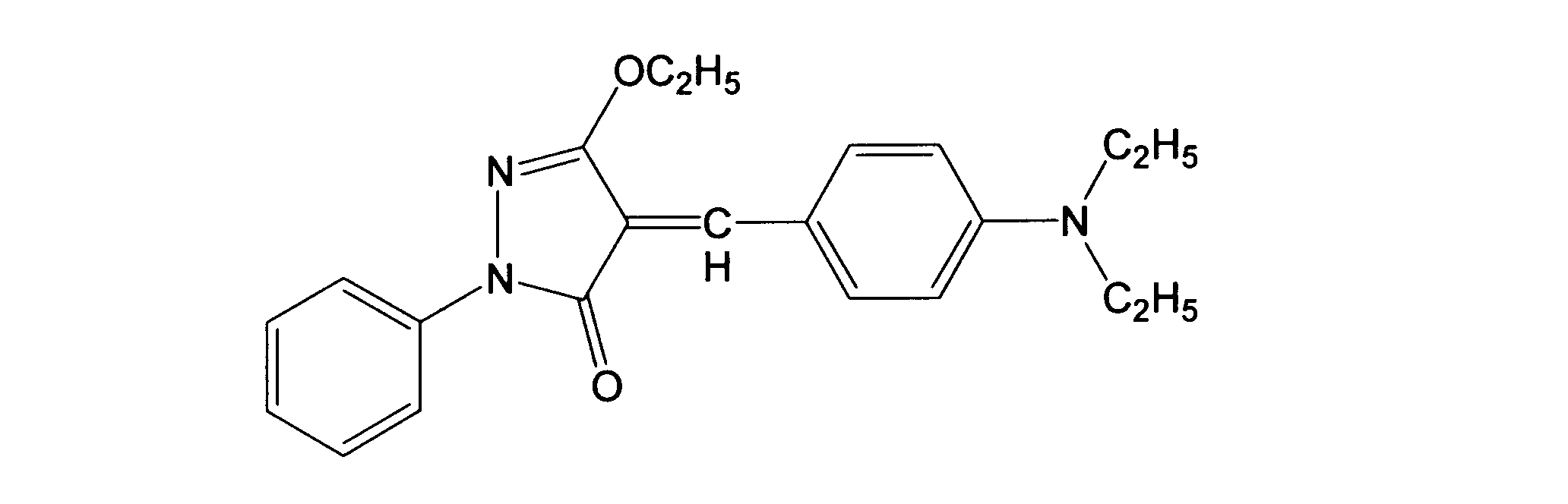
・バインダー樹脂(ポリビニルアセタール樹脂、KS-5、積水化学工業
(株)製) 4.5質量部
・ポリエチレンワックス 0.1質量部
・メチルエチルケトン 45.0質量部
・トルエン 45.0質量部
・分散染料(ディスパースイエロー201) 2.5質量部
・分散染料(下記化学式で示されるイエロー染料) 2.5質量部
(株)製) 4.5質量部
・ポリエチレンワックス 0.1質量部
・メチルエチルケトン 45.0質量部
・トルエン 45.0質量部
(マゼンタ色材層用塗布液の組成)
・下記化学式に示される染料 2.0質量部
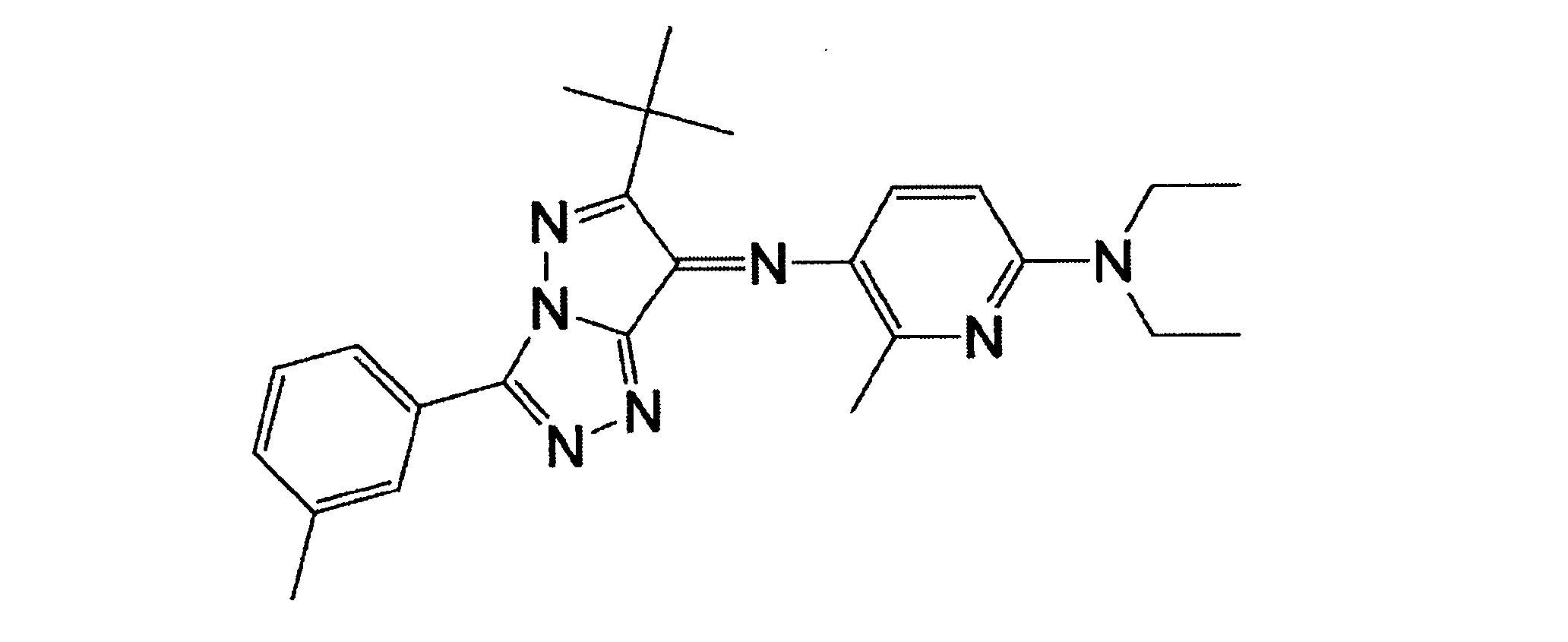
・バインダー樹脂(ポリビニルアセタール樹脂、KS-5、積水化学工業
(株)製) 4.5質量部
・アルキル変性シリコーンオイル(KF-412、信越シリコーン(株)
製) 0.1質量部
・ポリエチレンワックス 0.1質量部
・メチルエチルケトン 45.0質量部
・トルエン 45.0質量部
・下記化学式に示される染料 2.0質量部
(株)製) 4.5質量部
・アルキル変性シリコーンオイル(KF-412、信越シリコーン(株)
製) 0.1質量部
・ポリエチレンワックス 0.1質量部
・メチルエチルケトン 45.0質量部
・トルエン 45.0質量部
(シアン色材層用塗布液の組成)
・下記化学式に示される染料 2.0質量部
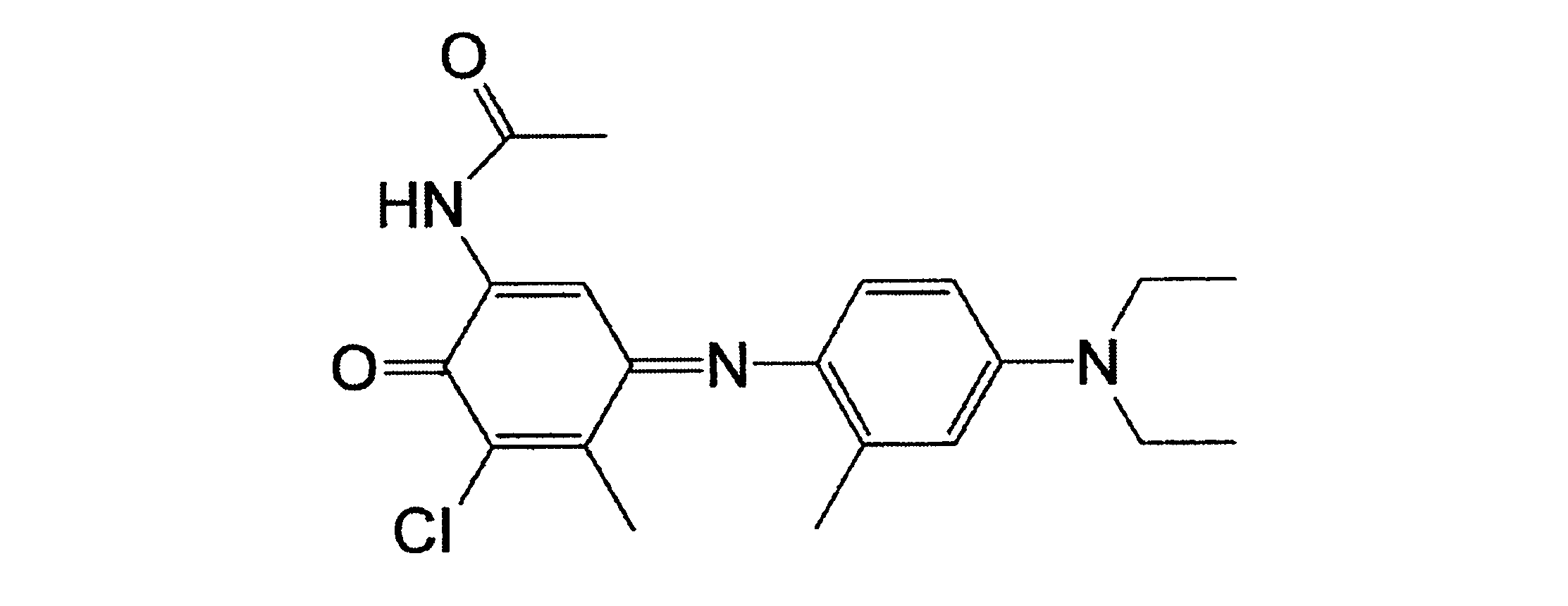
・バインダー樹脂(ポリビニルアセタール樹脂、KS-5、積水化学工業
(株)製) 4.5質量部
・アルキル変性シリコーンオイル (KF-412、信越シリコーン(株)
製) 0.1質量部
・ポリエチレンワックス 0.1質量部
・メチルエチルケトン 45.0質量部
・トルエン 45.0質量部
・下記化学式に示される染料 2.0質量部
(株)製) 4.5質量部
・アルキル変性シリコーンオイル (KF-412、信越シリコーン(株)
製) 0.1質量部
・ポリエチレンワックス 0.1質量部
・メチルエチルケトン 45.0質量部
・トルエン 45.0質量部
また、基材シートの耐熱滑性層を設けた側とは他方の面の他の一部に、下記組成の保護層用塗布液を、乾燥時1.5g/m2になるように塗布、乾燥して形成した。これにより、基材の一方の面に耐熱滑性層が設けられ、基材の他方の面の一部にプライマー層、熱転写性色材層(Y,M,C)がこの順で積層され、基材の他方の面の他の一部に保護層が設けられた熱転写インクシートを得た。
(保護層用塗布液の組成)
・アクリル樹脂(三菱レイヨン(株)製、商品名:ダイヤナールBR-83
) 69.6質量部
・反応性紫外線吸収剤を反応結合したアクリル共重合体(BASFジャパン
製、商品名:UVA635L) 17.4質量部
・シリカ(富士シリシア(株)製、商品名:サイリシア310)25質量部
・メチルエチルケトン 100質量部
・トルエン 100質量部
・アクリル樹脂(三菱レイヨン(株)製、商品名:ダイヤナールBR-83
) 69.6質量部
・反応性紫外線吸収剤を反応結合したアクリル共重合体(BASFジャパン
製、商品名:UVA635L) 17.4質量部
・シリカ(富士シリシア(株)製、商品名:サイリシア310)25質量部
・メチルエチルケトン 100質量部
・トルエン 100質量部
<熱転写受像シートの評価>
上記の実施例および比較例で製造した熱転写受像シートについて、(1)カールの安定性および(2)地合いの評価を行った。
上記の実施例および比較例で製造した熱転写受像シートについて、(1)カールの安定性および(2)地合いの評価を行った。
(1)カールの安定性
上記の実施例および比較例で製造した熱転写受像シートと、上記で製造した熱転写インクシートと、昇華型熱転写プリンター(ALTECH ADS(株)製、型式:MEGAPIXELIII)とを用いて、40℃90%の環境条件下で黒ベタパターンを印画して、印画物を得た。印画物の印画面を上にした状態で平面に静置し、凹カールの場合には、4隅のカール部の平面からの垂直方向の距離を、また凸カールの場合には、カール部の凸部の平面からの距離をそれぞれ測定し、最大値を以下の範囲で4段階評価した。なお、印画面を上にして凸カールとなる場合を「+」、凹カールとなる場合を「-」とした。
(評価基準)
◎:-2mm以上+2mm以下
○:-4mm以上-2mm未満または、+2mmよりも大きく+4mm以下
△:-5mm以上-4mm未満または、+4mmよりも大きく+5mm以下
×:-6mm未満または+6mmよりも大きい
上記の実施例および比較例で製造した熱転写受像シートと、上記で製造した熱転写インクシートと、昇華型熱転写プリンター(ALTECH ADS(株)製、型式:MEGAPIXELIII)とを用いて、40℃90%の環境条件下で黒ベタパターンを印画して、印画物を得た。印画物の印画面を上にした状態で平面に静置し、凹カールの場合には、4隅のカール部の平面からの垂直方向の距離を、また凸カールの場合には、カール部の凸部の平面からの距離をそれぞれ測定し、最大値を以下の範囲で4段階評価した。なお、印画面を上にして凸カールとなる場合を「+」、凹カールとなる場合を「-」とした。
(評価基準)
◎:-2mm以上+2mm以下
○:-4mm以上-2mm未満または、+2mmよりも大きく+4mm以下
△:-5mm以上-4mm未満または、+4mmよりも大きく+5mm以下
×:-6mm未満または+6mmよりも大きい
(2)地合い
上記の実施例および比較例で製造した熱転写受像シートと、上記で製造した熱転写インクシートと、昇華型熱転写プリンター(ALTECH ADS(株)製、型式:MEGAPIXELIII)とを用いて、階調値50/255のグレー色相となる画像(ハイライト画像)を印画して、下記の評価基準にて、目視観察による地合いの評価を行なった。
(評価基準)
○:グレーのハイライト画像部が均一であり、表面状態で、下地の紙芯材の繊維が分散しているのが観察されず、フルカラーの銀塩写真を再現する印画紙と同等の平滑性、質感、風合いを有するものであった。
△:グレーのハイライト画像部の表面状態で、下地の非コート紙基材の表面の地合いが部分的に観察されて、地合いが気になるものであり、フルカラーの銀塩写真を再現する印画紙と比べ、平滑性、質感、風合いに欠け、満足できるものではなかった。(○と×の評価の中間的な結果であるが、満足できるものではない。)
×:グレーのハイライト画像部の表面状態で、下地の紙芯材の繊維が分散しているのが観察されて、地合いがかなり気になるものであり、フルカラーの銀塩写真を再現する印画紙と比べ、平滑性、質感、風合いに欠けるものであった。
上記の実施例および比較例で製造した熱転写受像シートと、上記で製造した熱転写インクシートと、昇華型熱転写プリンター(ALTECH ADS(株)製、型式:MEGAPIXELIII)とを用いて、階調値50/255のグレー色相となる画像(ハイライト画像)を印画して、下記の評価基準にて、目視観察による地合いの評価を行なった。
(評価基準)
○:グレーのハイライト画像部が均一であり、表面状態で、下地の紙芯材の繊維が分散しているのが観察されず、フルカラーの銀塩写真を再現する印画紙と同等の平滑性、質感、風合いを有するものであった。
△:グレーのハイライト画像部の表面状態で、下地の非コート紙基材の表面の地合いが部分的に観察されて、地合いが気になるものであり、フルカラーの銀塩写真を再現する印画紙と比べ、平滑性、質感、風合いに欠け、満足できるものではなかった。(○と×の評価の中間的な結果であるが、満足できるものではない。)
×:グレーのハイライト画像部の表面状態で、下地の紙芯材の繊維が分散しているのが観察されて、地合いがかなり気になるものであり、フルカラーの銀塩写真を再現する印画紙と比べ、平滑性、質感、風合いに欠けるものであった。
上記の各評価の結果を表2に示す。本発明の構成を満たす実施例の熱転写受像シートは、比較例の熱転写受像シートと比較して、高温度や高湿度の環境条件下で良好なカール安定性を有し、かつ地合いに優れることが分かった。

10 熱転写受像シート
11 基材層
12 第1のポリオレフィン樹脂層
13 多孔質層
14 プライマー層
15 色材受容層
16 第2のポリオレフィン樹脂層
17 熱転写受像シート用支持体
11 基材層
12 第1のポリオレフィン樹脂層
13 多孔質層
14 プライマー層
15 色材受容層
16 第2のポリオレフィン樹脂層
17 熱転写受像シート用支持体
Claims (7)
- 少なくとも、多孔質フィルムからなる多孔質層と、第1のポリオレフィン樹脂層と、基材層と、第2のポリオレフィン樹脂層と、をこの順に積層してなり、
前記第1のポリオレフィン樹脂層の密度が0.93g/cm3以下であり、
前記第2のポリオレフィン樹脂層の密度が0.93g/cm3を超えることを特徴とする、熱転写受像シート用支持体。 - 第1のポリオレフィン樹脂層の厚さに対する第2のポリオレフィン樹脂層の厚さが、1倍以上5倍以下である、請求項1に記載の熱転写受像シート用支持体。
- 第1のポリオレフィン樹脂層および/または第2のポリオレフィン樹脂層が、ポリエチレン樹脂を主成分として含有する、請求項1または2に記載の熱転写受像シート用支持体。
- 請求項1~3のいずれか一項に記載の熱転写受像シート用支持体の多孔質層上に、色材受容層をさらに積層してなる、熱転写受像シート。
- 基材層の一方の面上に、押し出しラミネート法により、密度が0.93g/cm3を超える第2のポリオレフィン樹脂を押し出して第2のポリオレフィン樹脂層を形成する工程と、
前記基材層の第2のポリオレフィン樹脂層とは反対側の面上に、押し出しラミネート法により密度が0.93g/cm3以下である第1のポリオレフィン樹脂を押し出して形成した第1のポリオレフィン樹脂層によって、多孔質フィルムからなる多孔質層と前記基材層とを貼合する工程と、
を含んでなる、熱転写受像シート用支持体の製造方法。 - 基材層の一方の面上に、押し出しラミネート法により、密度が0.93g/cm3以下である第1のポリオレフィン樹脂を押し出して形成した第1のポリオレフィン樹脂層によって、多孔質フィルムからなる多孔質層と前記基材層とを貼合する工程と、
前記基材層の第1のポリオレフィン樹脂層とは反対側の面上に、押し出しラミネート法により密度が0.93g/cm3を超える第2のポリオレフィン樹脂を押し出して第2のポリオレフィン樹脂層を形成する工程と、
を含んでなる、熱転写受像シート用支持体の製造方法。 - 熱転写受像シートの製造方法であって、
請求項5または6に記載の熱転写受像シート用支持体の製造方法において、前記多孔質層と前記基材層とを貼合する工程の前に、前記多孔質層上に色材受容層を積層する工程をさらに含んでなる、熱転写受像シートの製造方法。
Priority Applications (2)
| Application Number | Priority Date | Filing Date | Title |
|---|---|---|---|
| DE112015001469.1T DE112015001469B4 (de) | 2014-03-27 | 2015-03-27 | Träger für eine Thermotransferbild-aufnehmende Lage, Thermotransferbild-aufnehmende Lage und Herstellungsverfahren dafür |
| US15/129,475 US9889694B2 (en) | 2014-03-27 | 2015-03-27 | Support for thermal transfer image-receiving sheet, thermal transfer image-receiving sheet, and producing method therefor |
Applications Claiming Priority (2)
| Application Number | Priority Date | Filing Date | Title |
|---|---|---|---|
| JP2014066655 | 2014-03-27 | ||
| JP2014-066655 | 2014-03-27 |
Publications (1)
| Publication Number | Publication Date |
|---|---|
| WO2015147288A1 true WO2015147288A1 (ja) | 2015-10-01 |
Family
ID=54195792
Family Applications (1)
| Application Number | Title | Priority Date | Filing Date |
|---|---|---|---|
| PCT/JP2015/059713 Ceased WO2015147288A1 (ja) | 2014-03-27 | 2015-03-27 | 熱転写受像シート用支持体および熱転写受像シートならびにそれらの製造方法 |
Country Status (4)
| Country | Link |
|---|---|
| US (1) | US9889694B2 (ja) |
| JP (1) | JP6536121B2 (ja) |
| DE (1) | DE112015001469B4 (ja) |
| WO (1) | WO2015147288A1 (ja) |
Cited By (2)
| Publication number | Priority date | Publication date | Assignee | Title |
|---|---|---|---|---|
| JP2015193251A (ja) * | 2014-03-27 | 2015-11-05 | 大日本印刷株式会社 | 熱転写受像シート用支持体および熱転写受像シートならびにそれらの製造方法 |
| JP6680429B1 (ja) * | 2018-09-28 | 2020-04-15 | 大日本印刷株式会社 | 熱転写シート、及び印画物 |
Families Citing this family (6)
| Publication number | Priority date | Publication date | Assignee | Title |
|---|---|---|---|---|
| JP6828260B2 (ja) * | 2016-03-30 | 2021-02-10 | 凸版印刷株式会社 | 熱転写受像シート |
| JP2017185735A (ja) * | 2016-04-07 | 2017-10-12 | 凸版印刷株式会社 | 熱転写受像シート |
| US11040526B2 (en) * | 2017-02-16 | 2021-06-22 | Dai Nippon Printing Co., Ltd. | Releasing member-integrated transfer sheet, method for producing print, method for producing transfer sheet, and print system |
| WO2019181010A1 (ja) * | 2018-03-22 | 2019-09-26 | 大日本印刷株式会社 | 熱転写受像シート |
| JP2022015548A (ja) | 2020-07-09 | 2022-01-21 | 凸版印刷株式会社 | 熱転写受像シート |
| EP4039486A1 (de) | 2021-02-04 | 2022-08-10 | Schoeller Technocell GmbH & Co. KG | Aufzeichnungsmaterial für den thermosublimationsdruck mit verbesserten transporteigenschaften |
Citations (5)
| Publication number | Priority date | Publication date | Assignee | Title |
|---|---|---|---|---|
| JPH0834169A (ja) * | 1994-07-25 | 1996-02-06 | Mitsubishi Paper Mills Ltd | 感熱転写用受像シート |
| JP2004262075A (ja) * | 2003-02-28 | 2004-09-24 | Oji Paper Co Ltd | 熱転写受容シート |
| JP2004330442A (ja) * | 2003-04-30 | 2004-11-25 | Dainippon Printing Co Ltd | 熱転写受像シート及びその製造方法 |
| JP2007098926A (ja) * | 2005-09-30 | 2007-04-19 | Dainippon Printing Co Ltd | 熱転写受像シート及びその製造方法 |
| JP2008296485A (ja) * | 2007-06-01 | 2008-12-11 | Oji Paper Co Ltd | 熱転写受容シート |
Family Cites Families (4)
| Publication number | Priority date | Publication date | Assignee | Title |
|---|---|---|---|---|
| JPH0811444A (ja) * | 1994-07-01 | 1996-01-16 | Dainippon Printing Co Ltd | 熱転写受像シート |
| JP3701399B2 (ja) | 1996-07-15 | 2005-09-28 | 大日本印刷株式会社 | 熱転写受像シート |
| JP2009061733A (ja) | 2007-09-07 | 2009-03-26 | Dainippon Printing Co Ltd | 熱転写受像シート |
| DE112015001469B4 (de) * | 2014-03-27 | 2023-06-29 | Dai Nippon Printing Co., Ltd. | Träger für eine Thermotransferbild-aufnehmende Lage, Thermotransferbild-aufnehmende Lage und Herstellungsverfahren dafür |
-
2015
- 2015-03-27 DE DE112015001469.1T patent/DE112015001469B4/de active Active
- 2015-03-27 US US15/129,475 patent/US9889694B2/en active Active
- 2015-03-27 JP JP2015067335A patent/JP6536121B2/ja active Active
- 2015-03-27 WO PCT/JP2015/059713 patent/WO2015147288A1/ja not_active Ceased
Patent Citations (5)
| Publication number | Priority date | Publication date | Assignee | Title |
|---|---|---|---|---|
| JPH0834169A (ja) * | 1994-07-25 | 1996-02-06 | Mitsubishi Paper Mills Ltd | 感熱転写用受像シート |
| JP2004262075A (ja) * | 2003-02-28 | 2004-09-24 | Oji Paper Co Ltd | 熱転写受容シート |
| JP2004330442A (ja) * | 2003-04-30 | 2004-11-25 | Dainippon Printing Co Ltd | 熱転写受像シート及びその製造方法 |
| JP2007098926A (ja) * | 2005-09-30 | 2007-04-19 | Dainippon Printing Co Ltd | 熱転写受像シート及びその製造方法 |
| JP2008296485A (ja) * | 2007-06-01 | 2008-12-11 | Oji Paper Co Ltd | 熱転写受容シート |
Cited By (2)
| Publication number | Priority date | Publication date | Assignee | Title |
|---|---|---|---|---|
| JP2015193251A (ja) * | 2014-03-27 | 2015-11-05 | 大日本印刷株式会社 | 熱転写受像シート用支持体および熱転写受像シートならびにそれらの製造方法 |
| JP6680429B1 (ja) * | 2018-09-28 | 2020-04-15 | 大日本印刷株式会社 | 熱転写シート、及び印画物 |
Also Published As
| Publication number | Publication date |
|---|---|
| JP6536121B2 (ja) | 2019-07-03 |
| DE112015001469B4 (de) | 2023-06-29 |
| US9889694B2 (en) | 2018-02-13 |
| JP2015193251A (ja) | 2015-11-05 |
| US20170100953A1 (en) | 2017-04-13 |
| DE112015001469T5 (de) | 2016-12-15 |
Similar Documents
| Publication | Publication Date | Title |
|---|---|---|
| JP6536121B2 (ja) | 熱転写受像シート用支持体および熱転写受像シートならびにそれらの製造方法 | |
| EP2679394A1 (en) | Thermal transfer sheet | |
| JP6075491B2 (ja) | 熱転写シート、熱転写受像シート、印画物の形成方法、及び印画物 | |
| JP2012006342A (ja) | 熱転写シート | |
| JP6627237B2 (ja) | 熱転写受像シート用支持体の製造方法および熱転写受像シートの製造方法 | |
| JP2019064108A (ja) | 熱転写シート及びこれを用いた印画物の製造方法 | |
| JP2012158121A (ja) | 熱転写受像シート | |
| JP6706430B2 (ja) | シール型熱転写受像シートおよび印画物の製造方法 | |
| EP3747660B1 (en) | Thermal transfer sheet, combination of intermediate transfer medium and thermal transfer sheet, and method for producing printed material | |
| JP6115175B2 (ja) | 熱転写受像シート及び画像形成方法 | |
| JP5839254B2 (ja) | 熱転写シート | |
| JP2018171840A (ja) | 熱転写受像シート、熱転写シート、受容層用塗工液、熱転写受像シートの形成方法、及び印画物の形成方法 | |
| US10449794B2 (en) | Method for forming image and protective layer and apparatus therefor | |
| JP2017056663A (ja) | 熱転写受像シート | |
| JP2019177665A (ja) | 熱転写受像シート、熱転写受像シートの製造に用いる熱転写シート | |
| JP7068608B2 (ja) | 熱転写受像シート、熱転写受像シートの製造に用いる熱転写シート | |
| JP2022105074A (ja) | 熱転写受像シートの製造に用いる熱転写シート | |
| JP2016210155A (ja) | 熱転写受像シートおよびその製造方法 | |
| JP5757400B2 (ja) | 昇華転写用熱転写受像シート | |
| JP2018058225A (ja) | 熱転写受像シート、熱転写シート、受容層用塗工液、熱転写受像シートの形成方法、及び印画物の形成方法 | |
| JP2017170844A (ja) | 印画物の製造方法 | |
| JP2015066775A (ja) | 熱転写シートと熱転写受像シートとの組合せ、及び画像形成方法 | |
| JP2019166687A (ja) | 熱転写受像シート | |
| JP2014198420A (ja) | 熱転写受像シートおよびその製造方法 |
Legal Events
| Date | Code | Title | Description |
|---|---|---|---|
| 121 | Ep: the epo has been informed by wipo that ep was designated in this application |
Ref document number: 15769189 Country of ref document: EP Kind code of ref document: A1 |
|
| DPE1 | Request for preliminary examination filed after expiration of 19th month from priority date (pct application filed from 20040101) | ||
| WWE | Wipo information: entry into national phase |
Ref document number: 15129475 Country of ref document: US Ref document number: 112015001469 Country of ref document: DE |
|
| 122 | Ep: pct application non-entry in european phase |
Ref document number: 15769189 Country of ref document: EP Kind code of ref document: A1 |