WO2013180236A1 - 含フッ素ポリマー水性分散液の製造方法 - Google Patents
含フッ素ポリマー水性分散液の製造方法 Download PDFInfo
- Publication number
- WO2013180236A1 WO2013180236A1 PCT/JP2013/065084 JP2013065084W WO2013180236A1 WO 2013180236 A1 WO2013180236 A1 WO 2013180236A1 JP 2013065084 W JP2013065084 W JP 2013065084W WO 2013180236 A1 WO2013180236 A1 WO 2013180236A1
- Authority
- WO
- WIPO (PCT)
- Prior art keywords
- group
- fluoropolymer
- aqueous
- polyoxyethylene alkyl
- monomer
- Prior art date
- Legal status (The legal status is an assumption and is not a legal conclusion. Google has not performed a legal analysis and makes no representation as to the accuracy of the status listed.)
- Ceased
Links
Classifications
-
- C—CHEMISTRY; METALLURGY
- C08—ORGANIC MACROMOLECULAR COMPOUNDS; THEIR PREPARATION OR CHEMICAL WORKING-UP; COMPOSITIONS BASED THEREON
- C08F—MACROMOLECULAR COMPOUNDS OBTAINED BY REACTIONS ONLY INVOLVING CARBON-TO-CARBON UNSATURATED BONDS
- C08F214/00—Copolymers of compounds having one or more unsaturated aliphatic radicals, each having only one carbon-to-carbon double bond, and at least one being terminated by a halogen
- C08F214/18—Monomers containing fluorine
- C08F214/26—Tetrafluoroethene
- C08F214/265—Tetrafluoroethene with non-fluorinated comonomers
- C08F214/267—Tetrafluoroethene with non-fluorinated comonomers with non-fluorinated vinyl ethers
-
- C—CHEMISTRY; METALLURGY
- C08—ORGANIC MACROMOLECULAR COMPOUNDS; THEIR PREPARATION OR CHEMICAL WORKING-UP; COMPOSITIONS BASED THEREON
- C08F—MACROMOLECULAR COMPOUNDS OBTAINED BY REACTIONS ONLY INVOLVING CARBON-TO-CARBON UNSATURATED BONDS
- C08F214/00—Copolymers of compounds having one or more unsaturated aliphatic radicals, each having only one carbon-to-carbon double bond, and at least one being terminated by a halogen
- C08F214/18—Monomers containing fluorine
- C08F214/24—Trifluorochloroethene
-
- C—CHEMISTRY; METALLURGY
- C08—ORGANIC MACROMOLECULAR COMPOUNDS; THEIR PREPARATION OR CHEMICAL WORKING-UP; COMPOSITIONS BASED THEREON
- C08F—MACROMOLECULAR COMPOUNDS OBTAINED BY REACTIONS ONLY INVOLVING CARBON-TO-CARBON UNSATURATED BONDS
- C08F214/00—Copolymers of compounds having one or more unsaturated aliphatic radicals, each having only one carbon-to-carbon double bond, and at least one being terminated by a halogen
- C08F214/18—Monomers containing fluorine
- C08F214/24—Trifluorochloroethene
- C08F214/245—Trifluorochloroethene with non-fluorinated comonomers
- C08F214/247—Trifluorochloroethene with non-fluorinated comonomers with non-fluorinated vinyl ethers
-
- C—CHEMISTRY; METALLURGY
- C08—ORGANIC MACROMOLECULAR COMPOUNDS; THEIR PREPARATION OR CHEMICAL WORKING-UP; COMPOSITIONS BASED THEREON
- C08F—MACROMOLECULAR COMPOUNDS OBTAINED BY REACTIONS ONLY INVOLVING CARBON-TO-CARBON UNSATURATED BONDS
- C08F290/00—Macromolecular compounds obtained by polymerising monomers on to polymers modified by introduction of aliphatic unsaturated end or side groups
- C08F290/02—Macromolecular compounds obtained by polymerising monomers on to polymers modified by introduction of aliphatic unsaturated end or side groups on to polymers modified by introduction of unsaturated end groups
- C08F290/06—Polymers provided for in subclass C08G
- C08F290/062—Polyethers
Definitions
- the present invention relates to a method for producing a fluoropolymer aqueous dispersion. More specifically, the present invention relates to a method for producing an aqueous fluoropolymer dispersion in which polymerization is performed in the presence of a polyoxyethylene alkyl ether having a specific structure, which is excellent in storage stability and the resulting coating film is excellent in water resistance.
- Patent Document 2 discloses a method for obtaining a fluoropolymer aqueous dispersion in which the above-mentioned problems are solved by emulsion polymerization in the presence of a nonionic emulsifier having a specific HLB (hydrophilic lipophilic balance value).
- HLB hydrophilic lipophilic balance value
- An object of the present invention is to provide a method for producing an aqueous fluoropolymer dispersion having excellent long-term storage stability and excellent water resistance.
- the present inventors have obtained a monomer mixture containing a fluoroolefin and a hydrophilic macromonomer, an aqueous medium, a specific polyoxyethylene alkyl ether, and radical polymerization initiation.
- the long-term storage stability of the aqueous fluoropolymer dispersion, and the water resistance of the coating film obtained using the aqueous dispersion is improved by performing polymerization in the presence of an agent.
- the present invention has the following gist.
- X represents a radically polymerizable unsaturated group
- Y represents a divalent linking group containing an alicyclic group
- Z represents a hydrophilic site having a polyoxyalkylene chain.
- ⁇ 2> The method for producing an aqueous fluoropolymer dispersion according to ⁇ 1>, wherein the aqueous medium is ion-exchanged water.
- ⁇ 3> The method for producing an aqueous fluoropolymer dispersion according to ⁇ 1> or ⁇ 2>, wherein the fluoroolefin is chlorotrifluoroethylene or tetrafluoroethylene.
- ⁇ 4> The method for producing an aqueous fluoropolymer dispersion according to any one of ⁇ 1> to ⁇ 3>, wherein the radical polymerization initiator is a water-soluble radical initiator.
- Q (OCH 2 CH 2 ) n —O—R 1 (2)
- Q is any one of a hydrogen atom, a methyl group and an ethyl group, R 1 is a linear alkyl group having 10 to 14 carbon atoms, and n is an integer of 9 to 11
- n is an integer of 9 to 11
- Q is a hydrogen atom
- R 1 is a linear alkyl group having 11 to 12 carbon atoms
- n is 9 to 10.
- ⁇ 7> The fluorine-containing polymer according to any one of the above ⁇ 1> to ⁇ 6>, wherein the content of the total polyoxyethylene alkyl ether is 0.1 to 5 parts by mass with respect to 100 parts by mass of the monomer mixture
- ⁇ 8> The aqueous fluoropolymer dispersion according to any one of ⁇ 1> to ⁇ 7>, wherein the hydrophilic macromonomer represented by the formula (1) is a monomer represented by the following formula (3): Manufacturing method. CH 2 ⁇ CH—Y— (CH 2 CH 2 O) m H (3) (In Formula (3), Y represents a divalent linking group containing an alicyclic group, and m is an integer of 2 to 40.)
- the monomer mixture contains 20 to 80 mol% of the fluoroolefin and 0.1 to 25 mol% of the hydrophilic macromonomer,
- the ratio of the repeating unit based on the fluoroolefin is 20 to 80 mol% with respect to all the repeating units in the fluoropolymer, and the ratio of the repeating unit based on the hydrophilic macromonomer is 0%.
- the monomer mixture further includes a monomer having a crosslinkable group
- the method for producing an aqueous fluoropolymer dispersion according to the present invention can provide an aqueous fluoropolymer dispersion having excellent long-term storage stability. Moreover, the coating film formed using it becomes excellent in water resistance.
- the method for producing an aqueous fluoropolymer dispersion of the present invention comprises a fluoroolefin and the following formula (in the presence of an aqueous medium, a polyoxyethylene alkyl ether having an HLB value of 12 to 15 and a radical polymerization initiator ( 1) polymerizing a monomer mixture containing a hydrophilic macromonomer represented by
- the polyoxyethylene alkyl ether is a polyoxyethylene alkyl ether whose alkyl group is a linear alkyl group (hereinafter also referred to as “linear alkyl group-containing polyoxyethylene alkyl ether”) with respect to all the polyoxyethylene alkyl ethers.
- XYZ (1) (In Formula (1), X represents a radically polymerizable unsaturated group, Y represents a divalent linking group containing an alicyclic group, and Z represents a hydrophilic site having a polyoxyalkylene chain.)
- the aqueous fluoropolymer dispersion in the present invention comprises a monomer mixture comprising a raw material fluoroolefin and the hydrophilic macromonomer represented by the above formula (1), an aqueous medium, a specific polyoxyethylene alkyl ether, A fluorine-containing polymer obtained by polymerization in the presence of a radical polymerization initiator is dispersed in an aqueous medium.
- the fluoroolefin is preferably a fluoroolefin having 2 to 4 carbon atoms such as chlorotrifluoroethylene, tetrafluoroethylene, pentafluoropropylene, hexafluoropropylene, vinylidene fluoride or trifluoroethylene.
- chlorotrifluoroethylene and tetrafluoroethylene are particularly preferable.
- the hydrophilic macromonomer in the present invention is a monomer represented by the above formula (1).
- the hydrophilic macromonomer represented by the above formula (1) as a raw material component of the fluoropolymer, not only the stability of the fluoropolymer aqueous dispersion is increased, but also the coating film obtained by using this Water resistance and the like are also improved.
- the monomer represented by the formula (1) is a hydrophilic macromonomer having a hydrophilic portion having a polyoxyalkylene chain.
- the macromonomer refers to a low molecular weight polymer or oligomer having a radical polymerizable unsaturated group at one end. That is, “a hydrophilic macromonomer having a hydrophilic moiety having a polyoxyalkylene chain” is a compound having a radical polymerizable unsaturated group at one end and having at least two repeating units of oxyalkylene in the monomer. is there. Although different depending on the type of repeating unit, those having 100 or less repeating units are usually preferably employed from the viewpoint of polymerizability and water resistance.
- X in the above formula (1) is a radically polymerizable unsaturated group.
- X is not particularly limited as long as it has a radical-polymerizable unsaturated bond, but specifically, a vinyl group and an allyl group are preferred, and the alternating copolymerization with a fluoroolefin is good. A vinyl group is more preferable.
- Z in the above formula (1) is a hydrophilic portion having a polyoxyalkylene chain.
- the hydrophilic site having a polyoxyalkylene chain is preferably a hydrophilic site such as a polyoxymethylene group, a polyoxyethylene group, or a polyoxypropylene group.
- the number of repeating units of the alkylene chain is preferably 12 to 40, more preferably 13 to 30, and still more preferably 13 to 18.
- the end of the polyoxyalkylene chain may be a hydroxyl group, an ionic group such as a carboxy group, or an alkyl group such as a methyl group, an ethyl group, or a propyl group.
- the stability of the resulting fluoropolymer aqueous dispersion is stable. A hydroxyl group is more preferred because it is good.
- the hydrophilic macromonomer having a hydrophilic portion having a polyoxyalkylene chain for example, W (OCH 2 ) a- (OCH 2 CH 2 ) b- ( OCH 2 CH (CH 3 )) c- moiety
- W is a hydrogen atom, a methyl group or an ethyl group
- a, b and c are each an integer of 0 to 40 (where a + b + c is 2 to 40)
- a monomer having a formula (1) corresponding to Z in the above formula (1) for example, W (OCH 2 ) a- (OCH 2 CH 2 ) b- ( OCH 2 CH (CH 3 )) c- moiety
- W is a hydrogen atom, a methyl group or an ethyl group
- a, b and c are each an integer of 0 to 40 (where a + b + c is 2 to 40)
- hydrophilic portion having a nonionic polyoxyalkylene chain Z in the above formula (1)
- a portion represented by H (OCH2CH2) m- m is an integer of 2 to 40) is more preferred.
- a monomer represented by the following formula (3) is more preferable.
- Y represents a divalent linking group having an alicyclic group, and m is an integer of 2 to 40.
- Y in the above formula (1) is a divalent linking group having an alicyclic group.
- a cyclohexylene group is preferable.
- the position of the bond of the cyclohexylene group in Y is not limited to any of 1, 1-position, 1, 2-position, 1, 3-position, 1, 4-position, but the stability of the resulting fluoropolymer aqueous dispersion Therefore, the 1st and 4th positions are preferable.
- the group bonded to the alicyclic group in Y is preferably a divalent saturated hydrocarbon group, a divalent saturated hydrocarbon group having an etheric oxygen atom, or the like, and a divalent saturated hydrocarbon group having an etheric oxygen atom. Is more preferable.
- Examples of the divalent saturated hydrocarbon group having an etheric oxygen atom in Y include an oxomethylene group, an oxodimethylmethylene group, and an oxoethylene group, and an oxomethylene group is more preferable.
- examples of the hydrophilic macromonomer include monomers represented by the following formulas (4) to (7), and monomers represented by the following formulas (4) and (5) are more preferable. Since the monomer represented by the following formula (4) having a vinyl ether structure is excellent in copolymerizability with a fluoroolefin, it is particularly preferable.
- the hydrophilic macromonomer in the present invention is produced by a known method such as polymerization of formaldehyde or diol, or ring-opening polymerization of a compound having an alkylene oxide or a lactone ring to a vinyl ether having a hydroxyl group or an allyl ether having a hydroxyl group. Is possible. It can also be produced by the method described in Japanese Patent Application Laid-Open No. 7-053646.
- a polymer having a condensable functional group is produced by radical polymerization of an ethylenically unsaturated monomer having a hydrophilic group in the presence of an initiator having a condensable functional group and a chain transfer agent,
- a method in which a compound such as glycidyl vinyl ether or glycidyl allyl ether is reacted with the functional group of this polymer to introduce a radical polymerizable unsaturated group at the terminal is exemplified.
- the aqueous fluoropolymer dispersion in the present invention is obtained by polymerizing a monomer mixture containing a fluoroolefin and a hydrophilic macromonomer represented by the above formula (1).
- the fluoroolefin-based repeating unit and the above formula (1) Containing a fluorine-containing polymer whose essential component is a repeating unit based on a hydrophilic macromonomer.
- the fluorine-containing polymer has a repeating unit based on a monomer other than the fluoroolefin and the hydrophilic macromonomer represented by the above formula (1) (hereinafter also referred to as “other repeating unit”). Is preferred.
- other repeating unit a monomer other than the fluoroolefin and the hydrophilic macromonomer represented by the above formula (1)
- Examples of monomers other than the fluoroolefin and the hydrophilic macromonomer represented by the following formula (1) include monomers having a crosslinkable group and monomers having no crosslinkable group. During the polymerization, by adding these monomers to the monomer mixture and performing the polymerization, it is possible to introduce repeating units based on these monomers (other repeating units).
- the monomer having a crosslinkable group is a monomer having neither a fluorine atom nor a polyoxyalkylene chain and having a crosslinkable group.
- the monomer having no crosslinkable group is a monomer that does not contain any of a fluorine atom, a polyoxyalkylene chain, and a crosslinkable group.
- crosslinkable group in the monomer having a crosslinkable group examples include a hydroxyl group, a carboxy group, an amino group, an epoxy group, and a hydrazine residue, and a hydroxyl group is more preferable.
- Examples of monomers having a hydroxyl group as a crosslinkable group include 2-hydroxyethyl vinyl ether, 3-hydroxypropyl vinyl ether, 2-hydroxypropyl vinyl ether, 2-hydroxy-2-methylpropyl vinyl ether, 4-hydroxybutyl vinyl ether, 4-hydroxy-2 -Hydroxyalkyl vinyl ethers such as methylbutyl vinyl ether, 5-hydroxypentyl vinyl ether, 6-hydroxyhexyl vinyl ether, cyclohexanedimethanol monovinyl ether; Ethylene glycol monovinyl ethers such as diethylene glycol monovinyl ether, triethylene glycol monovinyl ether, tetraethylene glycol monovinyl ether;
- Hydroxyalkyl allyl ethers such as 2-hydroxyethyl allyl ether, 3-hydroxypropyl allyl ether, 4-hydroxybutyl allyl ether, 2-hydroxyethyl allyl ether, 4-hydroxybutyl allyl ether, glycerol monoallyl ether; Hydroxyalkylcarboxylic acid vinyl esters such as 2-hydroxypropanoic acid vinyl ester and 4-hydroxypentanoic acid vinyl ester; Hydroxyalkylcarboxylic acid allyl esters such as 2-hydroxypropanoic acid allyl ester and 4-hydroxypentanoic acid allyl ester; And (meth) acrylic acid hydroxyalkyl esters such as 2-hydroxyethyl (meth) acrylate.
- a method for introducing a repeating unit based on a monomer having a hydroxyl group into the fluoropolymer includes, in addition to the method of copolymerizing a monomer having a hydroxyl group, a hydroxyl group after polymerization.
- Monomers having a carboxy group as a crosslinkable group include 3-butenoic acid, 4-pentenoic acid, 2-hexenoic acid, 3-hexenoic acid, 5-hexenoic acid, 2-heptenoic acid, 3-heptenoic acid, and 6-heptene.
- Acid 3-octenoic acid, 7-octenoic acid, 2-nonenoic acid, 3-nonenoic acid, 8-nonenoic acid, 9-decenoic acid, 10-undecenoic acid, acrylic acid, methacrylic acid, vinylacetic acid, crotonic acid, cinnamon Unsaturated carboxylic acids such as acids; Saturated carboxylic acid vinyl ethers such as vinyloxyvaleric acid, 3-vinyloxypropionic acid, 3- (2-vinyloxybutoxycarbonyl) propionic acid, 3- (2-vinyloxyethoxycarbonyl) propionic acid, and the like;
- Saturated carboxylic acid allyl ethers such as allyloxyvaleric acid, 3-allyloxypropionic acid, 3- (2-allyloxybutoxycarbonyl) propionic acid, 3- (2-allyloxyethoxycarbonyl) propionic acid;
- Saturated polyvalent carboxylic acid monovinyl esters such as monovinyl adipate, monovinyl succinate, vinyl phthalate, vinyl pyromellitic acid;
- Unsaturated dicarboxylic acids such as itaconic acid, maleic acid, fumaric acid, maleic anhydride, itaconic anhydride, or intramolecular acid anhydrides thereof;
- unsaturated dicarboxylic acid monoalkyl esters such as itaconic acid monomethyl ester, maleic acid monomethyl ester, and fumaric acid monomethyl ester.
- a method for introducing a repeating unit based on a monomer having a carboxy group includes dibasic acid anhydride after polymerization of a fluoropolymer having a hydroxyl group. There is a method of forming a carboxy group by reaction.
- Examples of monomers having an epoxy group as a crosslinkable group include epoxy group-containing alkyl vinyl ethers such as glycidyl vinyl ether; epoxy group-containing alkyl allyl ethers such as glycidyl allyl ether; epoxy group-containing alkyl acrylates or methacrylates such as glycidyl acrylate and glycidyl methacrylate. And the like.
- the hydrazine residue is prepared by preparing a fluorine-containing polymer having a carbonyl group, and then dicarboxylic acid dihydrazide (for example, isophthalic acid dihydrazide, adipic acid dihydrazide) or hydrazine hydrate in an amount of 0.02 to 1 mol relative to 1 mol of the carbonyl group. It is obtained by blending and reacting by heating.
- dicarboxylic acid dihydrazide for example, isophthalic acid dihydrazide, adipic acid dihydrazide
- hydrazine hydrate in an amount of 0.02 to 1 mol relative to 1 mol of the carbonyl group. It is obtained by blending and reacting by heating.
- the fluoropolymer in the present invention has a repeating unit based on a monomer having a crosslinkable group, it becomes possible to crosslink when the fluoropolymer aqueous dispersion of the present invention is used as a
- Monomers having no crosslinkable group include olefins such as ethylene and propylene; vinyl ethers such as ethyl vinyl ether, propyl vinyl ether, butyl vinyl ether, 2-ethylhexyl vinyl ether, and cyclohexyl vinyl ether; vinyl esters such as vinyl butanoate and vinyl octoate.
- olefins such as ethylene and propylene
- vinyl ethers such as ethyl vinyl ether, propyl vinyl ether, butyl vinyl ether, 2-ethylhexyl vinyl ether, and cyclohexyl vinyl ether
- vinyl esters such as vinyl butanoate and vinyl octoate.
- Aromatic vinyl compounds such as styrene and vinyl toluene
- vinyl compounds such as Allyl ethers such as ethyl allyl ether
- examples thereof include acryloyl compounds such as butyl acrylate; acrylic est
- the fluoropolymer in the present invention has a repeating unit based on a monomer having no crosslinkable group
- the fluoropolymer aqueous dispersion of the present invention is used as a coating, the coating film is given flexibility and the like. Is possible.
- the content ratio of the repeating units based on fluoroolefin in the fluoropolymer in the present invention is preferably from 20 to 80 mol%, more preferably from 30 to 70 mol%, based on all repeating units in the fluoropolymer.
- the repeating unit based on the fluoroolefin is in the above range, the weather resistance is sufficiently exhibited and the water dispersibility is also good.
- the monomer mixture may be polymerized using 20 to 80 mol% of the fluoroolefin.
- the content of the repeating unit based on the hydrophilic macromonomer is preferably 0.1 to 25 mol%, more preferably 0.3 to 5 mol%, based on all repeating units in the fluoropolymer. If the repeating unit based on the hydrophilic macromonomer is in the above range, the water dispersibility is good, and the weather resistance and water resistance of the coating film are also good.
- the monomer mixture may be polymerized using 0.1 to 25 mol% of the hydrophilic macromonomer. Good.
- the content of the repeating unit is preferably from 0.1 to 25 mol% based on all repeating units in the fluoropolymer. More preferred is ⁇ 15 mol%. If the ratio of this unit is the above range, water dispersibility is good. Further, when the coating film is cured, it has an appropriate flexibility, and the water resistance is not lowered due to the influence of the remaining crosslinkable group.
- the monomer mixture may be polymerized using 1 to 15 mol% of a monomer having a crosslinkable group.
- the repeating unit based on the hydrophilic macromonomer includes one having a hydroxyl group
- the repeating unit acts as a crosslinkable site, and thus is calculated as the content of the repeating unit based on the monomer having a crosslinkable group. To be included.
- the content of the repeating unit other than the repeating unit based on the monomer having no crosslinkable group that is, the repeating unit based on fluoroolefin, the repeating unit based on the hydrophilic macromonomer and the repeating unit having a crosslinkable group is fluorine-containing. 20 to 80 mol% is preferable with respect to all repeating units in the polymer, and 40 to 60 mol% is more preferable. This is because sufficient weather resistance is exhibited.
- a fluoroolefin and a hydrophilic macromonomer and a monomer having a crosslinkable group and / or a crosslinkable group, which are added as necessary, are raw material components of the fluoropolymer.
- a monomer mixture containing a monomer or the like that does not have is polymerized in the presence of an aqueous medium, a polyoxyethylene alkyl ether having an HLB value of 12 to 15, and a radical polymerization initiator.
- polyoxyethylene alkyl ether having an HLB value of 12 to 15 will be described.
- the HLB value is a hydrophilic / lipophilic balance value.
- the calculated value by the Griffin method is generally used.
- HLB 20 ⁇ sum of formula weight of hydrophilic part / molecular weight
- the polyoxyethylene alkyl ether has an HLB value of 12 to 15, preferably 13 to 15.
- polyoxyethylene alkyl ether having an HLB value of 12 to 15 is converted to polyoxyethylene alkyl ether containing linear alkyl group. 60 to 100 mol% of the amount. If the proportion of the linear alkyl group-containing polyoxyethylene alkyl ether in the total polyoxyethylene alkyl ether is within this range, the polymerization proceeds stably, and the stability of the resulting fluoropolymer aqueous dispersion increases, And the water resistance of the coating film obtained from this fluoropolymer aqueous dispersion liquid also becomes favorable.
- polyoxyethylene alkyl ether is a nonionic emulsifier and forms micelles during polymerization. At that time, it is considered that when the ratio of the alkyl group in the polyoxyethylene alkyl ether is a linear alkyl group is high, stable micelles are formed.
- the amount of total polyoxyethylene alkyl ether added during polymerization can be reduced, the remaining amount in the resulting coating film is reduced, and the resulting coating film It is considered that water resistance is improved.
- a polyoxyethylene alkyl ether containing 60 to 100 mol% of a linear alkyl group-containing polyoxyethylene alkyl ether with respect to the total polyoxyethylene alkyl ether can be added in an amount of 0.1 to 5 parts by mass based on 100 parts by mass of the total amount of the monomer mixture. More preferably, it is 1 to 5 parts by mass.
- polyoxyethylene alkyl ether containing 60 to 100 mol% of linear alkyl group-containing polyoxyethylene alkyl ether means that 0 to 40 mol% of other polyoxyethylene alkyl ethers are contained.
- the alkyl group may be a branched alkyl group, a cyclic alkyl group or a mixture.
- the polyoxyethylene alkyl ether may have a fluorine atom, but preferably has no fluorine atom. That is, non-fluorinated polyoxyethylene alkyl ether is preferable.
- the linear alkyl group-containing polyoxyethylene alkyl ether in the present invention preferably has a structure represented by the following formula (2).
- Q (OCH 2 CH 2 ) n —O—R 1 (2)
- Q is a hydrogen atom, a methyl group or an ethyl group
- R 1 is a linear alkyl group having 10 to 14 carbon atoms
- n is an integer of 9 to 11
- Q is a hydrogen atom, a methyl group or an ethyl group, preferably a hydrogen atom or a methyl group, more preferably a hydrogen atom.
- the carbon number of the linear alkyl group of R 1 of the linear alkyl group-containing polyoxyethylene alkyl ether represented by the formula (2) is 10 to 14 are preferable, and 11 to 12 are more preferable.
- N is preferably an integer of 9 to 11, more preferably an integer of 9 to 10. Since the HLB value is the value of all polyoxyethylene alkyl ethers, the number of carbon atoms of the polyoxyethylene alkyl ether other than the linear alkyl group-containing polyoxyethylene alkyl ether is also the same as that of the linear alkyl group-containing polyoxyethylene.
- the number of repeating units at the oxyethylene site is preferably 9 to 11, more preferably 9 to 10.
- the HLB value is a balance between hydrophilicity and lipophilicity, the number of carbon atoms of the alkyl group of the polyoxyethylene alkyl ether and the number of repeating units of the hydrophilic group, that is, ethylene oxide group (linear alkyl group-containing polyoxyethylene alkyl) In ether, it is considered that it is passively determined by the number of carbon atoms of R 1 represented by the above formula (2) and the number of moles of ethylene oxide groups added in the above formula (2).
- the HLB value depends on the number of carbons of the alkyl group of the polyoxyethylene alkyl ether, the hydrophilic group, etc. Will fluctuate.
- the total polyoxyethylene alkyl ether has an HLB value of 12 to 15, and the polyoxyethylene alkyl ether contains 60 to 100 mol% of a linear alkyl group-containing polyoxyethylene alkyl ether.
- the proportion of the polyoxyethylene alkyl ether containing a linear alkyl group in the polyoxyethylene alkyl ether is determined as follows.
- Straight chain ratio (number of moles of polyoxyethylene alkyl ether having a straight chain alkyl group) / (number of moles of total polyoxyethylene alkyl ether) ⁇ 100
- Polyoxyethylene alkyl ether is usually produced from higher alcohol as a raw material.
- a proportion having a branched alkyl group or a cyclic alkyl group as a higher alcohol used as a raw material A low alcohol may be used.
- the proportion of the linear alkyl group-containing polyoxyethylene alkyl ether in the obtained polyoxyethylene alkyl ether is approximately 100. %, And the ratio decreases with synthetic alcohol.
- synthetic alcohols when the Ziegler method is used, the proportion of linear alkyl groups is high.
- Newcol N-1110 As a commercial product of polyoxyethylene alkyl ether having an HLB value of 12 to 15 and containing 60 to 100 mol% of a linear alkyl group-containing polyoxyethylene alkyl ether, Newcol N-1110 (HLB value: 14. 2, content of linear lauryl group-containing polyoxyethylene alkyl ether: 60 mol%, manufactured by Nippon Emulsifier Co., Ltd.).
- Examples of the aqueous medium in the method for producing an aqueous dispersion of a fluoropolymer of the present invention include ion-exchanged water. If necessary, a water-soluble organic medium can be used in combination with ion-exchanged water. In addition, what is necessary is just to adjust the quantity of an aqueous medium suitably so that it may become below a critical micelle density
- the initiation of the polymerization reaction in the method for producing an aqueous dispersion of a fluorine-containing polymer of the present invention is carried out by adding a radical polymerization initiator in the same manner as in the usual radical polymerization.
- a radical polymerization initiator a normal radical initiator can be used, but a water-soluble radical initiator is preferable.
- water-soluble radical initiators include persulfates such as ammonium persulfate and potassium persulfate, dibasic peroxides such as hydrogen peroxide, disuccinic acid peroxide, and diglutaric acid peroxide, and azobisisobutylamidine hydrochloride. And azobisisobutyronitrile. Of these, ammonium persulfate and potassium persulfate are preferably used. Or a redox initiator consisting of a combination of these with a reducing agent such as sodium hydrogen sulfite and sodium thiosulfate, and a redox agent coexisting with a small amount of iron, ferrous salt, silver sulfate, etc. are also possible. It is.
- the amount of radical polymerization initiator used can be appropriately changed according to the type, polymerization conditions, etc., but is usually preferably 0.005 to 0.5 parts by mass with respect to 100 parts by mass of the total amount of the monomer mixture used for the polymerization. 0.01 to 0.3 parts by mass is more preferable.
- These radical polymerization initiators may be added all at once, but may be added in portions or sequentially as necessary.
- a pH adjusting agent may be used for the purpose of adjusting the pH of the polymerization system.
- pH adjusters that can be used in the present invention include inorganic bases such as sodium carbonate, potassium carbonate, sodium hydrogen orthophosphate, sodium thiosulfate, and sodium tetraborate, and triethylamine, triethanolamine, dimethylethanolamine, diethylethanolamine, and the like.
- Organic bases and the like are exemplified.
- the addition amount of the pH adjuster is usually 0.05 to 2 parts by mass, preferably 0.1 to 2 parts by mass with respect to 100 parts by mass of the aqueous medium.
- the higher the pH the faster the polymerization rate tends to be. Therefore, it is preferable to increase the pH with a pH adjuster.
- the optimum polymerization starting temperature is appropriately selected according to the type of radical polymerization initiator, but it is usually preferably 0 to 100 ° C., particularly preferably about 10 to 90 ° C.
- the reaction pressure can be appropriately selected, but it is usually desirable to employ 1 to 100 kg / cm 2 , particularly about 2 to 50 kg / cm 2 .
- a monomer mixture as a raw material component, an aqueous medium, the polyoxyethylene alkyl ether, a radical initiator and the like may be charged all at once and polymerized.
- a stirrer such as a homogenizer before adding the radical polymerization initiator, in order to reduce the particle size of the dispersed particles and improve various properties such as the stability of the aqueous dispersion and the gloss of the resulting coating film.
- the monomer mixture may be added in portions or continuously. At that time, the monomer composition in the monomer mixture may be different.
- the fluoropolymer aqueous dispersion in the present invention can be used as it is or as an aqueous coating, but if necessary, a colorant, a plasticizer, an ultraviolet absorber, a leveling agent, a repellency inhibitor, An anti-burr agent, a curing agent and the like may be mixed.
- a colorant include dyes, organic pigments, and inorganic pigments.
- plasticizer examples include known ones such as low molecular weight plasticizers such as dioctyl phthalate, high molecular weight plasticizers such as vinyl polymer plasticizers, and polyester plasticizers.
- the curing agent examples include blocked isocyanates such as hexamethylene isocyanate trimer or emulsion dispersions thereof, melamine resins such as methylated melamine, methylolated melamine, and butyrololized melamine, and urea resins such as methylated urea and butylated urea. Can be mentioned.
- blocked isocyanates such as hexamethylene isocyanate trimer or emulsion dispersions thereof
- melamine resins such as methylated melamine, methylolated melamine, and butyrololized melamine
- urea resins such as methylated urea and butylated urea.
- HLB The HLB of the polyoxyethylene alkyl ether was measured as described above. Specifically, it calculated using the calculation method by the Griffin method.
- Example 1 In an autoclave with a stainless steel stirrer with an internal volume of 2500 ml, a fluoropolymer was synthesized using the raw material components in the number of parts shown in Table 1.
- CTFE chlorotrifluoroethylene
- 2-ethylhexyl vinyl ether (2-EHVE)
- CHMVE cyclohexanedimethanol monovinyl ether
- CMEOVE hydrophilic macromonomer
- 928 g of ion-exchanged water 3 g of potassium carbonate (K 2 CO 3 )
- polyoxyethylene lauryl ether A manufactured by Nippon Emulsifier Co., Ltd., product name: New Coal N-1110, HLB value: 14.2, linear lauryl group-containing poly Oxyethylene alkyl ether content: 60 mol%) 52 g and sodium lauryl sulfate 1 g were charged, cooled to 20 ° C. or lower, pressurized with nitrogen gas to 0.7 MPa, and degassed.
- the said hydrophilic macromonomer (CMEOVE) is a compound shown by following formula (8), The number average molecular weight of this hydrophilic macromonomer is about 850.
- CH 2 CHOCH 2 CH-cHex-CH 2 (OCH 2 CH 2 ) x OH (8) (In the formula, cHex represents a cyclohexyl group, and x is a value at which the number average molecular weight of the compound is about 850.)
- Example 2 instead of polyoxyethylene lauryl ether A, polyoxyethylene lauryl ether B (manufactured by Daiichi Kogyo Seiyaku Co., Ltd., product name: DKS NL-100, HLB value: 13.8, linear lauryl group-containing polyoxyethylene alkyl ether) (Content: 100 mol%)
- a fluoropolymer aqueous dispersion (b) having a solid concentration of 50% by mass was obtained in the same manner as in Example 1, except that 100 mol%) was used.
- Fluoropolymer aqueous dispersions a and b obtained by polymerization using a polyoxyethylene lauryl ether having a linear lauryl group-containing polyoxyethylene alkyl ether content of 60% or more were tested for storage stability.
- the amount of sediment in was less than in c.
- the fluoropolymer aqueous dispersion c obtained by polymerization using polyoxyethylene lauryl ether having a linearity of lauryl group of less than 60% the sedimentation amount was larger than those of a and b.
- test pieces a ′ and b ′ having a coating film formed using a coating composition obtained using a polyoxyethylene lauryl ether having a linearity of lauryl groups of 60% or more are water permeable Excellent in both properties and hardness.
- the method for producing a fluoropolymer aqueous dispersion of the present invention can provide a fluoropolymer having excellent storage stability. Moreover, when the fluoropolymer aqueous dispersion obtained by the production method of the present invention forms a coating film, it can be a coating film having excellent water resistance.
Landscapes
- Chemical & Material Sciences (AREA)
- Health & Medical Sciences (AREA)
- Chemical Kinetics & Catalysis (AREA)
- Medicinal Chemistry (AREA)
- Polymers & Plastics (AREA)
- Organic Chemistry (AREA)
- Addition Polymer Or Copolymer, Post-Treatments, Or Chemical Modifications (AREA)
- Macromonomer-Based Addition Polymer (AREA)
- Paints Or Removers (AREA)
Abstract
貯蔵安定性に優れ、得られる塗膜が耐水性に優れる含フッ素ポリマー水性分散液の製造方法を提供する。 フルオロオレフィン及び親水性マクロモノマーを含むモノマー混合物を、水性媒体と、ポリオキシエチレンアルキルエーテルと、ラジカル重合開始剤と、の存在下で重合を行うに際して、HLB値が12~15で、かつ、アルキル基が直鎖アルキル基であるポリオキシエチレンアルキルエーテルを全ポリオキシエチレンアルキルエーテルに対して60~100モル%含むポリオキシエチレンアルキルエーテルを使用する。
Description
本発明は含フッ素ポリマー水性分散液の製造方法に関する。より詳細には、特定の構造を有するポリオキシエチレンアルキルエーテルの存在下で重合を行う、貯蔵安定性に優れ、得られる塗膜が耐水性に優れる含フッ素ポリマー水性分散液の製造方法に関する。
近年、大気汚染防止の観点から有機溶剤の使用に対して規制が行われつつあるため、有機溶剤を用いない水性塗料や粉体塗料に対する需要が高まっている。
含フッ素ポリマーを含有する塗料についても、そのための検討がなされており、乳化重合により水酸基を有する含フッ素ポリマーを含有する液を得る方法が特許文献1等において開示されている。
含フッ素ポリマーを含有する塗料についても、そのための検討がなされており、乳化重合により水酸基を有する含フッ素ポリマーを含有する液を得る方法が特許文献1等において開示されている。
しかし、これらの方法では、イオン性乳化剤及び親水性有機溶剤を併用することを必須としており、親水性有機溶剤及びイオン性乳化剤のいずれか一方又は両方を使用しない場合には、水性分散液が得られなかったり、水性分散液が得られても、極めて機械的・化学的安定性が悪く、保存中に凝集、沈降を起こしたりするという問題がある。また、これらの方法により得られる水性分散液は造膜性が悪く、得られる塗膜の耐汚染性が劣る場合がある。
特許文献2には、特定のHLB(親水親油バランス値)を有するノニオン性乳化剤存在下で乳化重合することで、上記課題を解決した含フッ素ポリマー水性分散液を得る方法が開示されている。しかし、特許文献2に記載の方法を用いても、水性分散液を長期に保管する場合にはラテックス破壊による沈澱が多いという課題がある。
本発明は、長期の貯蔵安定性に優れ、得られる塗膜が耐水性に優れる含フッ素ポリマー水性分散液の製造方法を提供することを目的とする。
本発明者等は、前述の問題点を解決すべく鋭意検討を行った結果、フルオロオレフィン及び親水性マクロモノマーを含むモノマー混合物を、水性媒体と、特定のポリオキシエチレンアルキルエーテルと、ラジカル重合開始剤と、の存在下で重合を行うことで、含フッ素ポリマー水性分散液の長期の貯蔵安定性が向上し、かつ、該水性分散液を使用して得られる塗膜の耐水性が向上することを見出し、本発明に至った。
すなわち本発明は、以下の要旨を有するものである。
すなわち本発明は、以下の要旨を有するものである。
<1>水性媒体と、HLB値が12~15であるポリオキシエチレンアルキルエーテルと、ラジカル重合開始剤と、の存在下に、フルオロオレフィン及び下記式(1)で表される親水性マクロモノマーを含むモノマー混合物を重合する含フッ素ポリマー水性分散液の製造方法であって、
上記ポリオキシエチレンアルキルエーテルが、アルキル基が直鎖アルキル基であるポリオキシエチレンアルキルエーテルを全ポリオキシエチレンアルキルエーテルに対して60~100モル%含むことを特徴とする含フッ素ポリマー水性分散液の製造方法。
X-Y-Z (1)
(式(1)において、Xはラジカル重合性不飽和基を表し、Yは脂環基を含む2価の連結基を表し、Zはポリオキシアルキレン鎖を有する親水性部位を表す。)
上記ポリオキシエチレンアルキルエーテルが、アルキル基が直鎖アルキル基であるポリオキシエチレンアルキルエーテルを全ポリオキシエチレンアルキルエーテルに対して60~100モル%含むことを特徴とする含フッ素ポリマー水性分散液の製造方法。
X-Y-Z (1)
(式(1)において、Xはラジカル重合性不飽和基を表し、Yは脂環基を含む2価の連結基を表し、Zはポリオキシアルキレン鎖を有する親水性部位を表す。)
<2>前記水性媒体が、イオン交換水である上記<1>に記載の含フッ素ポリマー水性分散液の製造方法。
<3>前記フルオロオレフィンが、クロロトリフルオロエチレン又はテトラフルオロエチレンである上記<1>又は<2>に記載の含フッ素ポリマー水性分散液の製造方法。
<4>前記ラジカル重合開始剤が、水溶性ラジカル開始剤である上記<1>~<3>のいずれかに記載の含フッ素ポリマー水性分散液の製造方法。
<3>前記フルオロオレフィンが、クロロトリフルオロエチレン又はテトラフルオロエチレンである上記<1>又は<2>に記載の含フッ素ポリマー水性分散液の製造方法。
<4>前記ラジカル重合開始剤が、水溶性ラジカル開始剤である上記<1>~<3>のいずれかに記載の含フッ素ポリマー水性分散液の製造方法。
<5>前記アルキル基が直鎖アルキル基であるポリオキシエチレンアルキルエーテルが、下式(2)で表される化合物である上記<1>~<4>のいずれかに記載の含フッ素ポリマー水性分散液の製造方法。
Q(OCH2CH2)n-O-R1 (2)
(式(2)において、Qは水素原子、メチル基及びエチル基のいずれかであり、R1は炭素数10~14の直鎖アルキル基であり、nは9~11の整数である。)
<6>前記式(2)において、Qが水素原子であり、R1が炭素数11~12の直鎖アルキル基であり、nが9~10である上記<5>に記載の含フッ素ポリマー水性分散液の製造方法。
Q(OCH2CH2)n-O-R1 (2)
(式(2)において、Qは水素原子、メチル基及びエチル基のいずれかであり、R1は炭素数10~14の直鎖アルキル基であり、nは9~11の整数である。)
<6>前記式(2)において、Qが水素原子であり、R1が炭素数11~12の直鎖アルキル基であり、nが9~10である上記<5>に記載の含フッ素ポリマー水性分散液の製造方法。
<7>前記全ポリオキシエチレンアルキルエーテルの含有量が、モノマー混合物の100質量部に対して0.1~5質量部である上記<1>~<6>のいずれかに記載の含フッ素ポリマー水性分散液の製造方法。
<8>前記式(1)で表される親水性マクロモノマーが、下記式(3)で表されるモノマーである上記<1>~<7>のいずれかに記載の含フッ素ポリマー水性分散液の製造方法。
CH2=CH-Y-(CH2CH2O)mH (3)
(式(3)において、Yは脂環基を含む2価の連結基を表し、mは2~40の整数である。)
<8>前記式(1)で表される親水性マクロモノマーが、下記式(3)で表されるモノマーである上記<1>~<7>のいずれかに記載の含フッ素ポリマー水性分散液の製造方法。
CH2=CH-Y-(CH2CH2O)mH (3)
(式(3)において、Yは脂環基を含む2価の連結基を表し、mは2~40の整数である。)
<9>前記親水性マクロモノマーが、下記式(4)及び(5)で表される化合物からなる群から選ばれる少なくとも1種である上記<8>に記載の含フッ素ポリマー水性分散液の製造方法。
CH2=CHOCH2-cHex-CH2O(CH2CH2O)mH (4)
CH2=CHCH2OCH2-cHex-CH2O(CH2CH2O)mH (5)
(式(4)及び(5)において、cHexはシクロヘキシレン基を表し、mは2~40の整数である。)
CH2=CHOCH2-cHex-CH2O(CH2CH2O)mH (4)
CH2=CHCH2OCH2-cHex-CH2O(CH2CH2O)mH (5)
(式(4)及び(5)において、cHexはシクロヘキシレン基を表し、mは2~40の整数である。)
<10>前記モノマー混合物が、前記フルオロオレフィン20~80モル%と、前記親水性マクロモノマー0.1~25モル%とを含み、
得られる含フッ素ポリマーが、含フッ素ポリマー中の全繰り返し単位に対して、前記フルオロオレフィンに基づく繰り返し単位の割合が20~80モル%であり、前記親水性マクロモノマーに基づく繰り返し単位の割合が0.1~25モル%である上記<1>~<9>のいずれかに記載の含フッ素ポリマー水性分散液の製造方法。
得られる含フッ素ポリマーが、含フッ素ポリマー中の全繰り返し単位に対して、前記フルオロオレフィンに基づく繰り返し単位の割合が20~80モル%であり、前記親水性マクロモノマーに基づく繰り返し単位の割合が0.1~25モル%である上記<1>~<9>のいずれかに記載の含フッ素ポリマー水性分散液の製造方法。
<11>前記モノマー混合物が、さらに架橋性基を有するモノマーを含み、
得られる含フッ素ポリマーが、前記架橋性基を有するモノマーに基づく繰り返し単位を有する上記<1>~<10>のいずれかに記載の含フッ素ポリマー水性分散液の製造方法。
<12>前記架橋性基を有するモノマーが、水酸基を有するモノマーである上記<11>に記載の含フッ素ポリマー水性分散液の製造方法。
得られる含フッ素ポリマーが、前記架橋性基を有するモノマーに基づく繰り返し単位を有する上記<1>~<10>のいずれかに記載の含フッ素ポリマー水性分散液の製造方法。
<12>前記架橋性基を有するモノマーが、水酸基を有するモノマーである上記<11>に記載の含フッ素ポリマー水性分散液の製造方法。
本発明の含フッ素ポリマー水性分散液の製造方法は、長期の貯蔵安定性に優れる含フッ素ポリマー水性分散液を得ることができる。また、それを用いて形成した塗膜は耐水性に優れるものとなる。
<含フッ素ポリマー水性分散液の製造方法>
本発明の含フッ素ポリマー水性分散液の製造方法は、水性媒体と、HLB値が12~15であるポリオキシエチレンアルキルエーテルと、ラジカル重合開始剤と、の存在下に、フルオロオレフィン及び下記式(1)で表される親水性マクロモノマーを含むモノマー混合物を重合するものであり、
上記ポリオキシエチレンアルキルエーテルが、アルキル基が直鎖アルキル基であるポリオキシエチレンアルキルエーテル(以下、「直鎖アルキル基含有ポリオキシエチレンアルキルエーテル」ともいう)を全ポリオキシエチレンアルキルエーテルに対して60~100モル%含むことを特徴とする。
X-Y-Z (1)
(式(1)において、Xはラジカル重合性不飽和基を表し、Yは脂環基を含む2価の連結基を表し、Zはポリオキシアルキレン鎖を有する親水性部位を表す。)
本発明の含フッ素ポリマー水性分散液の製造方法は、水性媒体と、HLB値が12~15であるポリオキシエチレンアルキルエーテルと、ラジカル重合開始剤と、の存在下に、フルオロオレフィン及び下記式(1)で表される親水性マクロモノマーを含むモノマー混合物を重合するものであり、
上記ポリオキシエチレンアルキルエーテルが、アルキル基が直鎖アルキル基であるポリオキシエチレンアルキルエーテル(以下、「直鎖アルキル基含有ポリオキシエチレンアルキルエーテル」ともいう)を全ポリオキシエチレンアルキルエーテルに対して60~100モル%含むことを特徴とする。
X-Y-Z (1)
(式(1)において、Xはラジカル重合性不飽和基を表し、Yは脂環基を含む2価の連結基を表し、Zはポリオキシアルキレン鎖を有する親水性部位を表す。)
[含フッ素ポリマー水性分散液の製造方法に用いる各原料成分]
本発明における含フッ素ポリマー水性分散液は、原料成分であるフルオロオレフィンと上記式(1)で表される親水性マクロモノマーとを含むモノマー混合物を、水性媒体と特定のポリオキシエチレンアルキルエーテルと、ラジカル重合開始剤と、の存在下で重合して得られる含フッ素ポリマーが水性媒体中に分散したものである。
本発明における含フッ素ポリマー水性分散液は、原料成分であるフルオロオレフィンと上記式(1)で表される親水性マクロモノマーとを含むモノマー混合物を、水性媒体と特定のポリオキシエチレンアルキルエーテルと、ラジカル重合開始剤と、の存在下で重合して得られる含フッ素ポリマーが水性媒体中に分散したものである。
以下、本発明の含フッ素ポリマー水性分散液の製造方法で用いる原料成分であるモノマー混合物の各成分について説明する。
本発明において、フルオロオレフィンとしては、クロロトリフルオロエチレン、テトラフルオロエチレン、ペンタフルオロプロピレン、ヘキサフルオロプロピレン、フッ化ビニリデン、トリフルオロエチレン等の炭素数2~4のフルオロオレフィンが好ましい。これらの中でも、特にクロロトリフルオロエチレン、テトラフルオロエチレンが好ましい。
本発明における親水性マクロモノマーは、上記式(1)で表されるモノマーである。上記式(1)で表される親水性マクロモノマーを含フッ素ポリマーの原料成分として用いることで、含フッ素ポリマー水性分散液の安定性が高くなるだけでなく、これを用いて得られる塗膜の耐水性等も良好となる。
本発明において、上記式(1)で表されるモノマーは、ポリオキシアルキレン鎖を有する親水性部位を有する親水性マクロモノマーである。
ここでマクロモノマーとは、片末端にラジカル重合性不飽和基を有する低分子量のポリマー又はオリゴマーのことをいう。すなわち、「ポリオキシアルキレン鎖を有する親水性部位を有する親水性マクロモノマー」とは、片末端にラジカル重合性不飽和基を有し、モノマー中にオキシアルキレンの繰り返し単位を少なくとも2個有する化合物である。繰り返し単位の種類によって異なるが、通常は繰り返し単位が100個以下のものが重合性、耐水性等の面から好ましく採用される。
ここでマクロモノマーとは、片末端にラジカル重合性不飽和基を有する低分子量のポリマー又はオリゴマーのことをいう。すなわち、「ポリオキシアルキレン鎖を有する親水性部位を有する親水性マクロモノマー」とは、片末端にラジカル重合性不飽和基を有し、モノマー中にオキシアルキレンの繰り返し単位を少なくとも2個有する化合物である。繰り返し単位の種類によって異なるが、通常は繰り返し単位が100個以下のものが重合性、耐水性等の面から好ましく採用される。
上記式(1)におけるXはラジカル重合性不飽和基である。Xはラジカル重合可能な不飽和結合を有している基であれば特に限定されないが、具体的には、ビニル基、アリル基が好ましく、フルオロオレフィンとの交互共重合性が良好である点からビニル基がより好ましい。
また、上記式(1)におけるZはポリオキシアルキレン鎖を有する親水性部位である。ポリオキシアルキレン鎖を有する親水性部位としては、ポリオキシメチレン基、ポリオキシエチレン基、ポリオキシプロピレン基等の親水性部位が好ましい。アルキレン鎖の繰り返し単位は、12~40個が好ましく、13~30個がより好ましく、13~18個がさらに好ましい。
ポリオキシアルキレン鎖の末端は、水酸基でもよく、カルボキシ基等のイオン性基でもよく、メチル基、エチル基、プロピル基等のアルキル基でもよいが、得られる含フッ素ポリマー水性分散液の安定性が良好であることから、水酸基がより好ましい。
ポリオキシアルキレン鎖の末端は、水酸基でもよく、カルボキシ基等のイオン性基でもよく、メチル基、エチル基、プロピル基等のアルキル基でもよいが、得られる含フッ素ポリマー水性分散液の安定性が良好であることから、水酸基がより好ましい。
具体的に、ポリオキシアルキレン鎖を有する親水性部位(上記式(1)中のZ)を有する親水性マクロモノマーとしては、例えば、W(OCH2)a-(OCH2CH2)b-(OCH2CH(CH3))c-で表される部位(Wは水素原子、メチル基又はエチル基であり、a、b、及びcはそれぞれ0~40の整数(ただし、a+b+cは2~40)である。上記式(1)中のZに対応)を有するモノマーが挙げられる。なお、上記の親水性部位が、オキシメチレン基、オキシエチレン基、オキシプロピレン基の2種以上を含む場合には、それらの順序は上記式の順序に限定されず、また、ランダム型でもブロック型でもよい。
ノニオン性のポリオキシアルキレン鎖を有する親水性部位(上記式(1)中のZ)としては、H(OCH2CH2)m-で表される部位(mは2~40の整数である。)がより好ましい。すなわち、親水性マクロモノマーとしては、下記式(3)で表されるモノマーがより好ましい。
CH2=CH-Y-(CH2CH2O)mH (3)
(式(3)において、Yは脂環基を有する2価の連結基を表し、mは2~40の整数である。)
CH2=CH-Y-(CH2CH2O)mH (3)
(式(3)において、Yは脂環基を有する2価の連結基を表し、mは2~40の整数である。)
上記式(1)におけるYは脂環基を有する2価の連結基である。脂環基としては、シクロヘキシレン基が好ましい。Y中のシクロヘキシレン基の結合の位置は、1、1位、1、2位、1、3位、1、4位のいずれにも限定されないが、得られる含フッ素ポリマー水性分散液の安定性から、1、4位であることが好ましい。
Y中の、脂環基に結合する基は2価の飽和炭化水素基、エーテル性酸素原子を有する2価の飽和炭化水素基等が好ましく、エーテル性酸素原子を有する2価の飽和炭化水素基がより好ましい。
Y中の、エーテル性酸素原子を有する2価の飽和炭化水素基としては、オキソメチレン基、オキソジメチルメチレン基、オキソエチレン基等が挙げられ、オキソメチレン基がより好ましい。
Y中の、エーテル性酸素原子を有する2価の飽和炭化水素基としては、オキソメチレン基、オキソジメチルメチレン基、オキソエチレン基等が挙げられ、オキソメチレン基がより好ましい。
すなわち、親水性マクロモノマーとしては、下記式(4)~(7)で表されるモノマーが挙げられ、下記式(4)及び(5)で表されるモノマーがより好ましく、なかでも、末端がビニルエーテル型の構造を有する下記式(4)で表されるモノマーがフルオロオレフィンとの共重合性に優れているため、特に好ましい。
CH2=CHOCH2-cHex-CH2O(CH2CH2O)mH (4)
CH2=CHCH2OCH2-cHex-CH2O(CH2CH2O)mH (5)
CH2=CHOCH2-cHex-C(CH3)2-CH2O(CH2CH2O)mH (6)
CH2=CHCH2OCH2-cHex-C(CH3)2-CH2O(CH2CH2O)mH (7)
(式(4)~(7)において、cHexはシクロヘキシレン基を表し、mは2~40の整数である。)
なお、上記式中のシクロヘキシレン基は、1、4位の位置で結合していることが好ましい。
CH2=CHOCH2-cHex-CH2O(CH2CH2O)mH (4)
CH2=CHCH2OCH2-cHex-CH2O(CH2CH2O)mH (5)
CH2=CHOCH2-cHex-C(CH3)2-CH2O(CH2CH2O)mH (6)
CH2=CHCH2OCH2-cHex-C(CH3)2-CH2O(CH2CH2O)mH (7)
(式(4)~(7)において、cHexはシクロヘキシレン基を表し、mは2~40の整数である。)
なお、上記式中のシクロヘキシレン基は、1、4位の位置で結合していることが好ましい。
本発明における親水性マクロモノマーは、水酸基を有するビニルエーテル若しくは水酸基を有するアリルエーテルに、ホルムアルデヒドやジオールを重合させる、又は、アルキレンオキシドやラクトン環を有する化合物を開環重合させる等の公知の方法により製造することが可能である。
また、日本特開平7-053646号公報に記載の方法によっても製造することができる。
すなわち、縮合可能な官能基を有する開始剤及び連鎖移動剤の存在下に、親水性基を有するエチレン性不飽和モノマーをラジカル重合させることにより、縮合可能な官能基を有する重合体を製造し、ついでこの重合体の官能基にグリシジルビニルエーテル、グリシジルアリルエーテル等の化合物を反応させ、末端にラジカル重合性不飽和基を導入する方法等が例示される。
また、日本特開平7-053646号公報に記載の方法によっても製造することができる。
すなわち、縮合可能な官能基を有する開始剤及び連鎖移動剤の存在下に、親水性基を有するエチレン性不飽和モノマーをラジカル重合させることにより、縮合可能な官能基を有する重合体を製造し、ついでこの重合体の官能基にグリシジルビニルエーテル、グリシジルアリルエーテル等の化合物を反応させ、末端にラジカル重合性不飽和基を導入する方法等が例示される。
本発明における含フッ素ポリマー水性分散液は、フルオロオレフィンと上記式(1)で表される親水性マクロモノマーとを含むモノマー混合物を重合して得られ、フルオロオレフィンに基づく繰り返し単位及び上記式(1)で表される親水性マクロモノマーに基づく繰り返し単位を必須成分とする含フッ素ポリマーを含む。
本発明においては、含フッ素ポリマーがフルオロオレフィン及び上記式(1)で表される親水性マクロモノマー以外のモノマーに基づく繰り返し単位(以下、「その他の繰り返し単位」ともいう)を有していることが好ましい。その他の繰り返し単位を適宜選択することで、得られる塗膜を、高耐久性、柔軟性を有する被膜とすることができる。
フルオロオレフィン及び下記式(1)で表される親水性マクロモノマー以外のモノマーとしては、架橋性基を有するモノマー、架橋性基を有しないモノマーが挙げられる。
重合の際に、これらのモノマーをモノマー混合物に加えて重合を行うことにより、これらのモノマーに基づく繰り返し単位(その他の繰り返し単位)を導入することができる。
架橋性基を有するモノマーとは、フッ素原子と、ポリオキシアルキレン鎖とをいずれも含まず、かつ、架橋性基を有するモノマーである。
架橋性基を有しないモノマーとは、フッ素原子と、ポリオキシアルキレン鎖と、架橋性基とをいずれも含まないモノマーである。
重合の際に、これらのモノマーをモノマー混合物に加えて重合を行うことにより、これらのモノマーに基づく繰り返し単位(その他の繰り返し単位)を導入することができる。
架橋性基を有するモノマーとは、フッ素原子と、ポリオキシアルキレン鎖とをいずれも含まず、かつ、架橋性基を有するモノマーである。
架橋性基を有しないモノマーとは、フッ素原子と、ポリオキシアルキレン鎖と、架橋性基とをいずれも含まないモノマーである。
架橋性基を有するモノマーにおける架橋性基としては、水酸基、カルボキシ基、アミノ基、エポキシ基、ヒドラジン残基等が挙げられ、水酸基がより好ましい。
架橋性基として水酸基を有するモノマーとしては、2-ヒドロキシエチルビニルエーテル、3-ヒドロキシプロピルビニルエーテル、2-ヒドロキシプロピルビニルエーテル、2-ヒドロキシ-2-メチルプロピルビニルエーテル、4-ヒドロキシブチルビニルエーテル、4-ヒドロキシ-2-メチルブチルビニルエーテル、5-ヒドロキシペンチルビニルエーテル、6-ヒドロキシヘキシルビニルエーテル、シクロヘキサンジメタノールモノビニルエーテル等のヒドロキシアルキルビニルエーテル類;
ジエチレングリコールモノビニルエーテル、トリエチレングリコールモノビニルエーテル、テトラエチレングリコールモノビニルエーテル等のエチレングリコールモノビニルエーテル類;
ジエチレングリコールモノビニルエーテル、トリエチレングリコールモノビニルエーテル、テトラエチレングリコールモノビニルエーテル等のエチレングリコールモノビニルエーテル類;
2-ヒドロキシエチルアリルエーテル、3-ヒドロキシプロピルアリルエーテル、4-ヒドロキシブチルアリルエーテル、2-ヒドロキシエチルアリルエーテル、4-ヒドロキシブチルアリルエーテル、グリセロールモノアリルエーテル等のヒドロキシアルキルアリルエーテル類;
2-ヒドロキシプロパン酸ビニルエステル、4-ヒドロキシペンタン酸ビニルエステル等のヒドロキシアルキルカルボン酸ビニルエステル類;
2-ヒドロキシプロパン酸アリルエステル、4-ヒドロキシペンタン酸アリルエステル等のヒドロキシアルキルカルボン酸アリルエステル類;
2-ヒドロキシエチル(メタ)アクリレート等の(メタ)アクリル酸ヒドロキシアルキルエステル類等が挙げられる。
2-ヒドロキシプロパン酸ビニルエステル、4-ヒドロキシペンタン酸ビニルエステル等のヒドロキシアルキルカルボン酸ビニルエステル類;
2-ヒドロキシプロパン酸アリルエステル、4-ヒドロキシペンタン酸アリルエステル等のヒドロキシアルキルカルボン酸アリルエステル類;
2-ヒドロキシエチル(メタ)アクリレート等の(メタ)アクリル酸ヒドロキシアルキルエステル類等が挙げられる。
また、含フッ素ポリマー中への水酸基を有するモノマーに基づく繰り返し単位の導入方法には、水酸基を有するモノマーをフルオロオレフィンと共重合する方法の他に、含フッ素ポリマーを合成する際、重合後に水酸基を含有する繰り返し単位を形成させる方法等がある。重合後に水酸基を有する繰り返し単位を形成させる方法としては、加水分解可能なビニルエステル類等を共重合させた後、加水分解させて水酸基を形成する方法等が例示される。
架橋性基としてカルボキシ基を有するモノマーとしては、3-ブテン酸、4-ペンテン酸、2-ヘキセン酸、3-ヘキセン酸、5-ヘキセン酸、2-ヘプテン酸、3-ヘプテン酸、6-ヘプテン酸、3-オクテン酸、7-オクテン酸、2-ノネン酸、3-ノネン酸、8-ノネン酸、9-デセン酸、10-ウンデセン酸、アクリル酸、メタクリル酸、ビニル酢酸、クロトン酸、桂皮酸等の不飽和カルボン酸類;
ビニルオキシ吉草酸、3-ビニルオキシプロピオン酸、3-(2-ビニルオキシブトキシカルボニル)プロピオン酸、3-(2-ビニルオキシエトキシカルボニル)プロピオン酸、等の飽和カルボン酸ビニルエーテル類;
ビニルオキシ吉草酸、3-ビニルオキシプロピオン酸、3-(2-ビニルオキシブトキシカルボニル)プロピオン酸、3-(2-ビニルオキシエトキシカルボニル)プロピオン酸、等の飽和カルボン酸ビニルエーテル類;
アリルオキシ吉草酸、3-アリルオキシプロピオン酸、3-(2-アリロキシブトキシカルボニル)プロピオン酸、3-(2-アリロキシエトキシカルボニル)プロピオン酸等の飽和カルボン酸アリルエーテル類;
アジピン酸モノビニル、こはく酸モノビニル、フタル酸ビニル、ピロメリット酸ビニル等の飽和多価カルボン酸モノビニルエステル類;
イタコン酸、マレイン酸、フマル酸、マレイン酸無水物、イタコン酸無水物等の不飽和ジカルボン酸類又はその分子内酸無水物;
イタコン酸モノメチルエステル、マレイン酸モノメチルエステル、フマル酸モノメチルエステル等の不飽和ジカルボン酸モノアルキルエステル類等が挙げられる。
アジピン酸モノビニル、こはく酸モノビニル、フタル酸ビニル、ピロメリット酸ビニル等の飽和多価カルボン酸モノビニルエステル類;
イタコン酸、マレイン酸、フマル酸、マレイン酸無水物、イタコン酸無水物等の不飽和ジカルボン酸類又はその分子内酸無水物;
イタコン酸モノメチルエステル、マレイン酸モノメチルエステル、フマル酸モノメチルエステル等の不飽和ジカルボン酸モノアルキルエステル類等が挙げられる。
また、カルボキシ基を有するモノマーに基づく繰り返し単位の導入方法には、カルボキシ基を有するモノマーをフルオロオレフィンと共重合する方法の他に、水酸基を有する含フッ素ポリマーを重合した後に二塩基酸無水物を反応させてカルボキシ基を形成する方法がある。
架橋性基としてアミノ基を有するモノマーとしては、CH2=C-O-(CH2)x-NH2(x=1~10)で示されるアミノアルキルビニルエーテル類;CH2=CH-O-CO(CH2)x-NH2(x=1~10)で示されるアミノアルキルカルボン酸ビニルエステル;そのほかアミノメチルスチレン、ビニルアミン、アクリルアミド、ビニルアセトアミド、ビニルホルムアミド等が挙げられる。
架橋性基としてエポキシ基を有するモノマーとしては、グリシジルビニルエーテル等のエポキシ基含有アルキルビニルエーテル類;グリシジルアリルエーテル等のエポキシ基含有アルキルアリルエーテル類;グリシジルアクリレート、グリシジルメタクリレート等のエポキシ基含有アルキルアクリレート又はメタクリレート類等が挙げられる。
ヒドラジン残基は、カルボニル基を有する含フッ素ポリマーを製造した後、ジカルボン酸ジヒドラジド(例えば、イソフタル酸ジヒドラジド、アジピン酸ジヒドラジド)又はヒドラジン水和物をカルボニル基1モルに対し0.02~1モル量配合し、加熱して反応させることにより得られる。
本発明における含フッ素ポリマーが架橋性基を有するモノマーに基づく繰り返し単位を有することにより、本発明の含フッ素ポリマー水性分散液を塗膜とした際に架橋させることが可能となり、高耐久性の塗膜が得られる。
本発明における含フッ素ポリマーが架橋性基を有するモノマーに基づく繰り返し単位を有することにより、本発明の含フッ素ポリマー水性分散液を塗膜とした際に架橋させることが可能となり、高耐久性の塗膜が得られる。
架橋性基を有しないモノマーとしては、エチレン、プロピレン等のオレフィン類;エチルビニルエーテル、プロピルビニルエーテル、ブチルビニルエーテル、2-エチルヘキシルビニルエーテル、シクロヘキシルビニルエーテル等のビニルエーテル類;ブタン酸ビニル、オクタン酸ビニル等のビニルエステル類;
スチレン、ビニルトルエン等の芳香族ビニル化合物;等のビニル系化合物、
エチルアリルエーテル等のアリルエーテル類等;
アクリル酸ブチル等のアクリロイル化合物;メタクリル酸エチル等のメタクリロイル化合物等のアクリル酸エステル類が例示される。
スチレン、ビニルトルエン等の芳香族ビニル化合物;等のビニル系化合物、
エチルアリルエーテル等のアリルエーテル類等;
アクリル酸ブチル等のアクリロイル化合物;メタクリル酸エチル等のメタクリロイル化合物等のアクリル酸エステル類が例示される。
これらの中でも、ビニルエーテル類、ビニルエステル類、アリルエーテル類が好ましい。
本発明における含フッ素ポリマーが架橋性基を有しないモノマーに基づく繰り返し単位を有することにより、本発明の含フッ素ポリマー水性分散液を塗膜とした際に、塗膜に柔軟性等を付与することが可能である。
本発明における含フッ素ポリマーが架橋性基を有しないモノマーに基づく繰り返し単位を有することにより、本発明の含フッ素ポリマー水性分散液を塗膜とした際に、塗膜に柔軟性等を付与することが可能である。
本発明における含フッ素ポリマーにおけるフルオロオレフィンに基づく繰り返し単位の含有割合は、含フッ素ポリマー中の全繰り返し単位に対して20~80モル%が好ましく、30~70モル%がより好ましい。フルオロオレフィンに基づく繰り返し単位が上記の範囲であれば耐候性が十分に発揮され、水分散性も良好である。
本発明における含フッ素ポリマーにおけるフルオロオレフィンに基づく繰り返し単位の含有割合を上記範囲とするには、上記モノマー混合物においてフルオロオレフィンを20~80モル%含むように用いて重合すればよい。
また、親水性マクロモノマーに基づく繰り返し単位の含有割合は、含フッ素ポリマー中の全繰り返し単位に対して0.1~25モル%が好ましく、0.3~5モル%がより好ましい。親水性マクロモノマーに基づく繰り返し単位が上記の範囲であれば水分散性が良好であり、塗膜の耐候性、耐水性も良好である。
本発明における含フッ素ポリマーにおける親水性マクロモノマーに基づく繰り返し単位の含有割合を上記範囲とするには、上記モノマー混合物において親水性マクロモノマーを0.1~25モル%含むように用いて重合すればよい。
含フッ素ポリマーに架橋性基を有するモノマーに基づく繰り返し単位が含まれる場合は、該繰り返し単位の含有量は、含フッ素ポリマー中の全繰り返し単位に対して0.1~25モル%が好ましく、1~15モル%がより好ましい。この単位の割合がこの上記の範囲であれば水分散性が良好である。また、塗膜を硬化させたときに適度な柔軟性を有し、残存する架橋性基の影響で耐水性が低下したりすることがない。
本発明における含フッ素ポリマーにおける架橋性基を有するモノマーに基づく繰り返し単位の含有割合を上記の好ましい範囲とするには、上記モノマー混合物において架橋性基を有するモノマーを0.1~25モル%含むように用いて重合すればよい。また、より好ましい範囲とするには上記モノマー混合物において架橋性基を有するモノマーを1~15モル%含むように用いて重合すればよい。
なお、親水性マクロモノマーに基づく繰り返し単位が水酸基を有するものを含んでいる場合、該繰り返し単位は、架橋性部位として作用することから、架橋性基を有するモノマーに基づく繰り返し単位の含有量として計算に含めることとする。
また、架橋性基を有しないモノマーに基づく繰り返し単位、すなわちフルオロオレフィンに基づく繰り返し単位、親水性マクロモノマーに基づく繰り返し単位及び架橋性基を有する繰り返し単位以外の、繰り返し単位の含有量は、含フッ素ポリマー中の全繰り返し単位に対して20~80モル%が好ましく、40~60モル%がより好ましい。この理由としては、十分な耐候性を発揮するからである。
[含フッ素ポリマー水性分散液の製造方法に用いるその他の成分]
本発明の含フッ素ポリマー水性分散液の製造方法においては、含フッ素ポリマーの原料成分となる、フルオロオレフィン及び親水性マクロモノマー、並びに必要により添加する架橋性基を有するモノマー及び/又は架橋性基を有しないモノマー等を含むモノマー混合物を、水性媒体と、HLB値が12~15であるポリオキシエチレンアルキルエーテルと、ラジカル重合開始剤と、の存在下で重合させる。
まず、HLB値が12~15であるポリオキシエチレンアルキルエーテルについて説明する。
なお、HLB値とは親水親油バランス値である。本発明で使用しているポリオキシエチレンアルキルエーテルの場合、グリフィン法による計算値が一般的に用いられる。
HLB=20×親水部の式量の総和/分子量
HLB値が12~15であることにより、重合時の安定性が高くなり、得られる含フッ素水性分散液の安定性にも優れることとなる。
本発明においてポリオキシエチレンアルキルエーテルのHLB値は12~15であるが、13~15が好ましい。
本発明の含フッ素ポリマー水性分散液の製造方法においては、含フッ素ポリマーの原料成分となる、フルオロオレフィン及び親水性マクロモノマー、並びに必要により添加する架橋性基を有するモノマー及び/又は架橋性基を有しないモノマー等を含むモノマー混合物を、水性媒体と、HLB値が12~15であるポリオキシエチレンアルキルエーテルと、ラジカル重合開始剤と、の存在下で重合させる。
まず、HLB値が12~15であるポリオキシエチレンアルキルエーテルについて説明する。
なお、HLB値とは親水親油バランス値である。本発明で使用しているポリオキシエチレンアルキルエーテルの場合、グリフィン法による計算値が一般的に用いられる。
HLB=20×親水部の式量の総和/分子量
HLB値が12~15であることにより、重合時の安定性が高くなり、得られる含フッ素水性分散液の安定性にも優れることとなる。
本発明においてポリオキシエチレンアルキルエーテルのHLB値は12~15であるが、13~15が好ましい。
本発明の含フッ素ポリマー水性分散液の製造方法においては重合反応において、HLB値が12~15であるポリオキシエチレンアルキルエーテルが、直鎖アルキル基含有ポリオキシエチレンアルキルエーテルを全ポリオキシエチレンアルキルエーテルに対して60~100モル%含む。全ポリオキシエチレンアルキルエーテル中の直鎖アルキル基含有ポリオキシエチレンアルキルエーテルの割合がこの範囲であれば、重合が安定的に進行し、得られる含フッ素ポリマー水性分散液の安定性も高くなり、かつ、該含フッ素ポリマー水性分散液から得られる塗膜の耐水性も良好となる。
このような効果が得られる理由は定かではないが、ポリオキシエチレンアルキルエーテルはノニオン系乳化剤であり、重合中にミセルを形成すると考えられる。その際、ポリオキシエチレンアルキルエーテル中のアルキル基が直鎖アルキル基である割合が高いと安定したミセルを形成することによると考えられる。
また、安定したミセルを形成することから、重合中に添加する全ポリオキシエチレンアルキルエーテルの量を減らすことができ、得られる塗膜中の残存量が少なくなり、結果的に得られる塗膜の耐水性が良好となると考えられる。
本発明の含フッ素ポリマー水性分散液の製造方法において、具体的には、直鎖アルキル基含有ポリオキシエチレンアルキルエーテルを全ポリオキシエチレンアルキルエーテルに対して60~100モル%含むポリオキシエチレンアルキルエーテルを用いることで、上記モノマー混合物全量100質量部に対して0.1~5質量部の添加量とすることができる。より好ましくは、1~5質量部である。
なお、ポリオキシエチレンアルキルエーテルが、直鎖アルキル基含有ポリオキシエチレンアルキルエーテルを60~100モル%含むとは、その他のポリオキシエチレンアルキルエーテルを0~40モル%含むということである。
直鎖アルキル基含有ポリオキシエチレンアルキルエーテル以外のその他のポリオキシエチレンアルキルエーテルとしては、アルキル基が分岐アルキル基、環状アルキル基のどちらでも又は混合物でもよい。
直鎖アルキル基含有ポリオキシエチレンアルキルエーテル以外のその他のポリオキシエチレンアルキルエーテルとしては、アルキル基が分岐アルキル基、環状アルキル基のどちらでも又は混合物でもよい。
ポリオキシエチレンアルキルエーテルは、フッ素原子を有していてもよいが、フッ素原子を有していないことが好ましい。すなわち、非フッ素系ポリオキシエチレンアルキルエーテルであることが好ましい。
本発明における直鎖アルキル基含有ポリオキシエチレンアルキルエーテルは、下記式(2)で表される構造を有していることが好ましい。
Q(OCH2CH2)n-O-R1 (2)
(上記式(2)において、Qは水素原子、メチル基又はエチル基であり、R1は炭素数10~14の直鎖アルキル基であり、nは9~11の整数である。)
(上記式(2)において、Qは水素原子、メチル基又はエチル基であり、R1は炭素数10~14の直鎖アルキル基であり、nは9~11の整数である。)
上記式(2)において、Qは水素原子、メチル基又はエチル基であるが、水素原子又はメチル基が好ましく、水素原子がより好ましい。
また、ポリオキシエチレンアルキルエーテルのHLB値が適切な範囲になるとの観点から、式(2)で表される直鎖アルキル基含有ポリオキシエチレンアルキルエーテルのR1の直鎖アルキル基の炭素数は10~14が好ましく、11~12がより好ましい。また、nは9~11の整数が好ましく、9~10の整数がより好ましい。
なお、HLB値は全ポリオキシエチレンアルキルエーテルの値であるため、直鎖アルキル基含有ポリオキシエチレンアルキルエーテル以外のポリオキシエチレンアルキルエーテルのアルキル基の炭素数についても、直鎖アルキル基含有ポリオキシエチレンアルキルエーテルと同様に、HLB値が適切な範囲になるとの観点から10~14が好ましく、11~12がより好ましい。また、オキシエチレン部位の繰り返し単位数も同様に9~11が好ましく、9~10がより好ましい。
なお、HLB値は全ポリオキシエチレンアルキルエーテルの値であるため、直鎖アルキル基含有ポリオキシエチレンアルキルエーテル以外のポリオキシエチレンアルキルエーテルのアルキル基の炭素数についても、直鎖アルキル基含有ポリオキシエチレンアルキルエーテルと同様に、HLB値が適切な範囲になるとの観点から10~14が好ましく、11~12がより好ましい。また、オキシエチレン部位の繰り返し単位数も同様に9~11が好ましく、9~10がより好ましい。
HLB値は親水性と親油性とのバランスであるので、ポリオキシエチレンアルキルエーテルのアルキル基の炭素数と、親水基、つまり、エチレンオキサイド基の繰り返し単位数(直鎖アルキル基含有ポリオキシエチレンアルキルエーテルにおいては、上記式(2)で表されるR1の炭素数と上記式(2)においてはエチレンオキサイド基の付加モル数であるn。)で受動的に決まると考えられる。そのため、全ポリオキシエチレンアルキルエーテルが直鎖アルキル基含有ポリオキシエチレンアルキルエーテルを60~100モル%含む場合であっても、ポリオキシエチレンアルキルエーテルのアルキル基の炭素数、親水基等によってHLB値は変動する。
本発明においては、全ポリオキシエチレンアルキルエーテルのHLB値が12~15で、且つ、ポリオキシエチレンアルキルエーテルが直鎖アルキル基含有ポリオキシエチレンアルキルエーテルを60~100モル%含むこととする。
本発明においては、全ポリオキシエチレンアルキルエーテルのHLB値が12~15で、且つ、ポリオキシエチレンアルキルエーテルが直鎖アルキル基含有ポリオキシエチレンアルキルエーテルを60~100モル%含むこととする。
本発明において、ポリオキシエチレンアルキルエーテル中の直鎖アルキル基含有ポリオキシエチレンアルキルエーテルである割合は、下記のようにして求められる。
直鎖率=(直鎖アルキル基を持つポリオキシエチレンアルキルエーテルのモル数)/(全ポリオキシエチレンアルキルエーテルのモル数)×100
直鎖率=(直鎖アルキル基を持つポリオキシエチレンアルキルエーテルのモル数)/(全ポリオキシエチレンアルキルエーテルのモル数)×100
ポリオキシエチレンアルキルエーテルは、通常、高級アルコールを原料として製造される。ポリオキシエチレンアルキルエーテル中、直鎖アルキル基含有ポリオキシエチレンアルキルエーテルの割合が高いポリオキシエチレンアルキルエーテルを製造するには、原料として使用する高級アルコールとして、分岐アルキル基や環状アルキル基を有する割合が低いアルコールを使用すればよい。
ポリオキシエチレンアルキルエーテルを合成する際、原料アルコールとして油脂等の天然原料を出発原料とする場合には、得られるポリオキシエチレンアルキルエーテルにおける直鎖アルキル基含有ポリオキシエチレンアルキルエーテルの割合はほぼ100%となり、合成アルコールでその割合は低下する。合成アルコールの中でも、チーグラー法で製造される場合には直鎖アルキル基の割合は高くなる。
HLB値が12~15であり、かつ、直鎖アルキル基含有ポリオキシエチレンアルキルエーテルを60~100モル%含むポリオキシエチレンアルキルエーテルの市販品としては、ニューコールN-1110(HLB値:14.2、直鎖ラウリル基含有ポリオキシエチレンアルキルエーテルの含有率:60モル%、日本乳化剤社製)等が挙げられる。
本発明の含フッ素ポリマーの水性分散液の製造方法における水性媒体は、イオン交換水が挙げられる。必要に応じ水溶性有機媒体をイオン交換水と併用することも可能である。
なお、水性媒体の量は、上記モノマー混合物と、上記ポリオキシエチレンアルキルエーテルと、ラジカル重合開始剤と、混合する際に、臨界ミセル濃度以下となるように適宜調製すればよい。
なお、水性媒体の量は、上記モノマー混合物と、上記ポリオキシエチレンアルキルエーテルと、ラジカル重合開始剤と、混合する際に、臨界ミセル濃度以下となるように適宜調製すればよい。
本発明の含フッ素ポリマーの水性分散液の製造方法における重合反応の開始は、通常のラジカル重合の開始と同様にラジカル重合開始剤の添加により行われる。かかるラジカル重合開始剤としては、通常のラジカル開始剤を用いることができるが、水溶性ラジカル開始剤が好ましい。
水溶性ラジカル開始剤として、具体的には過硫酸アンモニウム、過硫酸カリウム等の過硫酸塩、過酸化水素、ジコハク酸パーオキシド、ジグルタル酸パーオキシド等の二塩基酸過酸化物、アゾビスイソブチルアミジンの塩酸塩、アゾビスイソブチロニトリル等が例示される。なかでも、過硫酸アンモニウム、過硫酸カリウムが好ましく使用される。
又は、これらと亜硫酸水素ナトリウム、チオ硫酸ナトリウム等の還元剤との組み合わせからなるレドックス開始剤、さらにこれらに少量の鉄、第一鉄塩、硫酸銀等を共存させたレドックス剤との併用も可能である。
又は、これらと亜硫酸水素ナトリウム、チオ硫酸ナトリウム等の還元剤との組み合わせからなるレドックス開始剤、さらにこれらに少量の鉄、第一鉄塩、硫酸銀等を共存させたレドックス剤との併用も可能である。
ラジカル重合開始剤の使用量は、種類、重合条件等に応じて適宜変更可能であるが、通常は重合に使用するモノマー混合物全量100質量部に対し0.005~0.5質量部が好ましく、0.01~0.3質量部がより好ましい。また、これらのラジカル重合開始剤は一括添加してもよいが、必要に応じて分割添加や逐次添加してもよい。
また、重合系のpHを調整する目的で、pH調整剤を用いてもよい。本発明で使用可能なpH調整剤としては、炭酸ナトリウム、炭酸カリウム、オルトリン酸水素ナトリウム、チオ硫酸ナトリウム、テトラホウ酸ナトリウム等の無機塩基、及びトリエチルアミン、トリエタノールアミン、ジメチルエタノールアミン、ジエチルエタノールアミン等の有機塩基類等が例示される。
pH調整剤の添加量は、通常、水性媒体100質量部に対し0.05~2質量部、好ましくは0.1~2質量部である。一般的には、pHの高い方が重合速度が速くなる傾向があるので、pH調整剤によりpHを高くすることが好ましい。
[含フッ素ポリマー水性分散液の製造方法の条件]
重合開始温度はラジカル重合開始剤の種類に応じて適宜最適温度が選定されるが、通常は0~100℃、とくに10~90℃程度が好ましい。
また、反応圧力は適宜選定可能であるが、通常は1~100kg/cm2、特に2~50kg/cm2程度を採用するのが望ましい。
重合開始温度はラジカル重合開始剤の種類に応じて適宜最適温度が選定されるが、通常は0~100℃、とくに10~90℃程度が好ましい。
また、反応圧力は適宜選定可能であるが、通常は1~100kg/cm2、特に2~50kg/cm2程度を採用するのが望ましい。
本発明の含フッ素ポリマー水性分散液の製造方法において、原料成分であるモノマー混合物と、水性媒体と、上記ポリオキシエチレンアルキルエーテルと、ラジカル開始剤等をそのまま一括で仕込み、重合すればよい。
しかし、分散粒子の粒子径を小さくして水性分散液の安定性及び得られる塗膜の光沢等の諸物性を向上させる目的で、ラジカル重合開始剤を添加する前にホモジナイザー等の撹拌機を用いて十分に均一化させ、その後にラジカル開始剤を添加して重合することが好ましい。また、モノマー混合物を分割して又は連続して添加してもよい。その際、モノマー混合物中のモノマー組成は異なってもよい。
しかし、分散粒子の粒子径を小さくして水性分散液の安定性及び得られる塗膜の光沢等の諸物性を向上させる目的で、ラジカル重合開始剤を添加する前にホモジナイザー等の撹拌機を用いて十分に均一化させ、その後にラジカル開始剤を添加して重合することが好ましい。また、モノマー混合物を分割して又は連続して添加してもよい。その際、モノマー混合物中のモノマー組成は異なってもよい。
<含フッ素ポリマー水性分散液の利用>
本発明における含フッ素ポリマー水性分散液を塗料として使用する際は、そのままでも水性塗料としても使用可能であるが、必要に応じて着色剤、可塑剤、紫外線吸収剤、レベリング剤、ハジキ防止剤、皮バリ防止剤、硬化剤等を混合してもよい。
着色剤としては、染料、有機顔料、無機顔料等が例示される。
本発明における含フッ素ポリマー水性分散液を塗料として使用する際は、そのままでも水性塗料としても使用可能であるが、必要に応じて着色剤、可塑剤、紫外線吸収剤、レベリング剤、ハジキ防止剤、皮バリ防止剤、硬化剤等を混合してもよい。
着色剤としては、染料、有機顔料、無機顔料等が例示される。
可塑剤としては、公知のもの、例えば、ジオクチルフタレート等の低分子量可塑剤、ビニル重合体可塑剤、ポリエステル系可塑剤等の高分子量可塑剤等が挙げられる。
硬化剤としては、例えば、ヘキサメチレンイソシアネート三量体等のブロックイソシアネート又はその乳化分散体、メチル化メラミン、メチロール化メラミン、ブチロール化メラミン等のメラミン樹脂、メチル化尿素、ブチル化尿素等の尿素樹脂を挙げることができる。
以下に実施例を挙げて本発明を具体的に説明するが、かかる実施例等により本発明は何ら限定して解釈されるものではない。
なお、以下の実施例中の部数は、とくに断りのない限り質量部を示すものである。
なお、以下の実施例中の部数は、とくに断りのない限り質量部を示すものである。
<HLBの測定方法>
ポリオキシエチレンアルキルエーテルのHLBは、上述のようにして測定した。具体的には、グリフィン法による計算法を用いて計算した。
ポリオキシエチレンアルキルエーテルのHLBは、上述のようにして測定した。具体的には、グリフィン法による計算法を用いて計算した。
<含フッ素ポリマー水性分散液の製造>
(実施例1)
内容積2500mlのステンレス製撹拌機付きオートクレーブ中に、表1に示す部数の原料成分を用いて、含フッ素ポリマーの合成を行った。具体的には、クロロトリフルオロエチレン(CTFE)473g、2-エチルヘキシルビニルエーテル(2-EHVE)187g、シクロヘキサンジメタノールモノビニルエーテル(CHMVE)28g、シクロヘキシルビニルエーテル(CHVE)338g、親水性マクロモノマー(CMEOVE)17g、イオン交換水928g、炭酸カリウム(K2CO3)3g、ポリオキシエチレンラウリルエーテルA(日本乳化剤社製、製品名:ニューコールN-1110、HLB値:14.2、直鎖ラウリル基含有ポリオキシエチレンアルキルエーテルの含有率:60モル%)52g、及びラウリル硫酸ナトリウム1gを仕込み、20℃以下に冷却して、窒素ガスで0.7MPaになるよう加圧し脱気した。
(実施例1)
内容積2500mlのステンレス製撹拌機付きオートクレーブ中に、表1に示す部数の原料成分を用いて、含フッ素ポリマーの合成を行った。具体的には、クロロトリフルオロエチレン(CTFE)473g、2-エチルヘキシルビニルエーテル(2-EHVE)187g、シクロヘキサンジメタノールモノビニルエーテル(CHMVE)28g、シクロヘキシルビニルエーテル(CHVE)338g、親水性マクロモノマー(CMEOVE)17g、イオン交換水928g、炭酸カリウム(K2CO3)3g、ポリオキシエチレンラウリルエーテルA(日本乳化剤社製、製品名:ニューコールN-1110、HLB値:14.2、直鎖ラウリル基含有ポリオキシエチレンアルキルエーテルの含有率:60モル%)52g、及びラウリル硫酸ナトリウム1gを仕込み、20℃以下に冷却して、窒素ガスで0.7MPaになるよう加圧し脱気した。
この加圧脱気を2回繰り返した後10mmHgまで脱気して、溶存空気を除去した後、2時間の予備攪拌を行った。その後、50℃に昇温後、過硫酸アンモニウムの0.5gを添加し、24時間反応を行った。その後残留したモノマーを留去し、150μm目開きのステンレスメッシュを用いて、ゴミ等を除去し、固形分濃度50質量%の含フッ素ポリマー水性分散液(a)を得た。
得られた含フッ素ポリマー水性分散液(a)は、(CTEFに基づく繰り返し単位)/(親水性マクロモノマーに基づく繰り返し単位)/(架橋性基を有するモノマーに基づく繰り返し単位)=47.9/0.2/2.1(モル%比)であった。
なお、上記親水性マクロモノマー(CMEOVE)は下記式(8)で示される化合物であり、該親水性マクロモノマーの数平均分子量は約850である。
CH2=CHOCH2CH-cHex-CH2(OCH2CH2)xOH (8)
(式中、cHexはシクロヘキシル基を表し、xは化合物の数平均分子量が約850となる値である。)
得られた含フッ素ポリマー水性分散液(a)は、(CTEFに基づく繰り返し単位)/(親水性マクロモノマーに基づく繰り返し単位)/(架橋性基を有するモノマーに基づく繰り返し単位)=47.9/0.2/2.1(モル%比)であった。
なお、上記親水性マクロモノマー(CMEOVE)は下記式(8)で示される化合物であり、該親水性マクロモノマーの数平均分子量は約850である。
CH2=CHOCH2CH-cHex-CH2(OCH2CH2)xOH (8)
(式中、cHexはシクロヘキシル基を表し、xは化合物の数平均分子量が約850となる値である。)
(実施例2)
ポリオキシエチレンラウリルエーテルAのかわりに、ポリオキシエチレンラウリルエーテルB(第一工業薬品社製、製品名:DKS NL-100、HLB値:13.8、直鎖ラウリル基含有ポリオキシエチレンアルキルエーテルの含有率:100モル%)を使用する以外は実施例1と同様にして、固形分濃度50質量%の含フッ素ポリマー水性分散液(b)を得た。
ポリオキシエチレンラウリルエーテルAのかわりに、ポリオキシエチレンラウリルエーテルB(第一工業薬品社製、製品名:DKS NL-100、HLB値:13.8、直鎖ラウリル基含有ポリオキシエチレンアルキルエーテルの含有率:100モル%)を使用する以外は実施例1と同様にして、固形分濃度50質量%の含フッ素ポリマー水性分散液(b)を得た。
(比較例1)
ポリオキシエチレンラウリルエーテルAのかわりに、ポリオキシエチレンラウリルエーテルC(日本乳化剤社製、製品名:ニューコールN-1120、HLB値:13.3、直鎖ラウリル基含有ポリオキシエチレンアルキルエーテルの含有率:46モル%)を使用する以外は実施例1と同様にして、固形分濃度50質量%の含フッ素ポリマー水性分散(c)を得た。
ポリオキシエチレンラウリルエーテルAのかわりに、ポリオキシエチレンラウリルエーテルC(日本乳化剤社製、製品名:ニューコールN-1120、HLB値:13.3、直鎖ラウリル基含有ポリオキシエチレンアルキルエーテルの含有率:46モル%)を使用する以外は実施例1と同様にして、固形分濃度50質量%の含フッ素ポリマー水性分散(c)を得た。

<含フッ素ポリマー水性分散液の評価>
実施例1、2及び比較例1により得られた含フッ素ポリマー水性分散液(a)~(c)に対して以下の評価を行った。
実施例1、2及び比較例1により得られた含フッ素ポリマー水性分散液(a)~(c)に対して以下の評価を行った。
(貯蔵安定性試験)
容積50mlのメモリ付き遠沈管に、上記で得られた各含フッ素ポリマー水性分散液50mlを入れ、50℃恒温槽中で保管し、経時による沈降物量(ml)を測定した。沈降物量が少ないほど、乳化液の安定性は高いことを示す。
容積50mlのメモリ付き遠沈管に、上記で得られた各含フッ素ポリマー水性分散液50mlを入れ、50℃恒温槽中で保管し、経時による沈降物量(ml)を測定した。沈降物量が少ないほど、乳化液の安定性は高いことを示す。
(塗料化による塗膜評価)
得られた含フッ素ポリマー水性分散液(a)~(c)のいずれか100質量部、造膜助剤としてテキサノール7.5質量部、増粘剤としてウレタン会合型増粘剤(Akzo Nobel社製、商名:Bermodor2150)を0.05質量部、顔料として酸化チタン(石原産業社製、製品名:CR-97)25質量部、分散剤(Cognis社製、商品名:Hyropalat3275)1.25質量部、消泡剤(Cognis社製、商品名:Dehydran1620)0.26質量部及びイオン交換水8.2質量部を用いて塗料配合を行い、水性分散液塗料組成物を調製した。
得られた含フッ素ポリマー水性分散液(a)~(c)のいずれか100質量部、造膜助剤としてテキサノール7.5質量部、増粘剤としてウレタン会合型増粘剤(Akzo Nobel社製、商名:Bermodor2150)を0.05質量部、顔料として酸化チタン(石原産業社製、製品名:CR-97)25質量部、分散剤(Cognis社製、商品名:Hyropalat3275)1.25質量部、消泡剤(Cognis社製、商品名:Dehydran1620)0.26質量部及びイオン交換水8.2質量部を用いて塗料配合を行い、水性分散液塗料組成物を調製した。
これらの塗料組成物をスレート板上に、乾燥膜厚4μmとなるようにアプリケーターで塗布し、20℃で1週間乾燥して、含フッ素ポリマー水性分散液(a)、(b)、及び(c)それぞれから形成された塗膜を有する試験片a’、b’、及びc’を得た。
これらの試験片について、透水性、及び塗膜物性の試験を行った結果を表2に示した。
透水性はJIS A6909 透水試験B法に基づき行い、24h後の透水量(ml)を評価した。
鉛筆硬度はJIS K5600-5-4引っかき硬度に基づき、凝集破壊硬度を測定した。
評価結果を表2に示す。
これらの試験片について、透水性、及び塗膜物性の試験を行った結果を表2に示した。
透水性はJIS A6909 透水試験B法に基づき行い、24h後の透水量(ml)を評価した。
鉛筆硬度はJIS K5600-5-4引っかき硬度に基づき、凝集破壊硬度を測定した。
評価結果を表2に示す。
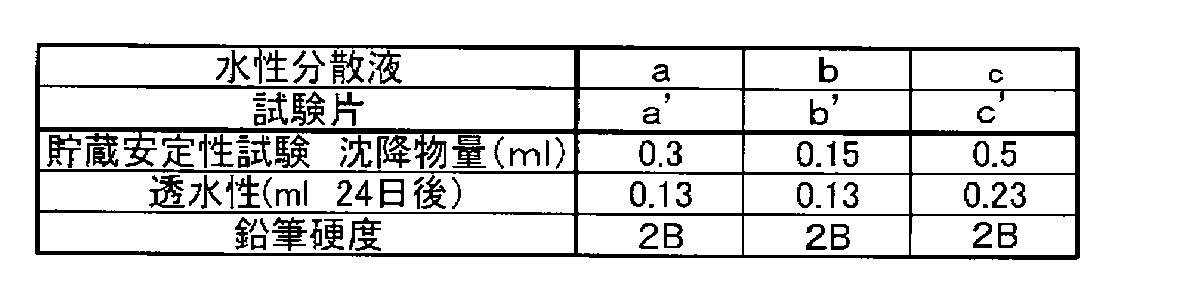
直鎖ラウリル基含有ポリオキシエチレンアルキルエーテルの含有率60%以上のポリオキシエチレンラウリルエーテルを使用して重合を行って得られた含フッ素ポリマー水性分散液a、及びbでは、貯蔵安定性の試験における沈降物量は、cに較べて少なかった。
一方、ラウリル基の直鎖率60%未満のポリオキシエチレンラウリルエーテルを使用して重合して得られた含フッ素ポリマー水性分散液cにおいては、沈降量がa、bに較べて大きかった。
一方、ラウリル基の直鎖率60%未満のポリオキシエチレンラウリルエーテルを使用して重合して得られた含フッ素ポリマー水性分散液cにおいては、沈降量がa、bに較べて大きかった。
また、塗膜の透水性においては、直鎖ラウリル基含有ポリオキシエチレンアルキルエーテルの含有率60%未満のポリオキシエチレンラウリルエーテルを使用して得られた塗料組成物を用いて形成した塗膜を有する試験片c’では、透水量が増加していた。それに対して、ラウリル基の直鎖率が60%以上のポリオキシエチレンラウリルエーテルを使用して得られた塗料組成物を用いて形成した塗膜を有する試験片a’、及びb’は、透水性、硬度とも優れていた。
以上のことより、本発明の製造方法により、安定性、成膜性に優れた含フッ素ポリマー水性分散液を得られることがわかる。
本発明の含フッ素ポリマー水性分散液の製造方法は、貯蔵安定性に優れた含フッ素ポリマーを提供できる。また、本発明の製造方法により得られた含フッ素ポリマー水性分散液は、塗膜を形成した場合、耐水性に優れる塗膜とすることができる。
なお、2012年6月1日に出願された日本特許出願2012-125704号の明細書、特許請求の範囲、及び要約書の全内容をここに引用し、本発明の明細書の開示として、取り入れるものである。
なお、2012年6月1日に出願された日本特許出願2012-125704号の明細書、特許請求の範囲、及び要約書の全内容をここに引用し、本発明の明細書の開示として、取り入れるものである。
Claims (12)
- 水性媒体と、HLB値が12~15であるポリオキシエチレンアルキルエーテルと、ラジカル重合開始剤と、の存在下に、フルオロオレフィン及び下記式(1)で表される親水性マクロモノマーを含むモノマー混合物を重合する含フッ素ポリマー水性分散液の製造方法であって、
前記ポリオキシエチレンアルキルエーテルが、アルキル基が直鎖アルキル基であるポリオキシエチレンアルキルエーテルを全ポリオキシエチレンアルキルエーテルに対して60~100モル%含むことを特徴とする含フッ素ポリマー水性分散液の製造方法。
X-Y-Z (1)
(式(1)において、Xはラジカル重合性不飽和基を表し、Yは脂環基を含む2価の連結基を表し、Zはポリオキシアルキレン鎖を有する親水性部位を表す。) - 前記水性媒体が、イオン交換水である請求項1に記載の含フッ素ポリマー水性分散液の製造方法。
- 前記フルオロオレフィンが、クロロトリフルオロエチレン又はテトラフルオロエチレンである請求項1又は2に記載の含フッ素ポリマー水性分散液の製造方法。
- 前記ラジカル重合開始剤が、水溶性ラジカル開始剤である請求項1~3のいずれか一項に記載の含フッ素ポリマー水性分散液の製造方法。
- 前記アルキル基が直鎖アルキル基であるポリオキシエチレンアルキルエーテルが、下式(2)で表される化合物である請求項1~4のいずれか一項に記載の含フッ素ポリマー水性分散液の製造方法。
Q(OCH2CH2)n-O-R1 (2)
(式(2)において、Qは水素原子、メチル基又はエチル基であり、R1は炭素数10~14の直鎖アルキル基であり、nは9~11の整数である。) - 前記式(2)において、Qが水素原子であり、R1が炭素数11~12の直鎖アルキル基であり、nが9~10である請求項5に記載の含フッ素ポリマー水性分散液の製造方法。
- 前記全ポリオキシエチレンアルキルエーテルの含有量が、モノマー混合物の100質量部に対して0.1~5質量部である請求項1~6のいずれか一項に記載の含フッ素ポリマー水性分散液の製造方法。
- 前記式(1)で表される親水性マクロモノマーが、下記式(3)で表されるモノマーである請求項1~7のいずれか一項に記載の含フッ素ポリマー水性分散液の製造方法。
CH2=CH-Y-(CH2CH2O)mH (3)
(式(3)において、Yは脂環基を含む2価の連結基を表し、mは2~40の整数である。) - 前記親水性マクロモノマーが、下記式(4)及び(5)で表される化合物からなる群から選ばれる少なくとも1種である請求項8に記載の含フッ素ポリマー水性分散液の製造方法。
CH2=CHOCH2-cHex-CH2O(CH2CH2O)mH (4)
CH2=CHCH2OCH2-cHex-CH2O(CH2CH2O)mH (5)
(式(4)及び(5)において、cHexはシクロヘキシレン基を表し、mは2~40の整数である。) - 前記モノマー混合物が、前記フルオロオレフィン20~80モル%と、前記親水性マクロモノマー0.1~25モル%とを含み、
得られる含フッ素ポリマーが、含フッ素ポリマー中の全繰り返し単位に対して、前記フルオロオレフィンに基づく繰り返し単位の割合が20~80モル%であり、前記親水性マクロモノマーに基づく繰り返し単位の割合が0.1~25モル%である請求項1~9のいずれか一項に記載の含フッ素ポリマー水性分散液の製造方法。 - 前記モノマー混合物が、さらに架橋性基を有するモノマーを0.1~25モル%含み、
得られる含フッ素ポリマーが、含フッ素ポリマー中の全繰り返し単位に対して前記架橋性基を有するモノマーに基づく繰り返し単位の割合が0.1~25モル%である請求項1~10のいずれか一項に記載の含フッ素ポリマー水性分散液の製造方法。 - 前記架橋性基を有するモノマーが、水酸基を有するモノマーである請求項11に記載の含フッ素ポリマー水性分散液の製造方法。
Priority Applications (2)
| Application Number | Priority Date | Filing Date | Title |
|---|---|---|---|
| JP2014518732A JPWO2013180236A1 (ja) | 2012-06-01 | 2013-05-30 | 含フッ素ポリマー水性分散液の製造方法 |
| CN201380028333.9A CN104364281A (zh) | 2012-06-01 | 2013-05-30 | 含氟聚合物水性分散液的制造方法 |
Applications Claiming Priority (2)
| Application Number | Priority Date | Filing Date | Title |
|---|---|---|---|
| JP2012-125704 | 2012-06-01 | ||
| JP2012125704 | 2012-06-01 |
Publications (1)
| Publication Number | Publication Date |
|---|---|
| WO2013180236A1 true WO2013180236A1 (ja) | 2013-12-05 |
Family
ID=49673423
Family Applications (1)
| Application Number | Title | Priority Date | Filing Date |
|---|---|---|---|
| PCT/JP2013/065084 Ceased WO2013180236A1 (ja) | 2012-06-01 | 2013-05-30 | 含フッ素ポリマー水性分散液の製造方法 |
Country Status (4)
| Country | Link |
|---|---|
| JP (1) | JPWO2013180236A1 (ja) |
| CN (1) | CN104364281A (ja) |
| TW (1) | TW201406789A (ja) |
| WO (1) | WO2013180236A1 (ja) |
Cited By (3)
| Publication number | Priority date | Publication date | Assignee | Title |
|---|---|---|---|---|
| WO2017122700A1 (ja) * | 2016-01-14 | 2017-07-20 | 旭硝子株式会社 | 水性分散液、その製造方法、水性塗料および塗装物品 |
| EP3345938A4 (en) * | 2015-09-01 | 2019-04-10 | AGC Inc. | FLUOROUS POLYMER, METHOD FOR THE PRODUCTION THEREOF AND HARDENED PRODUCT FROM FLUOROUS POLYMER |
| US20220177689A1 (en) * | 2019-03-29 | 2022-06-09 | Kureha Corporation | Vinylidene fluoride-based polymer composition obtained using non-fluorinated surfactant and production method therefor |
Citations (4)
| Publication number | Priority date | Publication date | Assignee | Title |
|---|---|---|---|---|
| JPH05320533A (ja) * | 1992-05-25 | 1993-12-03 | The Ink Tec Kk | 易分散性粉末顔料の製造方法 |
| JPH0753646A (ja) * | 1993-08-11 | 1995-02-28 | Asahi Glass Co Ltd | 含フッ素水性分散液 |
| JPH11246611A (ja) * | 1998-02-27 | 1999-09-14 | Asahi Glass Co Ltd | 含フッ素複合重合体微粒子の水性分散体 |
| JP2000129195A (ja) * | 1998-08-20 | 2000-05-09 | Asahi Glass Co Ltd | 含フッ素水性塗料組成物 |
Family Cites Families (4)
| Publication number | Priority date | Publication date | Assignee | Title |
|---|---|---|---|---|
| US6610788B1 (en) * | 1998-08-20 | 2003-08-26 | Asahi Glass Company, Limited | Aqueous dispersion of fluorocopolymer and composition for water-based coating material |
| US20090069493A1 (en) * | 2005-04-13 | 2009-03-12 | Daikin Industries, Ltd. | Process for Producing Aqueous Fluoropolymer Dispersion |
| JP4956925B2 (ja) * | 2005-07-13 | 2012-06-20 | 旭硝子株式会社 | ポリテトラフルオロエチレン水性分散液およびその製造方法 |
| JP5446269B2 (ja) * | 2006-11-24 | 2014-03-19 | 旭硝子株式会社 | 含フッ素乳化剤の含有量の減少した含フッ素ポリマー水性分散液の製造方法 |
-
2013
- 2013-05-30 CN CN201380028333.9A patent/CN104364281A/zh active Pending
- 2013-05-30 WO PCT/JP2013/065084 patent/WO2013180236A1/ja not_active Ceased
- 2013-05-30 JP JP2014518732A patent/JPWO2013180236A1/ja active Pending
- 2013-05-31 TW TW102119337A patent/TW201406789A/zh unknown
Patent Citations (4)
| Publication number | Priority date | Publication date | Assignee | Title |
|---|---|---|---|---|
| JPH05320533A (ja) * | 1992-05-25 | 1993-12-03 | The Ink Tec Kk | 易分散性粉末顔料の製造方法 |
| JPH0753646A (ja) * | 1993-08-11 | 1995-02-28 | Asahi Glass Co Ltd | 含フッ素水性分散液 |
| JPH11246611A (ja) * | 1998-02-27 | 1999-09-14 | Asahi Glass Co Ltd | 含フッ素複合重合体微粒子の水性分散体 |
| JP2000129195A (ja) * | 1998-08-20 | 2000-05-09 | Asahi Glass Co Ltd | 含フッ素水性塗料組成物 |
Cited By (5)
| Publication number | Priority date | Publication date | Assignee | Title |
|---|---|---|---|---|
| EP3345938A4 (en) * | 2015-09-01 | 2019-04-10 | AGC Inc. | FLUOROUS POLYMER, METHOD FOR THE PRODUCTION THEREOF AND HARDENED PRODUCT FROM FLUOROUS POLYMER |
| WO2017122700A1 (ja) * | 2016-01-14 | 2017-07-20 | 旭硝子株式会社 | 水性分散液、その製造方法、水性塗料および塗装物品 |
| JPWO2017122700A1 (ja) * | 2016-01-14 | 2018-11-22 | Agc株式会社 | 水性分散液、その製造方法、水性塗料および塗装物品 |
| US20220177689A1 (en) * | 2019-03-29 | 2022-06-09 | Kureha Corporation | Vinylidene fluoride-based polymer composition obtained using non-fluorinated surfactant and production method therefor |
| US12054605B2 (en) * | 2019-03-29 | 2024-08-06 | Kureha Corporation | Vinylidene fluoride-based polymer composition obtained using non-fluorinated surfactant and production method therefor |
Also Published As
| Publication number | Publication date |
|---|---|
| CN104364281A (zh) | 2015-02-18 |
| JPWO2013180236A1 (ja) | 2016-01-21 |
| TW201406789A (zh) | 2014-02-16 |
Similar Documents
| Publication | Publication Date | Title |
|---|---|---|
| KR100616797B1 (ko) | 불소계 공중합체의 수성분산액 및 수성도료용 조성물 | |
| EP1306397A1 (en) | Aqueous fluorocopolymer dispersion | |
| JP2002201227A (ja) | フッ素系共重合体の水性分散液 | |
| JP2000128934A (ja) | フッ素系共重合体の水性分散液 | |
| JPWO2013180236A1 (ja) | 含フッ素ポリマー水性分散液の製造方法 | |
| JP3356803B2 (ja) | 含フッ素重合体水性分散液 | |
| JP2955336B2 (ja) | 水性分散液 | |
| JPH0959560A (ja) | 水性塗料用組成物 | |
| JP2943184B2 (ja) | 水性分散液 | |
| JP3356804B2 (ja) | 含フッ素ポリマー水性分散液 | |
| JP2015174909A (ja) | 含フッ素樹脂塗料組成物および塗膜を有する塗装物品 | |
| JP3255334B2 (ja) | 含フッ素樹脂水性分散液の製造方法 | |
| JP3414465B2 (ja) | 含フッ素水性分散液 | |
| JP2795600B2 (ja) | フッ素樹脂塗料用組成物 | |
| JP2001164065A (ja) | フッ素系共重合体の水性分散液 | |
| JPH06228491A (ja) | 含フッ素水性分散液 | |
| JPH05117480A (ja) | 水性分散液 | |
| JP2954600B2 (ja) | 水性塗料用組成物 | |
| JPH0753646A (ja) | 含フッ素水性分散液 | |
| JPH0797497A (ja) | 含フッ素水性分散液 | |
| JP2000128935A (ja) | フッ素系共重合体の水性分散液 | |
| JP2000129193A (ja) | フッ素系共重合体の水性分散液 | |
| JPH11246611A (ja) | 含フッ素複合重合体微粒子の水性分散体 | |
| JPH05117481A (ja) | 水性分散液 | |
| JPH07268272A (ja) | 改良した水性分散液組成物 |
Legal Events
| Date | Code | Title | Description |
|---|---|---|---|
| 121 | Ep: the epo has been informed by wipo that ep was designated in this application |
Ref document number: 13797169 Country of ref document: EP Kind code of ref document: A1 |
|
| ENP | Entry into the national phase |
Ref document number: 2014518732 Country of ref document: JP Kind code of ref document: A |
|
| NENP | Non-entry into the national phase |
Ref country code: DE |
|
| 122 | Ep: pct application non-entry in european phase |
Ref document number: 13797169 Country of ref document: EP Kind code of ref document: A1 |