WO2013145760A1 - コンピュータ装置、記録媒体、及び制御方法 - Google Patents
コンピュータ装置、記録媒体、及び制御方法 Download PDFInfo
- Publication number
- WO2013145760A1 WO2013145760A1 PCT/JP2013/002140 JP2013002140W WO2013145760A1 WO 2013145760 A1 WO2013145760 A1 WO 2013145760A1 JP 2013002140 W JP2013002140 W JP 2013002140W WO 2013145760 A1 WO2013145760 A1 WO 2013145760A1
- Authority
- WO
- WIPO (PCT)
- Prior art keywords
- game
- value
- physical strength
- game information
- enemy
- Prior art date
- Legal status (The legal status is an assumption and is not a legal conclusion. Google has not performed a legal analysis and makes no representation as to the accuracy of the status listed.)
- Ceased
Links
Images

Classifications
-
- A—HUMAN NECESSITIES
- A63—SPORTS; GAMES; AMUSEMENTS
- A63F—CARD, BOARD, OR ROULETTE GAMES; INDOOR GAMES USING SMALL MOVING PLAYING BODIES; VIDEO GAMES; GAMES NOT OTHERWISE PROVIDED FOR
- A63F13/00—Video games, i.e. games using an electronically generated display having two or more dimensions
- A63F13/30—Interconnection arrangements between game servers and game devices; Interconnection arrangements between game devices; Interconnection arrangements between game servers
- A63F13/35—Details of game servers
- A63F13/358—Adapting the game course according to the network or server load, e.g. for reducing latency due to different connection speeds between clients
-
- A—HUMAN NECESSITIES
- A63—SPORTS; GAMES; AMUSEMENTS
- A63F—CARD, BOARD, OR ROULETTE GAMES; INDOOR GAMES USING SMALL MOVING PLAYING BODIES; VIDEO GAMES; GAMES NOT OTHERWISE PROVIDED FOR
- A63F13/00—Video games, i.e. games using an electronically generated display having two or more dimensions
- A63F13/55—Controlling game characters or game objects based on the game progress
- A63F13/58—Controlling game characters or game objects based on the game progress by computing conditions of game characters, e.g. stamina, strength, motivation or energy level
-
- A—HUMAN NECESSITIES
- A63—SPORTS; GAMES; AMUSEMENTS
- A63F—CARD, BOARD, OR ROULETTE GAMES; INDOOR GAMES USING SMALL MOVING PLAYING BODIES; VIDEO GAMES; GAMES NOT OTHERWISE PROVIDED FOR
- A63F13/00—Video games, i.e. games using an electronically generated display having two or more dimensions
- A63F13/60—Generating or modifying game content before or while executing the game program, e.g. authoring tools specially adapted for game development or game-integrated level editor
- A63F13/67—Generating or modifying game content before or while executing the game program, e.g. authoring tools specially adapted for game development or game-integrated level editor adaptively or by learning from player actions, e.g. skill level adjustment or by storing successful combat sequences for re-use
-
- A—HUMAN NECESSITIES
- A63—SPORTS; GAMES; AMUSEMENTS
- A63F—CARD, BOARD, OR ROULETTE GAMES; INDOOR GAMES USING SMALL MOVING PLAYING BODIES; VIDEO GAMES; GAMES NOT OTHERWISE PROVIDED FOR
- A63F13/00—Video games, i.e. games using an electronically generated display having two or more dimensions
- A63F13/70—Game security or game management aspects
- A63F13/79—Game security or game management aspects involving player-related data, e.g. identities, accounts, preferences or play histories
- A63F13/798—Game security or game management aspects involving player-related data, e.g. identities, accounts, preferences or play histories for assessing skills or for ranking players, e.g. for generating a hall of fame
-
- A—HUMAN NECESSITIES
- A63—SPORTS; GAMES; AMUSEMENTS
- A63F—CARD, BOARD, OR ROULETTE GAMES; INDOOR GAMES USING SMALL MOVING PLAYING BODIES; VIDEO GAMES; GAMES NOT OTHERWISE PROVIDED FOR
- A63F13/00—Video games, i.e. games using an electronically generated display having two or more dimensions
- A63F13/80—Special adaptations for executing a specific game genre or game mode
- A63F13/822—Strategy games; Role-playing games
-
- A—HUMAN NECESSITIES
- A63—SPORTS; GAMES; AMUSEMENTS
- A63F—CARD, BOARD, OR ROULETTE GAMES; INDOOR GAMES USING SMALL MOVING PLAYING BODIES; VIDEO GAMES; GAMES NOT OTHERWISE PROVIDED FOR
- A63F13/00—Video games, i.e. games using an electronically generated display having two or more dimensions
- A63F13/80—Special adaptations for executing a specific game genre or game mode
- A63F13/847—Cooperative playing, e.g. requiring coordinated actions from several players to achieve a common goal
-
- A—HUMAN NECESSITIES
- A63—SPORTS; GAMES; AMUSEMENTS
- A63F—CARD, BOARD, OR ROULETTE GAMES; INDOOR GAMES USING SMALL MOVING PLAYING BODIES; VIDEO GAMES; GAMES NOT OTHERWISE PROVIDED FOR
- A63F2300/00—Features of games using an electronically generated display having two or more dimensions, e.g. on a television screen, showing representations related to the game
- A63F2300/50—Features of games using an electronically generated display having two or more dimensions, e.g. on a television screen, showing representations related to the game characterized by details of game servers
- A63F2300/55—Details of game data or player data management
- A63F2300/5546—Details of game data or player data management using player registration data, e.g. identification, account, preferences, game history
- A63F2300/558—Details of game data or player data management using player registration data, e.g. identification, account, preferences, game history by assessing the players' skills or ranking
-
- A—HUMAN NECESSITIES
- A63—SPORTS; GAMES; AMUSEMENTS
- A63F—CARD, BOARD, OR ROULETTE GAMES; INDOOR GAMES USING SMALL MOVING PLAYING BODIES; VIDEO GAMES; GAMES NOT OTHERWISE PROVIDED FOR
- A63F2300/00—Features of games using an electronically generated display having two or more dimensions, e.g. on a television screen, showing representations related to the game
- A63F2300/60—Methods for processing data by generating or executing the game program
- A63F2300/6027—Methods for processing data by generating or executing the game program using adaptive systems learning from user actions, e.g. for skill level adjustment
-
- A—HUMAN NECESSITIES
- A63—SPORTS; GAMES; AMUSEMENTS
- A63F—CARD, BOARD, OR ROULETTE GAMES; INDOOR GAMES USING SMALL MOVING PLAYING BODIES; VIDEO GAMES; GAMES NOT OTHERWISE PROVIDED FOR
- A63F2300/00—Features of games using an electronically generated display having two or more dimensions, e.g. on a television screen, showing representations related to the game
- A63F2300/80—Features of games using an electronically generated display having two or more dimensions, e.g. on a television screen, showing representations related to the game specially adapted for executing a specific type of game
- A63F2300/8029—Fighting without shooting
-
- A—HUMAN NECESSITIES
- A63—SPORTS; GAMES; AMUSEMENTS
- A63F—CARD, BOARD, OR ROULETTE GAMES; INDOOR GAMES USING SMALL MOVING PLAYING BODIES; VIDEO GAMES; GAMES NOT OTHERWISE PROVIDED FOR
- A63F2300/00—Features of games using an electronically generated display having two or more dimensions, e.g. on a television screen, showing representations related to the game
- A63F2300/80—Features of games using an electronically generated display having two or more dimensions, e.g. on a television screen, showing representations related to the game specially adapted for executing a specific type of game
- A63F2300/807—Role playing or strategy games
Definitions
- the present invention relates to a computer device, a recording medium, and a control method for realizing a game in which a player character battles an enemy character in a virtual game space.
- Non-Patent Document 1 Conventionally, there are games such as action games and role-playing games in which a player character moves in a virtual game space in accordance with a user operation. Also, in this type of game, there is a game in which a plurality of game devices are connected via a communication line, and a plurality of users cooperate with each other to fight against enemy characters (see Non-Patent Document 1).
- each player character operated by a plurality of users forms a party and cooperates to play against enemy characters appearing in the virtual game space. In this battle, each player character applies an attack according to his / her ability to the enemy character, and the enemy character is subjugated when its physical strength value decreases to zero according to the damage received.
- a user who stabs an enemy character is a user who operates a player character that has applied an attack with the enemy character's stamina value set to zero It is.
- the party is composed of a relatively small number of player characters, even if the party cannot stab himself, he can achieve a sense of accomplishment by subjugating an enemy character as a member of the party.
- the present invention provides a computer device, a recording medium, and a recording medium capable of realizing a game in which more users can obtain a sense of accomplishment by defeating enemy characters even in a battle in which a plurality of users participate in subjugation of enemy characters.
- An object is to provide a control method.
- a computer device is provided between an enemy physical strength management module for storing a physical strength value of an enemy character acting in a virtual game space generated by one or more game devices in a storage unit, and a game device.
- a communication module that communicates with the game device, a battle application reception module that receives a battle application with an enemy character from the game device, an enemy physical strength value determination module that determines whether or not the physical strength value stored in the storage unit is equal to or less than a predetermined value,
- a first mode execution module that permits play to a game device that has applied for a battle based on a predetermined first mode when the physical strength value stored in the storage unit is greater than a predetermined value, and the storage unit stores A second mode that allows a game device that has applied for a match to play based on a predetermined second mode when the physical strength value is less than or equal to the predetermined value.
- a first enemy physical strength value transmission module that transmits the physical strength value stored in the storage unit as the physical strength value of the enemy character to a game device that has applied for a battle in the first mode, and a game A game device that has further applied an enemy physical strength update module that updates a physical strength value of the enemy character stored in the storage unit based on a damage value to the enemy character received from the device, and applied for a battle in the second mode
- the physical strength of the enemy character stored in the storage unit based on the second enemy physical strength value transmission module that transmits a predetermined physical strength value as the physical strength value of the enemy character, and the damage value to the enemy character received from the game device
- An enemy physical strength value update restriction module for restricting value update is further provided.
- a control method can be provided.
- the 1st invention is a computer apparatus, Comprising:
- a game A communication module that communicates with the device, a battle application reception module that receives a battle application with an enemy character from the game device, and an enemy physical strength that determines whether or not the physical strength value stored in the storage unit is equal to or less than a predetermined value
- a first enemy physical strength value transmission module that transmits a physical strength value stored in the storage unit as a physical strength value of an enemy character to a game device that has applied for a battle in the first mode.
- an enemy health value update module that updates the health value of the enemy character stored in the storage unit based on the damage value to the enemy character received from the game device, and applied for a battle in the second mode.
- the enemy character stored in the storage unit based on the damage value to the enemy character received from the game device, and the second enemy strength value transmission module that transmits a predetermined strength value as the strength value of the enemy character to the game device
- An enemy health value update restriction module for restricting the update of the health value of the enemy.
- Such a computer device can be applied to, for example, a server device connected to a plurality of game devices via a communication line.
- the computer apparatus has the above-described configuration, in the first mode in which the enemy character's physical strength value is greater than a predetermined value, damage to the enemy character can be accumulated by a plurality of users who have applied for a battle. That is, in the first mode, when one user damages an enemy character due to a battle, the physical strength value of the enemy character is managed with a value reduced by the amount of the damage. Then, when another user battles thereafter, the reduced physical strength value is reflected in the physical strength value of the enemy character at the start of the battle. Therefore, it is possible to share a feeling of competition that a plurality of users cooperate with each other and fight against enemy characters.
- the enemy character's health value is in the second mode below the predetermined value, the damage given to the enemy character by one user is not reflected in the health value of the enemy character with whom another user battles.
- a predetermined value is provided as a physical strength value of an enemy character. Therefore, a larger number of users can fight against enemy characters having low physical strength, and a plurality of users among the fighting users can subdue the enemy characters.
- restrictions may be placed on the battle application. In this case, it is possible to prevent an excessive increase in the number of users who can experience the defeat of enemy characters.
- the “storage unit” may be included in the computer device (for example, a server device), may be included in a game device, or may be applied to other storage devices. Good.
- a computer device for storing game information used in a virtual game space generated by one or more game devices in a storage unit, and the game device.
- a communication module for communicating; a distribution request receiving module for receiving a distribution request for the latest game information from a game device; a game information determining module for determining whether or not the game information stored in the storage unit satisfies a predetermined condition;
- a first mode execution module that transmits game information to a game device that has requested distribution based on a first mode in which the update of the game information is not limited when the information satisfies the condition;
- a game that requested distribution based on a second mode that restricts updating of the game information when the conditions are not met Comprising a second mode execution module that transmits the game information to the location.
- the game information is a physical strength value of an enemy character acting in the virtual game space
- the distribution request for the latest game information is an application for a battle with the enemy character.
- the game information update restriction module for restricting the update of the game information and the game information delivery request restriction module for restricting the delivery request for the game information are further provided for the second mode.
- a physical strength value of an enemy character equal to or less than a predetermined value is transmitted as game information to the game device that has requested distribution.
- This application proposes a recording medium and a control method in addition to the computer apparatus. Specific contents of the recording medium and the control method will be described below.
- the 5th invention is the recording medium which the instruction
- command is one or two or more with respect to the said computer apparatus.
- An enemy physical strength value management step for storing the physical strength value of the enemy character acting in the virtual game space generated by the game device in the storage unit, a communication step for communicating with the game device, an enemy character from the game device, and A battle application receiving step for receiving the battle application, an enemy physical strength value determining step for determining whether or not the physical strength value stored in the storage unit is equal to or less than a predetermined value, and the physical strength value stored in the storage unit from the predetermined value
- a first mode execution step for allowing a game device that has applied for a match to play based on a predetermined first mode, and storing in the storage unit, if larger
- a second enemy physical strength value transmission step for transmitting a predetermined physical strength value as a physical strength value of the enemy character to the game device that applied for the battle, and the game device Enemy strength value update limit step of limiting the updating et received the hit point of the enemy character stored in the storage unit based on the damage value of the enemy character, further to execute.
- the 6th invention is the recording medium which the instruction
- command is one or two or more with respect to the said computer apparatus.
- a game information management step for storing game information used in the virtual game space generated by the game device in the storage unit, a communication step for communication with the game device, and receiving a distribution request for the latest game information from the game device
- the recording medium storing the command may include a server device storing the command in addition to the semiconductor memory and the optical disk.
- the game information is a physical strength value of an enemy character acting in the virtual game space
- the distribution request for the latest game information is an application for a battle with the enemy character.
- the instruction includes a game information update restriction step for restricting update of the game information to the computer device in the second mode, and a game information distribution request restriction step for restricting the distribution request for the game information. Further execution is performed.
- the command sets a physical strength value of an enemy character equal to or less than a predetermined value as game information to be transmitted to the game device that requested distribution to the computer device in the second mode. Send it.
- a ninth aspect of the invention is a computer device control method, wherein the physical strength value of an enemy character acting in a virtual game space generated by one or more game devices is stored in a storage unit.
- the game device that applied for the battle is permitted to play based on the predetermined second mode.
- a second mode execution step, and a first enemy physical strength value transmission step for transmitting the physical strength value stored in the storage unit as the physical strength value of the enemy character to the game device that has applied for a battle in the first mode;
- an enemy physical strength value updating step for updating the physical strength value of the enemy character stored in the storage unit based on the damage value to the enemy character received from the game device, and applying for a battle in the second mode.
- Second enemy physical strength value transmission step for transmitting a predetermined physical strength value as the physical strength value of the enemy character to the game device, and the enemy character stored in the storage unit based on the damage value to the enemy character received from the game device
- the enemy physical strength value update limiting step for limiting the update of the physical strength value is further provided.
- a tenth invention is a method of controlling a computer device, a game information management step for storing game information used in a virtual game space generated by one or more game devices in a storage unit, a game device, and A communication step for communicating with each other, a distribution request receiving step for receiving a distribution request for the latest game information from the game device, and a game information determination step for determining whether or not the game information stored in the storage unit satisfies a predetermined condition
- the game information is a physical strength value of an enemy character acting in the virtual game space
- the distribution request for the latest game information is an application for a battle with the enemy character.
- the game information update restriction step for restricting the update of the game information and the game information distribution request restriction step for restricting the distribution request for the game information are further provided for the second mode.
- a physical strength value of an enemy character equal to or less than a predetermined value is transmitted as game information to the game device that has requested distribution.
- the “special enemy character” is referred to as an “enemy character”.
- FIG. 1 is a block diagram showing a hardware configuration of a game device 1 and a server device (computer device) 2 constituting the game system.
- the game apparatus 1 can communicate with another game apparatus 1 and the server apparatus 2 via a communication network NW such as the Internet or a LAN.
- the game apparatus 1 includes a CPU 10 that is a computer for controlling the operation thereof.
- the CPU 10 is connected to a disk drive 12, a memory card slot 13, an HDD 14 and a ROM 15 that constitute program storage means, and a RAM 16 via a bus 11. Has been.
- the disk drive 12 can be loaded with a disk-type recording medium 30 such as a DVD-ROM.
- a disk-type recording medium 30 such as a DVD-ROM.
- Recorded on the disc-type recording medium 30 are a game program 30a, and game data 30b such as player characters, teammate characters, enemy characters, objects and textures necessary to generate a game space appearing in the game.
- the card type recording medium 31 can be loaded in the memory card slot 13.
- save data indicating a play status such as the progress of the game can be recorded in accordance with an instruction from the CPU 10.
- the HDD 14 is a large-capacity recording medium built in the game apparatus 1 and records the game program 30a and game data 30b read from the disk-type recording medium 30, save data, and the like.
- the ROM 15 is a semiconductor memory such as a mask ROM or PROM, and stores a startup program for starting the game apparatus 1 and a program for controlling an operation when the disk type recording medium 30 is loaded.
- the RAM 16 is composed of DRAM or SRAM, and the game program 30a to be executed by the CPU 10 and game data 30b necessary for the execution are stored from the disk-type recording medium 30 or the HDD 14 in accordance with the game play status. Read and record temporarily.
- the CPU 10 is further connected to a graphic processing unit 17, an audio synthesis unit 20, a wireless communication control unit 23, and a network interface 25 via the bus 11.
- the graphic processing unit 17 draws a game image including the game space 100 and each character in accordance with an instruction from the CPU 10, and further draws a message spoken by the teammate character over the game image.
- the graphic processing unit 17 is connected to an external display 19 via the video conversion unit 18, and the game image drawn by the graphic processing unit 17 is converted into a moving image format by the video conversion unit 18, and further displayed on the display 19. Displayed.
- the audio synthesizer 20 reproduces and synthesizes digital game sound according to instructions from the CPU 10. Also, the audio synthesis unit 20 is connected to an external speaker 22 via the audio conversion unit 21. Therefore, the game sound reproduced and synthesized by the audio synthesizing unit 20 is decoded into an analog format by the audio converting unit 21 and further outputted from the speaker 22 to the outside.
- the wireless communication control unit 23 has a 2.4 GHz band wireless communication module, is wirelessly connected to the controller 24 attached to the game apparatus 1, and can transmit and receive data to and from the controller 24. Yes.
- the user can input a signal to the game apparatus 1 by operating an operator (not shown) such as a button provided on the controller 24, and control the movement of the player character displayed on the display 19. it can.
- the network interface 25 connects the game apparatus 1 to a communication network NW such as the Internet or a LAN. Therefore, the game apparatus 1 can communicate with another game apparatus 1 or the server apparatus 2.
- the server device 2 includes a CPU 40 that is a computer for controlling the operation thereof, and an HDD 42, a ROM 43, a RAM 44, and a network interface 45 that constitute program storage means are connected to the CPU 40 via a bus 41.
- the server device 2 may include an input interface such as a keyboard and an output interface such as a liquid crystal display as necessary.
- the HDD 42 is a large-capacity recording medium built in the server device 2, and stores a game program (computer program) 42a, game data 42b, and the like.
- the ROM 43 is a semiconductor memory such as a mask ROM or PROM, and records a program that defines the basic operation of the server device 2.
- the RAM 44 is composed of DRAM, SRAM, or the like, and reads the game program 42a to be executed by the CPU 10 and the game data 42b necessary for the execution from the HDD 42 as needed, and temporarily records them.
- the network interface 45 is means for connecting to the game apparatus 1 via the communication network NW, and the server apparatus 2 can communicate with a plurality of game apparatuses 1 via the network interface 45.
- FIG. 2 is a block diagram illustrating a functional configuration of the game apparatus 1 and the server apparatus 2 described above.
- the game apparatus 1 has the functions of the following units 1a to 1g by executing the game program 30a. Such functions are realized in hardware by the CPU 10, HDD 14, ROM 15, RAM 16, graphic processing unit 17, video conversion unit 18, audio synthesis unit 20, audio conversion unit 21, and network interface 25 shown in FIG. Is done.
- the communication unit (communication module) 1a transmits and receives data to and from other computers (other game devices 1 and server devices 2) via the communication network NW.
- the virtual game space generation unit (virtual game space generation module) 1b generates a three-dimensional game space, and further generates a two-dimensional image for displaying it on the display 19.
- the PC control unit (PC control module) 1c generates a player character and controls the movement of the player character in the game space according to the operation of the controller 24 by the user or according to the game situation. For example, the user can move the player character in the game space by operating the controller 24, can give an instruction to the teammate character, and can attack the enemy character.
- the NPC control unit (NPC control module) 1d generates a friend character and an enemy character. Further, the movement of the ally character and the enemy character in the game space is controlled according to the game situation. For example, the NPC control unit 1d causes the ally character to execute a predetermined action in accordance with the action of the player character by the user's operation, or performs an action according to the game situation and a comment according to the action to the ally character. Make it. The NPC control unit 1d also causes the player character to attack or escape the enemy character in accordance with the action of the player character.
- the game progress control unit (game progress control module) 1e controls the progress of the game in accordance with the user's operation and the passage of time in the game. For example, when a player character performs a predetermined action by a user operation, a predetermined event is generated and a predetermined moving image is reproduced for a predetermined period. In addition, the game progress control unit 1e changes the environment in the game space as the in-game time elapses. Furthermore, the game progress control unit 1e causes an enemy character to appear at various locations in the game space according to the location of the player character, or when the player character approaches the enemy character within a predetermined distance, The player character is attacked.
- the battle application unit (match application module) 1f applies to the server device 2 for permission to battle against the enemy character described above. More specifically, the battle application unit 1f requests the server device 2 to distribute the latest game information related to the physical strength value of the enemy character as an application for permission to battle the enemy character. Therefore, more generally speaking, the battle application unit 1f provides a game information distribution request unit (game information request module) that requests the server device 2 to distribute the latest game information related to the physical strength values of enemy characters. Make it.
- game information request module game information request module
- the player character when the player character reaches a specific place in the game space (for example, the last dungeon set so that it can be reached in the final phase of the game progress), it can play against the enemy character. Specifically, when the player character reaches this place, the battle application unit 1f transmits a battle application (that is, a distribution request for the latest game information) to the server device 2 through the communication unit 1a. In response to this, the server device 2 transmits information on the current physical strength value of the enemy character.
- a battle application that is, a distribution request for the latest game information
- the game device 1 that has received the above information causes an enemy character having this physical strength value to appear in the game space. Therefore, the user can battle the enemy character by operating the player character.
- the data necessary for displaying the enemy character on the display 19 of the game apparatus 1 and the data necessary for the operation are the game data 30b read by the disk drive 12 of the game apparatus 1 except for the physical strength value, etc. Is remembered.
- the enemy damage transmission unit (enemy damage transmission module) 1g constitutes a game information transmission unit (game information transmission module).
- the enemy damage transmission unit 1g transmits the damage value (game information) given to the enemy character to the server device 2 via the communication unit 1a.
- Such a transmission process of the damage value is executed automatically after the battle with the enemy character is completed or when the user performs a predetermined operation.
- the server apparatus 2 transmits the latest physical strength value of the enemy character to the game apparatus 1, the server apparatus 2 can also transmit information on the battle duration time changed as appropriate. Then, the game apparatus 1 that has received this manages the duration of the battle with the enemy character based on the received information.
- the server device 2 has the functions of the following units 2a to 2l by executing the game program 42a.
- Each of these functions is realized in hardware by the CPU 40, HDD 42, ROM 43, RAM 44, network interface 45, and the like shown in FIG.
- the communication unit (communication module) 2a transmits and receives data to and from the plurality of game devices 1 via the communication network NW.
- the enemy health value management unit (enemy health value management module) 2b constitutes a game information management unit (game information management module).
- the enemy physical strength value management unit 2b stores the physical strength value (game information) of the enemy character, which is unique to all users, in the HDD 42 constituting the storage unit, or updates it appropriately.
- the battle application reception unit (match application reception module) 2c forms a distribution request reception unit (distribution request reception module).
- the battle application receiving unit 2c receives a battle application (game information distribution request) sent from the game apparatus 1. Then, the enemy physical strength value determination unit 2d is activated to determine which of the first mode and the second mode described below is used to operate the server device 2.
- the enemy physical strength value determination unit (enemy physical strength value determination module) 2d constitutes a game information determination unit (game information determination module).
- the enemy physical strength value determination unit 2d acquires the current physical strength value (game information) of the enemy character from the enemy physical strength value management unit 2b, and determines whether or not the acquired game information satisfies a predetermined condition. In this game, it is determined whether or not the acquired physical strength value is greater than a predetermined value (hereinafter also referred to as “mode determination value”).
- mode determination value a predetermined value
- the enemy character of this game will be exemplified when the initial physical strength value is set to 1 million, for example, and the mode determination value is set to 5000.
- the first mode execution unit (first mode execution module) 2e is based on the first mode in which the update of the game information is not limited when the game information (here, the physical strength value of the enemy character) satisfies a predetermined condition,
- the server device 2 is operated. That is, when the enemy physical strength value determination unit 2d determines that the current physical strength value is greater than the mode determination value (5000), the server device 2 is restricted to the operation in the first mode.
- the server device 2 operating in the first mode functions as a first enemy physical strength value transmitting unit 2f and an enemy physical strength value updating unit 2g.
- the first enemy physical strength value transmission unit (first enemy physical strength value transmission module) 2f forms a first game information distribution unit (first game information distribution module), and an enemy physical strength value update unit (enemy physical strength value update module). 2g forms a game information update unit (game information update module).
- the first enemy physical strength value transmission unit 2f stores the physical strength value of the enemy character at the current time in the HDD 42 with respect to the game device 1 that has applied for a match (requests to distribute the latest game information). Send health value. Further, when the damage value given to the enemy character is transmitted from the game apparatus 1, the enemy physical strength value update unit 2 g updates the current physical strength value (game information) of the enemy character based on the damage value.
- the second mode execution unit (second mode execution module) 2h is based on the second mode in which the update of the game information is limited when the game information (here, the physical strength value of the enemy character) does not satisfy a predetermined condition. Then, the server device 2 is operated. That is, when the current physical strength value is determined to be equal to or less than the mode determination value (5000) in the enemy physical strength determination unit 2d, the server device 2 is restricted to operate in the second mode.
- the server device 2 operating in the second mode functions as a second enemy physical strength value transmission unit 2i, an enemy physical strength update update unit 2j, an enemy physical strength adjustment unit 2k, and a battle application restriction unit 2l.
- the second enemy physical strength value transmission unit (second enemy physical strength transmission module) 2i constitutes a second game information distribution unit (second game information distribution module).
- the enemy strength value update restriction unit (enemy strength value update restriction module) 2j constitutes a game information update restriction unit (game information update restriction module).
- the enemy health value adjusting unit (enemy health value adjusting module) 2k constitutes a game information adjusting unit (game information adjusting module).
- the battle application restriction unit (match application restriction module) 2l forms a game information distribution request restriction unit (game information distribution request restriction module).
- the second enemy physical strength value transmission unit 2i transmits a physical strength value that is a predetermined value or less than a predetermined value to the game apparatus 1 that has applied for a battle (requested distribution of the latest game information).
- the enemy health value update restriction unit 2j restricts (for example, prohibits) the update of the health value based on the damage value.
- the enemy physical strength adjustment unit 2k transmits the physical strength to the game apparatus 1 that has newly applied for a battle according to the number of battle applications from the time when the second mode is enabled and / or the elapsed time from that time. Adjust the value.
- the “predetermined physical strength value” transmitted from the second enemy physical strength value transmitting unit 2i to the game apparatus 1 is the physical strength value adjusted by the enemy physical strength adjusting unit 2k.
- the battle application restriction unit 2l places a limit on the battle application (game information distribution request) from the game device 1, and permits or prohibits the battle application acceptance unit 2c from accepting it in light of predetermined conditions. For example, an upper limit is set for the number of battle applications from the time when the second mode becomes valid, and when the number of battle applications reaches this upper limit, the battle application is not accepted thereafter. Or the period which receives a battle application in a 2nd mode is set, and after this period, a battle application is not received after that.
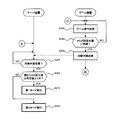
- Mode judgment flow Next, a mode determination process that is first performed by the server device 2 when a game application is applied from the game device 1 to the server device 2 will be described.
- the game progress control unit 1e of the game apparatus 1 performs a game progress process based on the operation of the player character by the user (step S101). Then, the game device 1 determines whether or not the player character has reached a predetermined position in the game space for which a battle application is to be made (step S102).
- the last dungeon that can be reached in the final stage of the game progress is set to the “predetermined position”, and when the player character enters the last dungeon, it is determined that the last dungeon has been reached (step S102: YES). To do. On the other hand, when such a predetermined position has not been reached (step S102: NO), the game progress process in step S101 is continued.
- step S102 When it is determined in step S102 that the player character has reached the predetermined position, the game apparatus 1 transmits a battle application to the server apparatus 2 (step S103). Such processing is performed by the communication unit 1a and the battle application unit 1f.
- step S102 determines whether or not connected to a communication line. If the determination result is “YES”, the process proceeds to step S103. If “NO”, the process after step S103 is not performed, and the player character is controlled by the enemy character (managed by the game apparatus 1). That is, a process of competing with an enemy character managed locally may be executed.
- step S202 the server apparatus 2 performs mode determination (step S202). In this mode determination, it is determined whether the physical strength value of the enemy character (denoted as “enemy NPC” in the flowchart) is greater than a predetermined value. That is, the server device 2 compares the current physical strength value of the enemy character managed by the enemy physical strength management unit 2b with a predetermined value (the mode determination value; for example, 5000). If the managed physical strength value is larger than the predetermined value (step S202: YES), the first mode is executed (step S210). When the managed physical strength value is equal to or less than the predetermined value (step S202: NO), the second mode is executed (step S220).
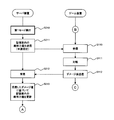
- FIG. 4 is a flowchart for explaining the operation of the server device 2 in the first mode.
- the server apparatus 2 transmits information on the enemy physical strength value in the storage unit to the game apparatus 1 that has applied for the battle in step S103 (step S211). That is, the first enemy physical strength value transmission unit 2f acquires information on the enemy physical strength value stored in the HDD 42 or the like by the enemy physical strength management unit 2b, and transmits this information to the game apparatus 1 via the communication unit 2a. .
- the server device 2 has received a battle application (game information distribution request) from the game device 1.
- the game apparatus 1 When the game apparatus 1 receives information on the current physical strength value of the enemy character from the server apparatus 2 (step S110), the game apparatus 1 causes the player character and the enemy character to battle each other in accordance with a user operation (step S111). More specifically, the NPC control unit 1d of the game apparatus 1 causes an enemy character whose status value is the strength value received in step S110 to appear in the game space generated by the virtual game space generation unit 1b. Then, the PC control unit 1c, the NPC control unit 1d, and the game progress control unit 1e execute a battle between the player character and the enemy character in accordance with a user operation. Further, the NPC control unit 1d stores the damage value received by the enemy character.
- the enemy damage transmission unit 1g transmits information (game information) on the damage value given to the enemy character in this battle from the game device 1 to the server device 2 (step S112). .
- the enemy physical strength value management unit 2b updates the physical strength value of the enemy character stored in the HDD 42 or the like (step S213). Specifically, a value corresponding to the received damage value is subtracted from the stored physical strength value, and the result is stored in the storage unit such as the HDD 42 again. The value to be subtracted from the physical strength value may be the damage value itself or a value corresponding thereto. Thereafter, the server device 2 returns to step S201 (see FIG. 3) again. Then, when a battle application is received from the game apparatus 1, the above-described mode determination (step S202) and subsequent processes are performed.
- the enemy character of this game has a common health value of 1 for the whole body, and the common health value of 1 is reduced no matter which part of the body is damaged.
- the body may be divided into a plurality of parts (for example, 30 parts), an initial value of the physical strength value may be set for each part, and the physical strength value may be updated for each part according to the received damage value. For example, if the initial strength value is set to 50,000 for the head and 30,000 for the left arm, and 4,000 damage to the head and 1,000 damage to the left arm, the head strength value is updated to 46,000, and the left arm strength value is Updated to 29,000. And when the physical strength value of a certain part becomes zero, it will be in the state where only that part was destroyed (part destruction). Moreover, when the health value of all the parts becomes zero, it means that the enemy character is successfully subjugated.
- the server device 2 manages the physical strength value for each part.
- Information relating to the physical strength value transmitted from the server device 2 to the game device 1 in step S211 is associated with each part of the enemy character.
- the game apparatus 1 stores the damage value given to the enemy character for each part.
- the damage value transmission process in step S112 the game apparatus 1 creates information associating the given damage value with the corresponding part, and transmits this information to the server apparatus 2.
- the server device 2 updates the physical strength value for each part based on the received damage value for each part.
- the server device 2 operating in the first mode sequentially updates the physical strength values of the enemy characters managed by the server device 2 every time the damage value given to the enemy character is received from the game device 1. And the user who applied for a battle
- competition battles the enemy character provided with the latest updated physical strength value. As a plurality of users each fight against the enemy character, the health value of the enemy character can be gradually reduced. Therefore, it is possible to give each user a sense of competition that a plurality of users cooperate with each other to subdue powerful enemy characters.
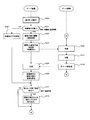
- FIG. 5 is a flowchart for explaining the operation of the server device 2 in the second mode.
- the server apparatus 2 determines whether or not the battle application received in step S201 can be accepted (step S221). That is, in this game, there is a limit on the period for accepting a battle application in the second mode. This prevents an excessive increase in the number of users who can play against enemy characters in the second mode, and reduces the load caused by increased access to the server device 2. Specifically, when the number of received applications reaches a predetermined number, or when a predetermined period has elapsed from the start of application reception, subsequent applications are not received.
- the restriction content is not limited to this.
- step S221 If the match application can be accepted (step S221: YES), the enemy character's physical strength value is adjusted (step S222), and the information on the adjusted physical strength value is used as the current enemy character's physical strength value. (Step S223). More specifically, the enemy health value adjusting unit 2k determines whether or not the game apparatus 1 increases as the number of battle applications in the second mode increases, or according to the elapsed time from the start of accepting the battle application in the second mode. Gradually reduce the health value of enemy characters sent to
- the enemy character's health value is once reset to a predetermined value (eg, 5,000).
- a predetermined value eg, 5,000.
- the physical strength value is reduced according to the number of applications and / or the elapsed time with reference to the predetermined value.
- the reference value is not limited to a predetermined value set in advance.
- the physical strength value that is, the value when not resetting
- the mode determination value (5,000) or less is initially set may be adopted as a reference.
- the method for adjusting the physical fitness value is not limited to the above. For example, you may adjust based on both the increase in the number of battle applications, and elapsed time, and you may adjust by another reference
- the physical strength value does not need to be reduced for each processing in step S222, and may be performed step by step according to the number of applications and the elapsed time. That is, in the process of step S222, the physical fitness value may be reduced only when the number of applications and the elapsed time satisfy predetermined conditions. Furthermore, it is possible to transmit a constant (for example, 5,000) physical strength value to the game apparatus 1 without performing any physical strength value reduction. In this case, the process of step S222 in FIG. 5 can be omitted.
- step S120 When the game apparatus 1 receives the current physical strength value of the enemy character from the server apparatus 2 (step S120), the game apparatus 1 performs the same processing as steps S111 and S112 in the first mode. That is, a battle between the player character and the enemy character is realized according to the user's operation (step S121). When the battle with the enemy character is completed, the enemy damage transmission unit 1g transmits information on the damage value given to the enemy character in the battle from the game device 1 to the server device 2 (step S122).
- the server device 2 receives information on the damage value from the game device 1 as in the first mode (step S224).
- the enemy health value is not updated with the received damage value (step S225). That is, in the second mode, the damage given by each user in the battle with the enemy character is not reflected in the physical strength value managed by the enemy physical strength value management unit 2b. Therefore, the user who applied for the match is adjusted in step S222 to the end regardless of how much damage other users have done to the enemy character during the second mode or whether or not the enemy character has been subjugated. Compete against enemy characters with good health.
- the physical strength value managed in the second mode may be updated in the range of 0 ⁇ physical strength value ⁇ predetermined value (for example, 5,000).
- a lower limit value can be set for the physical strength value.
- the lower physical strength value (for example, 1,000) may be distributed to the game apparatus 1 thereafter.
- the physical strength value may become zero.
- the physical strength value may be updated so as to return to a predetermined value (for example, 5,000), and the updated physical strength value may be transmitted to the game apparatus 1.
- the game apparatus 1 may be configured to transmit to the server apparatus 2 only a predetermined percentage of the damage value given to the enemy character.
- the game apparatus 1 may be configured to transmit to the server apparatus 2 a value obtained by subtracting a predetermined value from the applied damage value.
- the server device 2 may be configured not to receive information on the damage value from the game device 1, or may be set so that the game device 1 does not transmit the information in the first place. Further, the damage value given in the battle may be transmitted from the game device 1 to the server device 2 only when the enemy character can be subverted. Further, when the enemy character can be subjugated, the damage value may not be transmitted, and only information indicating that the subjugation is successful may be transmitted from the game apparatus 1 to the server apparatus 2.
- the server apparatus 2 determines whether or not the second mode end condition is satisfied (step S227).
- the end condition of the second mode is determined to be satisfied when a predetermined period (for example, 8 hours) has elapsed since the start of accepting the battle application.
- the end condition is not limited to this.
- the game apparatus 1 transmits the damage value to the server apparatus 2 in step S122, information that can determine whether or not the subjugation is successful is included.
- the server device 2 may count the number of times that information indicating that the subjugation is successful is included. Further, when the physical strength value is kept constant during the second mode, the number of times that the damage value received by the server device 2 in step S224 is equal to or greater than the physical strength value transmitted in step S223 may be counted.
- step S227: NO the process returns to step S201 (see FIG. 3) again and waits to receive a battle application from the game apparatus 1.
- the physical strength value of the enemy character is still managed at a predetermined value (eg, 5,000) or less. Therefore, when there is a battle application from the game apparatus 1 (step S201: YES), the server apparatus 2 performs the processing after step S221 (see FIG. 5) based on the second mode (step S202: NO, step S220).
- step S227 YES
- the enemy character's stamina value is reset (step S228), and the process returns to step S201 (see FIG. 3) to receive the battle application from the game apparatus 1. Wait.
- the server device 2 is based on the first mode (step S202). : YES, step S210), the processing after step S211 (see FIG. 4) is performed.
- step S221 NO
- step S221 NO
- step S227 Perform the process.
- resetting the enemy character's health value means a generational change of the enemy character with whom the user battles.
- the physical strength value of the enemy character may be reset to a different value instead of resetting to the initial value.
- the enemy character itself may be switched to another enemy character.
- information on the physical strength value of the next generation enemy character is also displayed. It may be transmitted to the game apparatus 1.
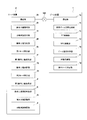
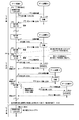
- FIG. 6 is a schematic diagram showing an operation example of the game apparatus 1 and the server apparatus 2 described above.
- FIG. 6 shows a transition example from the appearance of an Nth generation enemy character through the first mode and the second mode to the next N + 1 generation enemy character.
- symbols such as P1 and P2 shown in the following description correspond to symbols such as P1 and P2 displayed in parentheses in order to distinguish the processes shown in FIG.
- the initial health value of the Nth generation enemy character is set to 1,000,000 (P1, step S228 in FIG. 5).
- the server device 2 When a game application is received from the game device 1A (P2, step S201 in FIG. 3: YES), the server device 2 operates based on the first mode, and transmits an initial value 1,000,000 as the current physical strength value (P3, FIG. 3). Step 4 S211).
- the game apparatus 1A that has received this physical strength value realizes a battle between the player character and the enemy character in accordance with the user's operation (P4, step S111 in FIG. 4). After the match is over, the game device 1A transmits the given damage value 2,000 to the server device 2 (P5, step S112 in FIG. 4). Then, the server device 2 updates the enemy character's physical strength value to 998,000 based on the received damage value 2,000 (P6, step S213 in FIG. 4).
- the above-described operations are repeated until the enemy character's health value reaches a predetermined value of 5,000 or less.
- the server device 2 transmits the updated health value and updates the health value based on the damage value. Are performed sequentially. Then, when the health value updated by the damage value transmitted from a certain game device 1 becomes equal to or less than the predetermined value 5,000 (P7, step S202 in FIG. 3), the server device 2 changes from the first mode to the second mode. Switching (P8, step S220 in FIG. 3). In this game, the enemy character's physical strength value is forcibly reset to a predetermined value (eg, 5,000) when switching to the second mode (P9).
- a predetermined value eg, 5,000
- the server device 2 operating in the second mode accepts these requests for the battle applications (P10, P15) from the game devices 1B, 1C, etc.
- the server device 2 transmits a predetermined physical strength value (P11, P16, Step S223 in FIG.
- a damage value is received from the game devices 1B, 1C, etc.
- the physical strength value of the enemy character is not updated based on this (P14, P19).
- the fitness value is appropriately adjusted according to the number of applications or the elapsed time (P20, step S222 in FIG. 5).
- the server device 2 continues to operate in the second mode.
- a predetermined time e.g., 8 hours
- the end condition of the second mode is satisfied (P24, step S227 in FIG. 5: YES)
- the Nth generation enemy character changes to the Nth generation.
- Generation changes are made to +1 generation enemy characters. For example, by resetting the physical strength value of the enemy character so far to the initial value 1,000,000 (P25, step S228 in FIG. 5), the enemy character after the reset becomes the (N + 1) th generation.
- the game device 1 that has competed with the permission of the battle application from the server device 2 in the first mode may naturally apply for the battle to the server device 2 in the second mode.
- the battle application is accepted.
- the game device 1 obtains the permission of the battle application from the server device 2 in the second mode and battles with the enemy character, and after the battle ends, the game device 1 still applies for the battle to the server device 2 in the second mode, and the same generation It is also possible to play against other enemy characters.
- this game can provide a feeling of confrontation in which an enemy character having a strong physical strength value is subjugated by cooperation of a plurality of users.
- the slayer of one generation of enemy characters is not limited to one user, and a plurality of users can be slayers of one generation of enemy characters (P12, P23). In this way, this game can increase the chance of becoming a defeater even though a relatively large number of users can participate in the battle with the only enemy character. Therefore, even a powerful enemy character can be given a motivation to participate in subjugation.
- the server device 2 manages (S213, etc.) and transmits (S211, S223, etc.) the physical strength value of the enemy character, but is not limited thereto.
- the physical strength value at a certain point of the enemy character is equal to the maximum physical strength value set, minus the damage value accumulated up to that point. Therefore, the maximum physical strength value and the damage value set for the enemy character may be managed and transmitted. Further, when the maximum physical strength value of the enemy character is grasped by the game apparatus 1, the server apparatus 2 may transmit only the accumulated damage value to the game apparatus 1.
- the present invention provides a computer device, a recording medium, and a control capable of realizing a game in which more users can obtain a sense of accomplishment by subverting enemy characters even in a battle in which a plurality of users participate in subjugation of enemy characters. Can be applied to the method.
- Game device 2 Server device (computer device) 2a Communication unit 2b Enemy health value management unit (game information management unit) 2c Competition application reception part (distribution request reception part) 2d enemy health value determination unit (game information determination unit) 2e 1st mode execution part 2f 1st enemy physical strength transmission part (1st game information distribution part) 2g Enemy strength update part (game information update part) 2h 2nd mode execution part 2i 2nd enemy physical strength transmission part (2nd game information delivery part) 2j Enemy health value update restriction part (game information update restriction part) 2k enemy health value adjustment unit (game information adjustment unit) 2l Competition application restriction part (game information distribution request restriction part) 42a Game program (computer program)
Landscapes
- Engineering & Computer Science (AREA)
- Multimedia (AREA)
- Theoretical Computer Science (AREA)
- Business, Economics & Management (AREA)
- Computer Security & Cryptography (AREA)
- General Business, Economics & Management (AREA)
- Human Computer Interaction (AREA)
- Power Sources (AREA)
- Information Transfer Between Computers (AREA)
- User Interface Of Digital Computer (AREA)
- Pinball Game Machines (AREA)
- Processing Or Creating Images (AREA)
Priority Applications (4)
| Application Number | Priority Date | Filing Date | Title |
|---|---|---|---|
| CN201380014913.2A CN104203360A (zh) | 2012-03-30 | 2013-03-28 | 计算机装置、存储介质及控制方法 |
| EP13767696.1A EP2832405A4 (en) | 2012-03-30 | 2013-03-28 | COMPUTER DEVICE, RECORDING MEDIUM, AND CONTROL METHOD |
| US14/389,494 US9656171B2 (en) | 2012-03-30 | 2013-03-28 | Computer device, storage medium, and control method |
| JP2014507445A JP5774773B2 (ja) | 2012-03-30 | 2013-03-28 | コンピュータ装置、コンピュータプログラム、ゲームシステム、及び制御方法 |
Applications Claiming Priority (2)
| Application Number | Priority Date | Filing Date | Title |
|---|---|---|---|
| JP2012-078636 | 2012-03-30 | ||
| JP2012078636 | 2012-03-30 |
Publications (1)
| Publication Number | Publication Date |
|---|---|
| WO2013145760A1 true WO2013145760A1 (ja) | 2013-10-03 |
Family
ID=49259055
Family Applications (1)
| Application Number | Title | Priority Date | Filing Date |
|---|---|---|---|
| PCT/JP2013/002140 Ceased WO2013145760A1 (ja) | 2012-03-30 | 2013-03-28 | コンピュータ装置、記録媒体、及び制御方法 |
Country Status (5)
| Country | Link |
|---|---|
| US (1) | US9656171B2 (enExample) |
| EP (1) | EP2832405A4 (enExample) |
| JP (2) | JP5774773B2 (enExample) |
| CN (1) | CN104203360A (enExample) |
| WO (1) | WO2013145760A1 (enExample) |
Families Citing this family (11)
| Publication number | Priority date | Publication date | Assignee | Title |
|---|---|---|---|---|
| US9626171B2 (en) * | 2015-07-24 | 2017-04-18 | Oracle International Corporation | Composing a module system and a non-module system |
| US10078497B2 (en) | 2015-07-24 | 2018-09-18 | Oracle International Corporation | Bridging a module system and a non-module system |
| US10158647B2 (en) | 2015-08-25 | 2018-12-18 | Oracle International Corporation | Permissive access control for modular reflection |
| US10394528B2 (en) | 2016-03-30 | 2019-08-27 | Oracle International Corporation | Returning a runtime type loaded from an archive in a module system |
| US10191753B2 (en) | 2016-03-30 | 2019-01-29 | Oracle International Corporation | Generating verification metadata and verifying a runtime type based on verification metadata |
| US10282184B2 (en) | 2016-09-16 | 2019-05-07 | Oracle International Corporation | Metadata application constraints within a module system based on modular dependencies |
| US10387142B2 (en) | 2016-09-16 | 2019-08-20 | Oracle International Corporation | Using annotation processors defined by modules with annotation processors defined by non-module code |
| JP6223533B1 (ja) * | 2016-11-30 | 2017-11-01 | 株式会社コロプラ | 情報処理方法および当該情報処理方法をコンピュータに実行させるためのプログラム |
| US10848410B2 (en) | 2017-03-29 | 2020-11-24 | Oracle International Corporation | Ranking service implementations for a service interface |
| CN109568963B (zh) * | 2017-09-29 | 2021-12-03 | 腾讯科技(深圳)有限公司 | 虚拟资源数据处理方法、装置、计算机设备及存储介质 |
| CN113422973B (zh) * | 2021-06-09 | 2022-04-12 | 广州方硅信息技术有限公司 | 直播间对战会话控制方法及其装置、设备与介质 |
Citations (4)
| Publication number | Priority date | Publication date | Assignee | Title |
|---|---|---|---|---|
| JP2004329779A (ja) * | 2003-05-12 | 2004-11-25 | Konami Co Ltd | ゲーム装置及びゲームプログラム |
| JP2007054171A (ja) * | 2005-08-23 | 2007-03-08 | Nintendo Co Ltd | ゲームプログラムおよびゲーム装置 |
| JP2008142352A (ja) * | 2006-12-11 | 2008-06-26 | Square Enix Co Ltd | ゲーム装置及びゲームの進行方法、並びにプログラム及び記録媒体 |
| JP2011030892A (ja) * | 2009-08-04 | 2011-02-17 | Taito Corp | ゲーム装置、ゲームサーバ、ゲームプログラム |
Family Cites Families (5)
| Publication number | Priority date | Publication date | Assignee | Title |
|---|---|---|---|---|
| KR100859927B1 (ko) * | 2000-12-14 | 2008-09-23 | 가부시키가이샤 세가 | 게임 장치, 통신 게임 시스템, 및 기록 매체 |
| US20020082065A1 (en) * | 2000-12-26 | 2002-06-27 | Fogel David B. | Video game characters having evolving traits |
| US20040097287A1 (en) * | 2002-11-14 | 2004-05-20 | Richard Postrel | Method and system for gaming over a computer network |
| JP4712911B2 (ja) * | 2008-05-30 | 2011-06-29 | 株式会社カプコン | ゲームプログラムおよびゲーム装置 |
| US8550919B2 (en) * | 2008-10-08 | 2013-10-08 | Sony Corporation | Game control program, game device, game server, and game control method |
-
2013
- 2013-03-28 WO PCT/JP2013/002140 patent/WO2013145760A1/ja not_active Ceased
- 2013-03-28 CN CN201380014913.2A patent/CN104203360A/zh active Pending
- 2013-03-28 EP EP13767696.1A patent/EP2832405A4/en not_active Withdrawn
- 2013-03-28 US US14/389,494 patent/US9656171B2/en active Active
- 2013-03-28 JP JP2014507445A patent/JP5774773B2/ja active Active
-
2015
- 2015-06-30 JP JP2015131082A patent/JP6138199B2/ja active Active
Patent Citations (4)
| Publication number | Priority date | Publication date | Assignee | Title |
|---|---|---|---|---|
| JP2004329779A (ja) * | 2003-05-12 | 2004-11-25 | Konami Co Ltd | ゲーム装置及びゲームプログラム |
| JP2007054171A (ja) * | 2005-08-23 | 2007-03-08 | Nintendo Co Ltd | ゲームプログラムおよびゲーム装置 |
| JP2008142352A (ja) * | 2006-12-11 | 2008-06-26 | Square Enix Co Ltd | ゲーム装置及びゲームの進行方法、並びにプログラム及び記録媒体 |
| JP2011030892A (ja) * | 2009-08-04 | 2011-02-17 | Taito Corp | ゲーム装置、ゲームサーバ、ゲームプログラム |
Non-Patent Citations (3)
| Title |
|---|
| "Monster Hunter Portable 2ndG Official Guidebook", 1 August 2008, ENTERBRAIN, INC., pages: 34 - 35 |
| See also references of EP2832405A4 * |
| STUDIO BENT STUFF CO., LTD., FINAL FANTASY X- 2 ULTIMANIA, 15 June 2005 (2005-06-15), pages 526, XP008175398 * |
Also Published As
| Publication number | Publication date |
|---|---|
| US20150072785A1 (en) | 2015-03-12 |
| EP2832405A4 (en) | 2016-03-02 |
| JP5774773B2 (ja) | 2015-09-09 |
| US9656171B2 (en) | 2017-05-23 |
| CN104203360A (zh) | 2014-12-10 |
| JPWO2013145760A1 (ja) | 2015-12-10 |
| JP2015192890A (ja) | 2015-11-05 |
| JP6138199B2 (ja) | 2017-05-31 |
| EP2832405A1 (en) | 2015-02-04 |
Similar Documents
| Publication | Publication Date | Title |
|---|---|---|
| JP6138199B2 (ja) | コンピュータ装置、コンピュータプログラム、ゲームシステム、及び制御方法 | |
| JP5555454B2 (ja) | ゲーム装置、ゲームサーバ、ゲームプログラム | |
| WO2014050061A1 (ja) | ゲームシステム、その制御方法およびコンピュータ装置での読み取りが可能な記録媒体 | |
| JP7653029B2 (ja) | ゲームプログラム、ゲーム装置、ゲームシステム | |
| JP7623621B2 (ja) | ゲームプログラム、およびゲームシステム | |
| JP5174066B2 (ja) | ゲームシステム、ゲームサーバ、ゲーム装置、ゲームシステムの制御方法、ゲームサーバの制御方法、ゲーム装置の制御方法、及びプログラム | |
| JP6602616B2 (ja) | ゲームシステム | |
| JP7368731B2 (ja) | ゲームプログラム、サーバ装置およびゲームシステム | |
| JP7623609B2 (ja) | 情報処理方法、情報処理システムおよびプログラム | |
| JP6768099B2 (ja) | サーバ装置、その制御方法、プログラム、及びゲームシステム | |
| JP6633110B2 (ja) | ゲームシステム | |
| JP7402639B2 (ja) | ゲームシステム、サーバシステム、端末装置及びプログラム | |
| JP7741423B1 (ja) | プログラム、情報処理方法および情報処理装置 | |
| JP7741422B1 (ja) | プログラム、情報処理方法および情報処理装置 | |
| JP2016154862A (ja) | 対戦ゲームを提供する方法 | |
| JP2020037006A (ja) | ゲームシステム | |
| JP7663818B2 (ja) | プログラムおよび情報処理システム | |
| JP6122469B2 (ja) | 対戦ゲームを提供する方法、サーバ装置、及びコンピュータプログラム | |
| JP7702067B1 (ja) | プログラム、情報処理方法および情報処理装置 | |
| JP7737603B1 (ja) | プログラム、情報処理方法および情報処理装置 | |
| JP7640895B2 (ja) | ゲームプログラムおよびゲームシステム | |
| JP6768748B2 (ja) | サーバ装置、その制御方法、プログラム、及びゲームシステム | |
| JP7723271B2 (ja) | 情報処理システムおよびプログラム | |
| JP7010909B2 (ja) | ビデオゲーム処理プログラム及びゲームシステム | |
| JP2023048275A (ja) | ゲームシステム、サーバ装置、プログラム及びゲーム提供方法 |
Legal Events
| Date | Code | Title | Description |
|---|---|---|---|
| 121 | Ep: the epo has been informed by wipo that ep was designated in this application |
Ref document number: 13767696 Country of ref document: EP Kind code of ref document: A1 |
|
| ENP | Entry into the national phase |
Ref document number: 2014507445 Country of ref document: JP Kind code of ref document: A |
|
| NENP | Non-entry into the national phase |
Ref country code: DE |
|
| WWE | Wipo information: entry into national phase |
Ref document number: 14389494 Country of ref document: US |
|
| REEP | Request for entry into the european phase |
Ref document number: 2013767696 Country of ref document: EP |
|
| WWE | Wipo information: entry into national phase |
Ref document number: 2013767696 Country of ref document: EP |