WO2012164760A1 - 電極活物質の製造方法及び電極活物質 - Google Patents
電極活物質の製造方法及び電極活物質 Download PDFInfo
- Publication number
- WO2012164760A1 WO2012164760A1 PCT/JP2011/068137 JP2011068137W WO2012164760A1 WO 2012164760 A1 WO2012164760 A1 WO 2012164760A1 JP 2011068137 W JP2011068137 W JP 2011068137W WO 2012164760 A1 WO2012164760 A1 WO 2012164760A1
- Authority
- WO
- WIPO (PCT)
- Prior art keywords
- active material
- electrode active
- alkoxide
- lithium
- solution
- Prior art date
- Legal status (The legal status is an assumption and is not a legal conclusion. Google has not performed a legal analysis and makes no representation as to the accuracy of the status listed.)
- Ceased
Links
Images


Classifications
-
- H—ELECTRICITY
- H01—ELECTRIC ELEMENTS
- H01M—PROCESSES OR MEANS, e.g. BATTERIES, FOR THE DIRECT CONVERSION OF CHEMICAL ENERGY INTO ELECTRICAL ENERGY
- H01M4/00—Electrodes
- H01M4/02—Electrodes composed of, or comprising, active material
- H01M4/36—Selection of substances as active materials, active masses, active liquids
- H01M4/362—Composites
- H01M4/366—Composites as layered products
-
- H—ELECTRICITY
- H01—ELECTRIC ELEMENTS
- H01M—PROCESSES OR MEANS, e.g. BATTERIES, FOR THE DIRECT CONVERSION OF CHEMICAL ENERGY INTO ELECTRICAL ENERGY
- H01M4/00—Electrodes
- H01M4/02—Electrodes composed of, or comprising, active material
- H01M4/04—Processes of manufacture in general
- H01M4/0402—Methods of deposition of the material
-
- H—ELECTRICITY
- H01—ELECTRIC ELEMENTS
- H01M—PROCESSES OR MEANS, e.g. BATTERIES, FOR THE DIRECT CONVERSION OF CHEMICAL ENERGY INTO ELECTRICAL ENERGY
- H01M4/00—Electrodes
- H01M4/02—Electrodes composed of, or comprising, active material
- H01M4/36—Selection of substances as active materials, active masses, active liquids
- H01M4/48—Selection of substances as active materials, active masses, active liquids of inorganic oxides or hydroxides
- H01M4/50—Selection of substances as active materials, active masses, active liquids of inorganic oxides or hydroxides of manganese
- H01M4/505—Selection of substances as active materials, active masses, active liquids of inorganic oxides or hydroxides of manganese of mixed oxides or hydroxides containing manganese for inserting or intercalating light metals, e.g. LiMn2O4 or LiMn2OxFy
-
- H—ELECTRICITY
- H01—ELECTRIC ELEMENTS
- H01M—PROCESSES OR MEANS, e.g. BATTERIES, FOR THE DIRECT CONVERSION OF CHEMICAL ENERGY INTO ELECTRICAL ENERGY
- H01M4/00—Electrodes
- H01M4/02—Electrodes composed of, or comprising, active material
- H01M4/36—Selection of substances as active materials, active masses, active liquids
- H01M4/48—Selection of substances as active materials, active masses, active liquids of inorganic oxides or hydroxides
- H01M4/52—Selection of substances as active materials, active masses, active liquids of inorganic oxides or hydroxides of nickel, cobalt or iron
- H01M4/525—Selection of substances as active materials, active masses, active liquids of inorganic oxides or hydroxides of nickel, cobalt or iron of mixed oxides or hydroxides containing iron, cobalt or nickel for inserting or intercalating light metals, e.g. LiNiO2, LiCoO2 or LiCoOxFy
-
- Y—GENERAL TAGGING OF NEW TECHNOLOGICAL DEVELOPMENTS; GENERAL TAGGING OF CROSS-SECTIONAL TECHNOLOGIES SPANNING OVER SEVERAL SECTIONS OF THE IPC; TECHNICAL SUBJECTS COVERED BY FORMER USPC CROSS-REFERENCE ART COLLECTIONS [XRACs] AND DIGESTS
- Y02—TECHNOLOGIES OR APPLICATIONS FOR MITIGATION OR ADAPTATION AGAINST CLIMATE CHANGE
- Y02E—REDUCTION OF GREENHOUSE GAS [GHG] EMISSIONS, RELATED TO ENERGY GENERATION, TRANSMISSION OR DISTRIBUTION
- Y02E60/00—Enabling technologies; Technologies with a potential or indirect contribution to GHG emissions mitigation
-
- Y—GENERAL TAGGING OF NEW TECHNOLOGICAL DEVELOPMENTS; GENERAL TAGGING OF CROSS-SECTIONAL TECHNOLOGIES SPANNING OVER SEVERAL SECTIONS OF THE IPC; TECHNICAL SUBJECTS COVERED BY FORMER USPC CROSS-REFERENCE ART COLLECTIONS [XRACs] AND DIGESTS
- Y02—TECHNOLOGIES OR APPLICATIONS FOR MITIGATION OR ADAPTATION AGAINST CLIMATE CHANGE
- Y02E—REDUCTION OF GREENHOUSE GAS [GHG] EMISSIONS, RELATED TO ENERGY GENERATION, TRANSMISSION OR DISTRIBUTION
- Y02E60/00—Enabling technologies; Technologies with a potential or indirect contribution to GHG emissions mitigation
- Y02E60/10—Energy storage using batteries
-
- Y—GENERAL TAGGING OF NEW TECHNOLOGICAL DEVELOPMENTS; GENERAL TAGGING OF CROSS-SECTIONAL TECHNOLOGIES SPANNING OVER SEVERAL SECTIONS OF THE IPC; TECHNICAL SUBJECTS COVERED BY FORMER USPC CROSS-REFERENCE ART COLLECTIONS [XRACs] AND DIGESTS
- Y02—TECHNOLOGIES OR APPLICATIONS FOR MITIGATION OR ADAPTATION AGAINST CLIMATE CHANGE
- Y02P—CLIMATE CHANGE MITIGATION TECHNOLOGIES IN THE PRODUCTION OR PROCESSING OF GOODS
- Y02P70/00—Climate change mitigation technologies in the production process for final industrial or consumer products
Definitions
- the present invention relates to a method for producing an electrode active material and an electrode active material.
- a lithium battery generally has a positive electrode having a positive electrode active material layer, a negative electrode having a negative electrode active material layer, and an electrolyte interposed between these electrodes, and further, if necessary, a positive electrode active material layer A positive electrode current collector that performs current collection and a negative electrode current collector that collects current of the negative electrode active material layer.
- Lithium batteries that use a flammable organic electrolyte as the electrolyte disposed between the positive electrode active material layer and the negative electrode active material layer must have safety measures that assume short circuit and overcharge in addition to liquid leakage. . In particular, high-power, high-capacity batteries are required to further improve safety. Therefore, research and development of all-solid-state batteries such as all-solid lithium secondary batteries using solid electrolytes such as sulfide-based solid electrolytes and oxide-based solid electrolytes are being promoted.
- Patent Document 1 discloses an all-solid lithium battery using a lithium ion conductive solid electrolyte mainly composed of sulfide, in which the surface of the positive electrode active material is coated with a lithium ion conductive oxide. Features are described.
- the coating with the lithium ion conductive oxide on the surface of the positive electrode active material is performed by using the positive electrode active material powder as a fluidized bed in a rolling fluidizer, spraying an alkoxide solution containing lithium and titanium, The alkoxide is hydrolyzed by humidity in the air and then heated.
- a battery using an electrode active material in which the above-described problem has occurred has a surface on the surface of the electrode active material in which the movement of conductive ions and electrons is hindered by the foreign matter generated on the surface of the electrode active material or the coating layer is not formed.
- a side reaction with the sulfide-based solid electrolyte proceeds to form a high resistance layer. As a result, the capacity of the battery is reduced and the output is reduced.
- the present invention has been accomplished in view of the above-mentioned circumstances, and the object of the present invention is to generate foreign matter, poor coating, deterioration of the electrode active material, etc. when the surface of the electrode active material is coated with an ion conductive oxide. It is intended to provide a method for producing an electrode active material and an electrode active material that can suppress the battery resistance and increase the output of the battery.
- the first method for producing an electrode active material of the present invention is a method for producing an electrode active material whose surface is coated with an ion conductive oxide, A preparation step of preparing an alkoxide solution in which at least an alkoxide compound and liquid water are mixed; A coating step of applying and drying the alkoxide solution on the surface of the electrode active material in a dry atmosphere; It is characterized by including.
- the amount of water required for hydrolysis of the alkoxide compound can be controlled, so that deterioration of the electrode active material can be suppressed, foreign matter generation on the surface of the electrode active material, and surface It is possible to form a good coating layer in which defective coating or the like is suppressed.
- the dry atmosphere in the coating step has a dew point temperature of ⁇ 30 ° C. or lower.
- the amount of the liquid water is preferably such that the number of water molecules is 1 to 10 times the number of RO ⁇ (R is an organic group) units of the alkoxide compound.
- lithium alkoxide and niobium alkoxide are added to an alcohol aqueous solution containing alcohol and liquid water. It is preferable to mix or (2) after mixing liquid water with a lithium alkoxide alcohol solution containing lithium alkoxide and alcohol, then mix niobium alkoxide. This is because precipitation of lithium alkoxide and niobium alkoxide, which are raw materials of lithium niobate, in the alkoxide solution can be suppressed, and a uniform coating layer can be formed on the surface of the active material.
- the alkoxide solution when the liquid water is Y [mol / kg] and the concentration of the lithium niobate produced in the alkoxide solution is X [mol / kg]. , Y ⁇ 0.3676X + 0.2 is preferable. This is because in the alkoxide solution, it is possible to prepare an alkoxide solution excellent in applicability to the active material surface by suppressing the occurrence of cloudy precipitation due to excessive progress of hydrolysis and dehydration condensation.
- the method for producing a second electrode active material of the present invention is a method for producing an electrode active material whose surface is coated with an ion conductive oxide, A preparation step of preparing an alkoxide solution in which at least an alkoxide compound and a solute having at least one of hydrated water and surface adsorbed water are mixed; A coating step of applying and drying the alkoxide solution on the surface of the electrode active material in a dry atmosphere; It is characterized by including.
- the second production method of the present invention as in the first production method, the amount of water required for hydrolysis of the alkoxide compound can be controlled. It is possible to form a good coating layer in which the generation of foreign matters on the surface of the substance and surface coating defects are suppressed.
- the dry atmosphere in the coating step is preferably a dew point temperature of ⁇ 30 ° C. or lower.
- the total amount of the hydration water and the surface adsorbed water is such that the number of water molecules is 1 to 10 times the number of RO ⁇ (R is an organic group) unit of the alkoxide compound. It is preferable that
- the electrode active material of the present invention is an electrode active material whose surface is coated with an ion conductive oxide, and the area occupied by a material other than the ion conductive oxide on the surface of the electrode active material is 21% or less. It is characterized by being. Since the electrode active material of the present invention has few foreign substances other than the ion conductive oxide on the surface, the battery resistance can be reduced and the output can be increased.
- the present invention it is possible to suppress the generation of foreign matters other than the ion conductive oxide on the surface of the electrode active material, the poor coating of the ion conductive oxide, or the deterioration of the electrode active material during the coating process. Therefore, it is possible to provide an electrode active material that can reduce battery resistance and increase battery output.
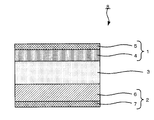
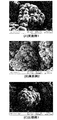
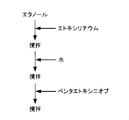
- FIG. 1 shows the example of 1 form of an all-solid-state battery. It is a SEM photograph of the electrode active material of Examples 1, 2 and Comparative Example 1. It is a figure explaining the outline of the manufacturing procedure of the electrode active material of Example 3 and 4.
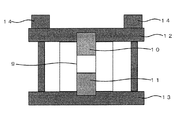
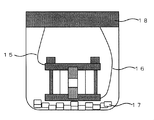
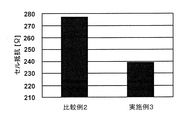
- FIG. It is a graph which shows the lithium ion conductivity of the lithium ion conductive oxide film formed from the alkoxide solution of Examples 3, 4 and Comparative Example 2. It is a figure explaining the outline of the manufacture procedure of the all-solid-state battery using the electrode active material of Example 3 and Comparative Example 2. It is a schematic sectional drawing of the all-solid-state battery produced using the electrode active material of Example 3 and Comparative Example 2.
- the first method for producing an electrode active material of the present invention is a method for producing an electrode active material whose surface is coated with an ion conductive oxide, A preparation step of preparing an alkoxide solution in which at least an alkoxide compound and liquid water are mixed; A coating step of applying and drying the alkoxide solution on the surface of the electrode active material in a dry atmosphere; It is characterized by including.
- the second method for producing an electrode active material of the present invention is a method for producing an electrode active material whose surface is coated with an ion conductive oxide, A preparation step of preparing an alkoxide solution in which at least an alkoxide compound and a solute having at least one of hydrated water and surface adsorbed water are mixed; A coating step of applying and drying the alkoxide solution on the surface of the electrode active material in a dry atmosphere; It is characterized by including.
- the method for producing an electrode active material of the present invention is to coat the surface of the electrode active material with an ion conductive oxide by oxidizing a hydrolyzate (hydroxide) of alkoxide on the surface of the electrode active material.
- a hydrolyzate hydrolyzate
- an ion conductive oxide film is formed on the surface of the electrode active material using a sol-gel method. That is, the sol of the alkoxide hydrolyzate can be gelled on the surface of the electrode active material, and the gel can be heated to form an oxide (ion conductive oxide) film.
- hydrolysis of an alkoxide on the surface of an electrode active material has been performed using moisture (humidity) in the air, whereas in the present invention, an alkoxide solution prepared using an alkoxide compound is used.
- the present invention has significant features in that it contains moisture used for hydrolysis of the alkoxide compound, and that the atmosphere when applying and drying the alkoxide solution on the surface of the electrode active material is a dry atmosphere.
- the atmosphere when applying and drying the alkoxide solution is a dry atmosphere, and the moisture content during the hydrolysis of the alkoxide compound can be controlled by adding moisture to the alkoxide solution.
- the coating failure may cause a side reaction due to contact between the exposed electrode active material and other components, for example, a sulfide-based solid electrolyte, and may cause generation of a high-resistance material or the like, which may cause a decrease in battery performance. .
- the alkoxide solution is added to the alkoxide solution by either adding liquid water (first manufacturing method) or adding a solute having at least one of hydrated water and surface adsorbed water (second manufacturing method). Add water.
- the preparation step is a step of preparing an alkoxide solution by mixing at least an alkoxide compound and liquid water.
- the alkoxide compound becomes a hydroxide which is a precursor of the ion conductive oxide by hydrolysis, and can be appropriately selected according to the ion conductive oxide to be coated on the surface of the electrode active material.
- an oxide containing at least one element of at least 3 to 6 or 13 to 15 is preferable as a raw material element, and particularly contains at least one of these elements and lithium.
- Lithium composite oxide is preferred. Specifically, at least one selected from B, Si, Ti, Zr, V, P, Al, Nb, Ta, Cr, Mo, and W among the elements of Groups 3-6 and 13-15
- the oxide which contains is preferable, and also the lithium complex oxide containing at least 1 sort (s) of these elements and lithium is preferable.
- More specific examples of the ion conductive oxide include oxide glasses such as lithium silicate, lithium borate, lithium phosphate, lithium titanate, lithium niobate, lithium tungstate, and mixtures thereof. .
- oxide type solid electrolyte as an ion conductive oxide which coat
- oxides such as Li 2 O—B 2 O 3 —P 2 O 5 , Li 2 O—SiO 2 , Li 2 O—B 2 O 3 , and Li 2 O—B 2 O 3 —ZnO Crystalline solid electrolytes such as LiI-Al 2 O 3 , Li 5 La 3 Ta 2 O 12 , Li 7 La 3 Zr 2 O 12 , Li 6 BaLa 2 Ta 2 O 12 , etc. Can be mentioned.
- the alkoxide solution is prepared using an alkoxide compound containing a raw material element (for example, a group 3 to group 6, group 13 to 15 element or lithium element) included in the ion conductive oxide.
- a raw material element for example, a group 3 to group 6, group 13 to 15 element or lithium element
- the alkoxide compound used in the preparation of the alkoxide solution may contain at least one raw material element constituting the ion conductive oxide, and all the raw material elements may not be added as the alkoxide compound. That is, in the present invention, at least one alkoxide compound is used as the raw material element compound.
- a specific raw material element compound is appropriately selected depending on the ion conductive oxide species to be coated on the surface of the electrode active material.
- a multicomponent oxide can also be produced by mixing a plurality of solutions containing different raw material elements or adding different raw material element ions.
- the lithium compound that can be used as the lithium source include lithium acetate, lithium alkoxide, and lithium hydroxide.
- the alkoxide group of the lithium alkoxide preferably has, for example, 1 to 4 carbon atoms, and specific examples include methoxy lithium, ethoxy lithium, and propoxy lithium.
- Examples of boron compounds that can be used as the boron source include boric acid, trimethoxyboron, triethoxyboron, tri-i-propoxyboron, tri-n-propoxyboron, and the like.
- Examples of silicon compounds that can be used as the silicon source include tetraethoxysilane (TEOS), tetramethoxysilane, tetra-i-propoxysilane, tetra-n-propoxysilane, tetra-i-butoxysilane, and tetra-n.
- TEOS tetraethoxysilane
- tetramethoxysilane tetra-i-propoxysilane
- tetra-n-propoxysilane tetra-i-butoxysilane
- tetra-n tetra-t-butoxysilane and the like.
- the raw material element compound can be dissolved or dispersed.
- alcohols such as ethanol, methanol, and propanol can be used.
- an electrode active material is coated with an ion conductive oxide composed of a mixed glass of lithium borate glass and lithium silicate glass, boric acid, silicon as a boron source from the viewpoint of the reactivity of each material.
- An alkoxide solution containing TEOS as a source, anhydrous lithium acetate as a lithium source, ethanol as a solvent, and further containing liquid water is preferable.
- the proportion of each raw material element in the alkoxide solution is appropriately determined according to the ion conductive oxide.
- the amount of liquid water added to the alkoxide solution at least, RO total alkoxide compound added to the alkoxide solution - may be the number and amount of the same number of water molecules of units (R is an organic group), In order to sufficiently suppress the excessive progress of the hydrolysis reaction, the deterioration of the electrode active material, and the decrease in the fluidity of the electrode active material, 1 to 10 times the number of RO ⁇ units of the alkoxide compound in the alkoxide solution, The amount is preferably 5 to 7 times as many water molecules.
- the amount of the solvent in the alkoxide solution may be appropriately set in consideration of the applicability of the solution to the surface of the electrode active material, the viscosity, the reaction rate of hydrolysis, etc.
- the solid content ratio of the alkoxide solution is 3 to 9 wt%. % Is preferable.
- the preparation method of the alkoxide solution is not particularly limited, but from the viewpoint of uniform mixing of each raw material, each raw material compound is mixed with a solvent to prepare each raw material compound solution, and the raw material compound solution is mixed to prepare the alkoxide solution. It is preferable. Liquid water may be added to any raw material compound solution, or liquid water may be added to a mixed solution obtained by mixing a plurality of raw material compound solutions.
- the alkoxide solution may be cooled during the preparation or during the coating step described later in order to adjust (slow down) the rate of hydrolysis.
- an alkoxide solution using lithium alkoxide and niobium alkoxide in order to coat the surface of the electrode active material with lithium niobate (LiNbO 3 , ion conductive oxide) in the preparation step, the following (1) or ( It is preferable to prepare an alkoxide solution by the procedure of 2). That is, (1) Lithium alkoxide and niobium alkoxide are mixed with an alcohol aqueous solution containing alcohol and liquid water, or (2) After mixing liquid water with a lithium alkoxide alcohol solution containing lithium alkoxide and alcohol, niobium alkoxide is mixed. It is preferable to mix.
- lithium alkoxides such as ethoxylithium and niobium alkoxides such as pentaethoxyniobium precipitate when mixed directly with liquid water itself. This is presumably because lithium alkoxide and niobium alkoxide react with water to produce LiOH and Nb 2 O 5 . Further, it has been found that niobium alkoxide precipitates even when liquid water is added to a niobium alkoxide alcohol solution in which niobium alkoxide and alcohol are mixed.
- lithium alkoxide or niobium alkoxide as a raw material is precipitated in the alkoxide solution in this way, the generation efficiency of lithium ion niobate that is an ion conductive oxide is reduced, and the surface of the active material is uniformly coated with lithium niobate. There is also a problem that cannot be done.
- an alcohol aqueous solution is prepared by mixing alcohol and liquid water, a lithium alkoxide is added to the alcohol aqueous solution, and then a niobium alkoxide is added.
- examples include a procedure in which an alcohol aqueous solution is prepared by mixing alcohol and liquid water, niobium alkoxide is added to the alcohol aqueous solution, and then lithium alkoxide is added.
- Examples of the procedure (2) include a procedure of first adding lithium alkoxide to alcohol, adding liquid water to the lithium alkoxide alcohol solution, and then adding niobium alkoxide.
- the amount of liquid water Y [mol / kg] in the alkoxide solution is determined by the concentration of lithium niobate produced in the alkoxide solution being X [mol / kg], an amount satisfying Y ⁇ 0.3676X + 0.2 is preferable.
- the concentration X of lithium niobate produced in the alkoxide solution is the theoretical production amount [mol] of lithium niobate calculated from the amount of lithium alkoxide and niobium alkoxide used for the preparation of the alkoxide solution. The value divided by the total weight [kg] of raw materials.
- the alkoxide group of the lithium alkoxide preferably has, for example, 1 to 4 carbon atoms, and specific examples include methoxy lithium, ethoxy lithium, and propoxy lithium.
- the alkoxide group of the niobium alkoxide preferably has, for example, 1 to 3 carbon atoms, and specific examples thereof include pentaethoxyniobium.
- the alcohol include methanol, ethanol, propanol and the like.
- the amount of alcohol may be appropriately set in consideration of the applicability of the solution to the surface of the electrode active material, viscosity, hydrolysis reaction rate, and the like.
- the solid content ratio of the alkoxide solution is 3 to 9 wt%. It is preferable to do so.
- the coating step is a step of applying and drying the alkoxide solution on the surface of the electrode active material in a dry atmosphere.
- a hydroxide that is a hydrolyzate of the alkoxide compound.
- the dry atmosphere means an atmosphere having a moisture content less than that of the air, and is preferably a dew point temperature of ⁇ 30 ° C. or less from the viewpoint of controlling the progress of hydrolysis.
- the coating process may be performed under the above drying conditions, and may be in an oxygen atmosphere containing oxygen in addition to an inert atmosphere such as nitrogen gas or argon gas.
- the electrode active material to be coated with the alkoxide solution is not particularly limited and can be appropriately selected.
- the electrode active material may be a positive electrode active material or a negative electrode active material.
- the shape of the electrode active material is not particularly limited, and may be, for example, a particle shape or a thin film shape.
- the particle size of the electrode active material is not particularly limited, but in order to form a uniform coating layer by the fluidized bed method described later, the average particle size is in the range of 0.1 to 30 ⁇ m. It is preferable that
- the method for applying the alkoxide solution to the surface of the electrode active material and the method for drying the applied alkoxide solution are not particularly limited, and known methods can be employed.
- the coating method include a dip coating method, a spray coating method, and an impregnation method. Since a uniform coating layer can be formed on the surface of the particulate electrode active material, a fluidized bed system is preferred in which the electrode active material is put into a fluidized state and the alkoxide solution is sprayed and dried on the surface of the fluidized electrode active material.
- the alkoxide solution is applied and dried at the same time, and the application and drying are repeated, thereby enabling uniform coating.
- a so-called fluidized bed granulation / coating device can be used.
- a device such as a multiplex manufactured by Paulek, a flow coater manufactured by Freund Corporation, or the like can be used. Can be used.
- an airflow is usually generated in the fluidized bed container, and a rotor or the like is rotated as necessary.
- the rotation conditions and the like may be set as appropriate and are not particularly limited.
- the airflow temperature (gas flow temperature) in the container is in the range of 40 to 100 ° C. from the viewpoint of efficiently drying the alkoxide solution. It is preferable.
- the conditions for spraying (coating) the alkoxide solution are not particularly limited, and the spraying speed and the like can be set as appropriate.
- the electrode active material coated and dried with the alkoxide solution can be baked to oxidize the alkoxide hydrolyzate covering the surface of the electrode active material and convert it into an ion conductive oxide.
- Firing (oxidation) conditions may be set as appropriate. For example, heating at 300 to 500 ° C. may be performed for 0.5 hours or longer, or for 3 to 10 hours.
- the second production method is the first step except that in the preparation step, the alkoxide solution is prepared by mixing at least an alkoxide compound and a solute having at least one of hydrated water and surface adsorbed water.
- the second method will be described only with respect to differences from the first manufacturing method, that is, only the materials used for preparing the alkoxide solution.
- a solute having at least one of hydration water and surface adsorbed water is used instead of liquid water in the first production method, and water is contained in the alkoxide solution.
- solutes examples include hydrates of raw material element compounds other than alkoxide compounds or compounds having surface adsorbed water other than alkoxide compounds among the compounds shown as raw material element compounds in the first production method.
- surface adsorbed water is stabilized with solid powders such as lithium acetate / dihydrate, lithium hydroxide / monohydrate, hydrates such as lithium sulfate / hydrate, boric acid and lithium carbonate.
- solid powders such as lithium acetate / dihydrate, lithium hydroxide / monohydrate, hydrates such as lithium sulfate / hydrate, boric acid and lithium carbonate.
- solid powders such as lithium acetate / dihydrate, lithium hydroxide / monohydrate, hydrates such as lithium sulfate / hydrate, boric acid and lithium carbonate.
- solid powders such as lithium acetate / dihydrate, lithium hydroxide / monohydrate, hydrates such as lithium sulfate / hydrate, boric acid and lithium carbonate
- the electrode active material is coated with an ion conductive oxide made of a mixed glass of lithium borate glass and lithium silicate glass, the reactivity of each material, hydration water and / or surface adsorbed water
- an alkoxide solution in which boric acid as a boron source, TEOS as a silicon source, lithium acetate dihydrate as a lithium source, and ethanol as a solvent are mixed is preferable.
- the amount of water derived from the hydrates and surface adsorbed water is at least, RO total alkoxide compound added to the alkoxide solution - units (R is an organic group) the same number of water molecules may be an amount, over the progress of the hydrolysis reaction, deterioration of the electrode active material, in order to sufficiently suppress the fluidity deterioration of the electrode active material, RO alkoxide compound in the alkoxide solution - against the number of units of The amount is preferably 1 to 10 times, more preferably 5 to 7 times as many water molecules.
- Electrode active material According to the manufacturing method of the present invention as described above, it is possible to suppress the deterioration of the electrode active material and to form a good coating layer on the surface of the electrode active material in which foreign matters, coating defects, and the like are suppressed.
- the area occupied by a substance (foreign matter) other than the ion conductive oxide on the surface of the electrode active material is 21 % Or less.
- the particle size of the foreign matter can be reduced as compared with the case of using the conventional humidity in the air.
- the electrode active material provided by this invention can be used suitably as an active material which comprises the positive electrode and negative electrode of various batteries. Among them, excellent effects can be obtained by using the electrode active material of the present invention as an electrode active material of a lithium battery, and further as a positive electrode active material of a lithium battery.
- a battery using the electrode active material of the present invention will be described focusing on an all solid lithium battery.
- FIG. 1 is a cross-sectional view of an all-solid battery.
- the all-solid battery 8 is arranged such that the solid electrolyte layer 3 is interposed between the positive electrode 1 and the negative electrode 2.
- the positive electrode 1 includes a positive electrode active material layer 4 and a positive electrode current collector 5 that collects current from the positive electrode active material layer 4.
- the negative electrode 2 includes a negative electrode active material layer 6 and a negative electrode current collector 7 that collects current from the negative electrode active material layer 6.
- a negative electrode contains the negative electrode active material which can discharge
- the negative electrode usually has a negative electrode active material layer containing at least a negative electrode active material, and further includes a negative electrode current collector that collects current from the negative electrode active material layer as necessary.
- the type of negative electrode active material varies depending on the type of battery.
- examples of the negative electrode active material of the lithium battery include the materials exemplified above as the electrode active material to which the alkoxide solution is applied, in addition to the electrode active material of the present invention.
- the negative electrode active material layer may contain only the negative electrode active material, but may contain a binder, a conductive material, an electrolyte and the like in addition to the negative electrode active material.
- a negative electrode layer containing only the negative electrode active material can be obtained.
- a negative electrode layer containing a binder in addition to the negative electrode active material can be obtained.
- the binder is not particularly limited, and examples thereof include polyvinylidene fluoride (PVDF), polytetrafluoroethylene (PTFE), and styrene butadiene rubber (SBR).
- the conductive material is not particularly limited as long as it has conductivity, and examples thereof include a carbon material.
- the carbon material include carbon black, activated carbon, carbon carbon fiber (for example, carbon nanotube, carbon nanofiber, etc.), graphite and the like.
- an electrolyte the thing similar to the solid electrolyte mentioned later can be used, for example.
- the material for the negative electrode current collector is not particularly limited as long as it has conductivity, and examples thereof include copper, stainless steel, nickel, and carbon.
- Examples of the shape of the negative electrode current collector include a foil shape, a plate shape, and a mesh (grid) shape. In the case of using a mesh-like porous current collector, the current collector can be disposed inside the negative electrode active material layer.
- the battery case may have the function of a negative electrode current collector.
- a positive electrode contains the positive electrode active material which can discharge
- the positive electrode usually has a positive electrode active material layer containing at least a positive electrode active material, and further includes a positive electrode current collector that collects the positive electrode active material layer as necessary.
- the type of positive electrode active material varies depending on the type of battery. For example, as the positive electrode active material of the lithium battery, in addition to the electrode active material of the present invention, the materials exemplified above as the electrode active material to which the alkoxide solution is applied can be cited.
- the positive electrode active material layer may contain only the positive electrode active material, but contains a conductive material, a binder, an electrolyte, an electrode catalyst, etc. in addition to the positive electrode active material. You may do. About the electroconductive material in a positive electrode active material, a binder, and an electrolyte, since the material similar to a negative electrode active material layer can be used, description here is abbreviate
- the material of the positive electrode current collector is not particularly limited as long as it has conductivity, and examples thereof include stainless steel, nickel, aluminum, iron, titanium, and carbon.
- Examples of the shape of the positive electrode current collector include a foil shape, a plate shape, and a mesh shape (grid). In the case of using a mesh-like porous current collector, the current collector can also be disposed inside the positive electrode active material layer.
- the battery case may have the function of a positive electrode current collector.
- the solid electrolyte layer contains at least a solid electrolyte that allows conduction ions between the positive electrode and the negative electrode.
- the solid electrolyte may be appropriately selected depending on the conductive ion species (for example, lithium ion).
- the conductive ion species for example, lithium ion.
- an oxide solid electrolyte or a sulfide solid electrolyte amorphous body (glass body), crystal body, and glass Ceramics etc. are mentioned.
- Solid electrolytes that can be used for lithium batteries include, for example, Li 2 O—B 2 O 3 —P 2 O 5 , Li 2 O—SiO 2 , Li 2 O—B 2 O 3 , and Li 2 O—.
- Oxide-based amorphous solid electrolyte such as B 2 O 3 —ZnO; Li 2 S—SiS 2 , LiI—Li 2 S—SiS 2 , LiI—Li 2 SP—S 2 S 5 , LiI—Li 2 S— B 2 S 3 , Li 3 PO 4 —Li 2 S—Si 2 S, Li 3 PO 4 —Li 2 S—SiS 2 , and LiPO 4 —Li 2 S—SiS, LiI—Li 2 S—P 2 O 5 Sulfide-based amorphous solid electrolytes such as LiI-Li 3 PO 4 -P 2 S 5 and Li 2 S-P 2 S 5 ; LiI, LiI-Al 2 O 3 , Li 3 N
- the solid electrolyte layer may contain other components, for example, a binder, a plasticizer, and the like as required in addition to the solid electrolyte.
- a binder examples include polyvinyl alcohol (PVA), polyvinyl butyral (PVB), polyvinylidene fluoride (PVDF), polytetrafluoroethylene (PTFE), styrene butadiene rubber (SBR), and the like.
- PVA polyvinyl alcohol
- PVDF polyvinylidene fluoride
- PTFE polytetrafluoroethylene
- SBR styrene butadiene rubber
- the manufacturing method of the all-solid battery is not particularly limited.
- a negative electrode material containing at least a negative electrode active material, a positive electrode material containing at least a positive electrode active material, and an electrolyte material containing at least a solid electrolyte are pressure-molded, respectively, so that a negative electrode active material layer, a positive electrode active material layer, a solid electrolyte A layer can be formed.
- each layer can be formed by applying a slurry of a negative electrode material, a slurry of a positive electrode material, and an electrolyte material slurry onto a base material, drying them, and performing a heat treatment or the like as necessary.
- the member adjacent in an all-solid-state battery other than a carrier sheet can be used as a base material.
- adjacent members for example, in the case of each electrode active material layer, a current collector of the electrode active material layer, a solid electrolyte layer, and the like can be given, and in the case of a solid electrolyte layer, a positive electrode active material layer and a negative electrode Examples thereof include an active material layer.
- An all solid state battery can be manufactured by laminating the layers in an appropriate order. After lamination, pressure treatment, heat treatment, or the like may be performed as necessary. In this example, a battery in which the electrolyte layer is a solid electrolyte has been described as an example.
- an electrolyte such as an aqueous electrolyte or a non-aqueous electrolyte, or a gel electrolyte obtained by gelling the electrolyte Can also be used.
- the positive electrode, the negative electrode, and the solid electrolyte layer can be housed in a battery case.
- a battery case having a general shape such as a coin shape, a flat plate shape, a cylindrical shape, or a laminate shape can be used.
- an insulating material is used between the positive electrode and the negative electrode.
- a separator can be provided. Examples of the separator include porous films such as polyethylene and polypropylene; and nonwoven fabrics such as a resin nonwoven fabric and a glass fiber nonwoven fabric.
- the current collector of each electrode can be provided with a terminal serving as a connection portion with the outside.
- Example 1 ⁇ Preparation of alkoxide solution> Boric acid and TEOS were dissolved or uniformly dispersed in ethanol, respectively, to obtain a boric acid ethanol solution and a TEOS ethanol solution.
- the boric acid ethanol solution and the TEOS ethanol solution are mixed so that the element ratio of boron to silicon is 1: 1, and the weight ratio of boric acid to liquid water is 1: 4 (boric acid: liquid water).
- ) was added to the liquid water and stirred until uniform.
- an ethanol solution of anhydrous lithium acetate was prepared and added to the solution containing boron and silicon so that the weight ratio of boric acid to anhydrous lithium acetate was 2:15 (boric acid: anhydrous lithium acetate).
- the amount of ethanol was adjusted so that the solid content ratio of the solution was 6.4 wt%.
- Example 2 In Example 1, instead of an ethanol solution of anhydrous lithium acetate, an ethanol solution of lithium acetate dihydrate was prepared, and the lithium acetate dihydrate ethanol solution was mixed with boric acid and lithium acetate dihydrate. The weight ratio of 2:23 (boric acid: lithium acetate dihydrate) was added to the solution containing boron and silicon, and the liquid water was not added. Thus, an alkoxide solution was prepared. Using the obtained alkoxide solution, a positive electrode active material coated with a lithium ion conductive oxide (mixed glass of lithium borate / lithium silicate) was obtained in the same manner as in Example 1.
- Example 1 In Example 1, except that the alkoxide solution was prepared without using liquid water, and the atmosphere (dew point temperature of 5 ° C.) was used instead of the dry nitrogen gas as the intake gas when applying and drying the alkoxide solution. Similarly, a positive electrode active material coated with a lithium ion conductive oxide (mixed glass of lithium borate / lithium silicate) was obtained.
- the area ratio was calculated by dividing the total projected area of foreign substances by the projected area of the positive electrode active material.
- components other than the mixed glass of lithium borate / lithium silicate are obtained by using an energy dispersive X-ray analyzer (JED-2300 manufactured by JEOL) after drying and firing only the alkoxide solution under the above conditions. It has been confirmed that it exists on the surface of the positive electrode active material.
- the positive electrode active materials obtained in Examples and Comparative Examples were mixed with sulfide-based solid electrolyte (Li 3 PS 4 ) at a volume ratio of 5: 5, mixed until uniform with a test tube mixer, and mixed for positive electrode A powder material was prepared.
- the negative electrode active material layered carbon material
- the same sulfide-based solid electrolyte Li 3 PS 4
- Li 3 PS 4 sulfide-based solid electrolyte
- a mixed powder material for a negative electrode was prepared.
- the sulfide-based solid electrolyte (Li 3 PS 4 ) was press-molded to form a solid electrolyte layer.
- the positive electrode mixed powder material is disposed on one surface of the solid electrolyte layer, and the negative electrode mixed powder material is disposed on the other surface, and press-molded to form a positive electrode active material layer, a solid electrolyte layer, and a negative electrode active material layer.
- a battery laminated in this order was produced.
- the obtained battery was charged to a cell voltage of 3.6 V, and the cell resistance was measured by an electrochemical impedance method using a frequency response analyzer (Solartron 1260 type). The results are shown in Table 1.
- Example 1 and Example 2 are smaller in both the area and maximum particle size of the foreign matter present on the surface than the positive electrode active material of Comparative Example 1. The generation of foreign matter was suppressed.
- Example 2 in which the addition of water to the alkoxide solution was performed with solute hydrated water was larger than the Example 1 in which the addition of water to the alkoxide solution was performed with liquid water, and the foreign matter area and maximum particle size. The diameter was greatly reduced.
- the batteries using the positive electrode active material of Example 1 and Example 2 have a DC resistance and reaction resistance equal to or lower than those of the battery using the positive electrode active material of Comparative Example 1.
- Example 3 ⁇ Preparation of alkoxide solution> As shown in FIG. 3, first, ethoxylithium (manufactured by High Purity Chemical) is added to dehydrated ethanol (manufactured by Wako Pure Chemical Industries) and stirred, and then liquid water is added to the ethoxylithium ethanol solution and stirred. Thereafter, pentaethoxyniobium (manufactured by High-Purity Chemical) was added to the ethoxylithium ethanol / water solution and stirred to prepare an alkoxide solution.
- ethoxylithium manufactured by High Purity Chemical
- dehydrated ethanol manufactured by Wako Pure Chemical Industries
- pentaethoxyniobium manufactured by High-Purity Chemical
- the addition amount of ethoxylithium, liquid water, and pentaethoxyniobium was such that the concentration of each material in the alkoxide solution was 0.47 mol / kg, 0.282 mol / kg, and 0.47 mol / kg, respectively.
- ⁇ Preparation of all-solid battery> 5 was produced using the lithium niobate-coated lithium cobaltate thin film (containing 0.1 mg of lithium cobaltate) as a positive electrode by the procedure shown in FIG.
- the all-solid battery was manufactured in a glove box with an argon atmosphere and a dew point of ⁇ 80 ° C.
- the lithium niobate-coated lithium cobalt oxide thin film was placed on the solid electrolyte layer in the cylinder and pressed at 4 t / cm 2 for 1 minute to produce a solid electrolyte layer-positive electrode assembly.
- the lithium niobate-coated lithium cobalt oxide thin film was overlapped with the solid electrolyte layer so that the lithium niobate coating layer was on the solid electrolyte layer side.
- a negative electrode active material (In—Li alloy; a mixture of 22 mg of In and 1 mg of Li) was placed under the solid electrolyte layer of the obtained solid electrolyte layer-positive electrode assembly, and 1 minute at 1 t / cm 2.
- the negative electrode-solid electrolyte layer-positive electrode assembly was produced by pressing. Subsequently, the bolt 14 that fixes the upper base 12 and the lower base 13 was tightened. Further, as shown in FIG. 7, a positive terminal 15 and a negative terminal 16 were provided on the upper base 12 and the lower base 13, respectively. As shown in FIG. 7, the obtained all-solid-state battery was placed in a glass cell in which a desiccant 17 was placed, and sealed with an aluminum lid 18 having an O-ring.
- Example 4 In Example 3, an alkoxide solution was prepared in the same manner except that liquid water was used in an amount such that the concentration of liquid water in the alkoxide solution was 0.141 mol / kg. Using the obtained alkoxide solution, the lithium ion conductivity of the lithium niobate coating was measured in the same manner as in Example 3. The results are shown in FIG.
- Example 3 an alkoxide solution was prepared in the same manner except that liquid water was not used. Using the obtained alkoxide solution, the lithium ion conductivity of the lithium niobate coating was measured in the same manner as in Example 3. The results are shown in FIG. Moreover, using the obtained alkoxide solution, it carried out similarly to Example 3, the all-solid-state battery was produced, and resistance was measured. The results are shown in FIG.
- the lithium niobate coatings of Example 3 and Example 4 are lithium ion conductive compared to the lithium niobate coating formed by the alkoxide solution of Comparative Example 2 prepared without using liquid water. It was excellent. In contrast with Example 3 and Example 4, the lithium niobate coating of Example 4 having a larger amount of liquid water added to the alkoxide solution had higher lithium ion conductivity. Moreover, as shown in FIG. 8, the all-solid-state battery of Example 3 has a resistance value significantly lower than the all-solid-state battery of Comparative Example 2, and it was confirmed that battery resistance can be reduced by addition of liquid water. It was.
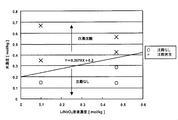
- FIG. 9 shows the relationship between the concentration of lithium niobate and liquid water in the alkoxide solution and the formation of cloudy precipitate. In FIG. 9, ⁇ means that no precipitation is formed, and ⁇ means that cloudy precipitation is formed.
- FIG. 9 shows the relationship between the concentration of lithium niobate and liquid water in the alkoxide solution and the formation of cloudy precipitate. In FIG. 9, ⁇ means that no precipitation is formed, and ⁇ means that cloudy precipitation is formed.
- the addition amount of ethoxylithium and pentaethoxyniobium is set to such an amount that the concentration of each material in the alkoxide solution is 0.1 mol / kg and 0.1 mol / kg, respectively, and the addition amount of liquid water was prepared in the same manner except that the concentration of liquid water in the alkoxide solution was 0.146 mol / kg, 0.35 mol / kg, 0.67 mol / kg. It was confirmed visually.
- the results are shown in FIG.
Landscapes
- Chemical & Material Sciences (AREA)
- Chemical Kinetics & Catalysis (AREA)
- Electrochemistry (AREA)
- General Chemical & Material Sciences (AREA)
- Composite Materials (AREA)
- Inorganic Chemistry (AREA)
- Engineering & Computer Science (AREA)
- Manufacturing & Machinery (AREA)
- Battery Electrode And Active Subsutance (AREA)
Abstract
Description
正極活物質層と負極活物質層との間に配置される電解質として、可燃性の有機電解液を用いるリチウム電池は、液漏れの他、短絡や過充電などを想定した安全対策が欠かせない。特に、高出力、高容量の電池は、さらなる安全性の向上が求められる。そこで、電解質として、硫化物系固体電解質や酸化物系固体電解質等の固体電解質を用いた全固体リチウム二次電池等、全固体電池の研究開発も進められている。
例えば、特許文献1には、硫化物を主体とするリチウムイオン伝導性固体電解質を用いた全固体リチウム電池であって、正極活物質の表面がリチウムイオン伝導性酸化物で被覆されていることを特徴とするものが記載されている。特許文献1において、正極活物質表面のリチウムイオン伝導性酸化物による被覆は、正極活物質粉末を転動流動装置中にて流動層とし、リチウムとチタンを含有するアルコキシド溶液を噴霧し、さらに、空気中の湿度によりアルコキシドの加水分解を行った後、加熱することで行われている。
少なくともアルコキシド化合物と液体水とを混合したアルコキシド溶液を準備する準備工程と、
乾燥雰囲気下、前記アルコキシド溶液を、電極活物質表面に塗布及び乾燥する被覆工程と、
を含むことを特徴とする。
本発明の第一の製造方法によれば、アルコキシド化合物の加水分解に要する水の量を制御することができるため、電極活物質の劣化を抑制したり、電極活物質表面での異物生成及び表面被覆不良等が抑制された良好な被覆層を形成したりすることができる。
特に、前記アルコキシド溶液において、前記液体水が、該液体水の量をY[mol/kg]、及び、該アルコキシド溶液中で生成する前記ニオブ酸リチウムの濃度をX[mol/kg]としたとき、Y≦0.3676X+0.2を満たす量であることが好ましい。アルコキシド溶液において、加水分解及び脱水縮合の過進行に起因する白濁沈殿の発生を抑制し、活物質表面への塗布性に優れたアルコキシド溶液を調製することができるからである。
少なくともアルコキシド化合物と、水和水及び表面吸着水の少なくとも一方を有する溶質と、を混合したアルコキシド溶液を準備する準備工程と、
乾燥雰囲気下、前記アルコキシド溶液を、電極活物質表面に塗布及び乾燥する被覆工程と、
を含むことを特徴とする。
本発明の第二の製造方法によれば、第一の製造方法と同様、アルコキシド化合物の加水分解に要する水の量を制御することができるため、電極活物質の劣化を抑制したり、電極活物質表面での異物生成及び表面被覆不良等が抑制された良好な被覆層を形成したりすることができる。
本発明の電極活物質は、表面において、イオン伝導性酸化物以外の異物が少ないため、電池抵抗の低減や高出力化を可能とする。
少なくともアルコキシド化合物と液体水とを混合したアルコキシド溶液を準備する準備工程と、
乾燥雰囲気下、前記アルコキシド溶液を、電極活物質表面に塗布及び乾燥する被覆工程と、
を含むことを特徴とする。
少なくともアルコキシド化合物と、水和水及び表面吸着水の少なくとも一方を有する溶質と、を混合したアルコキシド溶液を準備する準備工程と、
乾燥雰囲気下、前記アルコキシド溶液を、電極活物質表面に塗布及び乾燥する被覆工程と、
を含むことを特徴とする。
このように、アルコキシド溶液を塗布・乾燥させる際の雰囲気は乾燥雰囲気とし、アルコキシド溶液に水分を含有させることによって、アルコキシド化合物の加水分解時における水分量の制御が可能である。そのため、従来の空気中の湿度を利用する場合と比較して、過剰な加水分解の進行を抑制することができ、その結果、目的生成物であるイオン伝導性酸化物以外の異物が電極活物質表面に生成することを抑制することができる。さらには、電極活物質が接する水分量も従来と比較して低減することができるため、水との接触による電極活物質の劣化抑制や流動性の低下抑制が可能である。電極活物質の流動性の低下抑制により、イオン伝導性酸化物による電極活物質の表面への被覆不良を抑えることができる。被覆不良は、露出した電極活物質とその他の成分、例えば、硫化物系固体電解質との接触による副反応を招き、高抵抗物質の生成等を生じさせ、電池性能低下の原因となり得るものである。
(準備工程)
準備工程は、少なくともアルコキシド化合物と液体水とを混合して、アルコキシド溶液を準備する工程である。
アルコキシド化合物は、加水分解によって、イオン伝導性酸化物の前駆体である水酸化物になるものであり、電極活物質の表面に被覆させるイオン伝導性酸化物に応じて適宜選択することができる。
具体的には、3~6族、13~15族の元素のうち、B、Si、Ti、Zr、V、P、Al、Nb、Ta、Cr、Mo、及びWから選ばれる少なくとも1種を含有する酸化物が好ましく、さらに、これらの元素の少なくとも1種及びリチウムを含有するリチウム複合酸化物が好ましい。
より具体的なイオン伝導性酸化物としては、例えば、ケイ酸リチウム、ホウ酸リチウム、リン酸リチウム、チタン酸リチウム、ニオブ酸リチウム、タングステン酸リチウム等の酸化物ガラス及びこれらの混合物等が挙げられる。
例えば、リチウム源として使用可能なリチウム化合物としては、酢酸リチウム、リチウムアルコキシド、水酸化リチウム等が挙げられる。リチウムアルコキシドのアルコキシド基は、例えば、炭素数1~4であることが好ましく、具体的には、メトキシリチウム、エトキシリチウム、及びプロポキシリチウム等が挙げられる。
また、ホウ素源として使用可能なホウ素化合物としては、ホウ酸、トリメトキシボロン、トリエトキシボロン、トリ-i-プロポキシボロン、トリ-n-プロポキシボロン等が挙げられる。
また、ケイ素源として使用可能なケイ素化合物としては、例えば、テトラエトキシシラン(TEOS)、テトラメトキシシラン、テトラ-i-プロポキシシラン、テトラ-n-プロポキシシラン、テトラ-i-ブトキシシラン、テトラ-n-ブトキシシラン、テトラ-t-ブトキシシラン等が挙げられる。
尚、アルコキシド溶液は、その調製中、或いは、後述の被覆工程中において、加水分解の速度を調整する(遅くする)ために、冷却してもよい。
上記(2)の手順としては、例えば、まず、アルコールにリチウムアルコキシドを添加し、該リチウムアルコキシドアルコール溶液に液体水を添加した後、ニオブアルコキシドを添加する手順が挙げられる。
上記(1)及び(2)の手順により、リチウムアルコキシドそのものを液体水そのものと混合すること、ニオブアルコキシドそのものを液体水そのものと混合すること、ニオブアルコキシドアルコール溶液と液体水とを混合することを回避することができる。
また、上記ニオブアルコキシドのアルコキシド基は、例えば、炭素数1~3であることが好ましく、具体的には、ペンタエトキシニオブ等が挙げられる。
アルコールとしては、メタノール、エタノール、プロパノール等が挙げられる。アルコールの量は、電極活物質表面への該溶液の塗布性、粘度、加水分解の反応速度等を考慮して適宜設定すればよく、例えば、アルコキシド溶液の固形分比率が3~9wt%となるようにすることが好ましい。
被覆工程は、乾燥雰囲気下、アルコキシド溶液を、電極活物質表面に塗布及び乾燥する工程である。アルコキシド溶液の塗布及び乾燥により、電極活物質表面に、アルコキシド化合物の加水分解物である水酸化物が被覆される。この水酸化物を酸化することで、電極活物質表面がイオン伝導性酸化物により被覆される。
ここで、乾燥雰囲気とは、水分量が大気より少ない雰囲気を意味し、加水分解の進行制御の観点から、好ましくは、露点温度-30℃以下である。
被覆工程は、上記のような乾燥条件であればよく、窒素ガス、アルゴンガス等の不活性雰囲気の他、酸素を含む酸素雰囲気下であってもよい。
電極活物質は、正極活物質でも負極活物質でもよい。なお、正極活物質と負極活物質には明確な区別はなく、2種類の化合物の充放電電位を比較して貴な電位を示すものを正極に、卑な電位を示すものを負極に用いて任意の電圧の電池を構成することができる。
粒子状の電極活物質を用いる場合、電極活物質の粒径は特に限定されないが、後述の流動層方式により均一な被覆層を形成するためには、平均粒径が0.1~30μmの範囲であることが好ましい。
また、アルコキシド溶液の噴霧(塗布)の条件も特に限定されず、噴霧速度等、適宜設定することができる。
第二の製造方法は、準備工程において、アルコキシド溶液を、少なくとも、アルコキシド化合物と、水和水及び表面吸着水の少なくとも一方を有する溶質と、を混合することによって調製すること以外は、第一の製造方法と同様である。ここでは、第二の方法について、第一の製造方法と異なる点、すなわち、アルコキシド溶液の調製に用いる材料についてのみ説明する。
第二の製造方法は、第一の製造方法における液体水の代わりに、水和水及び表面吸着水の少なくとも一方を有する溶質を用い、アルコキシド溶液に水を含有させる。このような溶質としては、第一の製造方法において、原料元素化合物として示した化合物のうち、アルコキシド化合物以外の原料元素化合物の水和物又はアルコキシド化合物以外の表面吸着水を有する化合物が挙げられる。具体的には、酢酸リチウム・二水和物、水酸化リチウム・一水和物、硫酸リチウム・水和物等の水和物、ホウ酸、炭酸リチウム等の固体粉末で表面吸着水が安定して存在しやすい化合物などが挙げられる。
尚、原料元素化合物として、原料元素の少なくとも1種を含むアルコキシド化合物を必須とする点については、第一の製造方法と同様である。
上記のような本発明の製造方法によれば、電極活物質の劣化を抑制すると共に、電極活物質表面に異物や被覆不良等が抑制された良好な被覆層を形成することができる。具体的には、本発明により提供される、表面がイオン伝導性酸化物で被覆された電極活物質では、電極活物質表面におけるイオン伝導性酸化物以外の物質(異物)の占める面積を、21%以下に抑えることができる。また、該異物の粒径も、従来の空気中の湿度を利用する場合と比較して、小さくすることができる。
ここでは、全固体リチウム電池を中心に、本発明の電極活物質を用いた電池について説明する。
図1において、全固体電池8は、正極1と負極2との間に固体電解質層3が介在するように配置されている。
正極1は、正極活物質層4と、正極活物質層4の集電を行う正極集電体5と、から構成されている。負極2は、負極活物質層6と、負極活物質層6の集電を行う負極集電体7と、から構成されている。
負極活物質の種類は、電池の種類によって異なる。例えば、リチウム電池の負極活物質としては、本発明の電極活物質の他、上記にてアルコキシド溶液の塗布対象である電極活物質として例示した物質が挙げられる。
結着剤としては、特に限定されず、例えば、ポリフッ化ビニリデン(PVDF)、ポリテトラフルオロエチレン(PTFE)、スチレンブタジエンゴム(SBR)等が挙げられる。
電解質としては、例えば、後述する固体電解質と同様のものを用いることができる。
正極活物質の種類は、電池の種類によって異なる。例えば、リチウム電池の正極活物質としては、本発明の電極活物質の他、上記にてアルコキシド溶液の塗布対象である電極活物質として例示した物質が挙げられる。
結着剤としては、例えば、ポリビニルアルコール(PVA)、ポリビニルブチラール(PVB)、ポリフッ化ビニリデン(PVDF)、ポリテトラフルオロエチレン(PTFE)、スチレンブタジエンゴム(SBR)等が挙げられる。
固体電解質層における、固体電解質とその他成分との割合は特に限定されず、適宜決定することができる。
或いは、負極材のスラリー、正極材のスラリー、電解質材スラリーをそれぞれ、基材上に塗布、乾燥し、さらに必要に応じて加熱処理等を行うことで、各層を形成することもできる。ここで、基材としては、キャリアシートの他、全固体電池において隣接する部材を用いることができる。ここで、隣接する部材例としては、例えば、各電極活物質層の場合、該電極活物質層の集電体や固体電解質層等が挙げられ、固体電解質層の場合、正極活物質層や負極活物質層等が挙げられる。
各層を、適切な順序で積層することで、全固体電池を作製することができる。積層後、必要時応じて、加圧処理や加熱処理等を実施してもよい。
尚、ここでは電解質層が固体電解質からなる電池を例に説明したが、電解質層を構成する電解質として、水系電解液や非水系電解液等の電解液や、電解液をゲル化したゲル状電解質を用いることもできる。
電池が、正極、固体電解質層、負極の順番で配置されている積層体を、繰り返し何層も重ねる構造を取る場合には、安全性の観点から、正極および負極の間に、絶縁性材料からなるセパレータを備えることができる。セパレータとしては、例えばポリエチレン、ポリプロピレン等の多孔膜;および樹脂不織布、ガラス繊維不織布等の不織布等を挙げることができる。
また、各電極の集電体には、それぞれ、外部との接続部となる端子を設けることができる。
<アルコキシド溶液の準備>
ホウ酸とTEOSを、それぞれ、エタノールに溶解又は均一分散させ、ホウ酸エタノール溶液とTEOSエタノール溶液を得た。該ホウ酸エタノール溶液と該TEOSエタノール溶液とを、ホウ素とケイ素の元素比が1:1となるように混合し、さらに、ホウ酸と液体水の重量比が1:4(ホウ酸:液体水)となるように液体水を添加し、均一になるまで攪拌した。
その後、無水酢酸リチウムのエタノール溶液を調製し、ホウ酸と無水酢酸リチウムの重量比が2:15(ホウ酸:無水酢酸リチウム)となるように、上記ホウ素及びケイ素を含有する溶液に添加した。溶液の固形分比率が6.4wt%になるようにエタノールの量を調整した。
吸気ガスによる気流及びロータによって粉体を流動化させながら、粉体の造粒、コーティング等を行う流動層造粒・コーティング装置(パウレック社製MP-01)を用いて、上記にて得られたアルコキシド溶液1610gを、正極活物質(LiNiMnCoO2、日亜化学製)1kgに対して噴霧及び乾燥し、該正極活物質表面を被覆した。噴霧及び乾燥の条件は、以下の通りである。
・流動層容器内の雰囲気ガス(吸気ガス):乾燥窒素ガス(露点温度-60℃)
・吸気ガス温度:80℃、
・吸気ガス風量(吸気風量)0.3m3/h
・ロータ回転数300rpm
・アルコキシド溶液の噴霧速度4g/min
実施例1において、無水酢酸リチウムのエタノール溶液の代わりに酢酸リチウム・二水和物のエタノール溶液を調製し、該酢酸リチウム・二水和物エタノール溶液を、ホウ酸と酢酸リチウム・二水和物の重量比が2:23(ホウ酸:酢酸リチウム・二水和物)となるようにホウ素及びケイ素を含有する溶液に添加したこと、並びに、液体水を添加しなかったこと以外は、同様にして、アルコキシド溶液を調製した。
得られたアルコキシド溶液を用いて、実施例1と同様にして、リチウムイオン伝導性酸化物(ホウ酸リチウム/ケイ酸リチウムの混合ガラス)で被覆された正極活物質を得た。
実施例1において、液体水を用いずにアルコキシド溶液を調製し、且つ、アルコキシド溶液の塗布・乾燥時、吸気ガスとして乾燥窒素ガスの代わりに大気(露点温度5℃)を用いたこと以外は、同様にして、リチウムイオン伝導性酸化物(ホウ酸リチウム/ケイ酸リチウムの混合ガラス)で被覆された正極活物質を得た。
(SEM観察)
実施例及び比較例で得られた正極活物質を、電界放射型走査電子顕微鏡(ZEISS製 ULTRA55)で観察した。SEM写真を図2(A:実施例1、B:実施例2、C:比較例1)に示す。
上記SEMによる観察において、正極活物質の表面に形成された上記リチウムイオン伝導性酸化物以外の異物について、最大粒径と正極活物質表面における面積割合を算出した。結果を表1に示す。
尚、ここで異物の最大粒径は、Heywood径である。Heywood径とは、粒子の投影面積と同じ面積を持つ円の直径を意味し、投影面積円相当径とも呼ばれるものである。
また、面積割合は、異物の投影面積の総和を正極活物質の投影面積で除することにより算出した。
また、上記異物としては、アルコキシド溶液のみを上記条件で乾燥・焼成した後にエネルギー分散型X線分析装置(JEOL製JED-2300)により、ホウ酸リチウム/ケイ酸リチウムの混合ガラス以外の成分が、正極活物質表面に存在することを確認している。
実施例及び比較例で得られた正極活物質を、硫化物系固体電解質(Li3PS4)と、体積比5:5で混合し、試験管ミキサーで均一になるまで混合し、正極用混合粉体材を調製した。
一方、負極活物質(層状炭素材料)を、正極用混合粉体材と同じ硫化物系固体電解質(Li3PS4)と、体積比5:5で混合し、均一になるまで乾式混合し、負極用混合粉体材を調製した。
また、上記硫化物系固体電解質(Li3PS4)を、プレス成形し、固体電解質層を形成した。
固体電解質層の一方の面に上記正極用混合粉体材、他方の面に上記負極用混合粉体材をそれぞれ配置し、プレス成形して、正極活物質層、固体電解質層及び負極活物質層が、この順序で積層した電池を作製した。
得られた電池をセル電圧3.6Vまで充電し、周波数応答アナライザー(ソーラートロン製 1260型)を用いて電気化学インピーダンス法によりセル抵抗を測定した。結果を表1に示す。

表1及び図2に示すように、実施例1及び実施例2の正極活物質は、比較例1の正極活物質と比較して、表面に存在する異物の面積及び最大粒径が共に小さく、異物の生成が抑制されていた。特に、アルコキシド溶液への水の添加を溶質の水和水で行った実施例2は、アルコキシド溶液への水の添加を液体水で行った実施例1と比較して、異物の面積及び最大粒径が大幅に小さくなった。
また、表1に示すように、実施例1及び実施例2の正極活物質を用いた電池は、比較例1の正極活物質を用いた電池に比べて、同等以下の直流抵抗及び反応抵抗を示し、特に、反応抵抗については大幅な低下がみられた。このことより、本発明によれば、異物を減らすことで活物質表面でのイオン移動抵抗を下げ、内部抵抗の低減、すなわち、高出力化が可能であることがわかる。
<アルコキシド溶液の準備>
図3に示すように、まず、脱水エタノール(和光純薬製)に、エトキシリチウム(高純度化学製)を添加、攪拌し、次に、該エトキシリチウムエタノール溶液に液体水を添加、攪拌し、その後、該エトキシリチウムエタノール・水溶液に、ペンタエトキシニオブ(高純度化学製)を添加、攪拌し、アルコキシド溶液を調製した。エトキシリチウム、液体水、ペンタエトキシニオブの添加量は、それぞれ、アルコキシド溶液における各材料の濃度が、0.47mol/kg、0.282mol/kg、0.47mol/kgとなる量とした。
上記にて調製したアルコキシド溶液を、乾燥空気(露点-50℃)中、くし型電極(BSS製)の表面に、ディップコート法(10mm/sec)により塗布し、該塗布溶液を乾燥させた。乾燥後、大気中、350℃で0.5時間熱処理を実施し、ニオブ酸リチウム被膜を形成した。
交流インピーダンス法により、ニオブ酸リチウム被膜のリチウムイオン伝導性を測定した。結果を図4に示す。
乾燥空気(露点-50℃)中、コバルト酸リチウム薄膜(Au基板上にスパッタで形成)に、上記アルコキシド溶液をスピンコータ(ミカサ社製、MS-A100)にて、5000rpmで10秒間塗布し、塗布溶液を乾燥させた。乾燥後、大気中、350℃で0.5時間熱処理を実施し、コバルト酸リチウム薄膜の表面にニオブ酸リチウムを被覆させた。
図5に示す手順で、上記ニオブ酸リチウム被覆コバルト酸リチウム薄膜(コバルト酸リチウム0.1mg含有)を正極として用いて、図6に示す全固体電池を作製した。尚、全固体電池の作製は、アルゴン雰囲気、露点-80℃のグローブボックス内で行った。
シリンダー内の固体電解質層上に、上記ニオブ酸リチウム被覆コバルト酸リチウム薄膜を配置し、4t/cm2で1分間プレスして、固体電解質層-正極接合体を作製した。ニオブ酸リチウム被覆コバルト酸リチウム薄膜は、ニオブ酸リチウム被覆層が、固体電解質層側となるように、固体電解質層と重ね合わせた。
得られた固体電解質層-正極接合体の固体電解質層の下に、負極活物質(In-Li合金;22mgのInと1mgのLiを混合したもの)を配置し、1t/cm2で1分間プレスして、負極-固体電解質層-正極接合体を作製した。
続いて、上台座12と下台座13とを固定するボルト14を締めた。さらに、図7に示すように、上台座12及び下台座13に、それぞれ、正極端子15、負極端子16を設けた。
得られた全固体電池を、図7に示すように、内部に乾燥剤17を配置したガラスセル内に配置し、O-リングを有するアルミ製蓋18で密閉した。
上記にて作製した全固体電池の抵抗を測定した。結果を図8に示す。
実施例3において、アルコキシド溶液における液体水の濃度が0.141mol/kgとなる量の液体水を用いたこと以外は、同様にしてアルコキシド溶液を調製した。
得られたアルコキシド溶液を用いて、実施例3と同様にしてニオブ酸リチウム被膜のリチウムイオン伝導性を測定した。結果を図4に示す。
実施例3において、液体水を用いなかったこと以外は、同様にしてアルコキシド溶液を調製した。
得られたアルコキシド溶液を用いて、実施例3と同様にしてニオブ酸リチウム被膜のリチウムイオン伝導性を測定した。結果を図4に示す。
また、得られたアルコキシド溶液を用いて、実施例3と同様にして、全固体電池を作製し、抵抗を測定した。結果を図8に示す。
また、図8に示すように、実施例3の全固体電池は、比較例2の全固体電池よりも大幅に低い抵抗値を有し、液体水の添加により、電池抵抗を低下できることが確認された。
実施例3において、アルコキシド溶液における液体水の濃度が、0.423(mol/kg)又は0.504(mol/kg)となるようにすること以外は、同様にして、アルコキシド溶液(ニオブ酸リチウム濃度=0.47mol/kg)を調製したところ、アルコキシド溶液に白濁沈殿が目視で確認された。アルコキシド溶液におけるニオブ酸リチウム濃度及び液体水濃度と、白濁沈殿の生成との関係を、図9に示す。図9において、○は沈殿生成なし、×は白濁沈殿生成ありを意味する。尚、図9には、実施例3及び実施例4(共に、ニオブ酸リチウム濃度=0.47mol/kg)の結果(沈殿生成なし)も示した。
また、実施例3において、エトキシリチウム、ペンタエトキシニオブの添加量を、それぞれ、アルコキシド溶液における各材料の濃度が、0.1mol/kg、0.1mol/kgとなる量とし、液体水の添加量をアルコキシド溶液における液体水の濃度が、0.146mol/kg、0.35mol/kg、0.67mol/kgとなる量としたこと以外は同様にして、アルコキシド溶液を調製し、白濁沈殿の有無を目視で確認した。結果を図9に示す。
2…負極
3…固体電解質層
4…正極活物質層
5…正極集電体
6…負極活物質層
7…負極集電体
8…全固体電池
9…シリンダー
10…上ピストン
11…下ピストン
12…上台座
13…下台座
14…ボルト
15…正極端子
16…負極端子
17…乾燥剤
18…蓋
Claims (9)
- 表面がイオン伝導性酸化物で被覆された電極活物質の製造方法であって、
少なくともアルコキシド化合物と液体水とを混合したアルコキシド溶液を準備する準備工程と、
乾燥雰囲気下、前記アルコキシド溶液を、電極活物質表面に塗布及び乾燥する被覆工程と、
を含むことを特徴とする製造方法。 - 前記被覆工程における前記乾燥雰囲気が、露点温度-30℃以下である、請求の範囲第1項に記載の製造方法。
- 前記アルコキシド溶液において、前記液体水の量は、前記アルコキシド化合物のRO-(Rは有機基)のユニット数に対して、水分子数が1~10倍となる量である、請求の範囲第1項又は第2項に記載の製造方法。
- 前記イオン伝導性酸化物がニオブ酸リチウムであり、
前記アルコキシド溶液を準備する準備工程において、(1)アルコール及び液体水を含むアルコール水溶液に、リチウムアルコキシド及びニオブアルコキシドを混合する、又は、(2)リチウムアルコキシド及びアルコールを含むリチウムアルコキシドアルコール溶液に液体水を混合した後、ニオブアルコキシドを混合する、請求の範囲第1項又は第2項に記載の製造方法。 - 前記アルコキシド溶液において、前記液体水は、該液体水の量をY[mol/kg]、及び、該アルコキシド溶液中で生成する前記ニオブ酸リチウムの濃度をX[mol/kg]としたとき、Y≦0.3676X+0.2を満たす量である、請求の範囲第4項に記載の製造方法。
- 表面がイオン伝導性酸化物で被覆された電極活物質の製造方法であって、
少なくともアルコキシド化合物と、水和水及び表面吸着水の少なくとも一方を有する溶質と、を混合したアルコキシド溶液を準備する準備工程と、
乾燥雰囲気下、前記アルコキシド溶液を、電極活物質表面に塗布及び乾燥する被覆工程と、
を含むことを特徴とする製造方法。 - 前記被覆工程における前記乾燥雰囲気が、露点温度-30℃以下である、請求の範囲第6項に記載の製造方法。
- 前記アルコキシド溶液において、前記水和水及び表面吸着水の合計量は、前前記アルコキシド化合物のRO-(Rは有機基)のユニット数に対して、水分子数が1~10倍となる量である、請求の範囲第6項又は第7項に記載の製造方法。
- 表面がイオン伝導性酸化物で被覆された電極活物質であって、
該電極活物質表面における、前記イオン伝導性酸化物以外の物質が占める面積が、21%以下であることを特徴とする電極活物質。
Priority Applications (4)
| Application Number | Priority Date | Filing Date | Title |
|---|---|---|---|
| JP2013517808A JP5741685B2 (ja) | 2011-06-01 | 2011-08-09 | 電極活物質の製造方法 |
| US14/113,744 US20140079873A1 (en) | 2011-06-01 | 2011-08-09 | Method for producing electrode active material and electrode active material |
| CN201180071177.5A CN103563138B (zh) | 2011-06-01 | 2011-08-09 | 电极活性物质的制造方法和电极活性物质 |
| US14/559,376 US10305096B2 (en) | 2011-06-01 | 2014-12-03 | Method for producing electrode active material and electrode active material |
Applications Claiming Priority (2)
| Application Number | Priority Date | Filing Date | Title |
|---|---|---|---|
| JP2011123037 | 2011-06-01 | ||
| JP2011-123037 | 2011-06-01 |
Related Child Applications (2)
| Application Number | Title | Priority Date | Filing Date |
|---|---|---|---|
| US14/113,744 A-371-Of-International US20140079873A1 (en) | 2011-06-01 | 2011-08-09 | Method for producing electrode active material and electrode active material |
| US14/559,376 Division US10305096B2 (en) | 2011-06-01 | 2014-12-03 | Method for producing electrode active material and electrode active material |
Publications (1)
| Publication Number | Publication Date |
|---|---|
| WO2012164760A1 true WO2012164760A1 (ja) | 2012-12-06 |
Family
ID=47258645
Family Applications (1)
| Application Number | Title | Priority Date | Filing Date |
|---|---|---|---|
| PCT/JP2011/068137 Ceased WO2012164760A1 (ja) | 2011-06-01 | 2011-08-09 | 電極活物質の製造方法及び電極活物質 |
Country Status (4)
| Country | Link |
|---|---|
| US (2) | US20140079873A1 (ja) |
| JP (1) | JP5741685B2 (ja) |
| CN (1) | CN103563138B (ja) |
| WO (1) | WO2012164760A1 (ja) |
Cited By (20)
| Publication number | Priority date | Publication date | Assignee | Title |
|---|---|---|---|---|
| CN103280568A (zh) * | 2013-05-28 | 2013-09-04 | 宁德新能源科技有限公司 | 钛酸锂复合材料及其制备方法以及其应用 |
| WO2014013837A1 (ja) * | 2012-07-19 | 2014-01-23 | 株式会社 日立製作所 | リチウムイオン二次電池用活物質粒子およびそれを用いたリチウムイオン二次電池 |
| JP2015149275A (ja) * | 2014-02-07 | 2015-08-20 | 三星エスディアイ株式会社Samsung SDI Co.,Ltd. | 正極活物質、それを採用した正極及びリチウム電池、並びに該正極活物質の製造方法 |
| JP2016018610A (ja) * | 2014-07-04 | 2016-02-01 | 日立マクセル株式会社 | リチウム二次電池用被覆正極活物質、その製造方法及びそれを用いたリチウム二次電池 |
| JPWO2016002901A1 (ja) * | 2014-07-04 | 2017-04-27 | 日立化成株式会社 | パッシベーション層形成用組成物、パッシベーション層付半導体基板及びその製造方法、太陽電池素子及びその製造方法、並びに太陽電池 |
| WO2017094163A1 (ja) * | 2015-12-03 | 2017-06-08 | 株式会社東芝 | 非水電解質電池用正極活物質、非水電解質電池用正極、非水電解質電池および電池パック |
| JP2017111954A (ja) * | 2015-12-16 | 2017-06-22 | セイコーエプソン株式会社 | 金属酸化物成膜用組成物、正極複合体、正極複合体の製造方法、電池、および電池の製造方法 |
| KR20170086119A (ko) * | 2014-11-28 | 2017-07-25 | 스미토모 긴조쿠 고잔 가부시키가이샤 | 비수계 전해질 이차 전지용 정극 활물질과 그 제조 방법, 및 비수계 전해질 이차 전지 |
| JP2018502421A (ja) * | 2014-12-05 | 2018-01-25 | エルジー・ケム・リミテッド | 正極活物質、この製造方法、及びこれを含むリチウム二次電池 |
| JP2018503941A (ja) * | 2014-12-05 | 2018-02-08 | エルジー・ケム・リミテッド | 正極活物質、この製造方法、及びこれを含むリチウム二次電池 |
| JP2018120724A (ja) * | 2017-01-24 | 2018-08-02 | Fdk株式会社 | 全固体電池の製造方法 |
| JP2018190719A (ja) * | 2017-04-28 | 2018-11-29 | 住友金属鉱山株式会社 | 非水系電解質二次電池用正極活物質、非水系電解質二次電池用正極活物質の製造方法 |
| JP2019046717A (ja) * | 2017-09-05 | 2019-03-22 | 住友金属鉱山株式会社 | 非水系電解質二次電池用正極活物質とその製造方法、および、非水系電解質二次電池 |
| JP2019046716A (ja) * | 2017-09-05 | 2019-03-22 | 住友金属鉱山株式会社 | 非水系電解質二次電池用正極活物質とその製造方法、および、非水系電解質二次電池 |
| JP2019519903A (ja) * | 2016-06-01 | 2019-07-11 | 湖南杉杉能源科技股▲分▼有限公司Hunan Shanshan Energy Technology Co., Ltd. | ハイレート型のコバルト酸リチウム正極材料及びその調製方法 |
| JP2019192513A (ja) * | 2018-04-26 | 2019-10-31 | 住友金属鉱山株式会社 | 非水系電解質二次電池用正極活物質とその製造方法 |
| JP2019192512A (ja) * | 2018-04-26 | 2019-10-31 | 住友金属鉱山株式会社 | 非水系電解質二次電池用正極活物質とその製造方法 |
| JP2020035666A (ja) * | 2018-08-30 | 2020-03-05 | トヨタ自動車株式会社 | 正極活物質の製造方法 |
| JP2022541128A (ja) * | 2019-06-25 | 2022-09-22 | ビーエーエスエフ ソシエタス・ヨーロピア | コーティングされた電極活物質の製造方法 |
| KR102953585B1 (ko) * | 2021-02-25 | 2026-04-15 | 주식회사 엘지화학 | 리튬 이차전지용 양극 활물질의 제조방법, 이로부터 형성된 리튬 이차전지용 양극 활물질, 이를 포함하는 리튬 이차전지용 양극 및 리튬 이차전지 |
Families Citing this family (10)
| Publication number | Priority date | Publication date | Assignee | Title |
|---|---|---|---|---|
| JP3229138B2 (ja) | 1994-10-06 | 2001-11-12 | 日本エム・ケー・エス株式会社 | 質量流量センサ |
| JP6036162B2 (ja) * | 2011-12-28 | 2016-11-30 | トヨタ自動車株式会社 | 複合活物質の製造方法、被覆装置、複合活物質および全固体電池 |
| CN104781960B (zh) | 2013-10-29 | 2018-03-06 | 株式会社Lg 化学 | 正极活性物质的制备方法及由该方法制备的锂二次电池用正极活性物质 |
| EP3293802B1 (en) * | 2015-09-14 | 2020-10-21 | Toyota Jidosha Kabushiki Kaisha | Method of manufacturing an all-solid-state battery system |
| JP7006614B2 (ja) * | 2016-10-28 | 2022-01-24 | 日本電気株式会社 | リチウムイオン二次電池用電極、及びそれを用いたリチウムイオン二次電池 |
| CN110291662A (zh) * | 2017-01-30 | 2019-09-27 | 公立大学法人首都大学东京 | 电极用组合物、电极、其制造方法和电池 |
| JP7167488B2 (ja) * | 2018-05-29 | 2022-11-09 | トヨタ自動車株式会社 | 正極、全固体電池及びこれらの製造方法 |
| US12537188B2 (en) | 2019-12-20 | 2026-01-27 | Posco Holdings Inc. | Positive electrode active material, method of preparing the same, and lithium secondary battery including the same |
| DE102020112268A1 (de) * | 2020-05-06 | 2021-11-11 | EXXERGY GmbH | Verbesserung der Glasfestigkeit und Bruchzähigkeit durch eine nicht spröde, abriebfeste Beschichtung |
| JP7336055B1 (ja) * | 2022-03-24 | 2023-08-30 | Jx金属株式会社 | リチウムイオン電池用正極活物質、リチウムイオン電池用正極、リチウムイオン電池、全固体リチウムイオン電池用正極活物質、全固体リチウムイオン電池用正極、全固体リチウムイオン電池、リチウムイオン電池用正極活物質の製造方法及び全固体リチウムイオン電池用正極活物質の製造方法 |
Citations (5)
| Publication number | Priority date | Publication date | Assignee | Title |
|---|---|---|---|---|
| JPH10233213A (ja) * | 1997-02-17 | 1998-09-02 | Murata Mfg Co Ltd | 二次電池用正極活物質の製造方法 |
| JPH10316426A (ja) * | 1997-05-12 | 1998-12-02 | Tokuyama Corp | 被覆酸化錫 |
| JP2010170715A (ja) * | 2009-01-20 | 2010-08-05 | Toyota Motor Corp | 正極活物質材料 |
| JP2010244847A (ja) * | 2009-04-06 | 2010-10-28 | Toyota Motor Corp | 固体電解質材料 |
| JP2011065887A (ja) * | 2009-09-17 | 2011-03-31 | Idemitsu Kosan Co Ltd | 正極材料、その製造方法及びリチウムイオン電池 |
Family Cites Families (13)
| Publication number | Priority date | Publication date | Assignee | Title |
|---|---|---|---|---|
| US4477580A (en) * | 1982-09-28 | 1984-10-16 | At&T Bell Laboratories | Method for making germanium-silicate gel glass and articles |
| US5321544A (en) * | 1991-09-04 | 1994-06-14 | Sun Active Glass Electrochromics, Inc. | Electrochromic structures and methods |
| US5618640A (en) * | 1993-10-22 | 1997-04-08 | Fuji Photo Film Co., Ltd. | Nonaqueous secondary battery |
| JP3188615B2 (ja) | 1995-09-22 | 2001-07-16 | 名古屋市 | 水系前駆体溶液からのニオブ酸リチウム薄膜及びチタン固溶ニオブ酸リチウム薄膜の作成方法 |
| CA2270771A1 (fr) * | 1999-04-30 | 2000-10-30 | Hydro-Quebec | Nouveaux materiaux d'electrode presentant une conductivite de surface elevee |
| KR100309773B1 (ko) * | 1999-06-17 | 2001-11-01 | 김순택 | 리튬 이차 전지용 양극 활물질 및 그의 제조 방법 |
| JP2003007343A (ja) * | 2001-06-25 | 2003-01-10 | Sanyo Electric Co Ltd | リチウム二次電池の製造方法および製造装置 |
| US6911280B1 (en) * | 2001-12-21 | 2005-06-28 | Polyplus Battery Company | Chemical protection of a lithium surface |
| KR100497232B1 (ko) * | 2003-07-01 | 2005-06-23 | 삼성에스디아이 주식회사 | 리튬 설퍼 전지용 음극, 그의 제조 방법 및 그를 포함하는리튬 설퍼 전지 |
| US7413635B2 (en) * | 2003-12-19 | 2008-08-19 | Spectralus, Inc. | Method for the fabrication of periodically poled Lithium Niobate and Lithium Tantalate nonlinear optical components |
| US7993782B2 (en) | 2005-07-01 | 2011-08-09 | National Institute For Materials Science | All-solid lithium battery |
| JP5506671B2 (ja) * | 2007-07-04 | 2014-05-28 | ヒェメタル ゲゼルシャフト ミット ベシュレンクテル ハフツング | 酸含有率の低いホウ酸リチウム塩の製造方法および酸含有率の低いホウ酸リチウム塩と水素化リチウムとからなる混合物 |
| JP2010248044A (ja) | 2009-04-17 | 2010-11-04 | Sumitomo Electric Ind Ltd | LiNbO3ガラス並びにその製造方法およびLiNbO3ガラスを用いた非水電解質電池 |
-
2011
- 2011-08-09 WO PCT/JP2011/068137 patent/WO2012164760A1/ja not_active Ceased
- 2011-08-09 US US14/113,744 patent/US20140079873A1/en not_active Abandoned
- 2011-08-09 CN CN201180071177.5A patent/CN103563138B/zh active Active
- 2011-08-09 JP JP2013517808A patent/JP5741685B2/ja active Active
-
2014
- 2014-12-03 US US14/559,376 patent/US10305096B2/en active Active
Patent Citations (5)
| Publication number | Priority date | Publication date | Assignee | Title |
|---|---|---|---|---|
| JPH10233213A (ja) * | 1997-02-17 | 1998-09-02 | Murata Mfg Co Ltd | 二次電池用正極活物質の製造方法 |
| JPH10316426A (ja) * | 1997-05-12 | 1998-12-02 | Tokuyama Corp | 被覆酸化錫 |
| JP2010170715A (ja) * | 2009-01-20 | 2010-08-05 | Toyota Motor Corp | 正極活物質材料 |
| JP2010244847A (ja) * | 2009-04-06 | 2010-10-28 | Toyota Motor Corp | 固体電解質材料 |
| JP2011065887A (ja) * | 2009-09-17 | 2011-03-31 | Idemitsu Kosan Co Ltd | 正極材料、その製造方法及びリチウムイオン電池 |
Cited By (30)
| Publication number | Priority date | Publication date | Assignee | Title |
|---|---|---|---|---|
| WO2014013837A1 (ja) * | 2012-07-19 | 2014-01-23 | 株式会社 日立製作所 | リチウムイオン二次電池用活物質粒子およびそれを用いたリチウムイオン二次電池 |
| JP2014022204A (ja) * | 2012-07-19 | 2014-02-03 | Hitachi Ltd | リチウムイオン二次電池用活物質粒子およびそれを用いたリチウムイオン二次電池 |
| CN103280568A (zh) * | 2013-05-28 | 2013-09-04 | 宁德新能源科技有限公司 | 钛酸锂复合材料及其制备方法以及其应用 |
| JP2015149275A (ja) * | 2014-02-07 | 2015-08-20 | 三星エスディアイ株式会社Samsung SDI Co.,Ltd. | 正極活物質、それを採用した正極及びリチウム電池、並びに該正極活物質の製造方法 |
| JP2016018610A (ja) * | 2014-07-04 | 2016-02-01 | 日立マクセル株式会社 | リチウム二次電池用被覆正極活物質、その製造方法及びそれを用いたリチウム二次電池 |
| JPWO2016002901A1 (ja) * | 2014-07-04 | 2017-04-27 | 日立化成株式会社 | パッシベーション層形成用組成物、パッシベーション層付半導体基板及びその製造方法、太陽電池素子及びその製造方法、並びに太陽電池 |
| KR20170086119A (ko) * | 2014-11-28 | 2017-07-25 | 스미토모 긴조쿠 고잔 가부시키가이샤 | 비수계 전해질 이차 전지용 정극 활물질과 그 제조 방법, 및 비수계 전해질 이차 전지 |
| KR101959152B1 (ko) * | 2014-11-28 | 2019-03-15 | 스미토모 긴조쿠 고잔 가부시키가이샤 | 비수계 전해질 이차 전지용 정극 활물질과 그 제조 방법, 및 비수계 전해질 이차 전지 |
| JP2018502421A (ja) * | 2014-12-05 | 2018-01-25 | エルジー・ケム・リミテッド | 正極活物質、この製造方法、及びこれを含むリチウム二次電池 |
| JP2018503941A (ja) * | 2014-12-05 | 2018-02-08 | エルジー・ケム・リミテッド | 正極活物質、この製造方法、及びこれを含むリチウム二次電池 |
| US10374227B2 (en) | 2014-12-05 | 2019-08-06 | Lg Chem, Ltd. | Positive electrode active material, method for preparing the same and lithium secondary battery including the same |
| US10340517B2 (en) | 2014-12-05 | 2019-07-02 | Lg Chem, Ltd. | Positive electrode active material, method for preparing the same and lithium secondary battery including the same |
| WO2017094163A1 (ja) * | 2015-12-03 | 2017-06-08 | 株式会社東芝 | 非水電解質電池用正極活物質、非水電解質電池用正極、非水電解質電池および電池パック |
| JPWO2017094163A1 (ja) * | 2015-12-03 | 2018-04-12 | 株式会社東芝 | 非水電解質電池用正極活物質、非水電解質電池用正極、非水電解質電池および電池パック |
| JP2017111954A (ja) * | 2015-12-16 | 2017-06-22 | セイコーエプソン株式会社 | 金属酸化物成膜用組成物、正極複合体、正極複合体の製造方法、電池、および電池の製造方法 |
| JP2019519903A (ja) * | 2016-06-01 | 2019-07-11 | 湖南杉杉能源科技股▲分▼有限公司Hunan Shanshan Energy Technology Co., Ltd. | ハイレート型のコバルト酸リチウム正極材料及びその調製方法 |
| US10714749B2 (en) | 2016-06-01 | 2020-07-14 | Hunan Shanshan Energy Technology Co., Ltd. | High rate lithium cobalt oxide positive electrode material and manufacturing method thereof |
| JP2018120724A (ja) * | 2017-01-24 | 2018-08-02 | Fdk株式会社 | 全固体電池の製造方法 |
| JP7099033B2 (ja) | 2017-04-28 | 2022-07-12 | 住友金属鉱山株式会社 | 非水系電解質二次電池用正極活物質、非水系電解質二次電池用正極活物質の製造方法 |
| JP2018190719A (ja) * | 2017-04-28 | 2018-11-29 | 住友金属鉱山株式会社 | 非水系電解質二次電池用正極活物質、非水系電解質二次電池用正極活物質の製造方法 |
| JP2019046716A (ja) * | 2017-09-05 | 2019-03-22 | 住友金属鉱山株式会社 | 非水系電解質二次電池用正極活物質とその製造方法、および、非水系電解質二次電池 |
| JP2019046717A (ja) * | 2017-09-05 | 2019-03-22 | 住友金属鉱山株式会社 | 非水系電解質二次電池用正極活物質とその製造方法、および、非水系電解質二次電池 |
| JP2022130698A (ja) * | 2017-09-05 | 2022-09-06 | 住友金属鉱山株式会社 | 非水系電解質二次電池用正極活物質とその製造方法、および、非水系電解質二次電池 |
| JP7135282B2 (ja) | 2017-09-05 | 2022-09-13 | 住友金属鉱山株式会社 | 非水系電解質二次電池用正極活物質とその製造方法、および、非水系電解質二次電池 |
| JP7167420B2 (ja) | 2017-09-05 | 2022-11-09 | 住友金属鉱山株式会社 | 非水系電解質二次電池用正極活物質とその製造方法、および、非水系電解質二次電池 |
| JP2019192513A (ja) * | 2018-04-26 | 2019-10-31 | 住友金属鉱山株式会社 | 非水系電解質二次電池用正極活物質とその製造方法 |
| JP2019192512A (ja) * | 2018-04-26 | 2019-10-31 | 住友金属鉱山株式会社 | 非水系電解質二次電池用正極活物質とその製造方法 |
| JP2020035666A (ja) * | 2018-08-30 | 2020-03-05 | トヨタ自動車株式会社 | 正極活物質の製造方法 |
| JP2022541128A (ja) * | 2019-06-25 | 2022-09-22 | ビーエーエスエフ ソシエタス・ヨーロピア | コーティングされた電極活物質の製造方法 |
| KR102953585B1 (ko) * | 2021-02-25 | 2026-04-15 | 주식회사 엘지화학 | 리튬 이차전지용 양극 활물질의 제조방법, 이로부터 형성된 리튬 이차전지용 양극 활물질, 이를 포함하는 리튬 이차전지용 양극 및 리튬 이차전지 |
Also Published As
| Publication number | Publication date |
|---|---|
| CN103563138B (zh) | 2017-02-08 |
| JPWO2012164760A1 (ja) | 2014-07-31 |
| JP5741685B2 (ja) | 2015-07-01 |
| US20150110951A1 (en) | 2015-04-23 |
| US20140079873A1 (en) | 2014-03-20 |
| CN103563138A (zh) | 2014-02-05 |
| US10305096B2 (en) | 2019-05-28 |
Similar Documents
| Publication | Publication Date | Title |
|---|---|---|
| JP5741685B2 (ja) | 電極活物質の製造方法 | |
| JP5737415B2 (ja) | 全固体電池およびその製造方法 | |
| CN103999275B (zh) | 复合活性物质、全固体电池和复合活性物质的制造方法 | |
| CN103534845B (zh) | 被覆活性物质及锂固体电池 | |
| JP5195975B2 (ja) | 全固体電池およびその製造方法 | |
| JP6036162B2 (ja) | 複合活物質の製造方法、被覆装置、複合活物質および全固体電池 | |
| EP3043406B1 (en) | Solid-state batteries and methods for fabrication | |
| CN108878795A (zh) | 改性正极活性材料及其制备方法及电化学储能装置 | |
| WO2015050031A1 (ja) | 被覆正極活物質およびリチウム固体電池 | |
| CN106159318A (zh) | 石榴石型固体电解质支撑的新型片式固态二次锂电池及其制备方法 | |
| JP2013037950A (ja) | 複合正極活物質、全固体電池、および複合正極活物質の製造方法 | |
| CN110233285A (zh) | 一种利用聚合物电解质改善固态电池界面稳定性的方法 | |
| CN116190633B (zh) | 层状氧化物正极材料、其制备方法、正极组合物、钠离子二次电池和用途 | |
| CN107408729A (zh) | 二次电池用复合电解质、二次电池及电池包 | |
| CN118315577A (zh) | 补锂材料、正极、电化学装置和用电设备 | |
| CN115799441A (zh) | 一种锂离子电池及用电装置 | |
| TWI794470B (zh) | 電解質漿料組成物、電解質薄片的製造方法、及二次電池的製造方法 | |
| JP2021082420A (ja) | 負極活物質、負極、電池セル | |
| JPWO2014196615A1 (ja) | リチウムイオン二次電池用正極材料及びその製造方法 | |
| CN115732750A (zh) | 一种表面修饰金属氧化物的固态电解质及其制备方法和应用 | |
| JP2017098181A (ja) | 全固体電池 | |
| KR102946408B1 (ko) | 소듐 이차전지용 양극 활물질, 이의 제조방법 및 이를 포함하는 소듐 이차전지 | |
| TWI725737B (zh) | 鋰離子二次電池用正極活性物質及鋰離子二次電池 | |
| CN119170779A (zh) | 一种锂离子电池材料、材料制备方法以及应用 |
Legal Events
| Date | Code | Title | Description |
|---|---|---|---|
| 121 | Ep: the epo has been informed by wipo that ep was designated in this application |
Ref document number: 11866967 Country of ref document: EP Kind code of ref document: A1 |
|
| ENP | Entry into the national phase |
Ref document number: 2013517808 Country of ref document: JP Kind code of ref document: A |
|
| WWE | Wipo information: entry into national phase |
Ref document number: 14113744 Country of ref document: US |
|
| NENP | Non-entry into the national phase |
Ref country code: DE |
|
| 122 | Ep: pct application non-entry in european phase |
Ref document number: 11866967 Country of ref document: EP Kind code of ref document: A1 |