WO2012011324A1 - アンモニアの合成方法 - Google Patents
アンモニアの合成方法 Download PDFInfo
- Publication number
- WO2012011324A1 WO2012011324A1 PCT/JP2011/062790 JP2011062790W WO2012011324A1 WO 2012011324 A1 WO2012011324 A1 WO 2012011324A1 JP 2011062790 W JP2011062790 W JP 2011062790W WO 2012011324 A1 WO2012011324 A1 WO 2012011324A1
- Authority
- WO
- WIPO (PCT)
- Prior art keywords
- zone
- anode
- ammonia
- cathode
- light
- Prior art date
- Legal status (The legal status is an assumption and is not a legal conclusion. Google has not performed a legal analysis and makes no representation as to the accuracy of the status listed.)
- Ceased
Links
Images
Classifications
-
- C—CHEMISTRY; METALLURGY
- C01—INORGANIC CHEMISTRY
- C01C—AMMONIA; CYANOGEN; COMPOUNDS THEREOF
- C01C1/00—Ammonia; Compounds thereof
- C01C1/02—Preparation, purification or separation of ammonia
- C01C1/04—Preparation of ammonia by synthesis in the gas phase
- C01C1/0405—Preparation of ammonia by synthesis in the gas phase from N2 and H2 in presence of a catalyst
- C01C1/0411—Preparation of ammonia by synthesis in the gas phase from N2 and H2 in presence of a catalyst characterised by the catalyst
-
- C—CHEMISTRY; METALLURGY
- C25—ELECTROLYTIC OR ELECTROPHORETIC PROCESSES; APPARATUS THEREFOR
- C25B—ELECTROLYTIC OR ELECTROPHORETIC PROCESSES FOR THE PRODUCTION OF COMPOUNDS OR NON-METALS; APPARATUS THEREFOR
- C25B1/00—Electrolytic production of inorganic compounds or non-metals
- C25B1/50—Processes
- C25B1/55—Photoelectrolysis
-
- B—PERFORMING OPERATIONS; TRANSPORTING
- B01—PHYSICAL OR CHEMICAL PROCESSES OR APPARATUS IN GENERAL
- B01J—CHEMICAL OR PHYSICAL PROCESSES, e.g. CATALYSIS OR COLLOID CHEMISTRY; THEIR RELEVANT APPARATUS
- B01J35/00—Catalysts, in general, characterised by their form or physical properties
- B01J35/30—Catalysts, in general, characterised by their form or physical properties characterised by their physical properties
- B01J35/39—Photocatalytic properties
-
- Y—GENERAL TAGGING OF NEW TECHNOLOGICAL DEVELOPMENTS; GENERAL TAGGING OF CROSS-SECTIONAL TECHNOLOGIES SPANNING OVER SEVERAL SECTIONS OF THE IPC; TECHNICAL SUBJECTS COVERED BY FORMER USPC CROSS-REFERENCE ART COLLECTIONS [XRACs] AND DIGESTS
- Y02—TECHNOLOGIES OR APPLICATIONS FOR MITIGATION OR ADAPTATION AGAINST CLIMATE CHANGE
- Y02E—REDUCTION OF GREENHOUSE GAS [GHG] EMISSIONS, RELATED TO ENERGY GENERATION, TRANSMISSION OR DISTRIBUTION
- Y02E60/00—Enabling technologies; Technologies with a potential or indirect contribution to GHG emissions mitigation
- Y02E60/30—Hydrogen technology
- Y02E60/36—Hydrogen production from non-carbon containing sources, e.g. by water electrolysis
Definitions
- the present invention relates to an ammonia synthesis method, and more particularly, to an ammonia synthesis method in which ammonia synthesis is possible without using hydrogen gas.
- an electrolysis method using electrolysis of water As a method for producing hydrogen without using fossil fuel, there are an electrolysis method using electrolysis of water, a photocatalytic decomposition method of water using sunlight, and a thermochemical method using solar heat and nuclear energy.
- the Harbor Bosch method is a method of synthesizing ammonia from hydrogen gas and nitrogen gas, and produces ammonia by reacting hydrogen gas and nitrogen gas in the presence of an iron-based ternary catalyst. is there.
- the Harbor Bosch method is still the mainstream ammonia synthesis method because of its high synthesis efficiency, but since the Harbor Bosch method is a synthesis at high temperature and high pressure, it consumes a lot of energy and has a large scale of equipment. When hydrogen gas was obtained by reforming, there was a problem that a large amount of carbon dioxide (CO 2 ) was discharged.
- CO 2 carbon dioxide
- Patent documents relating to such an ammonia synthesis method include the following.
- the ammonia electrosynthesis apparatus disclosed in Patent Document 1 is an apparatus for electrosynthesis of ammonia from water and nitrogen, and devised a type of water vapor supplied to the electrolytic bath and a means for stirring the electrolytic bath.
- This ammonia electrosynthesis apparatus is (1) an apparatus for synthesizing ammonia by supplying refined water vapor and N 3 ⁇ to a molten salt as an electrolytic bath, and (2) supplying a gas component to the molten salt.
- a cathode for generating N 3 ⁇ is an apparatus for electrosynthesis of ammonia from water and nitrogen, and devised a type of water vapor supplied to the electrolytic bath and a means for stirring the electrolytic bath.
- This ammonia electrosynthesis apparatus is (1) an apparatus for synthesizing ammoni
- the molten salt is at least one selected from the group consisting of alkali metal halides and alkaline earth metal halides.
- the refined water vapor has a bubble diameter of 100 nm to 10 mm. Further, the refined water vapor is supplied so that 10 to 10 million bubbles are contained per 1 cm 3 of the molten salt.
- an ammonia synthesizer disclosed in Patent Document 2 is provided on a mesh or porous cathode to which nitrogen gas is supplied, a nitride solid electrolyte layer on the cathode, and a nitride solid electrolyte layer. And a catalyst layer provided on the anode and adsorbing and dissociating hydrogen, and applying a positive potential to the anode to form a nitride solid. Electrochemically generate nitrogen anions in the electrolyte layer, oxidize nitrogen anions at the anode to obtain atomic nitrogen, and react atomic nitrogen with atomic hydrogen adsorbed and dissociated on the catalyst layer at the anode Thus, ammonia is synthesized.
- the object of the present invention is to solve the above-mentioned problems of the prior art, and to synthesize ammonia without using hydrogen gas. Since fossil fuel such as natural gas as a conventional hydrogen source is not used, There is no increase in ammonia production costs due to soaring, environmental impact due to carbon dioxide (CO 2 ) emission, and synthesis at room temperature and pressure, so energy consumption and equipment size are small, and it is economical. It is to provide a method for synthesizing ammonia.
- the inventors of the present invention when irradiating light to water in the anode zone, water is decomposed by a light absorption reaction, and protons, electrons, and oxygen gas are formed. Electrons are transferred to the cathode zone to which nitrogen gas is supplied to form N 3 ⁇ in the cathode zone, and ammonia is synthesized by reaction of N 3 ⁇ and protons from the anode zone.
- the present invention has been completed.
- the anode and the cathode are arranged at a predetermined interval in the electrolyte phase, and water (H 2 O) is contained in the anode zone.
- water is decomposed by a light absorption reaction to form protons (H + ), electrons (e ⁇ ), and oxygen gas (O 2 ).
- (N 2 ) is supplied, and the electrons (e ⁇ ) generated in the anode zone are transferred to the cathode zone via the lead wires, and N 3 ⁇ is formed in the cathode zone.
- ammonia (NH 3 ) is synthesized by a reaction between protons (H + ) that have moved to the cathode zone side and N 3 ⁇ .
- the invention according to claim 2 is the ammonia synthesis method according to claim 1, wherein the anode is provided with a photocatalyst, the anode zone is irradiated with light, water is decomposed by a photocatalytic reaction, protons, It is characterized in that electrons and oxygen gas are formed.
- the invention according to claim 3 is the method for synthesizing ammonia according to claim 1 or 2, wherein the light irradiated to the anode zone is sunlight or visible light irradiated from a light irradiation lamp. It is said.
- the anode and the cathode are arranged at a predetermined interval in the electrolyte phase, and the anode zone is supplied with water (H 2 O) and irradiated with light. Then, water is decomposed by the light absorption reaction to form protons (H + ), electrons (e ⁇ ), and oxygen gas (O 2 ).
- Nitrogen gas (N 2 ) is supplied to the cathode zone, and the anode Electrons (e ⁇ ) generated in the zone are transferred to the cathode zone via lead wires, N 3 ⁇ is formed in the cathode zone, and protons that have moved from the anode zone to the cathode zone side in the electrolyte phase ( H + ) and N 3 ⁇ react to synthesize ammonia (NH 3 ).
- ammonia can be synthesized without using hydrogen gas.
- the invention according to claim 2 is the ammonia synthesis method according to claim 1, wherein the anode is provided with a photocatalyst, the anode zone is irradiated with light, water is decomposed by a photocatalytic reaction, protons, Electrons and oxygen gas are formed.
- the invention of claim 2 by using a photocatalyst, the decomposition reaction of water proceeds rapidly, and ammonia is highly efficient. There is an effect that can be synthesized.
- the invention according to claim 3 is the method for synthesizing ammonia according to claim 1 or 2, wherein the light irradiated to the anode zone is sunlight or visible light irradiated from a light irradiation lamp. Therefore, according to the invention of claim 3, since sunlight and visible light irradiated from the light irradiation lamp have the highest energy, by using these lights, water is decomposed. The reaction proceeds quickly, and it is possible to synthesize ammonia with high efficiency.
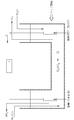
- FIG. 1 shows a specific example of an apparatus for carrying out the method for synthesizing ammonia according to the present invention.
- the method for synthesizing ammonia according to the present invention comprises an electrolyte phase with a predetermined distance between an anode and a cathode. Are arranged.
- the anode zone is supplied with water (H 2 O) and irradiated with light, and water is decomposed by a light absorption reaction, so that protons (H + ), electrons (e ⁇ ), and oxygen gas (O 2). ) Is formed.
- Nitrogen gas (N 2 ) is supplied to the cathode zone, and electrons (e ⁇ ) generated in the anode zone are transferred to the cathode zone via the lead wires to form N 3 ⁇ in the cathode zone, Water is supplied to the anode zone where ammonia (NH 3 ) is synthesized by the reaction of protons (H + ) that have moved from the anode zone to the cathode zone side in the electrolyte phase and N 3 ⁇ , When light is irradiated, water is decomposed by a light absorption reaction, and protons, electrons, and oxygen gas are formed.
- ammonia can be synthesized without using hydrogen gas, and fossil fuels such as natural gas as a conventional hydrogen source are not used.
- fossil fuels such as natural gas as a conventional hydrogen source are not used.
- the anode is provided with a photocatalyst, and the anode zone is irradiated with light, and water is decomposed by a photocatalytic reaction to form protons, electrons, and oxygen gas. It is preferable.
- the anode substrate for example, indium tin oxide (ITO), fluorine tin oxide (FTO) or the like is preferably used.
- ITO indium tin oxide
- FTO fluorine tin oxide
- a Ni porous body for example, a Ni porous body, a Ni porous body supporting nickel, iron or ruthenium, carbon paper, or a carbon paper supporting nickel, iron or ruthenium is preferably used.
- the photocatalyst may be a so-called visible light responsive photocatalyst that can express photocatalytic activity with visible light.
- visible light responsive photocatalysts include oxynitride compounds typified by TaON, LaTiO 2 N, CaNbO 2 N, LaTaON 2 and CaTaO 2 N, and Sm 2 Ti 2 S 2 O 7. that oxysulfide compound, and CaIn 2 O 4, SrIn 2 O 4, ZnGa 2 O 4, etc. Na 2 Sb 2 O 6 oxide containing metal ions of d 10 electronic states represented by like.
- the light irradiated to the anode zone is preferably sunlight or visible light irradiated from a light irradiation lamp.
- a xenon lamp or a krypton lamp is preferably used as the light irradiation lamp. Since these visible lights have the highest energy, by using these lights, the decomposition reaction of water proceeds rapidly, and ammonia can be synthesized with high efficiency.
- Example 1 First, the electrolyte of the electrolyte phase, with sulfuric acid (H 2 SO 4) aqueous solution of 0.002 N.
- sulfuric acid H 2 SO 4
- aqueous solution of 0.002 N As the anode, indium tin oxide (ITO) was used for the substrate, and TaON, which is a visible light responsive photocatalyst, was applied to the ITO substrate as a photocatalyst.
- the Ni porous body was used for the cathode.
- an anode having a photocatalyst and a cathode are disposed at a predetermined interval, and water (H 2 O) is supplied to the anode zone, and visible light is formed by a xenon lamp. Light was irradiated at 300W. Thereby, in the anode zone, water was decomposed by the photocatalytic reaction, and protons (H + ), electrons (e ⁇ ), and oxygen gas (O 2 ) were formed.
- nitrogen gas (N 2 ) was passed through the cathode zone at a flow rate of 100 ml / min.
- a voltage of 2.8 to 3.4 V was applied between the electrodes, and the ionic conductivity of the electrolyte at that time was measured.
- electrons (e ⁇ ) generated in the anode zone are transferred to the cathode zone via the lead wire, and in the cathode zone, nitrogen gas (N 2 ) receives the electrons (e ⁇ ), N 3 ⁇ was formed, and ammonia (NH 3 ) was generated by the reaction of protons (H + ) moving from the anode zone to the cathode zone side in the electrolyte phase with N 3 ⁇ .
- the produced ammonia was discharged from the apparatus together with the nitrogen gas circulating in the cathode zone.
Landscapes
- Chemical & Material Sciences (AREA)
- Chemical Kinetics & Catalysis (AREA)
- Organic Chemistry (AREA)
- Inorganic Chemistry (AREA)
- Engineering & Computer Science (AREA)
- Electrochemistry (AREA)
- Materials Engineering (AREA)
- Metallurgy (AREA)
- Analytical Chemistry (AREA)
- Electrolytic Production Of Non-Metals, Compounds, Apparatuses Therefor (AREA)
- Catalysts (AREA)
Priority Applications (3)
| Application Number | Priority Date | Filing Date | Title |
|---|---|---|---|
| US13/809,677 US8801915B2 (en) | 2010-07-21 | 2011-06-03 | Method for synthesizing ammonia |
| CN201180035396.8A CN103108994B (zh) | 2010-07-21 | 2011-06-03 | 氨的合成方法 |
| AU2011280799A AU2011280799B2 (en) | 2010-07-21 | 2011-06-03 | Method for synthesizing ammonia |
Applications Claiming Priority (2)
| Application Number | Priority Date | Filing Date | Title |
|---|---|---|---|
| JP2010163537A JP5604204B2 (ja) | 2010-07-21 | 2010-07-21 | アンモニアの合成方法 |
| JP2010-163537 | 2010-07-21 |
Publications (1)
| Publication Number | Publication Date |
|---|---|
| WO2012011324A1 true WO2012011324A1 (ja) | 2012-01-26 |
Family
ID=45496753
Family Applications (1)
| Application Number | Title | Priority Date | Filing Date |
|---|---|---|---|
| PCT/JP2011/062790 Ceased WO2012011324A1 (ja) | 2010-07-21 | 2011-06-03 | アンモニアの合成方法 |
Country Status (5)
| Country | Link |
|---|---|
| US (1) | US8801915B2 (enExample) |
| JP (1) | JP5604204B2 (enExample) |
| CN (1) | CN103108994B (enExample) |
| AU (1) | AU2011280799B2 (enExample) |
| WO (1) | WO2012011324A1 (enExample) |
Cited By (2)
| Publication number | Priority date | Publication date | Assignee | Title |
|---|---|---|---|---|
| CN108993546A (zh) * | 2018-07-12 | 2018-12-14 | 福州大学 | 高效光催化水裂解产氢和醇氧化的异质结光催化剂 |
| JP2019505663A (ja) * | 2015-12-16 | 2019-02-28 | シーメンス アクチエンゲゼルシヤフトSiemens Aktiengesellschaft | 電気化学セルおよび方法 |
Families Citing this family (20)
| Publication number | Priority date | Publication date | Assignee | Title |
|---|---|---|---|---|
| JP2015120118A (ja) * | 2013-12-24 | 2015-07-02 | 株式会社デンソー | アンモニア合成触媒 |
| JP6366287B2 (ja) * | 2014-02-06 | 2018-08-01 | 国立大学法人北海道大学 | アンモニア発生装置及びアンモニア発生方法 |
| US20160160312A1 (en) * | 2014-12-04 | 2016-06-09 | Air Products And Chemicals, Inc. | Hydrometallurgical System and Process Using an Ion Transport Membrane |
| CN104630811B (zh) * | 2015-02-13 | 2017-03-08 | 王海斌 | 一种电解制氨装置 |
| GB2544485B (en) * | 2015-11-16 | 2018-09-19 | Siemens Ag | Electrochemical cell comprising a steam inlet and a solid oxide layer |
| JPWO2017149718A1 (ja) | 2016-03-03 | 2018-12-27 | 日揮株式会社 | アンモニアの製造方法 |
| CN106082270B (zh) * | 2016-06-08 | 2018-02-06 | 南京科技职业学院 | 一种光催化合成氨的方法 |
| CN106480469A (zh) * | 2016-07-14 | 2017-03-08 | 张国权 | 小型制氨机的制造方法 |
| CN107686120B (zh) * | 2016-08-05 | 2020-04-21 | 华中师范大学 | 一种聚集太阳能催化合成氨的方法及其催化剂 |
| PE20200524A1 (es) * | 2017-07-25 | 2020-03-09 | Haldor Topsoe As | Metodo para la preparacion de gas de sintesis de amoniaco |
| CN108754534B (zh) * | 2018-05-25 | 2020-06-26 | 山东师范大学 | 一种电催化合成氨的铁基非贵金属催化剂及制备方法 |
| CN108977841B (zh) * | 2018-08-30 | 2021-07-23 | 中国科学院长春应用化学研究所 | 一种氮气和二氧化碳气体同步电化学还原合成尿素的方法 |
| US11885029B2 (en) | 2019-02-12 | 2024-01-30 | Georgia Tech Research Corporation | Systems and methods for forming nitrogen-based compounds |
| GB201904004D0 (en) | 2019-03-22 | 2019-05-08 | Oxford Univ Innovation | Photocatalyst |
| JP7613692B2 (ja) * | 2019-09-05 | 2025-01-15 | 国立大学法人 東京大学 | アンモニアの製造方法及び製造装置 |
| CN111394740B (zh) * | 2020-03-11 | 2021-07-27 | 南京航空航天大学 | 一种提高电催化氮还原合成氨反应效率的方法 |
| CN114622223B (zh) * | 2020-12-14 | 2023-08-25 | 中国科学院大连化学物理研究所 | 一种电催化脱硝合成氨的方法 |
| CN112939023A (zh) * | 2021-03-31 | 2021-06-11 | 西安热工研究院有限公司 | 一种火电厂制氨储能及脱硝的系统及其方法 |
| CN113387371B (zh) * | 2021-05-28 | 2023-08-22 | 西安交通大学 | 一种基于燃料电池形式设计的光电催化合成氨反应器 |
| CN114672823B (zh) * | 2022-05-16 | 2025-02-14 | 西安交通大学 | 基于高-低频声波组合的光电催化合成氨反应器及方法 |
Citations (4)
| Publication number | Priority date | Publication date | Assignee | Title |
|---|---|---|---|---|
| US4167461A (en) * | 1978-07-10 | 1979-09-11 | Allied Chemical Corporation | Photoenhanced reduction process |
| JP2001072985A (ja) * | 1999-09-02 | 2001-03-21 | Katsuyoshi Hoshino | 酸化チタンと導電性ポリマーの複合材料を用いた空中窒素の固定化方法 |
| JP2003200057A (ja) * | 2002-01-11 | 2003-07-15 | Japan Science & Technology Corp | 可視光応答性を持つ酸化チタン/導電性ポリマー複合材料からなる高効率な空中窒素固定複合化光触媒材料 |
| JP2010030870A (ja) * | 2008-07-30 | 2010-02-12 | Laser Gijutsu Sogo Kenkyusho | バイオマスエネルギー変換装置 |
Family Cites Families (5)
| Publication number | Priority date | Publication date | Assignee | Title |
|---|---|---|---|---|
| JP2005272856A (ja) | 2004-03-22 | 2005-10-06 | Kenichi Machida | アンモニア合成装置、アンモニア合成方法および燃焼装置を含むシステム |
| WO2008116254A1 (en) * | 2007-03-23 | 2008-10-02 | Robin Brimblecombe | Water oxidation catalyst |
| JP5127385B2 (ja) * | 2007-09-28 | 2013-01-23 | 学校法人同志社 | アンモニア電解合成装置 |
| US20100133110A1 (en) * | 2008-10-08 | 2010-06-03 | Massachusetts Institute Of Technology | Catalytic materials, photoanodes, and photoelectrochemical cells for water electrolysis and other, electrochemical techniques |
| US8236146B2 (en) * | 2008-10-30 | 2012-08-07 | Panasonic Corporation | Photoelectrochemical cell and energy system using the same |
-
2010
- 2010-07-21 JP JP2010163537A patent/JP5604204B2/ja not_active Expired - Fee Related
-
2011
- 2011-06-03 AU AU2011280799A patent/AU2011280799B2/en not_active Ceased
- 2011-06-03 CN CN201180035396.8A patent/CN103108994B/zh not_active Expired - Fee Related
- 2011-06-03 WO PCT/JP2011/062790 patent/WO2012011324A1/ja not_active Ceased
- 2011-06-03 US US13/809,677 patent/US8801915B2/en not_active Expired - Fee Related
Patent Citations (4)
| Publication number | Priority date | Publication date | Assignee | Title |
|---|---|---|---|---|
| US4167461A (en) * | 1978-07-10 | 1979-09-11 | Allied Chemical Corporation | Photoenhanced reduction process |
| JP2001072985A (ja) * | 1999-09-02 | 2001-03-21 | Katsuyoshi Hoshino | 酸化チタンと導電性ポリマーの複合材料を用いた空中窒素の固定化方法 |
| JP2003200057A (ja) * | 2002-01-11 | 2003-07-15 | Japan Science & Technology Corp | 可視光応答性を持つ酸化チタン/導電性ポリマー複合材料からなる高効率な空中窒素固定複合化光触媒材料 |
| JP2010030870A (ja) * | 2008-07-30 | 2010-02-12 | Laser Gijutsu Sogo Kenkyusho | バイオマスエネルギー変換装置 |
Cited By (3)
| Publication number | Priority date | Publication date | Assignee | Title |
|---|---|---|---|---|
| JP2019505663A (ja) * | 2015-12-16 | 2019-02-28 | シーメンス アクチエンゲゼルシヤフトSiemens Aktiengesellschaft | 電気化学セルおよび方法 |
| CN108993546A (zh) * | 2018-07-12 | 2018-12-14 | 福州大学 | 高效光催化水裂解产氢和醇氧化的异质结光催化剂 |
| CN108993546B (zh) * | 2018-07-12 | 2021-03-02 | 福州大学 | 高效光催化水裂解产氢和醇氧化的异质结光催化剂 |
Also Published As
| Publication number | Publication date |
|---|---|
| JP5604204B2 (ja) | 2014-10-08 |
| US20130112568A1 (en) | 2013-05-09 |
| CN103108994A (zh) | 2013-05-15 |
| AU2011280799A1 (en) | 2013-01-31 |
| AU2011280799B2 (en) | 2015-02-26 |
| JP2012025985A (ja) | 2012-02-09 |
| US8801915B2 (en) | 2014-08-12 |
| CN103108994B (zh) | 2016-01-20 |
Similar Documents
| Publication | Publication Date | Title |
|---|---|---|
| JP5604204B2 (ja) | アンモニアの合成方法 | |
| Ren et al. | Water electrolysis for hydrogen production: from hybrid systems to self-powered/catalyzed devices | |
| Feng et al. | Lattice strain engineering of Ni2P enables efficient catalytic hydrazine oxidation‐assisted hydrogen production | |
| Liu et al. | Innovations in electrocatalysts, hybrid anodic oxidation, and electrolyzers for enhanced direct seawater electrolysis | |
| Zhang et al. | Carbon-based catalysts for selective electrochemical nitrogen-to-ammonia conversion | |
| Pei et al. | High‐Entropy Sulfide Catalyst Boosts Energy‐Saving Electrochemical Sulfion Upgrading to Thiosulfate Coupled with Hydrogen Production | |
| Gao et al. | Photoelectrochemical production of disinfectants from seawater | |
| Xie et al. | Cu-based catalyst designs in CO 2 electroreduction: precise modulation of reaction intermediates for high-value chemical generation | |
| Latvytė et al. | A low-temperature ammonia electrolyser for wastewater treatment and hydrogen production | |
| WO2017117410A1 (en) | Non-noble metal electrocatalysts for oxygen depolarized cathodes and their application in chlor-alkali electrolysis cells | |
| TWI564434B (zh) | 用於電化學製造與氧化劑有關之化合物的裝置及方法 | |
| Gu et al. | Atomically dispersed metal catalysts for the electrochemical nitrogen reduction reaction | |
| Lang et al. | A review on hydrogen production: methods, materials and nanotechnology | |
| Cao et al. | Advances in Two‐Electron Water Oxidation Reaction for Hydrogen Peroxide Production: Catalyst Design and Interface Engineering | |
| Takagi et al. | Synergistic effect of Ag decorated in-liquid plasma treated titanium dioxide catalyst for efficient electrocatalytic CO2 reduction application | |
| JP3455779B2 (ja) | 半導体光触媒反応装置及び電解装置からなる水素の製造装置 | |
| Lee et al. | Cobalt single-atom catalyst as a multifunctional electrocatalyst for boosting radical generation | |
| Jung et al. | Laser‐Regulated CoFeRu‐LDH Nanostructures: Nitrite‐to‐Ammonia Production in Zn–Nitrite Battery and Oxygen Evolution in Water Electrolysis | |
| Wu et al. | Advancing Seawater Electrochemical Reaction for Fuel and Chemical Production | |
| Singh et al. | Exploring Hybrid Seawater Electrolysis with Anodic Oxidation Reactions (AORs): Recent Progress and Prospect | |
| KR20250013122A (ko) | 마그네슘-공기 이차전지 기반 이산화탄소 전환 하이브리드 전력 시스템 및 이를 이용한 해수 담수화 시스템 | |
| Wei et al. | Progress of Amorphous Catalysts for an Acidic Oxygen Evolution Reaction | |
| CN111996541B (zh) | 提高氢气产率的间接硫化氢电解方法和装置 | |
| KR100493811B1 (ko) | 물로부터 수소 기체를 제조하는 전기분해 방법 | |
| JP2016029199A (ja) | 電気化学プロセスによる化学品の製造方法及び製造装置 |
Legal Events
| Date | Code | Title | Description |
|---|---|---|---|
| WWE | Wipo information: entry into national phase |
Ref document number: 201180035396.8 Country of ref document: CN |
|
| 121 | Ep: the epo has been informed by wipo that ep was designated in this application |
Ref document number: 11809498 Country of ref document: EP Kind code of ref document: A1 |
|
| WWE | Wipo information: entry into national phase |
Ref document number: 13809677 Country of ref document: US |
|
| NENP | Non-entry into the national phase |
Ref country code: DE |
|
| ENP | Entry into the national phase |
Ref document number: 2011280799 Country of ref document: AU Date of ref document: 20110603 Kind code of ref document: A |
|
| 122 | Ep: pct application non-entry in european phase |
Ref document number: 11809498 Country of ref document: EP Kind code of ref document: A1 |