WO2012008063A1 - 発泡性発酵飲料の製造方法 - Google Patents
発泡性発酵飲料の製造方法 Download PDFInfo
- Publication number
- WO2012008063A1 WO2012008063A1 PCT/JP2010/071160 JP2010071160W WO2012008063A1 WO 2012008063 A1 WO2012008063 A1 WO 2012008063A1 JP 2010071160 W JP2010071160 W JP 2010071160W WO 2012008063 A1 WO2012008063 A1 WO 2012008063A1
- Authority
- WO
- WIPO (PCT)
- Prior art keywords
- fermentation
- fermented beverage
- raw material
- soybean protein
- sparkling
- Prior art date
- Legal status (The legal status is an assumption and is not a legal conclusion. Google has not performed a legal analysis and makes no representation as to the accuracy of the status listed.)
- Ceased
Links
Images
Classifications
-
- C—CHEMISTRY; METALLURGY
- C12—BIOCHEMISTRY; BEER; SPIRITS; WINE; VINEGAR; MICROBIOLOGY; ENZYMOLOGY; MUTATION OR GENETIC ENGINEERING
- C12C—BEER; PREPARATION OF BEER BY FERMENTATION; PREPARATION OF MALT FOR MAKING BEER; PREPARATION OF HOPS FOR MAKING BEER
- C12C5/00—Other raw materials for the preparation of beer
-
- C—CHEMISTRY; METALLURGY
- C12—BIOCHEMISTRY; BEER; SPIRITS; WINE; VINEGAR; MICROBIOLOGY; ENZYMOLOGY; MUTATION OR GENETIC ENGINEERING
- C12G—WINE; PREPARATION THEREOF; ALCOHOLIC BEVERAGES; PREPARATION OF ALCOHOLIC BEVERAGES NOT PROVIDED FOR IN SUBCLASSES C12C OR C12H
- C12G3/00—Preparation of other alcoholic beverages
- C12G3/02—Preparation of other alcoholic beverages by fermentation
Definitions
- the present invention relates to a method for producing a sparkling fermented beverage using a specific protein degradation product as a raw material.
- soy protein when soy protein is added as it is, the liquid viscosity increases and production problems such as delayed filtration are caused. In addition, soy protein has a problem of low solubility and poor utilization efficiency. Thus, by using a soybean protein degradation product, foam retention can be improved without causing problems in production.
- a soybean protein degradation product As a method of using a soybean protein degradation product as a raw material for beer, for example, (1) in a method for producing a fermented alcoholic beverage such as beer or miscellaneous sake, beer such as wheat gluten or soy protein is used as a part of the raw material.
- beer such as wheat gluten or soy protein
- a yeast high-availability amino acid-rich protein raw material degradation product or its preparation it promotes fermentation by brewer's yeast, enhances taste and flavor, and has a refreshing taste with no off-flavors or immature odors.
- a method for producing a fermented alcoholic beverage having a body feeling for example, see Patent Document 1.
- an enzyme degradation product of protein such as soybean protein is prepared using an alkaline protease (for example, see Patent Document 2). This is because protein degradation efficiency is better when the protein is denatured under alkaline conditions. Generally commercially available soybean peptides are also degraded by alkaline protease.
- JP 2006-158268 A Japanese Patent No. 3547532
- soy protein and its decomposition products As the amount of soy protein and its decomposition products increases, the effect of improving the foam retention of sparkling liquor and beer-like sparkling alcoholic beverages increases.
- soy protein decomposed product As the amount of soy protein decomposed product increases, there is a problem that aroma unfavorable to beer (mainly ginjo incense, sake-like odor) becomes stronger. For this reason, the use of soybean protein degradation products is limited, and the foam retention cannot be sufficiently improved.
- the present invention aims to provide a method for producing an effervescent fermented beverage with improved foam retention while suppressing the influence on aroma.
- the present inventors have obtained an unfavorable aroma by using a soy protein hydrolyzate degraded by a neutral protease instead of a soy protein hydrolyzate degraded by an alkaline protease.
- the inventors found that an effervescent fermented beverage with improved foam retention can be produced while suppressing the present invention and completed the present invention.
- the present invention (1) Effervescent fermentation in which soybean protein, defatted soybean, or soybean protein degradation product obtained by degrading concentrated soybean protein with neutral protease is added to and mixed with the raw material of the fermentation raw material liquid before fermentation with yeast.
- a method for producing a beverage (2) The method for producing a sparkling fermented beverage according to (1), wherein the phenylalanine content of the soy protein breakdown product is 5% or less based on the total nitrogen content, (3) The method for producing a sparkling fermented beverage according to (1) or (2), wherein the soy protein hydrolyzate has a weight average molecular weight of 6000 or more, (4)
- the step of adding and mixing the soybean protein degradation product to the raw material of the fermentation raw material liquid before fermentation with yeast is performed during the step of boiling the fermentation raw material liquid or before the boiling step.
- the method for producing an effervescent fermented beverage according to the present invention can produce an effervescent fermented beverage having excellent flavor and good foam. Foaming is an important factor for consumers to select a sparkling beverage, and it is expected that the sparkling fermented beverage manufactured by the manufacturing method according to the present invention will provide superior appearance quality.
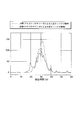
- Example 1 it is the figure which showed the chart obtained about each soybean protein degradation product.
- the effervescent fermented beverage means a beverage that has effervescence by carbon dioxide gas and is manufactured through a fermentation process.
- the sparkling fermented beverage may be an alcoholic beverage or a so-called non-alcoholic beverage or low alcoholic beverage having an alcohol content of less than 1% by volume. It may be a non-alcoholic beverage.
- the drink which uses malt as a raw material may be sufficient, and the drink which does not use malt as a raw material may be sufficient.
- Specific examples of the sparkling fermented beverage include beer, sparkling liquor made from malt, sparkling alcoholic beverages that do not use malt, low alcoholic beverages, non-alcoholic beer, and the like.
- liqueurs obtained by mixing malt as a raw material and a beverage produced through a fermentation process with an alcohol-containing distillate may be used.
- the alcohol-containing distillate is a solution containing alcohol obtained by a distillation operation, and one that is generally classified as distilled liquor can be used.
- spirits, whiskey, brandy, vodka, lamb, tequila, gin, shochu and the like can be used.
- the alcohol-containing distillate is more preferably a spirit because it has little influence on taste.
- the method for producing an effervescent fermented beverage according to the present invention is characterized in that a soy protein degradation product obtained by degrading soy protein or defatted soybean with a neutral protease is used as a raw material for a fermentation raw material liquid before fermentation by yeast.
- a soy protein degradation product obtained by degrading soy protein or defatted soybean with a neutral protease is used as a raw material for a fermentation raw material liquid before fermentation by yeast.
- soybean protein degradation product obtained by a conventional alkaline protease When a soybean protein degradation product obtained by a conventional alkaline protease is added before the fermentation step, phenethyl alcohol and its ester (such as ⁇ -phenethyl acetate) are likely to be produced by yeast metabolism.
- the soybean proteolysate obtained by neutral protease has a very low phenylalanine content compared to that obtained by alkaline protease, and even when used as a raw material for fermentation raw material liquid.
- an effervescent fermented beverage with a sufficiently reduced aroma that is particularly unfavorable for beer, such as ginjo aroma and sake-like odor is obtained.
- the soybean protein degradation product obtained by neutral protease has many fractions with large molecular weight compared with what was obtained by alkaline protease, Therefore It is guessed that foam retention is improved notably.
- Effervescent fermented beverages that use malt such as beer and happoshu as raw materials are manufactured in the following steps.
- warm water is added to the crushed material of malt, which is the main ingredient, and starch, such as rice and corn starch, which is the auxiliary ingredient, mixed and heated, and the starch is saccharified mainly using malt enzymes.
- Hops are added to the filtrate obtained by filtering this saccharified solution and boiled. Alternatively, hops can be mixed at any stage from the start of boiling to the end of boiling. After boiling, precipitates such as hop cake are removed in a tank called a whirlpool and cooled to an appropriate fermentation temperature with a plate cooler. The cooled filtrate is inoculated with yeast and fermented.
- yeast and proteins are removed by filtration to obtain the desired sparkling fermented beverage.
- liquid sugar containing a carbon source, nitrogen source as an amino acid-containing material other than wheat or malt, hops, pigments, etc. are mixed with warm water, and a liquid sugar solution To prepare.
- the liquid sugar solution is boiled in the same manner as in the production process of an effervescent fermented beverage using malt as a raw material, and precipitates such as hop koji are removed, cooled, inoculated with yeast, fermented, and filtered.
- Hops may be mixed with the liquid sugar solution during boiling, not before the start of boiling.
- a so-called low alcoholic beverage having an alcohol content of less than 1% by volume can be produced.
- Raw materials such as crushed malt used in the present invention, starch such as rice and corn starch, hops, liquid sugar containing carbon source, nitrogen source as amino acid-containing material other than wheat or malt, pigments and the like are particularly limited. What is normally used when manufacturing an effervescent fermented drink can be used in the quantity normally used.
- the soybean protein degradation product used in the present invention is obtained by degrading soybean protein, defatted soybean, or concentrated soybean protein with a neutral protease. Soybeans have excellent nutritional properties and good digestion and absorption, so that they can meet the increasing consumer health orientation in recent years.
- the state of the soy protein degradation product is not particularly limited, and may be a degradation product solution or a dry powder.
- Concentrated soybean protein refers to a product obtained by removing whey components from defatted soybean. For example, what is obtained by elution and removal of whey components from defatted soybeans with water-containing ethanol and drying.
- the enzyme is not particularly limited as long as it is a neutral protease.
- any commercially available neutral protease may be used, or these may be used in combination.
- Enzymes with high exo-protease activity produce a large amount of short-chain peptides and free amino acids. Therefore, enzymes with high endo-type protease activity are better than enzymes with high exo-protease activity to partially degrade proteins. preferable.
- a neutral protease means an enzyme having an optimum pH value for protease activity in a neutral region (for example, pH 5.0 to 8.0). Specific examples of such neutral protease include neutral protease derived from Bacillus genus.
- the soybean protein degradation product used in the present invention preferably has a phenylalanine content of 5% or less, more preferably 4% or less, and more preferably 1.4% or less, based on the total nitrogen content. It is preferably 1% or less.
- the phenylalanine content of a soybean protein degradation product can be made into a preferable range by adjusting suitably the kind and addition amount of neutral protease used for enzyme reaction, reaction time, etc.
- the amount of neutral protease added to the reaction solution for the decomposition reaction may be 0.5 to 5% based on the weight of soybean protein, defatted soybean, or concentrated soybean protein.
- the weight average molecular weight of the soybean protein degradation product used in the present invention is preferably 6000 or more, more preferably 6000 to 35000, and further preferably 8000 to 35000.
- the weight average molecular weight is 6000 or more, foam retention of the obtained sparkling fermented beverage is improved.
- the soy protein degradation product is used as a raw material for a fermentation raw material liquid before fermentation with yeast. That is, the soybean protein degradation product is added to or mixed with the fermentation raw material liquid at an arbitrary time before the fermentation process.
- the fermentation raw material liquid is a filtrate obtained by filtering the saccharified solution
- the liquid sugar It is a liquid sugar solution in which etc. are mixed.
- soy protein degradation product may be mixed with a saccharified solution or a liquid sugar solution before filtration, or may be mixed with a filtrate obtained by filtering the saccharified solution or the like. May be mixed after boiling, before removal of the precipitate, or after cooling and before fermentation.
- a soybean protein degradation product may contain an insoluble matter. In this invention, it is preferable to mix with a fermentation raw material liquid by the time of completion of the boiling process of a fermentation raw material liquid.
- the amount of soybean protein degradation product used as a part of the fermentation raw material liquid is not particularly limited, but is preferably 0.01% (weight / volume) to 3% (weight / volume) in the fermentation raw material liquid.
- Example 1 An effervescent fermented beverage made from malt was produced by the method for producing an effervescent fermented beverage of the present invention. First, 25 L of water and 1.5% by weight of neutral protease derived from Bacillus were added to 0.7 kg of purified soybean protein. While stirring, the enzyme reaction was carried out at 50 ° C. for 2 hours to obtain a soybean protein hydrolyzate solution. In addition, as a control, the same procedure was used except that an alkaline protease was used instead of a neutral protease and that the pH of the purified soy protein aqueous solution was adjusted to 9.0 with potassium hydroxide before the addition of the alkaline protease. A protein degradation product solution was obtained.
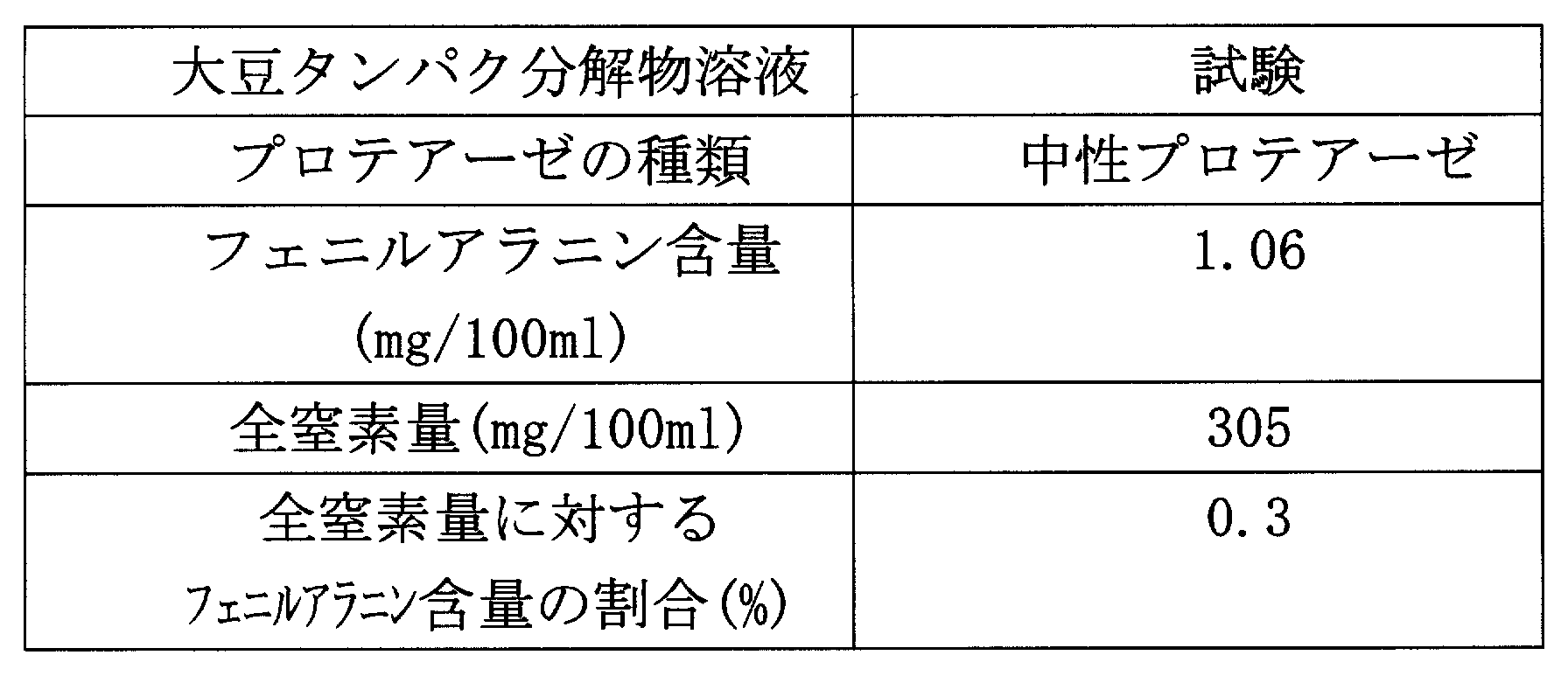
- the total nitrogen content and phenylalanine content of these soybean protein degradation product solutions were measured, and the ratio of the phenylalanine content to the total nitrogen content was calculated.
- the results are shown in Table 1.
- the soy proteolysate solution obtained by neutral protease (test) is slightly less in total nitrogen than the soy proteolysate solution obtained by alkaline protease (control), but has a phenylalanine content. Remarkably little, the ratio of phenylalanine content to total nitrogen content was also very low.
- the effervescent fermented drink was manufactured using the soy protein hydrolyzate solution (test) or the soy protein hydrolyzate solution (control). Specifically, to the wort prepared using 5 kg of pulverized malt and 80 L of warm water, 40 kg of liquid sugar, 0.5 kg of yeast extract, 0.02 kg of hops, and any of the soy proteolysate solutions prepared above were added. The whole amount was mixed and about 85 L of warm water was added to prepare about 200 L of fermentation raw material liquid. After the said fermentation raw material liquid was boiled at 100 degreeC for 90 minute (s), the hop koji was removed with the whirlpool.
- test soy protein hydrolyzate solution
- control soy protein hydrolyzate solution
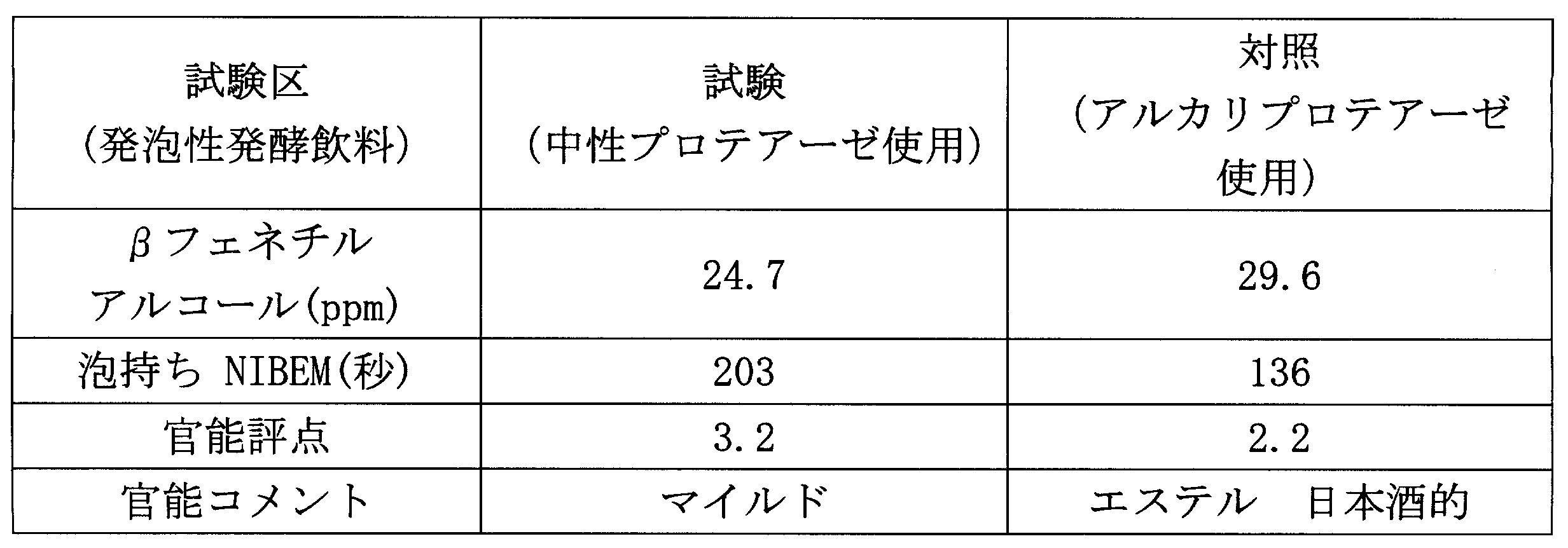
- the amount of ⁇ -phenethyl alcohol and NIBEM values of the two types of sparkling fermented beverages obtained were measured.
- the NIBEM value is a value obtained by measuring the collapse rate of the poured foam by electric conductivity, and is generally used for evaluation of foam retention of beer and the like.
- the sensory test of these sparkling fermented drinks was also performed. The sensory test was conducted in accordance with the sensory evaluation method adopted by both the ASBC and EBC organizations, which are also international standards for beer sensory evaluation (by the Beer Brewery Association, “BCOJ Sensory Evaluation Method” 2002). Specifically, the panel was composed of 10 beer brewing engineers and evaluated the taste, beer-like flavor (beer taste), and foam texture in five stages. The results are shown in Table 2.
- the amount of ⁇ -phenethyl alcohol in the sparkling fermented beverage (test) added with the soy protein hydrolyzate solution (test) was higher than that in the sparkling fermented beverage (control) added with the soy protein decomposed solution (control).
- the NIBEM value was 136 for the sparkling fermented beverage (control)
- the obtained filtrate was passed through a Shodex (registered trademark) PROTEIN KW-802.5 column (80 ⁇ 300 mm, Showa Denko KK) at a flow rate of 0.4 mL / min, and the soybean protein degradation product was eluted using the above phosphate buffer. did.
- the soy protein degradation product was detected by measuring the absorbance at 220 nm. Thereby, the weight average molecular weight of the proteolysate separated and purified in each fraction was calculated from a chart obtained using GPC software (manufactured by Hitachi).
- Molecular weight markers are 75,000 (Conalbmin, manufactured by GE Healthcare), 43,000 (Ovalbumin, manufactured by GE Healthcare), 29,000 (Carbonic anhydrase, manufactured by GE Healthcare), 13,700 (Ribonuclease A). GE Healthcare), 5,733 (Insulin, manufactured by SIGMA), 1,672 (Neurotensin, manufactured by SIGMA), and 475 (Leupeptin hemisulfate salt, manufactured by SIGMA) were used.
- FIG. 1 is a chart obtained for each soybean protein degradation product.
- the soy protein hydrolyzate degraded by alkaline protease control
- the soy protein hydrolyzate degraded by neutral protease test
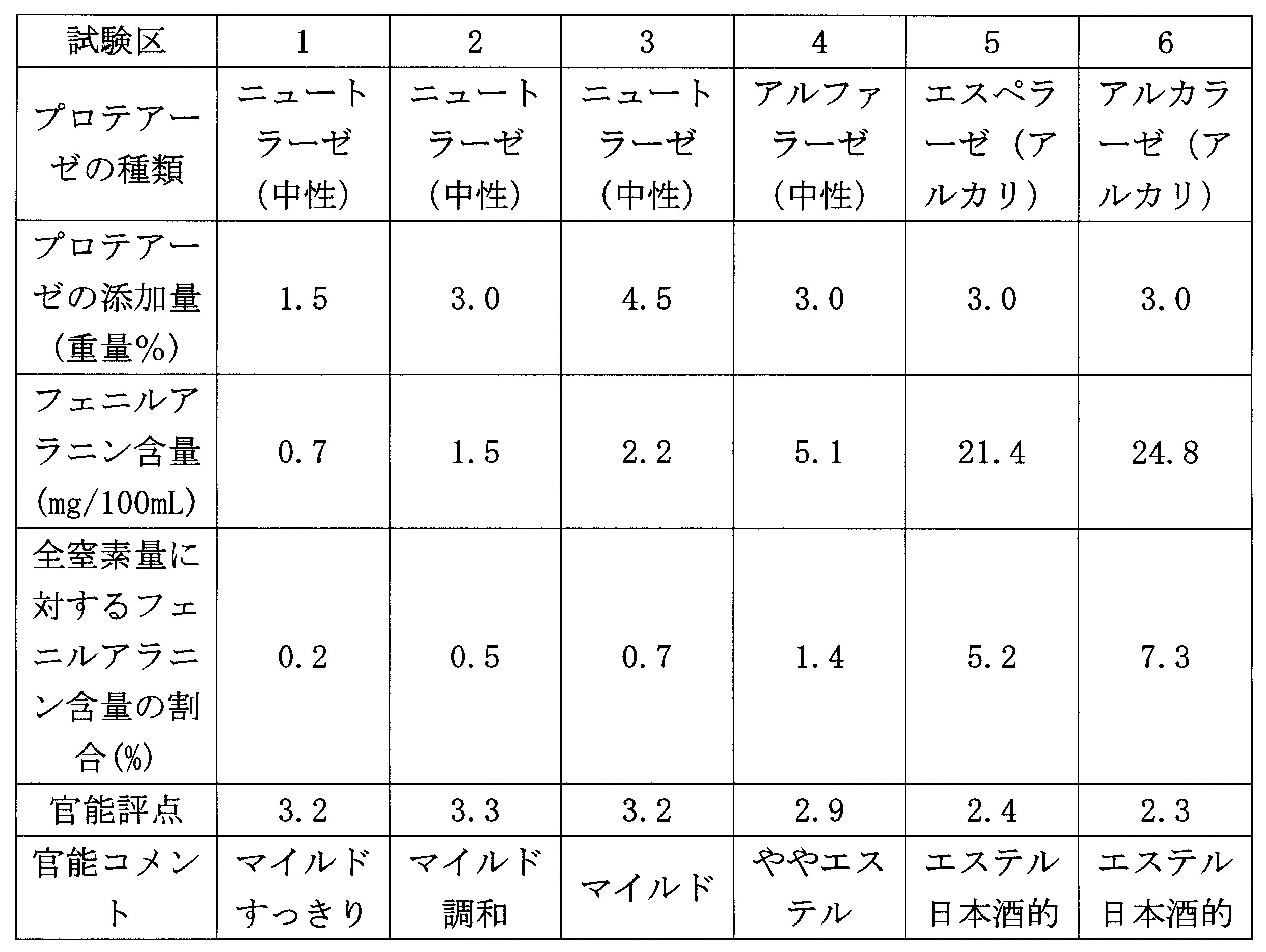
- Example 2 An effervescent fermented beverage that does not use malt as a raw material was produced using soybean protein degradation products that were decomposed using various proteases. Neutase (manufactured by Novozymes) and alphalase (manufactured by Danisco) were used as neutral proteases, and Esperase (manufactured by Novozymes) and alcalases (manufactured by Novozymes) were used as alkaline proteases. These enzymes are all enzymes derived from the genus Bacillus.
- the total amount of nitrogen in the soybean protein degradation product solution was slightly larger when alkaline protease was used, but there was no significant difference.
- the phenylalanine content of the soy proteolysate solution using neutral proteases such as neutralase and alpharase was significantly lower than that using alkaline proteases such as esperase and alcalase.
- test groups 1 to 4 using the soybean protein hydrolyzate prepared using the neutral protease have less ester and sake-like aromas than the test groups 5 and 6 using the alkaline protease. Excellent flavor. From these results, it was found that as the ratio of phenylalanine content to the total nitrogen content in the soy proteolysate used increased, the aroma like ester and sake became stronger and the sensory score also decreased.
- the test sections 1 to 3 have a very high sensory evaluation, so that the phenylalanine content relative to the total nitrogen amount is 1% or less, so that a very good beer-like sparkling fermented beverage can be obtained. I found out that
- Example 3 An effervescent fermented beverage made from malt was produced by the method for producing an effervescent fermented beverage of the present invention.
- the sparkling fermented drink was manufactured using the obtained soybean protein degradation product solution.
- 40 kg of liquid sugar, 0.5 kg of yeast extract, 0.02 kg of hops, and the soybean protein hydrolyzate solution prepared above are mixed in a wort prepared using 5 kg of crushed malt and 80 L of warm water.
- about 85 L of warm water was added to prepare about 200 L of fermentation raw material liquid.
- the hop koji was removed with the whirlpool.
- 20 L of warm water was added to about 180 L of the fermentation raw material liquid after the removal to adjust the sugar content to 12.0%, and then cooled to 5 ° C. with a plate cooler.
- Example 5 In the same manner as in Example 1, the amount of ⁇ -phenethyl alcohol and the NIBEM value of the obtained sparkling fermented beverage were measured, and a sensory test was also performed. The results are shown in Table 5. As a result, the effervescent fermented beverage to which the soy protein hydrolyzate solution was added had a small amount of ⁇ -phenethyl alcohol, a small ester-like sake flavor, and an excellent beer-like flavor. Furthermore, the NIBEM value was 191, and it was confirmed that the foam retention of the sparkling fermented beverage was remarkably improved by using a soybean protein hydrolyzate degraded by neutral protease.
- Example 4 To 1.5 kg of concentrated soybean protein, 25 L of water and a neutral protease derived from the genus Bacillus were added by 1.5% by weight based on the weight of the concentrated soybean protein. The enzyme reaction was carried out at 50 ° C. for 2 hours with stirring to obtain a soybean protein degradation solution. The total nitrogen and phenylalanine contents of these soy protein hydrolyzate solutions were measured, and the ratio of the phenylalanine content to the total nitrogen content was calculated. The results are shown in Table 6. The soy proteolytic solution (test) obtained with neutral protease had a very low ratio of phenylalanine content to total nitrogen content.
- the sparkling fermented drink was manufactured using the obtained soybean protein degradation product solution.
- wort prepared using 5 kg of pulverized malt and 80 L of warm water was mixed with 40 kg of liquid sugar, 0.5 kg of yeast extract, 0.02 kg of hops, and the soy proteolysis solution prepared above, and heated water was added approximately.
- 85 L about 200 L fermentation raw material liquid was prepared.
- the fermentation raw material liquid was boiled at 100 ° C. for 90 minutes, and then hop koji was removed with a whirlpool.
- 20 L of warm water was added to about 180 L of the fermentation raw material liquid after removal to adjust the sugar content to 12.0%, and then cooled to 5 ° C. with a plate cooler.
- the obtained cooled fermentation raw material liquid was transferred to a fermentation tank, inoculated with 25 ⁇ 10 6 muddy yeast per 1 ml of the juice, and fermented at 10 ° C. for 168 hours.
- the obtained fermentation broth was aged (post-fermented) for 7 days at -1 ° C.
- the obtained fermented liquor was subjected to diatomaceous earth filtration using a candle filter to remove yeast, protein, and the like, and an intended sparkling fermented beverage was obtained.
- the amount of ⁇ -phenethyl alcohol and NIBEM value of the sparkling beverage obtained in the same manner as in Example 1 were measured, and further a sensory test was performed.
- the results are shown in Table 7.
- the effervescent fermented beverage to which the soy protein hydrolyzate solution was added had a small amount of ⁇ -phenethyl alcohol, a small ester-like sake flavor, and an excellent beer-like flavor.
- the NIBEM value was 205, and it was confirmed that the foam retention of the sparkling fermented beverage was remarkably improved by using a soybean protein hydrolyzate degraded by neutral protease.
- the method for producing sparkling fermented beverages of the present invention can produce sparkling fermented beverages with excellent aroma and foam retention, and can be used in the field of manufacturing beverages such as beer, sparkling liquor and non-alcoholic beer. is there.
Landscapes
- Chemical & Material Sciences (AREA)
- Organic Chemistry (AREA)
- Engineering & Computer Science (AREA)
- Health & Medical Sciences (AREA)
- Biochemistry (AREA)
- Bioinformatics & Cheminformatics (AREA)
- General Engineering & Computer Science (AREA)
- General Health & Medical Sciences (AREA)
- Genetics & Genomics (AREA)
- Life Sciences & Earth Sciences (AREA)
- Wood Science & Technology (AREA)
- Zoology (AREA)
- Food Science & Technology (AREA)
- Alcoholic Beverages (AREA)
- Non-Alcoholic Beverages (AREA)
Abstract
Description
(1) 大豆タンパク、脱脂大豆、又は濃縮大豆タンパクを中性プロテアーゼにより分解して得られた大豆タンパク分解物を、酵母による発酵前に、発酵原料液の原料に添加・混合する、発泡性発酵飲料の製造方法、
(2) 前記大豆タンパク分解物のフェニルアラニン含量が、全窒素量に対して5%以下である前記(1)に記載の発泡性発酵飲料の製造方法、
(3) 前記大豆タンパク分解物の重量平均分子量が6000以上である、前記(1)又は(2)に記載の発泡性発酵飲料の製造方法、
(4) 前記大豆タンパク分解物を酵母による発酵前に発酵原料液の原料に添加・混合する工程が、発酵原料液を煮沸する工程中又は当該煮沸工程の前に行われる、前記(1)~(3)のいずれか一つに記載の発泡性発酵飲料の製造方法、
(5) 前記中性プロテアーゼが、Bacillus属由来の中性プロテアーゼである、前記(1)~(4)のいずれか一つに記載の発泡性発酵飲料の製造方法、
を提供するものである。
本発明の発泡性発酵飲料の製造方法により、麦芽を原料とした発泡性発酵飲料を製造した。
まず、精製大豆タンパク0.7kgに、水を25Lと、Bacillus属由来の中性プロテアーゼを大豆タンパク重量に対して1.5%重量とを添加した。攪拌しながら50℃で2時間酵素反応を行い、大豆タンパク分解物溶液を得た。
また、対照として、中性プロテアーゼに変えてアルカリプロテアーゼを用いたこと、及びアルカリプロテアーゼ添加前に水酸化カリウムにて精製大豆タンパク水溶液のpHを9.0に調製したこと以外は同様にして、大豆タンパク分解物溶液を得た。
これらの大豆タンパク分解物溶液の全窒素量及びフェニルアラニン含量を測定し、全窒素量に対するフェニルアラニン含量の割合を算出した。結果を表1に示す。中性プロテアーゼにより得られた大豆タンパク分解物溶液(試験)は、とアルカリプロテアーゼにより得られた大豆タンパク分解物溶液(対照)と比べて、全窒素量は若干少ないだけであるが、フェニルアラニン含量が顕著に少なく、全窒素量に対するフェニルアラニン含量の割合も非常に低かった。

実施例1で用いた大豆タンパク分解物溶液(試験)及び大豆タンパク分解物溶液(対照)中の大豆タンパク分解物の重量平均分子量を測定した。
まず、50mMリン酸緩衝液(1%(重量/体積)SDS、1.17%(重量/体積)NaCl、pH7.0 )を用いて希釈調整した大豆タンパク分解物溶液を、10分間超音波処理を行った後、0.2μmフィルターを用いて濾過した。得られた濾液を、Shodex(登録商標) PROTEIN KW-802.5カラム(80x300mm、昭和電工社製)に流速0.4mL/分で通し、上記リン酸緩衝液を用いて大豆タンパク分解物を溶出した。大豆タンパク分解物の検出は220nmの吸光度を測定して行った。これにより、各画分に分離精製されたタンパク分解物の重量平均分子量を、GPCソフトウェア(日立社製)を使用して得られたチャートから算出した。分子量マーカーは、75,000(Conalbmin、GEヘルスケア社製)、43,000(Ovalbumin、GEヘルスケア社製)、29,000(Carbonic anhydrase、GEヘルスケア社製)、13,700(Ribonuclease A、GEヘルスケア社製)、5,733(Insulin、SIGMA社製)、1,672(Neurotensin、SIGMA社製)、475(Leupeptin hemisulfate salt、SIGMA社製)を用いた。
各種プロテアーゼを用いて分解した大豆タンパク分解物を用いて、麦芽を原料としない発泡性発酵飲料を製造した。中性プロテアーゼとしてニュートラーゼ(ノボザイムス社製)及びアルファラーゼ(ダニスコ社製)を、アルカリプロテアーゼとしてエスペラーゼ(ノボザイムス社製)及びアルカラーゼ(ノボザイムス社製)を用いた。これらの酵素は、いずれもBacillus属由来の酵素である。
これらの大豆タンパク分解物溶液の全窒素量及びフェニルアラニン含量を測定し、全窒素量に対するフェニルアラニン含量の割合を算出した。算出結果を表3に示す。この結果、大豆タンパク分解物溶液の全窒素量は、アルカリプロテアーゼを用いた場合のほうが、若干多いものの、大きな違いはなかった。しかしながら、中性プロテアーゼであるニュートラーゼやアルファラーゼを用いた場合の大豆タンパク分解物溶液のフェニルアラニン含量は、いずれも、アルカリプロテアーゼであるエスペラーゼやアルカラーゼを用いた場合よりも顕著に少なかった。
本発明の発泡性発酵飲料の製造方法により、麦芽を原料とした発泡性発酵飲料を製造した。
まず、脱脂大豆3.0kgに、水を25Lと、Bacillus属由来の中性プロテアーゼを脱脂大豆重量に対して1.5%重量添加した。攪拌しながら50℃で2時間酵素反応を行い、大豆タンパク分解物溶液を得た。
これらの大豆タンパク分解物溶液の全窒素量及びフェニルアラニン含量を測定し、全窒素量に対するフェニルアラニン含量の割合を算出した。結果を表4に示す。中性プロテアーゼにより得られた大豆タンパク分解物溶液(試験)は、全窒素量に対するフェニルアラニン含量の割合が非常に低かった。
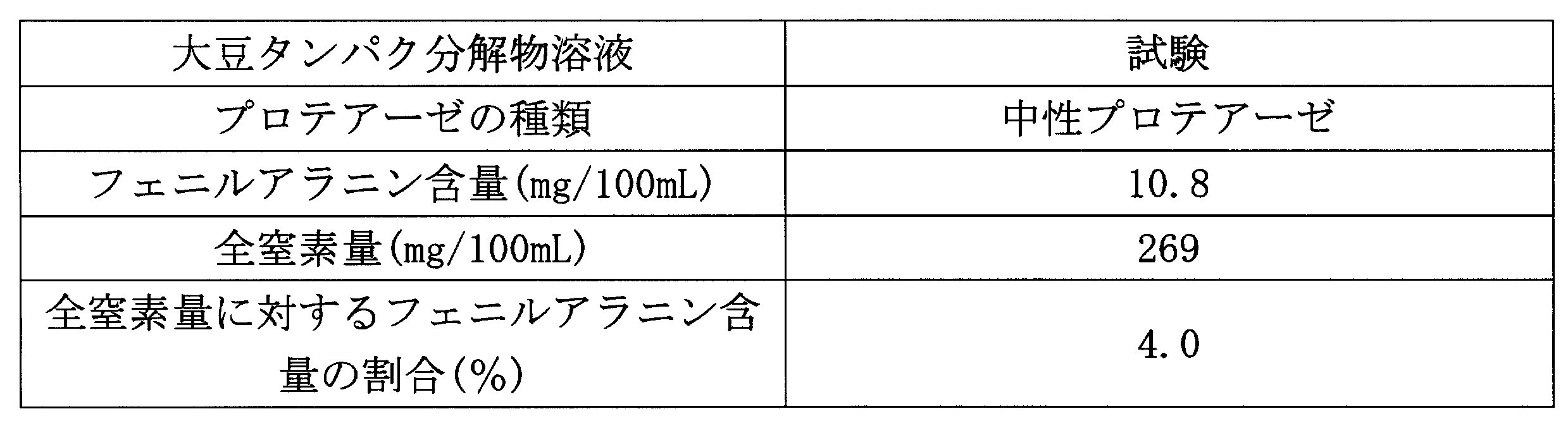
この結果、大豆タンパク分解物溶液を添加した発泡性発酵飲料は、βフェネチルアルコール量が少なく、かつ、エステルや日本酒的な香味が少なく、ビールらしい香味に優れていた。さらに、NIBEM値が191であり、中性プロテアーゼにより分解された大豆タンパク分解物を用いることにより、発泡性発酵飲料の泡持ちが顕著に改善されることが確認された。

濃縮大豆タンパク1.3kgに水を25L及びBacillus属由来の中性プロテアーゼを濃縮大豆タンパク重に対して1.5%重量添加した。攪拌しながら50℃で2時間酵素反応を行い、大豆タンパク分解溶液を得た。
これらの大豆タンパク分解物溶液の全窒素及びフェニルアラニン含量を測定し、全窒素量に対するフェニルアラニン含量の割合を算出した。結果を表6に示す。中性プロテアーゼにより得られた大豆タンパク分解溶液(試験)は、全窒素量に対するフェニルアラニン含量の割合が非常に低かった。
この結果、大豆タンパク分解物溶液を添加した発泡性発酵飲料は、βフェネチルアルコール量が少なく、かつ、エステルや日本酒的な香味が少なく、ビールらしい香味に優れていた。さらにNIBEM値が205であり、中性プロテアーゼにより分解された大豆タンパク分解物を用いることにより、発泡性発酵飲料の泡持ちが顕著に改善されることが確認された。

Claims (5)
- 大豆タンパク、脱脂大豆、又は濃縮大豆タンパクを中性プロテアーゼにより分解して得られた大豆タンパク分解物を、酵母による発酵前に、発酵原料液の原料に添加・混合する工程を有する、発泡性発酵飲料の製造方法。
- 前記大豆タンパク分解物のフェニルアラニン含量が、全窒素量に対して5%以下である、請求項1に記載の発泡性発酵飲料の製造方法。
- 前記大豆タンパク分解物の重量平均分子量が6000以上である、請求項1又は2に記載の発泡性発酵飲料の製造方法。
- 前記大豆タンパク分解物を酵母による発酵前に発酵原料液の原料に添加・混合する工程が、発酵原料液を煮沸する工程中又は当該煮沸工程の前に行われる、請求項1~3に記載の発泡性発酵飲料の製造方法。
- 前記中性プロテアーゼが、Bacillus属由来の中性プロテアーゼである、請求項1~4のいずれか一項に記載の発泡性発酵飲料の製造方法。
Priority Applications (2)
| Application Number | Priority Date | Filing Date | Title |
|---|---|---|---|
| CN2010800679811A CN102985525A (zh) | 2010-07-16 | 2010-11-26 | 发泡性发酵饮料的制造方法 |
| JP2012524398A JP5778149B2 (ja) | 2010-07-16 | 2010-11-26 | 発泡性発酵飲料の製造方法 |
Applications Claiming Priority (2)
| Application Number | Priority Date | Filing Date | Title |
|---|---|---|---|
| JP2010-161199 | 2010-07-16 | ||
| JP2010161199 | 2010-07-16 |
Publications (1)
| Publication Number | Publication Date |
|---|---|
| WO2012008063A1 true WO2012008063A1 (ja) | 2012-01-19 |
Family
ID=45469083
Family Applications (1)
| Application Number | Title | Priority Date | Filing Date |
|---|---|---|---|
| PCT/JP2010/071160 Ceased WO2012008063A1 (ja) | 2010-07-16 | 2010-11-26 | 発泡性発酵飲料の製造方法 |
Country Status (3)
| Country | Link |
|---|---|
| JP (1) | JP5778149B2 (ja) |
| CN (1) | CN102985525A (ja) |
| WO (1) | WO2012008063A1 (ja) |
Cited By (13)
| Publication number | Priority date | Publication date | Assignee | Title |
|---|---|---|---|---|
| JP2014124122A (ja) * | 2012-12-26 | 2014-07-07 | Asahi Breweries Ltd | ビールテイスト飲料の製造方法 |
| JP2014180269A (ja) * | 2013-03-21 | 2014-09-29 | Sapporo Breweries Ltd | ビールテイスト飲料及びその製造方法 |
| JP2014180268A (ja) * | 2013-03-21 | 2014-09-29 | Sapporo Breweries Ltd | ビールテイスト飲料及びその製造方法 |
| WO2015019713A1 (ja) * | 2013-08-05 | 2015-02-12 | アサヒビール株式会社 | ノンアルコールビールテイスト飲料の泡持ち改善方法、及びノンアルコールビールテイスト飲料の製造方法 |
| JP2015128441A (ja) * | 2015-03-04 | 2015-07-16 | サッポロビール株式会社 | ビールテイスト飲料 |
| JP2015130874A (ja) * | 2015-03-04 | 2015-07-23 | サッポロビール株式会社 | ビールテイスト飲料 |
| JP2015154745A (ja) * | 2014-02-20 | 2015-08-27 | アサヒビール株式会社 | 発酵麦芽飲料 |
| JP2015154747A (ja) * | 2014-02-20 | 2015-08-27 | アサヒビール株式会社 | 発酵麦芽飲料 |
| JP2015211684A (ja) * | 2015-06-26 | 2015-11-26 | サッポロビール株式会社 | ビールテイスト飲料及びその製造方法 |
| JP2016047070A (ja) * | 2016-01-13 | 2016-04-07 | サッポロビール株式会社 | ビールテイスト飲料及びビールテイスト飲料の泡持ち向上方法 |
| JP2016052327A (ja) * | 2015-12-11 | 2016-04-14 | サッポロビール株式会社 | ビールテイスト飲料及びその製造方法 |
| JP2016116454A (ja) * | 2014-12-18 | 2016-06-30 | キリン株式会社 | ビールテイストの発酵アルコール飲料およびその製造方法 |
| JP2019118304A (ja) * | 2018-01-04 | 2019-07-22 | アサヒビール株式会社 | 発酵アルコール飲料の製造方法 |
Families Citing this family (2)
| Publication number | Priority date | Publication date | Assignee | Title |
|---|---|---|---|---|
| CN103275880A (zh) * | 2013-06-08 | 2013-09-04 | 山东省高唐蓝山集团总公司 | 一种用豆清水发酵生产酵母细胞的方法 |
| KR102099597B1 (ko) * | 2018-08-29 | 2020-04-10 | 하이트진로 주식회사 | 이취가 감소되고 청량감 및 풍미가 개선된 주류의 제조 방법 |
Citations (6)
| Publication number | Priority date | Publication date | Assignee | Title |
|---|---|---|---|---|
| JPH04341168A (ja) * | 1991-05-14 | 1992-11-27 | Asahi Breweries Ltd | ノンアルコールビール風飲料 |
| JPH04341167A (ja) * | 1991-05-14 | 1992-11-27 | Asahi Breweries Ltd | 大豆ペプチド入り人参発酵飲料 |
| JPH0947276A (ja) * | 1995-08-09 | 1997-02-18 | Kirin Brewery Co Ltd | 新規ビールの製造方法 |
| JP2006158268A (ja) * | 2004-12-06 | 2006-06-22 | Kirin Brewery Co Ltd | 発酵アルコール飲料及びその製造方法 |
| WO2006068191A1 (ja) * | 2004-12-21 | 2006-06-29 | Fuji Oil Company, Limited | ビール類の製造方法及びビール類製造用大豆ペプチド |
| JP2006238877A (ja) * | 2004-12-15 | 2006-09-14 | Kirin Brewery Co Ltd | 大豆タンパク分解物を原料とする発酵アルコール飲料及びその製造方法 |
Family Cites Families (2)
| Publication number | Priority date | Publication date | Assignee | Title |
|---|---|---|---|---|
| PT906029E (pt) * | 1996-04-09 | 2002-11-29 | Du Pont | Produto de proteina de soja enriquecido em isoflavona e metodo para o seu fabrico |
| JP4275170B2 (ja) * | 2006-12-01 | 2009-06-10 | アサヒビール株式会社 | 発泡性アルコール飲料の製造方法 |
-
2010
- 2010-11-26 JP JP2012524398A patent/JP5778149B2/ja active Active
- 2010-11-26 WO PCT/JP2010/071160 patent/WO2012008063A1/ja not_active Ceased
- 2010-11-26 CN CN2010800679811A patent/CN102985525A/zh active Pending
Patent Citations (6)
| Publication number | Priority date | Publication date | Assignee | Title |
|---|---|---|---|---|
| JPH04341168A (ja) * | 1991-05-14 | 1992-11-27 | Asahi Breweries Ltd | ノンアルコールビール風飲料 |
| JPH04341167A (ja) * | 1991-05-14 | 1992-11-27 | Asahi Breweries Ltd | 大豆ペプチド入り人参発酵飲料 |
| JPH0947276A (ja) * | 1995-08-09 | 1997-02-18 | Kirin Brewery Co Ltd | 新規ビールの製造方法 |
| JP2006158268A (ja) * | 2004-12-06 | 2006-06-22 | Kirin Brewery Co Ltd | 発酵アルコール飲料及びその製造方法 |
| JP2006238877A (ja) * | 2004-12-15 | 2006-09-14 | Kirin Brewery Co Ltd | 大豆タンパク分解物を原料とする発酵アルコール飲料及びその製造方法 |
| WO2006068191A1 (ja) * | 2004-12-21 | 2006-06-29 | Fuji Oil Company, Limited | ビール類の製造方法及びビール類製造用大豆ペプチド |
Cited By (17)
| Publication number | Priority date | Publication date | Assignee | Title |
|---|---|---|---|---|
| JP2014124122A (ja) * | 2012-12-26 | 2014-07-07 | Asahi Breweries Ltd | ビールテイスト飲料の製造方法 |
| JP2014180269A (ja) * | 2013-03-21 | 2014-09-29 | Sapporo Breweries Ltd | ビールテイスト飲料及びその製造方法 |
| JP2014180268A (ja) * | 2013-03-21 | 2014-09-29 | Sapporo Breweries Ltd | ビールテイスト飲料及びその製造方法 |
| WO2015019713A1 (ja) * | 2013-08-05 | 2015-02-12 | アサヒビール株式会社 | ノンアルコールビールテイスト飲料の泡持ち改善方法、及びノンアルコールビールテイスト飲料の製造方法 |
| JP2015029479A (ja) * | 2013-08-05 | 2015-02-16 | アサヒビール株式会社 | ノンアルコールビールテイスト飲料の泡持ち改善方法、及びノンアルコールビールテイスト飲料の製造方法 |
| KR102231291B1 (ko) * | 2013-08-05 | 2021-03-22 | 아사히비루 가부시키가이샤 | 논알코올 맥주맛 음료의 거품 지속 개선 방법 및 논알코올 맥주맛 음료의 제조 방법 |
| KR20160039202A (ko) * | 2013-08-05 | 2016-04-08 | 아사히비루 가부시키가이샤 | 논알코올 맥주맛 음료의 거품 지속 개선 방법 및 논알코올 맥주맛 음료의 제조 방법 |
| JP2015154747A (ja) * | 2014-02-20 | 2015-08-27 | アサヒビール株式会社 | 発酵麦芽飲料 |
| JP2015154745A (ja) * | 2014-02-20 | 2015-08-27 | アサヒビール株式会社 | 発酵麦芽飲料 |
| JP2016116454A (ja) * | 2014-12-18 | 2016-06-30 | キリン株式会社 | ビールテイストの発酵アルコール飲料およびその製造方法 |
| JP2015130874A (ja) * | 2015-03-04 | 2015-07-23 | サッポロビール株式会社 | ビールテイスト飲料 |
| JP2015128441A (ja) * | 2015-03-04 | 2015-07-16 | サッポロビール株式会社 | ビールテイスト飲料 |
| JP2015211684A (ja) * | 2015-06-26 | 2015-11-26 | サッポロビール株式会社 | ビールテイスト飲料及びその製造方法 |
| JP2016052327A (ja) * | 2015-12-11 | 2016-04-14 | サッポロビール株式会社 | ビールテイスト飲料及びその製造方法 |
| JP2016047070A (ja) * | 2016-01-13 | 2016-04-07 | サッポロビール株式会社 | ビールテイスト飲料及びビールテイスト飲料の泡持ち向上方法 |
| JP2019118304A (ja) * | 2018-01-04 | 2019-07-22 | アサヒビール株式会社 | 発酵アルコール飲料の製造方法 |
| JP7007200B2 (ja) | 2018-01-04 | 2022-02-10 | アサヒビール株式会社 | 発酵アルコール飲料の製造方法 |
Also Published As
| Publication number | Publication date |
|---|---|
| CN102985525A (zh) | 2013-03-20 |
| JPWO2012008063A1 (ja) | 2013-09-05 |
| JP5778149B2 (ja) | 2015-09-16 |
Similar Documents
| Publication | Publication Date | Title |
|---|---|---|
| JP5778149B2 (ja) | 発泡性発酵飲料の製造方法 | |
| JP5157913B2 (ja) | 泡安定剤及びそれを含有してなる発泡性飲料 | |
| JP6757388B2 (ja) | 発泡性飲料の製造方法 | |
| JP5433114B2 (ja) | 非発酵ビールテイスト飲料及びその製造方法 | |
| KR20200062396A (ko) | 미발효 맥주 맛 음료 | |
| WO2015019713A1 (ja) | ノンアルコールビールテイスト飲料の泡持ち改善方法、及びノンアルコールビールテイスト飲料の製造方法 | |
| AU2016306247A1 (en) | Beer-like effervescent beverage | |
| WO2017022490A1 (ja) | 多糖類-タンパク質複合体の製造方法 | |
| JP4275170B2 (ja) | 発泡性アルコール飲料の製造方法 | |
| JP6105277B2 (ja) | ビールテイスト飲料の製造方法 | |
| JP6550625B2 (ja) | 発泡性飲料及びその製造方法 | |
| JP6284359B2 (ja) | 発酵麦芽飲料 | |
| KR101995065B1 (ko) | 보리 및 전분을 이용한, 맥주 풍미를 갖는 발효주의 제조 방법 | |
| JP2024043250A (ja) | 低アルコールビールテイスト飲料及びその製造方法 | |
| JP7419015B2 (ja) | 発泡性アルコール飲料 | |
| JP7201769B2 (ja) | 発酵麦芽飲料の製造方法 | |
| JP5904724B2 (ja) | 渋味が低減されたビール様飲料の製造方法 | |
| JP5717830B2 (ja) | 非発酵ビールテイスト飲料及びその製造方法 | |
| KR101920553B1 (ko) | 보리를 이용한 주류의 제조 방법 | |
| KR20240099799A (ko) | 무알콜 맥주의 제조방법 | |
| JP6294662B2 (ja) | 発酵麦芽飲料 | |
| JP2019118304A (ja) | 発酵アルコール飲料の製造方法 |
Legal Events
| Date | Code | Title | Description |
|---|---|---|---|
| WWE | Wipo information: entry into national phase |
Ref document number: 201080067981.1 Country of ref document: CN |
|
| 121 | Ep: the epo has been informed by wipo that ep was designated in this application |
Ref document number: 10854745 Country of ref document: EP Kind code of ref document: A1 |
|
| WWE | Wipo information: entry into national phase |
Ref document number: 2012524398 Country of ref document: JP |
|
| NENP | Non-entry into the national phase |
Ref country code: DE |
|
| 122 | Ep: pct application non-entry in european phase |
Ref document number: 10854745 Country of ref document: EP Kind code of ref document: A1 |