WO2010061658A1 - ゲーム装置、ゲーム装置の制御方法、プログラム及び情報記憶媒体 - Google Patents
ゲーム装置、ゲーム装置の制御方法、プログラム及び情報記憶媒体 Download PDFInfo
- Publication number
- WO2010061658A1 WO2010061658A1 PCT/JP2009/061119 JP2009061119W WO2010061658A1 WO 2010061658 A1 WO2010061658 A1 WO 2010061658A1 JP 2009061119 W JP2009061119 W JP 2009061119W WO 2010061658 A1 WO2010061658 A1 WO 2010061658A1
- Authority
- WO
- WIPO (PCT)
- Prior art keywords
- player
- character
- operation target
- game
- teammate
- Prior art date
- Legal status (The legal status is an assumption and is not a legal conclusion. Google has not performed a legal analysis and makes no representation as to the accuracy of the status listed.)
- Ceased
Links
Images





Classifications
-
- A63F13/10—
-
- A—HUMAN NECESSITIES
- A63—SPORTS; GAMES; AMUSEMENTS
- A63F—CARD, BOARD, OR ROULETTE GAMES; INDOOR GAMES USING SMALL MOVING PLAYING BODIES; VIDEO GAMES; GAMES NOT OTHERWISE PROVIDED FOR
- A63F13/00—Video games, i.e. games using an electronically generated display having two or more dimensions
- A63F13/80—Special adaptations for executing a specific game genre or game mode
- A63F13/828—Managing virtual sport teams
-
- A63F13/12—
-
- A—HUMAN NECESSITIES
- A63—SPORTS; GAMES; AMUSEMENTS
- A63F—CARD, BOARD, OR ROULETTE GAMES; INDOOR GAMES USING SMALL MOVING PLAYING BODIES; VIDEO GAMES; GAMES NOT OTHERWISE PROVIDED FOR
- A63F13/00—Video games, i.e. games using an electronically generated display having two or more dimensions
- A63F13/30—Interconnection arrangements between game servers and game devices; Interconnection arrangements between game devices; Interconnection arrangements between game servers
-
- A—HUMAN NECESSITIES
- A63—SPORTS; GAMES; AMUSEMENTS
- A63F—CARD, BOARD, OR ROULETTE GAMES; INDOOR GAMES USING SMALL MOVING PLAYING BODIES; VIDEO GAMES; GAMES NOT OTHERWISE PROVIDED FOR
- A63F13/00—Video games, i.e. games using an electronically generated display having two or more dimensions
- A63F13/45—Controlling the progress of the video game
-
- A—HUMAN NECESSITIES
- A63—SPORTS; GAMES; AMUSEMENTS
- A63F—CARD, BOARD, OR ROULETTE GAMES; INDOOR GAMES USING SMALL MOVING PLAYING BODIES; VIDEO GAMES; GAMES NOT OTHERWISE PROVIDED FOR
- A63F13/00—Video games, i.e. games using an electronically generated display having two or more dimensions
- A63F13/70—Game security or game management aspects
- A63F13/79—Game security or game management aspects involving player-related data, e.g. identities, accounts, preferences or play histories
- A63F13/795—Game security or game management aspects involving player-related data, e.g. identities, accounts, preferences or play histories for finding other players; for building a team; for providing a buddy list
-
- A—HUMAN NECESSITIES
- A63—SPORTS; GAMES; AMUSEMENTS
- A63F—CARD, BOARD, OR ROULETTE GAMES; INDOOR GAMES USING SMALL MOVING PLAYING BODIES; VIDEO GAMES; GAMES NOT OTHERWISE PROVIDED FOR
- A63F13/00—Video games, i.e. games using an electronically generated display having two or more dimensions
- A63F13/80—Special adaptations for executing a specific game genre or game mode
- A63F13/812—Ball games, e.g. soccer or baseball
-
- A—HUMAN NECESSITIES
- A63—SPORTS; GAMES; AMUSEMENTS
- A63F—CARD, BOARD, OR ROULETTE GAMES; INDOOR GAMES USING SMALL MOVING PLAYING BODIES; VIDEO GAMES; GAMES NOT OTHERWISE PROVIDED FOR
- A63F2300/00—Features of games using an electronically generated display having two or more dimensions, e.g. on a television screen, showing representations related to the game
- A63F2300/60—Methods for processing data by generating or executing the game program
- A63F2300/6045—Methods for processing data by generating or executing the game program for mapping control signals received from the input arrangement into game commands
-
- A—HUMAN NECESSITIES
- A63—SPORTS; GAMES; AMUSEMENTS
- A63F—CARD, BOARD, OR ROULETTE GAMES; INDOOR GAMES USING SMALL MOVING PLAYING BODIES; VIDEO GAMES; GAMES NOT OTHERWISE PROVIDED FOR
- A63F2300/00—Features of games using an electronically generated display having two or more dimensions, e.g. on a television screen, showing representations related to the game
- A63F2300/60—Methods for processing data by generating or executing the game program
- A63F2300/64—Methods for processing data by generating or executing the game program for computing dynamical parameters of game objects, e.g. motion determination or computation of frictional forces for a virtual car
-
- A—HUMAN NECESSITIES
- A63—SPORTS; GAMES; AMUSEMENTS
- A63F—CARD, BOARD, OR ROULETTE GAMES; INDOOR GAMES USING SMALL MOVING PLAYING BODIES; VIDEO GAMES; GAMES NOT OTHERWISE PROVIDED FOR
- A63F2300/00—Features of games using an electronically generated display having two or more dimensions, e.g. on a television screen, showing representations related to the game
- A63F2300/60—Methods for processing data by generating or executing the game program
- A63F2300/66—Methods for processing data by generating or executing the game program for rendering three dimensional images
- A63F2300/6661—Methods for processing data by generating or executing the game program for rendering three dimensional images for changing the position of the virtual camera
-
- A—HUMAN NECESSITIES
- A63—SPORTS; GAMES; AMUSEMENTS
- A63F—CARD, BOARD, OR ROULETTE GAMES; INDOOR GAMES USING SMALL MOVING PLAYING BODIES; VIDEO GAMES; GAMES NOT OTHERWISE PROVIDED FOR
- A63F2300/00—Features of games using an electronically generated display having two or more dimensions, e.g. on a television screen, showing representations related to the game
- A63F2300/80—Features of games using an electronically generated display having two or more dimensions, e.g. on a television screen, showing representations related to the game specially adapted for executing a specific type of game
- A63F2300/8011—Ball
Definitions
- the present invention relates to a game device, a game device control method, a program, and an information storage medium.
- an operation target team (corresponding to a player character group) to which a plurality of operation target players corresponding to a plurality of players and one or a plurality of teammate players belong to an opponent team (corresponding to an opponent character group)
- soccer There is known a soccer game for performing the game (Patent Document 1 below).
- Patent Document 1 a soccer game for performing the game.
- each player cooperates with the aim of generating many scoring events for the operation target team.
- one soccer team selected from a plurality of soccer teams prepared in advance is used as the operation target team. Therefore, combinations of soccer players belonging to the operation target team are limited to combinations prepared in advance. Therefore, the player may feel unsatisfactory regarding the combination of soccer players belonging to the operation target team.
- the present invention has been made in view of the above-described problem, and includes a player character group including operation target characters of each of a plurality of players, one or more ally characters, and an opponent opposing the player character group.
- a player character group including operation target characters of each of a plurality of players, one or more ally characters, and an opponent opposing the player character group.
- a variety of combinations of characters belonging to a player character group can be improved while suppressing an increase in data amount.
- a control method, a program, and an information storage medium are provided.
- a game device is a game in which a player character group corresponding to a plurality of players and an opponent character or an opponent character group that opposes the player character group play a battle.
- a teammate character acquisition unit that acquires data of one or more teammate characters selected by the player from a plurality of characters owned by the player, data acquired by the operation target character acquisition unit, and the teammate character Acquired by acquisition means
- a game execution means for executing the game in which the opponent character group plays a battle.
- the game device control method is a game for executing a game in which a player character group corresponding to a plurality of players and an opponent character or an opponent character group that opposes the player character group play a battle.
- An apparatus control method wherein for each of the plurality of players, an operation target character acquisition step for acquiring data of an operation target character operated by the player, and for at least one player of the plurality of players, A teammate character acquisition step of acquiring data of one or more teammate characters selected by the player from a plurality of characters owned by the player, data acquired in the operation target character acquisition step, and the teammate character Acquisition step Based on the acquired data, the player character group to which a plurality of operation target characters corresponding to the plurality of players, and a teammate character selected by the at least one player belong, and the opponent character or A game execution step of executing the game in which the opponent character group performs a battle.
- the program according to the present invention is a game device that executes a game in which a player character group corresponding to a plurality of players and an opponent character or an opponent character group that opposes the player character group play a battle.
- the operation target Based on the data acquired by the character acquisition means and the data acquired by the teammate character acquisition means, a plurality of operation target characters corresponding to the plurality of players, and a friend selected by the at least one player
- the computer is caused to function as a game execution means for executing the game in which the player character group to which the character belongs and the opponent
- the information storage medium according to the present invention is a computer-readable information storage medium storing the above program.
- the present invention relates to a game apparatus for executing a game in which a player character group corresponding to a plurality of players and an opponent character or an opponent character group opposing the player character group play a battle.
- a game apparatus for executing a game in which a player character group corresponding to a plurality of players and an opponent character or an opponent character group opposing the player character group play a battle.
- data of an operation target character operated by the player is acquired.
- data of one or more teammate characters selected by the player from among a plurality of characters owned by the player is acquired.
- the player includes a plurality of operation target characters corresponding to the plurality of players and a teammate character selected by the at least one player based on the operation target character data and the teammate character data.
- a game in which the character group and the opponent character or the opponent character group battle each other is executed. According to the present invention, the diversity of combinations of characters belonging to a player character group can be improved while suppressing an increase in data amount.
- the game execution means includes a desired role acquisition means for acquiring a desired role of each operation target character, a role setting means for setting a role for each operation target character, and a player character group.
- Participating in the battle is a teammate character selection means for selecting one or more teammate characters from among the teammate characters belonging to the team, one or a plurality of teammate characters selected by the teammate character selection section, and each operation target character.
- For the teammate character owned by And Gosuru control means may include a.
- the teammate character selecting means selects first teammate character selecting means for selecting one or more teammate characters from among the teammate characters belonging to the player character group before the start of the battle. And second teammate character selecting means for selecting one or more teammate characters from among the teammate characters not selected by the first teammate character selecting section, wherein the participation executing means is the first teammate One or more teammate characters selected by the character selection unit and each operation target character, a first participation execution unit for participating from the start of the battle, and one or two selected by the second teammate character selection unit A second participation execution means for allowing a plurality of teammate characters to participate in the battle from the middle;
- the control means is owned by a player who operates the operation target character based on a comparison result between the role set for the operation target character and the desired role of the operation target character acquired by the desired role acquisition means. For the teammate character to be selected, the selection by the second teammate character selection means may be controlled.
- the game execution means includes a desired role acquisition means for acquiring a desired role of each operation target character, a role setting means for setting a role for each operation target character, and a player character group.
- First ally character selecting means for selecting one or more ally characters from among the ally characters belonging to each other, one or more ally characters selected by the first ally character selecting means, and each operation target character Participation execution means for participating in the battle
- second teammate character selection means for selecting one or more teammate characters from among the teammate characters participating in the battle
- the second teammate character selection Exiting means for leaving one or more friendly characters selected by the means from the battle;
- the teammate character possessed by the player who operates the operation target character Control means for controlling selection by the second teammate character selection means or execution of exit by the exit execution means.
- a desired role acquisition unit that acquires a desired role selected by each of the plurality of players, a role setting unit that sets a role for each operation target character, and a parameter related to each operation target character Based on the comparison result between the parameter storage means for storing, the role set for the operation target character, and the desired role selected by the player operating the operation target character, the value of the parameter related to the operation target character is determined.
- An increase / decrease means for increasing or decreasing may be further included.
- the game apparatus further includes a desired role acquisition unit that acquires a desired role of each operation target character, and a role setting unit that sets a role for each operation target character.
- the character acquisition means acquires the data of the teammate character after the role is set for each operation target character by the role setting means, and the game device has the role set for the operation target character and the operation target Control means for controlling the acquisition of the data of the teammate character by the teammate character acquisition unit for the player who operates the operation target character based on the comparison result with the desired role of the character may be further included.
- FIG. 1 is a diagram showing a configuration of a game system 4 including a plurality of game devices according to an embodiment of the present invention. As shown in the figure, the game system 4 includes a plurality of player game devices 2. Each game device 2 is connected to a network.
- the game device 2 is, for example, a home game machine, an arcade game machine, a portable game machine, a mobile phone, and a portable information terminal.
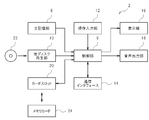
- FIG. 2 shows a hardware configuration of the game apparatus 2 in the present embodiment.
- the game apparatus 2 includes a control unit 6, a main storage unit 8, an optical disc playback unit 10, an operation input unit 12, a communication interface 14, a display unit 16, and an audio output unit 18.
- Card slot 20 As shown in the figure, the game apparatus 2 includes a control unit 6, a main storage unit 8, an optical disc playback unit 10, an operation input unit 12, a communication interface 14, a display unit 16, and an audio output unit 18.
- Card slot 20 may include a plurality of card slots 20.
- the control unit 6 is, for example, a microprocessor.
- the control unit 6 executes various types of information processing according to the soccer game program read out to the main storage unit 8.
- the main storage unit 8 is, for example, a RAM.
- the main memory 8 stores the program read from the optical disk 22 (see FIG. 2) and the save data read from the memory card 24 (see FIG. 2).
- the main storage unit 8 stores various data necessary for information processing.
- the optical disc playback unit 10 reads the program stored on the optical disc 22.
- the operation input unit 12 is a user interface for a user to input an operation.
- the operation input unit 12 is a controller, for example.
- the communication interface 14 is an interface for connecting the game apparatus 2 to a network.
- the display unit 16 outputs a game screen according to instructions from the control unit 6.
- the display unit 16 is a display device such as a home television or a liquid crystal monitor.
- the audio output unit 18 outputs various audio data such as game music and game sound effects read from the optical disc 22 in accordance with instructions from the control unit 6.
- the audio output unit 18 is, for example, a speaker or headphones.
- the card slot 20 reads save data stored in the memory card 24. Further, the card slot 20 stores the save data in the memory card 24 in accordance with an instruction from the control unit 6.
- the optical disc 22 is, for example, a CD-ROM, a DVD (registered trademark) -ROM, or the like, and stores the program.
- the memory card 24 is a non-volatile memory such as an EEPROM, for example, and stores save data.
- Game mode of soccer game In the game apparatus 2, a soccer game is provided by the control unit 6 operating according to the program. This soccer game has two game modes, a local mode and a network battle mode. The player can play these game modes on each game device 2.
- the player can play a soccer game for one person.
- the player can obtain a new player character by repeating the number of matches.
- the player character data obtained by the player (hereinafter referred to as player data) can be saved in the memory card 24 as saved data, and the player can collect player characters. Further, when the player uses the obtained player character in a game of a soccer game, the ability of the player character is increased, and the player can grow the collected player character.
- the player can play a soccer game together with the players of other game apparatuses 2 via the network.
- a soccer game (match) between an operation target team (player character group) corresponding to four players and an opponent team (opposition character group) that opposes the operation target team. ) Is to be performed.
- Each player aims to generate more scoring events of the operation target team than the scoring events of the opponent team by operating his / her operation target player character (hereinafter referred to as “operation target player”).
- each player performs a predetermined operation, and connects his game device 2 to a network game management device (not shown).
- the network game management device performs preprocessing for starting a soccer game. That is, the network game management device first selects four game devices 2 from among a plurality of game devices 2 that are connected to the network game management device.
- the game device 2 of the player P1, the game device 2 of the player P2, the game device 2 of the player P3, and the game device 2 of the player P4 are selected by the network management device.
- the players P1 to P4 are referred to as “players” unless otherwise distinguished.
- the network game management device selects one game device 2 as a game server (game device) from the game devices 2 (here, four game devices 2) of each player.
- game device game device
- the network game management device notifies the game server of the IP addresses of the three game devices 2 other than the game server, and notifies the three game devices 2 other than the game server of the IP address of the game server. In this way, the game server and each game device 2 can communicate via the network.
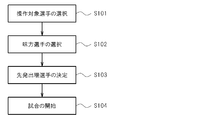
- FIG. 3 is a diagram showing a flow until a soccer game starts.
- the “flow until the start of the soccer game” includes a step of creating an operation target team (S101 to S102) and eleven player characters (hereinafter referred to as starting players) starting from the start of the game. And step S104 for starting a soccer game are included.
- step (S101 to S102) of creating the operation target team 23 player characters constituting the operation target team are determined.
- 11 starting players including 4 operation target players are elected by step S103 which determines a starting player.
- step S101 the player of each game apparatus 2 (including the game server) selects any one of a plurality of player characters collected by him / her as an operation target player. For example, each player selects a player character that he likes most.
- the control unit 6 (operation target character acquisition means) of the game server transmits an operation target player selection request to each game device 2 (game devices 2 of the players P2 to P4) that is not selected as a game server. To do.
- the game device 2 that has received the operation target player selection request presents a list of player characters collected by the player (hereinafter referred to as “player list”) on the game screen based on the player data stored in the memory card 24. Then, the player is instructed to select one operation target player. Also, the player selects one position (hereinafter referred to as “desired position”) that the player wants to be in charge of the operation target player.
- control unit 6 operation target character acquisition means of the game server (game device 2 of the player P1) also causes the player to select the operation target player and the desired position.
- the position means the type of role that the player character plays in the soccer team. In the present embodiment, there are 11 positions.
- CF center forward
- ST second top
- WG wing
- FW forward
- CB center back
- SB side back
- DF Defensive midfielder
- MF midfielder
- GK goalkeeper
- the control unit 6 of each game device 2 not selected as a game server stores the player data of the operation target player from the memory card 24. Read and send to the game server along with the ID of the desired position.
- the control unit 6 (operation target character acquisition means) of the game server receives player data of the operation target players of the players P2 to P4 from the game devices 2 (game devices 2 of the players P2 to P4) that are not selected as game servers. And the IDs of the desired positions of the players P2 to P4 are stored in the main storage unit 8 (parameter storage means) in association with the player data and the IDs. Further, the control unit 6 of the game server (game device 2 of the player P1) reads out the player data of the operation target player selected by the player P1 from the memory card 24, and associates it with the ID of the desired position selected by the player P1. Store in the unit 8 (parameter storage means).
- player operation target player means an operation target player selected by the player.
- player P1 operation target player means the operation target player selected by the player P1.
- desired position of the operation target player means a desired position selected by the player who selected the operation target player.
- each player further selects a plurality of player characters from the player list. For example, each player selects four player characters that are favorite next to the operation target player.
- the player character selected in the step of S102 is referred to as a “team player”.
- control unit 6 (friend character acquisition means) of the game server transmits a request to select a teammate player to each of the game devices 2 (game devices 2 of the players P2 to P4) that are not selected as game servers.
- Each game device 2 that has received the request to select a teammate player instructs the player to select four teammate players from the player list.
- control unit 6 (teammate character acquisition means) of the game server (game device 2 of the player P1) also instructs the player P1 to select four teammate players.
- each player from the player list, is a teammate player who wants to be in charge of the FW position (hereinafter referred to as FW teammate), or a teammate player who is in charge of the MF position (hereinafter referred to as MF teammate).
- Players referred to as players
- DF teammates teammates who want to be in charge of the DF position
- GK teammates teammates who are responsible for the position in the GK
- player's teammate player means a teammate player selected by the player.
- Each game device 2 not selected as a game server reads out the player data of each teammate player from the memory card 24 when four teammate players are selected, and transmits it to the game server together with the ID of the desired position of the teammate player. To do. Specifically, each game device 2 (game devices 2 of the players P2 to P4) transmits the FW ID when transmitting player data of FW teammate players to the game server (game device 2 of the player P1). To do. Moreover, each game device 2 transmits ID of MF, when transmitting the player data of an MF teammate player to a game server. Moreover, each game device 2 transmits ID of DF, when transmitting the player data of DF teammate player to a game server. Moreover, each game device 2 transmits ID of GK, when transmitting the player data of a teammate of GK to a game server.
- the control unit 6 (friend character acquisition means) of the game server sends player data of teammate players of each player P2 to P4 from each game device 2 (game device 2 of players P2 to P4) not selected as a game server, The IDs of the desired positions of the teammates of the players P2 to P4 are received and stored in the main storage unit 8. Further, the control unit 6 (team character acquisition means) of the game server (game device 2 of the player P1) reads out the player data of the teammate player of the player P1 from the memory card 24 and stores the main data together with the ID of the desired position of the teammate player. Store in part 8.
- the player data of a total of 20 player characters of the four operation target players and the 16 teammate players are stored in the main storage unit 8 of the game server.
- the control unit 6 of the game server reads out the player data of the three teammates prepared in advance from the optical disc 22 and records the 23 player characters belonging to the operation target team. Get player data.
- control unit 6 of the game server reads out player data of 23 player characters belonging to the opponent team from the optical disc.
- a player character belonging to the opponent team is referred to as an opponent player.
- the player characters collected by each player in the local mode become teammates, so that each player can introduce his / her collected player characters to other players. Therefore, an incentive related to the collection of player characters can be given to the player.
- the diversity of combinations of player characters belonging to the operation target team can be improved without increasing the amount of data. Realized.
- the control unit 6 of the game server executes a soccer game based on the player data of a total of 46 player characters.
- the player data includes a numerical value indicating the height of various abilities of the player character, data indicating the appearance of the player character, and the like.
- the ability of a player character includes the following. 1. Physical strength 2. 2. Running power 3. Kicking power Degree of cooperation
- “Physical strength” indicates the physical strength of the player character. “Running power” indicates the speed at which the player character runs. “Kicking power” indicates the power at which a player character kicks a soccer ball. The “cooperation degree” indicates the ability to cooperate with other player characters. The larger the value of each ability, the higher the ability.
- step S103 processing is performed by the game server, and 11 starting players who will participate in the game from the start are determined.
- 11 starting players who will participate in the game from the start are determined.
- four operation target players operated by the players P1 to P4 and three teammate players prepared in advance read from the optical disc 22 are always selected as starting players. . Therefore, in the step of S103, the remaining four starting players are selected from the 16 “player players” included in the operation target team.
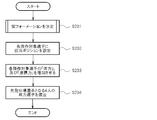
- the process executed by the game server in step S103 will be described with reference to the flowcharts of FIGS.
- the control unit 6 of the game server selects one formation that the operation target team adopts in the game from among a plurality of types of formations stored in the first formation table shown in FIG. 6 (S201).
- the “formation” is a formation of eleven player characters participating in the game. In each formation, the number of player characters in charge of each position is determined in advance (see FIG. 6).
- the formation selected in step S201 is referred to as an actual formation.
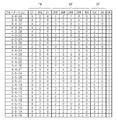
- FIG. 6 is a diagram showing an example of the contents stored in the first formation table.
- the first formation table is stored in advance on the optical disc 22.
- the first formation table includes a formation field and a position field for each position.
- the type of each formation is stored in the formation field.
- the position field of each position the number of player characters responsible for the position in each formation is stored. For example, in the formation “3-4-3A”, the number of CFs is one.
- Formation with 4 or more player characters in charge of FW position 2. Formation with 3 or more player characters in charge of CF position. A formation with two or more player characters in charge of the ST position
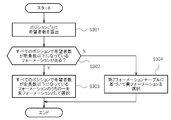
- the control unit 6 (role setting means) of the game server selects the actual formation by executing the processing shown in FIG. Specifically, the control unit 6 of the game server calculates, for each position, the number of operation target players (hereinafter referred to as the number of desired persons) whose position is the desired position (S301). Then, the control unit 6 of the game server refers to the first formation table, and determines whether there is a formation in which the number of applicants is equal to or less than the number of persons at all positions (S302). If there is a formation where the number of applicants is less than or equal to the capacity in all positions (Y in S302), the control unit 6 of the game server has the number of applicants less than or equal to the capacity in all positions. One of the formations is selected as an actual formation (S303).
- the control unit 6 of the game server selects the actual formation based on the second formation table shown in FIG. (S304). For example, a case where the desired position of the player to be operated by the players P1 and P2 is ST, the desired position of the player to be operated by the player P3 is CF, and the desired position of the player to be operated by the player P4 is DMF (example) Hereinafter, it is described as a specific example X). In this case, since the two operation target players have the ST as the desired position, the number of applicants in the ST position is 2. As shown in FIG. 6, since there is no formation in which the number of ST positions is 2 or more, the control unit 6 of the game server proceeds to step S304.
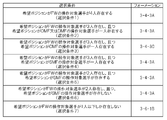
- FIG. 7 is a diagram showing the contents stored in the second formation table.
- the second formation table is stored in advance on the optical disc 22.
- the second formation table includes a selection condition field and a formation field.
- selection condition field selection conditions relating to combinations of desired positions of the respective operation target players are stored.
- formation field some types of formations stored in the first formation table are stored.
- step S304 the control unit 6 of the game server determines whether or not each operation target player desires by determining whether or not a combination of desired positions of each operation target player satisfies each selection condition. Identify selection conditions that satisfy the combination of positions. And the control part 6 (role setting means) of a game server selects the formation linked
- the control unit 6 of the game server refers to the first formation table and sets a responsible position for each operation target player (S202). Specifically, in principle, the desired position is set as the assigned position for the operation target player. However, when the desired position of the operation target player is not included in the actual formation, a position randomly selected from the FW position and the MF position is set as the assigned position to the operation target player.
- the actual formation is a formation of “3-4-3A”.
- the assigned position “CF” is set for the operation target player.
- any one of “WG”, “OMF”, and “SMF” is set for this operation target player.
- a responsible position is set for each operation target player.
- control part 6 (control means, increase / decrease means) of a game server updates the player data of the operation subject player in which the position in charge different from the desired position is set, and the “physical strength” and “cooperation” included in the player data are updated.
- the numerical value of “degree” is increased (S203).
- control unit 6 of the game server also increases the values of “physical strength” and “cooperation degree” included in the player data of the teammate player of “a player who operates an operation target player whose desired position is different from the assigned position”. The significance of step S203 will be described later.
- control unit 6 of the game server selects four teammates who will be starting players from the 16 teammate players excluding the three teammate players read from the optical disc 22 (S204).
- the selection of a teammate player is controlled based on the comparison result between the assigned position set for the operation target player and the desired position.
- a teammate player of “a player who operates an operation target player whose desired position is different from his / her position” (hereinafter referred to as a priority player) It is selected as a starting player more than a teammate player of “a player who operates an operation target player having the same desired position and responsible position” (hereinafter referred to as a non-priority player).
- the priority player's teammate player is preferentially selected because the number of priority player's teammates selected as the starting player is larger than the number of non-priority teammate players selected as the starting player. .
- control unit 6 of the game server selects one player for each player.
- step of S103 11 first-running players including four operation target players, four “player ally players”, and three ally players read from the optical disc 22 are determined.
- the control unit 6 of the game server also sets positions in charge for seven starting players other than the four operation target players. For example, for each teammate player, a desired position of the teammate player is set as the assigned position.
- the priority player's teammate players are selected more than the non-priority player teammates as starting players. That is, the teammate player of the priority player is preferentially selected as the starting player, so that the priority player is satisfied and the dissatisfaction when the position different from the desired position is set as the operation target player is alleviated. It is illustrated.
- step S104 a soccer game is started.
- the control part 6 of a game server produces
- FIG. 8 is a diagram showing an example of the basic data.
- the basic data is a table formed by associating each of the 46 player characters with data related to the player characters.
- the basic data includes a player field, a team field, a participation field, a player type field, and an owned player field.
- the ID of each player character is stored.
- the player data ID of the player character is used as the player character ID.
- player characters with player ID values “1” to “23” indicate player characters belonging to the operation target team, and player characters with player ID values “24” to “46” are opponents.
- the player character which belongs to a team is shown.
- a team flag indicating a team to which each player character belongs is stored. In the present embodiment, “0” is stored when the player character belongs to the operation target team, and “1” is stored when the player character belongs to the opponent team.
- player characters belonging to the opponent team are referred to as opponent players.
- the participation field stores a participation flag indicating whether or not each player character is participating in the game. For example, when the value of the participation flag is “0”, it indicates that the player character has not yet participated in the game. When the value of the participation flag is “1”, the player character has participated in the game. Indicates. When the value of the participation flag is “2”, it indicates that the player character has participated in the game, but has been replaced with another player character and is not currently participating in the game. A player character whose entry flag value is “2” cannot participate in the game again. The value of the participation flag is updated when the player character enters the game in the middle of the game or leaves the game.
- a player character whose participation flag value is “0” is referred to as “player character not participating in the game”.
- Data indicating the type of each player character is stored in the player type field.
- one of “P”, “F”, and “E” is stored in the player type field.
- “P” indicates that the player character is “operation target player”
- “F” indicates that the player character is “ally player”
- “E” indicates that the player character is “opposition player”.
- In the owned player field data indicating whether each player character is a player character owned by the player or a player character prepared in advance on the optical disc 22 is stored.
- the player character is a player character owned by the player, the ID of the player who owns the player character is stored.
- the basic data includes, in addition to these data, for example, data for identifying an operation target player whose desired position is different from the assigned position, the name of the actual formation, and the like.
- the control unit 6 of the game server starts the game.
- a common virtual three-dimensional space is constructed in the main storage unit 8 of each game apparatus 2 (including the game server). Three coordinate axes orthogonal to each other are set in the virtual three-dimensional space, and the position in the virtual three-dimensional space is specified by the coordinate value in each axial direction.
- eleven objects indicating player characters of the operation target team participating in the game eleven objects indicating player characters of the opponent team participating in the game, soccer balls ( An object indicating a moving object), an object indicating a soccer field, an object indicating a goal of the operation target team, an object indicating a goal of the opponent team, and the like.
- a virtual camera is arranged in the virtual three-dimensional space.
- a game screen representing a state in which the virtual three-dimensional space is viewed from the virtual camera is displayed on the display unit 16 of each game apparatus 2.
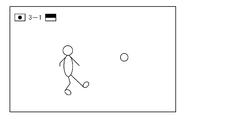
- FIG. 9 an example of the game screen displayed on the display part 16 of each game device 2 is shown.
- the game situation data indicating the latest game situation is stored in the main storage unit 8 of each game apparatus 2, whereby the virtual three-dimensional space is shared.
- FIG. 10 is a diagram showing the stored contents of the game situation data.
- the game situation data is a table in which each of the 22 player characters participating in the game is associated with data indicating the state of the player character.
- the game situation data includes a player field, an operation target field, a position field, a ball holding field, a position field, a moving direction field, a posture field, an action field, and a fatigue field.
- the operation target field stores data indicating whether each player character is an operation target player. In the case of this embodiment, when a player character is an operation subject player, ID of the player who operates the player character is stored.
- the position field the ID of the assigned position set for each player character is stored.
- the ball holding field stores data indicating whether or not each player character is holding a soccer ball. In the present embodiment, “1” is stored when the player character is holding a soccer ball, and “0” is stored when the player character is not holding a soccer ball.
- Data indicating the current position of each player character is stored in the position field.
- the movement direction field stores data indicating the current movement direction of each player character.
- the posture data stores data indicating the current posture of each player character.
- the action field data indicating the type of action that each player character is currently performing is stored.
- a numerical value indicating the current fatigue level of each player character is stored in the fatigue level field.
- an initial value “0” is stored in the fatigue level field of each player character.
- the game situation data includes data indicating the current position and line-of-sight direction of the virtual camera, data indicating the current position, moving direction, and moving speed of the soccer ball.
- each player performs an operation input using the operation input unit 12 while watching the game screen, and operates his / her operation target player.
- each game device 2 other than the game server (game devices 2 of the players P2 to P4) transmits the operation contents of the players P2 to P4 to the game server.
- the control unit 6 of the game server (game device 2 of the player P1), the operation content transmitted from each other game device 2, the operation content of the player P1, the player data of the player character participating in the game, etc.
- the game situation data is updated at predetermined time intervals based on the above, and the game situation data is transmitted to each game device 2.
- the virtual three-dimensional space is shared by the game devices 2 (including the game server).
- Each operation target player moves in the virtual three-dimensional space, performs a shooting operation, or performs a pass operation according to the operation content of the player.
- Teammates and opponents operate autonomously according to a predetermined algorithm. For example, when an operation target player approaches a teammate player holding a soccer ball, the teammate player kicks the soccer ball toward the operation target player.
- the fact that the teammate player kicks the soccer ball toward the operation target player is referred to as “pass to the operation target player”.
- FIG. 11 is a diagram for explaining a method of determining the moving direction of the soccer ball.
- the control unit 6 of the game server determines the direction R in which the position Q of the operation target player is desired from the position P of the soccer ball or teammate player, and the moving direction S of the soccer ball. Then, the angle ⁇ formed is determined.
- a table in which the “cooperation degree” of the operation target player is associated with the angle ⁇ is read from the optical disc 22, and the angle ⁇ associated with the “cooperation degree” of the operation target player is acquired from this table.
- the above table is set such that, for example, the angle ⁇ decreases as the numerical value indicating the “cooperation degree” of the operation target player increases.
- the greater the angle ⁇ the lower the accuracy of the pass to the operation target player, and the operation target player has to move a greater distance to receive the soccer ball.
- the pass to the operation target player may fail.
- the “cooperation degree” of the operation target player increases (S203 in FIG. 4). Therefore, the angle ⁇ when the “pass to the player to be operated by the priority player” is performed by the teammate player tends to be small. As a result, the accuracy of the pass to the player to be operated by the priority player is likely to increase, and the priority player can obtain satisfaction. Also from this point, it is possible to alleviate the dissatisfaction of the player regarding the position different from the desired position being set as the operation target player.
- control unit 6 of the game server increases the “fatigue level” of the player characters participating in the game at predetermined time intervals during the game. Specifically, the control unit 6 of the game server determines the addition value ⁇ based on the “physical strength” of the player character participating in the game, and adds the addition value ⁇ to the “fatigue level” of the player character. . In the case of the present embodiment, the control unit 6 (control means) of the game server reads a table in which the “physical strength” of the player character is associated with the added value ⁇ from the optical disc 22 and is associated with the “physical strength” of the player character. The obtained addition value ⁇ is obtained from this table.
- This table is set so that, for example, the larger the numerical value indicating “physical strength” is, the smaller the added value ⁇ is.
- the increase rate of the “fatigue level” of the player character decreases as the “physical strength” of the player character increases.
- a “fatigue level” of any player character When a “fatigue level” of any player character reaches the standard fatigue level, a player change event occurs.
- a state where the “fatigue level” reaches the standard fatigue level is referred to as a “fatigue state”.
- the control unit 6 of the game server selects a player character that is in a fatigued state and leaves the game. And the control part 6 of a game server selects the one player character which has not participated in the game from the player characters which belong to the same team as the player character withdrawn, and makes it participate in the game on the way.
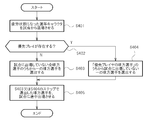
- FIG. 12 is a flowchart showing processing executed by the game server in a player change event that occurs when a player character belonging to the operation target team is in a fatigued state.
- the control unit 6 (exit execution means) of the game server causes the player character that has become fatigued to exit the game (S401).
- the control unit 6 of the game server updates the participation flag of the player character in a fatigued state from “1” to “2”.
- the control part 6 (2nd selection means) of a game server is one ally among the ally players who have not participated in the game (the ally player whose participation flag value is “0”) in steps S402 to S404. Select a player.
- the selection of a teammate player is controlled based on the comparison result between the assigned position set for the operation target player and the desired position.
- the control unit 6 of the game server refers to the basic data and determines whether or not there is a priority player by determining whether or not there is an operation subject player in which a responsible position different from the desired position is set. Determine (S402).
- the control unit 6 of the game server displays all the players who have not participated in the game.
- One ally player is selected from the house (S403). For example, a teammate player is selected based on a random number.
- the control part 6 of a game server progresses to the step of S405.
- the control unit 6 of the game server determines that “a preferred player's teammate” One teammate who has not participated in the game is selected from our house (S404).
- control unit 6 of the game server causes the teammate player selected in step S403 or S404 to enter the game halfway (S405). Specifically, the participation flag of the player character to be entered in the game is updated from “0” to “1”.
- the priority player's teammate player is selected in step S404, and the player enters the game halfway. Therefore, the teammate player of the priority player will preferentially participate in the game on the way. As a result, the priority player's teammates will have more opportunities to participate in the game, and the priority player will be satisfied. Also from this point, it is possible to alleviate the dissatisfaction of the player regarding the position different from the desired position being set as the operation target player.
- the “physical strength” of the teammate player owned by the player who operates the operation target player increases. (S203 in FIG. 4).
- the speed at which the fatigue level of the priority player's teammate increases is slowed down. For this reason, it becomes difficult for the priority player's teammate to become tired.
- the teammate players of the priority player have more opportunities to participate in the game, and the player can get satisfaction. Also from this point, it is possible to alleviate the dissatisfaction of the player regarding the position different from the desired position being set as the operation target player.
- the control unit 6 of the game server ends the match.
- FIG. 13 is a functional block diagram mainly showing functions related to the present invention among the functions realized in the game server.
- the game server includes an operation target player acquisition unit 30, a teammate player acquisition unit 32, a game data storage unit 34, and a game execution unit 36. These functions are realized when the control unit 6 of the game server operates according to the program.
- the operation target player acquisition unit 30 (operation target character acquisition means) is realized mainly by the control unit 6 and the communication interface 14.
- the operation target player acquisition unit 30 acquires, for each of the plurality of players, player data of the operation target player operated by the player, and stores it in the game data storage unit 34 (main storage unit 8).
- the operation target player acquisition unit 30 receives and acquires player data of each operation target player of the players P2 to P4 from the game device 2, and stores the player data of the operation target player of the player P1 in the memory.
- the data is read from the card 24 and acquired (S101 in FIG. 3).
- the teammate player acquisition unit 32 (friend character acquisition unit) is realized mainly by the control unit 6 and the communication interface 14.
- the teammate player acquisition unit 32 acquires, for each player, player data of one or more teammate players selected by the player from a plurality of player characters obtained by the player, and a game data storage unit 34 (main memory) Part 8).
- the teammate player acquisition unit 32 receives and acquires player data of each teammate player of the players P2 to P4, and reads and acquires the player data of the teammate player of the player P1 from the memory card 24. (S102 in FIG. 3).
- the game data storage unit 34 (parameter storage unit) is realized mainly with the main storage unit 8 and the optical disc 22.
- the game data storage unit 34 stores various data necessary for the game. In the present embodiment, the following data is stored. 1. 1. Player data of player characters belonging to the operation target team 2. Player data of player characters belonging to the opponent team First formation table (see Fig. 6) 4). Second formation table (see Fig. 7) 5). Basic data (see Figure 8) 6). Game situation data (see Fig. 10) 7). 7. Desired position of each player's operation target player Desired position of each player's teammate
- the game execution unit 36 (game execution means) is realized mainly by the control unit 6.
- the game execution unit 36 executes a game in which the operation target team and the opponent team battle against each other based on the data stored in the game data storage unit 34.
- the game execution unit 36 includes a desired position acquisition unit 38 (desired role acquisition unit), a responsible position setting unit 40 (role setting unit), an ability update unit 42 (increase / decrease unit), and a game control unit.
- a participating player selection unit 46 (a teammate character selection unit, a first teammate character selection unit), a participation execution unit 48 (a participation execution unit), a participating player selection control unit 50 (a control unit), and a leaving player selection unit 52 (second teammate character selection means), an exit execution section 54 (exit execution execution means), and an exit player selection control section 56 (control means).
- the desired position acquisition unit 38 acquires the desired position of each operation target player selected by each player and stores it in the game data storage unit 34. In the present embodiment, the desired position acquisition unit 38 receives and acquires the ID of the desired position of each operation target player (S101 in FIG. 3).
- the assigned position setting unit 40 sets assigned positions for each of the four operation target players participating in the game. In the case of this embodiment, the assigned position setting unit 40 determines the actual formation based on the desired position of each operation target player acquired by the desired position acquisition unit 38, the first formation table, the second formation table, and the like. (S201 in FIG. 4 and FIG. 5). Then, the assigned position setting unit 40 sets the assigned position for each operation target player based on the desired position of each operation target player, the number of positions of each position in the actual formation, and the like (S202 in FIG. 4).
- a responsible position is set (S103 in FIG. 3 and S204 in FIG. 4).
- the ability update unit 42 determines the operation target based on the comparison result between the assigned position set as the operation target player by the assigned position setting unit 40 and the desired position of the operation target player acquired by the desired position acquisition unit 38. Update the parameter values for the player's ability. For example, the ability update unit 42 determines the ability of the operation target player so that the ability of the operation target player increases when the assigned position set for the operation target player is different from the desired position of the operation target player. Increase or decrease the value of the parameter for. In the case of the present embodiment, the ability update unit 42 increases the numerical values of “physical strength” and “degree of cooperation” of the operation target player whose desired position and the assigned position are different (S203 in FIG. 4).
- the game control unit 44 controls a soccer game played between the operation target team and the opponent team. For example, the game control unit 44 starts a game or ends a game. In addition, during the match, the game control unit 44 sets the game situation data stored in the game data storage unit 34 at predetermined time intervals based on the player data stored in the game data storage unit 34 and the operation contents of each player. Update with. Thus, the game control unit 44 moves the player character participating in the game or moves the soccer ball.
- the game control unit 44 controls the movement of the soccer ball based on the “cooperation degree” of the operation target player when the teammate player performs “pass to the operation target player” (see FIG. 11). ).
- the game control unit 44 updates the “fatigue level” of the player character participating in the game based on the “physical strength” of the player character at predetermined time intervals. Specifically, the game control unit 44 determines the addition value ⁇ so that the larger the “physical strength” of the player character participating in the game is, the smaller the addition value ⁇ is added to the “fatigue level” of the player character. To do.
- the game control unit 44 generates a player change event when any player character is in a fatigued state.
- the participating player selection unit 46 selects one or more teammates to participate in the game from among the teammates belonging to the operation target team.
- the participating player selection unit 46 includes a starting player selection unit 58 (first teammate character selection unit) and a midway player selection unit 60 (second teammate character selection unit).
- the starting player selection part 58 selects one or more teammates who will be starting players from among the 16 “player players” belonging to the operation target team before the start of the match.
- the four operation target players corresponding to each of the four players P1 to P4 and the three teammates prepared in advance are always selected as the starting players. Therefore, the remaining four teammate players are selected from the 16 “player teammate players”.
- the starting player selection unit 58 also selects eleven opponent players who will be starting players.
- the mid-participating player selection unit 60 selects one or a plurality of teammates who are not participating in the game and are to participate in the game midway among the “player's teammates” (players with a participation flag value of “0”). Is elected.
- the midway player selection unit 60 selects a teammate player to enter the game halfway every time the player character of the operation target team becomes tired during the game.
- the participation execution unit 48 causes one or more teammate players selected by the participation player selection unit 46 and each operation target player to participate in the game.
- the participation execution part 48 is performed by the participation player selection part 46 by the function of the start participation execution part 62 (first participation execution means) and the intermediate participation execution part 64 (second participation execution means).
- the selected one or more teammate players, each operation target player, and three teammates prepared in advance read from the optical disc 22 are entered in the game.
- the starting appearance execution unit 62 causes one or more teammate players selected by the starting appearance player selection unit 58 to enter each operation target player from the start of the match.
- the starting start execution unit 62 includes each of the operation target players, three teammate players read from the optical disc 22, and the four “player's teammates” selected by the starting player selection section 58. 11 starters including “players” are entered from the start of the match. Specifically, the value of the participation flag of these starting players is set to “1”.
- the midway participation execution unit 64 causes one or more teammates selected by the midway participation player selection unit 60 to participate in the game from the middle. In the case of this embodiment, the midway participation execution unit 64 causes the teammate player to participate in the game halfway each time the midway participation player selection unit 60 selects a teammate player. Specifically, the midway participation execution unit 64 updates the participation flag of the teammate player selected by the midway participation player selection unit 60 from “0” to “1”.
- the participating player selection control unit 50 (control means) is a teammate player of the player who operates the operation target player based on the comparison result between the assigned position set as the operation target player and the desired position of the operation target player. , The selection by the participating player selection unit 46 is controlled.
- the participating player selection control unit 50 includes a starting player selection control unit 66 and a midway player selection control unit 68.
- the starting player selection control unit 66 (control means) is for the player who operates the operation target player based on the comparison result between the assigned position set for the operation target player and the desired position of the operation target player. With respect to the players, the selection by the starting player selection unit 58 is controlled. In the case of the present embodiment, when the assigned position set for the operation target player is the same as the desired position of the operation target player, the starting player selection is made for the teammate player of the player who operates the operation target player. Selection by the unit 58 is restricted.
- a player who is a player (non-priority player) who operates an operation target player whose desired position and the assigned position are the same is not easily selected by the starting player selection unit 58, while the desired position and the assigned position are A player who is a player (priority player) who operates an operation target player that is different from the player is easily selected by the starting player selection unit 58.
- the starting player selection control unit 66 performs an operation in which a player who is a player (a priority player) who operates an operation target player having a different desired position and the assigned position has the same desired position and the assigned position. More than the teammates of the player (non-priority player) who operates the target player are selected, and the starting player selection section 58 selects four teammates (S204 in FIG. 4).
- the starting player selection control unit 66 has a probability that a player who is a player (priority player) who operates an operation target player having a different desired position and assigned position is selected by the starting player selection unit 58 as a desired position.
- the teammate player of the player (non-priority player) who operates the operation target player having the same position in charge is higher than the probability of being selected by the starting player selection unit 58.
- the halfway player selection control unit 68 (control means) is for the player who operates the operation target player based on the comparison result between the assigned position set for the operation target player and the desired position of the operation target player.
- the selection by the player selection unit 60 that is partway through the player is controlled.
- the assigned position set for the operation target player and the desired position of the operation target player are the same, the player who is on the way for the player who operates the operation target player is selected.
- Selection by 60 is restricted. Specifically, a player who operates an operation target player having the same desired position and the assigned position is less likely to be selected by the midway player selection unit 60, while the desired position and the assigned position are different. The teammate player who operates the player can be easily selected by the midway player selection unit 60.
- the midway player selection control unit 68 selects a player who is a player who operates the operation target player as the midway player selection unit 60.
- the player player who operates the operation target player having the same assigned position and the desired position is prevented from being selected by the player selection unit 60 on the way.
- the midway player selection control unit 68 causes the midway player selection unit 60 to enter the game midway. Is not selected from “non-priority player ally players” who have not participated in the game, but is selected from among “priority player ally players” who have not participated in the game (FIG. 12). S402 to S404).
- the midway player selection control unit 68 has a probability that a player who is a player (priority player) who operates an operation target player whose assigned position is different from the desired position is selected by the midway player selection unit 60 as the assigned position.
- One or a plurality of players who are players (non-priority players) who operate the operation target player having the same desired position as a player who is higher than the probability of being selected by the midway player selection unit 60 May be made to be selected by the participating player selection unit 60 on the way. Even in this case, it becomes possible to increase the chances that a player who is a player who operates an operation target player having a different desired position and assigned position will participate in the game, and the player can be satisfied. As a result, it is possible to alleviate the player's dissatisfaction with respect to the fact that a position different from the desired position is set as the operation target player.
- the leaving player selection unit 52 selects one or a plurality of teammates to be withdrawn from the game among “player's teammates” who are participating in the game.
- the exit player selection unit 52 selects a teammate player who is in a fatigued state every time the “player's teammate player” is in a fatigued state (S401 in FIG. 12).
- the exit execution unit 54 (exit execution means) causes one or more teammate players selected by the exit player selection unit 52 to exit the game (S401 in FIG. 12).
- the leaving execution unit 54 causes the teammate player to leave the game every time the leaving player selection unit 52 selects a teammate player.
- the value of the participation flag of the teammate player selected by the leaving player selection unit 52 is updated from “1” to “2”.
- the exit player selection control unit 56 determines whether the player who is the player who operates the operation target player based on the comparison result between the assigned position set as the operation target player and the desired position of the operation target player. The selection by the selection unit 52 or the execution of exit by the exit execution unit 54 is controlled.
- the exit player selection control unit 56 when the assigned position set as the operation target player and the desired position of the operation target player are different, the player's teammate player who operates the operation target player.
- the numerical value indicating “physical strength” is updated (increased) (S203 in FIG. 4).
- the fatigue level of the teammate player is unlikely to increase, and the teammate player is unlikely to become tired. That is, it becomes difficult for the teammate player to be selected by the leaving player selection unit 52.
- the exit player selection control unit 56 indirectly controls that the exit player selection unit 52 selects a player who is a player who operates an operation target player whose assigned position is different from the desired position.
- the exit player selection control unit 56 executes the exit by the exit execution unit 54 when the teammate player of the player who operates the operation target player whose assigned position is different from the desired position is selected by the exit player selection unit 52. You may make it restrict
- the exit execution unit 54 immediately sends the friend
- a player who is a player (priority player) who controls an operation target player whose execution position is different from the desired position is selected by the leaving player selection unit 52
- a time of a predetermined length is executed. You may make it make the exit execution part 54 wait for execution of this teammate player's exit until it passes.
- the time for the player who is the player who operates the operation target player whose assigned position is different from the desired position to continue to participate in the game becomes longer, so that the teammate player of the player has more opportunities to participate in the game.
- the player characters collected by each player become teammate players, so that the diversity of combinations of player characters belonging to the operation target team is improved. Since the player character collected by each player becomes a teammate player, improvement in diversity is realized without increasing the amount of data. In addition, since the player character collected by each player becomes a teammate player, an incentive for collecting the player character is given to the player.
- a player who is a player (priority player) who operates an operation target player whose desired position is different from the assigned position is preferentially selected as a starting player. Dissatisfaction about the fact that a different assigned position is set as the player to be operated is alleviated.
- a teammate player of a player (priority player) who operates an operation target player having a different desired position and assigned position will preferentially enter the game, so it is different from the desired position. Dissatisfaction with the assigned position being set as the operation target player is alleviated.
- a player who is a player (priority player) who operates an operation target player with a different desired position and assigned position is less likely to leave the game. Dissatisfaction with what is set for the player will be eased.
- the player character selected by the player from the plurality of player characters collected in the local mode becomes the operation target player, but the player character initially set by the player in the local mode is always the operation target player. It may be.
- the player selects the player character that he / she collected in the local mode as a teammate player, but the player character that the player can select as a teammate player is collected in the local mode. It is not limited only to the player characters made. For example, a player character that has belonged to the same team as the player's operation target player in the local mode may be selected as a teammate player.
- the above-mentioned dissatisfaction can be alleviated even if a teammate player of a priority player is preferentially selected as a player character belonging to the operation target team.
- a mode in which a teammate player of a priority player is preferentially selected as a player character belonging to the operation target team will be described.
- control unit 6 operation target character acquisition means, desired role acquisition means, role setting means of the game server obtains player data and desired positions of the operation target players of each player in step S101 (see FIG. 3). After acquisition, by executing the processing of S201 to S203 (see FIG. 4), the assigned position is set for each operation target player before proceeding to the step of S102 (see FIG. 3). Then, the control unit 6 (team character acquisition means) of the game server sets a responsible position for each operation target player, and then proceeds to step S102 to acquire player data of the teammate player selected by each player.
- control unit 6 of the game server sets the assigned position set as the operation target player in order to preferentially select the priority player's teammate player as the player character belonging to the operation target team. Based on the result of comparison with the desired position of the operation target player, the player data of the teammate player of the player is controlled for the player who operates the operation target player.
- the control unit 6 of the game server determines the player (non-priority player) who operates the operation target player. Limit the acquisition of player data for teammates. Specifically, only a game device 2 of a player (priority player) who operates an operation target player having a different desired position and assigned position without transmitting a request to select a teammate player to the game device 2 of the non-priority player. Send a request to select a teammate.
- the player data of the teammate player is not transmitted to the game server from the game device 2 of the non-priority player who does not receive the selection request for the teammate player, and as a result, the control unit 6 of the game server is the teammate player of the priority player. Only the player data of will be received. Therefore, only the priority player's teammate player is preferentially selected as the player character belonging to the operation target team, and the priority player can be satisfied. As a result, dissatisfaction with respect to the fact that the assigned position different from the desired position is set as the operation target player is alleviated.
- a battle performed between an operation target team (player character group) and an opponent team (an opponent character group) is not limited to a soccer game.
- it may be a game of sports other than soccer (for example, American football, ice hockey, basketball, volleyball, baseball, water polo, handball, rugby, cricket, etc.).
- the battle is not limited to sports games. That is, the game provided by the game system 4 is not limited to a sports game.
- the game provided by the game system 4 may be an action game or a gun shooting game in which a player character group battles with an opponent character group or an opponent character.
- a battle may be held between two player character groups.
Landscapes
- Engineering & Computer Science (AREA)
- Multimedia (AREA)
- Business, Economics & Management (AREA)
- Computer Security & Cryptography (AREA)
- General Business, Economics & Management (AREA)
- Processing Or Creating Images (AREA)
- User Interface Of Digital Computer (AREA)
- Management, Administration, Business Operations System, And Electronic Commerce (AREA)
Abstract
複数のプレイヤの各々の操作対象キャラクタと、1又は複数の味方キャラクタと、を含むプレイヤキャラクタグループと、プレイヤキャラクタグループと対立する対戦相手キャラクタ又は対戦相手キャラクタグループと、が対戦を行うゲームにおいて、プレイヤキャラクタグループに属するキャラクタの組み合わせの多様性を、データ量の増大を抑制しつつ向上させることができるようになるゲーム装置を提供する。操作対象選手取得部(30)は、各プレイヤの操作対象選手の選手データを取得する。味方選手取得部(32)は、各プレイヤの味方選手の選手データを取得する。ゲーム実行部(36)は、各操作対象選手の選手データと、各味方選手の選手データと、に基づいて、操作対象チームと、対戦相手チームと、がサッカーの試合を行うゲームを実行する。
Description
本発明は、ゲーム装置、ゲーム装置の制御方法、プログラム及び情報記憶媒体に関する。
複数のプレイヤに対応するプレイヤキャラクタグループと、プレイヤキャラクタグループと対立する対戦相手キャラクタグループ又は対戦相手キャラクタと、が対戦を行う対戦ゲームがある。
例えば、複数のプレイヤに対応する複数の操作対象選手と、1又は複数の味方選手と、が属する操作対象チーム(プレイヤキャラクタグループに相当)が、対戦相手チーム(対戦相手キャラクタグループに相当)とサッカーの試合を行うサッカーゲームが知られている(下記特許文献1)。かかるサッカーゲームにおいて、各プレイヤは、操作対象チームの得点イベントを多く発生させることを目指して協力する。
例えば、上記サッカーゲームでは、予め用意された複数のサッカーチームのうちから選択された一のサッカーチームが操作対象チームとして用いられる。そのため、操作対象チームに属するサッカー選手の組み合わせは、予め用意された組み合わせに限られる。そのため、プレイヤは、操作対象チームに属するサッカー選手の組み合わせに関して物足りなさを感じる場合があった。
この点、操作対象チームに属するサッカー選手の組み合わせの多様性を向上させるために、予め用意しておくサッカーチームの数を多くすることが考えられる。しかしながら、この場合、多数のサッカーチームのデータを記憶しておく必要があり、データ量が増大してしまう場合がある。
本発明は、上記課題に鑑みてなされたものであって、複数のプレイヤの各々の操作対象キャラクタと、1又は複数の味方キャラクタと、を含むプレイヤキャラクタグループと、プレイヤキャラクタグループと対立する対戦相手キャラクタ又は対戦相手キャラクタグループと、が対戦を行うゲームにおいて、プレイヤキャラクタグループに属するキャラクタの組み合わせの多様性を、データ量の増大を抑制しつつ向上させることができるようになるゲーム装置、ゲーム装置の制御方法、プログラム、及び情報記憶媒体を提供することにある。
上記課題を解決するために、本発明に係るゲーム装置は、複数のプレイヤに対応するプレイヤキャラクタグループと、前記プレイヤキャラクタグループと対立する対戦相手キャラクタ又は対戦相手キャラクタグループと、が対戦を行うゲームを実行するゲーム装置であって、前記複数のプレイヤの各々について、該プレイヤに操作される操作対象キャラクタのデータを取得する操作対象キャラクタ取得手段と、前記複数のプレイヤのうちの少なくとも一人のプレイヤについて、該プレイヤが所有する複数のキャラクタのうちから該プレイヤにより選択された1又は複数の味方キャラクタのデータを取得する味方キャラクタ取得手段と、前記操作対象キャラクタ取得手段により取得されたデータと、前記味方キャラクタ取得手段により取得されたデータと、に基づいて、前記複数のプレイヤに対応する複数の操作対象キャラクタと、前記少なくとも一人のプレイヤにより選択された味方キャラクタと、が属する前記プレイヤキャラクタグループと、前記対戦相手キャラクタ又は前記対戦相手キャラクタグループと、が対戦を行う前記ゲームを実行するゲーム実行手段と、を含むことを特徴とする。
また、本発明に係るゲーム装置の制御方法は、複数のプレイヤに対応するプレイヤキャラクタグループと、前記プレイヤキャラクタグループと対立する対戦相手キャラクタ又は対戦相手キャラクタグループと、が対戦を行うゲームを実行するゲーム装置の制御方法であって、前記複数のプレイヤの各々について、該プレイヤに操作される操作対象キャラクタのデータを取得する操作対象キャラクタ取得ステップと、前記複数のプレイヤのうちの少なくとも一人のプレイヤについて、該プレイヤが所有する複数のキャラクタのうちから該プレイヤにより選択された1又は複数の味方キャラクタのデータを取得する味方キャラクタ取得ステップと、前記操作対象キャラクタ取得ステップで取得されたデータと、前記味方キャラクタ取得ステップで取得されたデータと、に基づいて、前記複数のプレイヤに対応する複数の操作対象キャラクタと、前記少なくとも一人のプレイヤにより選択された味方キャラクタと、が属する前記プレイヤキャラクタグループと、前記対戦相手キャラクタ又は前記対戦相手キャラクタグループと、が対戦を行う前記ゲームを実行するゲーム実行ステップと、を含むことを特徴とする。
また、本発明に係るプログラムは、複数のプレイヤに対応するプレイヤキャラクタグループと、前記プレイヤキャラクタグループと対立する対戦相手キャラクタ又は対戦相手キャラクタグループと、が対戦を行うゲームを実行するゲーム装置として、家庭用ゲーム機、業務用ゲーム機、携帯ゲーム機、携帯情報端末などのコンピュータを機能させるプログラムであって、前記複数のプレイヤの各々について、該プレイヤに操作される操作対象キャラクタのデータを取得する操作対象キャラクタ取得手段、前記複数のプレイヤのうちの少なくとも一人のプレイヤについて、該プレイヤが所有する複数のキャラクタのうちから該プレイヤにより選択された1又は複数の味方キャラクタのデータを取得する味方キャラクタ取得手段、前記操作対象キャラクタ取得手段により取得されたデータと、前記味方キャラクタ取得手段により取得されたデータと、に基づいて、前記複数のプレイヤに対応する複数の操作対象キャラクタと、前記少なくとも一人のプレイヤにより選択された味方キャラクタと、が属する前記プレイヤキャラクタグループと、前記対戦相手キャラクタ又は前記対戦相手キャラクタグループと、が対戦を行う前記ゲームを実行するゲーム実行手段、として前記コンピュータを機能させることを特徴とする。
また、本発明に係る情報記憶媒体は、上記プログラムを記録したコンピュータ読取可能な情報記憶媒体である。
本発明は、複数のプレイヤに対応するプレイヤキャラクタグループと、前記プレイヤキャラクタグループと対立する対戦相手キャラクタ又は対戦相手キャラクタグループと、が対戦を行うゲームを実行するゲーム装置に関する。本発明では、前記複数のプレイヤの各々について、該プレイヤに操作される操作対象キャラクタのデータが取得される。前記複数のプレイヤのうちの少なくとも一人のプレイヤについて、該プレイヤが所有する複数のキャラクタのうちから該プレイヤにより選択された1又は複数の味方キャラクタのデータが取得される。そして、操作対象キャラクタのデータと、味方キャラクタのデータと、に基づいて、前記複数のプレイヤに対応する複数の操作対象キャラクタと、前記少なくとも一人のプレイヤにより選択された味方キャラクタと、が属する前記プレイヤキャラクタグループと、前記対戦相手キャラクタ又は前記対戦相手キャラクタグループと、が対戦を行うゲームが実行される。本発明によれば、プレイヤキャラクタグループに属するキャラクタの組み合わせの多様性を、データ量の増大を抑制しつつ向上させることができるようになる。
また、本発明の一態様では、前記ゲーム実行手段は、各操作対象キャラクタの希望役割を取得する希望役割取得手段と、各操作対象キャラクタに役割を設定する役割設定手段と、前記プレイヤキャラクタグループに属する味方キャラクタのうちから、1又は複数の味方キャラクタを選出する味方キャラクタ選出手段と、前記味方キャラクタ選出手段により選出された1又は複数の味方キャラクタと、各操作対象キャラクタと、を前記対戦に出場させる出場実行手段と、前記操作対象キャラクタに設定された役割と、前記希望役割取得手段により取得された該操作対象キャラクタの希望役割と、の比較結果に基づいて、該操作対象キャラクタを操作するプレイヤが所有する味方キャラクタに関して、前記味方キャラクタ選出手段による選出を制御する制御手段と、を含むようにしてもよい。
また、本発明の一態様では、前記味方キャラクタ選出手段は、前記対戦の開始前に、前記プレイヤキャラクタグループに属する味方キャラクタのうちから、1又は複数の味方キャラクタを選出する第1味方キャラクタ選出手段と、前記第1味方キャラクタ選出手段により選出されていない味方キャラクタのうちから、1又は複数の味方キャラクタを選出する第2味方キャラクタ選出手段と、を含み、前記出場実行手段は、前記第1味方キャラクタ選出手段により選出された1又は複数の味方キャラクタと、各操作対象キャラクタと、を前記対戦の開始時から出場させる第1出場実行手段と、前記第2味方キャラクタ選出手段により選出された1又は複数の味方キャラクタを、前記対戦に途中から出場させる第2出場実行手段と、を含み、前記制御手段は、前記操作対象キャラクタに設定された役割と、前記希望役割取得手段により取得された該操作対象キャラクタの希望役割と、の比較結果に基づいて、該操作対象キャラクタを操作するプレイヤが所有する味方キャラクタに関して、前記第2味方キャラクタ選出手段による選出を制御するようにしてもよい。
また、本発明の一態様では、前記ゲーム実行手段は、各操作対象キャラクタの希望役割を取得する希望役割取得手段と、各操作対象キャラクタに役割を設定する役割設定手段と、前記プレイヤキャラクタグループに属する味方キャラクタのうちから、1又は複数の味方キャラクタを選出する第1味方キャラクタ選出手段と、前記第1味方キャラクタ選出手段により選出された1又は複数の味方キャラクタと、各操作対象キャラクタと、を前記対戦に出場させる出場実行手段と、前記対戦の途中で、前記対戦に出場中の味方キャラクタのうちから1又は複数の味方キャラクタを選出する第2味方キャラクタ選出手段と、前記第2味方キャラクタ選出手段により選出された1又は複数の味方キャラクタを前記対戦から退場させる退場実行手段と、前記操作対象キャラクタに設定された役割と、前記希望役割取得手段により取得された該操作対象キャラクタの希望役割と、の比較結果に基づいて、該操作対象キャラクタを操作するプレイヤが所有する味方キャラクタに関して、前記第2味方キャラクタ選出手段による選出、又は前記退場実行手段による退場の実行を制御する制御手段と、を含むようにしてもよい。
また、本発明の一態様では、前記複数のプレイヤの各々が選んだ希望役割を取得する希望役割取得手段と、各操作対象キャラクタに役割を設定する役割設定手段と、各操作対象キャラクタに関するパラメータを記憶するパラメータ記憶手段と、前記操作対象キャラクタに設定された役割と、該操作対象キャラクタを操作するプレイヤが選んだ希望役割と、の比較結果に基づいて、該操作対象キャラクタに関する前記パラメータの値を増加又は減少させる増減手段と、をさらに含むようにしてもよい。
また、本発明の一態様では、前記ゲーム装置は、各操作対象キャラクタの希望役割を取得する希望役割取得手段と、各操作対象キャラクタに役割を設定する役割設定手段と、をさらに含み、前記味方キャラクタ取得手段は、前記役割設定手段により各操作対象キャラクタに役割が設定された後に、前記味方キャラクタのデータを取得し、前記ゲーム装置は、前記操作対象キャラクタに設定された役割と、該操作対象キャラクタの希望役割と、の比較結果に基づいて、該操作対象キャラクタを操作するプレイヤに関して、前記味方キャラクタ取得手段による前記味方キャラクタのデータの取得を制御する制御手段をさらに含むようにしてもよい。
[1.ゲームシステムの構成]
図1は、本発明の実施形態に係るゲーム装置を複数含むゲームシステム4の構成を示す図である。同図に示すように、ゲームシステム4は、プレイヤのゲーム装置2を複数含む。各ゲーム装置2は、ネットワークに接続されている。
図1は、本発明の実施形態に係るゲーム装置を複数含むゲームシステム4の構成を示す図である。同図に示すように、ゲームシステム4は、プレイヤのゲーム装置2を複数含む。各ゲーム装置2は、ネットワークに接続されている。
[2.ゲーム装置]
ゲーム装置2は、例えば、家庭用ゲーム機、業務用ゲーム機、携帯ゲーム機、携帯電話、及び携帯情報端末などである。図2は、本実施形態におけるゲーム装置2のハードウェア構成を示す。同図に示すように、ゲーム装置2は、制御部6と、主記憶部8と、光ディスク再生部10と、操作入力部12と、通信インタフェース14と、表示部16と、音声出力部18と、カードスロット20と、を含む。なお、ゲーム装置2は、カードスロット20を複数備えていてもよい。
ゲーム装置2は、例えば、家庭用ゲーム機、業務用ゲーム機、携帯ゲーム機、携帯電話、及び携帯情報端末などである。図2は、本実施形態におけるゲーム装置2のハードウェア構成を示す。同図に示すように、ゲーム装置2は、制御部6と、主記憶部8と、光ディスク再生部10と、操作入力部12と、通信インタフェース14と、表示部16と、音声出力部18と、カードスロット20と、を含む。なお、ゲーム装置2は、カードスロット20を複数備えていてもよい。
制御部6は例えばマイクロプロセッサである。制御部6は、主記憶部8に読み出されたサッカーゲームのプログラムに従って各種情報処理を実行する。主記憶部8は、例えばRAMである。主記憶部8には光ディスク22(図2参照)から読み出された上記プログラムやメモリカード24(図2参照)から読み出されたセーブデータが記憶される。また主記憶部8は情報処理の過程で必要となる各種データを記憶する。光ディスク再生部10は、光ディスク22に記憶された上記プログラムを読み取る。操作入力部12は、ユーザが操作入力を行うためのユーザインタフェースである。操作入力部12は、例えばコントローラである。通信インタフェース14は、ゲーム装置2をネットワークに接続するためのインタフェースである。表示部16は、制御部6の指示に従ってゲーム画面を出力する。表示部16は、例えば家庭用テレビ、液晶モニタ等のディスプレイ装置である。音声出力部18は、光ディスク22から読み出されたゲーム音楽、ゲーム効果音などの各種音声データを制御部6の指示に従って出力する。音声出力部18は、例えばスピーカやヘッドホンなどである。カードスロット20は、メモリカード24に記憶されたセーブデータを読み取る。また、カードスロット20は、制御部6の指示に従ってセーブデータをメモリカード24に記憶する。
光ディスク22は、例えばCD-ROM、DVD(登録商標)-ROMなどであり、上記プログラムが記憶される。メモリカード24は、例えばEEPROM等の不揮発性メモリであり、セーブデータが記憶される。
[3.サッカーゲームのゲームモード]
ゲーム装置2では、制御部6が上記プログラムに従って動作することにより、サッカーゲームが提供される。このサッカーゲームには、ローカルモードと、ネットワーク対戦モードと、の2つのゲームモードが用意されている。プレイヤは、個々のゲーム装置2において、これらのゲームモードをプレイすることができる。
ゲーム装置2では、制御部6が上記プログラムに従って動作することにより、サッカーゲームが提供される。このサッカーゲームには、ローカルモードと、ネットワーク対戦モードと、の2つのゲームモードが用意されている。プレイヤは、個々のゲーム装置2において、これらのゲームモードをプレイすることができる。
ローカルモードでは、プレイヤは、一人用のサッカーゲームをプレイすることができるようになっている。ローカルモードでは、プレイヤは、試合の回数を重ねていくことで新たな選手キャラクタを入手することができる。プレイヤの入手した選手キャラクタのデータ(以下、選手データと記載する)は、セーブデータとしてメモリカード24に保存できるようになっており、プレイヤは選手キャラクタを収集していくことができる。また、プレイヤが、入手した選手キャラクタをサッカーゲームの試合において使用すると、選手キャラクタの能力が上昇するようになっており、プレイヤは、収集した選手キャラクタを成長させることができる。
一方、ネットワーク対戦モードでは、プレイヤは、ネットワークを介して他のゲーム装置2のプレイヤと一緒にサッカーゲームをプレイすることができるようになっている。具体的には、ネットワーク対戦モードでは、4人のプレイヤに対応する操作対象チーム(プレイヤキャラクタグループ)と、操作対象チームと対立する対戦相手チーム(対戦相手キャラクタグループ)と、でサッカーの試合(対戦)が行われるようになっている。各プレイヤは、自分の操作対象の選手キャラクタ(以下、操作対象選手と記載する)を操作することにより、操作対象チームの得点イベントを、対戦相手チームの得点イベントよりも多く発生させることを目指す。
[4.サッカーの試合が開始されるまでの流れ]
以下、ネットワーク対戦モードにおいて、サッカーの試合が始まるまでの流れについて説明する。
以下、ネットワーク対戦モードにおいて、サッカーの試合が始まるまでの流れについて説明する。
ネットワーク対戦モードでは、まず、各プレイヤは所定操作を行い、図示しないネットワークゲーム管理装置に自身のゲーム装置2を通信接続させる。ネットワークゲーム管理装置は、サッカーの試合を開始するための前処理を行う。すなわち、ネットワークゲーム管理装置は、まず、該ネットワークゲーム管理装置に通信接続された複数のゲーム装置2のうちから4台のゲーム装置2を選択する。ここでは、ネットワーク管理装置により、プレイヤP1のゲーム装置2と、プレイヤP2のゲーム装置2と、プレイヤP3のゲーム装置2と、プレイヤP4のゲーム装置2と、が選択されたものとする。なお、以下、プレイヤP1~プレイヤP4を特に区別しない場合、「プレイヤ」と記載する。
そして、ネットワークゲーム管理装置は、各プレイヤのゲーム装置2(ここでは、4台のゲーム装置2)のうちから一のゲーム装置2をゲームサーバ(ゲーム装置)として選択する。以下では、プレイヤP1のゲーム装置2がゲームサーバとして選択されたものとする。そして、ネットワークゲーム管理装置は、ゲームサーバ以外の3台のゲーム装置2のIPアドレスをゲームサーバに通知し、ゲームサーバのIPアドレスをゲームサーバ以外の3台のゲーム装置2に通知する。こうして、ゲームサーバと、各ゲーム装置2と、がネットワークを介して通信可能になる。
図3は、サッカーの試合が始まるまでの流れを示す図である。同図に示すように、「サッカーの試合が始まるまでの流れ」には、操作対象チームを作成するステップ(S101~S102)と、試合開始から出場する11人の選手キャラクタ(以下、先発出場選手と記載する)を決定するステップS103と、サッカーの試合を開始するステップS104と、が含まれる。操作対象チームを作成するステップ(S101~S102)により、操作対象チームを構成する23人の選手キャラクタが決定される。また、先発出場選手を決定するステップS103により、4人の操作対象選手を含む11人の先発出場選手が選出される。
まず、操作対象チームを作成するステップ(S101~S102)について説明する。
[4-1.操作対象選手の選択:S101]
S101のステップでは、各ゲーム装置2(ゲームサーバを含む)のプレイヤは、自分が集めた複数の選手キャラクタのうちのいずれかを操作対象選手として選択する。例えば、自分が最も気に入っている選手キャラクタを各プレイヤは選択する。
S101のステップでは、各ゲーム装置2(ゲームサーバを含む)のプレイヤは、自分が集めた複数の選手キャラクタのうちのいずれかを操作対象選手として選択する。例えば、自分が最も気に入っている選手キャラクタを各プレイヤは選択する。
具体的には、ゲームサーバの制御部6(操作対象キャラクタ取得手段)が、ゲームサーバとして選択されていない各ゲーム装置2(プレイヤP2~P4のゲーム装置2)に操作対象選手の選択要求を送信する。操作対象選手の選択要求を受信したゲーム装置2は、プレイヤが集めた選手キャラクタのリスト(以下、「選手リスト」と記載する)をメモリカード24に記憶される選手データに基づいてゲーム画面に提示し、一の操作対象選手を選択することをプレイヤに指示する。また、プレイヤが操作対象選手に担当させたい一のポジション(以下、「希望ポジション」と記載する)も選択させる。
同様に、ゲームサーバ(プレイヤP1のゲーム装置2)の制御部6(操作対象キャラクタ取得手段)も、操作対象選手や希望ポジションをプレイヤに選択させる。
ここで、上記「ポジション」について説明する。ポジションとは、サッカーチームにおいて、選手キャラクタが受け持つ役割の種類を意味する。本実施形態の場合、ポジションが11種ある。
具体的には、主に攻撃を受け持つ役割のポジションとして、CF(センターフォワード)、ST(セカンドトップ)、及びWG(ウイング)の3つのポジションがある。以下、これらのポジションを特に区別しない場合、これらのポジションをFW(フォワード)と記載する。また、主に守備を受け持つ役割のポジションとして、CB(センターバック)及びSB(サイドバック)がある。以下、これらのポジションを特に区別しない場合、これらのポジションをDF(ディフェンダー)と記載する。さらに、FWの選手キャラクタやDFの選手キャラクタを支援する役割のポジションとして、上述のCMF(セントラルミッドフィルダー)、SMF(サイドミッドフィルダー)、OMF(オフェンシブミッドフィルダー)、WB(ウイングバック)、及びDMF(ディフェンシブミッドフィルダー)の5つのポジションがある。以下、これらのポジションを特に区別しない場合、これらのポジションをMF(ミッドフィルダー)と記載する。最後に、GK(ゴールキーパー)のポジションがある。なお、本実施形態の場合、プレイヤは、FWのポジションとMFのポジションの合計8種のポジションのうちから希望ポジションを選択する。
ゲームサーバとして選択されていない各ゲーム装置2(プレイヤP2~P4のゲーム装置2)の制御部6は、操作対象選手及び希望ポジションが選択されると、操作対象選手の選手データをメモリカード24から読み出し、希望ポジションのIDとともにゲームサーバに送信する。
ゲームサーバの制御部6(操作対象キャラクタ取得手段)は、ゲームサーバとして選択されていない各ゲーム装置2(プレイヤP2~P4のゲーム装置2)から、各プレイヤP2~P4の操作対象選手の選手データと、各プレイヤP2~P4の希望ポジションのIDと、を受信すると、該選手データと該IDとを関連付けて主記憶部8(パラメータ記憶手段)に記憶する。また、ゲームサーバ(プレイヤP1のゲーム装置2)の制御部6は、プレイヤP1が選択した操作対象選手の選手データをメモリカード24から読み出し、プレイヤP1が選択した希望ポジションのIDと関連付けて主記憶部8(パラメータ記憶手段)に記憶する。
なお、以下の説明で「プレイヤの操作対象選手」とは、該プレイヤにより選択された操作対象選手のことを意味する。例えば、「プレイヤP1の操作対象選手」とは、プレイヤP1により選択された操作対象選手を意味することとなる。また、以下の説明で「操作対象選手の希望ポジション」とは、その操作対象選手を選択したプレイヤにより選択された希望ポジションのことを意味する。
[4-2.味方選手の選択:S102]
S102のステップでは、各プレイヤは、選手リストのうちからさらに複数人の選手キャラクタを選択する。例えば、各プレイヤは、操作対象選手の次に気に入っている4人の選手キャラクタを選択する。以下、S102のステップで選択される選手キャラクタのことを「味方選手」と呼ぶ。
S102のステップでは、各プレイヤは、選手リストのうちからさらに複数人の選手キャラクタを選択する。例えば、各プレイヤは、操作対象選手の次に気に入っている4人の選手キャラクタを選択する。以下、S102のステップで選択される選手キャラクタのことを「味方選手」と呼ぶ。
具体的には、ゲームサーバの制御部6(味方キャラクタ取得手段)が、ゲームサーバとして選択されていない各ゲーム装置2(プレイヤP2~P4のゲーム装置2)に味方選手の選択要求を送信する。味方選手の選択要求を受信した各ゲーム装置2は、選手リストから4人の味方選手を選択することをプレイヤに指示する。同様に、ゲームサーバ(プレイヤP1のゲーム装置2)の制御部6(味方キャラクタ取得手段)も、4人の味方選手の選択をプレイヤP1に指示する。
本実施形態の場合、各プレイヤは、選手リストから、FWのポジションを担当させたい味方選手(以下、FWの味方選手と記載する)、MFのポジションを担当させたい味方選手(以下、MFの味方選手と記載する)、DFのポジションを担当させたい味方選手(以下、DFの味方選手と記載する)、及びGKのポジションを担当させたい味方選手(以下、GKの味方選手と記載する)を、一人ずつ選択する。なお、以下、「プレイヤの味方選手」とは、そのプレイヤにより選択された味方選手を意味する。
ゲームサーバとして選択されていない各ゲーム装置2は、4人の味方選手が選択されると、各味方選手の選手データをメモリカード24から読み出し、該味方選手の希望ポジションのIDとともにゲームサーバに送信する。具体的には、各ゲーム装置2(プレイヤP2~P4のゲーム装置2)は、FWの味方選手の選手データをゲームサーバ(プレイヤP1のゲーム装置2)に送信する場合は、FWのIDを送信する。また、各ゲーム装置2は、MFの味方選手の選手データをゲームサーバに送信する場合は、MFのIDを送信する。また、各ゲーム装置2は、DFの味方選手の選手データをゲームサーバに送信する場合は、DFのIDを送信する。また、各ゲーム装置2は、GKの味方選手の選手データをゲームサーバに送信する場合は、GKのIDを送信する。
ゲームサーバの制御部6(味方キャラクタ取得手段)は、ゲームサーバとして選択されていない各ゲーム装置2(プレイヤP2~P4のゲーム装置2)から、各プレイヤP2~P4の味方選手の選手データと、各プレイヤP2~P4の味方選手の希望ポジションのIDと、を受信し、主記憶部8に記憶する。また、ゲームサーバ(プレイヤP1のゲーム装置2)の制御部6(味方キャラクタ取得手段)は、プレイヤP1の味方選手の選手データをメモリカード24から読み出し、該味方選手の希望ポジションのIDとともに主記憶部8に記憶する。
S101及びS102のステップにより、4人の操作対象選手及び16人の味方選手の合計20人の選手キャラクタの選手データが、ゲームサーバの主記憶部8に記憶されることとなる。ゲームサーバの制御部6は、これら20人の選手キャラクタの選手データの他に、予め用意された3人の味方選手の選手データを光ディスク22から読み出し、操作対象チームに属する23人の選手キャラクタの選手データを取得する。
また、ゲームサーバの制御部6は、対戦相手チームに属する23人の選手キャラクタの選手データを光ディスクから読み出す。以下、対戦相手チームに属する選手キャラクタのことを対戦相手選手と呼ぶ。
上記のように、このサッカーゲームでは、各プレイヤの収集した選手キャラクタによってチームを構成するため、ネットワーク対戦モードをプレイする4人のプレイヤの組み合わせが変化すれば、操作対象チームに属する選手キャラクタの組み合わせも変化することとなる。そのため、操作対象チームに属する選手キャラクタの組み合わせの多様性が向上する。
また、このサッカーゲームでは、各プレイヤがローカルモードにおいて収集した選手キャラクタが味方選手となるので、各プレイヤは自分の収集した選手キャラクタを他のプレイヤに紹介することができる。そのため、選手キャラクタの収集に関するインセンティブをプレイヤに与えることができる。
なお、操作対象チームに属する選手キャラクタの組み合わせの多様性を向上させる方法として、操作対象チームとしてプレイヤが選択しうるチームの候補を予め多数用意しておくことも考えられる。しかしながら、この場合、チーム数が増えることによってデータ量も増大してしまう。
これに対して本実施形態によれば、プレイヤが選択しうるチームの候補を予め用意する必要がないので、データ量を増やすことなく、操作対象チームに属する選手キャラクタの組み合わせの多様性の向上が実現される。
ゲームサーバの制御部6は、合計46人の選手キャラクタの選手データに基づき、サッカーゲームを実行する。なお、本実施形態の場合、選手データには、選手キャラクタの各種能力の高さを示す数値や、選手キャラクタの容姿を示すデータなど、が含まれる。例えば、選手キャラクタの能力には、以下に示すものがある。
1.体力
2.走力
3.キック力
4.連携度
1.体力
2.走力
3.キック力
4.連携度
「体力」は、選手キャラクタの体力を示す。「走力」は、選手キャラクタの走る速さを示す。「キック力」は、選手キャラクタがサッカーボールを蹴る力を示す。「連携度」は、他の選手キャラクタと連携する能力を示す。各能力の数値が大きいほど、該能力が高いことを示す。
[4-3.先発出場選手の決定:S103]
次に、S103のステップについて説明する。S103のステップでは、ゲームサーバにて処理が行われ、試合に開始時から出場する11人の先発出場選手が決定される。本実施形態では、プレイヤP1~P4が操作する4人の操作対象選手と、光ディスク22から読み出される予め用意された3人の味方選手と、が必ず先発出場選手として選出されるようになっている。そのため、S103のステップでは、操作対象チームに含まれる16人の「プレイヤの味方選手」のうちから残り4人の先発出場選手が選出される。以下、S103のステップにおいてゲームサーバにて実行される処理について図4及び図5のフロー図を参照しながら説明する。
次に、S103のステップについて説明する。S103のステップでは、ゲームサーバにて処理が行われ、試合に開始時から出場する11人の先発出場選手が決定される。本実施形態では、プレイヤP1~P4が操作する4人の操作対象選手と、光ディスク22から読み出される予め用意された3人の味方選手と、が必ず先発出場選手として選出されるようになっている。そのため、S103のステップでは、操作対象チームに含まれる16人の「プレイヤの味方選手」のうちから残り4人の先発出場選手が選出される。以下、S103のステップにおいてゲームサーバにて実行される処理について図4及び図5のフロー図を参照しながら説明する。
まず、ゲームサーバの制御部6は、図6に示す第1フォーメーションテーブルに記憶される複数種のフォーメーションのうちから、操作対象チームが試合において採用する一のフォーメーションを選択する(S201)。ここで、「フォーメーション」とは、試合に出場する11人の選手キャラクタの陣形である。各フォーメーションでは、各ポジションを担当する選手キャラクタの人数配分が予め決まっている(図6参照)。以下、S201のステップで選択されるフォーメーションのことを実フォーメーションと呼ぶ。
図6は、上記第1フォーメーションテーブルの記憶内容の一例を示す図である。第1フォーメーションテーブルは、光ディスク22に予め記憶される。同図に示すように、第1フォーメーションテーブルは、フォーメーションフィールドと、各ポジションのポジションフィールドと、を含む。フォーメーションフィールドには、各フォーメーションの種別が記憶される。各ポジションのポジションフィールドには、各フォーメーションにおいて該ポジションを担当する選手キャラクタの定員数が記憶される。例えば、「3-4-3A」のフォーメーションにおいてCFの定員数は1人である。
なお、図6に示すフォーメーション以外のフォーメーション、例えば以下に示すようなフォーメーションは存在しない。
1.FWのポジションを担当する選手キャラクタが4人以上存在するフォーメーション
2.CFのポジションを担当する選手キャラクタが3人以上存在するフォーメーション
3.STのポジションを担当する選手キャラクタが2人以上存在するフォーメーション
1.FWのポジションを担当する選手キャラクタが4人以上存在するフォーメーション
2.CFのポジションを担当する選手キャラクタが3人以上存在するフォーメーション
3.STのポジションを担当する選手キャラクタが2人以上存在するフォーメーション
本実施形態の場合、ゲームサーバの制御部6(役割設定手段)は、S201のステップにおいて図5に示す処理を実行することにより、実フォーメーションを選択する。具体的には、ゲームサーバの制御部6は、ポジションごとに、そのポジションを希望ポジションとしている操作対象選手の人数(以下、希望者数と記載する)を算出する(S301)。そして、ゲームサーバの制御部6は、第1フォーメーションテーブルを参照し、すべてのポジションで希望者数が定員数以下になっているフォーメーションがあるか否かを判定する(S302)。そして、すべてのポジションで希望者数が定員数以下になっているフォーメーションがある場合(S302のY)、ゲームサーバの制御部6は、すべてのポジションで希望者数が定員数以下になっているフォーメーションのうちの一を実フォーメーションとして選択する(S303)。
一方、すべてのポジションで希望者数が定員数以下になっているフォーメーションがない場合(S302のN)、ゲームサーバの制御部6は、図7に示す第2フォーメーションテーブルに基づいて実フォーメーションを選択する(S304)。例えば、プレイヤP1及びプレイヤP2の操作対象選手の希望ポジションがSTであり、プレイヤP3の操作対象選手の希望ポジションがCFであり、プレイヤP4の操作対象選手の希望ポジションがDMFである場合を例(以下、具体例Xと記載する)として取り上げる。この場合、2人の操作対象選手がSTを希望ポジションとしているので、STのポジションの希望者数は2となる。図6に示すように、STのポジションの定員数が2以上であるフォーメーションはないので、ゲームサーバの制御部6は、S304のステップに進むことになる。
図7は、上記第2フォーメーションテーブルの記憶内容を示す図である。第2フォーメーションテーブルは、光ディスク22に予め記憶される。同図に示すように、第2フォーメーションテーブルは、選択条件フィールドと、フォーメーションフィールドと、を含む。選択条件フィールドには、各操作対象選手の希望ポジションの組み合わせに関する選択条件が記憶される。フォーメーションフィールドには、第1フォーメーションテーブルに記憶されるフォーメーションの一部の種別が記憶される。
本実施形態の場合、S304のステップでは、ゲームサーバの制御部6は、各操作対象選手の希望ポジションの組み合わせが各選択条件を満足するか否かを判定することにより、各操作対象選手の希望ポジションの組み合わせが満足する選択条件を特定する。そして、ゲームサーバの制御部6(役割設定手段)は、各操作対象選手の希望ポジションの組み合わせが満足する選択条件に関連づけられたフォーメーションを実フォーメーションとして選択する。例えば、具体例Xの場合、図7に示すように選択条件2が満足されるので、「3-4-3A」のフォーメーションが選択される。
S201のステップにより実フォーメーションが選択されると、ゲームサーバの制御部6は、第1フォーメーションテーブルを参照して、各操作対象選手に担当ポジションを設定する(S202)。具体的には、原則として、操作対象選手にその希望ポジションが担当ポジションとして設定される。但し、操作対象選手の希望ポジションが実フォーメーションに含まれない場合は、FWのポジションやMFのポジションのうちからランダムに選択されたポジションが担当ポジションとして操作対象選手に設定される。
例えば、具体例Xの場合、上述のように、実フォーメーションは「3-4-3A」のフォーメーションとなる。この場合、プレイヤP3の操作対象選手の希望ポジション「CF」は実フォーメーションに含まれるので、該操作対象選手には担当ポジション「CF」が設定される。一方、プレイヤP1の操作対象選手の希望ポジション「ST」は実フォーメーションに含まれないので、この操作対象選手には、「WG」、「OMF」及び「SMF」のいずれかが設定される。S202のステップの結果、各操作対象選手に担当ポジションが設定される。
そして、ゲームサーバの制御部6(制御手段、増減手段)は、希望ポジションと異なる担当ポジションが設定された操作対象選手の選手データを更新し、該選手データに含まれる「体力」、及び「連携度」の数値を増加させる(S203)。また、ゲームサーバの制御部6は、「希望ポジションが担当ポジションと異なる操作対象選手を操作するプレイヤ」の味方選手の選手データに含まれる「体力」、及び「連携度」の数値も増加させる。なお、このS203のステップの意義については、後述する。
次に、ゲームサーバの制御部6は、光ディスク22から読み出された3人の味方選手を除く16人の味方選手から、先発出場選手となる4人の味方選手を選出する(S204)。味方選手の選出は、操作対象選手に設定された担当ポジションと希望ポジションとの比較結果に基づいて制御される。
例えば、「希望ポジションと担当ポジションが異なる操作対象選手」が存在しない場合は、各プレイヤの味方選手が一人ずつ選出される。
一方、「希望ポジションと担当ポジションが異なる操作対象選手」が存在する場合は、「希望ポジションと担当ポジションが異なる操作対象選手を操作するプレイヤ」(以下、優先プレイヤと記載する)の味方選手が、「希望ポジションと担当ポジションが同じ操作対象選手を操作するプレイヤ」(以下、非優先プレイヤと記載する)の味方選手よりも多く先発出場選手として選出される。先発出場選手として選出される優先プレイヤの味方選手の数が、先発出場選手として選出される非優先プレイヤの味方選手の数よりも多くなることにより、優先プレイヤの味方選手が優先的に選出される。例えば、具体例Xの場合、優先プレイヤに当たるプレイヤP1の味方選手が2人選出されるともに、同じく優先プレイヤに当たるプレイヤP2の味方選手が2人選出されることとなる。一方、非優先プレイヤに当たるプレイヤP3,P4の味方選手は先発出場選手として1人も選出されないこととなる。
なお、すべてのプレイヤが非優先プレイヤである場合、ゲームサーバの制御部6は、各プレイヤの味方選手を一人ずつ選出する。
以上が、S103のステップの詳細である。S103のステップの結果、4人の操作対象選手と、4人の「プレイヤの味方選手」と、光ディスク22から読み出された3人の味方選手と、を含む11人の先発出場選手が決定される。なお、ゲームサーバの制御部6は、4人の操作対象選手以外の7人の先発出場選手に担当ポジションを設定することも行う。例えば、各味方選手には、担当ポジションとして、その味方選手の希望ポジションが設定される。
ところで、希望とは異なるポジションが操作対象選手に設定された場合、その操作対象選手を操作するプレイヤはそのことに関して不満を感じる場合がある。
この点、このサッカーゲームでは、優先プレイヤの味方選手が非優先プレイヤの味方選手よりも多く先発出場選手として選出される。すなわち、優先プレイヤの味方選手が優先的に先発出場選手として選ばれることにより、優先プレイヤに満足感を与え、希望とは異なるポジションが操作対象選手に設定された場合の不満が緩和されるように図られている。
[4-4.試合の開始:S104]
S104のステップでは、サッカーの試合が開始される。本実施形態の場合、ゲームサーバの制御部6は、対戦相手チームの先発出場選手を決定した上で、試合を制御するための基礎となる基礎データを生成する。
S104のステップでは、サッカーの試合が開始される。本実施形態の場合、ゲームサーバの制御部6は、対戦相手チームの先発出場選手を決定した上で、試合を制御するための基礎となる基礎データを生成する。
図8は、上記基礎データの一例を示す図である。同図に示すように、基礎データは、46人の選手キャラクタの各々と、その選手キャラクタに関するデータと、を関連づけてなるテーブルである。基礎データは、選手フィールドと、チームフィールドと、出場フィールドと、選手種別フィールドと、所有プレイヤフィールドと、を含む。
選手フィールドには、各選手キャラクタのIDが格納される。例えば、選手キャラクタのIDとしてその選手キャラクタの選手データのIDが用いられる。本実施形態の場合、選手IDの値が「1」から「23」の選手キャラクタが操作対象チームに属する選手キャラクタを示し、選手IDの値が「24」から「46」の選手キャラクタが対戦相手チームに属する選手キャラクタを示す。チームフィールドには、各選手キャラクタの所属するチームを示すチームフラグが格納される。本実施形態の場合、選手キャラクタが操作対象チームに属している場合には、「0」が格納され、選手キャラクタが対戦相手チームに属している場合には「1」が格納される。なお、以下、対戦相手チームに属する選手キャラクタのことを対戦相手選手と呼ぶ。
出場フィールドには、各選手キャラクタが試合に出場中であるか否かを示す出場フラグが格納される。例えば、出場フラグの値が「0」である場合、選手キャラクタがまだ試合に出場していないことを示し、出場フラグの値が「1」である場合、選手キャラクタが試合に出場していることを示す。出場フラグの値が「2」である場合は、選手キャラクタが試合に出場していたが、他の選手キャラクタと交代し、現在は試合に出場していないことを示す。出場フラグの値が「2」の選手キャラクタは、再度試合に出場することはできない。出場フラグの値は、試合の途中で選手キャラクタが試合に途中出場したり試合から退場したりすると、更新される。なお、以後、出場フラグの値が「0」である選手キャラクタのことを、「試合に出場していない選手キャラクタ」と記載する。選手種別フィールドには、各選手キャラクタの種別を示すデータが格納される。本実施形態の場合、選手種別フィールドには、「P」、「F」及び「E」のいずれかが格納される。「P」は、選手キャラクタが「操作対象選手」であることを示し、「F」は、選手キャラクタが「味方選手」であることを示し、「E」は、選手キャラクタが「対戦相手選手」であることを示す。所有プレイヤフィールドには、各選手キャラクタがプレイヤの所有する選手キャラクタであるか、又は光ディスク22に予め用意されていた選手キャラクタであるかを示すデータが格納される。本実施形態の場合、選手キャラクタがプレイヤの所有する選手キャラクタである場合には、その選手キャラクタを所有するプレイヤのIDが格納される。
なお、基礎データは、これらのデータの他にも、例えば、希望ポジションと担当ポジションとが異なる操作対象選手を特定するためのデータや実フォーメーションの名称などを含む。
基礎データを生成すると、ゲームサーバの制御部6は、試合を開始する。
[5.試合の説明]
試合期間中は、各ゲーム装置2(ゲームサーバを含む)の主記憶部8に共通の仮想3次元空間が構築される。仮想3次元空間には、互いに直交する3つの座標軸が設定され、各軸方向の座標値により仮想3次元空間内の位置が特定される。また、仮想3次元空間には、試合に出場している操作対象チームの選手キャラクタを示す11体のオブジェクト、試合に出場している対戦相手チームの選手キャラクタを示す11体のオブジェクト、サッカーボール(移動物体)を示すオブジェクト、サッカーフィールドを示すオブジェクト、操作対象チームのゴールを示すオブジェクト、対戦相手チームのゴールを示すオブジェクト、などが配置される。サッカーボールが一方のチームのゴールまで移動した場合、他方のチームの得点イベントが発生する。
試合期間中は、各ゲーム装置2(ゲームサーバを含む)の主記憶部8に共通の仮想3次元空間が構築される。仮想3次元空間には、互いに直交する3つの座標軸が設定され、各軸方向の座標値により仮想3次元空間内の位置が特定される。また、仮想3次元空間には、試合に出場している操作対象チームの選手キャラクタを示す11体のオブジェクト、試合に出場している対戦相手チームの選手キャラクタを示す11体のオブジェクト、サッカーボール(移動物体)を示すオブジェクト、サッカーフィールドを示すオブジェクト、操作対象チームのゴールを示すオブジェクト、対戦相手チームのゴールを示すオブジェクト、などが配置される。サッカーボールが一方のチームのゴールまで移動した場合、他方のチームの得点イベントが発生する。
また、仮想3次元空間には、仮想カメラが配置される。仮想カメラから仮想3次元空間を見た様子を表すゲーム画面が各ゲーム装置2の表示部16に表示される。図9に、各ゲーム装置2の表示部16に表示されるゲーム画面の一例を示す。
本実施形態の場合、各ゲーム装置2の主記憶部8に、最新のゲーム状況を示すゲーム状況データが記憶されることで、仮想3次元空間の共通化が実現される。
図10は、ゲーム状況データの記憶内容を示す図である。同図に示すように、ゲーム状況データは、試合に出場している22人の選手キャラクタの各々と、その選手キャラクタの状態を示すデータと、を関連づけてなるテーブルである。ゲーム状況データは、選手フィールドと、操作対象フィールドと、ポジションフィールドと、ボール保持フィールドと、位置フィールドと、移動方向フィールドと、姿勢フィールドと、動作フィールドと、疲労度フィールドと、を含む。
選手フィールドには、各選手キャラクタのIDが格納される。操作対象フィールドには、各選手キャラクタが操作対象選手であるか否かを示すデータが格納される。本実施形態の場合、選手キャラクタが操作対象選手である場合には、その選手キャラクタを操作するプレイヤのIDが格納される。ポジションフィールドには、各選手キャラクタに設定された担当ポジションのIDが格納される。ボール保持フィールドには、各選手キャラクタがサッカーボールを保持している状態にあるか否かを示すデータが格納される。本実施形態の場合、選手キャラクタがサッカーボールを保持している状態の場合は「1」が格納され、選手キャラクタがサッカーボールを保持していない場合は「0」が格納される。位置フィールドには、各選手キャラクタの現在の位置を示すデータが格納される。移動方向フィールドには、各選手キャラクタの現在の移動方向を示すデータが格納される。姿勢データには、各選手キャラクタの現在の姿勢を示すデータが格納される。動作フィールドには、各選手キャラクタが現在行っている動作の種別を示すデータが格納される。疲労度フィールドには、各選手キャラクタの現在の疲労度を示す数値が格納される。なお、試合の開始時点では、各選手キャラクタの疲労度フィールドに初期値「0」が格納される。ゲーム状況データは、これらのデータの他にも、仮想カメラの現在の位置や視線方向を示すデータや、サッカーボールの現在の位置、移動方向、及び移動速度を示すデータなども含む。
各プレイヤは、ゲーム画面を見ながら操作入力部12を用いて操作入力を行い、自身の操作対象選手を操作する。本実施形態では、ゲームサーバ以外の各ゲーム装置2(プレイヤP2~P4のゲーム装置2)は、プレイヤP2~P4の操作内容をゲームサーバに送信する。ゲームサーバ(プレイヤP1のゲーム装置2)の制御部6は、他の各ゲーム装置2から送信された操作内容や、プレイヤP1の操作内容や、試合に出場している選手キャラクタの選手データなど、に基づいてゲーム状況データを所定時間間隔で更新し、ゲーム状況データを各ゲーム装置2に送信する。こうして、各ゲーム装置2(ゲームサーバを含む)で仮想3次元空間が共通化される。
各操作対象選手は、プレイヤの操作内容に従って、仮想3次元空間内を移動したり、シュート動作を行ったり、パス動作を行ったりする。
味方選手及び対戦相手選手は、所定のアルゴリズムに従って自律的に動作する。例えば、サッカーボールを保持している味方選手に操作対象選手が近づくと、該味方選手は該操作対象選手に向けてサッカーボールを蹴りだす。以下、味方選手が操作対象選手に向けてサッカーボールを蹴りだすことを、「操作対象選手へのパス」と記載する。
味方選手が「操作対象選手へのパス」を行うと、ゲームサーバの制御部6は、操作対象選手の「連携度」に基づいてサッカーボールの移動方向を決定した後、決定した移動方向へサッカーボールを移動させる。図11は、サッカーボールの移動方向を決定する方法を説明するための図である。本実施形態では、サッカーボールの移動方向を決定する場合、ゲームサーバの制御部6は、サッカーボール又は味方選手の位置Pから操作対象選手の位置Qを望む方向Rと、サッカーボールの移動方向Sと、のなす角度θを決定する。この際、操作対象選手の「連携度」と角度θとを対応づけたテーブルが光ディスク22から読み出され、操作対象選手の「連携度」に対応付けられた角度θがこのテーブルから取得される。なお、上記のテーブルは、例えば、操作対象選手の「連携度」を示す数値が大きいほど角度θが小さくなるように設定される。図11に示すように、角度θが大きいほど、操作対象選手へのパスの精度が低くなり、操作対象選手はサッカーボールを受け取るために多くの距離を移動しなければならなくなる。その結果、操作対象選手がサッカーボールを受け取ることができなくなる可能性が高まり、操作対象選手へのパスが失敗となることもある。
ところで、上述したように、希望ポジションとは異なる担当ポジションが設定された操作対象選手(優先プレイヤの操作対象選手)の「連携度」が増加する(図4のS203)。そのため、味方選手により「優先プレイヤの操作対象選手へのパス」が行われた場合の角度θは小さくなりやすい。その結果、優先プレイヤの操作対象選手へのパスの精度が上がりやすくなり、優先プレイヤは満足感を得られるようになる。この点からも、希望とは異なるポジションが操作対象選手に設定されたことに関するプレイヤの不満が緩和されるよう図ることができる。
また、ゲームサーバの制御部6は、試合中、所定時間間隔で、試合に出場している選手キャラクタの「疲労度」を増加する。具体的には、ゲームサーバの制御部6は、試合に出場している選手キャラクタの「体力」に基づいて加算値Δを決定し、加算値Δを該選手キャラクタの「疲労度」に加算する。本実施の形態の場合、ゲームサーバの制御部6(制御手段)は、選手キャラクタの「体力」と加算値Δとを対応づけたテーブルを光ディスク22から読み出し、選手キャラクタの「体力」に対応付けられた加算値Δをこのテーブルから取得する。なお、このテーブルは、例えば、「体力」を示す数値が大きいほど、加算値Δが小さくなるように設定される。「体力」を示す数値が大きいほど加算値Δが小さくなるように設定されている結果、選手キャラクタの「体力」が大きいほど該選手キャラクタの「疲労度」の増加速度が遅くなる。
いずれかの選手キャラクタの「疲労度」が基準疲労度に達した場合、選手交代イベントが発生する。以下、「疲労度」が基準疲労度に達した状態を、「疲労状態」と記載する。選手交代イベントが発生すると、ゲームサーバの制御部6は、疲労状態になった選手キャラクタを選択し、試合から退場させる。そして、ゲームサーバの制御部6は、退場させた選手キャラクタと同じチームに属する選手キャラクタのうちから試合に出場していない一の選手キャラクタを選出し、試合に途中出場させる。
図12は、操作対象チームに属する選手キャラクタが疲労状態になった場合に発生する選手交代イベントにおいて、ゲームサーバにて実行される処理を示すフロー図である。この処理では、まずゲームサーバの制御部6(退場実行手段)は、疲労状態になった選手キャラクタを試合から退場させる(S401)。具体的には、ゲームサーバの制御部6は、疲労状態になった選手キャラクタの出場フラグを「1」から「2」に更新する。そして、ゲームサーバの制御部6(第2選出手段)は、S402~S404のステップにより、試合に出場していない味方選手(出場フラグの値が「0」の味方選手)のうちから一の味方選手を選出する。味方選手の選出は、操作対象選手に設定された担当ポジションと希望ポジションとの比較結果に基づいて制御される。
すなわち、ゲームサーバの制御部6は、基礎データを参照して希望ポジションと異なる担当ポジションが設定された操作対象選手が存在するか否かを判定することにより、優先プレイヤが存在するか否かを判定する(S402)。優先プレイヤが存在しない場合、すなわち、希望ポジションと異なる担当ポジションが設定された操作対象選手が存在しない場合(S402のN)、ゲームサーバの制御部6は、試合に出場していない全味方選手のうちから一の味方選手を選出する(S403)。例えば、乱数に基づいて味方選手が選出される。そして、ゲームサーバの制御部6は、S405のステップに進む。
一方、優先プレイヤが存在する場合、すなわち、希望ポジションと異なる担当ポジションが設定された操作対象選手が存在する場合(S402のY)、ゲームサーバの制御部6は、「優先プレイヤの味方選手」のうちから試合に出場していない一の味方選手を選出する(S404)。
そして、ゲームサーバの制御部6は、S403又はS404のステップで選出した味方選手を、試合に途中出場させる(S405)。具体的には、試合に途中出場させる選手キャラクタの出場フラグが「0」から「1」に更新される。
上述したように、優先プレイヤが存在する場合、S404のステップにおいて優先プレイヤの味方選手が選出され、試合に途中出場することになる。そのため、優先プレイヤの味方選手が優先的に試合に途中出場することになる。その結果として、優先プレイヤの味方選手が試合に出場する機会が増え、優先プレイヤが満足感を得られるようになる。この点からも、希望とは異なるポジションが操作対象選手に設定されたことに関するプレイヤの不満が緩和されるよう図ることができる。
また、上述したように、操作対象選手に希望ポジションとは異なる担当ポジションが設定された場合、該操作対象選手を操作するプレイヤ(すなわち、優先プレイヤ)が所有する味方選手の「体力」が増加する(図4のS203)。その結果、優先プレイヤの味方選手の疲労度が増加する速度が遅くなる。そのため、優先プレイヤの味方選手が疲労状態になりにくくなる。その結果、優先プレイヤの味方選手が試合に出場する機会が多くなり、プレイヤが満足感を得られるようになる。この点からも、希望とは異なるポジションが操作対象選手に設定されたことに関するプレイヤの不満が緩和されるよう図ることができる。
試合期間の終了タイミングが到来すると、ゲームサーバの制御部6は、試合を終了する。
[6.機能ブロック]
図13は、ゲームサーバにおいて実現される機能のうち主に本発明に関連する機能を示す機能ブロック図である。同図に示すように、ゲームサーバは、操作対象選手取得部30と、味方選手取得部32と、ゲームデータ記憶部34と、ゲーム実行部36と、を含む。これらの機能は、ゲームサーバの制御部6が上記プログラムに従って動作することにより実現される。
図13は、ゲームサーバにおいて実現される機能のうち主に本発明に関連する機能を示す機能ブロック図である。同図に示すように、ゲームサーバは、操作対象選手取得部30と、味方選手取得部32と、ゲームデータ記憶部34と、ゲーム実行部36と、を含む。これらの機能は、ゲームサーバの制御部6が上記プログラムに従って動作することにより実現される。
[6-1.操作対象選手取得部]
操作対象選手取得部30(操作対象キャラクタ取得手段)は、制御部6と通信インタフェース14とを主として実現される。操作対象選手取得部30は、複数のプレイヤの各々について、該プレイヤに操作される操作対象選手の選手データを取得し、ゲームデータ記憶部34(主記憶部8)に記憶させる。本実施形態の場合、操作対象選手取得部30は、プレイヤP2~P4の各々の操作対象選手の選手データをゲーム装置2から受信して取得し、プレイヤP1の操作対象選手の選手データを、メモリカード24から読み出して取得する(図3のS101)。
操作対象選手取得部30(操作対象キャラクタ取得手段)は、制御部6と通信インタフェース14とを主として実現される。操作対象選手取得部30は、複数のプレイヤの各々について、該プレイヤに操作される操作対象選手の選手データを取得し、ゲームデータ記憶部34(主記憶部8)に記憶させる。本実施形態の場合、操作対象選手取得部30は、プレイヤP2~P4の各々の操作対象選手の選手データをゲーム装置2から受信して取得し、プレイヤP1の操作対象選手の選手データを、メモリカード24から読み出して取得する(図3のS101)。
[6-2.味方選手取得部]
味方選手取得部32(味方キャラクタ取得手段)は、制御部6と通信インタフェース14とを主として実現される。味方選手取得部32は、各プレイヤについて、該プレイヤが入手した複数の選手キャラクタのうちから該プレイヤにより選択された1又は複数の味方選手の選手データを取得し、ゲームデータ記憶部34(主記憶部8)に記憶させる。本実施形態の場合、味方選手取得部32は、プレイヤP2乃至プレイヤP4の各々の味方選手の選手データを受信して取得し、プレイヤP1の味方選手の選手データをメモリカード24から読み出して取得する(図3のS102)。
味方選手取得部32(味方キャラクタ取得手段)は、制御部6と通信インタフェース14とを主として実現される。味方選手取得部32は、各プレイヤについて、該プレイヤが入手した複数の選手キャラクタのうちから該プレイヤにより選択された1又は複数の味方選手の選手データを取得し、ゲームデータ記憶部34(主記憶部8)に記憶させる。本実施形態の場合、味方選手取得部32は、プレイヤP2乃至プレイヤP4の各々の味方選手の選手データを受信して取得し、プレイヤP1の味方選手の選手データをメモリカード24から読み出して取得する(図3のS102)。
[6-3.ゲームデータ記憶部]
ゲームデータ記憶部34(パラメータ記憶手段)は、主記憶部8と光ディスク22とを主として実現される。ゲームデータ記憶部34は、ゲームに必要な各種データを記憶する。本実施形態の場合、下記のデータが記憶される。
1.操作対象チームに属する選手キャラクタの選手データ
2.対戦相手チームに属する選手キャラクタの選手データ
3.第1フォーメーションテーブル(図6参照)
4.第2フォーメーションテーブル(図7参照)
5.基礎データ(図8参照)
6.ゲーム状況データ(図10参照)
7.各プレイヤの操作対象選手の希望ポジション
8.各プレイヤの味方選手の希望ポジション
ゲームデータ記憶部34(パラメータ記憶手段)は、主記憶部8と光ディスク22とを主として実現される。ゲームデータ記憶部34は、ゲームに必要な各種データを記憶する。本実施形態の場合、下記のデータが記憶される。
1.操作対象チームに属する選手キャラクタの選手データ
2.対戦相手チームに属する選手キャラクタの選手データ
3.第1フォーメーションテーブル(図6参照)
4.第2フォーメーションテーブル(図7参照)
5.基礎データ(図8参照)
6.ゲーム状況データ(図10参照)
7.各プレイヤの操作対象選手の希望ポジション
8.各プレイヤの味方選手の希望ポジション
[6-4.ゲーム実行部]
ゲーム実行部36(ゲーム実行手段)は、制御部6を主として実現される。ゲーム実行部36は、ゲームデータ記憶部34に記憶されるデータに基づいて、操作対象チームと、対戦相手チームとが対戦するゲームを実行する。本実施形態の場合、ゲーム実行部36は、希望ポジション取得部38(希望役割取得手段)と、担当ポジション設定部40(役割設定手段)と、能力更新部42(増減手段)と、試合制御部44と、出場選手選出部46(味方キャラクタ選出手段、第1味方キャラクタ選出手段)と、出場実行部48(出場実行手段)と、出場選手選出制御部50(制御手段)と、退場選手選出部52(第2味方キャラクタ選出手段)と、退場実行部54(退場実行手段)と、退場選手選出制御部56(制御手段)と、を含む。
ゲーム実行部36(ゲーム実行手段)は、制御部6を主として実現される。ゲーム実行部36は、ゲームデータ記憶部34に記憶されるデータに基づいて、操作対象チームと、対戦相手チームとが対戦するゲームを実行する。本実施形態の場合、ゲーム実行部36は、希望ポジション取得部38(希望役割取得手段)と、担当ポジション設定部40(役割設定手段)と、能力更新部42(増減手段)と、試合制御部44と、出場選手選出部46(味方キャラクタ選出手段、第1味方キャラクタ選出手段)と、出場実行部48(出場実行手段)と、出場選手選出制御部50(制御手段)と、退場選手選出部52(第2味方キャラクタ選出手段)と、退場実行部54(退場実行手段)と、退場選手選出制御部56(制御手段)と、を含む。
[6-5.希望ポジション取得部]
希望ポジション取得部38は、各プレイヤにより選択された各操作対象選手の希望ポジションを取得し、ゲームデータ記憶部34に記憶させる。本実施形態の場合、希望ポジション取得部38は、各操作対象選手の希望ポジションのIDを受信して取得する(図3のS101)。
希望ポジション取得部38は、各プレイヤにより選択された各操作対象選手の希望ポジションを取得し、ゲームデータ記憶部34に記憶させる。本実施形態の場合、希望ポジション取得部38は、各操作対象選手の希望ポジションのIDを受信して取得する(図3のS101)。
[6-6.担当ポジション設定部]
担当ポジション設定部40は、試合に出場する4人の各操作対象選手に担当ポジションを設定する。本実施形態の場合、担当ポジション設定部40は、希望ポジション取得部38により取得された各操作対象選手の希望ポジション、第1フォーメーションテーブル、及び第2フォーメーションテーブルなどに基づいて、実フォーメーションを決定する(図4のS201、及び図5)。そして、担当ポジション設定部40は、各操作対象選手の希望ポジションや、実フォーメーションにおける各ポジションの定員数等に基づいて、各操作対象選手に担当ポジションを設定する(図4のS202)。
担当ポジション設定部40は、試合に出場する4人の各操作対象選手に担当ポジションを設定する。本実施形態の場合、担当ポジション設定部40は、希望ポジション取得部38により取得された各操作対象選手の希望ポジション、第1フォーメーションテーブル、及び第2フォーメーションテーブルなどに基づいて、実フォーメーションを決定する(図4のS201、及び図5)。そして、担当ポジション設定部40は、各操作対象選手の希望ポジションや、実フォーメーションにおける各ポジションの定員数等に基づいて、各操作対象選手に担当ポジションを設定する(図4のS202)。
なお、本実施形態の場合、試合に出場する4人の操作対象選手だけでなく、試合に出場する7人の味方選手にも担当ポジションが設定される。すなわち、光ディスク22から読み出された予め用意された3人の味方選手と、後述する先発出場選手選出部58により選出された4人の味方選手と、を含む7人の味方選手の各々にも担当ポジションが設定される(図3のS103、図4のS204)。
[6-7.能力更新部]
能力更新部42は、担当ポジション設定部40により操作対象選手に設定された担当ポジションと、希望ポジション取得部38により取得された操作対象選手の希望ポジションと、の比較結果に基づいて、該操作対象選手の能力に関するパラメータの値を更新する。例えば、能力更新部42は、操作対象選手に設定された担当ポジションと、該操作対象選手の希望ポジションと、が異なる場合に、該操作対象選手の能力が高くなるように該操作対象選手の能力に関するパラメータの値を増加又は減少させる。本実施形態の場合、能力更新部42は、希望ポジションと担当ポジションとが異なる操作対象選手の「体力」や「連携度」の数値を増加させる(図4のS203)。
能力更新部42は、担当ポジション設定部40により操作対象選手に設定された担当ポジションと、希望ポジション取得部38により取得された操作対象選手の希望ポジションと、の比較結果に基づいて、該操作対象選手の能力に関するパラメータの値を更新する。例えば、能力更新部42は、操作対象選手に設定された担当ポジションと、該操作対象選手の希望ポジションと、が異なる場合に、該操作対象選手の能力が高くなるように該操作対象選手の能力に関するパラメータの値を増加又は減少させる。本実施形態の場合、能力更新部42は、希望ポジションと担当ポジションとが異なる操作対象選手の「体力」や「連携度」の数値を増加させる(図4のS203)。
[6-8.試合制御部]
試合制御部44は、操作対象チームと対戦相手チームとの間で行われるサッカーの試合を制御する。例えば、試合制御部44は、試合を開始したり、試合を終了したりする。また、試合制御部44は、試合中においては、ゲームデータ記憶部34に記憶される選手データや各プレイヤの操作内容などに基づき、ゲームデータ記憶部34に記憶されるゲーム状況データを所定時間間隔で更新する。こうして、試合制御部44は、試合に出場している選手キャラクタを動作させたり、サッカーボールを移動させたりする。
試合制御部44は、操作対象チームと対戦相手チームとの間で行われるサッカーの試合を制御する。例えば、試合制御部44は、試合を開始したり、試合を終了したりする。また、試合制御部44は、試合中においては、ゲームデータ記憶部34に記憶される選手データや各プレイヤの操作内容などに基づき、ゲームデータ記憶部34に記憶されるゲーム状況データを所定時間間隔で更新する。こうして、試合制御部44は、試合に出場している選手キャラクタを動作させたり、サッカーボールを移動させたりする。
本実施形態の場合、試合制御部44は、味方選手が「操作対象選手へのパス」を行った場合、操作対象選手の「連携度」に基づいてサッカーボールの移動を制御する(図11参照)。また、試合制御部44は、所定時間間隔で、試合に出場している選手キャラクタの「疲労度」を、その選手キャラクタの「体力」に基づいて更新する。具体的には、試合制御部44は、試合に出場している選手キャラクタの「体力」が大きいほど小さくなるよう加算値Δを決定し、加算値Δをその選手キャラクタの「疲労度」に加算する。また、試合制御部44は、いずれかの選手キャラクタが疲労状態になった場合に、選手交代イベントを発生させる。
[6-9.出場選手選出部]
出場選手選出部46は、操作対象チームに属する味方選手のうちから、試合に出場させる1又は複数の味方選手を選出する。本実施形態の場合、出場選手選出部46は、先発出場選手選出部58(第1味方キャラクタ選出手段)と、途中出場選手選出部60(第2味方キャラクタ選出手段)と、を含む。
出場選手選出部46は、操作対象チームに属する味方選手のうちから、試合に出場させる1又は複数の味方選手を選出する。本実施形態の場合、出場選手選出部46は、先発出場選手選出部58(第1味方キャラクタ選出手段)と、途中出場選手選出部60(第2味方キャラクタ選出手段)と、を含む。
[6-10.先発出場選手選出部]
先発出場選手選出部58は、試合の開始前に、操作対象チームに属する16人の「プレイヤの味方選手」のうちから先発出場選手となる1又は複数の味方選手を選出する。本実施形態の場合、4人のプレイヤP1~P4の各々に対応する4人の操作対象選手と、予め用意された3人の味方選手とが必ず先発出場選手として必ず選出されるようになっているため、残りの4人の味方選手が16人の「プレイヤの味方選手」のうちから選出される。
先発出場選手選出部58は、試合の開始前に、操作対象チームに属する16人の「プレイヤの味方選手」のうちから先発出場選手となる1又は複数の味方選手を選出する。本実施形態の場合、4人のプレイヤP1~P4の各々に対応する4人の操作対象選手と、予め用意された3人の味方選手とが必ず先発出場選手として必ず選出されるようになっているため、残りの4人の味方選手が16人の「プレイヤの味方選手」のうちから選出される。
なお、本実施形態の場合、先発出場選手選出部58は、先発出場選手となる11人の対戦相手選手を選出することも行う。
[6-11.途中出場選手選出部]
途中出場選手選出部60は、試合に出場していない「プレイヤの味方選手」(出場フラグの値が「0」のプレイヤの味方選手)のうちから、試合に途中出場させる1又は複数の味方選手を選出する。
途中出場選手選出部60は、試合に出場していない「プレイヤの味方選手」(出場フラグの値が「0」のプレイヤの味方選手)のうちから、試合に途中出場させる1又は複数の味方選手を選出する。
本実施形態の場合、途中出場選手選出部60は、試合の途中で、操作対象チームの選手キャラクタが疲労状態になる度に、試合に途中出場させる味方選手を選出する。
[6-12.出場実行部]
出場実行部48は、出場選手選出部46により選出された1又は複数の味方選手と、各操作対象選手と、を試合に出場させる。
出場実行部48は、出場選手選出部46により選出された1又は複数の味方選手と、各操作対象選手と、を試合に出場させる。
本実施形態の場合、出場実行部48は、先発出場実行部62(第1出場実行手段)と、途中出場実行部64(第2出場実行手段)と、の機能により、出場選手選出部46により選出された1又は複数の味方選手と、各操作対象選手と、光ディスク22から読み出された予め用意された3人の味方選手と、を試合に出場させる。
[6-13.先発出場実行部]
先発出場実行部62は、先発出場選手選出部58により選出された1又は複数の味方選手と、各操作対象選手と、を試合の開始時から出場させる。本実施形態の場合、先発出場実行部62は、各操作対象選手と、光ディスク22から読み出された3人の味方選手と、先発出場選手選出部58により選出された4人の「プレイヤの味方選手」と、を含む11人の先発出場選手を試合の開始時から出場させる。具体的には、これらの先発出場選手の出場フラグの値が「1」に設定される。
先発出場実行部62は、先発出場選手選出部58により選出された1又は複数の味方選手と、各操作対象選手と、を試合の開始時から出場させる。本実施形態の場合、先発出場実行部62は、各操作対象選手と、光ディスク22から読み出された3人の味方選手と、先発出場選手選出部58により選出された4人の「プレイヤの味方選手」と、を含む11人の先発出場選手を試合の開始時から出場させる。具体的には、これらの先発出場選手の出場フラグの値が「1」に設定される。
[6-14.途中出場実行部]
途中出場実行部64は、途中出場選手選出部60により選出された1又は複数の味方選手を試合に途中から出場させる。本実施形態の場合、途中出場実行部64は、途中出場選手選出部60が味方選手を選出する度に、該味方選手を試合に途中出場させる。具体的には、途中出場実行部64は、途中出場選手選出部60によって選出された味方選手の出場フラグを「0」から「1」に更新する。
途中出場実行部64は、途中出場選手選出部60により選出された1又は複数の味方選手を試合に途中から出場させる。本実施形態の場合、途中出場実行部64は、途中出場選手選出部60が味方選手を選出する度に、該味方選手を試合に途中出場させる。具体的には、途中出場実行部64は、途中出場選手選出部60によって選出された味方選手の出場フラグを「0」から「1」に更新する。
[6-15.出場選手選出制御部]
出場選手選出制御部50(制御手段)は、操作対象選手に設定された担当ポジションと、該操作対象選手の希望ポジションと、の比較結果に基づいて、該操作対象選手を操作するプレイヤの味方選手に関して、出場選手選出部46による選出を制御する。本実施形態の場合、出場選手選出制御部50は、先発出場選手選出制御部66と、途中出場選手選出制御部68と、を含む。
出場選手選出制御部50(制御手段)は、操作対象選手に設定された担当ポジションと、該操作対象選手の希望ポジションと、の比較結果に基づいて、該操作対象選手を操作するプレイヤの味方選手に関して、出場選手選出部46による選出を制御する。本実施形態の場合、出場選手選出制御部50は、先発出場選手選出制御部66と、途中出場選手選出制御部68と、を含む。
[6-16.先発出場選手選出制御部]
先発出場選手選出制御部66(制御手段)は、操作対象選手に設定された担当ポジションと、該操作対象選手の希望ポジションと、の比較結果に基づいて、該操作対象選手を操作するプレイヤの味方選手に関して、先発出場選手選出部58による選出を制御する。本実施の形態の場合、操作対象選手に設定された担当ポジションと、該操作対象選手の希望ポジションと、が同じである場合、該操作対象選手を操作するプレイヤの味方選手に関して、先発出場選手選出部58による選出が制限される。具体的には、希望ポジションと担当ポジションとが同じである操作対象選手を操作するプレイヤ(非優先プレイヤ)の味方選手は先発出場選手選出部58によって選出され難くなり、一方、希望ポジションと担当ポジションとが異なる操作対象選手を操作するプレイヤ(優先プレイヤ)の味方選手は先発出場選手選出部58によって選出され易くなる。
先発出場選手選出制御部66(制御手段)は、操作対象選手に設定された担当ポジションと、該操作対象選手の希望ポジションと、の比較結果に基づいて、該操作対象選手を操作するプレイヤの味方選手に関して、先発出場選手選出部58による選出を制御する。本実施の形態の場合、操作対象選手に設定された担当ポジションと、該操作対象選手の希望ポジションと、が同じである場合、該操作対象選手を操作するプレイヤの味方選手に関して、先発出場選手選出部58による選出が制限される。具体的には、希望ポジションと担当ポジションとが同じである操作対象選手を操作するプレイヤ(非優先プレイヤ)の味方選手は先発出場選手選出部58によって選出され難くなり、一方、希望ポジションと担当ポジションとが異なる操作対象選手を操作するプレイヤ(優先プレイヤ)の味方選手は先発出場選手選出部58によって選出され易くなる。
本実施形態の場合、先発出場選手選出制御部66は、希望ポジションと担当ポジションとが異なる操作対象選手を操作するプレイヤ(優先プレイヤ)の味方選手が、希望ポジションと担当ポジションとが同じである操作対象選手を操作するプレイヤ(非優先プレイヤ)の味方選手よりも多く選出されるようにして、先発出場選手選出部58に4人の味方選手を選出させる(図4のS204)。
なお、先発出場選手選出制御部66は、希望ポジションと担当ポジションとが異なる操作対象選手を操作するプレイヤ(優先プレイヤ)の味方選手が先発出場選手選出部58によって選出される確率が、希望ポジションと担当ポジションとが同じである操作対象選手を操作するプレイヤ(非優先プレイヤ)の味方選手が先発出場選手選出部58によって選出される確率よりも高くなるようにして、先発出場選手選出部58に4人の味方選手を選出させるようにしてもよい。こうしても、希望ポジションと担当ポジションとが異なる操作対象選手を操作するプレイヤの味方選手が優先的に先発出場選手として選ばれるようになり、該プレイヤが満足感を得られるように図ることが可能になる。その結果、希望とは異なるポジションが操作対象選手に設定されたことに関するプレイヤの不満が緩和されるよう図ることができる。
[6-17.途中出場選手選出制御部]
途中出場選手選出制御部68(制御手段)は、操作対象選手に設定された担当ポジションと、該操作対象選手の希望ポジションと、の比較結果に基づいて、該操作対象選手を操作するプレイヤの味方選手の途中出場選手選出部60による選出を制御する。本実施形態の場合、操作対象選手に設定された担当ポジションと、該操作対象選手の希望ポジションと、が同じである場合、該操作対象選手を操作するプレイヤの味方選手に関して、途中出場選手選出部60による選出が制限される。具体的には、希望ポジションと担当ポジションとが同じである操作対象選手を操作するプレイヤの味方選手は途中出場選手選出部60によって選出されにくくなり、一方、希望ポジションと担当ポジションとが異なる操作対象選手を操作するプレイヤの味方選手は途中出場選手選出部60によって選出されやすくなる。
途中出場選手選出制御部68(制御手段)は、操作対象選手に設定された担当ポジションと、該操作対象選手の希望ポジションと、の比較結果に基づいて、該操作対象選手を操作するプレイヤの味方選手の途中出場選手選出部60による選出を制御する。本実施形態の場合、操作対象選手に設定された担当ポジションと、該操作対象選手の希望ポジションと、が同じである場合、該操作対象選手を操作するプレイヤの味方選手に関して、途中出場選手選出部60による選出が制限される。具体的には、希望ポジションと担当ポジションとが同じである操作対象選手を操作するプレイヤの味方選手は途中出場選手選出部60によって選出されにくくなり、一方、希望ポジションと担当ポジションとが異なる操作対象選手を操作するプレイヤの味方選手は途中出場選手選出部60によって選出されやすくなる。
本実施形態の場合、途中出場選手選出制御部68は、担当ポジションと希望ポジションとが異なる操作対象選手が存在する場合、該操作対象選手を操作するプレイヤの味方選手を途中出場選手選出部60に選出させるようにし、担当ポジションと希望ポジションとが同じである操作対象選手を操作するプレイヤの味方選手を途中出場選手選出部60に選出させないようにする。
すなわち、途中出場選手選出制御部68は、希望ポジションと担当ポジションとが異なる操作対象選手を操作するプレイヤ(優先プレイヤ)が存在する場合は、途中出場選手選出部60に、試合に途中出場させる一の味方選手を、試合に出場していない「非優先プレイヤの味方選手」のうちから選出させるのではなく、試合に出場していない「優先プレイヤの味方選手」のうちから選出させる(図12のS402~S404)。
なお、途中出場選手選出制御部68は、担当ポジションと希望ポジションとが異なる操作対象選手を操作するプレイヤ(優先プレイヤ)の味方選手が途中出場選手選出部60によって選出される確率が、担当ポジションと希望ポジションとが同じである操作対象選手を操作するプレイヤ(非優先プレイヤ)の味方選手が途中出場選手選出部60によって選出される確率よりも高くなるようにして、試合に途中出場させる1又は複数の味方選手を途中出場選手選出部60に選出させるようにしてもよい。こうしても、希望ポジションと担当ポジションとが異なる操作対象選手を操作するプレイヤの味方選手が試合に出場する機会が増えるようになり、該プレイヤが満足感を得られるように図ることが可能になる。その結果、希望とは異なるポジションが操作対象選手に設定されたことに関するプレイヤの不満が緩和されるよう図ることができる。
[6-18.退場選手選出部]
退場選手選出部52は、試合の途中で、試合に出場中の「プレイヤの味方選手」のうちから試合から退場させる1又は複数の味方選手を選出する。本実施形態の場合、退場選手選出部52は、「プレイヤの味方選手」が疲労状態になる度に、疲労状態になった味方選手を選出する(図12のS401)。
退場選手選出部52は、試合の途中で、試合に出場中の「プレイヤの味方選手」のうちから試合から退場させる1又は複数の味方選手を選出する。本実施形態の場合、退場選手選出部52は、「プレイヤの味方選手」が疲労状態になる度に、疲労状態になった味方選手を選出する(図12のS401)。
[6-19.退場実行部]
退場実行部54(退場実行手段)は、退場選手選出部52により選出された1又は複数の味方選手を試合から退場させる(図12のS401)。本実施形態の場合、退場実行部54は、退場選手選出部52が味方選手を選出する度に、該味方選手を試合から退場させる。具体的には、退場選手選出部52が選出した味方選手の出場フラグの値が「1」から「2」に更新される。
退場実行部54(退場実行手段)は、退場選手選出部52により選出された1又は複数の味方選手を試合から退場させる(図12のS401)。本実施形態の場合、退場実行部54は、退場選手選出部52が味方選手を選出する度に、該味方選手を試合から退場させる。具体的には、退場選手選出部52が選出した味方選手の出場フラグの値が「1」から「2」に更新される。
[6-20.退場選手選出制御部]
退場選手選出制御部56は、操作対象選手に設定された担当ポジションと、該操作対象選手の希望ポジションと、の比較結果に基づいて、該操作対象選手を操作するプレイヤの味方選手に関して、退場選手選出部52による選出、又は退場実行部54による退場の実行を制御する。
退場選手選出制御部56は、操作対象選手に設定された担当ポジションと、該操作対象選手の希望ポジションと、の比較結果に基づいて、該操作対象選手を操作するプレイヤの味方選手に関して、退場選手選出部52による選出、又は退場実行部54による退場の実行を制御する。
本実施形態では、退場選手選出制御部56は、操作対象選手に設定された担当ポジションと、該操作対象選手の希望ポジションと、が異なる場合、該操作対象選手を操作するプレイヤの味方選手の「体力」を示す数値を更新(増加)させる(図4のS203)。その結果、該味方選手の疲労度が上がりにくくなり、該味方選手が疲労状態になりにくくなる。つまり、該味方選手が退場選手選出部52によって選出されにくくなる。このようにして、退場選手選出制御部56は、担当ポジションと希望ポジションとが異なる操作対象選手を操作するプレイヤの味方選手が退場選手選出部52によって選出されることを間接的に制御する。このようにすれば、担当ポジションと希望ポジションとが異なる操作対象選手を操作するプレイヤの味方選手が試合に出場する機会が多くなり、該プレイヤが満足感を得られるように図ることが可能になる。その結果、希望とは異なるポジションが操作対象選手に設定されたことに関するプレイヤの不満が緩和されるよう図ることができる。
なお、退場選手選出制御部56は、担当ポジションと希望ポジションとが異なる操作対象選手を操作するプレイヤの味方選手が退場選手選出部52によって選出された場合に、退場実行部54による退場の実行を制限するようにしてもよい。例えば、担当ポジションと希望ポジションとが異なる操作対象選手を操作するプレイヤの味方選手が退場選手選出部52によって選出された場合に、該味方選手の退場の実行が所定期間にわたって待機されるようにしてもよい。例えば、担当ポジションと希望ポジションとが同じである操作対象選手を操作するプレイヤ(非優先プレイヤ)の味方選手が退場選手選出部52によって選出された場合には、すぐに退場実行部54に該味方選手の退場を実行させ、担当ポジションと希望ポジションとが異なる操作対象選手を操作するプレイヤ(優先プレイヤ)の味方選手が退場選手選出部52によって選出された場合、予め定められた長さの時間が経過するまで、該味方選手の退場の実行を退場実行部54に待機させるようにしてもよい。こうすれば、担当ポジションと希望ポジションとが異なる操作対象選手を操作するプレイヤの味方選手が試合に出場し続ける時間がより長くなるので、該プレイヤの味方選手が試合に出場する機会が多くなる。その結果、担当ポジションと希望ポジションとが異なる操作対象選手を操作するプレイヤが満足感を得られるように図ることが可能になり、希望のポジションとは異なる担当ポジションが操作対象選手に設定されたことに関する不満が緩和されるようになる。
[7.まとめ]
以上のように、ゲーム装置2で提供されるサッカーゲームでは、各プレイヤの収集した選手キャラクタが味方選手となるので、操作対象チームに属する選手キャラクタの組み合わせの多様性が向上するようになる。各プレイヤの収集した選手キャラクタが味方選手となるので、多様性の向上がデータ量の増大を伴わずに実現される。また、各プレイヤの収集した選手キャラクタが味方選手となるので、選手キャラクタの収集に関するインセンティブがプレイヤに与えられるようになる。
以上のように、ゲーム装置2で提供されるサッカーゲームでは、各プレイヤの収集した選手キャラクタが味方選手となるので、操作対象チームに属する選手キャラクタの組み合わせの多様性が向上するようになる。各プレイヤの収集した選手キャラクタが味方選手となるので、多様性の向上がデータ量の増大を伴わずに実現される。また、各プレイヤの収集した選手キャラクタが味方選手となるので、選手キャラクタの収集に関するインセンティブがプレイヤに与えられるようになる。
また、上記サッカーゲームでは、希望ポジションと担当ポジションとが異なる操作対象選手を操作するプレイヤ(優先プレイヤ)の味方選手が、優先的に先発出場選手として選ばれるようになるので、希望のポジションとは異なる担当ポジションが操作対象選手に設定されたことに関する不満が緩和されるようになる。
また、上記サッカーゲームでは、希望ポジションと担当ポジションとが異なる操作対象選手を操作するプレイヤ(優先プレイヤ)の味方選手が、優先的に試合に途中出場するようになるので、希望のポジションとは異なる担当ポジションが操作対象選手に設定されたことに関する不満が緩和されるようになる。
また、上記サッカーゲームでは、希望ポジションと担当ポジションとが異なる操作対象選手を操作するプレイヤ(優先プレイヤ)の味方選手が、試合から退場しにくくなるので、希望のポジションとは異なる担当ポジションが操作対象選手に設定されたことに関する不満が緩和されるようになる。
また、上記サッカーゲームでは、希望ポジションと担当ポジションとが異なる操作対象選手への味方選手からのパスの精度が上がりやすくなるので、希望のポジションとは異なる担当ポジションが操作対象選手に設定されたことに関する不満が緩和されるようになる。
[8.変形例]
なお、本発明の実施形態は、上記実施形態だけに限られない。
なお、本発明の実施形態は、上記実施形態だけに限られない。
例えば、上記実施形態では、ローカルモードで収集された複数の選手キャラクタのうちからプレイヤが選択した選手キャラクタが操作対象選手になるが、ローカルモードにおいてプレイヤが最初に設定した選手キャラクタが常に操作対象選手になってもよい。また、上記実施形態では、プレイヤは、自分がローカルモードで収集した選手キャラクタを味方選手として選択するようになっているが、味方選手としてプレイヤが選択することができる選手キャラクタは、ローカルモードで収集された選手キャラクタだけに限らない。例えば、ローカルモードにおいてプレイヤの操作対象選手と同じチームに属していたことがある選手キャラクタが味方選手として選択されてもよい。
また、例えば、優先プレイヤの味方選手を優先的に試合に出場させることの他にも、希望のポジションとは異なる担当ポジションが操作対象選手に設定されたことに関する不満を緩和する方法はある。例えば、操作対象チームに属する選手キャラクタとして優先プレイヤの味方選手が優先的に選抜されるようにしても上記不満の緩和は可能である。以下、操作対象チームに属する選手キャラクタとして優先プレイヤの味方選手が優先的に選抜されるようにする態様について説明する。
この態様では、ゲームサーバの制御部6(操作対象キャラクタ取得手段、希望役割取得手段、役割設定手段)は、S101のステップ(図3参照)で各プレイヤの操作対象選手の選手データ及び希望ポジションを取得した後、S201乃至S203の処理(図4参照)を実行することにより、S102のステップ(図3参照)に進む前に各操作対象選手に担当ポジションを設定しておく。そして、ゲームサーバの制御部6(味方キャラクタ取得手段)は、各操作対象選手に担当ポジションを設定した後、S102のステップに進み、各プレイヤにより選択された味方選手の選手データを取得する。
但し、この態様では、ゲームサーバの制御部6は、操作対象チームに属する選手キャラクタとして優先プレイヤの味方選手が優先的に選抜されるようにするために、操作対象選手に設定された担当ポジションと、該操作対象選手の希望ポジションと、の比較結果に基づいて、該操作対象選手を操作するプレイヤに関して、該プレイヤの味方選手の選手データの取得を制御する。
例えば、ゲームサーバの制御部6は、操作対象選手に設定された担当ポジションと、該操作対象選手の希望ポジションと、が同じである場合、該操作対象選手を操作するプレイヤ(非優先プレイヤ)の味方選手の選手データの取得を制限する。具体的には、非優先プレイヤのゲーム装置2には味方選手の選択要求を送信せずに、希望ポジションと担当ポジションとが異なる操作対象選手を操作するプレイヤ(優先プレイヤ)のゲーム装置2だけに味方選手の選択要求を送信するようにする。こうすれば、味方選手の選択要求を受信しない非優先プレイヤのゲーム装置2から味方選手の選手データがゲームサーバに送信されなくなり、結果的に、ゲームサーバの制御部6は、優先プレイヤの味方選手の選手データだけを受信するようになる。そのため、操作対象チームに属する選手キャラクタとして優先プレイヤの味方選手だけが優先的に選抜されるようになり、優先プレイヤが満足感を得られるように図ることが可能になる。その結果、希望のポジションとは異なる担当ポジションが操作対象選手に設定されたことに関する不満が緩和されるようになる。
[9.その他]
また、例えば、操作対象チーム(プレイヤキャラクタグループ)と、対戦相手チーム(対戦相手キャラクタグループ)と、の間で行われる対戦は、サッカーの試合だけに限らない。例えば、サッカー以外のスポーツ(例えば、アメリカンフットボール、アイスホッケー、バスケットボール、バレーボール、野球、水球、ハンドボール、ラグビー、クリケットなど)の試合であってもよい。また、対戦はスポーツの試合に限られない。つまり、ゲームシステム4で提供されるゲームはスポーツゲームだけに限らない。例えば、ゲームシステム4で提供されるゲームは、プレイヤキャラクタグループが、対戦相手キャラクタグループ又は対戦相手キャラクタと、の戦闘を行うアクションゲームやガンシューティングゲームなどであってもよい。
また、例えば、操作対象チーム(プレイヤキャラクタグループ)と、対戦相手チーム(対戦相手キャラクタグループ)と、の間で行われる対戦は、サッカーの試合だけに限らない。例えば、サッカー以外のスポーツ(例えば、アメリカンフットボール、アイスホッケー、バスケットボール、バレーボール、野球、水球、ハンドボール、ラグビー、クリケットなど)の試合であってもよい。また、対戦はスポーツの試合に限られない。つまり、ゲームシステム4で提供されるゲームはスポーツゲームだけに限らない。例えば、ゲームシステム4で提供されるゲームは、プレイヤキャラクタグループが、対戦相手キャラクタグループ又は対戦相手キャラクタと、の戦闘を行うアクションゲームやガンシューティングゲームなどであってもよい。
また、例えば、2つのプレイヤキャラクタグループの間で対戦が行われてもよい。
Claims (9)
- 複数のプレイヤに対応するプレイヤキャラクタグループと、前記プレイヤキャラクタグループと対立する対戦相手キャラクタ又は対戦相手キャラクタグループと、が対戦を行うゲームを実行するゲーム装置であって、
前記複数のプレイヤの各々について、該プレイヤに操作される操作対象キャラクタのデータを取得する操作対象キャラクタ取得手段と、
前記複数のプレイヤのうちの少なくとも一人のプレイヤについて、該プレイヤが所有する複数のキャラクタのうちから該プレイヤにより選択された1又は複数の味方キャラクタのデータを取得する味方キャラクタ取得手段と、
前記操作対象キャラクタ取得手段により取得されたデータと、前記味方キャラクタ取得手段により取得されたデータと、に基づいて、前記複数のプレイヤに対応する複数の操作対象キャラクタと、前記少なくとも一人のプレイヤにより選択された味方キャラクタと、が属する前記プレイヤキャラクタグループと、前記対戦相手キャラクタ又は前記対戦相手キャラクタグループと、が対戦を行う前記ゲームを実行するゲーム実行手段と、
を含むことを特徴とするゲーム装置。 - 前記ゲーム実行手段は、
各操作対象キャラクタの希望役割を取得する希望役割取得手段と、
各操作対象キャラクタに役割を設定する役割設定手段と、
前記プレイヤキャラクタグループに属する味方キャラクタのうちから、1又は複数の味方キャラクタを選出する味方キャラクタ選出手段と、
前記味方キャラクタ選出手段により選出された1又は複数の味方キャラクタと、各操作対象キャラクタと、を前記対戦に出場させる出場実行手段と、
前記操作対象キャラクタに設定された役割と、前記希望役割取得手段により取得された該操作対象キャラクタの希望役割と、の比較結果に基づいて、該操作対象キャラクタを操作するプレイヤが所有する味方キャラクタに関して、前記味方キャラクタ選出手段による選出を制御する制御手段と、を含むこと、
を特徴とする請求項1に記載のゲーム装置。 - 前記味方キャラクタ選出手段は、
前記対戦の開始前に、前記プレイヤキャラクタグループに属する味方キャラクタのうちから、1又は複数の味方キャラクタを選出する第1味方キャラクタ選出手段と、
前記第1味方キャラクタ選出手段により選出されていない味方キャラクタのうちから、1又は複数の味方キャラクタを選出する第2味方キャラクタ選出手段と、を含み、
前記出場実行手段は、
前記第1味方キャラクタ選出手段により選出された1又は複数の味方キャラクタと、各操作対象キャラクタと、を前記対戦の開始時から出場させる第1出場実行手段と、
前記第2味方キャラクタ選出手段により選出された1又は複数の味方キャラクタを、前記対戦に途中から出場させる第2出場実行手段と、を含み、
前記制御手段は、
前記操作対象キャラクタに設定された役割と、前記希望役割取得手段により取得された該操作対象キャラクタの希望役割と、の比較結果に基づいて、該操作対象キャラクタを操作するプレイヤが所有する味方キャラクタに関して、前記第2味方キャラクタ選出手段による選出を制御すること、
を特徴とする請求項2に記載のゲーム装置。 - 前記ゲーム実行手段は、
各操作対象キャラクタの希望役割を取得する希望役割取得手段と、
各操作対象キャラクタに役割を設定する役割設定手段と、
前記プレイヤキャラクタグループに属する味方キャラクタのうちから、1又は複数の味方キャラクタを選出する第1味方キャラクタ選出手段と、
前記第1味方キャラクタ選出手段により選出された1又は複数の味方キャラクタと、各操作対象キャラクタと、を前記対戦に出場させる出場実行手段と、
前記対戦の途中で、前記対戦に出場中の味方キャラクタのうちから1又は複数の味方キャラクタを選出する第2味方キャラクタ選出手段と、
前記第2味方キャラクタ選出手段により選出された1又は複数の味方キャラクタを前記対戦から退場させる退場実行手段と、
前記操作対象キャラクタに設定された役割と、前記希望役割取得手段により取得された該操作対象キャラクタの希望役割と、の比較結果に基づいて、該操作対象キャラクタを操作するプレイヤが所有する味方キャラクタに関して、前記第2味方キャラクタ選出手段による選出、又は前記退場実行手段による退場の実行を制御する制御手段と、
を含むことを特徴とする請求項1に記載のゲーム装置。 - 前記複数のプレイヤの各々が選んだ希望役割を取得する希望役割取得手段と、
各操作対象キャラクタに役割を設定する役割設定手段と、
各操作対象キャラクタに関するパラメータを記憶するパラメータ記憶手段と、
前記操作対象キャラクタに設定された役割と、該操作対象キャラクタを操作するプレイヤが選んだ希望役割と、の比較結果に基づいて、該操作対象キャラクタに関する前記パラメータの値を増加又は減少させる増減手段と、
をさらに含むことを特徴とする請求項1に記載のゲーム装置。 - 前記ゲーム装置は、
各操作対象キャラクタの希望役割を取得する希望役割取得手段と、
各操作対象キャラクタに役割を設定する役割設定手段と、をさらに含み、
前記味方キャラクタ取得手段は、
前記役割設定手段により各操作対象キャラクタに役割が設定された後に、前記味方キャラクタのデータを取得し、
前記ゲーム装置は、
前記操作対象キャラクタに設定された役割と、該操作対象キャラクタの希望役割と、の比較結果に基づいて、該操作対象キャラクタを操作するプレイヤに関して、前記味方キャラクタ取得手段による前記味方キャラクタのデータの取得を制御する制御手段をさらに含むこと、
を特徴とする請求項1に記載のゲーム装置。 - 複数のプレイヤに対応するプレイヤキャラクタグループと、前記プレイヤキャラクタグループと対立する対戦相手キャラクタ又は対戦相手キャラクタグループと、が対戦を行うゲームを実行するゲーム装置の制御方法であって、
前記複数のプレイヤの各々について、該プレイヤに操作される操作対象キャラクタのデータを取得する操作対象キャラクタ取得ステップと、
前記複数のプレイヤのうちの少なくとも一人のプレイヤについて、該プレイヤが所有する複数のキャラクタのうちから該プレイヤにより選択された1又は複数の味方キャラクタのデータを取得する味方キャラクタ取得ステップと、
前記操作対象キャラクタ取得ステップで取得されたデータと、前記味方キャラクタ取得ステップで取得されたデータと、に基づいて、前記複数のプレイヤに対応する複数の操作対象キャラクタと、前記少なくとも一人のプレイヤにより選択された味方キャラクタと、が属する前記プレイヤキャラクタグループと、前記対戦相手キャラクタ又は前記対戦相手キャラクタグループと、が対戦を行う前記ゲームを実行するゲーム実行ステップと、
を含むことを特徴とする前記ゲーム装置の制御方法。 - 複数のプレイヤに対応するプレイヤキャラクタグループと、前記プレイヤキャラクタグループと対立する対戦相手キャラクタ又は対戦相手キャラクタグループと、が対戦を行うゲームを実行するゲーム装置としてコンピュータを機能させるプログラムであって、
前記複数のプレイヤの各々について、該プレイヤに操作される操作対象キャラクタのデータを取得する操作対象キャラクタ取得手段、
前記複数のプレイヤのうちの少なくとも一人のプレイヤについて、該プレイヤが所有する複数のキャラクタのうちから該プレイヤにより選択された1又は複数の味方キャラクタのデータを取得する味方キャラクタ取得手段、
前記操作対象キャラクタ取得手段により取得されたデータと、前記味方キャラクタ取得手段により取得されたデータと、に基づいて、前記複数のプレイヤに対応する複数の操作対象キャラクタと、前記少なくとも一人のプレイヤにより選択された味方キャラクタと、が属する前記プレイヤキャラクタグループと、前記対戦相手キャラクタ又は前記対戦相手キャラクタグループと、が対戦を行う前記ゲームを実行するゲーム実行手段、
として前記コンピュータを機能させるプログラム。 - 複数のプレイヤに対応するプレイヤキャラクタグループと、前記プレイヤキャラクタグループと対立する対戦相手キャラクタ又は対戦相手キャラクタグループと、が対戦を行うゲームを実行するゲーム装置としてコンピュータを機能させるプログラムを記憶したコンピュータ読み取り可能な情報記憶媒体であって、
前記複数のプレイヤの各々について、該プレイヤに操作される操作対象キャラクタのデータを取得する操作対象キャラクタ取得手段、
前記複数のプレイヤのうちの少なくとも一人のプレイヤについて、該プレイヤが所有する複数のキャラクタのうちから該プレイヤにより選択された1又は複数の味方キャラクタのデータを取得する味方キャラクタ取得手段、
前記操作対象キャラクタ取得手段により取得されたデータと、前記味方キャラクタ取得手段により取得されたデータと、に基づいて、前記複数のプレイヤに対応する複数の操作対象キャラクタと、前記少なくとも一人のプレイヤにより選択された味方キャラクタと、が属する前記プレイヤキャラクタグループと、前記対戦相手キャラクタ又は前記対戦相手キャラクタグループと、が対戦を行う前記ゲームを実行するゲーム実行手段、
として前記コンピュータを機能させるプログラムを記憶したコンピュータ読み取り可能な情報記憶媒体。
Priority Applications (1)
| Application Number | Priority Date | Filing Date | Title |
|---|---|---|---|
| US13/131,088 US8827812B2 (en) | 2008-11-25 | 2009-06-18 | Game device, game device control method, program, and information storage medium |
Applications Claiming Priority (2)
| Application Number | Priority Date | Filing Date | Title |
|---|---|---|---|
| JP2008300234A JP5001931B2 (ja) | 2008-11-25 | 2008-11-25 | ゲーム装置、ゲーム装置の制御方法、及びプログラム |
| JP2008-300234 | 2008-11-25 |
Publications (1)
| Publication Number | Publication Date |
|---|---|
| WO2010061658A1 true WO2010061658A1 (ja) | 2010-06-03 |
Family
ID=42225540
Family Applications (1)
| Application Number | Title | Priority Date | Filing Date |
|---|---|---|---|
| PCT/JP2009/061119 Ceased WO2010061658A1 (ja) | 2008-11-25 | 2009-06-18 | ゲーム装置、ゲーム装置の制御方法、プログラム及び情報記憶媒体 |
Country Status (4)
| Country | Link |
|---|---|
| US (1) | US8827812B2 (ja) |
| JP (1) | JP5001931B2 (ja) |
| TW (1) | TWI389722B (ja) |
| WO (1) | WO2010061658A1 (ja) |
Families Citing this family (14)
| Publication number | Priority date | Publication date | Assignee | Title |
|---|---|---|---|---|
| KR101106846B1 (ko) * | 2007-09-19 | 2012-01-19 | 소니 컴퓨터 엔터테인먼트 아메리카 엘엘씨 | 복수-사용자 온라인 세션들에 대한 트래킹, 코릴레이팅 및 프로세싱 |
| US20110213716A1 (en) | 2009-09-30 | 2011-09-01 | Matthew Ocko | Apparatuses, Methods and Systems for a Customer Service Request Evaluator |
| KR101297741B1 (ko) | 2011-12-29 | 2013-08-20 | (주)네오위즈게임즈 | 온라인 게임의 팀 기록 제공 방법 및 장치 |
| JP5306518B1 (ja) * | 2012-06-08 | 2013-10-02 | 株式会社 ディー・エヌ・エー | ゲームを提供する装置 |
| JP5715600B2 (ja) * | 2012-08-24 | 2015-05-07 | 株式会社コナミデジタルエンタテインメント | ゲーム装置、ゲームシステム、及びプログラム |
| US9308459B2 (en) | 2013-05-24 | 2016-04-12 | DeNA Co., Ltd. | System for providing competition game using plurality of game contents, and method and program using the system |
| JP5547323B1 (ja) * | 2013-05-24 | 2014-07-09 | 株式会社 ディー・エヌ・エー | 複数のゲーム媒体を用いた対戦ゲームを提供するシステム及びこれを用いた方法、プログラム |
| JP6060044B2 (ja) * | 2013-06-25 | 2017-01-11 | 株式会社 ディー・エヌ・エー | ゲームを提供する装置 |
| US10105595B2 (en) * | 2013-06-26 | 2018-10-23 | Oath Inc. | Fantasy sports with situational substitutions of players |
| JP5700610B2 (ja) * | 2014-07-24 | 2015-04-15 | 株式会社 ディー・エヌ・エー | 複数のゲーム媒体を用いた対戦ゲームを提供するシステム及びこれを用いた方法、プログラム |
| JP6683346B2 (ja) * | 2018-02-19 | 2020-04-15 | 株式会社コナミデジタルエンタテインメント | ゲームシステム、ゲーム制御装置、及びプログラム |
| JP7158050B2 (ja) * | 2020-03-11 | 2022-10-21 | 株式会社コナミデジタルエンタテインメント | ゲームシステム、ゲーム制御装置、及びプログラム |
| TWI740637B (zh) * | 2020-09-10 | 2021-09-21 | 宏碁股份有限公司 | 組隊遊戲的隊友推薦方法與系統 |
| TWI784420B (zh) | 2021-02-24 | 2022-11-21 | 宏碁股份有限公司 | 多人線上遊戲之隊友推薦方法 |
Citations (4)
| Publication number | Priority date | Publication date | Assignee | Title |
|---|---|---|---|---|
| JPH09164272A (ja) * | 1995-12-14 | 1997-06-24 | Namco Ltd | ゲームシステム |
| JP2003260272A (ja) * | 2002-03-11 | 2003-09-16 | Konami Co Ltd | オンラインスポーツゲームシステムおよびプログラム |
| JP2007215756A (ja) * | 2006-02-16 | 2007-08-30 | Konami Digital Entertainment:Kk | ゲームプログラム、ゲーム装置及びゲーム方法 |
| JP2008246116A (ja) * | 2007-03-30 | 2008-10-16 | Konami Digital Entertainment:Kk | ゲームプログラム、ゲーム装置及びゲーム制御方法 |
Family Cites Families (2)
| Publication number | Priority date | Publication date | Assignee | Title |
|---|---|---|---|---|
| JP4489718B2 (ja) * | 2006-03-27 | 2010-06-23 | 株式会社コナミデジタルエンタテインメント | ゲームシステム、ゲームシステムの制御方法及びプログラム |
| JP5209865B2 (ja) * | 2006-11-02 | 2013-06-12 | 株式会社バンダイナムコゲームス | ゲームシステム |
-
2008
- 2008-11-25 JP JP2008300234A patent/JP5001931B2/ja active Active
-
2009
- 2009-06-18 WO PCT/JP2009/061119 patent/WO2010061658A1/ja not_active Ceased
- 2009-06-18 US US13/131,088 patent/US8827812B2/en active Active
- 2009-08-19 TW TW098127808A patent/TWI389722B/zh active
Patent Citations (4)
| Publication number | Priority date | Publication date | Assignee | Title |
|---|---|---|---|---|
| JPH09164272A (ja) * | 1995-12-14 | 1997-06-24 | Namco Ltd | ゲームシステム |
| JP2003260272A (ja) * | 2002-03-11 | 2003-09-16 | Konami Co Ltd | オンラインスポーツゲームシステムおよびプログラム |
| JP2007215756A (ja) * | 2006-02-16 | 2007-08-30 | Konami Digital Entertainment:Kk | ゲームプログラム、ゲーム装置及びゲーム方法 |
| JP2008246116A (ja) * | 2007-03-30 | 2008-10-16 | Konami Digital Entertainment:Kk | ゲームプログラム、ゲーム装置及びゲーム制御方法 |
Also Published As
| Publication number | Publication date |
|---|---|
| US20110237333A1 (en) | 2011-09-29 |
| TWI389722B (zh) | 2013-03-21 |
| JP2010124906A (ja) | 2010-06-10 |
| US8827812B2 (en) | 2014-09-09 |
| TW201019998A (en) | 2010-06-01 |
| JP5001931B2 (ja) | 2012-08-15 |
Similar Documents
| Publication | Publication Date | Title |
|---|---|---|
| JP5001931B2 (ja) | ゲーム装置、ゲーム装置の制御方法、及びプログラム | |
| JP5107405B2 (ja) | ゲームシステム、ゲームシステムの制御方法及びプログラム | |
| CN102065959B (zh) | 游戏装置及游戏装置的控制方法 | |
| KR101089537B1 (ko) | 네트워크 게임 시스템, 네트워크 게임 시스템의 제어 방법, 프로그램 및 정보 기억 매체 | |
| JP7791476B2 (ja) | 情報処理装置、情報処理方法及びプログラム | |
| JP4933381B2 (ja) | ネットワークゲームシステム、ネットワークゲームシステムの制御方法、ゲーム装置、ゲーム装置の制御方法及びプログラム | |
| JP7681736B2 (ja) | プログラム、及び端末 | |
| JP7391376B2 (ja) | コンテンツシステム、コンテンツ端末、及びプログラム | |
| JP6583379B2 (ja) | 情報処理装置およびゲームプログラム | |
| JP6481185B1 (ja) | ゲームシステム、ゲーム制御装置、及びプログラム | |
| JP2011182895A (ja) | ゲームシステム、ゲーム制御装置、ゲームシステムの制御方法、ゲーム制御装置の制御方法、及びプログラム | |
| CN101001680B (zh) | 游戏装置、游戏装置的控制方法和信息存储介质 | |
| KR20230159553A (ko) | 게임 시스템, 게임 제어 장치, 프로그램, 기록 매체, 및 제어 방법 | |
| JP5174066B2 (ja) | ゲームシステム、ゲームサーバ、ゲーム装置、ゲームシステムの制御方法、ゲームサーバの制御方法、ゲーム装置の制御方法、及びプログラム | |
| JP7381898B2 (ja) | ゲームシステムおよびゲーム制御方法 | |
| JP2023070585A (ja) | ゲームプログラムおよびゲームシステム | |
| KR20110081843A (ko) | 대화형 네트워크 게임 및 그의 방법들 | |
| JP2012254366A (ja) | サーバ装置 | |
| JP2019150645A (ja) | 情報処理装置およびゲームプログラム | |
| JP2019030699A (ja) | ゲーム制御装置、ゲームシステム、及びプログラム | |
| JP6420811B2 (ja) | ゲーム制御装置、ゲームシステム、及びプログラム | |
| JP7846172B2 (ja) | サーバシステム及びプログラム | |
| JP7010909B2 (ja) | ビデオゲーム処理プログラム及びゲームシステム | |
| JP6767062B2 (ja) | ゲームシステム、ゲーム制御装置、及びプログラム | |
| JP2024064894A (ja) | 情報処理装置、情報処理方法、およびプログラム |
Legal Events
| Date | Code | Title | Description |
|---|---|---|---|
| 121 | Ep: the epo has been informed by wipo that ep was designated in this application |
Ref document number: 09828908 Country of ref document: EP Kind code of ref document: A1 |
|
| NENP | Non-entry into the national phase |
Ref country code: DE |
|
| WWE | Wipo information: entry into national phase |
Ref document number: 13131088 Country of ref document: US |
|
| 122 | Ep: pct application non-entry in european phase |
Ref document number: 09828908 Country of ref document: EP Kind code of ref document: A1 |